



A log of summer sausage can do more than sit beside crackers on a cutting board. In the right pan, it turns into dinner with browned edges, smoky fat, and enough salt to wake up a pot of rice, a skillet of eggs, or a tray of vegetables in minutes. That’s the reason summer sausage recipes hold up so well for feeding a group: the sausage is already cured, already seasoned, and already carrying a lot of the work before you even turn on the stove.
What I like most about cooking with it is the shape it takes on once it hits heat. Thick coins get crisp at the edges. Small cubes tuck into casseroles and soups without disappearing. Slices slide across bread, melt into cheese, and perfume the whole kitchen with a little smoke and garlic. It’s one of those ingredients that doesn’t need babysitting, which is a relief when the table is full and people are hovering.
These recipes lean into that strength instead of fighting it. You’ll see breakfast bakes, skillet dinners, baked pasta, rice dishes, soups, and sandwiches that know exactly what summer sausage brings to the party: depth, salt, and a meaty chew that can carry potatoes, beans, pasta, or eggs without turning mushy. Some are fast. Some are a little more layered. All of them are built to disappear fast.
Why This Collection Works So Well
-
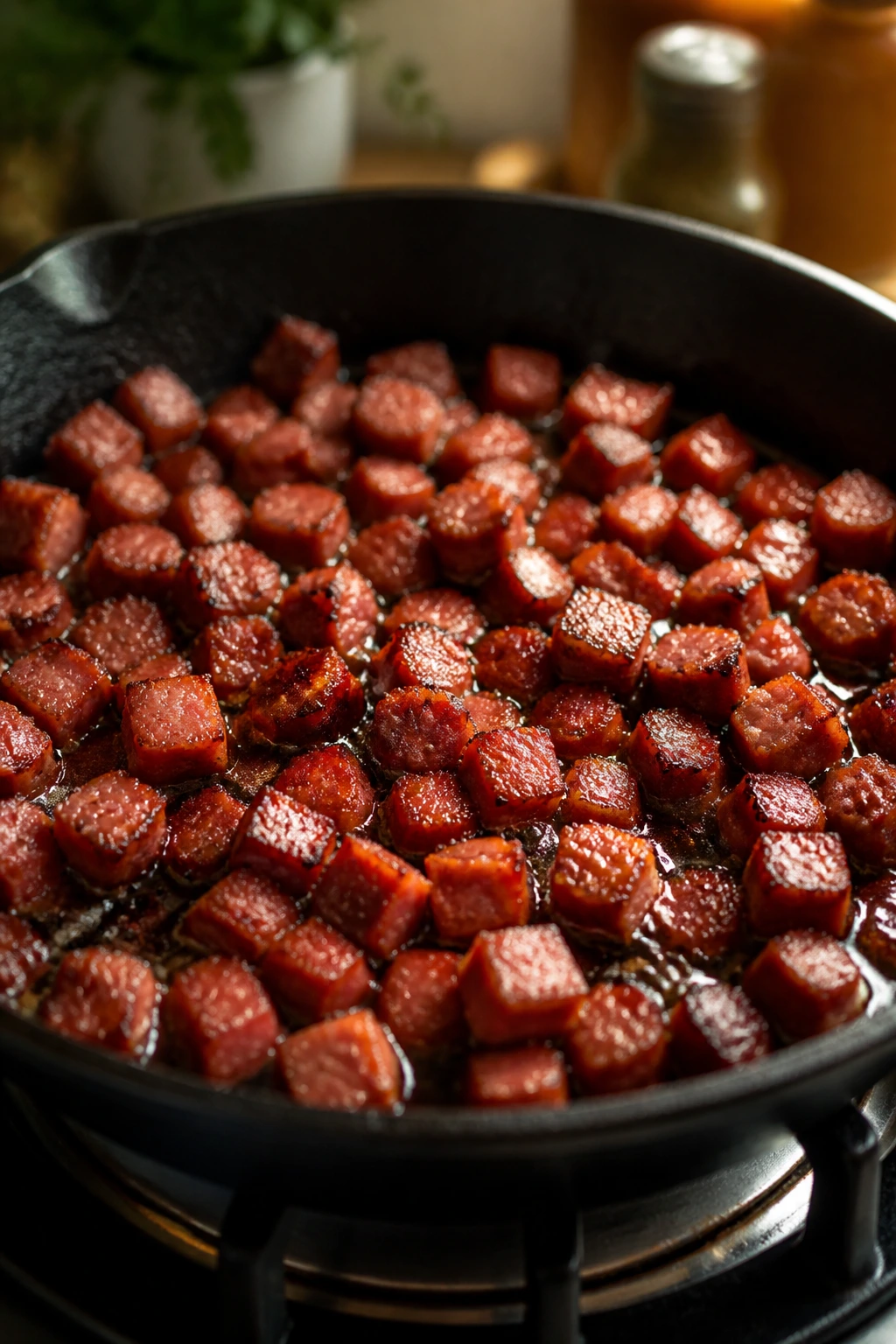
The sausage does the heavy lifting: Summer sausage is fully cooked, so you’re building flavor in the pan instead of waiting for raw meat to reach temperature.
-
A little goes a long way: Eight to twelve ounces can stretch across four to six servings once it lands in eggs, pasta, rice, or potatoes.
-
It plays well with pantry food: Beans, canned tomatoes, frozen vegetables, tortillas, bread, pasta, and rice all fit naturally here.
-
You can cook for a crowd without juggling five pans: Most of these recipes use one skillet, one casserole dish, or one pot, which keeps cleanup from becoming its own project.
-
It works hot or room temp: That matters at a potluck table, where food sits around, gets scooped, and gets eaten in uneven waves.
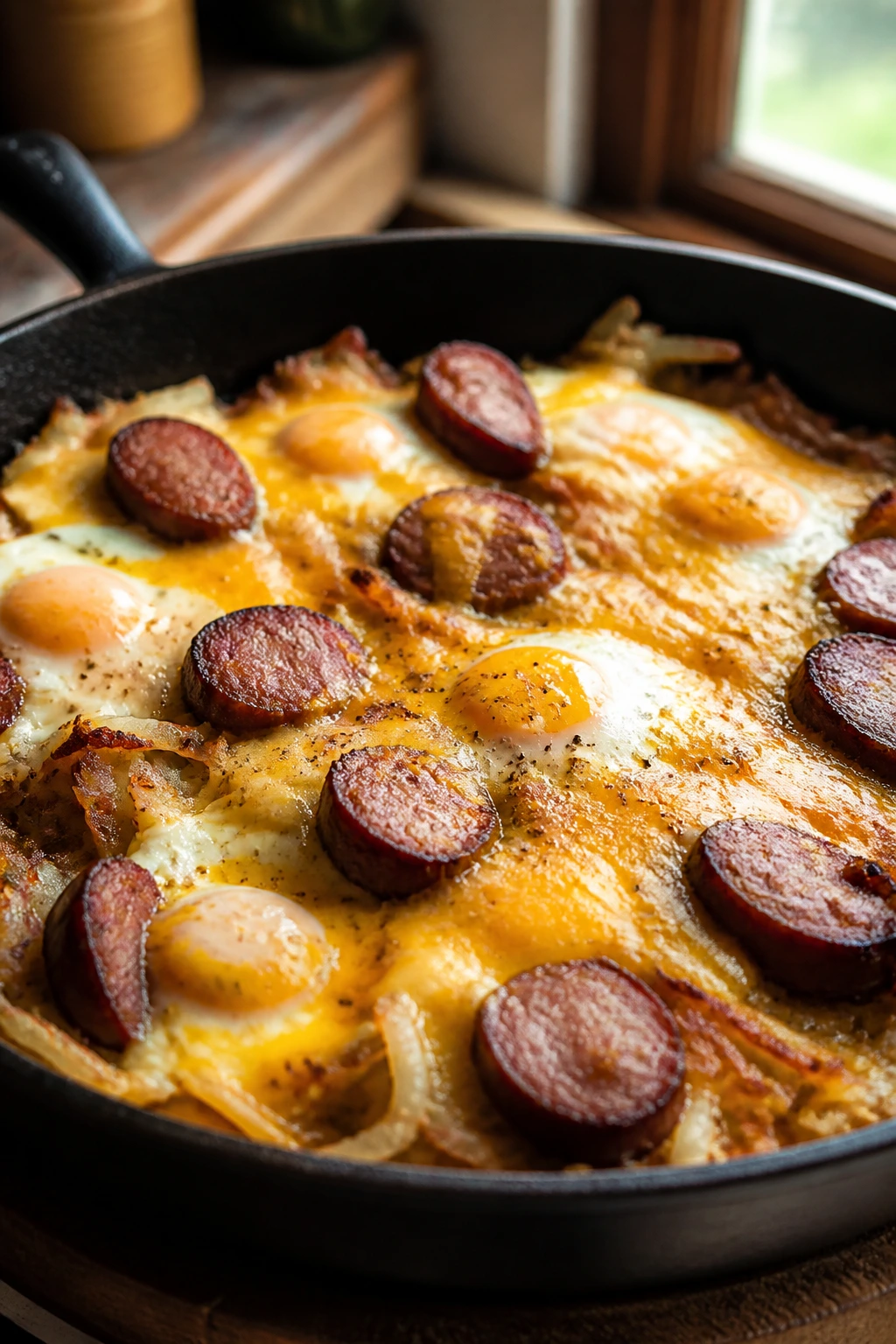
1. Cheesy Summer Sausage Breakfast Skillet
Intro:
This is the skillet I make when breakfast needs to feel like an actual meal. The summer sausage gets crisp at the edges, the hash browns catch a little color, and the eggs settle into the top like they were meant to be there all along. Cheese melts into the cracks and ties the whole thing together.
Why It Works:
The trick is simple: you brown the sausage first so the fat coats the pan, then let the potatoes pick up that flavor while they crisp. Using frozen hash browns keeps the texture even, and cracking the eggs on top gives you soft yolks without dirtying another pan. A 400°F oven finishes the top fast, so the cheese melts before the potatoes dry out.
Key Ingredients:
- 12 ounces summer sausage, diced into 1/2-inch cubes
- 4 cups frozen hash browns, thawed
- 1 small yellow onion, diced
- 1 red bell pepper, diced
- 6 large eggs
- 1 1/2 cups shredded cheddar
- 1 tablespoon olive oil
- 1/2 teaspoon black pepper
- 1/2 teaspoon kosher salt, only if needed
Quick Steps:
- Heat a 12-inch oven-safe skillet over medium heat with the olive oil.
- Add the summer sausage and cook for 4 to 5 minutes until browned at the edges.
- Stir in the onion and bell pepper, then cook for 3 minutes until softened.
- Add the hash browns, press them into an even layer, and cook for 5 to 6 minutes until the bottom looks crisp.
- Make 6 small wells, crack in the eggs, and scatter the cheddar over the top.
- Bake at 400°F for 8 to 10 minutes, until the whites are set and the yolks still wobble a little.
Equipment for This Recipe:
- 12-inch oven-safe skillet
- Wooden spoon or spatula
- Sharp knife
- Cutting board
- Small bowl for cracking eggs first, if you want fewer shell surprises
How to Serve This Dish:
Serve it straight from the skillet with hot sauce on the side and toast for scooping up the runny yolks. A bowl of fruit works if you want something bright next to all the cheese and potato. It feeds 4 hungry people or 6 if you’re pairing it with more sides.
Pro Tips for This Recipe:
- Thaw the hash browns before cooking or they’ll steam and go soft.
- If the skillet looks dry after the sausage browns, add a teaspoon of butter.
- Put the eggs in one by one so you can space them evenly.
- Pull it from the oven while the yolks still jiggle; they’ll keep cooking in the hot pan.
Variations on This Dish:
- Pepper Jack Morning Skillet: Swap cheddar for pepper jack and add sliced jalapeños.
- Southwestern Skillet: Stir in black beans and top with salsa after baking.
- Green Garden Version: Add chopped spinach in the last minute of stovetop cooking.
Common Mistakes to Avoid with This Dish:
- Using wet potatoes: If the hash browns are icy, they won’t crisp. Pat them dry.
- Baking too long: The eggs turn rubbery fast. Watch the whites, not the clock alone.
- Over-salting: Summer sausage and cheddar already bring salt, so taste before adding more.
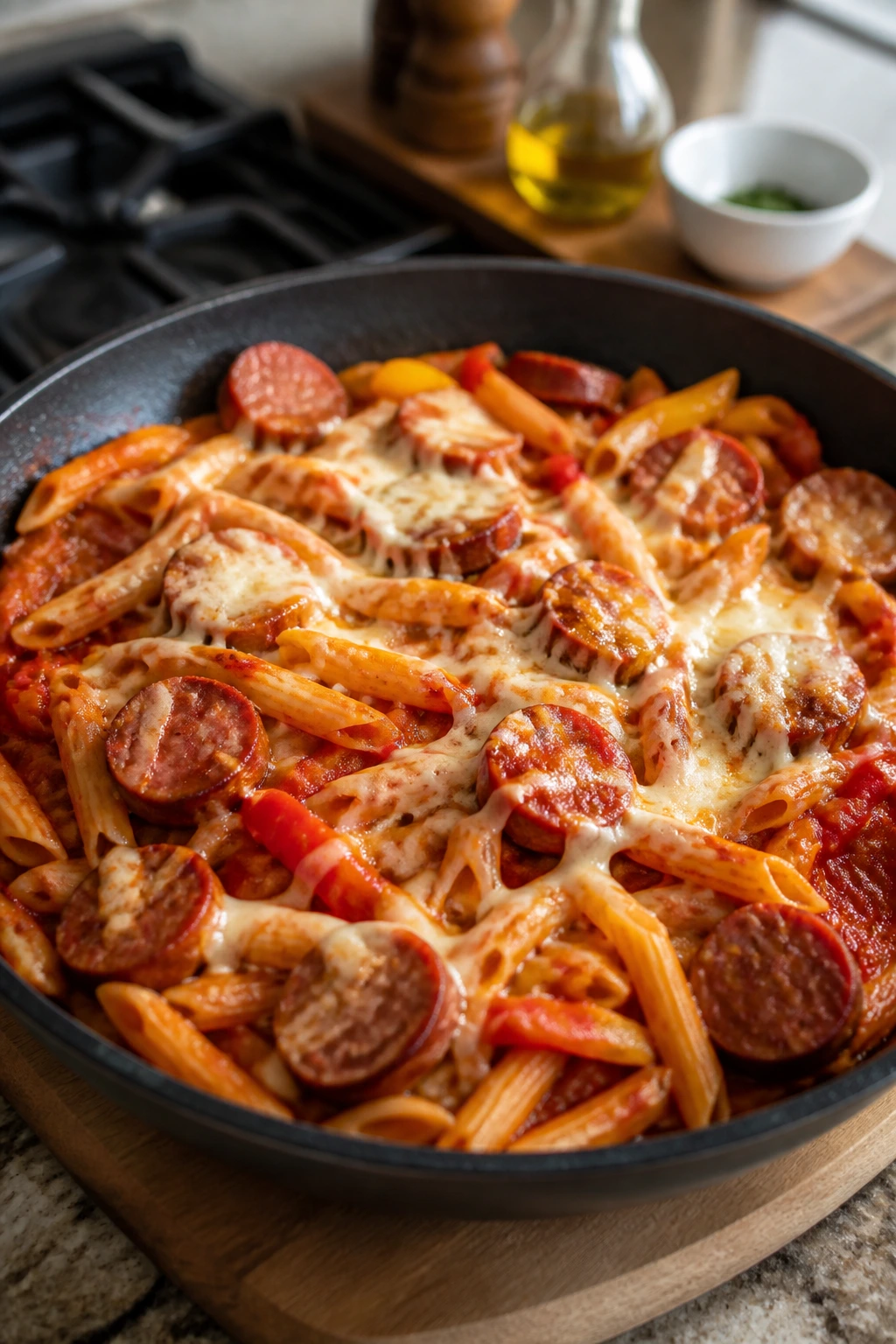
2. Summer Sausage and Pepper Pasta
Intro:
This one tastes like it should take longer than it does. The sausage gives the sauce a smoky, meaty backbone, while bell peppers and onion keep it from getting heavy. It’s the sort of pasta that still holds up after sitting on the table for 15 minutes, which is a useful thing when people eat in waves.
Why It Works:
Summer sausage has enough fat to brown cleanly, and that browned layer dissolves into the tomato sauce once you add liquid. Bell peppers soften into sweetness, but they still keep a little bite if you don’t overcook them. A splash of pasta water helps the sauce cling to the noodles instead of pooling at the bottom of the bowl.
Key Ingredients:
- 12 ounces penne or rigatoni
- 10 ounces summer sausage, sliced into half-moons
- 1 red bell pepper, sliced
- 1 yellow bell pepper, sliced
- 1 small onion, thinly sliced
- 3 cloves garlic, minced
- 2 cups marinara sauce
- 1/2 cup reserved pasta water
- 1 cup shredded mozzarella
- 2 tablespoons olive oil
- 1/2 teaspoon crushed red pepper, optional
Quick Steps:
- Cook the pasta in salted water until just al dente, then reserve 1/2 cup of the water.
- Heat olive oil in a large skillet over medium-high heat and brown the summer sausage for 3 to 4 minutes.
- Add the onion and peppers and cook for 5 minutes until softened but still colorful.
- Stir in the garlic for 30 seconds, then pour in the marinara and pasta water.
- Toss in the pasta and mozzarella, stirring until the cheese melts and the sauce coats the noodles.
- Finish with red pepper if you want heat, then serve immediately.
Equipment for This Recipe:
- Large skillet
- Large pot for pasta
- Colander
- Wooden spoon
- Measuring cup for pasta water
How to Serve This Dish:
A simple green salad with sharp vinaigrette is enough to cut through the cheese. Garlic bread makes the meal feel complete, but the pasta is rich enough to stand alone if that’s what you want. Serve it in shallow bowls so the sausage and peppers stay visible.
Pro Tips for This Recipe:
- Slice the sausage on the bias; the bigger surface browns better.
- Don’t dump all the pasta water in at once. Start with 1/4 cup and add more only if the sauce looks stiff.
- If your marinara is sweet, a teaspoon of red wine vinegar at the end wakes it up.
- Let the pasta finish in the sauce for a minute before serving.
Variations on This Dish:
- Creamy Tomato Version: Stir in 1/3 cup heavy cream after the marinara.
- Baked Pasta Finish: Top with extra mozzarella and broil for 2 minutes.
- Vegetable-Heavy Pan: Add zucchini coins or mushrooms with the peppers.
Common Mistakes to Avoid with This Dish:
- Overcooking the pasta: It keeps softening in the sauce. Stop at true al dente.
- Crowding the sausage: If the skillet is packed, it steams instead of browning.
- Skipping seasoning checks: Marinara varies a lot, so taste before you plate.
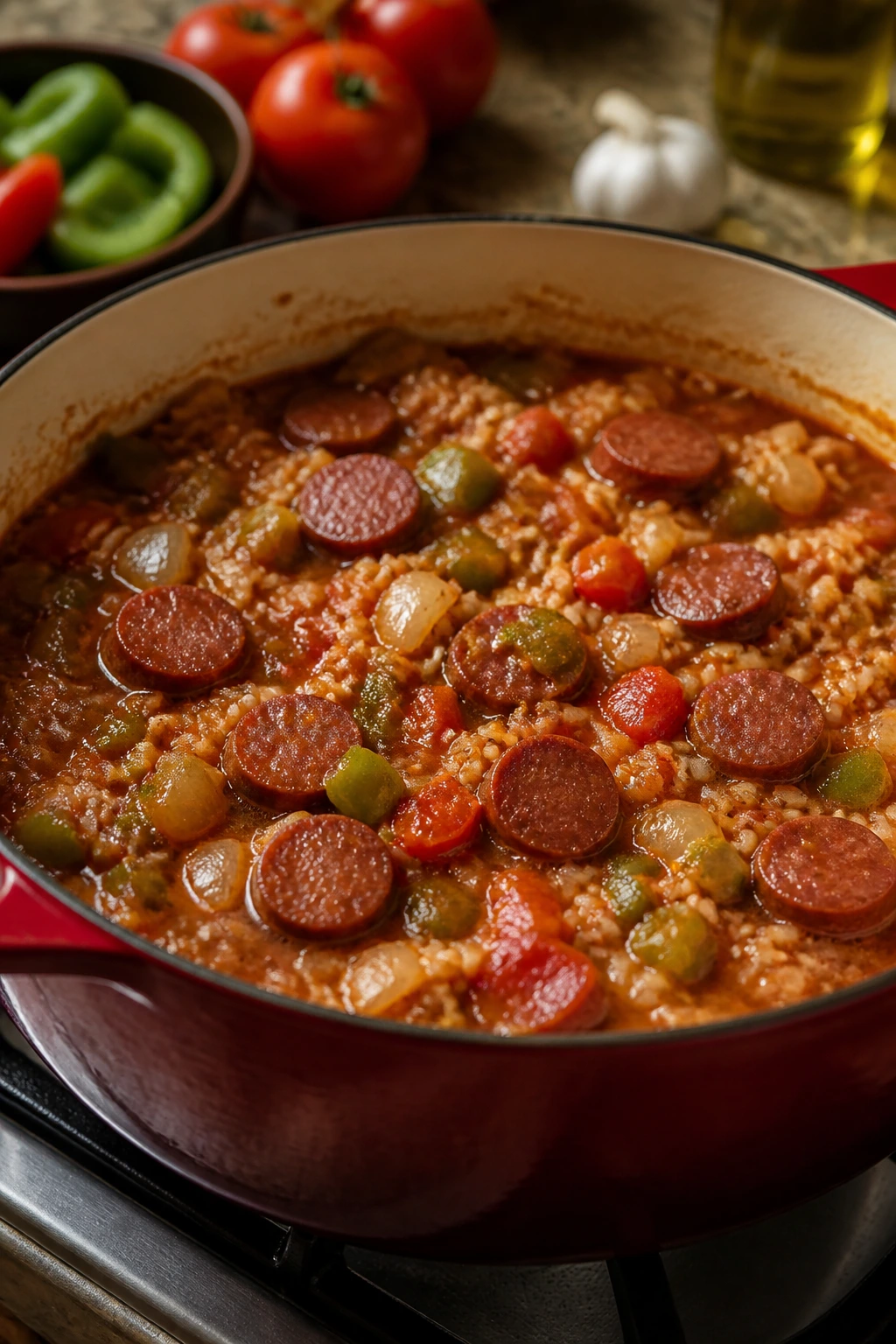
3. One-Pot Summer Sausage Jambalaya
Intro:
Smoky sausage and rice are already good friends, and this dish proves the point without making a fuss. The rice cooks in broth and tomatoes, so every grain picks up flavor from the bottom of the pot. It’s bold, a little messy, and exactly the kind of thing people keep spooning back for “just a little more.”
Why It Works:
Jambalaya is a layering dish, not a dump-and-stir job. Browning the sausage first leaves seasoned bits on the pot, and those bits matter once the onions, peppers, celery, and tomatoes go in. Using long-grain rice keeps the texture separate instead of sticky, and the covered simmer gives the grains time to absorb the broth without turning soft.
Key Ingredients:
- 12 ounces summer sausage, diced
- 1 cup long-grain white rice, rinsed
- 1 green bell pepper, diced
- 1 small onion, diced
- 2 celery stalks, diced
- 3 cloves garlic, minced
- 1 can diced tomatoes, 14.5 ounces
- 2 1/4 cups chicken broth
- 1 tablespoon Cajun seasoning
- 2 tablespoons oil
- 2 green onions, sliced
Quick Steps:
- Heat oil in a Dutch oven over medium-high heat and brown the sausage for 4 minutes.
- Add onion, pepper, and celery, then cook for 5 minutes until softened.
- Stir in garlic and Cajun seasoning for 30 seconds.
- Add rice, tomatoes, and broth, scraping up the browned bits from the bottom.
- Bring to a simmer, cover, and cook on low for 18 to 20 minutes until the rice is tender.
- Rest off heat for 5 minutes, fluff, and finish with green onions.
Equipment for This Recipe:
- Dutch oven or heavy pot
- Wooden spoon
- Fine-mesh strainer for rinsing rice
- Cutting board and knife
How to Serve This Dish:
Spoon it into deep bowls and let the steam do the work. A wedge of cornbread on the side is useful for soaking up the tomato broth at the bottom. If you want contrast, a crisp cucumber salad keeps the plate from feeling heavy.
Pro Tips for This Recipe:
- Rinse the rice until the water runs less cloudy; it keeps the grains separate.
- Keep the lid on during the simmer. Lifting it steals steam and slows the rice.
- If the pot looks dry before the rice is tender, add 1/4 cup hot broth.
- A squeeze of lemon at the end brightens the whole pot.
Variations on This Dish:
- Shrimp Finish: Stir in peeled shrimp during the last 5 minutes.
- Spicier Pot: Add diced jalapeño with the onions.
- Brown Rice Version: Use brown rice and add about 15 to 20 minutes of simmer time.
Common Mistakes to Avoid with This Dish:
- Using quick-cook rice: It goes mushy before the flavors settle.
- Stirring too much: That breaks the grains and makes the pot gluey.
- Adding too little liquid: Rice needs enough broth to finish evenly.
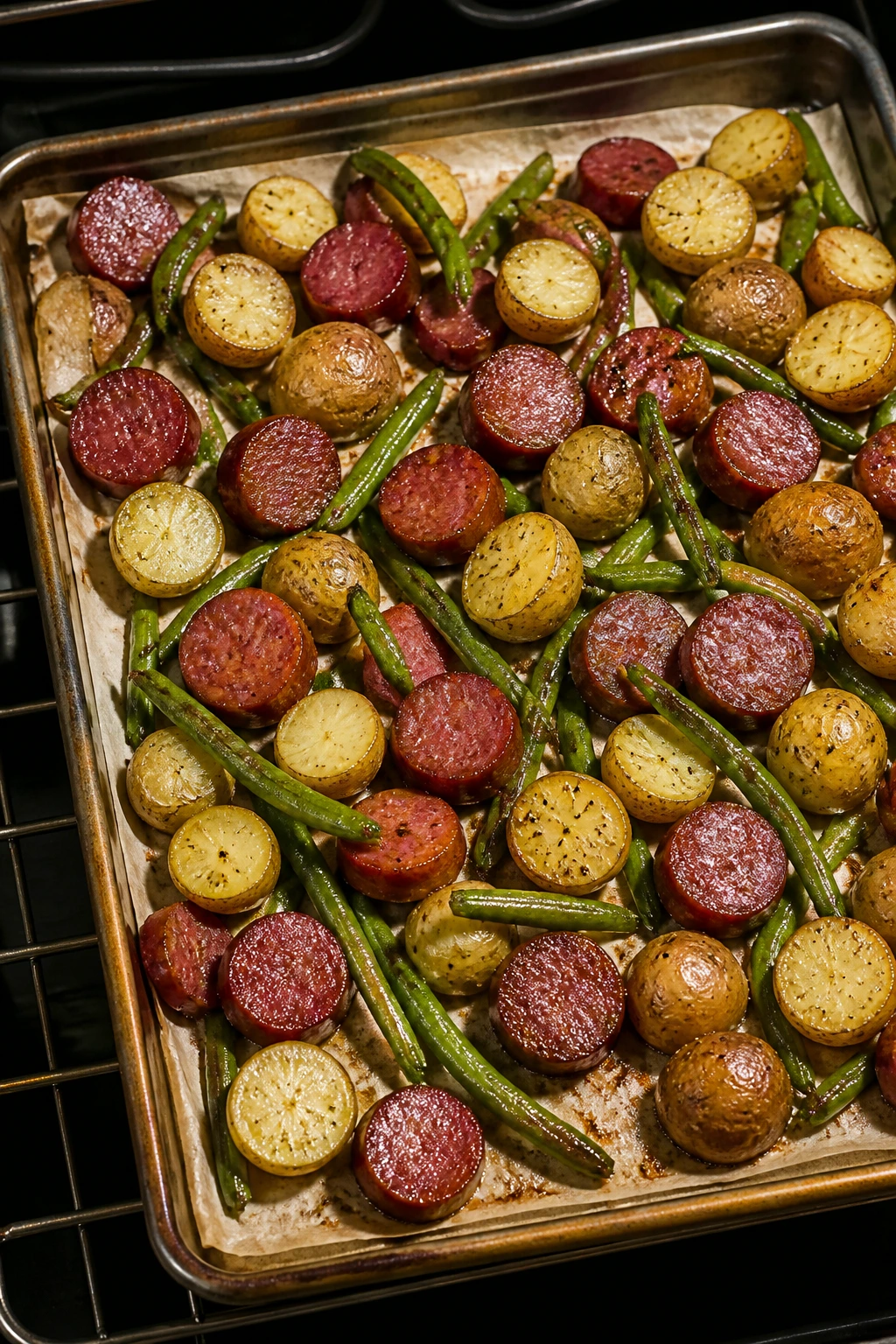
4. Summer Sausage Sheet-Pan Dinner with Potatoes and Green Beans
Intro:
A sheet pan is where summer sausage gets to look a little fancy without trying hard. The sausage roasts beside baby potatoes until the edges blister, while green beans stay snappy and bright. It’s the kind of dinner that tastes like you did more than you actually did.
Why It Works:
The potatoes need the longest time, so they go in first with oil and seasoning. The sausage joins partway through because it only needs enough heat to brown and warm through. Green beans go last so they keep their bite and don’t slump into the pan juices.
Key Ingredients:
- 12 ounces summer sausage, cut into thick coins
- 1 1/2 pounds baby potatoes, halved
- 12 ounces green beans, trimmed
- 1 red onion, cut into wedges
- 3 tablespoons olive oil
- 1 teaspoon garlic powder
- 1 teaspoon smoked paprika
- 3/4 teaspoon kosher salt
- 1/2 teaspoon black pepper
Quick Steps:
- Heat the oven to 425°F and line a rimmed sheet pan with parchment.
- Toss the potatoes and onion with 2 tablespoons oil, garlic powder, paprika, salt, and pepper.
- Roast for 20 minutes, then flip the potatoes.
- Add the sausage coins and green beans, drizzle with the remaining oil, and roast for 15 more minutes.
- Cook until the potatoes are tender and the sausage edges are browned.
- Serve hot from the pan.
Equipment for This Recipe:
- Rimmed sheet pan
- Parchment paper
- Large mixing bowl
- Spatula
- Sharp knife
How to Serve This Dish:
Serve it family-style right on the pan if you want the easy route. A spoonful of grainy mustard on the side is excellent here, especially with the potatoes. It feeds 4 as a full dinner or 6 with bread.
Pro Tips for This Recipe:
- Cut the potatoes evenly so they finish together.
- Use a pan with space; if it’s too crowded, the vegetables steam.
- Give the green beans a quick trim so the ends don’t dry out in the oven.
- A splash of apple cider vinegar after roasting cuts through the richness.
Variations on This Dish:
- Brussels Sprout Swap: Use halved Brussels sprouts instead of green beans.
- Miso-Mustard Finish: Whisk 1 tablespoon miso with 1 tablespoon mustard and drizzle after roasting.
- Sweet Potato Version: Swap in sweet potatoes and add rosemary.
Common Mistakes to Avoid with This Dish:
- Skipping the first roast: Potatoes need a head start or they stay hard.
- Using tiny sausage slices: Thick coins hold texture better and don’t dry out as fast.
- Adding delicate vegetables too early: They need less time than potatoes, always.
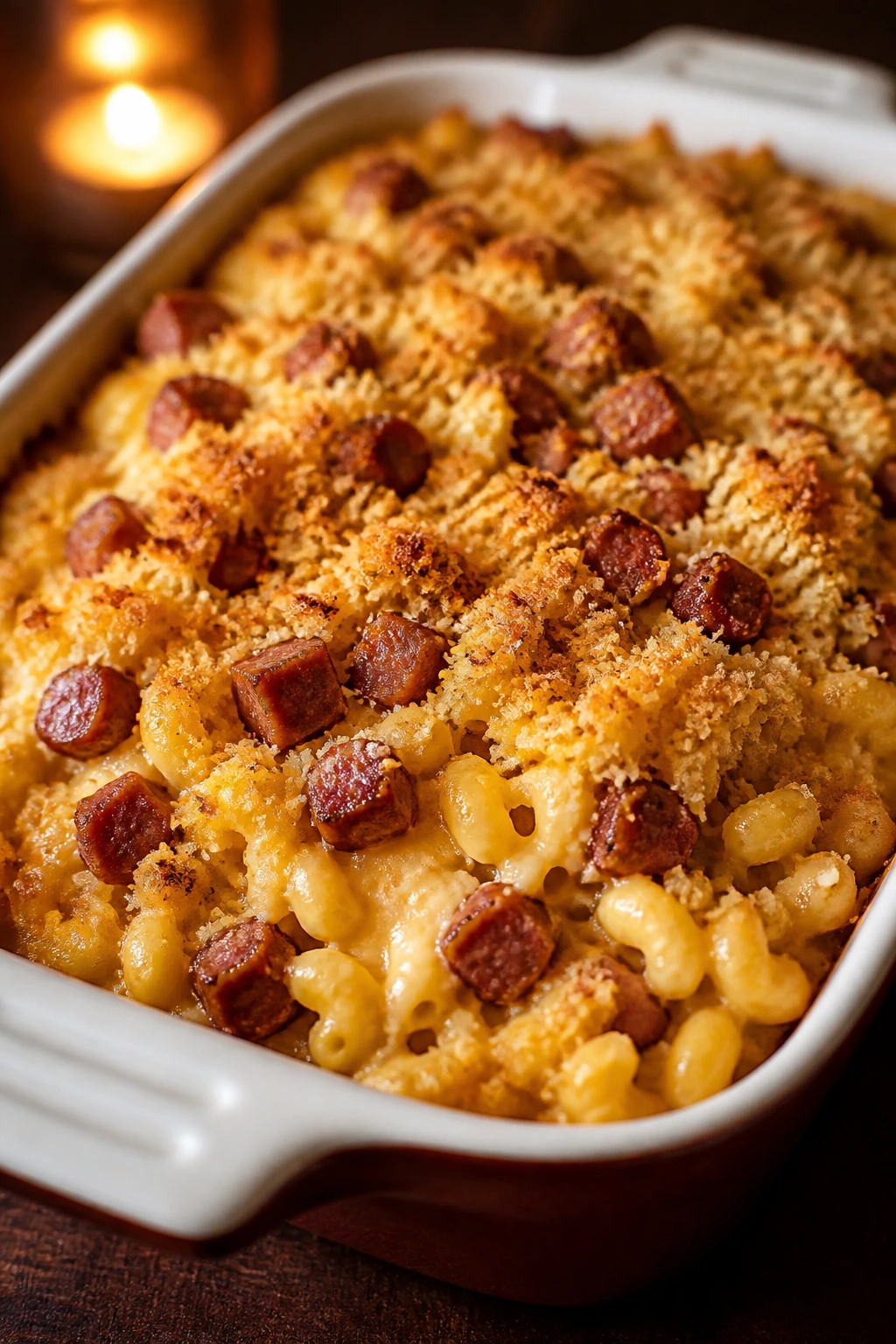
5. Summer Sausage Mac and Cheese Bake
Intro:
Mac and cheese gets louder with summer sausage in it. The smoky slices thread through the pasta, and the baked top turns brown and crackly if you give it enough oven time. It’s rich, yes, but in a way that makes people go quiet for a minute.
Why It Works:
Summer sausage adds salt and smoke, so the cheese sauce needs a little restraint. A mix of sharp cheddar and Monterey Jack gives you melt plus bite, and a baked breadcrumb topping keeps the casserole from feeling one-note. The sausage is best browned first so it doesn’t turn slick and oily in the finished dish.
Key Ingredients:
- 12 ounces elbow macaroni
- 10 ounces summer sausage, diced
- 3 tablespoons butter
- 3 tablespoons all-purpose flour
- 2 1/2 cups whole milk
- 2 cups shredded sharp cheddar
- 1 cup shredded Monterey Jack
- 1 cup breadcrumbs
- 1 teaspoon mustard powder
- 1/2 teaspoon black pepper
Quick Steps:
- Cook the macaroni until just under al dente and drain.
- Brown the sausage in a skillet for 3 to 4 minutes, then set it aside.
- Melt butter in a saucepan, whisk in flour, and cook for 1 minute.
- Slowly whisk in milk and cook until thick enough to coat a spoon.
- Stir in the cheeses, mustard powder, pepper, macaroni, and sausage.
- Pour into a baking dish, top with breadcrumbs, and bake at 375°F for 20 minutes until browned.
Equipment for This Recipe:
- Large pot
- Saucepan
- Whisk
- 9×13-inch baking dish
- Measuring cups and spoons
How to Serve This Dish:
Serve it with something acidic, like pickles or a tomato salad, because the casserole is rich from top to bottom. A spoonful lands best when the top crust is still a little crunchy. It feeds 6 comfortably.
Pro Tips for This Recipe:
- Shred the cheese yourself if you can. Pre-shredded works, but it melts a little less smoothly.
- Stop cooking the sauce once it thickens; it keeps tightening in the oven.
- Let the casserole sit 10 minutes before scooping so the sauce settles.
- If you want a deeper top, broil for 1 minute at the end and watch it closely.
Variations on This Dish:
- Jalapeño Mac: Add diced jalapeños to the sauce.
- Smoky Gouda Version: Swap 1 cup of cheddar for smoked gouda.
- Breadcrumb-Free Top: Use crushed crackers or skip the topping altogether.
Common Mistakes to Avoid with This Dish:
- Using overcooked pasta: It turns soft during baking.
- Boiling the cheese sauce hard: That can make it grainy.
- Skipping the resting time: The first scoop can slide apart if you rush it.
6. Summer Sausage Quesadilla Melts

Intro:
This is the fast answer when everyone wants food at once and nobody wants to wait. Crisp tortillas, melted cheese, and little browned bits of sausage make a combination that feels casual in the best way. It’s not fussy. That’s the point.
Why It Works:
Summer sausage is already seasoned, so it only needs a quick skillet toast to wake it up. Using two cheeses gives you both melt and stretch, and a little onion or pepper keeps the filling from getting too dense. A medium skillet and moderate heat protect the tortilla from burning before the cheese melts.
Key Ingredients:
- 8 ounces summer sausage, diced small
- 8 flour tortillas
- 2 cups shredded Mexican blend cheese
- 1/2 cup diced onion
- 1/2 cup diced bell pepper
- 1 tablespoon butter
- Salsa, for serving
- Sour cream, for serving
Quick Steps:
- Warm the sausage, onion, and pepper in a skillet for 3 minutes until the onion softens.
- Lay out 4 tortillas and divide the cheese and sausage mixture among them.
- Top with the remaining tortillas.
- Melt butter in a large skillet over medium heat and cook each quesadilla for 2 to 3 minutes per side until golden and crisp.
- Rest for 1 minute, then cut into wedges.
Equipment for This Recipe:
- Large skillet
- Spatula
- Knife or pizza cutter
- Cutting board
How to Serve This Dish:
Serve the wedges stacked slightly open so the melted filling shows. Salsa keeps the bites lively, and pickled jalapeños are a smart extra if you like heat. Two quesadillas usually feed 2 adults, or 4 people when you’re serving them alongside soup or salad.
Pro Tips for This Recipe:
- Keep the heat at medium. High heat burns the tortilla before the cheese melts.
- Dice the sausage small so the quesadilla doesn’t tear when you fold it.
- Let the filling cool for a minute before assembly if it’s steaming hot.
- A thin swipe of mayonnaise on the outside of the tortilla browns more evenly than butter.
Variations on This Dish:
- Breakfast Quesadilla: Add scrambled eggs and a spoonful of salsa verde.
- Black Bean Version: Add 1/2 cup drained black beans to each quesadilla.
- Smoky Chipotle Swap: Stir chipotle powder into the filling.
Common Mistakes to Avoid with This Dish:
- Overfilling the tortillas: The cheese spills and the halves won’t hold together.
- Using low-moisture cheese only: You want melt, not just flavor.
- Cutting immediately: The cheese needs a minute to settle or everything slides out.
7. Summer Sausage Fried Rice
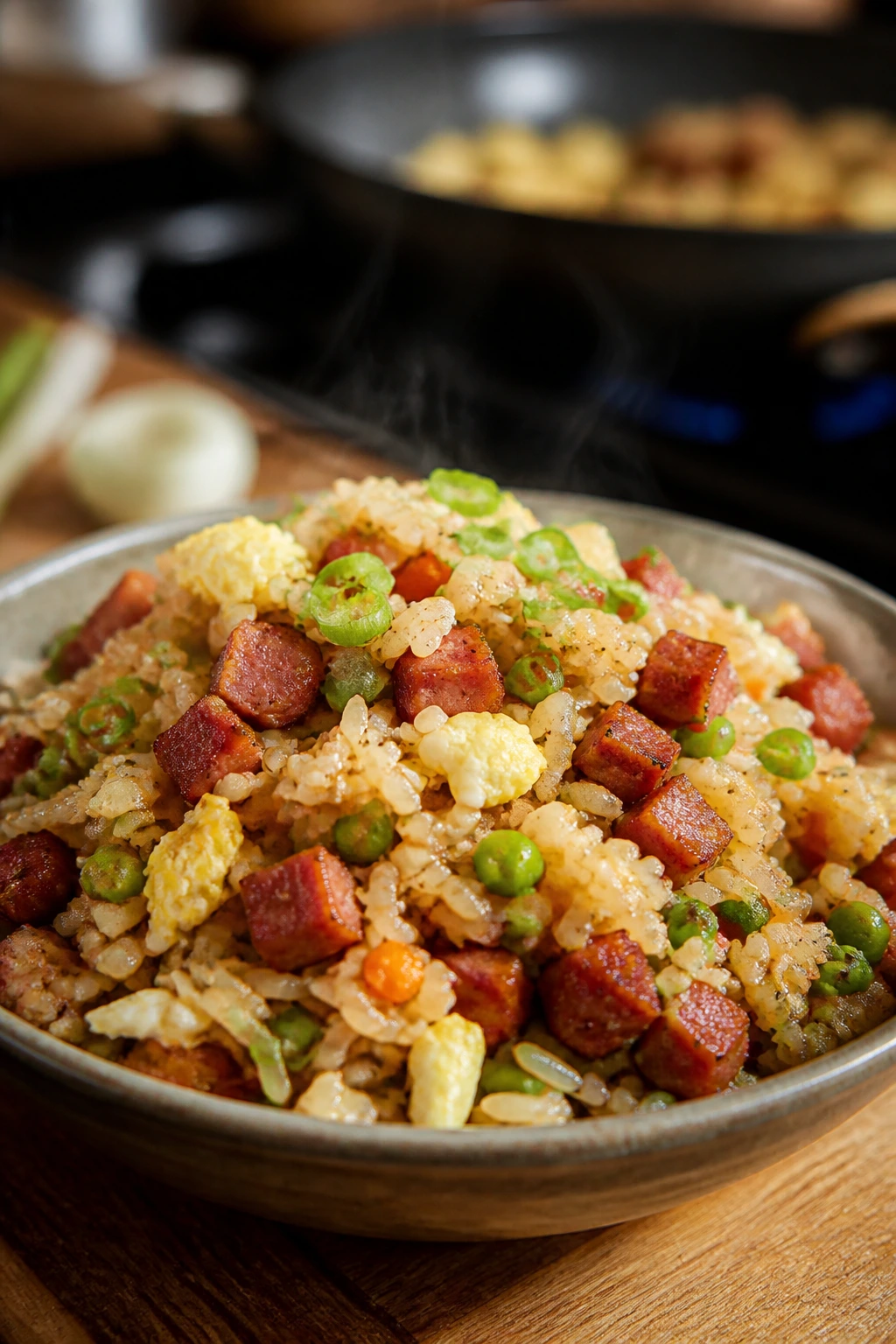
Intro:
Cold rice from the fridge is the secret here, and I’m happy to be blunt about it. Fresh rice goes soft and sticky; day-old rice fries up into separate grains that can handle the sausage, egg, and soy sauce without turning into mush. This is a good use of leftovers, which is probably why it works so well.
Why It Works:
The browned sausage brings salt and smoke, while the egg adds richness and keeps the rice from feeling dry. Frozen peas and carrots are easy here because they heat fast and keep their shape. Sesame oil at the end matters more than people think; you don’t need much, but you do need it.
Key Ingredients:
- 4 cups cooked, chilled white rice
- 8 ounces summer sausage, diced
- 2 large eggs, beaten
- 1 cup frozen peas and carrots
- 3 scallions, sliced
- 2 tablespoons soy sauce
- 1 tablespoon vegetable oil
- 1 teaspoon sesame oil
- 1 clove garlic, minced
Quick Steps:
- Heat vegetable oil in a large skillet or wok over medium-high heat.
- Brown the sausage for 3 minutes, then push it to the side.
- Pour in the eggs and scramble them until just set.
- Add garlic, peas, carrots, and rice, then stir-fry for 4 to 5 minutes.
- Add soy sauce and sesame oil, tossing until the rice turns evenly seasoned and hot.
- Finish with scallions.
Equipment for This Recipe:
- Large skillet or wok
- Spatula
- Bowl for beating eggs
- Cutting board
How to Serve This Dish:
Serve it in bowls with extra scallions and chili crisp if you want more heat. A fried egg on top makes it feel like a bigger meal. It’s fine on its own, but an orange or pineapple on the side gives the plate a sharp, sweet break.
Pro Tips for This Recipe:
- Break up clumps of rice before it hits the pan.
- Keep the heat high enough to fry, not steam.
- Add soy sauce around the edges of the pan so it sizzles.
- Don’t overdo the sesame oil; one teaspoon is enough.
Variations on This Dish:
- Teriyaki Rice: Swap soy sauce for teriyaki and add diced pineapple.
- Spicy Garlic Version: Add minced ginger and a spoonful of chili paste.
- Vegetable-Loaded Bowl: Toss in shredded cabbage or snap peas.
Common Mistakes to Avoid with This Dish:
- Using hot rice: It clumps and turns gummy.
- Crowding the pan: Fry in batches if needed.
- Adding too much sauce: The rice should look glossy, not wet.
8. Summer Sausage Tortellini Skillet
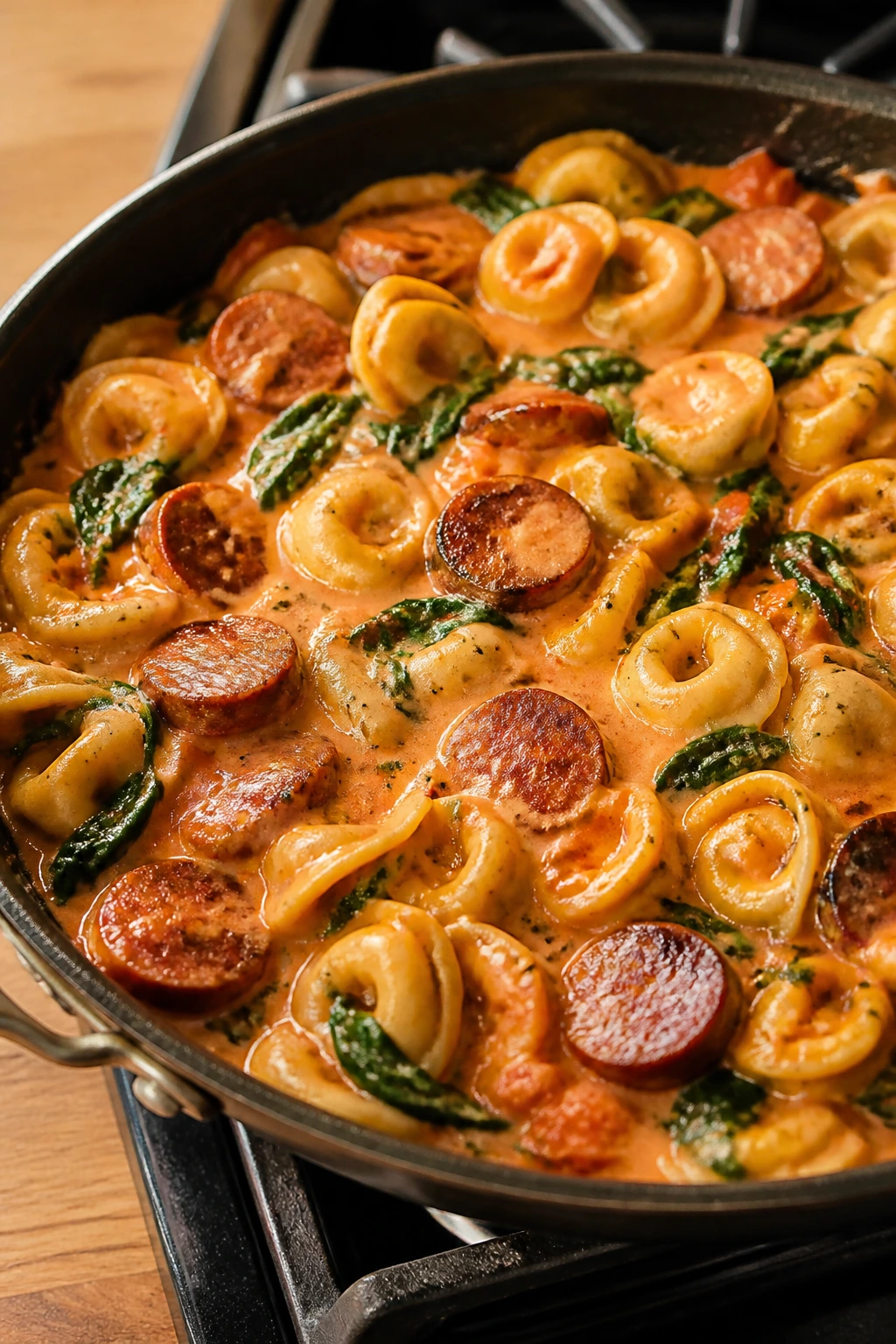
Intro:
Cheese tortellini and summer sausage have a nice little agreement going on. The pasta brings softness, the sausage brings chew, and the spinach gives the skillet some green without pretending to be virtuous. It feels like a shortcut, but not a lazy one.
Why It Works:
Refrigerated tortellini cooks fast and absorbs sauce in a way dry pasta can’t. Browning the sausage first adds flavor to the pan, and a little cream smooths out the marinara without turning it into heavy Alfredo. Spinach wilts in seconds, so it can go in at the very end and stay fresh-looking.
Key Ingredients:
- 10 ounces summer sausage, sliced into half-moons
- 1 package refrigerated cheese tortellini, 20 ounces
- 2 cups marinara sauce
- 1/2 cup heavy cream
- 3 cups baby spinach
- 1 cup shredded mozzarella
- 2 tablespoons olive oil
- 2 cloves garlic, minced
Quick Steps:
- Brown the sausage in olive oil over medium heat for 3 to 4 minutes.
- Add garlic and cook for 30 seconds.
- Stir in marinara and cream, then bring to a gentle simmer.
- Add tortellini and cook according to package directions until tender.
- Fold in spinach and mozzarella until the spinach wilts and the cheese melts.
- Serve right away.
Equipment for This Recipe:
- Large skillet with lid
- Wooden spoon
- Measuring cups
- Colander if you briefly par-cook tortellini first
How to Serve This Dish:
Serve it in shallow bowls with black pepper on top and a little extra cheese at the table. A slice of crusty bread is useful, but not required. The skillet feeds 4 with no trouble.
Pro Tips for This Recipe:
- Use a skillet with enough room for the tortellini to move.
- Don’t boil the cream sauce hard or it can separate.
- Add spinach in handfuls so it wilts evenly.
- If the sauce gets too thick, loosen it with a splash of pasta water.
Variations on This Dish:
- Pesto Twist: Stir in 2 tablespoons pesto at the end.
- Red Pepper Version: Add roasted red peppers with the sauce.
- Baked Skillet Finish: Top with extra mozzarella and broil briefly.
Common Mistakes to Avoid with This Dish:
- Using too little sauce: Tortellini soaks it up fast.
- Overcooking the pasta: It goes soft quickly.
- Adding spinach too early: It turns dull and loses its shape.
9. Summer Sausage and White Bean Soup
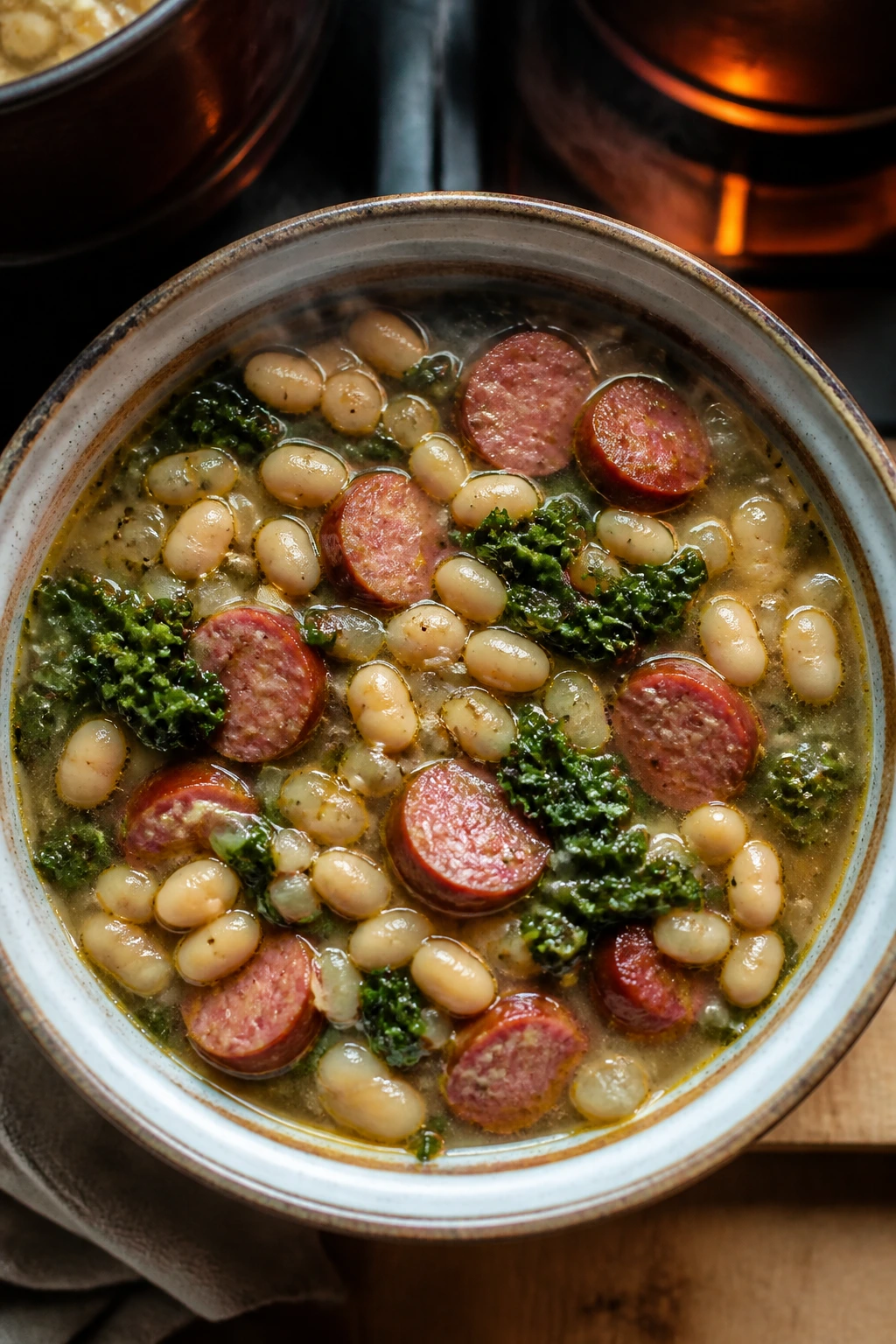
Intro:
This soup has the old-fashioned comfort people reach for without needing a whole afternoon. The beans make it thick, the sausage adds smoke, and the broth picks up enough flavor from onion and thyme that you don’t miss anything complicated. It’s a sturdy bowl.
Why It Works:
White beans are a natural partner for cured sausage because they soften the salt and give the soup body. A little tomato paste deepens the broth without turning it red, and kale holds up better than delicate greens once the pot simmers for a while. The finished soup tastes even better after sitting for a day.
Key Ingredients:
- 10 ounces summer sausage, diced
- 2 cans cannellini beans, drained and rinsed
- 1 onion, diced
- 2 carrots, diced
- 2 celery stalks, diced
- 4 cups chicken broth
- 2 cups water
- 1 tablespoon tomato paste
- 1 teaspoon dried thyme
- 2 cups chopped kale
- 1 tablespoon olive oil
Quick Steps:
- Heat olive oil in a soup pot and brown the sausage for 4 minutes.
- Add onion, carrots, and celery, then cook for 6 minutes until softened.
- Stir in tomato paste and thyme for 30 seconds.
- Add beans, broth, and water, then simmer for 15 minutes.
- Stir in kale and cook for 5 more minutes until wilted.
- Taste and adjust salt only if needed.
Equipment for This Recipe:
- Soup pot or Dutch oven
- Wooden spoon
- Can opener
- Cutting board and knife
- Ladle
How to Serve This Dish:
Ladle it into bowls with toasted bread or cornbread. A drizzle of olive oil or a squeeze of lemon on top keeps the soup from feeling flat. It serves 4 to 6 depending on how much bread you put beside it.
Pro Tips for This Recipe:
- Rinse the beans well so the broth stays clean.
- If you want a thicker soup, mash a cup of the beans before adding them.
- Add the kale near the end so it stays green.
- A splash of vinegar at the table sharpens the bean flavor.
Variations on This Dish:
- Tomato-Heavy Version: Add an extra cup of diced tomatoes.
- Herby Finish: Stir in chopped parsley or dill right before serving.
- Spicy Bean Soup: Add red pepper flakes with the onion.
Common Mistakes to Avoid with This Dish:
- Boiling hard after the kale goes in: It can turn the leaves dull and coarse.
- Forgetting acid at the end: A little lemon or vinegar wakes up the bowl.
- Adding too much salt too soon: Sausage and broth already do a lot.
10. Summer Sausage Hash Brown Casserole
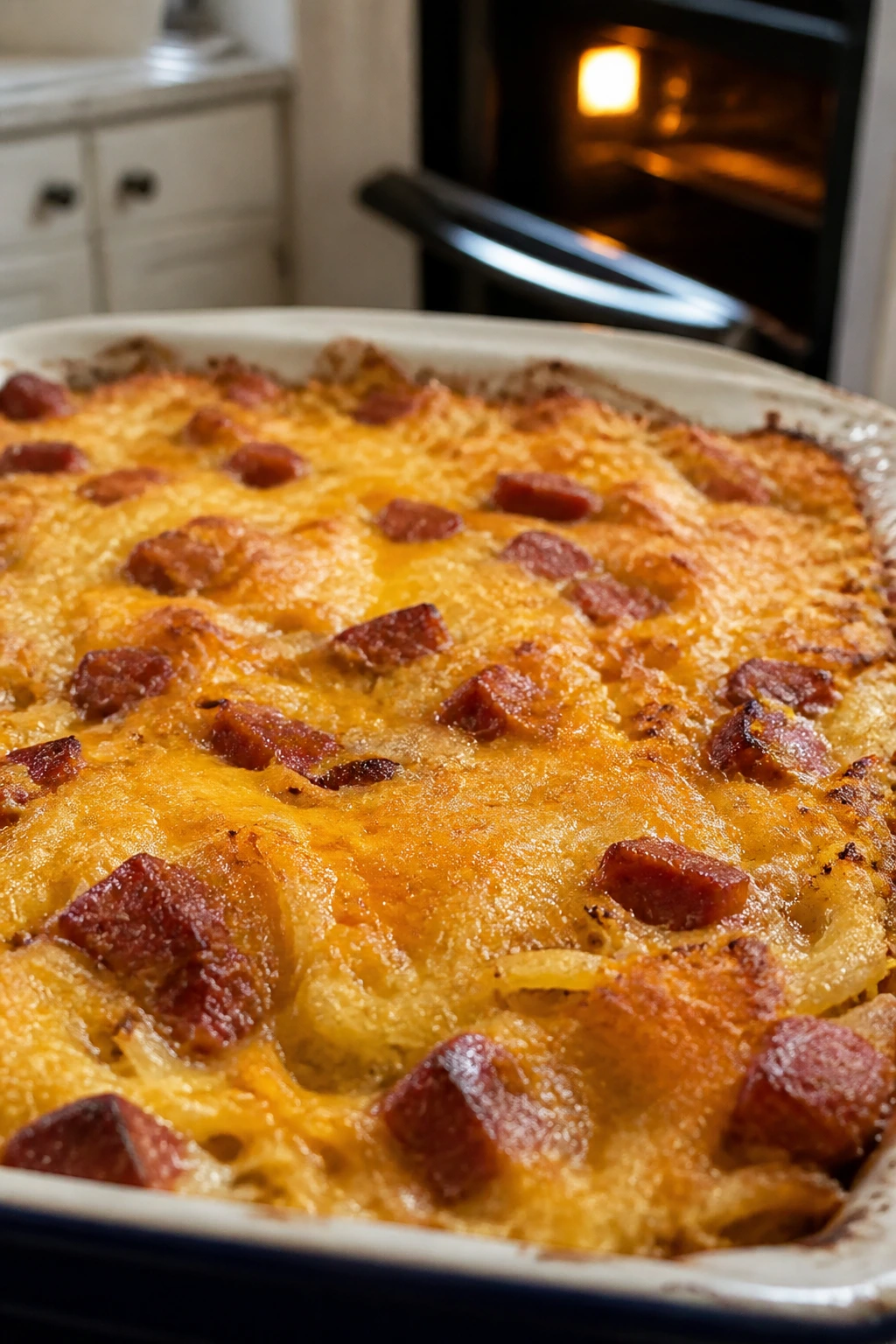
Intro:
If you grew up around potlucks, this will feel familiar in the best way. It’s creamy, browned, cheesy, and full of hash brown texture that stays recognizable even after baking. The summer sausage keeps the casserole from sliding into one-note richness.
Why It Works:
Hash browns give you potato flavor without the work of peeling and grating. Sour cream and condensed soup create a base that stays creamy in the oven, and the sausage adds enough savory punch that you don’t need a long ingredient list. The top browns well if you leave it uncovered for the last stretch of baking.
Key Ingredients:
- 12 ounces summer sausage, diced
- 1 bag frozen shredded hash browns, 30 ounces, thawed
- 1 can cream of mushroom soup, 10.5 ounces
- 1 cup sour cream
- 2 cups shredded cheddar
- 1 small onion, finely diced
- 1/2 teaspoon black pepper
- 1 cup crushed cornflakes or breadcrumbs
- 2 tablespoons melted butter
Quick Steps:
- Heat the oven to 375°F and grease a 9×13-inch dish.
- Mix hash browns, soup, sour cream, sausage, onion, half the cheddar, and pepper.
- Spread the mixture in the dish and top with the remaining cheddar.
- Toss cornflakes with melted butter and sprinkle on top.
- Bake for 45 to 50 minutes until bubbling and browned.
- Rest for 10 minutes before serving.
Equipment for This Recipe:
- 9×13-inch baking dish
- Mixing bowl
- Spoon or spatula
- Measuring cups
How to Serve This Dish:
Serve it with eggs at brunch or with a green salad at dinner. The casserole is rich enough that a tart side, like pickled vegetables or sliced tomatoes, helps balance the plate. It feeds 8 as a side or 6 as the main event.
Pro Tips for This Recipe:
- Thaw the hash browns fully so they bake evenly.
- Press the top lightly so the crumbs cling before baking.
- If the top browns too fast, tent with foil for the last 15 minutes.
- Let it rest or the first serving will slump.
Variations on This Dish:
- Green Chile Version: Add a small can of green chiles.
- French Onion Twist: Use French onion soup instead of mushroom.
- Extra-Crunch Top: Swap cornflakes for crushed buttery crackers.
Common Mistakes to Avoid with This Dish:
- Starting with frozen hash browns: They can water out the casserole.
- Underseasoning the base: Taste the mixture before baking.
- Serving immediately: It needs a brief rest to slice cleanly.
11. Summer Sausage Pizza Skillet
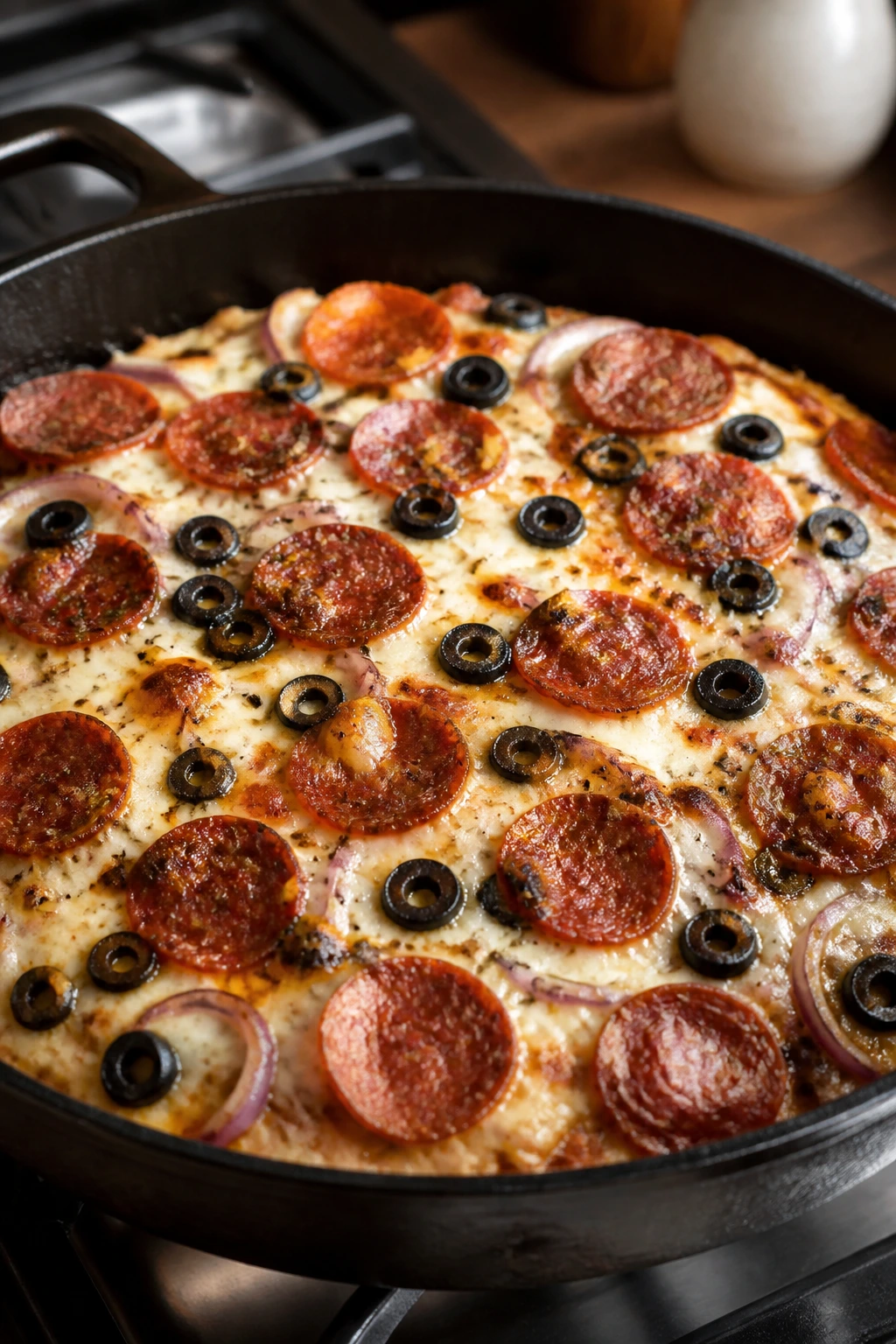
Intro:
Pizza night gets easier when the sausage is already cooked and the crust is built in a skillet. The bottom gets crisp, the cheese bubbles, and the sausage slices deepen the flavor of the sauce instead of fighting it. It’s a little rustic, which suits it.
Why It Works:
A skillet crust catches heat on the bottom and edges, giving you browning without needing a stone or pizza peel. Summer sausage works better than raw sausage here because it doesn’t leak much moisture, so the crust stays firmer. A short bake keeps the cheese melted and the sausage juicy.
Key Ingredients:
- 1 pound pizza dough
- 1 tablespoon olive oil
- 1 cup pizza sauce
- 8 ounces summer sausage, thinly sliced
- 2 cups shredded mozzarella
- 1/4 cup sliced black olives
- 1/4 cup sliced red onion
- 1 teaspoon Italian seasoning
Quick Steps:
- Heat the oven to 450°F and oil a 12-inch oven-safe skillet.
- Press the dough into the skillet and pre-bake for 5 minutes.
- Spread sauce over the crust, then add mozzarella, sausage, olives, onion, and Italian seasoning.
- Bake for 10 to 12 minutes until the cheese bubbles and the edges are browned.
- Rest for 5 minutes before slicing.
Equipment for This Recipe:
- 12-inch oven-safe skillet
- Pizza cutter or sharp knife
- Pastry brush if you want to oil the crust edges
- Measuring cups
How to Serve This Dish:
Cut it into wedges and serve with a simple green salad if you want to pretend balance matters here. A bowl of marinara for dipping is optional but welcome. It feeds 4 to 6 depending on appetite.
Pro Tips for This Recipe:
- Pre-bake the crust or the center can stay doughy.
- Thin sausage slices are better than thick ones on pizza.
- Don’t overload the toppings; the skillet needs room to crisp.
- A scatter of basil after baking gives the pie some lift.
Variations on This Dish:
- Supreme Skillet: Add mushrooms and green peppers.
- White Pizza: Skip the sauce and use ricotta with garlic.
- Spicy Red Pie: Add pepper flakes and sliced pepperoncini.
Common Mistakes to Avoid with This Dish:
- Skipping the pre-bake: The crust needs a head start.
- Using too much sauce: It softens the center.
- Slicing right away: The cheese needs a minute to settle.
12. Summer Sausage Stuffed Peppers
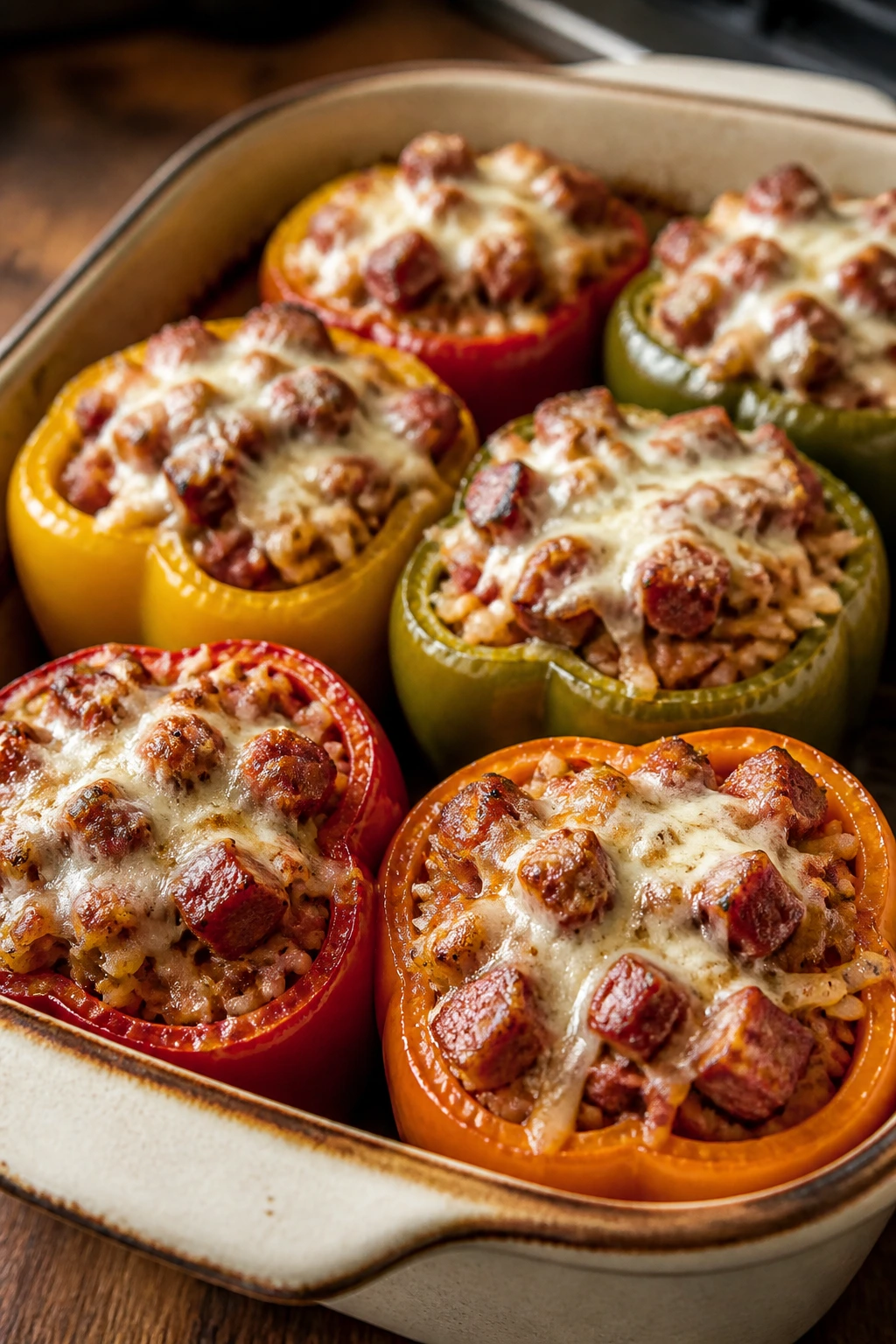
Intro:
Stuffed peppers get better when the filling has real personality. Summer sausage brings seasoning, rice gives the structure, and melted cheese on top keeps the whole thing from feeling dry or timid. The peppers soften just enough to hold their shape without going floppy.
Why It Works:
The sausage adds enough fat and seasoning that the rice filling tastes complete without extra work. Using a little tomato sauce helps bind the mixture, and baking the peppers in a covered dish first softens them before the cheese goes on. That keeps the tops from scorching while the peppers finish.
Key Ingredients:
- 4 large bell peppers, halved and seeded
- 10 ounces summer sausage, diced
- 2 cups cooked rice
- 1 cup tomato sauce
- 1 small onion, diced
- 2 cloves garlic, minced
- 1 cup shredded mozzarella
- 1/2 cup shredded Parmesan
- 1 teaspoon Italian seasoning
- 1 tablespoon olive oil
Quick Steps:
- Heat the oven to 375°F and oil a baking dish.
- Sauté onion, garlic, and sausage in olive oil for 4 minutes.
- Stir in rice, tomato sauce, and seasoning.
- Fill the pepper halves and arrange them in the dish.
- Cover and bake for 25 minutes, then uncover, add cheeses, and bake 10 minutes more.
- Rest briefly before serving.
Equipment for This Recipe:
- Baking dish
- Large skillet
- Spoon for stuffing
- Foil or lid
- Knife and cutting board
How to Serve This Dish:
Serve two pepper halves per person with extra tomato sauce spooned around the plate. A crisp salad or roasted zucchini keeps the meal from feeling too dense. It’s especially good when the cheese is browned in spots.
Pro Tips for This Recipe:
- Choose peppers with flat bottoms if you want them to sit upright.
- Par-cook the peppers if you like them softer than average.
- Pack the filling gently so it doesn’t dry out.
- A spoonful of sour cream on top works if you want a cooler finish.
Variations on This Dish:
- Mexican-Style Peppers: Use taco seasoning and cheddar.
- Orzo Swap: Replace rice with cooked orzo.
- Mediterranean Version: Add olives and feta.
Common Mistakes to Avoid with This Dish:
- Using raw rice in the filling: It won’t cook fast enough.
- Forgetting to cover the pan first: The peppers can stay too firm.
- Overfilling the halves: The filling expands a little as it heats.
13. Summer Sausage and Cabbage Skillet
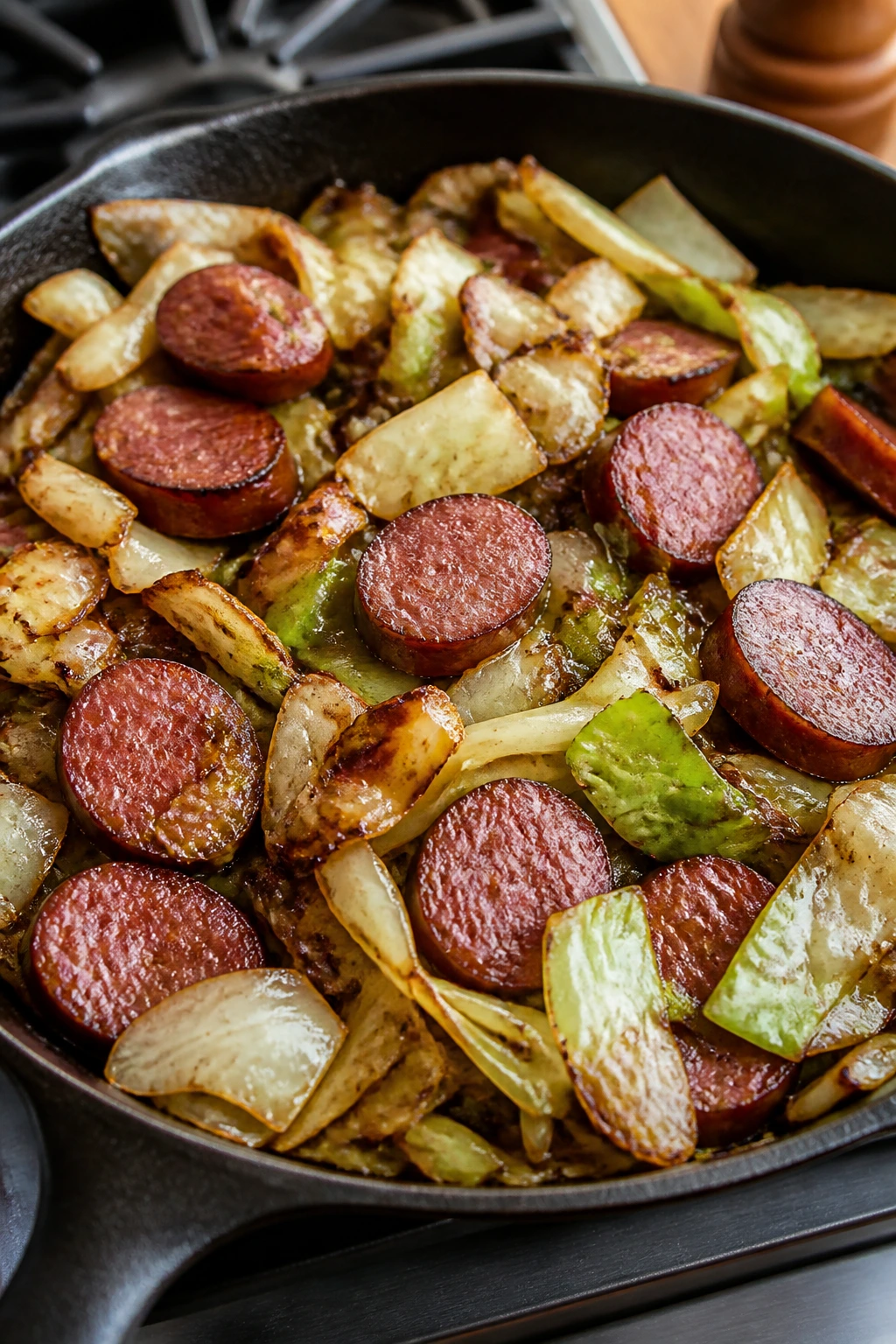
Intro:
Cabbage is one of those vegetables that turns lovely when it meets smoky fat. The leaves soften, the edges brown, and the sausage threads through the pan like the ingredient that knew where it belonged. It’s cheap, sturdy, and better than it sounds.
Why It Works:
Cabbage takes on flavor without falling apart, which is why it pairs so well with cured sausage. A little butter helps the cabbage brown instead of merely soften, and sliced onion gives the skillet a sweeter base. Apple cider vinegar at the end is what keeps the whole thing from tasting flat.
Key Ingredients:
- 10 ounces summer sausage, sliced and halved
- 1 small green cabbage, cored and sliced
- 1 onion, thinly sliced
- 2 tablespoons butter
- 1 tablespoon olive oil
- 1 teaspoon caraway seeds, optional
- 1/2 teaspoon black pepper
- 1 tablespoon apple cider vinegar
Quick Steps:
- Brown the sausage in butter and oil over medium heat for 4 minutes.
- Add onion and cook for 3 minutes.
- Stir in cabbage, caraway, and pepper.
- Cook, stirring often, for 10 to 12 minutes until the cabbage is tender with browned edges.
- Finish with vinegar and serve hot.
Equipment for This Recipe:
- Large skillet with lid
- Wooden spoon
- Knife and cutting board
- Measuring spoon
How to Serve This Dish:
Serve it as a main with rye bread or as a side beside roasted potatoes. Mustard on the table is not optional in my book. The skillet makes 4 generous servings.
Pro Tips for This Recipe:
- Slice the cabbage into ribbons that aren’t too thin or it will collapse.
- Use enough heat to brown the edges, not just steam the leaves.
- Add the vinegar at the end so its bite stays bright.
- If the pan looks dry, a splash of broth helps.
Variations on This Dish:
- Apple Cabbage Skillet: Add thin apple slices with the onion.
- Hot Paprika Version: Add smoked paprika and red pepper flakes.
- Dijon Finish: Stir in 1 teaspoon mustard at the end.
Common Mistakes to Avoid with This Dish:
- Chopping cabbage too fine: It can turn limp fast.
- Skipping acid: The skillet needs a sharp finish.
- Cooking on too low a heat: You’ll miss the browned bits that make it worth making.
14. Summer Sausage Chili
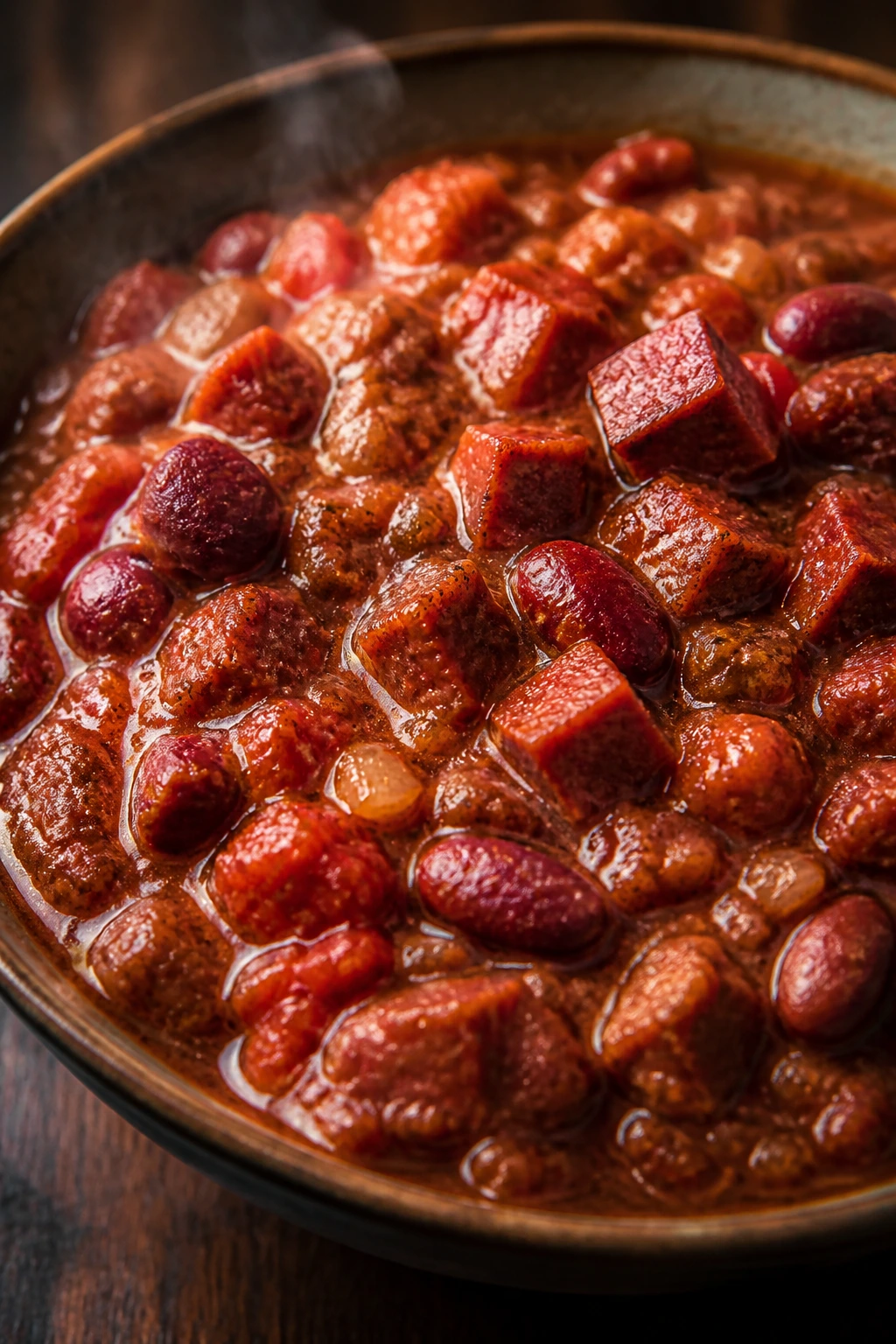
Intro:
Chili with summer sausage has a deeper, smokier edge than the usual ground-meat version. The beans make it hearty, the tomatoes keep it saucy, and the sausage shows up in little meaty bites that don’t disappear into the pot. It’s a strong choice when you want a crowd to stay near the bowl.
Why It Works:
Because the sausage is already cooked, you can focus on building the chili base instead of waiting for meat to finish. Chili powder, cumin, and a little cocoa or dark chocolate round out the tomato flavor without making the pot taste sweet. Beans add bulk, which matters if you’re feeding more than a couple of people.
Key Ingredients:
- 12 ounces summer sausage, diced
- 1 onion, diced
- 2 cloves garlic, minced
- 2 cans kidney beans, drained and rinsed
- 1 can diced tomatoes, 28 ounces
- 2 tablespoons chili powder
- 1 teaspoon cumin
- 2 cups beef broth
- 1 tablespoon tomato paste
- 1 tablespoon oil
Quick Steps:
- Brown the sausage in oil in a large pot for 4 minutes.
- Add onion and cook for 5 minutes, then stir in garlic for 30 seconds.
- Add tomato paste, chili powder, and cumin.
- Pour in tomatoes, beans, and broth.
- Simmer uncovered for 25 to 30 minutes until thickened.
- Taste and adjust seasoning before serving.
Equipment for This Recipe:
- Large soup pot
- Wooden spoon
- Can opener
- Ladle
- Cutting board
How to Serve This Dish:
Pile it into bowls with shredded cheddar, sour cream, and chopped onions. Cornbread or tortilla chips are both useful here. It serves 6 and holds well on a buffet.
Pro Tips for This Recipe:
- Let the onion cook long enough to sweeten; chili tastes flat if you rush that part.
- If the pot seems thin, simmer a little longer uncovered.
- A tiny spoonful of cocoa deepens the broth without tasting like dessert.
- Beans should be rinsed well so the chili doesn’t go muddy.
Variations on This Dish:
- Black Bean Chili: Swap one can of kidney beans for black beans.
- Smoky Beer Chili: Replace 1 cup broth with beer.
- Corn Chili: Add a cup of frozen corn near the end.
Common Mistakes to Avoid with This Dish:
- Underseasoning the base: Chili needs enough spice to carry the beans.
- Boiling it hard: A steady simmer is better for texture.
- Forgetting toppings: They matter here; a dry bowl is a missed opportunity.
15. Summer Sausage Breakfast Burritos
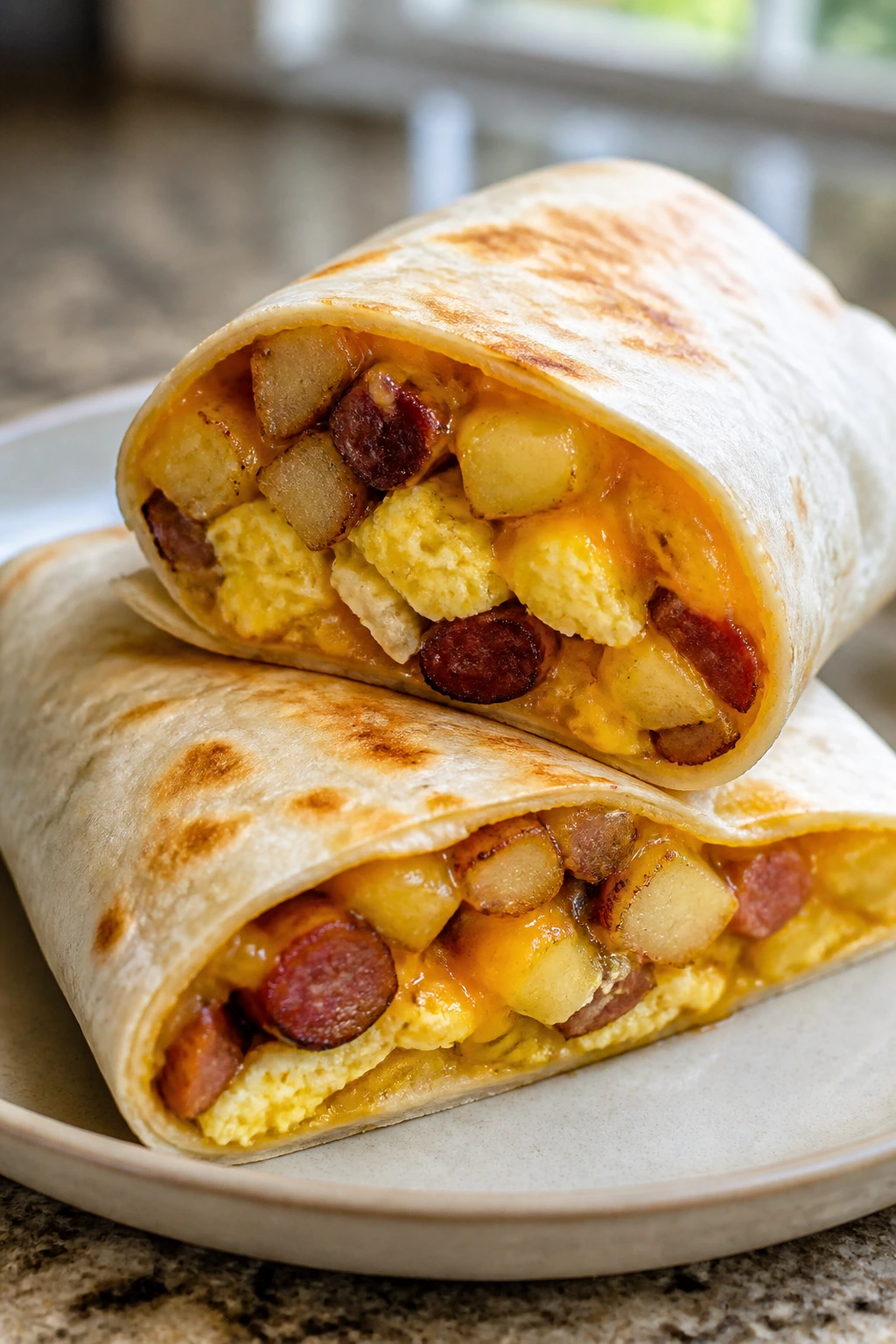
Intro:
These burritos are what you make when breakfast needs to travel. Eggs, potatoes, sausage, and cheese all tuck neatly into tortillas, and the seams hold better than you’d expect if you let the filling cool for a minute. Wrap a stack in foil and people can grab and go without drama.
Why It Works:
The potatoes give the burrito structure, while the eggs keep the filling soft enough to bite through. Summer sausage browns quickly and adds a salty backbone, which means you don’t need much else besides a little salsa. Wrapping them while warm helps the tortillas seal around the filling.
Key Ingredients:
- 8 ounces summer sausage, diced
- 6 large eggs
- 2 cups diced cooked potatoes or hash browns
- 1 cup shredded cheddar
- 6 large flour tortillas
- 2 tablespoons butter
- 1/4 cup salsa
- 2 tablespoons chopped chives, optional
Quick Steps:
- Brown the sausage in a skillet for 3 minutes, then add potatoes and cook until crisp.
- Push everything aside, melt butter, and scramble the eggs until just set.
- Stir sausage, potatoes, and eggs together.
- Warm the tortillas so they bend without cracking.
- Fill, add cheese and salsa, fold tightly, and roll.
- Toast seam-side down for 1 minute if you want a firmer seal.
Equipment for This Recipe:
- Large skillet
- Spatula
- Plate or foil for wrapping
- Dry skillet for toasting, optional
How to Serve This Dish:
Serve them with extra salsa, hot sauce, or a spoon of sour cream. If you’re making them for a group, cut each burrito in half so the filling is visible. They’re hearty enough to be the whole meal.
Pro Tips for This Recipe:
- Don’t overfill the tortillas. That’s the fastest way to split seams.
- Let the filling cool a little before rolling.
- A warm tortilla folds better and tears less.
- If making ahead, wrap in foil and reheat in a 350°F oven.
Variations on This Dish:
- Southwest Burrito: Add black beans and roasted corn.
- Green Chile Burrito: Mix in chopped green chiles.
- Breakfast for Dinner: Add a spoonful of sautéed peppers and onions.
Common Mistakes to Avoid with This Dish:
- Putting in watery salsa: It makes the tortilla soggy.
- Skipping the toast step: A little heat helps the burrito stay shut.
- Using cold tortillas: They crack when you roll them.
16. Summer Sausage Panini with Swiss and Dijon
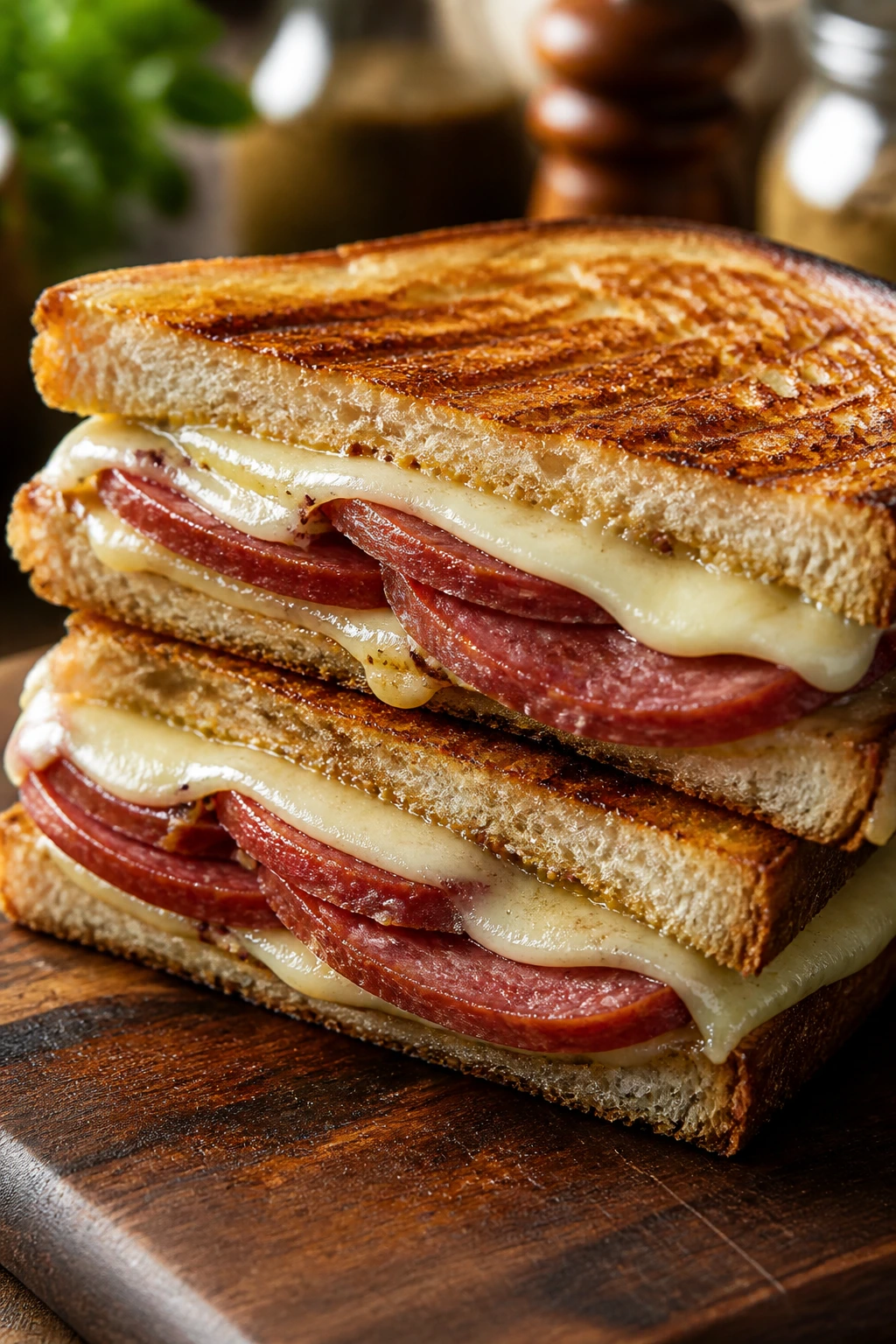
Intro:
This is the sandwich that behaves like lunch but eats like dinner. The bread crunches, the cheese melts into the sausage, and the mustard cuts through the richness in a way that keeps each bite moving. It’s simple, but it never feels thin.
Why It Works:
Swiss cheese and summer sausage have the same savory lane, and Dijon gives the sandwich a little bite without overpowering the smoke. A panini press or heavy skillet presses the bread into crisp layers while the cheese softens. Sauerkraut is optional, but I like it because the acidity keeps the sandwich from getting sleepy.
Key Ingredients:
- 8 slices rye or sourdough bread
- 10 ounces summer sausage, thinly sliced
- 8 slices Swiss cheese
- 2 tablespoons Dijon mustard
- 1/2 cup sauerkraut, well drained, optional
- 2 tablespoons softened butter
Quick Steps:
- Spread Dijon on four slices of bread.
- Layer sausage, cheese, and sauerkraut, then close the sandwiches.
- Butter the outsides of the bread.
- Cook in a panini press or skillet over medium heat for 3 to 4 minutes per side until golden and the cheese melts.
- Rest 1 minute, then cut in half.
Equipment for This Recipe:
- Panini press or cast-iron skillet
- Spatula
- Butter knife
- Cutting board
How to Serve This Dish:
Serve with kettle chips, pickles, or a dill salad. The sandwich is rich enough that a crunchy side helps. Half a panini is plenty for a lighter lunch; a full sandwich makes dinner.
Pro Tips for This Recipe:
- Drain the sauerkraut thoroughly or it will steam the bread.
- Use thin sausage slices so the sandwich presses evenly.
- If using a skillet, set another heavy pan on top for pressure.
- Cut on a sharp diagonal for cleaner layers.
Variations on This Dish:
- Reuben Lean: Use thousand island and extra sauerkraut.
- Sharp Cheddar Version: Swap Swiss for extra-sharp cheddar.
- Spicy Mustard Panini: Use whole-grain mustard plus a pinch of chili flakes.
Common Mistakes to Avoid with This Dish:
- Too much filling: It makes the sandwich unstable.
- Cooking on high heat: The bread burns before the cheese melts.
- Skipping the drain step on wet ingredients: Soggy bread is the enemy here.
17. Summer Sausage Gnocchi with Spinach
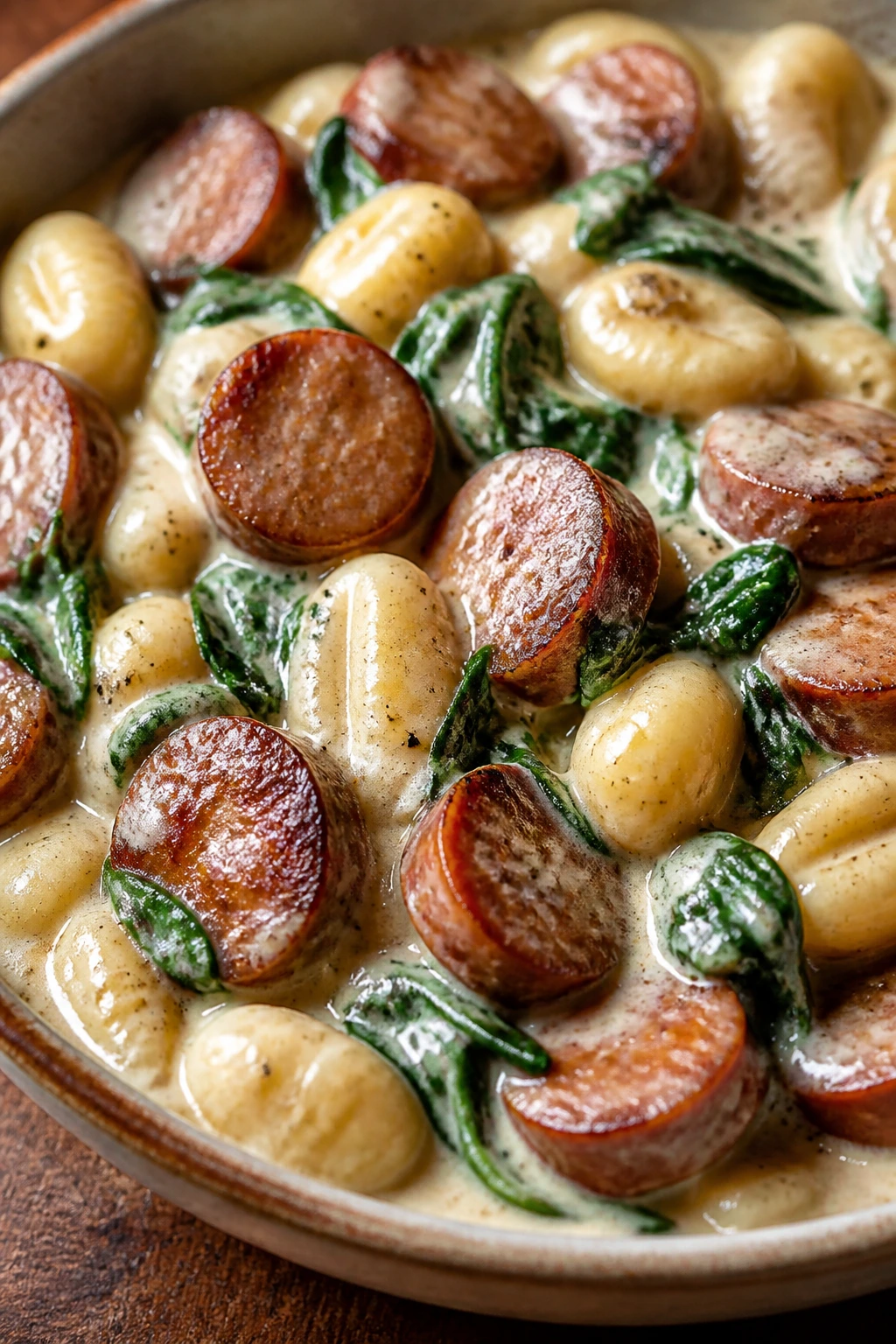
Intro:
Potato gnocchi and summer sausage are a surprisingly comfortable pair. The gnocchi go soft and pillowy, the sausage gives the pan a smoky chew, and the spinach fades in at the end like it knows not to overstay its welcome. This is a fast skillet meal that still feels composed.
Why It Works:
Shelf-stable or refrigerated gnocchi cooks in minutes, which makes it a good base for a quick pan sauce. Browned sausage, garlic, and a little cream make the sauce rich enough to cling to the gnocchi’s ridges. Spinach adds color and keeps the dish from reading as one heavy note.
Key Ingredients:
- 10 ounces summer sausage, sliced
- 1 pound potato gnocchi
- 3 cups baby spinach
- 2 cloves garlic, minced
- 1/2 cup heavy cream
- 1/2 cup chicken broth
- 2 tablespoons butter
- 1/3 cup grated Parmesan
- 1/4 teaspoon black pepper
Quick Steps:
- Brown the sausage in butter over medium heat for 3 minutes.
- Add garlic for 30 seconds.
- Pour in cream and broth, then add gnocchi and simmer 4 to 5 minutes until tender.
- Stir in spinach and Parmesan until the leaves wilt and the sauce thickens.
- Season with pepper and serve hot.
Equipment for This Recipe:
- Large skillet
- Wooden spoon
- Measuring cups
- Cheese grater, if needed
How to Serve This Dish:
Serve it in wide bowls so the sauce doesn’t hide. A little extra Parmesan and black pepper on top is enough garnish. It’s a solid main for 4, and a tomato salad on the side works better than bread.
Pro Tips for This Recipe:
- Don’t boil the sauce aggressively or the cream can split.
- Add the gnocchi directly to the skillet so it picks up flavor.
- If the sauce thickens too fast, loosen it with broth.
- Stir gently; gnocchi break if you bully them.
Variations on This Dish:
- Sun-Dried Tomato Version: Add chopped sun-dried tomatoes with the garlic.
- Lighter Skillet: Use half-and-half instead of cream.
- Herb Finish: Toss in basil or thyme at the end.
Common Mistakes to Avoid with This Dish:
- Overcooking gnocchi: It turns gummy fast.
- Using too much salt: Parmesan and sausage already bring plenty.
- Skipping the resting minute: The sauce settles into the gnocchi if you wait briefly.
18. Summer Sausage Cornbread Bake
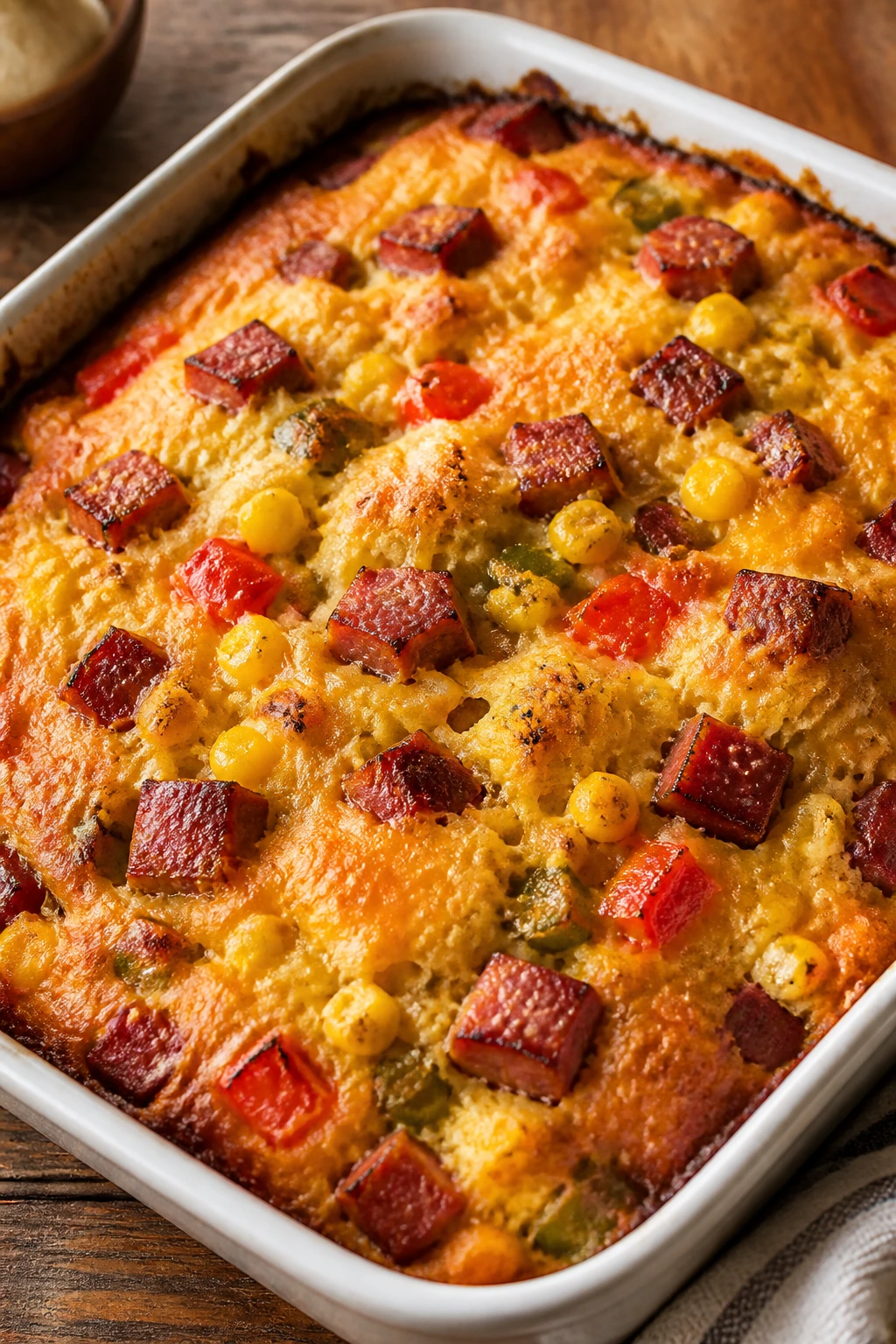
Intro:
This one sits between casserole and spoon bread, which is part of its charm. Cornbread bakes up around the sausage, corn, and peppers, so every square has a little sweet crumb and a little savory bite. It disappears at the table before people stop talking about what’s inside.
Why It Works:
Cornbread batter needs something with texture in the center so it doesn’t feel plain, and summer sausage does that job well. Corn kernels add sweetness and keep the bake from getting too dense. A little jalapeño or cheddar can push it toward brunch or dinner depending on your mood.
Key Ingredients:
- 1 cup cornmeal
- 1 cup all-purpose flour
- 1 tablespoon baking powder
- 1 teaspoon salt
- 1 cup milk
- 2 large eggs
- 1/4 cup melted butter
- 8 ounces summer sausage, diced
- 1 cup corn kernels
- 1/2 cup diced jalapeño or bell pepper
- 1 cup shredded cheddar
Quick Steps:
- Heat the oven to 375°F and grease an 8×8-inch dish.
- Whisk the dry ingredients in one bowl and the wet ingredients in another.
- Fold in sausage, corn, pepper, and half the cheddar.
- Pour into the dish and top with the remaining cheese.
- Bake for 30 to 35 minutes until golden and set in the center.
- Rest for 10 minutes before slicing.
Equipment for This Recipe:
- Mixing bowls
- Whisk
- 8×8-inch baking dish
- Spatula
- Measuring cups
How to Serve This Dish:
Serve warm squares with chili or soup, or eat them plain with butter. A drizzle of honey is optional but worth trying if you like sweet-salty contrast. It serves 6 as a side or 4 as a meal.
Pro Tips for This Recipe:
- Don’t overmix the batter; lumps are fine.
- Use thawed corn if you’re starting from frozen so the batter doesn’t get watery.
- Check the center with a toothpick. It should come out with a few moist crumbs, not raw batter.
- Let it cool before cutting or the crumb will fall apart.
Variations on This Dish:
- Hot Honey Version: Drizzle with hot honey after baking.
- Mexican Cornbread: Add cumin and green chiles.
- No-Jalapeño Version: Use sweet bell pepper only.
Common Mistakes to Avoid with This Dish:
- Overfilling the batter with add-ins: The bake gets heavy.
- Cutting too soon: Cornbread needs a rest to set.
- Baking in a too-small dish: It can stay raw in the middle.
19. Summer Sausage Grain Bowl
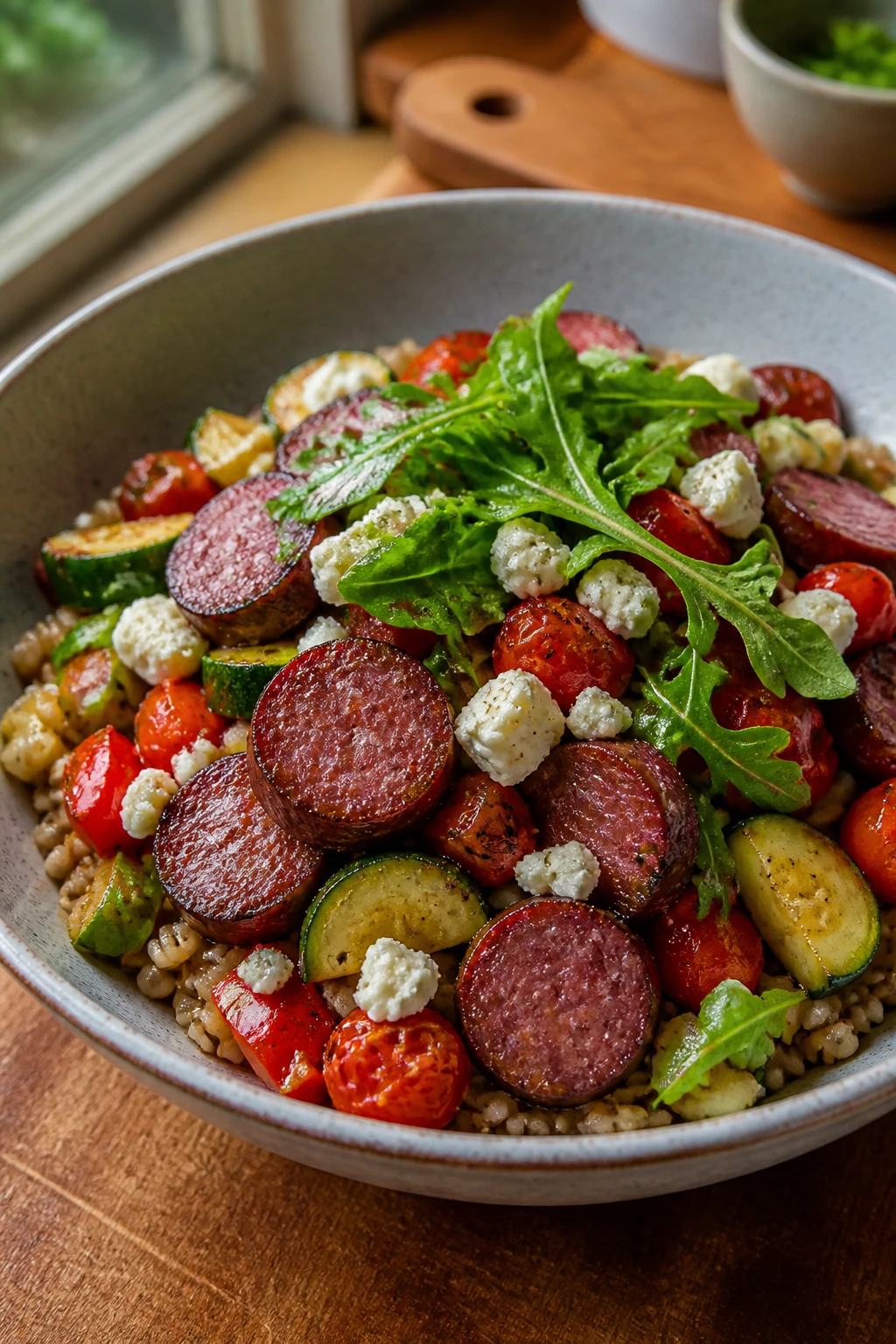
Intro:
A grain bowl sounds polished, but this one is practical first. Warm farro or quinoa, roasted vegetables, sausage coins, and a sharp vinaigrette make a bowl that eats like lunch and dinner both. It’s the sort of plate that feels balanced because each part has a job.
Why It Works:
Grains give the bowl substance, and summer sausage gives it enough salt that you don’t need a heavy sauce. Roasted vegetables add sweetness and texture, while a mustard vinaigrette pulls the whole thing together. If you serve it warm, the sausage fat loosens the dressing just a little, which is a good thing.
Key Ingredients:
- 2 cups cooked farro or quinoa
- 8 ounces summer sausage, sliced and browned
- 1 zucchini, chopped
- 1 red bell pepper, chopped
- 1 cup cherry tomatoes, halved
- 2 cups arugula
- 3 tablespoons olive oil
- 1 tablespoon red wine vinegar
- 1 teaspoon Dijon mustard
- 1/4 cup crumbled feta
Quick Steps:
- Roast zucchini and pepper with olive oil at 425°F for 15 minutes.
- Brown the sausage in a skillet for 3 minutes.
- Whisk vinegar, mustard, and a pinch of salt into a quick dressing.
- Build bowls with grains, greens, roasted vegetables, sausage, and tomatoes.
- Drizzle with dressing and finish with feta.
Equipment for This Recipe:
- Sheet pan
- Skillet
- Mixing bowl
- Whisk
- Serving bowls
How to Serve This Dish:
Serve it warm, not piping hot, so the greens stay perky. A spoonful of hummus on the side works if you want extra body. It’s good for lunch boxes too, though I’d keep the dressing separate until serving.
Pro Tips for This Recipe:
- Season the grains lightly before assembling.
- Let roasted vegetables cool for a minute so they don’t wilt the arugula instantly.
- Use a dressing with enough acid to cut the sausage.
- Add avocado only if you’re serving right away.
Variations on This Dish:
- Mediterranean Bowl: Add cucumber and olives.
- Warm Autumn Bowl: Swap in roasted squash and spinach.
- Creamy Tahini Finish: Use tahini dressing instead of vinaigrette.
Common Mistakes to Avoid with This Dish:
- Building the bowl with cold grains straight from the fridge: Warm grains carry flavor better.
- Using a bland dressing: The bowl needs something sharp.
- Skipping texture contrast: You want soft, crisp, and chewy in the same bowl.
20. Summer Sausage Nacho Tray
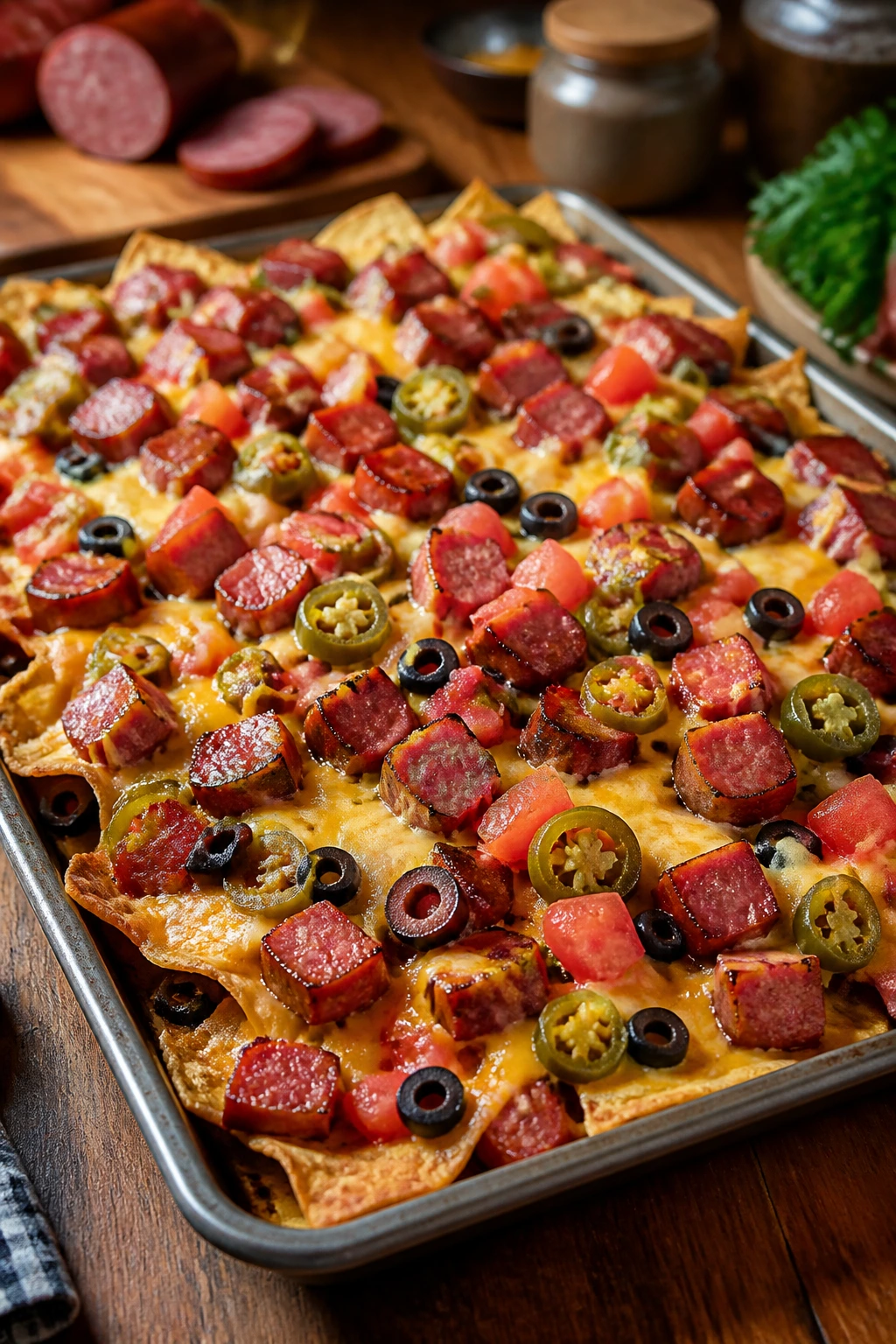
Intro:
A tray of nachos is one of the fastest ways to make a crowd gather in the kitchen. Summer sausage gives the chips real substance, the cheese melts into the gaps, and the toppings can be as tidy or chaotic as you want. This is not a plate for neatness.
Why It Works:
Because the sausage is already cooked, you only need to warm it with the beans and spices before building the tray. That keeps the chips from sitting under raw filling too long. Layering in two rounds gives you better coverage, which matters because nobody likes the first scoop being all bare chips.
Key Ingredients:
- 1 large bag tortilla chips
- 10 ounces summer sausage, diced
- 1 cup refried beans
- 2 cups shredded cheddar or Monterey Jack
- 1 jalapeño, sliced
- 1/2 cup diced tomatoes
- 1/4 cup sliced black olives
- 2 tablespoons sliced green onions
- 1/4 cup sour cream
- Salsa for serving
Quick Steps:
- Warm the sausage and refried beans together in a skillet.
- Spread half the chips on a sheet pan.
- Add half the cheese, sausage mixture, jalapeño, tomatoes, and olives.
- Repeat with the remaining chips and toppings.
- Bake at 400°F for 8 to 10 minutes until the cheese melts.
- Finish with green onions and sour cream.
Equipment for This Recipe:
- Rimmed sheet pan
- Skillet
- Spoon for spreading beans
- Oven mitts
How to Serve This Dish:
Serve immediately, right on the pan, with extra napkins nearby. A crisp lettuce salad or a bowl of pico de gallo keeps the plate from feeling too heavy. It feeds 6 as a snacky dinner or 8 as an appetizer-plus-meal.
Pro Tips for This Recipe:
- Don’t drown the chips. Use small spoonfuls and build in layers.
- Warm the beans first so they spread easily.
- Add cold toppings after baking, not before.
- Use sturdy chips that won’t collapse under the cheese.
Variations on This Dish:
- BBQ Nachos: Swap refried beans for barbecue sauce and pickled onions.
- Breakfast Nachos: Add scrambled eggs and breakfast potatoes.
- Green Chile Tray: Replace jalapeño with roasted green chiles.
Common Mistakes to Avoid with This Dish:
- Using a flimsy chip: It breaks before the second bite.
- Overbaking: The cheese should melt, not brown into rubber.
- Waiting too long to serve: Nachos lose their edge fast.
21. Summer Sausage Breakfast Casserole
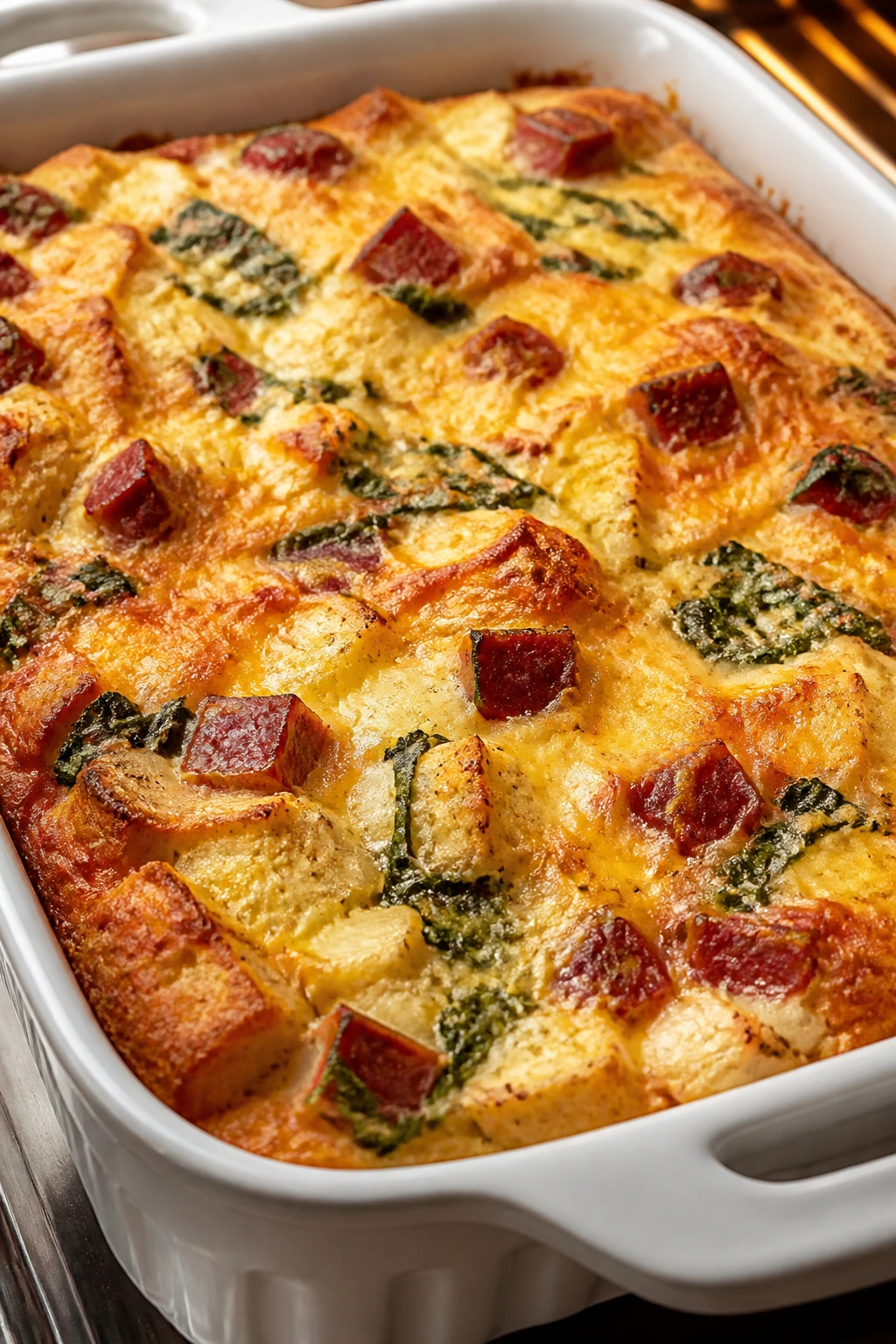
Intro:
This is the make-ahead breakfast you pull out when the table needs to feed a dozen people and you do not want to stand at the stove. Bread cubes soak in eggs and milk, the sausage gives the casserole its backbone, and the top bakes into a soft, golden layer with browned cheese around the edges. It slices cleanly, which I appreciate.
Why It Works:
Bread cubes absorb the custard and keep the eggs from turning spongy. Summer sausage adds enough seasoning that the casserole tastes full even before you add extra cheese or herbs. The overnight rest matters here; it gives the bread time to soak without leaving dry pockets in the middle.
Key Ingredients:
- 8 cups day-old bread cubes
- 10 ounces summer sausage, diced
- 8 large eggs
- 2 cups whole milk
- 2 cups shredded cheddar
- 1 small onion, diced
- 1 cup chopped spinach
- 1 teaspoon dry mustard
- 1/2 teaspoon kosher salt
- 1/2 teaspoon black pepper
Quick Steps:
- Grease a 9×13-inch baking dish.
- Scatter bread, sausage, onion, spinach, and half the cheese in the dish.
- Whisk eggs, milk, mustard, salt, and pepper.
- Pour over the bread mixture and press lightly.
- Refrigerate at least 1 hour or overnight.
- Bake at 350°F for 45 to 55 minutes until set and golden.
Equipment for This Recipe:
- 9×13-inch baking dish
- Large mixing bowl
- Whisk
- Foil for covering if needed
How to Serve This Dish:
Serve with fruit, coffee, and a small bowl of salsa if you like a little zip with breakfast. It’s sturdy enough to cut into neat squares. One pan serves 8, sometimes more if the sides are generous.
Pro Tips for This Recipe:
- Use day-old bread so the custard absorbs evenly.
- Press the top down once after pouring so the bread soaks up the liquid.
- If baking from cold, add a few extra minutes.
- Let it rest before cutting or the custard will run.
Variations on This Dish:
- Mushroom Spin: Add sautéed mushrooms for a earthier flavor.
- Pepper Jack Version: Swap cheddar for pepper jack.
- No-Bread Bake: Use cubed croissants for a softer, richer texture.
Common Mistakes to Avoid with This Dish:
- Using fresh bread only: It can turn wet in the center.
- Underseasoning the custard: The bread absorbs the flavor, so season the eggs well.
- Slicing too early: The structure needs a short rest.
22. Summer Sausage Baked Ziti
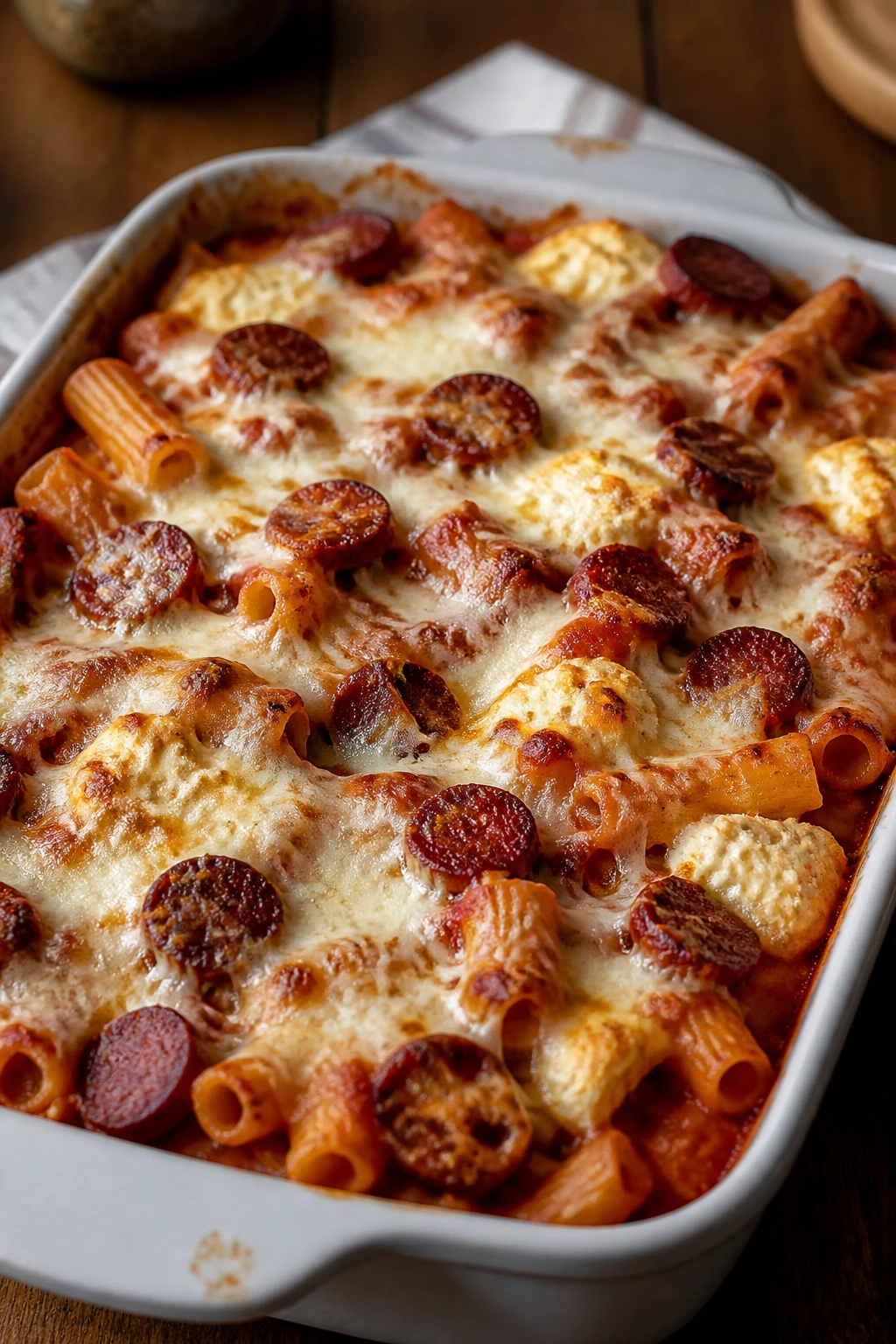
Intro:
Baked ziti is usually a red-sauce story, but summer sausage gives it a smoky note that changes the whole mood. The cheese melts into the pasta, the sauce clings to every tube, and the top browns in patches that are worth fighting over. It’s the kind of pasta bake people ask about before they’ve finished chewing.
Why It Works:
Ziti holds sauce in its shape, which matters when you’re mixing in sausage and ricotta. The sausage slices or cubes bring texture that ground meat can’t imitate, and a little extra mozzarella on top gives you that familiar pull when the dish comes out of the oven. Baking uncovered at the end keeps the top from going soggy.
Key Ingredients:
- 1 pound ziti
- 10 ounces summer sausage, diced
- 3 cups marinara sauce
- 1 1/2 cups ricotta
- 2 cups shredded mozzarella
- 1/2 cup grated Parmesan
- 2 cloves garlic, minced
- 1 teaspoon Italian seasoning
- 1 tablespoon olive oil
Quick Steps:
- Cook ziti until just shy of al dente.
- Brown the sausage in olive oil for 3 minutes, then add garlic for 30 seconds.
- Stir in marinara and Italian seasoning.
- Mix pasta with sauce, ricotta, half the mozzarella, and half the Parmesan.
- Transfer to a baking dish, top with remaining cheese, and bake at 375°F for 25 minutes.
- Rest 10 minutes before serving.
Equipment for This Recipe:
- Large pot
- Skillet
- Baking dish
- Spoon or spatula
- Colander
How to Serve This Dish:
Serve with a Caesar salad or simply dressed greens to keep the meal from getting too heavy. Garlic bread is optional but expected by some people. It feeds 6 to 8 and reheats cleanly the next day.
Pro Tips for This Recipe:
- Undercook the pasta slightly because it finishes in the oven.
- Mix some cheese inside the pasta and some on top for better texture.
- If the sauce is thick, loosen it with a splash of pasta water.
- Let the bake settle before slicing.
Variations on This Dish:
- Spinach Ziti: Fold in a few handfuls of spinach.
- Spicy Red Bake: Add red pepper flakes and a little hot sauce.
- White Ziti: Use Alfredo-style sauce instead of marinara.
Common Mistakes to Avoid with This Dish:
- Overbaking: The pasta can dry out fast.
- Using too little sauce: The ziti should look saucy before baking.
- Forgetting the rest period: It slices better after a short wait.
23. Summer Sausage Potato Soup

Intro:
Potato soup gets a smoky edge when summer sausage joins the pot. The potatoes break down just enough to thicken the broth, while cream or milk rounds out the edges and keeps the soup from feeling thin. It’s a cold-weather recipe in spirit, but nobody complains when it shows up any time the room needs comfort.
Why It Works:
Potatoes naturally thicken soup as they simmer, which means you don’t need much flour or fuss. The sausage browns first and leaves flavor in the pot, and a little sour cream at the end gives the soup a tang that balances the richness. Chives or scallions on top keep the bowl from looking beige.
Key Ingredients:
- 10 ounces summer sausage, diced
- 2 pounds Yukon Gold potatoes, peeled and cubed
- 1 onion, diced
- 3 cloves garlic, minced
- 4 cups chicken broth
- 1 1/2 cups milk
- 1/2 cup sour cream
- 2 tablespoons butter
- 1 teaspoon salt
- 1/2 teaspoon black pepper
Quick Steps:
- Brown the sausage in butter in a soup pot.
- Add onion and garlic and cook for 4 minutes.
- Add potatoes and broth, then simmer for 15 to 20 minutes until tender.
- Mash some of the potatoes in the pot to thicken the soup.
- Stir in milk and sour cream over low heat.
- Season and serve with chives.
Equipment for This Recipe:
- Soup pot
- Potato masher
- Ladle
- Cutting board and knife
How to Serve This Dish:
Ladle it into bowls and finish with shredded cheddar, chives, or a few crumbled crackers. A buttered roll makes sense here, though the soup can stand alone. It serves 4 to 6 depending on how much bread shows up.
Pro Tips for This Recipe:
- Use Yukon Golds if you want a naturally creamy texture.
- Don’t boil after adding milk or the soup can split.
- Mash only part of the pot so you keep some potato chunks.
- Taste before adding more salt; the sausage may cover more than you think.
Variations on This Dish:
- Cheddar Potato Soup: Add 1 cup shredded cheddar off the heat.
- Leek Version: Swap the onion for two leeks.
- Thicker Chowder Style: Stir in a slurry of cornstarch and water.
Common Mistakes to Avoid with This Dish:
- Overblending: You want texture, not glue.
- Boiling the dairy: That’s how the soup breaks.
- Cutting the potatoes too large: They take forever to soften.
24. Summer Sausage Sliders with Sweet Rolls
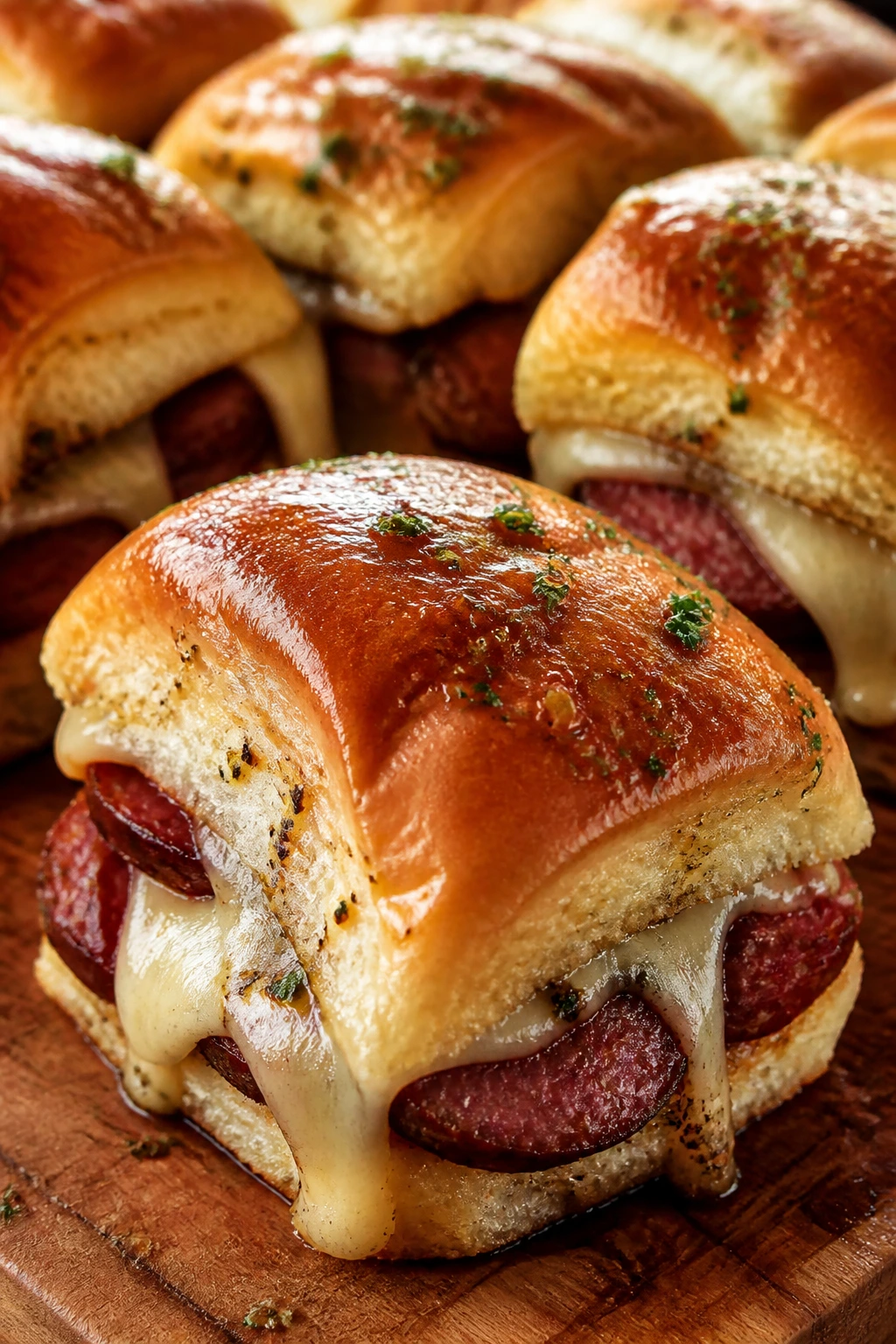
Intro:
Sliders are dangerous in the most practical way. Tiny buns, melted cheese, warm sausage, and a buttery top mean people eat two before they notice. The sweet rolls play against the sausage in a way that sounds odd until you taste it, then it makes complete sense.
Why It Works:
Hawaiian-style rolls bring a little sweetness that balances the sausage’s salt and smoke. Baking the whole tray together lets the cheese melt evenly and keeps the bottoms soft while the tops brown. A mustard-butter glaze adds just enough sharpness to stop the sliders from drifting into pure sweetness.
Key Ingredients:
- 12 sweet slider rolls
- 12 ounces summer sausage, thinly sliced
- 8 slices provolone or Swiss cheese
- 3 tablespoons butter, melted
- 1 tablespoon Dijon mustard
- 1 teaspoon poppy seeds
- 1 teaspoon Worcestershire sauce
Quick Steps:
- Split the rolls horizontally without separating them fully.
- Layer sausage and cheese across the bottom half.
- Replace the tops.
- Mix butter, mustard, poppy seeds, and Worcestershire, then brush over the rolls.
- Bake at 350°F for 12 to 15 minutes until the cheese melts.
- Pull apart and serve warm.
Equipment for This Recipe:
- 9×13-inch baking dish
- Pastry brush
- Sharp knife
- Foil for covering if the tops brown fast
How to Serve This Dish:
Serve the sliders with pickles, chips, or a crunchy slaw. They work as a game-day meal, a casual dinner, or the thing people stand around picking up from the tray. Four sliders per person is a fair count if there aren’t many sides.
Pro Tips for This Recipe:
- Keep the roll slab intact until after baking; it’s easier to handle.
- Brush the glaze all the way to the edges so the tops don’t dry out.
- Thinly sliced sausage layers better than thick coins here.
- Cover loosely with foil if the tops brown too quickly.
Variations on This Dish:
- Pickle Slider: Add dill pickle chips before baking.
- Spicy Version: Use pepper jack and a dash of hot sauce in the butter.
- Onion Mushroom Slider: Add a layer of sautéed onions and mushrooms.
Common Mistakes to Avoid with This Dish:
- Separating the rolls too early: They’re harder to assemble.
- Using too much glaze: The bottoms can go soggy.
- Skipping the cheese: It helps the sliders stay together.
25. Summer Sausage Skillet Goulash
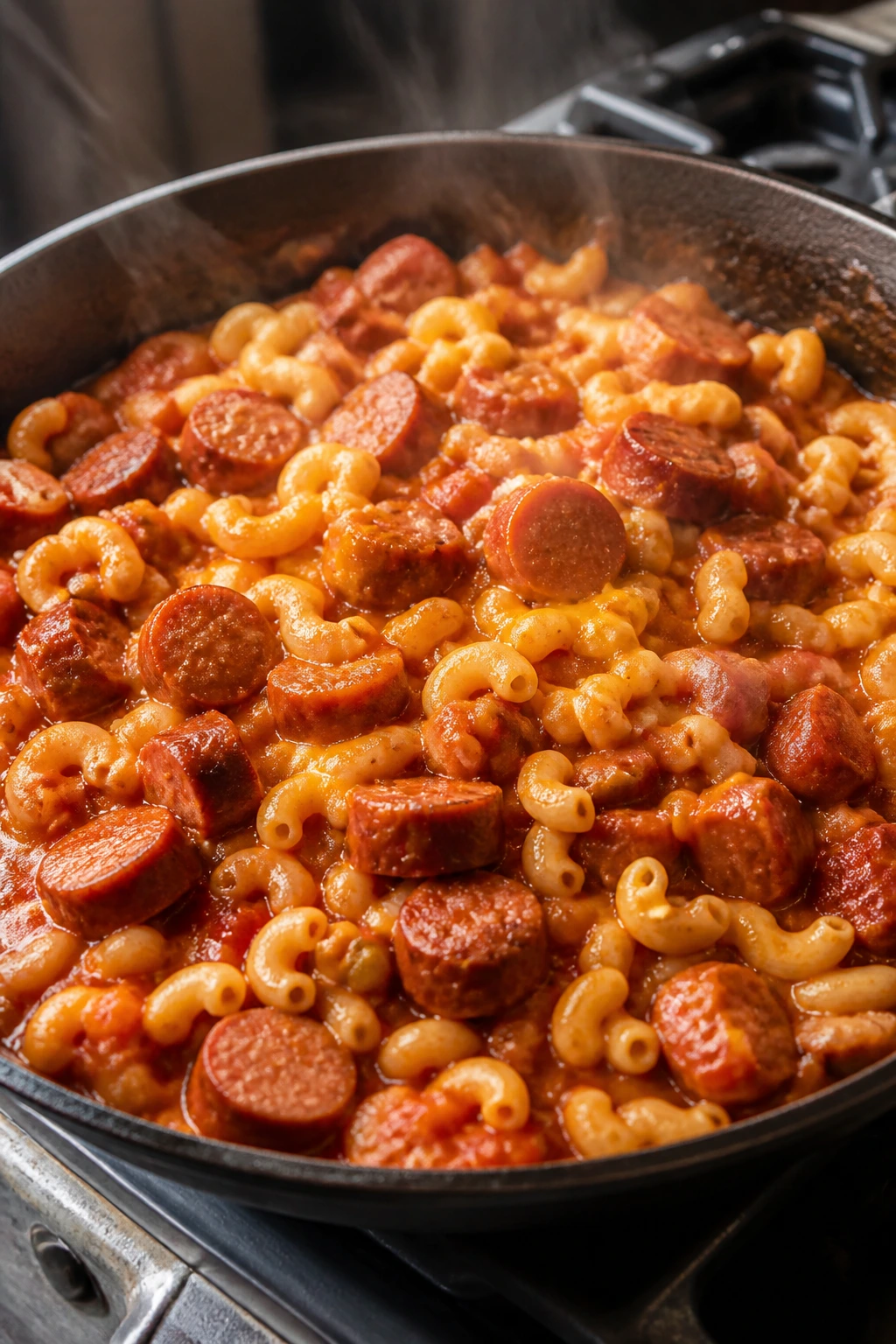
Intro:
This is the one-pot pasta I reach for when I want something old-school and filling without much ceremony. The sausage seasons the sauce, elbow macaroni carries it, and the whole pan lands somewhere between casserole and stew. It’s humble food, which is sometimes exactly what a crowd wants.
Why It Works:
Goulash depends on starch and sauce staying in balance, and elbow macaroni gives you that without much effort. Browned sausage replaces the usual ground meat and adds a smokier, saltier profile. A little paprika and tomato paste deepen the color and keep the sauce from tasting flat.
Key Ingredients:
- 12 ounces summer sausage, diced
- 2 cups elbow macaroni
- 1 onion, diced
- 3 cloves garlic, minced
- 1 can diced tomatoes, 14.5 ounces
- 2 cups beef broth
- 2 tablespoons tomato paste
- 1 teaspoon paprika
- 1 cup shredded cheddar
- 1 tablespoon oil
Quick Steps:
- Brown the sausage in oil in a deep skillet or Dutch oven.
- Add onion and cook for 4 minutes, then stir in garlic for 30 seconds.
- Add tomato paste and paprika.
- Pour in tomatoes, broth, and macaroni.
- Simmer covered for 10 to 12 minutes until the pasta is tender.
- Stir in cheddar and serve hot.
Equipment for This Recipe:
- Deep skillet or Dutch oven
- Wooden spoon
- Measuring cups
- Lid that fits well
How to Serve This Dish:
Spoon it into bowls and let the cheddar melt into the top. A dill pickle or simple cucumber salad is a smart side because the goulash is soft and savory. It makes 4 to 6 hearty servings.
Pro Tips for This Recipe:
- Stir once or twice while the pasta simmers so nothing sticks.
- Keep an eye on liquid; macaroni drinks it fast.
- Add a splash more broth if the pan gets too dry before the pasta is tender.
- Let the cheddar melt off the heat for a smoother finish.
Variations on This Dish:
- Hungarian-Style Edge: Add more paprika and a spoonful of sour cream.
- Veggie Goulash: Stir in peas or diced zucchini near the end.
- Spicy Tomato Version: Add red pepper flakes and hot sauce.
Common Mistakes to Avoid with This Dish:
- Walking away from the simmer: Pasta sticks quickly in a thick sauce.
- Using too little broth: The macaroni needs room to cook.
- Adding cheese while boiling: It can turn grainy instead of smooth.
Why Summer Sausage Earns Its Place at the Center of the Table
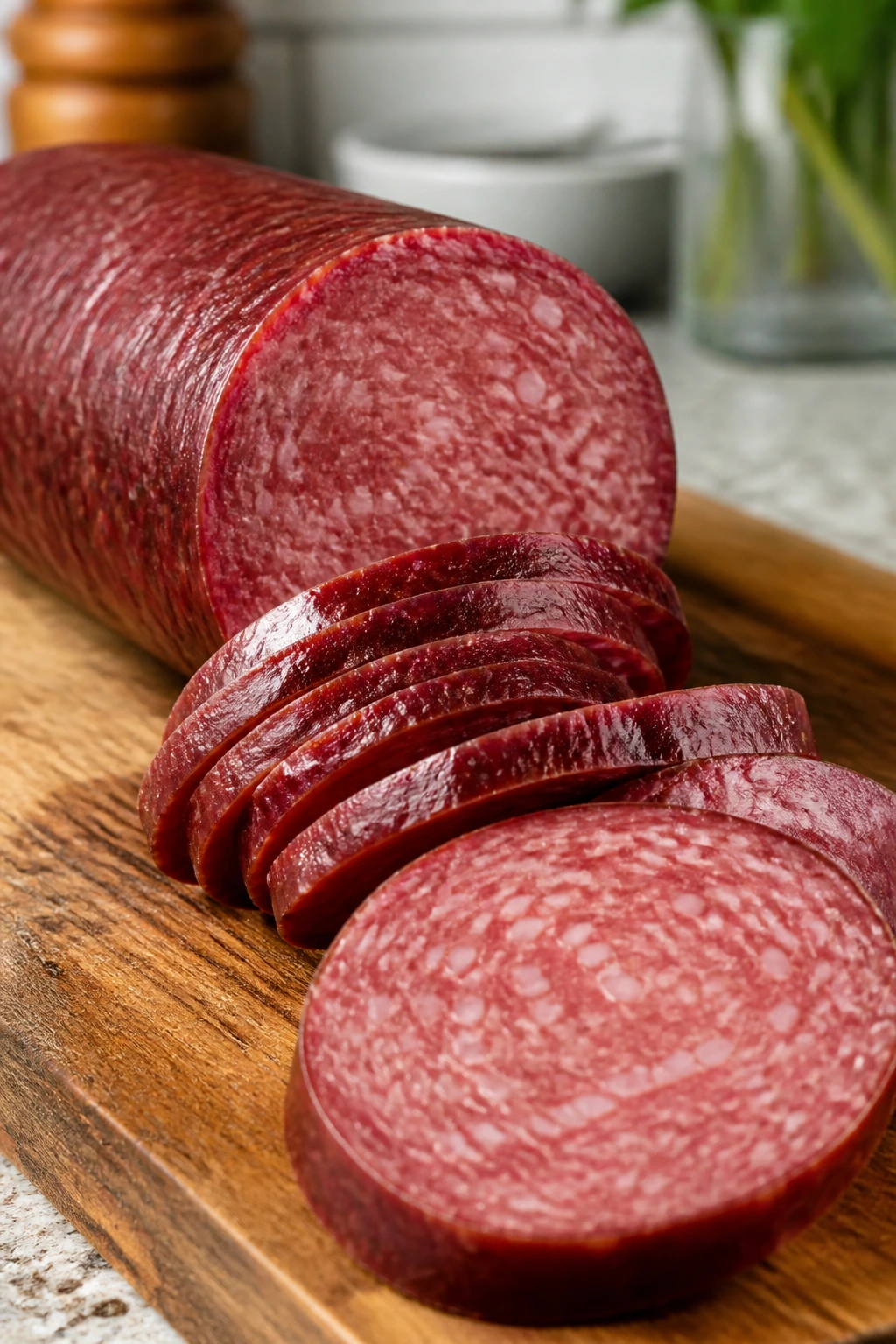
Summer sausage is one of those ingredients that looks modest until you cook with it. Then it starts acting like a shortcut and a flavor base at the same time. It seasons a pot of beans. It wakes up rice. It makes breakfast casseroles less bland and pasta bakes less flat. That combination is why these summer sausage recipes work so well for feeding a crowd: they don’t depend on a complicated sauce or a long braise to feel complete.
I also like that you can push it in different directions without losing what makes it useful. Dice it for soups and skillet meals. Slice it for sandwiches and pizza. Brown it hard when you want extra texture, or warm it gently when it’s already headed into a casserole. It’s flexible, but not vague. There’s a difference, and this ingredient has the kind of shape that keeps its own identity.
Essential Equipment for These Recipes
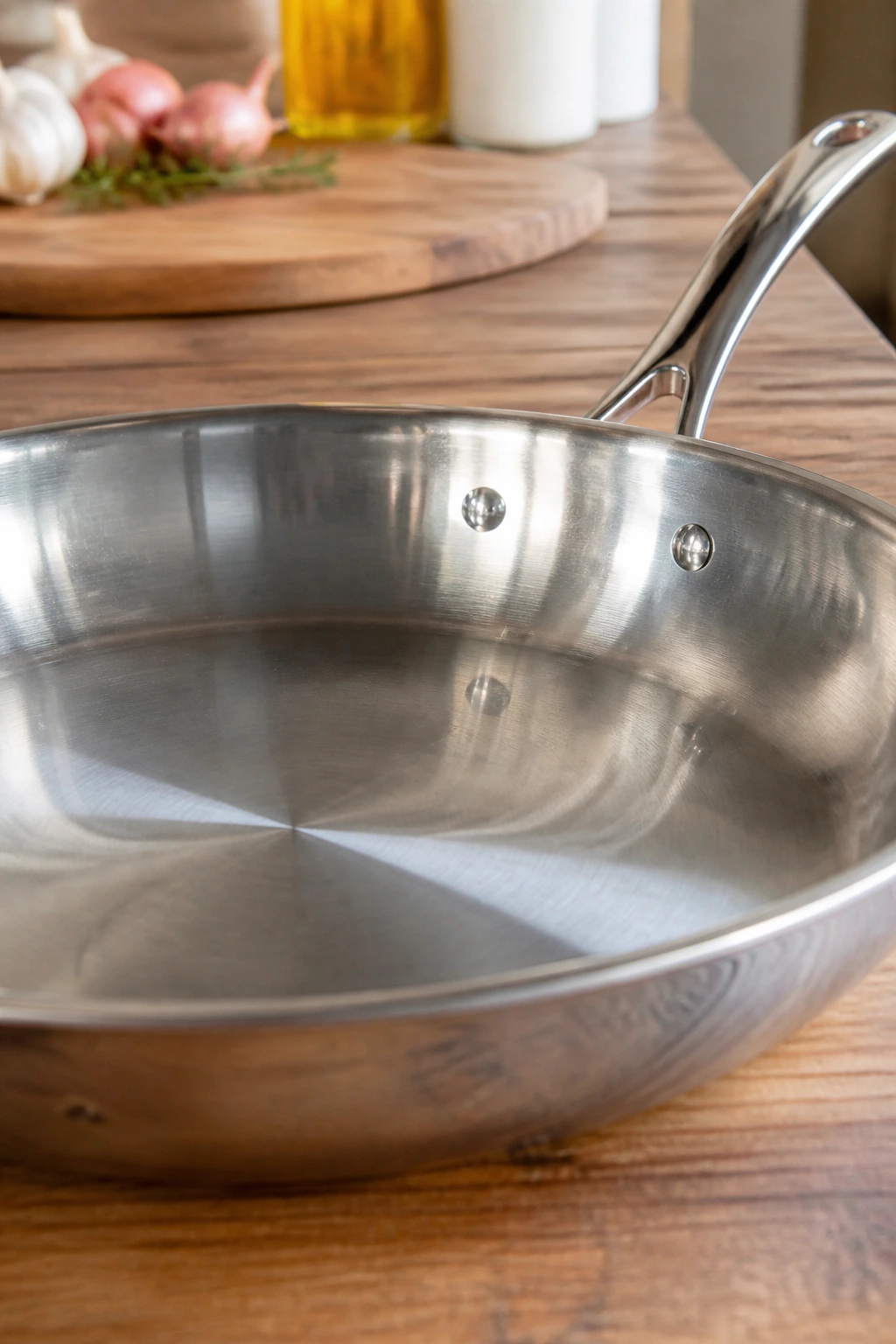
- 12-inch oven-safe skillet: Useful for breakfast skillets, pizza skillet, gnocchi, and panini-style pressing with a lid or second pan.
- Large Dutch oven or soup pot: Best for chili, jambalaya, potato soup, and white bean soup.
- 9×13-inch baking dish: The workhorse for casseroles, baked ziti, breakfast casserole, and hash brown bake.
- Rimmed sheet pan: Needed for sheet-pan dinner, nachos, sliders, or anything that needs an even roast.
- Large skillet or sauté pan: The best all-purpose pan for browning sausage before building a sauce.
- Sharp knife and cutting board: Summer sausage slices cleanly, but a good knife makes the prep faster and safer.
- Wooden spoon or spatula: Better than a whisk for folding sausage into pasta, rice, and casseroles.
- Whisk: Handy for custards, cheese sauces, and dressing.
- Colander: Needed for pasta, rice rinsing, or draining beans.
- Measuring cups and spoons: Small amounts of acid, seasoning, and broth make a big difference here, so guessing is a bad habit.
- Airtight storage containers: Especially useful for leftovers from casseroles, pasta bakes, and soups.
Smart Shopping and Ingredient Tips
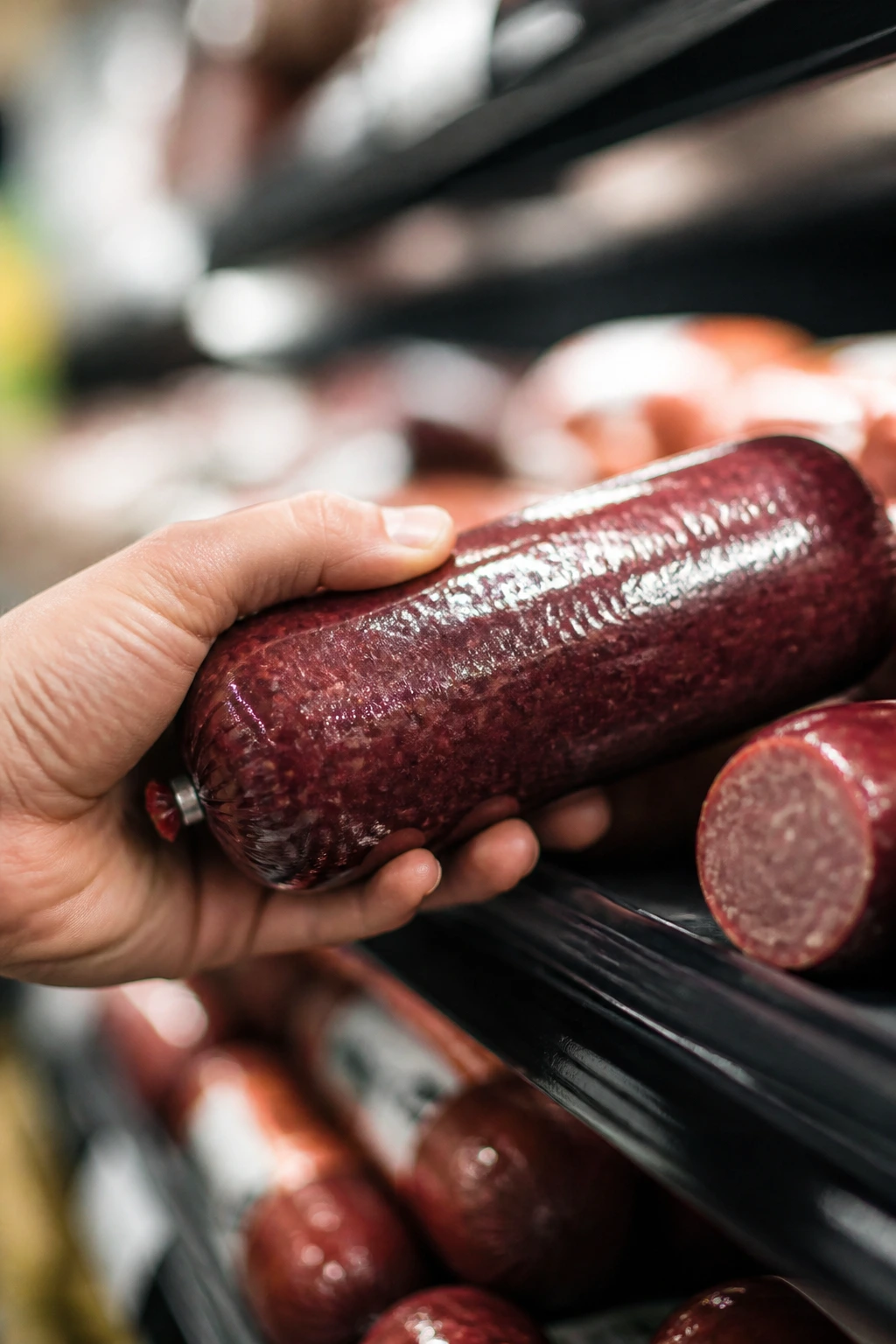
Pick summer sausage that feels firm and dense in the package. If the casing is wrinkled, that’s not a disaster, but the log should still look compact and evenly smoked. Beef summer sausage tends to be richer and a little firmer, while turkey versions are leaner and can dry faster in the pan, so I reach for beef when I want the sausage to carry a dish and turkey when I want to lighten a casserole or sandwich.
Slice thickness matters more than people think. For soups, chili, and fried rice, small dice gives you little bursts of flavor in every spoonful. For skillets, sliders, and panini, thin half-moons brown faster and sit more naturally among the other ingredients. Thick coins belong in sheet-pan dinners and breakfast skillets where they have room to crisp.
Use frozen vegetables when they make sense. Hash browns, peas, corn, spinach, and green beans all behave well from frozen, and that’s one of the reasons these recipes are weeknight-friendly without sounding like weeknight food. For cheese, block cheese still melts smoother than bagged shreds if you’ve got the time to grate it. For canned tomatoes, choose plain diced tomatoes or good marinara instead of flavored versions that already lean too sweet.
Beans and grains deserve a quick rinse unless the recipe says otherwise. That extra minute keeps chili and soup cleaner and less starchy. And if a dish leans rich — mac and cheese, casserole, breakfast bake — give yourself one sharp ingredient on the side or in the recipe itself: mustard, vinegar, pickles, salsa, or lemon. The sausage is salty. Use that to your advantage instead of piling on more salt.
How to Serve These Recipes
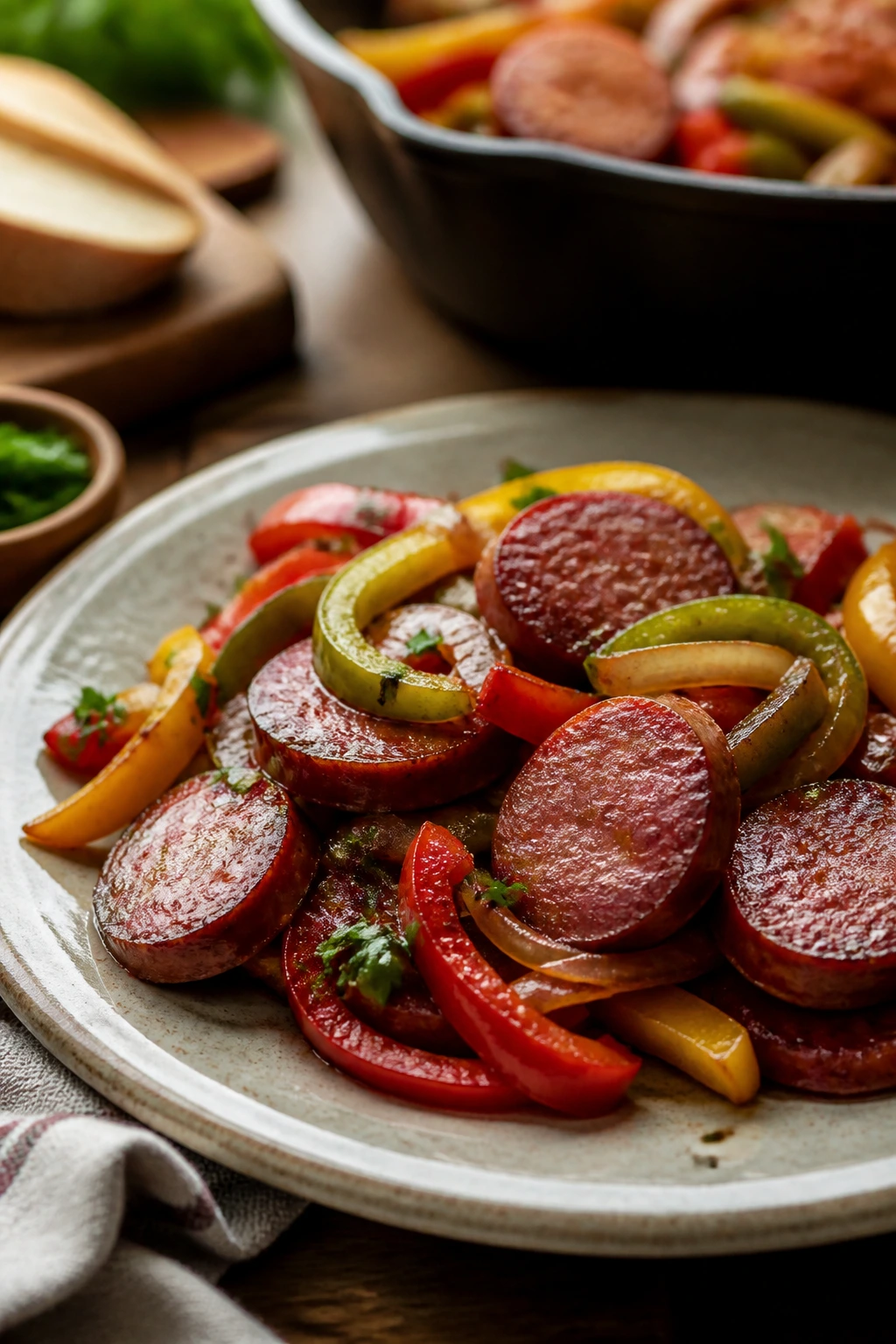
Presentation:
Use shallow bowls for pastas and soups, cast-iron skillets for breakfast dishes, and baking dishes or sheet pans for casseroles and nachos when you want a casual, help-yourself look. A scatter of fresh herbs, scallions, or black pepper is enough to make a platter feel finished without turning it fussy.
Accompaniments:
Crisp salads, pickles, fruit, cornbread, crusty bread, and roasted vegetables all fit this collection because they add contrast. Anything acidic helps when the dish is rich: tomato salad with pasta bake, dill pickles with sliders, lemony greens with grain bowls, salsa with breakfast items.
Portions:
Most of these recipes feed 4 to 6 as a main dish and 6 to 8 when served with sides. For potluck service, cut casseroles into smaller squares than you think you need. For soups and chili, count on about 1 1/2 cups per adult serving, a little more if the bowl is the whole meal.
Beverage Pairing:
I like cold lager with sausage-heavy dinners because it clears the palate without stepping on the smoke. For nonalcoholic drinks, sparkling water with lemon or unsweetened iced tea works across the board. Coffee is the obvious partner for breakfast casseroles and burritos, and a tart lemonade is a good counterpoint to cheesy bakes.
Additional Tips and Flavor Boosters
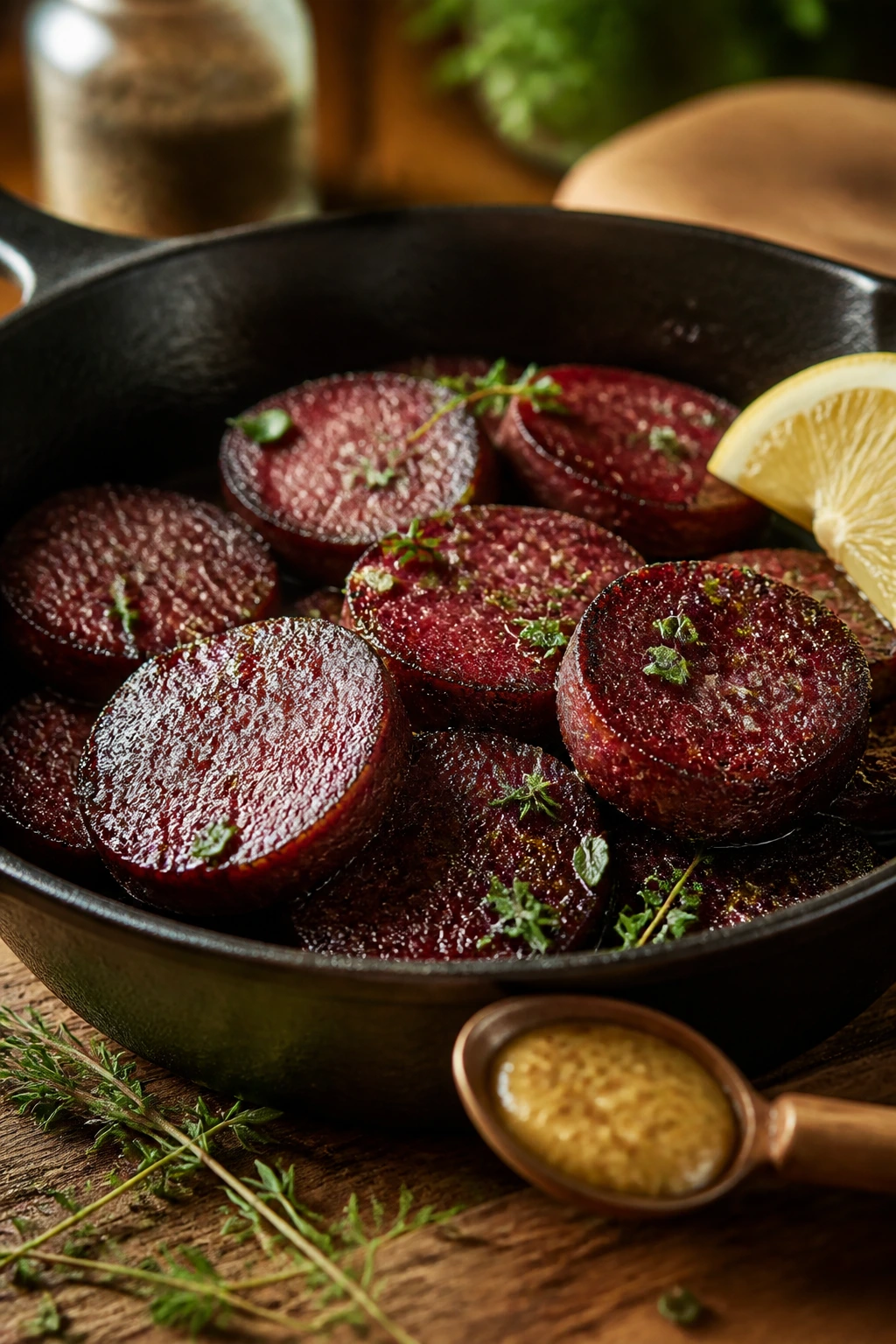
Flavor Enhancement:
A small hit of acid changes these dishes more than another pinch of salt ever will. A squeeze of lemon over soup, a spoon of mustard in a sandwich, a splash of vinegar in cabbage, or a little salsa on breakfast food keeps the sausage flavor from flattening out.
Customization:
You can nudge the whole collection in different directions with a few pantry swaps. Use pepper jack when you want heat, Swiss when you want a milder melt, smoked gouda when you want deeper flavor, or cheddar when you want the straightest path to comfort food. Add beans to stretch, rice to steady, or greens to lighten.
Serving Suggestions:
Fresh herbs don’t need to be fancy. Chopped parsley, chives, cilantro, or basil can make a heavy dish look sharper and taste brighter. Pickled onions, jalapeños, and dill pickles work especially well with summer sausage because they cut through the richness without fighting it.
Make-It-Yours:
If you’re cooking for gluten-free eaters, keep the sausage but change the carrier: rice, potatoes, corn tortillas, polenta, or gnocchi are all easy routes. For dairy-free versions, use olive oil, broth, and a non-dairy melt that actually melts well — not all of them do. For extra-protein meals, add eggs, beans, or a handful of shredded chicken. For a lighter plate, increase the vegetables and use a smaller amount of sausage as the seasoning instead of the centerpiece.
Make-Ahead, Storage, and Reheating Guidance
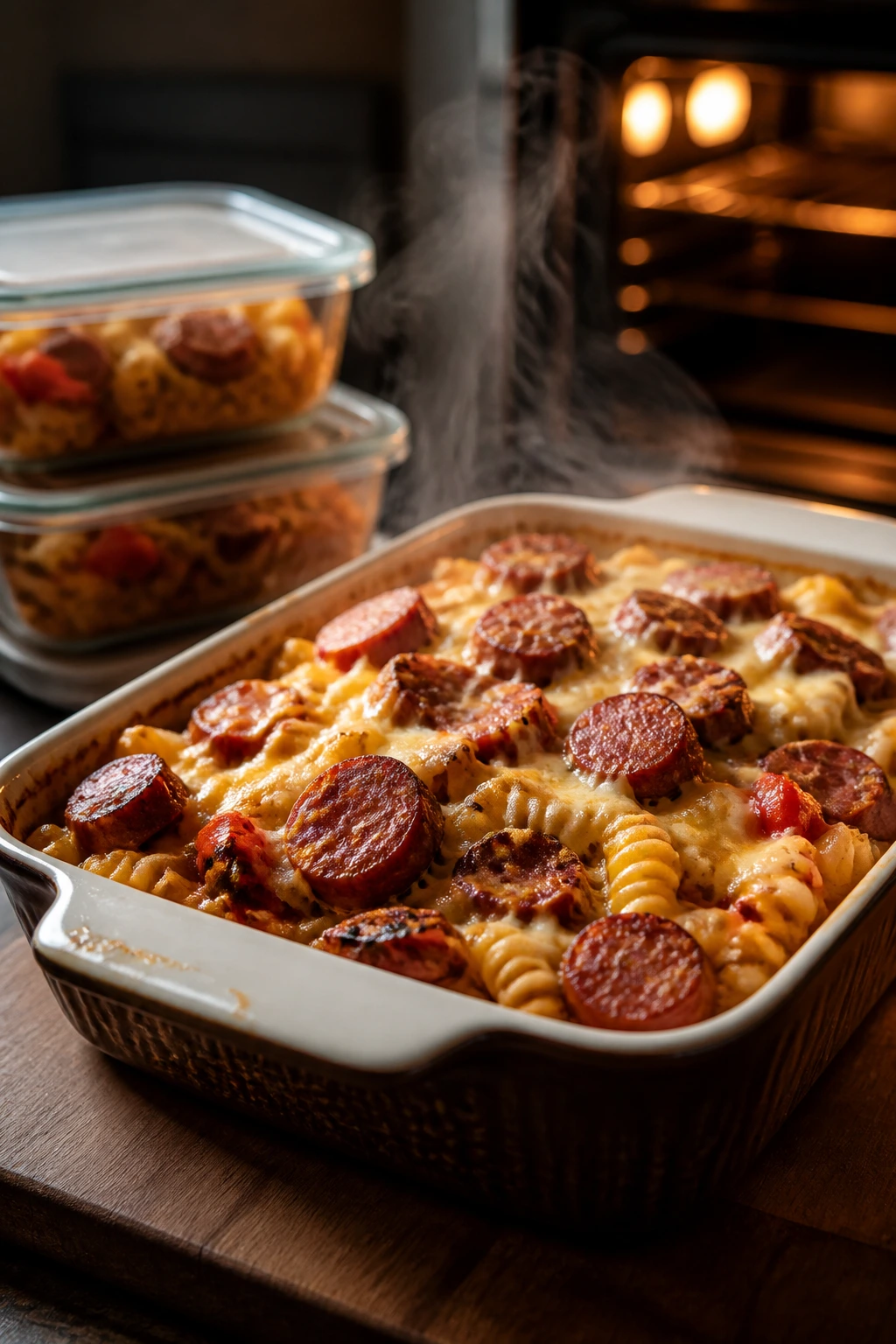
Most of these dishes keep well in the fridge for 3 to 4 days, and some taste better after a night of rest because the sausage flavor settles into the starches. Soups and chili can stretch to 4 to 5 days refrigerated if they’re cooled quickly and stored in shallow containers. Pasta bakes, breakfast casseroles, and mac-style dishes usually freeze for up to 2 months, though the texture gets a little softer after thawing.
Reheat casseroles and baked pasta in a 325°F oven, covered with foil, until the center is hot. That usually takes 20 to 30 minutes for a single family-size dish and a little longer if it came straight from the fridge. For skillet meals and fried rice, add a spoonful of water or broth to the pan and rewarm over medium-low heat so the starch doesn’t dry out. Soups and chili reheat best on the stovetop over low heat, stirred often so the bottom doesn’t catch.
Breakfast burritos, sliders, and quesadillas are better reheated in the oven or toaster oven than the microwave if you want the bread or tortilla to keep its texture. Wrap burritos in foil and warm at 350°F for 15 to 20 minutes. Sliders can go back in a covered baking dish for about 10 minutes, then uncovered for a minute if you want the tops to crisp again. Tortilla chips, of course, do not keep their crunch. Nachos should be assembled and eaten in one go.
If you’re planning ahead, cook the sausage and chop the vegetables a day early. That small head start makes weeknight assembly faster without making the food feel pre-made. Casseroles can often be assembled the night before, then baked straight from the fridge with an extra 5 to 10 minutes added to the oven time.
Variations and Adaptations to Try
Gluten-Free Plate Swap:
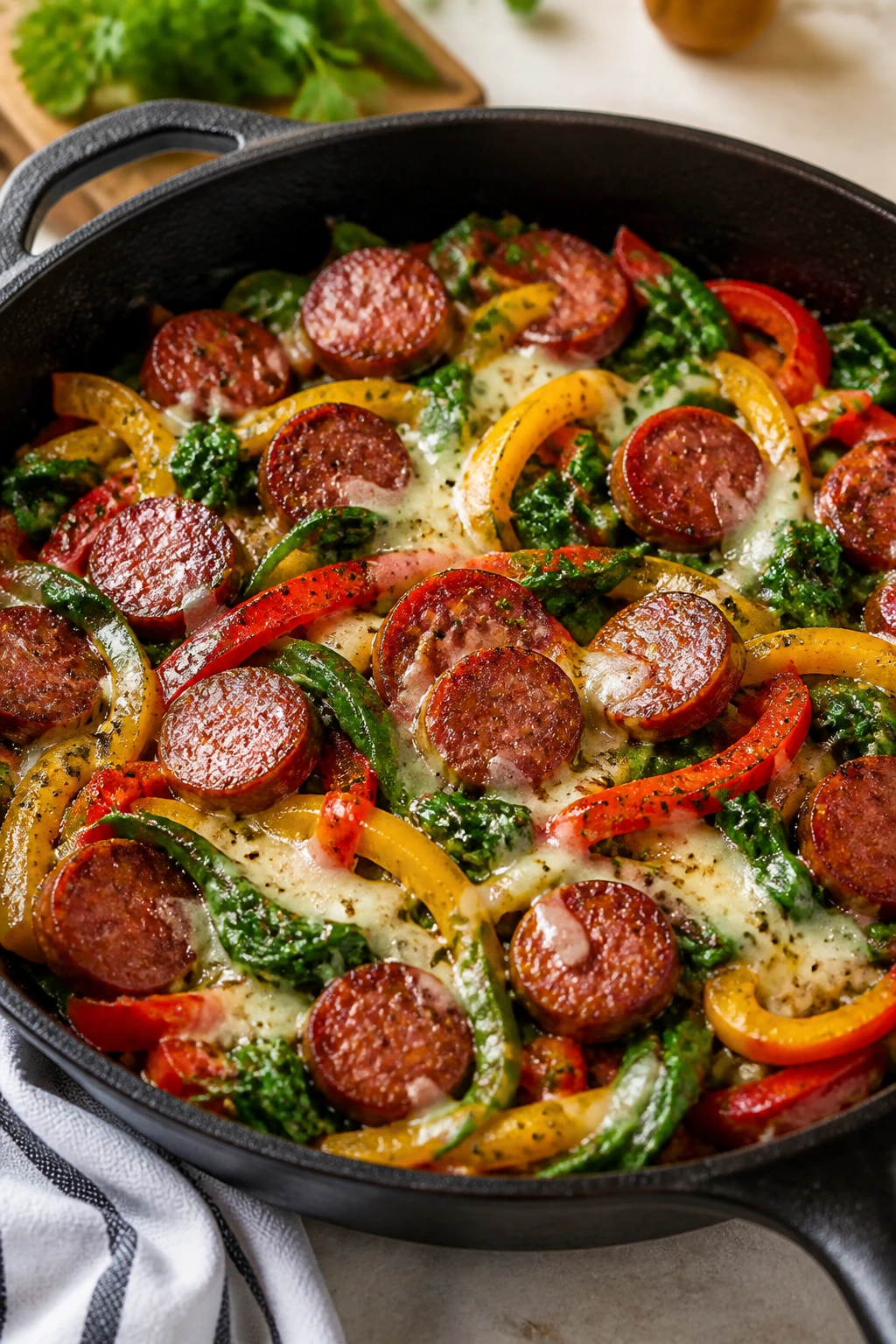
Use rice, potatoes, corn tortillas, polenta, or gluten-free pasta in place of breaded or wheat-based carriers. The sausage itself is usually the same either way, but check the label for fillers if you need to be strict about it. This swap works especially well for jambalaya, chili, soup, grain bowls, and breakfast skillets.
Lower-Sodium Version:
Choose a milder sausage if you can find one, then lean on fresh vegetables, unsalted broth, and acid from lemon or vinegar to keep the flavor from going dull. Skip extra salty cheeses in favor of a smaller amount of sharper cheese. This is the route I’d take for soup, casserole, or pasta bake when the sausage is doing a lot already.
Extra-Heat Route:
Add jalapeños, hot sauce, chili flakes, pepper jack, or chipotle powder depending on the recipe. The nice thing about summer sausage is that it doesn’t disappear under heat; it holds up. That makes it a good base for breakfast burritos, nachos, jambalaya, and skillet dinners that need a little kick.
Vegetable-Heavy Version:
Double the peppers, add spinach, fold in cabbage, or roast more green vegetables on the side of the pan. Summer sausage can act as the seasoning instead of the bulk if you want a dish that’s lighter without turning watery. This is an easy adjustment for grain bowls, sheet-pan dinners, and pasta skillets.
Breakfast-to-Dinner Shift:
A lot of these recipes are just a move or two away from a different meal. Breakfast skillet becomes dinner with extra potatoes and a salad. Breakfast casserole becomes brunch with fruit. Breakfast burritos become supper with beans and salsa verde. That flexibility is one of the reasons summer sausage keeps hanging around my kitchen.
Regional Twist:
Give the recipes a different accent with the right pantry items. Use Cajun seasoning and the holy trinity for jambalaya, Dijon and rye for sandwiches, salsa and cheddar for breakfast bakes, or cabbage and caraway for a more northern feel. The sausage can take it.
Common Mistakes to Avoid
The biggest mistake is treating summer sausage like raw sausage. It’s already cooked, so it only needs browning, warming, or a short bake inside another dish. If you keep cooking it like it needs to hit a safe internal temperature from scratch, it dries out and loses the silky bite that makes it useful in the first place.
Another common misstep is over-salting the dish before you taste it. Summer sausage, cheese, broth, mustard, olives, bacon bits, marinara — all of these can carry more salt than you think. Taste at the end, not halfway through, especially in casseroles, pasta, and soups where the liquid reduces as it cooks.
Texture issues usually come from rushing the base. If you want browned sausage, let the slices actually touch the pan. If you want crisp potatoes, give them space. If you want a casserole that slices cleanly, let it rest. If you want a soup with body, simmer long enough for the potatoes or beans to help.
Watch the moisture balance. A dish can go dry if you don’t leave enough broth or sauce, but it can also go soggy if you add watery vegetables without cooking off the extra liquid first. That’s why I like to cook onions, peppers, and sausage together before they go into rice, pasta, or casserole. A little evaporation goes a long way.
And then there’s the cheese problem. Put it in a sauce too hot and it can turn grainy. Bake it too long and it gets greasy. The fix is boring but real: moderate heat, short oven times, and a brief rest before serving. The food will thank you.
Frequently Asked Questions
Is summer sausage already cooked?
Yes. That’s part of the appeal. You’re browning it for flavor, not cooking it from raw, which makes it much faster to use in skillet dinners, casseroles, soups, and sandwiches.
Can I use turkey summer sausage instead of beef?
You can, and it works well in pasta, breakfast bakes, and grain bowls. It’s leaner, though, so keep an eye on moisture and add a little extra oil, broth, or cheese if the dish starts to feel dry.
How do I keep summer sausage from tasting too salty in a recipe?
Use acid and fresh vegetables. Vinegar, lemon, tomatoes, pickles, mustard, and greens all help balance the salt. You can also choose unsalted broth and go lighter with added cheese.
Should I brown summer sausage before baking it into a casserole?
Usually, yes. A quick browning gives you better flavor and a little texture. If the recipe is very wet, like a breakfast bake or casserole, you can skip that step, but I still prefer browning when there’s room to do it.
Can these recipes be frozen?
Many of them can. Soups, chili, casseroles, baked pasta, and breakfast bakes freeze well for about 2 months. Dishes with lots of fresh greens, crisp potatoes, or tortilla chips are better eaten fresh.
What cheeses go best with summer sausage?
Cheddar, Swiss, Monterey Jack, provolone, mozzarella, and pepper jack all do the job for different reasons. Cheddar gives bite, Swiss adds a nutty edge, Jack melts smoothly, and provolone is excellent in sandwiches and sliders.
How long does opened summer sausage keep in the fridge?
Once opened, keep it wrapped tightly or stored in an airtight container and use it within about 3 weeks for best texture and flavor. If it starts to dry out a little on the surface, slice off the exposed end before using the rest.
Can I make these recipes less heavy?
Yes. Use more vegetables, smaller amounts of sausage, and brighter seasonings. Grain bowls, cabbage skillets, white bean soup, and sheet-pan dinners are the easiest places to lighten the plate without losing the point of the dish.
What if my casserole comes out watery?
It usually means the vegetables released too much liquid or the dish was cut too soon. Bake a little longer uncovered, and let it rest before serving. For the next round, cook watery vegetables first so some moisture evaporates before they go into the pan.
Do I need special sausage seasoning for these recipes?
No. The sausage already brings smoke, garlic, and cure. What you need around it is contrast: acid, herbs, fresh vegetables, bread, rice, potatoes, or pasta. That’s the part that makes the dish feel complete.
Passing the Platter
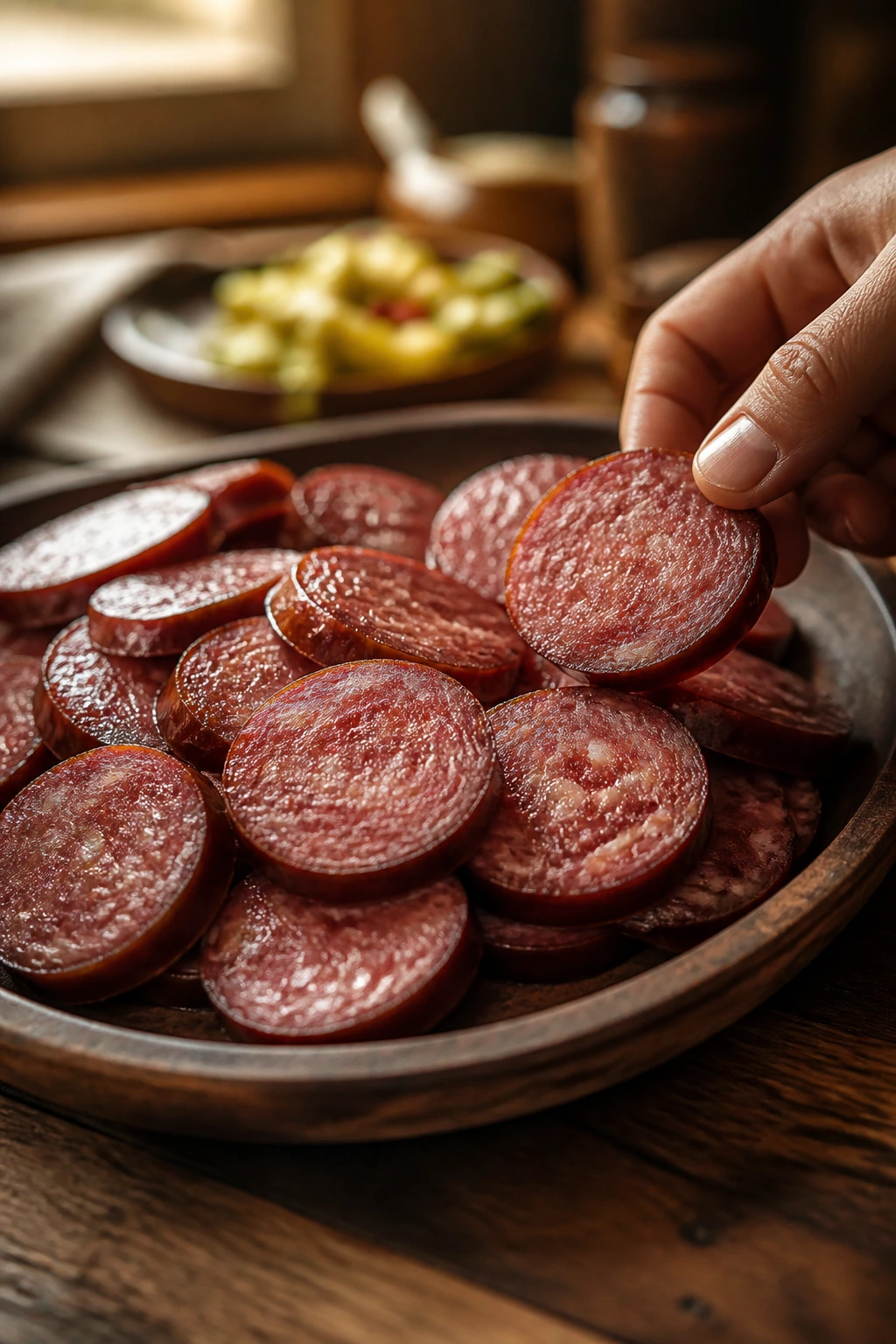
Summer sausage is not precious food, and that’s one reason it works so well. It doesn’t need a ceremony. It needs heat, a smart sidekick, and a recipe that knows how to let its smoke, salt, and chew do some of the talking.
Start with the skillet if you want the fastest payoff. Move to the casserole if you’re feeding people who like a second helping. Then keep the soup and sandwich ideas around for the days when the fridge looks a little bare and you still want dinner to feel put together.