



The best thing about smoked sausage isn’t the smoke. It’s the moment the sliced edges hit a hot skillet and start to sing—first a sharp sizzle, then a dark crust, then that smell of brown sugar and mustard catching in the pan. That is where this dish lives: crispy traditional smoked sausage with brown sugar glaze, not the pale, soggy version that gets drowned in sauce and called done.
This recipe works because smoked sausage is already cooked. You are not babysitting raw meat or hoping it reaches the right temperature; you’re building color, texture, and a sticky finish that clings to the sausage instead of sliding off. The difference sounds small. It isn’t. A 1/2-inch slice, dried well, and given room in the skillet browns in minutes and gives you that little snap when you bite through the casing.
The glaze stays old-school on purpose—brown sugar, Dijon, vinegar, butter, a touch of garlic, a little smoke, a little pepper. I like it best when it goes glossy and tacky, not thick like candy. Once that happens, the sausage stops looking like a pantry backup and starts looking like something you’d carry straight to the table while it’s still hot.
That rhythm—hot skillet, quick glaze, fast finish—does most of the work from here.
Why You’ll Love This Recipe
-
Fast from cutting board to table: The whole dish lands in about 25 minutes, and most of that is active browning rather than waiting around.
-
Crisp edges, sticky glaze: The sausage browns first, then the brown sugar glaze wraps around the cut surfaces instead of turning into a watery sauce.
-
Short ingredient list: You only need a few pantry staples, and every one of them has a job. Nothing extra, nothing ornamental.
-
Works as supper or a starter: Pile it over rice, tuck it beside potatoes, or spear it with toothpicks for a platter that disappears fast.
-
Easy to scale: Double it for a bigger pan or cook it in two batches. The method stays the same, which is more than I can say for a lot of skillet recipes.
-
Flexible with sausage types: Pork smoked sausage, kielbasa, beef sausage, or turkey smoked sausage all work if they’re fully cooked and firm enough to brown cleanly.
Yield: 6 servings as a main dish or 8 appetizer portions
Prep Time: 10 minutes
Cook Time: 15 minutes
Total Time: 25 minutes
Difficulty: Beginner — the method is simple, but the timing matters if you want the sausage crisp and the glaze glossy.
Rest Time: 2 minutes before serving
Best Served: Warm from the skillet, while the glaze is still sticky and the edges are crisp
A Smoky Skillet and a Brown Sugar Finish
Smoked sausage has always belonged to the kind of cooking that doesn’t fuss. It’s cured, it’s seasoned, and it arrives with its own smoky backbone already built in. That’s why a skillet treatment makes so much sense here. You’re not trying to invent flavor from scratch; you’re coaxing out the fat, darkening the cut sides, and giving the sausage a sweet-sour coat that keeps each bite from feeling heavy.
Traditional smoked sausage is a strange little miracle in the kitchen. It is humble enough to be sliced into a weeknight pan dinner, but sturdy enough to hold real browning. If the casing is tight and the slices are even, the edges take on a lacquered look before the center ever dries out. That contrast matters. Soft sausage with no color tastes flat. Browned sausage tastes like you meant it.
The brown sugar glaze does more than add sweetness. Brown sugar brings molasses depth, Dijon cuts through the fat, vinegar keeps the glaze from reading like dessert, and butter gives the whole thing a satin finish. Garlic is subtle here. It should whisper, not shout. A pinch of smoked paprika helps the glaze echo the sausage instead of fighting it.
I prefer this kind of dish when I want something with enough personality to stand alone, but not so much complexity that the skillet turns into a project. You can serve it beside mashed potatoes, spoon it over rice, or put out toothpicks and call it an appetizer. It knows how to behave in either role.
Ingredients That Build the Crisp Edges
For the Smoked Sausage
- 1 1/2 pounds fully cooked smoked sausage or kielbasa, sliced into 1/2-inch coins
- 1 tablespoon neutral oil, such as avocado, canola, or grapeseed
For the Brown Sugar Glaze
- 1/2 cup packed light brown sugar
- 2 tablespoons Dijon mustard
- 1 tablespoon apple cider vinegar
- 2 tablespoons water
- 2 tablespoons unsalted butter
- 1 teaspoon smoked paprika
- 1/2 teaspoon black pepper
- 1 small garlic clove, finely minced
- Pinch of cayenne pepper, optional
For Serving
- 1 tablespoon chopped parsley, optional
- Flaky salt, only if your sausage tastes mild after browning
A short ingredient list can be a trap. If the sausage is soft, the glaze thin, or the sugar too eager to burn, the whole thing turns messy in a hurry. So each piece here has to earn its spot.
Why Each Ingredient Matters
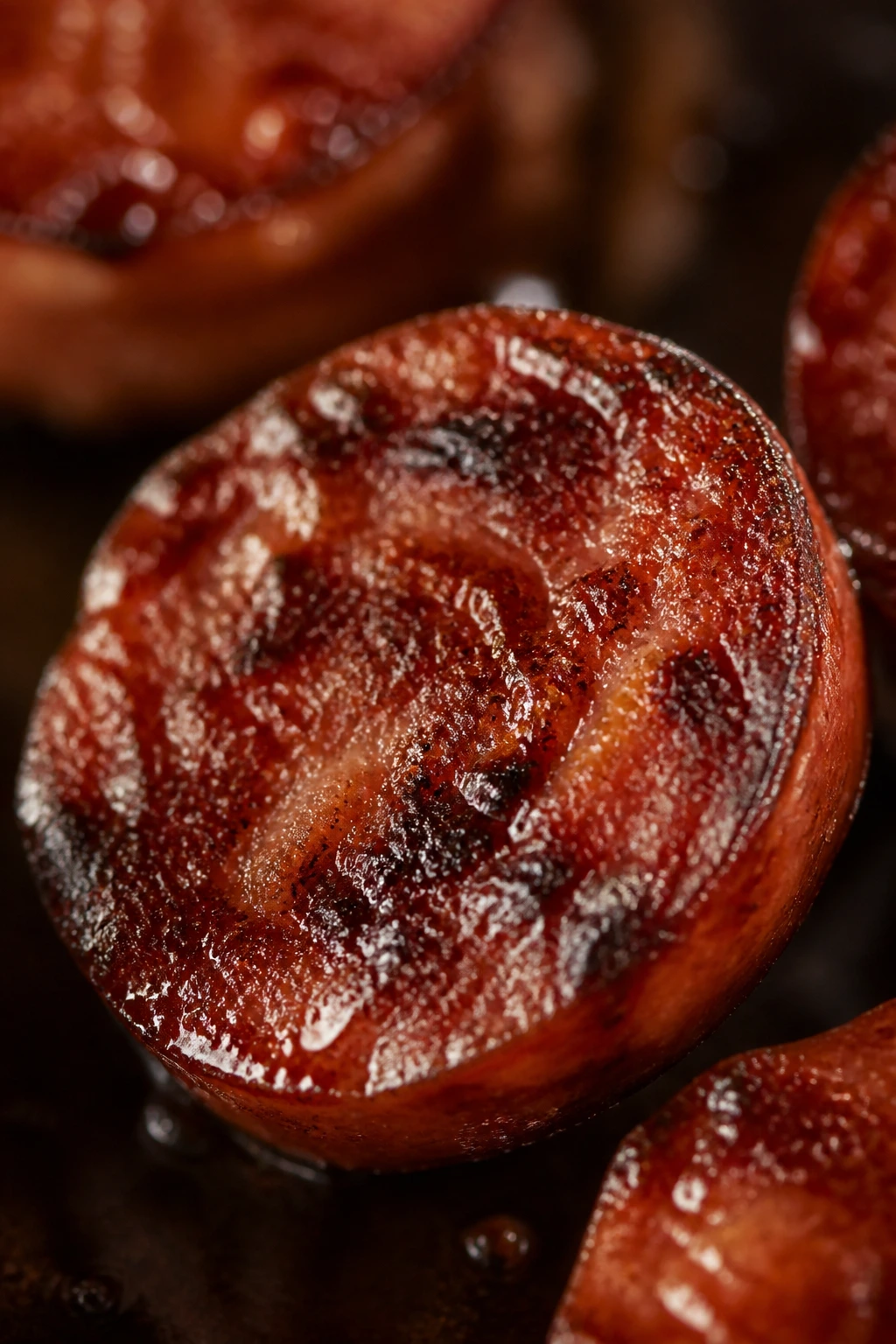
Smoked Sausage
What to use: 1 1/2 pounds fully cooked smoked sausage, kielbasa, or another firm pork sausage that holds its shape when sliced. A ring sausage cuts neatly into coins, but link sausage works too if that is what you’ve got.
Preparation: Slice into 1/2-inch coins on a slight diagonal. That angle gives each piece a bigger browned surface, which matters more than people think when you want real crust instead of a gray edge.
Substitutions: Turkey smoked sausage will work if you want a lighter finish, and beef smoked sausage brings a deeper, more savory flavor. Fresh raw sausage is a different job entirely; don’t swap it in here unless you’re willing to cook it all the way through first.
Tips: Pat the sausage dry before it touches the pan. Surface moisture is the enemy of browning, and even a few damp slices can throw off the first sear.
Brown Sugar Glaze Base
What to use: 1/2 cup packed light brown sugar, 2 tablespoons Dijon mustard, 1 tablespoon apple cider vinegar, 2 tablespoons water, 2 tablespoons unsalted butter, 1 teaspoon smoked paprika, 1/2 teaspoon black pepper, 1 small garlic clove minced, and a pinch of cayenne if you want heat.
Preparation: Pack the brown sugar into the measuring cup so you get the right amount of molasses and sweetness. Mince the garlic fine; you want it to disappear into the glaze, not sit there like a raw chunk.
Substitutions: Dark brown sugar makes the glaze deeper and a little stickier. Yellow mustard works in a pinch, but the flavor is sharper and less rounded than Dijon.
Tips: The water is not filler. It gives the sugar enough slack to melt into a shiny glaze instead of clumping and scorching the moment it hits the skillet.
Fat, Acid, and Finish
What to use: 1 tablespoon neutral oil for the sear, plus the butter and vinegar in the glaze.
Preparation: Heat the oil until it shimmers before the sausage goes in. That first hot surface is what builds the crust.
Substitutions: If your sausage throws off a good amount of fat, you may only need a thin film of oil after the first minute. You can also skip the parsley if you want the plate to stay old-school and spare.
Tips: Butter belongs at the glaze stage, not before the sear. Early butter can brown too fast and leave you with burnt milk solids before the sausage ever gets color.
The Tools That Make Browning Easier
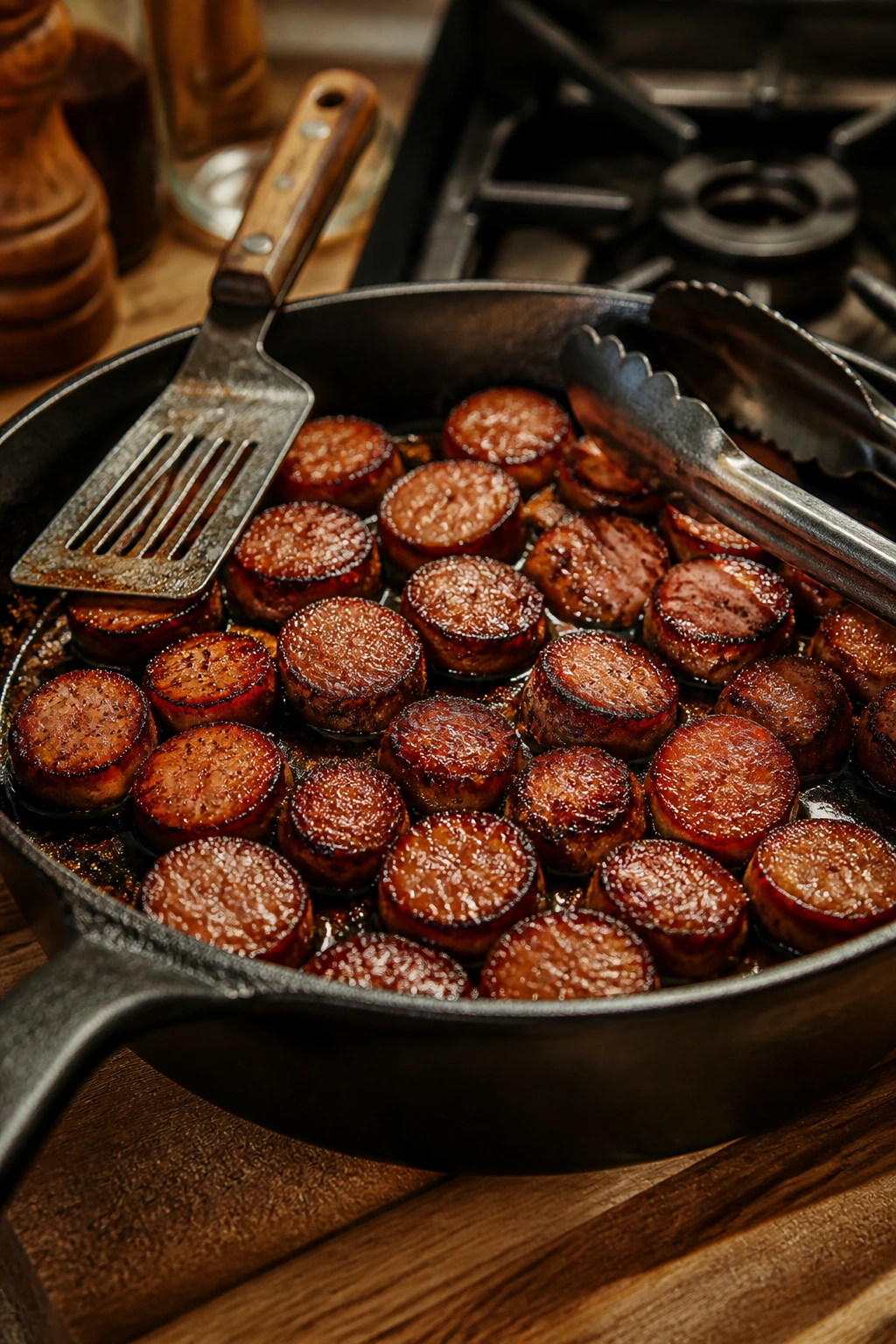
A good pan matters more than a fancy ingredient list here. Thin cookware gives you hot spots, pale sausage, and sugar that burns on one side while the other side is still loose.
-
12-inch cast-iron skillet or heavy stainless skillet — Best for even browning and enough surface area to keep the slices in a single layer.
-
Sharp chef’s knife — A clean slice keeps the coins even, which helps them brown at the same pace.
-
Tongs or a thin spatula — Use these to turn the sausage without tearing the casing or scraping off the crust.
-
Measuring spoons and a dry measuring cup — The glaze is simple, but the sugar and vinegar need to be measured with some care.
-
Wooden spoon or heatproof silicone spatula — Ideal for stirring the glaze and scraping up the browned bits without gouging the pan.
-
Paper towels — Handy for drying the sausage before it goes into the skillet.
-
Broiler-safe rimmed sheet pan, optional — Only needed if you want a 60- to 90-second blast under the broiler for extra-dark edges.
The Skillet Method, Step by Step
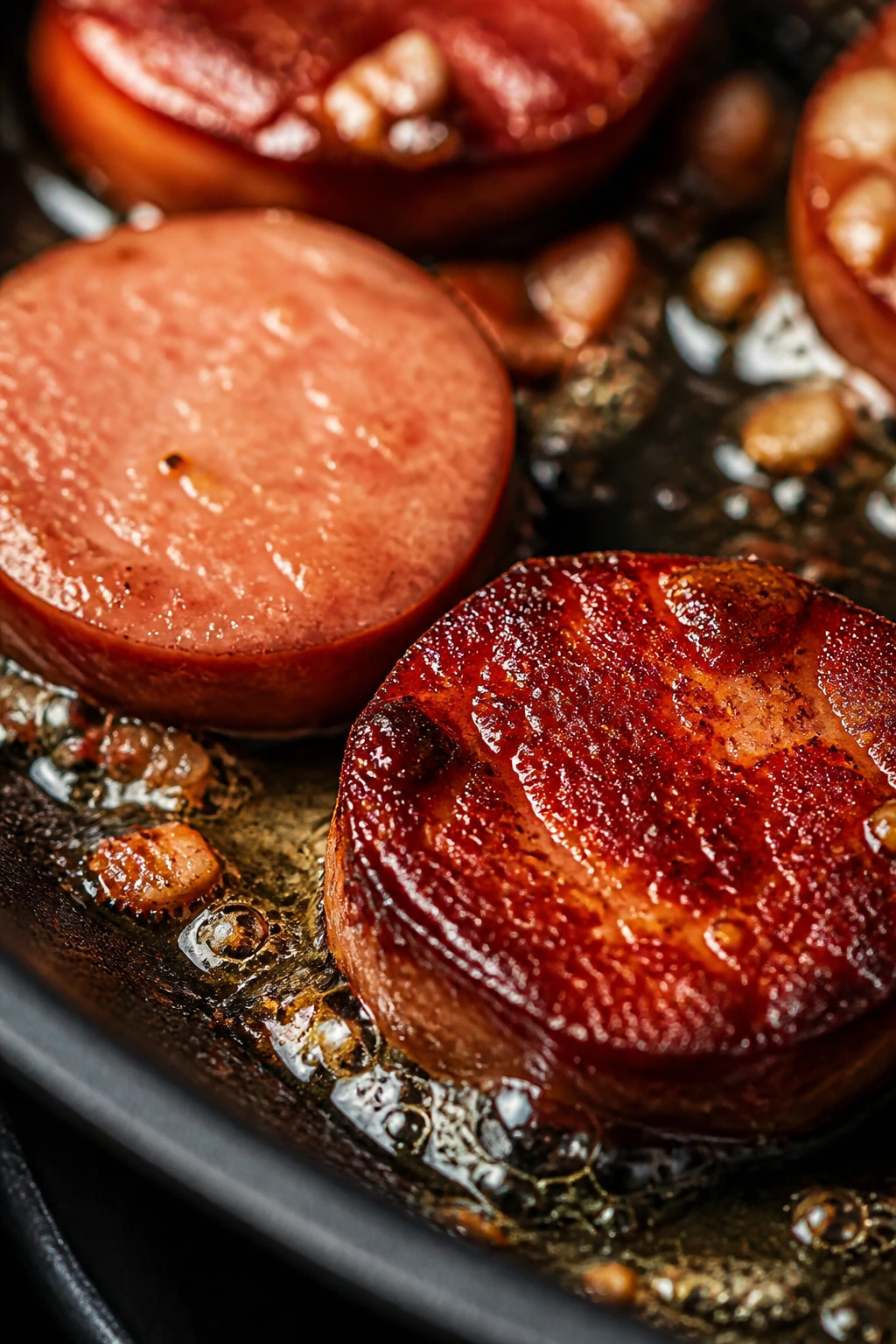
The trick here is not speed alone. It’s sequence. Brown the sausage first, build the glaze second, and keep the heat from outrunning the sugar.
Prep the Sausage
-
Pat the sausage dry with paper towels, then slice it into 1/2-inch coins on a slight diagonal. Keep the slices as even as possible so the edges brown at the same rate.
-
Set a 12-inch skillet over medium-high heat for 2 minutes. Add 1 tablespoon neutral oil and swirl to coat the bottom. When the oil shimmers and loosens across the pan, you’re ready.
Brown the Sausage
-
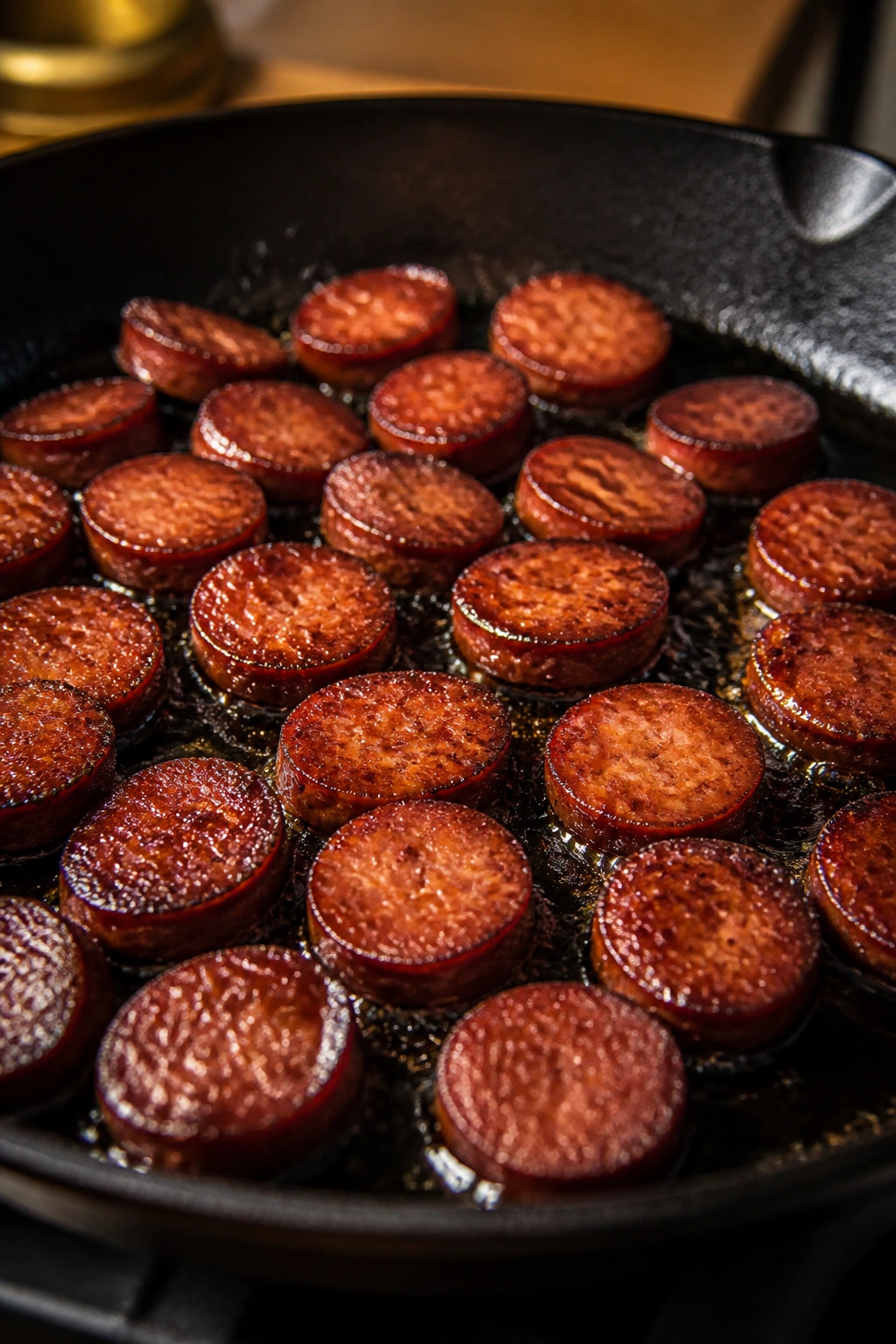
Add the sausage coins in a single layer. Let them sit for 2 minutes without moving them so the first side can pick up color.
-
Turn the slices and cook for another 2 to 3 minutes per side, until the cut faces are deep golden brown and a little crisp at the edges. If the pan looks crowded, work in batches. Crowding turns the sausage pale and steamy.
Build the Brown Sugar Glaze
-
Reduce the heat to medium. Add the butter, brown sugar, Dijon mustard, apple cider vinegar, water, smoked paprika, black pepper, garlic, and cayenne if you’re using it. Stir for 30 to 45 seconds, scraping up the browned bits from the bottom of the skillet, until the sugar begins to dissolve.
-
Let the mixture bubble gently for 1 to 2 minutes, stirring often, until it turns glossy and slightly thicker. It should coat the back of a spoon in a thin amber film. If it looks sandy or dry, stir in 1 tablespoon more water and keep stirring over medium heat.
Finish and Gloss
-
Return the sausage and any juices to the pan. Toss for 1 to 2 minutes until every piece is lacquered and the glaze clings instead of pooling in the bottom of the skillet.
-
For extra-dark edges, spread the sausage back out in the skillet and place it under a broiler set to high for 60 to 90 seconds. Only do this in a broiler-safe skillet. Watch closely; the glaze can turn from glossy to burnt in a few breaths.
-
Transfer the sausage to a warm serving dish and let it sit for 2 minutes. Scatter with parsley if you like. That tiny pause lets the glaze settle so it stays on the sausage instead of running off the plate.
How to Serve It Without Softening the Crust
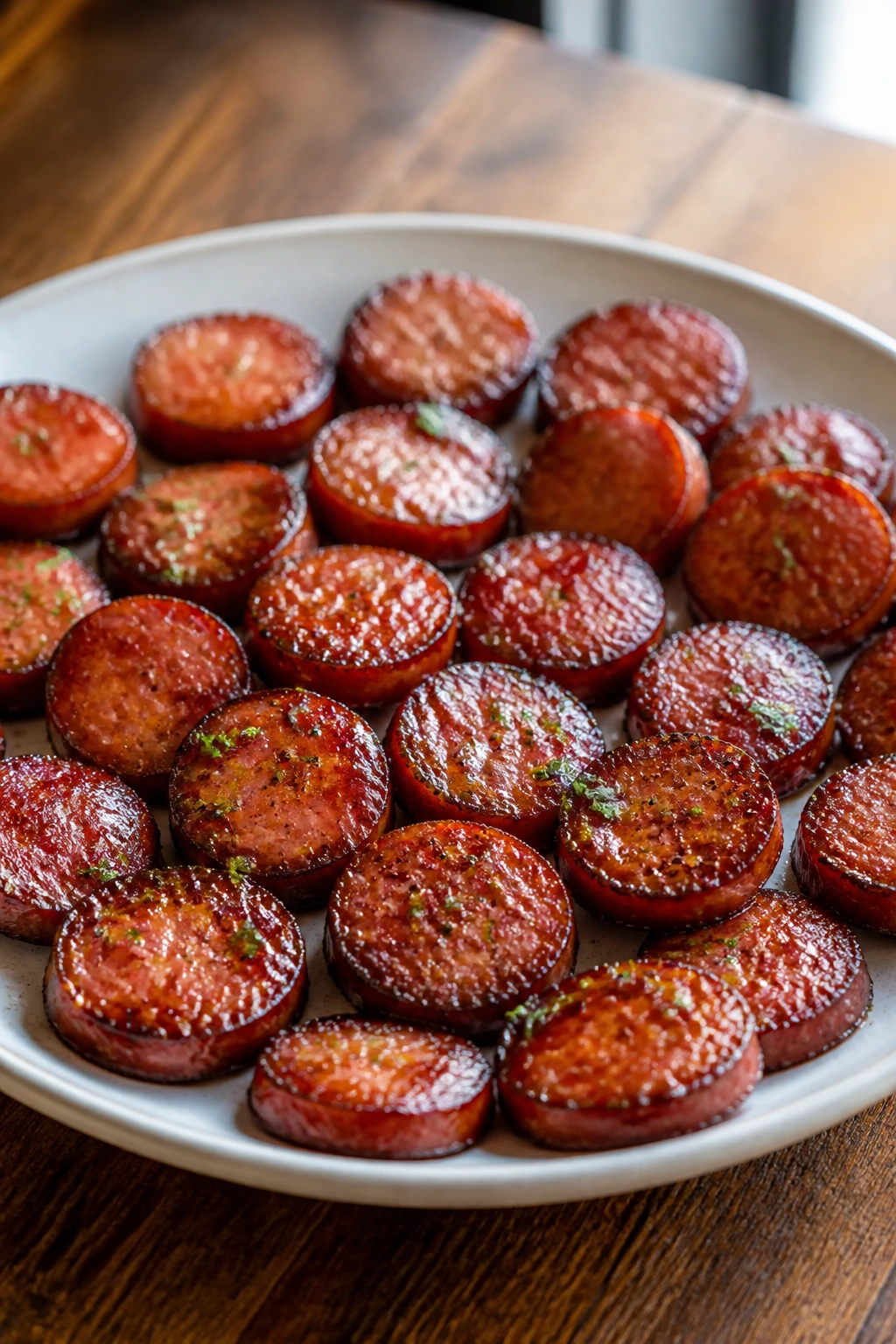
Presentation:
A shallow bowl or wide platter keeps the glaze where it belongs. If you pile the sausage high, the bottom slices trap steam and lose their crisp edges. I like a flat layer with a little space between the coins so the shine shows. A few flecks of parsley break up the brown and tell the eye that the skillet work is done.
Accompaniments:
Mashed potatoes are the obvious move, and I say that without apology because the glaze behaves like gravy once it hits the potatoes. Buttered rice does the same thing in a looser way. If you want a sharper plate, add sauerkraut, quick-pickled onions, or a simple cabbage slaw with cider vinegar. For bread, skillet cornbread or crusty rolls are the best kind of mop.
Portions:
As a main dish, 1/4 to 1/3 pound of sausage per person is plenty, especially if you’re serving starch and a vegetable with it. As an appetizer, plan on 3 to 4 coins per guest and set out toothpicks so the platter doesn’t need much explanation. If you’re feeding a bigger crowd, cook the sausage in two batches and keep the first batch warm on a sheet pan in a low oven.
Beverage Pairing:
A crisp lager works well because it cuts the sweetness without fighting the smoke. Dry cider does the same thing with a little apple edge. If you want nonalcoholic, unsweetened iced tea or ginger beer keeps the palate awake between bites.
Practical Tips for Better Browning
Flavor Enhancement:
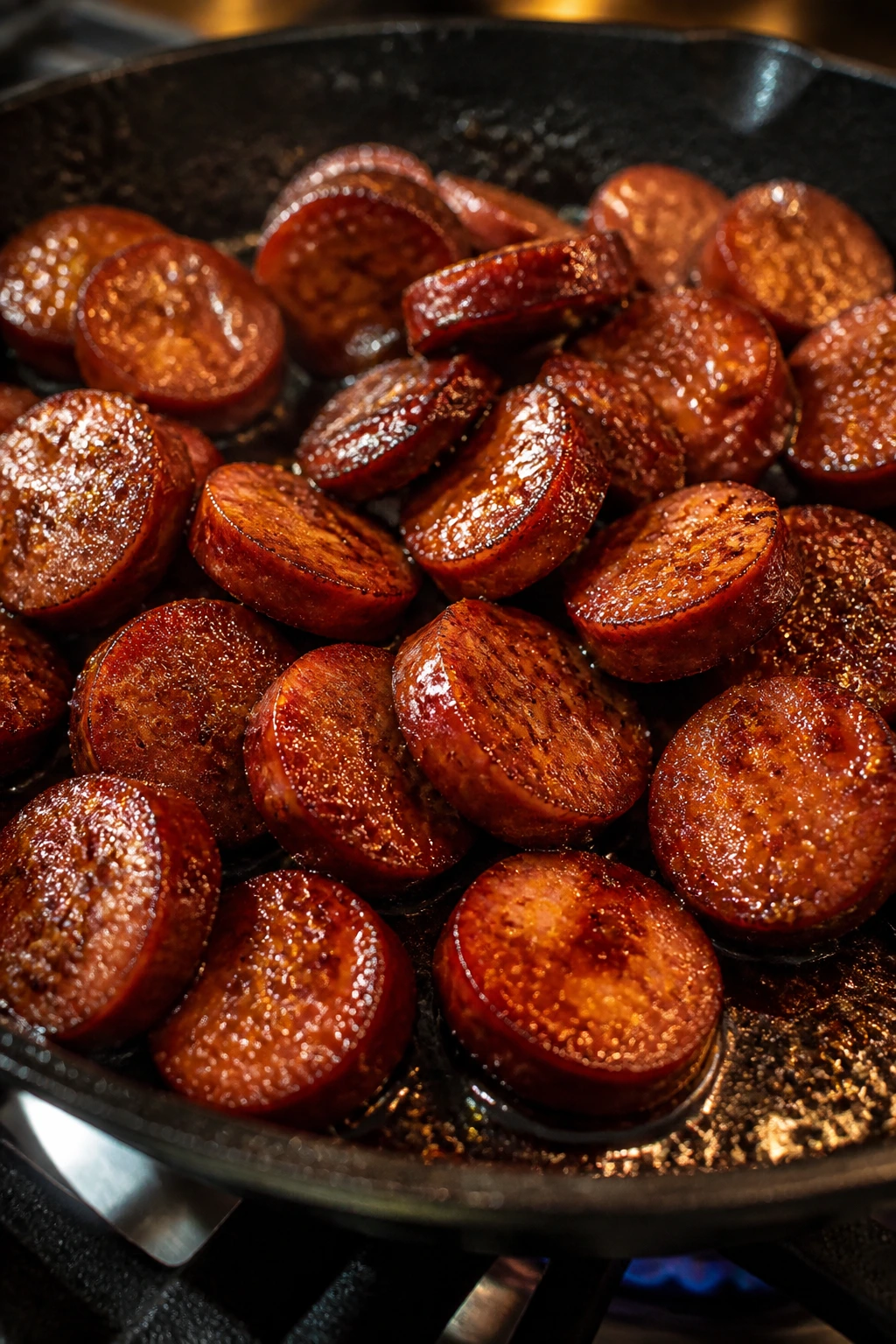
A final teaspoon of Dijon stirred in at the end makes the glaze taste sharper and less candy-sweet. I also like a tiny splash of apple cider vinegar right before serving if the sausage itself is very rich. It brightens the pan without turning it into a tangy sauce.
Time-Saver:
Buy sausage that is already ring-sliced or pre-sliced if you can find a package that isn’t too thin. You’ll save a few minutes, and the slices usually stay more even than rushed knife work. A heavy skillet also shaves off waiting time because it holds heat better.
Pro Move:
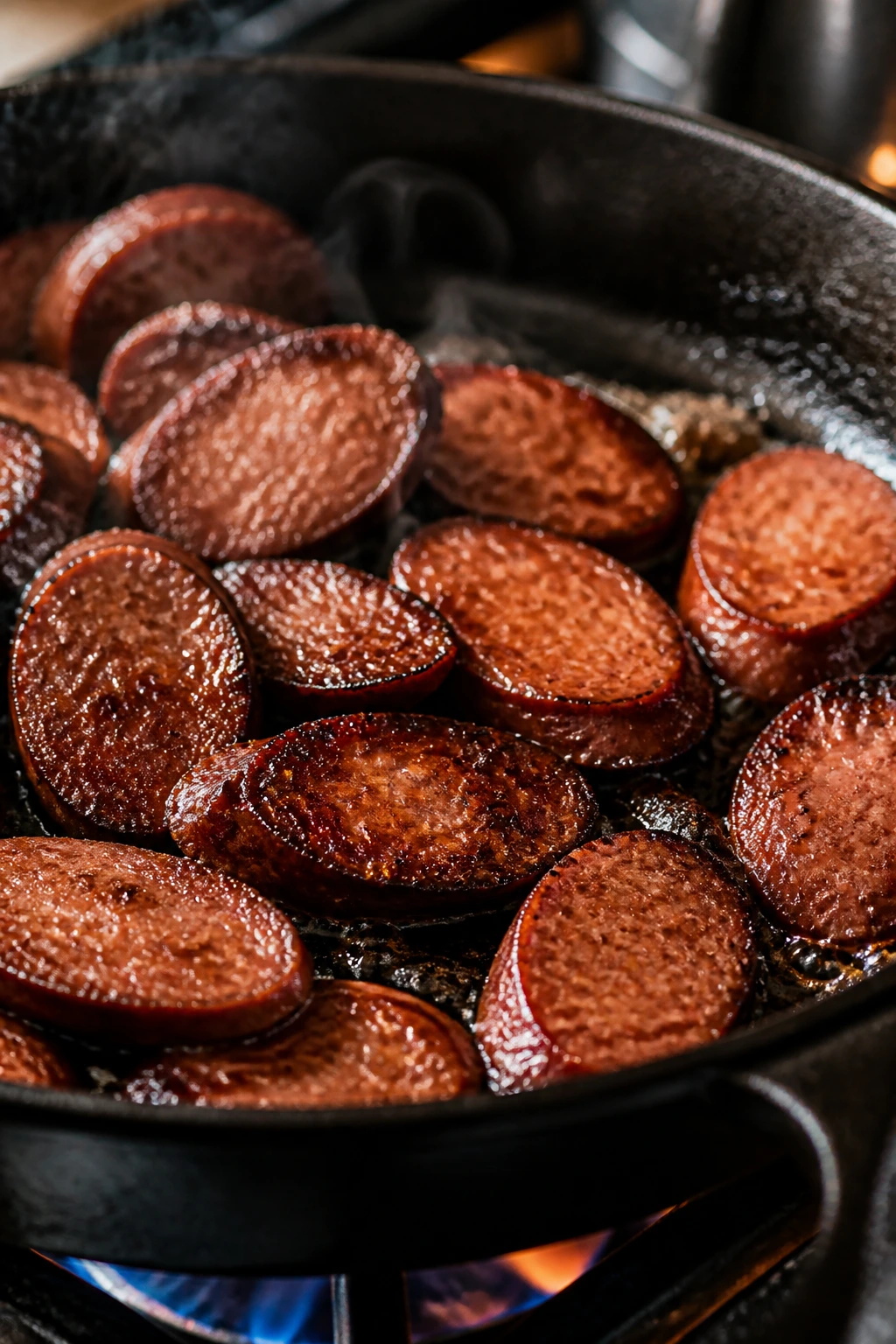
Let the sausage sit undisturbed for the first 2 minutes in the pan. That little pause builds the crust, and the crust is what keeps the glaze from slipping right off. If you move the pieces too early, the cut faces look gray and the glaze has less to grab.
Cost-Saver:
A store-brand smoked sausage works fine here if it feels firm and not spongy in the package. You do not need a fancy artisanal ring for this recipe to behave well. Save the premium sausage for a dish where its seasoning has somewhere to go beyond the glaze.
Small Upgrade:
If you want a deeper finish, use dark brown sugar instead of light brown sugar. The glaze turns a shade darker and carries a heavier molasses note that sits well next to pork. It’s a small change, but it matters on a short ingredient list.
Common Mistakes That Make Sausage Soft
-
Crowding the skillet:
If the sausage coins sit on top of one another or touch too much, the pan steams instead of sears. The symptom is pale sausage with wet edges and almost no crust. Fix it by cooking in batches or using a larger skillet. -
Starting the glaze over heat that’s too high:
Brown sugar can go from glossy to scorched fast, especially once the butter and vinegar evaporate off. If the glaze smells burnt or looks grainy, the heat was too aggressive. Pull the pan back to medium and add a spoonful of water if needed. -
Skipping the dry pat-down:
Moisture on the sausage surface keeps the browning from starting cleanly. You’ll see it as sputtering fat and dull, patchy color instead of crisp edges. Paper towels solve more problems here than almost any spice does. -
Adding the glaze before the sausage browns:
If the sugar goes in too early, the sausage starts braising in syrup instead of searing in oil. The result is soft, sticky meat without the contrast that makes the dish worth cooking. Brown first, glaze second. No shortcuts there. -
Letting the glaze sit in the pan too long after it clings:
Once the glaze thickens and coats the sausage, it can keep cooking in the hot pan and stiffen into something sticky and tacky in the wrong way. If that starts happening, pull it off the heat and plate it. The glaze should be shiny, not cement-like.
Variations Worth Trying
Maple-Mustard Skillet
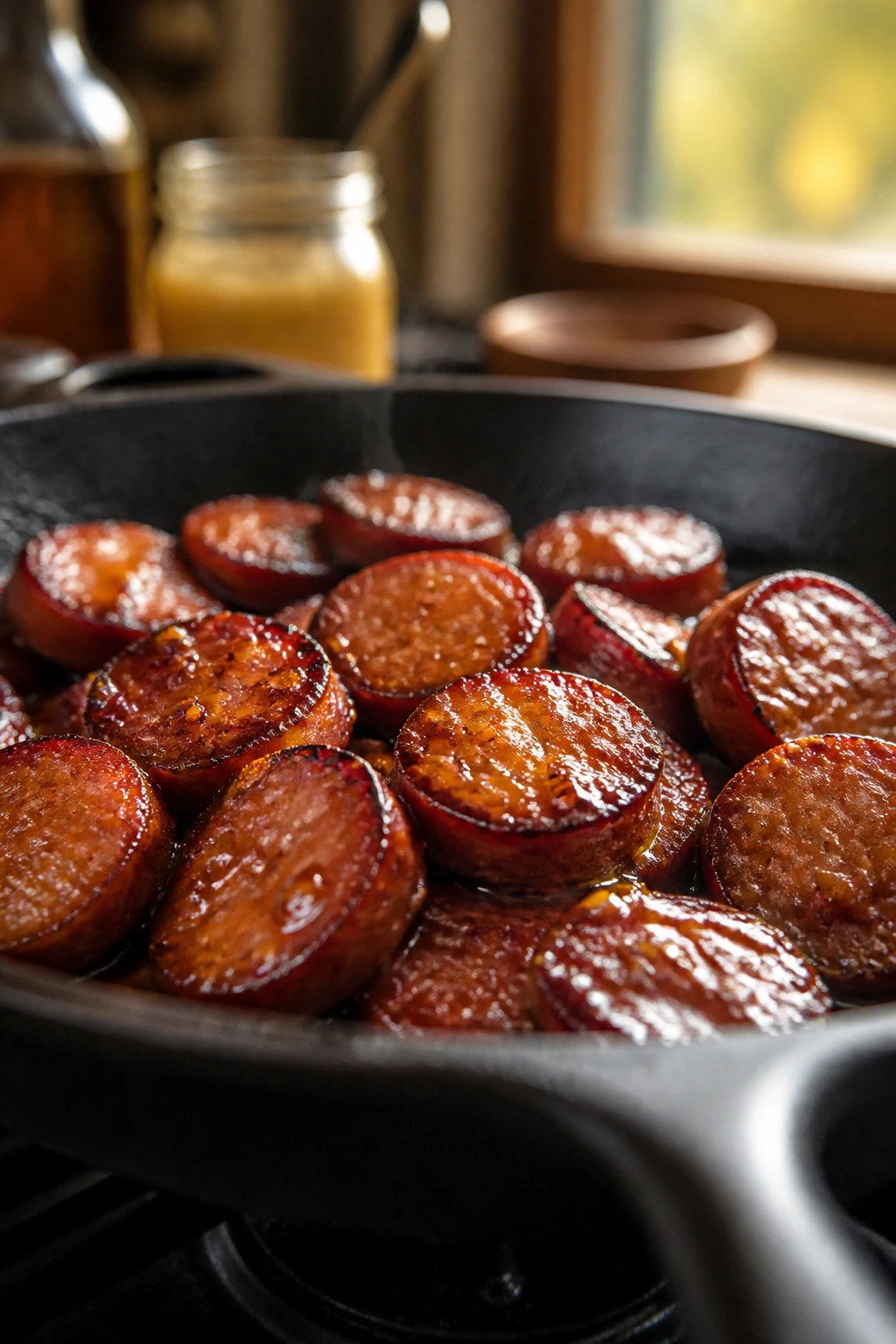
Swap 2 tablespoons of the brown sugar for pure maple syrup and add 1 extra teaspoon of Dijon. The glaze gets softer and a little woodsy, which is a nice fit if you’re serving the sausage with potatoes or roasted squash.
Cajun Heat
Add 1 teaspoon Cajun seasoning and increase the cayenne to 1/4 teaspoon. This version works well with rice because the spice and smoke feel more savory and less sweet.
Apple-Onion Sidecar
Cook 1 thinly sliced small onion in the oil for 4 to 5 minutes before adding the sausage, then add 1 small diced apple during the last 3 minutes of browning. The pan gets sweeter, fuller, and closer to a dinner skillet than an appetizer platter.
Beer-Gloss Finish
Replace the 2 tablespoons of water with 1/4 cup lager and cook the glaze a minute longer so the beer cooks off. The flavor ends up rounder and a little more bitter in the good way, especially with pork sausage.
Sheet-Pan Shortcut
If you want less stovetop attention, roast the sausage on a rimmed sheet pan at 425°F for about 12 minutes, then brush with the glaze and roast 3 to 5 minutes more. The sausage still tastes good, but the crust will be softer than the skillet version. That’s the tradeoff.
Storage, Reheating, and Make-Ahead
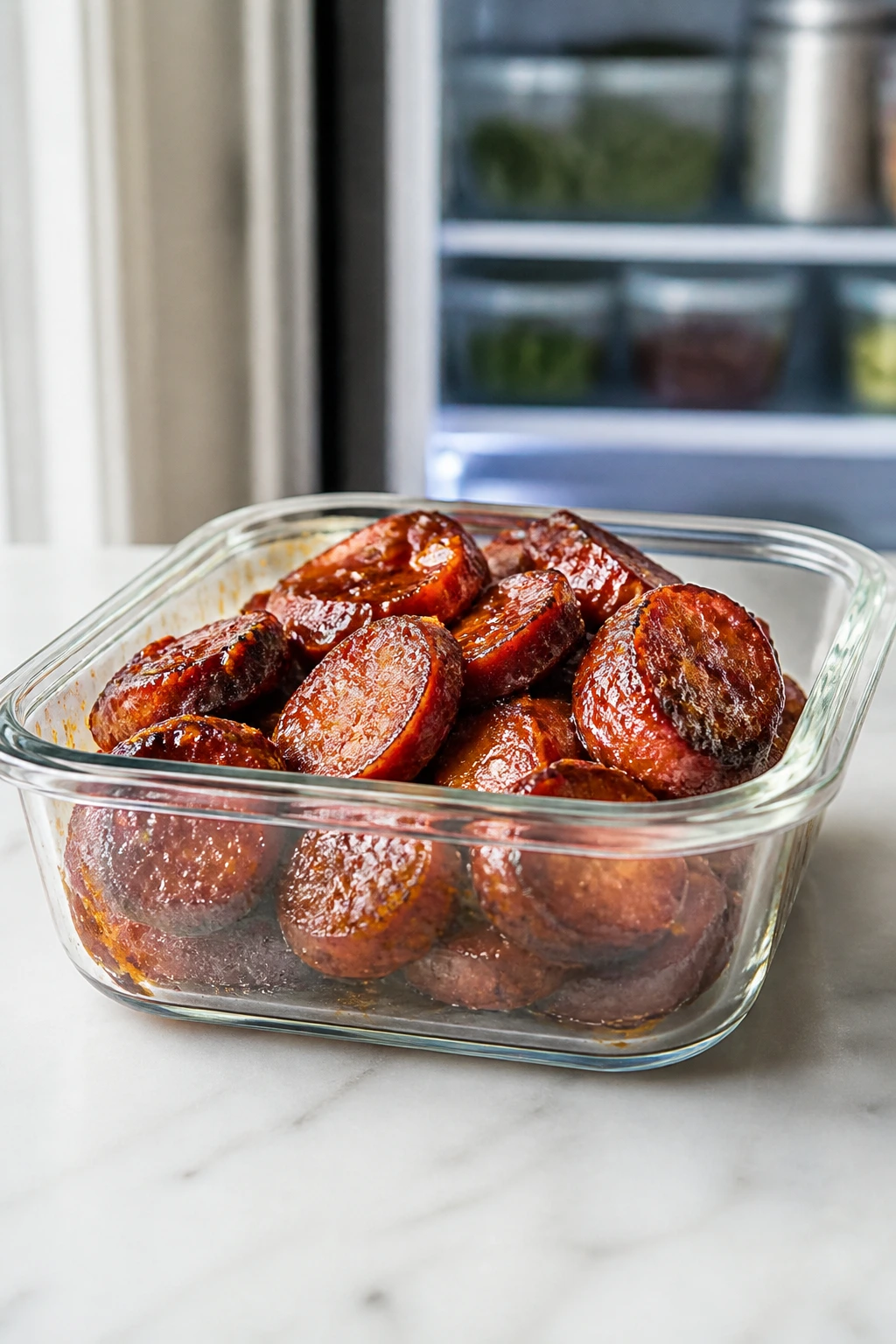
This dish keeps well, but the texture changes a bit once the glaze cools. Store leftovers in an airtight container in the refrigerator for 3 to 4 days. The glaze will thicken and the sausage edges soften a little, which is normal.
For freezing, pack the cooled sausage and glaze in a freezer-safe container for up to 2 months. Thaw overnight in the refrigerator before reheating. I would not freeze it longer than that; the glaze starts to lose its clean texture and the sausage can get a little mealy around the edges.
Reheat in a skillet over medium-low heat with 1 to 2 tablespoons of water. Cover for the first 2 minutes to loosen the glaze, then uncover and stir until it’s hot and glossy again. If you want the edges crisped back up, finish uncovered for another minute or two. The oven works too: 325°F in a covered dish for about 10 to 12 minutes, then uncover for the last 2 minutes.
Make-ahead is best handled in pieces. Slice the sausage up to 2 days ahead and keep it covered in the fridge. The glaze ingredients can be mixed separately, though I like to wait on the butter until cooking day so the sauce tastes fresher. If you cook the whole dish ahead, reheat it gently; high heat only dries the sausage and turns the glaze sticky in the wrong way.
Questions People Ask Before Cooking It
Can I use turkey smoked sausage instead of pork?
Yes. Turkey smoked sausage browns a little faster and throws off less fat, so keep the heat moderate and watch the glaze closely. The flavor is leaner, but the same brown sugar glaze still works.
Can I bake this instead of using a skillet?
You can, and it’s a good fallback when stovetop space is tight. Roast the sausage on a rimmed sheet pan at 425°F, then brush on the glaze near the end and let it bubble for a few minutes. You’ll lose some of the hard skillet crust, though.
Why did my brown sugar glaze turn grainy?
Usually the heat was too high or the sugar hit a dry pan before the liquid and butter were ready. Add 1 tablespoon of water and stir over medium heat until it loosens. If it has actually scorched, start over; burnt sugar does not mellow out.
What kind of smoked sausage works best?
A firm pork kielbasa or a classic ring sausage gives the best coins for browning. Very thin links dry out faster, and softer sausages can split before the glaze sets. Look for a casing that feels tight and a sausage that slices cleanly.
Can I add onions or peppers to the pan?
Yes, but cook them long enough to lose their raw bite before the glaze goes in. Thin onions work well if they get a head start in the oil; peppers need a few extra minutes. If you add them too late, they water the skillet down.
How do I keep the sausage crisp if I’m serving it later?
Keep the finished sausage in a shallow dish, not a deep bowl, and hold it in a low oven without a lid. Steam softens the edges fast. If the glaze thickens too much while holding, stir in a teaspoon of water and warm it briefly.
Is this dish better as an appetizer or a main course?
Both, which is part of the charm. As an appetizer, the glazed coins feel snacky and easy to spear with toothpicks. As a main, they need a starch or vegetable underneath them so the glaze has somewhere to go.
Sticky, Smoky, and Gone Too Fast
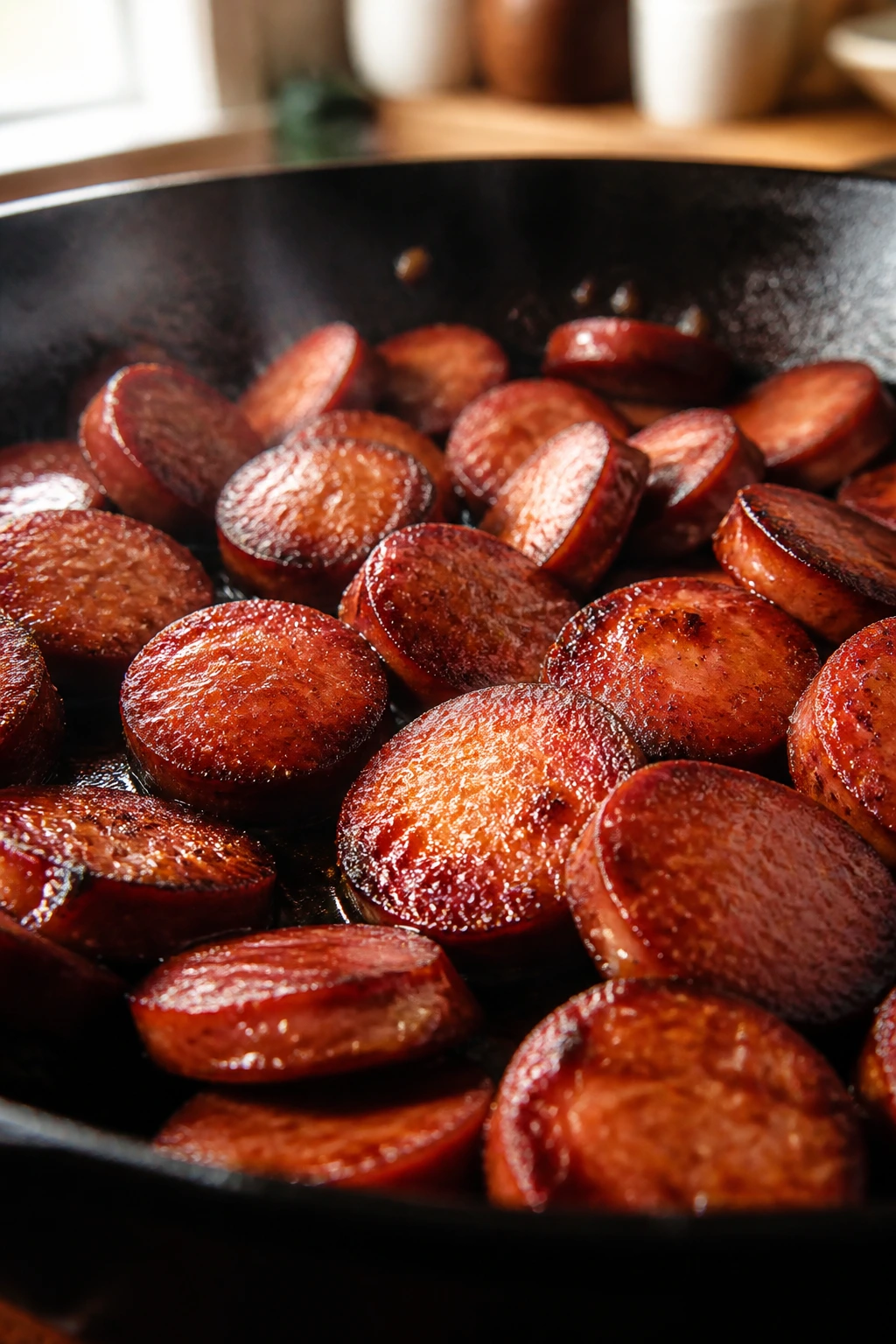
The pan does the hardest part of the work here. Give the sausage room, let it brown before you reach for the sugar, and the whole dish turns into glossy, sticky, caramelized slices that hold their own without a lot of help.
That’s what I like about a skillet like this. It doesn’t ask for much, but it rewards attention in a very specific way: crisp edges, a clean sweet-sour glaze, and a smoky bite that still tastes like sausage, not dessert. Keep the heat steady and the slices uncrowded, and you’ll get the kind of finish that disappears fast from whatever platter it lands on.
Crispy Traditional Smoked Sausage with Brown Sugar Glaze — Recipe Card
Recipe Name: Crispy Traditional Smoked Sausage with Brown Sugar Glaze
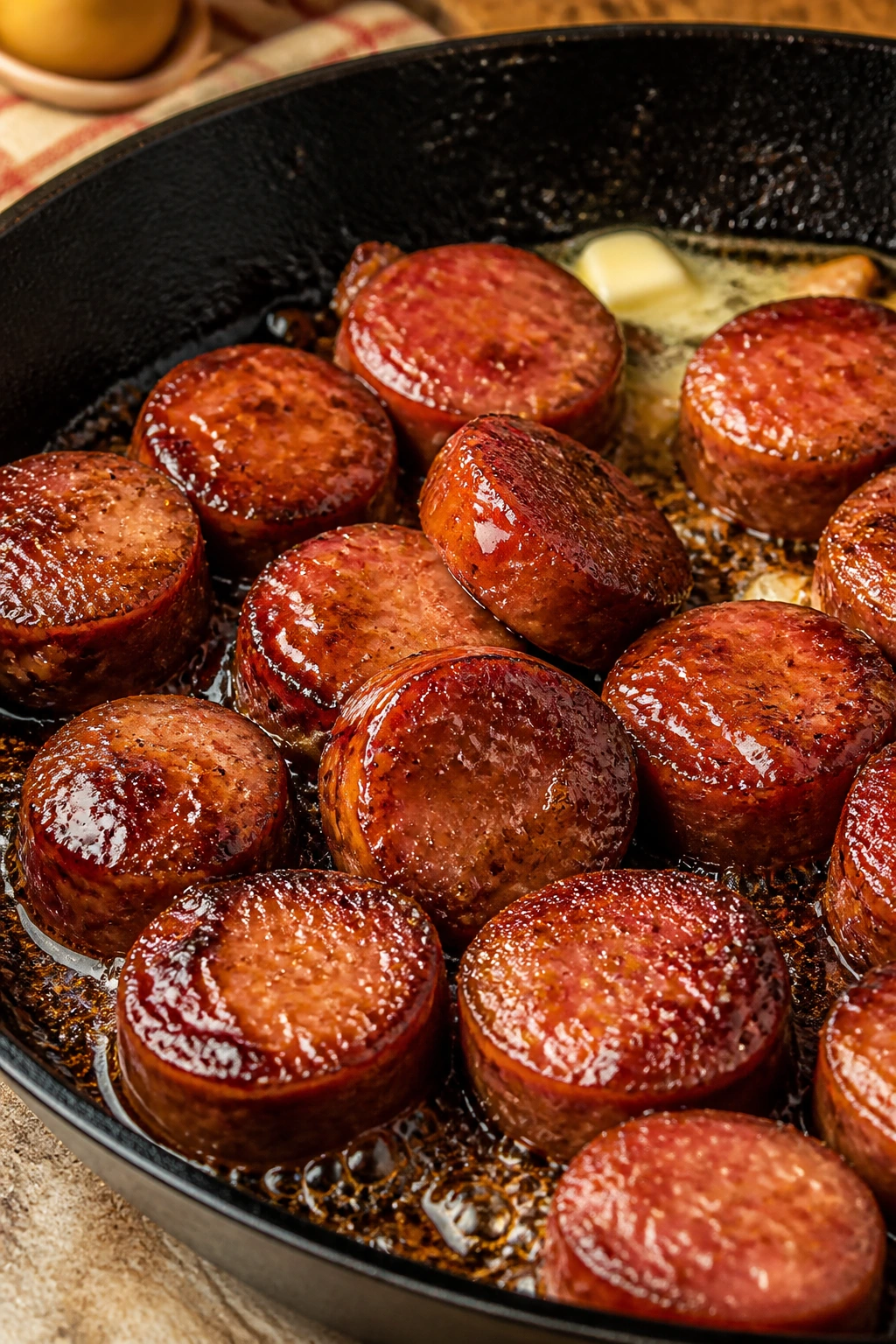
Description: Thick slices of smoked sausage are browned in a hot skillet, then tossed in a glossy brown sugar glaze made with Dijon, vinegar, butter, and a touch of smoke. The edges stay crisp while the glaze clings in a sticky, savory-sweet coat.
Prep Time: 10 minutes
Cook Time: 15 minutes
Total Time: 25 minutes
Course: Appetizer, Main Course
Cuisine: American comfort food
Servings: 6 servings
Calories: about 440 kcal per serving
Ingredients
For the Smoked Sausage:
- 1 1/2 pounds fully cooked smoked sausage or kielbasa, sliced into 1/2-inch coins
- 1 tablespoon neutral oil, such as avocado, canola, or grapeseed
For the Brown Sugar Glaze:
- 1/2 cup packed light brown sugar
- 2 tablespoons Dijon mustard
- 1 tablespoon apple cider vinegar
- 2 tablespoons water
- 2 tablespoons unsalted butter
- 1 teaspoon smoked paprika
- 1/2 teaspoon black pepper
- 1 small garlic clove, finely minced
- Pinch of cayenne pepper, optional
For Serving:
- 1 tablespoon chopped parsley, optional
- Flaky salt, only if needed
Instructions
-
Pat the sausage dry and slice it into 1/2-inch coins on a slight diagonal.
-
Heat a 12-inch skillet over medium-high heat for 2 minutes. Add the oil and swirl to coat.
-
Add the sausage in a single layer and brown for 2 to 3 minutes per side, working in batches if needed.
-
Reduce the heat to medium. Add the butter, brown sugar, Dijon, vinegar, water, smoked paprika, black pepper, garlic, and cayenne, then stir until the sugar begins to dissolve.
-
Simmer for 1 to 2 minutes, stirring often, until the glaze is glossy and slightly thickened.
-
Return the sausage to the pan and toss for 1 to 2 minutes until evenly coated.
-
For extra-dark edges, broil for 60 to 90 seconds in a broiler-safe skillet, watching closely.
-
Transfer to a serving plate, rest for 2 minutes, and finish with parsley if using.
Notes:
Cook in batches if the skillet feels crowded.
A splash of water loosens the glaze if it tightens too fast.
Serve warm for the crispiest edges and best texture.