



A good package of smoked sausage can save dinner faster than almost anything in the fridge. Slice it, drop it into a hot skillet, and it starts doing work immediately: the edges brown, the fat leaves a glossy film on the pan, and the whole kitchen smells like supper is already half-finished. That’s the real appeal of smoked sausage recipes. You’re not starting from scratch. You’re starting from something seasoned, cooked, and already carrying smoke.
That matters because most weeknight dinners fail in the same boring ways. They ask for too many moving parts. They need long marinating, careful timing, or a pile of ingredients that don’t pull their weight. Smoked sausage does the opposite. It gives you salt, smoke, and heft in one ingredient, which means the rest of the dish can stay simple: onions, peppers, rice, pasta, potatoes, beans. The formula is old, reliable, and worth keeping close.
I’ve always liked how smoked sausage changes depending on what you put next to it. With cabbage, it turns earthy and sweet. With cream and pasta, it becomes rich and a little wild around the edges. With rice and tomatoes, it leans into that deep, savory thing that makes a pot look much more complicated than it is. The recipes below all work for the same reason: the sausage carries the flavor load, and the rest of the pan only has to keep up.
Why This Collection Earns Its Spot in a Real Weeknight Rotation
-
Pre-cooked convenience: Smoked sausage is already cooked, so your main job is browning it well and building the rest of the dish around those crisp edges.
-
Flexible pantry pairing: Rice, pasta, beans, cabbage, potatoes, and tortillas all make sense here, which means these recipes work with whatever’s already in the kitchen.
-
Big flavor, short ingredient lists: A few onions, a splash of broth, and the right seasoning are enough when the sausage brings smoke and salt from the start.
-
Easy to scale up: Most of these dishes double cleanly for a bigger crowd, and the skillet or pot usually doesn’t need much more than a wider pan.
-
Good leftover behavior: The sausage keeps its texture better than many proteins, so lunch the next day usually tastes steady instead of sad and dry.
-
Low-fuss cleanup: Several of these recipes stay in one pan, one pot, or one baking dish, which is worth a lot when the dishwasher is already full.
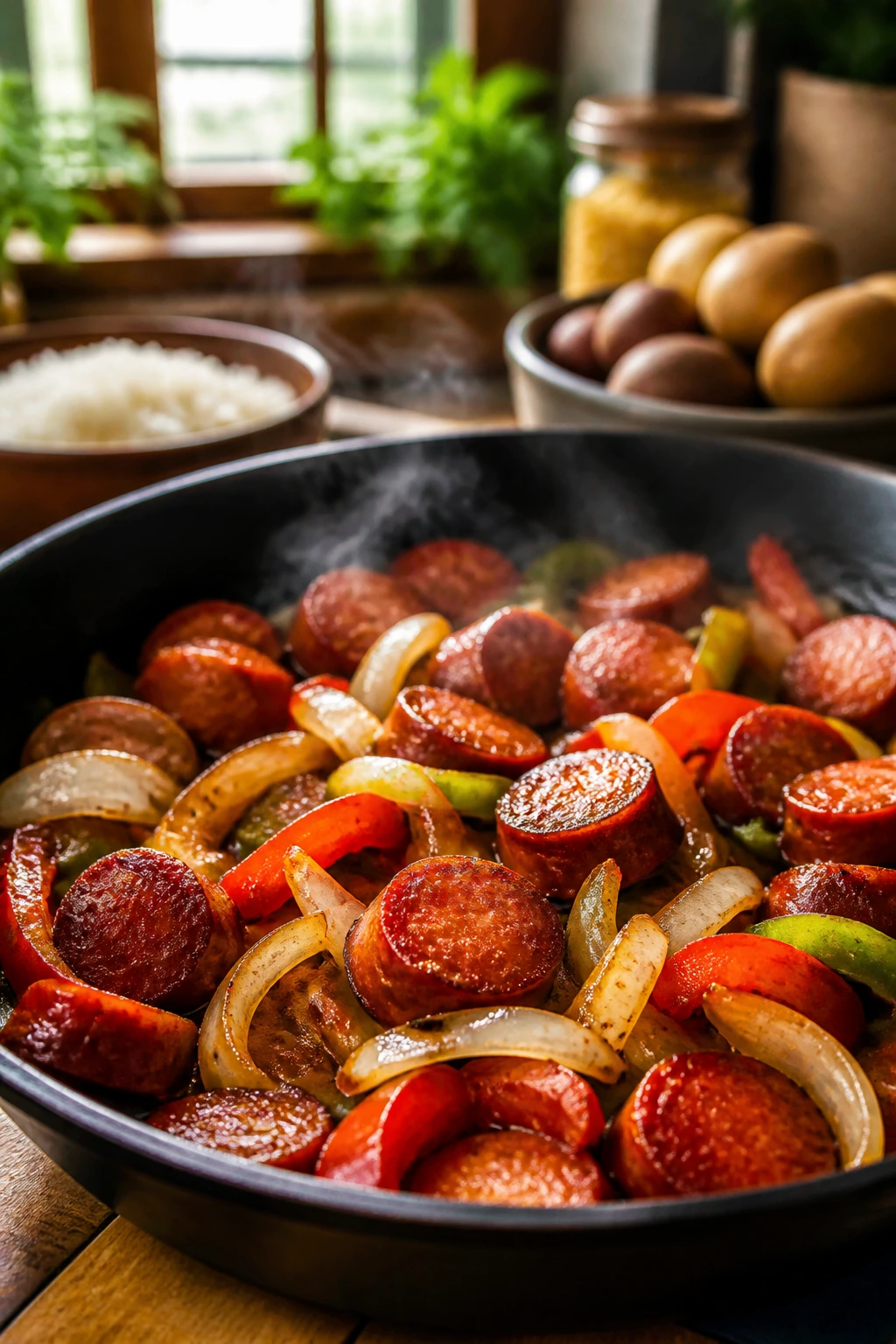
1. Smoked Sausage, Peppers, and Onions Skillet
This is the kind of pan meal that looks like you did more work than you did. The sausage gets bronzed at the edges, the peppers go soft but still hold a little bite, and the onions turn sweet enough to balance the smoky slices without needing much help. If you like dinner that smells loud in the best way, this is a good place to start.
Why It Works:
The sausage cooks fast because it’s already done, so the pan is really about building color and contrast. Bell peppers and onions soften into the sausage drippings, which keeps the dish from tasting flat or oily. A little tomato paste and vinegar at the end give the whole skillet a sharper finish, and that keeps the flavors from sitting on your tongue too heavily.
Key Ingredients:
- 1 lb smoked sausage, sliced into 1/4-inch rounds
- 2 tbsp olive oil
- 1 large yellow onion, sliced
- 2 bell peppers, sliced into strips
- 2 cloves garlic, minced
- 1 tbsp tomato paste
- 1 tsp Italian seasoning
- 1 tbsp apple cider vinegar
- 2 tbsp chopped parsley
- Salt and black pepper, to taste
Quick Steps:
- Heat the olive oil in a 12-inch skillet over medium-high heat until it shimmers.
- Add the sausage in a single layer and cook for 3 to 4 minutes, turning once, until the edges are browned.
- Add the onion and peppers with a pinch of salt, then cook for 6 to 8 minutes, stirring often, until the onion is soft and the peppers have collapsed slightly.
- Stir in the garlic and tomato paste and cook for 1 minute, until the paste darkens a shade and smells sweet.
- Add the Italian seasoning, vinegar, and black pepper. Toss everything together until the pan looks glossy and the vegetables are coated.
- Finish with parsley and serve hot.
Equipment for This Recipe:
- 12-inch skillet
- Wooden spoon or spatula
- Sharp knife
- Cutting board
How to Serve This Dish:
Pile it into hoagie rolls for a fast sandwich, or spoon it over rice if you want something more filling. It also works with roasted potatoes on the side, which is the move I prefer when I want the plate to feel sturdier. The glossy peppers and onions should sit right over the sausage, not beside it.
Pro Tips for This Recipe:
- Brown the sausage first. If you cook the vegetables before the sausage, the pan never gets that deep, savory edge.
- Use one sweet pepper and one sharper pepper, like green or yellow, so the pan doesn’t taste one-note.
- Add the vinegar at the end, not the start. It keeps the finish bright instead of cooked off.
- If the pan looks dry after browning, add 1 tablespoon of water and scrape up the browned bits before the vegetables go in.
Variations on This Dish:
- Cheesy Hoagie Melt: Top the finished skillet with provolone and broil for 1 to 2 minutes until the cheese bubbles.
- Cajun Pepper Pan: Swap the Italian seasoning for 1 1/2 teaspoons Cajun seasoning and use a pinch of cayenne.
- Rice Bowl Version: Serve it over steamed rice with a fried egg on top for a more filling dinner.
Common Mistakes to Avoid with This Dish:
- Crowding the sausage slices: If the pieces sit on top of each other, they steam instead of browning. Use a wide skillet.
- Cooking the peppers to mush: They should still have some shape. If they collapse completely, the dish loses texture.
- Skipping the acid: Without vinegar or a squeeze of lemon, the pan can taste heavy and overly salty.
2. Creamy Smoked Sausage Pasta
This is the sort of pasta that lands somewhere between a weeknight rescue and a comfort-food habit. The sauce clings to the noodles in a thin, glossy coat, and the sausage gives every bite a little snap of smoke. A handful of spinach keeps the bowl from feeling too rich, which matters more than people admit.
Why It Works:
Pasta gives the sausage something starchy and neutral to cling to, while tomatoes and cream build a sauce that feels fuller than the ingredient list suggests. The sausage browns in the same pot, so the flavor doesn’t stay separate from the sauce. A little parmesan at the end pulls the cream and tomato together instead of letting them sit apart.
Key Ingredients:
- 12 oz penne or rigatoni
- 12 oz smoked sausage, sliced
- 1 tbsp olive oil
- 1 small yellow onion, diced
- 3 cloves garlic, minced
- 1 can (14.5 oz) diced tomatoes
- 1 cup chicken broth
- 1 cup heavy cream
- 1 cup grated parmesan
- 2 cups baby spinach
- 1 tsp paprika
- Salt and black pepper, to taste
Quick Steps:
- Cook the pasta in salted water until just shy of al dente, then drain and save 1/2 cup of the pasta water.
- Heat the olive oil in a deep skillet over medium-high heat and brown the sausage for 3 minutes.
- Add the onion and cook for 4 minutes, until soft and translucent.
- Stir in the garlic and paprika, then pour in the diced tomatoes and broth. Simmer for 5 minutes.
- Lower the heat and stir in the cream and parmesan. Cook until the sauce thickens enough to coat a spoon.
- Add the spinach and pasta, tossing until the leaves wilt and the noodles are slicked with sauce. Loosen with pasta water if needed.
Equipment for This Recipe:
- Large pot
- Deep skillet or sauté pan
- Colander
- Grater for parmesan
How to Serve This Dish:
Serve it in warm bowls with extra parmesan and a little black pepper on top. A plain green salad works well here, but I usually prefer garlic bread because it catches the leftover sauce. Keep the portions moderate; this pasta is richer than it looks.
Pro Tips for This Recipe:
- Pull the pasta a minute early. It will finish in the sauce and stay bouncy instead of soft.
- Use diced tomatoes with their juice if you want a looser sauce; drain them a bit if you want something thicker.
- Grate the parmesan yourself if you can. Pre-grated cheese works, but the melt is cleaner when the cheese is fresh.
- If the sauce breaks or looks grainy, lower the heat and add 2 tablespoons of reserved pasta water.
Variations on This Dish:
- Tomato-Basil Version: Add 1/4 cup chopped basil at the end and skip the paprika.
- Spicy Red Pepper Pasta: Stir in 1/2 teaspoon crushed red pepper with the garlic.
- Mushroom Cream Pasta: Add 8 oz sliced mushrooms and cook them after the sausage for a deeper, earthier sauce.
Common Mistakes to Avoid with This Dish:
- Letting the cream boil hard: That can make the sauce split. Keep it at a low simmer.
- Overcooking the pasta before it hits the skillet: It turns soft fast once the sauce goes on.
- Forgetting to taste the sauce: Sausage brands vary a lot in salt, so a final pinch of black pepper or a squeeze of lemon can matter.
3. Sheet Pan Smoked Sausage and Potatoes
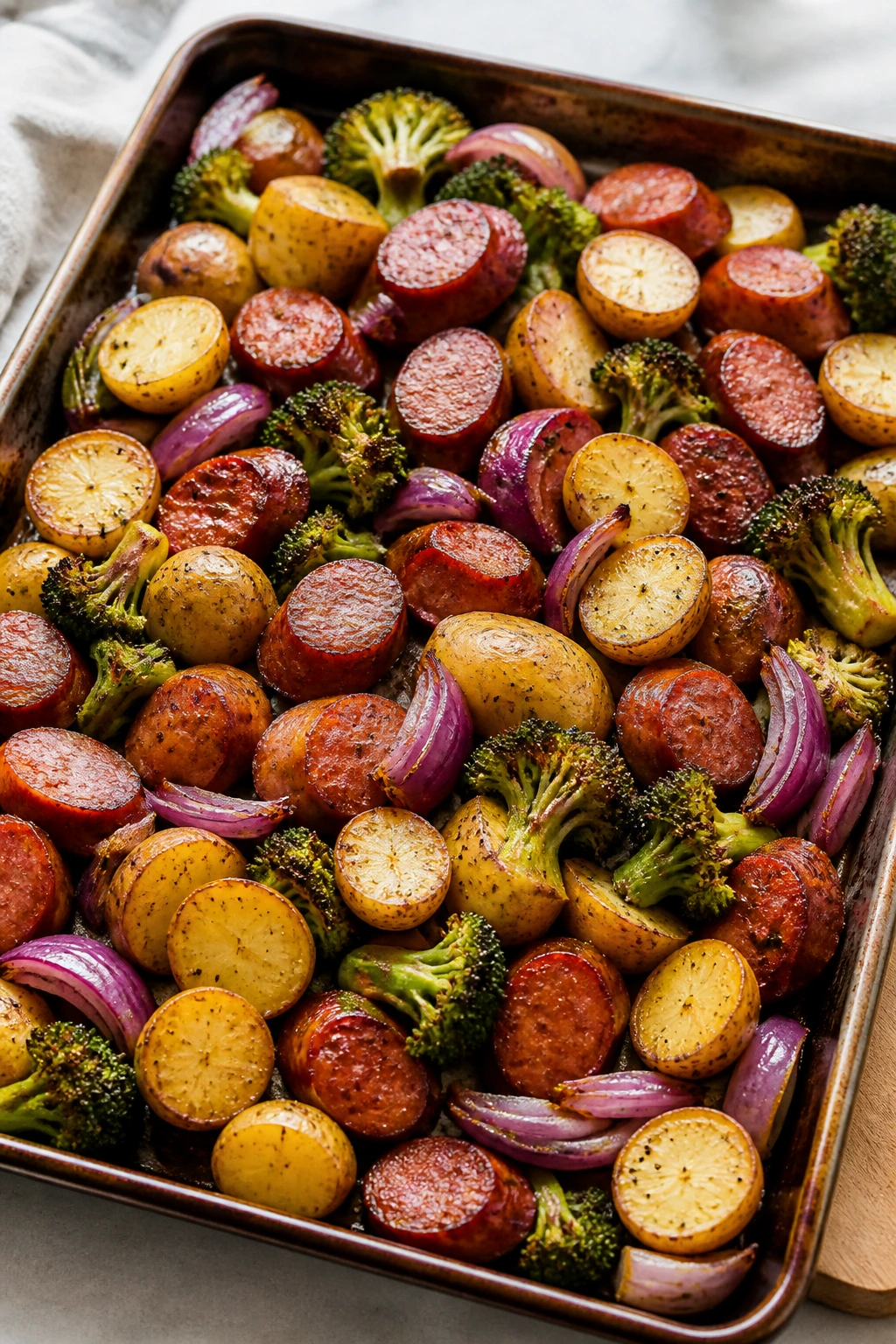
There’s something satisfying about a tray full of browned potatoes and sausage. The potatoes turn crisp in patches, the sausage edges darken, and the onions slide into the gaps with a sweet, roasted smell. It’s dinner with almost no choreography.
Why It Works:
A hot sheet pan gives the potatoes time to get their first coat of color before the sausage joins in. Since the sausage is already cooked, it mainly needs browning and heat, not a long roast. Broccoli or onion added halfway keeps the pan from drying out and gives the whole thing a better texture mix.
Key Ingredients:
- 1 1/2 lbs baby potatoes, halved
- 14 oz smoked sausage, sliced
- 1 red onion, cut into wedges
- 2 cups broccoli florets
- 2 tbsp olive oil
- 1 tsp garlic powder
- 1 tsp paprika
- 3/4 tsp kosher salt
- 1/2 tsp black pepper
- 1 tbsp Dijon mustard, for serving
Quick Steps:
- Preheat the oven to 425°F and line a sheet pan with parchment.
- Toss the potatoes with olive oil, garlic powder, paprika, salt, and pepper.
- Spread them on the pan and roast for 15 minutes.
- Add the sausage, onion, and broccoli, then toss gently right on the pan.
- Roast for 15 to 18 minutes more, until the potatoes are tender and the sausage is browned at the edges.
- Serve with Dijon on the side or drizzled over the top.
Equipment for This Recipe:
- Rimmed sheet pan
- Parchment paper
- Large bowl
- Spatula
How to Serve This Dish:
This works as a main plate on its own, though I like a spoonful of mustard on the side because it cuts through the roasted starch. If you want to stretch it further, add a fried egg or serve it with sauerkraut. The pan should land on the table looking browned, not pale.
Pro Tips for This Recipe:
- Give the potatoes a 15-minute head start. If they go in with the sausage from the beginning, the sausage will overbrown before the potatoes soften.
- Cut the potatoes evenly so the smaller ones don’t collapse while the larger ones stay firm.
- Don’t pile the pan too high. If the vegetables overlap, they steam.
- Parchment helps, but if you want more browning, use a lightly oiled bare pan.
Variations on This Dish:
- Rosemary Roast Pan: Swap paprika for chopped rosemary and add 2 smashed garlic cloves.
- Cheddar Finish: Scatter 1 cup shredded cheddar over the tray during the last 3 minutes of roasting.
- Brussels Sprout Version: Use halved Brussels sprouts instead of broccoli for a sharper, more roasted flavor.
Common Mistakes to Avoid with This Dish:
- Cutting the potatoes too large: They won’t catch up with the sausage in time. Keep them bite-size.
- Adding watery vegetables too early: Broccoli or zucchini can soften into mush if they roast from the start.
- Underseasoning the potatoes: Potatoes need salt. Without it, the whole tray tastes flat.
4. Smoked Sausage Jambalaya
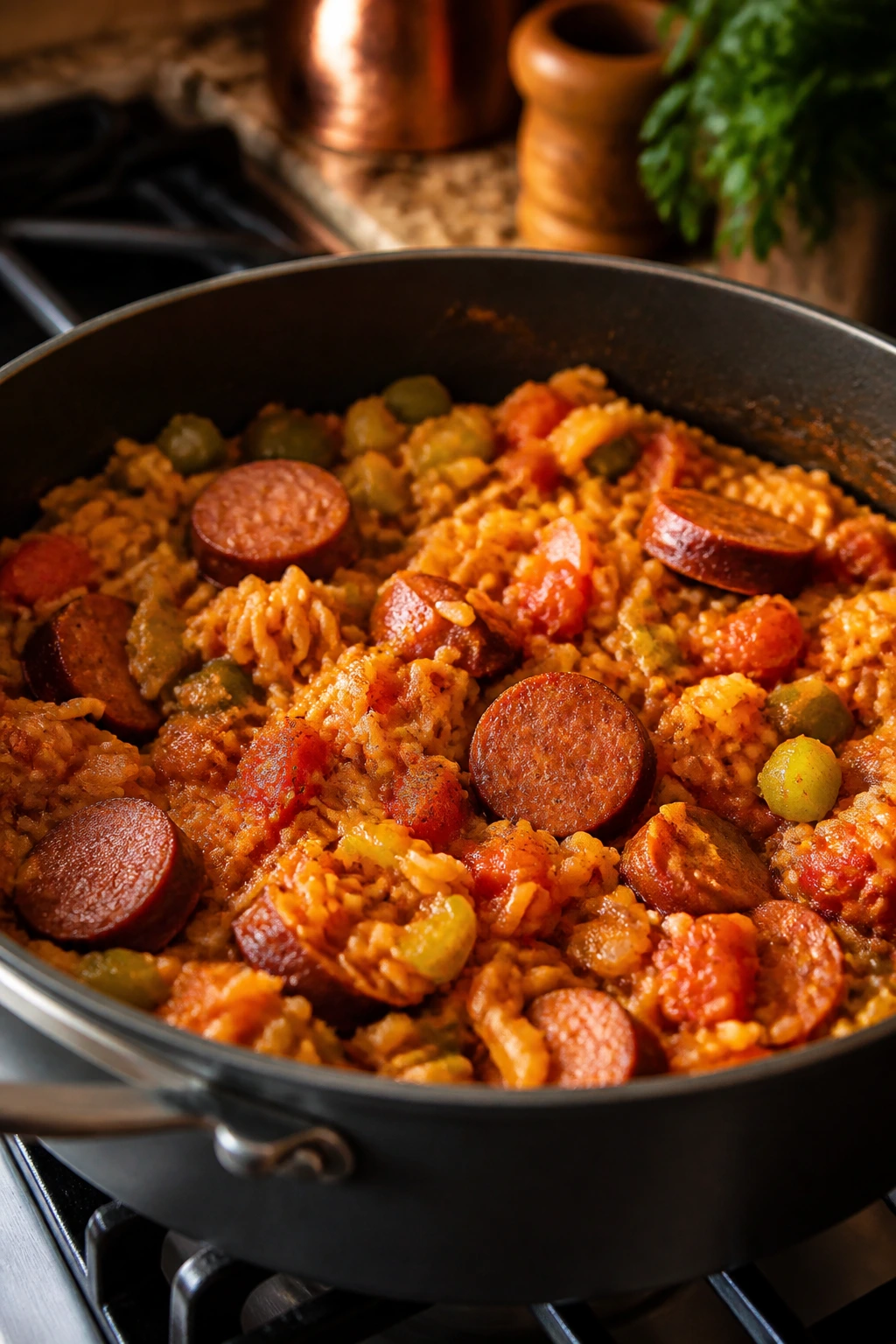
A good jambalaya should smell like the pot is making a promise. This one brings rice, tomato, onion, celery, and smoke into the same pan, and the result is a dish that tastes layered even though the method is plain. The sausage gives the rice enough fat and flavor to feel like a meal, not a side.
Why It Works:
Jambalaya depends on building flavor early and letting the rice absorb it slowly. Browning the sausage first leaves savory bits in the pot, and the vegetables soften into that base before the liquid goes in. Long-grain rice stays separate enough to keep the texture loose, which matters; nobody wants mushy jambalaya.
Key Ingredients:
- 1 lb smoked sausage, sliced
- 2 tbsp oil
- 1 yellow onion, diced
- 1 green bell pepper, diced
- 2 celery stalks, diced
- 3 cloves garlic, minced
- 1 1/2 cups long-grain white rice
- 1 can (14.5 oz) diced tomatoes
- 3 cups chicken broth
- 2 tsp Cajun seasoning
- 1 bay leaf
- 2 sliced green onions
Quick Steps:
- Heat the oil in a heavy pot over medium-high heat and brown the sausage for 3 to 4 minutes.
- Add the onion, bell pepper, and celery, then cook for 6 minutes, stirring often, until softened.
- Stir in the garlic and Cajun seasoning, then cook for 30 seconds.
- Add the rice, tomatoes, broth, and bay leaf, stirring once to loosen the bottom of the pot.
- Bring to a boil, cover, reduce to low, and simmer for 18 to 20 minutes until the rice is tender.
- Rest off the heat for 5 minutes, fluff with a fork, and finish with green onions.
Equipment for This Recipe:
- Heavy-bottomed pot with lid
- Wooden spoon
- Measuring cups
- Fork for fluffing
How to Serve This Dish:
Serve jambalaya in shallow bowls so the rice stays loose and visible instead of getting packed down. A little hot sauce on the table is useful, and I like a simple cucumber salad beside it. The bowl should look speckled with rice, vegetables, and sausage, not flooded with liquid.
Pro Tips for This Recipe:
- Use long-grain rice, not short-grain. Short-grain breaks down too fast.
- Let the rice rest for 5 minutes after cooking. That pause firms it up.
- If your Cajun seasoning is salt-heavy, cut back on the added salt and taste the broth before it simmers.
- Scrape the bottom of the pot after adding the liquid; those browned bits carry most of the flavor.
Variations on This Dish:
- Andouille Heat: Use andouille sausage and add 1/4 teaspoon cayenne.
- Chicken-and-Sausage Twist: Add 1 cup diced cooked chicken along with the broth for a heavier pot.
- Tomato-Light Version: Cut the tomatoes to half a can if you want a drier, more rice-forward bowl.
Common Mistakes to Avoid with This Dish:
- Stirring too often while the rice cooks: That can make the grains break and turn sticky.
- Using too much liquid: The pot should be moist, not soupy, when the lid comes off.
- Skipping the rest time: The rice needs that last 5 minutes to settle.
5. Smoked Sausage and White Bean Soup
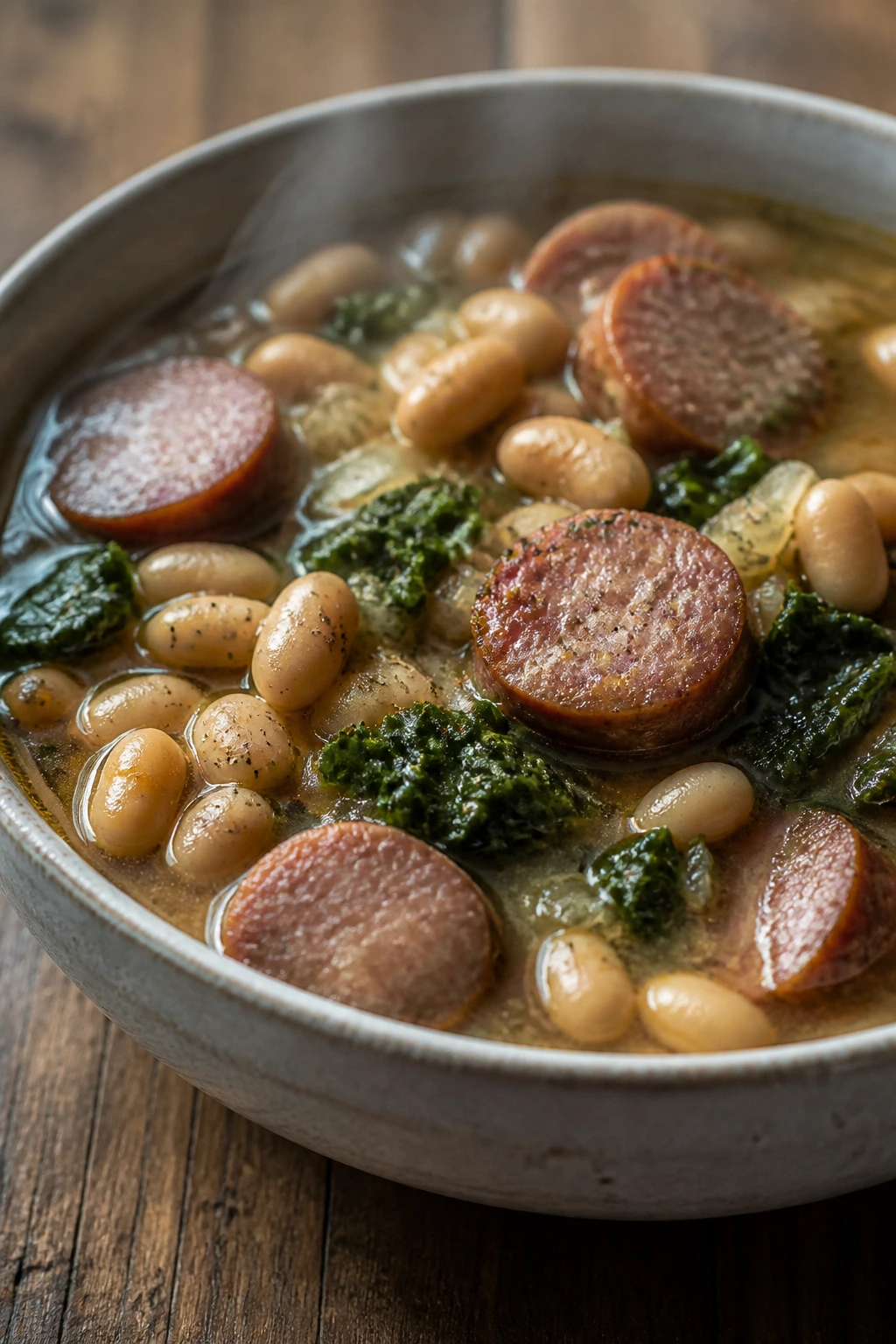
This soup has the kind of steady, honest flavor that makes a second bowl easy to justify. The beans turn creamy, the sausage gives the broth its backbone, and the kale softens just enough at the end to stay green. It tastes like a pot that knows what it’s doing.
Why It Works:
White beans thicken the broth without needing flour or cream, which keeps the soup light but still substantial. Sausage browned in the pot adds salt and smoke early, then carrots, celery, and onion build a softer base beneath it. A squeeze of lemon at the end keeps the soup from feeling dull.
Key Ingredients:
- 12 oz smoked sausage, sliced
- 2 tbsp olive oil
- 1 onion, diced
- 2 carrots, diced
- 2 celery stalks, diced
- 3 cloves garlic, minced
- 2 cans cannellini beans, rinsed and drained
- 4 cups chicken broth
- 1 tsp dried thyme
- 1 bay leaf
- 2 cups chopped kale
- 1 tbsp lemon juice
- Black pepper, to taste
Quick Steps:
- Heat the olive oil in a soup pot over medium heat and brown the sausage for 4 minutes.
- Add the onion, carrots, and celery, then cook for 6 to 7 minutes until the vegetables soften.
- Stir in the garlic and thyme for 30 seconds.
- Add the beans, broth, and bay leaf, then bring to a gentle simmer for 15 minutes.
- Stir in the kale and cook for 3 to 4 minutes, until it turns deep green and tender.
- Remove the bay leaf, add lemon juice, and season with black pepper before serving.
Equipment for This Recipe:
- Soup pot or Dutch oven
- Ladle
- Knife and cutting board
- Wooden spoon
How to Serve This Dish:
A thick slice of crusty bread belongs here. So does a little grated parmesan if you want extra salt and body in the bowl. I like to keep the soup fairly brothy, with the beans and sausage visible rather than mashed into a puree.
Pro Tips for This Recipe:
- Mash a few beans against the side of the pot if you want a thicker soup without adding cream.
- Add the kale near the end so it stays bright instead of drab.
- Use low-sodium broth if your sausage is very salty.
- Lemon matters more than most people think here. Without it, the beans can taste sleepy.
Variations on This Dish:
- Tuscan Herb Soup: Add rosemary and a pinch of sage.
- Tomato Bean Soup: Stir in 1/2 cup crushed tomatoes for a deeper red broth.
- Spicy Pepper Pot: Add red pepper flakes and use spicy smoked sausage.
Common Mistakes to Avoid with This Dish:
- Overcooking the kale: It should wilt, not disappear.
- Using unseasoned broth with a salty sausage and then overcompensating later: Taste before adding more salt.
- Boiling the soup hard: A low simmer keeps the beans intact and the sausage tender.
6. Smoked Sausage Fried Rice
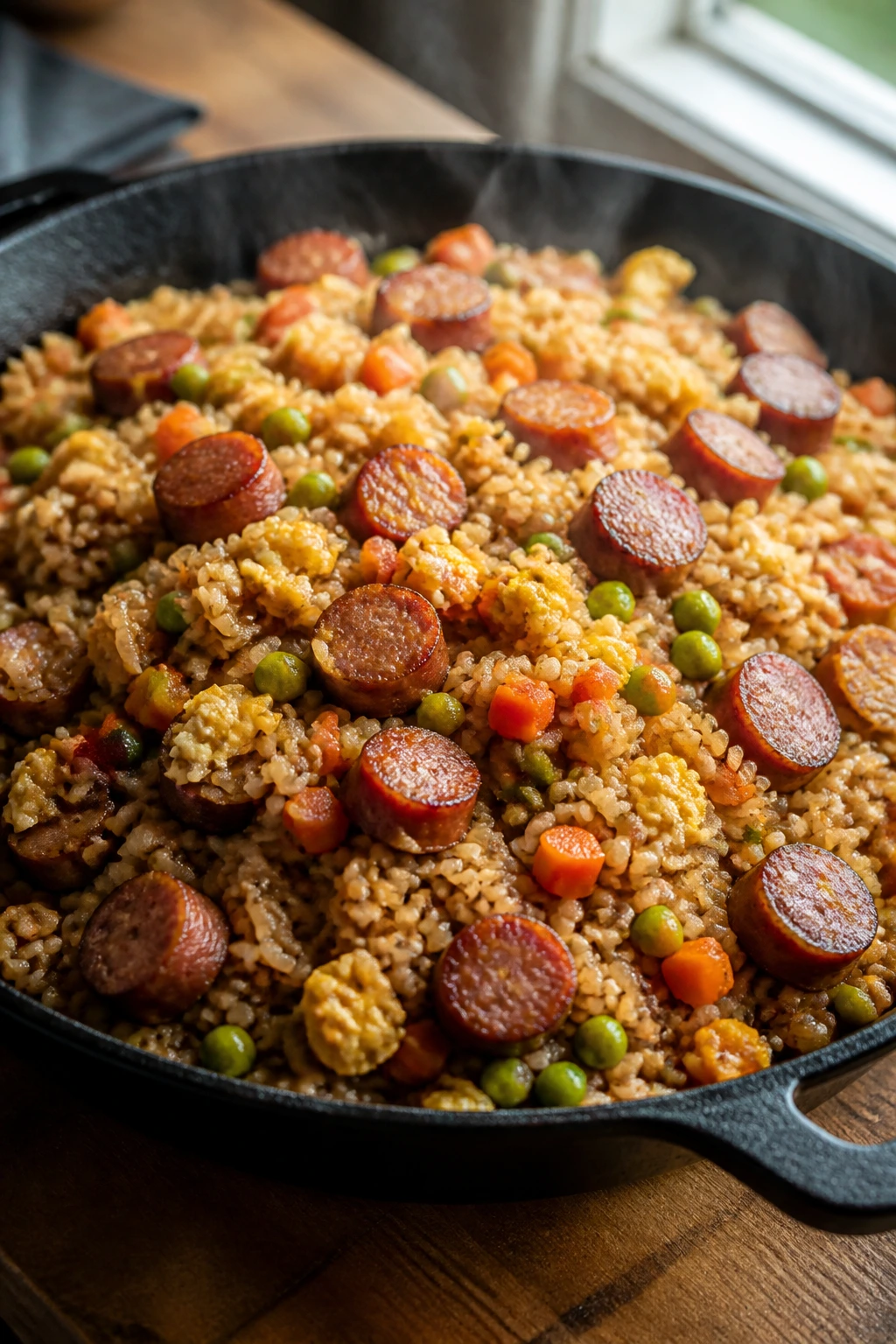
Cold rice and smoked sausage are a better pair than they have any right to be. The grains stay separate, the sausage gets crisp around the edges, and the whole skillet takes on that savory, slightly toasted smell that fried rice should have. Quick? Yes. Boring? Not even a little.
Why It Works:
Fried rice rewards dry, chilled rice because the grains fry instead of steaming. Smoked sausage is already seasoned, so the sauce can stay light: soy sauce, sesame oil, and a little garlic are enough. Eggs bring softness back into the pan and keep the dish from tasting one-dimensional.
Key Ingredients:
- 3 cups cooked, chilled rice
- 12 oz smoked sausage, diced
- 2 tbsp neutral oil
- 2 eggs, lightly beaten
- 1 cup frozen peas and carrots
- 2 cloves garlic, minced
- 1 tsp grated fresh ginger
- 3 tbsp soy sauce
- 1 tbsp sesame oil
- 3 scallions, sliced
Quick Steps:
- Heat 1 tablespoon of the oil in a large skillet or wok over medium-high heat.
- Add the sausage and cook for 3 to 4 minutes until browned at the edges.
- Push the sausage to one side, add the eggs to the empty space, and scramble just until set.
- Add the remaining oil, peas and carrots, garlic, and ginger. Stir for 1 minute.
- Add the rice and break up any clumps with your spoon, then cook for 3 to 4 minutes until hot.
- Stir in soy sauce and sesame oil, toss well, and finish with scallions.
Equipment for This Recipe:
- Large skillet or wok
- Spatula
- Small bowl for beaten eggs
- Measuring spoons
How to Serve This Dish:
Serve it in shallow bowls with extra scallions on top and a little sriracha on the side if you like heat. A cucumber salad or some simple steamed edamame works nicely beside it. The rice should look glossy, not wet.
Pro Tips for This Recipe:
- Use rice that spent a night in the fridge if possible. Fresh rice clumps.
- Keep the pan hot enough to hear a light sizzle when the rice hits it.
- Dice the sausage small so it mixes into each bite instead of sitting in heavy chunks.
- Add soy sauce around the edge of the pan so it flashes and smells a little toasted before you toss.
Variations on This Dish:
- Pineapple Fried Rice: Add 3/4 cup diced pineapple with the peas and carrots.
- Kimchi Fried Rice: Replace the vegetables with 1 cup chopped kimchi and use a little extra sesame oil.
- Egg-Free Version: Skip the eggs and add another 1/2 cup vegetables for more bulk.
Common Mistakes to Avoid with This Dish:
- Using warm rice: It sticks and turns gummy.
- Adding too much soy sauce: The pan gets wet and the rice loses its fry.
- Crowding the skillet: The rice needs contact with the hot surface, not a mound of steam.
7. Smoked Sausage Breakfast Casserole
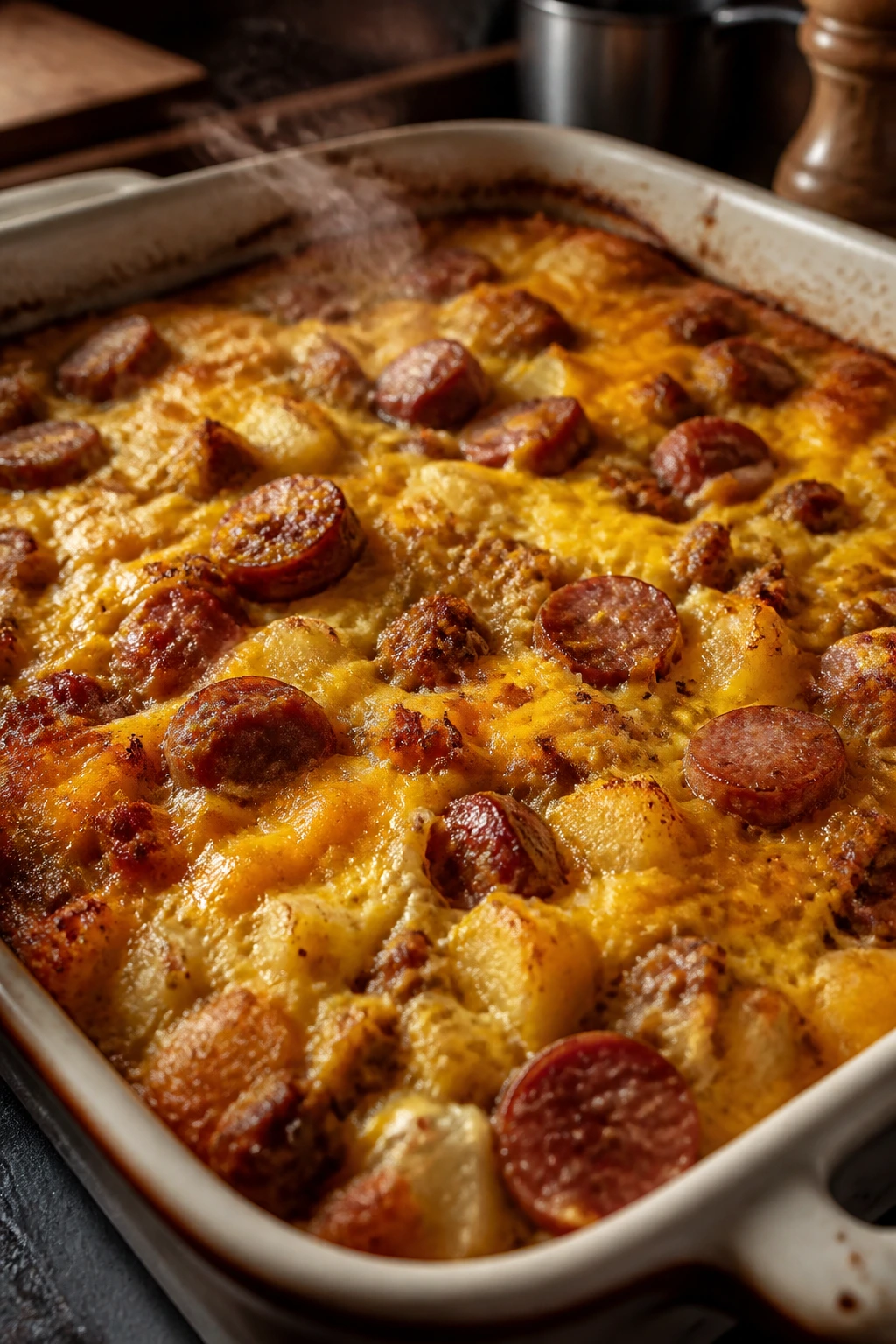
This is the sort of casserole that gets sliced into squares and disappears fast. The eggs set around the sausage and potatoes with a soft, custardy texture, and the cheddar melts into little pockets that hold heat longer than you expect. It’s simple, but not flimsy.
Why It Works:
Eggs need a little fat and a sturdy mix-in, and smoked sausage gives both. Hash browns soak up the egg mixture without falling apart, while onion adds a mild sweetness underneath the cheese. Baking the casserole uncovered at the end helps the top set instead of staying pale and soggy.
Key Ingredients:
- 1 lb smoked sausage, diced
- 1 tbsp butter
- 1 small onion, diced
- 3 cups frozen hash browns, thawed
- 8 large eggs
- 1 cup whole milk
- 2 cups shredded cheddar
- 1/2 tsp kosher salt
- 1/2 tsp black pepper
- 2 sliced green onions
Quick Steps:
- Preheat the oven to 375°F and grease a 9×13-inch baking dish.
- Cook the sausage in a skillet for 4 minutes, then add the butter and onion and cook until the onion softens.
- Spread the hash browns in the baking dish and scatter the sausage mixture over them.
- Whisk the eggs, milk, salt, and pepper until smooth, then pour over the dish.
- Top with cheddar and bake for 35 to 40 minutes, until the center is set and the edges are lightly browned.
- Rest for 10 minutes, then finish with green onions and slice.
Equipment for This Recipe:
- 9×13-inch baking dish
- Skillet
- Mixing bowl
- Whisk
How to Serve This Dish:
Serve it warm from the pan with fruit on the side or a simple green salad if you’re eating it later in the day. A spoonful of hot sauce does good things here. The best squares hold together cleanly when cut, with cheese stretching a little at the edges.
Pro Tips for This Recipe:
- Thaw the hash browns first so they don’t water down the eggs.
- Let the casserole rest before cutting. Straight out of the oven, it’s too loose.
- If the top browns too fast, lay a sheet of foil over it for the last 10 minutes.
- Use a shallow dish for firmer slices; a deeper dish gives you a softer, more spoonable bake.
Variations on This Dish:
- Bell Pepper Breakfast Bake: Add 1 cup diced bell peppers to the sausage mixture.
- Pepper Jack Version: Swap half the cheddar for pepper jack.
- Crustless Quiche Style: Add 1/2 cup cottage cheese to the egg mixture for a softer, richer texture.
Common Mistakes to Avoid with This Dish:
- Not draining excess grease from the sausage: Too much fat makes the casserole slick.
- Cutting too soon: The eggs need the rest time to finish setting.
- Using raw potatoes instead of thawed hash browns: They won’t cook evenly in the time the eggs need.
8. Smoked Sausage Mac and Cheese
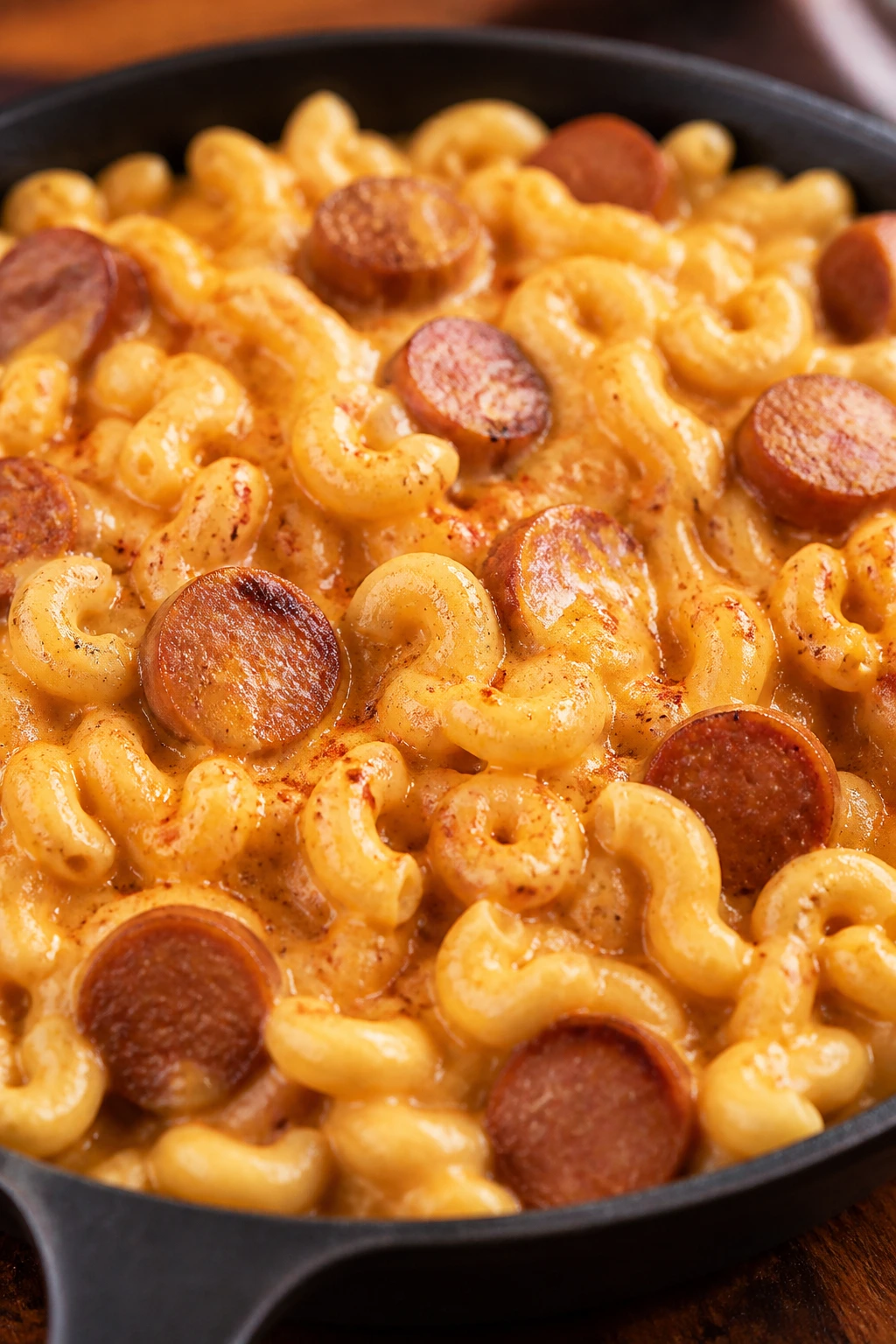
Mac and cheese with smoked sausage has a little more swagger than the plain version. The sauce is creamy, the pasta stays tender, and the sausage adds salty, browned bites that keep each forkful from turning into soft sameness. If you want comfort food that still feels like dinner, not just a side dish, this is the one.
Why It Works:
A roux-based cheese sauce clings better to pasta than a thin milk sauce ever will. Smoked sausage adds fat and seasoning, so the cheddar doesn’t have to do all the heavy lifting alone. A little Dijon and paprika sharpen the flavor without turning the dish complicated.
Key Ingredients:
- 8 oz elbow macaroni
- 12 oz smoked sausage, sliced
- 2 tbsp butter
- 2 tbsp all-purpose flour
- 2 1/2 cups whole milk
- 2 cups shredded sharp cheddar
- 1/2 cup shredded smoked gouda
- 1 tsp Dijon mustard
- 1/2 tsp paprika
- 1/2 cup panko breadcrumbs
- Salt and black pepper, to taste
Quick Steps:
- Cook the macaroni until just al dente, drain, and set aside.
- Brown the sausage in a skillet over medium heat for 3 to 4 minutes, then transfer it to a plate.
- In the same skillet, melt the butter, whisk in the flour, and cook for 1 minute.
- Slowly whisk in the milk and cook until the sauce thickens enough to coat a spoon.
- Lower the heat and stir in the cheddar, gouda, Dijon, and paprika until smooth.
- Fold in the pasta and sausage, transfer to a baking dish, top with panko, and bake at 375°F for 15 minutes until the top turns golden.
Equipment for This Recipe:
- Saucepan
- Skillet
- Whisk
- 2-quart baking dish
How to Serve This Dish:
Serve it in a deep bowl with a little black pepper and maybe chopped chives on top. A sharp green salad works better than another rich side, because the mac already brings plenty of body. I like this most when the top has a few crisp breadcrumbs and the middle stays creamy.
Pro Tips for This Recipe:
- Shred the cheese yourself if possible. Bagged cheese can make the sauce grainy.
- Keep the heat low once the cheese goes in. High heat can make it separate.
- Pull the pasta early so it doesn’t over-soften in the oven.
- If you want a looser sauce, splash in 1/4 cup milk before baking.
Variations on This Dish:
- Jalapeño Mac: Add 1 diced jalapeño with the sausage.
- Baked Bacon Swap: Keep the sausage and add 2 strips chopped cooked bacon for a smokier top note.
- No-Bake Version: Skip the oven and serve straight from the skillet with extra sauce.
Common Mistakes to Avoid with This Dish:
- Boiling the cheese sauce after the cheese goes in: That can make it gritty.
- Overbaking the finished dish: The sauce tightens fast, and the texture gets heavy.
- Underseasoning the pasta water: Mac and cheese needs that salt in the noodle itself.
9. Smoked Sausage and Cabbage Skillet
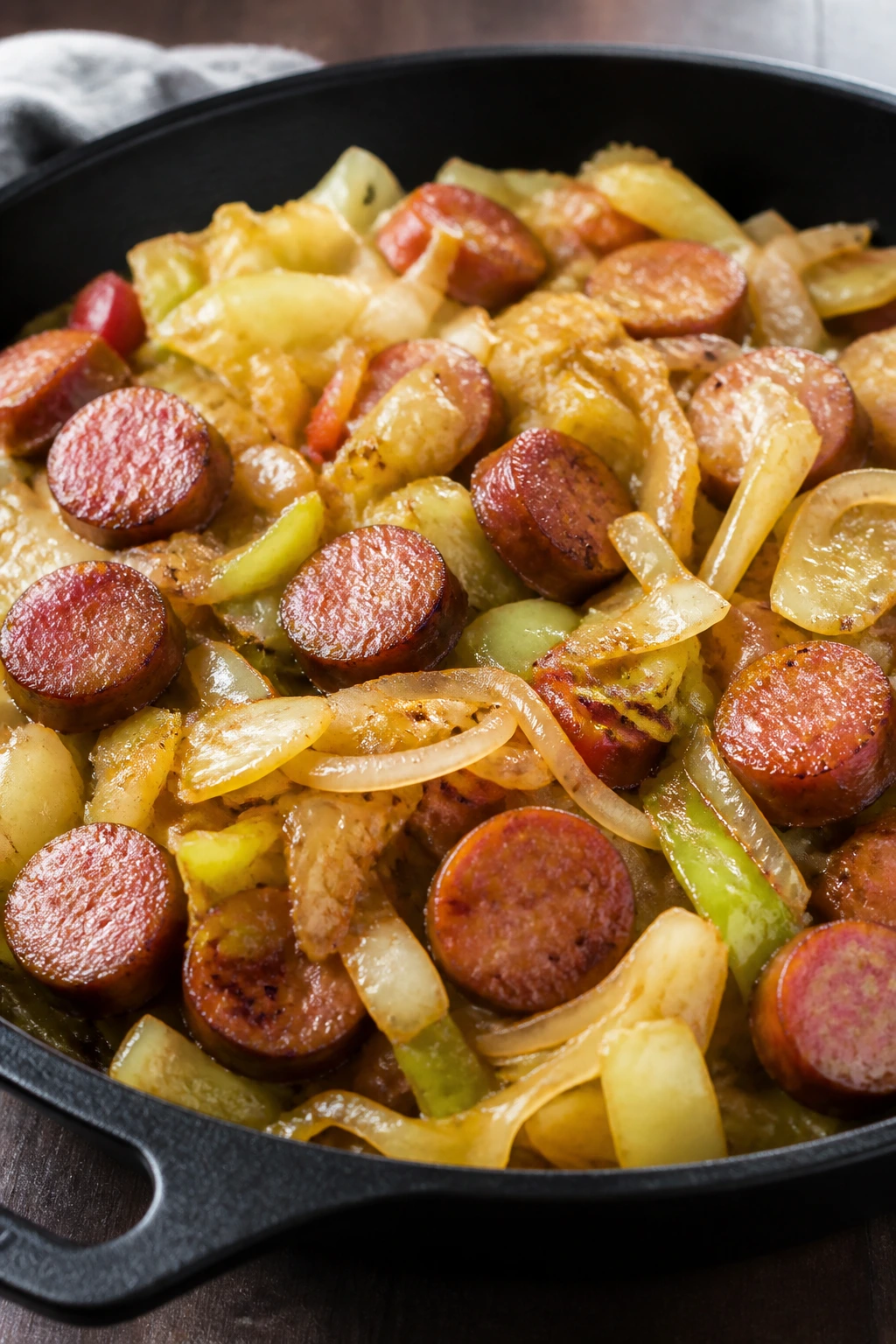
Cabbage and smoked sausage have been getting along for a long time, and for good reason. The cabbage softens into sweet ribbons, the sausage brings the salt and smoke, and a little apple or vinegar at the end keeps the pan from tasting too heavy. It’s humble food, but it’s not dull.
Why It Works:
Cabbage needs heat and time to collapse and sweeten, and sausage gives the pan enough fat to get there without sticking. An apple adds a faint tartness that keeps the skillet from sinking into one long, soft note. Caraway or mustard can lean the dish toward sharper, more old-school flavors if you like that direction.
Key Ingredients:
- 1 lb smoked sausage, sliced
- 1 tbsp butter
- 1 tbsp olive oil
- 1 onion, sliced
- 1 small green cabbage, about 2 lbs, cored and sliced
- 1 apple, thinly sliced
- 1 tsp caraway seeds
- 2 tbsp apple cider vinegar
- 1 tsp Dijon mustard
- Salt and black pepper, to taste
Quick Steps:
- Heat the butter and oil in a large skillet over medium-high heat.
- Brown the sausage for 3 to 4 minutes, then add the onion and cook until it softens.
- Add the cabbage, apple, caraway, salt, and pepper. Stir well.
- Cook for 10 to 12 minutes, stirring every couple of minutes, until the cabbage turns tender and picks up browned spots.
- Stir in the vinegar and Dijon mustard, then cook for 1 minute more.
- Taste and adjust with black pepper before serving.
Equipment for This Recipe:
- Large skillet with a lid
- Wooden spoon
- Knife
- Cutting board
How to Serve This Dish:
This is excellent with rye bread, mashed potatoes, or even plain boiled potatoes if you want something low-drama. Serve it in a wide bowl so the cabbage stays fluffy instead of compressed. The best plates have a mix of browned cabbage edges and softer pale ribbons.
Pro Tips for This Recipe:
- Slice the cabbage into pieces wide enough to keep some texture after cooking.
- Use a tart apple, not a soft sweet one, so the dish doesn’t turn sugary.
- Add a splash of water and cover the skillet for 2 minutes if the cabbage is browning before it softens.
- Finish with vinegar near the end; if it goes in too early, the flavor disappears.
Variations on This Dish:
- German-Inspired Skillet: Add 1 teaspoon mustard seeds and serve with extra mustard.
- Apple-Free Version: Skip the apple and add more vinegar for a sharper edge.
- Rye-and-Onion Version: Caramelize the onions a little longer for a deeper, sweeter skillet.
Common Mistakes to Avoid with This Dish:
- Cooking the cabbage on low heat the whole time: It softens, but it never browns.
- Using too much apple: The dish can tip into sweet territory fast.
- Forgetting to season at the end: Cabbage needs a final taste check after it wilts.
10. Smoked Sausage Tortellini Alfredo
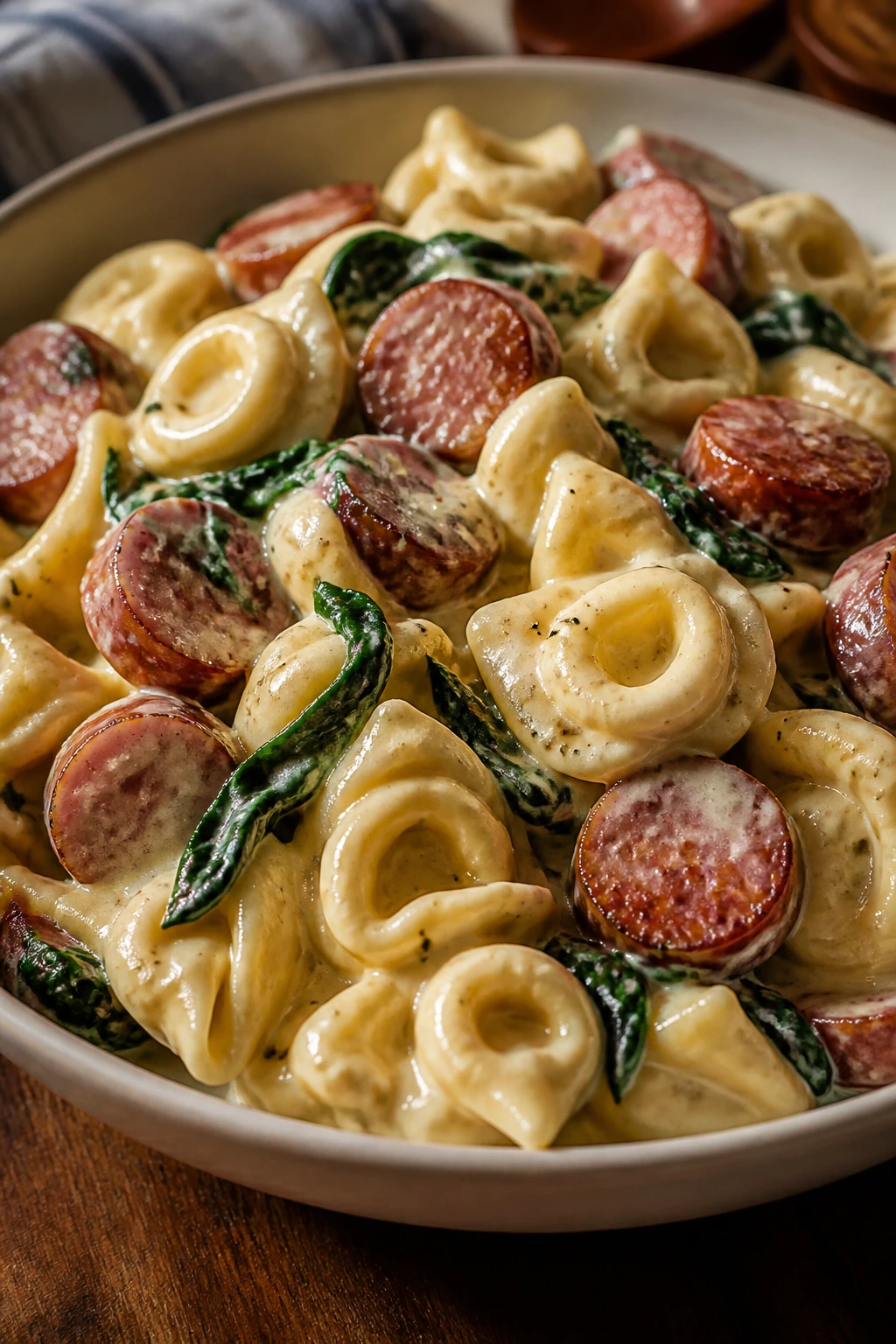
This is a skillet dinner that feels richer than its ingredient list would suggest. Cheese tortellini bring their own filling, the sausage adds smoke and salt, and the Alfredo sauce clings to everything in a way that makes the bowl look far more involved than it is. The spinach keeps the sauce from becoming too heavy, which matters.
Why It Works:
Fresh or refrigerated tortellini cook fast and bring extra cheese or meat inside, so the dish gets body without a long simmer. Smoked sausage browns in minutes and leaves the pan ready for garlic and cream. A small handful of spinach is enough to cut the richness without changing the character of the sauce.
Key Ingredients:
- 1 lb refrigerated cheese tortellini
- 12 oz smoked sausage, sliced
- 2 tbsp butter
- 3 cloves garlic, minced
- 1 1/2 cups heavy cream
- 1 cup grated parmesan
- 2 cups baby spinach
- 1/4 tsp ground nutmeg
- Black pepper, to taste
Quick Steps:
- Cook the tortellini according to the package directions, then drain.
- Brown the sausage in a large skillet over medium heat for 3 to 4 minutes.
- Add the butter and garlic, then cook for 30 seconds.
- Pour in the cream and let it bubble gently for 2 to 3 minutes.
- Stir in the parmesan, nutmeg, and black pepper until the sauce thickens.
- Add the spinach and tortellini, toss until the leaves wilt and the sauce coats every piece.
Equipment for This Recipe:
- Large skillet
- Pot for boiling tortellini
- Colander
- Tongs or spatula
How to Serve This Dish:
Serve it right away in warm bowls, with extra parmesan and black pepper over the top. A crisp salad is a smart side because the Alfredo is doing a lot of work already. The sauce should look silky and cling to the tortellini, not pool at the bottom.
Pro Tips for This Recipe:
- Use refrigerated tortellini if you want the fastest path; frozen works too, but add a minute or two.
- Keep the cream at a gentle bubble, not a hard boil.
- Grate nutmeg lightly. Too much turns the sauce oddly sweet.
- If the sauce tightens, add 2 tablespoons of the tortellini cooking water.
Variations on This Dish:
- Sun-Dried Tomato Alfredo: Add 1/4 cup chopped sun-dried tomatoes with the garlic.
- Broccoli Version: Swap the spinach for small broccoli florets steamed until just tender.
- Peppery Alfredo: Use a heavier hand with black pepper and finish with red pepper flakes.
Common Mistakes to Avoid with This Dish:
- Letting the sauce boil hard: Cream sauces can split.
- Adding the tortellini too early: They should go in after the sauce is ready so they don’t overcook.
- Using too much nutmeg: It should support the sauce, not announce itself.
11. Smoked Sausage Rice Bake with Broccoli and Cheddar

This bake is what happens when you want a casserole that still feels like dinner, not a side dish wearing a lid. The rice turns tender in the creamy liquid, the broccoli stays bright enough to stand out, and the sausage threads through the pan so every scoop has smoke, starch, and cheese. It’s practical food, and I mean that as praise.
Why It Works:
Cooked rice keeps the method simple because the casserole doesn’t need a long bake to soften grains from scratch. The sausage browns first, which adds flavor to the onion and broccoli before the whole thing goes into the oven. Cheddar melts into the rice and gives the bake a clean, familiar finish.
Key Ingredients:
- 3 cups cooked rice
- 12 oz smoked sausage, sliced
- 1 tbsp butter
- 1 small onion, diced
- 2 cups broccoli florets, lightly steamed
- 1 can (10.5 oz) condensed cream of mushroom soup
- 1 cup milk
- 2 cups shredded cheddar, divided
- 1/2 tsp black pepper
- 2 tbsp breadcrumbs, optional
Quick Steps:
- Preheat the oven to 375°F and grease a 9×13-inch baking dish.
- Brown the sausage in a skillet for 3 minutes, then add the butter and onion and cook until softened.
- Stir together the soup, milk, and black pepper in a bowl.
- Fold the rice, broccoli, sausage mixture, and 1 1/2 cups of the cheddar into the soup mixture.
- Spread everything into the baking dish, top with the remaining cheddar and breadcrumbs, and bake for 25 to 30 minutes until bubbling.
- Rest for 10 minutes before serving so the rice sets up.
Equipment for This Recipe:
- 9×13-inch baking dish
- Skillet
- Mixing bowl
- Spoon or spatula
How to Serve This Dish:
Serve it in square portions with a sharp green salad or sliced tomatoes. If you want a little crunch, a few dill pickle slices on the side work better than another starchy side. The top should be bronzed and the center creamy, not loose.
Pro Tips for This Recipe:
- Lightly steam the broccoli first so it softens in the bake without turning watery.
- Use fully cooked rice that’s cooled a bit; hot rice can make the casserole gummy.
- If the casserole looks dry before baking, add 1/4 cup more milk.
- Let it rest after baking or the first scoop will fall apart.
Variations on This Dish:
- Creamy Broccoli-Cheese Bake: Add 1/2 cup sour cream to the filling.
- Mushroom Lover’s Version: Stir in 8 oz sautéed mushrooms with the sausage.
- Sharp Cheddar Bake: Use all sharp cheddar and skip the breadcrumbs for a cleaner top.
Common Mistakes to Avoid with This Dish:
- Using uncooked rice unless the recipe is built for it: The bake won’t finish evenly.
- Skipping the rest time: The casserole needs to settle or it will run.
- Flooding it with milk: Too much liquid makes the rice soupy instead of creamy.
12. Smoked Sausage Quesadillas with Peppers and Monterey Jack
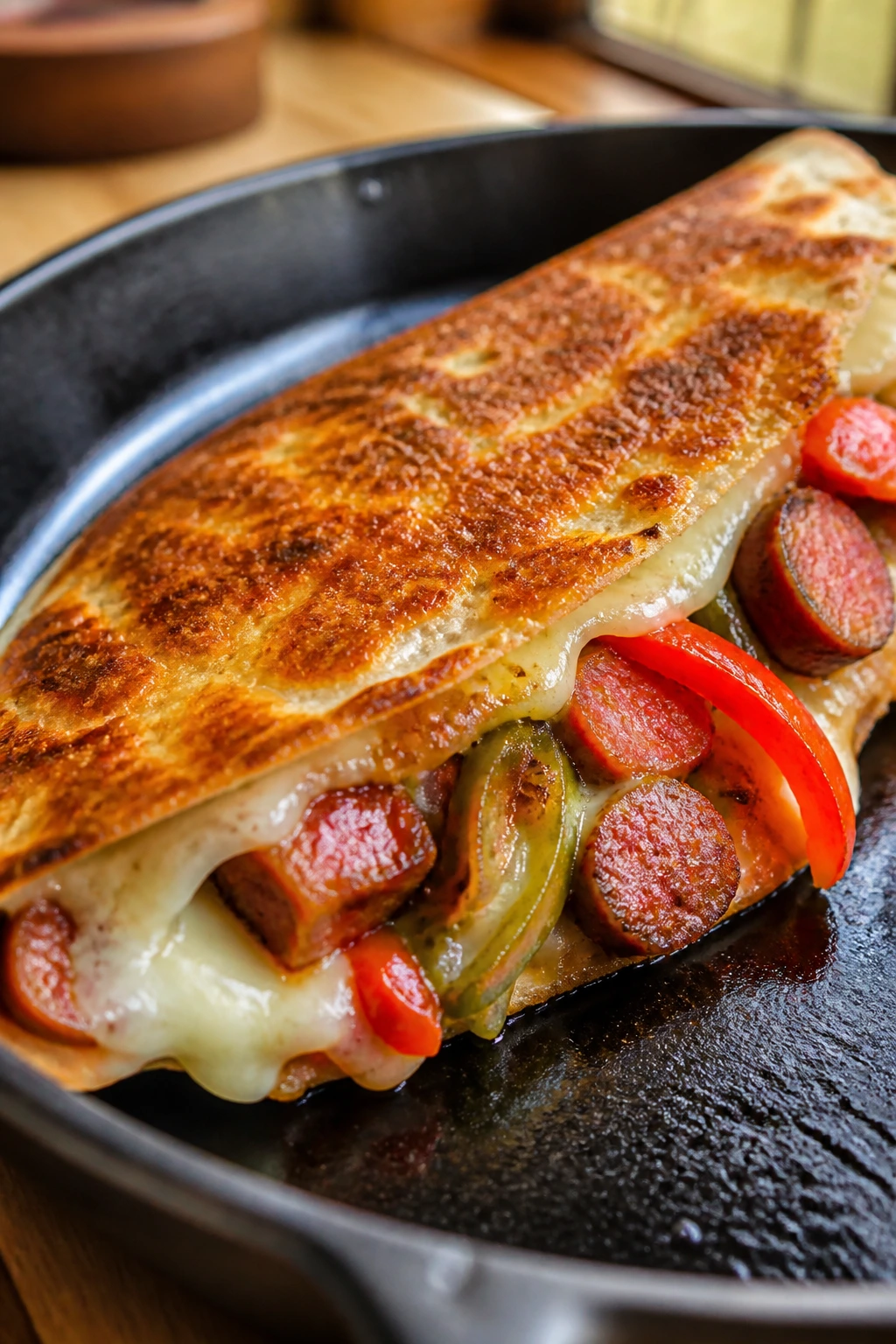
These quesadillas are fast, crisp, and a little messy in the good way. The sausage gives the filling enough salt and smoke that the cheese doesn’t need much help, and the peppers and onions keep each slice from tasting like just melted dairy. A skillet and ten minutes go a long way here.
Why It Works:
Quesadillas need a filling that isn’t too wet, and smoked sausage is perfect because it browns quickly and stays firm. Monterey Jack melts smoothly, while peppers and onions bring sweetness and a bit of snap. A little cumin rounds the filling out without turning it into a taco copy.
Key Ingredients:
- 12 oz smoked sausage, diced small
- 1 tbsp oil
- 1 bell pepper, thinly sliced
- 1 small onion, thinly sliced
- 1/2 tsp cumin
- 8 flour tortillas
- 2 cups shredded Monterey Jack
- Salsa, for serving
Quick Steps:
- Heat the oil in a skillet over medium heat and cook the sausage for 3 minutes until browned.
- Add the pepper and onion and cook for 4 to 5 minutes until softened.
- Stir in the cumin and remove the filling from the pan.
- Lay a tortilla in the dry skillet, sprinkle on cheese, add filling, and top with more cheese and a second tortilla.
- Cook for 2 to 3 minutes per side until the tortillas are golden and the cheese has melted.
- Repeat with the remaining tortillas, then slice into wedges.
Equipment for This Recipe:
- Large skillet
- Spatula
- Knife
- Cutting board
How to Serve This Dish:
Serve the wedges with salsa and maybe a little sour cream if you want the plate to feel fuller. I like them with a fast cabbage slaw on the side, because the crisp tortillas and soft filling need something fresh next to them. They’re best cut after a minute on the board, not straight from the pan.
Pro Tips for This Recipe:
- Dice the sausage small so the quesadillas fold and cut cleanly.
- Use a dry skillet after the filling is cooked; extra oil makes the tortillas greasy.
- Don’t overfill. A heavy quesadilla tears when you flip it.
- Let the first side set before flipping, or the cheese will ooze out.
Variations on This Dish:
- Pepper Jack Kick: Replace Monterey Jack with pepper jack for more heat.
- Breakfast Quesadilla: Add scrambled eggs and skip the peppers.
- Low-Carb Fold: Use low-carb tortillas and cook them a little longer so they crisp.
Common Mistakes to Avoid with This Dish:
- Wet filling: If the peppers are undercooked, the tortillas soften.
- Too much cheese: It leaks and makes the skillet messy.
- Flipping too early: The bottom should be fully set before you turn it.
13. Smoked Sausage Lentil Stew
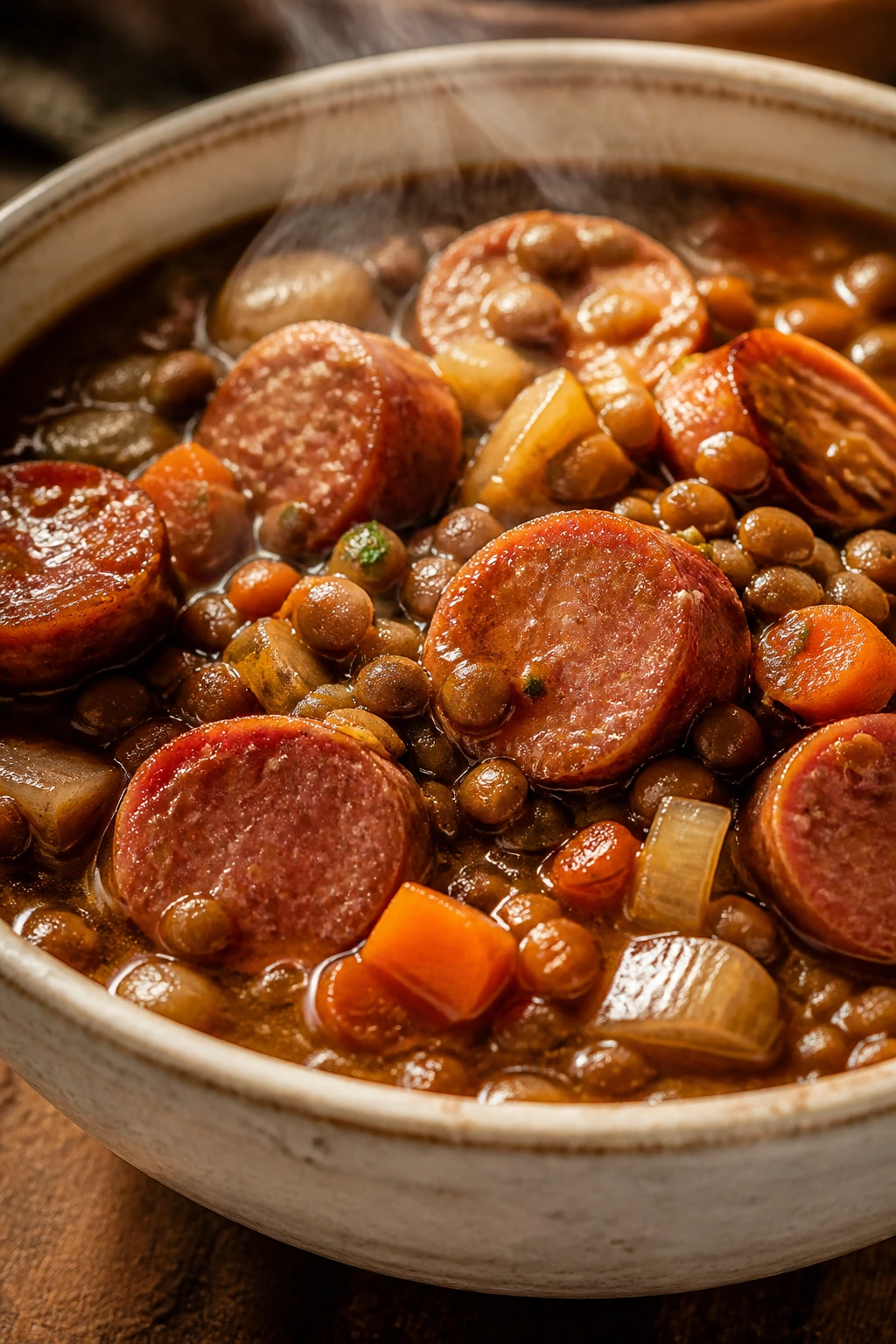
This stew has a deeper, steadier flavor than most quick dinners. The lentils soften into the broth, the sausage adds smoke and salt, and the vegetables keep the pot from tasting heavy. It’s the kind of meal that eats like it took all afternoon when it didn’t.
Why It Works:
Lentils cook faster than beans and don’t need soaking, which makes them a natural match for smoked sausage. The sausage browns first and seasons the base of the stew, then the lentils drink up broth and tomato as they cook. A splash of vinegar at the end keeps the stew lively, which matters when you’re dealing with earthy ingredients.
Key Ingredients:
- 12 oz smoked sausage, sliced
- 1 tbsp olive oil
- 1 onion, diced
- 2 carrots, diced
- 2 celery stalks, diced
- 2 cloves garlic, minced
- 1 cup brown or green lentils, rinsed
- 1 can (14.5 oz) diced tomatoes
- 4 cups chicken broth
- 1 bay leaf
- 1 tsp dried thyme
- 1 tbsp red wine vinegar
Quick Steps:
- Heat the olive oil in a pot over medium heat and brown the sausage for 4 minutes.
- Add the onion, carrots, and celery, then cook for 6 minutes until softened.
- Stir in the garlic and thyme for 30 seconds.
- Add the lentils, tomatoes, broth, and bay leaf, then bring to a boil.
- Lower the heat and simmer, partially covered, for 30 to 35 minutes until the lentils are tender.
- Stir in the vinegar, remove the bay leaf, and season with black pepper before serving.
Equipment for This Recipe:
- Soup pot or Dutch oven
- Wooden spoon
- Ladle
- Measuring cups
How to Serve This Dish:
A piece of crusty bread or a buttered roll is all you really need here. If you want a brighter plate, add a simple arugula salad with lemon. The stew should be thick enough to coat a spoon but still spoonable, not stiff.
Pro Tips for This Recipe:
- Use green or brown lentils, not red ones. Red lentils fall apart too quickly.
- Add extra broth if the pot thickens too much while simmering.
- Rinse the lentils before cooking to remove dust and little bits of chaff.
- Taste after the vinegar goes in. That last hit of acid changes the whole bowl.
Variations on This Dish:
- Smoky Tomato Stew: Add 1 tablespoon tomato paste with the garlic.
- Potato Lentil Version: Add 1 diced potato for a thicker, heartier stew.
- Herb-Heavy Version: Finish with chopped parsley and dill instead of thyme only.
Common Mistakes to Avoid with This Dish:
- Using lentils that are too old: They can stay hard even after long simmering.
- Boiling the stew too aggressively: Lentils break apart and the broth turns muddy.
- Forgetting the acid at the end: Without it, the pot tastes flat and earthy in the wrong way.
14. Smoked Sausage Chili with Beans and Corn
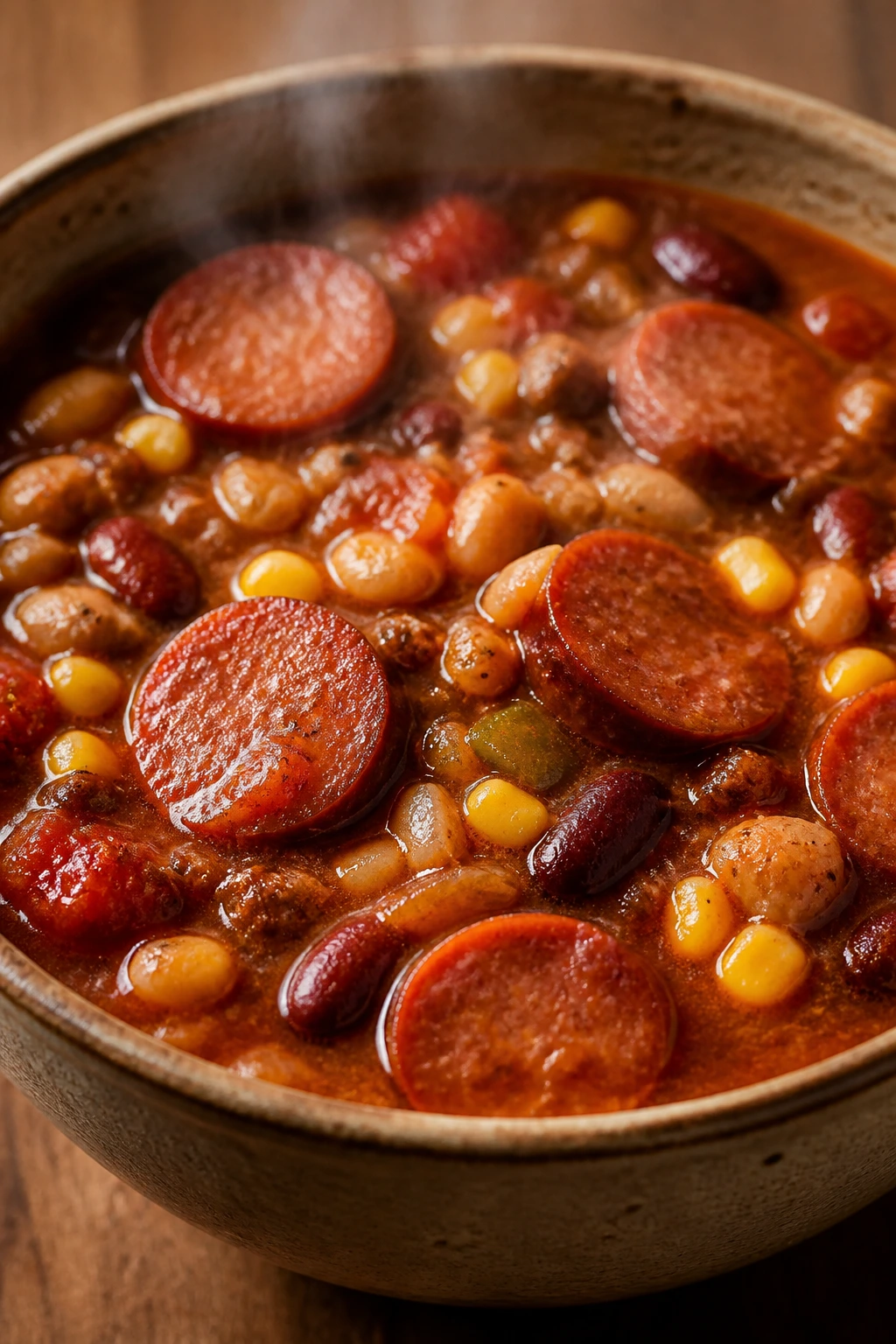
This chili is built for speed, but it doesn’t taste rushed. The sausage browns into the onion and pepper base, the beans give the pot body, and the corn adds little bursts of sweetness that keep the bowl from leaning too dark. It’s not a fussy chili. That’s exactly why it works.
Why It Works:
Smoked sausage gives chili a meaty base without needing ground beef or a long simmer. Beans thicken the pot as they heat, while diced tomatoes and tomato paste create a red, brothy body that feels familiar. Corn is optional in some chilis, but here it gives a useful sweet note that plays well with smoke and chili powder.
Key Ingredients:
- 1 lb smoked sausage, sliced
- 1 tbsp oil
- 1 onion, diced
- 1 bell pepper, diced
- 2 cloves garlic, minced
- 1 tbsp tomato paste
- 2 tbsp chili powder
- 1 tsp ground cumin
- 2 cans beans, rinsed and drained
- 1 can (14.5 oz) diced tomatoes
- 1 cup corn
- 2 cups chicken broth
Quick Steps:
- Heat the oil in a heavy pot over medium heat and brown the sausage for 4 minutes.
- Add the onion and bell pepper and cook for 5 to 6 minutes until softened.
- Stir in the garlic, tomato paste, chili powder, and cumin, then cook for 1 minute.
- Add the beans, tomatoes, corn, and broth, then bring to a simmer.
- Cook uncovered for 20 to 25 minutes, stirring now and then, until the chili thickens.
- Taste and season before serving.
Equipment for This Recipe:
- Heavy pot
- Wooden spoon
- Ladle
- Measuring spoons
How to Serve This Dish:
Top it with shredded cheese, chopped onion, or a spoonful of sour cream if that’s your style. Cornbread is the obvious side, and it’s the right one. The chili should be thick enough to hold toppings without swallowing them.
Pro Tips for This Recipe:
- Let the tomato paste cook for a minute before adding the liquid. It loses that raw, tinny taste.
- Use two different bean types if you want more texture.
- If the chili seems thin, simmer it uncovered a little longer instead of adding flour.
- A small splash of vinegar or lime at the end wakes up the whole pot.
Variations on This Dish:
- Black Bean Version: Swap one can of beans for black beans and add a pinch of oregano.
- Smokier Chili: Use chipotle powder instead of part of the chili powder.
- Bean-Light Version: Cut the beans to one can and add extra sausage and peppers.
Common Mistakes to Avoid with This Dish:
- Adding too much broth at once: Chili should be thick enough to sit on a spoon.
- Under-toasting the spices: The chili powder needs a minute in the hot pot.
- Serving before it settles: A 5-minute rest makes the texture better.
15. Smoked Sausage and Apple Dijon Skillet
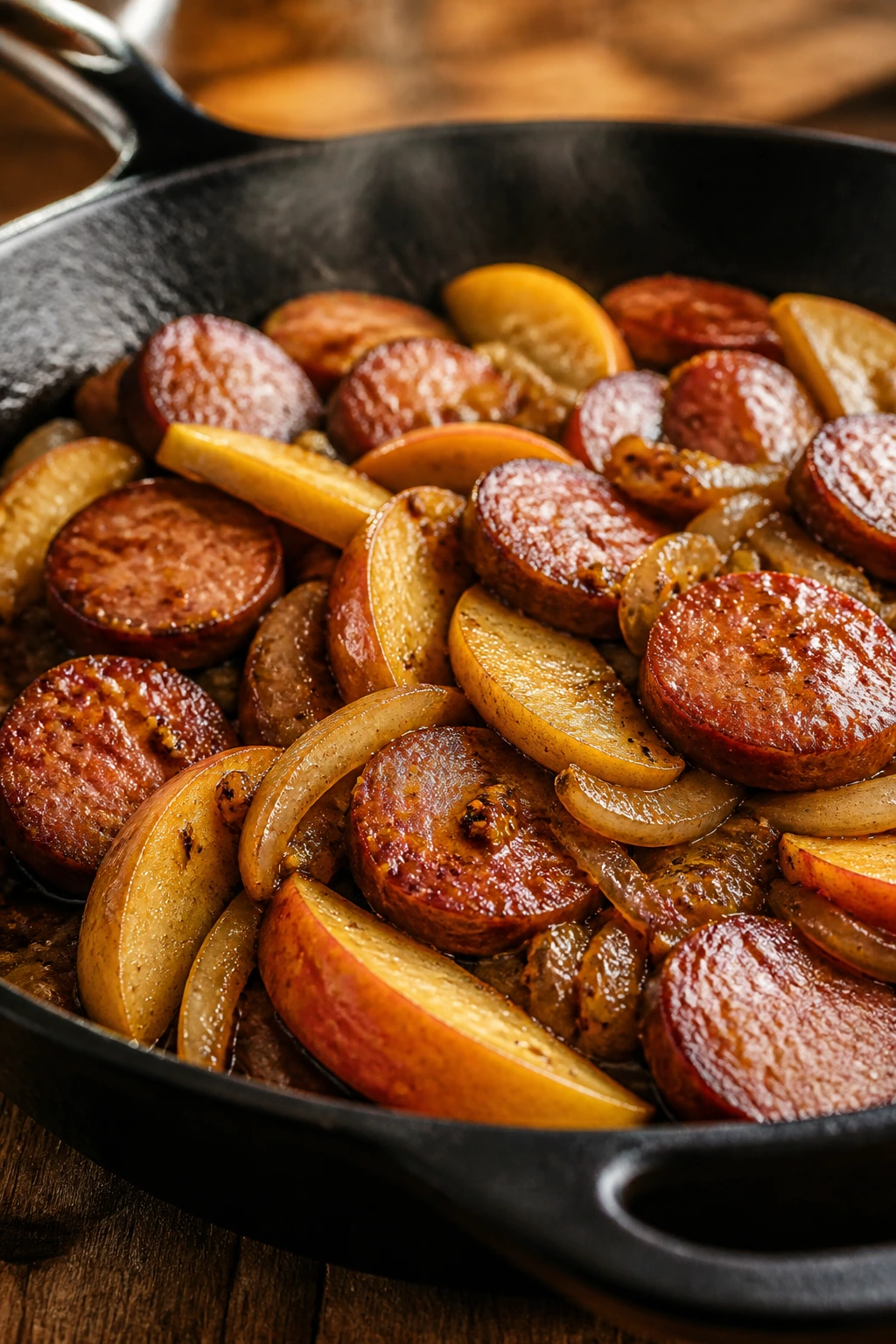
This is the recipe that surprises people. Apples, sausage, onion, and Dijon sound almost too simple, but the skillet ends up tasting balanced in a way that pulls you back for another bite. The apples soften without disappearing, the mustard cuts the sweetness, and the sausage keeps the whole thing grounded.
Why It Works:
Smoked sausage likes a little sweetness beside it, and apples bring that without turning the pan into dessert. Onion cooks down and fills the gap between tart fruit and savory meat, while Dijon gives the finish a sharp line that keeps everything from getting mushy. A splash of cider or broth helps pull the browned bits into the sauce.
Key Ingredients:
- 1 lb smoked sausage, sliced
- 1 tbsp butter
- 1 tbsp olive oil
- 1 large onion, sliced
- 2 apples, cored and sliced
- 1 tsp dried thyme
- 2 tbsp Dijon mustard
- 1/4 cup apple cider or broth
- Salt and black pepper, to taste
- Handful of arugula, optional
Quick Steps:
- Heat the butter and oil in a large skillet over medium-high heat.
- Brown the sausage for 3 to 4 minutes, then add the onion and cook until softened.
- Add the apples and thyme and cook for 4 to 5 minutes, until the apples are just tender.
- Stir in the Dijon mustard and cider, scraping up the browned bits from the pan.
- Cook for 1 to 2 minutes until the sauce lightly coats everything.
- Finish with black pepper and a handful of arugula if you want a peppery edge.
Equipment for This Recipe:
- Large skillet
- Wooden spoon
- Knife
- Cutting board
How to Serve This Dish:
This skillet works well with mashed potatoes, buttered noodles, or a slice of crusty bread that can mop up the mustardy pan juices. If you like a fresh finish, the arugula on top gives the dish a sharper, greener note. The best version has browned sausage, tender apples, and a sauce that clings lightly instead of pooling.
Pro Tips for This Recipe:
- Use an apple that holds its shape, like Honeycrisp or Pink Lady.
- Don’t overcook the apples. They should soften, not turn to sauce.
- Add Dijon off the heat if your skillet runs very hot; it keeps the mustard flavor cleaner.
- A little extra black pepper is welcome here. It keeps the sweet-sour balance lively.
Variations on This Dish:
- Maple-Apple Version: Add 1 teaspoon maple syrup for a slightly sweeter finish.
- Onion-Heavy Version: Double the onions and cook them longer for a more savory pan.
- Mustard Cream Version: Stir in 2 tablespoons cream at the end for a softer sauce.
Common Mistakes to Avoid with This Dish:
- Using apples that break down too fast: They turn into mush before the sauce finishes.
- Skipping the browning step: The pan needs that dark edge to keep the dish from tasting flat.
- Pouring in too much cider: A little goes a long way; too much makes the skillet watery.
Why Smoked Sausage Works So Well in Fast Dinners
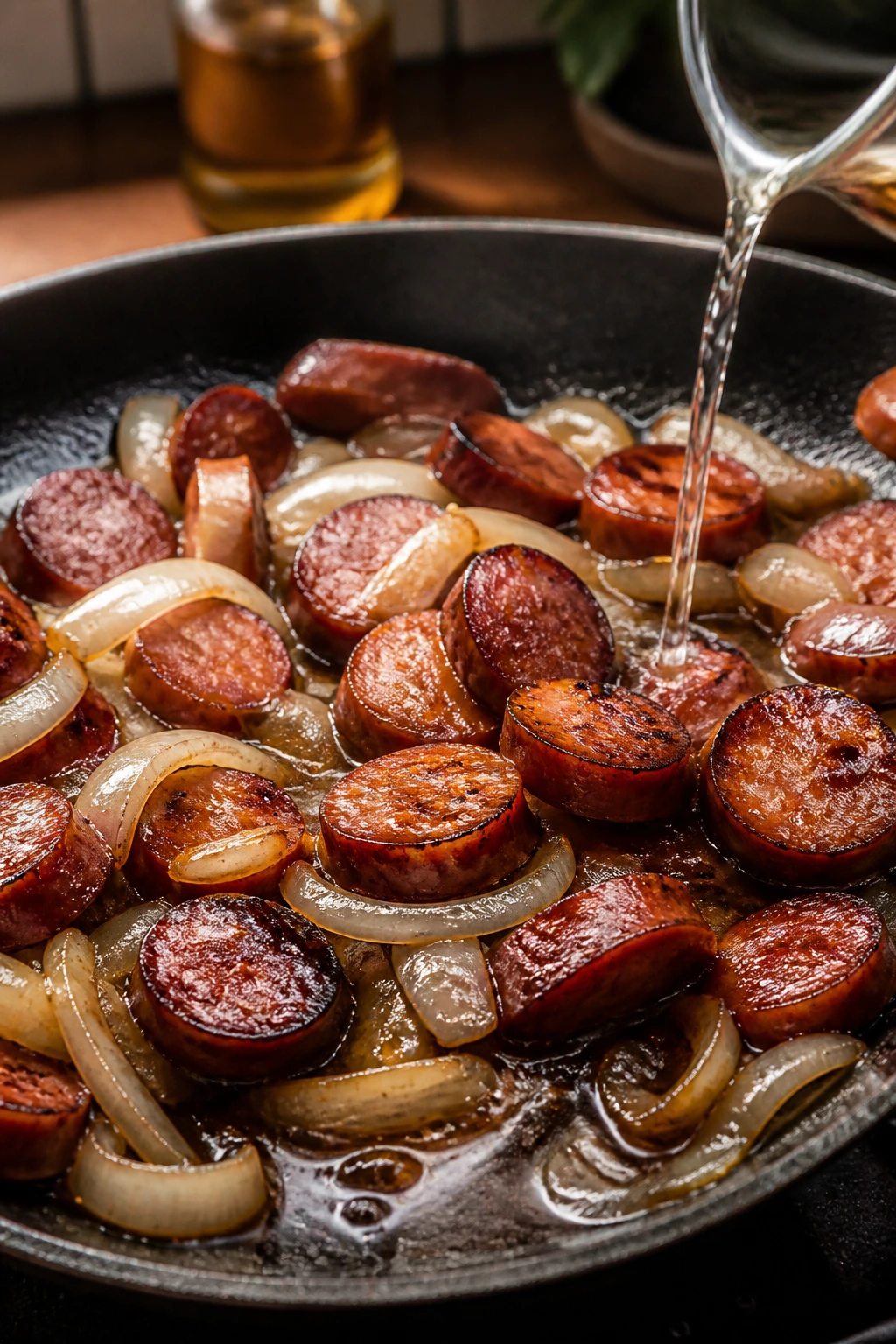
Smoked sausage brings three things to the pan at once: seasoning, smoke, and fat. That’s why it behaves better than many quick-cook proteins. You don’t have to build the flavor from zero. You just have to brown it well and choose the right partner—rice, pasta, potatoes, cabbage, beans, eggs, whatever fits the mood and the pantry.
The other reason it works is that smoked sausage is forgiving. It won’t dry out if you’re a minute late. It doesn’t need a long marinade. It can sit in a hot skillet while onions soften or a casserole bakes, and it still tastes like itself when the dish lands on the table. That kind of stability makes dinner feel easier than it actually is.
There is one catch, though. Because the sausage brings so much salt and smoke, the rest of the recipe has to stay balanced. You need acid, starch, or a little sweetness somewhere in the pan. That’s why vinegar shows up in the pepper skillet, lemon lands in the bean soup, and apples work so well with Dijon. Without that balance, the dish can taste heavy in a hurry.
Essential Equipment for These Recipes
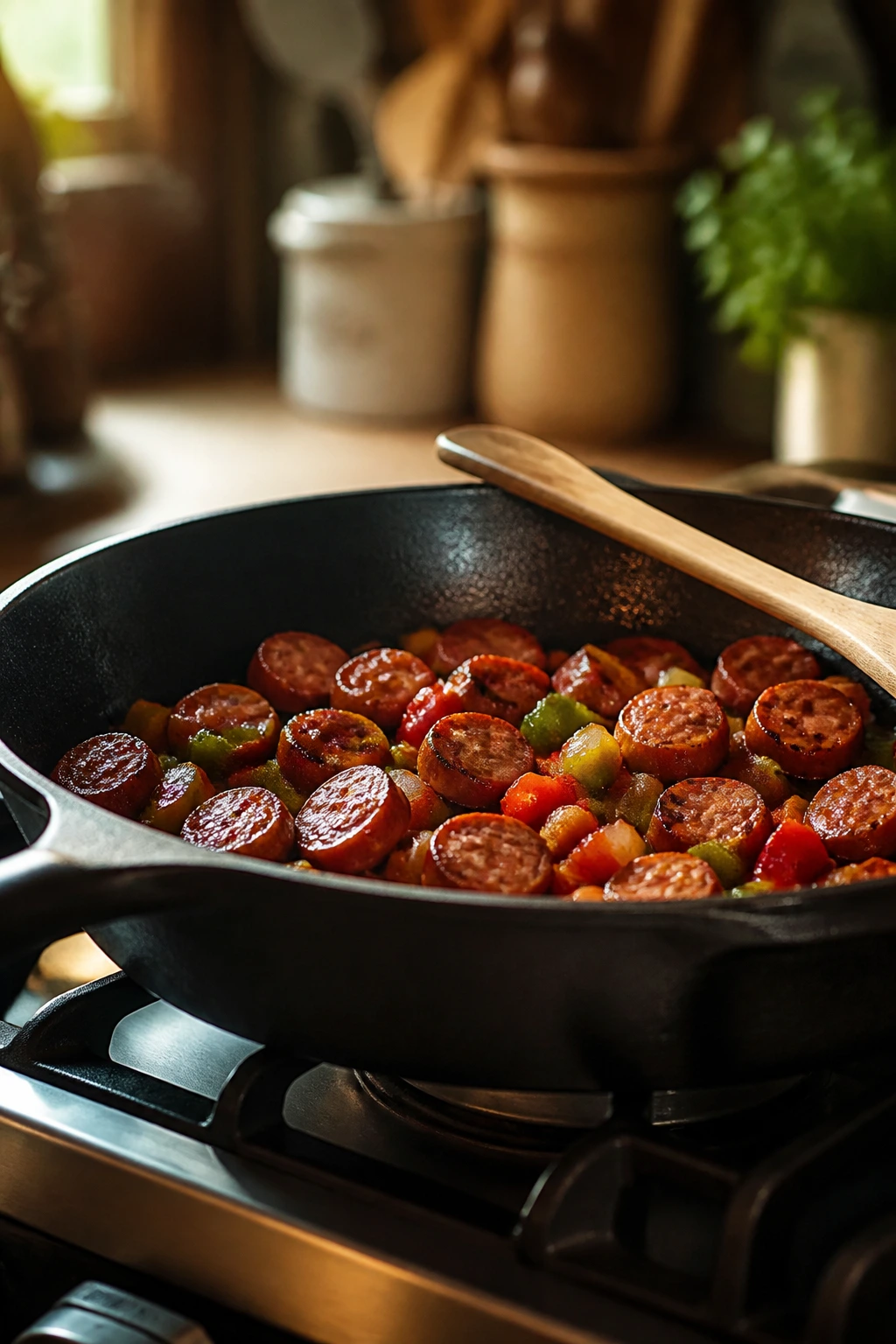
- 12-inch skillet: The workhorse for sausage, vegetables, pasta sauces, and fried rice. A wider pan gives you better browning.
- Dutch oven or heavy soup pot: Best for soups, chili, jambalaya, and lentil stew because it holds heat evenly.
- Rimmed sheet pan: Needed for the potato and sausage roast, and useful for anything that needs space instead of a lid.
- 9×13-inch baking dish: The right size for breakfast casserole and rice bake. A smaller dish can overflow.
- Sharp chef’s knife: Smoked sausage slices cleanly, and the vegetables need neat cuts so they cook at the same speed.
- Cutting board: A stable one matters more than people think, especially when slicing sausage into even rounds.
- Wooden spoon or sturdy spatula: Best for stirring without breaking tender vegetables or rice.
- Colander: Useful for pasta, tortellini, and cooked rice if you rinse or drain anything in the same meal.
- Measuring cups and spoons: These recipes rely on enough liquid and seasoning, not guesswork.
- Mixing bowl and whisk: Necessary for egg bakes, cream sauces, and simple marinades.
- Airtight storage containers: Leftovers keep better when the steam doesn’t condense back into the food.
Smart Shopping and Ingredient Tips
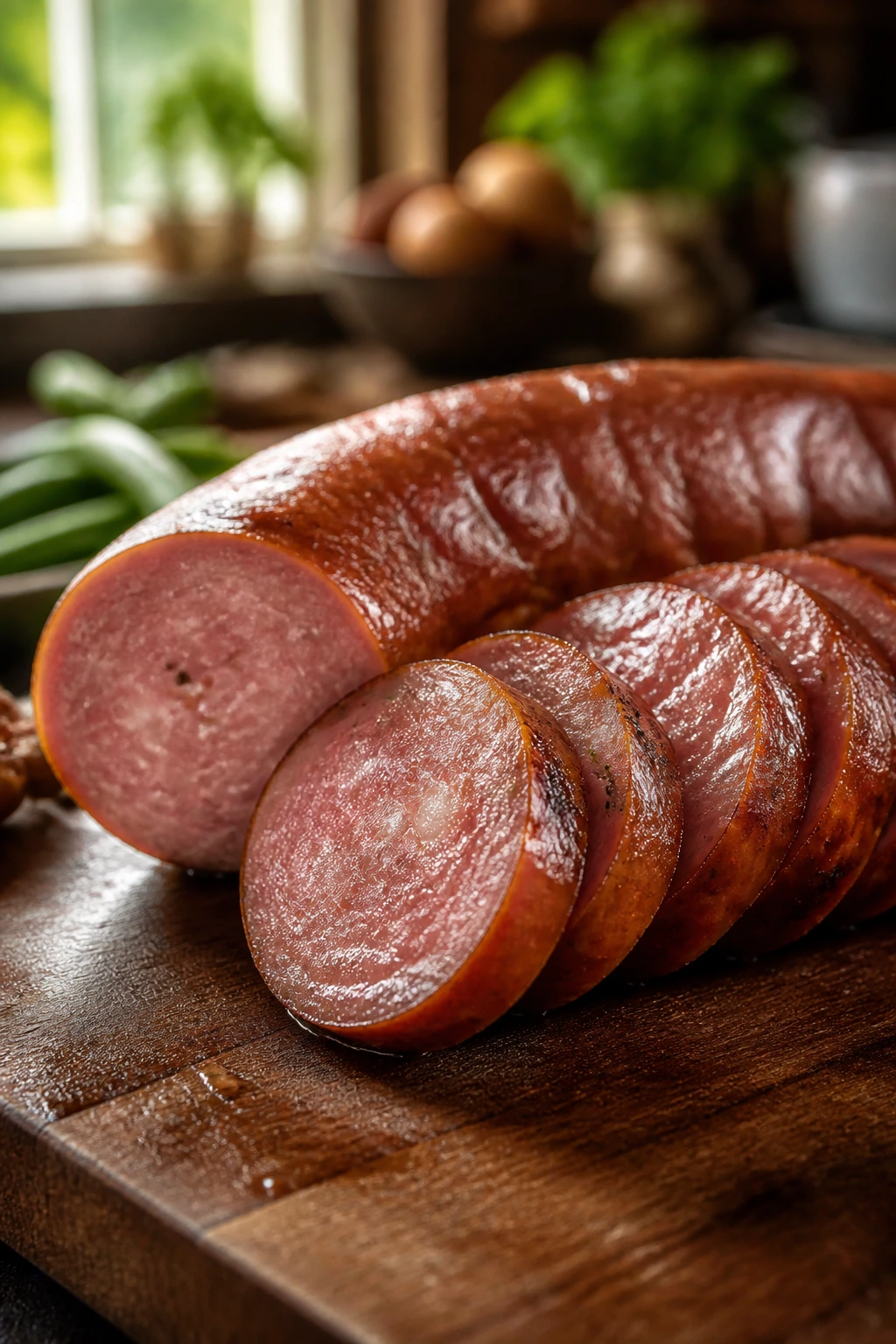
Buy smoked sausage with the recipe in mind, not just the label that looks familiar. Kielbasa tends to be mild and garlicky, andouille brings more heat, and turkey smoked sausage can save some fat if you’re cooking a cream-heavy dish. Check the package for weight too; many links run 12 to 16 ounces, and that difference matters when you’re trying to match pasta or rice.
Look at the ingredient list if you can. Some smoked sausages are denser and drier, which is fine for soup or chili, while others are juicier and better for a skillet where you want fond in the pan. Natural casing gives a louder snap when sliced and browned. That’s not mandatory, but it’s a nice thing to have in a pan meal.
For vegetables, go with what can stand heat. Bell peppers, onions, cabbage, broccoli, carrots, celery, and kale are all sturdy enough to hold up with sausage. Delicate greens like spinach belong near the end, and watery vegetables like zucchini need timing or they’ll flood the pan. I also like canned beans that are low in added salt, because smoked sausage already brings enough.
Pasta shapes matter more than people admit. Penne, rigatoni, elbow macaroni, and tortellini all grab sauce well. Long noodles can work, but the sausage pieces disappear a little more. For rice dishes, long-grain white rice usually gives the cleanest texture. Brown rice works if you give it more liquid and time, but it’s a different dinner.
How to Serve These Recipes
Presentation:
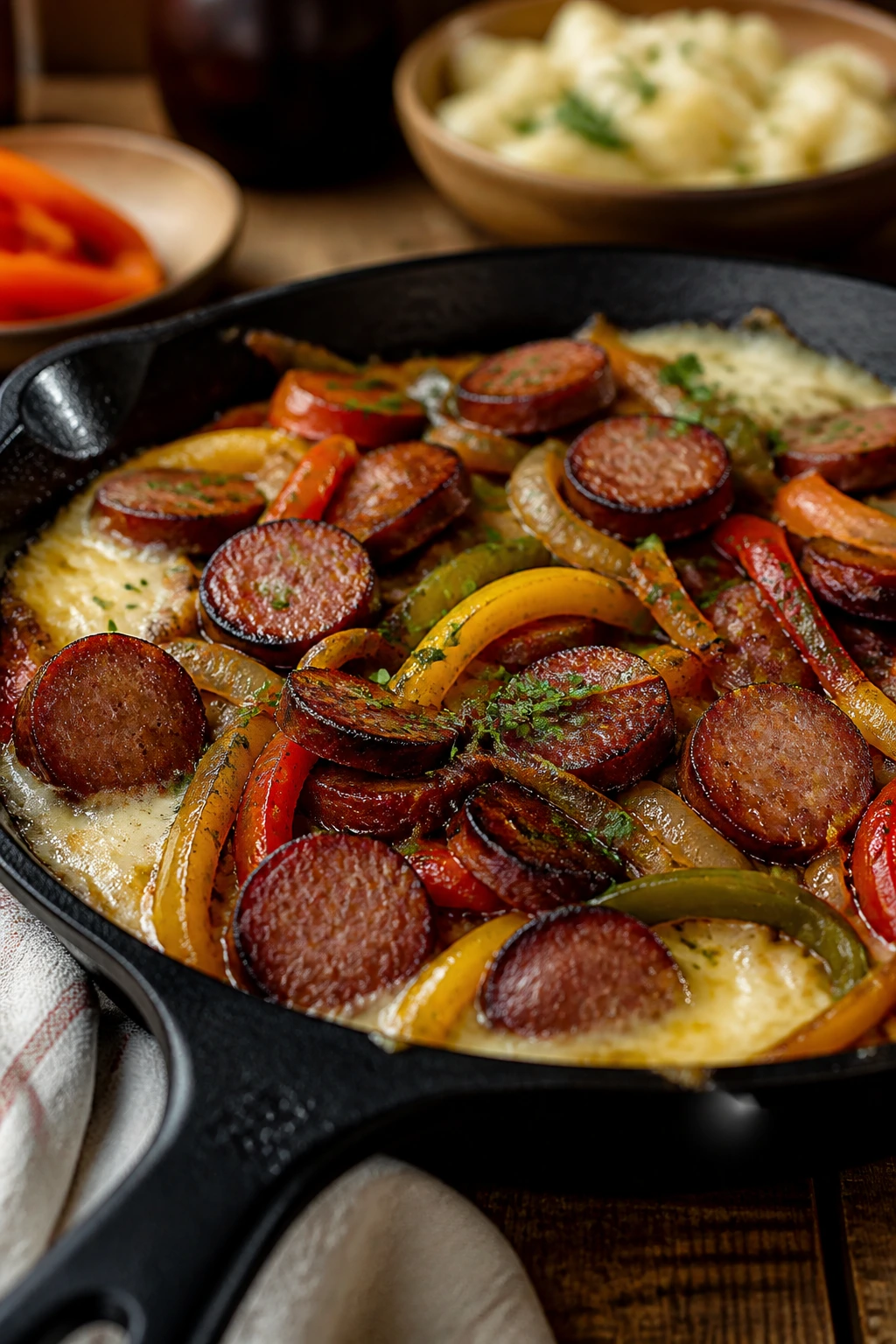
Keep the plates honest. Skillet meals should look like skillet meals—mounded, glossy, and a little rustic, not fussy. Spoon the peppers over the sausage, let the cheese melt into the casserole, and don’t hide the browned bits. A sprinkle of herbs or sliced scallions gives most of these dishes a finished look without making them precious.
Accompaniments:
Bread is the easiest win: hoagie rolls for the pepper skillet, crusty bread for soup or stew, garlic bread for pasta, cornbread for chili, and rye or boiled potatoes for cabbage. A sharp salad helps with the richer dishes, especially mac and cheese, tortellini Alfredo, and breakfast casserole. Pick one side that cuts richness, not two heavy ones that sit in the same lane.
Portions:
Most of these recipes land in the 4-serving range, though the soup, chili, and jambalaya can stretch farther if you add bread or salad. For a bigger appetite, plan on about 6 to 8 ounces of sausage-based dish per person when there’s another side on the table. If the recipe is the whole meal, lean a little higher.
Beverage Pairing:
Cold beer works with the smoky, salty recipes, especially the pepper skillet, chili, and cabbage pan. For non-alcoholic options, unsweetened iced tea or sparkling water with lemon keeps the meal from feeling heavy. With the creamy dishes, I like a crisp lager or a dry cider because both cut through the cheese and cream cleanly.
Additional Tips and Flavor Boosters
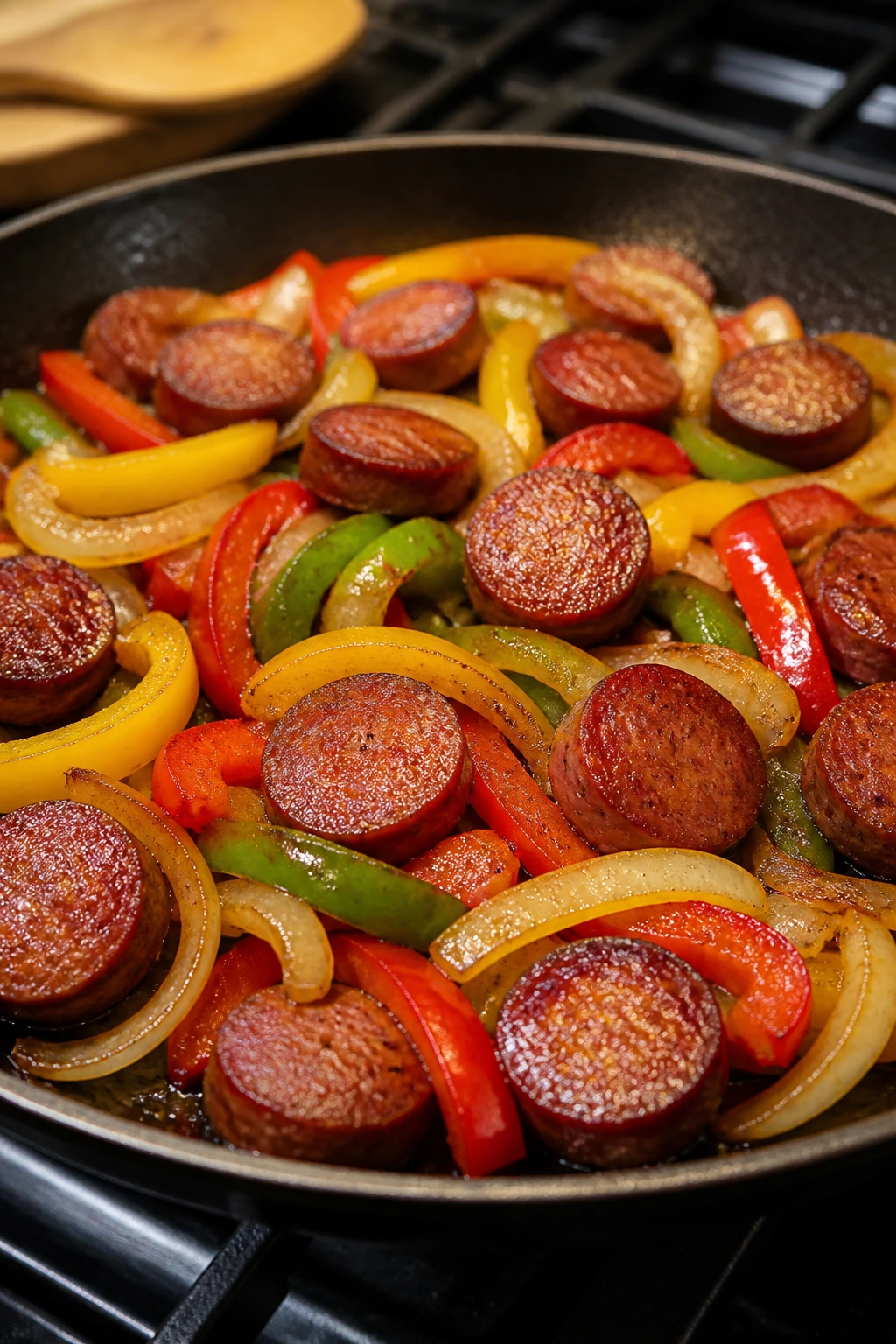
Flavor Enhancement:
A small splash of acid at the end changes more than most people expect. Apple cider vinegar, lemon juice, Dijon, or even a little pickle brine can wake up a sausage dish that tastes too heavy. Use a teaspoon or tablespoon, taste, then stop. That’s usually enough.
Customization:
If you want more vegetables, fold in broccoli, peas, spinach, kale, or cabbage depending on the recipe. If you want more heat, add red pepper flakes or swap in andouille. If you want it richer, a spoonful of sour cream or a handful of extra cheese will do the trick without changing the core recipe.
Serving Suggestions:
Fresh herbs make the pan look and taste cleaner. Parsley works almost everywhere, green onions fit the rice and egg dishes, and thyme behaves well with cabbage, apples, and beans. A little shredded cheese over chili or mac and cheese is obvious, but not wrong. Obvious sometimes works.
Make-It-Yours:
For a lighter version, use turkey smoked sausage and add an extra vegetable so the plate still feels full. For a dairy-free version, lean on broth, tomatoes, and mustard-based sauces instead of cream. For gluten-free cooking, serve the skillet dishes over rice or potatoes and use gluten-free pasta where needed.
Make-Ahead, Storage, and Reheating Guidance
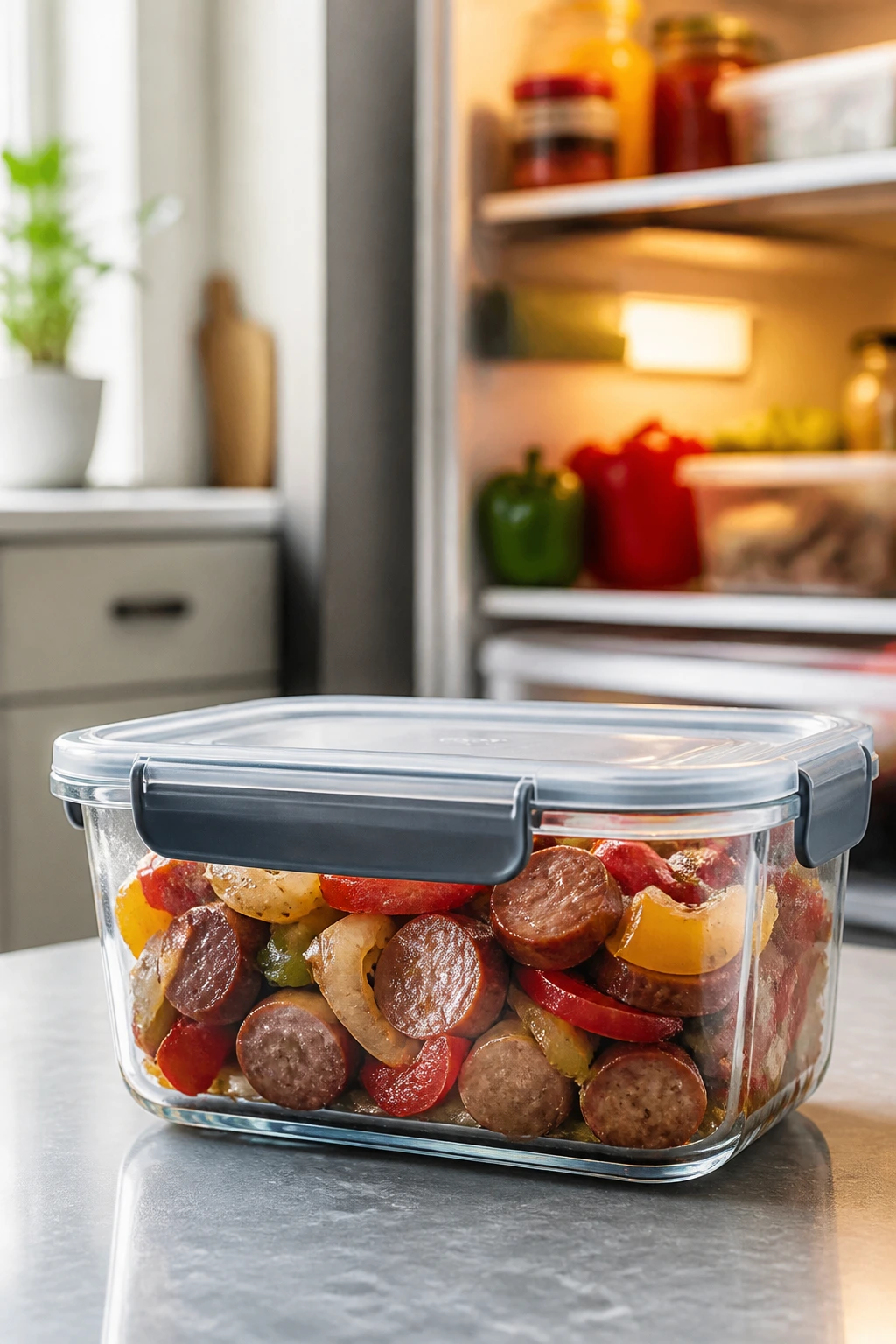
Most smoked sausage dishes keep well for 3 to 4 days in the refrigerator if you cool them fast and store them in airtight containers. Soups, chili, and lentil stew also freeze well for up to 2 to 3 months, especially if you leave a little space at the top of the container. Creamier dishes like mac and cheese or Alfredo pasta freeze, but the texture softens a bit when reheated. They’re still edible, just less polished.
For skillet meals, reheat in a pan over medium-low heat with 1 to 2 tablespoons of water or broth. That keeps the sausage from drying out while the vegetables warm back through. Pasta dishes do well in a covered skillet with a splash of milk or broth. Rice bakes and breakfast casserole can go in the oven at 325°F covered with foil until hot in the center, usually 15 to 25 minutes depending on the portion size.
Quesadillas and cabbage skillet are best fresh, but they still hold for a day or two if you want leftovers. The trick is not to let them steam in a sealed container for too long before chilling. Spread them out a little, let the heat come off, then pack them away. If you stack hot food, you get condensation. Condensation turns crisp edges soggy fast.
If you’re planning ahead, make the base once and finish later. The pepper skillet, soup, chili, and jambalaya all improve after a short rest, so they’re easy to cook earlier in the day and reheat at dinner. Breakfast casserole can be assembled the night before and baked the next morning. That’s one of the nicest jobs smoked sausage has: it plays well with advance prep.
Variations and Adaptations to Try
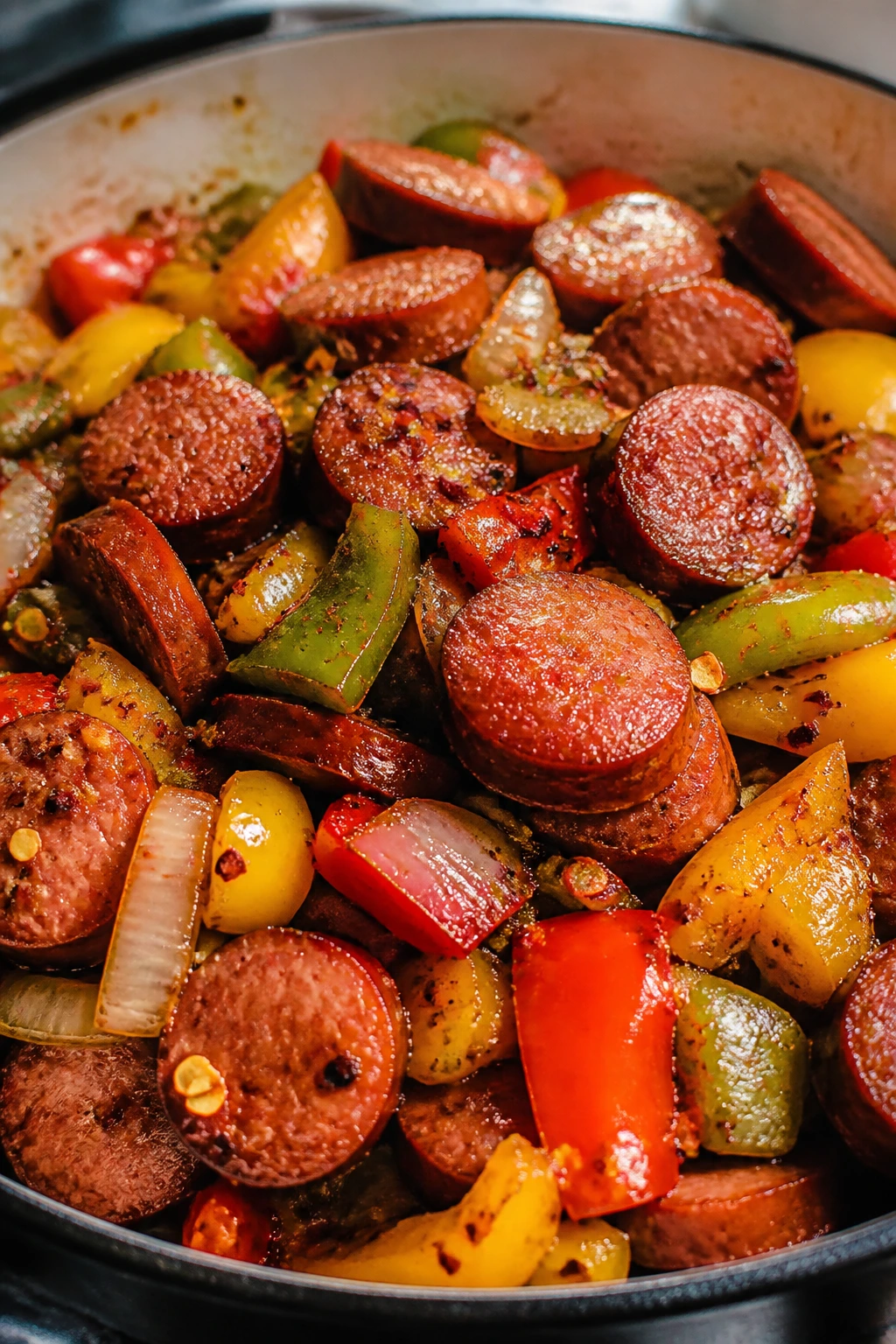
Gluten-Free Pantry Swap
Use rice, potatoes, corn tortillas, or gluten-free pasta in place of the wheat-based sides. Most smoked sausage itself is gluten-free, but the label matters, so check the seasoning and fillers before you buy. The pepper skillet, chili, cabbage dish, and soup are the easiest places to start.
Dairy-Free Comfort Route
Skip cream, cheese, and butter-heavy finishes, then lean harder on broth, tomato, mustard, herbs, and a little olive oil. The jambalaya, chili, lentil stew, and sausage soup are naturally easy to adapt. For pasta, a tomato-based sauce with a bit of olive oil and pasta water gives you enough body without milk.
Turn Up the Heat
Use andouille instead of mild smoked sausage, then add crushed red pepper, cayenne, or hot sauce in measured amounts. The right move is not to make everything hot all at once. It’s to let the heat show up in the first bite and then stay in the background. That way you can still taste the vegetables and the smoke.
Kid-Friendly Mild Version
Choose a milder sausage, go easy on the garlic and pepper flakes, and keep the vegetables in larger, softer pieces. Quesadillas, mac and cheese, and breakfast casserole tend to do well with younger eaters because the shapes are familiar and the flavors aren’t too sharp. Serving ketchup, ranch, or plain yogurt on the side also buys goodwill.
Budget Saver Bowl
Stretch the sausage with beans, rice, cabbage, or potatoes. That doesn’t water down the dish if you season properly; it just gives the sausage more company. The bean soup, chili, rice bake, and cabbage skillet are the smartest picks when you want the package to feed more people.
Common Mistakes to Avoid
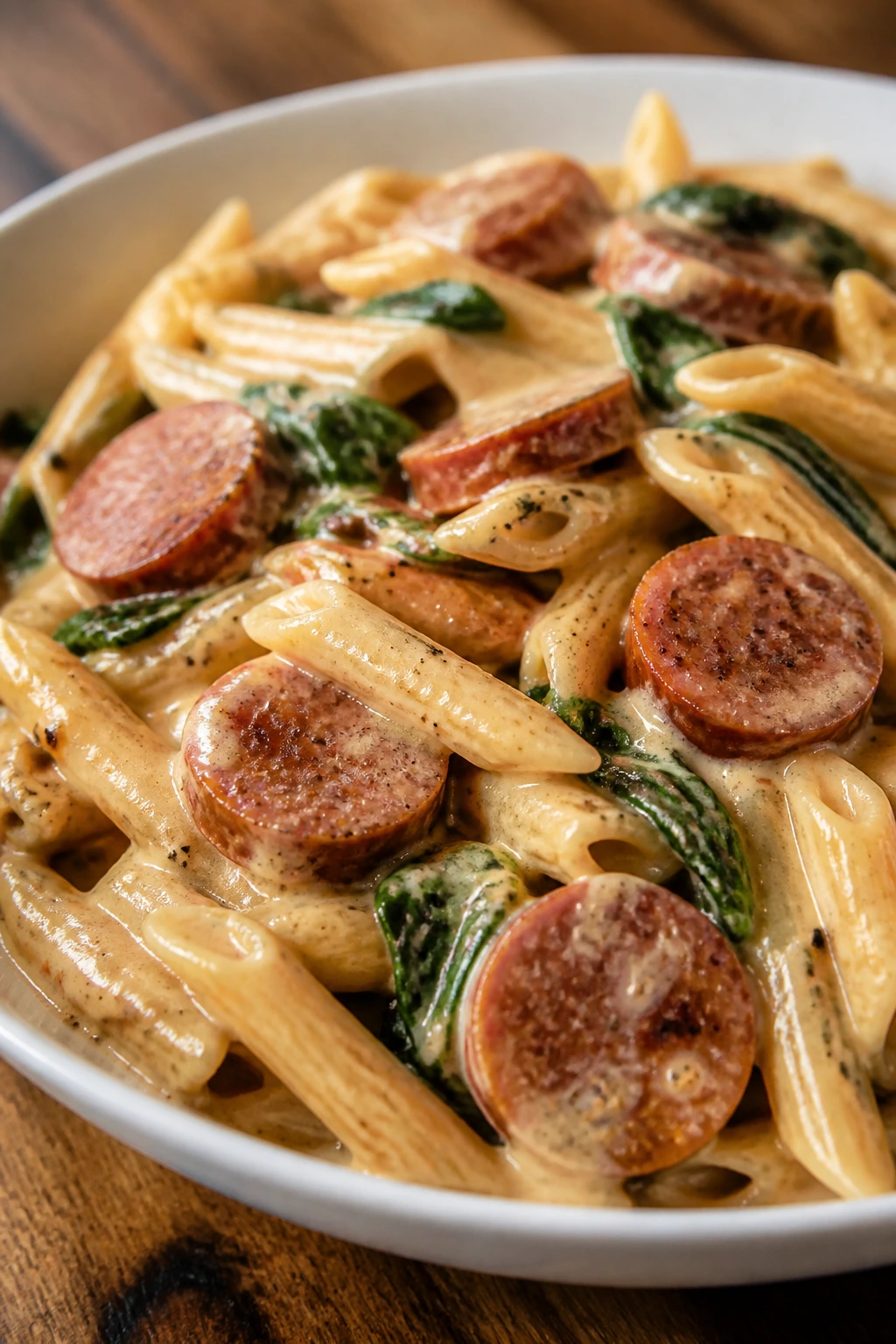
The first mistake is thinking smoked sausage needs a long cook time. It doesn’t. The sausage is already cooked, so if you leave it in the pan too long, the slices dry out and the edges go leathery. Brown it hard, then move on.
Another one is underseasoning the rest of the dish because the sausage is salty. Yes, smoked sausage brings seasoning. No, that does not mean the vegetables, rice, pasta, or beans can stay bland. Potatoes need salt. Rice needs broth. Cabbage needs acid. The sausage can’t carry every note by itself.
Then there’s watery vegetables. Zucchini, tomatoes, spinach, and mushrooms all release liquid fast, which can turn a skillet meal into a shallow stew. That’s not always bad, but it changes the texture. Add soft vegetables later, cook mushrooms first so they lose moisture, and keep the pan hot enough to evaporate extra liquid.
A fourth mistake is using the wrong pot or pan size. Too small, and nothing browns. Too large, and sauces reduce too quickly. For skillet dinners, a 12-inch pan usually gives the best balance. For soups and chili, a heavy pot helps hold the simmer steady. For casseroles, a proper 9×13 dish keeps the bake even.
The last one is forgetting an acid or fresh finish. A little vinegar, lemon juice, mustard, scallions, parsley, or hot sauce keeps sausage dishes from tasting dark and heavy all the way through. It doesn’t take much. It just needs to be there.
Smoked Sausage FAQ
What kind of smoked sausage works best for these recipes?
Kielbasa is mild and flexible, which makes it good for pasta, potatoes, and soup. Andouille brings more heat and a little more swagger, which suits jambalaya, chili, and rice dishes. Turkey smoked sausage works well when you want less fat, but it can brown a little faster, so watch the pan.
Do I need to cook smoked sausage before adding it to the recipe?
It’s already cooked, so you don’t need to treat it like raw meat. What you do need is color. Browning the slices in a hot pan gives you better flavor than just warming them through.
Can I use turkey smoked sausage instead of pork?
Yes, and it swaps in cleanly for most of these recipes. Turkey sausage is leaner, so the pan may need a bit more oil, especially for skillet meals and fried rice. It also tends to dry out faster, which means you should keep an eye on the final cook time.
Which recipes freeze best?
Soup, chili, lentil stew, and jambalaya freeze well because they have enough liquid to stay stable. Breakfast casserole and rice bake also freeze decently if you wrap portions well. Cream sauces and quesadillas are the least freezer-friendly, since the texture changes more after thawing.
How do I keep the dish from tasting greasy?
Drain off excess fat after browning the sausage if the pan looks slick. Then balance the dish with acid, vegetables, or broth instead of adding more cheese or cream. A greasy sausage dish usually needs brightness, not more richness.
Can I make these with frozen vegetables?
Yes, and it’s often the right move for fried rice, soup, chili, and rice bakes. Frozen vegetables release some moisture, so add them straight from the freezer and cook until the liquid evaporates. Don’t thaw them first unless the recipe specifically says to.
What if my pasta sauce gets too thick?
Add a splash of pasta water, broth, or milk and stir over low heat until it loosens. The starchy liquid from the pasta is especially useful because it helps the sauce cling again instead of turning thin and broken. Go slowly; 2 tablespoons can make a bigger difference than you expect.
Can I make smoked sausage recipes in a slow cooker?
Some of them work, but not all. Soups, chili, and lentil stew fit the slow cooker well, while skillet meals and quesadillas lose their texture in there. If you want the sausage browned first, do that in a pan before it goes into the slow cooker.
One More Thing Before You Start Slicing
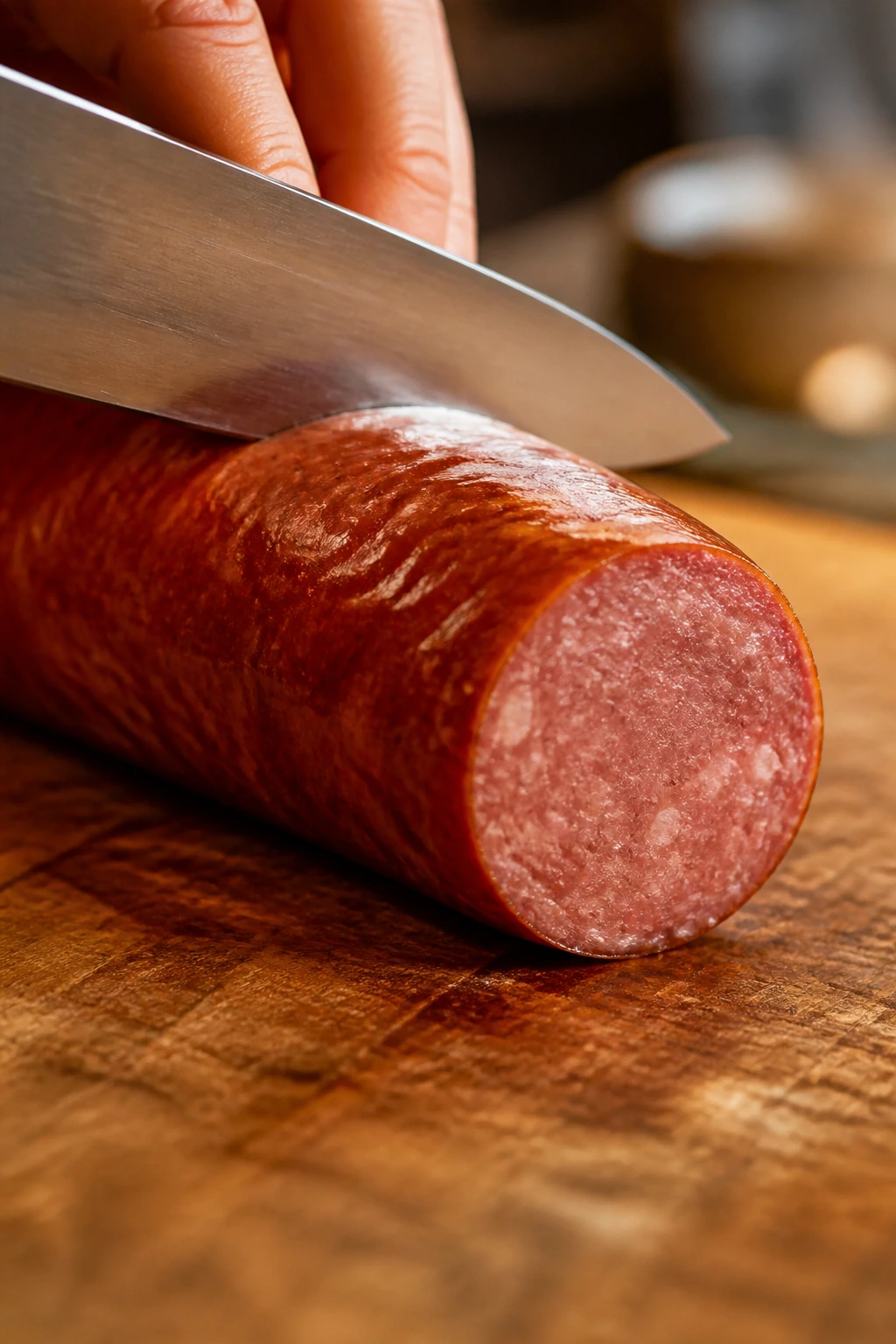
Keep one thing in mind: smoked sausage is not the whole dinner, but it does the heavy lifting more often than it should. That’s the beauty of it. A good link, a hot pan, and the right sidekick can turn a plain night into a meal that feels finished without asking for much in return.
Pick one recipe that matches the ingredients already in your kitchen, and cook it exactly once before you start improvising. The browning, the timing, the balance of smoke and acid—those little things are what make these dishes sing. After that, the variations come naturally, and your skillet will probably start seeing more action than the oven.