



A savory smoked sausage meal with brown sugar glaze can go wrong in two directions: too sweet, or too flat. When it’s done well, neither problem shows up. The sausage goes glossy at the edges, the potatoes pick up a sticky crust, and the onions soften into something dark and almost jammy while the peppers keep enough bite to stop the whole pan from feeling heavy.
Smoked sausage makes this dinner easier than it looks, and that’s exactly why I like it. You are not standing over raw meat waiting for it to cook through; you are chasing browning, texture, and a glaze that grips instead of sliding off into the pan. That small difference changes the whole mood of the meal. It feels more controlled. More deliberate. Less like a rescue dinner and more like you actually meant to make it.
The trick is restraint. Brown sugar belongs here, but only as a finish and only with enough vinegar, mustard, and salt to keep it honest. Give the potatoes a head start, keep the glaze off the heat until the end, and the whole thing turns into one of those sheet-pan dinners that disappears fast enough to make you wish you had used a bigger pan.
Why You’ll Love This Smoked Sausage Dinner
This recipe earns its keep because it is built on contrast: smoky sausage, sweet glaze, tangy mustard, and roasted vegetables with browned edges. Nothing in the pan is fussy. Everything has a job.
- Fast Cleanup: One rimmed sheet pan and a small saucepan handle almost the entire meal, which means you are not left with three skillets and a sticky stovetop.
- Smart Use of Smoked Sausage: The sausage is already cooked, so you are only browning and warming it; that keeps the timing forgiving and the texture juicy.
- Sweet-Savory Balance: Brown sugar, Dijon, apple cider vinegar, and soy sauce make a glaze that tastes rounded instead of sugary, especially once it hits the hot pan.
- Built for Real Dinners: Potatoes, peppers, and onion turn it into a full plate without needing a separate starch.
- Leftovers Behave Well: The sausage stays tender and the glaze clings even after chilling, so lunch the next day does not feel like punishment.
Fast Facts Before You Heat the Oven
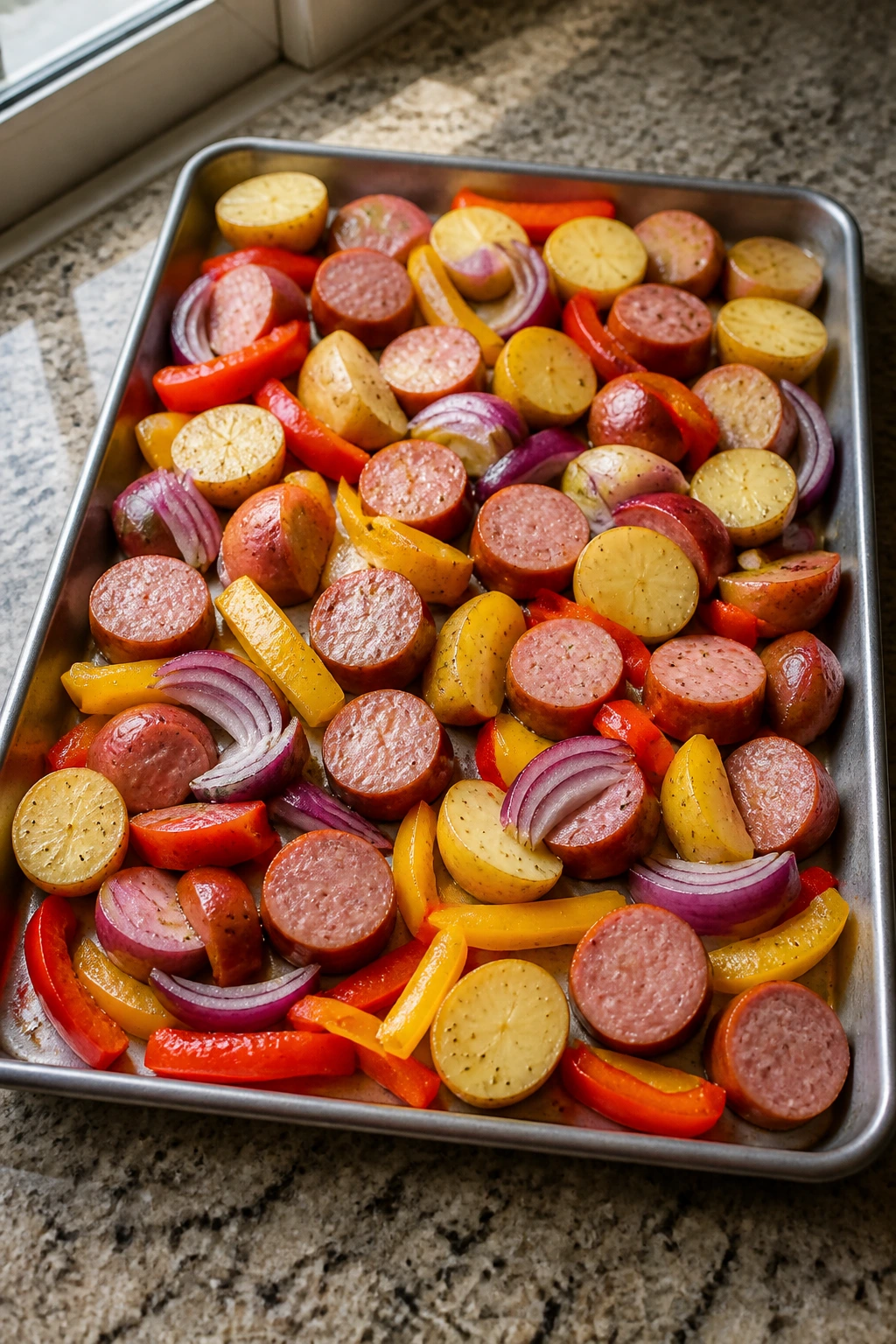
Yield: Serves 4 to 6
Prep Time: 20 minutes
Cook Time: 35 to 40 minutes
Total Time: 55 to 60 minutes
Difficulty: Beginner — the steps are straightforward, but the potatoes need a head start and the glaze should go on late so it does not scorch.
Best Served: Right after a 5-minute rest, while the glaze is still glossy and the potatoes are hot through.
What You’ll Need for the Pan
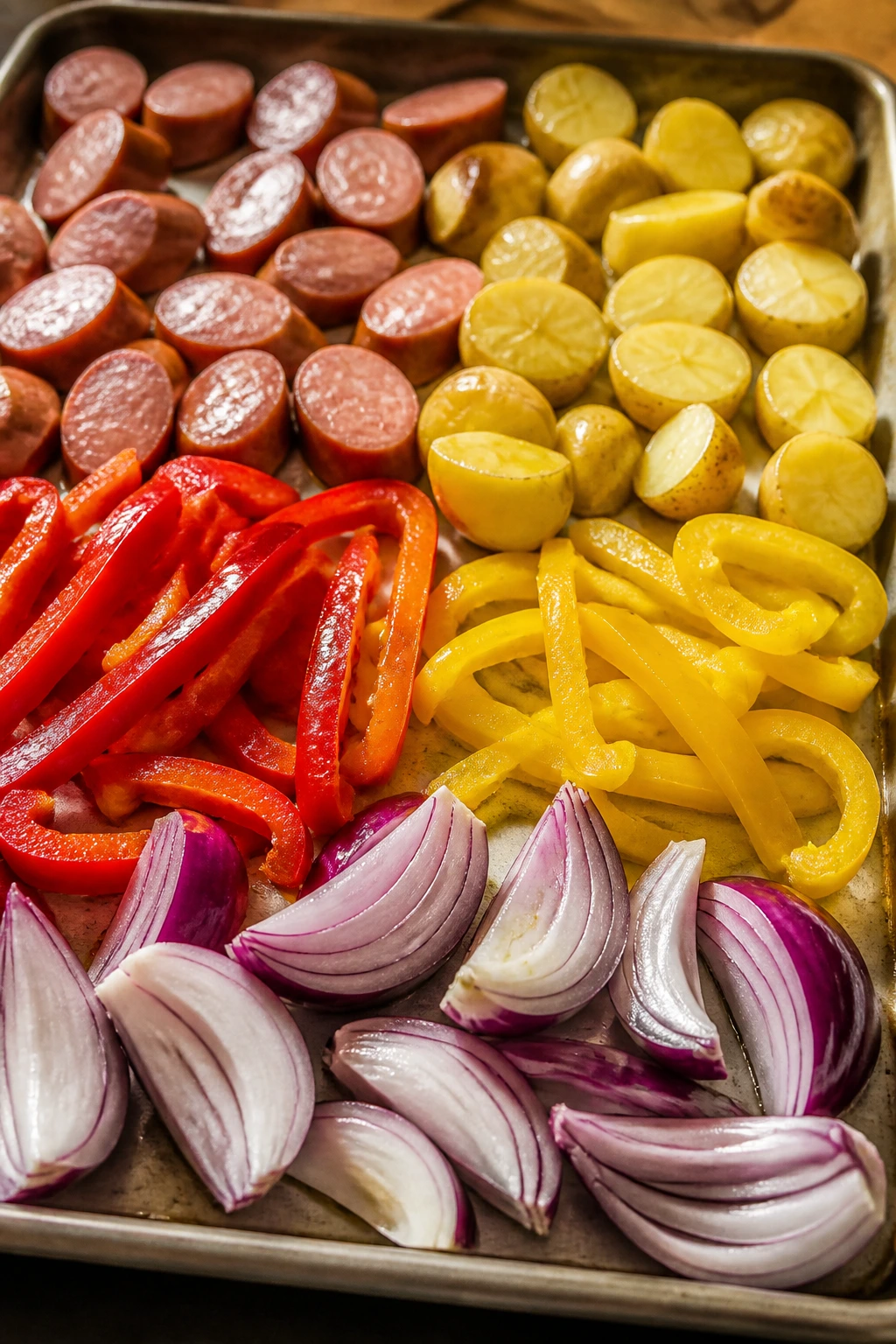
For the Sheet Pan Meal:
- 1 1/2 pounds smoked sausage, sliced into 1/2-inch thick coins on a slight diagonal
- 1 1/2 pounds baby Yukon Gold potatoes, halved
- 1 large red bell pepper, seeded and cut into 1-inch strips
- 1 large yellow bell pepper, seeded and cut into 1-inch strips
- 1 large red onion, cut into 8 wedges
- 2 tablespoons olive oil
- 1 teaspoon kosher salt
- 1/2 teaspoon black pepper
- 1 teaspoon smoked paprika
- 1 teaspoon garlic powder
- 1 tablespoon chopped fresh parsley, for finishing, optional
For the Brown Sugar Glaze:
- 1/3 cup packed light brown sugar
- 2 tablespoons Dijon mustard
- 2 tablespoons apple cider vinegar
- 1 tablespoon low-sodium soy sauce
- 2 cloves garlic, minced
- 2 tablespoons unsalted butter
- 1/4 teaspoon crushed red pepper flakes, optional
- 2 tablespoons water, only if needed to loosen the glaze
Why These Ingredients Taste Better Together
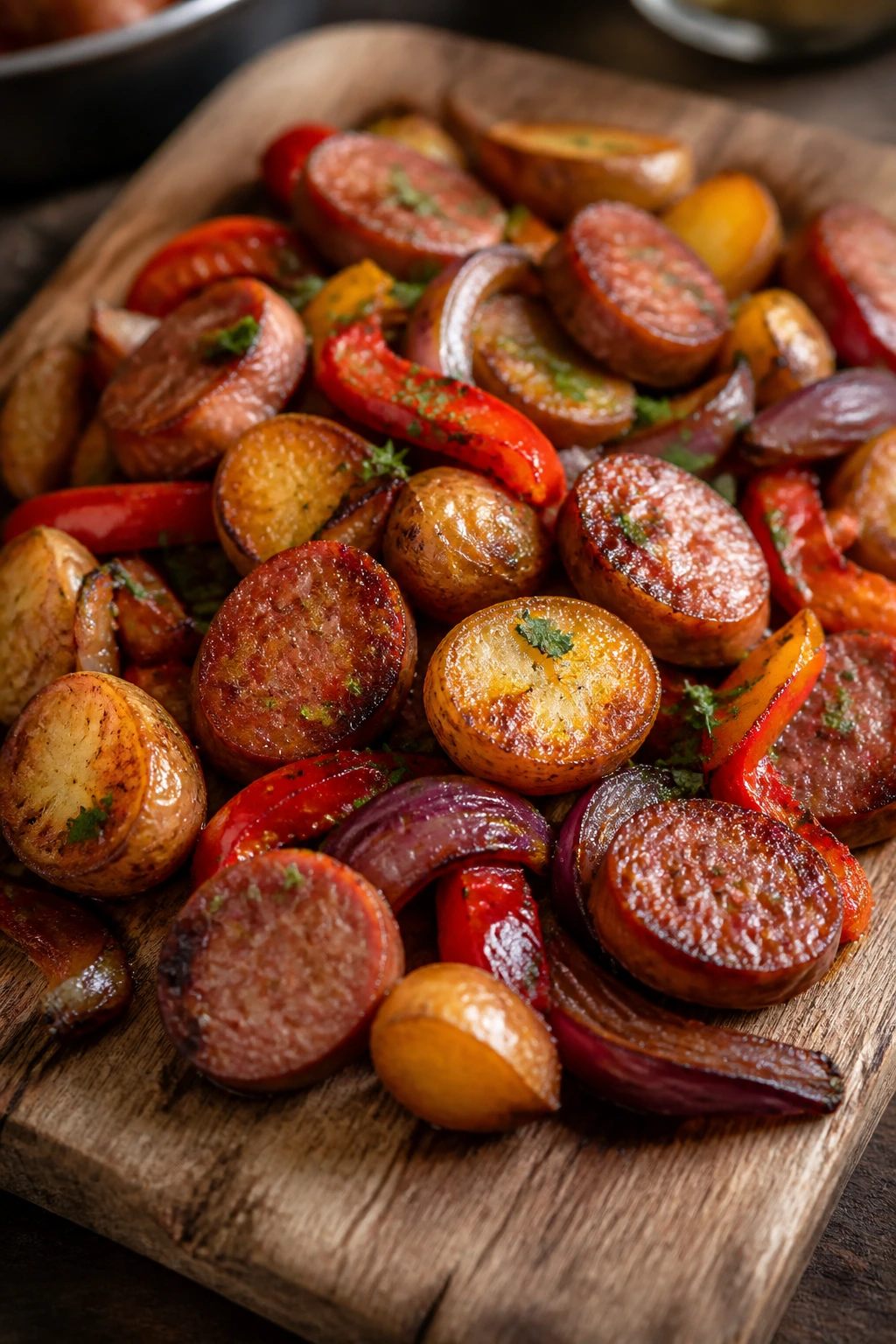
Smoked Sausage
What to use: 1 1/2 pounds smoked sausage, preferably pork-based, sliced into 1/2-inch coins.
Preparation: Slice on a slight diagonal so the pieces expose more surface area to the heat and catch a little more browning.
Substitutions: Kielbasa is the cleanest swap, andouille brings more spice, and turkey smoked sausage works if you want something leaner.
Tips: Look for sausage with a firm casing and visible fat marbling; that fat is what gives you those browned edges and keeps the inside from drying out.
Baby Yukon Gold Potatoes
What to use: 1 1/2 pounds baby Yukon Gold potatoes, halved.
Preparation: Halve them so the cut sides can hit the hot pan and form a crust before the glaze goes on.
Substitutions: Red potatoes work well, and fingerlings are nice if you can find them; russets are less ideal because they break down faster and turn fluffy instead of sturdy.
Tips: Keep the pieces close to the same size. If a few are much larger than the rest, quarter them so the pan finishes evenly.
Bell Peppers and Onion
What to use: 1 red bell pepper, 1 yellow bell pepper, and 1 large red onion.
Preparation: Cut the peppers into strips that are wide enough to stay crisp-tender and slice the onion into wedges that hold together as they roast.
Substitutions: Orange peppers, poblano peppers, or sweet onions all fit the same basic pattern.
Tips: Dry the vegetables well after washing. Extra surface water makes the pan steam, and steam is the enemy of the sticky edges you want.
Brown Sugar Glaze
What to use: 1/3 cup light brown sugar, 2 tablespoons Dijon, 2 tablespoons apple cider vinegar, 1 tablespoon low-sodium soy sauce, 2 cloves garlic, 2 tablespoons butter, and optional red pepper flakes.
Preparation: Whisk the glaze in a small saucepan and warm it just until the sugar dissolves and the butter melts.
Substitutions: Maple syrup can stand in for part of the brown sugar, whole-grain mustard can replace Dijon, and tamari works if you want the dish gluten-free.
Tips: Keep the glaze thin enough to brush or spoon. If it turns into syrup before it ever reaches the pan, it will stick in one place and scorch.
Seasoning and Finish
What to use: Kosher salt, black pepper, smoked paprika, garlic powder, and fresh parsley.
Preparation: Toss the potatoes first, then season the sausage and vegetables separately so the salt lands evenly across the pan.
Substitutions: If you like more heat, add a pinch of cayenne or extra crushed red pepper flakes.
Tips: Parsley is optional, but it does a real job here. A handful on top breaks up the dark glaze and keeps the plate from looking heavy.
The Tools That Make Sheet-Pan Cooking Easier
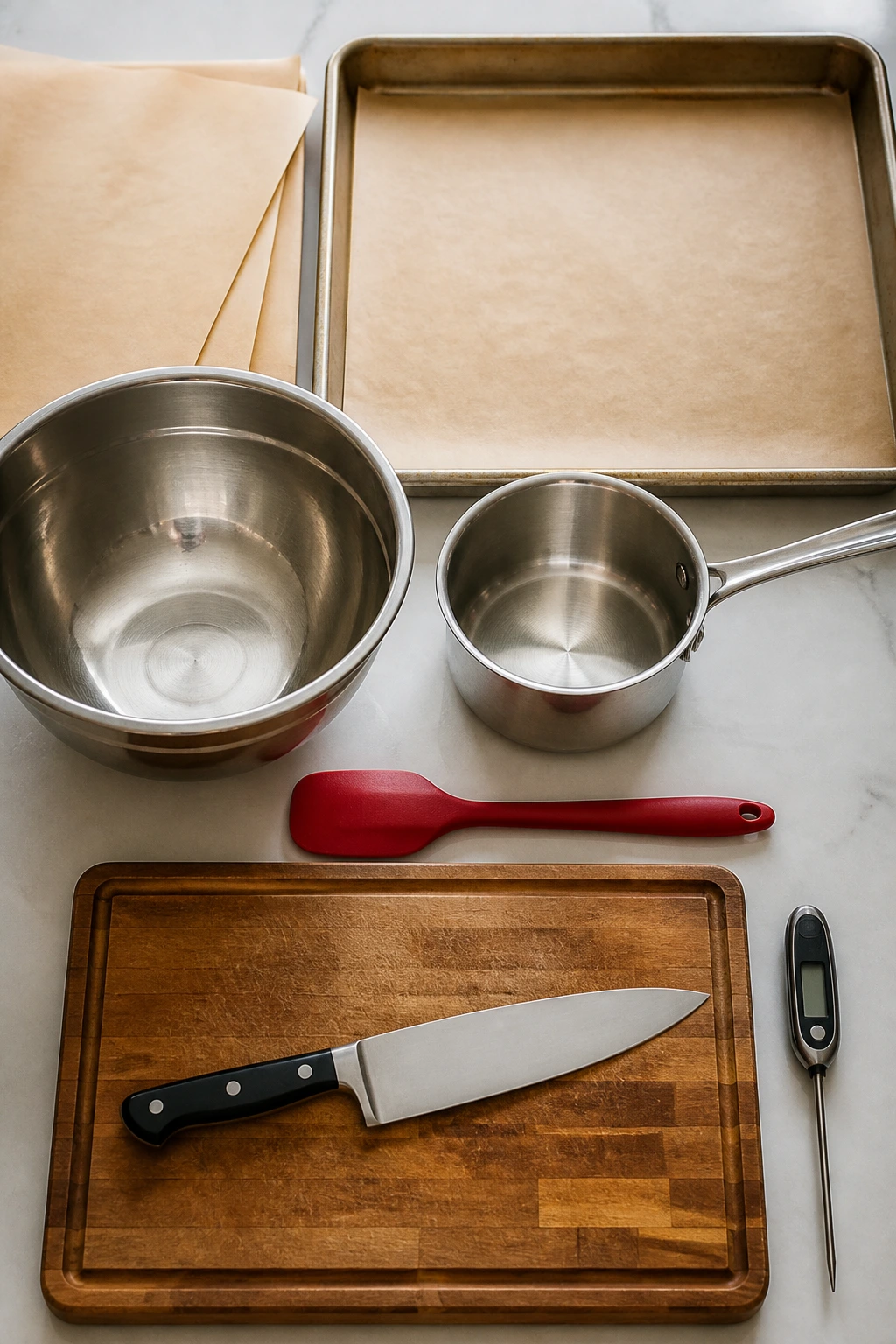
- Rimmed half-sheet pan: This is the right size for spreading the potatoes and sausage in a single layer without letting the glaze run off the sides.
- Parchment paper or foil: Parchment makes cleanup easy, while foil gives a little more direct browning and is handy if you want less scrubbing.
- Large mixing bowl: You need room to toss the potatoes and vegetables without crushing the onion wedges.
- Small saucepan: A tiny pan keeps the glaze from burning while you dissolve the sugar and butter.
- Silicone spatula or pastry brush: Either one works for coating the sausage and vegetables with glaze near the end.
- Sharp chef’s knife and sturdy cutting board: The sausage, onion, and peppers all cut more cleanly with a good knife, and the potatoes need to be halved evenly.
- Instant-read thermometer, optional: Smoked sausage is already cooked, but if you want to be precise, you can check that the center is steaming hot and reads about 165°F.
How to Roast, Glaze, and Finish the Meal
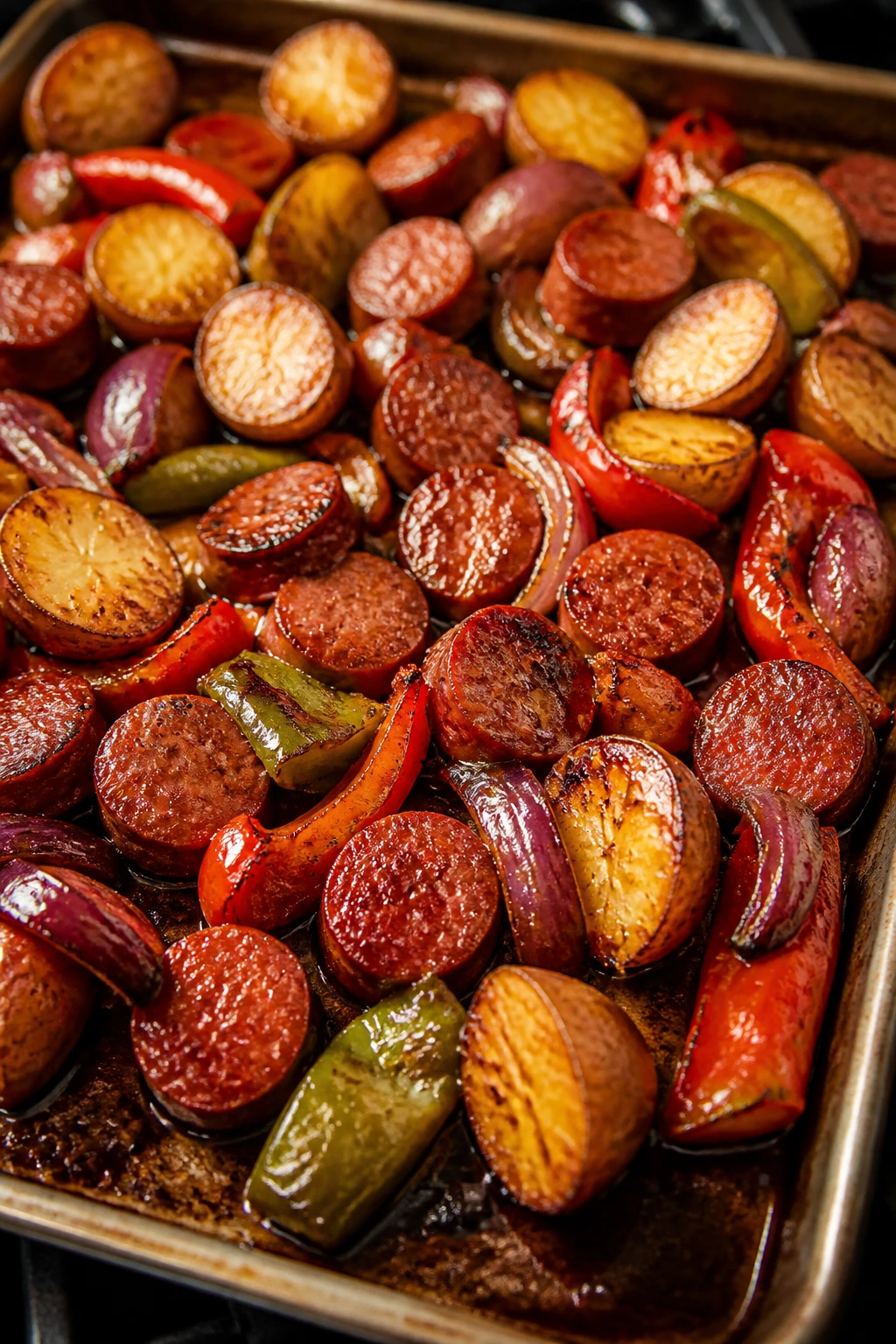
Preheat and Start the Potatoes
- Preheat the oven to 425°F (220°C) and place a rack in the center. Line a rimmed sheet pan with parchment paper or foil if you want easier cleanup.
- Put the halved potatoes in a large bowl with 1 tablespoon olive oil, 1/2 teaspoon kosher salt, 1/4 teaspoon black pepper, 1/2 teaspoon smoked paprika, and 1/2 teaspoon garlic powder. Toss until every cut surface has a light coating.
- Spread the potatoes cut-side down on the sheet pan in a single layer. Roast for 20 minutes, until the cut sides start to turn gold and the edges look a little dry.
Build the Glaze and Prep the Sausage 4. While the potatoes roast, make the glaze. Combine the brown sugar, Dijon mustard, apple cider vinegar, soy sauce, minced garlic, butter, and crushed red pepper flakes in a small saucepan over medium-low heat. 5. Stir for 1 to 2 minutes, just until the sugar dissolves and the butter melts. The glaze should look shiny and smooth, not grainy. If it feels thick enough to sit in clumps, whisk in 1 to 2 tablespoons water. 6. In the same large bowl, toss the sausage, bell peppers, and onion with the remaining 1 tablespoon olive oil, the remaining 1/2 teaspoon salt, the remaining 1/4 teaspoon black pepper, and the remaining 1/2 teaspoon garlic powder.
Bring Everything Together 7. Pull the pan from the oven and add the sausage, peppers, and onion around the potatoes. Use a spatula to nudge everything into a loose single layer. Return the pan to the oven and roast for 12 minutes. 8. Brush or spoon half the glaze over the sausage and vegetables. Toss gently with a spatula so the glaze lands on the hot surfaces instead of pooling in the center. Roast for 8 to 10 minutes more, until the sausage is browned at the edges and the potatoes are tender when pierced with a knife. Do not add the glaze too early or the sugar will darken before the vegetables finish. 9. For a darker finish, broil for 45 to 60 seconds at the very end, watching the pan the whole time. Pull it the second the glaze starts to bubble in little shiny patches. 10. Let the pan rest for 5 minutes, then spoon any juices from the pan back over the top and scatter with parsley if you’re using it.
How to Plate This Smoked Sausage Meal
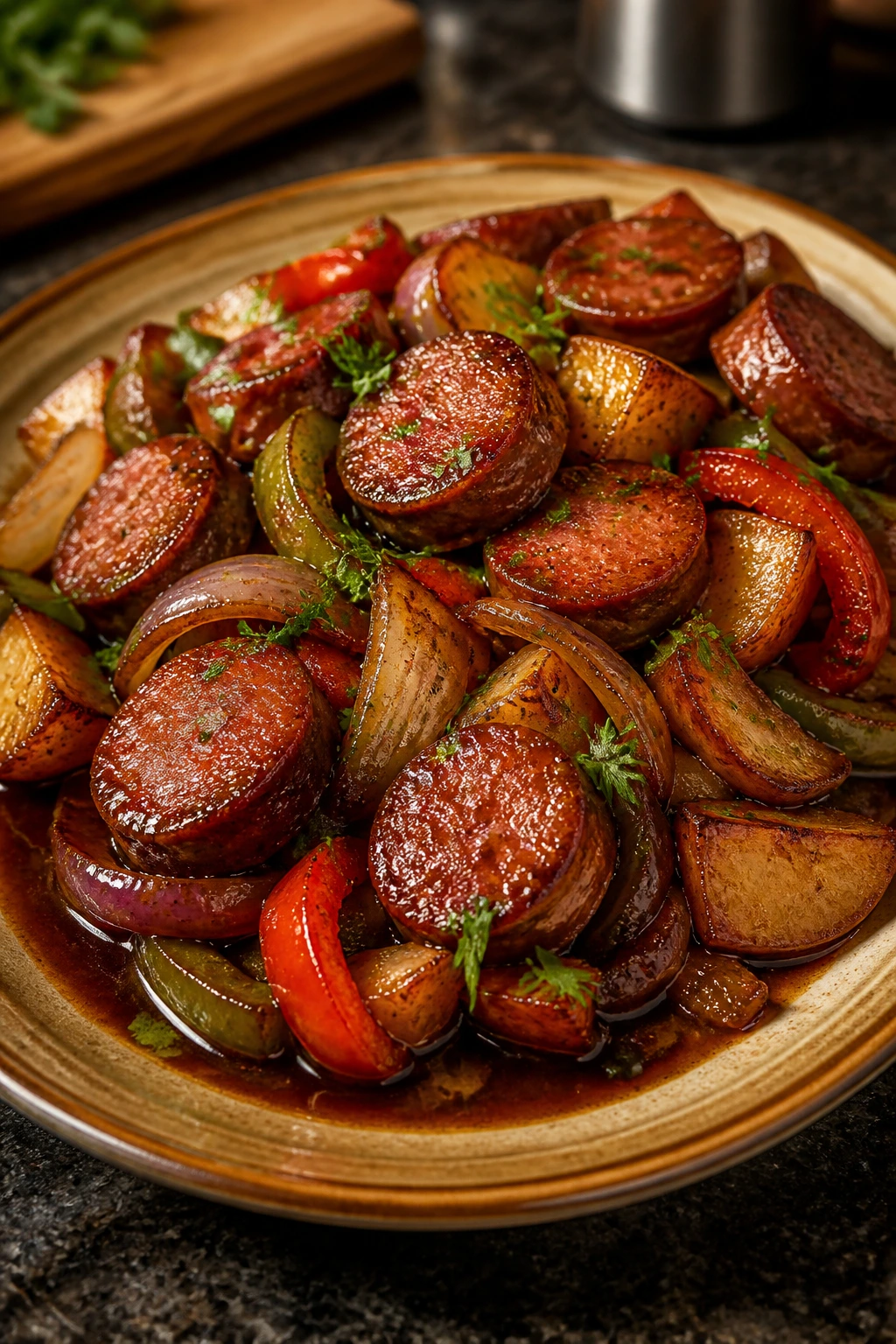
Presentation: Scoop the sausage, potatoes, peppers, and onion onto a wide warm platter instead of serving straight from the pan. A wide platter lets the glaze pool lightly around the edges and keeps the browned sausage coins visible instead of buried under the vegetables. If you want the meal to look pulled together, finish with parsley and a few cracks of black pepper right before it hits the table.
Accompaniments: This dish sits nicely beside a plain green salad with a sharp vinaigrette, because the acidity cuts through the glaze. If you want something more substantial, serve it with buttered rice, cornbread, or a thick slice of crusty bread to mop up the sticky bits on the pan. Green beans, roasted broccoli, or a spoonful of sauerkraut also fit the sausage without fighting it.
Portions: Plan on about 6 ounces of sausage per serving if you are serving it as a main dish with potatoes and vegetables. That gives you a solid dinner for 4 people, or 6 smaller servings if you add bread or a salad. To stretch it for more people, do not cram everything into one pan; use two pans so the vegetables still roast instead of steam.
Beverage Pairing: A cold lager works because it cuts the glaze without crowding the sausage flavor. Dry hard cider is another good match, especially if you like the vinegar in the glaze to echo in the glass. For a nonalcoholic option, unsweetened iced tea or sparkling water with lemon keeps the plate from leaning too sweet.
Small Tweaks That Make a Big Difference
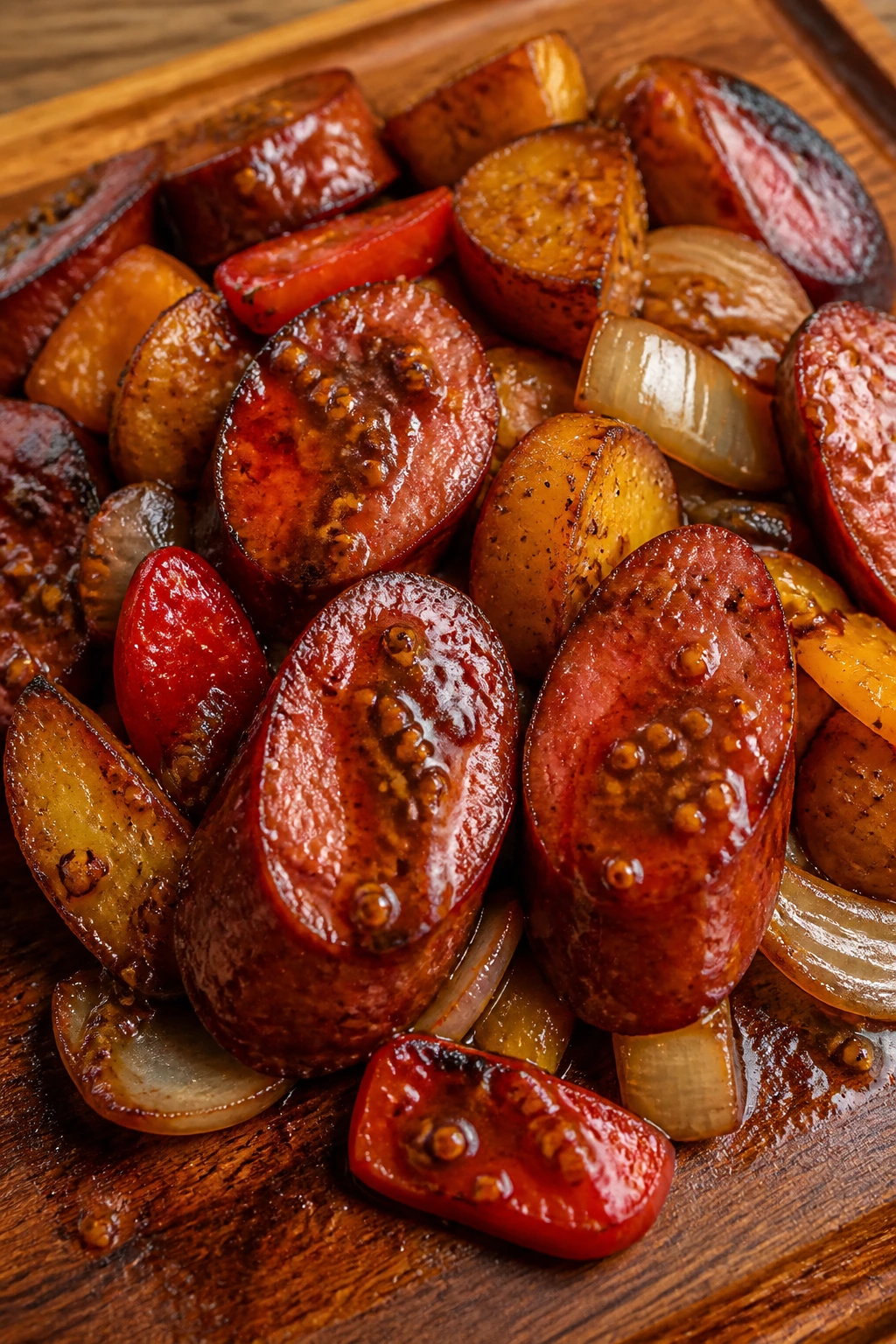
Flavor Enhancement: A teaspoon of whole-grain mustard stirred into the glaze gives you little mustard seeds that pop against the sweet syrup. I also like a final splash of apple cider vinegar after roasting if the glaze tastes a touch too round. It wakes everything up.
Time-Saver: If you want to shave time, microwave the halved potatoes with a tablespoon of water in a covered bowl for 4 to 5 minutes before roasting. Dry them well before they hit the pan, or they will steam instead of browning. That shortcut works best when the potatoes are on the small side.
Texture Trick: Keep the pan loose. Sausage slices should have visible space around them, and the vegetables should not be stacked on top of the potatoes. Space is what gives you browned edges and keeps the glaze from turning watery.
Cost-Saver: Use one bell pepper instead of two if the sausage is the part you care about most. The glaze and onions still carry the dish. You can also buy a larger ring of sausage and slice it yourself; pre-sliced sausage often costs more without giving you better flavor.
Make-It-Yours: If you want the dish less sweet, cut the brown sugar back to 1/4 cup and add 1 extra tablespoon of vinegar. If you want more heat, add cayenne or extra red pepper flakes to the glaze. The important thing is to keep the glaze balanced enough to taste savory after it hits the hot pan.
Mistakes That Leave the Glaze Bitter or the Sausage Pale
-
Adding the glaze too early: If the sugar goes on at the start, it darkens before the potatoes finish and starts tasting sharp instead of sticky. The fix is simple: roast first, glaze near the end, and only broil for a minute or less if you want a darker finish.
-
Crowding the pan: When the sausage and vegetables pile up, the pan traps steam and the potatoes go soft and pale. Use a larger sheet pan or split the meal across two pans so the hot air can move around the pieces.
-
Cutting the potatoes unevenly: Big chunks stay hard while tiny ones collapse into mush. Halve the baby potatoes into pieces that are close in size, and quarter any that are much larger than the rest.
-
Using a glaze that is too thick: A syrupy glaze clings in blobs and burns in spots. Warm it just until the sugar dissolves, then loosen it with a spoonful or two of water if it looks too tight to brush.
-
Forgetting that smoked sausage is already cooked: Some cooks keep roasting until the sausage splits open and turns dry. You are not cooking it from raw; you are browning it and heating it through, which happens faster than people expect.
-
Skipping the acid: Brown sugar alone tastes flat and sticky. The vinegar and mustard are what keep the glaze from landing like candy, so do not strip them out unless you replace them with something equally sharp.
Variations Worth Trying Next Time
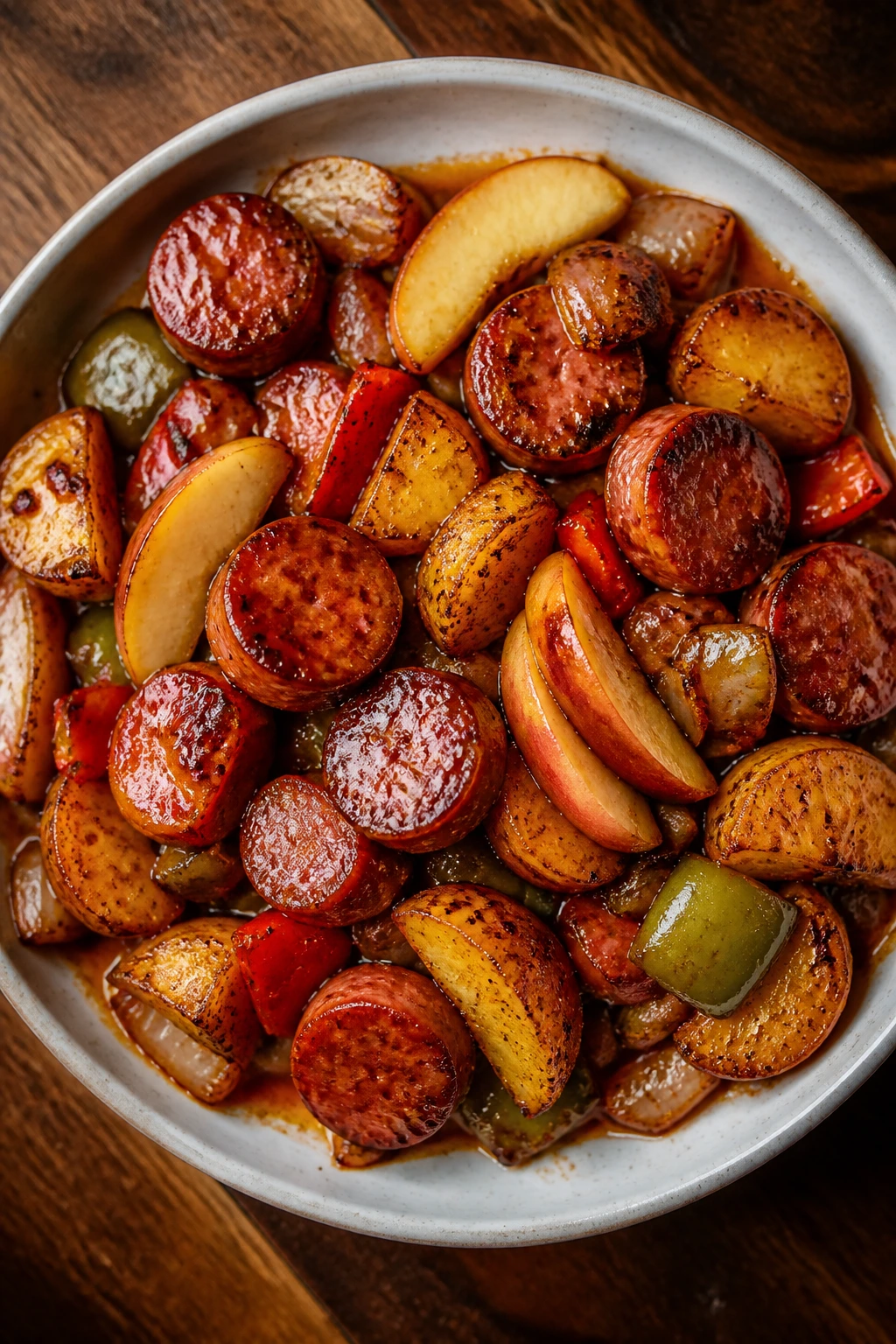
Cajun Heat Wave
Add 1 teaspoon Cajun seasoning to the potatoes and sausage, then whisk a pinch of cayenne into the glaze. The result is hotter, deeper, and a little more peppery, which fits well if you like sausage with a sharper edge.
Apple and Mustard Pan
Add 1 peeled, cored apple cut into thick wedges during the last 15 minutes of roasting. The apple softens at the edges and takes on the glaze without turning mushy, and it gives the pan a tart-sweet note that makes the sausage taste smokier.
Pepper and Poblano Swap
Replace one bell pepper with a poblano if you want less sweetness and a hint of green heat. Roast it until the skin blisters a bit and the flesh turns soft; it gives the dish a more savory, fire-roasted feel.
Lower-Sugar Savory Finish
Cut the brown sugar to 2 tablespoons and add an extra tablespoon of Dijon and another tablespoon of vinegar. You still get a sticky coating, but the flavor swings more toward tangy and salty, which is a good move if you like your dinners less sweet.
Turkey Sausage Version
Use smoked turkey sausage if you want a leaner plate. Add an extra teaspoon of olive oil to the vegetables, because turkey sausage usually gives you less rendered fat in the pan and the potatoes need that little boost to brown well.
Make-Ahead, Storage, and Reheating
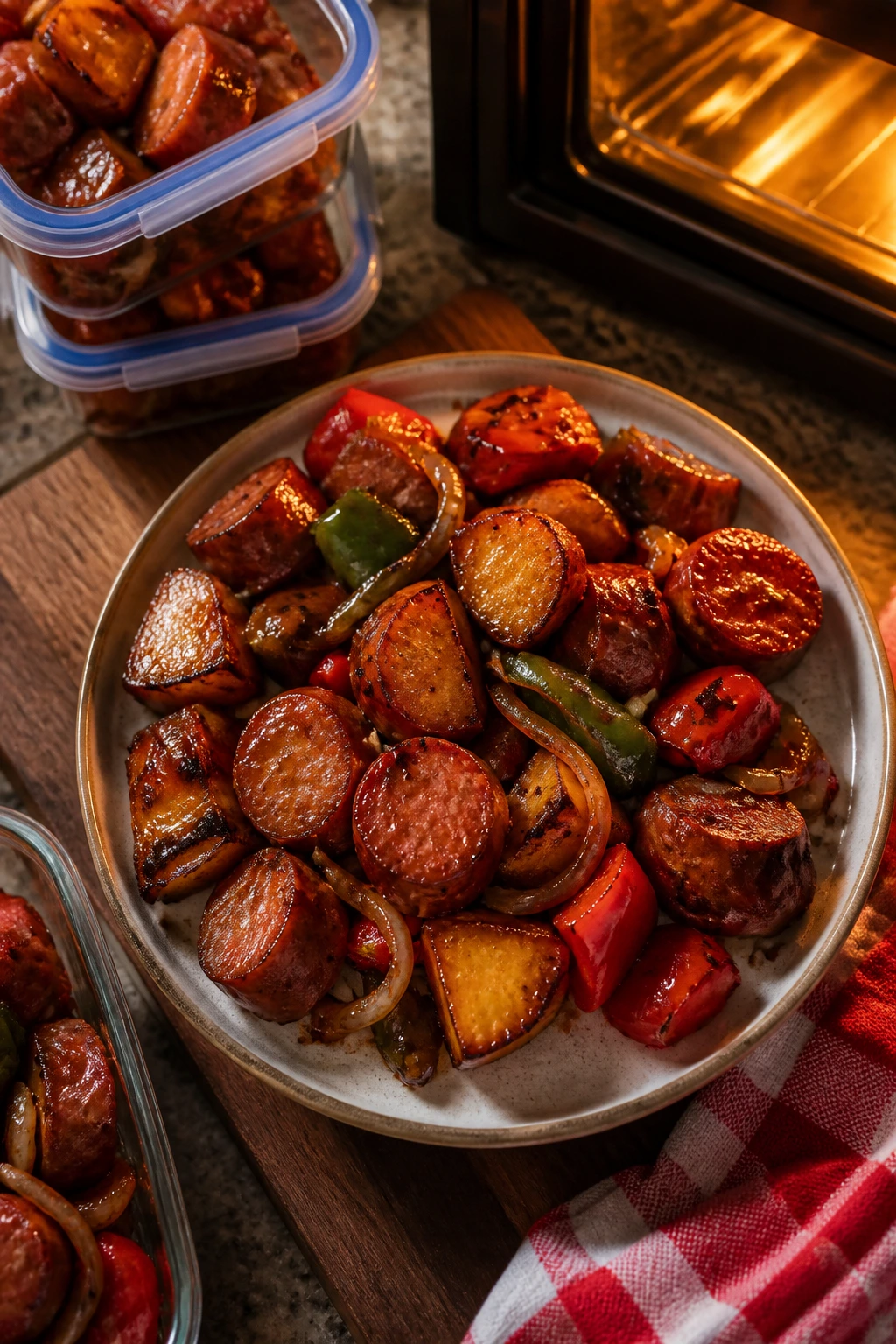
If you want to get ahead of dinner, the glaze is the easiest part to prep. It keeps in a sealed container in the refrigerator for up to 3 days, and you can warm it gently in a small saucepan or in the microwave in short bursts until it loosens again. Chop the peppers and onion a day ahead too, but keep them dry and sealed so they do not release water into the container.
The finished meal keeps well in the refrigerator for 3 to 4 days in an airtight container. The sausage stays pleasant, the potatoes soften a little, and the glaze settles into the vegetables in a way that is actually useful for leftovers. If you want to freeze it, pack the cooled meal into freezer-safe containers for up to 2 months. It is safe longer than that, but the potatoes get mushy and the peppers lose their snap, so I would not push it.
Reheating is where a little care pays off. The oven is best: spread the leftovers on a sheet pan and warm them at 375°F for 12 to 15 minutes, or until the sausage is hot and the glaze starts to shine again. A skillet works too; add a tablespoon of water, cover for a few minutes to loosen the glaze, then uncover and let the edges brown. The microwave is the fastest route, but use 50 percent power and stop as soon as it is hot so the sausage does not split and the potatoes do not turn leathery.
If you are making the meal for later in the week, roast the potatoes only until they are just starting to color, not fully tender. That little bit of undercooking gives you a cushion when you reheat. It matters more than people think.
Questions People Ask Before They Cook It
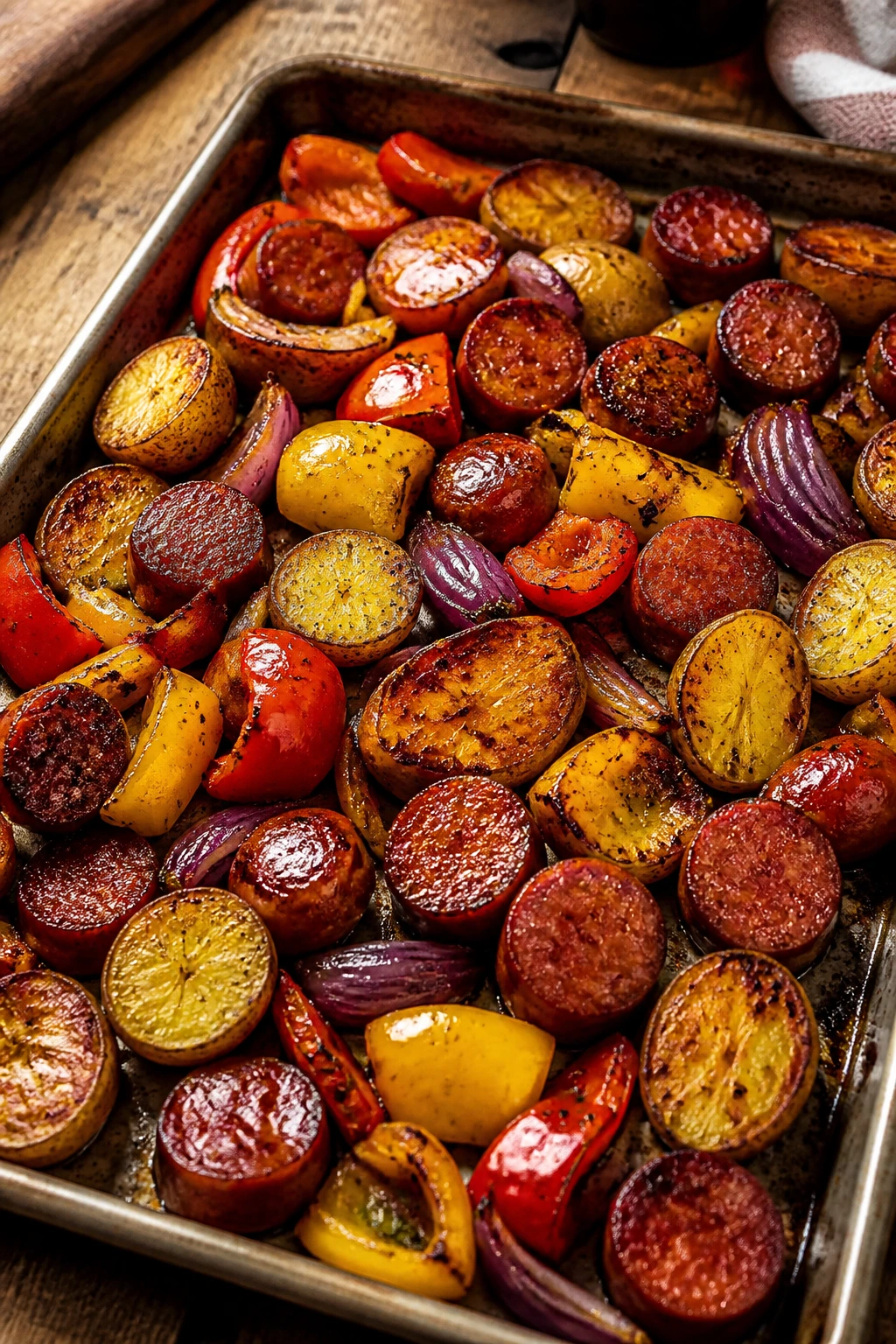
Can I use kielbasa instead of smoked sausage?
Yes, and it is one of the easiest swaps. Kielbasa browns well, stays juicy, and usually has the same kind of smoky flavor this dish wants. If the kielbasa is extra fatty, spoon off a little rendered fat before adding the glaze so the pan does not feel greasy.
Do I need to peel the potatoes?
No. Baby Yukon Golds taste better with the skin on, and the skin helps the cut sides crisp in the oven. Just scrub them well and trim any bruised spots.
Can I make this without potatoes?
You can, but the timing changes. Use cauliflower florets, Brussels sprouts, or extra peppers instead, and watch the pan more closely because those vegetables will brown faster than potatoes once the glaze goes on.
How do I keep the glaze from burning?
Use the glaze at the end, not the beginning, and keep the oven hot but not reckless. The glaze should land on already-browned food so it has only a short time in the heat. If you broil, do it for less than a minute and do not walk away.
Can I cook this on the stovetop instead of roasting it?
Yes, in a very large skillet. Brown the sausage first, remove it, cook the potatoes with a splash of water and a lid until they are almost tender, then add the peppers, onion, sausage, and glaze. The oven gives you cleaner browning, but the skillet method works when you want to stay at the stove.
What if my potatoes are still hard when the sausage looks done?
Pull the sausage and vegetables out temporarily and keep roasting the potatoes until a knife slips in without much resistance. Then toss everything back together with the glaze for the last few minutes. That fix is better than overcooking the sausage while you wait for the potatoes to catch up.
Can I prep this ahead for a busy night?
Yes. Cut the vegetables, slice the sausage, and mix the glaze earlier in the day, then keep everything chilled separately. When you are ready to cook, the only real work left is tossing the potatoes and getting the pan into the oven.
Is this dish too sweet for dinner?
Not if you keep the vinegar and mustard in the glaze. The sugar should read as a shine and a finish, not as the main flavor. If you still want it less sweet, cut the sugar a little and add more Dijon before the pan ever goes into the oven.
The Sticky Finish
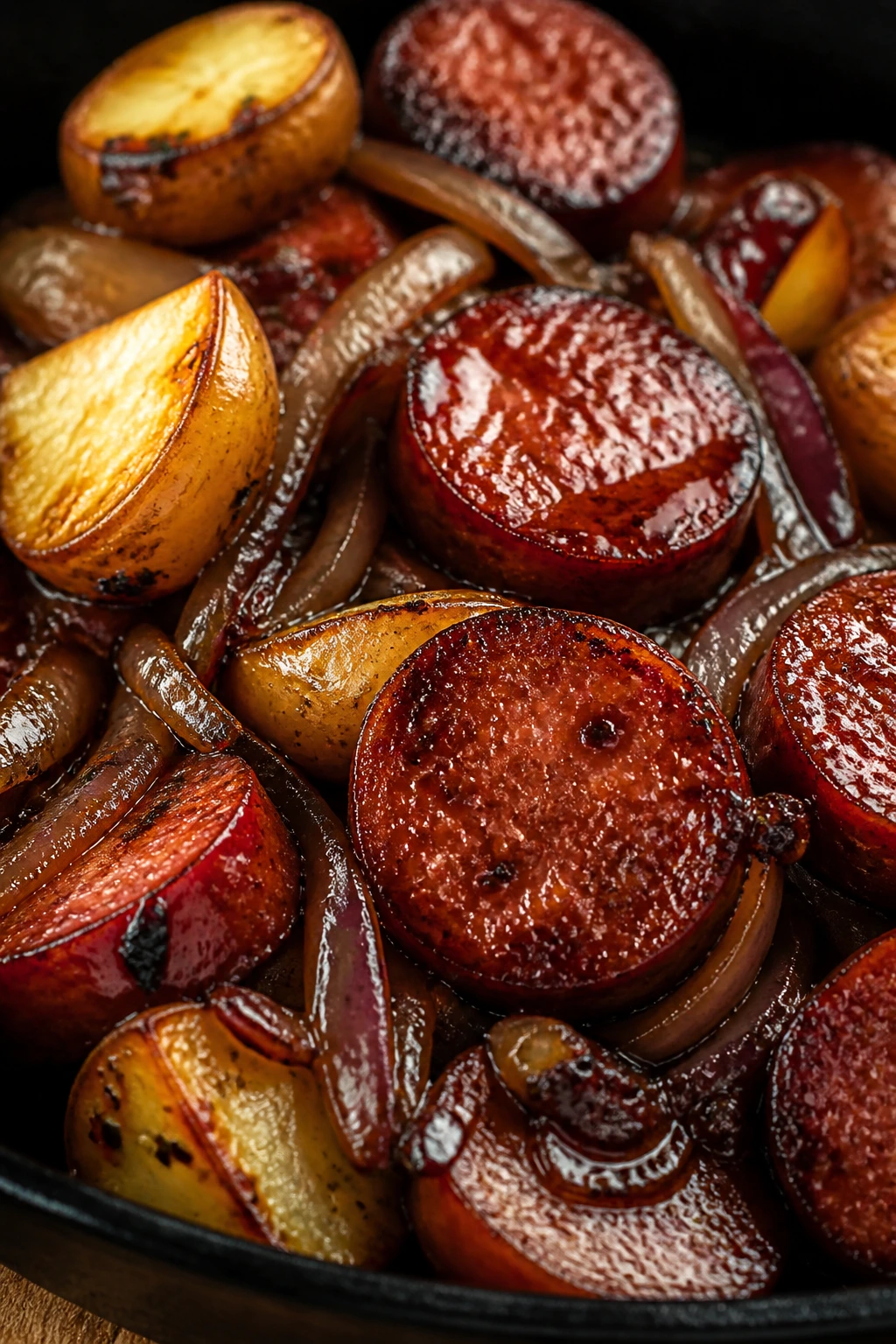
The best part of this dinner is that it looks like you put in more effort than you actually did. That is a useful trick to have in your back pocket. The browned sausage, soft onions, and potatoes with sticky edges all come from a few smart moves: enough heat, enough space, and a glaze that gets added at the right moment.
I keep coming back to the same point because it matters here more than usual: the glaze is a finish, not a bath. Treat it that way and the whole meal gets louder in the right places — smoky, salty, tangy, with a dark little shine that sticks to the back of a fork. Serve it with something sharp on the side or a piece of bread to catch the last streaks of sauce, and you have a dinner worth repeating without much temptation to tinker.
Savory Smoked Sausage Meal with Brown Sugar Glaze — Recipe Card
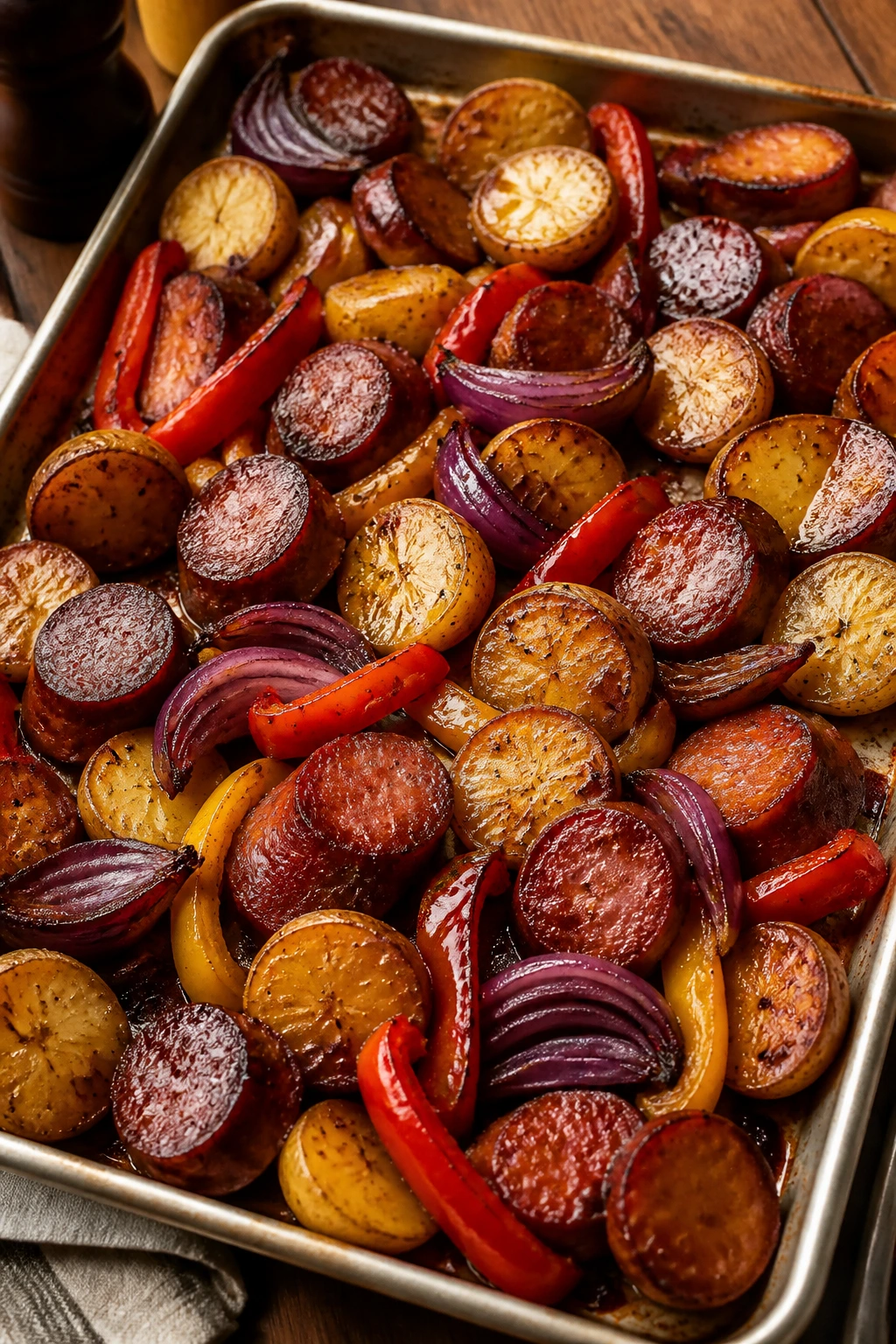
Recipe Name: Savory Smoked Sausage Meal with Brown Sugar Glaze
Description: Smoky sausage, roasted potatoes, peppers, and onion are finished with a glossy brown sugar glaze made sharper with Dijon, vinegar, and garlic. The result is savory first, sweet second, and sturdy enough to serve as a full sheet-pan dinner.
Prep Time: 20 minutes
Cook Time: 35 to 40 minutes
Total Time: 55 to 60 minutes
Course: Dinner, Main Course
Cuisine: American
Servings: 4 to 6
Calories: About 480 kcal per serving
Ingredients
For the Sheet Pan Meal:
- 1 1/2 pounds smoked sausage, sliced into 1/2-inch thick coins on a slight diagonal
- 1 1/2 pounds baby Yukon Gold potatoes, halved
- 1 large red bell pepper, seeded and cut into 1-inch strips
- 1 large yellow bell pepper, seeded and cut into 1-inch strips
- 1 large red onion, cut into 8 wedges
- 2 tablespoons olive oil
- 1 teaspoon kosher salt
- 1/2 teaspoon black pepper
- 1 teaspoon smoked paprika
- 1 teaspoon garlic powder
- 1 tablespoon chopped fresh parsley, optional
For the Brown Sugar Glaze:
- 1/3 cup packed light brown sugar
- 2 tablespoons Dijon mustard
- 2 tablespoons apple cider vinegar
- 1 tablespoon low-sodium soy sauce
- 2 cloves garlic, minced
- 2 tablespoons unsalted butter
- 1/4 teaspoon crushed red pepper flakes, optional
- 2 tablespoons water, only if needed to thin
Instructions
- Preheat the oven to 425°F (220°C) and line a rimmed sheet pan with parchment paper or foil.
- Toss the potatoes with 1 tablespoon olive oil, 1/2 teaspoon salt, 1/4 teaspoon black pepper, 1/2 teaspoon smoked paprika, and 1/2 teaspoon garlic powder. Spread them cut-side down on the pan and roast for 20 minutes.
- Warm the brown sugar, Dijon, vinegar, soy sauce, garlic, butter, and optional red pepper flakes in a small saucepan over medium-low heat for 1 to 2 minutes, just until smooth and glossy. Add 1 to 2 tablespoons water if it is too thick.
- Toss the sausage, peppers, and onion with the remaining 1 tablespoon olive oil, remaining salt, remaining pepper, and remaining garlic powder.
- Add the sausage and vegetables to the pan around the potatoes and roast for 12 minutes.
- Brush or spoon half the glaze over the pan, toss lightly, and roast for 8 to 10 minutes more until the sausage is browned and the potatoes are tender.
- Broil for 45 to 60 seconds if you want a darker finish, watching closely the entire time.
- Rest for 5 minutes, spoon any pan juices over the top, and garnish with parsley if desired.
Notes: For a less sweet version, reduce the brown sugar to 1/4 cup and add 1 extra tablespoon of vinegar. The glaze can be made up to 3 days ahead, and the leftovers reheat best in a 375°F oven.