



Hearty beef noodle soup is what I make when the house feels cold enough to keep its coat on. Not broth pretending to be dinner. Real dinner. The kind with browned beef, softened onions, and noodles that carry a little gravy-like richness into every bite.
What makes this pot worth your time is the way it changes as it cooks. The first smell is all beef and onion, a little sharp from garlic and tomato paste. An hour later, the broth turns darker and rounder, and the chuck starts to give up the kind of tenderness you only get from patient simmering. If you’ve ever tasted a soup that felt thin and tired, this is the opposite of that. It has weight.
I also like that the noodles are treated with a bit of respect here. Too many beef noodle soups dump the noodles into the pot and call it a day, which is fine if you plan to eat the whole thing at once. But if you want leftovers that still taste clean the next day, the noodles deserve their own moment. Small choice. Big payoff.
And yes, the whole thing smells like a kitchen you’d trust. Browning beef first, scraping up the dark bits, letting carrots and celery soften until they lose their raw snap — that is where the depth comes from. Not shortcuts. Not a packet. Just a pot doing what a pot does best when you give it the right ingredients and enough time.
Why This Beef Noodle Soup Works So Well
-
Chuck roast does the heavy lifting: Beef chuck has enough fat and connective tissue to stay juicy through a long simmer, then turn spoon-tender instead of stringy. Lean cuts get dry here. Chuck gets better.
-
The broth has actual body: Tomato paste, Worcestershire sauce, and a splash of red wine build a savory base that tastes deeper than standard stock alone. It doesn’t read as “beef-flavored water.” Good. That’s the point.
-
The vegetables aren’t filler: Onion, carrot, celery, and mushrooms bring sweetness, earthiness, and a little chew. The soup tastes layered instead of one-note.
-
Noodles stay springy: Cooking them separately means you control the texture. No swollen, sad noodles sitting in the broth for hours. I’m not sentimental about a lot of things, but I am about noodle texture.
-
It reheats like a champ: The broth can be made ahead, chilled, and brought back to life in a saucepan. Add fresh noodles or day-old noodles and it still feels like dinner, not leftovers.
-
It’s rich without being heavy-handed: A long simmer gives the soup that winter-night weight, but the vinegar or lemon at the end keeps the bowl from tasting muddy. That tiny hit of acid matters more than people think.
Yield: Serves 6
Prep Time: 25 minutes
Cook Time: 2 hours 10 minutes
Total Time: 2 hours 35 minutes
Difficulty: Intermediate — the method is straightforward, but browning the beef well and timing the noodles separately make a real difference.
Best Served: Hot, within 10 minutes of combining the noodles and broth
The Short Ingredient List
For the Beef and Broth
- 2 tablespoons neutral oil
- 2 pounds beef chuck roast, cut into 1-inch cubes and patted dry
- 1 1/2 teaspoons kosher salt, plus more to taste
- 1 teaspoon black pepper
- 1 large yellow onion, diced
- 3 carrots, sliced into 1/4-inch rounds
- 2 celery ribs, sliced
- 8 ounces cremini mushrooms, sliced
- 4 garlic cloves, minced
- 2 tablespoons tomato paste
- 1/2 cup dry red wine, or 1/2 cup extra beef stock
- 8 cups low-sodium beef stock
- 2 cups water
- 2 tablespoons Worcestershire sauce
- 2 bay leaves
- 1 teaspoon dried thyme
- 1/2 teaspoon smoked paprika
For the Noodles and Finish
- 8 ounces dried egg noodles
- 2 tablespoons chopped fresh parsley, plus more for serving
- 1 tablespoon apple cider vinegar or lemon juice
- Extra salt and black pepper, to taste
Why Each Ingredient Pulls Its Weight
Beef Chuck, the Real Backbone
What to use: 2 pounds beef chuck roast, cut into 1-inch cubes.
Preparation: Pat the beef dry, trim only thick hard fat or obvious silver skin, and season it right before it hits the pot.
Substitutions: Stew meat works if that’s what you can find, though chuck is usually better because the marbling is more dependable; brisket or short ribs can also work, but they change the texture a bit.
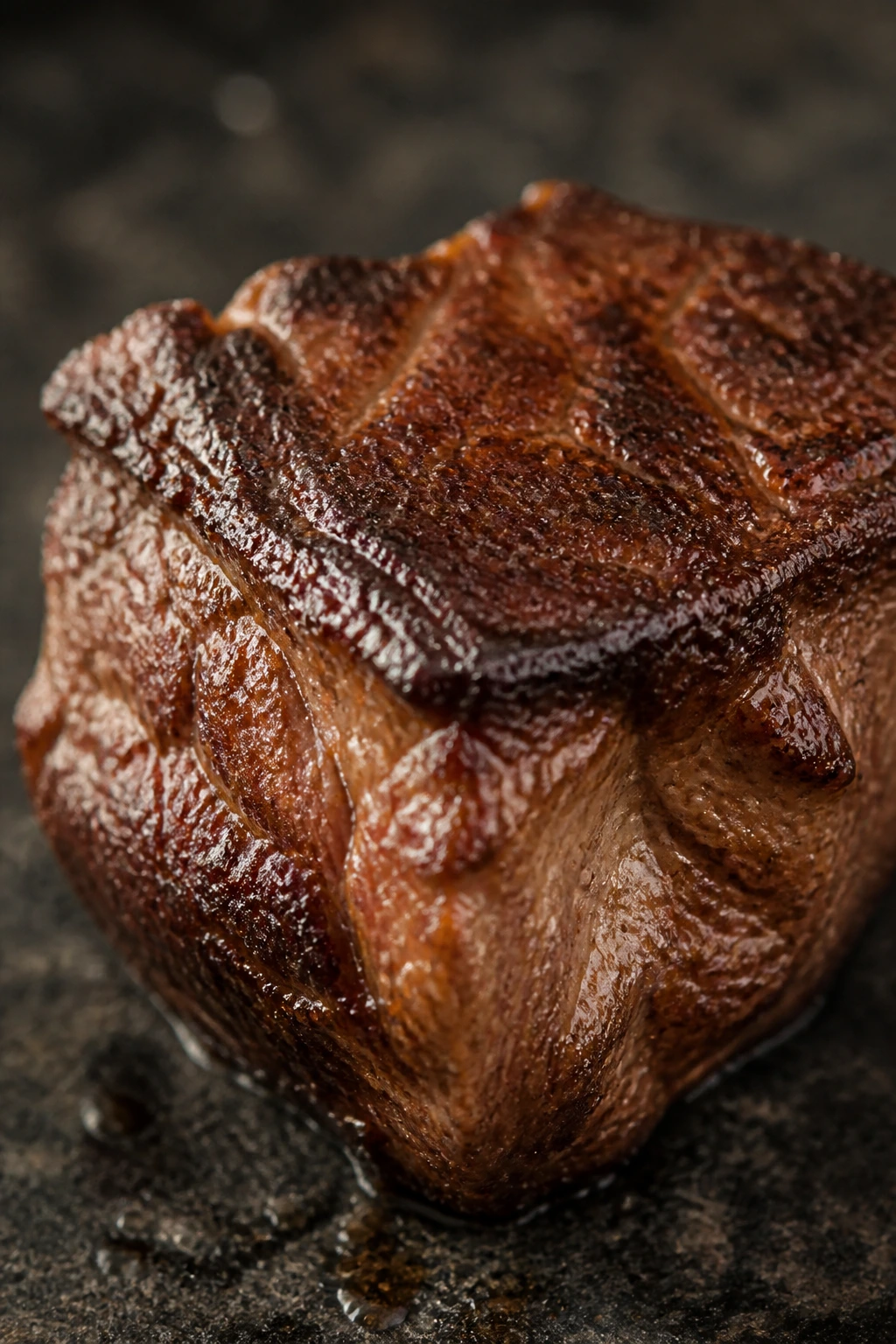
Tips: Brown the beef in batches so the pieces sear instead of steam. That dark crust on the outside is where a lot of the flavor starts, and it’s worth the extra few minutes.
Aromatics and Vegetables, the Flavor Floor
What to use: 1 large yellow onion, 3 carrots, 2 celery ribs, 8 ounces cremini mushrooms, and 4 garlic cloves.
Preparation: Dice the onion, slice the carrots and celery evenly, and keep the mushrooms thick enough that they don’t disappear after a long simmer.
Substitutions: Shallots can stand in for onion, parsnips can replace some of the carrots, and button mushrooms work if cremini aren’t around.
Tips: Cut the vegetables to a size that matches the beef. If the carrot pieces are tiny and the beef chunks are big, the soup feels awkward, like everything came from a different dinner.
Broth Builders and Seasonings
What to use: 2 tablespoons tomato paste, 1/2 cup dry red wine, 8 cups low-sodium beef stock, 2 cups water, 2 tablespoons Worcestershire sauce, 2 bay leaves, 1 teaspoon dried thyme, 1/2 teaspoon smoked paprika.
Preparation: Measure everything before you start cooking; once the beef is browned, the pot moves fast.
Substitutions: If you don’t want wine, use another 1/2 cup stock. Chicken stock can work in a pinch, though it makes a lighter soup.
Tips: Low-sodium stock gives you control at the end. Full-salt stock can taste fine on the stove and then turn aggressive after two hours of simmering.
Noodles and the Final Bright Note
What to use: 8 ounces dried egg noodles, 2 tablespoons chopped parsley, and 1 tablespoon apple cider vinegar or lemon juice.
Preparation: Cook the noodles separately in salted water and drain them just shy of fully tender. Chop the parsley finely so it spreads through the bowl instead of sitting on top in clumps.
Substitutions: Wide pappardelle, broken tagliatelle, or even ramen noodles can step in; rice noodles work too if you need a gluten-free route.
Tips: Keep the acid for the end. The vinegar or lemon doesn’t make the soup sour — it wakes up the broth, especially after a long simmer has softened everything else.
What You’ll Need in the Kitchen
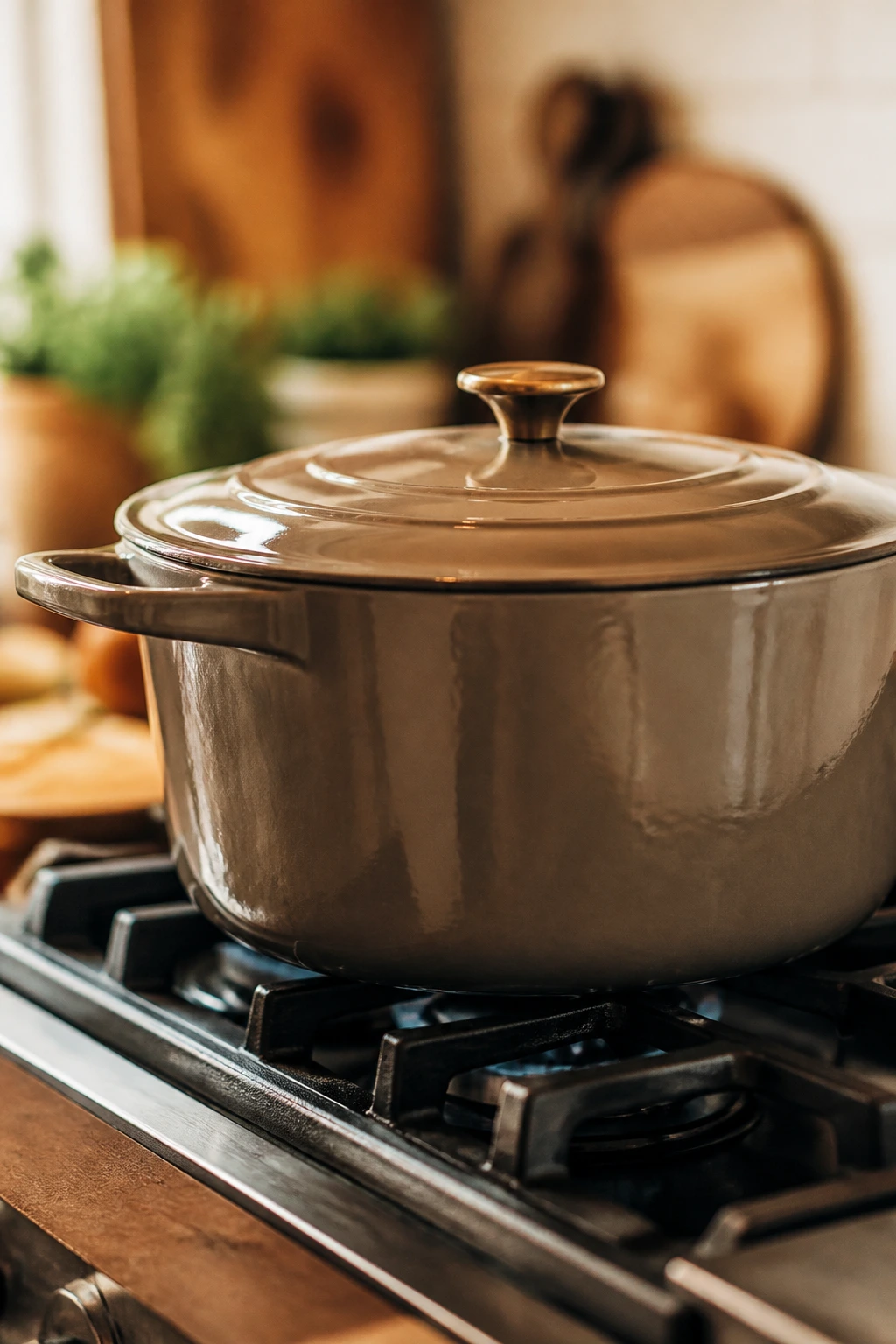
- 6- to 7-quart Dutch oven or heavy soup pot — A thick bottom keeps the beef from scorching during the long simmer and gives you enough room to stir without sloshing broth over the edge.
- Medium saucepan — Use this for boiling the noodles separately so they keep their shape and don’t drink half the broth.
- Wooden spoon or flat spatula — You need something sturdy enough to scrape up the browned bits on the bottom of the pot.
- Sharp chef’s knife — Clean, even cuts on the beef and vegetables help everything cook at the same pace.
- Cutting board — A large board gives you room to prep the vegetables before the pot gets hot.
- Ladle — Not glamorous, but absolutely useful when the broth is full and steaming.
- Fine-mesh strainer or colander — Drain the noodles well so they don’t water down the soup.
- Tongs or a slotted spoon — Handy for turning the beef while it browns and for fishing out bay leaves at the end.
Browning the Beef and Building the Base
Prep the Pot:
-
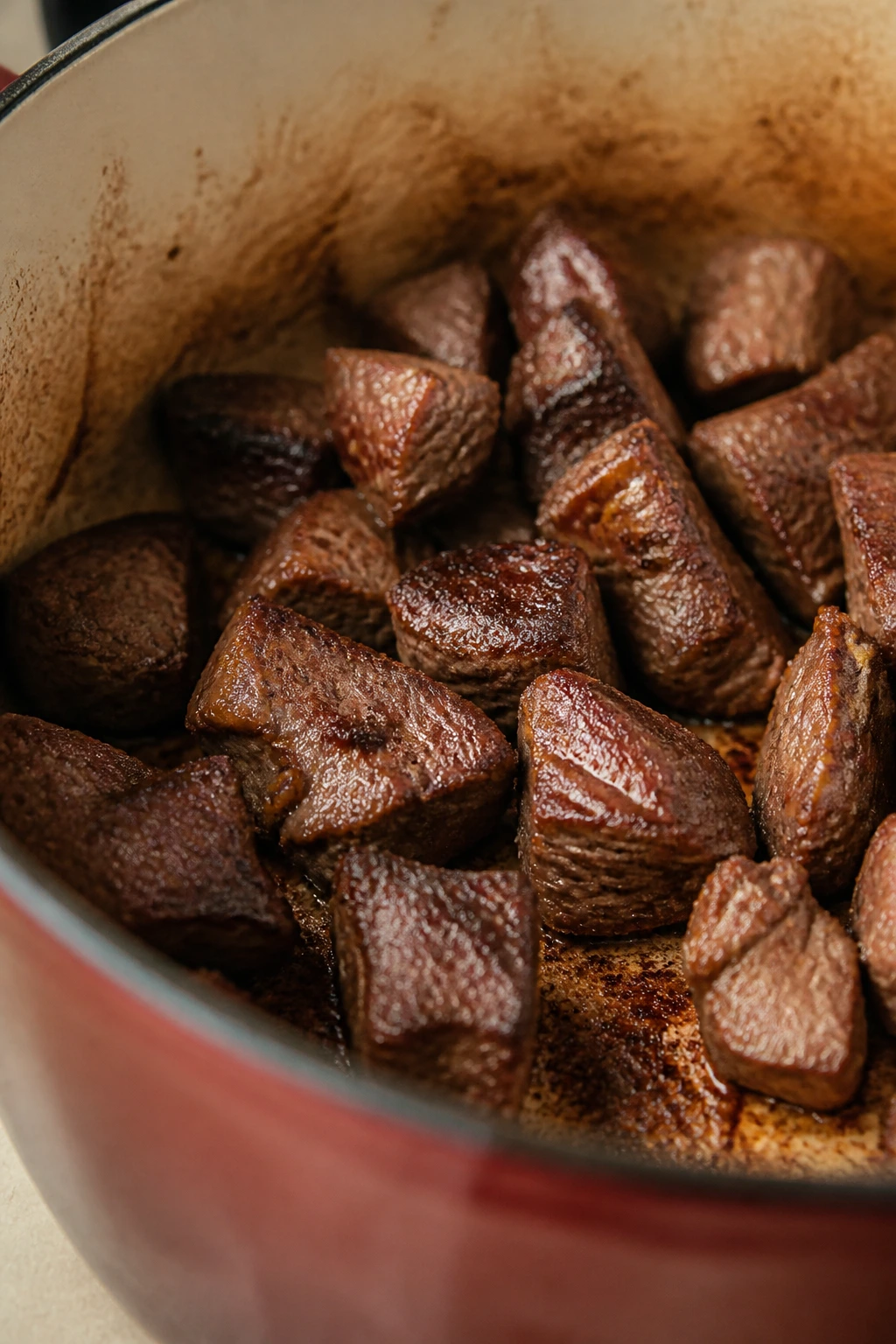
Pat the beef chuck cubes dry with paper towels, then season them all over with the kosher salt and black pepper. Dry beef browns; damp beef steams. There’s a big difference, and you can hear it when the pot starts hissing instead of singing.
-
Set a large Dutch oven over medium-high heat and add the neutral oil. Heat it until the oil shimmers and moves easily across the bottom of the pot, about 1 to 2 minutes.
-
Add half the beef in a single layer. Brown it for 3 to 4 minutes per side, turning only when it releases easily from the pot. Do not crowd the pot. If the cubes are packed together, they’ll throw off moisture and you’ll lose that deep brown crust.
-
Transfer the browned beef to a plate and repeat with the remaining beef. A dark fond will collect on the bottom of the pot. That’s good. That’s flavor you get to keep.
Build the Soup Base: 5. Lower the heat to medium. Add the onion, carrots, celery, and mushrooms to the pot. Cook for 7 to 8 minutes, stirring every minute or so, until the onion looks translucent at the edges and the mushrooms have released their liquid and started to brown.
-
Stir in the garlic, tomato paste, and smoked paprika. Cook for 1 minute, stirring constantly, until the tomato paste darkens from brick red to a deeper rust color and smells slightly sweet. That raw, tinny tomato scent should disappear.
-
Pour in the red wine, if using, and scrape the bottom of the pot with a wooden spoon. Let it simmer for 2 to 3 minutes until reduced by about half. If you’re skipping the wine, use a splash of stock and scrape just as thoroughly.
Letting the Broth Simmer Until the Beef Goes Tender
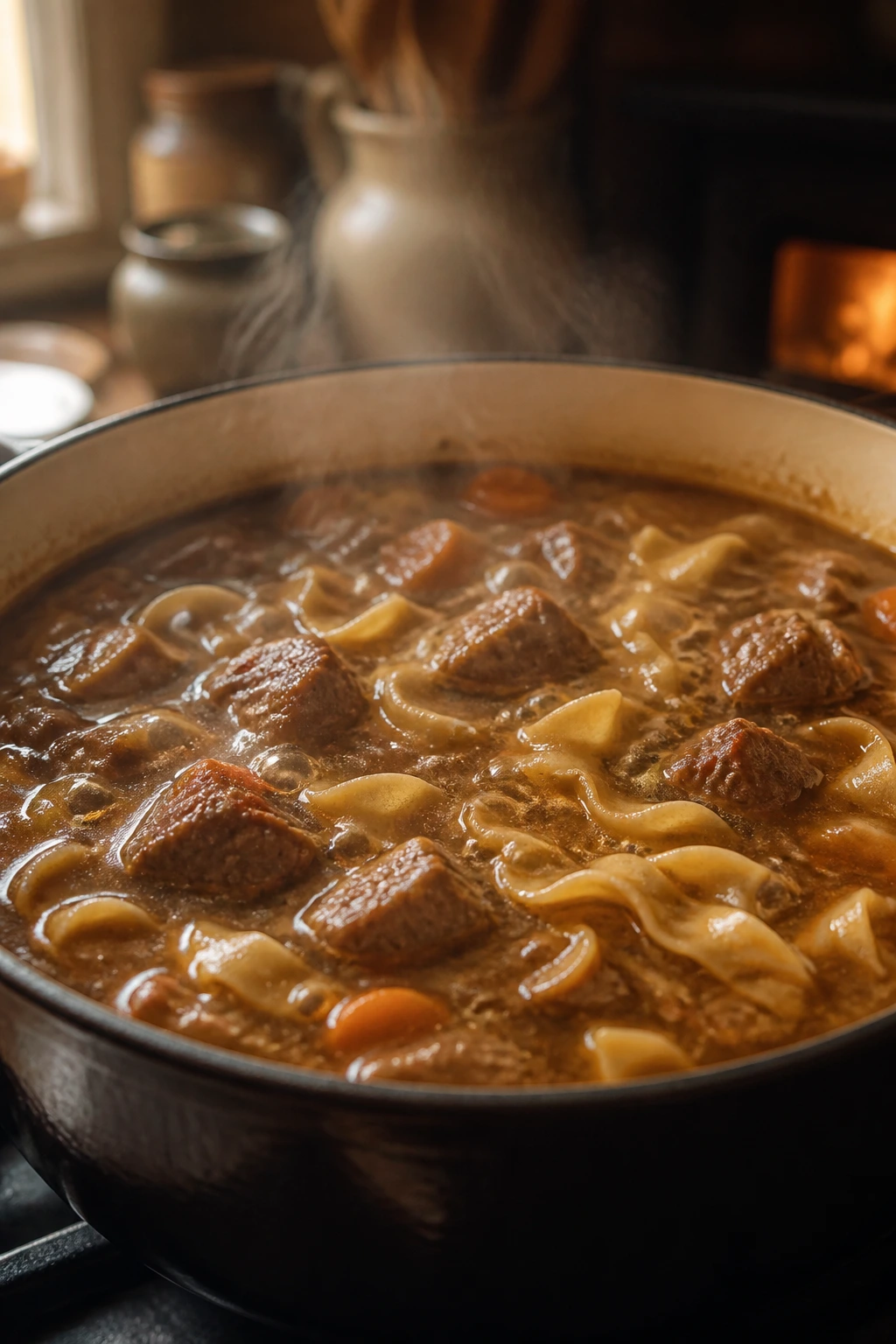
Bring It Together: 8. Add the beef back to the pot along with any juices on the plate. Pour in the beef stock, water, Worcestershire sauce, bay leaves, and dried thyme. Stir once to mix, then bring everything to a gentle simmer over medium-high heat.
-
As soon as the liquid is bubbling at the edges, reduce the heat to low and cover the pot partially. Simmer for 1 1/2 to 2 hours, stirring every 20 to 30 minutes, until the beef is tender enough to break apart with a spoon and the broth tastes deep, not flat. If you have a thermometer handy, the beef should be drifting into the 190°F to 205°F range, where braised chuck finally stops fighting you.
-
Taste the broth after the beef softens. Add more salt and black pepper if it needs them. If the broth tastes a little loose, simmer uncovered for 10 to 15 minutes to tighten it slightly. Skim off any excess fat if you want a cleaner bowl.
Cooking the Noodles and Finishing the Bowl
Finish Cleanly: 11. While the soup simmers near the end, bring a medium saucepan of salted water to a boil. Cook the egg noodles until they’re just shy of tender, usually 1 minute less than the package says. Drain them well. If you’re not serving right away, toss them with a teaspoon of oil so they don’t glue themselves together.
-
Remove the bay leaves from the soup. Stir in the apple cider vinegar or lemon juice and the chopped parsley. Taste again. The broth should feel deeper and a little brighter, not sour.
-
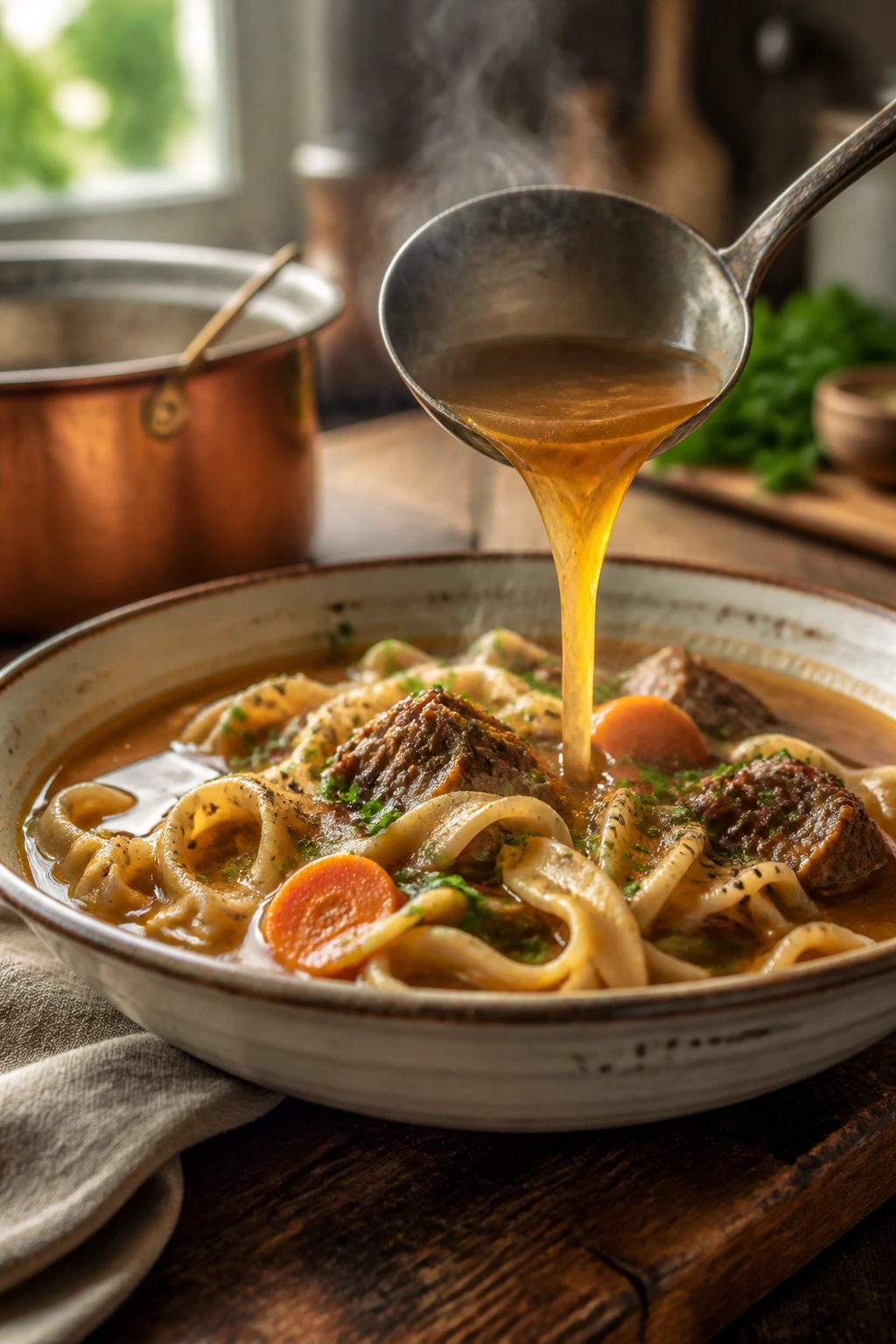
Divide the noodles between warmed bowls and ladle the hot beef soup over the top. Finish with more parsley and a few twists of black pepper. Serve immediately, while the noodles are still springy and the bowl is steaming.
How to Serve It Warm and Right
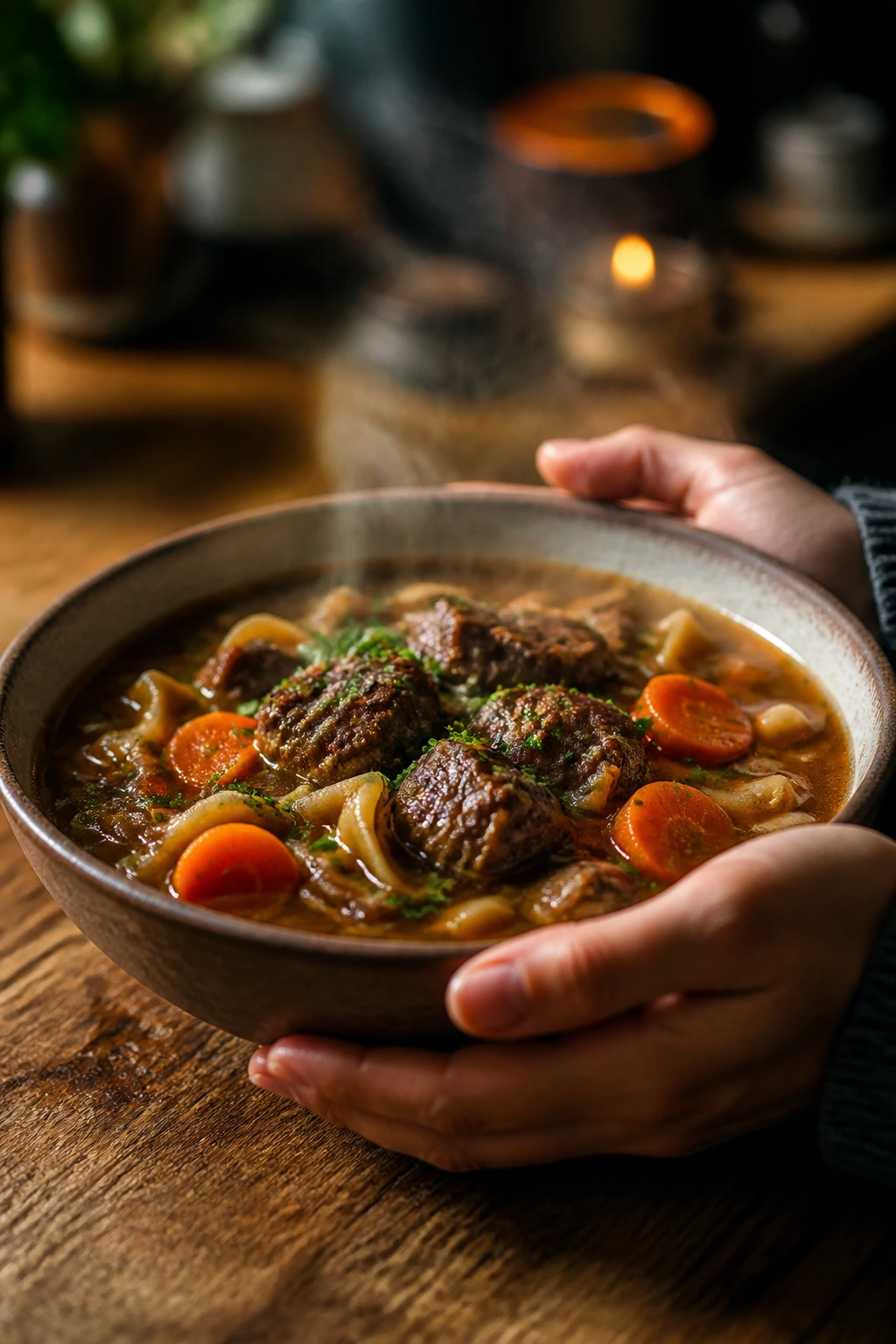
Presentation: Use wide, shallow bowls if you have them. They show off the beef chunks, carrot rounds, and noodles better than a deep mug-style bowl, and they cool a touch faster so you can actually eat the soup before it turns lukewarm. A final sprinkle of parsley and black pepper is enough; this soup doesn’t need a heavy garnish to look finished.
Accompaniments: A thick slice of crusty bread is the obvious move, but I also like a split biscuit or a piece of buttered toast with the edges browned in a skillet. If you want something fresher on the side, a simple green salad with sharp vinaigrette cuts through the richness nicely. Pickled onions or sliced dill pickles work too if you want a little bite next to the bowl.
Portions: Plan on about 1 1/2 to 2 cups of soup per person, plus a bit more if the meal is the whole point of the evening. If you’re feeding bigger appetites, serve the noodles generously in the bottom of the bowl and let the broth do the rest. For smaller portions, use fewer noodles and more broth so the soup stays light enough for a second helping later.
Beverage Pairing: A dry cider is one of my favorite partners here because it has enough acid to cut the broth and enough fruit to keep the meal from feeling heavy. Dark beer works too, especially something malty rather than bitter. If you want non-alcoholic, sparkling water with lemon or a plain iced tea does the job without crowding the bowl.
Small Fixes That Make a Big Difference
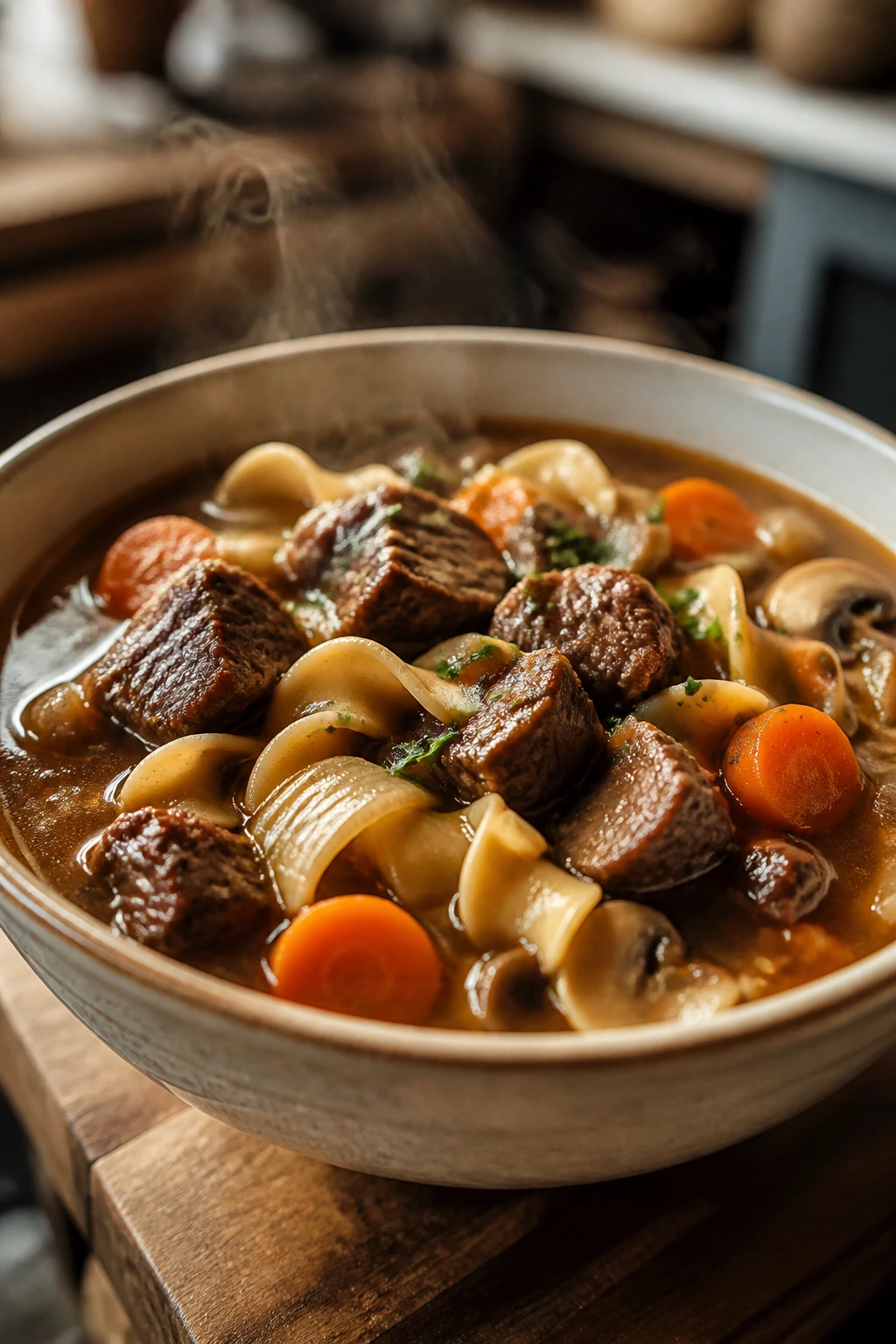
Flavor Enhancement: A teaspoon of soy sauce or a small splash of fish sauce can deepen the broth if it tastes a little shy after simmering. Use it sparingly. You want the soup to taste beefier, not salty in a way that makes you reach for water after every sip.
Time-Saver: Dice the onion, carrots, celery, and mushrooms the day before and keep them in a covered container in the fridge. You can also cube the beef ahead of time and dry it well on paper towels before storing it cold. That trim chunk of prep matters more than any shortcut gadget.
Cost-Saver: If chuck roast is expensive where you shop, ask for beef shoulder or a similar braising cut and cut it yourself. You’ll usually get better texture than with pre-cut stew meat, which can be a random mix of pieces from different muscles.
Texture Move: Cook the noodles to just under done, then stop. They’ll keep softening in the hot broth for a minute or two after you ladle the soup, and that final bit of carryover can be the difference between springy and tired.
Leftover Trick: Keep the noodles and broth separate if you know there will be leftovers. A separate container of noodles stays usable for a day or two, while the broth gets deeper and more cohesive after a night in the fridge.
Common Mistakes That Flatten the Soup
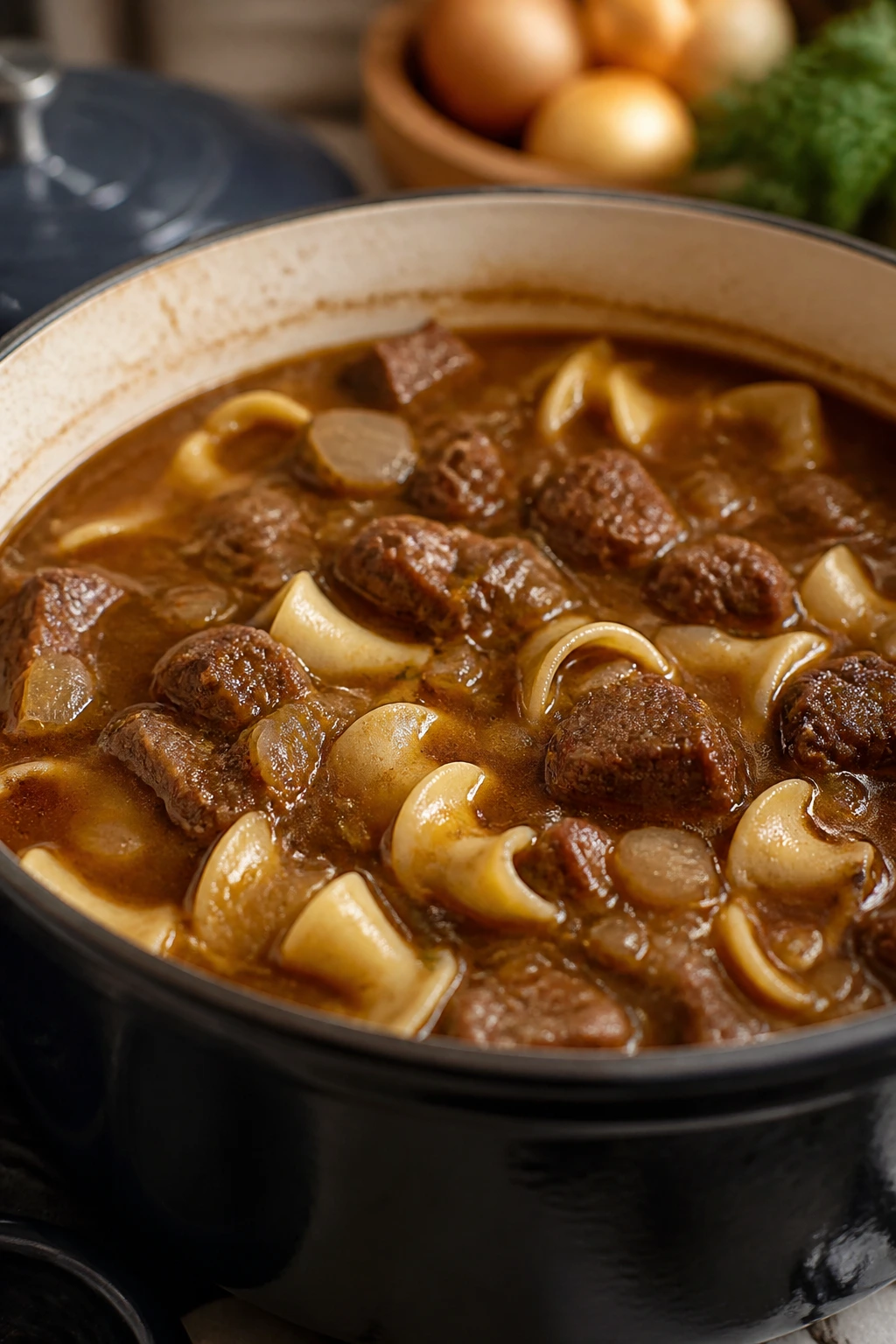
Skipping the Browned Crust: If the beef goes into the pot pale and comes out pale, the soup will taste pale. Browning builds the base flavor, and there’s no replacement for it. Fix: brown in batches and wait for a real crust before turning.
Crowding the Pot: Too many beef cubes at once lowers the heat and steams the meat. The outside stays gray, the fond never develops, and you lose the roasted flavor that makes the broth feel substantial. Fix: work in two batches, maybe three if your pot is small.
Boiling Instead of Simmering: A hard boil will tighten the beef and make the broth taste muddled. You want little bubbles, not a violent churn. Fix: once the pot reaches a simmer, lower the heat and keep it there.
Cooking the Noodles in the Soup Too Early: Noodles left in the broth for long stretches soak up liquid and turn soft, swollen, and a little gluey. Fix: cook them separately and add them to each bowl right before serving.
Underseasoning at the End: Beef stock, vegetables, and noodles all soak up salt differently. A soup can taste fine halfway through and flat at the end. Fix: taste after the beef is tender, then add salt, pepper, and the acid at the very end so the bowl wakes up.
Rushing the Beef Before It’s Ready: Chuck is tender only after the collagen has broken down. If you stop at 90 minutes because the meat “looks done,” it may still chew like an old boot. Fix: keep simmering until a spoon slides through the meat with almost no resistance.
Flavor Twists and Variations
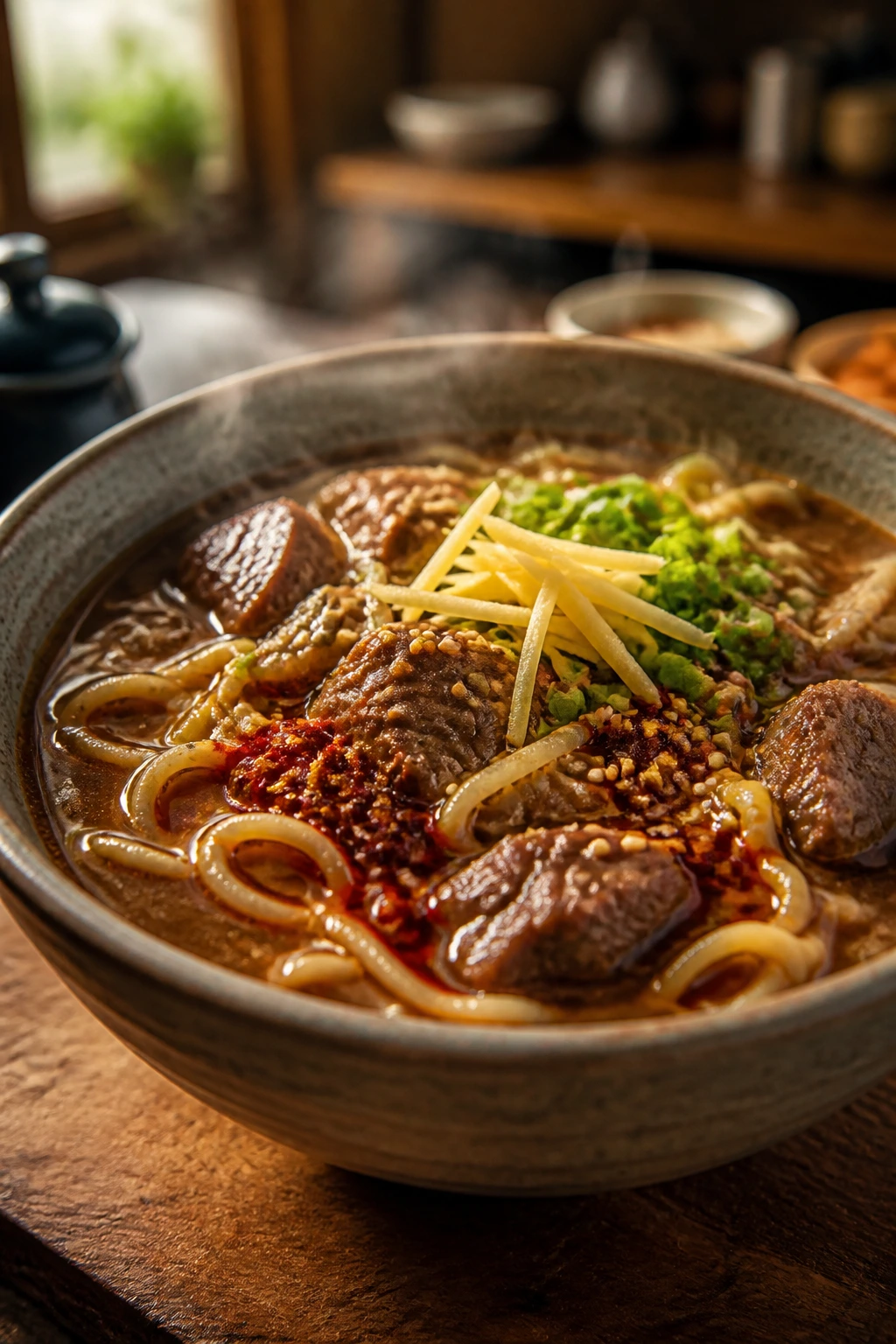
Ginger-Soy Winter Bowl
Stir in 1 tablespoon grated fresh ginger with the garlic and swap the Worcestershire for 1 tablespoon soy sauce. The broth gets a warmer, slightly sharper edge that works well if you want a more savory, brothy bowl with less tomato.
Rustic Tomato and Herb Version
Add 1 cup crushed tomatoes with the stock and increase the thyme to 1 1/2 teaspoons. This version tastes a little richer and redder, with a broth that sits closer to a cross between beef soup and old-school country stew.
Spicy Chili Crisp Finish
Add 1/2 teaspoon red pepper flakes with the garlic and finish each bowl with a teaspoon of chili crisp. That oil gives the broth a wake-up call, and the crunchy bits on top make the soup feel sharper and less sleepy.
Gluten-Free Rice Noodle Swap
Use rice noodles instead of egg noodles and replace the Worcestershire with tamari if needed for your pantry or dietary needs. Cook the rice noodles separately and keep them a touch firmer than you think you need; they soften fast once the broth hits them.
Slow-Cooker Version
After browning the beef and sautéing the vegetables on the stove, move everything to a slow cooker and cook on low for 7 to 8 hours. Cook the noodles separately at the end. The flavor stays true, though the broth is a little less concentrated than the stovetop version unless you reduce it briefly first.
Make-Ahead, Storage, and Reheating
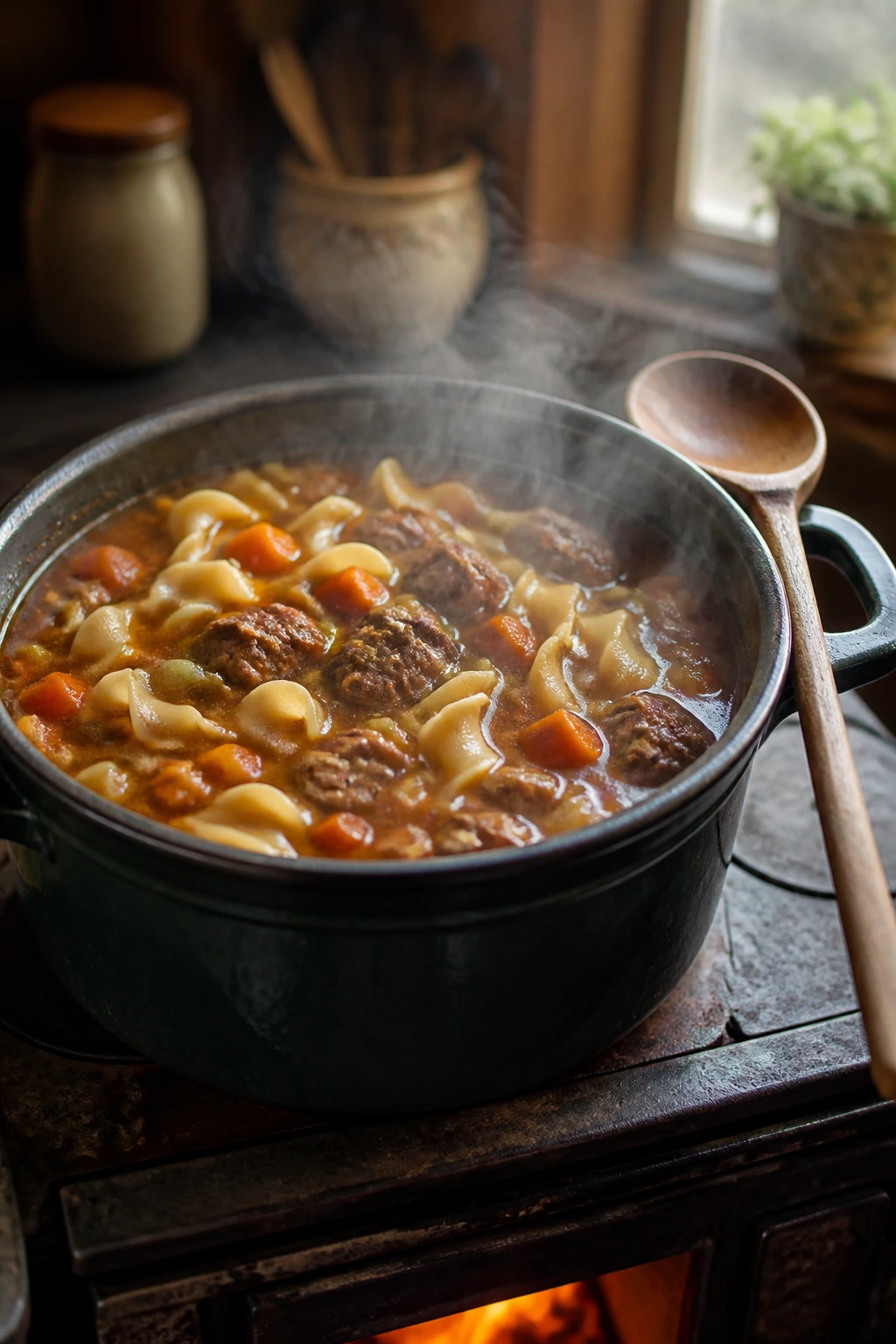
The soup base — beef, broth, and vegetables — keeps well in the fridge for 3 to 4 days in a covered container. The noodles are the fragile part. If they’re stored in the soup, they’ll keep absorbing liquid and soften after the first day, so I’d keep them separate whenever possible.
For the freezer, the broth and beef freeze well for up to 3 months. Cool the soup completely before freezing, then pack it into freezer containers with a little space at the top so it can expand. Freeze the noodles separately only if you don’t mind a softer texture later; honestly, I prefer making fresh noodles when the soup comes back out.
To reheat, warm the broth and beef slowly in a saucepan over medium-low heat until steaming and hot all the way through. If it has thickened in the fridge, add a splash of water or stock. Microwave reheating works too, but use a covered bowl and stir once halfway through so the beef heats evenly.
If you’re planning ahead, you can chop the vegetables and cube the beef a day in advance, then keep everything cold until cooking time. You can also make the broth a full day ahead and add fresh noodles right before serving. That’s one of those rare cases where the next day may taste a touch better, because the broth settles into itself overnight.
Questions Home Cooks Ask Most
Can I use stew meat instead of chuck roast?
Yes, but chuck roast usually gives you a better result because you can see the grain, trim it properly, and control the size of the pieces. Pre-cut stew meat can work fine, though it sometimes comes from a mix of cuts, which means a few cubes may turn tender before the others do.
Do I really have to cook the noodles separately?
You don’t have to, but I think you should. Separate noodles keep their shape, make leftovers far better, and stop the soup from turning starchy and thick in a way that wasn’t planned. If you insist on cooking them in the pot, add them only in the last 6 to 8 minutes.
What if my broth tastes thin?
First, simmer it uncovered for 10 to 15 minutes so some liquid evaporates and the flavor tightens. If it still tastes weak, a small splash of Worcestershire or soy sauce can help, but the bigger fix is usually salt and enough time on the stove.
Can I freeze beef noodle soup with the noodles already in it?
You can, but the noodles will be soft after thawing. I’d freeze only the beef and broth, then boil fresh noodles when you’re ready to eat. That keeps the bowl much closer to what it was on day one.
How do I fix beef that is still tough after two hours?
Keep simmering. Chuck can be stubborn before it gets tender, and the answer is usually more time, not more heat. If the pot is boiling hard, turn it down; tough beef often means the heat is too aggressive rather than too low.
Can I make this with chicken stock?
You can, though the soup will taste lighter and a little less beefy. If chicken stock is what you have, keep the tomato paste, Worcestershire, and browned fond in place so the broth still has enough depth to stand up to the beef.
A Bowl for the Coldest Nights
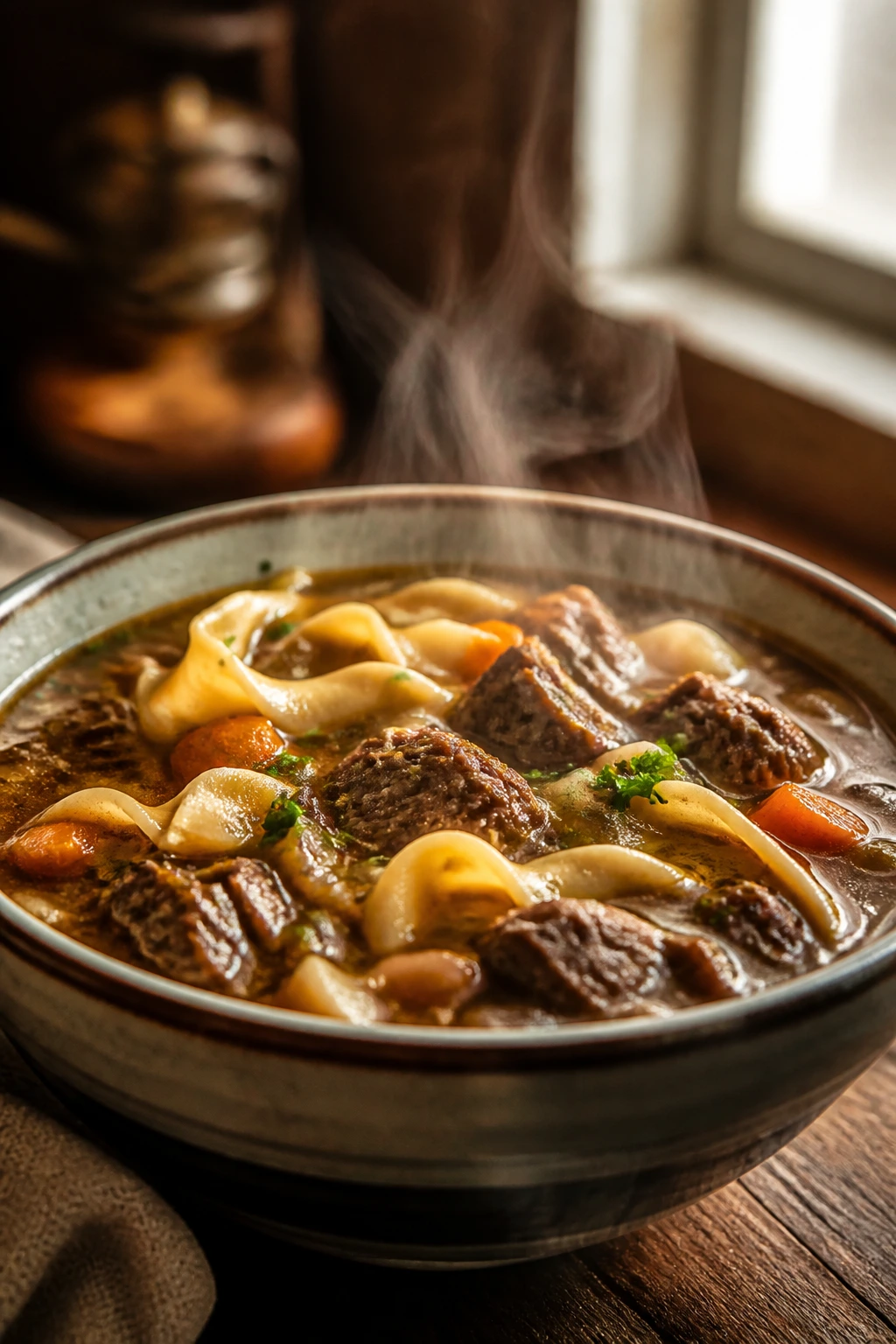
There’s a reason this kind of soup sticks in your memory. It starts with a dark pot and ends with steam on the windows. In between, you get beef that surrenders at the spoon, noodles with enough backbone to stay pleasant, and a broth that tastes like someone paid attention.
I like recipes that know what they are. This one doesn’t try to be delicate. It leans into being warm, sturdy, and a little old-fashioned in the best way. Make it once and you’ll know exactly where the shortcuts are and where they are not worth taking.
The next cold night that gets under your skin, this is the pot I’d reach for first. Get the beef browned properly, keep the simmer gentle, and add the noodles at the end. The rest takes care of itself.
Hearty Beef Noodle Soup — Recipe Card
Recipe Name: Hearty Beef Noodle Soup for Cold Winter Nights
Description: A rich, brothy beef noodle soup made with chuck roast, vegetables, and egg noodles. The broth gets depth from tomato paste, Worcestershire, and a long gentle simmer, while the noodles stay springy because they’re cooked separately.
Prep Time: 25 minutes
Cook Time: 2 hours 10 minutes
Total Time: 2 hours 35 minutes
Course: Main Course, Soup
Cuisine: American
Servings: 6 servings
Calories: About 450 kcal per serving
Ingredients
For the Beef and Broth
- 2 tablespoons neutral oil
- 2 pounds beef chuck roast, cut into 1-inch cubes and patted dry
- 1 1/2 teaspoons kosher salt, plus more to taste
- 1 teaspoon black pepper
- 1 large yellow onion, diced
- 3 carrots, sliced into 1/4-inch rounds
- 2 celery ribs, sliced
- 8 ounces cremini mushrooms, sliced
- 4 garlic cloves, minced
- 2 tablespoons tomato paste
- 1/2 cup dry red wine, or 1/2 cup extra beef stock
- 8 cups low-sodium beef stock
- 2 cups water
- 2 tablespoons Worcestershire sauce
- 2 bay leaves
- 1 teaspoon dried thyme
- 1/2 teaspoon smoked paprika
For the Noodles and Finish
- 8 ounces dried egg noodles
- 2 tablespoons chopped fresh parsley, plus more for serving
- 1 tablespoon apple cider vinegar or lemon juice
- Extra salt and black pepper, to taste
Instructions
- Pat the beef dry, then season it with the salt and pepper.
- Brown the beef in batches in a Dutch oven with the oil, then set it aside.
- Cook the onion, carrots, celery, and mushrooms until softened and browned.
- Stir in the garlic, tomato paste, and smoked paprika; cook for 1 minute.
- Deglaze with the red wine and reduce by about half.
- Add the beef back with the stock, water, Worcestershire, bay leaves, and thyme.
- Simmer gently for 1 1/2 to 2 hours until the beef is tender.
- Cook the noodles separately in salted water until just shy of tender; drain.
- Remove the bay leaves, stir in the vinegar or lemon juice and parsley, and adjust seasoning.
- Divide the noodles into bowls and ladle the hot soup over the top.
Notes: Keep the noodles separate for the best texture and leftovers. Add a splash of stock when reheating if the soup thickens in the fridge. A little extra black pepper at the end helps the broth taste brighter.