



A skillet of sausage can settle a room fast. The fat starts to render, the edges brown, the onions turn sweet, and suddenly the kitchen smells like somebody actually planned dinner instead of grabbing it on the way home. That’s the real appeal of sausage meals for Sunday suppers: they bring a lot of flavor with a short ingredient list, and they do it without turning the stove into a second job.
Sausage is also one of those rare ingredients that carries a whole meal on its back. Fresh Italian sausage pushes tomato sauce in one direction, andouille pulls rice toward something smoky and peppery, kielbasa leans into cabbage and mustard, and breakfast sausage has no business being limited to morning. It all depends on how you treat it. Brown it hard, cook it through, and pair it with something that likes to soak up drippings — potatoes, beans, pasta, polenta, rice, bread — and you get a Sunday supper that feels steady and complete.
There’s one practical detail that matters more than most people think: sausage needs proper heat. Fresh pork sausage should reach 160°F, and sausage made with poultry should hit 165°F. Past that, the magic is in the browning. Not pale, not gray, not timid. Browned. That crust is where the flavor lives.
Some of these dishes lean rustic and spoonable. Others get baked into bubbling casseroles or piled into hoagie rolls that need napkins within reach. All of them work because sausage likes slow, lazy cooking, the kind that makes a Sunday evening feel calm instead of complicated. And once you get the rhythm, you’ll start seeing the same trick everywhere: a little sausage, a little acid, a starch that can take the hit, and dinner takes care of itself.
Why You’ll Love This Collection
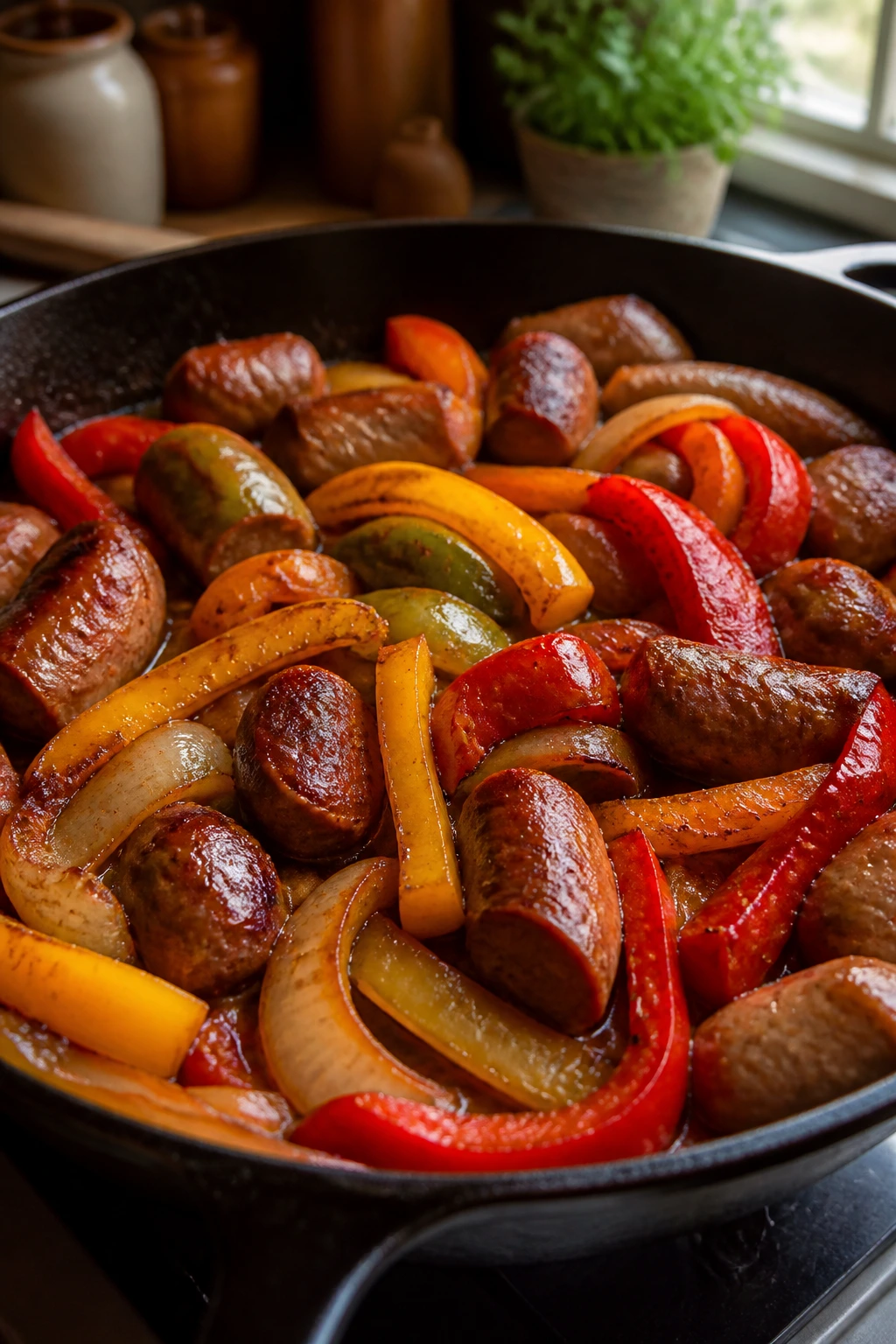
- Big flavor, short shopping list: Sausage brings salt, fat, seasoning, and browned edges in one package, which means the rest of the ingredient list can stay sane.
- Built for a slower table: These meals reward a little simmer time or oven time, so they fit that unhurried Sunday window better than rushed weeknight food.
- Easy to stretch: Pasta, potatoes, beans, rice, and bread all play nicely here, which makes these dishes comfortable for a crowd.
- Leftovers hold up: Many of these recipes taste even better the next day after the sauce settles and the seasoning moves through the dish.
- Flexible with sausage style: Italian, andouille, kielbasa, chorizo, breakfast sausage, even chicken sausage can move through this lineup without the whole idea breaking.
- Good for mixed appetites: You can keep heat mild, go heavy on vegetables, or add extra cheese and still end up with something that feels like a proper supper.
1. Skillet Sausage, Peppers, and Onions with Garlic Rolls
Intro:
This is the kind of pan supper that makes sense the second you smell it. Sweet peppers soften into the onion, the sausage gives up savory drippings, and the whole thing lands somewhere between sandwich filling and full dinner, which is exactly the point.
Why It Works:
The vegetables cook in the sausage fat, so nothing tastes flat or watery. A little crushed tomato keeps the skillet from feeling dry, and the broiling step on the rolls gives you that hot, cheesy finish that people usually remember more than the recipe itself. It’s simple food, but not dull food.
Key Ingredients:
- 1½ lb Italian sausage links or bulk sausage
- 2 tbsp olive oil
- 3 bell peppers, sliced into ½-inch strips
- 2 large yellow onions, sliced
- 4 garlic cloves, minced
- 1 (14.5 oz) can crushed tomatoes
- 1 tsp dried oregano
- 4 hoagie rolls, split
- 6 slices provolone cheese
- 2 tbsp chopped parsley, for finish
Quick Steps:
- Heat a large skillet over medium heat. Add the sausage and cook until browned and cooked through, about 8 to 10 minutes, or until it reaches 160°F. Remove to a plate.
- Add the olive oil, peppers, and onions to the same skillet. Cook for 10 to 12 minutes, stirring now and then, until the onions are soft and the edges start to brown.
- Stir in the garlic and oregano for 30 seconds, then add the crushed tomatoes. Simmer 5 minutes.
- Slice the sausage if needed, return it to the pan, and cook 2 more minutes so everything tastes like one dish instead of separate parts.
- Fill the rolls, top with provolone, and broil for 1 to 2 minutes until the cheese melts and spots brown.
Equipment for This Recipe:
- 12-inch skillet
- Tongs
- Sheet pan for broiling the rolls
- Sharp knife
How to Serve This Dish:
Pile the filling into the rolls and let the edges spill a little; that mess is part of the charm. A sharp chopped salad or a few roasted potatoes on the side keep the plate from feeling too bread-heavy.
Pro Tips for This Recipe:
- Brown the sausage first, then cook the vegetables in the drippings. That keeps the peppers from tasting steamed.
- If your peppers are thin, add them after the onions have already softened a bit.
- Use provolone, not shredded mozzarella. It melts into a cleaner sheet on top of the filling.
Variations on This Dish:
- Spicy Hoagie Version: Use hot Italian sausage and add sliced pepperoncini to the pan.
- Mushroom Street-Side Twist: Add 8 oz sliced mushrooms with the onions for a deeper, earthier filling.
Common Mistakes to Avoid with This Dish:
- Overcrowding the skillet: If the pan looks jammed, the peppers will steam and go limp. Use a big skillet or cook in two batches.
- Skipping the broiler: That last minute of heat matters. Without it, the cheese just sits there instead of melting into the filling.
2. Baked Ziti with Italian Sausage and Three Cheeses
Intro:
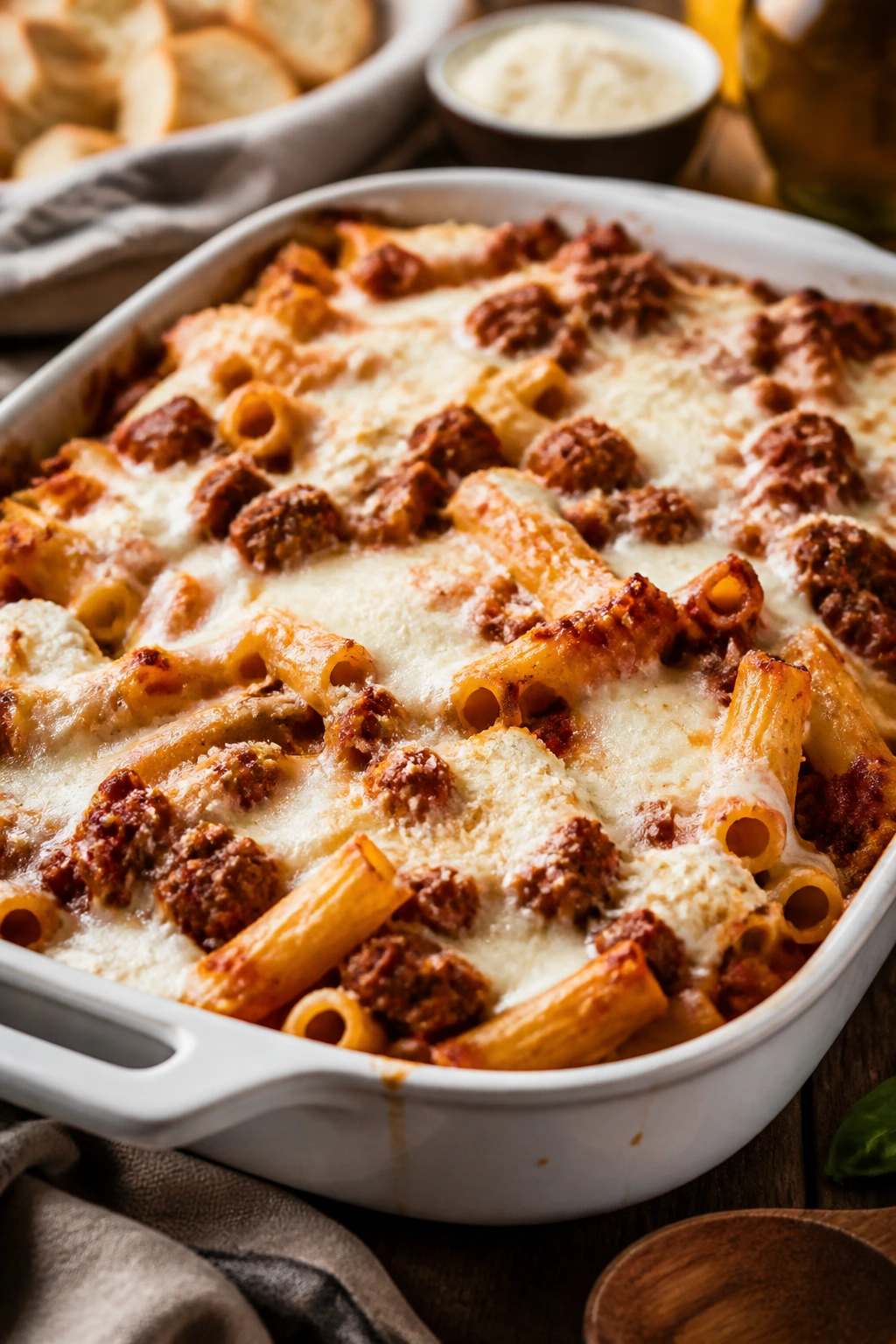
Baked ziti can be heavy in the wrong hands. Sausage fixes that problem by adding a little spice, a little salt, and enough fat to make the tomato sauce taste like it had help from the start.
Why It Works:
This version gets its structure from three cheeses: ricotta for creaminess, mozzarella for stretch, and Parmesan for the sharp finish. The pasta stays a little underdone before baking, so it can soak up sauce without turning soft and tired. That undercooked middle step matters.
Key Ingredients:
- 1 lb ziti
- 1½ lb Italian sausage, casings removed
- 1 tbsp olive oil
- 1 onion, finely chopped
- 4 garlic cloves, minced
- 1 (28 oz) can crushed tomatoes
- 1 tbsp tomato paste
- 15 oz ricotta
- 2 cups shredded mozzarella
- ½ cup grated Parmesan
- 1 egg
- 2 tbsp chopped basil
Quick Steps:
- Heat the oven to 375°F and grease a 9×13-inch baking dish.
- Boil the ziti in salted water until just shy of done, about 2 minutes less than the box says. Drain.
- Brown the sausage in a large skillet over medium-high heat, breaking it into crumbles. Add the onion and cook until soft, then stir in the garlic and tomato paste.
- Add the crushed tomatoes and simmer 10 minutes. Stir in half the basil.
- Mix the ricotta with the egg and half the Parmesan. Toss the pasta with the sauce and half the mozzarella, then layer into the baking dish with dollops of ricotta. Top with the rest of the cheese and bake 25 to 30 minutes, until bubbling at the edges.
Equipment for This Recipe:
- Large pot
- 12-inch skillet
- 9×13-inch baking dish
- Mixing bowl
How to Serve This Dish:
Cut it into thick squares and let it sit 10 minutes before serving so the layers hold. A simple green salad and garlic bread are enough; anything heavier starts crowding the plate.
Pro Tips for This Recipe:
- Pull the pasta early. Fully cooked noodles go mushy after 25 minutes in the oven.
- Let the sauce simmer a bit before mixing it with the pasta; watery sauce makes the bake slide apart.
- If you want deeper flavor, add ¼ teaspoon red pepper flakes with the garlic.
Variations on This Dish:
- Ricotta-and-Spinach Bake: Fold 2 cups chopped spinach into the ricotta mixture.
- Mild Family Version: Use sweet Italian sausage and skip the red pepper flakes.
Common Mistakes to Avoid with This Dish:
- Using dry ricotta straight from the tub: Stir it with the egg and Parmesan first or it bakes up grainy.
- Skipping the resting time: Cut it too soon and you get saucy rubble instead of slices.
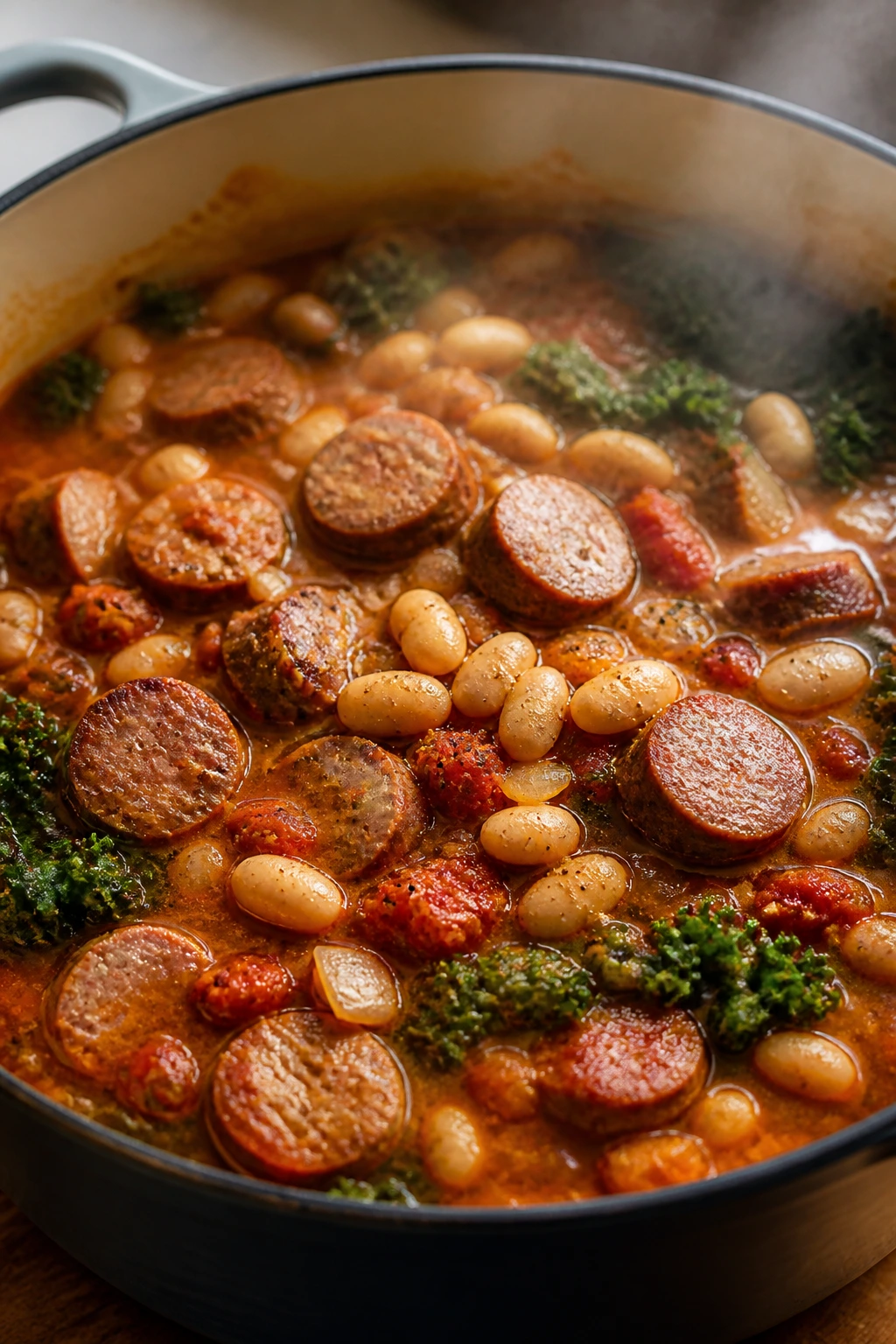
3. White Bean, Sausage, and Tomato Stew
Intro:
This stew has the right kind of body for a Sunday night: thick enough to eat with a spoon, loose enough to drag bread through. The sausage breaks into little savory bites, and the beans make the broth feel like it has been cooking for hours.
Why It Works:
Beans and sausage are an old, sensible pair because beans drink up seasoning and the sausage fills in the gaps. Tomatoes bring acidity, which keeps the broth from turning muddy, and a handful of greens at the end gives the pot a little lift. It tastes even better after it sits for 20 minutes.
Key Ingredients:
- 1 lb Italian sausage
- 1 tbsp olive oil
- 1 onion, chopped
- 2 carrots, diced
- 2 celery ribs, diced
- 3 garlic cloves, minced
- 2 (15 oz) cans cannellini beans, drained and rinsed
- 1 (14.5 oz) can diced tomatoes
- 4 cups chicken broth
- 1 tsp dried thyme
- 2 cups chopped kale
- 1 tbsp lemon juice
Quick Steps:
- Brown the sausage in a Dutch oven over medium heat, then remove it if there’s a lot of fat in the pot.
- Add the onion, carrots, and celery. Cook 8 minutes until soft and a little golden.
- Stir in the garlic and thyme for 30 seconds, then add the beans, tomatoes, broth, and sausage. Simmer 20 minutes.
- Stir in the kale and cook 3 to 4 minutes until wilted but still green.
- Finish with lemon juice and taste for salt before serving.
Equipment for This Recipe:
- Dutch oven
- Wooden spoon
- Cutting board
- Ladle
How to Serve This Dish:
Serve it in wide bowls with thick toast or a hunk of crusty bread. A sprinkle of Parmesan is good, but a little black pepper at the table matters too.
Pro Tips for This Recipe:
- Mash a few beans against the side of the pot if you want the broth thicker.
- If the sausage is greasy, spoon off excess fat after browning.
- Add the lemon at the end, not during the simmer, or the flavor goes flat.
Variations on This Dish:
- Tuscan Greens Version: Swap kale for chopped escarole or spinach.
- Smokier Pot: Use smoked sausage and add a pinch of smoked paprika.
Common Mistakes to Avoid with This Dish:
- Adding too much broth at the start: The beans release starch and thicken the pot. Start with the listed amount.
- Skipping the acid at the end: Without lemon, the stew can taste heavy and one-note.
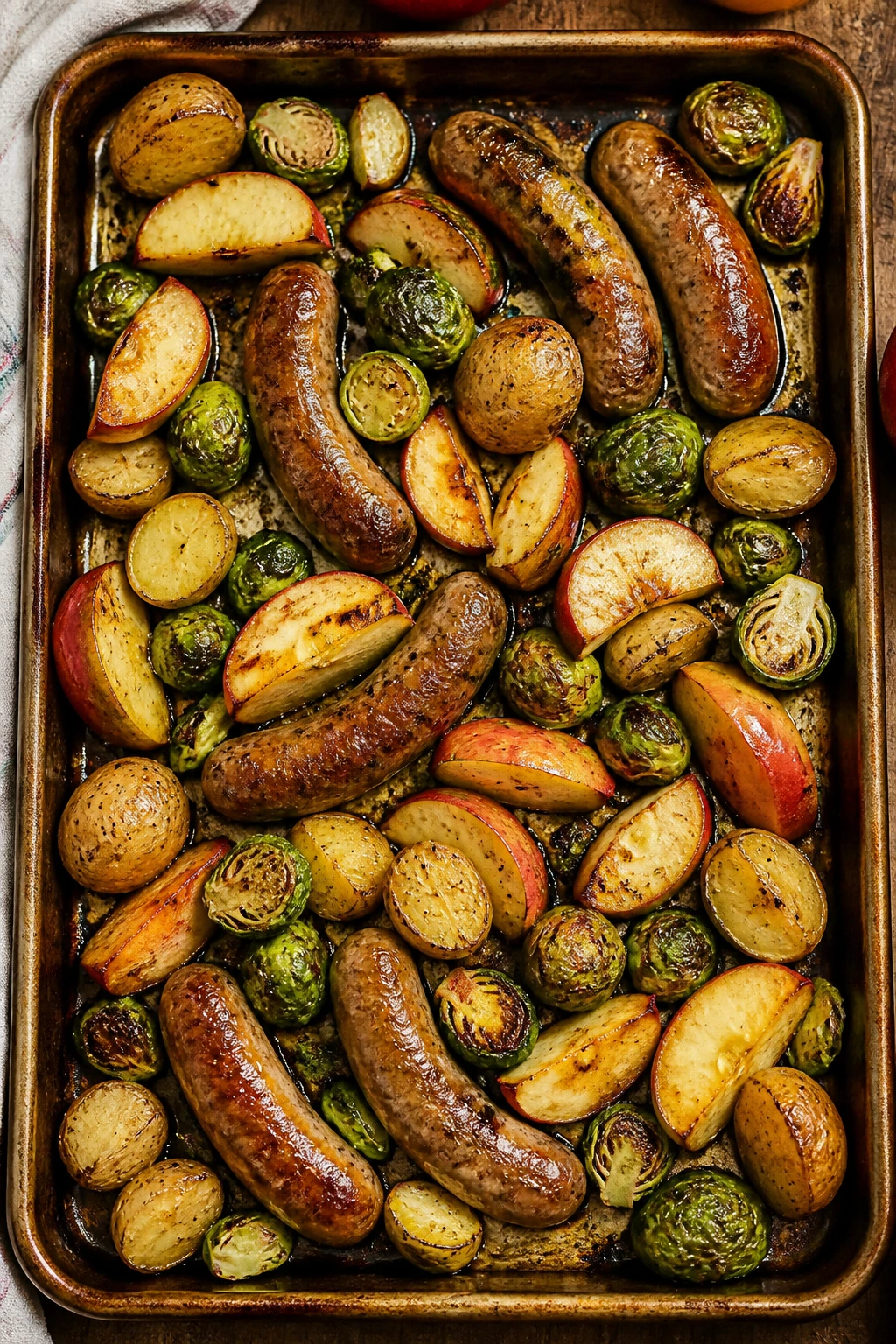
4. Sheet-Pan Sausage, Apples, Brussels Sprouts, and Potatoes
Intro:
This is the roast dinner that behaves itself. Everything lands on one pan, everything gets crisp edges, and the apples turn soft enough to melt into the drippings without disappearing completely.
Why It Works:
Potatoes need time, Brussels sprouts like direct heat, and sausage brings the fat that ties both together. Apples sound odd until they hit hot sausage drippings; then the whole pan turns sweet, salty, and a little sharp from the mustard finish. That balance keeps the dish from getting too heavy.
Key Ingredients:
- 1½ lb fresh Italian sausage links
- 1½ lb baby potatoes, halved
- 1 lb Brussels sprouts, trimmed and halved
- 2 firm apples, cored and cut into wedges
- 1 red onion, cut into wedges
- 3 tbsp olive oil
- 1 tbsp Dijon mustard
- 1 tsp chopped rosemary
- 1 tbsp apple cider vinegar
Quick Steps:
- Heat the oven to 425°F and line a large sheet pan with parchment.
- Toss the potatoes, Brussels sprouts, and onion with olive oil, rosemary, salt, and pepper. Spread them out and roast for 15 minutes.
- Add the sausage links and apple wedges to the pan. Roast 15 to 20 minutes more, turning the sausage once, until the sausage reaches 160°F and the potatoes are tender.
- Whisk the Dijon and vinegar together, then drizzle over the hot pan right before serving.
Equipment for This Recipe:
- Large rimmed sheet pan
- Parchment paper
- Mixing bowl
- Instant-read thermometer
How to Serve This Dish:
Serve straight from the pan or mound it on a warm platter if you want a quieter table. A spoonful of mustard on the side is not optional in my book.
Pro Tips for This Recipe:
- Keep the potatoes cut to about the same size or the smaller ones burn before the bigger ones soften.
- Use firm apples, not mealy ones. You want slices that hold shape.
- If the pan looks crowded, split it into two pans; crowding makes everything soft.
Variations on This Dish:
- Maple-Brushed Version: Add 1 teaspoon maple syrup to the mustard drizzle.
- Cabbage Swap: Replace half the Brussels sprouts with thick cabbage wedges.
Common Mistakes to Avoid with This Dish:
- Adding the apples too early: They turn mushy if they roast for the full time.
- Ignoring pan spacing: Tight pans steam. Roasted pans need breathing room.
5. Sausage and Potato Gratin with Mustard Cream
Intro:
A potato gratin should feel rich, not sleepy. Sausage changes the whole tone by cutting through the cream with spice and salt, so each forkful tastes a little sharper and less one-dimensional.
Why It Works:
Thin potato slices soften in the cream while the sausage leaves savory pockets all through the dish. Dijon keeps the sauce from turning flat, and Gruyère melts into the layers without making them gluey. It’s a slow bake, and that slow part is the point.
Key Ingredients:
- 1 lb Italian sausage, casings removed
- 2 lb Yukon Gold potatoes, thinly sliced
- 1 onion, thinly sliced
- 2 tbsp butter
- 2 cups heavy cream
- 1 cup whole milk
- 2 tbsp Dijon mustard
- 1½ cups shredded Gruyère
- 1 tsp fresh thyme leaves
- Pinch of nutmeg
Quick Steps:
- Heat the oven to 375°F and butter a 9×13-inch baking dish.
- Brown the sausage in a skillet, then add the onion and cook until soft.
- Warm the cream, milk, Dijon, thyme, and nutmeg in a saucepan until steamy.
- Layer half the potatoes in the dish, top with half the sausage mixture and cheese, then repeat. Pour the cream mixture over the top.
- Cover with foil and bake 45 minutes. Uncover and bake 20 to 25 minutes more until the potatoes are tender and the top is browned.
Equipment for This Recipe:
- Mandoline or sharp knife
- Skillet
- Saucepan
- 9×13-inch baking dish
How to Serve This Dish:
Let it rest 15 minutes or it will slide apart on the plate. A crisp green salad is enough on the side; the gratin already brings the heavy lifting.
Pro Tips for This Recipe:
- Slice the potatoes evenly. A mandoline earns its place here.
- Warm the cream before pouring so the bake doesn’t need extra oven time.
- If the top is browning too fast, tent loosely with foil for the last 10 minutes.
Variations on This Dish:
- Leek-and-Sausage Gratin: Swap the onion for 2 sliced leeks.
- Sharp Cheddar Version: Use half cheddar and half Gruyère for a bolder finish.
Common Mistakes to Avoid with This Dish:
- Using thick potato slices: They stay firm in the middle and make the dish feel raw.
- Pouring cold cream over cold potatoes: The bake takes longer and the sauce can separate at the edges.
6. Sausage, Kale, and White Bean Soup
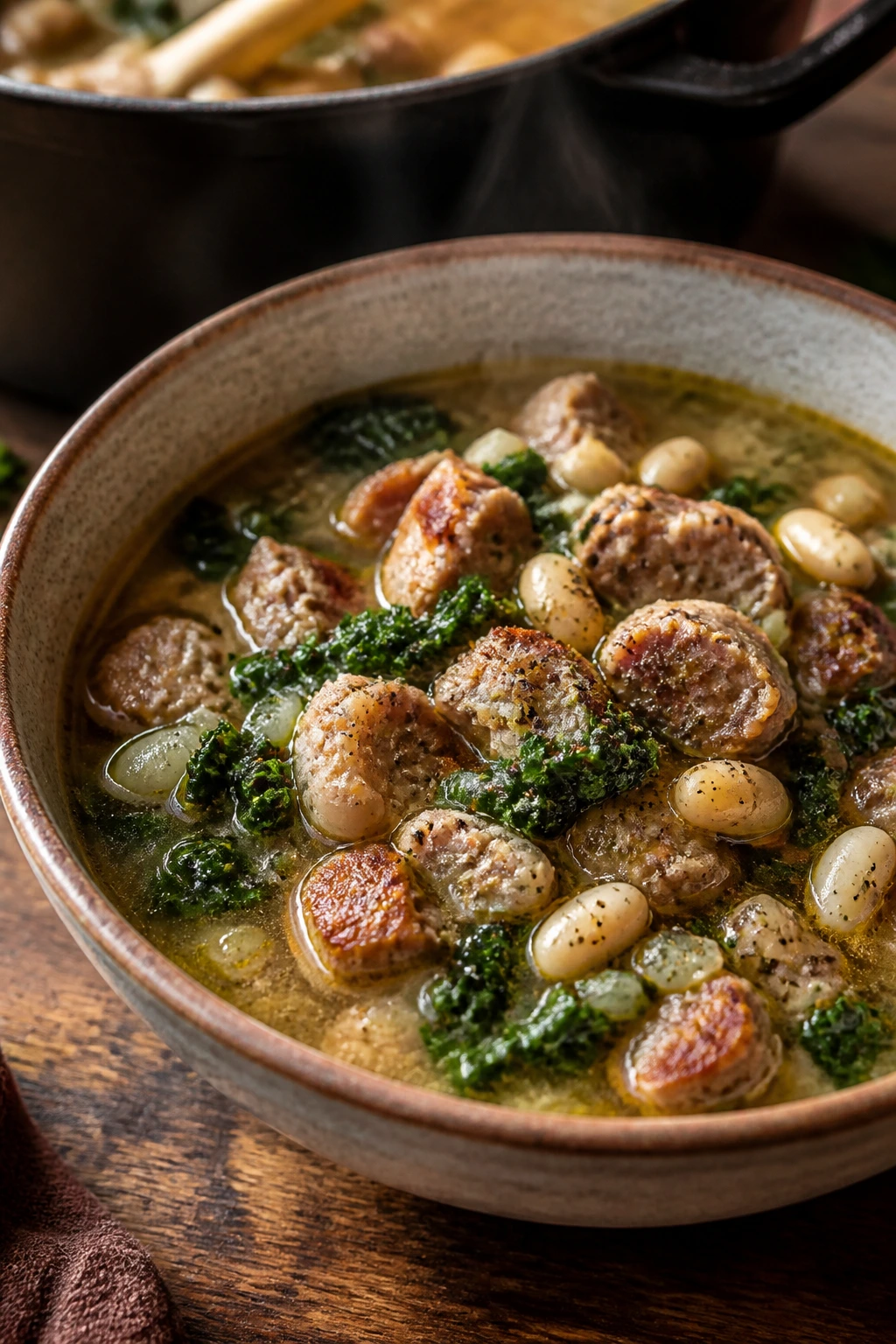
Intro:
If Sunday needs something with a spoon and a blanket of steam, this is it. The sausage gives the broth backbone, the beans make it filling, and the kale softens just enough to stop being bossy.
Why It Works:
You get layers without fuss: browned sausage, sweet vegetables, beans, broth, greens, done. A Parmesan rind, if you have one, adds the kind of background depth that makes the soup taste older than it is. The finish with lemon keeps the bowl from going sleepy.
Key Ingredients:
- 1 lb Italian sausage
- 1 tbsp olive oil
- 1 onion, diced
- 2 carrots, diced
- 2 celery ribs, diced
- 3 garlic cloves, minced
- 2 (15 oz) cans white beans, drained and rinsed
- 6 cups chicken broth
- 1 Parmesan rind, optional
- 1 bunch kale, stems removed and chopped
- 1 tbsp lemon juice
Quick Steps:
- Brown the sausage in a Dutch oven, then set it aside.
- Add olive oil, onion, carrots, and celery. Cook 8 minutes until softened.
- Stir in the garlic, beans, broth, and Parmesan rind. Simmer 15 minutes.
- Add the sausage and kale. Cook 5 to 7 minutes until the kale is tender and the sausage is hot.
- Finish with lemon juice and taste for salt.
Equipment for This Recipe:
- Dutch oven or soup pot
- Wooden spoon
- Chef’s knife
- Ladle
How to Serve This Dish:
Ladle it into deep bowls and finish with olive oil or Parmesan. It wants bread, but it also works with crackers if that’s what the pantry gives you.
Pro Tips for This Recipe:
- Strip the kale leaves from the stems; the stems stay stringy.
- If you want the broth thicker, blend 1 cup of beans with a little broth and stir it back in.
- Add the lemon at the end or the soup loses its roundness.
Variations on This Dish:
- Creamier Finish: Stir in ¼ cup cream right before serving.
- Tomato-Laced Version: Add 1 cup crushed tomatoes for a redder broth.
Common Mistakes to Avoid with This Dish:
- Boiling the kale to death: It turns drab and muddy. A short simmer is enough.
- Forgetting to brown the sausage first: That browned bottom is what gives the broth its flavor.
7. Creamy Sausage and Mushroom Pasta
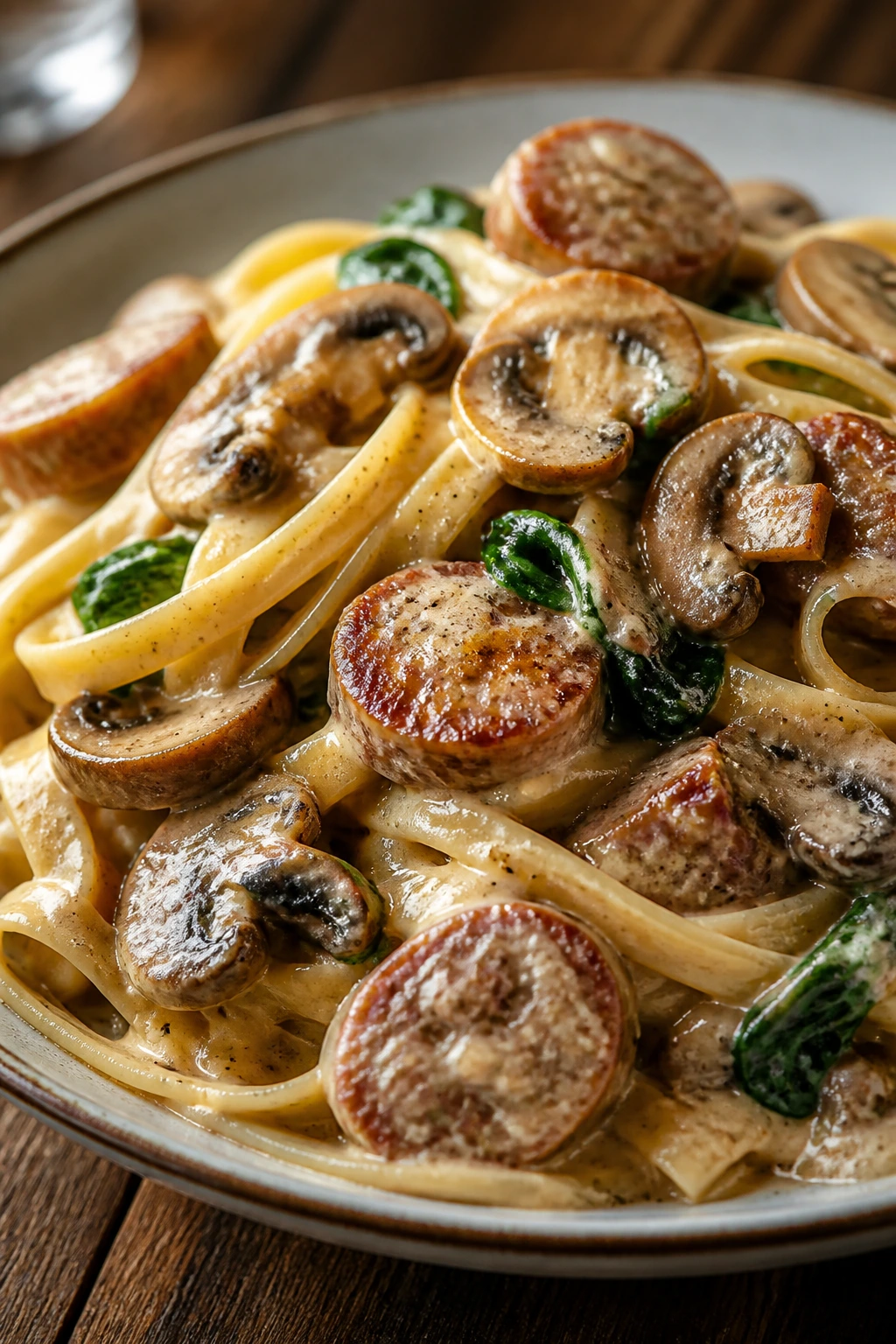
Intro:
This is the pasta that tastes like it took more effort than it did. Mushrooms soak up the sausage drippings, cream smooths the sauce, and the final pasta water trick gives the whole thing that glossy finish you want.
Why It Works:
Mushrooms and sausage are both savory, but they play different notes. The sausage is salty and assertive; the mushrooms are soft and woodsy. Cream ties them together, and a little pasta water keeps the sauce from turning stodgy on the bowl.
Key Ingredients:
- 12 oz penne or rigatoni
- 1 lb Italian sausage
- 1 tbsp olive oil
- 12 oz cremini mushrooms, sliced
- 1 shallot, minced
- 3 garlic cloves, minced
- 1 cup heavy cream
- ½ cup grated Parmesan
- 2 cups baby spinach
- ¼ tsp black pepper
- ½ cup reserved pasta water
Quick Steps:
- Boil the pasta in salted water until al dente. Reserve ½ cup pasta water before draining.
- Brown the sausage in a large skillet. Add the mushrooms and cook until they give off moisture and start to brown, about 6 to 8 minutes.
- Stir in the shallot and garlic for 1 minute.
- Add the cream and Parmesan, then loosen with pasta water until the sauce coats the back of a spoon.
- Toss in the spinach and pasta. Stir until the spinach wilts and the pasta glistens.
Equipment for This Recipe:
- Large pot
- 12-inch skillet
- Colander
- Tongs
How to Serve This Dish:
Serve it in warm bowls with extra Parmesan on top. A bitter salad with a sharp vinaigrette is the right contrast.
Pro Tips for This Recipe:
- Brown the mushrooms instead of rushing them. Pale mushrooms taste bland.
- Add the spinach at the very end so it stays green.
- Use rigatoni or penne if you want the sauce to cling in the ridges.
Variations on This Dish:
- Tomato-Cream Version: Stir in ½ cup marinara with the cream.
- Herb Finish: Add chopped parsley and thyme at the end for a fresher edge.
Common Mistakes to Avoid with This Dish:
- Pouring in all the pasta water at once: Add it a splash at a time or the sauce gets thin.
- Using mushrooms straight from a wet container: Pat them dry first so they brown instead of steam.
8. Sausage-Stuffed Acorn Squash with Sage
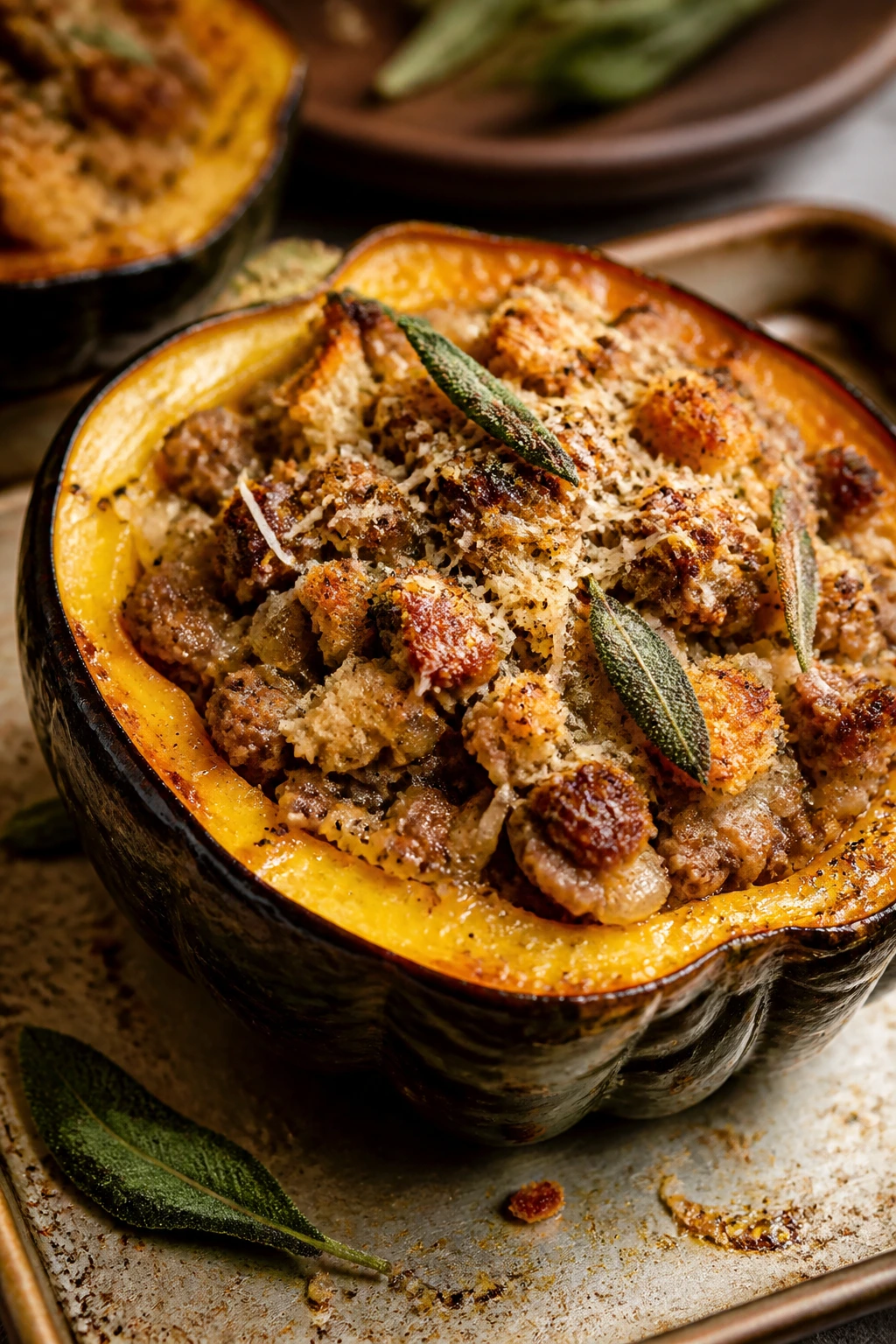
Intro:
Acorn squash turns a little dramatic in the oven. Its edges brown, the flesh softens, and when you fill it with sausage, apple, and sage, it becomes one of those dishes that looks more polished than the effort behind it.
Why It Works:
The squash brings sweetness and structure, which makes it a natural bowl for the savory filling. Breadcrumbs give the stuffing a little grip, dried cranberries bring a tart pop, and sage makes the whole thing smell like the first cool evening after a long day. That sounds fancy. It isn’t.
Key Ingredients:
- 2 acorn squash, halved and seeded
- 1 lb Italian sausage
- 1 tbsp olive oil
- 1 small onion, diced
- 1 apple, peeled and diced
- ½ cup breadcrumbs
- ½ cup dried cranberries
- 1 tsp chopped fresh sage
- ⅓ cup grated Parmesan
- 2 tbsp butter
Quick Steps:
- Heat the oven to 400°F. Brush the squash with oil, season with salt, and roast cut-side down for 25 minutes.
- Brown the sausage in a skillet. Add the onion and apple and cook until the onion softens.
- Stir in breadcrumbs, cranberries, sage, Parmesan, and butter.
- Flip the squash, fill the centers with the sausage mixture, and bake 10 to 15 minutes more until everything is hot.
Equipment for This Recipe:
- Sheet pan
- Skillet
- Spoon for scooping squash
- Knife
How to Serve This Dish:
Serve one half per person for a lighter supper, or half a half as a side next to roast chicken. The scoopable filling and soft squash need no extra starch unless you want bread.
Pro Tips for This Recipe:
- Roast the squash cut-side down first; that gives the flesh more caramelized edges.
- If the squash won’t sit flat, shave a tiny slice off the rounded bottom.
- Use fresh sage sparingly. Too much and it starts tasting like potpourri.
Variations on This Dish:
- Maple-Walnut Version: Add 1 tablespoon maple syrup and ¼ cup chopped walnuts to the filling.
- Mild Savory Version: Use sweet sausage and skip the cranberries if you want a less sweet filling.
Common Mistakes to Avoid with This Dish:
- Under-roasting the squash: If the flesh stays firm, the filling falls out instead of settling in.
- Packing the stuffing too tightly: Leave it loose enough to brown on top.
9. Andouille Jambalaya with the Holy Trinity
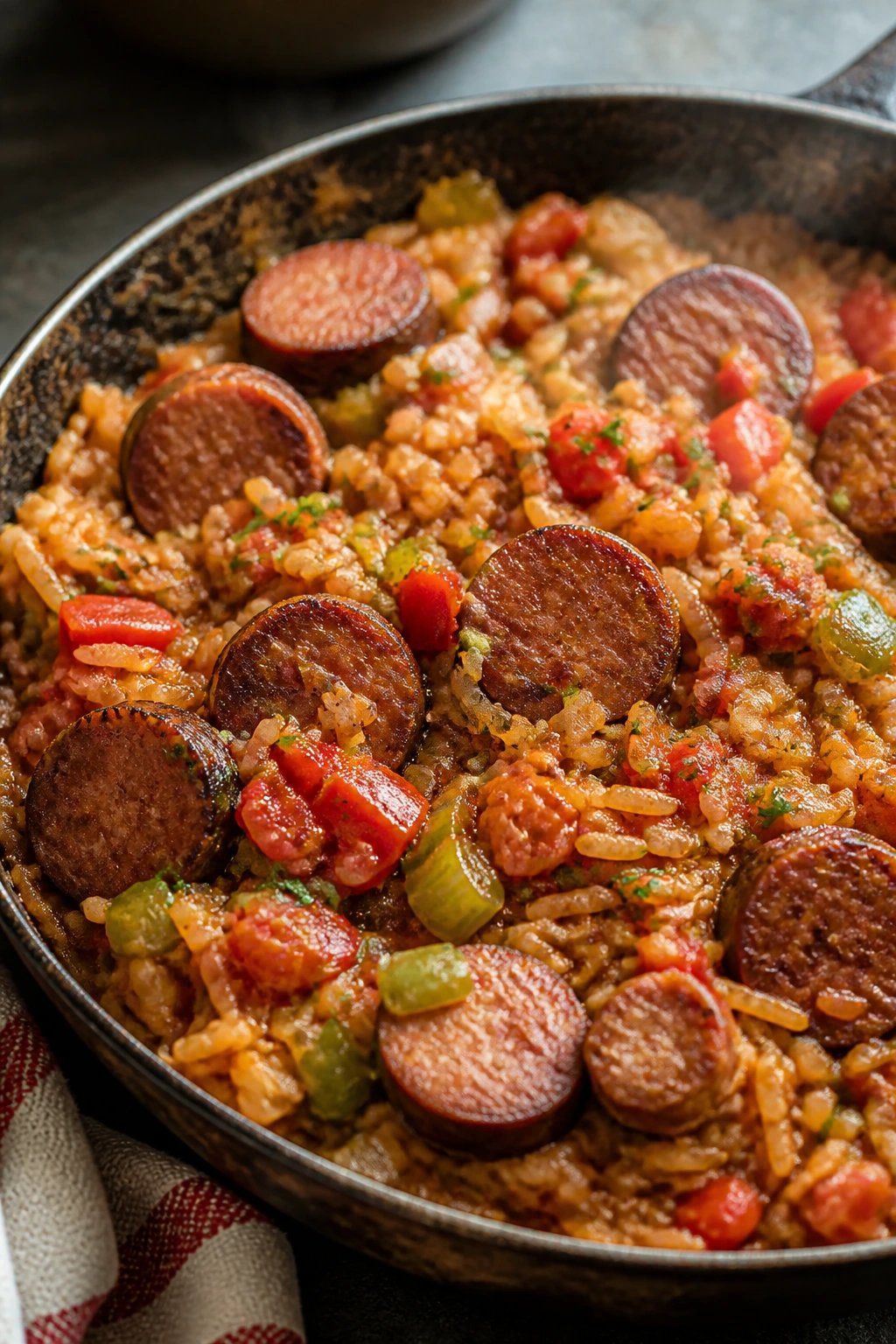
Intro:
Andouille brings smoke before anything else. The rice, tomatoes, peppers, celery, and onion turn into a pot that feels active and loud in the best way, the kind of Sunday supper that wakes people up before the first bite.
Why It Works:
Jambalaya lives or dies on the base, and the holy trinity of onion, celery, and bell pepper gives the rice enough flavor to stand up to the sausage. You want the rice to cook in the seasoned liquid, not separately, so every grain picks up the broth. That’s where the payoff is.
Key Ingredients:
- 1 lb andouille sausage, sliced
- 1 tbsp oil
- 1 onion, diced
- 1 green bell pepper, diced
- 2 celery ribs, diced
- 3 garlic cloves, minced
- 1½ cups long-grain rice
- 1 (14.5 oz) can diced tomatoes
- 3 cups chicken broth
- 2 tsp Cajun seasoning
- 1 bay leaf
- 2 green onions, sliced
Quick Steps:
- Brown the sausage in a deep skillet or Dutch oven. Remove it if needed.
- Cook the onion, bell pepper, and celery in the same pot until soft. Add garlic and Cajun seasoning for 30 seconds.
- Stir in rice, tomatoes, broth, bay leaf, and sausage. Bring to a simmer.
- Cover and cook on low for 20 to 25 minutes, until the rice is tender and the liquid is absorbed.
- Rest 5 minutes, then fluff and top with green onions.
Equipment for This Recipe:
- Dutch oven
- Tight-fitting lid
- Wooden spoon
- Measuring cups
How to Serve This Dish:
Serve it hot from the pot with hot sauce on the table. A simple cucumber salad or buttered green beans gives the bowl a little relief from all the warmth.
Pro Tips for This Recipe:
- Don’t stir once the rice starts simmering or it can go gummy.
- If your andouille is very salty, hold back a little on the Cajun seasoning.
- Let the pot rest before fluffing so the rice finishes steaming.
Variations on This Dish:
- Tomato-Forward Version: Add an extra ½ cup tomatoes if you want a wetter jambalaya.
- Milder Pot: Use smoked sausage and halve the Cajun seasoning.
Common Mistakes to Avoid with This Dish:
- Using quick-cook rice: It overcooks and turns sticky. Long-grain rice holds the texture better.
- Lifting the lid too often: That leaks steam and throws off the rice.
10. Sausage and Cabbage Skillet with Dijon Butter
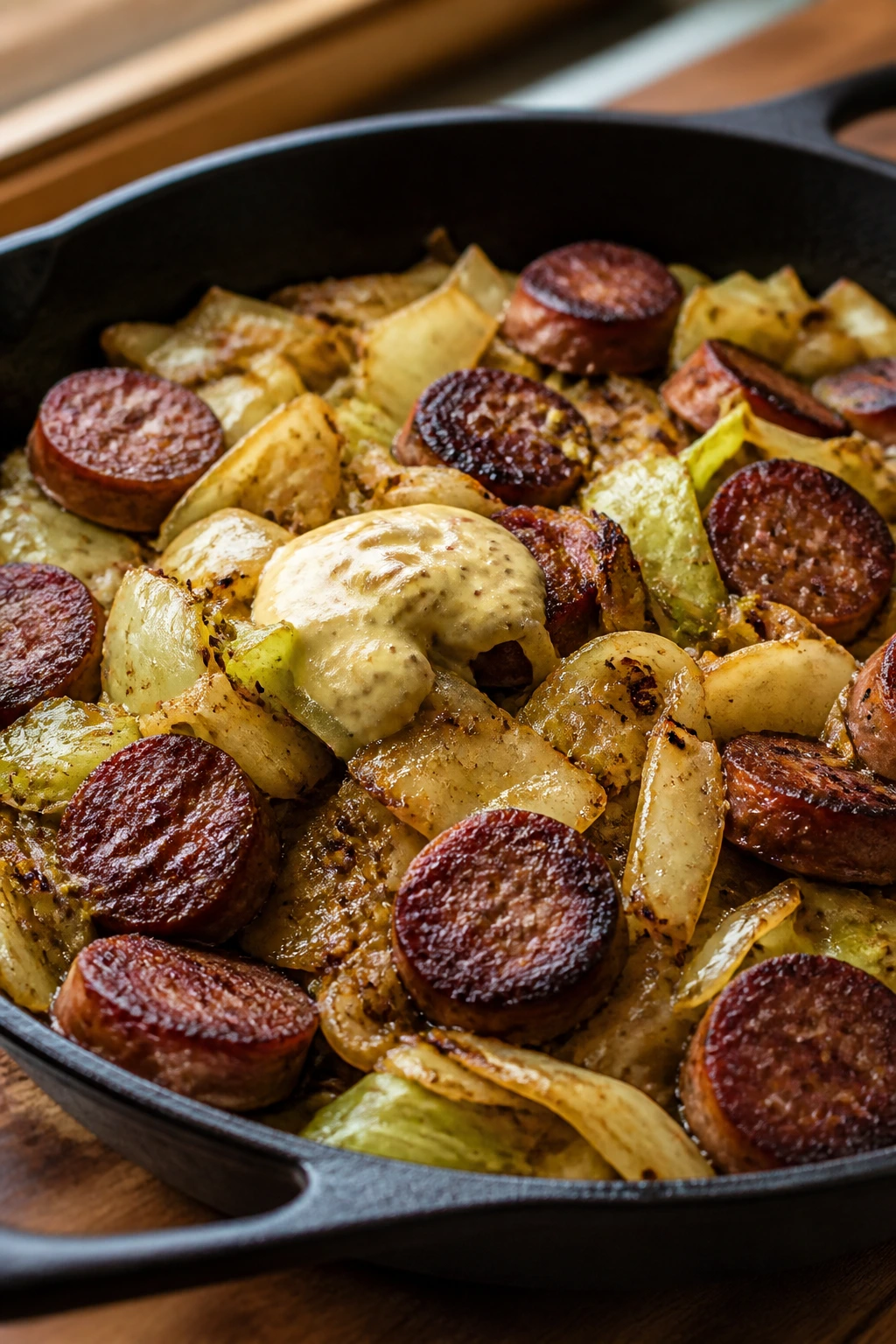
Intro:
Cabbage can take heat. It likes it, even. When sausage browns beside it and the mustard butter hits at the end, the whole skillet turns from plain to deeply satisfying without much drama.
Why It Works:
Cabbage needs a long enough cook to soften its edges and pick up color. Sausage gives you the fat for that, while a little vinegar and Dijon cut through the richness so the skillet doesn’t sit heavy in the stomach. A few apple slices are optional, but I’d keep them.
Key Ingredients:
- 1 lb smoked sausage or Italian sausage, sliced
- 2 tbsp butter
- 1 large onion, sliced
- 1 medium green cabbage, cored and sliced
- 2 apples, thinly sliced
- 2 tbsp chicken broth or water
- 1 tbsp Dijon mustard
- 2 tbsp apple cider vinegar
- ½ tsp caraway seeds, optional
Quick Steps:
- Brown the sausage in a large skillet over medium-high heat. Remove to a plate.
- Add butter and onion. Cook 4 to 5 minutes until the onion softens.
- Add cabbage, apples, broth, caraway, salt, and pepper. Cook 12 to 15 minutes, stirring now and then, until the cabbage is tender and browned in spots.
- Stir in sausage, Dijon, and vinegar. Cook 2 minutes more and serve hot.
Equipment for This Recipe:
- Large skillet with a lid
- Wooden spoon
- Sharp knife
- Cutting board
How to Serve This Dish:
This is good with rye bread or boiled potatoes. A little extra mustard on the side makes sense, and so does a cold glass of cider.
Pro Tips for This Recipe:
- Slice the cabbage into strands that are wide enough to stay in the pan and not disappear.
- Let the cabbage brown before stirring too much. Color matters here.
- Add the vinegar at the end so it stays bright.
Variations on This Dish:
- Smoked Paprika Version: Add ½ teaspoon smoked paprika with the cabbage.
- Sausage-and-Sauerkraut Skillet: Swap half the cabbage for drained sauerkraut.
Common Mistakes to Avoid with This Dish:
- Cooking cabbage over low heat forever: It turns soft but not browned, which is a dull result.
- Adding Dijon too early: The mustard flavor dulls out if it cooks too long.
11. Sausage Lasagna Soup
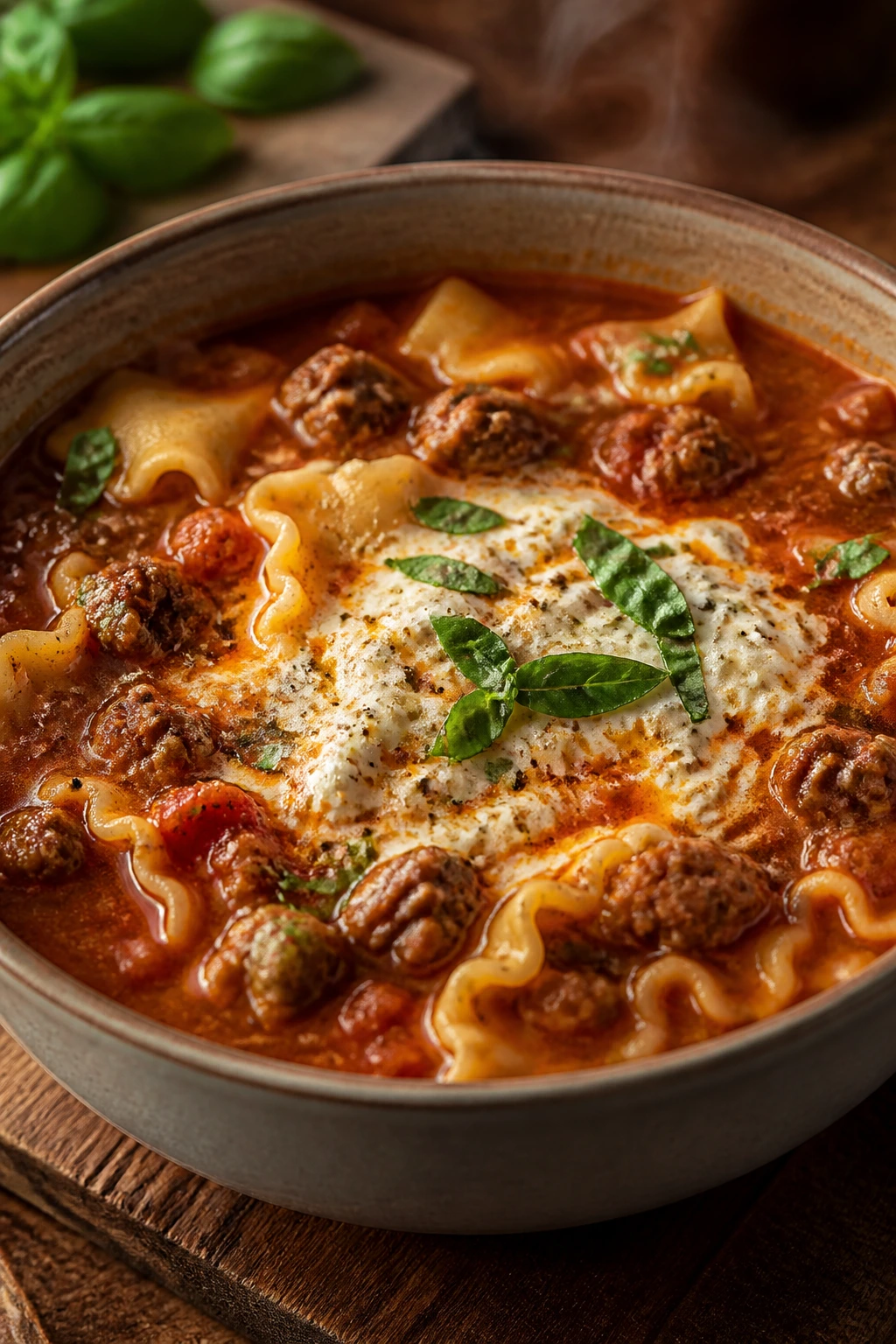
Intro:
Lasagna soup sounds like a shortcut because it is one. But it is a good shortcut. The noodles curl, the sausage gives the broth depth, and the ricotta swirl on top makes every bowl feel finished instead of improvised.
Why It Works:
You get the lasagna flavor map — tomato, herbs, cheese, pasta — without building layers in a pan. Broken noodles cook right in the soup, which lets them pull in broth instead of drying out. The ricotta and mozzarella added at the end keep the texture creamy and hot.
Key Ingredients:
- 1 lb Italian sausage
- 1 onion, diced
- 4 garlic cloves, minced
- 1 tbsp tomato paste
- 1 (28 oz) can crushed tomatoes
- 6 cups chicken broth
- 8 lasagna noodles, broken into pieces
- 1 cup ricotta
- 1 cup shredded mozzarella
- ¼ cup grated Parmesan
- 2 tbsp chopped basil
Quick Steps:
- Brown the sausage in a soup pot. Add the onion and cook until soft.
- Stir in the garlic and tomato paste for 1 minute.
- Add the crushed tomatoes and broth. Bring to a simmer.
- Add the broken noodles and cook 10 to 12 minutes, stirring once or twice, until tender.
- Ladle into bowls and top with ricotta, mozzarella, Parmesan, and basil.
Equipment for This Recipe:
- Soup pot or Dutch oven
- Wooden spoon
- Ladle
- Small bowl for the cheese topping
How to Serve This Dish:
Serve it with garlic bread for dipping and a spoon deep enough to catch both broth and noodles. A little extra basil on top gives the bowl some lift.
Pro Tips for This Recipe:
- Cook the noodles right in the soup, but don’t let them sit in the pot for long after they’re tender.
- If the soup thickens too much, add a splash of broth before serving.
- The cheese topping should go on just before eating, not into the pot.
Variations on This Dish:
- Spinach Lasagna Soup: Stir in 2 cups spinach at the end.
- Spicy Sausage Version: Use hot Italian sausage and a pinch of red pepper flakes.
Common Mistakes to Avoid with This Dish:
- Overcooking the noodles: They keep softening in the hot broth.
- Stirring the cheese into the soup pot: It turns the broth cloudy instead of giving you creamy dollops.
12. Orecchiette with Sausage and Broccoli Rabe
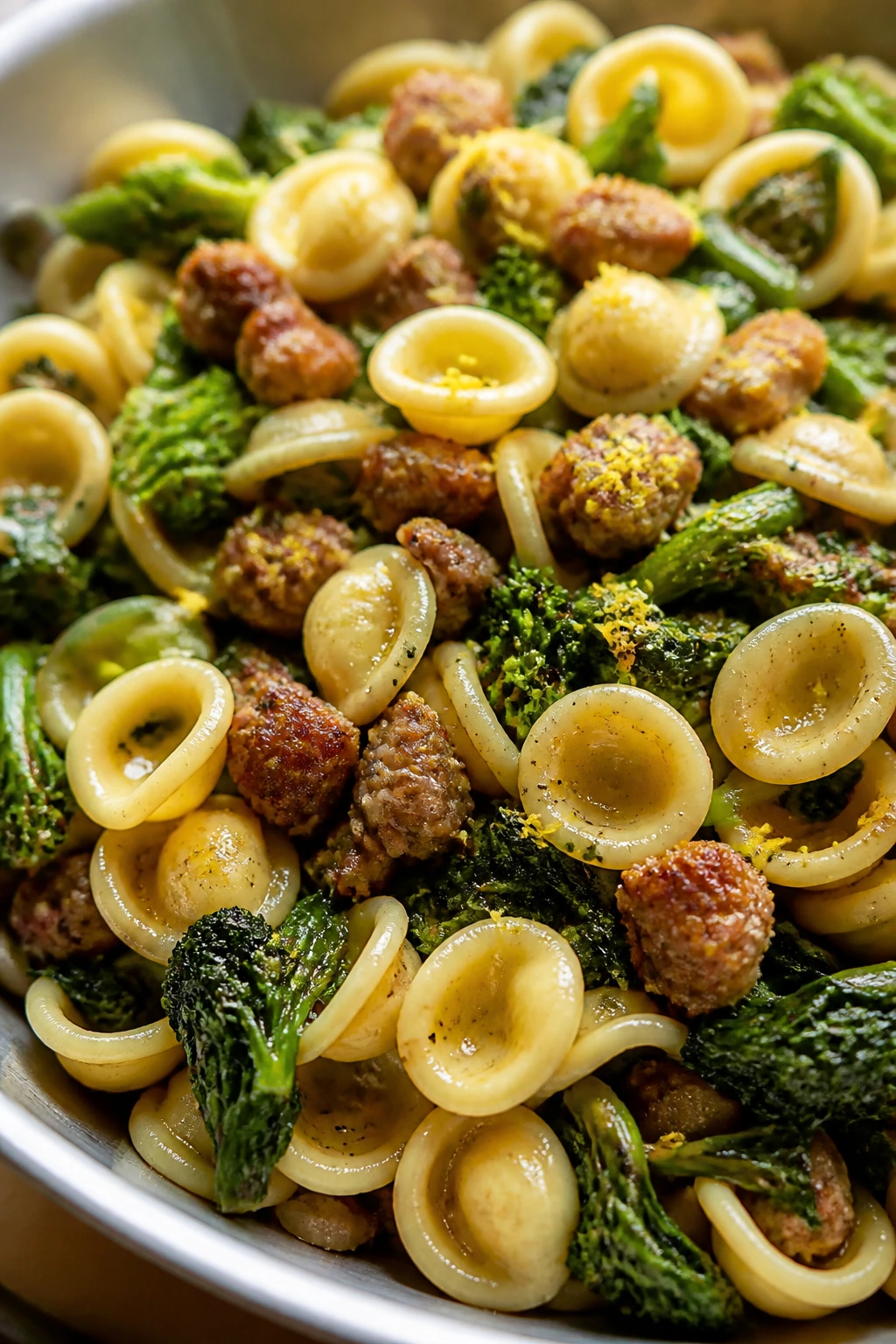
Intro:
This is the bitter-green pasta that behaves like a grown-up dish without trying to be precious. Broccoli rabe brings a sharp edge, sausage brings the fat, and the little orecchiette cups catch all the garlicky oil.
Why It Works:
Broccoli rabe can taste too stern if you don’t balance it with something rich. Sausage does that job, and the pasta water helps the pan sauce cling instead of pooling at the bottom of the bowl. Lemon at the end keeps the whole thing from feeling weighed down.
Key Ingredients:
- 12 oz orecchiette
- 1 lb Italian sausage
- 1 bunch broccoli rabe, trimmed
- 3 tbsp olive oil
- 4 garlic cloves, thinly sliced
- ½ tsp red pepper flakes
- ½ cup reserved pasta water
- ½ cup grated Parmesan
- 1 lemon, zested and cut into wedges
Quick Steps:
- Boil the pasta in salted water. In the last 2 minutes, add the broccoli rabe. Drain together, reserving ½ cup pasta water.
- Brown the sausage in a large skillet. Remove excess fat if needed.
- Add olive oil, garlic, and red pepper flakes. Cook 30 seconds.
- Add the pasta, broccoli rabe, pasta water, Parmesan, and lemon zest. Toss until glossy and well coated.
Equipment for This Recipe:
- Large pot
- Large skillet
- Slotted spoon
- Colander
How to Serve This Dish:
Serve it in shallow bowls with extra Parmesan and lemon wedges. A few toasted breadcrumbs on top are a nice move if you like crunch.
Pro Tips for This Recipe:
- Trim the broccoli rabe well; thick stems stay tough.
- Add lemon zest, not juice, if you want brightness without thinning the sauce.
- Keep the pasta slightly firm because it will finish in the pan.
Variations on This Dish:
- Creamy Finish: Add 2 tablespoons butter at the end for a silkier sauce.
- Sausage-and-Spinach Swap: Use spinach if broccoli rabe feels too bitter for the table.
Common Mistakes to Avoid with This Dish:
- Skipping the blanch-like pasta step with the greens: Broccoli rabe needs a short boil or it stays harsh.
- Using too much oil: The dish should coat, not drown.
13. Lentils Braised with Sausage and Carrots
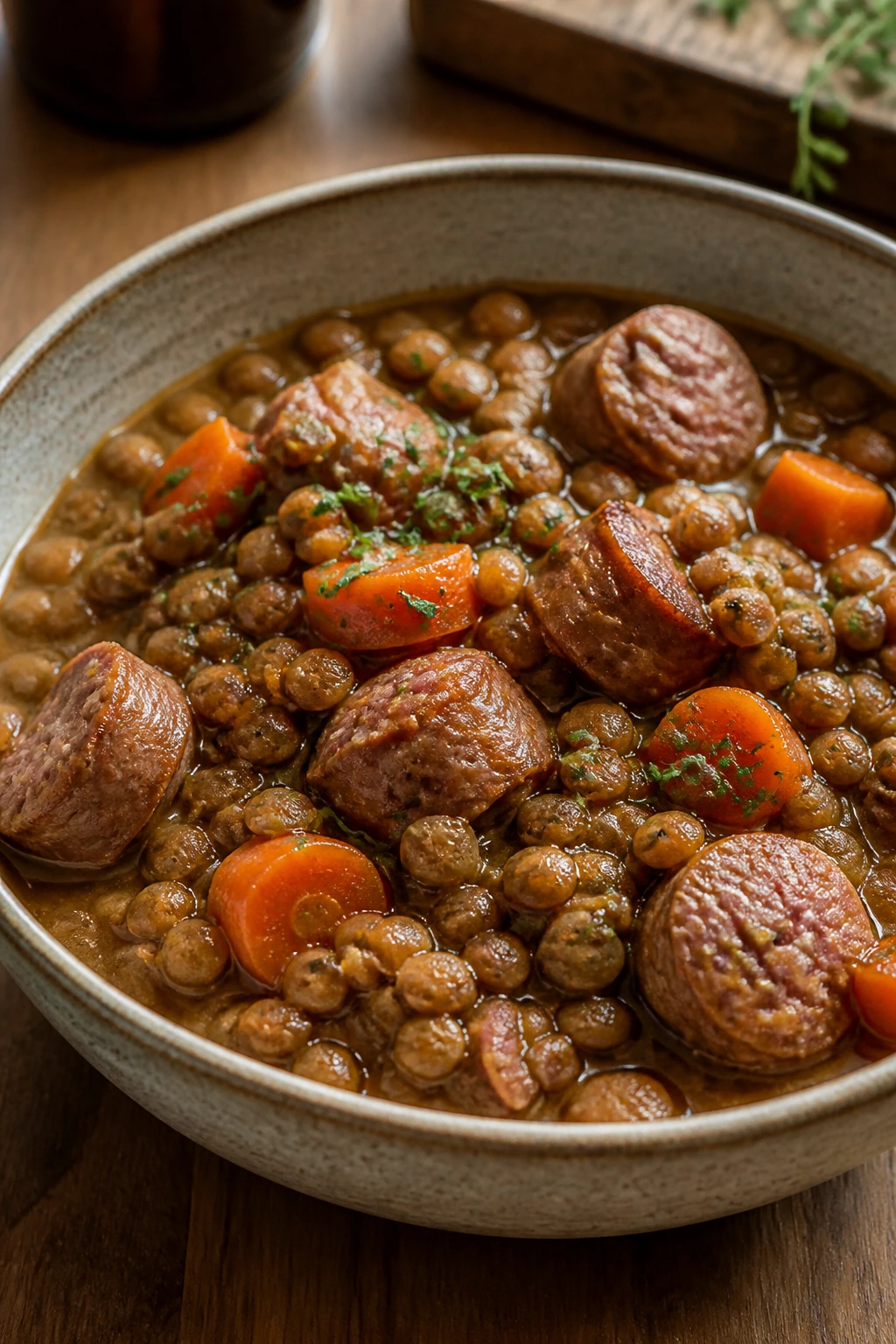
Intro:
Lentils are the kind of bean-like thing that make a meal feel grounded. Add sausage and carrots, and the whole pot turns into a slow, earthy dinner that tastes far more expensive than it is.
Why It Works:
Lentils cook fast enough for a Sunday evening, but they still absorb flavor like they’ve been simmering all afternoon. Sausage brings the salt and richness, carrots and celery make the base sweet, and a touch of vinegar at the end wakes up the pot.
Key Ingredients:
- 1 lb Italian sausage
- 1 cup green or brown lentils, rinsed
- 1 tbsp olive oil
- 1 onion, diced
- 2 carrots, diced
- 2 celery ribs, diced
- 2 garlic cloves, minced
- 1 tbsp tomato paste
- 4 cups chicken broth
- 1 bay leaf
- 2 cups chopped spinach
- 1 tbsp red wine vinegar
Quick Steps:
- Brown the sausage in a Dutch oven and remove it if needed.
- Add olive oil, onion, carrots, and celery. Cook 8 minutes until softened.
- Stir in garlic and tomato paste for 1 minute.
- Add lentils, broth, bay leaf, and sausage. Simmer 25 to 30 minutes, until lentils are tender but not broken down.
- Stir in spinach and vinegar, then serve.
Equipment for This Recipe:
- Dutch oven
- Wooden spoon
- Measuring cups
- Ladle
How to Serve This Dish:
Serve it in bowls with crusty bread or spoon it over buttery mashed potatoes if you want the dinner to land heavier. A little parsley on top is enough garnish.
Pro Tips for This Recipe:
- Don’t salt heavily at the start if your sausage is very seasoned.
- Keep the simmer gentle or the lentils split.
- Add vinegar at the end, not during cooking, so the flavor stays clean.
Variations on This Dish:
- Tomatoier Braise: Add 1 cup diced tomatoes with the broth.
- Herby Finish: Stir in chopped parsley and thyme right before serving.
Common Mistakes to Avoid with This Dish:
- Using red lentils: They break down too fast and turn the pot mushy.
- Boiling hard: A hard boil tears the lentils apart.
14. Sausage Cornbread Casserole
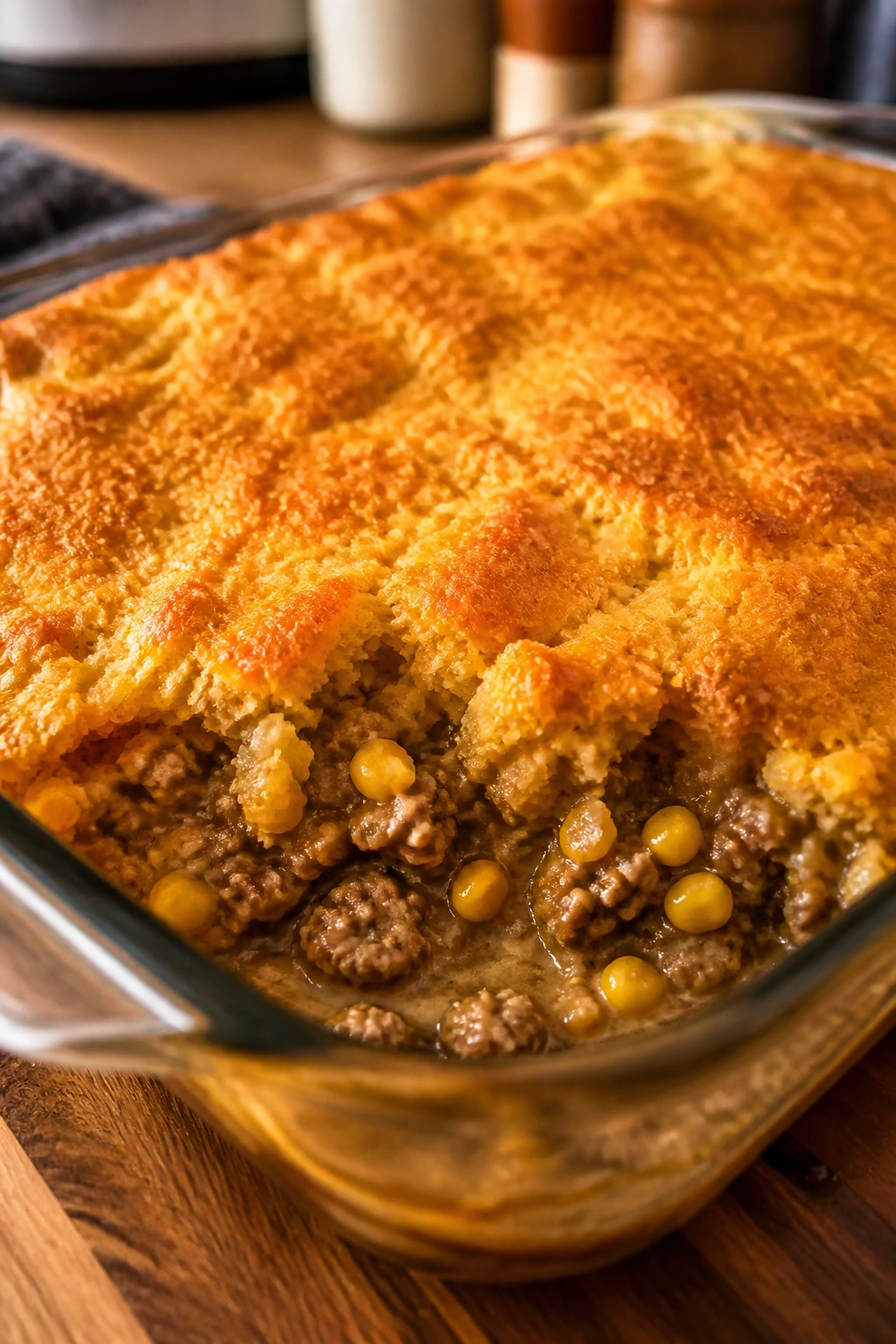
Intro:
Cornbread casserole sounds humble until you cut into it and hit the sausage and cheese underneath. Then it turns into one of those dishes people talk about while reaching for a second square.
Why It Works:
The cornbread topping bakes into a soft, savory lid over the sausage and corn filling. Creamed corn keeps the base moist, cheddar adds sharpness, and a little jalapeño gives the whole pan some edge if you want it. It’s the kind of casserole that survives a long table conversation.
Key Ingredients:
- 1 lb breakfast sausage
- 1 tbsp butter
- 1 onion, diced
- 2 cups frozen corn
- 1 (15 oz) can creamed corn
- 1 box cornbread mix
- 2 eggs
- 1 cup sour cream
- 1½ cups shredded cheddar
- 1 jalapeño, finely chopped, optional
Quick Steps:
- Heat the oven to 375°F and grease a 9×13-inch dish.
- Brown the sausage with the onion. Stir in the corn and creamed corn. Spread into the dish.
- Mix the cornbread mix, eggs, sour cream, and half the cheddar. Fold in jalapeño if using.
- Spoon the batter over the sausage mixture and top with the rest of the cheddar.
- Bake 25 to 30 minutes until the cornbread is set and golden.
Equipment for This Recipe:
- Skillet
- Mixing bowl
- 9×13-inch baking dish
- Spatula
How to Serve This Dish:
Cut it into squares and serve with a spoon, because the bottom layer is tender. A green salad or sliced tomatoes keep the plate from tipping into pure comfort-food mode.
Pro Tips for This Recipe:
- Spread the sausage layer evenly so every square gets some filling.
- Don’t overmix the cornbread batter or the top bakes dense.
- Let the casserole rest 10 minutes before slicing.
Variations on This Dish:
- Chive-and-Cheddar Version: Add 2 tablespoons chopped chives to the batter.
- Milder Family Pan: Skip the jalapeño and use sweet breakfast sausage.
Common Mistakes to Avoid with This Dish:
- Pouring wet batter into a cold filling: Warm the sausage layer so the cornbread starts baking right away.
- Cutting it too soon: The layers need a brief rest to set.
15. Gnocchi Bake with Sausage, Tomato, and Mozzarella
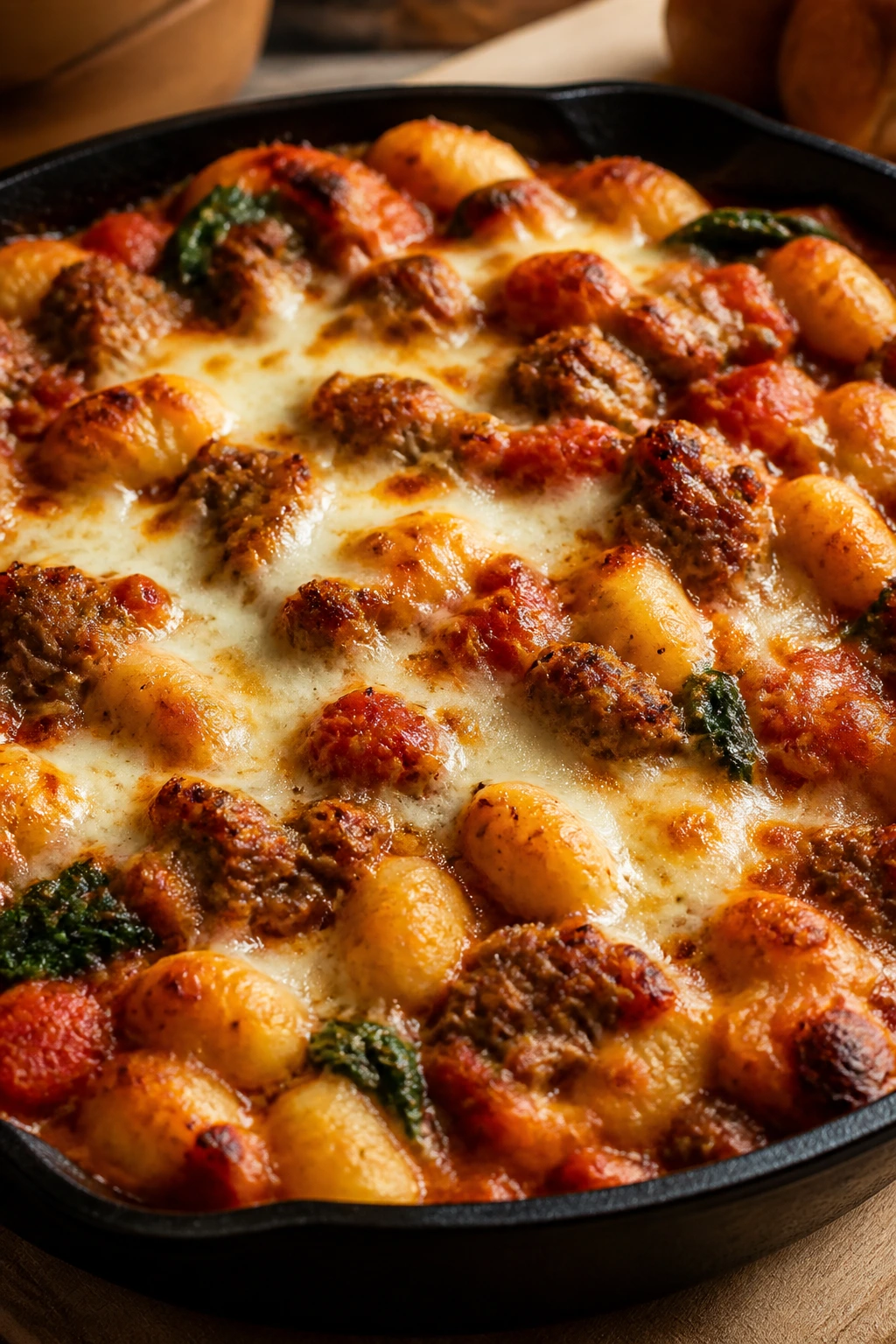
Intro:
Gnocchi bakes are sneaky. The little dumplings puff in the sauce, the cheese melts into the corners, and the sausage keeps the whole pan from tasting like plain tomato and dairy.
Why It Works:
Store-bought gnocchi is already soft, so it doesn’t need much cooking time. That makes it perfect for a layered bake where the sauce does the rest of the work. Spinach or basil gives you a fresher edge at the end, which this pan needs.
Key Ingredients:
- 1 lb Italian sausage
- 1 lb shelf-stable gnocchi
- 1 tbsp olive oil
- 1 (24 oz) jar marinara sauce
- 2 cups baby spinach
- 2 cups shredded mozzarella
- ½ cup grated Parmesan
- ¼ cup chopped basil
Quick Steps:
- Heat the oven to 400°F.
- Brown the sausage in a skillet, then stir in the marinara and spinach until the spinach wilts.
- Toss the gnocchi with the sauce and pour into a baking dish.
- Top with mozzarella and Parmesan.
- Bake 20 minutes until bubbling, then broil 1 to 2 minutes for spots of brown on top.
Equipment for This Recipe:
- Skillet
- Baking dish
- Wooden spoon
- Broiler-safe oven rack
How to Serve This Dish:
Serve it hot and scooped, not neatly plated. A peppery salad or roasted broccoli makes a good counterweight to the soft, cheesy pan.
Pro Tips for This Recipe:
- Don’t pre-boil the gnocchi. It goes into the sauce dry and finishes in the oven.
- Broil only at the end or the cheese can burn before the sauce bubbles.
- Use a baking dish with a little depth so the sauce doesn’t slosh over.
Variations on This Dish:
- Creamy Red Bake: Stir ¼ cup cream into the marinara before baking.
- Kale Version: Replace spinach with chopped kale and simmer it 2 minutes longer.
Common Mistakes to Avoid with This Dish:
- Using too little sauce: Gnocchi bakes need enough liquid to stay tender.
- Overbaking: The gnocchi can go soft and loose if it stays in the oven too long.
16. Sausage Mac and Cheese with Toasted Breadcrumbs
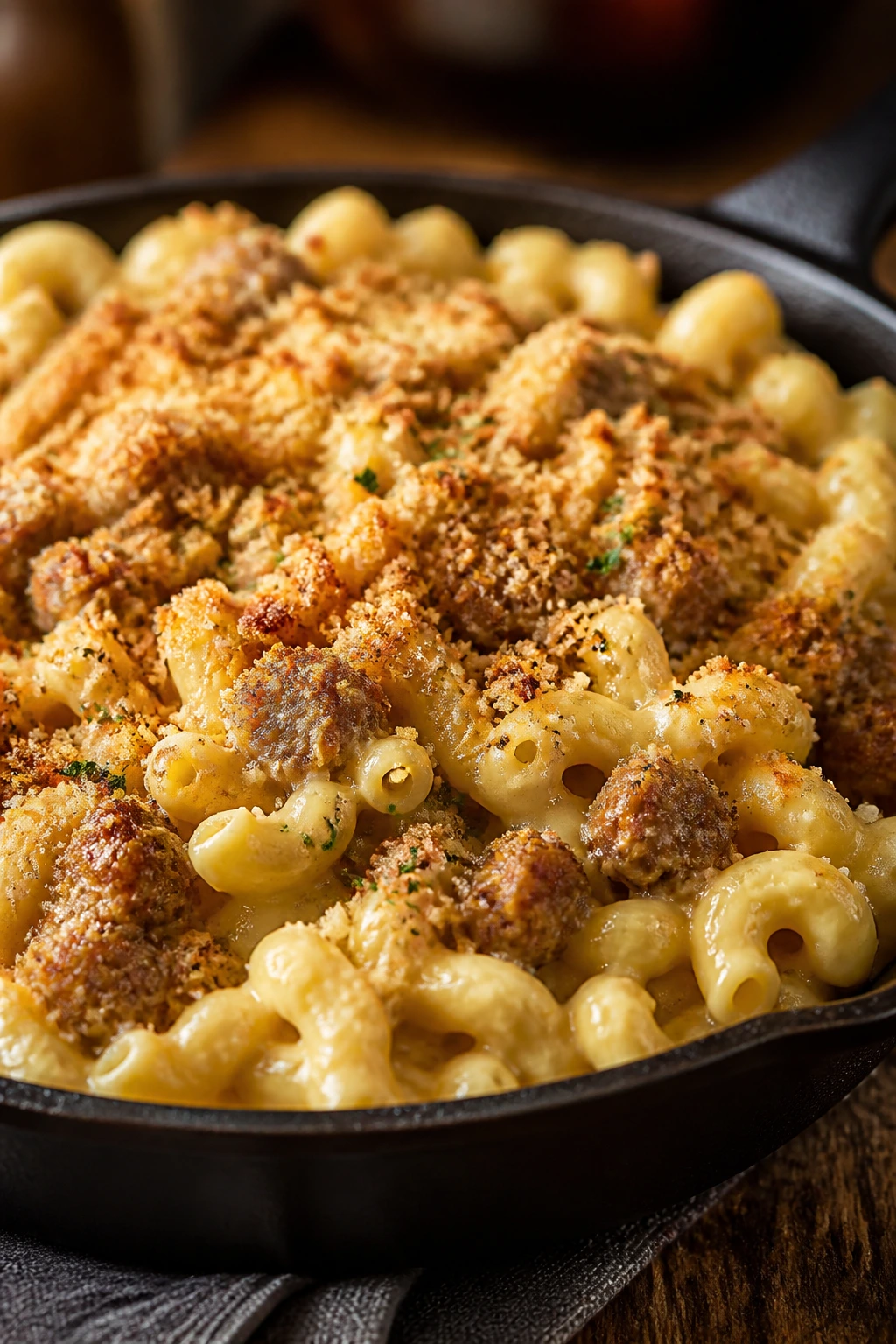
Intro:
Mac and cheese gets deeper when sausage is in the pan. The sauce stays rich, but the sausage adds browned edges and a little spice, which keeps the whole thing from tasting like soft cheese on autopilot.
Why It Works:
The sausage brings savory balance to a dish that can otherwise lean sweet and flat. A flour-thickened cheese sauce coats the pasta, and the breadcrumb top gives you a little crunch against the creamy middle. That contrast is what keeps people going back.
Key Ingredients:
- 12 oz elbow macaroni
- 1 lb Italian sausage
- 4 tbsp butter
- 3 tbsp all-purpose flour
- 3 cups milk
- 2 cups shredded sharp cheddar
- 1 cup shredded fontina
- 1 tsp mustard powder
- 1 cup breadcrumbs
- 2 tbsp grated Parmesan
Quick Steps:
- Cook the macaroni until al dente and drain.
- Brown the sausage in a skillet and set aside.
- Make a roux with butter and flour in a saucepan, then whisk in the milk until smooth and thick.
- Stir in the cheddar, fontina, mustard powder, and sausage. Add the pasta and transfer to a baking dish.
- Mix breadcrumbs with Parmesan and sprinkle on top. Bake at 375°F for 15 minutes until the top is golden.
Equipment for This Recipe:
- Saucepan
- Skillet
- Baking dish
- Whisk
How to Serve This Dish:
Serve it in shallow bowls while the crumb topping is still crisp. A pile of steamed broccoli on the side makes the plate feel less one-note.
Pro Tips for This Recipe:
- Shred your own cheese if you want a smoother sauce.
- Keep the heat moderate when melting the cheese or the sauce can turn grainy.
- Toast the breadcrumbs briefly in a dry pan first if you want a deeper crunch.
Variations on This Dish:
- Smoky Version: Use smoked sausage and a little smoked paprika.
- Bacon-Sausage Blend: Add 4 strips cooked, crumbled bacon if you want even more savory depth.
Common Mistakes to Avoid with This Dish:
- Adding cheese to a boiling sauce: It can split and turn oily. Take the pan off the heat first.
- Skipping the baking step: The crust gives you the point of the whole dish.
17. Sheet-Pan Sausage, Mushrooms, and Pepperoncini Subs
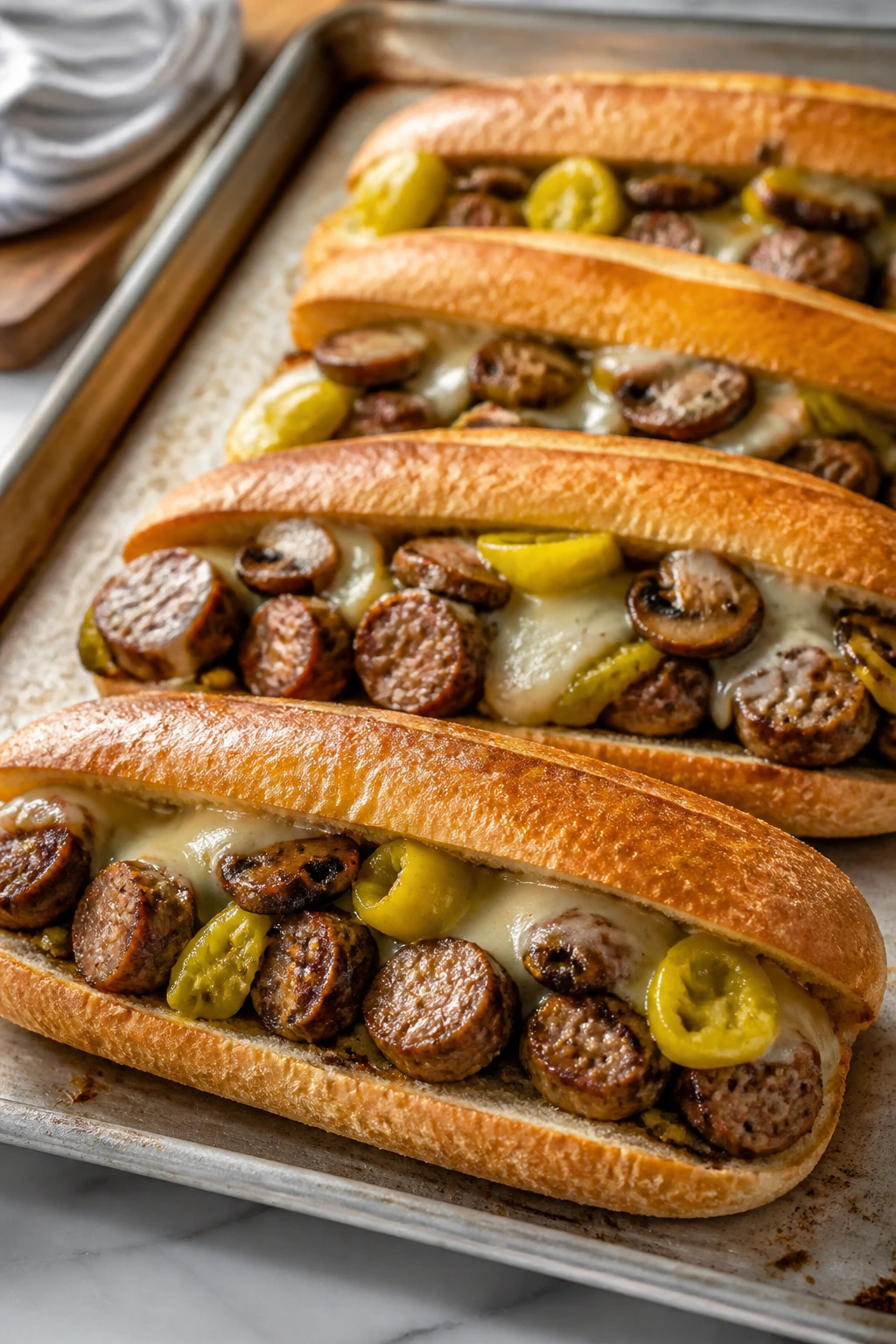
Intro:
These subs have a sharper personality than the classic pepper-and-onion version. The pepperoncini give the tray a vinegary bite, the mushrooms go meaty, and the sausage juices soak into the rolls without turning them soggy if you build them right.
Why It Works:
The sheet pan lets the sausage roast alongside the vegetables instead of steaming in a skillet. Pepperoncini bring acid, which cuts through the sausage fat and makes each bite feel lighter than the ingredient list suggests. Provolone melts into the crevices and seals the deal.
Key Ingredients:
- 1½ lb Italian sausage links
- 2 bell peppers, sliced
- 8 oz cremini mushrooms, halved
- 1 red onion, sliced
- ½ cup pepperoncini, drained
- 2 tbsp olive oil
- 1 tsp dried oregano
- 6 sub rolls
- 6 slices provolone cheese
Quick Steps:
- Heat the oven to 425°F.
- Toss the peppers, mushrooms, onion, pepperoncini, olive oil, and oregano on a sheet pan. Nestle the sausage links in the vegetables.
- Roast 25 to 30 minutes, turning the sausage once, until the sausage reaches 160°F.
- Split the rolls, fill with the sausage and vegetables, and top with provolone.
- Broil 1 minute until the cheese melts.
Equipment for This Recipe:
- Rimmed sheet pan
- Tongs
- Knife
- Broiler-safe rolls or baking tray
How to Serve This Dish:
Serve the subs wrapped in parchment if you want to keep the board cleaner. Potato chips or a vinegar slaw are the right side here.
Pro Tips for This Recipe:
- Don’t drain the pan too aggressively; a little juice helps the rolls taste better.
- Pepperoncini should be drained, not rinsed, or they lose their punch.
- Use rolls with a decent crust so they don’t collapse.
Variations on This Dish:
- Hot Sub Version: Use spicy sausage and add red pepper flakes.
- Melted Mozzarella Version: Swap provolone for mozzarella if you want a softer finish.
Common Mistakes to Avoid with This Dish:
- Roasting the rolls with the filling already inside: They get soggy fast. Fill them after roasting.
- Using mushrooms that were washed and left wet: They steam instead of brown.
18. Fennel Sausage Risotto with Parmesan
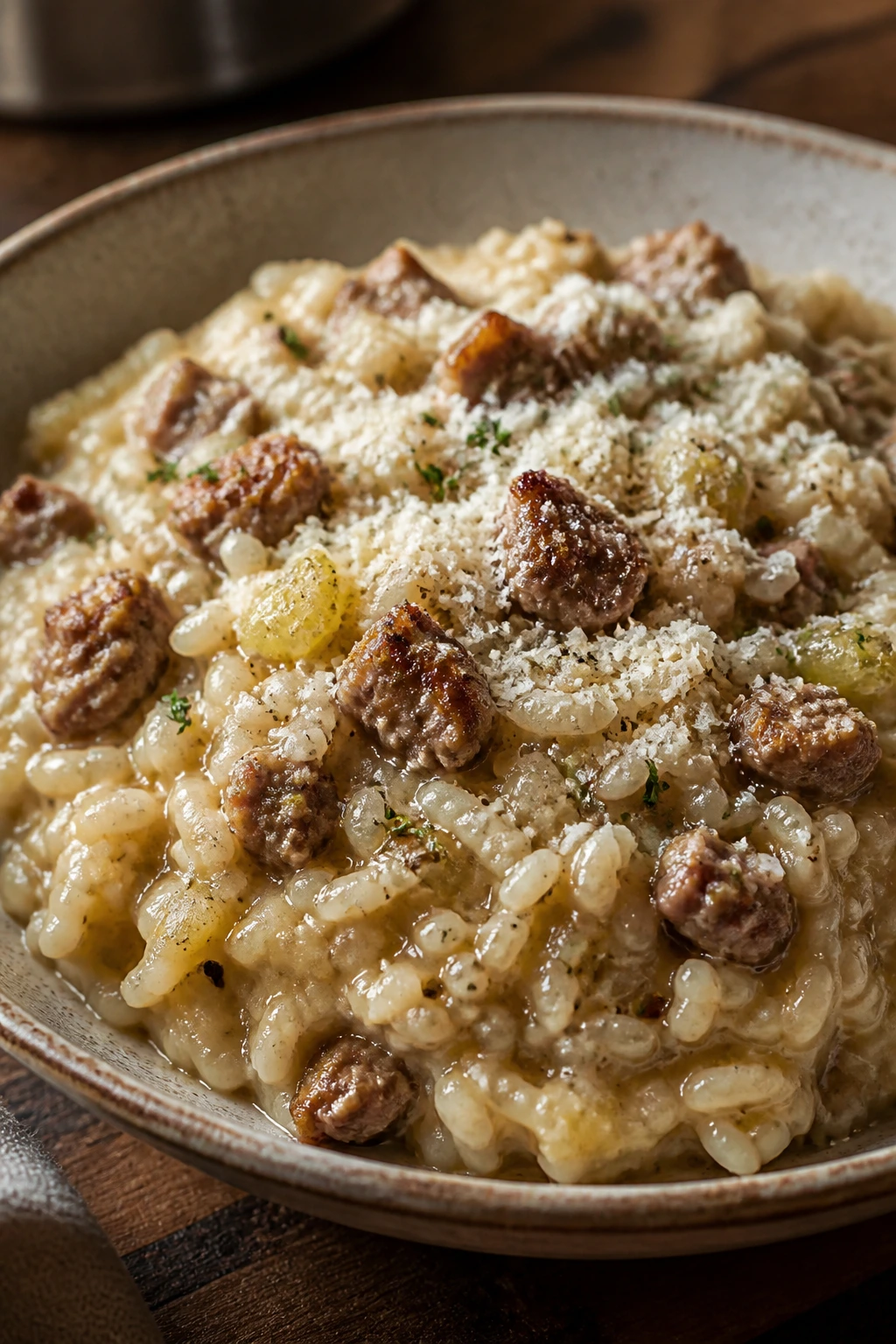
Intro:
Risotto sounds fussy until you make it with sausage. Then it becomes a patient, practical pot of dinner: warm broth, soft rice, a little wine, and fennel perfume hanging over everything.
Why It Works:
Arborio rice releases starch as you stir, which gives the dish its creamy texture without cream. Fennel sausage echoes the anise note in the fennel bulb, so the whole bowl tastes like the ingredients were designed to meet. Parmesan and butter finish it with sheen.
Key Ingredients:
- 1 lb fennel sausage, casings removed
- 1 fennel bulb, diced
- 1 onion, diced
- 1½ cups arborio rice
- ½ cup dry white wine
- 5 cups chicken broth, kept warm
- 2 tbsp butter
- ½ cup grated Parmesan
- 1 tsp lemon zest
Quick Steps:
- Brown the sausage in a wide saucepan and set it aside.
- Cook the fennel and onion in the same pan until soft, about 8 minutes.
- Stir in the rice and toast for 1 minute, then add the wine and let it absorb.
- Add warm broth one ladle at a time, stirring often, until the rice is tender but still has a slight bite, about 20 minutes.
- Stir in sausage, butter, Parmesan, and lemon zest.
Equipment for This Recipe:
- Wide saucepan or Dutch oven
- Ladle
- Wooden spoon
- Small pot for warming broth
How to Serve This Dish:
Serve risotto immediately in shallow bowls. It waits for no one, and a little extra broth on the table helps if it tightens up while you eat.
Pro Tips for This Recipe:
- Keep the broth warm. Cold broth slows the rice and dulls the texture.
- Stir often, but not like a maniac. You want creaminess, not paste.
- Add lemon zest at the end to keep the fennel bright.
Variations on This Dish:
- Tomato Fennel Risotto: Stir in ½ cup tomato sauce with the sausage.
- Greens Version: Fold in a handful of arugula at the end for a peppery lift.
Common Mistakes to Avoid with This Dish:
- Dumping in all the broth at once: Risotto needs slow liquid addition or the texture goes wrong.
- Walking away from the pan: It’s a stirring dish; that’s part of the deal.
19. Sausage and Sauerkraut with Apples
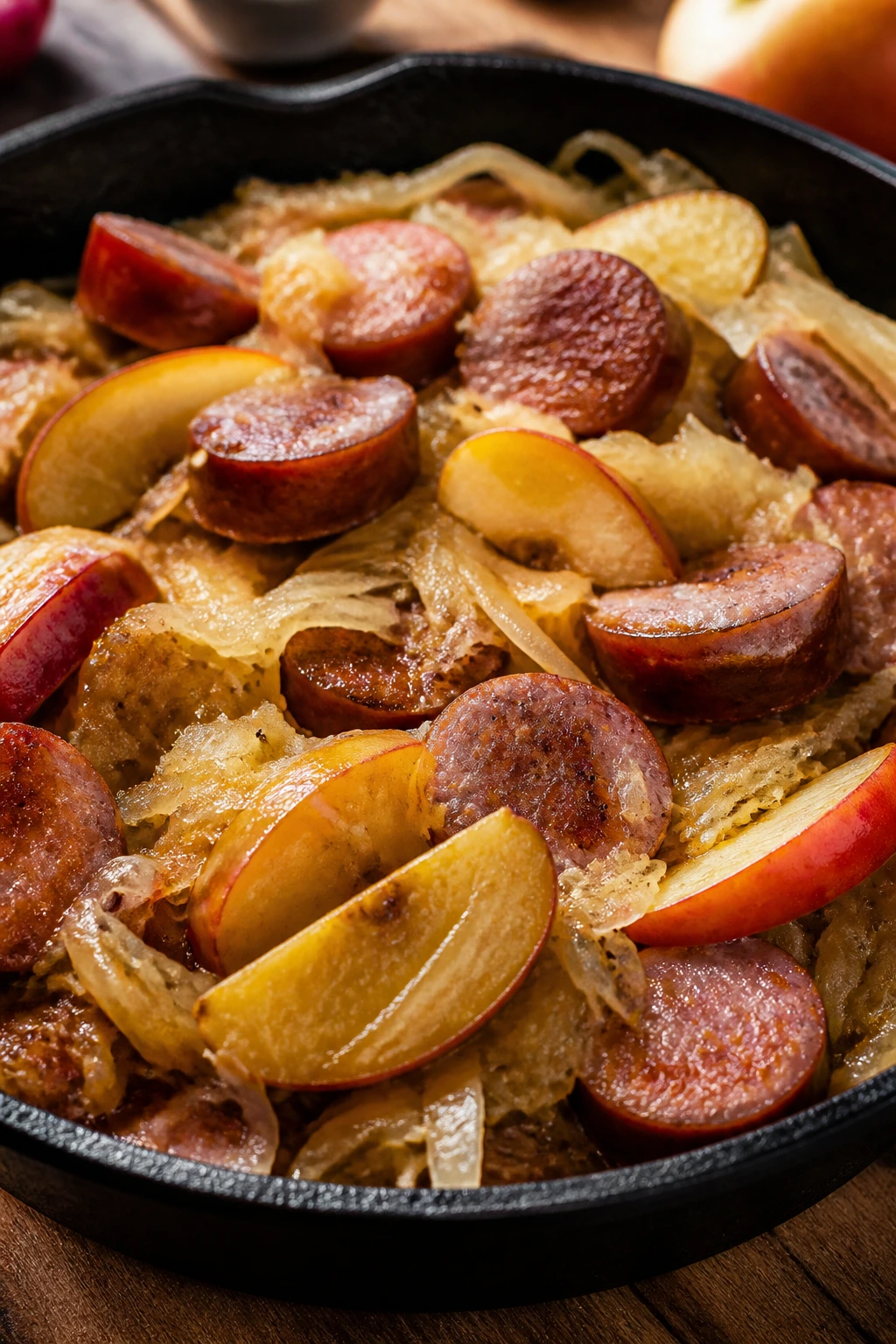
Intro:
This is one of those old-country dinners that knows exactly what it is. Smoky sausage, tangy kraut, sweet apples, and a mustard finish make a plate that wakes up your mouth instead of flattening it.
Why It Works:
Sauerkraut brings acid and salt, which are perfect foils for rich sausage. Apples soften into the sauce and round out the sharpness, while potatoes soak up the pan juices. A little caraway makes the whole thing smell like it belongs in a colder kitchen.
Key Ingredients:
- 1½ lb kielbasa or smoked sausage, sliced
- 1 tbsp butter
- 1 onion, sliced
- 2 apples, sliced
- 1 lb sauerkraut, drained
- 1 cup chicken broth
- 1 tsp caraway seeds
- 1 tbsp whole-grain mustard
- 1 lb baby potatoes, halved
Quick Steps:
- Brown the sausage in a large skillet or Dutch oven.
- Add the butter and onion and cook until soft.
- Stir in apples, sauerkraut, broth, caraway, mustard, and potatoes.
- Cover and simmer 20 to 25 minutes, until the potatoes are tender and the flavors have come together.
- Uncover for the last few minutes if you want the liquid to cook down a bit.
Equipment for This Recipe:
- Dutch oven or deep skillet
- Lid
- Wooden spoon
- Knife
How to Serve This Dish:
Serve it with rye bread or boiled dumplings if you want to keep with the theme. A dab of extra mustard on the side is a good idea.
Pro Tips for This Recipe:
- Drain the sauerkraut, but don’t rinse it unless it’s aggressively sour.
- Slice the sausage thick enough that it doesn’t disappear in the pot.
- Taste before salting; kraut and sausage already bring a lot.
Variations on This Dish:
- Beer-Braised Version: Swap half the broth for lager.
- Red Cabbage Twist: Add 2 cups shredded red cabbage for color and sweetness.
Common Mistakes to Avoid with This Dish:
- Using un-drained kraut: The dish gets too briny and watery.
- Cooking the apples until they collapse: Add them with the kraut so they soften but still hold shape.
20. Stuffed Bell Peppers with Sausage and Rice
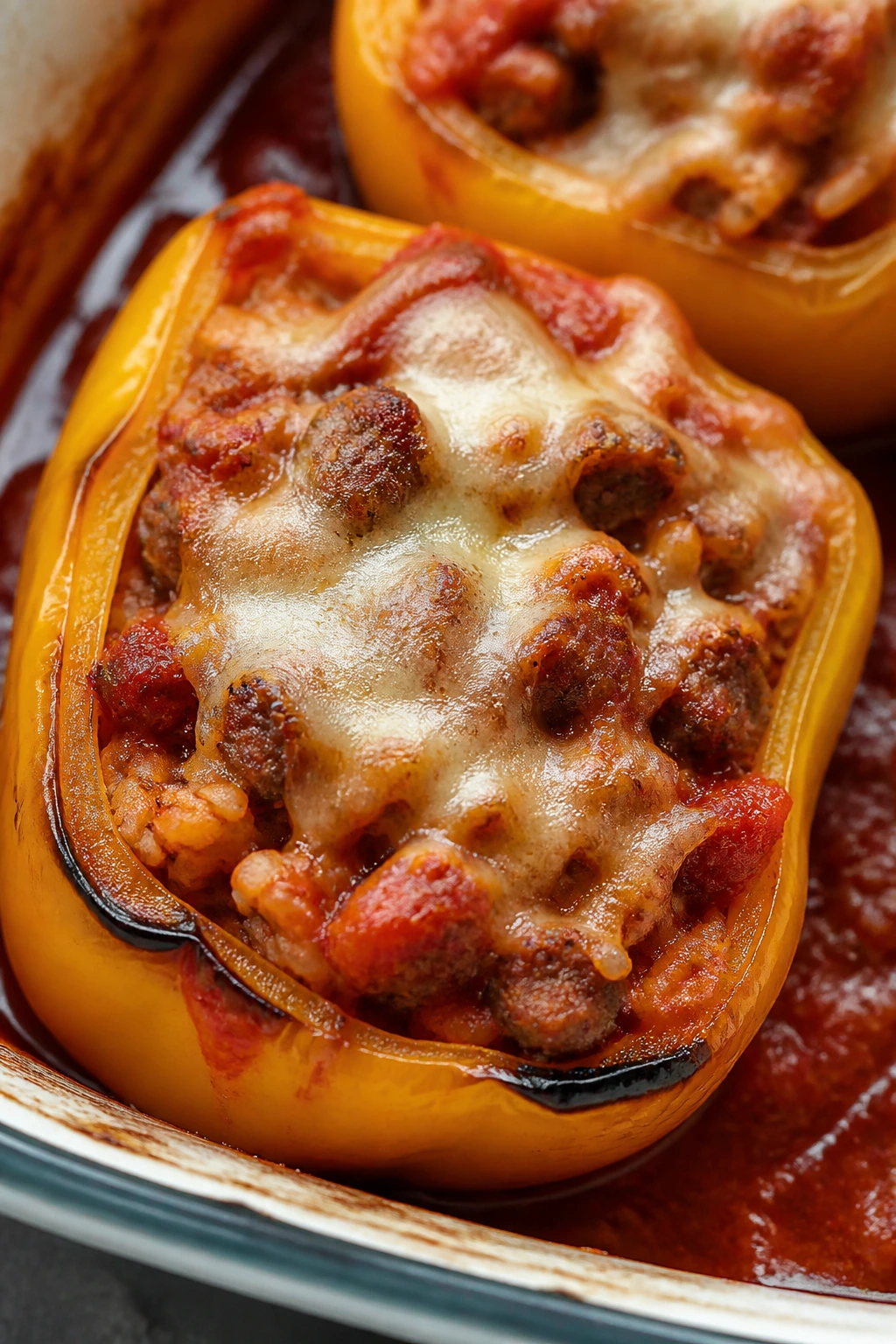
Intro:
Stuffed peppers are one of those dinners that look formal even when they aren’t. Sausage and rice make the filling rich and steady, and the pepper shells turn sweet enough in the oven to matter.
Why It Works:
The pepper walls soften while staying upright, so they hold the filling without falling apart. Sausage seasons the rice from the inside out, tomato sauce keeps everything moist, and melted cheese gives the tops a browned cap. It’s tidy food, which can be welcome on a Sunday.
Key Ingredients:
- 6 bell peppers
- 1 lb Italian sausage
- 1 tbsp olive oil
- 1 onion, diced
- 2 garlic cloves, minced
- 1 cup cooked rice
- 1 (15 oz) can tomato sauce
- 1 cup shredded mozzarella
- ¼ cup grated Parmesan
- 1 tsp Italian seasoning
Quick Steps:
- Heat the oven to 375°F. Cut the tops from the peppers and remove the seeds.
- Brown the sausage with the onion in a skillet. Add garlic, cooked rice, half the tomato sauce, and seasoning.
- Stuff the peppers and set them in a baking dish. Spoon the rest of the tomato sauce around them.
- Cover and bake 35 minutes. Uncover, top with mozzarella and Parmesan, and bake 10 minutes more until the cheese melts.
Equipment for This Recipe:
- Baking dish
- Skillet
- Spoon for stuffing
- Sharp knife
How to Serve This Dish:
Serve one pepper per person and spoon some of the tomato sauce around the plate. A simple salad or roasted zucchini works well beside them.
Pro Tips for This Recipe:
- Par-cook especially thick peppers for 5 minutes if you like them softer.
- Pack the filling lightly so it heats through evenly.
- Use day-old rice if you have it; fresh rice can get sticky.
Variations on This Dish:
- Cheesy Top Version: Use a mix of mozzarella and fontina for a stretchier lid.
- Spicy Pepper Version: Add chopped pickled jalapeños to the filling.
Common Mistakes to Avoid with This Dish:
- Using peppers that can’t stand upright: Trim a tiny bit off the bottom if needed.
- Skipping the sauce under the peppers: That little pool keeps the bottoms from drying out.
21. Sausage and Spinach Strata
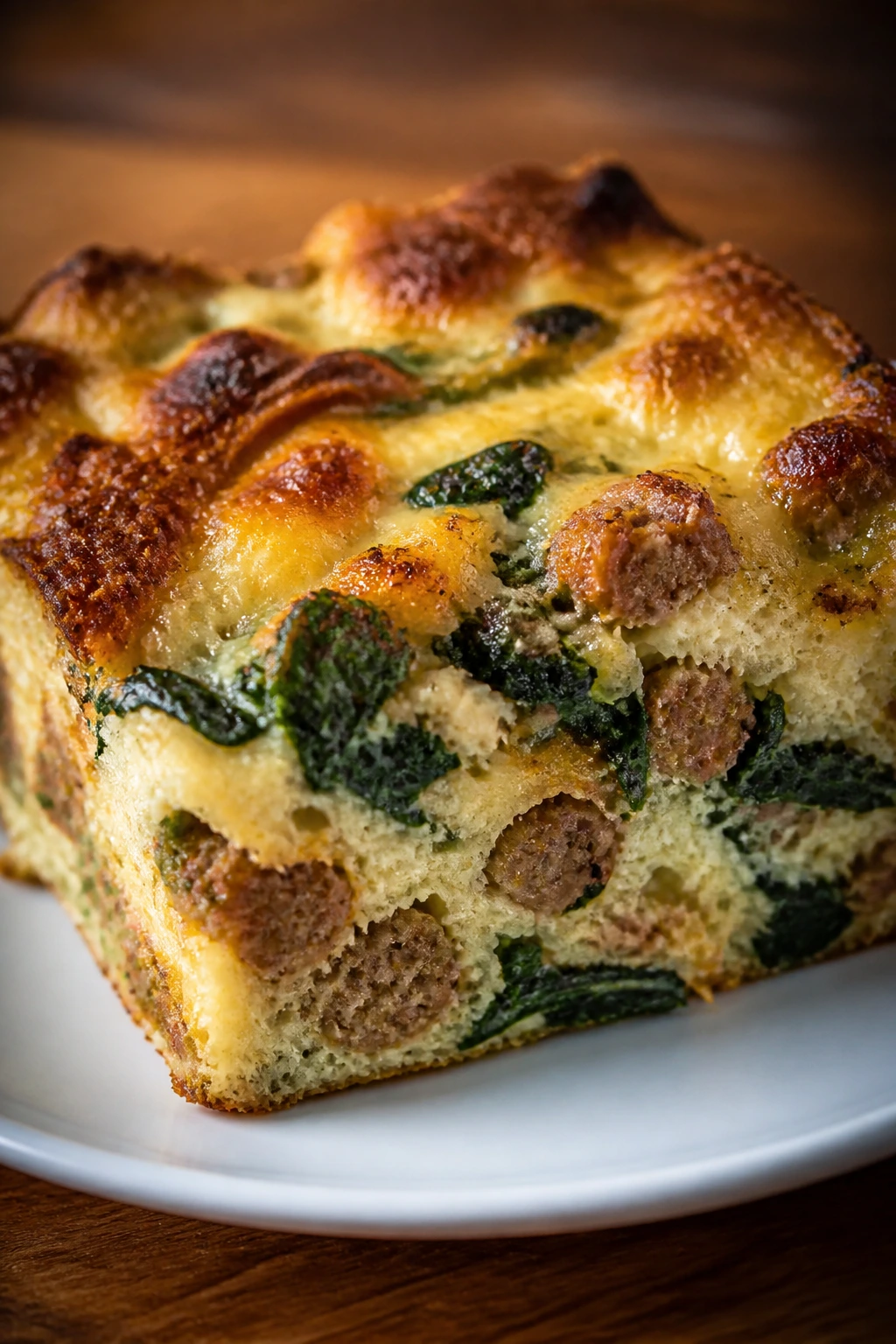
Intro:
A strata is basically a bread pudding with more backbone. Sausage, eggs, spinach, and cheese soak into the bread overnight, then bake into a sliceable, savory casserole that feels right when the table is full.
Why It Works:
The bread cubes drink up the egg mixture, which means the final texture lands somewhere between custard and toast. Sausage adds salt and fat, spinach keeps it from feeling too heavy, and the overnight rest gives the whole thing a better structure. Skip the rest and you lose the point.
Key Ingredients:
- 8 cups day-old bread cubes
- 1 lb breakfast sausage
- 2 cups chopped spinach
- 8 large eggs
- 2 cups milk
- 1½ cups shredded cheddar
- 1 tbsp Dijon mustard
- 1 tsp dried thyme
Quick Steps:
- Brown the sausage and wilt the spinach in the same pan.
- Butter a baking dish and add the bread cubes, sausage, spinach, and cheese.
- Whisk the eggs, milk, Dijon, thyme, salt, and pepper. Pour over the bread.
- Cover and refrigerate at least 4 hours, preferably overnight.
- Bake at 350°F for 45 to 55 minutes until puffed and set in the center.
Equipment for This Recipe:
- Baking dish
- Mixing bowl
- Whisk
- Skillet
How to Serve This Dish:
Cut it into squares and serve with fruit or a sharp salad. It works for supper, but it also has enough backbone for brunch the next day.
Pro Tips for This Recipe:
- Use dry bread, not fresh. Soft bread turns gluey.
- Press the cubes down gently after pouring in the custard so every piece gets soaked.
- Let the strata stand after baking or the center will slump.
Variations on This Dish:
- Mushroom Strata: Add sautéed mushrooms with the sausage.
- Swiss-and-Herb Version: Swap cheddar for Swiss and add chopped parsley.
Common Mistakes to Avoid with This Dish:
- Baking without a soak time: The center stays dry and the top overbrowns.
- Using too much milk: The custard should hold the bread, not flood it.
22. Sausage and Butter Bean Bake with Rosemary
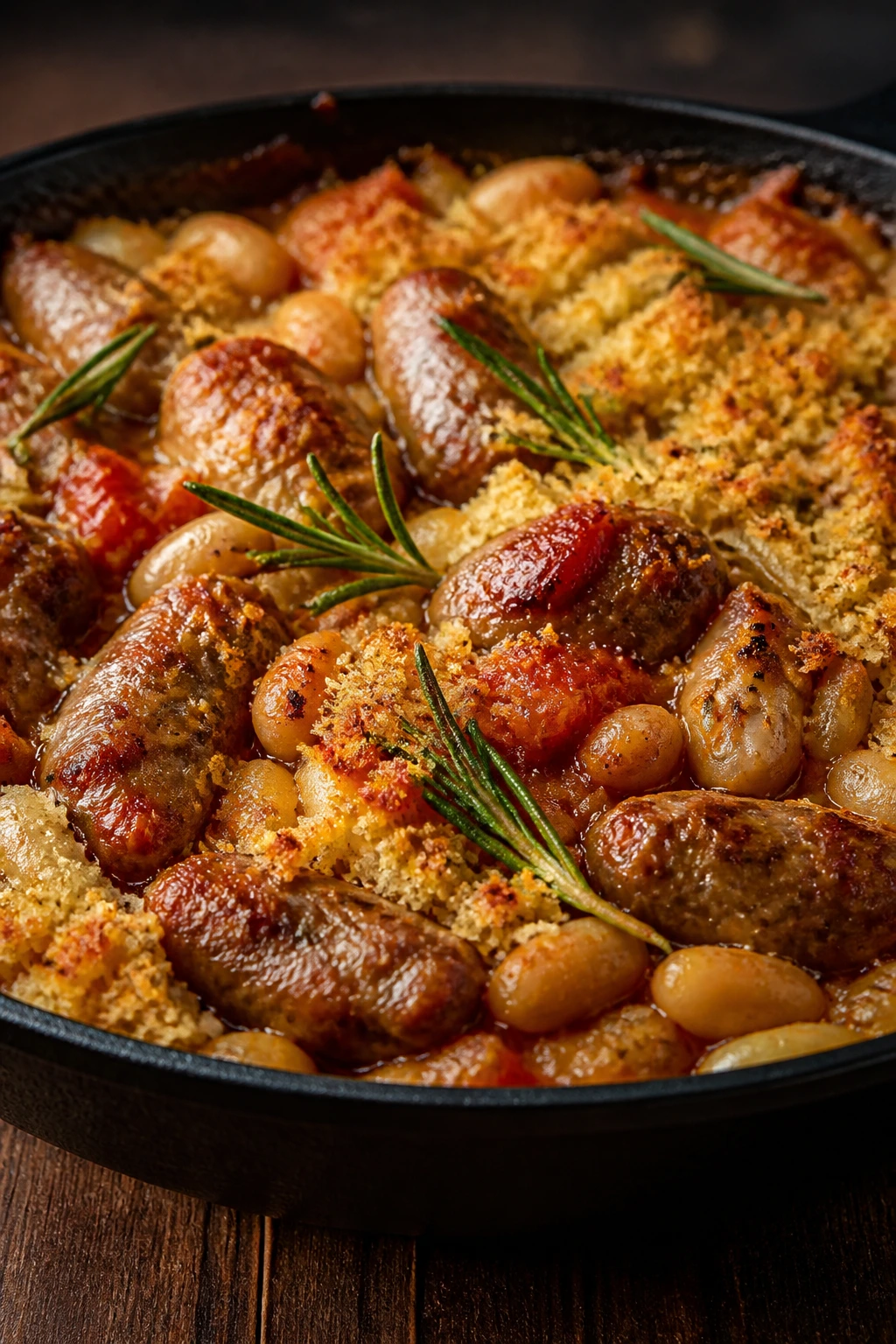
Intro:
Butter beans have a soft, creamy thing going on that works well with sausage. Add rosemary, a little tomato, and a breadcrumb top, and the pan turns into something humble but worth serving straight from the oven.
Why It Works:
Butter beans stay intact while still getting creamy in the oven, so they make a good base for sausage. Rosemary and garlic keep the flavor sharp, while the breadcrumbs add a crisp top that breaks the softness underneath. It’s a good texture mix, which matters more than people admit.
Key Ingredients:
- 1 lb Italian sausage
- 1 tbsp olive oil
- 1 onion, diced
- 3 garlic cloves, minced
- 2 (15 oz) cans butter beans, drained and rinsed
- 1 cup crushed tomatoes
- 1 cup chicken broth
- 1 tsp chopped rosemary
- ½ cup breadcrumbs
- 2 tbsp grated Parmesan
Quick Steps:
- Brown the sausage in a skillet, then cook the onion until soft.
- Add garlic, butter beans, tomatoes, broth, and rosemary. Simmer 5 minutes.
- Transfer to a baking dish. Mix breadcrumbs with Parmesan and scatter on top.
- Bake at 400°F for 15 to 20 minutes until the top is crisp and the edges bubble.
Equipment for This Recipe:
- Skillet
- Baking dish
- Mixing bowl
- Spoon
How to Serve This Dish:
Spoon it into shallow bowls with bread for scooping. A little extra rosemary or black pepper on top sharpens the final plate.
Pro Tips for This Recipe:
- Keep the beans gentle once they’re in the pot; aggressive stirring can mash them.
- Drain the beans well so the bake doesn’t water out.
- Use fresh rosemary lightly because it can take over fast.
Variations on This Dish:
- Tomato-Free Version: Replace tomatoes with extra broth and a splash of cream.
- Spicy Pantry Bake: Add red pepper flakes with the garlic.
Common Mistakes to Avoid with This Dish:
- Skipping the breadcrumb top: The crisp layer is what makes the texture work.
- Over-simmering before the bake: The beans can start breaking down before the oven even gets involved.
23. Tortellini Soup with Sausage and Spinach
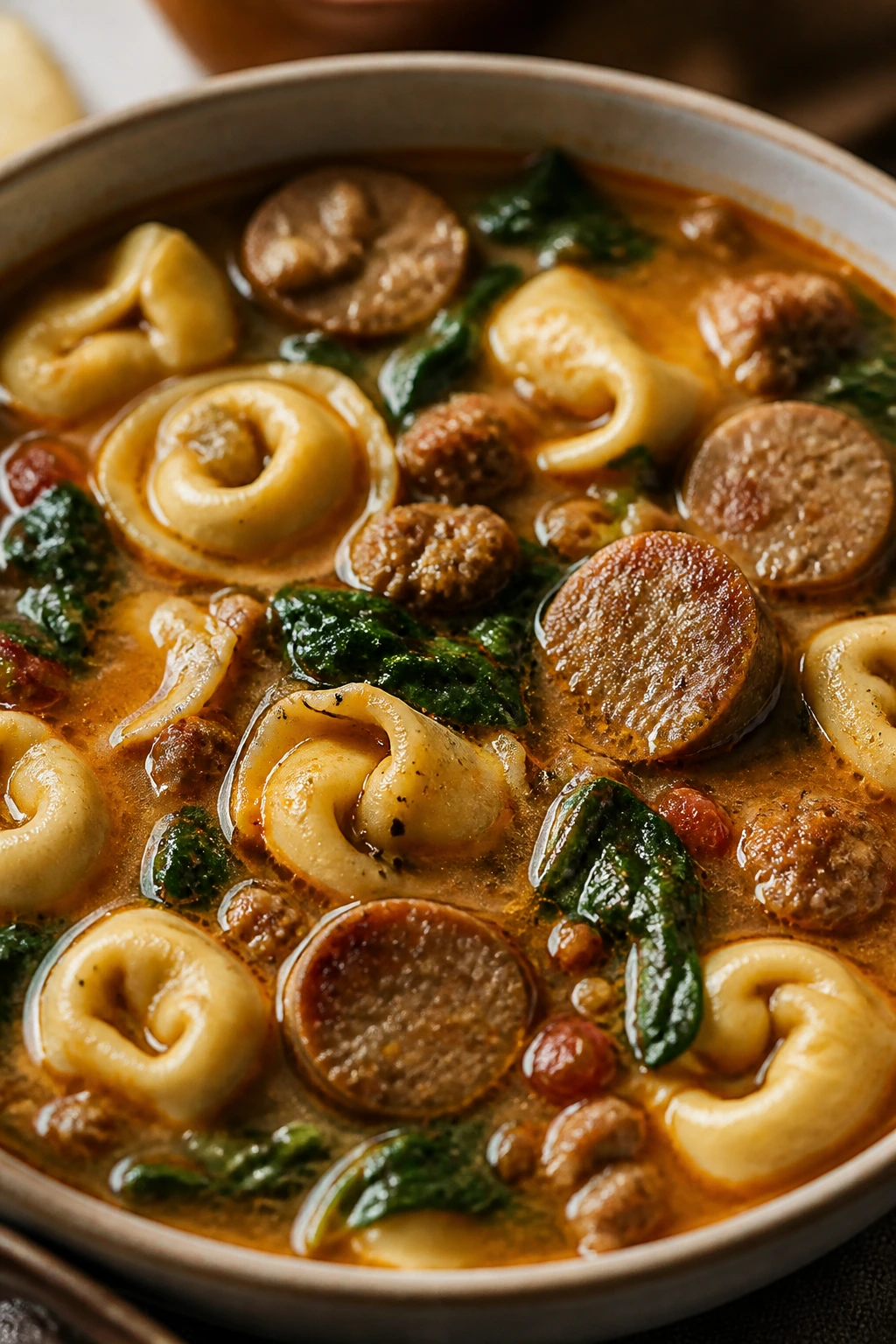
Intro:
Cheese tortellini in soup feels generous in a way plain noodle soup doesn’t. Add sausage and spinach, and the pot turns into a bowl that eats like a meal instead of a starter.
Why It Works:
The tortellini bring a built-in cheesy center, which means the broth doesn’t have to do all the work. Sausage seasons the soup, tomatoes add body, and spinach softens into the broth at the last minute so it stays green. This one is hard to ruin if you don’t overcook the pasta.
Key Ingredients:
- 1 lb Italian sausage
- 1 onion, diced
- 3 garlic cloves, minced
- 1 (28 oz) can crushed tomatoes
- 6 cups chicken broth
- 20 oz cheese tortellini
- 2 cups baby spinach
- ½ cup heavy cream, optional
- ¼ cup grated Parmesan
Quick Steps:
- Brown the sausage in a soup pot. Add onion and cook until soft.
- Stir in garlic, tomatoes, and broth. Simmer 10 minutes.
- Add tortellini and cook according to the package, usually 5 to 7 minutes.
- Stir in spinach and cream, if using, until the spinach wilts.
- Ladle into bowls and top with Parmesan.
Equipment for This Recipe:
- Soup pot
- Ladle
- Wooden spoon
- Box grater for Parmesan
How to Serve This Dish:
Serve it with garlic toast and a simple salad. Tortellini soup likes a big spoon and a hot bowl because it cools a little faster than you expect.
Pro Tips for This Recipe:
- Add the tortellini near the end so it stays plump.
- If the soup thickens while standing, loosen it with a splash of broth.
- The cream is optional, but a small amount rounds out the tomato edge nicely.
Variations on This Dish:
- Tuscan Style: Add cannellini beans and a pinch of oregano.
- Spicy Version: Use hot sausage and a pinch of red pepper flakes.
Common Mistakes to Avoid with This Dish:
- Boiling the tortellini too long: It can split and go soft.
- Adding spinach too early: It loses its color and gets dull.
24. Sausage and Ricotta Stuffed Shells
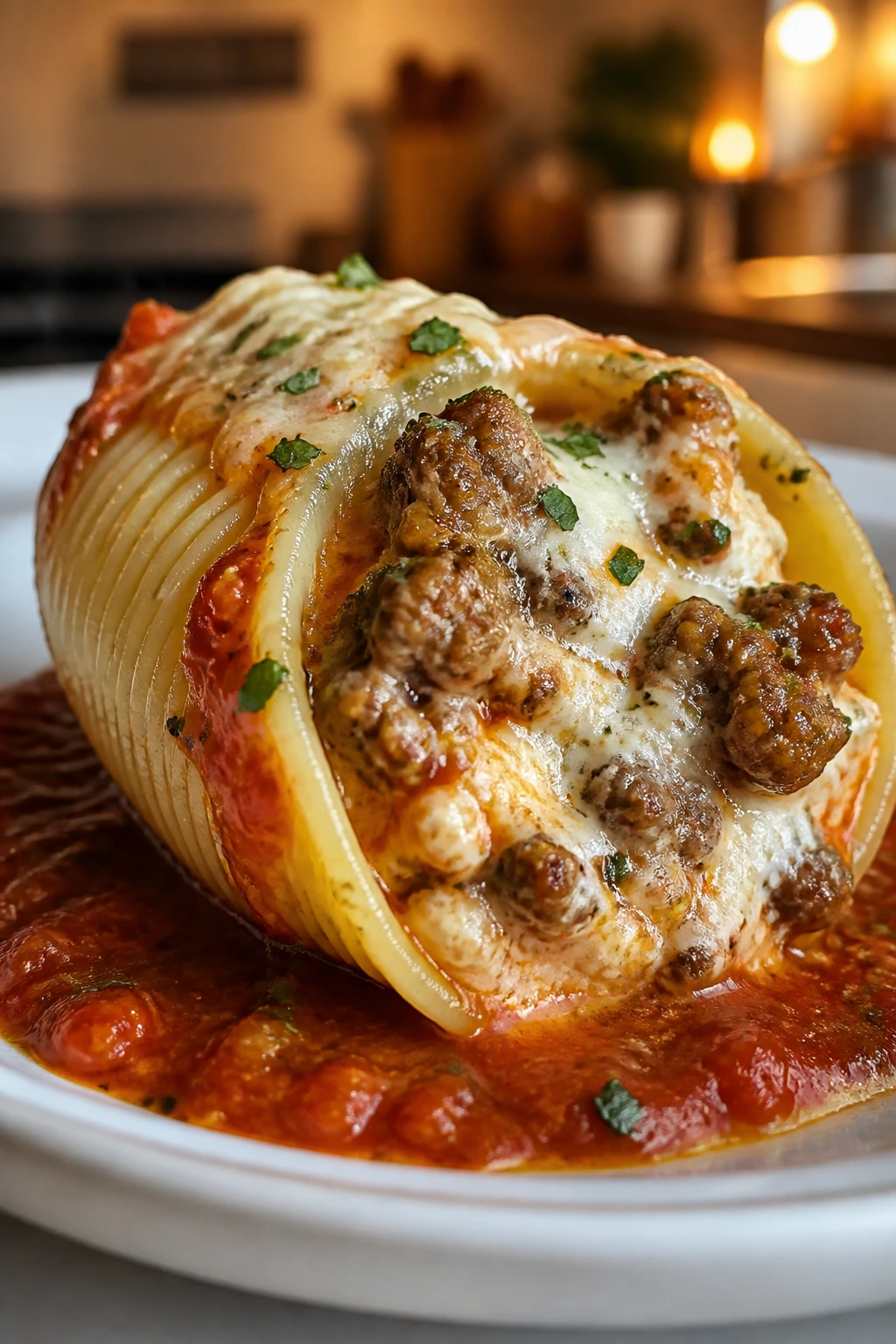
Intro:
Stuffed shells give you built-in portions, which is useful when the table is crowded and people want a plate that looks deliberate. Sausage makes the filling savory, ricotta keeps it creamy, and marinara holds the whole thing together.
Why It Works:
The shells are large enough to hold a filling that isn’t shy. Sausage and ricotta give you both richness and structure, spinach adds a little green so the pan doesn’t feel all cheese, and the marinara keeps the pasta soft while it bakes. This one should come out saucy.
Key Ingredients:
- 20 jumbo pasta shells
- 1 lb Italian sausage
- 15 oz ricotta
- 2 cups chopped spinach
- 1 egg
- 2 cups marinara sauce
- 2 cups shredded mozzarella
- ½ cup grated Parmesan
- 1 tsp dried Italian seasoning
Quick Steps:
- Cook the shells until just al dente and drain.
- Brown the sausage and cool slightly.
- Mix sausage, ricotta, spinach, egg, half the Parmesan, and seasoning.
- Fill the shells and arrange them in a baking dish over a layer of marinara. Spoon the rest of the sauce on top.
- Top with mozzarella and bake at 375°F for 25 to 30 minutes until hot and bubbly.
Equipment for This Recipe:
- Large pot
- Baking dish
- Spoon for filling
- Skillet
How to Serve This Dish:
Serve 4 to 5 shells per person with extra sauce spooned around the plate. A crisp salad and warm bread are enough to finish the meal.
Pro Tips for This Recipe:
- Cook a few extra shells; some always tear.
- Let the sausage cool before mixing so it doesn’t scramble the egg in the filling.
- Fill the shells generously, but not so full that they split open.
Variations on This Dish:
- Garlicky Spinach Version: Add sautéed garlic and extra spinach to the filling.
- Pink Sauce Bake: Mix a little cream into the marinara for a softer sauce.
Common Mistakes to Avoid with This Dish:
- Overcooking the shells: They tear when you try to stuff them.
- Using too little sauce in the pan: The exposed pasta edges dry out.
25. Sweet Potato, Sausage, and Black Bean Chili
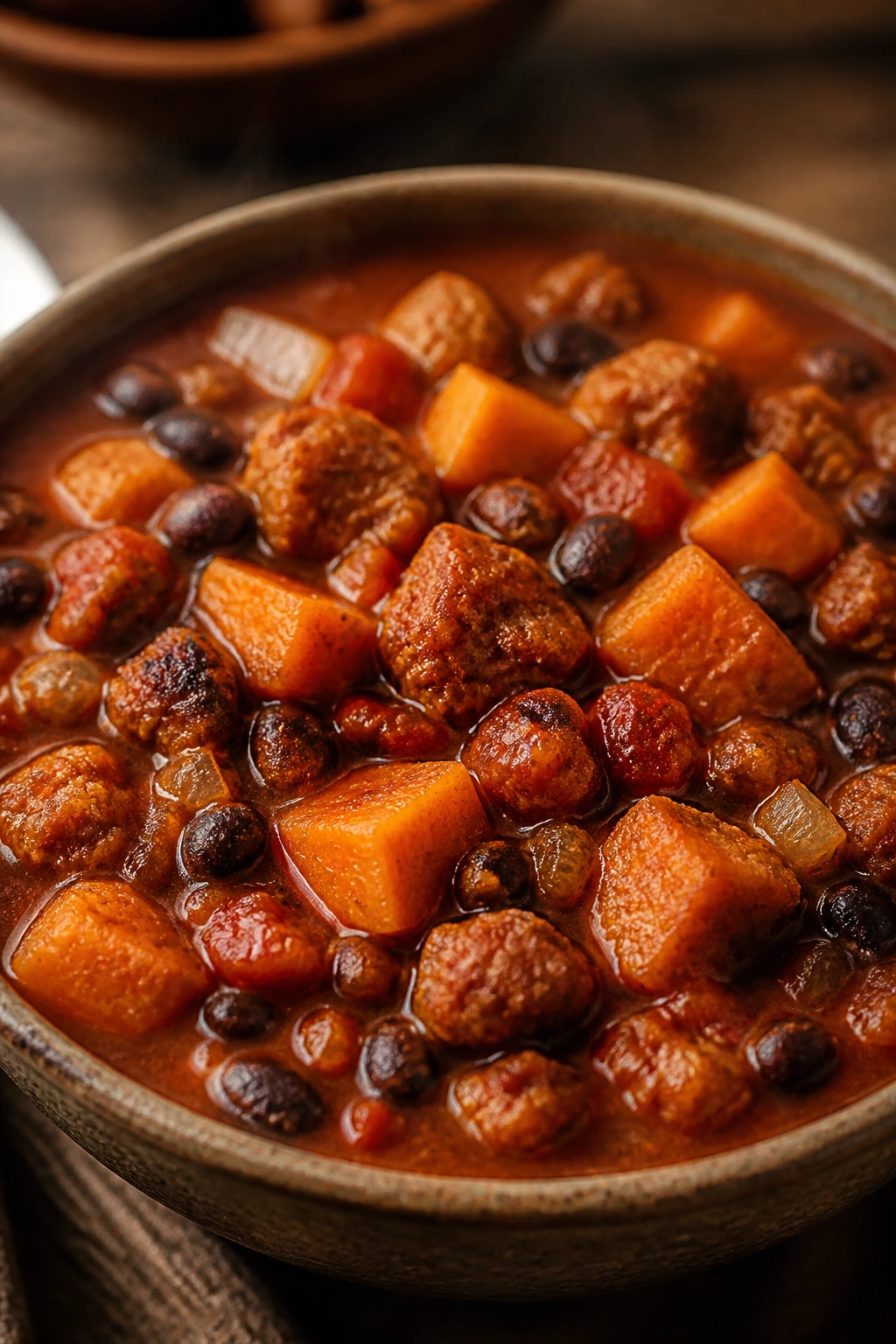
Intro:
This chili is thick, smoky, and a little sweet in the way good chili should be when sweet potatoes are involved. Black beans hold their shape, sausage keeps the pot meaty, and the lime at the end is not optional in my kitchen.
Why It Works:
Sweet potatoes break down just enough to thicken the broth without turning the pot into puree. Sausage brings seasoning, beans add body, and chili powder plus cumin build the familiar base. It’s the sort of bowl that feels steady on a cold plate.
Key Ingredients:
- 1 lb Italian or chorizo-style sausage
- 1 tbsp oil
- 1 onion, diced
- 2 garlic cloves, minced
- 2 medium sweet potatoes, peeled and diced
- 1 (15 oz) can black beans, drained and rinsed
- 1 (14.5 oz) can diced tomatoes
- 2 cups chicken broth
- 2 tbsp chili powder
- 1 tsp ground cumin
- 1 lime, cut into wedges
- Cilantro, for serving
Quick Steps:
- Brown the sausage in a soup pot.
- Add onion and cook until soft, then stir in garlic, chili powder, and cumin for 30 seconds.
- Add sweet potatoes, beans, tomatoes, and broth. Bring to a simmer.
- Cook 20 to 25 minutes until the sweet potatoes are tender and the chili has thickened.
- Finish with lime juice and cilantro.
Equipment for This Recipe:
- Soup pot or Dutch oven
- Wooden spoon
- Sharp knife
- Ladle
How to Serve This Dish:
Serve it in deep bowls with cornbread or tortilla chips. A spoonful of sour cream or shredded cheddar works if you want the bowl richer.
Pro Tips for This Recipe:
- Cut the sweet potatoes into even cubes so they soften at the same pace.
- If you want a thicker chili, mash a few sweet potato pieces against the pot side.
- Add lime after the heat is off or the citrus gets dull.
Variations on This Dish:
- Smoky Chili: Add a pinch of smoked paprika.
- Bean-Heavy Version: Add a second can of beans if you want more bulk.
Common Mistakes to Avoid with This Dish:
- Using tiny sweet potato cubes: They dissolve too quickly.
- Skipping the final acid: The lime wakes the whole pot up.
26. Polenta Bowls with Sausage and Garlicky Greens
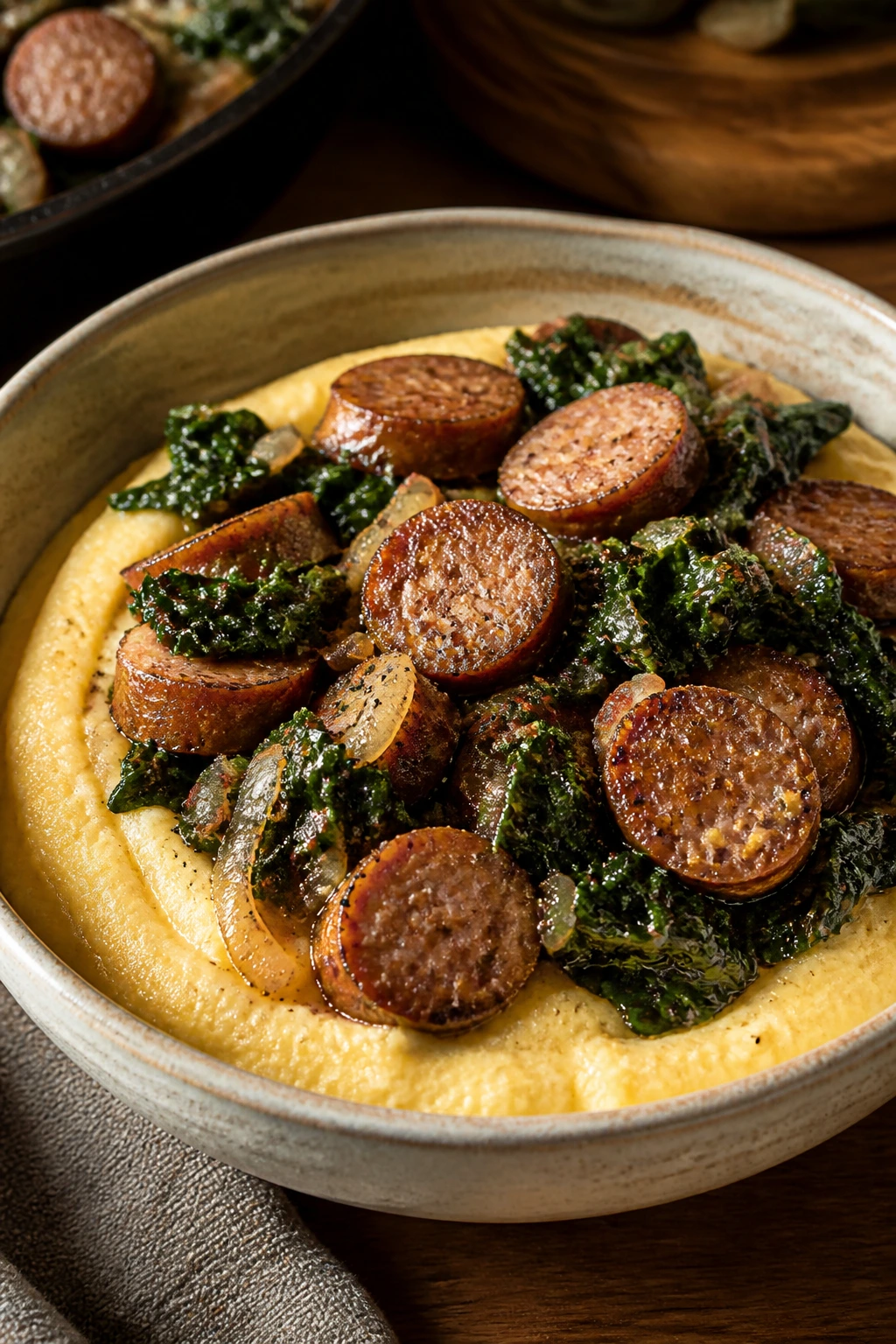
Intro:
Polenta does quiet work. It turns soft and creamy, gives the sausage a bed to sit on, and lets garlicky greens bring a little bite to the bowl so nothing feels too soft.
Why It Works:
Creamy polenta is good at catching sausage drippings and any sauce in the bowl. Greens like kale or chard add bitterness and texture, and the Parmesan finish keeps the base savory rather than bland. If you want a meal that feels calm but not sleepy, this is a strong one.
Key Ingredients:
- 1 lb Italian sausage
- 1 cup polenta
- 4 cups water or broth
- 2 tbsp butter
- ½ cup grated Parmesan
- 1 bunch kale or chard, chopped
- 4 garlic cloves, sliced
- 1 tbsp olive oil
- 1 lemon, cut into wedges
Quick Steps:
- Brown the sausage in a skillet and keep warm.
- Bring the water or broth to a simmer, whisk in the polenta, and cook until creamy, about 20 minutes. Stir in butter and Parmesan.
- In another pan, cook garlic in olive oil for 30 seconds, then add the greens and a splash of water. Cook until wilted.
- Spoon polenta into bowls, top with greens and sausage, and finish with lemon.
Equipment for This Recipe:
- Saucepan
- Skillet
- Whisk
- Wooden spoon
How to Serve This Dish:
Serve the bowls hot and creamy, with the sausage tucked into the center. A little extra Parmesan and black pepper make the plate feel finished.
Pro Tips for This Recipe:
- Whisk the polenta well as it goes in or it clumps.
- Keep the greens just wilted so they still have some bite.
- If the polenta tightens, loosen it with a splash of hot broth.
Variations on This Dish:
- Tomato-Garlic Version: Spoon a little marinara over the sausage before serving.
- Creamier Bowl: Stir 2 tablespoons cream into the polenta at the end.
Common Mistakes to Avoid with This Dish:
- Cooking polenta too fast: It can turn grainy. Keep the simmer gentle.
- Adding the greens too early: They lose color and texture.
27. Breakfast-for-Supper Sausage, Egg, and Hash Brown Casserole
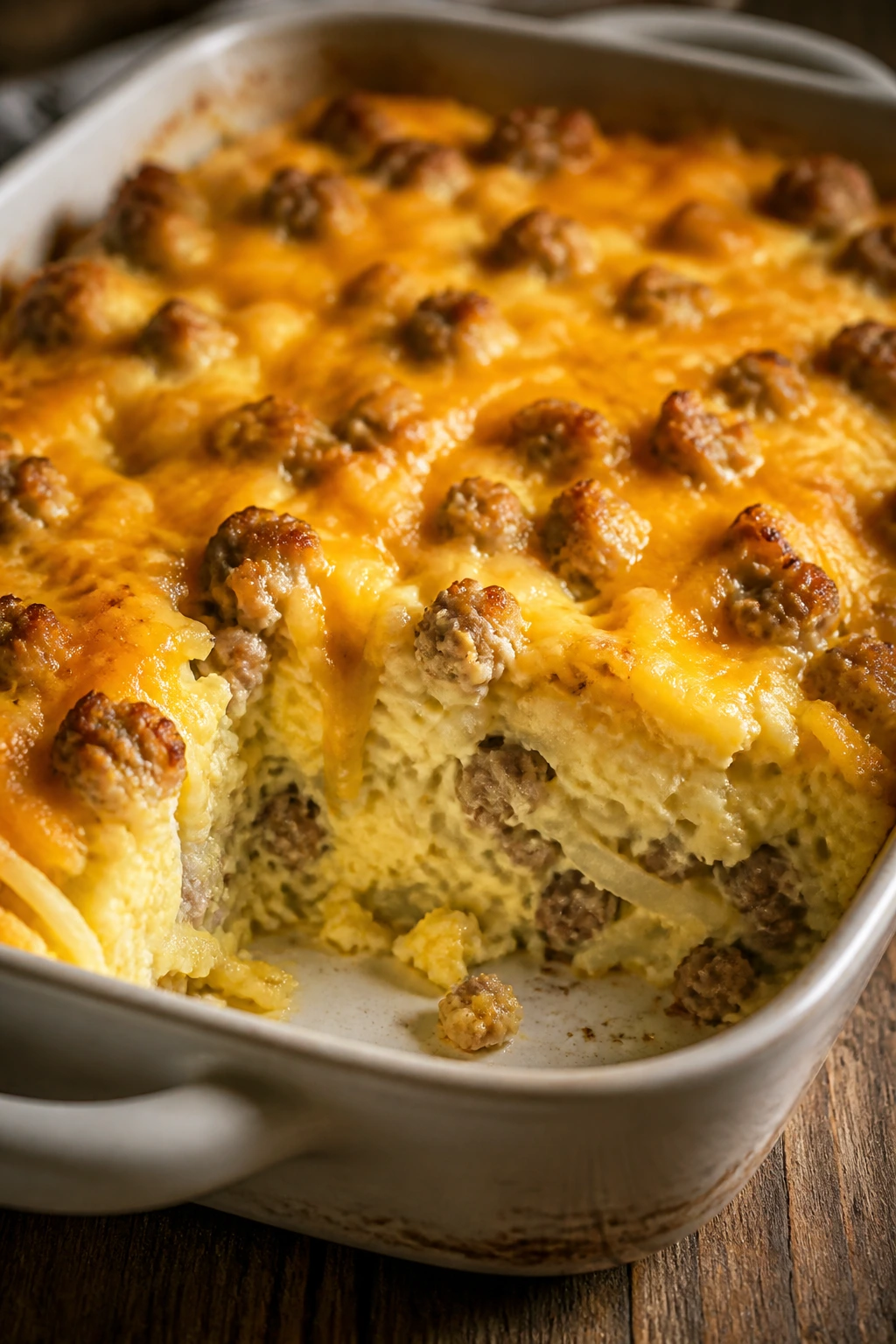
Intro:
A breakfast casserole for Sunday supper is not a cop-out. It’s a clean answer to a day that already ran long. Sausage, eggs, potatoes, and cheese together make a pan that eats like comfort without needing a stove full of pots.
Why It Works:
Hash browns give the base some crisp edges and a starch that soaks up the eggs. Sausage seasons the whole pan, bell pepper adds sweetness, and cheddar brings the kind of cheese pull people expect from something baked in a dish. It’s also easy to make ahead, which helps.
Key Ingredients:
- 1 lb breakfast sausage
- 1 tbsp butter
- 1 onion, diced
- 1 bell pepper, diced
- 1 (30 oz) bag frozen hash browns, thawed
- 8 large eggs
- 2 cups milk
- 2 cups shredded cheddar
- 2 green onions, sliced
Quick Steps:
- Brown the sausage with the onion and bell pepper.
- Spread the hash browns in a greased 9×13-inch dish and top with sausage mixture.
- Whisk eggs and milk with salt and pepper, then pour over the pan.
- Top with cheddar and bake at 375°F for 40 to 45 minutes until the center is set.
- Rest 10 minutes and finish with green onions.
Equipment for This Recipe:
- Skillet
- Baking dish
- Mixing bowl
- Whisk
How to Serve This Dish:
Cut into squares and serve with fruit or a tomato salad if you want the plate to feel lighter. Hot sauce belongs on the table.
Pro Tips for This Recipe:
- Thaw the hash browns so the casserole bakes evenly.
- Let the sausage mixture cool slightly before adding the eggs or the custard starts cooking early.
- Check the center with a knife or thermometer; it should be set, not loose.
Variations on This Dish:
- Southwest Version: Add diced green chiles and pepper jack.
- Extra-Cheesy Version: Mix a little cream cheese into the egg base.
Common Mistakes to Avoid with This Dish:
- Using frozen hash browns straight from the freezer: The casserole can bake unevenly and stay wet underneath.
- Cutting too soon: The egg needs a short rest to firm up.
28. Sausage and Sun-Dried Tomato Skillet with Creamy Polenta
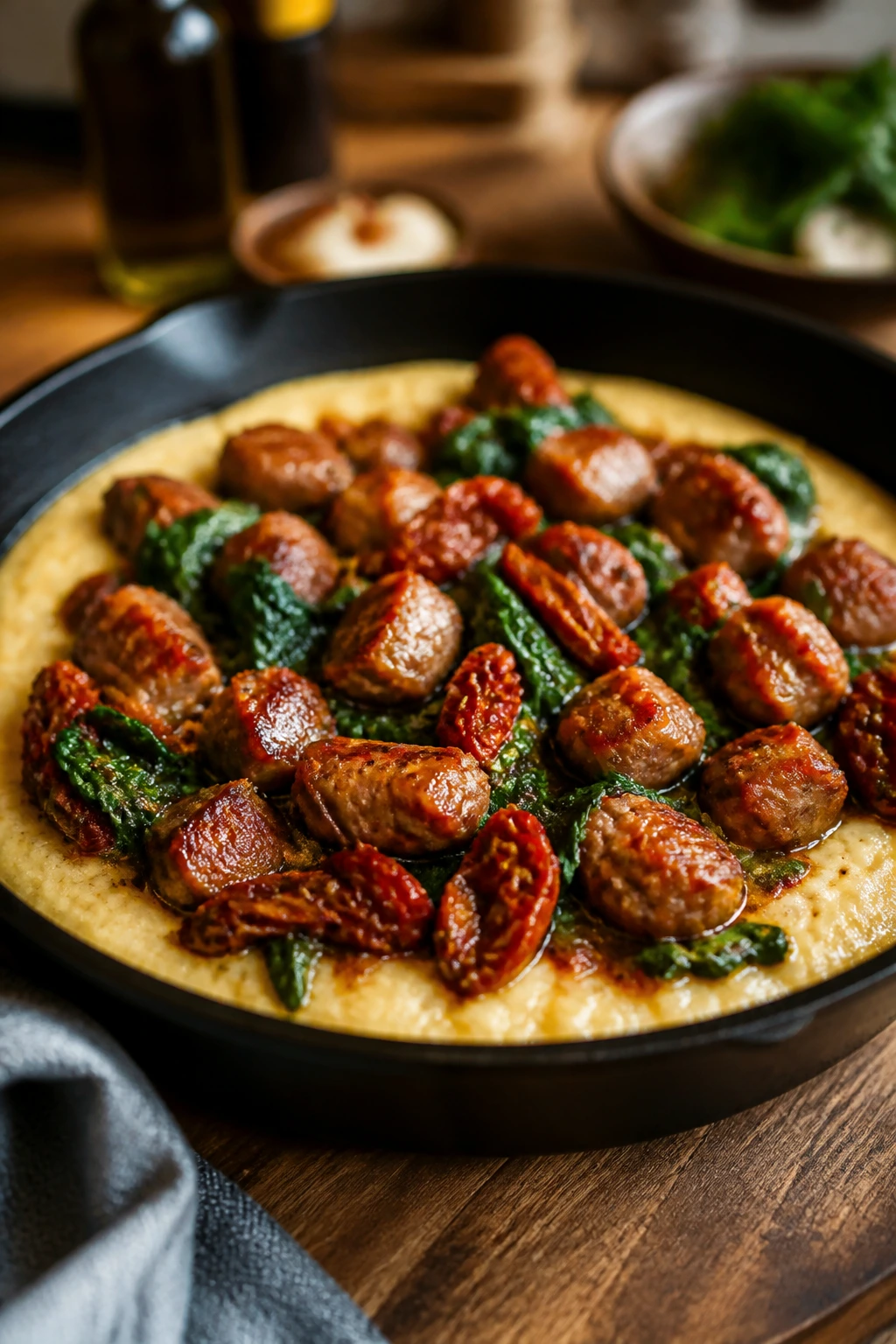
Intro:
Sun-dried tomatoes bring a concentrated sweetness that works well with sausage, especially when the whole skillet lands over creamy polenta. It feels like a restaurant plate if you stop yourself from overcomplicating it.
Why It Works:
The sausage gives the pan fat and salt, the sun-dried tomatoes add a little chew and tang, and the spinach softens into the sauce without stealing the scene. Polenta underneath catches every drip and turns the whole thing into a supper that feels composed without being precious.
Key Ingredients:
- 1 lb Italian sausage
- 1 tbsp olive oil
- 1 onion, diced
- 3 garlic cloves, minced
- ⅓ cup chopped sun-dried tomatoes in oil, drained
- 2 cups baby spinach
- 1 cup polenta
- 4 cups chicken broth
- ½ cup cream
- ½ cup grated Parmesan
- 2 tbsp chopped basil
Quick Steps:
- Brown the sausage in a large skillet and set aside.
- Cook onion in the same pan until soft, then add garlic and sun-dried tomatoes for 1 minute.
- Stir in spinach and sausage until the spinach wilts.
- In a saucepan, cook the polenta in broth until creamy, then finish with cream and Parmesan.
- Spoon the polenta into bowls and top with the sausage mixture and basil.
Equipment for This Recipe:
- Large skillet
- Saucepan
- Whisk
- Ladle
How to Serve This Dish:
Serve it immediately while the polenta is still soft. A green salad with a sharp vinaigrette keeps the plate from feeling too rich.
Pro Tips for This Recipe:
- Drain the sun-dried tomatoes well so the skillet doesn’t go oily.
- Keep the polenta loose enough to spoon; thick paste is not the goal.
- Add basil right at the end so it stays fragrant.
Variations on This Dish:
- Mushroom Swap: Add sliced mushrooms with the onion for more bulk.
- Spicy Red Finish: Add red pepper flakes with the garlic if you want heat.
Common Mistakes to Avoid with This Dish:
- Using sun-dried tomatoes without oil: They need a little fat and softness to fit the dish.
- Letting the polenta sit too long before serving: It tightens fast.
Why Sausage Belongs at the Sunday Table
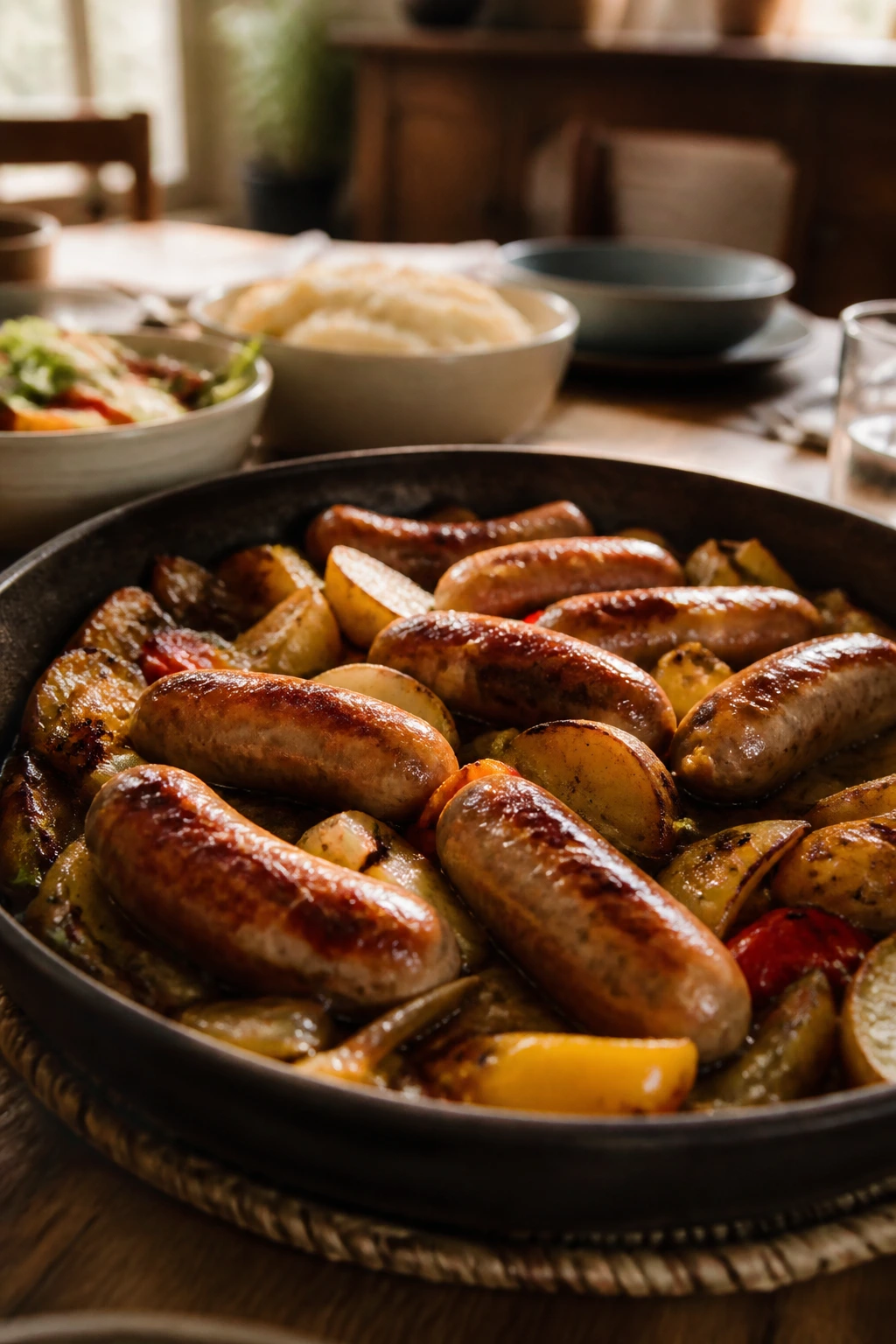
Sausage brings a rare kind of efficiency to a dinner table. It browns quickly, seasons the pan as it cooks, and gives you a head start on flavor before the vegetables, starches, or sauce even enter the picture. That means you can build a serious meal without a long ingredient parade. And that matters on a Sunday, when the goal is not speed for its own sake but a calmer kind of cooking.
The other reason sausage works so well here is texture. It can be sliced, crumbled, browned, baked, simmered, or tucked into a casing and roasted whole. That flexibility lets it play with pasta, rice, cabbage, beans, potatoes, bread, and greens without feeling repetitive. It is one of the few proteins that still tastes like dinner when the recipe is casual.
A lot of these dishes also benefit from the fat sausage leaves behind. Not all at once. You still want to drain off excess grease when a pan gets slick. But enough of it should stay to coat the onions, bloom the garlic, and carry the herbs. That little bit of fat is where the Sunday supper flavor lives.
Essential Equipment for These Recipes

- 12-inch skillet: The workhorse for browning sausage, softening vegetables, and reducing sauces without crowding.
- Dutch oven: Best for soups, stews, rice dishes, and anything that needs steady heat and a lid.
- Rimmed sheet pan: Useful for roast dinners and tray-bake meals where browning matters more than sauce.
- 9×13-inch baking dish: The casserole size that shows up again and again because it fits baked pasta, gratins, and stuffed pepper bakes.
- Large pot: Needed for pasta, soup, and boiling shells or noodles.
- Instant-read thermometer: The easiest way to know sausage is done without guessing.
- Sharp chef’s knife: Important for peppers, onions, cabbage, apples, squash, and anything that needs clean slicing.
- Cutting board with a towel underneath: Keeps the board from sliding when you’re working through a lot of vegetables.
- Wooden spoon or spatula: Better than a whisk for stirring sausage and vegetables without tearing them apart.
- Colander: Pasta and blanching jobs need a fast drain.
- Whisk: Essential for cream sauces, custards, polenta, and anything that should stay smooth.
- Airtight storage containers: Leftovers keep better when they cool evenly and seal tightly.
Smart Shopping and Ingredient Tips
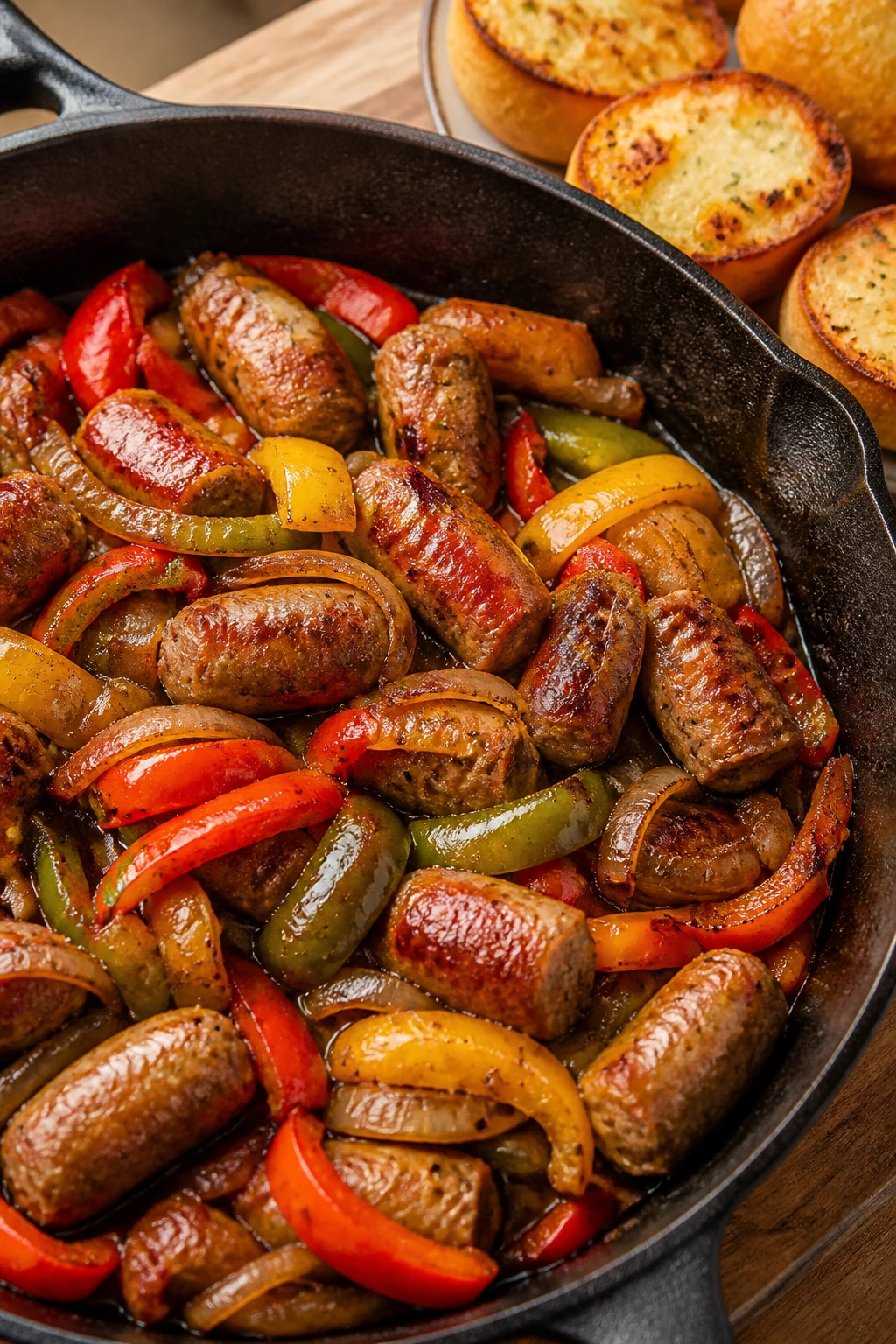
The biggest shopping decision is the sausage itself. Fresh Italian sausage, sweet or hot, works well for baked pasta, gratins, stuffed shells, and skillet meals. Andouille brings smoke and heat, which is why it shines in jambalaya and chili. Kielbasa and other smoked sausages already come cooked, so they’re useful when you want less fuss and a faster finish. If the sausage label looks odd and the ingredient list is full of fillers, I usually pass. A shorter list tends to cook cleaner.
Fat matters, but so does seasoning level. Some sausages are so salty that they need a lighter hand elsewhere. If you’re using a very seasoned link, reduce the salt in the sauce or eggs until you taste the finished dish. Lean chicken or turkey sausage works too, but it often needs a tablespoon or two of oil in the pan to keep from going dry and chalky.
For vegetables, buy enough to let the sausage breathe. Onions, peppers, cabbage, squash, and greens all shrink more than people expect. A pan that looks full at the cutting board can look half empty after the heat gets to it. That is not a sign you bought too much. That’s how the ingredients behave.
Tomato products deserve a little attention. Crushed tomatoes make a smoother sauce; diced tomatoes leave more shape. Tomato paste can rescue a sauce that tastes thin or flat. And if you’re using canned beans, rinse them unless the recipe depends on their canning liquid for body. A little small decision like that changes whether the final pot tastes polished or merely assembled.
For cheese, buy blocks when you can and shred them yourself for bakes and sauces. Pre-shredded cheese works in a pinch, but the coating on it can make melts less smooth. On the other hand, pre-shredded isn’t the enemy. It still wins on speed when the table needs dinner, not a lecture.
How to Serve These Recipes
Presentation:
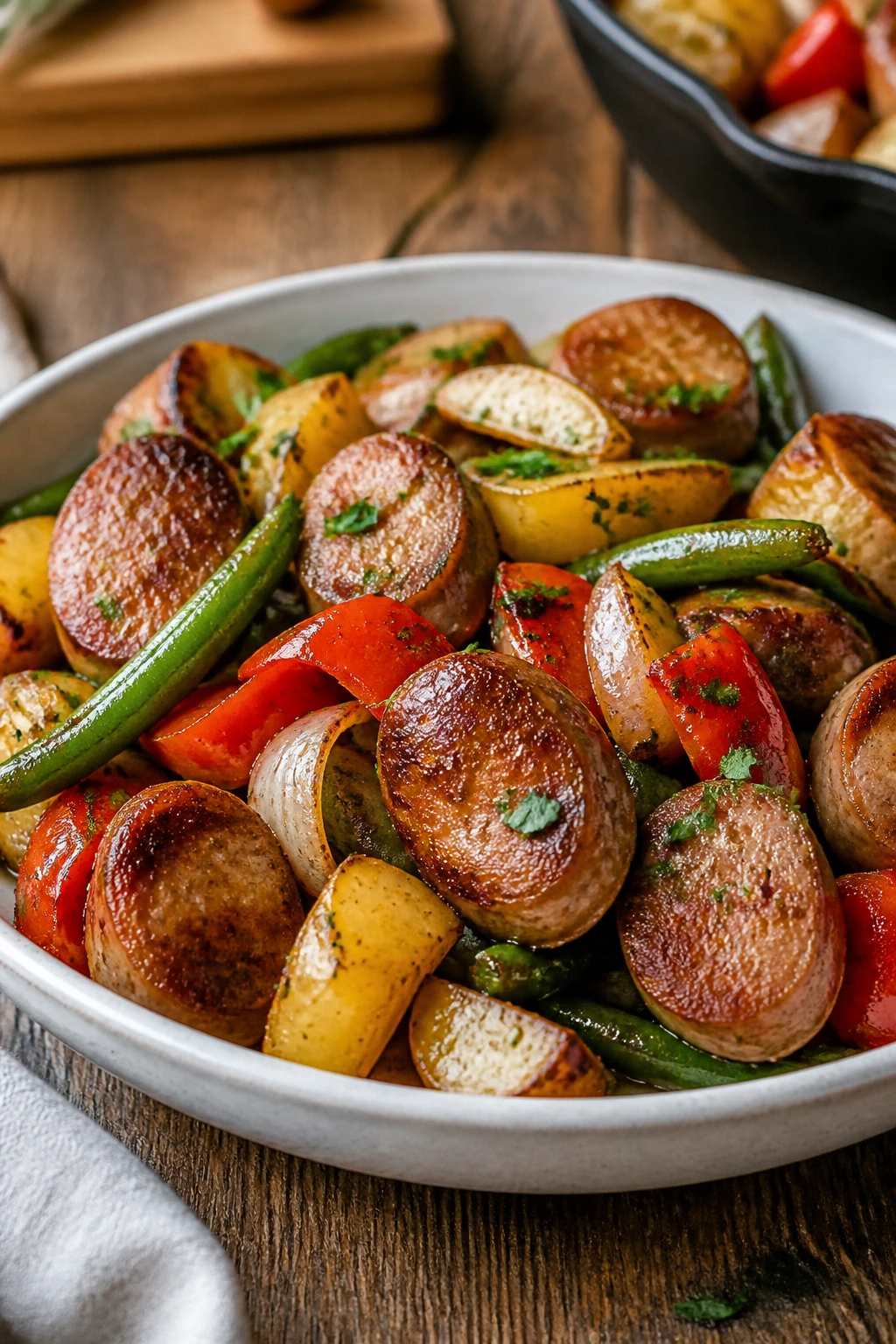
Serve skillet meals in wide shallow bowls or on large platters so the sausage and vegetables stay visible. Casseroles and baked pastas look best when they rest long enough to hold a square or a spoonful; the edges should be intact, not running across the plate. A scatter of herbs, black pepper, or Parmesan right before serving gives the food a finished look without making it fussy.
Accompaniments:
Crusty bread, garlic rolls, buttered green beans, a bitter salad, or roasted broccoli all fit this theme without fighting it. For richer dishes like gratins and mac and cheese, choose something crisp and sharp on the side — a lemony salad or vinegary slaw keeps the meal from feeling dense. For brothy soups and stews, bread is not optional in my house.
Portions:
Most of these recipes feed 4 to 6 people, though the pasta bakes and casseroles can stretch further if you add a salad and bread. For a larger table, count on about 6 to 8 ounces of finished dish per person for pasta or rice-based meals, and a little less if the side dishes are generous. If you’re serving a gravy-rich stew or soup, people usually eat more than they admit.
Beverage Pairing:
Dry cider works with the apple, cabbage, and roast-pan recipes. A medium-bodied red wine like Chianti or a simple lager fits tomato-based bakes, sausage pasta, and subs. For non-alcoholic pairing, sparkling water with lemon or a tart unsweetened iced tea cuts through the richness better than anything sugary.
Additional Tips and Flavor Boosters
Flavor Enhancement:
A small splash of acid at the end — lemon juice, red wine vinegar, or cider vinegar — changes sausage dishes more than another pinch of salt ever will. Sausage already brings richness; acid keeps the plate from going dull. I use this trick constantly with stews, cabbage, beans, and creamy pastas.
Customization:
If the table likes heat, add red pepper flakes early so they bloom in the fat, not just sit on top. If the table likes milder food, lean on sweet sausage, fennel, apples, carrots, and a little extra herb. For a more vegetable-heavy plate, bump the greens, beans, or mushrooms up by one full cup and reduce the starch slightly.
Serving Suggestions:
Fresh parsley, basil, dill, or chives can lift a heavy sausage supper with almost no effort. Toasted breadcrumbs, crispy onions, or a dusting of Parmesan add texture where a dish feels too soft. I also like a spoonful of mustard on the side with cabbage, sausage, or kielbasa plates; it’s old-fashioned for a reason.
Make-It-Yours:
For gluten-free plates, swap in rice, polenta, potatoes, corn tortillas, or gluten-free pasta where the recipe calls for bread or noodles. For dairy-free versions, skip the cream sauces and lean on tomato, broth, olive oil, and a little pasta water; it sounds limited, but it’s not. For lower-sodium cooking, choose uncured sausage when possible and build flavor with garlic, herbs, and acid instead of extra salt.
Make-Ahead, Storage, and Reheating Guidance
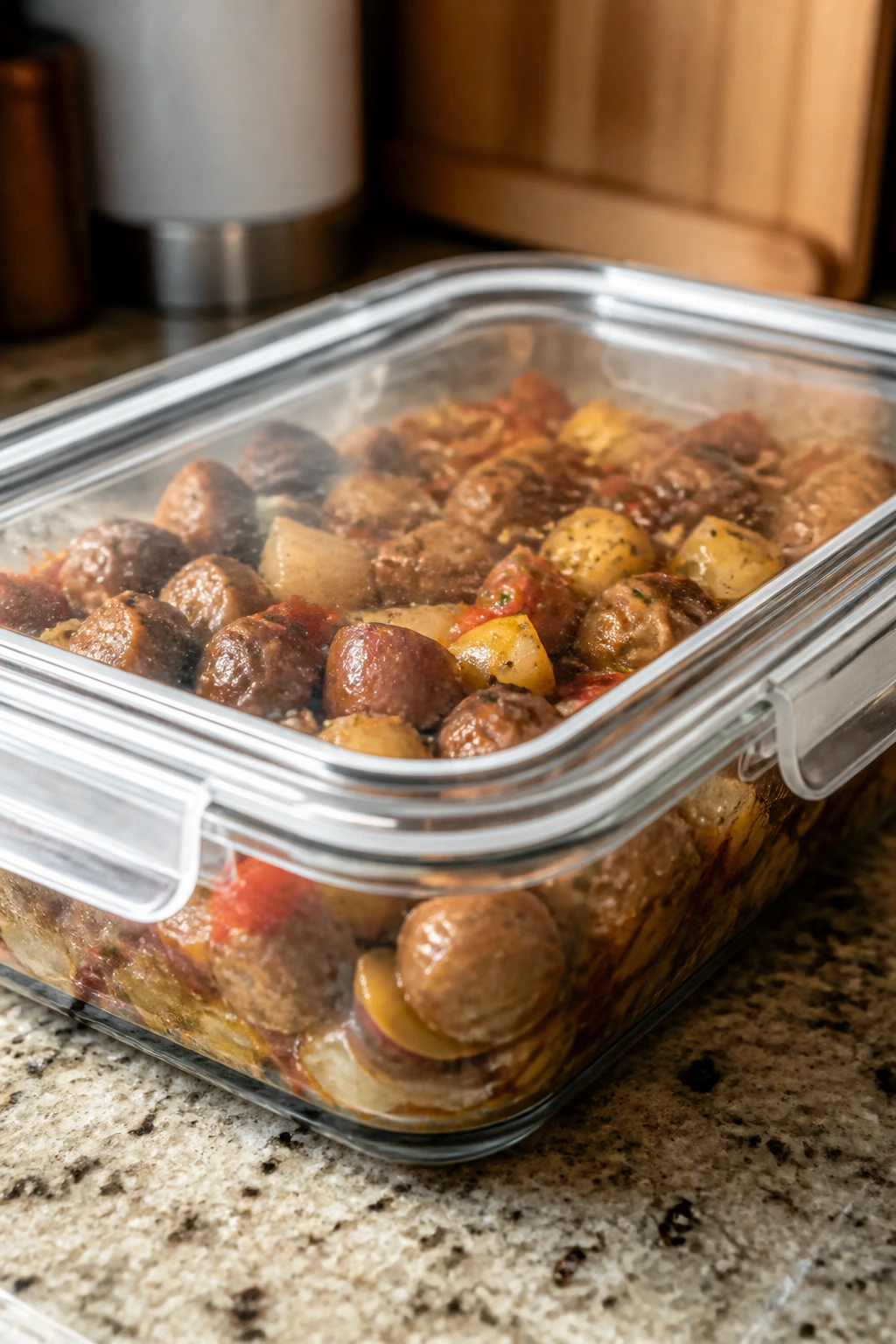
Most sausage meals hold well for 3 to 4 days in the refrigerator if you cool them quickly and store them in airtight containers. Soups, stews, casseroles, and pasta bakes all benefit from being divided into shallow containers so they chill faster and more evenly. I’d avoid leaving any of them at room temperature for more than 2 hours, less if the kitchen is warm.
For the freezer, 2 months is the sweet spot for best texture. Soups, stews, chili, and rice dishes freeze better than cream-heavy pastas or baked casseroles, but almost all of them can be frozen if you accept a little texture change. If you know a dish will be frozen, undercook the pasta slightly and leave the cheese topping off until reheating.
Reheat soups and stews on the stovetop over medium-low heat with a splash of broth or water. Bring them back to a simmer and check that the sausage reaches 165°F when reheated, especially if the recipe uses poultry sausage. Casseroles and baked pastas reheat best covered in a 325°F oven until hot in the center, then uncovered for a few minutes if you want the top to crisp again.
Microwave reheating works for single portions, but use a lower setting and stir once or twice so the edges don’t dry out. Polenta, risotto, and pasta dishes usually need a little liquid when reheated — a tablespoon or two of broth, water, or milk can bring them back from the brink. Breakfast casseroles and strata are often better the next day, once the egg has settled and the flavors have moved through the bread.
Variations and Adaptations to Try
-
Mild Pantry Sunday:
Use sweet Italian sausage, skip the red pepper flakes, and lean on tomatoes, onions, and herbs. This keeps the food gentle enough for mixed crowds without turning bland. It’s the easiest place to start if your table prefers comfort over heat. -
Smoke and Spice Edition:
Swap in andouille, kielbasa, or smoked sausage for the fresh links in the recipes that can handle it. These sausages add a deeper edge to beans, rice, cabbage, and soup, but they can overpower cream sauces if you’re not careful. Best in jambalaya, chili, stews, and skillet meals. -
Vegetable-Heavy Plate:
Add another vegetable to almost any skillet or bake — mushrooms in the pasta, extra greens in the soup, zucchini in the casserole, or more peppers in the tray bake. The sausage will still carry the flavor, but the meal will feel lighter and a little more balanced. -
Dairy-Light Approach:
Skip cream sauces and lean on tomato, broth, olive oil, beans, and pasta water. Use a smaller amount of cheese as a finish instead of a major ingredient. This works especially well in soups, braises, and skillet meals where the sausage already brings enough richness. -
Gluten-Free Sunday Supper:
Swap pasta for gluten-free pasta, bread for potatoes or polenta, and breadcrumbs for crushed gluten-free crackers or a crisp cheese topping. The casseroles and soups adapt cleanly if you keep an eye on the thickening step. Stuffed peppers and bean stews are especially easy to convert. -
Regional Swap:
Think in flavor families instead of exact recipes. Italian sausage wants tomato, garlic, basil, and Parmesan; andouille wants peppers, rice, thyme, and a little heat; kielbasa wants cabbage, mustard, and apples. Once you keep that map in your head, the swaps stop feeling like swaps.
Common Mistakes to Avoid
-
Browning the sausage too lightly:
Pale sausage gives you pale sauce. You want visible color on the edges before the meat joins the rest of the dish. That browned surface is where the flavor sits. -
Over-salting before tasting the finished pan:
Sausage, Parmesan, broth, olives, sauerkraut, and mustard all bring their own salt. Taste at the end, after everything has reduced and mixed. Early salting is where many sausage dishes go sideways. -
Letting pasta or rice cook past the point of control:
Pasta should stay al dente before the bake. Rice should simmer gently and rest off the heat. If you push either one too far, the texture gets soft in a way you can’t fix later. -
Skipping the acid finish:
Tomato soup, bean stew, creamy pasta, and cabbage dishes all need a little brightness at the end. Lemon, vinegar, mustard, or even pickled peppers can cut the richness and keep the food from tasting heavy. -
Crowding the pan:
Crowded sausage and vegetable pans steam instead of brown. If your skillet looks overloaded, split it into two rounds or use a sheet pan. Color is part of the flavor here. -
Cutting casseroles the second they leave the oven:
If you slice too soon, everything slumps. Give baked pasta, gratins, strata, and stuffed pepper casseroles 10 to 15 minutes to settle. It makes the serving cleaner and the texture better.
Frequently Asked Questions
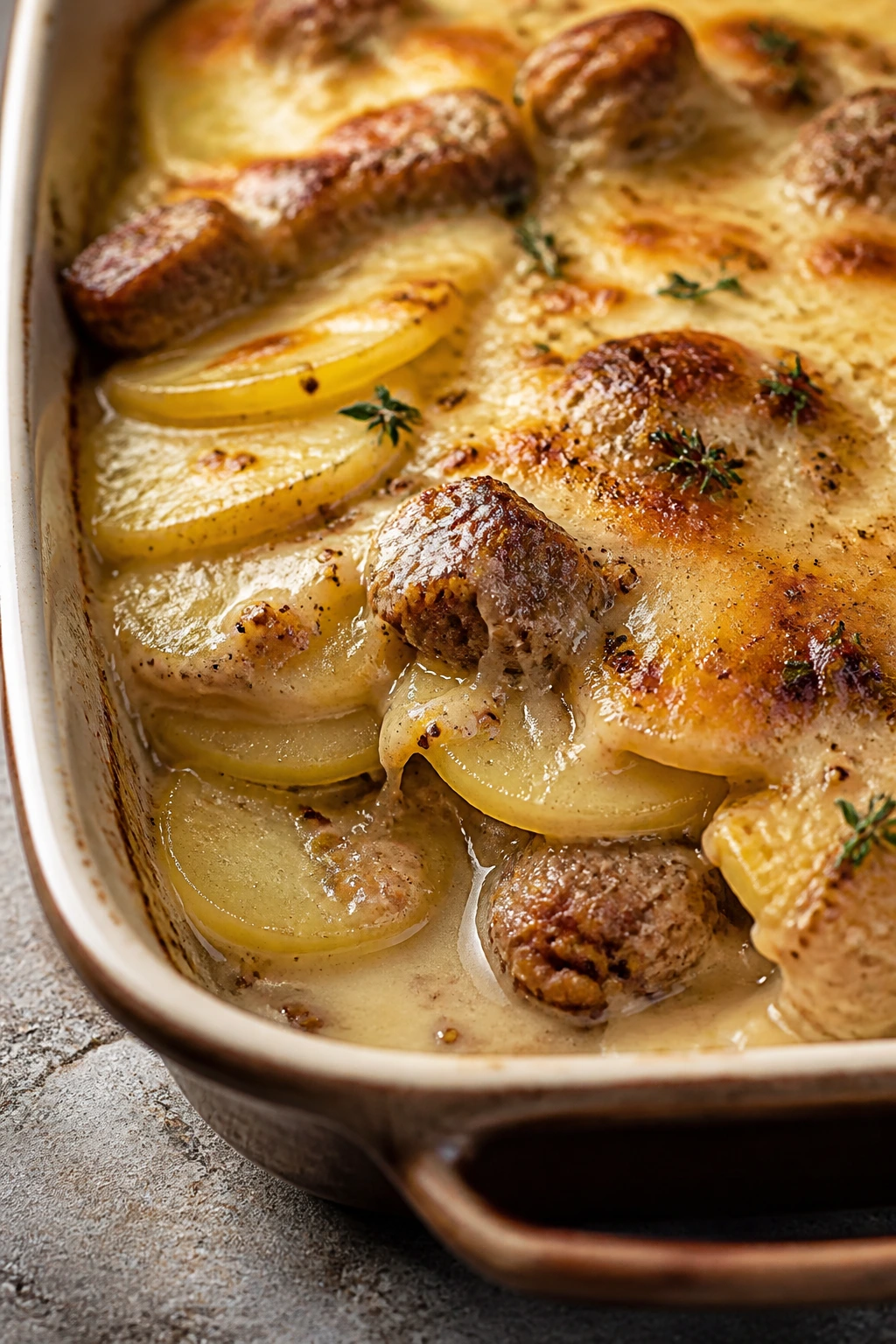
Can I use pre-cooked sausage in these recipes?
Yes, especially in soups, skillet dinners, cabbage dishes, and sheet-pan meals. Just remember that pre-cooked sausage needs only to be heated through, so you can focus more on browning the vegetables and building the sauce.
What’s the best sausage for Sunday supper if I only want to buy one kind?
Sweet or hot Italian sausage is the most flexible single pick. It works in pasta, soup, casseroles, stuffed peppers, and skillet meals without fighting the other ingredients. If you want more smoke, kielbasa is the runner-up.
How do I keep sausage from turning greasy?
Brown it well, then spoon off some of the fat if the pan looks slick. Sausage should leave enough fat to cook the vegetables, but it shouldn’t leave a shiny puddle under the finished dish. That extra tablespoon or two is plenty.
Can I make any of these ahead for the next day?
Absolutely. Baked pasta, stew, chili, soup, and casseroles all reheat well, and some taste better after the flavors settle. If you’re planning ahead, slightly undercook pasta and rice so they don’t turn soft during reheating.
What if my sausage is cooked outside but still pink inside?
Use a thermometer instead of guessing. Fresh pork sausage should reach 160°F, and poultry sausage should reach 165°F. Color can fool you, especially in tomato sauce or smoky sausage blends.
Can I freeze sausage casseroles and soups?
Yes. Soups, stews, chili, and rice dishes freeze best. Cream-heavy pasta bakes and cheese-forward casseroles can freeze too, but they may need a splash of broth or milk when reheated to bring the texture back.
What sides go with these sausage meals without making the meal too heavy?
Choose one crisp thing and one simple thing. A sharp salad, roasted broccoli, green beans, slaw, or vinegar-dressed cabbage can sit next to almost any sausage supper without competing with it. Bread is great, but you do not need bread every time.
How do I make these recipes work for a bigger crowd?
Scale the sausage and starch first, then add vegetables carefully so the pan doesn’t overflow. For casseroles and sheet-pan meals, use a second pan instead of forcing everything into one dish. That keeps browning intact, which matters more than squeezing it all in.
Can turkey or chicken sausage stand in for pork sausage?
Yes, but expect less fat and a slightly leaner finish. Add a bit of olive oil when browning, and lean harder on herbs, garlic, mustard, or tomatoes so the dish doesn’t taste thin. It’s a good swap if you keep an eye on moisture.
Sunday Supper, Handled
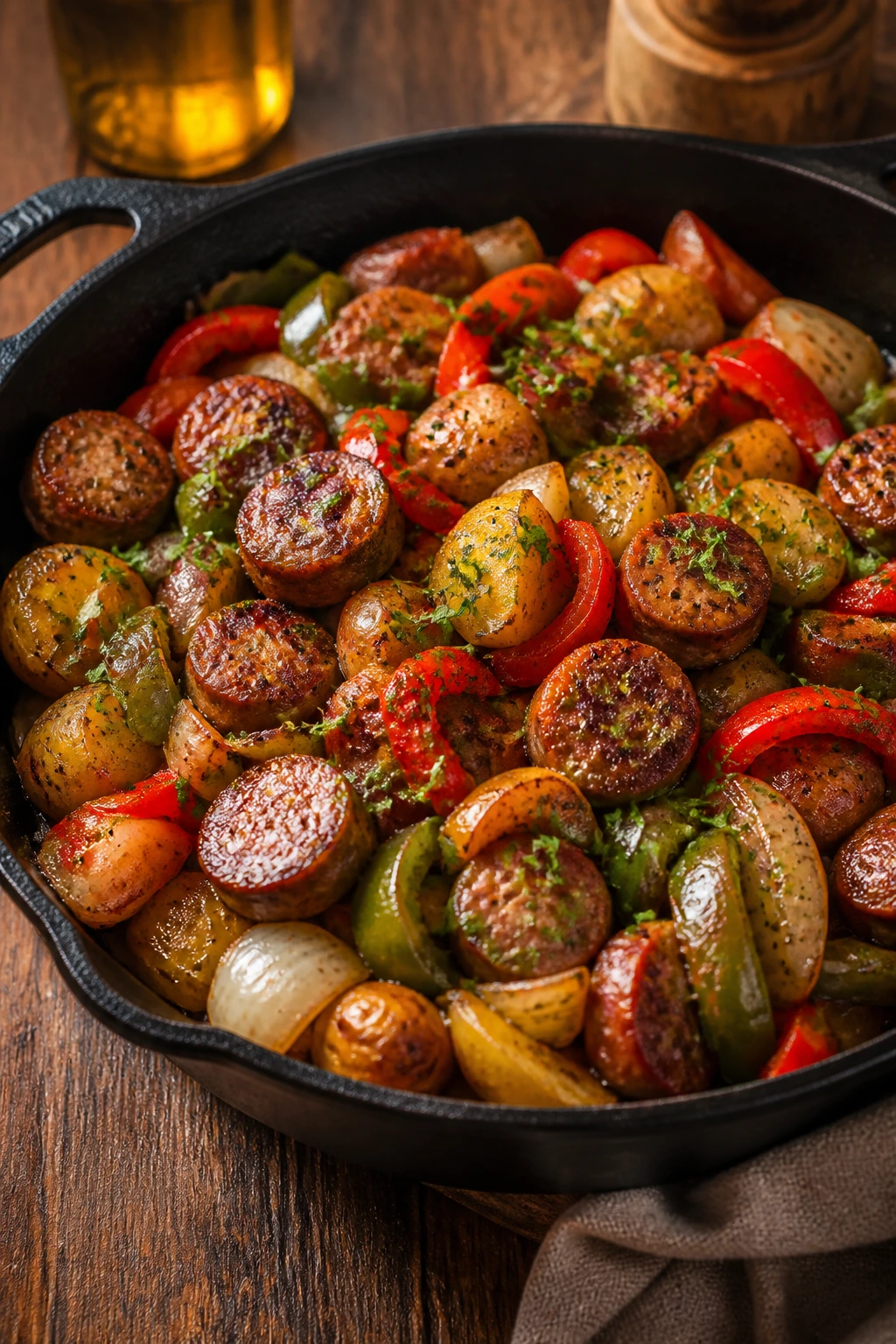
Sausage has a way of making dinner feel planned even when the pantry looked ordinary an hour earlier. That’s the quiet advantage running through these dishes: you get browned edges, built-in seasoning, and enough flexibility to move between soup, bake, skillet, and roast without starting from scratch every time.
Keep the sausage browned, the vegetables cut evenly, and the acid finish in mind. That trio does a lot of work. The rest is just choosing whether the table wants pasta, potatoes, beans, rice, or bread to carry the load tonight.
Pick one pan, one pot, or one casserole dish, and let the sausage do what it does best.