



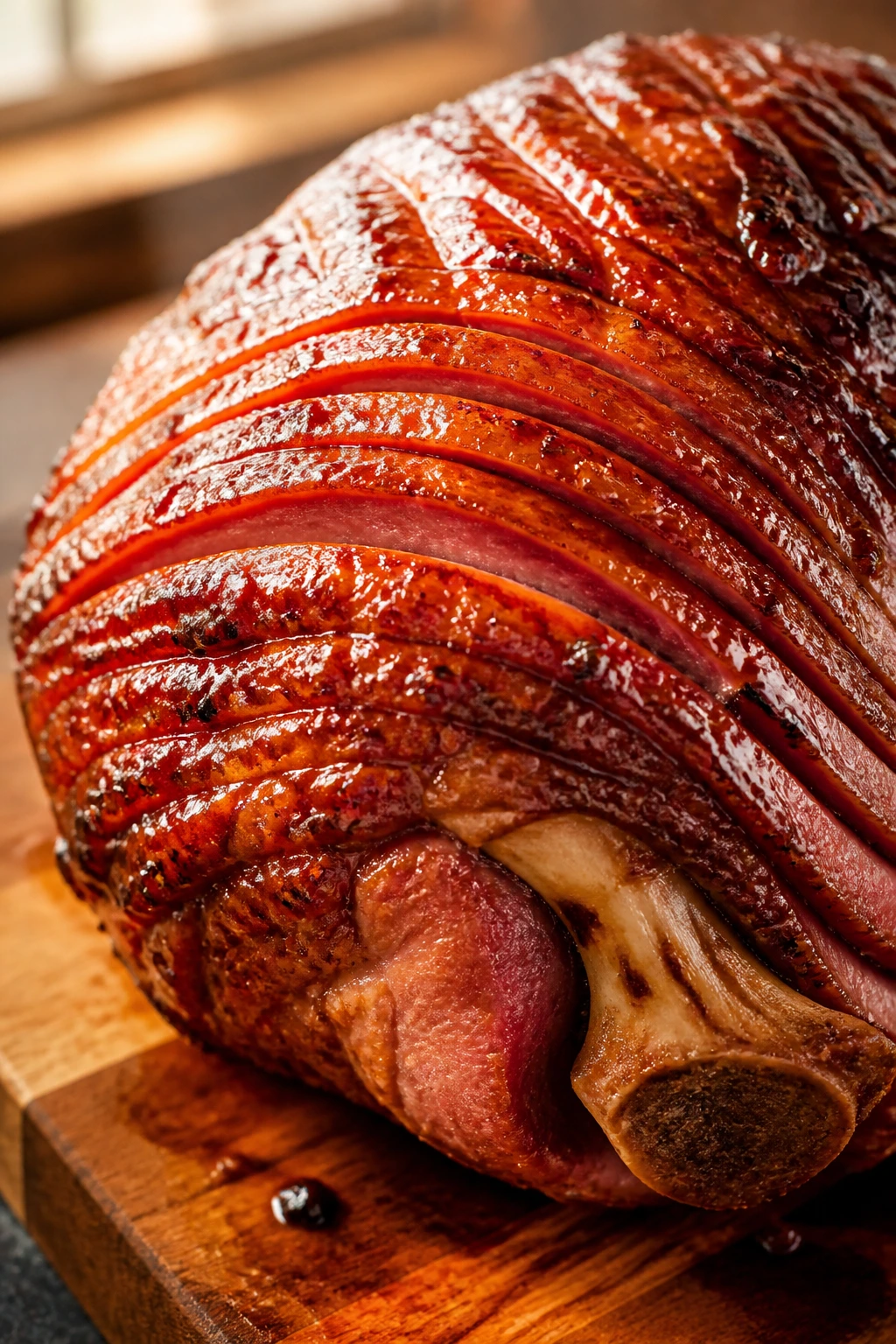
A good brown sugar ham glaze should look like warm amber lacquer, not candy syrup. That’s the line I keep coming back to whenever I bake ham, because the difference between a slice that stays juicy and one that tastes like it spent too long in a hot room usually comes down to two things: heat and timing. Ham is already cooked in most cases, so the job is not to bully it into doneness. The job is to warm it gently, then give the outside a glossy, sticky coat that clings to every cut edge.
There’s a reason so many ham dinners disappoint. People blast the oven too hot, pour on the glaze at the beginning, and walk away. Sugar burns. Spiral slices dry out. The glaze slides into the pan and stays there, which is a shame because the whole point of a brown sugar glaze is the way it settles into the grooves of the meat and turns shiny at the edges. When it works, each slice comes off the bone with a little sheen, a faint whisper of mustard, and just enough caramelized sweetness to keep the salt in the ham from taking over.
I like this style of ham because it feels old-school without tasting tired. The brown sugar gives you depth, the Dijon keeps the sweetness honest, and a splash of vinegar makes the whole thing taste brighter instead of heavy. If you’ve ever had a ham that looked beautiful on the platter but carved up like sawdust, this method fixes that. The glaze does its part. The oven does its part. And the ham, if you treat it right, stays tender enough to make second helpings a little dangerous.
Why This Brown Sugar Ham Glaze Works
Sticky, not claggy: The glaze reduces on the stove and then gets a second pass in the oven, which means it sets on the surface instead of puddling in the pan.
Juicy slices: Covering the ham for most of the bake traps steam around the cut edges, so spiral-sliced ham doesn’t turn dry and stringy before the glaze even has a chance.
Sweetness with a spine: Dijon mustard and apple cider vinegar keep the brown sugar from tasting flat; the glaze lands somewhere between candy and barbecue, which is the sweet spot for baked ham.
Good leftovers: A ham this size usually means sandwiches, bean soup, omelets, and fried rice later on, and the meat stays usable if you cool it properly and keep a little juice with it.
Low drama at the table: A bone-in ham slices cleanly once it rests, and the glaze is forgiving. If the oven runs a little hot or cool, you can still steer it back with foil, a brush, and five extra minutes.
Smells like the whole house is about to eat well: Brown sugar, butter, mustard, and clove do their best work when they hit heat together. The aroma is part of the appeal here, and I would not skip it.
Timing and Yield at a Glance
Yield: Serves 10 to 12
Prep Time: 20 minutes
Cook Time: 1 hour 45 minutes to 2 hours 15 minutes
Total Time: 2 hours 5 minutes to 2 hours 35 minutes, plus resting
Difficulty: Beginner — the steps are straightforward, but an instant-read thermometer matters if you want the ham to stay tender.
Chill/Rest Time: 15 to 20 minutes before slicing
Best Served: Warm, after the glaze turns glossy and the slices still hold their shape
The Ham and Glaze Ingredients
For the Ham:
- 1 fully cooked bone-in ham, 7 to 9 pounds, preferably spiral-sliced
- 1/2 cup water, apple cider, or pineapple juice, for the roasting pan
For the Brown Sugar Glaze:
- 1 cup packed dark brown sugar
- 1/2 cup Dijon mustard
- 1/4 cup honey
- 1/4 cup apple cider vinegar
- 3 tablespoons unsalted butter
- 1/2 cup pineapple juice or orange juice
- 1 teaspoon ground cinnamon
- 1/2 teaspoon ground cloves
- 1/2 teaspoon freshly ground black pepper
- 1 tablespoon cornstarch mixed with 1 tablespoon cold water, optional for a thicker glaze
Optional Finish:
- 1 to 2 tablespoons pan juices, spooned over the sliced ham just before serving
Why Each Ingredient Pulls Its Weight
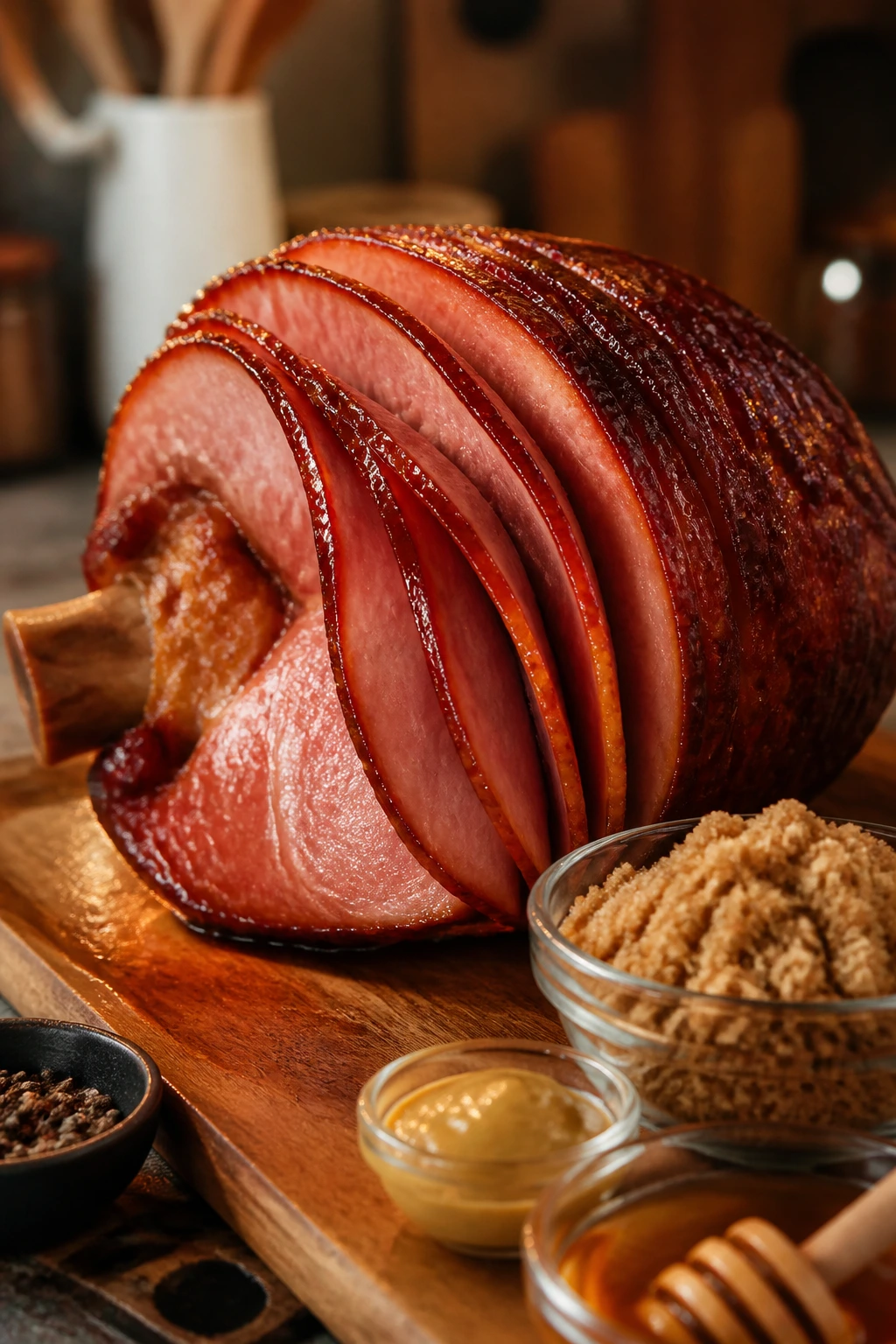
The ham itself
- What to use: A 7- to 9-pound fully cooked bone-in ham gives you enough meat for a crowd and enough surface area for the glaze to matter.
- Preparation: If it’s spiral-sliced, leave the slices attached at the bone; if it isn’t, score the fat cap in a shallow 1-inch diamond pattern.
- Substitutions: A boneless ham works if that’s what you can find, though it usually gives you fewer browned edges and a softer carve.
- Tips: Choose a ham with a simple ingredient list and a decent smoke scent. If the packaging already contains a sugary glaze packet, leave it there and use this one instead.
Brown sugar, honey, and juice
- What to use: 1 cup packed dark brown sugar, 1/4 cup honey, and 1/2 cup pineapple or orange juice form the sweet core of the glaze.
- Preparation: Measure the brown sugar packed, not heaped loosely, so the glaze has enough body to cling to the slices.
- Substitutions: Light brown sugar works, maple syrup can replace part of the honey, and orange juice gives a softer citrus note than pineapple.
- Tips: Dark brown sugar tastes deeper because of the molasses. I prefer it here; light brown sugar works, but the glaze comes out flatter.
Mustard and vinegar
- What to use: 1/2 cup Dijon mustard and 1/4 cup apple cider vinegar keep the glaze sharp enough to balance the sugar.
- Preparation: Whisk them into the pan with the sugar once the butter melts, then let the mixture bubble gently so the flavors marry instead of sitting in separate lanes.
- Substitutions: Whole grain mustard gives more texture; yellow mustard is sharper and less elegant, but it still works in a pinch.
- Tips: Do not skip the acid. Sugar alone makes a glaze that tastes one-note, and ham needs contrast.
Butter and spices
- What to use: 3 tablespoons unsalted butter, 1 teaspoon ground cinnamon, 1/2 teaspoon ground cloves, and 1/2 teaspoon black pepper add roundness and depth.
- Preparation: Cut the butter into small pieces so it melts fast, and whisk the spices in after the sugar begins to dissolve.
- Substitutions: A pinch of cayenne can stand in for black pepper if you want a sharper finish; allspice also works if cloves are not your thing.
- Tips: Warm spices disappear into the sweetness if you use too much. Keep the clove note gentle unless you want the glaze to taste very old-fashioned.
The Tools That Make Glazing Easier
- Roasting pan or deep baking dish: Needs enough room to catch the pan juices and keep the glaze from running over the edge.
- Roasting rack: Helps the ham sit above the liquid so the bottom doesn’t steam into mush. If you do not have one, use a tight coil of foil or a bed of thick onion slices.
- Small saucepan: For reducing the glaze before it goes on the ham.
- Whisk: Essential for dissolving the sugar and keeping the mustard from streaking.
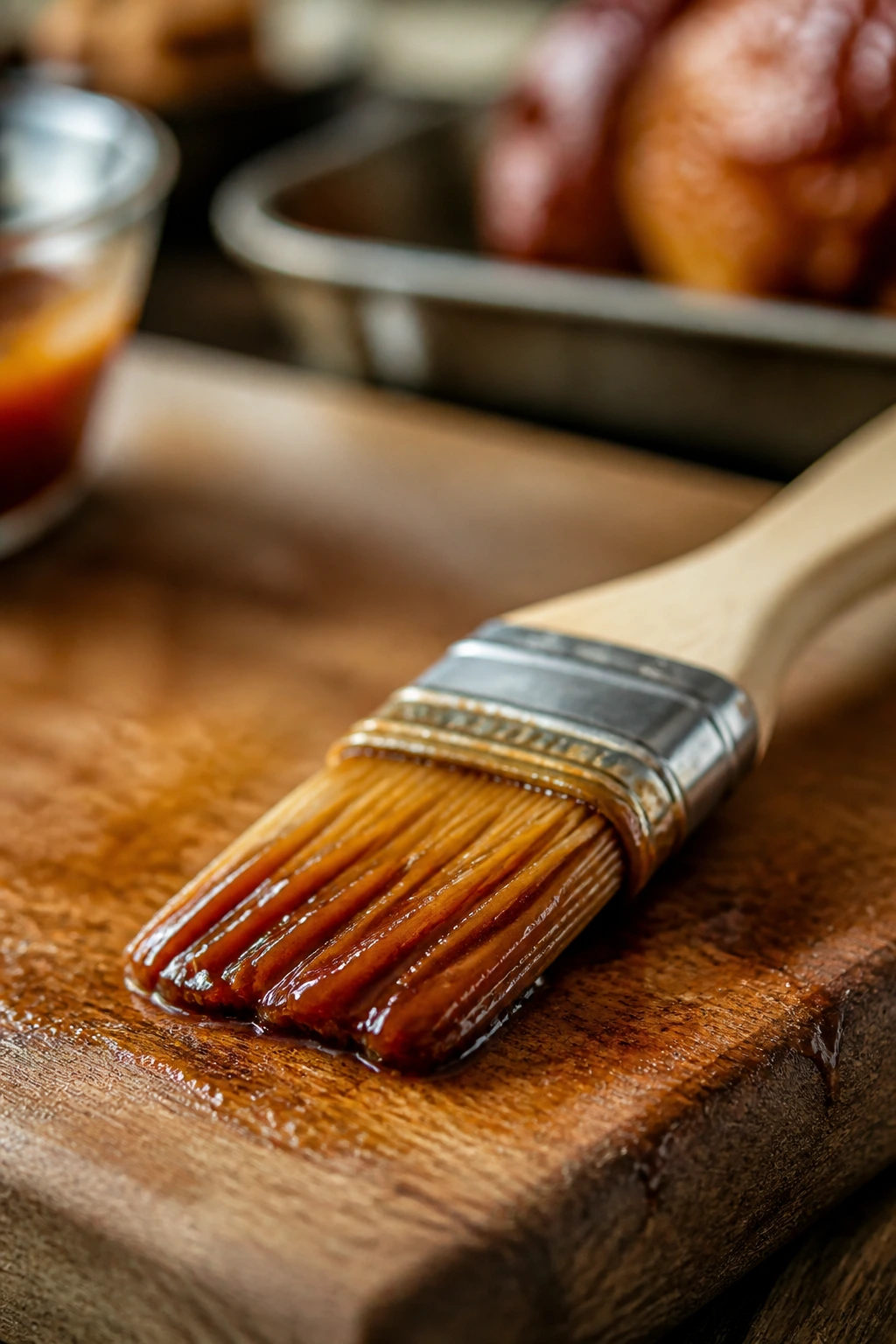
- Pastry brush: The best tool for slipping glaze between spiral slices and coating the top evenly.
- Instant-read thermometer: The one tool I would not skip. It tells you when the ham is warm enough without guessing.
- Heavy-duty foil: Needed for the covered part of the bake; flimsy foil tears too easily and leaks steam.
- Carving knife: A long, sharp blade makes spiral ham easier to serve in neat slices instead of ragged chunks.
The Gentle Roast and Sticky Finish
Prepare the ham and oven:
- Preheat the oven to 325°F (165°C) and set a rack in the lower-middle position. A lower rack gives the top enough room to caramelize without scorching.
- Unwrap the ham and pat it dry with paper towels. If it is not spiral-sliced, score the fat cap in a shallow diamond pattern about 1/8 inch deep. If you want the old-fashioned look, press a few whole cloves into the intersections, but keep them sparse.
- Set the ham cut-side down on the rack in the roasting pan. Pour 1/2 cup water, apple cider, or pineapple juice into the bottom of the pan. Do not let the liquid touch the ham directly. You want steam around the meat, not a boil.
Cook the glaze: 4. Combine the brown sugar, Dijon mustard, honey, apple cider vinegar, butter, pineapple or orange juice, cinnamon, cloves, and black pepper in a small saucepan over medium heat. Whisk until the butter melts and the sugar dissolves, 3 to 4 minutes. 5. Bring the glaze to a gentle simmer and cook for 1 to 2 minutes more until it looks glossy and slightly thickened. If you want it thicker, whisk in the cornstarch slurry and simmer for 30 to 60 seconds until it coats the back of a spoon. Do not boil hard. Hard boiling can turn the sugar bitter.
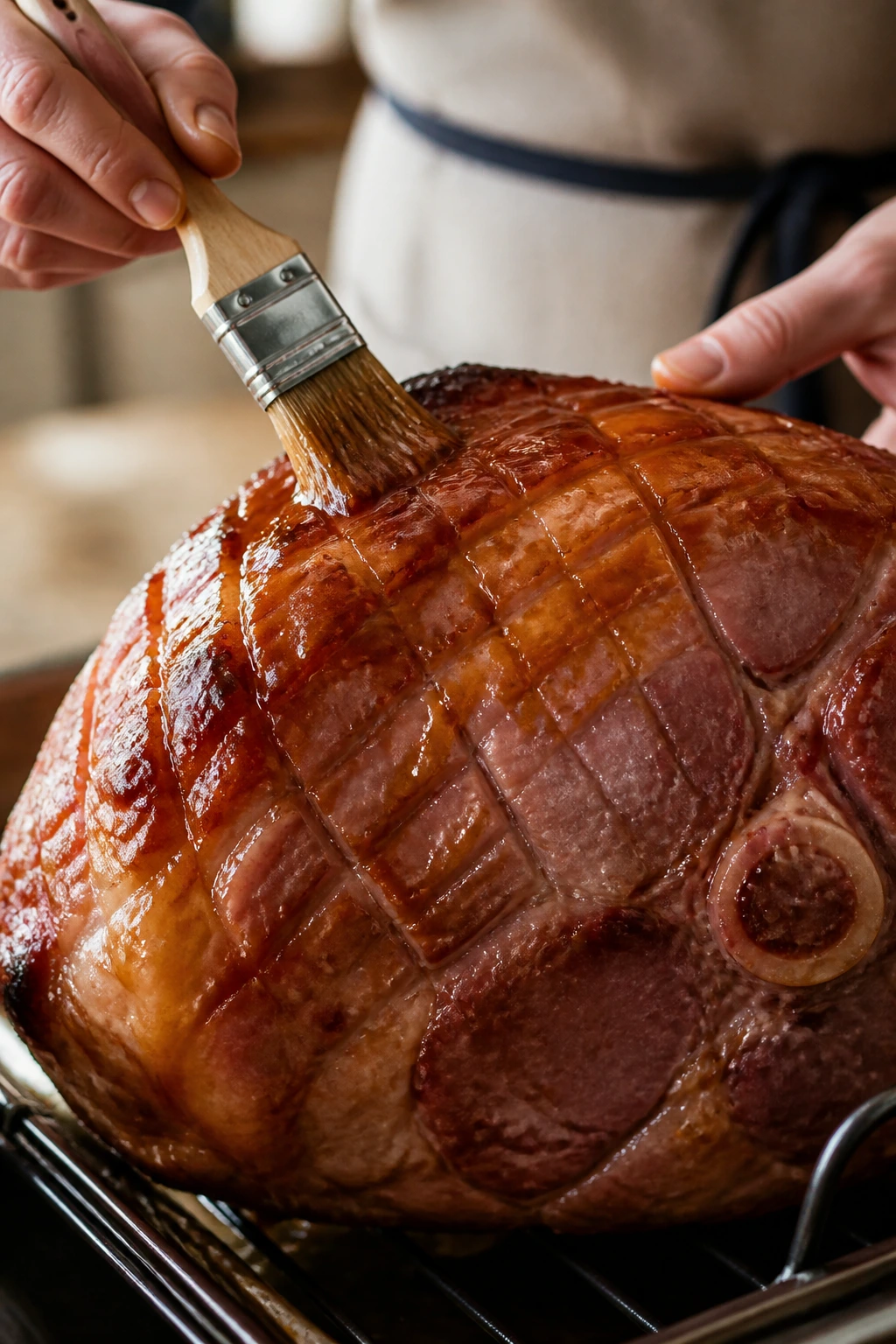
Bake and glaze: 6. Cover the ham tightly with foil and bake for about 12 to 15 minutes per pound, or until the thickest part reaches 120°F to 125°F. For a fully cooked ham, you are warming it through, not cooking it from raw. The meat should feel hot when you press the center with the tip of a thermometer. 7. Remove the ham from the oven and uncover it carefully. Brush on half of the glaze, working it into the spiral cuts so it slips between the slices. Return the ham to the oven uncovered and bake for 15 minutes. 8. Brush on the remaining glaze and continue baking for another 15 to 20 minutes, until the exterior looks shiny and the edges turn a deep mahogany color. If you want a little more color, broil it for 1 to 2 minutes at the very end, standing by the oven the whole time. Broilers move fast. A minute too long can burn the sugar. 9. Remove the ham from the oven and let it rest for 15 to 20 minutes before slicing. This keeps the juices where they belong instead of pouring out onto the cutting board. 10. Spoon a little of the pan juice over the sliced ham just before serving. That last step sounds minor, but it makes the slices taste richer and keeps the edges from drying out.
How to Serve It at the Table
Presentation:
Move the ham to a warm platter and fan the slices slightly so the glaze shows in the seams. I like to spoon a few glossy streaks of pan juice over the top and leave the bone visible on one side if it’s a bone-in ham; it looks generous without trying too hard. A scatter of chopped parsley or a few orange wedges keeps the plate from looking brown-on-brown.
Accompaniments:
Scalloped potatoes are the classic move because they catch the sweet-savory glaze so well. Green beans, roasted carrots, buttered peas, soft dinner rolls, and a sharp mustardy salad all make sense beside this ham. If you want a heavier spread, baked mac and cheese or creamy corn casserole works because the glaze already brings enough brightness to cut through all that richness.
Portions:
A 7- to 9-pound bone-in ham usually feeds 10 to 12 people with some leftovers, especially if there are sides. For a smaller table, you can still buy the same size and count on sandwiches the next day. If you’re serving a large crowd, plan on 1/2 pound per person when the ham is the main event and a little less if the menu is full of sides.
Beverage Pairing:
Dry sparkling cider is my first choice because it echoes the glaze without turning the meal cloying. A chilled Riesling, especially one with a crisp edge, also plays nicely with the mustard and brown sugar. If you want something nonalcoholic, iced tea with a lemon wedge or sparkling water with orange peel keeps the plate from feeling too heavy.
Small Upgrades That Matter
Flavor Enhancement:
Add 1 teaspoon of orange zest to the glaze right at the end of cooking. It does not make the ham taste like oranges; it just lifts the sugar and mustard so the glaze tastes brighter at the table.
Time-Saver:
Make the glaze up to 3 days ahead and keep it in a covered jar in the fridge. Warm it gently on the stove or in the microwave until it loosens enough to brush, because cold glaze clings badly and refuses to spread into the spiral cuts.
Pro Move:
Brush the ham in two thin coats instead of one thick one. The first coat gives you flavor; the second coat, after 15 minutes in the oven, gives you shine and that sticky edge people fight over with the carving knife.
Cost-Saver:
A shank-end ham usually costs less than a butt-end ham. It has less neat meat in the center, but it still carries the glaze well and gives you enough leftovers to feel smart about the purchase.
Make-It-Yours:
For a spicier finish, add 1/4 teaspoon cayenne or a pinch of crushed red pepper to the glaze. For a softer, rounder glaze, swap the vinegar for apple cider and use light brown sugar instead of dark. If you want a more savory edge, a teaspoon of whole grain mustard gives the glaze a little texture and keeps the sweetness from taking over.
Mistakes That Dry Out or Burn the Ham
- Glazing too early: If the sugar goes on at the beginning, it spends the whole bake in the oven and usually burns before the ham is warm. The symptom is a dark, bitter crust with sticky black spots. Fix it by waiting until the last 30 to 40 minutes to glaze.
- Skipping the foil: An uncovered ham loses moisture fast, especially if it’s spiral-cut. You’ll know it happened if the outer slices look dry and the center still feels lukewarm. Cover the ham for most of the bake, then uncover it only for the glaze.
- Guessing on doneness: This recipe is about warming a fully cooked ham to temperature, not hoping it looks done. Pulling it early leaves the center cold; pushing it too far makes the slices stringy. Use an instant-read thermometer and aim for 140°F in the thickest part for a ready-to-eat ham.
- Using only sugar and no acid: A glaze made from brown sugar alone tastes sticky in the wrong way. The flavor lands flat and one-dimensional. Fix it with Dijon mustard and apple cider vinegar, which keep the glaze lively.
- Forgetting to rest the ham: Slice it straight out of the oven and the juices race onto the board. The meat tastes drier even when it was cooked well. Give it 15 to 20 minutes under loose foil before carving.
- Broiling without standing there: A minute under the broiler can give you the last bit of color; two minutes too many can turn the surface black. If you use the broiler, keep the oven door cracked and do not walk away.
Variations Worth Trying
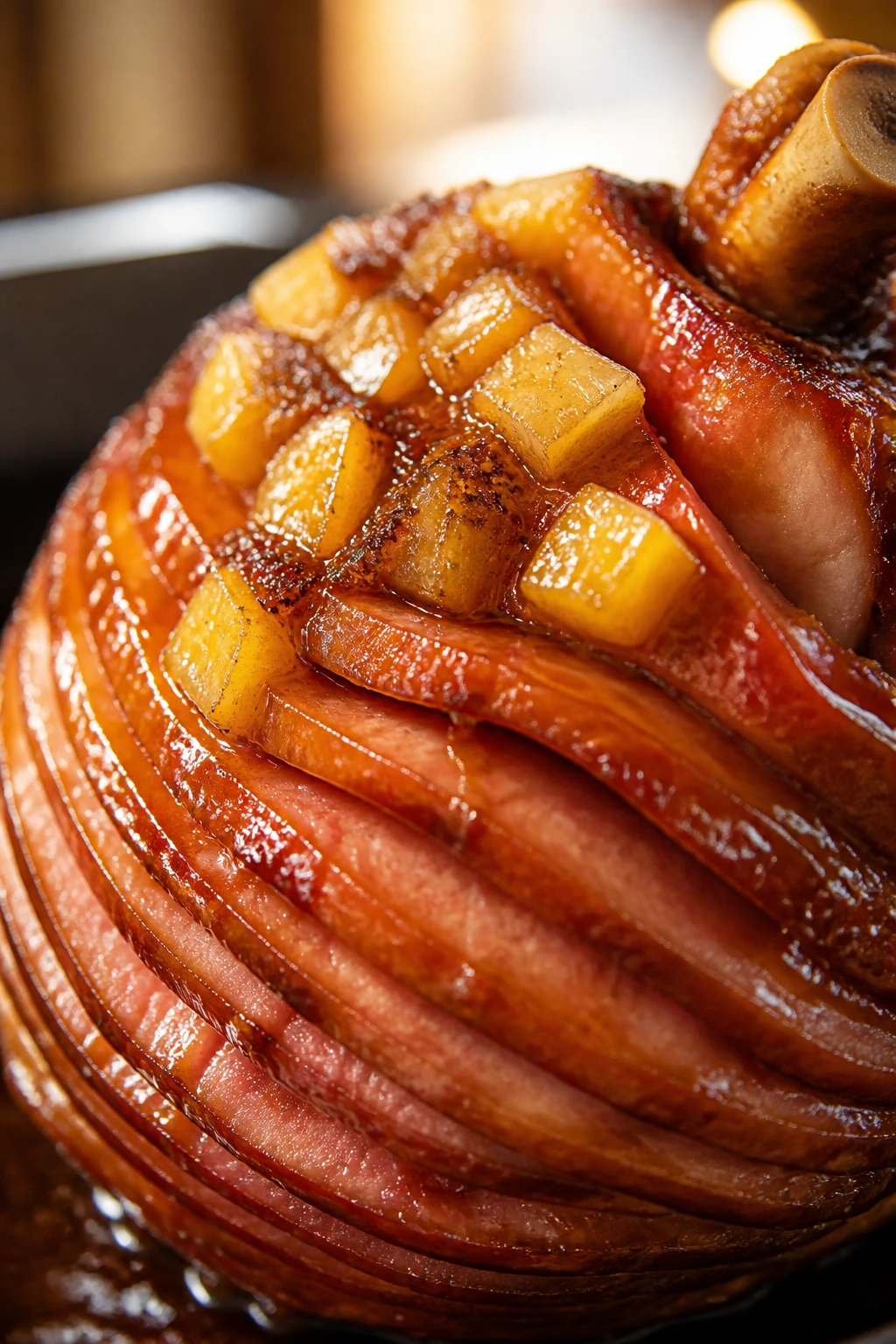
Pineapple-Brushed Ham
Swap the orange juice for pineapple juice and spoon 2 tablespoons of crushed pineapple into the glaze. The finish turns a little brighter and a little fruitier, which is especially good if you like the glaze to lean old-fashioned without tasting sugary.
Maple-Dijon Ham
Replace half of the honey with maple syrup and keep the Dijon in full force. The glaze becomes darker and less sharp, with a caramel note that feels right if you want something richer than the standard brown sugar version.
Spicy Bourbon Glaze
Stir 2 tablespoons of bourbon into the glaze after the butter melts, then add a pinch of cayenne. The bourbon cooks off enough to leave warmth and oak in the background, and the pepper keeps the sweetness from getting lazy.
Orange-Clove Holiday Ham
Use orange juice instead of pineapple juice, increase the cinnamon to 1 1/2 teaspoons, and add a teaspoon of orange zest. This version has a cleaner, brighter smell and works well if you want the ham to taste a little lighter on the tongue.
Savory Mustard-Forward Glaze
Cut the brown sugar back to 3/4 cup and add another 2 tablespoons of Dijon and 1 tablespoon of whole grain mustard. The result is less sweet and more grown-up, with enough sugar to caramelize but not enough to feel sticky on the plate.
Make-Ahead, Storage, and Reheating
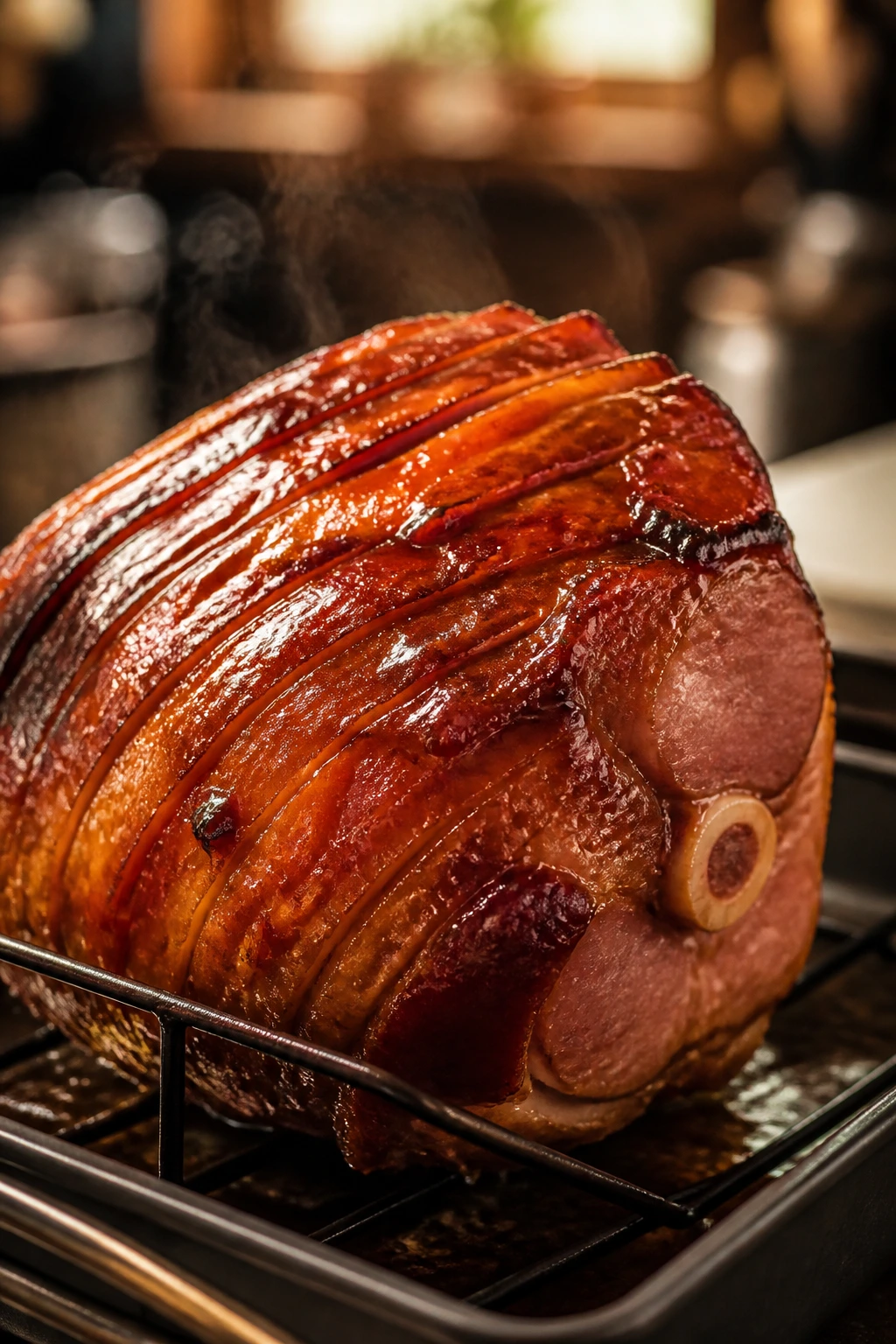
Room temperature: Ham should not sit out for more than 2 hours. If the room is warm, cut that down a bit. That rule matters more than people think, especially with a big sliced roast sitting on a platter where it cools slowly and hangs around.
Fridge: Store leftover ham in airtight containers for 3 to 4 days. I like to keep the slices with a spoonful of pan juices or glaze so the edges do not dry out. If you have the bone, wrap it separately and save it for soup; that’s where it earns its keep.
Freezer: Freeze sliced ham for up to 2 months. Wrap portions tightly in foil or freezer paper, then slide them into a freezer bag with as much air pressed out as possible. Small packs thaw faster and reheat better than one giant brick.
Reheating: For the oven, put slices in a baking dish with 2 to 3 tablespoons of water, cider, or pan juices, cover tightly with foil, and warm at 300°F for 10 to 15 minutes until hot. For the microwave, cover slices with a damp paper towel and heat at 50% power in 30-second bursts so the meat stays soft instead of tough. If you’re reheating a large leftover piece, keep the temperature low and stop as soon as the center is hot; pushing it past that point is how leftovers get leathery.
Make-ahead: The glaze can be made 3 days ahead and stored in the fridge. You can also bake the ham a little early, slice it, and reheat it gently with the pan juices if your schedule gets crowded, though I still think the first bake tastes best when it’s fresh out of the oven and still sticky.
Questions People Ask Before the Ham Goes in the Oven
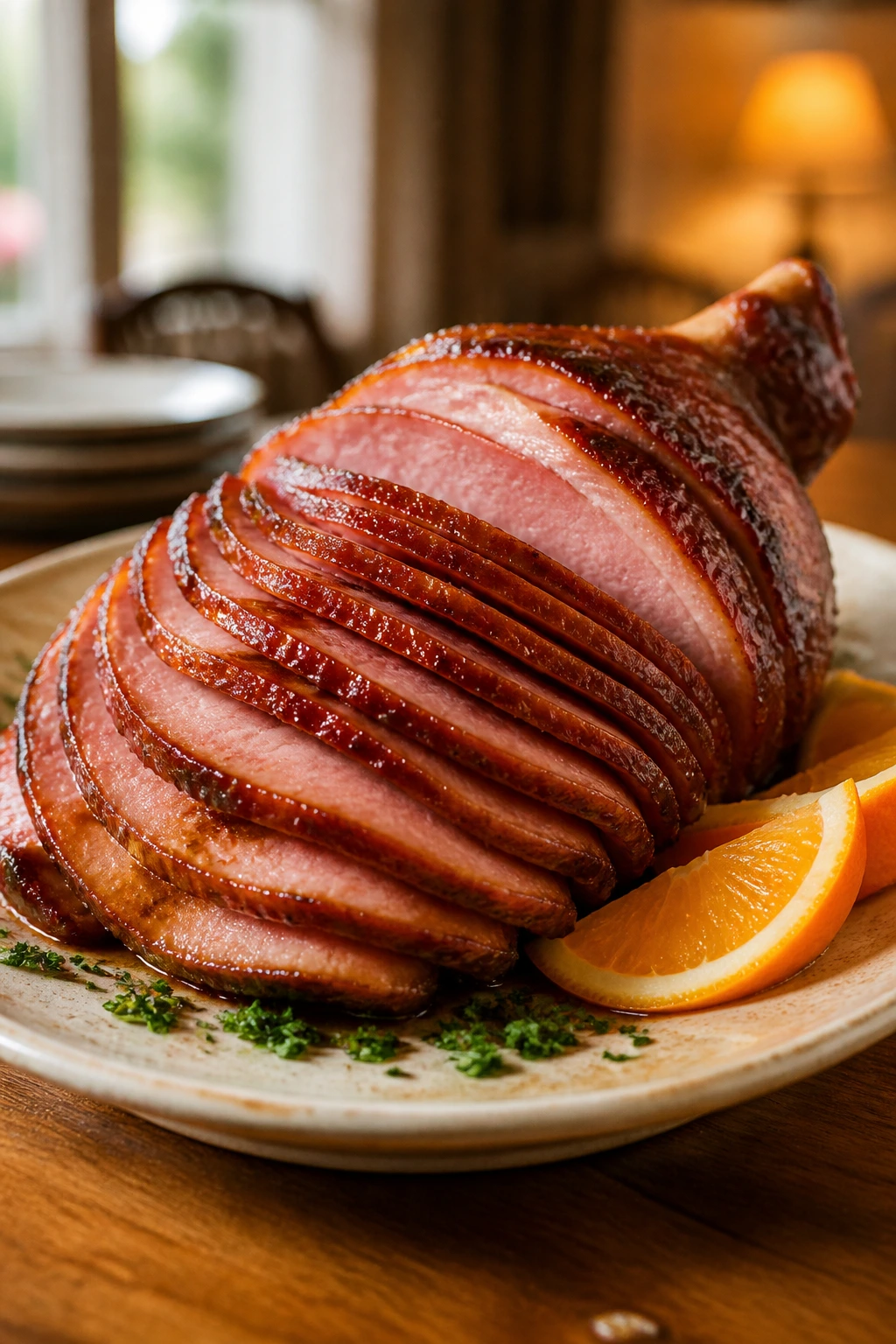
Can I use a spiral-sliced ham for this glaze?
Yes, and it’s probably the easiest version to work with because the glaze slides between the slices. Just be gentle when you brush it on; the cuts already do the hard work for you, so you do not need to saw at the ham with a brush like you’re painting a fence.
Do I have to use Dijon mustard?
No, but you do need some kind of mustard for the balance to work. Whole grain mustard gives texture, yellow mustard gives a sharper bite, and honey mustard makes the whole glaze sweeter; if you leave mustard out entirely, the glaze tastes flatter and more sugary.
What if my glaze is too thin?
Let it simmer a little longer, uncovered, and it should tighten up. If that still doesn’t do the trick, whisk in the cornstarch slurry and cook for 30 to 60 seconds until it coats a spoon instead of running off in a watery sheet.
How do I keep the ham from drying out?
Cover it for most of the bake, add a little liquid to the pan, and stop cooking at 140°F if it’s a fully cooked ham. The glaze matters, but the heat level matters more. Too much oven time is the real enemy here.
Can I make this without pineapple juice?
Yes. Orange juice is the easiest swap, apple cider works well, and even water will do in a pinch if the glaze itself is rich enough. Pineapple brings a sharper fruit note, but it is not mandatory.
Should I score the ham if it’s already spiral-cut?
No need. Spiral slices already expose enough surface for the glaze to seep in. If your ham is a solid piece without cuts, a shallow diamond score helps the glaze cling and gives you a little more browned edge.
Can I cook this in a slow cooker?
You can warm ham slices in a slow cooker, but you will not get the same caramelized finish. If you go that route, use the cooker for moisture and heat, then move the ham to a baking dish and run it under the broiler for a minute or two at the end so the brown sugar glaze actually sets.
What if the top starts to brown too fast?
Tent it loosely with foil and keep baking. That little shield stops the sugar from burning while the center finishes warming. A dark top is fine; a bitter one is not.
One Last Brush of Glaze
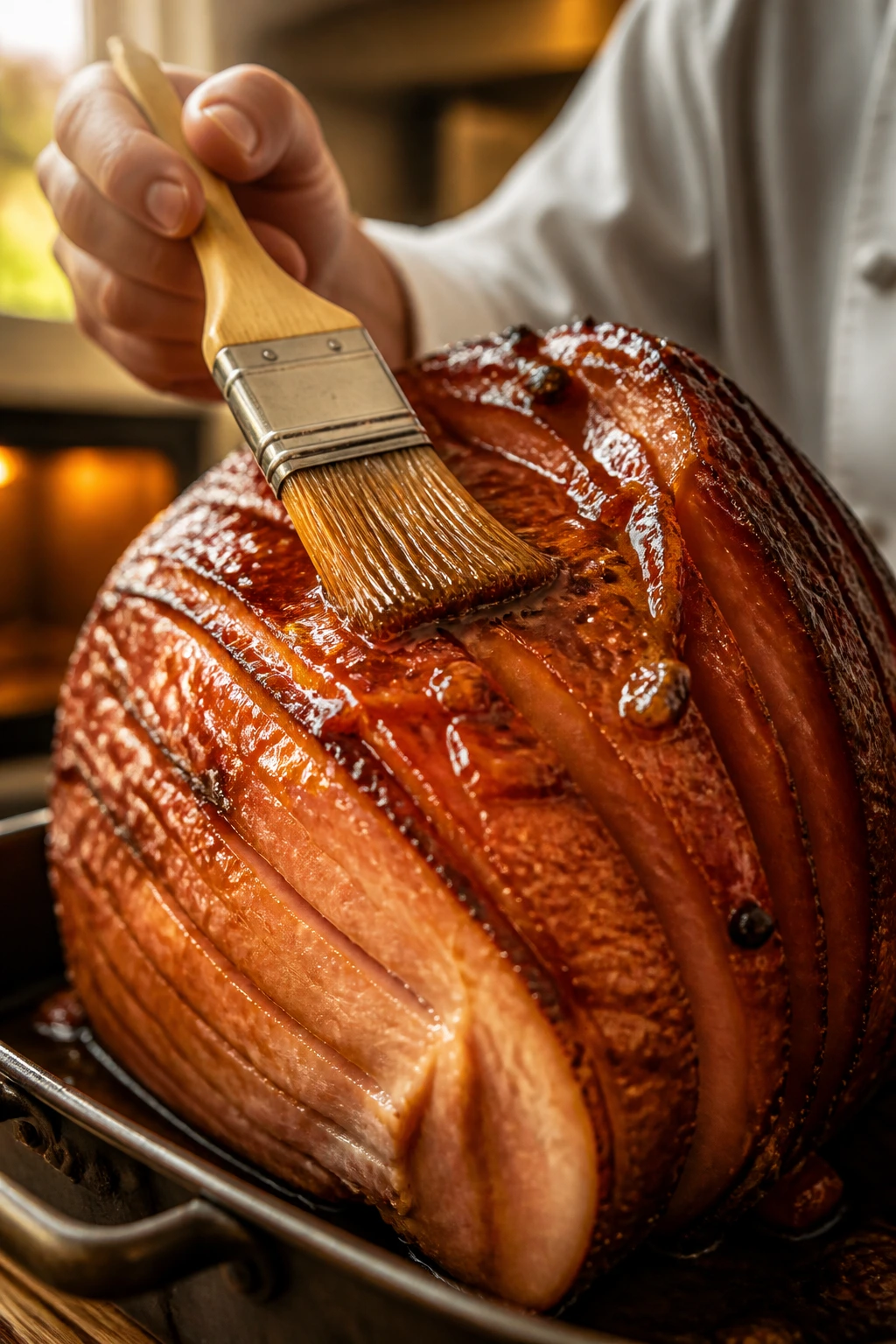
A ham like this rewards restraint. Keep the heat moderate, keep the glaze in play near the end, and let the oven do its quiet work while the sugar turns glossy and the mustard fades into the background. That’s how you get slices that stay tender instead of dry, with edges that look lacquered instead of sticky in a careless way.
And if you end up with leftovers, good. Cold ham from the fridge, warmed in a skillet with a little butter, has a way of making the next meal feel almost better than the first. That is the nice part of this recipe: it behaves at the table, and it keeps behaving after the guests are gone.
Brown Sugar Glazed Ham — Recipe Card
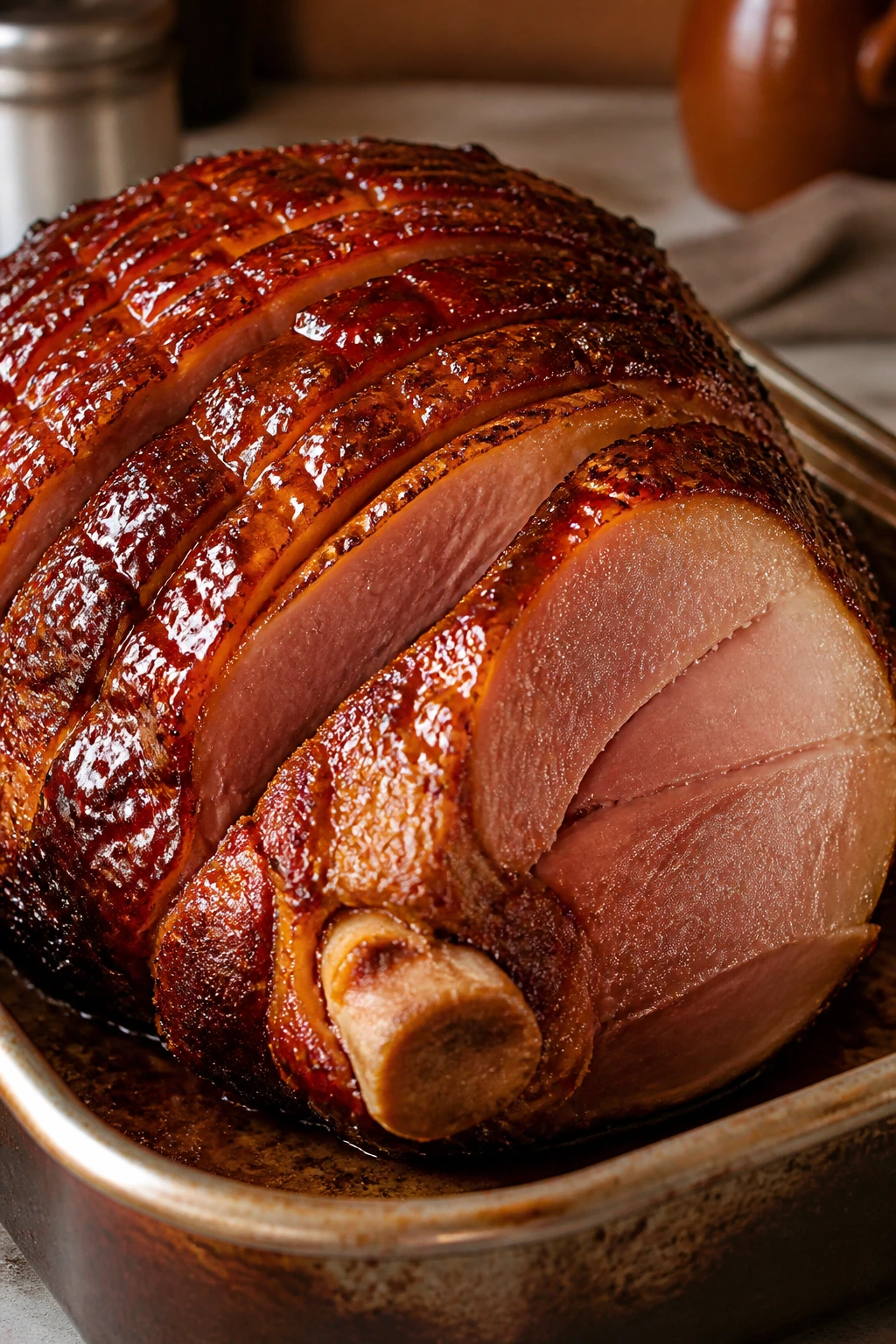
Recipe Name: Brown Sugar Glazed Ham
Description: A fully cooked bone-in ham baked gently and finished with a glossy brown sugar-Dijon glaze. The outside turns sticky and mahogany-colored while the inside stays juicy and easy to slice.
Prep Time: 20 minutes
Cook Time: 1 hour 45 minutes to 2 hours 15 minutes
Total Time: 2 hours 5 minutes to 2 hours 35 minutes, plus 15 to 20 minutes resting
Course: Main Course
Cuisine: American
Servings: 10 to 12 servings
Calories: About 420 kcal per serving
Ingredients
For the Ham:
- 1 fully cooked bone-in ham, 7 to 9 pounds, preferably spiral-sliced
- 1/2 cup water, apple cider, or pineapple juice, for the roasting pan
For the Brown Sugar Glaze:
- 1 cup packed dark brown sugar
- 1/2 cup Dijon mustard
- 1/4 cup honey
- 1/4 cup apple cider vinegar
- 3 tablespoons unsalted butter
- 1/2 cup pineapple juice or orange juice
- 1 teaspoon ground cinnamon
- 1/2 teaspoon ground cloves
- 1/2 teaspoon freshly ground black pepper
- 1 tablespoon cornstarch mixed with 1 tablespoon cold water, optional for a thicker glaze
Instructions
-
Preheat the oven to 325°F (165°C) and set a rack in the lower-middle position. Unwrap the ham and pat it dry.
-
If the ham is not spiral-sliced, score the fat cap in a shallow diamond pattern. Place the ham cut-side down on a rack set inside a roasting pan and add 1/2 cup water, apple cider, or pineapple juice to the bottom of the pan.
-
Cover the ham tightly with foil and bake for about 12 to 15 minutes per pound, until the thickest part reaches 120°F to 125°F.
-
While the ham bakes, combine the brown sugar, Dijon mustard, honey, apple cider vinegar, butter, pineapple or orange juice, cinnamon, cloves, and black pepper in a small saucepan over medium heat.
-
Whisk until the butter melts and the sugar dissolves, then simmer gently for 1 to 2 minutes more until the glaze looks glossy and slightly thickened. Whisk in the cornstarch slurry if you want a thicker glaze.
-
Remove the ham from the oven and uncover it carefully. Brush on half of the glaze, working it into the slices if the ham is spiral-cut. Return it to the oven uncovered and bake for 15 minutes.
-
Brush on the remaining glaze and bake for another 15 to 20 minutes, until the exterior is shiny and deep brown. Broil for 1 to 2 minutes only if you want extra color, watching closely the whole time.
-
Remove the ham from the oven and rest it for 15 to 20 minutes before slicing. Spoon a little pan juice over the slices before serving.
Notes:
Use an instant-read thermometer for the best texture. If the glaze thickens too much before brushing, warm it gently with 1 tablespoon of water. Leftovers keep best with a little pan juice or glaze tucked in with the slices.