



Brown sugar glaze bacon has a habit of stealing attention from everything else on the table. Eggs go quiet. Pancakes get ignored. People keep reaching for one more strip because the first bite lands in that narrow, addictive space where smoke, salt, and caramel all show up at once.
The version worth making is not brittle like candy. It bends. It glistens. The center stays soft enough to fold, while the edges pick up a dark, sticky sheen that tastes more like a proper glaze than a sugar shell.
That texture is not an accident. Thick-cut bacon needs a little room in the oven, and the glaze has to arrive late enough that it clings instead of scorching. Get those two things right, and the whole pan smells like a diner counter sharing a kitchen with a dessert case.
Why You’ll Love This Recipe
- Tender, not shattery: The bacon stays bendy because the sugar goes on late, after the fat has started to render.
- Glossy, not grainy: Maple syrup and a little vinegar keep the brown sugar smooth enough to brush instead of clump.
- One pan, little mess: Parchment catches the drips before they glue themselves to the sheet pan.
- Sweet with backbone: Dijon, black pepper, and smoked paprika keep the glaze from tasting like straight candy.
- Works beyond breakfast: Two strips sit just as happily beside scrambled eggs as they do on a brunch board or beside a salad with sharp dressing.
- Easy to scale up: Use two pans, not a crowded single sheet, and the method still holds.
Why This Sweet-Salty Bacon Stays Tender Instead of Shattering
Brown sugar and bacon belong together because they answer each other. Bacon brings salt, smoke, and fat. Brown sugar brings molasses depth and that sticky finish people remember. The trouble starts when the sugar gets too much heat too soon. Then it hardens, darkens, and turns into something closer to brittle bark than glazed bacon.
A lower oven temperature solves a lot. At 325°F, the bacon has time to render without the sugar racing ahead of it. That matters more than most recipes admit. If the oven runs hot, the glaze can turn bitter before the middle of the strip has relaxed, and you end up with bacon that tastes burnt around the edges and underdone in the center. Not the goal.
There’s another reason this version works. The glaze is not just brown sugar. Dijon keeps it sharp. Maple syrup keeps it brushable. Apple cider vinegar keeps the sweetness from flattening out and helps the glaze stay glossy instead of drying into a dusty crust. I like candied bacon, but only when it still feels like bacon. This does.
And yes, the smell is unfair. The pan starts out salty and smoky, then the sugar catches, and suddenly the whole kitchen smells like a brunch table that got a little dressed up. That’s the point, really. Not dessert. Not plain breakfast. A strip that bends when you lift it and leaves a sticky shine on your fingers.
The Ingredient List and Timing You Need Before the Oven Goes On
Yield: Serves 6 to 8 as a side
Prep Time: 10 minutes
Cook Time: 20 to 24 minutes
Total Time: 30 to 34 minutes
Difficulty: Beginner — the steps are simple, but the final minutes need your attention.
Best Served: Warm, within 10 minutes of baking
For the Bacon:
- 1 pound thick-cut bacon, about 14 to 16 slices
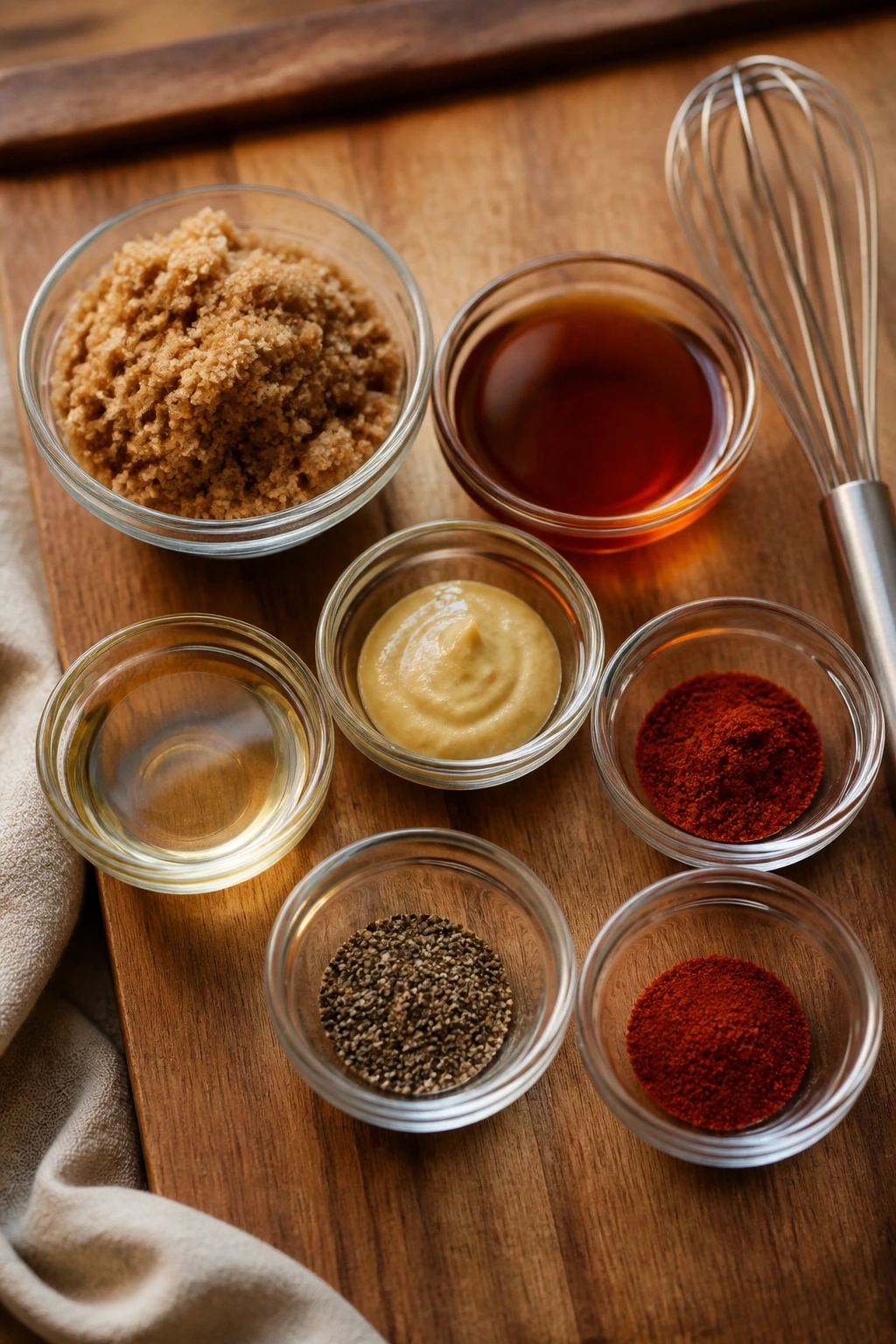
For the Brown Sugar Glaze:
- 1/3 cup packed light brown sugar
- 2 tablespoons pure maple syrup
- 1 tablespoon Dijon mustard
- 1 teaspoon apple cider vinegar
- 1/2 teaspoon smoked paprika
- 1/4 teaspoon freshly ground black pepper
- Pinch of cayenne pepper
- 1 tablespoon water, only if the glaze is too thick to brush
For Finishing:
- Flaky sea salt, optional, for a final pinch
One pound is enough for a side dish on a brunch table, or for a small appetizer plate where people are supposed to grab a strip and keep moving. If you’re feeding a bigger crowd, double the recipe and use two pans. Crowding bacon onto one sheet is how you end up with pale, steamed strips and a sticky puddle that never really turns into a glaze.
The bacon matters more than the sugar here. Thick-cut strips give the glaze time to melt, bubble, and set before the bacon gets brittle. Thin-cut bacon can work in a pinch, but it needs closer watching and a shorter bake. It also loses that bendy center that makes this version worth making in the first place.
Why Each Ingredient Earns Its Place in the Pan
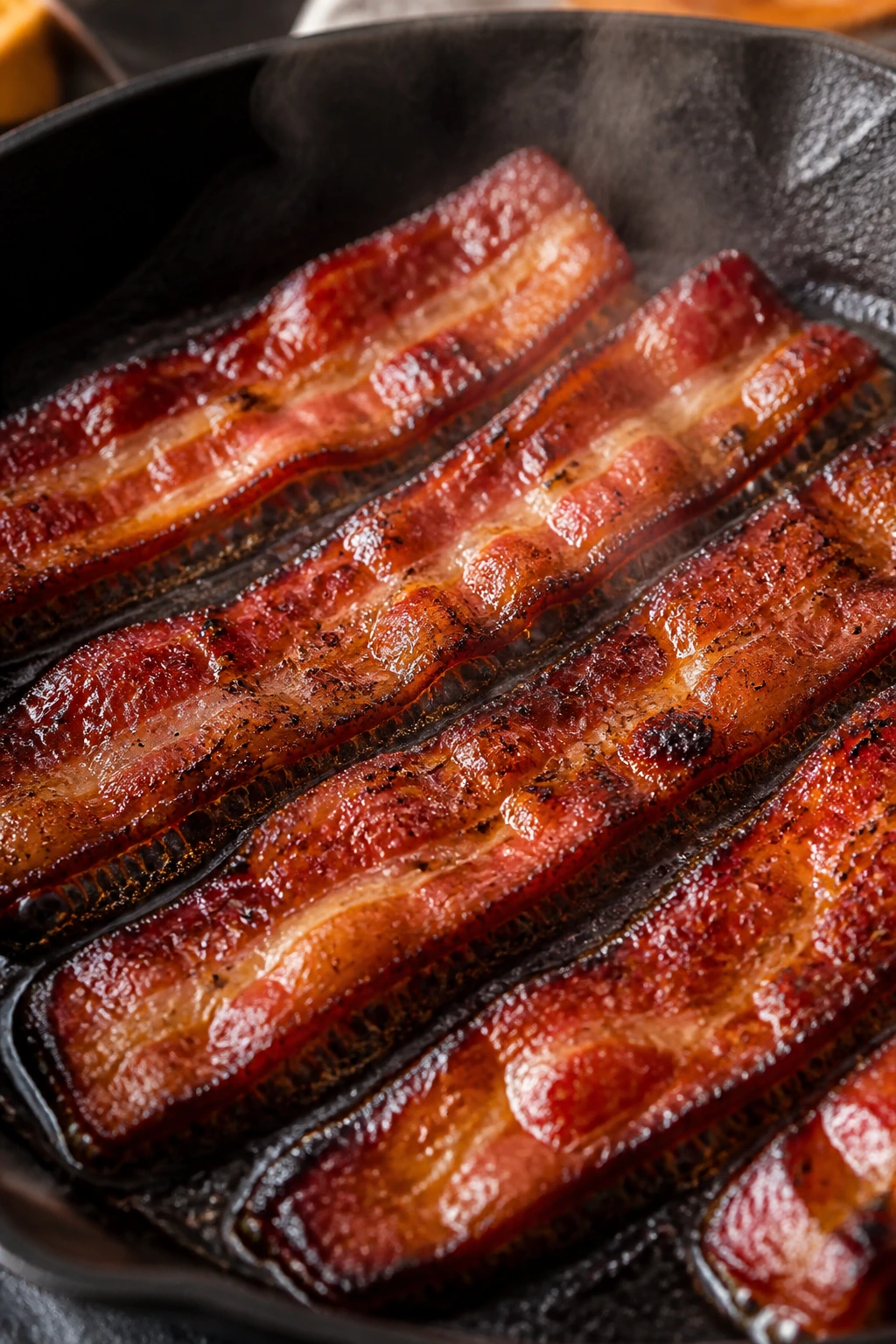
The Bacon Itself
What to use: 1 pound thick-cut bacon, roughly 14 to 16 slices.
Preparation: Keep the strips cold until they hit the pan, then separate them completely so they cook in a single layer.
Substitutions: Center-cut bacon works if you want a leaner strip. Regular bacon will cook faster, so shave a few minutes off the first bake.
Tips: Thick-cut bacon gives the glaze time to do its work. Thin slices can turn crisp before the sugar has settled.
The Sweet Base
What to use: 1/3 cup packed light brown sugar and 2 tablespoons pure maple syrup.
Preparation: Pack the brown sugar into the measuring cup so the glaze starts with enough molasses for body. Whisk the syrup in until the mixture looks wet, not sandy.
Substitutions: Dark brown sugar brings a deeper, stickier finish. If you run out of maple syrup, add 1 tablespoon water and another teaspoon of brown sugar, though the glaze will be a little less glossy.
Tips: Maple syrup keeps the sugar brushable. Dry sugar alone tends to clump and slide around on the pan before it dissolves into anything useful.
The Balancing Agents
What to use: 1 tablespoon Dijon mustard, 1 teaspoon apple cider vinegar, 1/2 teaspoon smoked paprika, 1/4 teaspoon black pepper, and a pinch of cayenne.
Preparation: Whisk until the mustard disappears and the glaze looks smooth, not speckled.
Substitutions: Whole-grain mustard adds texture. A spoonful of bourbon can replace part of the maple syrup if you want a warmer, deeper note.
Tips: Dijon and vinegar keep the glaze from tasting one-note sweet. That tiny bit of acid matters more than people expect, especially once the bacon fat starts to render.
The Finishing Spark
What to use: A pinch of flaky sea salt, optional.
Preparation: Sprinkle it only after the bacon comes out of the oven.
Substitutions: A little extra black pepper can stand in if you want more bite. A few sesame seeds work if you want a different finish on a brunch board.
Tips: Use less than you think. Bacon already brings salt; the finish should sharpen the glaze, not bury it.
The Tools That Keep the Glaze Where You Put It
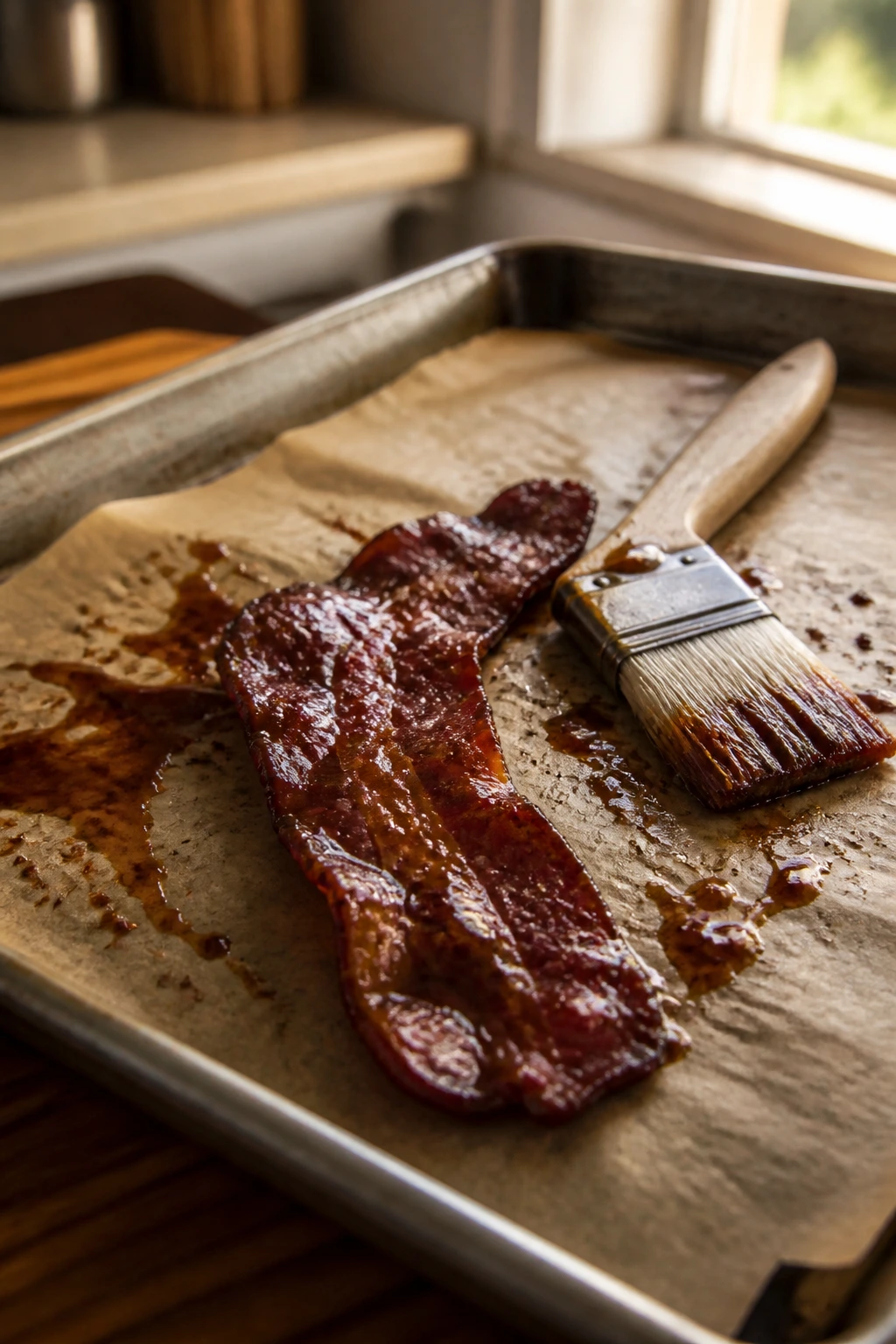
A pastry brush earns its keep here. So does a rimmed baking sheet. The sugar and fat need walls. No one wants a syrupy drip running off the edge of a flat sheet and smoking the bottom of the oven.
- Rimmed 13×18-inch baking sheet — The lip keeps the rendered fat and sugar in one place.
- Parchment paper — This is the cleanest release for glazed bacon. Foil works, but the sugar can cling harder to it.
- Small mixing bowl — Wide enough to whisk the glaze smooth without spraying syrup across the counter.
- Pastry brush or small spoon — A brush gives a thin, even coat; a spoon works if the glaze thickens before you use it.
- Tongs — Useful for moving hot strips without tearing the glaze.
- Wire rack, optional — Helpful if you want firmer edges, though this recipe leans toward tenderness and direct pan contact.
If your sheet pan is dark metal, keep an eye on the final minutes. Dark pans hold more heat, and brown sugar can go from glossy to too dark faster than you want. Parchment helps, but it does not erase physics.
How to Bake Tender Bacon with Brown Sugar Glaze
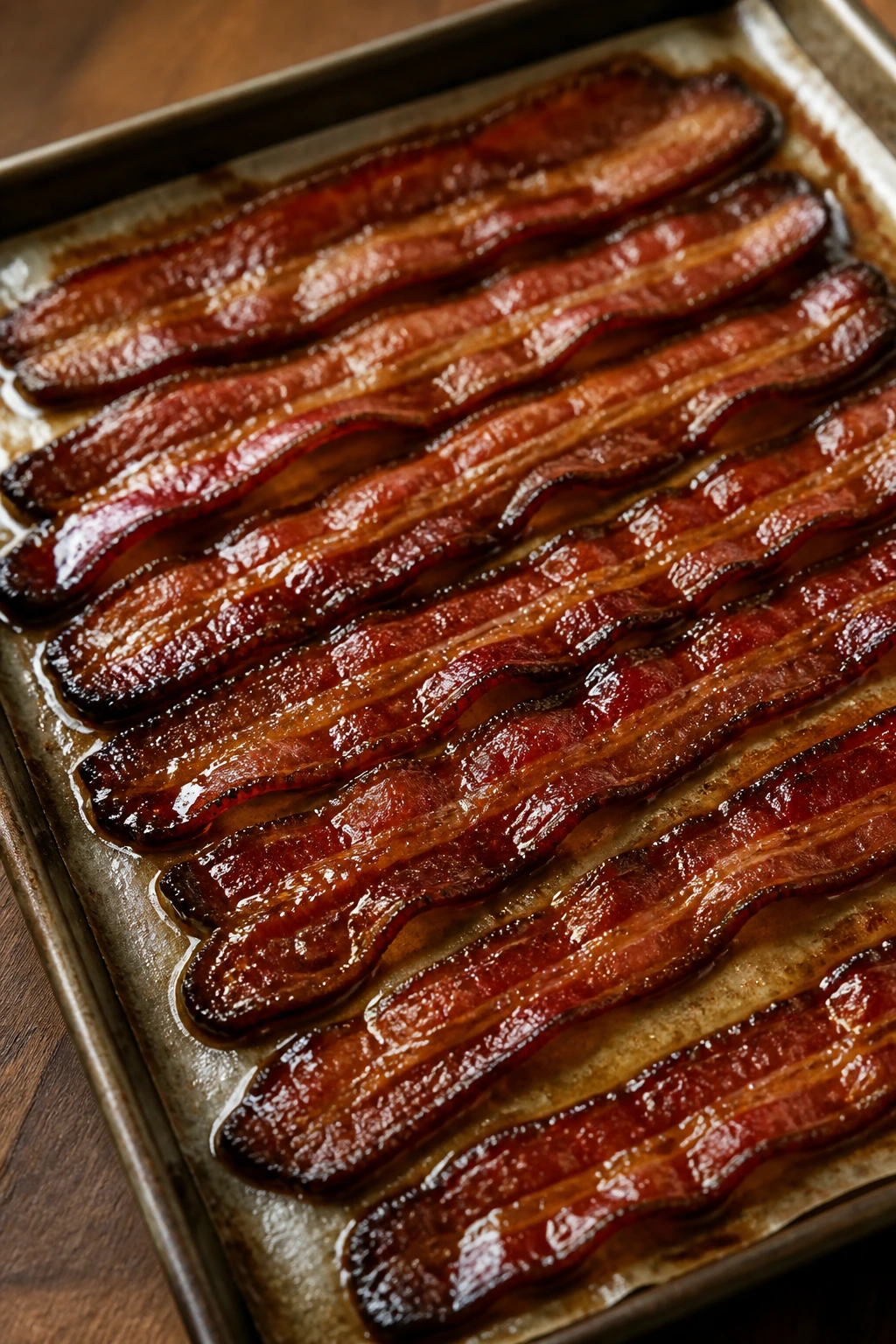
Prepare the Pan and the Glaze
-
Preheat the oven to 325°F (165°C) and position a rack in the center. Line a rimmed 13×18-inch baking sheet with parchment paper, letting the paper come a little way up the sides so you can lift the bacon cleanly later. Do not use a flat cookie sheet; the fat and sugar need walls.
-
In a small bowl, whisk together the brown sugar, maple syrup, Dijon mustard, apple cider vinegar, smoked paprika, black pepper, and cayenne until the mixture looks like loose syrup. If it feels paste-thick and does not want to brush, add 1 tablespoon water and whisk again. The glaze should cling to a spoon in a thin coat, not sit in a dry mound.
Start the Bacon
-
Lay the bacon in a single layer on the lined sheet, with the strips touching as little as possible. If a slice curls hard, straighten it gently with your fingers so the thick middle cooks at the same rate as the ends. Cold bacon is easier to arrange than warm bacon. Use that to your advantage.
-
Bake for 10 to 12 minutes, until the bacon has rendered some fat and looks glossy, pale gold, and a little translucent in the thicker sections. Rotate the pan front to back. If you see more than a thin sheen of fat pooling, carefully spoon some off. Leave enough fat to coat the pan; too much and the glaze slides off, too little and it sticks and scorches.
Build the Glaze
-
Brush about half the glaze over the bacon, focusing on the meaty middle of each strip where the sugar has something to grab. Return the pan to the oven for 5 to 7 minutes.
-
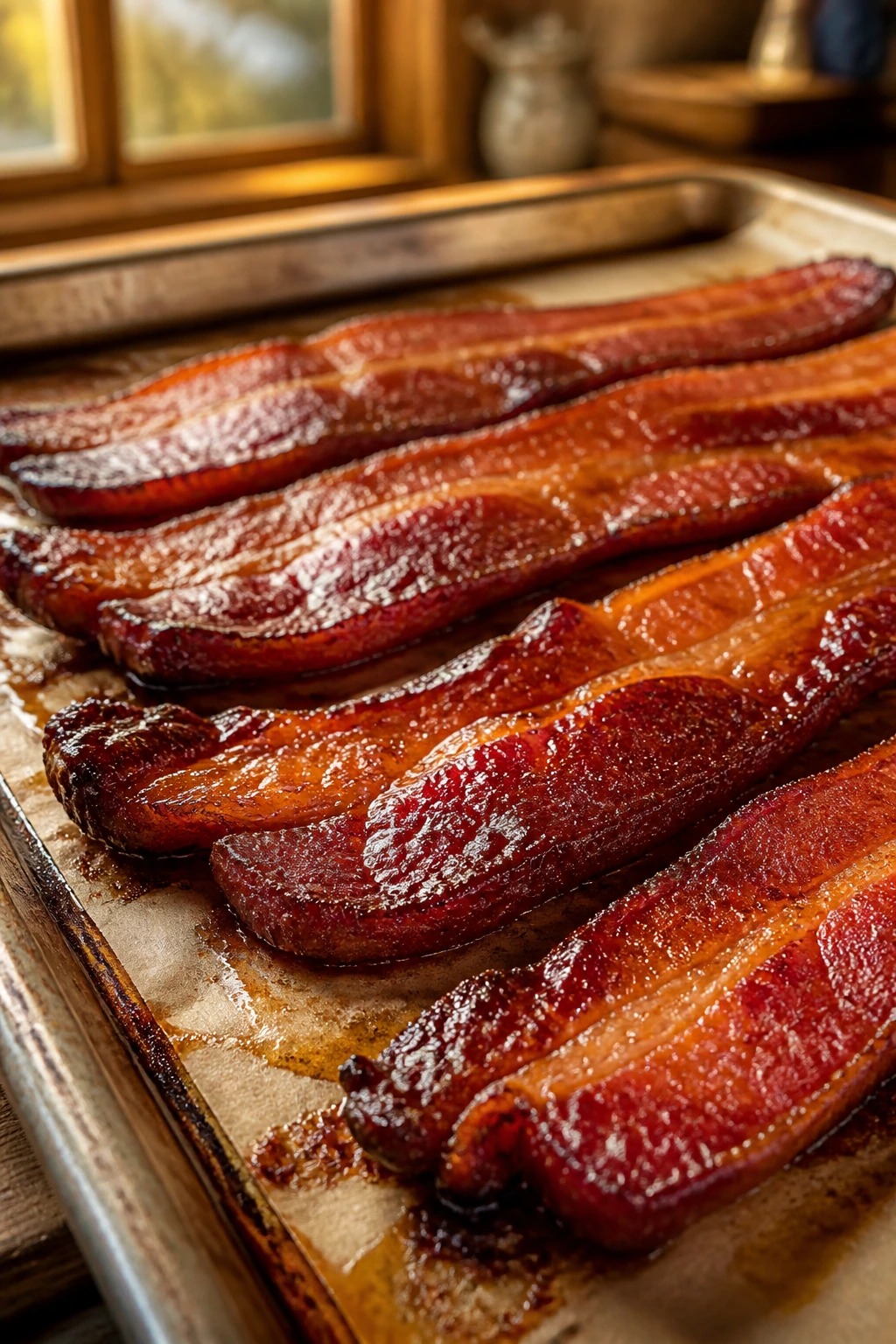
Brush the remaining glaze over the bacon and bake for another 4 to 6 minutes, until the sugar bubbles in small, slow blisters and the edges turn deep amber. Do not wait for a hard crackly shell. You want the strips to bend with a soft snap, not shatter like brittle candy.
Finish and Rest
-
If the bacon looks ready but the glaze could use one more shade of color, turn the oven off and leave the pan inside with the door cracked for 2 minutes. That little pause lets the glaze settle without burning.
-
Move the strips to a clean parchment-lined plate or a wire rack set over parchment. If you want, sprinkle with a pinch of flaky sea salt while the bacon is still warm. Rest for 3 to 5 minutes before serving. The glaze will go from sticky to glossy as it cools. Do not set it on paper towels if you care about the finish; the sugar will soften and stick.
The bacon is done when it bends and resists, not when it snaps loudly. That’s the line between tender glazed bacon and the version people have to gnaw.
How to Serve It So the Glaze Stays Shiny
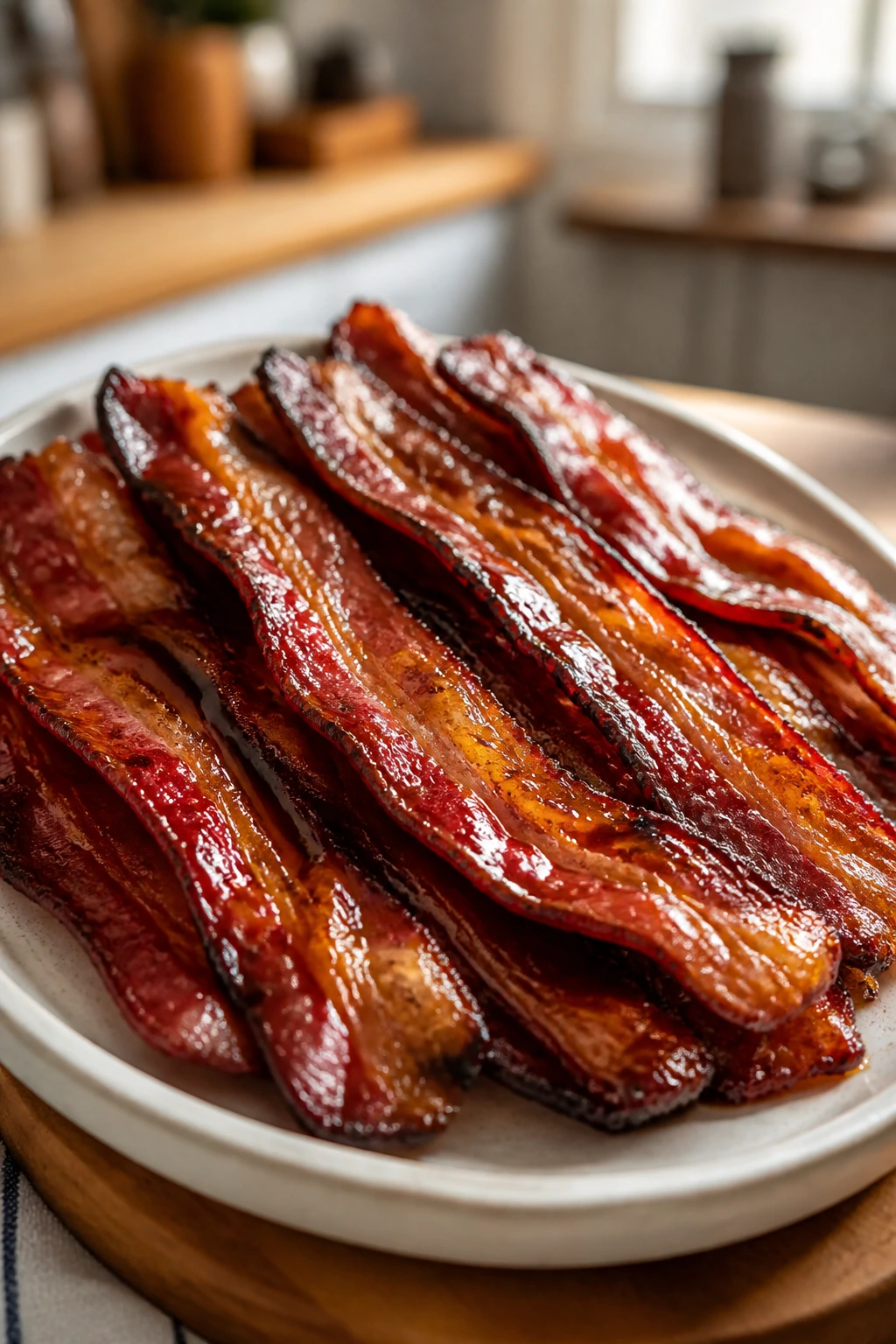
Presentation: Slide the strips onto a warm platter in loose rows or gentle folds. A stacked heap traps steam, and steam dulls the glaze fast. If the strips are long, cut them in half on a slight diagonal so they look tidy on a brunch board and do not slither off the plate.
Accompaniments: Soft scrambled eggs, buttermilk biscuits, waffles, pancakes, and roasted potatoes all make sense here. For a brighter plate, add sliced grapefruit, pears, or a sharp fruit salad with lime. If you’re serving this as an appetizer, tuck the bacon beside deviled eggs or a bowl of pickled onions so the sweetness has something acidic to push against.
Portions: One pound serves 6 to 8 as a side, or 4 if the bacon is the thing people came for. Plan on 2 strips per person for a brunch plate, 1 strip if it is part of a bigger spread, and half strips if you’re using it as a burger topper or biscuit filling.
Beverage Pairing: Strong black coffee is the simplest match because it cuts the sugar without fighting the smoke. Dry iced tea, sparkling apple cider, or a rye-forward cocktail also works, depending on how early the table is set and how much of the glaze you want to balance out.
The bacon is most glossy when it lands on the table warm. If you wait too long and it starts to soften, a few minutes in a low oven — around 275°F — brings it back without hardening the sugar into shards.
Extra Tricks for Deeper Caramel and Better Balance
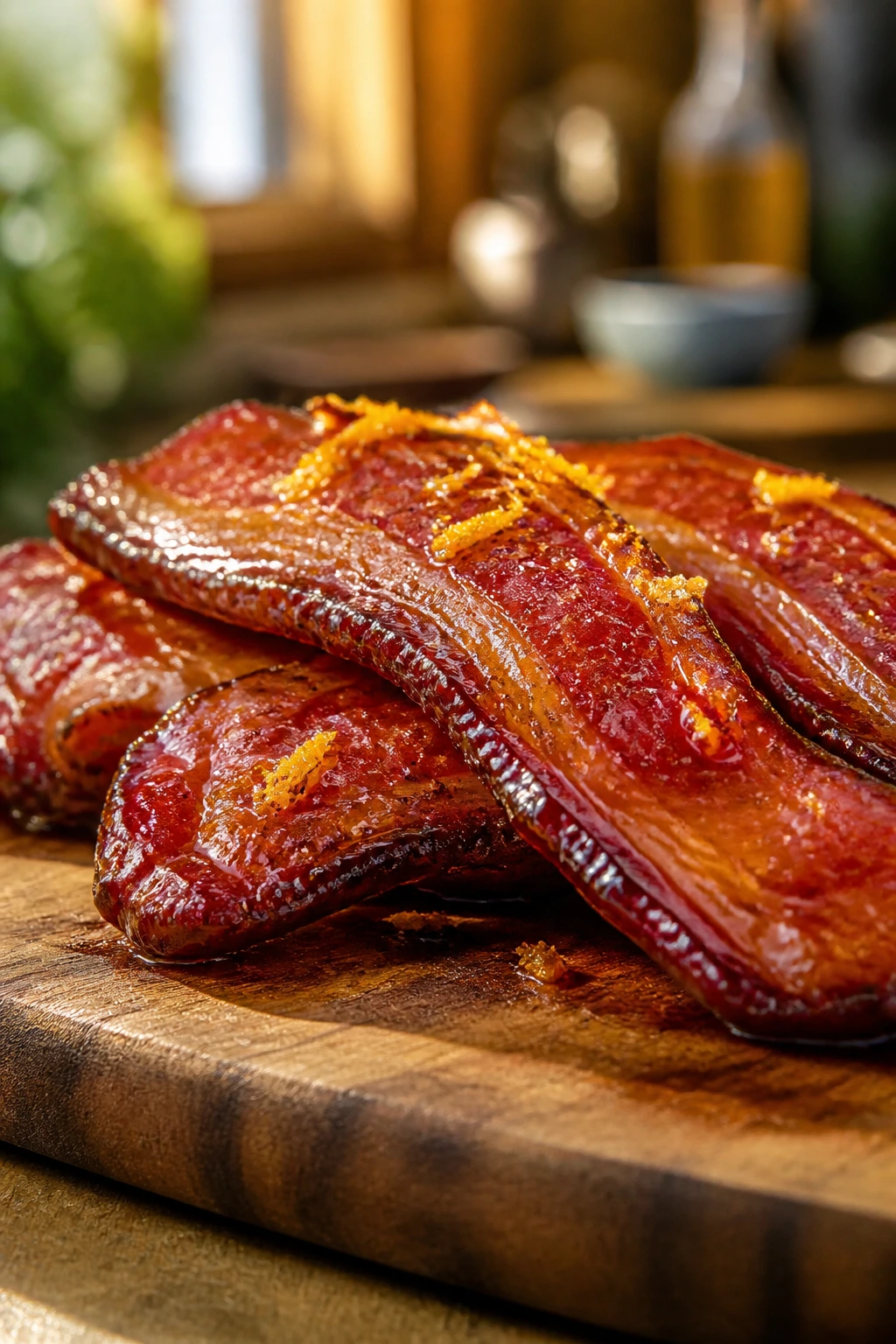
Flavor Enhancement: Stir 1/2 teaspoon orange zest into the glaze after the first bake if you want a brighter top note. It wakes up the brown sugar without making the bacon taste citrusy in any loud way. A little zest goes a long way.
Customization: Cut the brown sugar to 1/4 cup and add another teaspoon of Dijon if you want the bacon less sweet and more savory. For heat, swap the cayenne for 1/4 teaspoon chipotle powder; the smoke sits better with bacon than plain chili heat does.
Serving Suggestions: Finish with a few cracks of black pepper right before serving. If the bacon is going on a brunch board, cut the strips into thirds so guests can pick them up without dragging the glaze through the eggs or biscuits beside them.
Make-It-Yours: For a gluten-free plate, check that your mustard is gluten-free and serve it with gluten-free sides. For a lighter strip, use center-cut bacon and trim 3 to 4 minutes from the first bake. For a more old-school brunch feel, brush the finished bacon with 1 extra teaspoon of warm maple syrup right as it comes out of the oven.
I’m not a fan of piling on extras just because a recipe can tolerate them. Here, the best upgrades are small ones: a little citrus, a little pepper, a little more mustard. Enough to keep the glaze awake.
Mistakes That Turn Glazed Bacon Into a Burnt, Bitter Mess
-
Using thin-cut bacon when you want tender strips: Thin bacon cooks too fast, which means the sugar can darken before the center has relaxed. The symptom is bacon that curls hard, cracks easily, and tastes more brittle than glazed. Fix it by choosing thick-cut bacon or cutting the first bake short if thin bacon is all you have.
-
Glazing too early: If the brown sugar goes on before the fat has rendered, it slides off into the pan and turns into sticky, burnt sediment. The fix is simple: wait until the bacon has baked for 10 to 12 minutes and looks glossy, not dry.
-
Overcrowding the pan: Bacon that overlaps steams instead of renders. The strips come out pale in spots and the glaze pools in the gaps. Use two pans if needed. Bacon needs room to breathe, even if the whole point is to make it disappear fast.
-
Running the oven too hot: At 375°F or under the broiler, the sugar can go bitter in the time it takes the bacon to finish. The symptom is a dark edge and a rawer middle. Keep the oven at 325°F and resist the urge to rush the finish.
-
Resting the strips on paper towels: Paper towels soak up grease, which sounds smart until the sugar softens, sticks, and dulls. The fix is parchment or a rack set over parchment. That keeps the bottom from getting gummy.
-
Chasing a hard crackle: Tender glazed bacon should bend first and crisp only at the edges. If you cook until it snaps like candy, it will keep hardening as it cools. Pull it when the edges are deep amber and the middle still has some give.
The biggest mistake is trying to make this taste like candy. It is bacon first. The sugar should frame it, not replace it.
Variations for Heat, Smoke, and Different Kinds of Sweetness
Black Pepper Maple Strip
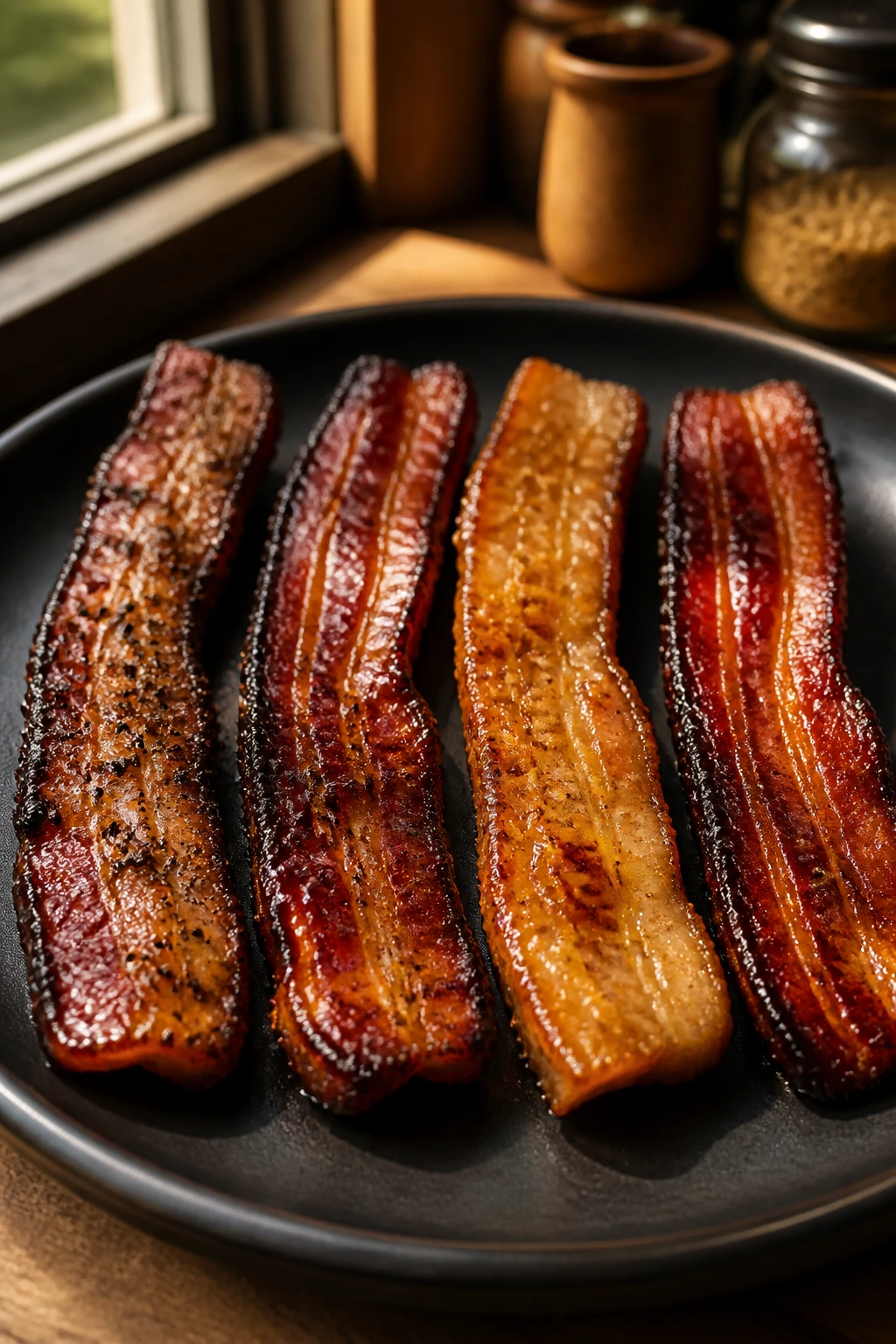
Add 1/2 teaspoon extra black pepper and skip the cayenne. This version tastes sharper and less sweet, which works well when the bacon is sitting beside eggs or hash browns and needs to cut through the richness.
Bourbon Brown Sugar Bacon
Replace 1 tablespoon of the maple syrup with bourbon and let the glaze sit for a minute before brushing so the alcohol scent settles a little. The result is warmer and deeper, with a caramel note that feels especially good on a brunch board.
Smoky Heat Version
Swap the cayenne for 1/4 teaspoon chipotle powder and use dark brown sugar instead of light. The chipotle lands more slowly than cayenne, which makes the bacon taste smoked rather than sharp.
Orange-Dijon Brunch Bacon
Stir 1/2 teaspoon finely grated orange zest into the glaze and use whole-grain mustard if you like a little texture. This is the version I’d reach for if the bacon is going next to fruit, biscuits, or anything else that benefits from a brighter edge.
If you want a leaner bite, center-cut bacon is the plainest swap. It will not have the same richness, but the glaze still works, and the strip sits a little neater on a plate.
Storing, Reheating, and Making It Ahead
Room Temperature: Keep glazed bacon out for no more than 2 hours. After that, the sugar softens, the fat cools into a waxy layer, and the texture stops being worth saving.
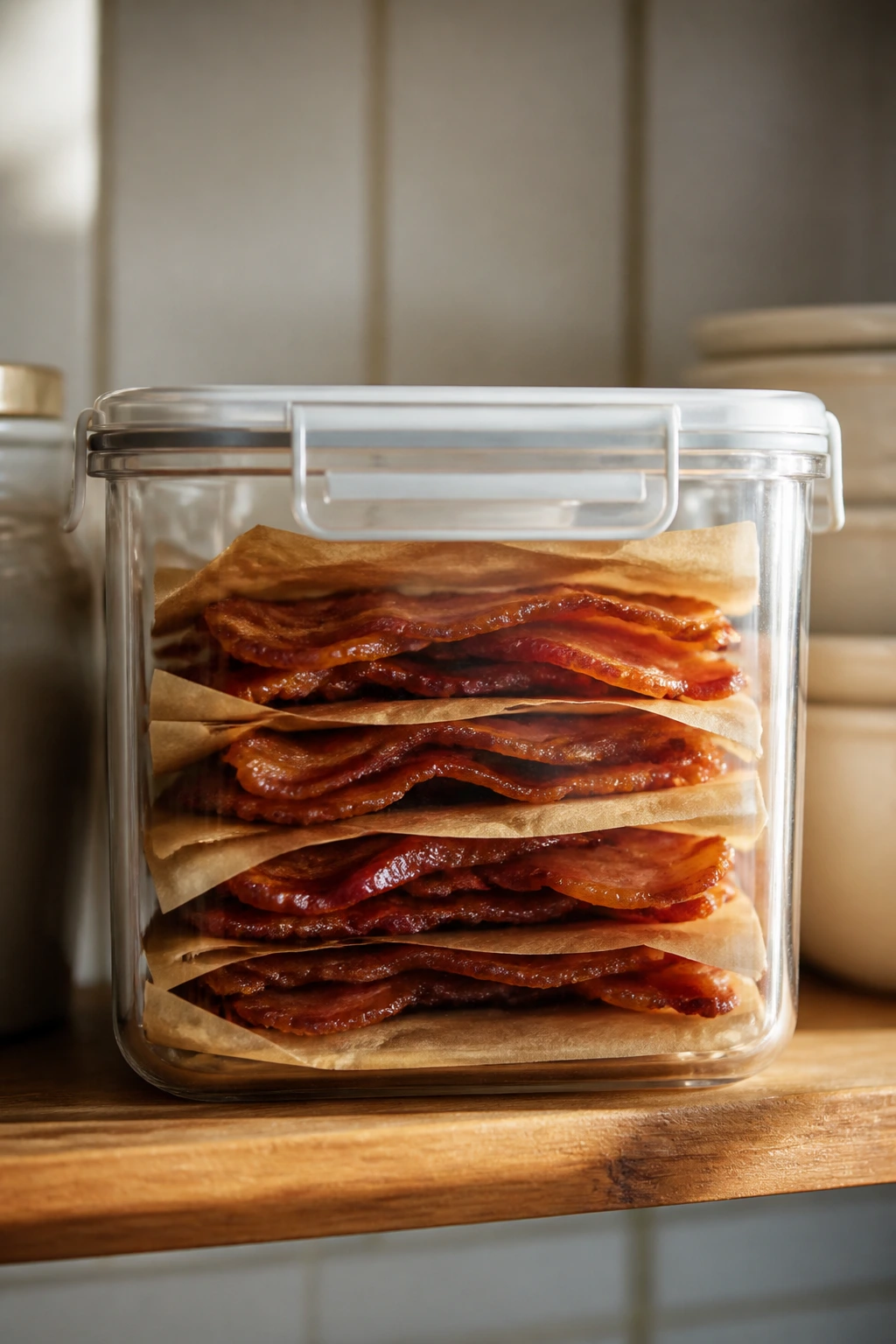
In the Fridge: Store it in an airtight container for 3 to 4 days. Put parchment between the layers so the strips do not fuse together. If the glaze looks a little dull after chilling, that is normal.
In the Freezer: Freeze for up to 2 months if you wrap the strips tightly in parchment, then seal them in a freezer bag. Thaw in the fridge overnight. The glaze will not be as shiny as it was on day one, but the flavor holds up.
Reheating: For the cleanest texture, spread the bacon on a parchment-lined sheet and warm it at 300°F for 5 to 8 minutes from the fridge, or 10 to 12 minutes from frozen. A skillet over low heat also works, about 1 to 2 minutes per side, but watch the sugar closely so it does not scorch. The microwave is the fastest option, though it softens the glaze and flattens the texture.
Make-Ahead: The glaze can be mixed 3 days ahead and kept covered in the fridge. You can also bake the bacon 2 to 3 hours ahead, cool it in a single layer, and rewarm it briefly before serving. That said, this is one of those recipes that is best when the glaze still feels tacky and warm, not fully chilled.
If you’re making it for a brunch board, I’d finish it as close to serving as possible. Bacon like this does not want to sit around and wait for applause.
Questions People Ask Before Making Brown Sugar Glazed Bacon
Can I use regular bacon instead of thick-cut bacon?
Yes, but the timing changes. Regular bacon cooks faster and can turn crisp before the glaze finishes, so start checking several minutes earlier and shorten the final bake.
Why did my glaze burn before the bacon was done?
The oven was probably too hot, the bacon may have been too thin, or the glaze went on too soon. Keep the oven at 325°F, wait until some fat has rendered, and spoon off excess grease before the final bake.
What if the glaze turns grainy or clumps on the pan?
That usually means the sugar did not dissolve fully or the glaze was too dry when it hit the heat. Whisk in 1 teaspoon water or maple syrup and let it sit for a few seconds before brushing again. If needed, warm the bowl over a cup of hot water for a minute.
Can I make this ahead for a brunch board?
Yes. Bake it a couple of hours early, cool it in a single layer, and warm it briefly at 275°F before serving. The bacon will not be quite as glossy as it is fresh from the oven, but it will still taste right.
Do I need a wire rack?
Not for this version. Direct contact with the parchment-lined pan keeps the bacon a touch more tender. A rack is useful only if you want firmer edges and a slightly drier finish.
Can I make this in an air fryer?
You can, but the sugar darkens fast in a small, hot basket. Use 300°F, line the basket with an air-fryer-safe parchment liner, and check it often. The oven gives you more control and a cleaner glaze.
Can I skip the maple syrup or use dark brown sugar instead?
Dark brown sugar works well and gives the glaze a deeper molasses note. If you skip the maple syrup, add a teaspoon of water so the sugar can brush on instead of falling in dry clumps. Pure maple syrup is still my favorite for shine.
What if I want the bacon a little less sweet?
Cut the brown sugar to 1/4 cup and add an extra teaspoon of Dijon. The bacon will still glaze, but the mustard will push the flavor back toward savory and keep it from reading like dessert.
A Sticky Finish Worth Repeating
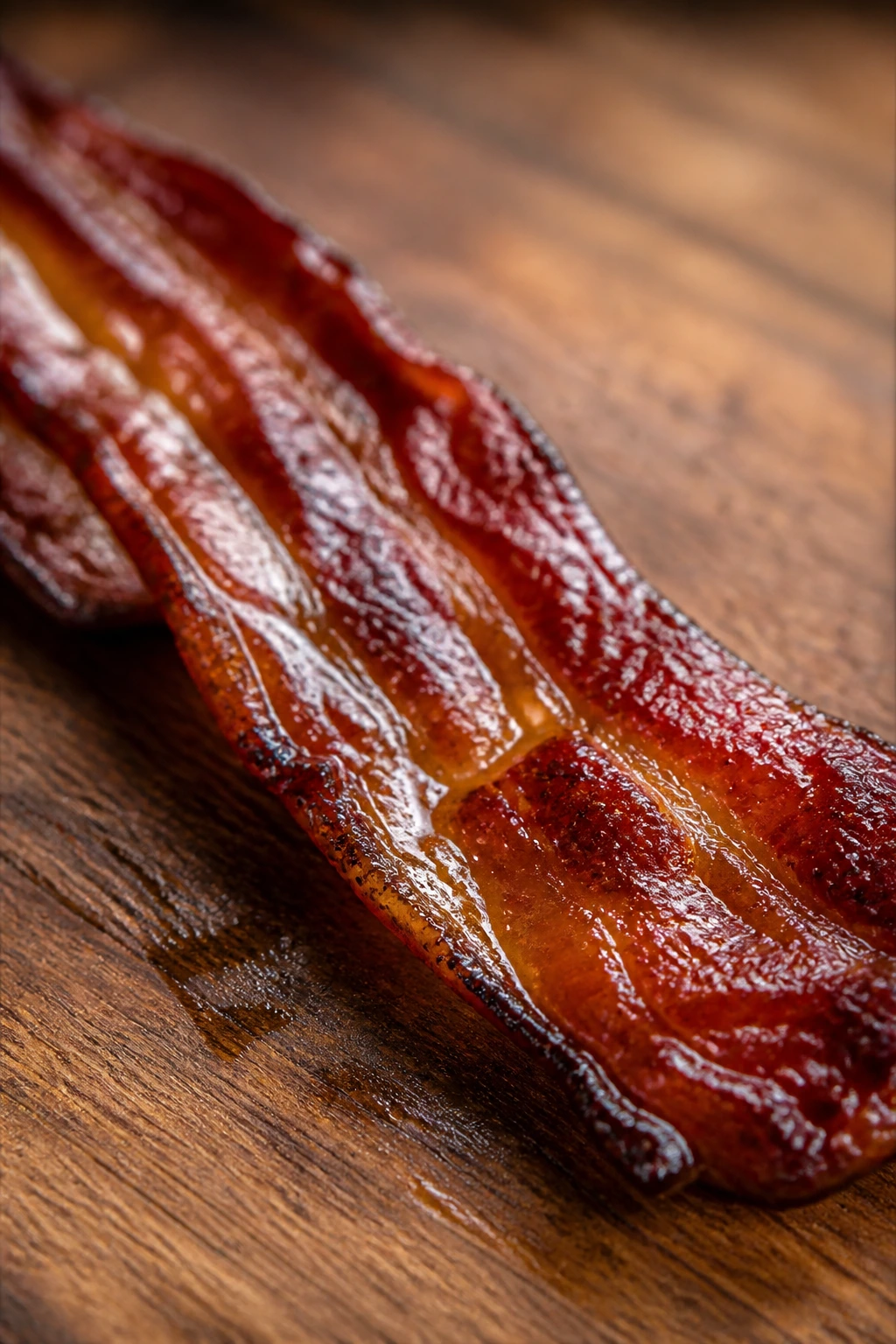
The nicest thing about brown sugar glazed bacon is how little it asks from you. A low oven. A thin glaze. A short stretch of patience while the sugar melts into a glossy coat. That’s it. No special gear, no complicated timing, just a few choices that keep the strips tender instead of brittle.
Serve it warm and it turns into one of those dishes that empties the platter before anyone stops talking. That is usually the sign I trust most. Not the fancy ingredient list. Not the look of the glaze. The silence that happens when people take the first bite and then reach for another strip before they’ve even put the fork down.
Tender Brown Sugar-Glazed Bacon — Recipe Card
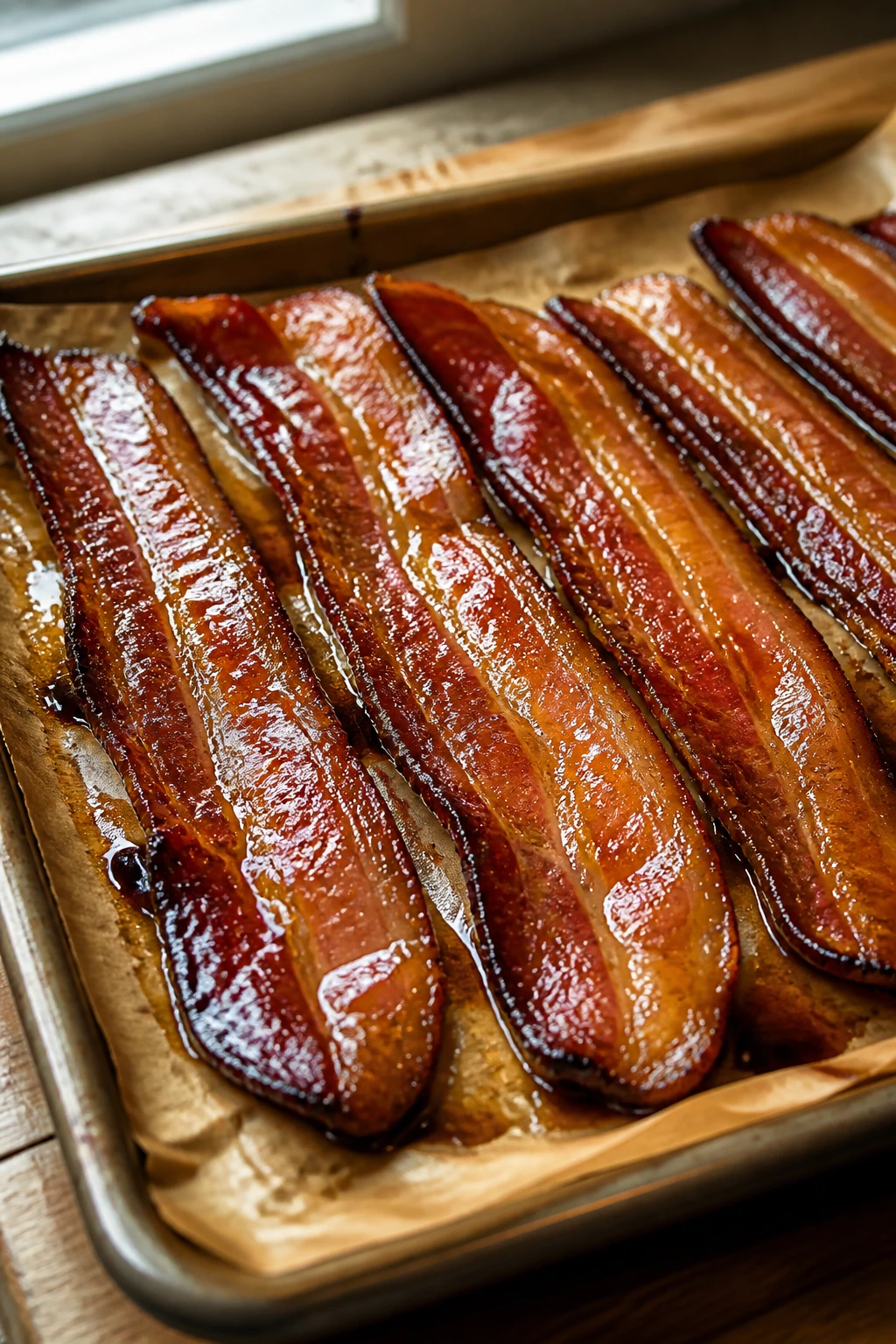
Recipe Name: Tender Brown Sugar-Glazed Bacon
Description: Thick-cut bacon baked at a low temperature and brushed with a brown sugar, maple, and Dijon glaze for a glossy finish with bendy centers and caramelized edges.
Prep Time: 10 minutes
Cook Time: 20 to 24 minutes
Total Time: 30 to 34 minutes
Course: Breakfast, Brunch, Appetizer, Side Dish
Cuisine: American
Servings: 6 to 8
Calories: About 150 kcal per serving
Ingredients
For the Bacon:
- 1 pound thick-cut bacon, about 14 to 16 slices
For the Brown Sugar Glaze:
- 1/3 cup packed light brown sugar
- 2 tablespoons pure maple syrup
- 1 tablespoon Dijon mustard
- 1 teaspoon apple cider vinegar
- 1/2 teaspoon smoked paprika
- 1/4 teaspoon freshly ground black pepper
- Pinch cayenne pepper
- 1 tablespoon water, only if needed to loosen the glaze
For Finishing:
- Flaky sea salt, optional
Instructions
- Preheat the oven to 325°F (165°C) and line a rimmed baking sheet with parchment paper.
- Whisk the brown sugar, maple syrup, Dijon mustard, vinegar, smoked paprika, black pepper, and cayenne until smooth. Add 1 tablespoon water only if needed.
- Arrange the bacon in a single layer on the sheet.
- Bake for 10 to 12 minutes, then spoon off excess fat if needed.
- Brush on half the glaze and bake for 5 to 7 minutes more.
- Brush on the remaining glaze and bake for 4 to 6 minutes more, until deep amber and glossy.
- Rest for 3 to 5 minutes, then sprinkle with flaky sea salt if using and serve warm.
Notes: Use thick-cut bacon for the bendiest texture. Dark brown sugar makes a deeper glaze, while thin-cut bacon needs a shorter bake. Do not rest the strips on paper towels if you want the glaze to stay glossy.