



A skillet of smoked sausage can save a Sunday supper with almost ridiculous ease, but only if you treat it like it matters. A rope of sausage that’s browned well, sliced at the right point, and paired with onions, cabbage, potatoes, or beans has a deep, salty-sweet backbone that makes the whole table feel more finished than it really was. Miss the small stuff, and you get oily coins with a flat, boiled flavor. That’s the entire game.
The best smoked sausage cooking tips are not about making dinner complicated. They’re about protecting the part that already tastes good and coaxing out the part that doesn’t show up until the edges hit heat. Most smoked sausage is already cooked, which changes the rules in a useful way. You’re not chasing doneness so much as texture: a snappy casing, browned cut faces, a little rendered fat, and enough smoke to carry the other ingredients without turning the plate heavy.
Sunday supper has a pace of its own. The potatoes may still be softening, the greens may need one last splash of vinegar, and somebody will absolutely walk through the kitchen asking when dinner is ready before the pan has even been wiped. Smoked sausage fits that rhythm when it’s handled with a bit of care. The tips below come from that rhythm, not from theory. Use the right heat, give the sausage room, and keep the flavor sharp enough to stay interesting after the second helping.
Why These Smoked Sausage Cooking Tips Matter on Sunday Night
-
Fast payoff: Smoked sausage can go from fridge to browned dinner in about 10 to 15 minutes, which is a lifesaver when the rest of the meal still needs attention.
-
Built-in flavor: The sausage already brings salt, smoke, and fat, so one good pan of onions or cabbage can taste like you worked much harder than you did.
-
Flexible enough for the table: One pound can stretch into a skillet dinner, a pot of beans, a tray of roasted vegetables, or a pot of rice without feeling stingy.
-
Better texture with small moves: A wider pan, a steadier heat, and a little patience on the cut sides make a bigger difference here than fancy seasoning ever will.
-
Leftovers are not an afterthought: Cold smoked sausage holds up in breakfast hash, soup, pasta, and fried rice because the flavor survives reheating better than most proteins.
-
Sunday supper friendly: The best versions are the ones that can sit for a few minutes while the rest of the meal comes together without drying out or turning mushy.
1. Brown the Cut Sides First
Put the sausage in the pan and cut it later? I wouldn’t. The flat, cut faces are where the best browning happens, and that browned surface is where the flavor starts to deepen. A rope of smoked sausage already has smoke; what it needs from you is a little crust.
Why It Works
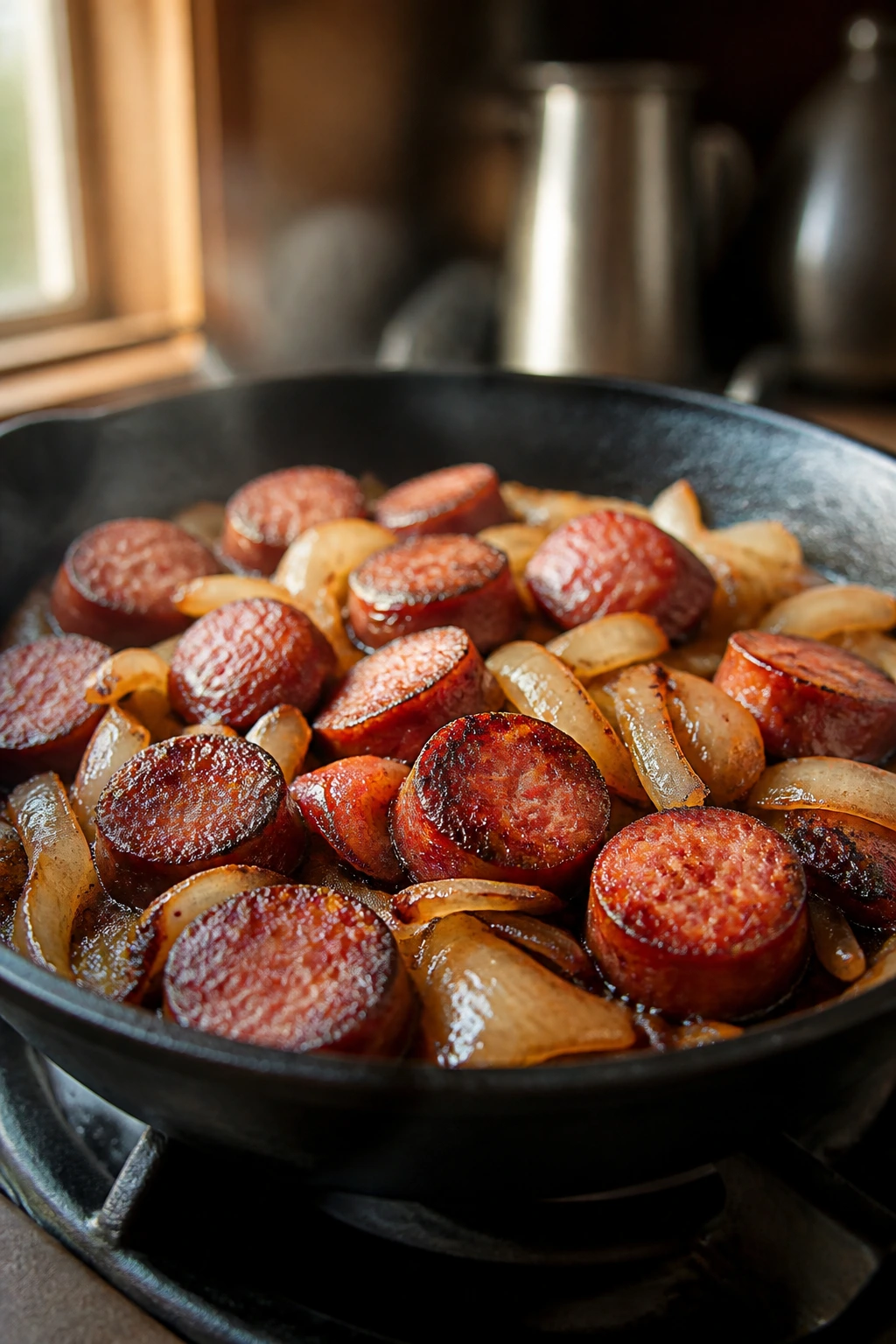
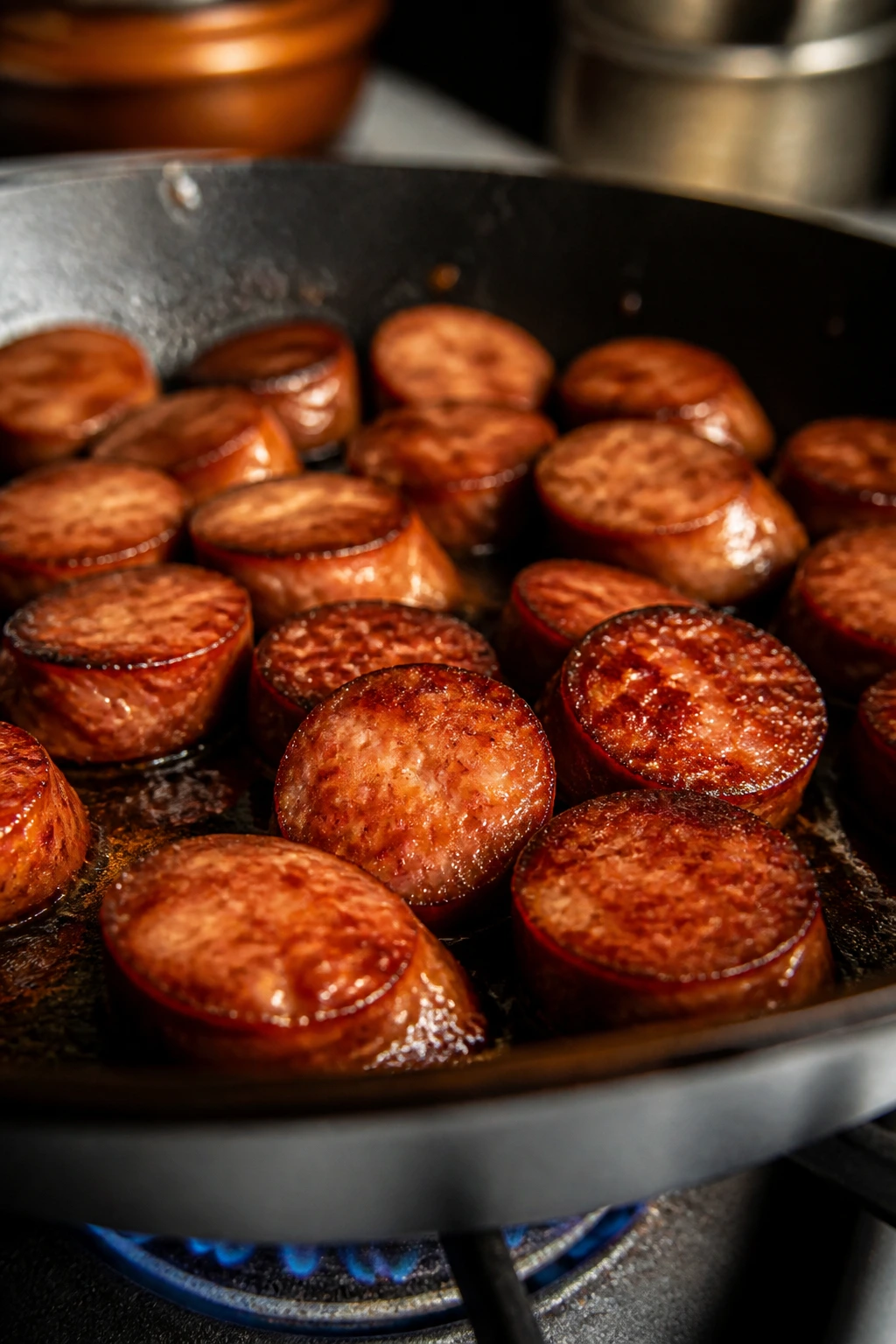
The casing protects the inside, so the cut face is the part that can take direct heat without falling apart. Slice the sausage into 1/2-inch coins or split links lengthwise, then place the cut side down in a dry skillet. Give it 2 to 3 minutes before you even think about moving it. You want deep golden spots, not pale stripes.
- Use a dry pan at first if the sausage is fatty enough.
- Keep the pieces in a single layer so the edges actually sear.
- Turn them only after the first side has color.
My rule: if the pan sounds steady and not wild, you’re in the right zone.
2. Use a Pan Wide Enough to Leave Space
Crowding is the quiet killer here. A packed skillet traps steam, and steam gives you gray sausage with soft edges. That’s fine if you’re making soup later. It’s not fine if you want a Sunday supper skillet with a little snap on the outside.
Choose a 12-inch skillet for a pound of sausage, or cook in two batches if you need to. The pieces should sit flat with room between them, not huddle together like they’re trying to avoid the weather. That extra space lets moisture evaporate quickly, which is what turns a heavy link into something with actual contrast.
If you’ve ever wondered why one pan looks dull and another looks deep brown with crisped bits on the bottom, this is usually the reason. Pan size. Simple. Annoying. True.
3. Slice on the Bias for Better Browning
A straight cut works. A diagonal cut works better.
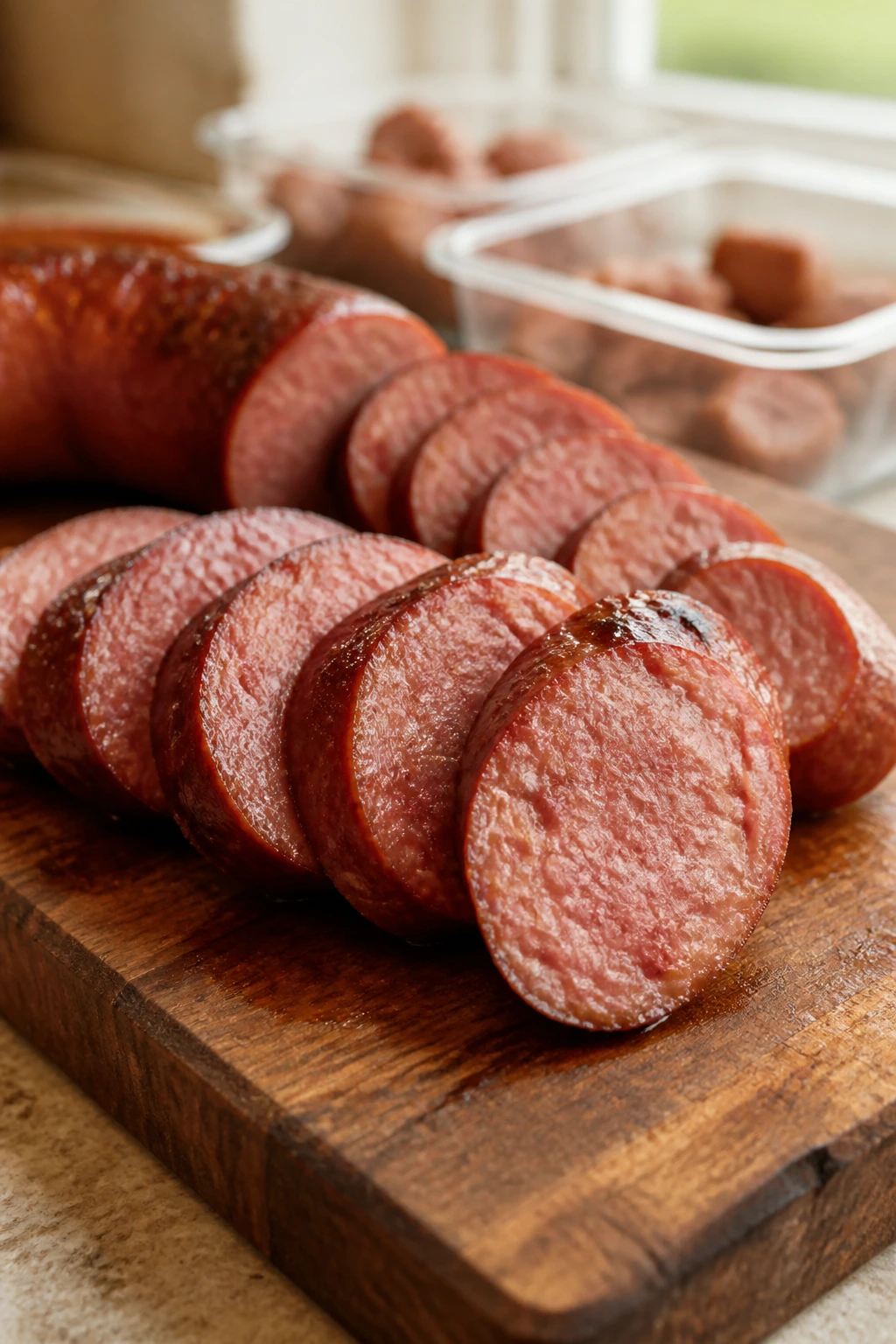
When you slice smoked sausage on a slight bias, each piece gets a larger surface area, which means more browning and more edges for the pan to catch. I like 1/2-inch thick slices cut at about a 45-degree angle. Thin slices can dry out and curl. Too thick, and they stay soft in the middle longer than you want.
The Sweet Spot
You want each coin to hold its shape in a skillet or roast, but still pick up color fast enough that dinner doesn’t stall. Bias-cut sausage also looks better on a platter; the oval shape feels a little more deliberate than plain circles. That matters on a Sunday table, where the food often gets judged with the eyes before the fork touches it.
4. Keep the Heat at Medium, Not Wild
High heat feels efficient until the sausage starts spitting, the casing splits, and the pan bottom goes dark before the center is hot. Smoked sausage does not need a blast furnace. It needs controlled heat and a little patience.
Medium heat gives the fat time to render without scorching. If you’re browning slices, start around medium to medium-high, then back off once the pan is glossy and the sausage begins to color. If you’re cooking whole links in a skillet, stay closer to medium so the outside doesn’t race ahead of the middle.
Here’s the part most people miss: you can always turn the heat up at the end for a last quick crisp. You cannot unburn the first side. That’s why smoked sausage rewards restraint.
5. Leave the Casing Alone
Poking holes in smoked sausage is one of those habits people copy from somewhere and never question. Don’t do it unless you have a very specific reason. The casing is there to hold the juices in and give you that little snap when you bite into it.
Piercing the sausage releases fat and moisture before the surface has a chance to brown, which leaves you with drier pieces and a messier pan. If the link is tightly packed and you’re worried about splitting, lower the heat instead of stabbing it. That’s the fix.
What to Do Instead
Let the sausage tighten naturally as it heats. If you’re grilling, turn it with tongs instead of a fork. If you’re roasting, give it space and let the oven do the work. The casing will handle its job fine as long as you do not treat it like a balloon that needs to be managed.
6. Start Onions in the Sausage Fat
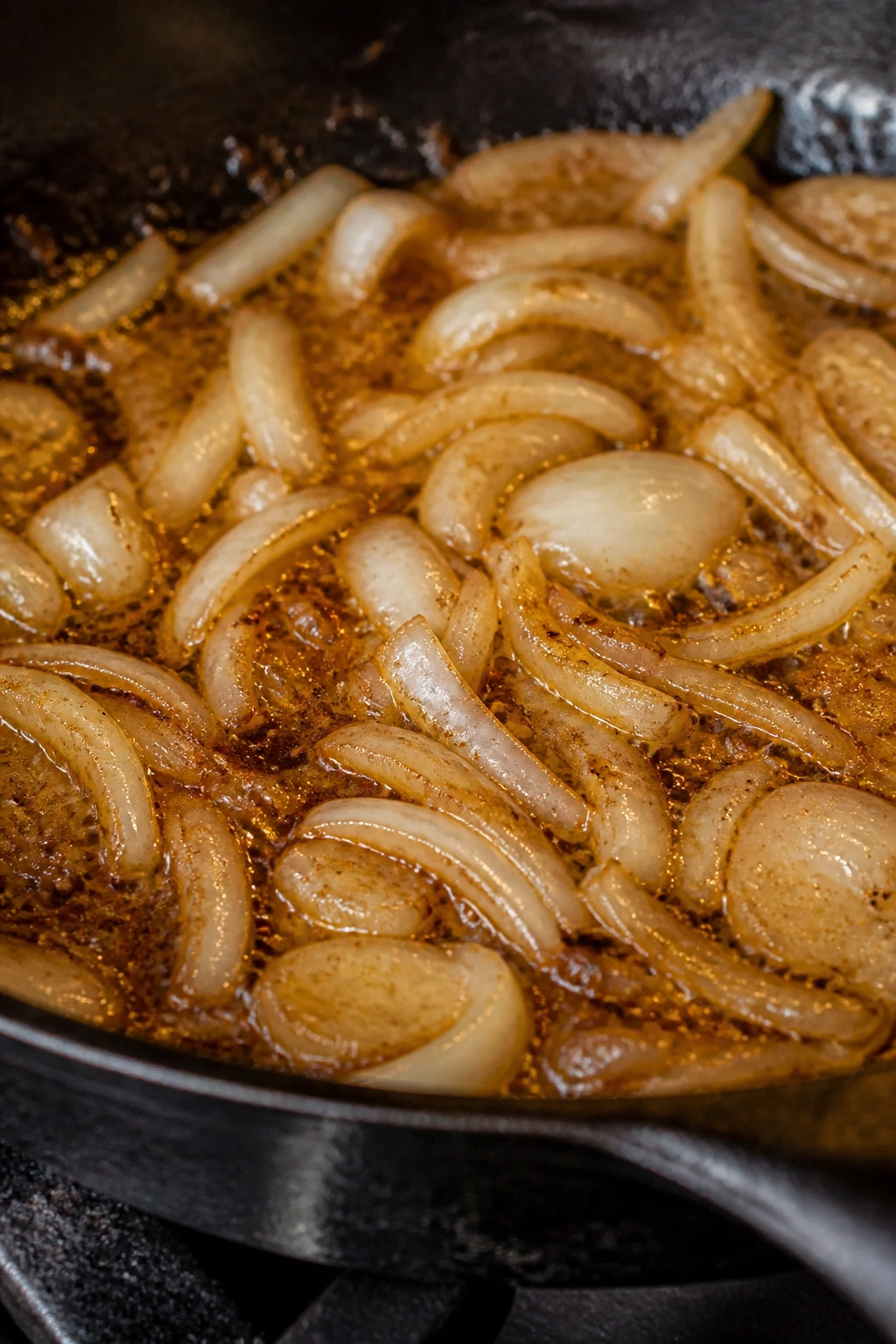
If you’re cooking onions with smoked sausage, don’t clean the pan after the sausage comes out. That fat is the good part. It carries the smoke into the onions, and the onions soften into something sweet enough to balance the salt.
I usually pull the sausage after browning, drop in sliced onions with a pinch of black pepper, and let them cook in the fat for 6 to 8 minutes. If the pan looks dry, add a teaspoon of oil. If it looks greasy, spoon off a little first. You want a glossy layer, not a puddle.
The onions should go translucent first, then pick up color around the edges. That’s the moment when the pan starts smelling like dinner instead of ingredients.
7. Deglaze With a Splash of Liquid
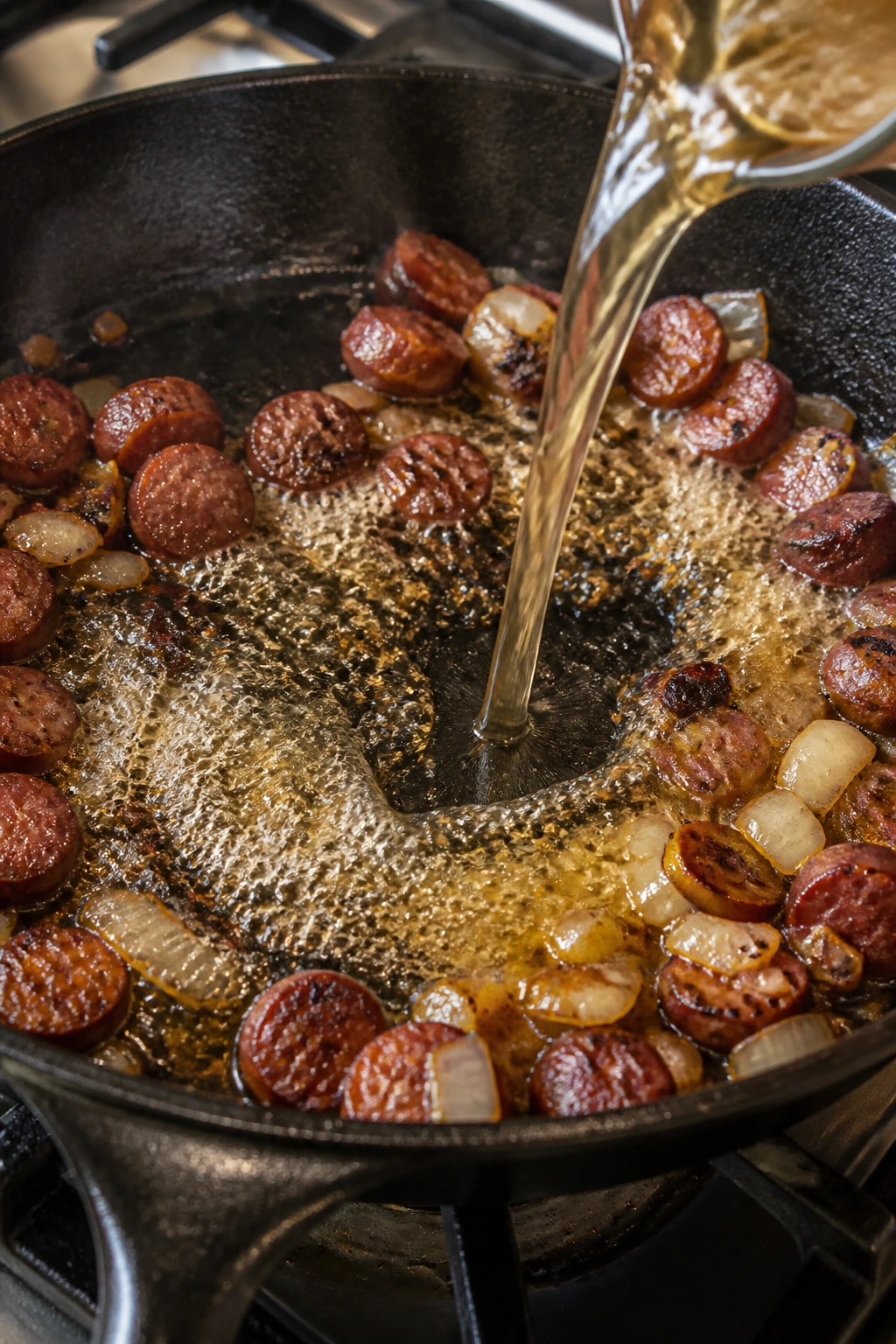
Once the bottom of the pan has browned bits stuck to it, stop scrubbing and start deglazing. A splash of water, broth, beer, cider, or even a little vinegar can lift that fond off the skillet and turn it into the base of a sauce.
Use about 1/4 cup liquid for a standard skillet. Pour it in after the sausage and onions have browned, then scrape with a wooden spoon until the bottom looks clean and the liquid has picked up color. That’s your flavor, right there. Not magic. Just browned milk solids, caramelized sugars, and sausage fat doing what they do best.
A pan that has been deglazed properly tastes fuller without needing more salt. That’s one reason this technique keeps showing up in good home cooking. It takes the food you already made and stops you from wasting the best part of it.
8. Roast on a Sheet Pan for a Hands-Off Dinner
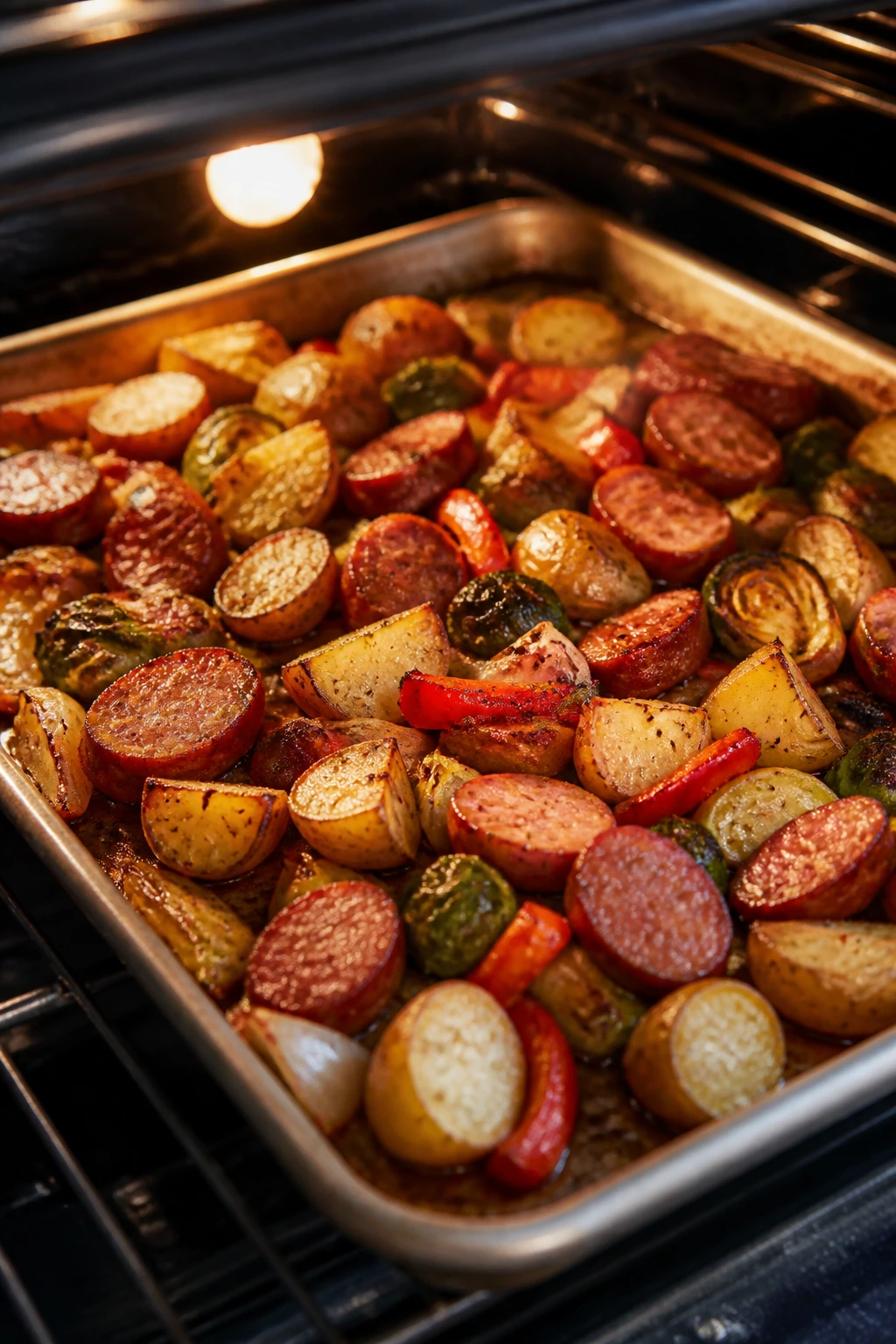
A sheet pan is the easiest way to turn smoked sausage into a real supper with almost no babysitting. Spread sliced sausage with potatoes, onions, peppers, or Brussels sprouts on a rimmed pan, toss with oil, and roast at 425°F until the edges crisp.
The key is spacing. Everything should sit in a loose single layer, not stacked in a mound. Give the vegetables room to brown, and the sausage will keep its snap instead of steaming under the vegetables’ moisture. Halfway through, turn the tray and stir once with a spatula.
This method works especially well when the rest of the meal needs attention elsewhere. The oven does the boring part. You do the finishing.
9. Choose Sturdy Vegetables, Not Watery Ones
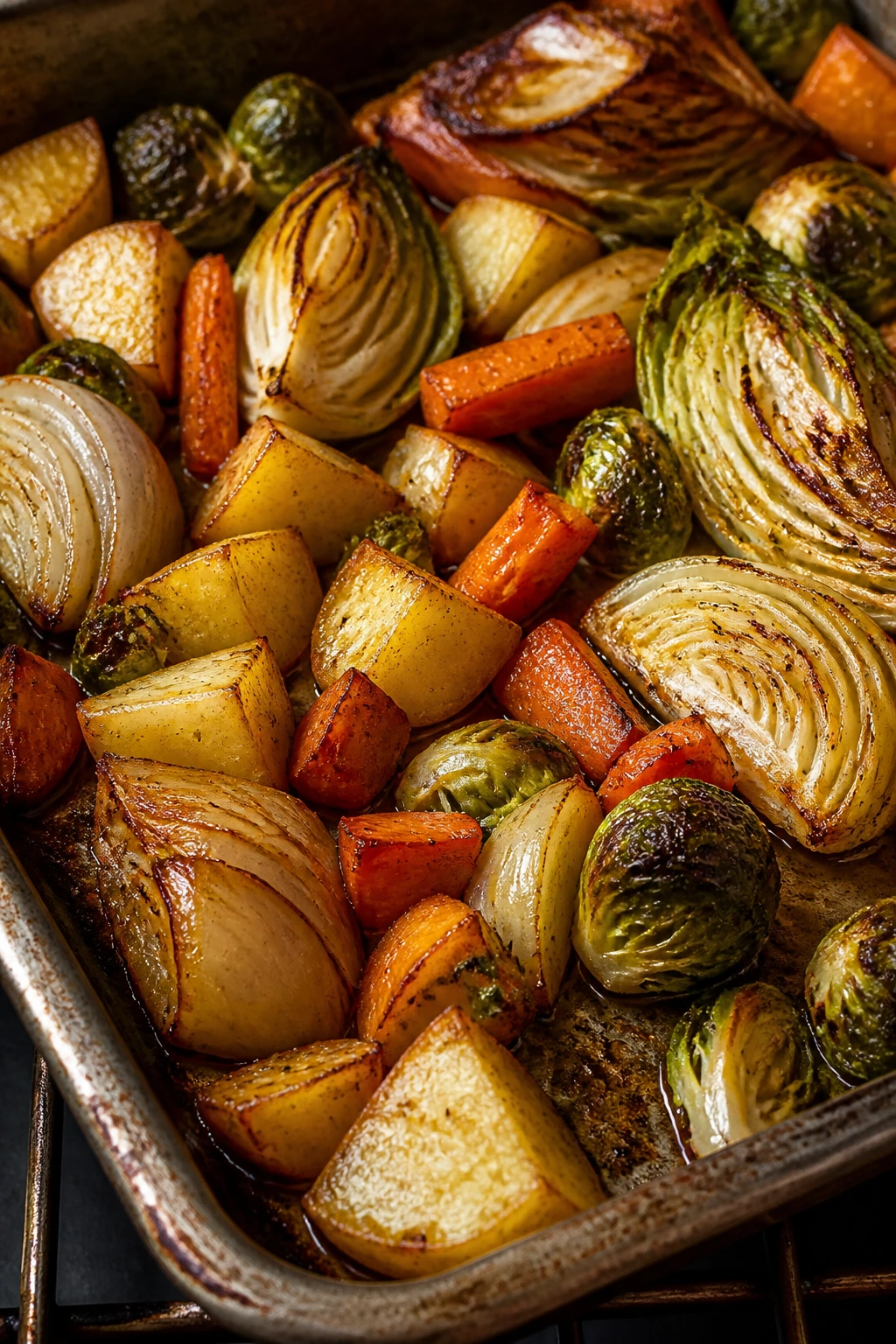
Smoked sausage brings salt and fat, so the vegetables beside it need enough structure to stand up to both. Potatoes, cabbage, Brussels sprouts, green beans, carrots, peppers, and onions all hold their shape and drink up the pan drippings without collapsing into mush.
Tomatoes can work, but they should come late. Zucchini can work, but only if you like it soft. Cucumbers, lettuce, and other watery vegetables do not belong here unless they’re part of a cold side dish on the plate.
Best Pairings by Texture
- Potatoes: soak up the fat and become crisp at the edges.
- Cabbage: softens into a sweet, savory bed.
- Brussels sprouts: take on a dark, nutty edge in the oven.
- Carrots: hold shape and add a little sweetness.
If you want the sausage to feel like dinner and not a random protein thrown at a bowl of vegetables, start with sturdy produce.
10. Finish With Acid
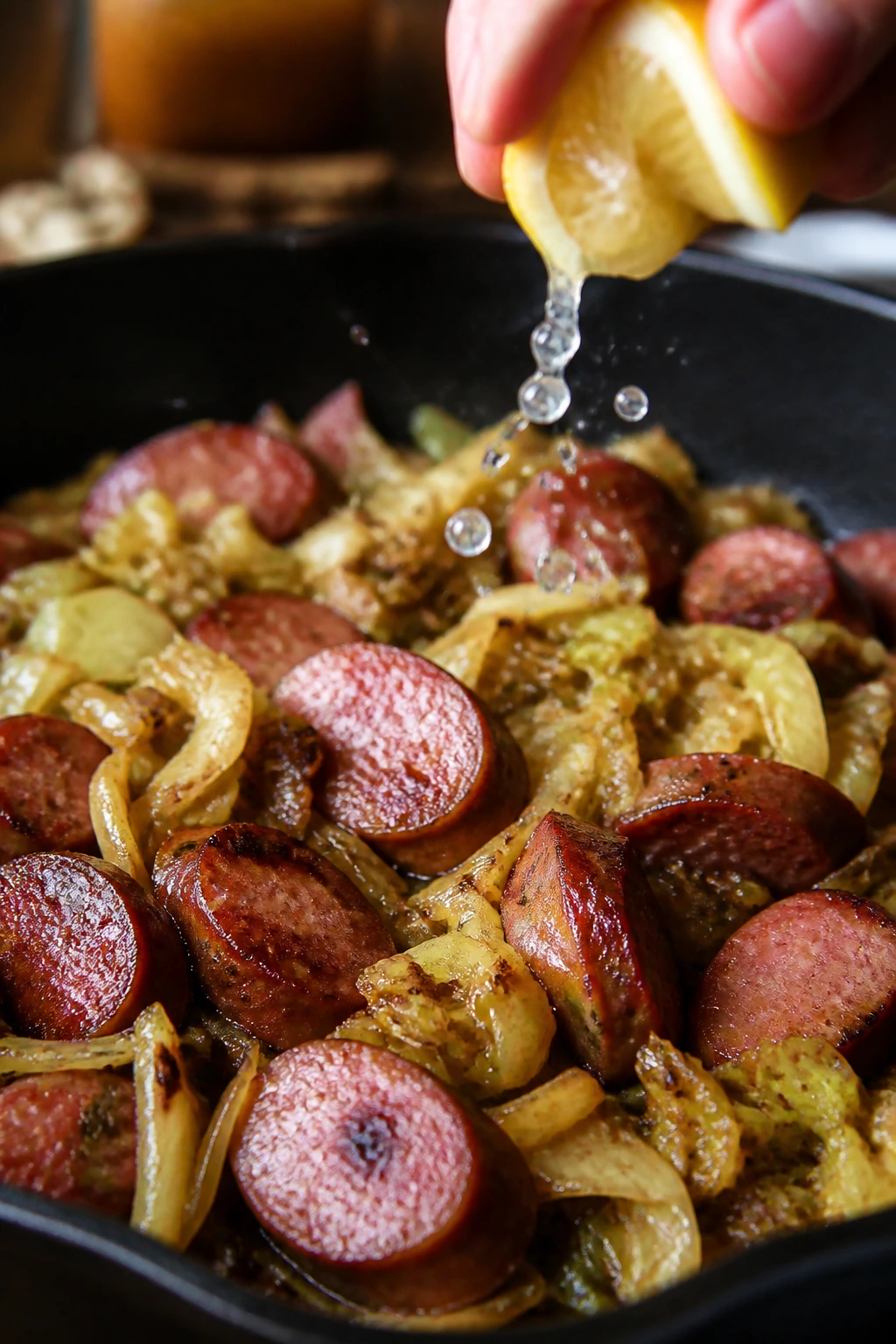
A little acid makes smoked sausage taste less heavy and more awake. Vinegar, mustard, lemon juice, pickled peppers, or even a spoonful of brine can cut through the fat and keep the whole plate from feeling blunt.
This matters more than people think. Smoked sausage brings smoke, salt, and richness; acid makes those flavors separate instead of flattening into one note. A teaspoon or two of cider vinegar stirred into cabbage at the end can change the whole pan. So can a squeeze of lemon over sausage and potatoes.
Do not drown the food. You’re aiming for a bright edge, not a sour blanket.
11. Salt the Rest of the Meal Last
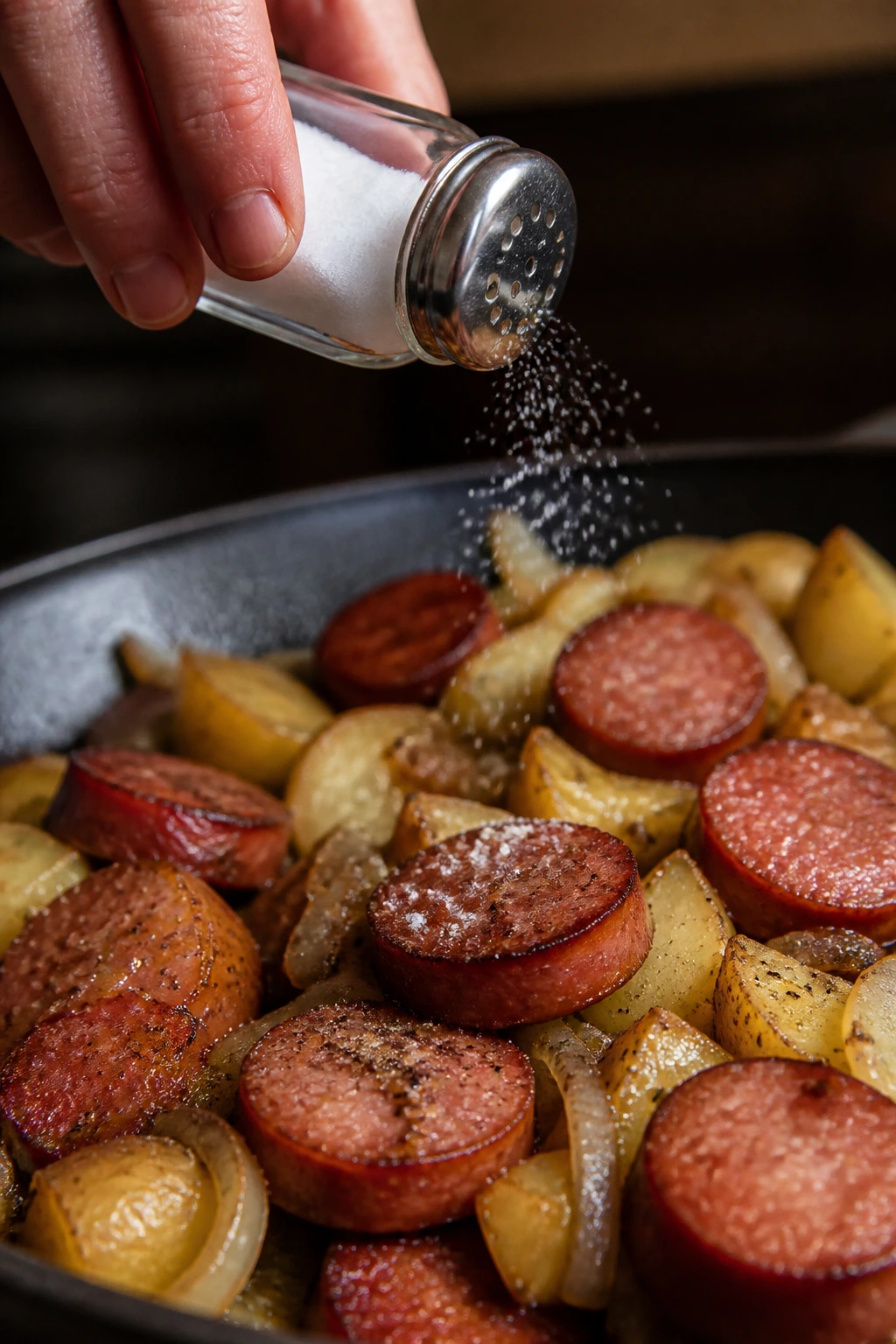
Smoked sausage is already seasoned, often heavily. If you salt the onions, potatoes, beans, or gravy at the start the way you would with plain chicken, you can overshoot fast. Wait until the sausage has cooked and tasted its way into the dish.
Take a bite. Then salt. That’s the reliable move.
A lot of home cooks blame “too much seasoning” when the real issue is layering salt too early around a salty protein. With smoked sausage, the seasoning lives in the meat and the drippings. The rest of the dish should be adjusted after that flavor has had a chance to spread.
12. Hold It Warm the Right Way
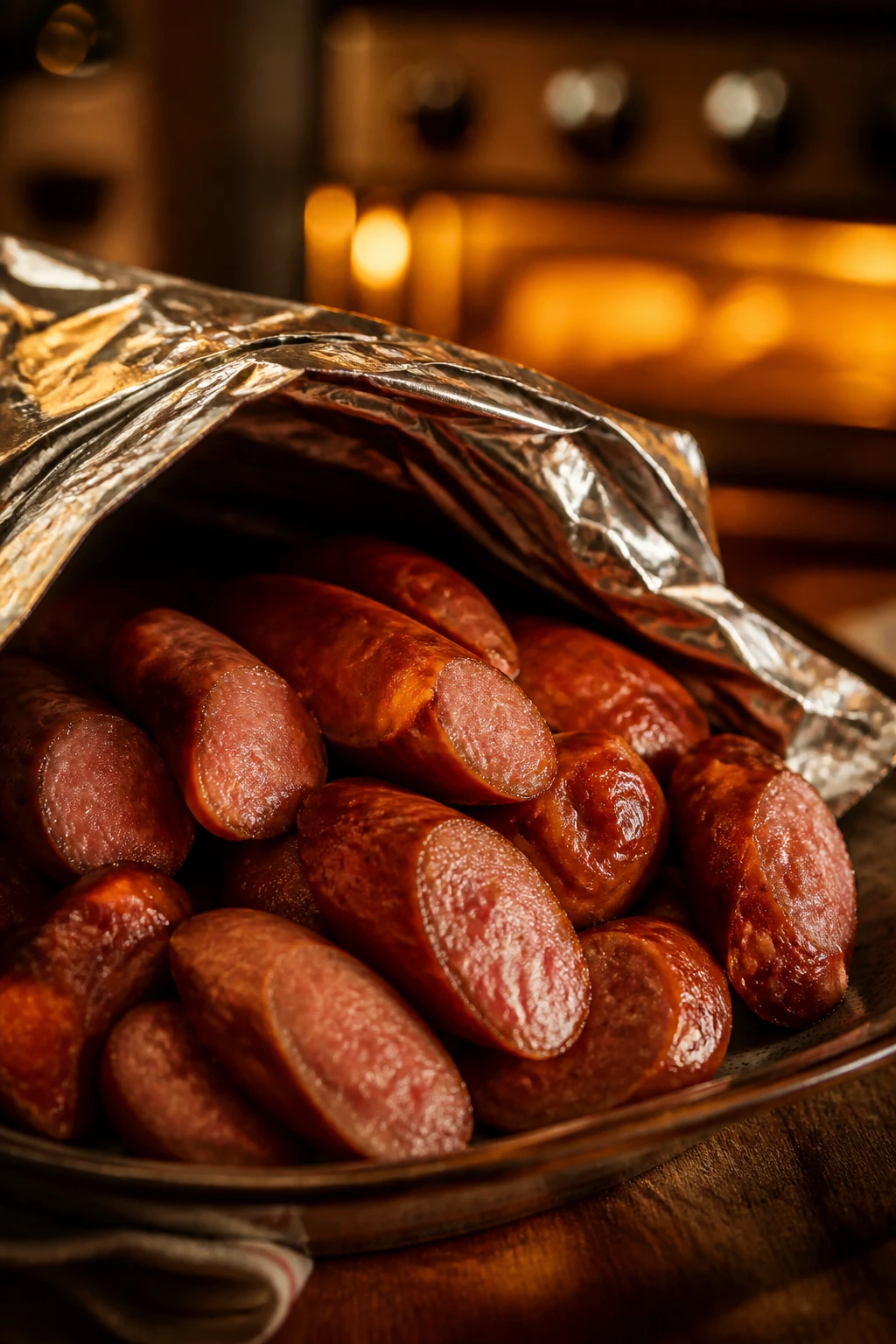
Smoked sausage can sit for a few minutes, but it should not bake itself into oblivion under a tight lid. If you need to hold it while the rest of dinner finishes, use low heat, a loose cover, or a warm oven around 200°F.
A sealed pot traps steam and softens the casing. A blast of heat dries the sausage out. The middle road works best. Put the sausage on a platter, tent it lightly with foil, and let it wait while you finish the side dishes.
If sauce is involved, hold the sausage in the sauce only briefly. Too long, and the casing gives up its snap.
13. Let the Sausage Rest Before Serving
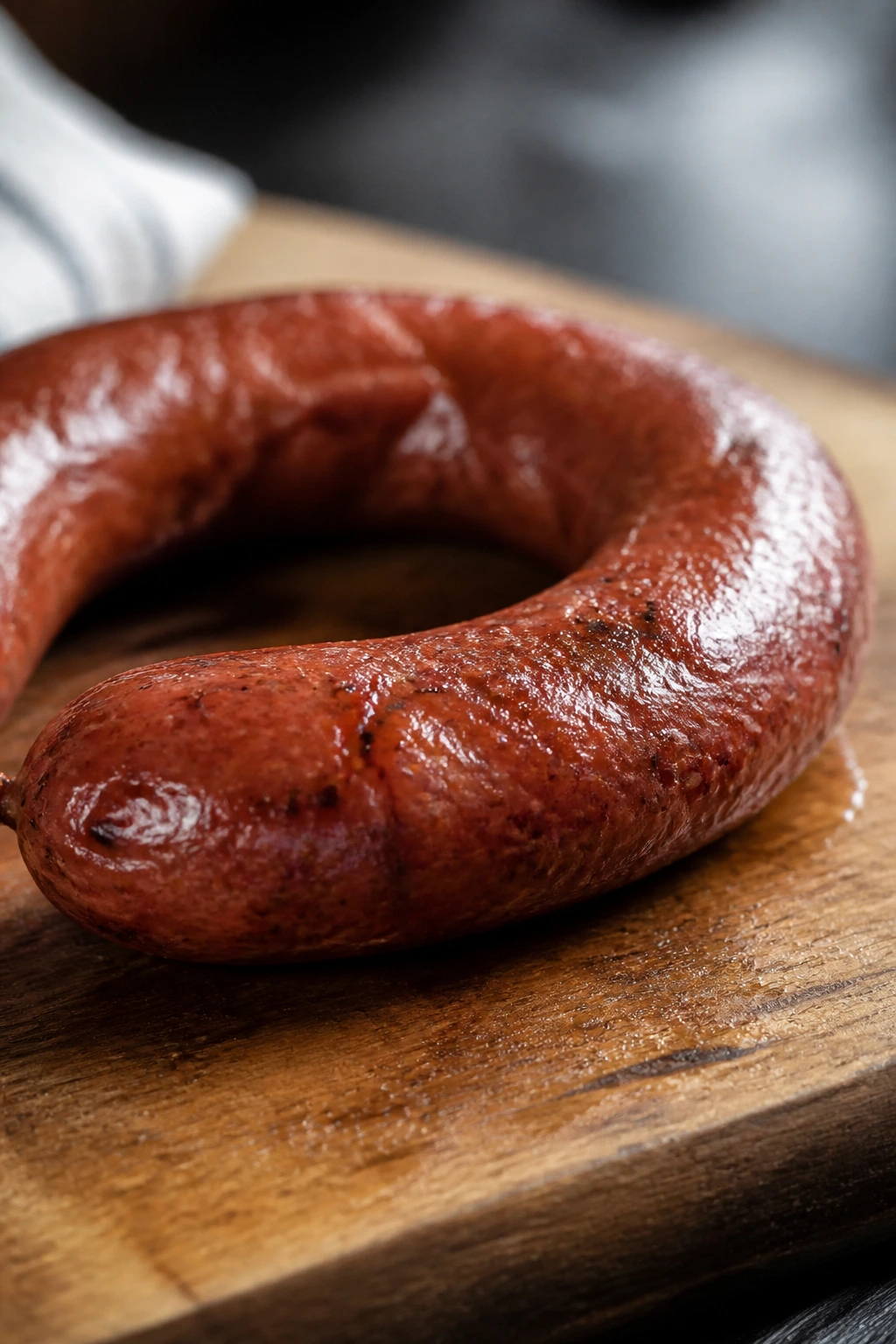
Resting is not just for roast chicken. Smoked sausage benefits from a short pause after cooking, especially if you’ve grilled it or seared it hard. Give it 3 to 5 minutes before slicing and plating.
What That Pause Does
The juices settle back inside the casing instead of spilling onto the board. The fat firms slightly, which means cleaner cuts and better texture. If you slice too soon, the sausage can look wet and the pan loses some of the good stuff you just worked to build.
Rest it on a cutting board or warm plate, not on a cold metal tray. A little patience here makes the first bite feel juicier and less greasy.
14. Use Cast Iron for Deeper Color
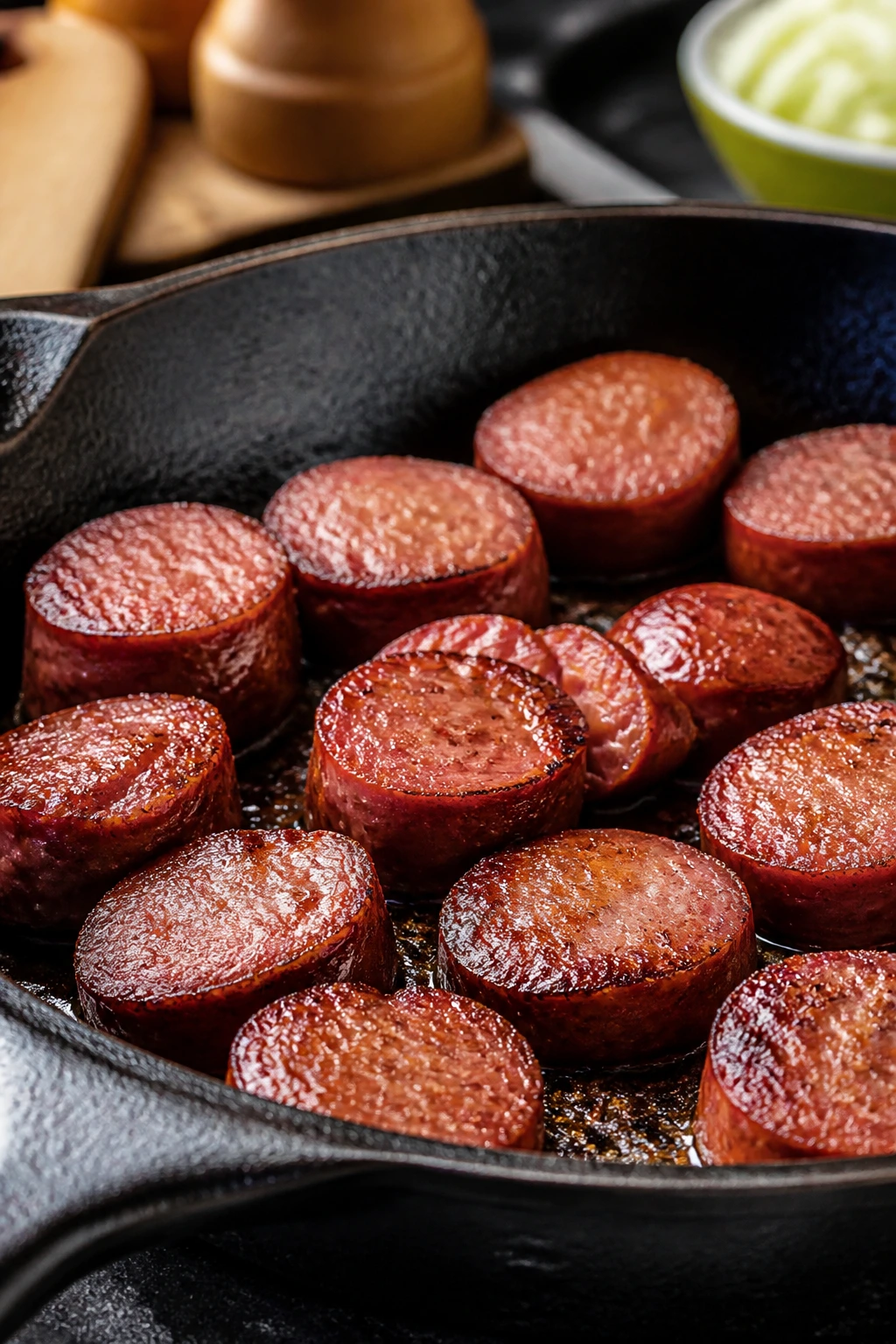
A cast-iron skillet is not mandatory, but it is a very good fit for smoked sausage. It holds heat, browns evenly, and keeps recovering after you add cold sausage from the fridge.
That heat retention matters because sausage cools a weak pan fast. In stainless steel, you can still do it, but you’ll work harder to maintain a steady sizzle. In cast iron, the contact stays stronger, so the cut faces color more quickly and the fond builds faster on the bottom.
If you like a skillet dinner with onions and potatoes, cast iron also gives you better control when you move from searing to sautéing. One pan. Fewer mood swings.
15. Pick the Fat Level to Match the Dish
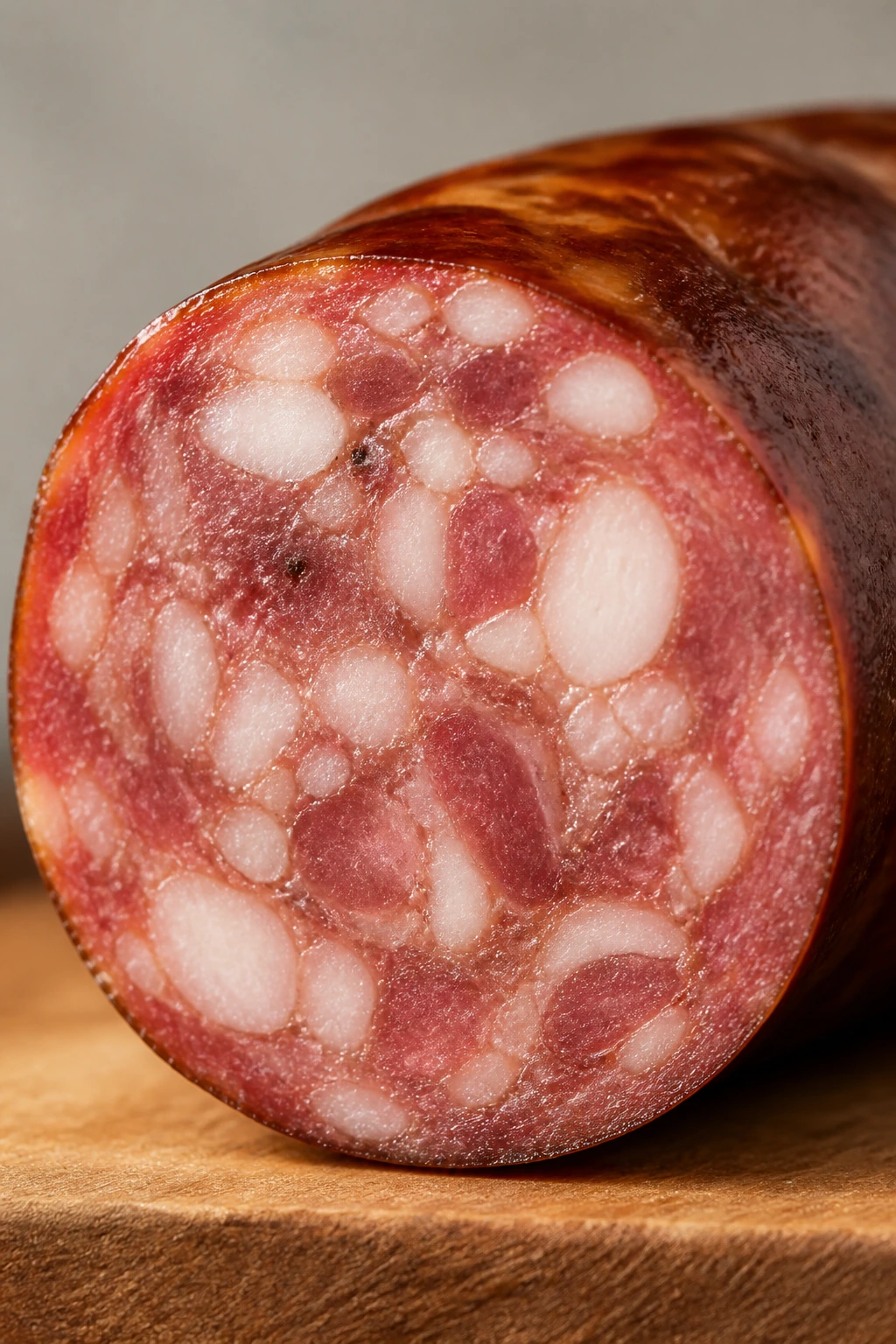
Not every smoked sausage should be treated the same way. A fattier kielbasa brings a lush, hearty finish that’s perfect with cabbage or beans. A leaner turkey smoked sausage can work better in pasta, rice dishes, or sheet pan meals where you want less grease on the tray.
What to Look For
- Higher fat sausage: better for braises, beans, and skillet dinners.
- Lean sausage: better for roasted vegetables and lighter sauces.
- Garlic-heavy sausage: great with greens and potatoes.
- Peppery sausage: stronger in pasta or tomato-based dishes.
I’d rather choose the sausage to fit the rest of the plate than throw in whatever link is cheapest and hope the side dishes rescue it. They usually won’t.
16. Build a Pan Sauce From the Drippings
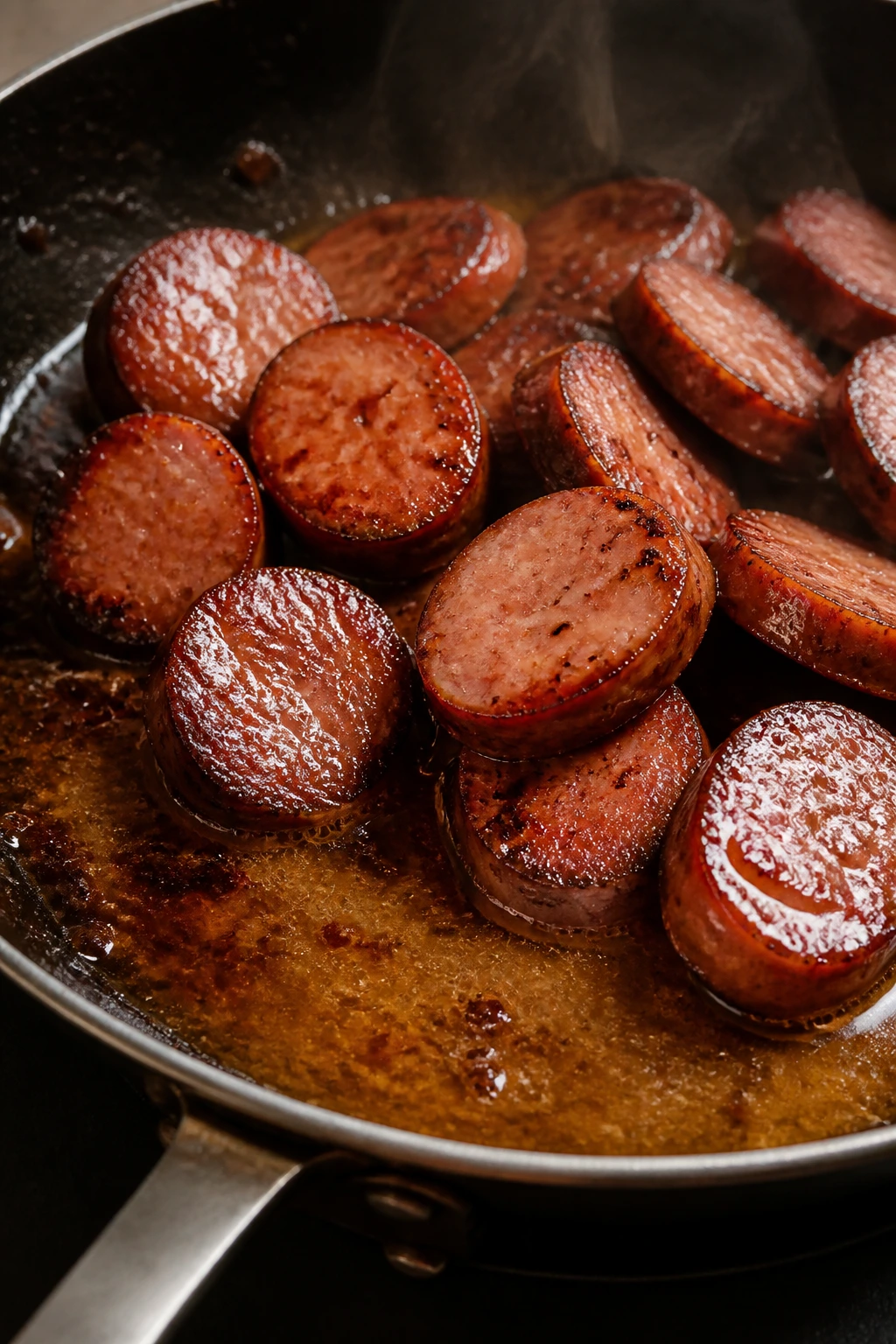
A little sausage fat and a little browned fond can turn into a proper sauce with almost no work. Add minced garlic, a spoonful of mustard, a splash of broth, and maybe a touch of cream or crushed tomatoes depending on the direction you want.
The sauce should be loose enough to coat the back of a spoon, not thick like gravy from a jar. Let it simmer for 2 or 3 minutes until it takes on the sausage color and the raw edge of the garlic disappears. Then put the sausage back in and coat it.
This is one of my favorite moves for a Sunday supper because it makes the plate feel intentional. Not fancy. Intentional. There’s a difference.
17. Treat Smoked Sausage as a Seasoning in Soups
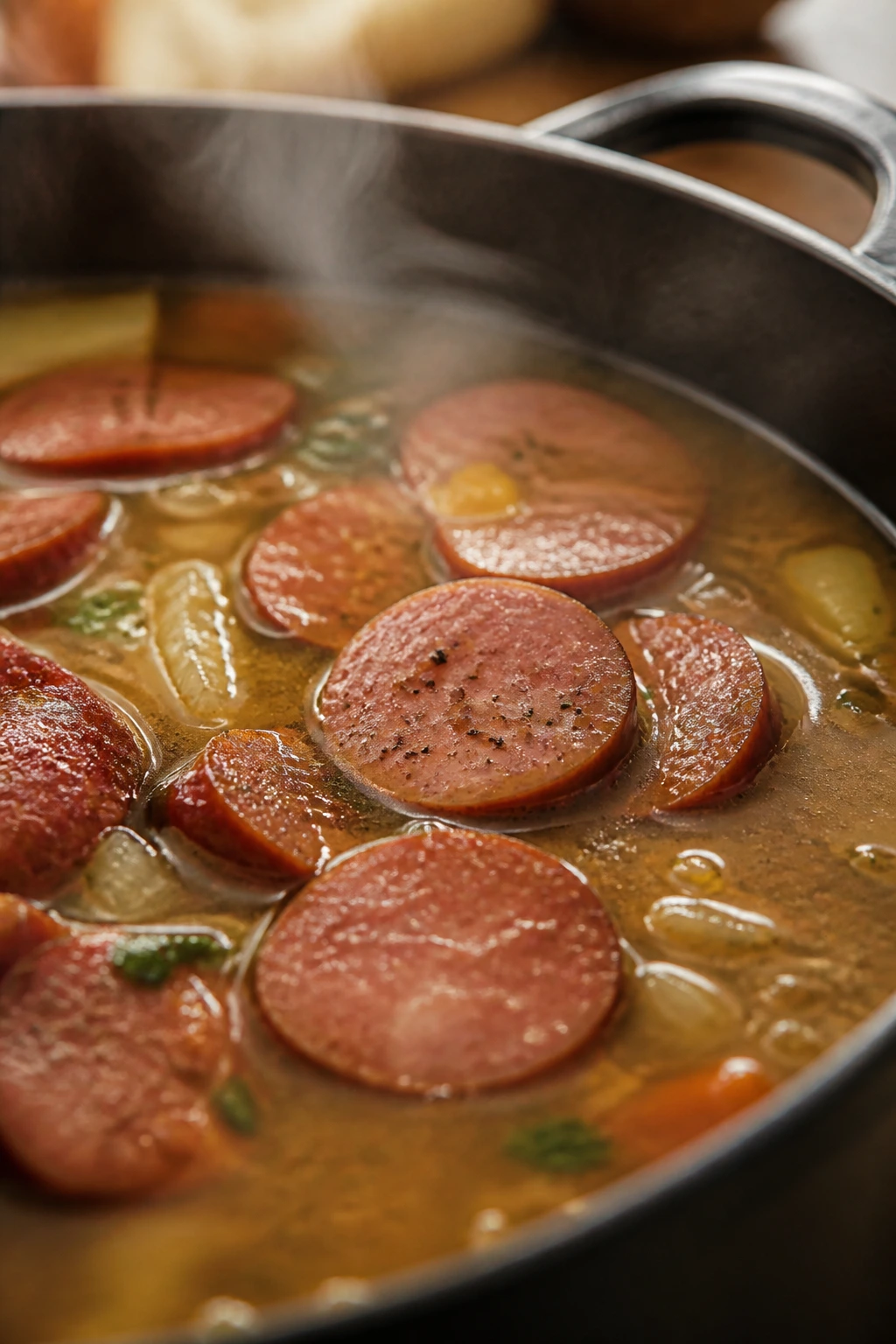
In soup, smoked sausage behaves more like a seasoning than a main event. That’s useful. It means you can build a pot of beans, lentils, cabbage soup, or potato soup around a few sliced links and let the smoke carry the broth.
Brown the sausage first if you can. If you cannot, add it later and let it simmer just long enough to warm through and share its flavor, usually 10 to 15 minutes. Long, hard boiling can push the fat out and make the slices grainy.
Use it where you’d otherwise reach for ham hock or bacon, especially in brothy bean soups. It’s not the same thing, but it scratches a similar itch.
18. Add It Late in Slow Cooker Dishes
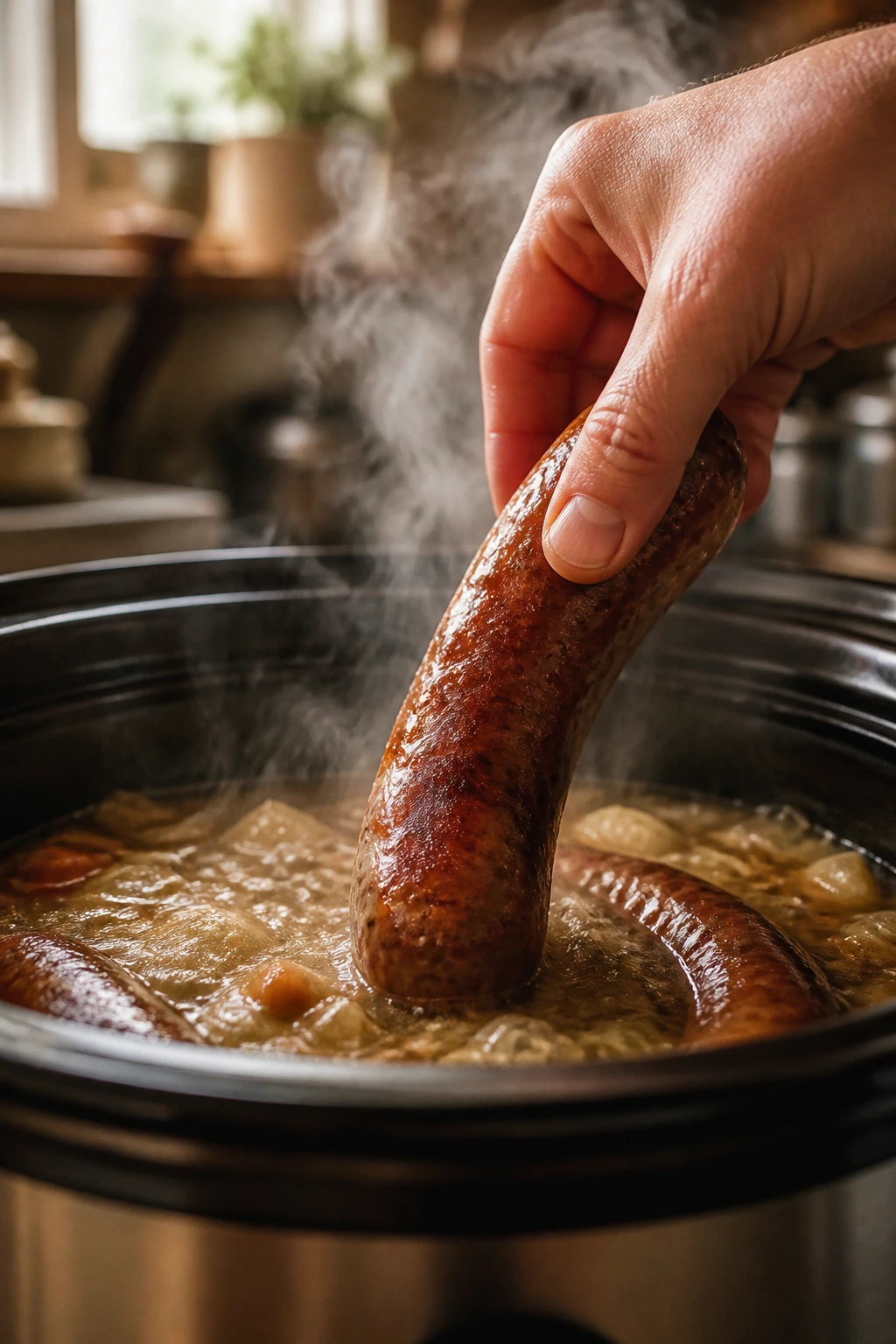
Smoked sausage can go in a slow cooker, but it does better when you do not leave it there for hours and hours. Since it is already cooked, the long bath can make the texture soft and the casing loose.
Add browned sausage in the last 30 to 45 minutes of cooking, especially if you’re making cabbage, potatoes, beans, or a stew-style dinner. That gives the sausage enough time to heat through and share flavor without losing its snap. If you want more color, sear it first in a skillet and then stir it in near the end.
This one is worth repeating because people love to toss everything into the slow cooker at once. Sometimes that works. With smoked sausage, it usually works less well than they hope.
19. Give It Grill Marks for Char
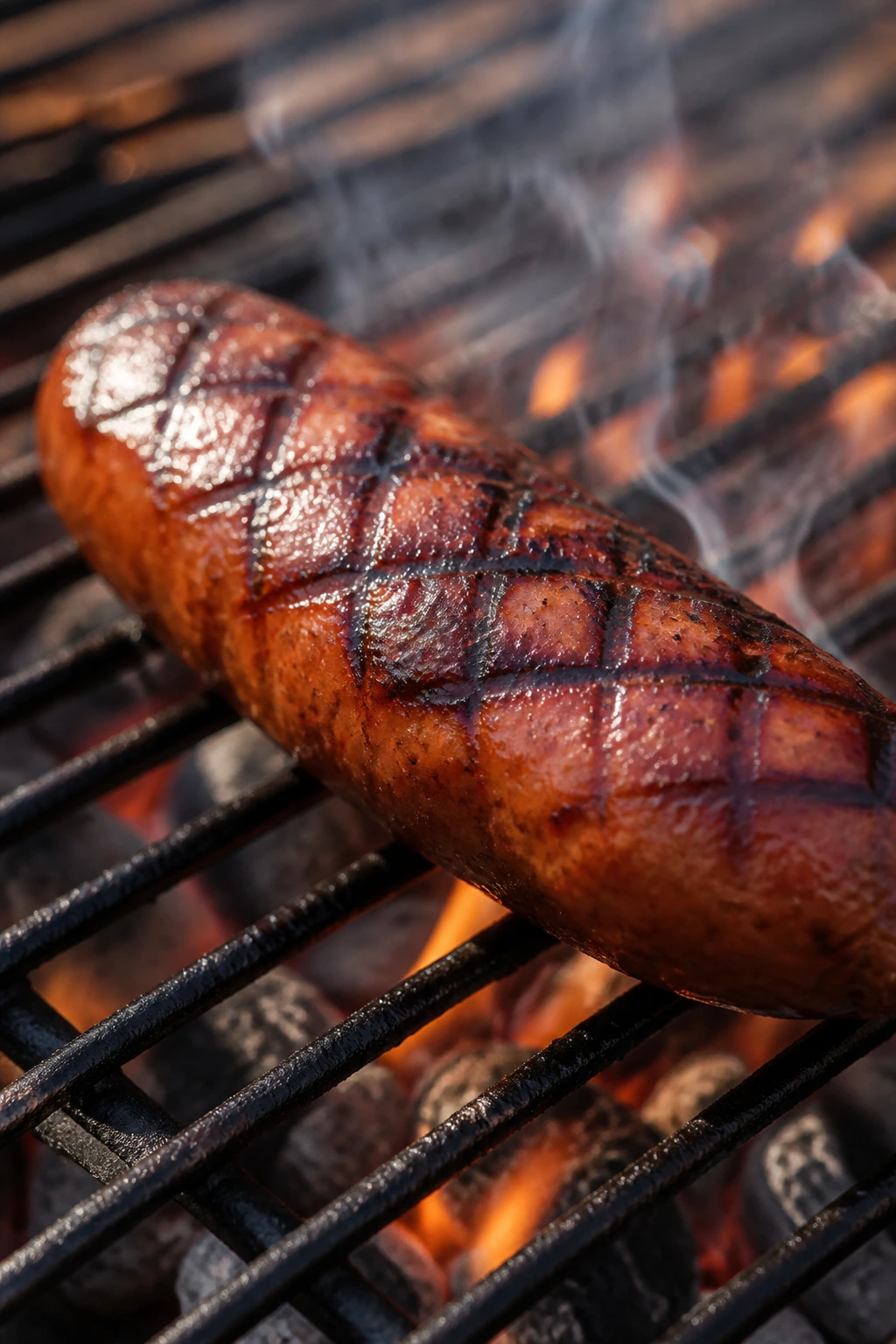
A grill adds a sharper kind of smoke to smoked sausage, and the char lines bring bitterness that balances all the fat. Medium heat is the right call here. You want hot grates and a steady turn, not a flare-up that blackens the casing.
Cook whole links or thick halves over direct heat until the first side has good marks, then move them to a cooler part of the grill if you need more time. If the sausage is already fully cooked, you’re just heating and coloring it. That keeps the total cook time short, which is exactly what you want.
Serve grilled sausage with mustard, kraut, or a chopped salad and the whole meal suddenly feels sharper.
20. Save a Small Spoonful of Rendered Fat
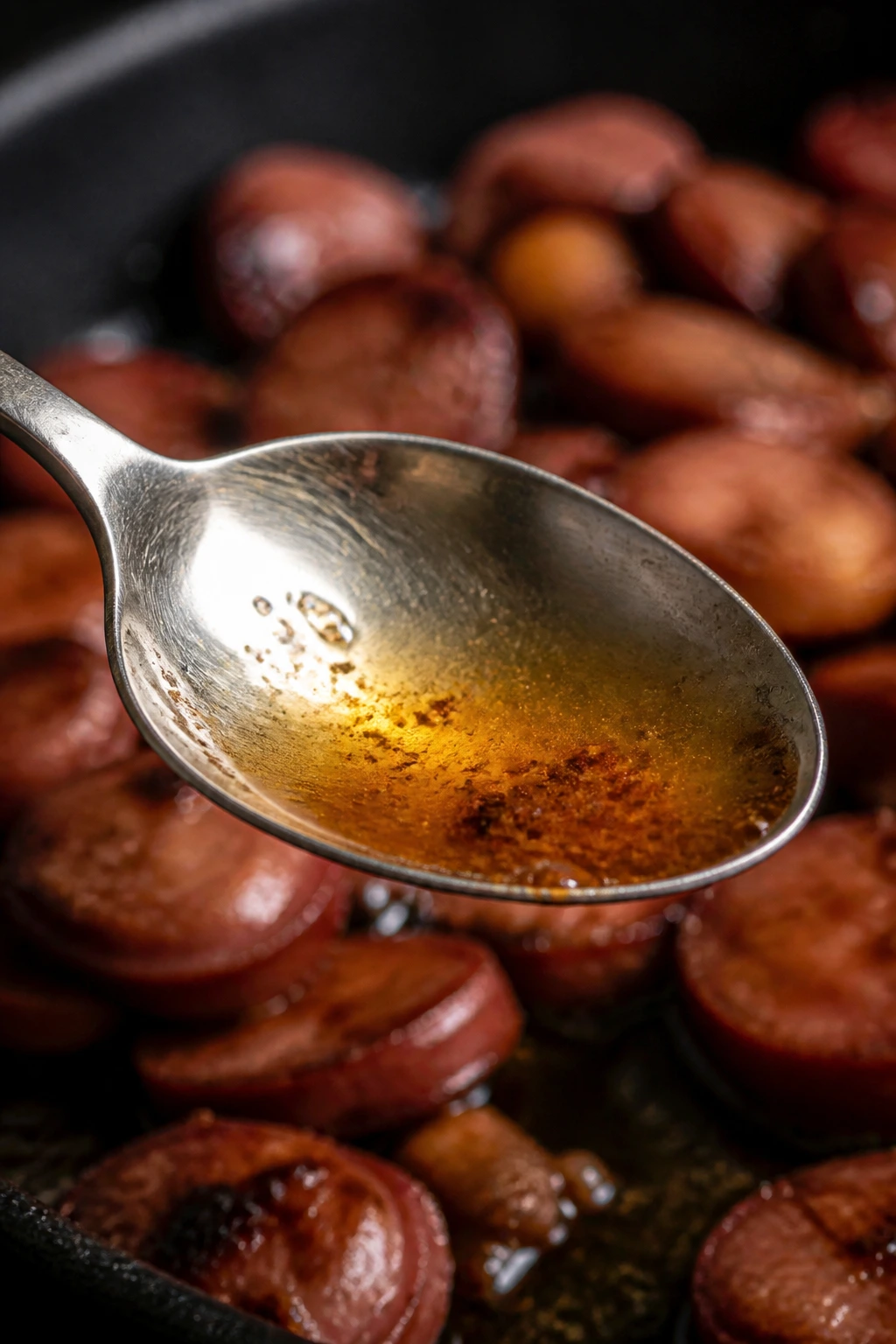
A little rendered sausage fat can be the difference between a dull side dish and one that tastes like it belongs with the main event. Save 1 to 2 tablespoons, not the whole panful. That’s enough to cook onions, toss potatoes, or finish greens.
Too much fat turns greasy fast. Too little and you lose the flavor bridge between the sausage and the sides. I usually spoon out the excess after browning, then keep a thin sheen in the pan for whatever’s coming next.
It’s a small move, but it makes the whole plate feel connected instead of separate parts thrown together.
21. Balance the Plate With Something Sharp or Green
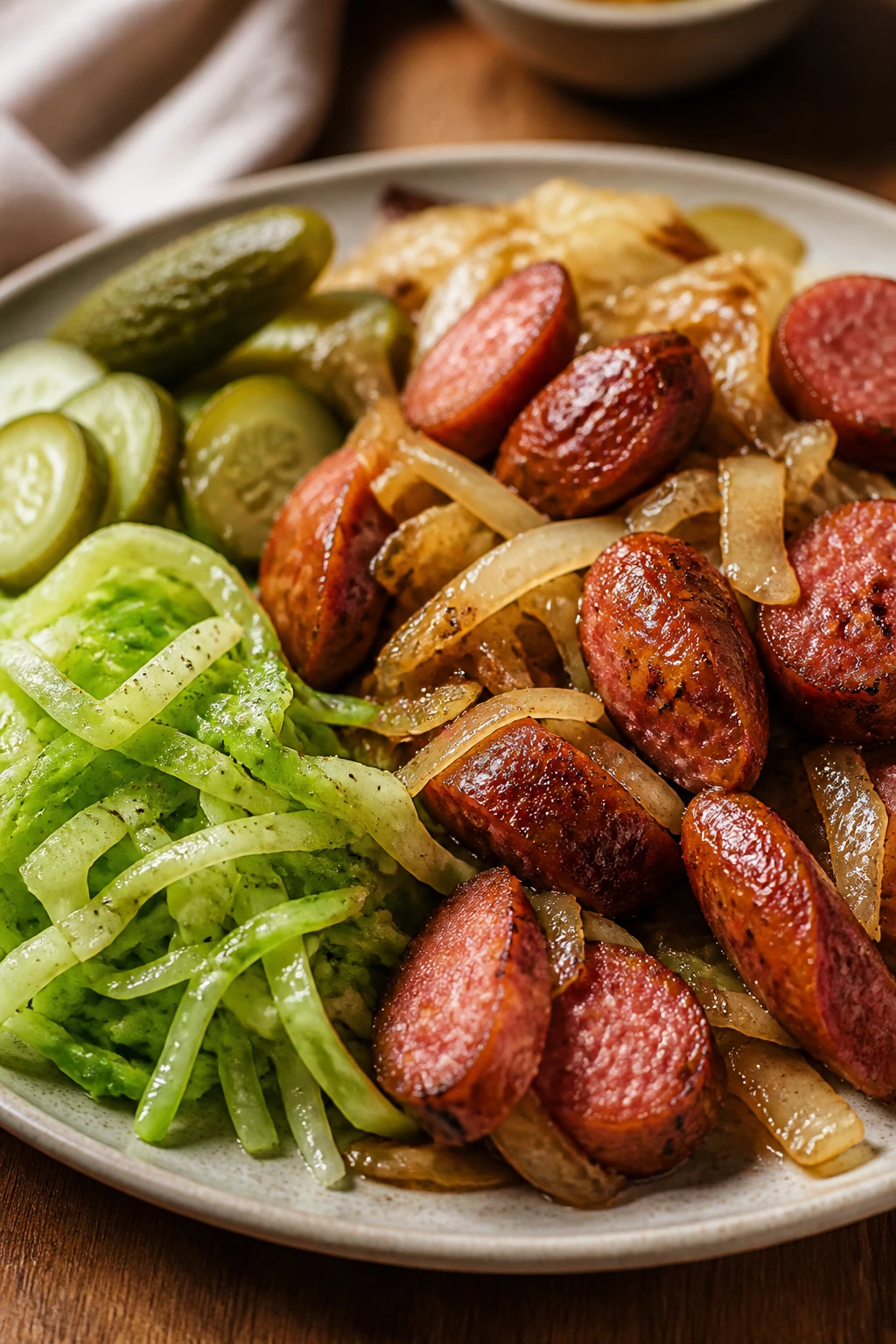
Smoked sausage needs a counterweight. That can be collard greens, vinegar slaw, sautéed kale, mustard greens, pickles, or a salad with a sharp dressing. The goal is not to make the meal “healthy” in some vague sense. The goal is to keep the fat from stacking up bite after bite.
Good Counterweights
- A vinegary slaw beside grilled sausage and potatoes.
- Garlic greens under a skillet of sliced sausage.
- Pickled peppers on the side of a rice bowl.
- A lemony salad if the sausage is part of a roasted tray.
The sharper the side, the longer you can keep eating without the plate feeling heavy. That matters on a Sunday, when supper can linger for a while.
22. Turn Leftovers Into Breakfast Hash

Cold smoked sausage is excellent in hash because the flavor survives the overnight chill. Dice it, crisp it in a skillet, then add cubed potatoes and onions until the potatoes are browned at the corners. Crack in eggs if you want the whole thing to become breakfast.
The key is cutting everything close in size. A 1/2-inch dice on the sausage and about the same on the potatoes keeps the pan moving evenly. If the sausage is already cooked from dinner, it only needs a few minutes to wake back up.
This is one of the smartest leftover uses because it doesn’t taste like “leftovers.” It tastes like you planned ahead, which is a nicer story to tell.
23. Read the Label Like a Cook
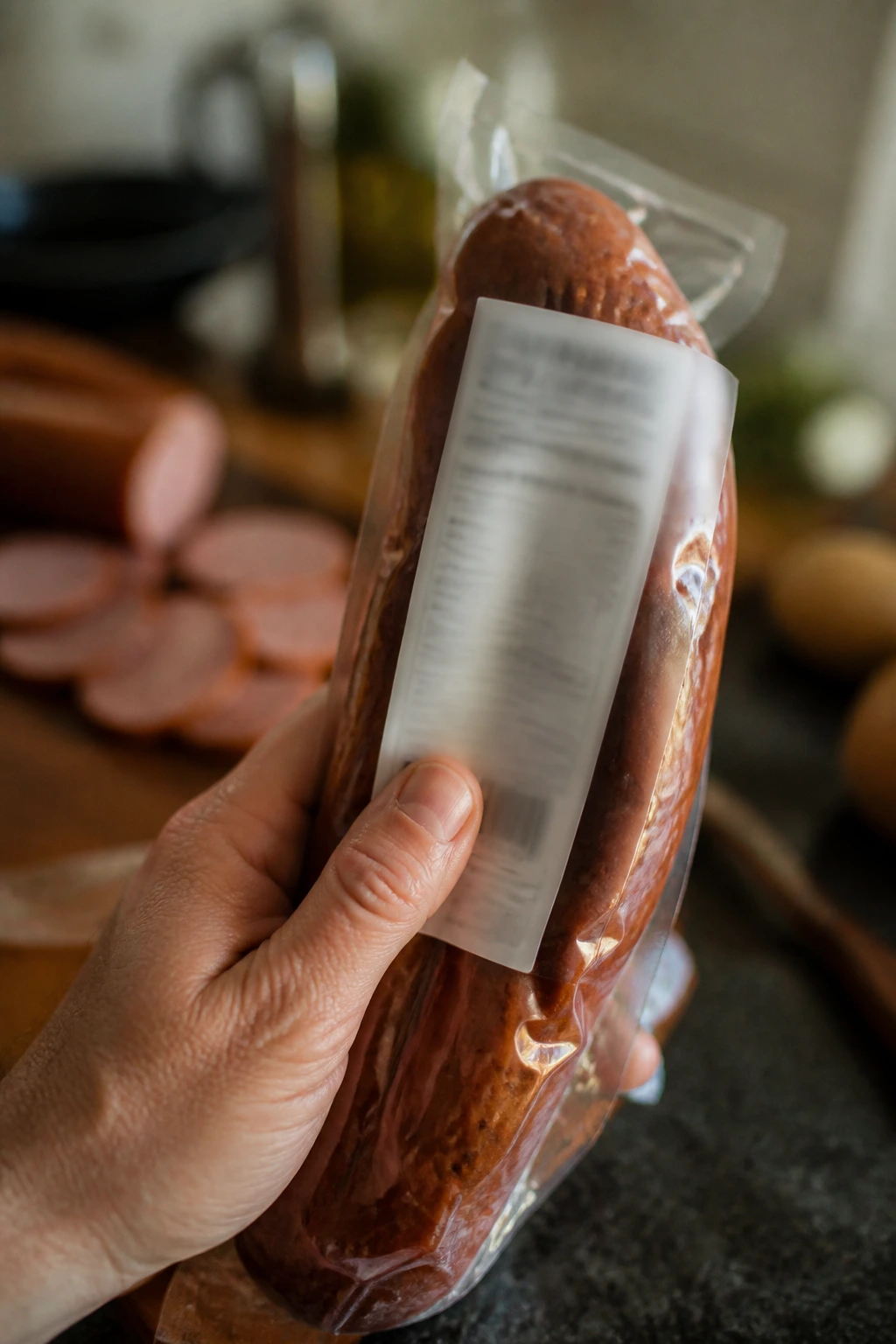
“Smoked sausage” is not one product. Some links are fully cooked, some are raw and smoked, some are heavy on pork fat, and some lean into turkey or chicken. The package tells you a lot if you actually look at it.
Things Worth Checking
- Fully cooked or raw: changes your heat and timing.
- Sodium level: a huge clue for how much extra salt you need.
- Primary meat: pork tastes richer; turkey stays lighter.
- Casing type: natural casings usually snap better.
If the package says fully cooked, you are reheating and browning. If it says raw, cook it all the way through. That distinction matters more than brand loyalty ever will.
24. Pair It With Rice, Barley, or Polenta
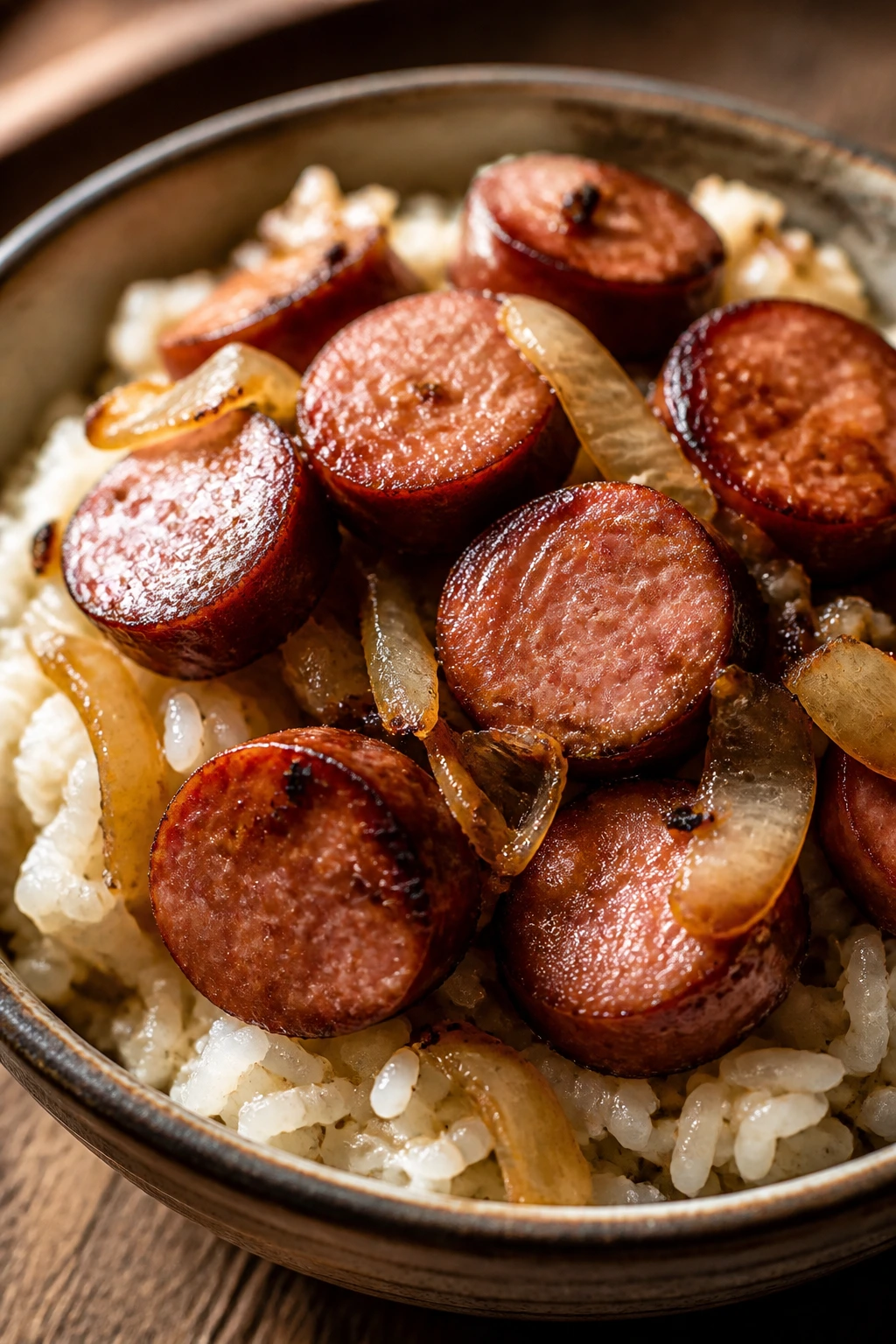
Smoked sausage loves soft grains because the grains catch the fat and carry the seasoning. Rice is the easiest route. Barley gives you chew. Polenta makes the whole thing feel rich and spoonable.
A rice bowl with sausage, onions, and a little hot sauce is fast and satisfying. Barley works better with mushrooms or greens. Polenta likes a spoonful of pan juices on top and maybe a handful of chopped herbs. Choose the base that soaks up the drippings without turning soggy.
This is also the easiest way to stretch a pound of sausage into a full meal without making dinner feel thin.
25. Aim for Crisp Edges and a Soft Center
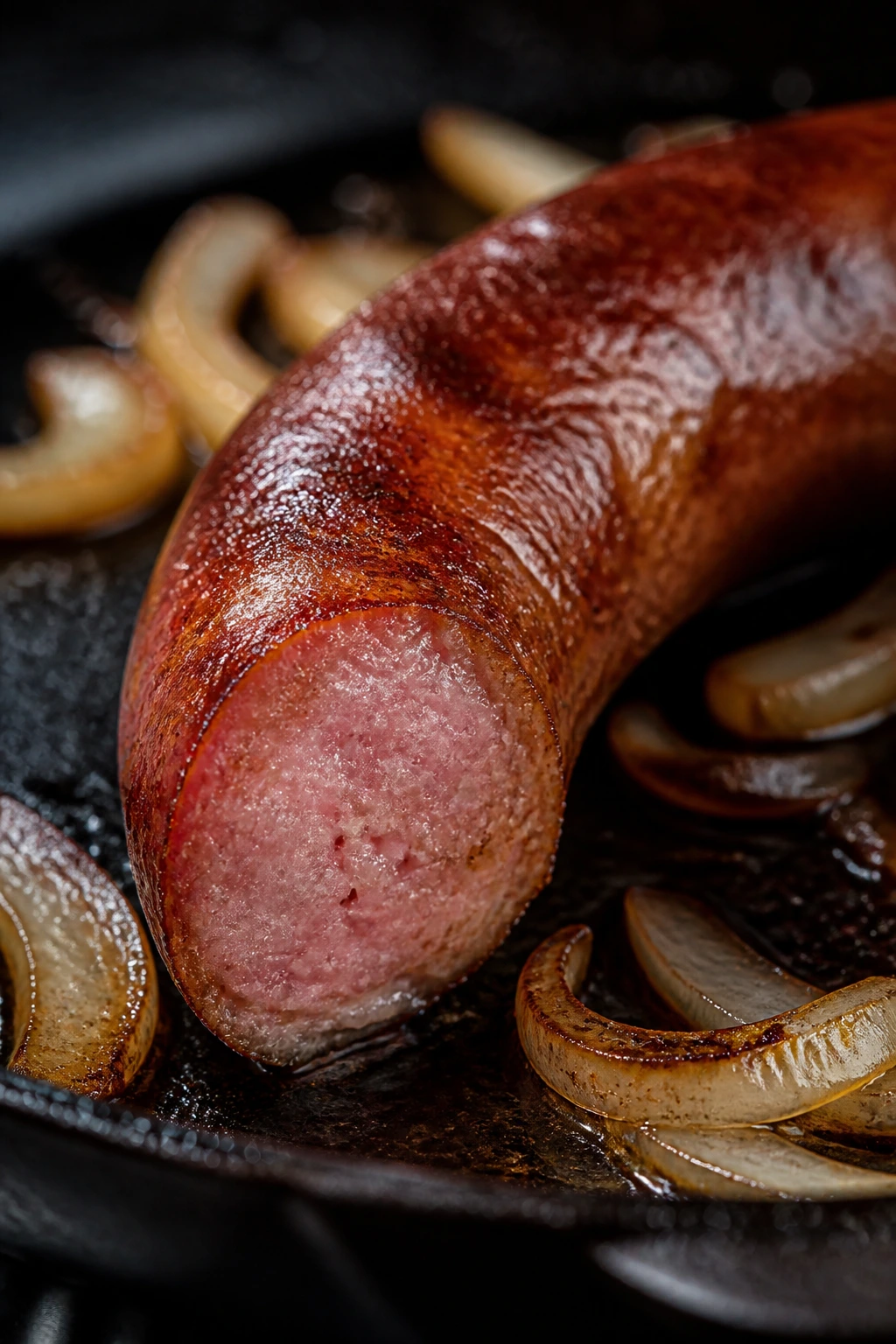
Good smoked sausage should not be one texture from top to bottom. The best bite has a little snap on the outside and a tender, juicy center inside. You get that by controlling heat and stopping before the casing goes leathery.
If the sausage is already fully cooked, you’re looking for hot-through and browned, not stove-neglected and shriveled. That means watching the edges closely and pulling it from the pan as soon as the color is right. If you’re using a grill or oven, the same idea applies. Let the exterior color, but don’t chase a dark crust so hard that the inside tightens up.
Crisp edges. Soft center. That’s the target.
26. Finish With Fresh Herbs
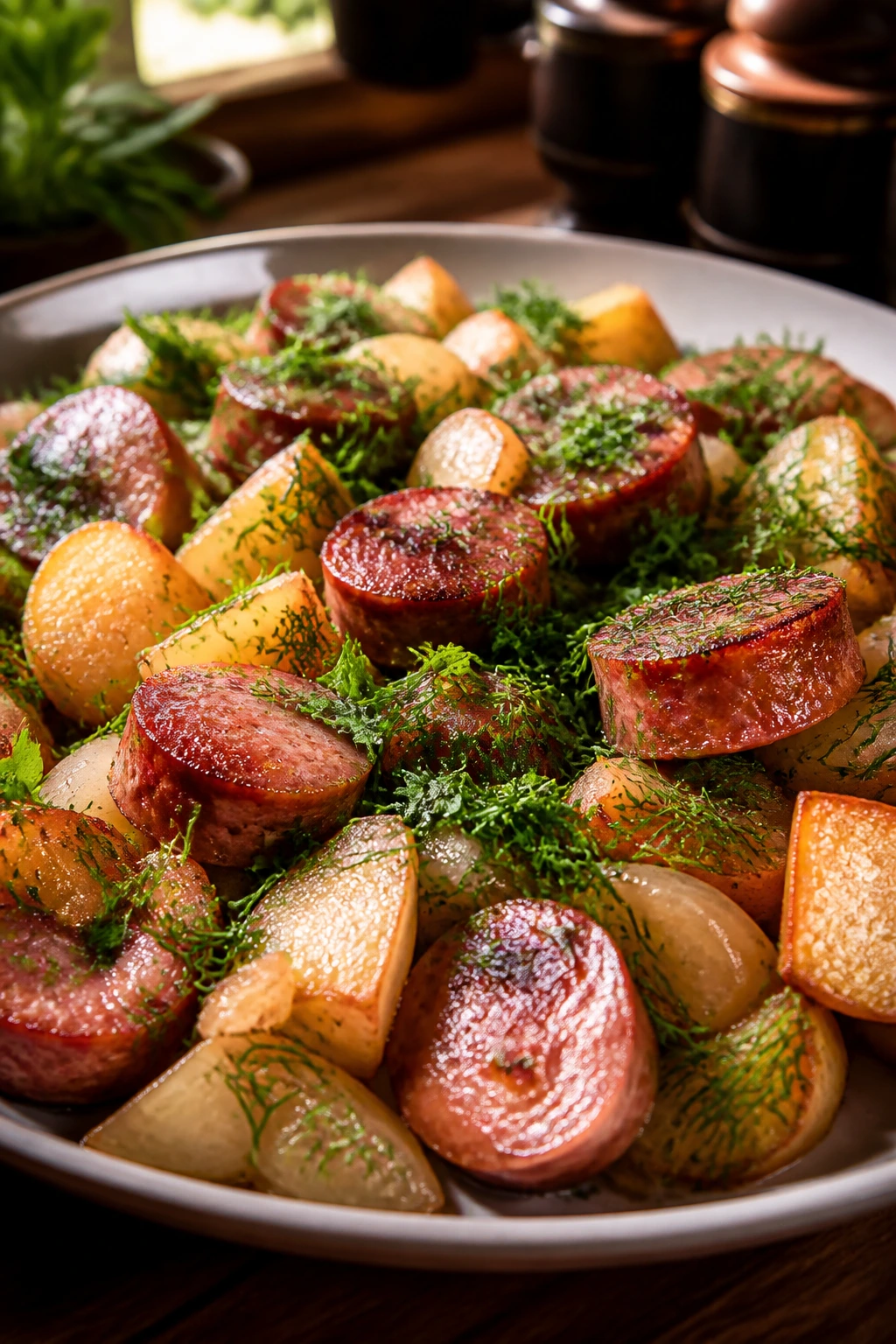
Herbs at the end can make smoked sausage taste less blunt. Parsley, dill, thyme, chives, and even a little celery leaf cut through the heaviness and make the plate smell brighter when it lands on the table.
Add chopped herbs after the sausage comes off the heat, not while it’s still cooking hard. Heat dulls their flavor fast. A handful scattered over a skillet of sausage and potatoes does a surprising amount of work. It also gives the dish a fresher look, which matters when the rest of the plate is deep brown and golden.
A little green goes a long way here. Don’t bury the smoke. Just give it a lift.
27. Adjust the Cut for the Dish
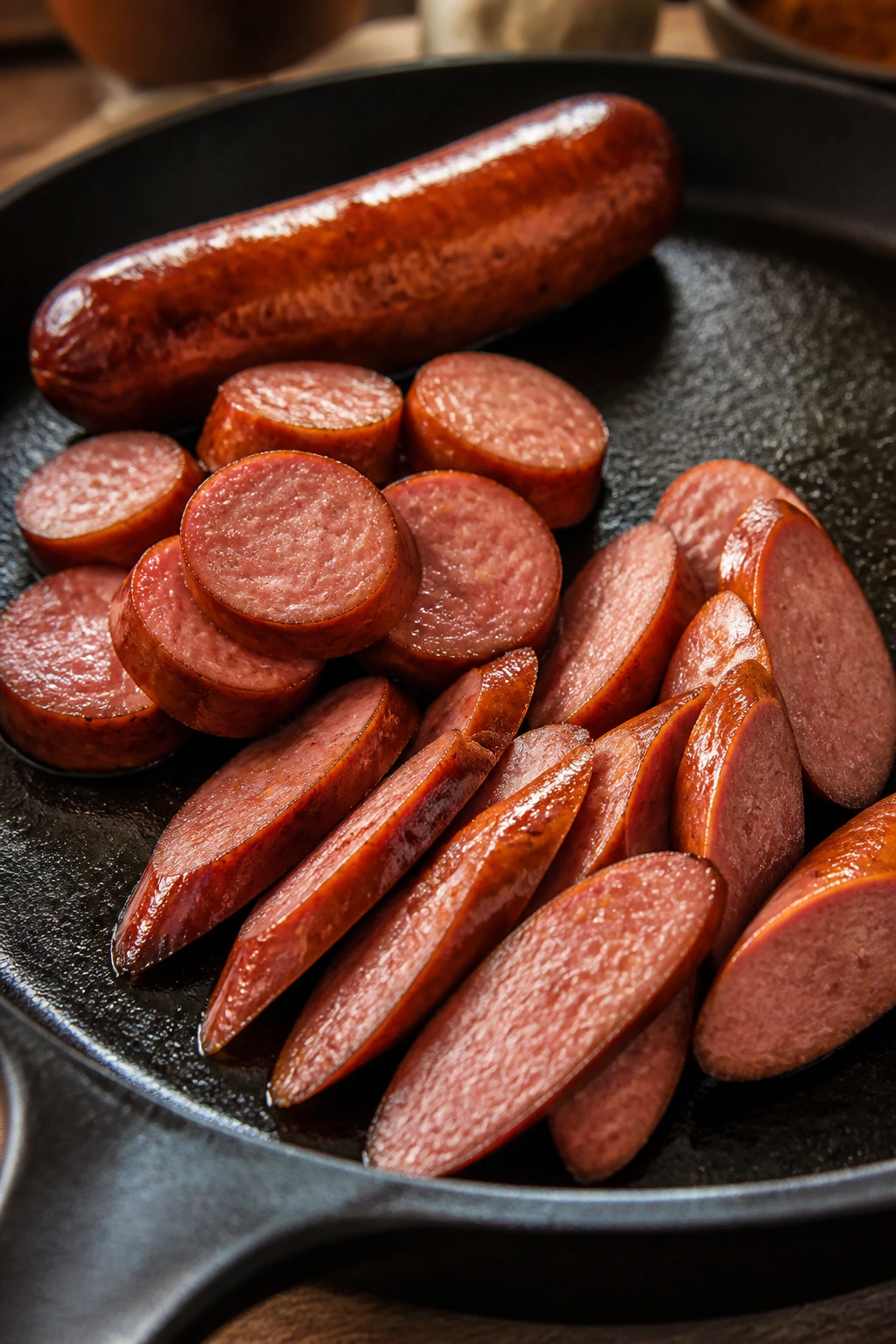
The same sausage behaves differently depending on how you cut it. Thick coins are good for sheet pans and hash. Long diagonal slices are better for skillet dinners. Whole links are the move for grilling or braising. Tiny half-moons work in pasta or bean soups.
If you change the cut to suit the dish, the rest of the meal gets easier. Thick pieces hold up next to potatoes. Smaller pieces spread flavor through rice or soup. Whole links keep their snap on the grill. The cut is not a cosmetic choice; it changes how the sausage cooks and what part of the meal it supports.
That sounds fussy. It isn’t. It’s just matching shape to job.
28. Cook Extra on Purpose
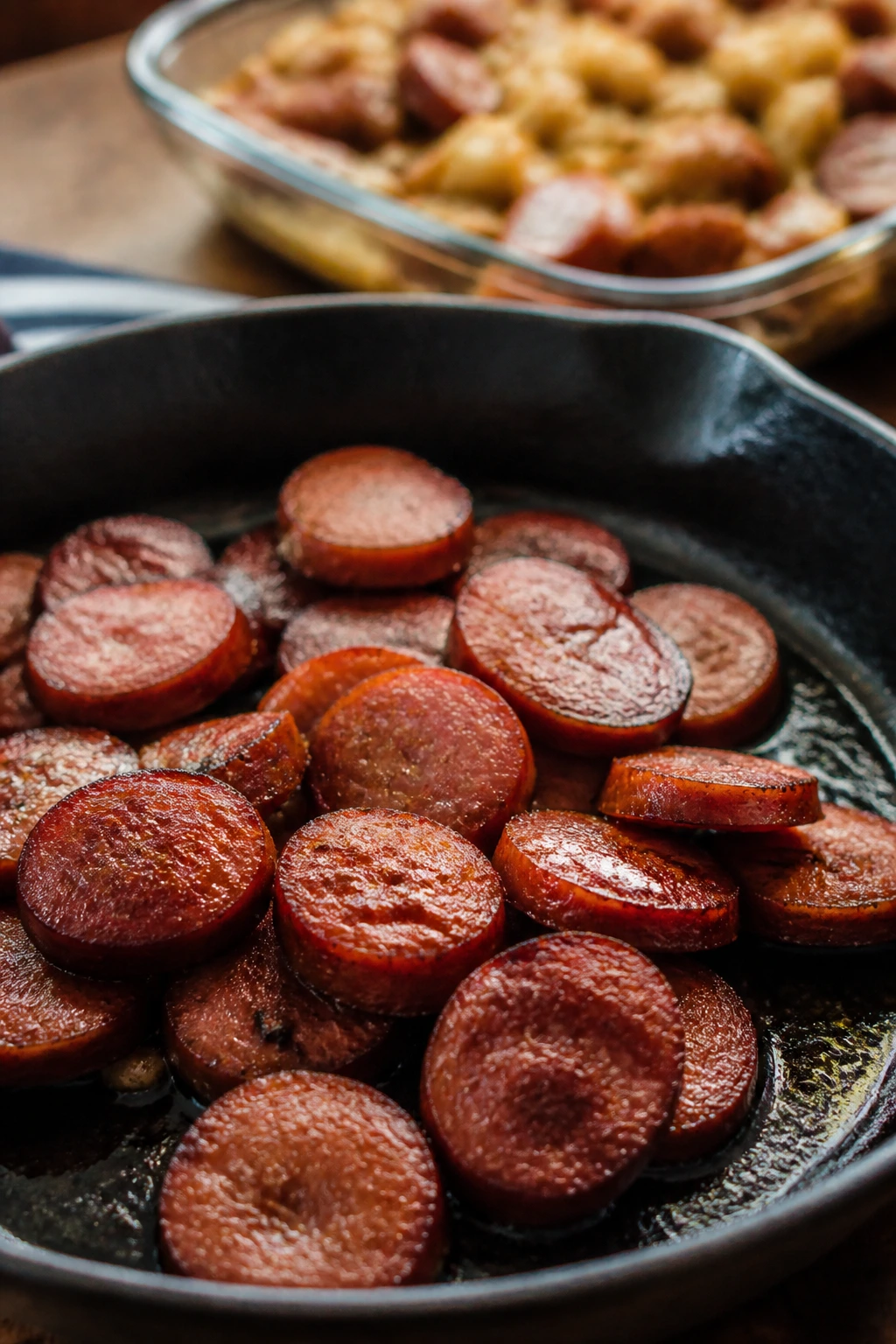
A lot of people make smoked sausage the same way they make toast: enough for right now, and nothing more. That’s a mistake. Cooking a little extra on Sunday pays off on Monday morning or Tuesday night.
If you know you’ll want leftovers, brown the extra slices separately so they keep their edges instead of steaming under the main dish. Store them in a shallow container with the pan juices, then use them in eggs, soup, fried rice, or a quick pasta. The difference between “leftovers” and “planned leftovers” is usually just how they were cooled and packed.
And yes, the second meal should taste like a choice, not a clean-out-the-fridge apology.
How Smoked Sausage Wants to Be Cooked for a Real Sunday Supper
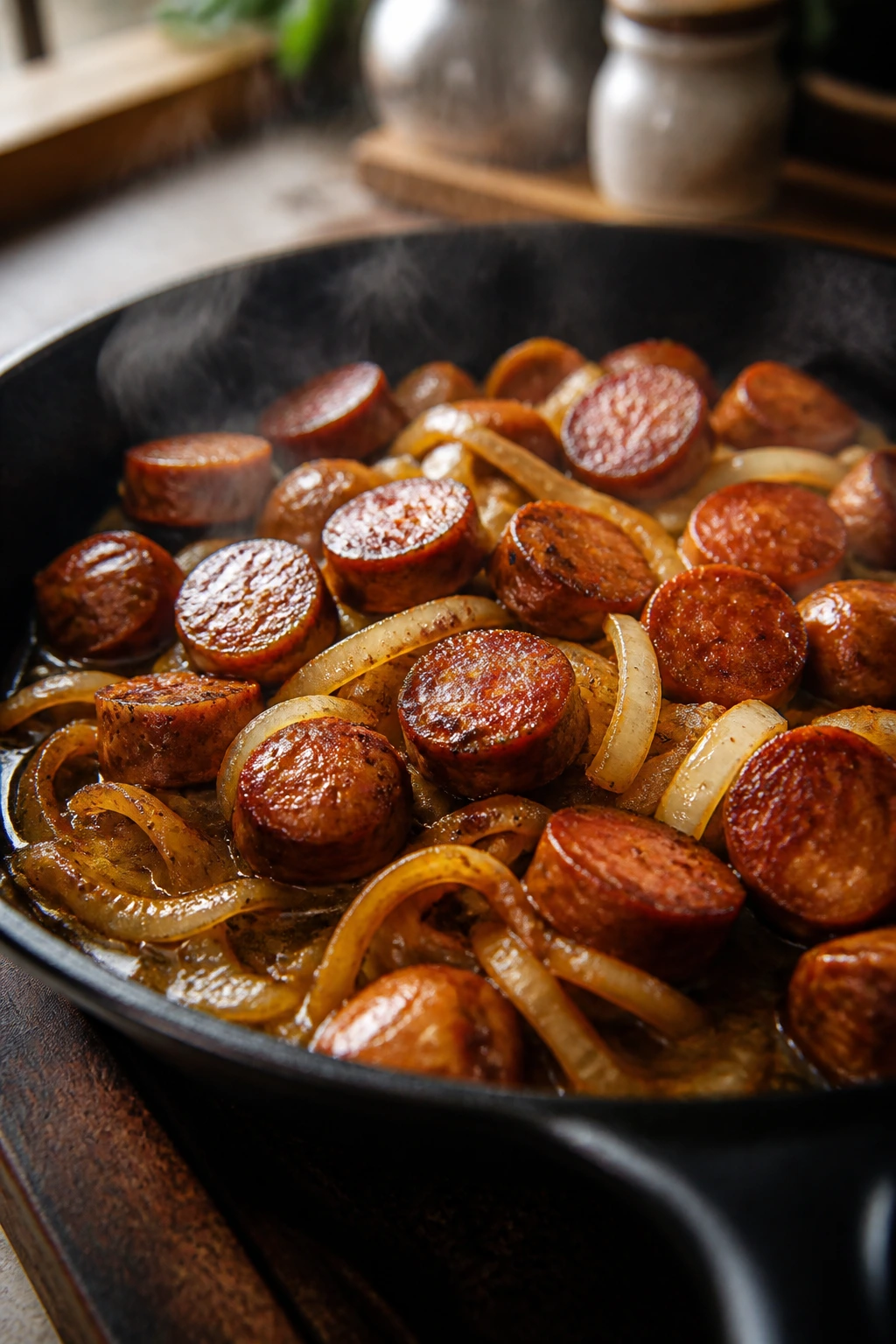
Smoked sausage works best when the cook treats it as a flavor engine, not a blank protein. That means a hard sear where it can brown, a little fat saved for the vegetables, and a sharp ingredient nearby to keep the plate from feeling heavy. A skillet, a sheet pan, or a grill all work because they create direct contact, which is what smoked sausage needs most. It does not need long, fussy cooking. It needs heat that wakes up the casing and leaves the inside juicy.
The practical trick is timing. If the sausage is already fully cooked, you are building the meal around it instead of trying to force it to behave like raw meat. That’s why a good smoked sausage supper often comes together in layers: brown the sausage, cook the onions in the fat, deglaze the pan, add greens or potatoes, then finish with vinegar, mustard, herbs, or a spoonful of sauce. That order keeps the flavor clean. Mess it up, and the pan tastes greasy instead of rich.
One more thing: the best sausage dinners don’t all look the same. A skillet with cabbage and onions feels different from roasted sausage with Brussels sprouts, and both feel different from sausage over polenta or rice. Same ingredient. Different shape. That’s the part worth learning.
Essential Equipment for These Smoked Sausage Tips

- 12-inch skillet: Best for browning slices in a single layer without crowding.
- Cast-iron pan: Holds heat well and gives the best crust on cut sausage.
- Rimmed sheet pan: Keeps roasted sausage and vegetables from spilling.
- Tongs: Better than a fork for turning sausage without piercing it.
- Chef’s knife: Needed for clean bias cuts and even coins.
- Cutting board: A stable board makes slicing faster and safer.
- Wooden spoon or spatula: Good for scraping fond into a pan sauce.
- Instant-read thermometer: Useful if the sausage is raw or if you want to check reheated leftovers.
- Slotted spoon: Handy for lifting sausage out of rendered fat without dragging too much of it along.
- Airtight storage containers: Keep leftovers from drying out or picking up fridge odors.
Smart Shopping and Ingredient Tips
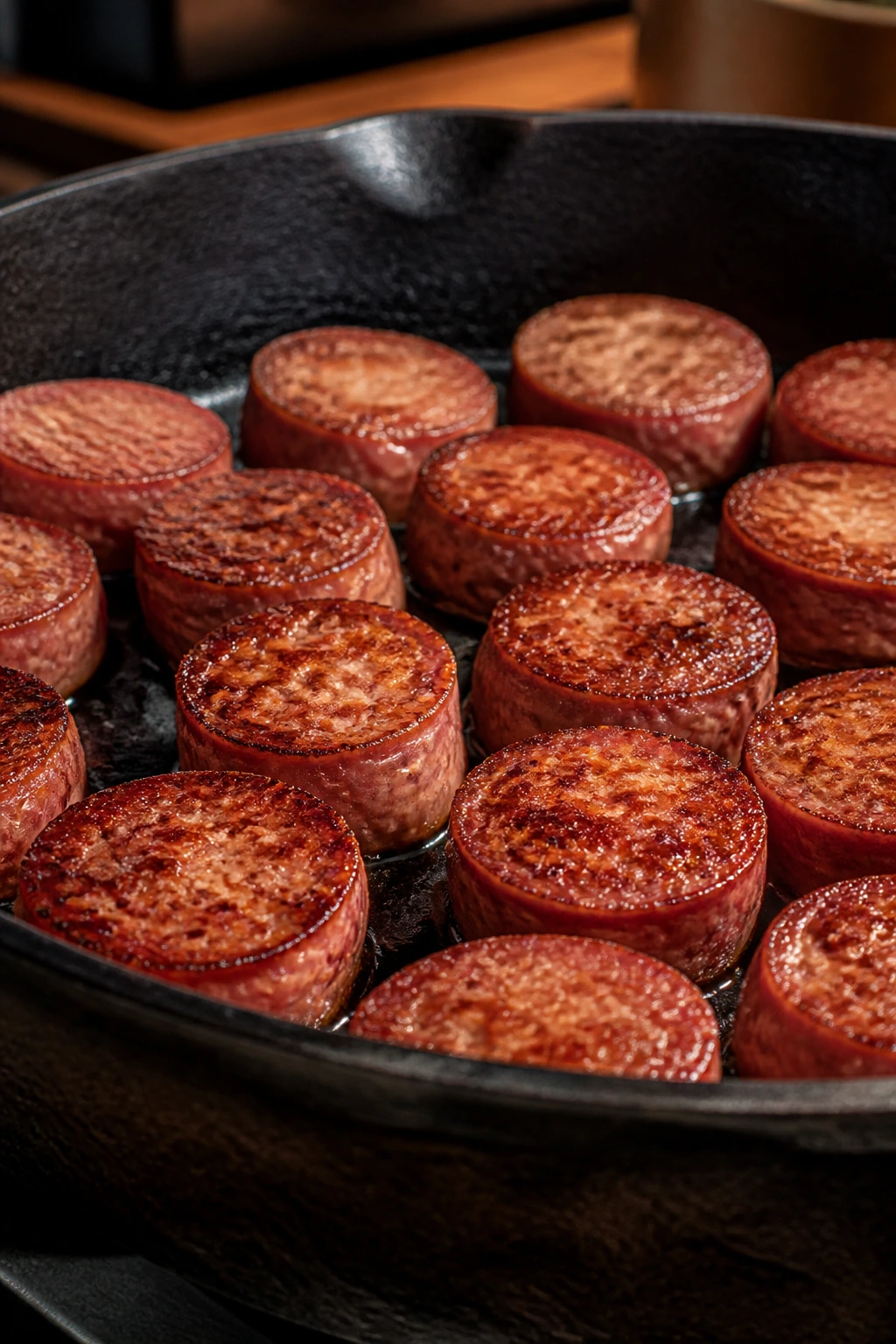
A good smoked sausage starts at the package. Look for a link that feels firm, not soft or spongy, and one that has a casing with some tension when you bend it. If the ingredient list starts with meat instead of fillers, you usually get better browning and a cleaner bite. Sodium varies a lot, so if you know the sausage is on the salty side, plan a lighter hand with broth, bacon, cheese, or cured sides.
Pork smoked sausage tends to bring the richest flavor and the best browning. Turkey versions can work well when the rest of the meal is already heavy with potatoes, butter, or cream. Kielbasa is a solid all-purpose choice. Andouille brings more pepper and smoke, which is useful if the rest of the plate is mild. If the sausage is labeled fully cooked, you are really shopping for texture and seasoning. If it’s raw, you’ll need a more careful cook and an instant-read thermometer.
Fresh produce matters here more than people expect. Onions should feel heavy and dry. Cabbage should be tight. Potatoes should be firm, with no soft spots. If you’re pairing sausage with green beans or peppers, buy them with color and snap in mind, not just price. A limp vegetable beside a salty, smoky link tastes like a missed opportunity.
How to Serve These Smoked Sausage Ideas
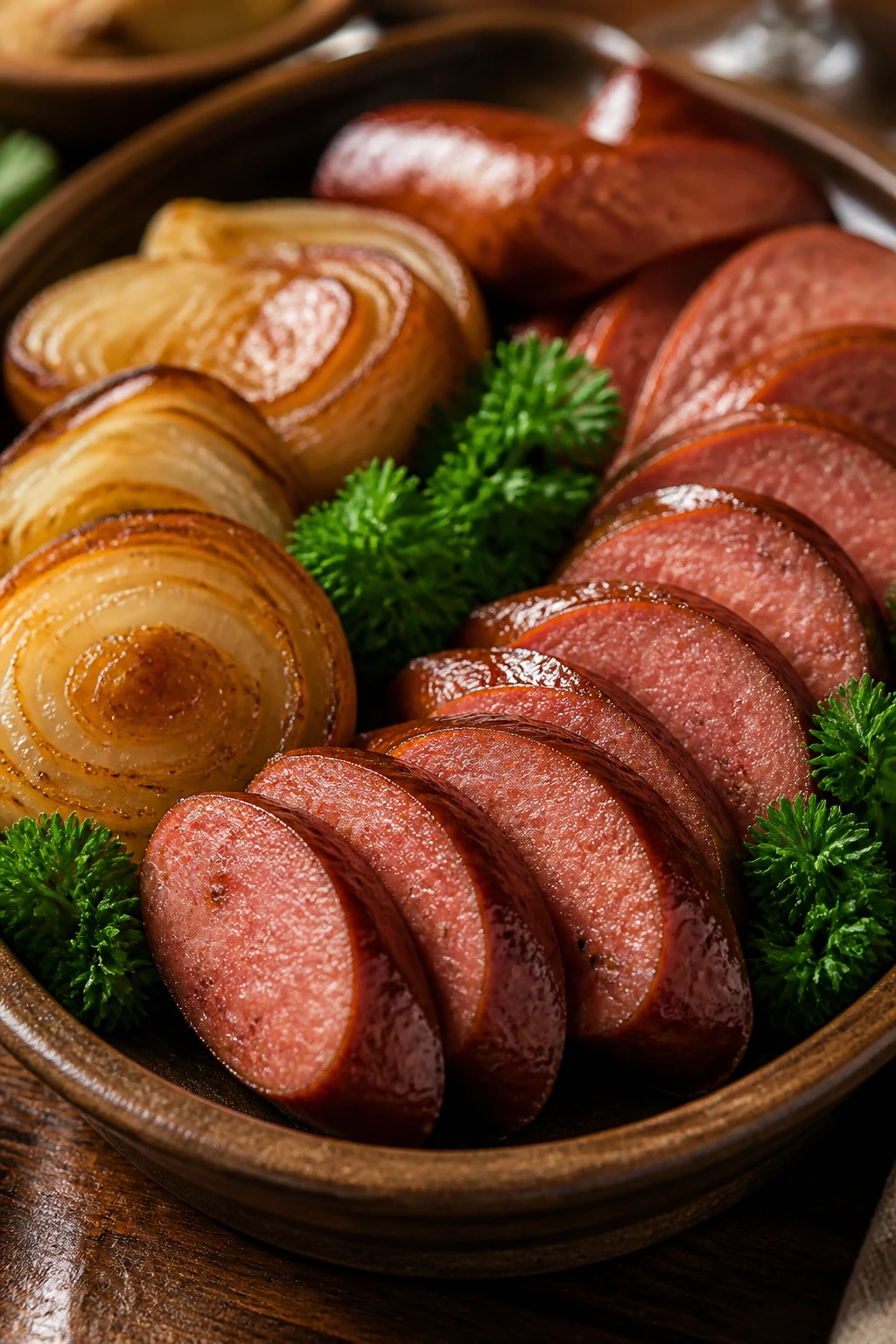
Presentation: Pile sliced sausage on a warm platter with onions, pan juices, and something green on top—parsley, chives, or chopped dill works well. If the meal is roasted, spread everything out so the browned sides stay visible instead of burying them in a bowl.
Accompaniments: Buttered potatoes, cabbage, baked beans, skillet cornbread, rice, barley, or a crisp slaw all fit without fighting the smoke. If you want one bright thing on the table, pick a vinegar-heavy salad or a tray of pickles and pepperoncini.
Portions: Plan about 4 to 6 ounces of smoked sausage per adult when it’s part of a fuller dinner, or 6 to 8 ounces when sausage is the main protein and the sides are simple. If you’re stretching it with grains or vegetables, one pound usually feeds 4 to 6 people comfortably.
Beverage Pairing: Iced tea, sparkling water with lemon, or a malty lager all sit well beside the salt and smoke. For a nonalcoholic table drink, apple cider with a little fizz feels especially good with cabbage and onions.
Additional Tips and Flavor Boosters
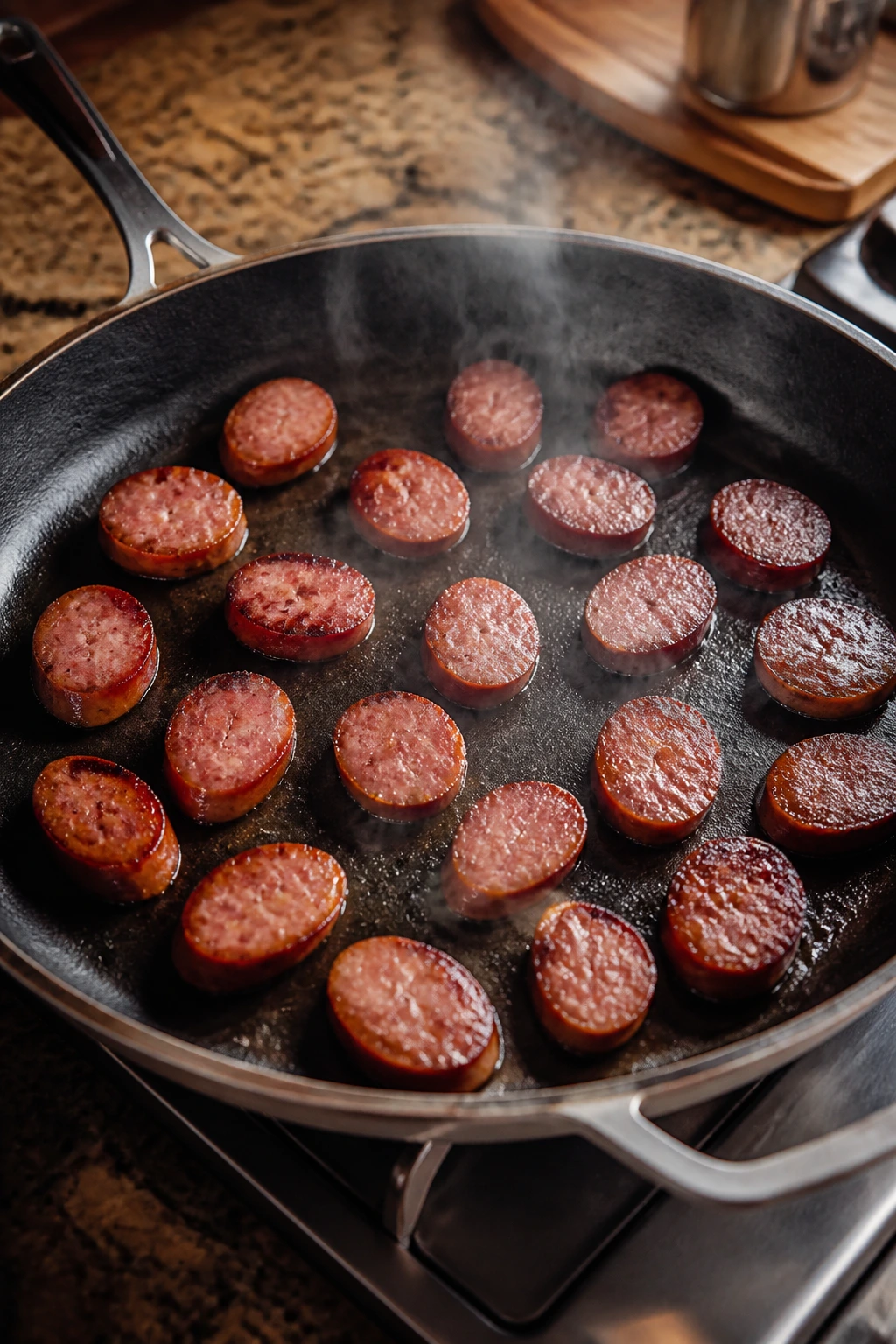
Flavor Enhancement: A spoonful of whole-grain mustard stirred into the pan at the end gives smoked sausage a sharper, more layered finish than plain salt ever could. If the dish is leaning heavy, a little cider vinegar or pickle brine does the same job.
Customization: Add sliced peppers for sweetness, chopped garlic for bite, or canned white beans for a softer, more spoonable supper. If you want more heat, crushed red pepper or sliced pickled jalapeños work better than dumping in a hot sauce that disappears into the fat.
Serving Suggestions: Serve the sausage with a drizzle of the pan juices and a handful of herbs right before it hits the table. A few pickles on the side don’t look fancy, but they do more for the meal than another sprinkle of cheese.
Make-It-Yours: Use turkey sausage for a lighter plate, andouille for more kick, or kielbasa when you want a rounder, gentler smoke. If you’re feeding kids, keep the seasoning simple and let mustard or hot sauce live at the table instead of in the pan.
Common Mistakes to Avoid
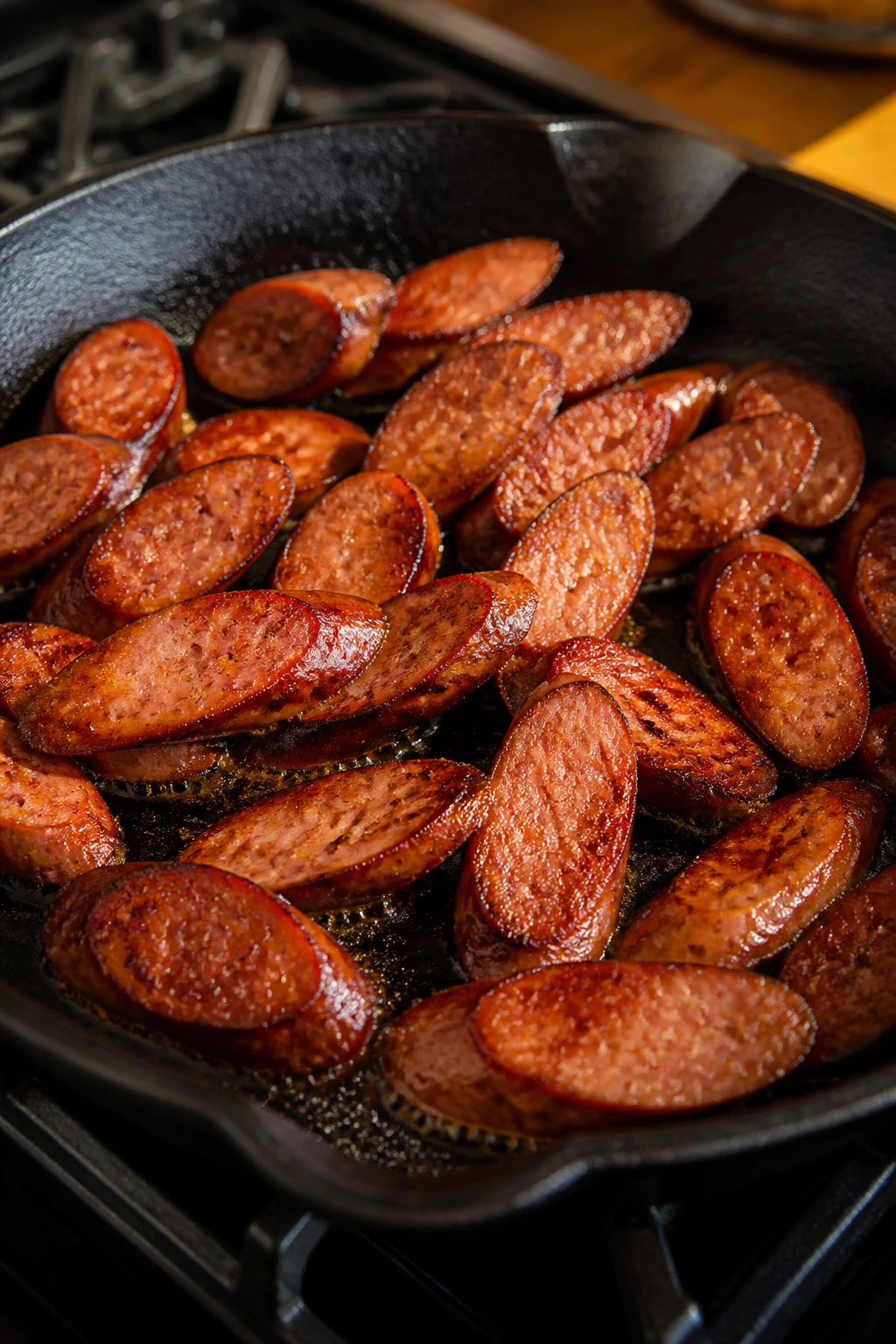
The first mistake is crowding the pan. You’ll know it happened when the sausage turns pale and wet instead of browned. Fix it by cooking in batches or using a wider skillet. The second mistake is high heat from the start. That gives you burnt edges before the sausage really colors. Medium heat is slower and better.
Another common slip is salting the whole dish too early. Smoked sausage brings enough seasoning that your potatoes, beans, and sauce may only need a little at the end. People also leave sausage in the slow cooker too long, which makes the casing floppy and the texture dull. Add it late, not early. And don’t drown the dish in fat just because the sausage rendered some. Spoon off what you don’t need.
One more: skipping acid. Without vinegar, mustard, lemon, or pickled vegetables, the plate can taste heavy by the second bite. That’s not a flavor problem. It’s a balance problem.
Variations and Adaptations to Try
Cabbage and Kielbasa Skillet: Use thick slices of kielbasa with green cabbage, onions, and a splash of apple cider vinegar. It’s the classic version for a reason: the cabbage softens into the drippings, and the vinegar keeps the whole pan from tasting one-note.
Spicy Andouille Bean Pot: Swap in andouille and simmer it late with white beans, garlic, onion, and a bay leaf. The sausage flavor spreads through the broth without needing much extra help, and the peppery finish gives the pot more edge.
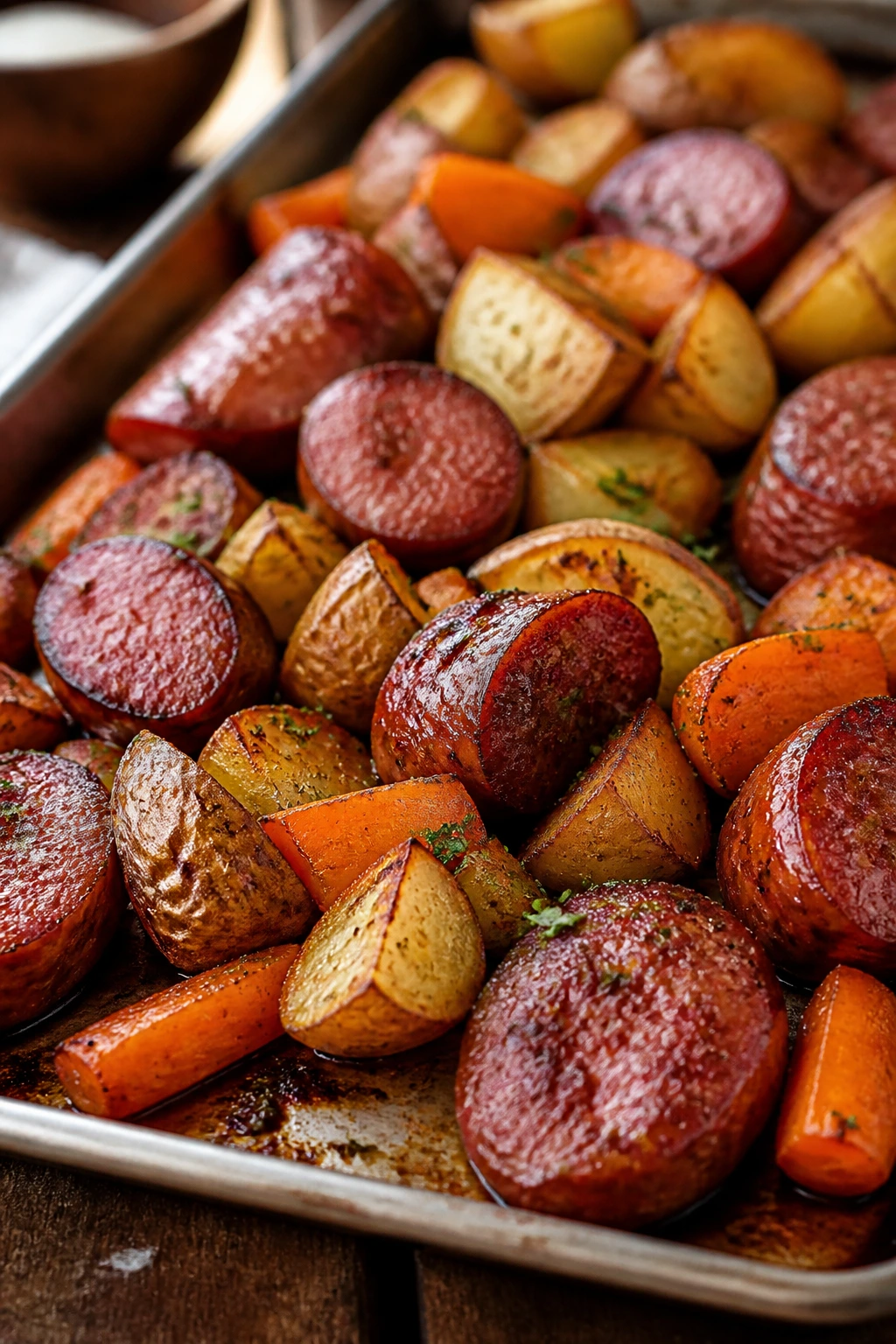
Sheet Pan Sausage and Root Vegetables: Roast sausage with carrots, potatoes, and Brussels sprouts at 425°F, then finish with parsley and mustard. This version works well when you want one pan and very little cleanup.
Creamy Smoked Sausage Pasta: Brown the sausage first, then build a sauce with onion, garlic, broth, and a little cream before tossing it with pasta. The trick is keeping the sauce loose enough that the pasta absorbs it instead of sitting in a heavy puddle.
Turkey Sausage and Greens: Use turkey smoked sausage with kale or collards, lots of onion, and a squeeze of lemon at the end. It tastes lighter, but it still has enough smoke to feel like a proper supper.
Make-Ahead, Storage, and Reheating Guidance
Cooked smoked sausage keeps well in the fridge for 3 to 4 days in an airtight container. If it’s part of a dish with potatoes, cabbage, or beans, try to cool it quickly and pack it in shallow containers so the center drops out of the warm zone faster. For the freezer, plain cooked sausage or sausage mixed into a casserole-style dish usually holds well for up to 2 months, though the texture is best when the sausage is frozen without too much sauce.
Reheat sliced sausage in a skillet over medium-low heat with a tablespoon or two of water, broth, or sauce. Cover loosely for a minute, then uncover and let the excess moisture cook off so the casing regains some snap. In the oven, cover the dish with foil and warm it at 325°F until hot through. For microwave reheating, use short bursts and stop as soon as the center is hot; long microwave sessions make the casing tough and rubbery.
If you know you’ll be storing leftovers, keep the sausage and the vegetables together, but separate the acidic garnish. Pickles, herbs, and vinegar-based slaw should go on after reheating, not before. That keeps the leftovers from tasting dull the next day. And if the sausage is raw to begin with, cook it fully before storing—no shortcuts there.
Frequently Asked Questions
Is smoked sausage already cooked?
Often, yes, but not always. Many grocery-store smoked sausages are fully cooked and just need to be heated and browned, while some raw smoked sausages need full cooking. Check the package wording every time.
What’s the best way to keep smoked sausage from getting rubbery?
Use medium heat, not a hard blast, and stop cooking once the outside has color and the center is hot. Rubberiness usually comes from overcooking or keeping it in simmering liquid too long.
Can I cook smoked sausage in the air fryer?
Yes. Slice it thick or leave links whole, then cook at about 375°F until browned and hot through. Shake or turn once so the color builds evenly. It’s one of the easiest ways to get crisp edges without a greasy pan.
Should I boil smoked sausage before frying it?
No. Boiling washes flavor into the water and softens the casing. If you need to warm it through before browning, use a gentle skillet, oven, or a brief simmer in sauce.
How do I tell when leftover smoked sausage is hot enough?
The middle should be steaming hot, and an instant-read thermometer should read 165°F for reheated leftovers if you want a clear target. That’s the safest benchmark, especially when the sausage is mixed into a dish with other ingredients.
Can I use turkey smoked sausage instead of pork?
Absolutely. Turkey smoked sausage is leaner, so it’s useful when the rest of the meal already has butter, cream, or plenty of oil. Just watch the pan a little closer because it can dry out faster than pork.
What if the pan gets greasy?
Spoon off some fat before you add vegetables or sauce. You want enough to coat the pan, not enough to pool around the sausage. A teaspoon or two is often enough for flavor.
Can smoked sausage go in the slow cooker from the start?
It can, but it usually does better added near the end. If it sits for hours, the casing softens and the texture gets tired. Thirty to forty-five minutes is often enough.
What side cuts the richness best?
Anything with acid and crunch: slaw, pickles, mustard greens, vinegar cabbage, or a sharp salad. Those sides do more than garnish the plate; they keep the whole meal from feeling heavy halfway through.
Can I freeze cooked smoked sausage with potatoes or cabbage?
Yes, though the texture of the vegetables will soften a bit after thawing. The sausage itself freezes well for about 2 months. If you can, freeze the sausage separately and add fresh vegetables when reheating.
A Sunday Table That Doesn’t Need Much Convincing
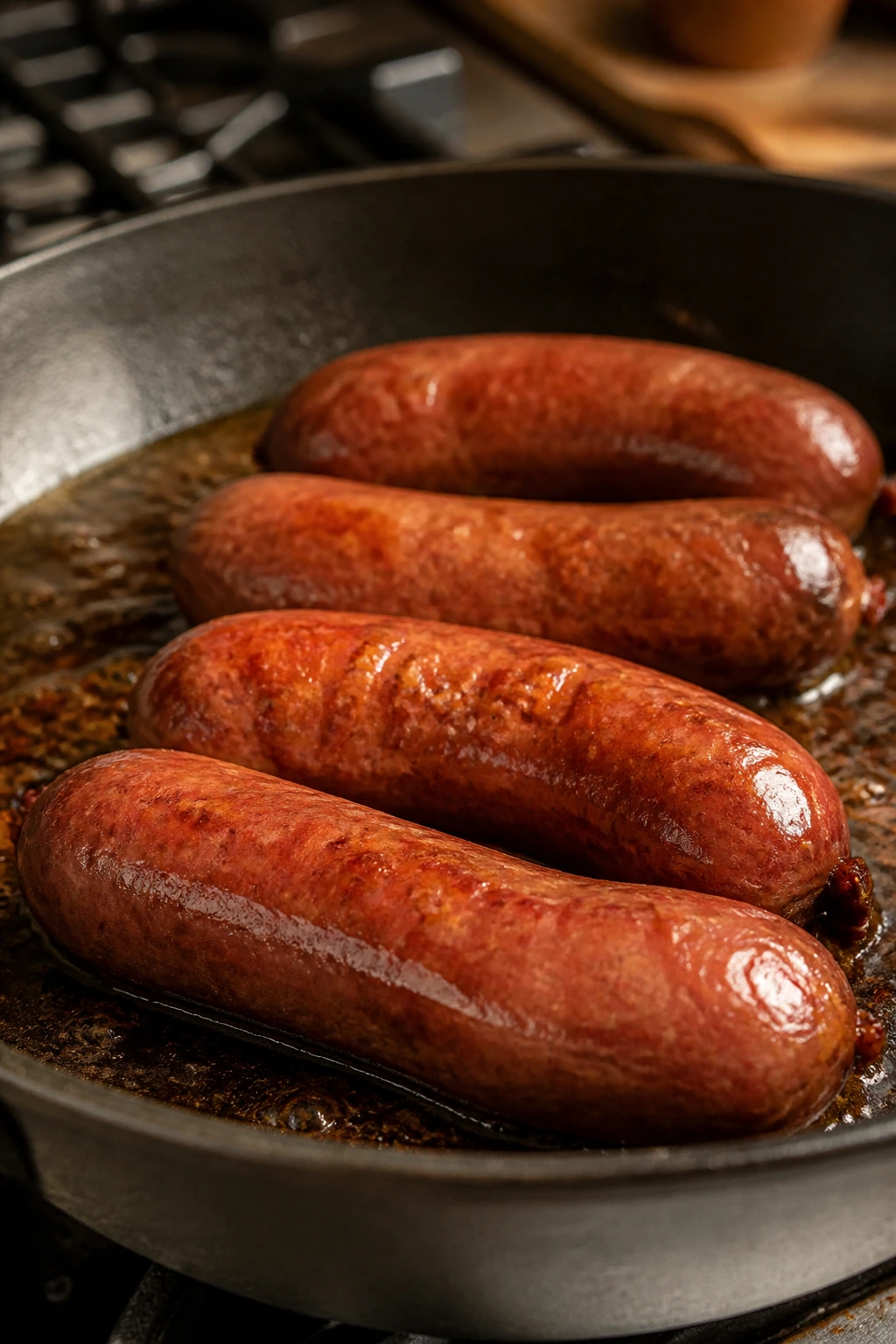
Smoked sausage is one of those ingredients that rewards practical thinking. Give it heat, space, and a little contrast, and it pulls a whole supper together without fuss. Skip those things, and it becomes greasy and flat in a hurry. The difference is not expensive. It’s mostly timing, pan size, and knowing when to stop.
That’s why smoked sausage keeps showing up in real kitchens on real Sunday nights. It does the work. You just have to steer it in the right direction.