



Leftover sausage is one of those refrigerator odds and ends that looks small until you start cooking with it. A few links, a half-pound of crumbles, one lonely bratwurst from last night’s grill—on their own, they’re not dinner. Slice them into hot potatoes, stir them through beans, fold them into eggs, or tuck them into pasta, though, and they turn into a real meal with almost no drama.
That’s the part I love: sausage carries its own seasoning. Salt, fennel, garlic, pepper, smoke—depending on the style, you get a head start before anything else even hits the pan. It also means you can be a little strategic about what you pair it with. Creamy sauces, sweet onions, sturdy greens, crisp bread, tomatoes, rice, lentils. All of them work because sausage brings fat and punch, then the other ingredients round it out instead of competing with it.
There’s one catch, and it matters. Leftover sausage is already cooked, so the trick is not “cook it again.” The trick is to warm it through without drying it into little rubbery coins. Once you start treating it that way, the possibilities open up fast.
Why These Leftover Sausage Ideas Earn a Spot in the Fridge Cleanup Rotation
-
They stretch small amounts well: Two links or one cup of crumbles can turn into hash, soup, pasta, or a baked casserole once you add potatoes, beans, rice, or eggs.
-
They keep dinner moving: Because the sausage is already cooked, most of these meals need only enough time to brown vegetables, boil pasta, or bake a topping.
-
They fit different sausage styles: Italian sausage, kielbasa, breakfast sausage, and bratwurst all have a place here, as long as they’re fully cooked and chilled.
-
They’re built for strong flavors: Tomato sauce, mustard, garlic, kale, onions, cheese, and beans all stand up to sausage instead of getting steamrolled by it.
-
They waste less food: Half a pepper, a few wilted greens, or a cup of cooked rice suddenly become useful instead of forgotten.
1. Sausage and Potato Breakfast Hash
The best leftover sausage hash has crisp edges, soft potato centers, and that salty, browned sausage smell that makes the whole kitchen feel awake. I like it best with Yukon Gold potatoes because they hold their shape but still go fluffy in the middle, and the sausage bits get to crackle in the same pan instead of sitting off to the side.
Why It Works:
Crisp potatoes and cooked sausage are a natural pair because they both like hot, direct heat. The potatoes soak up the seasoned fat, and the sausage only needs a quick return to the skillet to pick up color. Add eggs on top and the whole thing goes from “leftovers” to a proper plate of food.
Key Ingredients:
- 2 cups leftover sausage, sliced or crumbled
- 1 lb Yukon Gold potatoes, cut into 1/2-inch cubes
- 2 tablespoons olive oil
- 1 small yellow onion, diced
- 1 bell pepper, diced
- 1/2 teaspoon smoked paprika
- 1/2 teaspoon kosher salt, plus more to taste
- 1/4 teaspoon black pepper
- 4 eggs, optional
- 2 tablespoons chopped parsley, for finishing
Quick Steps:
- Par-cook the potatoes: Microwave the diced potatoes with 2 tablespoons water for 4 to 5 minutes, or boil them for 6 minutes, until the outsides are just tender but not falling apart.
- Crisp the potatoes: Heat the olive oil in a 12-inch skillet over medium-high heat. Add the potatoes in a single layer and cook for 6 to 8 minutes, stirring only once or twice, until the edges turn deep golden.
- Add the vegetables: Stir in the onion and bell pepper, then cook for 4 to 5 minutes until the onion softens and smells sweet.
- Warm the sausage: Add the leftover sausage, smoked paprika, salt, and pepper. Cook for 2 to 3 minutes, just until the sausage is hot and lightly browned at the edges.
- Finish the skillet: Make 4 small wells, crack in the eggs if using, cover the pan, and cook for 3 to 5 minutes until the whites set. Scatter parsley over the top and serve right away.
Equipment for This Recipe:
- 12-inch skillet
- Lid for the skillet
- Cutting board and chef’s knife
- Spatula
- Microwave-safe bowl or small pot for par-cooking the potatoes
How to Serve This Dish:
Pile it onto warm plates with buttered toast or a split biscuit. If you’re skipping the eggs, a spoonful of sour cream or a splash of hot sauce gives the hash a sharper finish. It looks best when the potatoes are deeply browned and the sausage is scattered through the pan, not buried.
Pro Tips for This Recipe:
- Use par-cooked potatoes: Raw cubes take longer and usually burn before they soften.
- Dry the potatoes first: If you boil them, let them steam off for a minute so they brown instead of steaming.
- Salt at the end: Sausage can bring plenty of salt on its own.
- Cast iron helps: A heavy skillet gives you better crust on the potatoes.
Variations on This Dish:
- Southwest Hash: Add 1/2 teaspoon cumin and a handful of corn, then finish with salsa.
- Greens-and-Sausage Hash: Fold in 2 cups chopped kale during the last 2 minutes so it wilts without going soggy.
- Sweet Potato Swap: Use 1 lb sweet potatoes instead of Yukon Golds, but give them 2 extra minutes before adding the sausage.
Common Mistakes to Avoid with This Dish:
- Crowding the pan: Too many potatoes in one layer means steaming, not crisping.
- Adding sausage too early: If it sits in the pan for the full potato cook, it dries out.
- Skipping the par-cook step: Raw potatoes make the whole skillet drag on too long.
2. Leftover Sausage Frittata
A frittata is where leftover sausage really shows off. The eggs set around the sausage instead of fighting it, and a little cheese on top gives you those browned, lacy edges that feel more finished than a scramble ever can.
Why It Works:
Cooked sausage only needs heat long enough to wake up its fat and flavor. Eggs provide the structure, spinach or herbs keep the bite from getting heavy, and the oven finish gives you a clean center without overcooking the bottom. It’s one of the few ways to make a modest amount of sausage look intentional.
Key Ingredients:
- 1 cup leftover sausage, chopped
- 8 large eggs
- 1/4 cup whole milk or half-and-half
- 1 tablespoon olive oil
- 1/2 cup diced onion
- 1 cup chopped spinach
- 1/2 cup shredded cheddar or Gruyère
- 1/4 teaspoon salt
- 1/4 teaspoon black pepper
Quick Steps:
- Preheat the oven: Heat to 375°F and place a rack in the center.
- Cook the vegetables: Heat olive oil in an oven-safe 10-inch skillet over medium heat. Add onion and cook for 3 to 4 minutes until soft.
- Add the sausage and spinach: Stir in the sausage and spinach, cooking for 1 minute until the spinach just wilts.
- Mix the eggs: Whisk the eggs, milk, salt, and pepper in a bowl until smooth, then pour into the skillet.
- Bake until set: Sprinkle cheese over the top and bake for 12 to 15 minutes, until the center barely jiggles and the edges are puffed.
Equipment for This Recipe:
- Oven-safe skillet, 10 inches
- Mixing bowl
- Whisk
- Oven mitts
- Knife and cutting board
How to Serve This Dish:
Cut it into wedges and slide each piece onto a plate with sliced tomatoes or a simple green salad. A frittata holds its shape best after a 5-minute rest, so give it that pause before serving. Warm bread on the side helps soak up the bits of melted cheese at the bottom.
Pro Tips for This Recipe:
- Don’t overfill the skillet: Too many add-ins make the center loose.
- Whisk until uniform: Streaky eggs bake unevenly.
- Use low-moisture cheese: Very wet cheese can make the middle slack.
- Let it rest: A brief rest firms the slice and makes serving cleaner.
Variations on This Dish:
- Tomato-Herb Frittata: Add 1/2 cup chopped cherry tomatoes and 1 tablespoon basil.
- Potato Frittata: Stir in 1 cup leftover diced potatoes for a heavier breakfast.
- Spicy Pepper Version: Swap cheddar for pepper jack and add sliced jalapeño.
Common Mistakes to Avoid with This Dish:
- Turning the heat too high before baking: The bottom will brown too fast and the center will stay loose.
- Using watery vegetables without cooking them first: They release liquid into the eggs.
- Cutting it straight from the oven: The slice will slump apart.
3. Sausage, Pepper, and Onion Hoagies
This is the kind of sandwich that makes leftover sausage look like a plan instead of a rescue job. Sweet peppers, soft onions, and a little marinara give the sausage a second life, and the roll catches every drop of sauce without collapsing.
Why It Works:
The bread does half the work here. You warm the sausage in sauce so it stays juicy, soften the peppers and onions until they’re silky, then finish under the broiler so the cheese melts before the roll goes soggy. It’s fast, loud, and a little messy in the best way.
Key Ingredients:
- 1 1/2 cups leftover sausage, sliced lengthwise
- 2 tablespoons olive oil
- 1 large onion, sliced
- 2 bell peppers, sliced
- 1 cup marinara sauce
- 1/2 teaspoon dried oregano
- 4 hoagie rolls
- 1 1/2 cups shredded provolone or mozzarella
- Pinch of red pepper flakes, optional
Quick Steps:
- Soften the vegetables: Heat olive oil in a large skillet over medium heat. Add onion and peppers and cook for 8 to 10 minutes until they’re soft and a little caramelized.
- Add the sauce: Stir in the marinara, oregano, and red pepper flakes. Simmer for 2 minutes.
- Warm the sausage: Fold in the sausage and cook for 2 to 3 minutes until heated through.
- Assemble the rolls: Split the hoagies, pile in the sausage mixture, and top with cheese.
- Broil briefly: Place under the broiler for 1 to 2 minutes, just until the cheese bubbles and the roll edges toast.
Equipment for This Recipe:
- Large skillet
- Sheet pan
- Broiler-safe spatula
- Knife and cutting board
- Tongs
How to Serve This Dish:
Serve the hoagies hot, with the filling spilling out just a little. A pile of kettle chips or a vinegar-dressed slaw keeps the sandwich from feeling too rich. I like these with extra napkins and not much else.
Pro Tips for This Recipe:
- Use sturdy rolls: Soft sandwich bread will give up under the sauce.
- Broil, don’t bake: Broiling melts the cheese fast without drying the sausage.
- Slice peppers thin: Thin strips soften faster and fit the roll better.
- Drain excess liquid: If the pan looks watery, simmer another minute before filling the bread.
Variations on This Dish:
- Cheesy Garlic Hoagies: Brush the rolls with garlic butter before filling them.
- Sweet-Sour Version: Add 1 tablespoon balsamic vinegar to the peppers for a sharper finish.
- Spicy Sausage Hoagies: Use pepper jack and extra red pepper flakes.
Common Mistakes to Avoid with This Dish:
- Overloading the roll: Too much filling makes the hoagie split open.
- Skipping the sauce simmer: Thin, watery sauce runs right out of the bread.
- Using cold sausage straight from the fridge: It cools the whole sandwich and dulls the cheese melt.
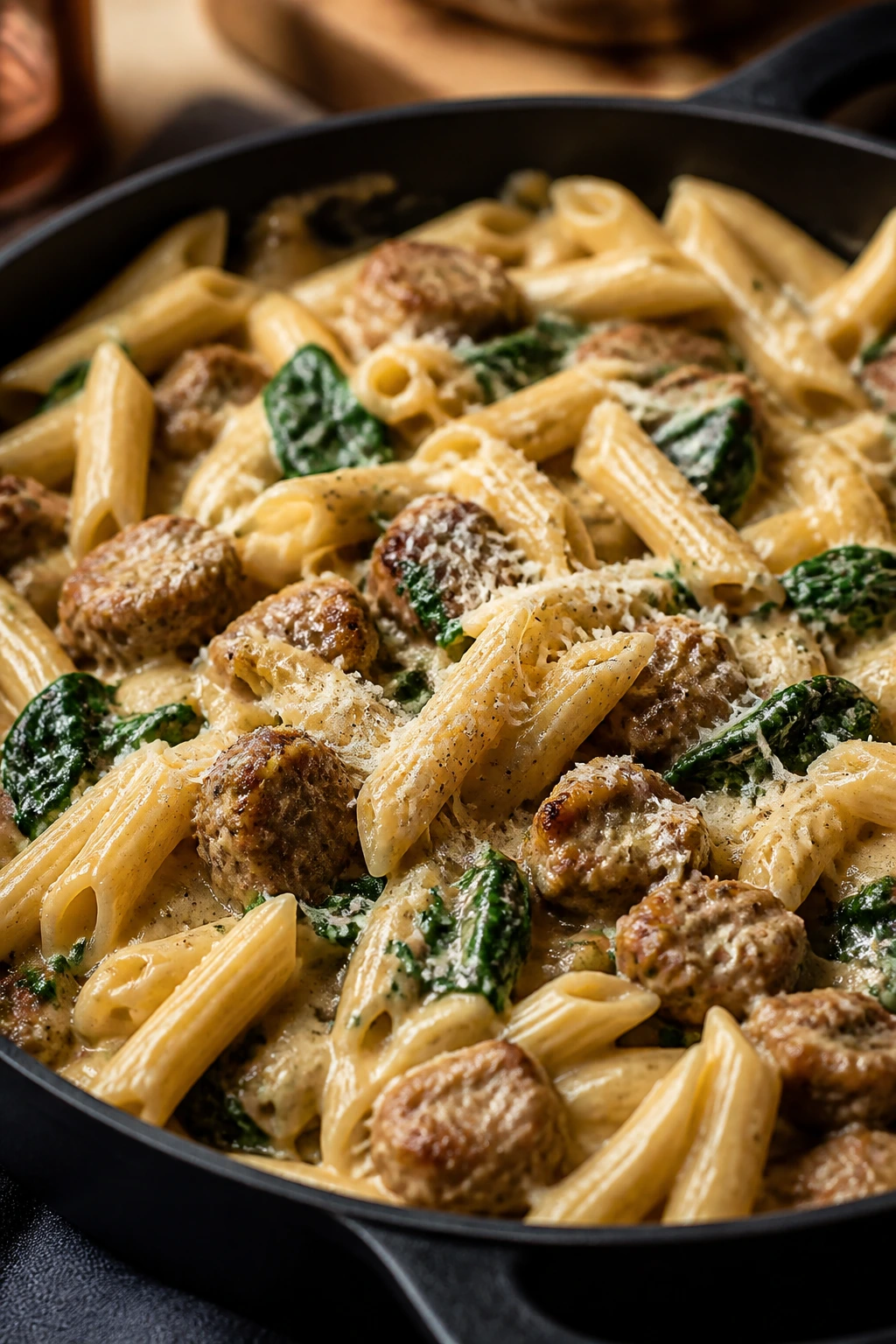
4. Creamy Sausage Pasta Skillet
Creamy pasta and leftover sausage are a very good match because the sausage gives the sauce a head start. You get savory, browned bits in every forkful, and the sauce clings to short pasta instead of pooling at the bottom of the bowl.
Why It Works:
The sausage brings fat and seasoning, which means the cream sauce doesn’t need much besides garlic, broth, and cheese. Short pasta catches the sauce in ridges and curves, and the spinach at the end softens just enough to feel useful. It’s richer than a tomato pasta, but not so rich that one bowl feels heavy.
Key Ingredients:
- 12 oz penne or rigatoni
- 1 1/2 cups leftover sausage, sliced or crumbled
- 1 tablespoon olive oil
- 3 cloves garlic, minced
- 1 cup chicken broth
- 3/4 cup heavy cream
- 1/2 cup grated Parmesan
- 2 cups baby spinach
- 1/4 teaspoon black pepper
- Pinch of red pepper flakes, optional
Quick Steps:
- Cook the pasta: Boil the pasta in salted water until al dente, then save 1/2 cup of the cooking water and drain.
- Build the base: Heat olive oil in a large skillet over medium heat. Add garlic and cook for 30 seconds until fragrant, not browned.
- Add broth and cream: Pour in the broth and cream, then simmer for 3 to 4 minutes until the liquid thickens slightly.
- Stir in sausage and cheese: Add the sausage, Parmesan, black pepper, and red pepper flakes. Stir until the cheese melts and the sauce looks glossy.
- Toss and finish: Add the pasta and spinach, tossing until the spinach wilts and the sauce coats the noodles. Loosen with a splash of reserved pasta water if needed.
Equipment for This Recipe:
- Large pot
- Large skillet
- Colander
- Wooden spoon
- Microplane or fine grater
How to Serve This Dish:
Twirl it into shallow bowls and finish with extra Parmesan and black pepper. A crisp salad with lemon dressing keeps the plate from leaning too soft and creamy. Garlic bread is welcome, though honestly the pasta already carries enough weight to stand on its own.
Pro Tips for This Recipe:
- Use the pasta water: A few spoonfuls help the sauce cling.
- Keep the heat moderate: High heat can split the cream.
- Don’t overcook the spinach: It only needs a few seconds.
- Grate the cheese finely: Fine Parmesan melts smoother than coarse shreds.
Variations on This Dish:
- Tomato-Cream Version: Stir in 1/2 cup marinara with the cream for a pink sauce.
- Mushroom Pasta: Sauté 8 oz sliced mushrooms before the garlic.
- Lighter Skillet: Swap half the cream for evaporated milk.
Common Mistakes to Avoid with This Dish:
- Boiling the sauce hard: The cream can separate and turn grainy.
- Forgetting to salt the pasta water: The whole dish tastes flatter.
- Adding the spinach too early: It goes mushy and dark.
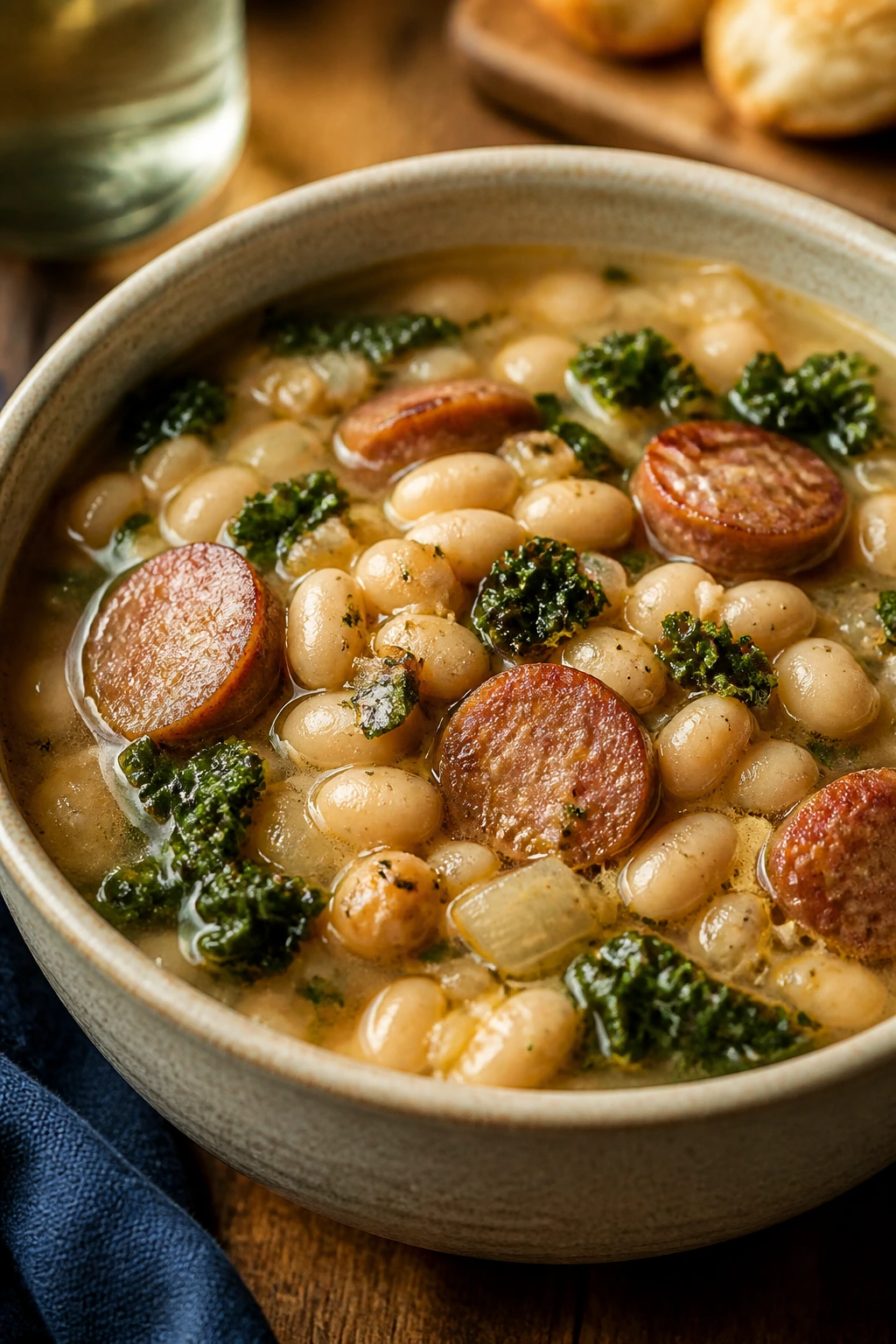
5. White Bean and Sausage Soup
A good white bean soup doesn’t need to shout. It just needs depth, and leftover sausage gives that immediately. The beans make it creamy without cream, the broth stays clean, and the sausage cuts through everything with a smoky, savory edge.
Why It Works:
Beans and sausage have been getting along for generations because the bean texture softens the sausage’s sharper notes. Mirepoix—onion, carrot, celery—builds the base, while kale or spinach gives the bowl a little bite at the end. If you let it sit for a few minutes before serving, the broth thickens nicely on its own.
Key Ingredients:
- 1 1/2 cups leftover sausage, sliced
- 1 tablespoon olive oil
- 1 onion, diced
- 2 carrots, diced
- 2 celery stalks, diced
- 3 cloves garlic, minced
- 2 cans (15 oz each) cannellini beans, drained and rinsed
- 4 cups chicken broth
- 1 cup diced tomatoes
- 2 cups chopped kale
- 1 teaspoon dried thyme
- Salt and black pepper, to taste
Quick Steps:
- Cook the vegetables: Heat olive oil in a Dutch oven over medium heat. Add onion, carrot, and celery, then cook for 7 to 8 minutes until softened.
- Add garlic and thyme: Stir in the garlic and thyme and cook for 30 seconds.
- Build the soup: Add the beans, broth, tomatoes, and sausage. Bring to a simmer.
- Simmer gently: Cook for 15 minutes, stirring now and then, until the broth tastes rounded and the vegetables are tender.
- Finish with greens: Stir in the kale and cook for 3 to 4 minutes until wilted. Taste and adjust salt and pepper.
Equipment for This Recipe:
- Dutch oven or soup pot
- Wooden spoon
- Cutting board and knife
- Ladle
- Can opener
How to Serve This Dish:
Ladle it into wide bowls and drizzle with olive oil if you want a silkier finish. Crusty bread is the obvious move, but a piece of toasted sourdough rubbed with garlic does even better. The soup should look brothy, not thick like stew.
Pro Tips for This Recipe:
- Use low-sodium broth if your sausage is salty: It gives you room to season.
- Mash a few beans: That thickens the soup without flour.
- Add greens at the end: They stay brighter and less stringy.
- Let it rest 10 minutes: The flavor settles and deepens a little.
Variations on This Dish:
- Tomato-Heavy Version: Add an extra 1 cup diced tomatoes for more acidity.
- Lemony Bean Soup: Finish with 1 tablespoon lemon juice for a brighter bowl.
- Spicy Sausage Soup: Add a pinch of chili flakes or a diced hot pepper with the onions.
Common Mistakes to Avoid with This Dish:
- Boiling hard: Beans can break apart and turn chalky.
- Adding kale too soon: It loses color and turns tough.
- Skipping the taste test: Sausage brands vary a lot in salt.
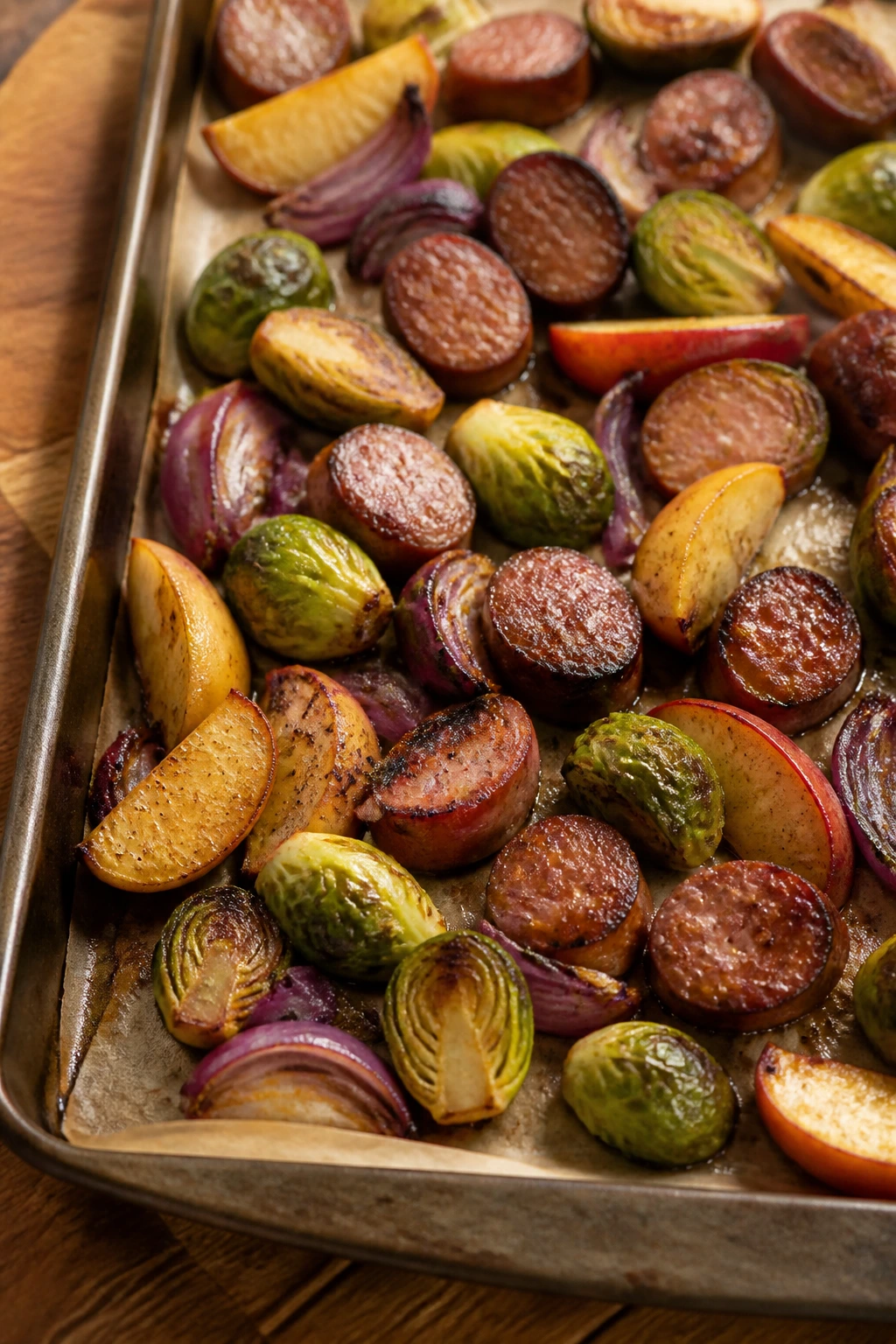
6. Sheet Pan Sausage, Apples, and Brussels Sprouts
This is the dinner I make when I want one pan, one roast, and a kitchen that smells like apples, mustard, and browned sausage. The sprouts get crisp at the edges, the apples slump just enough, and the sausage warms through without drying out.
Why It Works:
Roasting at high heat gives the vegetables char where they need it and keeps the sausage from steaming. Apples bring a little sweetness that plays well with savory sausage, especially kielbasa or bratwurst. A bit of Dijon or maple ties the whole pan together without turning it into dessert.
Key Ingredients:
- 1 1/2 cups leftover sausage, sliced
- 1 lb Brussels sprouts, halved
- 2 apples, cored and cut into wedges
- 1 red onion, sliced into thick wedges
- 2 tablespoons olive oil
- 1 tablespoon Dijon mustard
- 1 tablespoon maple syrup
- 1/2 teaspoon kosher salt
- 1/4 teaspoon black pepper
Quick Steps:
- Preheat the oven: Heat to 425°F and line a sheet pan with parchment for easier cleanup.
- Season the vegetables: Toss Brussels sprouts, apples, and onion with olive oil, Dijon, maple syrup, salt, and pepper.
- Roast first: Spread everything out in a single layer and roast for 18 minutes.
- Add the sausage: Scatter the sausage over the pan, stir once, and roast for another 8 to 10 minutes until the sprouts are browned and the sausage is hot.
- Serve hot: Let it rest for 2 minutes, then move straight to plates.
Equipment for This Recipe:
- Rimmed sheet pan
- Large mixing bowl
- Parchment paper
- Spatula
- Knife and cutting board
How to Serve This Dish:
Serve it as a stand-alone dinner or spoon it over rice if you want something more filling. A spoonful of whole-grain mustard on the side is surprisingly good here. The pan should look glossy, with browned edges on the sprouts and a few caramelized apple corners.
Pro Tips for This Recipe:
- Cut the sprouts evenly: Uneven pieces roast unevenly.
- Use firm apples: Soft apples collapse into mush.
- Don’t crowd the pan: Give the vegetables space or they steam.
- Add sausage late: It only needs enough time to reheat and pick up color.
Variations on This Dish:
- Maple-Mustard Version: Increase the maple to 2 tablespoons for a sweeter glaze.
- Herbed Roast: Add fresh thyme or rosemary before roasting.
- Shaved Cabbage Swap: Use thick cabbage wedges when Brussels sprouts are out of reach.
Common Mistakes to Avoid with This Dish:
- Using a crowded sheet pan: The edges won’t brown.
- Adding sausage from the start: It dries before the vegetables finish.
- Choosing soft apples: They turn mealy in the oven.
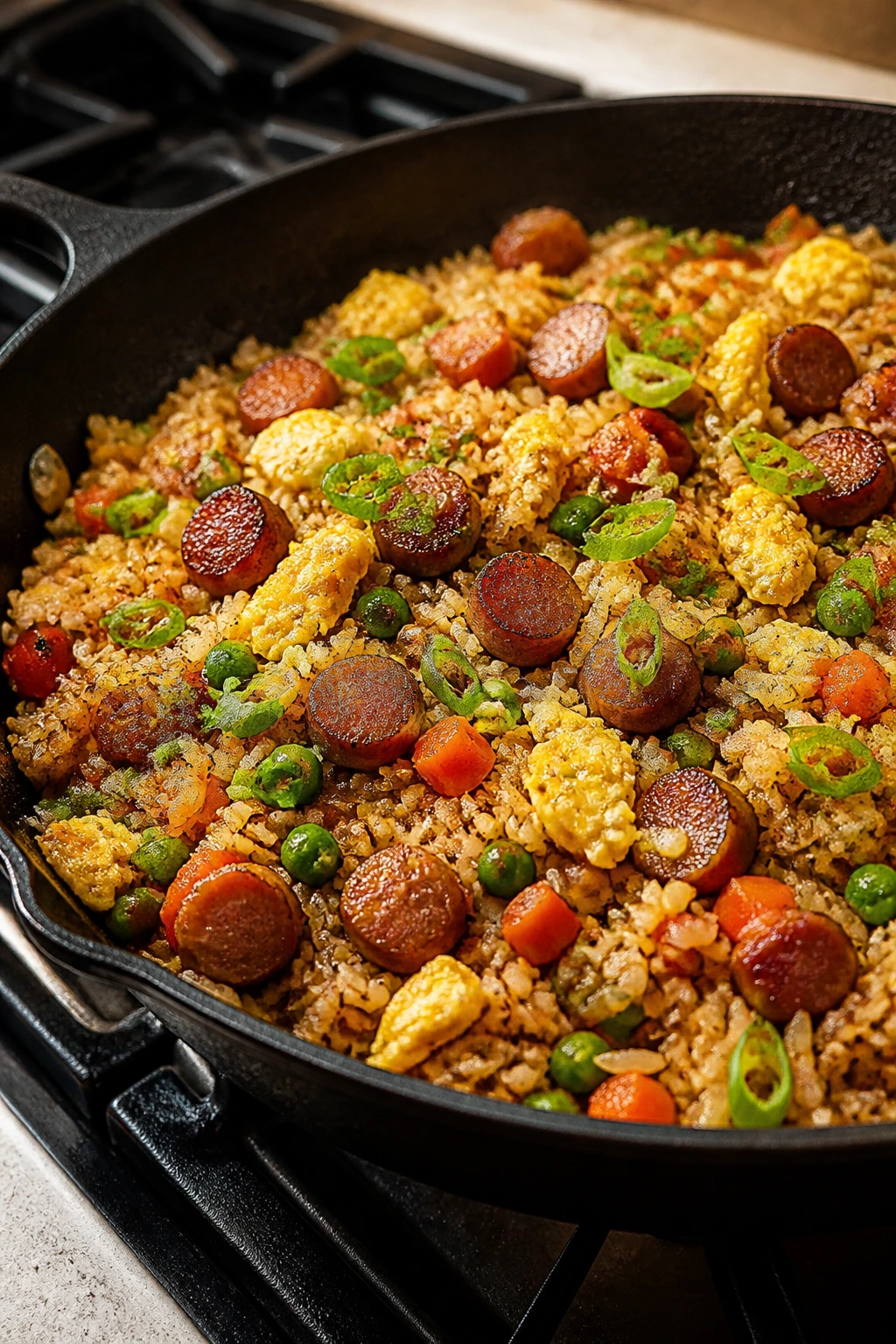
7. Sausage Fried Rice
Fried rice is one of the smartest things you can do with leftover sausage because the sausage brings its own seasoning and the rice gives you a dry, hot surface to work with. Day-old rice is non-negotiable here. Fresh rice turns sticky. Old rice fries.
Why It Works:
Cold rice separates in the pan, which means it can toast instead of clumping. The sausage acts like the flavor bomb, while peas, carrots, and egg fill in the background without taking over. Soy sauce, sesame oil, and scallions do the last bit of stitching together.
Key Ingredients:
- 1 1/2 cups leftover sausage, diced
- 4 cups cold cooked rice
- 2 tablespoons neutral oil
- 2 eggs, lightly beaten
- 1 cup frozen peas and carrots
- 3 scallions, sliced
- 2 tablespoons soy sauce
- 1 teaspoon sesame oil
- 1 clove garlic, minced
- Black pepper, to taste
Quick Steps:
- Heat the pan: Warm a large skillet or wok over medium-high heat and add the neutral oil.
- Scramble the eggs: Pour in the eggs and cook for 30 to 45 seconds, stirring until just set. Move them to a plate.
- Cook the vegetables and sausage: Add garlic, peas, carrots, and sausage. Stir-fry for 2 to 3 minutes until the sausage is hot and the vegetables lose their icy edge.
- Add the rice: Break up the rice with your hands or a spoon, then add it to the pan. Cook for 4 to 5 minutes, pressing it into the hot surface until it starts to toast.
- Season and finish: Return the eggs, add soy sauce, sesame oil, and scallions, and toss until the rice looks evenly coated.
Equipment for This Recipe:
- Large skillet or wok
- Spatula
- Mixing bowl
- Knife and cutting board
- Small spoon for sesame oil
How to Serve This Dish:
Serve it in bowls with extra scallions on top and maybe a fried egg if you want more richness. A little chili crisp on the side wakes up the whole dish. Fried rice should look loose, not wet.
Pro Tips for This Recipe:
- Use cold rice: Warm rice clumps and steams.
- Keep the heat up: You want toast, not a soft sauté.
- Break the rice before it hits the pan: That saves time and keeps the grains separate.
- Taste before salting: Soy sauce and sausage may be enough.
Variations on This Dish:
- Teriyaki Version: Swap soy sauce for 1 1/2 tablespoons teriyaki and add diced pineapple.
- Kimchi Fried Rice: Stir in 1/2 cup chopped kimchi with the sausage.
- Vegetable-Heavy Version: Add diced zucchini or mushrooms in place of the peas and carrots.
Common Mistakes to Avoid with This Dish:
- Using fresh rice: It turns gummy fast.
- Overcrowding the wok: The grains won’t fry.
- Drowning it in soy sauce: The rice goes wet and dark.
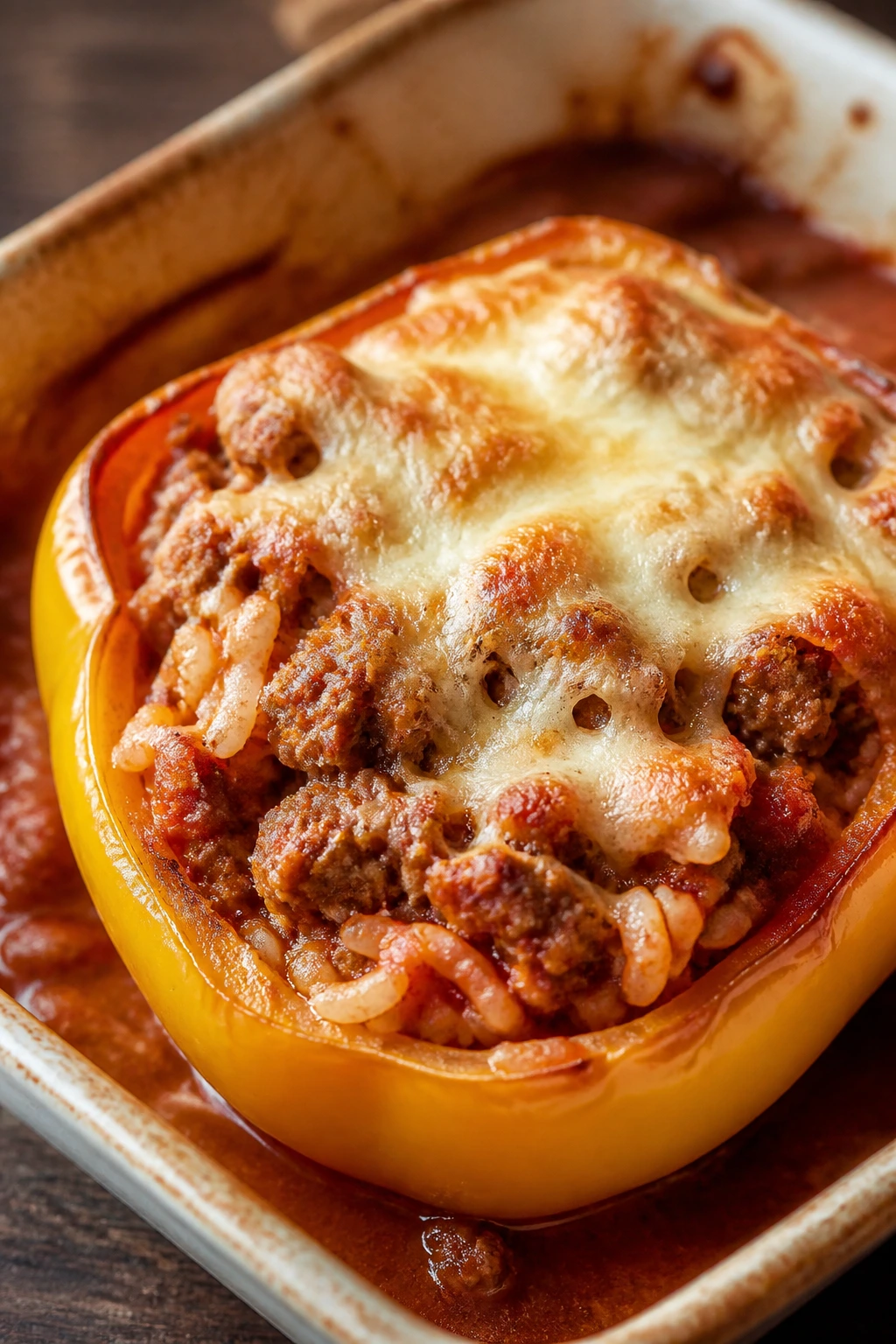
8. Stuffed Bell Peppers with Sausage and Rice
Stuffed peppers are a tidy way to turn leftover sausage into a full dinner. The pepper holds its shape, the rice soaks up tomato sauce, and the sausage keeps every bite seasoned from the inside out.
Why It Works:
Bell peppers soften in the oven without losing their shell-like shape, which makes them a natural bowl. Rice stretches the sausage, tomato sauce keeps the filling moist, and cheese on top gives you a browned lid. It’s a forgiving dish, and I like that about it.
Key Ingredients:
- 4 large bell peppers, halved and seeded
- 1 1/2 cups leftover sausage, crumbled
- 2 cups cooked rice
- 1 1/2 cups marinara sauce
- 1/2 cup diced onion
- 1 cup shredded mozzarella
- 1/2 teaspoon Italian seasoning
- 1 tablespoon olive oil
- Salt and pepper, to taste
Quick Steps:
- Preheat the oven: Heat to 375°F.
- Soften the peppers: Place the pepper halves in a baking dish, brush with olive oil, and bake for 10 minutes.
- Mix the filling: Stir together sausage, rice, half the marinara, onion, Italian seasoning, salt, and pepper.
- Stuff and top: Fill the peppers, spoon the remaining marinara over each one, and sprinkle with mozzarella.
- Bake until bubbling: Return to the oven for 20 to 25 minutes until the peppers are tender and the cheese is browned in spots.
Equipment for This Recipe:
- 9×13-inch baking dish
- Mixing bowl
- Spoon
- Knife and cutting board
- Foil, optional, if the cheese browns too fast
How to Serve This Dish:
Serve one or two pepper halves per person, depending on size, with a green salad or roasted broccoli. The filling should be moist but not soupy. If you like a sharper finish, a spoonful of pesto on the side works better than more cheese.
Pro Tips for This Recipe:
- Prebake the peppers: It keeps them from staying crunchy.
- Use cooked rice: Raw rice will not finish in time here.
- Don’t overpack the filling: Leave a little room for the cheese.
- Cover if needed: If the cheese browns early, tent with foil for the last 10 minutes.
Variations on This Dish:
- Mexican-Style Peppers: Use taco seasoning, salsa, and cheddar instead of marinara.
- Mushroom Rice Version: Add 1 cup sautéed mushrooms to the filling.
- Brown Rice Swap: Use brown rice for a nuttier bite and a slightly firmer texture.
Common Mistakes to Avoid with This Dish:
- Starting with raw peppers: They stay too firm.
- Using uncooked rice: The center will be crunchy.
- Skipping seasoning in the filling: Peppers are mild and need help.
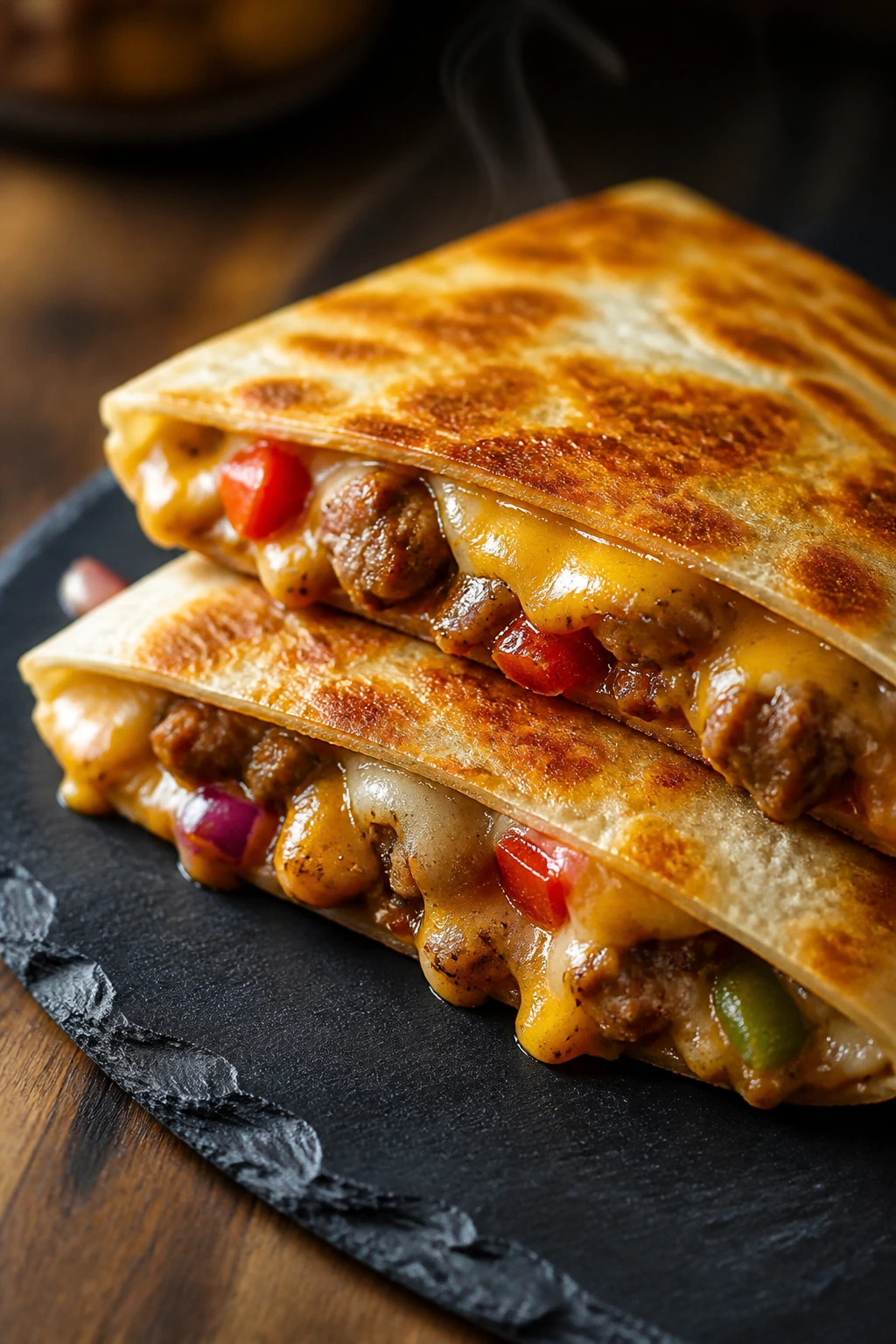
9. Cheesy Sausage Quesadillas
A quesadilla is what you make when you want leftover sausage to disappear fast. The tortilla crisps up, the cheese holds everything in place, and the sausage gets just enough heat to wake it up without drying out.
Why It Works:
Cheese is the glue. Once it melts, it locks the sausage in with any vegetables you want to add, and the tortilla browns in a thin, even layer that cracks under a knife. This is a five-minute lunch that still feels like cooking.
Key Ingredients:
- 1 cup leftover sausage, chopped small
- 4 large flour tortillas
- 2 cups shredded cheese, such as cheddar or Monterey Jack
- 1/2 cup sautéed onions or peppers, optional
- 1 tablespoon butter or oil
- Salsa, for serving
Quick Steps:
- Warm the filling: Heat the sausage and any vegetables in a skillet for 1 to 2 minutes.
- Build the quesadilla: Lay one tortilla in a dry skillet over medium heat. Sprinkle cheese over half, add sausage, then more cheese, and fold the tortilla over.
- Cook the first side: Add butter or oil if needed and cook for 2 to 3 minutes until golden.
- Flip carefully: Cook the second side for another 1 to 2 minutes until the cheese melts.
- Rest and slice: Let it sit for 30 seconds, then cut into wedges.
Equipment for This Recipe:
- Large skillet
- Spatula
- Knife or pizza cutter
- Cutting board
- Small bowl for salsa
How to Serve This Dish:
Serve it cut into triangles with salsa, sour cream, or pickled jalapeños. A simple tomato salad on the side keeps it from feeling too heavy. The best quesadillas are crisp on the outside and a little stretchy when you pull them apart.
Pro Tips for This Recipe:
- Grate your own cheese if you can: It melts a little cleaner.
- Keep the heat moderate: Too hot and the tortilla burns before the cheese melts.
- Chop the sausage small: Big pieces make the quesadilla fall apart.
- Don’t overfill: A tight fold is what keeps the filling inside.
Variations on This Dish:
- Breakfast Quesadilla: Add scrambled eggs and diced potatoes.
- Pepper-Jack Version: Swap the cheese for pepper jack and add jalapeños.
- Bean-and-Sausage Version: Add 1/4 cup black beans for a denser filling.
Common Mistakes to Avoid with This Dish:
- Using too much filling: It leaks out.
- Cooking on high heat: The tortilla burns before the center melts.
- Skipping the rest time: The cheese runs out the second you cut it.
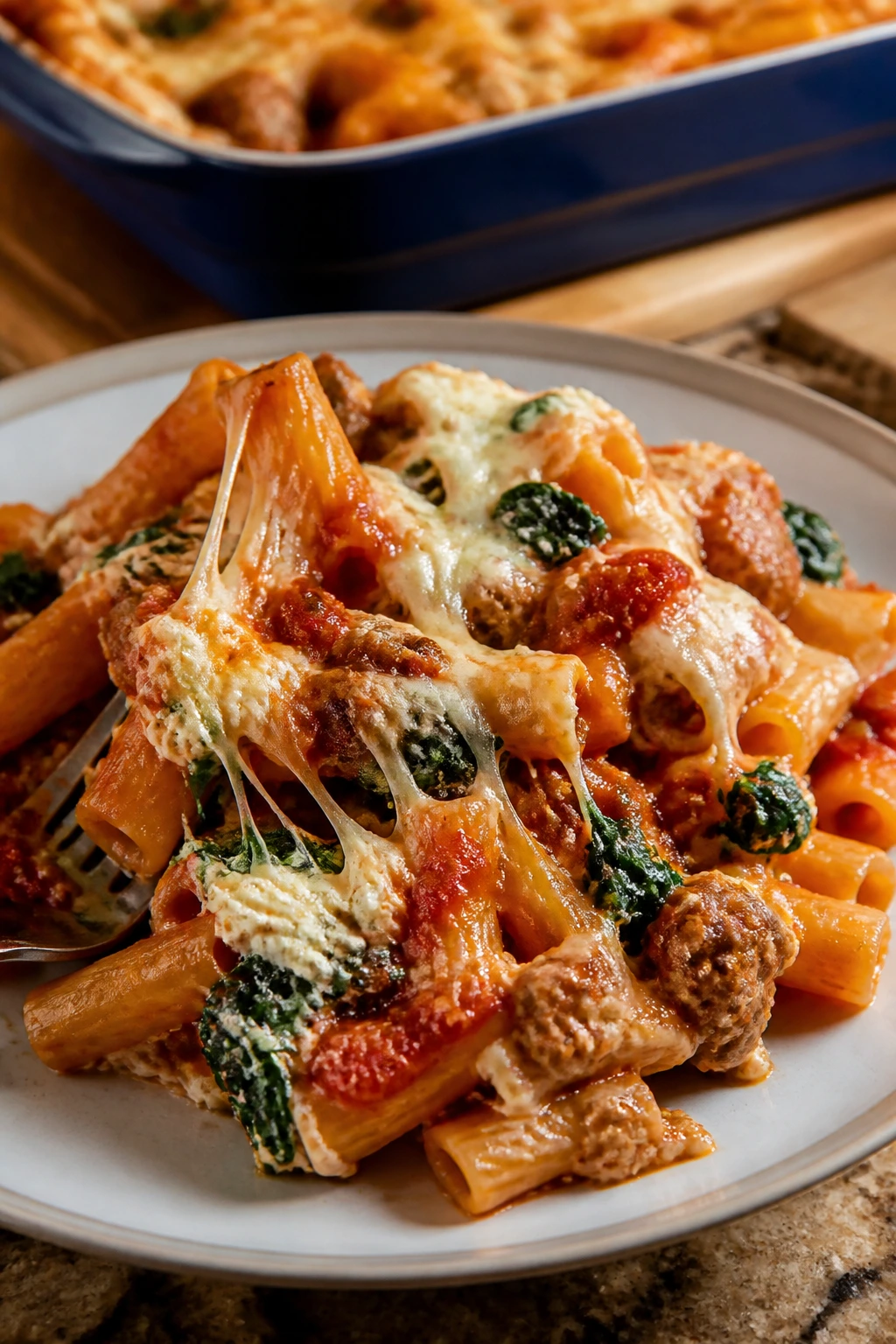
10. Sausage and Spinach Baked Ziti
Baked ziti is the casserole I reach for when leftover sausage needs to feel like a full dinner, not a small fix. The pasta catches sauce, the cheese browns on top, and the spinach disappears into the red layer without making the dish feel heavy.
Why It Works:
Cooked sausage is already rich, so it only needs to mingle with tomato sauce and pasta to feel complete. Ricotta softens the edges, mozzarella gives you stretch, and spinach sneaks in a little green without changing the character of the bake. Leftovers from this dish reheat well, which is half the charm.
Key Ingredients:
- 12 oz ziti or penne
- 1 1/2 cups leftover sausage, sliced or crumbled
- 3 cups marinara sauce
- 1 cup ricotta
- 2 cups shredded mozzarella
- 2 cups baby spinach
- 1/4 cup grated Parmesan
- 1 teaspoon Italian seasoning
- Salt and black pepper, to taste
Quick Steps:
- Preheat the oven: Heat to 375°F and grease a 9×13-inch baking dish.
- Cook the pasta: Boil the ziti until just shy of al dente, then drain.
- Mix the filling: Toss pasta with marinara, sausage, spinach, Italian seasoning, salt, and pepper.
- Layer the bake: Spread half the pasta in the dish, dollop with ricotta, add the rest of the pasta, then top with mozzarella and Parmesan.
- Bake until bubbling: Bake for 25 to 30 minutes until the top is browned and the sauce bubbles at the edges.
Equipment for This Recipe:
- Large pot
- 9×13-inch baking dish
- Mixing bowl
- Colander
- Foil, if needed for the final browning
How to Serve This Dish:
Let it sit for 10 minutes before cutting, or the slices will slide. Pair it with a sharp green salad or roasted broccoli. A spoonful of ricotta on top of each serving makes the plate look richer than it is.
Pro Tips for This Recipe:
- Undercook the pasta a little: It finishes in the oven.
- Use a thick sauce: Thin sauce makes baked ziti sloppy.
- Layer the cheese instead of dumping it all on top: Better texture.
- Let it rest before serving: It slices cleaner after a short pause.
Variations on This Dish:
- Three-Cheese Version: Add provolone for a more stretched, gooey top.
- Vegetable Baked Ziti: Stir in sautéed mushrooms or zucchini.
- Spicy Sausage Bake: Add red pepper flakes and a sharper marinara.
Common Mistakes to Avoid with This Dish:
- Overcooking the pasta: It turns mushy after baking.
- Using watery sauce: The casserole won’t set.
- Cutting immediately: The layers need time to settle.
11. Sausage Breakfast Burritos

Breakfast burritos are a clean way to use leftover sausage because they let you pack eggs, potatoes, and cheese around the sausage in a single wrap. They freeze well, reheat well, and don’t get fussy if you make a dozen at once.
Why It Works:
Soft scrambled eggs and crispy potatoes cushion the sausage, which keeps the filling from feeling dense. Flour tortillas wrap neatly around warm ingredients, and salsa or hot sauce brings back the sharp edge after reheating. If you’re thinking ahead, this is one of the best places to put leftover sausage.
Key Ingredients:
- 1 1/2 cups leftover sausage, crumbled
- 6 large eggs
- 2 cups cooked diced potatoes or hash browns
- 1 cup shredded cheddar
- 4 large flour tortillas
- 2 tablespoons milk
- 1 tablespoon butter
- Salsa, for serving
Quick Steps:
- Warm the sausage and potatoes: Heat both in a skillet over medium heat until hot.
- Scramble the eggs: Whisk eggs with milk. Melt butter in a second pan and cook the eggs gently until just set.
- Assemble the burritos: Lay tortillas flat and divide sausage, potatoes, eggs, and cheese among them.
- Roll tightly: Fold the sides in, roll from the bottom, and keep the seam side down.
- Toast or store: Toast the burritos in a dry skillet for 1 to 2 minutes per side, or wrap for freezing.
Equipment for This Recipe:
- Skillet
- Mixing bowl
- Whisk
- Foil or parchment, if freezing
- Spatula
How to Serve This Dish:
Serve them hot with salsa, sour cream, or avocado slices. If you’re feeding a crowd, cut them in half and stack them on a platter. The best burritos stay tight, warm, and not overstuffed.
Pro Tips for This Recipe:
- Let the filling cool slightly before wrapping: It helps the tortillas stay intact.
- Don’t overcook the eggs: They’ll reheat later.
- Warm the tortillas first: Cold tortillas crack.
- Freeze individually: Wrap each burrito before stacking them in a bag.
Variations on This Dish:
- Southwest Burrito: Add black beans and a spoonful of salsa.
- Green Chile Version: Use roasted green chiles and Monterey Jack.
- Veggie-Heavy Burrito: Add sautéed peppers and onions to the filling.
Common Mistakes to Avoid with This Recipe:
- Overfilling the tortilla: It tears when you roll it.
- Using wet fillings: They make the wrap soggy.
- Skipping the toast step: A quick toast seals the seam.
12. Sausage and Mushroom Flatbread Pizza
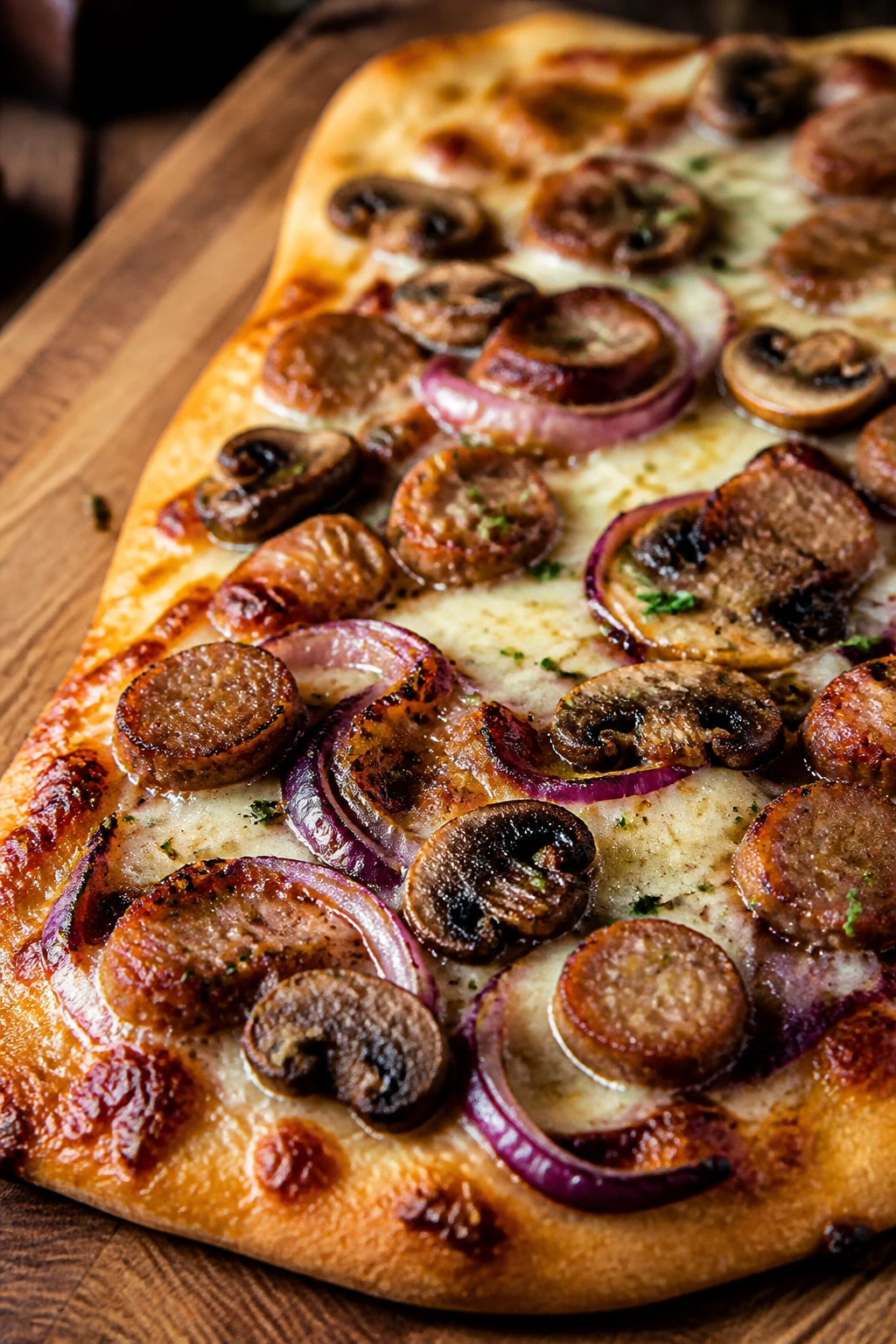
Flatbread pizza is one of the easiest ways to make leftover sausage feel deliberate. Mushrooms bring earthiness, the sausage handles the salty side, and the thin crust gives you enough crunch to keep every bite from going soft.
Why It Works:
A hot oven and a thin base mean the toppings heat quickly, so the sausage doesn’t dry out waiting for the crust to finish. Mushrooms release moisture early, which is why they should be cooked a little first if you want a crisp bottom. Once mozzarella melts and the edges blister, you’re done.
Key Ingredients:
- 1 prepared flatbread or 1 ball pizza dough
- 1 cup leftover sausage, sliced
- 1 cup sliced mushrooms
- 1/4 cup sliced red onion
- 1/2 cup pizza sauce
- 1 1/2 cups shredded mozzarella
- 1 tablespoon olive oil
- 1/2 teaspoon dried oregano
- Fresh basil, optional
Quick Steps:
- Preheat the oven: Heat to 450°F, and place a baking stone or sheet pan inside if you have one.
- Cook the mushrooms briefly: Sauté mushrooms in olive oil for 4 to 5 minutes until their moisture evaporates.
- Build the pizza: Spread sauce over the flatbread, then add mozzarella, sausage, mushrooms, onion, and oregano.
- Bake until crisp: Bake for 8 to 12 minutes until the cheese bubbles and the crust edges turn golden.
- Finish and slice: Add basil if using, then slice while hot.
Equipment for This Recipe:
- Baking sheet or pizza stone
- Skillet for mushrooms
- Spatula
- Pizza cutter or sharp knife
- Oven mitts
How to Serve This Dish:
Cut it into strips or wedges and serve with a simple arugula salad. A drizzle of hot honey works surprisingly well if the sausage leans savory rather than spicy. Flatbread should be crisp, not floppy in the center.
Pro Tips for This Recipe:
- Pre-cook watery mushrooms: They can sink the crust.
- Use a hot oven: You want the crust to brown before the cheese dries out.
- Keep sauce light: Too much makes the base soggy.
- Slice sausage thin: It heats faster and stays better distributed.
Variations on This Dish:
- White Pizza Version: Swap tomato sauce for ricotta and garlic oil.
- Spicy Pie: Add pepper flakes and a little Calabrian chili paste.
- Veggie Flatbread: Add roasted peppers or zucchini with the mushrooms.
Common Mistakes to Avoid with This Dish:
- Over-saucing: The crust gets damp fast.
- Using raw mushrooms without sautéing: They leak water in the oven.
- Baking too low: The flatbread won’t crisp properly.
13. Sausage and Lentil Stew
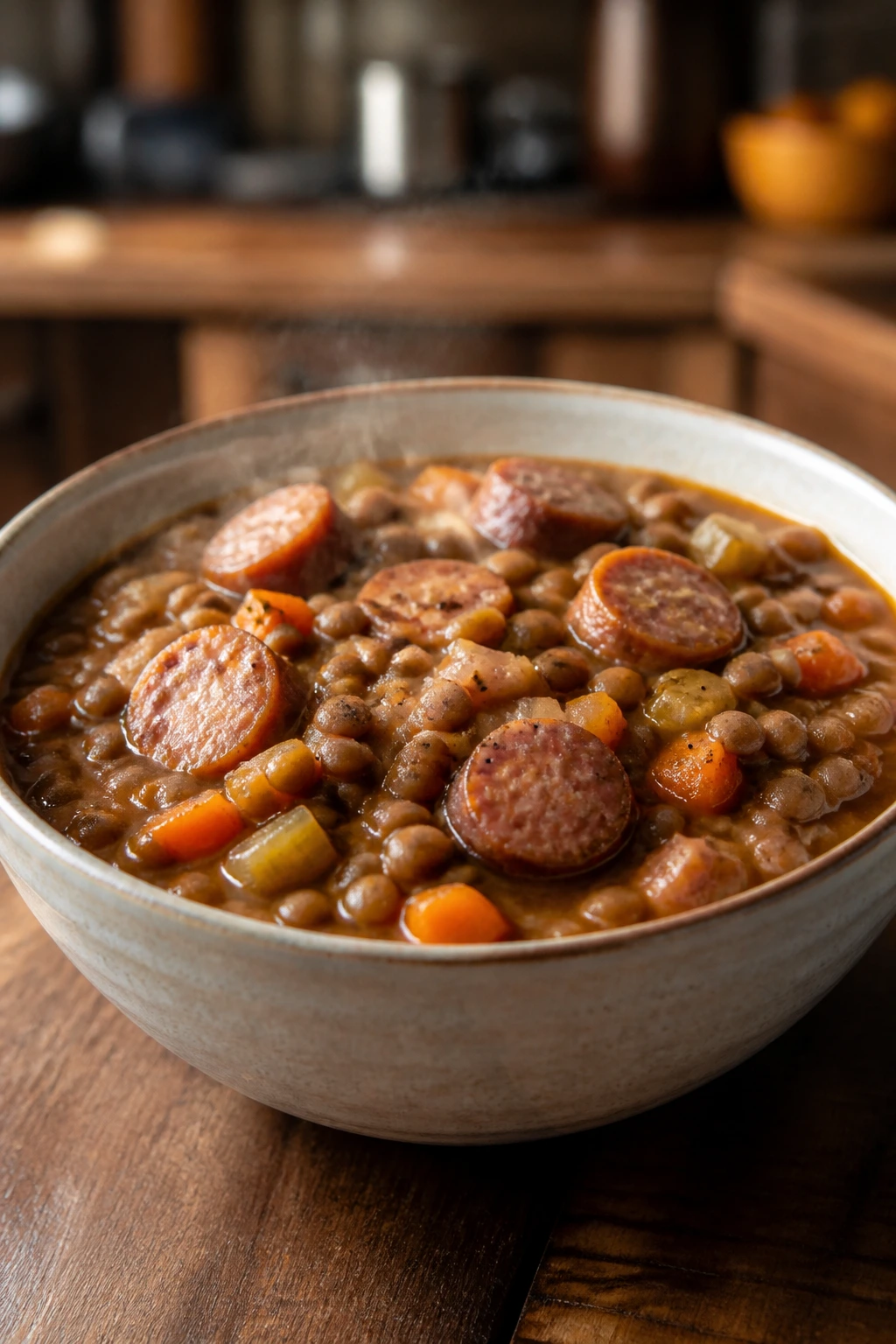
If you want leftover sausage to feel sturdy and not recycled, stew is the move. Lentils give the bowl body, carrots and celery keep it grounded, and sausage adds enough richness that you don’t need cream, butter, or much else.
Why It Works:
Lentils cook faster than beans and pick up flavor from the broth in a short simmer. Sausage adds depth without needing a long braise, which makes this stew practical on an ordinary night. A splash of vinegar or lemon at the end keeps the whole pot from tasting flat.
Key Ingredients:
- 1 1/2 cups leftover sausage, sliced
- 1 tablespoon olive oil
- 1 onion, diced
- 2 carrots, diced
- 2 celery stalks, diced
- 3 cloves garlic, minced
- 1 cup brown or green lentils, rinsed
- 5 cups chicken broth
- 1 cup diced tomatoes
- 1 teaspoon thyme
- 1 tablespoon red wine vinegar
- Salt and pepper, to taste
Quick Steps:
- Cook the aromatics: Heat olive oil in a soup pot over medium heat. Add onion, carrots, and celery and cook for 7 minutes.
- Add garlic and thyme: Stir in garlic and thyme for 30 seconds.
- Build the stew: Add lentils, broth, tomatoes, and sausage. Bring to a simmer.
- Cook until tender: Simmer for 25 to 30 minutes until the lentils are soft but not falling apart.
- Finish with vinegar: Stir in vinegar, taste, and adjust seasoning before serving.
Equipment for This Recipe:
- Soup pot or Dutch oven
- Wooden spoon
- Knife and cutting board
- Ladle
- Measuring cups
How to Serve This Dish:
Ladle it into deep bowls and serve with crusty bread or a piece of buttered toast. A sprinkle of chopped parsley gives the stew a fresher look and a little lift. It should be thick enough to coat a spoon, but not so thick that it eats like mashed lentils.
Pro Tips for This Recipe:
- Rinse the lentils well: It keeps the broth cleaner.
- Add vinegar at the end: Acid tastes brighter after cooking.
- Watch the simmer: Too vigorous and the lentils break down fast.
- Use brown or green lentils: Red lentils turn mushy in this stew.
Variations on This Dish:
- Smoky Stew: Add a little smoked paprika with the thyme.
- Kale Version: Stir in chopped kale for the last 5 minutes.
- Tomato-Light Version: Use only 1/2 cup tomatoes and more broth for a brothy pot.
Common Mistakes to Avoid with This Dish:
- Overcooking the lentils: They lose structure.
- Forgetting acid at the end: The stew tastes dull.
- Starting with too little broth: Lentils soak up more than you expect.
14. Sausage Cornbread Casserole
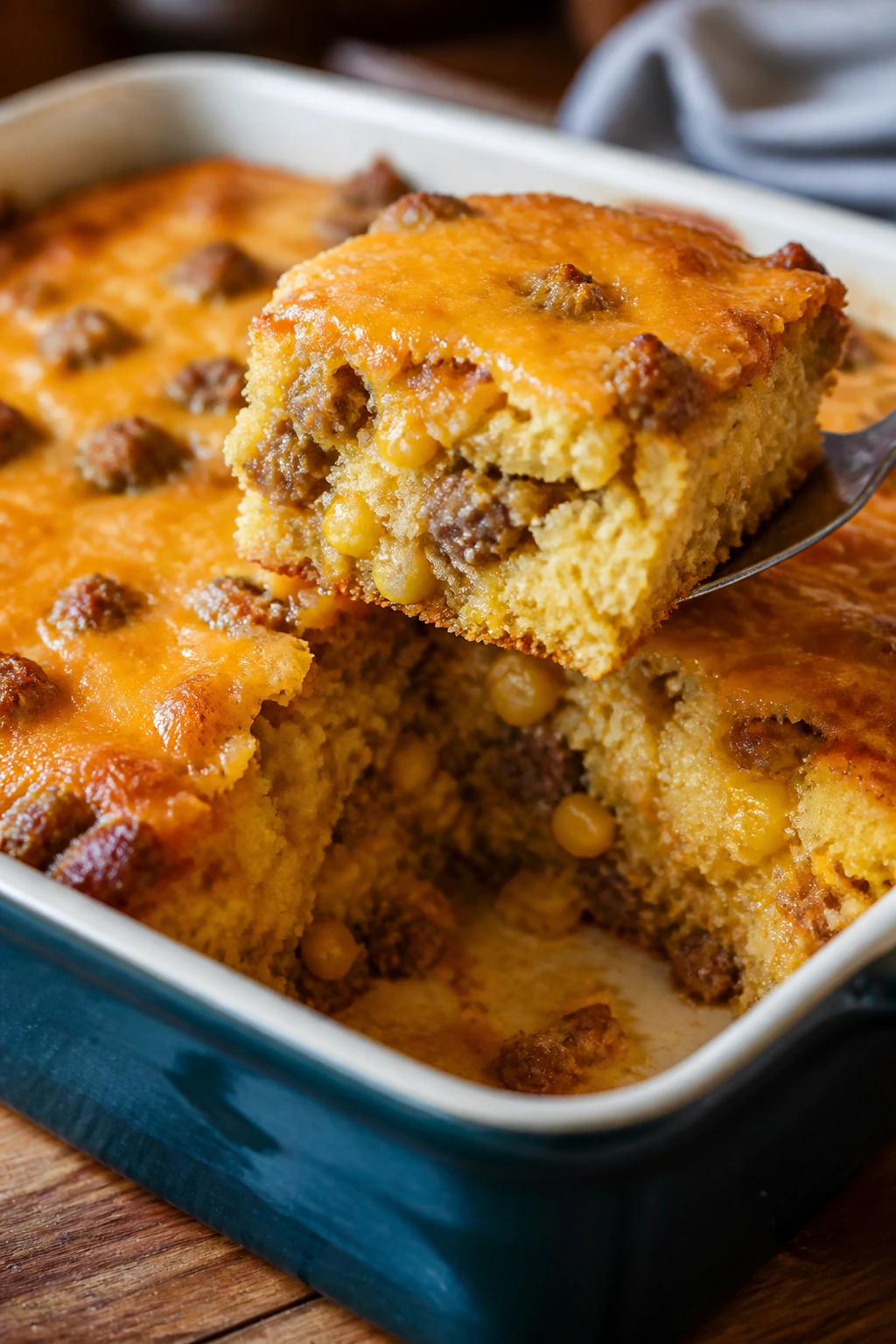
Cornbread casserole is the kind of dish that looks humble until you cut into it and hit the sausage, cheese, and corn layered through the middle. It’s sweet, savory, and dense enough to serve as dinner instead of a side.
Why It Works:
Cornbread mix gives you an easy base, while leftover sausage adds all the flavor that plain batter lacks. Corn brings little bursts of sweetness, and cheddar binds the top into a browned crust. This is a casserole that likes a sharp knife and a short rest before serving.
Key Ingredients:
- 1 1/2 cups leftover sausage, crumbled
- 1 box cornbread mix, prepared according to package directions
- 1 cup corn kernels, fresh, frozen, or drained canned
- 1/2 cup diced onion
- 1 cup shredded cheddar
- 1/2 cup sour cream
- 1 tablespoon butter, for the pan
- 1/4 teaspoon black pepper
Quick Steps:
- Preheat the oven: Heat to 375°F and butter an 8×8-inch baking dish.
- Cook the onion and sausage: Sauté onion in a skillet for 3 minutes, then stir in the sausage just to warm it.
- Mix the batter: Fold cornbread mix, corn, sour cream, pepper, and half the cheese together.
- Assemble the casserole: Spoon half the batter into the dish, add the sausage mixture, then top with the rest of the batter and remaining cheese.
- Bake until set: Bake for 25 to 30 minutes until the top is golden and a toothpick comes out clean in the center.
Equipment for This Recipe:
- 8×8-inch baking dish
- Skillet
- Mixing bowl
- Spoon or spatula
- Toothpick or cake tester
How to Serve This Dish:
Cut it into squares and serve with greens or a tomato salad to cut the richness. It holds together best after resting for 10 minutes, and the top should feel firm when pressed lightly. A little honey on the side is optional, but I won’t argue with it.
Pro Tips for This Recipe:
- Don’t overmix the batter: Corbread gets tough fast.
- Drain canned corn well: Extra liquid softens the casserole.
- Rest before slicing: The layers set up as they cool.
- Use sharp cheddar: It stands out better against the cornbread.
Variations on This Dish:
- Jalapeño Cornbread Casserole: Add diced jalapeño and pepper jack.
- Green Chile Version: Stir in roasted green chiles for a warmer flavor.
- Breakfast Bake: Add a few beaten eggs to the batter for a looser, breakfast-style texture.
Common Mistakes to Avoid with This Dish:
- Making the batter too wet: The center won’t set.
- Skipping the rest time: It falls apart when sliced.
- Using bland cheese: The sausage needs something sharper beside it.
15. Sausage and Egg Muffin Cups

Egg muffin cups are the neatest answer to leftover sausage when you want breakfast that can be grabbed with one hand. They bake in a muffin tin, reheat cleanly, and the sausage keeps each bite from tasting like plain eggs in a cup.
Why It Works:
Eggs set around chopped sausage and small bits of vegetables, so each cup feels balanced instead of watery. A little cheese helps the top brown and keeps the texture tender. These are especially useful when the leftover sausage amount is small and you need it to stretch.
Key Ingredients:
- 1 cup leftover sausage, finely chopped
- 8 large eggs
- 1/4 cup milk
- 1/2 cup shredded cheddar
- 1/4 cup diced bell pepper
- 2 tablespoons diced scallions
- 1/4 teaspoon salt
- 1/4 teaspoon black pepper
- Nonstick spray or butter, for the tin
Quick Steps:
- Preheat the oven: Heat to 350°F and grease a 12-cup muffin tin well.
- Mix the base: Whisk eggs, milk, salt, and pepper until smooth.
- Fill the cups: Divide sausage, bell pepper, scallions, and cheese among the muffin cups.
- Add the eggs: Pour the egg mixture into each cup, leaving a little room at the top.
- Bake until set: Bake for 18 to 20 minutes until the centers are firm and the tops are lightly puffed.
Equipment for This Recipe:
- 12-cup muffin tin
- Mixing bowl
- Whisk
- Measuring cup with a spout, optional but handy
- Cooling rack
How to Serve This Dish:
Serve two or three cups with fruit, toast, or a small salad. They’re good warm or at room temperature, and they travel well in a lunch box. If you want a little more richness, a dab of salsa or sour cream on top works nicely.
Pro Tips for This Recipe:
- Grease the tin generously: Egg cups love to stick.
- Chop the sausage small: Bigger pieces make the cups uneven.
- Let them cool before lifting: They firm up as they rest.
- Use a pouring cup: It keeps the batter from sloshing everywhere.
Variations on This Dish:
- Spinach Egg Cups: Swap bell pepper for chopped spinach.
- Mushroom Version: Add sautéed mushrooms, but cook off the moisture first.
- Pepper Jack Cups: Use pepper jack for a sharper breakfast bite.
Common Mistakes to Avoid with This Dish:
- Overfilling the muffin tin: They puff, then spill.
- Using wet vegetables: The cups turn rubbery.
- Trying to remove them too soon: They need a brief cool-down to release cleanly.
Why Leftover Sausage Works So Well in Mixed Dishes
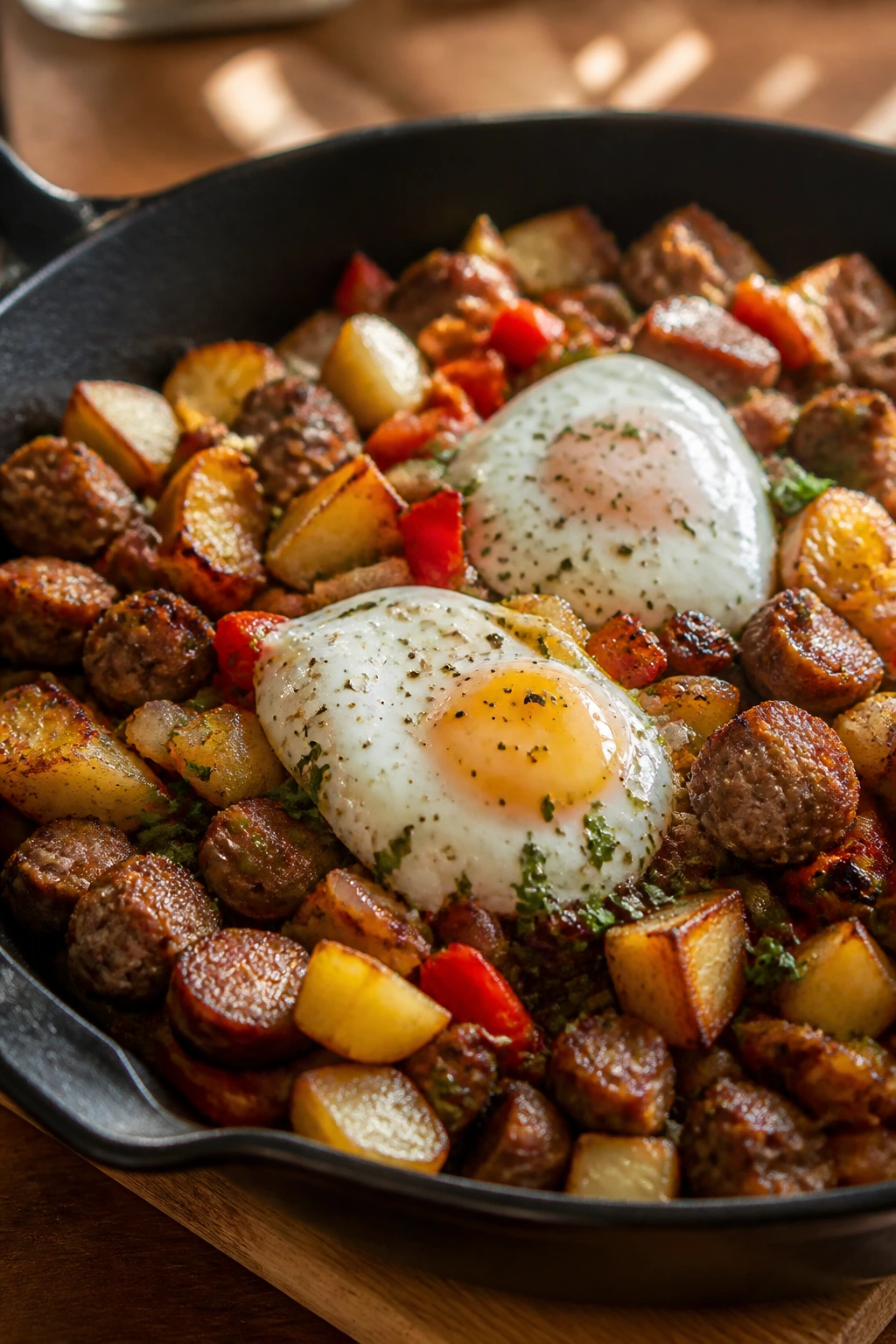
Cooked sausage is already carrying flavor, which is why it shines when you scatter it through other ingredients instead of serving it solo. That fat and seasoning move into potatoes, rice, beans, eggs, pasta, and bread in a way that plain cooked meat usually doesn’t. It’s not just protein sitting in the mix. It’s seasoning with texture.
The other reason these recipes work is simple: sausage likes heat, but it doesn’t need a long bath in it. That changes the whole rhythm of cooking. You can brown onions first, warm the sausage at the end, and keep the texture intact. If you’ve ever reheated sausage by itself and gotten that dry, wrinkled casing or tight crumb, you already know the downside. Folding it into a dish fixes that problem before it starts.
Different sausages behave differently, too. Breakfast sausage goes softly savory in eggs and casseroles. Kielbasa and bratwurst bring smoke and snap to sheet-pan dinners or beans. Italian sausage wants tomatoes, pasta, peppers, and anything with a little acidity. Once you match the style to the dish, the leftovers stop feeling random.
Essential Equipment for These Recipes

- 12-inch skillet: The workhorse for hash, fried rice, pasta sauce, and quick sandwich fillings.
- Oven-safe skillet or cast-iron pan: Useful for frittatas and any dish that starts on the stove and finishes in the oven.
- Dutch oven or soup pot: Best for bean soup, lentil stew, and anything that needs a steady simmer.
- Rimmed sheet pan: Necessary for roasting sausage with vegetables without losing juices all over the oven floor.
- 9×13-inch baking dish: The right size for baked ziti, stuffed peppers, and casseroles.
- Muffin tin: Keeps egg cups and mini breakfasts tidy and portable.
- Large mixing bowls: Handy for tossing fillings, whisking eggs, and combining pasta with sauce.
- Sharp chef’s knife: A lot of these recipes start with onions, peppers, peppers again, and sausage slices that need a clean cut.
- Spatula and wooden spoon: One for flipping, one for stirring, both used constantly.
- Measuring cups and spoons: Especially useful for sauces, eggs, and baking dishes where ratios matter.
Smart Shopping and Ingredient Tips

The first thing I look at is the sausage itself, because not all leftovers behave the same way. Fully cooked links and patties can be sliced, crumbled, or chopped. Fresh sausage that was never cooked is a different job entirely and doesn’t belong in these quick leftover meals unless you cook it first. If the sausage is greasy, blot it with a paper towel before it goes into a pasta or burrito filling.
Rice, potatoes, beans, and bread are the real stretchers here, so choose sturdy versions. Yukon Gold potatoes brown better than russets in a hash. Day-old rice is better than fresh for fried rice because it dries out enough to fry. Canned cannellini beans are fine for soup, but rinse them well so the broth doesn’t taste tinny. For bread dishes, buy rolls and tortillas that feel flexible and fresh; stale bread can work in casserole, but it’s a bad fit for hoagies and quesadillas.
Vegetables matter more than people think. Peppers, onions, mushrooms, kale, spinach, Brussels sprouts, and cabbage all stand up to sausage without disappearing. Watery vegetables—zucchini, tomatoes, mushrooms—need a little extra heat before they go into a sandwich or pizza, or they dump too much moisture into the dish. And since sausage already brings salt, buy low-sodium broth, plain tomatoes, and unsalted beans when you can. That gives you room to season on purpose instead of trying to undo a too-salty pot later.
How to Serve These Recipes
Presentation:
Most of these dishes look best when they show a little browning. Think crisp potato edges in the hash, bubbling cheese on the baked ziti, roasted spots on the sheet pan, and a loose, glossy finish on pasta or soup. Don’t bury everything under garnish. One herb, one drizzle, one spoonful of sauce. That’s usually enough.
Accompaniments:
Hash and frittatas like toast, biscuits, or a tomato salad. Soup and stew want crusty bread or a simple green salad with vinegar in the dressing. Pasta and casseroles need something bright on the side—arugula, lemony broccoli, or even sliced cucumbers with salt and olive oil. For the sandwich and quesadilla recipes, chips or slaw keep the plate from getting too soft.
Portions:
A cup or so of sausage usually feeds 2 to 4 people once it’s folded into potatoes, eggs, rice, or pasta. Casseroles and soups stretch farther; sandwiches and burritos are easier to portion by piece. If you’re scaling up, keep the sausage-to-starch ratio balanced so the dish doesn’t taste meager. If you’re scaling down, don’t cut the seasoning in half too aggressively—sausage already carries most of it.
Beverage Pairing:
Sparkling water with lemon cleans up rich sausage dishes nicely, and iced tea works especially well with tomato-heavy or cheesy meals. For something a little more old-school, a dry cider pairs well with the apple sheet-pan dinner and the hoagies. Coffee belongs beside the breakfast dishes, obviously, but a strong black tea can do the job too.
Additional Tips and Flavor Boosters
Flavor Enhancement:
A little acid changes everything. Vinegar in soup, lemon in lentils, Dijon in roasted vegetables, or pickled jalapeños on burritos all cut through sausage fat and keep the dish from feeling heavy. If you’ve got a parmesan rind, drop it into soup or stew while it simmers. Small move. Big payoff.
Customization:
You can steer these meals in a few directions without rebuilding them from scratch. Swap rice for quinoa in stuffed peppers, use spinach instead of kale in soup, or trade mozzarella for cheddar in casseroles if you want a sharper melt. If your sausage is spicy, cut back on red pepper flakes elsewhere. If it’s mild, don’t be shy with garlic, herbs, or mustard.
Serving Suggestions:
Fresh herbs matter more than people give them credit for. Parsley over hash, basil over pasta, scallions over fried rice, dill over bean soup. Even one tablespoon of chopped herbs can wake up a dish that’s been simmering for a while. And if you like contrast, add something crunchy at the end: toasted breadcrumbs, fried onions, or a handful of crushed crackers.
Make-It-Yours:
For dairy-free versions, use olive oil, skip the cheese, and build with tomatoes, herbs, and greens instead. For gluten-free meals, use rice, potatoes, corn tortillas, or gluten-free pasta, but watch the sodium in sausage and broth. For a lighter plate, add more vegetables and keep the sausage as the accent rather than the main bulk. That’s usually the sweet spot anyway.
Make-Ahead, Storage, and Reheating Guidance
Cooked sausage dishes should cool quickly and go into the fridge within 2 hours, or 1 hour if the kitchen is hot. Most of these meals keep for 3 to 4 days refrigerated, though egg dishes and rice dishes are best on the earlier end of that range. Soups and stews usually hold up the longest, and baked casseroles freeze better than anything with a delicate sauce or lots of fresh greens.
Freezer life depends on the dish. Soups, stews, baked ziti, burritos, and cornbread casseroles freeze well for up to 2 to 3 months. Hash, frittatas, and quesadillas are less friendly after thawing because potatoes, eggs, and tortillas can get weird in texture. If you want to freeze breakfast burritos or egg cups, wrap them individually, then pack them into a larger bag so they don’t frost over.
Reheat most skillet dishes in a pan over medium heat with a tablespoon or two of water or broth to keep them from drying out. Covered reheating is better than blasting them open to the air. Baked pasta and casseroles do well in a 325°F oven, covered loosely with foil, until hot in the center. Soup and stew can go straight back on the stove. Burritos are best wrapped in a damp paper towel and microwaved in short bursts, then crisped in a dry skillet if you want the tortilla to recover some texture.
Some of these meals actually improve overnight. Soup, lentil stew, baked ziti, and stuffed peppers deepen a bit as the flavors settle. Fried rice and quesadillas do not improve much; those are better cooked and eaten the same day. If the sausage itself was strongly seasoned to begin with, taste the reheated dish before adding more salt. That one move saves a lot of regret.
Variations and Adaptations to Try
Spicy Southern Turn:
Use hot breakfast sausage or add cayenne, pepper jack, and pickled jalapeños. This works especially well in burritos, hash, and cornbread casserole, where a little heat can hide inside the richer ingredients.
Vegetable-First Version:
Build the dish around whatever vegetables are most ready to use—spinach, mushrooms, cabbage, kale, peppers, or Brussels sprouts. Keep the sausage in a supporting role, not the center of the pan, and you can stretch one cup into a full meal without losing flavor.
Rice and Grain Swap:
Fried rice is the obvious choice, but the same sausage can be folded into farro, quinoa, or barley bowls. The texture changes, but the basic logic stays the same: cooked grain, cooked sausage, something acidic, something green.
Dairy-Light Approach:
Skip the cream sauces and lean on tomatoes, broth, mustard, olive oil, or roasted vegetables instead. The sausage still carries the flavor, so you won’t miss the dairy as much as you might think.
Kid-Friendly Mild Version:
Use a milder sausage if you have it, back off the garlic and red pepper, and lean on cheese, potatoes, pasta, or tortillas. Kids usually trust sausage more when it’s tucked into a familiar shape like a burrito, muffin cup, or baked ziti.
Brunch Table Twist:
Turn the leftovers into a mixed spread: frittata wedges, hash, and muffin cups all at once. That’s a good use for a small amount of sausage and an even better excuse to clear out onions, peppers, and cheese from the fridge.
Common Mistakes to Avoid
Treating cooked sausage like raw sausage:
Leftover sausage does not need a long cook. If you leave it in a hot pan for ten minutes, it shrinks, tightens, and gets dry. Add it late, warm it through, and stop there.
Forgetting that sausage is salty:
A lot of people season the rest of the dish as if the sausage were plain meat. It isn’t. Taste the broth, sauce, or egg mixture before adding more salt, especially if you’re also using cheese, broth, or soy sauce.
Using the wrong texture for the job:
Soggy bread in hoagies, fresh rice in fried rice, watery vegetables in quesadillas—those details matter. The dish fails at the texture level before the flavor has a chance. Dry ingredients and hot pans solve most of that.
Crowding the pan:
When potatoes, sprouts, mushrooms, or sausage pieces are stacked too tightly, everything steams. The fix is boring but real: use a larger skillet or roast in two batches. Browning needs space.
Skipping the rest time for baked dishes:
Ziti, stuffed peppers, frittatas, and cornbread casserole all settle as they cool. If you cut them too early, they spill all over the plate. Give them 5 to 10 minutes, then serve.
Trying to reheat everything the same way:
Microwave for burritos, stovetop for soup, oven for casseroles, skillet for hash. One reheating method does not fit all. Texture matters here, and the best method is usually the one that respects the shape of the food.
Frequently Asked Questions
Can I use any kind of leftover sausage in these recipes?
Mostly, yes. Cooked breakfast sausage, Italian sausage, kielbasa, bratwurst, and chicken sausage all work as long as they’re fully cooked and chilled properly. The only real adjustment is seasoning: spicier sausage may need less help, while mild sausage may need more garlic, herbs, or acid.
Do I need to remove sausage casings first?
Not always. Sliced links and bratwurst can stay in their casings if you’re using them in hoagies, sheet-pan dinners, or soup. For hash, pasta, burritos, and casseroles, I usually strip the casing off or slice the sausage finely so it blends in better.
How do I keep leftover sausage from drying out when I reheat it?
Keep the heat moderate and add the sausage near the end of the dish, not at the beginning. If you’re reheating by itself, a covered skillet with a spoonful of water or broth works better than a hard blast in the microwave. You want hot, not shriveled.
Can I freeze meals made with leftover sausage?
Yes, especially soups, stews, baked pasta, burritos, and casseroles. Rice-based dishes and egg dishes freeze, but the texture changes more, so they’re better eaten fresh or within a short window. Wrap individual portions tightly and label them so they don’t disappear into the freezer fog.
What’s the best way to use just a small amount of sausage?
Use it as the seasoning engine rather than the main event. Frittatas, soups, fried rice, hash, and breakfast burritos all stretch a small amount well because eggs, potatoes, beans, or rice carry the volume. A half-cup can go a surprisingly long way.
How do I know if leftover sausage is still safe to eat?
If it’s been refrigerated promptly and kept for no more than 3 to 4 days, it’s usually fine. If it smells sour, feels slimy, or has been sitting out too long, toss it. Sausage should never have a sticky film or a sharp off smell.
Can I make these meals ahead for the week?
Yes, but choose the right recipe. Soup, stew, baked ziti, stuffed peppers, and egg muffins hold up well. Quesadillas, fried rice, and hoagies are better fresh. If you want the best of both worlds, prep the fillings ahead and assemble or reheat at the last minute.
What if my sausage is very greasy?
Drain it before it goes into the dish, especially for pasta, burritos, and casseroles. A little fat helps with flavor, but a lot turns the whole meal slick. Blotting with paper towels or briefly warming it in a dry skillet can help.
Can I use these ideas for sausage that’s been grilled or smoked?
Absolutely. Grilled sausage works well in sheet-pan meals, hash, soup, and pasta because the char adds another layer. Smoked sausage is especially good in beans, lentils, and fried rice, where a little smoke goes a long way.
A Better Way to Spend the Last Few Links
Leftover sausage doesn’t need a rescue mission so much as a better job description. Once it’s chopped, sliced, or crumbled into the right dish, it stops acting like a leftover and starts behaving like the thing that gives the whole meal its backbone. That’s true in a skillet of potatoes, a pot of beans, a casserole, or a sandwich that leaks sauce down your wrist in the best possible way.
The useful trick is simple: keep the sausage hot long enough to wake it up, not long enough to punish it. Match the style to the dish, keep an eye on salt, and let the rest of the ingredients do their part. A small amount of cooked sausage can carry more dinner than people expect, and it’s worth knowing exactly where to send it.
If there’s a container of sausage sitting in your fridge right now, pick the recipe that fits the time you have and start there. The quickest win is usually the one that gets eaten first.