



Smoked sausage can be ordinary for the first ten minutes and brilliant for the next five. The shift comes from heat, not from extra ingredients. If you’ve got a ring of smoked sausage and you’re wondering what to make that isn’t soup or a casual pasta toss, a crispy skillet with potatoes, onions, and peppers is the answer I keep circling back to.
The trick is simple, but it’s not lazy. Smoked sausage is already cooked, so the job isn’t to “save” it — the job is to brown it hard enough that the edges curl and darken a shade, while the potatoes pick up a crust and the onions slide into those browned bits in the pan. That smell, somewhere between sweet onion, paprika, and rendered pork fat, is the whole reason to make it.
I like this recipe because it respects the ingredients. It doesn’t drown the sausage in sauce. It doesn’t hide the texture under cheese. It gives you a hot, crisp skillet with a sharp little vinegar finish at the end, which is exactly what keeps a rich pan from feeling heavy. Start with the sausage, but don’t rush the skillet.
Why This Crispy Smoked Sausage Skillet Works
Crisp edges beat soft slices every time. Smoked sausage has enough fat and seasoning to brown beautifully, but only if you give it room to sit in a hot pan. That short, stubborn pause before the first flip is where the flavor comes from.
The potatoes do the heavy lifting. Yukon Gold potatoes bring a creamy interior and a skin that turns firm and golden after parboiling. They soak up the sausage drippings without collapsing, which makes the whole pan feel hearty instead of greasy.
You get real dinner from a short ingredient list. Sausage, potatoes, onion, peppers, garlic, and a handful of seasonings is enough here. There’s no need for a long shopping list when the pan itself is doing the work.
It reheats better than most skillet meals. The sausage stays flavorful, and the potatoes can be revived in a hot skillet with a teaspoon of oil. That matters if you want lunch the next day to taste like lunch, not leftovers.
It flexes with whatever sausage you like. Kielbasa is milder and a little sweeter. Andouille brings heat. Beef smoked sausage gives a firmer bite. The method stays the same, which is part of why I keep recommending it.
It smells like dinner before the first bite. When the onions hit the pan and the paprika blooms in the fat, you get that sweet, savory smell that makes everybody drift into the kitchen asking if the food is ready yet.
The Timing Block That Keeps You Sane
Yield: Serves 4 as a main dish or 6 as a hearty side
Prep Time: 20 minutes
Cook Time: 30 minutes
Total Time: 50 minutes
Chill/Rest Time: 5 minutes for the potatoes to steam dry after boiling
Difficulty: Beginner — the method is straightforward, but the skillet needs real heat and a little patience
Best Served: Hot from the pan, with parsley, vinegar, and a sharp side dish
The Ingredients That Build the Skillet
-
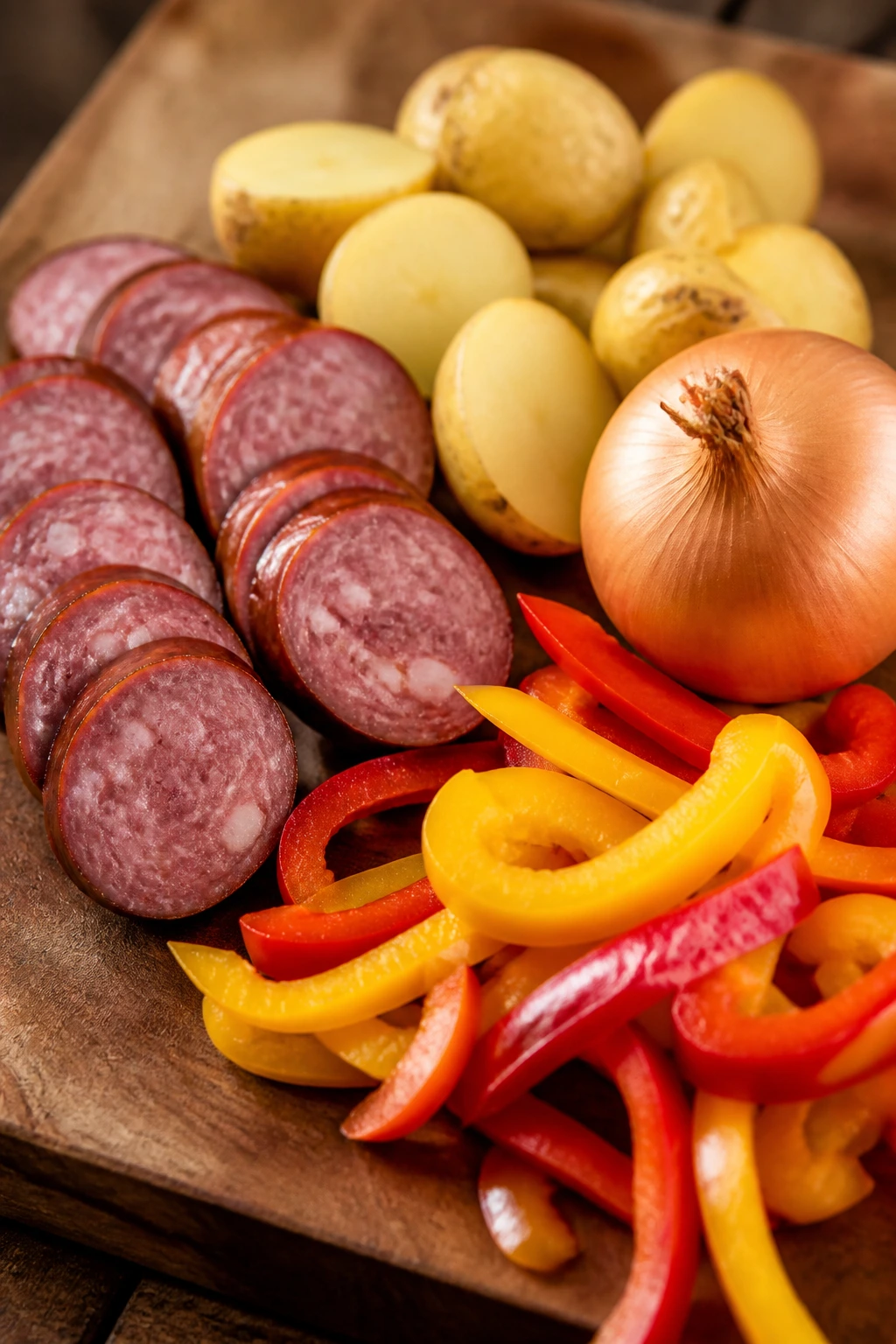
1½ pounds baby Yukon Gold potatoes, halved if small or cut into 1-inch chunks — they stay creamy inside and brown nicely on the cut side.
-
14 ounces smoked sausage, sliced into ½-inch rounds — kielbasa, andouille, or a similar fully cooked sausage all work; choose one you actually like to eat plain.
-
2 tablespoons neutral oil, divided — avocado, canola, or grapeseed oil gives you browning without adding an odd flavor.
-
1 tablespoon unsalted butter — a small amount helps the potatoes pick up color and gives the pan a rounder taste.
-
1 medium yellow onion, thinly sliced — this softens into sweet strands and catches the browned bits left behind by the sausage.
-
1 red bell pepper, sliced — for sweetness and a little freshness against the richer sausage.
-
1 yellow bell pepper, sliced — optional, but I like the extra color and mild pepper flavor.
-
3 cloves garlic, minced — add it late so it smells sweet instead of sharp.
-
1 teaspoon kosher salt, divided, plus more to taste — the sausage already brings salt, so don’t dump it all in at the start.
-
½ teaspoon black pepper — enough to sharpen the potatoes without taking over.
-
1 teaspoon smoked paprika — this deepens the sausage flavor and makes the pan smell like it cooked longer than it did.
-
½ teaspoon dried thyme — a little herb note keeps the skillet from tasting flat.
-
¼ teaspoon crushed red pepper flakes, optional — use if you want a warm edge without turning the dish hot.
-
2 tablespoons low-sodium chicken broth or water — just enough to loosen the browned bits and give the pan a glossy finish.
-
1 tablespoon Dijon mustard — this is the sharp, grown-up note that keeps the dish from feeling one-dimensional.
-
1 teaspoon apple cider vinegar — a small splash, but it makes a big difference at the end.
-
2 tablespoons chopped fresh parsley — for a fresh finish and a bit of brightness on top.
How to Choose a Smoked Sausage That Browns Cleanly
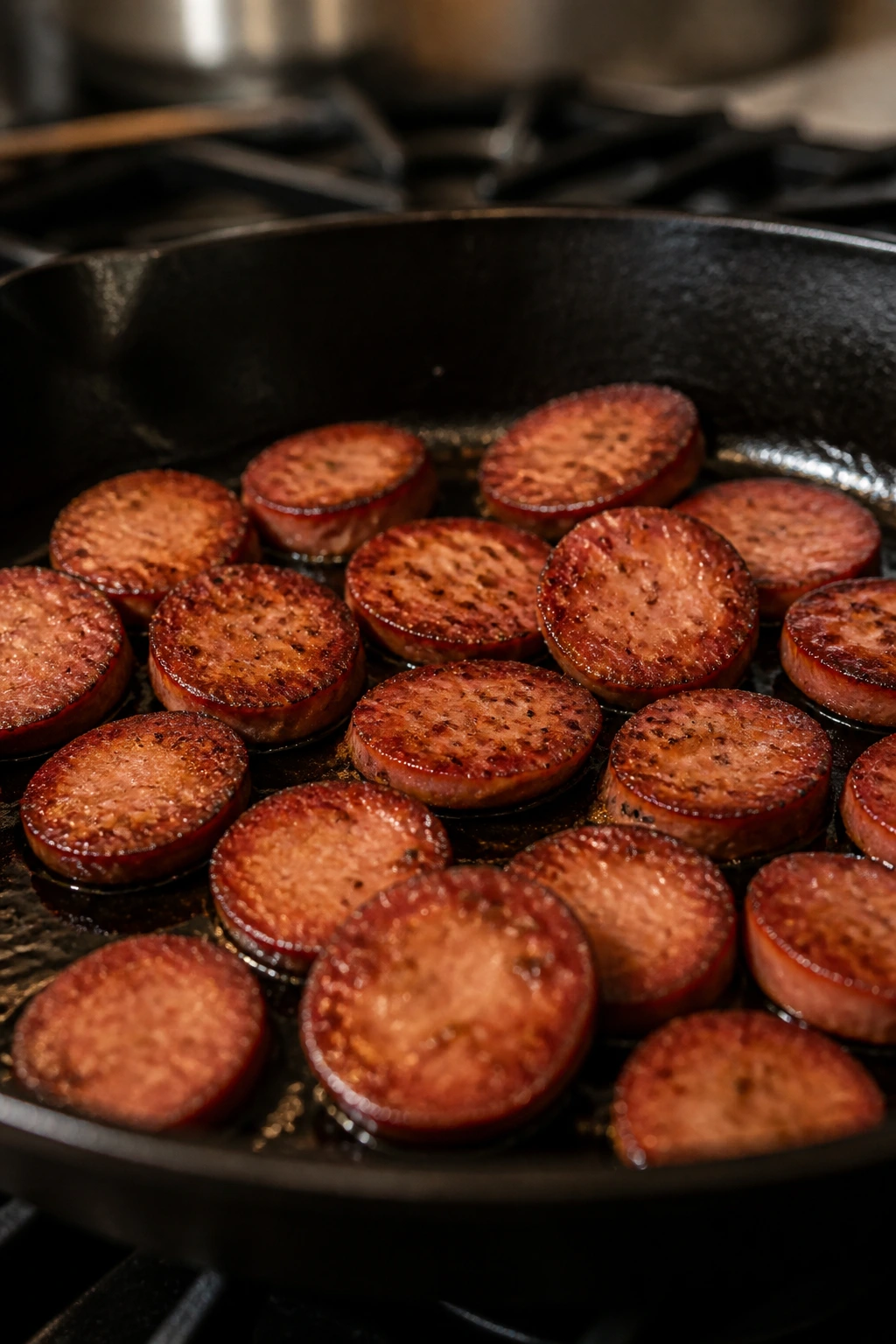
What to use: Reach for a fully cooked smoked sausage that has a firm casing and a visible, even grind. A 14-ounce ring is the sweet spot for this skillet, though links work too if that’s what your store carries.
Preparation: Slice it into ½-inch rounds, or cut on a slight bias if you want a little more browned surface area. That angle gives you more edge per slice, which means more crust and less plain cut face.
Substitutions: Kielbasa is the mildest, and it brings a clean pork flavor. Andouille is spicier and a little leaner in feel. Beef smoked sausage gives a firmer bite, while turkey smoked sausage works if you want a lighter pan, though it browns a little less richly.
Tips: Read the package. If it says fully cooked, you’re browning for flavor, not cooking to safety from raw. If it says uncooked or heat thoroughly to 165°F, follow that label and cook it longer. Also, very lean sausage can dry out faster, so keep the heat at medium-high rather than blasting it on high.
One thing people miss: a sausage with a slick, almost damp surface won’t sear as well as one that feels dry and firm. That’s not a dealbreaker, just a sign that your first two minutes in the pan matter even more.
The Four Ingredients That Make the Skillet Work
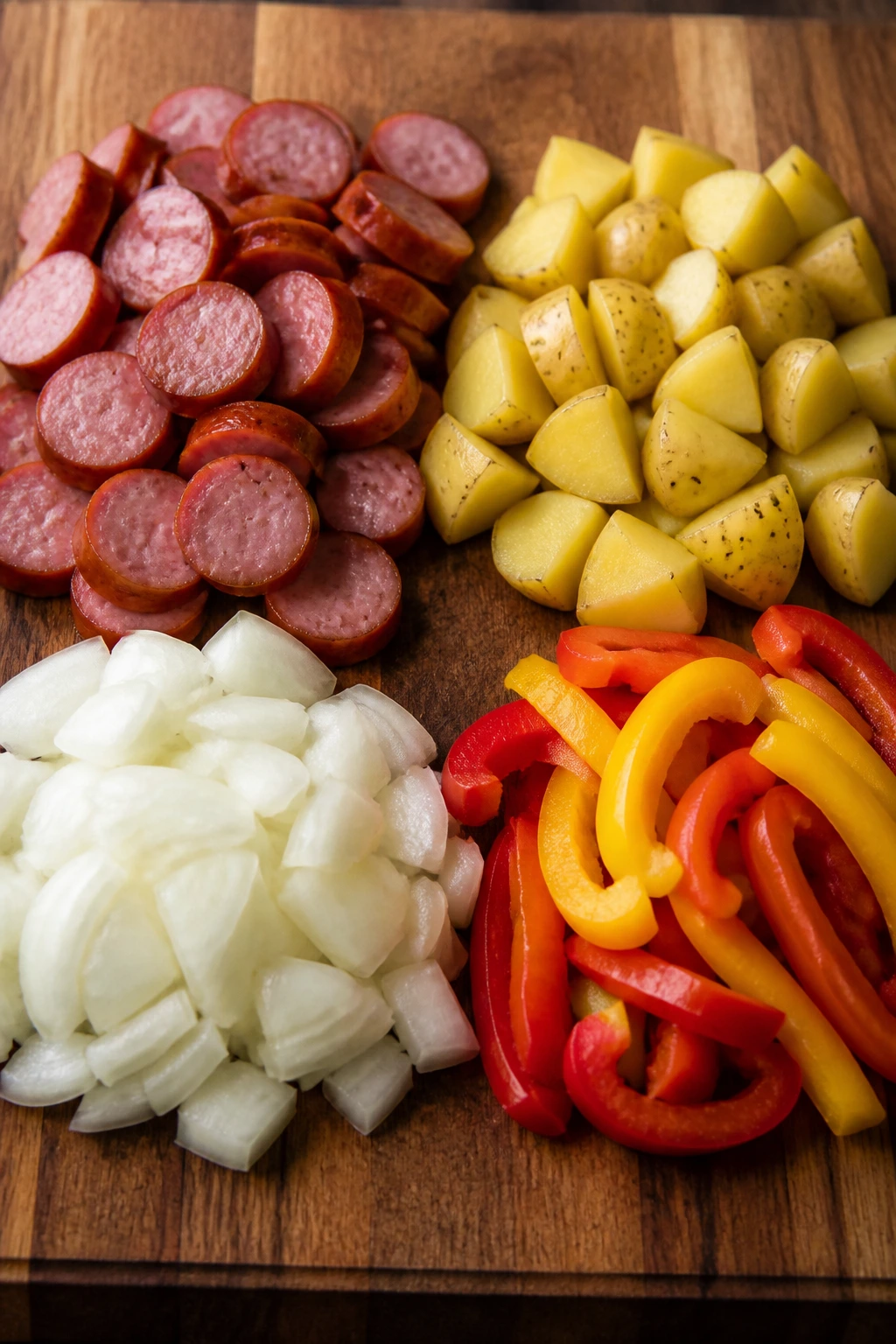
Smoked Sausage
What to use: 14 ounces of fully cooked smoked sausage, sliced into ½-inch rounds.
Preparation: Let it sit out for 10 to 15 minutes while you prep the other ingredients. That takes the chill off and helps it brown instead of stalling in the skillet.
Substitutions: Kielbasa, andouille, turkey smoked sausage, or beef smoked sausage all fit here. Pick based on how spicy and rich you want the final pan.
Tips: If your sausage is very fatty, blot the slices once with a paper towel before they hit the skillet. You’ll get a cleaner sear and less splatter.
Baby Yukon Gold Potatoes
What to use: 1½ pounds baby Yukon Gold potatoes, halved or cut into 1-inch chunks if they’re larger.
Preparation: Parboil them first so the inside turns tender before the outside has a chance to burn. After draining, spread them out so steam can escape; dry potatoes crisp, wet potatoes sulk.
Substitutions: Red potatoes hold shape well. Fingerlings give you pretty little browned skins. Leftover roasted potatoes are the fastest shortcut if you already have them in the fridge.
Tips: Cut the pieces close to the same size. The difference between a browned potato and a half-raw one is often just a sloppy cut.
Onion and Peppers
What to use: 1 medium yellow onion, 1 red bell pepper, and 1 yellow bell pepper.
Preparation: Slice the onion thin so it softens before the potatoes overcook. Cut the peppers into strips that are broad enough to keep some shape after 5 or 6 minutes in the pan.
Substitutions: Green bell pepper is sharper and a little more old-school in flavor. A handful of shredded cabbage also works if you want a softer, more savory skillet.
Tips: Don’t add the vegetables too early. They need a little time to pick up color, but not so much that they collapse into mush.
Seasonings and Finishing Ingredients
What to use: Kosher salt, black pepper, smoked paprika, thyme, Dijon mustard, broth or water, vinegar, and parsley.
Preparation: Keep the garlic separate from the onions so it can go in later. Mix the spices in a small bowl before you start cooking if you like to move quickly.
Substitutions: Whole-grain mustard can stand in for Dijon, and lemon juice can replace the vinegar if that’s what you have. No parsley? Chives or sliced scallions give a similar fresh finish.
Tips: Add salt in stages. The sausage already carries seasoning, and too much salt too early can make the pan taste blunt instead of layered.
The Pan and Heat Setup That Makes Browning Happen
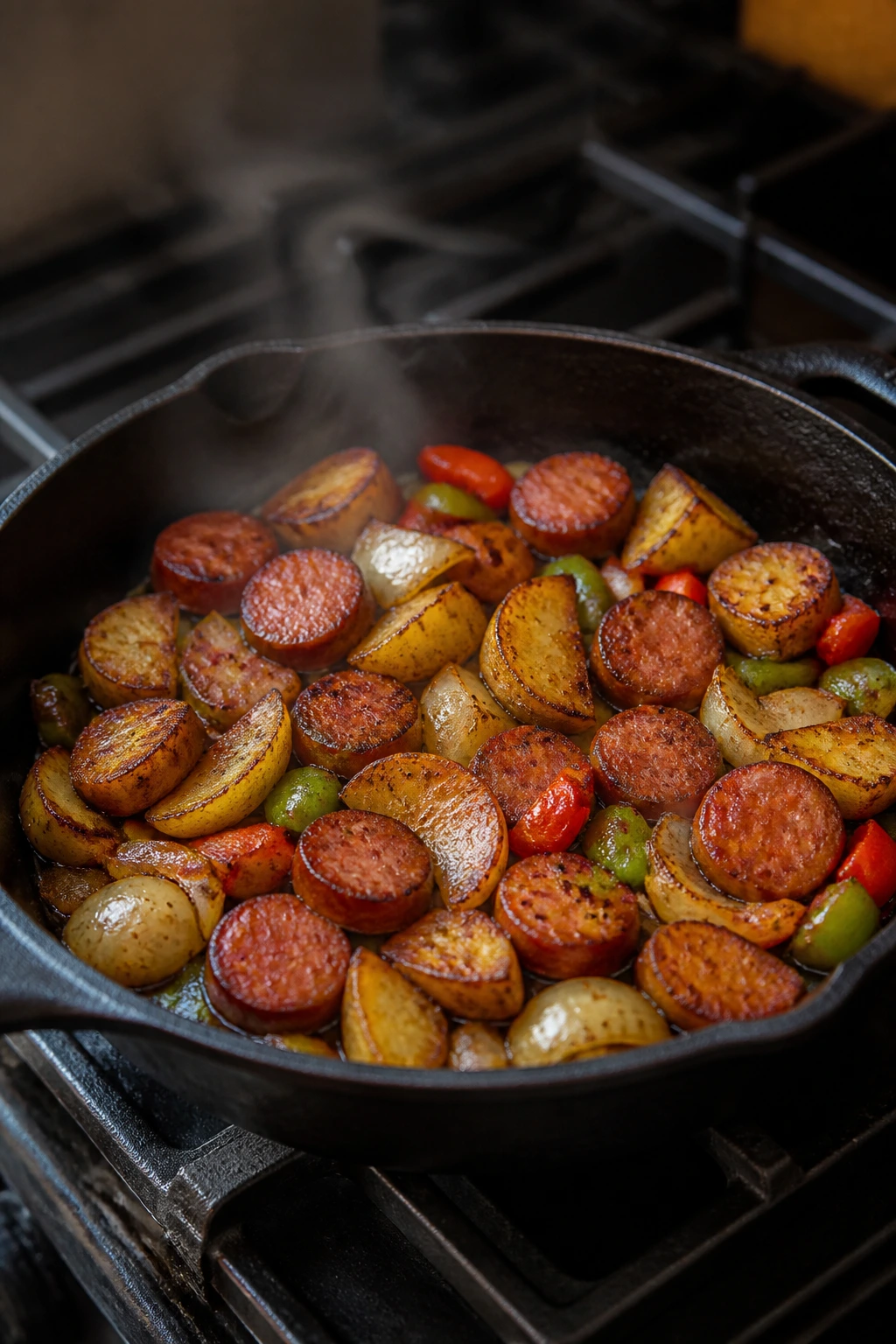
Cast iron helps. A lot. A 12-inch cast-iron skillet gives you the kind of even heat that turns potato edges bronze instead of pale. Heavy stainless steel works too. Thin nonstick can manage the job, but it won’t give you the same deep browning.
The pan needs room. That’s the whole secret. When sausage and potatoes sit in a crowded layer, they steam. When they’re spread out with a little space between pieces, the moisture leaves the food instead of trapping under it. That’s when the crust forms.
Use medium-high heat, not a panic level of heat. The goal is steady browning, not scorched oil and raw centers. If the butter foams and then settles, you’re in the right zone. If the oil starts smoking hard before the potatoes go in, pull the pan off the burner for a few seconds.
A little fat matters. The oil gives you a higher smoke point, while the butter brings a richer browned flavor to the potatoes. That combination is better than using only butter, which can burn before the vegetables get the color you want.
Step-by-Step: Cooking the Skillet Without Losing the Crust
Prep the Potatoes and Slice the Sausage
-
Place the potatoes in a saucepan and cover them with cold salted water by 1 inch. Bring the pot to a boil over high heat, then lower to a steady simmer and cook for 6 to 7 minutes, until the outside of the potatoes is just tender but the center still offers a little resistance.
-
Drain the potatoes well and let them steam dry. Spread them on a clean kitchen towel or a sheet pan for 5 minutes. Do not skip this step — wet potatoes spit oil and refuse to brown cleanly.
-
Slice the sausage, onion, peppers, and garlic while the potatoes dry. Keep the garlic separate from the onion and peppers so you can add it later and avoid bitter bits.
Build the Crispy Base
-
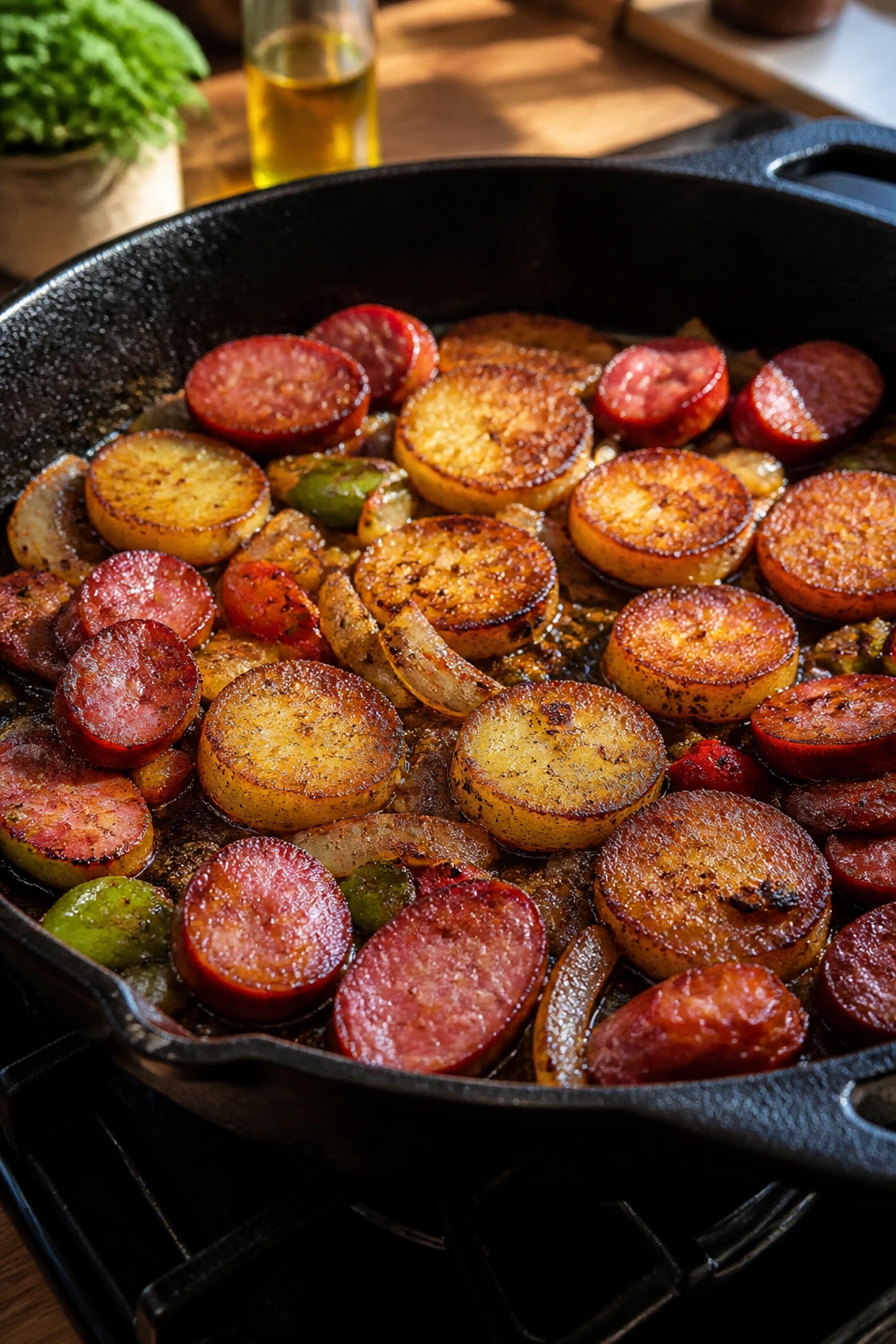
Heat a 12-inch cast-iron or heavy stainless skillet over medium-high heat. Add 1 tablespoon of the oil and the butter. When the butter foams and the foam starts to settle, add the potatoes in a single layer, cut side down where possible.
-
Cook the potatoes for 10 to 12 minutes, turning every 2 to 3 minutes. You want deep golden patches and edges that feel crisp when nudged with a spatula. If the skillet feels crowded, brown the potatoes in two batches instead of forcing them.
-
Push the potatoes toward the outer edge of the pan and add the sausage rounds in the center. Drizzle in the remaining tablespoon of oil if the pan looks dry. Cook the sausage for 3 to 4 minutes, turning once, until both sides are browned and the edges curl slightly.
Add the Vegetables and Finish
-
Add the onion, bell peppers, salt, black pepper, smoked paprika, thyme, and red pepper flakes if using. Cook for 5 to 6 minutes, stirring now and then, until the onion softens and the peppers lose their raw snap but still hold some shape.
-
Stir in the garlic and cook for 30 seconds. Pour in the broth or water and scrape up the browned bits from the bottom of the pan. Stir in the Dijon mustard and apple cider vinegar, return everything to the center of the skillet, and toss for 1 minute until the whole pan looks glossy. Taste and adjust salt if needed, then finish with parsley and serve right away.
How to Serve It So the Pan Still Feels Special
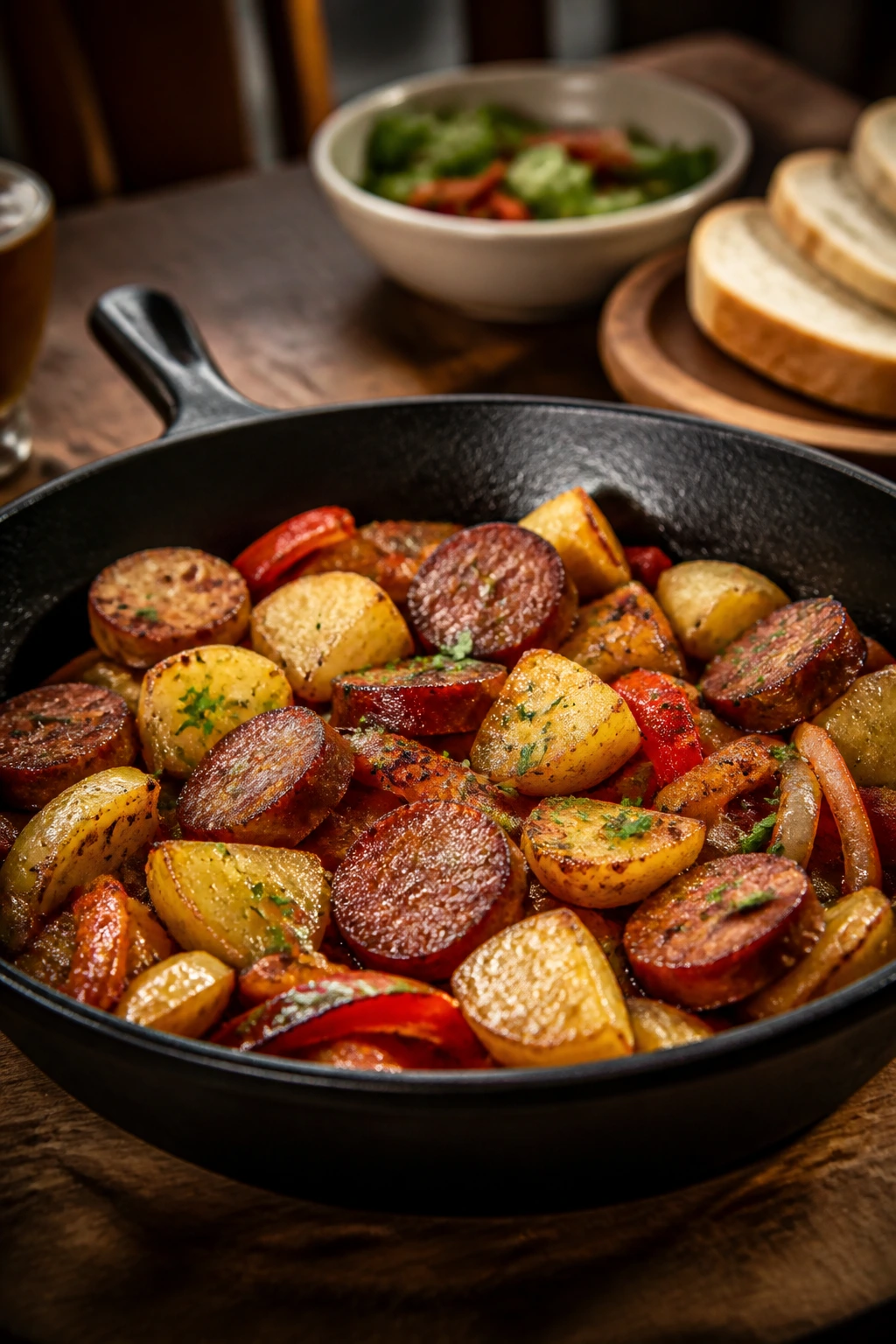
Presentation: Serve it straight from the skillet if you’re bringing it to the table fast. If you want a neater look, spoon the potatoes onto warm plates first, then pile the sausage and vegetables on top so the browned edges stay visible. A last scatter of parsley and a few drops of vinegar or hot sauce make the colors pop and keep the plate from looking brown-on-brown.
Accompaniments: A green salad with mustard vinaigrette is the cleanest contrast. Sourdough toast, rye bread, or a soft biscuit can mop up the pan juices. If you want to lean breakfast, top the skillet with fried eggs. If you want to lean dinner, serve it with sauerkraut, braised greens, or a sliced cucumber salad.
Portions: Four people can eat this as a main dish with a salad or bread. Stretch it to six if you add eggs, extra vegetables, or a side of greens. If you double the recipe, use two skillets or brown the potatoes in batches; cramming twice as much food into one pan is how you lose the crust.
Beverage Pairing: A dry lager or hard cider plays nicely with the sausage and mustard. Sparkling water with lemon works if you want something lighter. For a breakfast version, strong coffee is the obvious move, but a tart tomato juice also fits the salt and fat better than sweet drinks do.
Practical Tips for Better Browning and Deeper Flavor
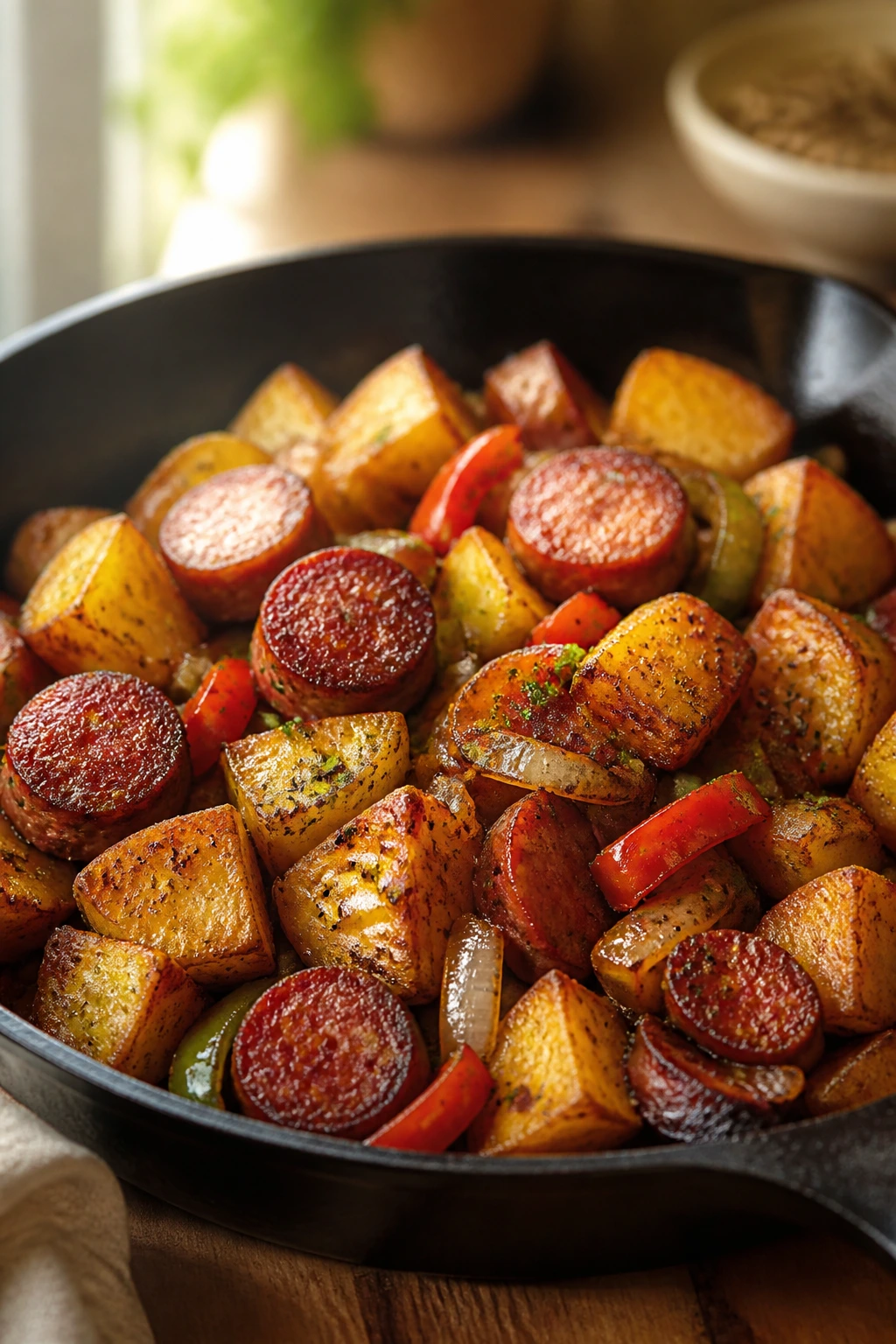
Flavor Enhancement: A tiny spoonful of whole-grain mustard at the end gives the skillet a grainy bite that Dijon alone doesn’t have. If you like a little heat, a few dashes of hot sauce at the table are better than burying the pan in chili flakes.
Time-Saver: Leftover roasted potatoes are a gift here. Skip the parboil and let them brown in the skillet for 6 to 8 minutes before adding the sausage. They’ll crisp faster because they’ve already done the softening work in another meal.
Texture Move: Give the sausage slices at least 90 seconds of undisturbed contact with the pan before you flip them. That first side needs a chance to set. If you keep moving them, they’ll go tan instead of crisp.
Cost-Saver: You can make this with one bell pepper if that’s what’s in the fridge. Frozen pepper strips are fine too, but thaw and pat them dry first or they’ll water down the skillet. I would rather use fewer vegetables done well than a watery pile of everything.
Balance Tip: If your sausage is heavily seasoned, use the vinegar and parsley without hesitation. That little hit of acid keeps the fat from tasting flat. Skip the vinegar only if you enjoy a deeper, rounder skillet with less snap at the end.
The Mistakes That Turn a Crispy Skillet Soft
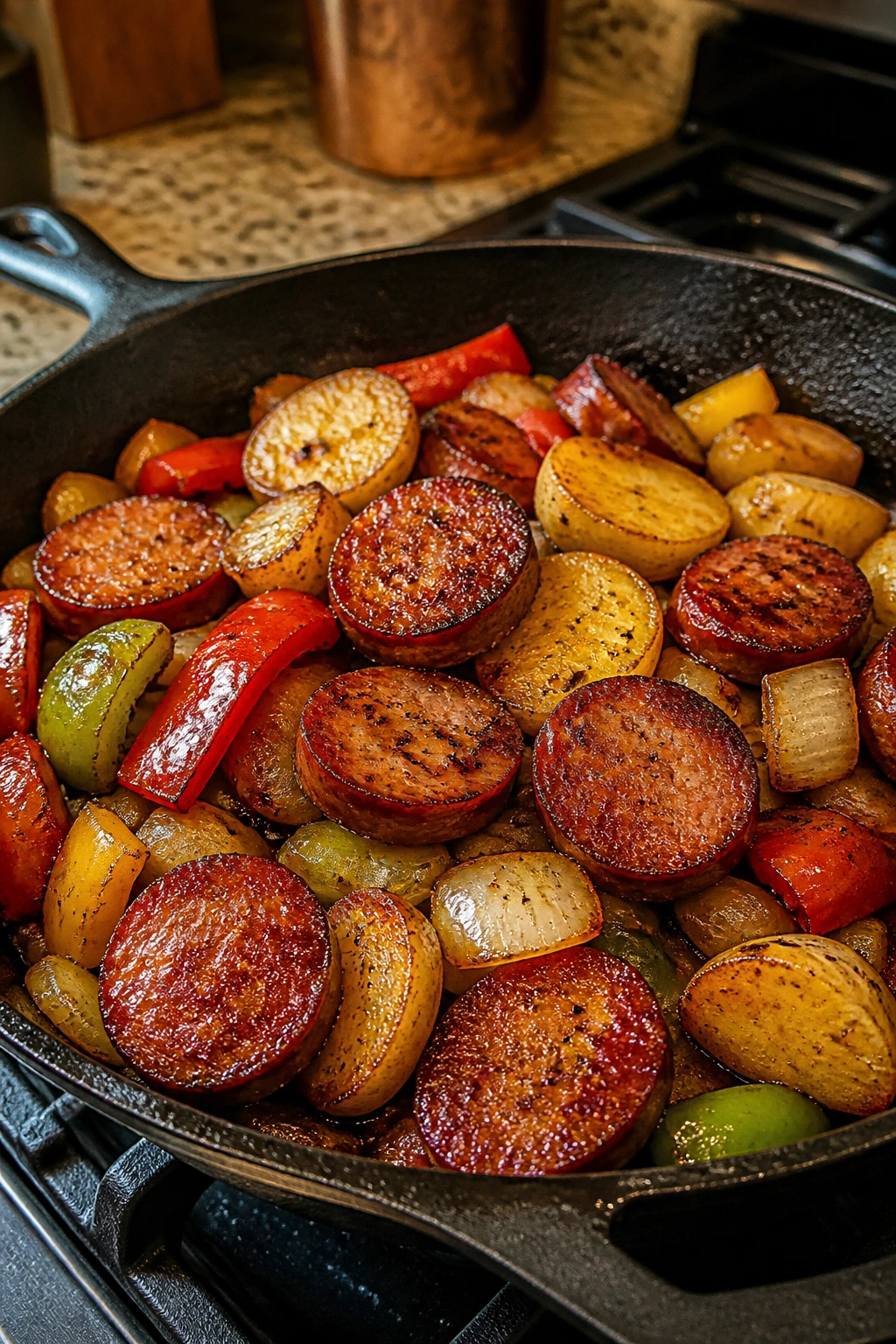
Crowding the pan. This is the big one. If the potatoes are stacked on top of each other, they steam before they brown, and the sausage ends up pale and rubbery. The fix is simple: use a 12-inch skillet, or brown the potatoes in two batches and combine them later.
Adding the garlic too early. Garlic burns fast, and burned garlic tastes bitter in a way that can’t be hidden by sausage fat. Let the onion and peppers do their thing first, then add the garlic for the last 30 seconds.
Skipping the potato dry-off. Wet potatoes slide around in the pan and sputter. Worse, they refuse to form a crust. Drain them well and let steam escape before they meet the fat.
Using high heat and then walking away. Smoked sausage browns quickly. Potatoes take longer. If you blast the burner and leave, you’ll get scorched edges outside and chalky centers inside. Medium-high heat with a little attention is the better path.
Salting too hard at the start. Sausage is already salted, and the broth plus mustard bring more seasoning. Add a modest amount early, then taste at the end. If the pan tastes flat, you can fix it. If it tastes oversalted, you’re stuck with it.
Stirring every minute. Browning needs contact. If you keep tossing the ingredients around, you interrupt the crust before it forms. Let pieces sit, then turn them when they’ve earned it.
Variations and Adaptations That Still Keep the Crispy Part
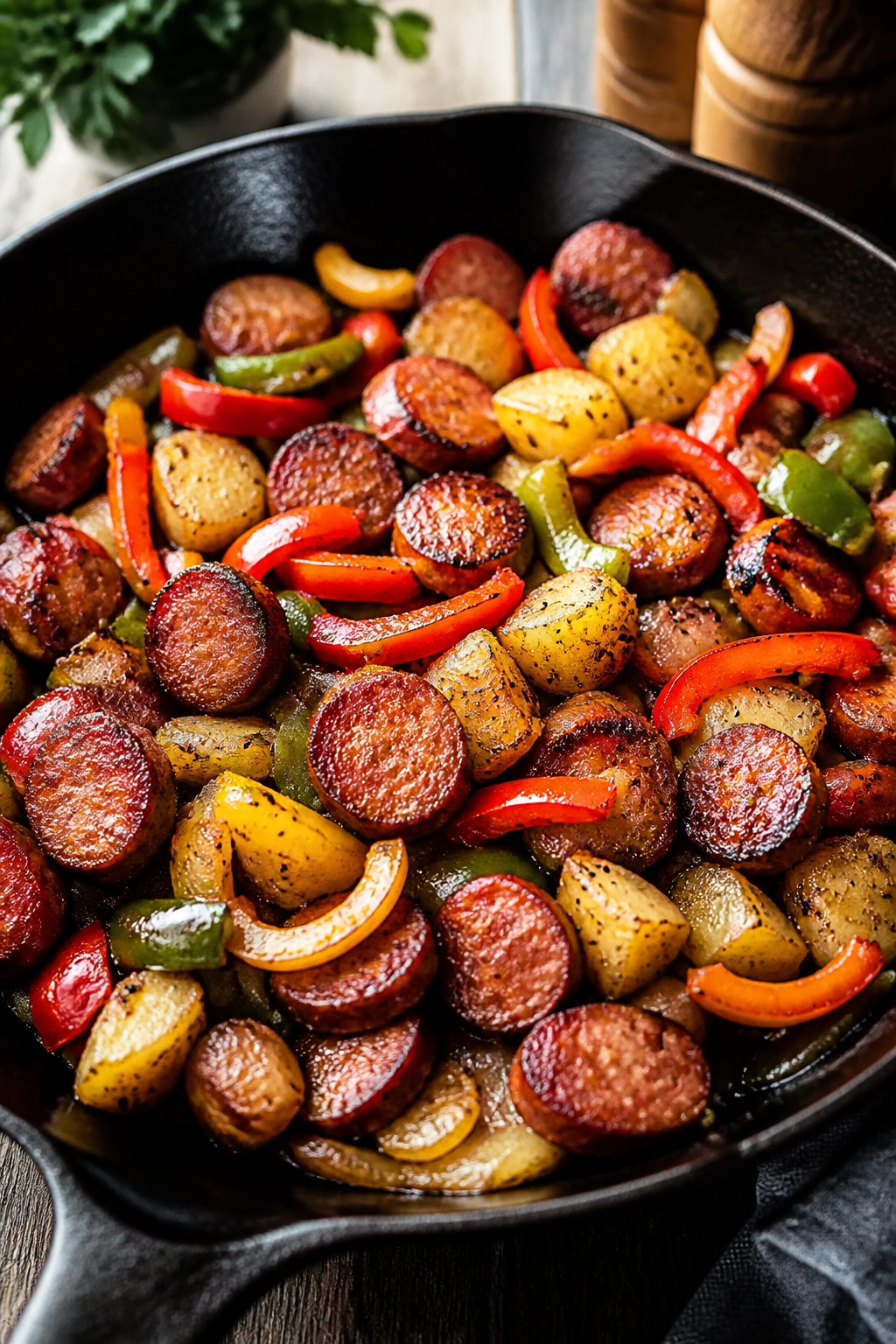
Cajun Ringlets: Swap the thyme for 1 to 1½ teaspoons of Cajun seasoning and use andouille instead of kielbasa. Add a little extra bell pepper and a pinch of celery seed if you like that classic smoky Louisiana profile. The skillet turns spicier, saltier, and a little louder.
Breakfast Hash Mode: Leave the recipe exactly as written, then make 4 little wells in the finished pan and crack in 4 eggs. Cover the skillet for 3 to 5 minutes until the whites set but the yolks stay soft. This version turns into brunch without much extra work.
Cabbage and Mustard Skillet: Replace the bell peppers with 4 cups shredded green cabbage. Let it brown in the sausage fat until the edges turn almost sweet. A little extra Dijon at the end makes this feel sharp and old-fashioned in the best way.
Sheet-Pan Shortcut: If you want less stovetop attention, roast the parboiled potatoes and sliced sausage on a sheet pan at 425°F for 15 minutes, then add the onion and peppers for the final 10 minutes. It won’t have quite the same skillet crust, but it does save you from standing over the stove.
Creamy Finish Version: Stir in 2 tablespoons of sour cream or crème fraîche after the pan comes off the heat. Do not boil it. That cooler finish softens the edges of the Dijon and makes the skillet feel richer, though you will lose a little of the clean, sharp finish that I like best.
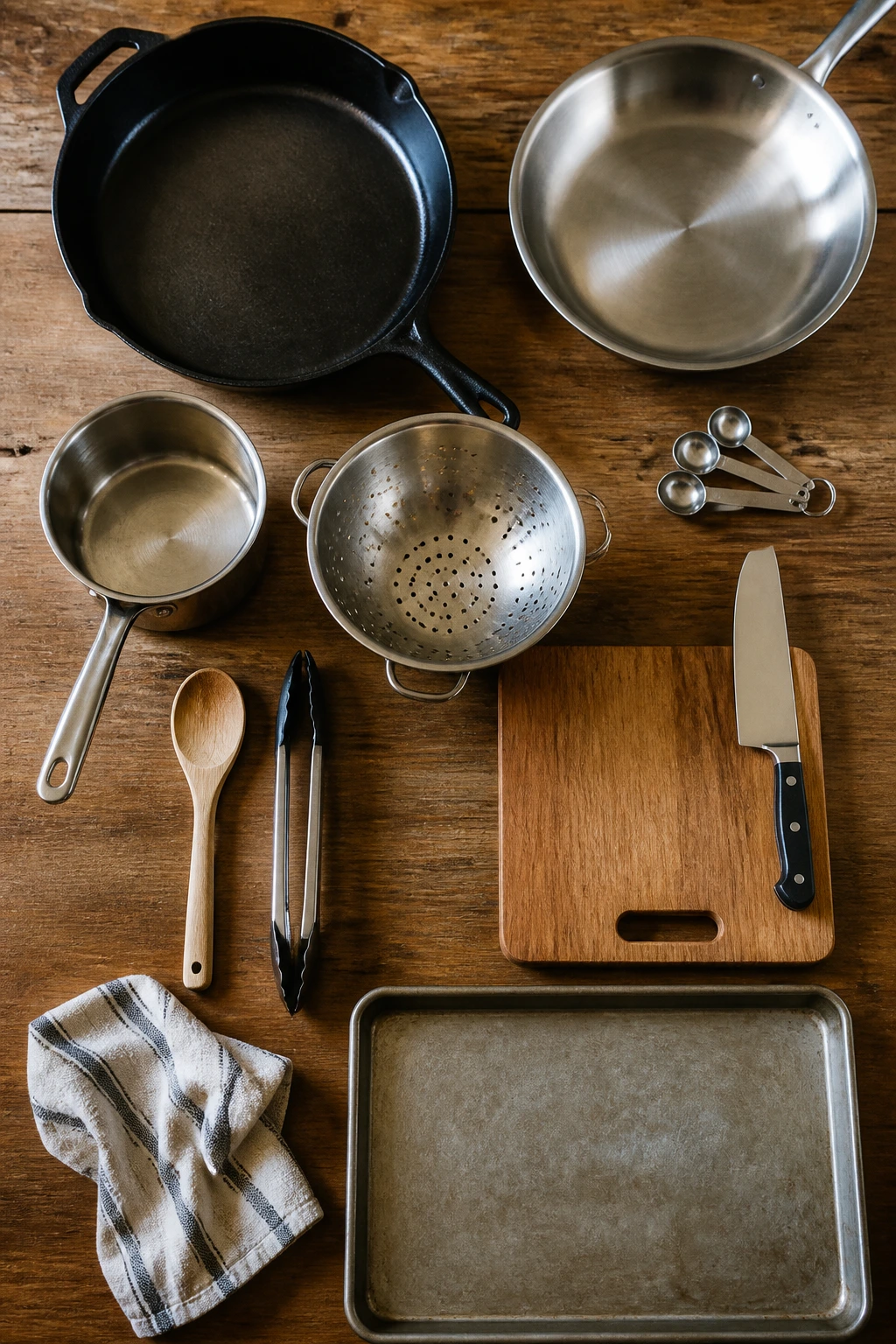
The Tools You’ll Actually Use
-
12-inch cast-iron skillet or heavy stainless steel skillet — the wider surface gives you room to brown instead of steam.
-
Medium saucepan — for parboiling the potatoes before they hit the skillet.
-
Colander — to drain the potatoes fast and shake off excess water.
-
Sharp chef’s knife — sliced sausage and even potato chunks brown more predictably.
-
Cutting board — use one with enough space to keep the onion, pepper, and garlic separate.
-
Wooden spoon or sturdy spatula — better for scraping browned bits than a flimsy spoon.
-
Tongs — useful for turning sausage slices and moving potatoes without smashing them.
-
Kitchen towel or sheet pan — for drying the potatoes after boiling, which matters more than people think.
-
Measuring spoons — the paprika, mustard, vinegar, and broth are small amounts that still shape the final flavor.
Storage, Reheating, and Make-Ahead Notes
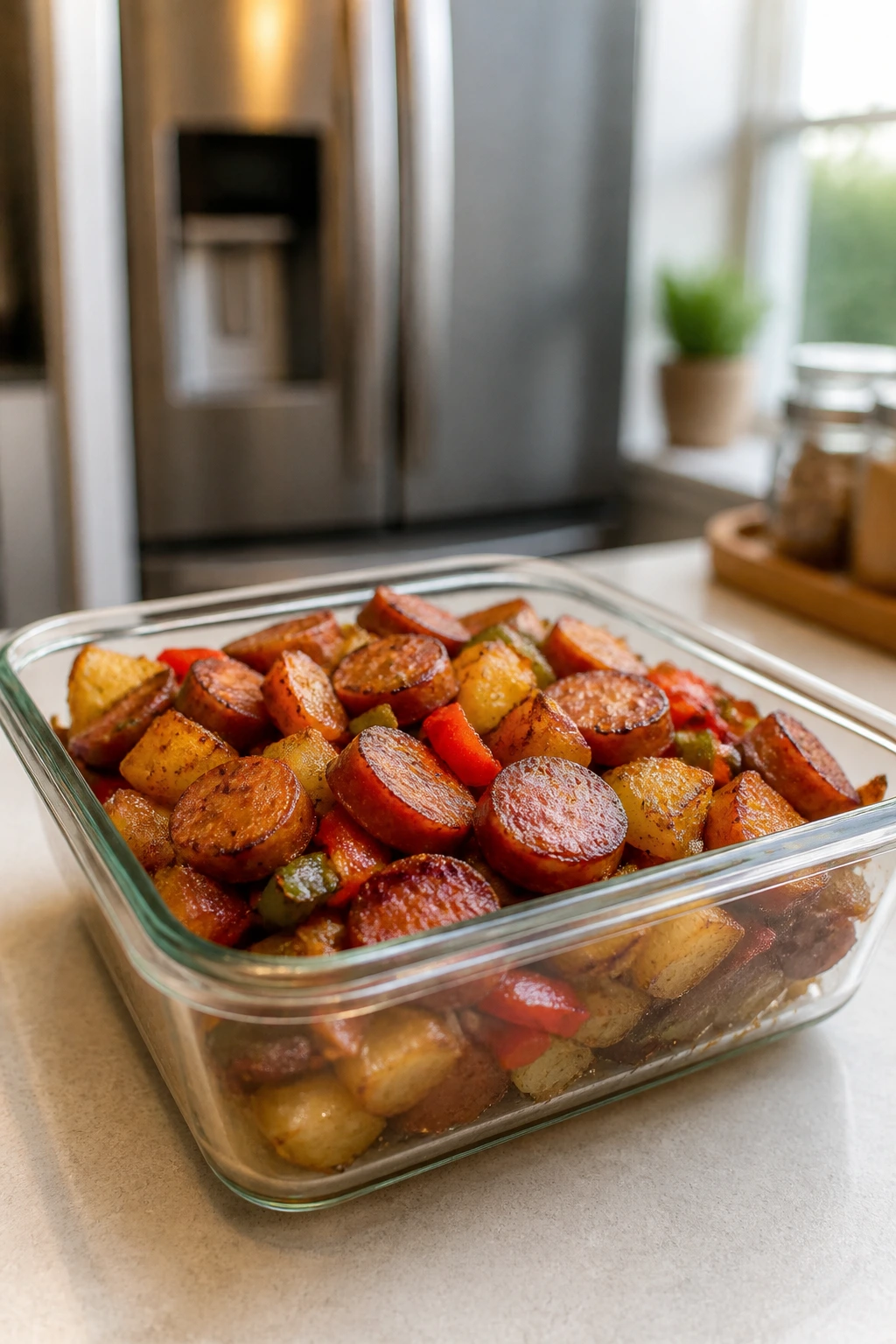
Let the skillet cool for no more than 2 hours before you pack it away. After that, move the leftovers into an airtight container and refrigerate them for 3 to 4 days. The sausage will hold up fine, and the potatoes will still taste like themselves, though the crisp edges soften in the fridge.
Freezing is possible, but I wouldn’t call it the best version of the dish. The sausage freezes well for up to 2 months, yet the potatoes lose some of their clean texture once thawed. If you do freeze it, cool the food first, pack it flat in freezer bags or shallow containers, and thaw it in the refrigerator overnight before reheating.
The best reheating method is a skillet. Add a teaspoon or two of oil to a hot pan and cook the leftovers over medium heat for 6 to 8 minutes, stirring only once or twice. The sausage edges come back to life, and the potatoes regain some of their firmness. An oven works too: spread the leftovers on a sheet pan and heat at 400°F for 10 to 15 minutes, stirring once halfway through. The microwave is the last resort. It warms the food, but it turns the potatoes soft fast, so use 45-second bursts and finish in a hot skillet if you care about texture.
Make-ahead prep works well here. You can parboil the potatoes up to 24 hours ahead, cool them completely, and refrigerate them uncovered for a few hours before sealing them up. Slice the sausage and vegetables a day ahead too. Keep the garlic separate. When dinner time comes, the actual cooking moves quickly, which is the nice part of this kind of skillet meal.
Questions People Ask Before They Heat the Pan

Can I use fully cooked smoked sausage straight from the package?
Yes. That’s the whole point of this recipe. You’re not cooking the sausage from raw; you’re browning it so the edges crisp and the fat seasons the pan.
Do I really need to parboil the potatoes?
If you want consistent results, yes. Raw potatoes can work, but they take longer and make the sausage sit too long in the pan. Parboiling gives you a tender center and makes the browning part much easier to control.
What if I only have a nonstick skillet?
Use it, but keep the heat at medium rather than high and don’t expect the same deep crust. Nonstick can still make a good dinner here, just with a softer bottom on the potatoes and sausage.
Can I make this without potatoes?
You can. Cabbage, zucchini, or mushrooms all work if you want a lighter skillet. Just know that you’re changing the texture more than the flavor; potatoes are what make this feel like a full meal.
How do I keep the sausage from getting tough?
Don’t cook it forever. It needs enough time to brown, not enough time to dry out. If it looks dark and the edges have curled slightly, pull it into the next step instead of leaving it behind.
Can I make it spicier?
Use andouille, keep the red pepper flakes, and add a few dashes of hot sauce at the end. That gives you heat without burning the garlic or making the whole skillet taste harsh.
What’s the best way to re-crisp leftovers?
A hot skillet with a teaspoon of oil is the best fix. Spread the food out, let it sit for a minute before stirring, and the potatoes will pick up some color again instead of steaming into softness.
A Skillet Worth Keeping Warm
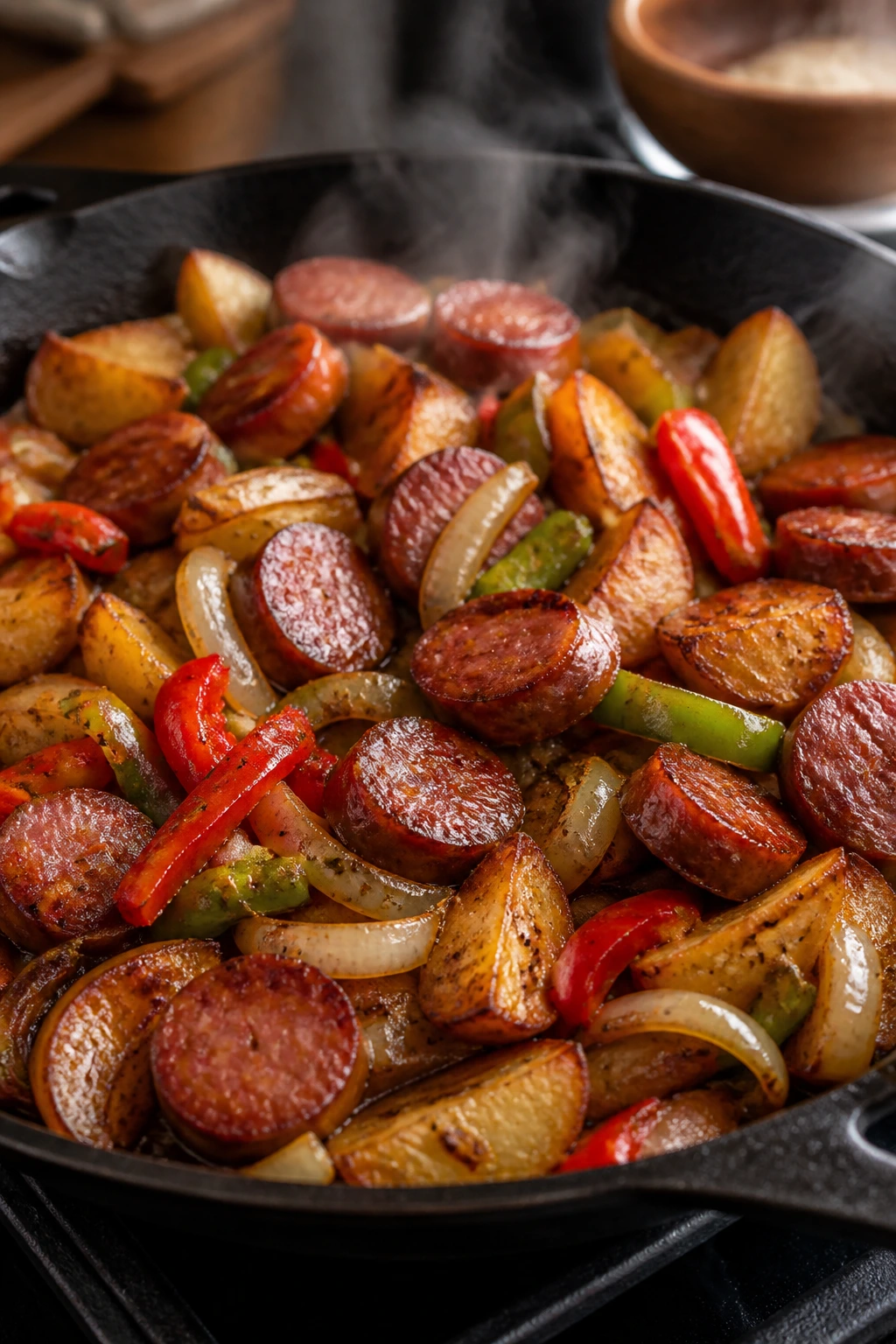
This is the sort of recipe that earns a permanent spot because it solves a real problem: you’ve got smoked sausage, and you want it to taste like dinner, not an afterthought. Crisp edges, browned potatoes, sweet onion, and a little mustard-vinegar finish do more for the ingredient than a long list of extras ever could.
The nicest thing about this skillet is that it leaves room for your own habits. Maybe you like more pepper. Maybe you want it with eggs. Maybe you swap in cabbage when the crisper drawer is bare. Fine. The method still holds, and that’s the part worth remembering.
Crispy Smoked Sausage Skillet — Recipe Card
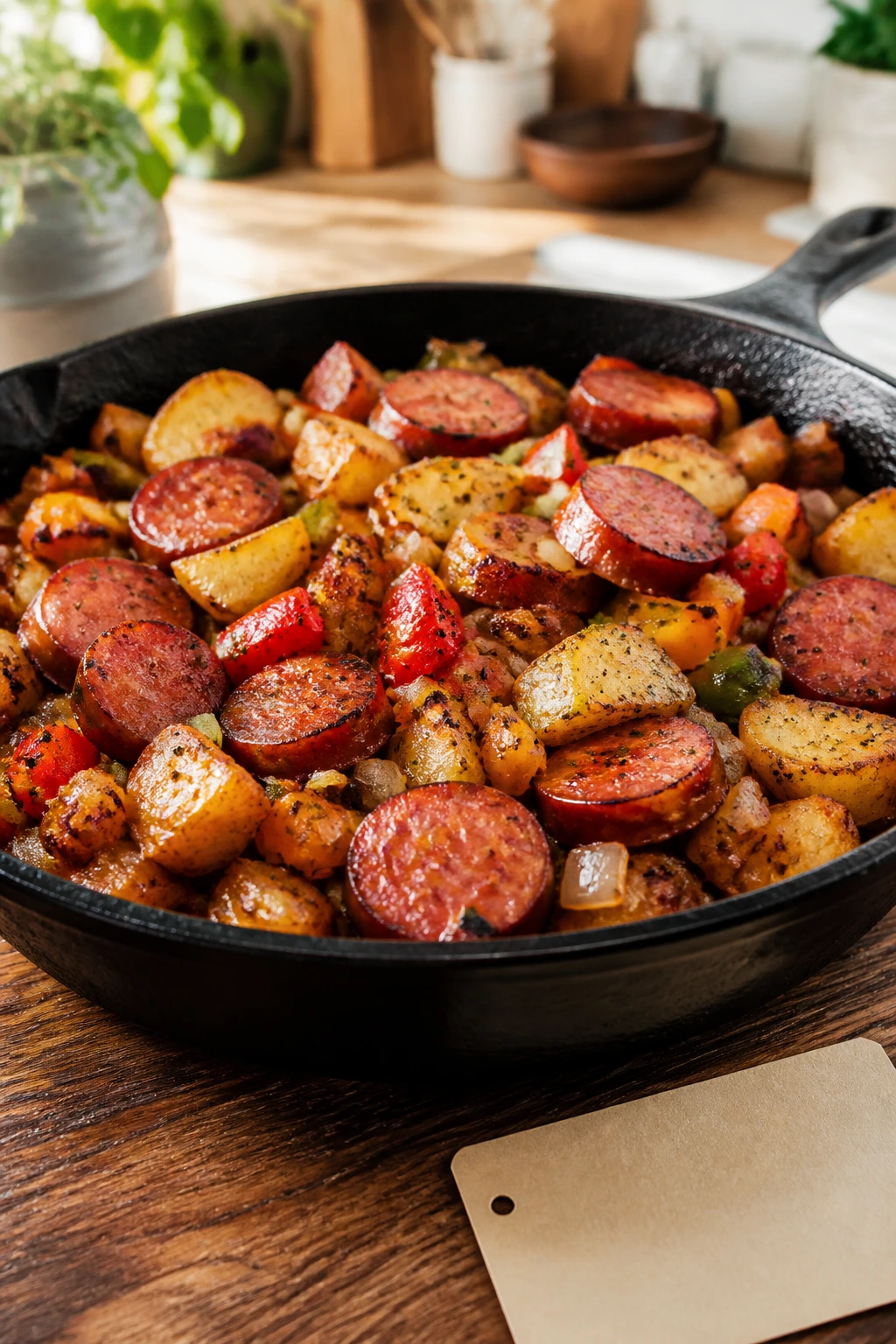
Recipe Name: Crispy Smoked Sausage Skillet
Description: A one-skillet dinner with browned smoked sausage, crisp Yukon Gold potatoes, sweet peppers, and onions finished with Dijon mustard and apple cider vinegar. The edges stay crisp, the center stays tender, and the pan tastes like it cooked longer than it did.
Prep Time: 20 minutes
Cook Time: 30 minutes
Total Time: 50 minutes
Course: Main Course
Cuisine: American
Servings: 4 servings
Calories: About 430 kcal per serving
Ingredients
For the Skillet:
- 1½ pounds baby Yukon Gold potatoes, halved or cut into 1-inch chunks
- 14 ounces smoked sausage, sliced into ½-inch rounds
- 2 tablespoons neutral oil, divided
- 1 tablespoon unsalted butter
- 1 medium yellow onion, thinly sliced
- 1 red bell pepper, sliced
- 1 yellow bell pepper, sliced
- 3 cloves garlic, minced
- 1 teaspoon kosher salt, divided, plus more to taste
- ½ teaspoon black pepper
- 1 teaspoon smoked paprika
- ½ teaspoon dried thyme
- ¼ teaspoon crushed red pepper flakes, optional
- 2 tablespoons low-sodium chicken broth or water
- 1 tablespoon Dijon mustard
- 1 teaspoon apple cider vinegar
- 2 tablespoons chopped fresh parsley
Instructions
-
Place the potatoes in a saucepan, cover with cold salted water by 1 inch, bring to a boil, and simmer for 6 to 7 minutes until just barely tender.
-
Drain well and let the potatoes steam dry for 5 minutes.
-
Heat a 12-inch skillet over medium-high heat with 1 tablespoon oil and the butter.
-
Add the potatoes in a single layer and cook for 10 to 12 minutes, turning every 2 to 3 minutes, until golden and crisp.
-
Add the remaining 1 tablespoon oil and the sausage. Cook for 3 to 4 minutes, turning once, until browned.
-
Add the onion, bell peppers, 1 teaspoon salt, black pepper, smoked paprika, thyme, and red pepper flakes. Cook for 5 to 6 minutes until softened.
-
Stir in the garlic and cook for 30 seconds.
-
Add the broth or water, scrape up browned bits, then stir in the Dijon mustard and apple cider vinegar.
-
Toss everything together for 1 minute, taste, adjust salt if needed, and finish with parsley.
Notes: Let the potatoes dry well after boiling, or they won’t crisp. If your skillet is smaller than 12 inches, brown the potatoes in batches. A splash of hot sauce or a little extra Dijon at the table works well if you want more bite.