



A skillet of sausage, onions, and browned edges has a particular kind of pull on a Sunday evening. The pan hisses. The kitchen smells warm and a little sweet from the onions, a little sharp from garlic, and rich in that way only rendered sausage fat can be. That smell does half the cooking before you even reach for the spoon.
Pan sausage recipes for Sunday suppers work because they don’t ask for ceremony. They ask for a good skillet, a little patience while the meat browns, and enough sense to build flavor in layers instead of dumping everything in at once. The reward is dinner with a proper center of gravity: something spoonable, something crisp at the edges, something that feels like it came from a cook who knows how to let a pan do its job.
And yes, the range is bigger than people think. Sausage can lean Italian, smoky, spicy, herb-heavy, or breakfast-style. It can sit over potatoes, fold into pasta, tumble through beans, or turn cabbage into something you actually look forward to eating. The trick is not treating sausage like filler. Treat it like the backbone, because that’s what it is.
Why These Skillet Sausage Dinners Belong on the Sunday Table
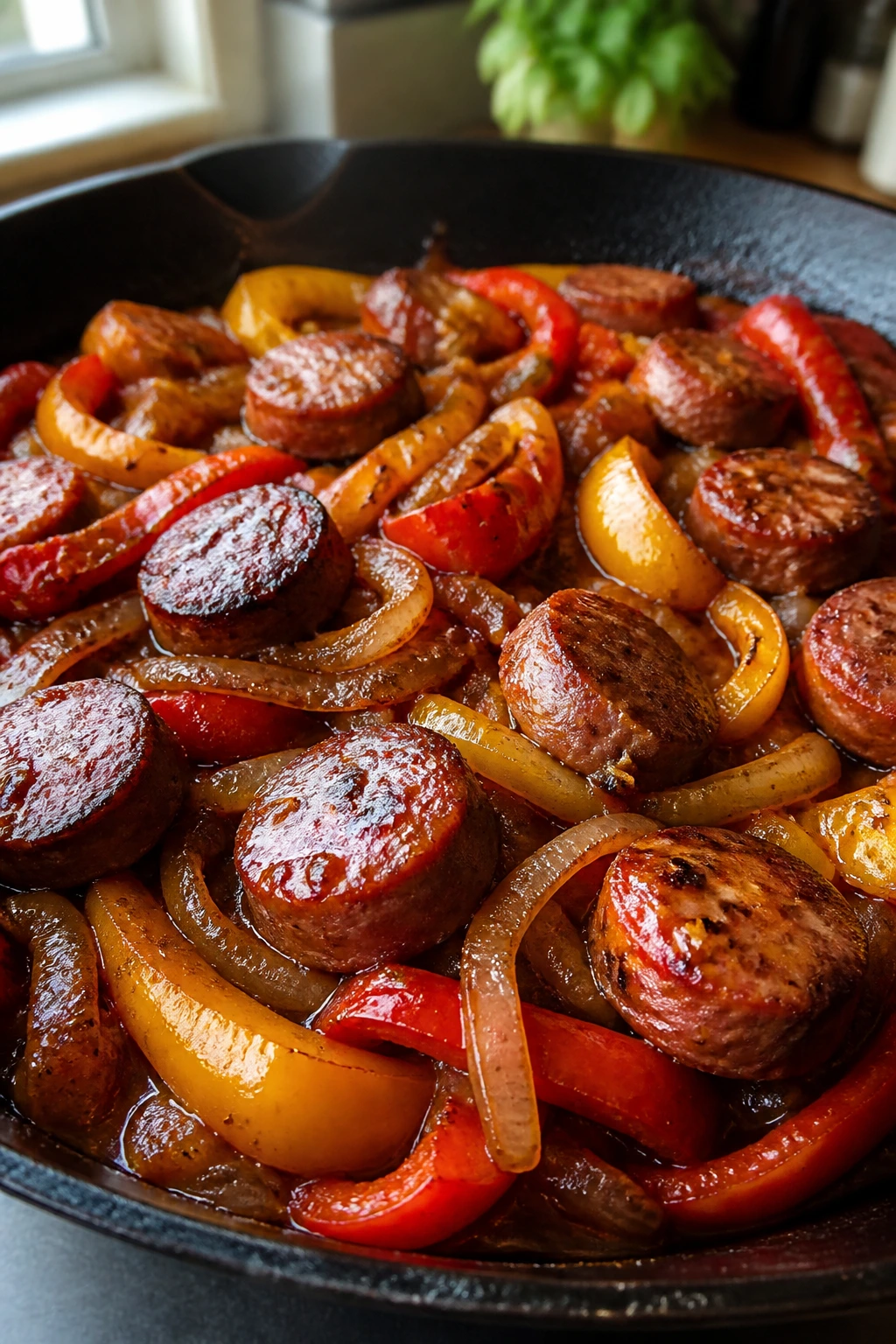
Browning first pays off: Sausage gives you fond, the browned bits on the pan, and that’s where the deep flavor lives; if you rush past that part, the dish tastes flat.
One pan keeps the texture honest: Vegetables soften in the sausage drippings, grains absorb the juices, and nothing turns into a pile of boiled mush if you watch the heat.
Most of these meals stretch well: A pound of sausage plus potatoes, beans, or pasta feeds a table without feeling stingy, which is exactly what a Sunday supper should do.
You can move between moods fast: Some of these are creamy and rich, some are bright with vinegar or lemon, and some have enough spice to wake the table up.
They reheat better than people expect: The saucy versions, especially the bean and tomato pans, hold up in the fridge and taste even more settled the next day.
1. Sausage and Peppers Skillet with Garlic and Red Wine
Pepper strips, soft onions, and browned sausage are a classic for a reason. The skillet starts a little messy and ends glossy, with just enough tomato and wine to turn the juices into a sauce you’ll want to mop up with bread.
Why It Works: The sausage browns first, so the peppers and onions pick up flavor from the fat instead of steaming in plain oil. A small splash of red wine gives the pan a savory edge without making it soupy.
Key Ingredients:
- 1 lb Italian sausage, casings removed
- 2 bell peppers, sliced into strips
- 1 large yellow onion, sliced
- 3 cloves garlic, minced
- 1/2 cup dry red wine
- 1 cup crushed tomatoes
- 1 teaspoon dried oregano
- 1 tablespoon olive oil
Quick Steps:
- Brown the sausage in a large skillet over medium-high heat for 6 to 8 minutes, breaking it into big crumbles.
- Add the oil, peppers, and onion; cook 7 minutes until the onions are soft and the peppers have browned edges.
- Stir in garlic and oregano for 30 seconds, then pour in the wine and scrape the pan clean.
- Add crushed tomatoes, lower the heat, and simmer 8 minutes until the sauce clings to the vegetables.
- Taste, salt if needed, and serve with bread or over rice.
Equipment for This Recipe:
- 12-inch skillet
- Wooden spoon
- Sharp knife and cutting board
How to Serve This Dish: Spoon it into shallow bowls with crusty Italian bread, or pile it over buttered noodles if you want something more filling. A shower of parsley at the end keeps the pan from looking heavy.
Pro Tips for This Recipe:
- Use sweet peppers for a softer, rounder sauce, or mix in one hot pepper if you want more bite.
- Don’t skip the wine scrape; the browned bits are the point.
- If the skillet looks dry after the tomatoes go in, add 2 tablespoons water, not more oil.
Variations on This Dish:
- Spicy Sausage Peppers: Swap in hot Italian sausage and add a pinch of red pepper flakes.
- Hoagie Night Version: Pile the finished mixture into toasted rolls and top with provolone.
Common Mistakes to Avoid with This Dish:
- Crowding the pan: Sausage needs space to brown; if it steams, you lose flavor.
- Adding tomatoes too early: Let the peppers soften first or they stay too firm and the sauce tastes thin.
2. Crispy Sausage and Potato Hash with Onions
This is the kind of skillet that shows up hungry and disappears faster than expected. The potatoes need patience, the sausage gives the fat, and the onions catch on the edges just enough to taste sweet instead of raw.
Why It Works: Cubed potatoes crisp best when they touch hot fat directly, so the sausage drippings matter here. A lid for the first few minutes helps the centers cook through before you uncover the pan for browning.
Key Ingredients:
- 1 lb breakfast sausage
- 1 1/2 lbs Yukon Gold potatoes, diced into 1/2-inch cubes
- 1 large onion, diced
- 1 red bell pepper, diced
- 1 teaspoon kosher salt
- 1/2 teaspoon black pepper
- 2 tablespoons chopped parsley
- 2 tablespoons oil, if needed
Quick Steps:
- Brown the sausage in a large skillet over medium heat, then transfer it to a plate.
- Add potatoes and a pinch of salt; cook 8 minutes, stirring only now and then, until the edges start to crust.
- Stir in onion and bell pepper, cover for 4 minutes, then uncover and cook until the onion softens.
- Return the sausage, season with pepper, and toss until everything is hot and evenly browned.
- Finish with parsley and serve straight from the pan.
Equipment for This Recipe:
- Cast-iron skillet
- Metal spatula
- Lid that fits the skillet
How to Serve This Dish: Put a fried egg on top if you want dinner to lean toward brunch, or serve it with a green salad and hot sauce. It’s best served right from the pan while the potatoes still have crisp spots.
Pro Tips for This Recipe:
- Parboil the potatoes for 5 minutes if you want a shorter skillet time.
- Resist the urge to stir constantly; crisp potatoes need contact.
- If the sausage is lean, add 1 tablespoon oil before the potatoes go in.
Variations on This Dish:
- Cheddar Hash: Scatter 1 cup shredded cheddar over the top and cover for 1 minute to melt.
- Herb Garden Hash: Add chopped thyme or rosemary with the onions for a more savory finish.
Common Mistakes to Avoid with This Dish:
- Cutting the potatoes too big: They’ll brown outside and stay hard inside.
- Starting on high heat: The outside burns before the centers soften; medium heat wins here.
3. Sausage, White Bean, and Kale Skillet
This one tastes like a meal that’s been simmering for hours, even though it isn’t. The beans soften into the broth, the kale turns silky, and the sausage gives the whole pan a deep, peppery backbone.
Why It Works: White beans absorb the sausage drippings and garlic, so the pan tastes fuller than the ingredient list looks. A squeeze of lemon at the end cuts the richness and keeps the beans from feeling heavy.
Key Ingredients:
- 1 lb Italian sausage
- 2 cans cannellini beans, drained and rinsed
- 1 bunch kale, stems removed and chopped
- 1 onion, diced
- 4 cloves garlic, minced
- 1 1/2 cups chicken broth
- 1 tablespoon lemon juice
- 1 teaspoon dried thyme
Quick Steps:
- Brown the sausage in a skillet over medium-high heat, then spoon off excess fat if there’s a lot.
- Add onion and cook 4 minutes, then stir in garlic and thyme for 30 seconds.
- Add beans and broth, scraping the pan, and simmer 6 minutes.
- Fold in kale and cook 3 to 4 minutes until it wilts and turns glossy.
- Finish with lemon juice and black pepper.
Equipment for This Recipe:
- Deep skillet
- Wooden spoon
- Ladle
How to Serve This Dish: Ladle it into bowls with toasted sourdough or spoon it over creamy polenta. A little grated parmesan works well, but the lemon should stay front and center.
Pro Tips for This Recipe:
- Keep some bean liquid if you want a thicker broth.
- If your kale is tough, massage it with a pinch of salt before cooking.
- Use mild sausage if you want the lemon to stand out more.
Variations on This Dish:
- Tuscan Style: Add chopped rosemary and a handful of cherry tomatoes.
- Spicy Bean Pot: Use hot Italian sausage and add red pepper flakes with the garlic.
Common Mistakes to Avoid with This Dish:
- Boiling the kale hard: It goes drab and bitter fast; a gentle simmer is enough.
- Skipping the lemon: The pan needs acid or the beans taste sleepy.
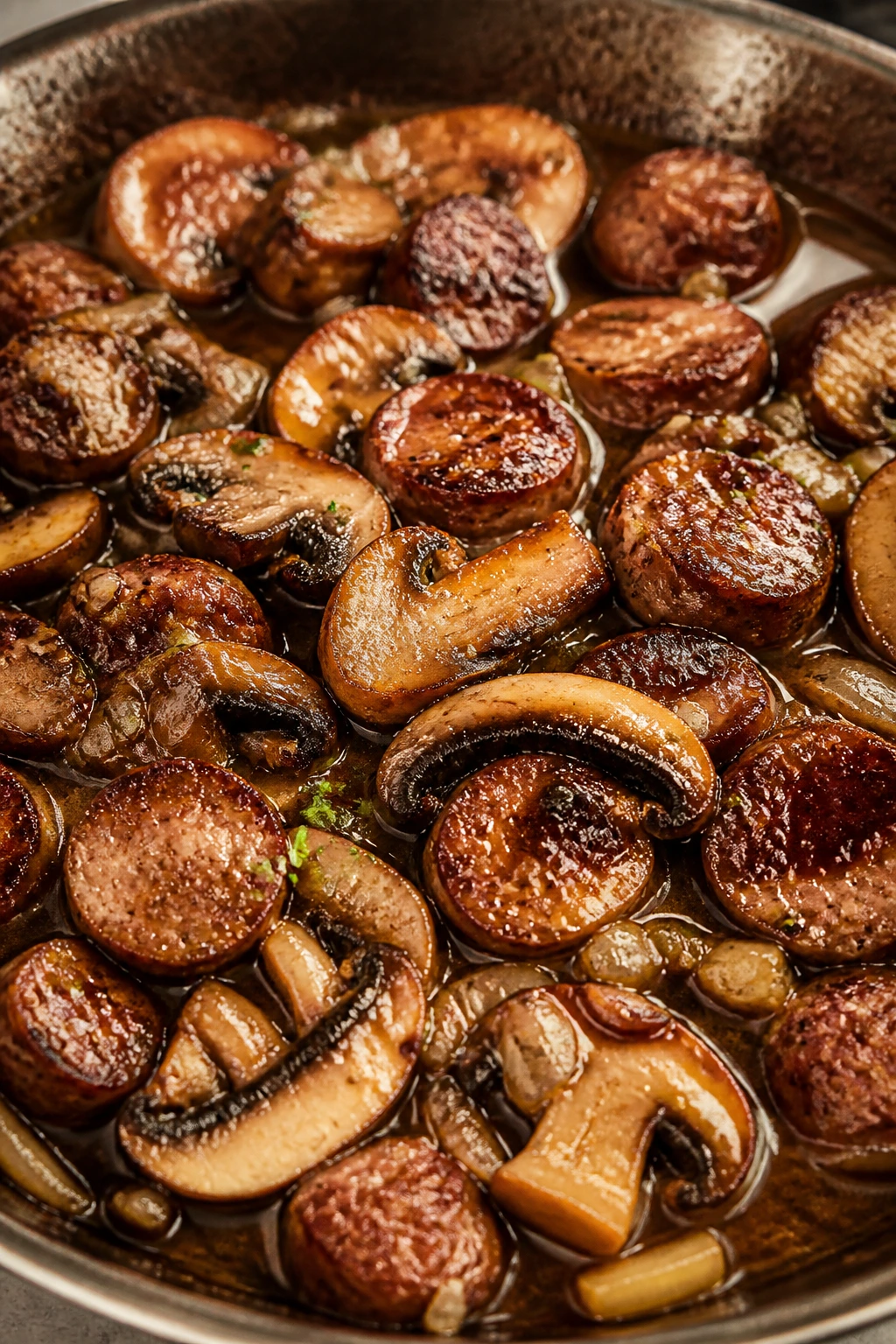
4. Sausage Mushroom Marsala Skillet
Browned mushrooms and sausage make one of those old-school pans that smells like dinner at a place with a red-checkered cloth and a cook who doesn’t rush. Marsala adds a sweet, nutty note that clings to the mushrooms and turns the sauce glossy.
Why It Works: Mushrooms need a dry, hot pan so they brown instead of leaking water. Marsala deglazes the skillet in a way plain broth cannot, and the result tastes richer than the steps suggest.
Key Ingredients:
- 1 lb Italian sausage
- 12 oz cremini mushrooms, sliced
- 1 shallot, minced
- 3 cloves garlic, minced
- 1/2 cup Marsala wine
- 3/4 cup chicken broth
- 1/3 cup heavy cream
- 2 tablespoons chopped parsley
Quick Steps:
- Brown the sausage and transfer it out of the pan.
- Add mushrooms and cook over medium-high heat until they release their moisture and turn deep brown, about 7 minutes.
- Stir in shallot and garlic for 1 minute.
- Pour in Marsala and broth, reduce by half, then add cream.
- Return sausage, simmer 3 minutes, and finish with parsley.
Equipment for This Recipe:
- Large skillet
- Slotted spoon
- Measuring cup
How to Serve This Dish: Spoon it over egg noodles, mashed potatoes, or buttered toast. The sauce should coat the starch, not drown it, so keep portions moderate and generous.
Pro Tips for This Recipe:
- Don’t salt the mushrooms too early or they’ll weep and stew.
- If the sauce gets too thick, loosen it with a splash of broth.
- A little thyme works if you want a deeper woodsy note.
Variations on This Dish:
- Creamless Marsala: Skip the cream and finish with extra broth for a lighter pan sauce.
- Beefy Mushroom Version: Add a handful of chopped bacon with the sausage for more smoky depth.
Common Mistakes to Avoid with This Dish:
- Using low heat for mushrooms: They won’t brown; they’ll go gray and wet.
- Adding cream before the wine reduces: The sauce turns dull instead of glossy.
5. Sausage Gnocchi in Tomato Cream
Soft gnocchi and browned sausage are a tidy little pairing. The gnocchi soak up tomato cream in minutes, which makes this skillet feel richer than the clock says it should.
Why It Works: Shelf-stable gnocchi cooks directly in the sauce, so it picks up flavor instead of getting boiled separately. Tomato paste gives the pan a deeper red color and keeps the cream from tasting flat.
Key Ingredients:
- 1 lb sausage
- 1 package potato gnocchi, about 16 oz
- 2 tablespoons tomato paste
- 1 1/2 cups chicken broth
- 1/2 cup heavy cream
- 2 cups baby spinach
- 1/2 cup grated parmesan
- 2 cloves garlic, minced
Quick Steps:
- Brown the sausage in a skillet, then stir in garlic and tomato paste for 1 minute.
- Add broth and scrape the pan, then stir in gnocchi.
- Cover and simmer 4 to 5 minutes until the gnocchi is tender.
- Stir in cream, spinach, and parmesan until the spinach wilts and the sauce thickens.
- Taste and serve with black pepper over the top.
Equipment for This Recipe:
- 12-inch skillet with lid
- Wooden spoon
- Box grater
How to Serve This Dish: Serve it in wide bowls with a simple salad and more parmesan. It’s rich enough that I’d keep bread on the side, not on the plate.
Pro Tips for This Recipe:
- Use fresh gnocchi if you have it, but shelf-stable works fine.
- Keep the simmer gentle so the gnocchi stays pillowy.
- Add a pinch of nutmeg if you want a softer cream sauce.
Variations on This Dish:
- Spicy Gnocchi Pan: Use hot sausage and red pepper flakes with the tomato paste.
- Extra-Green Version: Add chopped kale with the spinach for more bite.
Common Mistakes to Avoid with This Dish:
- Boiling the gnocchi hard: It can burst and turn gummy.
- Adding parmesan over high heat: The cheese can clump; lower the flame first.
6. Smoked Sausage and Cabbage Skillet
Cabbage gets unfairly overlooked until it hits a hot pan with smoked sausage and starts to sweeten around the edges. This dish is sharp, earthy, and a little old-fashioned in the best sense.
Why It Works: Smoked sausage already carries seasoning, so cabbage needs only a short cook, a little vinegar, and a small amount of mustard to wake it up. The pan ends up tasting balanced instead of heavy.
Key Ingredients:
- 14 oz smoked sausage, sliced into coins
- 1 small green cabbage, sliced
- 1 onion, sliced
- 2 tablespoons apple cider vinegar
- 1 tablespoon Dijon mustard
- 1 teaspoon caraway seeds
- 2 tablespoons butter
- 1/2 cup chicken broth
Quick Steps:
- Brown the sausage coins in butter over medium-high heat, then set them aside.
- Cook onion and cabbage in the same pan with caraway and a pinch of salt for 8 minutes.
- Add broth and cover for 4 minutes until the cabbage softens.
- Stir in vinegar and mustard, then return the sausage and heat through.
- Serve hot with black pepper over the top.
Equipment for This Recipe:
- Large skillet
- Tongs
- Tight-fitting lid
How to Serve This Dish: It’s good with boiled potatoes, rye bread, or mustard on the side. I like it best served in a wide bowl so the cabbage keeps a little of its texture.
Pro Tips for This Recipe:
- Slice the cabbage thick if you want it to keep more bite.
- A spoonful of grainy mustard changes the whole pan in a good way.
- If the sausage is very smoky, go easy on the salt.
Variations on This Dish:
- Apple-Cabbage Twist: Add thin apple slices with the cabbage for a faint sweetness.
- Creamy Cabbage Pan: Stir in 2 tablespoons sour cream at the very end.
Common Mistakes to Avoid with This Dish:
- Cooking the cabbage to death: It turns limp and sulfurous; stop when it still has texture.
- Using too much vinegar: The pan should taste bright, not sharp.
7. Sausage Rice Skillet with Peas and Herbs
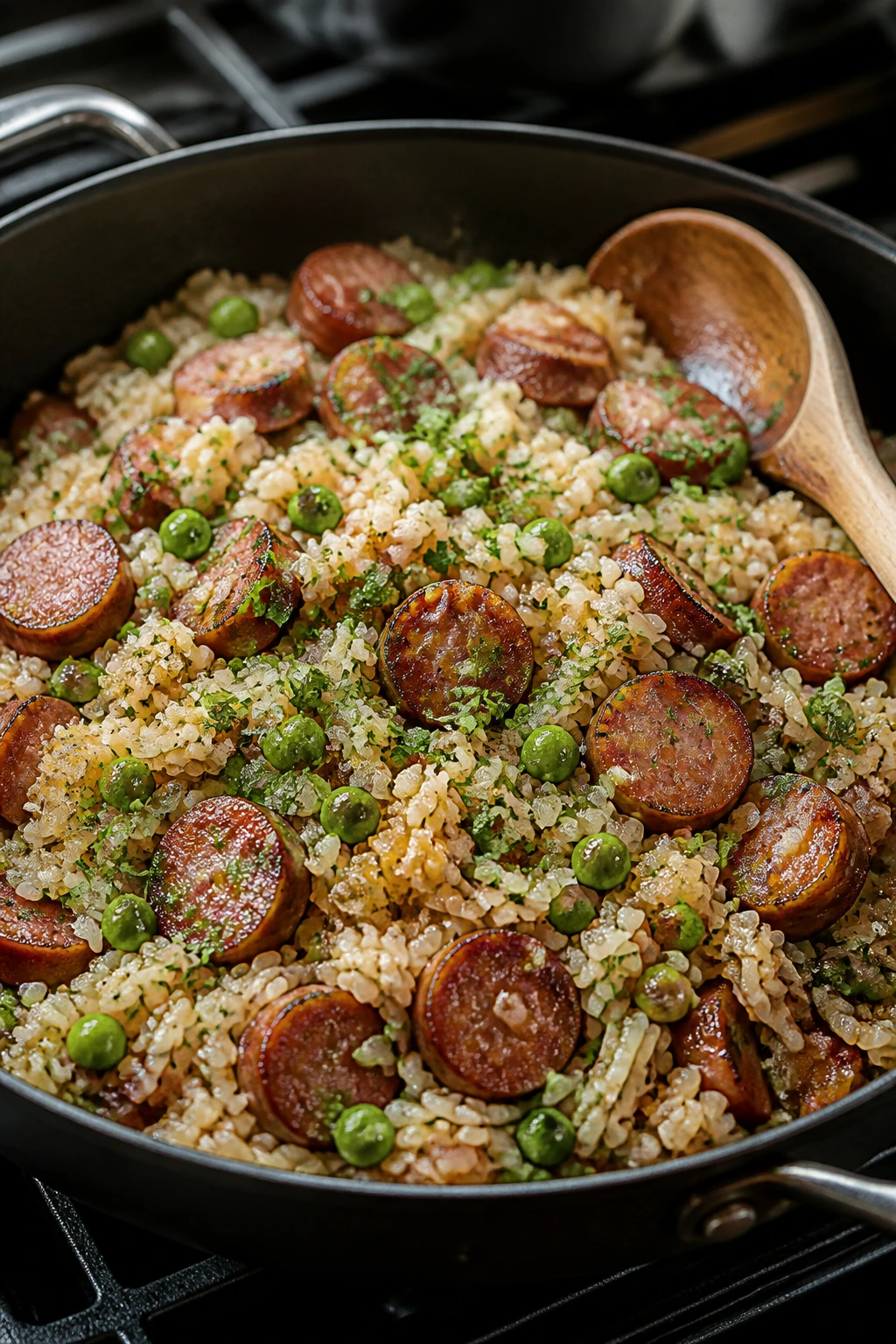
Rice cooked in the same pan as sausage is one of the easiest ways to make dinner feel settled and complete. The sausage seasons the rice from the start, and the peas give the whole thing little sweet pops at the end.
Why It Works: Toasting the rice in the fat before adding broth gives it a nuttier flavor and keeps the grains separate. Herbs stirred in at the end taste fresher than herbs cooked for the whole hour.
Key Ingredients:
- 1 lb sausage
- 1 1/2 cups long-grain rice, rinsed
- 1 onion, diced
- 1 carrot, diced
- 3 cups chicken broth
- 1 cup frozen peas
- 2 tablespoons chopped parsley
- 1 teaspoon dried thyme
Quick Steps:
- Brown the sausage in a deep skillet, then remove it.
- Cook onion and carrot for 5 minutes, then stir in rice and thyme for 1 minute.
- Add broth, bring to a simmer, cover, and cook 15 to 18 minutes.
- Stir in peas and sausage, then cover for 3 minutes more.
- Finish with parsley and fluff with a fork.
Equipment for This Recipe:
- Deep skillet with lid
- Wooden spoon
- Fork for fluffing
How to Serve This Dish: Serve it as is, or add a crisp salad with vinegar dressing. A squeeze of lemon over the top is nice if the sausage runs rich.
Pro Tips for This Recipe:
- Rinse the rice so the grains stay separate and not sticky.
- Keep the lid on while the rice cooks; lifting it too much steals steam.
- If the broth is salty, wait to season until the end.
Variations on This Dish:
- Tomato Rice Version: Add 1/2 cup crushed tomatoes with the broth.
- Spanish-Style Pan: Use smoked paprika and chopped roasted red peppers.
Common Mistakes to Avoid with This Dish:
- Stirring while the rice cooks: It makes the grain sticky and uneven.
- Using instant rice here: It turns soft before the sausage flavor has time to settle in.
8. Sausage, Apple, and Onion Skillet with Mustard
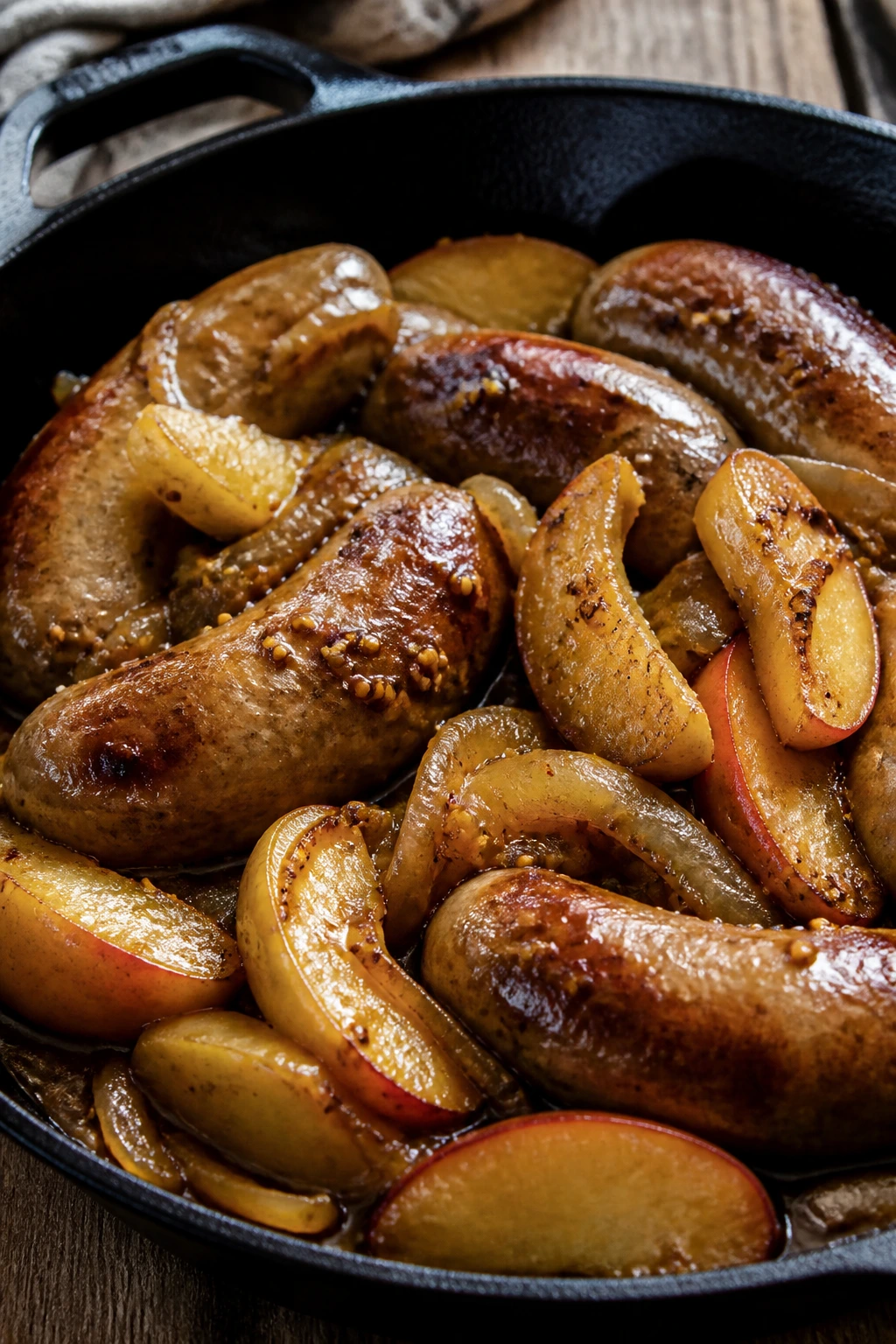
Sweet apples and savory sausage are a good pair when you keep the sauce from getting sugary. The mustard and cider keep the whole skillet pointed in a sharper direction, which is exactly why it works at dinner instead of drifting into breakfast territory.
Why It Works: Apples soften into the onions and catch the sausage drippings, but they still need a little acid to keep from tasting like dessert. Dijon and cider do that job cleanly.
Key Ingredients:
- 1 lb pork sausage
- 2 tart apples, cored and sliced
- 2 onions, sliced
- 1/2 cup apple cider
- 1 tablespoon Dijon mustard
- 1 teaspoon thyme leaves
- 1 tablespoon butter
- Salt and pepper
Quick Steps:
- Brown the sausage in butter and remove it.
- Cook onions for 6 minutes, then add apples and thyme and cook 4 minutes more.
- Pour in cider and mustard, scraping the pan.
- Return sausage and simmer 5 minutes until the sauce turns syrupy.
- Season with pepper and serve.
Equipment for This Recipe:
- Large skillet
- Wooden spoon
- Sharp paring knife
How to Serve This Dish: Serve it with roasted potatoes, mashed potatoes, or plain buttered noodles. A spoonful of whole-grain mustard on the side suits the pan well.
Pro Tips for This Recipe:
- Use firm apples like Granny Smith or Honeycrisp so they hold shape.
- If the pan tastes too sweet, add a teaspoon more mustard.
- Let the cider reduce before you judge the sauce; it changes fast.
Variations on This Dish:
- Bratwurst Version: Swap in bratwurst and add sauerkraut on the side.
- Creamed Apple Pan: Finish with 2 tablespoons cream for a softer sauce.
Common Mistakes to Avoid with This Dish:
- Using soft apples: They collapse and turn the pan mushy.
- Skipping the mustard: Without it, the dish leans too sweet.
9. Sausage Parmesan Skillet with Mozzarella
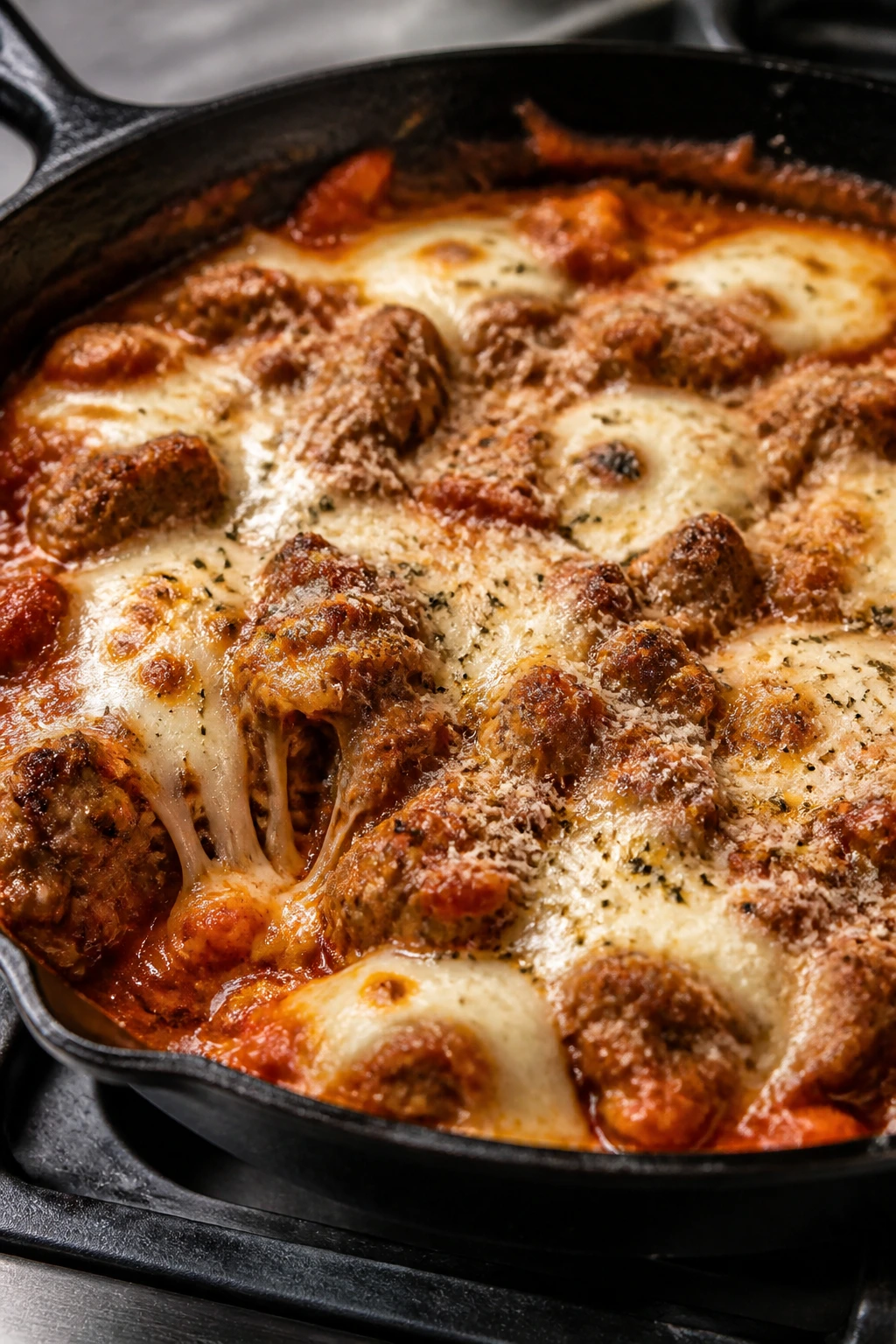
This is the pan dinner that feels like red sauce night without the extra pot. The sausage simmers in marinara, the mozzarella melts into little elastic pockets, and the edges of the pan get those browned, sticky bits that taste like a prize.
Why It Works: The sauce only needs a short simmer because the sausage has already given it body. A little ricotta or mozzarella on top makes the skillet taste like a baked dish without asking for the oven.
Key Ingredients:
- 1 lb Italian sausage
- 2 cups marinara sauce
- 1 cup shredded mozzarella
- 1/4 cup grated parmesan
- 1 teaspoon Italian seasoning
- 1 clove garlic, minced
- 1 tablespoon olive oil
- Fresh basil
Quick Steps:
- Brown the sausage in olive oil, then add garlic for 30 seconds.
- Stir in marinara and Italian seasoning, then simmer 8 minutes.
- Scatter mozzarella and parmesan over the top.
- Cover until the cheese melts, about 2 minutes.
- Top with basil and serve with bread or pasta.
Equipment for This Recipe:
- Skillet with lid
- Wooden spoon
- Cheese grater
How to Serve This Dish: Spoon it over spaghetti or serve it straight with garlic bread. I like it best when the cheese is still stringy and the sauce is glossy at the edges.
Pro Tips for This Recipe:
- Use a marinara that tastes bright, not overly sweet.
- Keep the heat low before adding cheese or it can separate.
- If you want more heft, add cooked pasta right into the skillet.
Variations on This Dish:
- Eggplant Parm Pan: Fold in browned eggplant cubes with the sauce.
- Meatball Swap: Use mini meatballs instead of sausage for a different texture.
Common Mistakes to Avoid with This Dish:
- Boiling the sauce hard: It can splash and taste harsh.
- Using dry cheese: Freshly shredded mozzarella melts much better.
10. Sausage and Broccoli Cheddar Skillet
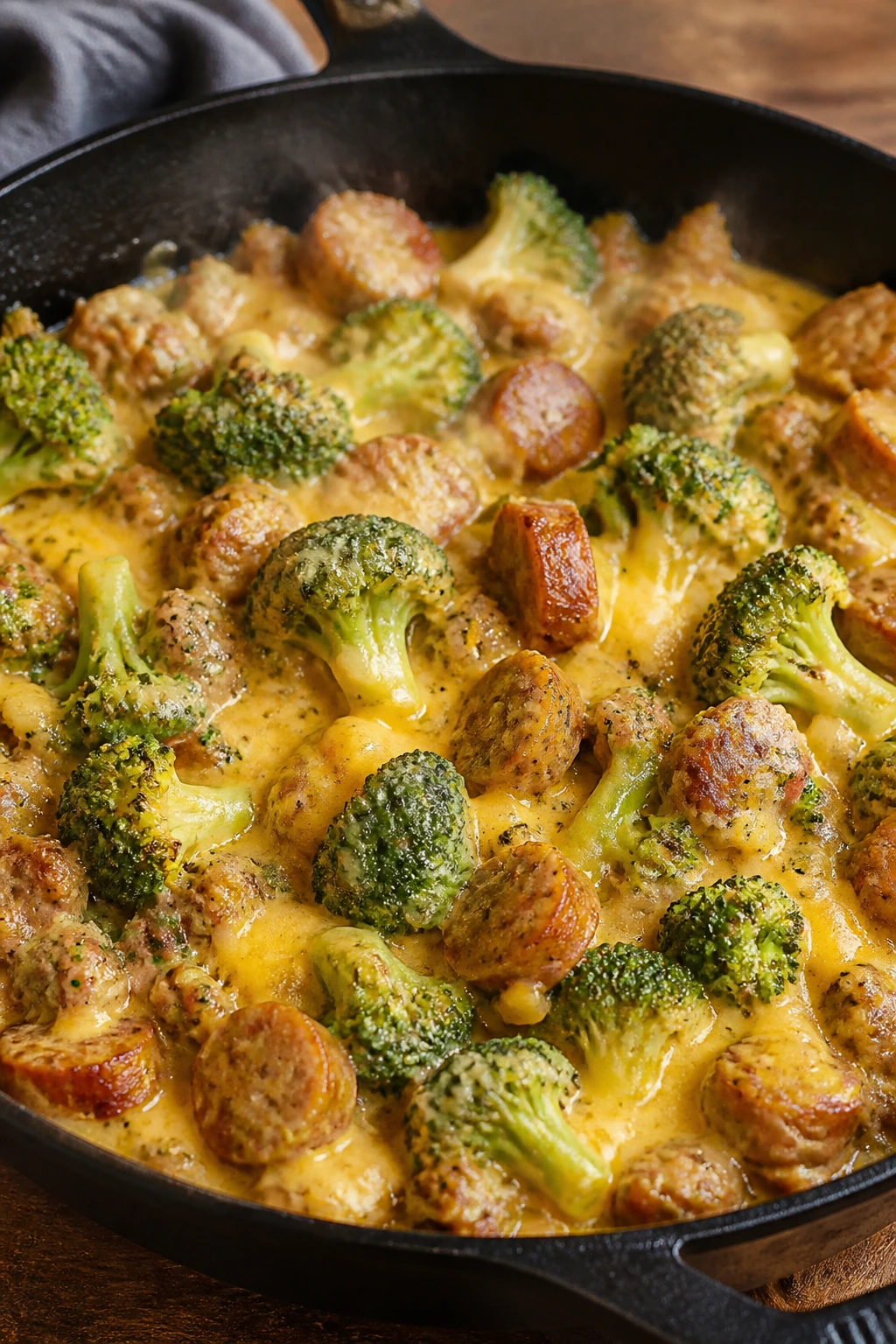
Broccoli gets a better reception when it’s folded into cheddar and sausage. The florets soak up the cheesy sauce, and the sausage keeps the whole pan from feeling too soft or too mild.
Why It Works: A little milk and mustard help cheddar melt into a sauce that coats the broccoli instead of becoming gluey. Browning the sausage first gives the pan enough salt and fat to support the cheese.
Key Ingredients:
- 1 lb sausage
- 1 large head broccoli, cut into florets
- 1 onion, diced
- 1 cup shredded cheddar
- 1/2 cup milk
- 1 teaspoon Dijon mustard
- 1 tablespoon flour
- 1 tablespoon butter
Quick Steps:
- Brown the sausage and set it aside.
- Cook onion in butter, then whisk in flour for 1 minute.
- Add milk and mustard, stirring until the sauce thickens.
- Add broccoli and cover 4 minutes until bright green and tender-crisp.
- Stir in sausage and cheddar until melted.
Equipment for This Recipe:
- Medium skillet with lid
- Whisk
- Measuring cup
How to Serve This Dish: Serve it over rice, mashed potatoes, or toasted bread. If you want a sharper finish, add a few drops of hot sauce at the table.
Pro Tips for This Recipe:
- Cut the broccoli small enough that the stems cook at the same speed as the florets.
- Add cheese off the hottest part of the flame to keep the sauce smooth.
- A pinch of paprika helps the cheddar taste less flat.
Variations on This Dish:
- Cauliflower Version: Use cauliflower in place of broccoli for a softer texture.
- Extra Sharp Cheddar: Mix in a small handful of pepper jack for heat.
Common Mistakes to Avoid with This Dish:
- Overcooking the broccoli: It turns olive-green and loses its snap.
- Adding cold milk all at once over high heat: The sauce can go grainy.
11. Cajun Sausage and Corn Skillet
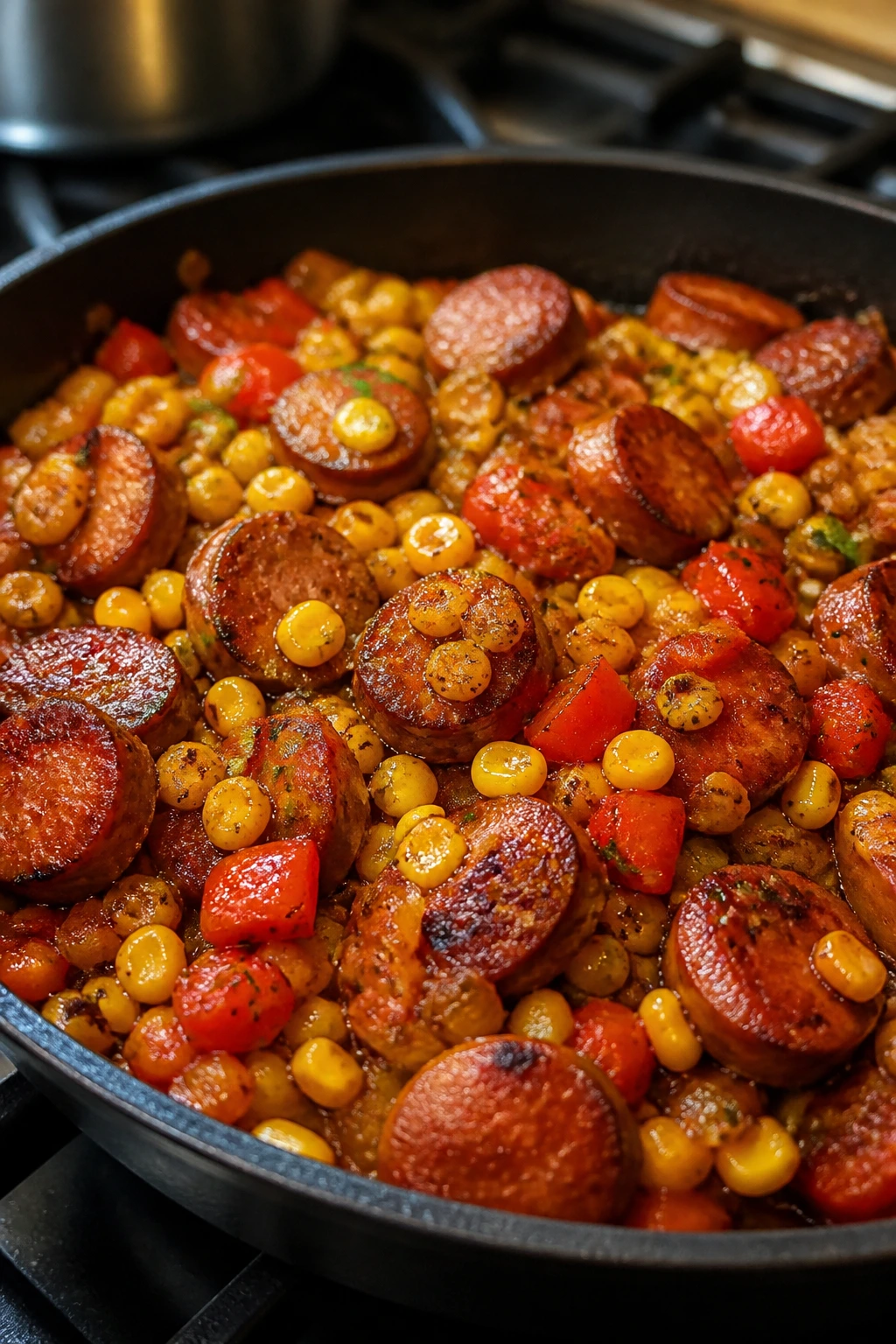
This skillet has heat, sweetness, and enough smoky depth to feel like a proper main dish. Corn keeps it bright, Cajun seasoning brings the kick, and the sausage makes sure the pan never tastes thin.
Why It Works: Andouille or another smoked sausage leaves a strong base layer in the pan. Corn adds pops of sweetness that make the spice feel warmer instead of harsher.
Key Ingredients:
- 14 oz andouille sausage, sliced
- 2 cups corn kernels, fresh or frozen
- 1 red bell pepper, diced
- 1 celery stalk, diced
- 1 onion, diced
- 2 teaspoons Cajun seasoning
- 2 tablespoons butter
- 1/2 cup chicken broth
Quick Steps:
- Brown the sausage in butter, then remove it.
- Cook onion, celery, and pepper for 5 minutes.
- Add corn and Cajun seasoning, stirring for 2 minutes.
- Pour in broth and simmer 4 minutes.
- Return sausage and cook until the sauce tightens.
Equipment for This Recipe:
- Large skillet
- Wooden spoon
- Sharp knife
How to Serve This Dish: Spoon it over rice or creamy grits. A little chopped scallion on top keeps the heat from feeling heavy.
Pro Tips for This Recipe:
- If your Cajun seasoning is salty, hold back on extra salt until the end.
- Frozen corn works well; no need to thaw it first.
- A squeeze of lime makes the spice feel cleaner.
Variations on This Dish:
- Creamed Corn Style: Stir in 2 tablespoons cream cheese at the end.
- Black-Eyed Pea Version: Add 1 cup cooked black-eyed peas for more body.
Common Mistakes to Avoid with This Dish:
- Burning the seasoning: Add it after the vegetables soften, not to a dry pan.
- Using low-smoke sausage with this flavor profile: You want a sausage with enough backbone to stand up to Cajun spice.
12. Sausage, Spinach, and Orzo Skillet
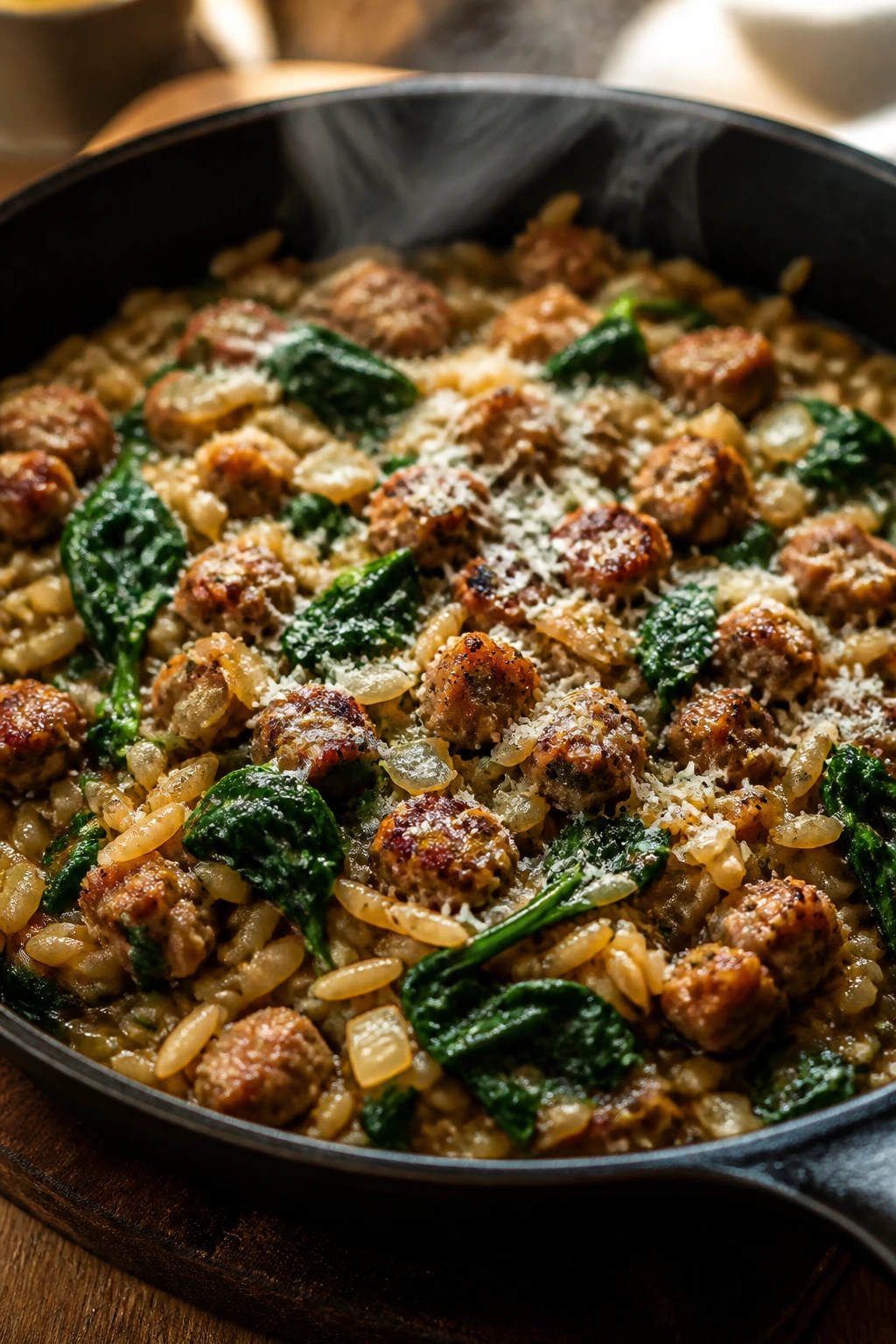
Orzo is the quiet pasta that turns a skillet into dinner fast. It drinks broth like rice, softens into the sausage drippings, and gives spinach a nest to melt into at the end.
Why It Works: Orzo cooks directly in the pan, so it picks up garlic and sausage flavor from the first minute. Spinach goes in last because it only needs heat to wilt, not a full simmer.
Key Ingredients:
- 1 lb Italian sausage
- 1 1/2 cups orzo
- 1 onion, diced
- 3 cloves garlic, minced
- 3 cups chicken broth
- 3 cups baby spinach
- 1/2 cup grated parmesan
- 1 tablespoon olive oil
Quick Steps:
- Brown the sausage and remove it.
- Cook onion in oil for 4 minutes, then stir in garlic and orzo for 1 minute.
- Add broth, simmer, and stir now and then for 10 to 12 minutes until the orzo is tender.
- Fold in spinach and sausage until wilted and hot.
- Finish with parmesan and black pepper.
Equipment for This Recipe:
- Deep skillet or sauté pan
- Wooden spoon
- Grater
How to Serve This Dish: Serve it in bowls with a little extra parmesan and a simple tomato salad on the side. It should look loose and creamy, not stiff.
Pro Tips for This Recipe:
- Keep stirring the orzo so it doesn’t catch on the bottom.
- Add a splash more broth if the pan tightens too soon.
- Use baby spinach; tougher greens need more cooking than this dish gives them.
Variations on This Dish:
- Lemon Orzo Pan: Add lemon zest at the end for a brighter finish.
- Creamy Orzo: Stir in 2 tablespoons cream or mascarpone.
Common Mistakes to Avoid with This Dish:
- Walking away while the orzo cooks: It can stick fast.
- Adding spinach too early: It will disappear into the pan and lose color.
13. Sausage and Lentil Skillet Stew
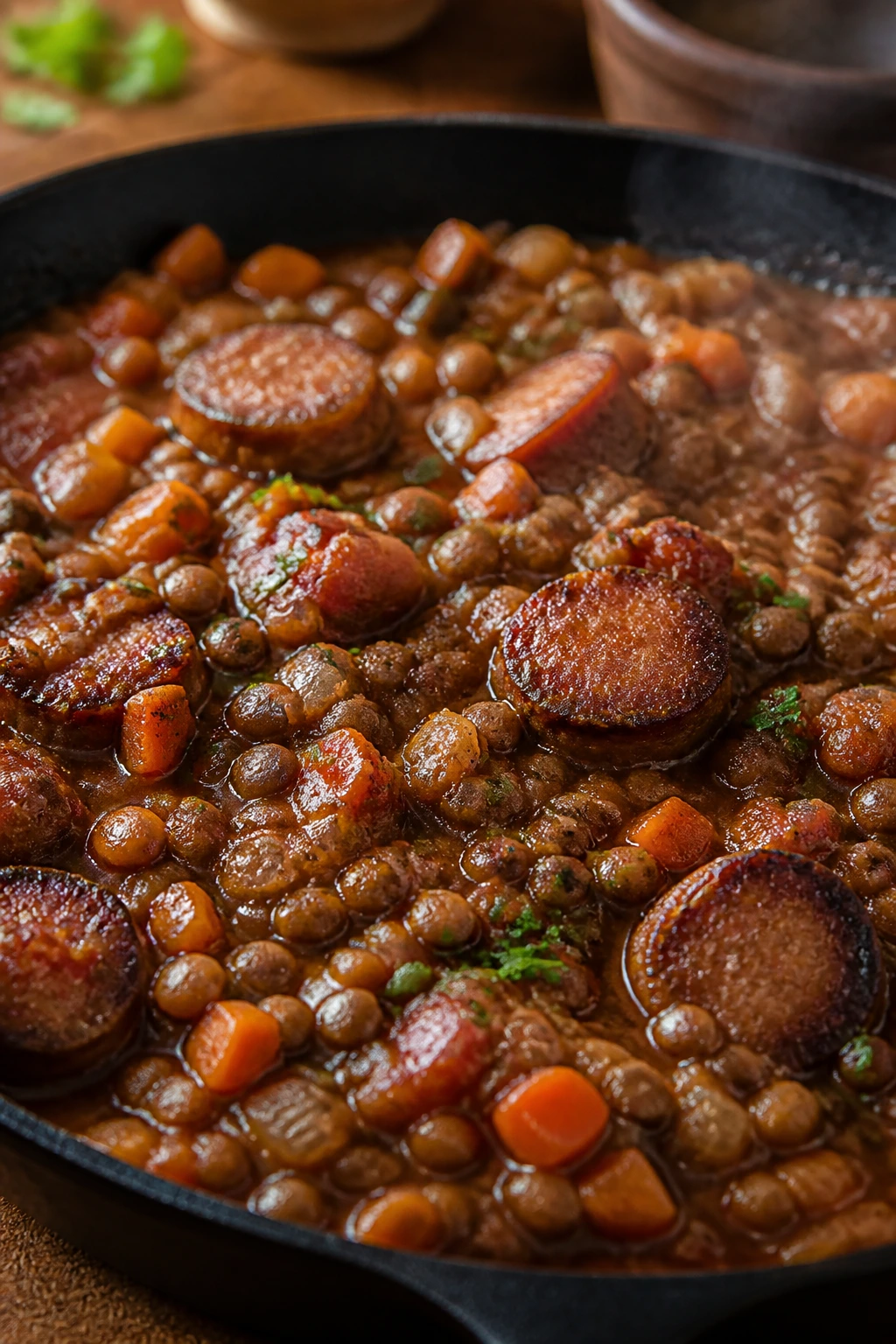
Lentils make this skillet feel old-world and sturdy. They hold their shape, soak up the sausage fat, and turn into a stew that tastes like it should have been simmering all afternoon.
Why It Works: Brown sausage gives the lentils a savory start, while tomato paste and broth deepen the broth without making it heavy. Lentils cook fast enough to fit a weeknight but still feel proper on the Sunday table.
Key Ingredients:
- 1 lb sausage
- 1 cup brown lentils, rinsed
- 1 onion, diced
- 2 carrots, diced
- 2 celery stalks, diced
- 2 tablespoons tomato paste
- 4 cups chicken broth
- 1 teaspoon thyme
Quick Steps:
- Brown the sausage in a deep skillet.
- Add onion, carrots, and celery; cook 5 minutes.
- Stir in tomato paste and thyme for 1 minute.
- Add lentils and broth, then simmer 25 to 30 minutes until lentils are tender.
- Return sausage and heat through before serving.
Equipment for This Recipe:
- Deep skillet or braiser
- Wooden spoon
- Ladle
How to Serve This Dish: Serve it with buttered bread or a spoonful of yogurt if you want a little tang. It also works well over mashed potatoes, which sounds odd until you try it.
Pro Tips for This Recipe:
- Brown lentils hold shape better than red lentils here.
- If the stew thickens too fast, add broth 1/4 cup at a time.
- A splash of red wine vinegar at the end wakes the whole pot up.
Variations on This Dish:
- Smoky Lentil Version: Use smoked sausage and a pinch of smoked paprika.
- Tomato-Heavy Version: Add a can of diced tomatoes with the broth.
Common Mistakes to Avoid with This Dish:
- Salting too early: Some sausage is salty enough on its own.
- Cooking the lentils to mush: Start checking at 22 minutes.
14. Green Bean and Tomato Sausage Skillet
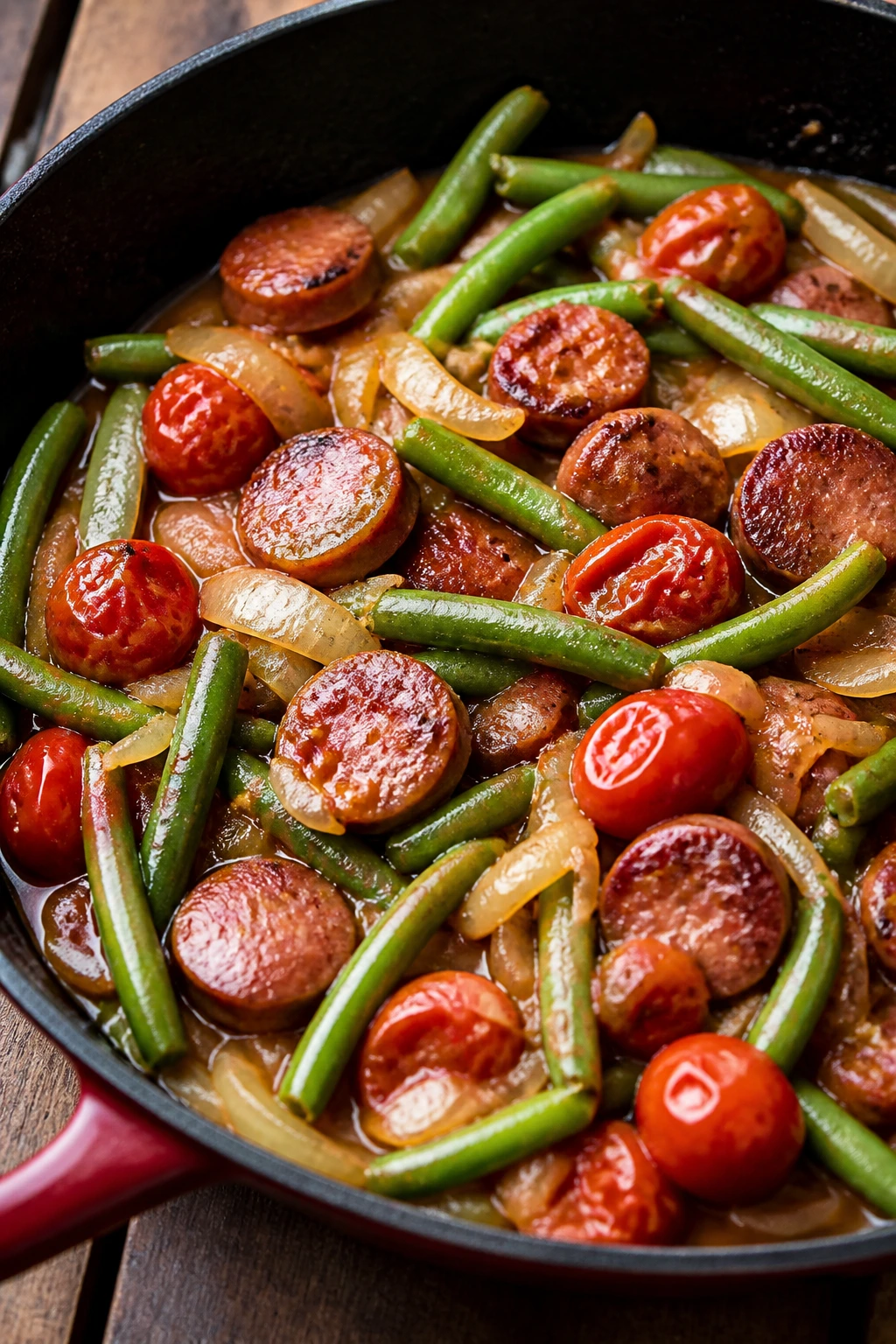
Fresh green beans and tomatoes make a lighter skillet that still tastes like dinner. The beans keep their snap, the tomatoes burst into a loose sauce, and the sausage gives the pan enough weight to stand up as a main.
Why It Works: Green beans like hot fat and a little steam, not a long boil. Tomatoes bring moisture and acid, which keeps the sausage from feeling dense.
Key Ingredients:
- 1 lb sausage
- 1 lb green beans, trimmed
- 2 cups cherry tomatoes
- 1 onion, sliced
- 3 cloves garlic, minced
- 1/2 cup chicken broth
- 1 teaspoon dried basil
- 1 tablespoon olive oil
Quick Steps:
- Brown the sausage in oil and remove it.
- Cook onion for 4 minutes, then add green beans and broth.
- Cover for 5 minutes until the beans are bright green.
- Add tomatoes, garlic, and basil; cook until the tomatoes burst.
- Return sausage and toss everything together.
Equipment for This Recipe:
- Large skillet
- Lid
- Tongs
How to Serve This Dish: It’s good with rice, roasted potatoes, or plain bread to catch the tomato juices. I’d keep the plate simple and let the beans stay visible.
Pro Tips for This Recipe:
- Cut the beans evenly so they cook at the same pace.
- If the tomatoes are watery, simmer a minute longer before serving.
- A sprinkle of feta works if you want a sharper finish.
Variations on This Dish:
- Garlicky Tomato Beans: Add an extra clove of garlic and more basil.
- Mediterranean Pan: Finish with olives and a squeeze of lemon.
Common Mistakes to Avoid with This Dish:
- Overcrowding the green beans: They steam and go pale.
- Cooking the tomatoes until they vanish: You want them broken, not erased.
15. Breakfast Sausage and Hash Brown Skillet

This is the skillet that takes the whole breakfast-for-dinner idea seriously. Hash browns crisp underneath the sausage, eggs can slide into the gaps, and cheddar melts into the corners like it was always meant to be there.
Why It Works: Frozen hash browns are built for a hot skillet because they already have some surface dryness. That means they crisp instead of dissolving into starch soup.
Key Ingredients:
- 1 lb breakfast sausage
- 4 cups frozen hash browns, thawed
- 1 small onion, diced
- 1 cup shredded cheddar
- 4 large eggs
- 2 tablespoons chopped scallions
- 1 tablespoon butter
- Salt and pepper
Quick Steps:
- Brown the sausage in butter and set it aside.
- Add hash browns and onion; press them flat and cook 6 to 8 minutes until crisp underneath.
- Stir in sausage and make 4 wells for the eggs.
- Crack in the eggs, cover, and cook until the whites set.
- Top with cheddar and scallions before serving.
Equipment for This Recipe:
- Large nonstick or cast-iron skillet
- Spatula
- Lid
How to Serve This Dish: Serve straight from the pan with hot sauce and sliced tomatoes. It’s a full meal on its own, but toast on the side never hurts.
Pro Tips for This Recipe:
- Thaw and pat the hash browns dry or they’ll steam.
- Press the potatoes down once and then leave them alone.
- If you want firmer yolks, cook uncovered for the last minute.
Variations on This Dish:
- Pepper Jack Hash: Swap cheddar for pepper jack and add diced jalapeño.
- Gravy Version: Spoon a little sausage gravy over the top.
Common Mistakes to Avoid with This Dish:
- Stirring the hash browns too soon: You’ll break the crust before it forms.
- Adding eggs before the base is crisp: The pan turns soft and soggy.
16. Sausage and Butternut Squash Skillet with Sage
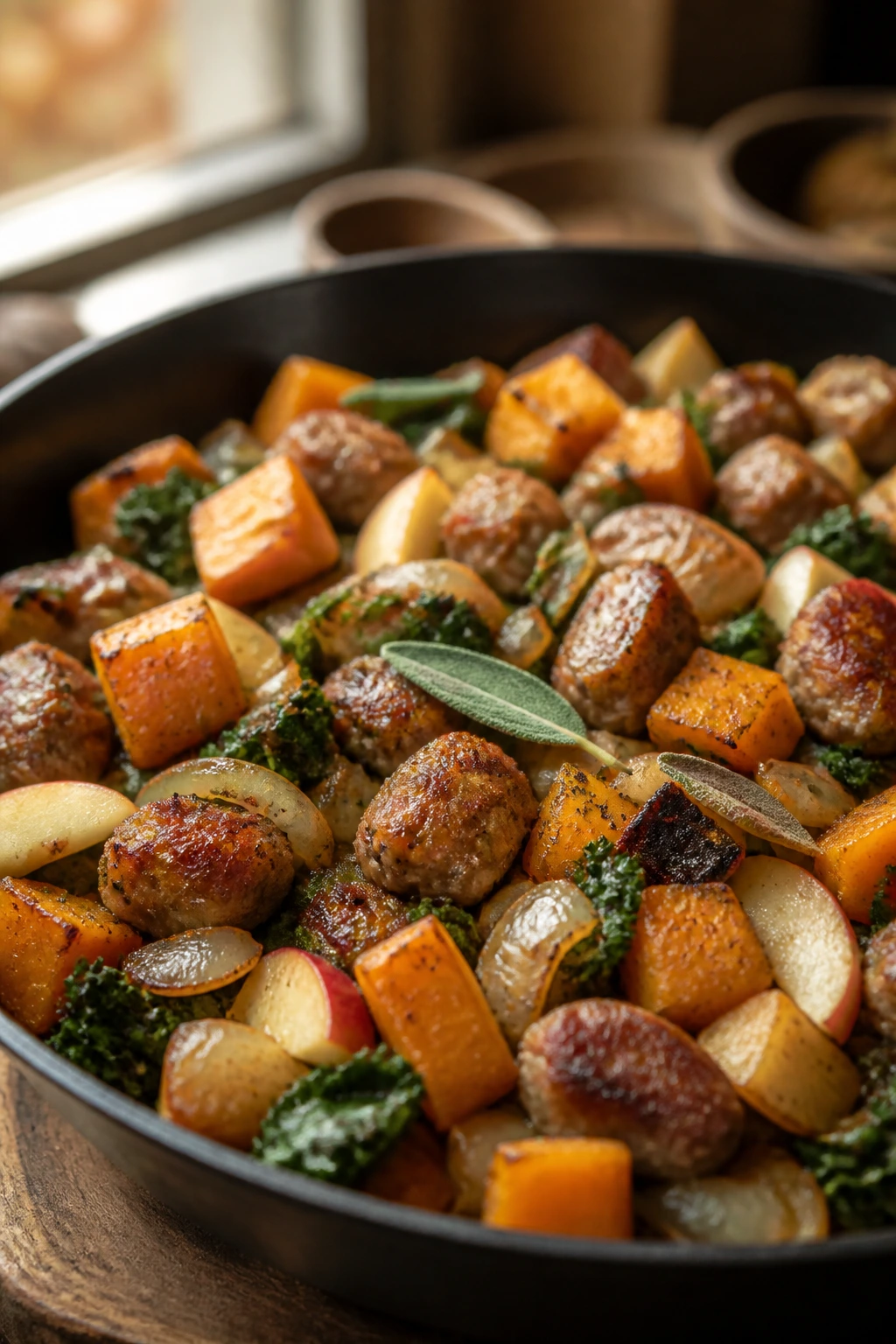
Butternut squash turns almost creamy in the skillet, especially when it picks up sausage drippings and a little sage. The result is sweet, savory, and just dense enough for a cool evening supper.
Why It Works: Squash needs enough heat to brown at the edges before it turns soft. Sage matches its sweetness, and sausage keeps the dish from drifting into side-dish territory.
Key Ingredients:
- 1 lb sausage
- 4 cups butternut squash cubes
- 1 onion, sliced
- 1 apple, diced
- 1 teaspoon dried sage
- 1/2 cup chicken broth
- 2 cups chopped kale
- 1 tablespoon butter
Quick Steps:
- Brown the sausage and set aside.
- Add butter, squash, and onion; cook 8 minutes until the squash edges brown.
- Add apple, sage, and broth; cover 5 minutes.
- Stir in kale and sausage, then cook until the kale wilts.
- Season and serve warm.
Equipment for This Recipe:
- Wide skillet with lid
- Spatula
- Knife for the squash
How to Serve This Dish: It’s good with roasted chicken too, but on its own I’d serve it with crusty bread and maybe a bitter green salad. A little black pepper right before serving matters here.
Pro Tips for This Recipe:
- Cut the squash small so it cooks at the same speed as the sausage.
- Apples should be firm and tart, not mushy.
- A spoonful of maple syrup is optional, but only if the squash tastes flat.
Variations on This Dish:
- Sweet Potato Swap: Use cubed sweet potato instead of squash.
- Creamed Sage Pan: Stir in 2 tablespoons cream at the end.
Common Mistakes to Avoid with This Dish:
- Using huge squash chunks: They take too long and the sausage overcooks.
- Letting the pan get watery: Keep the lid off once the squash softens.
17. Sausage and Zucchini Skillet with Lemon and Parmesan
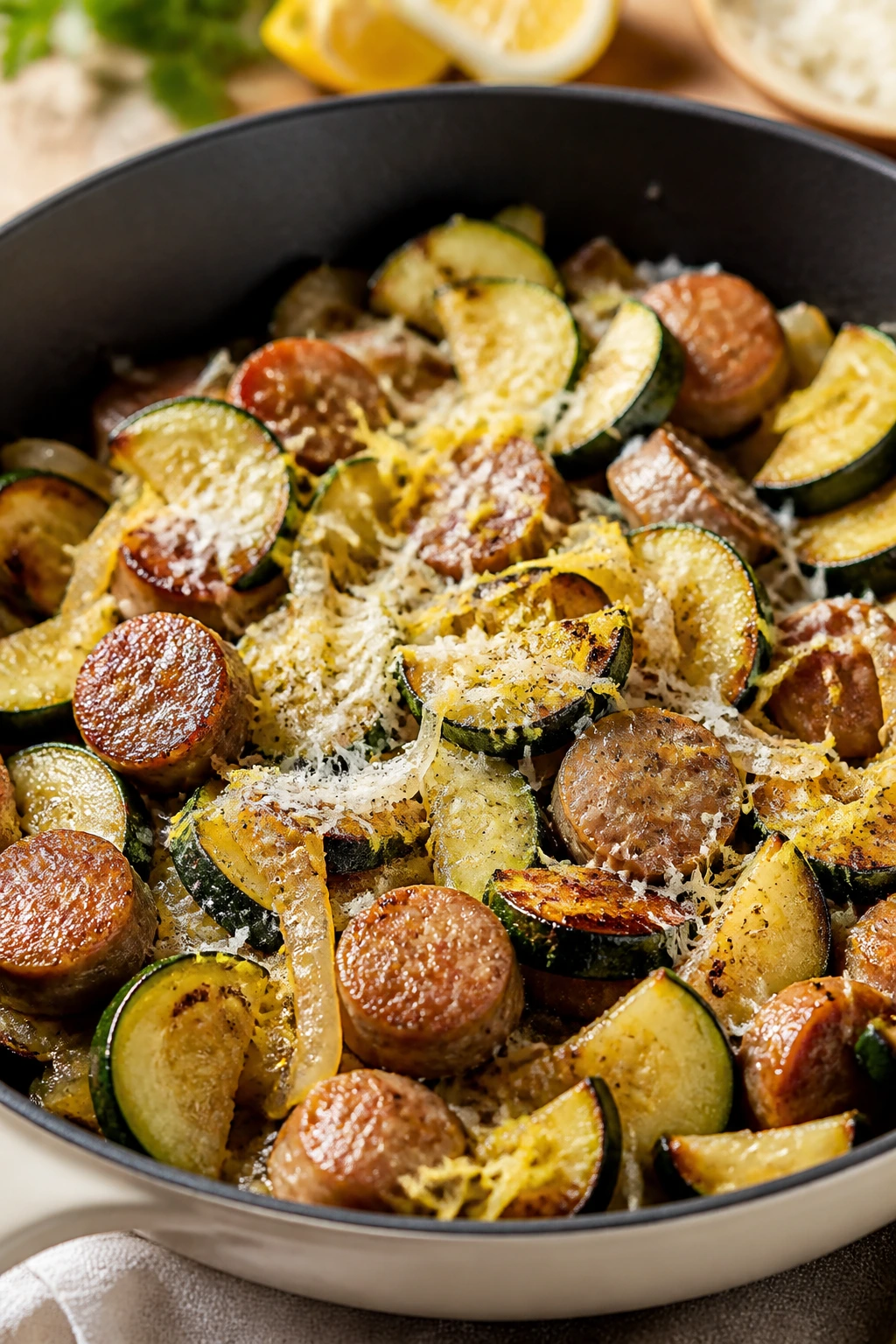
Zucchini can turn bland if you bully it. Give it sausage, garlic, lemon, and parmesan, though, and it becomes a fast, bright supper with enough browned edges to feel finished.
Why It Works: Zucchini likes high heat and short cooking. Lemon zest at the end gives the dish lift, while parmesan adds salt without making the pan feel heavy.
Key Ingredients:
- 1 lb sausage
- 3 medium zucchini, cut into half-moons
- 1 onion, sliced
- 3 cloves garlic, minced
- 1 lemon, zested and juiced
- 1/2 cup grated parmesan
- 1 tablespoon olive oil
- 1/4 teaspoon red pepper flakes
Quick Steps:
- Brown the sausage in oil and remove it.
- Cook onion for 3 minutes, then add zucchini and red pepper flakes.
- Cook until the zucchini has browned spots but still holds shape, about 5 minutes.
- Stir in garlic, lemon zest, and sausage.
- Finish with lemon juice and parmesan.
Equipment for This Recipe:
- Large skillet
- Microplane or fine grater
- Wooden spoon
How to Serve This Dish: Serve it over couscous, rice, or toasted bread. It’s one of the lighter pans here, so I like a sharp green salad on the side.
Pro Tips for This Recipe:
- Salt the zucchini lightly only at the end or it will shed water too soon.
- Lemon zest carries more flavor than juice, so don’t skip it.
- Use enough heat to brown, not just soften.
Variations on This Dish:
- Herby Version: Add basil or mint with the parmesan.
- Tomato Zucchini Pan: Toss in halved cherry tomatoes for more color.
Common Mistakes to Avoid with This Dish:
- Overcooking zucchini: It turns slippery and loses its shape.
- Adding lemon too early: The flavor dulls in the pan.
18. Sausage Alfredo Tortellini Skillet
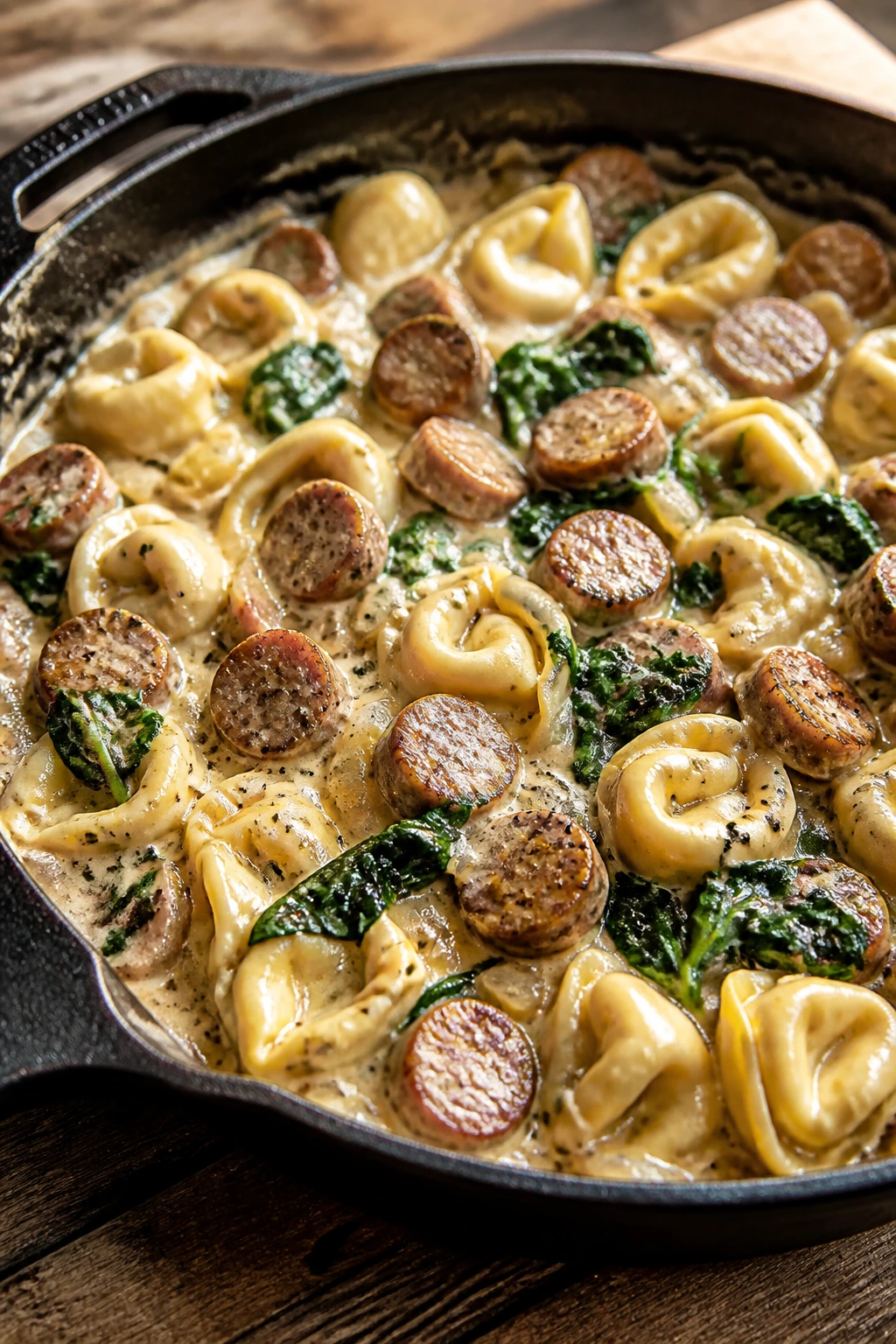
Cheese tortellini and sausage in a cream sauce is not a subtle dinner. It is a full one. The sauce clings to the pasta pockets, and the sausage gives the whole thing enough salt and spice to keep the richness from running away.
Why It Works: Tortellini cooks fast and carries sauce in its folds. The cream needs the sausage and parmesan to keep it from tasting one-note.
Key Ingredients:
- 1 lb sausage
- 1 package refrigerated cheese tortellini, about 20 oz
- 2 cloves garlic, minced
- 1 1/2 cups heavy cream
- 3/4 cup chicken broth
- 1 cup shredded parmesan
- 2 cups baby spinach
- Black pepper
Quick Steps:
- Brown the sausage in a skillet and remove it.
- Add garlic, cream, and broth; simmer 2 minutes.
- Stir in tortellini and cook according to package time, usually 4 to 6 minutes.
- Fold in spinach, parmesan, and sausage until the sauce thickens.
- Finish with black pepper.
Equipment for This Recipe:
- Large deep skillet
- Wooden spoon
- Tongs
How to Serve This Dish: Serve it in shallow bowls with more parmesan and cracked pepper on top. I’d keep the side salad acidic, with vinegar or lemon, to cut the cream.
Pro Tips for This Recipe:
- Refrigerated tortellini cooks more evenly than frozen in this format.
- Stir gently so the pasta doesn’t split.
- If the sauce tightens too much, add a splash of broth rather than cream.
Variations on This Dish:
- Tomato Alfredo: Add 2 tablespoons tomato paste with the garlic.
- Spinach and Mushroom Version: Cook sliced mushrooms before the cream goes in.
Common Mistakes to Avoid with This Dish:
- Boiling the cream hard: It can separate and go greasy.
- Cooking tortellini too long: It breaks and leaks cheese into the sauce.
19. Sausage, Peppers, and Grits Skillet
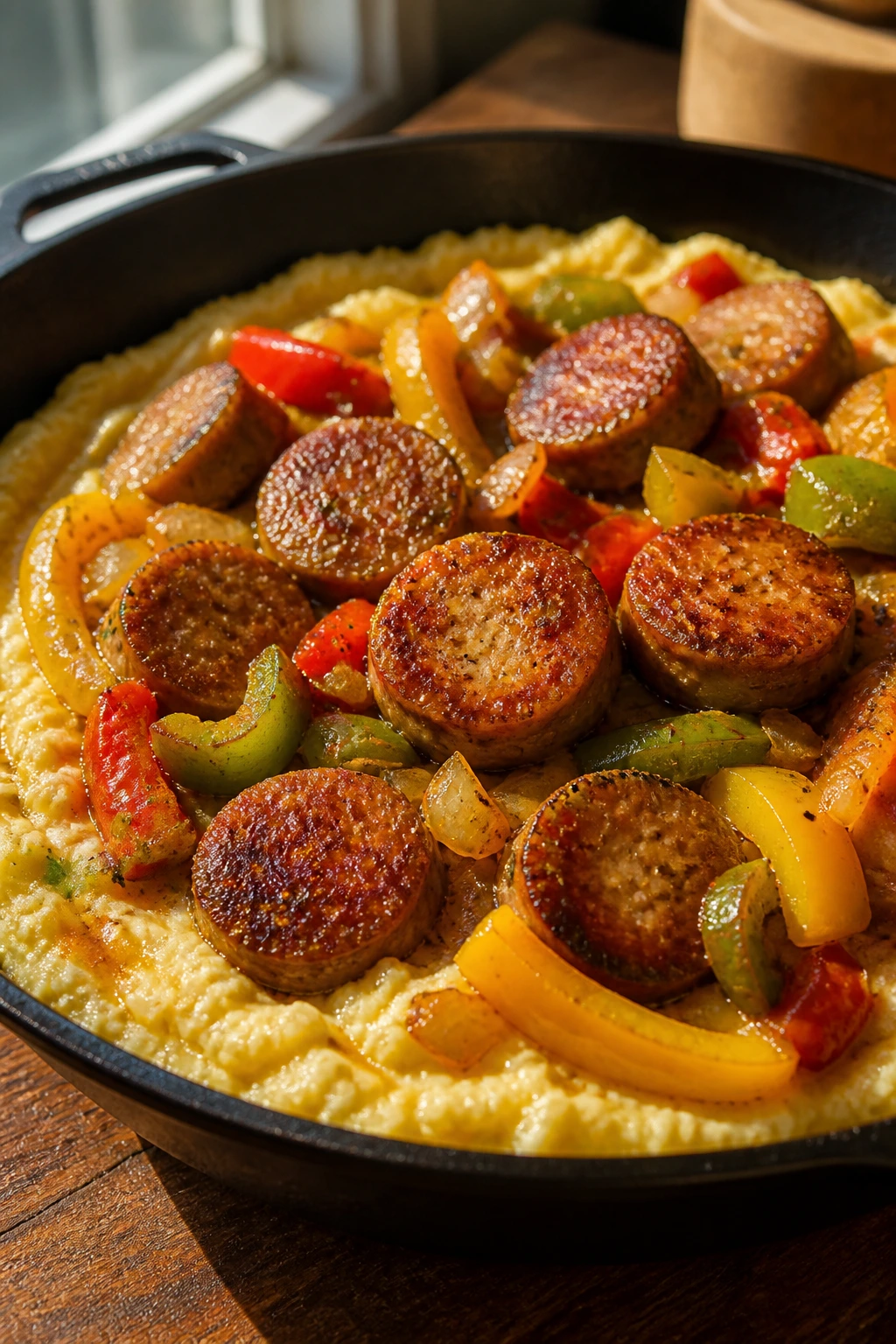
This pan has a Southern feel the second the grits hit the plate. The sausage and peppers bring the savory part, and the creamy grits underneath catch every drop of sauce.
Why It Works: Grits need fat and salt to taste like themselves, and sausage gives both. Peppers add sweetness and texture, so the bowl doesn’t end up one-note.
Key Ingredients:
- 1 lb sausage
- 2 bell peppers, sliced
- 1 onion, sliced
- 1 cup stone-ground grits
- 4 cups water or broth
- 1 cup shredded cheddar
- 2 tablespoons butter
- Salt and pepper
Quick Steps:
- Cook the grits with water or broth until tender, then stir in butter and cheddar.
- Brown the sausage in a skillet and remove it.
- Cook peppers and onion in the same pan until softened and a little browned.
- Return sausage and stir together.
- Spoon the sausage mixture over the grits and serve.
Equipment for This Recipe:
- Medium saucepan
- Large skillet
- Whisk
How to Serve This Dish: Spoon the sausage and peppers over a deep mound of grits so the sauce runs through them. It’s one of those dishes that needs a big spoon, not a fork.
Pro Tips for This Recipe:
- Stir the grits often so they don’t catch on the bottom.
- Use broth instead of water if you want deeper savory flavor.
- Add a little hot sauce at the table, not in the grits, so people can control the heat.
Variations on This Dish:
- Shrimp Swap Night: Use sausage and shrimp together for a richer version.
- Creamier Grits: Stir in a spoonful of cream cheese.
Common Mistakes to Avoid with This Dish:
- Using quick grits when you want more body: Stone-ground gives a better texture.
- Letting the peppers go limp: You want them soft but still visible.
20. Sausage and Chickpea Skillet with Lemon
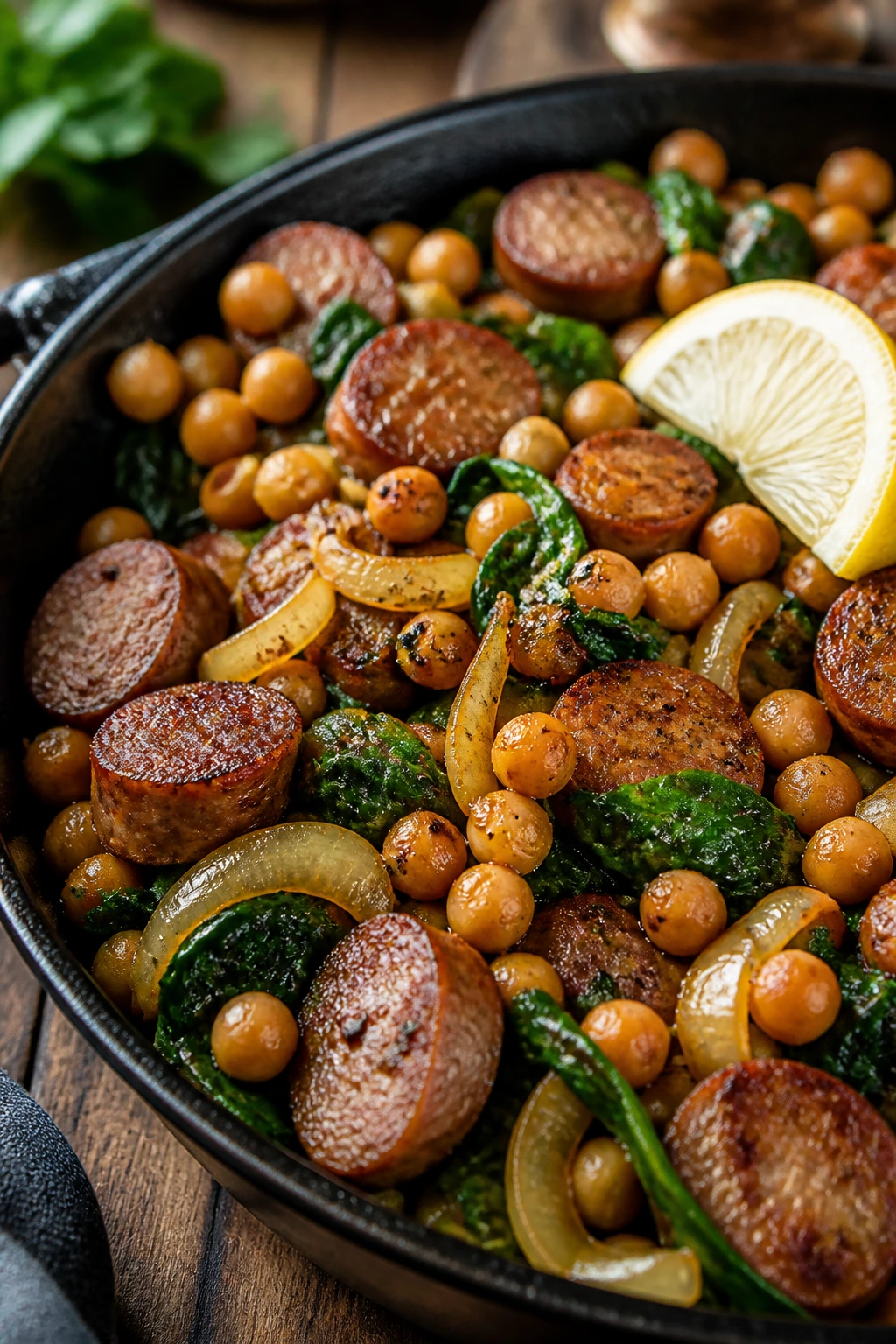
Chickpeas are sturdy enough to sit with sausage without getting lost. Add lemon, garlic, and spinach, and the pan turns bright, earthy, and filling in a way that feels a little more thoughtful than a plain meat-and-beans dish.
Why It Works: Chickpeas bring protein and shape, while lemon cuts through the sausage fat. The spinach wilts into the gaps, which makes the pan look fuller and taste fresher.
Key Ingredients:
- 1 lb sausage
- 2 cans chickpeas, drained and rinsed
- 1 onion, diced
- 3 cloves garlic, minced
- 2 cups baby spinach
- 1 lemon, juiced
- 1 teaspoon smoked paprika
- 1/2 cup chicken broth
Quick Steps:
- Brown the sausage and remove it.
- Cook onion for 4 minutes, then add garlic and smoked paprika for 30 seconds.
- Stir in chickpeas and broth, simmering 5 minutes.
- Add spinach and sausage, cooking until the spinach wilts.
- Finish with lemon juice and black pepper.
Equipment for This Recipe:
- Large skillet
- Wooden spoon
- Citrus juicer
How to Serve This Dish: Serve it over rice, with pita, or with roasted potatoes if you want more heft. A spoonful of yogurt on the side is nice, though not required.
Pro Tips for This Recipe:
- Chickpeas are better drained than dripping wet or the pan gets thin.
- Use smoked paprika sparingly; it can take over if you dump in too much.
- Lemon zest adds an extra layer if you want the finish brighter.
Variations on This Dish:
- Tomato Chickpea Pan: Add 1 cup diced tomatoes for a saucier skillet.
- Mediterranean Finish: Stir in olives and chopped parsley at the end.
Common Mistakes to Avoid with This Dish:
- Treating chickpeas like a garnish: They need a simmer so they absorb flavor.
- Adding lemon too soon: The brightness disappears if it cooks too long.
21. Kielbasa and Sauerkraut Skillet with Apples
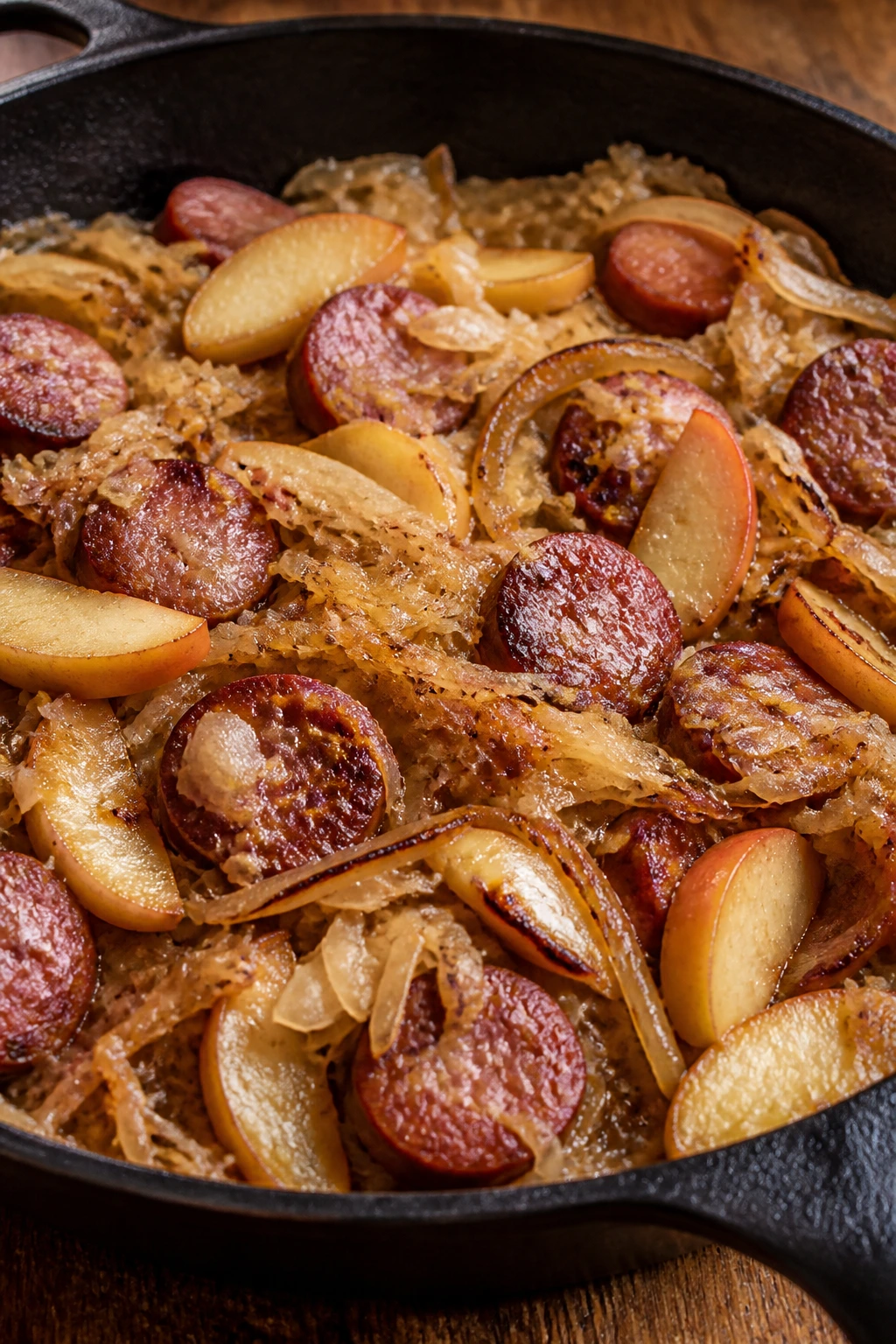
This is the skillet for people who like sharp flavors and don’t mind a little tang. Sauerkraut cuts through the richness of kielbasa, and apples pull the whole thing back from the edge so it tastes balanced, not blunt.
Why It Works: Sauerkraut has acid and salt built in, so it doesn’t need much help. Apples soften the bite and make the pan taste rounder without turning sweet.
Key Ingredients:
- 14 oz kielbasa, sliced
- 2 cups sauerkraut, drained
- 2 apples, sliced
- 1 onion, sliced
- 1 tablespoon brown mustard
- 1 teaspoon caraway seeds
- 1 tablespoon butter
- 1/2 cup chicken broth
Quick Steps:
- Brown the kielbasa in butter and set aside.
- Cook onion and apples for 5 minutes.
- Stir in sauerkraut, mustard, caraway, and broth.
- Simmer 8 minutes until the flavors settle.
- Return kielbasa and heat through.
Equipment for This Recipe:
- Large skillet
- Tongs
- Wooden spoon
How to Serve This Dish: Serve it with boiled potatoes or rye bread. The dish likes a simple plate, because the flavor is already busy.
Pro Tips for This Recipe:
- Drain the sauerkraut well or the pan can go watery.
- A little extra mustard at the table is a good idea.
- Smoked kielbasa gives the deepest flavor here.
Variations on This Dish:
- Beer-Braised Version: Replace broth with a light lager.
- Warm Cabbage Mix: Add shredded cabbage with the sauerkraut for more bulk.
Common Mistakes to Avoid with This Dish:
- Using sauerkraut straight from the jar without draining: Too much brine throws off the pan.
- Overcooking the apples: They should soften, not dissolve.
22. Sausage and Farro Skillet with Mushrooms
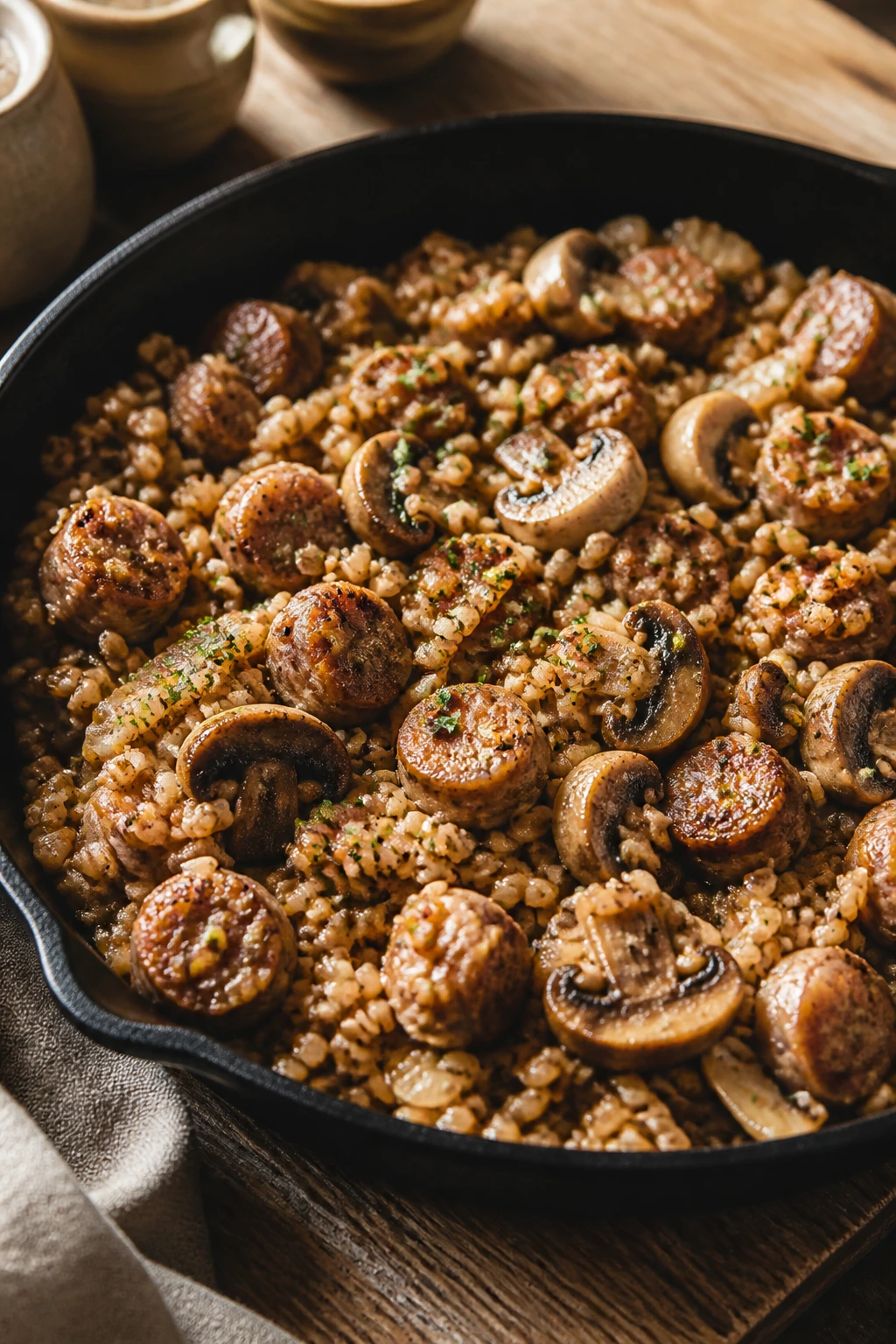
Farro has a chewy, nutty bite that stands up to sausage better than a delicate grain would. Mushrooms deepen the pan, and the broth turns everything into a hearty skillet that still feels clean on the tongue.
Why It Works: Farro keeps texture after simmering, so you get a satisfying chew instead of soft mush. Mushrooms and sausage build a savory base that tastes slow-cooked even when it isn’t.
Key Ingredients:
- 1 lb sausage
- 1 cup farro, rinsed
- 12 oz mushrooms, sliced
- 1 onion, diced
- 3 cups chicken broth
- 2 tablespoons chopped parsley
- 1 teaspoon thyme
- 1 tablespoon olive oil
Quick Steps:
- Brown the sausage and remove it.
- Cook mushrooms and onion in oil until browned.
- Stir in farro and thyme, then add broth.
- Simmer 25 to 30 minutes until the farro is tender.
- Stir sausage back in and finish with parsley.
Equipment for This Recipe:
- Deep skillet or braiser
- Wooden spoon
- Fine-mesh sieve for rinsing farro
How to Serve This Dish: Serve it as a bowl meal with a crisp salad on the side. A little parmesan on top works, but parsley keeps it brighter.
Pro Tips for This Recipe:
- Toast the farro for a minute before adding broth if you want extra nuttiness.
- If the farro soaks up liquid too fast, add more broth in 1/2-cup splashes.
- Cremini mushrooms hold up well and don’t disappear.
Variations on This Dish:
- Tomato Farro Pan: Add a spoonful of tomato paste with the onion.
- Garlic Herb Version: Finish with extra parsley and a little lemon zest.
Common Mistakes to Avoid with This Dish:
- Not rinsing the farro: Dusty grains can muddy the broth.
- Calling it done too early: Farro should be tender but still chewy.
23. Sausage, Tomato, and Basil Polenta Skillet
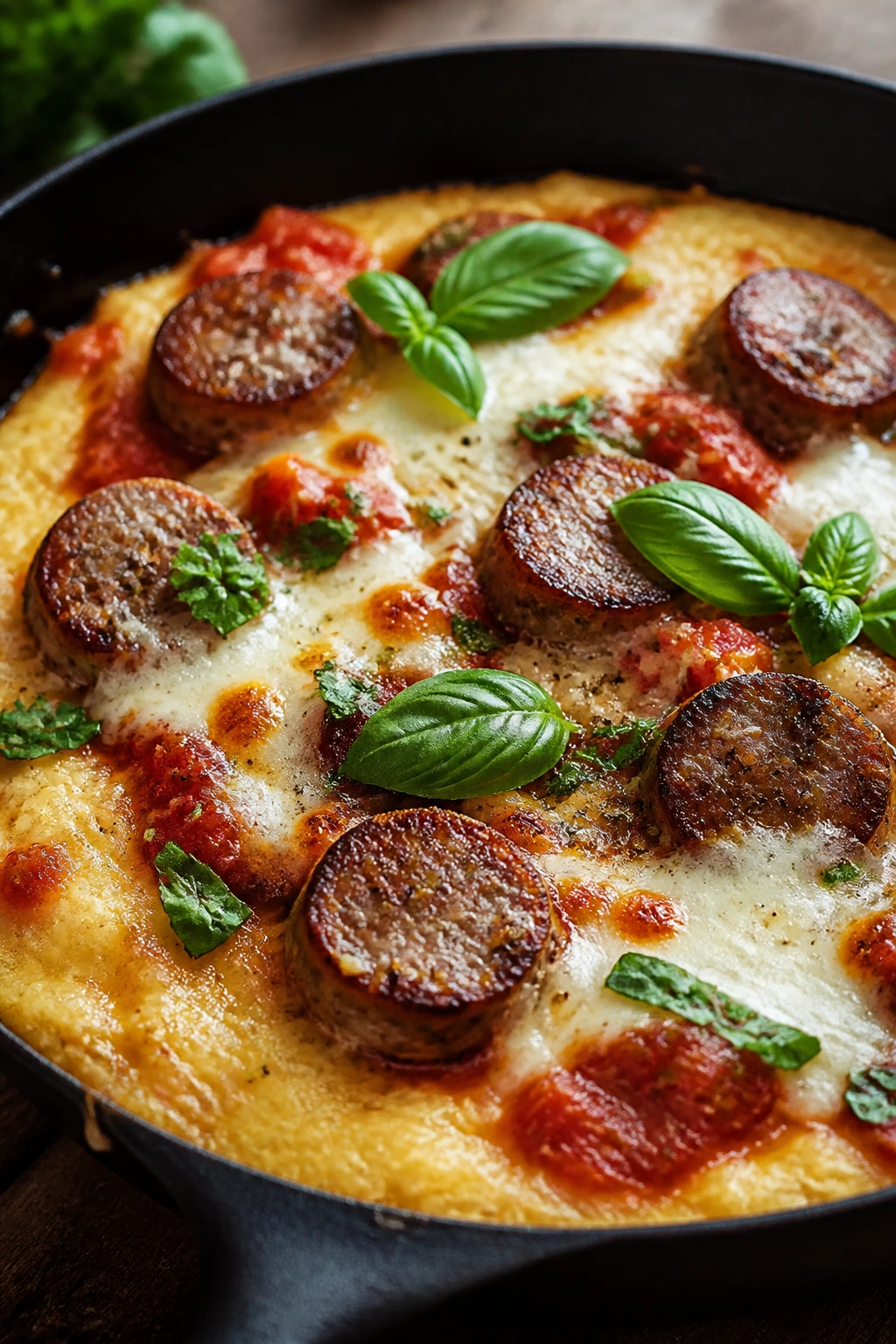
Polenta gives this skillet a soft bed for the sausage and tomatoes. Basil keeps it from going heavy, and the whole dish ends up tasting like something between a rustic supper and a very good weeknight compromise.
Why It Works: Polenta thickens as it stands, so the sausage juices sink in instead of running away. Tomatoes break down into a light sauce that keeps the cornmeal from tasting plain.
Key Ingredients:
- 1 lb sausage
- 2 cups cherry tomatoes
- 1 cup polenta
- 4 cups water or broth
- 1 clove garlic, minced
- 1/2 cup shredded mozzarella
- 1/4 cup fresh basil
- 2 tablespoons butter
Quick Steps:
- Cook the polenta with water or broth until creamy, then stir in butter.
- Brown the sausage in a skillet and remove it.
- Cook tomatoes and garlic until the tomatoes burst.
- Stir sausage into the tomatoes.
- Spoon over the polenta, then top with mozzarella and basil.
Equipment for This Recipe:
- Saucepan for polenta
- Skillet
- Whisk
How to Serve This Dish: Spoon the tomato sausage over a thick layer of polenta and let the cheese melt on top. It wants a wide bowl and a fork with a little scoop to it.
Pro Tips for This Recipe:
- Keep the polenta moving so it doesn’t clump.
- Fresh basil goes in at the very end or it loses its smell.
- If the tomatoes are pale, add a pinch of sugar only if needed.
Variations on This Dish:
- Creamier Polenta: Stir in a splash of cream or extra butter.
- Baked Cheese Finish: Slide the skillet under the broiler for 1 minute if the pan is oven-safe.
Common Mistakes to Avoid with This Dish:
- Making the polenta too stiff: It should be soft enough to spread under the sausage.
- Burning the garlic: It turns bitter fast once the tomatoes aren’t there yet.
24. Sausage and Sweet Potato Skillet with Cumin
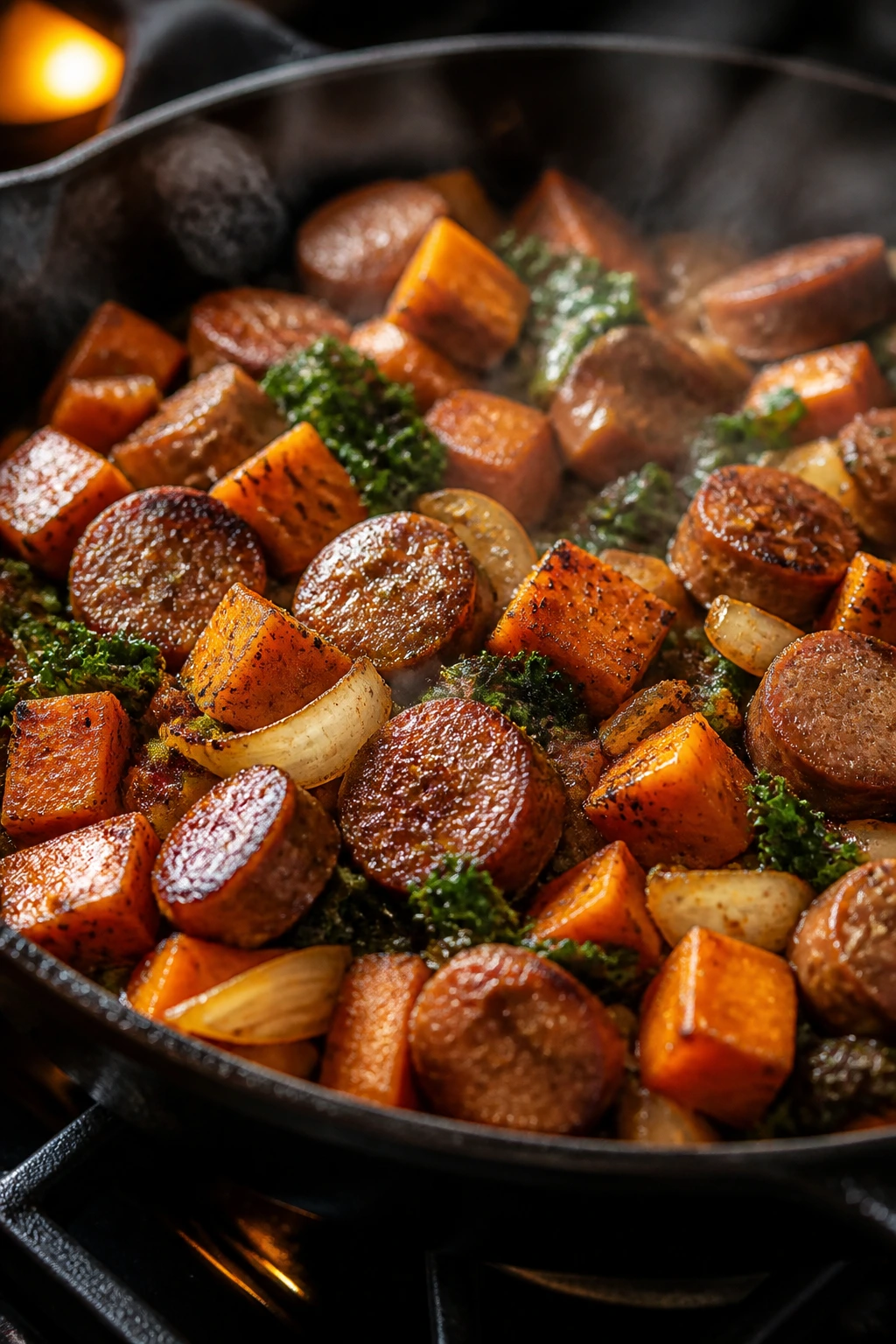
Sweet potatoes can take on a lot of flavor if you give them the right company. Here, sausage, cumin, and onions push the pan toward savory, while the potatoes bring a soft sweetness that keeps dinner grounded.
Why It Works: Sweet potatoes brown best in contact with hot fat, and sausage provides exactly that. Cumin gives the skillet a warm edge, but not enough to drag it into chili territory.
Key Ingredients:
- 1 lb sausage
- 2 large sweet potatoes, diced
- 1 onion, diced
- 1 teaspoon cumin
- 2 cups chopped kale
- 1/2 cup chicken broth
- 1 tablespoon olive oil
- Salt and pepper
Quick Steps:
- Brown the sausage and remove it.
- Add oil and sweet potatoes; cook 8 minutes until browned in spots.
- Stir in onion and cumin, then cook 4 minutes.
- Add broth and kale, cover 5 minutes.
- Return sausage and heat through.
Equipment for This Recipe:
- Large skillet with lid
- Spatula
- Knife for the sweet potatoes
How to Serve This Dish: Serve it with hot sauce and a little yogurt if you want contrast. It’s hearty enough to stand alone, but bread is welcome.
Pro Tips for This Recipe:
- Dice the sweet potatoes small so they finish at the same time as the sausage.
- Don’t add the kale too early; it only needs a short wilt.
- A squeeze of lime works if you want a brighter finish.
Variations on This Dish:
- Black Bean Add-In: Stir in a can of black beans near the end.
- Smoky Sweet Potato Pan: Use smoked paprika with the cumin.
Common Mistakes to Avoid with This Dish:
- Large sweet potato cubes: They take too long and the sausage dries out.
- Skipping the browning step: Sweet potatoes taste dull if they just steam.
25. Sausage and Brussels Sprouts Skillet with Balsamic
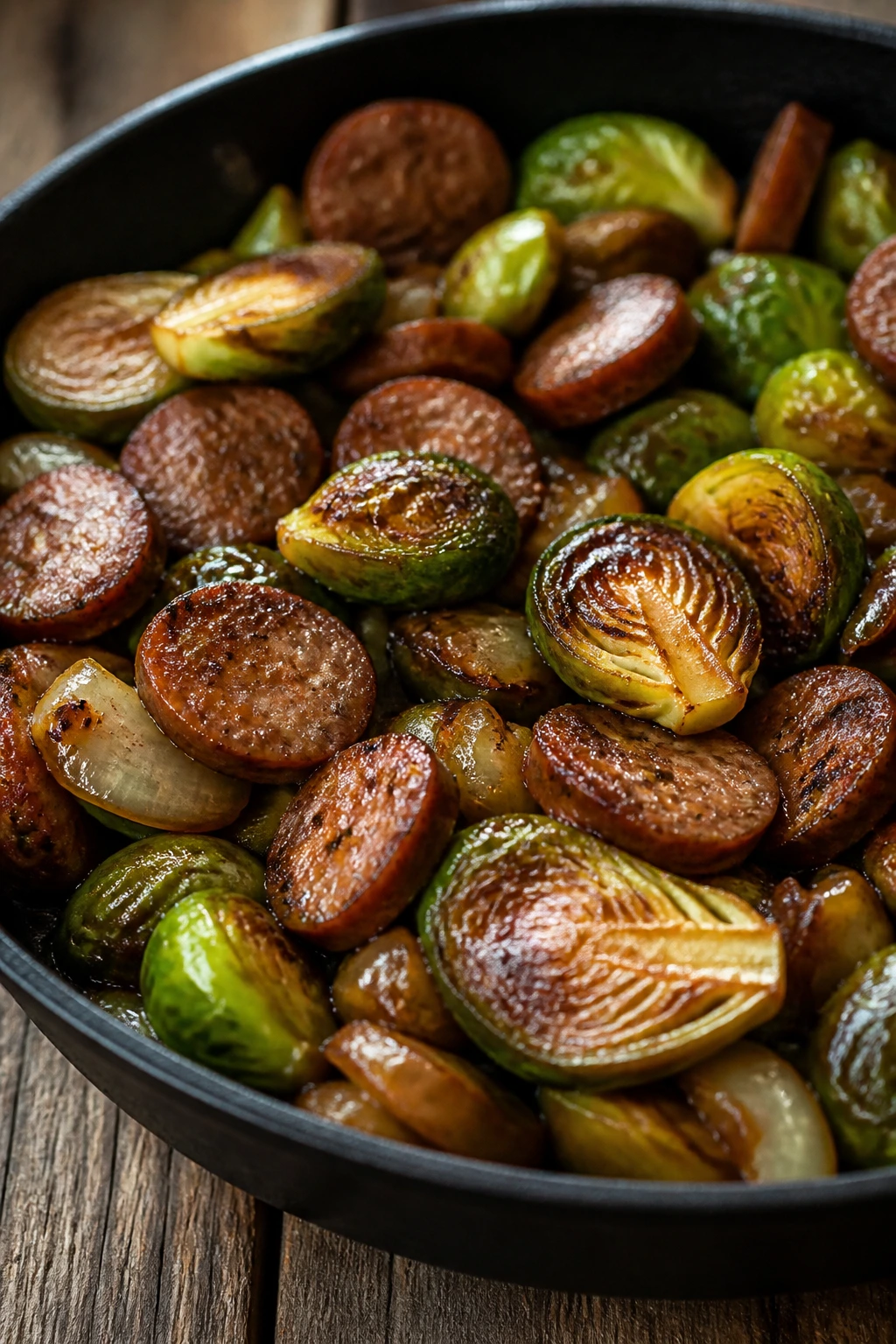
Brussels sprouts are much better when their cut sides hit the pan hard enough to brown. Add sausage and a splash of balsamic, and the whole dish tastes sweet, sharp, and deeply savory.
Why It Works: The sprouts need direct heat to get nutty and crisp at the edges. Balsamic added near the end coats the pan without making the vegetables soggy.
Key Ingredients:
- 1 lb sausage
- 1 lb Brussels sprouts, halved
- 1 onion, sliced
- 2 cloves garlic, minced
- 2 tablespoons balsamic vinegar
- 1 teaspoon Dijon mustard
- 1 tablespoon olive oil
- Salt and pepper
Quick Steps:
- Brown the sausage and set it aside.
- Cook Brussels sprouts cut-side down in oil until browned.
- Add onion and cook until softened.
- Stir in garlic, balsamic, and mustard.
- Return sausage and toss to coat.
Equipment for This Recipe:
- Large heavy skillet
- Tongs
- Lid, optional for softening the sprouts
How to Serve This Dish: Serve it with roasted potatoes or crusty bread. A few shaved parmesan curls on top are nice if you want more salt and depth.
Pro Tips for This Recipe:
- Don’t move the sprouts too soon or you’ll lose the caramelized side.
- If your balsamic is thick and sweet, use less than you think.
- A pinch of red pepper flakes gives the pan more snap.
Variations on This Dish:
- Apple Brussels Pan: Add thin apple slices with the onions.
- Bacon-Sausage Blend: Add 2 strips chopped bacon for more smoky flavor.
Common Mistakes to Avoid with This Dish:
- Crowding the sprouts: They steam instead of browning.
- Adding balsamic too early: It can burn before the vegetables finish.
26. Sausage, Eggplant, and Tomato Skillet
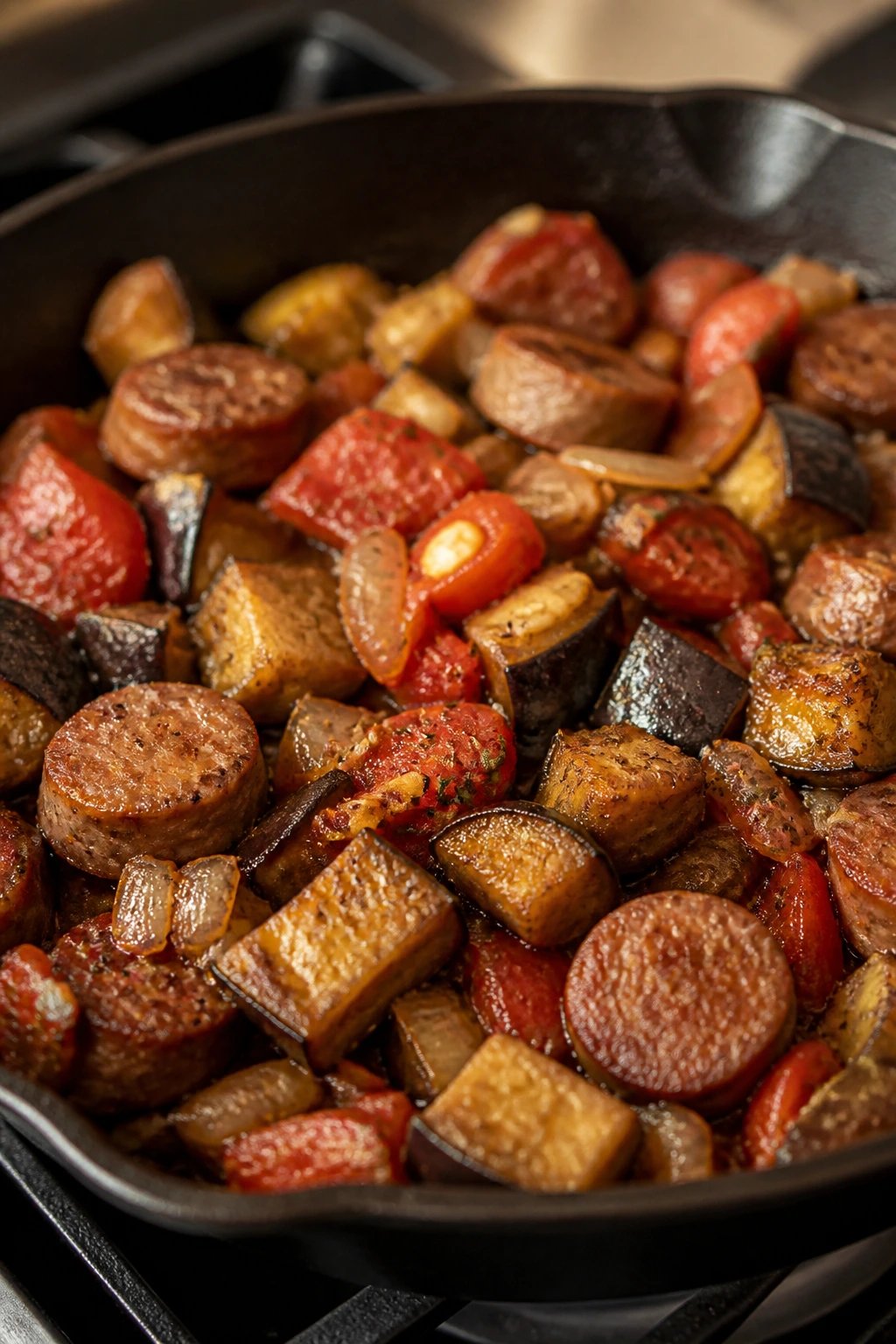
Eggplant needs enough heat to go silky without turning greasy, and sausage helps with that by giving the pan enough fat to work with. Tomato and basil pull the whole dish into familiar Italian territory.
Why It Works: Salted and browned eggplant absorbs flavor instead of oiliness when it has space in the skillet. Tomato gives it a softer sauce, and sausage keeps the dish from feeling like a side.
Key Ingredients:
- 1 lb sausage
- 1 medium eggplant, cubed
- 2 cups diced tomatoes
- 1 onion, diced
- 3 cloves garlic, minced
- 1 teaspoon dried basil
- 1/4 cup fresh basil
- 2 tablespoons olive oil
Quick Steps:
- Brown the sausage and remove it.
- Cook eggplant in oil until browned and tender, about 8 minutes.
- Add onion and garlic; cook 4 minutes.
- Stir in tomatoes and dried basil, simmer 6 minutes.
- Return sausage and finish with fresh basil.
Equipment for This Recipe:
- Large skillet
- Wooden spoon
- Knife and cutting board
How to Serve This Dish: Serve it over polenta, pasta, or toasted bread. A little ricotta on the side makes the pan feel softer and more filling.
Pro Tips for This Recipe:
- Cube the eggplant evenly so it cooks at the same pace.
- If eggplant soaks up oil fast, don’t panic; it settles down once it softens.
- Fresh basil at the end matters more than extra dried basil.
Variations on This Dish:
- Roasted Pepper Version: Add jarred roasted peppers with the tomatoes.
- Cheesy Finish: Top with mozzarella and let it melt under a lid.
Common Mistakes to Avoid with This Dish:
- Salting eggplant too late: It can stay spongy instead of silky.
- Using too little heat: Eggplant needs browning or it just tastes wet.
27. Sausage and Cornbread Skillet Bake
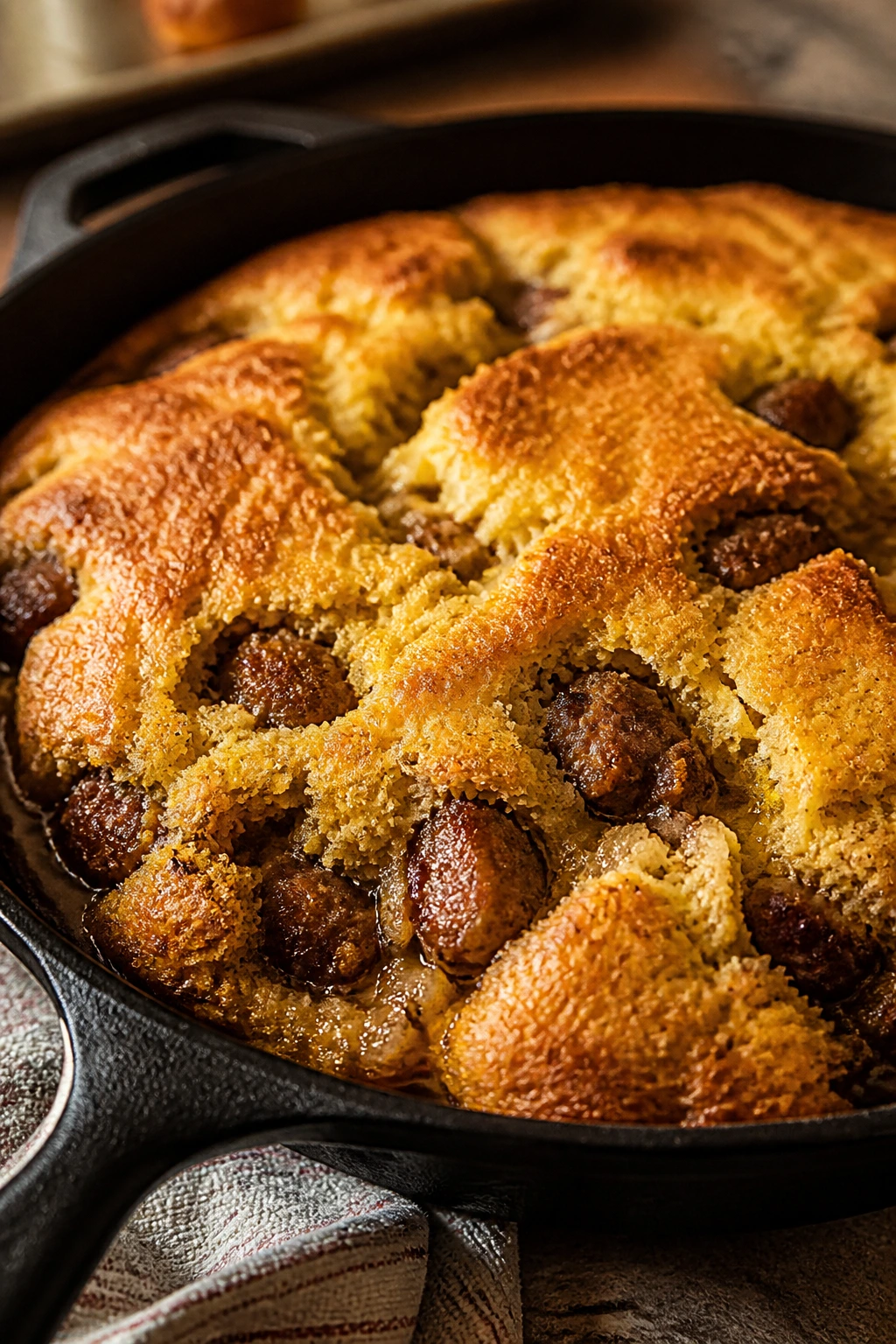
This one edges closer to casserole, but it still starts on the stove, which is what makes it belong here. Savory sausage, sweet corn, and cornbread batter bake into a skillet supper with crisp edges and a soft middle.
Why It Works: Browning the sausage first keeps the filling from tasting bland. The cornbread batter bakes around the sausage juices, so the top stays golden while the center stays tender.
Key Ingredients:
- 1 lb sausage
- 1 cup corn kernels
- 1 small jalapeño, minced
- 1 cup shredded cheddar
- 1 box cornbread mix or homemade batter for a 10-inch skillet
- 2 eggs, if required by mix
- 1 cup milk, if required by mix
- 2 tablespoons chopped green onions
Quick Steps:
- Brown the sausage in an oven-safe skillet and stir in corn, jalapeño, and half the cheddar.
- Mix the cornbread batter according to the package or recipe.
- Pour the batter over the sausage mixture and scatter the rest of the cheese on top.
- Bake at 400°F until golden and set, about 20 to 25 minutes.
- Finish with green onions.
Equipment for This Recipe:
- Oven-safe skillet
- Mixing bowl
- Spoon
How to Serve This Dish: Serve wedges straight from the pan with a spoonful of sour cream or hot sauce. It’s a full supper, though a crunchy slaw on the side is nice.
Pro Tips for This Recipe:
- Use a skillet that’s wide enough so the cornbread layer isn’t too thick.
- Let the sausage filling cool for a minute before pouring batter over it.
- Check the center with a toothpick so the cornbread doesn’t stay raw.
Variations on This Dish:
- Southwest Bake: Add black beans and cumin to the filling.
- Plain and Cheesy Version: Skip the jalapeño and use extra cheddar.
Common Mistakes to Avoid with This Dish:
- Using a skillet that isn’t oven-safe: That ends badly, quickly.
- Overfilling the pan: The batter needs room to rise.
28. Sausage and Poblano Skillet with Cheese
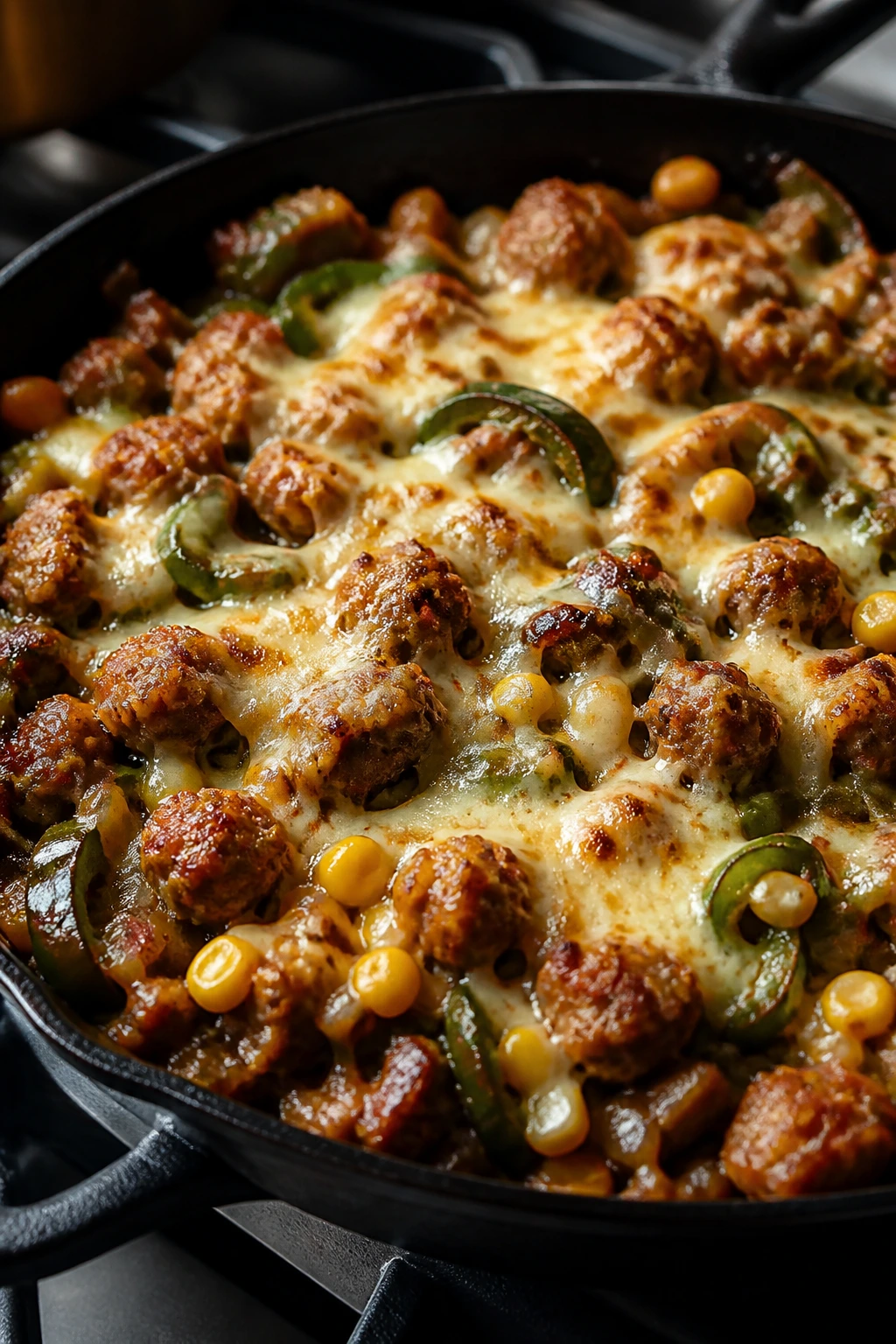
Poblanos have a mellow heat and a deep green flavor that suits sausage better than raw bell pepper ever could. Add melted cheese, and the skillet lands in that comfortable space between rustic and indulgent.
Why It Works: Poblanos soften into the sausage drippings without going watery. Cheese adds richness, but the peppers keep the pan from feeling one-dimensional.
Key Ingredients:
- 1 lb sausage
- 2 poblano peppers, sliced
- 1 onion, sliced
- 1 cup corn kernels
- 1 cup shredded Monterey Jack
- 1/2 cup chicken broth
- 1 tablespoon olive oil
- Salt and pepper
Quick Steps:
- Brown the sausage and remove it.
- Cook onion and poblano in oil for 6 minutes.
- Add corn and broth, then simmer 3 minutes.
- Return sausage and sprinkle cheese over the top.
- Cover until melted.
Equipment for This Recipe:
- Large skillet with lid
- Tongs
- Cheese grater
How to Serve This Dish: Serve it with warm tortillas, rice, or beans. It also works as a filling for toasted buns if you want it less formal.
Pro Tips for This Recipe:
- Roast and peel the poblanos first if you want a softer, sweeter flavor.
- Monterey Jack melts cleanly here; cheddar is sharper but heavier.
- A squeeze of lime at the end keeps the cheese from feeling dull.
Variations on This Dish:
- Spicy Version: Add one minced jalapeño with the onion.
- Creamy Poblano Pan: Stir in 2 tablespoons crema after the cheese melts.
Common Mistakes to Avoid with This Dish:
- Letting the peppers stay raw: They need enough time to soften before the cheese goes in.
- Adding too much broth: The skillet should be moist, not soupy.
29. Sausage and Black Bean Skillet
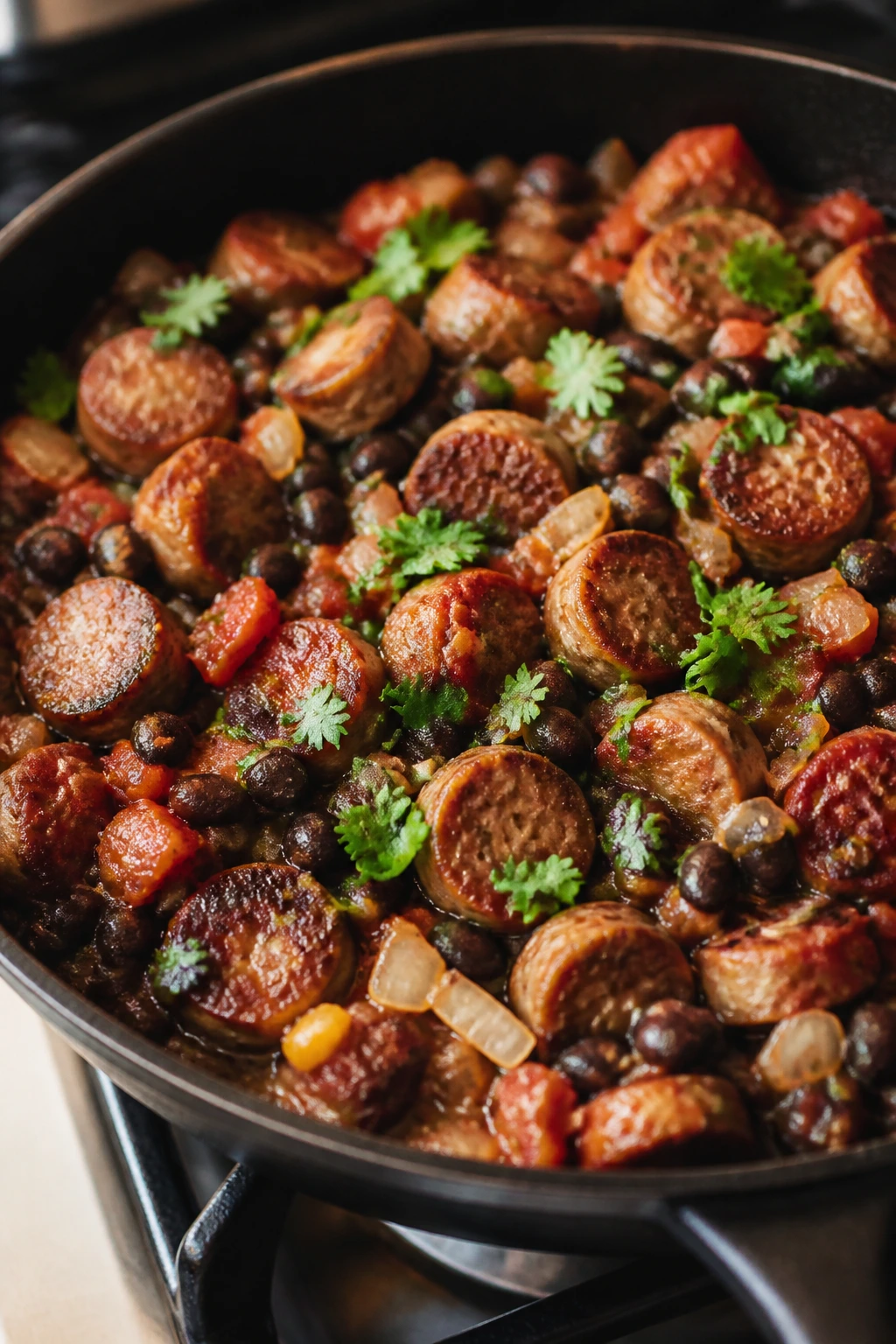
Black beans give sausage a cheap and sturdy partner, and that’s not a knock. It’s the point. The pan becomes thick, smoky, and a little saucy, which makes it easy to serve with rice, tortillas, or just a spoon.
Why It Works: Black beans hold their shape and absorb seasoning without falling apart. Tomato paste and cumin build a warm base that keeps the dish from tasting like plain meat and beans.
Key Ingredients:
- 1 lb sausage
- 2 cans black beans, drained and rinsed
- 1 onion, diced
- 2 tablespoons tomato paste
- 1 teaspoon cumin
- 1 cup diced tomatoes
- 1/2 cup chicken broth
- 2 tablespoons cilantro
Quick Steps:
- Brown the sausage and remove it.
- Cook onion, then stir in tomato paste and cumin for 1 minute.
- Add beans, tomatoes, and broth, simmering 8 minutes.
- Return sausage and heat through.
- Finish with cilantro.
Equipment for This Recipe:
- Large skillet
- Wooden spoon
- Can opener
How to Serve This Dish: Serve it over rice, in tortillas, or with chips for scooping. A little salsa or sour cream on the side makes the bowl more lively.
Pro Tips for This Recipe:
- Rinse canned beans so the sauce tastes cleaner.
- If you want it thicker, mash a few beans against the side of the pan.
- A squeeze of lime at the end sharpens the whole skillet.
Variations on This Dish:
- Tex-Mex Version: Add corn and shredded cheddar.
- Chipotle Pan: Stir in minced chipotle in adobo for smoke and heat.
Common Mistakes to Avoid with This Dish:
- Not rinsing the beans: The canned liquid can muddy the sauce.
- Undercooking the tomato paste: It needs a minute in the pan or it stays raw.
30. Sausage Carbonara-Style Skillet Pasta
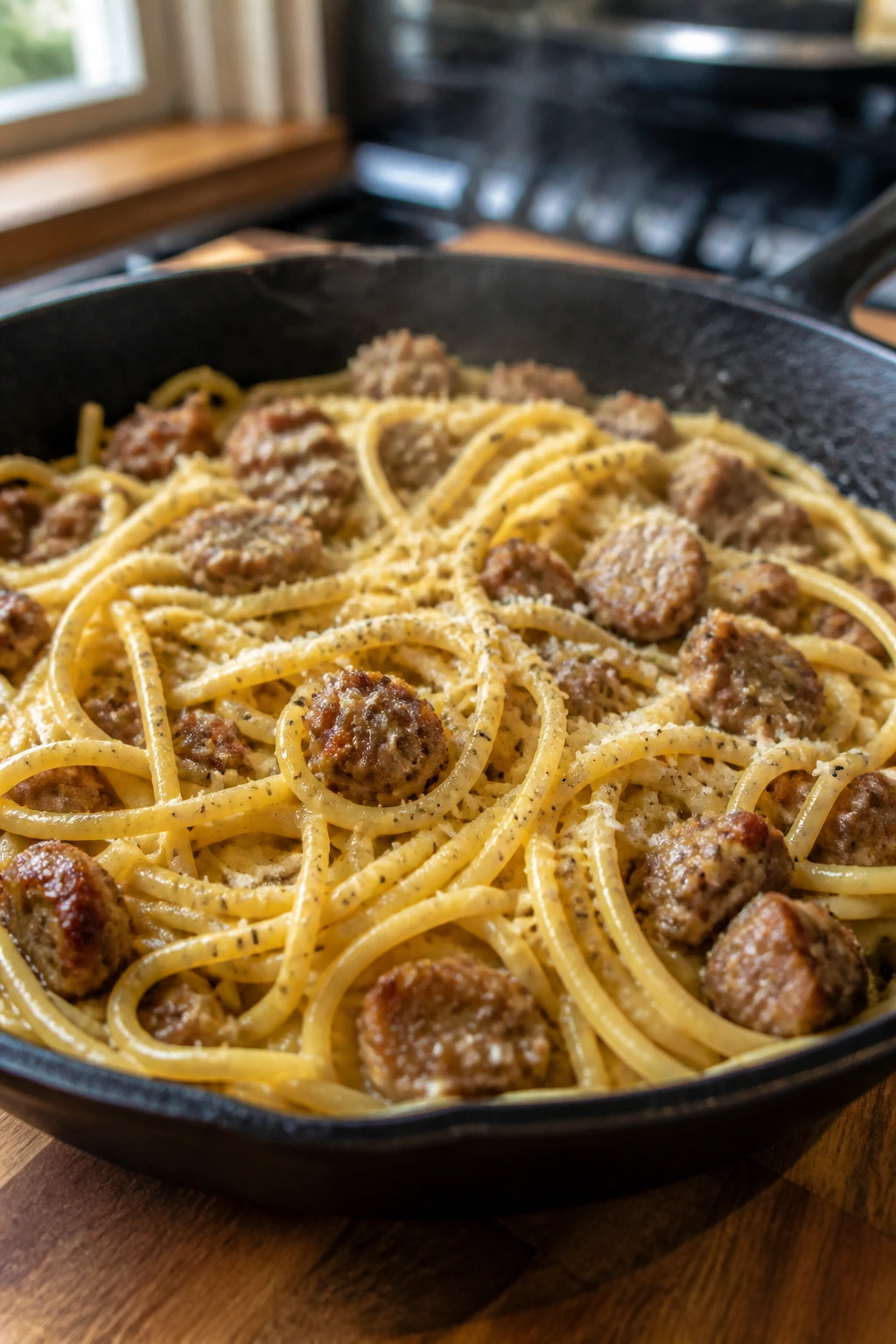
This is not classic carbonara, and I wouldn’t pretend otherwise. But it does borrow the good parts: pepper, cheese, egg, and a silky sauce that clings to pasta and sausage without feeling heavy or fussy.
Why It Works: The hot pasta cooks the egg mixture gently off the heat, which gives you a glossy sauce instead of scrambled bits. Sausage adds the salty, fatty note that bacon usually brings in a more traditional version.
Key Ingredients:
- 1 lb sausage
- 12 oz spaghetti or bucatini
- 3 large eggs
- 1 cup grated parmesan
- 1 teaspoon black pepper
- 2 cloves garlic, minced
- 1/2 cup pasta water, reserved
- 2 tablespoons chopped parsley
Quick Steps:
- Brown the sausage and set it aside.
- Cook pasta until al dente, reserving pasta water.
- Stir garlic into the sausage pan for 30 seconds, then turn off the heat.
- Toss pasta with sausage, eggs, parmesan, pepper, and enough pasta water to form a silky sauce.
- Finish with parsley and serve immediately.
Equipment for This Recipe:
- Large skillet or sauté pan
- Pot for pasta
- Tongs
How to Serve This Dish: Serve right away with extra black pepper and more parmesan. It’s a dish that wants a simple salad, because the pasta already carries the show.
Pro Tips for This Recipe:
- Work off the heat when the eggs go in, or they’ll scramble.
- Use enough pasta water to loosen the sauce; it should look shiny, not gluey.
- Freshly ground pepper matters more than usual here.
Variations on This Dish:
- Pea Carbonara: Add thawed peas with the pasta for sweetness.
- Bacon-Sausage Blend: Use a little diced bacon with the sausage for a smokier pan.
Common Mistakes to Avoid with This Dish:
- Adding eggs to a blazing-hot skillet: That’s how you get scrambled pasta.
- Skipping the reserved water: The sauce needs starch to come together.
31. Sausage and Red Lentil Curry Skillet
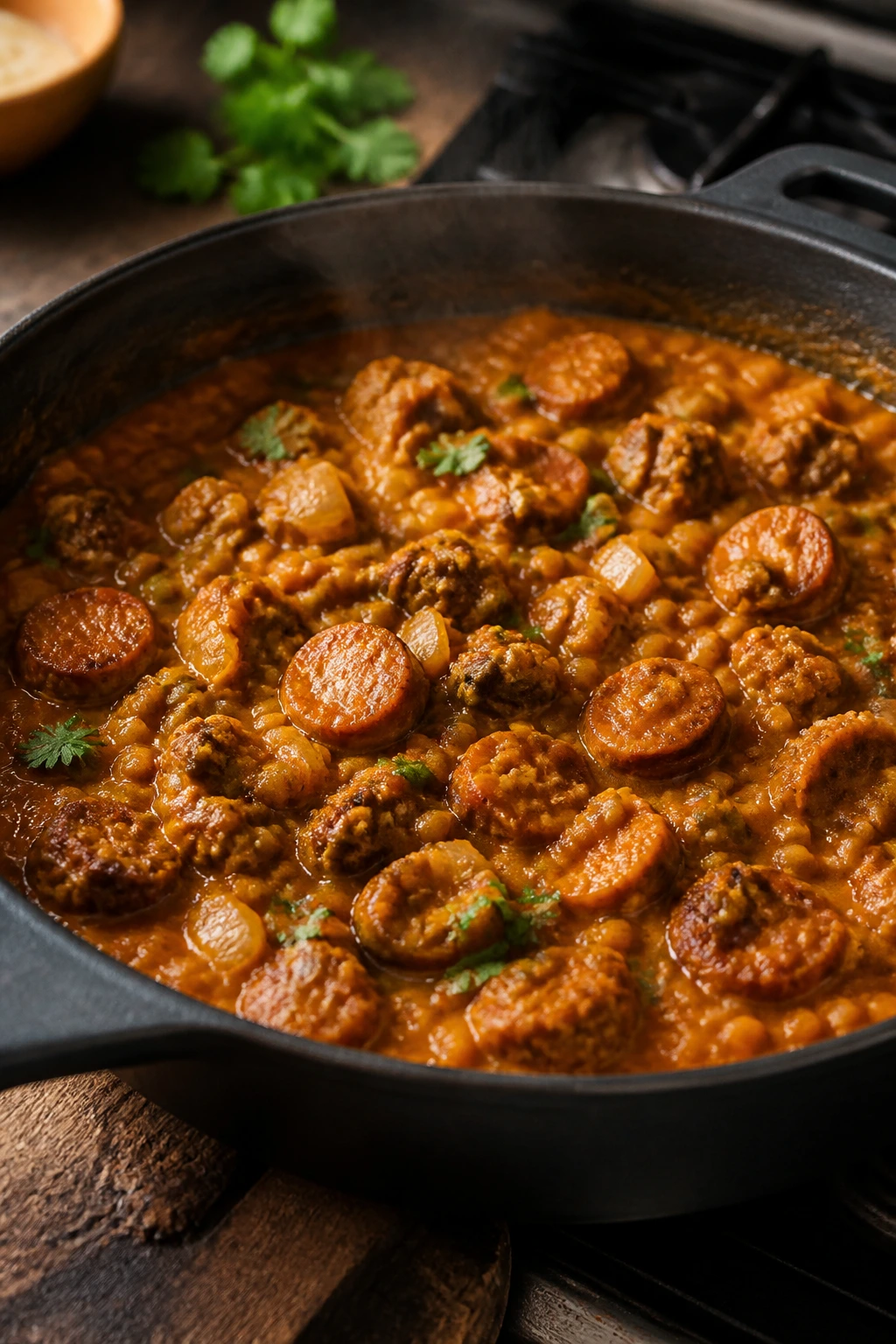
Red lentils break down into a thick, spoonable sauce, which makes this skillet feel both hearty and soft. Sausage gives the curry more depth than a vegetable-only version, and coconut milk smooths the spice.
Why It Works: Red lentils cook fast and dissolve a little, which thickens the sauce naturally. Curry paste, onion, and coconut milk make a base that tastes like it took more effort than it did.
Key Ingredients:
- 1 lb sausage
- 1 cup red lentils, rinsed
- 1 onion, diced
- 2 tablespoons curry paste
- 1 can coconut milk, 13.5 oz
- 2 cups chicken broth
- 2 cups spinach
- 1 tablespoon lime juice
Quick Steps:
- Brown the sausage and remove it.
- Cook onion, then stir in curry paste for 1 minute.
- Add lentils, coconut milk, and broth; simmer 15 to 18 minutes.
- Stir in spinach and sausage until the spinach wilts.
- Finish with lime juice.
Equipment for This Recipe:
- Deep skillet
- Wooden spoon
- Ladle
How to Serve This Dish: Serve over rice with chopped herbs on top. If you want a little crunch, toasted naan on the side is excellent.
Pro Tips for This Recipe:
- Rinse red lentils well so the sauce doesn’t taste dusty.
- Curry paste varies a lot in heat; start with less if yours runs hot.
- Lime juice at the end is nonnegotiable if you want the curry to taste bright.
Variations on This Dish:
- Chickpea Curry: Swap half the lentils for chickpeas if you want more bite.
- Milder Version: Use curry powder instead of paste for softer spice.
Common Mistakes to Avoid with This Dish:
- Adding too little liquid: Red lentils thicken quickly and can seize up.
- Skipping the lime: The curry needs that last pop of acid.
32. Sausage and Ricotta Stuffed Pepper Skillet
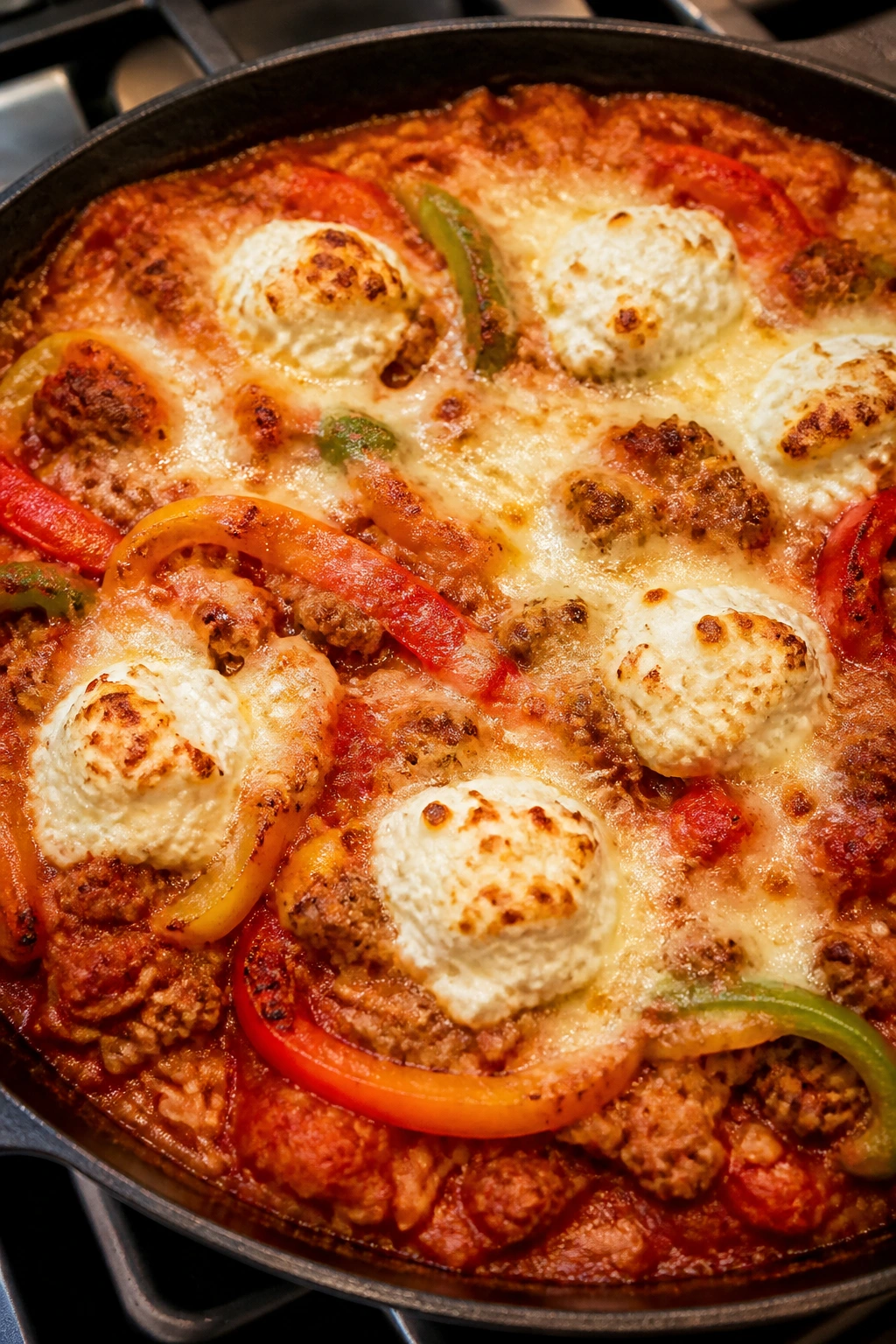
This skillet gives you the stuffed-pepper idea without the fussy assembly. The peppers soften in the sauce, the sausage fills the pan with flavor, and ricotta adds little cool pockets that make each bite feel balanced.
Why It Works: Bell peppers cook faster when they’re sliced and layered in a skillet instead of stuffed whole. Ricotta added at the end keeps the dish creamy without turning the sauce heavy.
Key Ingredients:
- 1 lb sausage
- 3 bell peppers, sliced
- 1 onion, diced
- 2 cups cooked rice
- 1 cup ricotta
- 2 cups marinara
- 1 cup shredded mozzarella
- 1 tablespoon olive oil
Quick Steps:
- Brown the sausage and remove it.
- Cook onion and peppers in oil for 6 minutes.
- Stir in rice and marinara, then add sausage.
- Dot ricotta over the top and sprinkle with mozzarella.
- Cover until the cheese melts.
Equipment for This Recipe:
- Large skillet with lid
- Spoon
- Measuring cups
How to Serve This Dish: Serve it in bowls so the ricotta can melt into the sauce. It’s good with a crunchy salad on the side, especially one dressed with vinegar.
Pro Tips for This Recipe:
- Use leftover rice if you have it; it holds up better than hot fresh rice.
- Don’t stir the ricotta in completely unless you want a creamier pan.
- If the sauce seems loose, simmer uncovered for a few minutes before the cheese goes on.
Variations on This Dish:
- Turkey Sausage Version: Swap in turkey sausage for a lighter pan.
- No-Rice Skillet: Use cauliflower rice for a lower-carb bowl.
Common Mistakes to Avoid with This Dish:
- Overcooking the peppers: They should still have shape.
- Using too much ricotta: A few dollops go further than people think.
33. Sausage and Pea Risotto Skillet
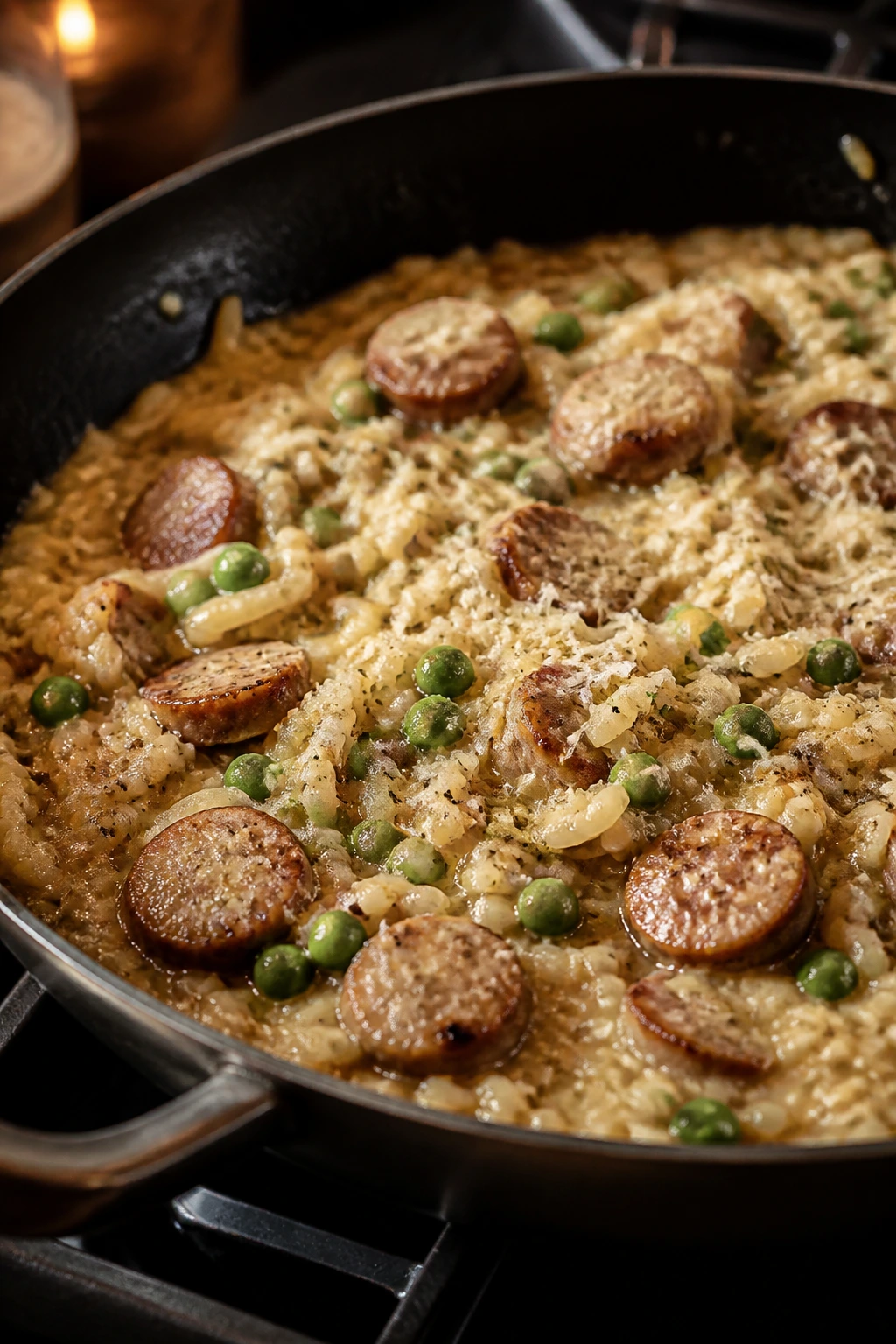
Risotto in a skillet sounds fussy until you realize it’s mostly stirring broth into rice while the sausage handles the flavor. The peas brighten the pan at the end, and the parmesan gives the whole dish a soft finish.
Why It Works: Arborio rice releases starch as it cooks, which makes the skillet creamy without cream. Sausage adds enough fat that the risotto tastes full-bodied instead of plain.
Key Ingredients:
- 1 lb sausage
- 1 1/2 cups arborio rice
- 1 onion, finely diced
- 1/2 cup white wine
- 4 cups chicken broth, kept warm
- 1 cup peas
- 1/2 cup parmesan
- 2 tablespoons butter
Quick Steps:
- Brown the sausage and remove it.
- Cook onion in butter, then add rice and stir for 1 minute.
- Add wine and cook until absorbed.
- Add broth gradually, stirring until the rice is creamy and tender, about 18 to 20 minutes.
- Stir in peas, parmesan, and sausage.
Equipment for This Recipe:
- Wide skillet
- Ladle
- Wooden spoon
How to Serve This Dish: Serve it in shallow bowls while it’s loose and creamy. A little extra parmesan and black pepper at the table finish it properly.
Pro Tips for This Recipe:
- Keep the broth warm so the rice cooks evenly.
- Stir enough to release starch, but not so much that the rice breaks.
- Frozen peas can go in straight from the freezer.
Variations on This Dish:
- Lemon Risotto: Add zest and juice at the end for brightness.
- Mushroom Risotto Pan: Cook sliced mushrooms before the onion.
Common Mistakes to Avoid with This Dish:
- Using cold broth: The rice cooks unevenly and tightens up.
- Walking away from risotto: It needs regular stirring, though not nonstop panic.
34. Sausage and Butter Beans with Rosemary
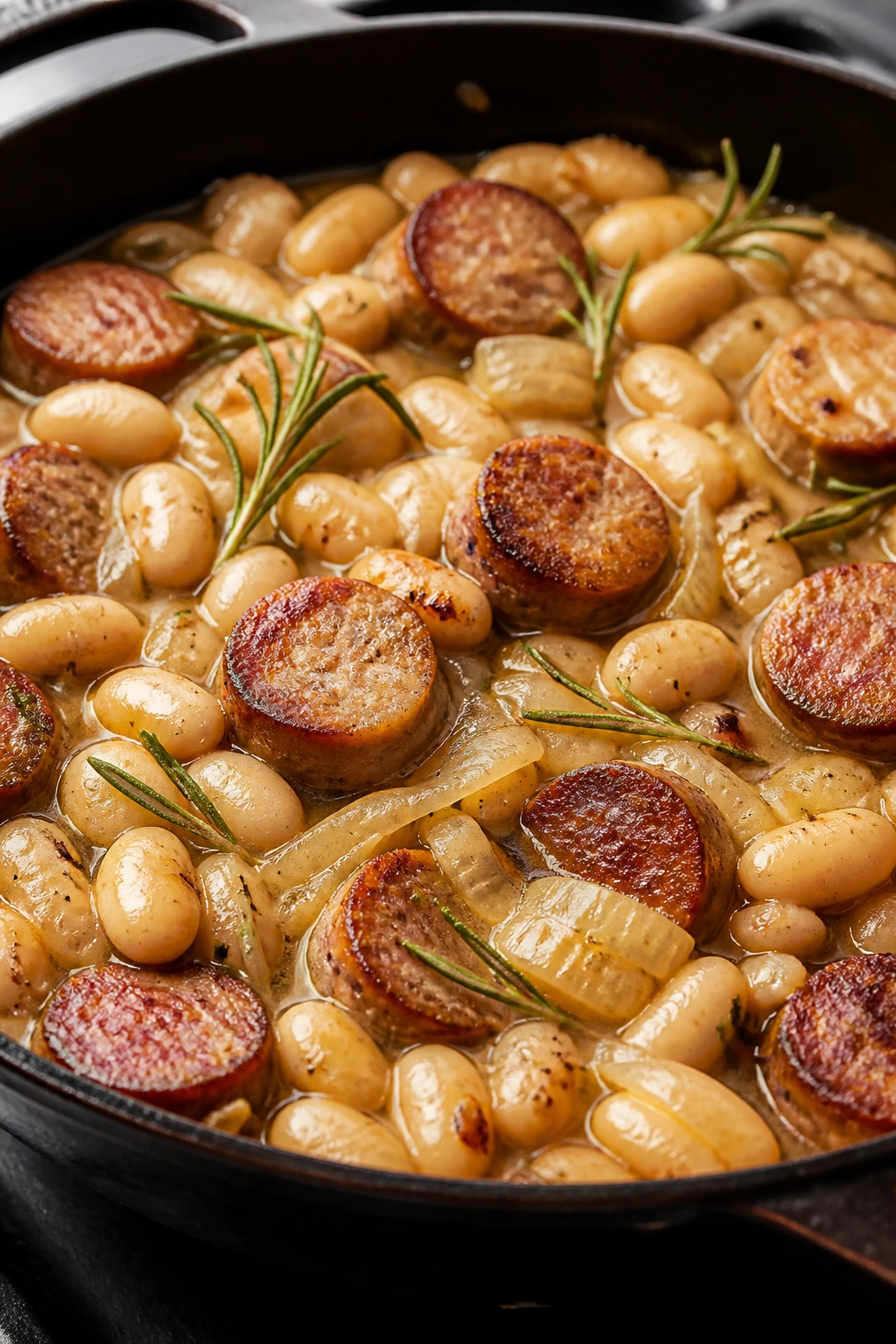
Butter beans have a soft, almost velvety texture that loves sausage. Rosemary adds a piney note, the onions melt into the broth, and the whole pan tastes like something much slower than it really is.
Why It Works: Butter beans break down just enough to thicken the pan while still holding shape. Rosemary and garlic give the beans a strong enough flavor path to follow.
Key Ingredients:
- 1 lb sausage
- 2 cans butter beans, drained and rinsed
- 1 onion, sliced
- 3 cloves garlic, minced
- 1 teaspoon chopped rosemary
- 1 cup chicken broth
- 2 cups baby spinach
- 1 tablespoon olive oil
Quick Steps:
- Brown the sausage and remove it.
- Cook onion in oil until soft, then add garlic and rosemary.
- Stir in beans and broth, simmer 8 minutes.
- Add spinach and sausage and cook until the spinach wilts.
- Season with pepper and serve.
Equipment for This Recipe:
- Deep skillet
- Wooden spoon
- Can opener
How to Serve This Dish: Serve it with toasted bread or over rice if you want to stretch it. A drizzle of olive oil over the top is enough; it doesn’t need much more.
Pro Tips for This Recipe:
- Butter beans are softer than cannellini, so don’t simmer them too long.
- Fresh rosemary is stronger than dried, so use less if that’s what you have.
- A splash of vinegar at the end keeps the beans from tasting dull.
Variations on This Dish:
- Tomato Bean Pan: Add diced tomatoes for a saucier skillet.
- Smoky Rosemary Version: Use smoked sausage and a pinch of paprika.
Common Mistakes to Avoid with This Dish:
- Overstirring the beans: They can break and turn pasty.
- Using too much rosemary: It can take over the whole dish.
35. Sausage and Roasted Red Pepper Couscous Skillet
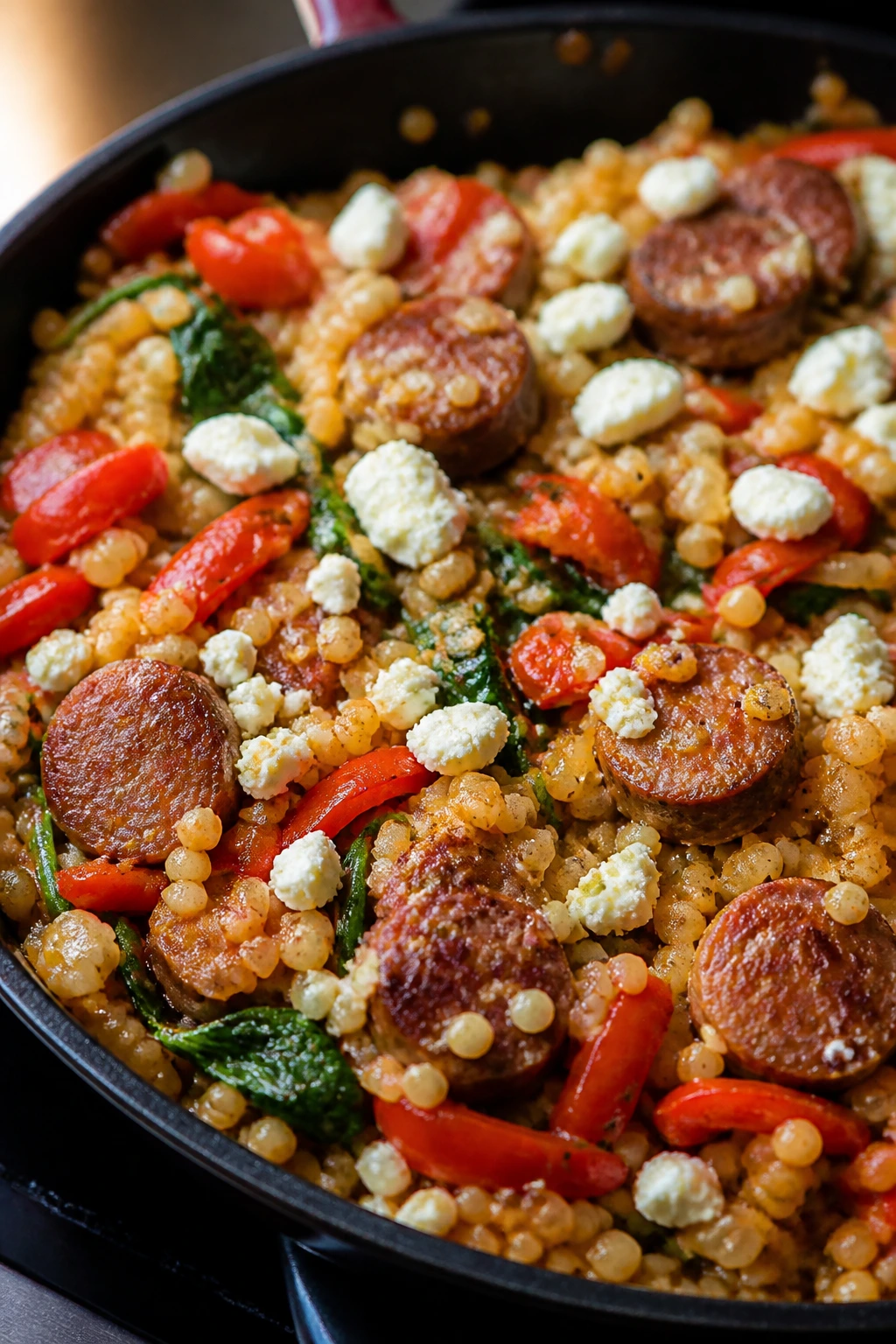
Couscous is fast, but it doesn’t have to taste rushed. Roasted red peppers, sausage, and a little feta make this skillet bright, savory, and just substantial enough for a Sunday supper without feeling heavy.
Why It Works: Couscous soaks up hot broth in minutes and carries flavor well, while roasted peppers add sweetness and a little smokiness. Feta gives the finish a salty snap that keeps the pan lively.
Key Ingredients:
- 1 lb sausage
- 1 1/2 cups couscous
- 1 jar roasted red peppers, drained and sliced
- 1 onion, diced
- 2 cups chicken broth
- 2 cups baby spinach
- 1/2 cup crumbled feta
- 1 tablespoon olive oil
Quick Steps:
- Brown the sausage and remove it.
- Cook onion in oil for 4 minutes, then add roasted peppers.
- Stir in couscous and broth, cover, and let stand 5 minutes.
- Fluff with a fork, then add spinach and sausage.
- Top with feta and serve.
Equipment for This Recipe:
- Large skillet with lid
- Fork
- Measuring cup
How to Serve This Dish: Serve it warm in a wide bowl with lemon wedges on the side. A simple cucumber salad is a good match if you want something cool beside it.
Pro Tips for This Recipe:
- Use pearl couscous if you want more chew; regular couscous is lighter.
- Keep the peppers drained well so the pan doesn’t go wet.
- Feta goes on at the end or it disappears into the heat.
Variations on This Dish:
- Olive Version: Add a handful of sliced olives with the peppers.
- Minty Finish: Scatter chopped mint or parsley on top for a fresher note.
Common Mistakes to Avoid with This Dish:
- Forgetting to fluff the couscous: It clumps fast if you leave it alone.
- Adding spinach too early: It only needs residual heat to wilt.
Why the Skillet Method Keeps Sunday Supper Easy
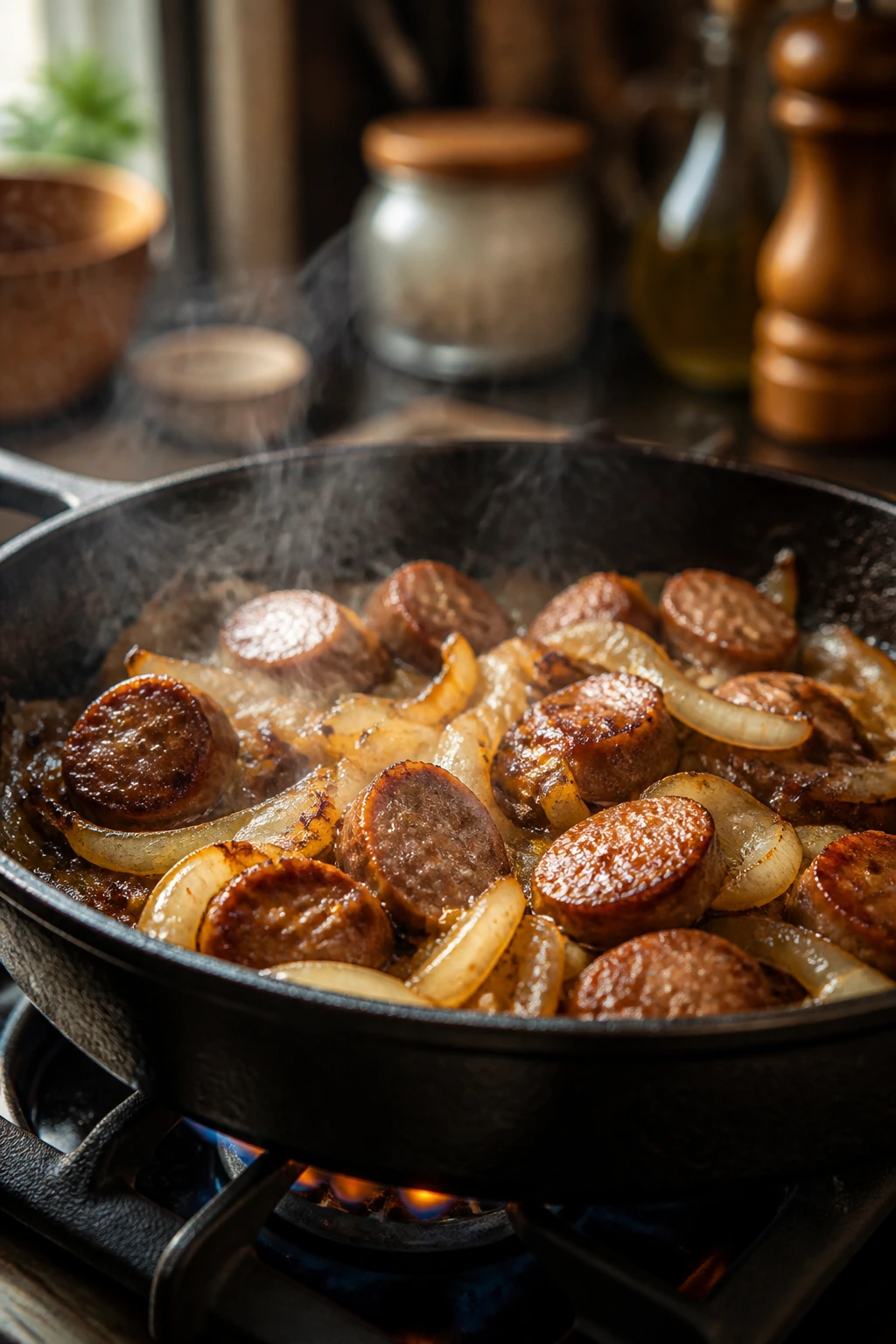
A sausage skillet works because it stacks flavor without demanding a lot of equipment. The pan browns the meat, the fat carries the aromatics, and the vegetables or grains pick up the drippings instead of getting cooked in separate vessels that never quite talk to each other. That’s the part a lot of recipes miss. A good skillet dinner is not just convenient; it’s chemically tidy in the best way.
I also like how forgiving this method is. If your onions take a minute longer, fine. If the sausage gives off more fat than you expected, spoon a little off and keep going. If you need to add a splash of broth because the rice drinks the pan dry, that is not a failure. It is the skillet doing what it does.
And there’s a practical angle that matters on a Sunday. You usually want dinner to feel calm, not staged. A pan meal gives you that rhythm: brown, soften, simmer, finish. No parade of pans. No long cleanup while everyone hovers near the kitchen waiting to eat.
Essential Equipment for These Recipes
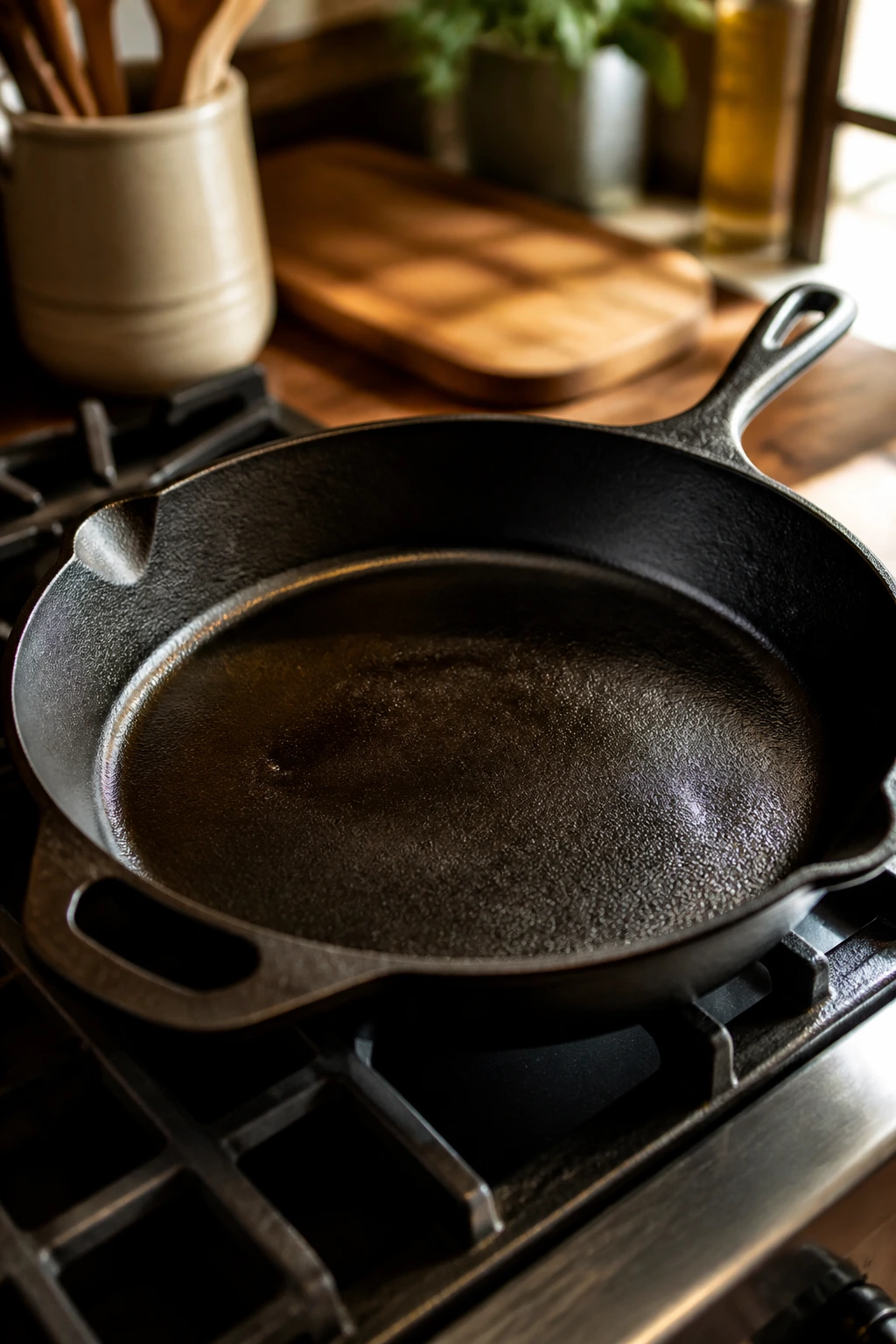
- 12-inch cast-iron skillet: Best for browning sausage deeply and keeping heat even across the pan.
- Large deep sauté pan or braiser: Handy for rice, pasta, beans, and saucy skillet meals that need a lid.
- Wooden spoon or spatula: Useful for breaking sausage apart and scraping up fond without tearing delicate ingredients.
- Tongs: Great for turning sausage coins, peppers, and cabbage without crushing them.
- Sharp chef’s knife: You’ll use it on onions, peppers, squash, cabbage, and every other vegetable in the bunch.
- Cutting board with a damp towel underneath: Keeps the board from sliding when you’re slicing quickly.
- Measuring cups and spoons: Especially useful for broth, rice, spices, and anything creamy that can go wrong with guesswork.
- Lid that fits the pan: Some of these dishes need steam for rice, beans, gnocchi, or cabbage.
- Box grater: Worth having for parmesan, cheddar, and mozzarella.
- Instant-read thermometer: Optional, but helpful if you’re cooking raw sausage links and want to be exact.
Smart Shopping and Ingredient Tips
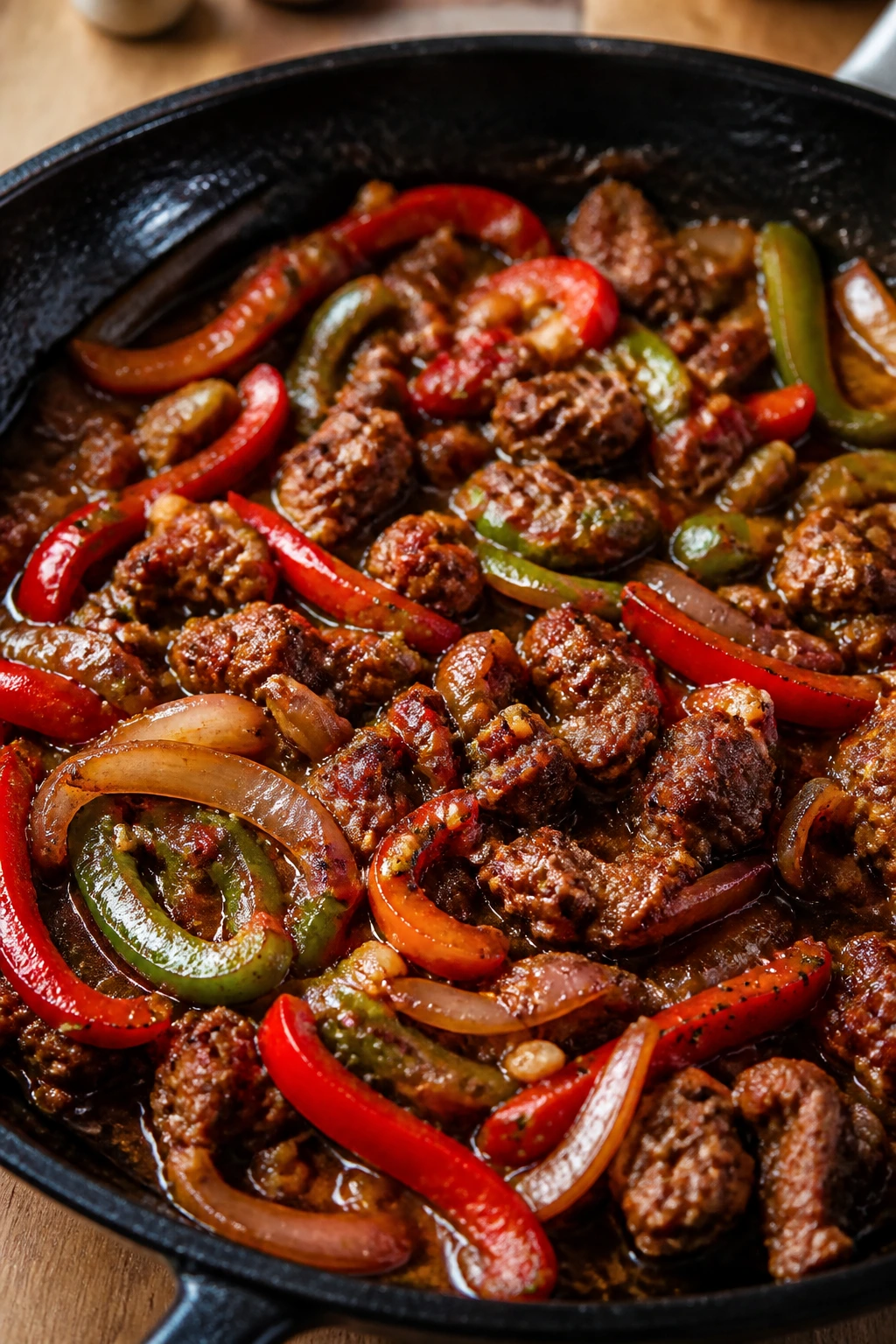
Sausage changes a skillet more than almost any other ingredient in this collection, so buy the kind that tastes seasoned before you cook it. Italian sausage should smell like fennel or garlic, smoked sausage should have a clean smoke note rather than a rubbery one, and breakfast sausage should still taste like pork, not just salt. If the package lists water near the top and the links feel spongy, I usually pass.
For vegetables, choose the ones that keep some structure under heat. Bell peppers should be firm and heavy for their size. Cabbage should look tight and feel dense, not dry at the cut edge. Brussels sprouts need small, compact heads, and zucchini should be medium-sized, because oversized ones are full of watery seeds and turn flimsy in the pan. A Sunday skillet is not the place to rescue tired produce from the back of the crisper.
Beans and grains are where I’ll save time without guilt. Canned cannellini beans, chickpeas, and black beans are fine here as long as you rinse them. Long-grain rice and farro hold up better than quick-cooking grains in the saucier dishes. For pasta-based skillets, refrigerated tortellini and shelf-stable gnocchi are dependable because they finish fast and don’t need much babysitting. That matters when the rest of dinner is already hot and waiting.
One more thing: keep a small bottle of acid nearby. Lemon juice, cider vinegar, balsamic, or a dry white wine is often the difference between a pan that tastes rich and a pan that tastes flat. Sausage brings fat and salt. The acid gives the dish shape.
How to Serve These Recipes
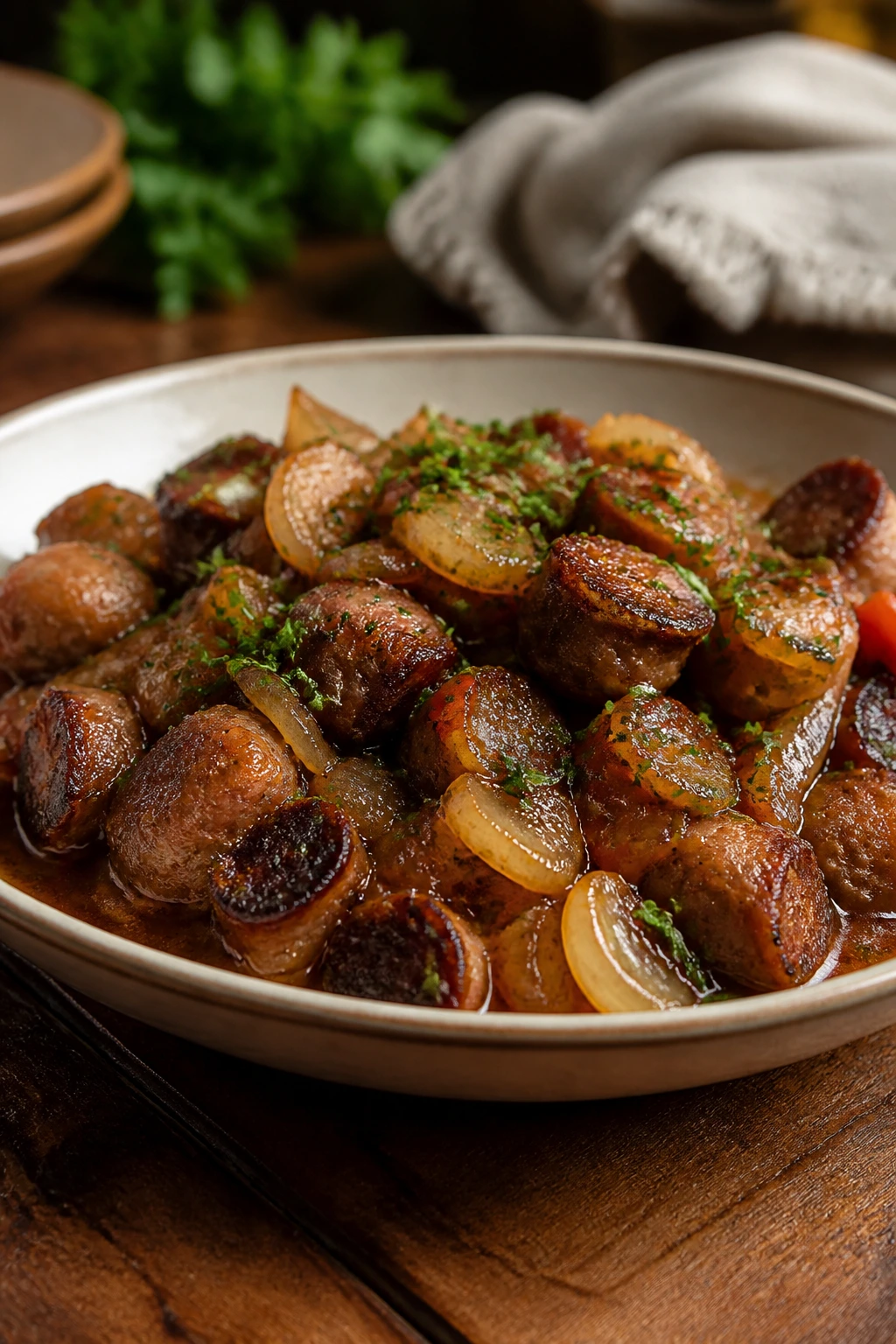
Presentation: Serve the saucy pans in shallow bowls and the crisped pans straight from the skillet on a trivet. A handful of chopped herbs, a little parmesan, or a scatter of scallions is enough to make them look finished without fuss.
Accompaniments: Crusty bread, buttered noodles, rice, mashed potatoes, grits, polenta, and simple green salads all have a place beside these dishes. If the skillet is rich, pair it with vinegar-dressed greens or something sharp and crunchy.
Portions: Most of these recipes serve 4, though the bean, rice, and pasta versions can stretch to 5 or 6 if you serve them with bread or salad. For a smaller table, cook the full pan and save leftovers; sausage skillet meals usually reheat better than they have any right to.
Beverage Pairing: A cold lager fits the smoky and spicy pans well. For a nonalcoholic match, sparkling water with lemon or a tart apple cider keeps the meal from feeling too dense.
Additional Tips and Flavor Boosters
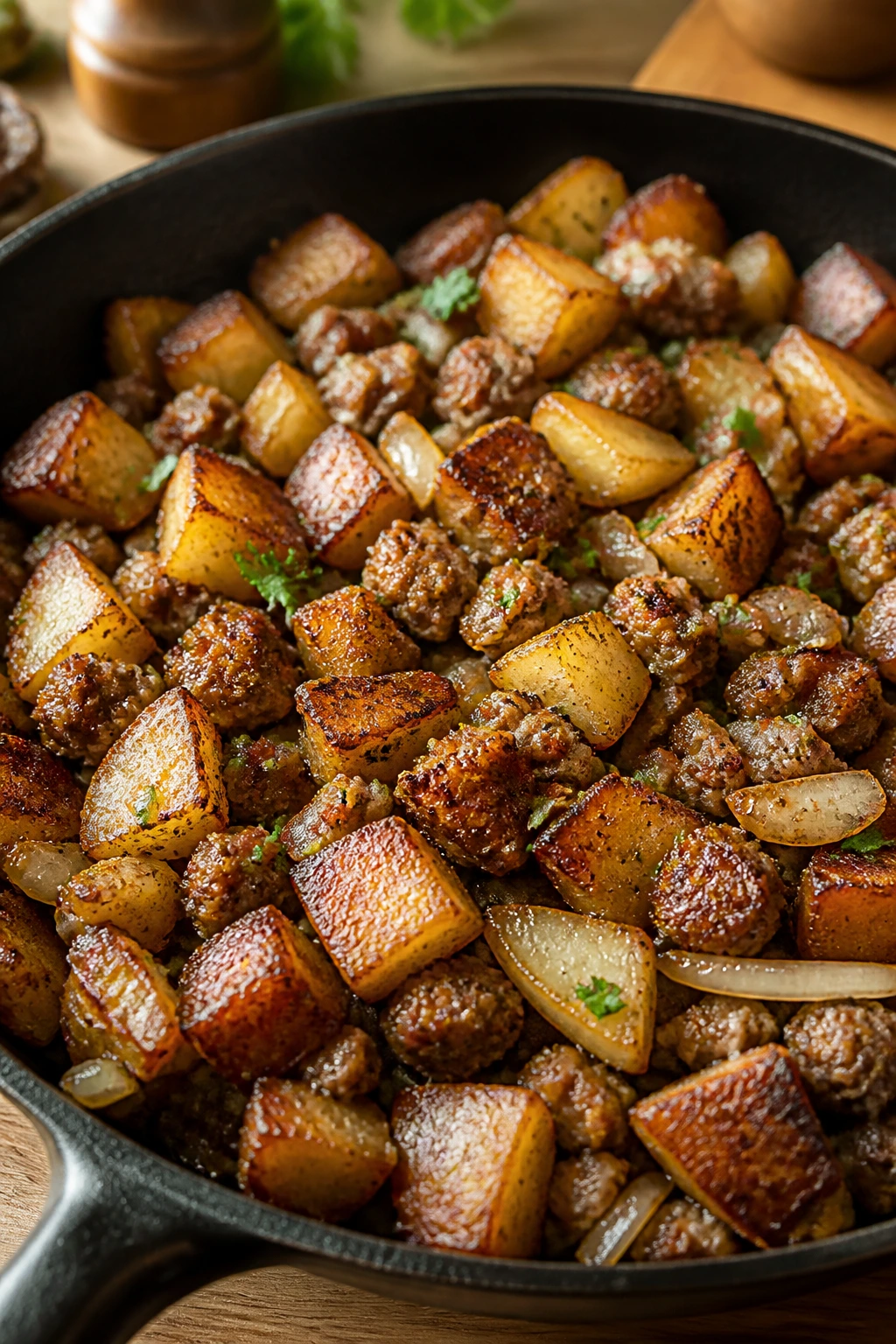
Flavor Enhancement: Finish a sausage skillet with something bright. Lemon juice, cider vinegar, or a spoonful of Dijon right at the end wakes up the whole pan and keeps the fat from flattening the flavor.
Customization: Fold in extra greens, swap rice for farro, or change the sausage style to match the rest of the dish. Hot Italian sausage changes the mood fast; smoked sausage makes the same pan taste older and deeper.
Serving Suggestions: Chopped parsley, basil, scallions, or even a little crushed red pepper gives each skillet a cleaner finish. I also like a light dusting of parmesan on the cheesy and tomato-based pans because it helps tie the sauce to the sausage.
Make-It-Yours: For gluten-free eating, choose rice, potatoes, polenta, or GF pasta. For dairy-free pans, skip the cream and cheese and finish with extra broth, olive oil, herbs, and acid. For a leaner meal, turkey or chicken sausage works in most of these, though you may need a little extra oil in the pan.
Make-Ahead, Storage, and Reheating Guidance
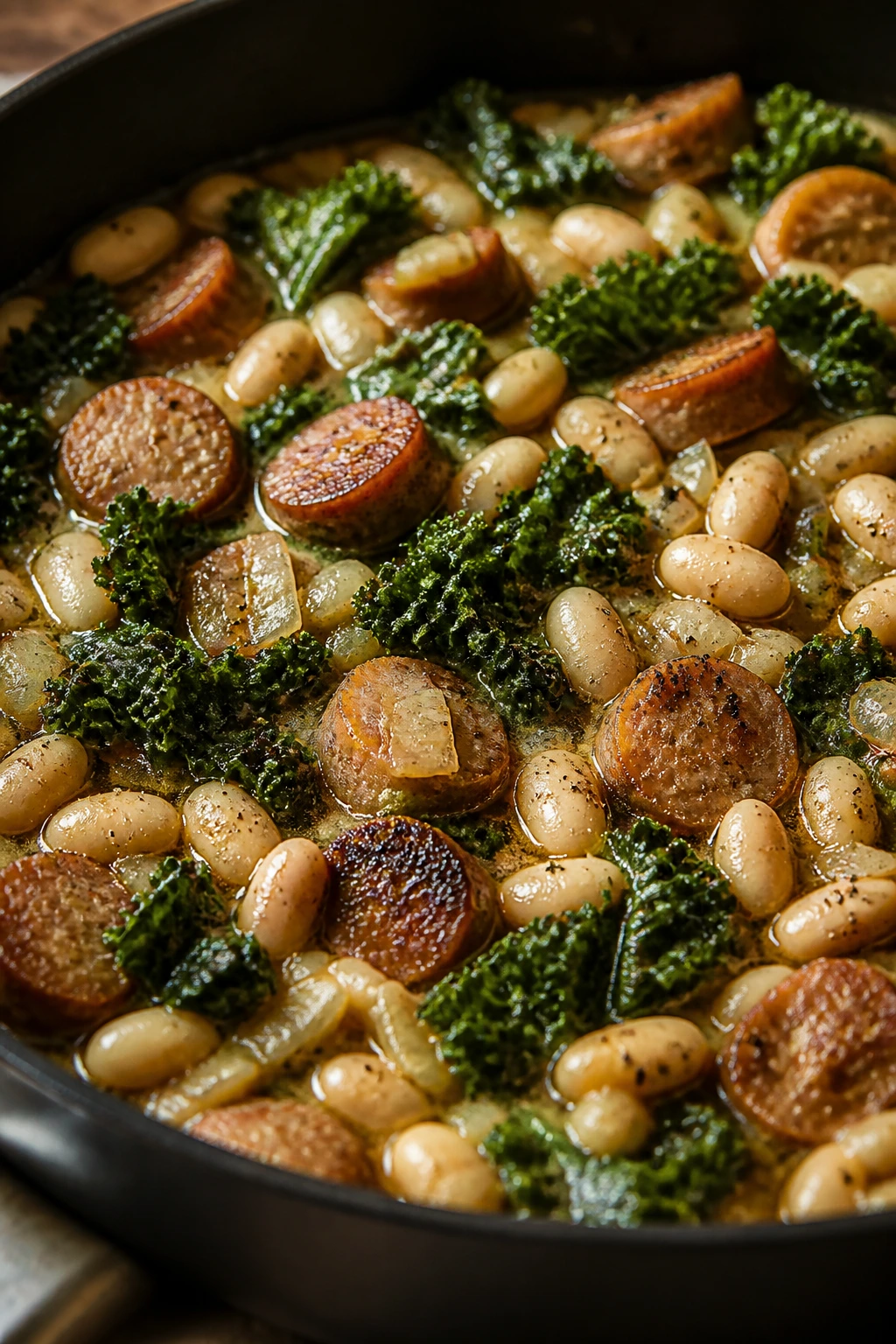
Most of these sausage skillet dishes keep well in the fridge for 3 to 4 days in an airtight container. The bean, cabbage, and tomato-based pans tend to improve overnight because the flavors settle and the sauce thickens a little. Pasta and gnocchi dishes are more temperamental, but they still hold up if you reheat them gently with a splash of broth or water.
Freezing depends on the starch. Bean skillets, lentil pans, and sausage with peppers or cabbage freeze well for up to 2 months. Creamy pasta, polenta, and gnocchi dishes can freeze, but the texture usually suffers, so I’d eat those from the fridge instead. If you do freeze them, pack them in shallow containers so they cool fast and thaw evenly.
For reheating, a skillet is usually the best tool. Add 1 to 3 tablespoons of broth or water, cover, and warm over low to medium-low heat until hot. That keeps rice from drying out and helps beans and cabbage loosen back up. Creamy dishes should be reheated slowly and stirred often; high heat can split the sauce. Microwave reheating works in a pinch, but stop and stir every 45 seconds so the edges don’t overcook before the middle is warm.
If you want to get ahead, chop vegetables a day or two early and keep them in sealed containers. You can also brown the sausage in advance, then finish the dish fresh the next day. That one move saves a surprising amount of time when dinner hour starts closing in.
Swaps and Twists Worth Trying
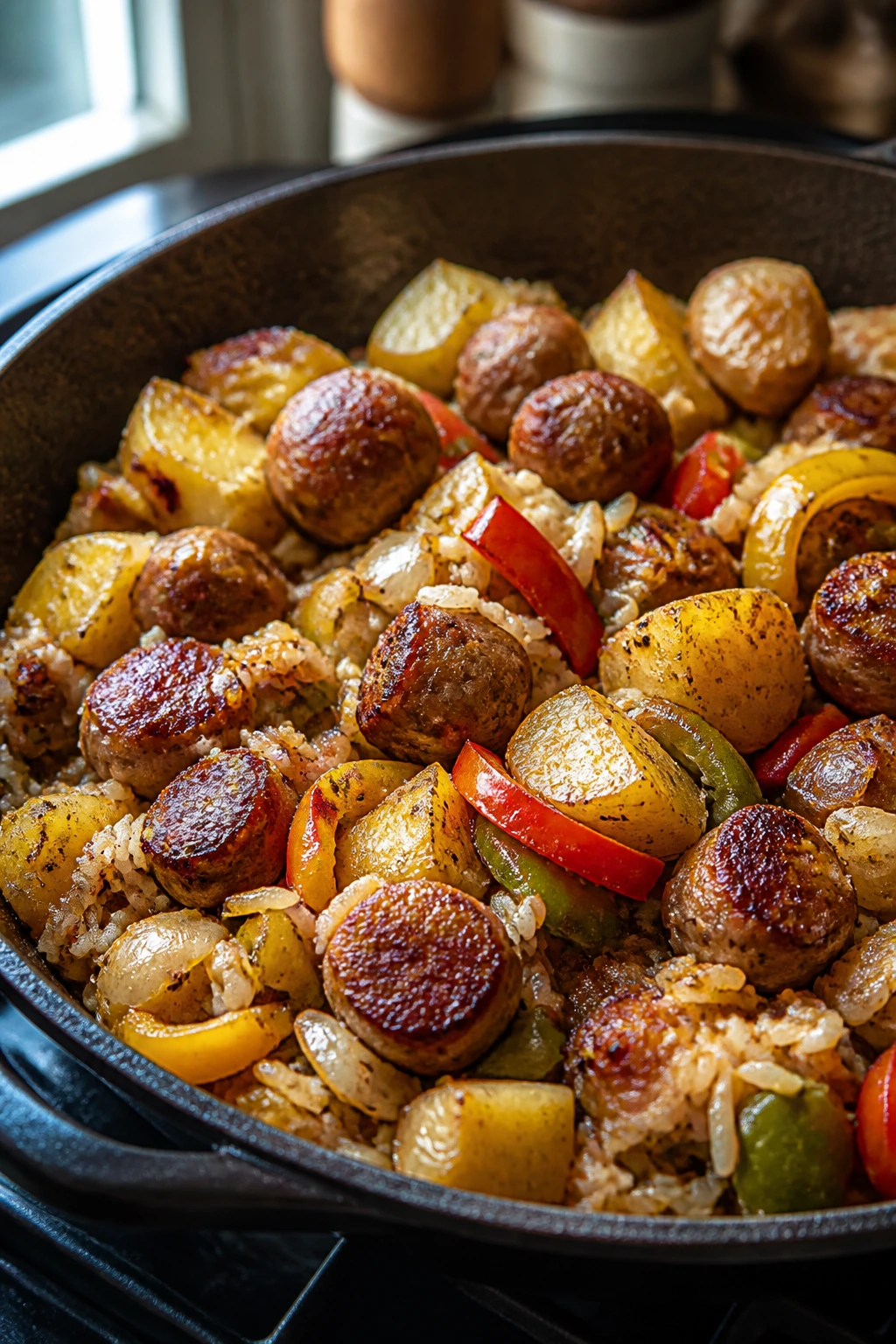
Gluten-Free Table: Build the meal around rice, potatoes, beans, polenta, or GF pasta. The sausage-and-vegetable pans don’t care much about the swap, and the texture stays satisfying.
Dairy-Free Pan: Skip the cream, butter, and cheese, then lean on broth, olive oil, garlic, lemon, mustard, and herbs. The sausage carries enough flavor that you won’t feel shorted.
Lean Sausage Switch: Turkey or chicken sausage works in the pepper, bean, rice, and pasta pans. Add a touch more oil in the skillet because leaner sausage gives off less fat.
Extra-Heat Version: Use hot Italian sausage, andouille, or chorizo, then add red pepper flakes or sliced fresh chiles. That move suits the cabbage, corn, black bean, and tomato pans especially well.
Lower-Carb Supper: Serve sausage with cabbage, Brussels sprouts, zucchini, green beans, or cauliflower rice instead of pasta or bread. The skillet still feels full, just lighter on starch.
Regional Detour: Use kielbasa and sauerkraut for a more Germanic pan, Cajun sausage and corn for something looser and spicier, or chorizo with peppers and beans for a deeper, smokier mood.
Common Mistakes to Avoid
Skipping the browning step: Sausage needs time in a hot pan to develop flavor. If you rush it, the whole dish tastes one-dimensional, no matter how good the vegetables are.
Treating every ingredient like it cooks at the same speed: Potatoes, cabbage, rice, or farro need more time than spinach, peas, or basil. Add the quick-cooking things late or they’ll vanish.
Using too much liquid: A skillet dinner should be glossy or saucy, not soupy. Add broth in smaller amounts and let the pan tell you when it needs more.
Forgetting acid at the end: Sausage is rich. Without lemon, vinegar, mustard, wine, or tomatoes, the flavors can sit in the same low register and never really open up.
Overcrowding the pan: Too many ingredients at once drop the temperature and keep everything from browning. If your skillet looks jammed, cook in batches or use a wider pan.
Adding dairy over high heat: Cream and cheese can separate if the burner is too hot. Pull the pan back a little and let the sauce settle before stirring them in.
Frequently Asked Questions
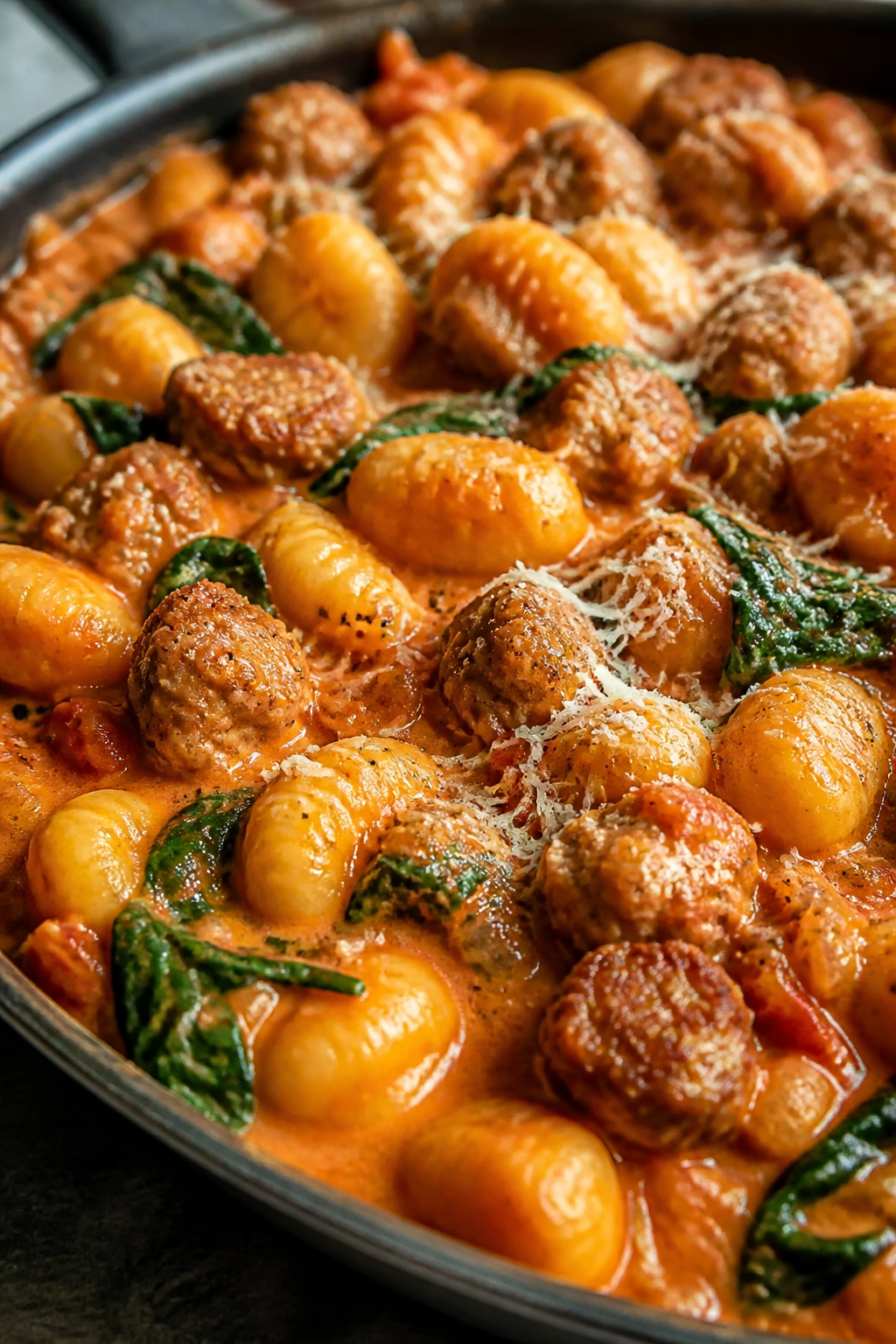
Can I use pre-cooked sausage in these recipes?
Yes, and it works especially well in cabbage, peppers, beans, and rice skillets. Slice it after browning and shorten the cooking time, because you’re really just heating it and building the sauce.
Should I drain the sausage fat?
Sometimes. If the pan has a deep pool of grease, spoon off some of it before you add vegetables or the dish can taste heavy. Leave enough behind to flavor the onions and peppers.
What kind of sausage gives the best flavor?
Italian sausage is the most flexible, smoked sausage is strongest in cabbage and bean dishes, and breakfast sausage is the right move for hash or cornbread pans. The flavor profile should match the starch and vegetables, not fight them.
Can these recipes be doubled for a crowd?
Usually, yes, but use a wider pan or two skillets so the sausage browns instead of steaming. Rice, pasta, and gnocchi pans need the most attention because the liquid balance shifts when you scale them up.
What if my sauce turns too thin?
Simmer it uncovered for a few extra minutes, or mash a few beans, potatoes, or lentils against the side of the pan if those are in the recipe. A little grated parmesan can thicken creamy pans too.
Can I make these ahead for Sunday supper?
You can prep the vegetables, measure the spices, and brown the sausage earlier in the day. I’d finish the final simmer closer to serving so the vegetables stay lively and the starches don’t get soft.
Which of these freeze best?
The bean, lentil, cabbage, pepper, and tomato-based skillets freeze the cleanest. Creamy pasta, gnocchi, and polenta dishes are better eaten from the fridge because they can change texture after thawing.
How do I keep sausage from drying out?
Don’t cook it until every last bit of moisture is gone in the first step. Brown it, yes, but let the rest of the dish finish gently so the sausage warms through instead of hardening.
What’s the easiest side dish for these pans?
Bread or a simple green salad. Bread catches the sauce, and salad cuts through the richness without asking for more cooking.
A Sunday Skillet Worth Repeating
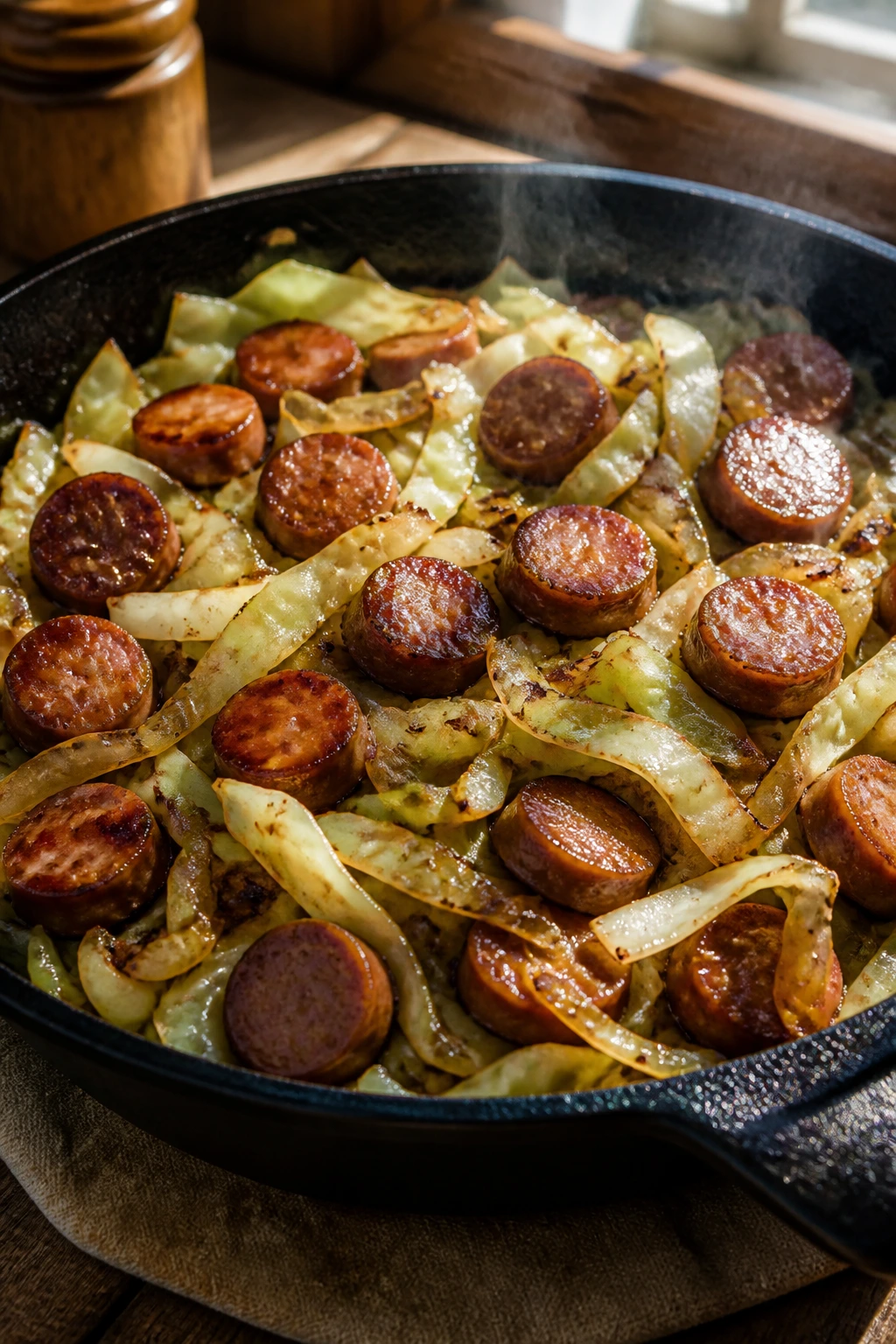
There’s a reason sausage keeps showing up in humble, dependable pans. It brings flavor early, it carries vegetables without complaint, and it makes dinner feel complete before you’ve even set the table. That’s a useful thing on a Sunday evening, when nobody wants a project masquerading as supper.
If you keep one package of sausage, one onion, and a few vegetables that can handle heat, you’re halfway to dinner already. The rest is mostly timing, a decent skillet, and the good sense to finish with something sharp so the whole pan wakes up at the end.