



The pan starts out noisy. Bacon snaps, sausage hisses, onions soften, and the whole kitchen picks up that sweet-salty smell that tells you dinner is heading in the right direction.
Juicy Beans and Sausage with Brown Sugar Glaze is the kind of dish that looks humble on purpose and then surprises you with how much flavor it carries. The beans stay plump, the sausage gives you browned edges and little bursts of smoke, and the glaze slides between sticky and glossy without turning into candy. That balance is the whole point. Too much sugar and the pot gets cloying. Too little acid and it tastes flat. The right ratio turns canned beans into something that feels cooked, not assembled.
I like recipes like this because they understand the assignment. Beans are already cooked. Sausage already has seasoning. Bacon already brings salt and fat. The job is not to pile on more of everything; it’s to steer the pan so the sweet brown sugar glaze, the vinegar, the mustard, and the browned pork all pull in the same direction. If you get that part right, the dish settles into itself beautifully.
Why Beans and Sausage Belong in the Same Pan
The flavor makes sense before you even taste it. Beans bring a soft, earthy base; sausage brings salt, fat, and smoke; brown sugar adds the sticky finish that makes every bite feel coated instead of dry. That’s why this combo keeps showing up in different forms, from baked bean casseroles to skillet suppers.
It eats like a full meal, not a side dish pretending to be bigger. Once the sausage is browned and the beans soak up the glaze, you’ve got protein, starch, and a sweet-savory sauce all in one pot. A spoonful lands heavy in the best way.
Canned beans are the right tool here. They’re fully cooked, which means they can go straight into the glaze without needing an overnight soak or a long simmer. That keeps the texture soft and intact instead of splitting apart from too much heat.
The browned pork matters more than people think. Bacon and sausage bring little crusty bits that dissolve into the sauce as it bakes. Those browned spots are where the savory depth lives.
This dish forgives a busy kitchen. If you chop the onion a little rough, if you use a different bean mix, if your sausage is a touch saltier than mine, the pot still works. That’s not because it’s vague. It’s because the ratios are sturdy.
The Brown Sugar Glaze That Makes the Whole Dish Shine
Brown sugar glaze can go wrong in one of two directions: too sweet or too thin. The trick is treating it like a sauce with a job, not a dessert topping that wandered into a savory pan. Brown sugar brings the caramel note, ketchup gives body, vinegar brightens the whole thing, and mustard keeps the sweetness from sitting on your tongue too long.
Yellow mustard is not here to scream “mustard.” It’s here to sharpen the edges. I prefer it to Dijon in this dish because Dijon adds a cleaner, more polished note that can feel fussy against smoked sausage. Yellow mustard tastes right at home with beans, bacon, and ketchup. It’s old-school in the best way.
The vinegar matters just as much. Apple cider vinegar does two things at once: it stops the glaze from tasting sugary-heavy, and it helps the sauce cling instead of pooling. If you’ve ever had baked beans that tasted like brown sugar dissolved in tomato soup, the missing piece was almost certainly acid.
There’s another reason I like baking this dish instead of boiling it hard on the stove. A hard boil can break the beans and scorch the sugar at the edges. In the oven, the sauce thickens gradually. You get a glossy coat instead of a sticky mess, and the sausage stays juicy instead of shriveling.
What Goes Into the Pot
Yield: 6 to 8 servings
Prep Time: 20 minutes
Cook Time: 40 minutes
Total Time: 1 hour 10 minutes
Difficulty: Beginner — the work is straightforward, and the oven handles the heavy lifting.
Chill/Rest Time: 10 minutes
Best Served: Warm, after the glaze has had a few minutes to settle.
Ingredients
For the Beans and Sausage:
- 4 slices thick-cut bacon, diced into 1/2-inch pieces
- 1 1/2 pounds fully cooked smoked pork sausage or kielbasa, sliced into 1/2-inch coins
- 1 medium yellow onion, diced
- 1 green bell pepper, diced
- 3 cloves garlic, minced
- 1 can (15 ounces) navy beans, drained and rinsed
- 1 can (15 ounces) pinto beans, drained and rinsed
- 1 can (15 ounces) kidney beans, drained and rinsed
For the Brown Sugar Glaze:
- 1 cup ketchup
- 1/2 cup packed dark brown sugar
- 1/4 cup apple cider vinegar
- 2 tablespoons yellow mustard
- 1 tablespoon Worcestershire sauce
- 3/4 cup low-sodium chicken broth
- 1 teaspoon smoked paprika
- 1/2 teaspoon black pepper
- 1/4 teaspoon cayenne pepper, optional
- 1 bay leaf
For Finishing:
- 1 to 2 tablespoons chopped parsley or sliced scallions, optional
Smoked Sausage
- What to use: 1 1/2 pounds fully cooked smoked pork sausage or kielbasa, sliced into 1/2-inch coins.
- Preparation: Slice before browning so the cut sides can pick up color and the edges can blister a little in the pan.
- Substitutions: Turkey sausage works if you want a lighter pan; andouille brings a hotter, more peppery finish.
- Tips: Buy sausage with visible fat marbling. The lean, dry-looking links tend to bake up stiff and lose the juicy bite that makes this dish worth making.
Beans
- What to use: One 15-ounce can each of navy beans, pinto beans, and kidney beans, all drained and rinsed.
- Preparation: Rinse under cool water until the liquid looks mostly clear, then let the beans drain while you build the glaze.
- Substitutions: Great northern beans make the softest swap; black beans give you a firmer texture and darker color.
- Tips: Canned beans are already cooked, so the goal is gentle heating and flavor absorption. You are not trying to break them down.
The Brown Sugar Glaze
- What to use: 1 cup ketchup, 1/2 cup packed dark brown sugar, 1/4 cup apple cider vinegar, 2 tablespoons yellow mustard, 1 tablespoon Worcestershire sauce, 3/4 cup low-sodium chicken broth, 1 teaspoon smoked paprika, 1/2 teaspoon black pepper, and 1/4 teaspoon cayenne if you want heat.
- Preparation: Whisk until the sugar starts dissolving and the ketchup looks smooth instead of streaky.
- Substitutions: Swap in 2 tablespoons molasses for part of the brown sugar if you want a darker, deeper glaze. Dijon can stand in for yellow mustard, though it nudges the flavor a little more polished.
- Tips: The acid is doing real work here. It keeps the sauce bright and stops the sweetness from flattening out the whole pan.
Aromatics
- What to use: 4 slices thick-cut bacon, 1 medium yellow onion, 1 green bell pepper, and 3 cloves garlic.
- Preparation: Dice the bacon small, chop the onion and pepper into even pieces, and mince the garlic so it doesn’t scorch while the pan is still busy.
- Substitutions: Skip the bacon and use 1 tablespoon olive oil if you want a leaner version; red bell pepper gives a sweeter finish than green.
- Tips: Let the onion soften in the bacon fat before the beans go in. Crunchy onion in a saucy bean dish feels raw, and not in a charming way.
Optional Finish
- What to use: 1 to 2 tablespoons chopped parsley or sliced scallions.
- Preparation: Scatter on top right before serving so the green stays bright.
- Substitutions: A few sliced pickled jalapeños work if you want brightness and heat.
- Tips: Fresh green on top cuts through the glaze and makes the dish look finished instead of heavy.
The Pantry Tools That Make the Work Easier
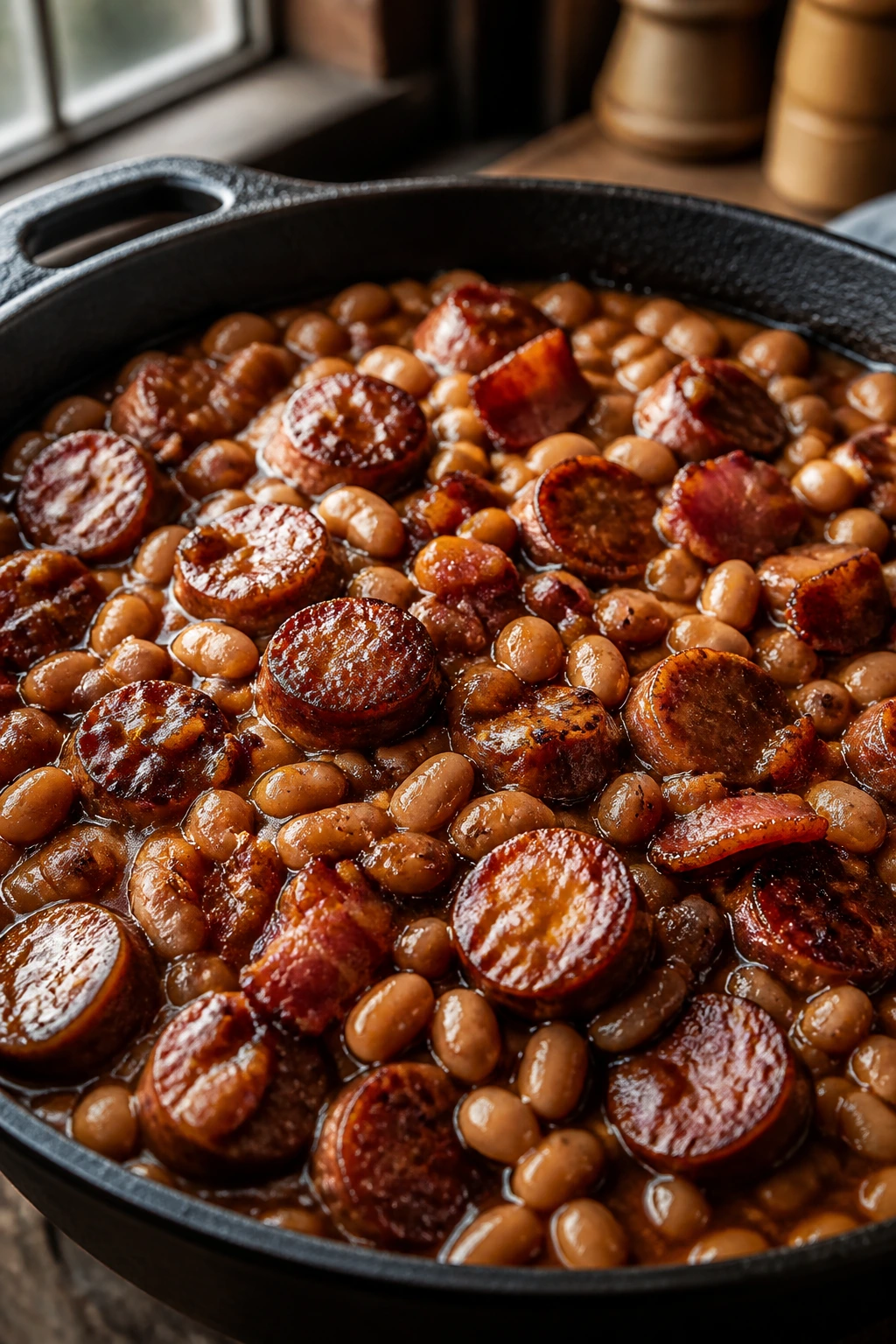
You do not need a kitchen full of gear for this one, but a few pieces make the job smoother.
- Large oven-safe Dutch oven or heavy skillet: Best for browning the bacon and sausage, then baking the beans in the same vessel.
- 9×13-inch baking dish: Useful if you brown everything in a skillet first and want more surface area for the glaze to thicken.
- Colander: Needed for rinsing the canned beans well.
- Wooden spoon or sturdy spatula: Better than a flimsy spoon when you’re folding beans through a thick glaze.
- Chef’s knife and cutting board: For the onion, pepper, garlic, bacon, and sausage.
- Liquid measuring cup: Helpful for the broth and vinegar so the glaze lands at the right thickness.
- Measuring cups and spoons: The brown sugar, mustard, and paprika need actual measurements, not guesses.
- Instant-read thermometer, optional: Handy if you use raw sausage instead of fully cooked smoked sausage; pork sausage should reach 160°F in the thickest piece.
How to Cook It Without Crushing the Beans
Prep the Pan and Preheat
- Preheat the oven to 375°F (190°C) and position a rack in the center.
- Drain and rinse the beans in a colander, then let them sit while you chop the vegetables. The beans should be damp, not dripping.
- If you are using a Dutch oven, set it over medium heat. If you prefer a skillet, use the skillet for cooking and plan to transfer everything to a baking dish later.
Build the Pork Base 4. Add the diced bacon to the pot and cook for 4 to 6 minutes, stirring occasionally, until the fat renders and the edges look crisp. 5. Spoon the bacon onto a paper towel-lined plate, leaving about 1 to 2 tablespoons of fat in the pot. If you skipped bacon, heat 1 tablespoon oil instead. 6. Add the sliced sausage and brown it for 4 to 5 minutes, stirring once or twice, until the cut sides are deep golden. If you’re using raw sausage, cook it through to 160°F before moving on. 7. Transfer the sausage to the plate with the bacon.
Cook the Vegetables 8. Add the onion and bell pepper to the pot and cook for 5 to 6 minutes over medium heat, stirring now and then, until the onion looks translucent and the pepper softens at the edges. 9. Stir in the garlic and cook for 30 seconds, just until it smells sweet and sharp instead of raw. Do not let the garlic sit in the pan by itself or it will burn fast.
Mix the Glaze and Assemble 10. In a medium bowl, whisk together the ketchup, brown sugar, vinegar, mustard, Worcestershire sauce, broth, smoked paprika, black pepper, cayenne, and bay leaf. 11. Add the drained beans and browned sausage to the pot, then fold everything together gently. The beans should stay whole. 12. Pour the glaze over the mixture and stir just enough to coat. The sauce should look loose and glossy at this stage, not thick like frosting.
Bake and Finish 13. Transfer the mixture to a 9×13-inch baking dish if your pot is not oven-safe, or leave it in the Dutch oven. 14. Bake uncovered for 25 to 30 minutes, stirring once halfway through, until the edges bubble and the glaze thickens enough to coat the back of a spoon. 15. If the top looks dry before the sauce thickens, stir in 2 tablespoons of broth and keep baking. Dry beans mean the heat is too high or the sauce was too thick going in. 16. Remove the bay leaf, stir in the bacon, and rest the dish for 10 minutes before serving. The sauce will tighten as it sits. 17. Taste and add a small pinch of salt or another splash of vinegar if the glaze needs waking up. That last little bit makes a bigger difference than people expect.
How to Serve a Sweet-Savory Bean Skillet
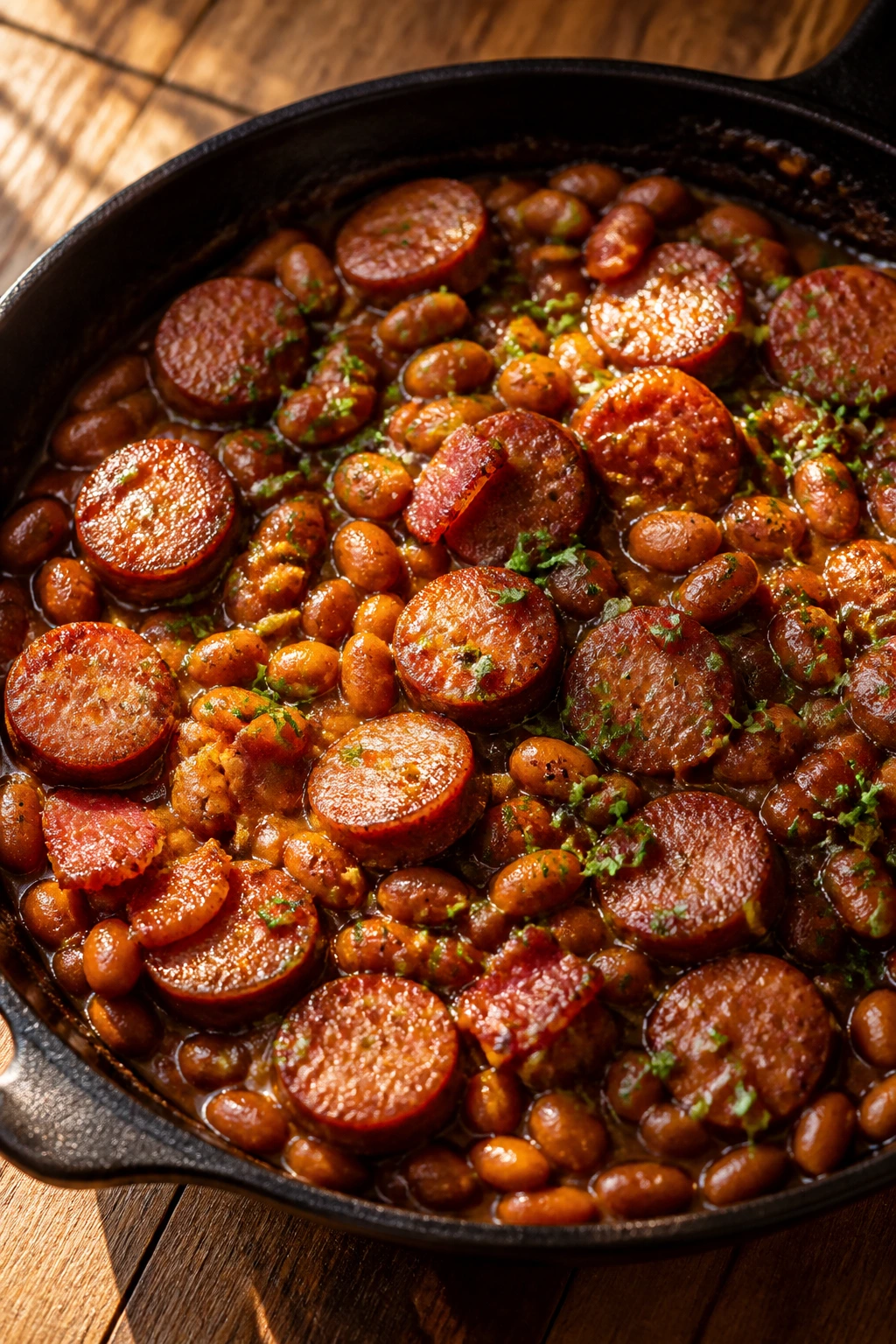
Presentation: Spoon the beans into a shallow bowl or pile them onto a serving platter so the sausage coins stay visible on top. A little chopped parsley or scallions gives the whole pan a fresher look, and it keeps the finish from reading as one long brown surface.
Accompaniments: Skillet cornbread is my first choice because it catches the glaze in all the rough edges. Buttered rice, soft dinner rolls, or toasted bread also work if you want something to mop up the sauce. On the side, a vinegar slaw or a pile of dill pickles gives you a sharp, cold counterpoint.
Portions: Served as a main dish, this feeds 6 to 8 people. As a side for barbecue, cookout food, or a holiday spread, it stretches to about 10 to 12 smaller portions. If you’re feeding a bigger crowd, make two batches in separate pans rather than one giant pot; it bakes more evenly and the glaze thickens better.
Beverage Pairing: Sweet iced tea makes a neat match because it echoes the brown sugar without fighting it. A crisp lager or dry hard cider also works well if you want something cold with a little bite. For a nonalcoholic option, sparkling water with lemon keeps the richness from building up on your palate.
Small Adjustments That Change the Finish
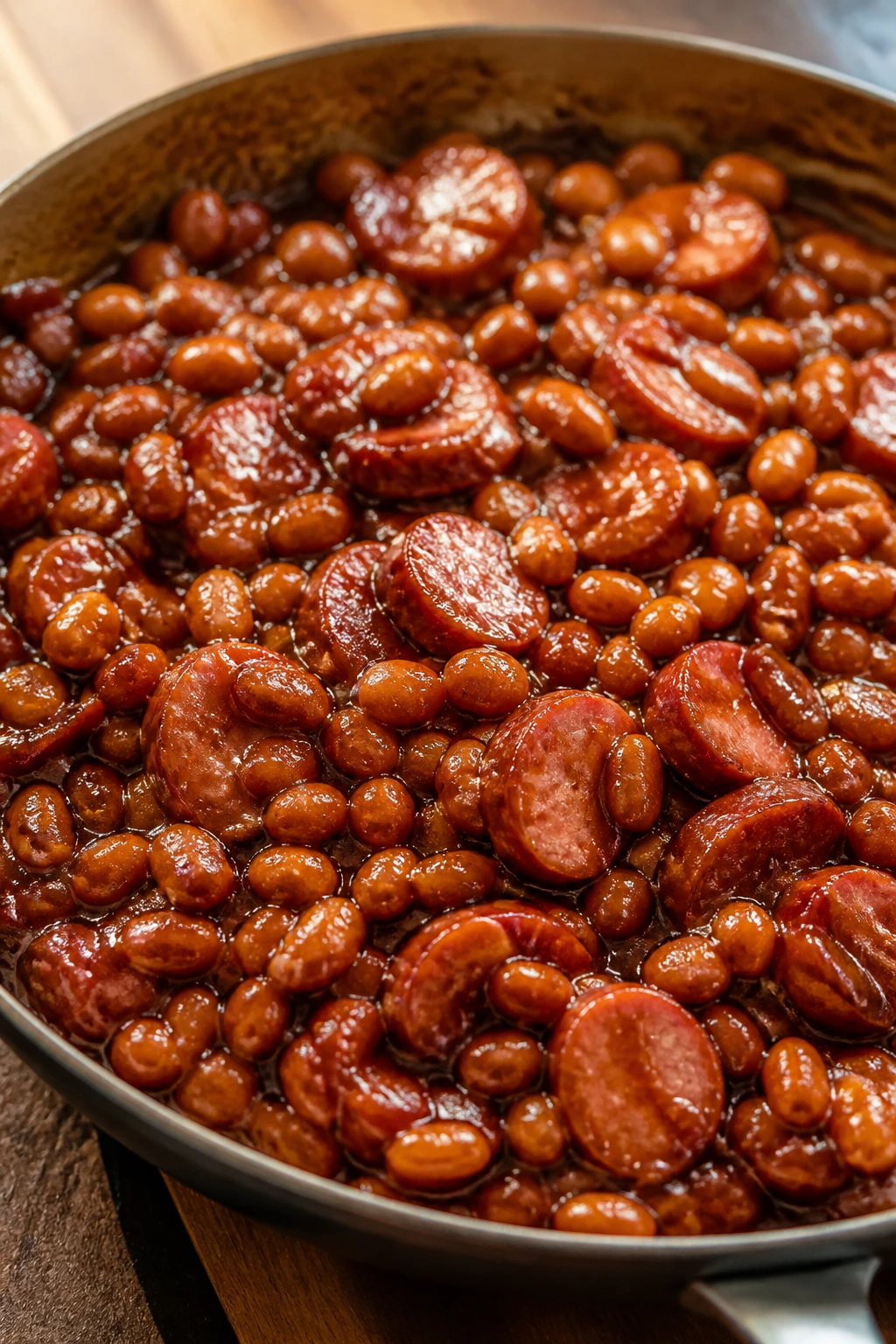
Flavor Enhancement: A teaspoon of Dijon stirred into the glaze adds a sharper edge if the brown sugar feels too round. I also like a final splash of apple cider vinegar right before serving when the sauce leans sweet; it wakes the whole pan up without making it sour.
Customization: Add 1 cup frozen corn with the beans if you want more texture and a little pop of sweetness. A diced jalapeño with the onion gives a gentle bite, while a little extra smoked paprika pushes the dish toward the campfire end of the spectrum.
Serving Suggestions: Bacon bits on top make sense here, and so do sliced scallions or chopped parsley. If you keep a bottle of hot sauce on the table, this is the place to use it sparingly. One or two dashes are enough; the glaze should still taste like beans and sausage, not hot sauce.
Make-It-Yours: For a lighter pan, skip the bacon and use turkey sausage with low-sugar ketchup. For a deeper, darker version, replace 2 tablespoons of the brown sugar with molasses and let the dish bake five minutes longer so the sauce tightens properly.
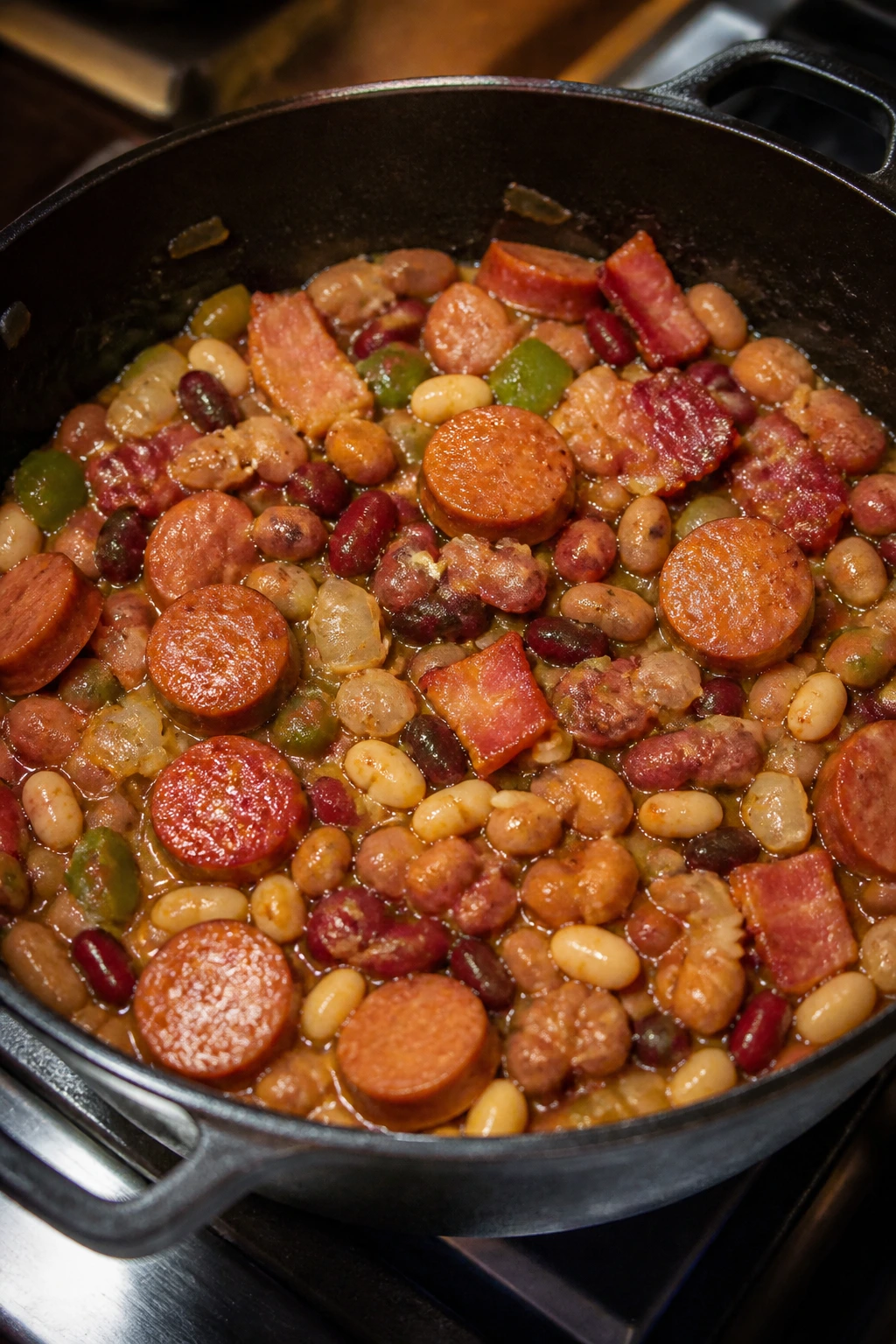
Common Mistakes That Make Beans Heavy or Bland
-
Skipping the bean rinse: The sauce ends up muddy and sometimes saltier than you wanted. Rinsing canned beans washes away the canning liquid and helps the glaze cling to the bean skins instead of sliding off.
-
Boiling the glaze too hard before it bakes: Sugar can scorch on the bottom of the pot, and the edges taste burnt before the beans are hot. Keep the sauce at a gentle whisk, then let the oven do the thickening.
-
Using too much brown sugar: If the dish tastes like sweet ketchup, the pork loses its voice. Cut the sugar to 1/3 cup if your ketchup runs sweet, and lean on vinegar and mustard to pull the flavor back into balance.
-
Stirring the beans too aggressively: The navy and pinto beans can break and turn the glaze cloudy. Fold gently with a spatula and stop as soon as everything is coated.
-
Skipping the rest time: Right out of the oven, the sauce looks looser than it really is. Give it 10 minutes on the counter and it will thicken into the texture you were after.
Named Variations for Different Crowds
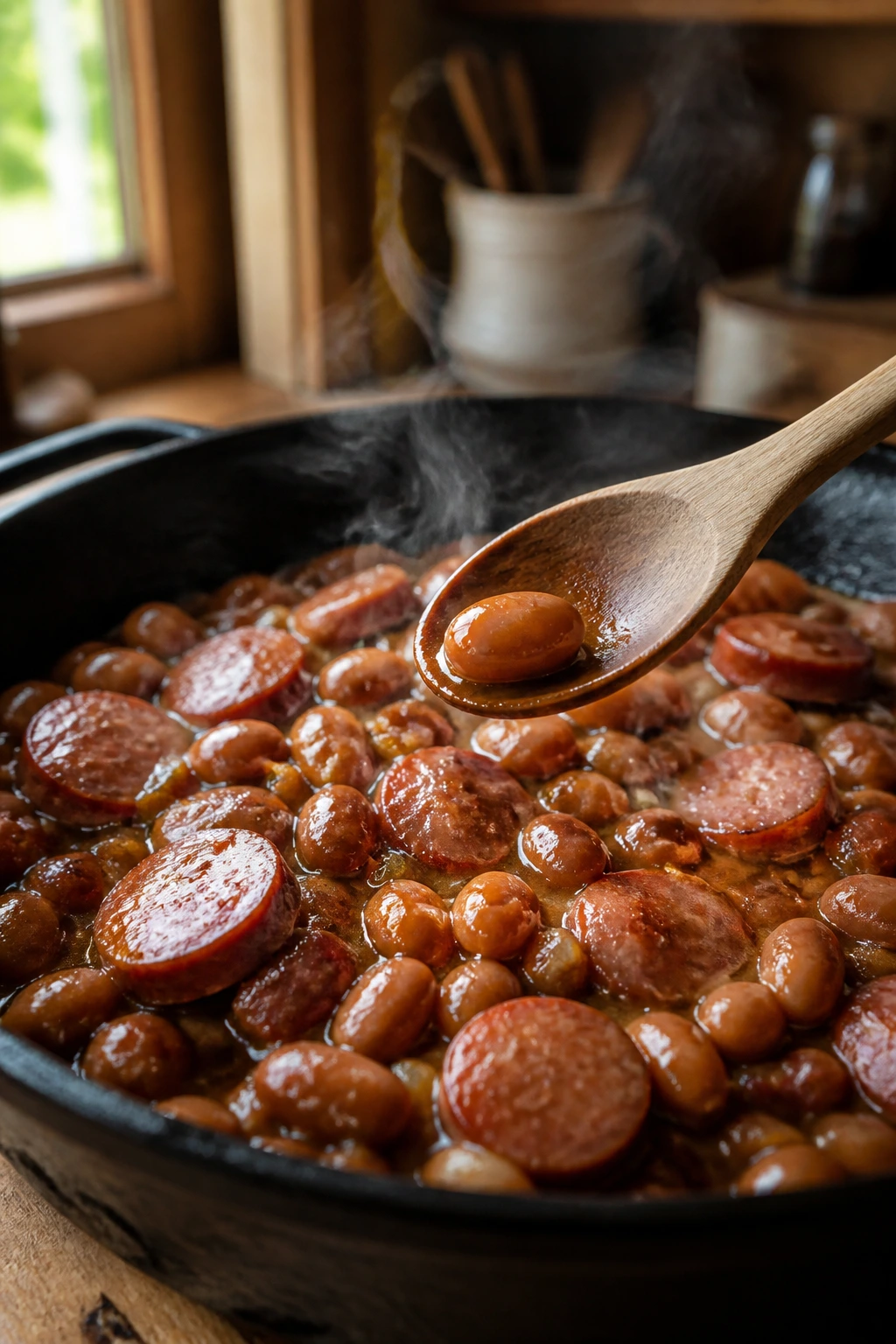
Smoky Chipotle Bean Pot
Stir 1 minced chipotle in adobo plus 1 tablespoon of the adobo sauce into the glaze. Cut the brown sugar back to 1/3 cup so the smoke and heat stay in front, and use sausage with a little more pepper, like andouille or a spicier kielbasa.
Maple-Mustard Glaze
Replace 1/4 cup of the brown sugar with pure maple syrup and swap the yellow mustard for Dijon. The flavor gets softer and deeper, with a more rounded sweetness that works especially well if you’re serving the beans next to roast pork or ham.
Tailgate-Style Bacon Loaded Pan
Use 8 slices of bacon instead of 4 and reserve half of it for the top of the dish after baking. Add 1/2 cup barbecue sauce to the glaze and reduce the ketchup to 3/4 cup so the pan doesn’t turn into a sugar bomb.
Corn-and-Pepper Skillet Beans
Add 1 cup frozen corn and use a red bell pepper instead of green. The corn adds little sweet bites that feel good against the sausage, and the red pepper softens into the sauce without stealing attention.
Lighter Pantry Bowl
Use turkey sausage, skip the bacon, and choose low-sugar ketchup. Keep the vinegar and mustard as written so the sauce still tastes finished; removing fat means you need that acid even more.
Make-Ahead, Storage, and Reheating
This dish holds up better than a lot of bean recipes because the glaze keeps the beans from drying out. If you’re planning ahead, you can cook the bacon, chop the onion and pepper, and mix the glaze up to 3 days in advance. Store those pieces separately in the fridge so the vegetables don’t start to weep and the glaze stays smooth.
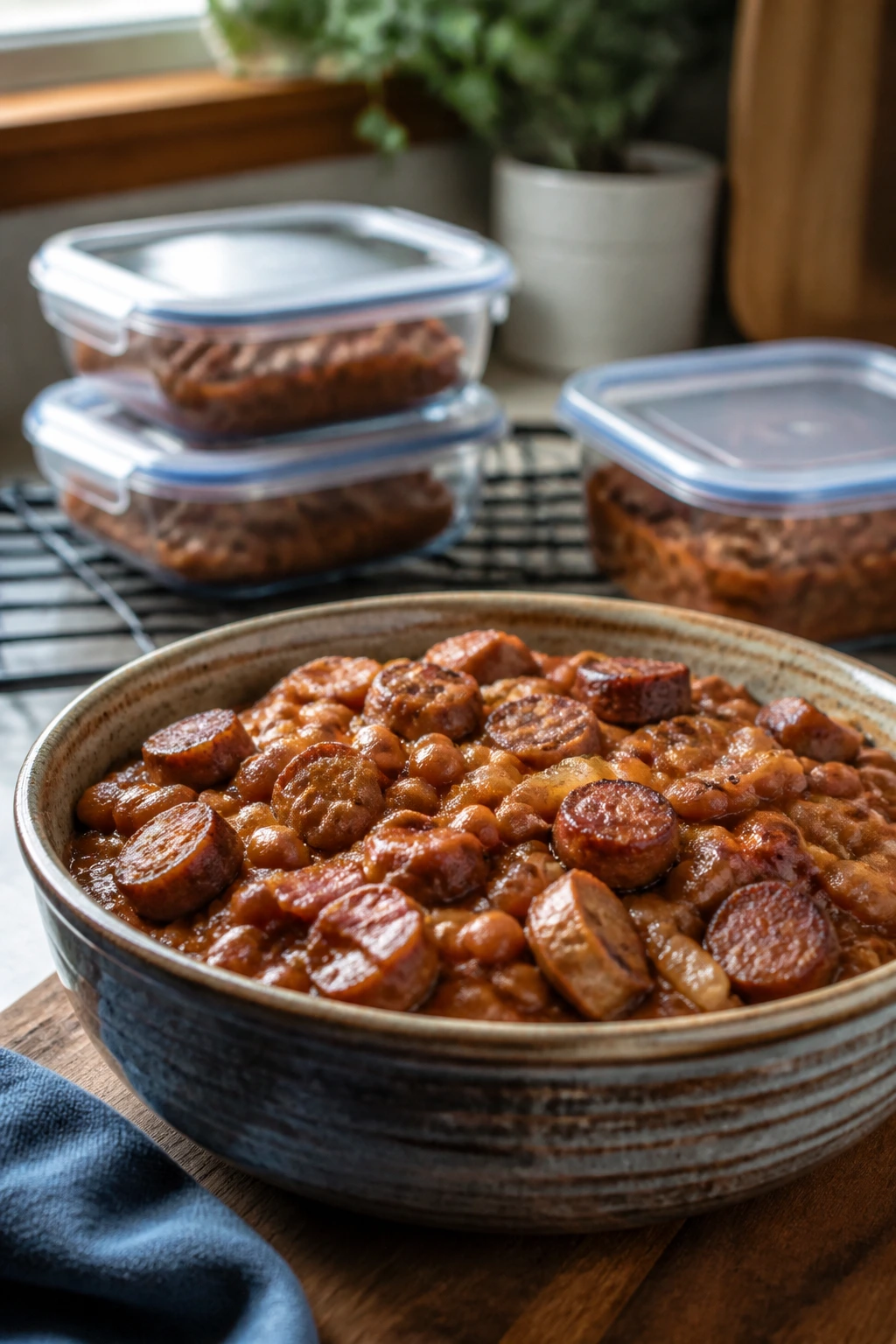
Leftovers keep well in the refrigerator for up to 4 days in an airtight container. The flavor gets a little deeper after a night in the fridge, and the sauce thickens into something spoonable rather than runny. That’s one of the reasons I like this dish for potlucks and meal prep. It doesn’t get weird after sitting. It gets more settled.
For freezing, cool the beans completely, then pack them into freezer-safe containers or zip-top bags for up to 3 months. Leave a little space at the top because the sauce expands. The texture softens slightly after thawing, but it still reheats well if you warm it gently.
The best reheating method depends on how much you have left. For a single bowl, microwave at 70% power in 1-minute bursts, stirring between rounds so the glaze doesn’t spatter and the beans heat evenly. For a larger batch, reheat covered in a 325°F oven for 20 to 25 minutes, adding 2 to 3 tablespoons of broth if the sauce has thickened too much. On the stovetop, use low heat and stir often; the sauce can catch on the bottom if you rush it.
Room temperature time should stay under 2 hours. After that, the mix is in the wrong temperature zone and needs to be refrigerated or discarded. If you want to serve it buffet-style, keep it warm in a covered slow cooker on the low setting and stir every so often so the sauce doesn’t edge toward the sides and dry out.
Questions Home Cooks Ask Most
Can I use dried beans instead of canned beans?
Yes, but cook them separately first and stop when they’re tender, not falling apart. You’ll want about 4 1/2 to 5 cups of cooked beans to match the three 15-ounce cans in this recipe. Dried beans give you more control over texture, but they also add an extra layer of work that canned beans neatly skip.
Can I make this in a slow cooker?
You can, and it works best if you still brown the bacon and sausage first. After that, combine everything in the slow cooker and cook on low for 3 to 4 hours, then leave the lid cracked for the last 20 to 30 minutes so the sauce thickens a bit. If you skip that final reduction, the glaze can stay looser than you want.
What if my sausage is raw instead of fully cooked?
Brown it in the pan until the outside has real color, then make sure it reaches 160°F in the center before serving. Raw sausage can go into the recipe, but it needs enough heat to cook through before the beans are done. If you’re unsure, use an instant-read thermometer and check the thickest coin.
How do I keep the dish from tasting too sweet?
Reduce the brown sugar to 1/3 cup and add an extra tablespoon of vinegar. You can also use a little more mustard than the recipe calls for, which sharpens the glaze without making it sour. A tiny pinch of salt at the end helps too; sweetness often feels stronger when the salt is low.
What beans work best if I only have one or two kinds?
Navy beans are the softest and most classic. Pinto beans give you a creamier middle, and kidney beans hold their shape best. If you only have one type, use it, but I still like at least two kinds because the mix keeps the bowl from feeling one-note.
Can I skip the bacon?
Yes. Use 1 tablespoon oil to cook the onion and pepper, and let the sausage do the heavy lifting. You’ll lose a little smoke and salt, but the dish still lands in the same place if the glaze is balanced.
Why did my glaze come out thin?
Usually it means the pan was too crowded, the sauce had too much liquid, or the dish needed a longer bake. Keep it uncovered, stir once halfway through, and let it rest for 10 minutes after baking; that resting time thickens the sauce more than people expect. If it’s still loose, move the pan back into the oven for 5 to 10 minutes.
Can I make it the day before serving?
Yes, and I think it tastes even better after a night in the fridge. Reheat it covered with a splash of broth so the sauce loosens back up, then finish with fresh parsley or scallions right before it hits the table. The beans absorb the glaze overnight, which gives the dish a fuller taste.
A Final Bowl Worth Making Again
Some recipes win you over with a clever trick. This one wins by getting the basics right. Juicy Beans and Sausage with Brown Sugar Glaze knows exactly what it wants to be: smoky, glossy, sweet at the edges, and sturdy enough to feed real people without turning fussy in the pan.
The best part is how little drama it asks for. Brown the pork well, keep the beans intact, don’t overdo the sugar, and let the oven finish the job. That’s the whole rhythm. If you keep one pan, one can opener, and a package of sausage on hand, dinner gets a lot less complicated in a way that still feels cooked, not cobbled together.
Juicy Beans and Sausage with Brown Sugar Glaze — Recipe Card
Recipe Name: Juicy Beans and Sausage with Brown Sugar Glaze
Description: Smoked sausage, bacon, and three kinds of beans baked in a glossy brown sugar glaze with ketchup, mustard, vinegar, and Worcestershire. The sauce clings to every bite and thickens as it rests.
Prep Time: 20 minutes
Cook Time: 40 minutes
Total Time: 1 hour 10 minutes
Course: Dinner, Main Course
Cuisine: American
Servings: 6 to 8 servings
Calories: 450 kcal per serving
Ingredients
For the Beans and Sausage:
- 4 slices thick-cut bacon, diced into 1/2-inch pieces
- 1 1/2 pounds fully cooked smoked pork sausage or kielbasa, sliced into 1/2-inch coins
- 1 medium yellow onion, diced
- 1 green bell pepper, diced
- 3 cloves garlic, minced
- 1 can (15 ounces) navy beans, drained and rinsed
- 1 can (15 ounces) pinto beans, drained and rinsed
- 1 can (15 ounces) kidney beans, drained and rinsed
For the Brown Sugar Glaze:
- 1 cup ketchup
- 1/2 cup packed dark brown sugar
- 1/4 cup apple cider vinegar
- 2 tablespoons yellow mustard
- 1 tablespoon Worcestershire sauce
- 3/4 cup low-sodium chicken broth
- 1 teaspoon smoked paprika
- 1/2 teaspoon black pepper
- 1/4 teaspoon cayenne pepper, optional
- 1 bay leaf
For Finishing:
- 1 to 2 tablespoons chopped parsley or sliced scallions, optional
Instructions
-
Preheat the oven to 375°F (190°C). Drain and rinse the beans, then set them aside.
-
Cook the bacon in a Dutch oven or large oven-safe skillet over medium heat for 4 to 6 minutes, until crisp and rendered. Remove the bacon and leave 1 to 2 tablespoons of fat in the pot, or use 1 tablespoon oil if skipping bacon.
-
Add the sausage and brown it for 4 to 5 minutes, stirring once or twice, until the cut sides are golden. If using raw sausage, cook it to 160°F before moving on. Remove to a plate.
-
Add the onion and bell pepper to the pot and cook for 5 to 6 minutes, until softened. Stir in the garlic and cook for 30 seconds.
-
Whisk together the ketchup, brown sugar, vinegar, mustard, Worcestershire sauce, broth, smoked paprika, black pepper, cayenne, and bay leaf.
-
Add the beans and sausage to the pot, then pour the glaze over everything and fold gently to coat.
-
Transfer to a 9×13-inch baking dish if needed, or keep in the Dutch oven. Bake uncovered for 25 to 30 minutes, stirring once halfway through, until the edges bubble and the sauce coats a spoon.
-
Remove the bay leaf, stir in the bacon, and rest for 10 minutes before serving. Finish with parsley or scallions if you like.
Notes: Add 2 tablespoons of broth if the beans look dry before the glaze thickens. For a sharper sauce, stir in 1 extra tablespoon of vinegar at the end. Leftovers keep 4 days refrigerated or up to 3 months frozen.