



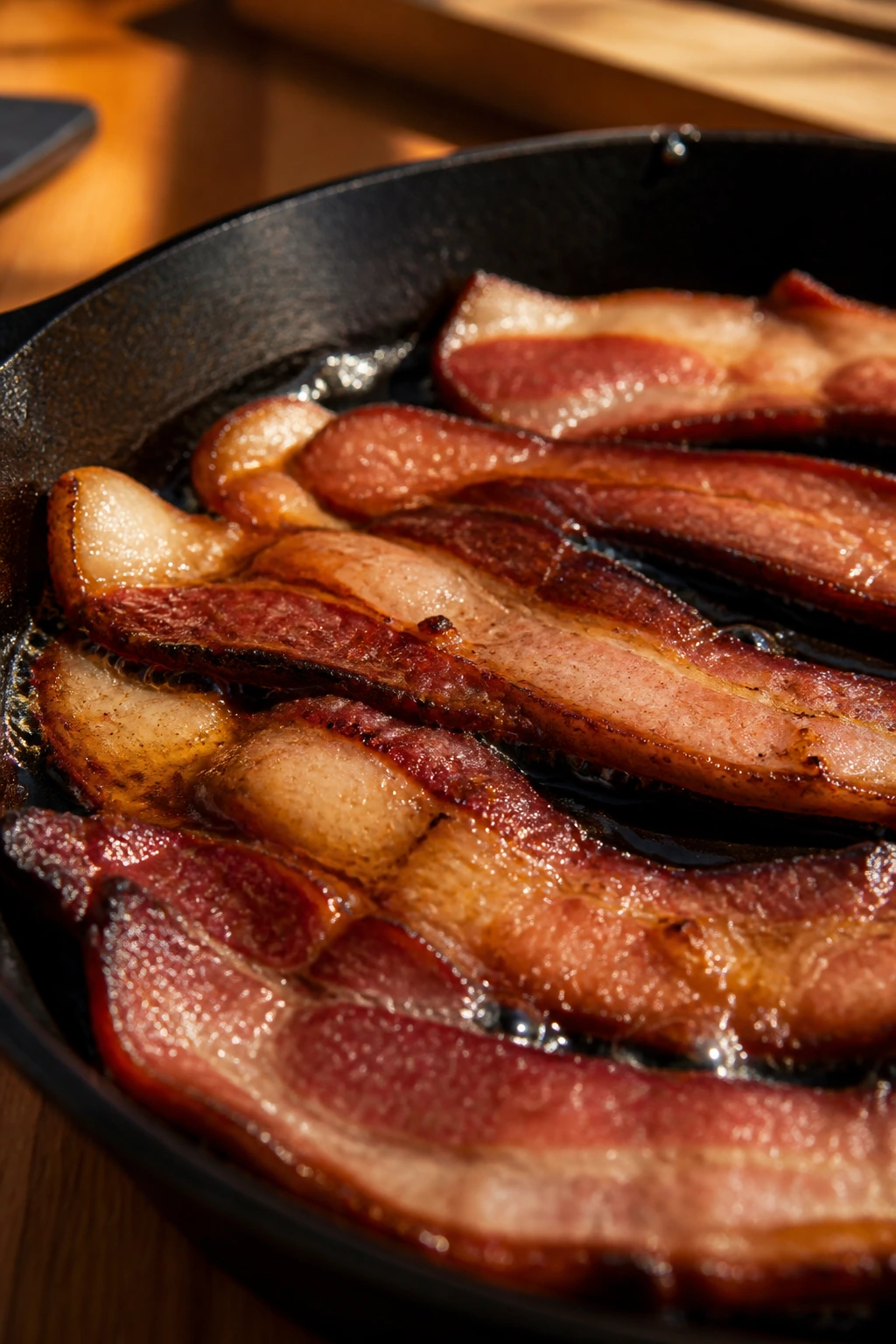
Bacon recipes for Sunday suppers work because bacon does more than add smoke and crunch. It drips fat into onions, perfumes a sauce, sharpens the edges of potatoes, and gives plain chicken thighs or a tray of beans the kind of deep, savory backbone that makes people go back for one more spoonful. That’s the real trick. Not flash. Flavor.
A good Sunday supper has a certain pace to it. There’s time for a skillet to hiss, time for a roast to rest, time for the kitchen to smell like dinner has been under control for a while. Bacon fits that rhythm better than almost any other ingredient. It can start the meal, finish it, or sit in the middle and quietly do the hard work.
These recipes lean into bacon in different ways. Sometimes it’s chopped and rendered into the base of a meatloaf. Sometimes it’s wrapped around a pork tenderloin so the lean meat doesn’t dry out. Sometimes it’s the salty edge in a casserole, the smoky note in green beans, or the crisp top over creamy potatoes. Same ingredient. Different job. That’s why it earns a permanent spot in the Sunday rotation.
Why These Bacon Recipes for Sunday Suppers Work So Well
-
Bacon acts like seasoning with a body count: A few slices can season onions, beans, potatoes, and gravy far better than a pile of random spices, because the fat carries flavor straight into the pan.
-
The texture contrast does half the work: Crispy bacon against soft potatoes, creamy pasta, or tender pork gives you that pull between crunchy and lush that keeps a supper from feeling flat.
-
Most of these dishes like a little patience: A slow oven, a short rest, or a brief braise gives bacon time to do its job without turning rubbery or bitter.
-
They stretch modest ingredients: Beans, cabbage, pasta, chicken thighs, and potatoes all taste richer when bacon gets into the picture early.
-
Several of them hold well for seconds: Meatloaf, baked ziti, scalloped potatoes, and bean casseroles are the sort of dishes that settle in and taste even better after a short rest.
-
They make the kitchen smell like somebody knows what they’re doing: That may sound sentimental, but it matters. A Sunday meal should announce itself before it reaches the table.
1. Brown Sugar Bacon Meatloaf
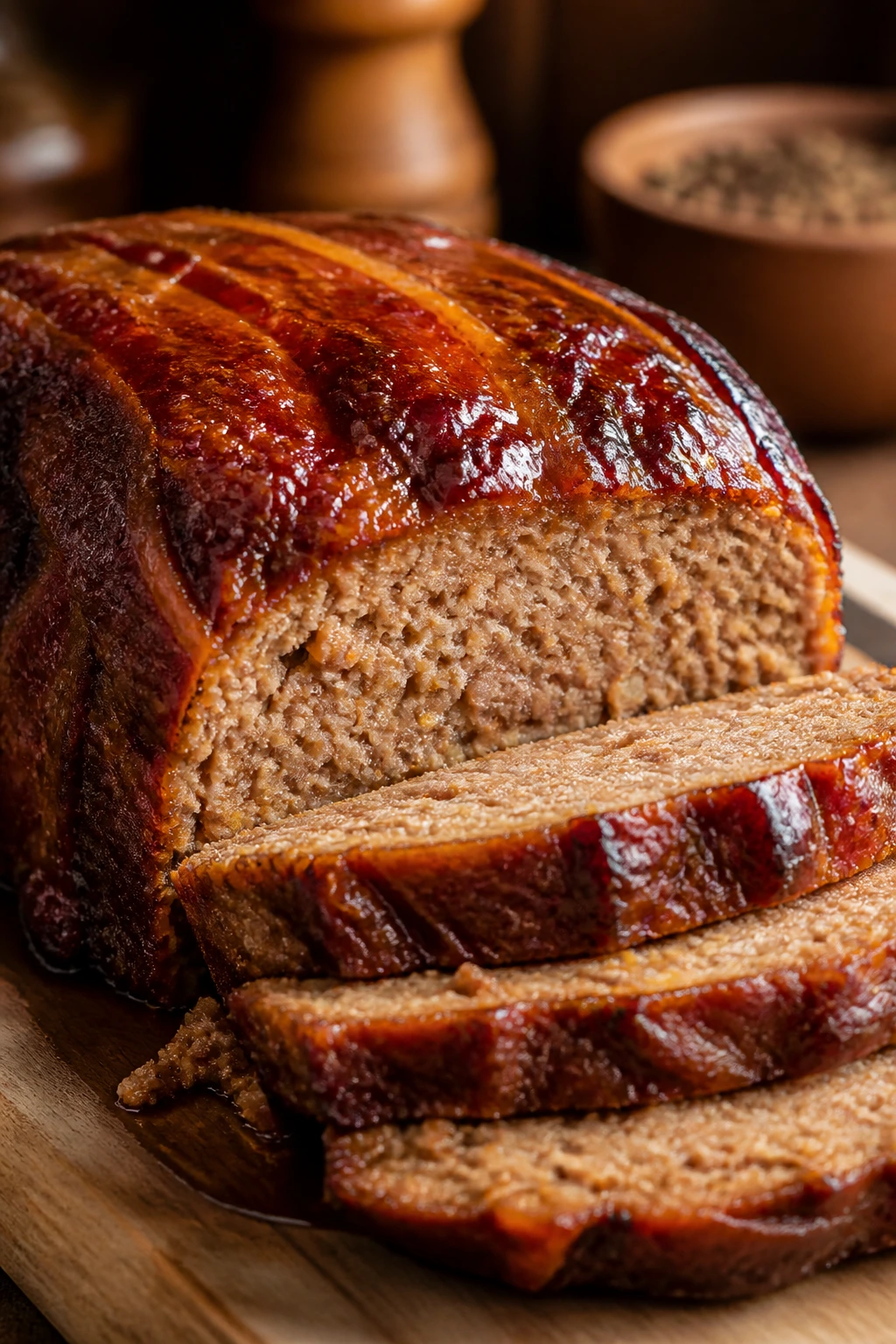
A meatloaf with bacon in the mix feels different the moment it hits the oven. The top goes glossy from the brown sugar glaze, the bacon around the edges turns bronzed and a little sticky, and every slice holds together without tasting dense or dry. This is the kind of meatloaf that earns a second night in the fridge because nobody is tired of it.
Why It Works:
Bacon adds salt, smoke, and fat to a cut of food that can turn bland fast if you don’t build flavor carefully. Ground pork softens the texture, while breadcrumbs and milk keep the crumb tender instead of compact. The glaze goes on twice, which gives you a lacquered top and that slightly caramelized edge that makes people cut a thicker slice than they meant to.
Key Ingredients:
- 8 slices thick-cut bacon, diced
Bacon gets cooked first so the fat can season the onions and the loaf itself. - 1 medium yellow onion, finely diced
Keep it small so it melts into the meat instead of poking out in sharp chunks. - 2 cloves garlic, minced
Just enough to round the meat out without taking over. - 1 1/2 lb ground beef
An 85/15 blend gives you flavor without a greasy puddle. - 1/2 lb ground pork
This keeps the loaf juicy and a little softer in the center. - 1 cup plain breadcrumbs
They hold the juices and keep the slices from crumbling. - 2 large eggs
These bind everything without making the loaf heavy. - 1/2 cup whole milk
Soaks the crumbs and keeps the interior tender. - 2 tbsp Worcestershire sauce
Adds that dark, savory note bacon loves. - 1 tbsp Dijon mustard
Sharpens the glaze and keeps the meat from tasting sweet in a sloppy way. - 1 tsp kosher salt and 1/2 tsp black pepper
Bacon contributes salt, so this is enough.
Quick Steps:
- Preheat the oven to 375°F and line a rimmed baking sheet with foil or parchment.
- Cook the diced bacon in a skillet over medium heat for 6 to 8 minutes, until the fat renders and the pieces are browned but not hard. Add the onion and cook 4 to 5 minutes more, until soft and glossy. Stir in the garlic for 30 seconds.
- In a large bowl, combine the bacon mixture, beef, pork, breadcrumbs, eggs, milk, Worcestershire, Dijon, salt, and pepper. Mix with your hands just until combined. Do not squeeze the mixture into paste.
- Shape the loaf on the prepared pan, about 9 by 5 inches, and brush with half the glaze.
- Bake for 35 minutes, then brush on the rest of the glaze and bake 20 to 25 minutes more, until the center reaches 160°F.
- Rest for 10 to 15 minutes before slicing. Cutting too early will dump the juices.
Equipment for This Recipe:
- Large skillet
- Rimmed baking sheet or 9×5-inch loaf pan
- Large mixing bowl
- Instant-read thermometer
- Pastry brush
How to Serve This Dish:
Serve thick slices with mashed potatoes and a green vegetable that can handle the glaze, like green beans or roasted carrots. The slice should be juicy but hold its shape on the plate, with a little shiny sauce running to the side. A spoonful of extra glaze on the edge never hurts.
Pro Tips for This Recipe:
- Cook the bacon before it goes into the mix; raw diced bacon can leave the loaf greasy and uneven.
- If your ground beef is extra lean, add 1 to 2 tablespoons of pan drippings or melted butter to the bowl.
- Line the pan with foil if you want cleaner slices and less cleanup.
- Let the loaf rest under loose foil so the crust stays glossy instead of drying out.
Variations on This Dish:
- Maple-Dijon Finish: Swap half the ketchup in the glaze for maple syrup and keep the Dijon. It leans sweeter and works well if you’re serving roasted squash on the side.
- Turkey and Bacon Loaf: Use 2 pounds ground turkey and keep the bacon. Add 1 extra tablespoon milk so the loaf doesn’t dry out.
- Mushroom-Heavy Version: Fold in 1 cup finely chopped sautéed mushrooms for a deeper, earthier slice.
Common Mistakes to Avoid with This Dish:
- Mixing too hard: The loaf turns tight and springy instead of tender. Stop when the ingredients are evenly distributed.
- Skipping the thermometer: Meatloaf looks done before the middle is safe. Pull it at 160°F, not when the top just “looks right.”
- Serving straight from the oven: The slices will slump and leak. Ten minutes of rest changes the whole thing.
2. Bacon-Wrapped Pork Tenderloin with Dijon Pan Sauce
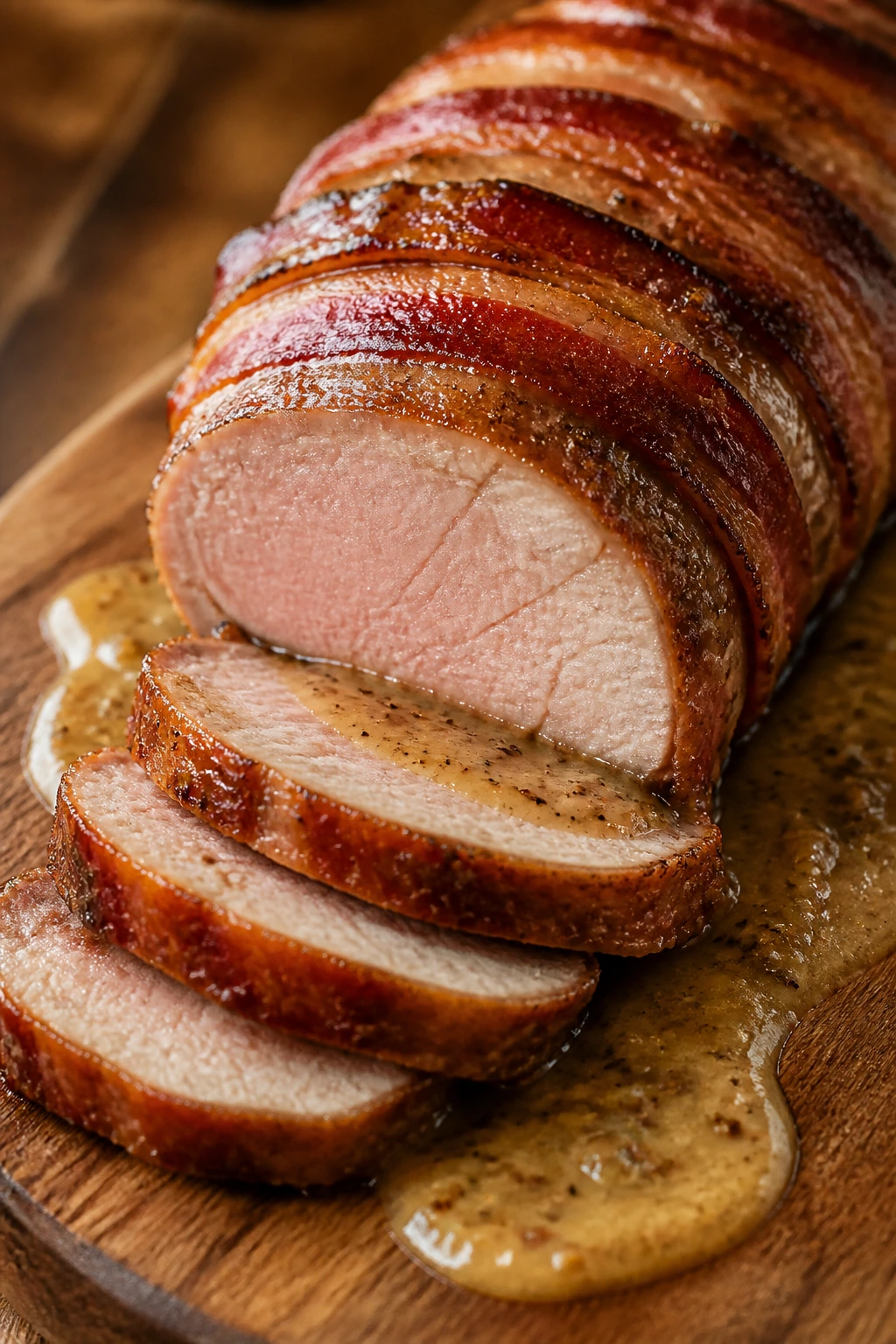
Want a roast that looks more complicated than it is? This one does that trick every time. The bacon wraps around the tenderloin like a neat little blanket, the pork stays pale pink and juicy inside, and the pan sauce picks up all the browned bits that would otherwise get scrubbed down the drain.
Why It Works:
Pork tenderloin is lean enough to punish a sloppy cook. Bacon solves that problem by shielding the surface and adding fat as it roasts. A hot oven tightens the bacon enough to crisp the edges while the tenderloin stays in its sweet spot around 145°F. The Dijon pan sauce gives you sharpness so the whole plate doesn’t lean too rich.
Key Ingredients:
- 2 pork tenderloins, about 2 pounds total
Trim the silver skin so the meat cooks evenly. - 10 slices bacon
Use regular or thin-cut bacon so it wraps tightly and renders well. - 2 tbsp Dijon mustard
Brushed on the pork before wrapping, it adds flavor under the bacon. - 1 tbsp olive oil
Helps the surface brown. - 2 cloves garlic, minced
Keep it out of the direct heat so it doesn’t burn. - 1 tsp chopped fresh thyme or 1/2 tsp dried thyme
Pork and thyme are old friends. - 1/2 cup chicken broth
The base of the pan sauce. - 1 tbsp apple cider vinegar
Brightens the sauce so the bacon fat doesn’t feel heavy. - 1 tbsp butter
Finishes the sauce with a little shine.
Quick Steps:
- Preheat the oven to 400°F and set a rack in the middle. Line a sheet pan with foil and place a wire rack on top.
- Pat the pork dry, rub with olive oil, Dijon, thyme, salt, and pepper. Wrap each tenderloin with overlapping bacon slices and tuck the ends underneath. Secure with toothpicks if needed.
- Roast for 25 to 30 minutes, until the bacon is browned and the thickest part of the pork reaches 145°F. If the bacon is still pale, broil for 1 to 2 minutes. Watch closely during broiling.
- Move the pork to a plate and rest for 10 minutes.
- Pour off excess fat from the pan, then set the pan over medium heat. Add garlic, broth, and vinegar, scraping up the brown bits. Simmer for 2 to 3 minutes, then whisk in butter.
- Slice the pork into thick medallions and spoon the sauce over the top.
Equipment for This Recipe:
- Rimmed sheet pan
- Wire rack
- Instant-read thermometer
- Small saucepan or skillet for the sauce
- Toothpicks
How to Serve This Dish:
Slice the tenderloin into half-inch rounds and fan them over mashed potatoes, roasted carrots, or buttered cabbage. Spoon the Dijon sauce across the meat so some runs into the potatoes. It looks elegant without feeling fussy, which is exactly the right tone for Sunday supper.
Pro Tips for This Recipe:
- Choose bacon that bends easily; super-thick slices can stay floppy while the pork finishes.
- Let the wrapped tenderloins sit at room temperature for 20 minutes before roasting.
- Pull the pork at 145°F and let carryover heat do the rest.
- If the bacon isn’t tight, wrap it more snugly than you think you need to.
Variations on This Dish:
- Maple Pepper Wrap: Brush the bacon lightly with maple syrup and cracked black pepper before roasting.
- Herb-Garlic Version: Add minced rosemary and extra garlic to the Dijon rub.
- Mustard-Cream Sauce: Stir 2 tablespoons cream into the pan sauce for a softer finish.
Common Mistakes to Avoid with This Dish:
- Using bacon that’s too thick: It can stay undercooked while the pork overcooks. Regular-cut behaves better here.
- Skipping the rest: Cut it too soon and the juices run out onto the board.
- Cooking past 145°F: Tenderloin dries out fast, and bacon won’t save it.
3. Creamy Bacon Mac and Cheese
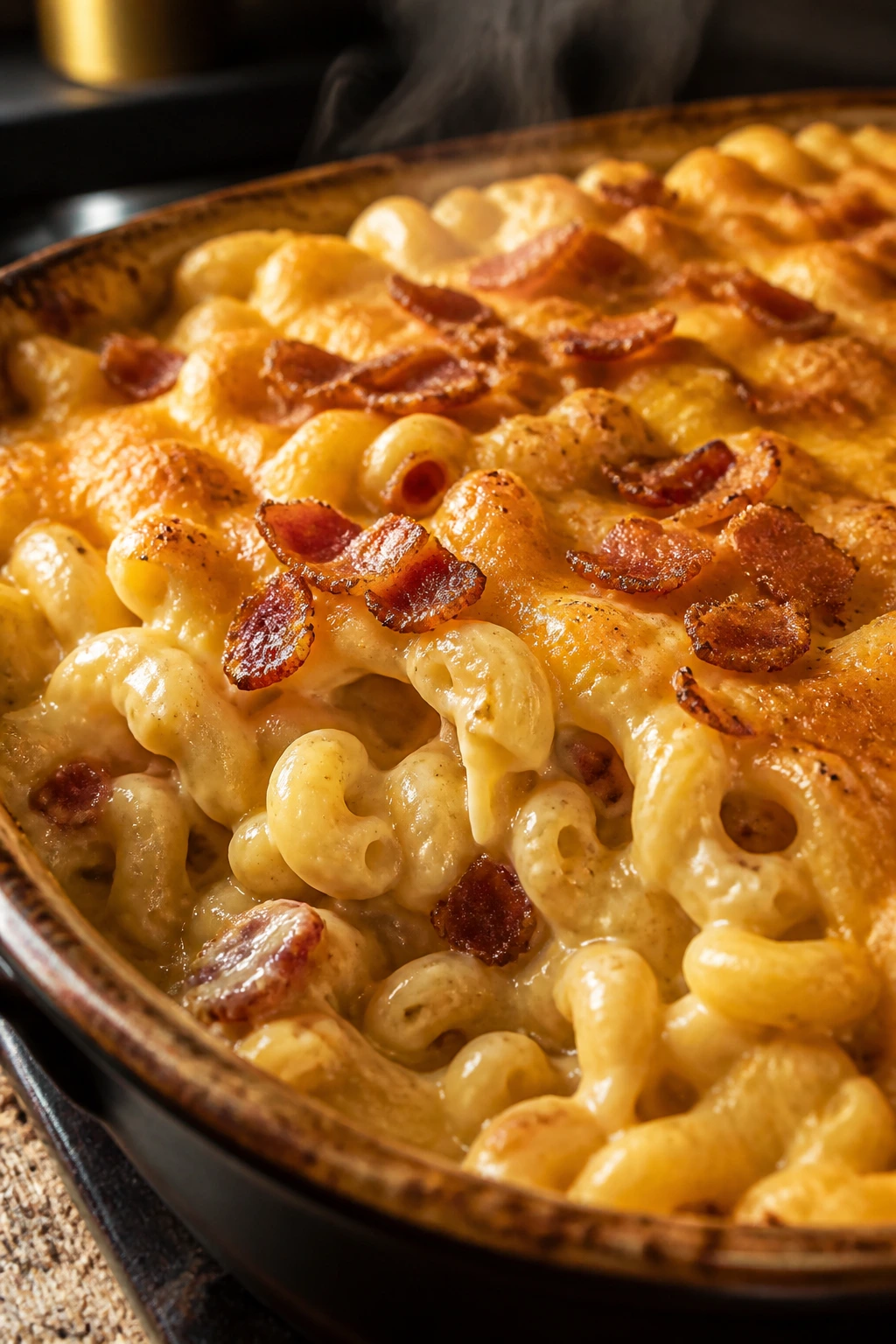
This is the sort of mac and cheese that disappears from the baking dish while people are still pretending to wait for dinner. The sauce is thick enough to cling to every elbow, the bacon adds little salty bites, and the top gets a bit of browned chew if you bake it long enough. No neon orange shortcut cheese here. The real thing tastes better.
Why It Works:
The bacon fat starts the roux, which means the base already has smoky depth before the milk goes in. Sharp cheddar brings bite, Gruyère melts smooth, and a little mustard powder keeps the sauce from tasting flat. Baking the finished pasta for 20 minutes gives the top some texture without drying the center. That balance matters.
Key Ingredients:
- 1 lb elbow macaroni
Small shapes catch sauce better than long noodles. - 8 slices bacon, chopped
Crisp it first so it stays defined in the sauce. - 4 tbsp unsalted butter
Builds the roux with the flour. - 1/4 cup all-purpose flour
Thickens the cheese sauce. - 3 cups whole milk
Warm it slightly before adding if you want a smoother sauce. - 1 cup heavy cream
Makes the sauce lush enough for baking. - 1 tsp mustard powder
Sharpens the cheese flavor. - 1/2 tsp smoked paprika
Echoes the bacon without turning the dish red. - 3 cups shredded sharp cheddar
Grate it yourself if you can; it melts better. - 1 cup shredded Gruyère
Adds a nutty stretch. - 1 cup panko crumbs mixed with 1 tbsp melted butter, optional
For a crisper top.
Quick Steps:
- Preheat the oven to 375°F. Butter a 9×13-inch baking dish.
- Cook the bacon in a large pot or Dutch oven until crisp. Remove it with a slotted spoon and pour off all but 4 tablespoons of fat.
- Whisk the butter and flour into the fat over medium heat for 1 minute, then slowly whisk in the milk and cream. Cook 4 to 5 minutes, until the sauce thickens enough to coat a spoon.
- Stir in the mustard powder, paprika, cheddar, and Gruyère. Keep the heat low. If the sauce boils, the cheese can turn grainy.
- Fold in the cooked macaroni and bacon. Taste and adjust salt carefully.
- Pour into the baking dish, top with panko if using, and bake 18 to 22 minutes until bubbling around the edges.
Equipment for This Recipe:
- Large pot or Dutch oven
- Whisk
- 9×13-inch baking dish
- Box grater
- Wooden spoon
How to Serve This Dish:
Scoop it while it’s still hot and the sauce is loose enough to settle around the pasta. A simple green salad with a sharp vinaigrette is enough beside it, because the pasta already carries the whole room. If you want a bread on the table, keep it plain. Garlic bread can be one rich thing too many.
Pro Tips for This Recipe:
- Shred your own cheese. Pre-shredded cheese has coating agents that can make the sauce dull.
- Salt the pasta water well, but not aggressively. Bacon and cheese are already doing work here.
- If the sauce looks too thick before baking, splash in 1/4 cup milk.
- Bake just until bubbly. Long oven time dries the edges and makes the sauce paste-like.
Variations on This Dish:
- Jalapeño Bacon Mac: Stir in 1 or 2 minced jalapeños with the bacon for heat.
- Smoked Gouda Version: Replace half the Gruyère with smoked gouda for a softer, woodsy flavor.
- Gluten-Free Route: Use gluten-free macaroni and a cup-for-cup flour blend for the roux.
Common Mistakes to Avoid with This Dish:
- Using heat that’s too high: Cheese sauce can split fast. Stay patient.
- Undercooking the pasta less than al dente: It will turn mushy in the oven.
- Adding bacon at the end only: You want it in the sauce, not just on top.
4. Scalloped Potatoes with Bacon and Gruyère
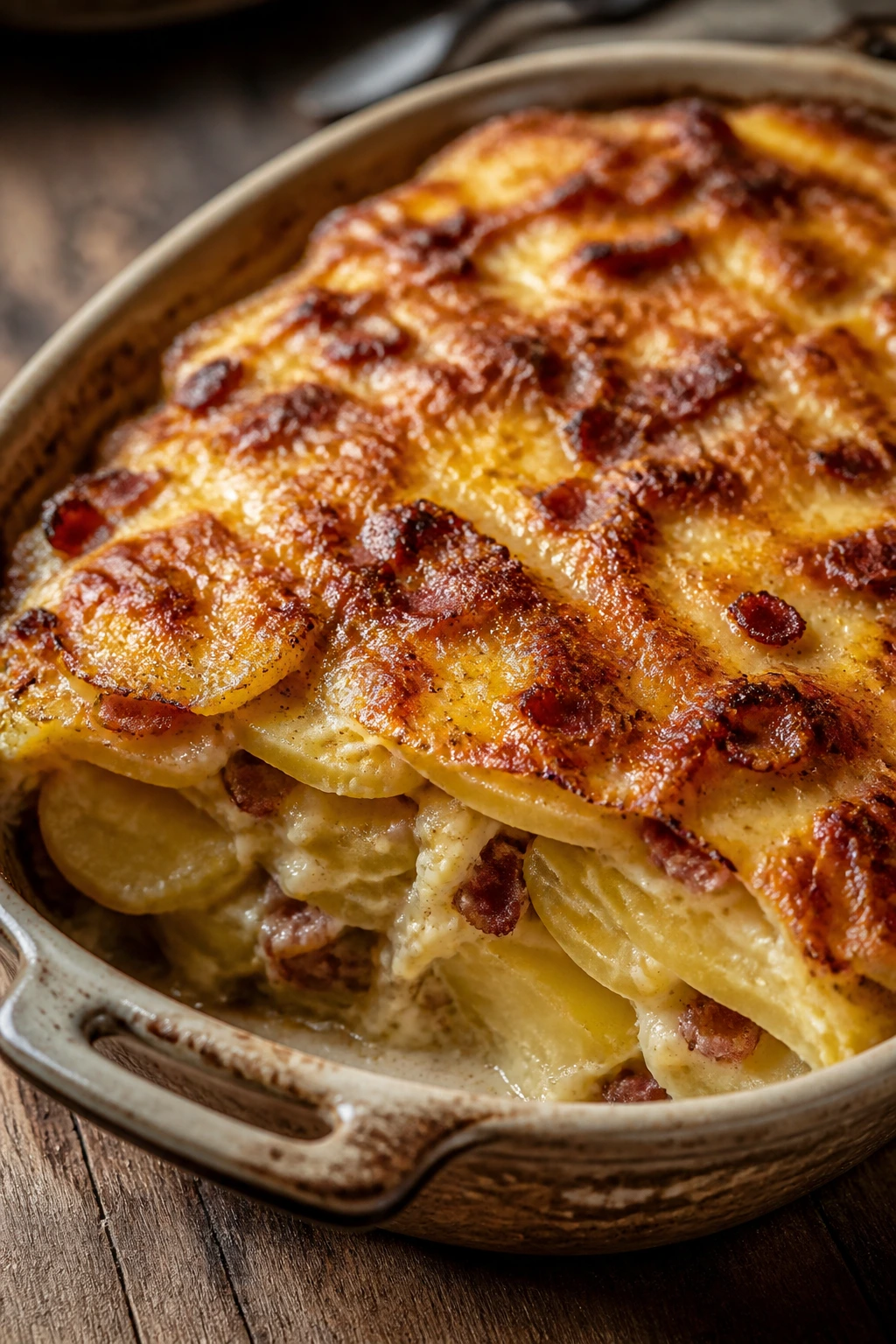
There are potatoes, and then there are potatoes that have spent an hour and a half taking flavor personally. This dish lands in the second camp. The top turns bronzed and a little crackly, the middle softens into cream, and the bacon threads itself through every layer like a reminder that plain scalloped potatoes never had to stay plain.
Why It Works:
Yukon Gold potatoes hold their shape better than russets, so you get tidy layers instead of a collapsed pan. Bacon brings salt and smoke directly into the cream sauce, which means you don’t need to over-season later. Gruyère melts into the sauce without turning oily, and a little Parmesan on top gives you a dry, savory finish that keeps the dish from feeling heavy.
Key Ingredients:
- 3 lb Yukon Gold potatoes, sliced 1/8-inch thick
Thin, even slices are the difference between tender and underdone. - 10 slices bacon, chopped
Render it first for flavor. - 1 medium onion, thinly sliced
It melts into the sauce and sweetens as it bakes. - 2 cloves garlic, minced
Just enough to keep the sauce from tasting flat. - 3 tbsp unsalted butter
Used with the flour for the base. - 3 tbsp all-purpose flour
Thickens the sauce. - 2 cups whole milk
Adds body without making the sauce too rich. - 1 cup heavy cream
Gives the potatoes that soft, spoonable texture. - 1 1/2 cups shredded Gruyère
Melts cleanly. - 1/2 cup grated Parmesan
For the top. - 1 tsp fresh thyme leaves or 1/2 tsp dried thyme
Keeps the dish from going sleepy. - Pinch of nutmeg
A tiny bit goes a long way.
Quick Steps:
- Preheat the oven to 375°F and butter a 9×13-inch baking dish.
- Cook the bacon in a skillet until the fat renders and the pieces are just crisp. Add the onion and cook 5 to 7 minutes, until soft. Stir in the garlic for 30 seconds.
- Melt the butter in a saucepan, whisk in the flour, then slowly add the milk and cream. Cook until the sauce thickens, then season with thyme, nutmeg, pepper, and a careful pinch of salt.
- Layer half the potatoes in the dish, top with half the bacon mixture and half the sauce, then repeat. Finish with Gruyère and Parmesan.
- Cover with foil and bake 45 minutes. Remove the foil and bake 25 to 35 minutes more, until the potatoes are tender and the top is browned.
- Rest 15 minutes before serving so the sauce settles.
Equipment for This Recipe:
- 9×13-inch baking dish
- Large skillet
- Medium saucepan
- Mandoline or sharp knife
- Foil
How to Serve This Dish:
Serve it as the starch with roast chicken, pork chops, or a braised main. The best slices hold together just enough to scoop, with cream pooling lightly around the edges. A spoonful of pan gravy on the plate beside it is not too much. It’s the kind of side that makes the rest of dinner seem more deliberate.
Pro Tips for This Recipe:
- Slice the potatoes evenly or you’ll get hard edges and soft centers in the same pan.
- Warm the milk before it goes into the sauce so it thickens faster.
- If the top browns too quickly, tent with foil for the last 15 minutes.
- Resting matters here more than people expect; cut too soon and the sauce slides.
Variations on This Dish:
- Ham-and-Bacon Version: Add 1 cup diced ham between the potato layers for a fuller supper side.
- Rosemary Cream: Swap thyme for rosemary and use white cheddar instead of Gruyère.
- Lighter Dairy Mix: Replace half the cream with extra milk if you want a looser sauce.
Common Mistakes to Avoid with This Dish:
- Slicing potatoes unevenly: The pan bakes unevenly and the edges break down before the middle softens.
- Skipping the foil cover: The top burns before the potatoes are tender.
- Using too much salt before tasting: Bacon, cheese, and Parmesan all bring their own.
5. Bacon-Braised Chicken Thighs with Leeks
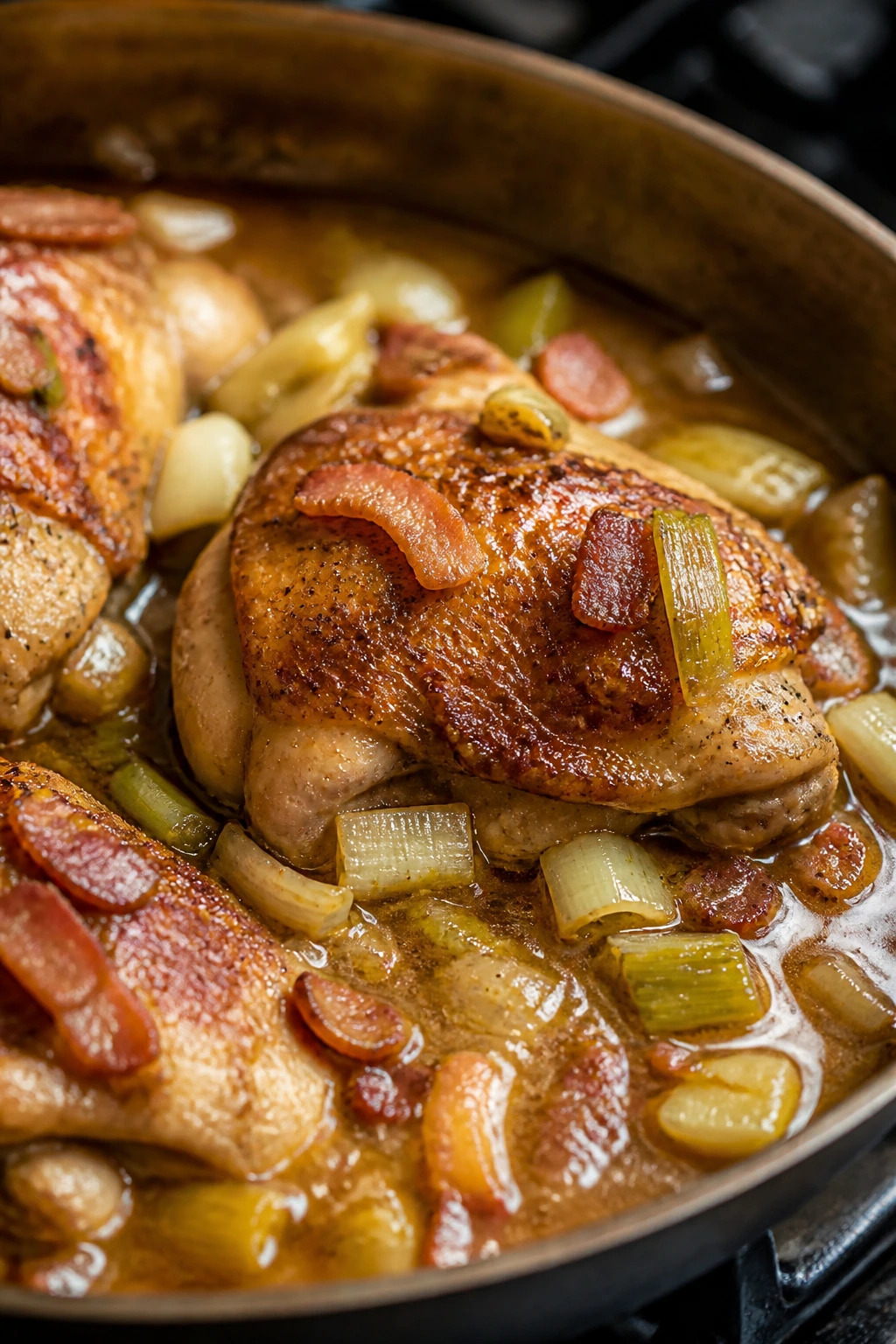
Chicken thighs and bacon belong together in the same way a cast-iron skillet belongs on a stovetop: they just make sense. The chicken turns silky and rich after the braise, the leeks go sweet, and the bacon keeps the sauce from tasting thin. This is one of those dishes that quietly makes the table calmer.
Why It Works:
Bone-in thighs are forgiving, which is why they’re ideal for braising. Bacon gives the base a smoky fat that coats the leeks and carrots before any liquid goes in. White wine or broth loosens the browned bits from the pan, and the oven finishes the chicken without drying it out. It tastes like the pan did more work than you did.
Key Ingredients:
- 8 bone-in, skin-on chicken thighs, about 3 pounds
Skin-on thighs stay juicy and give you better flavor in the braise. - 6 slices bacon, chopped
Render it first. - 2 leeks, white and light green parts only, sliced and rinsed well
Sand hides in leeks, so wash them carefully. - 2 carrots, sliced
They add sweetness and body. - 3 cloves garlic, minced
Keep the pieces small so they melt into the sauce. - 1 tbsp all-purpose flour
Helps the sauce thicken slightly. - 1 cup dry white wine or more chicken broth
For deglazing. - 1 1/2 cups chicken broth
The braising liquid. - 1 tsp fresh thyme leaves or 1/2 tsp dried thyme
Keeps it from tasting flat. - 1 tbsp Dijon mustard
Rounds out the sauce. - 2 tbsp heavy cream, optional
For a softer finish. - Salt and black pepper
Season the chicken before searing.
Quick Steps:
- Heat the oven to 350°F. Season the chicken thighs well with salt and pepper.
- Cook the bacon in a Dutch oven over medium heat until crisp. Remove it and leave about 2 tablespoons of fat in the pot.
- Sear the chicken thighs skin-side down for 5 to 6 minutes, until deeply golden. Flip and cook 2 minutes more, then remove.
- Add the leeks and carrots to the pot and cook 5 minutes, stirring until they soften. Stir in the garlic and flour for 30 seconds.
- Pour in the wine and scrape up the browned bits. Add the broth, thyme, Dijon, bacon, and chicken. Bring to a gentle simmer, cover, and transfer to the oven for 30 to 35 minutes, until the chicken reaches 175°F and is tender.
- Stir in cream if using and simmer on the stove for 2 minutes before serving.
Equipment for This Recipe:
- Dutch oven with lid
- Tongs
- Wooden spoon
- Instant-read thermometer
- Sharp knife
How to Serve This Dish:
Ladle the chicken and sauce into shallow bowls over mashed potatoes, buttered rice, or a piece of crusty bread that can mop up the leeks. The sauce should look glossy, not watery. A little parsley on top is enough. This one doesn’t need much help.
Pro Tips for This Recipe:
- Rinse leeks twice. Grains of sand ruin an otherwise elegant pot.
- Don’t crowd the chicken during the sear. Crowding steams the skin.
- If the sauce looks thin after baking, simmer it uncovered for 3 to 5 minutes.
- Thighs are done at 175°F to 185°F if you want them especially tender.
Variations on This Dish:
- Mushroom Leek Braise: Add 8 ounces sliced mushrooms with the leeks.
- Mustard-Cream Finish: Double the Dijon and skip the wine for a softer sauce.
- Herb Garden Version: Add tarragon or parsley along with the thyme.
Common Mistakes to Avoid with This Dish:
- Not drying the chicken skin: It won’t brown well. Pat it dry before seasoning.
- Boiling the braise: Gentle simmer is the target. A hard boil toughens the meat.
- Skipping the pan scrape: That browned stuff is the flavor.
6. Slow-Baked Bacon and Bean Casserole
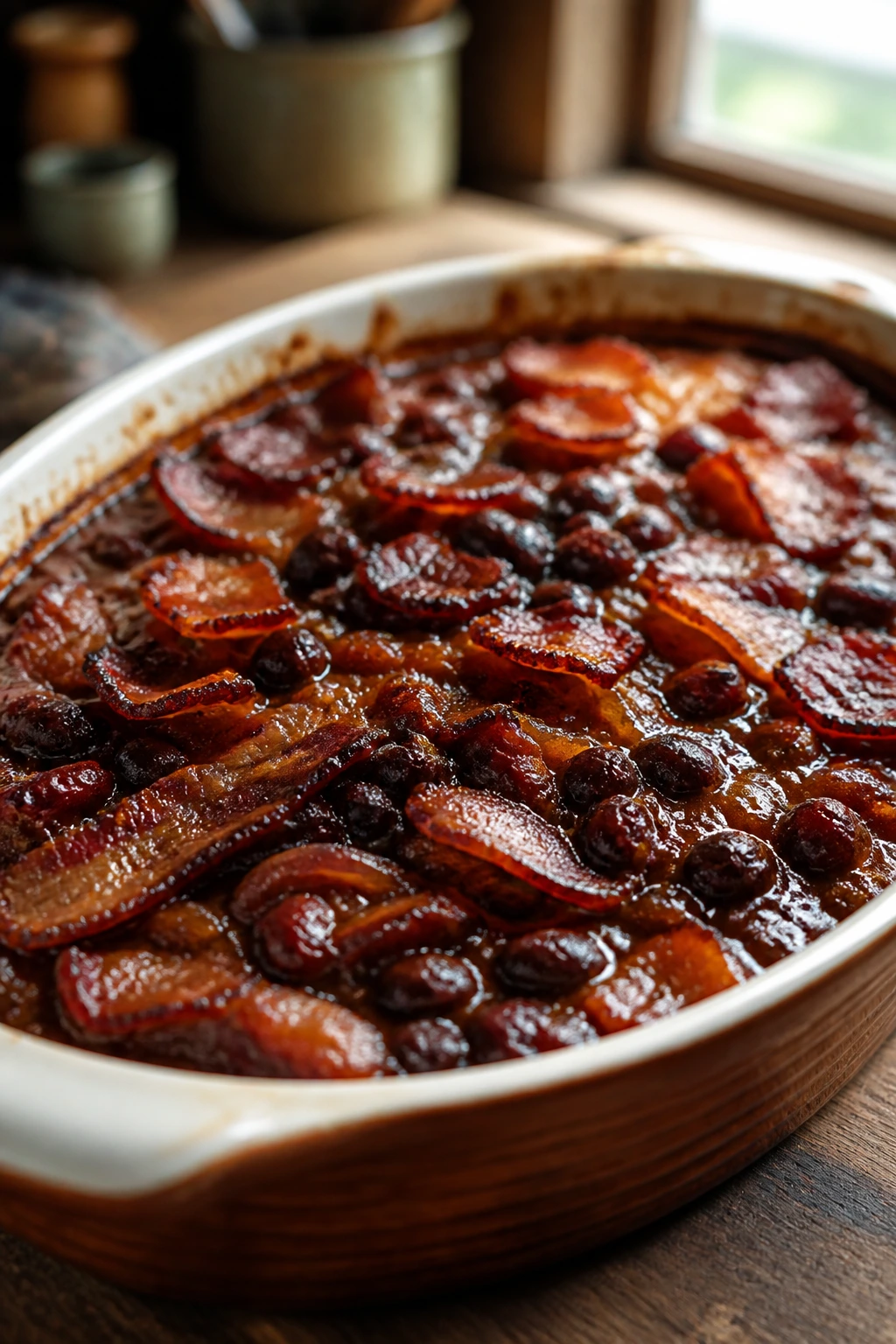
This dish smells like a backyard potluck and a Sunday table had a very practical conversation. The beans come out glossy, the bacon softens into the sauce, and the molasses gives you that deep, almost sticky sweetness that makes a second spoonful feel inevitable. It’s not a side dish trying to be a main. It’s comfortable being both.
Why It Works:
Beans need salt, fat, acid, and slow heat. Bacon handles the fat and salt, while ketchup, molasses, and vinegar balance each other instead of creating a flat sweet sauce. Baking the casserole uncovered at a low temperature lets the liquid reduce gradually so the sauce turns thick without scorching the bottom. That’s the whole game here.
Key Ingredients:
- 8 slices bacon, diced
Start with the bacon in the pot. - 1 large yellow onion, diced
It softens into the beans. - 3 cans (15 oz each) navy beans or pinto beans, drained and rinsed
Canned beans save time and hold up well. - 1/2 cup ketchup
Gives the sauce body. - 1/4 cup molasses
Adds depth and the dark, baked-bean note. - 2 tbsp brown sugar
Balances the vinegar. - 2 tbsp Dijon mustard
Keeps the sweetness in check. - 1 tbsp apple cider vinegar
Adds brightness. - 1 tsp smoked paprika
Reinforces the bacon. - 1 cup chicken broth
Helps the sauce start loose. - 1 tbsp Worcestershire sauce
Gives it a meaty edge. - Black pepper
Bacon already brings salt, so taste before adding more.
Quick Steps:
- Heat the oven to 325°F.
- Cook the bacon in a Dutch oven until the fat renders and the pieces start to brown. Add the onion and cook 5 minutes.
- Stir in the ketchup, molasses, brown sugar, Dijon, vinegar, paprika, Worcestershire, broth, and beans. Bring to a gentle simmer.
- Transfer to the oven and bake uncovered for 60 to 75 minutes, stirring once or twice, until the sauce is thick and the top looks shiny and caramelized around the edges.
- If it looks dry too early, stir in 1/4 cup broth. If it’s thin at the end, bake 10 minutes longer.
- Let it sit 10 minutes before serving.
Equipment for This Recipe:
- Dutch oven or heavy casserole dish
- Wooden spoon
- Can opener and colander
- Oven mitts
How to Serve This Dish:
Serve it with cornbread, skillet biscuits, or alongside sliced pork or roasted chicken. It likes a plate with something plain and a little dry on it. The beans should be spoonable, not soupy. That glossy sauce is the point.
Pro Tips for This Recipe:
- Use beans that are drained well so the sauce can thicken properly.
- Taste only after the casserole has baked; bacon and Worcestershire change the salt level.
- If you want a smokier note, add a pinch of chipotle powder.
- Bake it in a shallow dish if you want more browned edges.
Variations on This Dish:
- Maple Bacon Beans: Replace half the molasses with maple syrup.
- Spicy Campfire Style: Add chipotle powder and a diced jalapeño.
- Vegetarian Side Version: Skip the bacon and add smoked salt plus a tablespoon of butter.
Common Mistakes to Avoid with This Dish:
- Too much liquid at the start: The casserole stays thin and soupy.
- Over-salting before baking: Bacon and Worcestershire bring salt later.
- Rushing the bake: The sauce needs time to reduce and cling.
7. Skillet Cornbread with Bacon and Cheddar
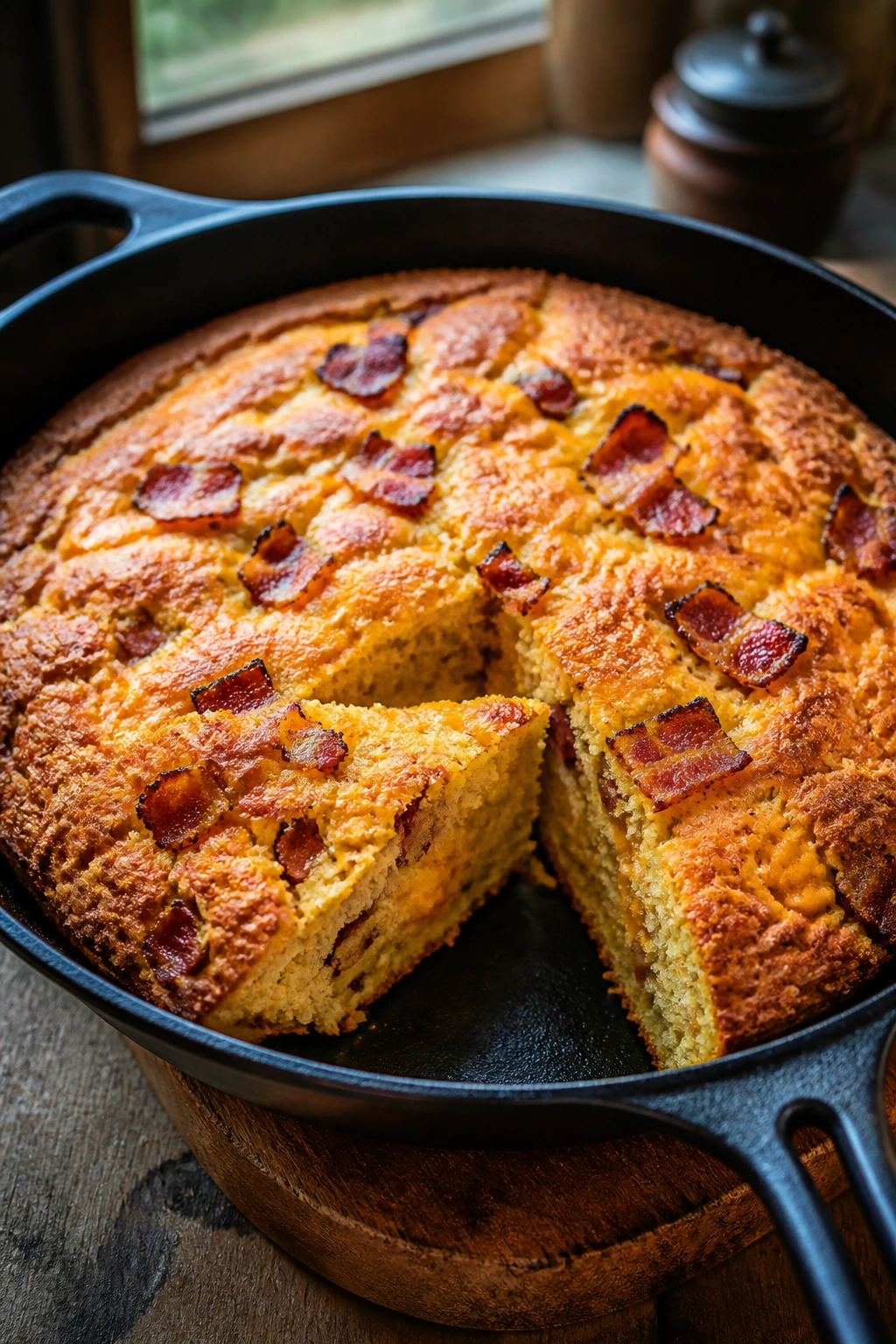
Cornbread with bacon in it is already better than cornbread without. But in a hot cast-iron skillet, with cheddar melting into the crumb and bacon bits tucked through the batter, it becomes the side people tear apart before it reaches the table. The edges go nutty and brown. The middle stays soft and a little custardy.
Why It Works:
The cast-iron skillet preheats the bottom so the crust starts forming as soon as the batter hits it. Bacon adds fat and salt, cheddar adds pockets of savory pull, and buttermilk keeps the crumb tender. This bread isn’t sweet cake pretending to be cornbread. It’s dinner bread with a backbone.
Key Ingredients:
- 1 cup yellow cornmeal
Fine or medium grind both work. - 1 cup all-purpose flour
Keeps the crumb from turning gritty. - 1 tbsp baking powder
Gives lift. - 1 tsp kosher salt
Enough for the batter, since bacon adds more. - 2 tbsp sugar, optional
Use it if you like a slightly softer, rounder flavor. - 1 cup buttermilk
Adds tang and moisture. - 2 large eggs
Help bind the batter. - 1/3 cup melted unsalted butter
Richness and flavor. - 6 slices bacon, cooked and chopped
Keep them crisp so they don’t disappear into the batter. - 1 cup shredded cheddar
Sharp cheddar works best. - 2 scallions, thinly sliced
Optional, but they brighten the loaf.
Quick Steps:
- Heat the oven to 425°F and place a 10-inch cast-iron skillet inside to preheat.
- Cook the bacon until crisp, drain it, and chop it.
- Whisk the cornmeal, flour, baking powder, salt, and sugar in a bowl. In another bowl, whisk the buttermilk, eggs, and melted butter.
- Fold the wet ingredients into the dry just until the flour disappears. Stir in bacon, cheddar, and scallions. Do not overmix.
- Carefully remove the hot skillet, brush with butter or bacon fat, and pour in the batter.
- Bake 18 to 25 minutes, until the top is golden and a toothpick comes out clean.
Equipment for This Recipe:
- 10-inch cast-iron skillet
- Two mixing bowls
- Whisk
- Spatula
- Oven mitts
How to Serve This Dish:
Cut it into wedges and serve warm with chili, braised greens, roast chicken, or a bowl of bean casserole. The crust should crack a little when you slice it, and the inside should steam softly. It’s good with butter, but it doesn’t need it.
Pro Tips for This Recipe:
- Heat the skillet fully or you’ll miss the crisp bottom.
- Use bacon pieces that are small enough to distribute evenly.
- If your cheddar is very salty, reduce the salt in the batter a little.
- Let the cornbread sit for 5 minutes before cutting so it settles.
Variations on This Dish:
- Jalapeño-Cheddar Cornbread: Add 1 minced jalapeño to the batter.
- Sweet Corn Version: Fold in 1/2 cup corn kernels for a little extra bite.
- Gluten-Free Adaptation: Use a gluten-free flour blend that includes xanthan gum.
Common Mistakes to Avoid with This Dish:
- Cold skillet: You lose the crisp edge that makes cast-iron cornbread worth making.
- Overmixing: The bread turns tough. Mix until just combined.
- Cutting too soon: The crumb can look gummy if you slice straight out of the oven.
8. Green Beans with Bacon, Garlic, and Lemon
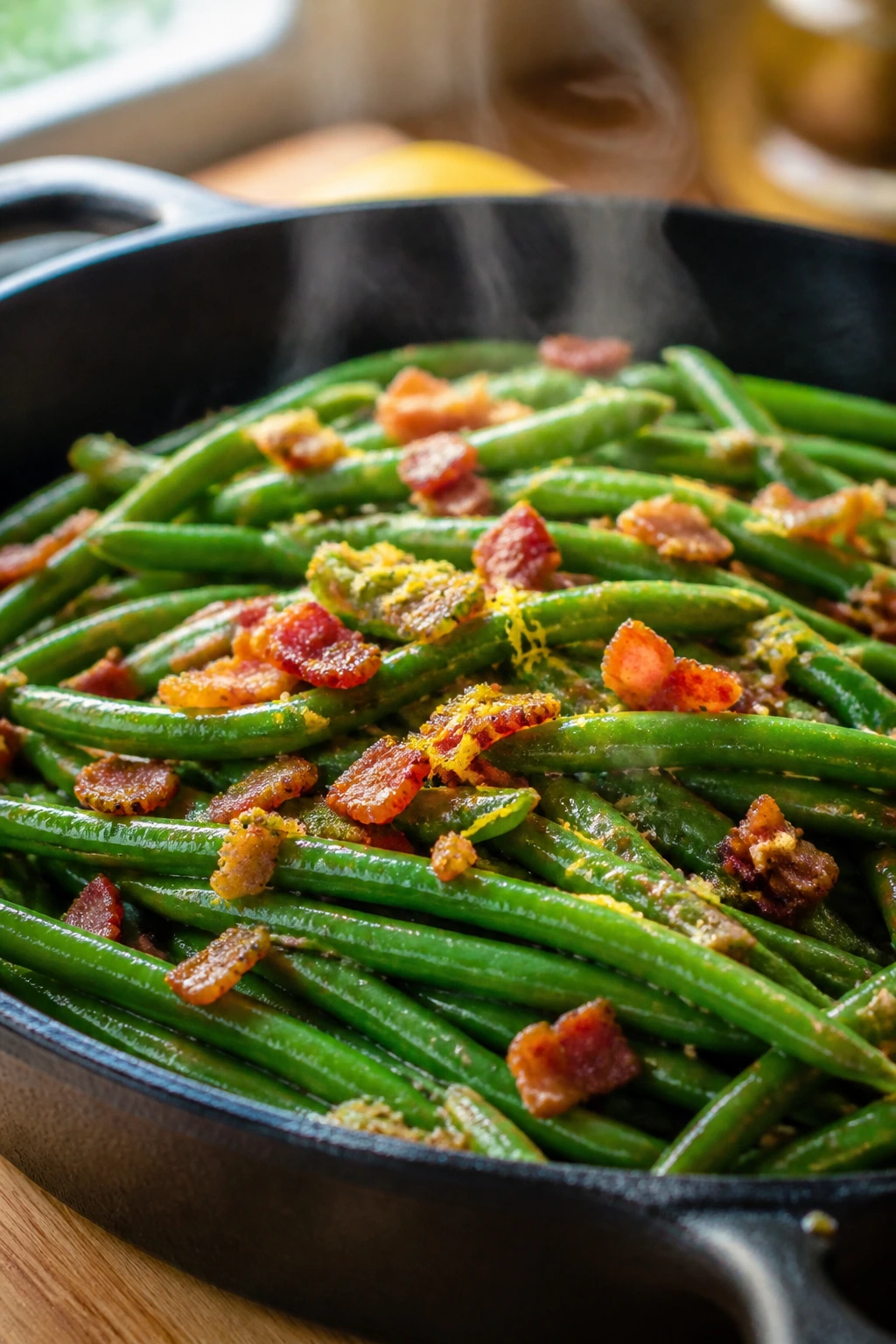
Green beans don’t need much to become worth repeating, and bacon is plenty. The beans stay bright and snappy, the bacon brings a little chew and smoke, and a squeeze of lemon at the end keeps the whole pan from tasting heavy. This is the side dish that disappears first because it doesn’t act like a side dish.
Why It Works:
Blanching the beans briefly keeps their color and bite, while the bacon fat coats the garlic and shallots before the beans go back in. Lemon juice at the end wakes everything up, but only if you add it after the heat has come down a little. If you cook the acid too long, the whole dish loses its lift.
Key Ingredients:
- 1 1/2 lb fresh green beans, trimmed
Fresh beans give you the crisp snap that frozen beans can’t really match. - 6 slices bacon, chopped
Use it to flavor the pan. - 2 shallots, thinly sliced
More delicate than onion. - 2 cloves garlic, minced
Add near the end so it doesn’t burn. - 1/2 cup chicken broth
Gives the beans a little steam and seasoning. - 1 lemon, zested and juiced
Finish with both for the cleanest flavor. - 1 tbsp butter
Helps the beans glisten. - Black pepper
Bacon handles the salt.
Quick Steps:
- Bring a pot of salted water to a boil and blanch the beans for 3 minutes. Drain and plunge them into cold water.
- Cook the bacon in a large skillet until the fat renders and the pieces are crisp. Remove the bacon.
- Add the shallots to the skillet and cook 2 to 3 minutes in the bacon fat. Stir in the garlic for 30 seconds.
- Add the beans and broth. Cook 3 to 4 minutes, tossing until the beans are hot and still bright green.
- Stir in butter, lemon zest, lemon juice, bacon, and black pepper.
- Taste and serve right away.
Equipment for This Recipe:
- Large skillet
- Medium pot
- Colander
- Tongs
- Microplane or zester
How to Serve This Dish:
Serve it next to roast pork, chicken thighs, or meatloaf. The beans should still have a little bite when they hit the plate, not collapse into limp little strings. A lemon wedge on the side looks like a small thing, but it helps people brighten their own portions.
Pro Tips for This Recipe:
- Shock the beans in cold water after blanching to lock in the color.
- Cook garlic briefly or it will taste bitter.
- If the skillet looks dry, add a teaspoon of butter, not more broth.
- Use more lemon zest than juice if you want brightness without extra liquid.
Variations on This Dish:
- Garlic-Almond Version: Toss in toasted slivered almonds for crunch.
- Balsamic Finish: Swap half the lemon juice for a splash of balsamic vinegar.
- Red Pepper Version: Add a pinch of red pepper flakes with the shallots.
Common Mistakes to Avoid with This Dish:
- Overcooking the beans: They lose their snap and turn olive-colored.
- Adding lemon too early: The flavor gets dull.
- Using too much bacon fat: The dish becomes greasy instead of glossy.
9. Brussels Sprouts with Bacon and Maple Mustard
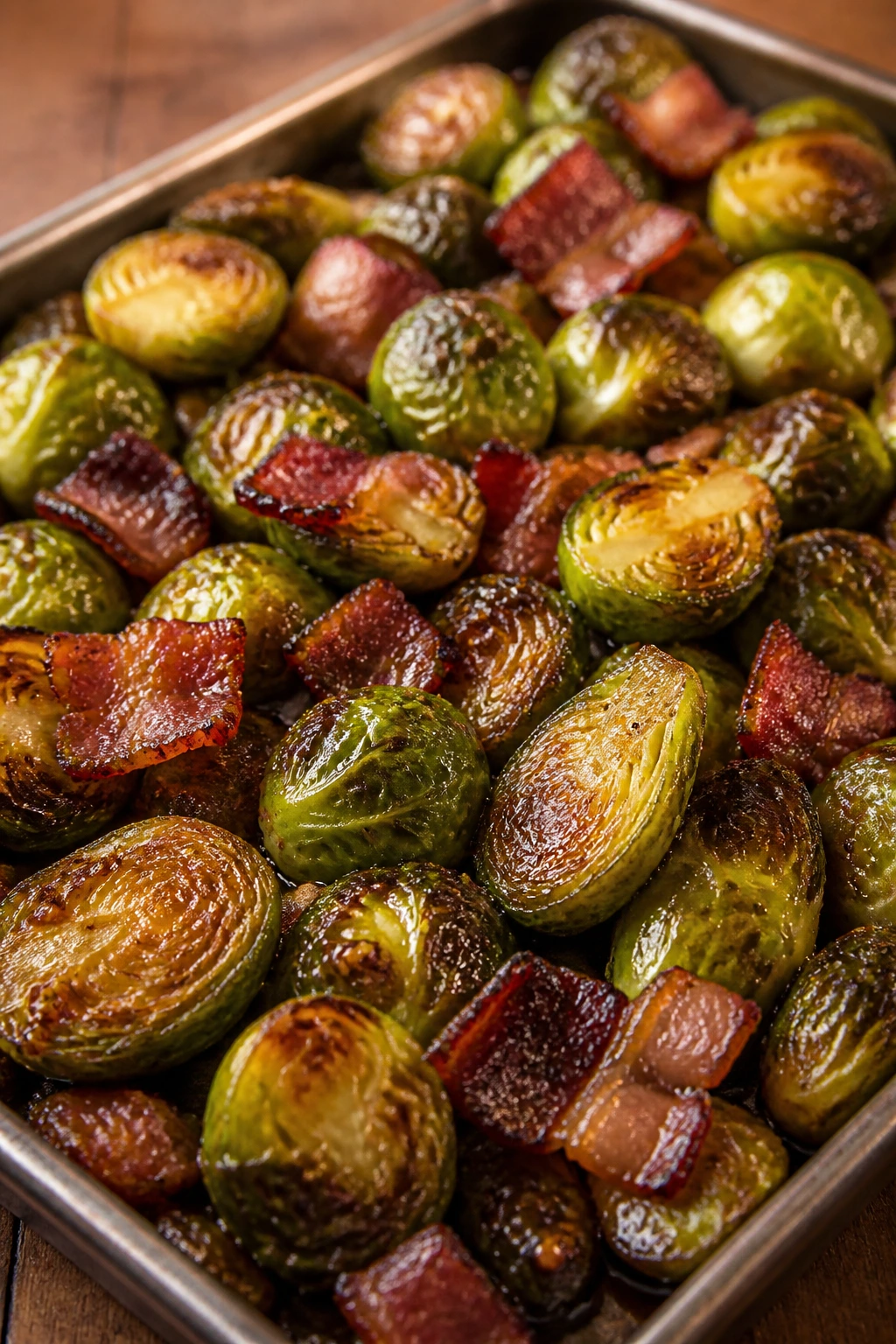
Brussels sprouts have a bad reputation mostly because people used to boil them into bitterness and call it dinner. Roast them with bacon, and the story changes. The edges char a little, the centers stay tender, and the maple-mustard glaze glues itself to every leaf. It tastes like the side dish finally got a decent wardrobe.
Why It Works:
Brussels sprouts need high heat to sweeten properly. Bacon gives them fat before they go into the oven, which helps the outer leaves crisp instead of drying out. Maple syrup adds gloss, Dijon adds bite, and a splash of vinegar keeps the glaze from turning syrupy in the wrong way. That balance keeps the whole tray from feeling one-note.
Key Ingredients:
- 2 lb Brussels sprouts, trimmed and halved
Cut larger ones in half so they roast evenly. - 8 slices bacon, chopped
Start them in a cold skillet or oven-safe pan. - 1 small red onion, cut into thin wedges
It caramelizes alongside the sprouts. - 2 tbsp Dijon mustard
The sharp part of the glaze. - 1 tbsp maple syrup
Just enough to coat, not candy. - 1 tbsp apple cider vinegar
Keeps the glaze lively. - 1 tbsp olive oil
Helps the sprouts brown. - Salt and black pepper
Season after tasting.
Quick Steps:
- Preheat the oven to 425°F.
- In a large oven-safe skillet, cook the bacon over medium heat until the fat renders and the pieces start to crisp. Remove the bacon, leaving the fat in the pan.
- Add the Brussels sprouts and onion, toss with olive oil, salt, and pepper, and arrange cut-side down.
- Roast 18 to 22 minutes, until the sprouts are browned and tender.
- Stir together Dijon, maple syrup, and vinegar. Toss the sprouts with the glaze and bacon, then roast 3 to 5 minutes more.
- Serve hot.
Equipment for This Recipe:
- Large oven-safe skillet or sheet pan
- Mixing bowl
- Spatula or tongs
- Sharp knife
How to Serve This Dish:
This belongs beside pork tenderloin, roasted chicken, or ham. The outer leaves should be crisp enough that some of them crack when you bite into them. If you want a little extra contrast, scatter chopped parsley or toasted nuts over the top right before serving.
Pro Tips for This Recipe:
- Keep the sprouts in a single layer so they brown instead of steam.
- Dry them well after washing; water fights the roast.
- Add the glaze near the end so the maple doesn’t burn.
- If you want more char, broil for 1 minute at the end and watch closely.
Variations on This Dish:
- Pecan Bacon Sprouts: Add 1/3 cup toasted pecans before serving.
- Honey-Dijon Swap: Use honey instead of maple syrup.
- Balsamic Brussels: Replace the vinegar and syrup with 2 tablespoons balsamic glaze.
Common Mistakes to Avoid with This Dish:
- Crowding the pan: Sprouts steam and go soft.
- Glazing too early: The sugar burns before the vegetables are tender.
- Leaving the bacon out until the end: It should share the roast, not just sit on top.
10. Creamed Corn with Crispy Bacon
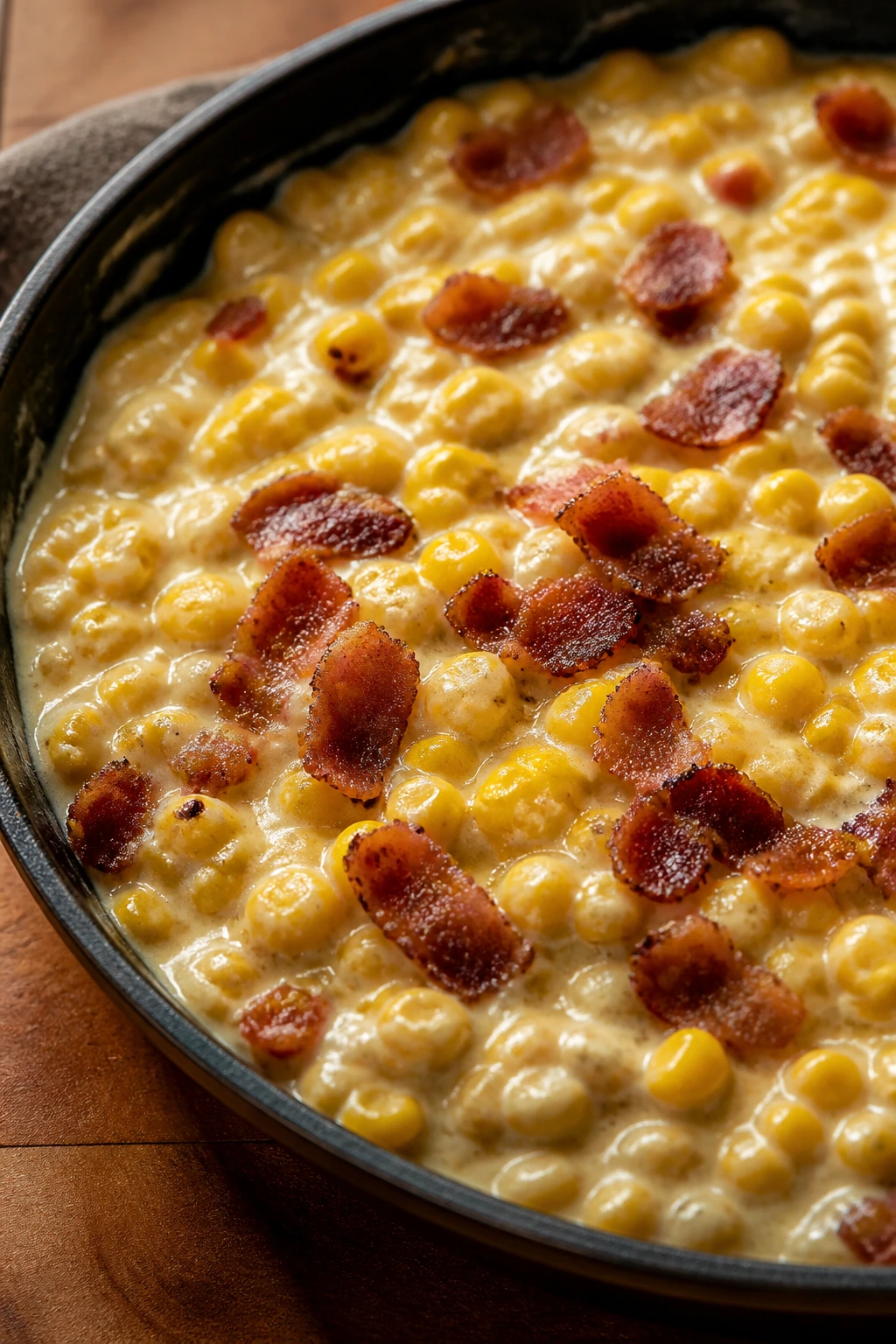
Creamed corn can drift toward gluey if you’re careless, but this version keeps its manners. The bacon gets crisp, the corn stays sweet, and the cream cheese melts into the sauce without making it dense. It lands on the plate like a side dish that knows it has been invited to a serious dinner.
Why It Works:
Corn already has sweetness, so bacon’s salt gives it shape. A little flour and dairy make the sauce thick enough to coat the kernels without turning them into porridge. Cream cheese adds body and a faint tang, which keeps the whole dish from tasting like melted butter alone. That matters more than people think.
Key Ingredients:
- 6 slices bacon, chopped
Render it until crisp. - 4 cups corn kernels, fresh or frozen
Frozen is fine if you thaw it first and pat it dry. - 2 tbsp unsalted butter
Builds the base with the bacon fat. - 1 small onion, finely diced
Optional, but it adds a little savoriness. - 2 tbsp all-purpose flour
Thickens the cream. - 1 cup half-and-half
Gives the sauce richness. - 4 oz cream cheese, softened
Makes the texture velvety. - 1/2 cup whole milk
Loosens the sauce just enough. - Salt and black pepper
Add carefully. - Chopped chives, for serving
Freshness on top.
Quick Steps:
- Cook the bacon in a skillet over medium heat until crisp. Remove it and leave 2 tablespoons of fat in the pan.
- Add the onion, if using, and cook 3 minutes until soft. Stir in the butter and flour and cook 1 minute.
- Whisk in the half-and-half and milk. Cook 2 to 3 minutes until the sauce thickens slightly.
- Add the cream cheese and whisk until smooth. Stir in the corn and most of the bacon.
- Simmer 5 to 7 minutes, stirring, until the corn is hot and the sauce clings.
- Season with pepper, top with the rest of the bacon and chives, and serve.
Equipment for This Recipe:
- Large skillet
- Whisk
- Wooden spoon
- Measuring cups
- Knife and cutting board
How to Serve This Dish:
Serve it next to roast chicken, meatloaf, or pork chops. It should spoon onto the plate in soft mounds, not run all over the place. A sprinkle of chives makes it look finished, but the real appeal is the creamy texture and the little crisp bacon bits hidden inside.
Pro Tips for This Recipe:
- If using frozen corn, thaw and drain it so the sauce doesn’t turn watery.
- Don’t boil hard after adding the dairy; keep it at a quiet simmer.
- Add a pinch of cayenne if you want the sweetness to come forward more.
- Save a spoonful of bacon for the top so the texture stays varied.
Variations on This Dish:
- Jalapeño Corn: Add a minced jalapeño with the onion.
- Smoked Paprika Corn: Stir in 1/2 teaspoon smoked paprika with the flour.
- Cheddar Corn: Fold in 1/2 cup shredded cheddar at the end.
Common Mistakes to Avoid with This Dish:
- Letting the dairy boil: The sauce can separate.
- Using corn straight from the freezer: Ice crystals water down the pan.
- Overthickening: Creamed corn should still move a little when you spoon it.
11. Bacon and Onion Biscuits
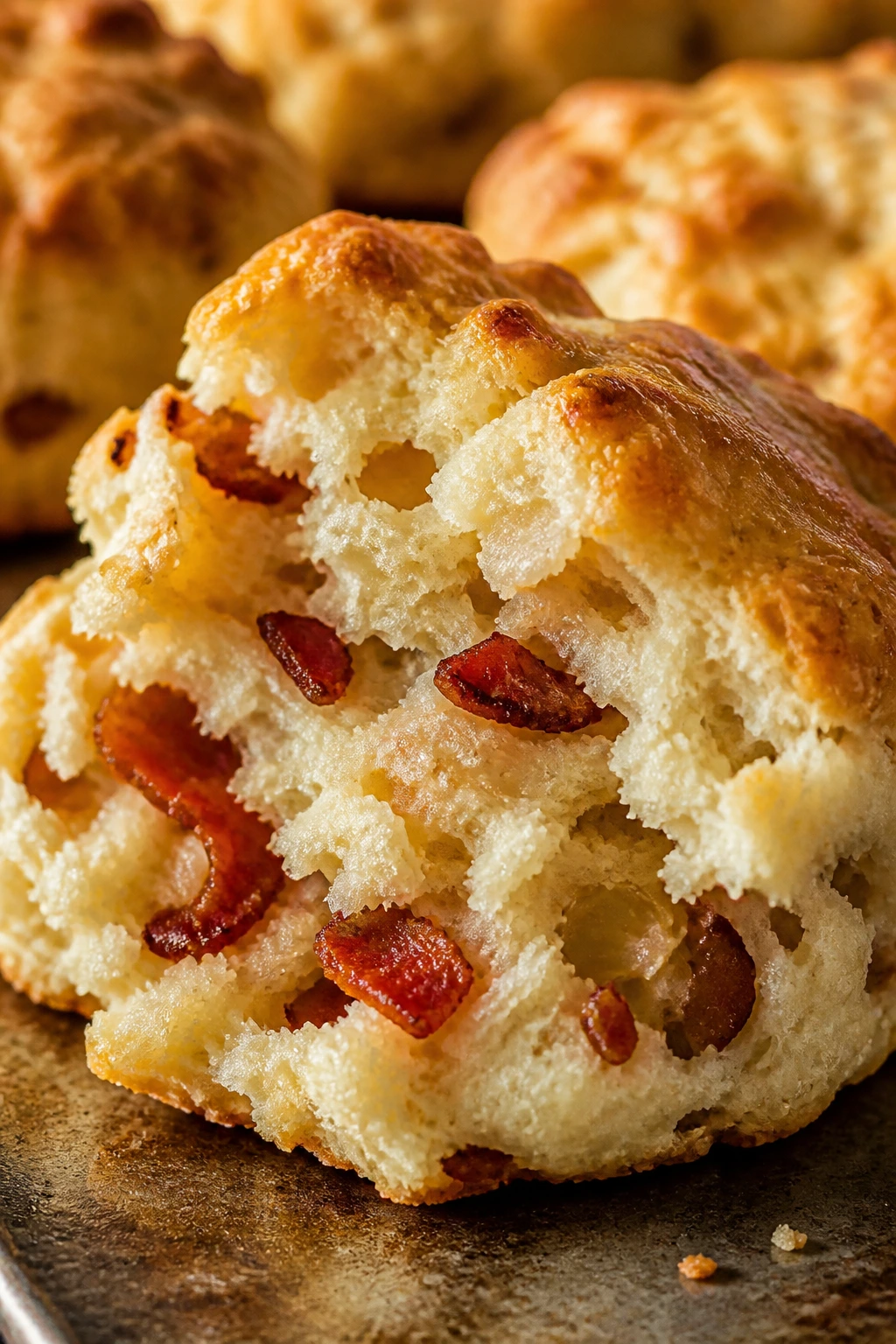
If biscuits can be said to have personality, these have a sharp one. They’re flaky on the outside, a little salty in the middle, and full of bacon and onion so nobody mistakes them for a dinner roll that lost its way. They’re the bread that gets eaten before the butter has even been passed.
Why It Works:
Cold butter makes the layers. Bacon and onion add savory flavor without turning the dough heavy if you keep them cool and cut small. Buttermilk brings tang and moisture, and the heat of the oven makes the butter steam into flakes. It’s a simple structure, but the details matter.
Key Ingredients:
- 2 cups all-purpose flour
The foundation of the dough. - 1 tbsp baking powder
Gives the biscuits lift. - 1 tsp kosher salt
Enough for the dough. - 1 tbsp sugar, optional
Softens the flavor a little. - 1/2 cup cold unsalted butter, cubed
Must stay cold. - 1 cup buttermilk, cold
Helps bring the dough together. - 6 slices bacon, cooked and chopped
Use crisp pieces so the biscuits don’t get soggy. - 1 small yellow onion, thinly sliced and cooked until soft
Cool it before adding. - 1 cup shredded cheddar, optional
Nice if you want a fuller biscuit.
Quick Steps:
- Heat the oven to 425°F and line a baking sheet with parchment.
- Cook the bacon and onion separately or together until the onion is soft and the bacon is crisp. Cool both.
- Whisk the flour, baking powder, salt, and sugar. Cut in the cold butter until the mixture looks like coarse crumbs with pea-size bits.
- Fold in the bacon, onion, and cheddar if using. Add the buttermilk and stir just until a shaggy dough forms. Stop as soon as the flour disappears.
- Pat the dough into a 1-inch slab, fold it once or twice for layers, and cut biscuits.
- Bake 14 to 16 minutes until tall and golden.
Equipment for This Recipe:
- Baking sheet
- Parchment paper
- Large bowl
- Pastry cutter or fork
- Biscuit cutter or drinking glass
How to Serve This Dish:
Serve them warm with soup, roast chicken, or alongside a bean casserole. Split one open and the steam should rise with a smell of butter and bacon before the knife is even fully in. They’re good plain, but a swipe of honey butter is a nice side note.
Pro Tips for This Recipe:
- Keep the butter cold all the way through mixing.
- Let the bacon and onion cool before folding them in.
- Press the dough gently; don’t knead it like bread dough.
- For taller biscuits, place them close together on the pan so they rise up, not out.
Variations on This Dish:
- Scallion Biscuit Version: Swap onion for sliced scallions.
- Jalapeño Cheddar: Add diced jalapeño and extra cheddar.
- Herb Biscuit: Fold in chopped parsley or chives.
Common Mistakes to Avoid with This Dish:
- Warm butter: You lose the flaky layers.
- Too much handling: The biscuits turn dense.
- Baking on a cool pan: The bottoms stay pale and soft.
12. Chicken and Bacon Pot Pie
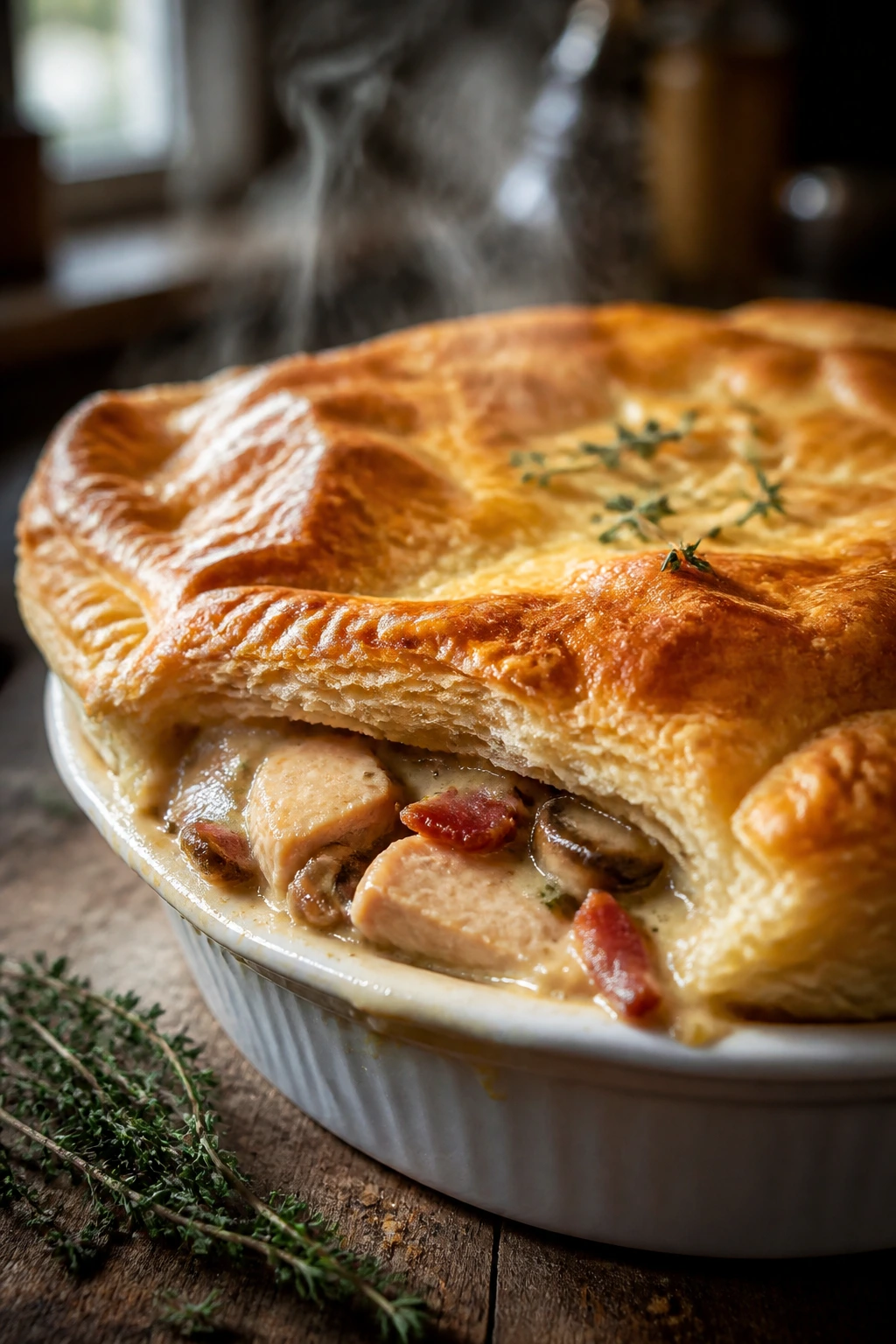
Pot pie should feel like a blanket you can eat, and this one does. The filling is creamy but not gluey, the bacon threads through the chicken and mushrooms, and the pastry top comes out puffed and burnished. It’s the sort of dish that makes people go quiet for a minute when the first spoonful lands.
Why It Works:
Bacon fills in the gaps that chicken alone can leave. Mushrooms and thyme give the filling a deep, earthy middle, while a little milk keeps the sauce mellow instead of sharp. Puff pastry on top means you get a crisp lid without the work of rolling a crust from scratch. Sunday supper doesn’t need extra stress.
Key Ingredients:
- 8 slices bacon, chopped
Cooks first for the base flavor. - 2 cups cooked shredded chicken
Rotisserie chicken works well. - 8 oz cremini mushrooms, sliced
They add a meaty texture. - 1 medium onion, diced
Sweats into the filling. - 2 carrots, diced
For sweetness and color. - 2 celery stalks, diced
Classic pot pie balance. - 1/4 cup all-purpose flour
Thickens the filling. - 1 1/2 cups chicken broth
Keeps the filling saucy. - 1 cup whole milk
Softens the broth. - 1 tsp thyme
Chicken and thyme belong together. - 1 cup frozen peas
Stir in at the end. - 1 sheet puff pastry, thawed
The lid. - 1 egg, beaten
For the wash.
Quick Steps:
- Heat the oven to 400°F.
- Cook the bacon in a large skillet until crisp. Remove it and keep 2 tablespoons of fat in the pan.
- Add onion, carrots, celery, and mushrooms. Cook 6 to 8 minutes, until the vegetables soften and the mushrooms release their liquid. Stir in the flour for 1 minute.
- Slowly add broth and milk, stirring until the filling thickens. Add thyme, chicken, peas, and bacon. Taste and season.
- Pour the filling into a pie dish or 9-inch casserole. Lay the puff pastry over the top, trim excess, and cut a few vents. Brush with egg wash.
- Bake 25 to 30 minutes, until the pastry is puffed and deeply golden. Rest 10 minutes.
Equipment for This Recipe:
- Large skillet
- 9-inch pie dish or casserole dish
- Pastry brush
- Sharp knife
- Rolling pin, if needed
How to Serve This Dish:
Serve it straight from the dish with a green salad or simple roasted asparagus. The filling should be thick enough to mound on the spoon, and the pastry should crackle when cut. A bowl of it is enough for a full meal, which is exactly why it works.
Pro Tips for This Recipe:
- Cool the filling a few minutes before topping it so the pastry doesn’t melt.
- Use thawed puff pastry that’s still cold, not limp.
- Vent the top so steam escapes.
- If the edges brown too fast, cover them loosely with foil.
Variations on This Dish:
- Biscuit-Topped Version: Replace puff pastry with biscuit dough for a homier crust.
- Herbed Chicken Pot Pie: Add parsley and tarragon for a brighter filling.
- Dairy-Light Filling: Use more broth and less milk for a lighter sauce.
Common Mistakes to Avoid with This Dish:
- Watery filling: Cook the vegetables long enough for their moisture to leave the pan.
- Warm pastry: It won’t rise well.
- Skipping the rest after baking: The sauce needs a few minutes to settle.
13. Bacon-Stuffed Sweet Potatoes with Sour Cream and Chives
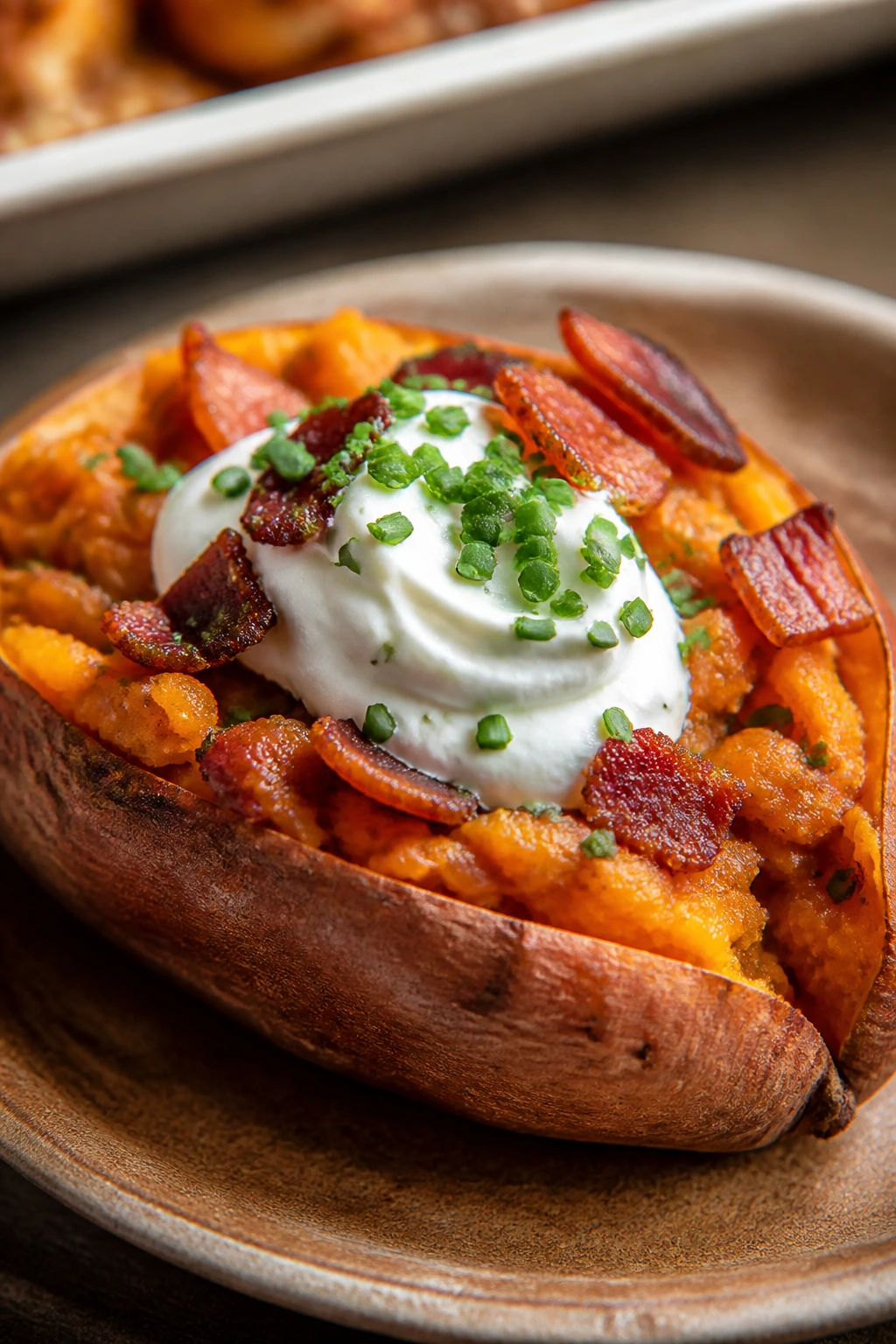
Sweet potatoes can carry a lot more than butter if you let them. Split open and stuffed with bacon, sour cream, and chives, they become savory enough to stand beside a roast and still keep their own identity. The skins wrinkle, the insides go creamy, and the bacon adds a salty pop every few bites.
Why It Works:
Sweet potatoes need contrast. Bacon gives salt and crispness, sour cream adds tang, and chives keep the whole thing from leaning one-directionally sweet. Baking the potatoes until the skins are tender means the flesh can be whipped lightly with butter before it goes back into the shell. That makes each half feel complete rather than assembled.
Key Ingredients:
- 4 large sweet potatoes
Look for even shapes so they bake at the same rate. - 8 slices bacon, chopped
Crisped and drained. - 2 tbsp butter
For the potato flesh. - 1/2 cup sour cream or plain Greek yogurt
Gives the filling a cool, tangy edge. - 1/2 cup shredded cheddar, optional
If you want more richness. - 2 scallions or 2 tbsp chopped chives
For freshness. - Salt and black pepper
Needed even with bacon. - Pinch of cayenne or smoked paprika, optional
For warmth.
Quick Steps:
- Heat the oven to 400°F. Prick the sweet potatoes all over and place them on a sheet pan. Bake 50 to 60 minutes, until a knife slides in easily.
- Cook the bacon until crisp and drain it.
- Split the potatoes open lengthwise and scoop the flesh into a bowl, leaving a thin border inside the skins.
- Mash the flesh with butter, sour cream, half the bacon, half the cheese if using, and seasoning.
- Spoon the mixture back into the skins. Top with the remaining bacon, scallions, and any extra cheese.
- Return to the oven for 8 to 10 minutes, or broil for 1 to 2 minutes until the tops are lightly browned.
Equipment for This Recipe:
- Baking sheet
- Fork
- Mixing bowl
- Spoon
- Sharp knife
How to Serve This Dish:
Serve one half per person as a hearty side or two halves if you want them to carry the meal. They pair well with pork chops, roast chicken, or a pile of green beans. The finished potato should be soft enough to scoop with a fork but still hold its shell.
Pro Tips for This Recipe:
- Bake the potatoes until truly tender; underbaked centers turn stringy when mashed.
- Salt the filling after mixing because bacon can vary a lot.
- If the flesh seems dry, add another tablespoon of butter or a splash of milk.
- Broil at the end only if you’re standing there watching.
Variations on This Dish:
- Black Bean Stuffed Sweet Potatoes: Add 1 cup black beans for a more filling version.
- Maple-Pecan Finish: Sprinkle with chopped toasted pecans and a tiny drizzle of maple syrup.
- Herby Yogurt Version: Use Greek yogurt and add dill or parsley.
Common Mistakes to Avoid with This Dish:
- Undercooking the potatoes: The flesh won’t mash smoothly.
- Overstuffing the shells: The filling spills and doesn’t heat evenly.
- Forgetting to season the flesh: Sweet potatoes need salt more than people expect.
14. Pork Chops with Bacon Apple Pan Sauce
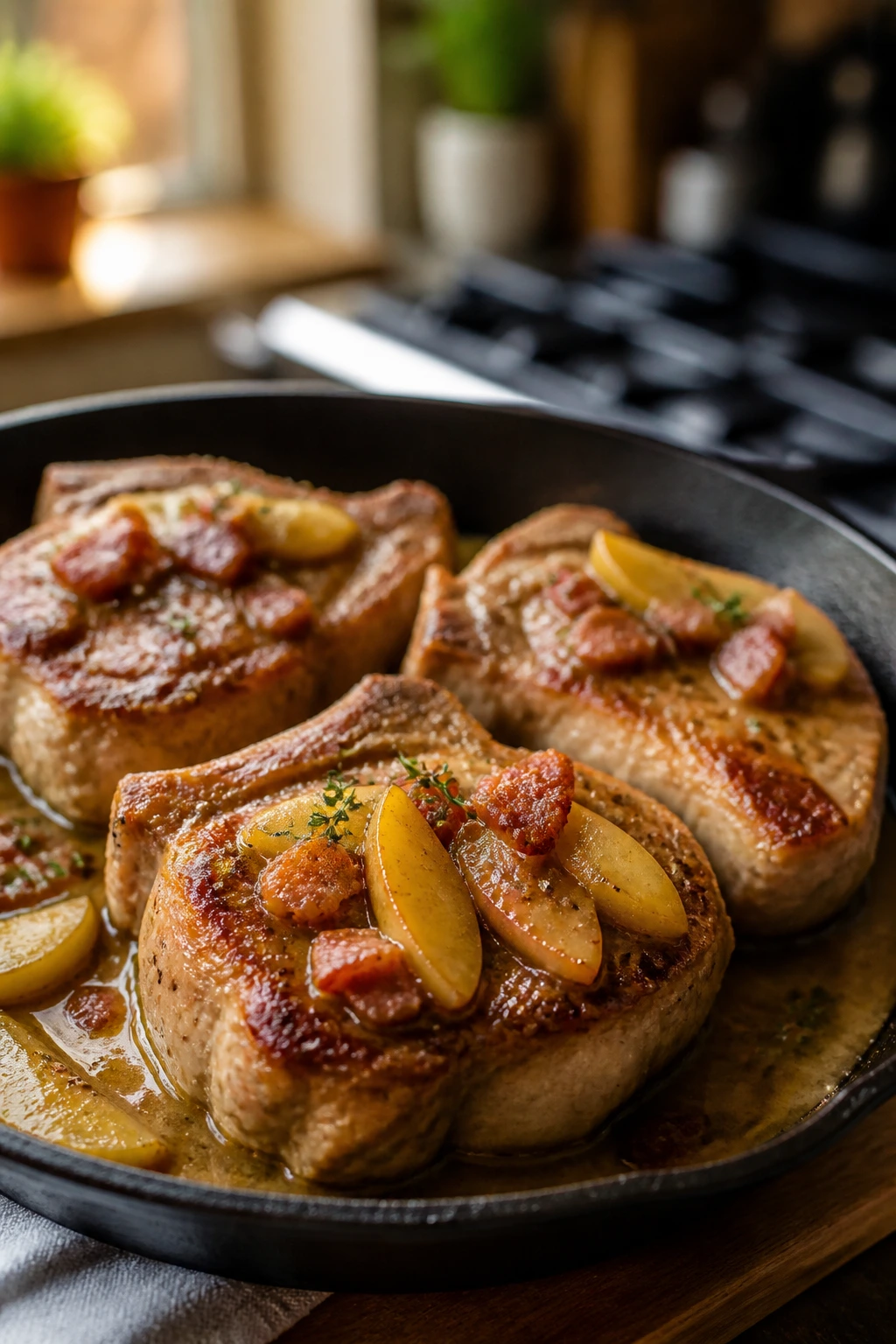
This is one of those Sunday suppers that tastes like fall without asking to be decorative about it. The pork chops sear fast, the bacon renders a little smoke into the pan, and the apples soften just enough to turn into sauce instead of applesauce. It’s savory first, sweet second, and that’s the correct order.
Why It Works:
Bone-in pork chops stay juicier than boneless ones, which matters because you’re searing them hard before the sauce starts. Bacon gives the pan fat and flavor, apples bring acidity and sweetness, and apple cider ties the whole skillet together. Dijon keeps the sauce from becoming dessert-adjacent. That little bit of sharpness saves it.
Key Ingredients:
- 4 bone-in pork chops, about 1 inch thick
Thick chops handle the sear and sauce better. - 6 slices bacon, chopped
Rendered in the skillet. - 2 apples, peeled if you like, sliced
Use a firm apple that holds its shape. - 1 shallot, sliced
Sweeter than onion and better for the sauce. - 1 cup apple cider
The sauce base. - 1 tbsp Dijon mustard
Sharpens the sweetness. - 1 tsp fresh thyme or 1/2 tsp dried thyme
A classic pork pairing. - 1 tbsp butter
Finishes the sauce. - Salt and black pepper
Season the chops well.
Quick Steps:
- Pat the pork chops dry and season both sides with salt and pepper.
- Cook the bacon in a large skillet over medium heat until crisp. Remove it and leave about 1 tablespoon of fat.
- Sear the pork chops for 3 to 4 minutes per side, until golden and the internal temperature reaches about 140°F. Remove and rest.
- Add the apples and shallot to the skillet and cook 4 to 5 minutes, until the apples start to soften at the edges.
- Pour in the cider, Dijon, and thyme, scraping up the browned bits. Simmer 3 to 4 minutes, then stir in butter and bacon.
- Return the chops to the pan for 1 minute, just to coat them. Serve right away.
Equipment for This Recipe:
- Large skillet
- Tongs
- Instant-read thermometer
- Cutting board and knife
- Spoon
How to Serve This Dish:
Plate the chops with mashed potatoes, sautéed cabbage, or roasted Brussels sprouts. Spoon the apples and sauce over the top so some runs down into the sides. The sauce should taste like cider with a smoky edge, not like sweet glaze.
Pro Tips for This Recipe:
- Let the chops come off the fridge for 20 minutes before cooking.
- Choose firm apples like Honeycrisp, Fuji, or Pink Lady so they don’t melt away.
- Pull the chops before they fully reach temperature; carryover heat will finish them.
- Don’t crowd the skillet or the sear turns pale.
Variations on This Dish:
- Mustard Cream Sauce: Stir in 2 tablespoons cream at the end for a softer finish.
- Bourbon Apple Version: Replace 1/4 cup cider with bourbon and simmer carefully.
- Pear-and-Bacon Twist: Swap apples for firm pears if that’s what you have.
Common Mistakes to Avoid with This Dish:
- Thin chops: They dry out before the sauce is done.
- Overcooking the apples: They should hold shape and soften, not collapse.
- Skipping the rest: Pork chops need a few minutes before slicing.
15. Tomato-Bacon Baked Ziti
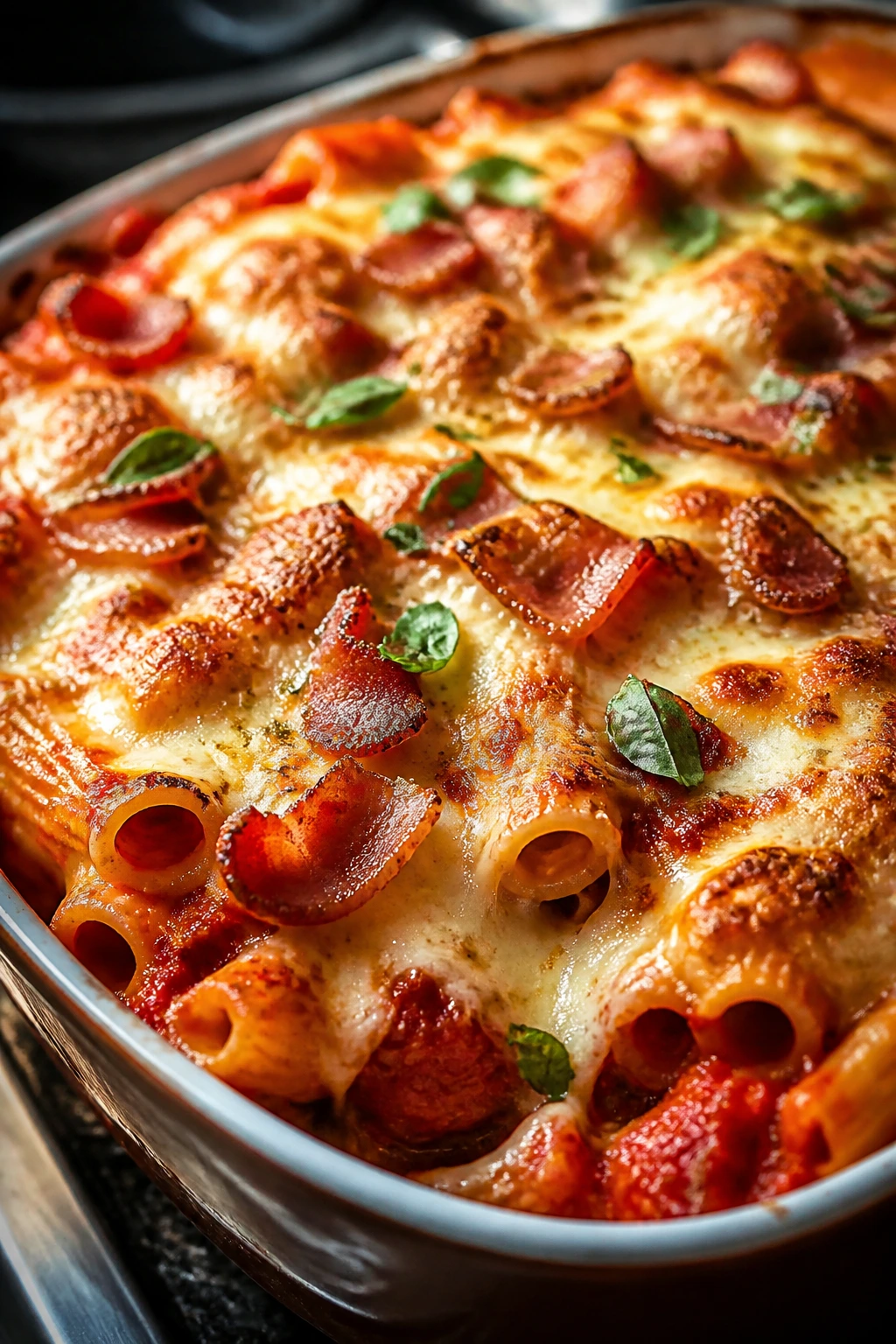
Baked ziti with bacon is the sort of dish that turns a normal Sunday supper into a tray people remember. The tomato sauce gets deeper from the bacon fat, the ricotta melts into pockets, and the top browns in patches where the mozzarella meets the oven heat. It’s rich, yes, but the basil and tomato keep it from feeling heavy.
Why It Works:
Bacon gives the tomato sauce an edge that plain marinara doesn’t have. Ziti holds the sauce in its tubes, ricotta softens the middle, and mozzarella gives you those stretchy, browned top spots everyone reaches for first. Baking the pasta with sauce instead of serving it straight from the pot lets the flavors come together in a way stovetop pasta never quite manages.
Key Ingredients:
- 1 lb ziti or penne
The shape should hold sauce and cheese. - 8 slices bacon, chopped
Cooked until crisp. - 1 medium onion, diced
Sweetens the sauce. - 3 cloves garlic, minced
Add after the onion softens. - 4 cups marinara sauce
Use one that tastes balanced on its own. - 1 cup ricotta
Gives the bake creamy pockets. - 2 cups shredded mozzarella
For the stretch and top browning. - 1/2 cup grated Parmesan
Sharpens the finish. - 1/4 cup chopped basil
Freshness after baking. - Pinch of red pepper flakes, optional
If you want a little heat.
Quick Steps:
- Heat the oven to 375°F and grease a 9×13-inch baking dish.
- Cook the bacon in a skillet until crisp. Remove it and sauté the onion in the bacon fat for 4 to 5 minutes. Add the garlic for 30 seconds.
- Stir in the marinara and bacon. Simmer 5 minutes.
- Cook the ziti in salted water until just shy of al dente, then drain. Mix with half the sauce, half the ricotta, and half the mozzarella.
- Spread into the baking dish, dollop the rest of the ricotta on top, then add the remaining sauce, mozzarella, and Parmesan.
- Bake 20 to 25 minutes until bubbling and browned in spots. Rest 10 minutes and finish with basil.
Equipment for This Recipe:
- Large pot
- Skillet
- 9×13-inch baking dish
- Colander
- Wooden spoon
How to Serve This Dish:
Serve generous squares with a green salad and garlic bread if you want the meal to feel complete. The pasta should hold a little shape when cut, not slump into a red puddle. A few basil leaves on top make it look brighter than it has any right to.
Pro Tips for This Recipe:
- Undercook the pasta slightly because it finishes in the oven.
- Taste the sauce before mixing it in; some jarred sauces need pepper or basil.
- Let the baked ziti rest or the first scoop will slide apart.
- If you want a crisp top, broil for the last 1 to 2 minutes.
Variations on This Dish:
- Sausage-and-Bacon Bake: Add cooked Italian sausage for a meatier pan.
- Spinach Ziti: Stir in 3 cups fresh spinach with the sauce.
- Lighter Ricotta Version: Use part-skim ricotta and a little extra marinara.
Common Mistakes to Avoid with This Dish:
- Overcooking the pasta before baking: It turns soft and tired.
- Too much sauce: The bake can turn soupy.
- Skipping the rest after baking: The layers need time to settle.
Why Bacon Belongs in the Sunday Oven
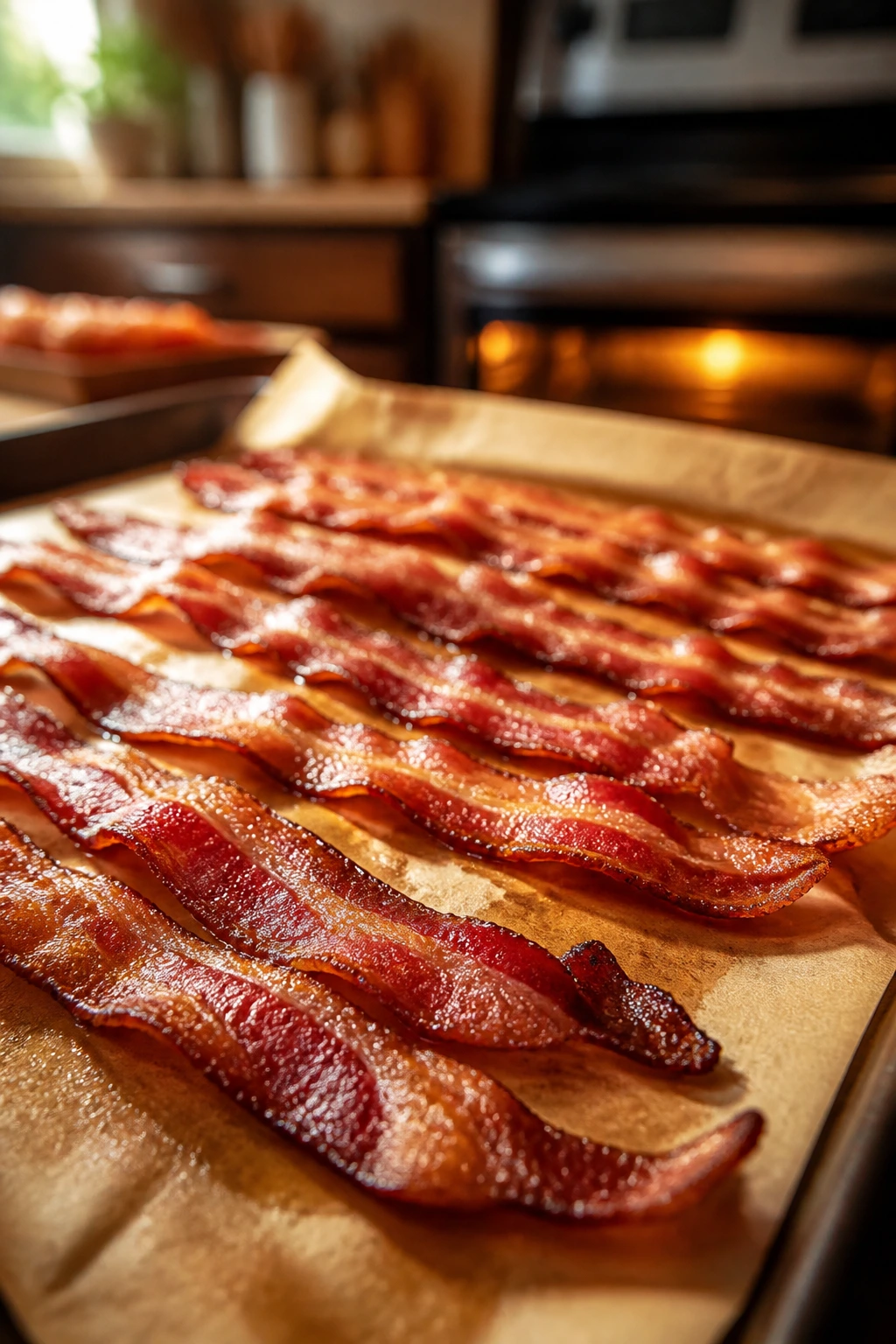
Bacon is at its best when it gets a job, not when it’s just sprinkled on top because somebody thought the plate needed more drama. In Sunday supper cooking, it helps onions soften properly, gives beans a deeper color, keeps pork from drying out, and turns ordinary vegetables into something people notice. That’s why these recipes work. They don’t treat bacon like a garnish. They treat it like a tool.
There’s also the small matter of texture, which cooks talk about less than they should. A crispy bacon edge against creamy potatoes, a brittle shard on top of baked ziti, or a salty chew in green beans gives the meal a rhythm that keeps it alive all the way through the last bite. Without that contrast, a lot of comfort food starts tasting like one long note.
Essential Equipment for These Recipes
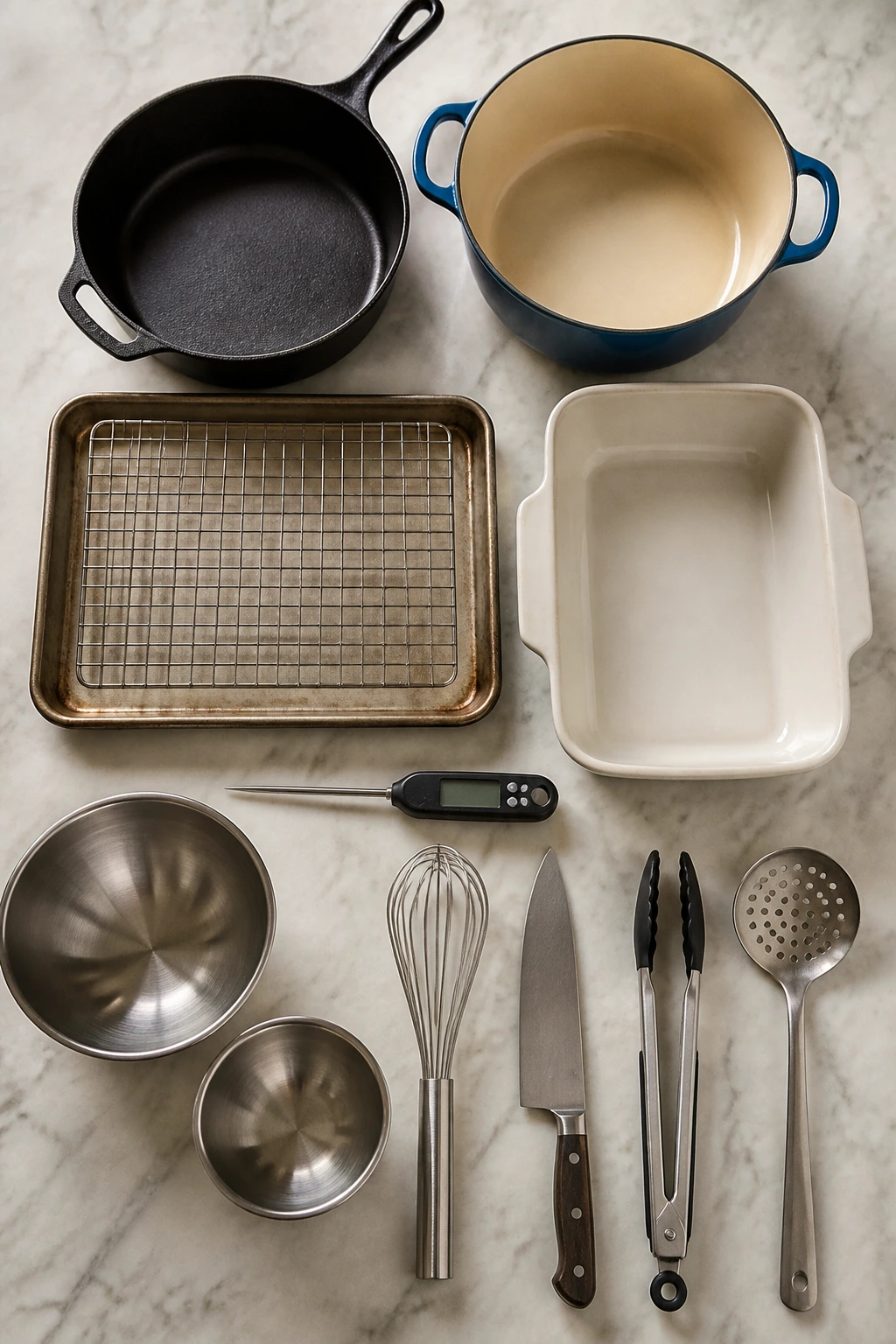
- Large skillet: Useful for rendering bacon, searing pork chops, and building pan sauces without switching pans mid-recipe.
- Dutch oven: Best for braises, bean casseroles, and anything that starts on the stove and finishes in the oven.
- Rimmed baking sheet: Handy for meatloaf, tenderloin, roasted sprouts, and sweet potatoes.
- 9×13-inch baking dish: The workhorse for mac and cheese, scalloped potatoes, and baked ziti.
- Instant-read thermometer: The easiest way to avoid dry pork and underdone chicken.
- Wire rack: Helps bacon-wrapped roasts and roasted vegetables brown all over.
- Mixing bowls: At least two sizes; bacon recipes always seem to need one more bowl than you expect.
- Whisk: Needed for cheese sauces, cream sauces, and anything with flour going into liquid.
- Sharp chef’s knife: Better than fighting through bacon fat, onions, potatoes, and apples with a dull blade.
- Tongs and a slotted spoon: Small tools, big difference when you’re moving hot bacon around.
Smart Shopping and Ingredient Tips
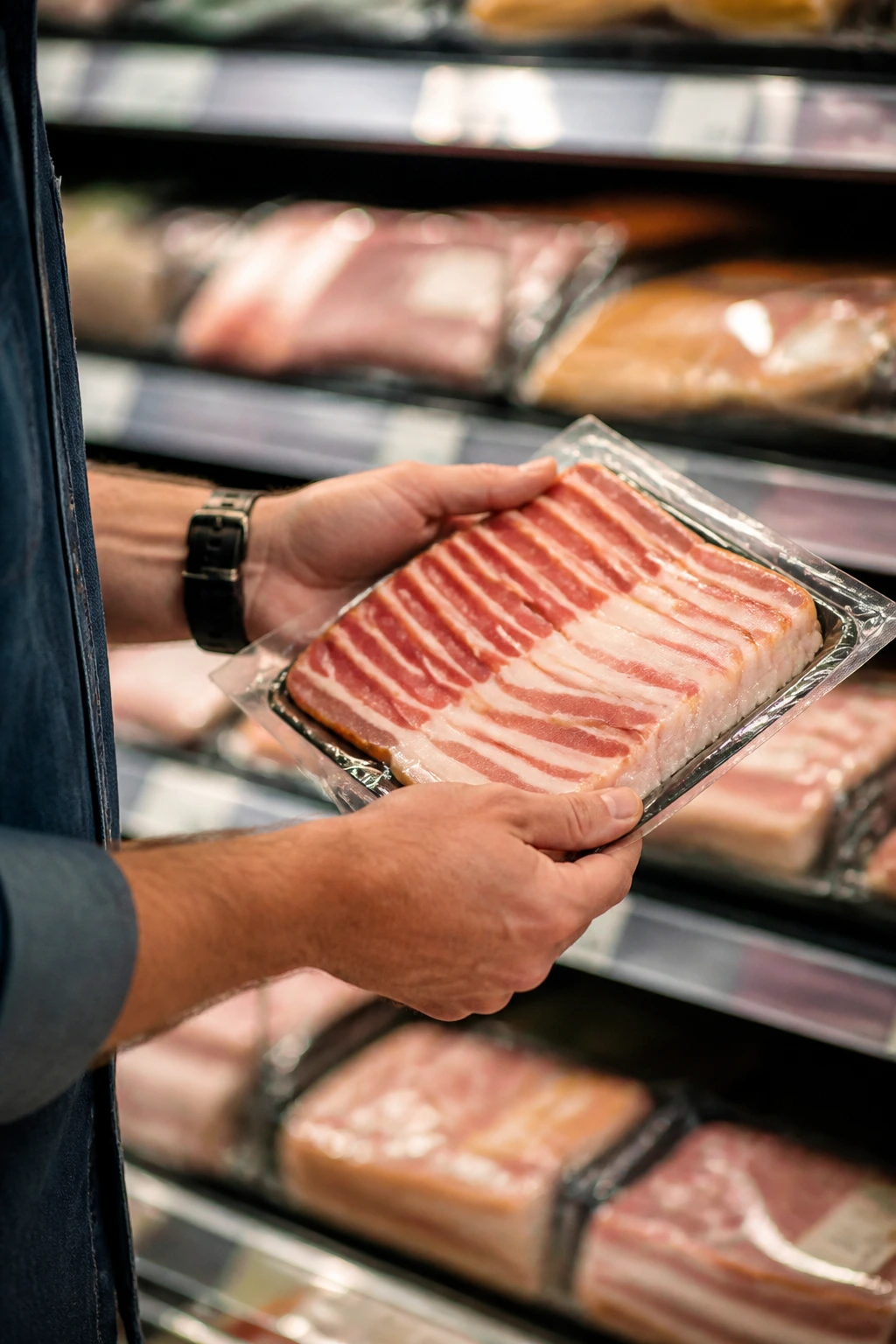
Not all bacon behaves the same, and this matters more than the package design suggests. Thick-cut bacon is useful when you want chewy pieces in meatloaf or on top of baked ziti, but regular-cut bacon is better for wrapping tenderloin or folding into biscuits, because it renders faster and sits tighter against the food. If you’re cooking it into a sauce, choose bacon with a good amount of meat and not a lot of watery added sugar.
Pork cuts matter too. Tenderloin wants a short hot roast and a rest. Bone-in pork chops want a good sear and an instant-read thermometer. Chicken thighs handle braising better than breasts because they stay juicy at higher heat. Lean chicken breasts can work, but they need more caution and a gentler finish.
Potatoes and cheese deserve some attention. Yukon Golds are the best all-around potato here because they hold shape in scalloped layers and mash nicely for stuffed potatoes. For cheese, buy blocks and shred them yourself when the recipe depends on melt—mac and cheese, scalloped potatoes, and baked ziti all benefit from that. Pre-shredded cheese is fine in a pinch, but it can leave sauces grainy if you cook them hard.
Beans can be canned or dried. Canned beans are the practical choice for the casserole in this collection, because they hold up well and don’t ask for planning. Fresh green beans should feel firm and squeaky when you snap them. Brussels sprouts need tight, heavy heads, not loose yellowing leaves. And if you’re buying apples for the pork chops, pick firm ones that can survive heat without falling apart.
How to Serve These Recipes
Presentation:
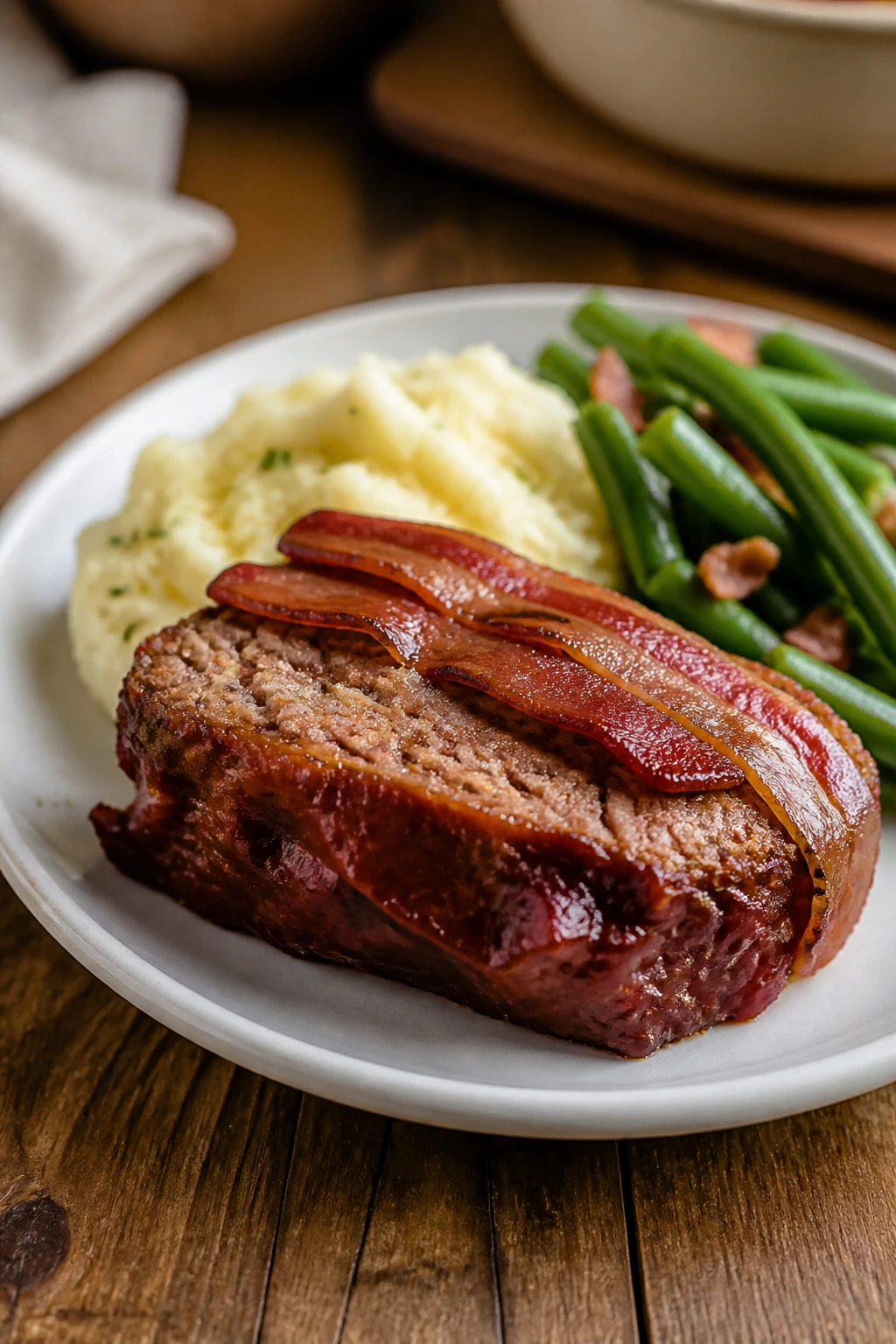
Bacon-heavy dishes look best when you keep some contrast on the plate. A glossy meatloaf slice, a browned corner of mac and cheese, or a pile of green beans with bacon looks stronger against mashed potatoes, white plates, or a simple green salad than it does crowded into a dark serving bowl. A few herbs on top go a long way.
Accompaniments:
Most of these recipes want something plain beside them: mashed potatoes, buttered rice, a green salad, roasted carrots, cabbage, cornbread, or biscuits. When the main dish is already rich, the side should reset the mouth a little. Sharp vinaigrettes, lemon, or plain steamed vegetables are useful here.
Portions:
For the richer mains—meatloaf, pork tenderloin, chicken braise, baked ziti, pot pie—plan on 6 to 8 servings depending on what else is on the table. For sides like scalloped potatoes, Brussels sprouts, creamed corn, and green beans, 4 to 6 servings is the more honest count. Bacon makes people eat with enthusiasm, so portion a little more generously than you think.
Beverage Pairing:
Unsweetened iced tea, sparkling water with lemon, dry cider, or a light lager all sit well with bacon-forward suppers. If you want wine, a crisp white with enough acidity to cut the fat is the safer move than anything oaky or overly sweet. Rich food likes a clean finish.
Additional Tips and Flavor Boosters
Flavor Enhancement:
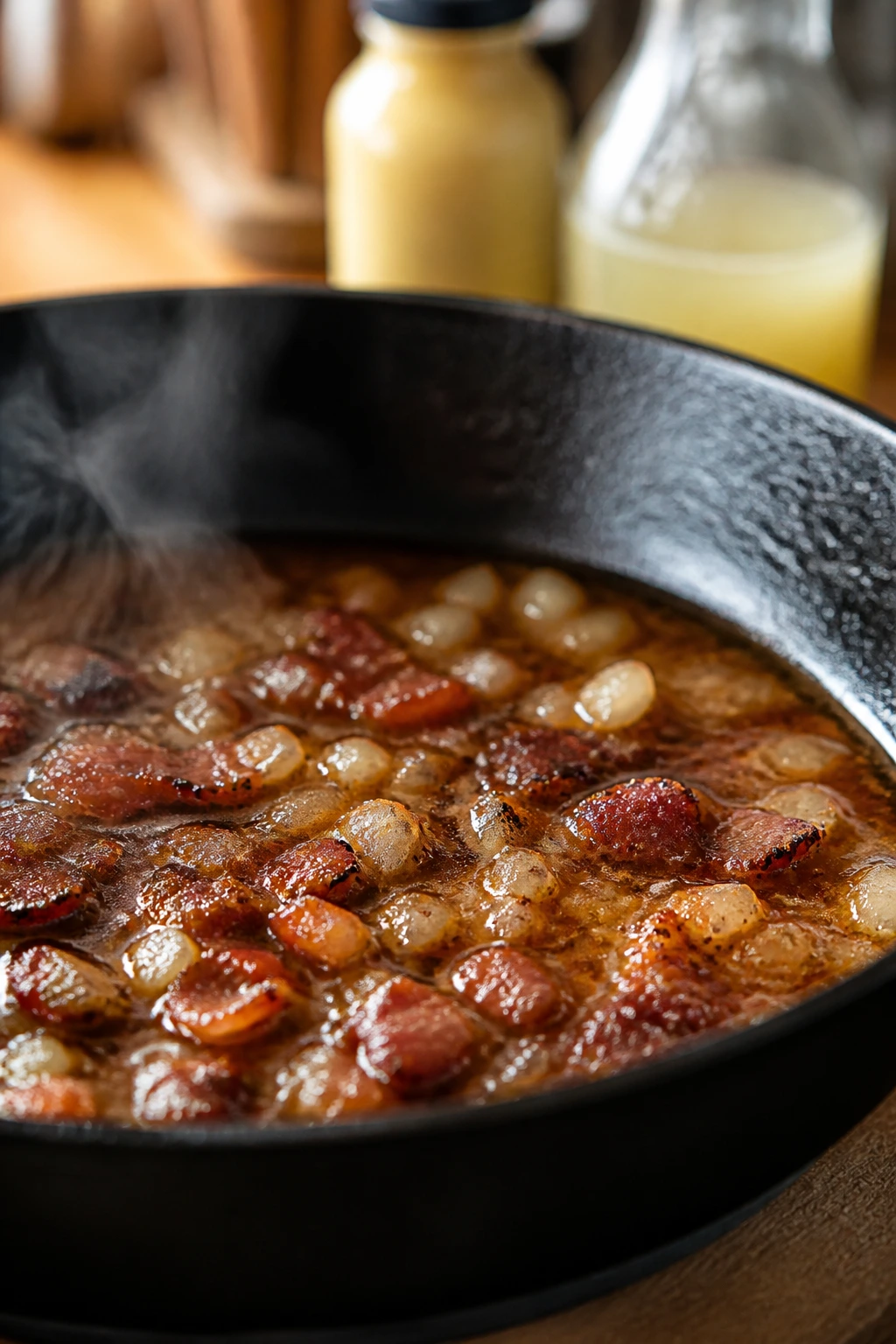
Reserve a spoonful of bacon drippings when a recipe starts with a skillet. That small amount can change the whole tone of a sauce, bean casserole, or braise. And don’t underestimate acid at the end—lemon juice, cider vinegar, or Dijon can keep bacon from tasting muddy.
Customization:
Add vegetables with restraint, not a scavenger-hunt mentality. Mushrooms belong in pot pie and braises. Chives and scallions fit biscuits, sweet potatoes, and corn. Jalapeños make sense in mac and cheese or cornbread. Too many add-ins can flatten the bacon instead of helping it.
Serving Suggestions:
Crisp bacon crumbles make a strong finishing move for potatoes, beans, and creamed corn. Fresh herbs—parsley, thyme, basil—bring relief from the richness. A little flaky salt on top is fine, but only after tasting. Bacon already arrived wearing a salt jacket.
Make-It-Yours:
For gluten-free diners, swap in a good gluten-free flour blend for sauces and use certified gluten-free pasta or breadcrumbs where needed. For dairy-free plates, choose recipes where the bacon flavor can stand alone—beans, green beans, Brussels sprouts, and pork chops are the easiest wins. For lower-salt versions, use less bacon but keep the rendered fat; you’ll still get flavor without over-salting the food.
Make-Ahead, Storage, and Reheating Guidance
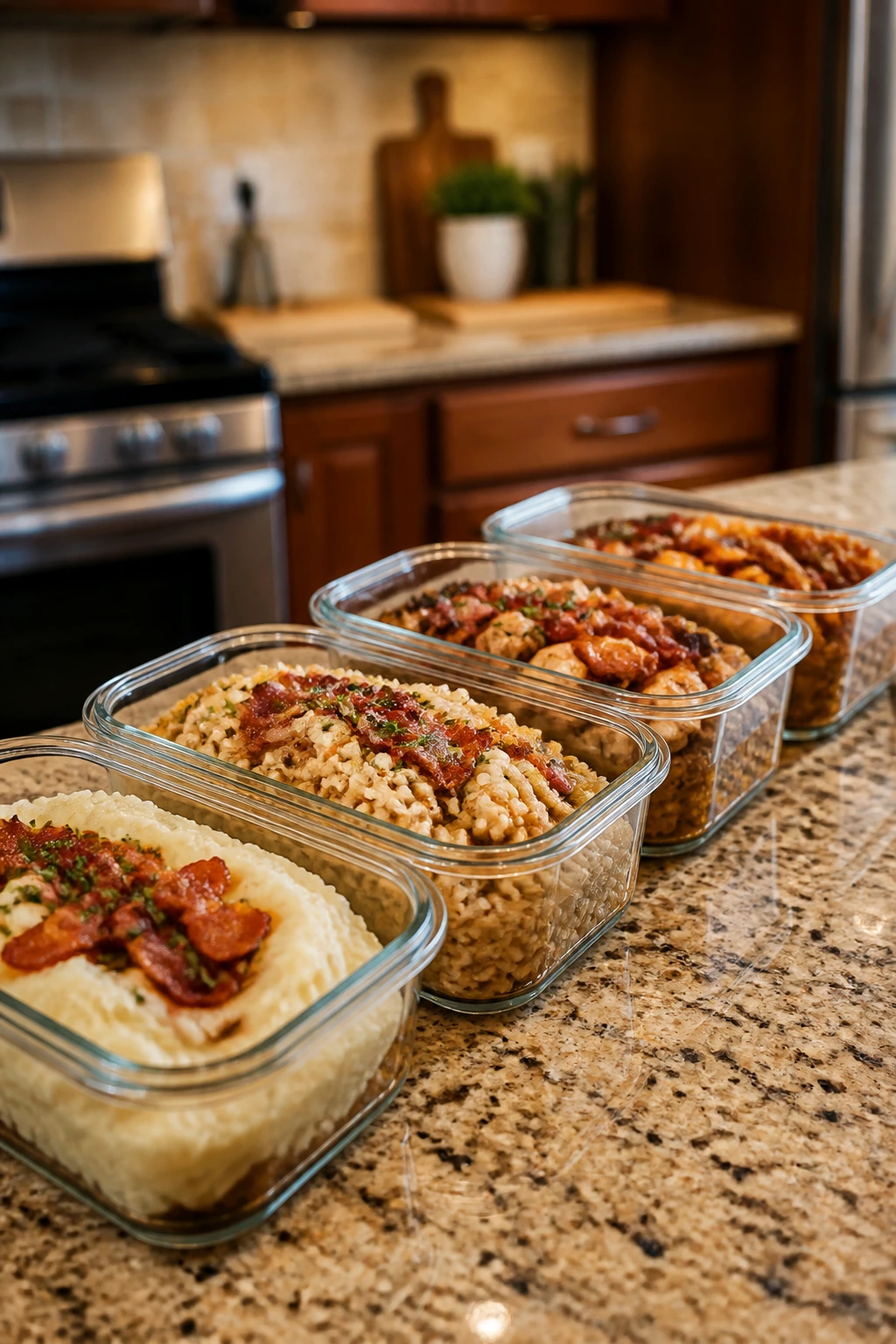
Several of these dishes hold well, which is one reason they work for Sunday suppers. Meatloaf, bean casserole, scalloped potatoes, baked ziti, and pot pie can all be made ahead or assembled a few hours early and baked later. Bacon-wrapped tenderloin and pork chops are better cooked close to serving, but the sauces and side dishes around them can be handled in advance.
Most cooked bacon-heavy dishes keep 3 to 4 days in the refrigerator in airtight containers. The baked pasta, bean casserole, and meatloaf also freeze well for up to 2 months if wrapped tightly and cooled first. Scalloped potatoes freeze less gracefully because the cream sauce can separate a little, but they’re still usable if you reheat them gently.
For reheating, the oven beats the microwave almost every time. Cover casseroles loosely with foil and warm at 325°F to 350°F until hot through. Meatloaf slices reheat best in a covered skillet with a spoonful of gravy or broth. Bacon-wrapped pork and tenderloin should be reheated in short bursts so they don’t dry out; low heat and a little foil cover help.
Crispy bacon loses its edge in the fridge, so if a recipe depends on crisp topping, save a little extra bacon or fresh breadcrumbs to add after reheating. Biscuits and cornbread are best the day they’re baked, but they can be revived in a warm oven for a few minutes. Green beans and Brussels sprouts are happiest when reheated quickly in a skillet rather than steamed into softness.
Variations and Adaptations to Try
Low-Salt Sunday Table:
Cut the bacon quantity by a third and lean on herbs, lemon, vinegar, and mustard for flavor. Use low-sodium broth in the braises and casseroles. You’ll still get plenty of smoky depth, but the plate won’t feel heavy halfway through dinner.
Gluten-Free Comfort Board:
Use gluten-free flour in the mac and cheese roux, the creamed corn, and the chicken pot pie filling. Swap in gluten-free pasta for baked ziti and mac, and use certified gluten-free breadcrumbs if you want a crust. Bacon itself is usually fine, but check labels on flavored or pre-seasoned packages.
Dairy-Light Dinner Shift:
Skip the cream-based recipes when possible and put your energy into the bacon, vegetables, and herbs. Green beans, Brussels sprouts, bean casserole, pork chops, and stuffed sweet potatoes all work nicely without much dairy. When you do want richness, use a smaller amount of butter rather than a full cream sauce.
Spice-Forward Version:
Add red pepper flakes, jalapeño, chipotle powder, or cracked black pepper to recipes that can handle heat. Mac and cheese, cornbread, bean casserole, and pork apple sauce all take well to a little fire. Keep the spice steady, not wild; bacon already carries enough personality.
Potluck-Ready Stretch:
If you need to feed more people, double the bean casserole, baked ziti, or scalloped potatoes and move to a larger casserole dish. Meatloaf can be shaped into two smaller loaves for quicker baking and easier serving. Bacon recipes often scale well, but they need a little extra oven space so they can brown instead of steaming.
Common Mistakes to Avoid
Using bacon for garnish only:
That’s the easiest way to waste it. Bacon should be cooked into the base, wrapped around the roast, or mixed into the sauce so it changes the whole dish.
Adding too much salt too early:
Bacon, Parmesan, cheddar, mustard, and broth all contribute salt. Taste after the main cooking stage, not before. A lot of home cooks season as if bacon weren’t in the room.
Letting bacon sit in a crowded pan:
If the pieces pile up, they steam. Steam makes floppy bacon and pale drippings. Give it room, or cook it in batches if you need the crisp.
Ignoring the thermometer:
This matters especially for pork tenderloin, chops, chicken thighs, and meatloaf. Visual guesses are how dinner gets dry. A thermometer takes the guesswork out of it.
Expecting every bacon recipe to be crisp:
Some should be crisp. Some should melt into the dish. Bacon in braises, bean casseroles, and scalloped potatoes is often better soft and integrated than shatter-crisp. Treat the texture as part of the design, not a failure.
Reheating everything the same way:
A skillet is better for green beans and Brussels sprouts. An oven is better for casseroles. The microwave is a compromise, and that’s fine for leftovers, but it should not be the first choice when texture matters.
Frequently Asked Questions
Can I use thick-cut bacon in every recipe here?
Not really. Thick-cut bacon is excellent in meatloaf or on top of baked ziti, but it can be too slow for tenderloin wraps, biscuits, or quick skillet vegetables. Use the bacon thickness that matches the cooking time of the dish.
Is turkey bacon a good swap?
It can work in a few places, but it behaves differently. Turkey bacon doesn’t render the same fat, so dishes like scalloped potatoes, green beans, and bean casserole lose some of their depth. For a true bacon flavor, regular pork bacon does the job better.
How do I keep bacon from getting rubbery in the oven?
Give it heat and space. Bacon that sits under other ingredients or gets crowded in a pan won’t crisp properly. If a recipe wraps bacon around a roast, use regular-cut slices and finish with a brief broil if needed.
Can I make any of these recipes ahead of time?
Yes. Meatloaf, baked ziti, bean casserole, scalloped potatoes, and pot pie can all be assembled ahead and baked later. For the best texture, keep the bacon garnish separate until serving when the recipe depends on crunch.
What if my bacon releases a lot of grease?
Pour off excess fat, but leave a measured amount behind when the recipe needs it. Usually 1 to 2 tablespoons is enough to carry flavor without turning the dish oily. Bacon fat should season the pan, not swamp it.
How do I stop the cheese sauce from getting grainy?
Keep the heat low once the cheese goes in and don’t boil it hard. Shred the cheese yourself if possible, and add it gradually to a thick but not bubbling base. Grainy sauce usually comes from heat, not bad luck.
Can I freeze bacon casseroles and pasta dishes?
Yes, though they’re best frozen before the final bake when possible. Cool them fully, wrap tightly, and freeze for up to 2 months. Reheat covered so the top doesn’t dry out before the middle warms through.
What’s the safest internal temperature for the meats here?
Pork tenderloin and pork chops are done at 145°F with a short rest. Chicken thighs are better around 175°F to 185°F if you want them tender in a braise. Meatloaf should reach 160°F in the center.
Which of these works best for a large family dinner?
Baked ziti, scalloped potatoes, meatloaf, bean casserole, and pot pie stretch the easiest. They’re forgiving, they hold heat, and they can be served in generous portions without falling apart on the plate.
A Bacon-Heavy Sunday Worth Repeating
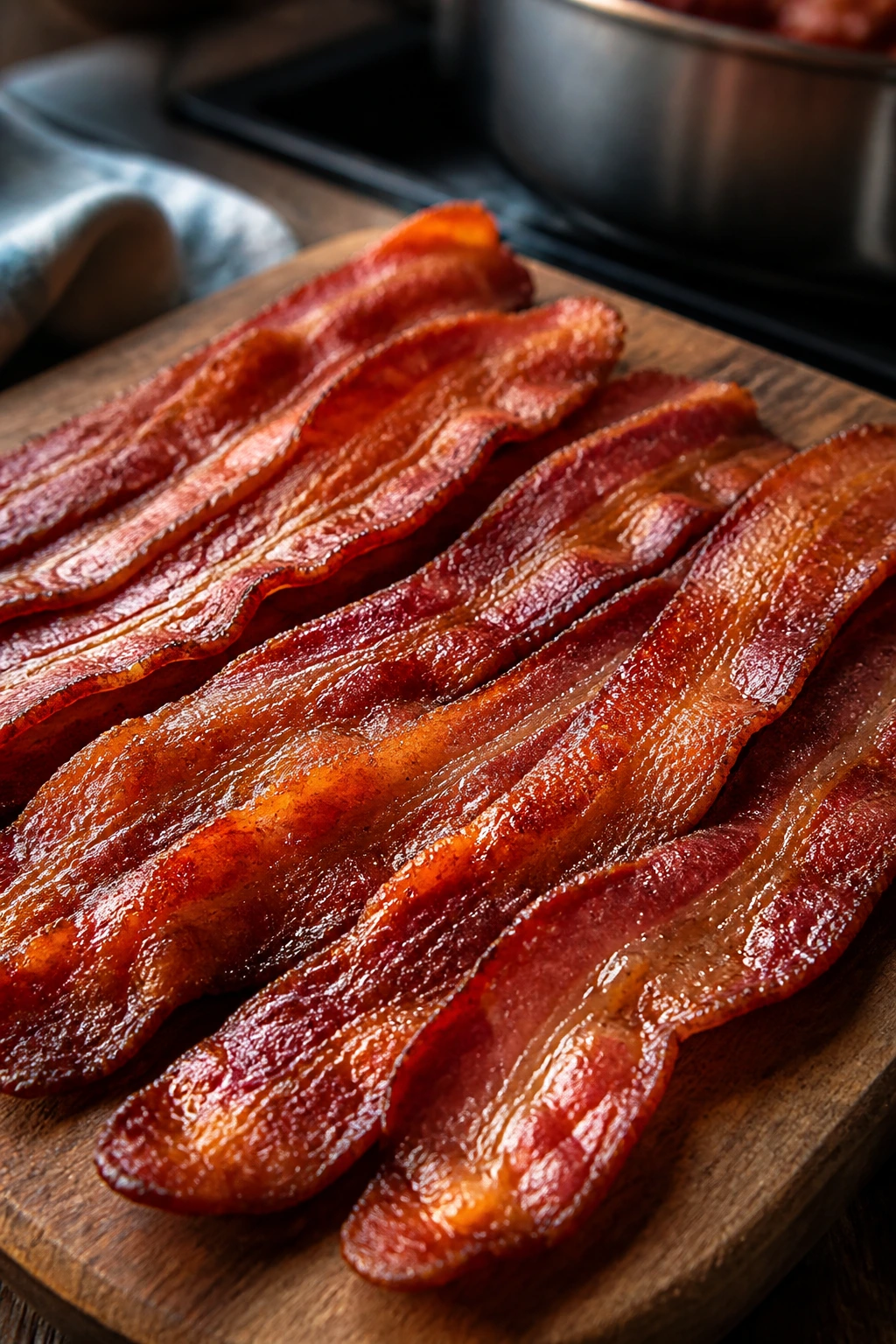
The nice thing about bacon at Sunday supper is that it earns its keep in different ways. Sometimes it keeps a lean cut of pork juicy. Sometimes it seasons a whole pot of beans. Sometimes it just gives the potatoes enough backbone to matter. That range is what makes it useful, not just tasty.
Pick one of these recipes and cook it slowly enough to notice the smell while it’s happening. That’s the part people remember. The meal arrives later. The kitchen smell comes first, and if bacon is doing its job, everyone starts wandering in before you call them.