



A package of sausage can rescue a tired evening faster than almost anything else in the grocery store. It browns fast, brings its own seasoning, and leaves behind just enough fat to turn onions, peppers, cabbage, beans, or pasta into something that tastes like it had help from a much longer cooking session.
That is why sausage recipes show up so often in my own weeknight rotation. One skillet of peppers and sausage, one baking dish of ziti, one soup pot with beans and kale — the shape changes, but the logic stays the same. You get a main ingredient that carries salt, spice, and richness before you’ve even opened the spice drawer.
The real trick is choosing the right sausage for the job. Raw Italian sausage wants a hard sear and usually plays best with tomatoes, pasta, or peppers. Smoked sausage behaves differently; it’s already cooked, so you’re really building color and aroma rather than chasing doneness. And if you’ve ever pulled a greasy pan onto the table and wondered why dinner felt heavy instead of hearty, the answer is usually simple: the sausage needed a few more minutes of browning, or the excess fat needed to be spooned off before the rest of the ingredients went in. Get that part right, and the rest gets easy in a hurry.
Why These Sausage Recipes Earn a Spot on the Weeknight Table
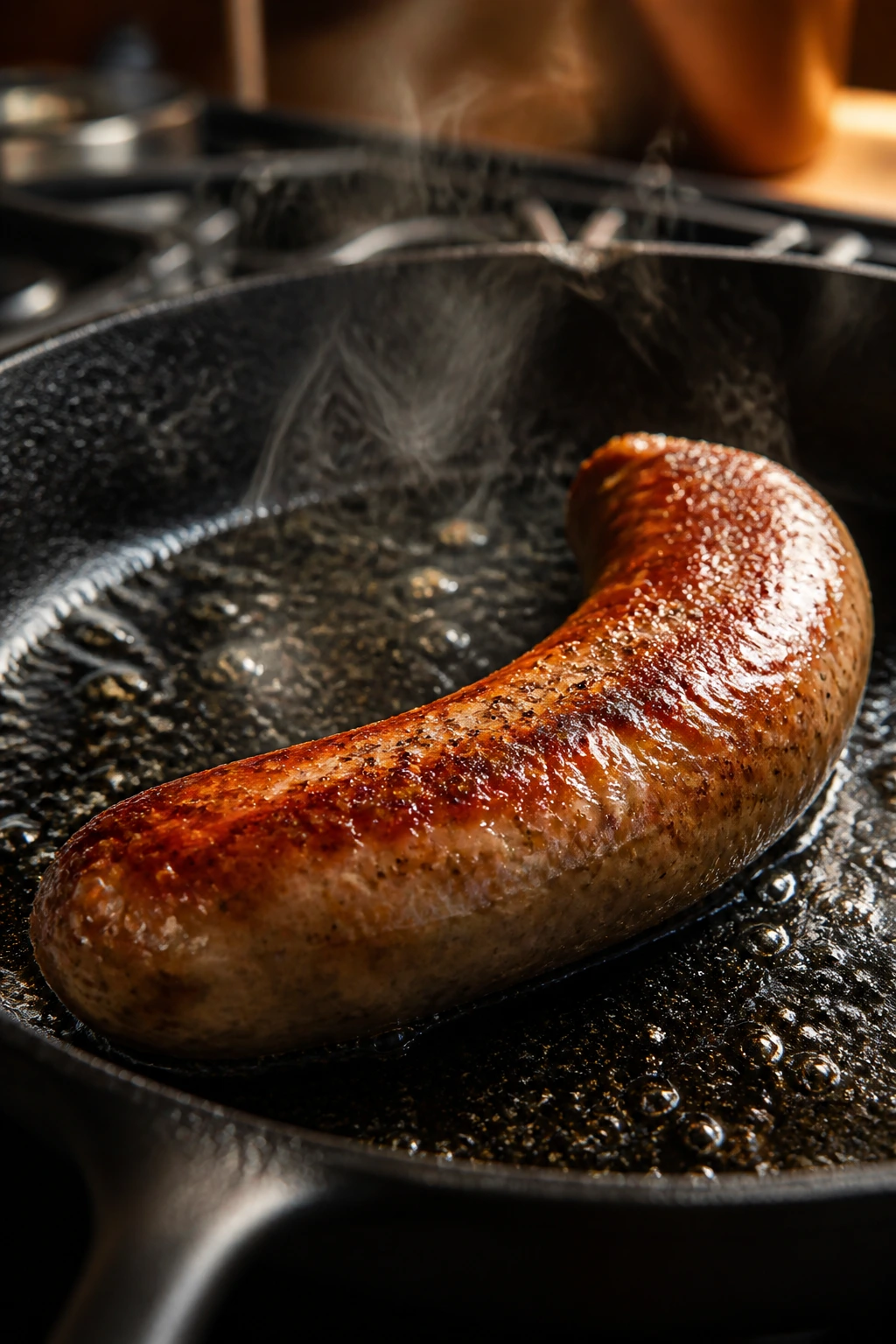
- Fast flavor: Sausage starts where plain ground meat usually ends, with salt, fat, and spices already built in, so the pan tastes seasoned in the first five minutes.
- Flexible pantry math: Pasta, rice, potatoes, beans, cabbage, tortillas, and bread all work here, which means you can cook around what’s already in the kitchen.
- Cleanup stays sane: A good share of these dinners lean on one skillet, one pot, or one baking dish, and that matters more than fancy technique on a Tuesday.
- Family-sized portions: Sausage stretches well with vegetables and starches, so a single pound can anchor a meal without feeling skimpy.
- Leftovers behave: Soups, casseroles, baked pasta, and skillet meals usually reheat without turning stringy or dry.
- Easy to tune: You can make most of these milder, hotter, creamier, or more vegetable-heavy without changing the bones of the recipe.
1. One-Pan Italian Sausage and Peppers
The smell gets you first. Sweet peppers soften in the same skillet where the sausage browns, and the whole pan turns glossy with tomato and onion. I like this one because it feels bigger than the ingredient list, which is exactly what a weeknight dinner should do.
Why It Works:
Italian sausage brings fennel, garlic, and enough fat to season the peppers without any extra fuss. Browning the sausage before the vegetables gives you those dark, savory bits on the pan bottom, and the balsamic at the end keeps the whole thing from tasting flat. Serve it with rolls, rice, or polenta, and dinner is done with almost no cleanup.
Key Ingredients:
- 1 ½ pounds Italian sausage links or bulk sausage
- 2 tablespoons olive oil
- 3 bell peppers, sliced into ½-inch strips
- 1 large yellow onion, sliced
- 3 garlic cloves, minced
- 1 can (14.5 ounces) diced tomatoes, lightly drained
- 1 teaspoon Italian seasoning
- 1 tablespoon balsamic vinegar
- Salt and black pepper, to taste
- 4 hoagie rolls or 3 cups cooked rice, for serving
Quick Steps:
- Heat 1 tablespoon of olive oil in a 12-inch skillet over medium-high heat. Add the sausage and brown it for 6 to 8 minutes, turning until the outside has good color.
- Remove the sausage to a plate. Add the remaining oil, peppers, and onion, then cook for 7 to 9 minutes, stirring now and then, until the vegetables are softened and the edges are just starting to brown.
- Stir in the garlic and Italian seasoning and cook for 30 seconds, just until fragrant.
- Add the tomatoes and balsamic vinegar, then return the sausage to the skillet. Lower the heat to medium, cover, and simmer for 8 to 10 minutes.
- Slice the sausage if you used links, taste the sauce, and add salt or pepper only if needed.
Equipment for This Recipe:
- 12-inch skillet
- Tongs
- Cutting board and chef’s knife
- Wooden spoon or spatula
How to Serve This Dish:
Pile the sausage and peppers into toasted rolls for a classic sandwich, or spoon everything over rice so the tomato juices soak in. A simple green salad or roasted broccoli keeps the plate from feeling too heavy.
Pro Tips for This Recipe:
- Use bulk sausage if you want more craggy, saucy bits in the pan.
- Don’t rush the peppers; they should be soft and a little sweet, not crisp.
- If the skillet looks dry, add 2 tablespoons of water and scrape up the browned bits before covering.
Variations on This Dish:
- Hoagie Shop Version: Add sliced provolone during the last minute and cover the skillet so it melts.
- Low-Carb Bowl: Skip the rolls and serve over cauliflower rice or sautéed zucchini.
Common Mistakes to Avoid with This Dish:
- Crowding the skillet: The sausage steams instead of browns. Use a wide pan and give the meat room.
- Adding the tomatoes too early: The vegetables stay limp and the sauce turns watery. Build color first, then add the liquid.
2. Creamy Sausage and Spinach Pasta Bake
A baked pasta with sausage should look a little rough around the edges. The sauce nestles into the noodles, the top gets bronzed in spots, and the spinach disappears into the cream without turning the whole thing muddy. That’s the good part.
Why It Works:
Ground sausage gives the sauce a strong base, so you don’t need to build flavor from scratch with a long simmer. The cream softens the marinara and keeps the bake from drying out in the oven, while the spinach sneaks in green without asking for applause. I like penne or rigatoni here because the tubes trap bits of sausage and sauce in every bite.
Key Ingredients:
- 12 ounces penne pasta
- 1 pound ground Italian sausage
- 1 small yellow onion, diced
- 3 garlic cloves, minced
- 1 jar (24 ounces) marinara sauce
- 1 cup heavy cream or half-and-half
- 4 cups fresh spinach
- 2 cups shredded mozzarella
- ½ cup grated Parmesan
- ½ teaspoon red pepper flakes, optional
Quick Steps:
- Heat the oven to 400°F and grease a 9×13-inch baking dish. Cook the pasta in salted water until just shy of al dente, then drain.
- Brown the sausage in a large skillet over medium-high heat for 6 to 8 minutes, breaking it up as it cooks. Add the onion and cook for 4 minutes, then stir in the garlic for 30 seconds.
- Pour in the marinara and cream, then add the spinach and stir until it wilts.
- Toss the pasta with the sauce, spread it in the baking dish, and top with mozzarella and Parmesan.
- Bake for 18 to 22 minutes, until bubbling at the edges and lightly browned on top. Let it stand for 10 minutes before cutting.
Equipment for This Recipe:
- Large pot for pasta
- Large skillet
- 9×13-inch baking dish
- Colander
How to Serve This Dish:
Scoop it into shallow bowls so the sauce stays pooled around the pasta instead of sliding off a plate. Garlic bread is the obvious side, but a sharp salad with vinaigrette does the better job of balancing the richness.
Pro Tips for This Recipe:
- Undercook the pasta by 1 minute; it finishes in the oven.
- Fresh spinach works best, but frozen spinach can be used if you squeeze it dry first.
- If the top browns too quickly, lay foil loosely over the dish for the last 8 minutes.
Variations on This Dish:
- Sausage and Mushroom Bake: Add 8 ounces of sliced mushrooms with the onion for a deeper, earthier sauce.
- Spicy Red Sauce Version: Swap in hot Italian sausage and add 1 teaspoon of Calabrian chili paste to the pan.
Common Mistakes to Avoid with This Dish:
- Overcooking the pasta: It turns soft after baking. Stop at barely al dente.
- Skipping the rest time: The sauce runs everywhere if you cut it too soon. Give it 10 minutes to settle.
3. Sheet Pan Sausage, Potatoes, and Green Beans
Sheet-pan dinners live or die on timing, and this one gets it right by giving the potatoes a head start. The potatoes turn crisp at the edges, the sausage picks up color, and the green beans stay bright instead of collapsing into the tray.
Why It Works:
Smoked sausage already has a cooked, smoky backbone, so the oven’s job is to brown it and warm it through. Potatoes need longer, which is why they go in first; green beans need far less, which is why they join late. The order matters. Ignore it and you get either hard potatoes or limp beans, and neither one is worth it.
Key Ingredients:
- 1 ½ pounds smoked sausage, sliced into ½-inch rounds
- 1 ½ pounds baby potatoes, halved
- 12 ounces green beans, trimmed
- 1 red onion, cut into wedges
- 3 tablespoons olive oil
- 1 teaspoon garlic powder
- 1 teaspoon smoked paprika
- 1 teaspoon kosher salt
- ½ teaspoon black pepper
Quick Steps:
- Heat the oven to 425°F and line a rimmed sheet pan with parchment if you want easier cleanup.
- Toss the potatoes with 2 tablespoons olive oil, garlic powder, paprika, salt, and pepper. Spread them on the pan and roast for 15 minutes.
- Toss the sausage and onion with the remaining oil, add them to the pan, and roast for 10 minutes more.
- Add the green beans and roast for another 8 to 10 minutes, until the beans are tender with a little snap and the potatoes are browned on the cut sides.
- Taste a potato and add another pinch of salt if needed.
Equipment for This Recipe:
- Rimmed sheet pan
- Mixing bowl
- Tongs or a spatula
- Parchment paper, optional
How to Serve This Dish:
Serve it straight from the pan with mustard on the side, or spoon everything into bowls and finish with chopped parsley. It doesn’t need much else, though a piece of crusty bread is never a bad idea.
Pro Tips for This Recipe:
- Cut the potatoes evenly so they finish at the same time.
- Use a pan with space; if it’s crowded, the sausage and potatoes steam.
- A squeeze of lemon at the end wakes up the smoked sausage.
Variations on This Dish:
- Mustard-Dinner Version: Toss the sausage with 1 tablespoon Dijon before roasting.
- Brussels Sprout Swap: Replace the green beans with halved Brussels sprouts during the last 15 minutes.
Common Mistakes to Avoid with This Dish:
- Adding everything at once: The vegetables finish at different speeds, and the tray gets messy.
- Using tiny sausage slices: They dry out fast. Keep the rounds thick enough to stay juicy.
4. Sausage, White Bean, and Kale Soup
What makes this soup worth making is the way the sausage fat perfumes the broth before the beans even finish softening. The kale stays a little chewy, the beans turn creamy at the edges, and the whole pot tastes like it simmered longer than it did.
Why It Works:
White beans give the broth body without needing cream, and kale holds its shape better than spinach, so the soup still looks like soup at the table. The sausage does most of the seasoning work, which means you can keep the ingredient list short and the result still tastes complete. A splash of Parmesan at the end gives the broth a salty finish that makes a plain bowl of soup feel finished.
Key Ingredients:
- 1 pound Italian sausage, casings removed
- 1 large onion, diced
- 2 carrots, diced
- 2 celery ribs, diced
- 3 garlic cloves, minced
- 2 cans (15 ounces each) white beans, drained and rinsed
- 6 cups chicken broth
- 1 bunch kale, ribs removed and leaves chopped
- 1 teaspoon dried thyme
- ½ cup grated Parmesan, plus more for serving
Quick Steps:
- Brown the sausage in a Dutch oven over medium-high heat for 6 to 8 minutes, breaking it into pieces.
- Add the onion, carrots, and celery. Cook for 6 minutes, stirring often, until the onion softens.
- Stir in the garlic and thyme for 30 seconds, then add the beans and broth. Bring to a simmer and cook for 15 minutes.
- Add the kale and simmer for 5 more minutes, until the leaves are tender and deep green.
- Stir in the Parmesan, taste, and add salt or pepper if needed.
Equipment for This Recipe:
- Dutch oven or soup pot
- Wooden spoon
- Chef’s knife and cutting board
- Ladle
How to Serve This Dish:
Ladle it into deep bowls and finish with extra Parmesan and black pepper. Garlic toast or warm bread is the right side here, because the broth is too good to leave behind.
Pro Tips for This Recipe:
- Rinse canned beans well so the broth stays clear, not cloudy.
- Strip the kale from the ribs; the stems stay tough.
- If the soup tastes a little flat, add 1 teaspoon of lemon juice before serving.
Variations on This Dish:
- Tomato-Kissed Version: Stir in ½ cup crushed tomatoes with the broth for a slightly redder, richer soup.
- Rustic Potato Version: Add 1 diced potato with the carrots if you want a thicker bowl.
Common Mistakes to Avoid with This Dish:
- Adding kale too early: It can turn drab and soft. Put it in near the end.
- Skipping the final seasoning check: Beans need more salt than people expect. Taste the broth before serving.
5. Sausage and Egg Breakfast Skillet
This is breakfast for dinner with better manners. The potatoes get crisp, the sausage gets browned, and the eggs cook right on top so the yolks can run into the rest of the skillet if you want them to.
Why It Works:
Breakfast sausage and eggs are already natural partners, but the potatoes turn the skillet into a real meal instead of a plate of sides. Cooking everything in one pan keeps the sausage drippings in play, which means the peppers and onions pick up more flavor than they would in a separate sauté pan. Covering the eggs at the end gives you set whites without overcooking the yolks.
Key Ingredients:
- 1 pound breakfast sausage
- 1 pound frozen diced hash browns or 3 cups diced Yukon gold potatoes
- 1 bell pepper, diced
- 1 small onion, diced
- 6 large eggs
- 1 cup shredded cheddar cheese
- 2 tablespoons butter
- Salt and black pepper, to taste
- Hot sauce, for serving
Quick Steps:
- Heat the butter in a large skillet over medium heat. Add the potatoes and cook for 8 to 10 minutes, stirring occasionally, until they start to brown.
- Add the sausage, pepper, and onion. Cook for 6 to 8 minutes, breaking up the sausage, until everything is cooked through.
- Make 6 small wells in the skillet. Crack an egg into each well and season lightly with salt and pepper.
- Cover the skillet and cook for 5 to 7 minutes, until the whites are set but the yolks are still a little soft.
- Sprinkle with cheddar, cover for 1 minute more, then serve hot.
Equipment for This Recipe:
- Large skillet with lid
- Spatula
- Cutting board and knife
- Small bowl for cracking eggs, optional
How to Serve This Dish:
Scoop the skillet straight onto plates and add hot sauce at the table. Toast is enough on the side, though sliced tomatoes or fruit make the plate feel more balanced.
Pro Tips for This Recipe:
- If you use raw potatoes, par-cook them in the microwave for 3 minutes first.
- Don’t add the eggs until the sausage mixture is hot all the way through.
- Shred the cheese yourself if you want a smoother melt.
Variations on This Dish:
- Southwest Skillet: Use pepper jack and add a spoonful of salsa over each egg.
- Greens and Eggs Version: Stir in chopped spinach during the last minute before the eggs go in.
Common Mistakes to Avoid with This Dish:
- Crowding the pan with potatoes: They brown badly and stay soft. Use a large skillet.
- Overcooking the eggs: The yolks turn chalky fast. Cover only until the whites set.
6. Stuffed Bell Peppers with Sausage and Rice
Stuffed peppers can be bland if the filling is timid. These aren’t. The sausage keeps the rice from tasting plain, the tomato sauce seeps through everything, and the peppers soften just enough to cut with a fork without falling apart.
Why It Works:
Bell peppers act like little edible baking dishes, which means the filling stays juicy instead of spreading across a casserole. Rice gives the sausage something to cling to, and the cheese melts into the top so each pepper tastes finished, not assembled. I prefer to roast the pepper shells briefly before filling them; it gives the edges a head start and keeps the final bake from turning watery.
Key Ingredients:
- 6 large bell peppers, halved and seeded
- 1 pound ground sausage
- 1 tablespoon olive oil
- 1 small onion, diced
- 2 garlic cloves, minced
- 1 cup cooked rice
- 1 cup tomato sauce
- 1 teaspoon Italian seasoning
- 1 ½ cups shredded mozzarella
- 2 tablespoons grated Parmesan
Quick Steps:
- Heat the oven to 375°F. Place the pepper halves cut-side up in a baking dish and roast for 10 minutes.
- Brown the sausage in a skillet over medium heat for 6 to 8 minutes. Add the onion and cook 4 minutes, then stir in the garlic for 30 seconds.
- Mix in the rice, tomato sauce, and Italian seasoning.
- Spoon the filling into the peppers, then top with mozzarella and Parmesan.
- Bake for 20 to 25 minutes, until the peppers are tender and the cheese is melted and lightly browned.
Equipment for This Recipe:
- 9×13-inch baking dish
- Skillet
- Mixing spoon
- Foil, optional
How to Serve This Dish:
Serve two pepper halves per adult with a green salad or roasted zucchini. If you want a heartier plate, add warm bread to catch the extra sauce.
Pro Tips for This Recipe:
- Don’t overcook the rice before stuffing; it softens more in the oven.
- Use wide peppers if you want easier filling and cleaner presentation.
- A spoonful of marinara on the bottom of the dish keeps the peppers from sticking.
Variations on This Dish:
- Taco-Stuffed Peppers: Swap the Italian seasoning for cumin and chili powder, then top with Monterey Jack.
- Brown Rice Version: Use cooked brown rice and bake 5 minutes longer so the filling heats through.
Common Mistakes to Avoid with This Dish:
- Skipping the pre-roast: Raw peppers can stay too firm. Give them a head start.
- Overstuffing the shells: The filling puffs and spills over. Pack it in, but leave a little room.
7. Sausage and Broccoli Alfredo Tortellini
This one looks richer than it is, which is part of the appeal. Tortellini brings its own cheese, broccoli gives the bowl some shape, and the Alfredo sauce clings to everything instead of pooling at the bottom of the skillet.
Why It Works:
Refrigerated tortellini cooks fast and adds enough body that you don’t need a long sauce. The sausage browns first, so the pan already has flavor when the butter and cream go in. Broccoli is here for texture, not decoration; it keeps the dish from turning into a soft, all-cheese blur.
Key Ingredients:
- 1 pound Italian sausage
- 20 ounces refrigerated cheese tortellini
- 4 cups broccoli florets
- 2 tablespoons butter
- 3 garlic cloves, minced
- 1 ½ cups heavy cream
- 1 cup grated Parmesan
- ½ teaspoon salt
- ¼ teaspoon black pepper
- Pinch of nutmeg, optional
Quick Steps:
- Cook the tortellini in salted water according to the package directions. Add the broccoli during the last 2 minutes, then drain.
- Brown the sausage in a large skillet over medium-high heat for 6 to 8 minutes. Remove excess fat if the pan looks oily.
- Add the butter and garlic and cook for 30 seconds. Pour in the cream and simmer for 3 to 4 minutes, until it starts to thicken.
- Stir in the Parmesan, salt, pepper, and nutmeg, then add the tortellini, broccoli, and sausage back to the pan.
- Toss gently and cook for 1 minute, just until coated.
Equipment for This Recipe:
- Large pot
- Large skillet or sauté pan
- Colander
- Wooden spoon
How to Serve This Dish:
Serve it in warm bowls with extra Parmesan and black pepper on top. A crisp salad with lemony dressing is the right counterweight to the cream sauce.
Pro Tips for This Recipe:
- Keep a little pasta water back if the sauce thickens too much.
- Fresh tortellini cooks fast; don’t walk away from the pot.
- Nutmeg sounds small, but a pinch makes the sauce taste less one-note.
Variations on This Dish:
- Tomato-Cream Twist: Stir in ½ cup marinara for a blush-colored sauce.
- Extra Green Version: Add a handful of spinach with the tortellini and let it wilt in the final toss.
Common Mistakes to Avoid with This Dish:
- Boiling the cream hard: It can split. Keep the heat at a gentle simmer.
- Using too much broccoli: The sauce gets crowded. Four cups is plenty.
8. Slow-Cooker Sausage and Cabbage
This is the kind of dinner that fills the house with a low, savory smell by lunchtime and makes you glad you didn’t skip the onion. Cabbage turns tender, potatoes soak up the broth, and the sausage slices stay firm enough to keep each bowl interesting.
Why It Works:
Cabbage is one of the best slow-cooker vegetables because it softens without disappearing. Kielbasa or smoked sausage holds its shape, which matters in a long cook where softer meats would fall apart. A little Dijon and vinegar at the end keeps the pot from tasting muddy, which is the main thing people miss with slow-cooker cabbage dishes.
Key Ingredients:
- 1 ½ pounds smoked sausage, sliced into rounds
- 1 small green cabbage, cut into 2-inch chunks
- 4 medium potatoes, cut into wedges
- 1 large onion, sliced
- 3 carrots, cut into thick coins
- 2 cups chicken broth
- 1 tablespoon Dijon mustard
- 1 teaspoon caraway seeds, optional
- 1 tablespoon apple cider vinegar
- Salt and black pepper, to taste
Quick Steps:
- Place the cabbage, potatoes, onion, and carrots in the slow cooker.
- Add the sausage on top, then pour in the broth and Dijon. Sprinkle with caraway if using.
- Cover and cook on low for 6 to 7 hours or on high for 3 to 4 hours, until the potatoes are tender and the cabbage is silky.
- Stir gently, then add the vinegar and season with salt and pepper.
- Let it sit for 10 minutes before serving so the broth settles.
Equipment for This Recipe:
- Slow cooker
- Sharp knife
- Cutting board
- Ladle
How to Serve This Dish:
Serve it in wide bowls with the broth spooned over everything. Rye bread or buttered toast works well, but so does a plain baked potato if you want more starch.
Pro Tips for This Recipe:
- Cut the cabbage into large pieces so it doesn’t dissolve.
- Add the vinegar at the end; it stays brighter that way.
- If your sausage is very salty, choose low-sodium broth.
Variations on This Dish:
- Mustard-Cabbage Version: Increase the Dijon to 2 tablespoons for a sharper broth.
- Apple Cider Version: Add 1 peeled apple, sliced thin, for a slight sweet note.
Common Mistakes to Avoid with This Dish:
- Chopping the cabbage too small: It turns soft and disappears. Leave it in big chunks.
- Overcooking on high: The potatoes can break apart. Check early if your slow cooker runs hot.
9. Sausage Mac and Cheese
This mac and cheese has a little backbone. The sausage gives it salt and spice, the cheese sauce stays creamy, and the breadcrumb top adds the kind of crunch that keeps you going back for one more forkful.
Why It Works:
Mac and cheese can taste one-dimensional unless something savory cuts through the richness. Sausage does that job without making the dish complicated. I like using sharp cheddar and a little Monterey Jack because the cheddar brings flavor and the Jack melts smoother, which keeps the sauce from turning grainy once it bakes.
Key Ingredients:
- 12 ounces elbow macaroni
- 1 pound ground sausage
- 4 tablespoons butter
- ¼ cup all-purpose flour
- 3 cups milk, warmed
- 2 cups shredded sharp cheddar
- 1 cup shredded Monterey Jack
- 1 teaspoon mustard powder
- ½ teaspoon salt
- 1 cup breadcrumbs mixed with 1 tablespoon melted butter
Quick Steps:
- Cook the macaroni in salted water until just shy of al dente, then drain.
- Brown the sausage in a skillet over medium-high heat for 6 to 8 minutes, then spoon off excess fat if needed.
- In a separate pot, melt the butter over medium heat. Whisk in the flour and cook for 1 minute, then slowly whisk in the warm milk.
- Cook for 3 to 4 minutes, stirring, until the sauce thickens enough to coat a spoon. Stir in the cheddar, Monterey Jack, mustard powder, and salt.
- Fold in the pasta and sausage, spread into a baking dish, top with breadcrumbs, and bake at 375°F for 15 to 20 minutes.
Equipment for This Recipe:
- Large pot
- Skillet
- Whisk
- 9×13-inch baking dish
How to Serve This Dish:
Serve it hot with a spoon, not a knife; the sauce should stay creamy. A chopped tomato salad or steamed broccoli keeps the plate from leaning too heavy.
Pro Tips for This Recipe:
- Warm the milk first so the sauce thickens smoothly.
- Don’t overbake; the sauce should still look a little loose when it comes out.
- Freshly shredded cheese melts better than the bagged stuff here.
Variations on This Dish:
- Smoky Version: Add ½ teaspoon smoked paprika to the cheese sauce.
- Green-Pepper Twist: Sauté diced bell pepper with the sausage for a cheeseburger-style note.
Common Mistakes to Avoid with This Dish:
- Boiling the cheese sauce: It turns grainy. Keep the heat gentle.
- Using fully cooked pasta: It can go mushy in the oven. Stop early.
10. Sausage Quesadillas with Peppers and Onions
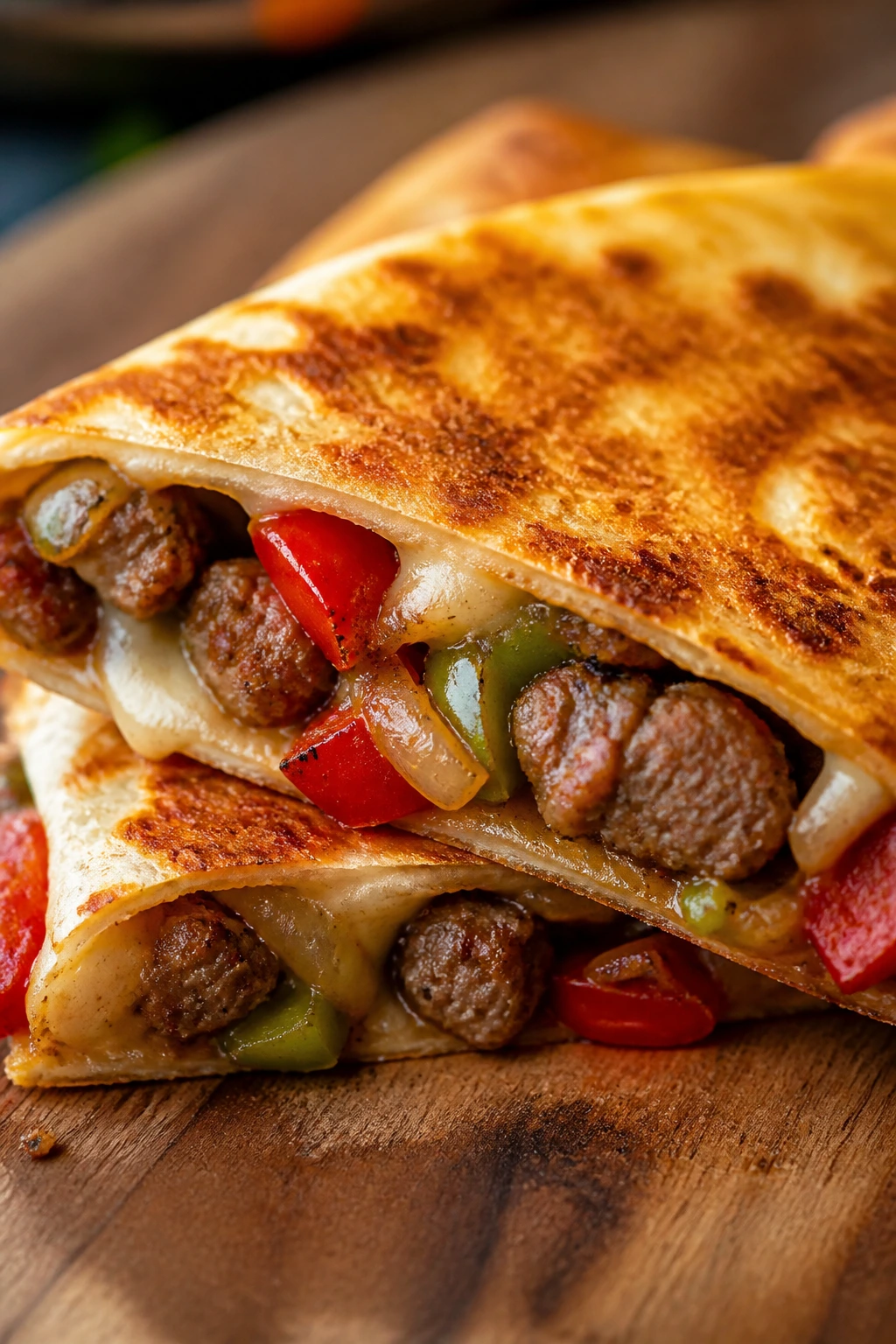
Quesadillas are one of those dinners that feel casual until they hit the plate hot and crisp. The sausage makes the filling savory enough that you don’t need much else, and the peppers keep each bite from turning into a cheese-only situation.
Why It Works:
The filling cooks separately first, which means the tortillas only need enough heat to brown and melt. That’s the key. If you try to cook the sausage inside the tortilla from scratch, you get a greasy mess and pale, limp edges. Cook the filling first, then build the quesadilla quickly in a dry skillet.
Key Ingredients:
- 1 pound ground sausage
- 1 bell pepper, thinly sliced
- 1 small onion, thinly sliced
- 1 teaspoon taco seasoning
- 8 flour tortillas
- 2 cups shredded Mexican blend cheese
- 1 tablespoon butter or oil for the skillet
- Salsa and sour cream, for serving
Quick Steps:
- Brown the sausage in a skillet over medium heat for 6 to 8 minutes.
- Add the pepper and onion and cook for 5 minutes, until soft. Stir in the taco seasoning.
- Warm a separate skillet or clean the same one, then melt a little butter over medium heat.
- Build each quesadilla with cheese, sausage filling, and more cheese, then fold it shut. Cook for 2 to 3 minutes per side until golden and crisp.
- Let each one rest for 1 minute before slicing.
Equipment for This Recipe:
- Large skillet
- Spatula
- Knife and cutting board
- Wide plate for assembling
How to Serve This Dish:
Cut the quesadillas into wedges and serve with salsa, sour cream, and sliced avocado if you have it. A side of black beans or corn rounds the meal out.
Pro Tips for This Recipe:
- Use medium heat so the tortilla browns before the cheese burns.
- Don’t overfill the quesadillas or they’ll split when you flip them.
- Shred the cheese from a block for better melting.
Variations on This Dish:
- Spicy Street-Style: Add chopped jalapeños to the filling and serve with hot salsa.
- Breakfast Quesadilla: Replace taco seasoning with a little smoked paprika and add scrambled eggs.
Common Mistakes to Avoid with This Dish:
- Using too much filling: It leaks out and burns. Keep the layer thin.
- Flipping too early: The cheese needs time to glue everything together. Wait for the first side to bronze.
11. Sausage and Tortellini Tomato Soup
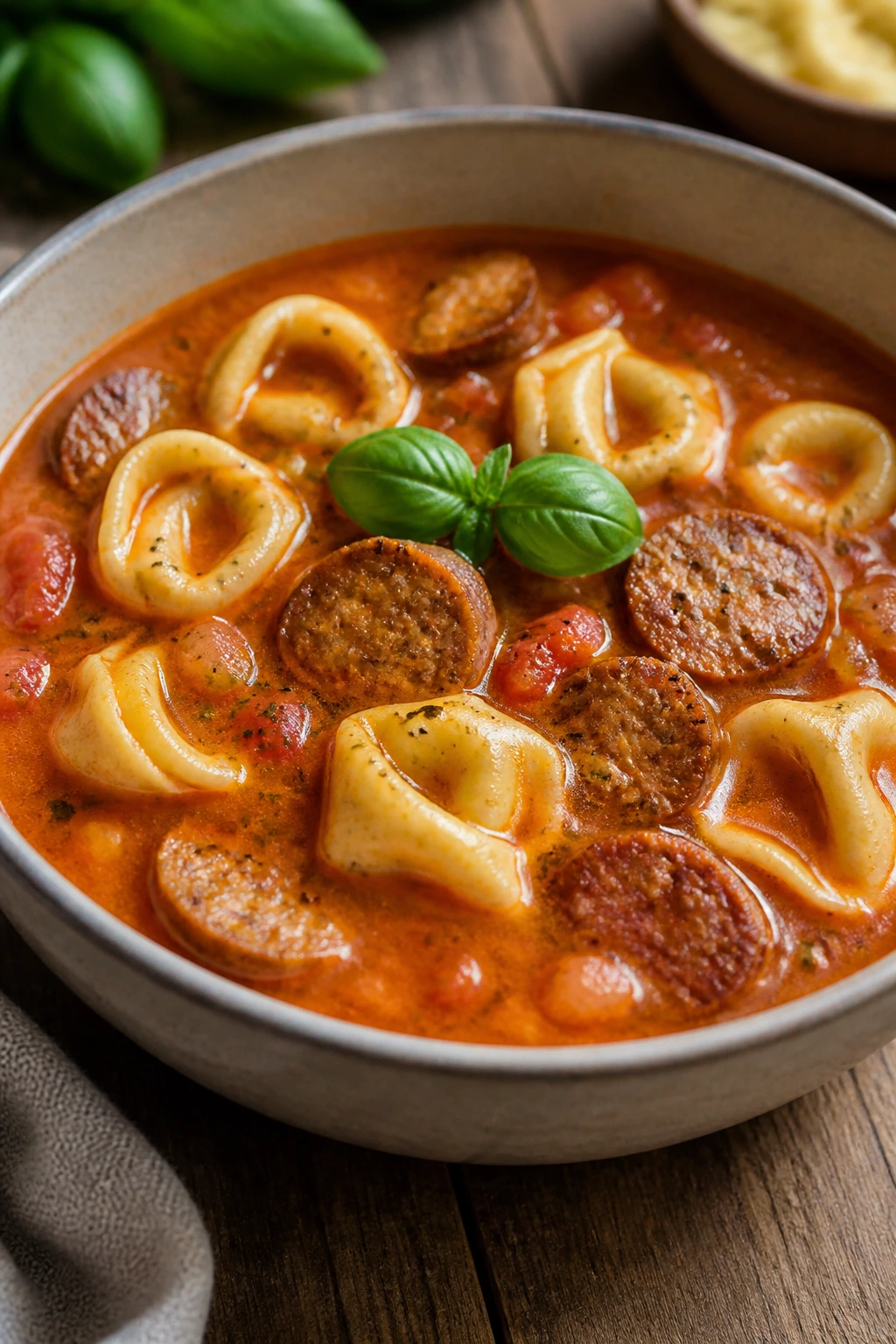
This is tomato soup with a pulse. Tortellini makes it hearty, sausage gives the broth some backbone, and the cream rounds the edges just enough without turning it into chowder.
Why It Works:
Crushed tomatoes simmer into a smooth base fast, which means the sausage and tortellini are the real texture story. I like to use cheese tortellini here because it gives you tiny pockets of creaminess without requiring a separate side dish. A handful of basil at the end changes the whole pot from plain to polished.
Key Ingredients:
- 1 pound Italian sausage
- 1 small onion, diced
- 3 garlic cloves, minced
- 1 can (28 ounces) crushed tomatoes
- 4 cups chicken broth
- 1 package (9 ounces) cheese tortellini
- 1 cup heavy cream
- 1 teaspoon dried basil or ¼ cup fresh basil, torn
- Salt and black pepper, to taste
- Grated Parmesan, for serving
Quick Steps:
- Brown the sausage in a soup pot over medium-high heat for 6 to 8 minutes.
- Add the onion and cook for 4 minutes, then stir in the garlic for 30 seconds.
- Pour in the crushed tomatoes and broth. Bring to a simmer and cook for 10 minutes.
- Add the tortellini and simmer according to the package directions, usually 3 to 5 minutes.
- Stir in the cream and basil, then season to taste and serve with Parmesan.
Equipment for This Recipe:
- Soup pot or Dutch oven
- Ladle
- Wooden spoon
- Grater for Parmesan, optional
How to Serve This Dish:
Serve it with grilled cheese or garlic bread if you want the full comfort-food setup. A little extra basil and Parmesan on top makes the bowl look finished fast.
Pro Tips for This Recipe:
- Add the cream after the tortellini cooks so it doesn’t split.
- If the soup gets too thick, thin it with another splash of broth.
- Fresh basil should go in at the end, not the beginning.
Variations on This Dish:
- Spicy Tomato Soup: Use hot sausage and add a pinch of red pepper flakes.
- Vegetable Stretch Version: Stir in chopped spinach or zucchini during the last 2 minutes.
Common Mistakes to Avoid with This Dish:
- Overcooking the tortellini: It turns mushy fast. Pull the pot as soon as the pasta is tender.
- Simmering the cream too hard: Gentle heat keeps the soup smooth.
12. Cajun Sausage Jambalaya
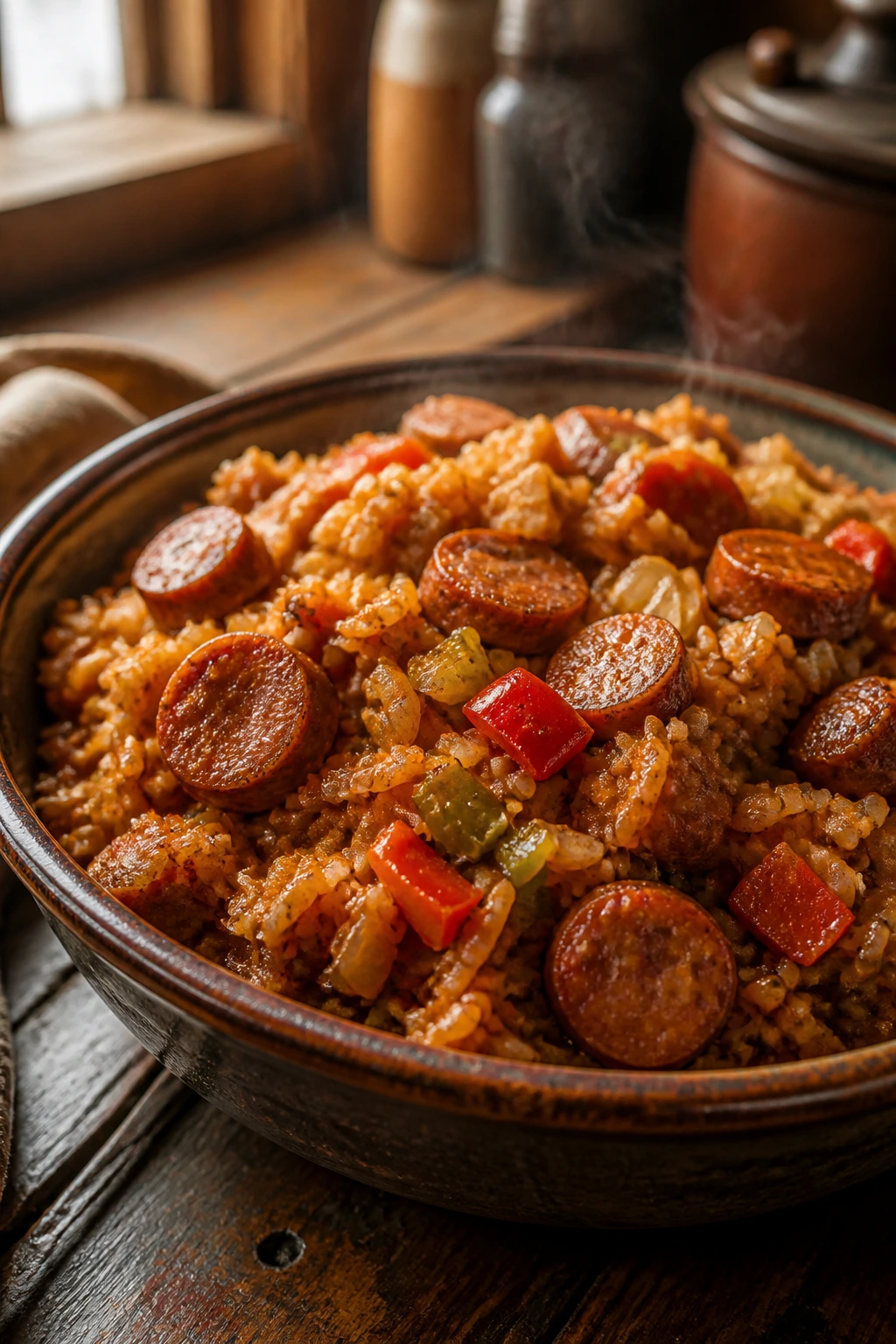
A good jambalaya should taste layered, not loud. The rice takes in the sausage drippings, the vegetables soften into the spice, and each spoonful feels like it came from a pot that knew exactly what it was doing.
Why It Works:
Andouille sausage brings smoke and heat, which means the rice does not need much help to taste complete. The celery, onion, and bell pepper form the base that Cajun cooking leans on, and the tomatoes keep the pot moist while the rice cooks. Letting the pot rest after cooking matters here; it gives the rice time to settle and absorb the last bit of liquid.
Key Ingredients:
- 1 ½ pounds andouille sausage, sliced
- 1 tablespoon olive oil
- 1 onion, diced
- 1 green bell pepper, diced
- 2 celery ribs, diced
- 3 garlic cloves, minced
- 1 ½ cups long-grain white rice, rinsed
- 1 can (14.5 ounces) diced tomatoes
- 3 cups chicken broth
- 2 teaspoons Cajun seasoning
Quick Steps:
- Brown the sausage in a Dutch oven over medium-high heat for 5 minutes. Remove it and set aside.
- Add the oil, onion, bell pepper, and celery. Cook for 6 minutes, then stir in the garlic and Cajun seasoning for 30 seconds.
- Add the rice, tomatoes, broth, and sausage. Bring to a boil.
- Lower the heat, cover, and simmer for 20 minutes, until the rice is tender and the liquid is absorbed.
- Turn off the heat and let it rest, covered, for 10 minutes before fluffing.
Equipment for This Recipe:
- Dutch oven with lid
- Wooden spoon
- Measuring cups
- Fork for fluffing rice
How to Serve This Dish:
Serve it in wide bowls with chopped scallions or parsley on top. A simple cucumber salad or cornbread fits the smoky spice without fighting it.
Pro Tips for This Recipe:
- Rinse the rice so the grains cook up separate, not sticky.
- Keep the lid on while it rests; that part matters.
- If the pan looks dry before the rice is done, add ¼ cup broth and keep cooking.
Variations on This Dish:
- Milder Family Version: Use smoked sausage instead of andouille and cut the Cajun seasoning in half.
- Extra Veggie Version: Add okra or diced zucchini with the bell pepper.
Common Mistakes to Avoid with This Dish:
- Stirring too much once the rice is covered: It breaks the grains. Leave it alone.
- Starting with too much heat: The bottom burns before the rice cooks. Keep it at a steady low simmer.
13. Sausage Fried Rice
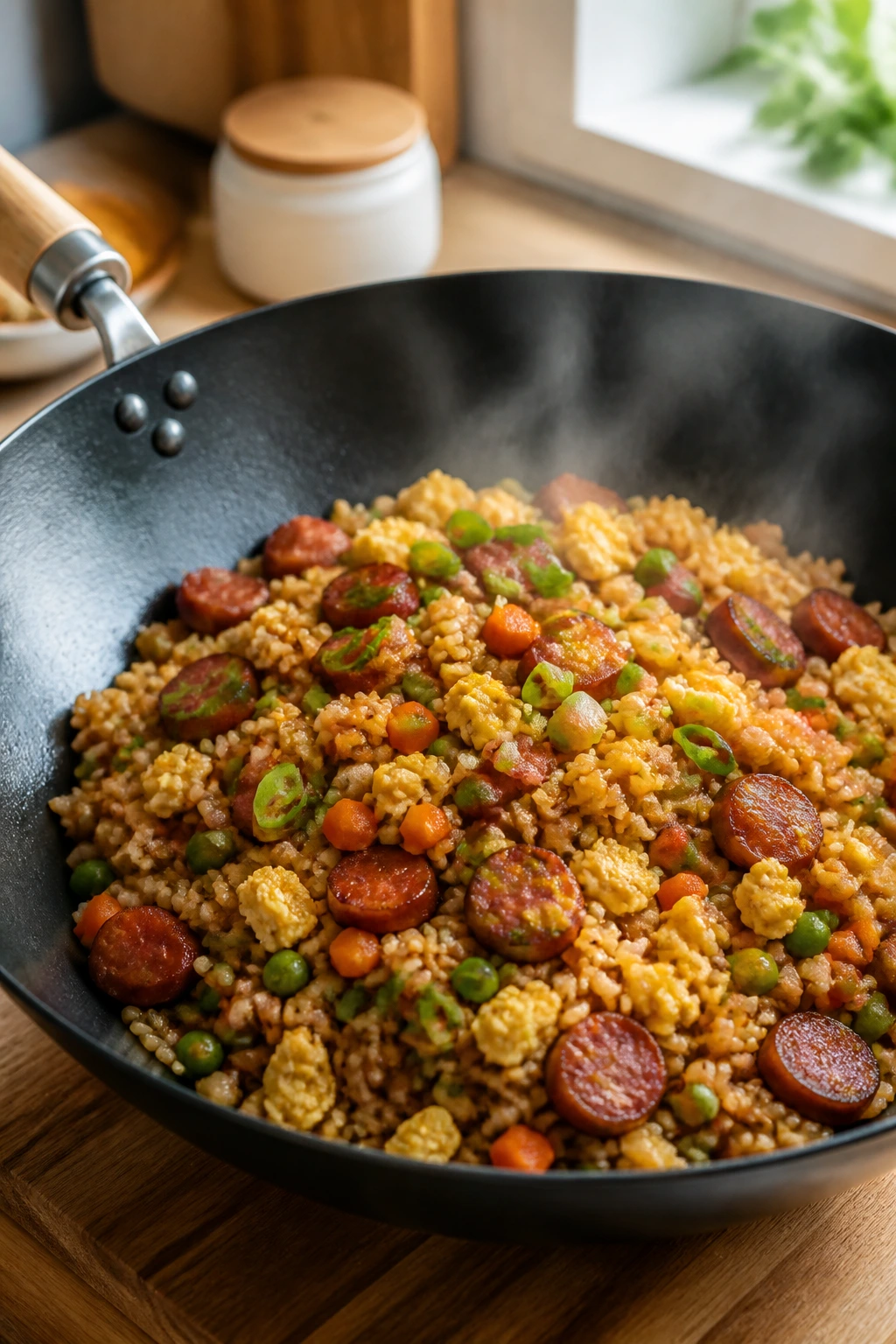
Cold rice is the secret here, and that’s not negotiable. Once the grains dry out a little, they fry instead of steaming, so the sausage, eggs, and vegetables can coat each grain instead of turning into a clump.
Why It Works:
Fried rice needs a hot pan and ingredients that can handle quick cooking. Sausage does both jobs well because it browns fast and contributes enough fat to keep the rice moving. The soy sauce brings salt and color, while sesame oil adds that finish people notice even if they can’t quite name it.
Key Ingredients:
- 3 cups cold cooked rice
- 1 pound smoked sausage, diced
- 2 large eggs, beaten
- 1 cup frozen peas and carrots
- 3 scallions, sliced
- 3 tablespoons soy sauce
- 1 tablespoon sesame oil
- 2 garlic cloves, minced
- 1 tablespoon neutral oil
Quick Steps:
- Heat the neutral oil in a large skillet or wok over medium-high heat. Add the sausage and cook for 4 to 5 minutes until browned.
- Push the sausage to one side, add the eggs, and scramble them for about 1 minute.
- Stir in the garlic and peas and carrots, then cook for 2 minutes.
- Add the rice and break up any clumps with your spatula. Stir-fry for 3 to 4 minutes, then add the soy sauce and sesame oil.
- Toss in the scallions and serve immediately.
Equipment for This Recipe:
- Large skillet or wok
- Spatula
- Cutting board and knife
- Small bowl for the eggs
How to Serve This Dish:
Serve it hot in shallow bowls with extra scallions or a drizzle of chili oil if you like heat. It works as a full meal on its own, though sliced cucumbers or steamed dumplings fit nicely beside it.
Pro Tips for This Recipe:
- Use rice that has been chilled, not freshly cooked.
- Keep the pan hot enough that you hear a little sizzle as you stir.
- Add the soy sauce around the edge of the pan so it hits the heat and blooms a little.
Variations on This Dish:
- Teriyaki Version: Swap half the soy sauce for teriyaki sauce and add pineapple chunks.
- Veg-Heavy Version: Add chopped cabbage or broccoli, but cook them first so they soften.
Common Mistakes to Avoid with This Dish:
- Using warm rice: It steams and clumps. Chill it first.
- Overloading the pan: The rice fries poorly. Cook in batches if your skillet is small.
14. Orecchiette with Sausage and Broccoli Rabe
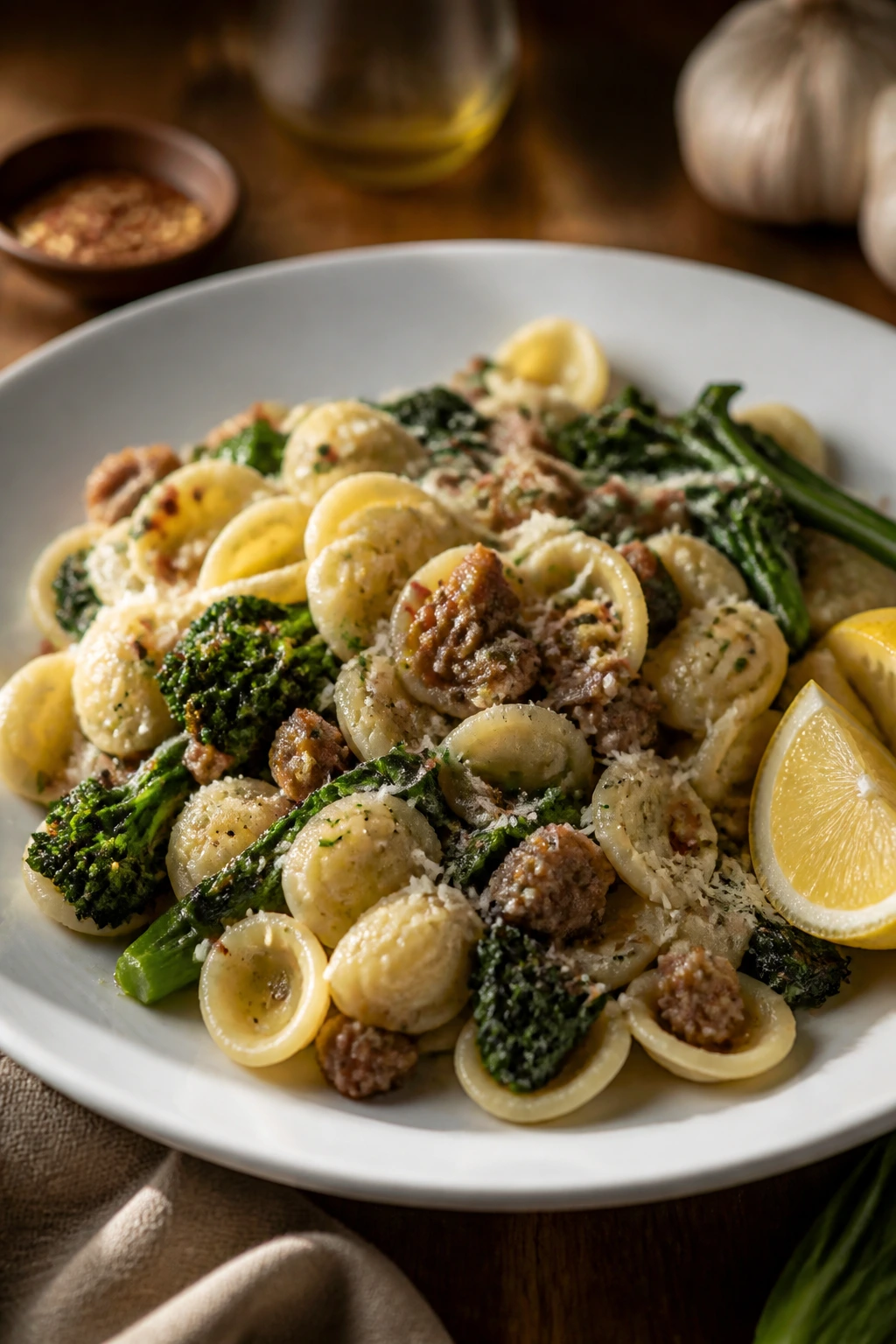
This is one of those pasta dishes that tastes sharper and more grown-up than it looks. The broccoli rabe brings a bitter edge, the sausage gives it weight, and the little cups of orecchiette catch both the oil and the crumbled meat.
Why It Works:
Broccoli rabe can taste harsh if you treat it like broccoli, which is why a quick blanch helps tame the bitterness before it meets the pan. Sausage handles the garlic and red pepper flakes beautifully, and the pasta water ties the whole thing together into a glossy sauce without cream. I prefer this dish with a squeeze of lemon at the end because the acid wakes up the greens.
Key Ingredients:
- 12 ounces orecchiette
- 1 pound Italian sausage, casings removed
- 1 bunch broccoli rabe, trimmed
- 3 tablespoons olive oil
- 4 garlic cloves, thinly sliced
- ½ teaspoon red pepper flakes
- ¾ cup reserved pasta water
- ½ cup grated Parmesan
- 1 lemon, cut into wedges
- Salt and black pepper, to taste
Quick Steps:
- Blanch the broccoli rabe in salted boiling water for 1 minute, then drain and chop.
- Cook the orecchiette in the same pot until al dente, reserving ¾ cup of pasta water.
- Brown the sausage in a large skillet over medium-high heat for 6 to 8 minutes.
- Add the olive oil, garlic, and red pepper flakes, then stir in the broccoli rabe and cook for 2 minutes.
- Add the pasta and some pasta water, toss with Parmesan, and cook until glossy.
Equipment for This Recipe:
- Large pot
- Large skillet
- Slotted spoon or colander
- Tongs
How to Serve This Dish:
Serve it with extra Parmesan and lemon wedges at the table. A chopped tomato salad makes the bitter greens taste brighter instead of harsher.
Pro Tips for This Recipe:
- Save the pasta water; it’s what makes the sauce cling.
- Trim the broccoli rabe well; thick stems stay tough.
- If the sausage is very salty, hold back on extra salt until the end.
Variations on This Dish:
- Creamier Version: Stir in 2 tablespoons of butter at the end for a softer finish.
- Broccoli Swap: If broccoli rabe is hard to find, use broccolini and skip the blanching step.
Common Mistakes to Avoid with This Dish:
- Skipping the blanch: The greens can taste too bitter. One minute in boiling water helps.
- Draining the pasta dry: The sauce needs that starchy water. Save some before you empty the pot.
15. Sausage Corn Chowder

This chowder has a gentle sweetness from the corn and a salty edge from the sausage that keeps every spoonful from tasting like baby food. The potatoes thicken the broth as they break apart, which means you get body without a flour-heavy base.
Why It Works:
Corn chowder can lean flat if all you do is dump ingredients into milk and hope for the best. Browning the sausage first changes the whole pot, because the browned bits cling to the onions and potatoes and season the broth as it simmers. I like a mix of whole corn kernels and mashed potato in the pot so the texture feels intentional, not accidental.
Key Ingredients:
- 1 pound smoked sausage, sliced
- 1 tablespoon butter
- 1 onion, diced
- 2 celery ribs, diced
- 3 medium Yukon gold potatoes, peeled and diced
- 3 cups corn kernels, fresh or frozen
- 4 cups chicken broth
- 2 cups milk or half-and-half
- 1 teaspoon dried thyme
- Salt and black pepper, to taste
Quick Steps:
- Brown the sausage in a soup pot over medium heat for 4 to 5 minutes, then remove half the pieces if the pot feels crowded.
- Add the butter, onion, and celery. Cook for 5 minutes, then add the potatoes, corn, broth, and thyme.
- Simmer for 15 to 18 minutes, until the potatoes are tender.
- Mash a few potato pieces against the side of the pot to thicken the chowder. Stir in the milk and sausage, then warm through without boiling.
- Season and serve.
Equipment for This Recipe:
- Soup pot
- Potato masher or spoon
- Ladle
- Knife and cutting board
How to Serve This Dish:
Serve it with oyster crackers, buttered toast, or a cornbread muffin. A little chopped chive or black pepper on top is enough to finish the bowl.
Pro Tips for This Recipe:
- Don’t let the milk boil hard or it can curdle.
- Frozen corn works well here; there’s no need to thaw it first.
- A spoonful of hot sauce at the table gives the sweet corn some edge.
Variations on This Dish:
- Smoky Bacon Touch: Add 2 strips of bacon at the start if you want a deeper smoky note.
- Cheddar Version: Stir in 1 cup shredded cheddar off the heat for a thicker, richer bowl.
Common Mistakes to Avoid with This Dish:
- Using too much milk too soon: The soup gets thin. Add it after the potatoes soften.
- Boiling after dairy goes in: Keep the heat low so the chowder stays smooth.
16. Sausage Pizza Casserole
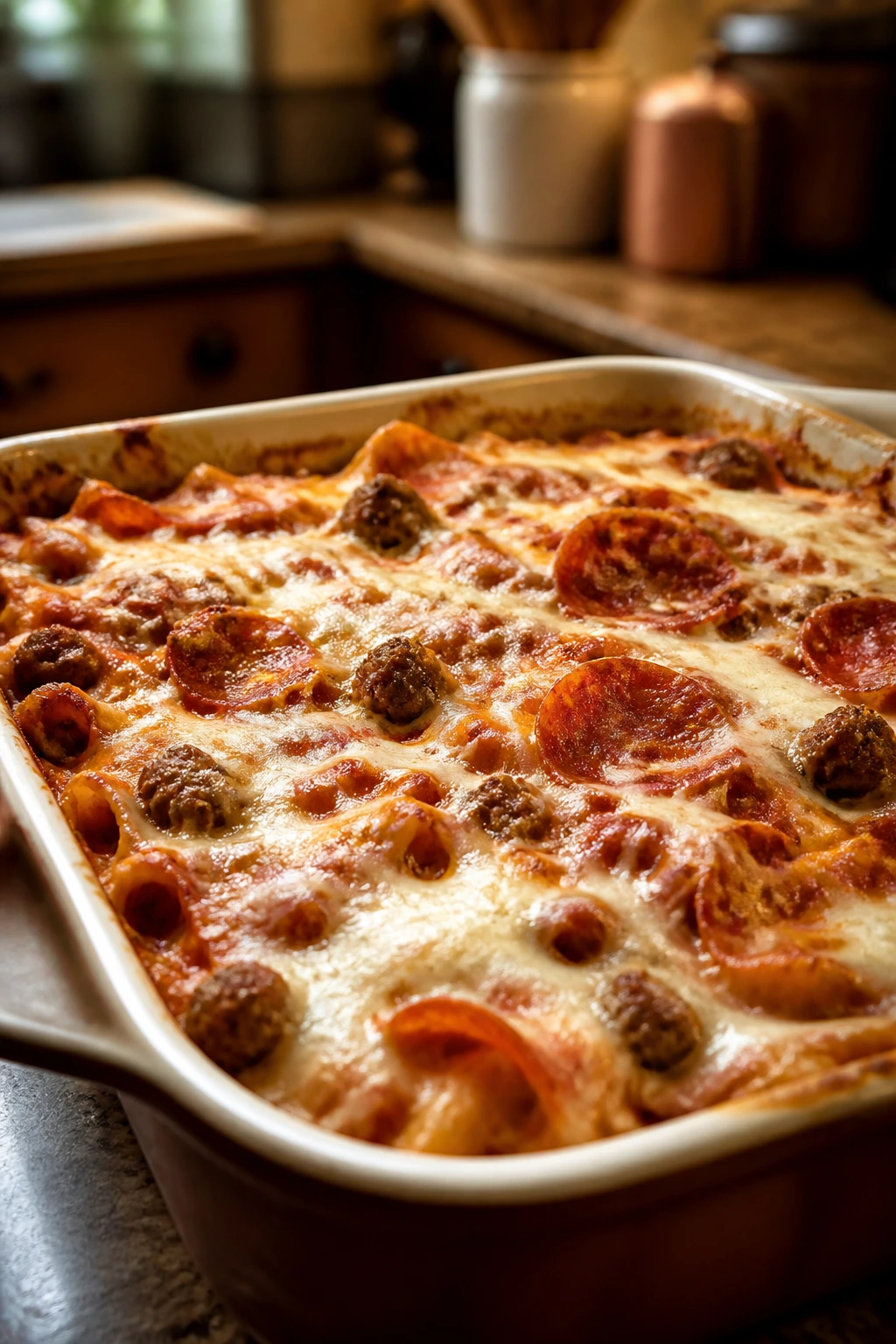
This is what happens when pizza night and baked pasta stop arguing and finally cooperate. The sausage, marinara, mozzarella, and pasta all want the same thing, which is to come out of the oven bubbling and a little browned on top.
Why It Works:
Pizza flavors are easy to read in casserole form, which makes this one a hit with kids and adults who like their dinner direct. The sausage gives you the pepperoni-adjacent flavor without adding another processed meat, and the pasta soaks up the sauce so each bite feels substantial. A handful of pepperoni on top is optional, but the sausage alone carries the dish just fine.
Key Ingredients:
- 12 ounces rotini pasta
- 1 pound ground sausage
- 1 small onion, diced
- 1 jar (24 ounces) marinara sauce
- 1 bell pepper, diced
- 2 cups shredded mozzarella
- ½ cup grated Parmesan
- 1 teaspoon dried oregano
- ½ teaspoon garlic powder
- Sliced olives or pepperoni, optional
Quick Steps:
- Cook the pasta until just shy of al dente, then drain.
- Brown the sausage in a skillet over medium-high heat for 6 to 8 minutes. Add the onion and bell pepper and cook 4 minutes more.
- Stir in the marinara, oregano, and garlic powder, then toss with the pasta.
- Spread in a baking dish, top with mozzarella and Parmesan, and add pepperoni or olives if using.
- Bake at 375°F for 20 minutes, until bubbling and lightly browned.
Equipment for This Recipe:
- Large pot
- Skillet
- 9×13-inch baking dish
- Colander
How to Serve This Dish:
Serve it with a green salad dressed in Italian vinaigrette and maybe garlic knots if you’re going all in. The casserole should be cut in squares, not scooped, so the layers hold together.
Pro Tips for This Recipe:
- Drain excess fat from the sausage before adding sauce.
- Rotini, penne, or ziti all work, but shapes with ridges hold the sauce best.
- Let the casserole stand for 10 minutes so it slices cleanly.
Variations on This Dish:
- Supreme Pizza Version: Add mushrooms and black olives with the bell pepper.
- White Pizza Twist: Swap marinara for Alfredo and add spinach.
Common Mistakes to Avoid with This Dish:
- Using too much sauce: The casserole turns soupy. One jar is enough.
- Skipping the rest: The layers need time to set before serving.
17. Sausage Enchilada Skillet
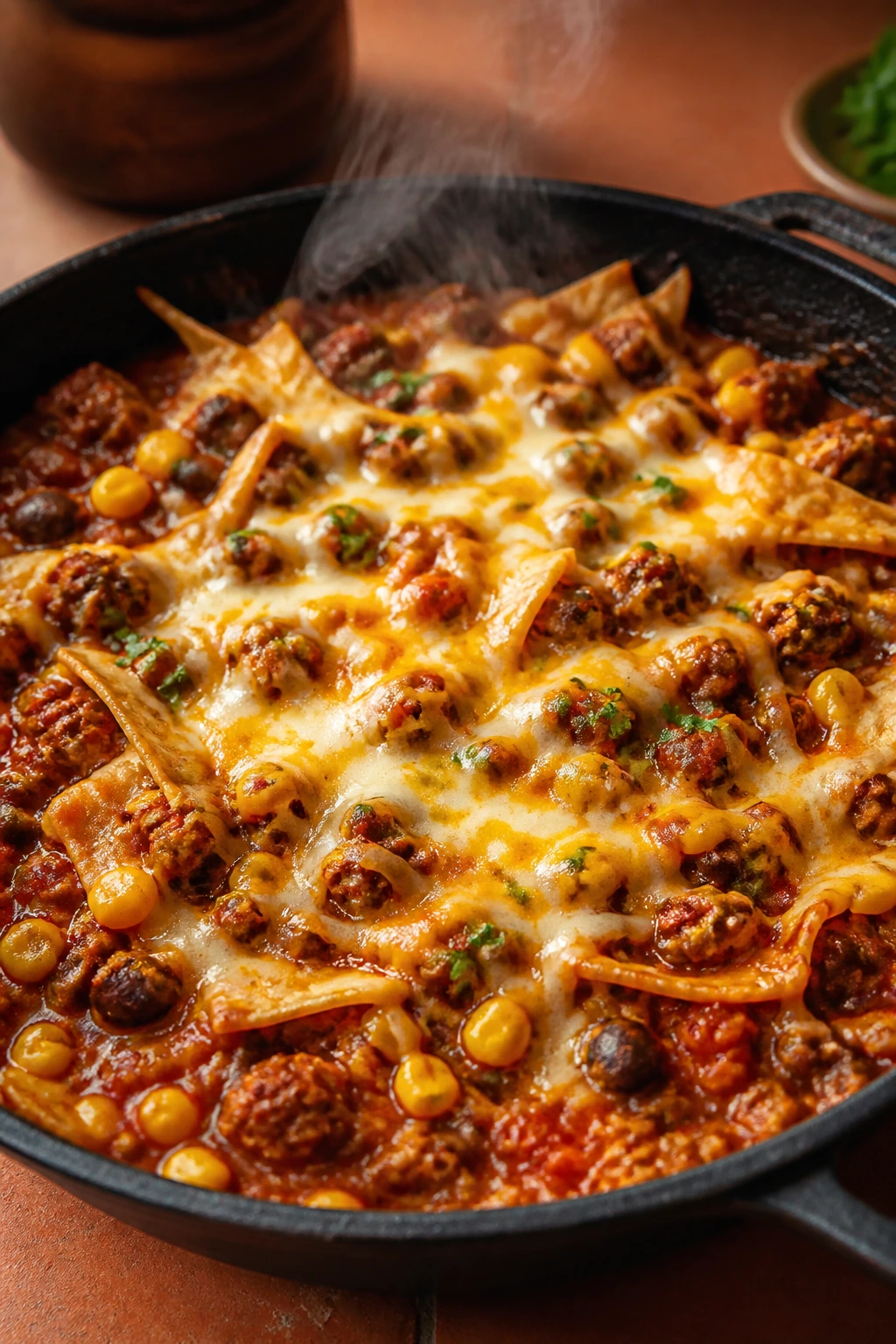
This skillet has the right kind of mess to it. Tortillas soften in the sauce, cheese melts across the top, and the sausage keeps the whole thing hearty enough that no one asks where the meat is.
Why It Works:
Enchilada sauce is a fast way to build depth, and sausage takes to the spices without any marinating step. Black beans and corn add bulk, while tortilla strips thicken the sauce as they soften. You get the whole enchilada experience without rolling anything.
Key Ingredients:
- 1 pound ground sausage
- 1 small onion, diced
- 1 can (15 ounces) black beans, drained and rinsed
- 1 cup corn kernels
- 2 cups red enchilada sauce
- 6 small flour or corn tortillas, cut into strips
- 2 cups shredded Mexican blend cheese
- ¼ cup chopped cilantro
- Sour cream, for serving
Quick Steps:
- Brown the sausage in a large skillet over medium heat for 6 to 8 minutes.
- Add the onion and cook for 3 to 4 minutes, then stir in the beans, corn, and enchilada sauce.
- Add the tortilla strips and stir until coated.
- Sprinkle cheese over the top, cover, and cook for 3 to 4 minutes until melted, or broil for 1 to 2 minutes if your skillet is oven-safe.
- Top with cilantro and serve with sour cream.
Equipment for This Recipe:
- Large skillet
- Spatula
- Knife and cutting board
- Lid or broiler-safe oven
How to Serve This Dish:
Serve it straight from the skillet with lime wedges and sour cream. A cabbage slaw on the side gives you crunch against the soft tortillas.
Pro Tips for This Recipe:
- Use a skillet with some depth so the sauce doesn’t splash.
- If the tortillas are getting too soft, cut them a little wider.
- A squeeze of lime at the end sharpens the whole dish.
Variations on This Dish:
- Green Enchilada Version: Use salsa verde instead of red sauce and top with Monterey Jack.
- Extra-Hearty Version: Add a cup of cooked rice to stretch the pan.
Common Mistakes to Avoid with This Dish:
- Using too many tortilla strips: The pan turns gummy. A few strips are enough.
- Overbaking the cheese: It gets oily fast. Stop when it melts.
18. Sausage and Mushroom Risotto
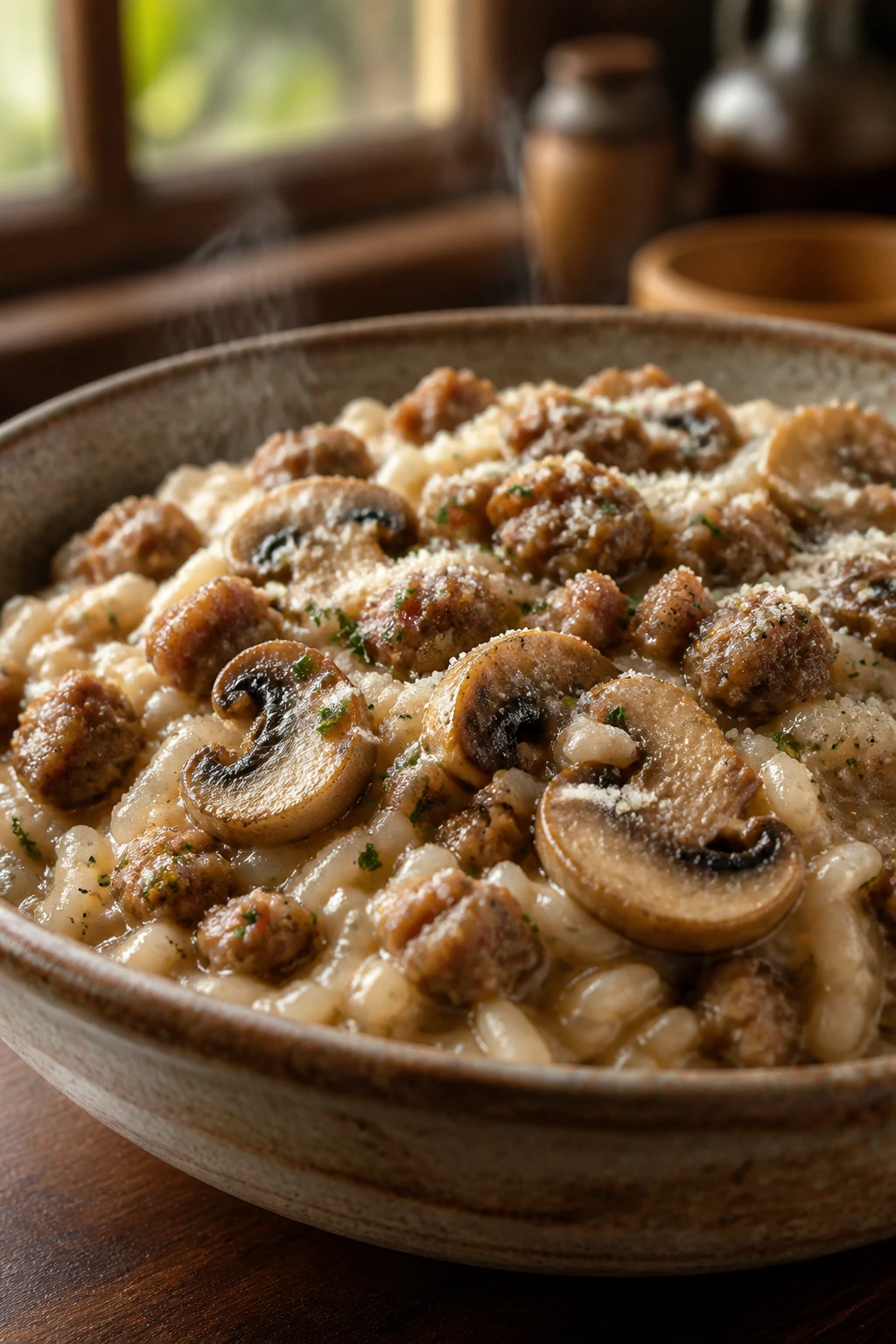
Risotto does ask for attention, but the payoff is worth it. The sausage brings the savory notes, the mushrooms add a deep, earthy edge, and the rice turns creamy without needing actual cream.
Why It Works:
Arborio rice releases starch as you stir, which gives risotto its thick, silky texture. Sausage gives the pot a strong base early on, and mushrooms deepen the flavor without fighting it. Warm broth matters here; cold broth slows the cooking and can make the rice uneven.
Key Ingredients:
- 1 pound sausage, casings removed
- 8 ounces mushrooms, sliced
- 1 small onion, diced
- 1 ½ cups arborio rice
- ½ cup dry white wine
- 5 to 6 cups chicken broth, kept warm
- ½ cup grated Parmesan
- 2 tablespoons butter
- 1 tablespoon olive oil
- Chopped parsley, for serving
Quick Steps:
- Warm the broth in a separate pot over low heat.
- Brown the sausage in a wide skillet or Dutch oven over medium-high heat for 6 minutes. Add the mushrooms and onion, then cook for 5 minutes until the mushrooms release their liquid.
- Stir in the rice and toast it for 1 minute. Add the wine and stir until absorbed.
- Add the warm broth ½ cup at a time, stirring often, until each addition is absorbed before the next goes in. Continue for 18 to 20 minutes.
- Stir in the butter and Parmesan, then finish with parsley.
Equipment for This Recipe:
- Wide skillet or Dutch oven
- Small pot for broth
- Wooden spoon
- Ladle
How to Serve This Dish:
Spoon the risotto into shallow bowls and finish with extra Parmesan. A simple salad with lemon dressing keeps the meal from feeling too rich.
Pro Tips for This Recipe:
- Stir often, but not obsessively; the rice needs movement, not panic.
- Keep the broth hot the whole time.
- Risotto should move slowly on the plate, not stand in a stiff mound.
Variations on This Dish:
- No-Wine Version: Use an equal amount of broth plus 1 teaspoon lemon juice.
- Greens Add-In: Fold in spinach during the last minute for color and a mild vegetal note.
Common Mistakes to Avoid with This Dish:
- Dumping in all the broth at once: The rice cooks unevenly. Add it gradually.
- Leaving the pan unattended: Risotto needs enough stirring to release starch.
19. Sausage Breakfast Casserole
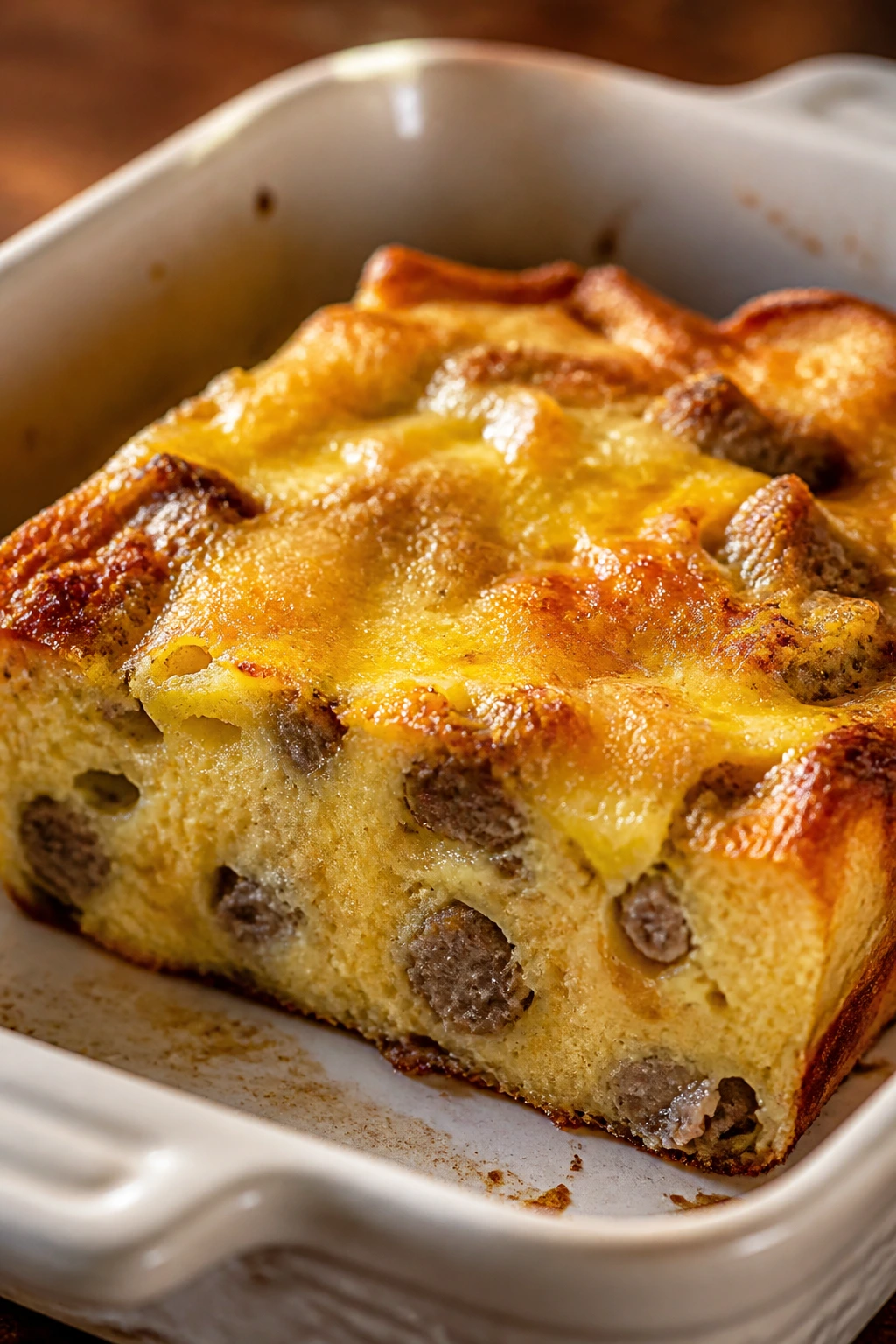
This is the kind of dish that clears a room in five minutes and then sits at the center of the table with almost no drama. Eggs, sausage, bread, and cheese bake into one neat square, and the edges get a little firmer than the middle, which I happen to like.
Why It Works:
The bread soaks up the egg custard while the sausage keeps the casserole from tasting soft or bland. If you make it the night before, the bread has time to drink in the milk and eggs, which gives you a tighter slice and a more even bake. That’s the difference between a casserole that flops apart and one that lands on a plate in a clean square.
Key Ingredients:
- 1 pound breakfast sausage
- 8 large eggs
- 2 cups milk
- 3 cups bread cubes or cubed hash browns
- 2 cups shredded cheddar
- ½ small onion, diced
- 1 cup chopped spinach, optional
- 1 teaspoon salt
- ½ teaspoon black pepper
Quick Steps:
- Brown the sausage in a skillet over medium heat for 6 to 8 minutes, then drain if needed.
- Whisk the eggs, milk, salt, and pepper in a large bowl.
- Layer the bread cubes, sausage, onion, spinach if using, and cheese in a greased 9×13-inch baking dish. Pour the egg mixture over the top.
- Bake at 350°F for 35 to 45 minutes, until the center is set and a knife inserted in the middle comes out mostly clean.
- Rest for 10 minutes before slicing.
Equipment for This Recipe:
- 9×13-inch baking dish
- Skillet
- Mixing bowl and whisk
- Measuring cups
How to Serve This Dish:
Serve it warm with fruit, a green salad, or roasted potatoes if you’re feeding a crowd. A spoonful of salsa or hot sauce on top gives each square a little lift.
Pro Tips for This Recipe:
- Stale bread works better than fresh.
- Let the casserole rest, or it will spill custard.
- Add the cheese in two layers if you want a more even melt.
Variations on This Dish:
- Hash Brown Version: Use thawed hash browns instead of bread for a softer, more breakfasty texture.
- Mediterranean Version: Swap the cheddar for feta and add chopped spinach and tomatoes.
Common Mistakes to Avoid with This Dish:
- Too much milk: The casserole stays wet in the middle. Keep the egg-to-milk ratio tight.
- Skipping the rest: It needs 10 minutes to set up before slicing.
20. Sausage, Kale, and Potato Stew
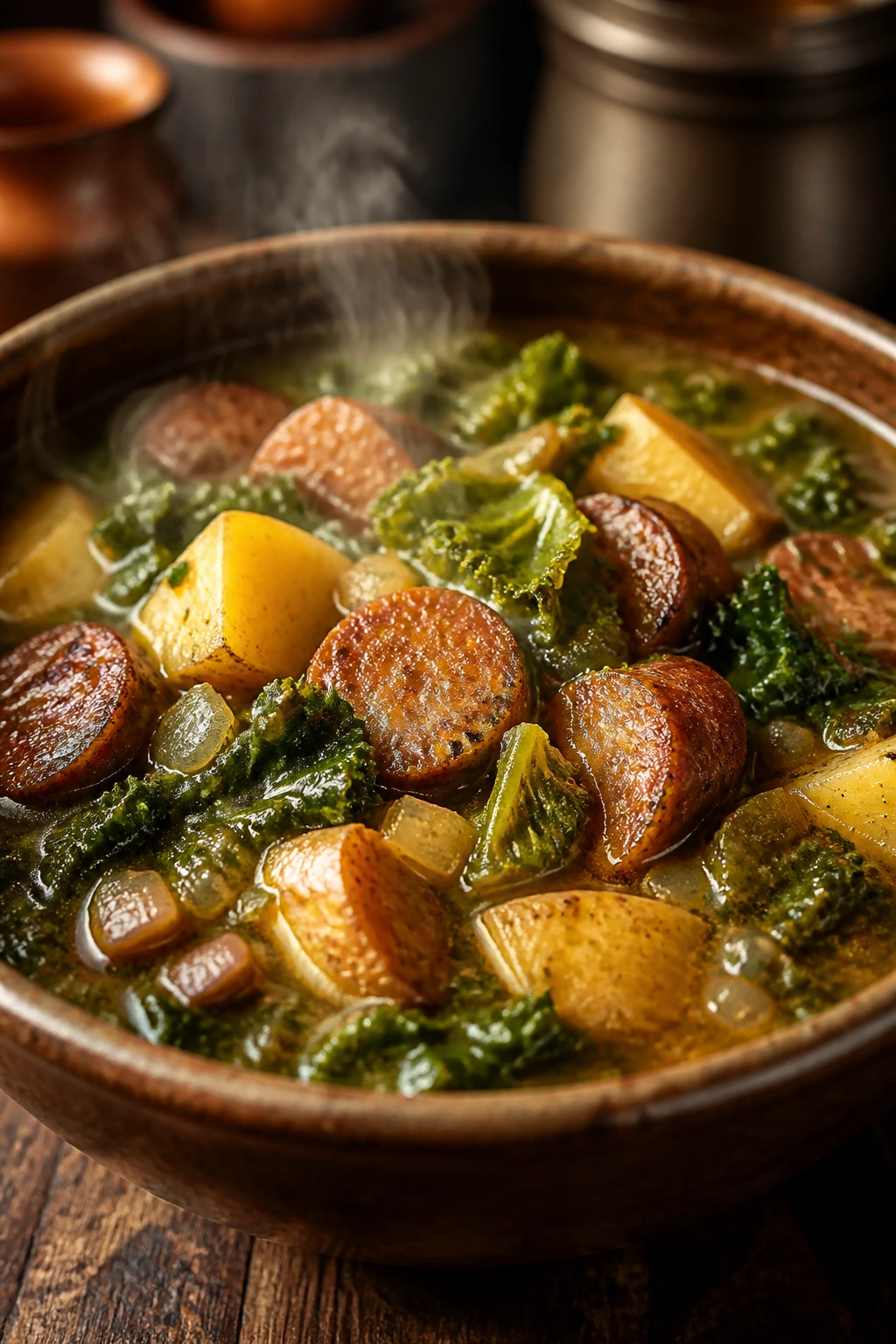
This stew tastes like something that should have been on the stove all afternoon, even though it doesn’t need that long. The potatoes soften into the broth, the kale keeps its shape, and the sausage anchors every bite.
Why It Works:
Potatoes naturally thicken a stew as they cook, which means you don’t need flour unless you want a heavier broth. Kale adds texture and a slight bitter edge that keeps the pot from turning too soft. Sausage brings enough salt and fat that you can keep the seasoning simple and still end up with a complete bowl.
Key Ingredients:
- 1 pound sausage, sliced or crumbled
- 1 onion, diced
- 2 carrots, diced
- 1 ½ pounds potatoes, cut into chunks
- 1 bunch kale, ribs removed and chopped
- 5 cups chicken broth
- 2 tablespoons tomato paste
- 1 teaspoon dried thyme
- 1 tablespoon olive oil
- Salt and black pepper, to taste
Quick Steps:
- Brown the sausage in a Dutch oven over medium-high heat for 5 to 6 minutes. Remove excess fat if needed.
- Add the olive oil, onion, and carrots. Cook for 5 minutes, then stir in the tomato paste and thyme.
- Add the potatoes and broth. Bring to a simmer and cook for 20 minutes, until the potatoes are nearly tender.
- Stir in the kale and sausage. Simmer for 5 more minutes, until the kale softens and the stew thickens slightly.
- Taste and season before serving.
Equipment for This Recipe:
- Dutch oven or soup pot
- Wooden spoon
- Ladle
- Knife and cutting board
How to Serve This Dish:
Serve it in deep bowls with crusty bread or biscuits. A spoonful of mustard on the side is odd in a good way if the sausage is especially smoky.
Pro Tips for This Recipe:
- Cut the potatoes into the same size so they finish together.
- Tomato paste needs a minute in the pot to lose its raw edge.
- If you want a thicker stew, mash a few potatoes against the pot.
Variations on This Dish:
- Creamier Version: Stir in ½ cup cream at the end for a softer broth.
- Bean-Loaded Version: Add a can of white beans with the potatoes to stretch the pot.
Common Mistakes to Avoid with This Dish:
- Adding kale too soon: It can go dull and overly soft. Put it in near the end.
- Not tasting before serving: Broth, sausage, and potatoes all shift the salt level. Check the seasoning.
21. Sausage Meatball Subs
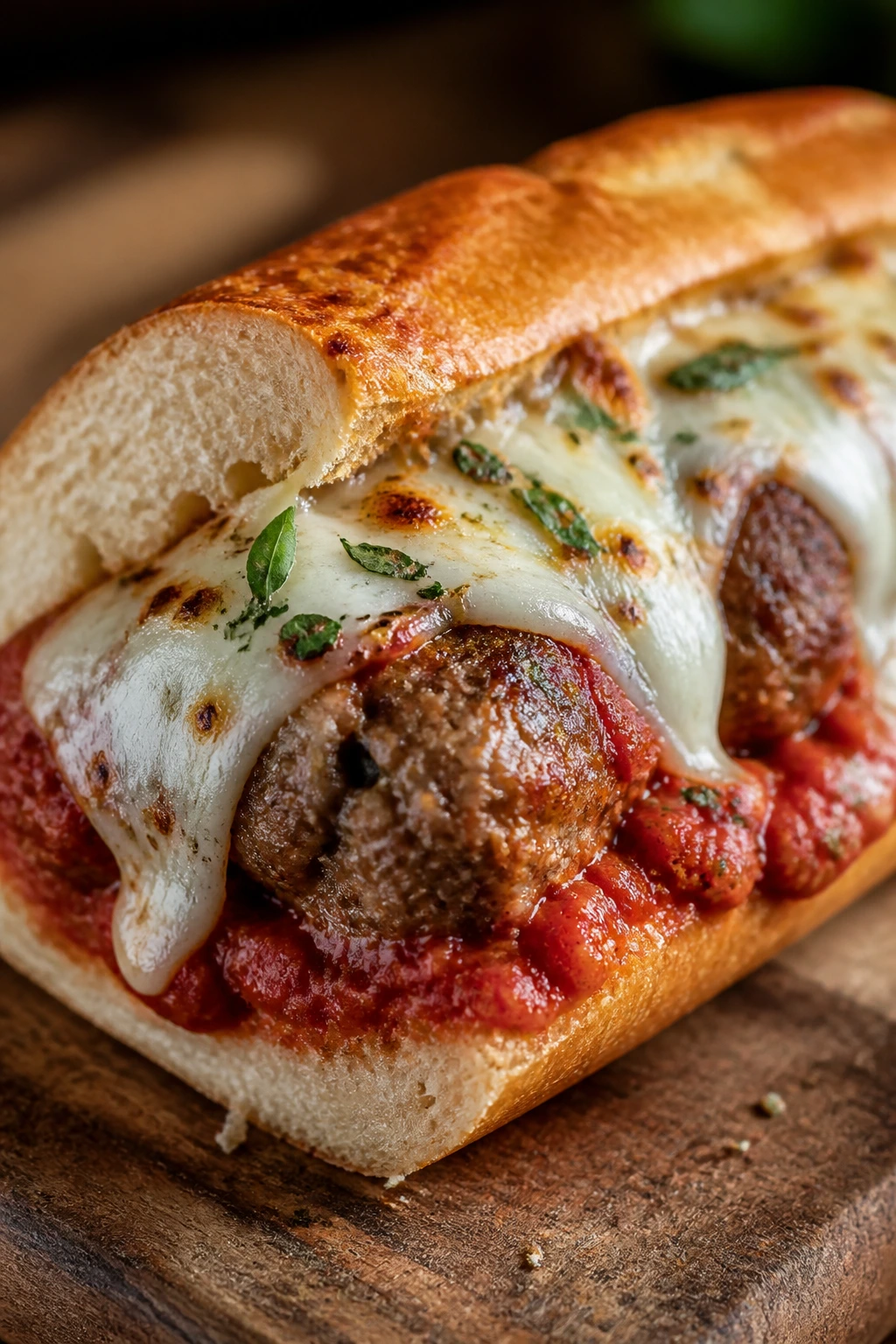
These subs are messy in the best possible way. The meatballs stay tender, the marinara runs into the bread, and the melted mozzarella ties everything together before it slides apart in the first bite.
Why It Works:
Using sausage instead of plain ground meat means the meatballs already have seasoning and fat, so they stay juicy under the broiler. Baking or pan-searing the meatballs first gives them structure, and then the simmer in marinara finishes the texture without drying them out. Good sub rolls matter here; if they’re too soft, the sauce wins too quickly.
Key Ingredients:
- 1 ½ pounds ground sausage
- 1 egg
- ½ cup breadcrumbs
- ¼ cup grated Parmesan
- 2 cups marinara sauce
- 6 sub rolls
- 2 cups shredded mozzarella
- 1 tablespoon chopped parsley
- 1 teaspoon garlic powder
Quick Steps:
- Heat the oven to 400°F. Mix the sausage, egg, breadcrumbs, Parmesan, and garlic powder, then form 18 meatballs.
- Bake the meatballs for 12 to 15 minutes, until browned and cooked through, or brown them in a skillet if you prefer.
- Warm the marinara in a saucepan, then add the meatballs and simmer for 5 minutes.
- Split the rolls, spoon in the meatballs and sauce, and top with mozzarella.
- Broil for 1 to 2 minutes until the cheese melts, then finish with parsley.
Equipment for This Recipe:
- Baking sheet or skillet
- Saucepan
- Sub rolls
- Broiler-safe baking dish, optional
How to Serve This Dish:
Serve the subs with a pile of pickles or a crisp salad. A fork is not a failure here; sometimes the bread gives up and that is fine.
Pro Tips for This Recipe:
- Don’t pack the meatballs too tightly or they turn dense.
- Toast the rolls lightly before filling so they hold up better.
- A little extra sauce on the side helps if you like a wetter sub.
Variations on This Dish:
- Spicy Meatball Sub: Use hot sausage and add red pepper flakes to the sauce.
- Meltier Version: Mix provolone with the mozzarella for a stretchier top.
Common Mistakes to Avoid with This Recipe:
- Skipping the broil: The cheese needs that quick blast to melt properly.
- Using flimsy rolls: They collapse under the sauce. Choose sturdy bread.
22. Sausage and Apple Stuffed Acorn Squash
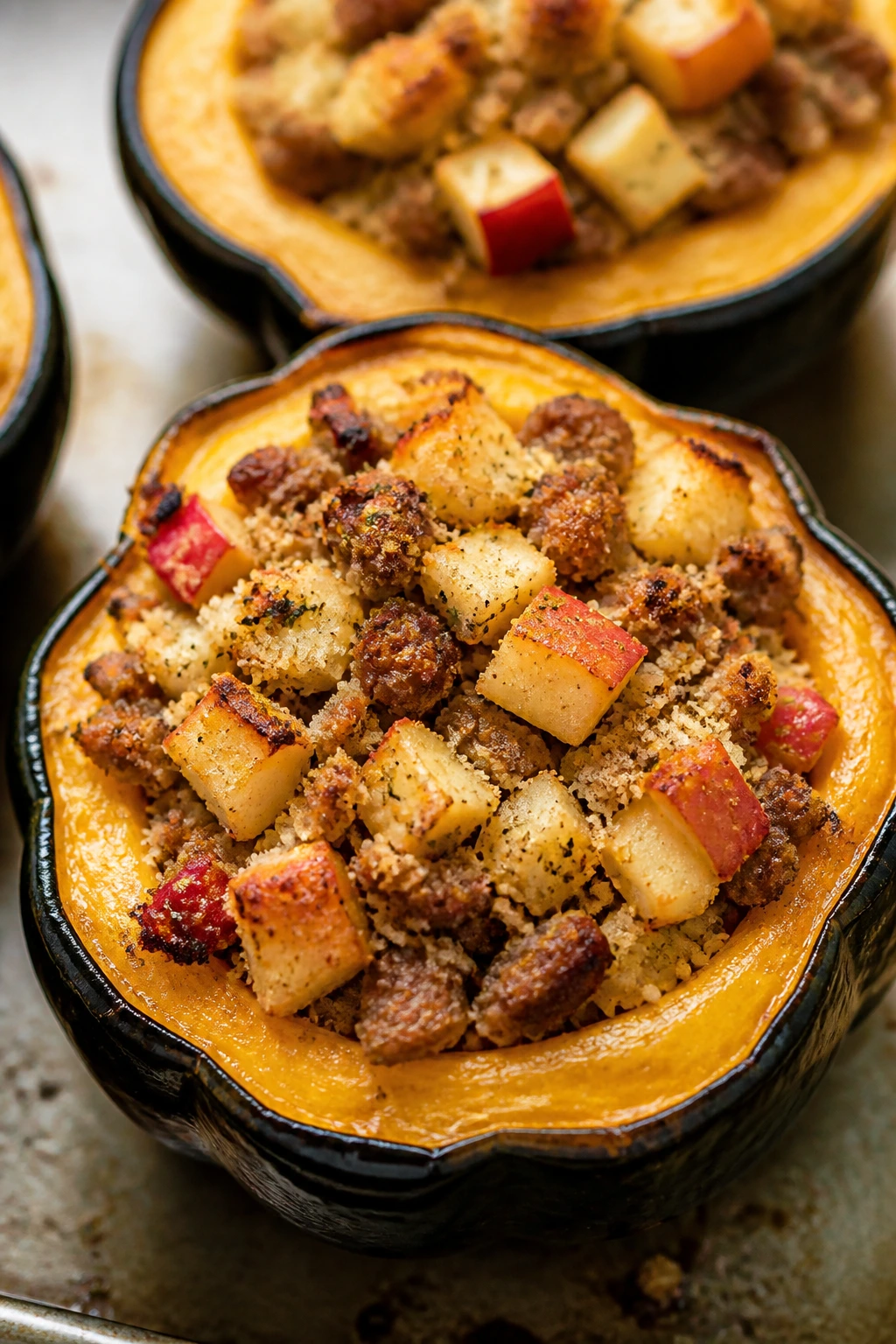
This is the dinner I make when I want the plate to look a little more composed without spending the whole evening on it. The squash turns silky, the sausage stays savory, and the apple gives the filling a small sweet lift that keeps it from feeling heavy.
Why It Works:
Acorn squash has enough structure to hold a filling, and its natural sweetness likes savory sausage. The apple and sage sharpen the edges without turning the whole dish into holiday food. I like a few breadcrumbs on top because they add a dry crunch against the soft squash flesh.
Key Ingredients:
- 2 acorn squash, halved and seeded
- 1 pound sausage
- 1 small apple, diced
- 1 small onion, diced
- ½ cup breadcrumbs
- ¼ cup dried cranberries
- 1 teaspoon chopped sage or ½ teaspoon dried sage
- 2 tablespoons olive oil
- ¼ cup grated Parmesan
- Salt and black pepper, to taste
Quick Steps:
- Heat the oven to 400°F. Brush the squash halves with olive oil, season with salt, and roast cut-side down for 25 minutes.
- Brown the sausage in a skillet over medium heat, then add the onion and apple and cook for 5 minutes. Stir in the sage and cranberries.
- Mix in the breadcrumbs and Parmesan.
- Turn the squash cut-side up, fill the centers with the sausage mixture, and bake for 15 more minutes, until the tops are browned.
- Let cool slightly before serving.
Equipment for This Recipe:
- Rimmed baking sheet
- Skillet
- Spoon
- Sharp knife
How to Serve This Dish:
Serve one squash half per person as a main dish, or half a half if you’re pairing it with soup. A simple salad with vinaigrette keeps the plate bright.
Pro Tips for This Recipe:
- Roast the squash cut-side down so the flesh softens evenly.
- Dice the apple small so it blends into the filling.
- If the filling seems dry, add 1 tablespoon of broth.
Variations on This Dish:
- Savory Herb Version: Add thyme and skip the cranberries.
- Wild Rice Version: Replace the breadcrumbs with 1 cup cooked wild rice for more chew.
Common Mistakes to Avoid with This Recipe:
- Undercooking the squash: It should be easily pierced with a fork.
- Using a sweet sausage plus sweet fruit without balance: Add sage or black pepper so it stays savory.
23. Sausage and Gnocchi Skillet
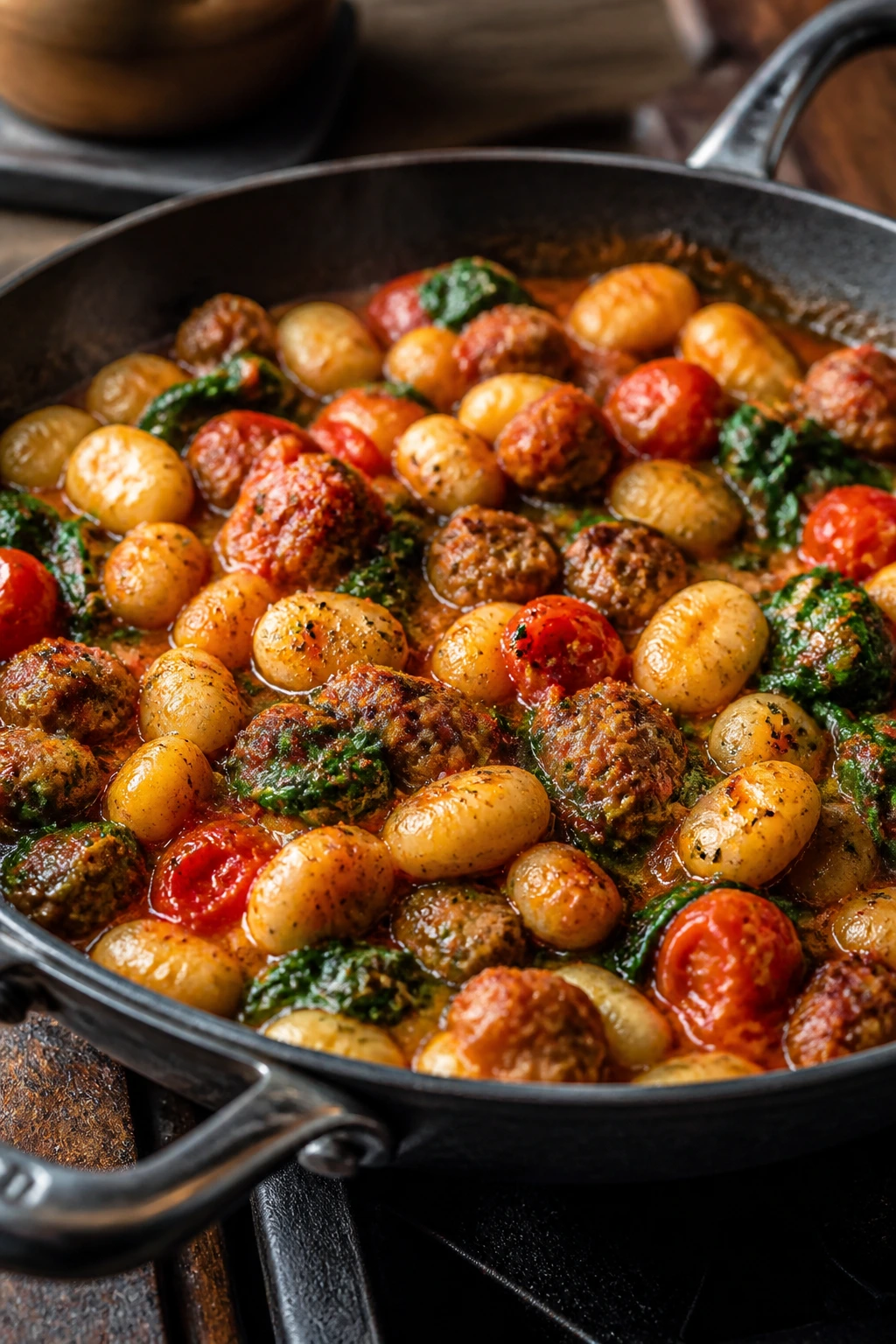
Gnocchi behaves almost like a shortcut potato, which is why it works so well in a skillet dinner. It gets crisp on the outside, soft in the middle, and then picks up the sausage and tomato juices like it was made for the job.
Why It Works:
Shelf-stable gnocchi can go straight into the pan, which saves you a pot and a step. The sausage makes the skillet rich enough that the tomatoes and spinach taste like part of a plan instead of leftovers from the fridge. I like a little cream at the end, but not enough to blur the bright edges of the tomatoes.
Key Ingredients:
- 1 pound sausage
- 1 pound shelf-stable gnocchi
- 1 small onion, diced
- 2 cups cherry tomatoes, halved
- 3 cups fresh spinach
- ½ cup heavy cream
- ½ cup grated Parmesan
- 1 tablespoon olive oil
- Salt and black pepper, to taste
Quick Steps:
- Brown the sausage in a large skillet over medium-high heat for 6 to 8 minutes. Remove it if the pan is crowded.
- Add the olive oil and gnocchi. Cook for 4 to 5 minutes, stirring until the gnocchi gets light golden spots.
- Add the onion and tomatoes and cook for 4 minutes, until the tomatoes begin to burst.
- Stir in the sausage, spinach, and cream. Cook for 2 minutes, until the spinach wilts.
- Finish with Parmesan and season to taste.
Equipment for This Recipe:
- Large skillet
- Wooden spoon or spatula
- Cutting board and knife
- Measuring cup
How to Serve This Dish:
Serve it in shallow bowls with extra Parmesan and black pepper. A slice of warm bread is enough to chase the sauce around the plate.
Pro Tips for This Recipe:
- Let the gnocchi sit in the pan long enough to brown a little.
- Don’t drown it in cream; the tomatoes should still read as tomatoes.
- Use cherry tomatoes that are firm, not wrinkled, so they burst at the right time.
Variations on This Dish:
- Pesto Version: Stir in 2 tablespoons of pesto at the end instead of cream.
- Broccoli Version: Replace the spinach with small broccoli florets, steamed first.
Common Mistakes to Avoid with This Dish:
- Boiling the gnocchi separately: You lose the skillet browning. Keep it in the pan.
- Using too much liquid: The dish turns soupy instead of glossy.
24. Hearty Sausage Chili
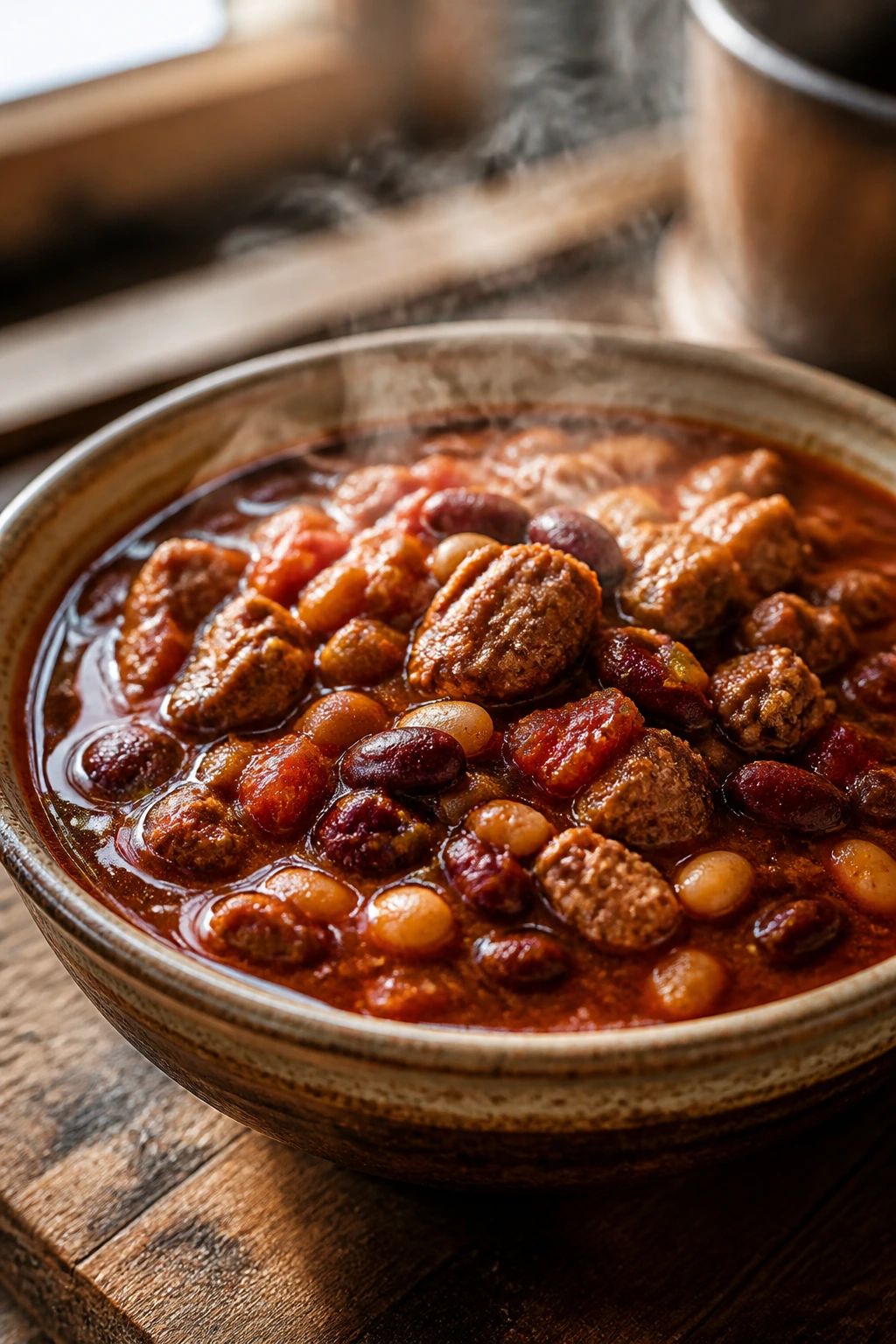
This chili has a deeper, rounder flavor than a standard ground beef version, and that’s mostly the sausage talking. Beans make it filling, tomatoes keep it loose enough to spoon, and the spice mix settles into the broth instead of sitting on top of it.
Why It Works:
Sausage gives chili a built-in seasoning blend, which is why it tastes fuller after only a short simmer. The beans and tomatoes provide enough body that you don’t need to thicken the pot with flour or cornmeal. If you want the chili to taste better the next day, and you probably do, this is one of those dishes where the flavors settle in overnight.
Key Ingredients:
- 1 ½ pounds sausage
- 1 onion, diced
- 1 bell pepper, diced
- 3 garlic cloves, minced
- 2 cans beans, drained and rinsed
- 2 cans diced tomatoes
- 2 tablespoons chili powder
- 1 tablespoon ground cumin
- 2 cups chicken broth
- Salt and black pepper, to taste
Quick Steps:
- Brown the sausage in a large pot over medium-high heat for 6 to 8 minutes.
- Add the onion and bell pepper and cook for 5 minutes. Stir in the garlic, chili powder, and cumin for 30 seconds.
- Add the beans, tomatoes, and broth. Bring to a boil, then lower to a simmer.
- Cook uncovered for 30 to 40 minutes, stirring occasionally, until thickened.
- Taste and season before serving.
Equipment for This Recipe:
- Large pot or Dutch oven
- Wooden spoon
- Ladle
- Knife and cutting board
How to Serve This Dish:
Serve with shredded cheese, sour cream, and chopped onions if you like the full chili-bar setup. Cornbread or saltines both work, depending on how much effort you want on the side.
Pro Tips for This Recipe:
- Let the sausage brown well before adding anything else.
- If the chili tastes too sharp, simmer it 10 minutes longer.
- A square of dark chocolate or a teaspoon of cocoa powder can deepen the pot.
Variations on This Dish:
- Smoky Version: Add 1 teaspoon smoked paprika and use smoked sausage.
- Bean-Free Version: Leave out the beans and add more bell pepper and a little less broth.
Common Mistakes to Avoid with This Dish:
- Stopping the simmer too soon: The flavors need time to join up.
- Too much broth: Chili should spoon, not pour like soup.
25. Sausage Lasagna Roll-Ups
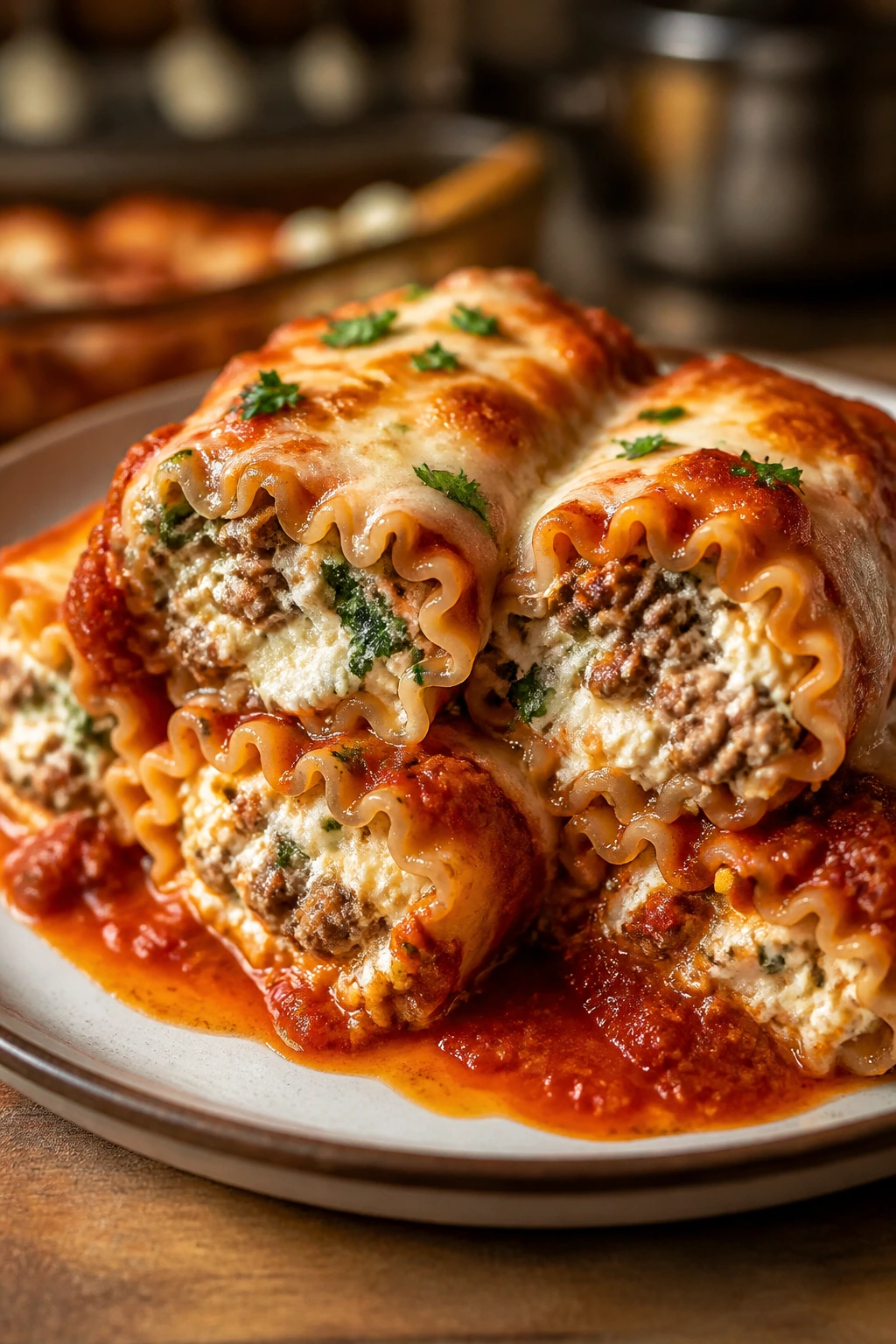
Roll-ups are less fussy than a full lasagna and easier to portion, which is part of why I reach for them when the table needs something familiar but not huge. The sausage keeps the ricotta filling from tasting soft and bland, and the sauce bakes into the noodles instead of floating around them.
Why It Works:
You get lasagna flavor without assembling a great, wobbling tower. Each noodle carries its own share of ricotta, sausage, and sauce, which makes serving cleaner and reheating easier. I like to keep the filling thick so it doesn’t slide out the moment the roll-ups leave the pan.
Key Ingredients:
- 9 lasagna noodles
- 1 pound sausage
- 2 cups ricotta
- 1 egg
- 2 cups shredded mozzarella
- 3 cups marinara sauce
- 1 cup chopped spinach, squeezed dry
- ¼ cup grated Parmesan
- 1 teaspoon Italian seasoning
Quick Steps:
- Cook the lasagna noodles until pliable, then lay them flat on a towel.
- Brown the sausage in a skillet over medium heat for 6 to 8 minutes, then cool slightly.
- Mix the ricotta, egg, spinach, Parmesan, and Italian seasoning in a bowl. Stir in the sausage.
- Spread filling over each noodle, roll it up, and place seam-side down in a sauce-covered baking dish.
- Spoon marinara over the rolls, top with mozzarella, and bake at 375°F for 25 to 30 minutes.
Equipment for This Recipe:
- Large pot
- Skillet
- 9×13-inch baking dish
- Mixing bowl
How to Serve This Dish:
Serve two roll-ups per person with a spoonful of extra sauce around them. Garlic bread and a green salad make the meal feel complete without much effort.
Pro Tips for This Recipe:
- Lay the noodles flat so they don’t stick together.
- Squeeze the spinach dry or the filling gets watery.
- If the rolls keep opening, tuck them tighter and place them seam-side down.
Variations on This Dish:
- Spinach-Heavy Version: Double the spinach and cut the sausage back slightly.
- White Sauce Version: Use Alfredo instead of marinara for a creamier pan.
Common Mistakes to Avoid with This Recipe:
- Overfilling the noodles: The rolls burst in the oven. Keep the layer thin.
- Not covering enough with sauce: Dry noodle edges bake hard.
26. Sausage and Brussels Sprouts Pasta
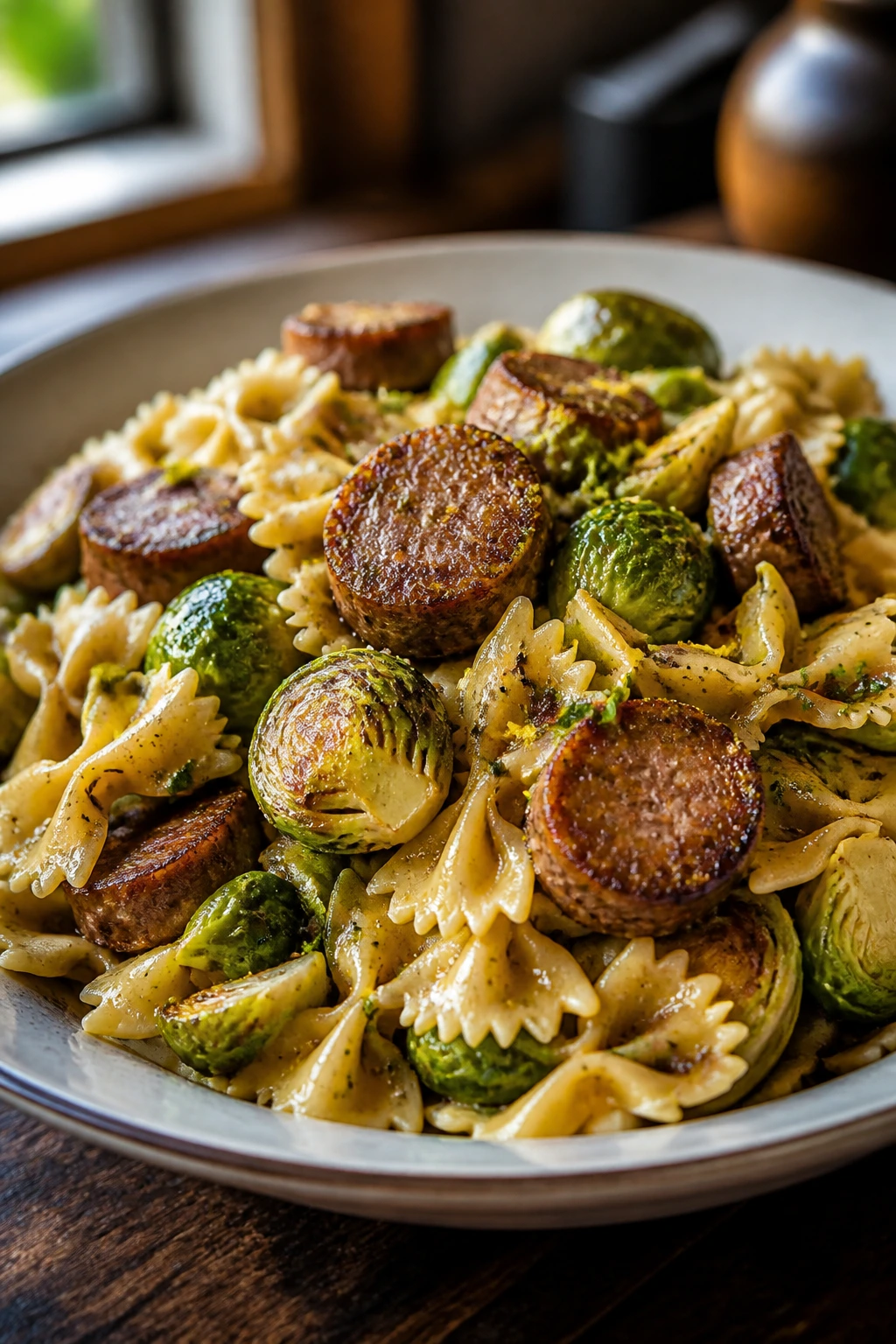
Brussels sprouts can be sharp, but they mellow beautifully when they hit a hot pan with sausage. The browned edges taste nutty, the pasta catches the little bits, and the lemon at the end keeps everything alive.
Why It Works:
The sprouts need direct heat to caramelize, and sausage gives them a salty partner so they don’t taste bitter. I like a long pasta shape here, but short pasta works too if that’s what’s in the pantry. Lemon zest is the small detail that makes the dish feel finished instead of merely assembled.
Key Ingredients:
- 12 ounces pasta
- 1 pound sausage
- 1 pound Brussels sprouts, trimmed and thinly sliced
- 3 garlic cloves, minced
- 3 tablespoons olive oil
- ½ teaspoon red pepper flakes
- ½ cup grated Parmesan
- 1 lemon, zested and juiced
- Salt and black pepper, to taste
Quick Steps:
- Cook the pasta in salted water until al dente and reserve 1 cup of pasta water.
- Brown the sausage in a large skillet over medium-high heat for 6 to 8 minutes.
- Add the Brussels sprouts and olive oil and cook for 6 to 8 minutes, until browned at the edges. Stir in the garlic and red pepper flakes for 30 seconds.
- Add the pasta, a splash of pasta water, Parmesan, lemon zest, and lemon juice. Toss until glossy.
- Taste and season before serving.
Equipment for This Recipe:
- Large pot
- Large skillet
- Colander
- Tongs
How to Serve This Dish:
Serve it in bowls with more Parmesan on top and maybe extra lemon for anyone who likes sharp food. A side of roasted chicken is optional, not necessary.
Pro Tips for This Recipe:
- Slice the Brussels sprouts thin so they cook fast.
- Save the pasta water; it binds the sauce.
- Don’t drown the dish in lemon juice. Start with half and taste.
Variations on This Dish:
- Creamy Version: Stir in 2 tablespoons of cream at the end.
- Pancetta-Free Carbonara Feel: Add a beaten egg off the heat for a richer sauce.
Common Mistakes to Avoid with This Recipe:
- Leaving the sprouts in big chunks: They take too long and stay tough.
- Skipping the browning: The nutty flavor comes from color, not just heat.
27. Sausage Hash with Fried Eggs
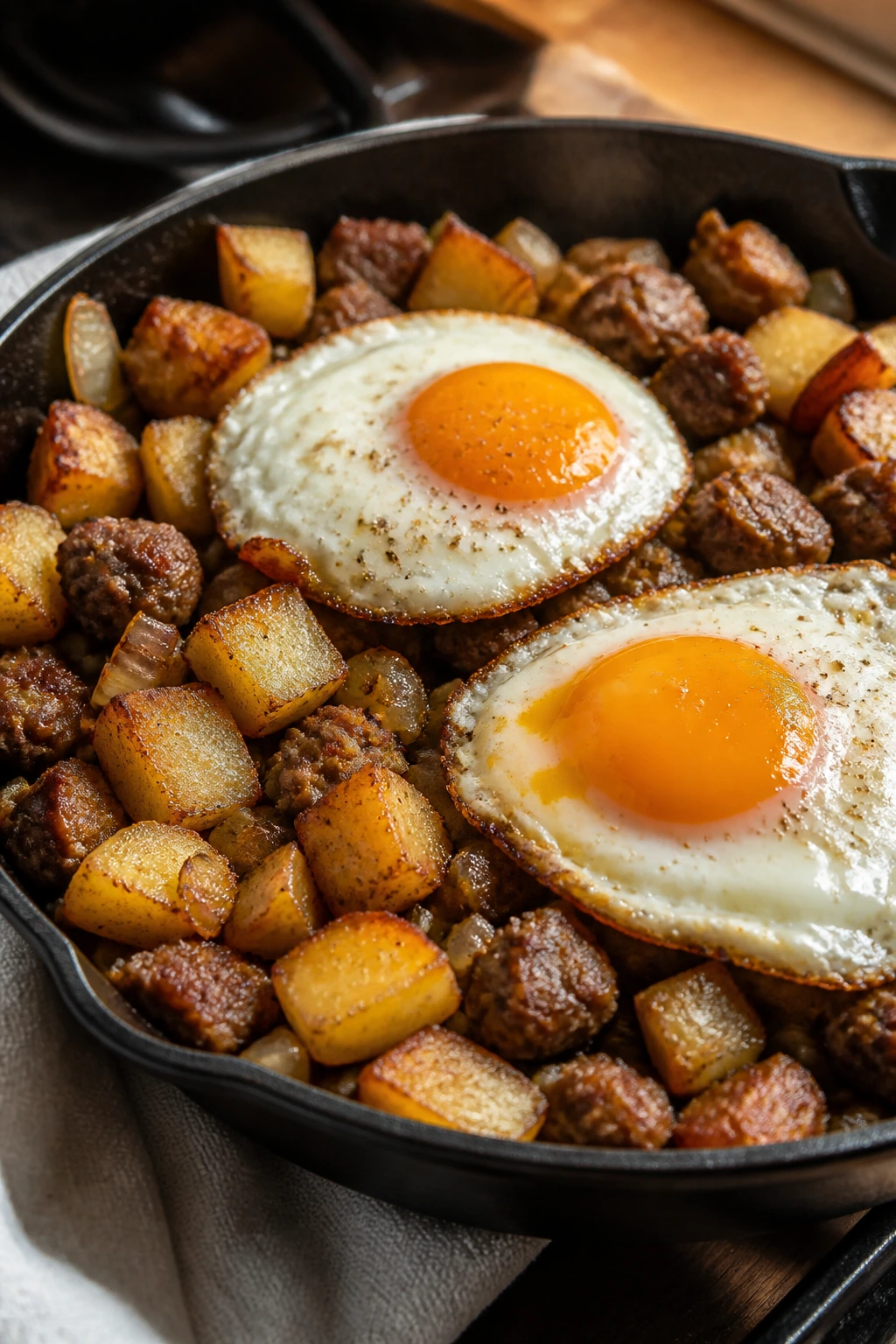
Hash should be crisp in spots and soft in others, not a uniform pile of potatoes. Add sausage and eggs, and you’ve got a dinner that eats like a diner plate without needing a takeout menu.
Why It Works:
Potatoes bring bulk, sausage brings seasoning, and the egg yolk acts like a built-in sauce. The trick is to let the potatoes spend enough time in the pan to brown before you add the rest. That crust is the difference between hash and warm rubble.
Key Ingredients:
- 1 pound sausage
- 1 ½ pounds potatoes, diced small
- 1 small onion, diced
- 1 bell pepper, diced
- 4 to 6 large eggs
- 2 tablespoons butter or oil
- 1 tablespoon chopped parsley
- Salt and black pepper, to taste
Quick Steps:
- Heat the butter or oil in a large skillet over medium heat. Add the potatoes and cook for 10 to 12 minutes, stirring only now and then, until browned.
- Add the sausage, onion, and bell pepper. Cook for 6 to 8 minutes, until the sausage is cooked through and the vegetables soften.
- Make small wells and crack in the eggs, or fry them separately if you want cleaner whites.
- Cover and cook until the whites set and the yolks are done to your liking.
- Finish with parsley, salt, and pepper.
Equipment for This Recipe:
- Large skillet
- Spatula
- Knife and cutting board
- Lid, optional
How to Serve This Dish:
Serve it right out of the skillet with toast or biscuits. A spoonful of ketchup, salsa, or hot sauce on the side is welcome depending on your mood.
Pro Tips for This Recipe:
- Dice the potatoes small so they crisp instead of steaming.
- Don’t stir too often; the brown bits are the point.
- Cook the eggs only after the hash is fully hot.
Variations on This Recipe:
- Sweet Potato Hash: Swap in sweet potatoes and a pinch of smoked paprika.
- Cheesy Hash: Melt cheddar over the top before adding the eggs.
Common Mistakes to Avoid with This Recipe:
- Crowding the pan with potatoes: They steam instead of crisp. Use the biggest skillet you have.
- Adding the eggs too early: They overcook while the hash finishes. Wait until the base is done.
28. Sausage Crescent Ring
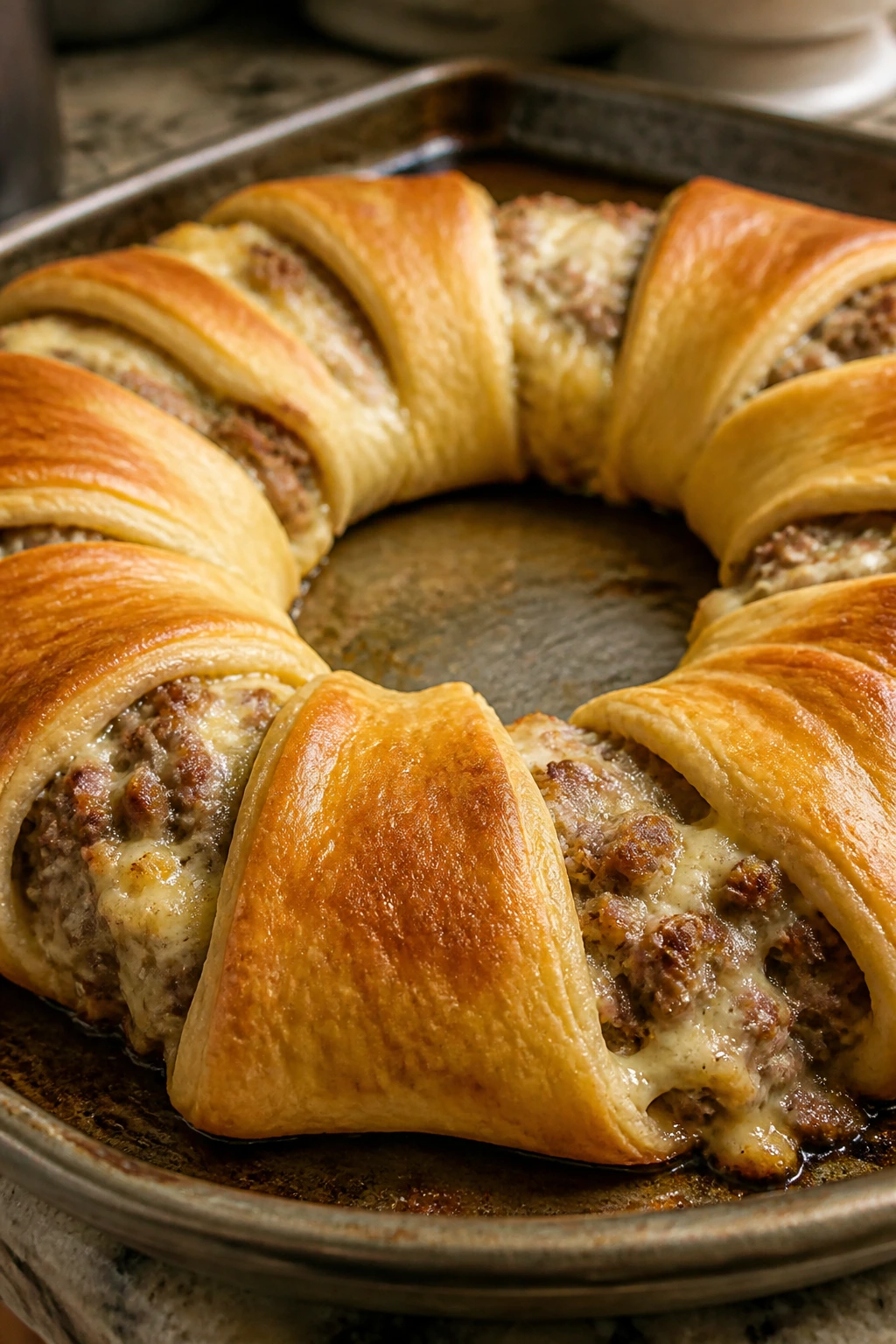
This is the kind of dinner that looks fancier than it is, which is a useful trick on any weeknight. The crescent dough bakes up flaky, the sausage filling stays creamy, and the ring shape makes it feel almost like a party food that wandered into dinner.
Why It Works:
Crescent dough bakes quickly, so the filling needs to be fully cooked before it goes in. Cream cheese helps bind the sausage so the filling doesn’t spill out as the ring bakes. The shape matters too; when the triangles overlap in a circle, you get a crisp exterior and a soft, savory center.
Key Ingredients:
- 1 pound ground sausage
- 4 ounces cream cheese
- 1 cup shredded cheddar
- 2 tablespoons chopped green onions
- 2 cans refrigerated crescent rolls
- 1 egg, beaten for egg wash
- 1 teaspoon garlic powder
- ½ teaspoon black pepper
Quick Steps:
- Heat the oven to 375°F. Brown the sausage in a skillet, then drain if needed.
- Stir in the cream cheese, cheddar, green onions, garlic powder, and black pepper until the filling is smooth and thick.
- Arrange the crescent dough triangles in a circle on a baking sheet with the wide ends overlapping in the center and the points facing out.
- Spoon the sausage filling around the ring, then fold the triangle points over the filling and tuck them under.
- Brush with egg wash and bake for 20 to 25 minutes, until golden brown.
Equipment for This Recipe:
- Large skillet
- Rimmed baking sheet
- Spatula
- Pastry brush, optional
How to Serve This Dish:
Cut it into wedges and serve with a simple salad or tomato soup. A bowl of mustard or ranch for dipping makes the whole thing feel a little more fun.
Pro Tips for This Recipe:
- Let the sausage filling cool slightly so it doesn’t melt the dough.
- Overlap the dough enough so the ring holds together.
- Tuck the points under well or they brown too fast.
Variations on This Dish:
- Jalapeño Version: Add chopped pickled jalapeños to the filling.
- Spinach Version: Fold in a handful of chopped spinach to loosen the richness a little.
Common Mistakes to Avoid with This Dish:
- Using hot filling: It can make the dough greasy and soft. Cool it first.
- Leaving gaps in the ring: The filling leaks out. Overlap the dough generously.
29. Stuffed Cabbage with Sausage and Rice
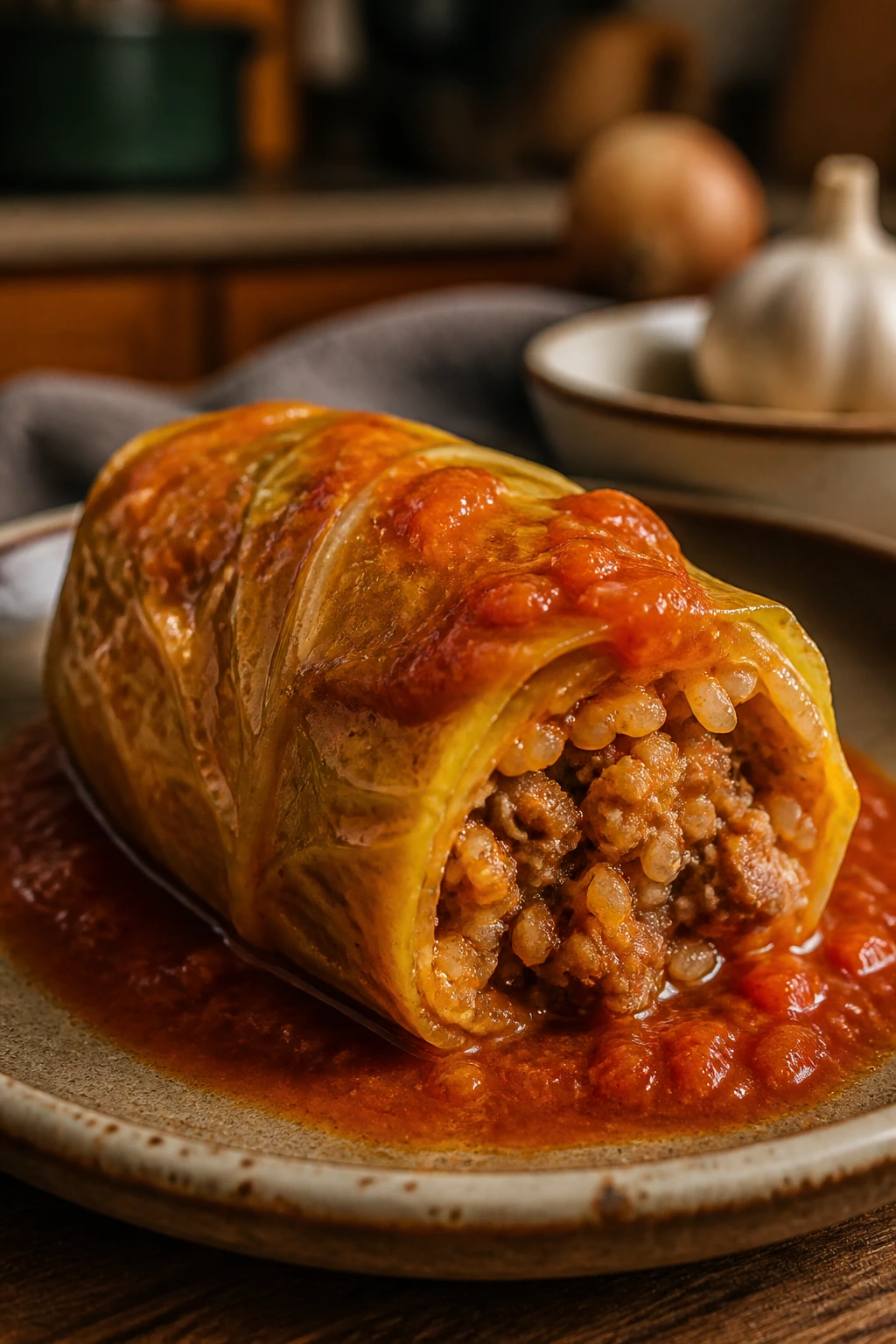
Stuffed cabbage has a reputation for being fussy, but once the leaves are blanched and pliable, the rest is mostly rolling and baking. The sausage keeps the filling savory, and the tomato sauce turns the dish into something soft and spoonable.
Why It Works:
Cabbage leaves are sturdy enough to wrap around rice and sausage without tearing if you blanch them first. Tomato sauce keeps the rolls moist during baking, and the rice swells just enough to hold the filling together. The result is a tidy parcel with enough sauce to make it feel substantial.
Key Ingredients:
- 1 large green cabbage
- 1 pound ground sausage
- 1 cup cooked rice
- 1 small onion, diced
- 2 garlic cloves, minced
- 2 cups tomato sauce
- 1 cup broth
- 1 teaspoon paprika
- 1 tablespoon olive oil
- Salt and black pepper, to taste
Quick Steps:
- Core the cabbage and blanch the leaves in boiling water for 2 to 3 minutes until pliable. Drain and trim the thick ribs.
- Brown the sausage in a skillet, then add the onion and garlic and cook until soft. Stir in the rice and paprika.
- Mix the tomato sauce and broth in a bowl.
- Fill each cabbage leaf with the sausage mixture, roll tightly, and place seam-side down in a baking dish.
- Pour the sauce over the rolls, cover, and bake at 375°F for 45 minutes.
Equipment for This Recipe:
- Large pot
- Skillet
- Baking dish
- Tongs
How to Serve This Dish:
Serve two rolls per person with the sauce spooned over the top. Bread or mashed potatoes fit the mood if you want a heavier dinner.
Pro Tips for This Recipe:
- Don’t overfill the leaves or they split in the oven.
- Trim the thick rib so the cabbage rolls cleanly.
- A little broth in the baking dish keeps the sauce loose enough to spoon.
Variations on This Dish:
- Sweet-Sour Version: Add 1 tablespoon vinegar and 1 teaspoon brown sugar to the sauce.
- Lighter Version: Use brown rice and add chopped mushrooms to the filling.
Common Mistakes to Avoid with This Dish:
- Skipping the blanch: Raw cabbage tears and stays chewy.
- Packing the rolls too tightly in the dish: The sauce can’t move around them.
30. Sausage Baked Ziti
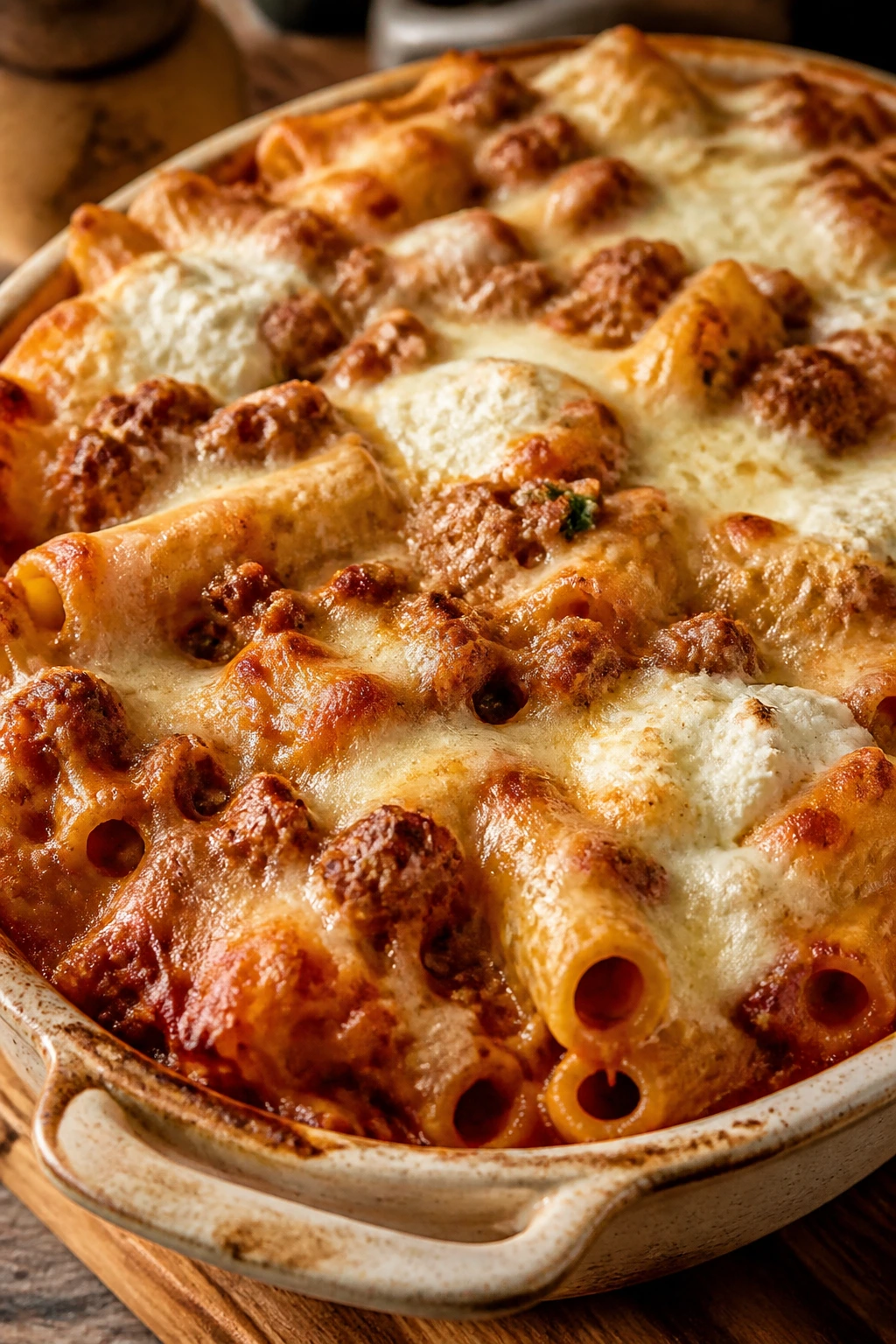
Baked ziti is one of those dishes that earns trust fast because it doesn’t need perfect timing. The sausage gives the sauce depth, the pasta holds the cheese, and the oven does the rest.
Why It Works:
Ziti is sturdy enough to survive baking without going soft, and the sausage keeps the sauce from tasting thin or overly tomato-forward. Ricotta adds creamy pockets, mozzarella gives the stretch, and Parmesan brings the sharp edge on top. A little extra sauce in the dish matters because the pasta will drink some of it while it bakes.
Key Ingredients:
- 12 ounces ziti
- 1 pound ground sausage
- 3 cups marinara sauce
- 1 ½ cups ricotta
- 2 cups shredded mozzarella
- ½ cup grated Parmesan
- 1 egg
- 1 teaspoon dried basil
- Salt and black pepper, to taste
Quick Steps:
- Cook the ziti until just under al dente, then drain.
- Brown the sausage in a skillet over medium-high heat for 6 to 8 minutes. Stir in the marinara and basil.
- In a bowl, mix the ricotta, egg, Parmesan, salt, and pepper.
- Layer pasta, sausage sauce, and ricotta mixture in a baking dish, then top with mozzarella.
- Bake at 375°F for 25 to 30 minutes until bubbling, then rest for 10 minutes.
Equipment for This Recipe:
- Large pot
- Skillet
- 9×13-inch baking dish
- Mixing bowl
How to Serve This Dish:
Serve it in thick squares with a green salad and maybe roasted broccoli. Garlic bread is a natural fit if you want a more old-school pasta night.
Pro Tips for This Recipe:
- Keep the pasta a little firm before baking.
- Let the casserole rest or the cheese will run everywhere.
- Use enough sauce to coat every layer, not just the top.
Variations on This Dish:
- Spinach Ziti: Stir chopped spinach into the ricotta mixture.
- Spicy Ziti: Use hot sausage and add red pepper flakes to the sauce.
Common Mistakes to Avoid with This Dish:
- Under-saucing the bake: The pasta dries out. Be generous.
- Cutting too soon: The layers need a brief rest to settle.
31. Sausage and Spinach Calzones
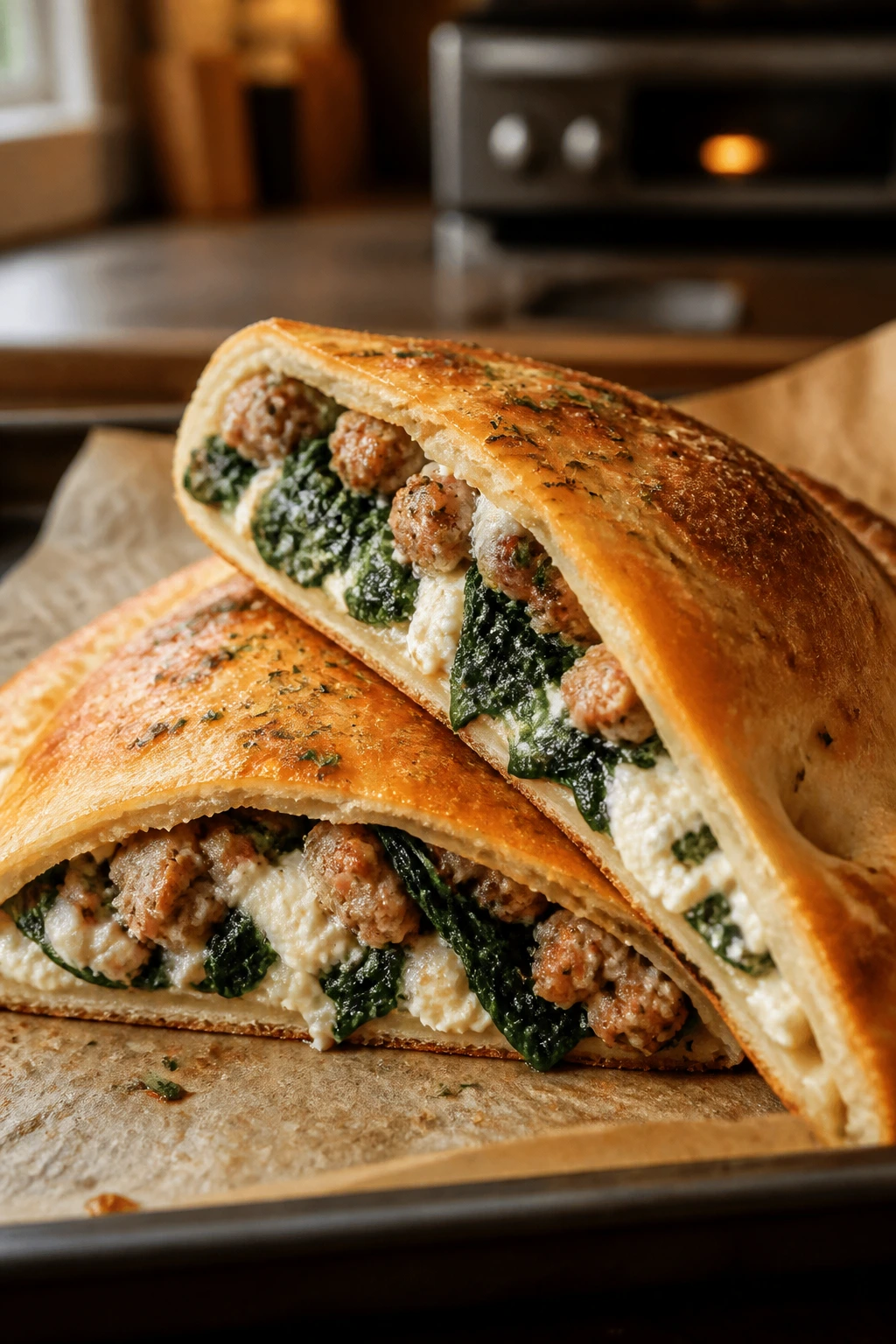
Calzones are what pizza becomes when you fold it up and make it carry more filling. The crust goes crisp, the cheese melts inside the pocket, and the sausage-spinach mixture stays tucked where it belongs.
Why It Works:
Pizza dough seals better when the filling is thick and not too wet, which is why the spinach should be squeezed dry and the sausage fully cooked before assembly. Ricotta gives the center a creamy texture without running, and the mozzarella stretches enough to make each calzone feel generous. A small slit in the top lets steam escape so the crust doesn’t burst open.
Key Ingredients:
- 1 pound pizza dough
- 1 pound ground sausage
- 2 cups fresh spinach, chopped and squeezed dry
- 1 cup ricotta
- 1 ½ cups shredded mozzarella
- ¼ cup grated Parmesan
- 1 egg, beaten for egg wash
- 1 teaspoon Italian seasoning
- Marinara sauce, for dipping
Quick Steps:
- Heat the oven to 450°F and line a baking sheet with parchment.
- Brown the sausage in a skillet, then stir in the spinach until wilted. Cool slightly.
- Mix the sausage mixture with ricotta, mozzarella, Parmesan, and Italian seasoning.
- Divide the dough into 4 portions, roll each into a round, fill one side, fold over, and seal the edges tightly. Cut a small slit on top and brush with egg wash.
- Bake for 18 to 20 minutes until golden brown.
Equipment for This Recipe:
- Baking sheet
- Skillet
- Rolling pin, optional
- Parchment paper
How to Serve This Dish:
Serve the calzones with warm marinara for dipping and a simple salad. They’re sturdy enough to pack for lunch the next day too.
Pro Tips for This Recipe:
- Don’t overfill or the seam opens.
- Seal the edges with a fork if needed.
- Let the filling cool before stuffing the dough.
Variations on This Recipe:
- Pepperoni-Style Version: Add chopped pepperoni to the filling.
- White Calzone Version: Swap marinara dipping sauce for Alfredo and add garlic powder to the filling.
Common Mistakes to Avoid with This Recipe:
- Wet filling: It bursts the dough. Drain the spinach well.
- Poor sealing: The calzones leak in the oven. Press the edges firmly.
32. Sausage Potato Soup
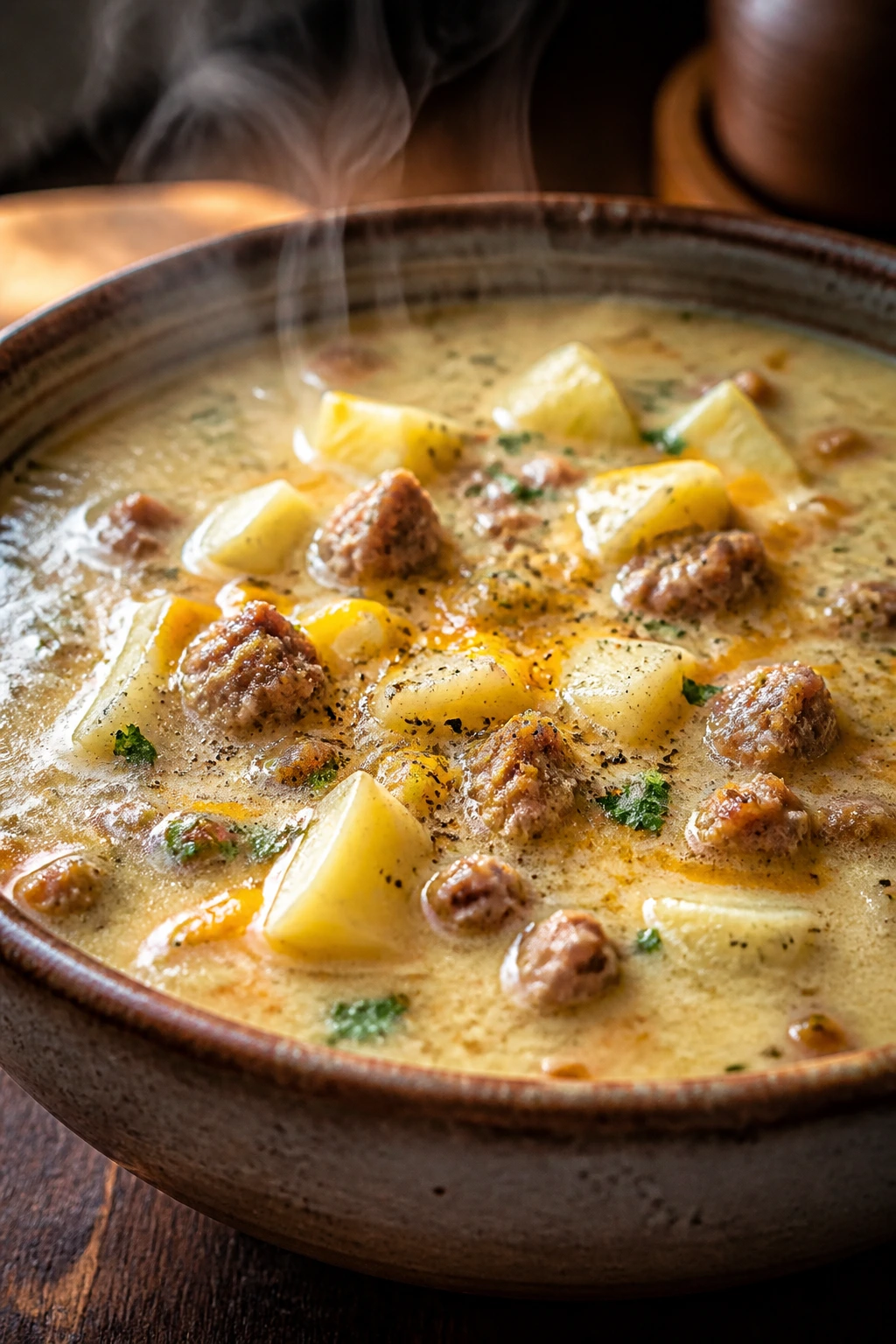
This soup tastes like it should have taken more effort than it did. The potatoes give the broth body, the sausage keeps every bowl savory, and a little cream at the end makes it feel more like dinner than starter soup.
Why It Works:
Potato soup needs salt, fat, and texture, and sausage does all three jobs at once. If you mash some of the potatoes at the end, the broth thickens naturally without flour. I like a few soft carrot pieces in the mix too, because they keep the bowl from looking like a beige blur.
Key Ingredients:
- 1 pound sausage
- 4 medium potatoes, peeled and diced
- 1 onion, diced
- 2 carrots, diced
- 2 celery ribs, diced
- 4 cups chicken broth
- 2 cups milk or half-and-half
- 1 teaspoon dried thyme
- 1 cup shredded cheddar, optional
- Salt and black pepper, to taste
Quick Steps:
- Brown the sausage in a soup pot over medium heat for 6 to 8 minutes.
- Add the onion, carrots, and celery, and cook for 5 minutes.
- Add the potatoes, broth, and thyme. Simmer for 15 to 20 minutes, until the potatoes are tender.
- Mash a few potatoes in the pot for thickness, then stir in the milk and cheddar if using. Heat gently without boiling.
- Season and serve.
Equipment for This Recipe:
- Soup pot
- Potato masher or spoon
- Ladle
- Knife and cutting board
How to Serve This Dish:
Serve it with cracked pepper, chives, or shredded cheddar on top. Crackers, biscuits, or a buttered slice of bread work equally well.
Pro Tips for This Recipe:
- Add the milk only after the potatoes are cooked.
- Don’t boil once dairy goes in.
- A little hot sauce at the table gives the bowl more lift.
Variations on This Recipe:
- Loaded Potato Version: Top with bacon bits and extra cheddar.
- Leek Version: Replace the onion with leeks for a milder flavor.
Common Mistakes to Avoid with This Recipe:
- Thin broth: Mash more potatoes or simmer a few minutes longer.
- Overheating after dairy is added: The soup can break. Keep it gentle.
33. Sausage Sloppy Joes
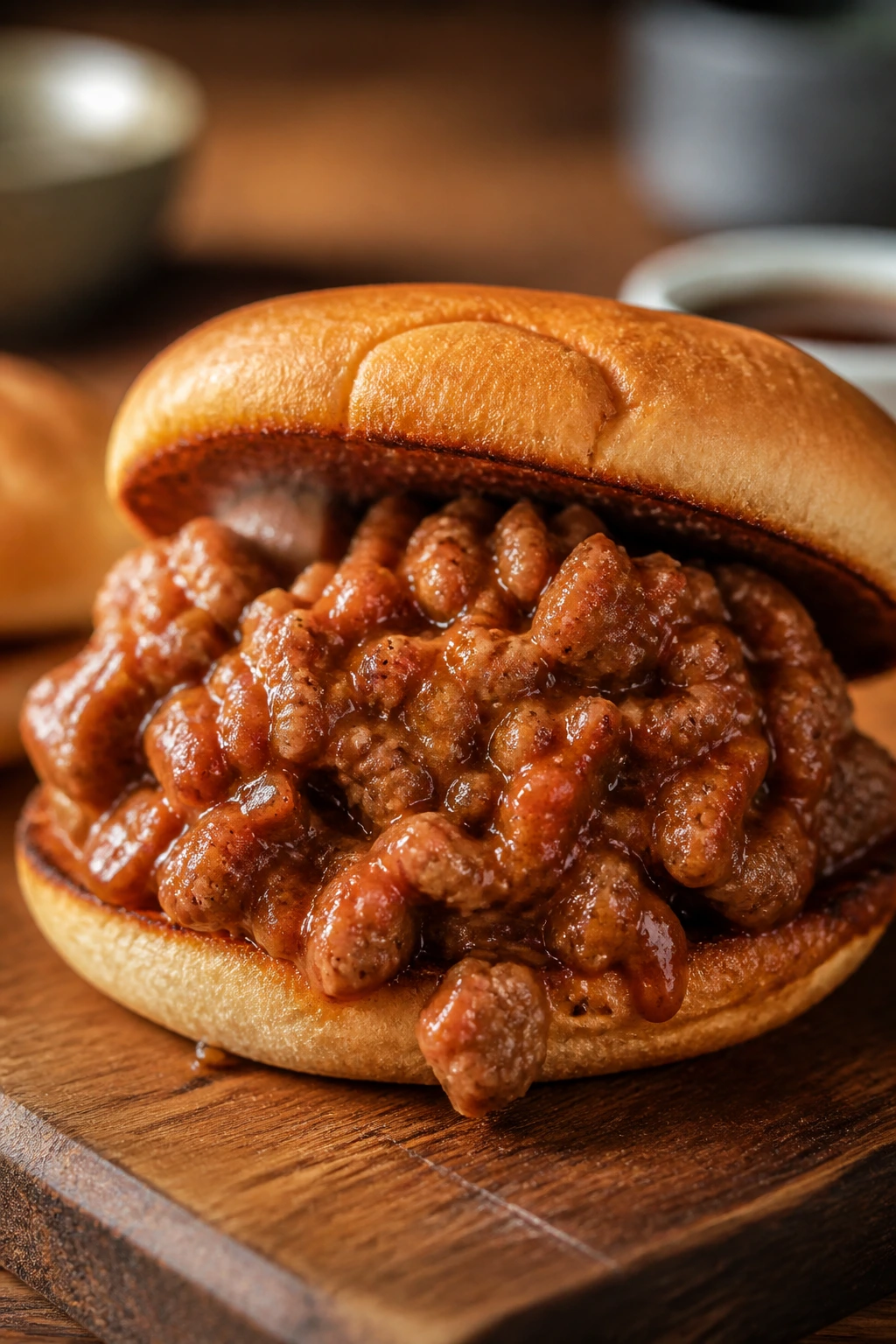
Sausage sloppy joes are the kind of dinner that forgives you for being hungry and impatient. The sauce clings to the meat, the bun soaks up the good stuff, and the whole thing lands squarely in the messy-but-worth-it category.
Why It Works:
Ground sausage already carries enough seasoning to keep the sauce from tasting like sweet ketchup on bread. A little tomato paste adds depth, mustard sharpens the edges, and a splash of vinegar keeps the filling from being too sweet. Toasted buns matter more than people think; they keep the sandwich from collapsing in the first minute.
Key Ingredients:
- 1 pound ground sausage
- 1 small onion, diced
- 2 garlic cloves, minced
- 1 cup ketchup
- 2 tablespoons tomato paste
- 1 tablespoon yellow mustard
- 1 tablespoon brown sugar
- 1 tablespoon apple cider vinegar
- 6 hamburger buns
- Pickles, for serving
Quick Steps:
- Brown the sausage in a skillet over medium heat for 6 to 8 minutes.
- Add the onion and cook for 4 minutes, then stir in the garlic for 30 seconds.
- Mix in the ketchup, tomato paste, mustard, brown sugar, and vinegar. Simmer for 5 to 7 minutes until thick and glossy.
- Toast the buns lightly.
- Spoon the filling onto the buns and serve with pickles.
Equipment for This Recipe:
- Large skillet
- Wooden spoon
- Knife and cutting board
- Toasting pan or toaster, optional
How to Serve This Dish:
Serve with a crunchy side like coleslaw or carrot sticks. The filling is soft, so anything crisp on the side helps.
Pro Tips for This Recipe:
- Simmer until the sauce coats the meat instead of pooling under it.
- Taste before serving; some sausage is saltier than others.
- Toast the buns or they get soggy fast.
Variations on This Recipe:
- BBQ Version: Swap half the ketchup for barbecue sauce.
- Spicy Version: Add a spoonful of hot sauce or chopped pickled jalapeños.
Common Mistakes to Avoid with This Recipe:
- Making the sauce too sweet: Keep the brown sugar modest.
- Skipping toasted buns: Soft bread falls apart under the filling.
34. Sausage and Tomato Frittata
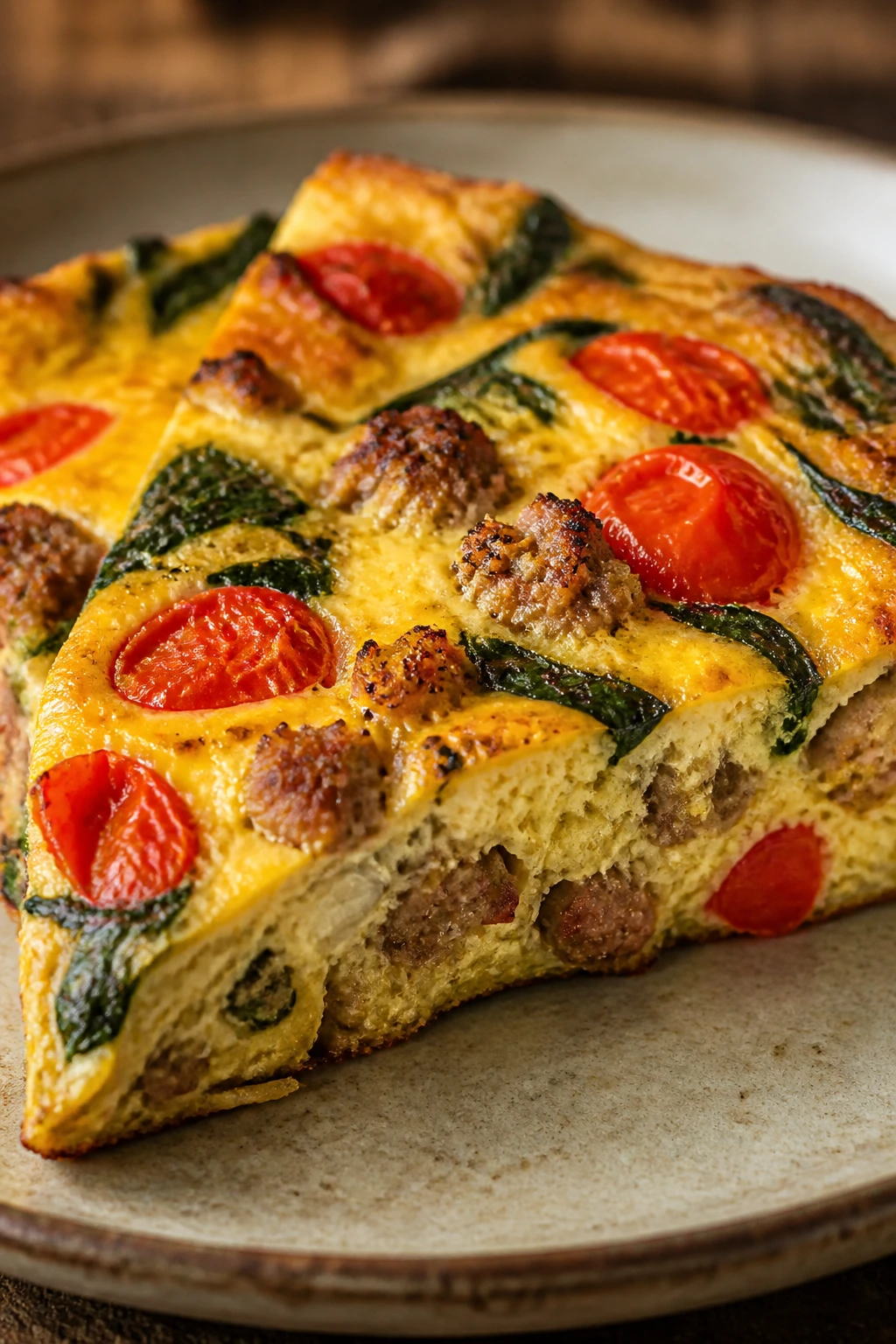
A frittata is what happens when eggs decide they want to be dinner, not just breakfast. The sausage gives it heft, the tomatoes bring juice and acidity, and the cheese ties the whole skillet together before the top goes golden.
Why It Works:
Eggs set quickly once they hit a hot skillet, so the sausage and vegetables need to be cooked before the custard goes in. Tomatoes add moisture, which is why they should be halved and briefly cooked instead of dumped in raw. A frittata is forgiving, but it still needs a dry enough filling to slice cleanly.
Key Ingredients:
- 8 large eggs
- 1 pound sausage, crumbled
- 1 cup cherry tomatoes, halved
- 2 cups spinach
- 1 cup shredded cheese, such as mozzarella or cheddar
- 2 tablespoons milk or cream
- 1 tablespoon olive oil
- Salt and black pepper, to taste
- Chopped basil or parsley, for serving
Quick Steps:
- Heat the oven to 375°F. Brown the sausage in an oven-safe skillet over medium heat for 6 to 8 minutes.
- Add the tomatoes and spinach and cook just until the spinach wilts and the tomatoes soften slightly.
- Whisk the eggs, milk, salt, and pepper, then pour into the skillet. Scatter the cheese on top.
- Cook on the stove for 2 minutes, then transfer to the oven and bake for 10 to 12 minutes, until the center is set.
- Rest for 5 minutes, then slice.
Equipment for This Recipe:
- Oven-safe skillet
- Whisk
- Mixing bowl
- Spatula
How to Serve This Dish:
Serve the wedges warm with toast or a simple side salad. It also works well in lunch boxes once cooled, which is a nice bonus.
Pro Tips for This Recipe:
- Use an oven-safe skillet or the whole plan falls apart.
- Don’t overcook the eggs on the stove before baking.
- Let the frittata rest so it slices cleanly.
Variations on This Recipe:
- Feta Version: Swap cheddar for feta and add a few sliced olives.
- Potato Version: Add cooked diced potatoes with the sausage for a heavier skillet.
Common Mistakes to Avoid with This Recipe:
- Too much wet filling: The frittata won’t set well. Cook off extra liquid first.
- Baking too long: Eggs turn rubbery fast. Pull it when the center barely moves.
35. Sausage and Orzo Skillet with Feta
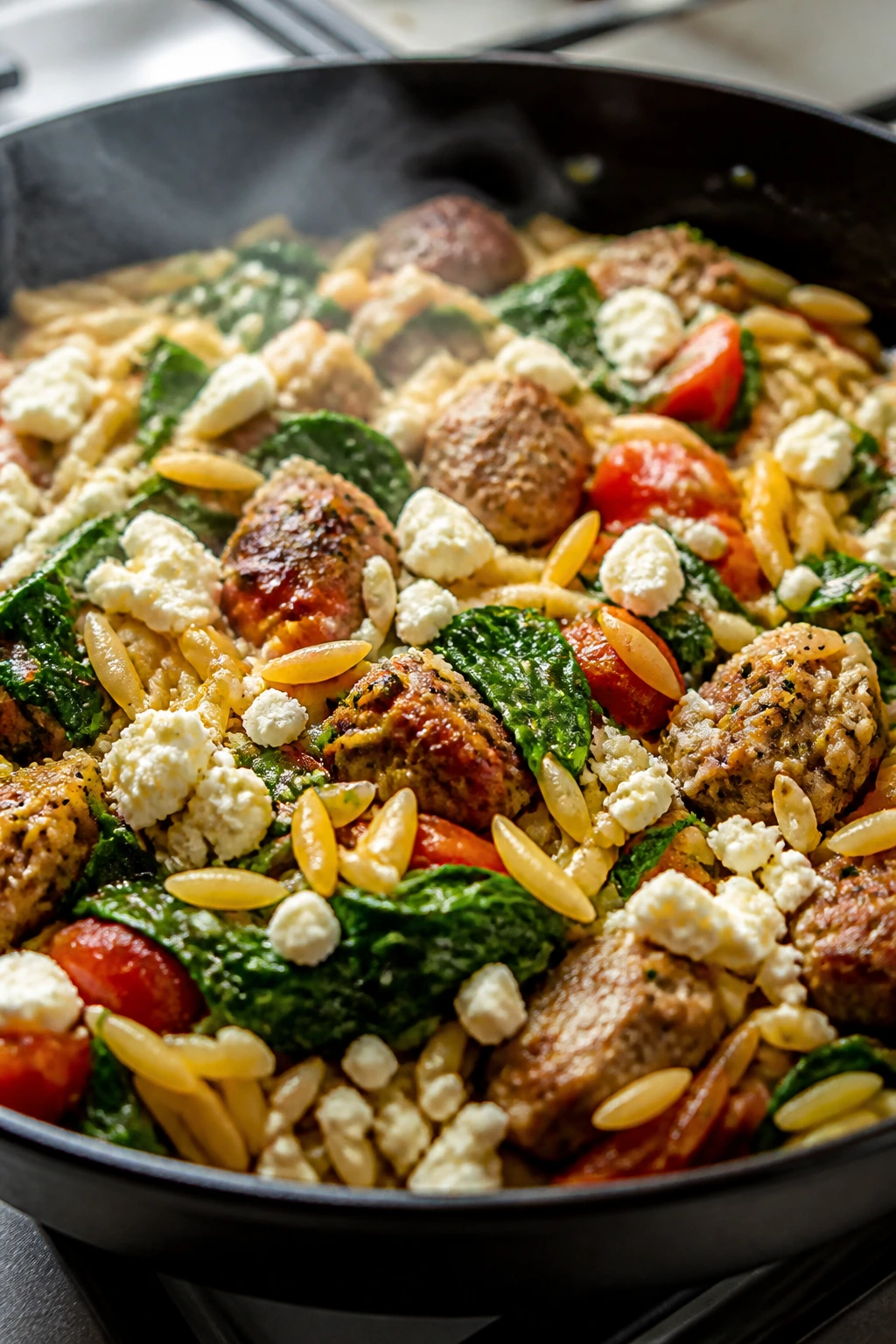
Orzo is one of those pantry staples that quietly makes dinner look more thoughtful than it was. In this skillet, it cooks right in the broth, picks up sausage flavor, and finishes with feta so the whole pan tastes bright and savory at once.
Why It Works:
Orzo acts like a tiny pasta and a little bit like rice, which is why it absorbs flavor so well in one pan. Sausage gives the skillet enough richness that you don’t need cream, and feta brings a salty finish that cuts through the tomato and broth. If you add the spinach at the end, it wilts without going swampy.
Key Ingredients:
- 1 pound sausage
- 1 tablespoon olive oil
- 1 small onion, diced
- 2 cups cherry tomatoes
- 1 ½ cups orzo
- 3 cups chicken broth
- 3 cups fresh spinach
- ½ cup crumbled feta
- 1 lemon, cut into wedges
- Salt and black pepper, to taste
Quick Steps:
- Brown the sausage in a large skillet over medium-high heat for 6 to 8 minutes. Remove excess fat if needed.
- Add the olive oil and onion, then cook for 4 minutes. Stir in the tomatoes and cook until they start to blister.
- Add the orzo and toast it for 1 minute. Pour in the broth and bring to a simmer.
- Cook, stirring often, for 8 to 10 minutes until the orzo is tender and most of the liquid is absorbed.
- Stir in the spinach and feta, then finish with lemon juice and black pepper.
Equipment for This Recipe:
- Large skillet with depth
- Wooden spoon
- Knife and cutting board
- Measuring cup
How to Serve This Dish:
Serve it in bowls with extra feta and lemon on top. It pairs nicely with cucumbers, olives, or a plain green salad.
Pro Tips for This Recipe:
- Stir the orzo often so it doesn’t stick to the pan.
- Add broth a splash at a time if it looks dry before the pasta finishes.
- Use real feta if you want the salty finish to stand out.
Variations on This Recipe:
- Mediterranean Version: Add chopped olives and a little oregano.
- Creamier Version: Stir in 2 tablespoons of Greek yogurt off the heat.
Common Mistakes to Avoid with This Recipe:
- Letting the orzo dry out too early: Add more broth as needed.
- Crumbling the feta in too soon: It disappears. Add it right at the end.
Why Sausage Recipes Work So Well on Busy Family Nights
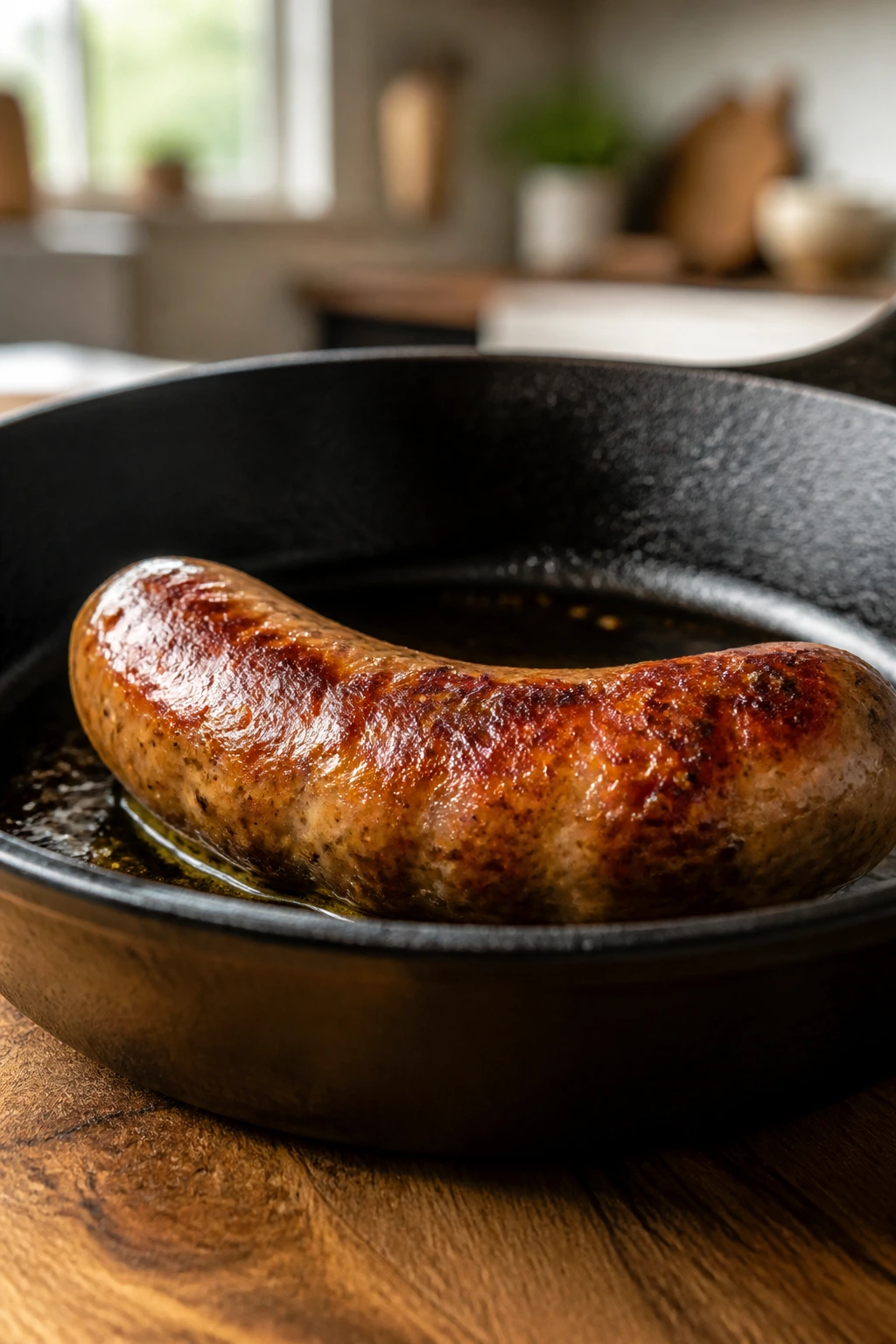
Sausage has a head start that most proteins have to earn. It is already salted, already seasoned, and usually already carrying enough fat to brown well in a hot pan. That means the first ten minutes of cooking do more work than they would with a leaner cut, and that matters when dinner needs to move quickly.
There’s also the practical part. Sausage plays nicely with ingredients that are cheap, filling, and easy to keep around: cabbage, potatoes, rice, beans, pasta, onions, peppers, and bread. That’s why you see the same basic flavor logic show up in skillet dinners, baked casseroles, soups, and sheet-pan meals. The shape changes. The backbone does not.
I also like that sausage gives you room to be lazy in a smart way. You do not need a marinade, and you do not need a long spice list to make the pan taste complete. Brown the meat well, give the vegetables time to soften, add an acid at the end when a dish needs waking up, and stop cooking before the dairy or pasta goes soft. That’s the whole game, and it works in more than one direction.
Essential Equipment for These Recipes
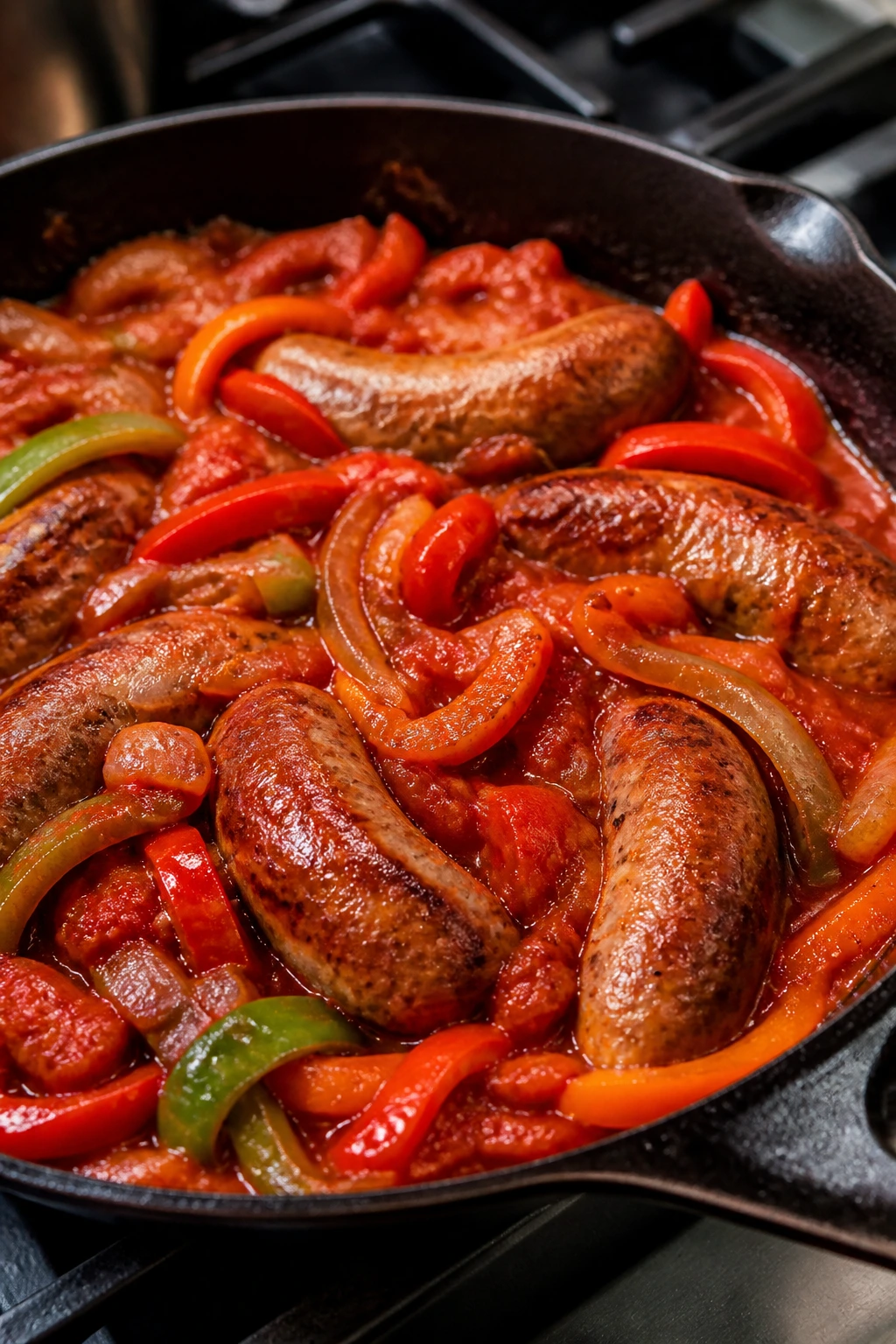
- 12-inch skillet or sauté pan: This is the workhorse for sausage, peppers, pasta sauces, and skillet dinners.
- Dutch oven or soup pot: Best for soups, chili, jambalaya, and anything that needs room to simmer without splashing.
- Rimmed sheet pan: Useful for roasting sausage with potatoes, beans, or vegetables.
- 9×13-inch baking dish: The right size for baked pasta, stuffed peppers, casseroles, and roll-ups.
- Large pot for pasta: You need enough water so the noodles move freely and don’t clump.
- Colander: For draining pasta, rice, or blanched vegetables quickly.
- Wooden spoon or heatproof spatula: Sausage breaks up more evenly with a sturdy utensil.
- Tongs: Handy for turning sausage links and moving roasted pieces without tearing them.
- Chef’s knife and cutting board: Onions, peppers, cabbage, and potatoes all cook better when they’re cut evenly.
- Instant-read thermometer: Especially helpful for raw sausage and sausage meatballs; look for 160°F for pork sausage and 165°F for poultry sausage.
- Whisk: Essential for egg casseroles, cream sauces, and frittatas.
- Lid or foil: Useful for melting cheese, steaming vegetables, or keeping casseroles from browning too fast.
Smart Shopping and Ingredient Tips
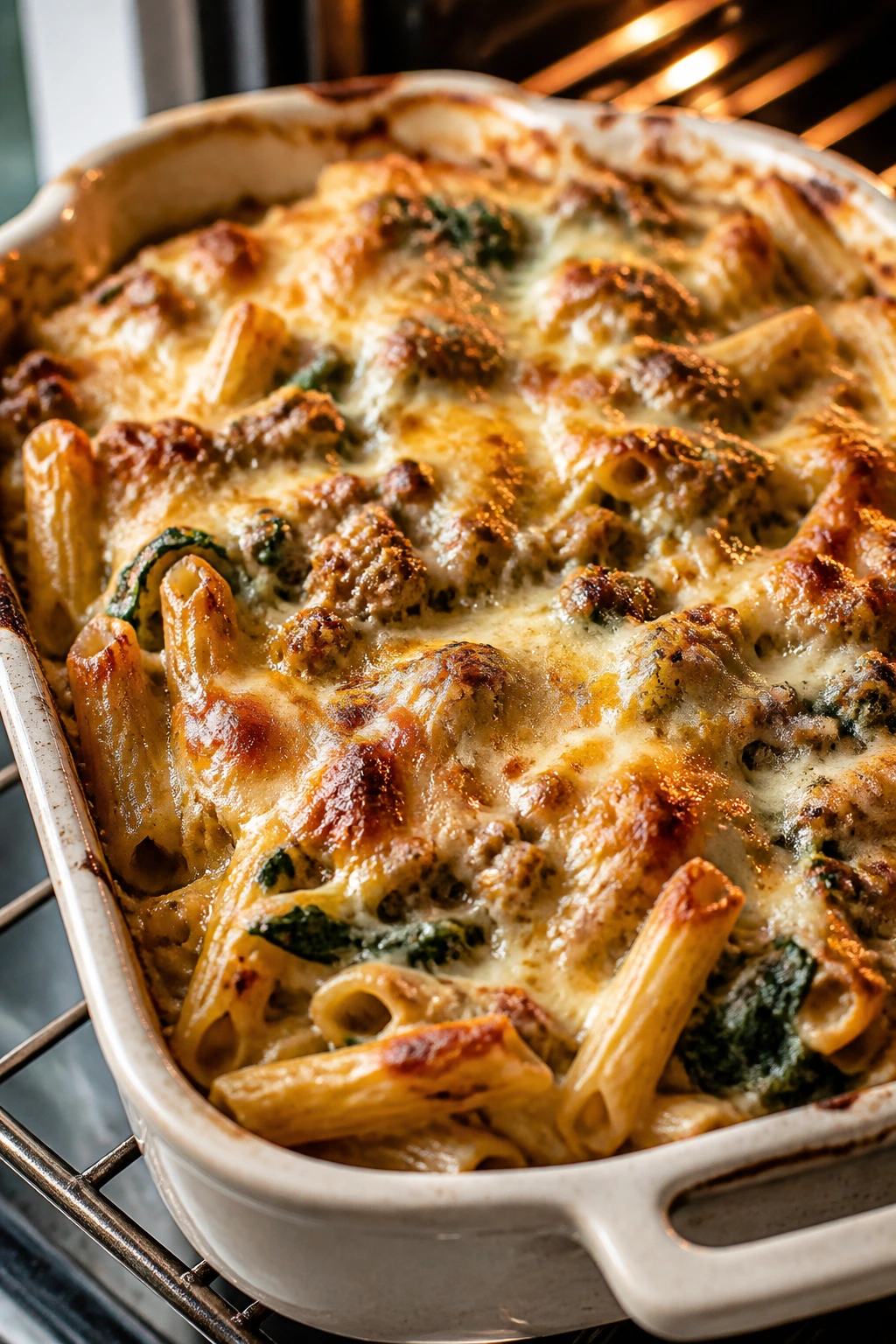
The first thing I check is the sausage format. Bulk sausage works best when you want crumbles in sauce, soup, or pasta. Links make more sense for sheet-pan dinners and sausage-and-pepper skillet meals. Smoked sausage and kielbasa are already cooked, so they only need browning and heating, not a full cook-through, which makes them useful for fast dinners with potatoes, cabbage, rice, or beans.
Look at the sodium level if you’re buying sausage, broth, and cheese for the same dish. Those three can pile up fast. If the sausage is heavily seasoned, choose low-sodium broth and taste before adding extra salt. That one move keeps a dinner from tipping into oversalted territory.
For vegetables, choose the ones that hold shape. Bell peppers should feel firm. Cabbage should feel heavy for its size. Potatoes should be smooth, not sprouting. Frozen green beans, spinach, peas, and corn are completely fine in a lot of these recipes, but I like to thaw and pat them dry first so they don’t water down the pan.
Canned tomatoes matter too. Crushed tomatoes make smooth soups and baked pasta. Diced tomatoes work better when you want visible pieces in skillet meals. Fire-roasted tomatoes bring a little smoke to chili, jambalaya, or sauce-heavy casseroles. And if you’re making pasta bakes, choose a shape that traps sauce — penne, ziti, rotini, rigatoni, or orecchiette all do that job well.
How to Serve These Recipes
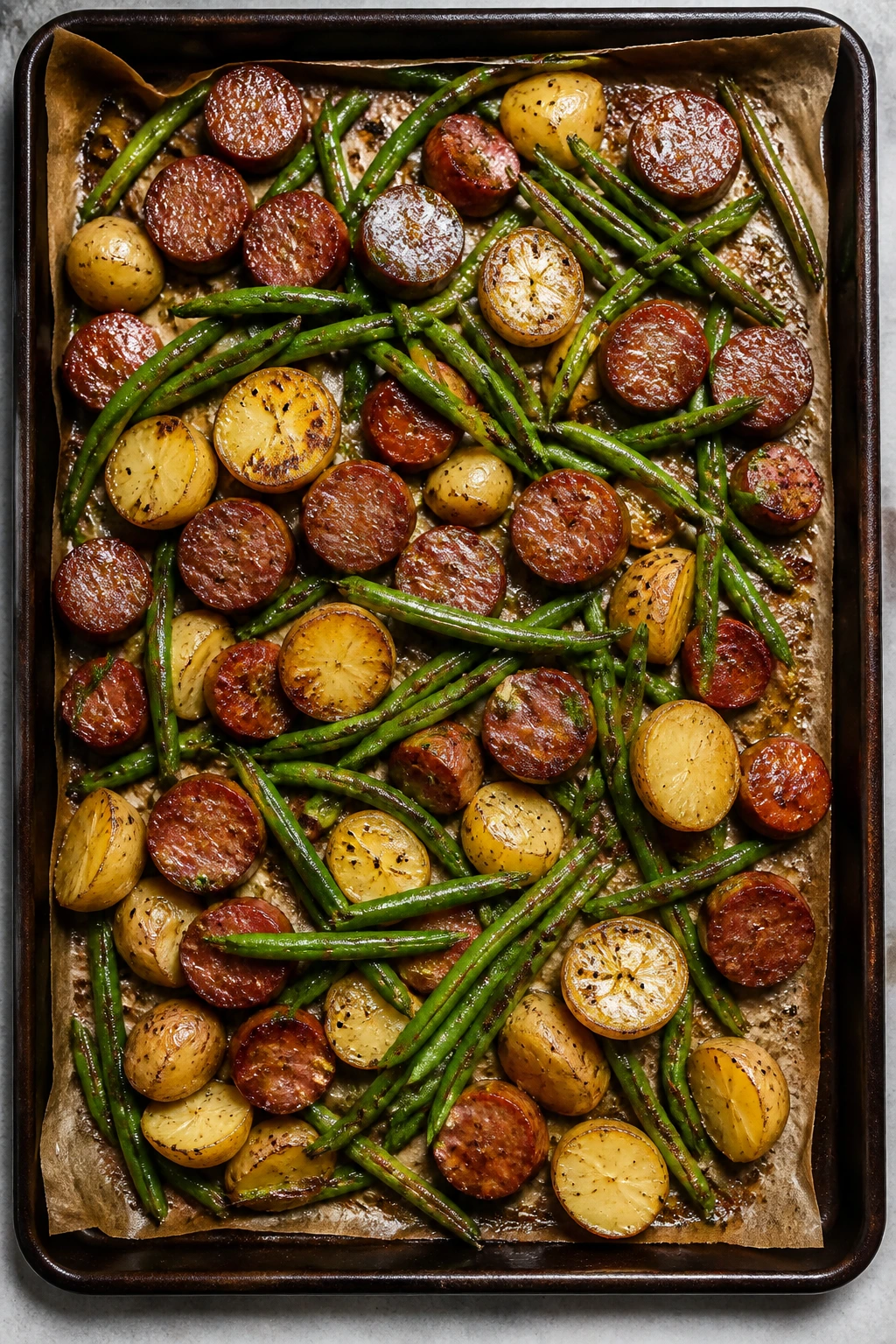
Presentation:
Spoon skillet meals into shallow bowls so the sauce stays visible, not lost. For casseroles, let the pan rest first, then cut clean squares and lift them with a wide spatula. A shower of parsley, basil, scallions, or Parmesan gives the plate a finished look without much effort.
Accompaniments:
Garlic bread, rolls, biscuits, and toasted sub buns show up often because sausage dishes tend to bring sauce with them. A green salad with a sharp vinaigrette cuts the richness of cream sauces, baked pasta, and mac and cheese. For sheet-pan dinners and stews, roasted broccoli, coleslaw, or even plain cucumbers on the side add crunch without fighting the main dish.
Portions:
For most of these dinners, plan on about 1 ½ cups per adult for skillet meals and soups, a little less if bread or a side starch is coming with it. Kids usually do fine with ¾ to 1 cup depending on appetite and what else is on the table. If you’re stretching a meal, add more vegetables or serve it over rice, pasta, or mashed potatoes instead of increasing the sausage too aggressively.
Beverage Pairing:
Sparkling water with lemon works across the whole collection. For tomato-heavy or spicy dishes, iced tea or a tart cherry soda fits the mood. If you’re pouring something for adults, a light red wine or a cold lager handles sausage’s salt and spice better than a heavy drink does.
Additional Tips and Flavor Boosters
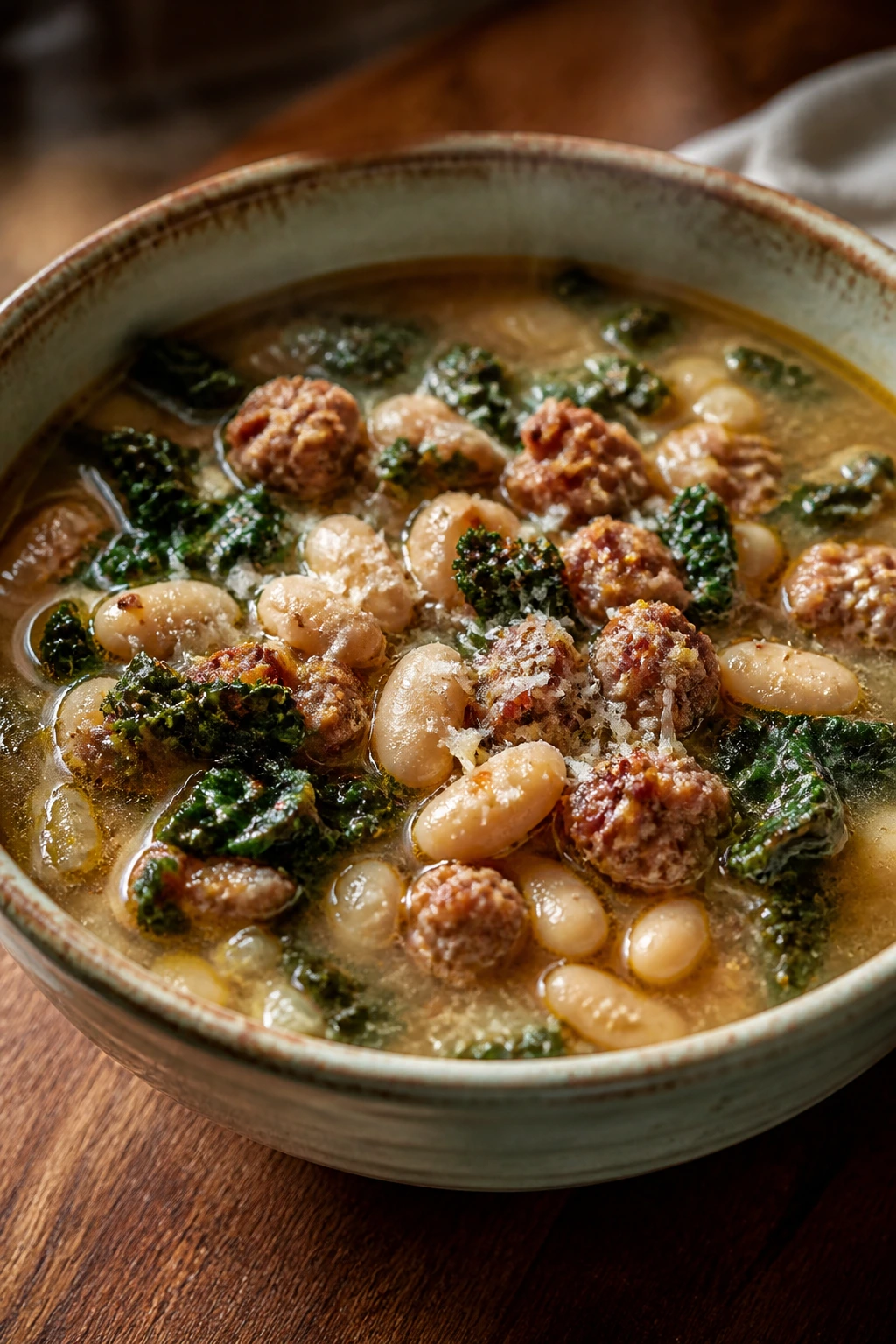
Flavor Enhancement: A tiny hit of acid at the end changes everything. Lemon juice, red wine vinegar, apple cider vinegar, or even a spoon of pickle brine can brighten a sausage dish that tastes a little too heavy after cooking.
Customization: Stretch a pound of sausage by adding mushrooms, cabbage, beans, spinach, or zucchini. That works especially well in skillet dinners, soups, and baked pasta, where the sausage is there to season the dish rather than dominate it.
Serving Suggestions: Fresh herbs matter more than people think here. Parsley, basil, chives, and scallions all cut through the fat and make the plate taste cleaner. A spoonful of pesto, a little sour cream, or a sprinkle of hot sauce can change a bowl without forcing you to make a new sauce.
Make-It-Yours: For gluten-free dinners, lean on rice, potatoes, corn tortillas, or gluten-free pasta. For dairy-free versions, skip the cream and cheese in favor of broth, olive oil, and a bigger hit of herbs and acid. For lower-carb plates, use cabbage, roasted vegetables, or a salad base instead of pasta or bread.
Make-Ahead, Storage, and Reheating Guidance
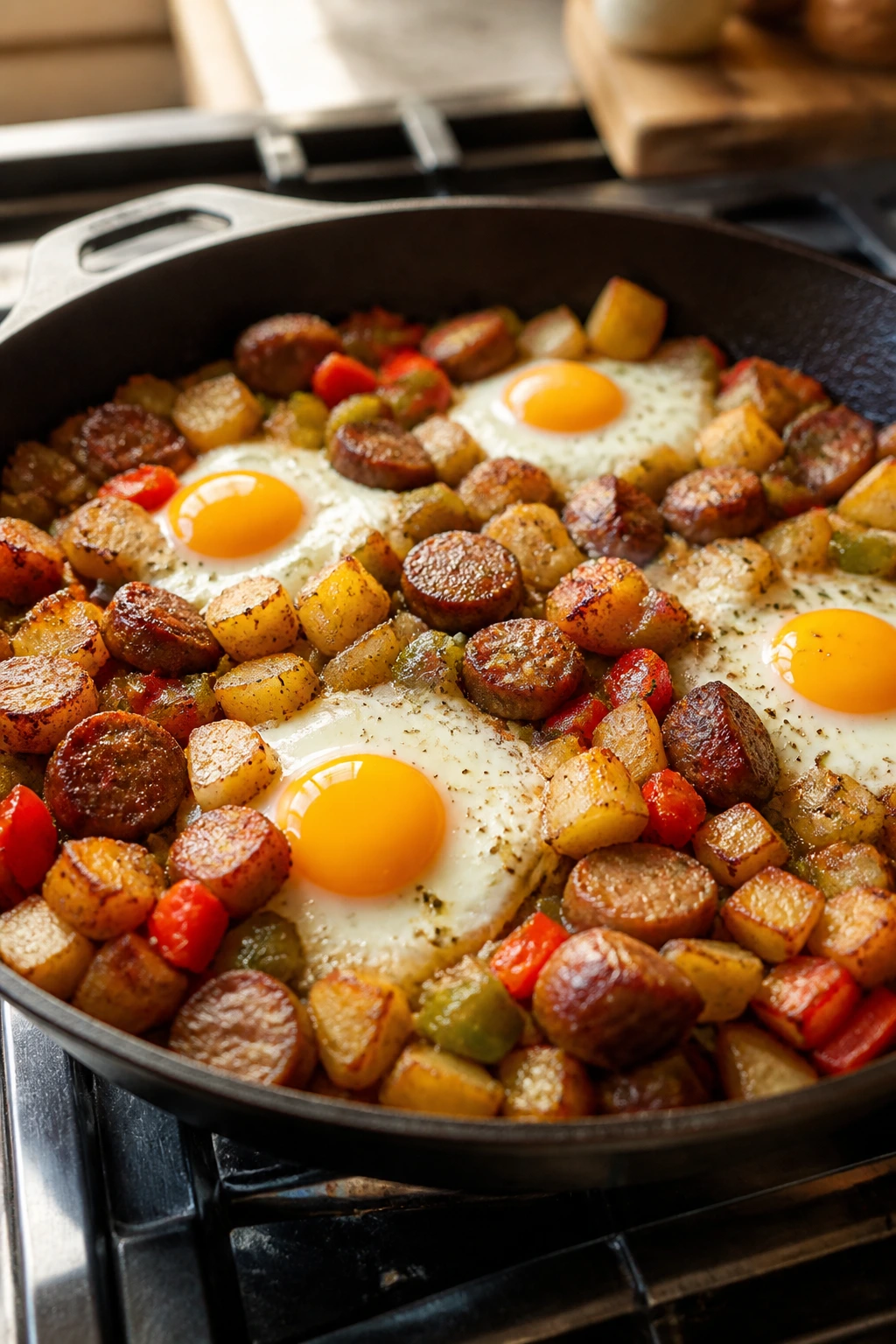
Most sausage dinners hold up well in the fridge for 3 to 4 days, and many soups, stews, and chili recipes are even better on the second day. Baked pasta, casseroles, stuffed peppers, and meatballs keep nicely for about 3 days refrigerated. Rice dishes and fried rice are best within 2 to 3 days, mostly because the grains start to dry out after that.
For the freezer, think in terms of 2 months for the best texture. Chili, soup, meatballs in sauce, baked ziti, and lasagna roll-ups freeze well if you cool them fully first and pack them tightly. Cream-heavy sauces can separate a little when thawed, so if you freeze them, reheat gently and add a splash of broth or milk to smooth them out.
Reheat soups and stews on the stove over low to medium heat, stirring now and then. Add a little broth if the pot has thickened overnight. For casseroles and baked pasta, cover with foil and warm at 325°F until hot in the center; a tablespoon or two of water or sauce around the edges helps keep the top from drying out. Skillet meals reheat well in a pan with a small splash of water or broth, covered for a few minutes so the steam loosens the sauce.
If you want to make ahead, chop the vegetables the day before and store them in sealed containers. You can also brown the sausage ahead of time and refrigerate it separately for 24 hours. For casseroles and stuffed dishes, assembling them a few hours before baking works fine, but I would not leave a dairy-heavy dish sitting overnight unless the recipe specifically calls for it.
Variations and Adaptations to Try
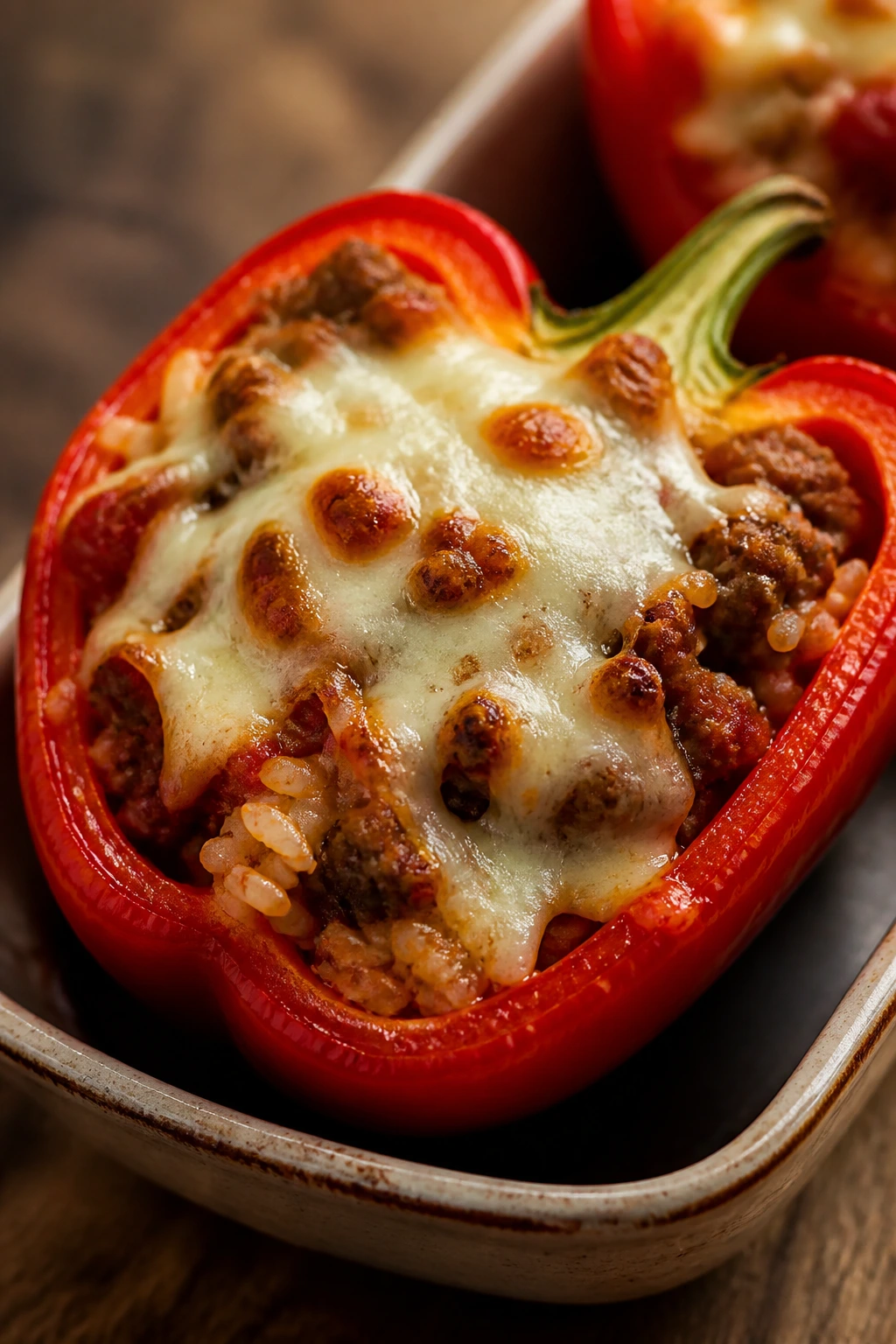
Mild Kid-First Swap:
Use sweet Italian or breakfast sausage instead of hot sausage, skip the red pepper flakes, and keep the sauces tomato-forward. If your table likes vegetables, fold in corn, peas, or finely diced carrots; they soften into the dish without getting in the way.
Gluten-Free Dinner Lineup:
Choose rice, potatoes, corn tortillas, polenta, or gluten-free pasta as your base. Check labels on broth, sausage, and sauce, because hidden wheat shows up in more packaged foods than people expect. The structure of these recipes holds up well even when the starch changes.
Dairy-Light Version:
Use broth, olive oil, and extra herbs in place of cream and cheese-heavy finishes. Tomato sauces, chili, soups, and sheet-pan meals adapt especially well to this approach because the sausage already brings enough richness to carry the dish.
Heat-Seeker’s Upgrade:
Pick hot Italian sausage, add Calabrian chili paste, or finish with chili crisp or pepper flakes. This works best in pasta bakes, enchilada skillets, and fried rice, where the heat can spread through the whole pan instead of sitting in one bite.
Vegetable-Heavy Stretch:
Add mushrooms to baked pasta, cabbage to skillet dinners, spinach to soups, and Brussels sprouts to pasta. The sausage still does the flavor work, but the vegetables pull their weight and help the meal go farther.
Freezer-First Planning:
Make chili, soup, meatballs in sauce, baked ziti, or stuffed peppers if you want future meals with little effort. Avoid freezing dishes that depend on crisp tortillas, fresh herbs, or a delicate cream sauce, since those textures tend to suffer the most.
Common Mistakes to Avoid
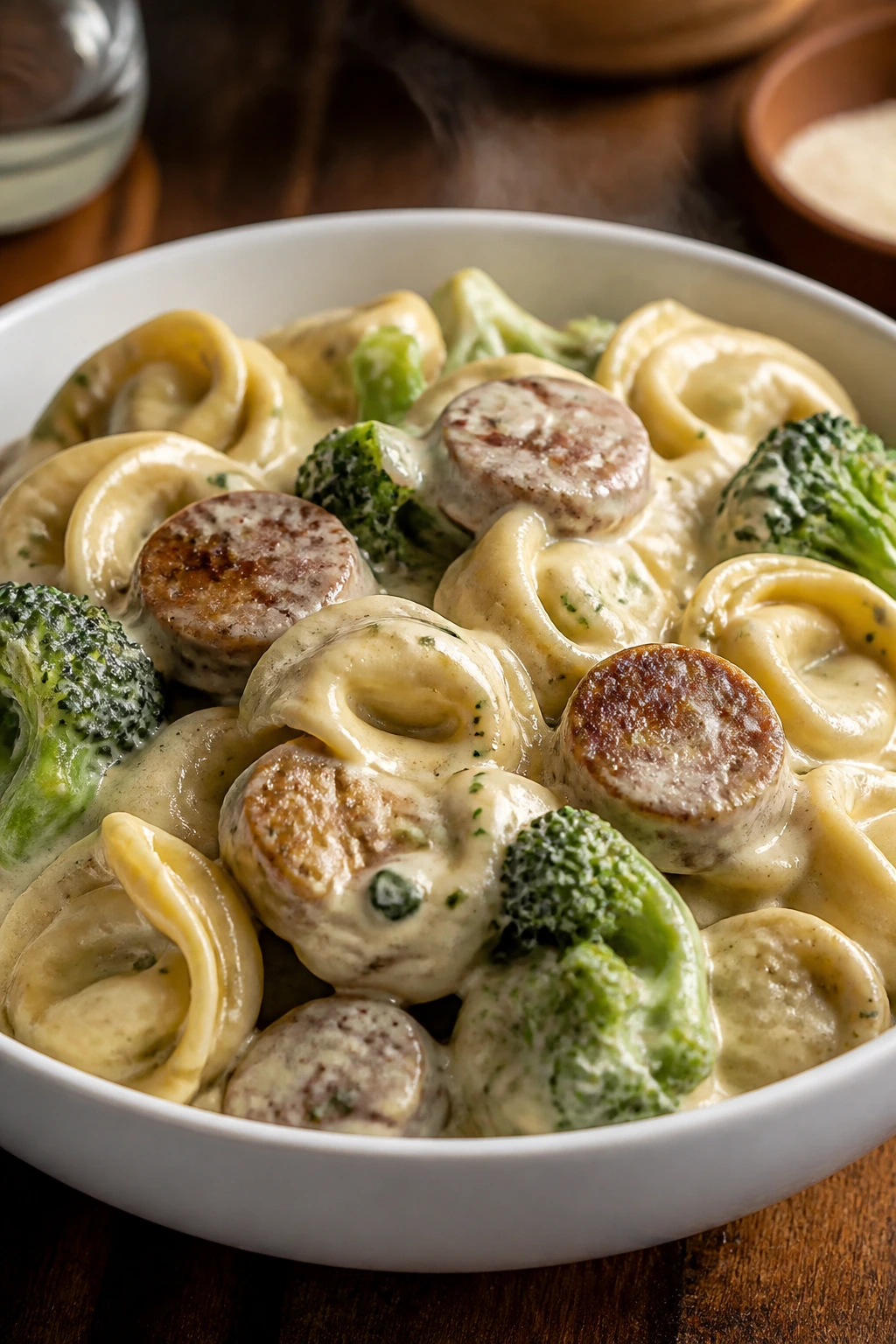
- Browning sausage too hard and too fast: The outside can dry out before the inside finishes, especially with links. Use medium-high heat, not screaming heat, and give the pan room.
- Leaving excess fat in the skillet when the dish doesn’t need it: A little fat helps flavor; too much makes the whole dinner greasy. Spoon off what you don’t need before adding sauce, cream, or broth.
- Overcooking pasta, rice, or gnocchi before the final bake or simmer: They keep softening in the pan. Stop early so the finished dish still has some texture.
- Adding leafy greens too soon: Spinach, kale, and herbs can lose color and flavor if they cook too long. Put them in near the end.
- Using the wrong sausage format for the job: Smoked sausage works for quick browning and sheet-pan meals, but raw sausage is better for sauces, casseroles, and meatballs. Match the style to the recipe.
- Forgetting acid at the end: Sausage is rich, and rich food needs contrast. Lemon, vinegar, or a sharp tomato sauce keeps the meal from feeling heavy.
Frequently Asked Questions
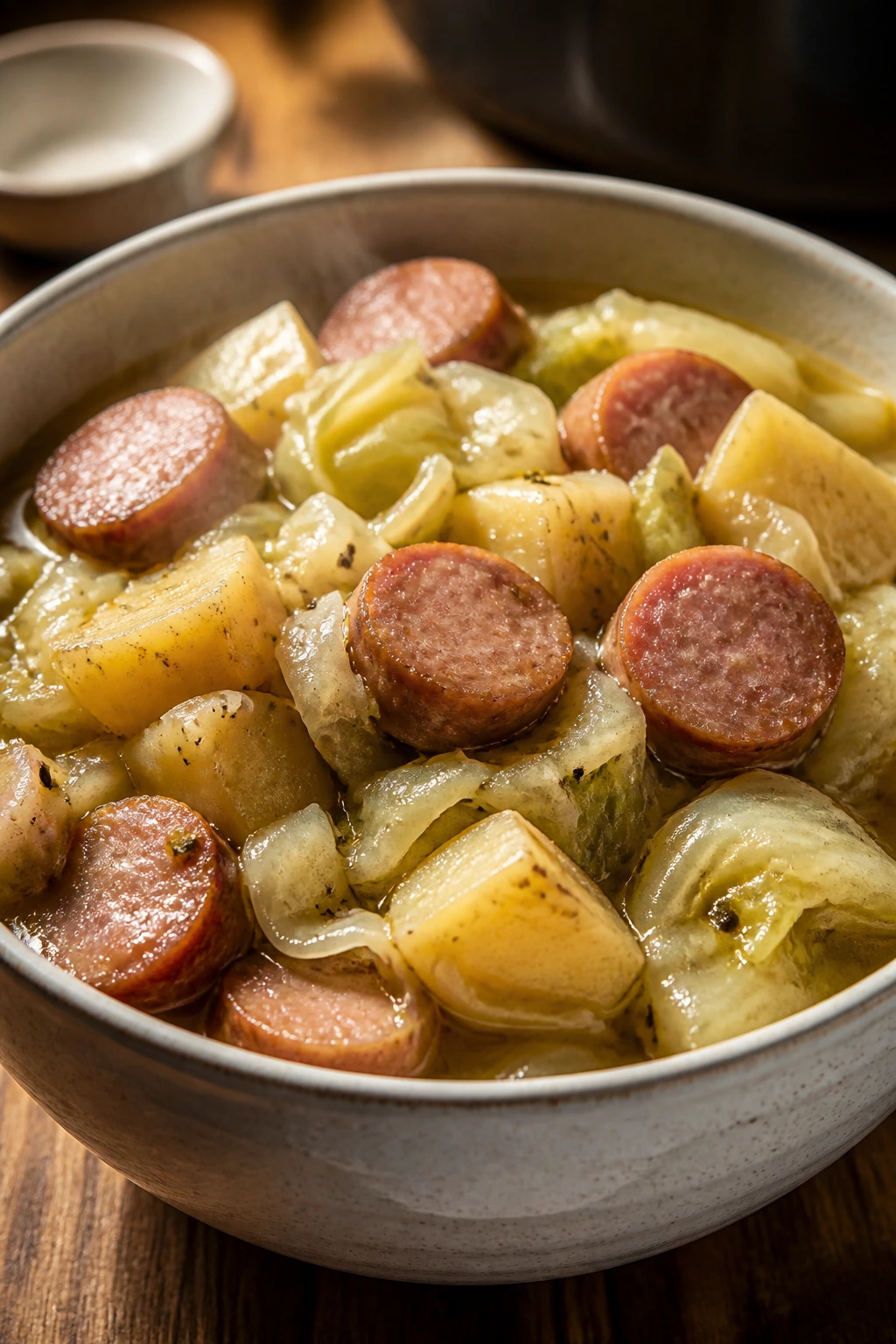
What kind of sausage works best for family dinners?
It depends on the dish, but Italian sausage, breakfast sausage, kielbasa, and andouille cover most of the ground here. Bulk sausage is easiest for sauces and casseroles, while links and smoked sausage are better for sheet pans and skillet dinners.
Can I use pre-cooked sausage instead of raw sausage?
Yes, especially in sheet-pan meals, soups, fried rice, and skillet dinners. Just brown it for color and heat it through; you’re not cooking it from scratch, so it needs less time than raw sausage.
Do I need to remove the casings?
Only if the recipe asks for crumbled sausage or meatballs. If you want rounds or slices, leave the casing on. For stuffed peppers, pasta sauces, and casseroles, removing the casing usually gives you better texture.
How do I keep sausage dishes from turning greasy?
Brown the sausage first, then spoon off excess fat before adding sauce, cream, or cheese. Some dishes need a little fat left behind to help the onions or peppers cook, but you rarely need all of it.
Can I make sausage recipes with turkey or chicken sausage?
Yes, and it works well in many of these dishes. You may need a little extra oil because leaner sausage has less fat to carry the pan, and the internal temperature should reach 165°F for poultry sausage.
Which sausage recipes freeze best?
Chili, soup, meatballs in sauce, baked ziti, lasagna roll-ups, and stuffed peppers freeze reliably. Cream-heavy pasta dishes, quesadillas, and crescent dough recipes are less cooperative after thawing.
How do I keep a sausage casserole from getting dry?
Use enough sauce, undercook the pasta slightly, and cover the dish for part of the bake if the top is browning too quickly. Letting the casserole rest after baking also helps the moisture settle back through the pan.
How spicy can I make these recipes without wrecking them?
Hot Italian sausage, red pepper flakes, chili paste, or pepper jack cheese are the easiest ways to turn up the heat. Add spice in layers so the whole dish warms up rather than getting one harsh bite.
What should I serve if I don’t want bread or pasta on the side?
Go with a salad, roasted vegetables, cucumber salad, slaw, or a simple fruit plate. Sausage dinners usually have enough body that they don’t need another starch to feel complete.
How do I know the sausage is cooked through?
Use an instant-read thermometer: pork sausage should reach 160°F, and poultry sausage should reach 165°F. For links, the center should no longer look pink and the juices should run clear, but temperature is the better test.
A Better Way to Keep Dinner Moving
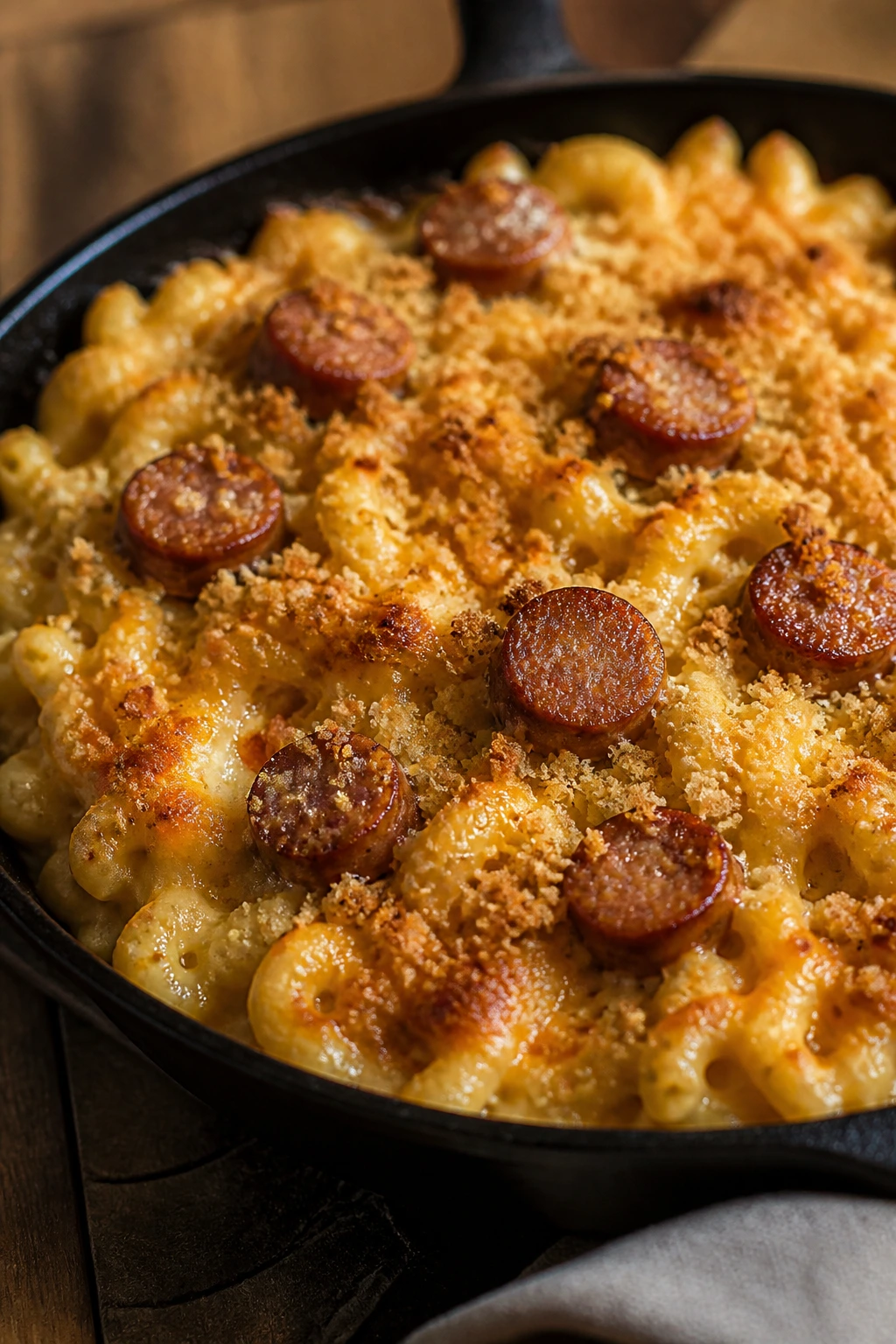
A good sausage dinner does more than fill a plate. It gives you a little color in the pan, a little salt in the broth, and enough structure that you can build the rest of the meal without fussing over every detail. That is the part people keep coming back for.
Keep one or two kinds of sausage in the fridge or freezer, and a weeknight stops feeling like a blank page. The skillet, the soup pot, and the baking dish are ready when you are.