



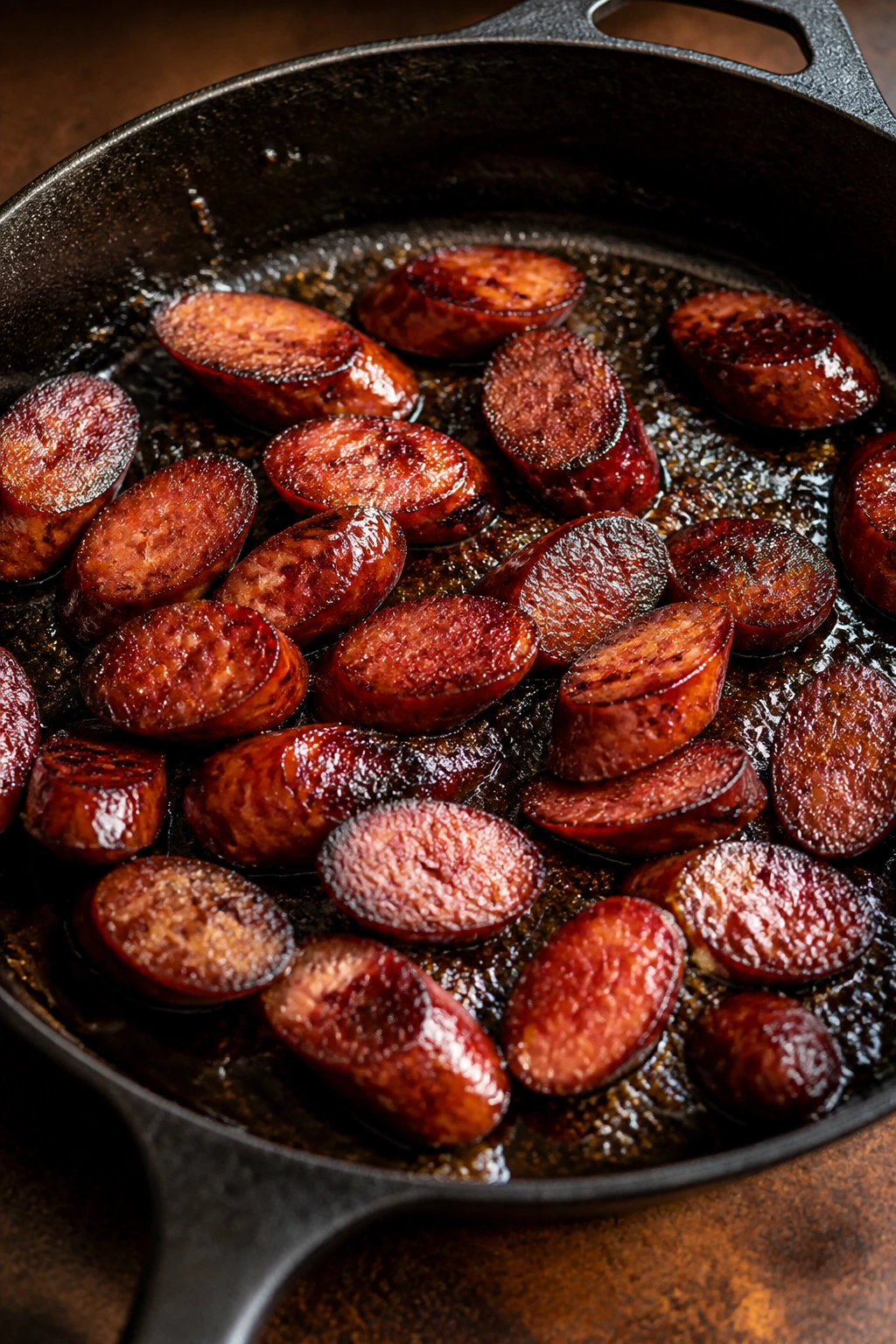
Crispy smoked sausage with brown sugar glaze sounds like the kind of dish that should be one-note and predictable. It isn’t, at least not when you do it right. The sausage should hit the skillet hard enough to pick up browned edges, the sugar should melt into a glossy coat instead of a puddle, and the vinegar should cut through the fat so the whole thing tastes sticky, smoky, and sharp instead of cloying.
That balance is the whole trick. I’ve seen plenty of sausage-and-sugar recipes that turn into limp little coins sitting in syrup, and that version misses the point. The good version has texture. The edges catch first. The glaze clings in a thin layer that shines on the spoon and goes slightly tacky as it cools. You get smoke, salt, caramel, and a little bite from the mustard and vinegar all in the same pan.
It’s also a smarter dish than people give it credit for. Smoked sausage is already seasoned and cooked, which means you’re not babysitting raw meat for twenty minutes. You’re browning, glazing, and serving. Fast. Honest. A little messy in the best way. And if you keep the heat in check, you end up with one of those skillet recipes that feels louder than the ingredient list looks.
Why You’ll Keep Coming Back to This Pan
-
Fast payoff: the sausage goes from sliced to browned in minutes, so the skillet never feels like a waiting game.
-
The glaze has actual structure: brown sugar, vinegar, butter, and Dijon make a coating that clings to the sausage instead of pooling under it.
-
It works as dinner or an appetizer: pile it over rice on a Tuesday night, or put toothpicks beside it and let people eat straight from the platter.
-
The ingredients are ordinary on purpose: smoked sausage, brown sugar, vinegar, mustard, and butter are pantry-level items that still taste deliberate when combined well.
-
The texture does the heavy lifting: crisp edges, glossy glaze, and a slight snap when you bite into the sausage give the dish more shape than most quick skillet meals.
-
It scales cleanly: double the sausage for a bigger crowd, but keep the glaze ratio the same and use a wider pan so nothing steams.
Why Crispy Smoked Sausage with Brown Sugar Glaze Works So Well
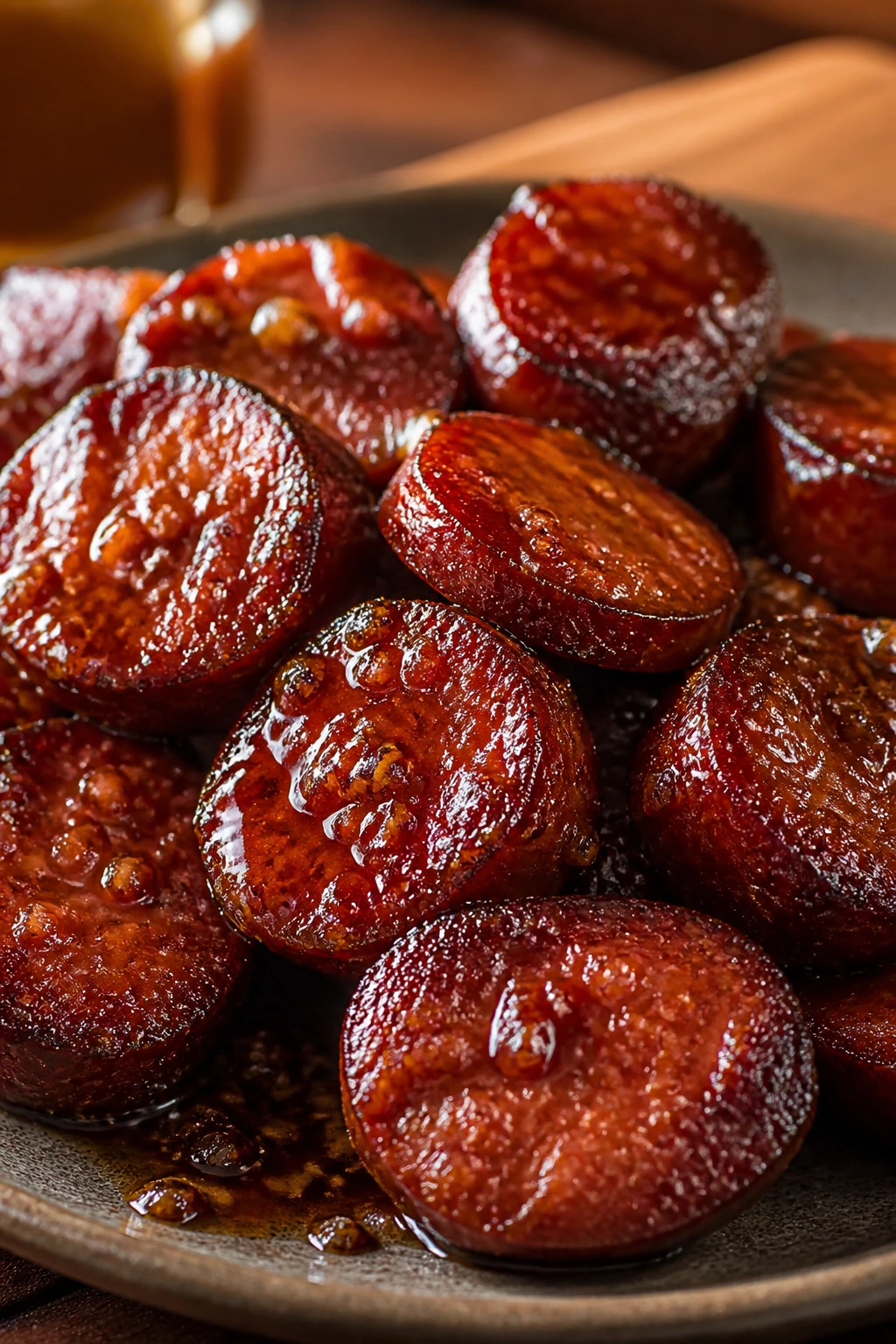
Smoked sausage already comes with a head start. It’s seasoned, cooked, and fatty enough to brown nicely if you give it room in the pan. That means the real job here is not “cook the meat.” The job is to create contrast — crisp outside, soft center, shiny glaze, and a flavor that shifts from smoky to sweet to sharp in a couple of bites.
That’s why brown sugar belongs here instead of plain syrup or a heavy barbecue sauce. Brown sugar melts into a thinner, darker glaze with a little molasses depth, and that molasses note plays nicely with pork. Add butter and you get a smoother sheen. Add vinegar and the sweetness stops feeling flat. Dijon helps everything hold together and gives the sauce some backbone without turning it into mustard sauce.
Smoke first, sugar second
If you put sugar in the pan before the sausage has browned, the whole thing gets soft. The sausage starts steaming in its own fat, and you lose the crisp edge that makes this dish worth making. Browning first changes the surface of the sausage. It gives you a little crust, a little color, and a deeper flavor before the glaze even shows up.
That crust matters more than most people think. It keeps the sausage from tasting boiled, and it gives the glaze something to cling to. The glaze needs that rougher surface. Smooth sausage slices don’t hold sauce the same way.
What the vinegar is doing here
Apple cider vinegar sounds like a small detail, but it keeps the pan from tasting sugary in a dull way. One or two tablespoons are enough to brighten the sauce and cut the fattiness of the sausage. Without it, the glaze reads heavier and flatter. With it, you get a little lift at the end of each bite.
That’s the part most sweet sausage recipes miss. They lean hard into caramel and forget that smoked sausage is already rich. The acid keeps the dish awake.
Why this feels like old-school skillet cooking
There’s a reason versions of this show up at potlucks, church suppers, tailgates, and weeknight tables. The ingredients are cheap enough to keep on hand, the cooking method doesn’t need special gear, and the finished dish can be eaten with bread, rice, potatoes, or toothpicks without any fuss. It’s practical food with enough contrast to feel like more than a shortcut.
And yes, it’s a little retro. I like that. Not in a costume way. In the sense that it knows exactly what it is and doesn’t need a lot of decoration to be worth making.
What You Need Before the Skillet Goes On
Yield: Serves 4 to 6
Prep Time: 10 minutes
Cook Time: 15 minutes
Total Time: 25 minutes
Difficulty: Beginner — the method is simple, but you do need to watch the glaze as it thickens.
Best Served: Warm, straight from the skillet while the edges are still crisp.
For the Sausage and Browning:
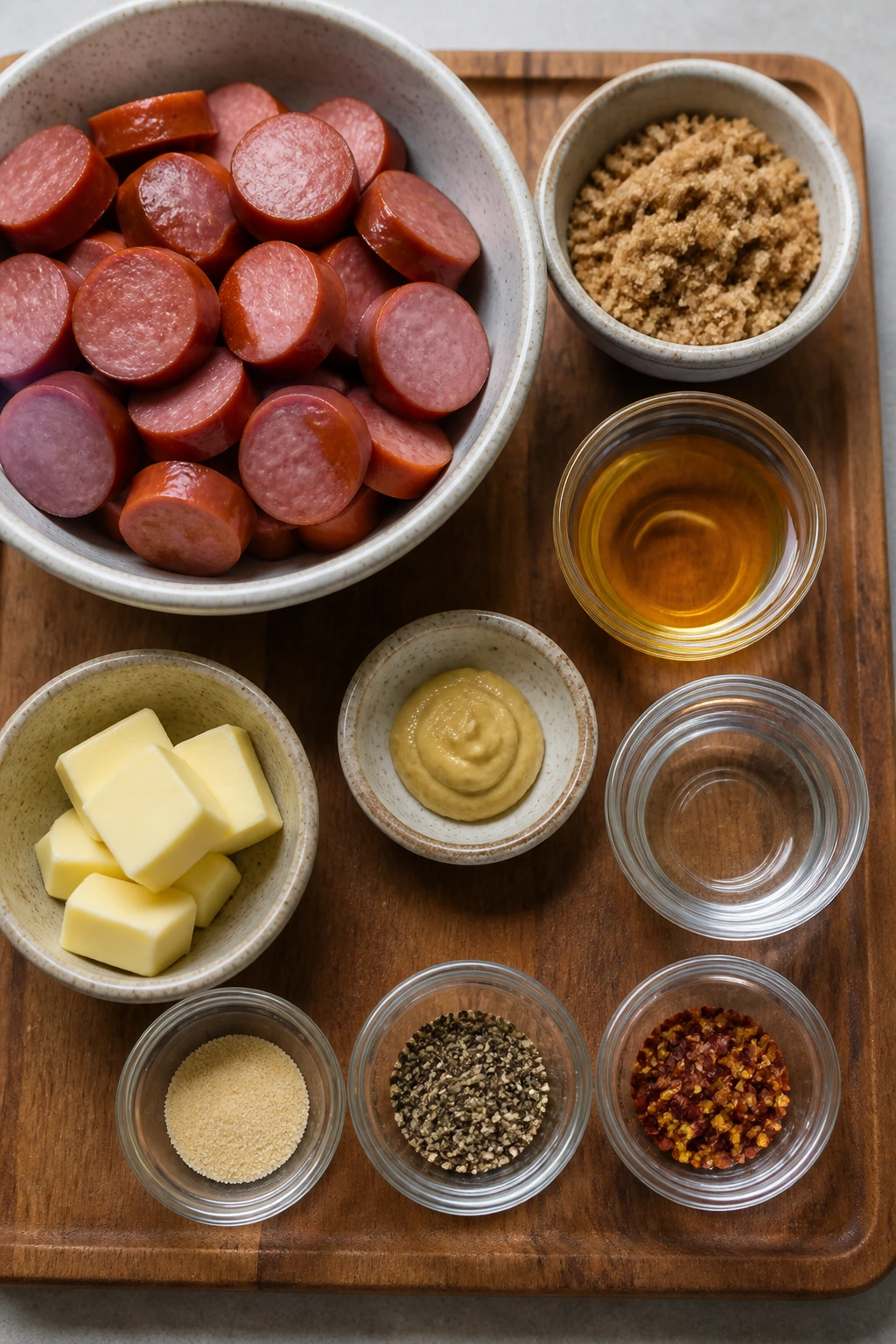
- 2 pounds smoked sausage, preferably pork or beef, cut into 1/2-inch coins on a slight bias
- 1 tablespoon neutral oil
- 2 tablespoons unsalted butter
For the Brown Sugar Glaze:
- 1/2 cup packed light brown sugar
- 2 tablespoons apple cider vinegar
- 1 tablespoon Dijon mustard
- 1 tablespoon water
- 1 teaspoon garlic powder
- 1/4 teaspoon freshly ground black pepper
- 1/4 teaspoon crushed red pepper flakes, optional
For Finishing:
- 1 tablespoon chopped fresh parsley, optional
Why Each Ingredient Matters in the Brown Sugar Glaze
Smoked Sausage
What to use: 2 pounds fully cooked smoked sausage, sliced into 1/2-inch coins.
Preparation: Slice on a slight bias so each piece has more surface area for browning, then pat the pieces dry with paper towels.
Substitutions: Kielbasa, turkey smoked sausage, and andouille all work; andouille brings more heat, while turkey sausage gives a leaner finish.
Tips: Choose sausage with a firm casing and enough fat to brown cleanly. Extra-lean sausage can taste dry after glazing, and ultra-soft links tend to steam instead of sear.
Brown Sugar
What to use: 1/2 cup packed light brown sugar.
Preparation: Break up any hard clumps with your fingers before it hits the pan so it melts evenly.
Substitutions: Dark brown sugar gives a deeper molasses note; maple syrup can work in a pinch, but the glaze will be looser and less lacquered.
Tips: Pack the sugar firmly into the measuring cup. Loose brown sugar gives you a thin glaze that slides off the sausage instead of clinging to it.
Vinegar, Mustard, and Water
What to use: 2 tablespoons apple cider vinegar, 1 tablespoon Dijon mustard, and 1 tablespoon water.
Preparation: Stir or whisk them together before adding them to the skillet so the mustard doesn’t clump.
Substitutions: Red wine vinegar gives a sharper edge, yellow mustard makes the glaze more old-school, and a squeeze of lemon can stand in if you’re out of vinegar.
Tips: The acid keeps the glaze from tasting syrupy and helps cut the richness of the sausage. The water gives the sugar enough movement to coat the pan instead of seizing up in dry spots.
Butter, Oil, and Seasoning
What to use: 1 tablespoon neutral oil, 2 tablespoons unsalted butter, 1 teaspoon garlic powder, 1/4 teaspoon black pepper, and 1/4 teaspoon red pepper flakes if you want a little heat.
Preparation: Keep the butter back until after the sausage has browned so it doesn’t burn before the glaze starts.
Substitutions: Bacon fat can replace the neutral oil if you want a deeper pork flavor; ghee also works if you want more heat resistance.
Tips: Oil handles the first sear better than butter alone. Butter is there for flavor and shine, not for the browning itself.
Optional Finishing Touches
What to use: 1 tablespoon chopped fresh parsley.
Preparation: Chop it right before serving so it stays bright and doesn’t wilt into the glaze.
Substitutions: Sliced scallions, a pinch of sesame seeds, or a few drops of hot sauce can change the finish without changing the base recipe.
Tips: Finish with something fresh if you can. Even a small green note keeps the plate from feeling one-dimensional.
The Skillet and Tools That Make Browning Easier
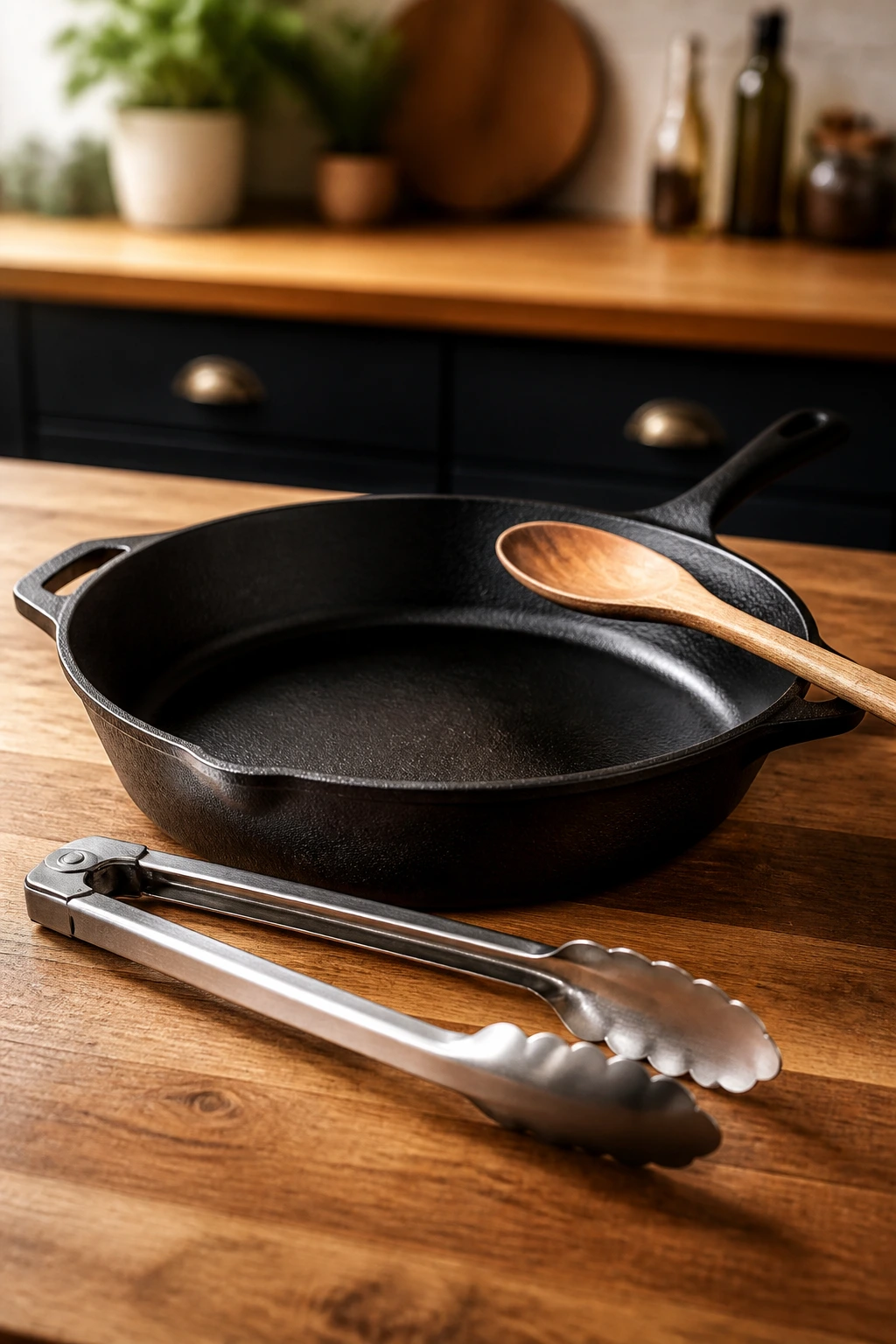
- 12-inch cast-iron skillet: This is my first choice because it holds heat and gives the sausage the best shot at a real crust.
- Stainless-steel skillet: A good backup if you preheat it well; it browns nicely, but you need to watch the sugar a little more closely.
- Wooden spoon or silicone spatula: Useful for stirring the glaze without scraping the pan too hard.
- Tongs: Handy for turning the sausage slices without stabbing them and leaking out juices.
- Sharp chef’s knife: Makes clean 1/2-inch slices instead of ragged pieces that cook unevenly.
- Cutting board: A roomy board matters more than people think when you’re slicing sausage and moving it straight to the pan.
- Measuring spoons and measuring cups: Brown sugar glaze changes fast, and exact measurements help keep it from turning thin or burnt.
- Small heatproof bowl: Good for holding the browned sausage while you build the glaze.
- Airtight storage container: Necessary if you’re planning on leftovers, because the glaze will firm up in the fridge.
The Smartest Way to Cook It in One Pan
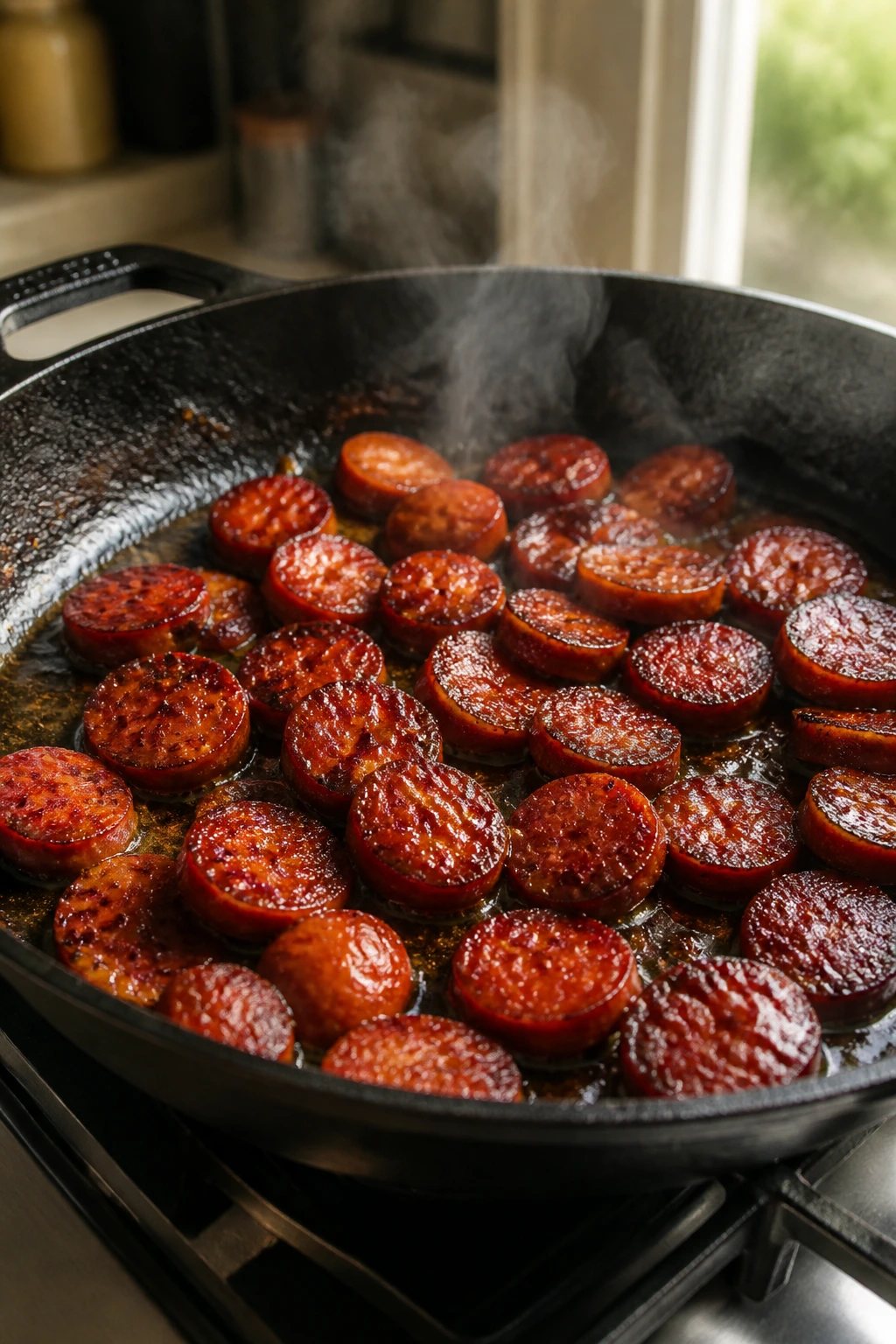
Prep the sausage:
-
Slice the smoked sausage into 1/2-inch coins on a slight bias. Pat the pieces dry with paper towels. Dry sausage browns better; wet sausage steams.
-
Set a 12-inch skillet over medium-high heat and add the neutral oil. Let it heat for about 30 seconds
-
Set a 12-inch skillet over medium-high heat and add the neutral oil. Let it heat for about 30 seconds, until the oil shimmers and slides easily across the pan.
-
Add the sausage coins in a single layer. If your pan is tight, work in two batches instead of piling everything in at once. Cook for 2 to 3 minutes without moving them much, until the bottoms are deep golden and the edges look crisp.
-
Flip the sausage pieces and cook for another 1 to 2 minutes. You want color on both sides, not black spots. If the pan starts smoking hard, lower the heat a notch. Browned is the goal. Burnt sugar is not.
Build the Glaze:
-
Reduce the heat to medium. Add the butter and let it melt around the sausage, scraping up any browned bits from the pan with a wooden spoon.
-
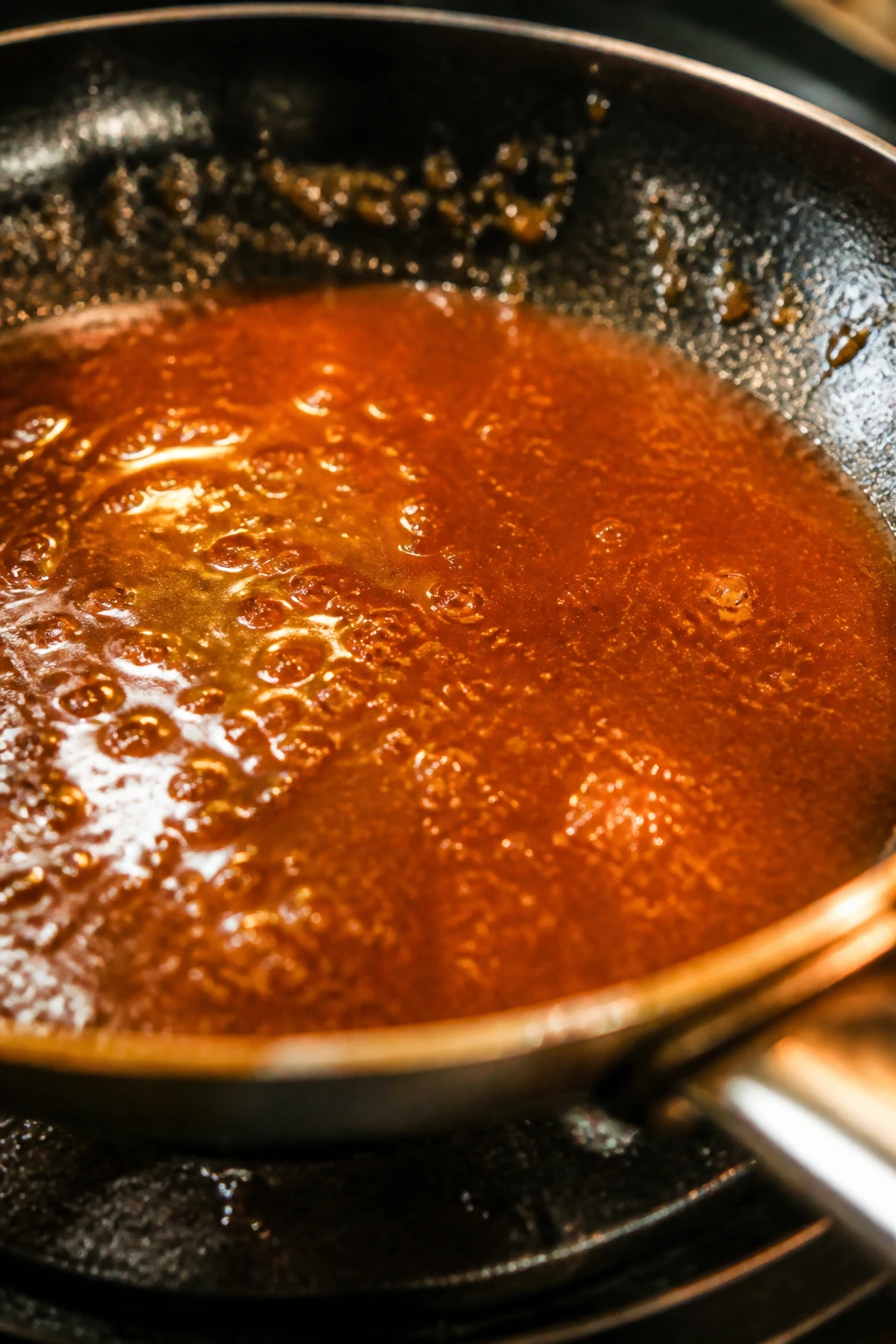
Stir in the brown sugar, apple cider vinegar, Dijon mustard, water, garlic powder, black pepper, and red pepper flakes if you’re using them. Keep stirring for about 30 seconds, until the sugar looks wet and starts to dissolve.
-
Simmer the mixture for 2 to 4 minutes, stirring often, until the glaze bubbles in thick, slow blips and clings to the sausage instead of running off in a thin puddle. Do not walk away here. Brown sugar can go from glossy to scorched in a minute if the heat is too high.
Finish and Serve:
-
Let the sausage cook in the glaze for 30 to 60 seconds more, tossing to coat every piece evenly. The sauce should look shiny and slightly sticky, like it has taken a small breath and settled down.
-
Remove the skillet from the heat and scatter the parsley over the top if you’re using it. Let the sausage sit for 2 minutes before serving so the glaze can set up just enough to cling.
Serving the Glazed Sausage So It Feels Like Dinner, Not Just a Snack
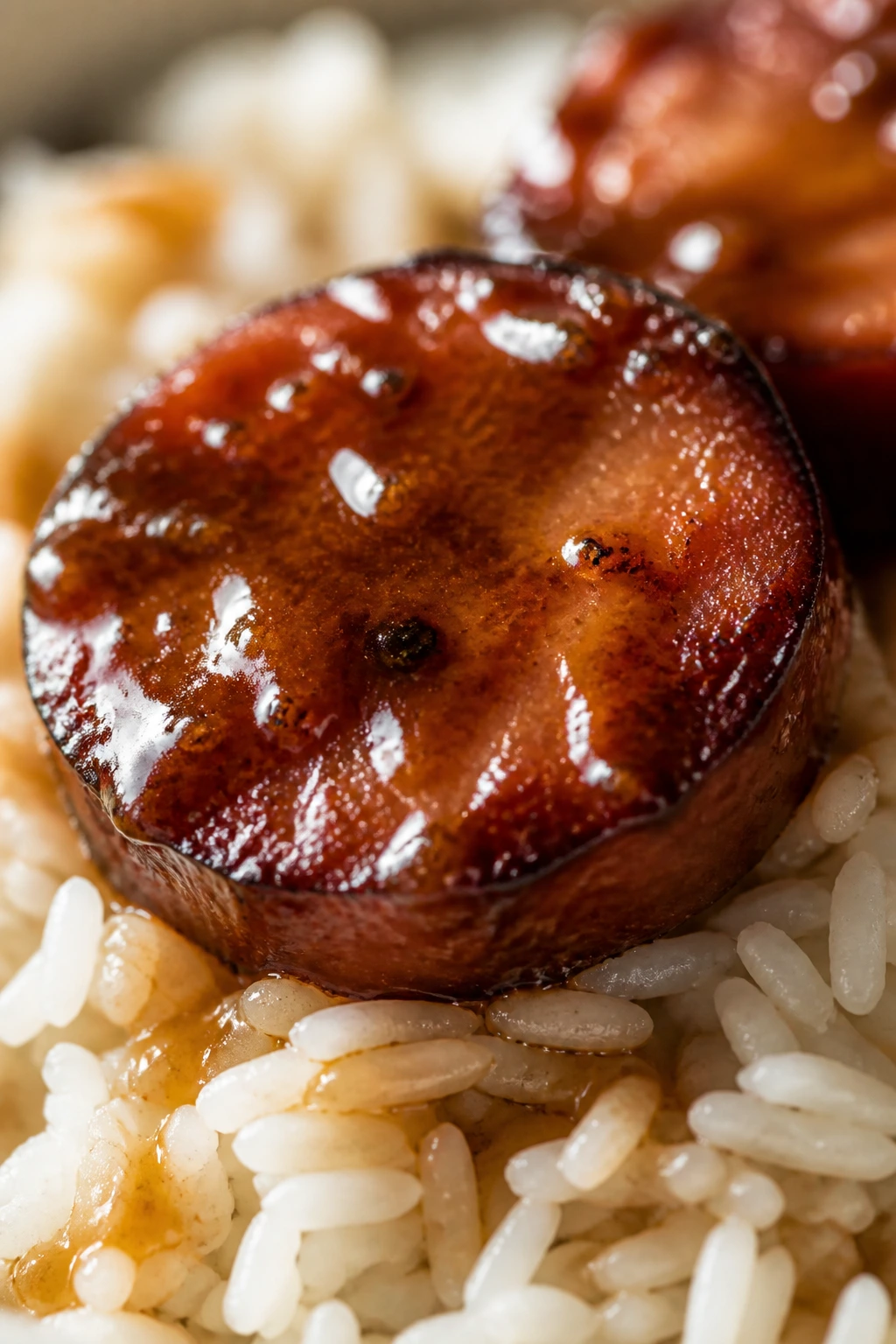
There’s a very easy way to make this dish feel balanced, and it starts with what sits underneath it. Spoon the sausage over steamed white rice, buttered noodles, mashed potatoes, or creamy polenta and let the glaze seep into something bland and starchy. That contrast matters. A sticky sausage skillet by itself can feel a little one-note; a mound of rice underneath gives the sweet-salty sauce somewhere to go.
If you’re serving it as an appetizer, keep the pieces a little smaller and move them to a warm platter with toothpicks. I like a shallow bowl better than a flat plate here, because the glaze collects just enough to make each bite glossy. If you want people to keep coming back for another piece, add a few cornichons, pickled onions, or mustardy gherkins nearby. That sharp edge wakes the whole thing up.
Presentation: Scatter the parsley right before serving so the green stays bright and doesn’t disappear into the sauce. If you want a more old-school look, leave the sausage in the skillet and bring the whole pan to the table. It smells like you made more effort than you did.
Accompaniments: Buttermilk biscuits, toasted rolls, roasted cabbage, simple green beans, or a cabbage slaw all fit without fighting the glaze. A crisp vegetable side is the smart move because the sausage and sugar already carry enough richness for the plate.
Portions: As a main dish, figure on about 1/2 pound of sausage per person, especially if you’re serving rice or potatoes alongside it. As an appetizer, one pound usually serves 6 to 8 people if there are other snacks on the table. For a bigger crowd, double the sausage but use a wider skillet or two pans so the browning stays crisp.
Beverage Pairing: Cold lager is the easy answer, and it works because the carbonation scrubs the glaze off the tongue. Sweet iced tea, dry hard cider, or even a sharp ginger beer also fits the smoky-sweet profile without making the whole meal feel heavier.
Small Tweaks That Make the Glaze Taste Sharper, Deeper, and Better
Flavor Enhancement: A tiny pinch of smoked paprika can deepen the sausage’s own smoke without turning the dish into barbecue sauce. I like 1/2 teaspoon mixed into the glaze when I want a darker, more rounded finish. It’s subtle. You’ll notice it most at the end of the bite.
Time-Saver: If you know you’re serving this later, slice the sausage and mix the glaze ingredients in a small bowl ahead of time. Then the actual cooking is just browning, pouring, and reducing. That keeps the sugar from hanging around in the pan too long while you fumble for the vinegar.
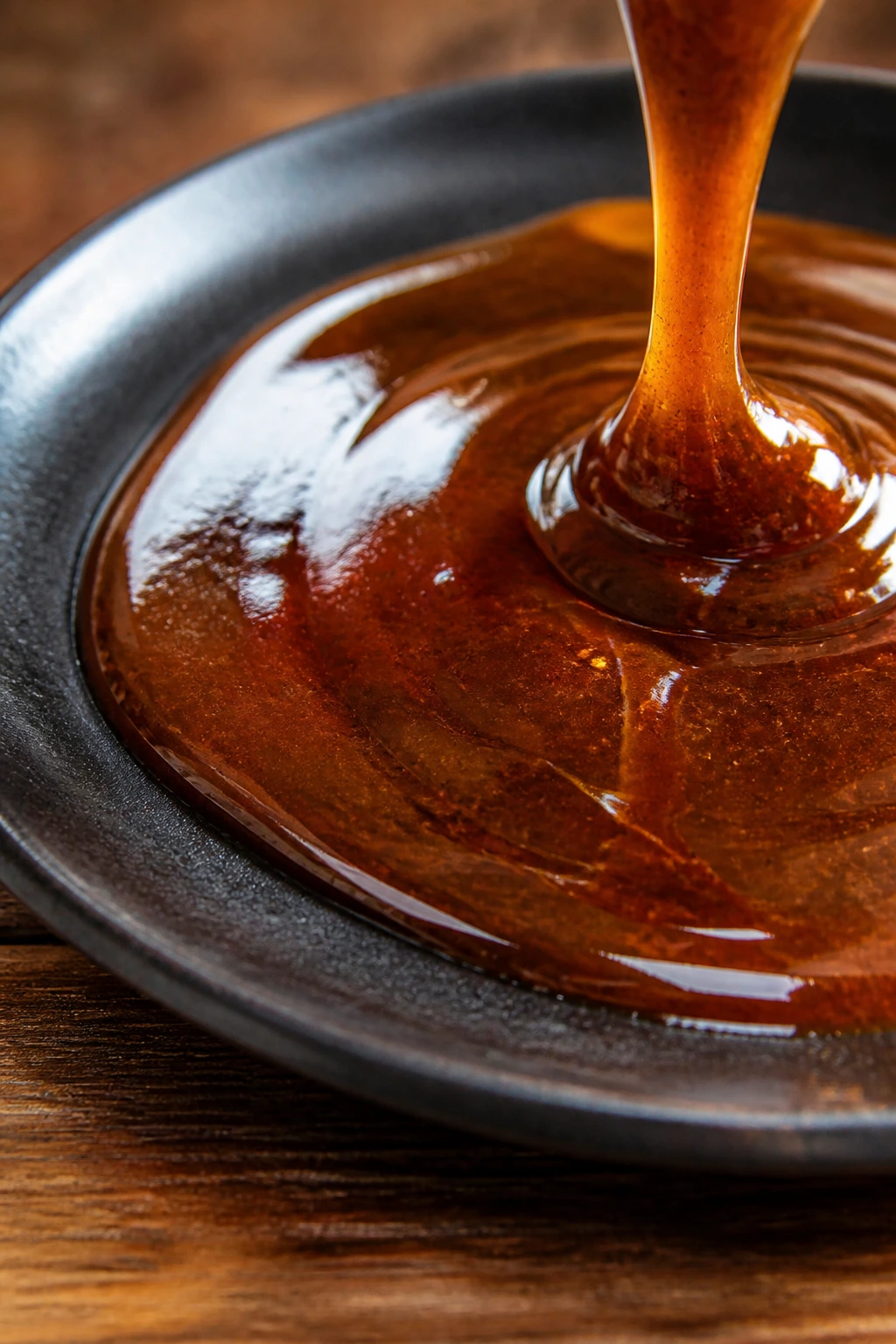
Texture Trick: Pull a spoonful of glaze out of the skillet and let it sit for 20 seconds. If it forms a loose ribbon instead of dripping like water, you’re there. That one little test saves you from serving sausage in syrup.
Cost-Saver: Store-brand smoked sausage works fine here. The glaze carries enough flavor that you do not need a fancy link. What matters more is a sausage with decent fat content and a casing that browns instead of splitting apart.
Heat Control: If your stove runs hot, drop from medium-high to medium as soon as the sausage is browned. Brown sugar doesn’t care about your feelings. It will scorch if you try to keep the whole process on high heat.
The Mistakes That Make This Dish Too Sweet, Too Soft, or Burnt at the Edges
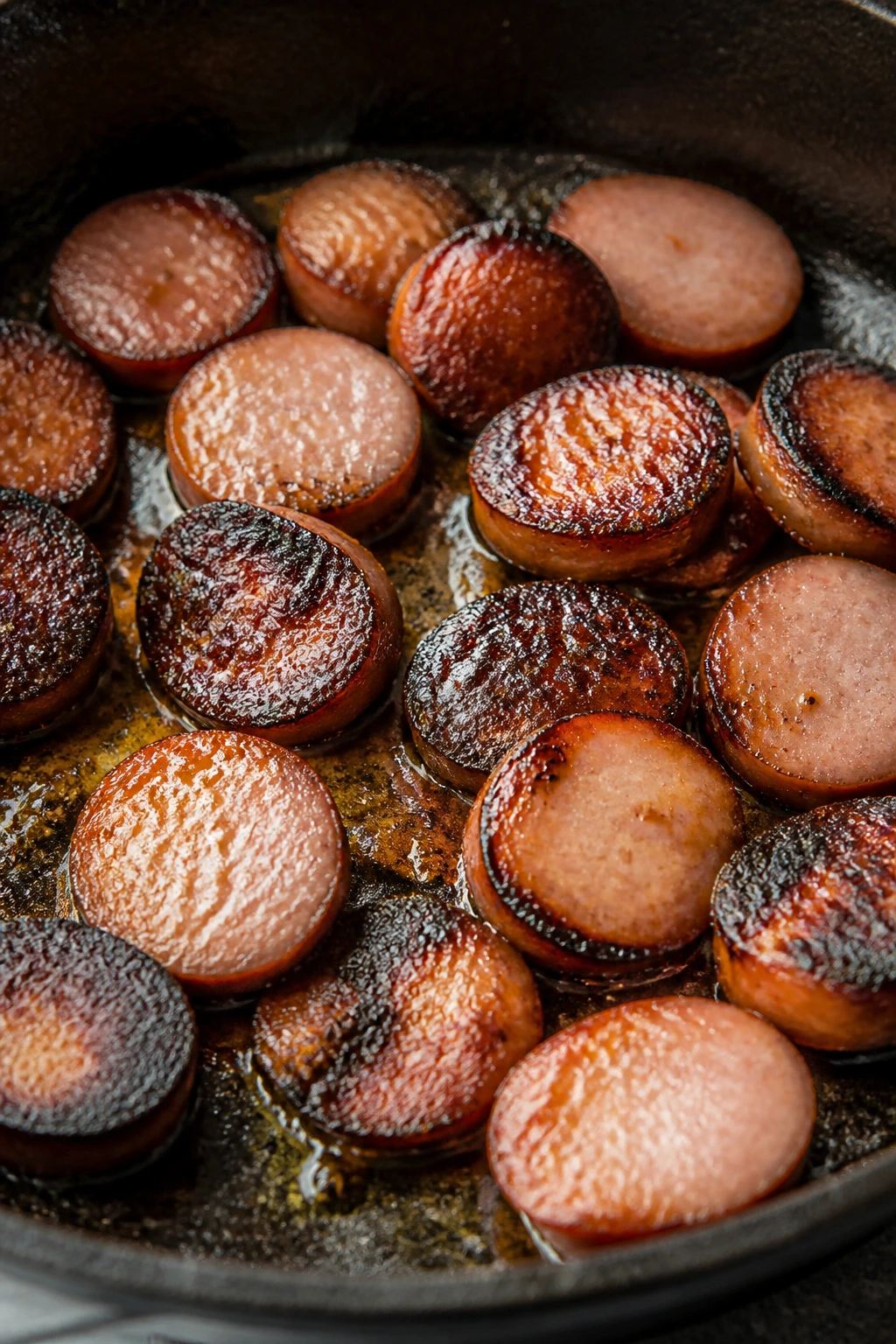
Crowding the pan is the biggest problem I see. When the sausage overlaps, the pieces steam instead of brown, and the whole skillet starts looking pale and greasy. The fix is simple: use a 12-inch skillet for 2 pounds, or brown the sausage in two batches if that’s what it takes.
Adding the glaze before the sausage has color leads to limp slices with no crisp edges. The sugar softens the surface too early, and you lose the seared texture that makes the dish worth making. Brown first. Glaze second. That order matters more than people think.
Letting the sugar boil too hard turns the sauce gritty or bitter. Brown sugar can seize and crystalize if the heat is too aggressive or if the pan runs dry. Keep the sauce moving, and if it starts to look sandy or too dark around the edges, pull it off the heat right away and add a tablespoon of water.
Skipping the acid makes the dish taste flat and sticky in a tiring way. The vinegar is not there to make it sour. It’s there to keep the glaze from feeling like candy. If your first bite tastes heavy, you probably need a little more sharpness, not more sugar.
Using too much sauce for too little sausage can drown the pan. A glossy coating is what you want. A syrup bath is not. If you like a thicker layer, reduce the glaze a minute longer, but don’t pour in extra sugar to “fix” it. That only makes the problem worse.
Walking away during the last minute is how you go from lacquered to scorched. This isn’t a low-and-slow braise. It moves fast. Once the glaze thickens, stay close, stir, and judge by the sound as much as the look — bubbling will quiet down a little when it’s ready.
Variations That Still Taste Like the Same Dish, Just With a Different Accent
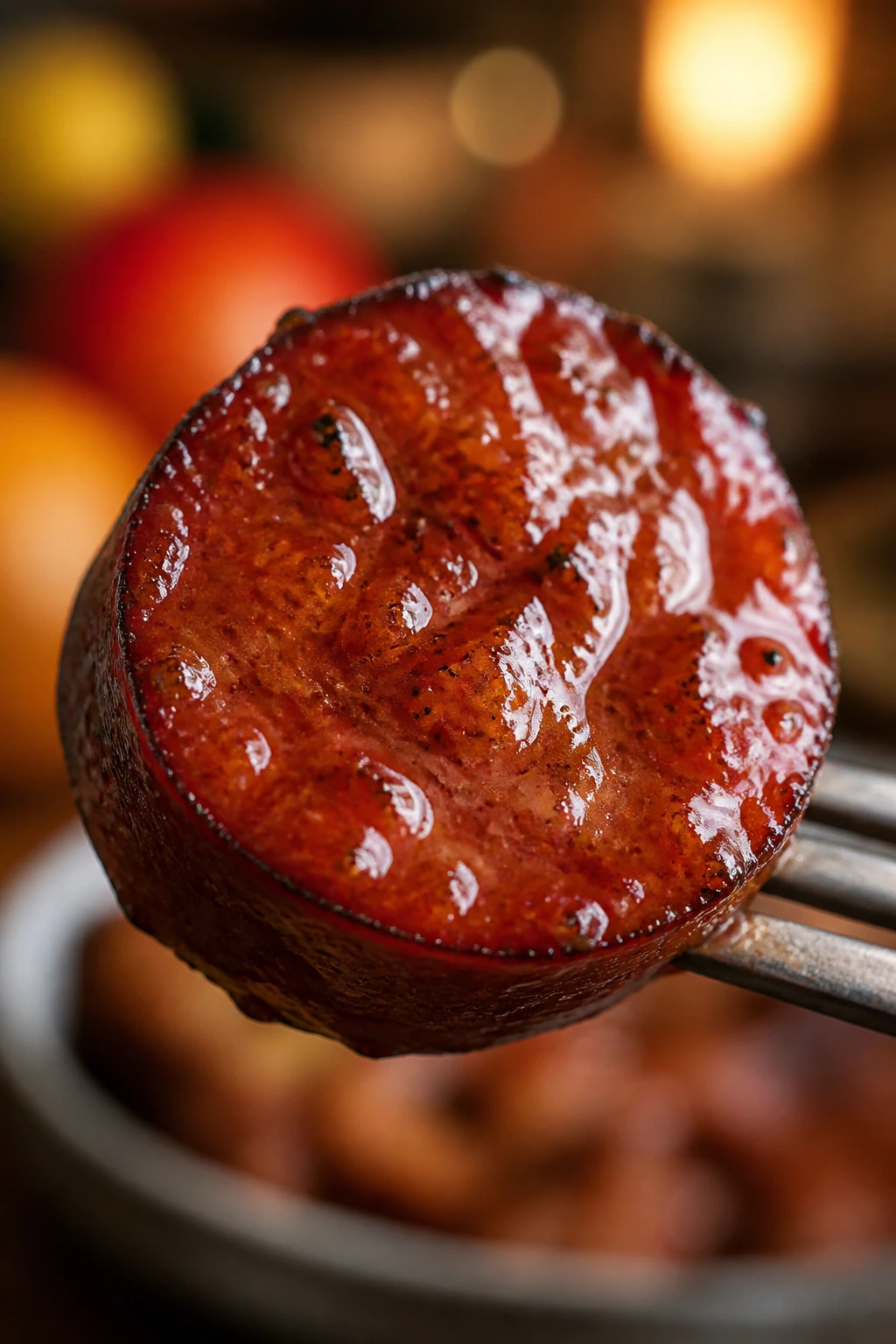
Apple Orchard Glaze: Swap the water for 2 tablespoons of apple juice and add 1/4 teaspoon cinnamon. The glaze turns softer and a little rounder, which works especially well with pork sausage. I like this version with roasted sweet potatoes or a cabbage slaw that has a touch of vinegar.
Bourbon Brown Sugar Pan: Add 1 tablespoon bourbon with the vinegar and let it bubble for 30 seconds before the sugar goes in. The alcohol cooks off, but the caramel note stays, and the glaze tastes darker and less sugary. This one belongs on a table with biscuits or mashed potatoes.
Pepper-Heavy Skillet: Double the black pepper and add a full teaspoon of red pepper flakes. That gives the glaze a sharper, louder finish that keeps you from getting palate fatigue after three bites. It’s the version I’d choose if the sausage itself is mild and a little soft.
Andouille With Mustard Bite: Use andouille instead of standard smoked sausage and bump the Dijon to 2 tablespoons. The extra spice in the sausage meets the sharper mustard and gives you a more Cajun-leaning skillet. It’s bold enough to stand on its own, which is useful when you’re feeding people who like heat.
Turkey Sausage Version: Swap in turkey smoked sausage and keep the butter in the recipe. Turkey sausage can brown a little drier, so the butter and glaze matter more here. The result is lighter, but it still gets that sticky finish if you don’t rush the browning.
Keeping Leftovers Glossy Instead of Dry
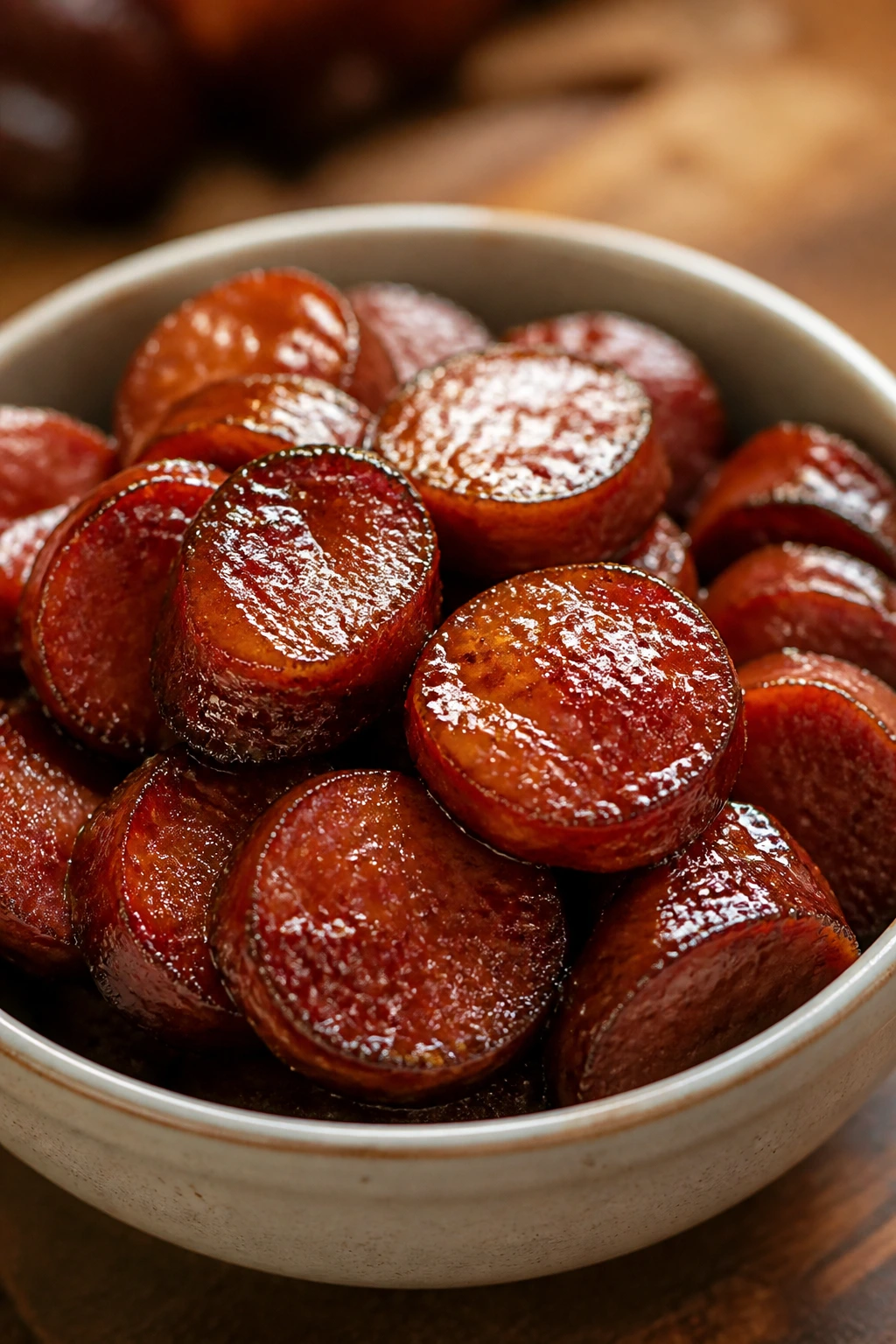
Let the sausage cool for no more than about 30 minutes before packing it away. After that, move it to an airtight container and refrigerate for up to 4 days. The glaze will firm up as it chills, which is normal; it just means you need to reheat it gently instead of blasting it.
For the best texture, warm leftovers in a skillet over low to medium-low heat with 1 to 2 teaspoons of water. Cover the pan for a minute if the glaze looks stuck, then uncover and stir until the sauce loosens and the sausage is hot all the way through. That keeps the coins from drying out. A microwave works in a pinch, but use 30-second bursts and stir between each one so the sugar doesn’t seize in one corner of the bowl.
Freezing is possible, though the glaze softens a little after thawing. Pack portions in freezer containers or zip bags for up to 2 months. Thaw overnight in the fridge, then reheat in a skillet with a splash of water. If you try to reheat from frozen in a pan, the outside gets sticky while the center stays cold, and that’s a bad trade.
Make-ahead planning is easy here. You can slice the sausage 1 to 2 days ahead and mix the glaze ingredients separately the day before. Keep both cold, then cook them together right before serving. That keeps the sausage from drying out and the brown sugar from clumping up in advance.
Answers to the Questions People Actually Ask About This Skillet
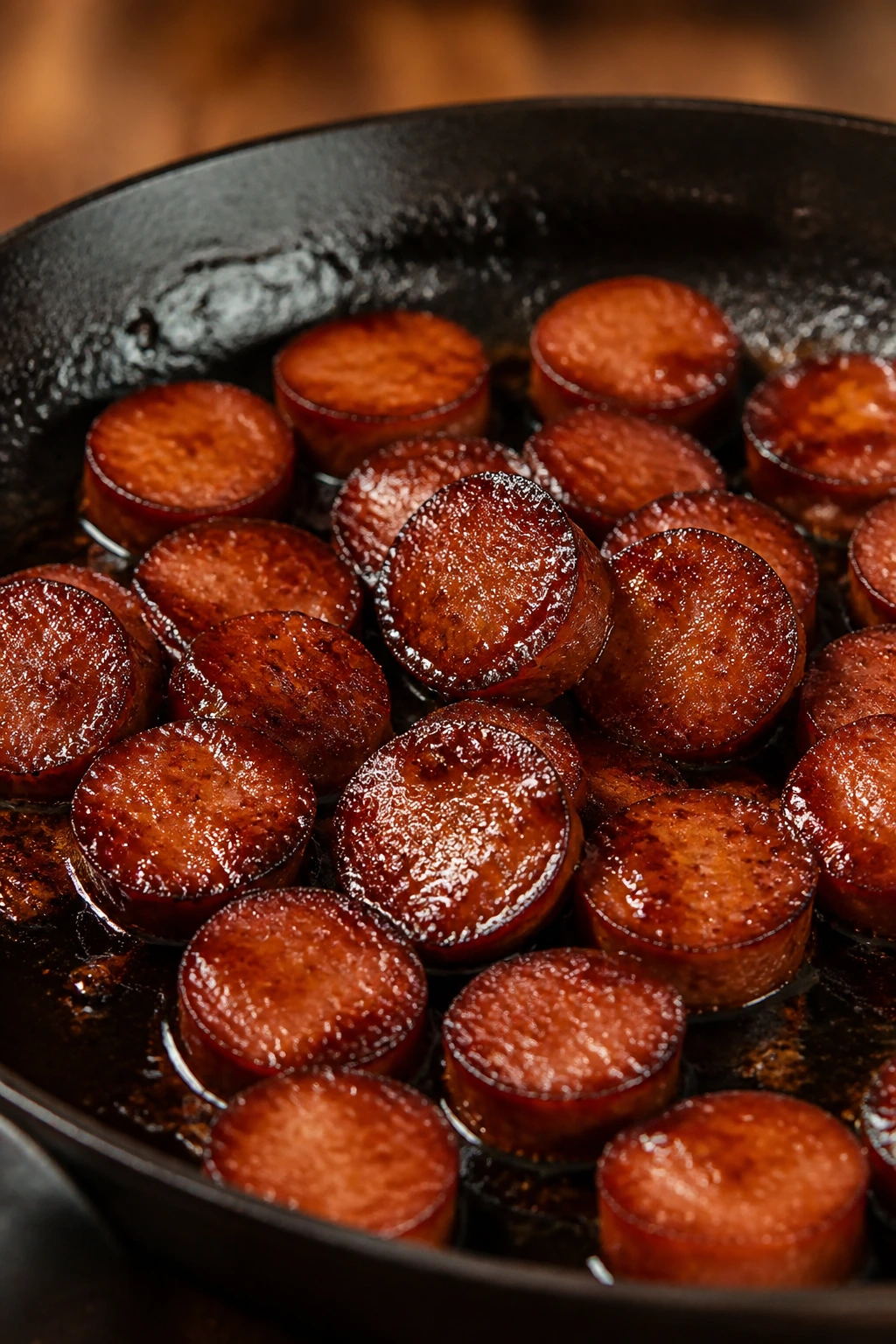
Can I use kielbasa instead of smoked sausage?
Yes, and it works very well. Kielbasa browns nicely and holds the glaze without falling apart, which makes it one of the easiest swaps. Just keep the slices around 1/2 inch thick so they crisp at the edges before the sugar goes in.
How do I keep the glaze from turning grainy?
Graininess usually means the sugar cooked too hard or didn’t dissolve fully before the pan got hot. Stir the brown sugar with the vinegar, mustard, and water until it looks evenly wet, then simmer only until the sauce thickens lightly. If it starts to look sandy, add a teaspoon of water and take the pan off the heat for a moment.
Can I make this less sweet?
Yes. Cut the brown sugar back to 1/3 cup and add an extra teaspoon of vinegar or a little more Dijon. That keeps the glaze thin enough to coat the sausage while giving you more sharpness and less candy-like sweetness.
Is this better in a skillet or in the oven?
A skillet wins because you get browning and glaze in the same pan, and you can judge the sauce by sight. The oven can heat the sausage through, but it won’t give you the same crisp edges or the same control over the glaze. If you do use the oven, you still want to brown the sausage first on the stove.
Can I double the recipe for a party?
Absolutely, but don’t cram all the sausage into one skillet. Use two pans or brown the sausage in batches, then divide the glaze evenly. If you crowd the pan, you lose the crisp texture that makes the dish worth serving in the first place.
What should I do if the glaze gets too thick?
Stir in 1 tablespoon of water at a time over low heat until it loosens. Don’t dump in a big splash all at once, or the sauce will slide back into a thin puddle. You want it glossy and clingy, not soupy.
Can I serve this as an appetizer with toothpicks?
Yes, and it disappears fast that way. Keep the sausage warm in a shallow serving dish so the glaze stays loose enough to coat each piece, and set out napkins because the sauce will get on fingers. A small bowl of mustard or pickles on the side helps balance the sweetness.
The Kind of Skillet You Make Once and Keep Thinking About
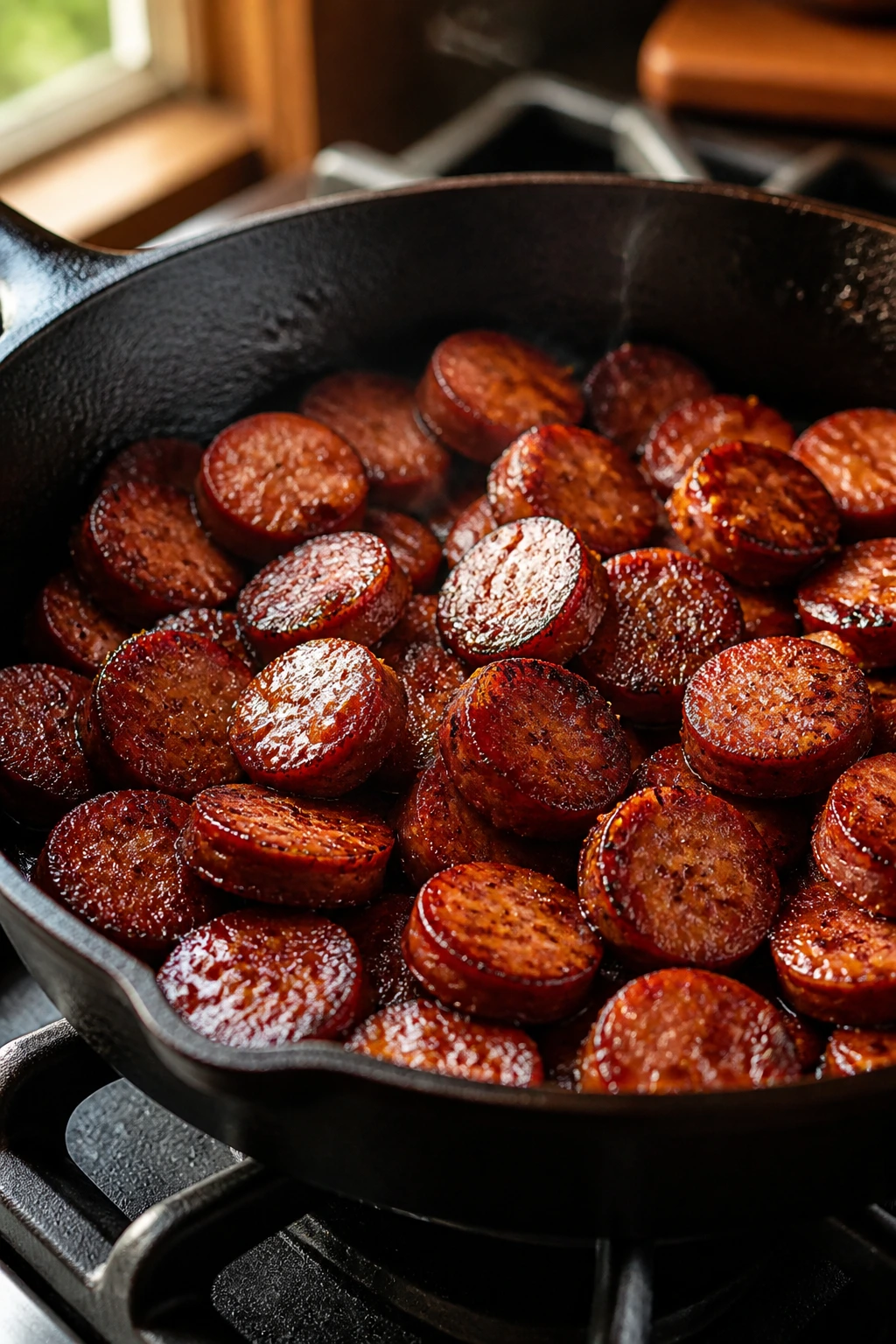
There’s a reason crispy smoked sausage with brown sugar glaze keeps showing up in kitchens that know how to feed people without making a production out of it. It’s fast, but not careless. Rich, but not heavy if you keep the acid in place. And it gives you that satisfying, slightly old-fashioned skillet finish that makes a simple pan of sausage feel like more than the sum of its parts.
What I like most is the way it behaves when everything goes right: the edges catch, the glaze tightens, and the sausage ends up looking lacquered instead of sauced. That’s the sweet spot. You don’t need a long ingredient list to get there — you need heat control, a little patience, and the willingness to let the brown bits do their job before the sugar comes in.
Crispy Smoked Sausage with Brown Sugar Glaze — Recipe Card
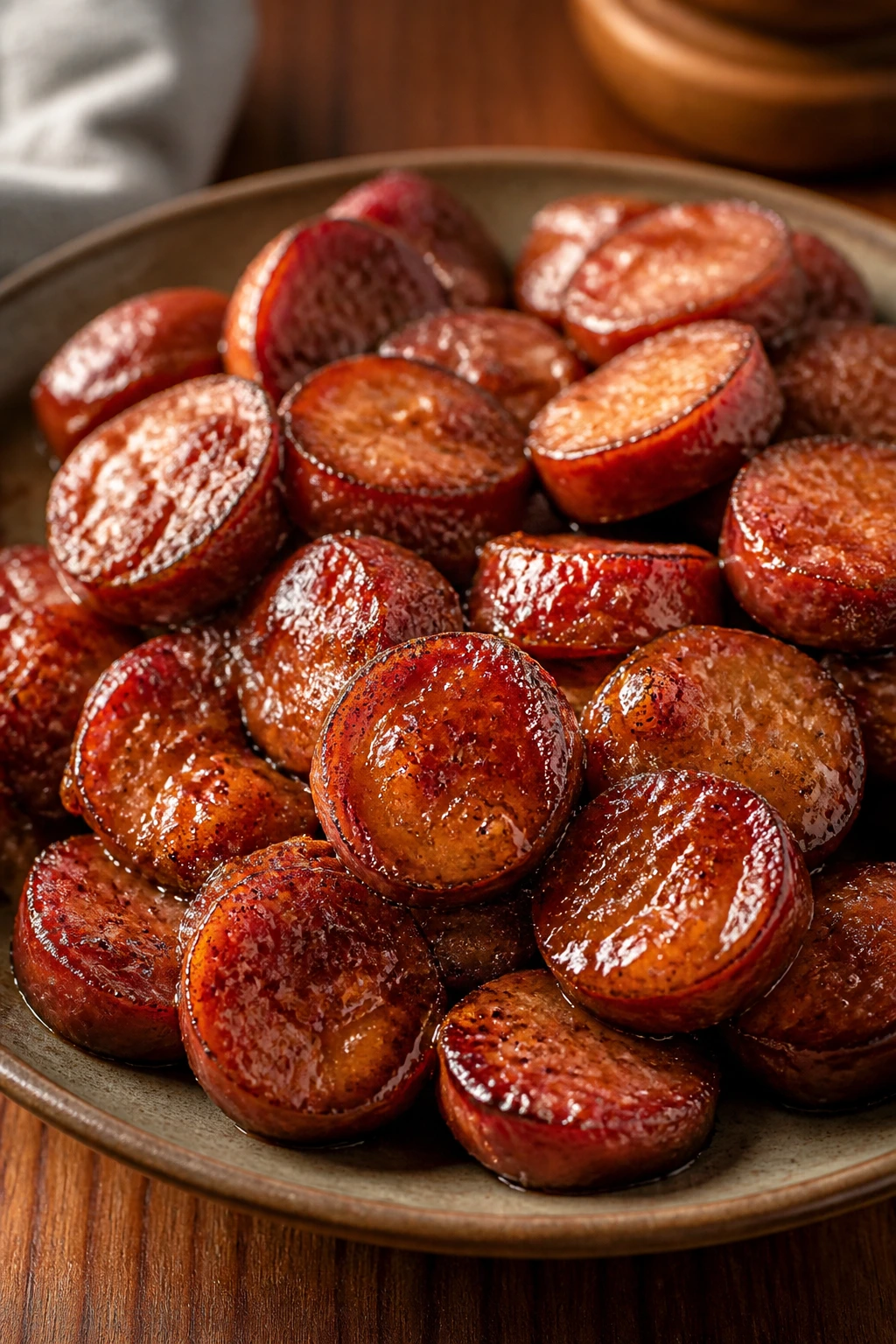
Recipe Name: Crispy Smoked Sausage with Brown Sugar Glaze
Description: Smoked sausage is browned until the edges crisp, then tossed in a glossy brown sugar glaze with Dijon, vinegar, butter, and garlic. It works as a fast dinner over rice or potatoes, or as a sticky appetizer with toothpicks.
Prep Time: 10 minutes
Cook Time: 15 minutes
Total Time: 25 minutes
Course: Main Course
Cuisine: American
Servings: 4 to 6 servings
Calories: About 410 kcal per serving
Ingredients
For the Sausage and Browning:
- 2 pounds smoked sausage, cut into 1/2-inch coins on a slight bias
- 1 tablespoon neutral oil
- 2 tablespoons unsalted butter
For the Brown Sugar Glaze:
- 1/2 cup packed light brown sugar
- 2 tablespoons apple cider vinegar
- 1 tablespoon Dijon mustard
- 1 tablespoon water
- 1 teaspoon garlic powder
- 1/4 teaspoon freshly ground black pepper
- 1/4 teaspoon crushed red pepper flakes, optional
For Finishing:
- 1 tablespoon chopped fresh parsley, optional
Instructions
-
Pat the sausage dry and slice it into 1/2-inch coins on a slight bias.
-
Heat the oil in a 12-inch skillet over medium-high heat.
-
Add the sausage in a single layer and brown for 2 to 3 minutes per side, working in batches if needed.
-
Reduce the heat to medium and add the butter.
-
Stir in the brown sugar, vinegar, Dijon, water, garlic powder, black pepper, and red pepper flakes if using.
-
Simmer, stirring often, for 2 to 4 minutes until the glaze is glossy and thick enough to coat the sausage.
-
Toss the sausage in the glaze for 30 to 60 seconds, then remove from the heat.
-
Garnish with parsley and serve warm.
Notes: Keep the heat moderate once the sugar goes in so the glaze stays glossy. Leftovers keep for up to 4 days in the fridge. Reheat gently with a teaspoon or two of water to loosen the sauce.