



A good chowder has a low, steady rhythm. The pot barely shivers, the onions soften in butter, and the broth thickens into something that clings to a spoon without turning gluey. Calm chowder recipes live or die on that balance: enough body to feel rich, enough stock to keep each bite light, and enough salt to make the potatoes, corn, fish, or bacon taste like themselves.
That’s why I like chowder more than a lot of soups. It’s not trying to be flashy. It doesn’t need a pile of garnish or a dozen steps that make dinner feel like a project. A proper chowder is about temperature, texture, and restraint. Keep the simmer gentle. Add dairy at the end. Use potatoes that hold together. Don’t bully seafood or milk into submission with a rolling boil.
Why These Chowders Belong in Your Rotation
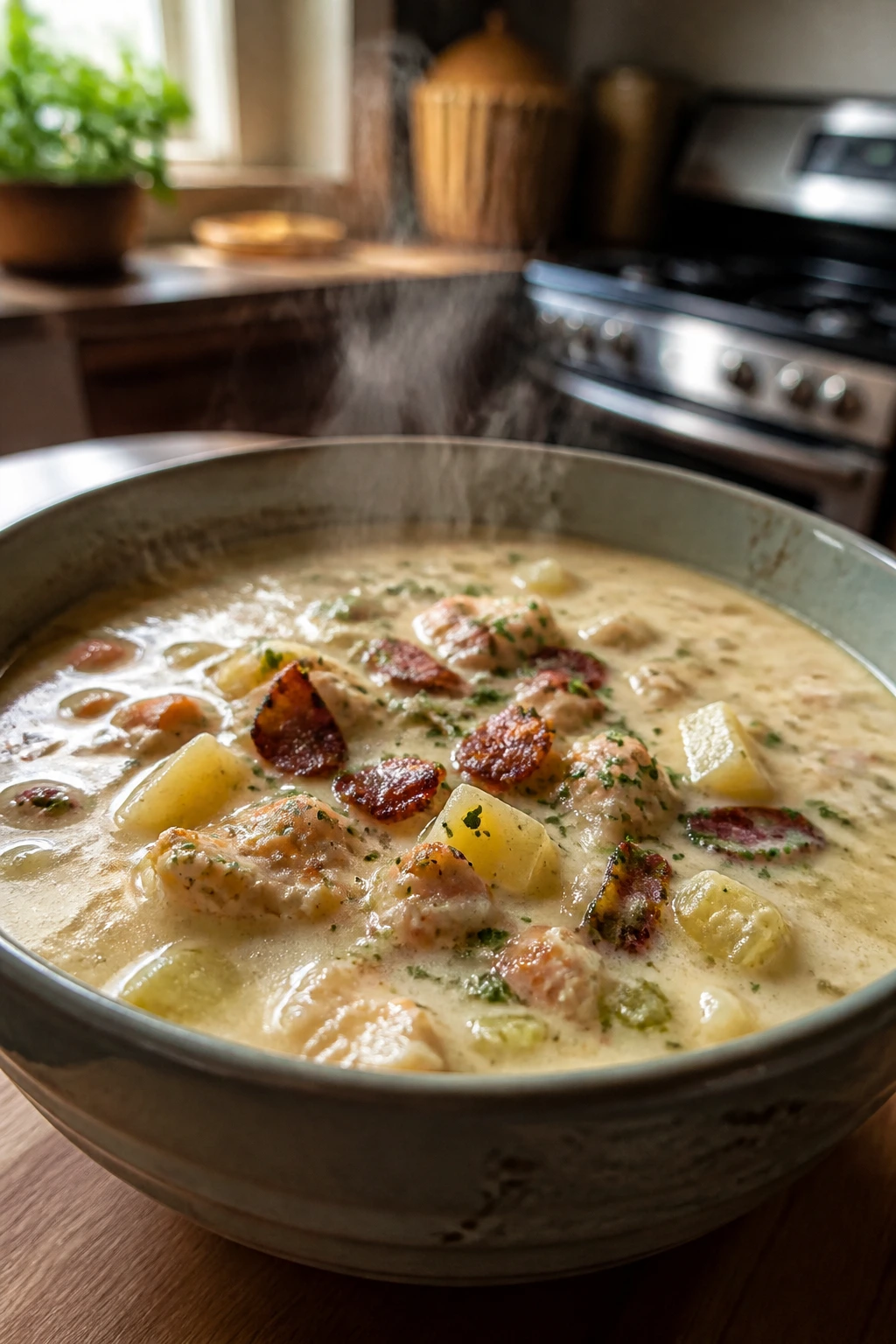
-
They’re built around one quiet technique: A slow simmer does most of the work, so the flavors stay round instead of sharp or scorched.
-
They handle pantry food well: Potatoes, canned corn, canned clams, beans, broth, and bacon carry a surprising amount of flavor once they’ve been layered properly.
-
They’re flexible without getting messy: Swap cod for haddock, corn for hominy, or half-and-half for evaporated milk without wrecking the whole pot.
-
They make leftovers worth keeping: Many chowders taste even deeper the next day, once the potatoes and aromatics have had time to settle together.
-
They fit a lot of moods: Some are seafood-forward, some are vegetable-heavy, and some are the kind of supper that makes a gray evening feel shorter.
1. Classic New England Clam Chowder
A bowl of this is all soft steam, brine, and butter. The potato cubes stay tender, the clams bring a salty edge, and the cream sits underneath everything like a quiet blanket.
Why It Works:
This version leans on salt pork or bacon, clam juice, and a little flour for body, which gives the broth that old-school, spoon-coating texture. The clams go in near the end so they stay tender instead of turning rubbery.
Key Ingredients:
- 4 slices bacon, diced
- 1 medium yellow onion, finely chopped
- 2 celery stalks, diced
- 2 tablespoons all-purpose flour
- 2 cups clam juice
- 2 cups peeled Yukon Gold potatoes, 1/2-inch cubes
- 1 cup heavy cream
- 2 cans chopped clams, 6.5 ounces each, drained and juice reserved
- 1 teaspoon black pepper
- 2 tablespoons chopped parsley
Quick Steps:
- Cook the bacon in a heavy pot over medium heat until the fat renders and the edges crisp.
- Add onion and celery; cook 5 minutes until soft and glossy.
- Stir in flour and cook 1 minute, then pour in clam juice and 1 cup water.
- Add potatoes, simmer 12 to 15 minutes until fork-tender.
- Stir in cream and clams, warm 2 to 3 minutes, then finish with pepper and parsley.
Equipment for This Recipe:
- Heavy Dutch oven
- Sharp knife
- Wooden spoon
- Ladle
How to Serve This Dish:
Serve it in wide bowls with oyster crackers or a split-top roll for dunking. I like a final grind of black pepper on top; it wakes up the cream without making the bowl noisy.
Pro Tips for This Recipe:
- Use Yukon Gold potatoes; they hold their shape better than russets.
- Reserve a little clam juice if you want a stronger briny finish.
- Do not boil after adding cream.
Variations on This Dish:
- Corn-Offset Clam Chowder: Add 1 cup corn kernels with the potatoes.
- Herb-Bright Version: Stir in dill and chives at the end.
Common Mistakes to Avoid with This Dish:
- Don’t simmer the clams for long; they tighten fast.
- Don’t skip the bacon fat unless you replace it with butter and a pinch of salt.
2. Creamy Corn Chowder with Bacon
Sweet corn and smoky bacon make a cleaner pair than people expect. The sweetness keeps the bacon from feeling heavy, and the broth turns pale gold with just enough starch to feel substantial.
Why It Works:
Corn chowder needs two kinds of corn behavior: some kernels stay whole, and some get blended or mashed to thicken the pot. The bacon builds the base, while the milk keeps the finish soft and round.
Key Ingredients:
- 5 slices bacon, chopped
- 1 small onion, diced
- 2 cups corn kernels, fresh or frozen
- 2 tablespoons flour
- 3 cups chicken stock
- 2 cups whole milk
- 2 medium Yukon Gold potatoes, peeled and diced
- 1 teaspoon smoked paprika
- 2 scallions, sliced
Quick Steps:
- Brown the bacon in a soup pot until crisp, then remove half for garnish.
- Cook onion in the bacon fat for 4 minutes until translucent.
- Stir in flour and paprika, then add stock and potatoes.
- Simmer 12 minutes, add corn and milk, and cook 5 minutes more.
- Mash a few potatoes against the side of the pot, then serve with scallions and reserved bacon.
Equipment for This Recipe:
- Soup pot
- Potato masher
- Measuring cups
- Slotted spoon
How to Serve This Dish:
Serve with cornbread or a toasted cheddar sandwich. The bowl should look flecked with corn, bacon, and green scallions, not buried under toppings.
Pro Tips for This Recipe:
- Frozen corn is fine; thaw it first so it doesn’t drop the pot temperature.
- Mash only a few potatoes, not all of them.
- A splash of cider vinegar at the end sharpens the sweetness.
Variations on This Dish:
- Cheddar Corn Chowder: Stir in 1 cup shredded cheddar off the heat.
- Green Chile Corn Chowder: Add chopped roasted chiles with the stock.
Common Mistakes to Avoid with This Dish:
- Don’t let the milk boil hard; it can taste flat.
- Don’t underseason after the stock goes in. Corn needs salt.
3. Potato Leek Chowder
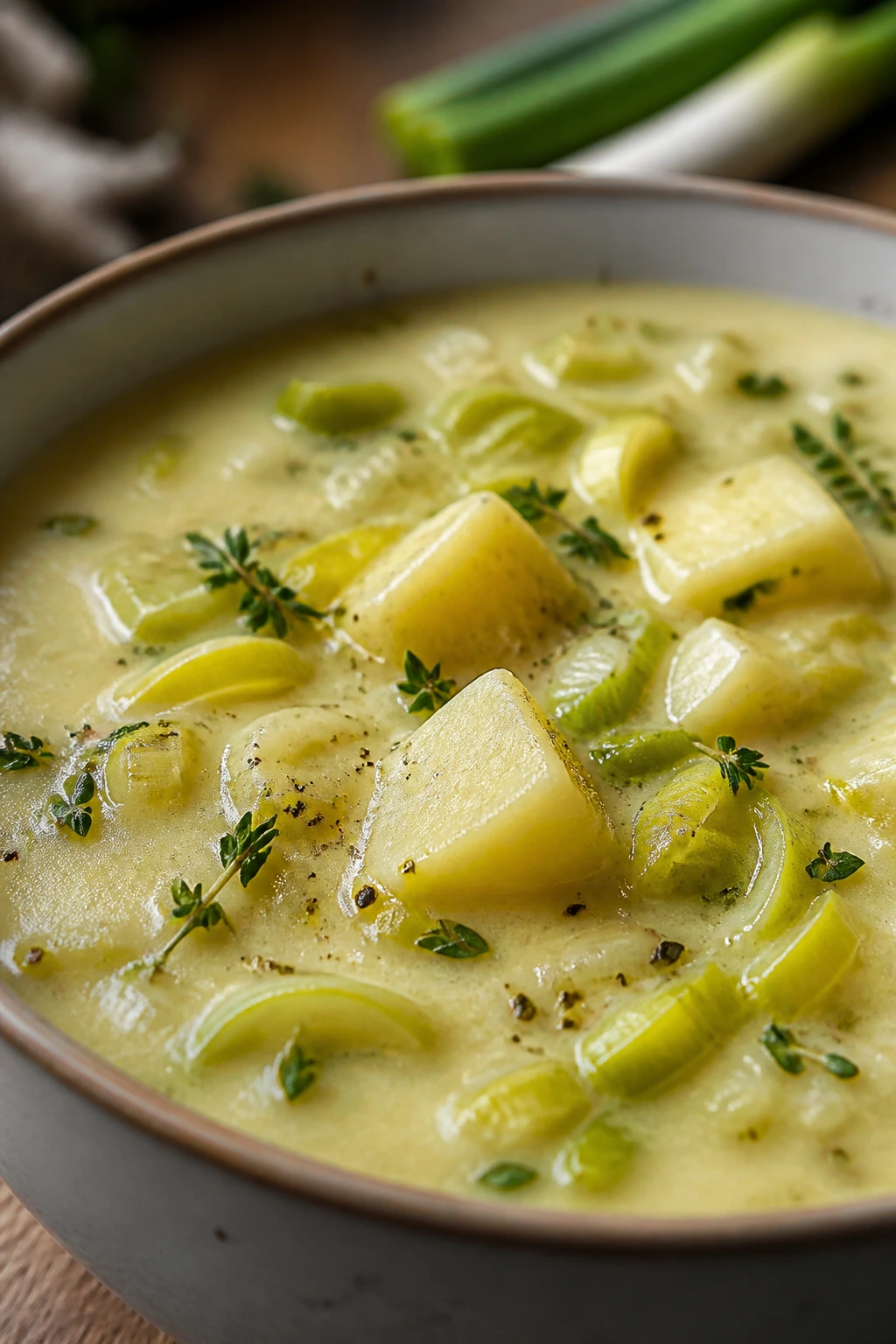
This one is all soft edges. Leeks taste sweeter than onions when they’re cooked slowly, and the potatoes melt just enough to make the broth feel velvety without needing much cream.
Why It Works:
Leeks need time and low heat, not aggression. Their mild onion flavor turns almost buttery when they’re cooked in butter first, and potato starch fills in the body naturally.
Key Ingredients:
- 3 leeks, white and light green parts only, sliced and rinsed
- 3 tablespoons butter
- 2 cloves garlic, minced
- 4 medium Yukon Gold potatoes, peeled and diced
- 4 cups vegetable stock
- 1 cup half-and-half
- 1 bay leaf
- 1 teaspoon salt
- 2 tablespoons chopped chives
Quick Steps:
- Melt butter in a pot and cook leeks over medium-low heat for 8 minutes.
- Add garlic, potatoes, stock, bay leaf, and salt.
- Simmer 15 minutes until potatoes are soft enough to break with a spoon.
- Remove the bay leaf, stir in half-and-half, and warm gently.
- Mash a few potatoes, then finish with chives.
Equipment for This Recipe:
- Dutch oven
- Fine strainer for rinsing leeks
- Potato masher
- Ladle
How to Serve This Dish:
This is excellent with crusty bread and a green salad dressed in lemon. Keep the finish plain; the leeks already do the talking.
Pro Tips for This Recipe:
- Rinse leeks well. Sand hides between the layers.
- Slice them thin so they collapse into the broth.
- Use half-and-half at the end for a softer finish than heavy cream.
Variations on This Dish:
- Smoky Leek Version: Add diced bacon with the butter.
- Dairy-Free Version: Use unsweetened oat milk and extra potato.
Common Mistakes to Avoid with This Dish:
- Don’t brown the leeks deeply; they should soften, not toast.
- Don’t leave big potato chunks if you want that silky spoon feel.
4. Smoky Salmon Chowder
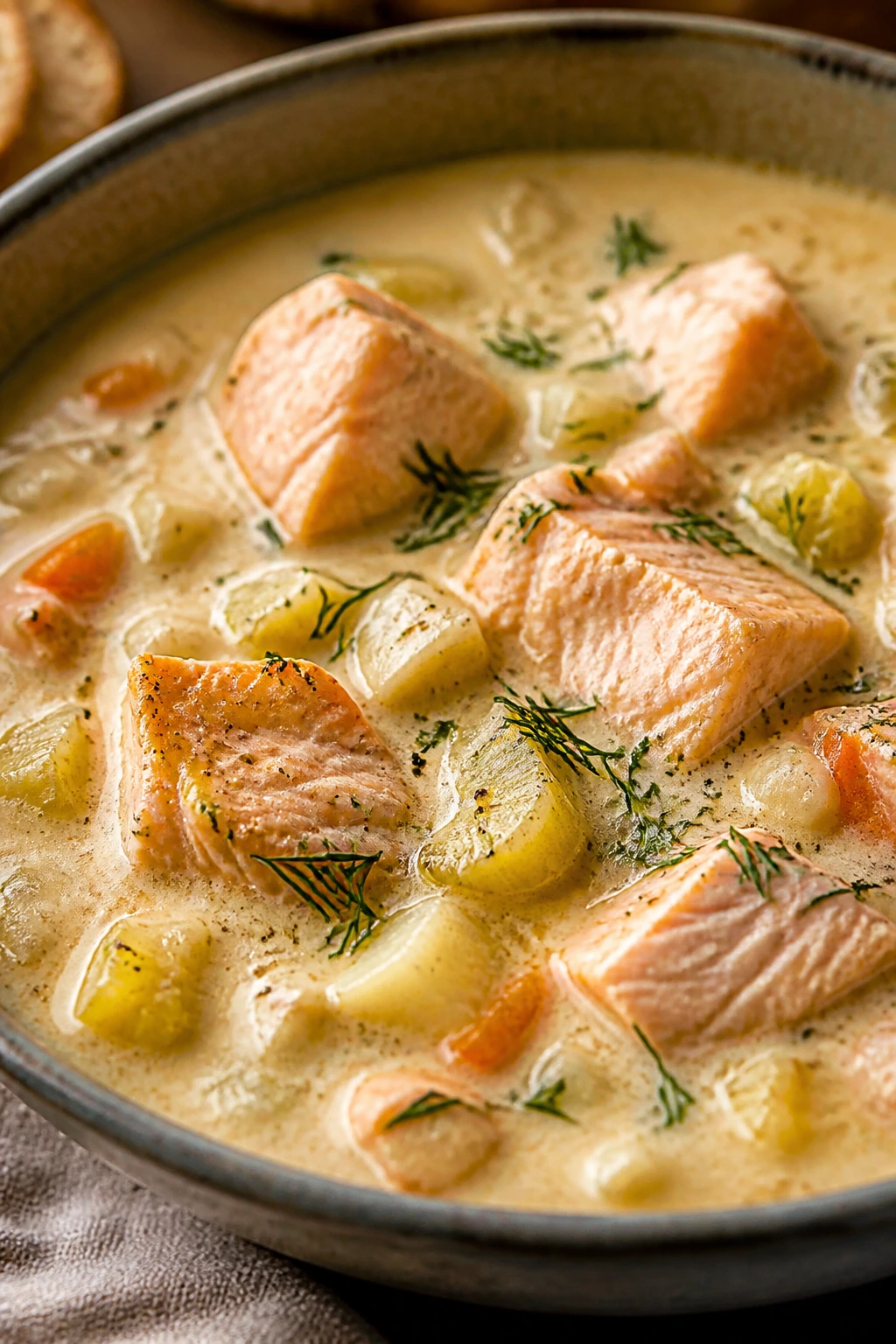
Salmon chowder has a gentle richness that feels almost plush. The fish stays flaky, the broth picks up a faint smoky edge, and the dill at the end makes the whole bowl feel cleaner.
Why It Works:
A quick poach is the trick here. Salmon cooks fast, so the chowder base should be fully ready before the fish goes in, or you’ll end up with dry flakes and a muddy broth.
Key Ingredients:
- 1 pound salmon fillet, skin removed, cut into chunks
- 4 slices bacon, diced
- 1 onion, chopped
- 2 celery stalks, diced
- 3 cups fish stock or chicken stock
- 2 medium potatoes, cubed
- 1 cup whole milk
- 1/2 cup heavy cream
- 2 tablespoons dill, chopped
- 1 lemon, for serving
Quick Steps:
- Cook bacon until crisp, then add onion and celery.
- Stir in potatoes and stock; simmer 12 minutes.
- Add milk and cream, then lower the heat until the pot barely moves.
- Slide in salmon chunks and cook 4 to 5 minutes until just opaque.
- Finish with dill and a squeeze of lemon.
Equipment for This Recipe:
- Wide soup pot
- Fish spatula or silicone spoon
- Cutting board
- Citrus juicer
How to Serve This Dish:
Serve with rye bread or crackers and a lemon wedge on the side. The lemon matters; salmon likes a little lift.
Pro Tips for This Recipe:
- Cut the salmon into chunky pieces so it stays intact.
- Use a wide pot so the fish cooks evenly.
- Add dill at the end; long cooking makes it dull.
Variations on This Dish:
- Corned Dill Salmon Chowder: Add 1 cup corn with the potatoes.
- Creamier Finish: Use all cream and skip the milk.
Common Mistakes to Avoid with This Dish:
- Don’t boil the salmon once it’s in the pot.
- Don’t use smoked salmon as the only fish unless you want a much saltier bowl.
5. Chicken and Corn Chowder
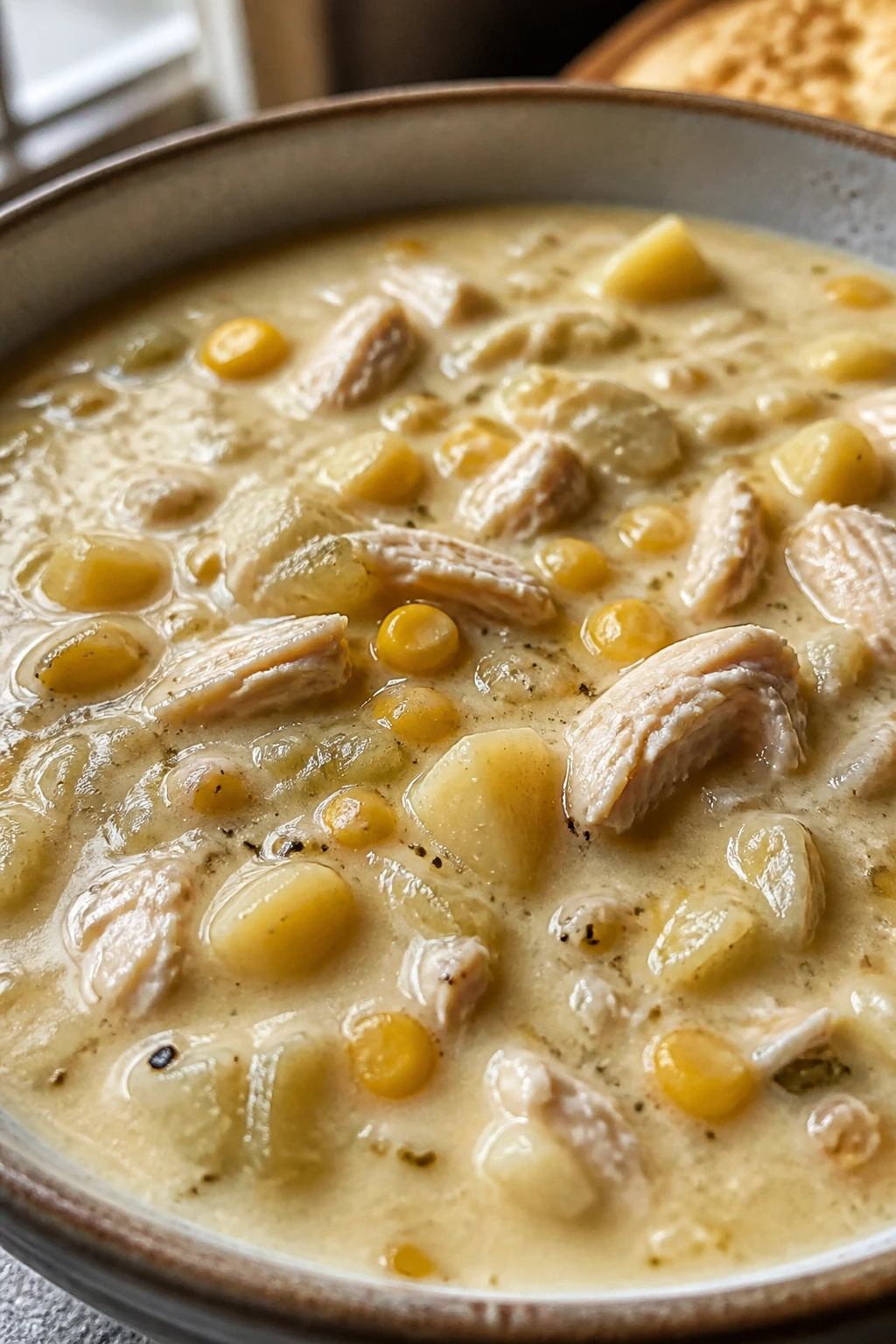
This is the kind of chowder that smells like supper from the hallway. Chicken gives it structure, corn gives it sweetness, and the potato starch makes it feel fuller than the ingredient list suggests.
Why It Works:
Rotisserie chicken is a cheat worth taking here. Because the meat is already cooked, it only needs a brief warm-up, which keeps the texture tender and saves the broth from overcooking.
Key Ingredients:
- 2 cups cooked chicken, shredded
- 4 slices bacon, chopped
- 1 onion, diced
- 2 cups corn kernels
- 3 cups chicken stock
- 2 medium potatoes, diced
- 1 cup half-and-half
- 1 teaspoon thyme
- 2 tablespoons parsley
Quick Steps:
- Crisp the bacon, then cook the onion in the fat.
- Add potatoes, corn, stock, and thyme; simmer 15 minutes.
- Stir in chicken and half-and-half.
- Warm 3 to 4 minutes without boiling.
- Finish with parsley and black pepper.
Equipment for This Recipe:
- Soup pot
- Tongs
- Measuring cups
- Wooden spoon
How to Serve This Dish:
Serve it with biscuits or toasted sourdough. It also makes a solid next-day lunch with a few crushed saltines on top.
Pro Tips for This Recipe:
- Shred the chicken into bite-size pieces so every spoonful has some.
- If using leftover roast chicken, taste before salting.
- A little thyme goes a long way; too much makes the pot taste dusty.
Variations on This Dish:
- Green Chile Chicken Chowder: Add roasted green chiles with the stock.
- Cheddar Finish: Stir in 1 cup cheddar off the heat.
Common Mistakes to Avoid with This Dish:
- Don’t overcook the chicken after it’s added.
- Don’t forget the bacon fat or the pot can taste thin.
6. Cod, Shrimp, and Celery Chowder
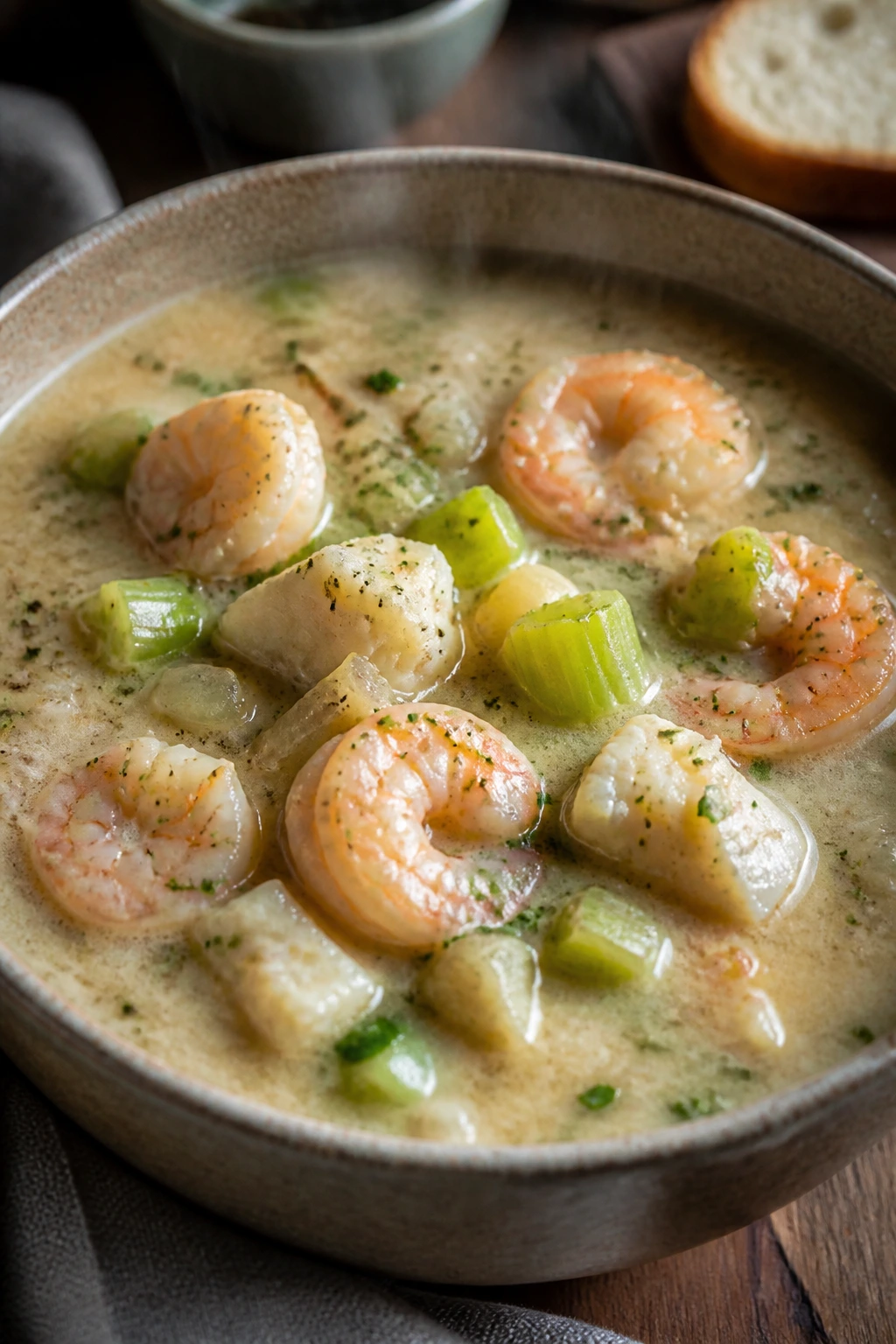
This one has a cleaner, brinier profile than a heavy cream chowder. Cod flakes into soft bites, shrimp add snap, and celery keeps the broth from feeling flat.
Why It Works:
Mixed seafood chowder works when the fish and shrimp are timed separately. Cod needs only a little more cooking than shrimp, so the order matters if you want both textures to stay nice.
Key Ingredients:
- 1 pound cod fillets, cut into chunks
- 8 ounces shrimp, peeled and deveined
- 4 slices bacon, diced
- 2 celery stalks, diced
- 1 onion, diced
- 3 cups seafood stock or chicken stock
- 2 medium potatoes, diced
- 1 cup half-and-half
- 1 tablespoon lemon juice
- 2 tablespoons dill
Quick Steps:
- Cook bacon, then soften onion and celery in the fat.
- Add potatoes and stock; simmer 12 minutes.
- Stir in cod and cook 4 minutes.
- Add shrimp and half-and-half; cook 2 to 3 minutes.
- Finish with lemon juice and dill.
Equipment for This Recipe:
- Wide soup pot
- Slotted spoon
- Fish knife
- Measuring spoon
How to Serve This Dish:
Serve with a plain roll or a buttered baguette so the seafood stays the center of the plate. I like a few celery leaves on top for a fresh finish.
Pro Tips for This Recipe:
- Pat seafood dry so it doesn’t water down the broth.
- Cut cod into even chunks for even cooking.
- Add lemon at the end, not earlier, or it turns sharp and thin.
Variations on This Dish:
- Smoked Paprika Version: Add 1/2 teaspoon smoked paprika with the potatoes.
- Cream-Heavy Version: Use heavy cream instead of half-and-half.
Common Mistakes to Avoid with This Dish:
- Don’t add shrimp too early; they turn tough fast.
- Don’t use tiny chunks of cod or they’ll break apart.
7. Broccoli Cheddar Chowder
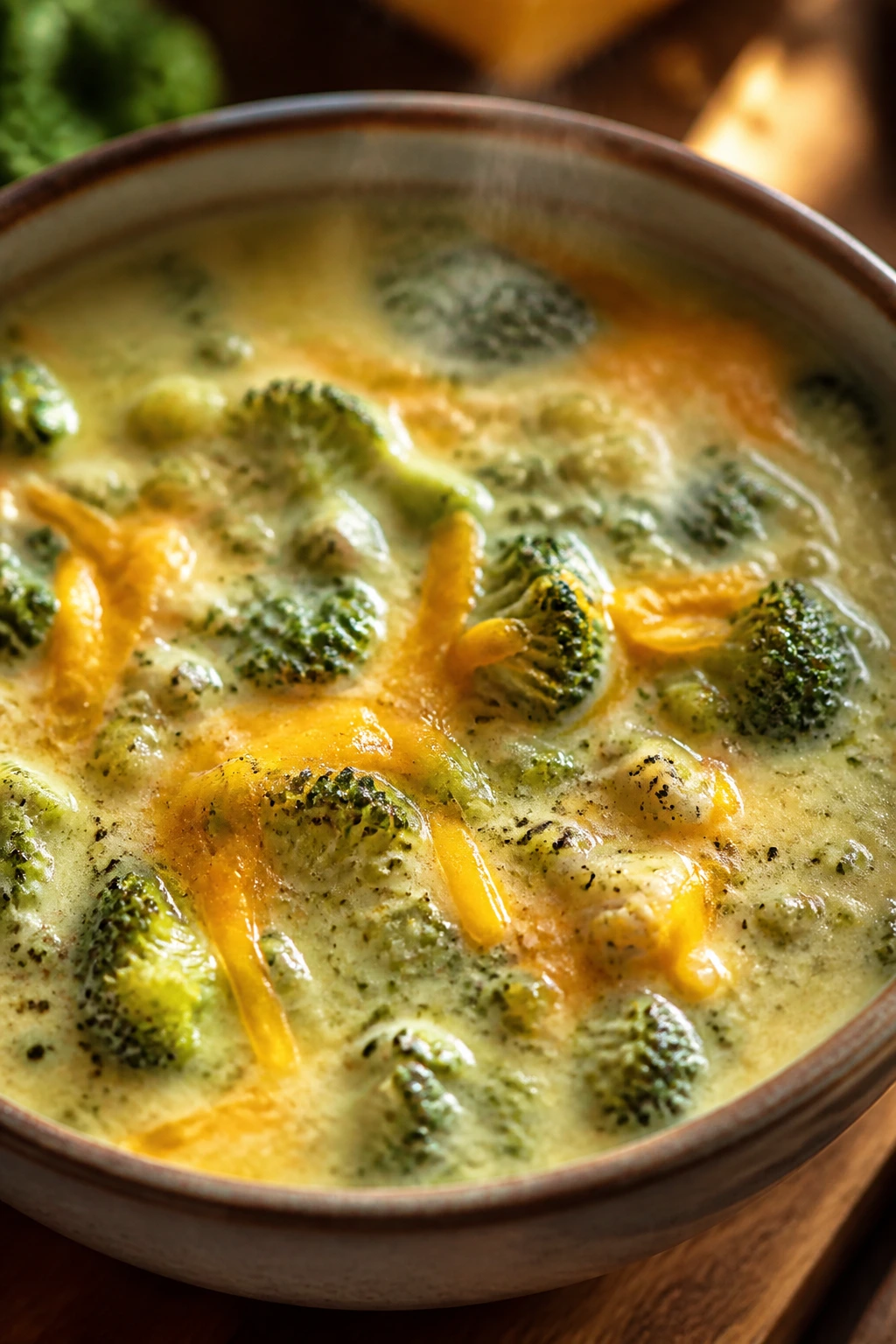
Broccoli cheddar chowder smells like a warm casserole that turned into soup. The broccoli keeps a little bite, and the cheddar melts into the broth in sharp little waves.
Why It Works:
The trick is to soften the broccoli stems before the florets go in. That way the soup gets body from the vegetable itself, not just from a heavy hand with cheese.
Key Ingredients:
- 4 cups broccoli florets and chopped stems
- 3 tablespoons butter
- 1 onion, diced
- 2 tablespoons flour
- 3 cups vegetable stock
- 1 cup milk
- 2 cups shredded sharp cheddar
- 1 carrot, grated
- 1/2 teaspoon mustard powder
Quick Steps:
- Cook onion in butter until soft, then stir in flour and mustard powder.
- Add stock and carrot; simmer 5 minutes.
- Add broccoli and cook 8 to 10 minutes until tender.
- Stir in milk, then melt in the cheddar off the heat.
- Taste and salt carefully before serving.
Equipment for This Recipe:
- Soup pot
- Box grater
- Whisk
- Ladle
How to Serve This Dish:
Serve with crusty bread or a baked potato if you want a full meal. A little extra cheddar on top is enough; more than that can turn the bowl heavy.
Pro Tips for This Recipe:
- Grate the cheese yourself if you can; it melts cleaner.
- Keep the heat low when the cheese goes in.
- Chop the broccoli stems small so they soften on time.
Variations on This Dish:
- Cauliflower Blend: Replace half the broccoli with cauliflower.
- Bacon Version: Add 4 strips bacon at the start.
Common Mistakes to Avoid with This Dish:
- Don’t boil after the cheese goes in.
- Don’t leave the broccoli raw and expect it to soften at the end.
8. Crab and Sweet Corn Chowder
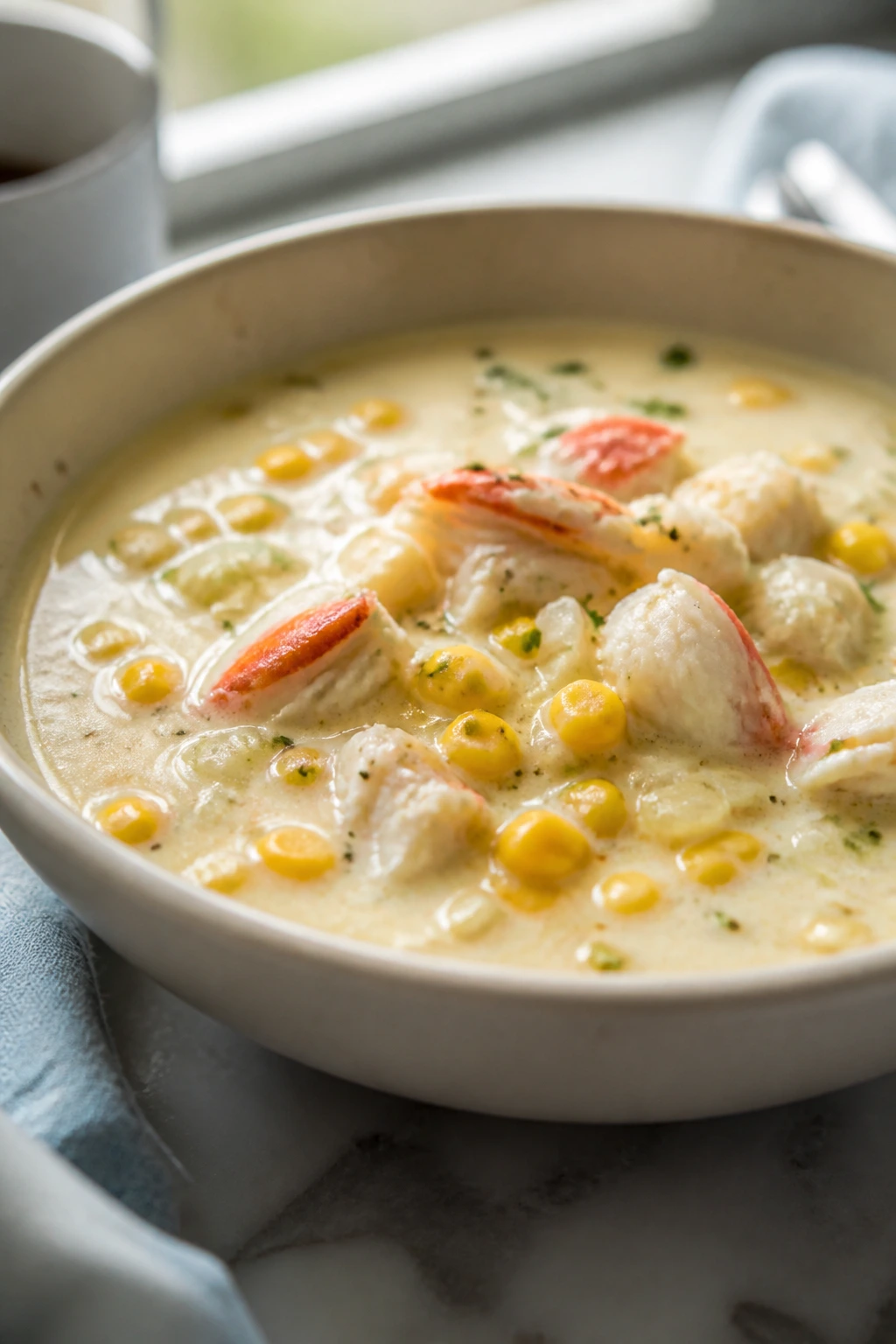
Crab needs a light hand. The meat is sweet and delicate, so the chowder should support it, not bury it under too much smoke or spice.
Why It Works:
Sweet corn and crab share a natural sweetness, which means the broth only needs a little onion, butter, and cream to come together. A tiny splash of sherry at the end makes the crab taste fresher.
Key Ingredients:
- 1 pound lump crab meat, picked over
- 2 cups corn kernels
- 3 tablespoons butter
- 1 small onion, minced
- 2 tablespoons flour
- 3 cups seafood stock
- 1 cup half-and-half
- 1 tablespoon dry sherry
- 1 tablespoon chopped chives
Quick Steps:
- Cook onion in butter until translucent.
- Stir in flour, then add stock and corn.
- Simmer 10 minutes until the corn is tender.
- Stir in half-and-half and crab meat.
- Warm gently, finish with sherry and chives.
Equipment for This Recipe:
- Heavy saucepan
- Rubber spatula
- Fine mesh crab pick or tweezers
- Ladle
How to Serve This Dish:
Serve in shallow bowls with saltines or toasted brioche. Crab is the showpiece, so keep the garnishes restrained.
Pro Tips for This Recipe:
- Fold crab in softly so the lumps stay whole.
- Use a sweet, not overly smoky, corn.
- Sherry should go in at the end, not during simmering.
Variations on This Dish:
- Potato-Backed Version: Add 1 diced potato with the stock.
- Herbier Version: Use dill instead of chives.
Common Mistakes to Avoid with This Dish:
- Don’t overmix the crab or it turns stringy.
- Don’t drown it in paprika or hot sauce.
9. Sausage, Potato, and Kale Chowder
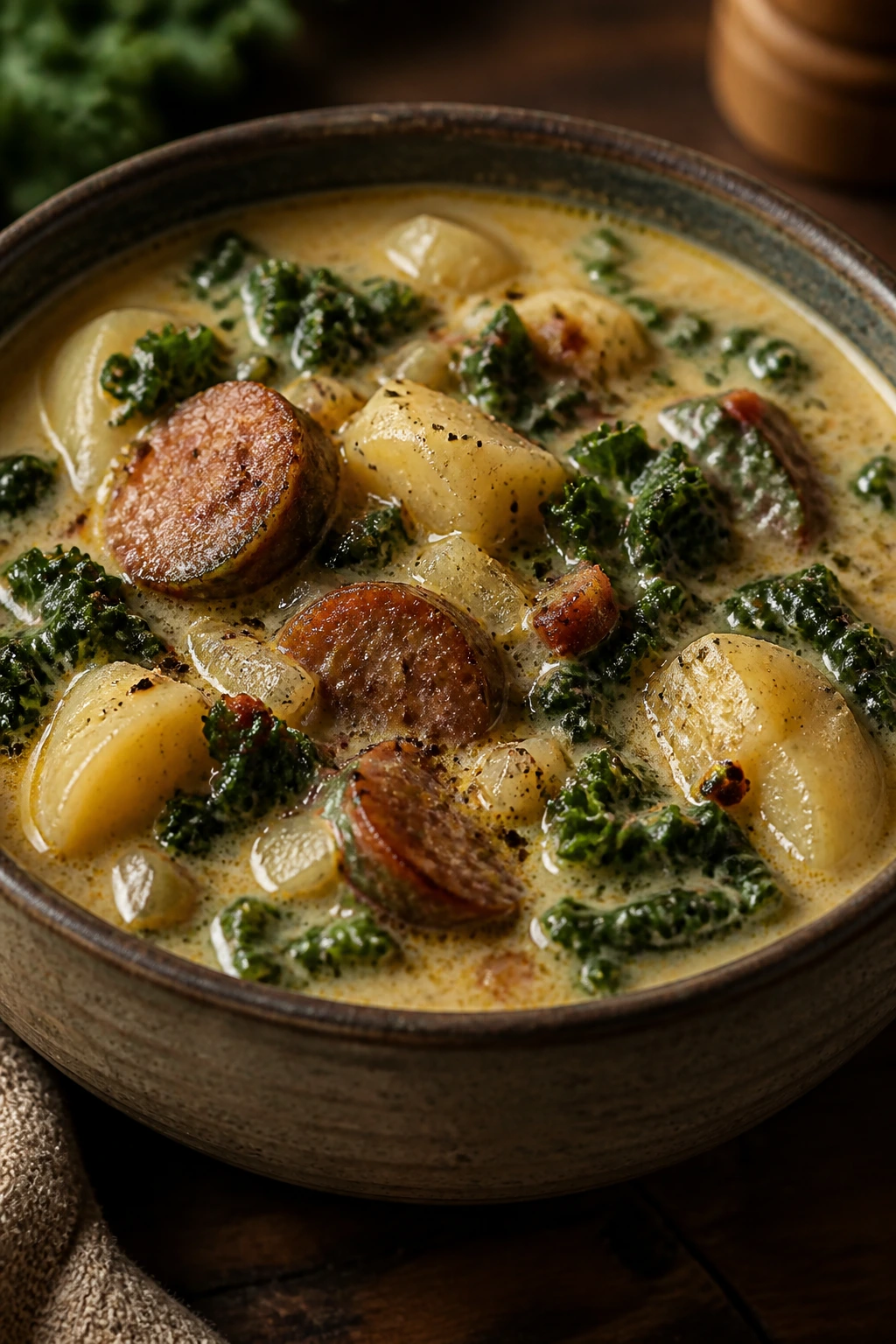
This one lands on the heartier side of the line. The sausage brings spice and salt, the potatoes soften the edges, and the kale gives the bowl some bite and color.
Why It Works:
Sausage makes the broth taste seasoned before you’ve done much else. Kale goes in late so it stays green instead of sinking into the pot and disappearing.
Key Ingredients:
- 12 ounces smoked sausage, sliced
- 1 onion, chopped
- 2 garlic cloves, minced
- 3 medium potatoes, diced
- 4 cups chicken stock
- 1 cup milk
- 2 cups chopped kale, ribs removed
- 1 teaspoon black pepper
- 1 tablespoon olive oil
Quick Steps:
- Brown sausage in oil, then remove it.
- Cook onion and garlic in the fat for 3 minutes.
- Add potatoes and stock; simmer 15 minutes.
- Stir in milk, sausage, and kale.
- Cook 5 minutes until kale is tender but still green.
Equipment for This Recipe:
- Soup pot
- Chef’s knife
- Wooden spoon
- Measuring cup
How to Serve This Dish:
Serve with cornbread or warm rye bread. The bowl is filling enough for dinner on its own, so a side salad can stay simple.
Pro Tips for This Recipe:
- Slice sausage on a bias for a better texture.
- Remove kale stems or they stay chewy.
- If the sausage is salty, hold back on added salt until the end.
Variations on This Dish:
- Hot Sausage Version: Use spicy sausage for more bite.
- White Bean Version: Add 1 can drained cannellini beans.
Common Mistakes to Avoid with This Dish:
- Don’t add kale too early or it turns dull.
- Don’t skip browning the sausage; that’s where the flavor lives.
10. Mushroom and Wild Rice Chowder
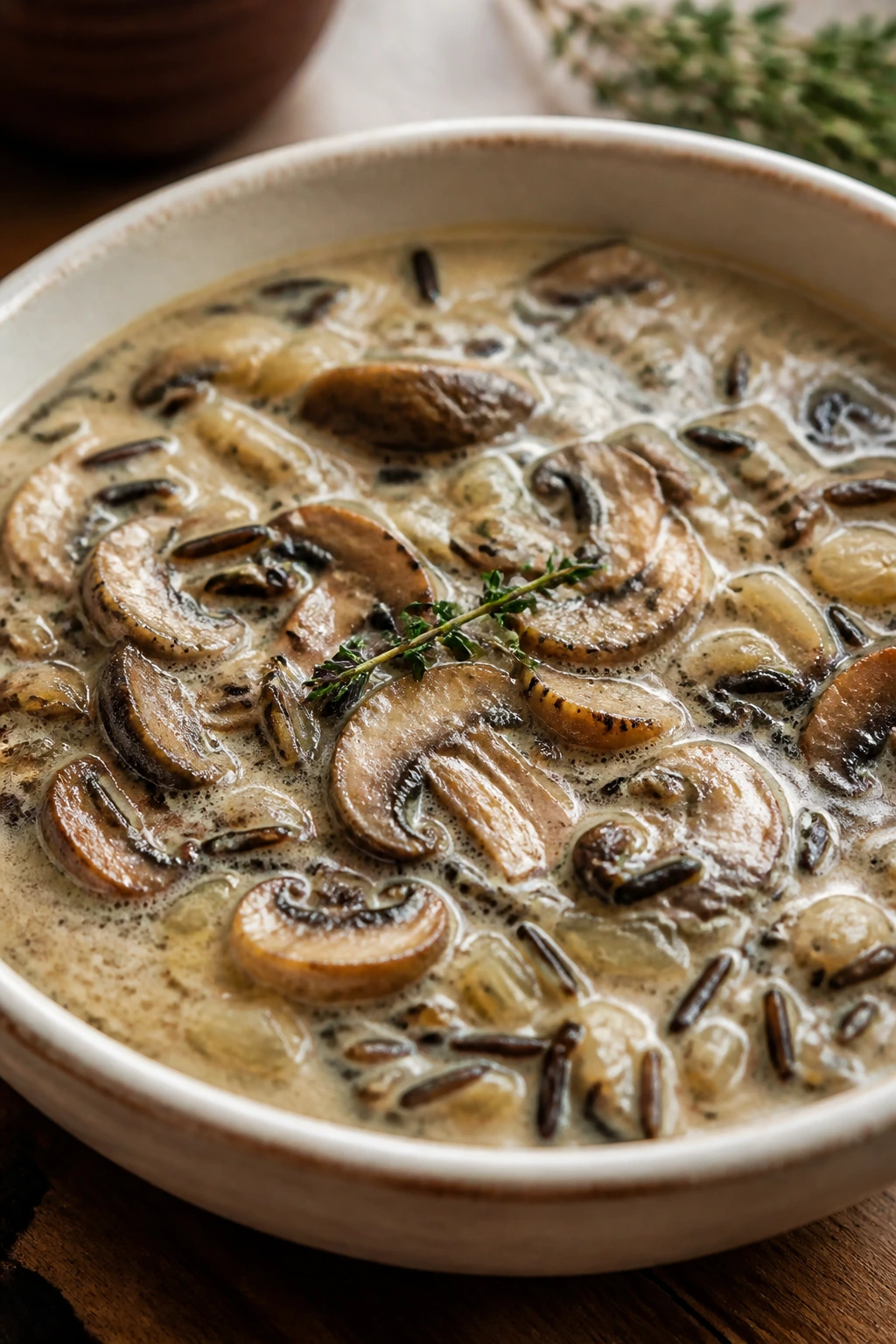
Earthy mushrooms and wild rice make a chowder that feels deep without leaning heavy. The broth stays savory, and the rice gives each spoonful a little chew.
Why It Works:
Wild rice holds up better than white rice in a simmering pot. Mushrooms need to brown first so they don’t just steam and vanish into the background.
Key Ingredients:
- 12 ounces cremini mushrooms, sliced
- 1/2 cup wild rice, rinsed
- 1 onion, diced
- 2 tablespoons butter
- 4 cups vegetable stock
- 1 cup milk
- 1 teaspoon thyme
- 1 bay leaf
- 2 tablespoons parsley
Quick Steps:
- Brown mushrooms in butter until they lose moisture and take on color.
- Add onion and cook 3 minutes.
- Stir in wild rice, stock, thyme, and bay leaf.
- Simmer 35 to 40 minutes until rice is tender.
- Add milk, warm gently, and finish with parsley.
Equipment for This Recipe:
- Soup pot with lid
- Wooden spoon
- Measuring cups
- Strainer
How to Serve This Dish:
Serve with toast rubbed with garlic or a side of green beans. It’s one of the few chowders that can stand beside a roast chicken or sit alone without complaint.
Pro Tips for This Recipe:
- Let the mushrooms really brown before moving on.
- Wild rice needs time; don’t rush it with high heat.
- A tiny splash of soy sauce deepens the broth.
Variations on This Dish:
- Creamier Version: Use half-and-half instead of milk.
- Herbed Version: Add tarragon with the thyme.
Common Mistakes to Avoid with This Dish:
- Don’t undercook wild rice; it stays firm longer than you expect.
- Don’t salt too early if your stock is already seasoned.
11. Cauliflower Chowder with Chives
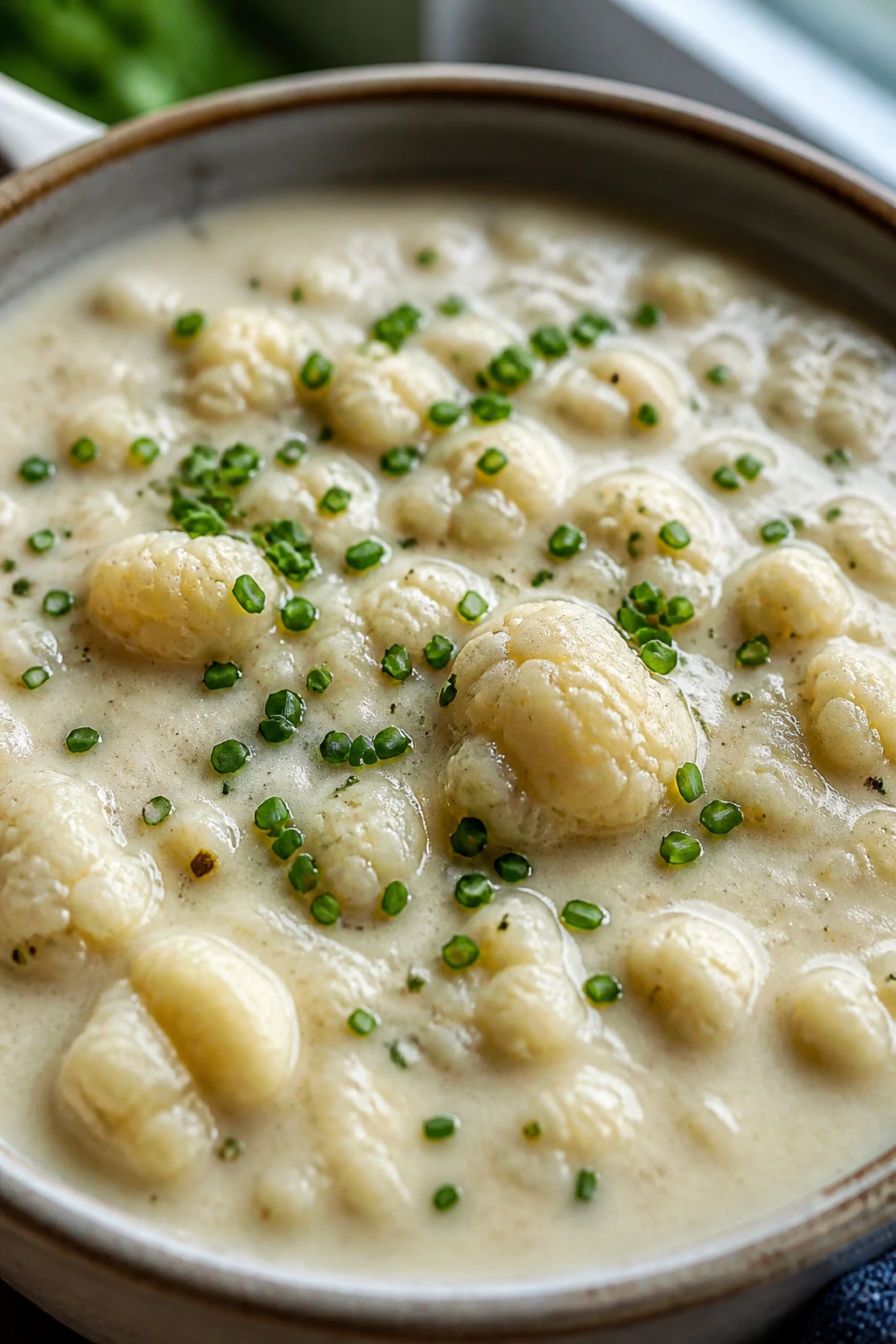
Cauliflower chowder has a clean, pale look and a soft, nutty flavor. It’s the sort of soup that feels quiet on the tongue but still finishes like a full meal.
Why It Works:
Cauliflower breaks down into a silky base if you give it enough time. A little potato helps with body, while chives keep the flavor from drifting bland.
Key Ingredients:
- 1 large head cauliflower, cut into florets
- 1 medium potato, peeled and diced
- 1 onion, diced
- 2 tablespoons butter
- 4 cups vegetable stock
- 1 cup milk
- 1/4 teaspoon nutmeg
- 2 tablespoons chopped chives
Quick Steps:
- Cook onion in butter until soft.
- Add cauliflower, potato, stock, and nutmeg.
- Simmer 18 minutes until very tender.
- Blend partly with an immersion blender.
- Stir in milk and chives, then taste for salt.
Equipment for This Recipe:
- Dutch oven
- Immersion blender
- Ladle
- Measuring spoon
How to Serve This Dish:
Serve with a seeded roll or toasted pita. I like a few extra chives on top because the green against the pale soup looks clean and sharp.
Pro Tips for This Recipe:
- Don’t overblend unless you want a fully smooth soup.
- Roast half the cauliflower first if you want a nuttier flavor.
- Nutmeg should be faint, not obvious.
Variations on This Dish:
- Cheddar Version: Add 1 cup cheese off the heat.
- Roasted Garlic Version: Blend in 4 roasted cloves.
Common Mistakes to Avoid with This Dish:
- Don’t skip the potato if you want real body.
- Don’t boil after adding milk.
12. Turkey and Corn Chowder
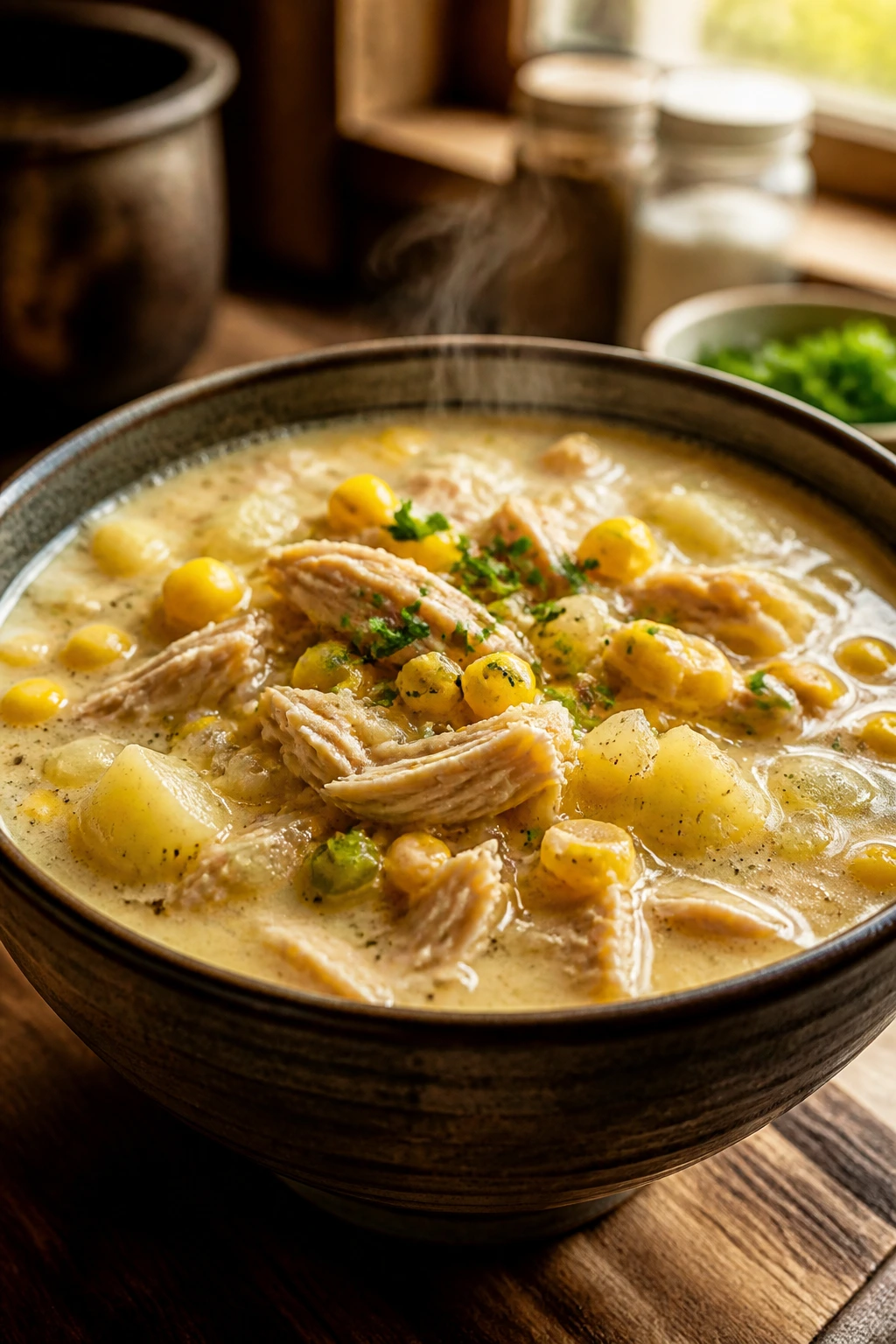
Turkey chowder is a good reason to treat leftover roast bird like treasure. The meat is mild, the corn keeps it lively, and the broth takes on a cozy, slightly sweet tone.
Why It Works:
Turkey can dry out fast if it sits too long in simmering liquid, so it belongs near the end. Corn and potato give the pot enough character that the turkey doesn’t need to carry the whole thing.
Key Ingredients:
- 2 cups cooked turkey, shredded
- 2 cups corn kernels
- 1 onion, chopped
- 2 celery stalks, diced
- 3 medium potatoes, diced
- 4 cups chicken stock
- 1 cup half-and-half
- 1 teaspoon sage
- 2 tablespoons parsley
Quick Steps:
- Cook onion and celery in a little butter until soft.
- Add potatoes, corn, stock, and sage; simmer 15 minutes.
- Stir in turkey and half-and-half.
- Warm 4 minutes without boiling.
- Finish with parsley and black pepper.
Equipment for This Recipe:
- Soup pot
- Cutting board
- Wooden spoon
- Ladle
How to Serve This Dish:
Serve with biscuits or a slice of buttered toast. The chowder should look chunky and pale gold, with the corn and turkey clearly visible.
Pro Tips for This Recipe:
- Dice turkey into bite-size pieces so it stays tender.
- Use dark meat if you want a juicier result.
- Sage gets loud fast; use it with a light hand.
Variations on This Dish:
- Leftover Gravy Version: Stir in 1/2 cup gravy for deeper flavor.
- Smoky Version: Add a little bacon at the start.
Common Mistakes to Avoid with This Dish:
- Don’t overcook the turkey after adding it.
- Don’t use very lean breast meat without enough broth or milk.
13. Ham and White Bean Chowder
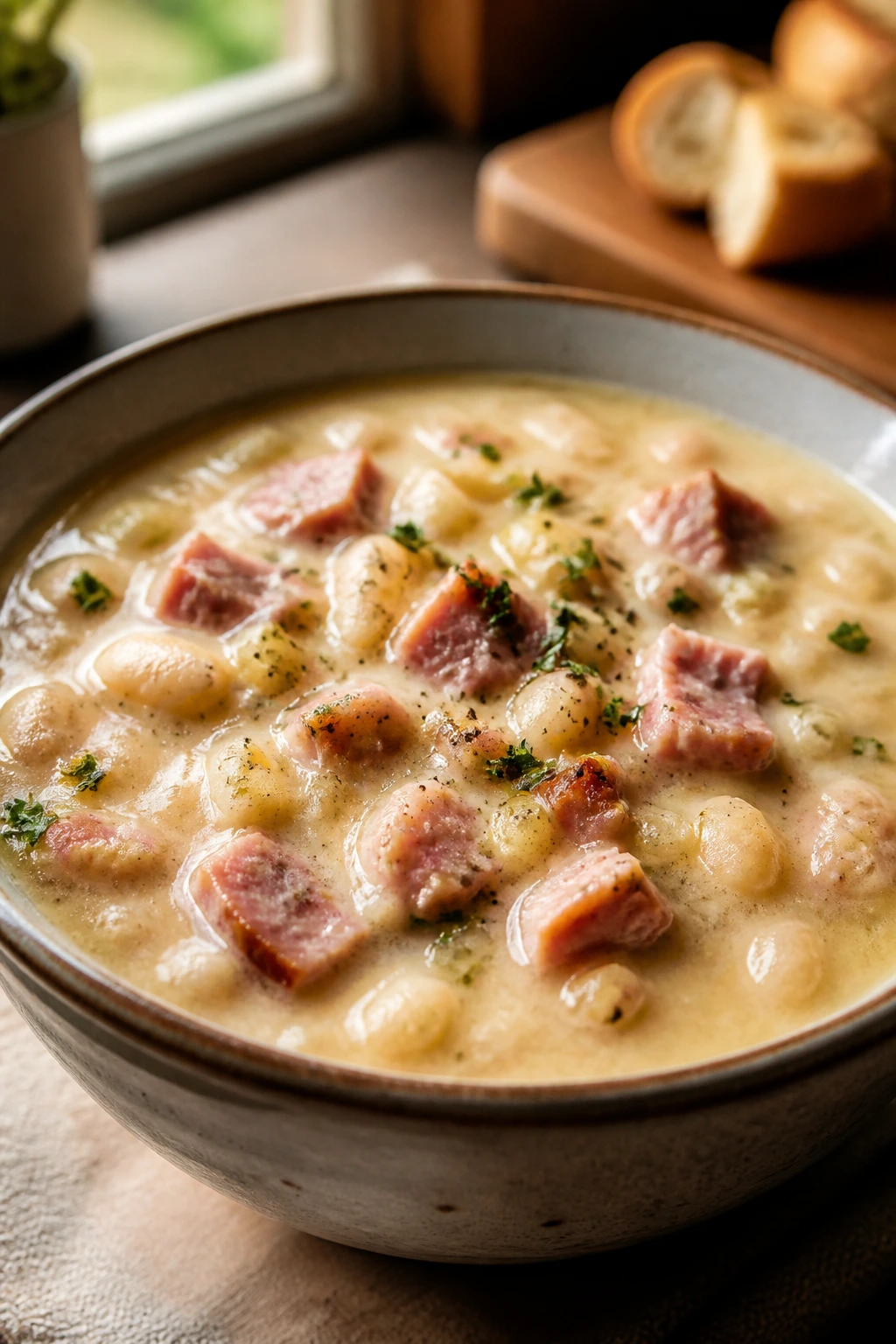
This is a sturdy bowl with a soft center. Ham brings salt and smoke, while white beans melt just enough to make the broth thick and smooth.
Why It Works:
Beans do the quiet work here. A few can be mashed at the edge of the pot, which gives the chowder body without flour or cream-heavy weight.
Key Ingredients:
- 2 cups diced cooked ham
- 2 cans cannellini beans, drained and rinsed
- 1 onion, diced
- 2 celery stalks, chopped
- 4 cups chicken stock
- 1 cup milk
- 2 medium potatoes, diced
- 1 bay leaf
- 1 teaspoon thyme
Quick Steps:
- Cook onion and celery until soft.
- Add potatoes, beans, stock, bay leaf, and thyme.
- Simmer 15 minutes until potatoes soften.
- Mash some beans against the pot side.
- Stir in ham and milk, warm gently, and serve.
Equipment for This Recipe:
- Soup pot
- Potato masher
- Measuring cups
- Ladle
How to Serve This Dish:
Serve with rye bread or cornbread. A little mustard on the side is nice if you want the plate to taste sharper.
Pro Tips for This Recipe:
- Rinse the beans so the broth doesn’t taste cloudy.
- Taste the ham before salting anything.
- Mash only part of the beans or the pot gets pasty.
Variations on This Dish:
- Smoked Paprika Version: Add 1/2 teaspoon smoked paprika with the thyme.
- Greener Version: Stir in chopped spinach at the end.
Common Mistakes to Avoid with This Dish:
- Don’t salt early; ham often carries enough.
- Don’t boil after the milk goes in.
14. Sweet Potato and Corn Chowder
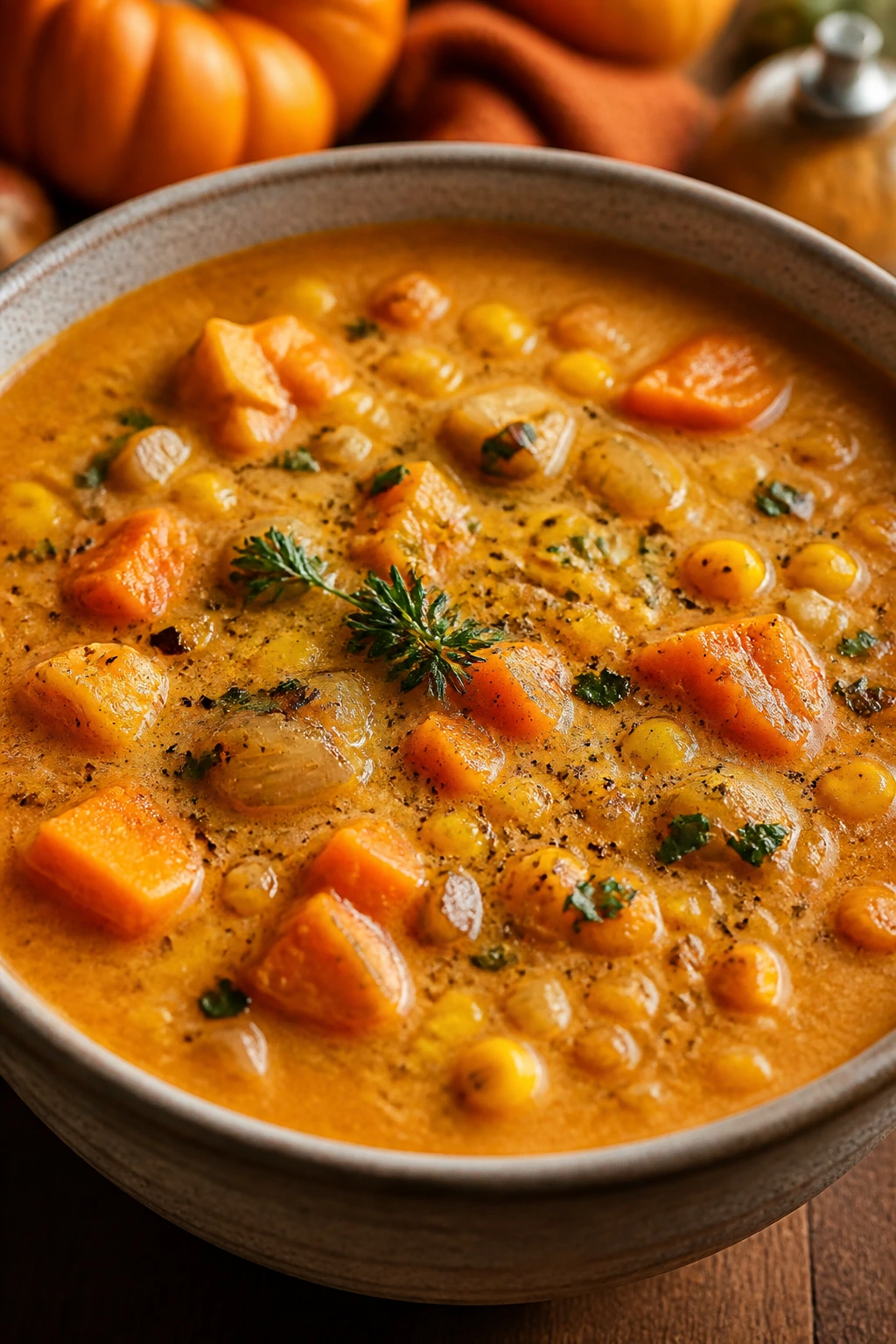
Sweet potato gives this chowder a warm orange color and a soft, almost silky sweetness. Corn keeps it from leaning dessert-like, and a little smoke or spice finishes the job.
Why It Works:
Sweet potatoes break down faster than regular potatoes, so they naturally thicken the broth. Corn adds texture, which keeps the bowl from becoming one-note.
Key Ingredients:
- 2 medium sweet potatoes, peeled and diced
- 2 cups corn kernels
- 1 onion, diced
- 2 tablespoons butter
- 4 cups vegetable stock
- 1 cup coconut milk
- 1/2 teaspoon smoked paprika
- 2 scallions, sliced
Quick Steps:
- Cook onion in butter until soft.
- Add sweet potatoes, stock, and paprika; simmer 15 minutes.
- Stir in corn and coconut milk.
- Cook 5 minutes until sweet potatoes are tender.
- Finish with scallions and black pepper.
Equipment for This Recipe:
- Soup pot
- Paring knife
- Wooden spoon
- Ladle
How to Serve This Dish:
Serve with warm flatbread or a simple slaw. The color is the show here, so keep the toppings small and bright.
Pro Tips for This Recipe:
- Dice sweet potatoes evenly so they cook at the same rate.
- Coconut milk makes the broth feel softer than cream.
- A squeeze of lime at the end keeps the sweetness in check.
Variations on This Dish:
- Bacon-Salted Version: Add bacon at the start and skip the coconut milk.
- Black Bean Version: Add 1 can black beans for more body.
Common Mistakes to Avoid with This Dish:
- Don’t cut the sweet potatoes too large.
- Don’t forget acid at the end or the soup tastes flat.
15. Roasted Red Pepper and Tomato Chowder
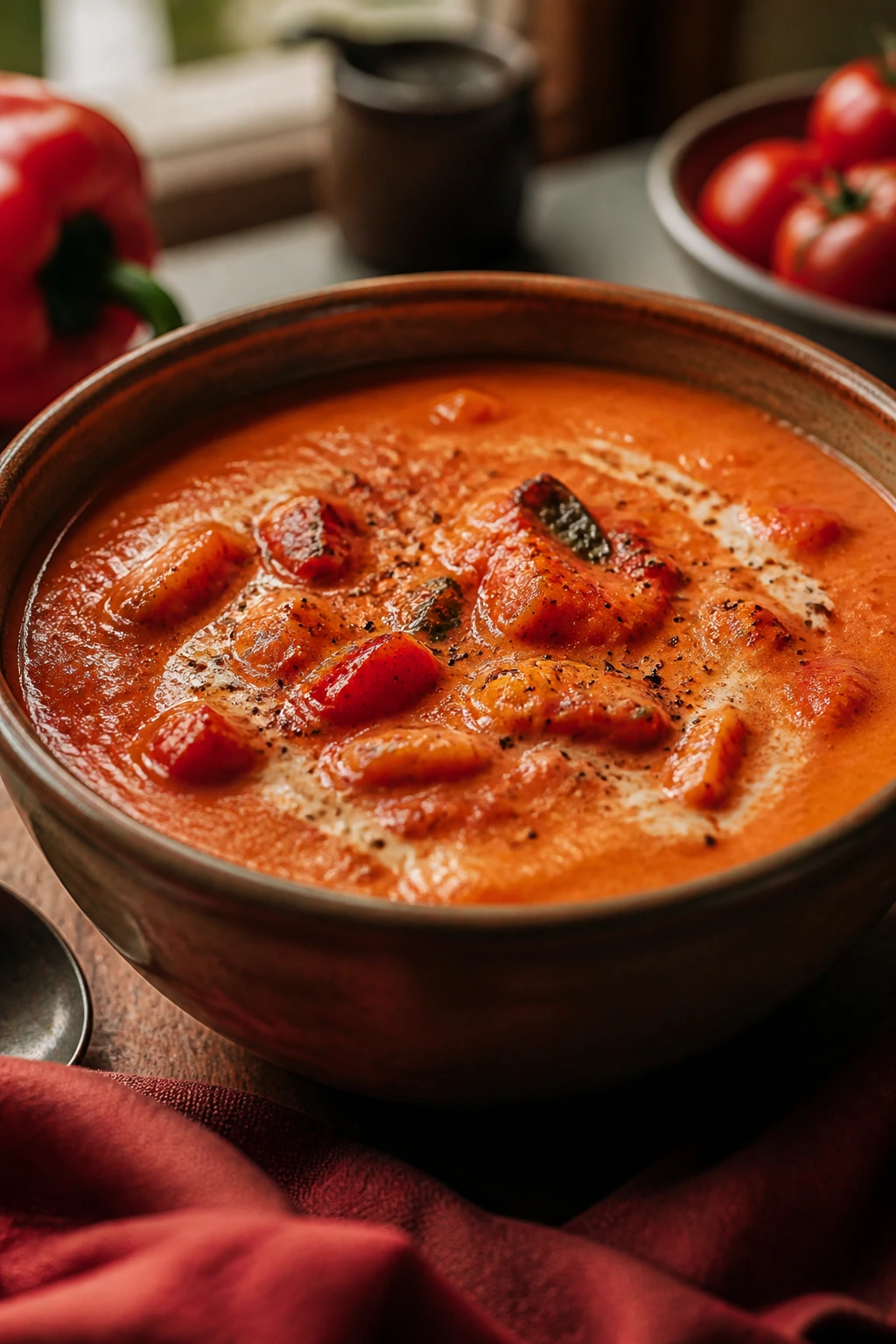
This chowder tastes like a cross between a creamy soup and a soft tomato stew. Roasted peppers bring sweetness, tomato brings brightness, and the texture lands somewhere smooth and spoonable.
Why It Works:
Roasting concentrates the pepper flavor and cuts the raw edge. A little cream or milk rounds out the tomato without making it taste like marinara.
Key Ingredients:
- 2 roasted red peppers, chopped
- 1 can crushed tomatoes, 28 ounces
- 1 onion, diced
- 2 tablespoons butter
- 3 cups vegetable stock
- 1 cup half-and-half
- 1 teaspoon oregano
- 1 teaspoon salt
- 2 tablespoons basil, torn
Quick Steps:
- Cook onion in butter until soft.
- Add peppers, tomatoes, stock, oregano, and salt.
- Simmer 15 minutes.
- Stir in half-and-half.
- Blend partially, then finish with basil.
Equipment for This Recipe:
- Soup pot
- Immersion blender
- Wooden spoon
- Can opener
How to Serve This Dish:
Serve with grilled cheese or garlic toast. The bowl looks best with a few basil leaves torn on top instead of a pile of shredded cheese.
Pro Tips for This Recipe:
- Roast peppers until the skins are blistered for fuller flavor.
- A pinch of sugar can calm very sharp tomatoes.
- Blend only part of the pot if you want some texture.
Variations on This Dish:
- Smoky Version: Add smoked paprika.
- Bean Version: Add white beans for extra thickness.
Common Mistakes to Avoid with This Dish:
- Don’t let the cream boil.
- Don’t use watery canned tomatoes if you can avoid it.
16. Pumpkin and Sage Chowder
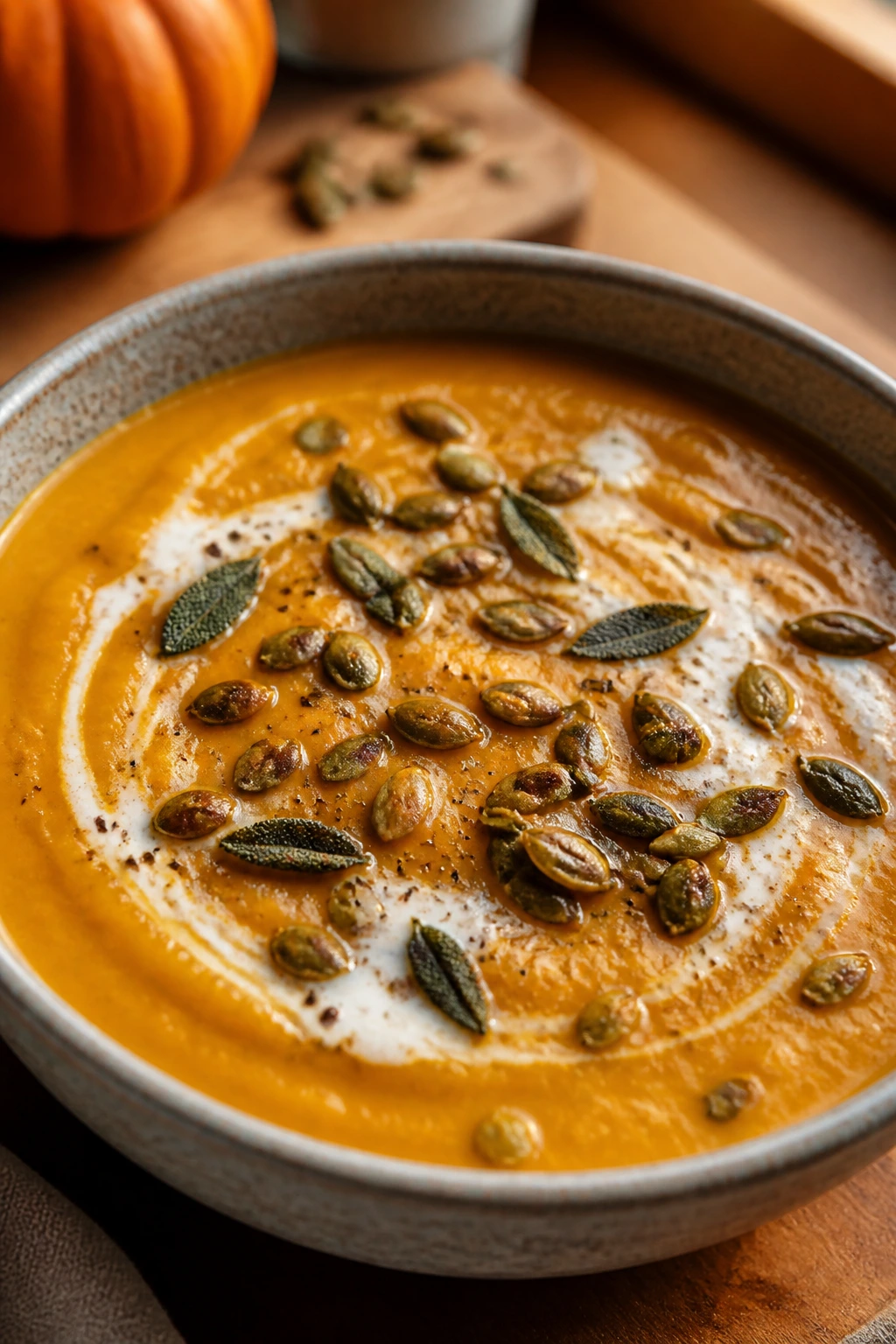
Pumpkin chowder should taste savory first, not sweet. Sage, onion, and a little cream pull the squash into a dinner bowl that feels soft and autumnal without being cloying.
Why It Works:
Canned pumpkin puree gives instant body, but it still needs stock and aromatics to taste like food instead of pie filling. Sage and a little garlic keep the flavor grounded.
Key Ingredients:
- 1 can pumpkin puree, 15 ounces
- 1 onion, diced
- 2 cloves garlic, minced
- 2 tablespoons butter
- 3 cups vegetable stock
- 1 cup half-and-half
- 1 teaspoon sage
- 1/2 teaspoon nutmeg
- 2 tablespoons pumpkin seeds, toasted
Quick Steps:
- Cook onion in butter until soft.
- Add garlic, pumpkin, stock, sage, and nutmeg.
- Simmer 10 minutes, stirring often.
- Stir in half-and-half and warm gently.
- Top with pumpkin seeds before serving.
Equipment for This Recipe:
- Soup pot
- Whisk
- Measuring spoon
- Ladle
How to Serve This Dish:
Serve with a hunk of rustic bread or a sharp green salad. Toasted pumpkin seeds add the crunch this bowl needs.
Pro Tips for This Recipe:
- Use pure pumpkin, not pie mix.
- Sage gets stronger as it sits, so don’t overdo it.
- A small splash of apple cider vinegar sharpens the finish.
Variations on This Dish:
- Maple-Bacon Version: Add crisp bacon and a teaspoon maple syrup.
- Dairy-Free Version: Use oat milk or coconut milk.
Common Mistakes to Avoid with This Dish:
- Don’t treat pumpkin puree like a sauce on its own.
- Don’t skip acid or the flavor turns dull.
17. Green Chile Chicken Chowder
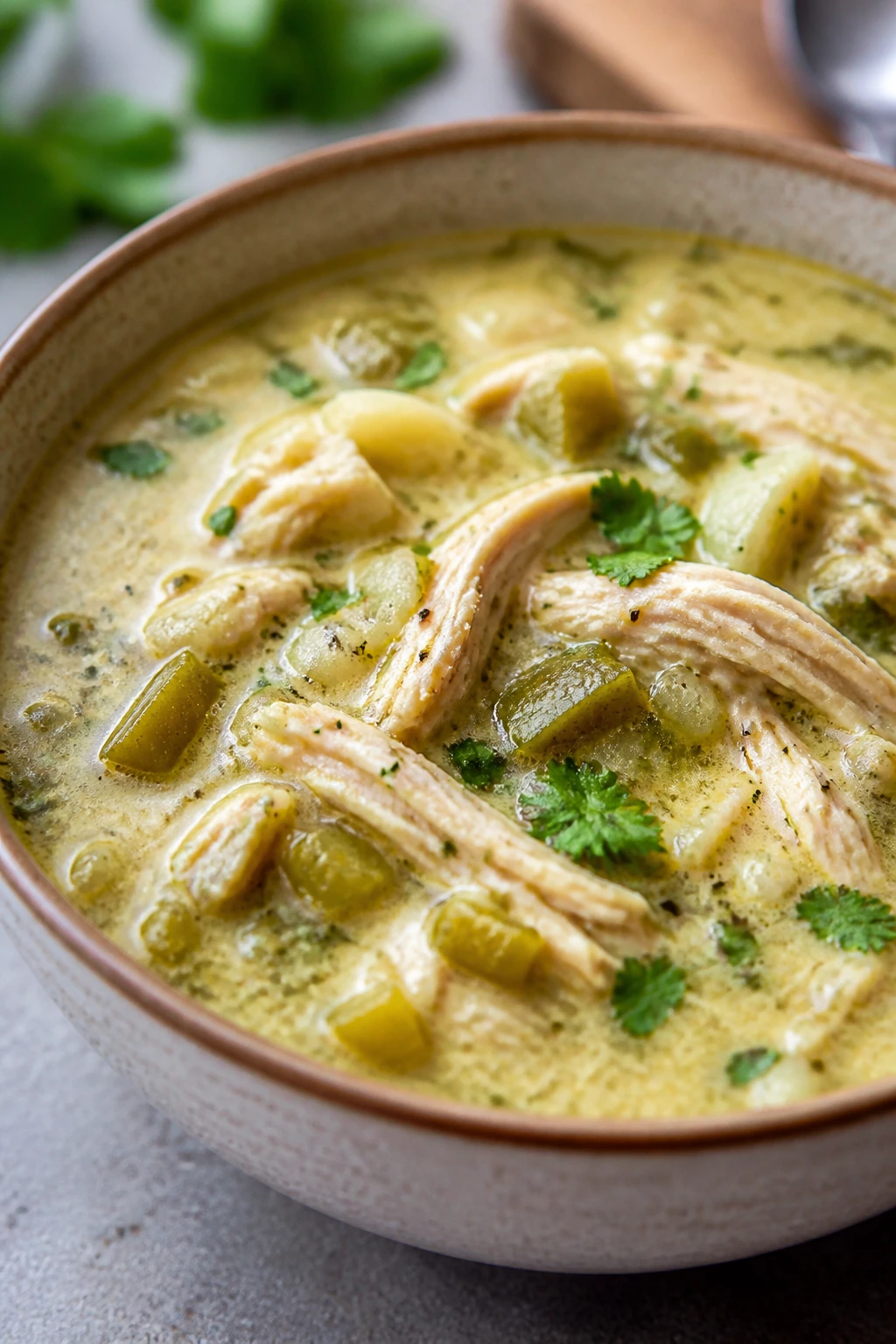
This one has warmth without being reckless. The green chiles bring a gentle kick, the chicken softens it, and the broth stays creamy and bright.
Why It Works:
Roasted chiles carry flavor better than raw heat. They taste grassy, a little smoky, and less harsh than a full-on pepper burn.
Key Ingredients:
- 2 cups cooked chicken, shredded
- 1 can diced green chiles, 4 ounces
- 1 onion, diced
- 2 cups corn kernels
- 3 cups chicken stock
- 1 cup milk
- 2 medium potatoes, diced
- 1 teaspoon cumin
- 1 cup shredded Monterey Jack
Quick Steps:
- Cook onion until soft.
- Add chiles, corn, potatoes, stock, and cumin.
- Simmer 15 minutes until potatoes are tender.
- Stir in chicken and milk.
- Melt in cheese off the heat.
Equipment for This Recipe:
- Soup pot
- Wooden spoon
- Cheese grater
- Ladle
How to Serve This Dish:
Serve with tortilla chips or warm flour tortillas. A little cilantro and a squeeze of lime make the bowl taste brighter.
Pro Tips for This Recipe:
- Choose roasted chiles, not just raw chopped peppers.
- Add cheese off the heat so it melts smoothly.
- If you want more body, mash a few potatoes.
Variations on This Dish:
- Pork Version: Shredded cooked pork works well here.
- Bean Version: Add white beans for extra heft.
Common Mistakes to Avoid with This Dish:
- Don’t make the pot too spicy before you taste it.
- Don’t boil after adding the cheese.
18. Manhattan Clam Chowder
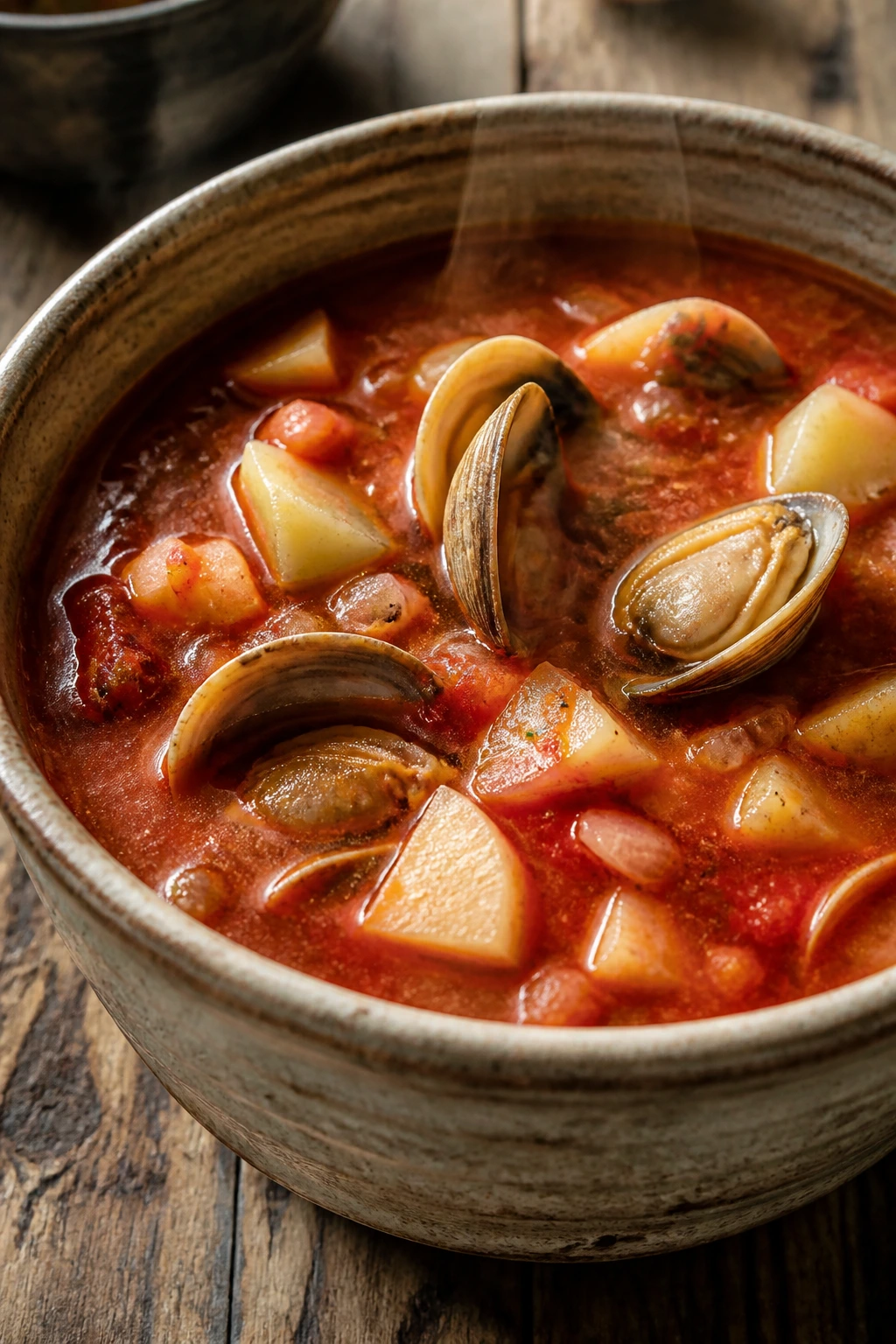
This one trades cream for tomato and feels a little brighter, a little sharper. The clams still lead, but the tomato broth gives the bowl a clean edge that cuts through the brine.
Why It Works:
Manhattan clam chowder depends on balance. If the tomato is too sweet or the clam flavor too faint, the whole pot falls flat, so the stock and aromatics need to be solid from the start.
Key Ingredients:
- 4 slices bacon, diced
- 1 onion, chopped
- 2 celery stalks, diced
- 1 can diced tomatoes, 28 ounces
- 2 cups clam juice
- 2 medium potatoes, diced
- 2 cans chopped clams, 6.5 ounces each
- 1 teaspoon thyme
- 1 tablespoon parsley
Quick Steps:
- Cook bacon, onion, and celery until softened.
- Add tomatoes, clam juice, potatoes, and thyme.
- Simmer 15 minutes until potatoes are tender.
- Stir in clams and warm 2 minutes.
- Finish with parsley and black pepper.
Equipment for This Recipe:
- Soup pot
- Knife
- Wooden spoon
- Ladle
How to Serve This Dish:
Serve with a crusty roll and no cream on the side; that’s not the point of this one. The red broth should look loose, bright, and packed with potato cubes and clams.
Pro Tips for This Recipe:
- Use clam juice, not just water.
- Add clams at the end so they stay tender.
- A tiny splash of hot sauce works better than a lot.
Variations on This Dish:
- More Brothy Version: Add an extra cup of stock.
- Herbier Version: Use dill instead of parsley.
Common Mistakes to Avoid with This Dish:
- Don’t turn it into a cream soup by accident.
- Don’t overcook the potatoes until they collapse.
19. Cod and Celery Chowder
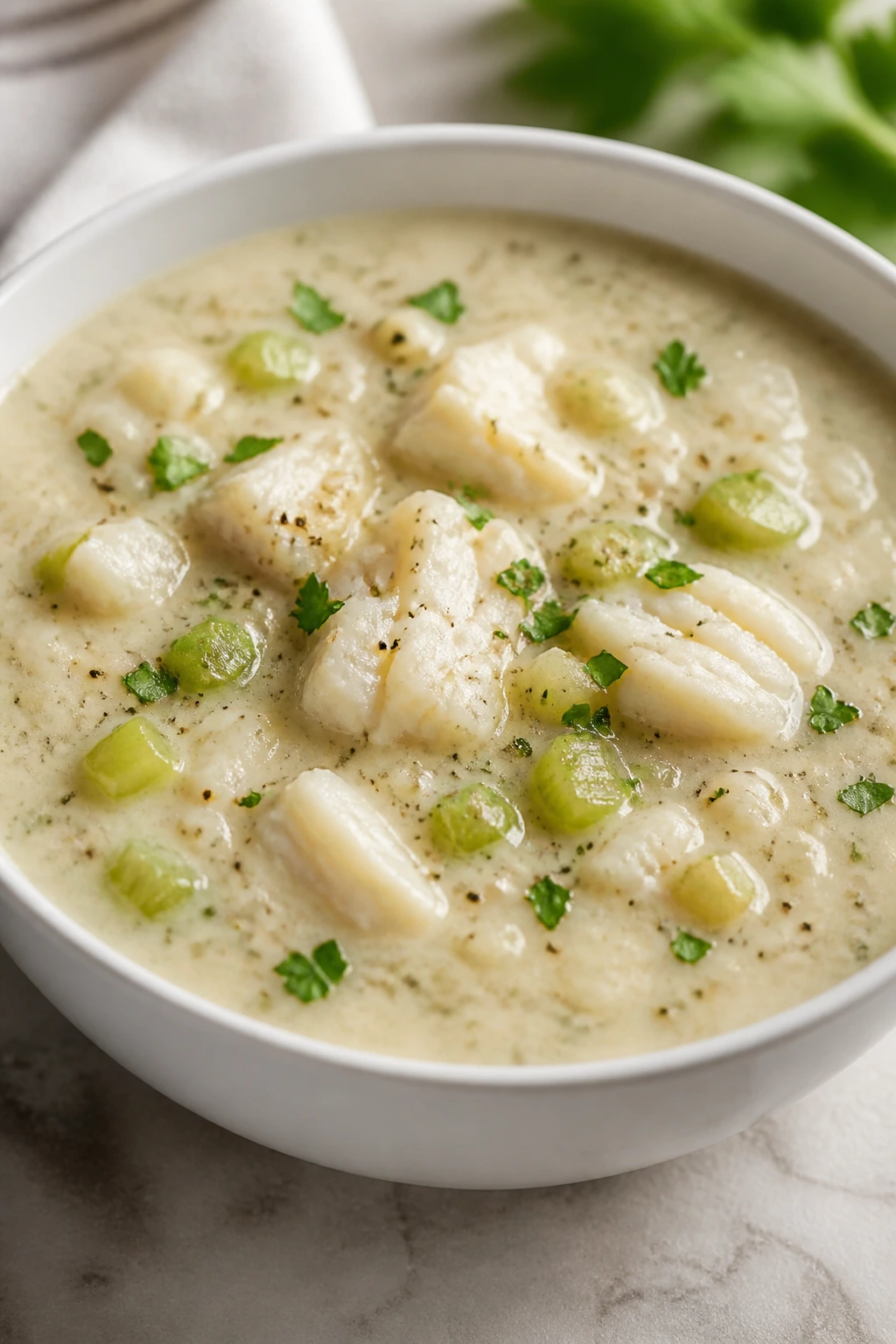
Cod gives this chowder a mild, clean flavor that takes seasoning well. Celery adds a little snap, and the cream softens everything into an easy, unforced bowl.
Why It Works:
Cod is a forgiving fish if you don’t overcook it. It flakes into broad pieces that stay pleasant in a ladle, especially when the broth is already seasoned and hot before it goes in.
Key Ingredients:
- 1 pound cod fillets, cut into large chunks
- 3 celery stalks, diced
- 1 onion, diced
- 2 tablespoons butter
- 3 cups fish stock or chicken stock
- 2 medium potatoes, diced
- 1 cup milk
- 1/2 cup cream
- 1 tablespoon lemon juice
Quick Steps:
- Cook onion and celery in butter until soft.
- Add potatoes and stock; simmer 12 minutes.
- Slide in cod and cook 4 minutes.
- Stir in milk and cream.
- Finish with lemon juice and black pepper.
Equipment for This Recipe:
- Soup pot
- Fish spatula
- Measuring cup
- Ladle
How to Serve This Dish:
Serve with plain crackers or buttered toast. Keep the flavor clean; cod likes a bright finish more than a heavy one.
Pro Tips for This Recipe:
- Cut cod in thick chunks so it doesn’t vanish.
- Don’t stir hard once the fish is in.
- Lemon should go in right at the end.
Variations on This Dish:
- Dill Version: Add fresh dill with the lemon.
- Corn Version: Add 1 cup corn with the potatoes.
Common Mistakes to Avoid with This Dish:
- Don’t simmer cod for long.
- Don’t use ultra-thin fillets unless you reduce the fish time.
20. Lobster Chowder with Sherry
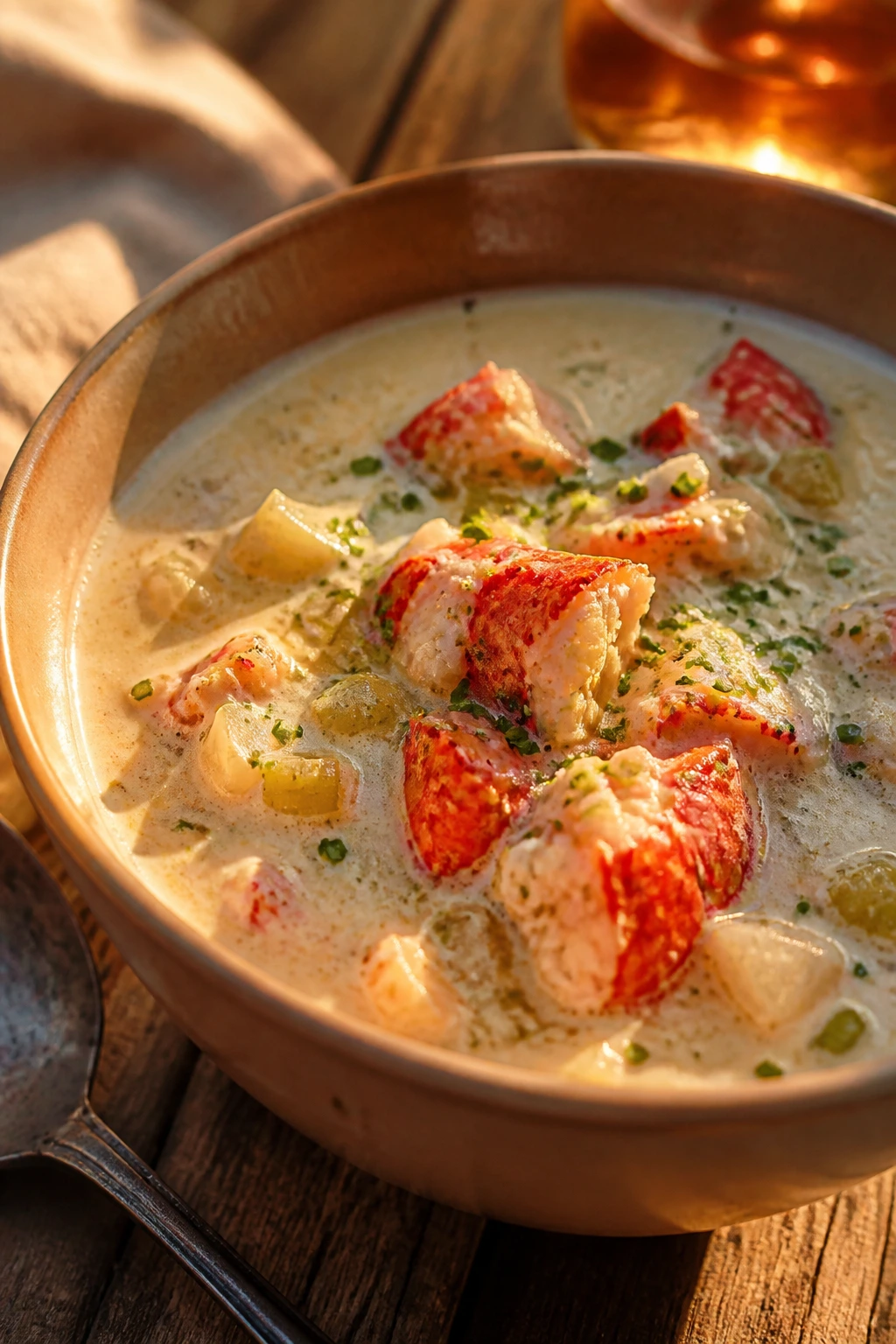
Lobster chowder should feel generous but not clumsy. The meat is sweet and firm, the sherry adds a dry edge, and the creamy base keeps the bowl from tasting like plain butter.
Why It Works:
Sherry is doing the quiet heavy lifting here. It sharpens the richness and gives lobster enough lift that the soup stays elegant instead of flat.
Key Ingredients:
- 1 1/2 cups cooked lobster meat, chopped
- 4 tablespoons butter
- 1 small onion, minced
- 2 tablespoons flour
- 3 cups seafood stock
- 1 medium potato, diced
- 1 cup half-and-half
- 2 tablespoons dry sherry
- 1 tablespoon chives
Quick Steps:
- Cook onion in butter until tender.
- Stir in flour, then add stock and potato.
- Simmer 12 minutes until potato is soft.
- Add half-and-half and lobster meat; warm gently.
- Finish with sherry and chives.
Equipment for This Recipe:
- Heavy saucepan
- Wooden spoon
- Small ladle
- Chef’s knife
How to Serve This Dish:
Serve in warm bowls with a little chive on top and a side of toast points. Lobster should stay the star, so keep the bowl uncluttered.
Pro Tips for This Recipe:
- Add lobster at the end or it toughens.
- Use dry sherry, not sweet.
- Warm the bowls if you can; it helps the soup hold.
Variations on This Dish:
- Corn-Laced Version: Add 1 cup corn for sweetness.
- Cognac Version: Swap the sherry for a teaspoon of brandy.
Common Mistakes to Avoid with This Dish:
- Don’t drown lobster in a cloudy, overly thick broth.
- Don’t let the cream boil hard.
21. Shrimp and Corn Chowder
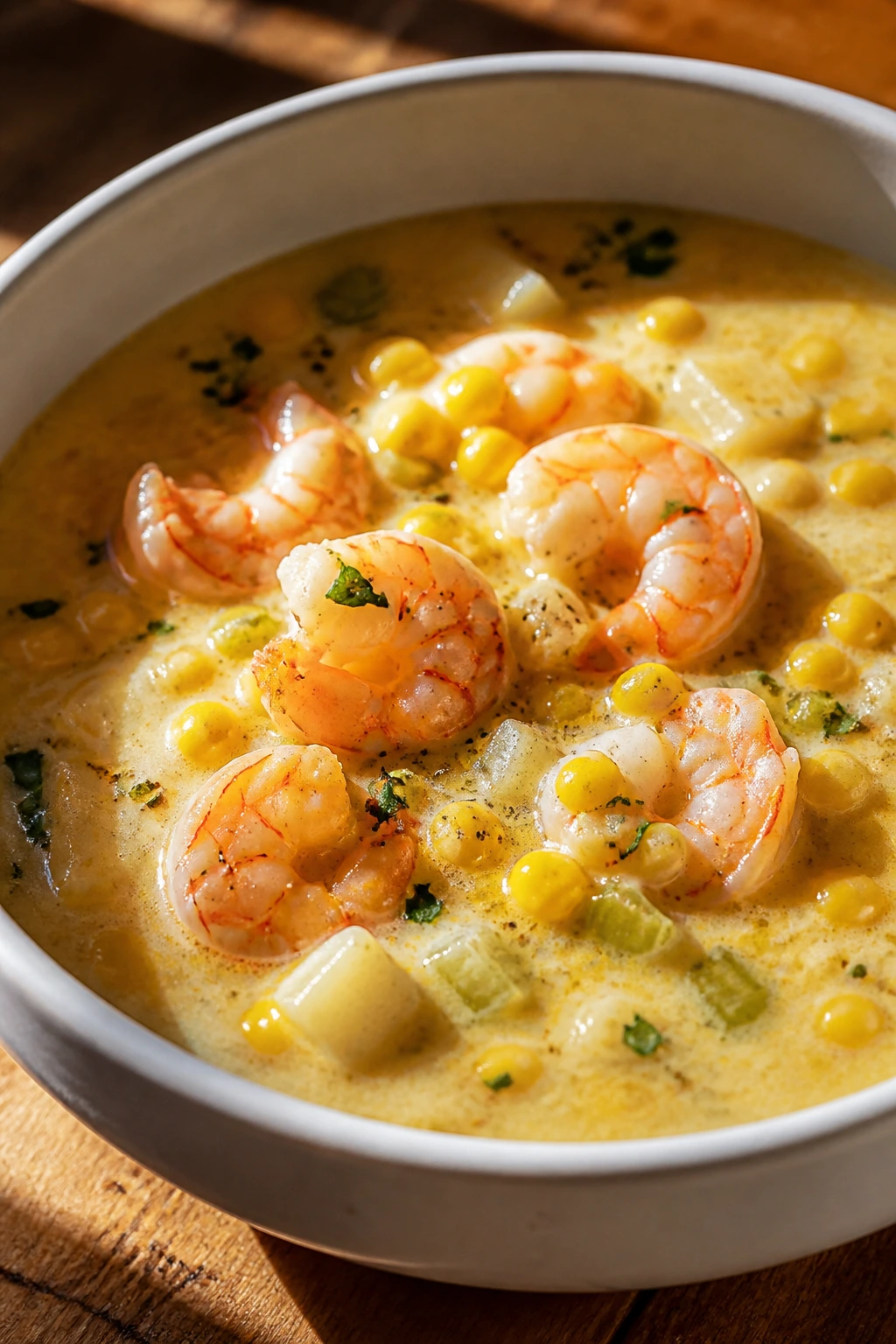
Shrimp and corn is a quick-moving pairing. The corn gives sweetness and texture, the shrimp add snap, and the broth finishes with a clean seafood note.
Why It Works:
Shrimp cook in minutes, so this is a chowder that rewards readiness. Get the base done first, then use the shrimp’s final few minutes to keep them tender and plump.
Key Ingredients:
- 1 pound shrimp, peeled and deveined
- 2 cups corn kernels
- 1 onion, diced
- 2 tablespoons butter
- 3 cups chicken stock
- 1 cup milk
- 2 medium potatoes, diced
- 1 teaspoon smoked paprika
- 2 tablespoons parsley
Quick Steps:
- Cook onion in butter until soft.
- Add potatoes, corn, stock, and paprika; simmer 12 minutes.
- Stir in milk.
- Add shrimp and cook 3 to 4 minutes until pink.
- Finish with parsley and black pepper.
Equipment for This Recipe:
- Soup pot
- Slotted spoon
- Cutting board
- Ladle
How to Serve This Dish:
Serve with crusty bread or cornbread. A squeeze of lemon right before eating wakes up the shrimp.
Pro Tips for This Recipe:
- Use medium shrimp so they don’t disappear.
- Pat shrimp dry before cooking.
- Pull the pot off heat as soon as they turn pink.
Variations on This Dish:
- Coconut Version: Replace milk with coconut milk.
- Spicy Version: Add diced jalapeño with the onion.
Common Mistakes to Avoid with This Dish:
- Don’t overcook shrimp.
- Don’t cut the potatoes too large or they lag behind the seafood.
22. Bacon, Onion, and Cheddar Chowder
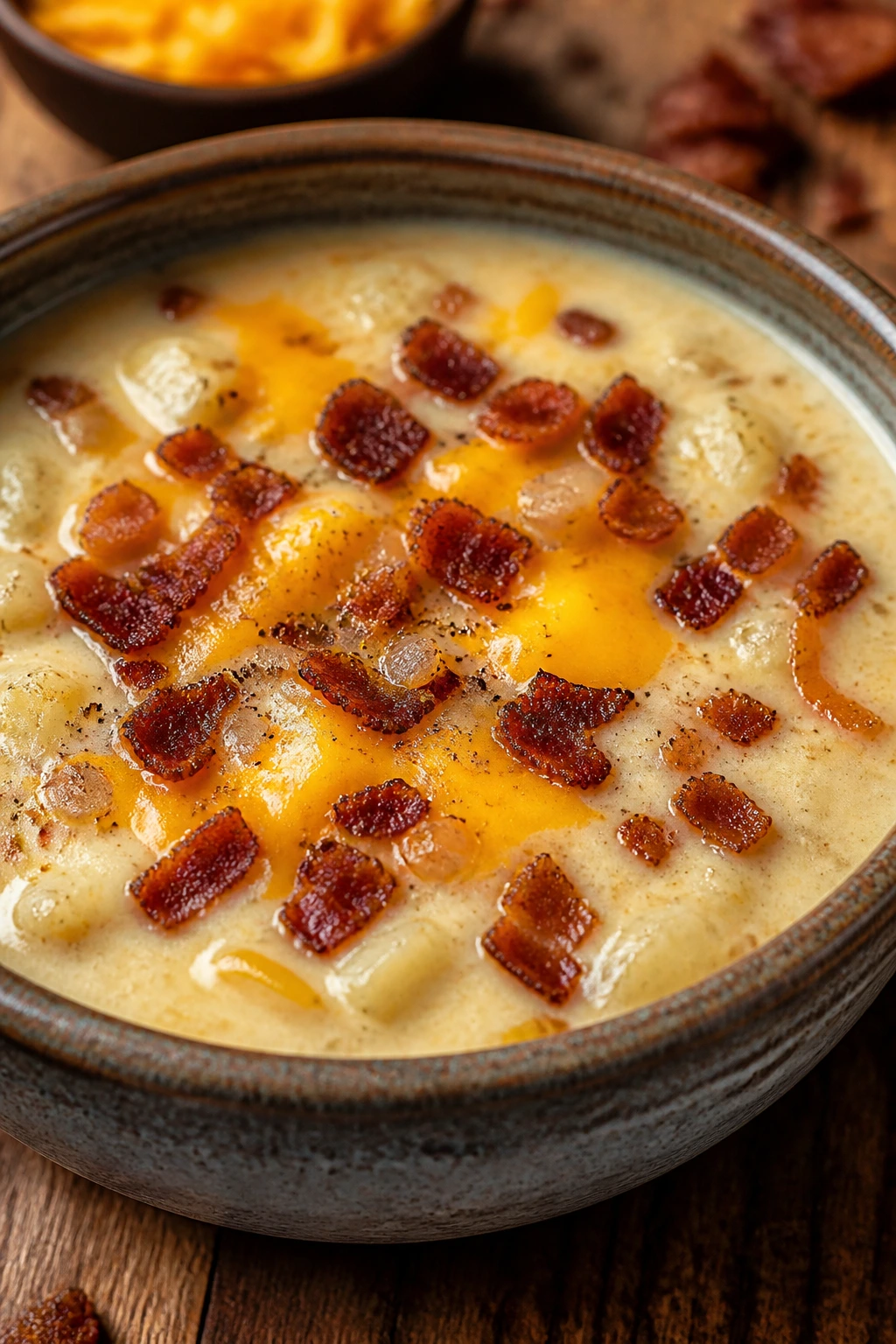
This chowder tastes like the inside of a baked potato, only silkier. Bacon, onion, and cheddar do the obvious work, but potatoes make the bowl feel complete.
Why It Works:
The cheese needs a starchy base or it can turn stringy. Potatoes and a little milk give cheddar somewhere smooth to land, while bacon supplies the salt.
Key Ingredients:
- 6 slices bacon, chopped
- 1 large onion, diced
- 3 medium potatoes, peeled and cubed
- 3 cups chicken stock
- 1 cup milk
- 1 1/2 cups shredded cheddar
- 1 tablespoon flour
- 2 tablespoons chives
Quick Steps:
- Cook bacon until crisp and set some aside.
- Cook onion in the bacon fat until soft.
- Add potatoes, stock, and flour; simmer 15 minutes.
- Stir in milk and cheddar off the heat.
- Top with bacon and chives.
Equipment for This Recipe:
- Soup pot
- Box grater
- Potato peeler
- Ladle
How to Serve This Dish:
Serve with a green salad if you want to cut the richness. It also works with a plain roll, though you may not need much bread.
Pro Tips for This Recipe:
- Shred cheddar fresh for the smoothest melt.
- Don’t make the broth too thick before the cheese goes in.
- Chives add a needed green note.
Variations on This Dish:
- Jalapeño Version: Stir in minced jalapeño with the onion.
- Cauliflower Version: Swap one potato for cauliflower florets.
Common Mistakes to Avoid with This Dish:
- Don’t boil once the cheese is in.
- Don’t forget to taste before serving; bacon can change the salt level a lot.
23. Carrot Ginger Chowder
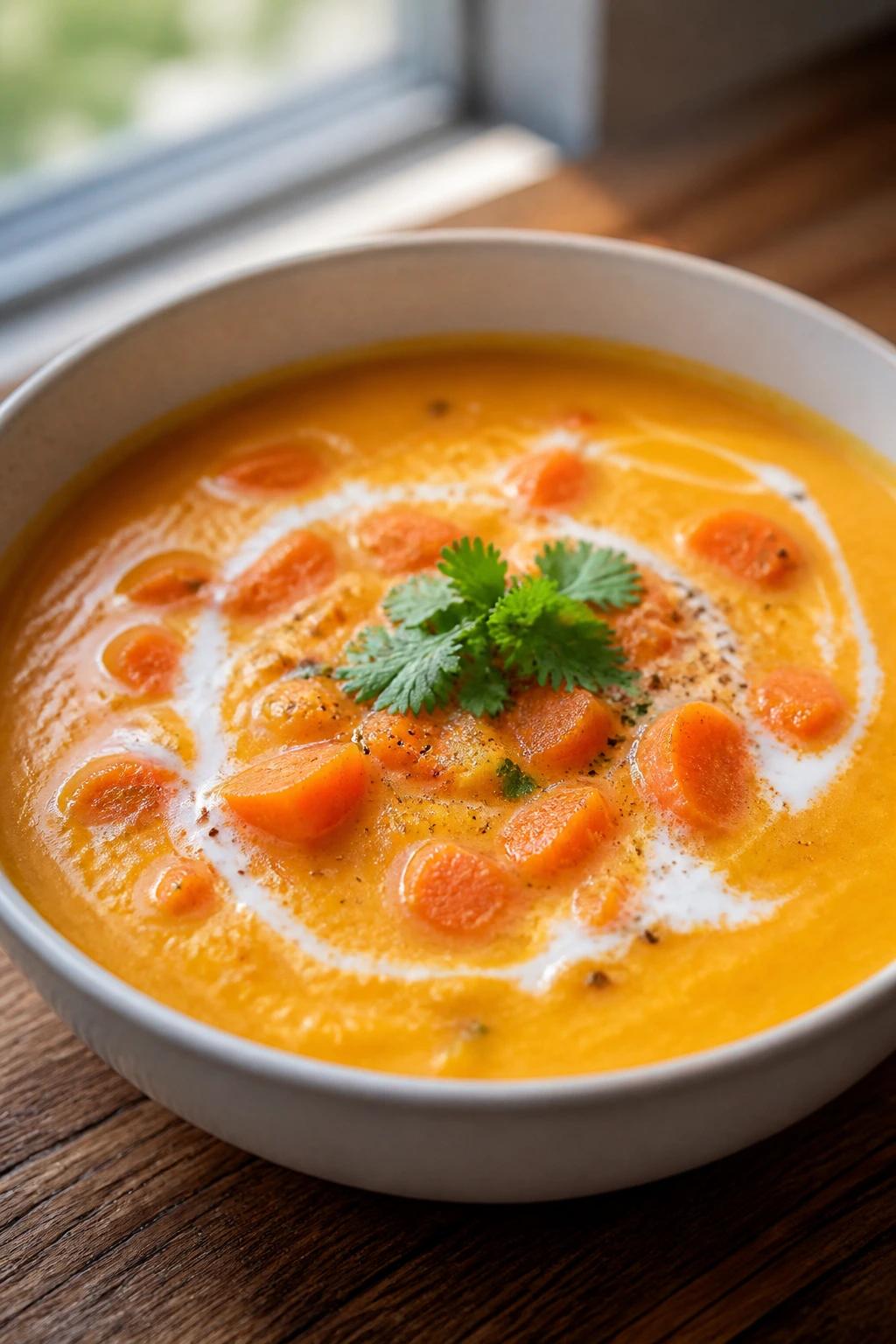
Carrot ginger chowder tastes bright, sweet, and a little sharp in the best way. Ginger gives the bowl a clean heat that feels calming rather than loud, which is harder to pull off than it sounds.
Why It Works:
Carrots become naturally sweet when they’re simmered and blended. Ginger stops that sweetness from getting dull, and a little coconut milk gives the soup body without burying the vegetable flavor.
Key Ingredients:
- 6 large carrots, peeled and sliced
- 1 onion, chopped
- 1 tablespoon fresh ginger, grated
- 2 tablespoons butter
- 4 cups vegetable stock
- 1 cup coconut milk
- 1 teaspoon salt
- 2 tablespoons cilantro
Quick Steps:
- Cook onion in butter until soft.
- Add carrots, ginger, stock, and salt.
- Simmer 20 minutes until carrots are very tender.
- Blend until smooth or partly smooth.
- Stir in coconut milk and top with cilantro.
Equipment for This Recipe:
- Soup pot
- Immersion blender
- Grater
- Ladle
How to Serve This Dish:
Serve with naan or a seeded roll. A squeeze of lime is a good move if you want the finish to feel brighter.
Pro Tips for This Recipe:
- Fresh ginger beats powdered ginger here.
- Blend in batches if your pot is small.
- Taste after blending; carrots often need more salt than you expect.
Variations on This Dish:
- Curry Version: Add 1 teaspoon curry powder with the carrots.
- Apple Version: Add 1 peeled apple for a sweeter edge.
Common Mistakes to Avoid with This Dish:
- Don’t leave carrot pieces too large.
- Don’t add cilantro too early or it goes flat.
24. Parsnip and Apple Chowder
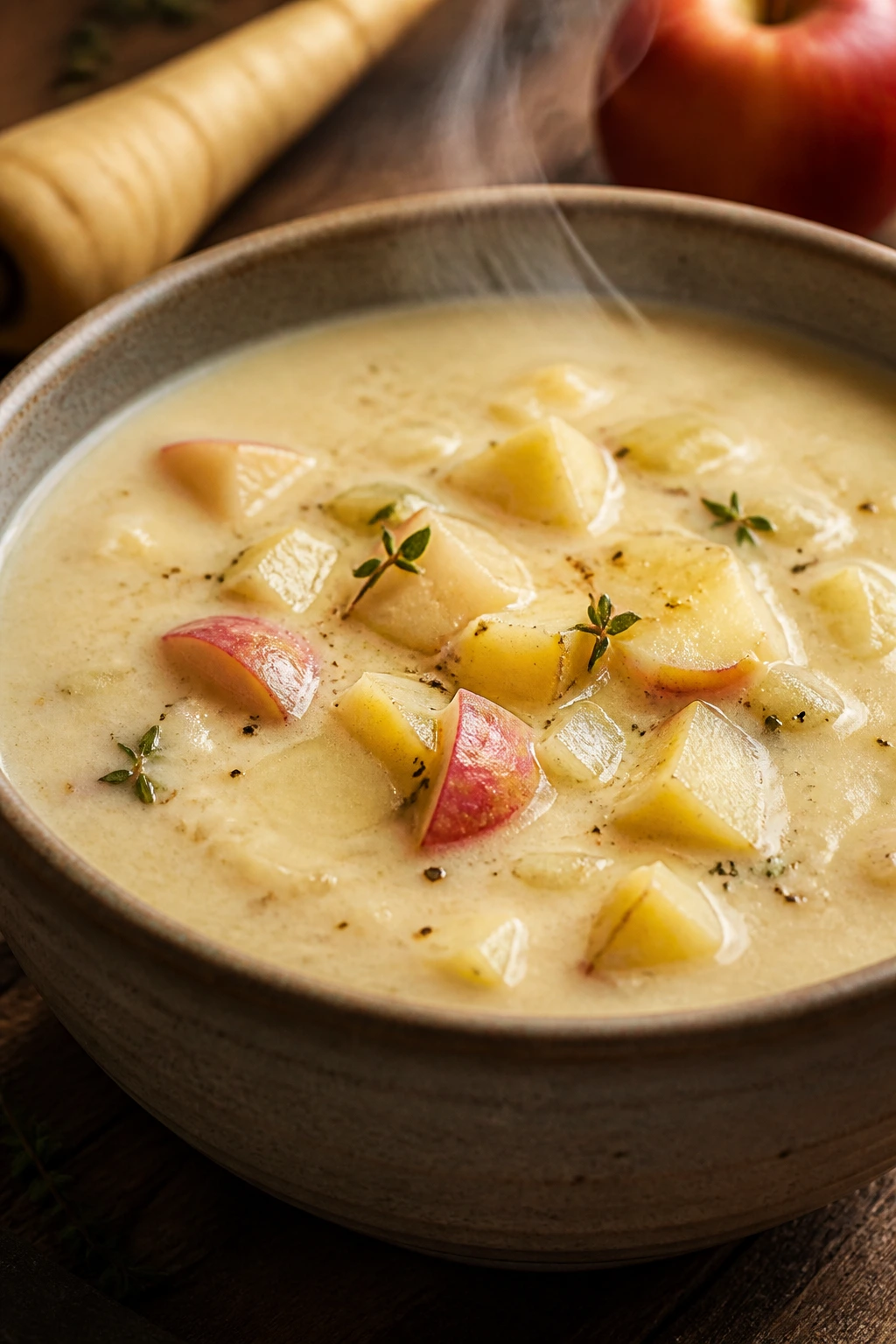
Parsnips bring a nutty, earthy sweetness that apple keeps from getting too heavy. This chowder lands soft and slightly floral, which sounds odd until you taste it.
Why It Works:
Parsnips and apples both soften fast, so they cook into a naturally smooth base. A little thyme and cream turn that sweetness into something savory enough for dinner.
Key Ingredients:
- 4 parsnips, peeled and chopped
- 1 tart apple, peeled and chopped
- 1 onion, diced
- 2 tablespoons butter
- 4 cups vegetable stock
- 1 cup half-and-half
- 1 teaspoon thyme
- 1 tablespoon parsley
Quick Steps:
- Cook onion in butter until soft.
- Add parsnips, apple, stock, and thyme.
- Simmer 18 minutes until tender.
- Blend partly for a creamy texture.
- Stir in half-and-half and parsley.
Equipment for This Recipe:
- Soup pot
- Immersion blender
- Vegetable peeler
- Ladle
How to Serve This Dish:
Serve with toast or a slice of sharp cheddar on the side. The bowl is nicest when it stays pale and simple, with parsley as the only bright mark.
Pro Tips for This Recipe:
- Use a tart apple so the soup doesn’t veer sweet.
- Parsnips should be peeled well; the skin can taste woody.
- A small splash of lemon helps.
Variations on This Dish:
- Bacon Version: Add chopped bacon at the start.
- Pear Version: Swap the apple for a firm pear.
Common Mistakes to Avoid with This Dish:
- Don’t use sweet apples only; the soup can taste dessert-like.
- Don’t skip blending if you want a true chowder texture.
25. Spinach Artichoke Chowder
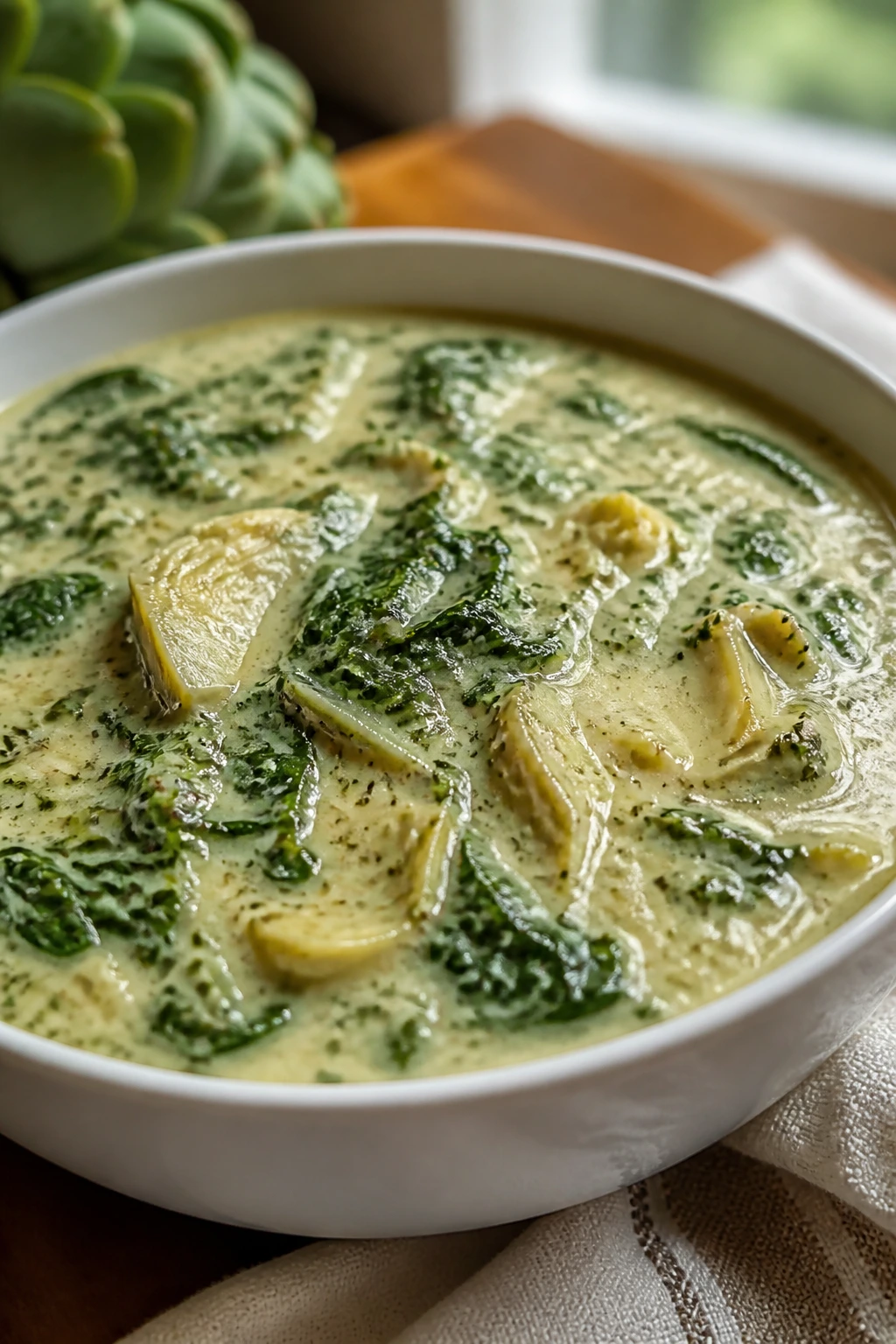
This is the soup version of a hot dip, but with more restraint. Spinach keeps it green, artichokes bring tang, and cream ties the whole thing together.
Why It Works:
Artichokes have enough acid to keep rich dairy from tasting sleepy. Spinach goes in at the end so it stays bright and doesn’t lose its shape entirely.
Key Ingredients:
- 1 can artichoke hearts, drained and chopped
- 4 cups baby spinach
- 1 onion, diced
- 2 tablespoons butter
- 3 cups vegetable stock
- 1 cup milk
- 4 ounces cream cheese
- 1/2 cup grated Parmesan
Quick Steps:
- Cook onion in butter until soft.
- Add artichokes and stock; simmer 10 minutes.
- Stir in cream cheese until smooth.
- Add spinach and milk; cook until wilted.
- Finish with Parmesan and black pepper.
Equipment for This Recipe:
- Soup pot
- Whisk
- Wooden spoon
- Ladle
How to Serve This Dish:
Serve with toasted pita, crackers, or a split roll. It’s rich, so I usually keep the rest of the plate plain.
Pro Tips for This Recipe:
- Chop the artichokes small so they spread through the bowl.
- Add spinach last so it stays green.
- A little lemon zest sharpens the cream cheese.
Variations on This Dish:
- Bacon Version: Add bacon with the onion.
- Extra Cheesy Version: Add mozzarella with the Parmesan.
Common Mistakes to Avoid with This Dish:
- Don’t let the cream cheese clump; soften it first.
- Don’t overcook the spinach or it turns muddy.
26. Jalapeño Popper Corn Chowder

This chowder is warmer and louder than the gentler ones, but it still lands on the comforting side. Corn cools the heat, cream softens the peppers, and cheddar gives it a familiar finish.
Why It Works:
Jalapeños need a creamy partner or they dominate. Corn and cheese pull the heat back into balance, which is the whole point of this pot.
Key Ingredients:
- 2 jalapeños, seeded and minced
- 2 cups corn kernels
- 4 slices bacon, chopped
- 1 onion, diced
- 3 cups chicken stock
- 1 cup milk
- 1 cup shredded cheddar
- 2 ounces cream cheese
- 2 scallions
Quick Steps:
- Cook bacon, then soften onion and jalapeños in the fat.
- Add corn and stock; simmer 10 minutes.
- Stir in milk and cream cheese.
- Melt in cheddar off the heat.
- Top with scallions and bacon.
Equipment for This Recipe:
- Soup pot
- Cheese grater
- Spoon
- Ladle
How to Serve This Dish:
Serve with tortilla chips or buttered toast. A few thin jalapeño rings on top tell the truth about what’s inside.
Pro Tips for This Recipe:
- Seed the jalapeños if you want the heat gentler.
- Cream cheese should be soft before it goes in.
- Taste after the cheddar melts; it often needs less salt than you think.
Variations on This Dish:
- Smoky Version: Add chipotle instead of jalapeño.
- Vegetarian Version: Skip the bacon and use butter.
Common Mistakes to Avoid with This Dish:
- Don’t use too many jalapeños unless you want a sharp pot.
- Don’t boil after adding the cheese.
27. Thai Coconut Corn Chowder

Coconut milk changes the mood completely. The broth turns silky, the corn stays sweet, and lime with ginger keeps the pot from feeling heavy.
Why It Works:
This chowder works because it uses fat and acid together. Coconut milk gives the body, while lime and ginger keep the flavor moving forward instead of sitting flat.
Key Ingredients:
- 2 cups corn kernels
- 1 onion, chopped
- 1 tablespoon fresh ginger, grated
- 1 red bell pepper, diced
- 3 cups vegetable stock
- 1 can coconut milk, 13.5 ounces
- 1 tablespoon lime juice
- 1 tablespoon fish sauce or soy sauce
- 2 tablespoons cilantro
Quick Steps:
- Cook onion and ginger until fragrant.
- Add bell pepper, corn, and stock; simmer 8 minutes.
- Stir in coconut milk and fish sauce.
- Warm gently for 3 minutes.
- Finish with lime juice and cilantro.
Equipment for This Recipe:
- Soup pot
- Grater
- Ladle
- Citrus juicer
How to Serve This Dish:
Serve with jasmine rice on the side or a warm flatbread. A few torn cilantro leaves and some extra lime make the bowl taste awake.
Pro Tips for This Recipe:
- Don’t skip the fish sauce if you eat it; it deepens the flavor.
- Add lime at the end or it gets muddy.
- Use sweet corn, not old kernels.
Variations on This Dish:
- Shrimp Version: Add shrimp near the end.
- Spicy Version: Add sliced Thai chile with the onion.
Common Mistakes to Avoid with This Dish:
- Don’t boil coconut milk hard.
- Don’t use lime early or the flavor gets blunt.
28. Miso Mushroom Chowder
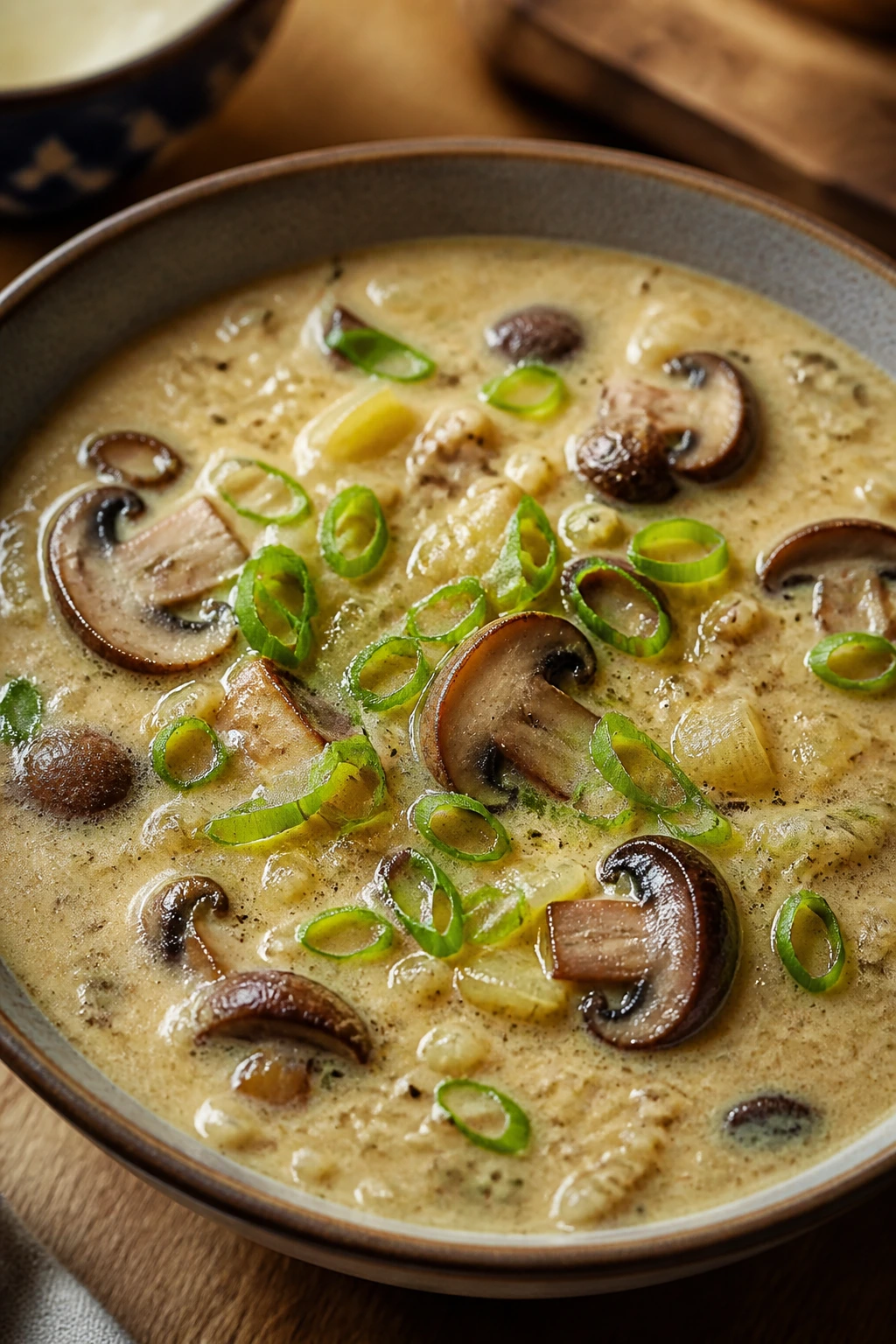
Miso gives mushroom chowder a deep, savory backbone that tastes like it simmered for hours. The mushrooms bring earthiness, and the miso adds the sort of quiet salt that makes people pause mid-spoon.
Why It Works:
Miso should never be boiled hard; that’s the whole lesson here. Stir it in at the end so the fermented flavor stays rounded and clean.
Key Ingredients:
- 12 ounces mushrooms, sliced
- 1 onion, diced
- 2 tablespoons butter
- 4 cups vegetable stock
- 2 tablespoons white miso paste
- 1 cup milk
- 1 medium potato, diced
- 2 tablespoons scallions
Quick Steps:
- Brown mushrooms in butter until they shrink and take color.
- Add onion and potato; cook 3 minutes.
- Pour in stock and simmer until potato is tender.
- Whisk miso with a little hot broth, then stir it in.
- Add milk and scallions, warming gently.
Equipment for This Recipe:
- Soup pot
- Whisk
- Measuring spoon
- Ladle
How to Serve This Dish:
Serve with rice crackers or toasted bread. A few sesame seeds on top make sense here, but don’t overdo the garnish.
Pro Tips for This Recipe:
- Brown the mushrooms properly before adding liquid.
- Dissolve miso in broth first so it disperses evenly.
- Use white or mellow miso for a softer finish.
Variations on This Dish:
- Tofu Version: Add cubed tofu with the milk.
- Sesame Version: Finish with a few drops of toasted sesame oil.
Common Mistakes to Avoid with This Dish:
- Don’t boil after the miso goes in.
- Don’t skip browning the mushrooms or the soup tastes thin.
29. Smoked Trout and Potato Chowder
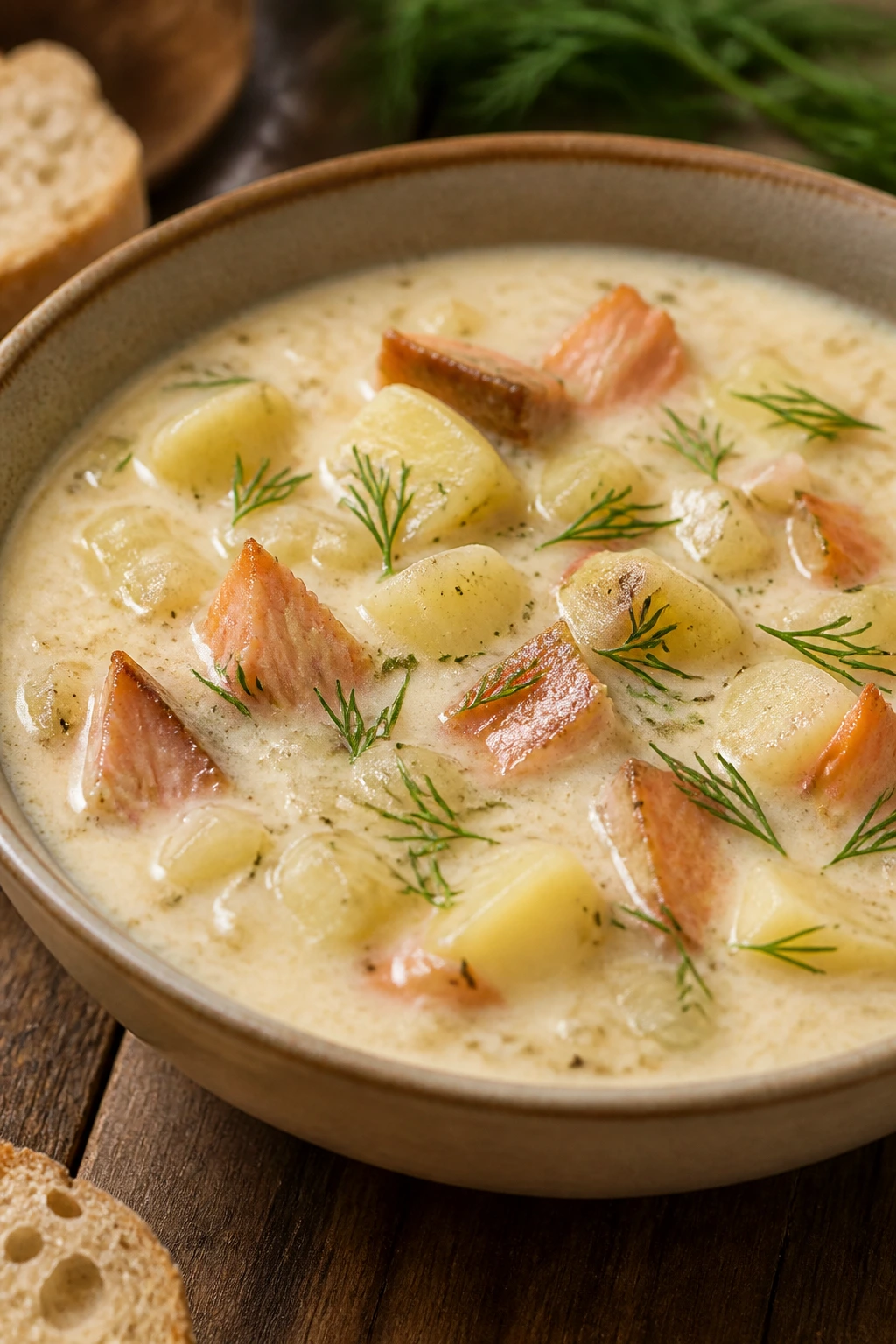
Smoked trout gives this chowder a woodland, campfire sort of flavor. The potatoes ground it, the cream softens the smoke, and dill keeps the bowl from feeling too dense.
Why It Works:
Smoked fish can be powerful, so the broth has to stay mild and creamy. Potatoes and onion do most of the structural work while trout stays in the role of accent, not bludgeon.
Key Ingredients:
- 8 ounces smoked trout, flaked
- 3 medium potatoes, diced
- 1 onion, diced
- 2 tablespoons butter
- 4 cups fish stock or chicken stock
- 1 cup milk
- 1 tablespoon dill
- 1 tablespoon lemon juice
Quick Steps:
- Cook onion in butter until soft.
- Add potatoes and stock; simmer 15 minutes.
- Stir in milk and warm gently.
- Fold in trout and dill off the heat.
- Finish with lemon juice.
Equipment for This Recipe:
- Soup pot
- Fork for flaking fish
- Ladle
- Measuring cup
How to Serve This Dish:
Serve with rye bread or plain crackers. The trout already brings plenty of flavor, so keep the side simple.
Pro Tips for This Recipe:
- Flake the trout by hand so you can feel out any bones.
- Add lemon carefully; a little sharpness helps, too much takes over.
- Use a mild stock so the smoke stays readable.
Variations on This Dish:
- Corn Version: Add 1 cup corn for sweetness.
- Herb Version: Swap dill for chives and parsley.
Common Mistakes to Avoid with This Dish:
- Don’t overcook smoked trout; it only needs warming.
- Don’t use a salty stock without tasting first.
30. Black Bean and Sweet Corn Chowder
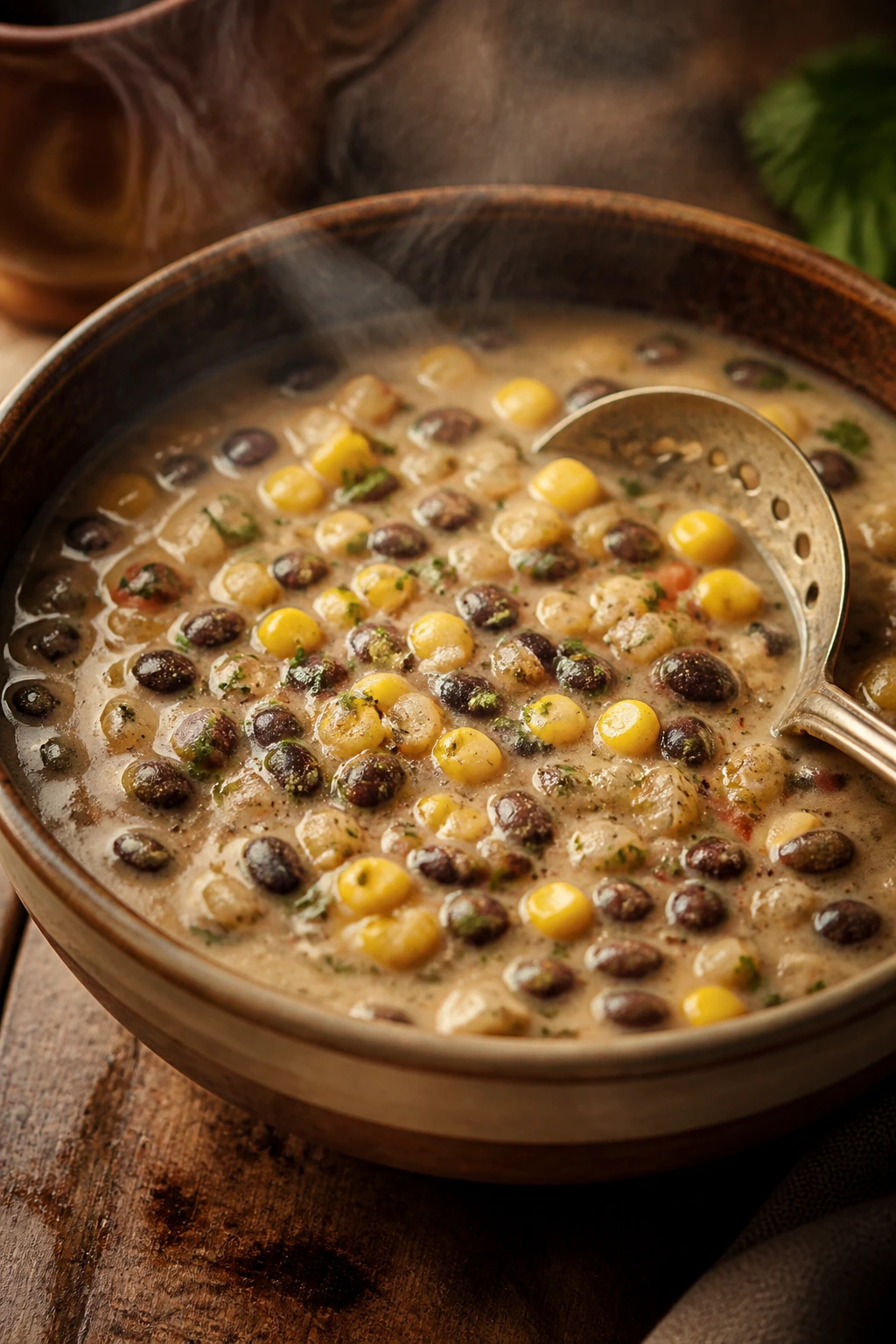
This chowder has a fuller, earthier feel than the seafood versions. Black beans make it hearty, corn keeps it sweet, and cumin pushes the flavor toward something warm and grounded.
Why It Works:
Beans are a natural thickener if you mash a portion of them. Corn adds the bright note that keeps the pot from tasting dark or flat.
Key Ingredients:
- 2 cans black beans, drained and rinsed
- 2 cups corn kernels
- 1 onion, diced
- 1 red bell pepper, diced
- 3 cups vegetable stock
- 1 cup milk or oat milk
- 1 teaspoon cumin
- 1 teaspoon smoked paprika
- 2 tablespoons cilantro
Quick Steps:
- Cook onion and bell pepper until softened.
- Add beans, corn, stock, cumin, and paprika.
- Simmer 15 minutes.
- Mash some beans against the pot side.
- Stir in milk and cilantro.
Equipment for This Recipe:
- Soup pot
- Potato masher
- Spoon
- Ladle
How to Serve This Dish:
Serve with tortilla chips, avocado, or warm cornbread. A squeeze of lime makes the corn taste brighter.
Pro Tips for This Recipe:
- Rinse canned beans to remove can flavor.
- Mash only about a third of the beans.
- Use oat milk if you want a softer finish than dairy.
Variations on This Dish:
- Smokier Version: Add chipotle in adobo.
- Cheesy Version: Stir in shredded cheddar or Jack cheese.
Common Mistakes to Avoid with This Dish:
- Don’t skip salt just because the beans are canned.
- Don’t mash all the beans unless you want a puree.
31. Cabbage and Potato Chowder
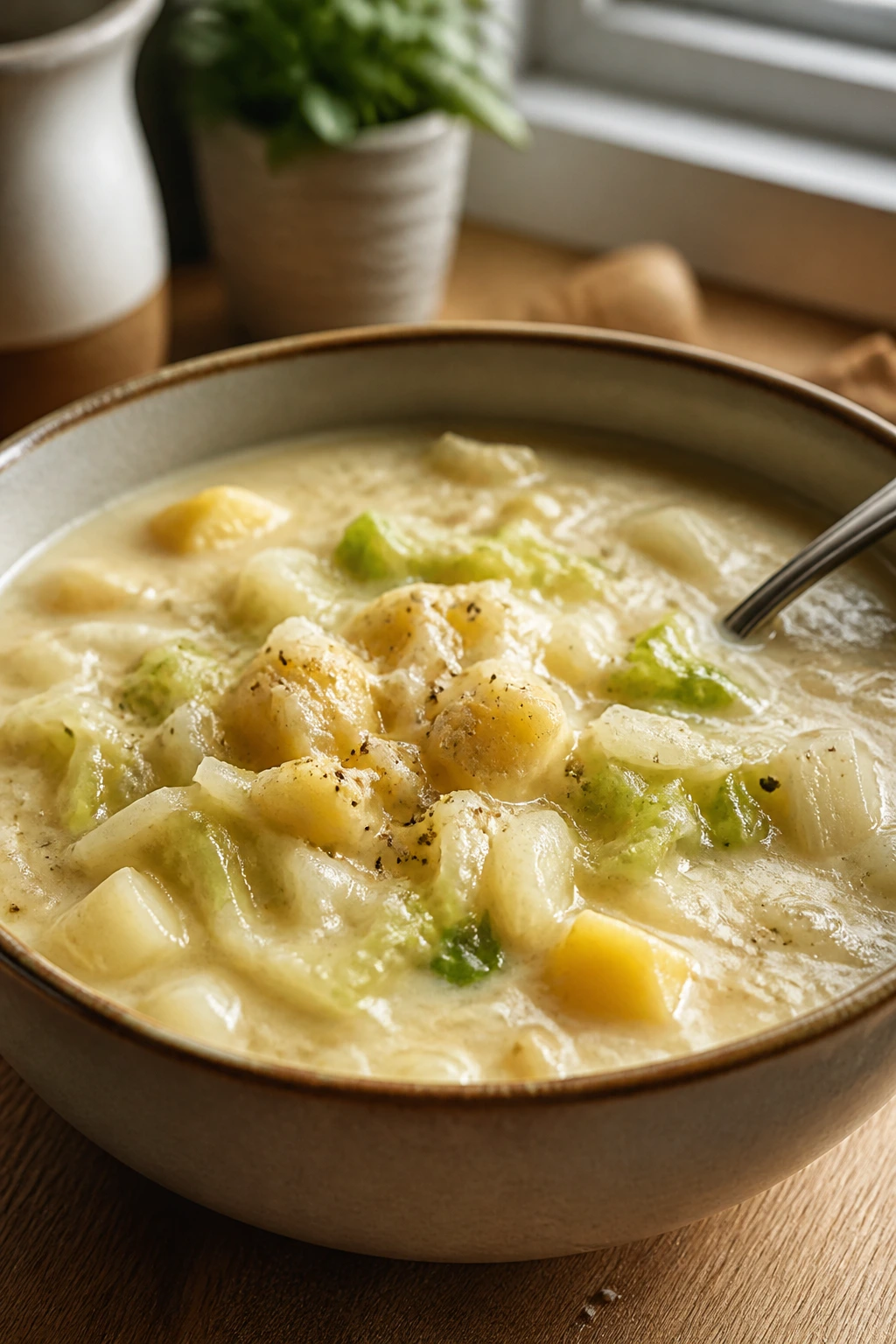
Cabbage chowder is cheap in the best sense of the word: sturdy, practical, and far better than people expect. The cabbage turns sweet as it softens, and potatoes keep the pot from feeling thin.
Why It Works:
Cabbage needs enough time to lose its raw edge, but not so much that it disappears. Potatoes give the chowder the weight it needs while cabbage provides a mild, almost buttery finish.
Key Ingredients:
- 4 cups green cabbage, shredded
- 3 medium potatoes, diced
- 1 onion, chopped
- 2 tablespoons butter
- 4 cups chicken or vegetable stock
- 1 cup milk
- 1 teaspoon caraway seeds
- 2 tablespoons dill
Quick Steps:
- Cook onion in butter until soft.
- Add cabbage and caraway; cook 5 minutes.
- Add potatoes and stock; simmer 15 minutes.
- Stir in milk and cook gently.
- Finish with dill.
Equipment for This Recipe:
- Soup pot
- Sharp knife
- Wooden spoon
- Ladle
How to Serve This Dish:
Serve with rye toast or a slice of cornbread. I like it with a bit of black pepper and not much else.
Pro Tips for This Recipe:
- Slice the cabbage thin so it softens fast.
- Caraway helps if you like that old-fashioned flavor.
- A little mustard on the side is not out of place.
Variations on This Dish:
- Bacon Version: Start with diced bacon.
- Sausage Version: Add sliced kielbasa instead of keeping it vegetarian.
Common Mistakes to Avoid with This Dish:
- Don’t undercook the cabbage or it tastes harsh.
- Don’t forget the caraway if you want that classic edge.
32. Brussels Sprout and Bacon Chowder
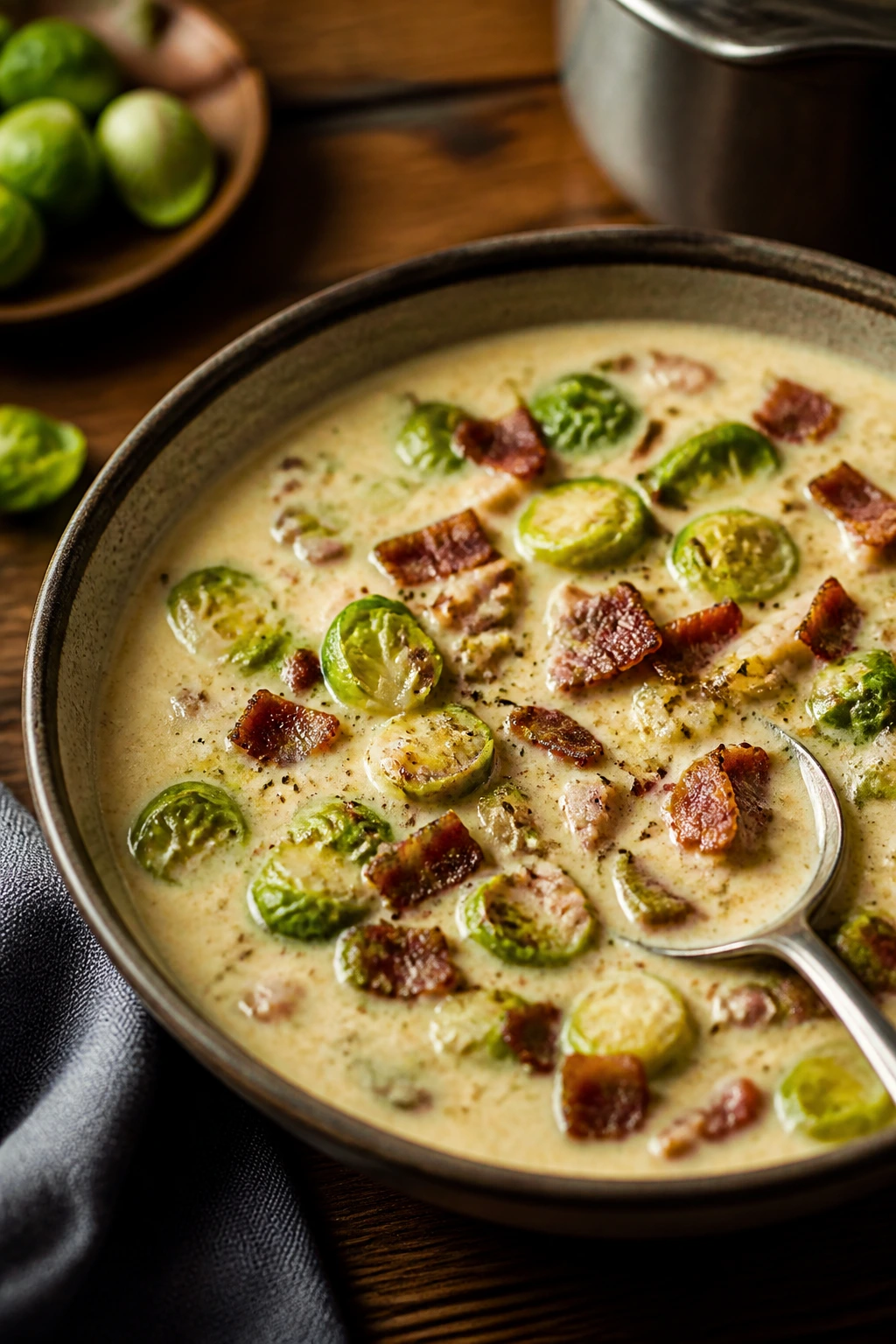
Brussels sprouts in chowder sound suspicious until you taste them. Sliced thin and cooked gently, they become sweet and nutty, especially once bacon and cream get involved.
Why It Works:
The trick is cutting the sprouts thin enough that they soften before the rest of the pot goes over. Bacon gives the bottom layer of flavor, while a potato helps the texture.
Key Ingredients:
- 3 cups Brussels sprouts, thinly sliced
- 5 slices bacon, chopped
- 1 onion, diced
- 2 medium potatoes, diced
- 4 cups chicken stock
- 1 cup milk
- 1 tablespoon Dijon mustard
- 2 tablespoons parsley
Quick Steps:
- Cook bacon until crisp.
- Add onion and Brussels sprouts; cook 5 minutes.
- Add potatoes and stock; simmer 15 minutes.
- Stir in milk and Dijon.
- Top with parsley and bacon.
Equipment for This Recipe:
- Soup pot
- Sharp knife
- Measuring spoon
- Ladle
How to Serve This Dish:
Serve with toasted sourdough or a plain biscuit. The mustard in the broth keeps the bowl from becoming one-note.
Pro Tips for This Recipe:
- Slice sprouts thinly so they soften, not just sit there.
- Dijon should go in near the end.
- Use bacon with enough fat to flavor the pot.
Variations on This Dish:
- Cheddar Version: Add a small handful of cheddar off the heat.
- Vegetarian Version: Skip bacon and use butter plus a pinch of smoked paprika.
Common Mistakes to Avoid with This Dish:
- Don’t leave sprout halves whole.
- Don’t overdo the Dijon or it takes over.
33. Butternut Squash Chowder
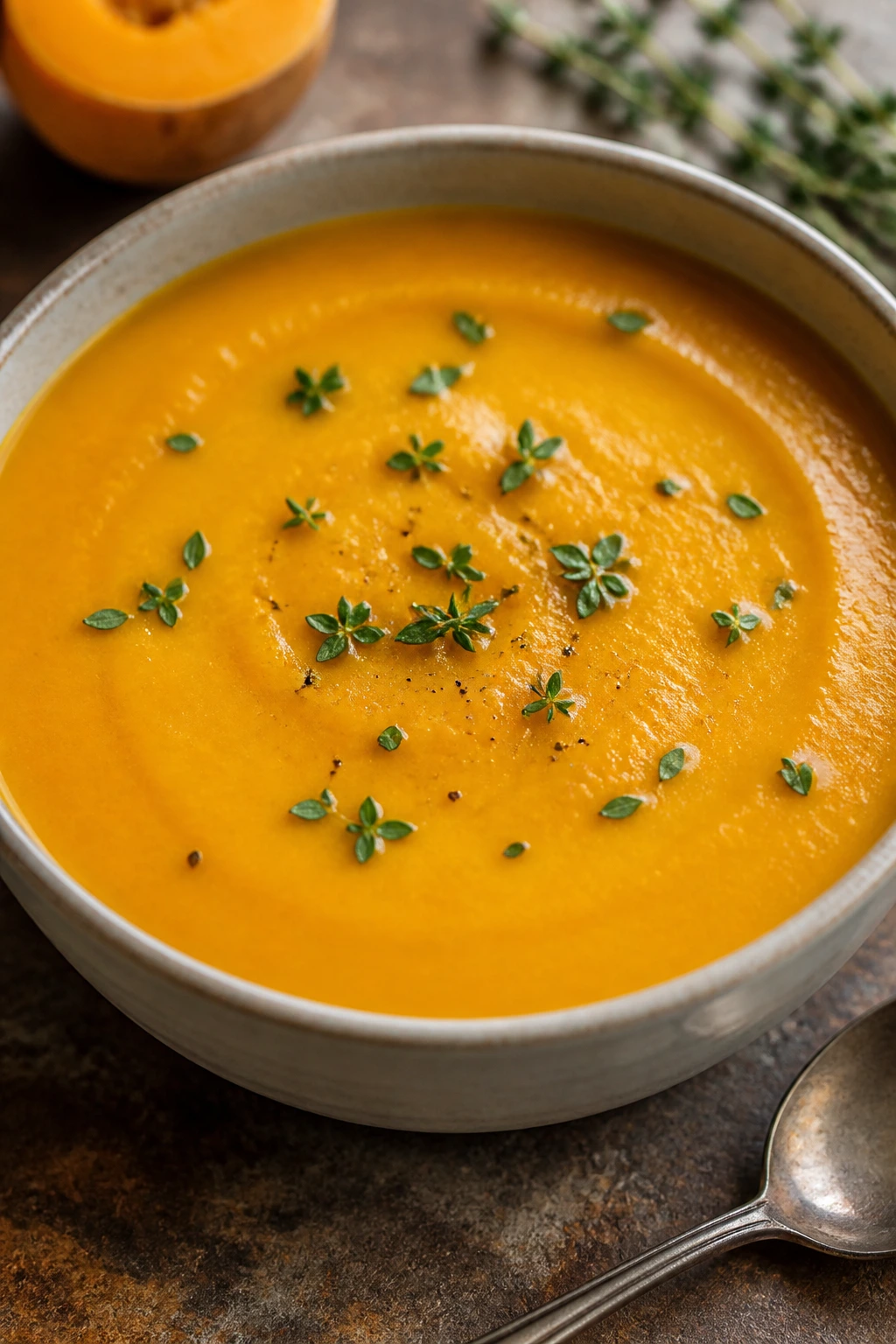
Butternut squash makes a chowder that feels smooth, sweet, and a little silky on the tongue. A bit of thyme or sage keeps it from leaning too far into soup territory for dessert.
Why It Works:
Squash puree naturally thickens the pot, so you don’t need much flour. The sweetness is the point, but it needs salt and herbs so it tastes like dinner.
Key Ingredients:
- 1 medium butternut squash, peeled and cubed
- 1 onion, diced
- 2 tablespoons butter
- 4 cups vegetable stock
- 1 cup half-and-half
- 1 teaspoon thyme
- 1/2 teaspoon black pepper
- 2 tablespoons toasted pepitas
Quick Steps:
- Cook onion in butter until soft.
- Add squash, stock, thyme, and pepper.
- Simmer 20 minutes until squash is tender.
- Blend partly or fully.
- Stir in half-and-half and pepitas.
Equipment for This Recipe:
- Soup pot
- Immersion blender
- Vegetable peeler
- Ladle
How to Serve This Dish:
Serve with crusty bread or a simple salad with sharp vinaigrette. Pepitas add the crunch the puree needs.
Pro Tips for This Recipe:
- Roast the squash first if you want deeper flavor.
- A pinch of nutmeg can help, but keep it faint.
- Blend carefully so the soup stays smooth, not foamy.
Variations on This Dish:
- Apple Version: Add 1 peeled apple with the squash.
- Spicy Version: Add a pinch of cayenne.
Common Mistakes to Avoid with This Dish:
- Don’t forget salt; squash can taste flat without it.
- Don’t skip the garnish or the bowl can feel too soft.
34. Cauliflower and Cheddar Chowder
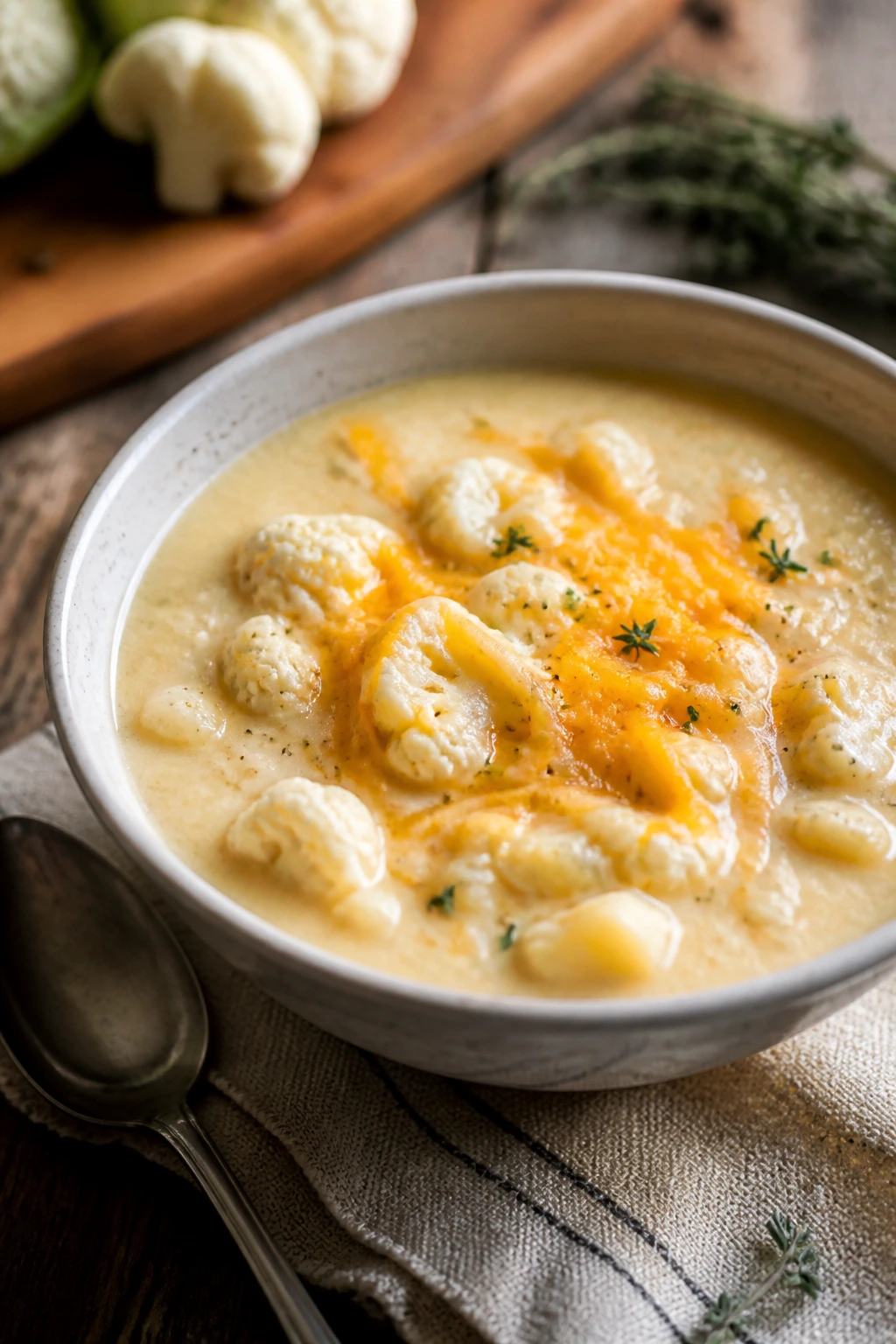
This one sits right between vegetable soup and a cheese soup, and I mean that as praise. Cauliflower keeps the pot light, cheddar gives it a sharp finish, and potato rounds out the body.
Why It Works:
Cauliflower blends smoothly when it’s cooked properly, which lets the cheese stay the star. A little potato keeps the broth from feeling thin before the cheddar goes in.
Key Ingredients:
- 1 head cauliflower, cut into florets
- 1 medium potato, diced
- 1 onion, diced
- 2 tablespoons butter
- 3 cups vegetable stock
- 1 cup milk
- 1 1/2 cups shredded cheddar
- 2 tablespoons chives
Quick Steps:
- Cook onion in butter until soft.
- Add cauliflower, potato, and stock; simmer 18 minutes.
- Blend partly for body.
- Stir in milk and cheddar off the heat.
- Finish with chives.
Equipment for This Recipe:
- Soup pot
- Immersion blender
- Box grater
- Ladle
How to Serve This Dish:
Serve with toast or roasted vegetables on the side. A few chives on top keep the color from fading into beige.
Pro Tips for This Recipe:
- Don’t overblend if you want a little texture.
- Use sharp cheddar for a cleaner flavor.
- Cauliflower stems can go in; just chop them small.
Variations on This Dish:
- Bacon Version: Add bacon at the start.
- Broccoli Blend: Replace half the cauliflower with broccoli.
Common Mistakes to Avoid with This Dish:
- Don’t boil once the cheese is added.
- Don’t use mild cheddar if you want the flavor to carry.
35. White Fish and Dill Chowder
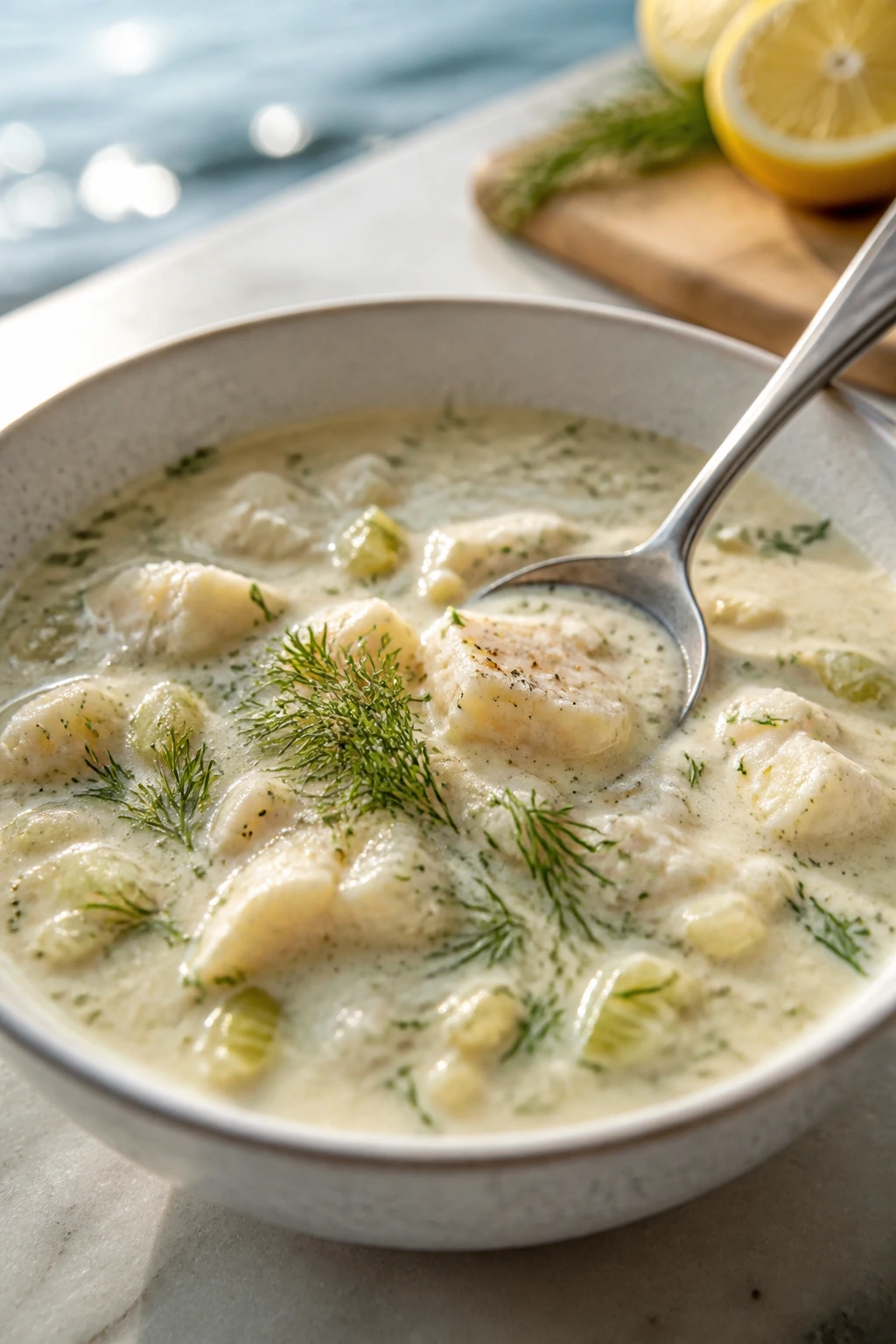
White fish chowder should taste clean, not fishy. Dill and potato keep it bright and gentle, while the broth stays soft enough that the fish flakes instead of falling apart.
Why It Works:
Firm white fish like haddock, cod, or pollock cooks best in a broth that is already ready to go. Dill adds freshness at the end, which keeps the fish flavor clear.
Key Ingredients:
- 1 pound haddock or cod, cut into chunks
- 3 medium potatoes, diced
- 1 onion, diced
- 2 tablespoons butter
- 4 cups fish stock or chicken stock
- 1 cup milk
- 1 tablespoon dill
- 1 tablespoon lemon juice
Quick Steps:
- Cook onion in butter until soft.
- Add potatoes and stock; simmer 15 minutes.
- Slide in fish chunks and cook 4 minutes.
- Stir in milk and warm gently.
- Finish with dill and lemon juice.
Equipment for This Recipe:
- Soup pot
- Fish spatula
- Ladle
- Knife
How to Serve This Dish:
Serve with rye crackers or a warm roll. The fish should break into large flakes, not tiny bits, when the spoon goes in.
Pro Tips for This Recipe:
- Use firm white fish, not thin delicate fillets.
- Add dill at the end so it stays bright.
- Lemon and fish are friends; don’t skip the final squeeze.
Variations on This Dish:
- Corn Version: Add corn with the potatoes.
- Creamier Version: Use half-and-half instead of milk.
Common Mistakes to Avoid with This Dish:
- Don’t over-stir the fish.
- Don’t simmer so long that the fish dries out.
36. Tomato, Bean, and Bacon Chowder
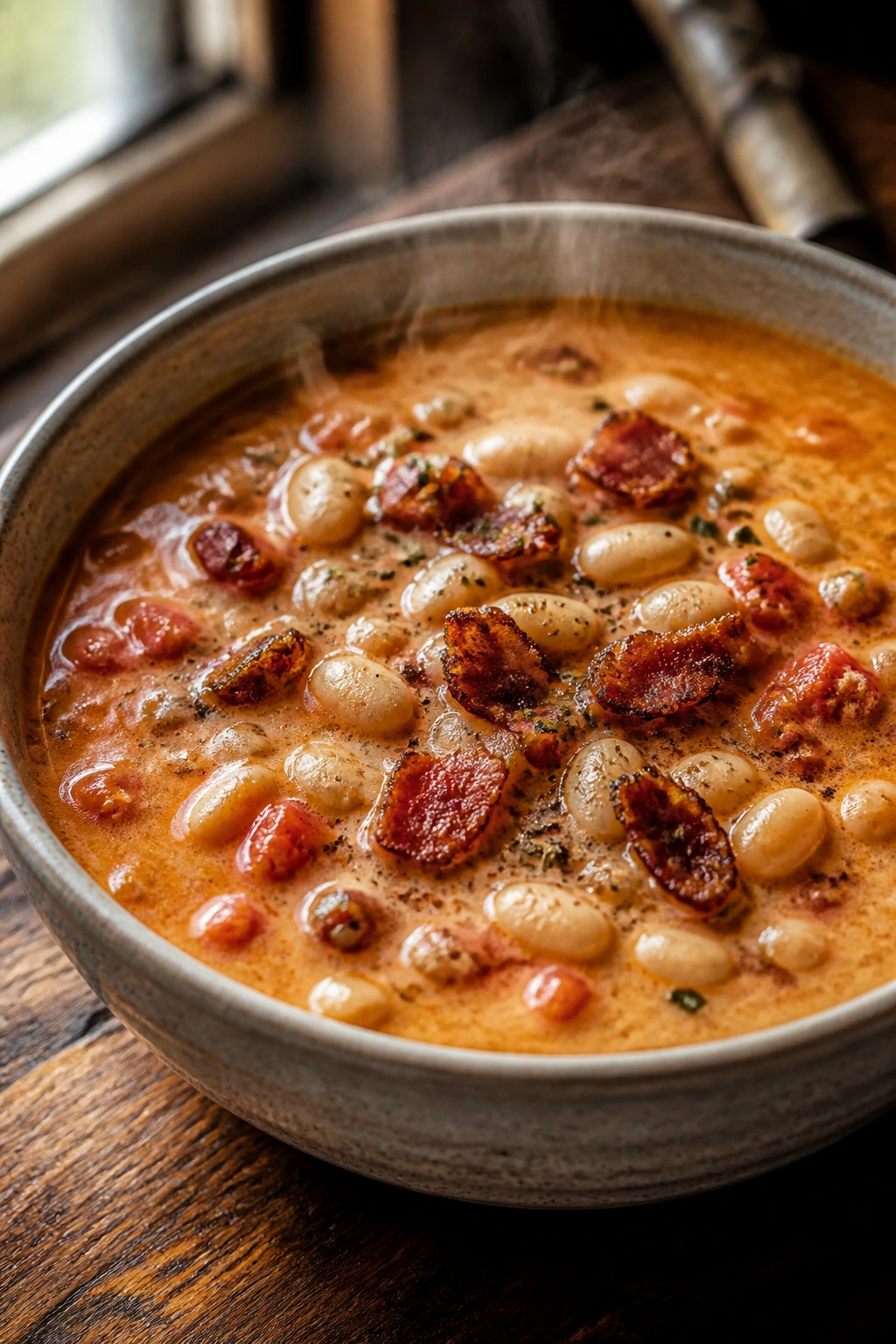
This chowder is somewhere between a soup and a stew, which is exactly why it works. Tomatoes bring the acidity, beans bring thickness, and bacon gives the bowl a smoky backbone.
Why It Works:
Beans and bacon are a smart pair because one softens the other. Tomatoes keep the pot from feeling dense, so you get a full bowl without the heaviness that sometimes sneaks into bean soups.
Key Ingredients:
- 5 slices bacon, chopped
- 1 onion, diced
- 2 cans white beans, drained and rinsed
- 1 can crushed tomatoes, 28 ounces
- 3 cups chicken stock
- 1 teaspoon thyme
- 1 teaspoon salt
- 2 tablespoons parsley
Quick Steps:
- Cook bacon until crisp.
- Cook onion in the fat until soft.
- Add beans, tomatoes, stock, and thyme.
- Simmer 15 minutes.
- Mash a few beans, then finish with parsley.
Equipment for This Recipe:
- Soup pot
- Potato masher
- Wooden spoon
- Ladle
How to Serve This Dish:
Serve with toasted bread or a grilled cheese sandwich. The bowl is thick enough to stand up to a lot, but a little parsley keeps it from looking muddy.
Pro Tips for This Recipe:
- Rinse canned beans to clean up the broth.
- Mash just enough beans to thicken the pot.
- Taste before adding extra salt; bacon and beans bring their own.
Variations on This Dish:
- Pasta Version: Add small pasta in the last 10 minutes.
- Chili-Style Version: Add cumin and a pinch of cayenne.
Common Mistakes to Avoid with This Dish:
- Don’t let the tomatoes scorch at the bottom.
- Don’t mash all the beans or the texture gets pasty.
37. Chicken Tortilla Chowder
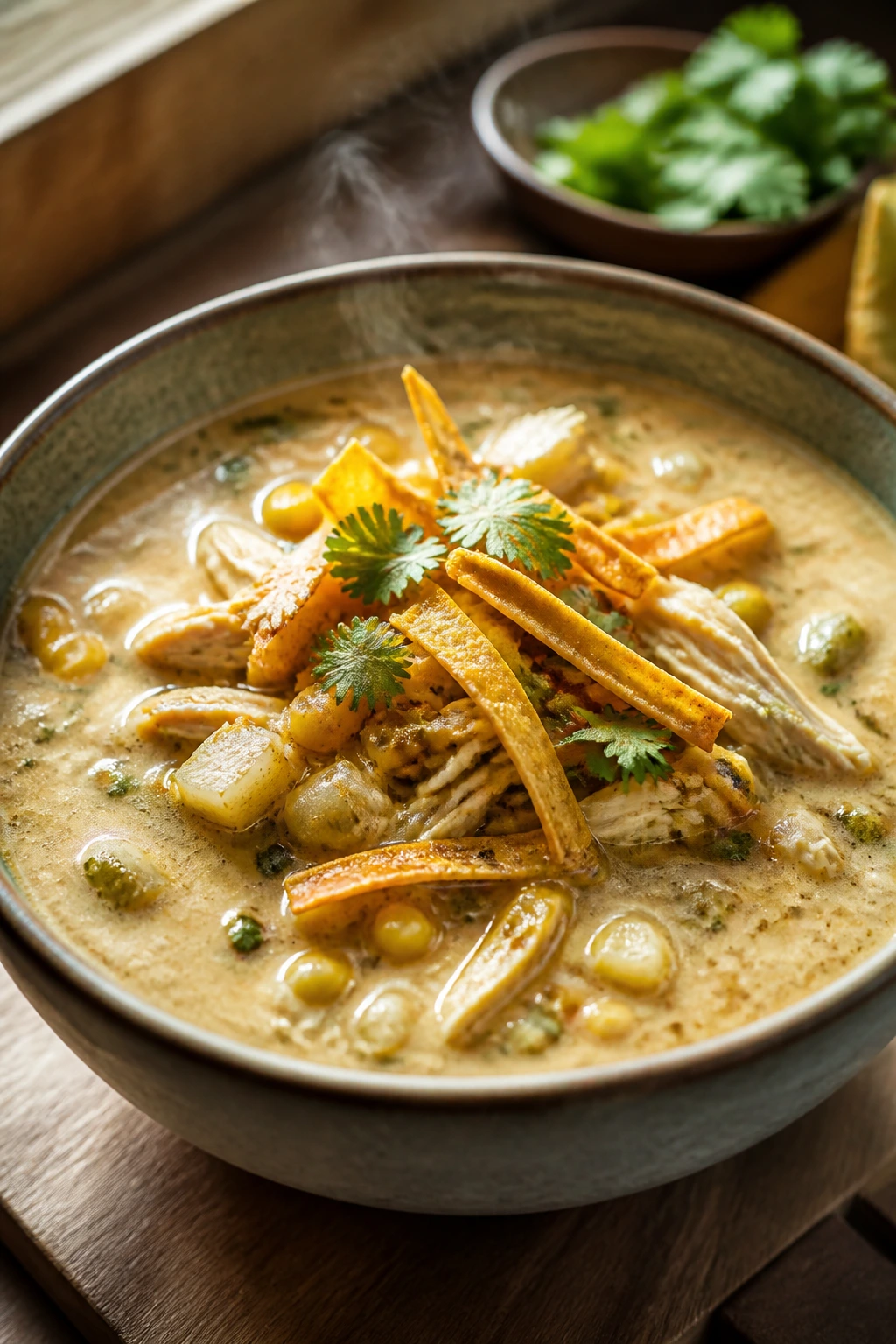
This chowder borrows the comfort of tortilla soup and turns it creamier. Chicken, corn, and mild spice make it feel familiar, while tortilla strips give the bowl the crunch it needs.
Why It Works:
The base is simple: onion, stock, corn, chicken, and a little cumin. The tortilla strips belong on top, not in the pot, or they’ll turn into a soggy mess.
Key Ingredients:
- 2 cups cooked chicken, shredded
- 2 cups corn kernels
- 1 onion, diced
- 3 cups chicken stock
- 1 cup milk
- 1 teaspoon cumin
- 1 cup tortilla strips
- 1/2 cup shredded cheddar
- 2 tablespoons cilantro
Quick Steps:
- Cook onion until soft.
- Add corn, stock, and cumin; simmer 10 minutes.
- Stir in chicken and milk.
- Warm gently for 4 minutes.
- Top with tortilla strips, cheddar, and cilantro.
Equipment for This Recipe:
- Soup pot
- Knife
- Spoon
- Ladle
How to Serve This Dish:
Serve with lime wedges and extra tortilla strips at the table. The crunchy topping should stay crunchy, so add it at the last second.
Pro Tips for This Recipe:
- Bake tortilla strips briefly if you want them extra crisp.
- Use roasted chicken for deeper flavor.
- Lime at the end sharpens the whole bowl.
Variations on This Dish:
- Black Bean Version: Add black beans for more heft.
- Spicy Version: Add diced jalapeño or chipotle.
Common Mistakes to Avoid with This Dish:
- Don’t cook the tortilla strips in the soup.
- Don’t add cheddar too early or it can clump.
38. Navy Bean and Ham Chowder
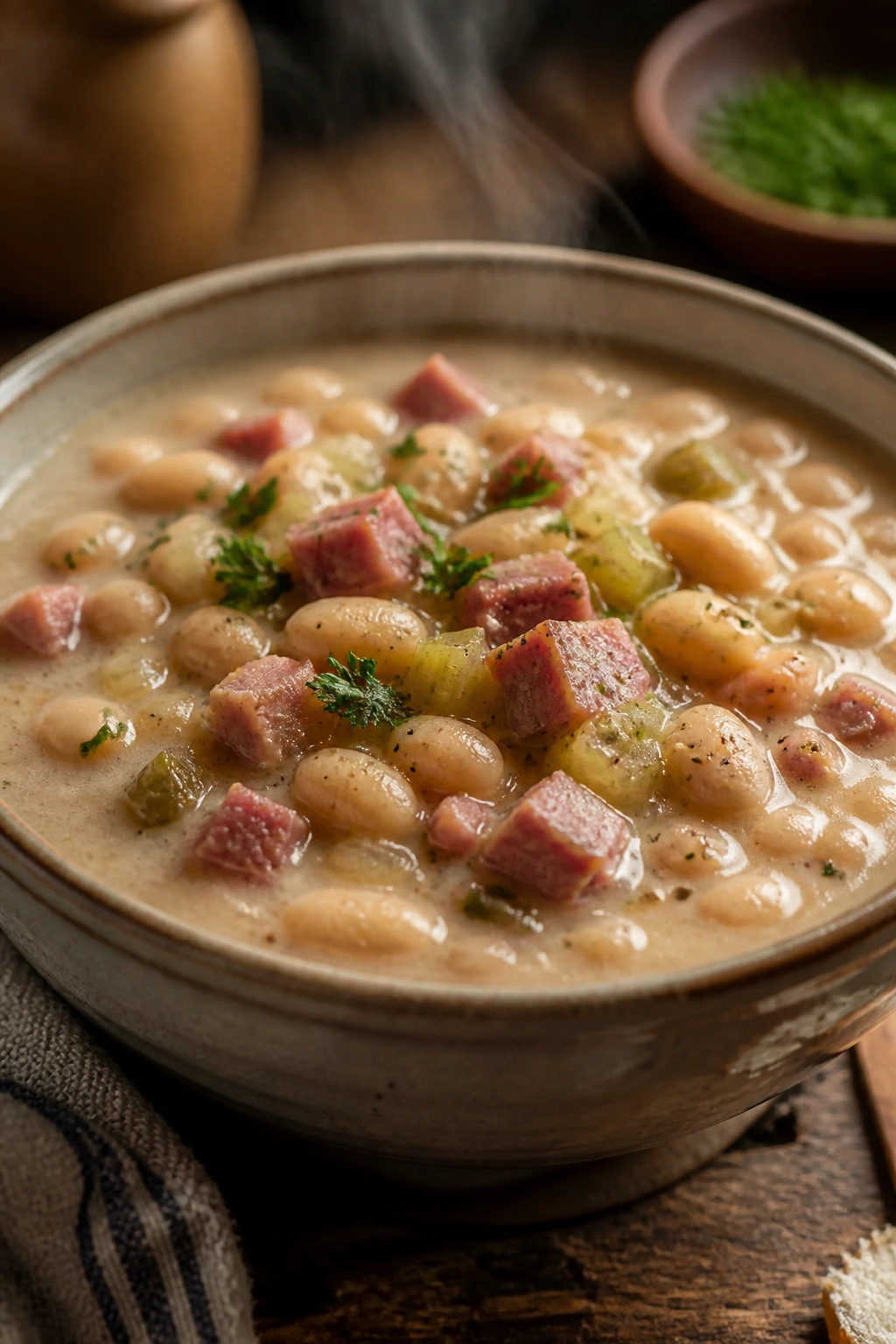
Navy beans make a chowder that feels old-fashioned in the best way. The beans soften into the broth, the ham adds salt and smoke, and the result is sturdy without being clunky.
Why It Works:
Navy beans naturally thicken the pot as they simmer. That means you get body from the ingredients themselves instead of leaning too hard on flour or cream.
Key Ingredients:
- 2 cans navy beans, drained and rinsed
- 2 cups diced ham
- 1 onion, chopped
- 2 celery stalks, diced
- 4 cups chicken stock
- 1 cup milk
- 1 bay leaf
- 1 teaspoon thyme
Quick Steps:
- Cook onion and celery until soft.
- Add beans, stock, bay leaf, and thyme.
- Simmer 15 minutes.
- Mash some beans for thickness.
- Stir in ham and milk, then warm gently.
Equipment for This Recipe:
- Soup pot
- Potato masher
- Wooden spoon
- Ladle
How to Serve This Dish:
Serve with warm biscuits or a slice of country bread. A little pepper on top works better than any fancy garnish here.
Pro Tips for This Recipe:
- Taste ham before adding salt.
- Use low-sodium stock if your ham is very salty.
- Mash only a portion of the beans for better texture.
Variations on This Dish:
- Smokier Version: Add a little bacon at the start.
- Green Version: Stir in chopped spinach at the end.
Common Mistakes to Avoid with This Dish:
- Don’t skip rinsing the beans.
- Don’t overthin the chowder with too much milk.
39. Oyster Chowder
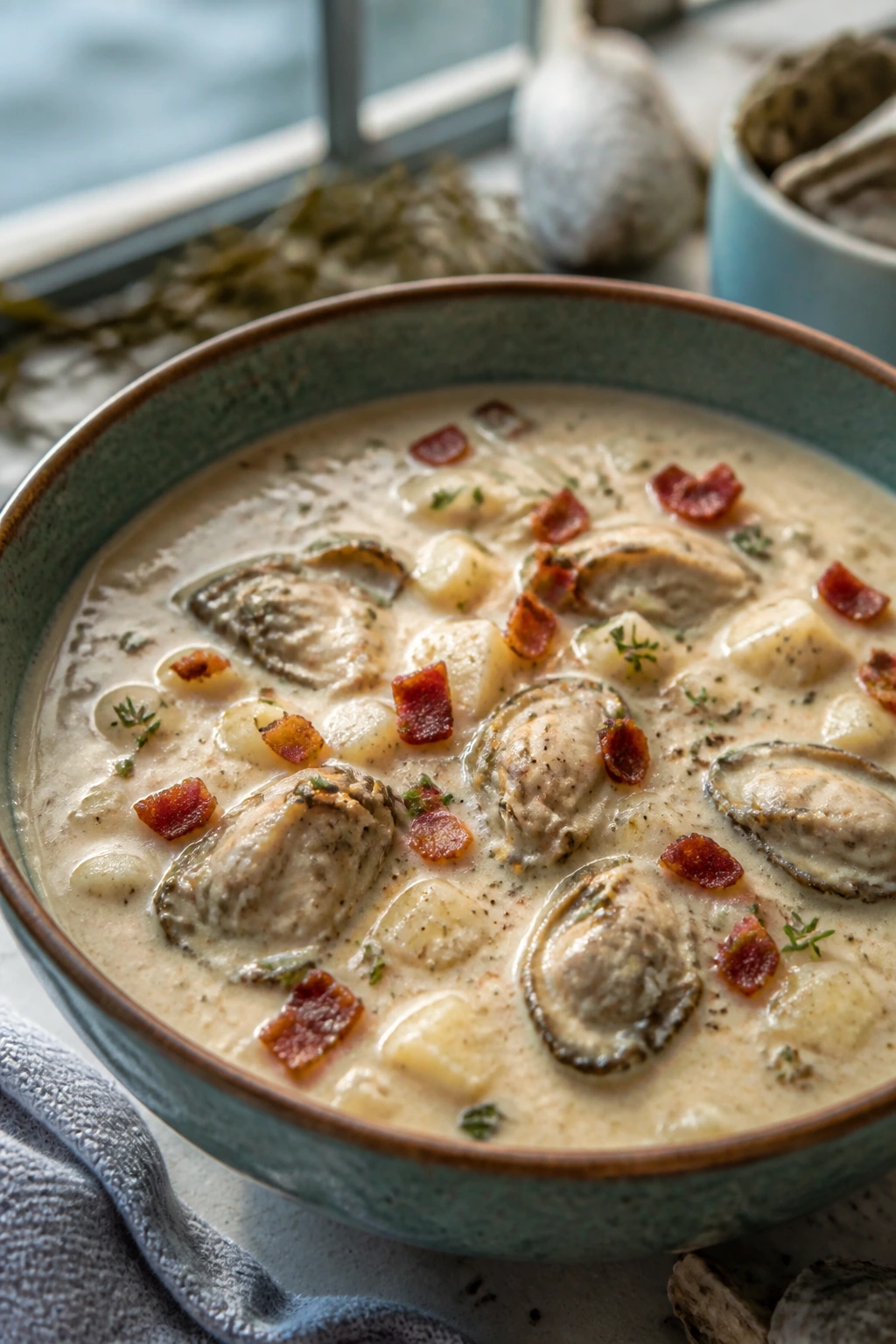
Oyster chowder has a soft, oceanic flavor that asks for restraint. The oysters give up their brine quickly, so the broth should stay delicate, creamy, and only lightly seasoned.
Why It Works:
Oysters cook in a blink. If you give them too much heat, they tighten and the texture goes from silky to rough, which is why the base needs to be ready before they go in.
Key Ingredients:
- 1 pint oysters with liquor
- 4 slices bacon, diced
- 1 onion, diced
- 2 celery stalks, diced
- 2 medium potatoes, diced
- 3 cups milk
- 1 cup clam juice
- 1 tablespoon butter
- 2 tablespoons parsley
Quick Steps:
- Cook bacon, then soften onion and celery in the fat.
- Add potatoes, clam juice, and butter; simmer 12 minutes.
- Stir in milk.
- Add oysters and cook 2 to 3 minutes until edges curl.
- Finish with parsley and black pepper.
Equipment for This Recipe:
- Soup pot
- Slotted spoon
- Ladle
- Knife
How to Serve This Dish:
Serve with plain crackers or buttered toast. The oyster liquor gives the pot enough character, so don’t pile on extra toppings.
Pro Tips for This Recipe:
- Check oysters for shell fragments before cooking.
- Add them only at the very end.
- Keep the heat low after milk goes in.
Variations on This Dish:
- Creamier Version: Add a splash of cream with the milk.
- Herb Version: Use chives instead of parsley.
Common Mistakes to Avoid with This Dish:
- Don’t overcook oysters.
- Don’t make the broth too salty before you taste the liquor.
40. Kielbasa and Potato Chowder
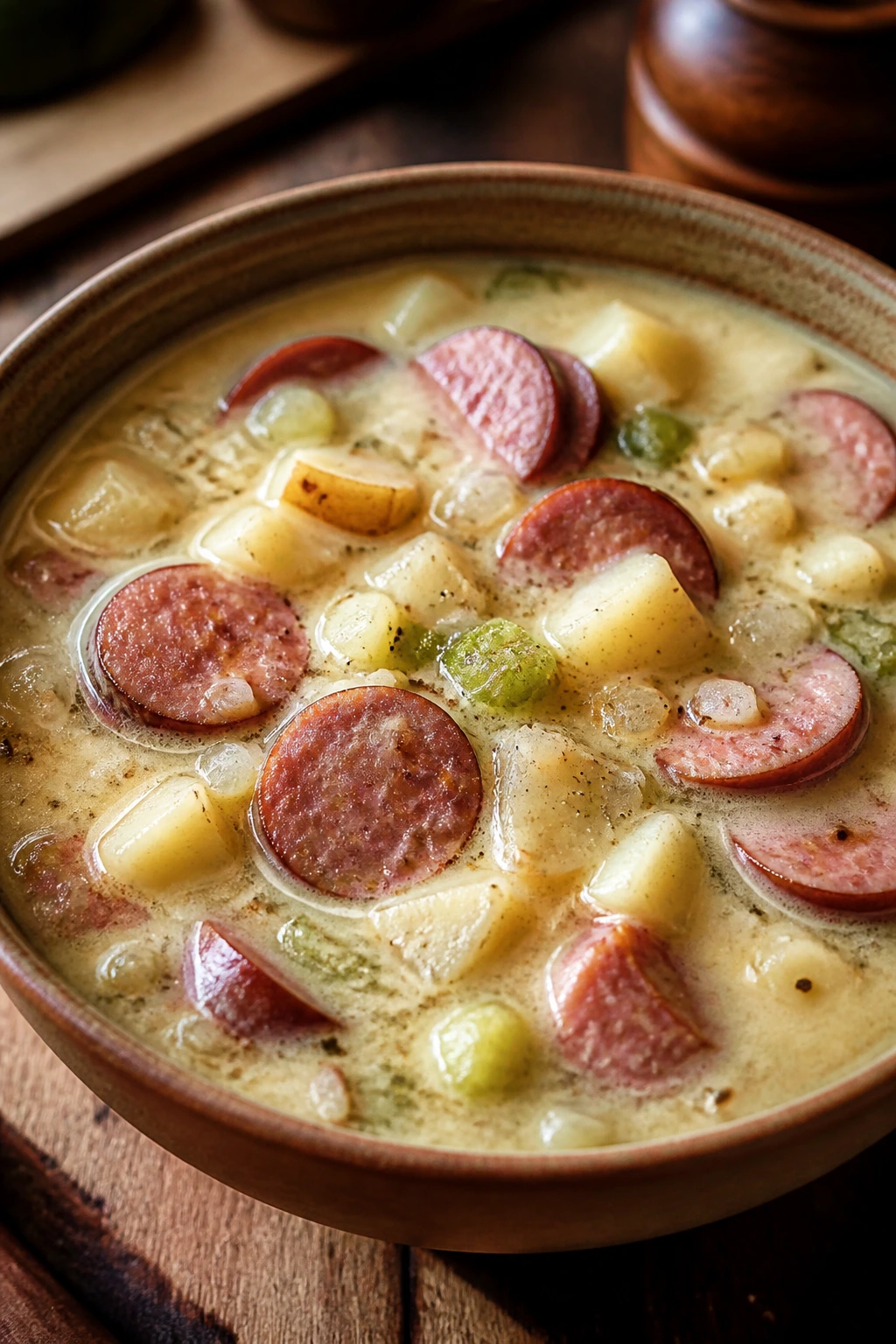
Kielbasa gives this chowder a smoky, peppery backbone that makes it feel fuller than it is. Potatoes soften into the broth, and the whole pot tastes like a dinner that knows what it’s doing.
Why It Works:
Kielbasa brings both seasoning and fat, which saves you time on the base. The potatoes pick up the smoke while the milk smooths the edges.
Key Ingredients:
- 12 ounces kielbasa, sliced
- 1 onion, diced
- 3 medium potatoes, diced
- 2 celery stalks, diced
- 4 cups chicken stock
- 1 cup milk
- 1 teaspoon paprika
- 2 tablespoons parsley
Quick Steps:
- Brown the kielbasa in the pot.
- Add onion and celery; cook 3 minutes.
- Add potatoes, stock, and paprika; simmer 15 minutes.
- Stir in milk and warm gently.
- Finish with parsley and black pepper.
Equipment for This Recipe:
- Soup pot
- Cutting board
- Wooden spoon
- Ladle
How to Serve This Dish:
Serve with rye bread or a dill pickle on the side if you want something sharp beside the bowl. The smoke in the kielbasa does a lot of the flavor work.
Pro Tips for This Recipe:
- Brown the sausage first for a better base.
- Use waxy potatoes so they hold shape.
- A spoonful of mustard at the table can be a nice extra.
Variations on This Dish:
- Cabbage Version: Add shredded cabbage with the potatoes.
- Cheddar Version: Stir in shredded cheddar off the heat.
Common Mistakes to Avoid with This Dish:
- Don’t skip browning the kielbasa.
- Don’t let the milk boil once it’s in.
Why a Gentle Simmer Makes Chowder Better
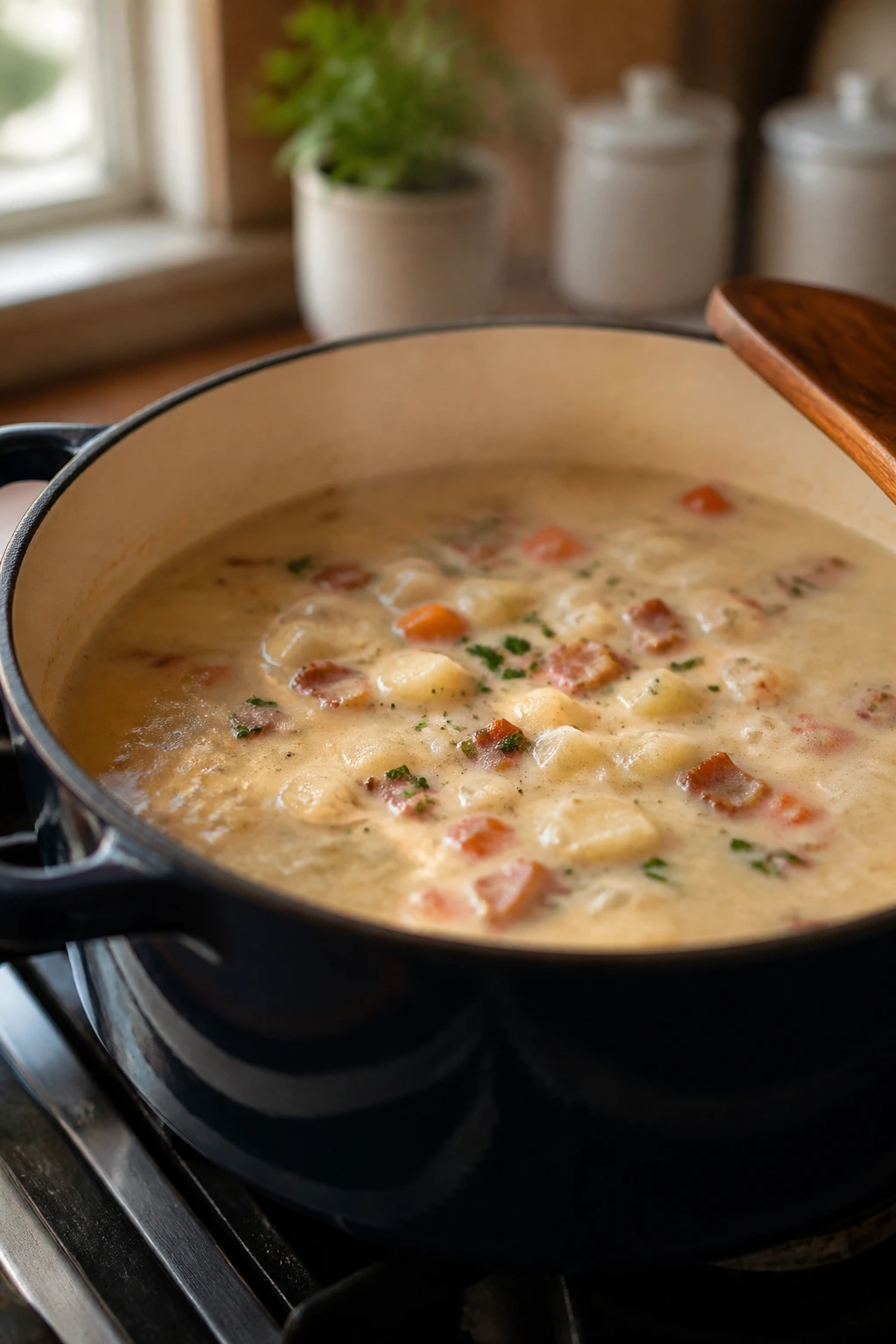
A chowder is not the place to show off. The whole point is that the pot stays calm while the flavor gets deeper. If you boil cream, it loses its shape. If you rush fish, it dries out. If you let potatoes collapse too soon, the broth goes muddy instead of creamy.
That slower rhythm is what makes chowder feel so useful in the kitchen. You can build it from bacon drippings, leftover chicken, frozen corn, canned beans, or a bag of fish fillets that’s been waiting in the freezer. The technique stays the same: soften the aromatics, thicken the base, simmer until the starch does its work, then finish the delicate ingredients at the end.
The best chowders also know when to stop. A splash of acid, a handful of herbs, or a few crunchy crackers on top can do more than another ladle of cream. I’d take a bowl with good potatoes and a clean finish over one that tastes thick but sleepy.
Essential Equipment for These Recipes
-
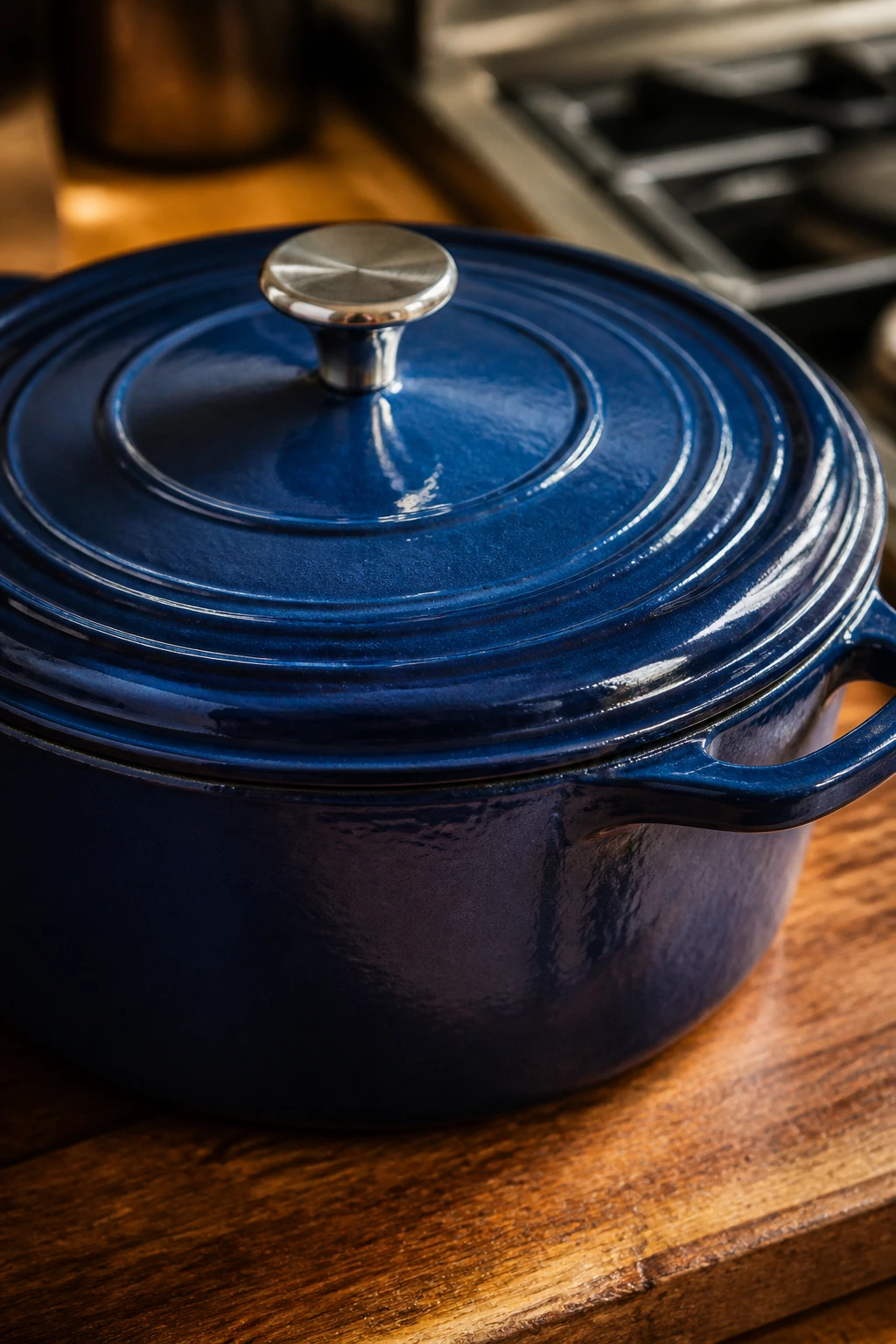
Heavy Dutch oven or soup pot: A thick-bottomed pot keeps milk, stock, and starch from scorching on the bottom.
-
Wooden spoon or silicone spatula: Good for stirring without scraping the pot harshly, especially once dairy goes in.
-
Sharp chef’s knife: Nearly every chowder depends on even onion, potato, celery, or fish pieces.
-
Cutting board: A roomy board matters more than people think when you’re dicing several vegetables in a row.
-
Ladle: Makes serving cleaner and helps you gauge whether the chowder is too thick or too thin.
-
Potato masher: Handy when you want body without blending the whole pot.
-
Immersion blender: Useful for cauliflower, squash, carrot, or mushroom chowders when you want a partly smooth base.
-
Measuring cups and spoons: Chowder hides a lot of flavor changes in small amounts of stock, flour, salt, and acid.
Smart Shopping and Ingredient Tips
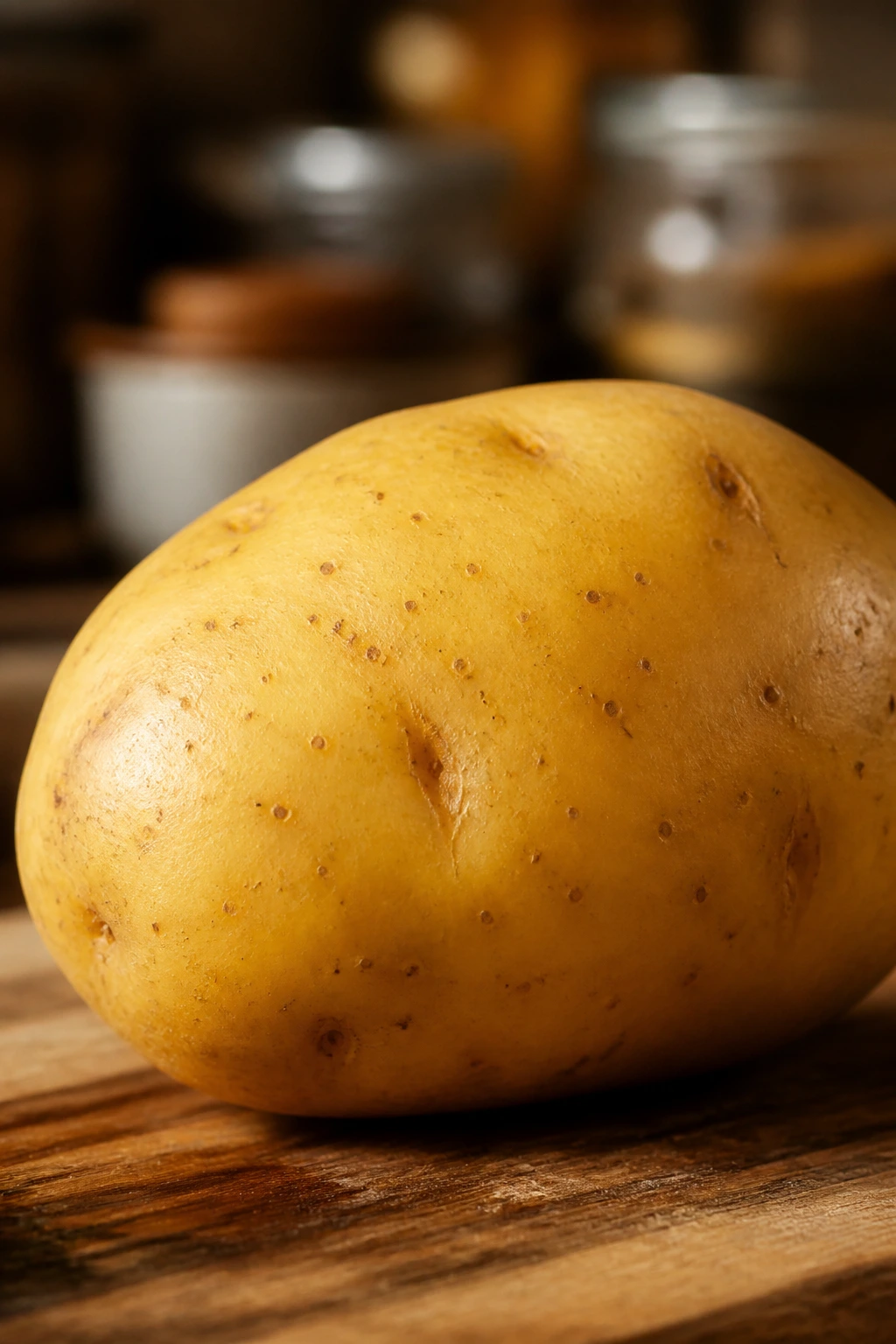
Potatoes are the first thing I pay attention to. Yukon Golds are the safest choice for chowder because they hold together but still soften enough to help thicken the broth. Russets can work, but they break down faster and can turn the pot grainy if you stir too hard. Red potatoes are a good backup when you want cleaner cubes.
Seafood should look and smell clean, not aggressively fishy. For chowder, frozen cod, shrimp, or salmon is often a better buy than tired fresh seafood that has sat too long. Thaw it in the fridge, pat it dry, and add it near the end so the texture stays firm. Canned clams are fine. Actually, they’re often the easiest way to get a steady clam flavor without dealing with shells.
Dairy is more forgiving when you choose the right kind. Half-and-half gives a softer finish, while heavy cream stands up better to gentle simmering. If a recipe uses milk, keep the heat low once it goes in. Evaporated milk can also be useful for chowders that need a creamy finish without going full rich.
For stock, I like unsalted or low-sodium versions because chowder reduces as it cooks. That means the salt can sneak up on you. Bacon, ham, sausage, and cheese all bring their own seasoning, so taste near the end and adjust from there.
Frozen corn, frozen seafood, and canned beans are all legitimate chowder ingredients. There’s no prize for making the grocery run harder than it needs to be. The only rule is to respect the texture: thaw frozen ingredients, drain canned ones well, and don’t dump extra liquid into the pot unless you plan to simmer it down.
How to Serve These Recipes
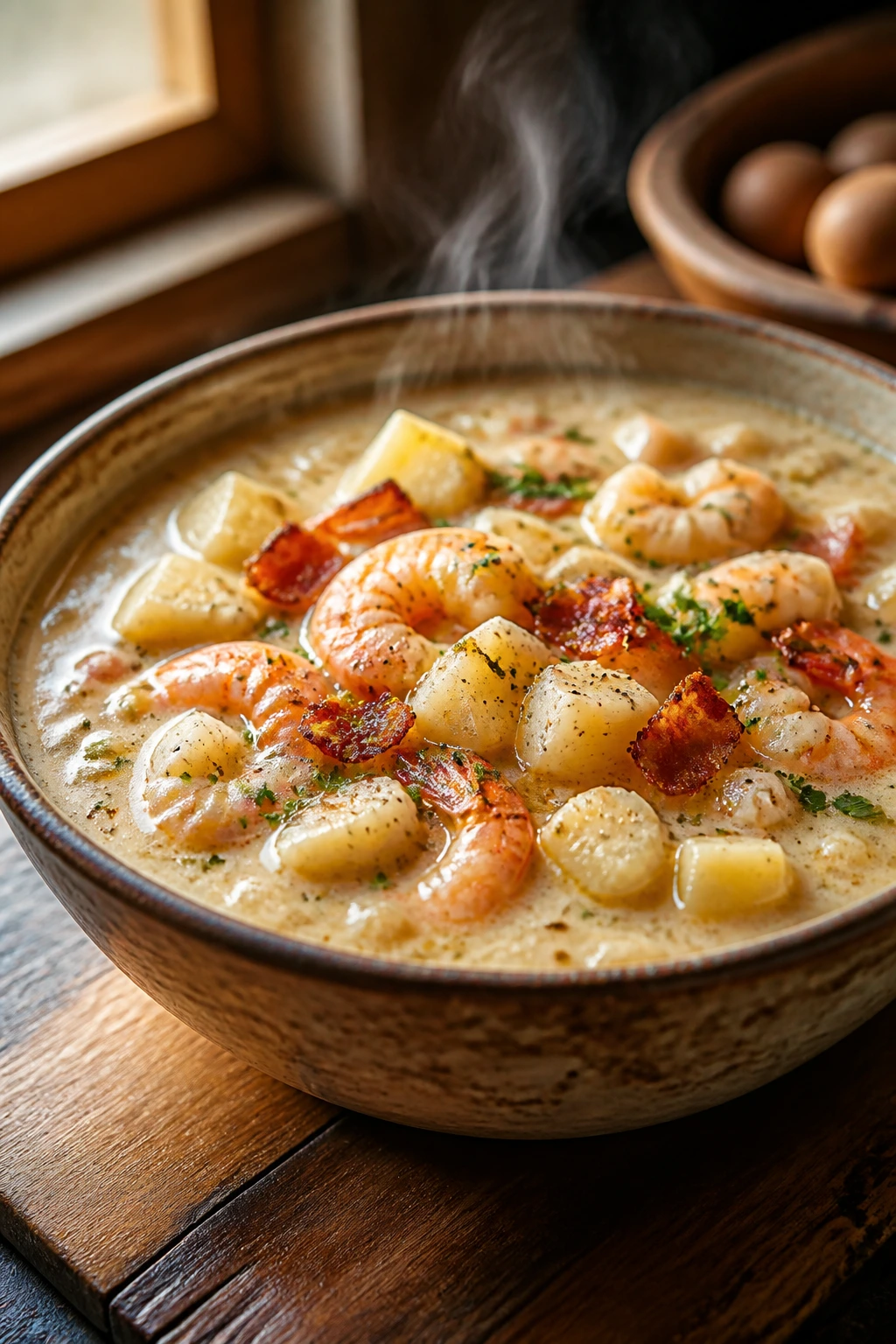
Presentation:
Serve chowder in wide bowls rather than deep mugs. That gives the surface room for herbs, bacon, crackers, or a few oil drops, and it lets the steam escape without making the top look crowded.
Accompaniments:
Crusty bread, cheddar biscuits, oyster crackers, cornbread, or a simple green salad all make sense. For seafood chowders, I lean toward plain toast or rolls so the broth stays the focus. For thicker vegetable chowders, a sharp salad with lemon or mustard dressing helps cut the richness.
Portions:
Most of these bowls land comfortably at 1 1/2 to 2 cups per serving if served with bread. If the chowder is packed with seafood or sausage, the lower end is enough. For a main-course supper, I usually plan on one and a half generous ladles per person, then keep extra bread nearby.
Beverage Pairing:
A dry cider works well with bacon, potato, and corn chowders. For seafood versions, a crisp lager or a cold glass of unsweetened tea keeps the meal from feeling heavy. If you want something nonalcoholic with a little lift, sparkling water with lemon is honest and useful.
Additional Tips and Flavor Boosters
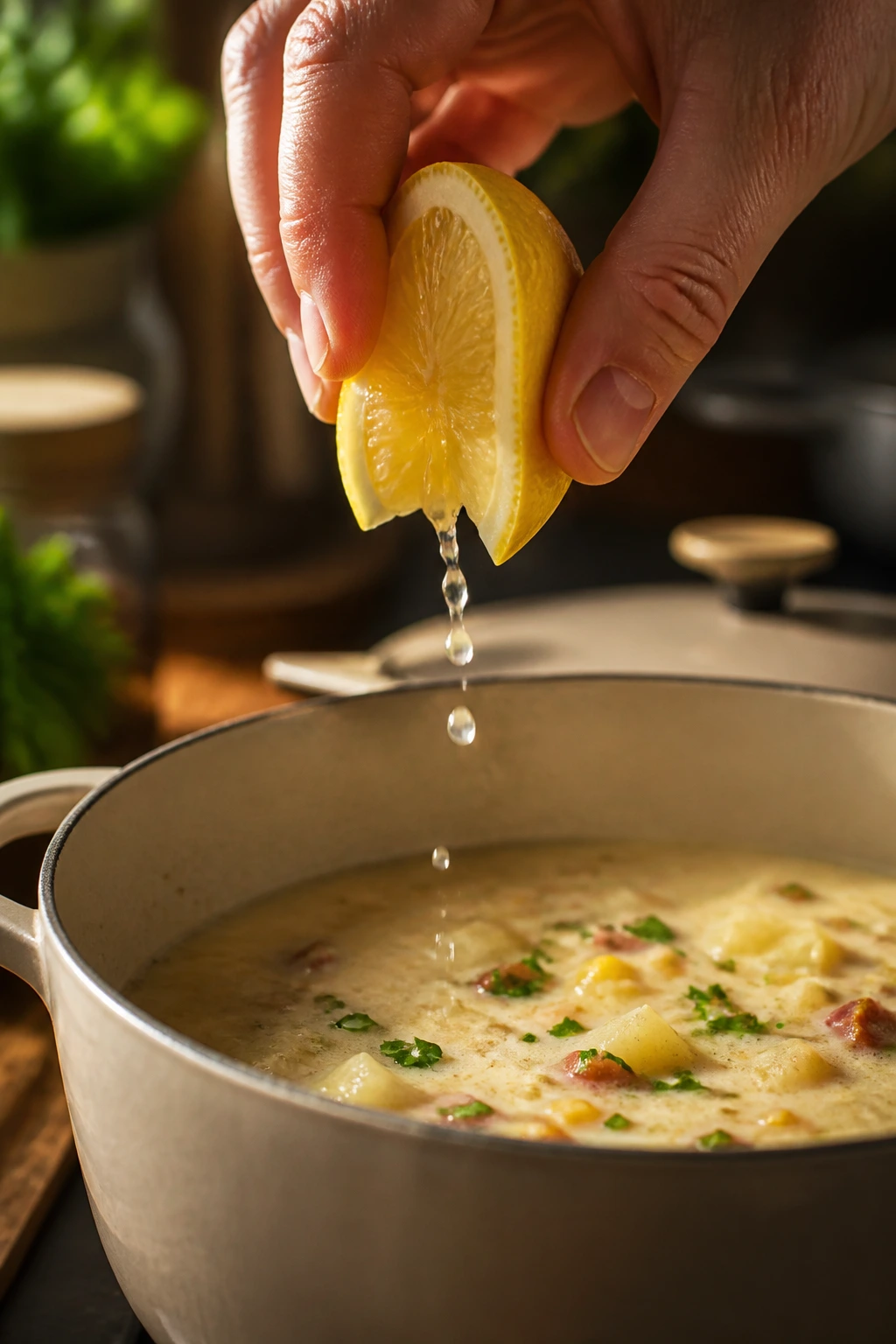
Flavor Enhancement:
A small splash of sherry, lemon juice, cider vinegar, or lime at the end wakes up a chowder faster than another pinch of salt. Use it like a dimmer switch, not a floodlight.
Customization:
If you want more body, mash a few potatoes or beans against the side of the pot instead of adding more flour. If you want more bite, add sliced scallions, dill, parsley, or chives right at the end.
Serving Suggestions:
Toast a few crackers or bread slices and keep them separate until serving. Crunch disappears fast in hot chowder, and the texture is worth protecting.
Make-It-Yours:
For gluten-free chowders, skip the flour and use cornstarch slurry or potato blending. For dairy-free versions, coconut milk or unsweetened oat milk both work, depending on whether you want a richer or cleaner finish. For lower-sodium bowls, use low-sodium stock and season late.
Make-Ahead, Storage, and Reheating Guidance
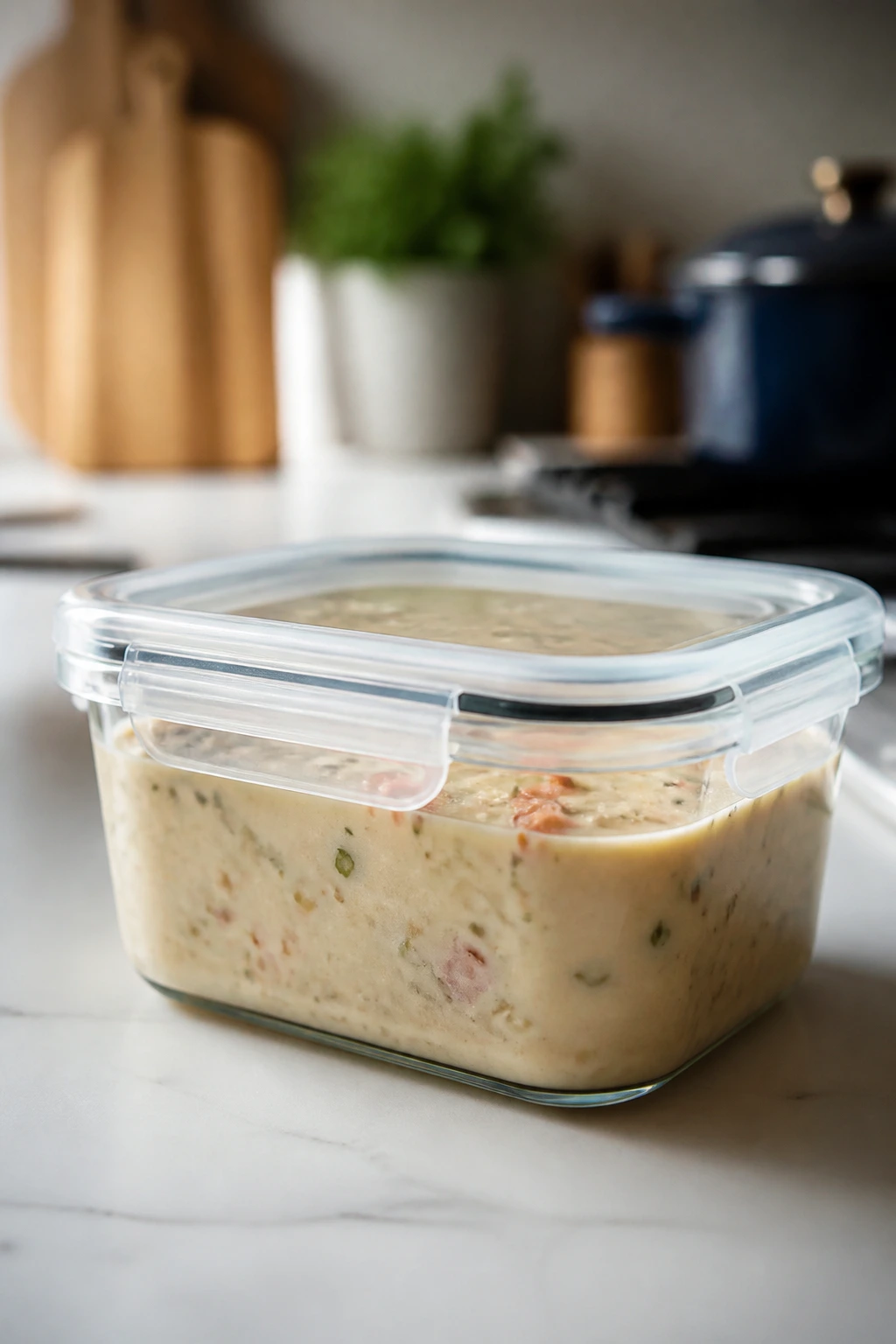
Most chowders keep 3 to 4 days in the refrigerator in a covered container. Seafood chowders are fussier and are best eaten within 2 days, because fish and shellfish get less pleasant after that. If the chowder contains a lot of dairy, expect it to thicken as it cools; that’s normal.
Freezing depends on the style. Broth-forward chowders, bean chowders, and vegetable-heavy chowders freeze better than dairy-heavy ones, and they’re usually fine for up to 2 months. Cream-based chowders can separate when thawed, so if you know you want to freeze, hold back some of the dairy and add it after reheating.
Reheat chowder slowly over medium-low heat, stirring often. Add a splash of stock, milk, or water if it has tightened in the fridge. Do not let it boil hard; that’s the easiest way to ruin a smooth texture. Seafood chowders should be warmed just until hot, not simmered again. If you can, reheat only the portion you plan to eat.
For make-ahead cooking, the smartest move is to build the base a day early and add the delicate pieces later. Potatoes, onions, beans, and stock can sit together overnight and taste even more settled the next day. Fish, shrimp, dairy, and cheese are better added fresh during the final reheat.
Variations and Adaptations to Try
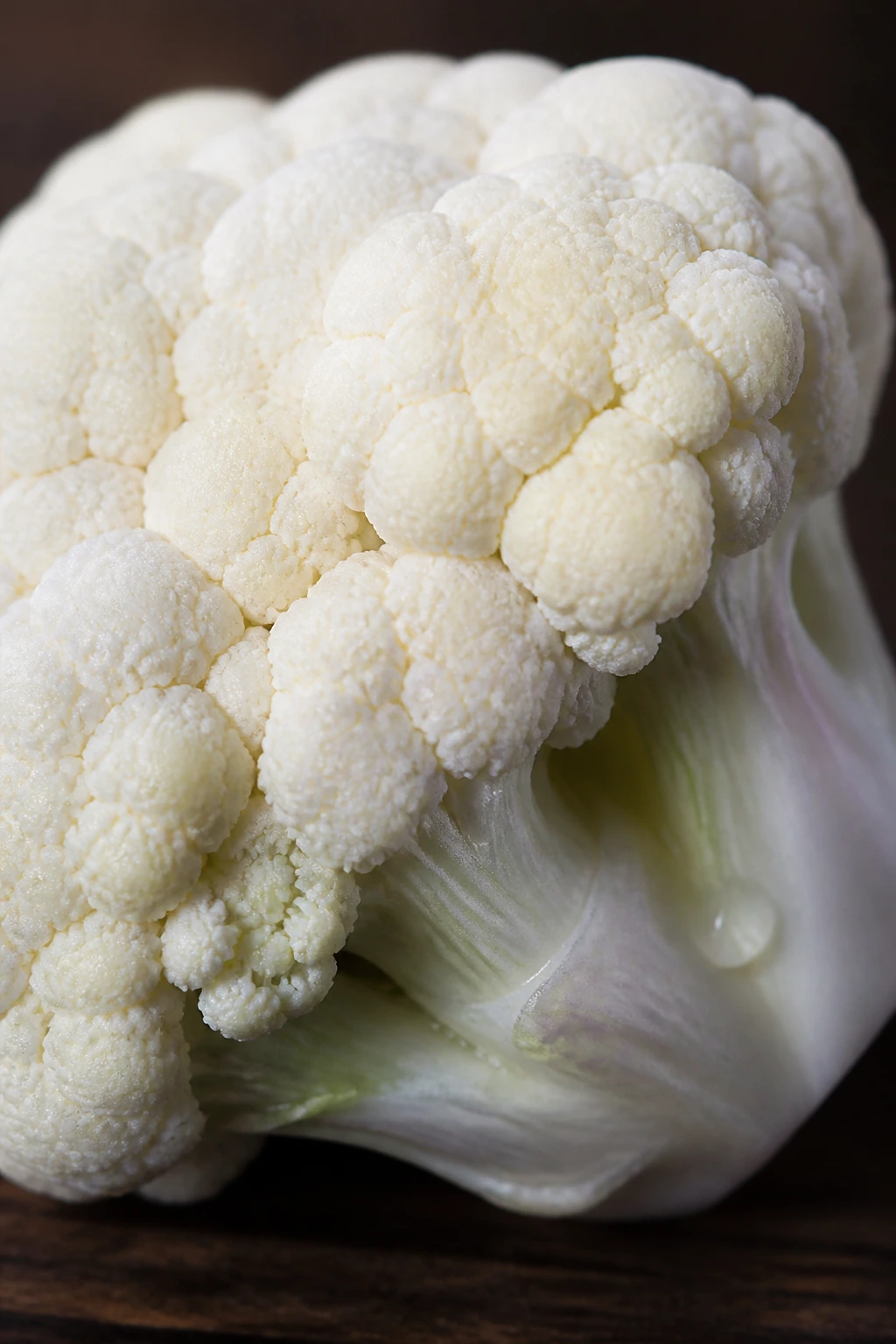
Dairy-Light Pot:
Use evaporated milk or half milk and half stock for a lighter texture that still feels creamy. This works well in corn, potato, and chicken chowders where the starch already does most of the thickening.
Gluten-Free Thickener:
Skip the flour and use a cornstarch slurry, or blend a portion of the potatoes, cauliflower, or beans to give the broth body. The texture stays cleaner and the flavor stays close to the ingredients.
Seafood Swap:
Cod, haddock, salmon, shrimp, crab, lobster, oysters, and trout all work in chowder if you match the cooking time to the ingredient. The softer the seafood, the later it should go in.
Vegetable-Only Bowl:
Use cauliflower, mushrooms, sweet potatoes, corn, cabbage, or squash as the main event. A little smoked paprika, mustard, or miso gives the pot depth without needing meat.
Smoky Shortcut:
Bacon, smoked sausage, smoked paprika, or smoked trout can all carry a chowder with very little help. Choose one smoky element, not three, or the bowl starts tasting muddled.
Bright Herb Finish:
Dill, chives, parsley, cilantro, basil, or thyme can steer a chowder in a different direction fast. Add herbs at the end so the flavor stays fresh and the color stays alive.
Common Mistakes to Avoid
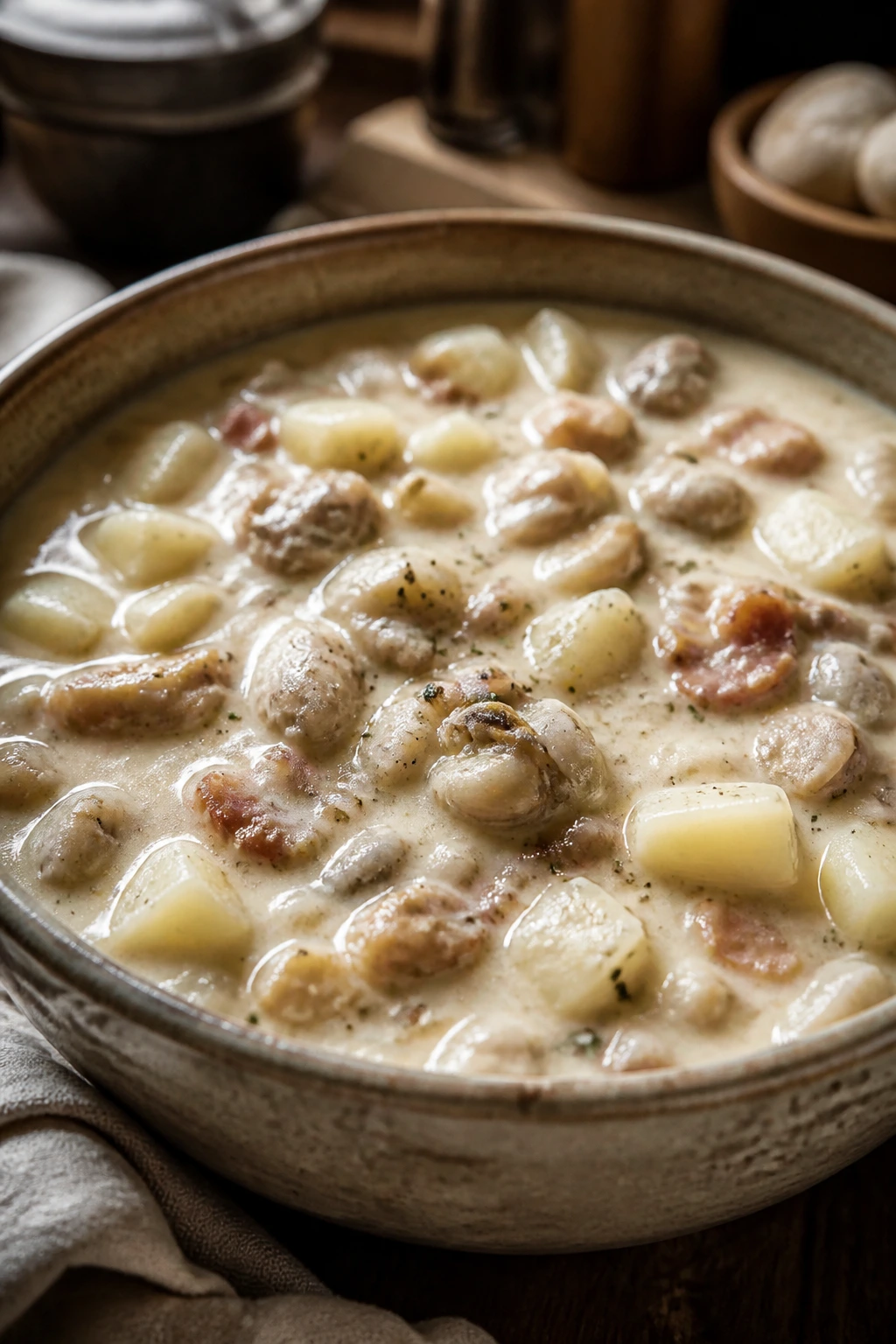
The biggest mistake is boiling dairy too hard. Milk and cream are not built for a rolling boil, and once they split or taste scorched, there is no magic fix. Keep the heat low after the dairy goes in.
A second one is using the wrong potato texture. Giant cubes of russet can collapse too fast, while undercooked potato chunks stay chalky in the middle. Dice evenly and choose a potato that matches the bowl you want.
Third: adding seafood too early. Shrimp, cod, oysters, crab, lobster, and salmon each have a narrow window where they stay pleasant. If you toss them into a pot that still needs ten more minutes, they’ll punish you for it.
Another easy slip is underseasoning after the chowder thickens. Salt tastes different once the broth reduces and the starch settles in. Taste at the end, not just at the beginning.
And then there’s the opposite problem: too much thickener. A chowder should coat a spoon, not sit in it like paste. If the pot gets too dense, loosen it with stock or milk before serving instead of forcing everyone to chew through it.
Frequently Asked Questions

Can I freeze chowder with dairy in it?
You can, but it often separates when thawed. Dairy-light or broth-based chowders freeze better, and the texture is usually better if you add cream or milk after reheating.
What’s the best potato for chowder?
Yukon Gold is my first choice because it softens nicely without dissolving too fast. Russets work when you want a thicker, fluffier pot, but they need gentler stirring.
How do I thicken chowder without flour?
Mash some of the potatoes, beans, or cauliflower against the side of the pot, or blend a portion of the soup with an immersion blender. Cornstarch slurry also works if you want a smoother finish.
Why did my chowder curdle?
The pot was probably too hot when the dairy went in, or it boiled after the milk was added. Keep the heat low and add cream at the end so the texture stays smooth.
Can I make chowder ahead of time?
Yes, and many chowders taste better after a night in the fridge. For seafood versions, keep the fish or shellfish separate and add it during reheating so it stays tender.
Can I use frozen corn, fish, or shrimp?
Absolutely. Thaw them first, drain off extra water, and pat them dry so they don’t thin the broth. Frozen corn is often better than old fresh corn because the sweetness is more reliable.
How do I fix chowder that’s too thin?
Let it simmer uncovered for a few minutes, mash a few potatoes or beans, or stir in a small cornstarch slurry. Add thickener slowly; it’s easier to fix a thin chowder than a gluey one.
What if my chowder tastes flat?
Usually it needs salt, acid, or both. A squeeze of lemon, a splash of vinegar, or a spoonful of sherry can make the whole pot taste more awake.
Can I make chowder in a slow cooker?
Yes, but it works best for the base ingredients only. Add seafood, milk, cream, and cheese near the end so they don’t overcook or split.
A Pot Worth Keeping Warm
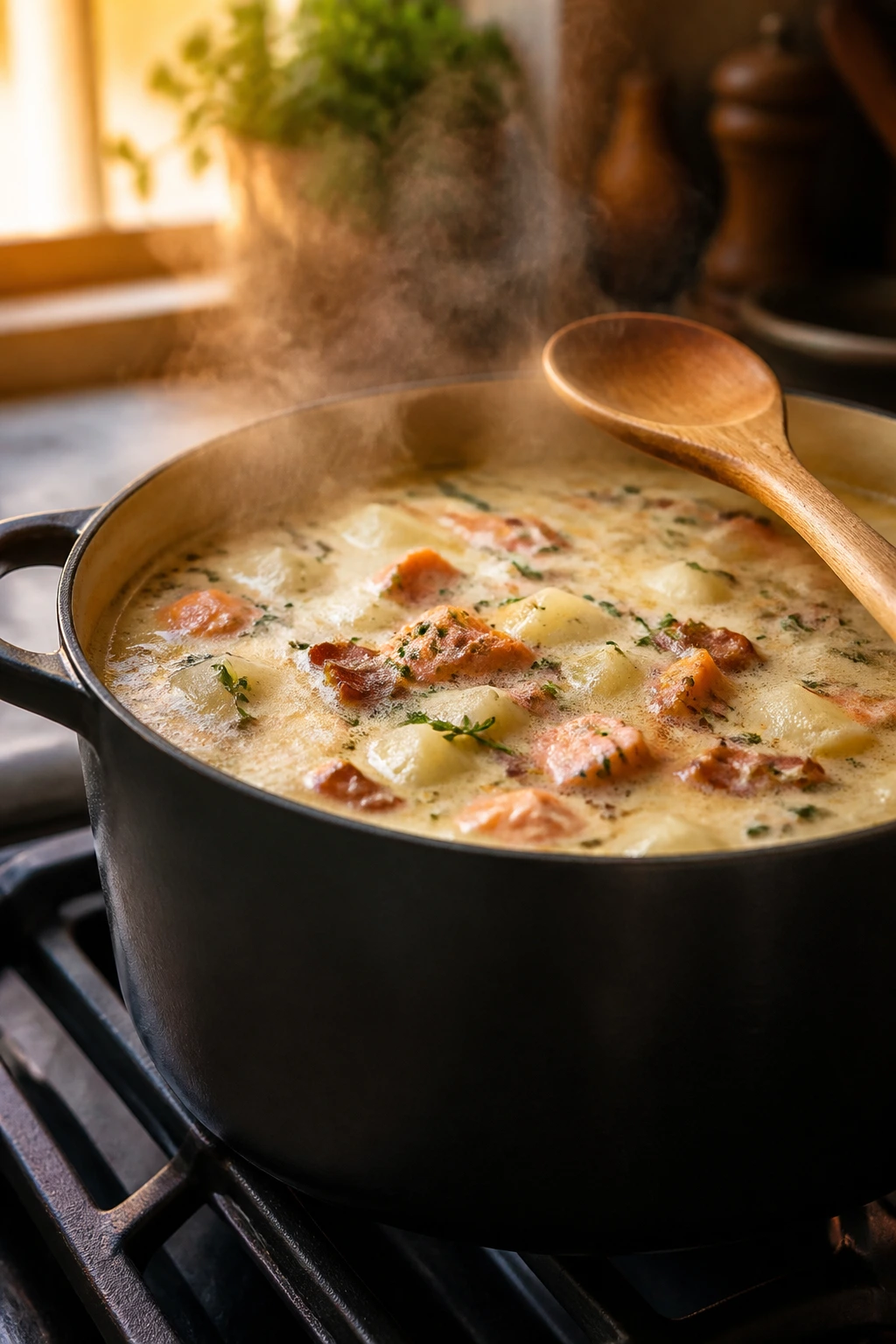
A good chowder doesn’t need to shout. It just needs to sit on the stove and do its job well: soften the sharp edges, pull a few simple ingredients into something coherent, and give you a bowl that feels steady from the first spoonful to the last.
That’s what makes these chowders useful. They can be humble or rich, brothy or thick, seafood-forward or built from vegetables and beans. Once you get comfortable with the simmer, the rest becomes second nature, and the pot starts earning a permanent place in the rotation.