



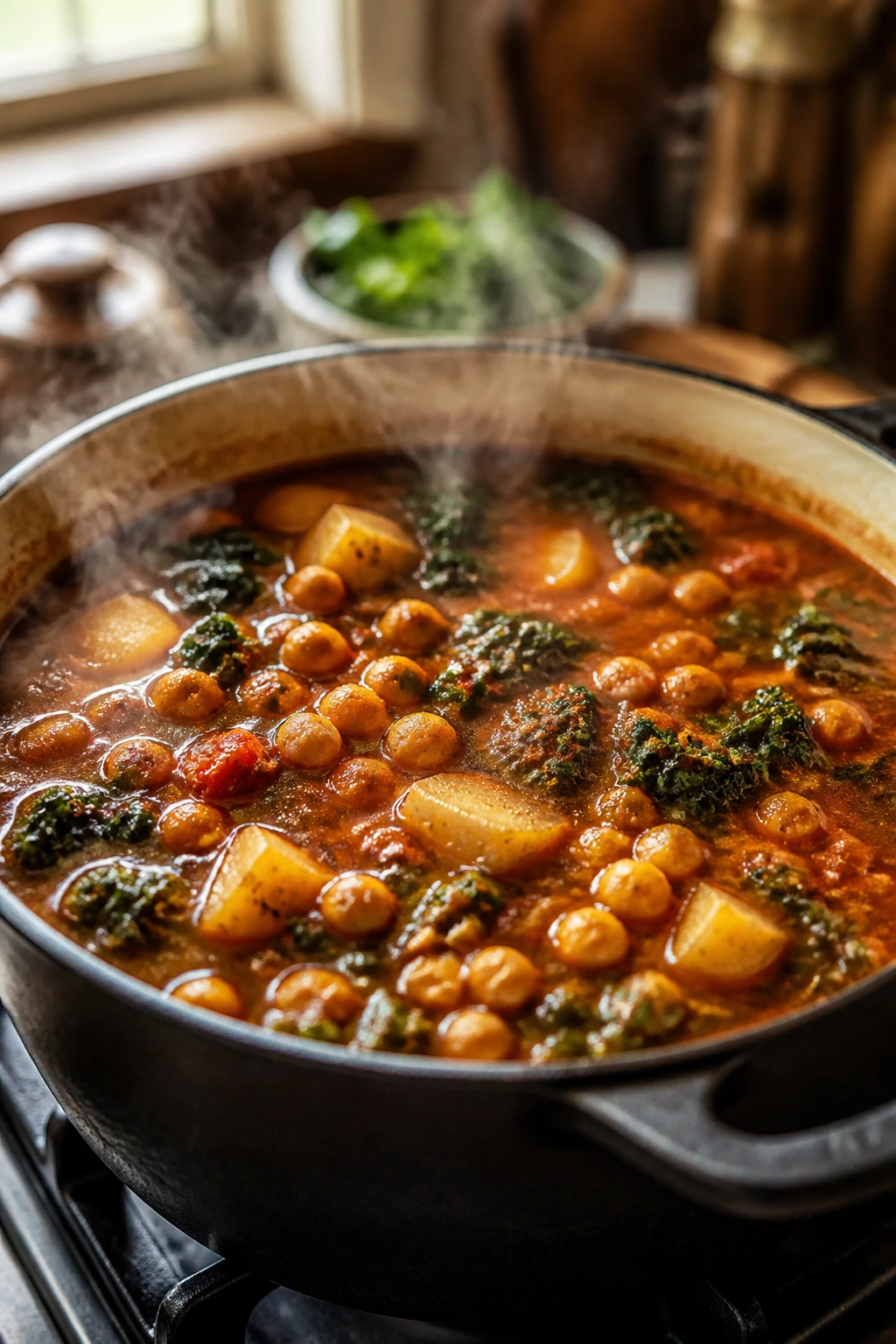
A good smoky chickpea stew should smell like onions going sweet in olive oil and paprika blooming in hot fat. By the time the potatoes are tender and the kale has darkened to an almost glossy green, the broth ought to cling to a spoon instead of sloshing around like thin soup. That matters on a night when you want dinner to feel built, not improvised.
No bacon required.
I keep coming back to this kind of pot because chickpeas hold their shape while still lending the broth a soft, almost sandy body after a few minutes of simmering. Fire-roasted tomatoes help too; they bring a charred edge that regular canned tomatoes can’t fake, and when the tomato paste cooks long enough to darken, the whole thing shifts from “bean soup” into something deeper and more interesting. Smoked paprika does the heavy lifting here — not chipotle, which can drag the stew into heat whether you wanted it or not, and not plain paprika, which disappears if the broth has any backbone at all.
Why This Pot Earns Its Keep
Pantry-first: Canned chickpeas, diced tomatoes, broth, and spices mean you can make a real dinner without a special shopping trip or a long ingredient list.
Smoke without meat: Smoked paprika and fire-roasted tomatoes create a woodsy, savory edge that scratches the same itch people often expect from bacon or sausage.
Thick enough to eat with bread: Potatoes and chickpeas release enough starch to give the broth body, so the stew lands somewhere between soup and braise.
Better after a short rest: The tomato, garlic, and spice notes settle after 15 to 20 minutes off the heat, which is why leftovers taste so settled and rounded.
Easy to bend: Kale, spinach, Swiss chard, sweet potatoes, or even a handful of frozen peas can slide in without wrecking the pot.
Feeds a table without fuss: One Dutch oven gives you six solid bowls, and it scales up cleanly if you want lunch for the next few days.
Timing, Yield, and Best Serving Window
The timing here is short enough to feel realistic, but long enough for the pot to develop some depth. That’s the sweet spot. You’re not standing over it for an hour, and you’re not dumping everything together and hoping the spices do all the work.
Yield: Serves 6
Prep Time: 20 minutes
Cook Time: 40 minutes
Total Time: 1 hour
Difficulty: Beginner — the work is mostly chopping, sautéing, and simmering, with one optional mash at the end for thickness.
Best Served: Hot from the pot, while the broth is still steaming and the kale looks bright rather than faded.
Everything That Goes Into the Pot
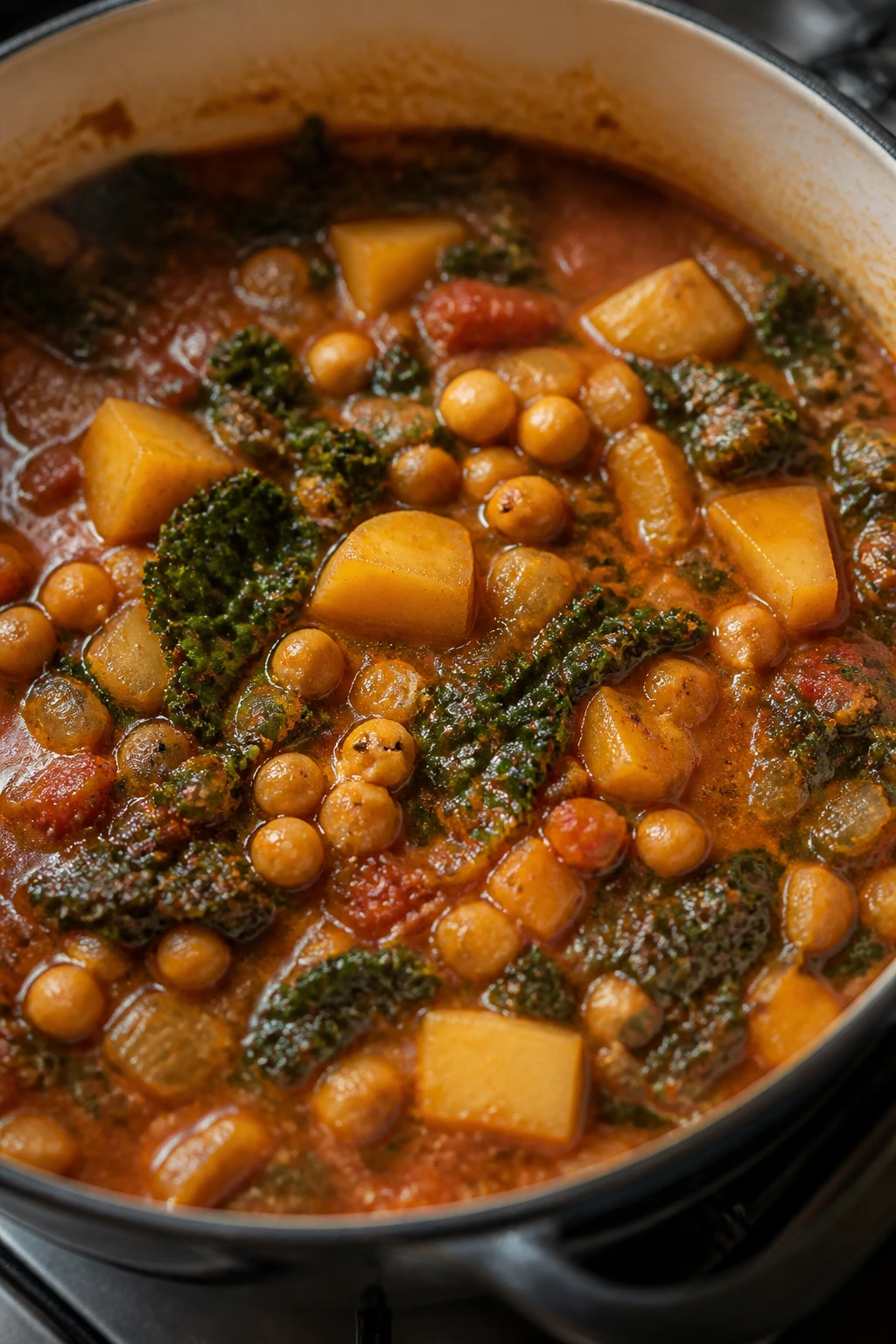
I keep the ingredient list tight on purpose. The flavor comes from how the pieces behave together, not from a long parade of add-ins. If you’ve got the smoky base, the body-building vegetables, and a sharp finish, the stew already knows where it’s going.
- 2 tablespoons olive oil
- 1 large yellow onion, diced
- 2 medium carrots, diced
- 2 celery stalks, diced
- 1 teaspoon fine salt, divided, plus more to taste
- 4 cloves garlic, minced
- 2 tablespoons tomato paste
- 2 teaspoons smoked paprika
- 1 teaspoon ground cumin
- 1 teaspoon dried thyme
- 1/2 teaspoon crushed red pepper flakes, optional
- 2 medium Yukon Gold potatoes, cut into 1/2-inch cubes (about 1 pound)
- 2 cans (15 ounces each) chickpeas, drained and rinsed
- 1 can (28 ounces) fire-roasted diced tomatoes
- 4 cups low-sodium vegetable broth
- 1 bay leaf
- 3 cups chopped kale, tough stems removed
- 1 tablespoon apple cider vinegar or lemon juice
- 1/4 teaspoon black pepper
- 2 tablespoons chopped parsley, for serving
Why Each Ingredient Pulls Its Weight
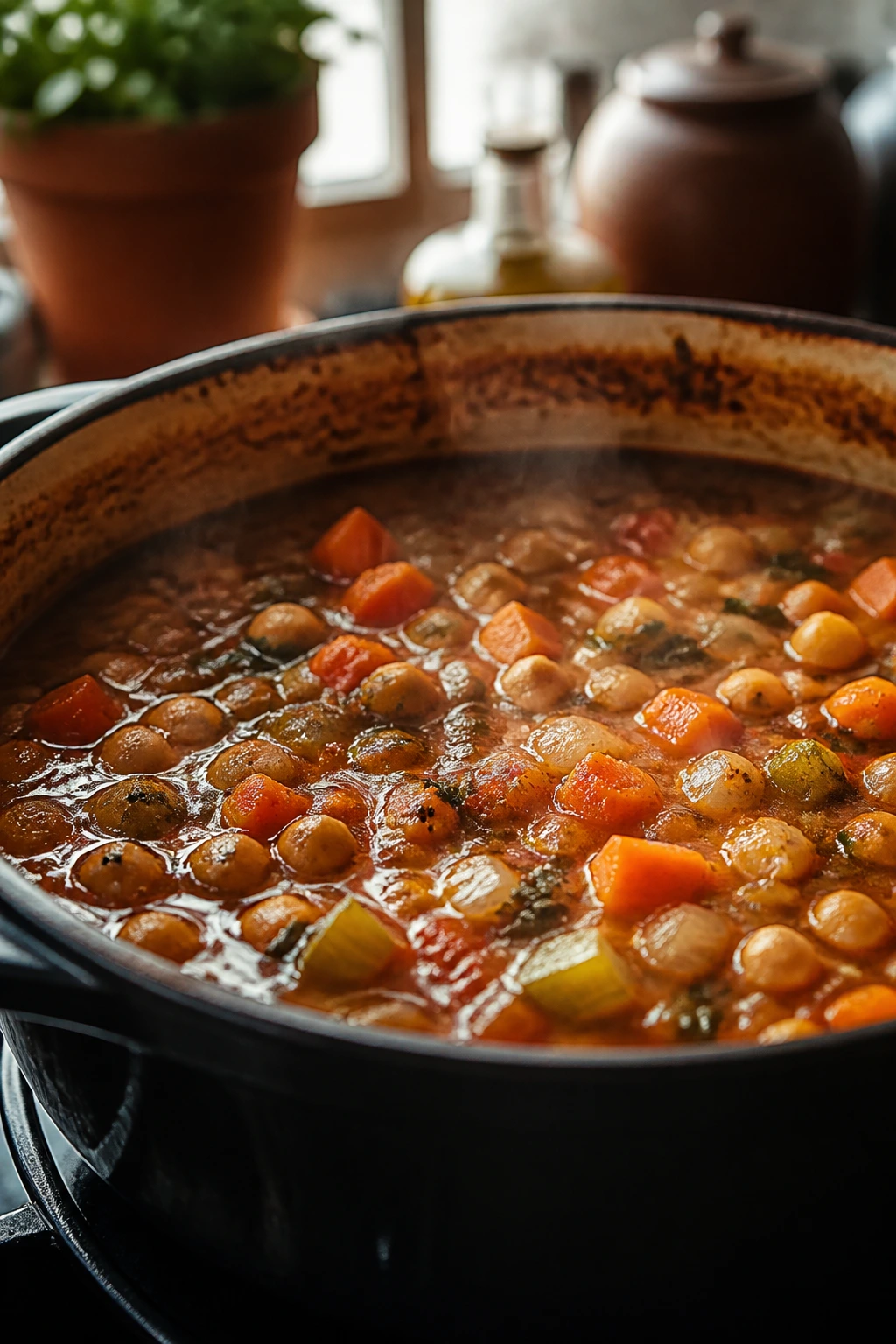
Aromatics & oil
What to use: 2 tablespoons olive oil, 1 large yellow onion, 2 medium carrots, 2 celery stalks, 4 cloves garlic, and 1/2 teaspoon of the salt from the total amount.
Preparation: Dice the onion, carrots, and celery into small, even pieces — around 1/4 inch if you can manage it — so they soften at the same pace. Mince the garlic fine enough that it disappears into the base instead of sitting in sharp little bits.
Substitutions: Leeks can stand in for the onion, shallots can fill in if the onion is small, and parsnips can swap for one carrot if the drawer in your fridge looks bare.
Tips: Give the onion enough time to go translucent and a little golden at the edges before you move on. If the garlic goes in before the vegetables soften, it can taste harsh and the whole pot carries that note all the way to the bowl.
Smoke, spice, and tomato backbone
What to use: 2 tablespoons tomato paste, 2 teaspoons smoked paprika, 1 teaspoon ground cumin, 1 teaspoon dried thyme, and 1/2 teaspoon crushed red pepper flakes if you want a little heat.
Preparation: Measure these before you turn on the heat. Once the pot is hot, this part moves quickly, and you do not want to be fumbling for a spice jar while the tomato paste is sticking to the bottom.
Substitutions: Regular paprika can work in a pinch, but add a small pinch of chipotle powder or a drop of liquid smoke if you want the stew to stay smoky rather than merely tomatoey. Oregano can stand in for thyme if that’s what you have.
Tips: Let the tomato paste darken a shade or two in the oil before adding liquid. That short minute creates a deeper, sweeter savory note and keeps the stew from tasting like canned tomatoes with spices thrown in.
Beans, potatoes, and broth
What to use: 2 medium Yukon Gold potatoes, 2 cans chickpeas, 1 can fire-roasted diced tomatoes, 4 cups low-sodium vegetable broth, and 1 bay leaf.
Preparation: Cut the potatoes into 1/2-inch cubes so they cook through in about 20 minutes without breaking apart. Drain and rinse the chickpeas well; the loose canning liquid can muddy the broth if you leave too much of it clinging to the beans.
Substitutions: Sweet potatoes work if you want a softer, sweeter bowl. Cannellini beans can stand in for chickpeas, though you’ll lose a little of the nutty bite that makes this stew feel sturdy.
Tips: Yukon Golds are better here than russets because they hold their shape while still softening enough to help thicken the broth. Fire-roasted tomatoes matter too; they add a little char that regular diced tomatoes don’t bring on their own.
Greens, acid, and finish
What to use: 3 cups chopped kale, 1 tablespoon apple cider vinegar or lemon juice, 1/4 teaspoon black pepper, and 2 tablespoons chopped parsley.
Preparation: Strip the tough stems from the kale and chop the leaves into bite-size ribbons so they slip into the stew without feeling stringy. Keep the vinegar or lemon juice ready at the end, where it can wake the whole pot up.
Substitutions: Spinach works if you want a softer green, but it wilts almost immediately and won’t hold up through leftovers the way kale does. Swiss chard is a nice middle ground, especially if the stems are thin.
Tips: Add the acid only after the stew has finished simmering. The brightness lands much better that way, and you’ll notice how it cuts through the starch from the potatoes and chickpeas instead of getting buried under it.
The Tools That Make the Pot Easier to Control
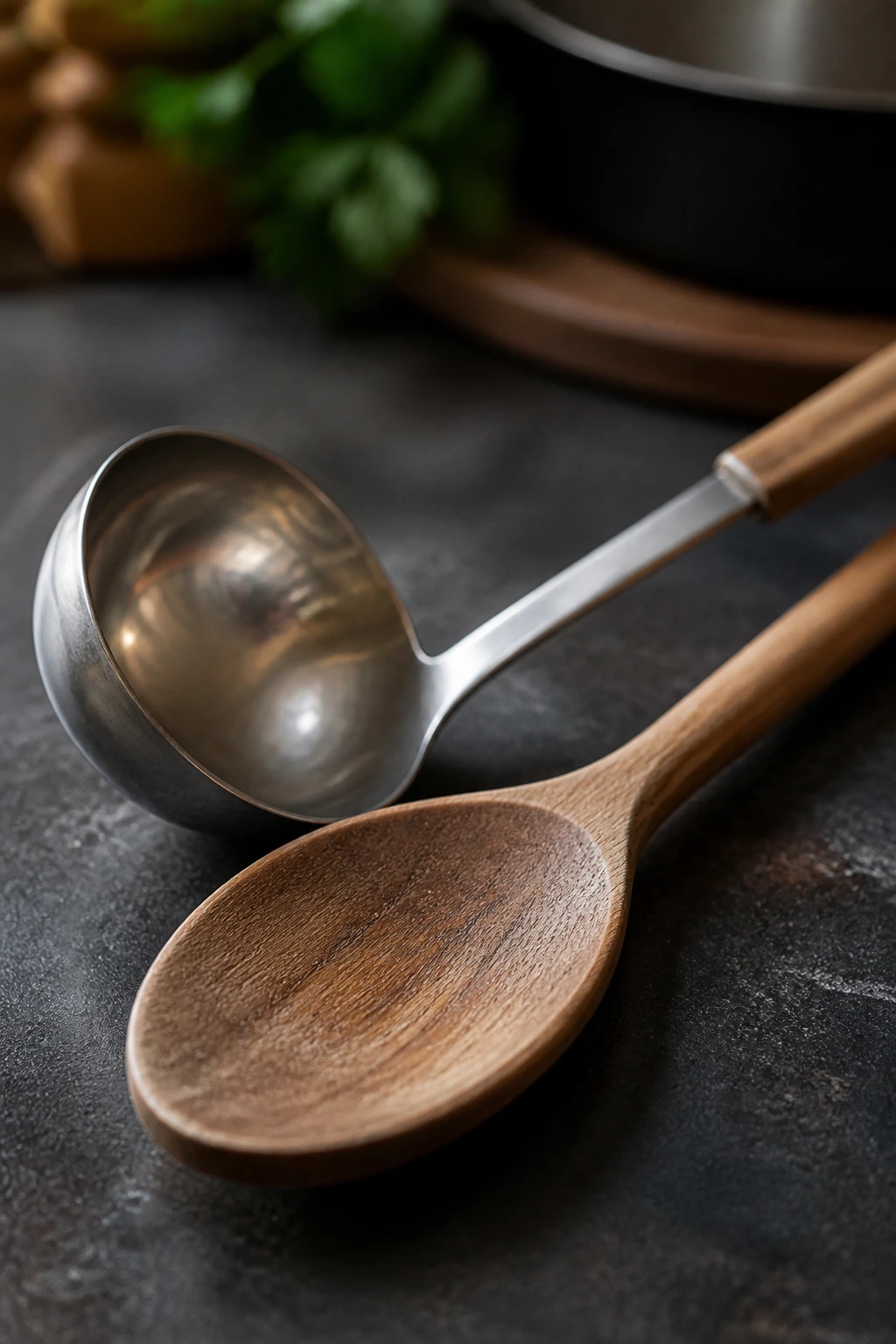
A stew like this does not need a kitchen full of gear, but the right pot changes everything. Thin cookware scorches tomato paste in a hurry, and that bitter edge never really disappears. I’d rather use one good heavy pot than two pans and a lot of regret.
- 5- to 6-quart Dutch oven or heavy soup pot — The thick bottom keeps the onions from catching and gives you a more even simmer.
- Chef’s knife — A sharp blade makes the onion, carrot, and celery dice faster and cleaner.
- Cutting board — Use one that gives you room to spread out the vegetables so you’re not working off a crowded corner.
- Wooden spoon or silicone spatula — Useful for scraping the bottom when the tomato paste goes in and for keeping the base moving.
- Potato masher or sturdy ladle — Optional, but worth having if you want a thicker, more stew-like texture.
- Can opener — Obvious, yes. Still needed.
- Ladle — Helpful for serving without dragging the vegetables apart.
- Airtight storage containers — If you make a full batch, the leftovers will thank you.
Building the Smoky Chickpea Stew
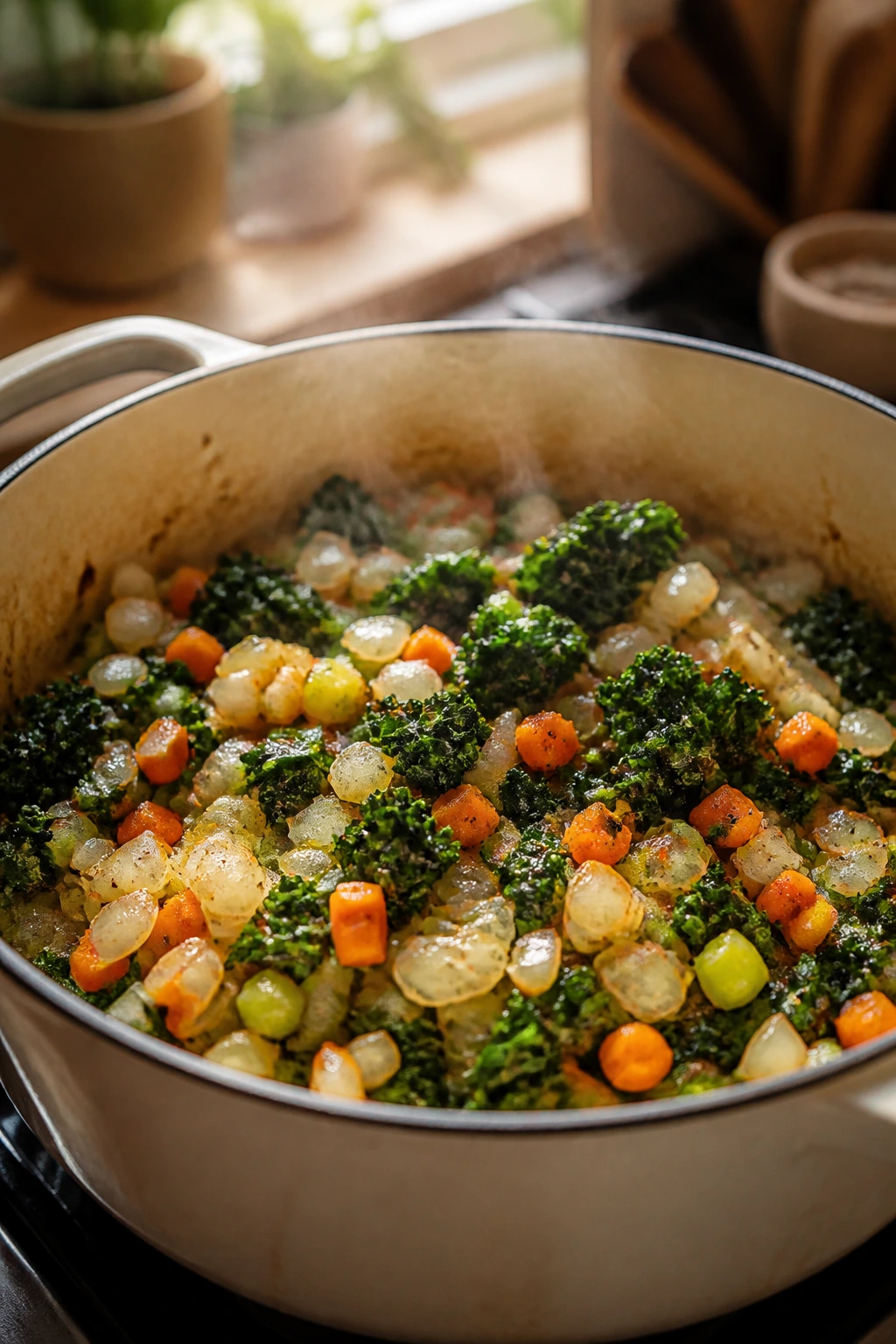
There’s no fancy move in this pot, but each small move matters. Rush the base and the stew tastes flat. Rush the simmer and the potatoes never really settle into the broth. Give each stage its minute, and the bowl ends up fuller than the ingredient list suggests.
Prep the Vegetables
-
Drain and rinse the chickpeas in a colander, then set them aside to dry a little while you chop.
-
Dice the onion, carrots, and celery into small, even pieces. Peel the potatoes and cut them into 1/2-inch cubes, then mince the garlic and chop the kale into bite-size ribbons.
Build the Flavor Base
-
Heat the olive oil in a 5- to 6-quart Dutch oven over medium heat. Add the onion, carrots, celery, and 1/2 teaspoon of the salt, then cook for 8 to 10 minutes, stirring now and then, until the onion turns translucent and the edges take on a little color. Do not rush this part; pale vegetables make for a pale stew.
-
Stir in the garlic and cook for 30 seconds, just until it smells sweet rather than sharp. Add the tomato paste, smoked paprika, cumin, thyme, and red pepper flakes if you’re using them, then stir for 1 to 2 minutes until the paste darkens and the spices smell smoky and warm.
Simmer the Stew
-
Add the potatoes, chickpeas, fire-roasted tomatoes, vegetable broth, bay leaf, the remaining 1/2 teaspoon salt, and the black pepper. Scrape the bottom of the pot with your spoon so the browned bits dissolve into the broth instead of sticking.
-
Bring the pot to a boil over medium-high heat, then lower it to a gentle simmer and cover it partially. Cook for 18 to 20 minutes, stirring once or twice, until the potatoes are tender when pierced with a fork but still hold their shape. If the heat is too high, the potatoes break down too early and the broth gets cloudy in a muddy way.
-
Remove the lid and mash about 1 cup of the stew against the side of the pot with a spoon or potato masher. You can also scoop out a cup, mash it, and stir it back in. Simmer uncovered for 5 to 7 minutes until the broth thickens enough to coat the back of a spoon and the bubbles pop more slowly.
Finish and Serve
-
Stir in the kale and cook for 2 to 3 minutes, just until it wilts and turns a deep green. Stir in the vinegar or lemon juice, taste, and add more salt if the broth still feels flat. The acid matters here; it sharpens the smoke and keeps the stew from tasting heavy.
-
Remove the bay leaf, ladle the stew into bowls, and finish with parsley. If you want, add a small drizzle of olive oil on top for a softer, richer surface.
How I Like to Serve This Bowl
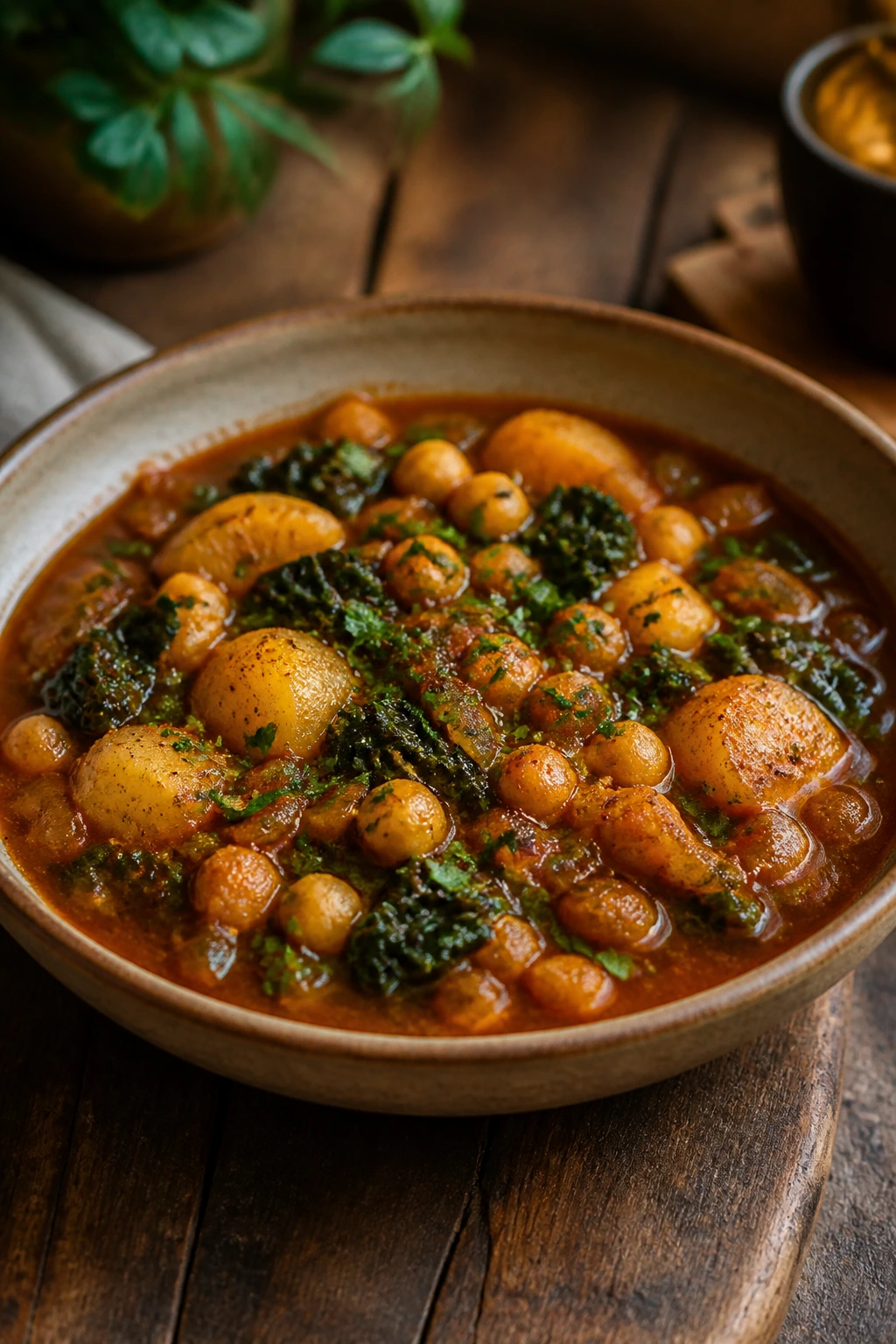
Presentation: I like this in shallow bowls rather than deep soup bowls, because the potatoes, chickpeas, and greens look more inviting when you can actually see them. A pinch of parsley and a thin ribbon of olive oil over the top is enough; you do not need a pile of toppings fighting the stew.
Accompaniments: Crusty sourdough is my first choice because the tang matches the tomato and the crumb soaks up the broth without going limp. Rice works too, especially if you want the stew to stretch into something even more filling, and a plain green salad with a sharp vinaigrette keeps the meal from feeling too heavy. Garlic bread is a little louder, but I won’t argue with it.
Portions: A generous serving is about 1 1/2 cups per person if the stew is the whole dinner. If you’re serving it with bread and a salad, 1 cup can be enough. For a bigger table or a second dinner, the recipe scales cleanly; the simmer time barely changes, which is one of the nicer things about bean stews.
Beverage Pairing: A dry cider fits the smoky tomato base without getting in the way. If you want wine, reach for a medium-bodied red with soft tannins — something like grenache or a lighter tempranillo — so the acid in the stew doesn’t make the drink taste harsh.
Small Changes That Make the Bowl Better
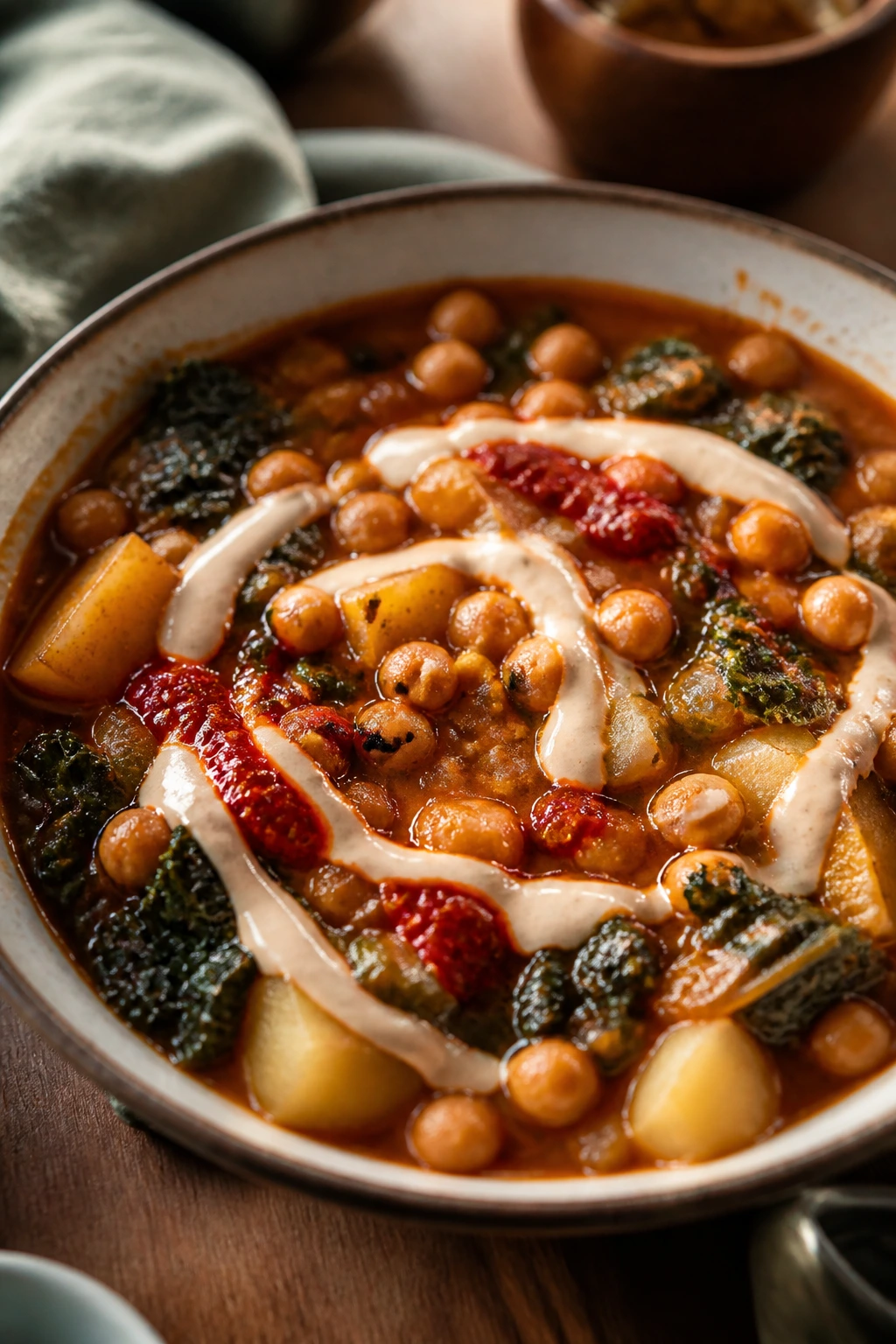
Flavor Enhancement: A small spoonful of harissa stirred into the pot with the tomato paste gives the smoke a hotter, redder edge. If you like a nutty finish, a teaspoon of tahini whisked into each bowl adds body without turning the stew creamy in the heavy sense.
Texture Control: Mash a full cup of chickpeas and potatoes if you want the broth to feel thick and almost velvety. Leave it alone if you prefer a looser, more brothy pot for dipping bread. The same recipe works both ways; you only need to choose before the final simmer.
Time-Saver: Chop the onion, carrots, and celery ahead of time and keep them in one container in the fridge. You can also measure the spices into a small bowl earlier in the day, which makes the actual cooking feel calm instead of rushed.
Make-It-Yours: Spinach can replace the kale if you want a softer green that melts into the stew in under a minute. For a dairy-friendly bowl, a spoon of plain yogurt on top cools the smoke; for a dairy-free version, use coconut yogurt or skip the topper and finish with extra parsley and lemon.
Common Mistakes That Flatten the Flavor
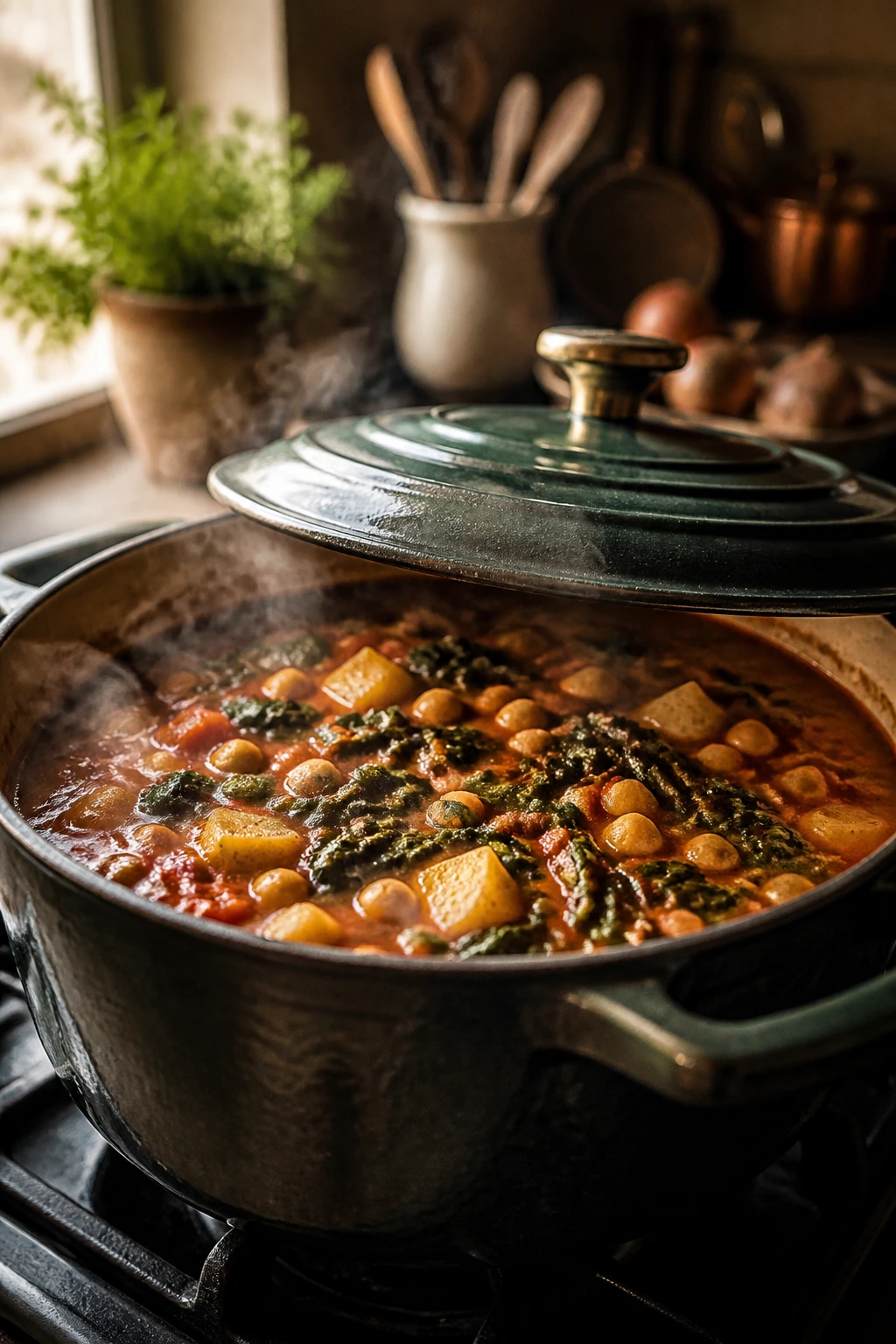
Skipping the tomato-paste step: If the tomato paste goes in and then the liquid hits the pot immediately, the stew can taste a little tinny and unfinished. Give it a minute or two in the hot oil so the paste darkens and sticks lightly to the spoon before you add broth.
Boiling too hard after the potatoes go in: A rolling boil tears the potato cubes and makes the broth look dull and cloudy. Keep the pot at a lazy simmer, where you see slow bubbles and gentle movement rather than a furious surface.
Adding kale too early: If the greens spend the whole simmer in the pot, they turn drab and soft in the wrong way. Add them at the end so they stay green and a little lively, with enough bite to matter in the bowl.
Underseasoning because the pot smells smoky already: Smoke is not salt. If you stop there, the stew can feel impressive for the first spoonful and empty by the third. Taste after the vinegar or lemon goes in, then add salt in small pinches until the broth tastes awake.
Leaving out acid at the finish: This is the mistake that makes the whole pot feel heavy. A tablespoon of vinegar or lemon juice does not make the stew sour; it sharpens the tomato, trims the starch, and keeps the smoke from sitting flat on the tongue.
Variations and Flavor Swaps
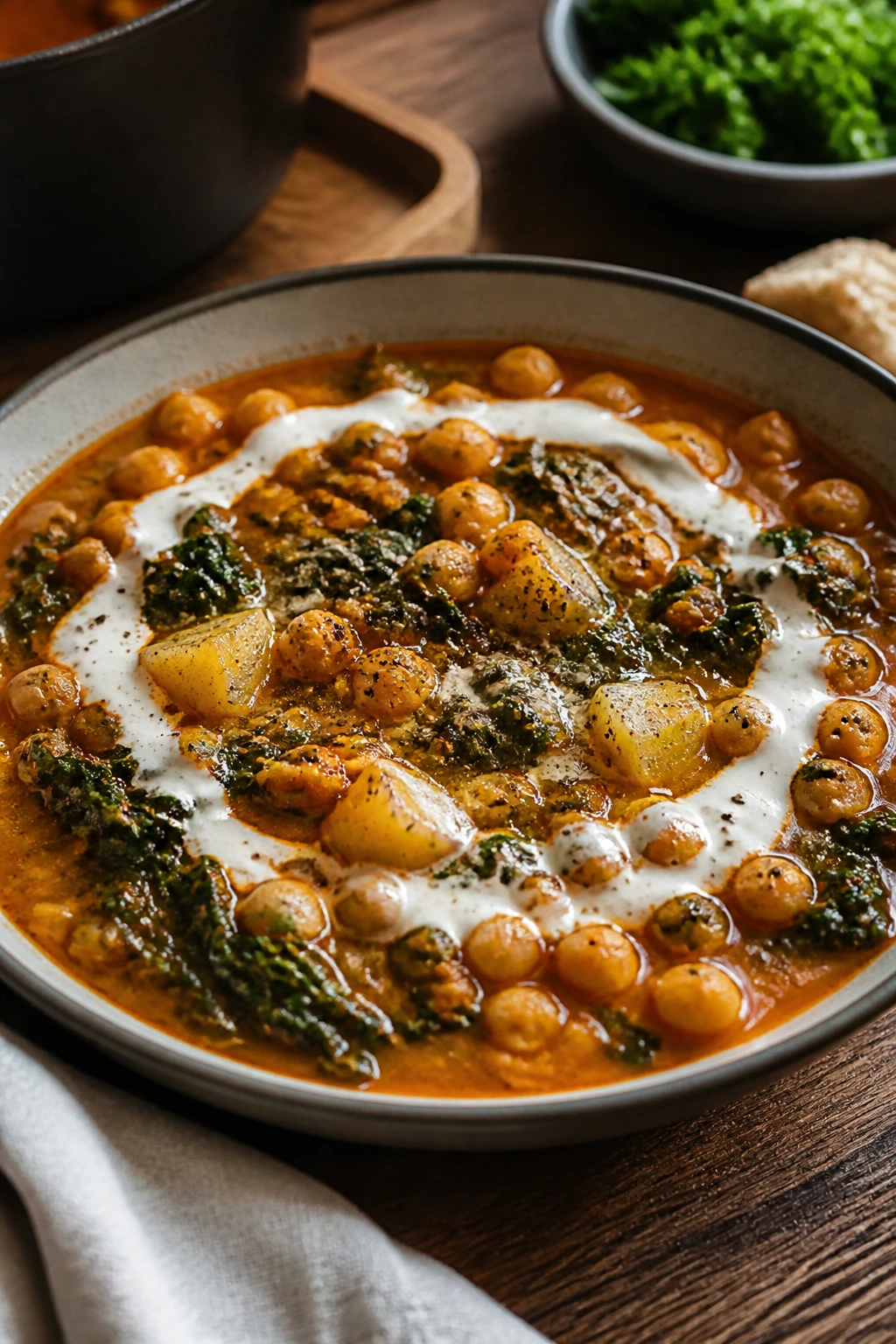
Harissa Heat
Stir 1 to 2 tablespoons of harissa into the pot right after the tomato paste has cooked. It brings a red pepper heat and a little garlic depth, which works well if you like the stew to land warmer on the tongue. Use this version with bread, because the sauce gets addictive fast.
Creamy Coconut Smoke
Add 1/2 cup full-fat coconut milk during the last 2 minutes of simmering. The broth turns softer and silkier, and the tomato reads a little rounder, almost like the stew spent time with a mild curry. I like this when I want the bowl to feel richer without adding dairy.
Sweet Potato and Kale
Swap the Yukon Gold potatoes for 2 medium sweet potatoes, cut into the same 1/2-inch cubes. Pull the simmer back by 3 to 5 minutes, because sweet potatoes soften and collapse faster than Yukon Golds. The result is sweeter and a little more orange, which some people love with the smoked paprika.
Smoky Sausage Shortcut
Brown 12 ounces of sliced smoked sausage after the onion, carrot, and celery have softened, then continue with the recipe as written. The stew becomes heavier, saltier, and more braised in feel, so hold back a little salt until the end and taste before serving. It’s the version I’d make for people who expect a more classic winter stew.
Make-Ahead, Storage, and Reheating
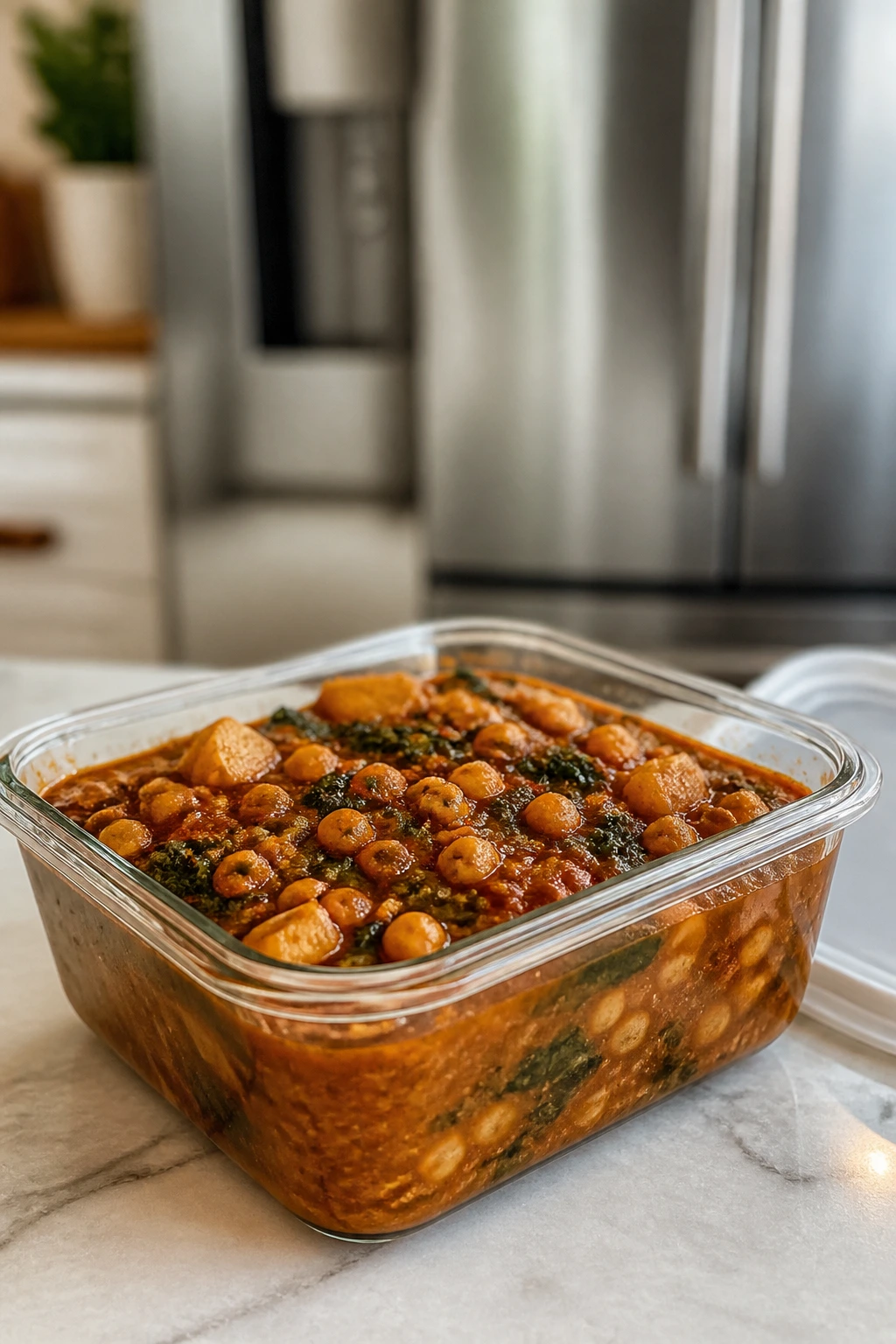
A pot like this stores well, but there are a few small habits that keep it tasting good instead of merely safe. The biggest one is cooling it quickly enough that the vegetables do not keep cooking in the residual heat. After that, storage is mostly about keeping the broth from drying out.
Refrigerator: Let the stew cool for 30 to 45 minutes, then transfer it to airtight containers and refrigerate it for up to 4 days. The flavor usually settles and improves by the next day, though the potatoes absorb some broth as they sit, so you may want to loosen each bowl with a splash of water or stock when reheating.
Freezer: Freeze the stew for up to 3 months in sealed containers or freezer bags laid flat. Leave a little headspace if you’re using rigid containers, because the liquid expands. For the best texture, freeze it before the kale goes in, then add fresh greens when you reheat; if the kale is already in the pot, it will still eat fine, but it softens more after thawing.
Reheating: On the stovetop, warm the stew over medium-low heat and stir often, adding a splash of broth or water if it has tightened up. In the microwave, cover the bowl loosely and heat in 1 to 2 minute bursts, stirring in between so the potatoes and chickpeas warm evenly. High heat is the enemy here; it can split the broth and make the potatoes break apart.
Make-ahead: You can chop the vegetables and measure the spices 1 day ahead. The stew itself can be cooked a day before you plan to serve it, then reheated gently with a little broth and a fresh squeeze of lemon or vinegar at the end. If anything, the pot settles into itself overnight.
Questions People Ask Before Making It
Can I use dried chickpeas instead of canned?
Yes, but you’ll need to cook them first. About 1 cup of dried chickpeas makes roughly 3 cups cooked, which is close to the amount you need here. Soak them overnight, simmer until tender, and use them the same way you’d use canned; the stew will taste a little cleaner and nuttier, but it will take more planning.
What if I do not have smoked paprika?
Regular paprika will work, though the stew will lose that woodsy note. Add a tiny pinch of chipotle powder or a drop of liquid smoke if you want to keep the flavor direction close to the original, and taste carefully before adding more because both can take over fast.
Can I make this in a slow cooker?
Yes, with one extra step on the stove. Sauté the onion, carrot, celery, garlic, tomato paste, and spices first, then transfer everything except the kale, vinegar, and parsley to the slow cooker and cook on low for 4 to 6 hours. Stir in the kale during the last 15 minutes and finish with vinegar at the end.
How do I make the stew thicker?
Mash more of the potatoes and chickpeas against the side of the pot, or take out 1 cup and blend it until smooth before stirring it back in. You can also simmer it uncovered for another 5 to 10 minutes, but keep the heat low so the potatoes don’t fall apart.
Can I freeze it with the kale already in it?
You can, and it will still be fine after thawing. The greens will be softer and darker than they were fresh, though, so if you care about texture, freeze the stew without the kale and add fresh greens when you reheat it. That keeps the bowl brighter.
What if the stew tastes flat at the end?
First add a pinch of salt, then another teaspoon of vinegar or lemon juice. Flat bean stews usually need one of those two things, not more spices. If it still feels dull, warm the pot for another minute so the acid and salt can settle into the broth, then taste again.
Can I add meat without ruining the recipe?
Yes. Smoked sausage, bacon, or even shredded chicken can work, but they change the mood of the pot. If you add something smoky and salty, cut back slightly on the salt in the base and keep the tomato paste step intact so the stew still has depth beyond the meat.
A Pot Worth Repeating
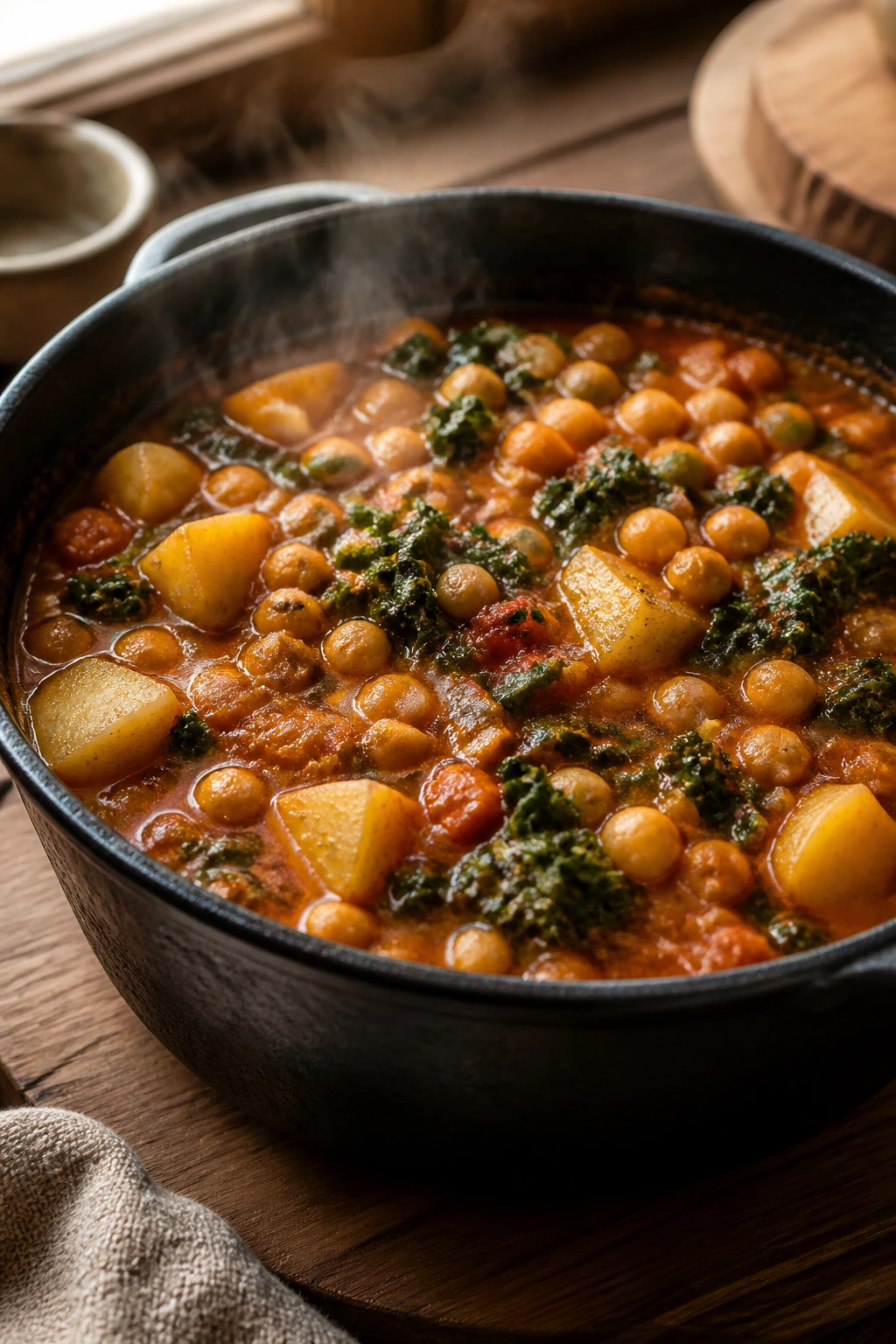
A stew like this rewards a few careful moves: letting the onion soften all the way, giving the tomato paste a minute in the oil, and finishing with acid instead of hoping the broth will sort itself out. Those small choices are what turn a practical pot of chickpeas into something you actually want to ladle into a deep bowl and keep returning to.
The version I keep making is the one with a thick broth, bright kale, and potatoes that hold their shape long enough to matter. It doesn’t need a big show. It needs a hot spoon, good bread, and a cold night that makes the steam look better than any candle ever could.
Smoky Chickpea Stew for Cold Winter Nights — Recipe Card
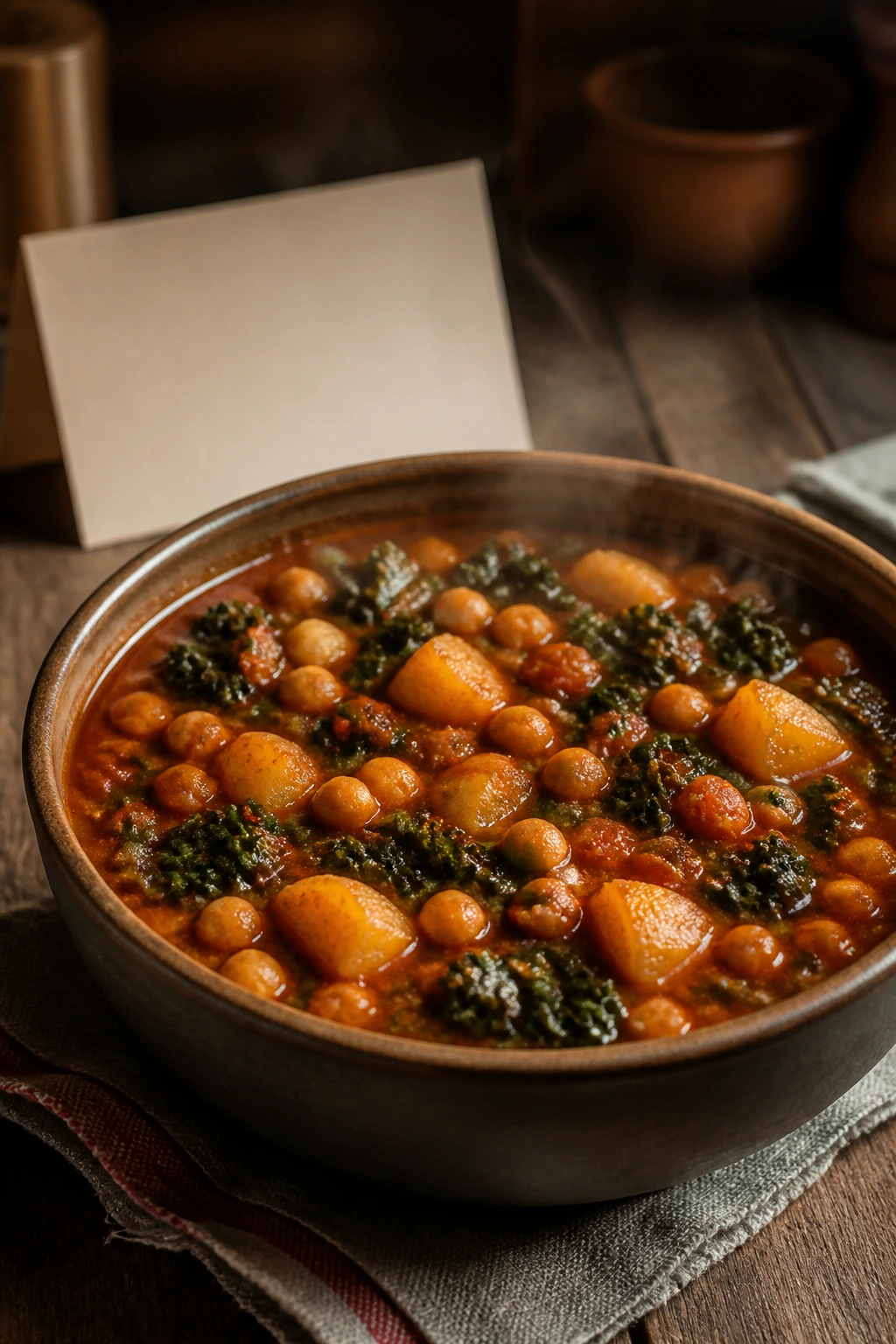
Recipe Name: Smoky Chickpea Stew for Cold Winter Nights
Description: A thick, tomato-based chickpea stew with smoked paprika, Yukon Gold potatoes, and kale. The broth is savory, a little smoky, and sturdy enough to eat with bread.
Prep Time: 20 minutes
Cook Time: 40 minutes
Total Time: 1 hour
Course: Dinner
Cuisine: Mediterranean-inspired
Servings: 6 servings
Calories: About 250 kcal per serving
Ingredients
- 2 tablespoons olive oil
- 1 large yellow onion, diced
- 2 medium carrots, diced
- 2 celery stalks, diced
- 1 teaspoon fine salt, divided, plus more to taste
- 4 cloves garlic, minced
- 2 tablespoons tomato paste
- 2 teaspoons smoked paprika
- 1 teaspoon ground cumin
- 1 teaspoon dried thyme
- 1/2 teaspoon crushed red pepper flakes, optional
- 2 medium Yukon Gold potatoes, cut into 1/2-inch cubes (about 1 pound)
- 2 cans (15 ounces each) chickpeas, drained and rinsed
- 1 can (28 ounces) fire-roasted diced tomatoes
- 4 cups low-sodium vegetable broth
- 1 bay leaf
- 3 cups chopped kale, tough stems removed
- 1 tablespoon apple cider vinegar or lemon juice
- 1/4 teaspoon black pepper
- 2 tablespoons chopped parsley, for serving
Instructions
-
Drain and rinse the chickpeas. Dice the onion, carrots, celery, and potatoes; mince the garlic; chop the kale.
-
Heat the olive oil in a Dutch oven over medium heat. Add the onion, carrots, celery, and 1/2 teaspoon of the salt, then cook for 8 to 10 minutes until softened and lightly golden.
-
Add the garlic and cook for 30 seconds. Stir in the tomato paste, smoked paprika, cumin, thyme, and red pepper flakes, then cook for 1 to 2 minutes until fragrant and darker in color.
-
Add the potatoes, chickpeas, tomatoes, broth, bay leaf, remaining 1/2 teaspoon salt, and black pepper. Scrape the bottom of the pot well.
-
Bring to a boil, then reduce to a gentle simmer and cook partially covered for 18 to 20 minutes, until the potatoes are tender.
-
Mash about 1 cup of the stew against the side of the pot, then simmer uncovered for 5 to 7 minutes until the broth thickens slightly.
-
Stir in the kale and cook for 2 to 3 minutes until wilted. Stir in the vinegar or lemon juice, taste, and add more salt if needed.
-
Remove the bay leaf, ladle into bowls, and finish with parsley.
Notes: Mash more of the chickpeas if you want a thicker stew. For the best leftover texture, add a splash of broth when reheating.