



A meatless dinner can still land with real weight. Not the polite, still-hungry kind of weight — the sort that settles in after a bowl of lentils, tofu, beans, grains, and enough sauce to make the whole thing feel deliberate. That’s what people usually miss when they say vegetarian meals “don’t fill them up.” It’s not the absence of meat that’s the problem. It’s a weak protein backbone, too little fat, and not enough texture.
These high veggie protein meals fill you up without a strip of meat in sight because they’re built the way a satisfying meal should be built: beans or tofu or eggs or paneer, a carb that actually carries its share, vegetables that add bite instead of bulk, and a sauce that ties everything together. A bowl of lentils with coconut milk behaves very differently from a pile of lettuce with a few chickpeas tossed on top. Same broad category. Totally different outcome.
Some of these are weeknight-fast. Some are the kind of leftovers you quietly hope everyone forgets about so you get the second helping tomorrow. A few are pantry meals, a few lean creamy, a few bring the kind of chew you only get from tempeh or seitan. All of them are built to do one thing well: keep you full, steady, and not wandering back into the kitchen twenty minutes later.
Why These Meatless Meals Stick
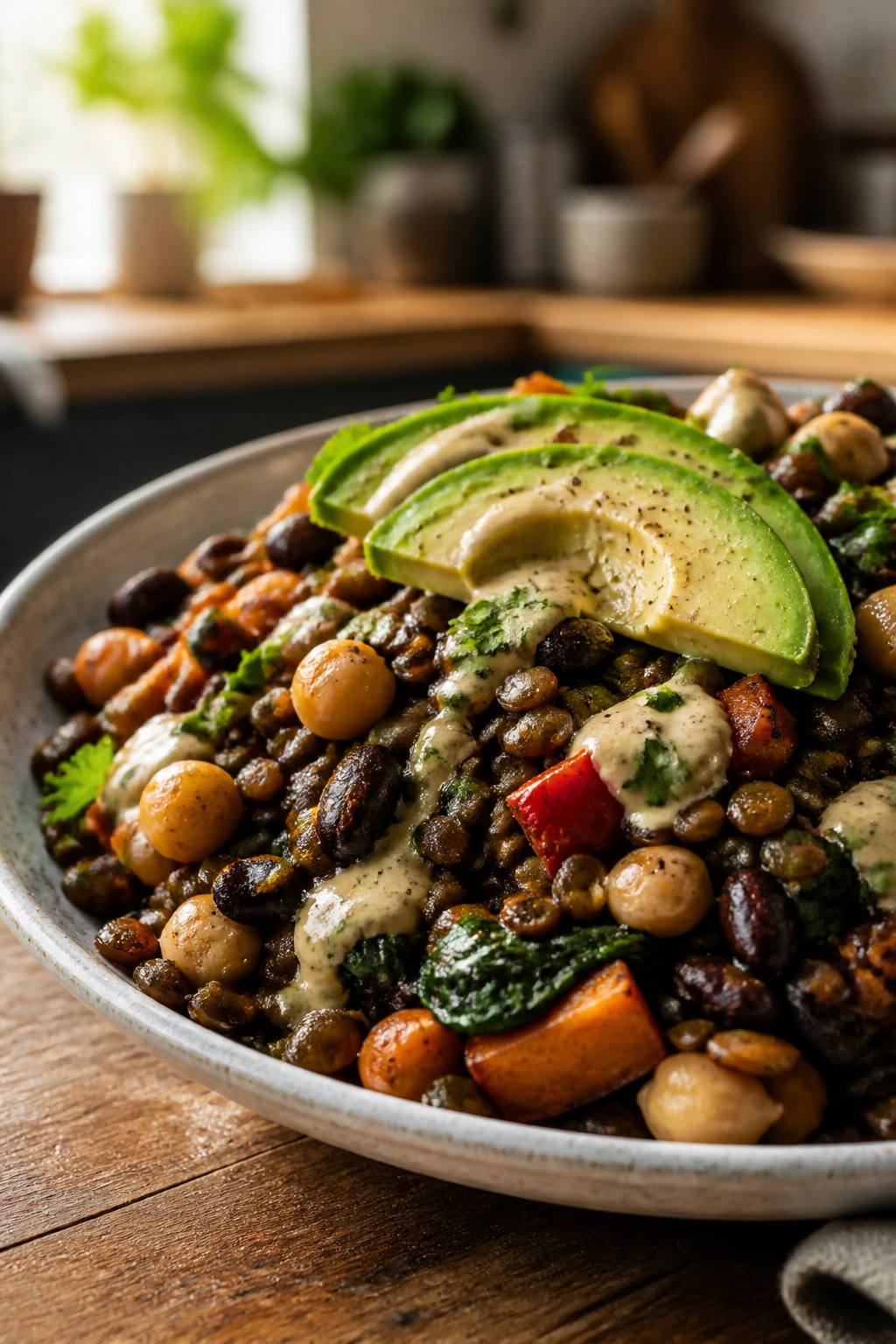
-
Protein Backbone: Every recipe leans on beans, tofu, tempeh, eggs, dairy, seitan, or lentils, so dinner has substance before the vegetables even show up.
-
Fiber That Holds You: Lentils, chickpeas, black beans, whole grains, oats, and starchy vegetables slow the meal down in a good way. You feel fed, not stuffed for ten minutes.
-
Texture Matters: Crispy edges on tofu, chewy farro, creamy paneer, and mashed potato tops keep these meals from turning into one-note mush.
-
Pantry Workhorses: A surprising number of these meals start with canned beans, dry lentils, rice, pasta, or frozen veg, which makes them easier to repeat.
-
Sauce Does the Heavy Lifting: Peanut sauce, tomato sauce, yogurt dressings, curry gravy, salsa, or lemon-garlic oil keeps the meal from tasting dry or flat.
-
Leftovers Behave Well: Many of these meals taste better after the flavors settle overnight, especially stews, curries, chili, and baked pasta.
1. Red Lentil Coconut Curry
Red lentils cook down into a soft, almost velvety base, and that’s exactly why this curry eats like a full meal instead of a side dish. The coconut milk gives it enough richness to feel finished, while the tomatoes and curry powder keep it from going sweet and heavy.
Why It Works: Red lentils break apart in about 15 minutes, so the sauce thickens without flour or cream. You get protein, fiber, and a spoonable texture that clings to rice instead of sliding off it. I like this with basmati, because the grains stay separate under the curry instead of turning soggy.
Key Ingredients:
- 1 1/2 cups red lentils, rinsed
- 1 tablespoon olive oil
- 1 yellow onion, diced
- 3 garlic cloves, minced
- 1 tablespoon grated ginger
- 2 tablespoons curry powder
- 1 can full-fat coconut milk
- 1 can diced tomatoes
- 3 cups baby spinach
- 1 lime, cut into wedges
Quick Steps:
- Warm the oil in a Dutch oven over medium heat and cook the onion for 5 minutes, until soft.
- Stir in garlic, ginger, and curry powder for 30 seconds, just until fragrant.
- Add lentils, coconut milk, tomatoes, and 2 cups water; simmer 15 to 18 minutes.
- Stir in spinach and cook 1 minute more, until wilted and glossy.
- Finish with lime juice and salt, then serve over rice.
Equipment for This Recipe:
- Dutch oven or deep saucepan
- Wooden spoon
- Fine-mesh strainer
How to Serve This Dish: Spoon it over rice and finish with cilantro or sliced scallions. A scoop of plain yogurt on top gives the curry a cool edge that works against the spice.
Pro Tips for This Recipe:
- Rinse red lentils well; dusty starch makes the curry gummy.
- Keep the simmer gentle so the coconut milk stays smooth.
- Add extra water in 1/4-cup splashes if it thickens too fast.
Variations on This Dish:
- Chickpea-Lentil Blend: Stir in a drained can of chickpeas for a chunkier curry.
- Peanut Heat Version: Add 1 to 2 tablespoons peanut butter and a pinch of chili flakes.
- Greens Swap: Kale works instead of spinach, but give it 3 extra minutes.
Common Mistakes to Avoid with This Dish:
- Boiling it hard: The coconut milk can split and the lentils can scorch. Keep the heat at a steady simmer.
- Skipping the acid: Without lime, the curry tastes flat and heavy. Taste at the end and brighten it.
2. Crispy Tofu Peanut Noodle Bowls
If tofu ever tasted bland to you, it probably never got browned long enough. In this bowl, the edges turn deep gold, the noodles stay slippery, and the peanut sauce coats everything with a salty, nutty gloss that sticks to your chopsticks.
Why It Works: Firm tofu brings protein, but the real trick is searing it until it sounds dry in the pan. Peanut butter and soy sauce make a dense sauce that clings to rice noodles, and shredded cabbage gives the bowl crunch so it doesn’t feel soft all the way through.
Key Ingredients:
- 1 block firm tofu, pressed and cubed
- 8 ounces rice noodles
- 3 tablespoons peanut butter
- 2 tablespoons soy sauce
- 1 tablespoon rice vinegar
- 1 tablespoon sesame oil
- 2 cups shredded cabbage
- 1 carrot, julienned
- 2 scallions, sliced
- 1 lime, cut into wedges
Quick Steps:
- Press the tofu for 15 minutes, then cut it into 1-inch cubes.
- Cook the noodles according to package directions; rinse briefly and drain well.
- Sear tofu in a hot skillet with sesame oil for 8 to 10 minutes, turning until golden on most sides.
- Whisk peanut butter, soy sauce, vinegar, 2 tablespoons water, and a little lime juice.
- Toss noodles with cabbage, carrot, tofu, and sauce, then top with scallions.
Equipment for This Recipe:
- Large nonstick or cast-iron skillet
- Tongs or spatula
- Colander
How to Serve This Dish: Serve in wide bowls so the noodles can spread out instead of clumping. A shower of sesame seeds and a few extra lime squeezes make the whole thing taste brighter.
Pro Tips for This Recipe:
- Press tofu longer than you think you need to; wet tofu refuses to crisp.
- Warm the sauce briefly if it feels stiff, then loosen with noodle water.
- Cook noodles just shy of done so they stay springy when tossed.
Variations on This Dish:
- Spicy Chili Crunch: Add chili crisp to the sauce for heat and crunch.
- Edamame Boost: Toss in 1 cup shelled edamame for extra protein and color.
- Gluten-Free Bowl: Use tamari instead of soy sauce and check the noodles.
Common Mistakes to Avoid with This Dish:
- Crowding the tofu: It steams instead of browning. Use a big skillet and give the cubes space.
- Using too much sauce at once: Start with most of it, not all of it. You can always add more.
3. Chickpea Shawarma Pita Plates
A good shawarma plate doesn’t need lamb to feel substantial. Chickpeas soak up the spice, turn a little crisp around the edges, and sit happily next to cool yogurt, cucumbers, and warm pita without collapsing into mush.
Why It Works: Chickpeas bring a firm bite and enough protein to make the plate feel like lunch or dinner, not a snack. The shawarma spices need high heat for a few minutes so they taste toasty instead of dusty. A yogurt-tahini sauce gives you fat and tang, which matters more here than people think.
Key Ingredients:
- 2 cans chickpeas, drained and dried well
- 2 tablespoons olive oil
- 2 teaspoons shawarma seasoning
- 4 pita breads
- 1 cup plain Greek yogurt
- 2 tablespoons tahini
- 1 cucumber, diced
- 2 tomatoes, diced
- 1/2 red onion, thinly sliced
Quick Steps:
- Pat the chickpeas dry and toss with oil and shawarma seasoning.
- Roast at 425°F for 20 to 25 minutes, shaking once, until the edges crisp.
- Stir yogurt, tahini, lemon juice, and salt into a quick sauce.
- Warm the pitas for 1 to 2 minutes so they bend instead of tearing.
- Pile on chickpeas, cucumber, tomato, onion, and sauce.
Equipment for This Recipe:
- Rimmed sheet pan
- Mixing bowl
- Small whisk or fork
How to Serve This Dish: Stack the pitas on the side rather than stuffing them fully; the chickpeas keep their crunch that way. Add pickles or hot sauce if you want a sharper edge.
Pro Tips for This Recipe:
- Dry chickpeas well or they’ll steam.
- Use thick yogurt so the sauce doesn’t run off the plate.
- Salt the vegetables separately; they’ll taste fresher.
Variations on This Dish:
- Hummus Plate: Skip the pita and serve over hummus with extra herbs.
- Tahini-Lemon Drizzle: Use only tahini, lemon, and water for a dairy-free sauce.
- Roasted Veggie Add-On: Toss cauliflower or zucchini on the pan for more volume.
Common Mistakes to Avoid with This Dish:
- Leaving chickpeas wet: Moisture stops crisping cold. Dry them with a towel after rinsing.
- Skipping the sauce: The spices need a creamy partner or the plate feels dry.
4. Black Bean Sweet Potato Burrito Bowls
Black beans and sweet potatoes are one of those pairings that make perfect sense after the first bite. The beans bring density, the sweet potatoes bring softness and natural sweetness, and the rice underneath soaks up salsa and lime like it was built for the job.
Why It Works: Black beans give the bowl steady protein, and the roasted sweet potatoes keep it from feeling lean or dry. Brown rice adds chew, avocado adds fat, and the lime at the end snaps everything into focus. This is the kind of bowl that still feels substantial at the bottom.
Key Ingredients:
- 2 medium sweet potatoes, cubed
- 2 tablespoons olive oil
- 1 teaspoon cumin
- 2 cans black beans, drained and rinsed
- 2 cups cooked brown rice
- 1 avocado, sliced
- 1 cup salsa
- 1 lime, cut into wedges
- 1/4 cup chopped cilantro
Quick Steps:
- Roast the sweet potatoes with oil, cumin, salt, and pepper at 425°F for 25 minutes.
- Warm the black beans in a small saucepan with a splash of water.
- Divide rice into bowls and top with sweet potatoes and beans.
- Spoon salsa over the top and add avocado.
- Finish with lime juice and cilantro.
Equipment for This Recipe:
- Sheet pan
- Small saucepan
- Serving bowls
How to Serve This Dish: Keep the toppings layered so the rice catches the juices instead of swimming in them. A handful of shredded cabbage gives you crunch if you want a little more bite.
Pro Tips for This Recipe:
- Cut sweet potatoes into even cubes so they roast at the same speed.
- Season the rice with salt and lime, not just the toppings.
- Warm the beans gently; dry beans turn chalky fast.
Variations on This Dish:
- Corn Salsa Bowl: Add grilled corn or thawed frozen corn for sweetness.
- Chipotle Version: Stir chipotle in adobo into the beans for smoke and heat.
- Quinoa Swap: Use quinoa instead of rice if you want a nuttier base.
Common Mistakes to Avoid with This Dish:
- Undersalting the base: Rice needs seasoning or the whole bowl tastes flat.
- Piling on cold salsa too early: Add it at the end so the potatoes stay crisp around the edges.
5. Tempeh Taco Skillet
Tempeh has a nutty, almost chewy bite that makes taco filling feel more like a real skillet meal. Once it gets browned in a hot pan, it soaks up taco seasoning and tomato without turning wet or crumbly.
Why It Works: Tempeh is one of the most filling plant proteins because it has structure. Browning it first brings out a roasted flavor that plays nicely with peppers, onions, and black beans. If you want something between taco meat and a bean skillet, this lands right there.
Key Ingredients:
- 8 ounces tempeh, crumbled
- 1 tablespoon olive oil
- 1 onion, diced
- 1 bell pepper, diced
- 2 tablespoons taco seasoning
- 1 can black beans, drained and rinsed
- 1/2 cup salsa
- 6 small tortillas
- 1/2 cup shredded cheese
- 1 avocado, sliced
Quick Steps:
- Crumble the tempeh into a skillet and cook in oil for 4 minutes.
- Add onion and pepper; cook 5 minutes until softened.
- Stir in taco seasoning, black beans, and salsa; simmer 3 minutes.
- Warm tortillas in a dry pan or directly over a flame.
- Fill with the tempeh mixture, cheese, and avocado.
Equipment for This Recipe:
- 12-inch skillet
- Wooden spoon
- Dry pan or tortilla warmer
How to Serve This Dish: Serve it family-style and let people build their own tacos. A squeeze of lime and a spoon of sour cream or yogurt sharpens the filling nicely.
Pro Tips for This Recipe:
- Steam tempeh for 5 minutes first if you want a softer, less bitter edge.
- Let the salsa simmer off a little so the filling is not runny.
- Toast the tortillas before filling them; they tear less.
Variations on This Dish:
- Smoky Chipotle: Add chopped chipotle pepper for deeper heat.
- Cauliflower Mix-In: Fold in small roasted cauliflower florets for volume.
- Breakfast Taco Skillet: Top with fried eggs and serve at brunch.
Common Mistakes to Avoid with This Dish:
- Skipping the browning step: Pale tempeh tastes flat. Give it time in the pan.
- Overloading soft tortillas: Fill less than you want, then fold cleanly.
6. Spinach Ricotta Stuffed Shells
Stuffed shells have a way of feeling generous. The ricotta filling stays creamy, the spinach keeps the center from being heavy, and the marinara bubbles up around the edges so every bite has sauce without drowning the pasta.
Why It Works: Ricotta and mozzarella bring a decent protein hit, and the eggs help the filling hold together. This is a baked meal, which means you can cook the shells, stuff them, and let the oven finish the work while the sauce turns thick and sweet at the edges.
Key Ingredients:
- 20 jumbo pasta shells
- 2 cups ricotta cheese
- 2 cups chopped spinach, squeezed dry
- 1 egg
- 1 cup shredded mozzarella
- 1/2 cup grated Parmesan
- 3 cups marinara sauce
- 1 teaspoon garlic powder
Quick Steps:
- Boil the shells until just shy of al dente, about 2 minutes less than the package says.
- Mix ricotta, spinach, egg, half the mozzarella, Parmesan, and garlic powder.
- Fill each shell and set them in a baking dish with marinara.
- Top with remaining mozzarella and bake at 375°F for 25 minutes.
- Rest 10 minutes before serving so the filling sets.
Equipment for This Recipe:
- Large pot
- 9×13-inch baking dish
- Spoon or small scoop
How to Serve This Dish: Serve three to four shells per plate with extra sauce spooned beside them. A bitter green salad helps cut through the cheese.
Pro Tips for This Recipe:
- Squeeze spinach dry or the filling turns watery.
- Don’t overcook the shells; they’ll tear when stuffed.
- Let the casserole rest before scooping or the shells slide apart.
Variations on This Dish:
- Lemon Herb Filling: Add lemon zest and basil for a brighter version.
- Lentil Sauce Base: Stir cooked lentils into the marinara for more protein.
- Four-Cheese Bake: Add fontina if you want a richer top.
Common Mistakes to Avoid with This Dish:
- Stuffing shells while they’re too hot: They split and get messy. Cool them first.
- Using watery spinach: Frozen spinach needs a hard squeeze in a towel.
7. White Bean and Kale Soup
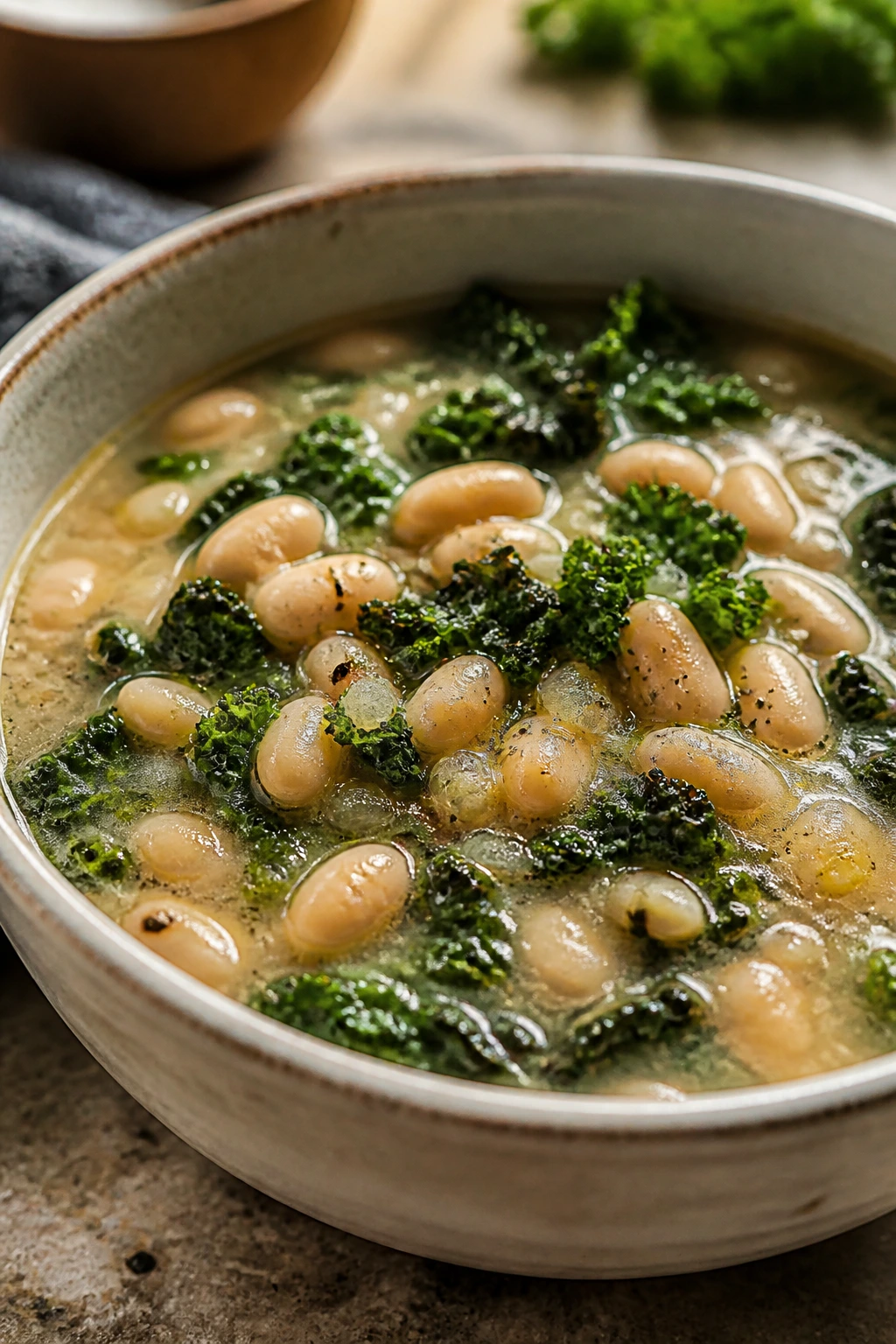
This is the kind of soup that looks quiet in the pot and ends up eating like a full meal. The beans soften into the broth, the kale keeps a little bite, and a hit of lemon at the end keeps the whole bowl from tasting sleepy.
Why It Works: White beans bring protein and creaminess without dairy, and kale stands up better than softer greens. The soup gets thicker if you simmer it a little longer, which gives it more body than a thin vegetable broth ever could. Serve it with bread and it stops feeling like “just soup.”
Key Ingredients:
- 2 tablespoons olive oil
- 1 onion, diced
- 2 carrots, diced
- 2 celery stalks, diced
- 3 garlic cloves, minced
- 2 cans cannellini beans, drained
- 6 cups vegetable broth
- 4 cups chopped kale
- 1 lemon, juiced
- 1/4 cup grated Parmesan, optional
Quick Steps:
- Sauté onion, carrots, and celery in oil for 8 minutes.
- Add garlic and cook 30 seconds, until fragrant.
- Stir in beans and broth, then simmer 15 minutes.
- Add kale and cook 5 minutes, until tender but still green.
- Finish with lemon juice and Parmesan.
Equipment for This Recipe:
- Large soup pot
- Ladle
- Knife and cutting board
How to Serve This Dish: Ladle it into deep bowls and add crusty bread on the side. A drizzle of olive oil on top makes the surface look glossy and keeps the soup from tasting thin.
Pro Tips for This Recipe:
- Mash a few beans against the pot to thicken the broth.
- Don’t overcook the kale; it should stay dark green.
- Lemon belongs at the end or it can taste muted.
Variations on This Dish:
- Smoked Paprika Version: Add 1 teaspoon smoked paprika with the garlic.
- Tomato Bean Soup: Stir in a small can of crushed tomatoes.
- Creamier Finish: Blend one ladle of soup and return it to the pot.
Common Mistakes to Avoid with This Dish:
- Starting with high heat: The vegetables need a slow sauté, not a scorch.
- Adding all the salt too early: Beans and broth vary; taste after simmering.
8. Quinoa Chickpea Greek Salad Bowls
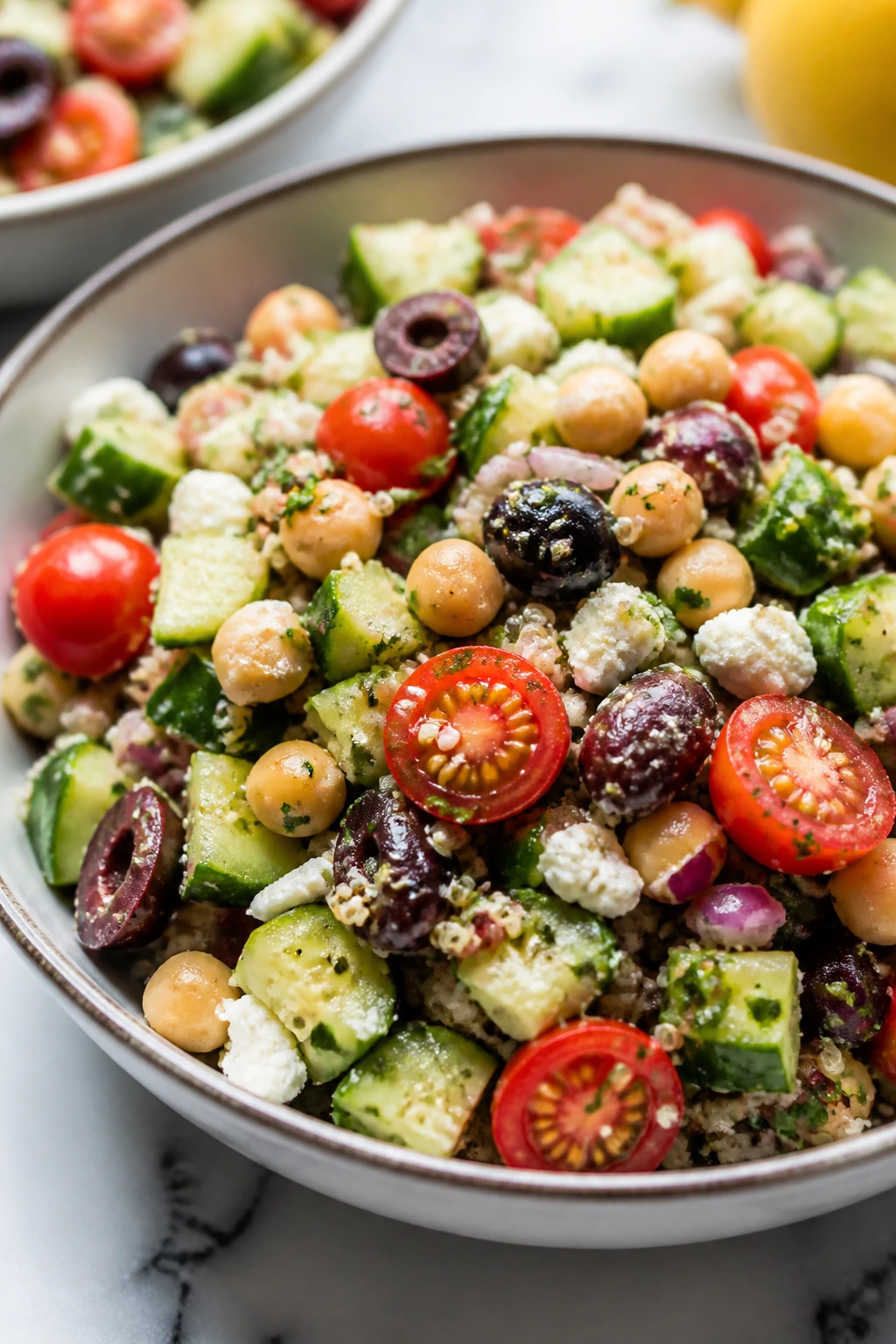
Quinoa and chickpeas are one of the few salad bases that can pull off “light” and “filling” at the same time. Add feta, cucumbers, tomatoes, and olives, and the bowl eats more like a meal than a side dish pretending to be dinner.
Why It Works: Quinoa brings complete protein, chickpeas add chew, and feta adds salty richness so the bowl doesn’t need meat to feel finished. A lemon-oregano dressing wakes everything up, and the vegetables stay crisp if you toss them at the last minute.
Key Ingredients:
- 1 cup dry quinoa
- 2 cans chickpeas, drained and rinsed
- 1 cucumber, chopped
- 2 cups cherry tomatoes, halved
- 1/2 red onion, thinly sliced
- 1 cup crumbled feta
- 1/3 cup olives
- 3 tablespoons olive oil
- 2 tablespoons lemon juice
- 1 teaspoon dried oregano
Quick Steps:
- Cook quinoa in salted water, then fluff and cool slightly.
- Whisk olive oil, lemon juice, oregano, salt, and pepper.
- Toss quinoa with chickpeas, vegetables, olives, and dressing.
- Fold in feta at the end so it stays in chunks.
- Chill 10 minutes or serve right away.
Equipment for This Recipe:
- Saucepan with lid
- Large bowl
- Fork for fluffing quinoa
How to Serve This Dish: Spoon it into shallow bowls and add pita on the side if you want more heft. A spoon of hummus underneath the salad turns it into a thicker, more luxurious lunch.
Pro Tips for This Recipe:
- Rinse quinoa well or it can taste bitter.
- Salt the dressing enough; cold salads need a little extra punch.
- Add tomatoes last if you want them to stay firm.
Variations on This Dish:
- Tzatziki Bowl: Swap the lemon dressing for tzatziki.
- Roasted Veg Version: Use roasted zucchini and peppers instead of raw tomatoes.
- Extra Protein Add-On: Add grilled halloumi or hard-boiled eggs.
Common Mistakes to Avoid with This Dish:
- Mixing while quinoa is hot: It softens the vegetables. Let it cool a bit first.
- Underseasoning the dressing: Cold grains need a stronger hand than warm ones.
9. Paneer Tikka Masala
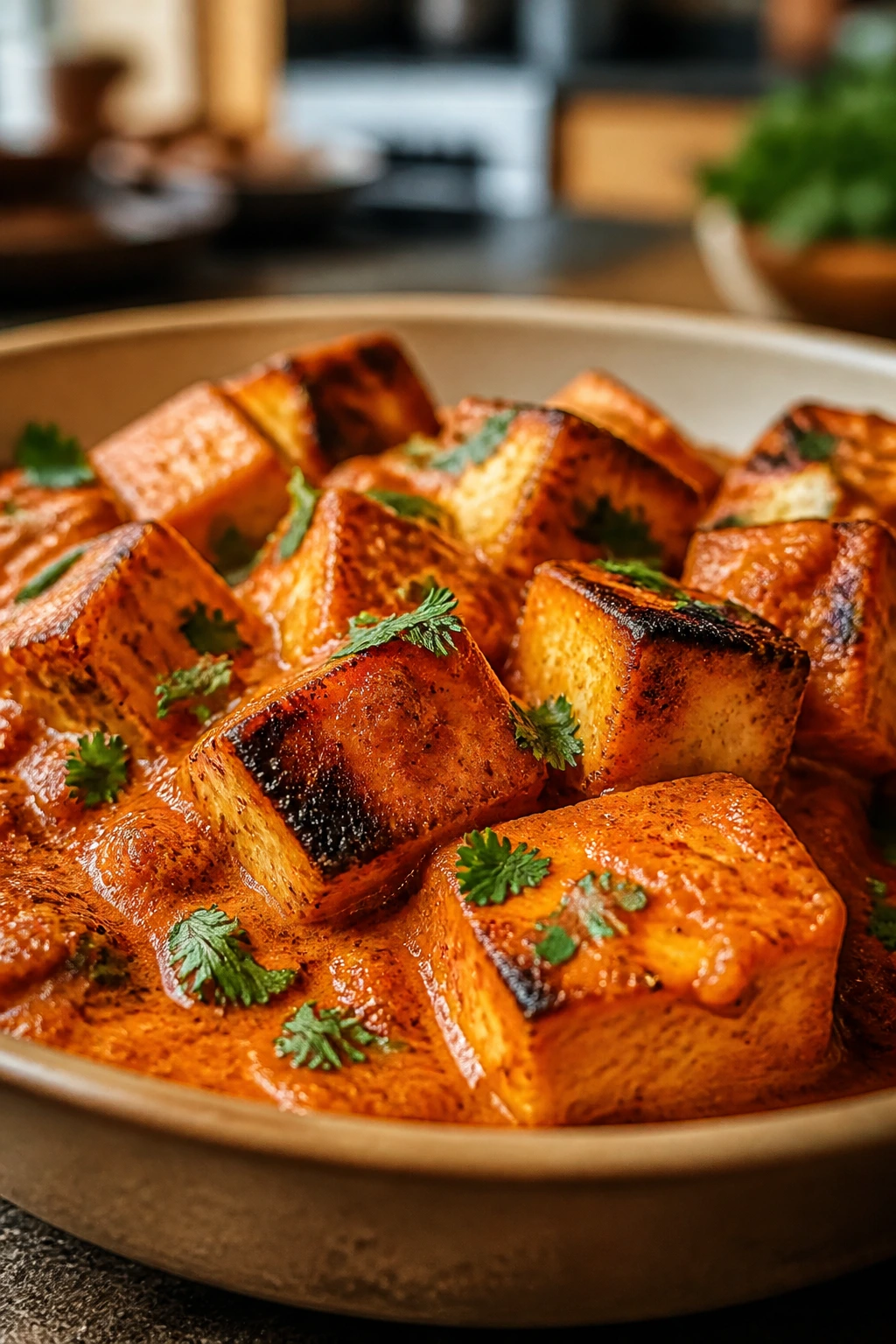
Paneer is one of those ingredients that rewards a hot pan and a little patience. It browns at the edges, stays pleasantly chewy inside, and soaks up a tomato cream sauce that tastes rich enough to carry rice on its own.
Why It Works: Paneer gives this dish a dense protein source that doesn’t fall apart in sauce. A quick sear keeps the cubes from tasting squeaky, and the masala sauce brings spice, acidity, and enough fat to make the meal feel complete. It’s the kind of dinner people go quiet over.
Key Ingredients:
- 14 ounces paneer, cubed
- 1 tablespoon oil
- 1 onion, finely chopped
- 3 garlic cloves, minced
- 1 tablespoon grated ginger
- 2 tablespoons tikka masala paste or seasoning
- 1 can crushed tomatoes
- 1/2 cup heavy cream or coconut milk
- 1 tablespoon butter
- Cooked basmati rice, for serving
Quick Steps:
- Sear paneer cubes in oil for 4 to 5 minutes until golden.
- Cook onion, garlic, and ginger in the same pan until soft.
- Stir in tikka masala paste and tomatoes; simmer 10 minutes.
- Add cream and butter, then return paneer and warm through.
- Serve over rice.
Equipment for This Recipe:
- Large skillet
- Spoon
- Rice pot or rice cooker
How to Serve This Dish: Serve it with basmati rice or naan and a few sliced cucumbers on the side. A spoon of yogurt on top cools the spice and gives the sauce a silkier finish.
Pro Tips for This Recipe:
- Don’t let paneer sit too long in sauce or it can lose its bite.
- Use full-fat dairy or coconut milk for a rounder sauce.
- Toast the spice paste briefly so it tastes deeper.
Variations on This Dish:
- Cauliflower Paneer Mix: Add roasted cauliflower for extra volume.
- Smokier Sauce: Stir in a small spoon of paprika or char the onion a little harder.
- Vegan Version: Use firm tofu and coconut milk.
Common Mistakes to Avoid with This Dish:
- Skipping the sear: Pale paneer tastes bland. Brown it first.
- Boiling the cream: That can make the sauce grainy. Keep it at a gentle simmer.
10. Edamame Soba Stir-Fry
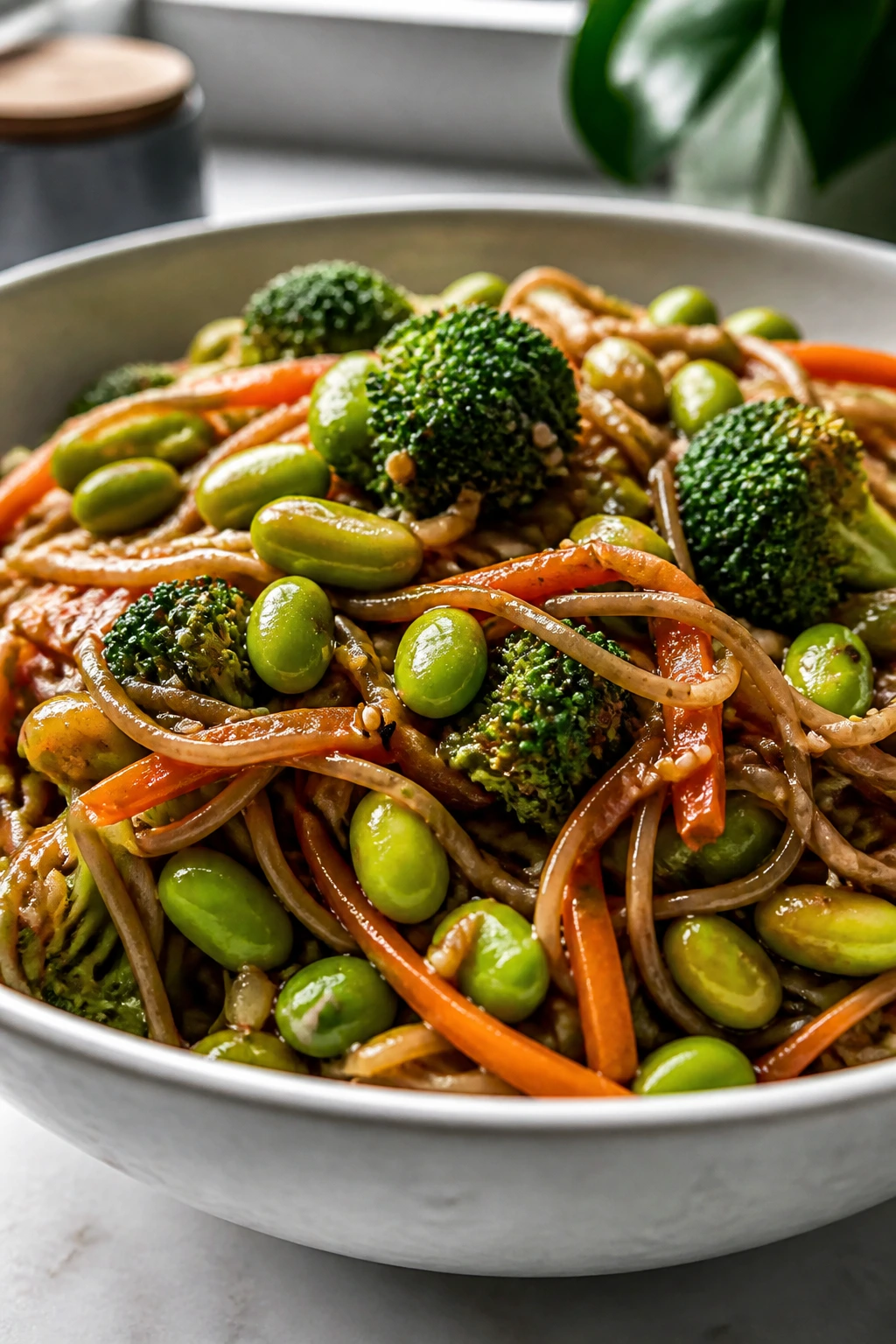
Edamame gives this bowl a clean, almost sweet bite, and soba noodles bring the kind of chew that makes a stir-fry feel like dinner instead of leftovers. The sauce is fast, the vegetables stay bright, and the whole thing comes together before you’ve had time to get impatient.
Why It Works: Shelled edamame adds a solid protein bump, and soba brings more bite than standard noodles. A soy-ginger sauce coats the strands without drowning them, which matters because soggy stir-fry is where a lot of good intentions go to die.
Key Ingredients:
- 8 ounces soba noodles
- 1 1/2 cups shelled edamame
- 2 cups broccoli florets
- 1 carrot, thinly sliced
- 2 tablespoons soy sauce
- 1 tablespoon sesame oil
- 1 tablespoon rice vinegar
- 1 tablespoon grated ginger
- 1 garlic clove, minced
- 2 tablespoons chopped cashews
Quick Steps:
- Cook soba noodles, rinse quickly, and drain well.
- Steam or blanch broccoli until bright green, about 2 minutes.
- Stir-fry carrot, ginger, and garlic in sesame oil for 1 minute.
- Add edamame, noodles, broccoli, soy sauce, and vinegar; toss 2 minutes.
- Top with cashews.
Equipment for This Recipe:
- Large skillet or wok
- Pot for noodles
- Colander
How to Serve This Dish: Serve it warm, not piping hot, so the sauce clings instead of steaming off. A sprinkle of sesame seeds and scallions gives the bowl a finished look with almost no effort.
Pro Tips for This Recipe:
- Rinse soba well to remove excess starch.
- Add a splash of noodle water if the sauce tightens too much.
- Keep the vegetables crisp; soft broccoli turns the whole bowl dull.
Variations on This Dish:
- Peanut Version: Add 1 tablespoon peanut butter to the sauce.
- Mushroom Swap: Use sliced mushrooms instead of broccoli for a deeper flavor.
- Cold Noodle Salad: Chill it and serve with extra vinegar.
Common Mistakes to Avoid with This Dish:
- Overcooking soba: It turns slippery and breaks. Pull it early.
- Adding sauce too soon: Toss at the end so the vegetables stay bright.
11. Lentil Bolognese Pasta
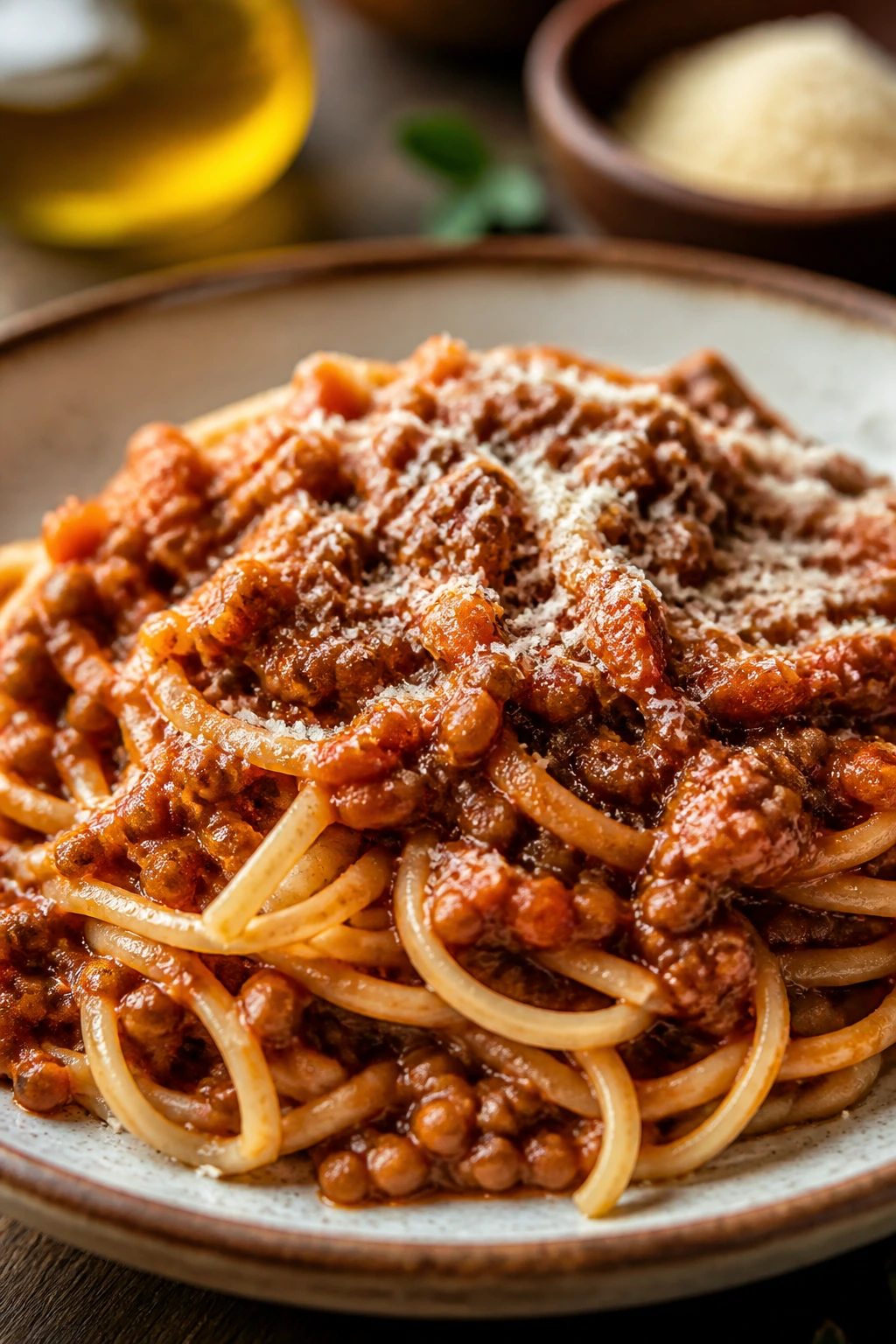
Lentils are the quiet overachievers of the pantry. They take on the tomato, garlic, and herbs, then turn into a sauce that clings to pasta in a way that feels sturdy and familiar, not like a compromise.
Why It Works: Brown or green lentils hold their shape better than red ones, which gives the sauce a meaty texture. Mushrooms deepen the flavor, tomato paste adds body, and the pasta gives you the kind of carb that makes the bowl feel like a full dinner.
Key Ingredients:
- 1 cup brown or green lentils, rinsed
- 2 tablespoons olive oil
- 1 onion, diced
- 2 carrots, diced
- 2 celery stalks, diced
- 8 ounces mushrooms, chopped
- 2 tablespoons tomato paste
- 1 can crushed tomatoes
- 12 ounces pasta
- Grated Parmesan, for serving
Quick Steps:
- Sauté onion, carrot, celery, and mushrooms in oil for 8 minutes.
- Stir in tomato paste and cook 1 minute.
- Add lentils, crushed tomatoes, and 2 cups water; simmer 25 minutes.
- Boil pasta until al dente and drain.
- Toss pasta with sauce and Parmesan.
Equipment for This Recipe:
- Dutch oven
- Large pasta pot
- Wooden spoon
How to Serve This Dish: Use short pasta or wide noodles so the sauce can cling to every curve. A green salad on the side keeps the plate from feeling too rich.
Pro Tips for This Recipe:
- Let the sauce reduce until it looks glossy, not watery.
- Salt the lentils after they’ve simmered a bit; early salting can slow softening.
- Chop mushrooms fine if you want a more classic ragù feel.
Variations on This Dish:
- Spicy Arrabbiata: Add red pepper flakes with the tomato paste.
- Creamy Finish: Stir in a spoon of ricotta at the end.
- Herb Heavy: Finish with basil and oregano for a brighter profile.
Common Mistakes to Avoid with This Dish:
- Stopping the sauce too early: It needs time to thicken or it runs off the pasta.
- Using red lentils: They collapse and lose the texture that makes this work.
12. Cottage Cheese Veggie Lasagna
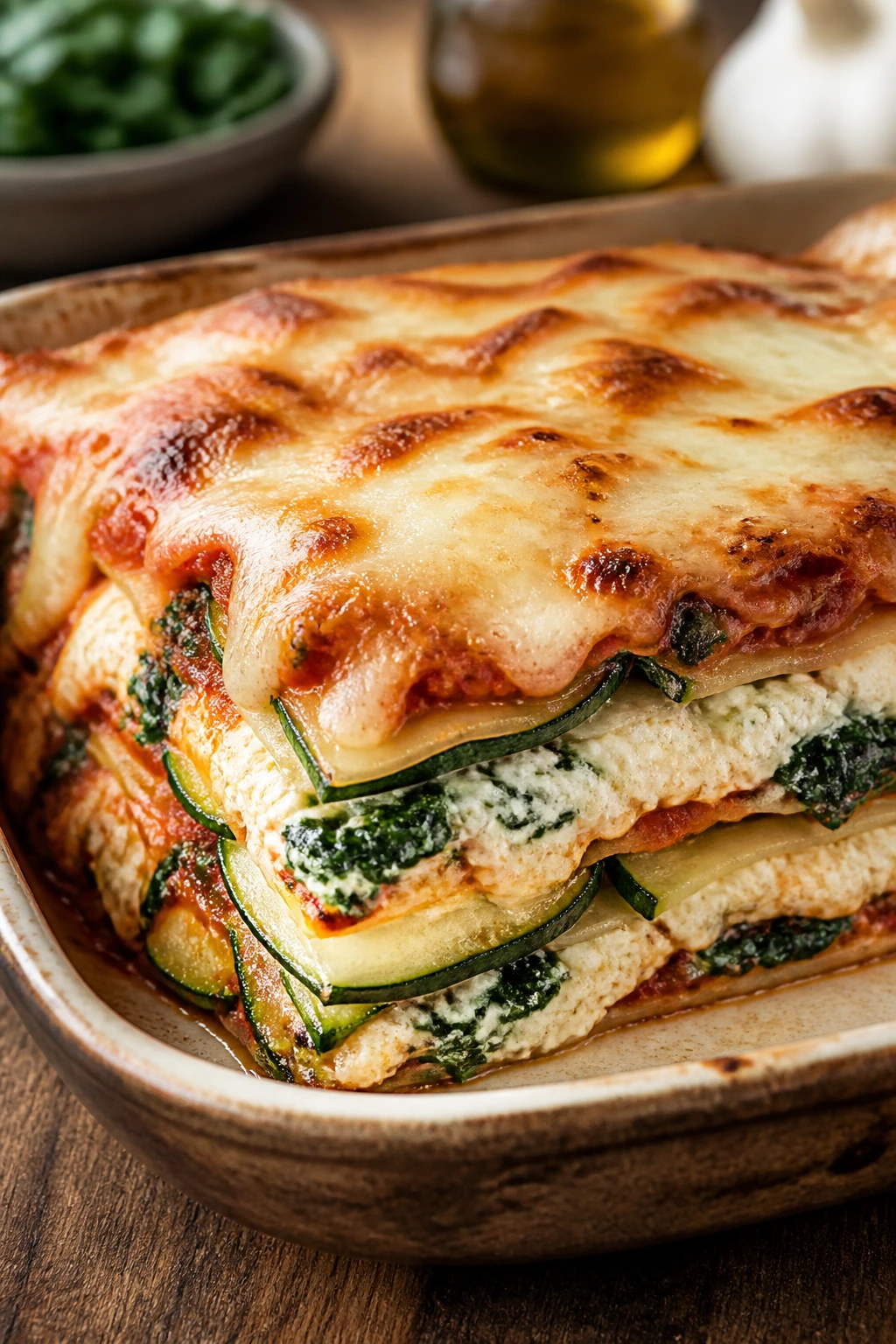
Cottage cheese in lasagna sounds plain until it bakes. Then it turns creamy, the noodles soften without going mushy, and the vegetables disappear into layers that feel richer than the ingredient list suggests.
Why It Works: Cottage cheese, mozzarella, and Parmesan create a protein-heavy filling that behaves like ricotta once baked. Zucchini and spinach keep the casserole from feeling dense, and the marinara gives the whole pan the acidity it needs to avoid tasting heavy.
Key Ingredients:
- 9 lasagna noodles
- 2 cups cottage cheese
- 2 cups spinach, squeezed dry
- 1 zucchini, thinly sliced
- 1 egg
- 2 cups shredded mozzarella
- 1/2 cup grated Parmesan
- 4 cups marinara sauce
Quick Steps:
- Cook the noodles until just flexible, then drain.
- Mix cottage cheese, spinach, egg, Parmesan, and half the mozzarella.
- Layer sauce, noodles, filling, zucchini, and more sauce in a baking dish.
- Top with remaining mozzarella and bake at 375°F for 35 minutes.
- Rest 15 minutes before cutting.
Equipment for This Recipe:
- 9×13-inch baking dish
- Large pot
- Mixing bowl
How to Serve This Dish: Cut it into clean squares and let the layers show a little. Garlic bread works, but a simple arugula salad keeps the plate from going too soft.
Pro Tips for This Recipe:
- Salt the zucchini lightly and blot it dry if it seems wet.
- Don’t overfill the pan; lasagna needs room to bubble.
- Resting time matters here more than people think.
Variations on This Dish:
- Spinach-Heavy Version: Add more spinach and skip the zucchini.
- Roasted Veg Layer: Use roasted eggplant instead of raw zucchini.
- Meatless Marinara Boost: Stir lentils into the sauce for extra heft.
Common Mistakes to Avoid with This Dish:
- Using watery cottage cheese straight from the tub: Drain it a little first if needed.
- Slicing too early: The layers need time to settle or they collapse.
13. Three-Bean Chili
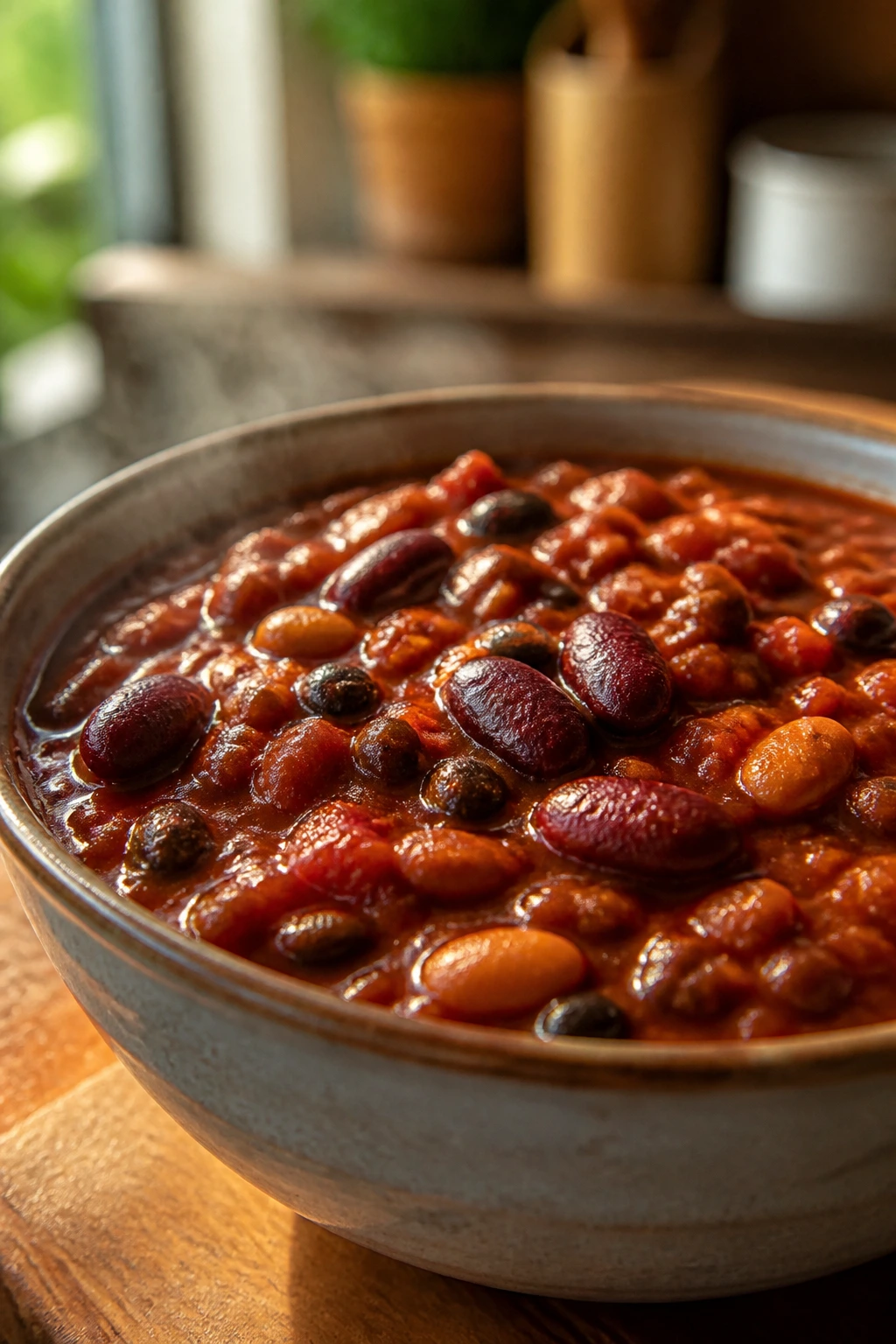
Three beans sound practical, but in a chili they also bring texture. One bean stays firm, one gets creamy, and one gives the spoon something to chase, which is why this bowl eats like a real meal with bread.
Why It Works: A mix of beans gives you a wider protein and fiber base than a single can ever could. Tomatoes, chili powder, and onion build depth, and a long simmer lets the beans take on the spice instead of floating in it. It’s even better the next day.
Key Ingredients:
- 1 tablespoon olive oil
- 1 onion, diced
- 1 bell pepper, diced
- 2 garlic cloves, minced
- 2 tablespoons chili powder
- 1 can kidney beans, drained
- 1 can black beans, drained
- 1 can pinto beans, drained
- 1 can crushed tomatoes
- 1 cup corn
Quick Steps:
- Sauté onion and pepper in oil for 6 minutes.
- Stir in garlic and chili powder for 30 seconds.
- Add beans, tomatoes, corn, and 1 cup water.
- Simmer 25 minutes, stirring now and then, until thick.
- Serve with toppings.
Equipment for This Recipe:
- Soup pot or Dutch oven
- Wooden spoon
- Can opener
How to Serve This Dish: Ladle it over rice, or keep it in bowls with cornbread on the side. A spoon of sour cream and a handful of scallions make it taste fresher.
Pro Tips for This Recipe:
- Rinse canned beans so the chili tastes cleaner.
- Let it simmer long enough for the tomato to lose its raw edge.
- A little cocoa powder can deepen the flavor if you like a darker chili.
Variations on This Dish:
- Smoky Chipotle: Add chipotle in adobo and a pinch of cumin.
- White Bean Switch: Use white beans and green chilies for a milder bowl.
- Extra Thick Chili: Mash a cup of beans against the pot.
Common Mistakes to Avoid with This Dish:
- Serving too soon: Chili needs at least 20 minutes to marry the flavors.
- Going light on salt: Beans absorb a lot; taste before you stop.
14. Miso Sesame Tofu Rice Bowls
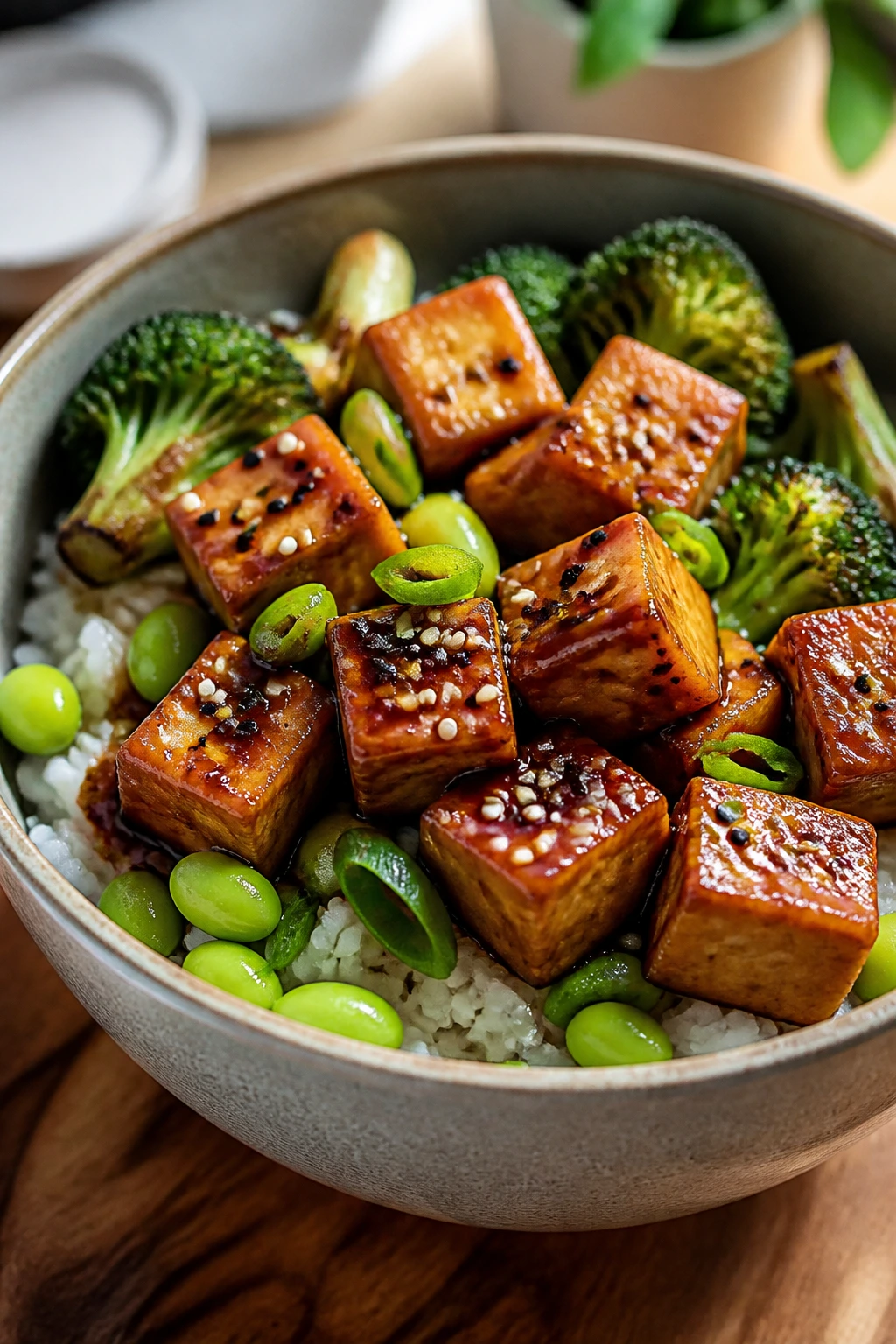
Miso gives tofu a salty, savory edge that plain soy sauce can’t quite reach. Once the cubes roast or pan-fry, they carry that glaze into the rice, broccoli, and edamame underneath.
Why It Works: Tofu and edamame make this a double-protein bowl, which is why it feels complete even without a sauce-heavy finish. Miso adds depth, sesame oil brings aroma, and the rice anchors everything so the vegetables don’t feel like garnish.
Key Ingredients:
- 1 block extra-firm tofu, pressed and cubed
- 2 cups cooked rice
- 1 cup shelled edamame
- 2 cups broccoli florets
- 1 tablespoon miso paste
- 1 tablespoon soy sauce
- 1 tablespoon sesame oil
- 1 teaspoon grated ginger
- 1 tablespoon sesame seeds
- 2 scallions, sliced
Quick Steps:
- Toss tofu with miso, soy sauce, and half the sesame oil.
- Roast at 425°F for 20 minutes or pan-fry until browned.
- Steam broccoli and edamame until hot and bright.
- Divide rice into bowls and top with tofu and vegetables.
- Finish with sesame seeds, scallions, and a splash of soy.
Equipment for This Recipe:
- Baking sheet or skillet
- Small bowl for sauce
- Rice cooker or saucepan
How to Serve This Dish: Keep the bowl neat and layered so the glaze stays visible. If you want more punch, add a spoon of chili crisp right before eating.
Pro Tips for This Recipe:
- Press tofu well or the glaze slides right off.
- Don’t crowd the tray if you roast; tofu needs air around it.
- Stir the miso with a little warm water before coating so it spreads evenly.
Variations on This Dish:
- Brown Rice Base: Use brown rice for more chew.
- Noodle Bowl: Swap rice for soba or udon.
- Gochujang Heat: Add a teaspoon of gochujang to the glaze.
Common Mistakes to Avoid with This Dish:
- Using soft tofu: It falls apart before it browns.
- Adding sesame seeds too early: They lose their toast and aroma.
15. Seitan Fajita Bowls
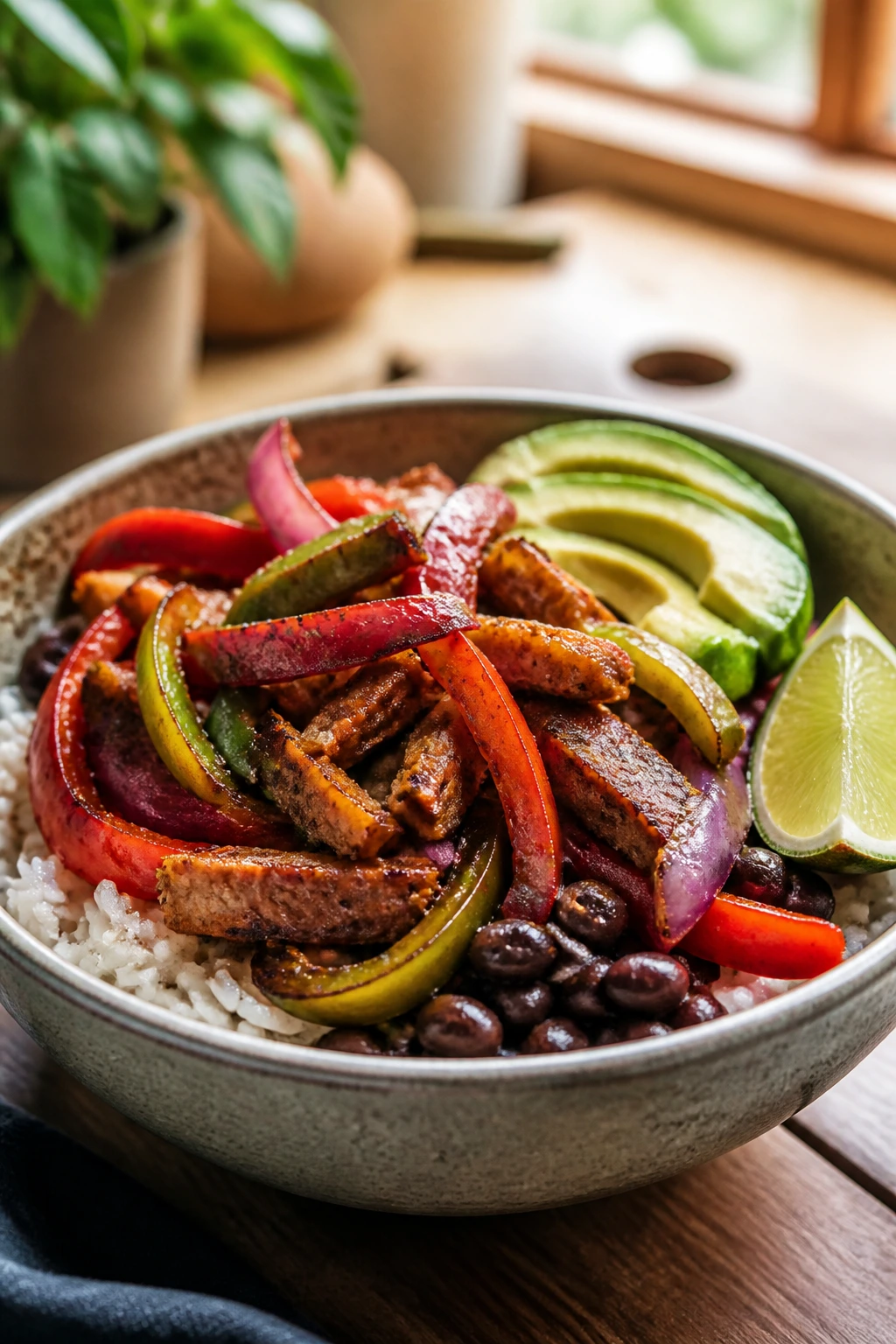
Seitan is the shortcut that makes some vegetarian meals feel startlingly hearty. Its chew is dense and satisfying, and when it gets tossed with peppers and onions, the whole skillet smells like fajita night without the meat.
Why It Works: Seitan is high in protein and built for browning, which gives this bowl the kind of texture people often miss in vegetarian dinners. Black beans and rice fill in the gaps, while lime and salsa keep the plate from tasting heavy.
Key Ingredients:
- 8 ounces seitan, sliced
- 1 tablespoon olive oil
- 1 red bell pepper, sliced
- 1 green bell pepper, sliced
- 1 onion, sliced
- 2 teaspoons fajita seasoning
- 1 can black beans, drained
- 2 cups cooked rice
- 1 avocado, sliced
- Lime wedges
Quick Steps:
- Sear seitan in oil over medium-high heat for 3 to 4 minutes.
- Add peppers and onion; cook 6 to 8 minutes until charred at the edges.
- Stir in fajita seasoning and black beans, then heat through.
- Serve over rice with avocado and lime.
- Add salsa if you want more moisture.
Equipment for This Recipe:
- Large skillet
- Knife and cutting board
- Spoon or spatula
How to Serve This Dish: Build the bowl with rice first so the vegetables and seitan can sit on top. A spoon of sour cream or yogurt makes the spice feel rounder.
Pro Tips for This Recipe:
- Sear seitan before adding the vegetables so it gets a browned crust.
- Keep the pan hot; fajita flavor comes from a little char.
- Use wide rice bowls so the toppings don’t crowd each other.
Variations on This Dish:
- Cauliflower Fajitas: Replace half the seitan with cauliflower florets.
- Tortilla Bowl: Stuff the filling into warm tortillas instead.
- Smoky Bean Boost: Add pinto beans for a softer second protein.
Common Mistakes to Avoid with This Dish:
- Cooking on low heat: The vegetables steam instead of blistering.
- Using too much seasoning at once: It can taste salty fast, so add in stages.
16. Peanut Chickpea Curry
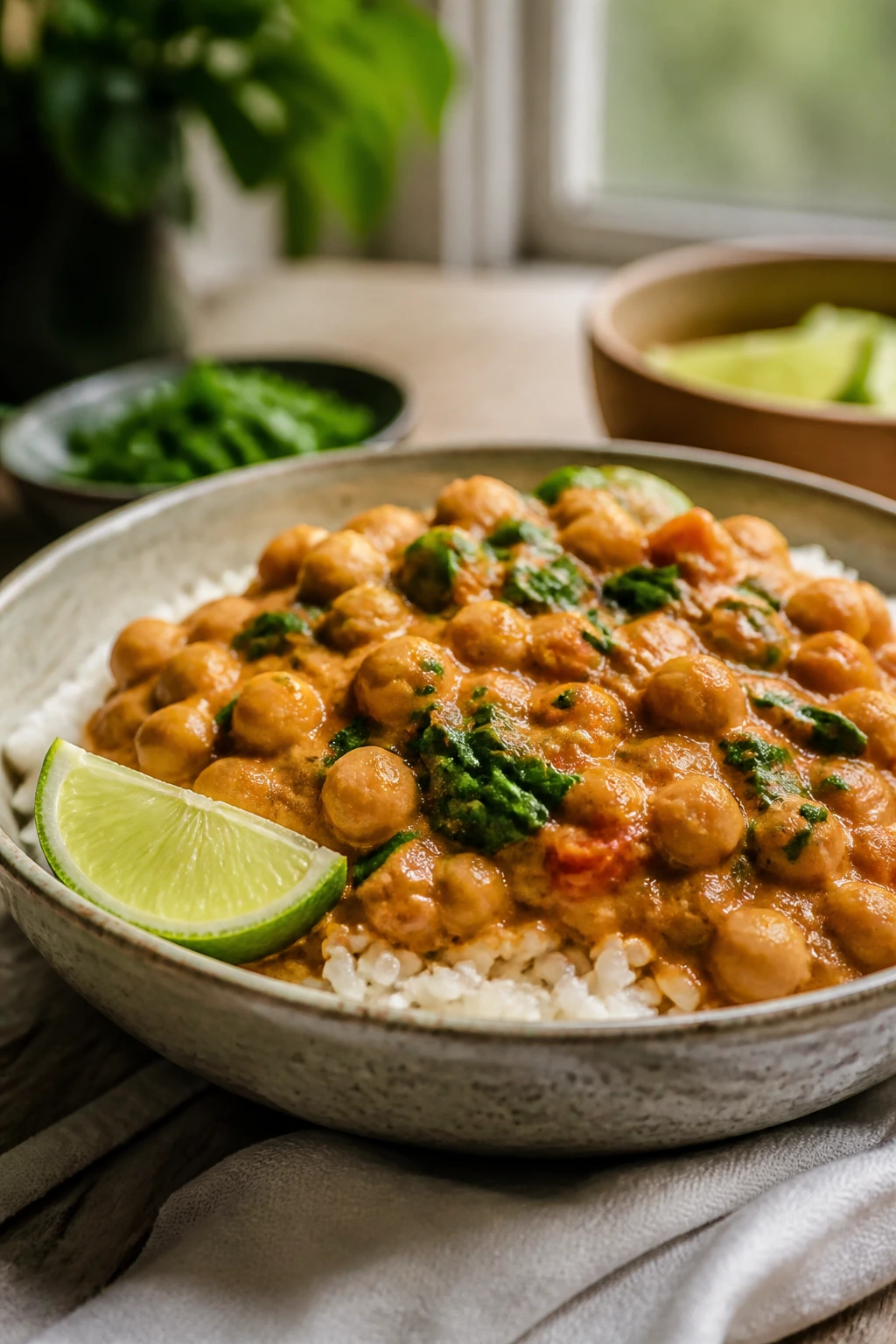
Peanut butter in curry sounds like a detour until you taste it with chickpeas. The sauce turns thick, nutty, and just a little sweet, and the chickpeas make sure it still feels like a real meal, not a sauce looking for a purpose.
Why It Works: Chickpeas bring a steady, toothsome bite, while peanut butter adds fat that makes the bowl hold together. Coconut milk keeps the sauce smooth, and spinach or kale can slide in at the end without changing the character of the dish.
Key Ingredients:
- 2 cans chickpeas, drained and rinsed
- 1 tablespoon oil
- 1 onion, diced
- 2 tablespoons curry paste or powder
- 3 tablespoons peanut butter
- 1 can coconut milk
- 1 cup broth or water
- 3 cups spinach
- 2 cups cooked rice
- Lime wedges
Quick Steps:
- Sauté onion in oil for 5 minutes until soft.
- Stir in curry paste and peanut butter for 30 seconds.
- Add chickpeas, coconut milk, and broth; simmer 15 minutes.
- Stir in spinach until wilted.
- Serve with rice and lime.
Equipment for This Recipe:
- Medium saucepan
- Wooden spoon
- Rice pot
How to Serve This Dish: Serve it with plain rice or rice noodles so the sauce gets the spotlight. A handful of crushed peanuts on top adds crunch and makes the bowl feel more finished.
Pro Tips for This Recipe:
- Whisk the peanut butter into the sauce before it boils.
- Add a splash of water if the curry tightens too much.
- Spinach should go in at the very end or it disappears.
Variations on This Dish:
- Extra Vegetables: Add carrots or bell peppers with the onion.
- Lime Leaf Style: Finish with lime zest for a sharper lift.
- Mild Pantry Curry: Use curry powder instead of paste for gentler heat.
Common Mistakes to Avoid with This Dish:
- Clumpy peanut sauce: Stir it in while the pot is warm, not scorching.
- Serving without acid: Lime keeps the coconut and peanut from feeling heavy.
17. Loaded Broccoli Cheddar Sweet Potatoes
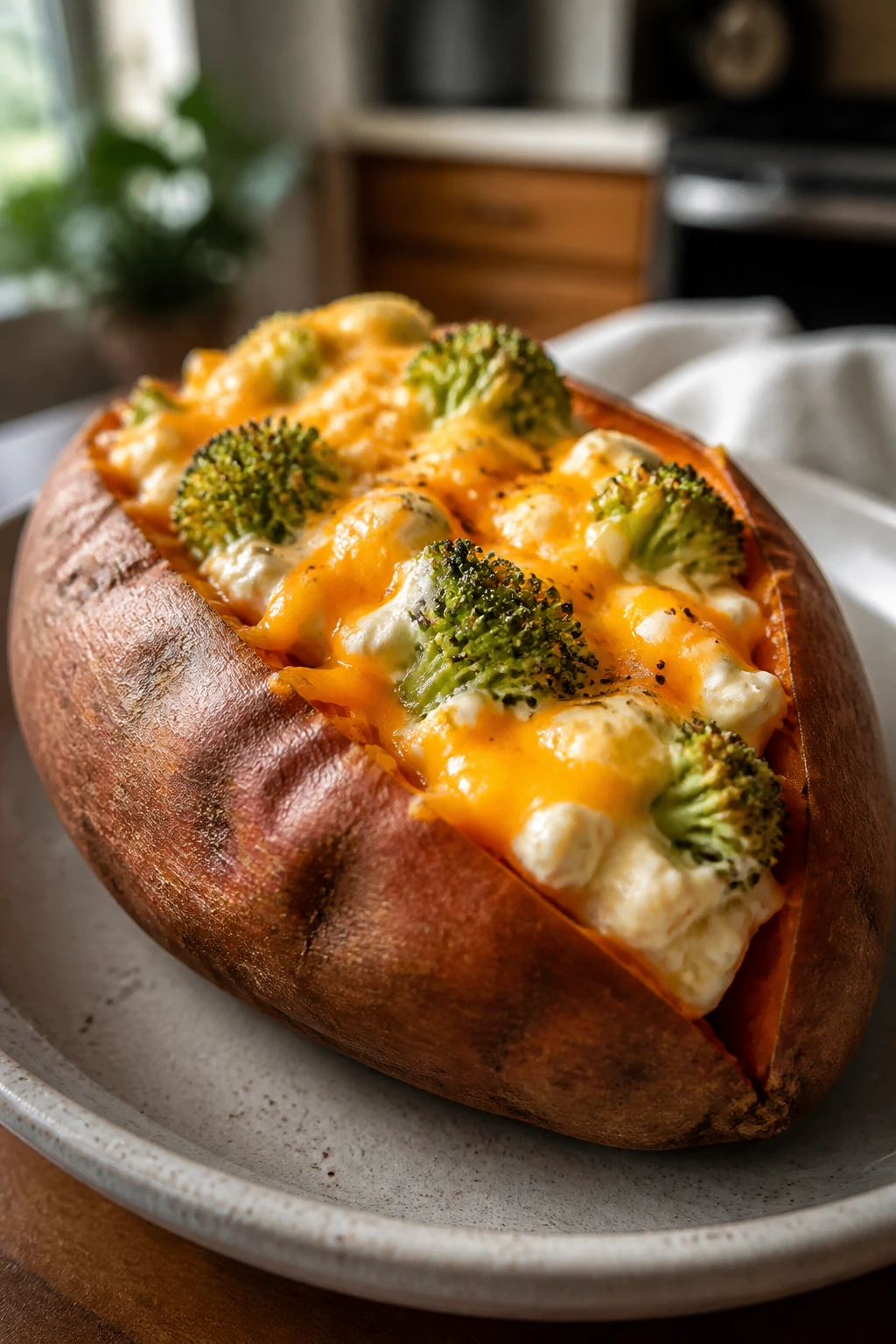
Sweet potatoes give you a built-in bowl, and that already makes dinner feel more complete. Add broccoli, cheddar, and cottage cheese, and you get a meal that’s creamy, salty, and filling without needing anything else to prop it up.
Why It Works: The sweet potato is the starch, the cottage cheese is the protein, and the broccoli keeps the whole thing from tasting like a snack pretending to be dinner. Cheddar melts into the filling, which makes every bite feel more cohesive than a pile of toppings ever could.
Key Ingredients:
- 2 large sweet potatoes
- 2 cups broccoli florets
- 1 cup cottage cheese
- 1 cup shredded cheddar
- 1 tablespoon olive oil
- 2 tablespoons chopped chives
- Salt and black pepper
- Optional hot sauce
Quick Steps:
- Bake sweet potatoes at 400°F for 45 to 55 minutes, until very tender.
- Steam or microwave broccoli until just tender.
- Mix broccoli with cottage cheese, half the cheddar, oil, salt, and pepper.
- Split the potatoes open and fill them with the mixture.
- Top with remaining cheddar and chives.
Equipment for This Recipe:
- Sheet pan
- Small bowl
- Fork for fluffing
How to Serve This Dish: Serve one stuffed potato per person with a spoonful of hot sauce or yogurt on the side. A green salad keeps the plate from leaning too soft and sweet.
Pro Tips for This Recipe:
- Bake the potatoes until the centers feel fully soft, not just fork-tender.
- Drain the broccoli well so the filling stays thick.
- Warm the cottage cheese mixture slightly before stuffing.
Variations on This Dish:
- Bean Boost: Mix in white beans for more protein and texture.
- Mexican Style: Use pepper jack and salsa instead of cheddar.
- Herb Version: Add dill or parsley for a fresher finish.
Common Mistakes to Avoid with This Dish:
- Undercooking the potatoes: Hard centers ruin the whole thing. Give them enough time.
- Using watery broccoli: Extra moisture makes the filling slide right off the spoon.
18. Farro Halloumi Vegetable Skillet
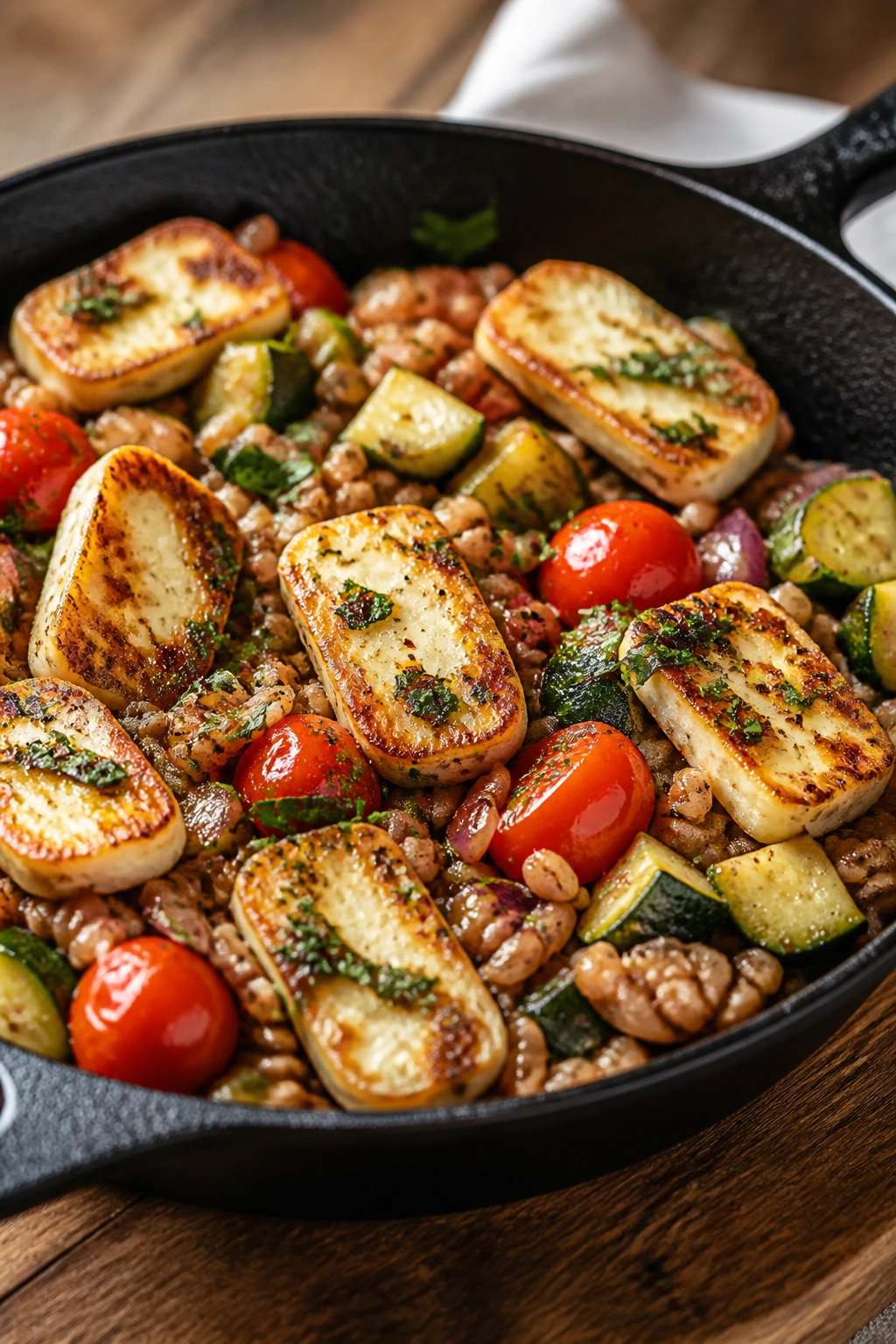
Farro has a chewy, nutty bite that makes a skillet meal feel like it has structure. Halloumi brings salty richness and enough protein to keep the plate from leaning too far into grain bowl territory.
Why It Works: Farro cooks up sturdy and holds its shape even after vegetables and cheese are added. Halloumi browns instead of melting, so you get a crisp edge and a soft center in the same bite. Chickpeas can be added here too, but even without them the bowl has enough heft for a full meal.
Key Ingredients:
- 1 cup farro
- 8 ounces halloumi, sliced
- 1 zucchini, chopped
- 1 cup cherry tomatoes
- 1 red onion, sliced
- 1 tablespoon olive oil
- 1 can chickpeas, optional
- 1 tablespoon lemon juice
- 2 tablespoons chopped parsley
Quick Steps:
- Cook farro in salted water until chewy, about 20 to 25 minutes.
- Brown halloumi in a dry skillet for 2 minutes per side.
- Sauté zucchini, tomatoes, and onion in olive oil until softened.
- Toss farro, vegetables, chickpeas if using, lemon juice, and parsley together.
- Top with halloumi.
Equipment for This Recipe:
- Saucepan
- Large skillet
- Colander
How to Serve This Dish: Serve it warm, not piping hot, so the halloumi keeps its shape. A spoonful of yogurt or tzatziki adds a cool contrast that suits the salty cheese.
Pro Tips for This Recipe:
- Don’t overcook farro; it should stay chewy.
- Halloumi likes a dry pan, not a greasy one.
- Lemon at the end makes the skillet taste brighter, not sour.
Variations on This Dish:
- Mediterranean Bowl: Add olives and cucumbers after cooking.
- Chickpea-Heavy Version: Use a full can of chickpeas for more protein.
- Spicy Herb Style: Add red pepper flakes and mint.
Common Mistakes to Avoid with This Dish:
- Cooking halloumi too long: It turns rubbery fast. Pull it once it browns.
- Skipping the acid: Farro and cheese need a squeeze of lemon to wake up.
19. Green Lentil Shepherd’s Pie
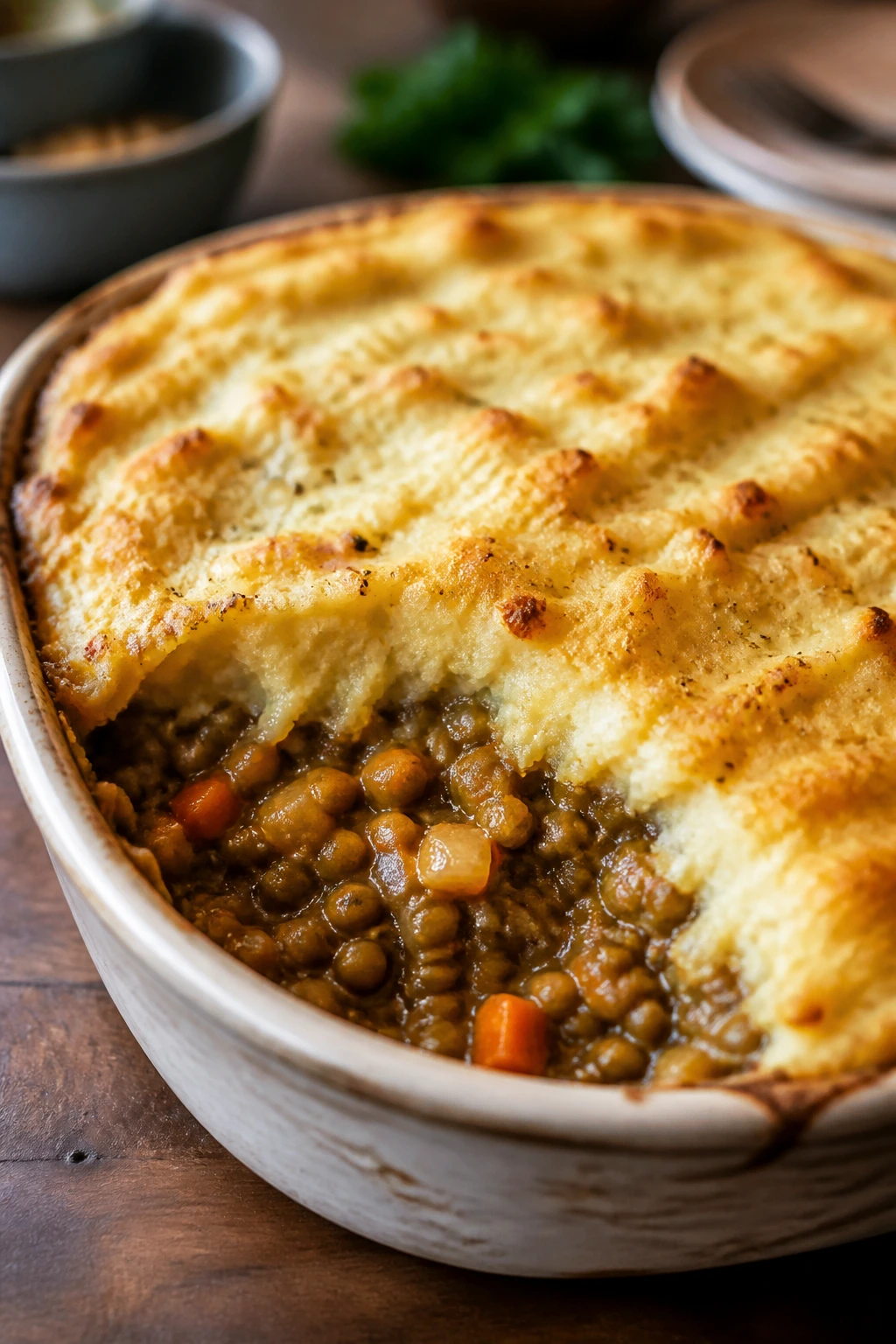
Green lentils give shepherd’s pie a filling that holds its shape under mashed potatoes instead of turning into soup. The top gets golden and a little crisp, while the bottom stays savory and rich.
Why It Works: Green lentils bring protein and a texture close enough to ground meat that the pie feels substantial. Mushrooms, carrots, and peas round out the filling, and mashed potatoes make the whole dish feel like comfort food without needing any meat at all.
Key Ingredients:
- 1 1/2 cups green lentils, rinsed
- 2 tablespoons olive oil
- 1 onion, diced
- 2 carrots, diced
- 8 ounces mushrooms, chopped
- 1 cup peas
- 2 tablespoons tomato paste
- 4 cups mashed potatoes
- 1 cup vegetable broth
Quick Steps:
- Cook lentils until just tender, about 20 minutes, then drain.
- Sauté onion, carrot, and mushrooms in oil for 10 minutes.
- Stir in tomato paste, lentils, peas, and broth; cook until thick.
- Spread filling in a baking dish and top with mashed potatoes.
- Bake at 400°F for 20 minutes until the top browns.
Equipment for This Recipe:
- Skillet
- Baking dish
- Potato masher
How to Serve This Dish: Scoop it in thick squares so each serving includes both filling and topping. A sharp salad on the side keeps the meal from feeling too heavy.
Pro Tips for This Recipe:
- Keep the filling thick before topping it.
- Rough up the mashed potatoes with a fork for better browning.
- Let the pie rest a few minutes before serving.
Variations on This Dish:
- Sweet Potato Top: Swap mashed sweet potatoes for a sweeter finish.
- Herbed Gravy Style: Add thyme and rosemary to the filling.
- Cauliflower Mash: Mix cauliflower into the topping for a lighter version.
Common Mistakes to Avoid with This Dish:
- Watery filling: It makes the topping slide. Reduce it until it holds.
- Smooth potato top only: A little texture on top gives you better browning.
20. Mushroom Lentil Burgers
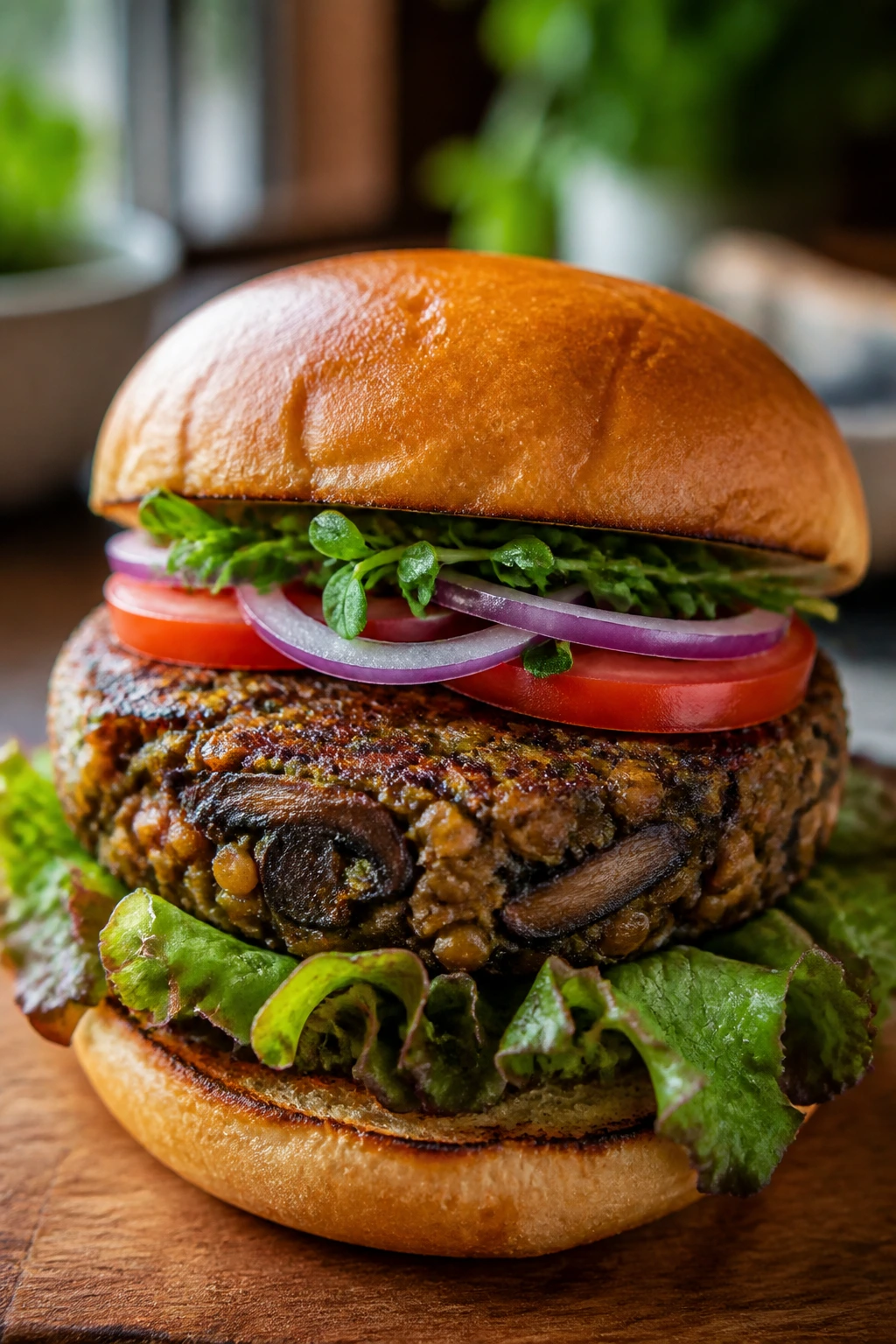
A good veggie burger needs more than a mashed pile of beans. Lentils and mushrooms together make a patty that actually bites back, with enough chew to hold on a bun without turning into paste.
Why It Works: Lentils supply the protein and structure, mushrooms add savoriness, and oats or breadcrumbs help the patties stay together. The sear in the pan matters here because it builds the crust that keeps the burger from tasting soft or flat.
Key Ingredients:
- 1 cup cooked lentils
- 8 ounces mushrooms, finely chopped
- 1/2 cup oats or breadcrumbs
- 1 egg
- 1/4 cup finely diced onion
- 1 tablespoon soy sauce
- 1 teaspoon smoked paprika
- 4 burger buns
- Lettuce and tomato
Quick Steps:
- Cook mushrooms and onion until their moisture cooks off.
- Mix with lentils, oats, egg, soy sauce, and paprika.
- Shape into 4 patties and chill 15 minutes.
- Pan-fry 4 minutes per side until browned.
- Serve on buns with toppings.
Equipment for This Recipe:
- Skillet
- Mixing bowl
- Spatula
How to Serve This Dish: Keep the toppings simple so the patty gets to be the point. Pickles and mustard help, and a side of oven fries makes it feel like a full dinner.
Pro Tips for This Recipe:
- Cook the mushrooms dry before mixing.
- Chill the patties so they hold together in the pan.
- Flip once only; fussing makes them break.
Variations on This Dish:
- Black Bean Blend: Replace some lentils with mashed black beans.
- Spicy Burger: Add cayenne or chipotle to the mix.
- Gluten-Free Version: Use certified gluten-free oats.
Common Mistakes to Avoid with This Dish:
- Mixing while hot: The egg can start to set and the texture gets odd.
- Skipping the chill: Warm patties fall apart before they brown.
21. Spicy Black Bean Enchiladas
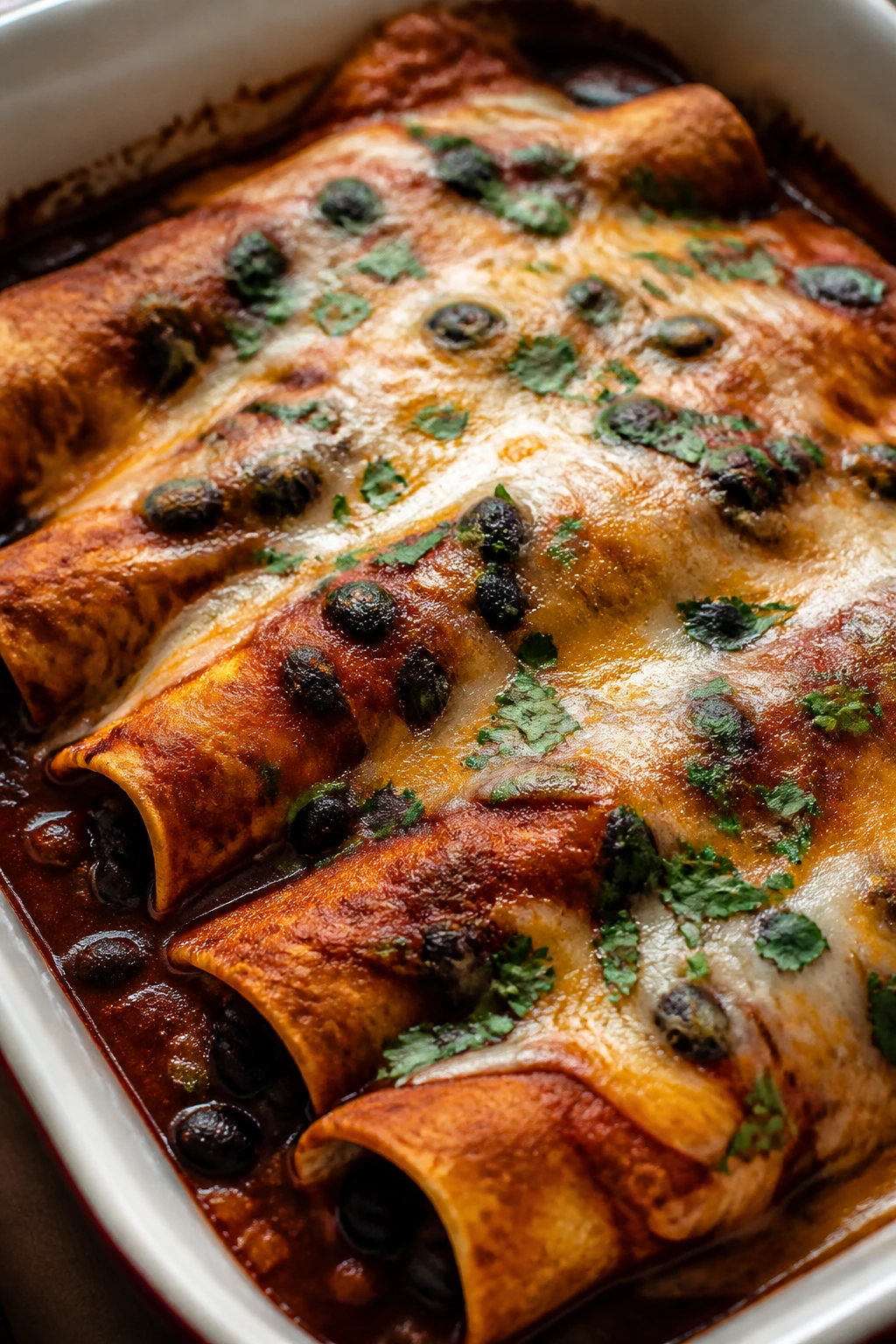
Black bean enchiladas have that reassuring, baked-cheese look that says dinner is under control. The beans stay hearty, the tortillas soften just enough, and the sauce does the job of tying the whole pan together.
Why It Works: Black beans are dense and high in fiber, which keeps these enchiladas filling even without meat. The cheese adds protein and helps the top brown, while the enchilada sauce gives the dish enough moisture to stay soft inside and a little crisp at the edges.
Key Ingredients:
- 2 cans black beans, drained
- 8 small tortillas
- 2 cups enchilada sauce
- 1 cup corn
- 1 onion, diced
- 2 cups shredded cheese
- 1 teaspoon cumin
- 1 avocado, sliced
Quick Steps:
- Cook onion in a skillet for 5 minutes, then stir in beans, corn, and cumin.
- Fill tortillas with the bean mixture and roll them up.
- Spread some sauce in a baking dish and line up the enchiladas.
- Pour remaining sauce over the top and add cheese.
- Bake at 375°F for 20 minutes.
Equipment for This Recipe:
- Skillet
- Baking dish
- Spoon for filling
How to Serve This Dish: Serve two enchiladas per person with avocado and a handful of cilantro. A scoop of rice on the side turns it into a bigger plate without much extra work.
Pro Tips for This Recipe:
- Warm tortillas first so they don’t crack.
- Keep the filling dry enough to roll.
- Let the pan sit 10 minutes before serving or it slumps apart.
Variations on This Dish:
- Green Chile Version: Use green enchilada sauce and extra cumin.
- Sweet Corn Enchiladas: Add more corn and a little lime zest.
- Bean and Spinach Mix: Fold spinach into the filling for more volume.
Common Mistakes to Avoid with This Dish:
- Overfilling tortillas: They split in the oven. Use less filling than you think.
- Using cold sauce: Warm sauce spreads more evenly.
22. Baked Feta and White Bean Skillet
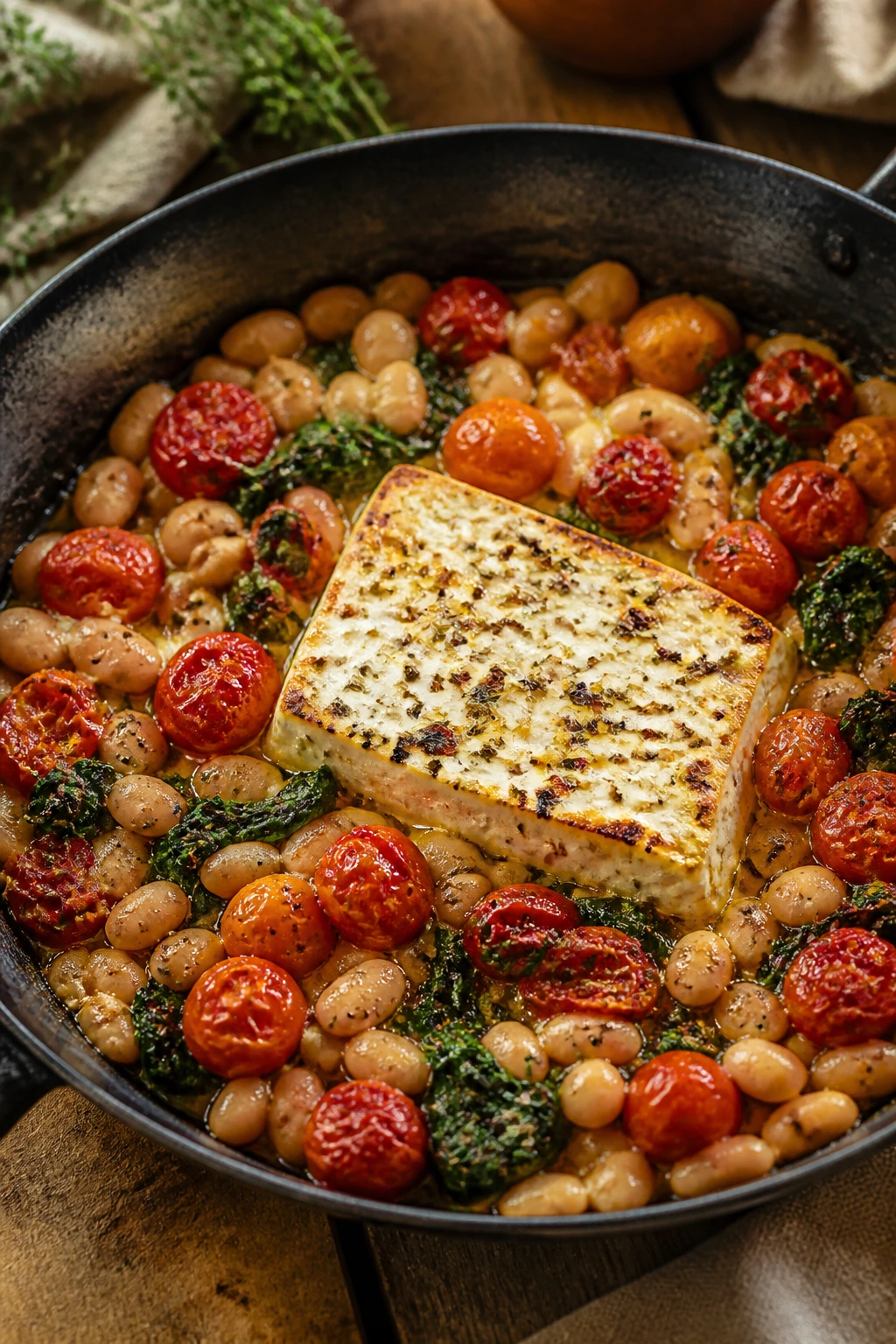
This is a skillet dinner that feels almost too easy when it comes out right. The tomatoes burst, the feta softens, and the white beans catch the juices underneath like they were waiting for that exact job.
Why It Works: White beans are mild enough to absorb flavor but sturdy enough to keep the meal filling. Feta brings salt, fat, and protein, and the roasted tomatoes create their own sauce so you don’t need much else. A piece of toast turns the whole thing into a proper dinner.
Key Ingredients:
- 2 cans white beans, drained
- 1 block feta, about 8 ounces
- 2 cups cherry tomatoes
- 3 garlic cloves, sliced
- 2 tablespoons olive oil
- 1 teaspoon dried oregano
- 2 cups spinach
- Crusty bread, for serving
Quick Steps:
- Combine beans, tomatoes, garlic, oil, and oregano in a skillet.
- Nestle the feta in the center and bake at 400°F for 20 minutes.
- Stir everything together until the tomatoes burst and the feta softens.
- Fold in spinach and let it wilt from the heat.
- Serve with bread.
Equipment for This Recipe:
- Oven-safe skillet
- Spoon
- Bread knife, if needed
How to Serve This Dish: Spoon it over toast or serve it with warm pita for scooping. The juices are half the point, so don’t waste them.
Pro Tips for This Recipe:
- Use a skillet with enough room for the tomatoes to spread.
- Choose a feta block, not crumbles, if you want a creamier center.
- Add spinach after baking so it stays bright.
Variations on This Dish:
- Olive and Lemon Version: Add olives and lemon zest before baking.
- Chickpea Swap: Use chickpeas if you want a firmer bean.
- Herb Finish: Parsley and dill make it taste fresher.
Common Mistakes to Avoid with This Dish:
- Using a tiny pan: The tomatoes need space to blister.
- Skipping bread: You want something sturdy to catch the juices.
23. Cauliflower Chickpea Tacos
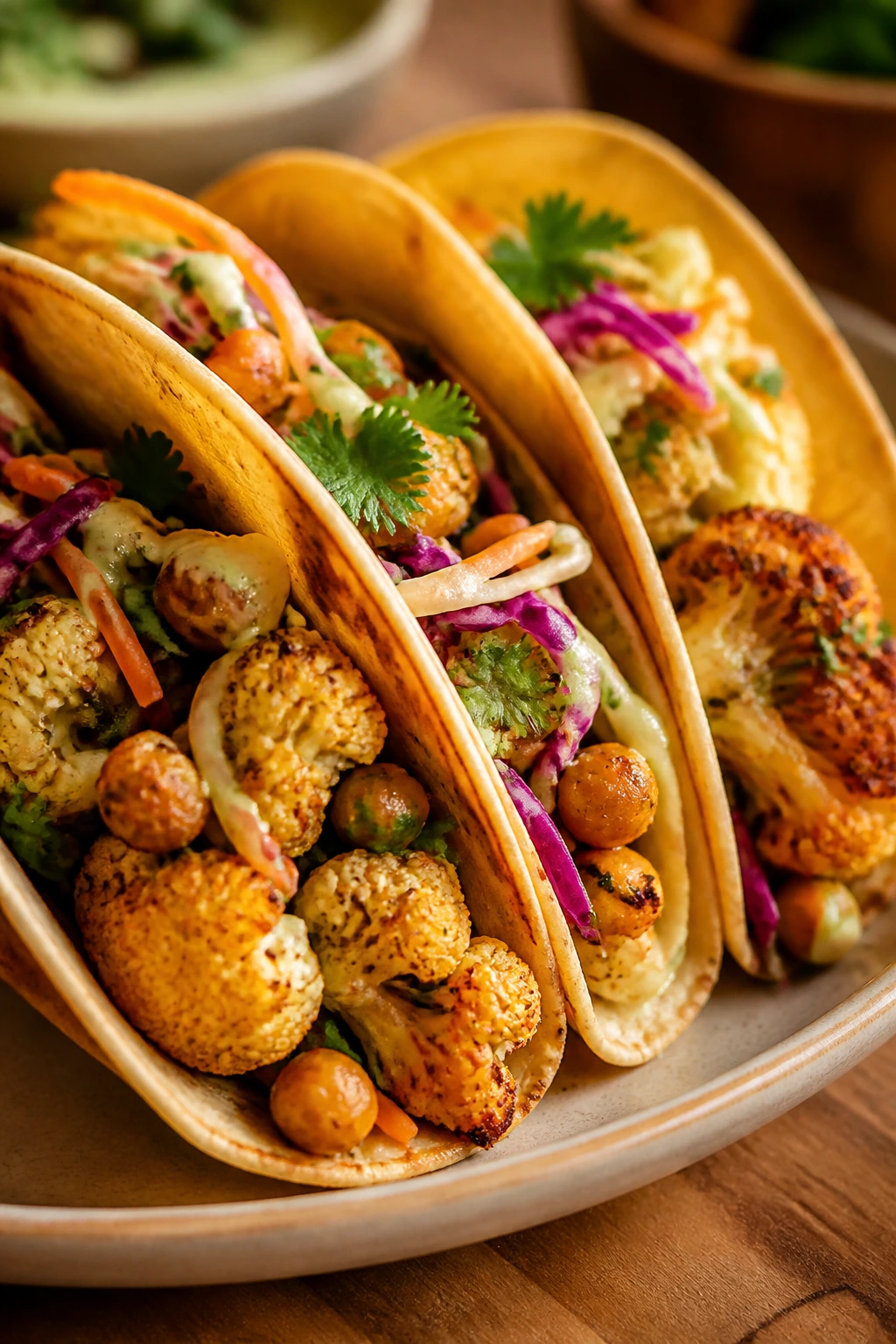
Cauliflower brings char and crunch, chickpeas bring body, and the two together make a taco filling that’s more than the sum of its parts. Add a cool slaw and the contrast does half the work for you.
Why It Works: Roasting cauliflower at high heat gives you browned edges, while chickpeas keep the filling from feeling too light. A yogurt-lime slaw adds tang and moisture, and that balance is what makes the tacos feel complete.
Key Ingredients:
- 1 small cauliflower, cut into florets
- 1 can chickpeas, drained
- 2 tablespoons olive oil
- 2 teaspoons taco seasoning
- 8 small tortillas
- 1 cup shredded cabbage
- 1/2 cup plain yogurt
- 1 lime, juiced
- 1 avocado, sliced
Quick Steps:
- Toss cauliflower and chickpeas with oil and taco seasoning.
- Roast at 425°F for 20 to 25 minutes until browned.
- Mix cabbage, yogurt, lime juice, and salt for a quick slaw.
- Warm tortillas and fill with the roasted mixture.
- Top with slaw and avocado.
Equipment for This Recipe:
- Sheet pan
- Mixing bowls
- Skillet or microwave for tortillas
How to Serve This Dish: Build the tacos just before eating so the vegetables stay crisp. A sprinkle of cilantro or crumbled cheese adds a final layer without making the tacos wet.
Pro Tips for This Recipe:
- Roast cauliflower until the bottoms show real color.
- Dry the chickpeas a bit first for better browning.
- Keep the slaw separate until the last minute.
Variations on This Dish:
- Chipotle Lime: Add chipotle and extra lime to the seasoning.
- Vegan Slaw: Use a plant yogurt instead of dairy yogurt.
- Street Taco Style: Add pickled onions and salsa verde.
Common Mistakes to Avoid with This Dish:
- Low oven temperature: The vegetables steam instead of roast.
- Assembling too early: Tortillas get soggy fast.
24. Tofu Scramble Breakfast Burritos
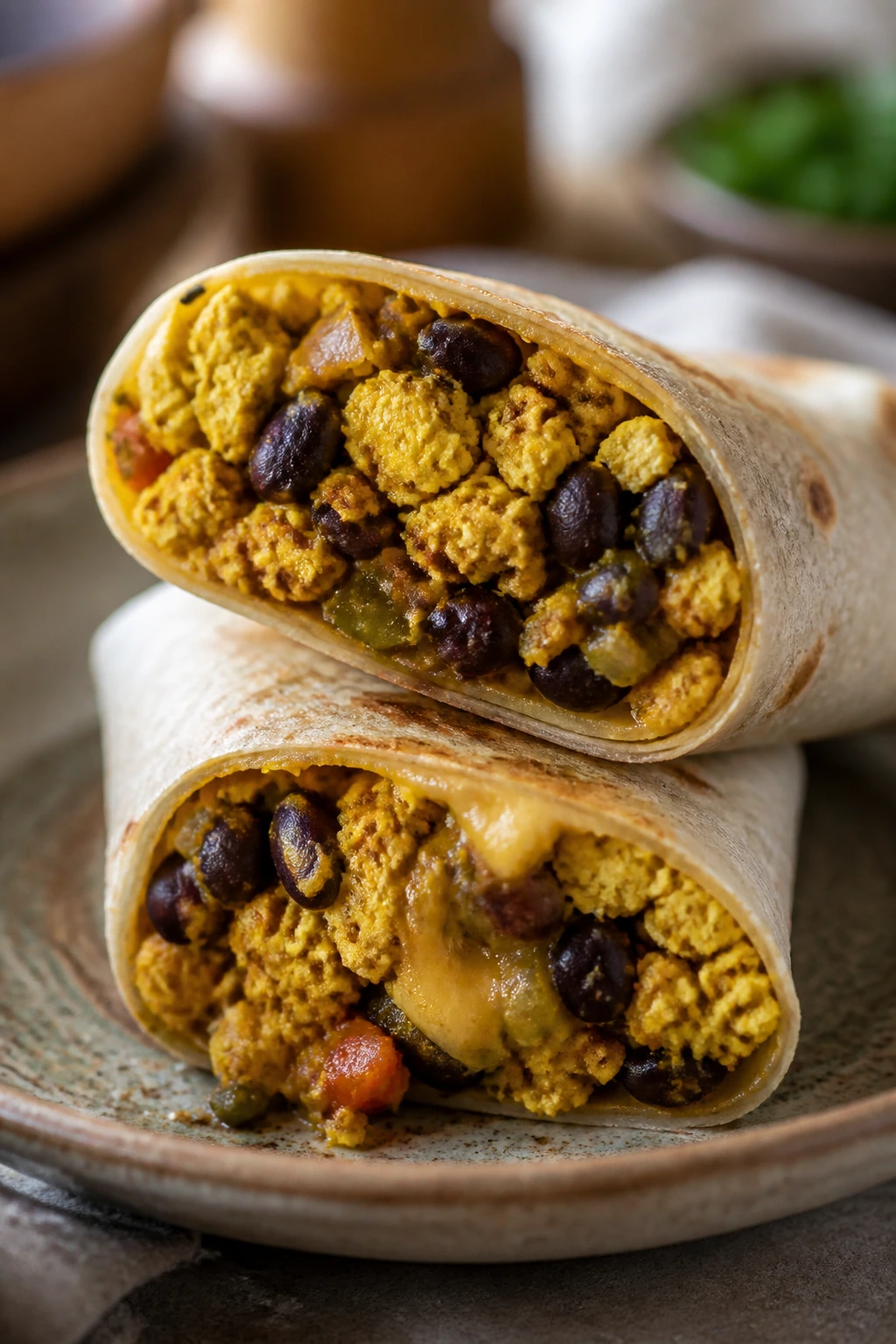
A tofu scramble needs seasoning and enough heat to lose its raw edge. Once that happens, it behaves like a savory filling that can hold beans, cheese, and salsa without falling apart in the tortilla.
Why It Works: Tofu takes on whatever you put with it, which makes it easy to push protein higher with beans or cheese. Turmeric gives the familiar color, black salt or regular salt gives the eggy note if you want it, and wrapping the filling in a tortilla makes the whole thing portable.
Key Ingredients:
- 1 block firm tofu, crumbled
- 1 tablespoon olive oil
- 1/2 onion, diced
- 1 bell pepper, diced
- 1 teaspoon turmeric
- 1 cup black beans
- 4 large tortillas
- 1 cup shredded cheese
- Salsa, for serving
- Avocado, optional
Quick Steps:
- Sauté onion and pepper in oil for 4 minutes.
- Add crumbled tofu and turmeric; cook 6 minutes until dry and hot.
- Stir in black beans and cheese until warmed.
- Fill tortillas, fold tightly, and toast seam-side down in a skillet.
- Serve with salsa.
Equipment for This Recipe:
- Nonstick skillet
- Spatula
- Sheet of foil or parchment, if wrapping for later
How to Serve This Dish: Serve the burritos hot and cut on a diagonal if you want a cleaner look. Salsa on the side keeps the tortilla from getting wet too early.
Pro Tips for This Recipe:
- Squeeze tofu gently after crumbling if it seems watery.
- Let the scramble cook long enough to lose steam.
- Toasting the wrapped burrito helps seal the seam.
Variations on This Dish:
- Veggie-Heavy: Add spinach or mushrooms to the scramble.
- Breakfast Potatoes: Stuff in roasted potatoes for more bulk.
- Dairy-Free: Skip the cheese and add avocado instead.
Common Mistakes to Avoid with This Dish:
- Leaving the tofu wet: It steams and tastes bland. Cook off the moisture.
- Using too much salsa inside: Put salsa outside or the burrito can turn sloppy.
25. Greek Chickpea Pasta Salad
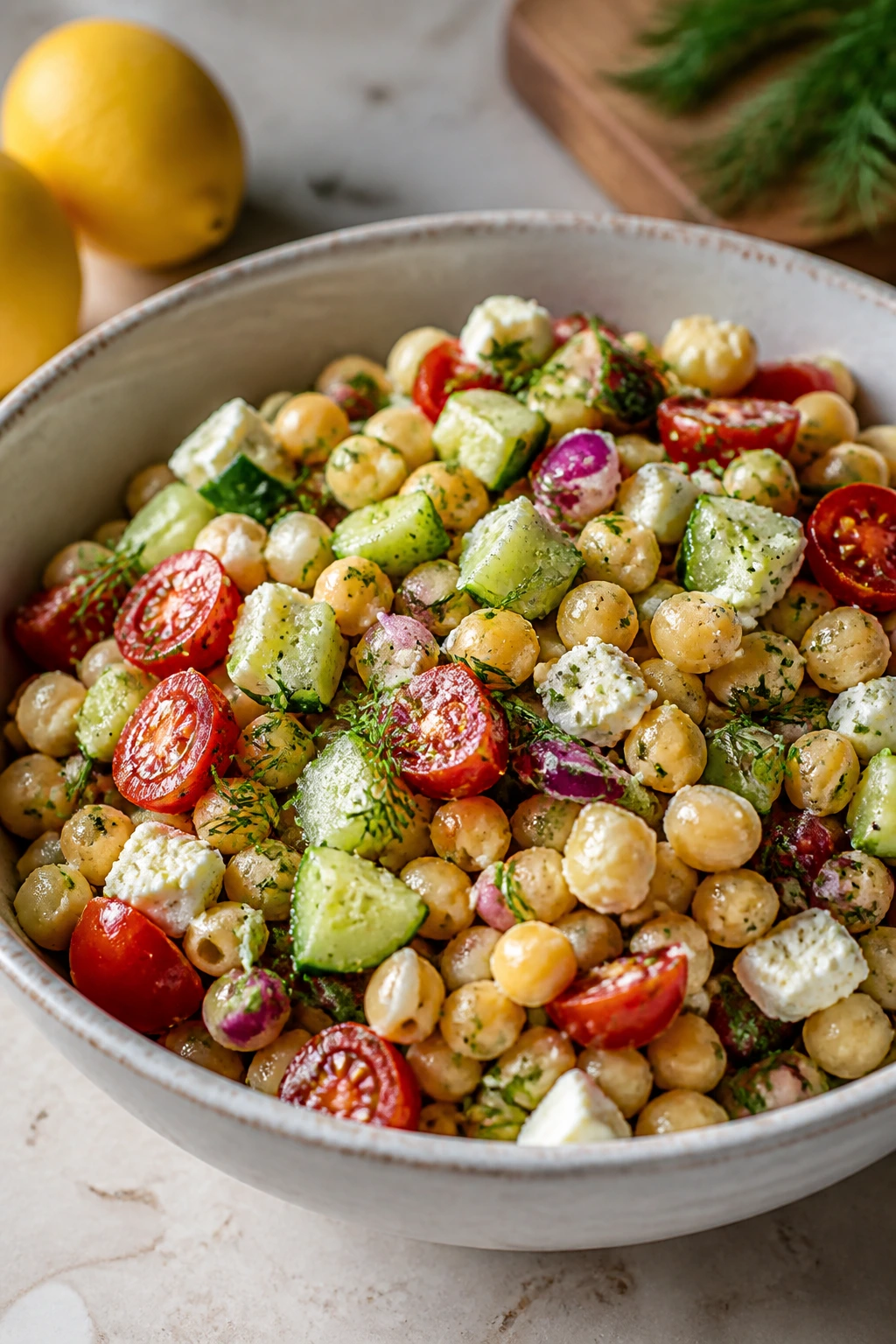
Chickpea pasta makes a salad that actually earns the word “meal.” Add regular chickpeas, cucumber, tomatoes, feta, and a lemon dressing, and the bowl has enough structure to hold up in the fridge too.
Why It Works: Chickpea pasta brings extra protein before you even add toppings. The beans and feta give you two more protein sources, while the lemon dressing keeps cold pasta salad from tasting dull or glued together.
Key Ingredients:
- 12 ounces chickpea pasta
- 1 can chickpeas, drained
- 1 cucumber, chopped
- 2 cups cherry tomatoes, halved
- 1/2 cup feta
- 3 tablespoons olive oil
- 2 tablespoons lemon juice
- 1 teaspoon dried oregano
- 2 tablespoons chopped dill
Quick Steps:
- Cook the pasta until al dente, then drain and cool slightly.
- Whisk olive oil, lemon juice, oregano, salt, and pepper.
- Toss pasta with chickpeas, cucumber, tomatoes, and dressing.
- Fold in feta and dill.
- Chill 10 minutes before serving.
Equipment for This Recipe:
- Large pot
- Colander
- Mixing bowl
How to Serve This Dish: Serve it chilled or just barely cool, not straight from the fridge. Add extra feta on top if you want a stronger salty bite.
Pro Tips for This Recipe:
- Toss the pasta with dressing while it’s still warm.
- Salt the dressing enough; cold pasta dulls flavor.
- Add juicy tomatoes at the end if you want firmer vegetables.
Variations on This Dish:
- Tuna-Free Niçoise Feel: Add green beans and olives.
- Roasted Pepper Version: Use roasted red peppers instead of cucumber.
- Avocado Bowl: Add avocado right before serving.
Common Mistakes to Avoid with This Dish:
- Overcooking chickpea pasta: It can get gummy fast.
- Skimping on dressing: Cold starch needs more seasoning than you think.
26. Split Pea Soup with Rye Toast
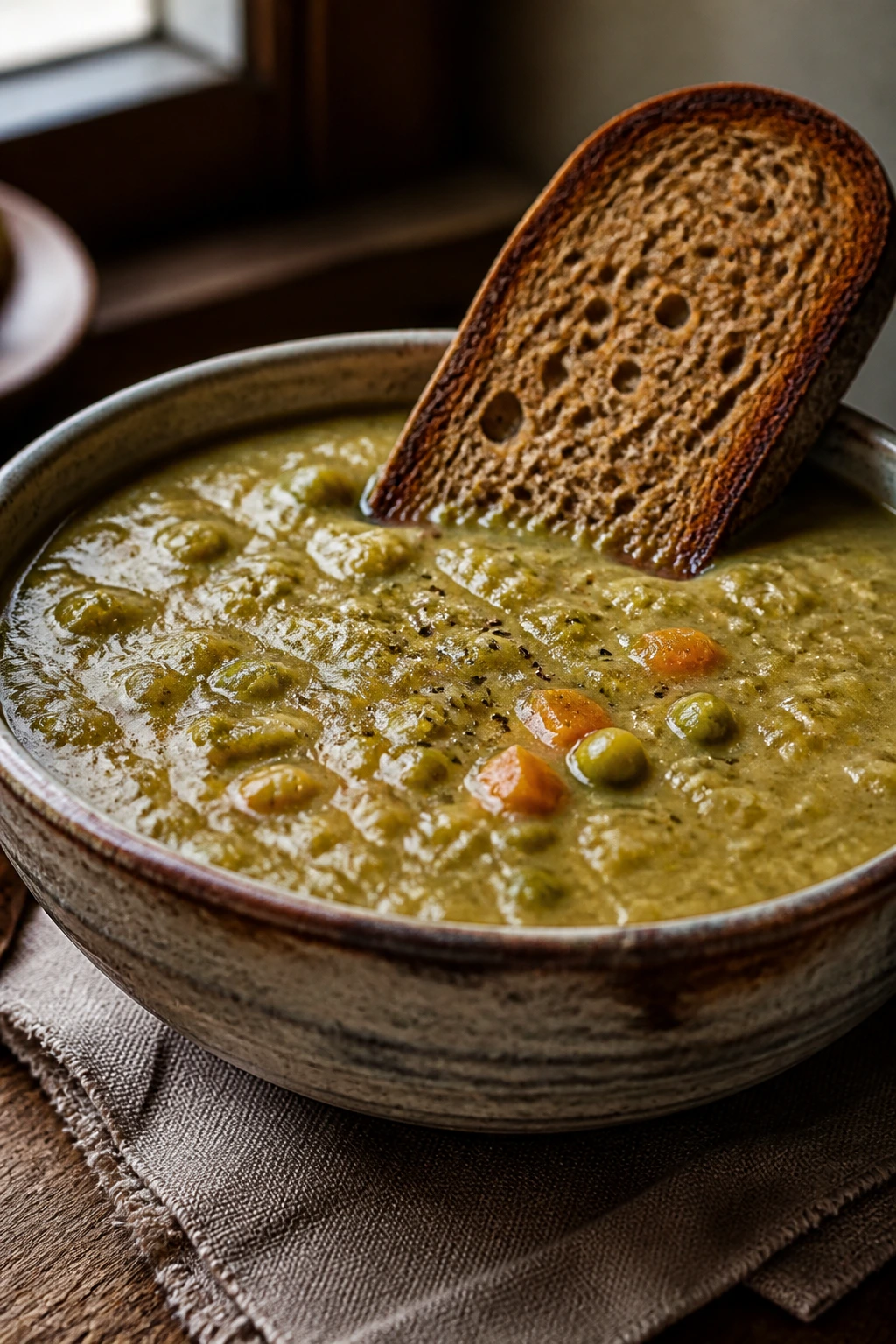
Split pea soup is humble in the best way. It thickens into a puree-like pot of comfort, but if you leave a little texture, the bowl feels hearty enough to count as dinner on its own.
Why It Works: Split peas are packed with protein and fiber, and they turn creamy without dairy. Carrots and celery add sweetness and freshness, while rye toast gives the soup something firm to land on. This is the sort of meal that quietly feeds a lot of people.
Key Ingredients:
- 2 tablespoons olive oil
- 1 onion, diced
- 2 carrots, diced
- 2 celery stalks, diced
- 3 garlic cloves, minced
- 2 cups split peas, rinsed
- 7 cups vegetable broth
- 1 teaspoon thyme
- Rye bread, toasted
- Dijon mustard, optional
Quick Steps:
- Sauté onion, carrots, and celery in oil for 8 minutes.
- Add garlic, split peas, broth, and thyme.
- Simmer 45 to 55 minutes, stirring now and then, until the peas break down.
- Season with salt and pepper.
- Serve with rye toast.
Equipment for This Recipe:
- Large soup pot
- Wooden spoon
- Ladle
How to Serve This Dish: Put the toast right on the rim of the bowl or serve it beside the soup for dipping. A little mustard on the toast adds a sharp note that works well with the peas.
Pro Tips for This Recipe:
- Rinse split peas well to remove dust and starch.
- Stir near the end so the bottom doesn’t catch.
- Blend only part of the soup if you want more texture.
Variations on This Dish:
- Smoked Version: Add smoked paprika for deeper flavor.
- Herby Bowl: Finish with parsley or dill.
- Creamier Style: Blend the soup smooth and add a splash of cream.
Common Mistakes to Avoid with This Dish:
- Rushing the simmer: Split peas need time to collapse.
- Ignoring thickness: If it gets too thick, add broth in small splashes.
27. Peanut Sesame Tempeh Rice Bowls
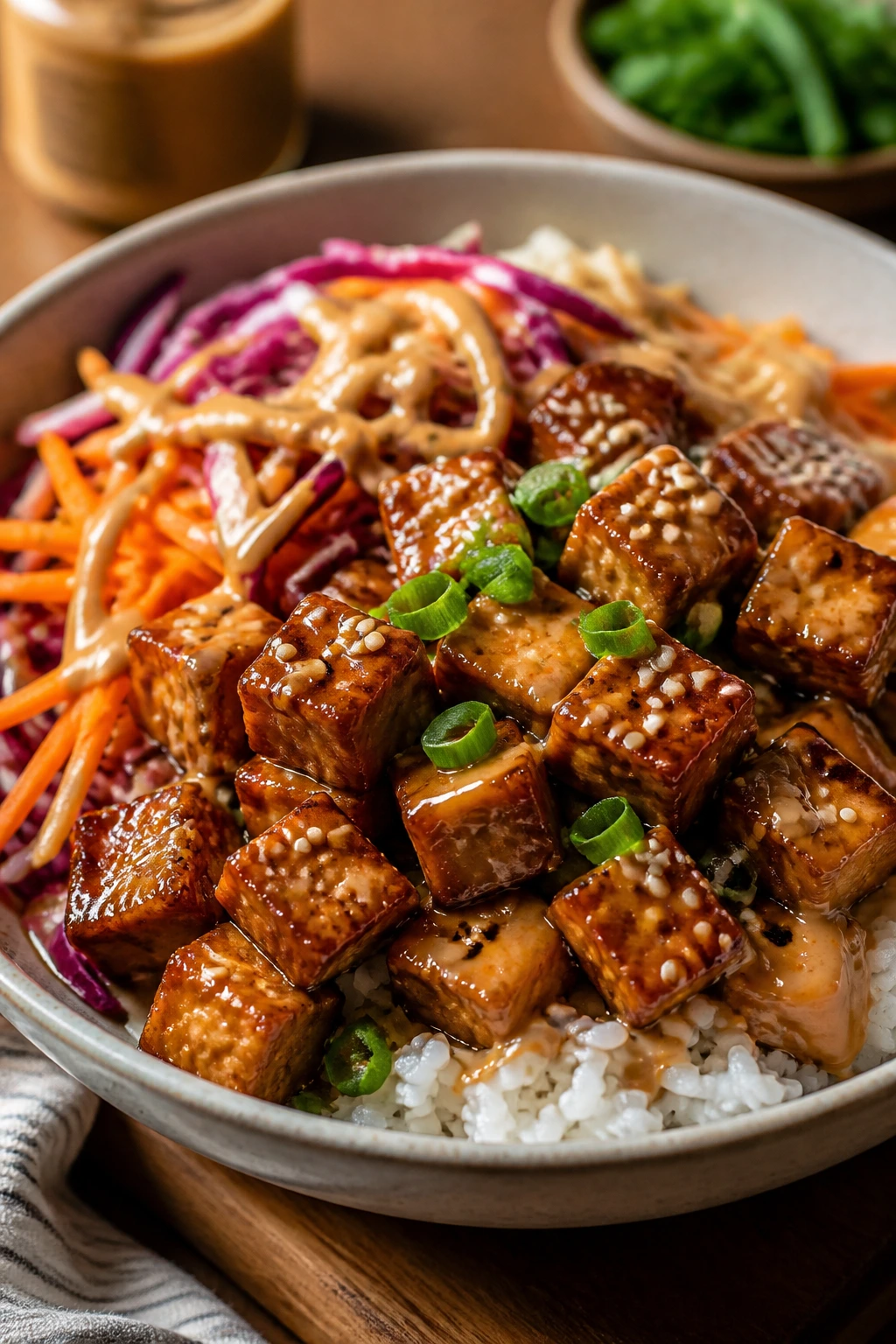
Tempeh has a dry, nutty edge that gets a lot better once sauce meets it. In this bowl, peanut, sesame, and lime turn it into something rich enough to stand up to rice and crunchy vegetables.
Why It Works: Tempeh is dense and very filling, and a peanut sauce gives it enough fat to make the whole meal hold together. Cabbage and carrots bring crunch, while rice makes the bowl substantial without getting sleepy.
Key Ingredients:
- 8 ounces tempeh, sliced or cubed
- 2 cups cooked rice
- 1 tablespoon sesame oil
- 3 tablespoons peanut butter
- 2 tablespoons soy sauce
- 1 tablespoon lime juice
- 1 cup shredded cabbage
- 1 carrot, shredded
- 2 scallions, sliced
Quick Steps:
- Steam tempeh for 5 minutes if you want to soften its edge.
- Brown it in sesame oil for 6 minutes.
- Whisk peanut butter, soy sauce, lime juice, and water into a smooth sauce.
- Divide rice into bowls and top with tempeh, cabbage, and carrot.
- Drizzle with sauce and finish with scallions.
Equipment for This Recipe:
- Skillet
- Small whisk
- Rice cooker or saucepan
How to Serve This Dish: Serve it warm, with the sauce drizzled rather than mixed in if you want a cleaner look. Chili flakes or sesame seeds give the bowl a little extra spark.
Pro Tips for This Recipe:
- Steaming tempeh first tones down bitterness.
- Loosen the sauce with warm water, not cold.
- Keep the vegetables raw for contrast.
Variations on This Dish:
- Crunchier Bowl: Add cucumber and peanuts.
- Spicy Peanut: Stir in sriracha or chili crisp.
- Noodle Swap: Use rice noodles instead of rice.
Common Mistakes to Avoid with This Recipe:
- Not seasoning the sauce enough: Peanut butter needs salt and acid.
- Cooking tempeh on low heat: It dries out before it browns.
28. Stuffed Bell Peppers with Cottage Cheese and Quinoa
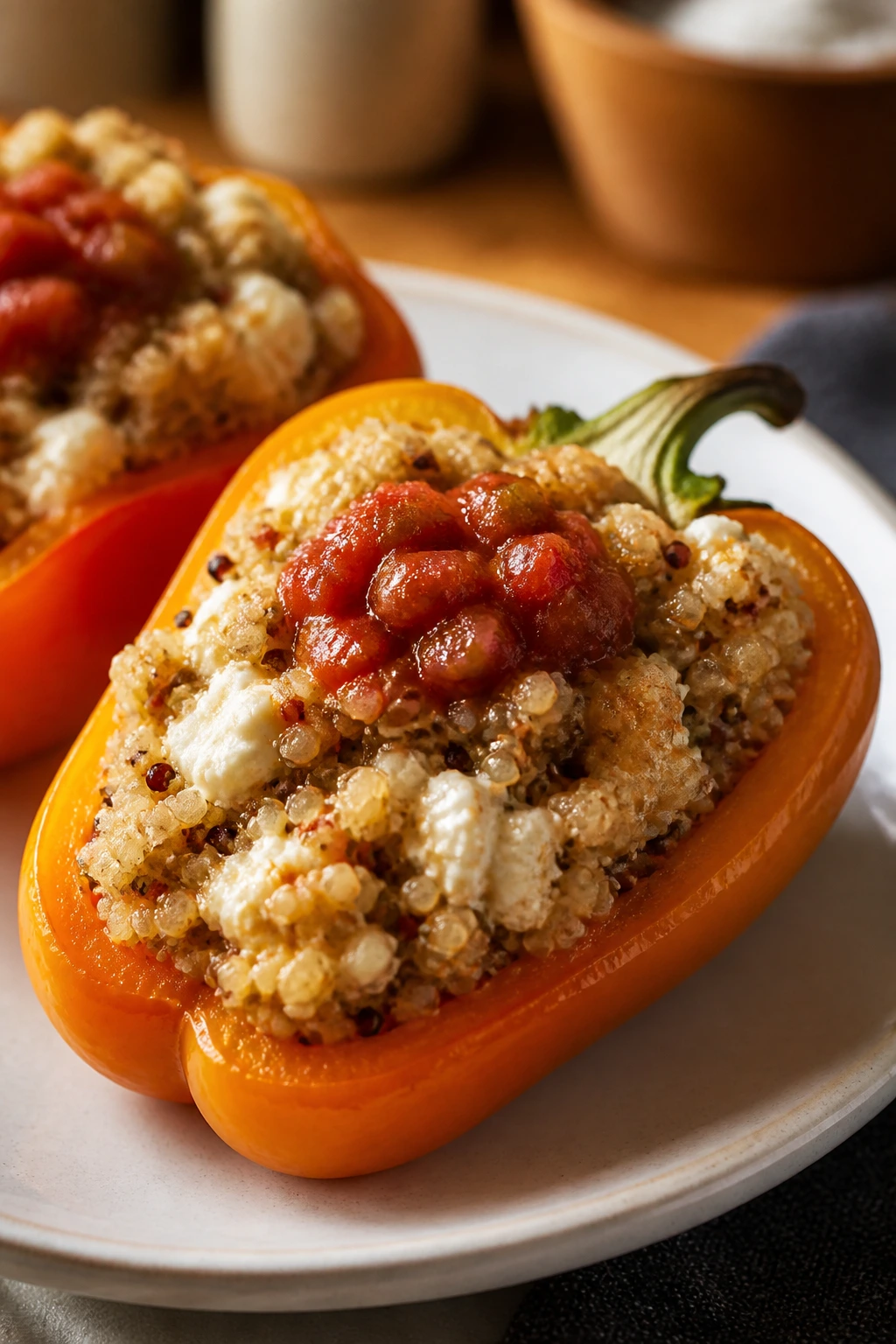
Stuffed peppers work because they hold the filling in a neat little package. Quinoa adds grain and protein, cottage cheese gives creaminess, and the baked pepper softens just enough without turning sloppy.
Why It Works: Quinoa gives a full protein base, cottage cheese adds another one, and black beans can make the filling even more substantial. The pepper itself becomes the serving vessel, which means less cleanup and no need for a separate starch.
Key Ingredients:
- 4 bell peppers, halved and seeded
- 1 cup cooked quinoa
- 1 cup cottage cheese
- 1 can black beans, drained
- 1 cup salsa
- 1 cup shredded cheddar
- 1 teaspoon cumin
- Chopped cilantro, optional
Quick Steps:
- Bake pepper halves cut-side down at 400°F for 10 minutes.
- Mix quinoa, cottage cheese, beans, salsa, cumin, and half the cheddar.
- Fill the peppers and top with remaining cheese.
- Bake 20 minutes until the peppers are tender.
- Finish with cilantro.
Equipment for This Recipe:
- Baking dish
- Mixing bowl
- Spoon
How to Serve This Dish: Serve two pepper halves per person with extra salsa on the side. A dollop of yogurt makes the top creamy and cool.
Pro Tips for This Recipe:
- Pre-bake the peppers so they’re tender by the time the filling is hot.
- Drain the beans well or the filling goes wet.
- Use peppers that sit flat in the dish.
Variations on This Recipe:
- Southwest Style: Add corn and jalapeño.
- Italian Style: Swap salsa for marinara and use mozzarella.
- Egg Boost: Add a fried egg on top after baking.
Common Mistakes to Avoid with This Recipe:
- Skipping the first bake: Raw peppers take too long to soften.
- Packing filling too loosely: Press it in so each pepper feels full.
29. Lentil Baked Ziti
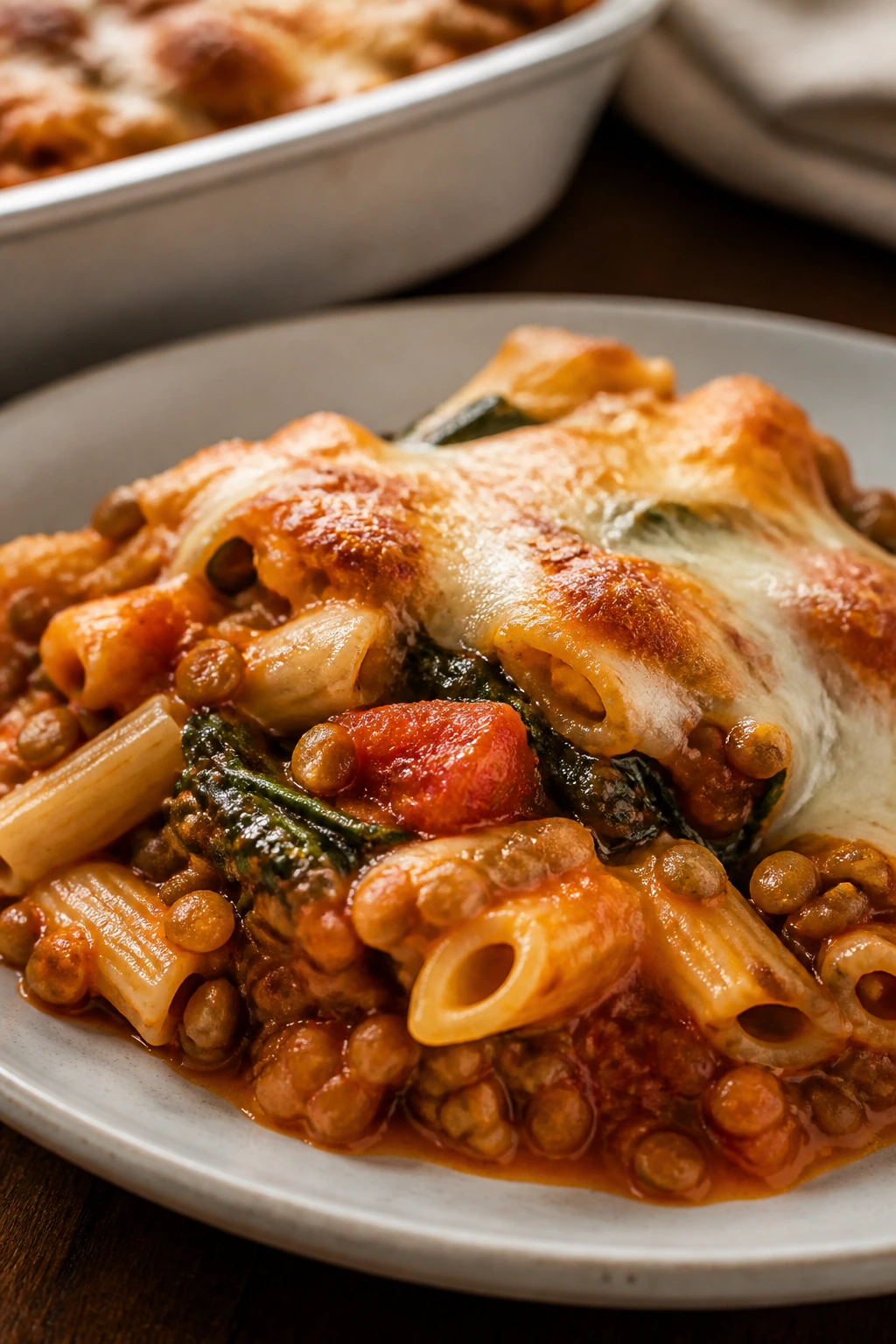
Baked ziti is already a sturdy meal, and lentils make it even more so. The pasta keeps its shape, the sauce gets thicker with every minute in the oven, and the cheese on top forms the kind of browned spots people fight over.
Why It Works: Lentils sneak into the sauce and raise the protein without changing the feel of the dish too much. The baked pasta gives you enough carbs to make the meal satisfying, and ricotta or cottage cheese keeps the layers creamy.
Key Ingredients:
- 12 ounces ziti
- 1 cup cooked lentils
- 4 cups marinara sauce
- 1 cup ricotta or cottage cheese
- 2 cups shredded mozzarella
- 1 cup spinach
- 1 teaspoon Italian seasoning
- 1/4 cup Parmesan
Quick Steps:
- Cook ziti until just al dente.
- Stir lentils into the marinara and heat through.
- Mix ricotta with spinach and Italian seasoning.
- Layer pasta, sauce, ricotta mixture, and mozzarella in a baking dish.
- Bake at 375°F for 25 minutes until bubbly.
Equipment for This Recipe:
- Pot for pasta
- Baking dish
- Large spoon
How to Serve This Dish: Let it sit 10 minutes so the pieces hold together when scooped. A simple salad or garlicky broccoli makes a solid side.
Pro Tips for This Recipe:
- Undercook the pasta slightly because it keeps cooking in the oven.
- Keep the sauce generous; pasta bakes dry if you’re stingy.
- A little basil at the end brightens the whole pan.
Variations on This Dish:
- Spicy Ziti: Add red pepper flakes to the sauce.
- Three-Cheese Version: Use fontina with the mozzarella.
- Veggie Packed: Stir in mushrooms or zucchini.
Common Mistakes to Avoid with This Recipe:
- Cooking pasta fully first: It turns soft after baking. Pull it early.
- Not enough sauce: The top should look saucy before it goes into the oven.
30. Chickpea Shakshuka
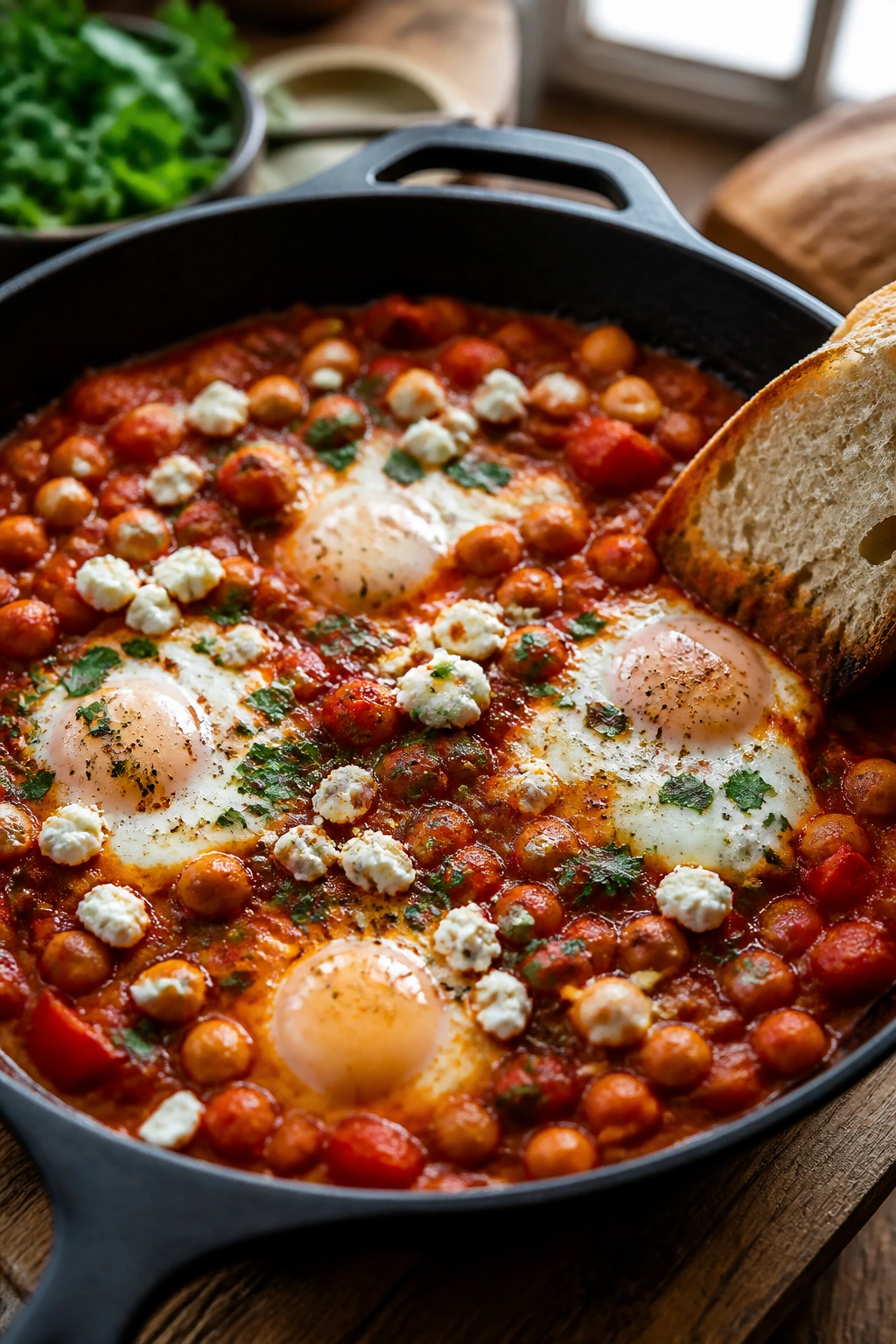
Chickpeas make shakshuka feel like dinner instead of just an egg dish. The tomato sauce gets thicker, the eggs poach into little pockets of richness, and the beans underneath give each spoonful more staying power.
Why It Works: Eggs handle the protein here, but chickpeas make the bowl far more filling than eggs alone. Tomatoes, peppers, and spices simmer into a sauce that feels deep and warm, and a hunk of bread is almost mandatory for scooping.
Key Ingredients:
- 1 tablespoon olive oil
- 1 onion, diced
- 1 bell pepper, diced
- 3 garlic cloves, minced
- 1 can crushed tomatoes
- 1 can chickpeas, drained
- 1 teaspoon cumin
- 4 to 6 eggs
- 1/2 cup feta
- Bread, for serving
Quick Steps:
- Sauté onion and pepper in oil for 6 minutes.
- Add garlic, tomatoes, chickpeas, and cumin; simmer 10 minutes.
- Make small wells and crack in the eggs.
- Cover and cook 5 to 7 minutes, until whites set.
- Top with feta and serve with bread.
Equipment for This Recipe:
- Large skillet with lid
- Spoon
- Bread knife
How to Serve This Dish: Serve straight from the skillet while the yolks are still soft. Warm pita or crusty bread is the best tool for getting every bit of sauce.
Pro Tips for This Recipe:
- Keep the sauce thick enough that the eggs sit on top.
- Don’t overcook the yolks unless that’s your preference.
- A little parsley at the end keeps the pan from looking muddy.
Variations on This Dish:
- Harissa Shakshuka: Add harissa for a smoky, deeper heat.
- Green Shakshuka: Use spinach and herbs instead of tomatoes.
- Cheesy Finish: Add more feta or a little mozzarella.
Common Mistakes to Avoid with This Recipe:
- Sauce too thin: The eggs sink and overcook. Simmer it down first.
- Covering too long: The yolks set hard fast. Check early.
31. Kidney Bean Quinoa Chili Mac
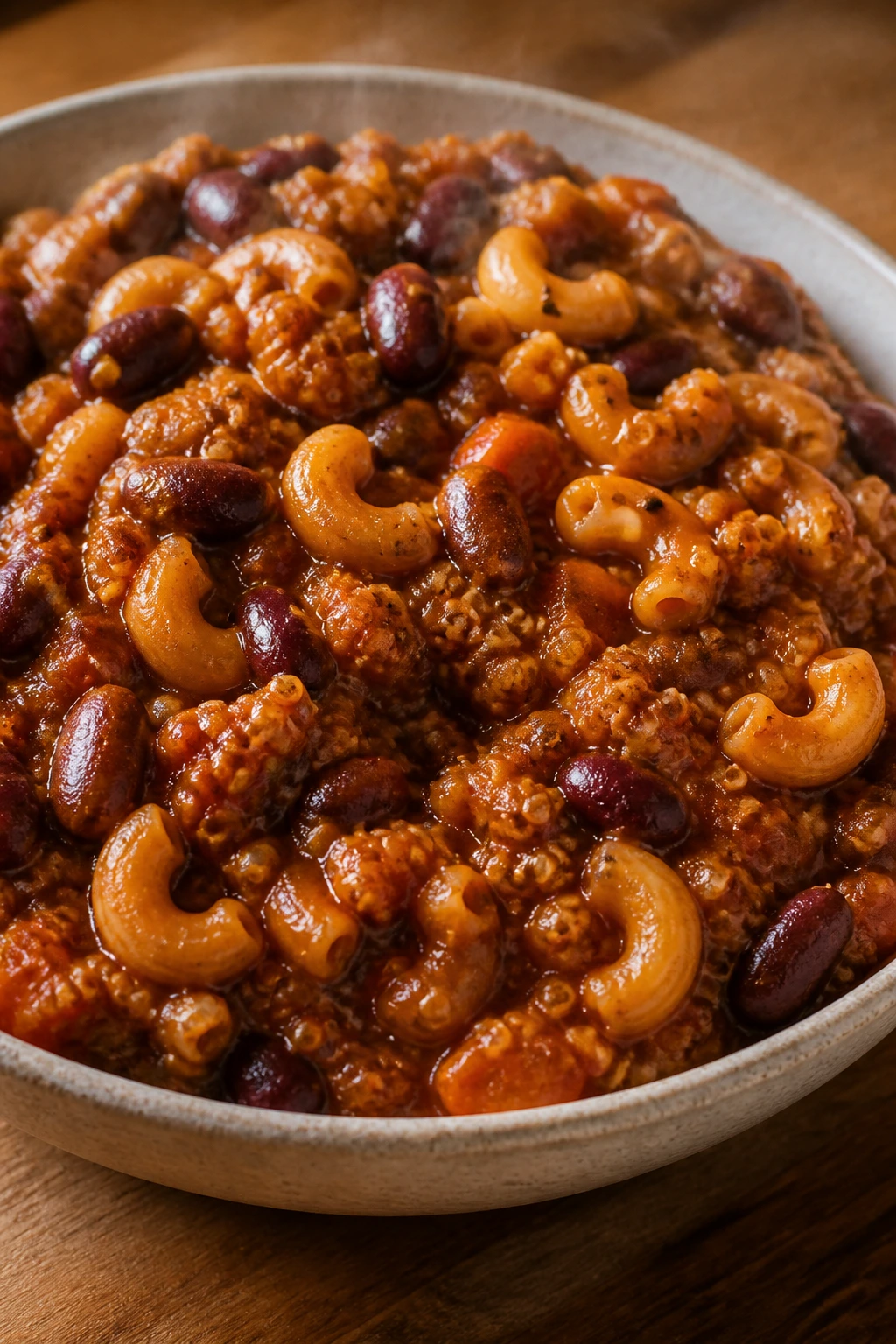
This is the kind of meal that answers the “is it filling?” question before anyone asks it. Kidney beans and quinoa bring protein, pasta brings comfort, and the chili-style sauce makes the whole bowl feel like a proper dinner.
Why It Works: Kidney beans and quinoa give this pasta more staying power than a standard mac and cheese. The sauce coats the noodles and beans, so every forkful feels layered instead of separate. It’s the sort of thing that survives a second day in the fridge without getting weird.
Key Ingredients:
- 8 ounces elbow macaroni
- 1 cup cooked quinoa
- 1 can kidney beans, drained
- 1 onion, diced
- 2 tablespoons chili powder
- 1 can crushed tomatoes
- 1 cup broth
- 1 cup shredded cheddar
- 1 tablespoon olive oil
Quick Steps:
- Cook macaroni until al dente and drain.
- Sauté onion in oil for 5 minutes, then add chili powder.
- Stir in tomatoes, broth, quinoa, and kidney beans; simmer 10 minutes.
- Add macaroni and cheddar, stirring until melted.
- Serve hot with toppings.
Equipment for This Recipe:
- Large skillet or Dutch oven
- Pasta pot
- Wooden spoon
How to Serve This Dish: Serve it in shallow bowls with scallions or a little yogurt on top. A green salad or sliced cucumbers keep the plate from feeling too dense.
Pro Tips for This Recipe:
- Keep the sauce loose before adding pasta; it tightens as it sits.
- Use a sharp cheddar so the flavor can stand up to the beans.
- Salt the pasta water well since the sauce is thick.
Variations on This Recipe:
- Smoky Version: Add smoked paprika with the chili powder.
- Milder Bowl: Reduce the chili powder and add corn.
- Bean Mix: Swap in black beans if you want a softer texture.
Common Mistakes to Avoid with This Recipe:
- Letting the pasta overcook: It turns to mush once mixed.
- Using too little sauce: Chili mac needs more liquid than you think.
32. Vegetable Korma with Paneer
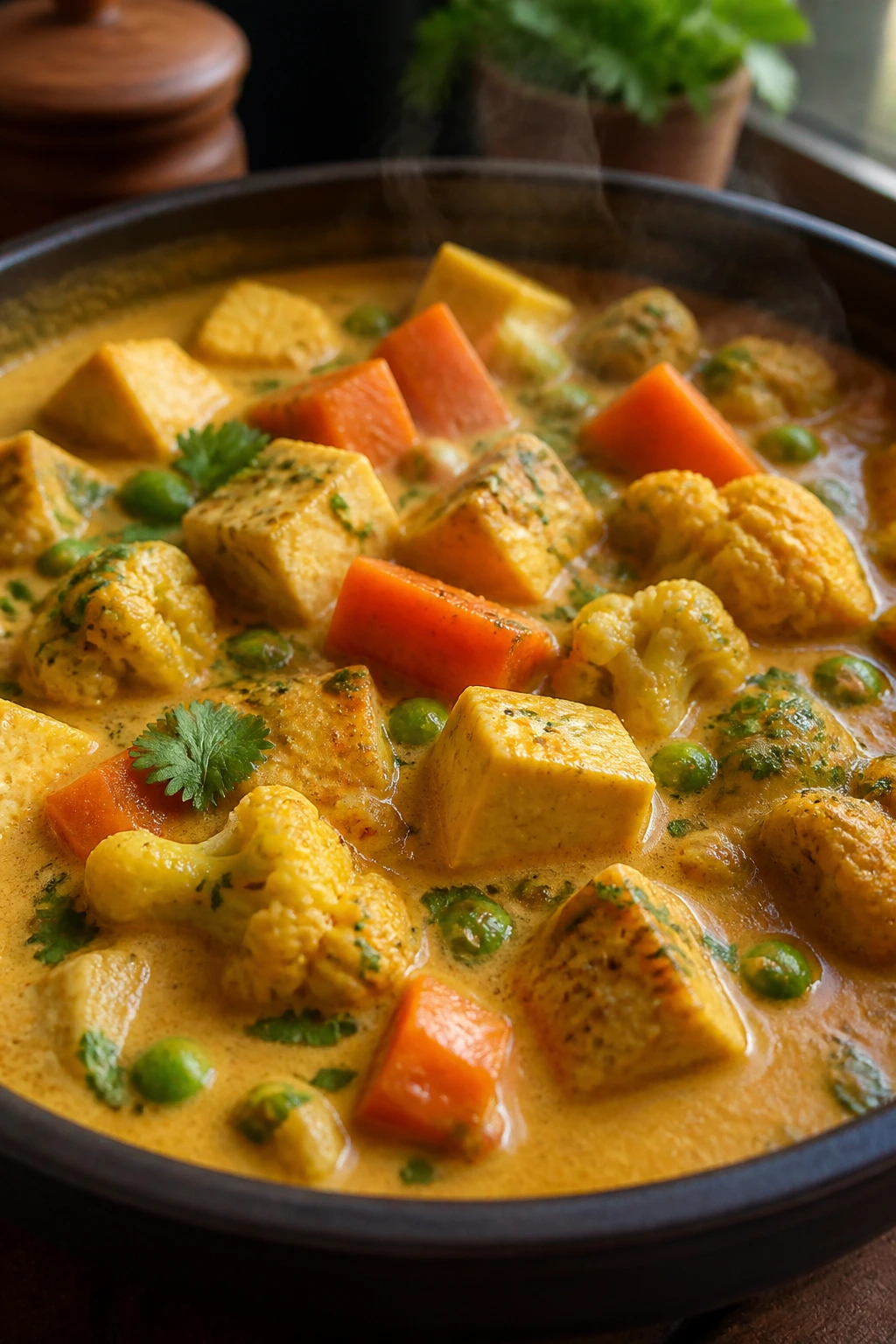
Korma is all about a creamy sauce that doesn’t turn into a flat cream bath. Paneer gives it protein, vegetables give it shape, and the spices turn the whole pan into something you’ll want with rice and naan.
Why It Works: Paneer stands up to the rich sauce, and vegetables like cauliflower or carrots hold their shape instead of dissolving. Coconut milk or yogurt makes the sauce round and clingy, which is what lets the meal feel filling without meat.
Key Ingredients:
- 14 ounces paneer, cubed
- 1 tablespoon oil
- 1 onion, sliced
- 2 cups cauliflower florets
- 1 carrot, sliced
- 2 tablespoons korma paste
- 1 can coconut milk
- 1 cup peas
- 2 cups cooked rice
Quick Steps:
- Brown paneer cubes in oil and set aside.
- Cook onion, cauliflower, and carrot for 6 minutes.
- Stir in korma paste and coconut milk; simmer 10 minutes.
- Add peas and paneer, then warm through.
- Serve over rice.
Equipment for This Recipe:
- Large skillet or saucepan
- Spatula
- Rice pot
How to Serve This Dish: Serve with basmati rice and naan so the sauce has somewhere to go. A few fresh herbs on top keep the plate from looking too rich and heavy.
Pro Tips for This Recipe:
- Brown the paneer first or it gets lost in the sauce.
- Keep the vegetables slightly firm so they don’t fade into the cream.
- Taste at the end and add salt slowly; korma pastes vary.
Variations on This Recipe:
- Cashew Korma: Blend soaked cashews into the sauce for extra body.
- Chickpea-Paneer Mix: Add chickpeas for a bigger protein load.
- Herb Finish: Mint on top gives the dish a cooler note.
Common Mistakes to Avoid with This Recipe:
- Overcooking paneer: It turns spongy. Warm it gently at the end.
- Turning the sauce too thin: Let it reduce until it coats a spoon.
33. White Bean Pesto Gnocchi
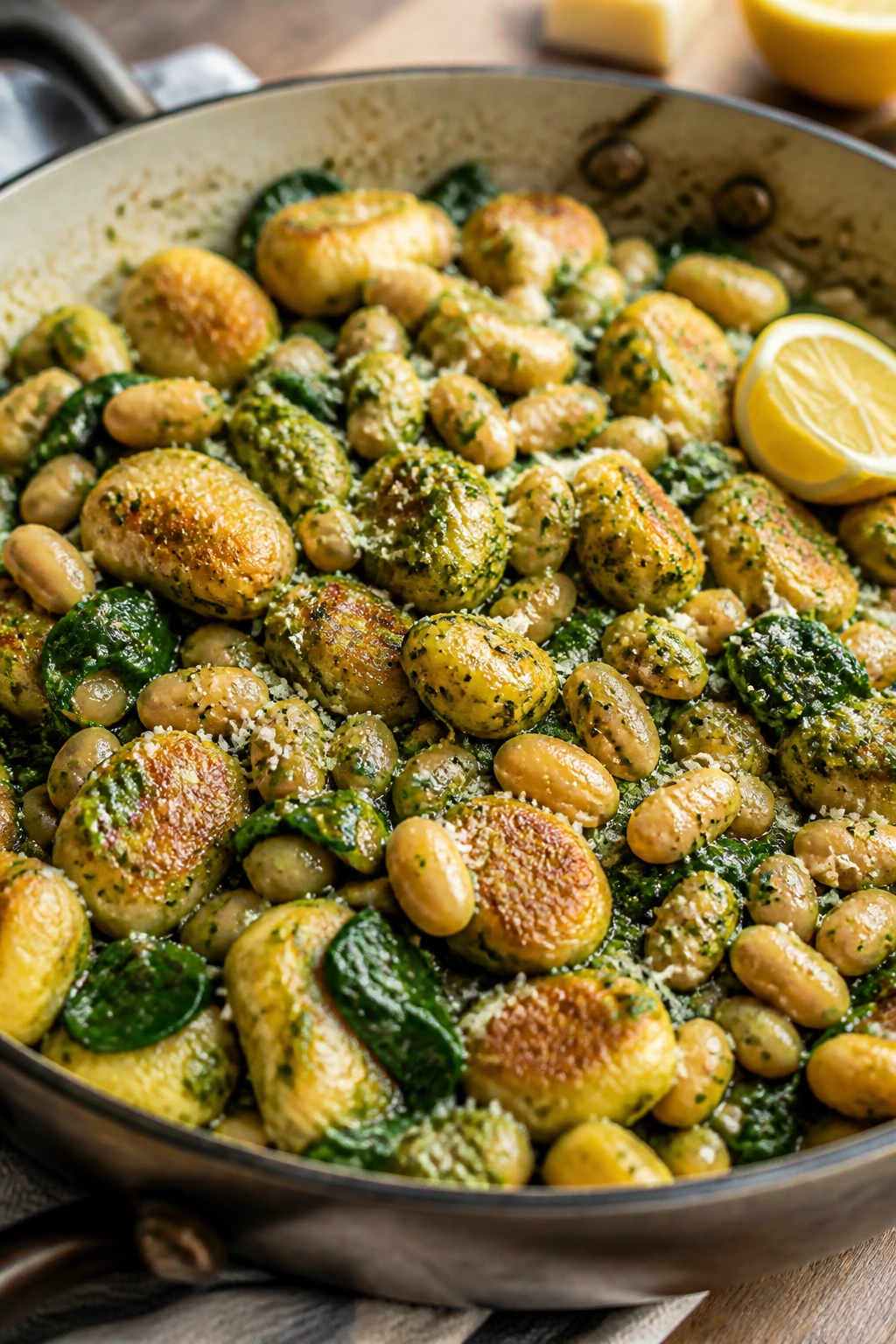
Gnocchi can go from cozy to gluey fast, which is why the skillet matters. Crisp the dumplings first, add white beans and pesto, and the dish suddenly has enough weight to stand on its own.
Why It Works: White beans add protein and creaminess without turning the pan heavy. Pesto carries garlic, basil, and fat through the whole dish, and a little lemon keeps the flavors from tasting like they were all cooked in the same notebook.
Key Ingredients:
- 1 pound gnocchi
- 1 can white beans, drained
- 1/2 cup pesto
- 2 cups spinach
- 1 cup cherry tomatoes
- 1 tablespoon olive oil
- 1/4 cup grated Parmesan
- 1 lemon, cut into wedges
Quick Steps:
- Pan-fry gnocchi in oil until golden on the outside, about 6 minutes.
- Add tomatoes and beans, cooking 3 minutes.
- Stir in pesto and spinach until the greens wilt.
- Finish with Parmesan and lemon.
- Serve immediately.
Equipment for This Recipe:
- Large skillet
- Spatula
- Cheese grater, if needed
How to Serve This Dish: Serve straight from the pan while the gnocchi still has crisp edges. A side salad with bitter greens keeps the whole plate from leaning too soft.
Pro Tips for This Recipe:
- Don’t boil gnocchi if you want crispy edges; pan-fry it.
- Use good pesto because the dish leans on it hard.
- Add spinach at the end or it turns dull.
Variations on This Recipe:
- Sun-Dried Tomato Pesto: Use that instead of basil pesto.
- Chicken-Free Alfredo Feel: Add a splash of cream with the pesto.
- Extra Bean Version: Add cannellini and chickpeas together.
Common Mistakes to Avoid with This Recipe:
- Crowding the skillet: The gnocchi won’t crisp.
- Adding pesto too early: It can darken and lose freshness.
34. Crispy Chickpea Caesar Wraps
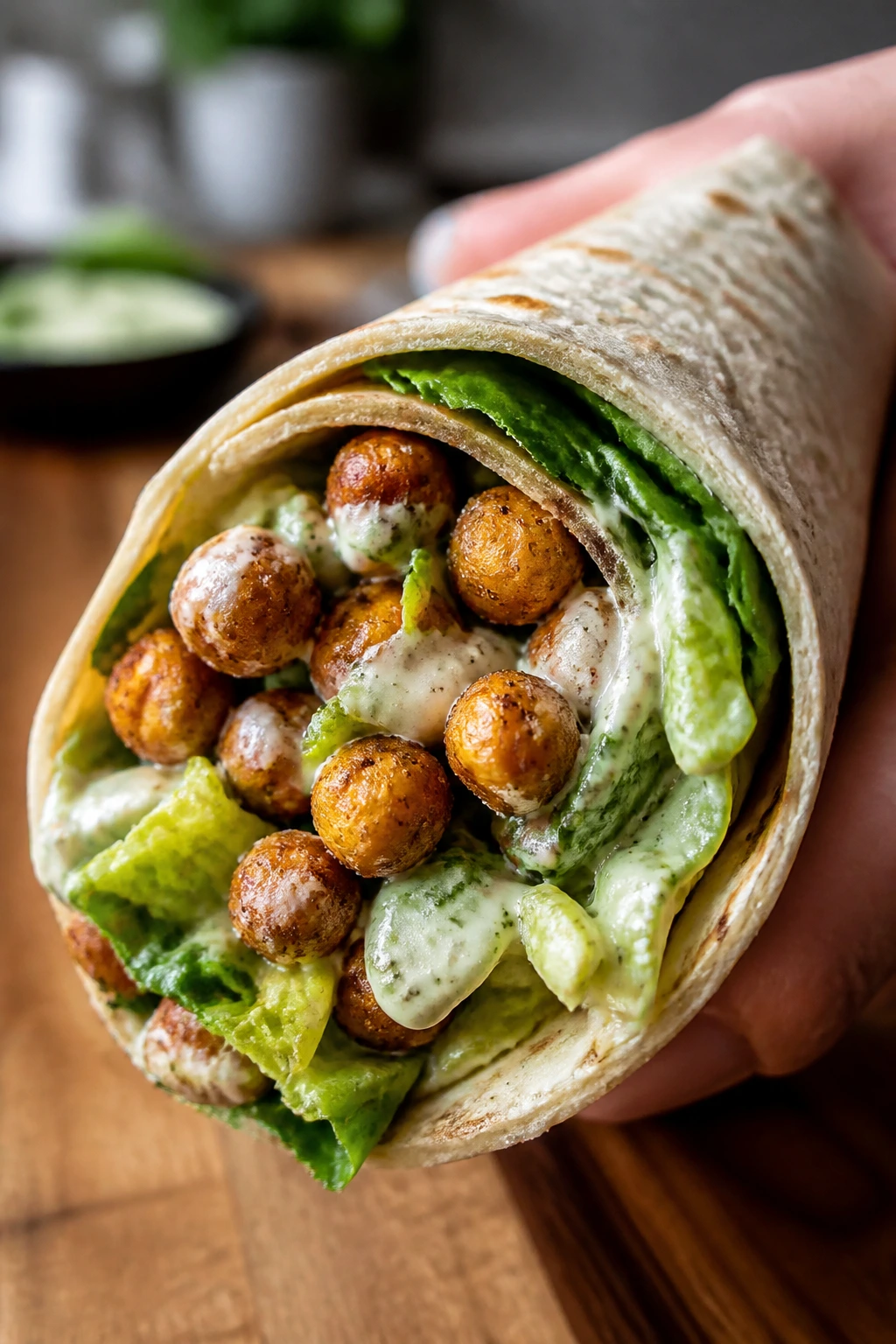
Caesar wraps need crunch, or they collapse into wet leaves and regret. Crispy chickpeas solve that problem, and the wrap suddenly has enough protein and texture to be lunch instead of a side salad in a tortilla.
Why It Works: Chickpeas bring the protein, romaine brings the snap, and a creamy Caesar-style dressing gives the whole thing enough richness to hold together. If you toss in Parmesan, the wrap gets that salty edge people expect from Caesar without relying on meat.
Key Ingredients:
- 1 can chickpeas, drained and dried
- 1 tablespoon olive oil
- 1 teaspoon garlic powder
- 4 large tortillas
- 4 cups chopped romaine
- 1/2 cup Caesar dressing
- 1/4 cup grated Parmesan
- Croutons, optional
- Black pepper
Quick Steps:
- Roast chickpeas with oil and garlic powder at 425°F for 20 minutes.
- Toss romaine with dressing, Parmesan, and pepper.
- Warm tortillas briefly so they bend easily.
- Add chickpeas and salad to each tortilla.
- Roll tightly and serve.
Equipment for This Recipe:
- Sheet pan
- Mixing bowl
- Clean towel or parchment, for drying chickpeas
How to Serve This Dish: Slice the wraps in half on a diagonal for a cleaner look. If you want a lunchbox version, keep the chickpeas and salad separate until eating.
Pro Tips for This Recipe:
- Dry chickpeas very well so they crisp instead of steam.
- Don’t overload the tortilla or it tears.
- Use a sturdy wrap; thin tortillas split under the weight.
Variations on This Recipe:
- Buffalo Caesar: Toss the chickpeas in buffalo sauce after roasting.
- Greek Caesar: Add cucumbers and swap in tzatziki.
- No-Dairy Version: Use a tahini dressing instead of Caesar.
Common Mistakes to Avoid with This Recipe:
- Adding warm chickpeas to the wrap too soon: They soften the lettuce.
- Too much dressing: The wrap gets soggy fast.
35. Edamame Avocado Sushi Bowls
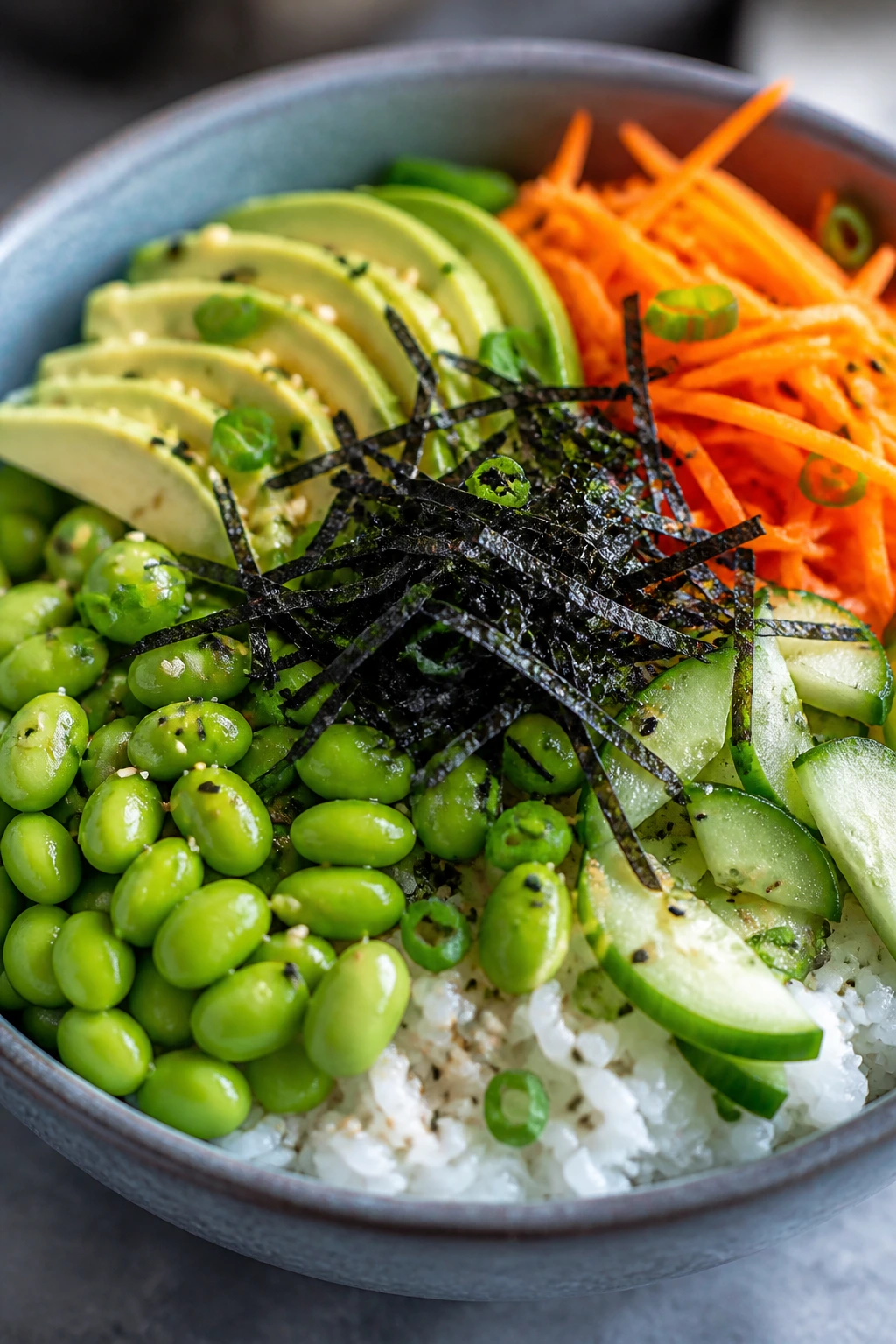
Sushi bowls skip the rolling but keep the good parts: seasoned rice, cool vegetables, and that salty-sweet finish from soy sauce and sesame. Edamame and avocado make them feel like a real meal, not deconstructed takeout.
Why It Works: Sushi rice gives you a sticky base that holds the toppings, and edamame adds a clean protein hit. Avocado brings fat, nori brings the briny edge, and the whole bowl tastes like a more relaxed version of sushi night.
Key Ingredients:
- 2 cups cooked sushi rice
- 1 1/2 cups shelled edamame
- 1 avocado, sliced
- 1 cucumber, sliced
- 1 carrot, shredded
- 2 sheets nori, cut into strips
- 2 tablespoons rice vinegar
- 1 tablespoon soy sauce
- 1 tablespoon sesame seeds
Quick Steps:
- Season warm rice with rice vinegar and a pinch of salt.
- Warm edamame in boiling water or steam it for 2 minutes.
- Arrange rice, edamame, avocado, cucumber, and carrot in bowls.
- Add nori strips and sesame seeds.
- Drizzle with soy sauce.
Equipment for This Recipe:
- Saucepan or rice cooker
- Sharp knife
- Small bowl for seasoning
How to Serve This Dish: Serve in deep bowls so the rice stays warm under the toppings. A little pickled ginger on the side gives it a sharper sushi feel.
Pro Tips for This Recipe:
- Season the rice while it’s still warm.
- Slice avocado right before serving so it stays green.
- Keep soy sauce modest; too much drowns the bowl.
Variations on This Recipe:
- Spicy Mayo Bowl: Add sriracha mayo on top.
- Tofu Add-In: Add baked tofu cubes for even more protein.
- Brown Rice Version: Use brown rice for a chewier base.
Common Mistakes to Avoid with This Recipe:
- Using cold rice straight from the fridge: It feels stiff. Warm it slightly first.
- Overloading with sauce: The bowl should taste layered, not salty-soggy.
36. Lentil Sloppy Joes
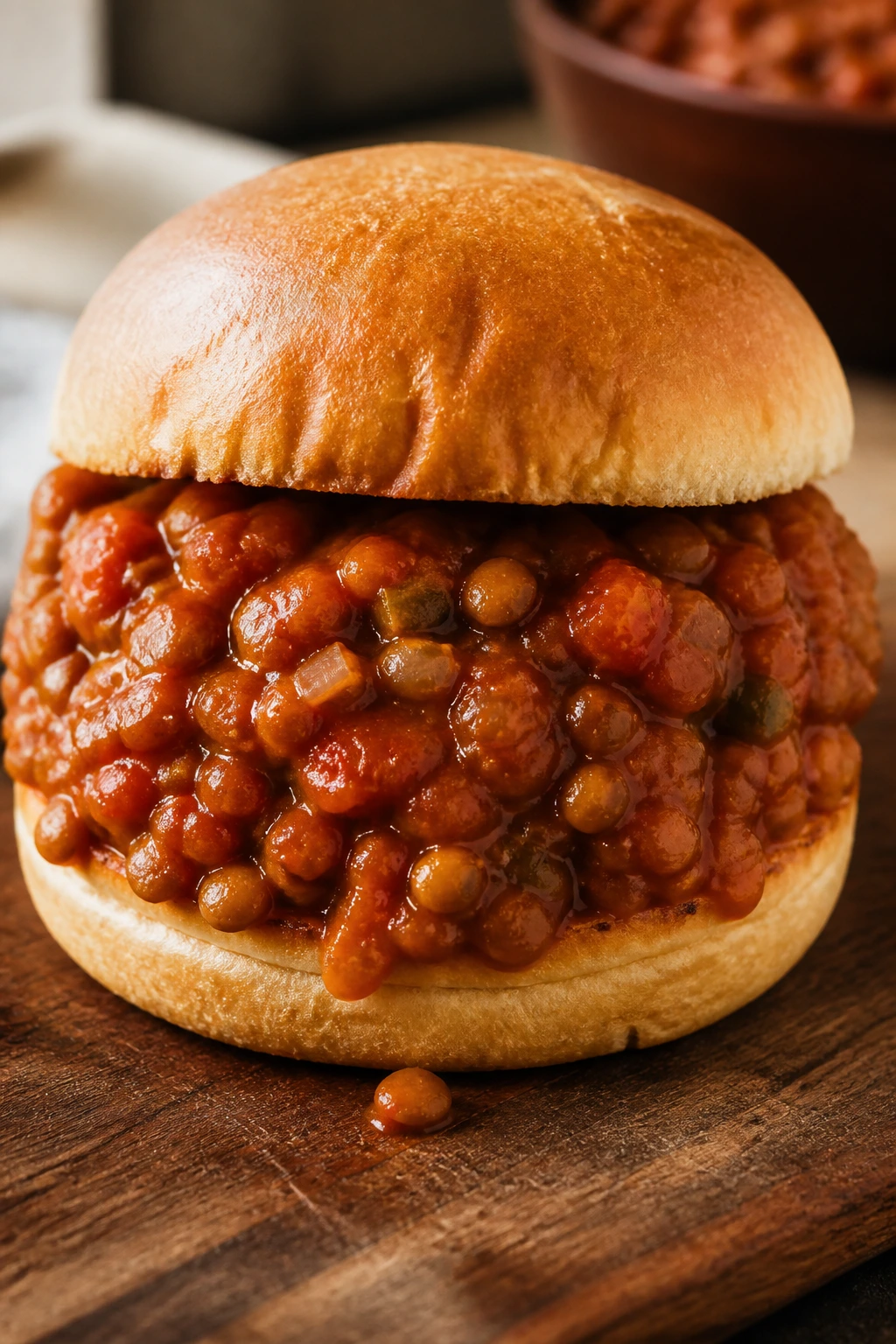
Sloppy Joes need a filling that can get saucy without disappearing. Lentils do that job better than you might expect, because they soak up the sweet-tangy sauce and still keep enough texture to feel like a sandwich worth eating.
Why It Works: Lentils bring protein and a meaty bite, and the tomato-based sauce turns them into something that sits nicely on a bun. The sweetness, vinegar, and spice are what make the filling taste finished instead of just stewed.
Key Ingredients:
- 1 1/2 cups cooked lentils
- 1 tablespoon oil
- 1 onion, diced
- 1 bell pepper, diced
- 2 tablespoons tomato paste
- 1/2 cup ketchup
- 1 tablespoon vinegar
- 4 burger buns
- Pickles, optional
Quick Steps:
- Sauté onion and pepper in oil for 6 minutes.
- Stir in tomato paste, ketchup, vinegar, and lentils.
- Simmer 10 minutes until thick and glossy.
- Toast the buns lightly.
- Spoon the filling onto buns.
Equipment for This Recipe:
- Skillet
- Spoon
- Knife for chopping
How to Serve This Dish: Serve with pickles or a crunchy slaw so the sandwich doesn’t feel too soft. A pile of oven fries on the side makes the whole thing feel complete.
Pro Tips for This Recipe:
- Let the sauce cook down until it clings to the lentils.
- Toast the bun; soft bread collapses under sloppy filling.
- A splash of hot sauce works if the sauce tastes too sweet.
Variations on This Recipe:
- BBQ Style: Swap ketchup for barbecue sauce.
- Spicy Version: Add chipotle or cayenne.
- Mushroom Mix: Add chopped mushrooms for a deeper texture.
Common Mistakes to Avoid with This Recipe:
- Too much liquid: The sandwich gets soggy. Reduce the filling until thick.
- Untoasted buns: They fall apart fast.
37. Tofu Banh Mi Bowls
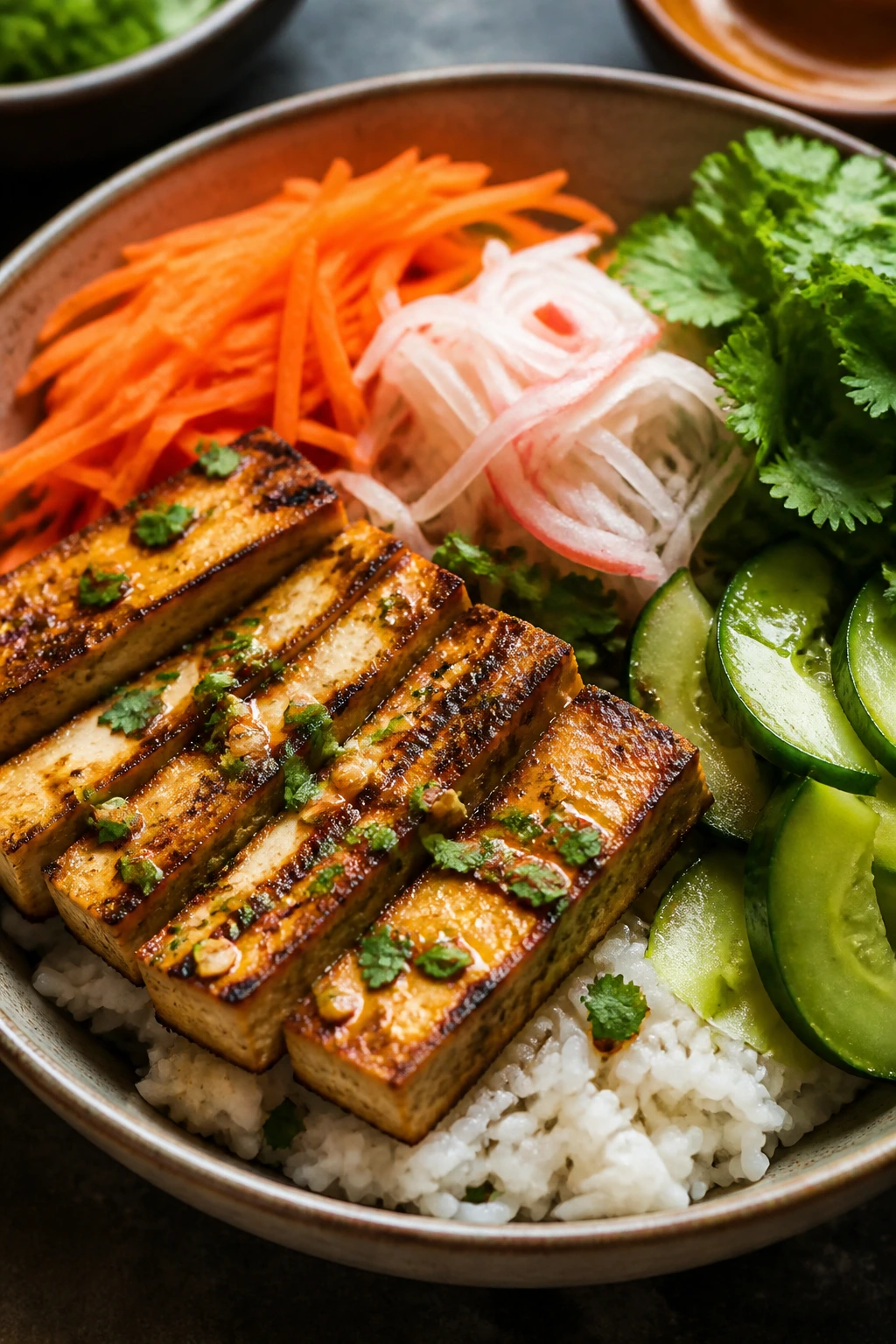
A banh mi bowl keeps the sharp pickled vegetables, fresh herbs, and spicy mayo, but turns the sandwich into something a little easier to build. Tofu gives it the protein spine it needs so the bowl doesn’t feel like toppings on rice.
Why It Works: Tofu soaks up marinade well, and the pickled carrots and radish cut through its softness. Fresh cilantro and cucumber keep the bowl bright, while rice or noodles give you a sturdy base that holds the flavors together.
Key Ingredients:
- 1 block firm tofu, pressed and sliced
- 2 cups cooked rice
- 1 carrot, julienned
- 1 radish, julienned
- 1 cucumber, sliced
- 2 tablespoons rice vinegar
- 1 tablespoon soy sauce
- 1 tablespoon mayo or vegan mayo
- 1 teaspoon sriracha
- Cilantro, for serving
Quick Steps:
- Quick-pickle carrot and radish in vinegar and a pinch of salt for 10 minutes.
- Marinate tofu in soy sauce, then pan-fry until golden.
- Mix mayo and sriracha for a quick sauce.
- Build bowls with rice, tofu, pickles, cucumber, and cilantro.
- Drizzle with sauce.
Equipment for This Recipe:
- Skillet
- Small bowl for pickles
- Tongs or spatula
How to Serve This Dish: Keep the herbs fresh and generous. A squeeze of lime and a few slices of jalapeño make the bowl taste sharper and more like the sandwich it came from.
Pro Tips for This Recipe:
- Press tofu well so it browns instead of steaming.
- Make the pickles first; even 10 minutes changes the vegetables.
- Keep the spicy mayo on top if you want the bowl to look neat.
Variations on This Recipe:
- Noodle Bowl: Use rice noodles instead of rice.
- Extra Crunch: Add crushed peanuts or fried shallots.
- Tempeh Version: Swap tofu for tempeh if you want more chew.
Common Mistakes to Avoid with This Recipe:
- Skipping the quick pickle: The bowl loses its sharp contrast.
- Using soft tofu: It breaks before it browns.
38. Black Lentil Tabbouleh with Feta
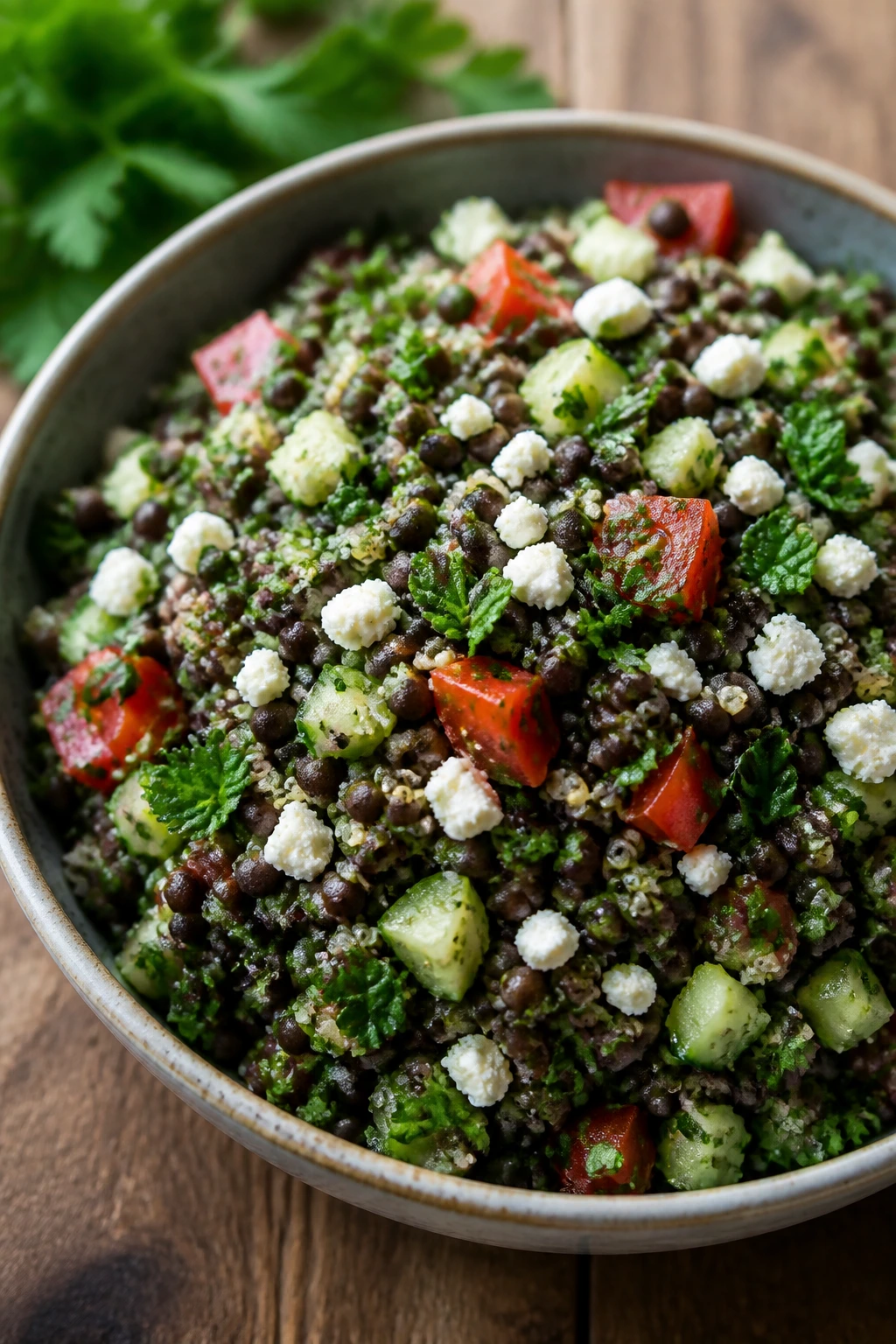
Black lentils have a firmer bite than the usual pale ones, which makes them a smart base for a salad that needs to eat like lunch. Mix them with herbs, bulgur or quinoa, and feta, and the bowl starts acting like a meal.
Why It Works: Black lentils hold shape, so the salad doesn’t get muddy. Parsley, mint, cucumber, and tomato bring freshness, while feta gives salt and enough protein to make the bowl feel rounded out.
Key Ingredients:
- 1 cup black lentils, rinsed
- 1 cup bulgur or quinoa
- 2 cups parsley, chopped
- 1/2 cup mint, chopped
- 1 cucumber, diced
- 2 tomatoes, diced
- 1/2 cup feta
- 3 tablespoons olive oil
- 2 tablespoons lemon juice
Quick Steps:
- Cook lentils until tender but firm, about 20 minutes.
- Cook bulgur or quinoa and cool slightly.
- Toss lentils, grain, herbs, cucumber, and tomato together.
- Whisk olive oil, lemon juice, salt, and pepper into a dressing.
- Fold in feta at the end.
Equipment for This Recipe:
- Saucepan
- Large bowl
- Fork
How to Serve This Dish: Serve it as a cool main dish or alongside roasted vegetables. It looks best when the herbs are piled high instead of stirred flat.
Pro Tips for This Recipe:
- Cool the grain before mixing or the herbs wilt.
- Chop the herbs finely enough to spread through every bite.
- Lemon should taste obvious here, not faint.
Variations on This Recipe:
- Chickpea Add-On: Add a can of chickpeas for more bulk.
- Cucumber-Less Version: Use roasted peppers instead.
- Dairy-Free Bowl: Skip feta and add olives.
Common Mistakes to Avoid with This Recipe:
- Overcooking the lentils: They turn mushy and vanish into the grain.
- Using too much grain: The herbs should still lead the salad.
39. Mushroom Barley Risotto with Peas
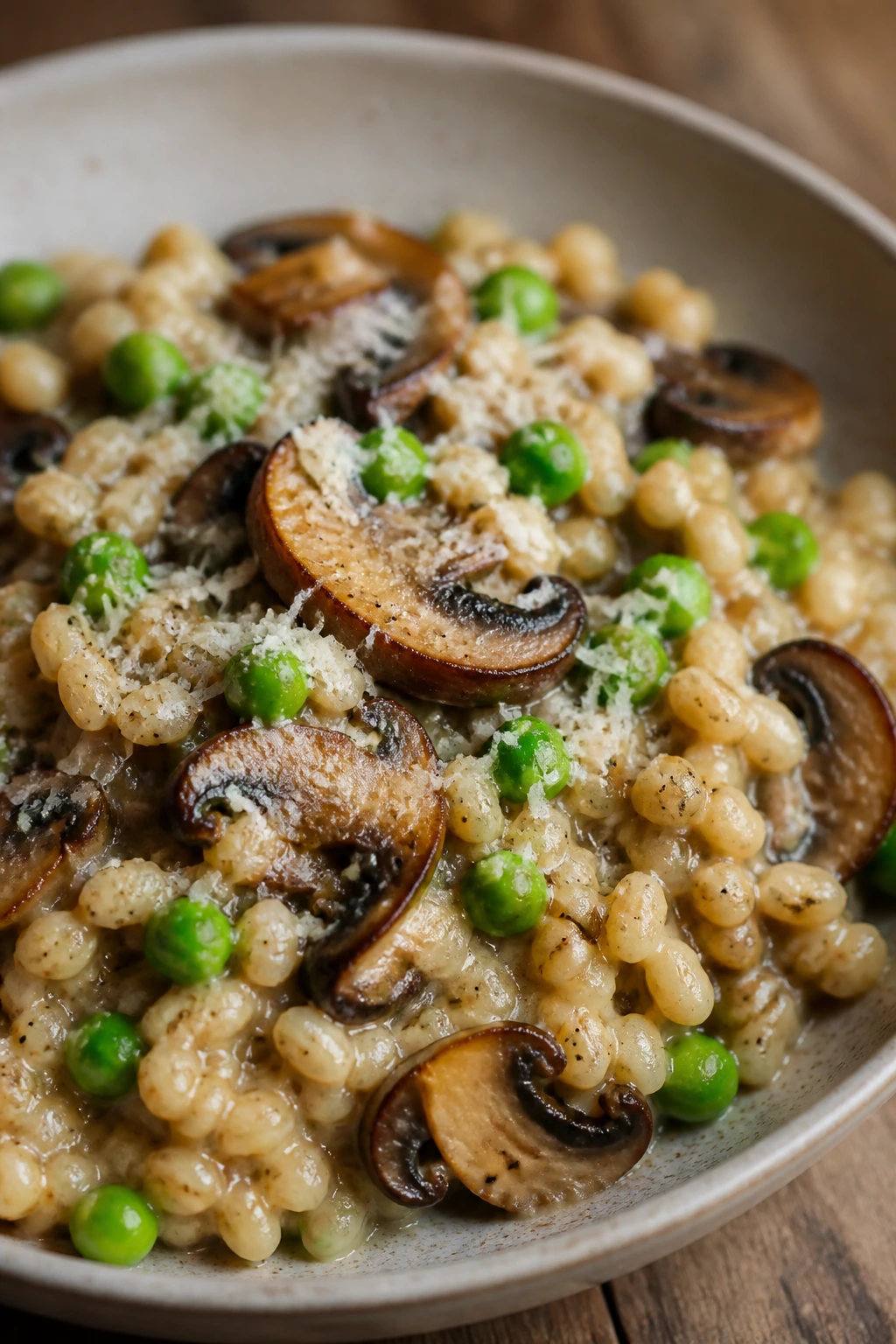
Barley gives risotto a chew that feels old-school and sturdy. Mushrooms make it savory, peas add pops of sweetness, and the parmesan at the end turns the whole pot into something that feels much richer than it is.
Why It Works: Barley is filling because it keeps its texture and carries flavor well. Mushrooms add depth, peas brighten the bowl, and the slow broth additions let the grains turn creamy without losing their bite.
Key Ingredients:
- 1 cup pearled barley
- 8 ounces mushrooms, sliced
- 1 onion, diced
- 2 tablespoons butter or olive oil
- 4 cups vegetable broth, warm
- 1 cup peas
- 1/2 cup grated Parmesan
- 1 garlic clove, minced
Quick Steps:
- Sauté onion and mushrooms in butter or oil until browned.
- Stir in barley and garlic for 1 minute.
- Add warm broth in ladlefuls, stirring until absorbed, about 35 minutes.
- Stir in peas and Parmesan.
- Serve while creamy but still chewy.
Equipment for This Recipe:
- Wide saucepan
- Ladle
- Wooden spoon
How to Serve This Dish: Serve in shallow bowls with extra Parmesan on top. A crisp green salad or roasted carrots keep the meal from feeling too soft overall.
Pro Tips for This Recipe:
- Warm the broth so the barley cooks evenly.
- Stir often enough to make it creamy, not so much that it turns paste-like.
- Brown the mushrooms well before adding liquid.
Variations on This Recipe:
- Lemon Herb Finish: Add lemon zest and parsley at the end.
- Creamier Style: Stir in a spoon of mascarpone or cream.
- Bean Boost: Add white beans for more protein.
Common Mistakes to Avoid with This Recipe:
- Pouring all broth in at once: You lose the risotto texture.
- Undercooking barley: It should be tender with bite, not crunchy.
40. Chickpea Spinach Coconut Stew
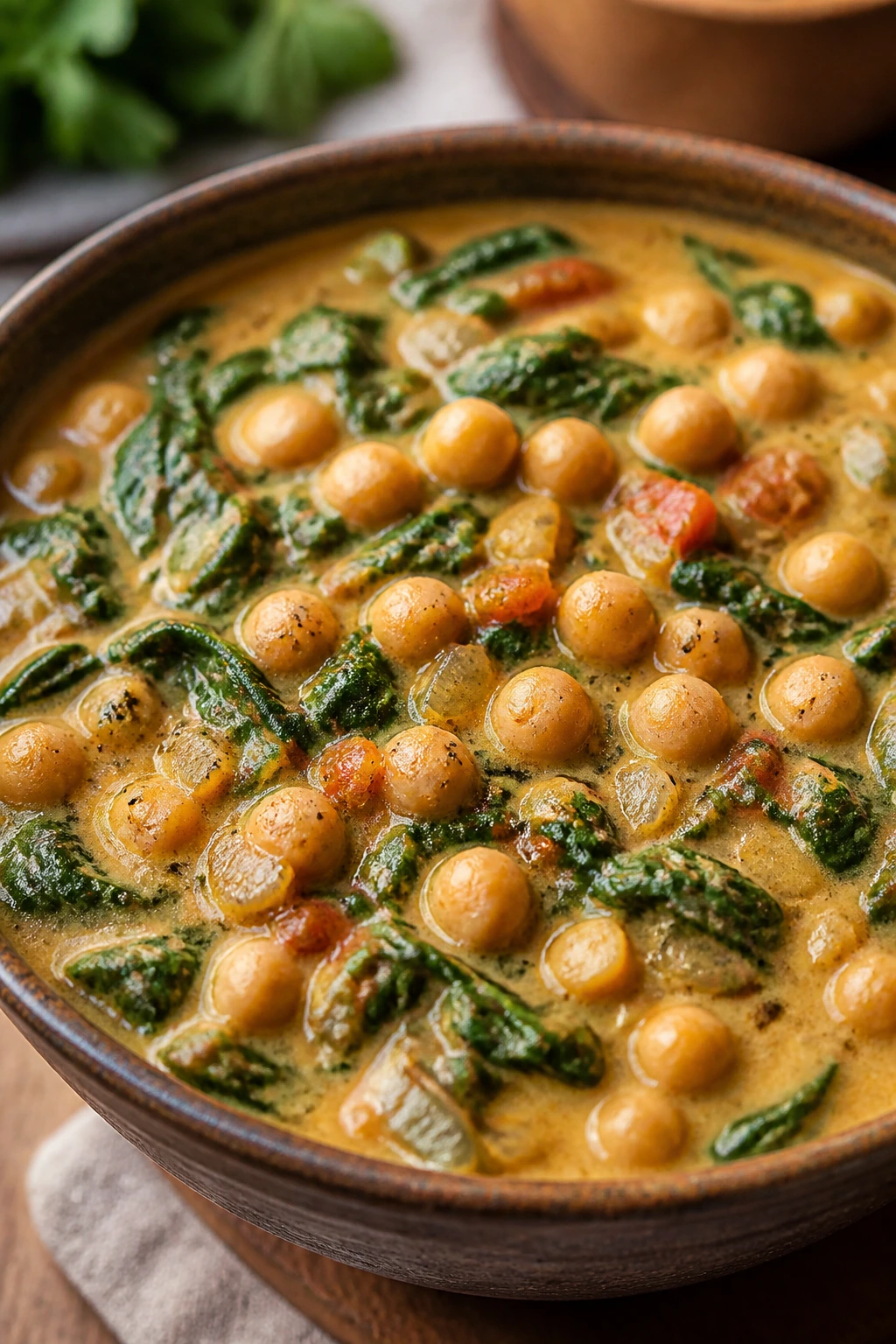
This stew sits somewhere between curry and soup, which is part of its charm. Chickpeas give it weight, coconut milk makes it silky, and spinach slides in at the end so the bowl still tastes fresh.
Why It Works: Chickpeas are firm enough to stay distinct, and coconut milk makes the broth feel rounded and rich. Tomatoes or spices add enough bite to keep the stew from going flat, while rice or naan turns it into a proper dinner.
Key Ingredients:
- 2 cans chickpeas, drained
- 1 tablespoon oil
- 1 onion, diced
- 2 garlic cloves, minced
- 1 tablespoon grated ginger
- 1 can coconut milk
- 1 can diced tomatoes
- 3 cups spinach
- 1 teaspoon cumin
- Rice or naan
Quick Steps:
- Cook onion in oil for 5 minutes.
- Add garlic and ginger for 30 seconds.
- Stir in chickpeas, coconut milk, tomatoes, and cumin; simmer 15 minutes.
- Add spinach until wilted.
- Serve with rice or naan.
Equipment for This Recipe:
- Saucepan or Dutch oven
- Spoon
- Rice pot, if needed
How to Serve This Dish: Ladle it over rice if you want it thicker, or serve it with naan for dipping. A few chili flakes on top add heat without changing the base recipe.
Pro Tips for This Recipe:
- Let the stew simmer enough to thicken a little.
- Add spinach only at the end so it stays green.
- Taste the broth after simmering; chickpeas can blunt seasoning.
Variations on This Recipe:
- Peanut Coconut Version: Add a spoon of peanut butter.
- Lime Finish: Squeeze lime over the bowl right before serving.
- Root Vegetable Add-In: Add diced sweet potato early in the simmer.
Common Mistakes to Avoid with This Recipe:
- Thin broth: It should coat a spoon slightly.
- Overcooking spinach: It turns dark and slips into the background.
41. Tex-Mex Egg and Bean Skillet
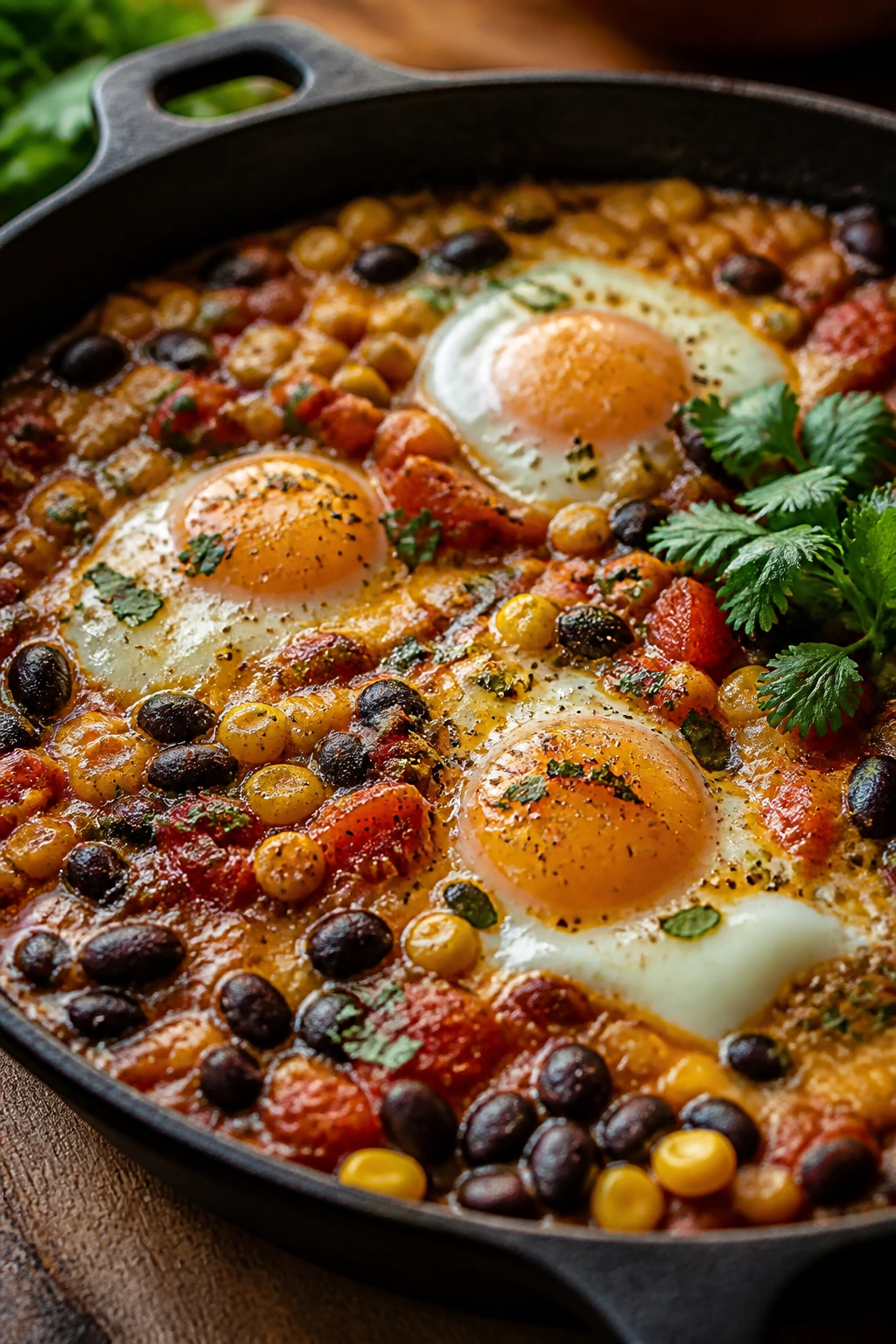
Eggs and beans are one of the easiest ways to build a meatless meal that doesn’t feel thin. Once the eggs set over the beans and salsa, the skillet eats like brunch, dinner, or the kind of late-night meal people remember.
Why It Works: Beans bring the base layer of protein and fiber, while eggs add another protein source and a creamy yolk that turns into sauce. Salsa keeps the skillet moist, cheese melts over the top, and tortillas on the side make sure nothing goes to waste.
Key Ingredients:
- 1 tablespoon oil
- 1 can black beans, drained
- 1 cup corn
- 1 cup salsa
- 4 to 6 eggs
- 1 cup shredded cheese
- 4 tortillas
- 1 avocado, sliced
- Cilantro, optional
Quick Steps:
- Warm beans and corn in oil for 3 minutes.
- Add salsa and simmer until slightly thick.
- Crack eggs into wells in the skillet.
- Cover and cook 5 to 7 minutes until whites set.
- Top with cheese, avocado, and cilantro.
Equipment for This Recipe:
- Large skillet with lid
- Spoon
- Spatula
How to Serve This Dish: Serve straight from the skillet with warm tortillas for scooping. If you want a more formal plate, spoon the beans into bowls first and top with the eggs.
Pro Tips for This Recipe:
- Keep the salsa thick so the eggs sit on top.
- Cover the skillet so the whites cook evenly.
- Pull it while yolks are still a little soft if you want more richness.
Variations on This Recipe:
- Green Chili Skillet: Use green salsa and pepper jack.
- Potato Version: Add diced cooked potatoes for more bulk.
- Spicy Sunrise: Add hot sauce and jalapeños.
Common Mistakes to Avoid with This Recipe:
- Overcooking the eggs: The yolks go chalky fast.
- Too much liquid in the pan: The beans need a thick base.
42. Thai Green Curry with Tofu and Edamame
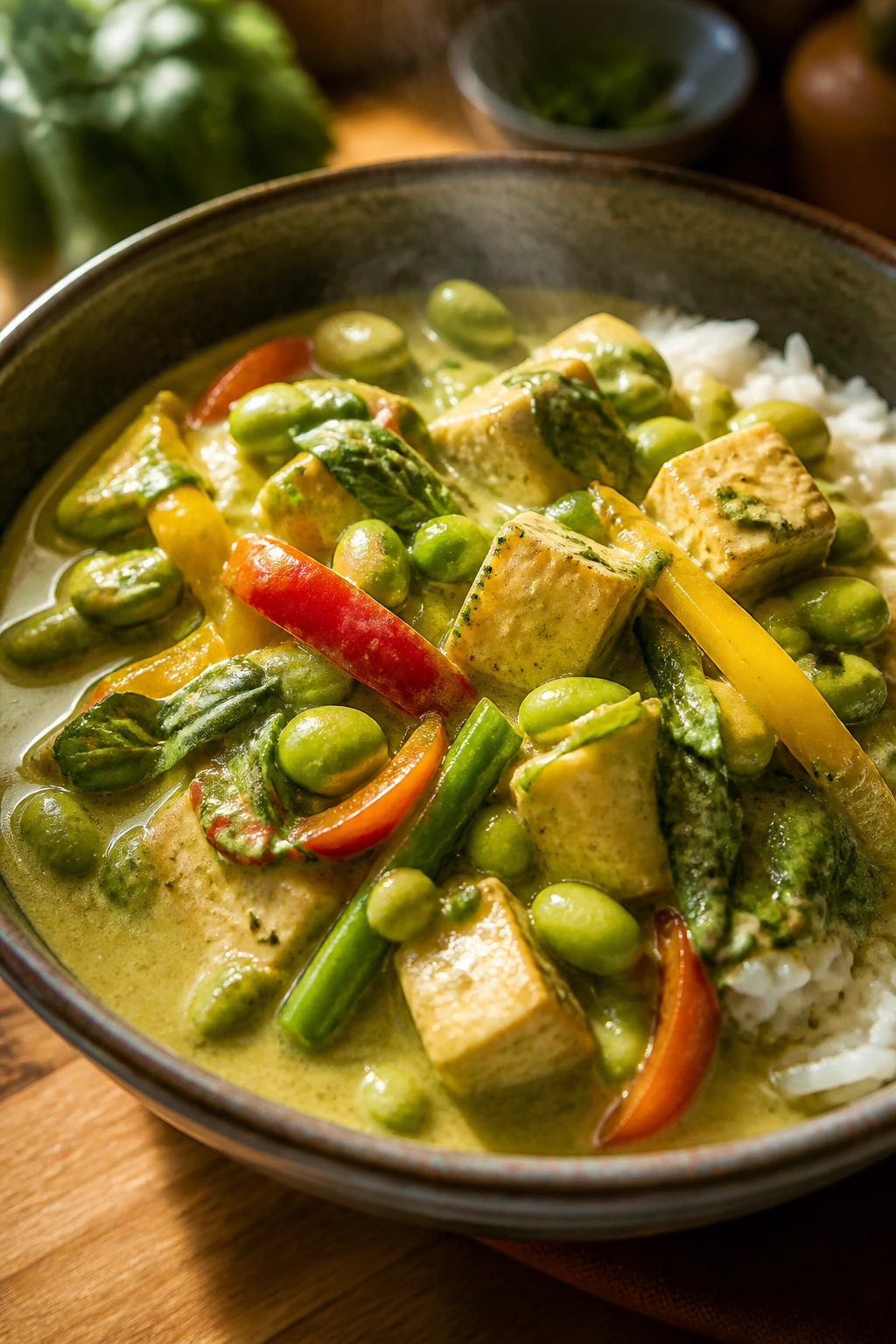
This curry has the kind of depth that comes from coconut milk, herbs, and a little heat. Tofu gives it steady protein, edamame brings a second layer, and the sauce clings to rice in a way that makes the whole bowl feel generous.
Why It Works: Green curry paste does a lot of the flavor work, but tofu and edamame are what make it filling. Coconut milk softens the spice, vegetables keep the pot lively, and basil or lime at the end sharpens the whole dish.
Key Ingredients:
- 1 block firm tofu, cubed
- 1 cup shelled edamame
- 1 tablespoon oil
- 2 tablespoons green curry paste
- 1 can coconut milk
- 1 cup broth or water
- 2 cups vegetables, such as bell pepper or green beans
- 2 cups cooked rice
- Thai basil or cilantro
- Lime wedges
Quick Steps:
- Brown tofu in oil for 6 to 8 minutes.
- Stir curry paste into the pan for 30 seconds.
- Add coconut milk, broth, vegetables, and edamame; simmer 10 minutes.
- Return tofu and warm through.
- Serve with rice and lime.
Equipment for This Recipe:
- Saucepan or skillet
- Spatula
- Rice pot
How to Serve This Dish: Serve the curry over rice with herbs on top and lime on the side. A small pile of cucumber slices gives a cold, clean contrast that suits the heat.
Pro Tips for This Recipe:
- Fry the curry paste briefly so it blooms.
- Keep the coconut milk at a gentle simmer.
- Add basil at the end so it stays fragrant.
Variations on This Recipe:
- No-Soy Version: Use chickpeas instead of tofu if needed.
- Extra Veg: Add zucchini or broccoli.
- Mild Curry: Start with less paste and add more to taste.
Common Mistakes to Avoid with This Recipe:
- Boiling the coconut milk hard: It can split.
- Adding basil too early: It loses its aroma fast.
43. Broccoli Peanut Soba Salad with Tofu
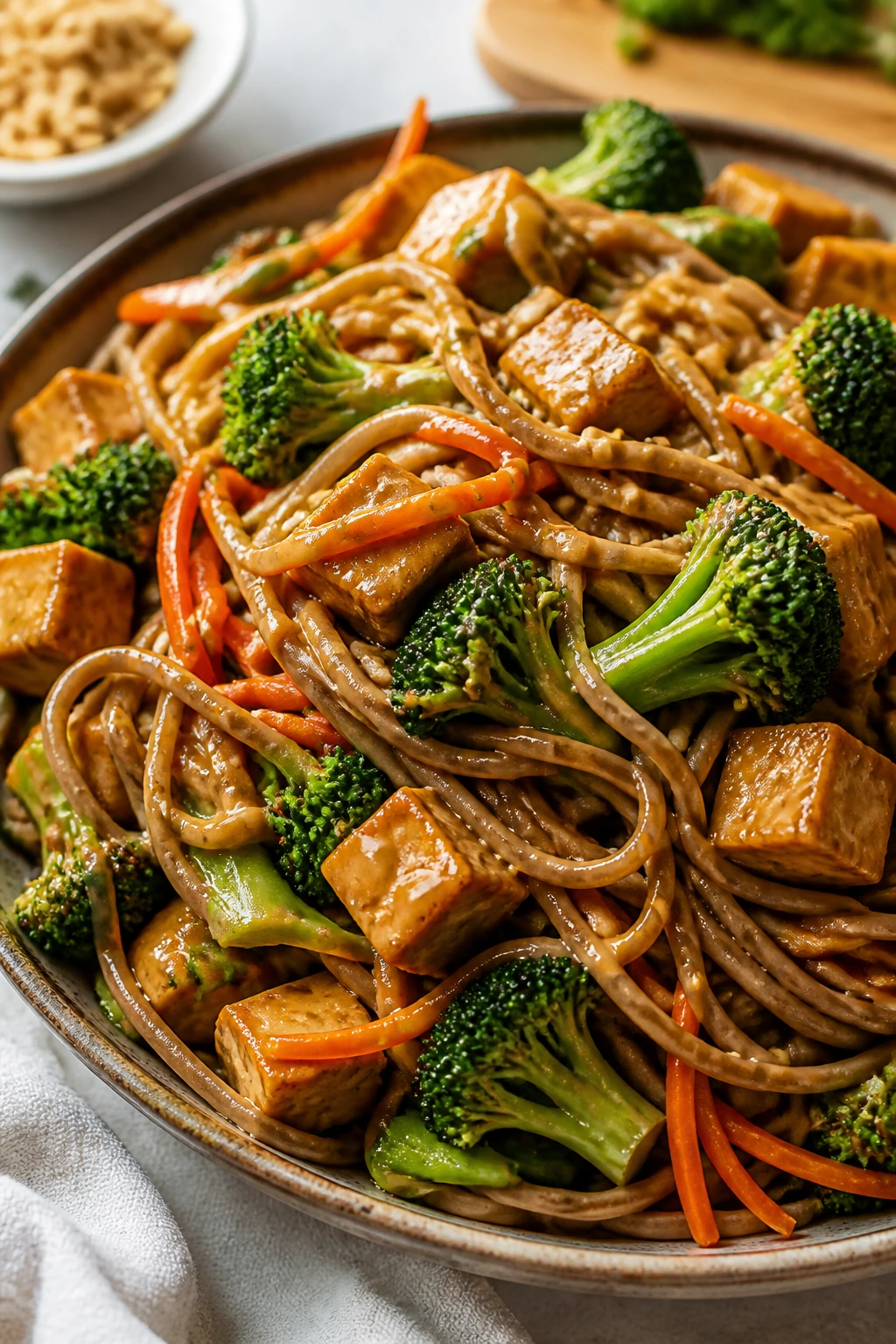
This cold noodle salad has enough chew, crunch, and sauce to feel like a real lunch. Tofu brings protein, broccoli brings bite, and the peanut dressing pulls the whole thing together without turning gluey.
Why It Works: Soba noodles are sturdy enough for a cold salad, tofu adds protein, and the peanut dressing sticks well to both noodles and vegetables. Broccoli gives you a firmer crunch than lettuce ever could, which is why this keeps eating well even after sitting for a while.
Key Ingredients:
- 8 ounces soba noodles
- 1 block tofu, cubed
- 2 cups broccoli florets
- 3 tablespoons peanut butter
- 1 tablespoon soy sauce
- 1 tablespoon rice vinegar
- 1 teaspoon sesame oil
- 1 carrot, shredded
- 2 scallions, sliced
Quick Steps:
- Cook soba, rinse, and drain.
- Roast or pan-fry tofu until crisp.
- Blanch broccoli for 1 to 2 minutes or roast it for more char.
- Whisk peanut butter, soy sauce, vinegar, sesame oil, and water.
- Toss everything together and top with scallions.
Equipment for This Recipe:
- Pot for noodles
- Skillet or sheet pan for tofu
- Mixing bowl
How to Serve This Dish: Serve it at room temperature so the peanut dressing stays loose and glossy. A sprinkle of sesame seeds or crushed peanuts adds a finishing crunch.
Pro Tips for This Recipe:
- Save a spoonful of noodle water to loosen the dressing if needed.
- Cool the noodles before mixing or the salad loses its snap.
- Keep the broccoli slightly crisp.
Variations on This Recipe:
- Spicy Peanut Bowl: Add chili oil or sriracha.
- Miso Dressing: Stir in a teaspoon of miso.
- Cabbage Swap: Use shredded cabbage instead of broccoli.
Common Mistakes to Avoid with This Recipe:
- Overcooking soba: It turns soft fast.
- Using too thick a dressing: Loosen it or it won’t coat evenly.
44. Cheesy Bean Quesadillas
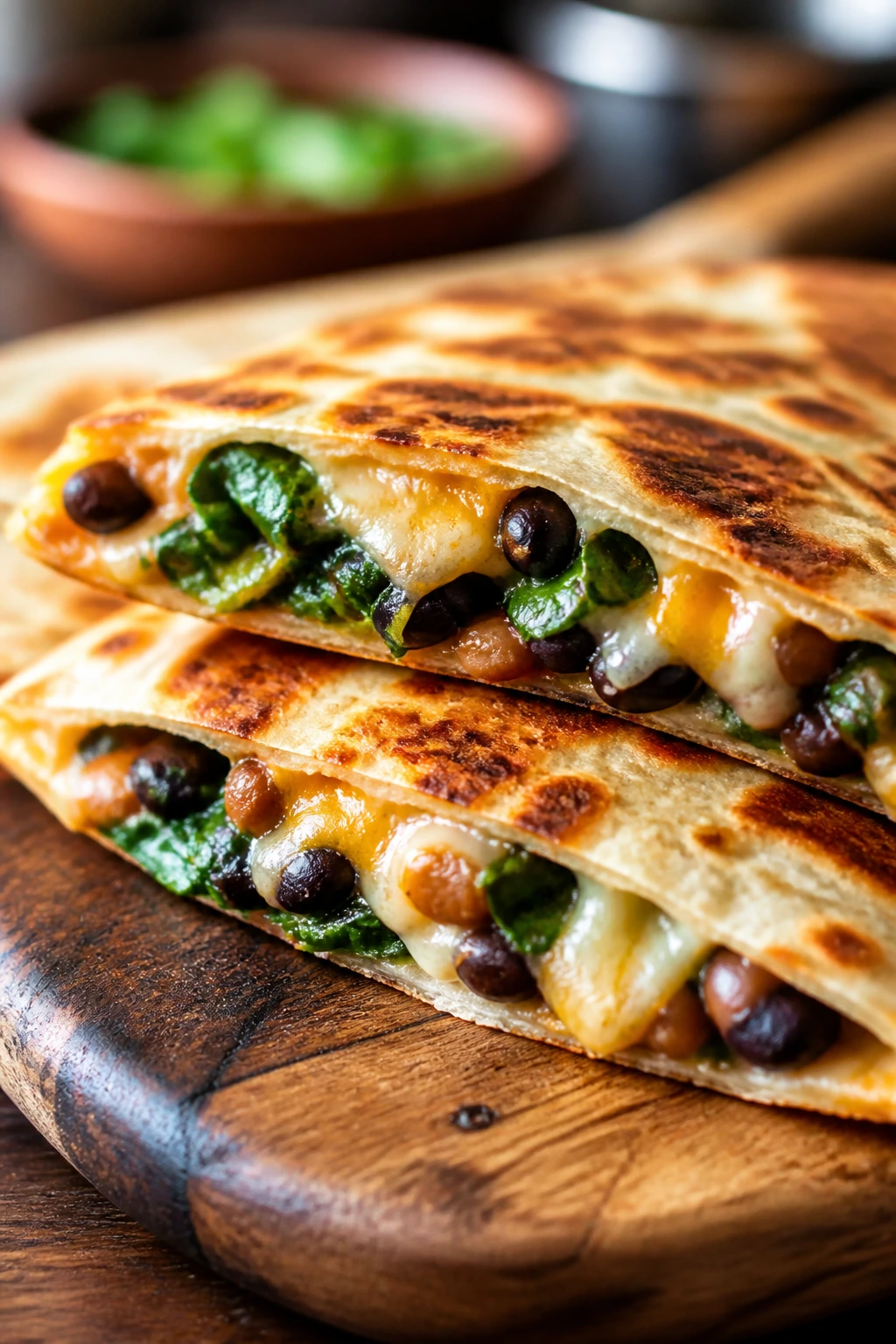
Quesadillas are one of the easiest ways to make beans feel like dinner instead of filler. The cheese holds the whole thing together, the beans give it body, and a hot skillet gives you the crisp edges that make people reach for seconds.
Why It Works: Beans and cheese together give you a solid protein hit in a format that cooks fast. A little onion or spinach keeps the filling from tasting one-dimensional, and the skillet creates the browned tortilla shell that makes quesadillas worth making at home.
Key Ingredients:
- 1 can black or pinto beans, drained
- 1 cup shredded cheese
- 4 large tortillas
- 1/2 onion, finely diced
- 1 cup spinach
- 1 tablespoon oil or butter
- Salsa, for serving
- Greek yogurt or sour cream
Quick Steps:
- Warm beans with onion until hot, then mash slightly.
- Lay cheese, beans, and spinach on half of each tortilla.
- Fold and cook in oil or butter for 2 to 3 minutes per side.
- Press gently until golden and crisp.
- Slice and serve with salsa.
Equipment for This Recipe:
- Skillet
- Spatula
- Knife or pizza cutter
How to Serve This Dish: Cut into wedges and serve with salsa and yogurt for dipping. A little shredded lettuce on the side gives the plate a fresher feel.
Pro Tips for This Recipe:
- Don’t stuff too much in or the tortilla tears.
- Use medium heat so the cheese melts before the tortilla burns.
- Mash some beans to help the filling stay put.
Variations on This Recipe:
- Green Chili Quesadillas: Add chopped chilies and pepper jack.
- Corn and Bean Version: Add corn for sweetness and texture.
- Breakfast Quesadillas: Fold in scrambled eggs.
Common Mistakes to Avoid with This Recipe:
- High heat: The outside burns before the cheese melts.
- Overfilling: That’s how you end up with a skillet mess.
45. Harissa Chickpeas with Yogurt and Couscous
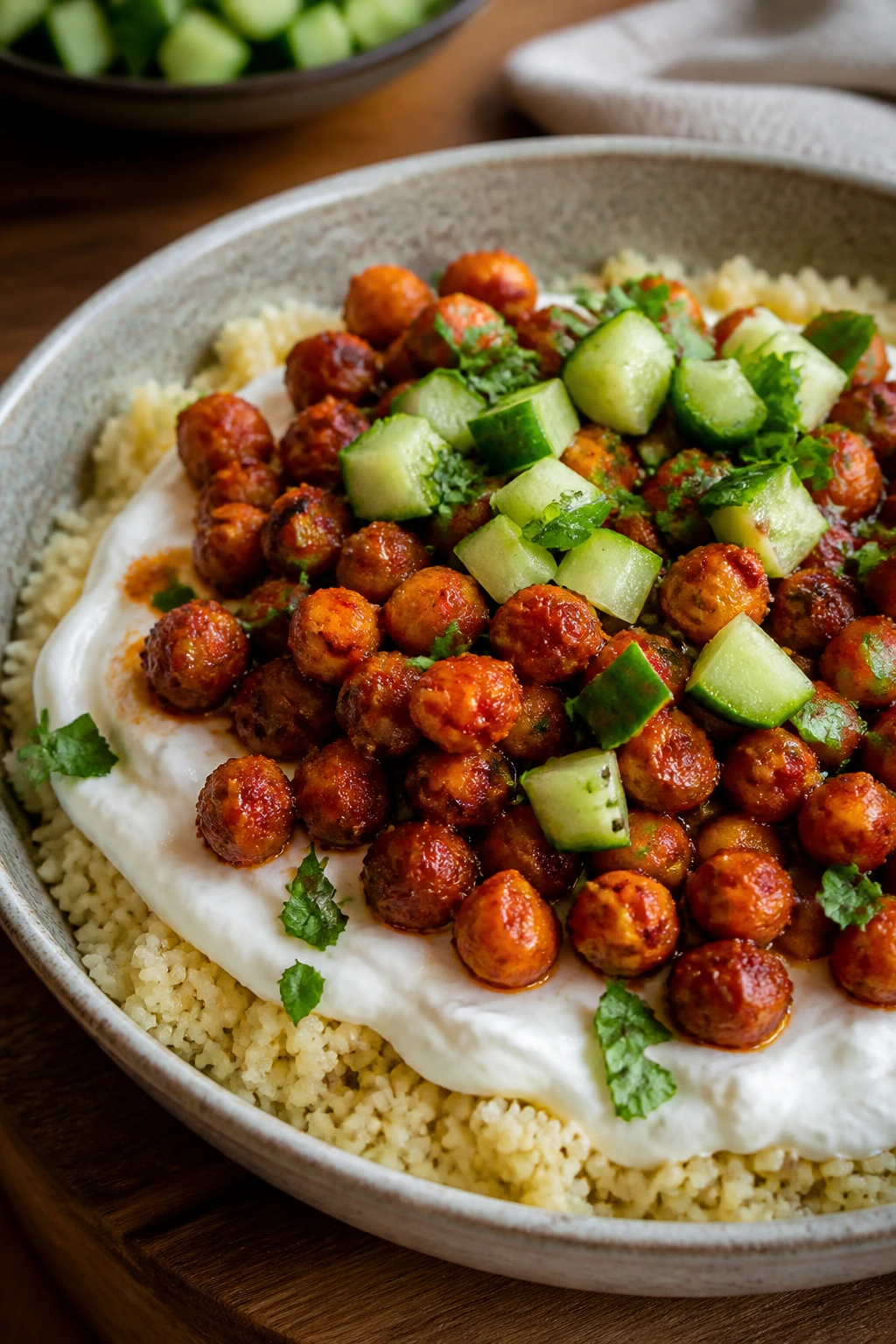
Harissa brings a smoky, red heat that makes chickpeas feel lively instead of plain. Piled over couscous with cool yogurt underneath, the whole dish lands in that sweet spot between fast and satisfying.
Why It Works: Chickpeas are sturdy enough to carry the spice without getting lost. Couscous cooks in minutes, yogurt cools the heat, and herbs or lemon keep the plate from tasting one-note. It’s a strong answer when dinner needs to happen quickly but still feel composed.
Key Ingredients:
- 2 cans chickpeas, drained
- 1 tablespoon olive oil
- 1 to 2 tablespoons harissa paste
- 1 cup couscous
- 1 cup plain yogurt
- 1 cucumber, diced
- 2 tablespoons lemon juice
- 2 tablespoons chopped parsley
- Salt and pepper
Quick Steps:
- Toss chickpeas with oil and harissa, then roast at 425°F for 20 minutes.
- Make couscous according to package directions.
- Stir yogurt with lemon juice, salt, and pepper.
- Spoon yogurt into bowls, then add couscous and chickpeas.
- Top with cucumber and parsley.
Equipment for This Recipe:
- Sheet pan
- Small bowl
- Saucepan or kettle for couscous
How to Serve This Dish: Spread the yogurt on the bottom of the bowl if you want a prettier plate. Warm pita on the side is useful for scooping up the spicy chickpeas and couscous.
Pro Tips for This Recipe:
- Start with less harissa; it can jump from medium to hot fast.
- Dry the chickpeas well before roasting.
- Fluff couscous with a fork so it stays light.
Variations on This Recipe:
- Tahini Base: Replace yogurt with tahini thinned with water.
- Roasted Veg Bowl: Add carrots or cauliflower to the tray.
- Mint Finish: Mint gives the heat a colder edge.
Common Mistakes to Avoid with This Recipe:
- Too much harissa: It can overwhelm the whole bowl.
- Skipping the yogurt layer: The cool base matters here.
46. White Bean and Sun-Dried Tomato Orzo
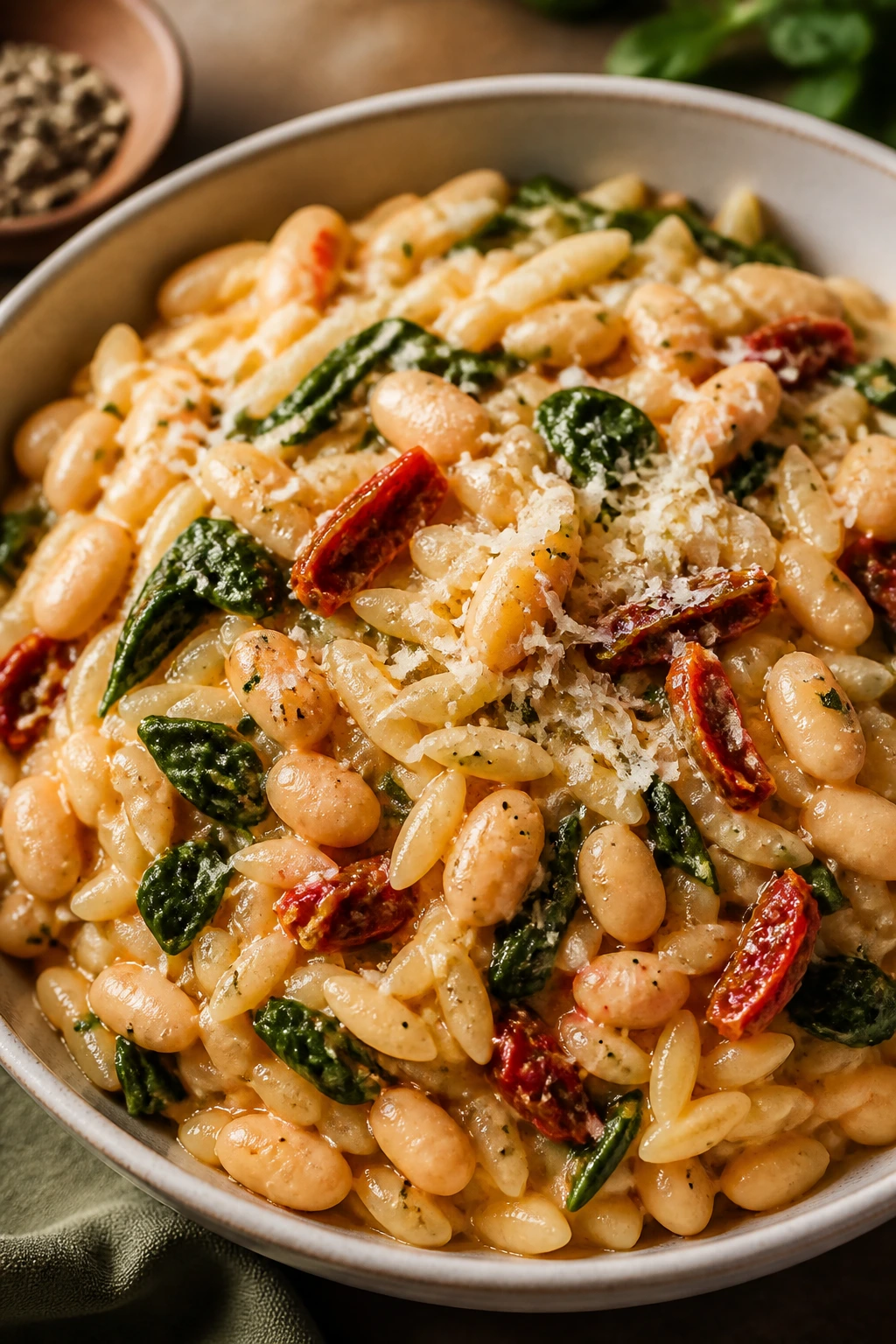
Orzo makes this feel like a cross between soup and pasta, and that’s the right lane for it. White beans add the protein, sun-dried tomatoes bring intensity, and the whole pot ends up creamy without much fuss.
Why It Works: White beans are mild enough to disappear a little into the orzo, which makes the dish feel cohesive. Sun-dried tomatoes give you concentrated flavor, spinach keeps the color up, and Parmesan at the end gives the pot a savory finish.
Key Ingredients:
- 1 tablespoon olive oil
- 2 garlic cloves, minced
- 1/2 cup sun-dried tomatoes, chopped
- 1 cup orzo
- 2 cans white beans, drained
- 3 cups broth
- 2 cups spinach
- 1/4 cup grated Parmesan
- Black pepper
Quick Steps:
- Sauté garlic and sun-dried tomatoes in oil for 1 minute.
- Stir in orzo and toast lightly.
- Add broth and simmer, stirring, until the orzo is tender.
- Stir in beans and spinach until warmed and wilted.
- Finish with Parmesan and pepper.
Equipment for This Recipe:
- Medium saucepan
- Spoon
- Grater, if needed
How to Serve This Dish: Serve it in shallow bowls while it’s still loose and creamy. A squeeze of lemon on top makes the tomatoes taste brighter and keeps the dish from feeling heavy.
Pro Tips for This Recipe:
- Stir often so the orzo doesn’t stick.
- Chop sun-dried tomatoes small so their flavor spreads.
- Add the beans near the end so they stay intact.
Variations on This Recipe:
- Creamier Version: Stir in a splash of cream or extra cheese.
- Lemon Herb Style: Add thyme and lemon zest.
- Broth-Heavy Soup Bowl: Add more broth and serve with bread.
Common Mistakes to Avoid with This Recipe:
- Not stirring enough: Orzo can glue itself to the pot.
- Overcooking the spinach: It should wilt fast, not dissolve.
47. Cottage Cheese Pancakes with Almonds and Berries
Cottage cheese pancakes sound a little strange until you bite into them. They come out tender and thick, with enough protein to make breakfast last longer than a sugar crash and enough fruit and nuts to keep the plate interesting.
Why It Works: Cottage cheese and eggs do the protein work, while oats or flour give the pancakes enough structure to flip cleanly. Almonds add crunch, berries add acid and sweetness, and the whole stack feels like a meal instead of dessert in disguise.
Key Ingredients:
- 1 cup cottage cheese
- 2 eggs
- 1/2 cup oats or flour
- 1 teaspoon baking powder
- 1/2 teaspoon vanilla
- 1 cup berries
- 2 tablespoons sliced almonds
- Butter or oil for the pan
- Maple syrup, optional
Quick Steps:
- Blend cottage cheese, eggs, oats or flour, baking powder, and vanilla.
- Heat a skillet over medium and add a little butter or oil.
- Spoon batter into pancakes and cook 2 to 3 minutes per side.
- Top with berries and almonds.
- Add syrup if you want it sweeter.
Equipment for This Recipe:
- Blender or bowl and whisk
- Skillet or griddle
- Spatula
How to Serve This Dish: Stack them high and let the berries tumble down the sides. If you want a more savory breakfast, skip the syrup and add a spoon of yogurt.
Pro Tips for This Recipe:
- Let the batter sit 5 minutes so the oats hydrate.
- Cook on medium heat or the outsides brown too fast.
- Flip only when bubbles form and the edges look set.
Variations on This Recipe:
- Lemon Blueberry: Add lemon zest and blueberries.
- Savory Pancake: Skip vanilla and top with herbs.
- Banana Version: Mash in half a banana for sweetness.
Common Mistakes to Avoid with This Recipe:
- Too much heat: The outsides burn before the centers set.
- Thin batter: Add a spoon of flour if needed so the pancakes hold.
48. Savory Oatmeal with Eggs, Spinach, and Tahini
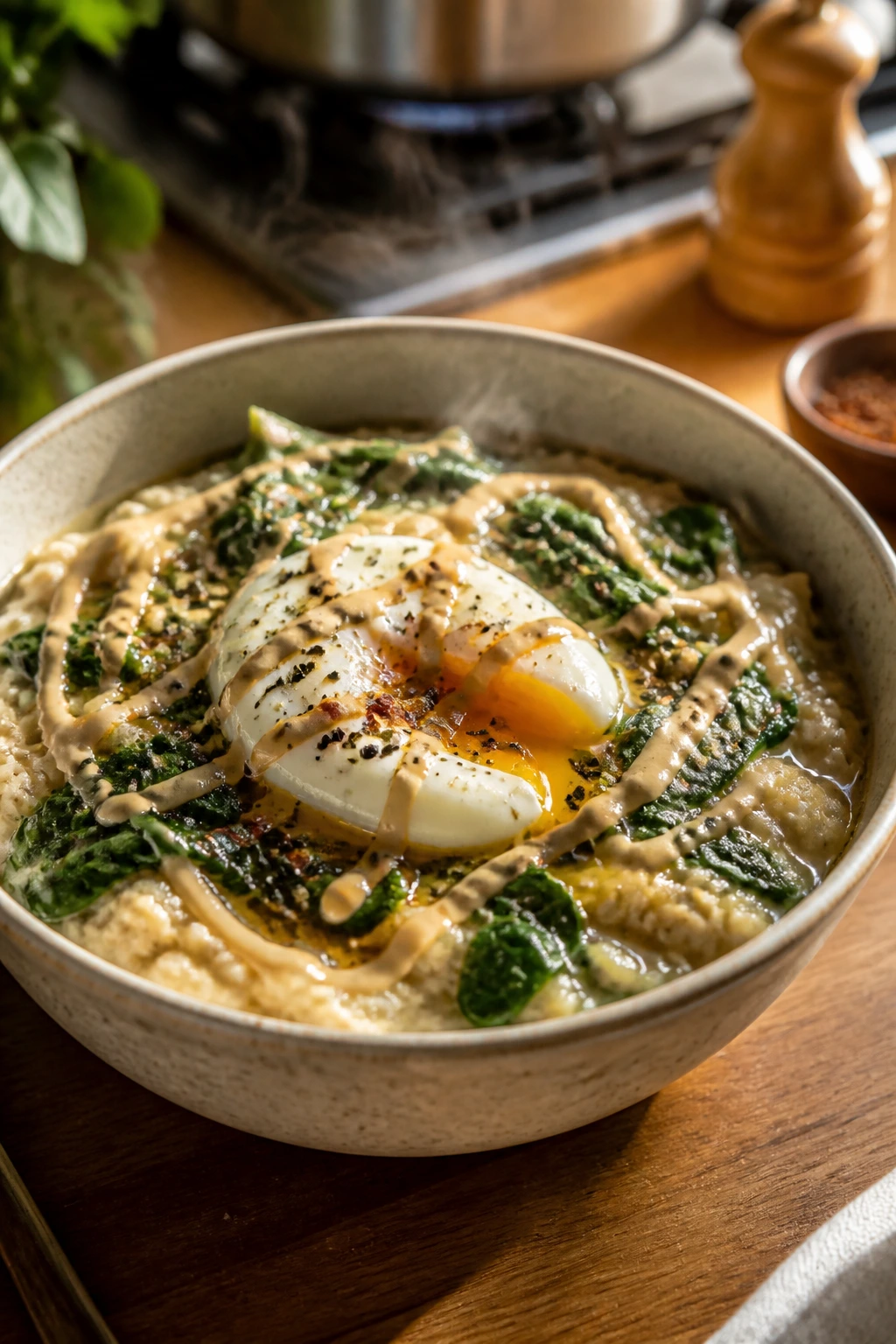
Savory oatmeal is what happens when breakfast stops pretending it needs sugar to be respectable. The oats cook in broth, the eggs give you protein, and tahini makes the bowl taste nutty and complete.
Why It Works: Oats provide a slow-burning base, eggs add protein and richness, and spinach keeps the bowl from feeling too soft. Tahini brings fat and a faint bitterness that balances the salt, which is exactly why the bowl tastes more interesting than sweet oatmeal ever could.
Key Ingredients:
- 1 cup rolled oats
- 2 cups broth or water
- 2 eggs
- 2 cups spinach
- 1 tablespoon tahini
- 1 tablespoon olive oil or butter
- Salt and pepper
- Chili flakes, optional
Quick Steps:
- Cook oats in broth until thick, about 5 minutes.
- Stir in spinach until wilted.
- Fry or poach the eggs.
- Spoon oats into bowls and top with eggs.
- Drizzle with tahini and season well.
Equipment for This Recipe:
- Small saucepan
- Frying pan or pot for eggs
- Whisk or spoon
How to Serve This Dish: Serve it hot and finish with a runny yolk if you want the bowl to feel richer. A few sliced scallions or a dusting of chili flakes keeps it from tasting flat.
Pro Tips for This Recipe:
- Use broth instead of water if you want more depth.
- Salt the oats enough; plain oats need help.
- Keep the oats slightly loose because they thicken as they sit.
Variations on This Recipe:
- Miso Oat Bowl: Stir in a little miso for salt and depth.
- Feta Finish: Crumble feta on top instead of tahini.
- Mushroom Version: Add sautéed mushrooms for more savoriness.
Common Mistakes to Avoid with This Recipe:
- Undersalting the oats: They’ll taste dull no matter how good the toppings are.
- Letting them get too thick: Add a splash of broth and loosen them up.
49. Lentil Mushroom Cottage Pie
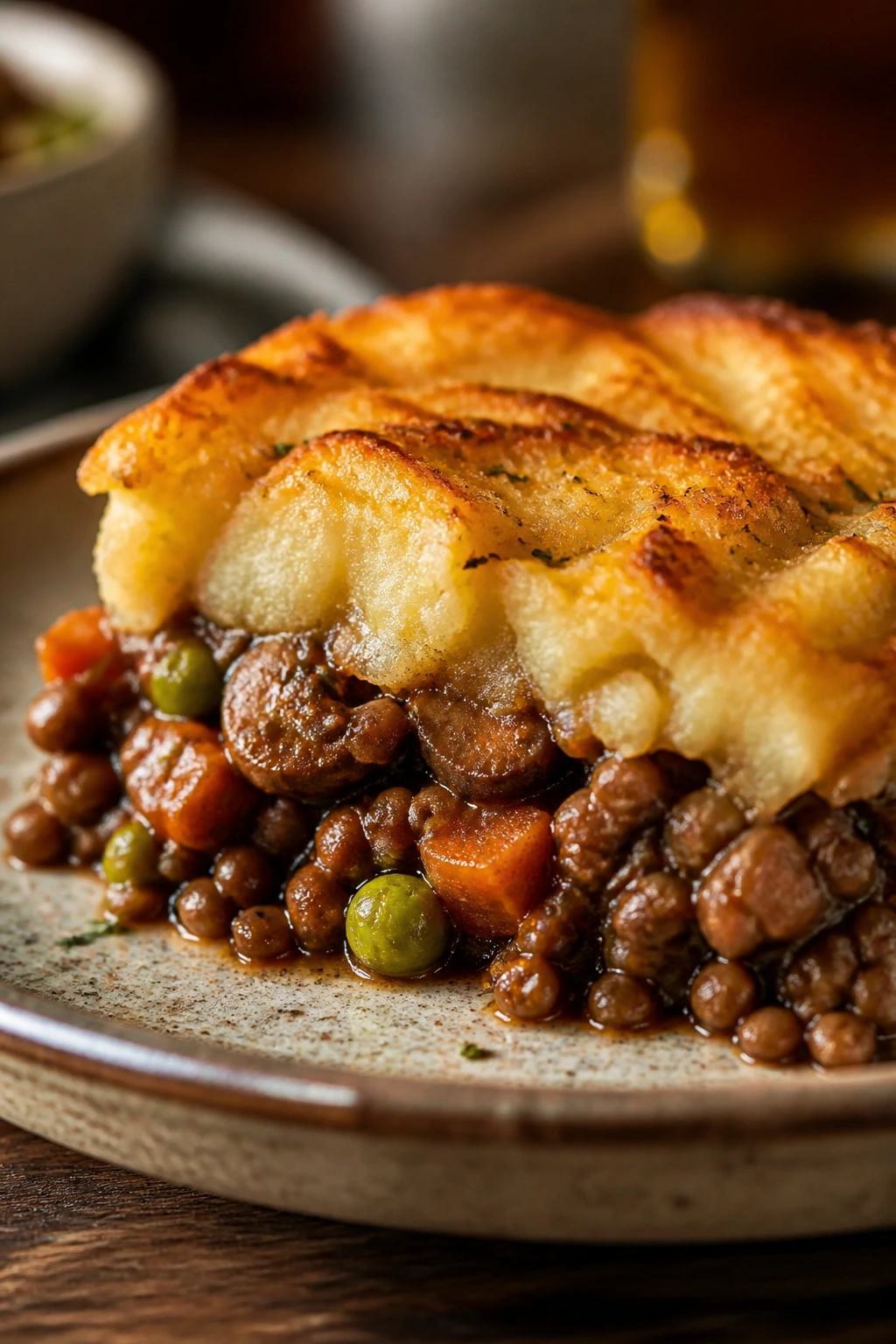
This pie sits in the same comfort-food lane as shepherd’s pie, but the mushrooms make it deeper and the lentils make it sturdy. The mashed top browns in the oven, and the filling underneath stays savory enough to carry the whole dish.
Why It Works: Lentils and mushrooms are a strong pair when you want a meatless filling with real bite. Carrots and peas keep the color up, mashed potatoes make it feel classic, and the bake gives the top enough structure to slice cleanly.
Key Ingredients:
- 1 1/2 cups cooked lentils
- 8 ounces mushrooms, chopped
- 2 carrots, diced
- 1 onion, diced
- 1 cup peas
- 2 tablespoons tomato paste
- 4 cups mashed potatoes
- 1 cup vegetable broth
- 1 tablespoon butter
Quick Steps:
- Sauté onion, carrots, and mushrooms until browned.
- Stir in tomato paste, lentils, peas, and broth; simmer until thick.
- Spread filling in a baking dish.
- Top with mashed potatoes and dot with butter.
- Bake at 400°F for 20 to 25 minutes.
Equipment for This Recipe:
- Skillet
- Baking dish
- Potato masher
How to Serve This Dish: Spoon it out in thick squares so the topping and filling stay together. A sharp salad or a pile of steamed green beans keeps the plate from leaning too heavy.
Pro Tips for This Recipe:
- Cook the mushrooms until they lose their water.
- Reduce the filling before topping it or the pie will run.
- Rough up the mashed potatoes with a fork for browning.
Variations on This Recipe:
- Sweet Potato Top: Use sweet potatoes for a sweeter finish.
- Rosemary Version: Add rosemary and thyme to the filling.
- Cheese Crust: Sprinkle cheddar on top before baking.
Common Mistakes to Avoid with This Recipe:
- Wet filling: It makes the topping slide. Cook it down first.
- Smooth top only: Texture on the potatoes helps the crust brown.
50. Big Breakfast Hash with Beans, Eggs, and Avocado
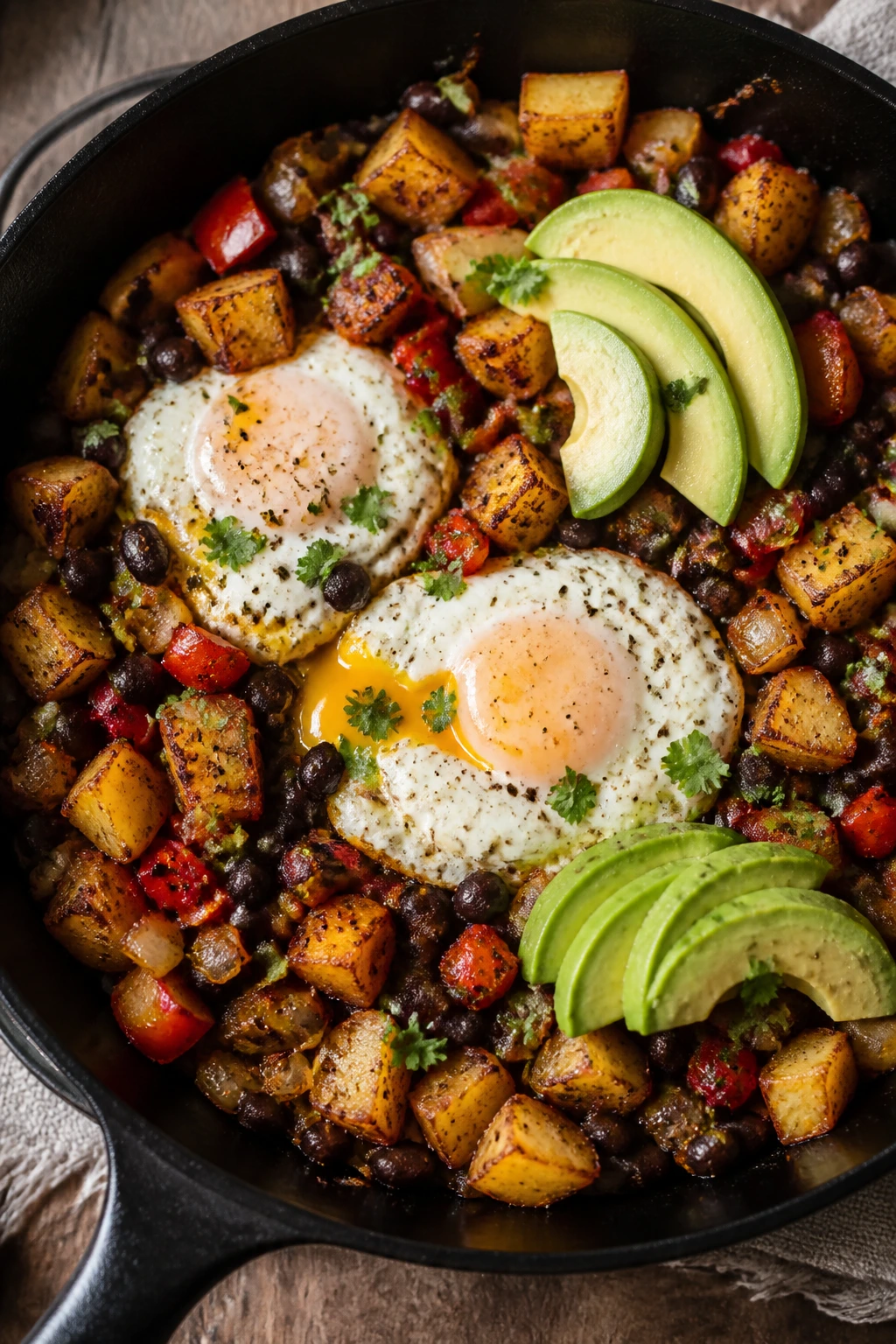
This hash is what happens when breakfast stops acting small. Crispy potatoes, beans, eggs, and avocado all land in the same skillet, and suddenly the meal has enough protein and heft to count as lunch too.
Why It Works: Beans and eggs make the protein base, potatoes bring the starch, and avocado adds the fat that keeps the bowl from feeling dry. If you season the potatoes properly and let the edges crisp, the whole pan tastes more complete than most diner hashes.
Key Ingredients:
- 2 medium potatoes, diced
- 1 tablespoon oil
- 1/2 onion, diced
- 1 bell pepper, diced
- 1 can black beans, drained
- 4 eggs
- 1 avocado, sliced
- Salsa, for serving
- Salt and pepper
Quick Steps:
- Par-cook potatoes if needed, then crisp them in oil for 10 minutes.
- Add onion and pepper; cook until softened.
- Stir in black beans and warm through.
- Make wells and crack in the eggs, then cover until set.
- Serve with avocado and salsa.
Equipment for This Recipe:
- Large skillet with lid
- Spatula
- Knife and board
How to Serve This Dish: Serve straight from the skillet with hot sauce, salsa, or a spoon of sour cream. If you want more crunch, add toast on the side, but the pan can stand alone.
Pro Tips for This Recipe:
- Par-cook the potatoes if they’re raw; otherwise they take forever.
- Let the potatoes sit undisturbed so they can brown.
- Pull the eggs while the yolks are still soft if you want richness.
Variations on This Recipe:
- Sweet Potato Hash: Use sweet potatoes instead of regular potatoes.
- Chorizo-Style Spice: Add smoked paprika and cayenne.
- Green Hash: Toss in spinach at the end.
Common Mistakes to Avoid with This Recipe:
- Skipping the crisping step: Soft potatoes make the hash feel tired.
- Overcrowding the skillet: The potatoes steam instead of browning.
What Makes a Meatless Meal Feel Complete
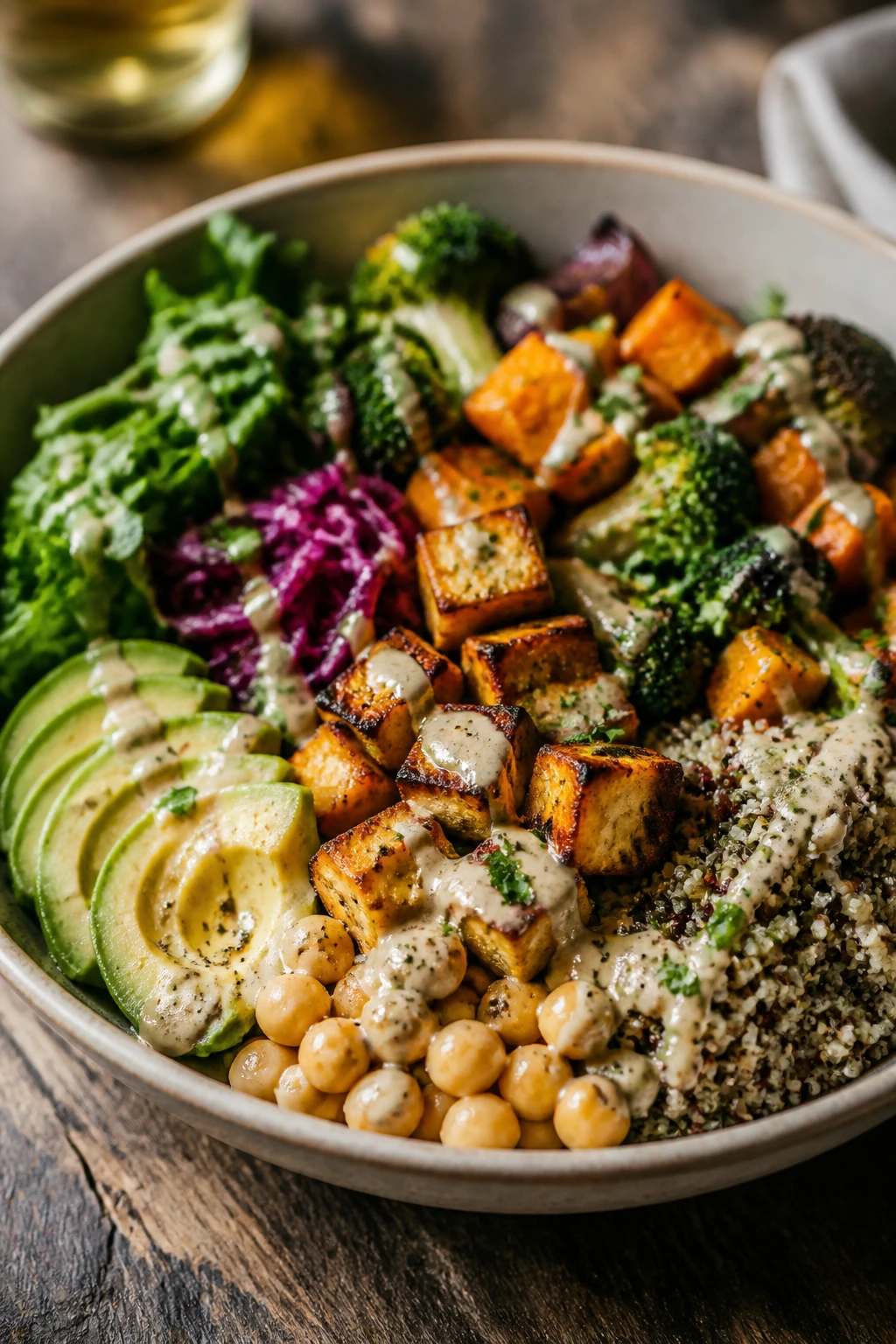
The best meatless meals do not try to imitate meat so much as they build a different kind of structure. Protein is the anchor, sure, but it works best when it shows up with fiber, a little fat, and a carb that has enough shape to hold onto the sauce. A bowl of beans and rice is already doing more work than most people give it credit for. Add roasted vegetables, a sharp dressing, and something creamy on top, and it stops feeling like a compromise.
Texture matters more than most recipe cards admit. Soft food can be comforting, but if every bite is soft, the meal disappears too quickly. That’s why crispy tofu, browned halloumi, roasted chickpeas, chewy farro, and baked pasta matter so much in vegetarian cooking. They keep your mouth interested, which is another way of saying they keep your brain convinced dinner happened.
I also think acid gets ignored. Lemon, lime, vinegar, pickles, yogurt, salsa, and tomato all give these meals shape. Without that sharp edge, beans and grains can taste dull, and coconut milk can taste heavy. A final squeeze of citrus or a spoon of something tangy is often the difference between “fine” and a bowl you make again next week.
Essential Equipment for These Recipes
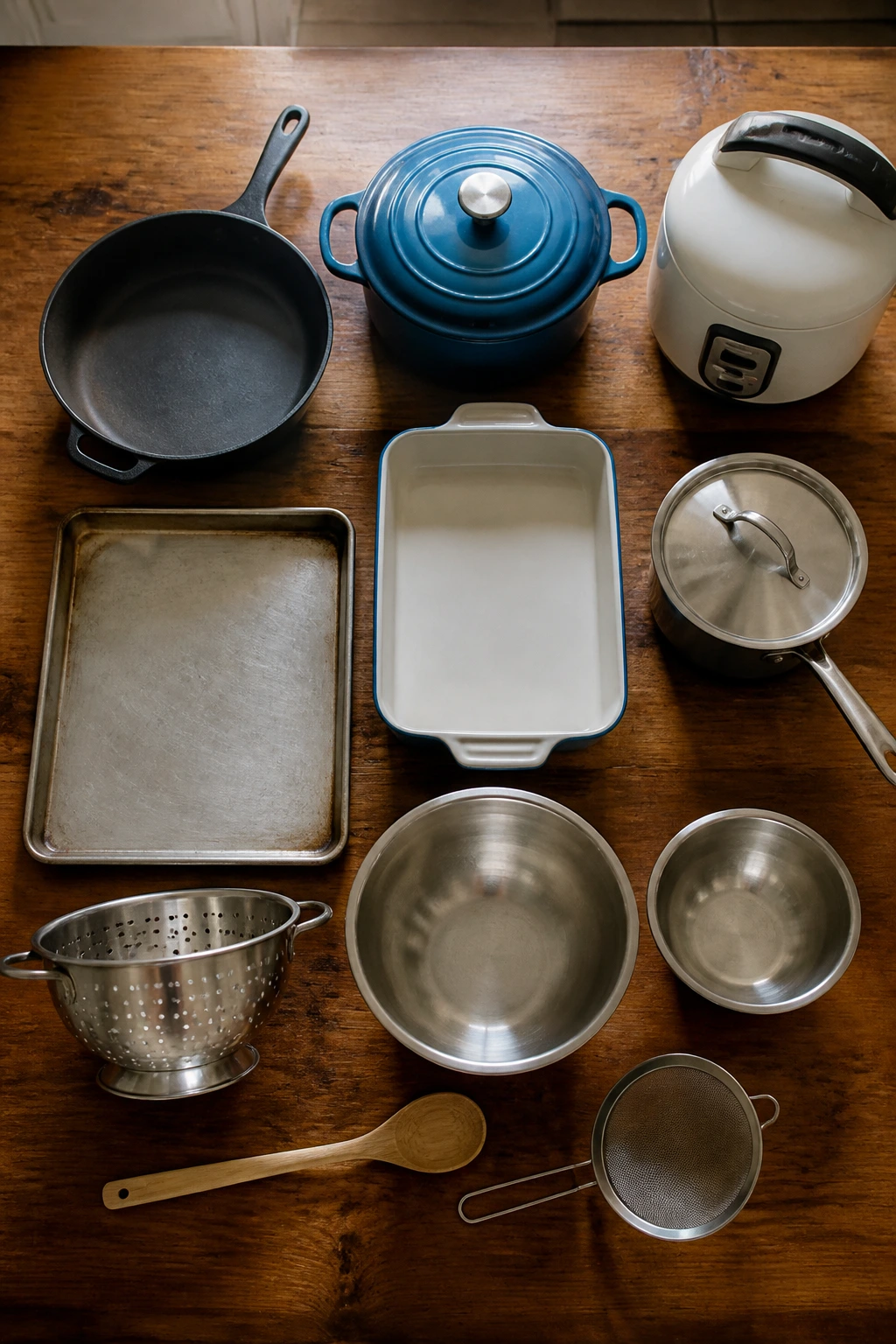
- Large skillet, 10 to 12 inches: Best for tofu, tempeh, quesadillas, hashes, and quick skillet meals.
- Dutch oven or deep soup pot: Useful for curries, chili, lentil stew, and baked fillings that need a little volume.
- Rimmed sheet pan: Perfect for roasting chickpeas, cauliflower, sweet potatoes, and tofu without crowding.
- 9×13-inch baking dish: The right size for lasagna, stuffed shells, enchiladas, and cottage pies.
- Saucepan with a lid: Handy for quinoa, rice, barley, oats, or orzo-based dishes.
- Colander: You’ll use it more than you think for pasta, beans, tofu pressing, and rinsing grains.
- Mixing bowls in two sizes: One for sauces and one for tossing grain bowls or fillings.
- Wooden spoon or spatula: Better than metal for stirring thick bean and lentil mixtures.
- Fine-mesh strainer: Useful for rinsing quinoa, soba, and lentils without losing small grains.
- Rice cooker or small pot: Not mandatory, but useful if you build a lot of bowls around rice.
Smart Shopping and Ingredient Tips
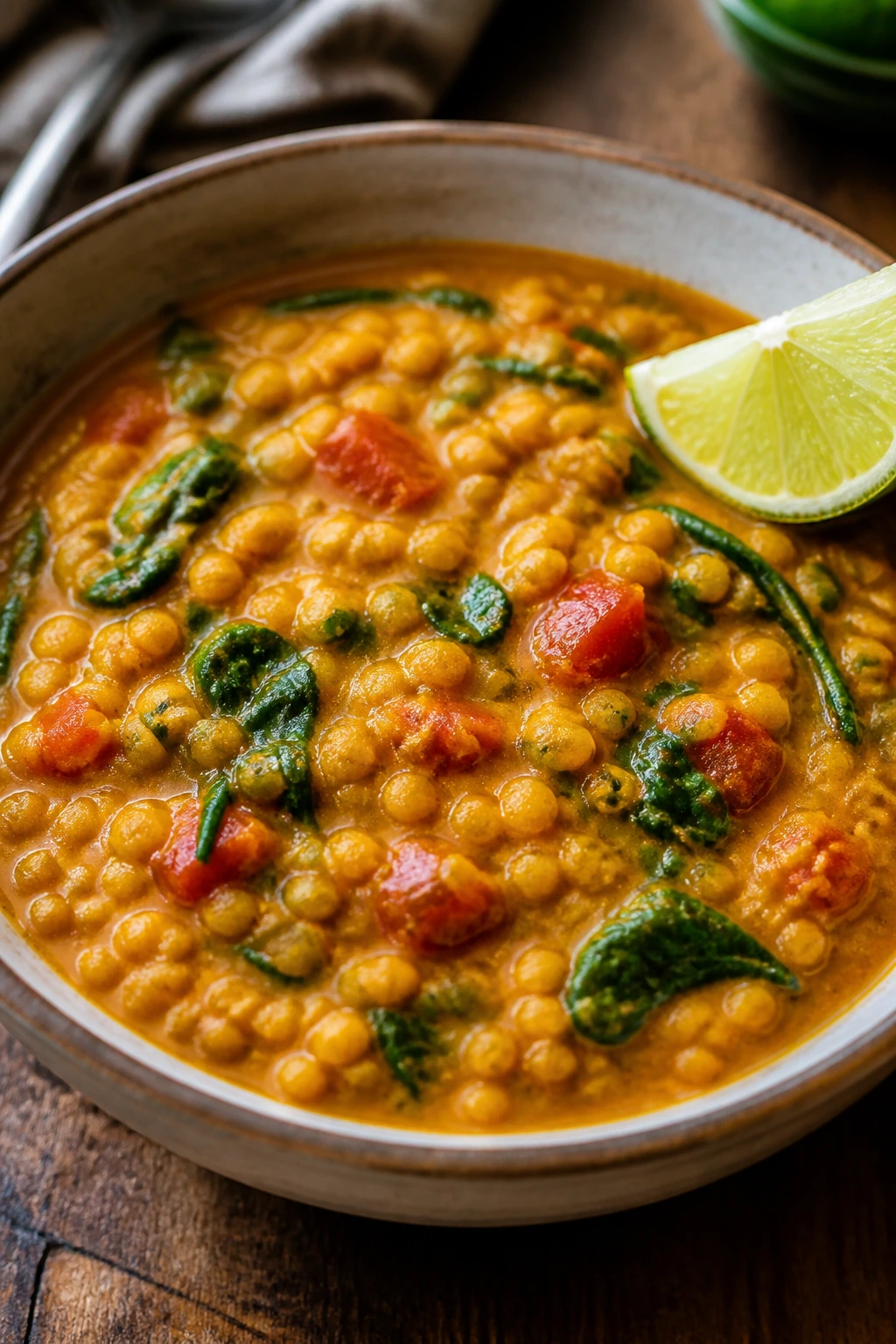
The biggest shortcut in high veggie protein meals is buying the right protein source for the job. Firm tofu should feel dense and springy in the package; extra-firm tofu works best when you want browning, while silken tofu belongs in creamy sauces or smoothies, not the skillet. Tempeh should smell nutty, not sour. If it smells sharp in a bad way, put it back. Paneer should be pale and crumbly around the edges, not sticky.
For beans, canned is fine. Actually, canned beans are often the smarter choice for weeknight meals because they’re already soft and consistent. Rinse them if you want a cleaner flavor and less canning liquid, especially in cold salads and wraps. Dry beans make sense for batch cooking, but they ask for planning, and not every dinner needs that kind of relationship.
Lentils deserve a little category thinking. Red lentils break down and thicken soup or curry. Green and brown lentils hold shape for bolognese, salads, shepherd’s pie, and patties. Black lentils keep the tightest bite, which is why they’re good in tabbouleh or grain bowls. If you use the wrong lentil, the texture may fight you.
For dairy-based meals, choose the version that matches the dish. Ricotta and cottage cheese add body to baked pasta and stuffed peppers, while Greek yogurt gives you cool tang in sauces and wraps. Feta is saltier and drier, so it works better as a finishing cheese than a melting one. Halloumi is the outlier: it likes high heat and a dry pan.
Grains matter too. Brown rice and farro add chew; white rice and couscous disappear faster but support saucy dishes well. Quinoa brings extra protein, though it needs proper rinsing or it tastes bitter. Keep a few of each on hand and you can build dinner from the same pantry without feeling repetitive.
How to Serve These Recipes
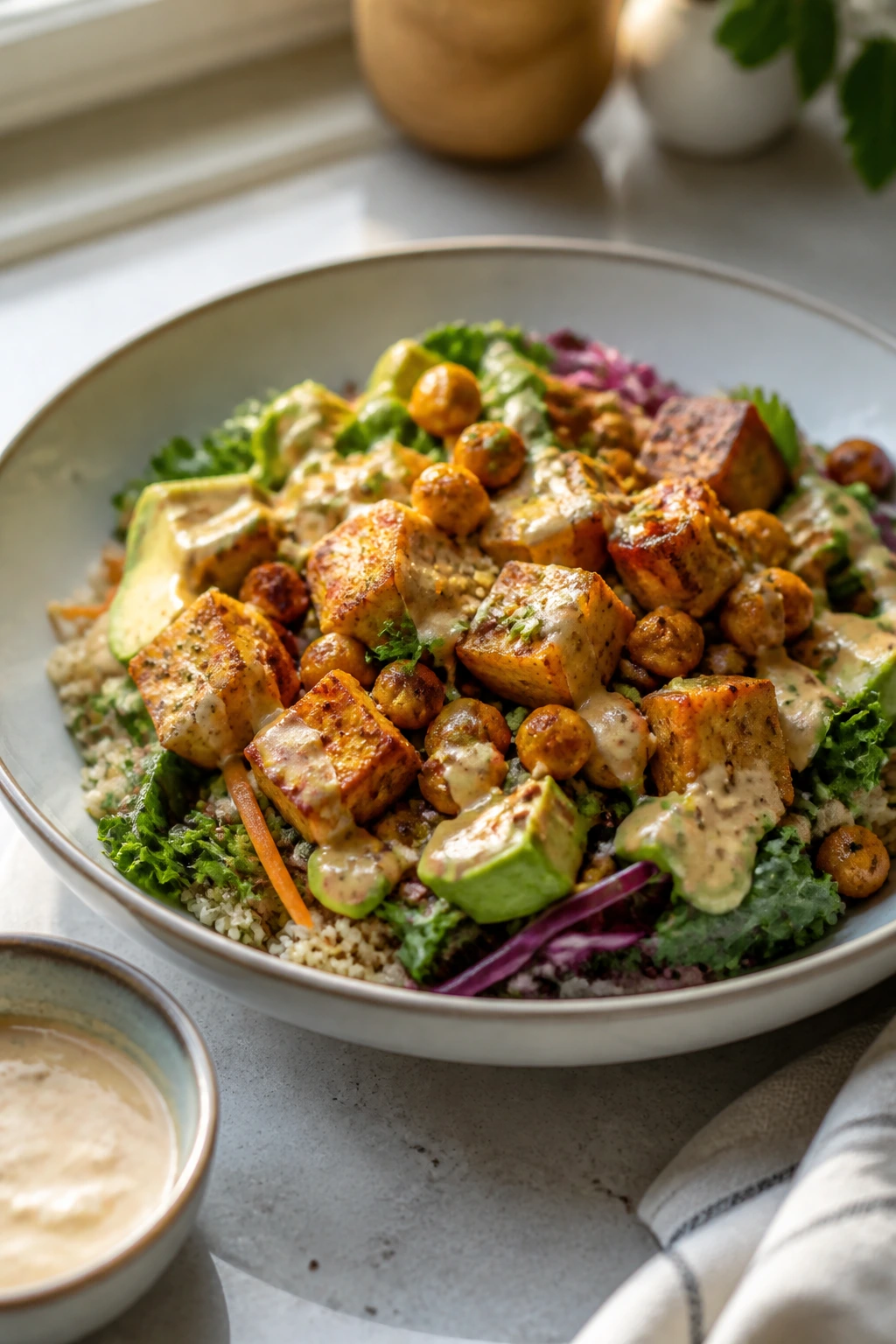
Presentation: For bowls and stews, use wide shallow dishes so the protein and vegetables sit on top instead of sinking into a deep pile. Finish with something green, something sharp, or something crunchy — herbs, lime, pickled onions, seeds, scallions, or a spoon of yogurt all make the plate look more intentional. Baked dishes look best after a short rest, when the slices hold their shape instead of spreading across the plate.
Accompaniments: Crusty bread, pita, naan, rice, roasted potatoes, cucumber salad, quick slaw, or a simple green salad all work as reliable sidekicks. For richer dishes like paneer, lasagna, or baked ziti, keep the side lean and bitter. For lighter bowls, add bread or grains so the meal still feels complete.
Portions: Most of these recipes comfortably serve 4 if you’re building a full plate with sides. For the bowl meals, plan on 1 1/2 to 2 cups per person when the recipe includes grains or beans. For baked pastas and casseroles, a square about the size of your palm is a fair starting point, then scale up if there’s no side dish.
Beverage Pairing: Sparkling water with lemon, unsweetened iced tea, or a dry, lightly chilled beverage with a little acidity all suit these meals well. If you’re serving a spiced curry or harissa bowl, a cool yogurt drink or lime soda works better than something sweet. The goal is to keep the palate clean enough to want another bite.
Additional Tips and Flavor Boosters
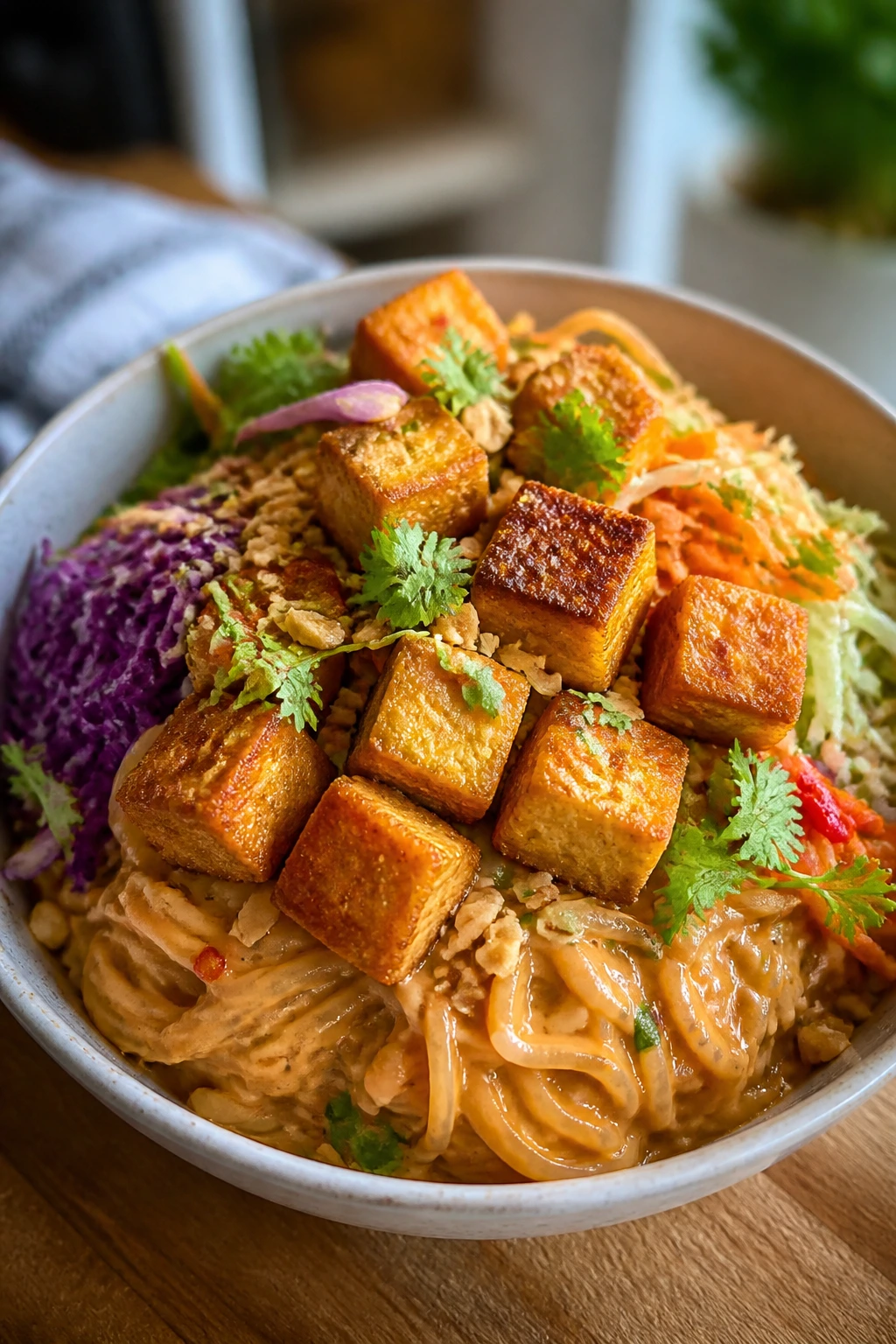
Flavor Enhancement: A final squeeze of lemon or lime fixes more vegetarian meals than most spice racks do. If a bowl tastes dull, it usually needs acid, salt, or a little toasted fat from sesame oil, olive oil, or butter. Chili crisp, pickled onions, and toasted seeds also change the whole mood of a dish with almost no extra work.
Customization: If you want a bigger protein hit, add eggs, edamame, cottage cheese, or a second bean instead of just piling on more vegetables. If you want more body, add rice, barley, farro, or potatoes. If you want a lighter version, keep the same protein source and push the vegetables and herbs up instead of cutting the main thing in half.
Serving Suggestions: Garnish matters more than people admit. Fresh herbs make curry look awake, yogurt swirls make stews taste cooler, and a scatter of sesame seeds on noodles gives the bowl some finish. Even a rough chop of scallions can make a meal feel less like leftovers and more like dinner.
Make-It-Yours: For gluten-free versions, lean on rice, quinoa, potatoes, corn tortillas, and certified gluten-free oats. For dairy-free meals, coconut milk, tahini, and avocado give you plenty of richness. If you’re feeding kids or spice-shy people, keep the heat in a bowl on the side and let them build their own level of fire.
Make-Ahead, Storage, and Reheating Guidance
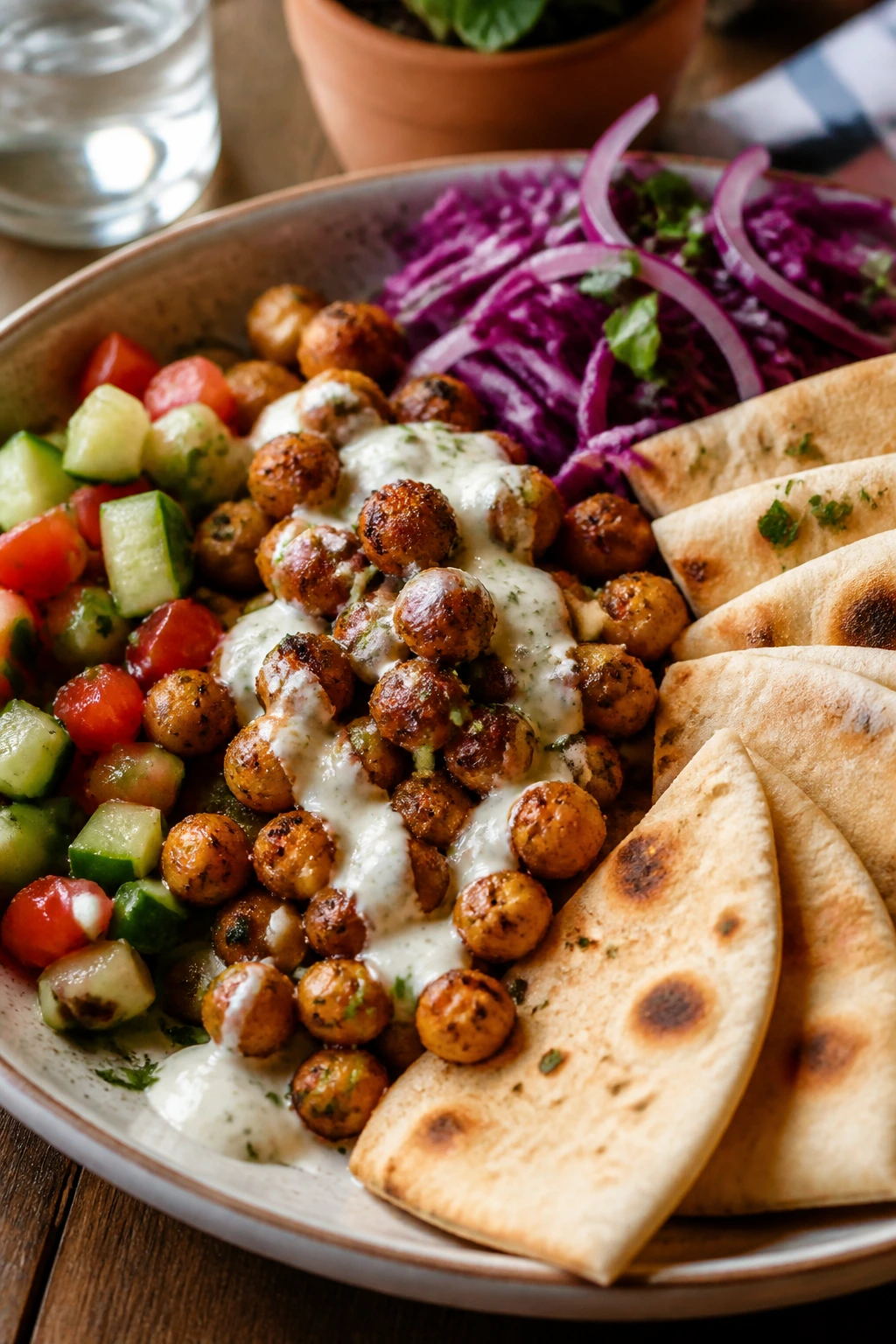
Bean stews, lentil curries, chili, soups, and baked pasta all keep well in the fridge for about 4 days, and many of them taste better after the first night because the seasonings settle in. Store them in airtight containers once they’ve cooled. A shallow container cools faster and helps protect the texture, especially for pasta and rice-based dishes.
Freezer life depends on the recipe. Lentil chili, shepherd’s pie filling, bean soups, and many curries freeze well for up to 3 months. Baked pasta and stuffed shells do fine for about 2 months, though the cheese texture softens a little. Tofu dishes and fresh grain bowls are better in the fridge than the freezer; tofu can go a little spongy, and raw vegetables lose their snap.
Reheat soups and stews on the stovetop over medium-low heat with a splash of water or broth. Stir often so the bottom doesn’t catch. For rice bowls and grain dishes, a covered microwave-safe container with a damp paper towel on top helps the grains steam back to life. Baked casseroles do best in a 350°F oven, covered loosely with foil until heated through. Uncover near the end if you want the top to crisp again.
For make-ahead work, separate crunchy elements from wet ones. Keep tortillas, pita, herbs, avocado, slaw, and sauces apart until serving. Crisp chickpeas, fried tofu, and roasted vegetables last longer than people expect, but they always taste better when the moisture stays off them until the last minute. If a dish is built around yogurt or a fresh herb sauce, make the base ahead and add the cold part right before eating.
Variations and Adaptations to Try
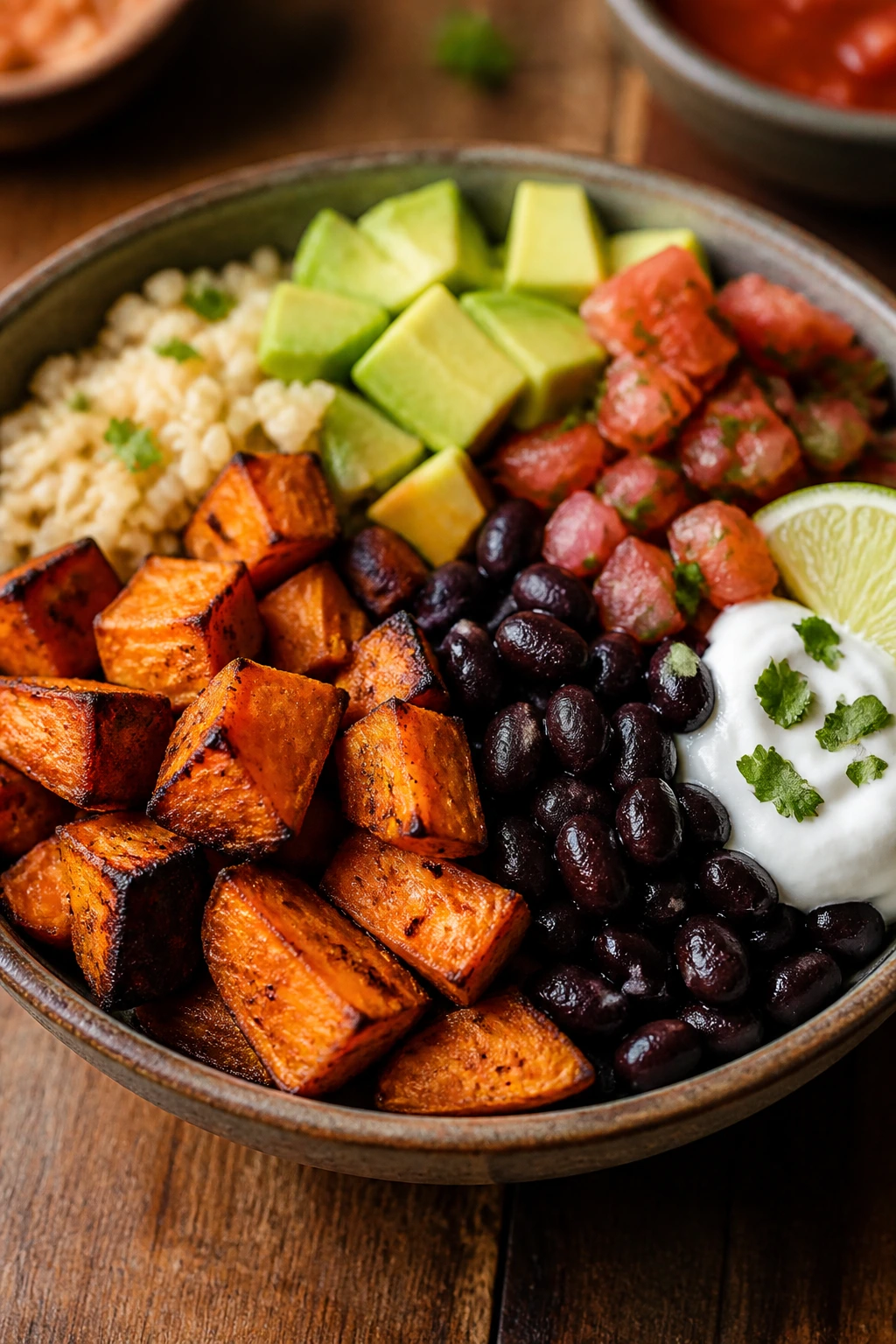
Soy-Free Swaps: If soy doesn’t work for you, lean on chickpeas, lentils, eggs, paneer, cottage cheese, seitan, or white beans instead of tofu and tempeh. The trick is to keep the protein source sturdy enough that the meal still feels anchored. A soy-free curry or bowl needs the same support from acid and fat, so don’t skip those just because you changed the main protein.
Gluten-Free Grain Builds: Rice, quinoa, corn tortillas, potatoes, polenta, and gluten-free pasta cover most of these meals without much trouble. The main thing to watch is soy sauce, seitan, and regular pasta or bread. Once you swap those out, the rest of the meal structure usually stays the same.
Dairy-Light Comfort Meals: Coconut milk, tahini, avocado, and extra beans can replace some of the cream and cheese in richer dishes. You lose a little of the cheesy pull, but you often gain a cleaner flavor and a lighter finish. This works especially well in curries, grain bowls, and chili.
Kid-Friendly Mild Mode: Keep the spice in a side dish or finish it at the table instead of in the main pot. Sweet potatoes, corn, beans, cheese, rice, and pasta usually go over better than aggressive heat or too much bitterness. A sauce on the side gives kids a way to control the plate without changing the meal for everyone else.
Budget Pantry Rotation: Lentils, beans, oats, rice, pasta, canned tomatoes, and frozen vegetables can cover a whole week of meals without asking for specialty ingredients. Use one expensive item — feta, paneer, halloumi, or fresh herbs — as a finish rather than the main event. That keeps the recipes from feeling stripped down.
Higher-Protein Boosts: If you want even more staying power, stack protein sources instead of trying to make one ingredient do all the work. Beans plus eggs. Tofu plus edamame. Quinoa plus chickpeas. Cottage cheese plus lentils. The combination matters more than chasing a single magic ingredient.
Common Mistakes to Avoid
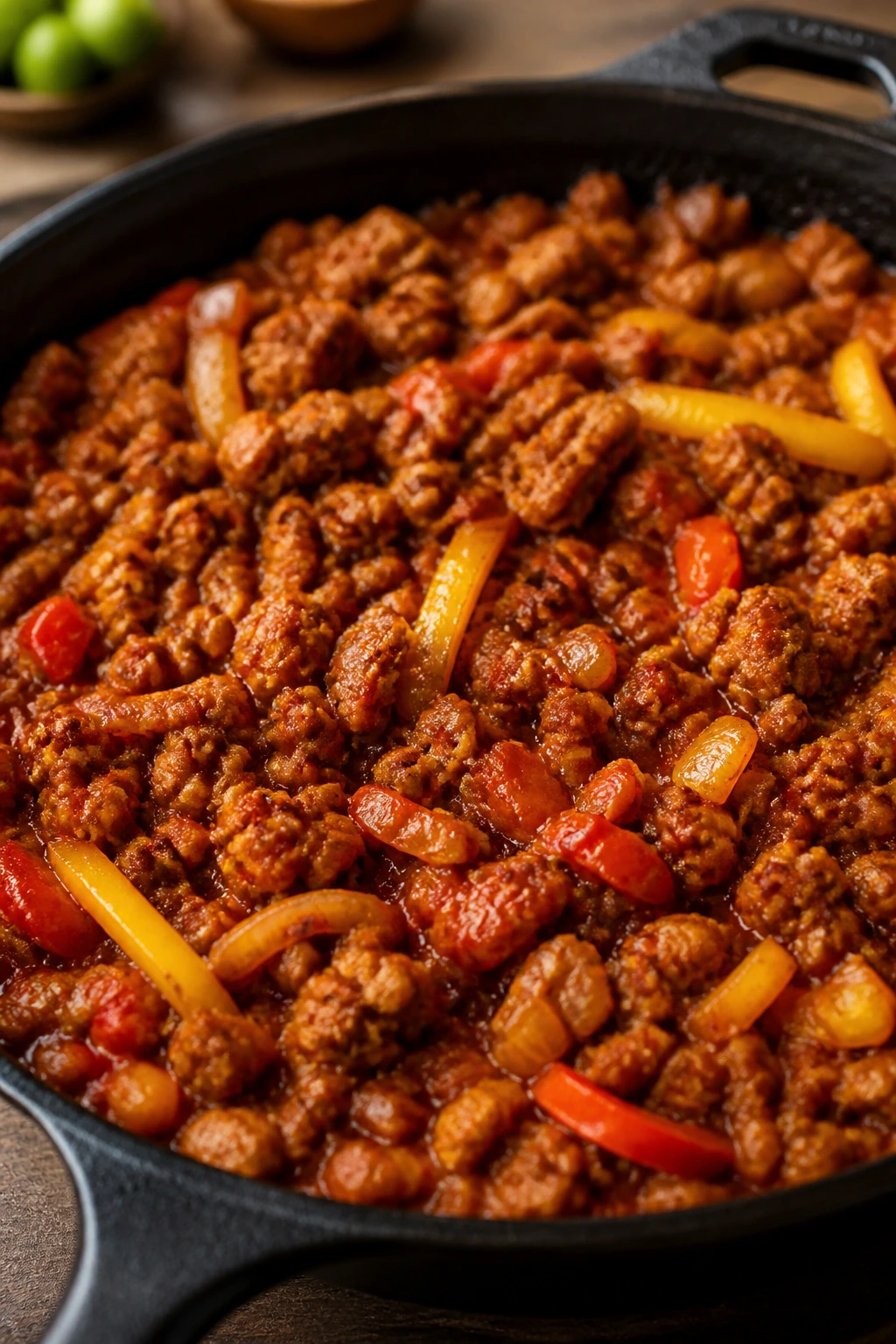
The first mistake is building a meatless meal out of vegetables and hoping the rest takes care of itself. That’s how you end up hungry again before the dishes are done. Beans, tofu, lentils, eggs, paneer, or seitan need to show up early in the plan, not as an afterthought.
The second mistake is under-seasoning the base. People often salt the top but forget the rice, pasta, lentils, or potatoes underneath. Those plain layers swallow flavor, and the whole meal tastes flatter than it should. Season each layer lightly instead of trying to rescue the dish at the end.
Wet vegetables cause another problem. Roasted cauliflower that wasn’t dried, zucchini that leaked too much water, spinach that wasn’t squeezed, or chickpeas that went into the oven damp will turn a good recipe soggy fast. Drying, draining, or pre-cooking those ingredients takes a minute and saves the whole plate.
Another common miss is weak texture. If everything in the bowl is soft, the meal feels smaller than it is. Add something crisp, browned, chewy, or crunchy: toasted nuts, roasted chickpeas, browned tofu, raw cucumber, shredded cabbage, or a crisp tortilla edge. It sounds small. It changes everything.
People also rush the browning step. Tofu, tempeh, mushrooms, onions, and even beans taste deeper after they’ve had time to caramelize or reduce. If the pan is crowded or the heat is too low, you get pale ingredients that taste boiled. Give the skillet room.
Finally, don’t forget acid at the end. Lemon, lime, vinegar, pickles, salsa, and yogurt are not garnish here; they’re part of the structure. A meal can be protein-heavy and still taste sleepy without something sharp to wake it up.
Frequently Asked Questions
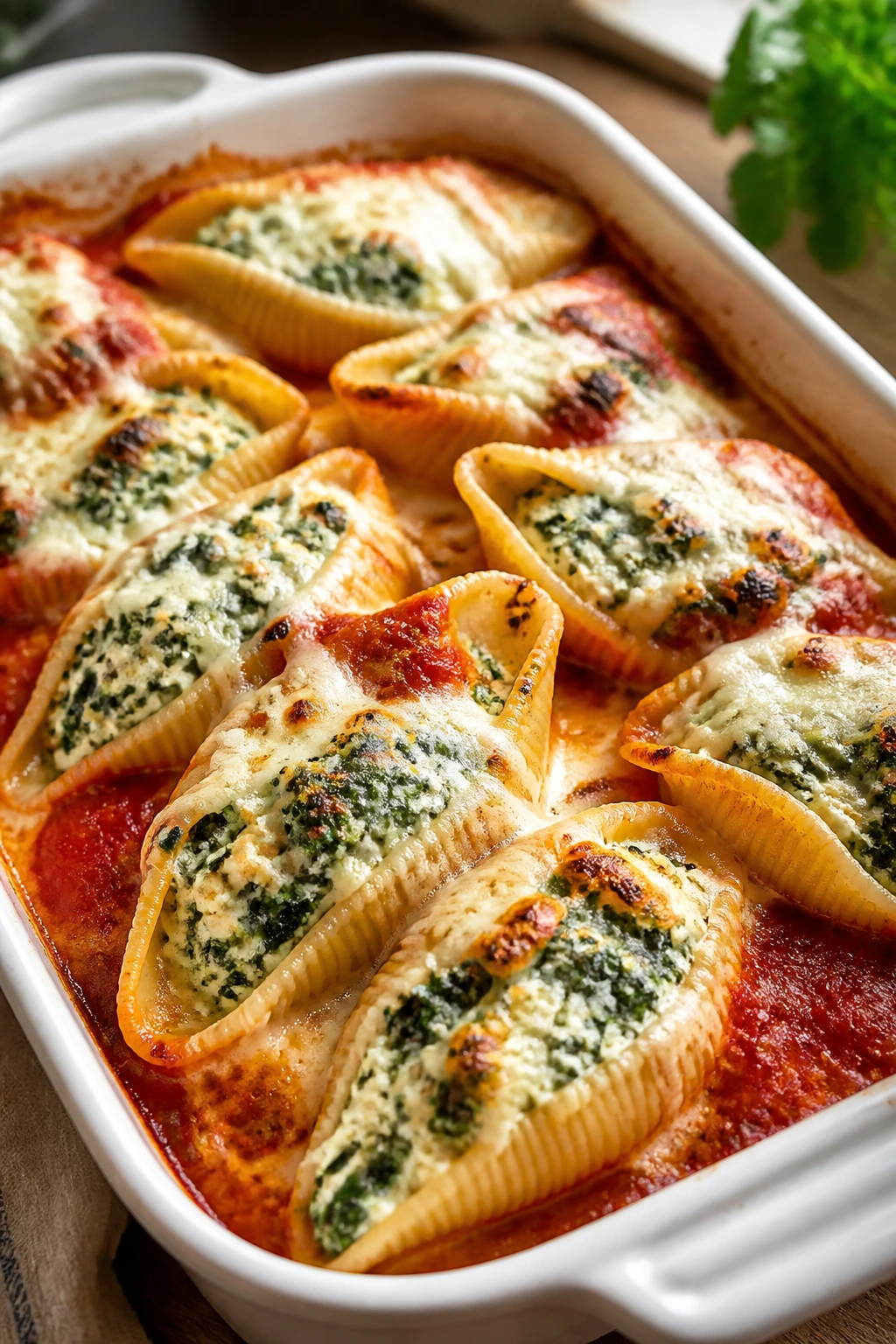
How much protein should a meatless meal have to feel filling?
For most people, a main meal with around 20 to 30 grams of protein feels steady, especially when it also includes fiber and some fat. That’s why beans alone sometimes fall short, while beans plus rice, tofu plus edamame, or eggs plus potatoes tend to hold better.
What are the easiest high-protein vegetarian ingredients to keep on hand?
Canned beans, lentils, tofu, tempeh, eggs, Greek yogurt, cottage cheese, quinoa, and chickpea pasta are the easiest workhorses. They store well, cook fast, and can be turned into bowls, soups, wraps, and bakes without a lot of extra shopping.
Can I make these meals ahead for the week?
Yes, especially the soups, chili, curries, baked pasta, stuffed peppers, and grain bowls. Keep sauces and crunchy toppings separate if you want the best texture, and add fresh herbs, avocado, or yogurt right before eating.
What if I don’t like tofu or tempeh?
Use lentils, chickpeas, black beans, eggs, cottage cheese, paneer, halloumi, or seitan instead. You can get the same filling effect by combining one protein with a grain and a sauce, so tofu is helpful but not required.
How do I make bean-based meals less gassy?
Rinse canned beans well, cook dry beans fully, and start with smaller portions if your stomach is sensitive. Spices like cumin and ginger can help some people, and soaking dry beans with a rinse before cooking often makes them easier to handle.
Can these recipes be frozen?
Most soups, chili, lentil sauces, and casseroles freeze well for a couple of months. Meals with fresh vegetables, avocado, yogurt, or crispy tofu are better eaten from the fridge rather than the freezer because the texture changes fast.
How do I make a vegetarian meal taste less flat?
Use salt in layers, brown the protein or vegetables well, and finish with acid. Lemon, lime, vinegar, pickles, salsa, and yogurt are the easiest way to wake up a pot that tastes muted after cooking.
What’s the best meal here for a beginner cook?
The black bean sweet potato bowls, chickpea curry, white bean soup, and tofu rice bowls are forgiving and don’t punish small timing mistakes. They also give you room to taste and adjust as you go, which is useful when you’re still learning how much salt and acid a dish needs.
Meals Worth Repeating
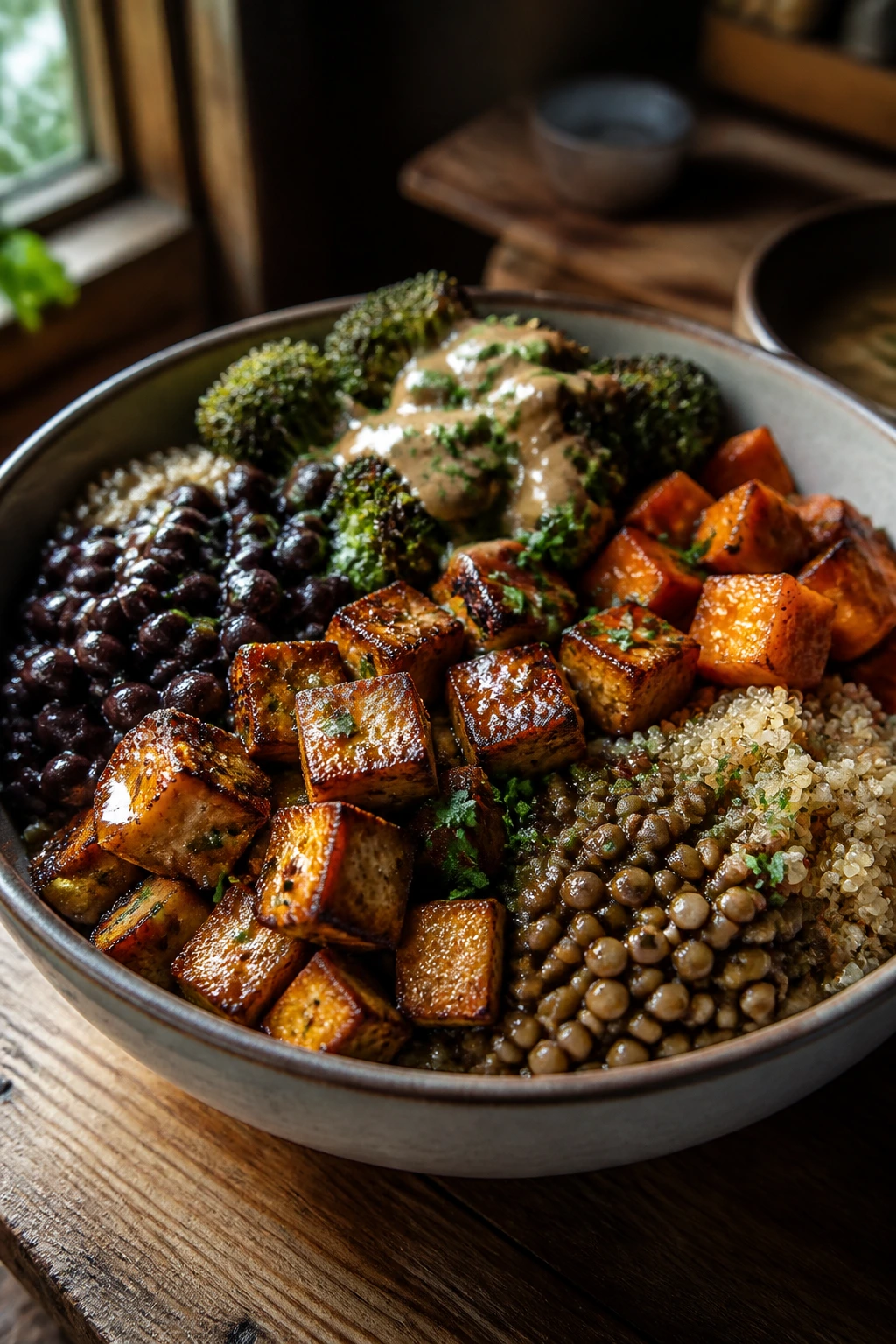
The point of a meatless meal is not to feel lighter in a sad way. It’s to build dinner with ingredients that actually carry their weight: beans that hold texture, tofu that browns, lentils that thicken a pot, grains that add chew, and sauces that make the whole thing feel finished.
Once you start cooking vegetarian meals with that kind of structure, the phrase “without meat” stops sounding like a limitation. It just becomes another way to cook. And if you keep a few of these in rotation — one curry, one skillet, one pasta bake, one bowl, one soup — you’ll have the kind of weeknight lineup that doesn’t ask for a backup plan.