



A bad vegan sandwich is a sad thing: limp bread, a smear of something creamy, and tomatoes that leak their way straight through the crust before you’ve taken the second bite. A fresh vegan sandwich for a healthy dinner has to do the opposite. It needs structure. It needs crunch, acid, and enough body that the sandwich still feels like a meal when you set the last half down on the plate.
The version I reach for most often starts with toasted whole-grain bread, a chickpea filling that’s mashed but not pasted into submission, and a quick stack of cucumbers, tomatoes, avocado, greens, and pickled onion. That combination sounds simple because it is simple. The trick is in the order. The bread has to stay dry, the vegetables have to stay crisp, and the creamy parts have to pull their weight instead of turning the whole thing slippery.
I like this style of sandwich because it eats like dinner, not like a rushed lunch you accidentally made more complicated. Chickpeas and hummus bring enough heft to keep you full, avocado gives the sandwich a soft, rich middle, and the vinegar in the onions keeps the bites lively all the way through. The first bite should snap a little at the edges. The middle should turn creamy. The finish should have a clean lemon-and-salt sting that makes you want the next half immediately.
If your last few vegan sandwiches collapsed into a damp stack halfway to the table, this one fixes the usual weak spots. The build is practical. The ingredients are cheap enough to make on repeat. And the whole thing comes together fast enough that you do not need to treat dinner like a project.
Why This Fresh Vegan Sandwich Works on a Real Weeknight
Dinner needs more than vegetables between bread. It needs a backbone, a little chew, and a flavor pattern that keeps changing as you eat. This fresh vegan sandwich gets there without asking for a skillet full of sauce or a long list of pantry extras.
The texture trick
Chickpeas are doing the heavy lifting here, but they’re not acting alone. When you mash only part of them, you get a filling that holds together without turning into paste. That matters more than people think. Paste spreads thin and slips around; a chunkier filling stays put under the tomatoes and avocado, and it gives the sandwich a bite that feels substantial.
The bread matters just as much. I won’t defend soft white sandwich bread here. It can taste fine for the first two bites, then it turns into a sponge. A sturdy whole-grain loaf or sourdough gives you a crust that can handle moisture for long enough that the sandwich still feels crisp at the table.
The dinner-size trick
A lot of vegan sandwiches read like lunch. This one reads like dinner because it has enough fat, fiber, and crunch to fill the plate. The chickpeas and hummus bring a solid base, the avocado slows everything down in a good way, and the vegetables keep the whole thing from feeling dense or muddy.
There’s also the little matter of acid. Without it, the chickpeas taste flat and the avocado tastes heavier than it should. With quick-pickled onion and lemon juice, the sandwich gets a bright edge that cuts through the creamy parts and makes the last bite taste as good as the first.
No limp middle. That’s the real goal.
Why You’ll Love This Recipe
-
The texture changes in every bite: Toasted bread, creamy chickpeas, crisp cucumber, soft avocado, and sharp onion keep the sandwich from tasting one-note.
-
It works as a full meal: The chickpeas, hummus, and whole-grain bread give the sandwich enough substance that you do not need to build a giant spread around it.
-
The prep is honest and simple: Slice, mash, toast, assemble. Nothing here needs special equipment or a long simmer.
-
It uses ingredients that pull double duty: The quick-pickled onions brighten the whole sandwich, and the tahini drizzle adds a nutty finish that makes the plate feel finished.
-
It’s easy to adjust: You can change the bread, swap the greens, or make it spicier without breaking the recipe’s structure.
-
It’s good for meal planning: The onions and chickpea filling can be made ahead, so the sandwich turns into assembly instead of cooking when dinner time arrives.
What Makes It Feel Fresh Instead of Heavy
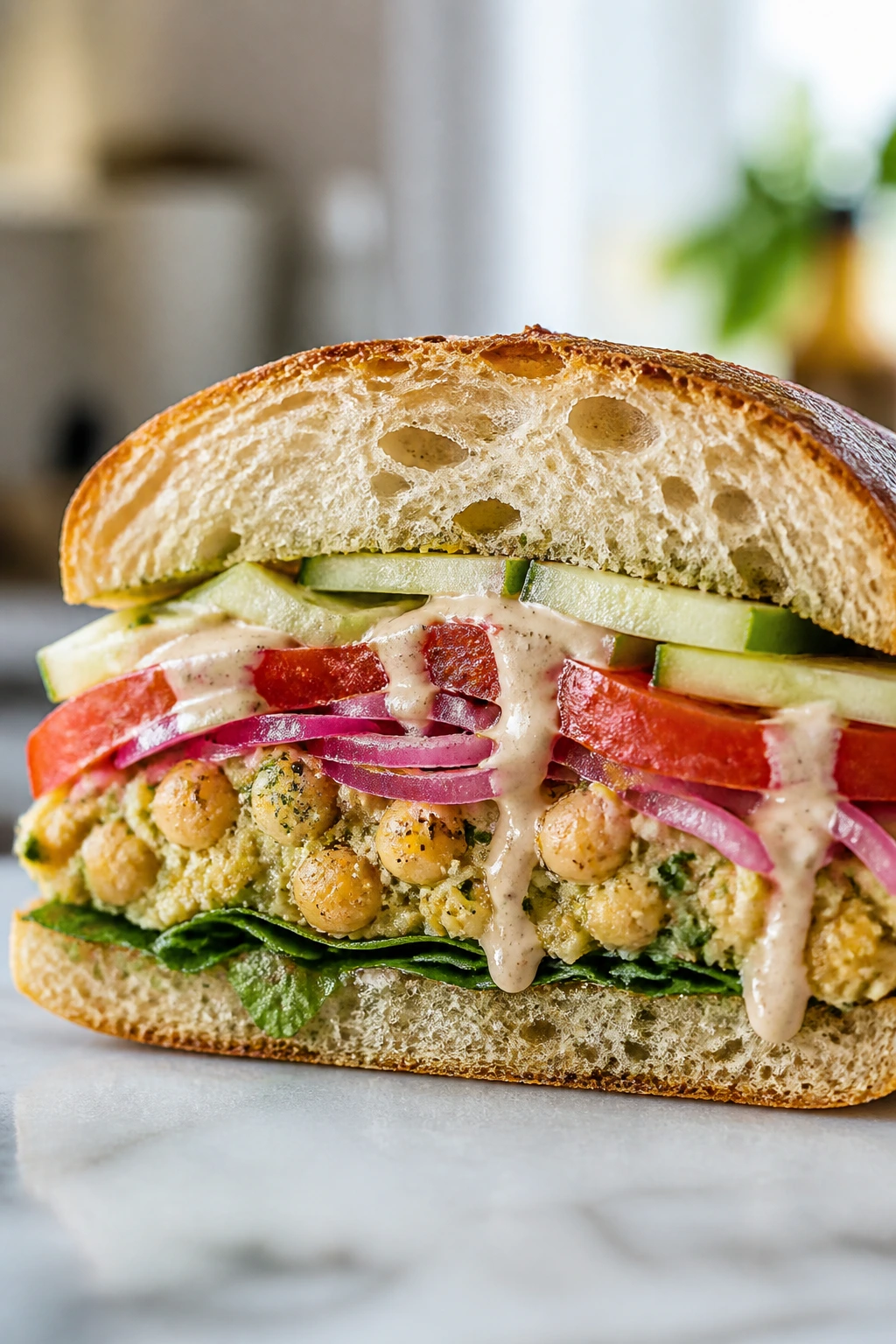
The word fresh gets thrown around a lot, but in a sandwich like this it means something specific. It means the tomatoes are still juicy but not wet enough to ruin the bread. It means the cucumber tastes cold and clean. It means the onion has enough vinegar to wake up the chickpeas without making the whole thing taste sour.
The other trick is restraint. A heavy vegan sandwich usually tries to do too much at once. Too much spread. Too much avocado. Too many slippery layers. This one keeps the creamy parts in check and lets the vegetables speak for themselves. That’s why it feels light without being flimsy.
Acid keeps the bite awake
A splash of lemon juice in the chickpea filling and a quick pickle on the onion do more work than a second spoonful of mayo ever could. The acid gives the chickpeas shape. It makes the bread taste more toasted. It stops the avocado from reading as rich in a dull, sleepy way.
There’s a reason deli sandwiches often work so well. They understand that a sandwich needs contrast, not just volume. This vegan version borrows that idea and swaps in plant-based ingredients that still know how to hold a line.
Water is the enemy until the last minute
Tomatoes and cucumbers are both full of water, which is exactly why they taste so good and why they can wreck a sandwich if you’re careless. I like to slice them thin, blot them quickly, and keep them out of the bread until assembly. That tiny bit of fuss saves the whole lunchbox/dinner-plate situation from becoming mushy.
And yes, the bread should be toasted. Not charred. Not pale and soft. Toasted enough that the surface feels dry when you touch it, and the edges just start to color. That’s the difference between a sandwich and a sad stack of fillings.
Serving and Timing at a Glance
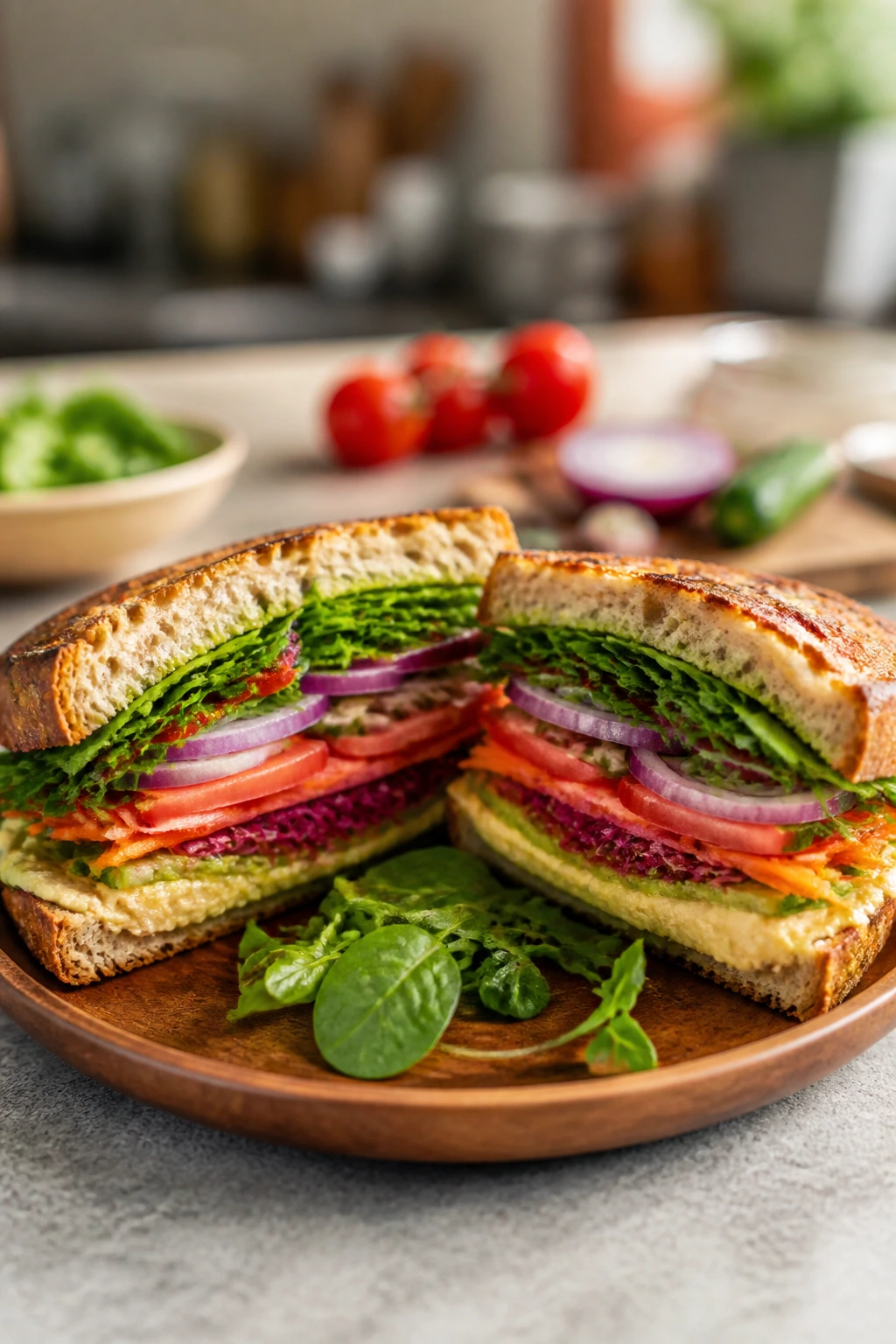
Yield: Serves 4
Prep Time: 20 minutes
Cook Time: 5 minutes
Total Time: 25 minutes
Difficulty: Beginner — everything is mixed by hand and assembled in layers, with no tricky technique beyond toasting bread properly.
Chill/Rest Time: 10 minutes for the quick-pickled onions
Best Served: Right away, while the bread is crisp and the vegetables still feel cold
The timing is forgiving because the onions can sit while you chop everything else. If you keep the chopping organized, the sandwich moves fast. That’s part of its charm. Dinner is on the table before you’ve had time to talk yourself into ordering something else.
Ingredients for the Sandwich and Quick Pickle
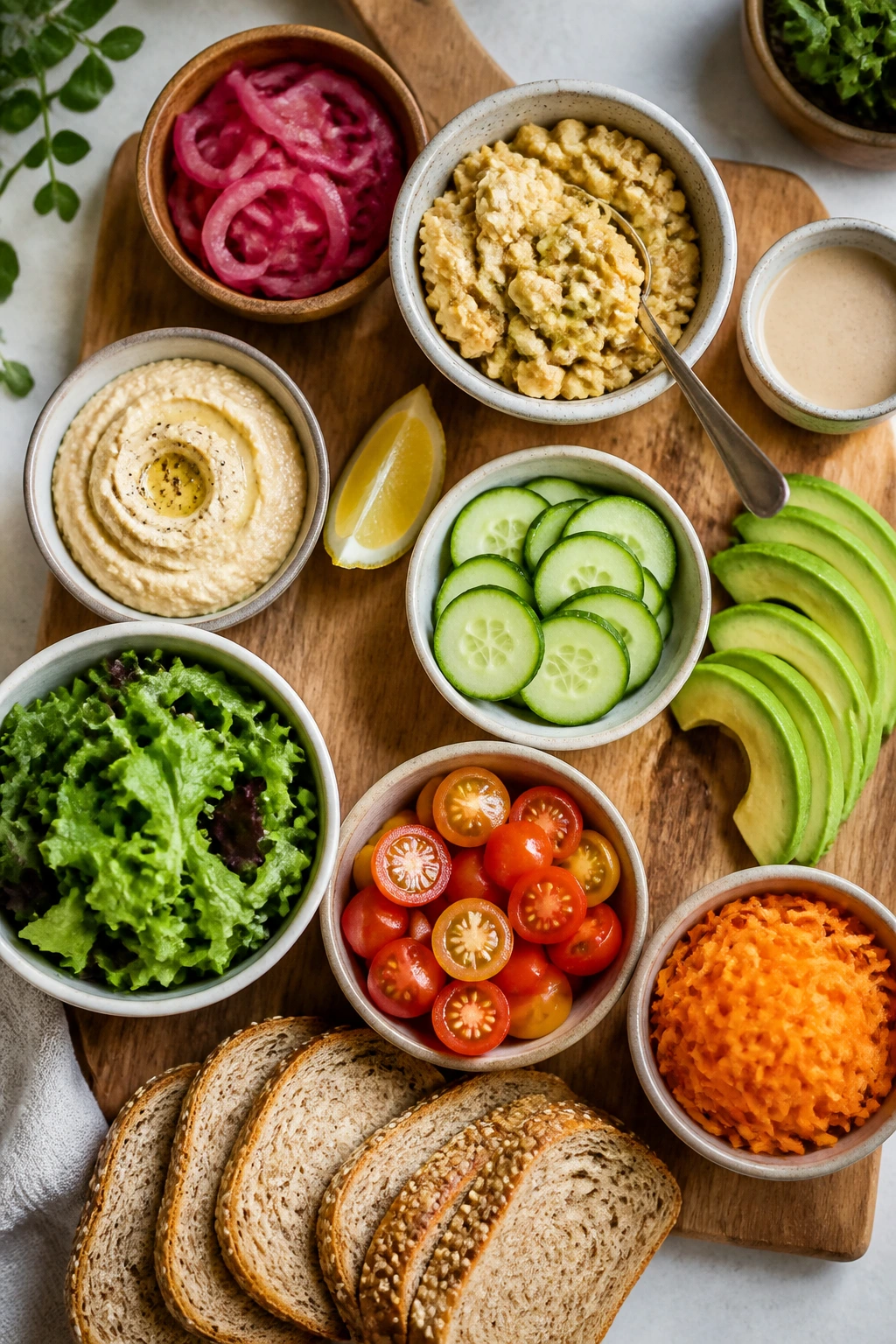
For the Quick-Pickled Onions:
- 1 small red onion, very thinly sliced
- 1/2 cup apple cider vinegar
- 1/2 cup water
- 1 teaspoon sugar
- 1 teaspoon kosher salt
For the Chickpea Filling:
- 1 (15-ounce) can chickpeas, drained, rinsed, and patted dry
- 1/2 cup plain hummus
- 1 tablespoon lemon juice
- 1 tablespoon extra-virgin olive oil
- 1 small garlic clove, finely grated
- 1/2 teaspoon ground cumin
- 1/2 teaspoon kosher salt
- 1/4 teaspoon black pepper
- 2 tablespoons chopped fresh parsley or dill
For Assembly:
- 8 slices sturdy whole-grain bread or sourdough, toasted
- 1 ripe avocado, sliced
- 1 medium cucumber, thinly sliced
- 2 medium tomatoes, sliced into 1/4-inch rounds
- 2 cups baby spinach or romaine
- 1 cup shredded carrots
- 1/2 cup alfalfa sprouts or microgreens
- 2 tablespoons tahini
- 1 to 2 tablespoons water, for thinning the tahini
- Pinch of salt
- Flaky salt, to finish
- Black pepper, to taste
What Each Layer Does in the Sandwich
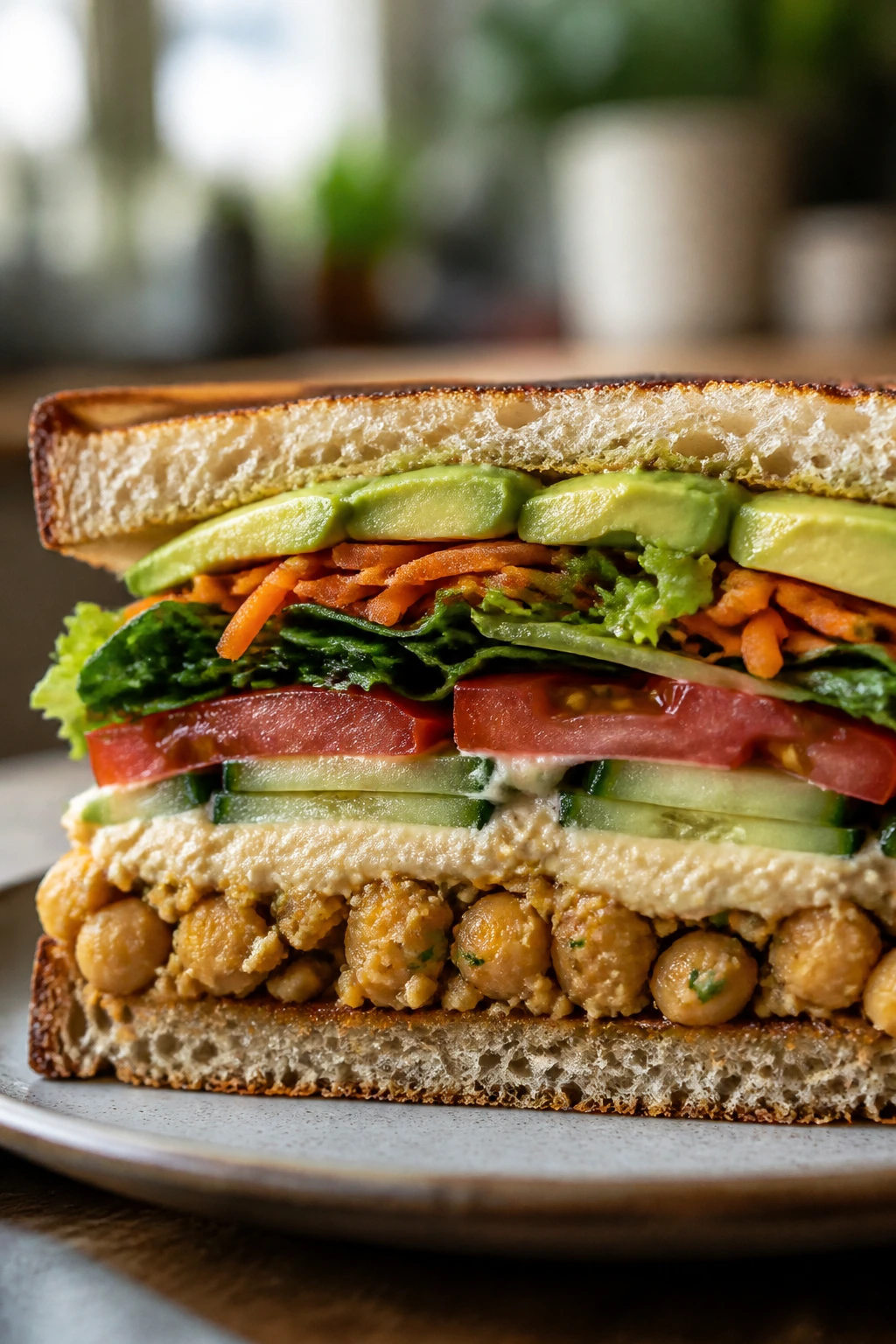
Bread or Base
What to use: 8 slices sturdy whole-grain bread or sourdough, ideally about 1/2 inch thick.
Preparation: Toast until the surface is dry and lightly golden, with edges that feel crisp when you press them.
Substitutions: Ciabatta, seeded sandwich bread, rye, gluten-free loaf, or split pita rounds all work if they’re sturdy enough to hold moisture.
Tips: If the loaf feels soft and squishy in the bag, it will not magically improve once the tomatoes hit it. The bread needs a crust to survive the rest of the build.
Chickpeas and Hummus
What to use: 1 can chickpeas plus 1/2 cup plain hummus.
Preparation: Drain and pat the chickpeas dry, then mash about two-thirds of them so you keep some texture.
Substitutions: White beans, smashed baked tofu, or a lentil mash can stand in if chickpeas are not your thing.
Tips: Don’t puree the filling. A few intact chickpeas keep the sandwich from tasting like dip spread between slices.
Fresh Vegetables
What to use: 1 cucumber, 2 medium tomatoes, 2 cups baby spinach or romaine, and 1 cup shredded carrots.
Preparation: Slice the cucumber thin, cut the tomatoes into neat rounds, and blot both with paper towel if they look wet.
Substitutions: Bell pepper, shaved fennel, arugula, shredded cabbage, or radish all bring a different kind of crunch.
Tips: Choose tomatoes that smell like tomatoes. Pale, mealy slices make the whole sandwich flatter than it should be.
Avocado, Herbs, and Pickled Onion
What to use: 1 ripe avocado, 2 tablespoons chopped parsley or dill, and 1 small red onion for quick pickling.
Preparation: Slice the avocado at the last minute so it stays bright and firm, and let the onion sit in vinegar for at least 10 minutes.
Substitutions: Shallot can replace red onion, and cilantro or dill can replace parsley if you want a stronger herbal note.
Tips: The avocado should yield slightly when pressed, not feel soft enough to collapse. If it’s too ripe, it will smear instead of slice.
Seasonings, Acid, and Tahini
What to use: Lemon juice, olive oil, cumin, garlic, salt, pepper, and tahini.
Preparation: Stir the tahini with water until it drizzles in a thin ribbon rather than clumping into a paste.
Substitutions: A little vegan mayo can replace the tahini drizzle, though it changes the flavor and makes the sandwich richer.
Tips: Salt has to show up twice here: once in the filling and again at the end. Chickpeas need it, and bread dulls it.
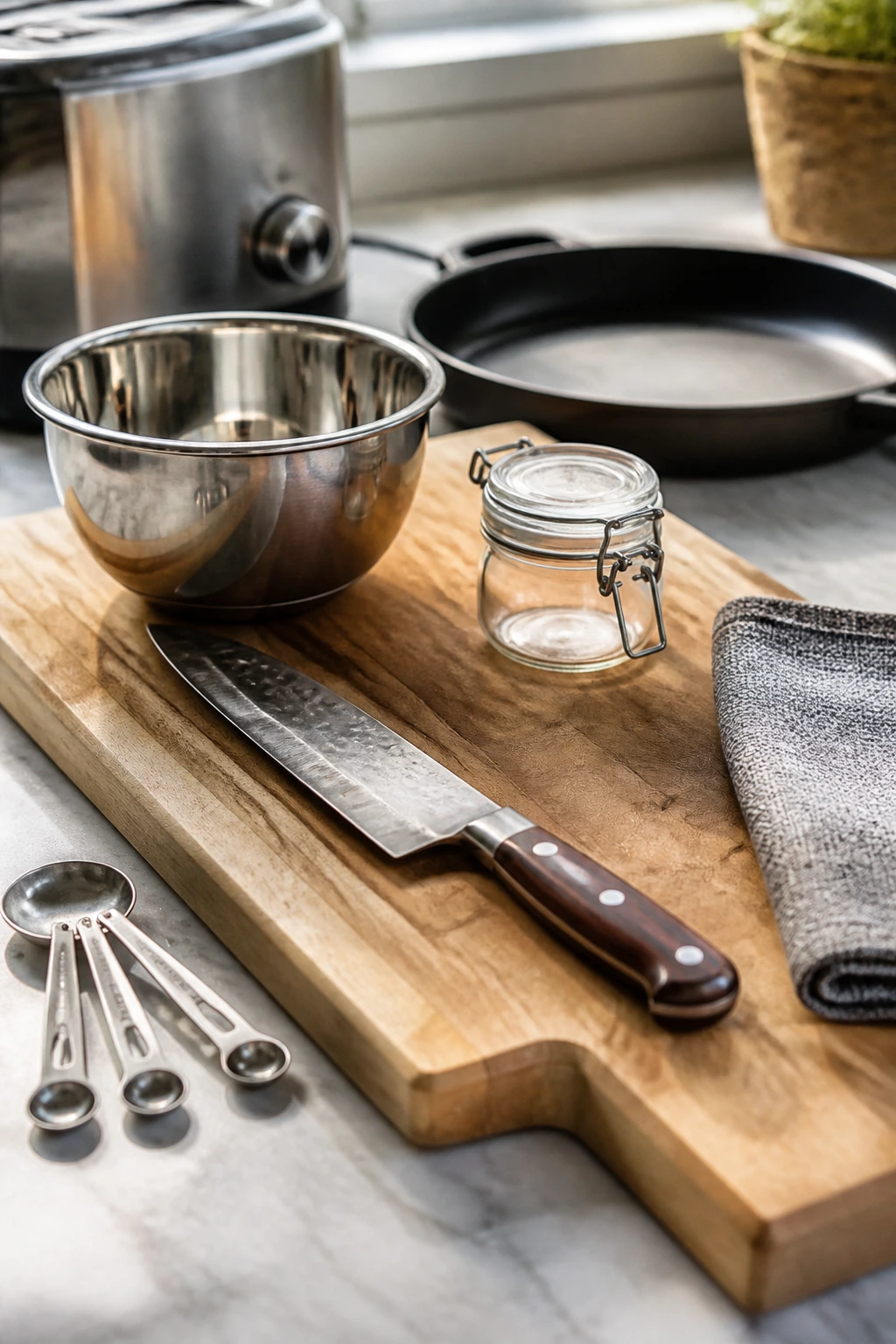
The Tools That Make Assembly Easier
-
Cutting board: A large one gives you room to slice vegetables without chasing cucumber rounds across the counter.
-
Chef’s knife: A sharp knife makes clean tomato slices instead of crushed edges and leaking juice.
-
Medium mixing bowl: Big enough to mash the chickpeas without flinging bits over the side.
-
Fork or potato masher: A fork works fine, but a masher makes the chickpea texture more even if you’re making this often.
-
Small bowl or jar: Useful for the quick-pickled onions and the tahini drizzle.
-
Toaster or dry skillet: Either one can toast the bread; a skillet gives you more control if the slices are thick.
-
Measuring spoons: You can eyeball some things, but the lemon, cumin, and salt are better when you stay close to the numbers.
-
Paper towels or a clean kitchen towel: Handy for blotting tomatoes and cucumber, which is boring work that saves the sandwich.
How to Build the Sandwich Step by Step
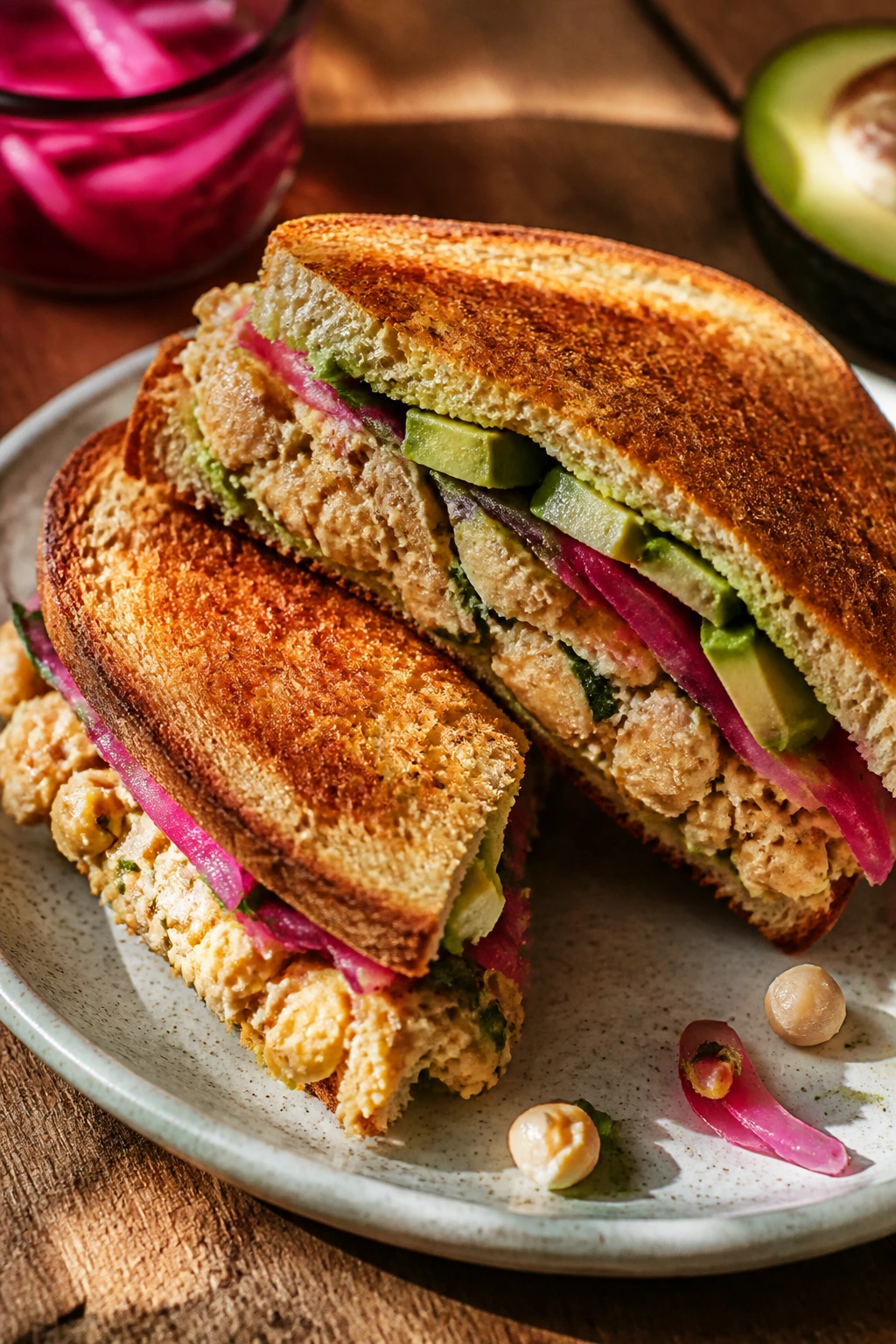
Quick-Pickle the Onion:
-
Put the sliced red onion in a small bowl. Add the apple cider vinegar, water, sugar, and salt, then toss with your fingers or a fork until the onions are coated.
-
Let the onions sit for 10 minutes, stirring once or twice while you prep the rest of the ingredients. They should turn bright pink and soften at the edges while still keeping a little bite.
Make the Chickpea Filling:
3. Add the drained, rinsed chickpeas to a medium bowl and mash them with a fork or potato masher until about two-thirds of the beans are broken down. You want a chunky mix, not a paste.
-
Stir in the hummus, lemon juice, olive oil, grated garlic, cumin, salt, pepper, and chopped herbs. Mix until the filling looks creamy and spoonable, with some whole chickpeas still visible.
-
Taste the filling and adjust with a pinch more salt or another small squeeze of lemon if needed. The mixture should taste a little louder than you think it needs to, because the bread will calm it down once everything is stacked.
Toast and Assemble:
6. Toast the bread in a toaster or dry skillet over medium heat for 2 to 4 minutes, until the slices are golden and feel dry at the edges. Do not under-toast the bread; soft slices turn soggy fast once the tomatoes go on.
-
Whisk the tahini with 1 tablespoon water and a pinch of salt in a small bowl. Add the second tablespoon of water only if needed, until it drizzles smoothly instead of clumping.
-
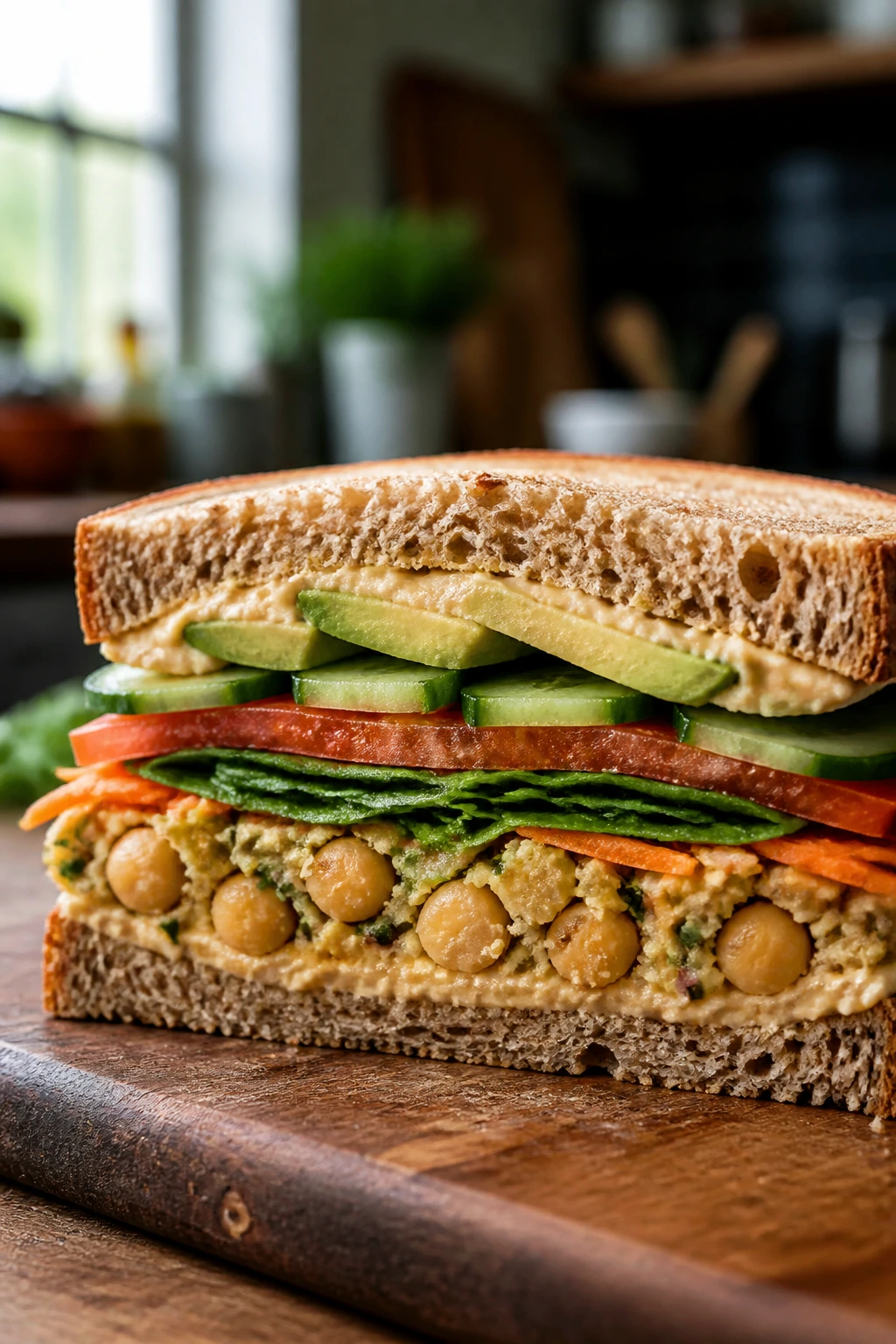
Lay out 4 slices of toasted bread. Layer on spinach or romaine first, then cucumber, tomato, chickpea filling, avocado, shredded carrots, sprouts, and a few spoonfuls of the pickled onion.
-
Drizzle the tahini over the top, season with flaky salt and black pepper, then close with the remaining bread slices. Slice each sandwich on the diagonal and serve immediately while the toast still has some crunch.
How to Serve It at Dinner
Presentation:
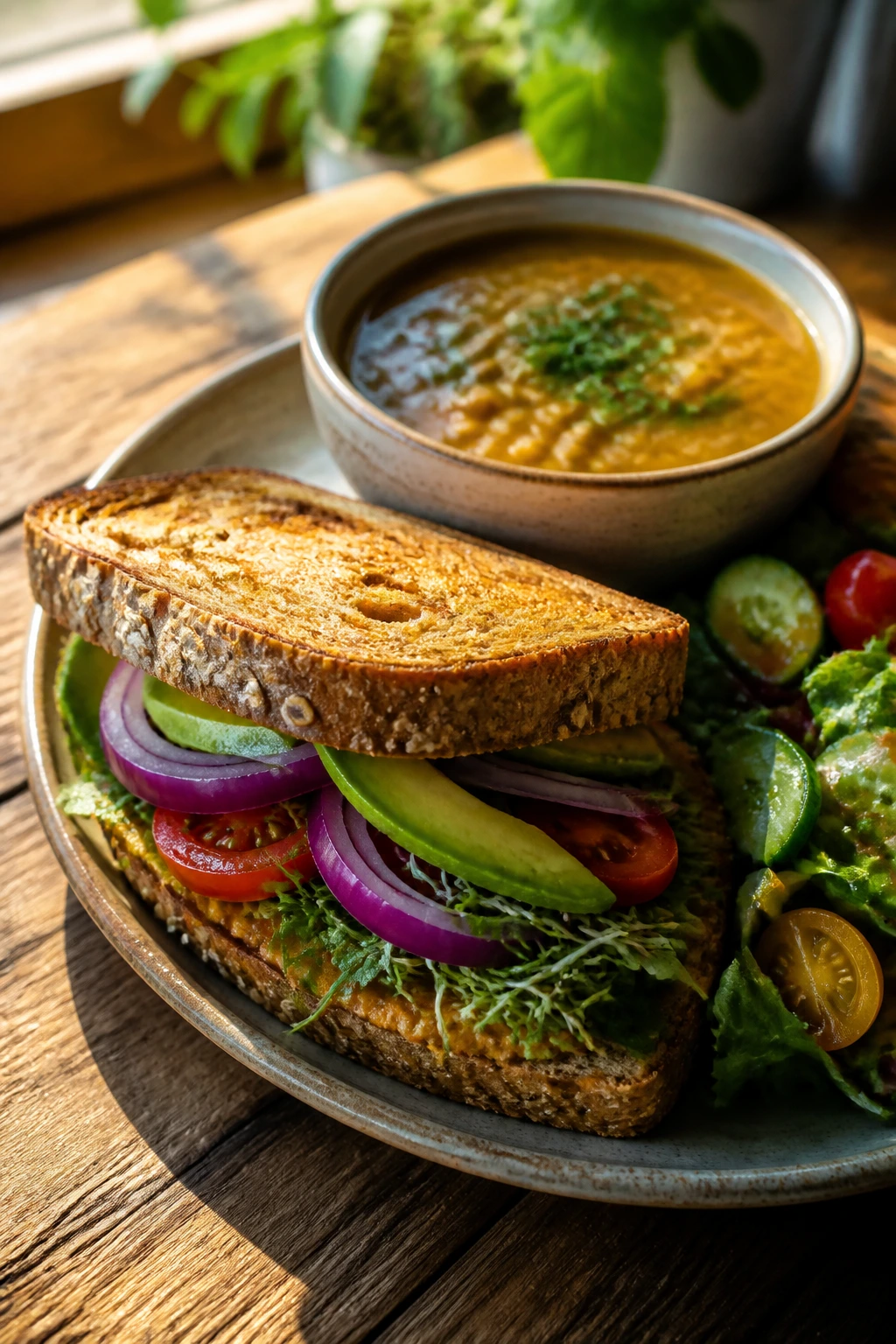
Cut the sandwiches cleanly on the diagonal and stack the halves slightly offset on the plate so you can see the avocado, chickpeas, and onion peeking out. A few extra pickled onion slices scattered on top make the plate look intentional instead of crowded. If the carrots are long, tuck a few loose strands beside the sandwich rather than trying to force them inside.
Accompaniments:
A small bowl of lemony lentil soup is the side I reach for when I want a fuller dinner. If you want something lighter, serve the sandwich with a crisp cucumber-dill salad or a handful of roasted broccoli tossed with olive oil and salt. Sweet potato wedges work too, especially if you dust them with smoked paprika and roast them until the edges go a little bronzed.
Portions:
One sandwich is enough for a lighter dinner, especially if you serve it with soup or a salad. Two halves plus a side dish satisfy a bigger appetite without making the plate feel overloaded. If you’re feeding kids or smaller eaters, cut each sandwich into quarters and let everyone eat it like finger food.
Beverage Pairing:
Sparkling water with lemon keeps the meal bright, and unsweetened iced tea does the same job without stealing the spotlight. If you want something with a little more bite, a dry apple cider or a very cold pilsner works well with the vinegar in the onions and the cumin in the chickpeas.
Small Upgrades That Change the Whole Sandwich
Flavor Enhancement:
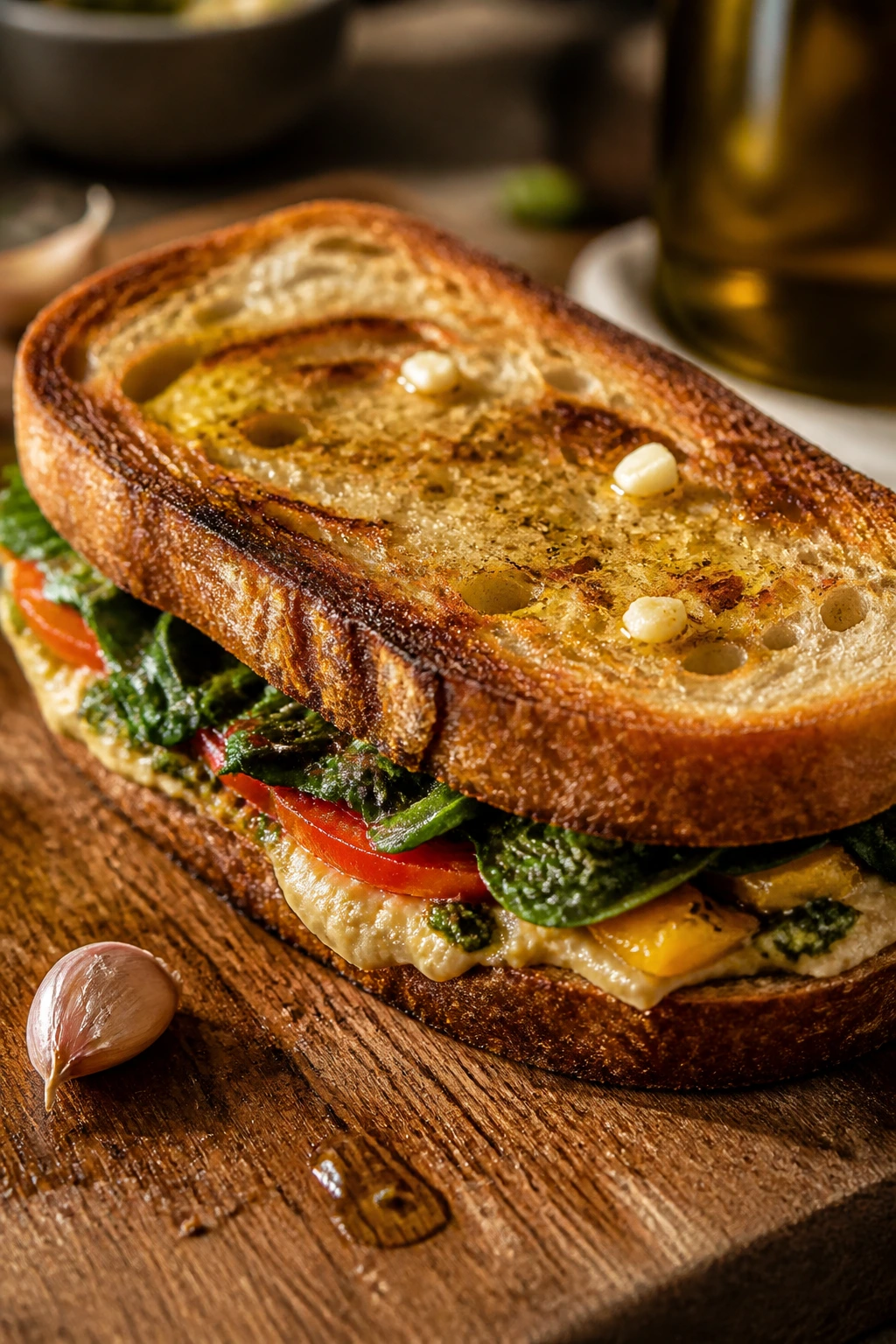
Rub the toasted bread with a cut garlic clove while it’s still warm. The bread picks up just enough garlic oil to smell like you tried harder than you did. A tiny drizzle of good olive oil over the tomatoes also sharpens the flavor without making the sandwich greasy.
Time-Saver:
Use pre-washed greens and bagged shredded carrots if you’re cooking on a tight clock. The sandwich does not care whether you shredded the carrot by hand or pulled it from a bag; what matters is that the vegetables are dry and crisp.
Cost-Saver:
Skip the sprouts if they’re pricey and use shredded cabbage instead. It stays crunchy longer, costs less, and gives the sandwich a satisfying crunch that doesn’t disappear after one bite. Romaine hearts are another good swap when the produce drawer looks thin.
Make-It-Yours:
Add thin jalapeño slices for heat, or stir a teaspoon of chili crisp into the chickpea filling if you want a little smoke and spice. If parsley is boring to you, use dill and let the whole sandwich lean more sharply into the cucumber-pickle direction. Tiny changes like that are enough to make the recipe feel new without wrecking the balance.
The Mistakes That Turn It Soggy or Bland
-
Skipping the toast: Soft bread turns heavy as soon as it touches hummus, tomato, and avocado. Toast the slices until the surface feels dry and the edges are firm, even if that means giving the bread an extra minute.
-
Assembling with wet vegetables: Tomatoes and cucumbers that still carry surface moisture will leak into the bread fast. Slice them, blot them, and layer them only when the rest of the sandwich is ready.
-
Mashing the chickpeas into paste: When the filling loses all texture, the sandwich starts to feel like hummus on bread. Leave some whole chickpeas in the mix so the filling stays chunky and stable.
-
Underseasoning the filling: Chickpeas are polite, almost to a fault. If the mixture tastes quiet in the bowl, it will taste dull on the plate. Salt, lemon, and cumin need to be obvious before the sandwich gets built.
-
Adding avocado too early: A sliced avocado can brown and soften fast, especially if it sits on a warm counter. Slice it last, layer it in immediately, and keep the rest of the sandwich ready to go before you cut into it.
-
Trying to make it too tall: A sandwich that needs both hands and a prayer is not a dinner success. If the stack starts to wobble, stop adding fillings. The point is a clean bite, not a skyscraper.
Variations Worth Trying
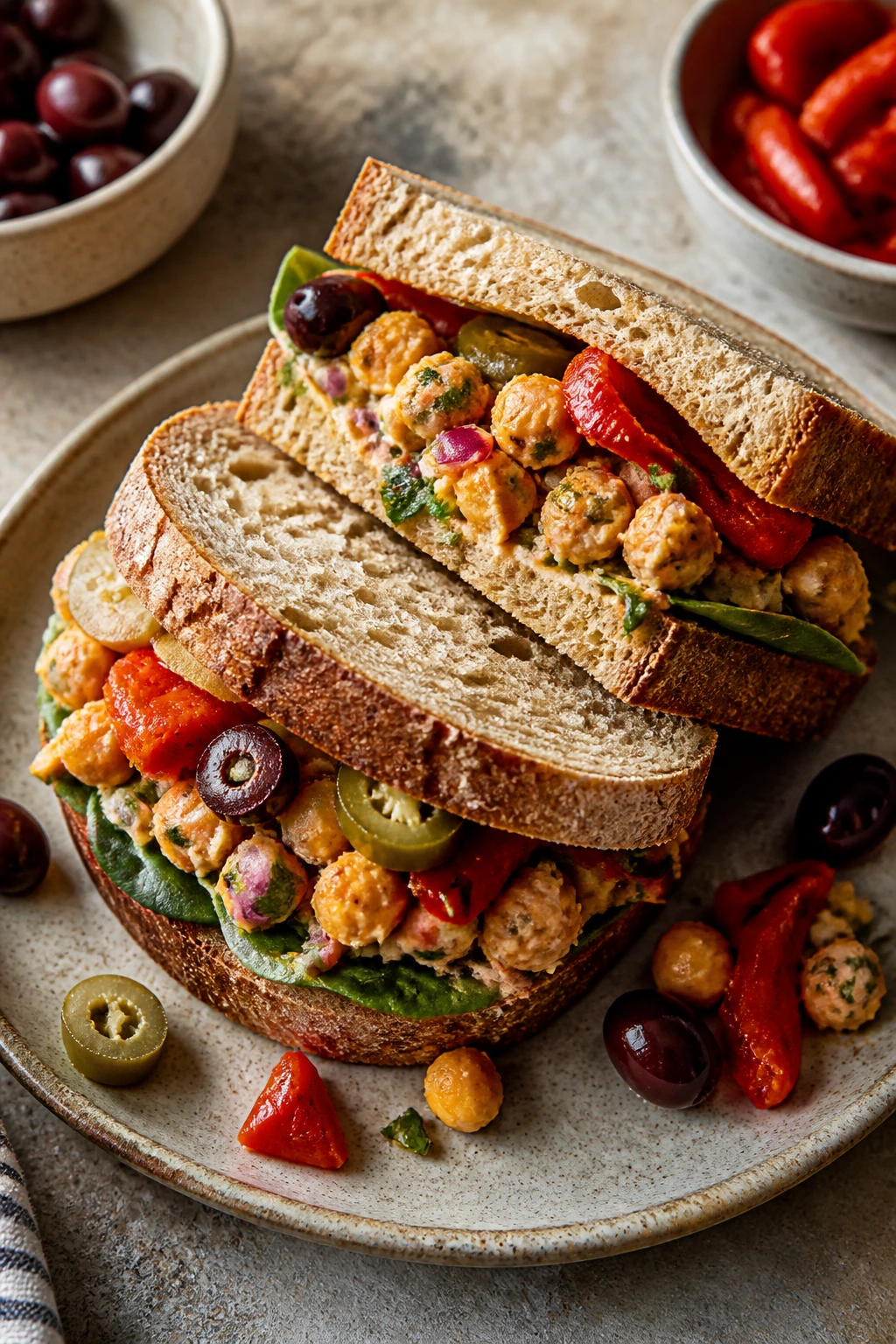
Smoky Chipotle Stack
Stir 1 teaspoon of adobo sauce from a can of chipotles into the chickpea filling and swap the cucumber for roasted red pepper strips. The smoke gives the sandwich a deeper edge that feels warmer without turning it into a heavy meal.
Mediterranean Olive Press
Add 2 tablespoons chopped Kalamata olives and use dill instead of parsley. The olives bring brine, the dill sharpens the cucumber, and the whole sandwich starts tasting like a deli counter in a good way.
Protein-Heavy Tofu Layer
Add 8 ounces of firm tofu, pressed and sliced into thin slabs, then seared in a skillet until golden on both sides. Lay the tofu under the chickpea filling so the sandwich gets a firmer chew and a little more staying power.
Gluten-Free Open-Faced Plate
Use 4 thick slices of gluten-free bread and leave the sandwiches open-faced instead of closing them. That keeps the topping pile manageable and lets the bread stay crisp longer, which is often the real battle with gluten-free loaves.
No-Avocado Backup
Skip the avocado and add an extra spoonful of hummus plus a few paper-thin slices of zucchini or more cucumber. You lose a little creaminess, but the sandwich still feels balanced and bright.
Make-Ahead, Storage, and Reheating for the Fresh Vegan Sandwich
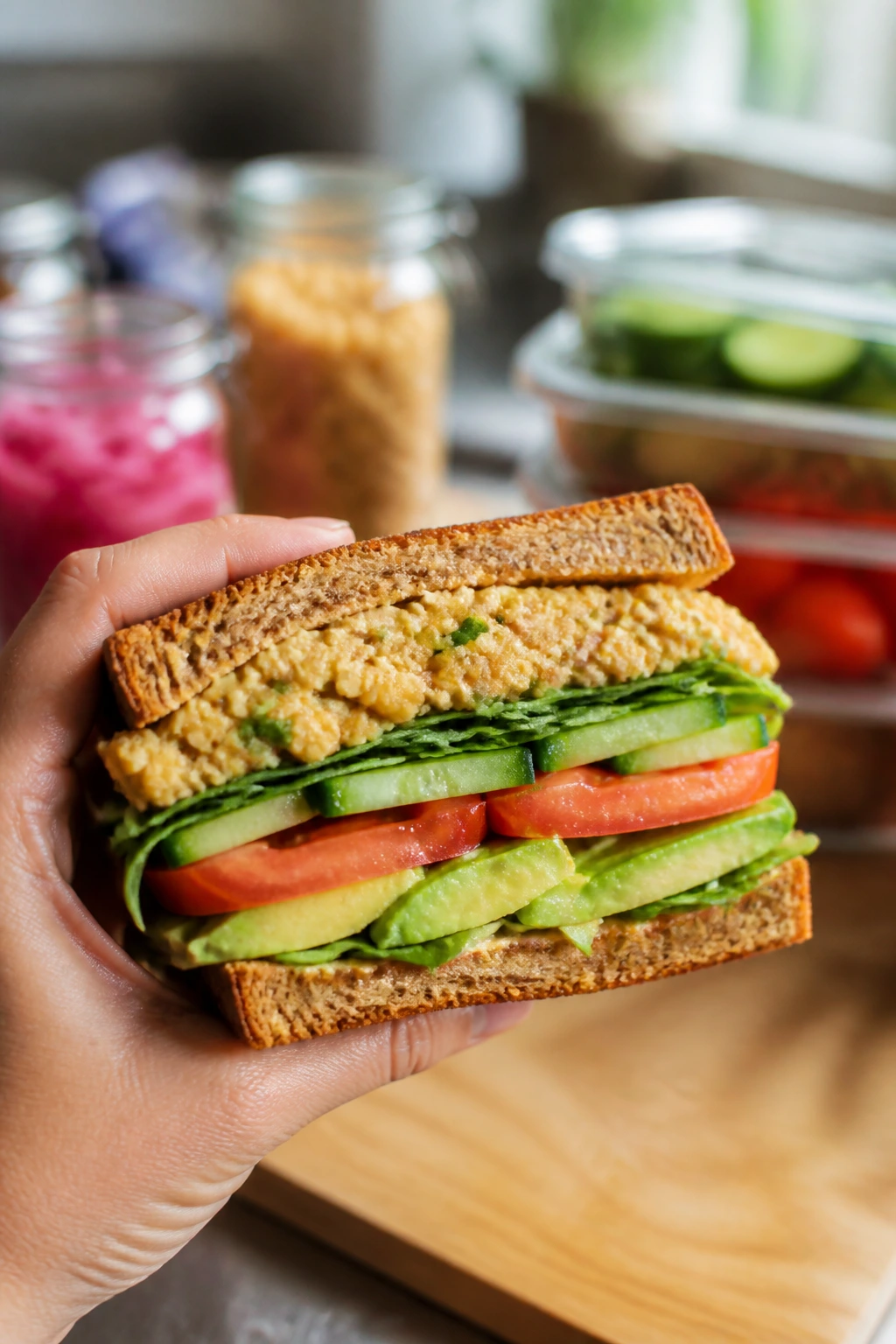
The best part of this sandwich is that most of it can be staged ahead of time without losing quality. The quick-pickled onions keep in a covered jar in the refrigerator for up to 2 weeks, and they actually mellow a little after the first day. The chickpea filling keeps for about 3 days in an airtight container in the fridge. If it tightens up, stir in 1 teaspoon of water or lemon juice before using it.
Cut vegetables are a little more temperamental. Cucumbers and tomatoes are best sliced the day you serve them, but if you need to get ahead, keep them in separate containers lined with paper towel for up to 1 day. Shredded carrots and greens hold for 2 to 3 days if they stay dry and cold.
Assembled sandwiches are a different story. They’re best eaten right away, and if you must pack them, wrap them tightly in parchment and then in foil, and eat within a few hours. Even then, the bread will soften. That’s just what wet ingredients do. If you want dinner to taste as crisp as it looks, keep the pieces separate and build the sandwich at the table.
Reheating is minimal because the sandwich is meant to be fresh, not hot. If the bread has gone stale from sitting out, toast it again in a skillet for 30 to 60 seconds per side. If you made the tofu variation, the tofu can be reheated in a skillet over medium heat for 3 to 4 minutes, just until the edges warm and tighten back up. The chickpea filling itself does not need reheating; it tastes best cool or room temperature.
Freezing is not ideal for the assembled sandwich. The vegetables turn watery and the bread loses its shape. The chickpea filling can be frozen for up to 1 month if you really want to batch it, but the texture softens a bit after thawing. I’d rather make a fresh bowl and keep the rest of the components ready in the fridge.
Questions People Ask Before Making It
Can I make the chickpea filling without a fork or masher?
Yes. A sturdy spoon works, and so does the bottom of a wide glass if that’s what you’ve got. The goal is not a perfect texture; it’s a chunky mixture that still spreads without sliding.
What bread holds up best if I want to pack this for later?
A dense sourdough or a seeded whole-grain loaf holds up better than soft sandwich bread. If you need to carry it for more than an hour, toast the bread a little darker than usual and keep the tomatoes separate until serving.
Can I use store-bought hummus instead of making anything from scratch?
Absolutely. In fact, that’s already built into the recipe. The hummus gives the chickpea filling a creamy base, so you do not need to make a separate spread unless you want to.
How do I keep the sandwich from falling apart when I bite into it?
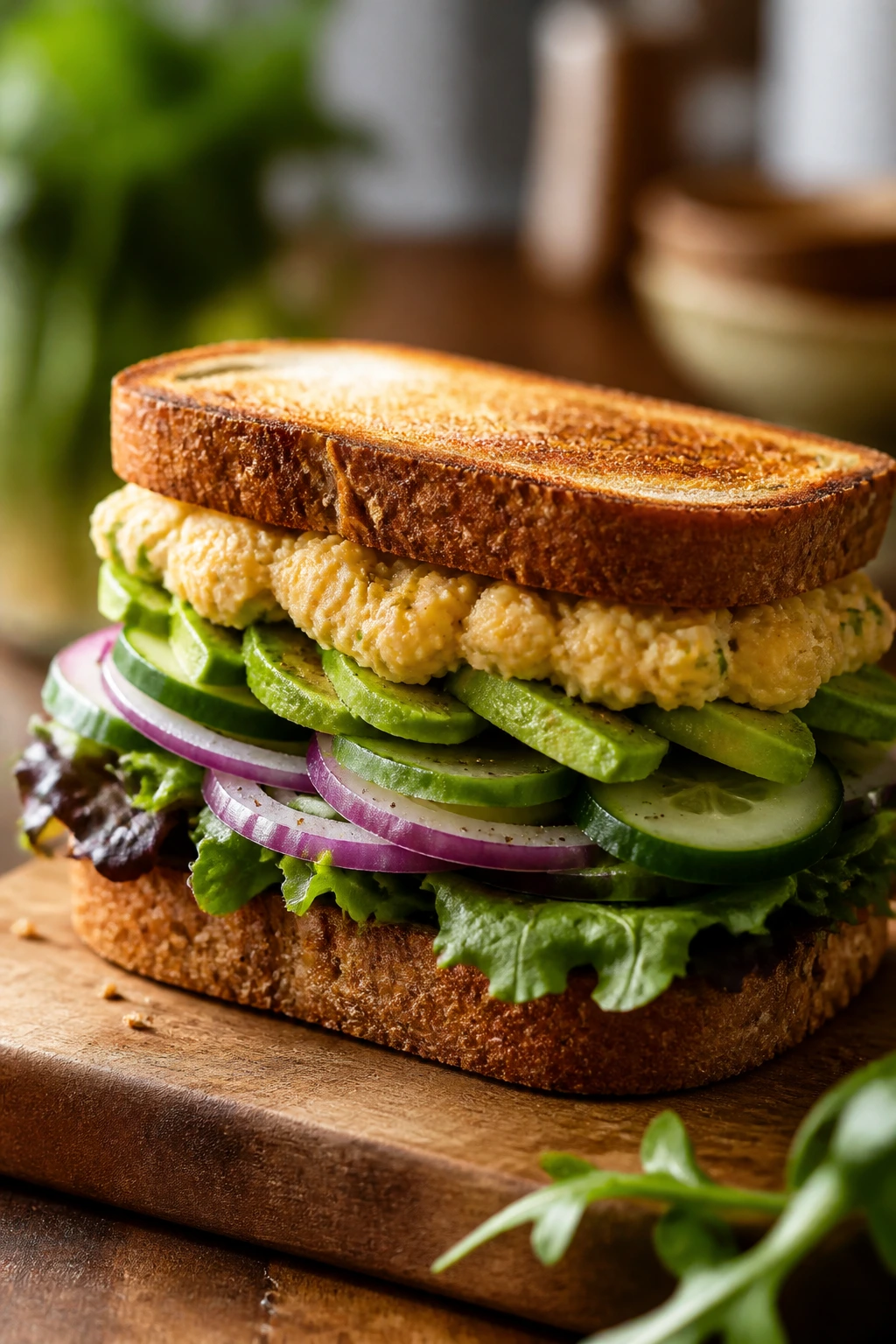
Start with greens on the bread, not tomatoes. The greens act like a thin barrier, and the chickpea filling belongs in the middle where it can anchor the avocado and vegetables. Also, slice the sandwich on the diagonal with a sharp knife instead of sawing through it with a dull one.
Can I make this as a wrap instead of a sandwich?
Yes, and it works well with large tortillas or lavash. Keep the filling a little tighter and place the wet vegetables in the center, not right against the wrap edge, so it doesn’t tear when you roll it.
What can I use instead of tahini?
A spoonful of vegan mayo or a thin swipe of mashed avocado can take its place, though both make the sandwich richer. If you want to stay close to the original flavor, thinned hummus is the easiest backup.
Is this enough for a full dinner without soup or a side?
For many people, yes. The chickpeas, hummus, whole-grain bread, and avocado give it enough body to stand alone. If you’re especially hungry, add a simple side salad or a bowl of soup rather than piling more filling into the sandwich itself.
Can I make it oil-free?
You can skip the olive oil in the chickpea filling and use a little extra lemon juice or a spoonful more hummus. The texture will be a bit thicker and less glossy, but the sandwich will still hold together.
The Sandwich I Keep Coming Back To
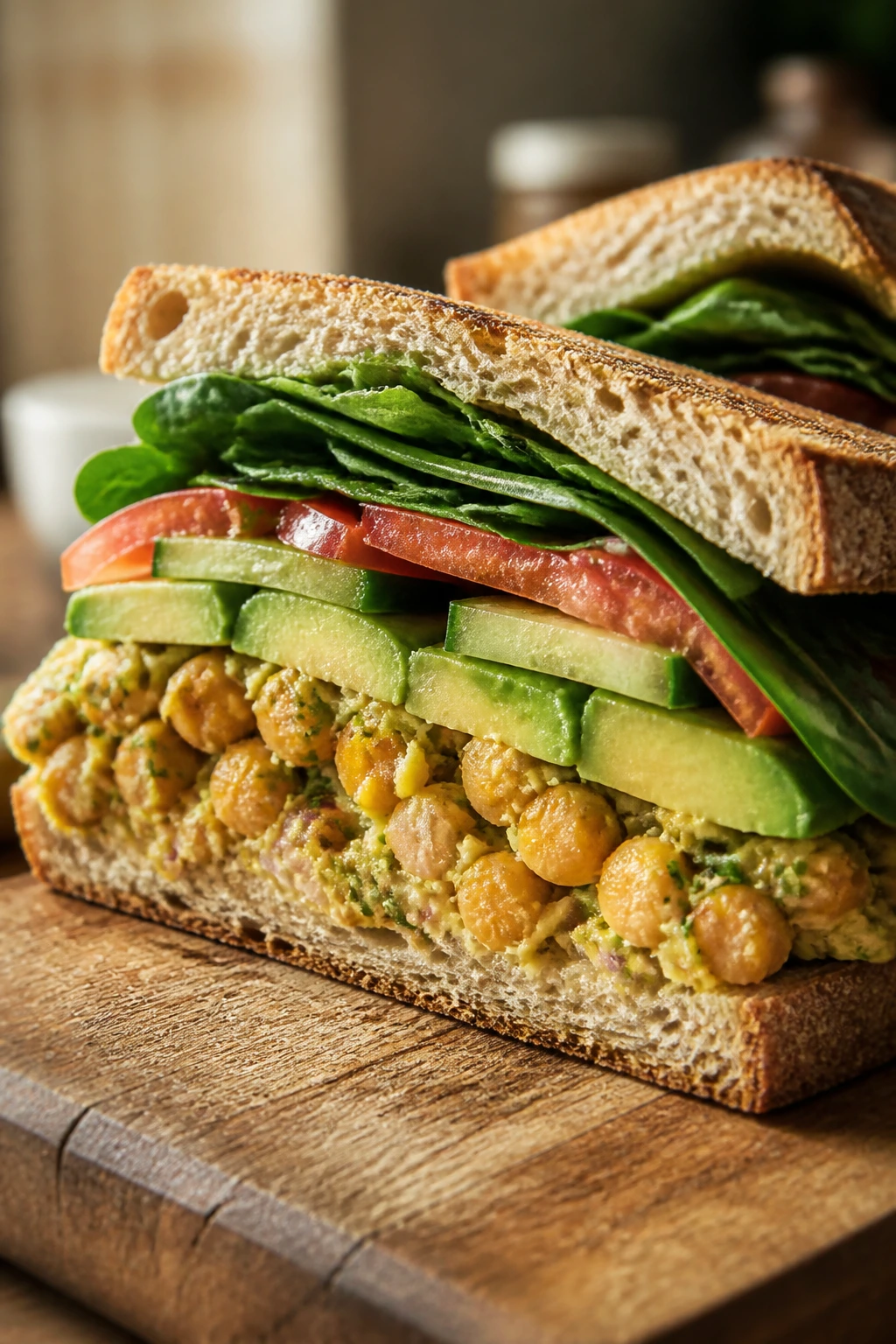
The best thing about this sandwich is that it doesn’t ask you to choose between light and filling. It gives you both. The bread stays crisp, the chickpeas keep their shape, and the acid from the onions keeps every bite from feeling sleepy halfway through.
I also like that it behaves well in real life. You can chop the vegetables while the onions pickle, mash the chickpeas in one bowl, and have dinner on the table before your brain starts making excuses for takeout. That matters more than people admit. A good healthy dinner has to fit your actual evening, not the evening you imagine on a clean Sunday afternoon.
Make it once with the exact layering here, then start changing the details. Different greens. More dill. A little chili. Another kind of bread. Once the base is solid, the variations come easily.
Fresh Vegan Sandwich for a Healthy Dinner — Recipe Card
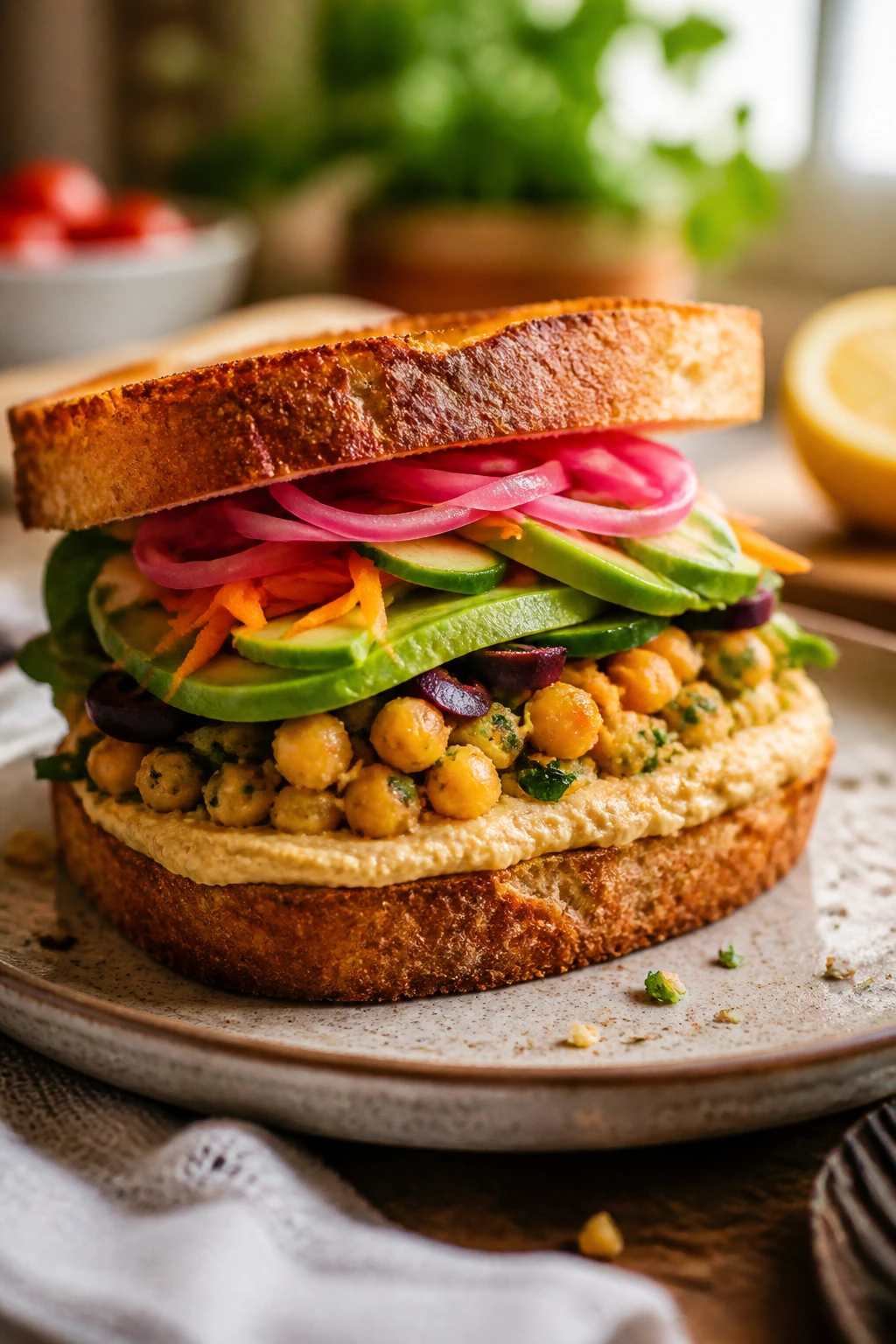
Recipe Name: Fresh Vegan Sandwich for a Healthy Dinner
Description: Toasted whole-grain bread layered with lemony chickpea filling, hummus, avocado, crisp vegetables, and quick-pickled red onion. It eats like a real dinner and stays bright, crunchy, and satisfying from the first bite to the last.
Prep Time: 20 minutes
Cook Time: 5 minutes
Total Time: 25 minutes
Course: Dinner, Main Course
Cuisine: Mediterranean-inspired, American
Servings: 4 sandwiches
Calories: about 450 kcal per sandwich
Ingredients
For the Quick-Pickled Onions:
- 1 small red onion, very thinly sliced
- 1/2 cup apple cider vinegar
- 1/2 cup water
- 1 teaspoon sugar
- 1 teaspoon kosher salt
For the Chickpea Filling:
- 1 (15-ounce) can chickpeas, drained, rinsed, and patted dry
- 1/2 cup plain hummus
- 1 tablespoon lemon juice
- 1 tablespoon extra-virgin olive oil
- 1 small garlic clove, finely grated
- 1/2 teaspoon ground cumin
- 1/2 teaspoon kosher salt
- 1/4 teaspoon black pepper
- 2 tablespoons chopped fresh parsley or dill
For Assembly:
- 8 slices sturdy whole-grain bread or sourdough, toasted
- 1 ripe avocado, sliced
- 1 medium cucumber, thinly sliced
- 2 medium tomatoes, sliced into 1/4-inch rounds
- 2 cups baby spinach or romaine
- 1 cup shredded carrots
- 1/2 cup alfalfa sprouts or microgreens
- 2 tablespoons tahini
- 1 to 2 tablespoons water, for thinning the tahini
- Pinch of salt
- Flaky salt, to finish
- Black pepper, to taste
Instructions
-
Combine the red onion, apple cider vinegar, water, sugar, and salt in a small bowl. Toss well and let sit for 10 minutes.
-
Mash the chickpeas in a medium bowl until about two-thirds are broken down, leaving some texture.
-
Stir in the hummus, lemon juice, olive oil, garlic, cumin, salt, pepper, and chopped herbs until creamy and chunky.
-
Toast the bread until golden and dry at the edges.
-
Whisk the tahini with water and a pinch of salt until it drizzles smoothly.
-
Layer spinach or romaine, cucumber, tomato, chickpea filling, avocado, carrots, sprouts, and pickled onion onto 4 slices of toast.
-
Drizzle with tahini, season with flaky salt and black pepper, close the sandwiches, slice on the diagonal, and serve immediately.
Notes: Toast the bread well, blot the tomatoes if they’re juicy, and build the sandwiches right before eating. The pickled onions and chickpea filling can be made ahead and stored separately.