



A garlicky veggie dinner has to earn its place on the table. If the vegetables steam into softness, the garlic turns bitter, or the sauce tastes like watered-down tahini, you’ve built a bowl of good intentions and not much else.
The version I keep coming back to uses high heat, a dry sheet pan, and enough salt to make the broccoli taste like broccoli again. Chickpeas brown at the edges, zucchini keeps a little bite, cherry tomatoes collapse into jammy little bursts, and the lemon-tahini sauce pulls everything together without smothering it.
That’s the whole point of this kind of healthy dinner. It should look generous, smell like real cooking, and leave you fed instead of slightly cheated. Not a sad pile of vegetables. Not a “meal” that feels like a side dish in disguise.
Garlic does a lot of work here, but it has to be handled with a little respect. Too little heat and it tastes raw; too much and it goes sharp and unpleasant. Get the roast timing right, and the garlic turns sweet, almost nutty, with enough edge to wake up the quinoa and the vegetables without overwhelming them.
Why You’ll Love This Recipe
- Big Flavor, Not Big Fuss: The oven does most of the work, and the garlic, lemon, and spices make the whole pan taste composed instead of random.
- Built for a Real Dinner: Chickpeas and quinoa give you staying power, so this doesn’t feel like “healthy” in the flimsy sense of the word.
- Flexible in the Best Way: If your crisper drawer has broccoli, peppers, zucchini, onions, or even cauliflower, this recipe can take it.
- Leftovers Hold Up: The vegetables soften a little in the fridge, but the flavors deepen, and the sauce keeps everything lively the next day.
- Easy to Scale Up: Two sheet pans can feed a crowd without turning your oven into a swamp of steamed vegetables.
- Fresh, Creamy, and Crisp All at Once: You get roasted edges, fluffy quinoa, and a sauce with enough tang to keep each bite bright.
Yield: Serves 4 as a main dish
Prep Time: 20 minutes
Cook Time: 30 minutes
Total Time: 50 minutes
Difficulty: Beginner — the method is simple, but the timing matters if you want browned vegetables instead of limp ones.
Chill/Rest Time: 5 minutes resting after roasting
Best Served: Warm, with the sauce drizzled on right before eating
Why This Garlicky Veggie Dinner Works When the Fridge Looks Bare
A lot of vegetable dinners fail for a very boring reason: nobody gives the vegetables enough space. They get crowded into a pan, they shed water, and by the time dinner hits the table, you’ve got soft produce with no color and no personality. This garlicky veggie dinner avoids that trap by treating heat like an ingredient, not an afterthought.
The other smart move is the chickpeas. They’re not there just to “make it filling.” They roast alongside the vegetables, soak up the oil and spices, and pick up a rough little crust at the edges that gives the bowl something substantial to chew on. That texture matters. Without it, a bowl like this can feel mushy even if the flavors are good.
Garlic shows up twice, and I’m very much in favor of that. Some goes into the roasting oil so the vegetables pick up a mellow garlicky perfume; the rest goes into the tahini sauce for a sharper, fresher hit at the end. One note would be flat. Two notes make dinner taste planned.
The lemon keeps the whole thing from drifting into heavy territory. Roasted vegetables can taste a little sleepy without acid, especially when they’re served with quinoa and tahini. A squeeze of lemon at the end wakes everything up. You can taste the difference in the first forkful.
The Ingredient List and What Each Piece Does
For the Roasted Vegetables and Chickpeas:
- 1 large head broccoli, cut into bite-size florets
- 2 medium zucchini, cut into 1/2-inch half-moons
- 2 bell peppers, sliced into 1-inch strips
- 1 red onion, cut into 8 wedges
- 1 pint cherry tomatoes
- 1 can (15 ounces) chickpeas, drained, rinsed, and patted dry
- 4 tablespoons extra-virgin olive oil
- 4 garlic cloves, finely grated or minced
- 1 teaspoon smoked paprika
- 1/2 teaspoon ground cumin
- 1/4 teaspoon red pepper flakes
- 1 teaspoon kosher salt
- 1/2 teaspoon black pepper
- 1 lemon, zested and juiced
For the Quinoa:
- 1 cup quinoa, rinsed well
- 2 cups vegetable broth or water
- 1/4 teaspoon kosher salt
For the Lemon-Tahini Sauce:
- 1/3 cup tahini
- 2 tablespoons lemon juice
- 1 small garlic clove, finely grated
- 2 to 4 tablespoons warm water
- 1/4 teaspoon kosher salt
For Serving:
- 2 tablespoons chopped parsley or dill
- 1/4 cup crumbled feta, optional
- Lemon wedges, optional
Why Garlic, Lemon, and High Heat Make the Flavor Work
Roasted Vegetables and Chickpeas
What to use: The broccoli, zucchini, peppers, onion, tomatoes, and chickpeas listed above give you a wide range of textures in one pan. Broccoli brings structure, zucchini brings softness, peppers bring sweetness, onion sharpens and then softens, tomatoes burst, and chickpeas fill out the bowl.
Preparation: Cut the broccoli into evenly sized florets so they roast at the same pace. Pat the chickpeas dry with a clean towel; if they stay wet, they’ll steam instead of browning, and that’s the difference between a decent bite and a boring one. Keep the zucchini in thicker half-moons so it doesn’t collapse.
Substitutions: Cauliflower can step in for broccoli, yellow squash can stand in for zucchini, and cannellini beans can replace chickpeas if that’s what you have. Sweet potatoes work too, but they need a longer roast and should be cut smaller than the broccoli.
Tips: If your garlic usually burns on sheet pans, grate it very fine and mix it well into the oil so it clings to the vegetables. Also, keep the tomatoes whole until roasting time; halving them makes them collapse too fast and bleed liquid across the pan.
Quinoa
What to use: One cup of quinoa with 2 cups of broth or water gives you a fluffy base for four servings. The grain matters here because it catches the sauce in all the little gaps between the kernels, which rice doesn’t do quite as neatly.
Preparation: Rinse quinoa in a fine-mesh strainer until the water runs mostly clear. That step knocks down the bitter coating that can make a healthy bowl taste vaguely dusty. Cook it covered, then let it sit off the heat for 5 minutes before fluffing.
Substitutions: Brown rice, farro, or couscous all work if you’d rather change the base. Brown rice needs more time and more liquid; couscous is faster but softer and a little less interesting with the tahini sauce.
Tips: Use vegetable broth if you want the quinoa to taste like part of dinner instead of a bland scaffold. A pinch of salt in the cooking liquid matters more than people think. Plain quinoa can taste empty even under good toppings.
Lemon-Tahini Sauce
What to use: Tahini, lemon juice, garlic, warm water, and salt make a sauce that’s creamy without dairy. It should land somewhere between pourable and spoonable — thick enough to cling, loose enough to drizzle.
Preparation: Whisk the lemon juice into the tahini first. It may seize and turn grainy for a moment. That’s normal. Add warm water a tablespoon at a time and keep whisking until the sauce turns smooth and pale.
Substitutions: Plain Greek yogurt can replace tahini if you want a cooler, tangier sauce. Sunflower seed butter also works, though it tastes earthier and a little more rustic. I would skip peanut butter here; it pulls the bowl in the wrong direction.
Tips: Warm water makes a cleaner emulsion than cold water, so don’t use ice-cold tap water straight from the sink. If the sauce thickens while sitting, whisk in another teaspoon or two of water before serving. Tahini sauce should flow. It should not sit in the bowl like paste.
Finishing Ingredients
What to use: Chopped parsley or dill gives the bowl a fresh green lift, and feta adds a salty edge if you want it. Lemon wedges on the side let each person sharpen the bowl to taste.
Preparation: Chop the herbs just before serving so they stay bright and don’t wilt into a wet clump. Crumble the feta at the end, not into the bowl while everything is still screaming hot, or it melts into the background.
Substitutions: Mint is good if you want a cooler finish. Toasted pumpkin seeds or sunflower seeds can replace feta if you want more crunch instead of dairy.
Tips: Don’t skip the herbs. Roasted vegetables need a fresh top note, or the bowl can feel all browns and golds. A spoonful of chopped parsley does more work than people expect.
The Tools That Make the Prep Easier
- 2 large rimmed sheet pans — You need enough surface area for the vegetables to brown instead of crowding into a steamy heap.
- Parchment paper — Optional, but it makes cleanup faster and helps keep the chickpeas from sticking.
- Large mixing bowl — Big enough to toss the vegetables without knocking half of them onto the counter.
- Medium saucepan with lid — For the quinoa; a heavy bottom helps prevent scorching.
- Fine-mesh strainer — Best for rinsing quinoa and drying chickpeas after they’re washed.
- Microplane or small grater — The easiest way to grate garlic and lemon zest finely enough to disappear into the sauce.
- Small whisk or fork — Either one works for the tahini sauce, though a whisk gives you a smoother finish.
- Sharp chef’s knife and cutting board — The vegetables need reasonably even cuts so the pan roasts at the same pace.
- Measuring cups and spoons — The spices are small enough that eyeballing them tends to go sideways fast.
Roasting the Vegetables and Building the Bowl
Cook the Quinoa:
- Rinse the quinoa in a fine-mesh strainer under cool running water for about 30 seconds, rubbing it gently with your fingers. Set it aside to drain while you start the pot.
- Combine the quinoa, vegetable broth or water, and 1/4 teaspoon kosher salt in a medium saucepan. Bring it to a boil over medium-high heat, then drop the heat to low and cover the pan tightly.
- Simmer for 15 minutes, until the liquid is absorbed and the quinoa looks fluffy with little translucent tails. Turn off the heat and let it sit, covered, for 5 minutes. Do not lift the lid early unless you want wet, uneven quinoa.
- Fluff with a fork and leave it covered while you roast the vegetables.
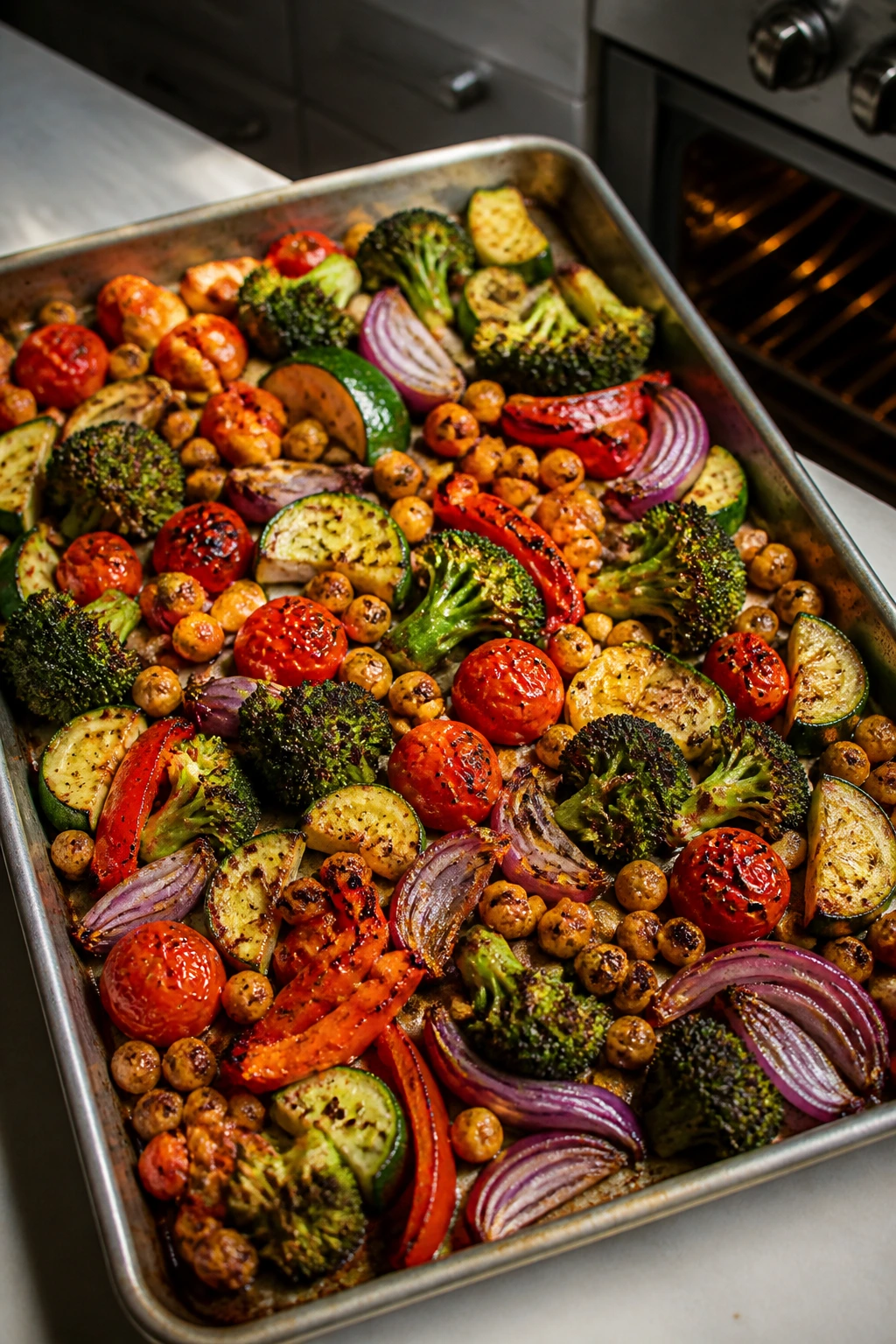
Prep the Vegetables and Chickpeas: 5. Preheat the oven to 425°F (220°C). Line 2 rimmed sheet pans with parchment if you want easier cleanup. 6. In a large bowl, whisk together the olive oil, grated garlic, smoked paprika, cumin, red pepper flakes, 1 teaspoon kosher salt, black pepper, and the zest and juice from 1 lemon. 7. Add the broccoli, bell peppers, red onion, and chickpeas. Toss until every surface is coated in the garlic oil. Spread them across the sheet pans in a single layer, leaving some breathing room between pieces. If the pan looks crowded, split the mixture again — the vegetables need contact with dry heat. 8. Roast for 15 minutes. The broccoli should start to brown at the edges, the onion should soften, and the chickpeas should look wrinkled and a little matte.
Add the Quicker-Cooking Vegetables: 9. Pull the pans from the oven and add the zucchini and cherry tomatoes. Toss lightly with a spatula so they pick up some of the spiced oil, then spread everything back out. Rotate the pans front to back if your oven has a hot spot. 10. Roast for 12 to 15 minutes more, until the zucchini is tender but still holds its shape, the tomatoes have blistered or burst, and the broccoli tips are deeply golden. If your garlic looks dark at the edges before the vegetables are done, pull the pans early — burnt garlic tastes harsh, not garlicky.
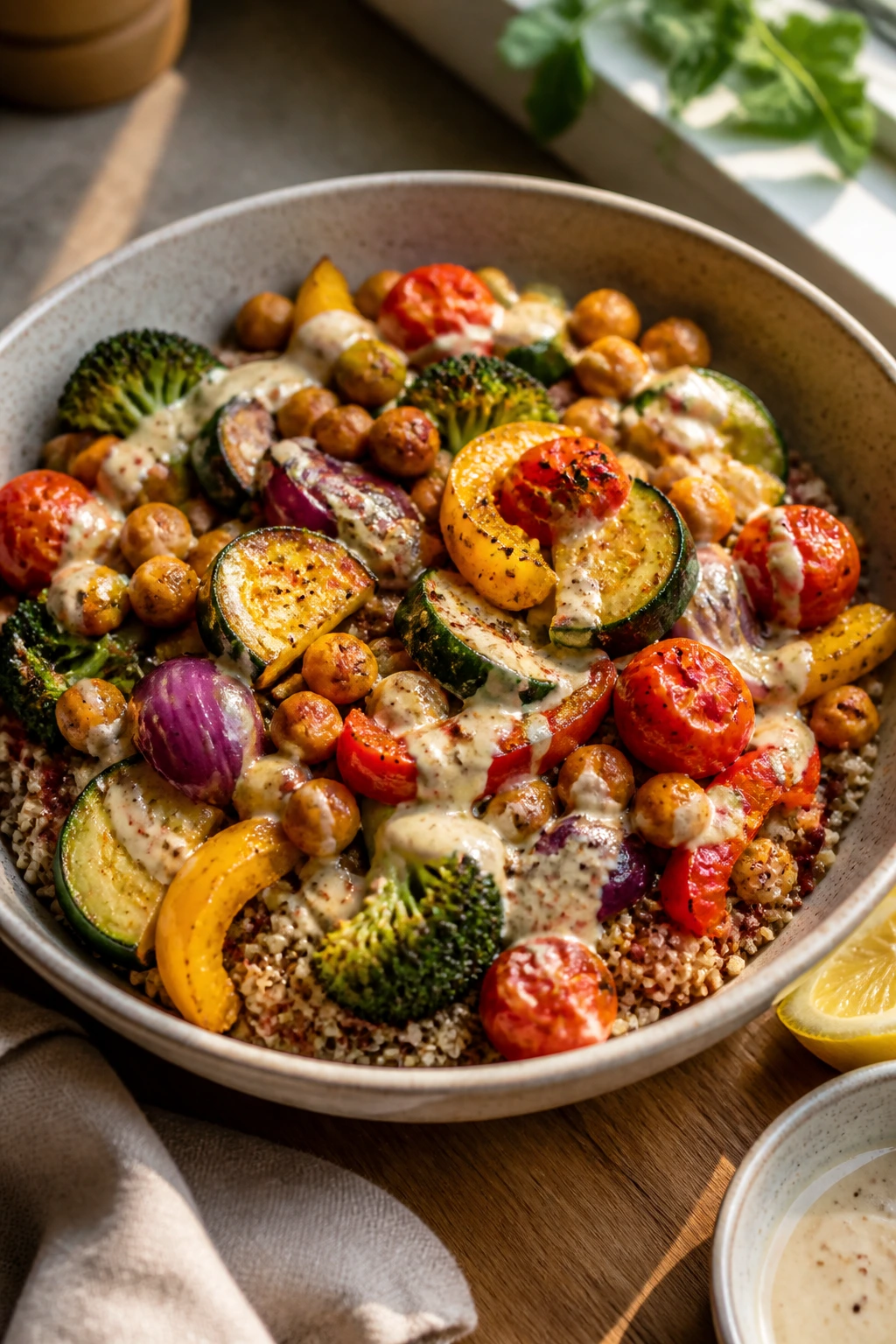
Make the Sauce and Finish: 11. While the vegetables roast, whisk the tahini, lemon juice, grated garlic, salt, and warm water together in a small bowl. Add the water slowly until the sauce turns smooth, glossy, and easy to drizzle. 12. Taste the quinoa and add a small pinch of salt if it needs it. Spoon it into shallow bowls, pile the roasted vegetables and chickpeas on top, and drizzle generously with the tahini sauce. 13. Finish with parsley or dill, crumbled feta if you want it, and extra lemon wedges on the side. Serve while the vegetables are still hot and the sauce is still loose.
How to Serve It So the Plate Feels Complete
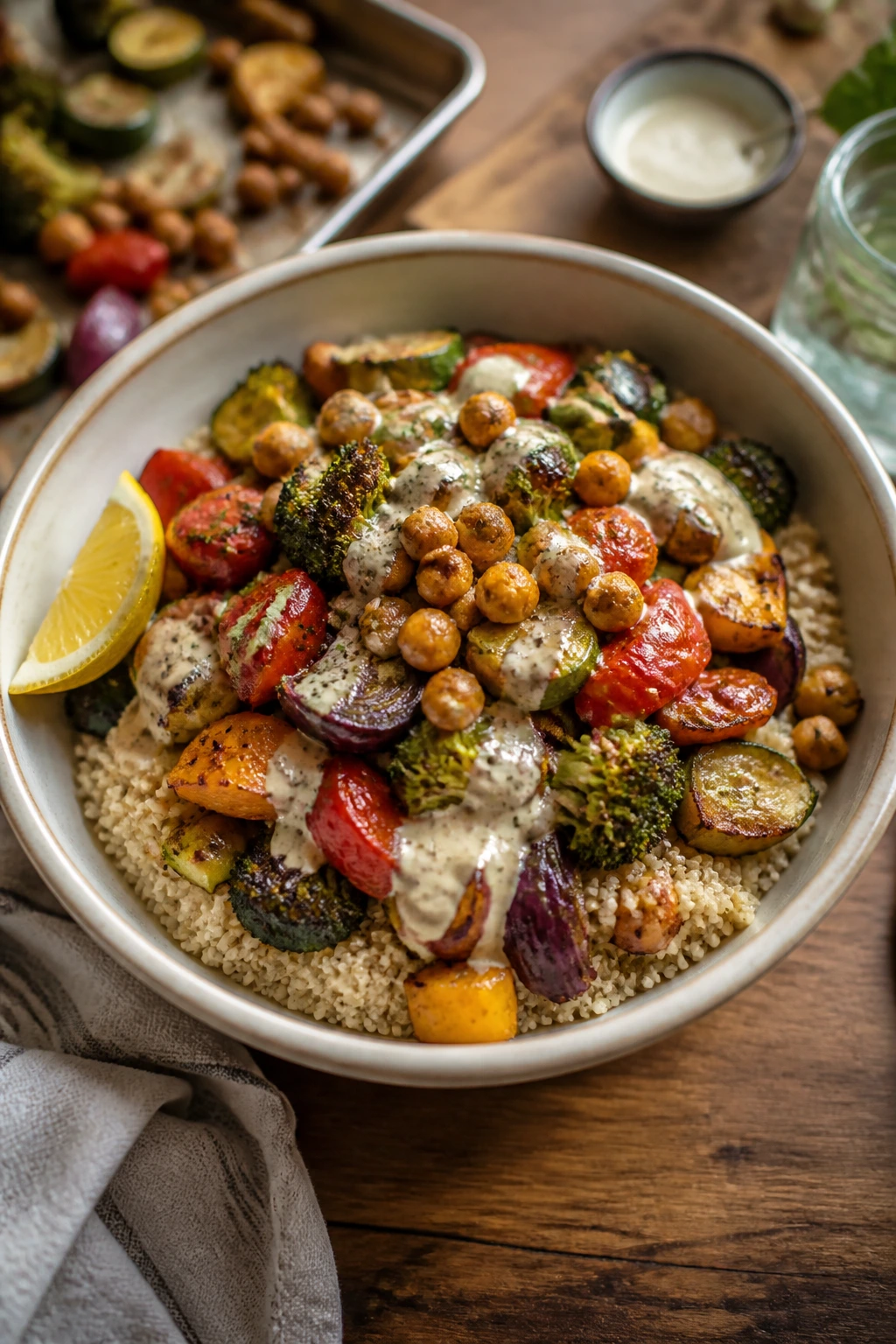
Presentation: Spoon the quinoa into a shallow bowl first, then mound the roasted vegetables in the center instead of mixing everything flat. That little pile gives the bowl height, and the tahini drizzled over the top looks better when it catches the ridges of the vegetables and chickpeas.
Accompaniments: A crisp cucumber salad with a little vinegar and dill makes a nice cold contrast. Warm pita, toasted sourdough, or a piece of flatbread can stretch the meal if you’re serving people with bigger appetites. I also like it with a handful of peppery arugula on the side when the bowl needs more green.
Portions: Plan on about 1 cup of quinoa and 1 1/2 to 2 cups of roasted vegetables and chickpeas per person. If you want to scale it up, add another can of chickpeas and one more sheet pan rather than cramming everything together. This recipe stays better when the vegetables have room.
Beverage Pairing: A cold lemon seltzer or sparkling water with mint keeps the bowl bright and cuts through the tahini. If you want wine, a crisp Sauvignon Blanc or Pinot Grigio works cleanly here because the lemon and garlic keep the whole dish sharp rather than heavy.
Small Upgrades That Add More Flavor
Flavor Enhancement: A final pinch of flaky salt over the hot vegetables makes the broccoli and tomatoes taste louder. I know that sounds minor. It isn’t. Salt added at the end sits on the surface and gives you a little pop instead of disappearing into the roast.
Time-Saver: If your cutting board is small, start the quinoa first and prep the vegetables while it simmers. The stove is doing nothing else during that window, and the vegetables can wait. The oven won’t care if the chickpeas sat in the bowl for a few minutes before roasting.
Texture Boost: Toast 2 tablespoons of pumpkin seeds or sunflower seeds in a dry skillet for 3 to 4 minutes until they smell nutty, then scatter them over the bowls. They add crunch in a way that feta doesn’t, and they keep the dinner from feeling one-note.
Make-It-Yours: Stir a handful of baby spinach into the hot quinoa if you want extra greens. The leaves wilt from the residual heat in under a minute, and they make the bowl look fuller without changing the flavor much. If you want a richer finish, add avocado slices right before serving.
Mistakes That Leave the Vegetables Limp
Crowding the sheet pan.
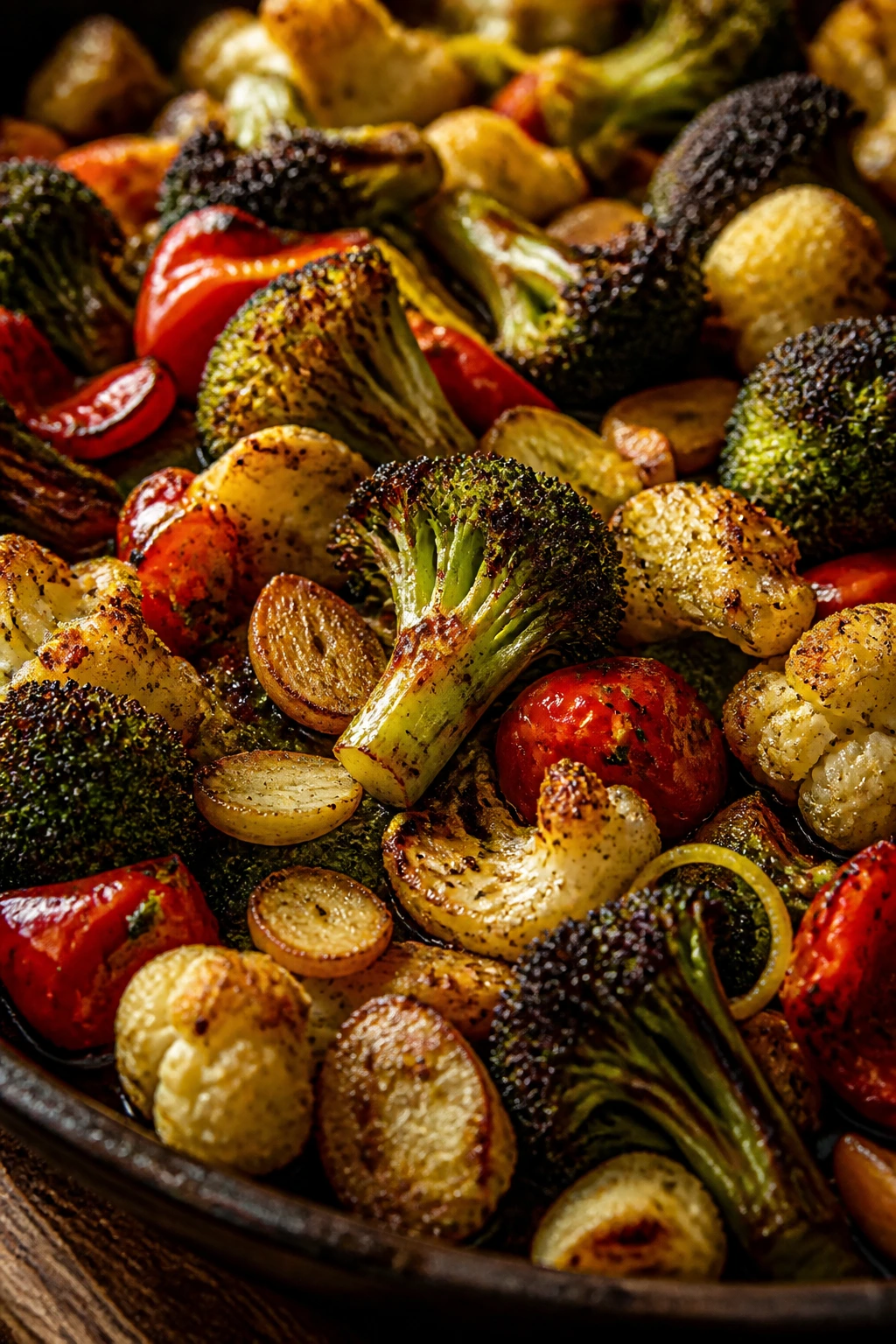
If the vegetables are piled in a deep layer, they steam instead of roast. The symptom is pale zucchini, soft broccoli, and chickpeas that never really crisp. Use two pans if you have to. It’s better to wash an extra pan than to eat a tray of wet vegetables.
Adding the zucchini too early.
Zucchini gives up water fast. If it goes into the oven at the same time as the broccoli and onions, you usually end up with floppy half-moons that collapse under the sauce. Add it during the second stage so it stays tender without turning mushy.
Forgetting to dry the chickpeas.
Wet chickpeas taste soft and a little mealy, even if the spices are right. Pat them dry with a towel after rinsing, then roast them in a single layer. That tiny bit of prep is the difference between chickpeas that sing and chickpeas that sit there.
Skipping the acid at the end.
Roasted vegetables need a finish. Without lemon, the bowl can taste dense and one-dimensional, especially with tahini in the mix. Use the lemon in the sauce and, if needed, add a final squeeze right before serving.
Under-salting the quinoa.
Plain quinoa can taste like a blank page. If you cook it in unsalted water and pile vegetables on top, the bowl ends up tasting flat even when the topping is seasoned well. Salt the cooking liquid and taste the grains before you serve them.
Variations for Different Tastes and Diets
Mediterranean Market Bowl
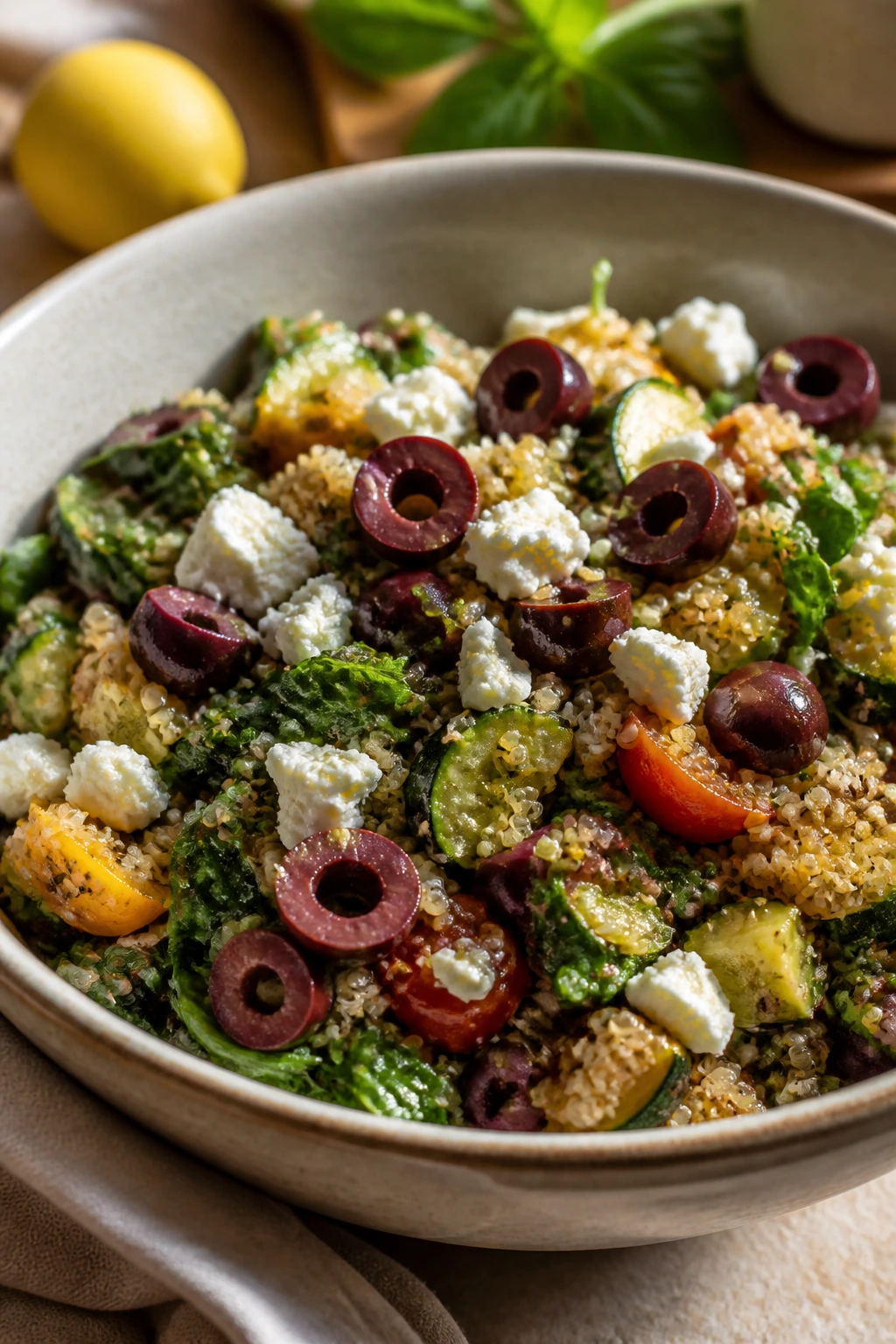
Add 1/3 cup sliced kalamata olives and 1/4 cup crumbled feta to the finished bowls, then swap parsley for dill. The briny olives change the whole mood of the dish, and the feta makes the tahini feel a little sharper.
Smoky Harissa Roast
Stir 1 to 2 tablespoons harissa into the olive oil and use only 1/2 teaspoon smoked paprika. This version lands spicier and more savory, with a little heat that hangs around after the lemon fades. A spoonful of yogurt on top cools it down nicely.
Creamy Yogurt-Garlic Finish
Replace the tahini sauce with 1/2 cup plain Greek yogurt, 1 tablespoon lemon juice, 1 grated garlic clove, and a pinch of salt. The result is lighter and tangier, with a cooler flavor that works well if tahini isn’t your thing.
Halloumi Upgrade
Add 8 ounces halloumi, cut into cubes or thick slices, during the last 8 minutes of roasting. Halloumi browns fast and brings a salty bite that makes the bowl feel more substantial. If you do this, reduce the feta or skip it entirely.
Grain-Free Greens Plate
Serve the vegetables and chickpeas over a thick bed of baby spinach or chopped romaine instead of quinoa. The heat from the roast softens the greens just enough, and the lemon-tahini sauce turns the whole thing into a warm salad with more structure than it sounds like it should have.
Make-Ahead, Storage, and Reheating Notes
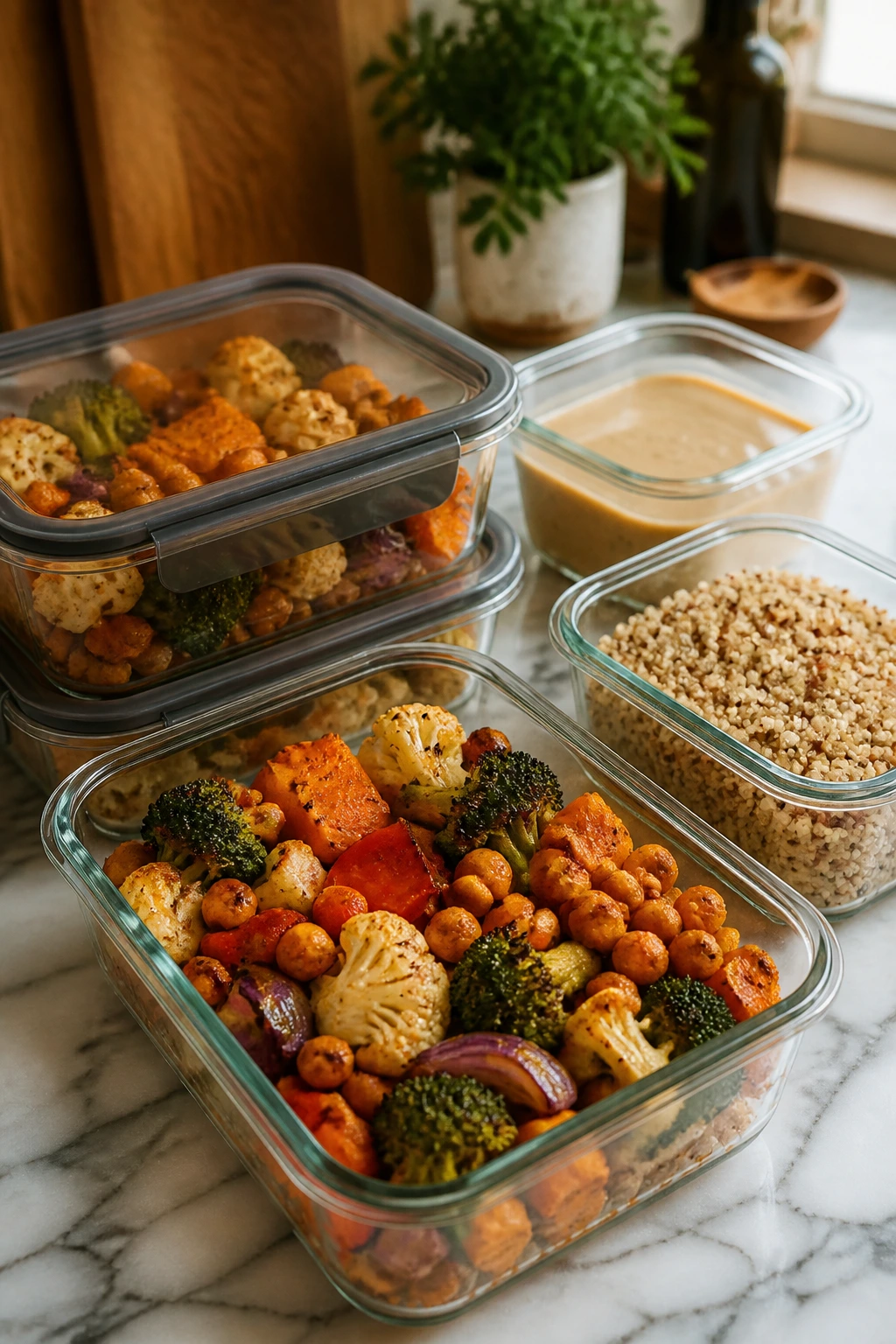
The roasted vegetables and chickpeas keep well in the fridge for up to 4 days in an airtight container. They soften a little after the first day, which is normal; the flavor is still solid, but the texture is best if you reheat them in a hot oven or skillet rather than the microwave. The quinoa keeps for the same stretch, and the tahini sauce holds for about 5 days.
Freezing works, but I’d be selective about it. The quinoa freezes well for up to 2 months, and the chickpeas freeze in the roasted mixture better than the tomatoes do. Tomatoes go soft after thawing, so if you know you’ll freeze the leftovers, pull a portion aside before adding tomatoes and freeze that part separately. The sauce is better fresh than frozen.
For reheating, a 400°F oven for 8 to 10 minutes brings the vegetables back more gracefully than a microwave. Spread them on a small sheet pan or skillet so the hot air can hit the edges again. If you use the microwave, do it in short bursts and cover the bowl loosely so the quinoa doesn’t dry out.
For make-ahead cooking, roast the vegetables and chickpeas a day ahead, cook the quinoa, and mix the sauce separately. Reheat the components, then assemble just before serving. The bowl tastes cleaner that way, and the herbs stay bright instead of folding into the hot grains.
Questions People Ask Before Making It
Can I make this without tahini?
Yes. Plain Greek yogurt is the easiest swap, and it keeps the same creamy shape with a sharper, cooler taste. If you want something dairy-free, blend a little extra olive oil with lemon juice and grated garlic, then whisk in a spoonful of water until it loosens.
Can I use frozen vegetables?
You can, but dry them well and expect less browning. Frozen broccoli and cauliflower are the safest bets; frozen zucchini tends to turn soft and watery. If you go this route, roast the vegetables a few minutes longer and keep them spread out so the extra moisture has a chance to cook off.
What if I only have one sheet pan?
Use it, but roast in stages. Start with the broccoli, onions, peppers, and chickpeas, then slide the zucchini and tomatoes on later so they don’t overcook. It takes a little more attention, but it’s better than squeezing everything into one crowded pan and hoping for magic.
Can I make this into a lunch bowl for the next day?
Absolutely. Store the quinoa, vegetables, and sauce separately if you can, then combine them after reheating. If you assemble the bowls ahead of time, the sauce softens the vegetables and the texture gets a little muddy by lunch.
How do I keep the garlic from tasting burnt?
Grate it finely and mix it thoroughly into the oil so it clings to the vegetables instead of sitting in dark little piles on the pan. If your oven runs hot, check the vegetables a few minutes early and pull the pan the moment the garlic starts to go too dark around the edges.
Can I add tofu or another protein?
Yes. Cubed extra-firm tofu works well if you press it first, toss it with the same spice mix, and roast it on a separate section of the pan. Halloumi is the easiest cheese add-in because it browns fast and holds its shape, while tofu gives you a softer, more neutral base.
Is this good served cold?
It is, especially if you think of it as a grain salad rather than a hot dinner. Cold leftovers benefit from extra lemon juice, fresh herbs, and a spoonful of sauce to wake them back up. The flavors stay clear; the texture just changes.
A Bowl Worth Repeating
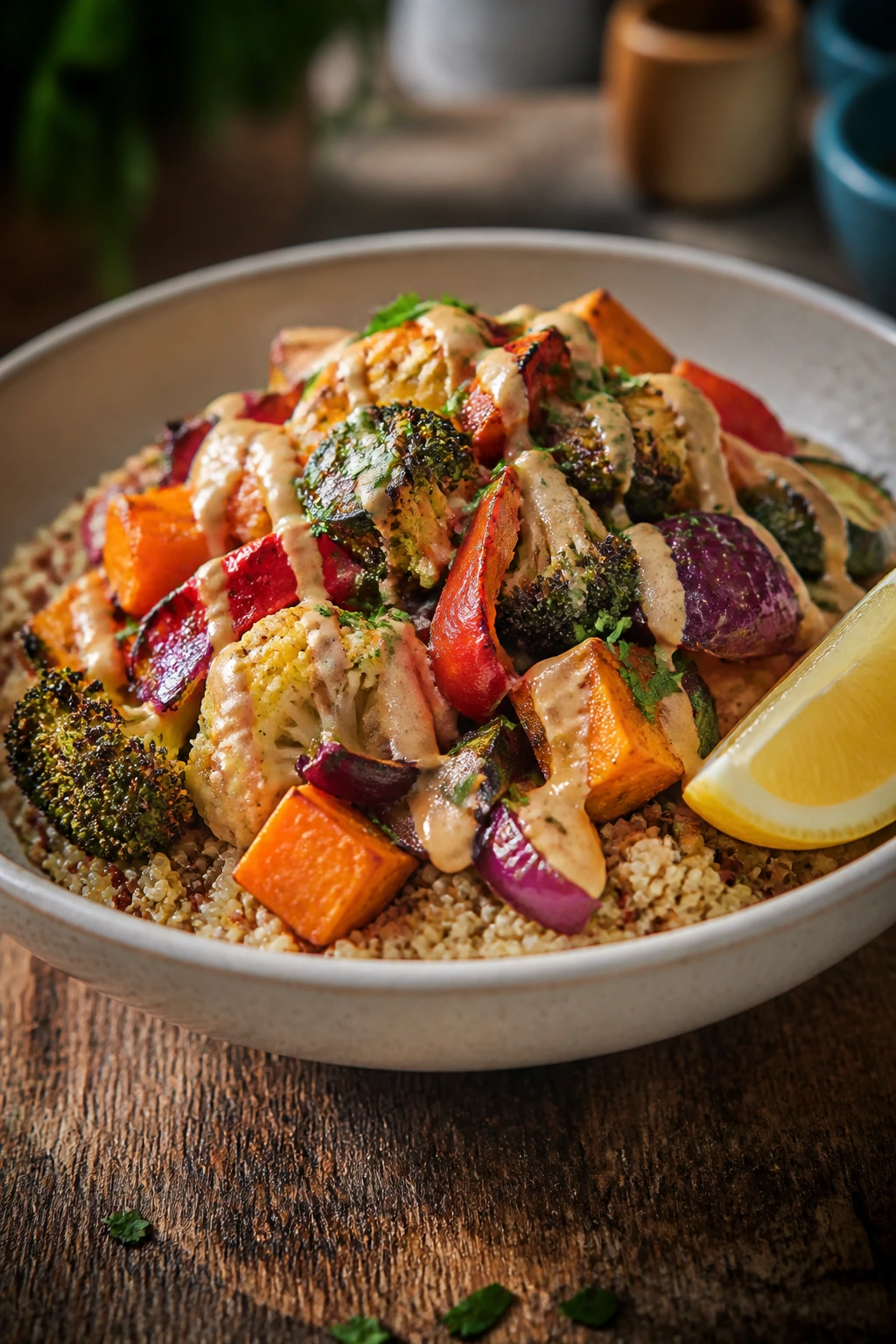
A bowl like this earns its place because it understands a simple truth: vegetables taste better when they’re treated like the main event. Give them heat, salt, garlic, and enough room to brown, and they stop feeling like a compromise. Add chickpeas, quinoa, and a lemon-tahini finish, and you’ve got a dinner that feels complete without leaning on anything heavy.
The other thing I like here is how little it asks for in return. A few pantry staples. A couple of sheet pans. A little attention to timing. That’s enough to turn a crisper drawer into dinner, and it’s enough to make the leftovers worth looking forward to.
Garlicky Veggie Dinner — Recipe Card
Recipe Name: Garlicky Veggie Dinner Bowls
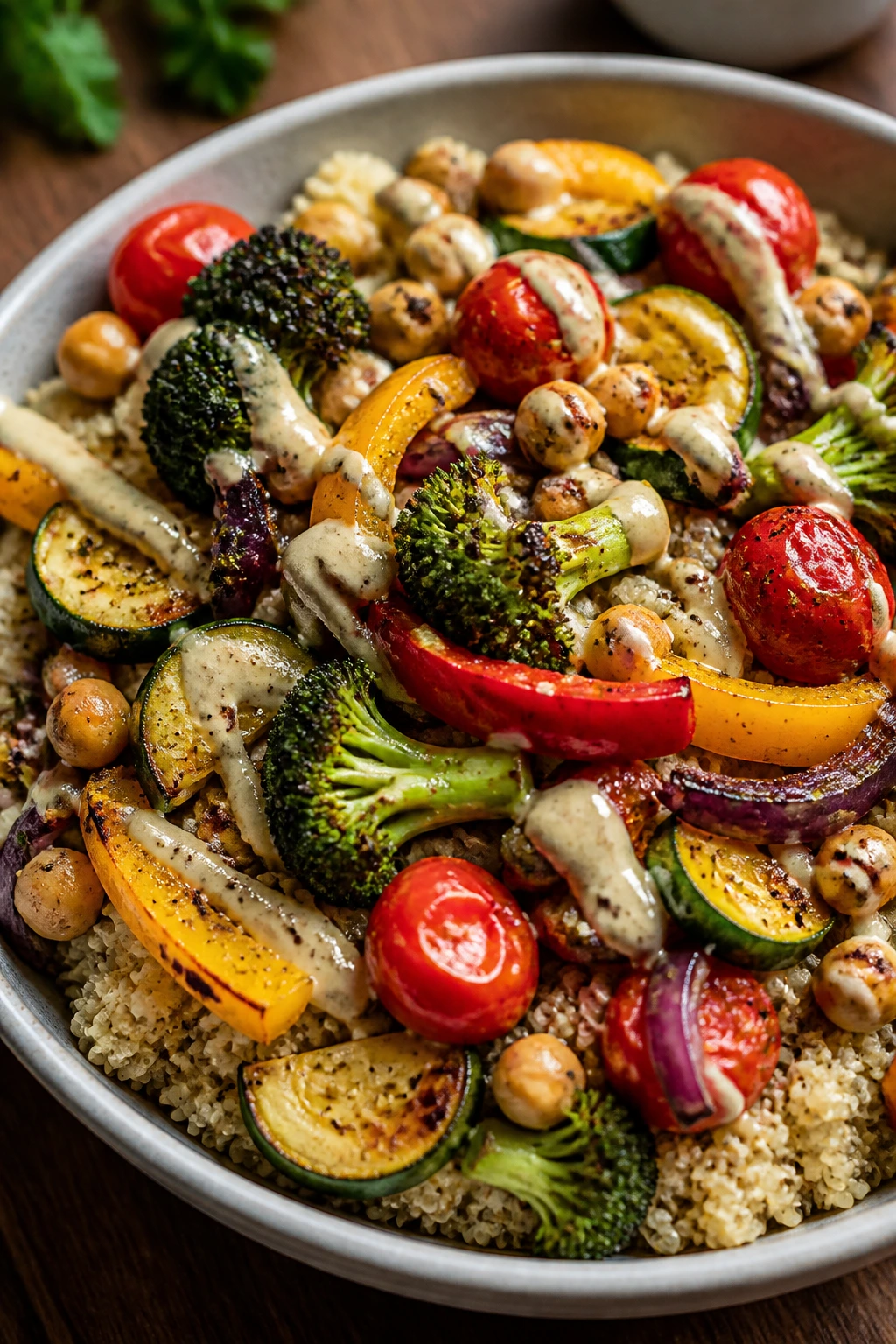
Description: Roasted broccoli, zucchini, bell peppers, onion, cherry tomatoes, and chickpeas are tossed with garlic and spices, then served over quinoa with a lemon-tahini sauce. It’s bright, filling, and sturdy enough for leftovers.
Prep Time: 20 minutes
Cook Time: 30 minutes
Total Time: 50 minutes
Course: Dinner, Main Course
Cuisine: Mediterranean-Inspired
Servings: 4 servings
Calories: About 470 kcal per serving
Ingredients
For the Roasted Vegetables and Chickpeas:
- 1 large head broccoli, cut into bite-size florets
- 2 medium zucchini, cut into 1/2-inch half-moons
- 2 bell peppers, sliced into 1-inch strips
- 1 red onion, cut into 8 wedges
- 1 pint cherry tomatoes
- 1 can (15 ounces) chickpeas, drained, rinsed, and patted dry
- 4 tablespoons extra-virgin olive oil
- 4 garlic cloves, finely grated or minced
- 1 teaspoon smoked paprika
- 1/2 teaspoon ground cumin
- 1/4 teaspoon red pepper flakes
- 1 teaspoon kosher salt
- 1/2 teaspoon black pepper
- 1 lemon, zested and juiced
For the Quinoa:
- 1 cup quinoa, rinsed well
- 2 cups vegetable broth or water
- 1/4 teaspoon kosher salt
For the Lemon-Tahini Sauce:
- 1/3 cup tahini
- 2 tablespoons lemon juice
- 1 small garlic clove, finely grated
- 2 to 4 tablespoons warm water
- 1/4 teaspoon kosher salt
For Serving:
- 2 tablespoons chopped parsley or dill
- 1/4 cup crumbled feta, optional
- Lemon wedges, optional
Instructions
-
Rinse the quinoa, then combine it with the broth or water and salt in a saucepan. Bring to a boil, cover, reduce to low, and simmer for 15 minutes. Rest off the heat for 5 minutes, then fluff.
-
Preheat the oven to 425°F (220°C) and line 2 rimmed sheet pans.
-
Whisk the olive oil, garlic, smoked paprika, cumin, red pepper flakes, salt, pepper, and lemon zest and juice in a large bowl. Add the broccoli, peppers, onion, and chickpeas, then toss to coat.
-
Spread the mixture across the sheet pans in a single layer. Roast for 15 minutes.
-
Add the zucchini and cherry tomatoes, toss lightly, and roast for 12 to 15 minutes more until browned at the edges and tender.
-
Whisk the tahini, lemon juice, garlic, salt, and warm water in a small bowl until smooth and pourable.
-
Spoon the quinoa into bowls, top with the roasted vegetables and chickpeas, and drizzle with the sauce.
-
Finish with parsley or dill, feta if using, and extra lemon wedges.
Notes: If the sauce thickens, whisk in another teaspoon or two of warm water. For better browning, keep the vegetables in a single layer and use two pans if needed. Leftovers keep best when the sauce is stored separately.