



The skillet should smell like garlic, browned beef, and toasted sesame before you even think about scooping rice. That’s the moment dinner starts to feel handled. A Juicy Beef Bowl only works when the meat stays glossy, the rice stays hot, and the crunchy toppings keep each bite from flattening out into one soft note.
I reach for ground beef with enough fat to leave a little shine in the pan—85/15 is my sweet spot here—because ultra-lean beef needs more rescue than most recipes admit. The sauce wants to cling, not puddle. The cabbage wants to stay crisp. The whole bowl needs enough salt, acid, and fat to taste rich without turning heavy.
That balance is the trick. Not fussy. Not fragile. Just a bowl with enough texture and punch to make you want a second serving before you’ve finished the first.
Why This Juicy Beef Bowl Works on Busy Nights
- The beef stays tender: Browning the meat hard enough to pick up color, then finishing it in sauce, gives you juicy crumbles instead of dry granules.
- The sauce does real work: Soy sauce, broth, brown sugar, vinegar, and a little cornstarch build a glossy coating that sticks to rice instead of sliding off it.
- The toppings keep it awake: Cold cucumber, shredded cabbage, scallions, and sesame seeds give the bowl a snap that cuts through the richness of the beef.
- It uses ordinary groceries: Nothing here requires a special trip. If your pantry has soy sauce, rice, garlic, and onions, you’re already most of the way there.
- It stretches cleanly: You can bulk the bowl out with extra vegetables, serve it over rice or cauliflower rice, or add an egg on top without throwing the balance off.
- It eats like a full dinner: One bowl gives you starch, protein, fat, and crunch in the same bite, which is why it feels more substantial than a basic meat-and-rice plate.
The Story Behind a Bowl Built on Rice and Glossy Beef
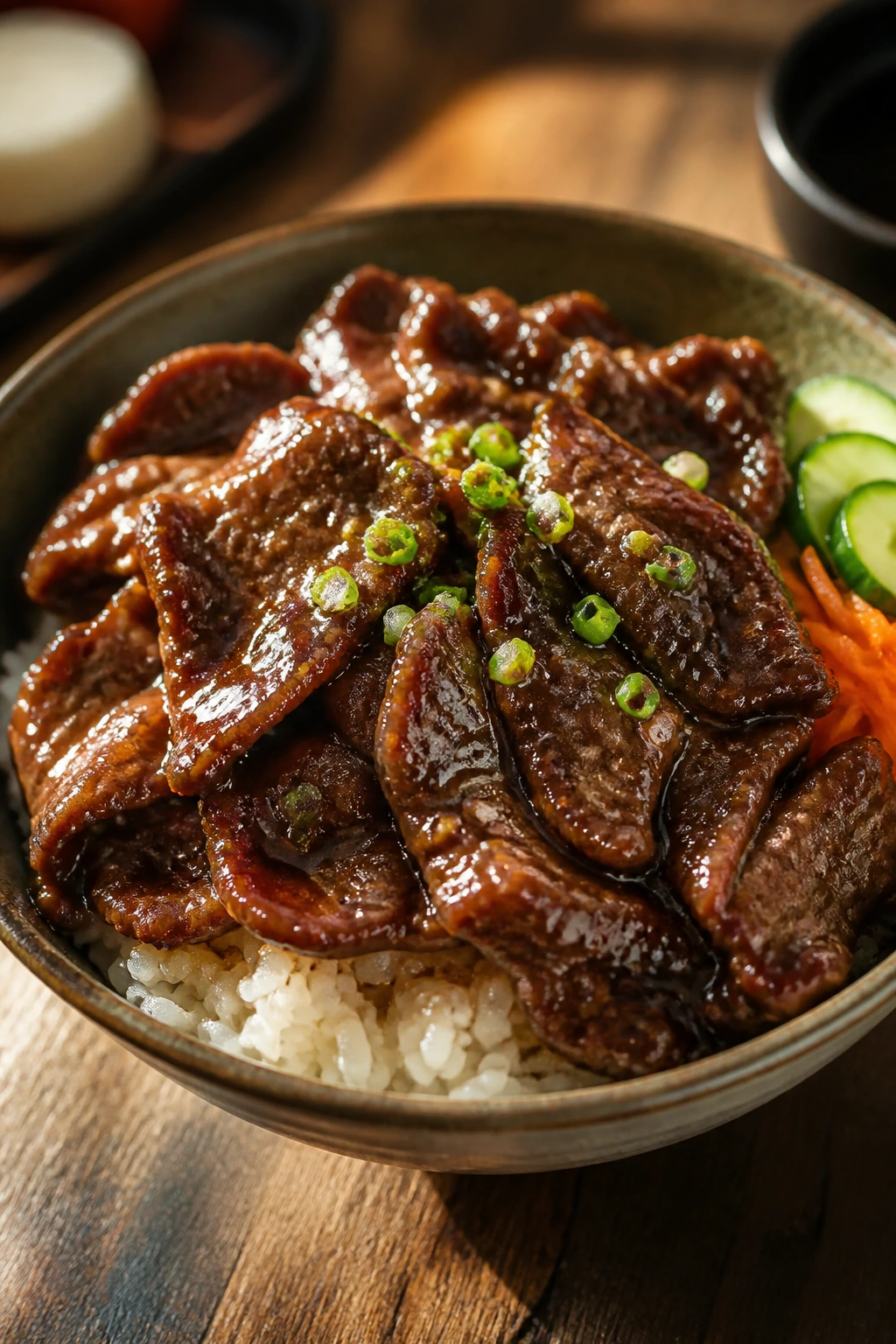
A beef bowl is one of those dishes that makes sense the second you taste it. Meat, sauce, rice, something fresh on top. The structure is old and sensible, the kind of dinner logic that shows up in lots of places: Japanese donburi, Korean beef rice bowls, Chinese-style stir-fries served over rice, and the blunt, efficient American habit of turning ground beef into supper fast. The version here borrows the best part of all of them—savory meat with enough sauce to coat every grain—and keeps the ingredients easy to find.
The reason I like this style for a hearty dinner is that it doesn’t ask the beef to be fancy. Ground beef does not need to impersonate steak. It needs heat, a little browning, and a sauce that understands how to make a spoonful feel bigger than it is. That’s why a small amount of brown sugar matters, why rice vinegar matters, and why a hit of sesame oil at the end tastes like the bowl snapped into focus. Tiny moves. Big effect.
There’s also something satisfying about the texture contrast when you get it right. Hot rice below, saucy beef in the middle, cool cucumber on top, maybe a few sesame seeds and a squeeze of lime. You taste the fat, then the acid, then the crunch. The bowl changes as you eat it, which is exactly why it never feels boring.
What Goes Into the Bowl
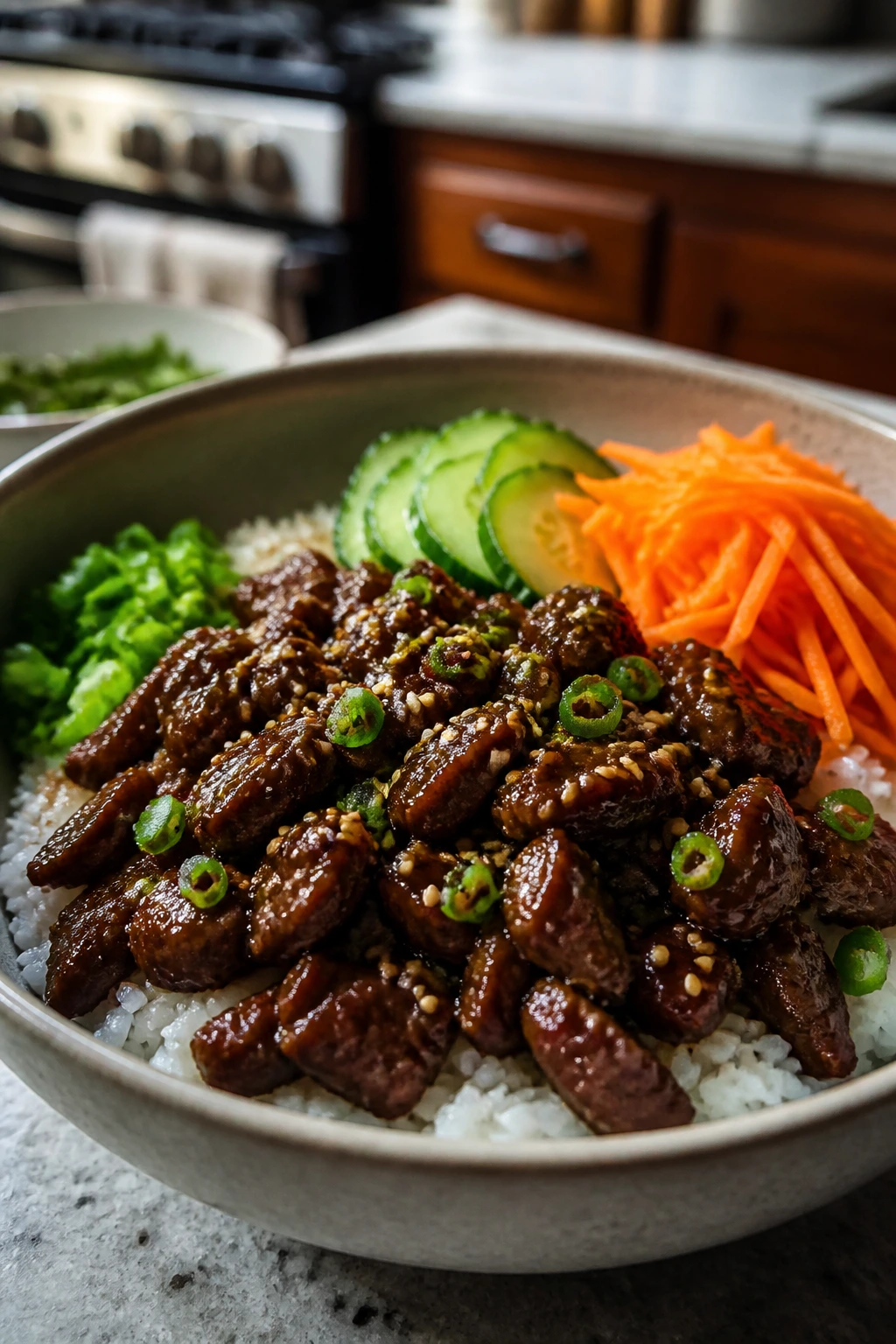
Yield: Serves 4 generous bowls
Prep Time: 20 minutes
Cook Time: 15 minutes
Total Time: 35 minutes
Difficulty: Beginner — the steps are straightforward, but the beef needs close attention so it browns instead of steaming.
Best Served: Right away while the rice is hot and the beef is glossy
Chill/Rest Time: None
For the beef and sauce:
- 1 1/2 pounds ground beef, 85/15 preferred
- 1 tablespoon neutral oil, only if using leaner beef
- 1 small yellow onion, finely diced
- 4 garlic cloves, minced
- 1 tablespoon fresh ginger, grated
- 1/4 cup low-sodium soy sauce or tamari
- 1/4 cup beef broth
- 2 tablespoons packed brown sugar
- 1 tablespoon rice vinegar
- 1 tablespoon tomato paste
- 1 teaspoon toasted sesame oil
- 1 tablespoon cornstarch
- 2 tablespoons cold water
- 1 tablespoon unsalted butter
For the rice base:
- 2 cups uncooked jasmine rice, rinsed
- 3 cups water
- 1/2 teaspoon fine salt
For toppings:
- 2 cups shredded green cabbage or coleslaw mix
- 1 cup cucumber, thinly sliced
- 1 cup shredded carrots
- 1 avocado, sliced
- 4 scallions, thinly sliced
- 2 tablespoons sesame seeds
- 2 tablespoons chopped cilantro or parsley
- 1 lime, cut into wedges
- Sriracha or chili crisp, for serving
Why Each Ingredient Pulls Its Weight
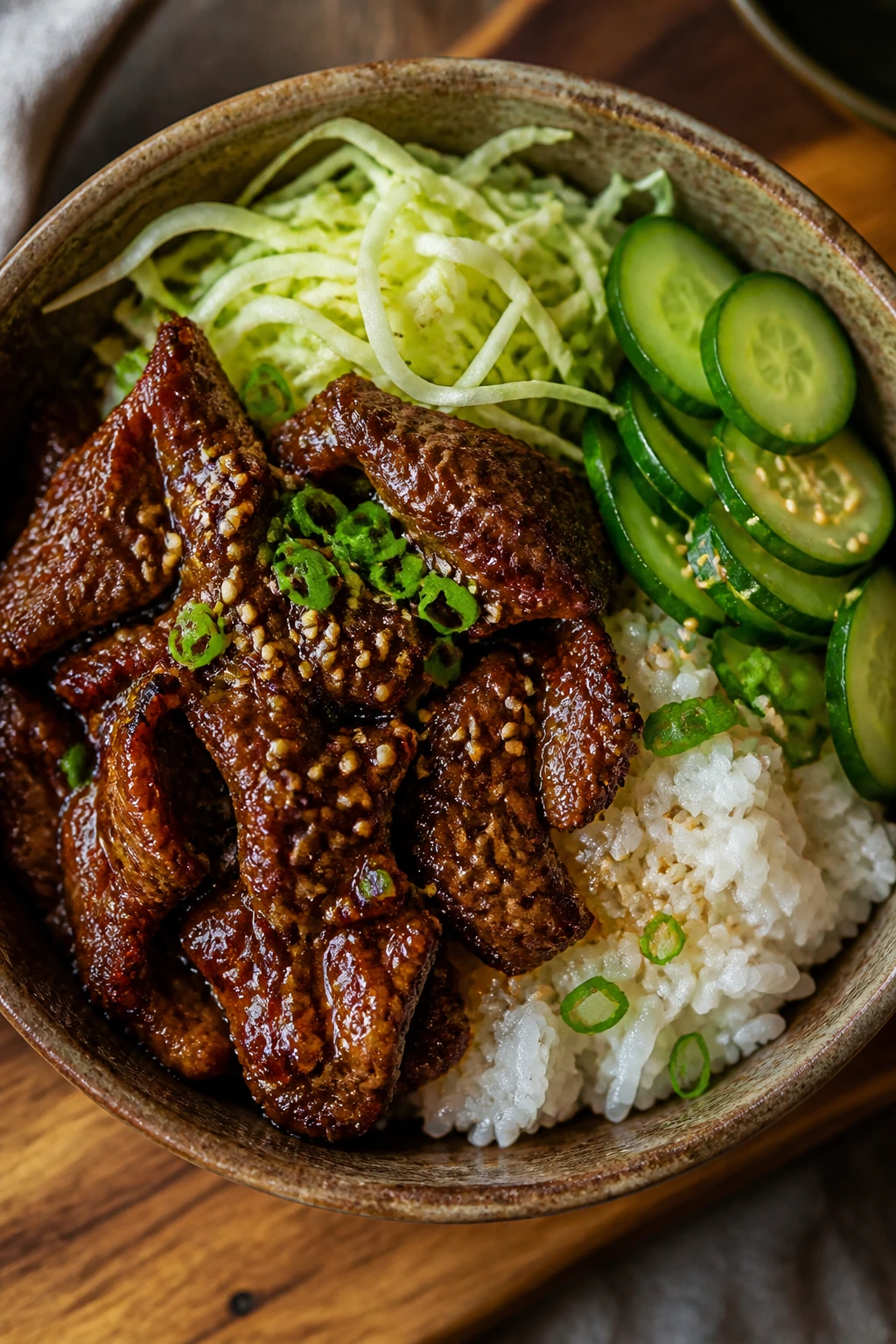
Ground Beef and the Juiciness Question
What to use: 1 1/2 pounds of 85/15 ground beef gives you enough fat to keep the meat supple and flavorful without leaving the bowl greasy.
Preparation: Let the beef sit out for about 10 minutes while you prep the vegetables so it loses its refrigerator chill and browns more evenly.
Substitutions: 90/10 ground beef works if you add the tablespoon of neutral oil; ground turkey can work too, though it needs the butter and sauce to feel full.
Tips: Lean beef dries out fast in a skillet. If you buy extra-lean meat, you’re asking the sauce to do extra work, and it usually won’t be enough.
The Sauce That Makes the Bowl Taste Finished
What to use: Soy sauce, beef broth, brown sugar, rice vinegar, tomato paste, sesame oil, cornstarch, and butter make a sauce that is salty, a little sweet, and thick enough to cling to each crumble of beef.
Preparation: Whisk everything except the cornstarch slurry and butter in a bowl before the pan gets hot; that keeps the cooking fast and stops you from scrambling around with measuring spoons once the beef is browned.
Substitutions: Tamari works for gluten-free cooking. Coconut aminos will make the sauce a touch sweeter and softer, so reduce the brown sugar to 1 tablespoon if you use them.
Tips: Tomato paste is the quiet helper here. It adds body and a deeper savory note, and you do not need much.
Rice, Crunch, and the Fresh Top Layer
What to use: Jasmine rice gives you a soft, fragrant base; cabbage, cucumber, carrots, scallions, avocado, sesame seeds, and lime build the bowl’s contrast.
Preparation: Rinse the rice until the water runs mostly clear, then slice the cucumber thin, shred the carrots if needed, and keep the avocado for last so it doesn’t brown while you cook.
Substitutions: Brown rice works if you like a chewier base, though it needs a longer cook time. Cauliflower rice can take over for part of the rice if you want a lower-carb bowl.
Tips: Cool toppings are not decoration. They keep the bowl from tasting heavy, and they make each bite reset before the next one lands.
Optional Finishing Ingredients
What to use: Scallions, sesame seeds, lime wedges, cilantro or parsley, and a little chili crisp or sriracha if you want heat.
Preparation: Slice the scallions thin and keep the greens and whites together for an even scatter; toast the sesame seeds only if they aren’t already toasted.
Substitutions: If cilantro tastes soapy to you, skip it and use parsley. If you want more acid, extra lime juice beats more sauce every time.
Tips: Add the hot sauce at the table, not in the pan. The bowl stays cleaner, and everyone gets to set their own heat level.
Equipment That Makes the Job Easier
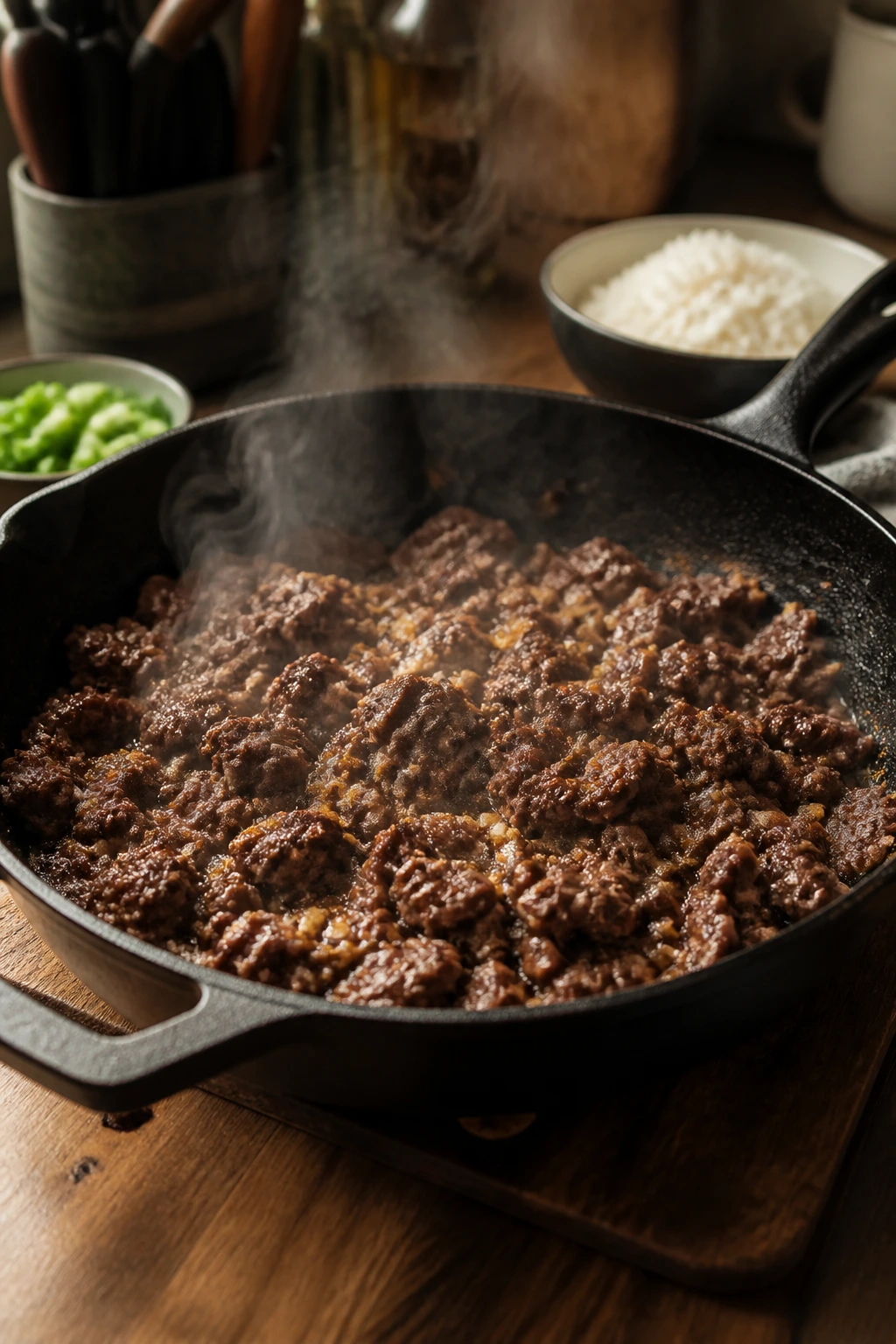
- 12-inch skillet or sauté pan: This is the pan I’d pick first; the extra surface area helps the beef brown instead of crowding.
- Medium saucepan with lid or rice cooker: Either one will handle the jasmine rice cleanly.
- Fine-mesh strainer: Useful for rinsing the rice until the water runs clear.
- Wooden spoon or spatula: Best for breaking up the beef into small crumbles without scraping the pan too hard.
- Small mixing bowl: Needed for the sauce and the cornstarch slurry.
- Sharp knife and cutting board: For the onion, scallions, cucumber, and avocado.
- Microplane or box grater: Faster than mincing ginger by hand, and cleaner too.
- Instant-read thermometer: Optional, but useful if you want to verify the beef has reached 160°F.
How to Cook a Juicy Beef Bowl Without Dry Edges
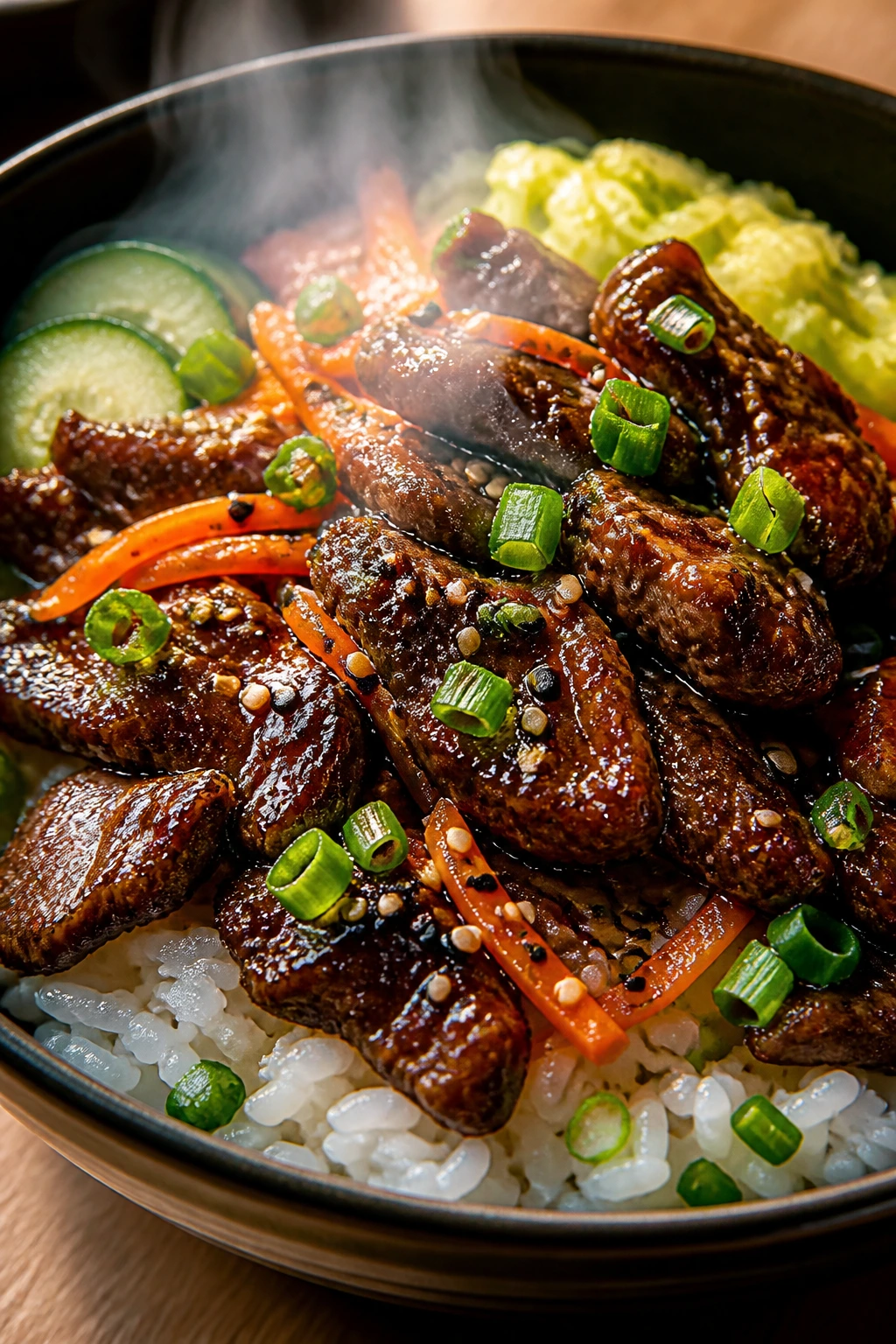
Prep the Rice and Toppings:
-
Rinse and start the rice. Rinse the jasmine rice in a fine-mesh strainer under cool water until the runoff looks mostly clear, about 1 minute of swirling and draining. Combine the rice, water, and salt in a medium saucepan, bring it to a boil over high heat, then cover, reduce to low, and cook for 15 minutes. Turn off the heat and let it sit, covered, for 10 minutes. Do not lift the lid early or the steam will escape and the grains will turn uneven.
-
Mix the sauce before the beef goes into the pan. In a small bowl, whisk together the soy sauce, beef broth, brown sugar, rice vinegar, tomato paste, and sesame oil until the sugar starts dissolving. In a separate cup, stir the cornstarch with 2 tablespoons cold water until smooth. Set both aside. The sauce should look dark, thin, and slightly glossy.
-
Prep the toppings while the rice cooks. Slice the cucumber, shred the carrots, thinly slice the scallions, and cut the avocado just before serving. If you’re using cabbage, pile it in a bowl and give it a pinch of salt so it softens by a few hairs without going limp.
Brown the Beef:
-
Heat the skillet and start the onion. Set a 12-inch skillet over medium-high heat. Add the neutral oil if you’re using lean beef, then add the onion and cook for 2 minutes until it begins to soften and smell sweet. If your beef is 85/15, you can usually skip the oil and let the meat bring enough fat on its own.
-
Add the ground beef and break it up. Stir the beef into the onion, then use a spatula to break it into small crumbles. Cook for 6 to 8 minutes, stirring occasionally, until the beef is browned and any liquid has mostly evaporated. If the pan looks watery, keep cooking. You want browning, not steaming.
-
Stir in the garlic and ginger. Add the minced garlic and grated ginger, then cook for 30 seconds, just until the garlic smells fragrant and the pan takes on a warm, savory smell. If the garlic starts browning hard, you waited too long and the heat is too high.
Glaze and Finish the Sauce:
-
Pour in the sauce and simmer. Add the soy mixture to the skillet and stir, scraping up any browned bits stuck to the bottom. Let it bubble gently for 1 to 2 minutes so the flavors settle together. The sauce will look thin at first.
-
Thicken the beef mixture. Stir the cornstarch slurry again, then pour it into the skillet while stirring constantly. Cook for 1 to 2 minutes until the sauce turns glossy and thick enough to coat the beef without pooling around it. Add the butter and stir until it melts. Taste and adjust with a pinch of salt, more rice vinegar, or a splash of soy sauce if needed. The finished beef should look shiny, not soupy.
Assemble the Bowls:
-
Fluff the rice and divide it. Fluff the rice with a fork and spoon it into four bowls. The grains should be tender, separate, and steaming.
-
Layer the toppings and serve. Spoon the beef over the rice, then add cabbage, cucumber, carrots, avocado, scallions, sesame seeds, and cilantro or parsley. Finish with lime juice and chili crisp or sriracha at the table. Eat immediately while the beef is hot and the toppings still have some chill.
How to Plate It So the Bowl Eats Right
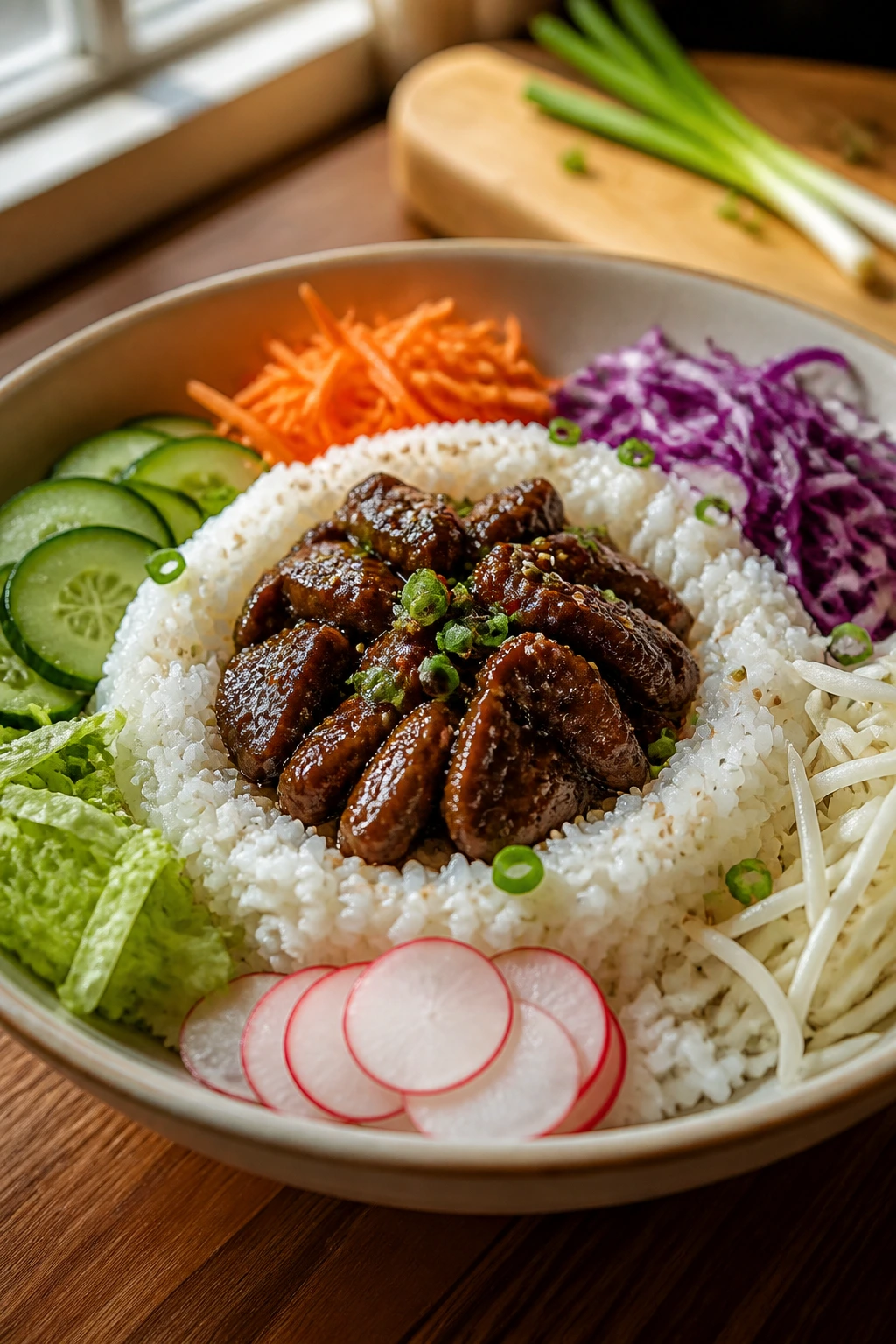
Presentation: Start with a mound of rice, then make a shallow well in the center and spoon the beef into it. That keeps the sauce from running straight to the edges of the bowl and lets the toppings sit around the meat instead of getting buried under it. A shallow bowl or wide cereal bowl works better than a deep soup bowl here. You want to see the layers.
Accompaniments: A simple cucumber salad, steamed edamame, or roasted broccoli fits this bowl without crowding it. If you want something heartier, add a fried egg with a runny yolk; it drapes itself over the beef in the nicest way. Pick one side, not three. The bowl already carries its own weight.
Portions: Four generous bowls is the honest yield, especially if you use the full rice base and pile on toppings. If you serve it with a side dish, it can stretch to six smaller servings. For bigger appetites, add another cup of cooked rice and a second avocado rather than doubling the meat. That keeps the bowl balanced instead of turning it into a salt bomb.
Beverage Pairing: I like iced green tea, sparkling water with lime, or a crisp lager with this bowl. If you’re serving it for a relaxed dinner, cold ginger beer is a fine match too—the sharp bite plays nicely against the beef.
Additional Tips for Bigger Flavor and Better Texture
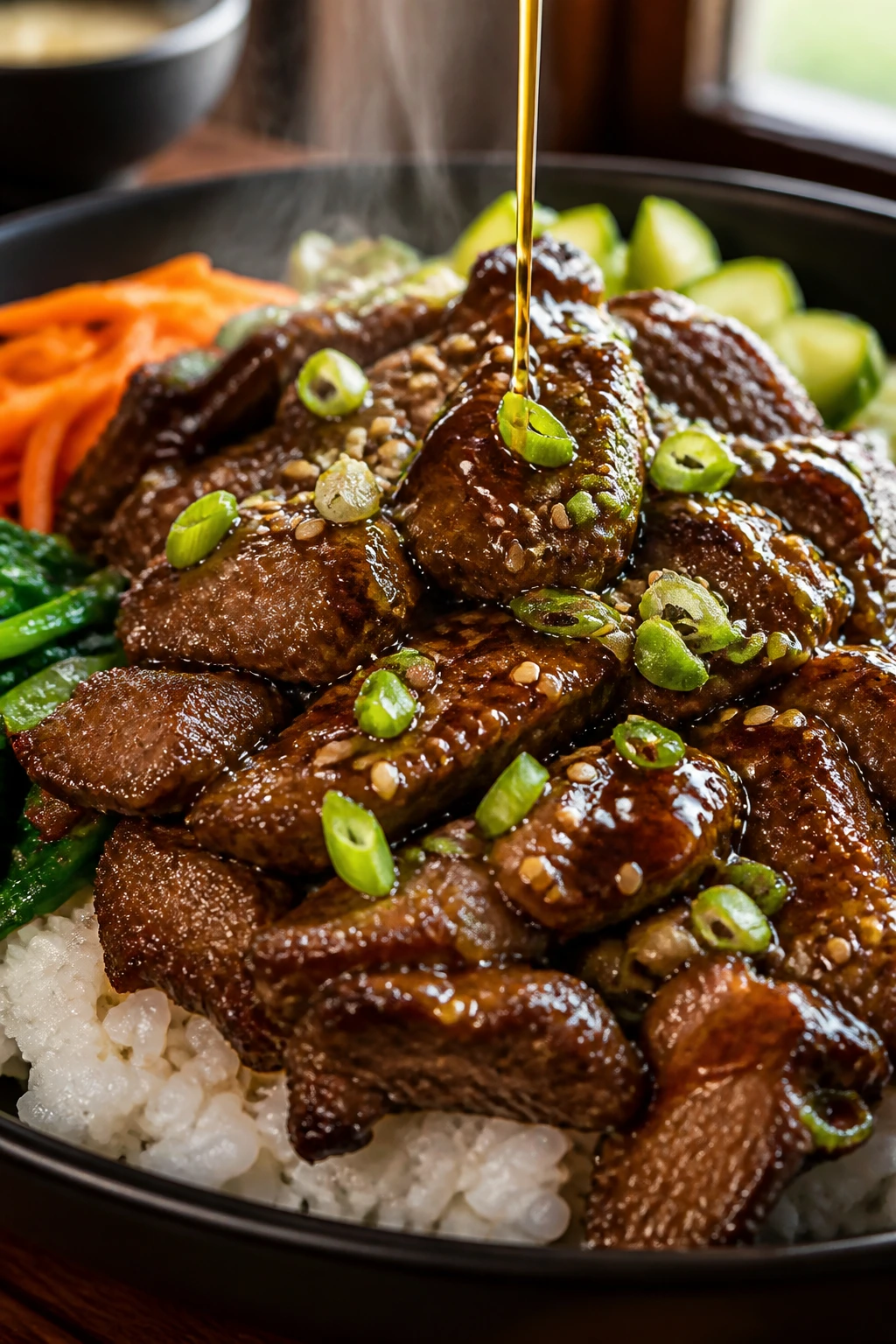
Flavor Enhancement: Finish the beef with a tiny splash of rice vinegar after the heat is off, not during cooking. It brightens the sauce in a way brown sugar alone cannot. If you like more depth, stir in 1 teaspoon of fish sauce along with the soy sauce; it won’t make the bowl taste fishy, it just pushes the savory edge a little farther.
Time-Saver: Use bagged slaw or pre-shredded cabbage when you’re short on time. Nobody needs to pretend hand-shredding cabbage is some noble act. It isn’t. The bagged stuff gives you the same crunch and saves a few knives, which is useful on a weeknight.
Cost-Saver: Ground beef stretches well if you add mushrooms. Chop 8 ounces of cremini very fine and cook them with the onion until they give up their water and start browning. The mushrooms blend into the beef, deepen the flavor, and trim the cost per bowl without making the dinner feel sparse.
Make-It-Yours: If you want more heat, add 1 teaspoon of gochujang or 1/2 teaspoon of crushed red pepper to the sauce. If you want a cleaner, lighter bowl, skip the butter and finish with extra scallions and lime. If dairy is off the table, nothing needs changing; the recipe already works without cream or cheese.
Common Mistakes That Make Beef Taste Flat
-
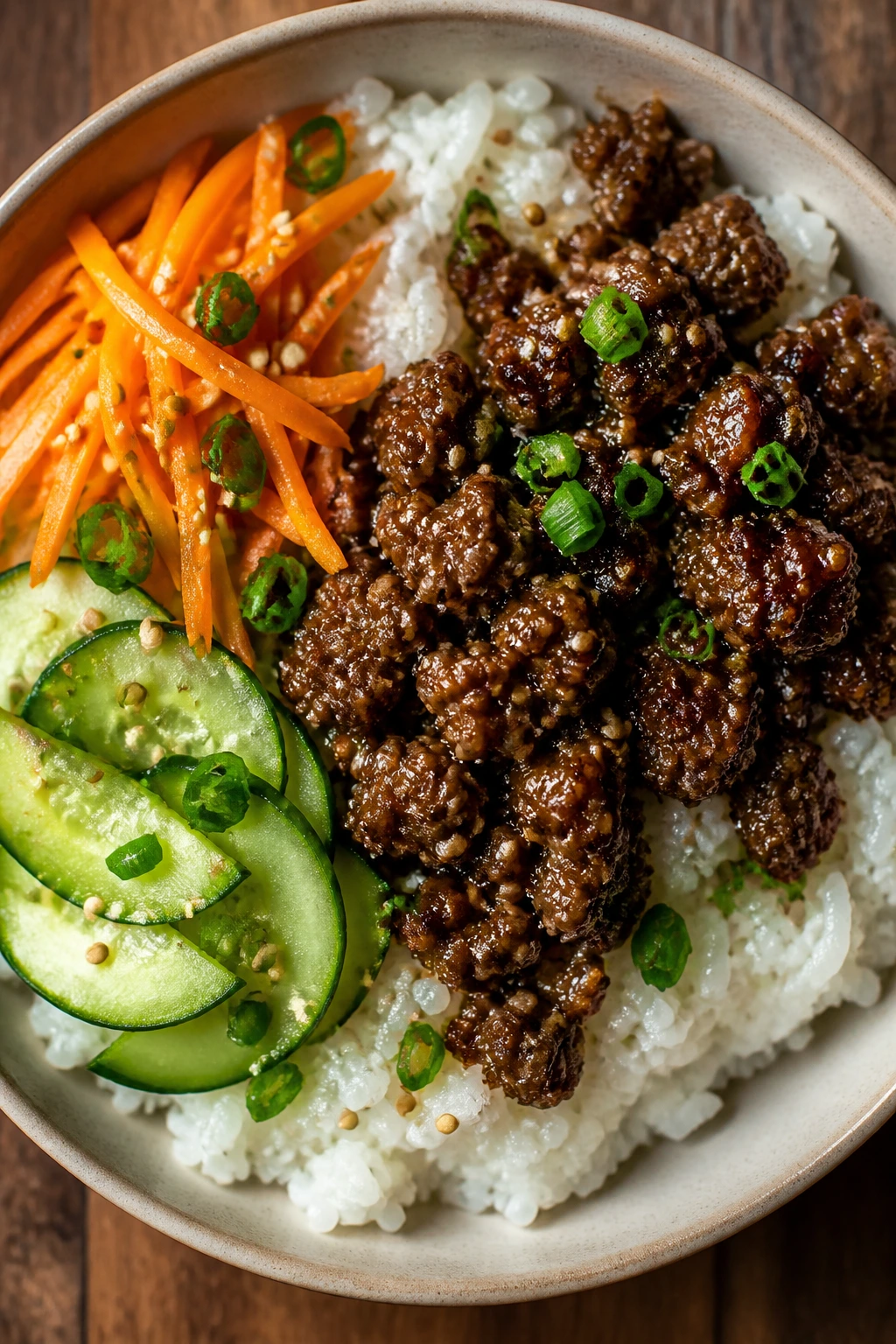
Using beef that is too lean.
The symptom is dry, chalky crumbles that feel more like lunch meat than dinner. Fix it by using 85/15 or 90/10 beef and, if you’re stuck with something leaner, add the tablespoon of neutral oil and do not overcook the meat after the sauce goes in. -
Crowding the skillet.
If the beef sits in a gray, watery pile, it is steaming instead of browning. A 12-inch skillet gives the meat room to spread out; if your pan is smaller, cook in two batches. Browning is what builds the flavor here. Skip it and the whole bowl gets thinner. -
Adding the cornstarch too early.
If you dump it in before the sauce has simmered, you can get a faintly gluey texture or little starchy lumps. Stir the slurry in at the end, after the sauce has had a chance to bubble for a minute or two, and keep the heat at a gentle simmer. -
Letting the toppings get watery.
Wet cucumber and soggy cabbage drain into the rice and dull the whole bowl. Slice the cucumber thin, then pat it dry. If the cabbage feels damp from the bag, toss it with a pinch of salt and shake off the extra moisture before building the bowls. -
Skipping the acid.
Without rice vinegar or lime, the beef tastes heavier than it should. A bowl like this needs a sharp edge so the fat doesn’t sit on your tongue. If the sauce tastes flat, fix it with vinegar first, then salt. More brown sugar is not the answer. -
Overcooking the beef after the sauce is in.
Once the beef is coated and glossy, it’s done. If you keep simmering it until the liquid evaporates completely, the meat turns tight and the glaze gets sticky in the wrong way. Stop when the sauce clings and still looks a little loose in the pan.
Variations for Different Cravings
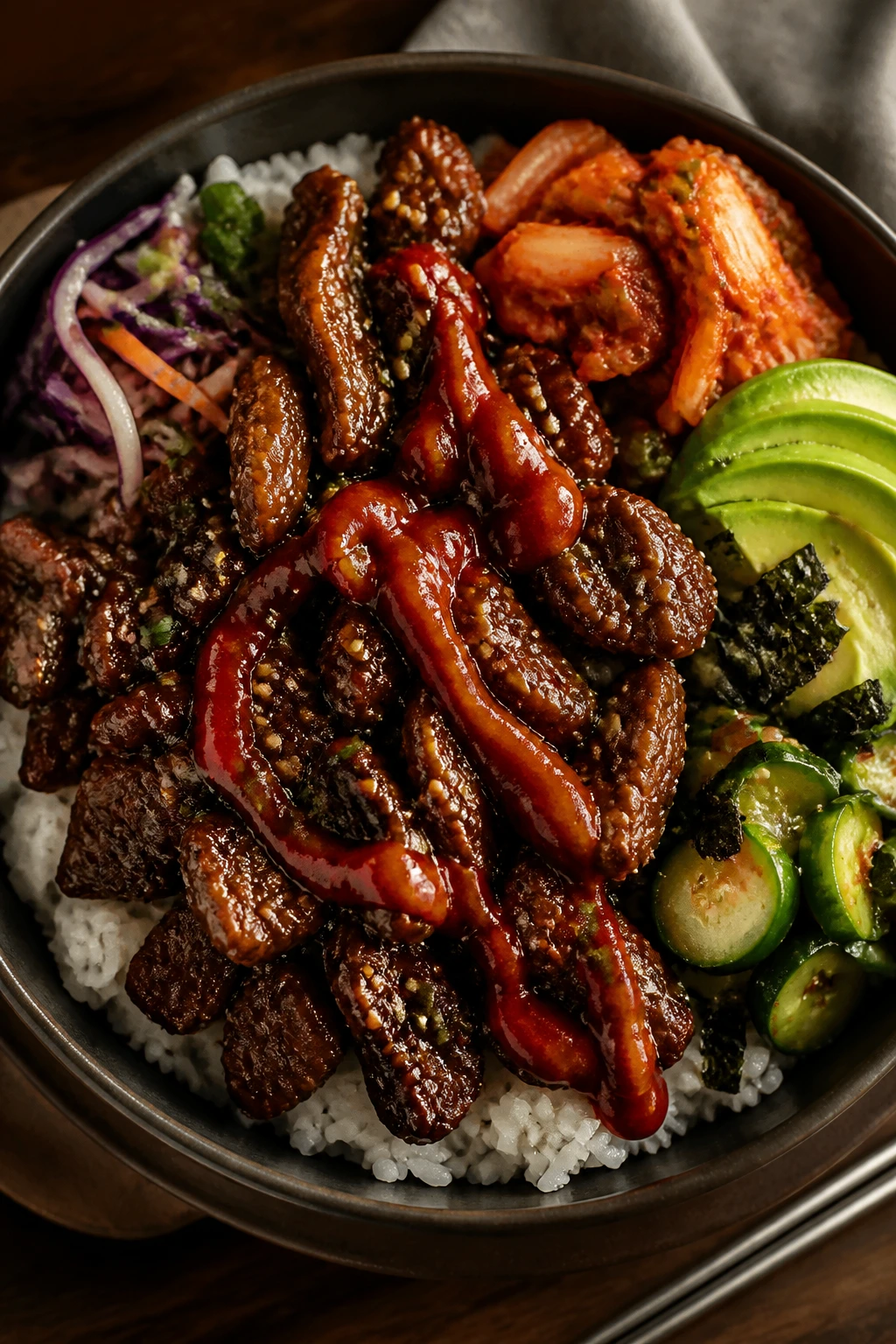
Gochujang Heat Wave
Stir 1 to 2 tablespoons of gochujang into the sauce and reduce the brown sugar to 1 tablespoon. The bowl turns deeper, spicier, and a little more savory, with a heat that clings to the back of the tongue instead of flashing and disappearing. Finish with kimchi if you want the whole thing to feel louder.
Tex-Mex Beef Bowl
Swap the soy sauce for 1/2 cup beef broth plus 1 teaspoon cumin, 1 teaspoon chili powder, and 1 tablespoon tomato paste, then serve the beef over rice with black beans, corn, avocado, and salsa. The structure stays the same, but the flavor leans smoky and familiar in a different way. It’s a good move when you want bowl food that tastes like a burrito’s sharper cousin.
Mushroom-Heavy Stretch Bowl
Cook 8 ounces finely chopped cremini mushrooms with the onion, then use only 1 pound of ground beef. The mushrooms drink up the sauce and give the dish more body, which is handy if you want to feed extra people without buying more meat. The finished bowl tastes woodier and a little darker, which I like with a fried egg on top.
Cabbage-First Lower-Carb Bowl
Skip the rice and build the bowl on shredded cabbage or cauliflower rice. Keep the beef sauce exactly the same, then add more cucumber and avocado so the bowl still feels substantial. This is the version I’d make when I want the same savory beef but less starch under it.
Egg-Topped Dinner Bowl
Add a fried egg or soft-poached egg to the top of each bowl. The yolk slips into the beef and rice, making the sauce richer without changing the recipe itself. This is the one to make when you want the bowl to feel more like a sit-down dinner than a fast plate.
Make-Ahead, Storage, and Reheating
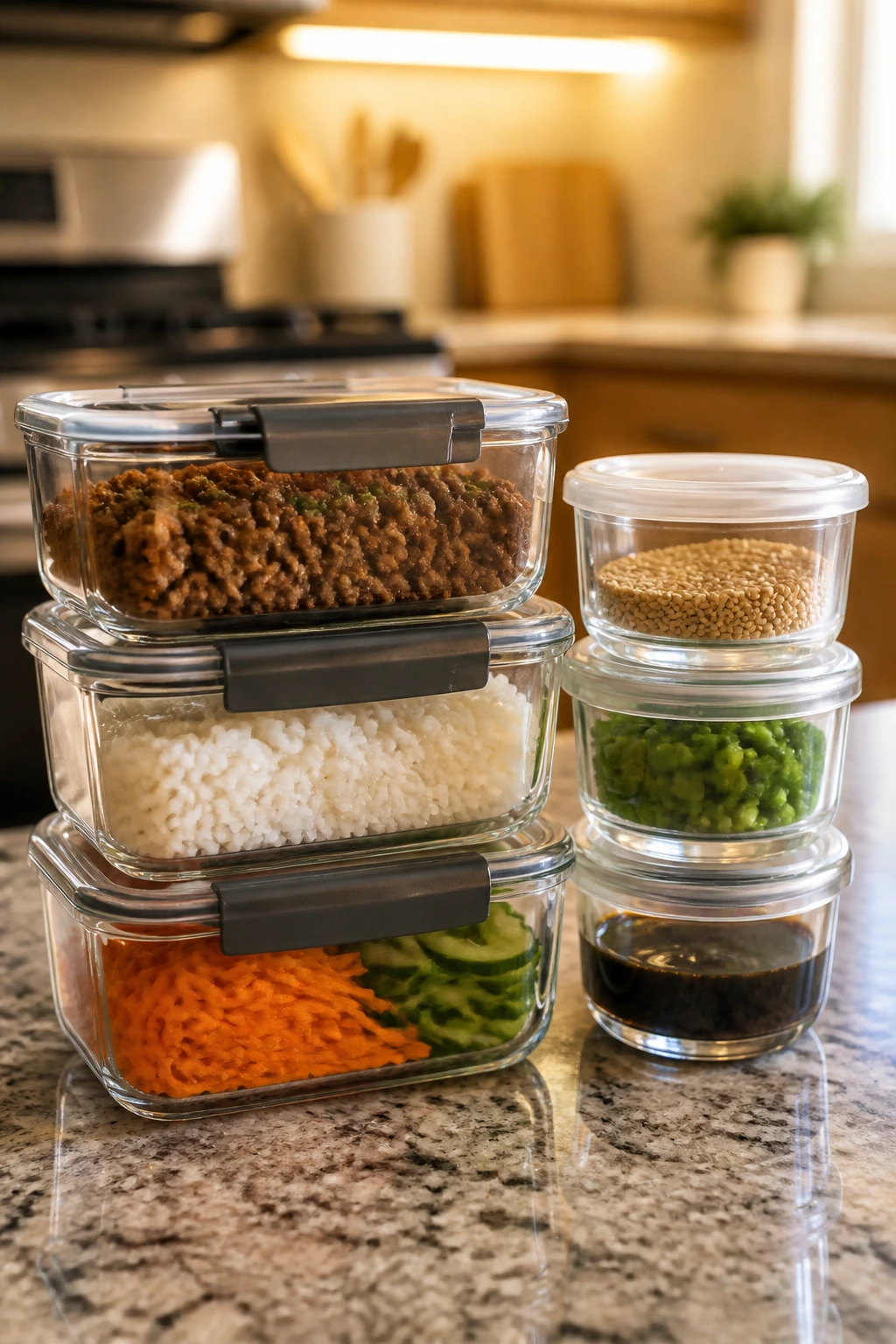
Cooked beef and rice keep best when you store them separately. Pack the beef in one airtight container and the rice in another, then refrigerate both for up to 4 days. Keep the fresh toppings in a third container or, better yet, prep them the day you plan to eat. Cucumber, avocado, and scallions lose their edge fast once they sit in sauce or steam.
For freezing, the beef freezes well for up to 2 months. Rice can also be frozen for about 1 month if you cool it quickly, portion it, and press the air out of the bag or container. I would not freeze the toppings. Cucumbers turn limp, avocado goes brown and strange, and the whole thing turns sorry when it thaws.
Reheat the beef in a skillet over medium heat with 1 to 2 tablespoons of water or broth, stirring until it loosens and turns glossy again. The microwave works too; cover the container loosely and heat in 45-second bursts, stirring between each one. For the rice, sprinkle it with a teaspoon or two of water, cover it, and warm it gently until it steams. That little bit of moisture keeps it from turning dry and hard around the edges.
If you want to meal prep this bowl, cook the rice and beef on the same day, then portion them into containers with the cabbage and carrots on the side. Add avocado, lime, and chili crisp only when you’re ready to eat. The bowl survives prep well, but the fresh stuff should stay fresh.
Questions People Ask About Beef Bowls
Can I use ground turkey instead of ground beef?
Yes, but ground turkey needs help. Use 93/7 turkey with the tablespoon of neutral oil, and keep the butter in the sauce so the bowl doesn’t taste lean and flat. I’d also lean harder on the sesame oil and vinegar, because turkey needs more flavor support than beef does.
What kind of ground beef makes the juiciest bowl?
85/15 is my favorite for this dish. It browns well, stays tender, and leaves just enough fat to carry the sauce. If you use 90/10, keep an eye on the pan and add oil if the beef starts looking dry before it browns.
Can I make the bowl gluten-free?
Absolutely. Swap the soy sauce for tamari or a gluten-free soy sauce, and check the label on your broth. The rest of the recipe already fits a gluten-free dinner without any dramatic changes.
How do I keep the rice from getting mushy?
Rinse it until the water runs mostly clear, then measure the water carefully and let the pot rest covered after cooking. If you stir too early or use too much water, the rice gets sticky and soft. Jasmine rice should feel tender with a little separate grain, not like paste.
What if the sauce tastes too salty?
Add a splash of water or broth, a squeeze of lime, and a little more brown sugar if needed. Salt gets sharper as the sauce reduces, so over-reduction is usually the real problem. If you catch it early, you can pull it back without starting over.
Can I make this ahead for lunches?
Yes, and it holds up well if you keep the toppings separate. Pack the beef, rice, and sturdy vegetables like cabbage and carrots together, then add avocado, scallions, and lime right before eating. The bowl tastes best when the hot and cold parts still feel separate.
Can I cook the beef in a different style, like with extra sauce or a drier finish?
You can, but the sweet spot is a glossy coating, not a wet stew. If you want more sauce for rice, add 2 more tablespoons of broth and another teaspoon of cornstarch. If you want a drier skillet-style filling, reduce the broth by half and stop cooking the beef as soon as the glaze thickens.
Why This Bowl Keeps Landing on the Table
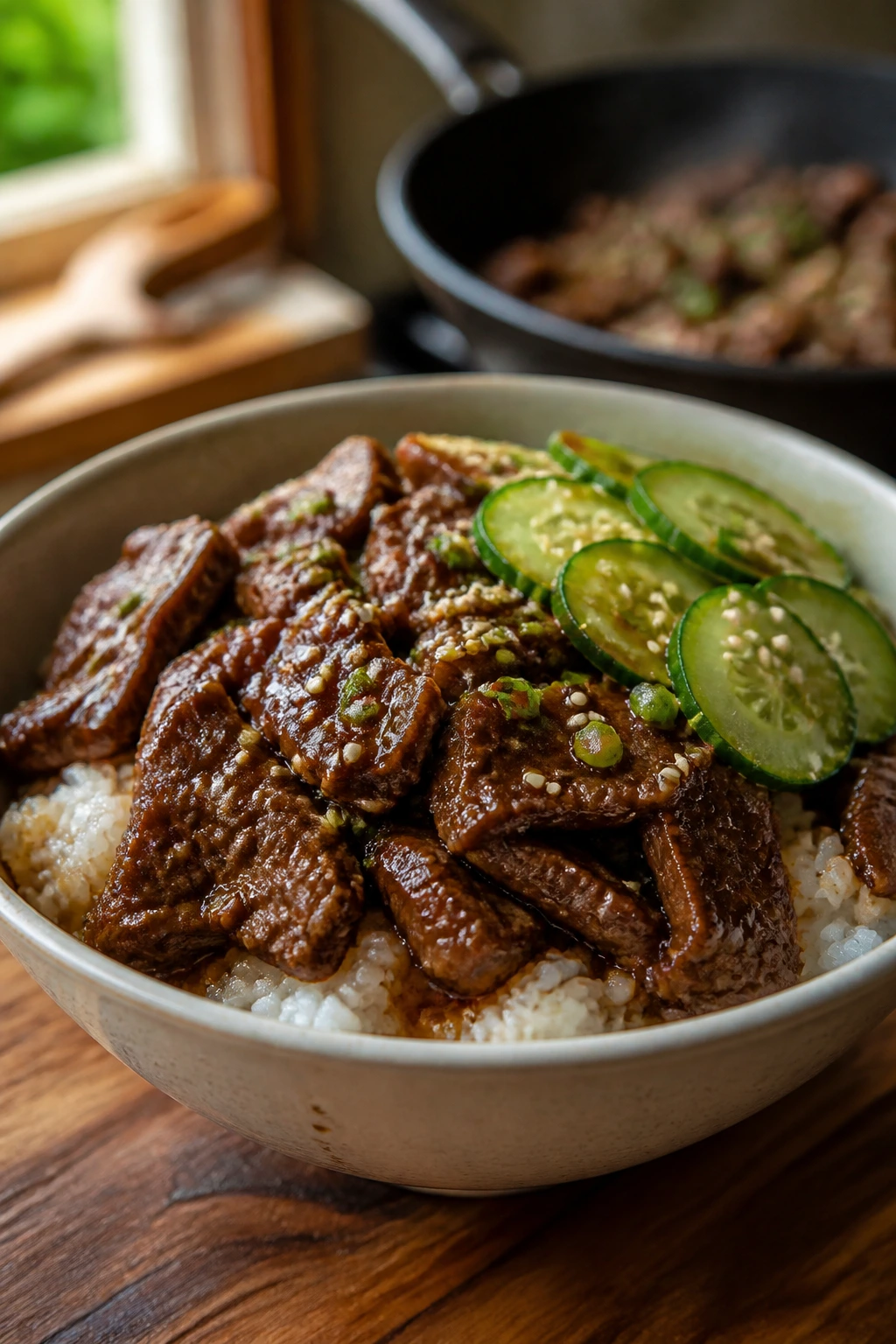
A good beef bowl does not ask for much. Give it a hot skillet, a pan of rice, and a few sharp toppings, and it starts acting like a meal with more personality than its ingredient list suggests. That’s the appeal here: the beef is rich, the sauce clings, and the cold crunch on top keeps the whole thing from feeling sleepy.
I like recipes that know what they are. This one is not trying to be refined. It’s trying to be satisfying, fast enough for a weeknight, and sturdy enough that you can eat it with one hand while the other hand steals the last cucumber slice. That’s a useful kind of dinner.
Juicy Beef Bowl for a Hearty Dinner — Recipe Card
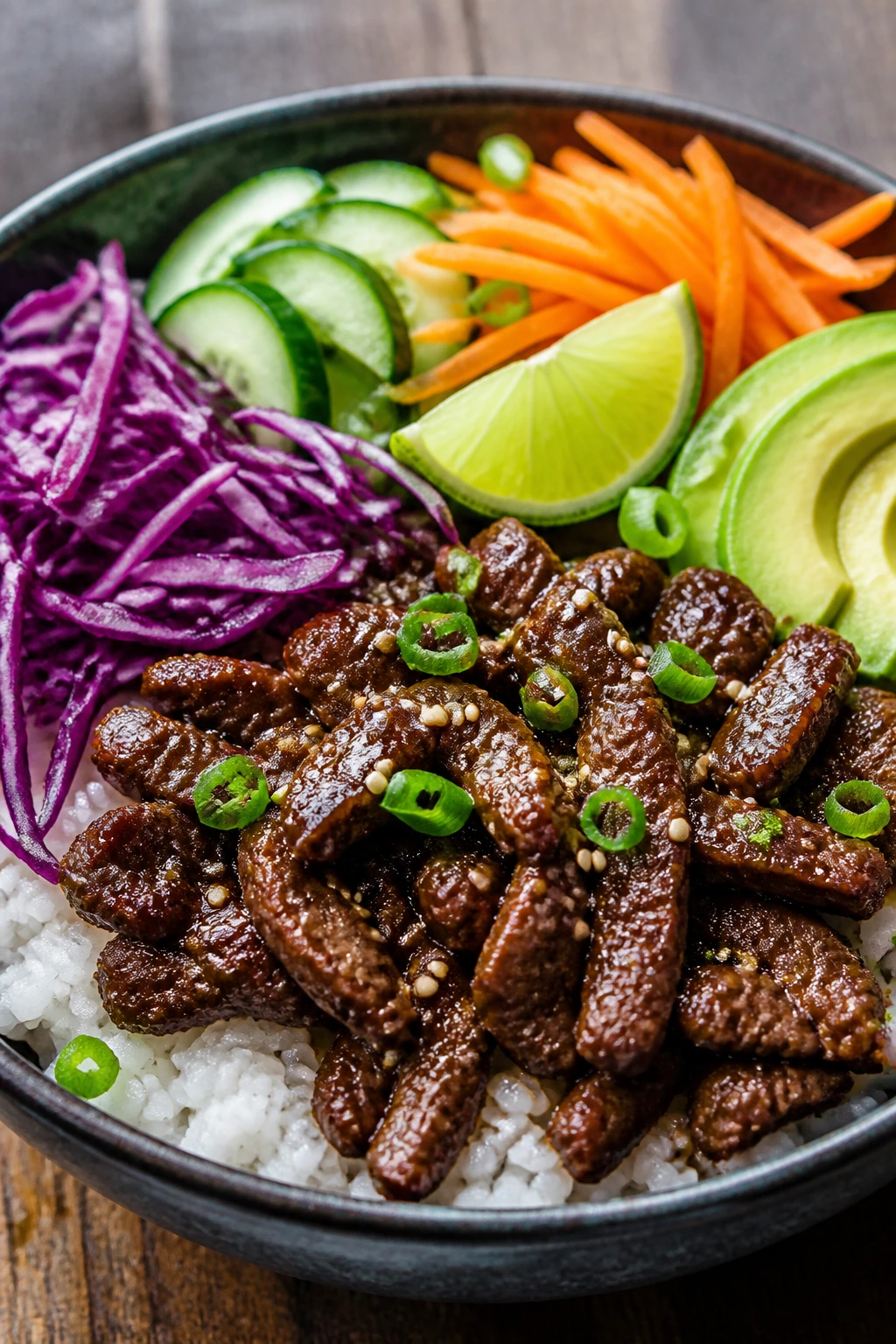
Recipe Name: Juicy Beef Bowl for a Hearty Dinner
Description: A glossy ground beef bowl served over jasmine rice with crisp vegetables, scallions, sesame seeds, and a bright finish of lime. The beef stays tender, the sauce clings, and the toppings keep every bite lively.
Prep Time: 20 minutes
Cook Time: 15 minutes
Total Time: 35 minutes
Course: Dinner, Main Course
Cuisine: Asian-inspired
Servings: 4 servings
Calories: About 620 kcal per serving
Ingredients
For the beef and sauce:
- 1 1/2 pounds ground beef, 85/15 preferred
- 1 tablespoon neutral oil, if using leaner beef
- 1 small yellow onion, finely diced
- 4 garlic cloves, minced
- 1 tablespoon fresh ginger, grated
- 1/4 cup low-sodium soy sauce or tamari
- 1/4 cup beef broth
- 2 tablespoons packed brown sugar
- 1 tablespoon rice vinegar
- 1 tablespoon tomato paste
- 1 teaspoon toasted sesame oil
- 1 tablespoon cornstarch
- 2 tablespoons cold water
- 1 tablespoon unsalted butter
For the rice base:
- 2 cups uncooked jasmine rice, rinsed
- 3 cups water
- 1/2 teaspoon fine salt
For toppings:
- 2 cups shredded green cabbage or coleslaw mix
- 1 cup cucumber, thinly sliced
- 1 cup shredded carrots
- 1 avocado, sliced
- 4 scallions, thinly sliced
- 2 tablespoons sesame seeds
- 2 tablespoons chopped cilantro or parsley
- 1 lime, cut into wedges
- Sriracha or chili crisp, for serving
Instructions
- Rinse the rice until the water runs mostly clear. Cook it with the water and salt, then cover and let it steam off the heat for 10 minutes.
- Whisk together the soy sauce, broth, brown sugar, rice vinegar, tomato paste, and sesame oil. Mix the cornstarch with cold water in a separate cup.
- Prep the toppings: slice the cucumber, shred the carrots, slice the scallions, and cut the avocado just before serving.
- Heat a 12-inch skillet over medium-high heat. Add the onion and beef, then cook until the beef is browned and the liquid has mostly evaporated.
- Stir in the garlic and ginger and cook for 30 seconds.
- Pour in the sauce and simmer for 1 to 2 minutes.
- Stir in the cornstarch slurry and cook until the sauce turns glossy and thick enough to coat the beef. Add the butter and stir until melted.
- Fluff the rice and divide it between four bowls. Top with the beef, cabbage, cucumber, carrots, avocado, scallions, sesame seeds, and herbs. Finish with lime and chili crisp or sriracha.
Notes: Use 85/15 beef if you can. Keep the toppings crisp and add avocado at the end. If the sauce gets too thick, loosen it with 1 to 2 tablespoons of water or broth.