



Ground beef goes wrong fast. One minute it’s rich and savory; the next it’s gray, dry, and begging for ketchup. The fix is not complicated, but it does ask for a little patience at the skillet and a willingness to let browning happen before you stir the life out of it.
This juicy dinner ground beef leans on diner logic: browned meat, sweet onion, mushrooms that give up their liquid and then take on color, and a pan sauce that tastes deeper than the ingredient list suggests. I reach for 85/15 ground beef because it leaves enough fat for flavor without turning the pan into a puddle, and I like that the sauce builds right where the meat cooked. Nothing gets wasted. Nothing gets shy.
Serve it over mashed potatoes, buttered noodles, rice, or thick toast, and the whole thing changes character in a good way. The beef stays tender, the sauce clings instead of running off the plate, and the smell of pepper, onion, and Worcestershire makes the kitchen feel busier than it really is. The trick is simple enough to remember. That usually means it’s worth keeping.
Why This Ground Beef Skillet Tastes Like Diner Food in the Best Way
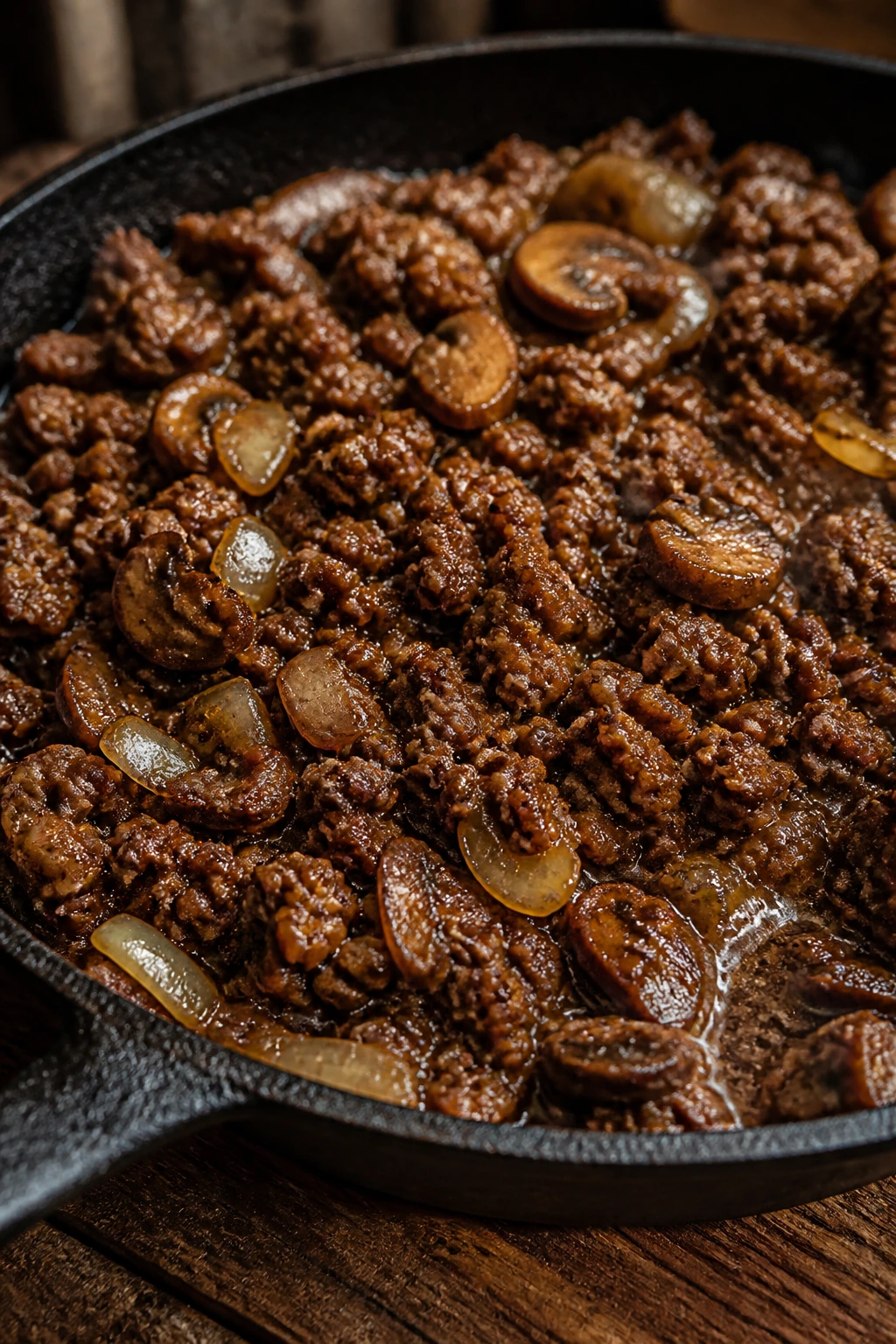
- Browns before it braises: The beef gets real contact with a hot pan first, which gives you those deep, savory edges that plain simmering never can.
- Stays juicy without getting greasy: 85/15 beef gives the skillet enough fat to taste full, but not so much that you need to drain off half the pan.
- Makes its own sauce: Tomato paste, broth, Worcestershire, and a little flour turn the browned bits into a glossy gravy that clings to potatoes and noodles.
- Stretches into a full dinner: Onion and mushrooms add body, so the meat feels generous without tasting diluted.
- Plays nicely with pantry sides: Rice, noodles, toast, biscuits, or mashed potatoes all work here, which makes the dish forgiving on a half-empty fridge day.
- Leftovers hold their shape: The sauce thickens overnight, and the beef soaks up more flavor instead of drying out.
This kind of skillet dinner sits in the same family as hamburger steak with onion gravy, chopped steak, and the old diner plates that arrived with a starch and a vegetable if you were lucky. I like this crumbled version better for home cooking because it skips the shaping step and gets straight to the good part: beefy sauce, browned edges, and onions softened enough to melt into the pan. It feels familiar, but not dull.
That is the whole trick.
A Quick Snapshot Before You Start
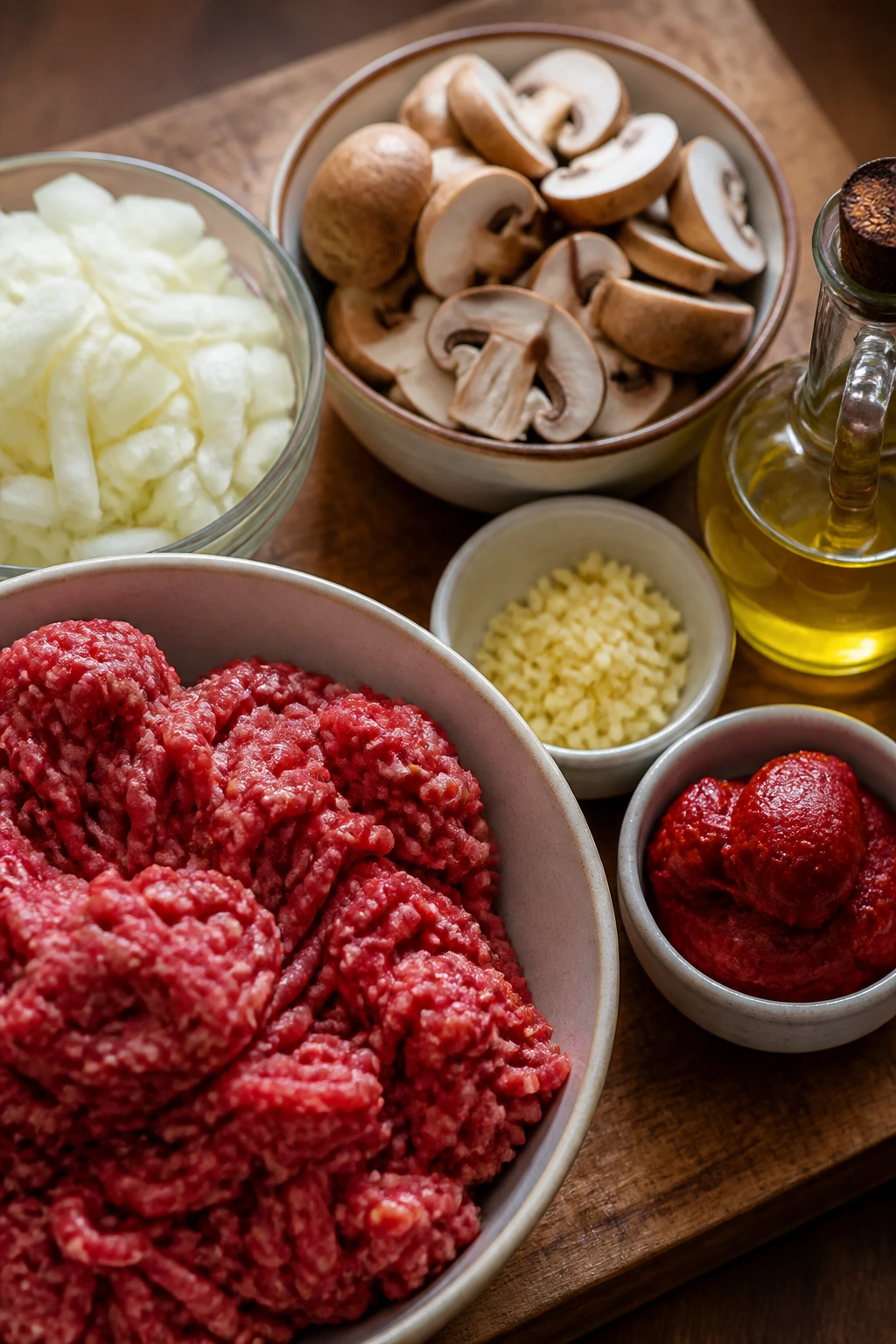
Yield: Serves 6
Prep Time: 15 minutes
Cook Time: 25 minutes
Total Time: 40 minutes
Difficulty: Beginner — if you can chop an onion and brown meat without rushing the pan, you can make this cleanly.
Best Served: Right away, while the sauce is still glossy and the beef is steaming.
The Pantry Lineup for a Hearty Beef Skillet
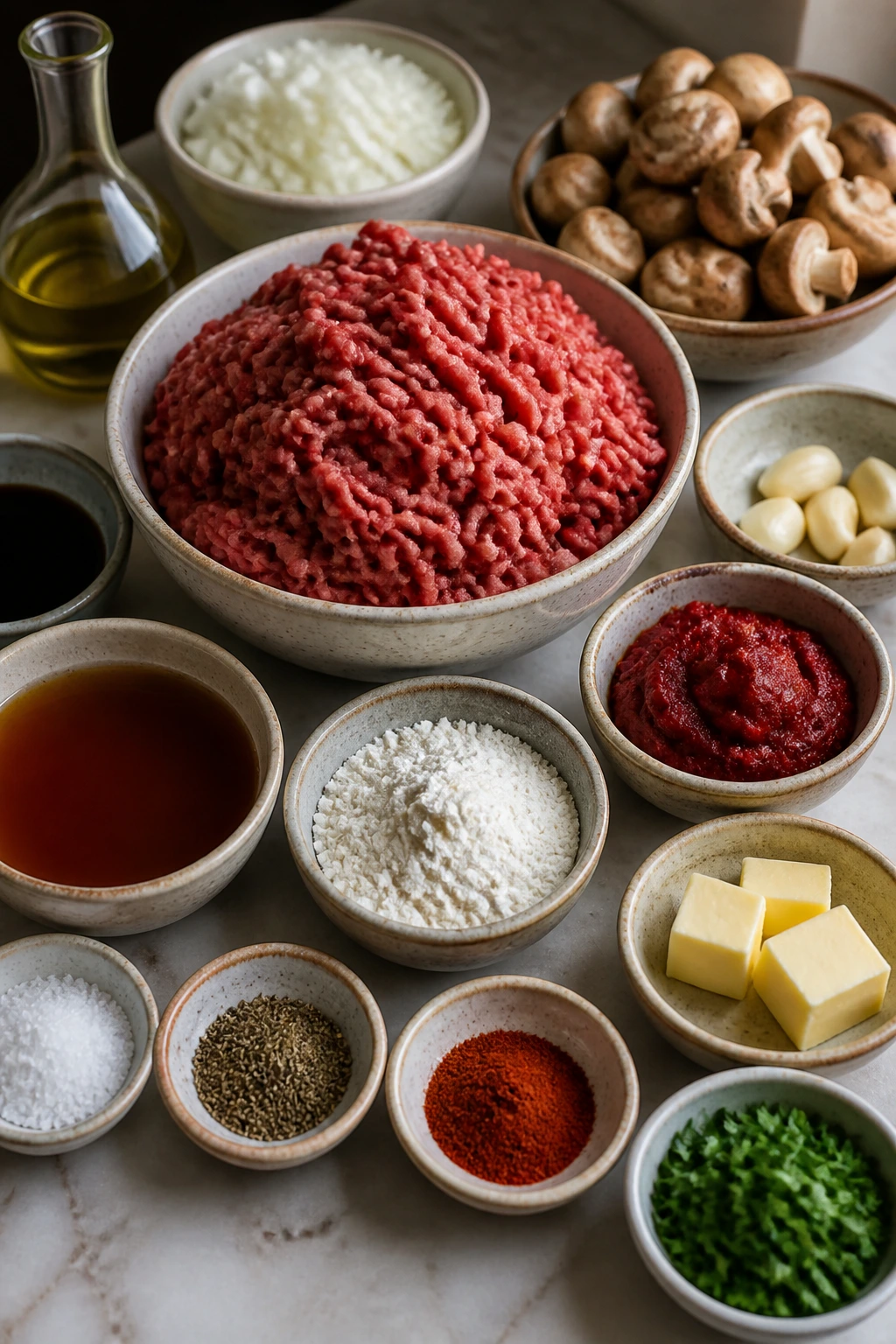
For the Beef Skillet:
- 2 tablespoons olive oil, divided
- 2 pounds ground beef, 85/15 preferred
- 1 large yellow onion, diced small
- 8 ounces cremini mushrooms, sliced
- 4 garlic cloves, minced
- 2 tablespoons tomato paste
- 1 tablespoon Worcestershire sauce
- 1 tablespoon low-sodium soy sauce
- 1 tablespoon all-purpose flour
- 1 1/2 cups low-sodium beef broth
- 1 teaspoon kosher salt, plus more to taste
- 1 teaspoon black pepper
- 1 teaspoon smoked paprika
- 1/2 teaspoon dried thyme
- 2 tablespoons cold unsalted butter
- 2 tablespoons chopped fresh parsley
Why Each Ingredient Keeps the Beef Juicy
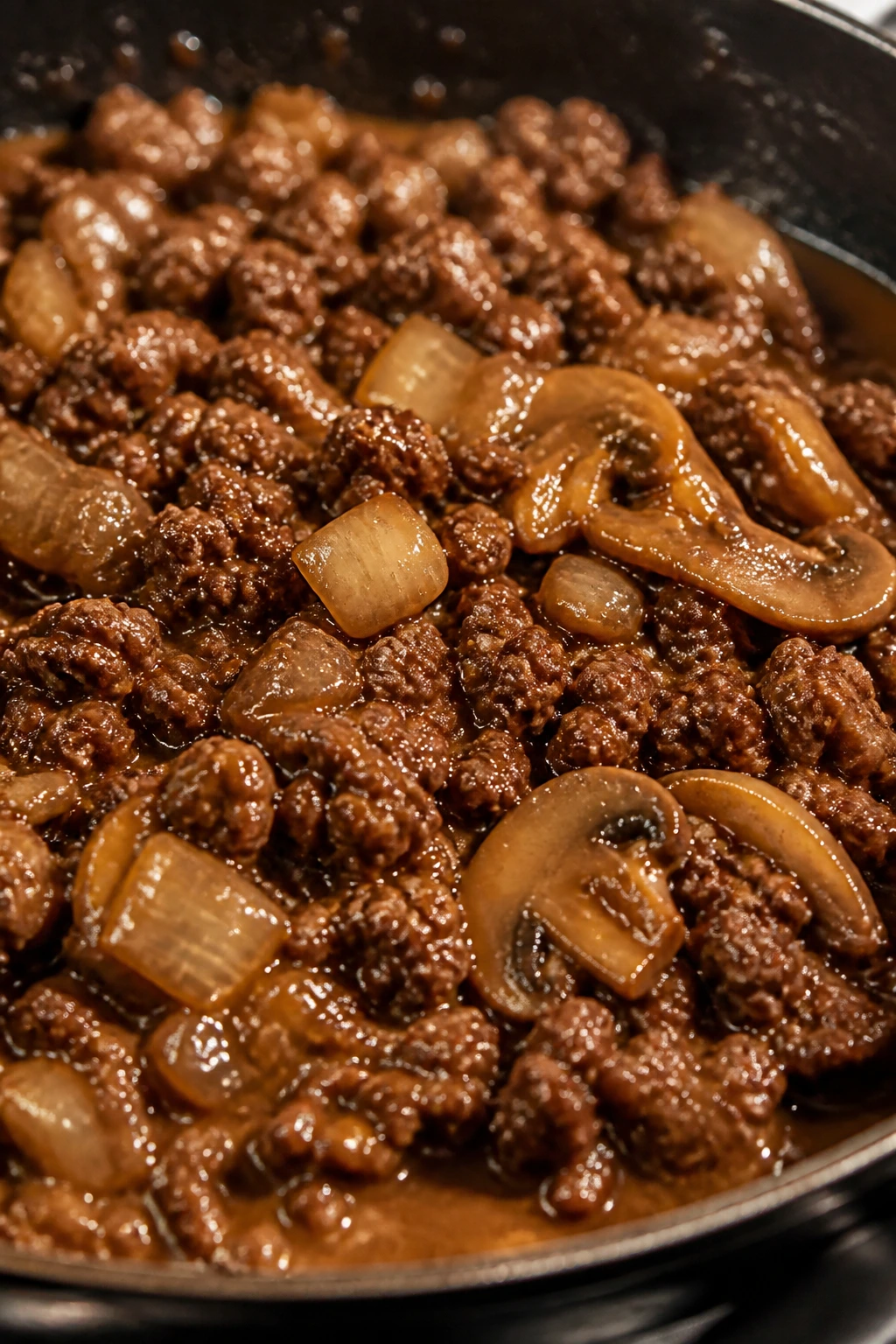
Ground Beef
- What to use: 2 pounds ground beef, ideally 85/15. That fat ratio gives you flavor in the pan and enough body in the sauce without making the finish heavy.
- Preparation: Keep it cold until the skillet is hot, then drop it in large chunks so it can brown before you break it apart.
- Substitutions: 90/10 works if you add the full 2 tablespoons of olive oil; 93/7 works too, but it needs a little extra butter at the end or it can taste lean in a dry way.
- Tips: If the beef is very cold, don’t worry. Cold meat browns fine; just give the skillet space and leave the first side alone for a minute or two so you get color, not steam.
Aromatics & Vegetables
- What to use: 1 large yellow onion, 8 ounces cremini mushrooms, and 4 garlic cloves. That mix gives the skillet sweetness, earthiness, and the soft, cooked-down feel that turns meat into dinner.
- Preparation: Dice the onion small so it melts into the sauce, slice the mushrooms fairly thin, and mince the garlic so it blooms fast and doesn’t burn.
- Substitutions: White mushrooms work if that’s what you’ve got. You can also swap half the mushrooms for diced celery or carrot, though the flavor shifts a little sweeter.
- Tips: Let the mushrooms cook until their liquid is gone before you add the beef. If you rush this part, the skillet gets watery and the meat loses its chance to brown properly.
Sauce Builders
- What to use: 2 tablespoons tomato paste, 1 tablespoon Worcestershire sauce, 1 tablespoon low-sodium soy sauce, 1 tablespoon all-purpose flour, and 1 1/2 cups low-sodium beef broth.
- Preparation: Measure these before the pan gets hot. Tomato paste needs a full minute in the pan to darken, and the flour should be stirred in before the broth so the sauce thickens smoothly.
- Substitutions: Cornstarch works in place of flour if you need the sauce gluten-free; use 2 teaspoons cornstarch mixed with 1 tablespoon cold water and stir that in near the end.
- Tips: Low-sodium broth matters here. Worcestershire and soy bring salt to the party already, and regular broth can push the skillet too far into salty territory before you notice.
Finishing Ingredients & Serving Base
- What to use: 2 tablespoons cold unsalted butter and 2 tablespoons chopped fresh parsley.
- Preparation: Keep the butter cold until the end so it melts into the sauce instead of disappearing during the simmer.
- Substitutions: A teaspoon of olive oil can stand in for the butter if you want a dairy-free finish, though the sauce will taste a little less silky.
- Tips: Parsley is not there for decoration alone. It cuts through the beef and gravy at the last second, which keeps the whole pan from tasting too heavy.
The Skillet and Tools That Make Browning Easier
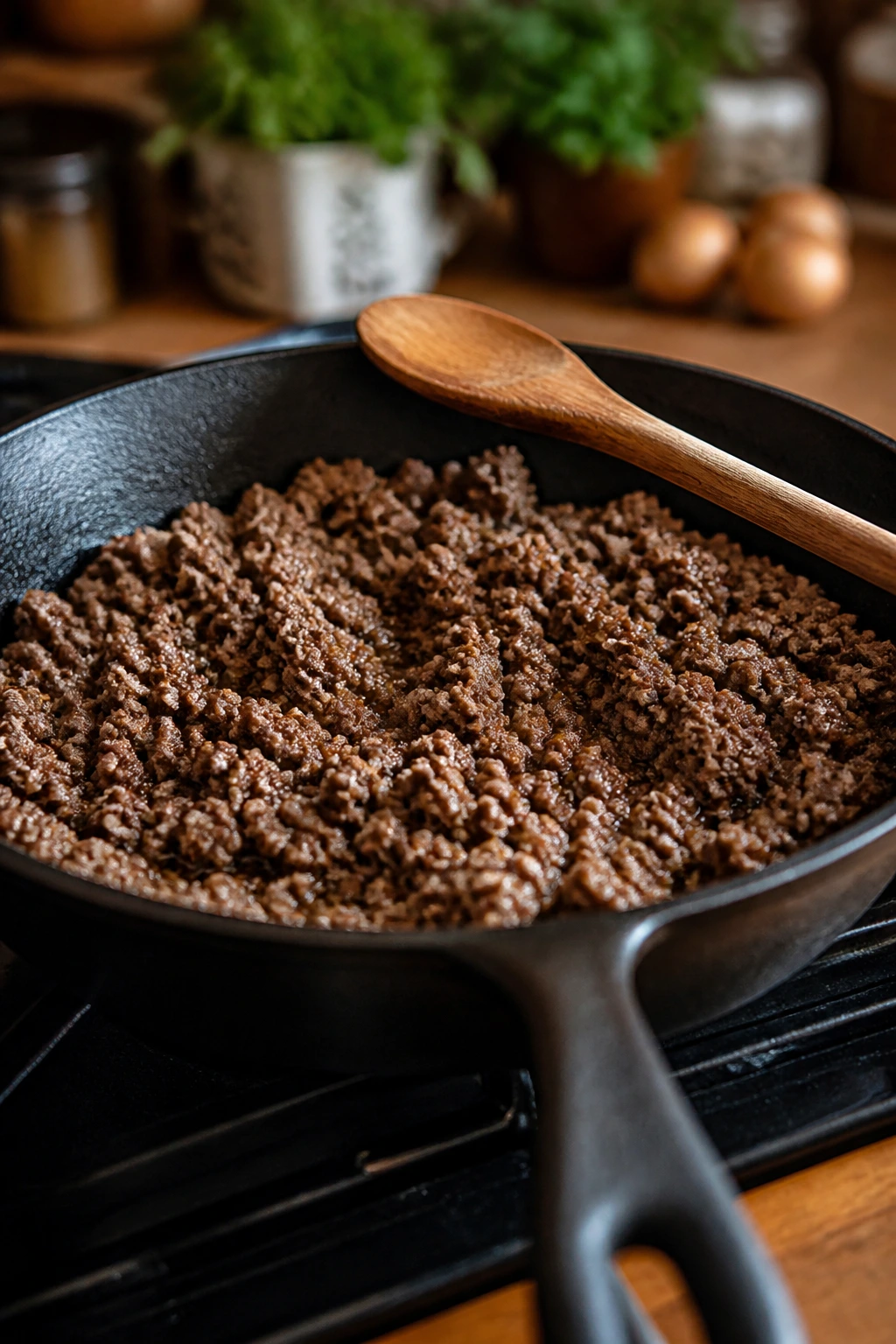
- 12-inch skillet with high sides: Cast iron or stainless steel both work well; you want enough surface area for the beef to brown instead of steam.
- Wooden spoon or sturdy spatula: A flat edge helps scrape up the browned bits without shredding the meat into crumbs too early.
- Chef’s knife: You’ll use it for the onion, mushrooms, and garlic. Sharp beats fancy every time.
- Cutting board: A large one gives you room to prep without chasing onion dice across the counter.
- Measuring spoons and cups: Tomato paste, flour, broth, and seasonings need to go in at the right amount or the gravy tilts too thin or too salty.
- Small bowl: Handy for measuring the dry seasonings together before the heat goes on.
- Instant-read thermometer: Optional, but useful. Ground beef should reach 160°F in the center, and a thermometer takes the guessing out of it.
How to Brown the Beef Without Turning It Dry
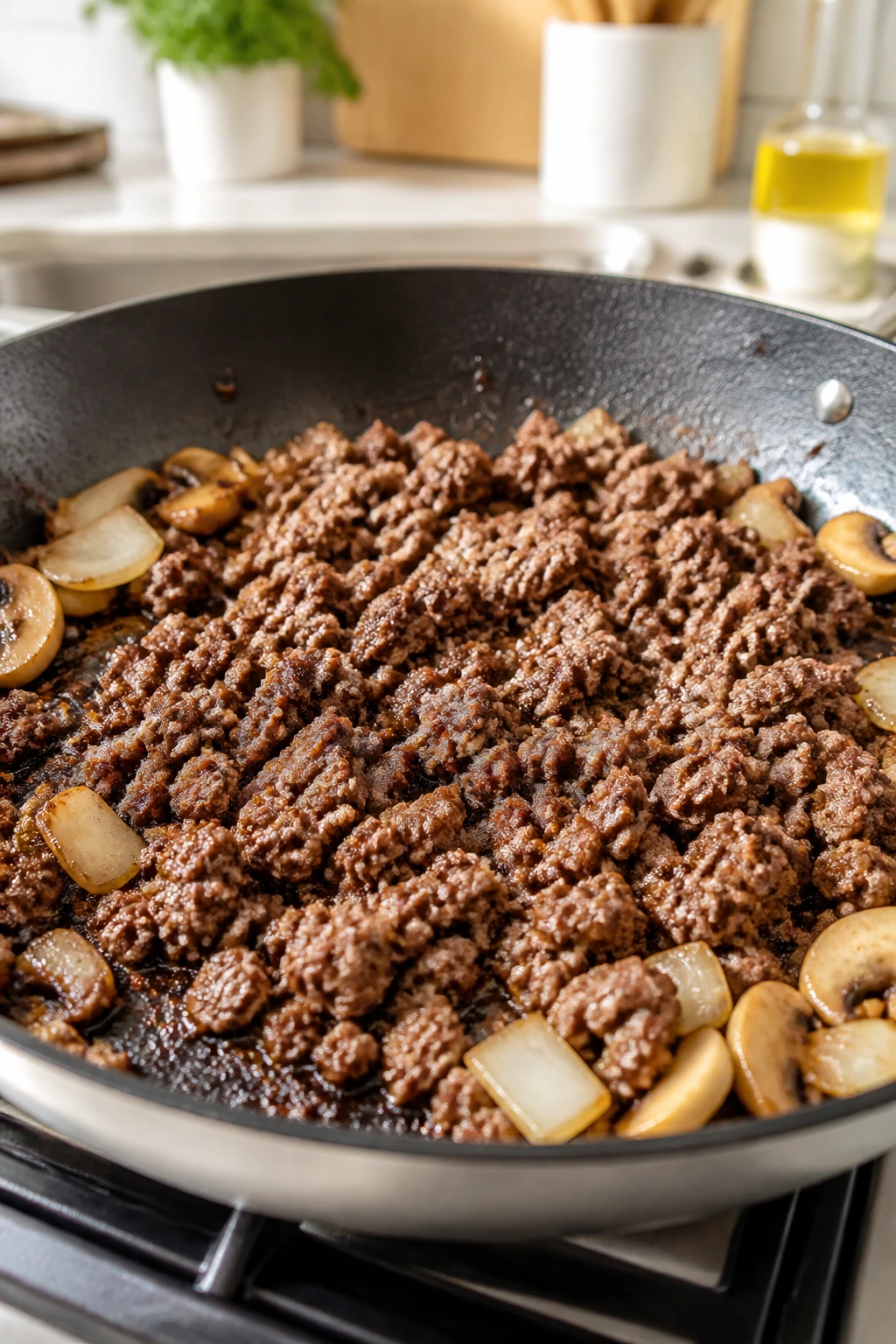
The first half of this recipe is all about heat control. If the skillet is too cool, the beef turns pale and grainy. If you stir too fast, it sheds its juices before it has a chance to pick up color. The sweet spot is a hot pan, enough space, and just enough restraint to let the meat do its job.
Prep and Brown the Beef:
-
Dice the onion, slice the mushrooms, and mince the garlic. Measure the tomato paste, Worcestershire sauce, soy sauce, flour, broth, salt, pepper, paprika, thyme, butter, and parsley before you turn on the stove. Once the skillet is hot, you do not want to stop and hunt for anything.
-
Heat a 12-inch skillet over medium-high heat for 2 minutes. Add 1 tablespoon olive oil and swirl it around; the oil should shimmer, not smoke. If your skillet runs hot, drop the heat slightly so the oil stays lively but calm.
-
Add the diced onion and sliced mushrooms. Cook for 5 to 6 minutes, stirring only occasionally, until the onions look translucent and the mushrooms have released their liquid and started to brown at the edges. If the pan looks crowded with liquid, keep cooking — that water needs to evaporate before the beef goes in.
-
Add the garlic and cook for 30 seconds, stirring once or twice, until it smells sweet and sharp in the same breath. Do not let it turn brown; garlic goes bitter fast.
-
Push the vegetables to the edges and add the ground beef in large chunks. Sprinkle on the salt, pepper, smoked paprika, and thyme. Let the beef sit untouched for 2 full minutes, then break it into medium pieces with a spatula and cook for 5 to 6 minutes, stirring only enough to keep the browned side from scorching. Cook until the thickest pieces reach 160°F and the edges are browned. Do not mash the beef into tiny crumbs right away — bigger pieces hold moisture better and taste meatier.
Building the Sauce Until It Turns Glossy
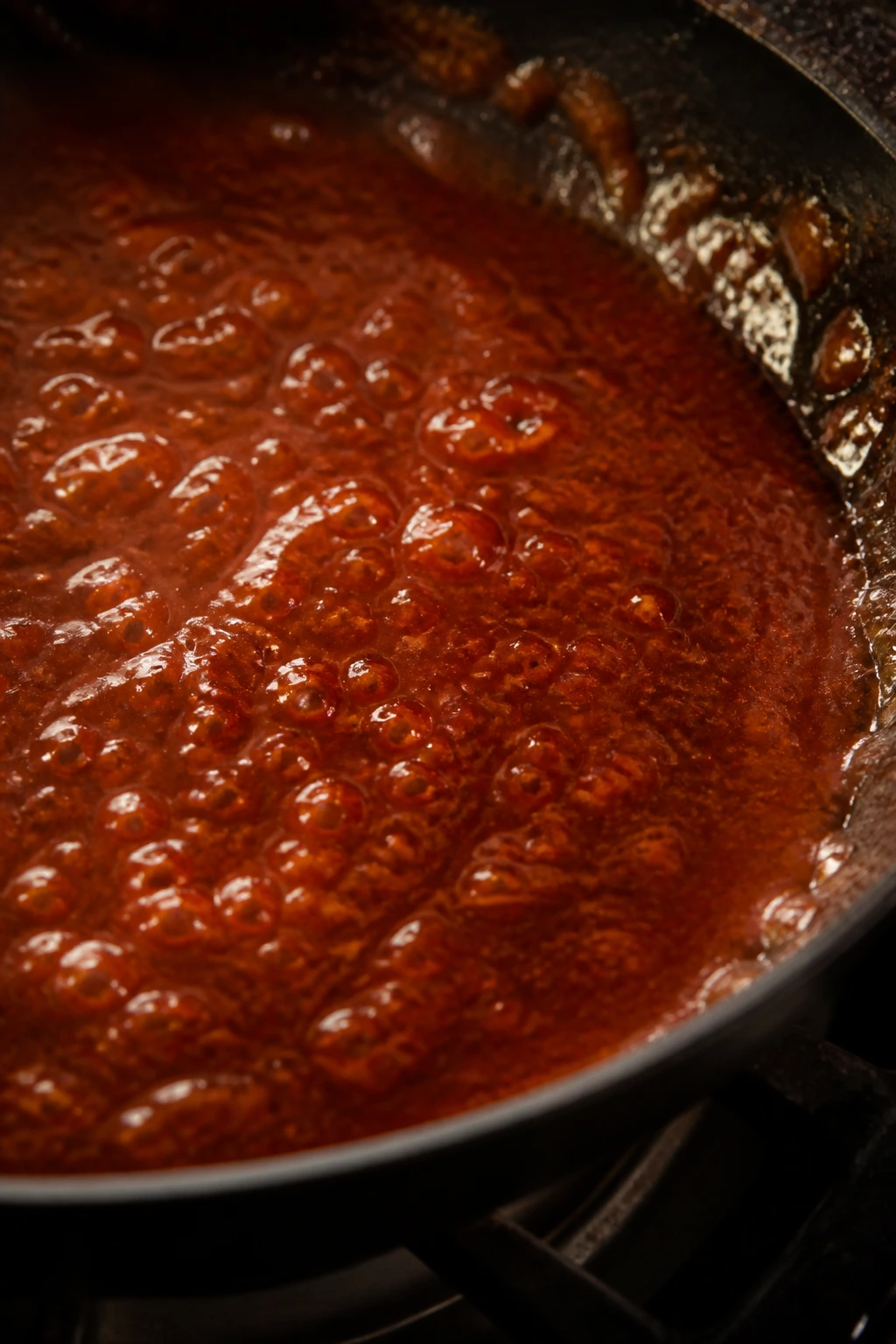
Once the beef is browned, the pan already has the right smell. This next part is about turning that smell into dinner. The tomato paste needs heat to lose its raw edge, the flour needs to coat the fat before it meets the broth, and the broth needs to scrape up the browned bits that look like nothing until they dissolve into the sauce.
Build the Sauce and Finish:
-
Stir in the tomato paste and flour, coating the beef and vegetables evenly. Cook for 1 minute, stirring constantly, until the paste darkens to a brick red color and the raw flour smell disappears. This tiny minute matters more than it looks.
-
Pour in the Worcestershire sauce, soy sauce, and beef broth. Scrape the bottom of the skillet with the spatula to lift every browned bit into the liquid. Bring the mixture to a gentle simmer over medium heat, then reduce the heat to medium-low and cook for 5 to 7 minutes, stirring occasionally, until the sauce thickens enough to coat the back of a spoon. You want lazy bubbles, not a hard boil.
-
Taste the sauce. If it needs more salt, add a pinch at a time. If it tastes too sharp, simmer it for another minute. If it feels too thick, splash in 2 to 4 tablespoons more broth. The sauce should look glossy, not pasty.
-
Cut the heat to low and stir in the cold butter until it melts completely and the sauce turns smooth and shiny. The butter softens the edges of the Worcestershire and makes the whole skillet taste rounder.
-
Scatter the parsley over the top and serve immediately. If you’re spooning the beef over mashed potatoes or noodles, do it while the sauce is still loose enough to run into the edges and pool a little. That’s the good stuff.
How to Serve It Like Dinner, Not Leftovers
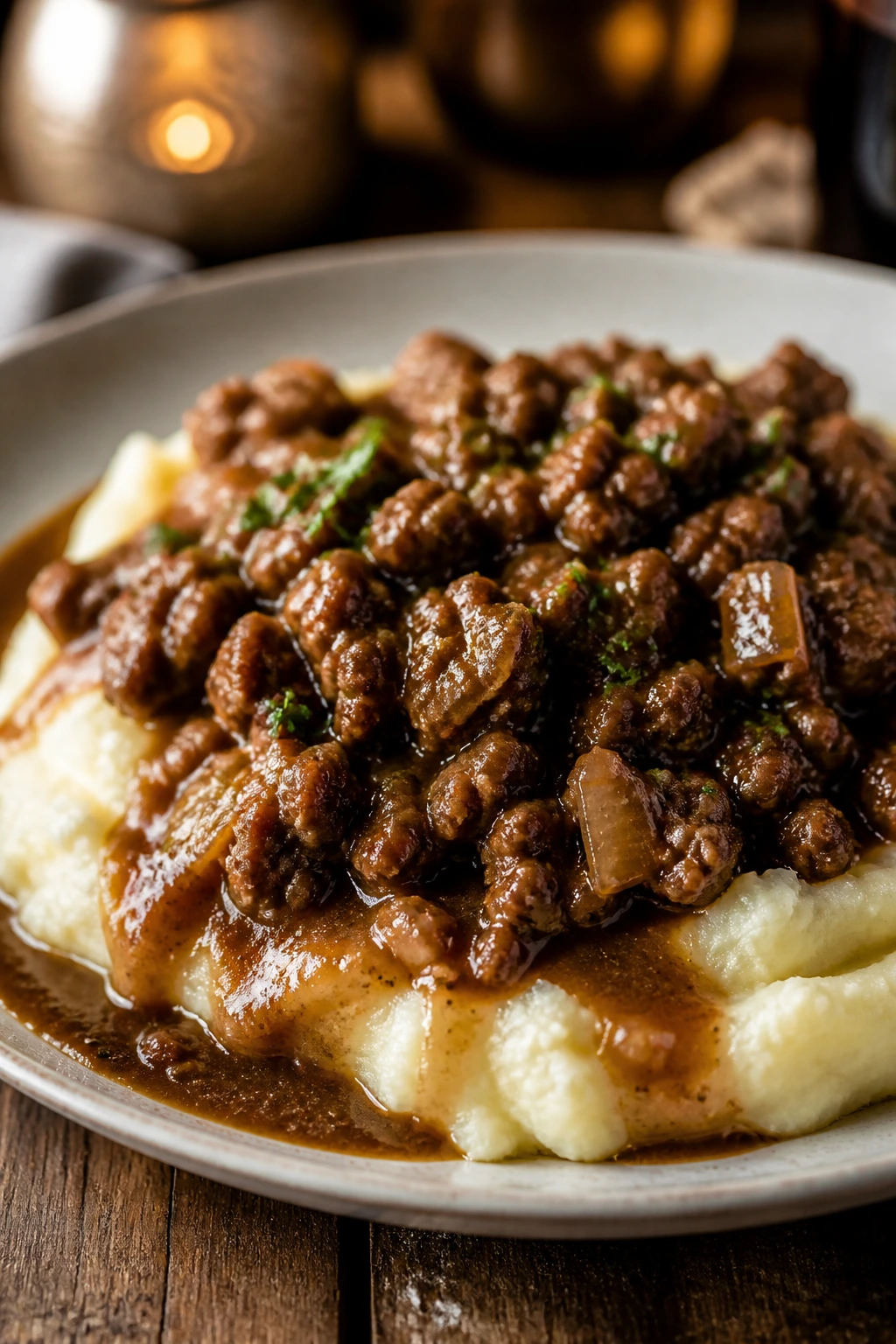
Presentation: Spoon the beef into shallow bowls or over a mound of mashed potatoes so the sauce can slide down the sides instead of disappearing into the starch. A final shower of parsley and a few turns of black pepper make the plate look finished without turning fussy.
Accompaniments: Buttered egg noodles are my first choice when I want the sauce to cling. Rice works when the fridge is bare, and crusty bread is the move when you want to mop up every last bit from the bowl. On the side, keep it simple: green beans, roasted carrots, or a sharp salad with vinegar in the dressing keeps the plate from getting too heavy.
Portions: As written, this serves 6 with a starch. If you’re serving it solo, it feeds 4 hungry adults with generous portions. For sandwiches or baked potatoes, it stretches farther because the sauce does some of the volume work for you.
Beverage Pairing: I like unsweet iced tea, a cold amber ale, or a dry red table wine with enough structure to stand up to the mushrooms and Worcestershire. Sparkling water with a squeeze of lemon also works if you want the meal to stay simple.
Small Moves That Improve the Whole Pan
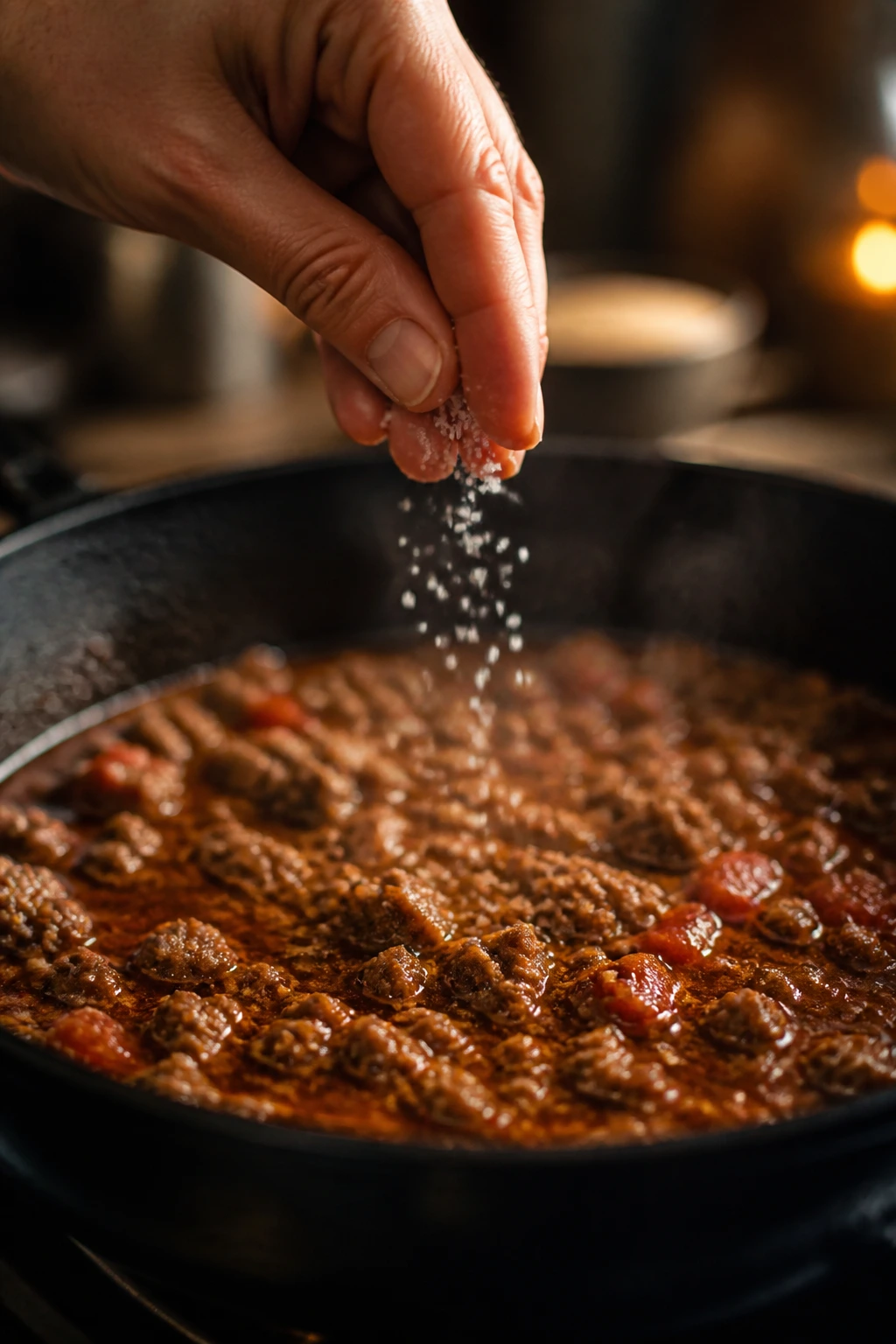
Flavor Enhancement: Stir in 1 teaspoon Dijon mustard with the broth if you want the gravy to taste a little deeper and less one-note. It doesn’t make the dish taste mustardy; it just gives the sauce a faint bite that keeps the beef from feeling flat.
Time-Saver: Chop the onion and mushrooms while the skillet preheats. If you like to move fast, measure the salt, pepper, paprika, and thyme into one small bowl so you can season the beef in one sweep instead of juggling jars over a hot burner.
Cost-Saver: When beef prices make you wince, use 1 1/2 pounds ground beef and 1/2 pound extra mushrooms. The skillet still tastes full, and the mushrooms soak up the gravy like they were built for the job.
Finish Move: A spoonful of sour cream on top of mashed potatoes changes the mood of the whole plate. It makes the gravy taste richer and a little tangy, which is especially nice if you like the dinner to feel closer to a steakhouse hash than a plain skillet.
Make-It-Yours: If you want more body, add a handful of shredded cheddar right at the end and let it melt into the beef off the heat. If you want more freshness, use scallions instead of parsley, or half and half. Both work.
Mistakes That Make Ground Beef Taste Flat
-
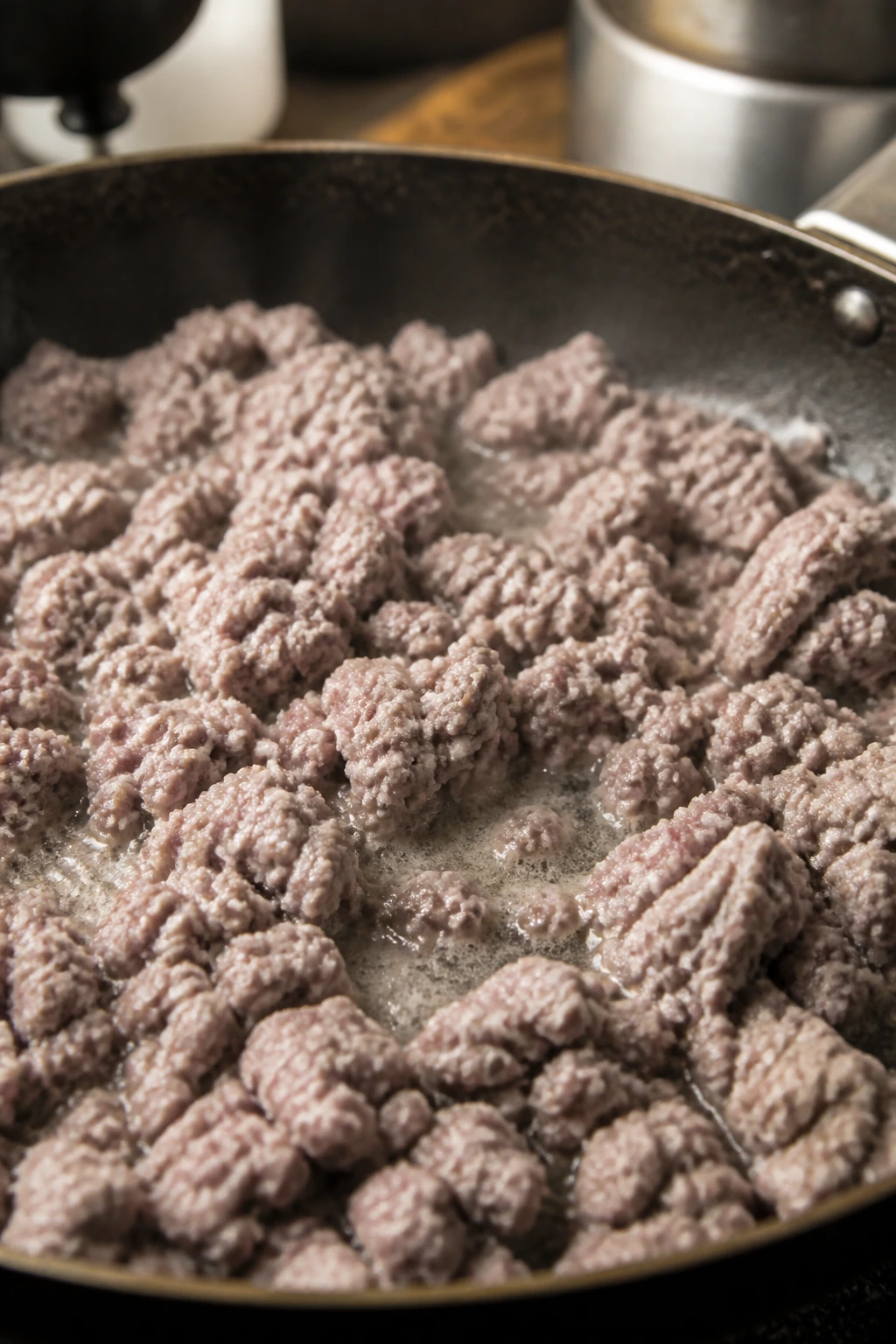
Starting with a lukewarm skillet: The beef turns gray before it browns, and the whole dish tastes like it was cooked in a hurry. Fix it by preheating the pan for a full 2 minutes and waiting until the oil shimmers before the onion goes in.
-
Stirring the meat nonstop: Constant motion breaks the beef into tiny bits and pushes out the juices before the surface can brown. Let it sit for the first couple of minutes, then break it up in larger pieces.
-
Using ultra-lean beef with nothing else added: 93/7 can work, but it tastes tight and dry if you don’t add a little extra oil or butter. If lean beef is what you’ve got, use the full 2 tablespoons of oil and keep the simmer short.
-
Adding the broth too soon: If you pour in liquid before the tomato paste cooks, the sauce tastes thin and a little raw. Give the paste that one-minute sizzle so it darkens first.
-
Boiling the sauce hard: A rolling boil turns the gravy greasy and can make the texture look broken. Keep it at a gentle simmer, where the bubbles move lazily around the edge of the pan.
-
Draining every drop of fat: A lot of cooks do this out of habit, and then wonder why the skillet tastes thin. Spoon off only the excess and leave a thin film behind; that’s where the flavor lives.
Variations for Different Tastes and Diets
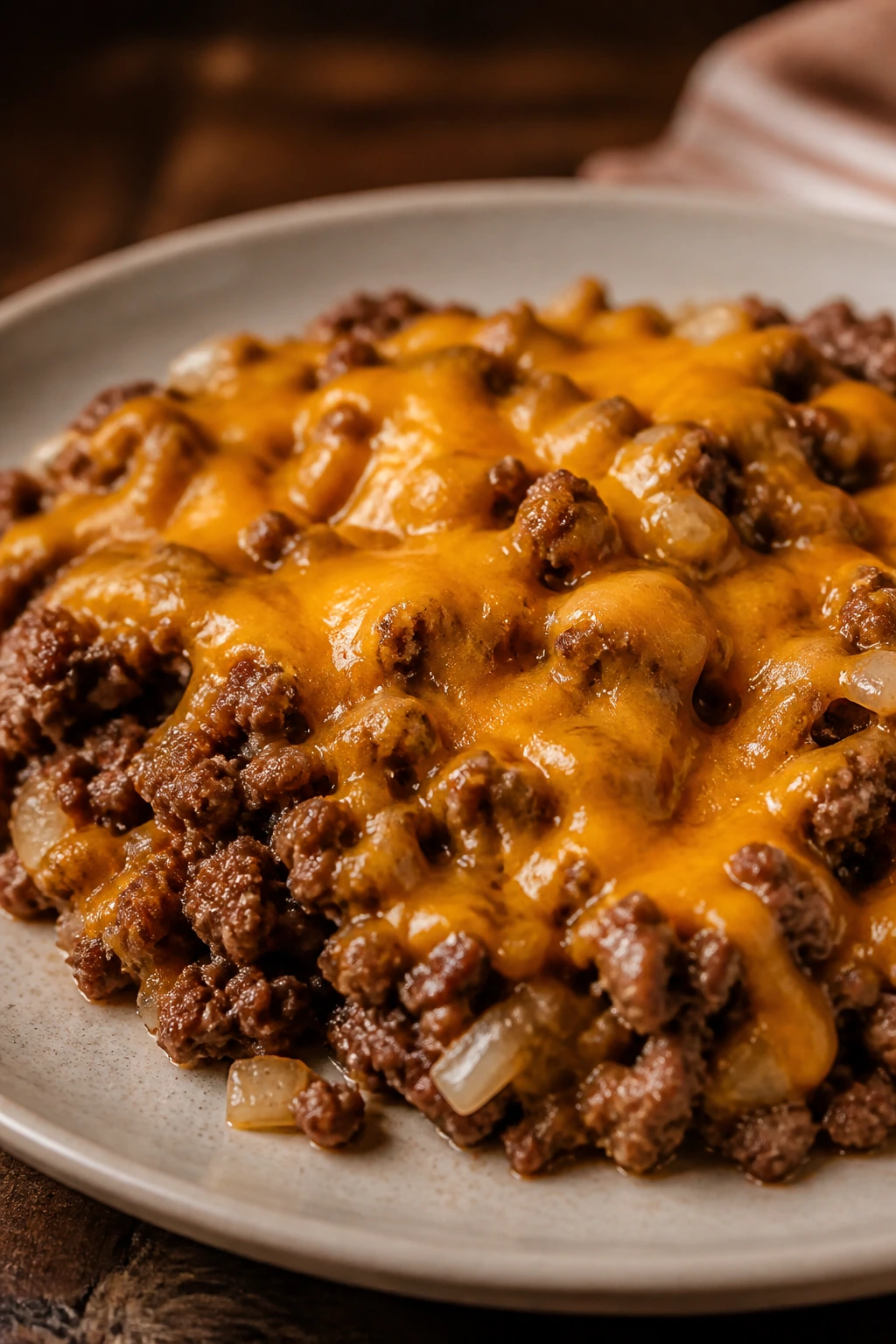
Cheeseburger Skillet: Stir in 1 cup shredded sharp cheddar after you cut the heat, then serve the beef on toasted buns or over fries if you want a diner-style plate. A few pickle chips on the side give it the right bite.
Mushroom-Heavy Gravy Bowl: Double the mushrooms to 1 pound and add 1 extra 1/2 cup broth if the pan looks crowded. This version tastes woodsy and deeper, and it’s the one I make when I want the skillet to lean more savory than meaty.
Spicy Pantry Version: Add 1/2 teaspoon crushed red pepper flakes with the garlic, then finish with a dash of hot sauce. The heat stays in the background unless you pour heavy, which keeps the beef dinner lively without becoming loud.
Gluten-Free Gravy Bowl: Swap the flour for 2 teaspoons cornstarch mixed with 1 tablespoon cold water, then stir that slurry in during the last 2 minutes of simmering. The sauce stays smooth if you whisk it well and keep the heat at a gentle simmer.
Dairy-Free Finish: Skip the butter and finish with 1 tablespoon olive oil instead. The sauce will lose a little silkiness, but the beef and mushrooms still carry the dinner well, especially if you add a tiny splash of vinegar at the end.
Ground Turkey Swap: Ground turkey can work here, but it wants an extra tablespoon of oil and a little more salt to taste like something. The texture ends up lighter and less rich, so I like it best when served over noodles with extra parsley on top.
Make-Ahead, Storage, and Reheating
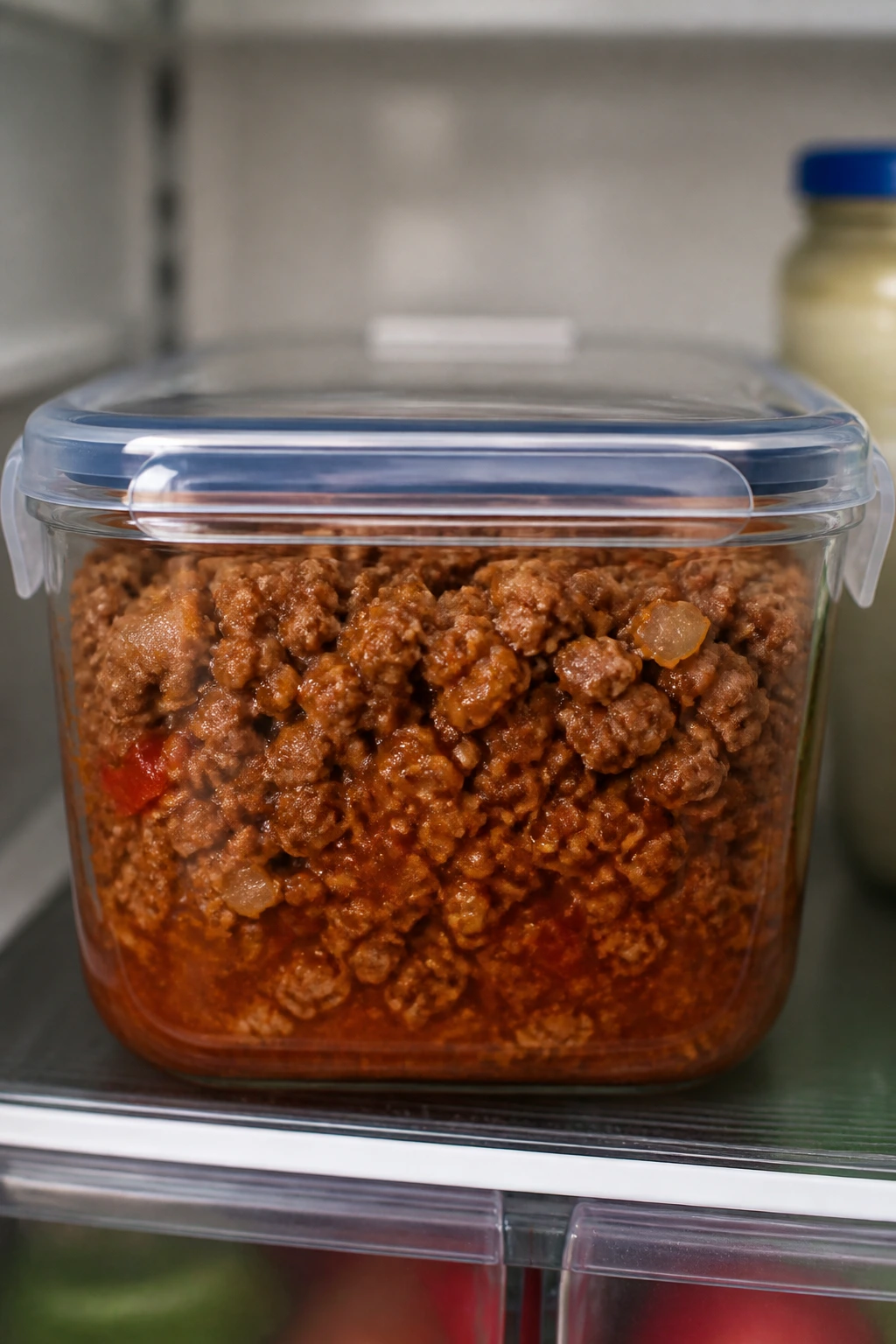
This skillet keeps well, which is one of the reasons I trust it for real-life dinners. You can cook the whole thing ahead, chill it, and reheat it without losing the plot.
In the fridge: Cool the beef completely, then store it in an airtight container for 3 to 4 days. The sauce will thicken as it sits, and that’s normal.
In the freezer: Freeze the beef in a sealed container or freezer bag for up to 2 months. Press the bag flat so it thaws faster later, and label it if your freezer tends to turn into a mystery shelf.
Reheating on the stovetop: Put the beef in a skillet over medium-low heat with 2 to 4 tablespoons beef broth or water. Stir until it loosens and turns glossy again; if you reheat it dry, the sauce tightens up and the beef loses its softness.
Reheating in the microwave: Cover the dish and heat in 45-second bursts, stirring between rounds. Add a spoonful of broth if the sauce looks too thick before the second round.
Make-ahead note: You can chop the onion and mushrooms up to 2 days ahead, and you can mix the seasonings in a small container the night before. The whole skillet can also be made a day ahead; in fact, the flavor gets a little rounder after a night in the fridge. Keep your starch separate, though. Mashed potatoes and noodles both turn sad if they sit under the sauce too long before reheating.
Juicy Ground Beef Dinner FAQ
What kind of ground beef works best for this recipe?
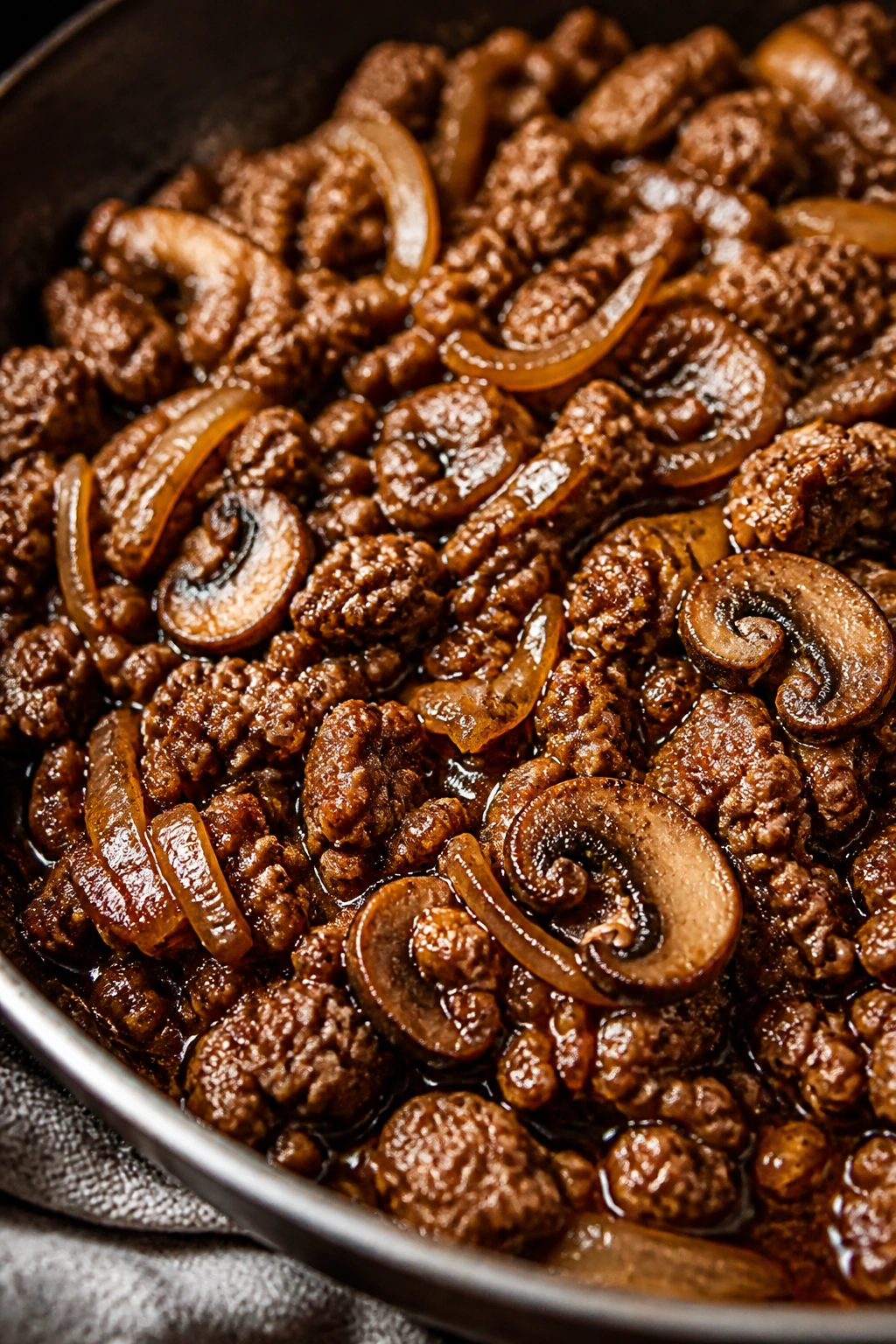
I like 85/15 because it gives the skillet enough fat for flavor and keeps the meat tender while it browns. If you use 90/10 or 93/7, add the extra oil and watch the pan a little more closely so the beef doesn’t dry out before the sauce goes in.
Can I make this with ground turkey instead of beef?
Yes, but it will taste lighter and a little less rich. Use 93% lean turkey, add an extra tablespoon of olive oil, and don’t skip the butter finish unless you want the sauce to feel thin.
Do I need to drain the fat from the pan?
Only if there is a lot of it. With 85/15 beef, I usually spoon off the excess and leave 1 to 2 tablespoons behind because that thin layer helps the sauce taste full.
Can I make this ahead for a dinner party or meal prep?
Absolutely. The beef actually settles in nicely after a night in the fridge, and the sauce tastes a little deeper the next day. Reheat it gently with a splash of broth, and keep your potatoes or noodles separate until serving.
What if my sauce gets too thin?
Let it simmer another 2 to 3 minutes so the broth reduces a bit more. If that still doesn’t do it, mix 1 teaspoon cornstarch with 1 tablespoon cold water and stir it in near the end, then simmer just until the sauce turns glossy.
Can I freeze the leftovers?
Yes. Freeze the cooled beef in airtight containers for up to 2 months. Thaw it in the fridge overnight if you can, then reheat slowly with a spoonful or two of broth so the sauce comes back instead of turning pasty.
What should I serve it with if I don’t want mashed potatoes?
Buttered noodles are the easiest swap, and rice works when you want something simple. Toasted bread or split biscuits are good too because they catch the sauce instead of letting it run around the plate.
Can I cook this in a slow cooker instead?
You can, but I wouldn’t start there. Browning the beef and cooking the tomato paste in a skillet first gives you the flavor that makes this dish worth making; if you want to transfer it to a slow cooker, do that after the browning and use it mostly as a holding vessel, not the main cooking tool.
A Skillet I’d Make Again Tomorrow
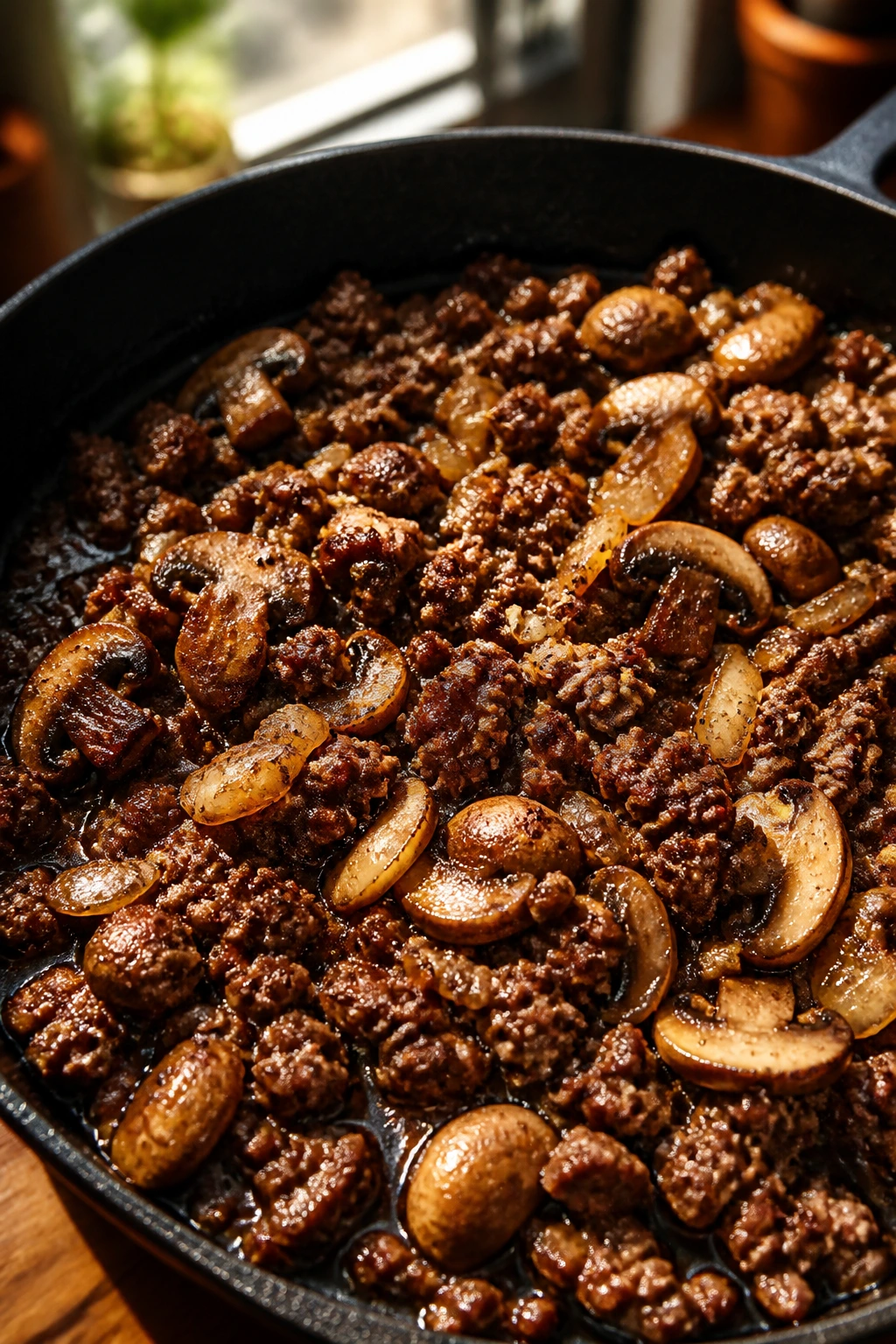
Some dinners try to impress you. This one just does the job, and it does it with browned edges, a glossy pan sauce, and beef that still tastes like beef when it hits the plate. That’s enough for me. More than enough, on some nights.
Keep this one close for the evenings when the fridge looks ordinary and you want the kitchen to smell like you planned ahead. A skillet like this earns its place by being dependable, flexible, and better than the sum of a very normal list of ingredients. Make it once, and you’ll stop treating ground beef like a fallback.
Juicy Ground Beef Dinner Skillet — Recipe Card
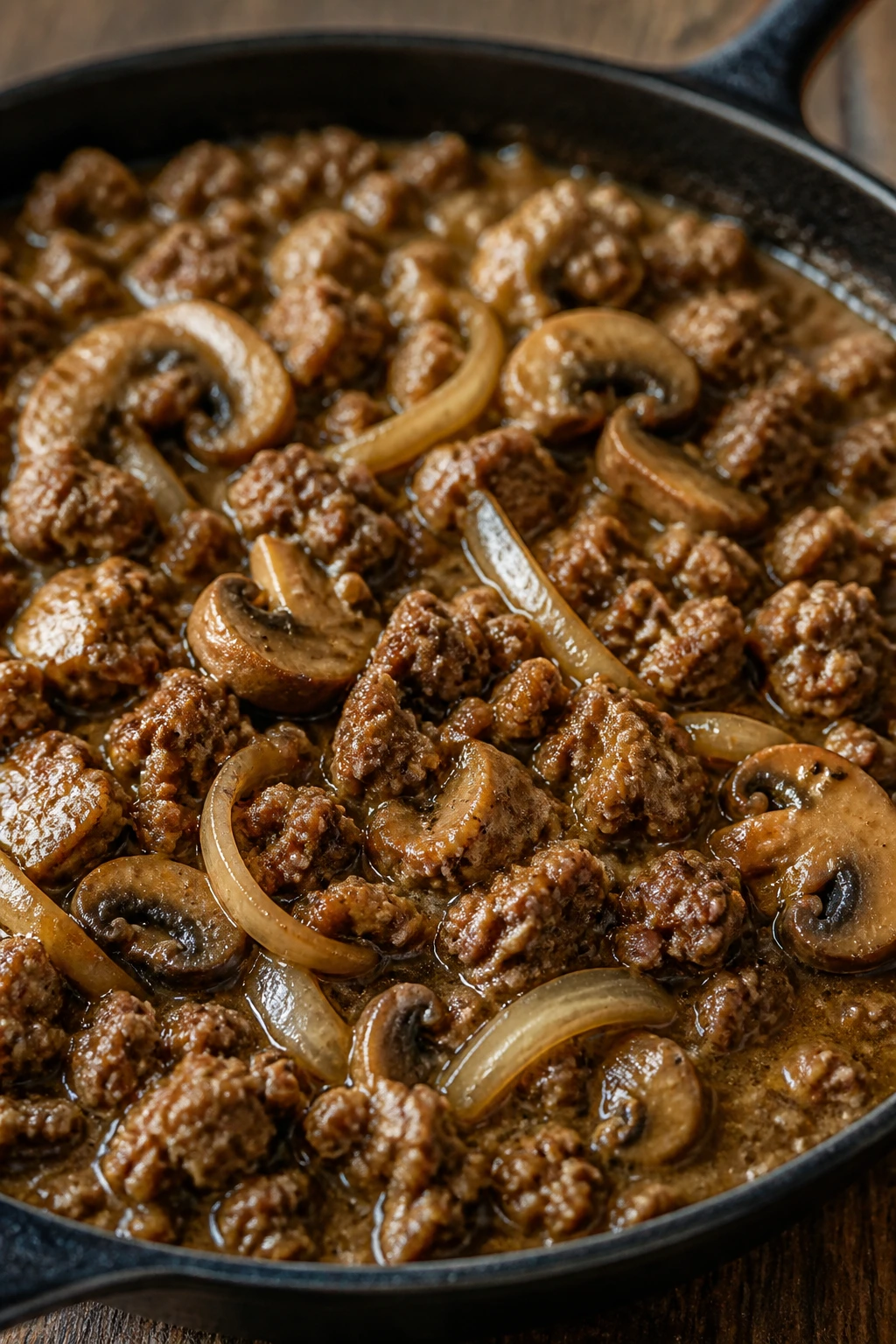
Recipe Name: Juicy Ground Beef Dinner Skillet
Description: A savory ground beef skillet with onion, mushrooms, and a glossy pan gravy. Spoon it over mashed potatoes, noodles, rice, or toast for a hearty dinner with plenty of flavor.
Prep Time: 15 minutes
Cook Time: 25 minutes
Total Time: 40 minutes
Course: Main Course
Cuisine: American
Servings: 6 servings
Calories: 390 kcal per serving
Ingredients
For the Beef Skillet:
- 2 tablespoons olive oil, divided
- 2 pounds ground beef, 85/15 preferred
- 1 large yellow onion, diced small
- 8 ounces cremini mushrooms, sliced
- 4 garlic cloves, minced
- 2 tablespoons tomato paste
- 1 tablespoon Worcestershire sauce
- 1 tablespoon low-sodium soy sauce
- 1 tablespoon all-purpose flour
- 1 1/2 cups low-sodium beef broth
- 1 teaspoon kosher salt, plus more to taste
- 1 teaspoon black pepper
- 1 teaspoon smoked paprika
- 1/2 teaspoon dried thyme
- 2 tablespoons cold unsalted butter
- 2 tablespoons chopped fresh parsley
Instructions
-
Dice the onion, slice the mushrooms, and mince the garlic. Measure the remaining ingredients before heating the skillet.
-
Heat a 12-inch skillet over medium-high heat. Add 1 tablespoon olive oil and let it shimmer.
-
Add the onion and mushrooms and cook for 5 to 6 minutes until the onions are translucent and the mushrooms have browned.
-
Add the garlic and cook for 30 seconds.
-
Add the ground beef, salt, pepper, smoked paprika, and thyme. Cook until browned and the thickest pieces reach 160°F, breaking the meat into medium pieces as it cooks.
-
Spoon off excess fat if needed, leaving a thin layer in the pan.
-
Stir in the tomato paste and flour and cook for 1 minute.
-
Add the Worcestershire sauce, soy sauce, and beef broth. Scrape up the browned bits and simmer for 5 to 7 minutes until the sauce thickens.
-
Stir in the butter until melted and smooth. Finish with parsley and serve hot.
Notes: Use 85/15 beef for the best texture; leaner beef may need the full 2 tablespoons of oil. If the sauce thickens too much, loosen it with a splash of broth before serving. Leftovers keep well and taste even fuller the next day.