



A beef sirloin roast does not need much theater. It needs heat, salt, and a little respect.
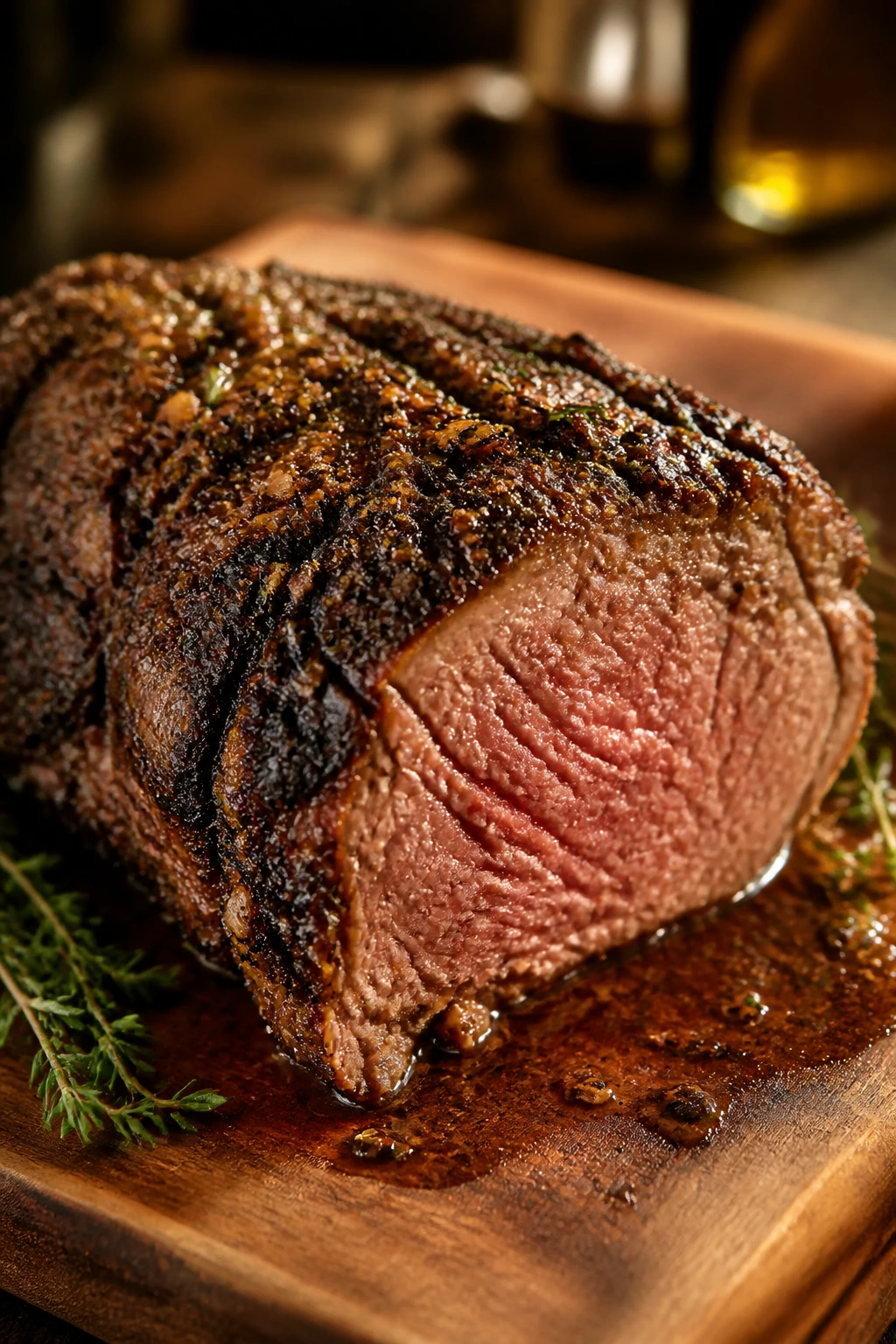
The first thing that should hit the kitchen is the smell of garlic blooming in hot oil, then beef fat warming at the edges, then the sharp, savory steam that rises when the pan juices hit the herbs. When you slice it right, the center stays rosy and juicy, the outer edge gets a thin browned crust, and the whole thing tastes like a proper dinner instead of a compromise.
Sirloin is not chuck. It is leaner, firmer, and less forgiving if you treat it like a braise. That is the whole reason I like it. You can pull off a deeply satisfying roast without waiting half a day, but you do have to watch temperature like a hawk and slice it the way the grain tells you to.
Why This Roast Pulls Its Weight
- Big roast flavor, not a heavy roast: Top sirloin gives you that clean, beef-forward taste without the dense, gelatin-rich feel of a chuck roast.
- A thermometer does the hard part: Once you stop guessing by time and start pulling the meat at the right internal temperature, the roast becomes dependable instead of nerve-wracking.
- The pan makes its own sauce: Onions, stock, wine, and browned bits turn into gravy that tastes like it belonged there from the start.
- Leftovers work hard the next day: Thin slices tuck into sandwiches, pile onto toast, or reheat beautifully in a little gravy.
- It feeds a table without fuss: A single roast gives you a carving-board centerpiece and enough slices for six without any last-minute juggling.
- The crust is the point: That garlic-herb exterior is not decoration; it gives the roast a browned, savory shell that keeps every slice from tasting flat.
Yield: Serves 6
Prep Time: 20 minutes
Cook Time: 55 to 70 minutes
Total Time: 1 hour 15 minutes to 1 hour 30 minutes, plus 20 to 25 minutes resting
Difficulty: Intermediate — the steps are straightforward, but the roast lives or dies by temperature control and resting.
Chill/Rest Time: 20 to 25 minutes resting after roasting
Best Served: Warm, sliced against the grain, with pan gravy spooned over the edges
Why Beef Sirloin Behaves Differently in the Oven
Sirloin has a cleaner chew than a fatty braise cut, and that changes everything about how you cook it. A chuck roast can hide a few mistakes under long, slow heat. Beef sirloin roast cannot. If you overdo it by even a little, the meat turns tighter and drier, and the flavor starts to feel thin instead of rich.
That is not a flaw. It is a signal. Sirloin wants a hotter start, a shorter roast, and a real rest at the end so the juices settle back into the meat instead of racing out onto the cutting board.
The cut also has a more “steak-like” flavor than many people expect from a roast. You taste the beef itself before you taste the gravy, which is why the seasoning should be sharp enough to stand up to the meat: kosher salt, cracked pepper, garlic, rosemary, thyme, and a little Dijon to keep the crust from feeling one-note. A mild, timid rub is wasted here.
I also like sirloin because it behaves well on a practical timeline. You can have it seasoned, roasted, rested, and on the table in a little over an hour if you’re moving with purpose. That matters on a night when you want a proper dinner and do not feel like braising something for three.
The Ingredients on the Counter
For the Roast
- 3 to 3 1/2 pounds beef top sirloin roast, trimmed of excess surface fat
- 2 tablespoons kosher salt
- 1 tablespoon freshly ground black pepper
- 1 teaspoon onion powder
- 2 tablespoons olive oil
- 2 tablespoons Dijon mustard
- 4 garlic cloves, minced
- 2 teaspoons fresh rosemary, finely chopped
- 2 teaspoons fresh thyme leaves
- 1 large yellow onion, cut into 8 wedges
- 2 medium carrots, cut into 2-inch pieces
- 1 celery stalk, cut into 2-inch pieces
- 1 cup beef stock
- 1/2 cup dry red wine
- 2 tablespoons chopped flat-leaf parsley, optional for garnish
For the Gravy
- 1 tablespoon unsalted butter
- 1 tablespoon all-purpose flour
- 1 teaspoon Worcestershire sauce
- 1 tablespoon cold unsalted butter, cut into small cubes
- 1/2 cup reserved beef stock, if the gravy needs loosening
Sirloin does not ask for a crowded ingredient list. It wants a few things that all have a job. The salt seasons the whole roast all the way through, the mustard helps the crust cling, and the herbs give the meat a piney, savory edge that survives the oven instead of disappearing into it.
Main Beef
What to use: 3 to 3 1/2 pounds beef top sirloin roast, ideally one piece with an even shape and a modest cap of fat.
Preparation: Trim away any thick silver skin, tie the roast with kitchen twine if one end is thinner than the other, and pat every surface dry before seasoning.
Substitutions: Sirloin tip roast works, though it is leaner and a touch firmer; a small strip roast can work if you keep the same temperature targets.
Tips: Top sirloin is lean enough that you should treat doneness seriously; once it pushes past medium, the texture starts to lose that clean, sliceable quality that makes the roast worth cooking.
The Garlic-Herb Crust
What to use: 2 tablespoons olive oil, 2 tablespoons Dijon mustard, 4 minced garlic cloves, 2 teaspoons chopped rosemary, 2 teaspoons thyme leaves, 2 tablespoons kosher salt, 1 tablespoon black pepper, and 1 teaspoon onion powder.
Preparation: Mix everything into a thick paste so the garlic and herbs stick to the roast instead of sliding off into the pan.
Substitutions: If fresh rosemary is too woody or strong for your taste, use 1 teaspoon dried rosemary crushed between your fingers; dried thyme also works at 1 teaspoon.
Tips: Dijon does more than add flavor. It gives the paste a little grip and helps the pepper and garlic stay on the surface long enough to brown.
Pan Bed and Gravy Base
What to use: 1 large yellow onion, 2 carrots, 1 celery stalk, 1 cup beef stock, and 1/2 cup dry red wine.
Preparation: Cut the vegetables into large pieces so they soften without collapsing, and keep the stock measured out before the roast goes in.
Substitutions: If you do not want wine, use another 1/2 cup beef stock plus 1 teaspoon balsamic vinegar for a touch of brightness.
Tips: The vegetables are not there just to look rustic. They keep the roast from sitting in direct contact with the pan and give the drippings a deeper, sweeter base for gravy.
Gravy Finish
What to use: 1 tablespoon butter, 1 tablespoon flour, 1 teaspoon Worcestershire sauce, 1 tablespoon cold butter, and up to 1/2 cup extra stock if needed.
Preparation: Keep the flour ready to whisk in and cut the finishing butter into tiny pieces so it melts off heat without splitting.
Substitutions: Cornstarch can stand in for flour if you need the gravy gluten-free, but use 2 teaspoons cornstarch mixed with 2 teaspoons cold water instead of the flour-butter roux.
Tips: A glossy gravy comes from patience, not brute heat. If the pan boils hard, the fat and liquid separate, and the sauce starts to look greasy instead of silky.
The Gear That Makes the Roast Easier
- Large roasting pan or deep oven-safe skillet — You need enough surface area for the roast plus vegetables without crowding the pan.
- Instant-read thermometer — Non-negotiable here; color alone will lie to you.
- Kitchen twine — Useful if one end of the roast is thinner and wants to cook faster than the rest.
- Sharp carving knife — A dull blade tears the crust and makes the slices ragged.
- Cutting board with a moat or carving grooves — Helps catch the resting juices so they can be added back to the platter.
- Medium whisk — Handy for the gravy, especially when you need to break up browned bits in the pan.
- Fine mesh strainer, optional — Useful if you want a smoother gravy and do not care to serve the softened onion pieces.
- Foil — Good for a loose tent while the roast rests; do not wrap it tight or you’ll steam the crust.
Searing, Roasting, and Resting Without Drying the Meat
Prep the Roast
-
Preheat the oven to 450°F (232°C) and position a rack in the center. If your roasting pan is shallow, set it inside another pan or place a sheet pan underneath to catch any overflow.
-
Pat the beef sirloin roast dry with paper towels. If one end is noticeably thinner, tie kitchen twine around the roast at 1 1/2-inch intervals so it cooks more evenly. Dry surface, better crust.
-
In a small bowl, stir together the kosher salt, black pepper, onion powder, olive oil, Dijon mustard, minced garlic, rosemary, and thyme until the mixture becomes a loose paste.
-
Rub the paste all over the roast, including the ends and underside. Press it on with your hands so the garlic and herbs actually stick; do not just smear it across the top and call it done.
Roast the Beef
-
Scatter the onion wedges, carrot pieces, and celery pieces across the bottom of the roasting pan. Pour in 1 cup of the beef stock and all of the red wine around the vegetables, not over the meat. Set the roast on top of the vegetables, fat side up if it has one.
-
Roast for 15 minutes at 450°F (232°C) to brown the exterior. Then reduce the oven to 325°F (163°C) without opening the door for too long.
-
Continue roasting for 35 to 55 minutes, depending on size and shape, until an instant-read thermometer inserted into the thickest part reads 125°F (52°C) for medium-rare or 130°F to 135°F (54°C to 57°C) for medium. Pull it before the final temperature you want, because the meat will keep climbing while it rests.
-
If the pan starts looking dry before the roast is done, add the remaining 1/2 cup stock around the vegetables, not on top of the beef. The liquid should simmer, not flood the pan.
Rest and Make the Gravy
-
Transfer the roast to a cutting board and tent it loosely with foil. Rest for 20 to 25 minutes. Leave the vegetables in the pan or spoon them into a warm serving bowl.
-
Place the roasting pan over medium heat on the stovetop. If the pan is not stovetop-safe, pour the drippings into a saucepan and set it over medium heat instead. Skim off excess fat, leaving about 1 tablespoon in the pan.
-
Add the butter and flour, then whisk for 1 minute until the mixture looks sandy and smells a little nutty. Whisk in the pan juices and any remaining stock, scraping the browned bits from the bottom. Simmer for 3 to 5 minutes until the gravy thickens enough to coat the back of a spoon.
-
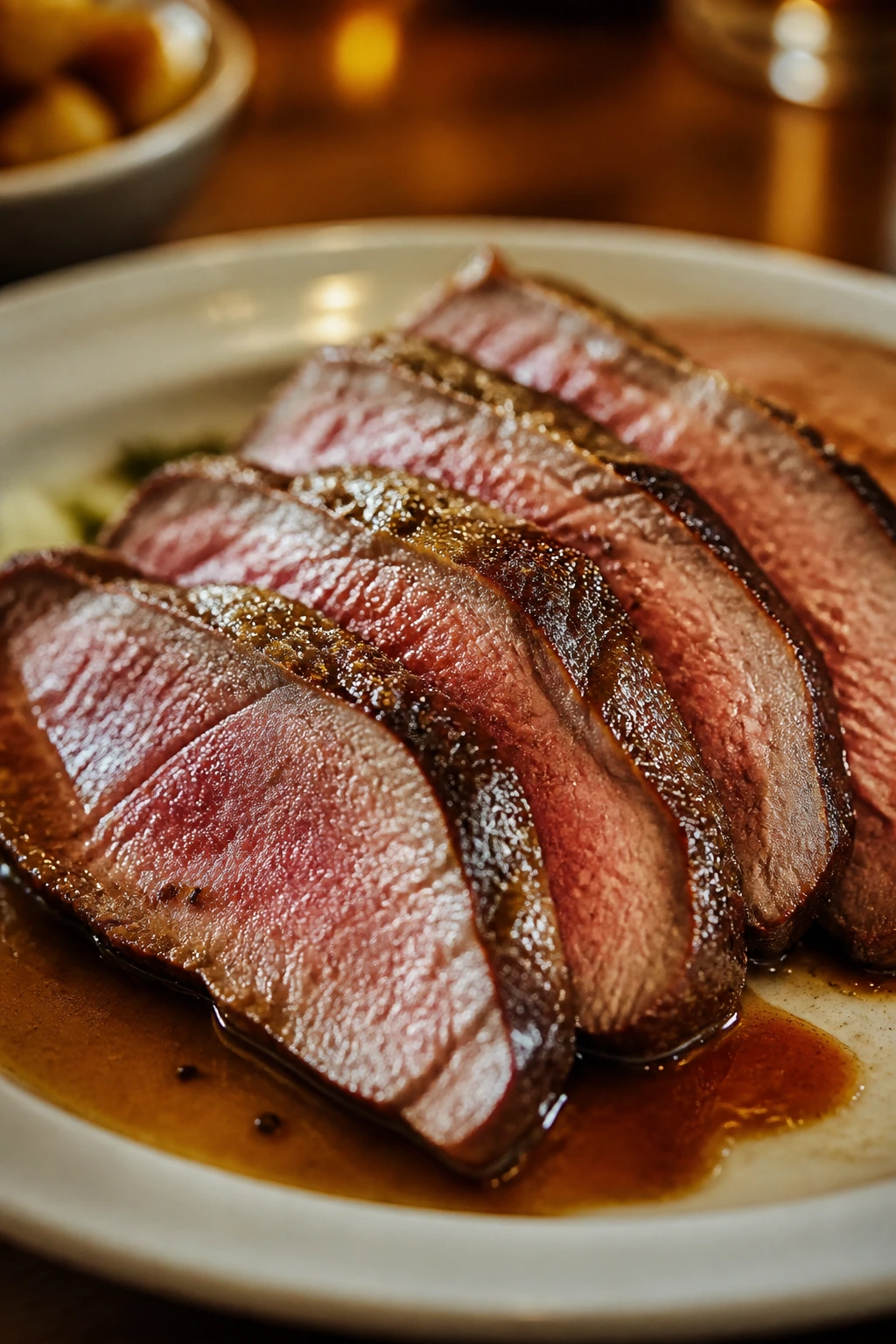
Stir in the Worcestershire sauce and cold butter, then taste and adjust with more salt or pepper if needed. Slice the roast against the grain into 1/4-inch to 1/2-inch slices, spoon gravy over the edges, and serve at once.
How to Plate a Sirloin Roast for a Real Dinner Table
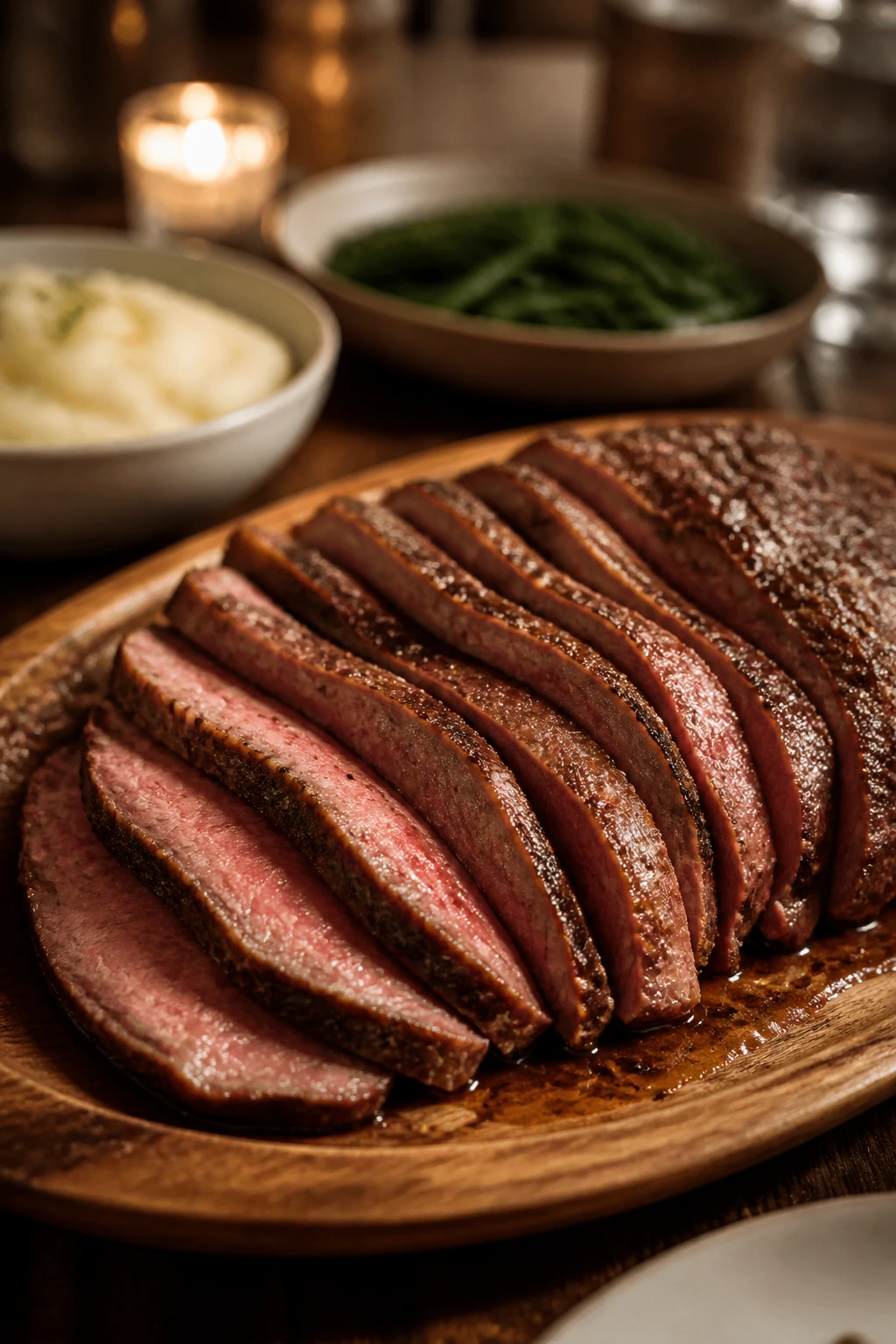
Presentation: Slice the roast into even pieces and fan them slightly overlapping on a warm platter. Spoon a little gravy along the edge of the meat, not all over the top, so the browned crust stays visible and you can still see the pink center. A scatter of parsley is enough if you want color; anything more starts to look dressed up for the wrong occasion.
Accompaniments: Creamy mashed potatoes are the obvious partner because they soak up the gravy without stealing the show. Buttered green beans, roasted carrots, or simple peas work well too. If you want bread on the table, use something sturdy like a crusty country loaf or dinner rolls with enough crumb to handle gravy.
Portions: Plan on about 6 ounces of cooked beef per person if the roast is the main event. That means a 3 to 3 1/2 pound roast feeds six people comfortably, maybe a seventh if you have generous sides. To scale up, keep the same seasoning ratio and roast a larger piece to temperature instead of adding more time by guesswork.
Beverage Pairing: A medium-bodied red wine, such as cabernet sauvignon or a straightforward merlot, handles the beef and the herbs without crowding them. If you want beer, go with something malty and not too bitter. For a nonalcoholic table drink, sparkling water with lemon or a tart cherry shrub keeps the palate awake between bites.
Small Adjustments That Pay Off
Salt Early: If you have the time, salt the roast and refrigerate it uncovered for 8 to 24 hours before cooking. The surface dries a little, which helps the crust brown more deeply, and the seasoning works its way farther into the meat instead of sitting on top.
Thermometer in the Side: Insert the thermometer from the side rather than poking down from the top. You get a clearer reading of the thickest part, and you avoid confusing a shallow surface layer for the center. Small detail. Big difference.
Warm the Gravy Pan Gently: If the drippings cool before you start the gravy, reheat them over medium heat until the browned bits loosen. A cold pan makes the flour clump faster, and a roaring hot pan can scorch the butter before the sauce thickens.
Slice Only What You Need: The roast stays juicier if you carve at the table in a few passes instead of slicing the whole thing at once. Put the rest back under a loose tent, then cut more as the plate empties. It’s a tiny bit old-fashioned, and it works.
Mistakes That Make Sirloin Chewy
-
Cooking by the clock alone: A 3-pound roast and a 3 1/2-pound roast do not finish at the same minute, even if the recipes look close. The symptom is an exterior that looks done while the center stays undercooked, or worse, a roast that goes too far because you trusted the timer. The fix is an instant-read thermometer and a pull temperature, not faith in the oven.
-
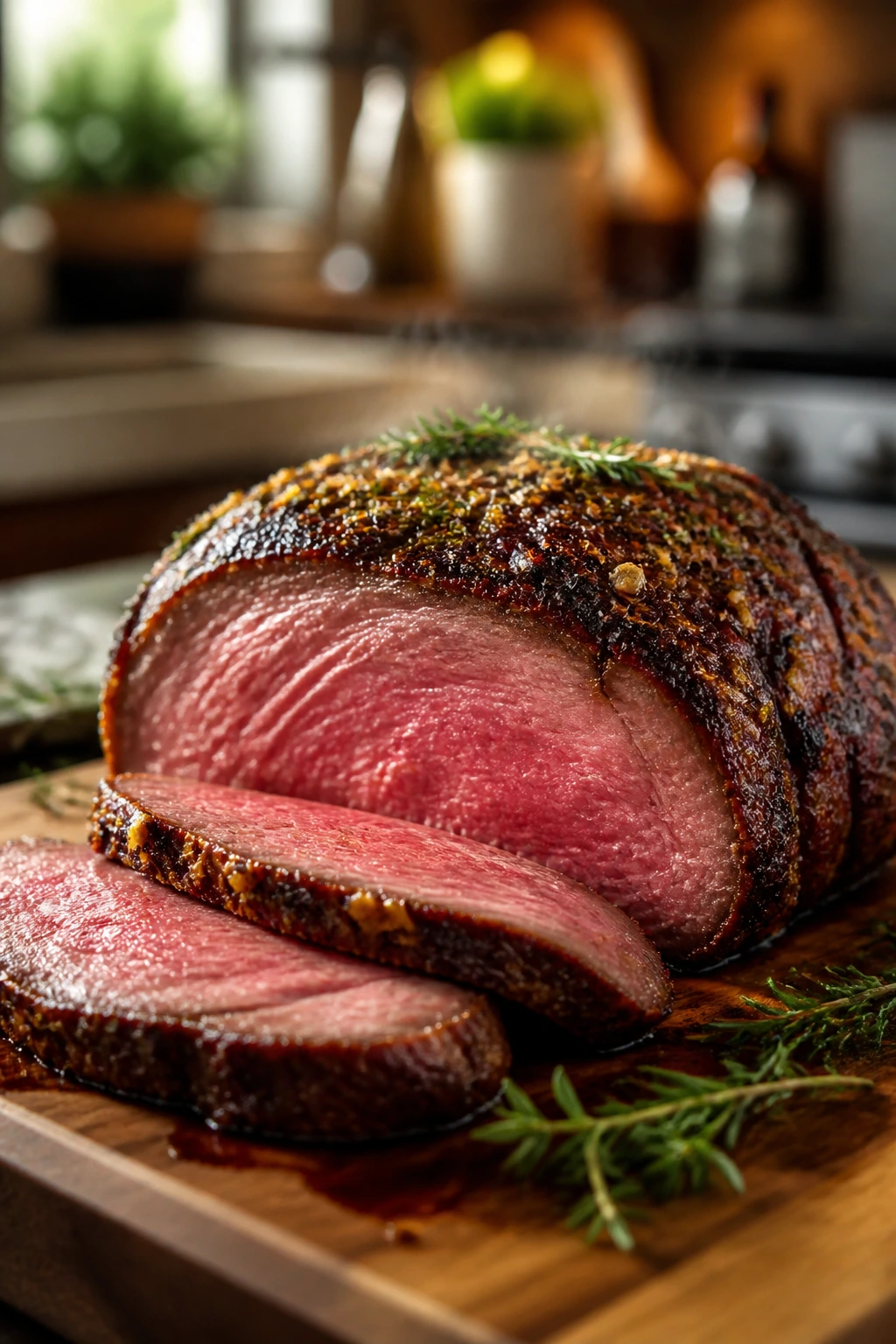
Skipping the rest: Cut sirloin too soon and the board fills with juice while the slices look pale and dry. The meat is not ruined; it is just leaking where it shouldn’t. Resting for 20 to 25 minutes gives the juices time to settle and keeps the slices from collapsing.
-
Slicing with the grain: Sirloin has visible muscle fibers, and if you cut along them, the meat chews like a long string instead of a tender slice. Turn the roast and slice across the grain, even if that means cutting a slightly awkward angle. The difference is obvious on the plate.
-
Using too little salt: This is the mistake people make because they are worried about “over-seasoning,” but sirloin can take a proper salt crust. If the meat tastes flat, the fix is not more gravy. Season the roast more boldly next time and salt it earlier so the flavor reaches beyond the surface.
-
Letting the gravy boil hard: A rolling boil breaks the emulsion and can leave you with a greasy, broken sauce. Keep it at a lazy simmer and whisk steadily. If it still looks thin, let it reduce another minute or two instead of cranking the heat.
-
Burying the roast under vegetables: A thick pile of onions and carrots can trap steam and keep the bottom from browning. Use a shallow layer, not a packed nest. You want aroma and flavor from the vegetables, not a soggy base.
Variations That Still Taste Like Sunday Dinner
Peppercorn Bistro Roast
Crush the black pepper a little more coarsely and add 1 tablespoon of brandy to the gravy after the flour cooks. The result tastes a little sharper and more steakhouse-like, which is useful if you like a stronger pepper bite around the edges of the beef.
Mushroom-Cushion Sirloin
Add 8 ounces of sliced cremini mushrooms to the pan bed with the onions and carrots. They drink in the drippings and make the gravy taste darker and earthier, almost like a roast that spent longer in the oven than it actually did.
No-Wine Pantry Roast
Replace the red wine with an extra 1/2 cup of beef stock and 1 teaspoon of balsamic vinegar. You lose the wine note, but you keep enough acidity to stop the gravy from tasting heavy and one-dimensional.
Herb-Butter Crust
Work 2 tablespoons of softened unsalted butter into the seasoning paste before rubbing it on the roast. The crust browns a little more deeply and feels richer at the edges, which is useful if your sirloin is very lean.
Root-Vegetable Dinner Roast
Tuck peeled potato chunks and parsnip pieces under and around the beef for the last 35 to 40 minutes of roasting. They soak up the pan juices and turn the roast into a one-pan dinner that needs little more than a salad and warm bread.
Keeping Beef Sirloin Tender After It Comes Out
Leftovers keep well if you treat them the way the roast asks to be treated in the first place: gently. Store sliced beef in a shallow container with a spoonful or two of gravy, then cover and refrigerate for 3 to 4 days. If you leave the slices dry, the edges firm up faster and the texture goes a little tired by day two.
Whole roasted sirloin freezes better than you might expect, but only if you wrap it tightly. Press plastic wrap against the surface, wrap again in foil, then tuck it into a freezer bag and freeze for up to 2 months. The gravy should freeze in a separate container so you can thaw and reheat it without turning the meat soggy.
For reheating, the oven wins. Put the slices in a baking dish, add a few tablespoons of stock or gravy, cover loosely with foil, and warm at 275°F (135°C) until the meat reaches about 110°F to 120°F in the center. That usually takes 10 to 15 minutes for slices and a little longer for thicker pieces. Microwave reheating works in a pinch, but do it in short bursts at 50% power so the meat does not tighten up.
You can make the seasoning paste a day ahead, and you can cut the vegetables in advance too. If you want to get ahead on the full roast, salt and rub it the night before, refrigerate it uncovered or loosely covered, and bring it back toward room temperature for about 30 to 45 minutes before roasting. Do not leave it on the counter longer than 2 hours.
Questions People Ask About Beef Sirloin Roast
Is top sirloin the same thing as sirloin tip?
No, and the difference matters. Top sirloin is usually a little more tender and more forgiving, while sirloin tip is leaner and can feel firmer if you push it past medium. Either can work here, but I’d keep sirloin tip closer to medium-rare and slice it thinner.
What temperature should I pull the roast from the oven?
Pull it at 125°F (52°C) for medium-rare or 130°F to 135°F (54°C to 57°C) for medium. Resting raises the final temperature a few degrees, so if you wait until the center looks “done,” it is already headed past where you want it.
Can I skip the red wine?
Yes. Use more beef stock and add a small splash of balsamic vinegar or a teaspoon of red wine vinegar if you want the gravy to taste balanced. The acid keeps the sauce from reading flat and one-note.
Do I need to sear the roast in a skillet first?
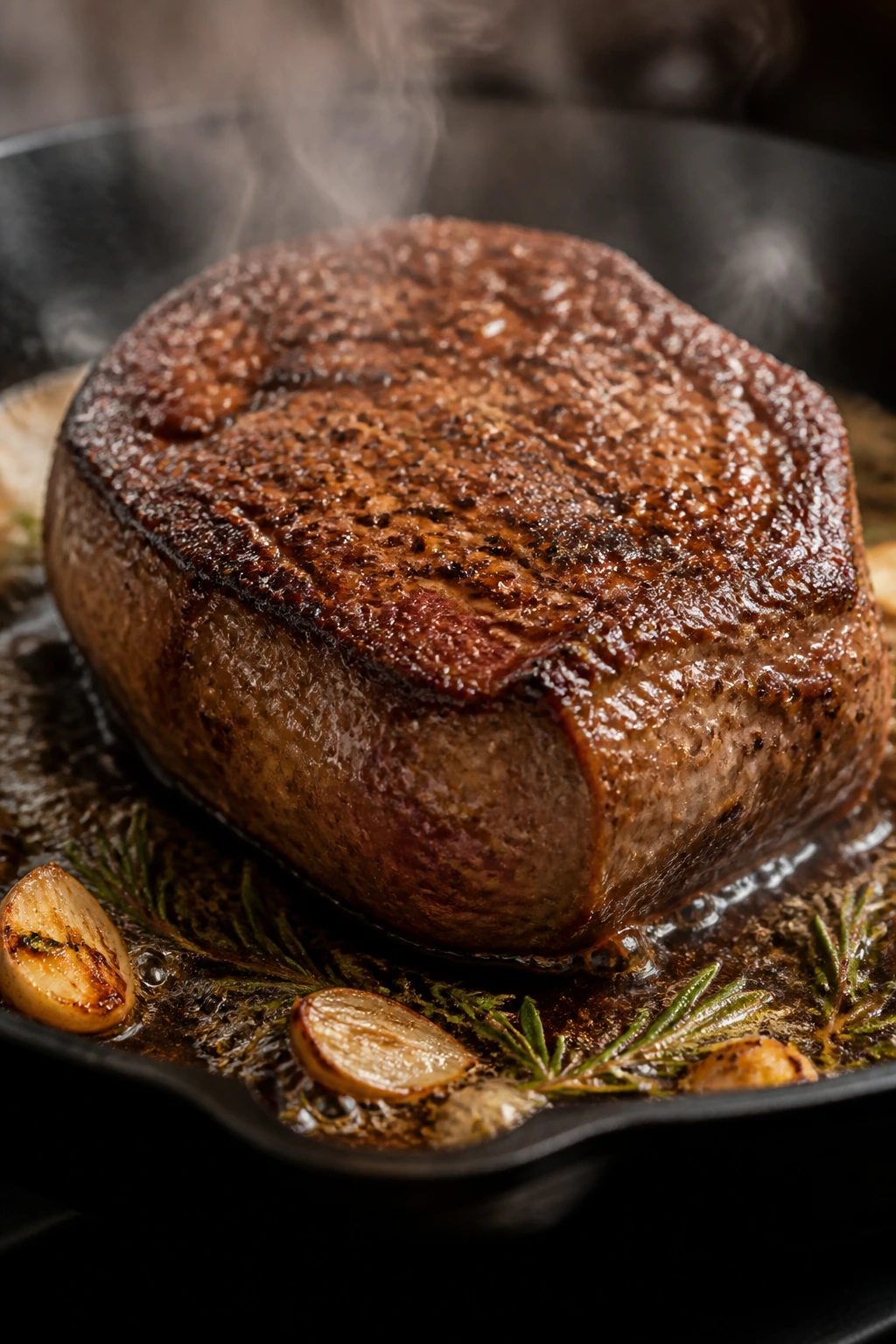
Not for this version. The high-heat start at 450°F gives you the crust without dirtying a second pan or risking a burnt fond that tastes bitter. If you love extra crust, you can sear it for 2 minutes per side first, but the roast does not need it.
Why did my sirloin turn out dry even though I used a thermometer?
Most of the time the roast stayed in the oven too long after the thermometer came out, or it was sliced too soon and lost its juice on the board. Pull early, rest properly, and slice across the grain. That usually fixes the problem better than changing the seasoning.
Can I cook the roast with potatoes in the same pan?
Yes, but keep them cut into large chunks and make sure they are not piled under the meat. If they crowd the pan, they steam instead of browning. Add them only if your roasting pan has room to spare.
Can this be made in a slow cooker?
You can braise sirloin in a slow cooker, but that becomes a different dish. You lose the browned crust and the cleaner roast texture, which are the best parts of this recipe. If you want a slow-cooker dinner, use a tougher cut and treat it as a braise instead.
A Roast Worth Returning To
A good beef sirloin roast has a way of making an ordinary evening feel anchored. Not fancy. Just solid, warm, and worth sitting down for.
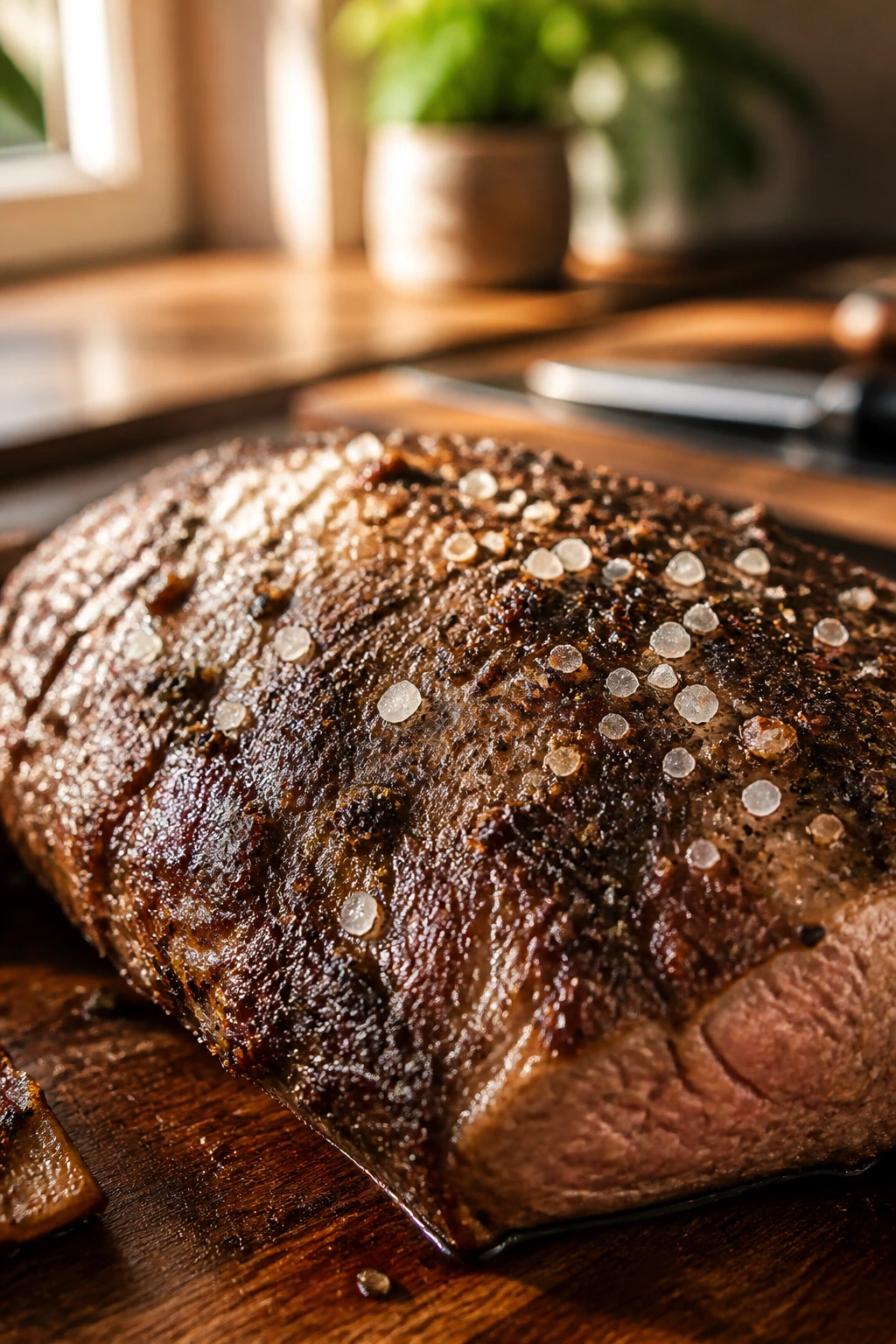
The charm is in the contrast: the browned crust, the juicy center, the spoonful of gravy that turns a few slices into a real plate. Once you stop chasing a clock and start listening to the roast — the smell, the color, the temperature — it becomes one of the easiest ways to put a proper dinner on the table without a lot of drama.
Classic Beef Sirloin for a Hearty Dinner — Recipe Card
Recipe Name: Classic Beef Sirloin for a Hearty Dinner
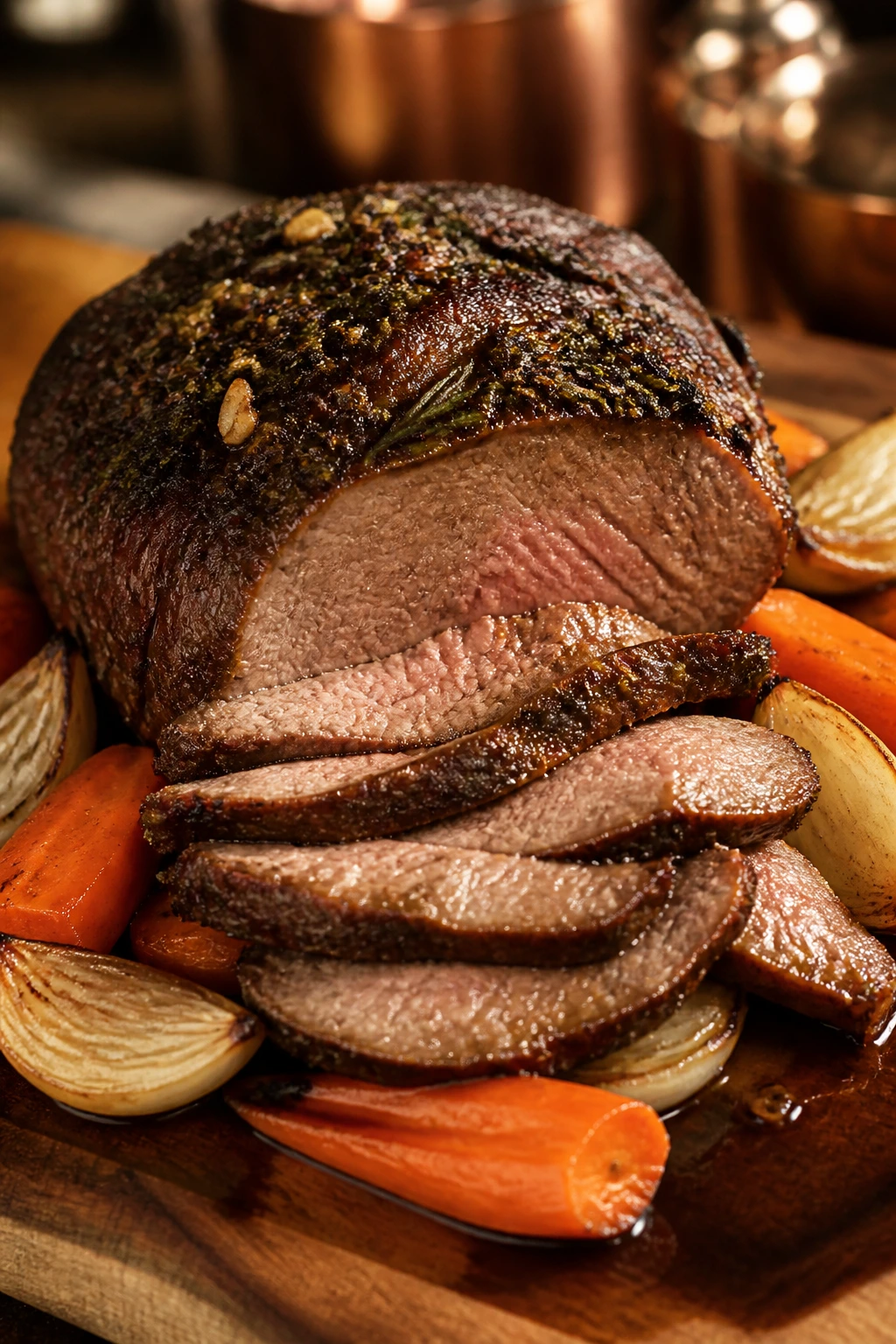
Description: A garlic-herb beef sirloin roast with onions, carrots, and a simple pan gravy. The meat slices cleanly, stays juicy when cooked to the right temperature, and makes a full dinner feel steady and substantial.
Prep Time: 20 minutes
Cook Time: 55 to 70 minutes
Total Time: 1 hour 15 minutes to 1 hour 30 minutes, plus 20 to 25 minutes resting
Course: Main Course
Cuisine: American
Servings: 6 servings
Calories: About 430 kcal per serving
Ingredients
For the Roast
- 3 to 3 1/2 pounds beef top sirloin roast, trimmed of excess surface fat
- 2 tablespoons kosher salt
- 1 tablespoon freshly ground black pepper
- 1 teaspoon onion powder
- 2 tablespoons olive oil
- 2 tablespoons Dijon mustard
- 4 garlic cloves, minced
- 2 teaspoons fresh rosemary, finely chopped
- 2 teaspoons fresh thyme leaves
- 1 large yellow onion, cut into 8 wedges
- 2 medium carrots, cut into 2-inch pieces
- 1 celery stalk, cut into 2-inch pieces
- 1 cup beef stock
- 1/2 cup dry red wine
- 2 tablespoons chopped flat-leaf parsley, optional
For the Gravy
- 1 tablespoon unsalted butter
- 1 tablespoon all-purpose flour
- 1 teaspoon Worcestershire sauce
- 1 tablespoon cold unsalted butter, cut into small cubes
- 1/2 cup reserved beef stock, if needed
Instructions
-
Preheat the oven to 450°F (232°C) and pat the beef sirloin roast dry. Tie it with kitchen twine if one end is thinner than the other.
-
Mix the salt, pepper, onion powder, olive oil, Dijon mustard, garlic, rosemary, and thyme into a paste. Rub it all over the roast.
-
Scatter the onion, carrots, and celery in a roasting pan. Pour in 1 cup beef stock and the red wine around the vegetables.
-
Set the roast on top of the vegetables and roast for 15 minutes at 450°F (232°C).
-
Reduce the oven to 325°F (163°C) and continue roasting for 35 to 55 minutes, until the center reaches 125°F (52°C) for medium-rare or 130°F to 135°F (54°C to 57°C) for medium.
-
Transfer the roast to a board, tent loosely with foil, and rest for 20 to 25 minutes.
-
Place the roasting pan over medium heat. Skim excess fat, then add the butter and flour. Whisk for 1 minute, whisk in the pan juices and remaining stock as needed, and simmer until thickened.
-
Stir in the Worcestershire sauce and cold butter. Slice the roast against the grain and serve with gravy.
Notes: Pull the roast early and rest it fully; that is where the juiciness comes from. Slice across the grain for the most tender bite. Add a splash of extra stock if the gravy tightens too much.