



Ground beef has a way of saving dinner when the day has already taken more than it should. A classic easy dinner made with ground beef should not ask for a special trip to the store, a half dozen pans, or a sauce that only behaves if you whisper to it. It should brown well, smell like onion and pepper and beef fat, and leave you with a skillet full of something you can scoop into bowls without a second thought.
This version does exactly that. It takes the old reliable trio of beef, potatoes, and onion, then adds carrots, peas, broth, tomato paste, and a little Worcestershire so the whole pan tastes deeper than the ingredient list looks. The potatoes soak up the savory liquid instead of floating in it, the vegetables stay intact instead of turning into paste, and the finished gravy lands in that sweet spot between thin and gloppy. That texture matters more than most people admit.
One thing I always look for in a ground beef dinner is whether the beef tastes browned or merely cooked. Huge difference. Browned beef gives you those dark bits on the skillet bottom, and those bits are where the meal gets its backbone. Skip that, and the whole pan tastes flat. Keep it, and even a Tuesday night dinner starts to feel like you meant it.
Why This Ground Beef Dinner Keeps Working on Busy Nights
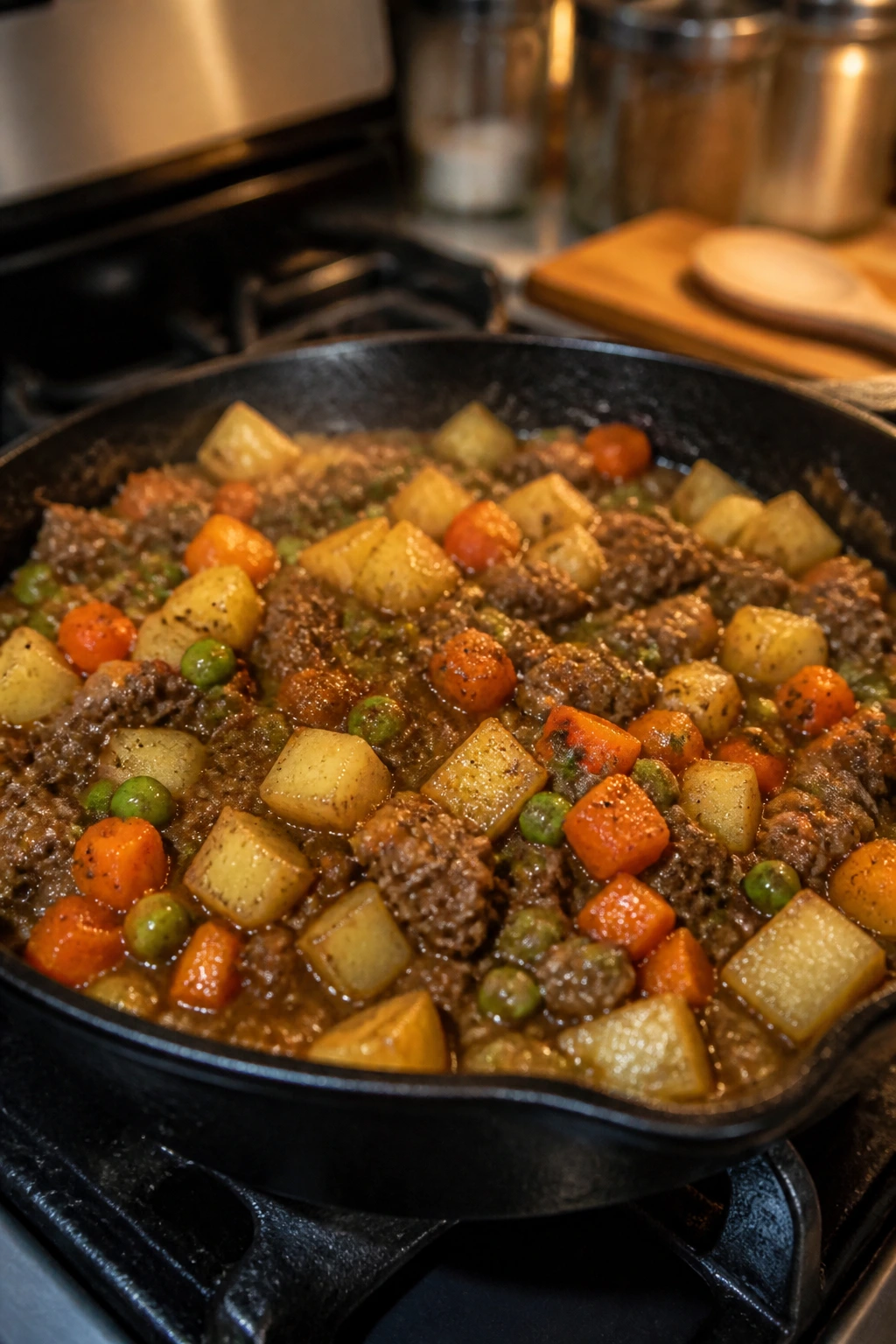
A skillet meal lives or dies on the order of operations. The beef needs room to brown, the vegetables need enough time to soften without collapsing, and the potatoes need to be cut small enough to finish in the same window as everything else. That is the quiet trick here. Nothing fancy. Just timing, heat, and a pan that can hold its own.
I prefer this style of ground beef dinner because it gives you a full meal without chasing side dishes around the kitchen. The potatoes bring bulk, the carrots give a little sweetness, the peas keep the whole thing from feeling heavy, and the broth ties it together into something spoonable. You end up with a hearty dinner that eats more like a proper dish than a pile of cooked ingredients.
There is also a practical reason this kind of recipe keeps showing up in real kitchens: it forgives small mistakes better than a lot of other dinners. If your onion is a minute too soft, nobody cares. If your broth reduces a little too much, a splash puts it back. If your ground beef is a touch lean, a spoonful of oil keeps the pan moving. That kind of flexibility is gold when dinner needs to happen anyway.
One sentence, and it matters: the skillet should smell savory before the potatoes go in.
Why You’ll Want This Skillet in the Rotation
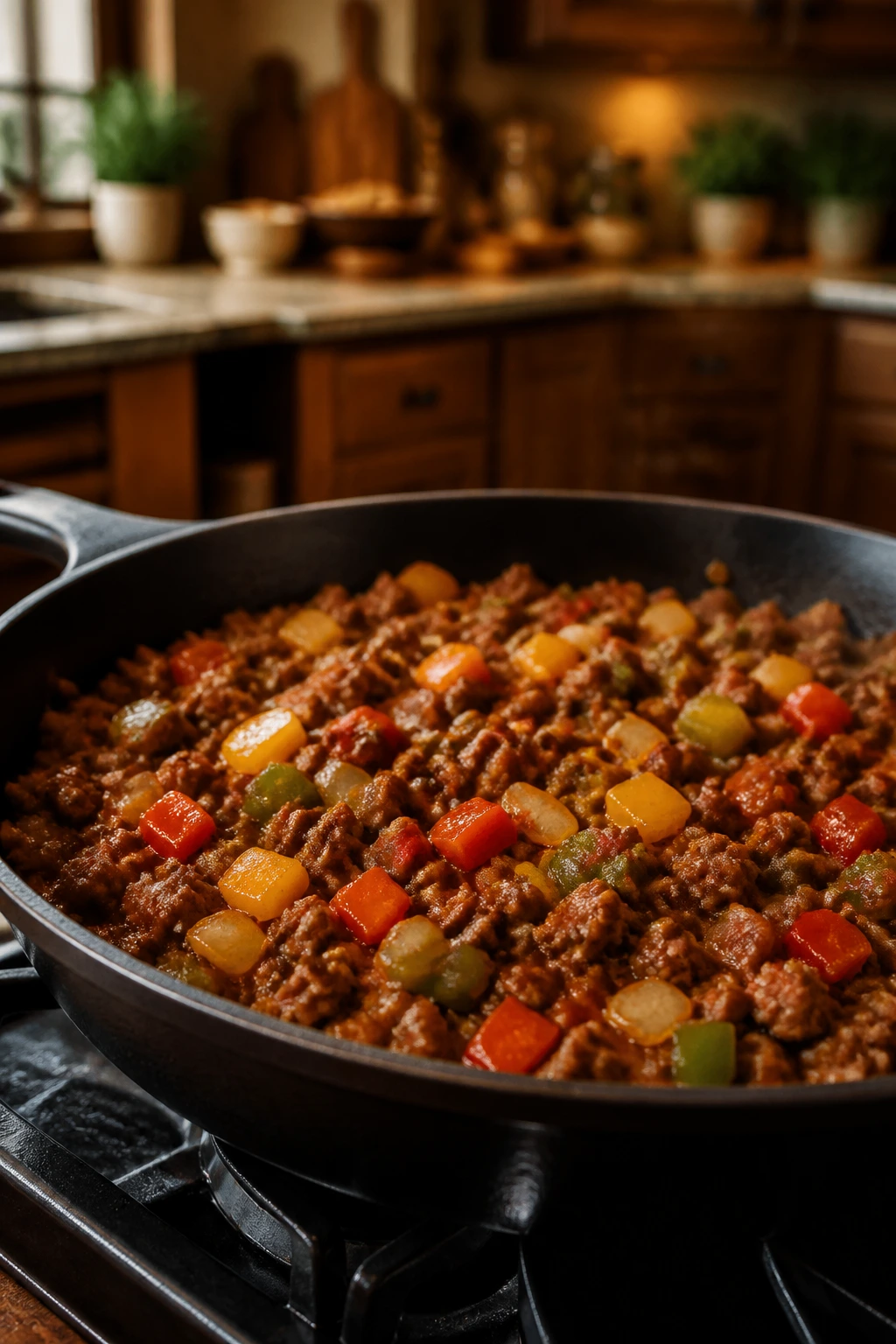
- One Pan, Fewer Dishes: Everything cooks in the same skillet, so the browned bits from the beef become part of the gravy instead of getting abandoned in a second pot.
- Filling Without Extra Work: The potatoes and carrots make the pan substantial enough to stand on its own, which means dinner is done once the skillet is done.
- Built from Familiar Ingredients: Ground beef, onion, broth, tomato paste, flour, and potatoes are everyday groceries, not a scavenger hunt.
- Flexible on the Edges: Peas, corn, mushrooms, or green beans can slide in without forcing the dish to become something else.
- Reheats Better Than You’d Think: The gravy loosens back up with a splash of broth, so leftovers still feel like dinner instead of yesterday’s obligation.
- Budget-Friendly in a Real Way: One and a half pounds of beef stretches farther once the vegetables and potatoes join the pan.
The Timing and Yield at a Glance
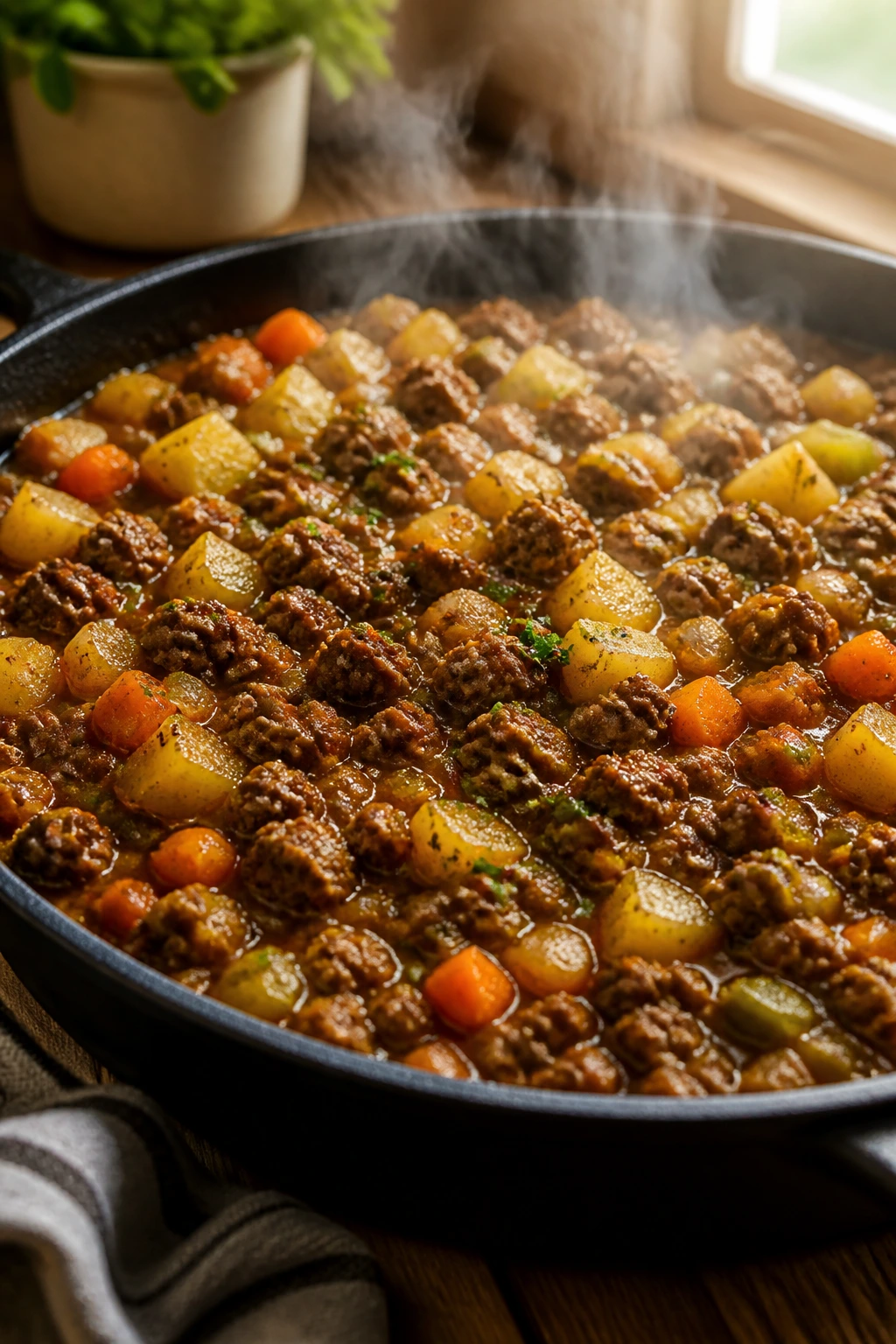
Yield: Serves 4 to 6
Prep Time: 20 minutes
Cook Time: 30 minutes
Total Time: 50 minutes
Difficulty: Beginner — the method is simple, but the browning and simmering need your attention so the pan stays savory instead of soft and pale.
Chill/Rest Time: 5 minutes before serving
Best Served: Hot, straight from the skillet, after the gravy has settled for a few minutes.
That timing assumes you dice the vegetables before the pan gets hot. If you like to work slower, give yourself an extra 5 minutes. The recipe does not mind. The skillet only cares that the potatoes are cut small, the beef gets browned, and the simmer stays gentle.
The Ingredient List That Makes the Pan Work
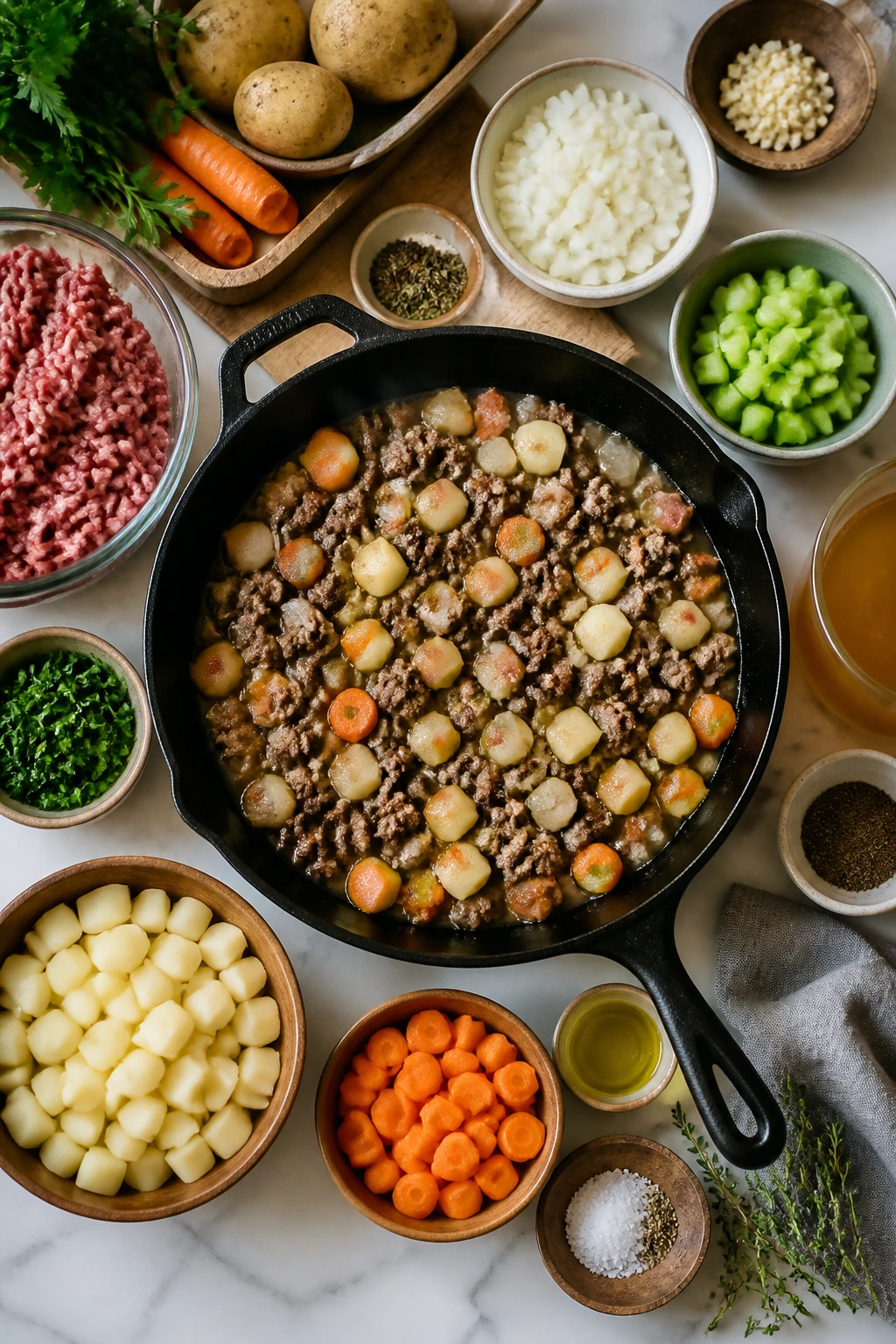
For the Skillet Dinner:
- 1 1/2 pounds ground beef, preferably 85/15
- 1 tablespoon olive oil, only if the beef is very lean
- 1 medium yellow onion, diced
- 2 medium carrots, peeled and diced small
- 2 celery stalks, diced small
- 2 cloves garlic, minced
- 1 1/2 pounds Yukon Gold potatoes, scrubbed and cut into 1/2-inch cubes
- 2 tablespoons tomato paste
- 2 tablespoons all-purpose flour
- 2 1/2 cups low-sodium beef broth
- 1 tablespoon Worcestershire sauce
- 1 teaspoon kosher salt, plus more to taste
- 1/2 teaspoon black pepper
- 1 teaspoon dried thyme
- 1/2 teaspoon smoked paprika
- 1 cup frozen peas
- 2 tablespoons chopped parsley
- 1 tablespoon unsalted butter, optional but welcome at the end
A few small notes tucked into that list do more work than they look like they should. The broth is low-sodium so you can control the salt at the end. The potatoes are Yukon Gold because they stay intact and go a little creamy at the edges. The flour helps the liquid turn into a light gravy instead of a thin soup. And the butter? That is not mandatory, but it rounds out the final spoonful in a way I usually miss when it is absent.
What Each Ingredient Does in the Skillet
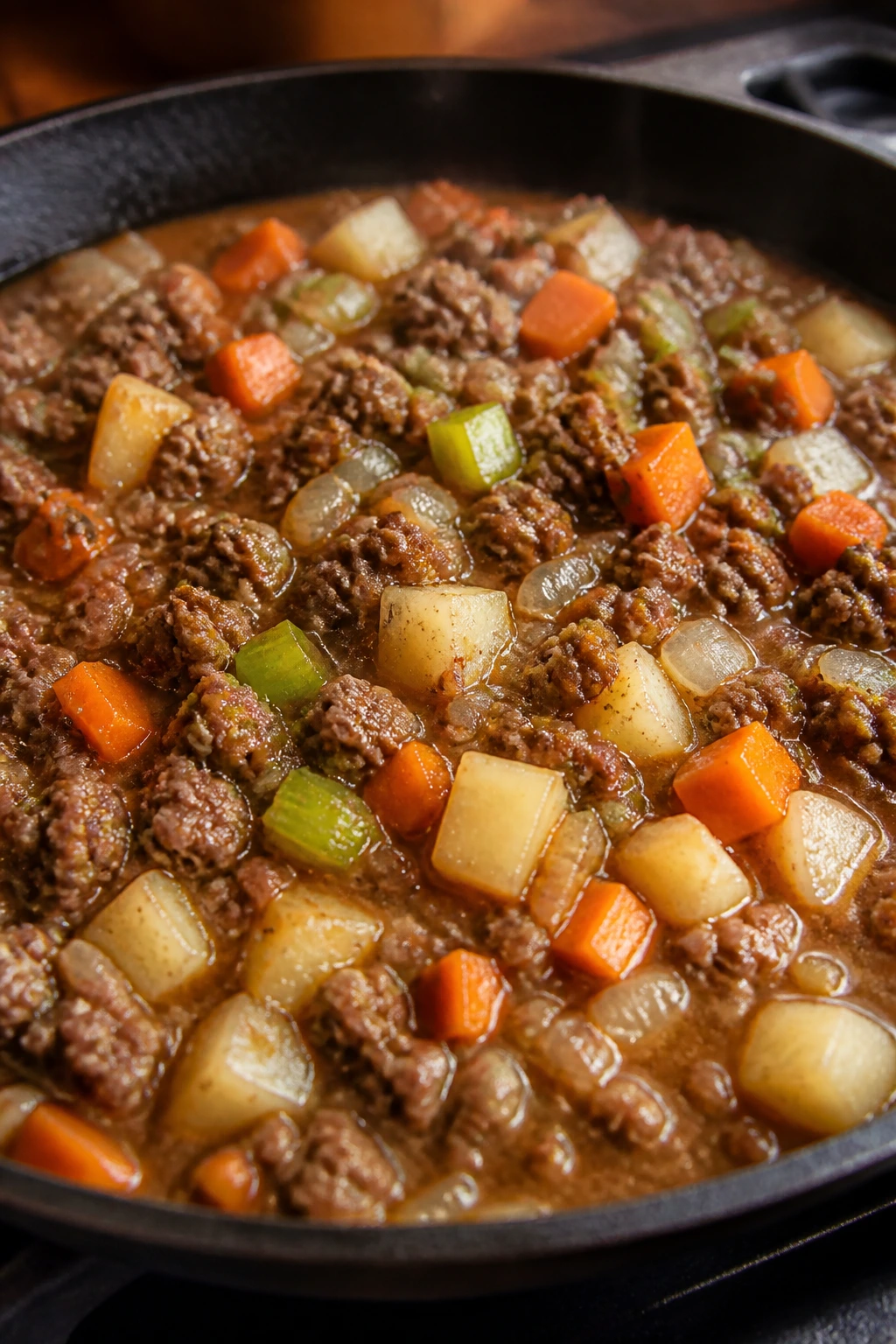
Ground Beef and Fat
What to use: 1 1/2 pounds ground beef, ideally 85/15.
Preparation: Break the meat into rough chunks once it hits the hot skillet, then leave it alone long enough to brown before you start stirring aggressively.
Substitutions: Ground turkey or ground chicken will work, though both are leaner and need that tablespoon of olive oil to keep the pan from drying out. A beef-pork blend also works if you want a richer, more old-school flavor.
Tips: If the skillet ends up with more than a couple tablespoons of fat after browning, spoon some out before you add the flour and vegetables. Too much fat makes the gravy greasy, and greasy gravy never tastes as good as people hope it will.
Potatoes, Carrots, Onion, and Celery
What to use: 1 1/2 pounds Yukon Gold potatoes, 2 medium carrots, 2 celery stalks, and 1 medium yellow onion.
Preparation: Cut the potatoes into 1/2-inch cubes so they cook in the same window as the carrots and onions. Dice the carrots and celery small enough that they soften before the broth has reduced too far.
Substitutions: Russets can be used, but they break down more and make the pan starchier. Red potatoes hold their shape a little better if you want a firmer bite. If celery is missing, use a little extra onion and a pinch more thyme.
Tips: Keep the vegetable pieces close in size. That is not fussy kitchen advice; it is the difference between carrots that are done and potatoes that are still chalky.
Broth, Tomato Paste, Flour, and Worcestershire
What to use: 2 1/2 cups low-sodium beef broth, 2 tablespoons tomato paste, 2 tablespoons all-purpose flour, and 1 tablespoon Worcestershire sauce.
Preparation: Stir the tomato paste and flour into the hot fat for at least 60 seconds before you add the liquid. That brief cook time keeps the flour from tasting raw and helps the tomato paste darken.
Substitutions: If you need a gluten-free version, replace the flour with 1 tablespoon cornstarch mixed with 2 tablespoons cold water and add it near the end instead of at the start. Soy sauce can stand in for Worcestershire in a pinch, though the flavor will be a little sharper.
Tips: The broth should be strong enough to taste savory on its own. If yours is bland from the carton, the whole skillet will feel weaker no matter how careful you are with the rest.
Thyme, Paprika, Peas, and Parsley
What to use: 1 teaspoon dried thyme, 1/2 teaspoon smoked paprika, 1 cup frozen peas, and 2 tablespoons chopped parsley.
Preparation: Add the thyme and paprika with the flour so they bloom briefly in the hot pan. Stir in the peas near the end, straight from the freezer, so they stay bright.
Substitutions: Dried rosemary can replace thyme if you want a woodier flavor, but use less — rosemary can take over fast. Frozen corn can replace peas, and chopped scallions can stand in for parsley if that is what is in the fridge.
Tips: The parsley does not need to cook. Sprinkle it on after the heat is off so it stays fresh instead of collapsing into the gravy.
The Tools That Make This Easier
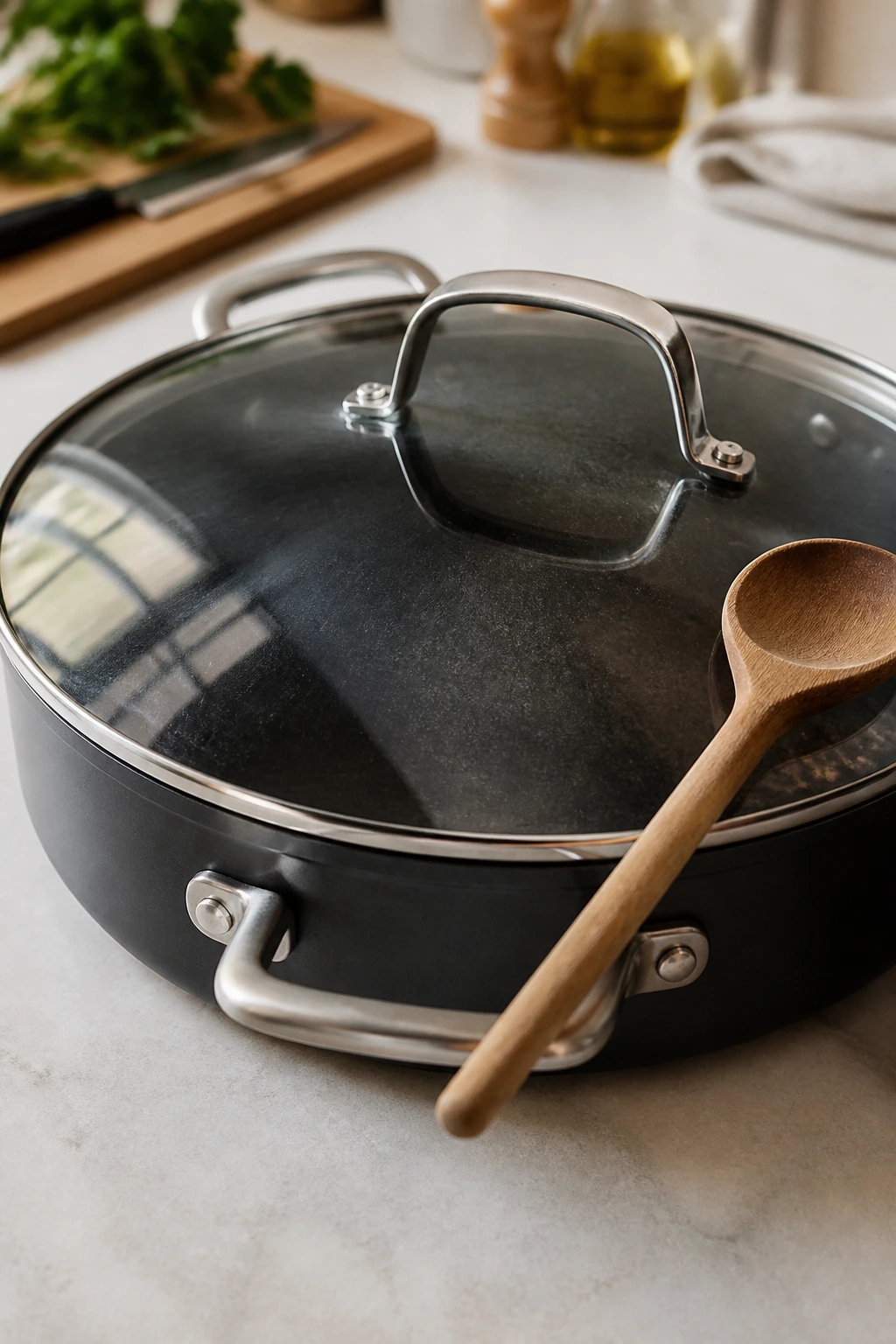
- 12-inch deep skillet or sauté pan with a lid: Wide enough for browning, deep enough for the broth and potatoes.
- Wooden spoon or heatproof spatula: Useful for breaking up the beef and scraping the browned bits off the bottom.
- Chef’s knife: A good knife matters here because the whole dish depends on even vegetable cuts.
- Cutting board: A sturdy board keeps the dicing sane and the potatoes from skittering away.
- Measuring cups and spoons: The broth, flour, and seasonings are simple, but the ratios still matter.
- Lid or foil cover: If the skillet lid does not fit tightly, a sheet of foil works in a pinch for the covered simmer.
- Small bowl for mise en place: Not required, but it keeps the diced vegetables from scattering all over the counter while the beef is browning.
A deep skillet is my first choice. A soup pot holds heat differently, and it is harder to brown the beef without crowding. Crowding is where the skillet starts to steam instead of sear, and steaming is how a good ground beef dinner turns bland before it starts.
How to Cook the Skillet Dinner Step by Step
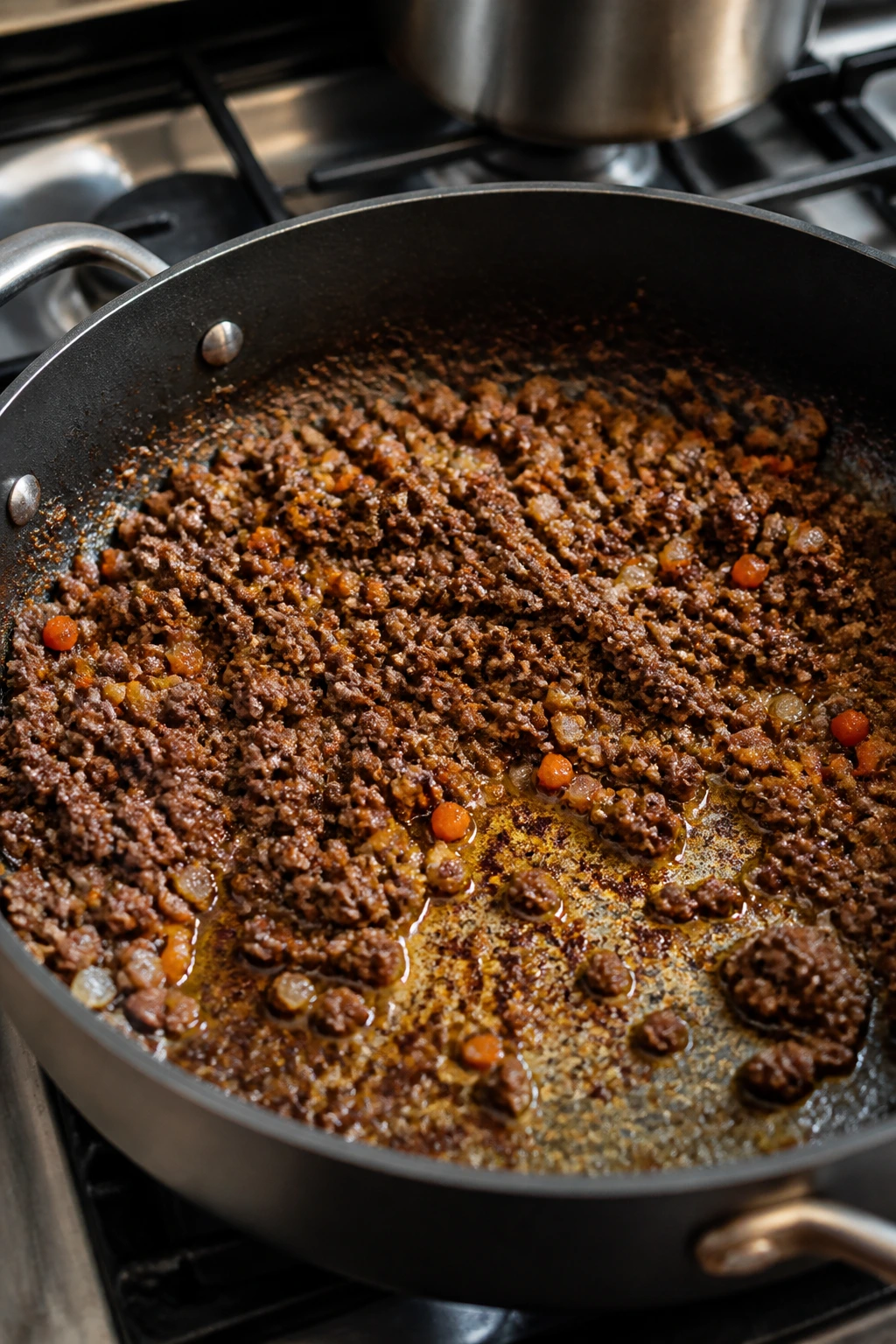
Brown the Beef
-
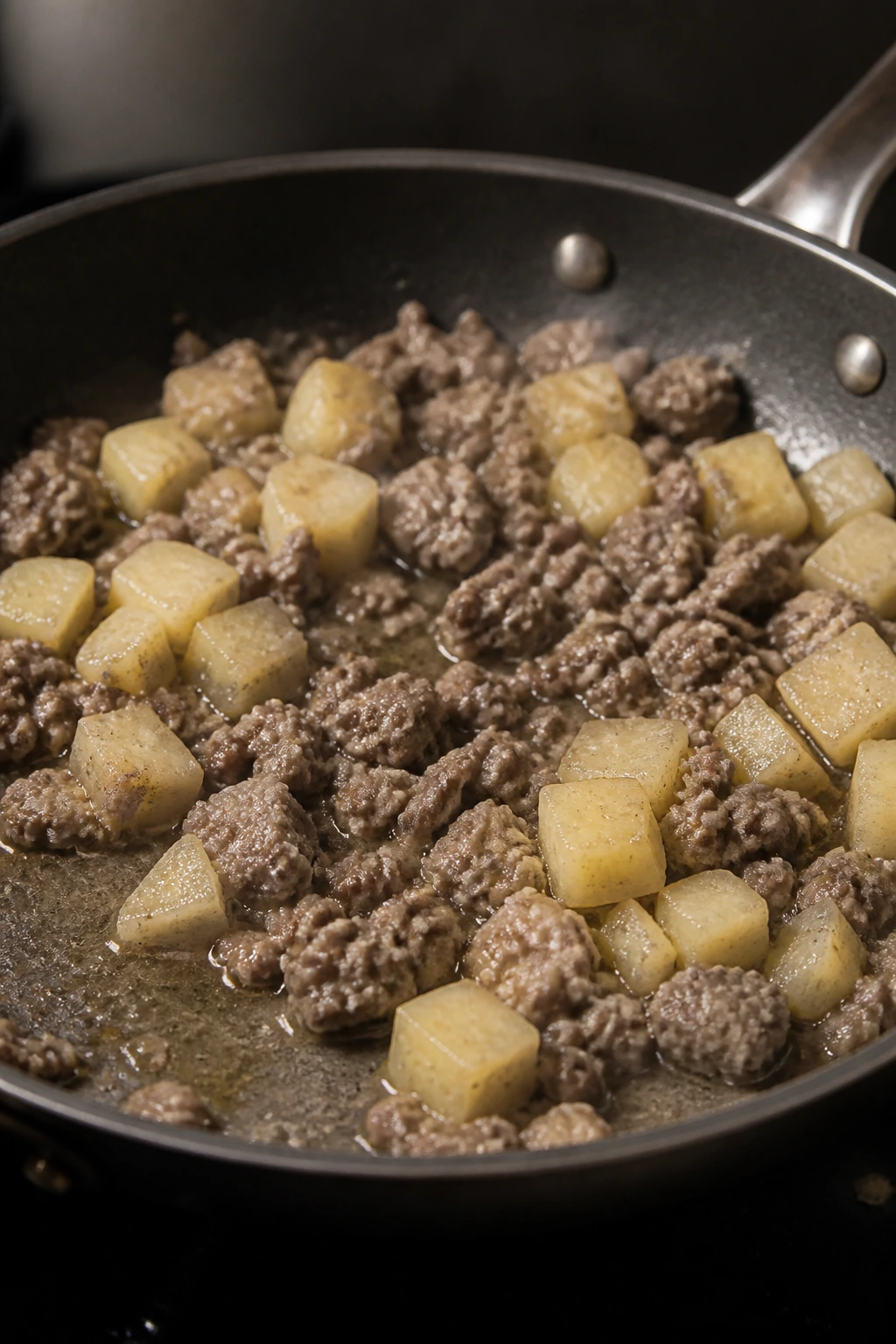
Set a 12-inch deep skillet over medium-high heat. Add the ground beef and the olive oil only if the beef looks lean, then let it cook undisturbed for 2 minutes before you start breaking it apart. Continue cooking for 5 to 6 minutes, stirring and chopping with a wooden spoon, until the meat is no longer pink and you see browned bits on the bottom of the pan. If there is more than 2 tablespoons of fat in the skillet, spoon off the excess.
-
Reduce the heat to medium. Add the onion, carrots, and celery, then cook for 5 to 6 minutes, stirring often, until the onion looks glossy and the carrots have started to lose their raw, stiff edge. The vegetables should soften, not collapse.
Build the Gravy Base
-
Stir in the garlic, tomato paste, flour, thyme, smoked paprika, kosher salt, and black pepper. Cook for 60 to 90 seconds, stirring constantly, until the tomato paste darkens and the flour no longer looks dusty. Do not rush this step; raw flour tastes flat and chalky.
-
Add the potatoes, beef broth, and Worcestershire sauce. Stir well, scraping up every browned bit from the bottom of the skillet, then bring the pan to a gentle simmer. The liquid should bubble lazily, not boil hard.
Simmer Until Tender
-
Cover the skillet, reduce the heat to medium-low, and cook for 18 to 22 minutes, stirring once halfway through, until the potatoes are tender when pierced with a fork but still hold their shape. If the pan starts to look dry before the potatoes are done, add 1/4 cup broth.
-
Uncover the skillet and simmer for 4 to 5 minutes more, stirring now and then, until the sauce thickens enough to coat the beef and potatoes. A spoon should come up glossy, not watery.
Finish and Rest
- Stir in the peas and the butter, if using, and cook for 2 minutes more until the peas are hot and bright green. Taste and adjust salt or black pepper. Turn off the heat, scatter the parsley over the top, and let the skillet rest for 5 minutes before serving. That rest lets the gravy settle into a thicker, silkier finish.
If you have a thermometer handy, the beef should be at 160°F. That is the safe ground beef mark, and it is a better check than guessing by color alone. Color lies. Heat does not.
How to Serve It So the Pan Looks Finished
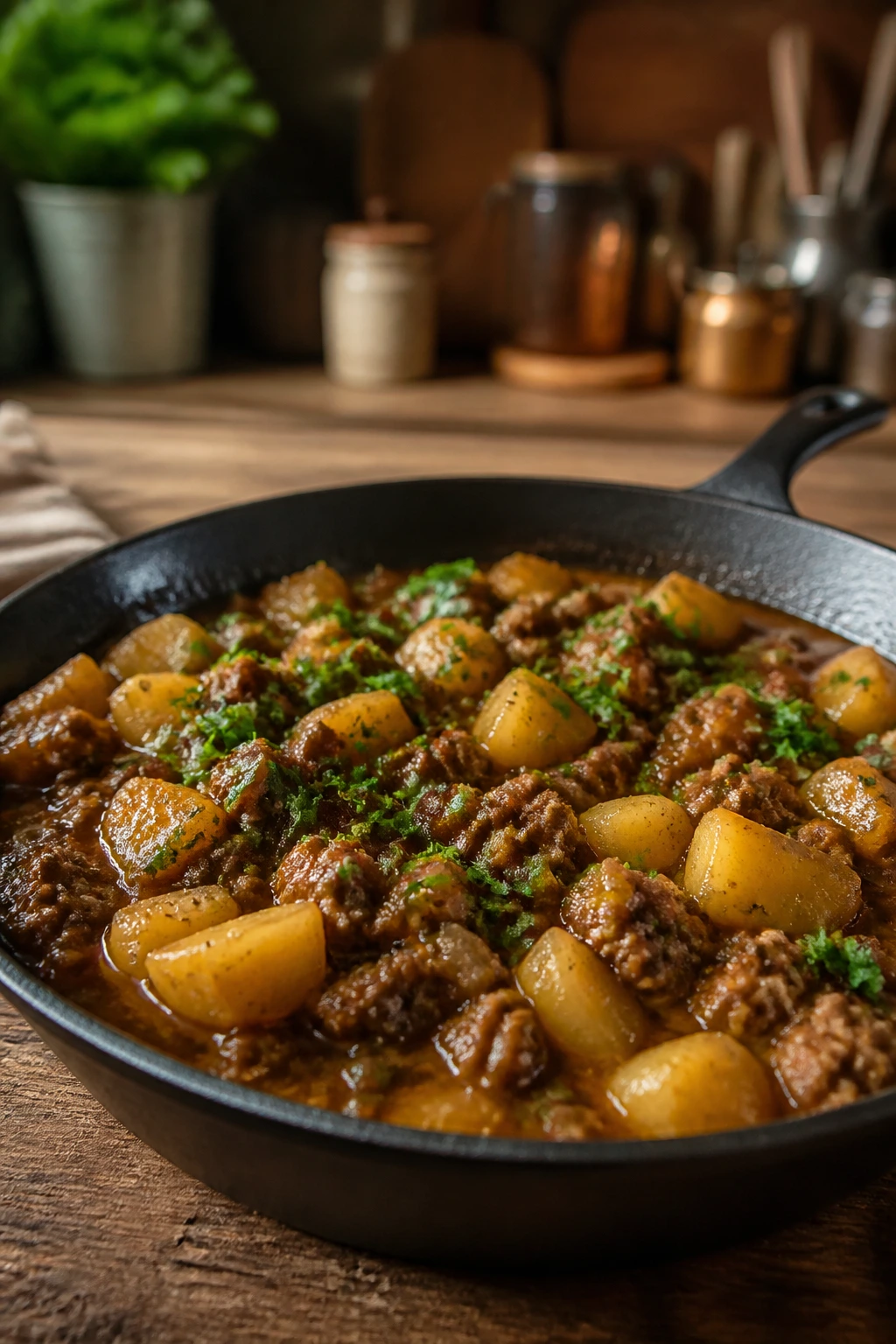
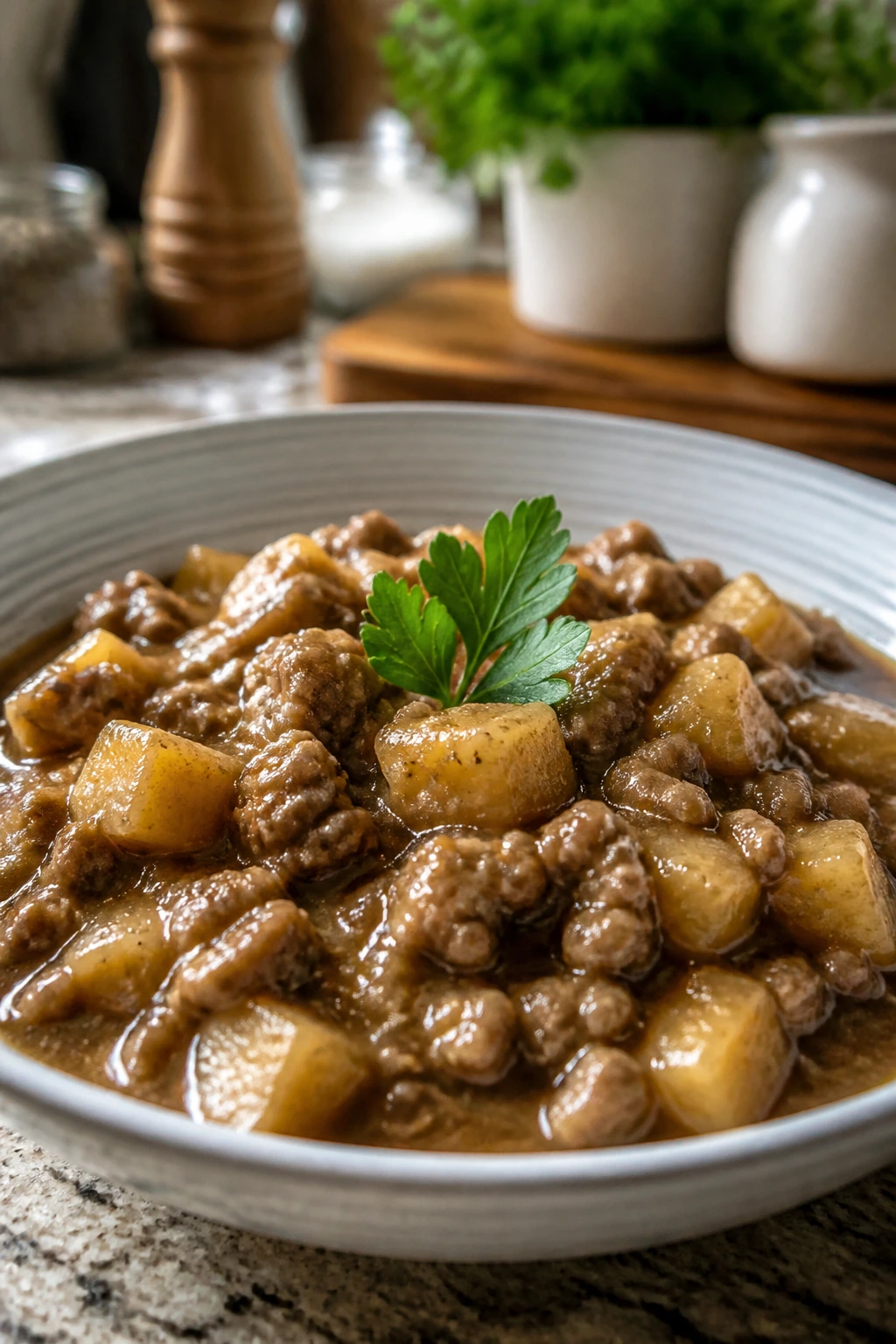
Presentation: Spoon the ground beef and potatoes into shallow bowls rather than deep soup bowls. That keeps the gravy visible, lets the parsley sit on top instead of sinking, and makes the whole thing look deliberate instead of dumped. A little extra black pepper over the top helps too.
Accompaniments: Buttered crusty bread is the obvious move, and for once the obvious move is right. A simple green salad with a sharp vinaigrette cuts through the richness nicely, and steamed green beans or roasted cabbage make good side dishes if you want more vegetables without adding much work.
Portions: Plan on about 1 1/2 cups per hearty serving, which gets you 4 dinner-sized portions from the skillet or 6 smaller ones. If you want to stretch it further, serve it over rice, mashed cauliflower, or a piece of toast. That is not cheating. That is dinner strategy.
Beverage Pairing: Unsweetened iced tea with lemon, a cold lager, or sparkling water with a squeeze of lemon all work because they cut the salt and fat without fighting the gravy. If you want wine, keep it simple and dry. A light red or a chilled rosé does the job.
The skillet is rich enough that you do not need much on the plate besides something crisp and something fresh. That balance keeps the meal from feeling heavy by the third bite.
Practical Tips That Improve the Last Bowl
Flavor Enhancement: Stir in a teaspoon of Dijon mustard or a small splash of soy sauce right after the broth goes in. Either one deepens the savory edge without making the pan taste like mustard or soy sauce. You want the background to get darker, not obvious.
Time-Saver: Dice the onion, carrots, and celery the night before and keep them in a sealed container in the fridge. A paper towel tucked under the vegetables helps catch moisture, which keeps the onion from turning slippery and the carrots from going slimy at the edges.
Texture Move: If you want the gravy thicker without adding more flour, mash three or four potato cubes against the side of the skillet near the end. The starch that leaks out naturally thickens the sauce, and it does so without leaving a raw flour taste behind.
Cost-Saver: Use 1 pound of ground beef and add 8 ounces of sliced mushrooms. The mushrooms drink up the broth and make the skillet feel fuller, which is handy when beef prices make you blink twice at the butcher case.
Finish Strong: A teaspoon of butter at the very end gives the gravy a rounder shine. It is a small thing, but it smooths out the edges after the broth has reduced.
Heat Control: Keep the simmer gentle. If the liquid boils hard, the potatoes can split on the outside before the centers finish, and the carrots go soft in an ugly, tired way. Lazy bubbles are what you want.
One sentence worth keeping: the last 5 minutes are where the gravy turns into dinner.
The Mistakes That Make the Pan Bland or Mushy
-
Crowding the beef from the start: If the meat is piled into a cold or narrow pan, it steams instead of browns. The symptom is gray, wet beef with no crust or fond on the bottom. Fix it by using a wide skillet and giving the beef a minute or two untouched before stirring.
-
Cutting the potatoes too large: Big cubes look fine on the cutting board and then sit in the pan like stubborn pebbles. The carrots finish early, the broth reduces, and the potatoes still feel chalky in the middle. Keep them at 1/2-inch cubes, maybe a hair smaller if your knife work runs casual.
-
Skipping the brief cook on flour and tomato paste: Dumping liquid straight onto raw flour is how you end up with a sauce that tastes dusty or breaks into little lumps. Stir the paste and flour in the hot fat for at least 60 seconds so they cook together before the broth goes in.
-
Boiling instead of simmering: A hard boil tears up the potatoes and makes the gravy look split or greasy. The fix is simple: lower the heat once the broth comes up, then cover the pan and let lazy bubbles do the work.
-
Waiting too long to season at the end: The broth reduces, the potatoes absorb salt, and the final taste can land flat if you stop seasoning early. Taste after the peas go in and adjust with salt, pepper, or a few drops of Worcestershire.
-
Adding peas too early: Frozen peas turn dull and soft if they simmer for long. They belong at the very end, just long enough to heat through and stay green.
Variations That Change the Flavor Without Changing the Fuss
-
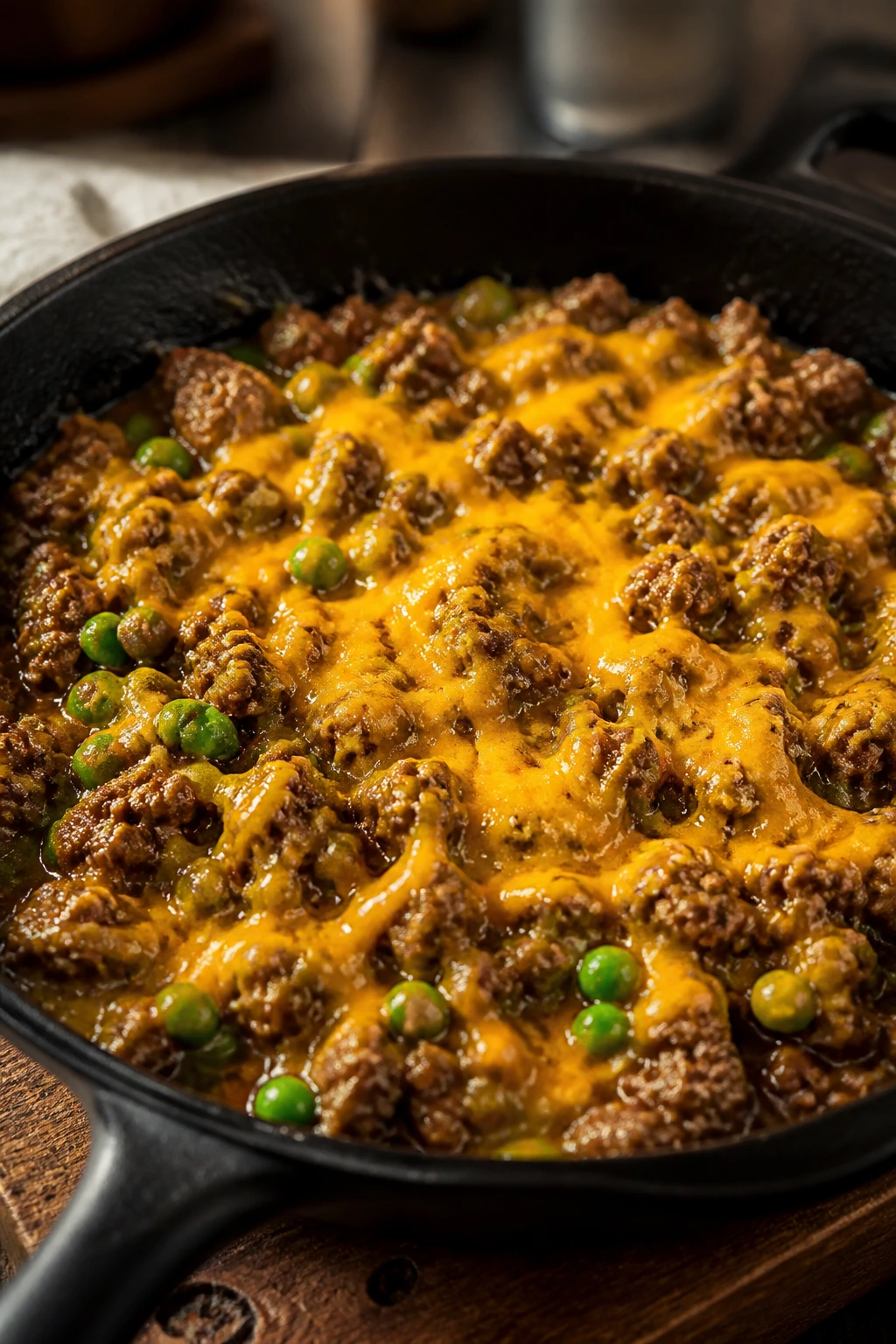
Cheddar Melt Skillet: Stir 1 cup shredded sharp cheddar into the pan after the peas, then cover for 1 minute so it melts into the gravy. This version is richer and more kid-friendly, but add the cheese off the heat if you want it smooth instead of stringy.
-
Mushroom and Thyme Version: Add 8 ounces of sliced cremini mushrooms with the onion and let them cook until they drop their moisture and start to brown. The mushrooms make the skillet taste deeper and a little earthier, which is nice when you want the meal to feel more like a savory hash.
-
Southwest Skillet: Replace the thyme and smoked paprika with 1 teaspoon chili powder and 1/2 teaspoon cumin, then add 1 cup corn and 1 drained can of black beans with the peas. The pan keeps its hearty shape, but the flavor moves toward smoky and warm instead of classic diner-style.
-
Root Vegetable Swap: Replace half the potatoes with diced sweet potatoes or parsnips. Sweet potatoes bring a softer sweetness, while parsnips go a little nutty and old-fashioned once they simmer in the broth.
-
Gluten-Free Gravy Fix: Skip the flour and whisk 1 tablespoon cornstarch into 2 tablespoons cold water, then stir it in during the last 3 to 4 minutes of cooking. The sauce thickens cleanly, and nobody misses the flour if you season the pan properly.
Storage, Reheating, and Make-Ahead Notes
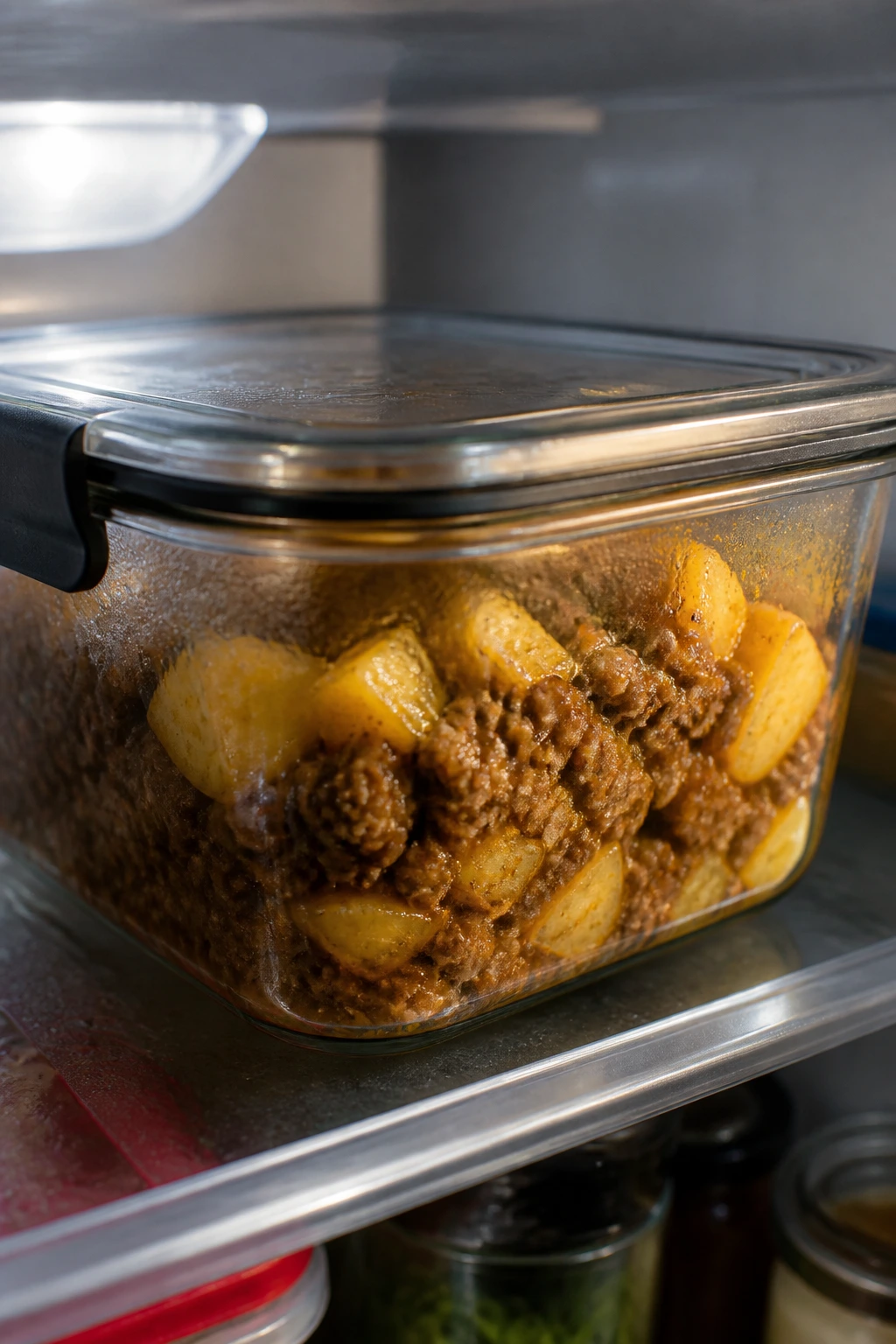
In the fridge: Leftovers keep well for 3 to 4 days in an airtight container. The gravy will thicken as it chills, and the potatoes will absorb some of the liquid, which is normal. It may look a little tighter the next day, but that is not a flaw.
At room temperature: Do not leave the skillet out longer than 2 hours. Ground beef and gravy are both the kind of food that should move into storage instead of lingering on the counter.
In the freezer: Freeze portions for up to 2 months in freezer-safe containers. Potatoes can get a touch softer after thawing, so I like to freeze this in flat containers or zip-top bags, then thaw it slowly in the fridge. The texture is still good, just a little less firm than the day it was made.
Reheating on the stovetop: My favorite method. Put the leftovers in a skillet with 2 to 4 tablespoons of beef broth or water, then warm over medium-low heat for 8 to 10 minutes, stirring now and then until the gravy loosens and the potatoes heat through. If the pan looks dry before it is hot, add another splash.
Reheating in the microwave: Use a microwave-safe bowl, cover loosely, and heat in 60 to 90 second bursts, stirring between each one. The goal is hot all the way through, not bubbling at the edges and cold in the middle.
Make-ahead: You can dice the vegetables and mix the dry seasonings a day ahead. You can also brown the beef and onion ahead of time, then cool and refrigerate them for up to 24 hours before finishing the skillet with broth, potatoes, and carrots. If you fully cook the dish ahead, stop the simmer just before the potatoes are completely soft so they do not break apart when reheated.
If you are planning for leftovers on purpose, keep a small container of broth back for reheating. That little splash saves the texture.
Questions People Ask Before They Start

Can I use 90/10 ground beef instead of 85/15?
Yes, but add the olive oil and pay attention to the skillet fat. Leaner beef can taste a little drier if it is overcooked, so stop browning as soon as the meat is no longer pink and keep the simmer gentle.
Do I have to peel the potatoes?
No. Yukon Gold skins are thin enough to leave on if you scrub them well. If you swap in russets, I would peel them because the skin can feel tougher and the texture gets less tidy in the finished pan.
Can I double this recipe for a bigger group?
You can, but use two wide skillets or a very large Dutch oven so the beef still browns instead of steaming. Doubling the broth is easy; the real issue is surface area. Without it, the beef turns pale and the vegetables take longer to soften.
What if the gravy is too thin at the end?
Uncover the skillet and simmer 3 to 5 minutes longer, stirring now and then. If that still is not enough, mash a few potatoes against the side of the pan or stir in a small cornstarch slurry.
What if the potatoes are still firm when the liquid is gone?
Add another 1/4 to 1/2 cup broth, cover the skillet again, and keep cooking over medium-low heat until a fork slides in easily. The pan can always take a little more liquid. It cannot rescue potatoes that were cut too large, though.
Can I make this with ground turkey or chicken?
Yes. Add the olive oil, season a little more assertively, and do not skip the tomato paste or Worcestershire, because those ingredients give lean meat a deeper base. Ground turkey especially benefits from the butter finish.
Will a Dutch oven work instead of a skillet?
Absolutely. A Dutch oven is fine if that is what you have, especially for a double batch. It will hold heat a bit longer than a skillet, so keep an eye on the simmer and do not let the liquid boil hard.
A Dinner Worth Repeating
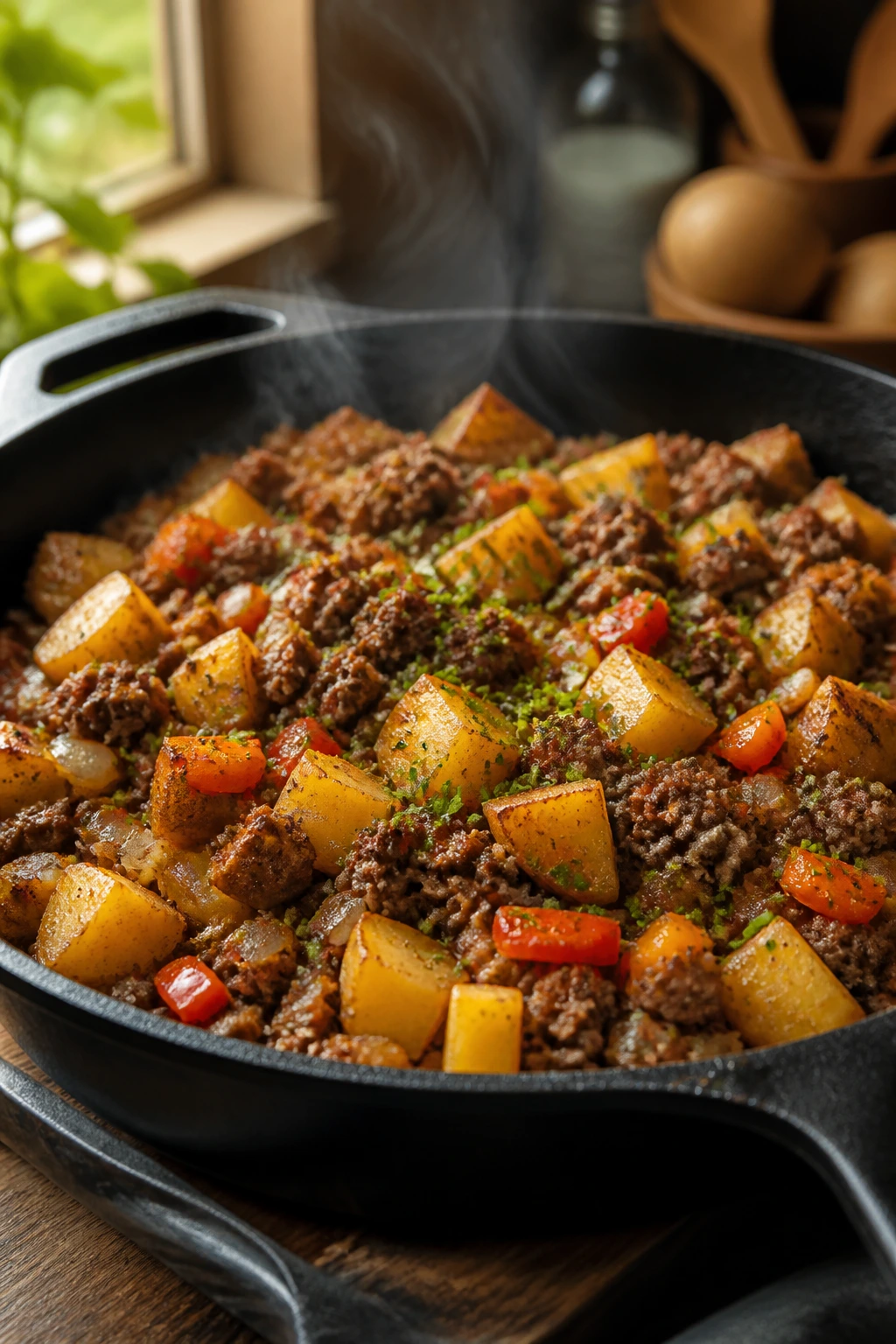
This is the kind of skillet dinner that earns its place by being useful first and comforting second, though it manages both. The beef browns, the potatoes soften, the broth turns savory, and the whole thing lands in a bowl with enough body to feel like dinner rather than a quick fix. That is the real appeal.
I like recipes that do not make a scene. They just work. Keep the cubes small, keep the heat steady, and let the browned bits do their job. The next time the fridge looks sparse and you need something filling without turning the kitchen upside down, this pan is the one I’d reach for first.
Classic Ground Beef Skillet Dinner — Recipe Card
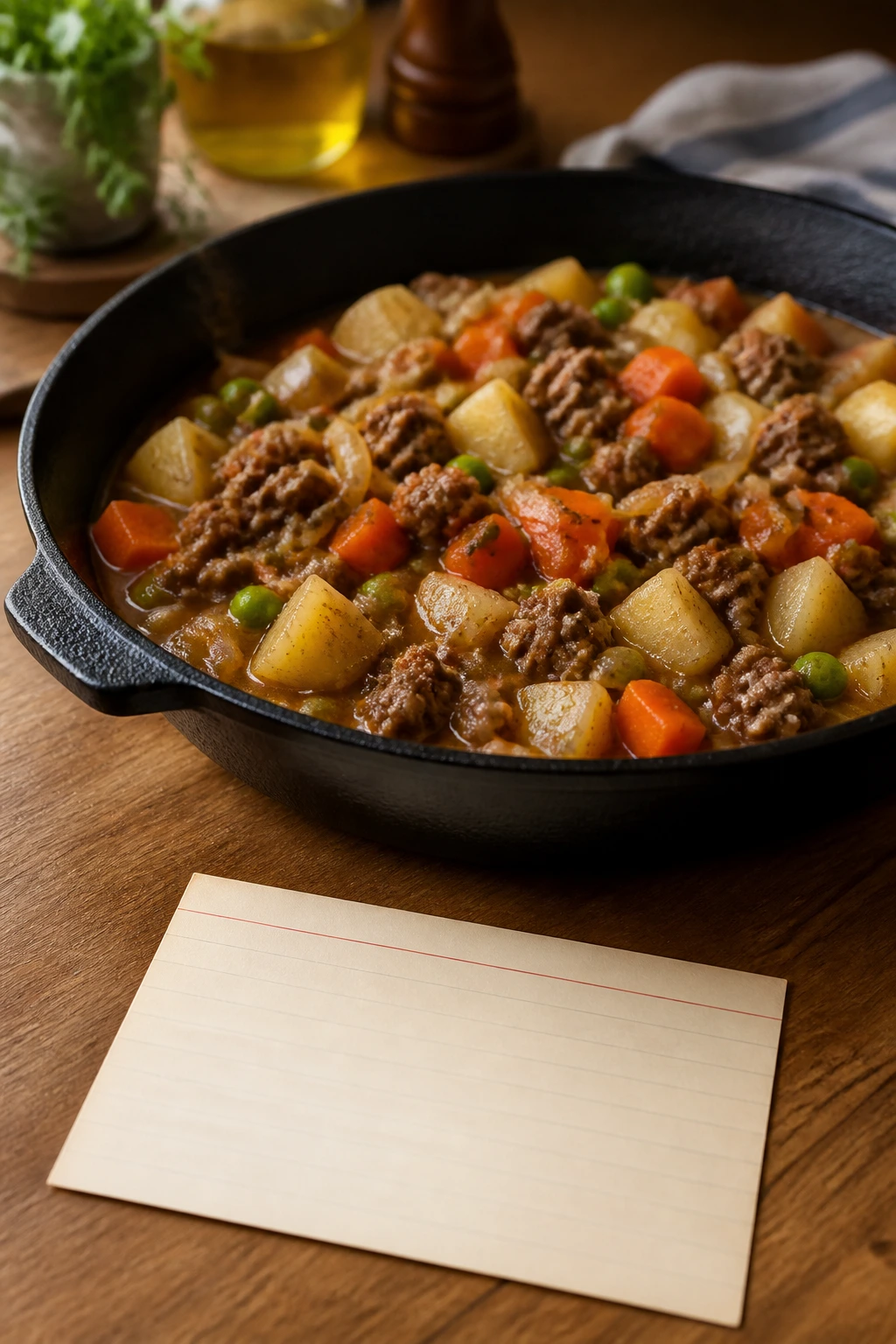
Recipe Name: Classic Ground Beef Skillet Dinner
Description: Ground beef, Yukon Gold potatoes, carrots, peas, and onion simmer in a savory beef broth until the sauce turns glossy and the vegetables are tender. It eats like a full dinner from one pan.
Prep Time: 20 minutes
Cook Time: 30 minutes
Total Time: 50 minutes
Course: Dinner, Main Course
Cuisine: American
Servings: 4 to 6
Calories: about 390 kcal per serving
Ingredients
For the Skillet Dinner:
- 1 1/2 pounds ground beef (85/15)
- 1 tablespoon olive oil, only if the beef is very lean
- 1 medium yellow onion, diced
- 2 medium carrots, peeled and diced small
- 2 celery stalks, diced small
- 2 cloves garlic, minced
- 1 1/2 pounds Yukon Gold potatoes, scrubbed and cut into 1/2-inch cubes
- 2 tablespoons tomato paste
- 2 tablespoons all-purpose flour
- 2 1/2 cups low-sodium beef broth
- 1 tablespoon Worcestershire sauce
- 1 teaspoon kosher salt
- 1/2 teaspoon black pepper
- 1 teaspoon dried thyme
- 1/2 teaspoon smoked paprika
- 1 cup frozen peas
- 2 tablespoons chopped parsley
- 1 tablespoon unsalted butter, optional but welcome at the end
Instructions
-
Brown the ground beef in a large skillet over medium-high heat, breaking it up as it cooks, until no pink remains and browned bits form on the bottom; drain excess fat if needed.
-
Add the onion, carrots, and celery, then cook until softened. Stir in the garlic, tomato paste, flour, thyme, paprika, salt, and pepper for 60 to 90 seconds.
-
Add the potatoes, beef broth, and Worcestershire sauce. Bring to a simmer, cover, and cook until the potatoes are tender.
-
Uncover and simmer until the sauce thickens enough to coat the beef and potatoes.
-
Stir in the peas and butter, if using, then cook until the peas are hot and bright green. Taste, adjust seasoning, and finish with parsley. Rest a few minutes before serving.
Notes: Use 85/15 beef for the best flavor; if your skillet is crowded, brown the meat in batches; add a splash of broth when reheating.