



A pound of ground beef, a split onion, and a few potatoes can carry dinner farther than they have any right to. Brown the meat properly, let the tomato paste darken in the pan, and the whole kitchen starts smelling like something far slower and more expensive than a weeknight skillet has any business being.
That’s the trick with a good ground beef dinner: the ingredient list can look almost plain, then the pan starts working and everything changes. The onions go soft and sweet. The potatoes soak up broth instead of floating in it. The beef leaves browned bits behind, and those bits are where the flavor lives.
This version is the kind of meal I reach for when the fridge looks half-full but dinner still needs to feel like dinner. It leans on the old, sensible habits that make beef taste deeper—hot pan, patient browning, a little Worcestershire, a little tomato paste, and enough vegetables to make the bowl feel complete. Nothing fancy. Nothing fussy. Just a solid, filling ground beef skillet dinner that actually earns its keep.
Why This Ground Beef Skillet Earns Its Keep on a Busy Night
Ground beef has a low-drama superpower: it turns into dinner fast, but it still tastes better when you treat it like it deserves a little respect. A hot skillet gives you browned edges. Tomato paste, cooked for a minute before the broth goes in, gives you that dark, savory backbone that plain broth can’t fake. Then the potatoes do their quiet work, softening in the liquid and thickening the sauce so it clings instead of pooling.
This dish sits somewhere between hamburger hash, beef stew, and the filling from a shepherd’s pie. That’s part of why it works so well. You get the comfort of a slow-cooked meal without standing over a pot for two hours, and you get enough starch in the pan that you don’t need to make rice, pasta, or bread unless you want to.
I also like that it forgives small mistakes. Cut the carrots a little smaller than the potatoes and nobody suffers. Use 90/10 beef and keep a spoonful of fat in the pan. Use 85/15 and drain the extra off. Either way, the skillet still ends up with a deep, savory flavor if you let the onions soften and the broth reduce at the end.
The smell is what sells it to me. Beef, onion, thyme, and tomato paste together smell like a real meal. Not a snack dressed up as dinner. A real one.
Why You’ll Love This Recipe
-
One pan does the whole job: The beef, vegetables, potatoes, and sauce all finish in the same skillet, so the browned bits stay in the dish instead of getting left behind in another pot.
-
The potatoes make it feel complete: Yukon Gold cubes soften in the broth and give the sauce body, which means you end up with a full dinner instead of beef sitting awkwardly beside a starch.
-
The flavor is deeper than the ingredient list looks: Tomato paste, Worcestershire, thyme, and browned beef make the pan smell like it simmered for much longer than 30 minutes.
-
It takes leftovers well: The potatoes soak up more seasoning overnight, so the second bowl often tastes even more settled and savory than the first.
-
It changes easily: Swap the vegetables, add cheese on top, or nudge the seasoning in a Southwestern direction without rebuilding the whole recipe.
-
It’s hard to break: If your stove runs hot, you can lower the heat. If your broth cooks down too fast, add a splash more. This is a sturdy, forgiving ground beef dinner.
Yield: Serves 6
Prep Time: 15 minutes
Cook Time: 30 minutes
Total Time: 45 minutes
Difficulty: Beginner — the steps are straightforward, but the potatoes need a steady simmer and a little attention near the end.
Best Served: Hot from the skillet, while the sauce is still glossy and the parsley is bright.
Chill/Rest Time: None
The Exact Ingredients for the Skillet
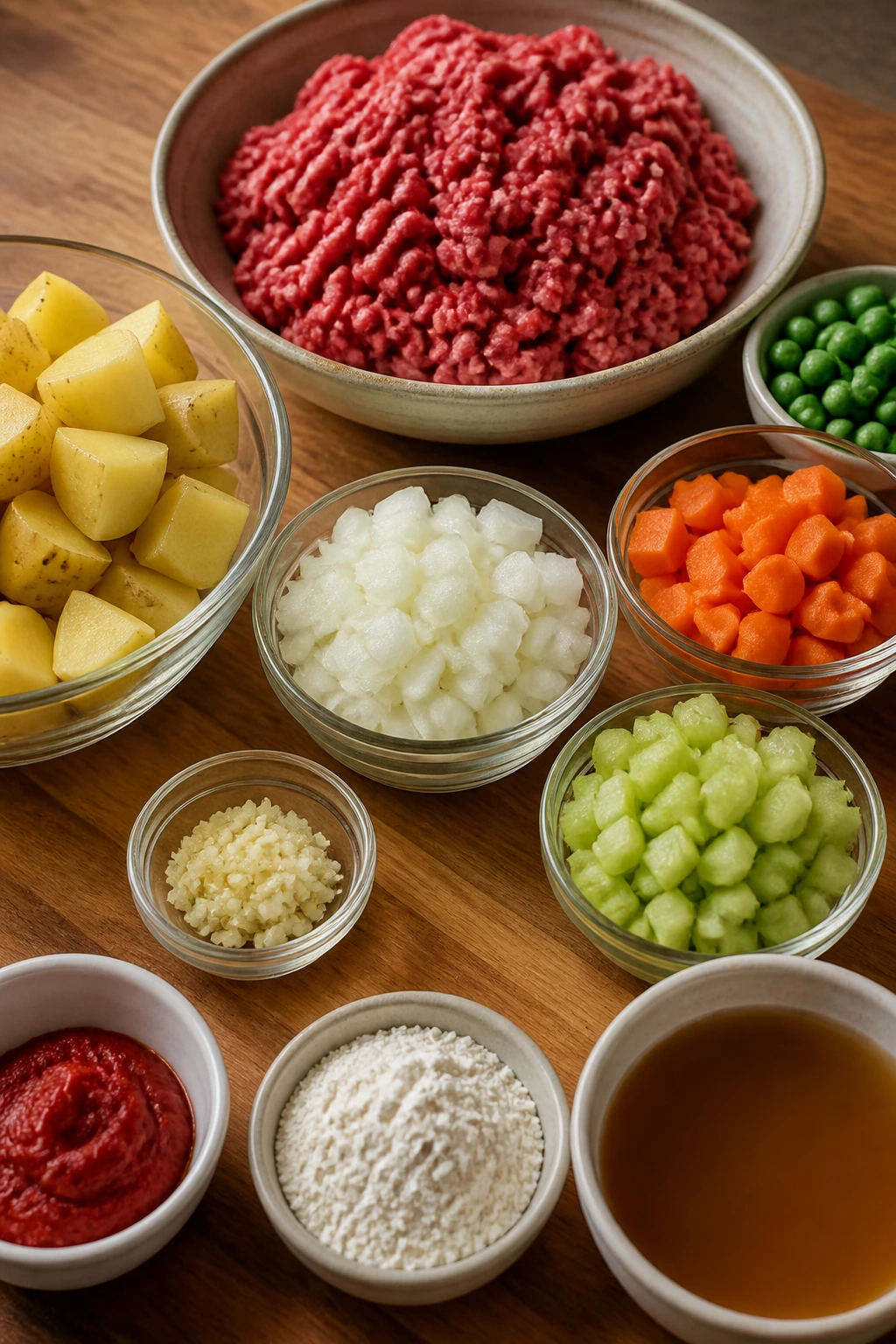
This is the clean shopping list. The details that matter most are the size of the potato dice, the kind of ground beef you buy, and the fact that the peas go in at the end so they keep their color. Small choices. Big difference.
- 1 1/2 pounds lean ground beef, preferably 85/15 or 90/10
- 1 tablespoon olive oil, plus 1 teaspoon more if the pan looks dry
- 1 large yellow onion, diced
- 2 medium carrots, cut into 1/4-inch dice
- 2 celery ribs, cut into 1/4-inch dice
- 3 garlic cloves, minced
- 1 1/2 pounds Yukon Gold potatoes, scrubbed and cut into 1/2-inch cubes
- 2 tablespoons tomato paste
- 2 tablespoons all-purpose flour
- 1 tablespoon Worcestershire sauce
- 1 teaspoon smoked paprika
- 1 teaspoon dried thyme
- 1 teaspoon kosher salt, plus more to taste
- 1/2 teaspoon black pepper
- 2 cups low-sodium beef broth
- 1 cup frozen peas, no need to thaw
- 2 tablespoons chopped fresh parsley
Why Each Ingredient Belongs in the Pan
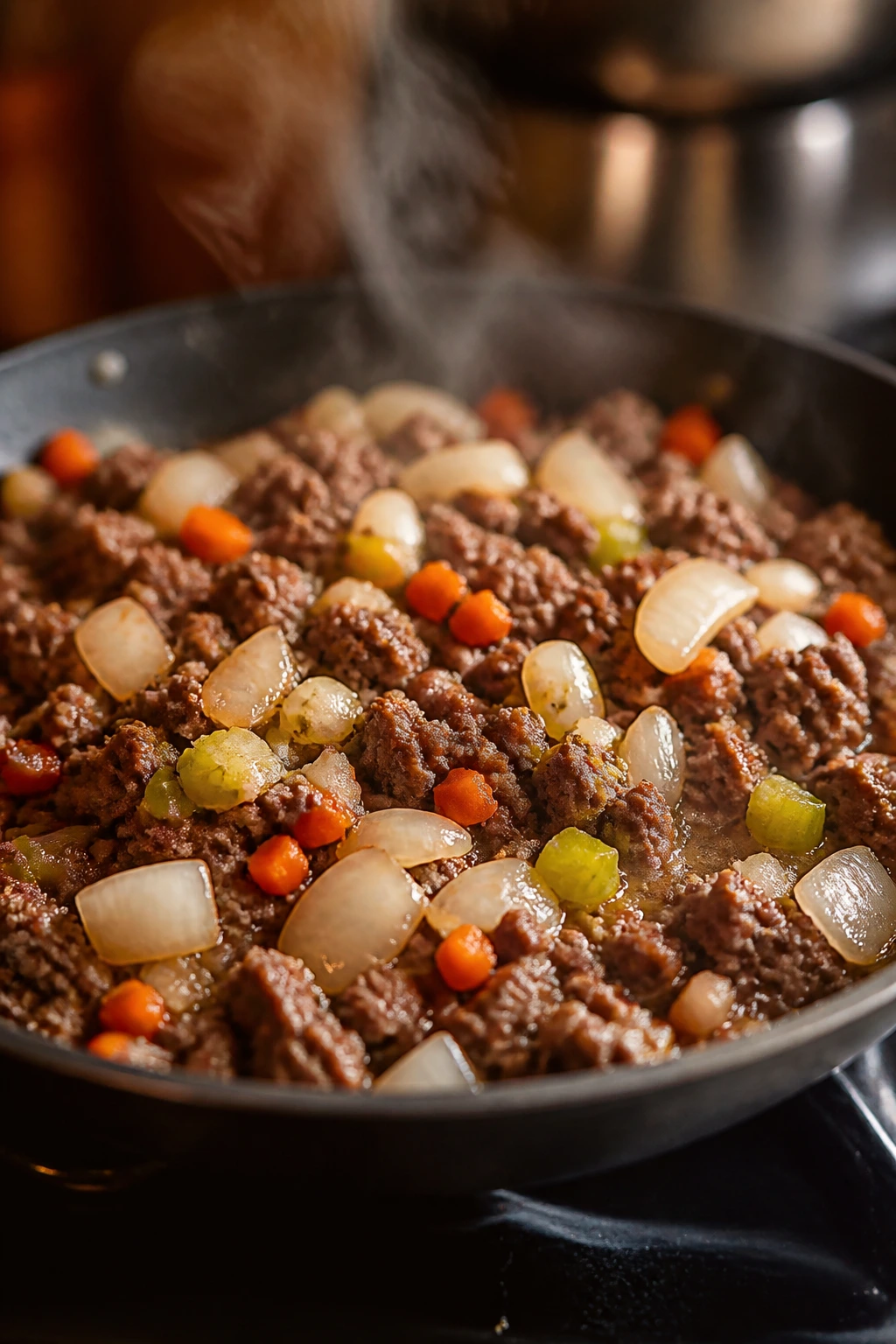
Ground Beef
What to use: 1 1/2 pounds lean ground beef, ideally 85/15 or 90/10. That amount gives you enough meat to anchor six servings without drowning the vegetables.
Preparation: Keep it cold until you’re ready to cook, then break it into large chunks when it hits the skillet so it browns before it turns into tiny crumbles.
Substitutions: Ground turkey, ground chicken, or ground bison all work, though the leaner meats need a touch more oil and a little more seasoning to taste finished.
Tips: 85/15 gives the best balance here. If you use 80/20 beef, drain off most of the fat after browning and leave behind just enough to carry the onions.
Potatoes and Vegetables
What to use: 1 1/2 pounds Yukon Gold potatoes, 1 onion, 2 carrots, 2 celery ribs, and 1 cup frozen peas. That mix gives you body, sweetness, and a little green finish without turning the dish into soup.
Preparation: Cut the potatoes into even 1/2-inch cubes so they cook through in the same time the broth reduces. Dice the carrots and celery smaller than the potatoes so they soften instead of lagging behind.
Substitutions: Red potatoes hold their shape nicely; russets will soften more and lean toward a stew-like texture. Frozen mixed vegetables can replace the peas if that’s what you have, though I’d still add them near the end.
Tips: Dry the potatoes after washing so they don’t steam in the pan. If you cut them ahead, keep them submerged in cold water for a few hours, then drain and dry them well before cooking.
Liquids and Pantry Flavor
What to use: 2 tablespoons tomato paste, 2 tablespoons all-purpose flour, 1 tablespoon Worcestershire sauce, and 2 cups low-sodium beef broth. These are the pieces that turn browned meat and vegetables into a saucy skillet dinner.
Preparation: Measure these before you start cooking. Tomato paste needs to go in while the pan is hot enough to darken it, and the flour should be stirred into the vegetables before the broth arrives.
Substitutions: If you’re out of Worcestershire, use 2 teaspoons soy sauce and 1 teaspoon balsamic vinegar for a similar savory edge. Cornstarch can stand in for flour if you want a gluten-free thickener.
Tips: Low-sodium broth gives you room to season the dish properly. Full-salt broth plus Worcestershire can push the pan too far before you’ve tasted it.
Seasonings and Finish
What to use: 1 teaspoon smoked paprika, 1 teaspoon dried thyme, 1 teaspoon kosher salt, 1/2 teaspoon black pepper, and 2 tablespoons chopped fresh parsley. This is the backbone and the final lift.
Preparation: Mix the dry seasonings mentally before you start, or set them in a little bowl next to the stove. That keeps the tomato paste from scorching while you dig through the spice drawer.
Substitutions: Regular paprika works if you want less smoke. Dried oregano can replace thyme if that’s what’s in the cabinet, and chopped chives can stand in for parsley at the end.
Tips: Add the parsley after the heat comes down a little so it stays green instead of fading into the sauce. Fresh herbs at the end matter more than people think.
The Pan, the Lid, and the Spoon
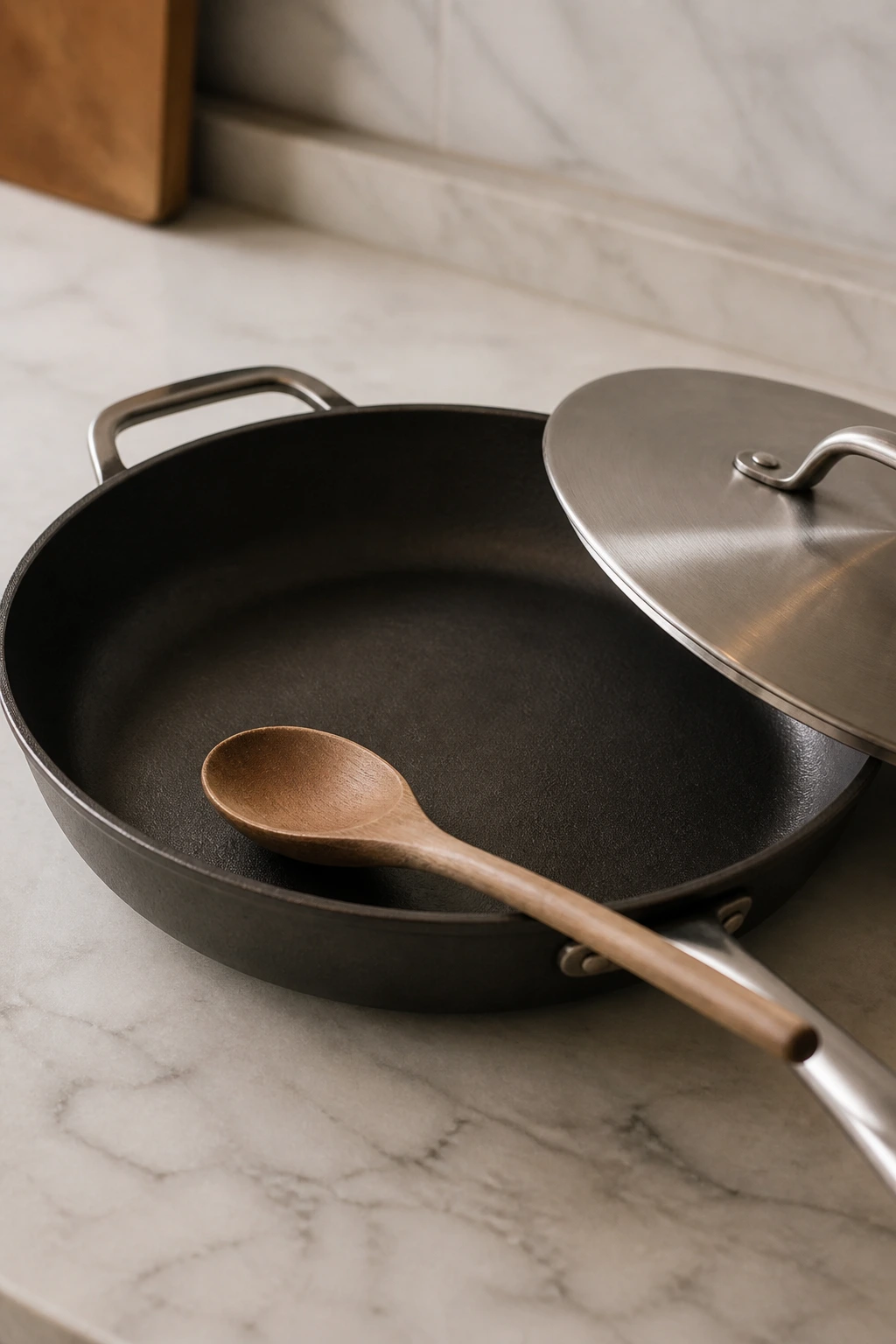
This recipe does not need a pile of gear. It does need the right pan size, because a crowded skillet turns beef gray and potatoes sluggish.
- 12-inch deep skillet or sauté pan with a lid — Big enough to brown the beef and still hold the potatoes in a layer that can simmer evenly.
- Wooden spoon or sturdy spatula — Good for breaking up the beef and scraping browned bits from the bottom without tearing up the potatoes.
- Chef’s knife — A sharp knife keeps the onion, carrots, celery, and potatoes in even pieces, which matters more than it sounds.
- Large cutting board — You’ll be chopping a fair amount of veg. Give yourself space.
- Measuring spoons and cups — The tomato paste, flour, broth, and seasonings all need to be measured, not guessed.
- Lid that fits the skillet — If your skillet lid is missing, a sheet pan or foil can work in a pinch.
- Instant-read thermometer, optional — Handy if you want to confirm the beef reaches 160°F in the center.
How to Brown, Simmer, and Finish the Skillet
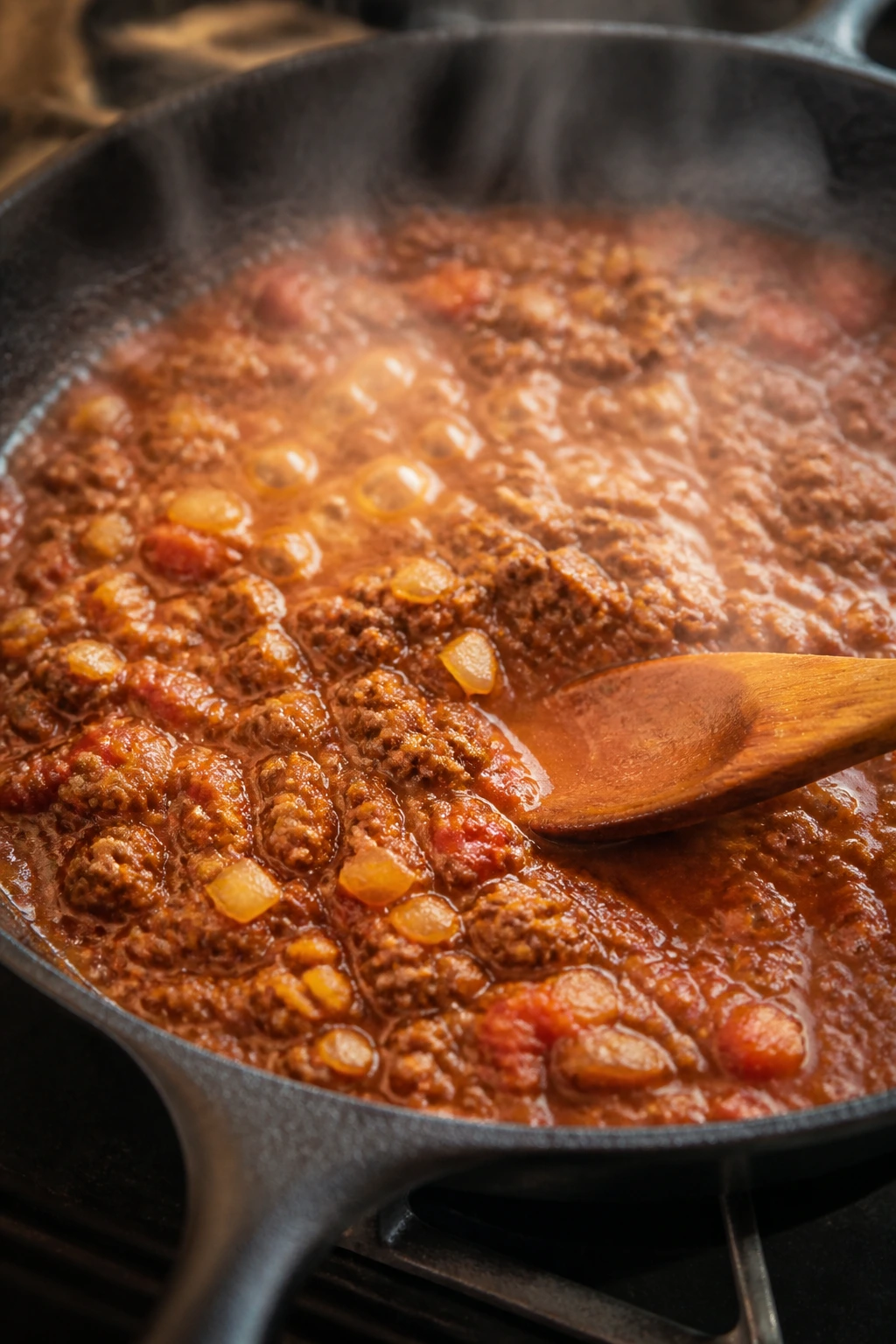
Brown the Beef and Start the Base:
-
Heat the olive oil in a large 12-inch deep skillet over medium-high heat until it shimmers. Add the ground beef in large chunks, season with half the salt and half the pepper, and let it sit for 1 to 2 minutes before breaking it up. Cook for 5 to 6 minutes, stirring and chopping the meat as it browns, until no pink remains and the edges have real color. If the pan fills with liquid, keep cooking until it evaporates; browning needs contact with the hot surface.
-
If the beef released a lot of fat, drain off all but about 1 tablespoon. Add the onion, carrots, and celery to the skillet and cook for 4 to 5 minutes, stirring often, until the onion turns translucent and the carrots lose their raw crunch at the edges.
Build the Sauce:
-
Stir in the garlic, tomato paste, flour, smoked paprika, thyme, and the remaining salt and pepper. Cook for 60 to 90 seconds, stirring constantly, until the tomato paste darkens from bright red to a deeper brick color and the flour no longer looks dusty. If the pan looks dry, add 1 tablespoon of broth so the paste does not scorch.
-
Add the potatoes, beef broth, and Worcestershire sauce. Scrape the bottom of the skillet with your spoon to loosen the browned bits, then bring the mixture to a boil over medium-high heat.
Simmer Until the Potatoes Turn Tender:
- Reduce the heat to medium-low, cover the skillet, and simmer for 15 to 18 minutes, stirring once or twice, until the potatoes are tender when pierced with a fork and the broth has turned into a light, glossy sauce. If the potatoes are still firm after 18 minutes, add 1/4 cup broth, cover again, and cook for 3 to 5 minutes more. Keep the simmer gentle; a hard boil will break the potatoes and evaporate the liquid too fast.
Finish and Serve:
- Stir in the frozen peas and cook uncovered for 2 to 3 minutes, just until they turn bright green and heat through. Taste the skillet, then add a little more salt or pepper if needed. Scatter the parsley on top and serve right away. The sauce should coat the potatoes instead of pooling around them.
What to Put on the Plate Beside It
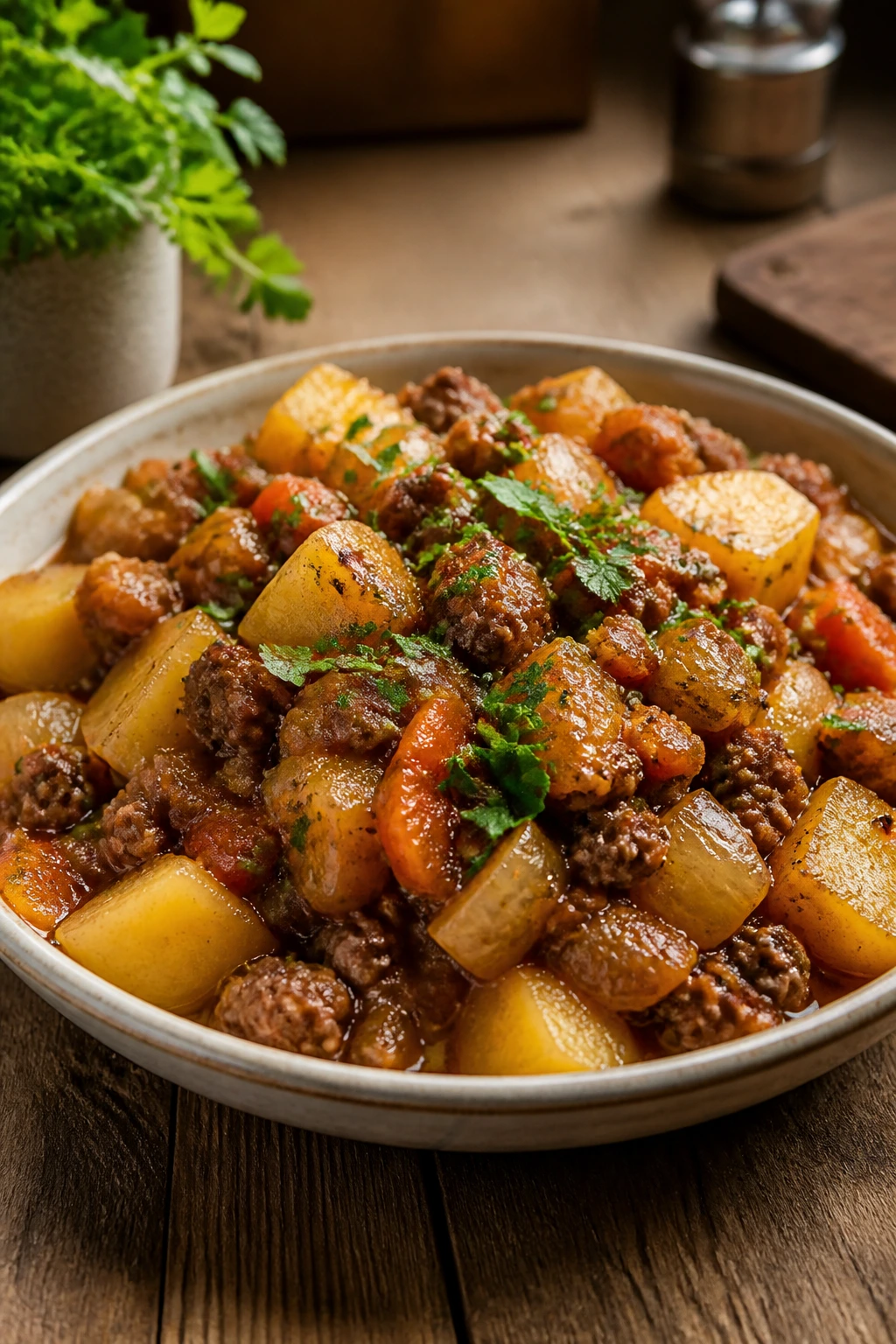
Presentation: Spoon the skillet into shallow bowls so each serving gets beef, potatoes, vegetables, and a little sauce in every bite. I like the parsley scattered over the top and a few turns of black pepper right before the bowl hits the table.
Accompaniments: A crisp green salad with a sharp vinaigrette keeps the plate from feeling heavy, and buttered green beans fit the same job well. If you want bread, choose something sturdy enough to mop up the sauce, like a crusty loaf or a split dinner roll.
Portions: As written, this makes 6 solid servings. Four hungry adults can clear it if they don’t bother with sides, while six is the safer number when you serve salad or bread. For smaller appetites, the recipe stretches to 8 lighter portions.
Beverage Pairing: A cold pale lager works with the savory beef and paprika without fighting the potatoes. For a nonalcoholic option, unsweetened iced tea or sparkling water with lemon keeps the meal from feeling too dense.
Small Moves That Make the Flavor Deeper
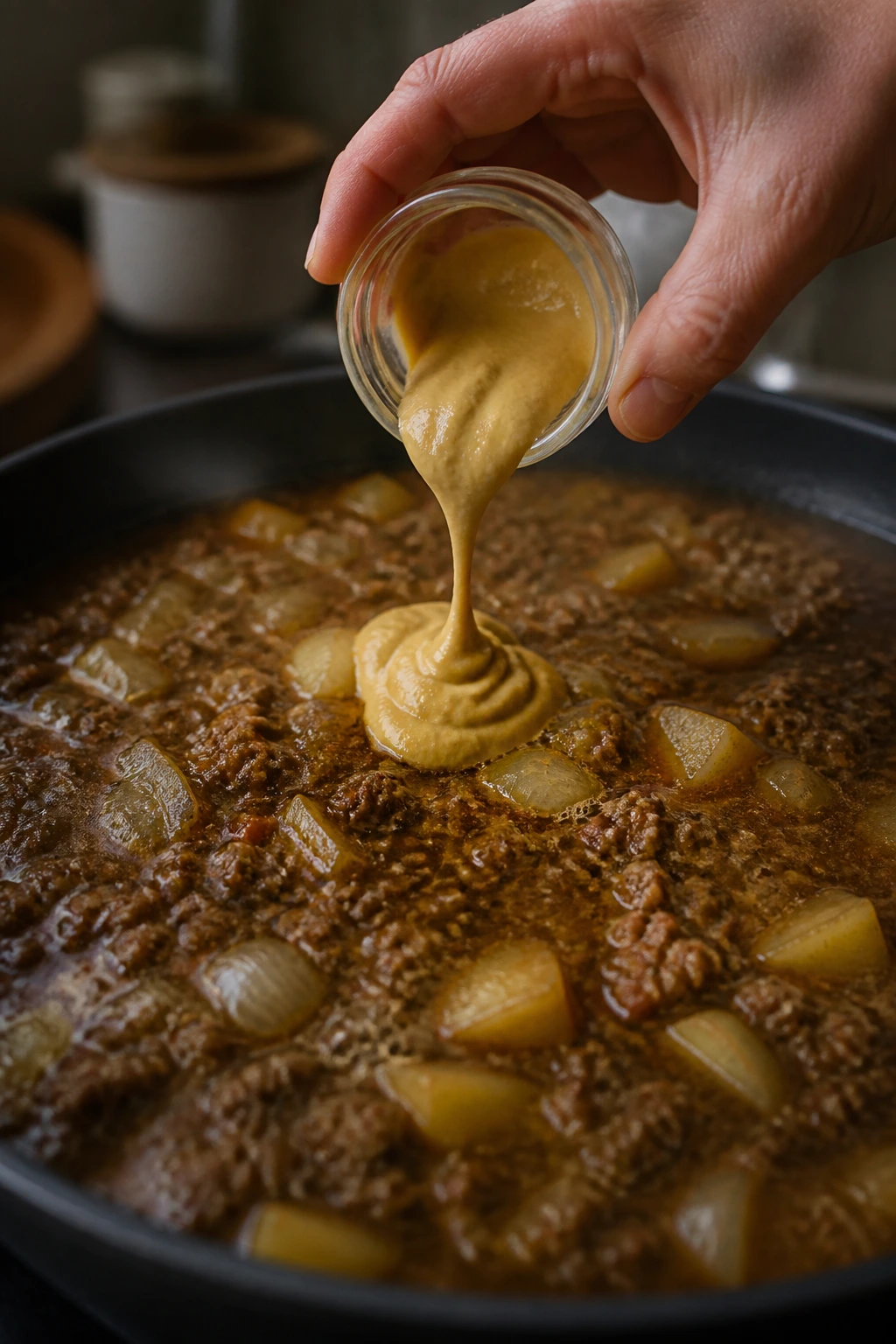
Flavor Enhancement: Stir 1 teaspoon of Dijon mustard into the broth before it goes into the pan. You won’t taste mustard; you’ll taste a rounder, more finished sauce with a little edge that keeps the beef from reading flat.
Time-Saver: Dice the onion, carrots, celery, and potatoes while the beef browns. If you’re moving fast, the potatoes can sit in a bowl of cold water for up to 2 hours, then get drained and dried right before they go into the skillet.
Texture Fix: If you like a firmer, more hash-like dinner, use smaller potato cubes and keep the lid slightly ajar for the final 3 minutes. If you want it softer and spoonier, leave the lid on and let the broth finish thickening on its own.
Cost-Saver: Swap 8 ounces of chopped mushrooms for 1/2 pound of the beef if you want to stretch the pan a little farther. The mushrooms need a minute or two to release their moisture before the onions go in, but they make the skillet taste meatier than they sound on paper.
Common Ground Beef Skillet Mistakes and How to Avoid Them
-
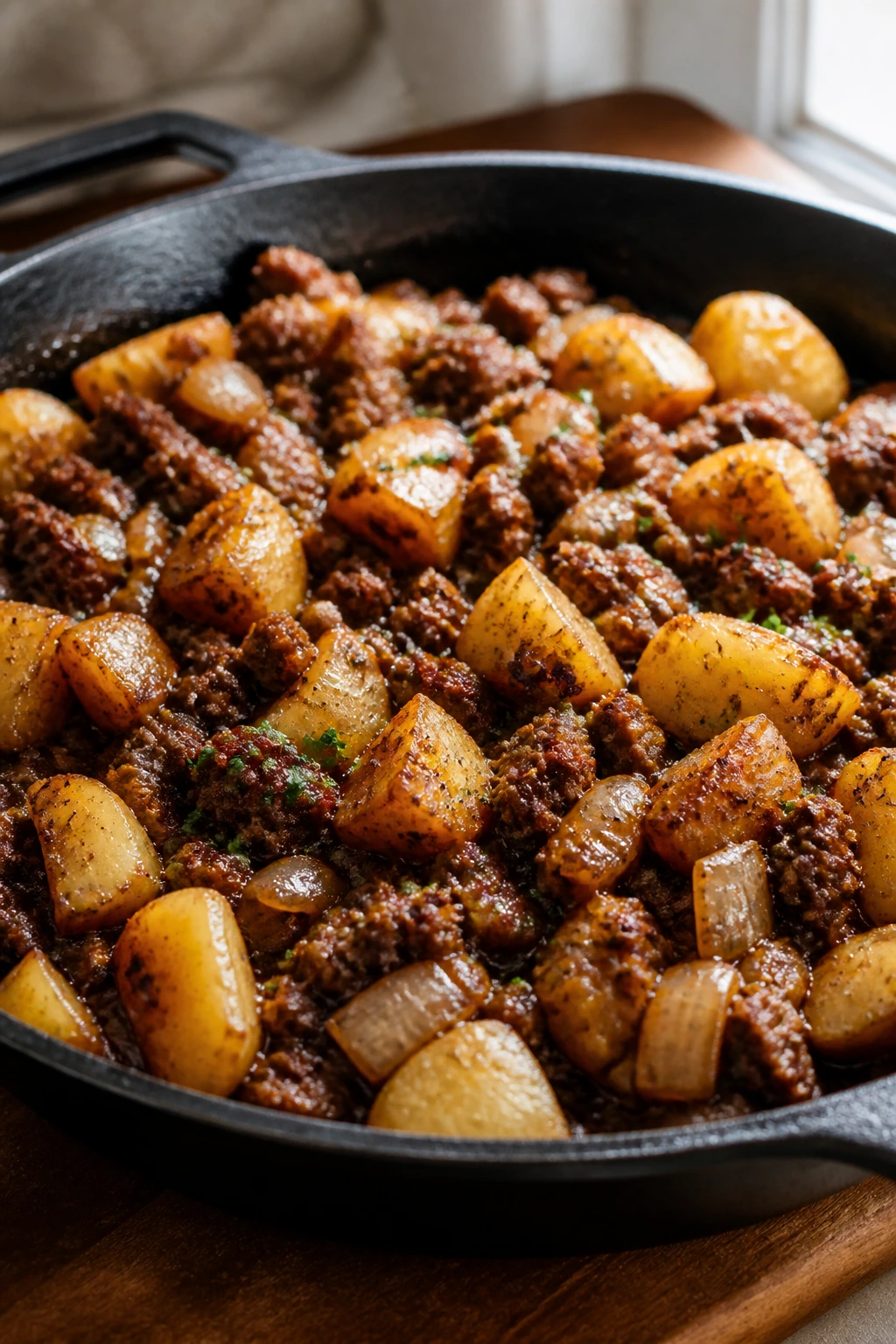
Crowding the pan at the start: If the beef looks pale and wet instead of browned, the skillet was too full. Cook in a wider pan or brown the beef in two batches so the moisture can evaporate and the meat can actually color.
-
Cutting the potatoes too large: If the carrots are soft and the potatoes are still chalky, the cubes were too big. Keep them close to 1/2-inch, or even a touch smaller if your burner runs low.
-
Adding the flour to a dry, hot spot: Lumps or a raw flour taste usually mean the flour hit the pan without enough moisture around it. Stir it into the tomato paste and vegetables, and give it 60 seconds to cook before the broth goes in.
-
Boiling the skillet hard once the potatoes are in: Hard boiling makes the broth disappear too fast and can split the potatoes. Keep the heat at a steady simmer so the sauce reduces slowly and the vegetables stay intact.
-
Forgetting to taste at the end: Ground beef and potatoes need more salt than people expect. If the skillet tastes dull, add a pinch more salt and a small splash of Worcestershire before you assume the recipe is the problem.
Three Variations That Change the Flavor Without Rewriting the Recipe
Cheddar-Topped Skillet
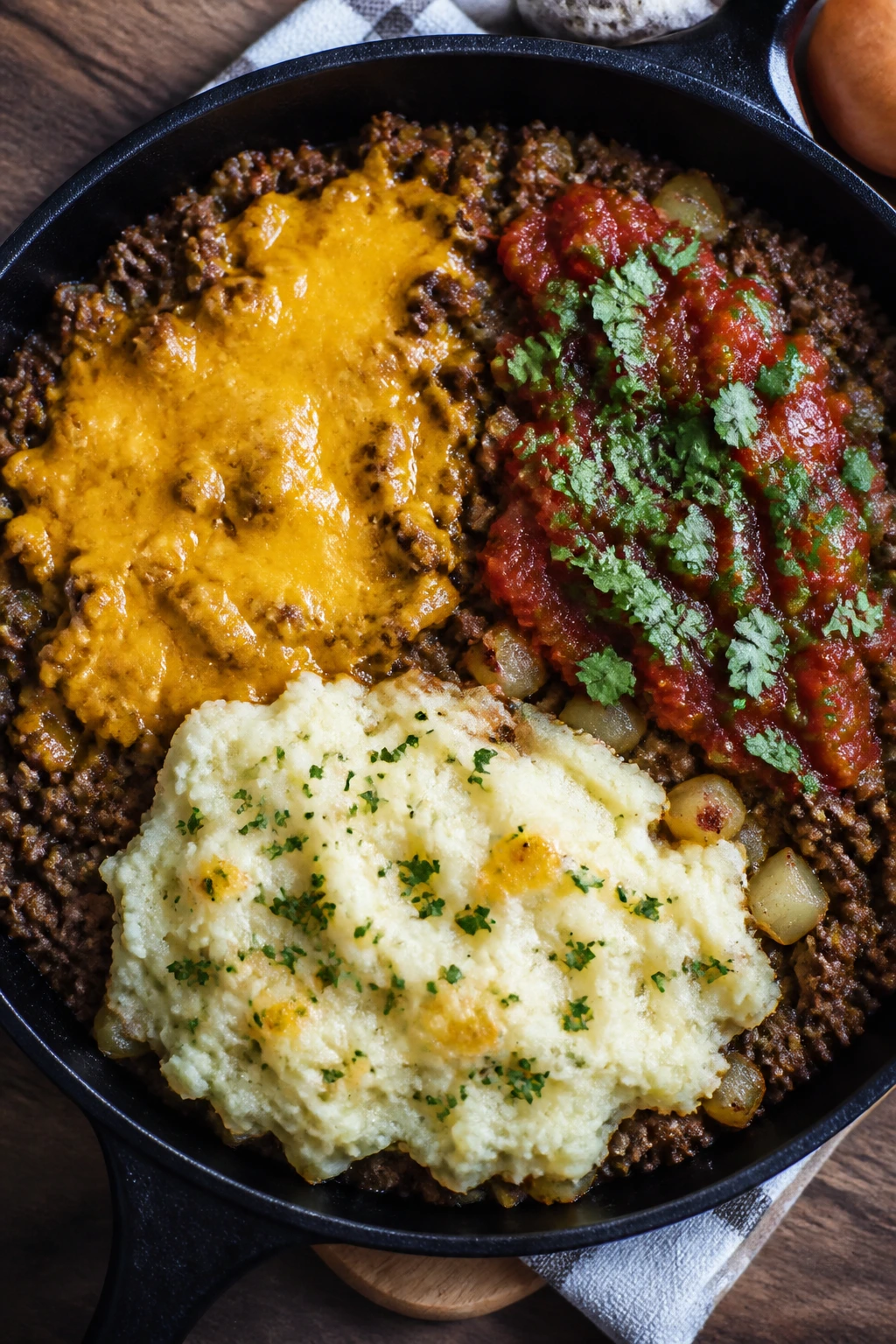
Stir 3/4 cup to 1 cup shredded sharp cheddar into the pan after the peas go in, then cover the skillet for 1 minute so the cheese melts into the sauce. This version leans a little closer to cheeseburger hash, and it works especially well if you want the bowl to feel more indulgent without making another side.
Southwestern Beef Dinner
Swap the thyme for 1 teaspoon ground cumin, add 1 cup frozen corn with the peas, and finish each bowl with chopped cilantro and a spoonful of salsa. A few sliced jalapeños on top give you heat without changing the whole personality of the dish.
Shepherd’s Pie Shortcut
Spoon the finished filling into a baking dish, top it with about 3 cups of mashed potatoes, and broil until the top browns in spots. That turns the skillet into a casserole with almost no extra work, which is useful when you want the cozy feel of shepherd’s pie but do not want to build one from scratch.
Gluten-Free Pantry Version
Replace the flour with 1 tablespoon cornstarch whisked into 2 tablespoons cold broth, then stir that slurry into the skillet during the last 5 minutes of simmering. The sauce thickens cleanly, and the potatoes still keep their shape.
Leftovers, Reheating, and Make-Ahead Notes
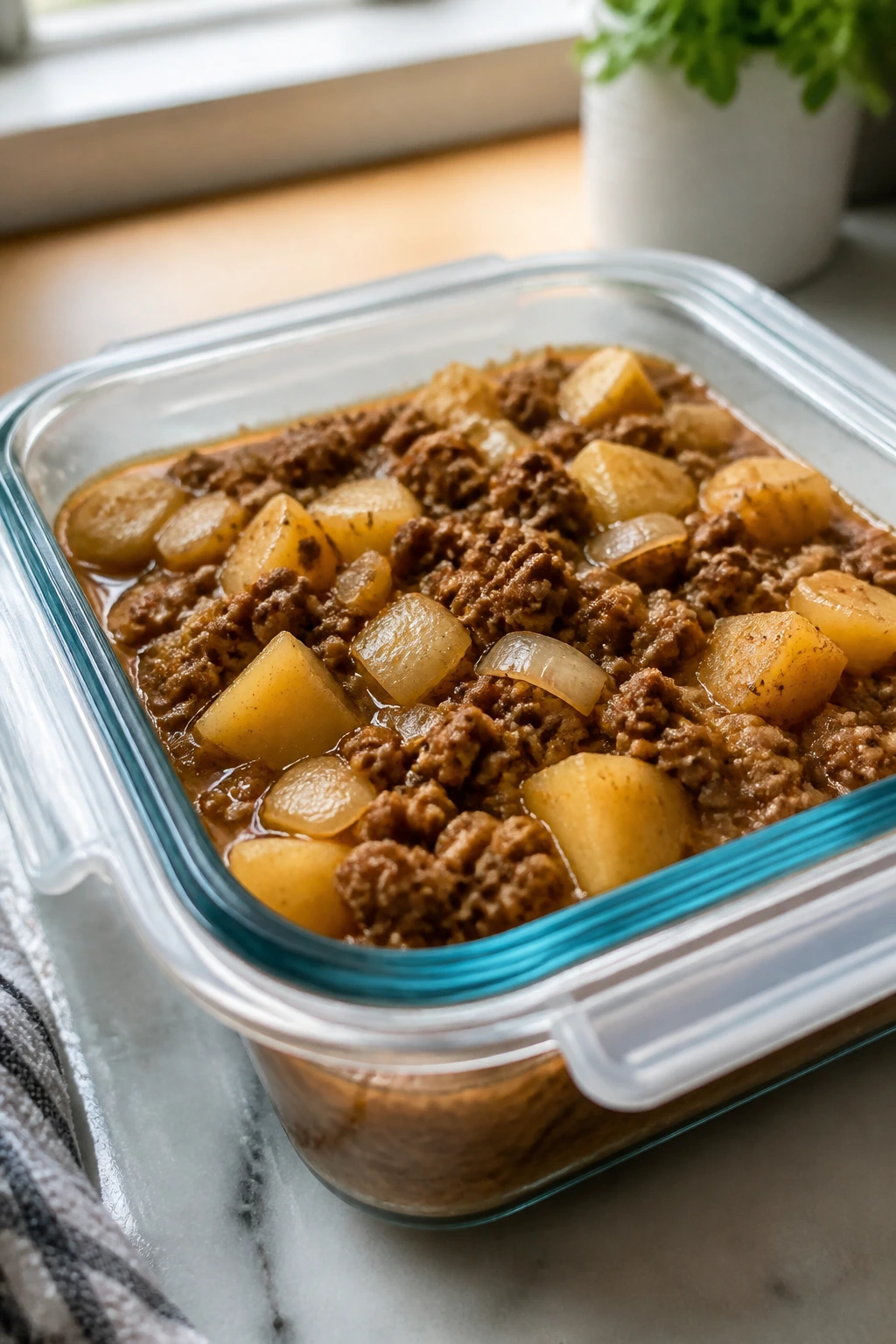
This ground beef dinner keeps well, which is one reason I like it so much. Once it cools, pack it into airtight containers and get it into the fridge within 2 hours. It will hold for 3 to 4 days refrigerated.
For the best texture, reheat it on the stovetop over medium-low heat with a splash of broth or water, about 1 to 2 tablespoons per cup of leftovers. Cover the skillet for the first few minutes so the potatoes warm through before the sauce tightens again. Stir once or twice as it heats so the bottom does not catch.
The microwave works too. Use a covered bowl, add a spoonful of liquid, and heat in 60-second bursts at 70% power, stirring between bursts. That keeps the potatoes from drying out at the edges while the center is still cold.
Freezing works, though the potatoes soften a little after thawing. The dish keeps for up to 2 months in the freezer if you portion it into shallow containers or flat freezer bags. Thaw it overnight in the fridge, then reheat gently on the stovetop with a splash of broth.
If you want to make part of it ahead, chop the onion, carrots, and celery a day in advance and refrigerate them in a sealed container. The potatoes can be peeled and cubed ahead too, but keep them submerged in cold water in the fridge, then drain and dry them well before cooking. Wet potatoes steam. Dry potatoes brown.
This recipe also tastes better the next day than a lot of quick skillet dinners do. The sauce settles into the potatoes, the beef gets more seasoned, and the whole pan loses that first-day sharpness.
Frequently Asked Questions
Can I use ground turkey instead of ground beef?
Yes, and it works best if you add a little extra oil and keep the seasoning bold. Ground turkey is leaner, so the pan needs help from the tomato paste, Worcestershire, and broth to avoid tasting thin.
What potatoes work best in this skillet dinner?
Yukon Golds are my first choice because they hold their shape and go creamy at the edges. Red potatoes work well too, while russets give you a softer, more stew-like texture if that is what you want.
Do I really need the flour?
No. The flour thickens the broth into a more spoonable sauce, but you can leave it out and simmer uncovered a few minutes longer. If you want a gluten-free thickener, use a cornstarch slurry instead.
Why does my skillet end up watery?
Usually the pan was too crowded, the potatoes were cut too large, or the heat stayed too low for too long. A wider skillet and a gentler but steady simmer fix most of that, and so does uncovering the pan for the last few minutes.
Can I freeze leftovers from this ground beef dinner?
Yes, for up to 2 months. The potatoes will soften a little after thawing, so freeze it only if you’re fine with a slightly softer texture when it comes back.
Can I make this in a slow cooker?
You can, but brown the beef first or the flavor comes out flat. Cook on low for 4 to 5 hours and add the peas near the end, though the potatoes will be softer than in the stovetop version.
How can I make it spicier without throwing off the balance?
Add 1/4 teaspoon red pepper flakes with the paprika, or finish each bowl with a few dashes of hot sauce. I prefer a vinegar-based hot sauce because it cuts the richness without turning the whole pan into a heat contest.
A Skillet Worth Repeating
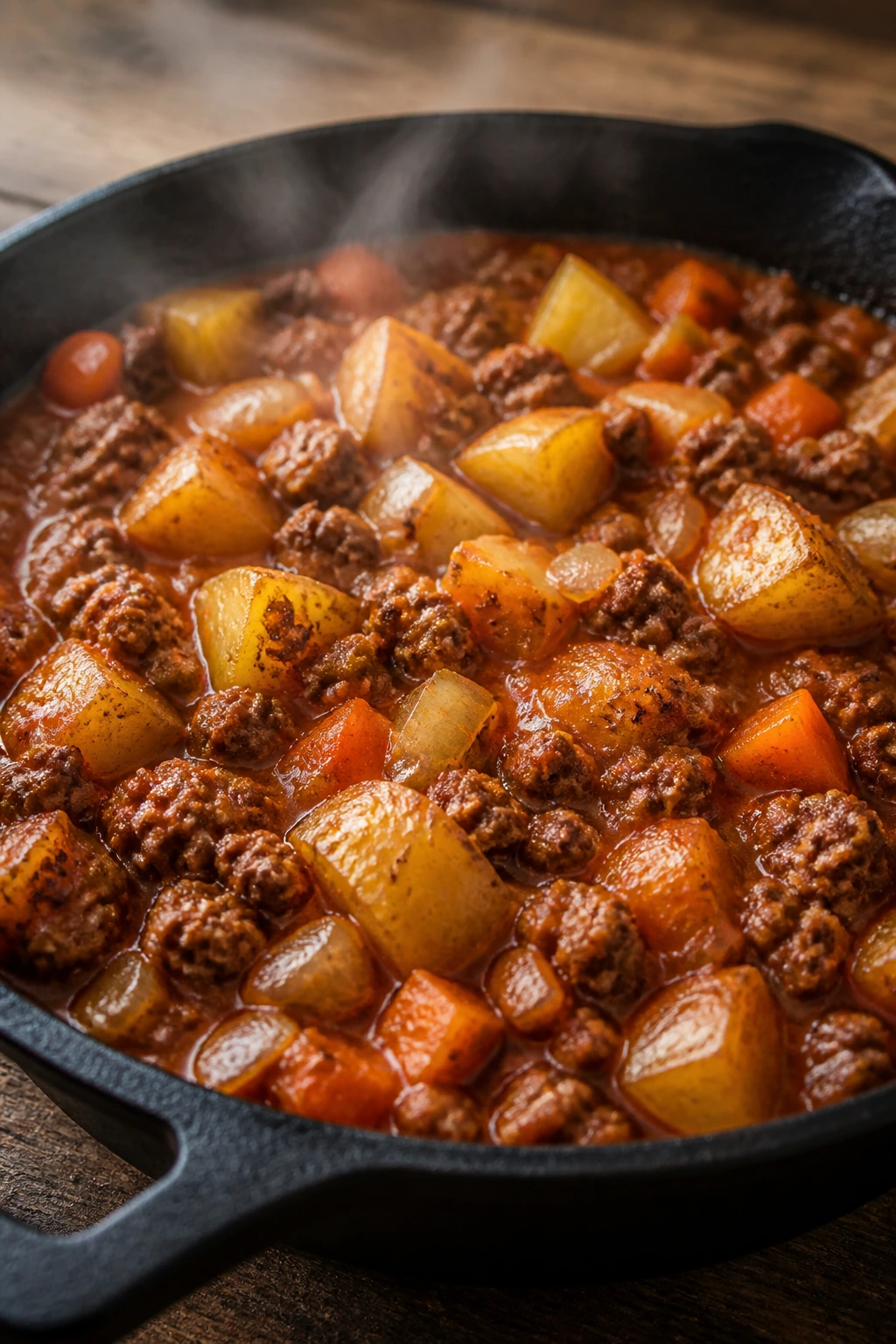
A good ground beef skillet dinner does not need a long ingredient list to feel complete. It needs a hot pan, enough time for the beef to brown, and a sauce with enough backbone to tie the potatoes and vegetables together. That’s what makes this one worth keeping in rotation.
The best part is how little drama it asks for. Chop, brown, simmer, taste, eat. Then, a day later, warm up the leftovers and notice the sauce has settled into the potatoes even more neatly than before.
Hearty Ground Beef Skillet Dinner — Recipe Card
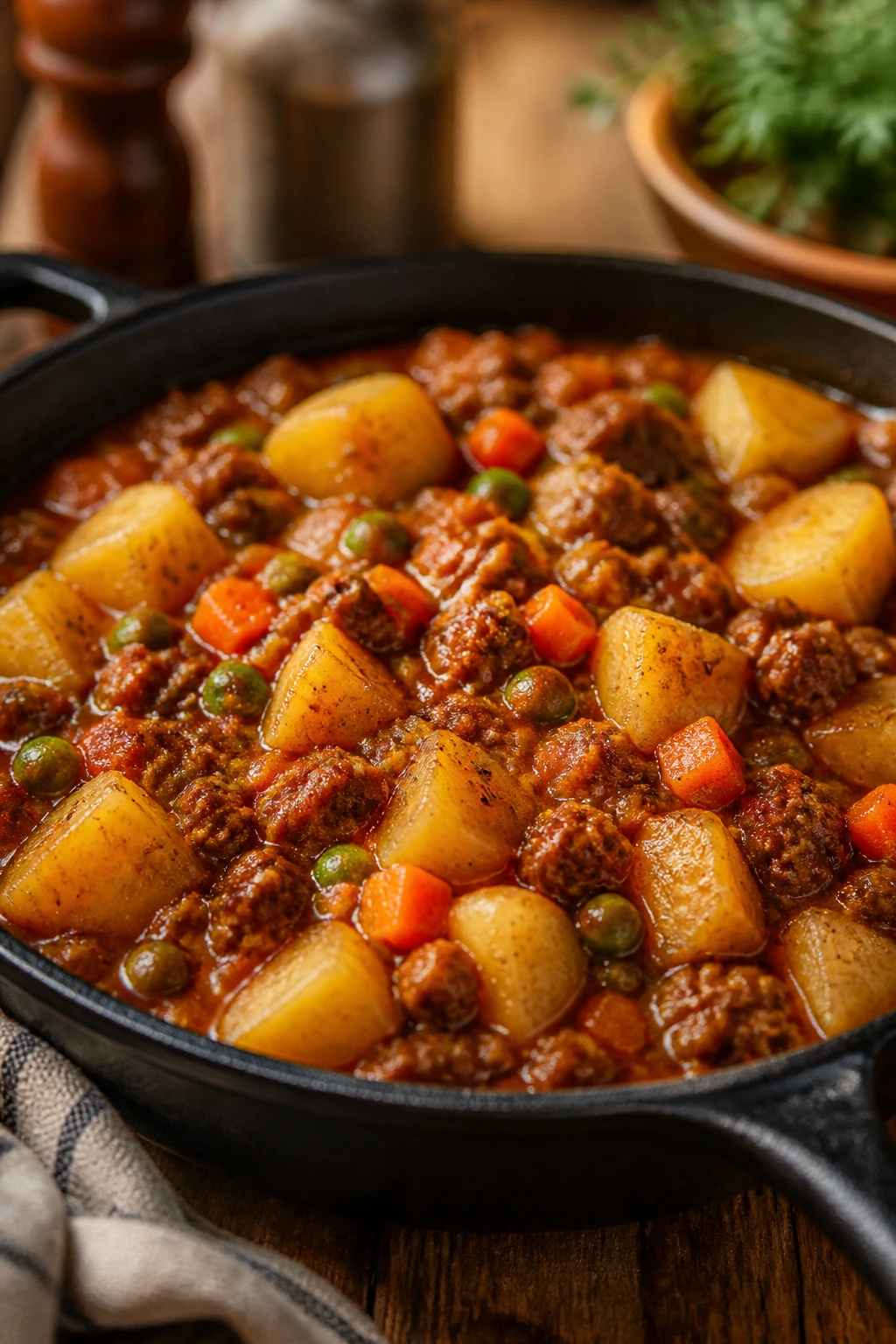
Recipe Name: Hearty Ground Beef Skillet Dinner
Description: A one-pan ground beef dinner with tender Yukon Gold potatoes, carrots, celery, peas, and a savory tomato-Worcestershire broth that thickens into a spoon-coating sauce.
Prep Time: 15 minutes
Cook Time: 30 minutes
Total Time: 45 minutes
Course: Dinner, Main Course
Cuisine: American
Servings: 6 servings
Calories: about 350 kcal per serving
Ingredients
- 1 1/2 pounds lean ground beef, preferably 85/15 or 90/10
- 1 tablespoon olive oil, plus 1 teaspoon more if the pan looks dry
- 1 large yellow onion, diced
- 2 medium carrots, cut into 1/4-inch dice
- 2 celery ribs, cut into 1/4-inch dice
- 3 garlic cloves, minced
- 1 1/2 pounds Yukon Gold potatoes, scrubbed and cut into 1/2-inch cubes
- 2 tablespoons tomato paste
- 2 tablespoons all-purpose flour
- 1 tablespoon Worcestershire sauce
- 1 teaspoon smoked paprika
- 1 teaspoon dried thyme
- 1 teaspoon kosher salt, plus more to taste
- 1/2 teaspoon black pepper
- 2 cups low-sodium beef broth
- 1 cup frozen peas, no need to thaw
- 2 tablespoons chopped fresh parsley
Instructions
-
Heat the olive oil in a large 12-inch deep skillet over medium-high heat. Add the ground beef, season with half the salt and half the pepper, and cook for 5 to 6 minutes until browned, breaking it up as it cooks. Drain excess fat if needed.
-
Add the onion, carrots, and celery. Cook for 4 to 5 minutes, stirring often, until the onion is translucent and the carrots begin to soften.
-
Stir in the garlic, tomato paste, flour, smoked paprika, thyme, and the remaining salt and pepper. Cook for 60 to 90 seconds, stirring constantly, until the tomato paste darkens and the flour no longer looks dusty.
-
Add the potatoes, beef broth, and Worcestershire sauce. Scrape the bottom of the skillet, bring the mixture to a boil, then reduce to a simmer.
-
Cover and cook for 15 to 18 minutes, stirring once or twice, until the potatoes are tender and the sauce has thickened. Add a little more broth if needed.
-
Stir in the peas and cook uncovered for 2 to 3 minutes until heated through. Taste and adjust seasoning, then finish with parsley and serve hot.
Notes: Cut the potatoes evenly so they finish at the same time; if using 80/20 beef, drain extra fat after browning; leftovers keep well for 3 to 4 days in the fridge and up to 2 months in the freezer.