



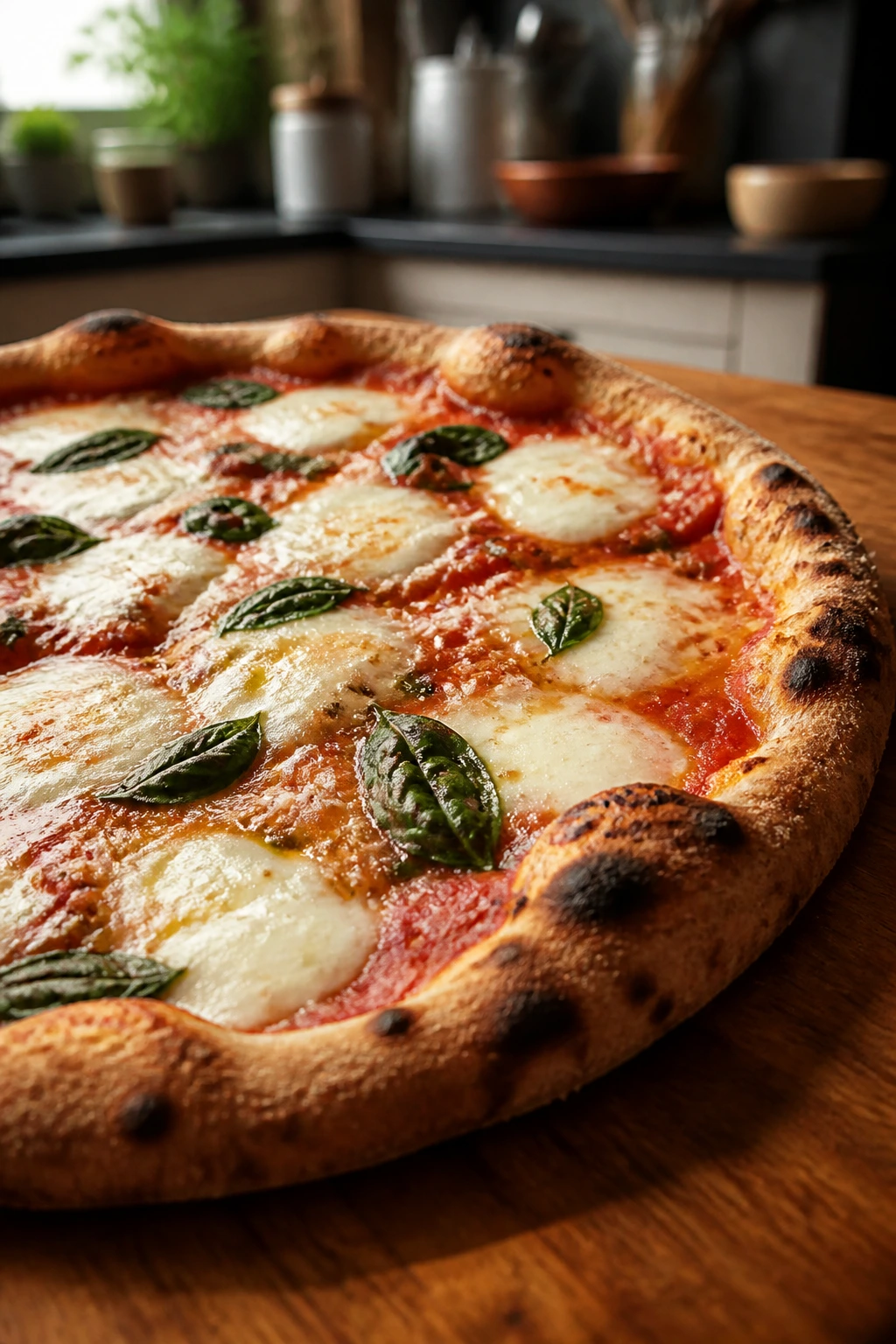
Whole wheat pizza can go two ways. Done badly, the crust tastes like a cracker that got tired halfway through baking. Done right, it smells nutty at the edges, stays tender in the middle, and gives you those blistered brown spots on the rim that make you reach for a second slice before the first one is gone.
Classic whole wheat pizza like Nonna used to make lives in that second camp. It is not a health project wearing a tomato-sauce disguise. It is dough with character, olive oil with a clean peppery finish, sauce that tastes like it was cooked on purpose, and cheese used with a light hand so the crust still gets to be the star. That balance matters more here than in a white-flour pie, because whole wheat brings its own personality. Bran drinks water. The dough needs rest. The oven needs heat. Skip any of those and the crust gets heavy in a hurry.
What I like most about this style is that it never tries too hard. The flavor comes from a few good things handled correctly: a patient rise, a sauce that is thick enough to stay put, and a hot bake that gives the bottom some real color. It feels old-school because it is old-school. Not fussy. Not precious. Just a good pizza, made the way a home cook with a decent oven and a steady hand would make it.
Why This Whole Wheat Pizza Still Belongs on the Table
-
Nutty crust, not bran bread: A blend of whole wheat and all-purpose flour gives the dough a toasted flavor without making the crumb tight and dry.
-
The sauce stays in place: This version uses a short simmer so the tomato layer is thick enough to hold under the cheese instead of running into the center.
-
Hot oven, crisp bottom: A pizza stone or steel turns the base golden in under 12 minutes, which is the difference between a pleasant pie and a soggy one.
-
Simple toppings work best: Mozzarella, basil, Parmesan, and a little olive oil let the crust taste like crust, instead of burying it under a pile of extras.
-
The dough improves with time: A same-day rise works fine, but a longer fridge rest gives the whole wheat flavor more depth and makes the dough easier to stretch.
-
Easy to scale: One batch makes two 12-inch pizzas, which is enough for dinner and still leaves room for leftovers if your crowd is small.
Yield: 2 (12-inch) pizzas, about 6 servings
Prep Time: 25 minutes
Cook Time: 20 minutes
Total Time: 1 hour 45 minutes
Chill/Rest Time: 1 hour rising
Difficulty: Intermediate — the process itself is simple, but whole wheat dough needs enough hydration and a hot oven to bake up tender instead of dense.
Best Served: Right after baking, when the cheese is bubbling and the rim still has a little crackle.
The Dough, Sauce, and Toppings You’ll Need
For the Whole Wheat Dough:
- 2 cups (240 g) whole wheat flour
- 1 3/4 cups (210 g) all-purpose flour, plus more for dusting
- 2 1/4 teaspoons active dry yeast (1 packet)
- 1 1/4 cups warm water (105–110°F / 40–43°C)
- 1 tablespoon honey
- 2 tablespoons extra-virgin olive oil, plus more for the bowl
- 1 1/2 teaspoons fine sea salt
- 2 tablespoons semolina flour or cornmeal, for the peel or pan
For the Pizza Sauce:
- 1 tablespoon extra-virgin olive oil
- 1 small garlic clove, minced or grated
- 1 can (15 oz / 425 g) crushed tomatoes
- 1/2 teaspoon dried oregano
- 1/2 teaspoon fine sea salt
- 1/4 teaspoon black pepper
- Pinch of red pepper flakes, optional
For the Topping:
- 8 oz (225 g) low-moisture mozzarella, shredded or thinly sliced
- 1/4 cup (25 g) finely grated Parmigiano-Reggiano
- 1/2 cup fresh basil leaves
- 1 tablespoon extra-virgin olive oil, for finishing
What Each Ingredient Does in the Bowl
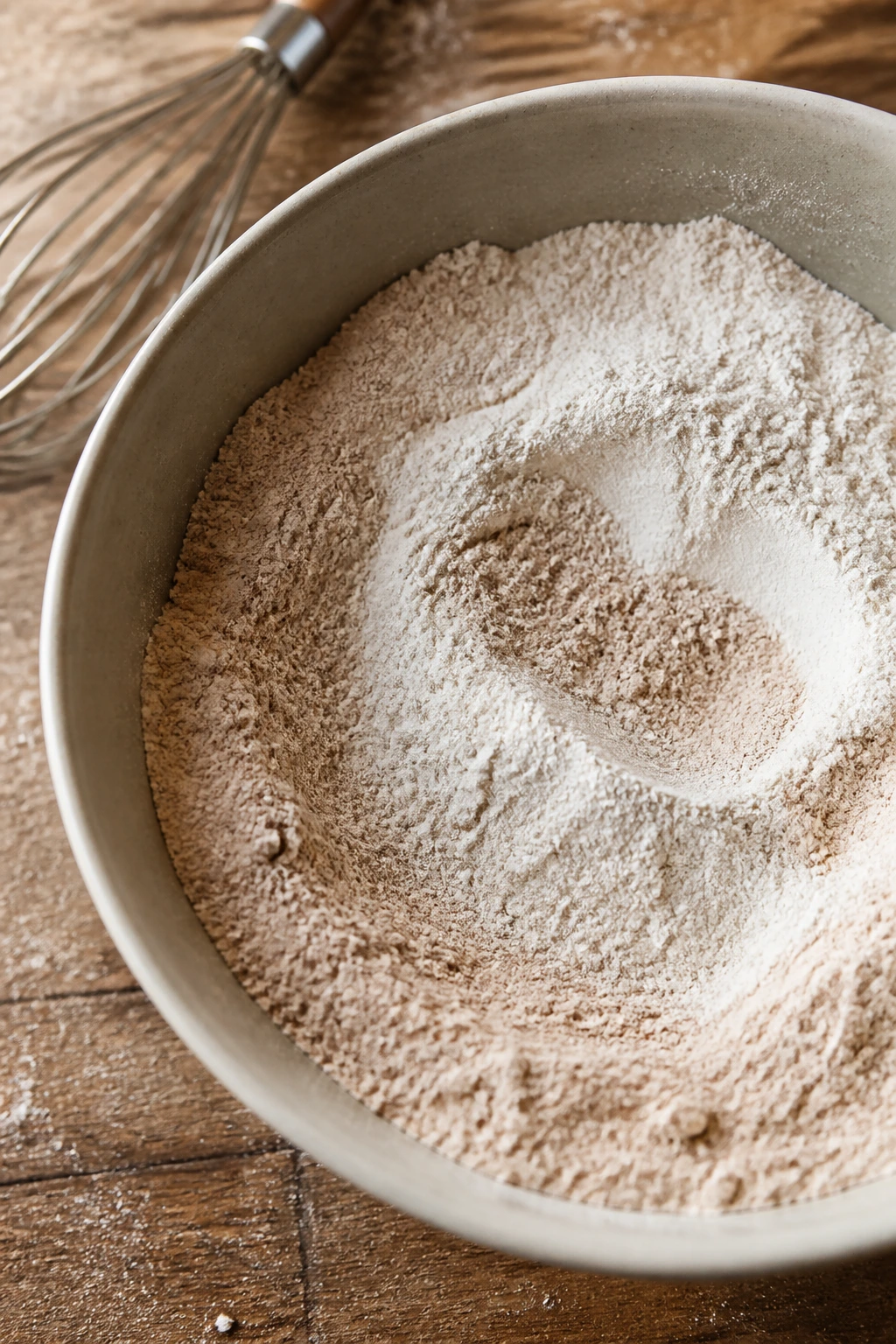
The Flour Blend That Keeps the Crust Tender
-
What to use: 2 cups whole wheat flour and 1 3/4 cups all-purpose flour, measured by weight if you can.
-
Preparation: Whisk the flours together before adding liquid so the whole wheat distributes evenly and the dough hydrates at the same pace.
-
Substitutions: Bread flour can replace the all-purpose flour if you want a chewier rim. If you want a 100% whole wheat version, add 2 to 4 tablespoons more water.
-
Tips: Fresh whole wheat flour matters. Old flour tastes dusty and flat, and you can smell the difference once the crust bakes.
Whole wheat flour is the reason this pizza has a little chew and a little nuttiness. It also behaves differently from plain white flour, which is why the blend matters. Bran and germ are still in the flour, and they soak up water more slowly and more greedily than the endosperm in white flour.
The Yeast, Honey, and Warm Water That Wake the Dough Up
-
What to use: 2 1/4 teaspoons active dry yeast, 1 tablespoon honey, and 1 1/4 cups warm water at 105–110°F.
-
Preparation: Stir the yeast and honey into the warm water and let it sit until foamy, about 5 to 10 minutes. If the surface stays flat, the yeast may be tired.
-
Substitutions: Instant yeast works too. Use the same amount and mix it straight into the dry ingredients. Maple syrup can replace honey in a pinch, though it gives a slightly rounder sweetness.
-
Tips: Water that feels hot to the wrist can damage yeast. If you can comfortably hold a finger in it for a few seconds, you’re in the safe zone.
The honey is not there to make the dough sweet. It gives the yeast an easy first meal and helps the crust brown a little more deeply in the oven. That small browning boost matters with whole wheat, because the dough can look done before the crumb is actually set.
The Olive Oil and Salt That Shape the Texture
-
What to use: 2 tablespoons olive oil in the dough, plus more for the bowl and finishing.
-
Preparation: Add the oil after the yeast mixture goes in, then knead until the dough feels supple. Salt should go in with the dry ingredients so it spreads evenly.
-
Substitutions: A mild sunflower oil can stand in for the dough if that’s what you have, but the flavor won’t be as good. For finishing, keep the olive oil; that grassy edge is part of the whole point.
-
Tips: Salt reins in the yeast and sharpens the tomato sauce later on. If you forget it, the crust tastes flat even when the texture looks fine.
I like olive oil in the dough because it softens the crust without making it greasy. On the finished pizza, a thin drizzle gives the slices a sheen and helps the basil smell louder when the pie hits the table. Tiny move. Big payoff.
The Tomato Sauce That Keeps the Center from Going Soggy
-
What to use: 1 can crushed tomatoes, 1 small garlic clove, oregano, salt, pepper, and a pinch of red pepper flakes if you want a little heat.
-
Preparation: Warm the oil and garlic first, then add the tomatoes and seasonings. Simmer until the sauce is thick enough to sit on a spoon instead of sliding right off it.
-
Substitutions: If crushed tomatoes are too chunky for your taste, blend them briefly with an immersion blender. Tomato passata also works and gives a smoother, more even layer.
-
Tips: Do not use watery jarred pasta sauce unless you cook it down. Pizza sauce should be thicker than spaghetti sauce or it will soak the crust from the middle outward.
The sauce is one of the places where home pizza goes wrong fast. Too thin, and the dough steams. Too much, and the cheese slides around like it is on ice. You want a sauce that spreads in a thin red veil, not a puddle.
The Mozzarella, Parmesan, and Basil That Finish the Pie
-
What to use: 8 oz low-moisture mozzarella, 1/4 cup Parmigiano-Reggiano, and 1/2 cup fresh basil leaves.
-
Preparation: Shred or thinly slice the mozzarella so it melts evenly. Tear the basil by hand right before serving so it stays fragrant.
-
Substitutions: Provolone can replace part of the mozzarella for a sharper bite. If Parmigiano-Reggiano is too pricey, another aged hard cheese works, but use a light hand.
-
Tips: Low-moisture mozzarella is the right cheese here because fresh mozzarella releases too much water. Fresh basil belongs on top after baking, not under the cheese where it blackens.
This is a simple topping list on purpose. Whole wheat dough already brings a little more texture and flavor to the party. It does not need a mountain of extras fighting with it.
The Equipment That Gives You Better Bottom Heat
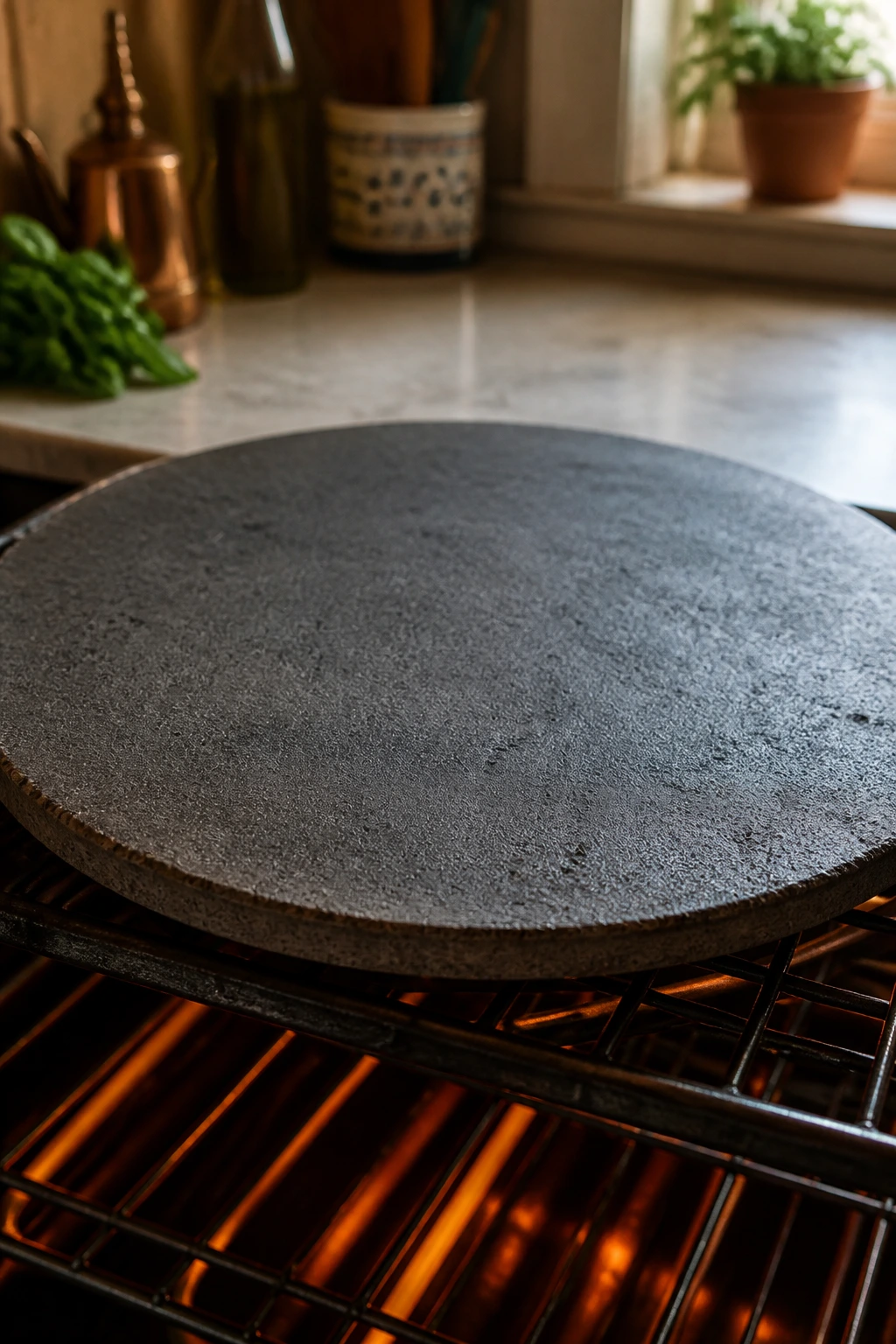
A good whole wheat pizza starts with heat you can trust. You do not need a restaurant oven, but you do need a setup that gets the base hot enough to brown before the toppings dry out.
-
Pizza stone or pizza steel: The best tool for a crisp bottom. A steel gives the strongest heat transfer, but a stone works well if you preheat it long enough.
-
Large mixing bowl: You want room to stir, knead, and let the dough rise without it climbing over the sides.
-
Kitchen scale: Not mandatory, but this is the one tool that makes whole wheat dough behave. A cup of flour can swing wildly depending on how it is scooped.
-
Wooden spoon or sturdy spatula: Useful for bringing the dough together before your hands take over.
-
Bench scraper: Very handy for lifting sticky dough, dividing it cleanly, and cleaning the counter in one swipe.
-
Pizza peel or inverted baking sheet: A peel helps the dough slide onto the stone. If you do not have one, the back of a rimless sheet pan works in a pinch.
-
Rimmed baking sheet: The fallback option if you are baking without a stone or steel. Preheat it upside down so the dough can slide on easily.
-
Instant-read thermometer, optional: Useful for checking your water temperature and making sure you are in yeast-friendly territory.
-
Wire rack: Helps the baked crust stay crisp instead of trapping steam under the bottom.
Mixing the Dough Until It Feels Soft and Ready
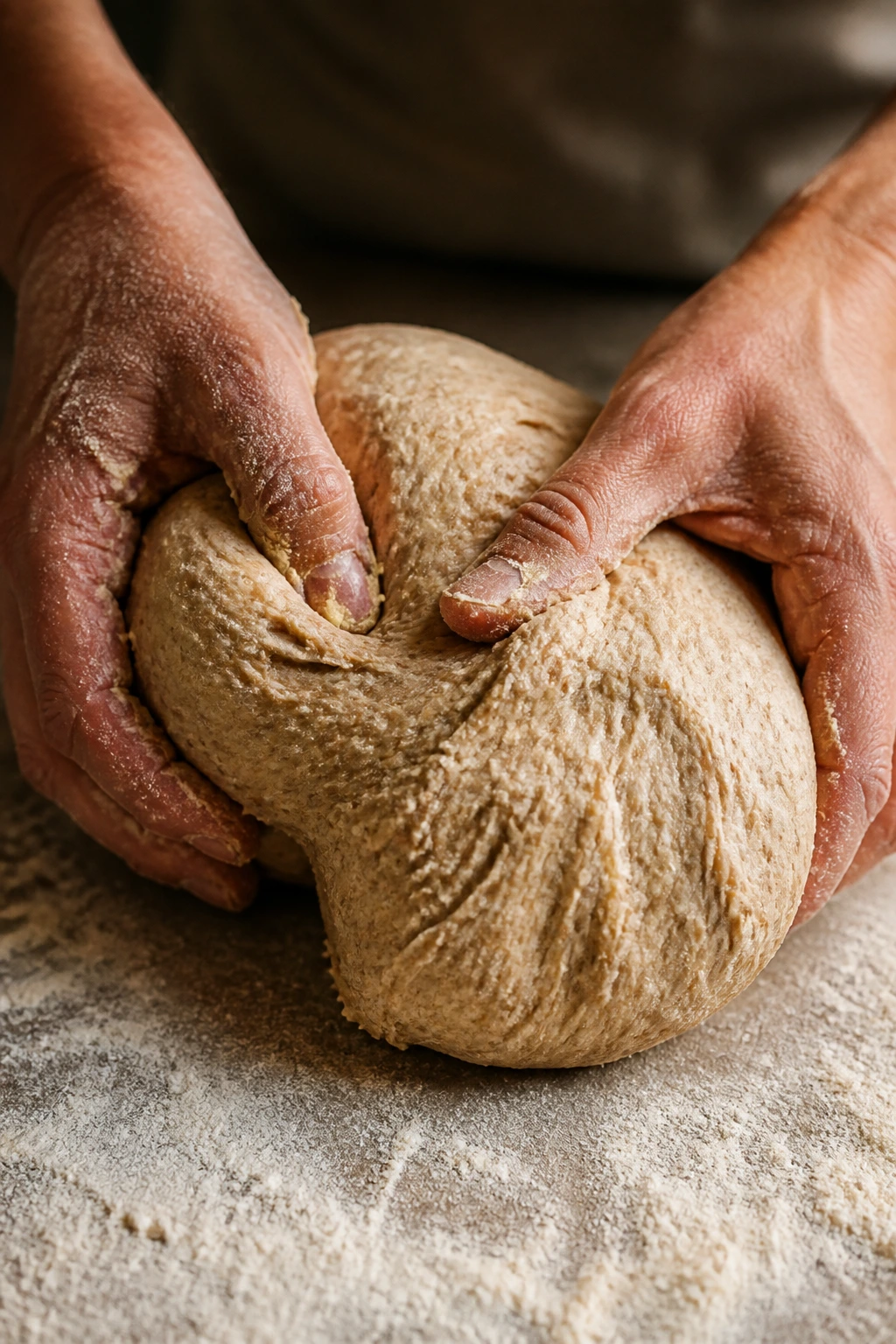
The dough should not feel like a gym workout. It should feel alive, a little tacky, and willing to stretch once it has rested. Whole wheat dough needs that gentle treatment because the bran makes the structure less elastic than white flour dough.
Bloom the Yeast First
-
Combine the yeast, honey, and warm water in a large bowl. Stir once or twice, then leave it alone for 5 to 10 minutes until the surface looks foamy and a little creamy.
-
Check the foam before moving on. If the mixture stays flat, the yeast may be old or the water may have been too hot. Start over rather than gambling on it.
Foam is not decorative. It tells you the yeast is awake and ready to work. If you skip this check with active dry yeast, you can spend an hour waiting on dough that never really rises.
Bring the Dough Together
-
Whisk the whole wheat flour, all-purpose flour, and salt in another bowl. Pour in the yeast mixture and olive oil, then stir with a wooden spoon until a shaggy dough forms.
-
Knead the dough on a lightly floured counter for 8 to 10 minutes, adding only a dusting of flour if the dough sticks hard to your hands. The dough should turn smoother, springier, and slightly glossy, though it will still feel a little softer than white pizza dough.
Whole wheat dough often scares people because it starts out sticky. That is normal. What you do not want is a dry, tight ball that feels like modeling clay. If it looks rough but holds together, you are fine.
Letting the Dough Rise Without Drying Out
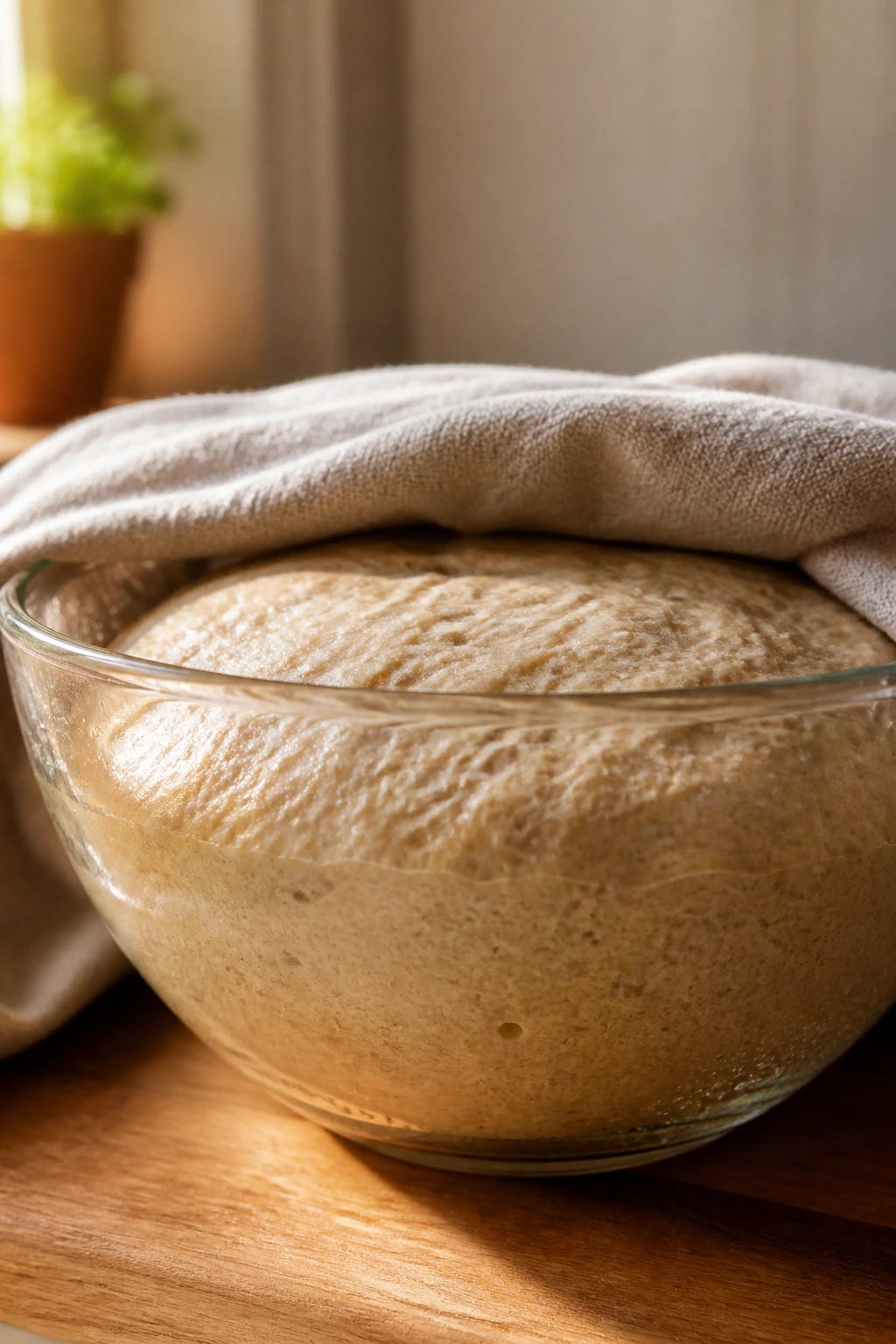
Whole wheat flour needs time. The bran has edges, and those edges need a little hydration before the dough can stretch without tearing. Rushing this part makes the crust bake up dense and faintly chalky at the center.
First Rise, Done the Calm Way
-
Lightly oil the bowl with a thin film of olive oil. Set the dough inside, turn it once so the top gets coated, and cover the bowl with plastic wrap or a damp kitchen towel.
-
Let the dough rise in a warm spot for about 1 hour, or until it has doubled and looks puffy at the sides. If you press it with a fingertip, the dent should spring back slowly, not instantly.
A warm spot does not mean a hot one. A sunny window ledge or the top of a fridge usually does the job. If your kitchen is cold, the rise can take longer — and that is fine. Dough keeps its own schedule.
A Longer Rest If You Have Time
If you want a deeper, toastier flavor, put the dough in the refrigerator after the first 20 to 30 minutes of rising and let it sit overnight. That cold rest changes the flavor in a way that is easy to miss until you taste the baked crust. Then it clicks.
Cooking the Sauce While the Dough Rests
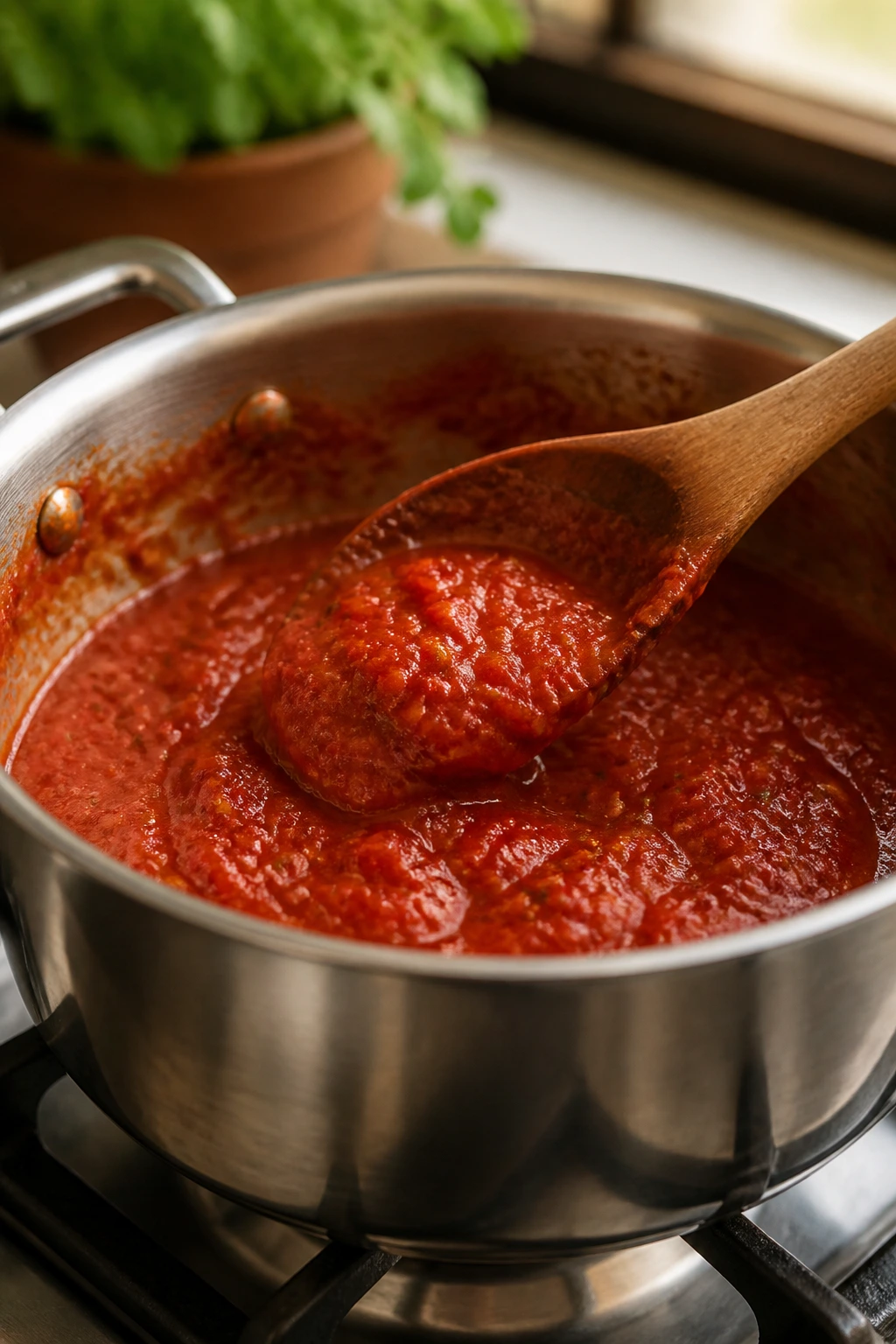
Pizza sauce should taste concentrated, not watery and polite. The goal is a layer that clings to the back of a spoon and stays put under the cheese while the oven does its work.
Make the Sauce Thick Enough to Behave
-
Warm the olive oil in a small saucepan over medium heat. Add the garlic and cook for about 30 seconds, just until it smells sweet and soft, not browned.
-
Add the crushed tomatoes, oregano, salt, pepper, and red pepper flakes if using. Simmer uncovered for 8 to 10 minutes, stirring now and then, until the sauce has thickened and the raw tomato smell has faded.
Do not walk away from this step. Tomato sauce goes from lively to too reduced fast, especially in a small pan. You want it thick enough to spread in a thin layer, not a paste.
If the sauce still looks loose after 10 minutes, keep simmering for another 2 or 3 minutes. The spoon test is your friend here. Drag the spoon through the pan. If the line stays open for a second before the sauce flows back, you are there.
Shaping, Saucing, and Topping the Rounds
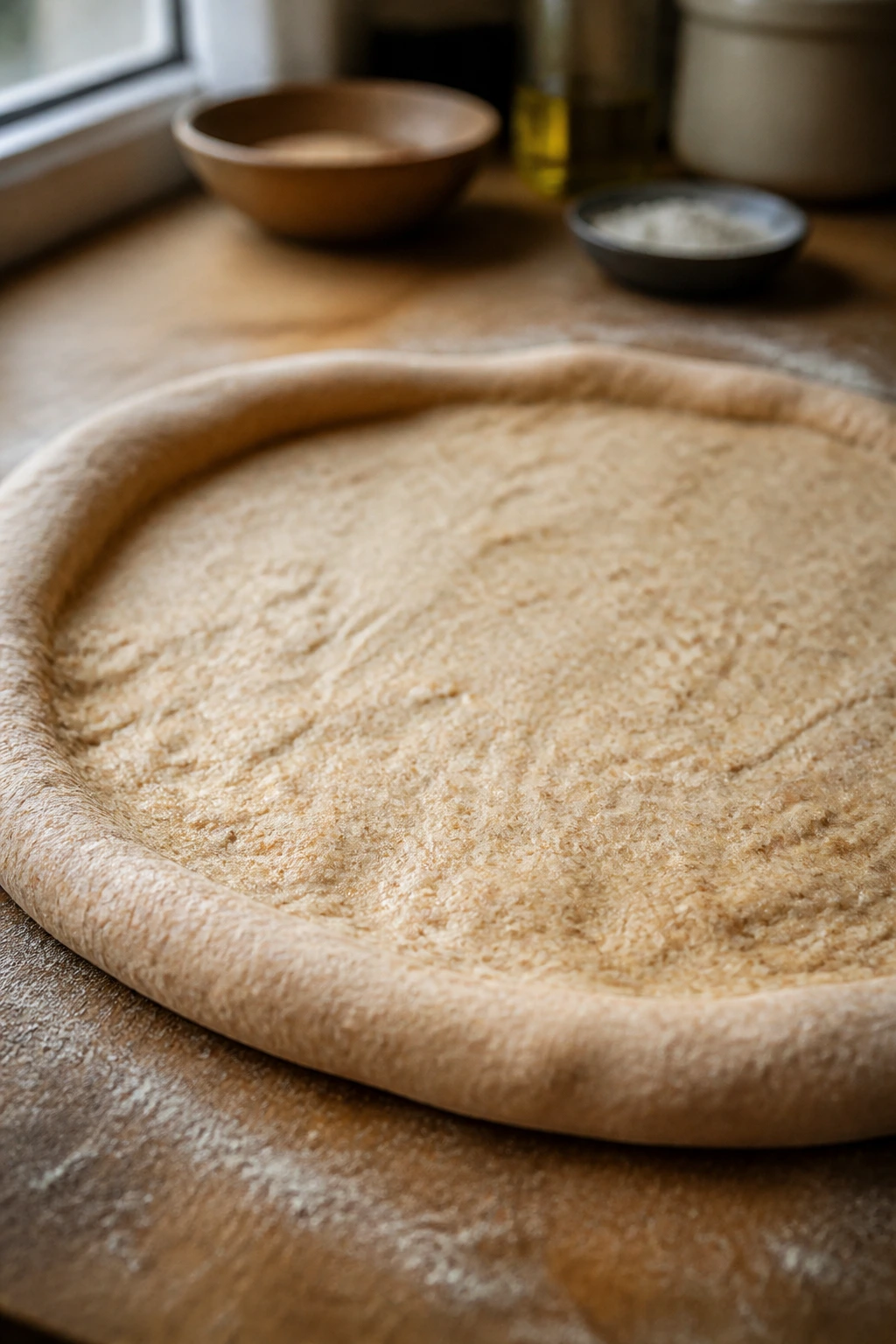
This is the part where the dough starts to look like pizza. It should feel relaxed by now. If it fights back and springs into a smaller circle the second you stretch it, give it 5 more minutes to rest.
Divide and Stretch
-
Punch down the risen dough and turn it onto a lightly floured counter. Divide it into 2 equal pieces and shape each into a loose ball. Cover with a towel and let them rest for 15 minutes.
-
Stretch one dough ball into a 12-inch round with your fingertips, pressing from the center outward and leaving a thicker rim around the edge. If the dough resists, rest it again for a few minutes instead of forcing it.
That rim is the part that browns and puffs. Keep it a little thicker than the center. If you roll the dough too thin everywhere, the pizza bakes flat and brittle, which is not what we want.
A rolling pin will flatten the dough fast, but it also squeezes out air. I do not love it for this style unless you are baking on a sheet pan and prefer a thinner crust. Hand-stretching keeps the crumb lighter.
Sauce and Cheese in the Right Amount
Dust a pizza peel or inverted baking sheet with semolina or cornmeal. Transfer the stretched dough onto it. Spread about 1/3 cup sauce over the center of the round, leaving a 3/4-inch border bare. Scatter half the mozzarella over the sauce, then add a little of the Parmesan.
Go lighter than you think you should. Whole wheat crust is sturdier than people give it credit for, but it still hates being smothered. Too much cheese turns the middle soft and the rim tired.
Oil the Rim Before It Goes In
Brush the exposed edge with a little olive oil. That small coating helps the crust brown and gives the finished pizza a gloss that catches the eye before the first bite. If you like a touch more flavor, add a pinch of flaky salt to the rim.
Baking Hot and Fast Without Burning the Rim
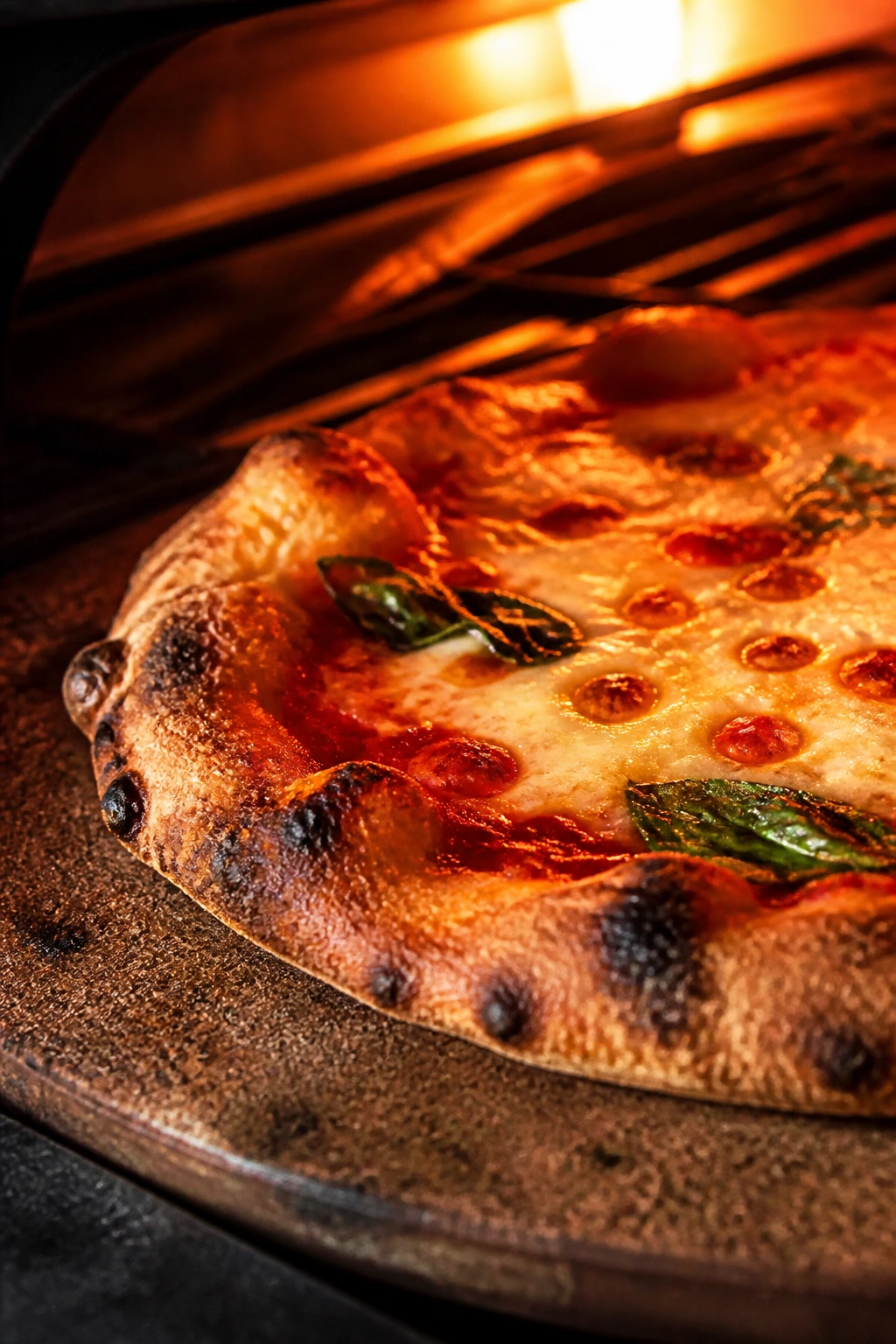
A hot oven is where this pizza earns its crust. Whole wheat dough needs that burst of heat so the bottom browns before the interior dries out. A stone or steel makes that happen much more reliably than a cold pan.
Preheat Like You Mean It
- Preheat the oven to 500°F (260°C) with a pizza stone or steel on the middle or lower-middle rack for at least 30 minutes. If your oven runs cool, give it 45 minutes. The surface needs time to hold heat, not just the air inside the oven.
Slide the topped pizza onto the hot stone or steel. Bake for 8 to 12 minutes, rotating once if your oven has a hot spot, until the crust is deeply golden, the cheese is bubbling, and the bottom sounds hollow when you lift a corner with a spatula.
If you are using an upside-down rimmed baking sheet instead of a stone, expect the bake to take a minute or two longer. Still keep the oven hot. A lukewarm oven gives you pale bread with cheese on top.
Finish and Rest Briefly
- Move the pizza to a cutting board or wire rack and let it sit for 2 minutes. Scatter the basil over the top, add the remaining Parmesan, and finish with a drizzle of olive oil before slicing.
That tiny rest matters. Straight from the oven, the cheese slides around and the sauce is too loose. Two minutes lets everything settle into place without stealing the heat.
Bake the second pizza the same way. If the oven or stone cools too much between pies, give it a few minutes to recover before loading the next one.
How to Serve It the Way a Family Table Wants It
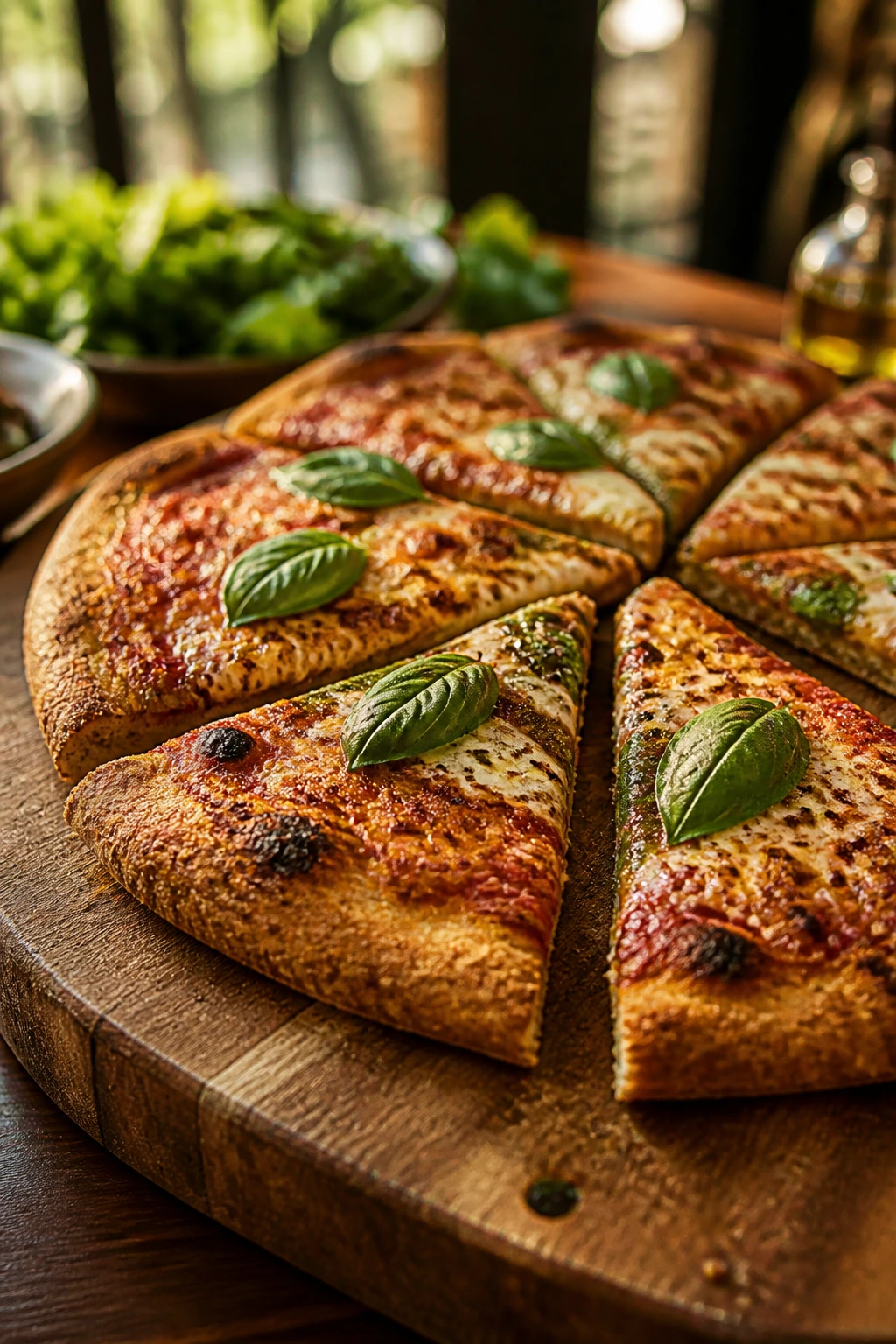
Presentation: Slide the pizza onto a wooden board or large platter and cut it into 6 or 8 wedges with a sharp knife or rocker. The basil should go on at the end, not baked into a blackened shrug under the cheese. A final thread of olive oil across the cut faces gives the slices a little sheen and brings the tomato forward.
Accompaniments: I like this with a sharp arugula salad dressed in lemon, olive oil, and a pinch of salt. Marinated olives, roasted peppers, or a bowl of white beans with garlic all make sense here too. If you want bread on the table, skip it — the pizza is already doing the heavy lifting.
Portions: One 12-inch pizza usually feeds 2 to 3 people if dinner is simple, or 4 people if there are sides. Two slices is a light lunch with salad; three is a proper supper. If you want to stretch the meal, pair it with vegetables rather than adding more bread.
Beverage Pairing: A dry Sangiovese, a chilled glass of Lambrusco, or a crisp lager all work with the tomato and olive oil. For a nonalcoholic option, sparkling water with lemon or a bitter Italian-style soda keeps the palate clean between bites.
Tips, Fixes, and the Mistakes That Matter
Whole wheat pizza rewards a few small habits and punishes a few lazy ones. The good news is that the fixes are not complicated. They just need to be done before the dough goes in the oven.
Use less flour than your instinct wants. The dough should be soft and a little tacky, not dusty and stiff. If you keep adding flour while kneading, the crust bakes dry and the edges turn hard before the center finishes cooking.
Preheat the stone or steel long enough. Thirty minutes is the floor; forty-five is better if your oven runs cool. A weak preheat is the quickest route to a pale bottom and overbrowned cheese.
Keep wet toppings in check. Fresh tomatoes, wet mushrooms, and thick puddles of sauce all dump moisture onto the crust. If you want vegetables, slice them thin and cook off some of their water first, especially mushrooms, zucchini, and onions.
Do not overload the cheese. Eight ounces of mozzarella for two pizzas sounds modest until you bite into a slice that actually snaps. More cheese can be nice, but too much of it makes the center slick and heavy. You want pizza, not a dairy blanket.
Let the baked pizza rest for 2 minutes. It is tempting to slice it immediately, especially when the cheese is still visibly bubbling. Resist. That short pause keeps the topping from sliding apart and helps the crust hold its shape.
Taste the sauce before it goes on the dough. If the tomatoes taste sharp or flat, adjust with a pinch more salt or a small splash of olive oil. You can fix the sauce in the pan. On the pizza, you are stuck with it.
Variations That Keep the Soul of the Pizza
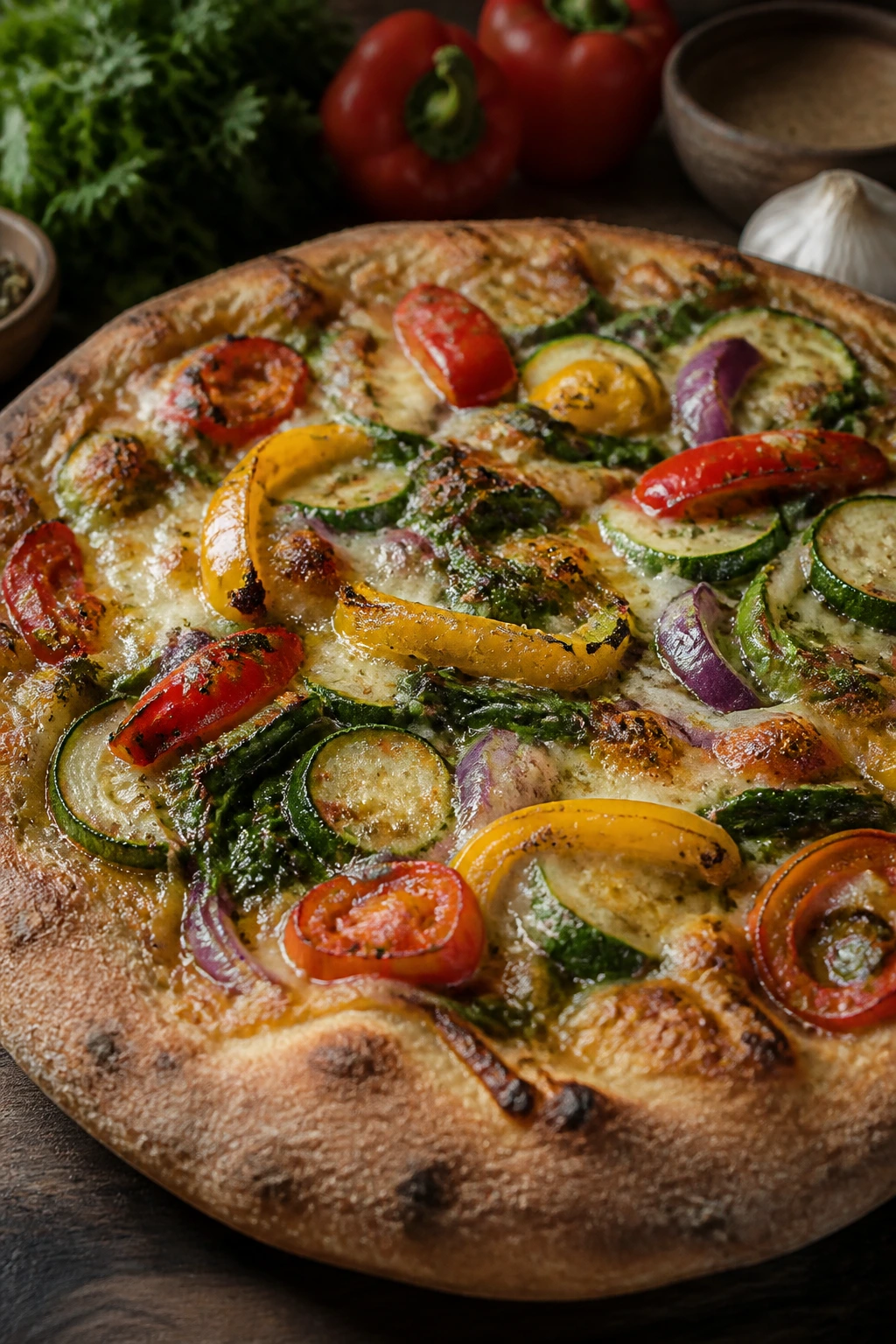
Garden Corner Pie
Swap in thin slices of zucchini, a few halved cherry tomatoes, and a small handful of sliced red onion. Roast the zucchini first or it will leak water onto the crust. This version tastes bright and a little sweet, and it works best when the toppings stay in a thin layer.
Sausage and Fennel Slice
Brown 6 ounces of Italian sausage and scatter it over the sauce with a pinch of crushed fennel seed. The sausage brings fat and salt, which is useful on whole wheat crust because the grain flavor can stand up to bolder toppings. Keep the cheese a touch lighter so the pizza does not turn heavy.
Garlic White Pizza
Skip the tomato sauce and brush the dough with olive oil mixed with a grated garlic clove. Add dollops of ricotta, mozzarella, and a dusting of Parmesan, then finish with black pepper and parsley after baking. This one feels softer and creamier, but the whole wheat crust keeps it grounded.
Full Whole Wheat Hearth Version
Replace the all-purpose flour with an equal weight of whole wheat flour and add 2 to 4 tablespoons more warm water. Let the dough rise longer — a cold overnight rest works well — and expect a firmer chew and a deeper toasted flavor. I like this when I want a more rustic crust, but I would not overload it with toppings.
Spicy Olive and Anchovy Pie
For a sharper, saltier direction, add sliced olives and a few chopped anchovies under the cheese. The anchovy melts into the tomato and gives the whole pie a savory backbone without tasting fishy. Use less salt in the sauce if you go this way.
Make-Ahead, Storage, and Reheating
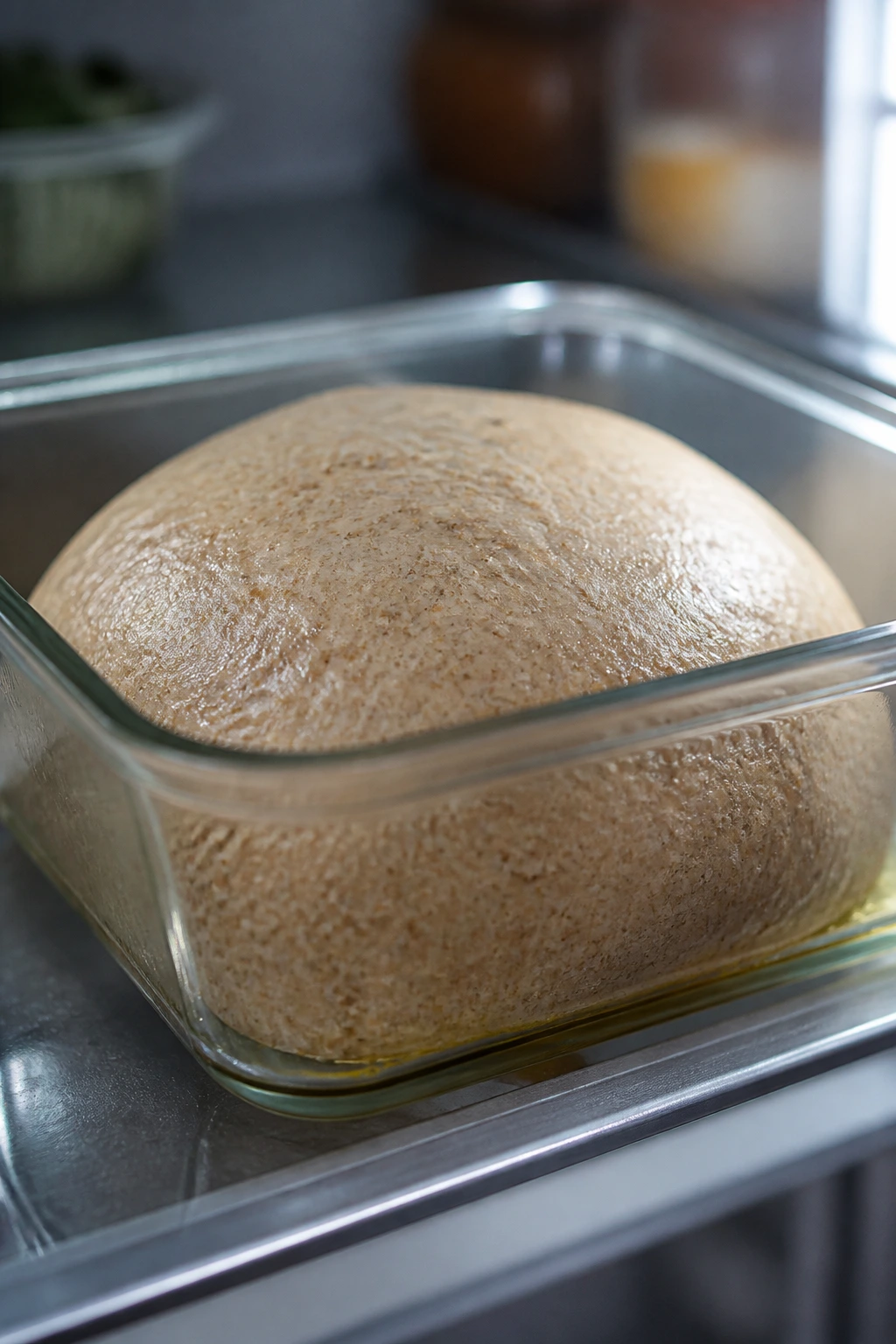
Whole wheat pizza dough is one of those rare things that gets more interesting after a rest. If you make the dough a day ahead, the flavor deepens and the gluten relaxes, which makes stretching easier. That alone is worth the small bit of planning.
The dough can sit at room temperature for about 1 hour while it rises, but do not leave it out much longer once it is shaped and topped. After that, it starts to dry at the surface and lose the soft stretch you worked for.
For make-ahead prep, refrigerate the dough after the first rise in a lightly oiled container for up to 3 days. Punch it down before chilling if it has already doubled. When you are ready to bake, bring it back to room temperature for 45 to 60 minutes so it relaxes enough to shape.
The dough also freezes well. Divide it into portions, coat lightly with oil, wrap each ball tightly, and freeze for up to 2 months. Thaw overnight in the refrigerator, then give it at least 1 hour at room temperature before stretching. Cold dough tears. Warm-ish dough cooperates.
The sauce keeps in the refrigerator for up to 5 days in a sealed container and freezes for up to 2 months. Baked pizza slices hold in the refrigerator for 3 days, though the crust softens a bit. Reheat slices in a dry skillet over medium-low heat for 3 to 4 minutes, or on a baking sheet in a 375°F oven for 6 to 8 minutes. I would skip the microwave unless you like limp crust and sweaty cheese.
Leftovers can also be reheated in an air fryer at 350°F for 3 to 5 minutes. That method gives the fastest crisping, but the edges can dry out if you forget them for even a minute. Watch the cheese and stop as soon as it starts to bubble again.
Questions Home Cooks Ask Before They Bake
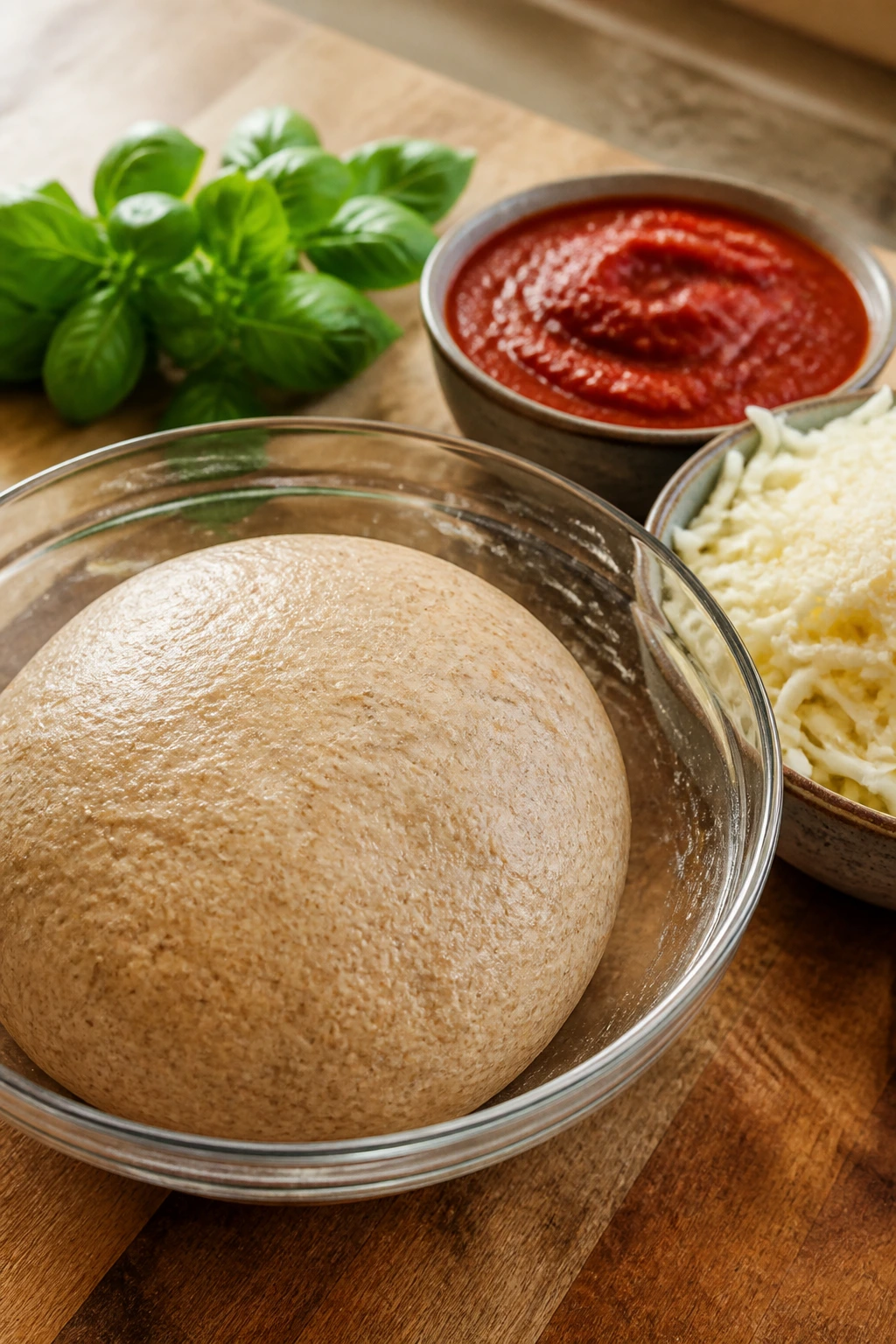
Can I make this with only whole wheat flour?
Yes, but the dough will be denser and need more water, usually 2 to 4 tablespoons extra. Give it a longer rest before shaping, and expect a firmer bite rather than a light, open crumb. The flavor gets deeper, but the texture moves away from what most people think of as classic pizza.
What if I do not have a pizza stone or steel?
Use an inverted rimmed baking sheet preheated in the oven. It will not store as much heat as a steel, so the bottom may brown a little less aggressively, but it still works. Keep the oven as hot as it will safely go and let the sheet heat for a full 30 minutes.
Can I use instant yeast instead of active dry yeast?
Yes. Use the same amount and mix it straight into the flour, skipping the bloom step. I still like the bloom with active dry yeast because it tells you the yeast is alive before you commit to the whole batch.
Why does my dough keep snapping back when I stretch it?
It usually means the gluten is tight and the dough needs more rest. Cover it and wait 5 to 10 minutes, then try again. If you keep forcing it, the dough fights harder and tears at the rim.
Can I make the sauce ahead of time?
Absolutely. In fact, I prefer it that way. The sauce can be made up to 5 days ahead and stored in the refrigerator, which makes pizza night much calmer and helps the flavor settle into itself.
How do I keep the center from getting soggy?
Use a thick sauce, not a loose one. Keep the cheese layer modest, leave the rim bare, and avoid wet toppings unless you cook them first. A hot stone or steel also helps because it starts setting the bottom before the sauce can seep in.
Can I bake this in a cast-iron skillet?
Yes, and it gives you a crisp, almost fried edge if the skillet is preheated. Press the dough into the oiled skillet, add the toppings lightly, and bake until the bottom is deep golden. The shape becomes more rustic and less round, but the texture is excellent.
A Pie Worth Repeating
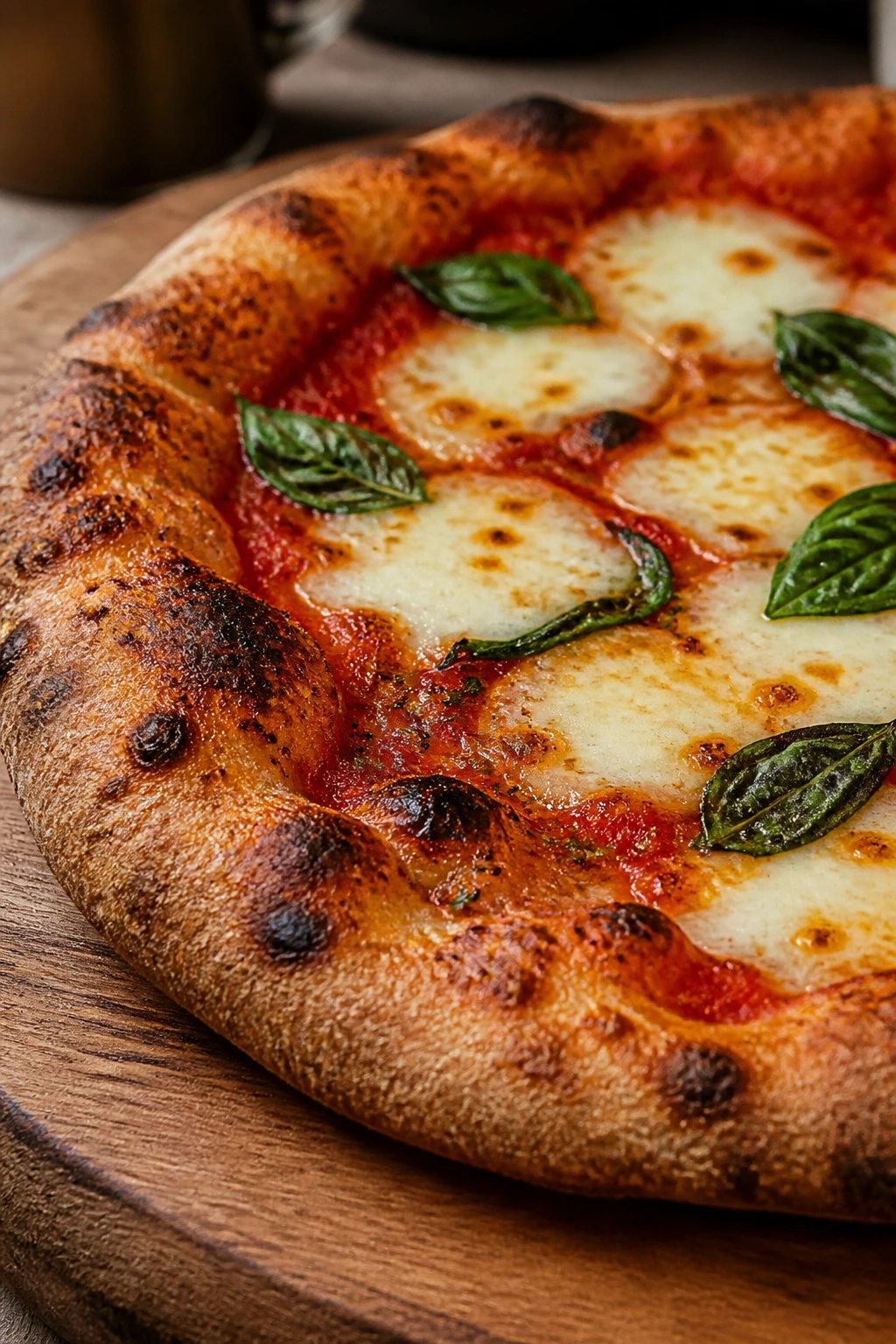
Whole wheat pizza needs a little patience, and that is part of the charm. The bran asks for water, the dough asks for rest, and the oven asks for heat. Give it those three things and the crust comes out tasting toasted rather than heavy, with enough chew to feel satisfying and enough tenderness to keep you reaching for another slice.
I like this style because it feels honest. It does not pretend to be a pizzeria pie from a blistering brick oven, and it does not dress itself up as a compromise. It is home pizza with a backbone, which is often the best kind.
Classic Whole Wheat Pizza Like Nonna Used to Make — Recipe Card
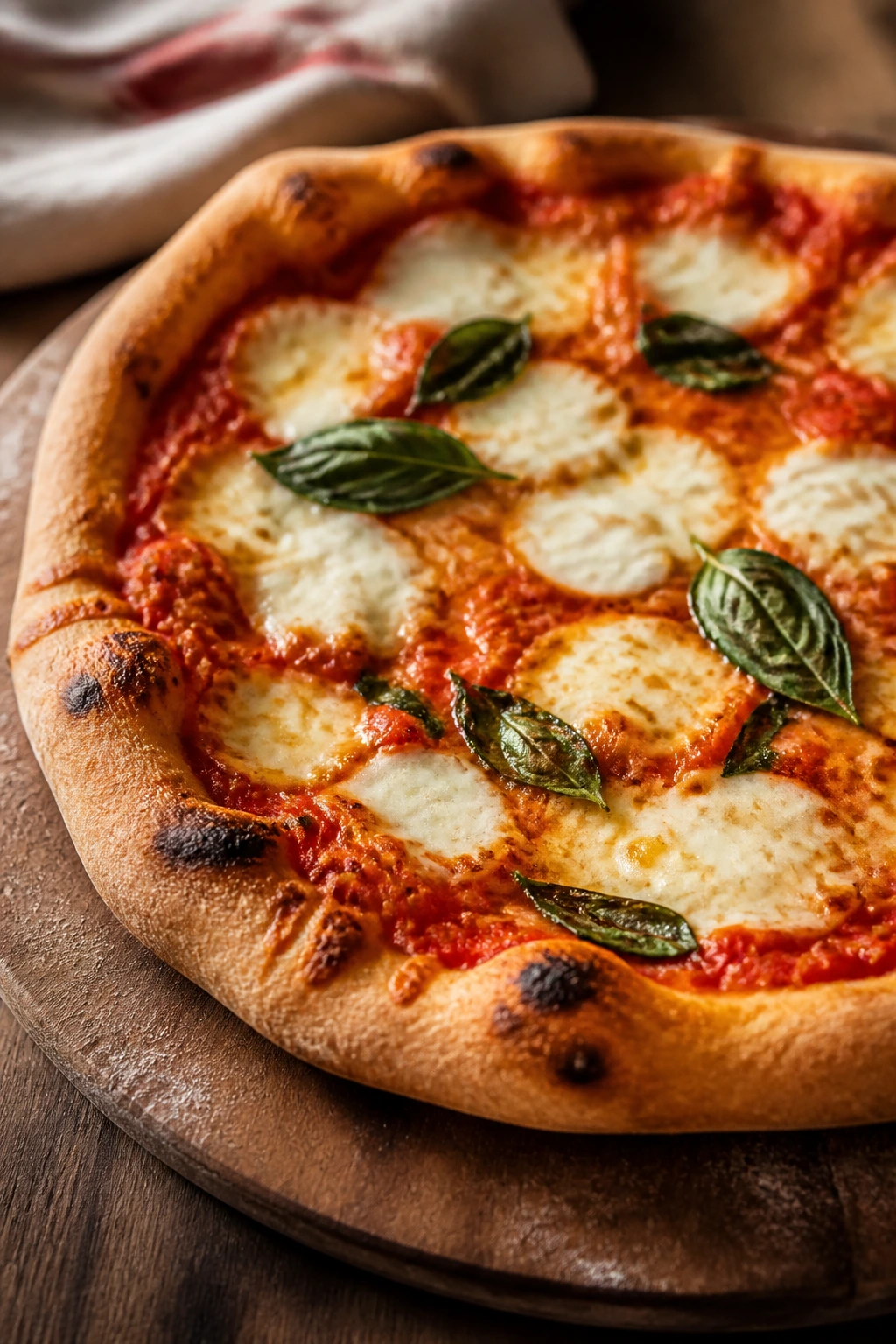
Recipe Name: Classic Whole Wheat Pizza Like Nonna Used to Make
Description: A tender whole wheat pizza with a nutty crust, thick tomato sauce, mozzarella, Parmesan, and fresh basil. The dough bakes crisp on the outside and soft in the center, with enough structure to hold classic toppings without feeling heavy.
Prep Time: 25 minutes
Cook Time: 20 minutes
Total Time: 1 hour 45 minutes
Course: Dinner, Main Course
Cuisine: Italian, Italian-American
Servings: 6 servings
Calories: About 360 kcal per serving
Ingredients
For the Whole Wheat Dough:
- 2 cups (240 g) whole wheat flour
- 1 3/4 cups (210 g) all-purpose flour, plus more for dusting
- 2 1/4 teaspoons active dry yeast (1 packet)
- 1 1/4 cups warm water (105–110°F / 40–43°C)
- 1 tablespoon honey
- 2 tablespoons extra-virgin olive oil, plus more for the bowl
- 1 1/2 teaspoons fine sea salt
- 2 tablespoons semolina flour or cornmeal, for the peel or pan
For the Pizza Sauce:
- 1 tablespoon extra-virgin olive oil
- 1 small garlic clove, minced or grated
- 1 can (15 oz / 425 g) crushed tomatoes
- 1/2 teaspoon dried oregano
- 1/2 teaspoon fine sea salt
- 1/4 teaspoon black pepper
- Pinch of red pepper flakes, optional
For the Topping:
- 8 oz (225 g) low-moisture mozzarella, shredded or thinly sliced
- 1/4 cup (25 g) finely grated Parmigiano-Reggiano
- 1/2 cup fresh basil leaves
- 1 tablespoon extra-virgin olive oil, for finishing
Instructions
-
Bloom the yeast: Stir the yeast, honey, and warm water together in a large bowl. Let sit for 5 to 10 minutes until foamy.
-
Make the dough: Whisk the whole wheat flour, all-purpose flour, and salt in a separate bowl. Add the yeast mixture and olive oil, then stir until a shaggy dough forms.
-
Knead the dough: Turn the dough onto a lightly floured counter and knead for 8 to 10 minutes, until smooth, soft, and slightly tacky.
-
Let it rise: Place the dough in an oiled bowl, cover, and let rise for about 1 hour, until doubled.
-
Cook the sauce: Warm olive oil in a small saucepan over medium heat. Add the garlic and cook for about 30 seconds, then add the tomatoes, oregano, salt, pepper, and red pepper flakes. Simmer for 8 to 10 minutes until thick.
-
Preheat the oven: Set the oven to 500°F (260°C) with a pizza stone or steel inside for at least 30 minutes.
-
Shape the dough: Punch down the risen dough, divide into 2 pieces, and rest them for 15 minutes. Stretch each piece into a 12-inch round.
-
Add sauce and cheese: Transfer the dough to a semolina-dusted peel or inverted baking sheet. Add about 1/3 cup sauce per pizza, then top with mozzarella and a little Parmesan, leaving the rim bare.
-
Bake: Slide each pizza onto the hot stone or steel and bake for 8 to 12 minutes, until the crust is browned and the cheese is bubbling.
-
Finish and serve: Rest the pizza for 2 minutes. Top with basil and a drizzle of olive oil, then slice and serve.
Notes: Let the dough rest if it fights back while stretching. Keep toppings light so the whole wheat crust stays crisp. Basil goes on after baking for the cleanest flavor.