



The first time I made herbed veggie pizza like Nonna used to make, the whole kitchen smelled like garlic hitting warm olive oil and basil torn between your fingers. That smell matters. It tells you the pizza isn’t going to be one of those limp, overloaded pies that sloshes around on the plate and leaves the crust sad and pale underneath.
This kind of pizza has rules, but they’re sensible ones. The vegetables get cooked before they ever meet the dough. The sauce stays thick enough to cling, not run. The cheese melts in patches instead of forming one heavy blanket, and the herbs come in at the end, where they can still taste bright and green instead of dusty and tired.
And that’s the real charm here. The crust crackles at the edge, the middle stays tender, and every bite gives you something different: a little onion sweetness, a little mushroom depth, a little tomato, a little mozzarella pull. It’s the kind of pizza that feels casual on the table and a little more deliberate on the plate, which is usually where the good ones live.
Why This Old-School Veggie Pizza Still Works
- The crust stays crisp: The vegetables are cooked first, so they don’t dump water onto the dough and turn the center soft.
- The herbs actually taste like herbs: Oregano goes into the sauce, basil and parsley finish the pie, and the whole thing smells alive when it comes out of the oven.
- The toppings stay distinct: You can taste mushroom, zucchini, pepper, and onion as separate pieces instead of one muddy vegetable layer.
- The cheese melts cleanly: Low-moisture mozzarella gives you those golden, stretchy pockets without the watery puddle that fresh mozzarella can make.
- The method works in a regular kitchen: A pizza stone is nice, but an inverted sheet pan gets you close enough that nobody at the table is going to complain.
- Leftovers hold up better than most veggie pies: The crust still has a little structure the next day, especially if you reheat it in a hot oven or skillet.
Yield: Makes 2 (12-inch) pizzas | Serves 6
Prep Time: 35 minutes
Cook Time: 25 minutes
Total Time: 2 hours 20 minutes
Difficulty: Intermediate — the steps are straightforward, but dough handling and moisture control need a bit of care.
Chill/Rest Time: 1 hour 15 minutes for dough rising, plus 5 minutes after baking
Best Served: Warm, when the cheese is bubbling and the crust still has a little snap
Everything That Goes Into the Pie
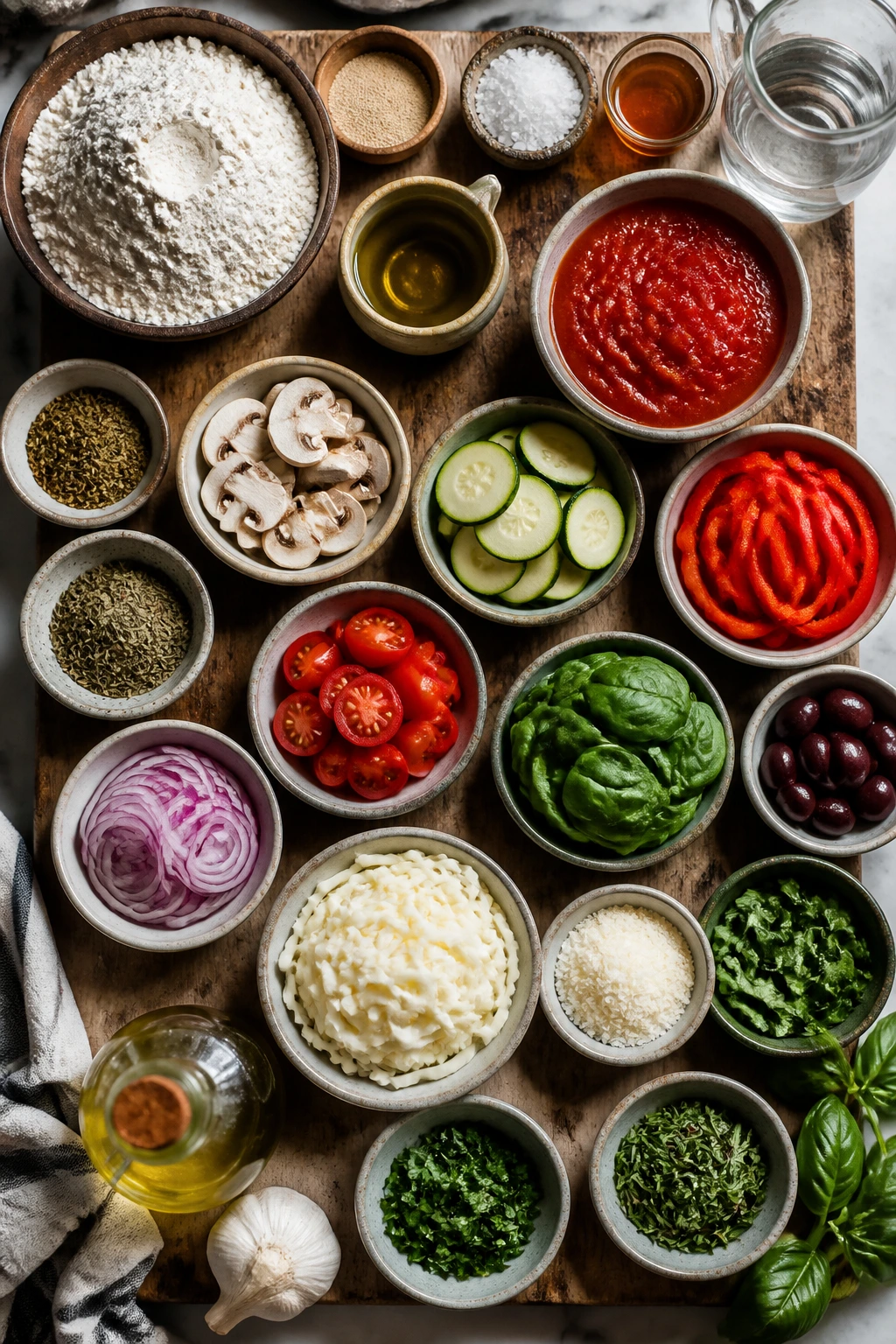
Clean Ingredient List
For the Dough:
- 3 1/2 cups bread flour, plus more for dusting
- 2 teaspoons instant yeast
- 1 1/2 teaspoons fine sea salt
- 1 teaspoon honey or sugar, optional but helpful for the yeast
- 1 1/4 cups warm water, about 105°F to 110°F
- 1 tablespoon extra-virgin olive oil
For the Herbed Tomato Sauce:
- 2 tablespoons extra-virgin olive oil
- 2 garlic cloves, minced
- 1 can (28 ounces) crushed tomatoes
- 1 teaspoon dried oregano
- 1 teaspoon dried basil
- 1/2 teaspoon fine sea salt
- 1/4 teaspoon black pepper
- Pinch of red pepper flakes
- 1 teaspoon sugar, optional if the tomatoes taste sharp
For the Vegetables:
- 8 ounces cremini mushrooms, sliced 1/4 inch thick
- 1 medium zucchini, sliced into thin half-moons
- 1 red bell pepper, thinly sliced
- 1/2 red onion, thinly sliced
- 1 cup cherry tomatoes, halved and patted dry
- 1 cup baby spinach, loosely packed
- 1/2 cup pitted Kalamata olives, sliced
- 1 tablespoon extra-virgin olive oil
- 1/2 teaspoon fine sea salt
- 1/4 teaspoon black pepper
For the Cheese and Finish:
- 8 ounces low-moisture mozzarella, shredded
- 1/3 cup finely grated Parmesan
- 1 tablespoon fresh basil, torn
- 1 tablespoon fresh parsley, chopped
- 1 teaspoon fresh rosemary, finely chopped
- 1 tablespoon extra-virgin olive oil, for finishing
- Red pepper flakes, optional for serving
Dough with a Little Backbone
What to use: You want 3 1/2 cups bread flour, 2 teaspoons instant yeast, 1 1/2 teaspoons salt, 1 teaspoon honey or sugar, 1 1/4 cups warm water, and 1 tablespoon olive oil. That makes a dough with enough chew to stand up to the vegetables without turning bready.
Preparation: Mix until the dough looks shaggy first, then knead until it turns smooth and elastic. It should feel slightly tacky, not sticky enough to coat your hands like glue.
Substitutions: All-purpose flour works if that’s what you have, though the crust will be a touch softer. If you use active dry yeast, bloom it in the warm water with the honey for 5 to 10 minutes before mixing. A half-and-half blend of whole wheat and bread flour also works if you add a tablespoon or two of extra water.
Tips: Warm water should feel like a comfortable bath, not a hot drink. Too much heat can slow or kill the yeast, and that’s the sort of mistake that leaves you staring at a flat bowl of dough for an hour. Not fun.
A Sauce That Stays Put
What to use: One 28-ounce can of crushed tomatoes, 2 tablespoons olive oil, 2 minced garlic cloves, 1 teaspoon dried oregano, 1 teaspoon dried basil, salt, pepper, and a pinch of red pepper flakes. The crushed tomatoes give you texture without the watery looseness of plain diced tomatoes.
Preparation: Simmer the sauce until it thickens enough to coat the spoon in a thin layer. You’re not trying to make marinara for pasta; you want something a little tighter and a little more concentrated.
Substitutions: Tomato passata can stand in for crushed tomatoes if it’s what’s in the cupboard. If your tomatoes taste sharp, add the optional teaspoon of sugar. If you want a deeper flavor, stir in a teaspoon of tomato paste and cook it with the garlic for 30 seconds before adding the tomatoes.
Tips: Keep the sauce simple. The vegetables already bring a lot to the pizza, and a heavy sauce starts shouting over everything else. A restrained sauce gives the herbs room to come forward.
Vegetables That Don’t Leak All Over the Dough
What to use: Mushrooms, zucchini, red bell pepper, red onion, cherry tomatoes, spinach, and Kalamata olives. That mix gives you bite, sweetness, salt, and a little green freshness without burying the crust.
Preparation: Slice everything thinly so it cooks quickly and evenly. The mushrooms, zucchini, pepper, and onion should be sautéed before they go on the pizza; the spinach gets wilted at the very end, and the cherry tomatoes need to be patted dry so they don’t burst into puddles.
Substitutions: You can swap in thin eggplant slices, roasted artichoke hearts, or broccoli florets that have been steamed for a few minutes and well drained. Skip watery vegetables like raw cucumber or thick raw tomato slices unless you want a wet middle and a lecture from the crust.
Tips: Cook the vegetables until they’ve lost their raw smell and the pan looks dry again. That’s the cue. If they’re still glossy with liquid, keep going for another minute or two.
Cheese and Herbs That Do the Heavy Lifting
What to use: Eight ounces of low-moisture mozzarella, 1/3 cup Parmesan, fresh basil, parsley, rosemary, and a drizzle of olive oil. The mozzarella melts into the classic stretchy layer, while the Parmesan adds salt and the fresh herbs keep the finish bright.
Preparation: Shred the mozzarella yourself if you can. Pre-shredded cheese is fine in a hurry, but the anti-caking coating can make the melt a little less smooth. Tear the basil at the end, not ahead of time, so it doesn’t bruise and blacken.
Substitutions: Fontina or provolone can replace part of the mozzarella if you want a deeper, nuttier melt. If you need a dairy-light version, use less mozzarella and lean harder on the vegetables, olive oil, and herbs instead of piling on a cheese substitute that won’t melt well.
Tips: Fresh herbs belong on top of the baked pizza, not under the cheese. If they bake for too long, they go dark and lose the good green flavor that makes the whole thing smell like a real kitchen instead of a jar.
The Tools That Keep the Crust Crisp
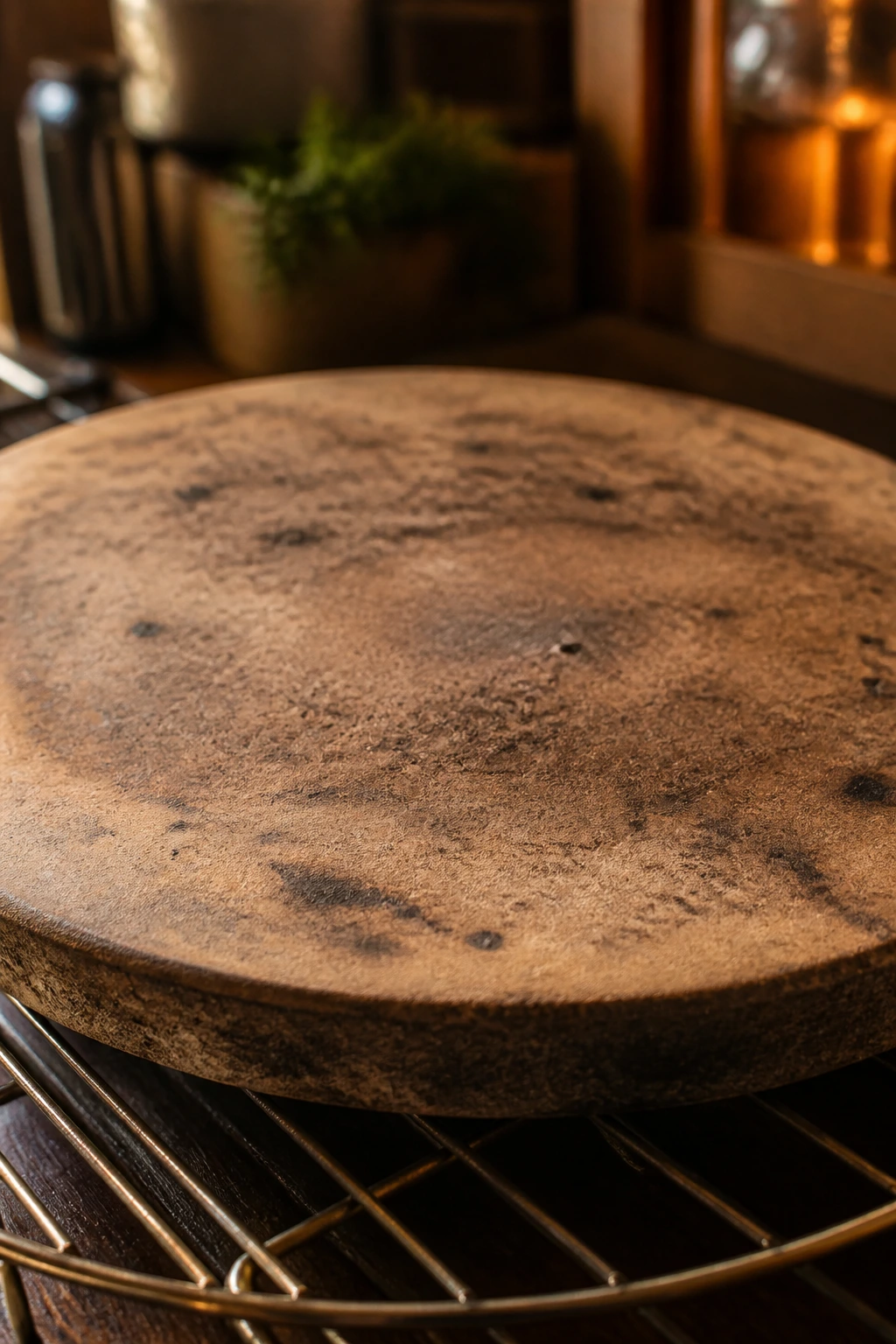
- Pizza stone or baking steel — Best for browning the bottom; if you don’t have one, use an inverted rimmed sheet pan.
- Pizza peel or rimless baking sheet — Useful for moving the dough into the oven, though parchment can do the job if you’re careful.
- Large mixing bowl — Big enough for the dough to double without climbing out of the bowl.
- 12-inch skillet or sauté pan — For cooking the vegetables down until their moisture is gone.
- Bench scraper — Helps handle sticky dough without tearing it.
- Rolling pin or your hands — Both work; I usually stretch by hand and only grab a pin if the dough keeps fighting back.
- Wire rack — Keeps the bottom from steaming while the pizza cools.
- Sharp chef’s knife — Thin vegetable slices matter more than people think here.
- Measuring cups and spoons — Pizza dough tolerates a little improvisation, but the first batch is better when you measure.
- Parchment paper — A useful safety net if you’re nervous about sliding dough onto a hot surface.
Building the Pizza, Step by Step
Make the Dough
-
In a large bowl, whisk together the bread flour, instant yeast, salt, and optional honey or sugar until the dry ingredients look evenly mixed.
-
Pour in the warm water and olive oil, then stir with a wooden spoon or your hand until a shaggy dough forms. It will look messy at first. That’s normal.
-
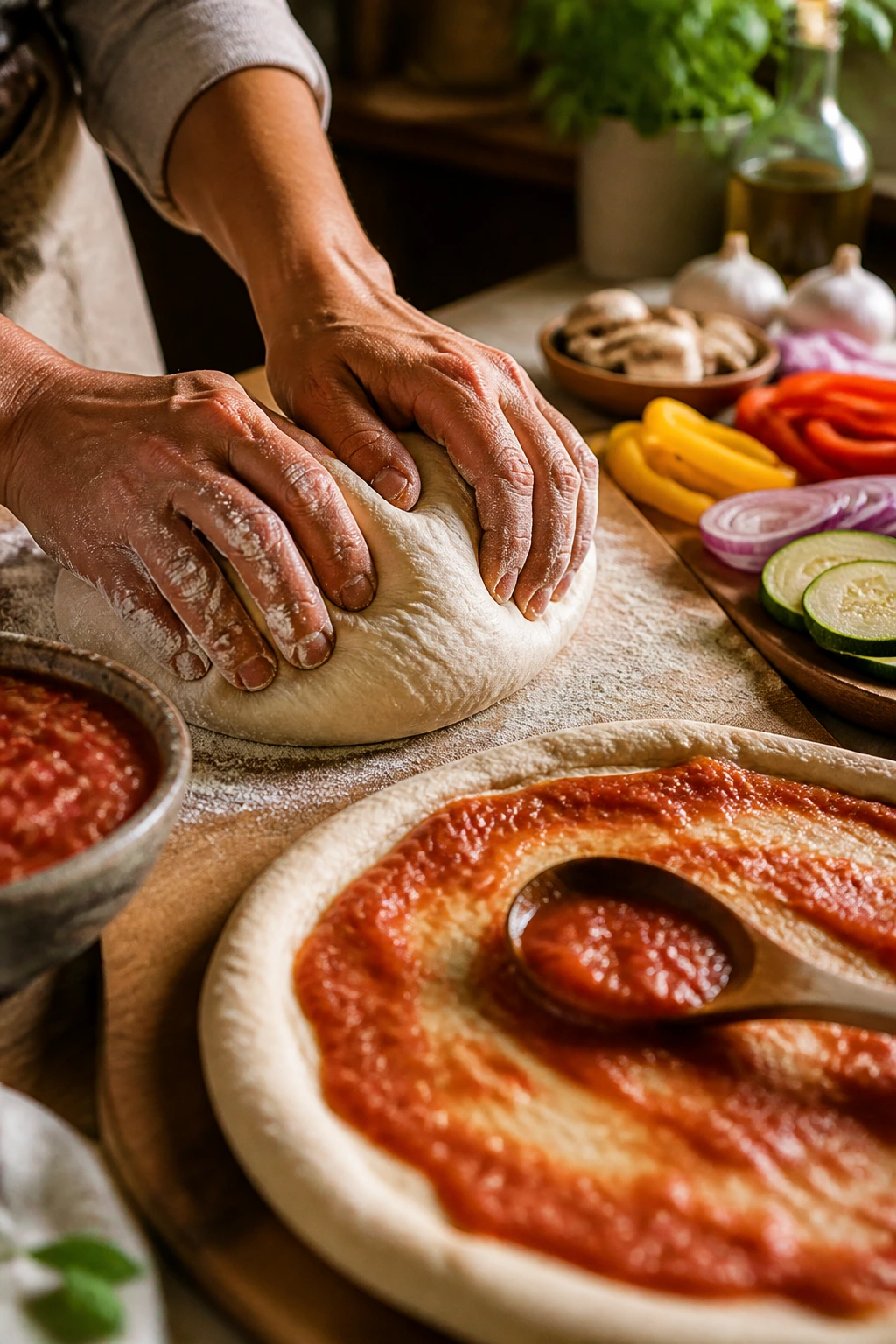
Turn the dough out onto a lightly floured surface and knead for 7 to 8 minutes, until it feels smooth, elastic, and only lightly tacky. If the dough tears easily or feels dry and stiff, add 1 teaspoon of water at a time; if it sticks hard to your hands, dust with a little flour.
-
Place the dough in a lightly oiled bowl, turn it once to coat, and cover it with a damp towel or plastic wrap. Let it rise at room temperature for 60 to 75 minutes, until it has roughly doubled and leaves a slow dent when pressed with a finger.
Cook the Sauce and Vegetables
-
While the dough rises, make the sauce. Warm 2 tablespoons olive oil in a small saucepan over medium heat, add the garlic, and cook for 30 seconds until fragrant but not browned. Stir in the crushed tomatoes, oregano, basil, salt, pepper, red pepper flakes, and optional sugar, then simmer for 12 to 15 minutes, stirring now and then, until the sauce thickens and loses that raw canned edge.
-
Heat 1 tablespoon olive oil in a large skillet over medium-high heat. Add the mushrooms, zucchini, bell pepper, red onion, salt, and black pepper, then cook for 6 to 8 minutes, stirring often, until the vegetables soften, the mushrooms give up their water, and the pan looks mostly dry. Add the spinach for the last 30 seconds and stir until just wilted. Remove from the heat and let everything cool for at least 5 minutes. Do not pile hot vegetables onto raw dough; they soften the crust fast.
Shape and Bake
-
Position a pizza stone or baking steel in the upper-middle rack of the oven, or flip a rimmed sheet pan upside down and place it in the same spot. Preheat the oven to 500°F (260°C) for at least 45 minutes so the surface is fully hot.
-
Punch down the risen dough and divide it into 2 equal pieces. On a lightly floured surface, stretch or roll each piece into a 12-inch round. If the dough keeps snapping back, let it rest for 5 minutes, then try again. That short pause matters more than people think.
-
Transfer one round of dough to a peel, parchment sheet, or the back of a sheet pan. Brush the surface lightly with olive oil, then spread on about 1/2 cup of sauce in a thin layer, leaving a 1/2-inch border around the edge. Add half the mozzarella, half the cooked vegetables, a few cherry tomato halves, a scattering of Kalamata olives, and a shower of Parmesan. Finish with a pinch of dried oregano and a little rosemary. Go light on the toppings. If you cannot see some bare dough between them, the pizza is too crowded.
-
Slide the pizza into the oven and bake for 10 to 13 minutes, rotating once halfway through if your oven has hot spots, until the crust is deeply golden at the edges, the cheese is bubbling, and the underside sounds dry when tapped. Repeat with the second pizza. Let each pie rest for 5 minutes on a wire rack, then finish with torn basil, parsley, a drizzle of olive oil, and red pepper flakes if you like a little heat. Slice and serve while the cheese still has movement.
How to Serve It at the Table
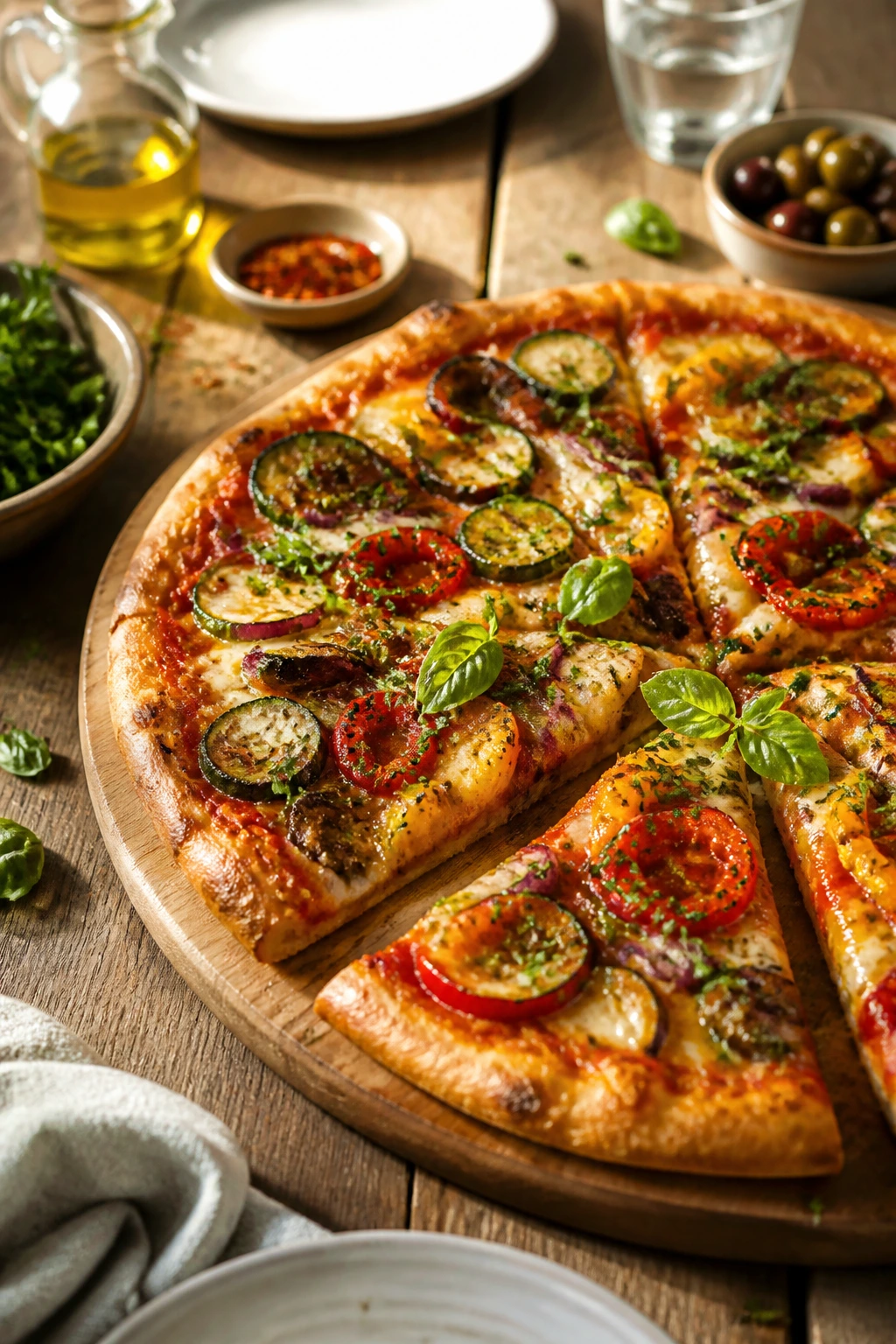
Presentation: Put the pizza on a wooden board or wide cutting board and finish it with the fresh basil, parsley, and olive oil after slicing, not before. That keeps the herbs bright and gives the pie a clean, just-baked look rather than a greasy one.
Accompaniments: A lemony arugula salad is the side I reach for most often because the peppery greens cut through the cheese and olive oil. If you want a fuller spread, add marinated artichokes, a bowl of olives, or roasted carrots with thyme. A simple soup works too, especially if you’re serving the pizza as dinner instead of a snacky lunch.
Portions: One 12-inch pizza serves 2 hungry people or 3 lighter eaters. If you’re pairing it with salad and a side, each pizza can stretch to 4 portions without anyone leaving the table annoyed. The slices hold better if you cut them after the 5-minute rest, not the second they leave the oven.
Beverage Pairing: A dry Chianti or Verdicchio feels right with the tomato, herbs, and olives. If you want something nonalcoholic, go with sparkling water and lemon, or still water with a few basil leaves and a thin slice of orange. That sounds fussy, maybe, but it works.
Tricks That Make the Flavor Pop
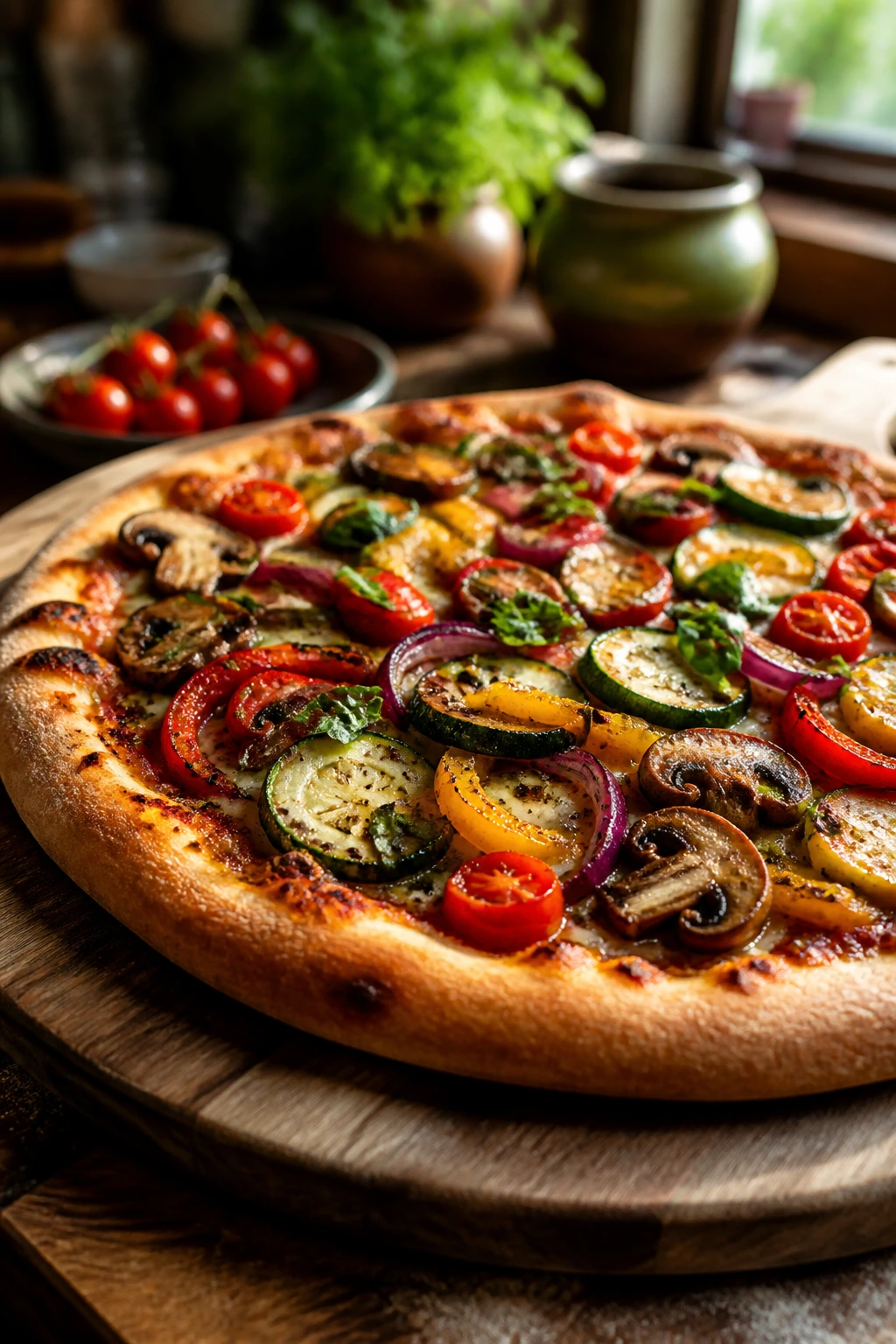
Flavor Enhancement: A tiny drizzle of garlic oil over the finished pizza goes a long way. I like to warm 1 tablespoon olive oil with a smashed garlic clove for a minute, then spoon a few drops over the top after baking. It adds a sweet, gentle garlic note that sits on top of the cheese instead of getting buried in the sauce.
Customization: If you like a creamier finish, tuck a few small spoonfuls of ricotta between the vegetables after the pizza comes out of the oven. For a deeper taste, swap in a little provolone for part of the mozzarella. If you want more greens, add arugula after baking with a squeeze of lemon and a pinch of salt.
Serving Suggestions: A little flaky salt on the crust edge is a nice touch, especially if your mozzarella is mild. I also like a scatter of extra parsley right before serving because it wakes up the whole plate. Chili flakes are good, but use them lightly; they should sting, not bury the herbs.
Make-It-Yours: For a dairy-light version, use 4 to 6 ounces of mozzarella instead of 8 and lean on the vegetables, olives, and olive oil for body. For a gluten-free version, use a tested gluten-free pizza dough and bake it on a well-preheated pan so the bottom firms up. For a lower-sodium version, rinse the olives, cut the Parmesan in half, and salt the vegetables a little less aggressively.
Common Slip-Ups That Make Veggie Pizza Sag
-
Putting raw vegetables on the dough: This is the fastest way to get a wet center and limp crust. Mushrooms, zucchini, onion, and peppers all release water in the oven, so cook them first until the pan looks dry again.
-
Using too much sauce: More sauce does not mean more flavor here. A thin, even layer is enough; if the sauce puddles in the middle, the center will soften before the crust has a chance to brown.
-
Skipping the hot oven: A pale oven gives you pale pizza. Preheat the stone or sheet pan for the full 45 minutes so the crust starts setting the second it lands on the surface.
-
Overloading with cheese: It’s tempting, and it’s the wrong move. Too much mozzarella traps steam, and steam turns your nice crisp edge into something bread-like and heavy.
-
Slicing too soon: If you cut the pizza the second it leaves the oven, the cheese runs, the toppings slide, and the crust can tear. Let it sit for 5 minutes on a wire rack. That short rest makes cleaner slices.
-
Rolling the dough paper-thin in the center: A paper-thin middle tears easily and won’t hold the sauce. Leave the center a little thicker than the edge so it can take the weight of the toppings.
Smart Variations for Different Kitchens
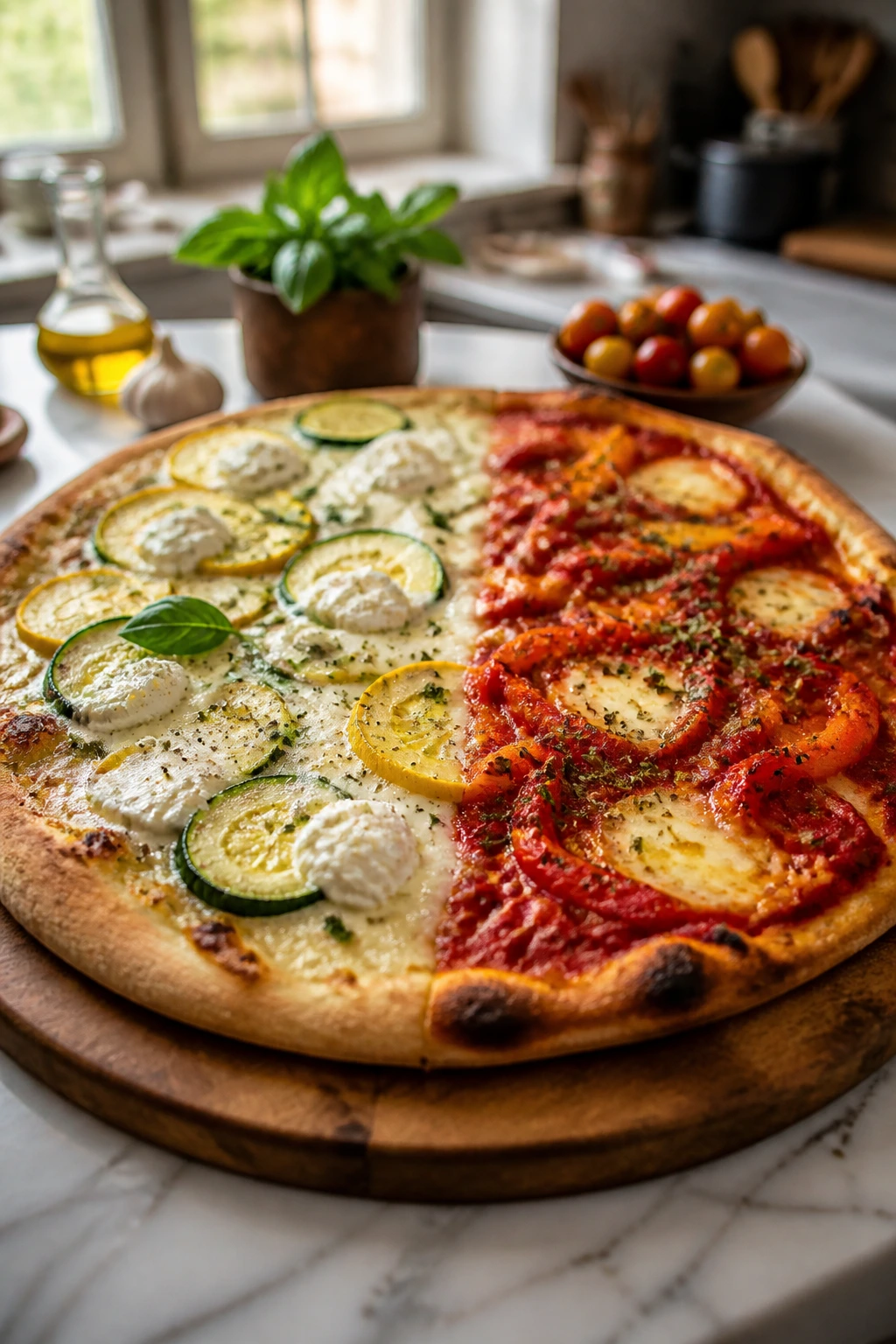
White Garden Slice: Skip the tomato sauce and spread a thin layer of ricotta mixed with a little olive oil, garlic, salt, and pepper over the dough. Add the cooked vegetables, mozzarella, and herbs, then bake the same way. It tastes creamier and a little softer, which works well if you want a less acidic pizza.
Roasted Red Pepper Pie: Replace the tomato sauce with blended roasted red peppers, a spoonful of tomato paste, olive oil, and a pinch of oregano. The sweetness of the peppers gives the pie a softer, deeper flavor, and it’s especially good with zucchini and mushrooms.
Whole-Wheat Sunday Crust: Swap up to 1 1/2 cups of the bread flour for whole wheat flour and add 1 to 2 tablespoons extra water if the dough feels stiff. Let it rest a little longer so the wheat has time to soften. The result is nuttier and a bit more rustic, though the crust won’t puff quite as much.
Dairy-Light Herb Pizza: Cut the mozzarella down to 4 ounces and add a few extra olives, herbs, and a little more olive oil after baking. You still get a satisfying pie, but the vegetables get more space to speak.
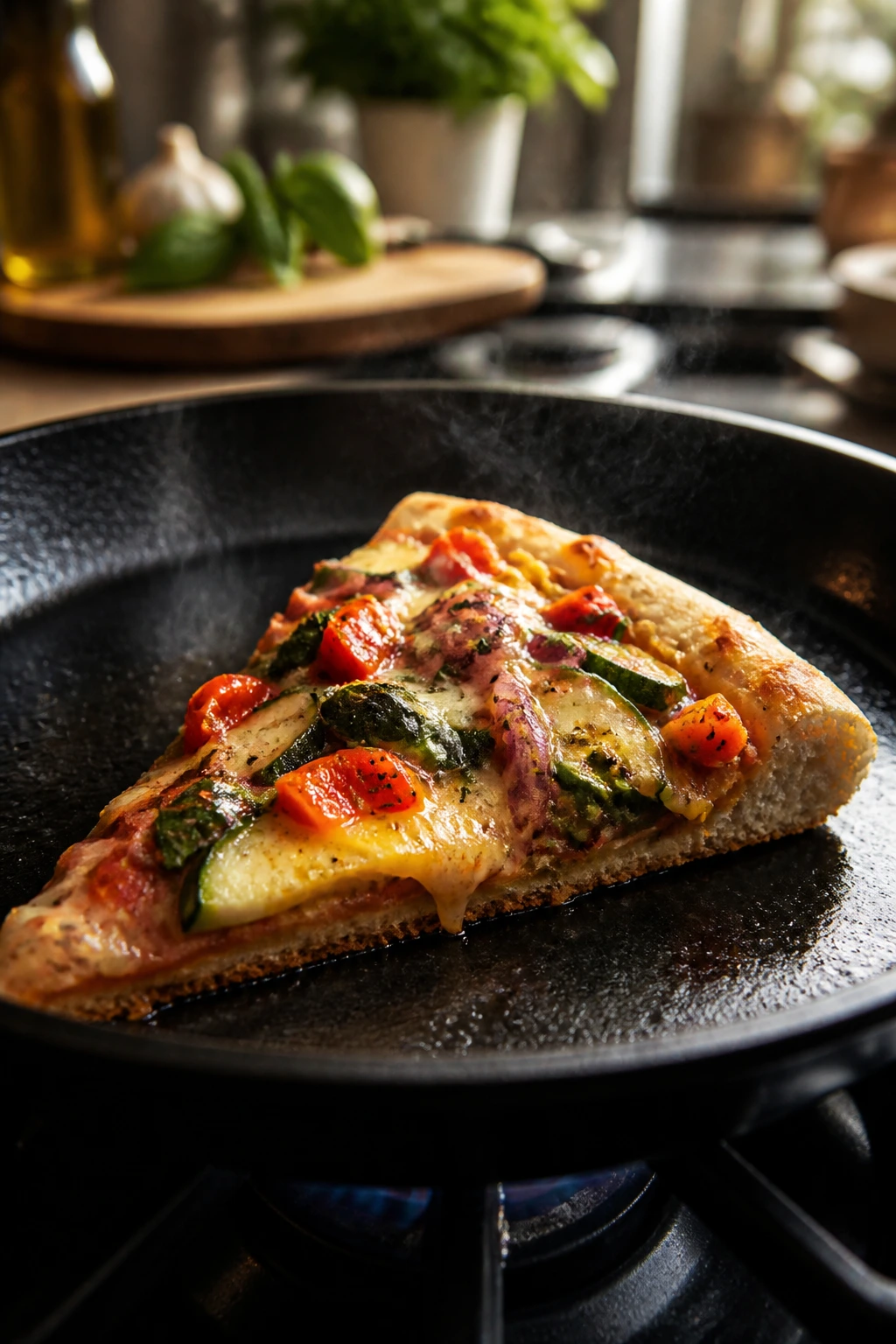
Cast-Iron Pan Pizza: If you want a thicker, crisp-bottomed version, stretch the dough into a well-oiled cast-iron skillet and bake it in the oven after a short stovetop start. It’s not the same as a thin crust, but it’s a good fit when you want something sturdier for a cold night or a larger appetite.
Storing, Reheating, and Making Ahead
The baked pizza keeps at room temperature for up to 2 hours, which is enough for a slow meal or a second helping without any stress. After that, move leftovers to the fridge. I store slices in an airtight container with a little parchment between layers so the cheese doesn’t glue everything together.
In the refrigerator, the pizza holds for 3 days. It will soften a bit, because that’s what cooked bread and sauce do when they spend the night together, but it still tastes good if you reheat it properly. The best way is in a 400°F (205°C) oven for 8 to 10 minutes on a rack or preheated sheet pan. That crisps the bottom again and keeps the cheese from turning rubbery.
A dry skillet works well too. Put a slice in a cold skillet, cover it, and warm it over medium-low heat for 3 to 4 minutes until the bottom sizzles and the cheese loosens up. That method is faster than the oven, and it keeps the crust from drying out.
Freezing works best with the dough, not the fully loaded pizza. Freeze the dough after the first rise, tightly wrapped, for up to 2 months. Thaw it in the refrigerator overnight, then let it sit at room temperature for 30 to 45 minutes before shaping. The sauce also freezes well for up to 3 months, and the cooked vegetables can be refrigerated for 2 to 3 days if you want to break the work into pieces.
If you absolutely need to freeze baked slices, cool them completely first, then wrap them individually and store them in a freezer bag for up to 2 months. Reheat from frozen in a 400°F oven for 12 to 15 minutes. The texture won’t be as lively as fresh, but it’s still better than letting the slices sit in the back of the freezer forever.
Questions People Ask Before Baking
Can I use store-bought dough instead of making my own?
Yes, and there’s no shame in it. Use about 1 pound of dough for two 12-inch pizzas, let it sit at room temperature for 30 to 45 minutes so it relaxes, and then stretch it the same way you would homemade dough. The rest of the recipe still matters; the vegetables and hot bake are what keep the pizza from turning floppy.
Do I need a pizza stone or steel?
No, but it helps. A preheated inverted sheet pan gives you a solid backup, and parchment paper makes the transfer easier if you’re nervous. If your oven runs cool, give the pizza an extra minute or two and keep the topping layer modest.
Which vegetables work best if I want to swap things around?
Stick with vegetables that either cook quickly or can be pre-cooked without falling apart: eggplant, broccoli florets, roasted peppers, artichoke hearts, thin fennel, or even sautéed kale. Very watery vegetables need more care. Raw tomatoes, for instance, should be patted dry or cooked down first unless you want the center to soften.
How do I keep the middle from getting soggy?
Use less sauce than you think you need, pre-cook the vegetables until they’re dry in the pan, and keep the cheese layer moderate. A hot oven matters too, because the crust needs to set fast before the vegetables have a chance to leak.
Can I make the dough ahead of time?
Yes. After the first rise, you can refrigerate the dough for up to 24 hours. The cold rest actually helps the flavor, and the dough becomes easier to stretch after it warms for 30 to 45 minutes at room temperature.
Can I make this pizza vegan?
You can. Use a good vegan dough, skip the mozzarella and Parmesan, and lean on the tomato sauce, olives, sautéed vegetables, and olive oil. A spoonful of cashew cream or a plant-based mozzarella that melts cleanly can help, but don’t pile on too many substitute toppings or the crust loses its shape.
Why does my pizza taste good but the crust stays pale?
Usually it means the oven or baking surface wasn’t hot enough, or the pizza went in with too much moisture on top. Preheat longer than you think you need to, and make sure the vegetables have actually cooked down before assembly. A pale crust often means the top was rushing ahead of the bottom.
A Quiet Final Word
A good veggie pizza does not need to shout. It needs balance, heat, and vegetables that were treated like ingredients instead of decoration. That’s the whole trick here: respect the water, respect the oven, and let the herbs do their work at the end where they can still smell fresh.
When you make it this way, the pie stops tasting like a compromise. It tastes like someone in the kitchen paid attention, which is usually what Nonna-style cooking is really about. Make it once, then make it again with a different vegetable mix, because this is the sort of pizza that changes a little every time and still stays recognizably itself.
Herbed Veggie Pizza Like Nonna Used to Make — Recipe Card
Recipe Name: Herbed Veggie Pizza Like Nonna Used to Make
Description: A crisp, herb-packed vegetable pizza with a thick tomato sauce, sautéed vegetables, and a clean mozzarella melt. The crust stays structured, the herbs stay bright, and the slices hold together long enough to make a second trip to the table.
Prep Time: 35 minutes
Cook Time: 25 minutes
Total Time: 2 hours 20 minutes
Course: Main Course
Cuisine: Italian-American / Mediterranean
Servings: 6
Calories: 425 kcal per serving
Ingredients
For the Dough:
- 3 1/2 cups bread flour, plus more for dusting
- 2 teaspoons instant yeast
- 1 1/2 teaspoons fine sea salt
- 1 teaspoon honey or sugar, optional
- 1 1/4 cups warm water, about 105°F to 110°F
- 1 tablespoon extra-virgin olive oil
For the Herbed Tomato Sauce:
- 2 tablespoons extra-virgin olive oil
- 2 garlic cloves, minced
- 1 can (28 ounces) crushed tomatoes
- 1 teaspoon dried oregano
- 1 teaspoon dried basil
- 1/2 teaspoon fine sea salt
- 1/4 teaspoon black pepper
- Pinch of red pepper flakes
- 1 teaspoon sugar, optional
For the Vegetables:
- 8 ounces cremini mushrooms, sliced
- 1 medium zucchini, sliced into thin half-moons
- 1 red bell pepper, thinly sliced
- 1/2 red onion, thinly sliced
- 1 cup cherry tomatoes, halved and patted dry
- 1 cup baby spinach
- 1/2 cup pitted Kalamata olives, sliced
- 1 tablespoon extra-virgin olive oil
- 1/2 teaspoon fine sea salt
- 1/4 teaspoon black pepper
For the Cheese and Finish:
- 8 ounces low-moisture mozzarella, shredded
- 1/3 cup finely grated Parmesan
- 1 tablespoon fresh basil, torn
- 1 tablespoon fresh parsley, chopped
- 1 teaspoon fresh rosemary, finely chopped
- 1 tablespoon extra-virgin olive oil, for finishing
- Red pepper flakes, optional
Instructions
-
Whisk the flour, yeast, salt, and optional honey or sugar in a large bowl. Add the warm water and olive oil, then stir until a shaggy dough forms.
-
Knead the dough on a lightly floured surface for 7 to 8 minutes, until smooth and elastic. Place it in an oiled bowl, cover, and let rise for 60 to 75 minutes, until doubled.
-
Make the sauce by warming 2 tablespoons olive oil in a saucepan over medium heat. Cook the garlic for 30 seconds, then add the tomatoes, oregano, basil, salt, pepper, red pepper flakes, and optional sugar; simmer 12 to 15 minutes until thickened.
-
Cook the vegetables by heating 1 tablespoon olive oil in a skillet over medium-high heat. Add the mushrooms, zucchini, bell pepper, onion, salt, and pepper; cook 6 to 8 minutes until the pan looks dry. Stir in the spinach for the last 30 seconds, then cool briefly.
-
Preheat the oven to 500°F (260°C) with a pizza stone, steel, or inverted sheet pan inside for at least 45 minutes.
-
Punch down the dough and divide it into 2 pieces. Stretch or roll each piece into a 12-inch round on a lightly floured surface.
-
Transfer one round to a peel, parchment, or sheet pan. Brush lightly with olive oil, spread on 1/2 cup sauce, then top with half the mozzarella, half the vegetables, cherry tomatoes, olives, Parmesan, oregano, and rosemary.
-
Bake for 10 to 13 minutes, rotating once if needed, until the crust is golden and the cheese is bubbling. Repeat with the second pizza.
-
Rest each pizza for 5 minutes on a wire rack, then finish with basil, parsley, olive oil, and red pepper flakes if using.
Notes: Keep the toppings light for a crisp crust. Reheat leftovers in a 400°F oven or a dry skillet for the best texture.