



A rustic Caprese sandwich should not be neat. It should leak a little tomato juice onto the cutting board, smell like warm bread and basil, and leave a thin sheen of olive oil on your fingers. If it looks too tidy, something probably got left out — either the bread was too soft, the tomatoes were too pale, or the cheese never had a chance to soften into the bread the way it should.
The best versions are gloriously simple: crusty bread, ripe tomato, fresh mozzarella, basil, good olive oil, a pinch of salt, and maybe a swipe of garlic on the warm bread if you want that old-country edge. That’s the whole game. No pile of extras trying to turn lunch into a project. Just a few things that actually taste like themselves.
What makes this kind of sandwich so good is the contrast. The bread gives you chew and crunch. The tomato gives you juice and acid. The mozzarella brings milkiness without heaviness, and the basil lifts the whole thing with a green, peppery smell that hits before the first bite. Get those pieces in the right order, and you don’t need tricks. You need restraint. And maybe a napkin.
Why This Rustic Caprese Sandwich Works So Well
-
The bread does the heavy lifting: A thick, crusty loaf holds up to juicy tomatoes and soft mozzarella without collapsing into a damp mess halfway through lunch.
-
The tomatoes stay front and center: This isn’t a sandwich where the fillings hide under sauce; the tomato flavor is the main event, so ripe slices matter more than any extra garnish.
-
Fresh mozzarella gives you that soft pull: It doesn’t melt into a greasy puddle the way harder cheese does, and that gentle softness keeps the sandwich from feeling dry.
-
The basil matters more than people think: Two or three torn leaves can make the whole sandwich smell brighter and taste fresher, especially if the tomatoes are a little flat.
-
It’s fast without feeling rushed: Once the bread is cut and the tomatoes are salted, the rest comes together in a few minutes at the skillet or grill pan.
-
It handles small upgrades well: A little balsamic glaze, a garlic rub, or a few paper-thin onion slices can fit in without crowding the classic Caprese flavor.
Timing, Yield, and the Thin Line Between Toasted and Burnt
A sandwich like this doesn’t need a long timeline, but it does need a little order. If you rush the tomato prep, the bread gets wet. If you overheat the skillet, the crust darkens before the mozzarella loosens. The sweet spot is short and calm.
Yield: 2 sandwiches
Prep Time: 15 minutes
Cook Time: 6 to 8 minutes
Total Time: 21 to 23 minutes
Difficulty: Beginner — the ingredients are simple, but the success of the sandwich depends on drying the tomatoes, choosing sturdy bread, and managing heat carefully.
Best Served: Warm, right after grilling or pressing
Optional Rest Time: 10 minutes for salted tomatoes to drain
A lot of people think a sandwich is only about stacking ingredients. This one is more like a small construction job. The order matters. The thickness matters. Even the way you slice the bread changes how the filling sits between the crusts, and that’s why the timing block belongs right up front instead of buried at the end like an afterthought.
What Goes Into the Sandwich
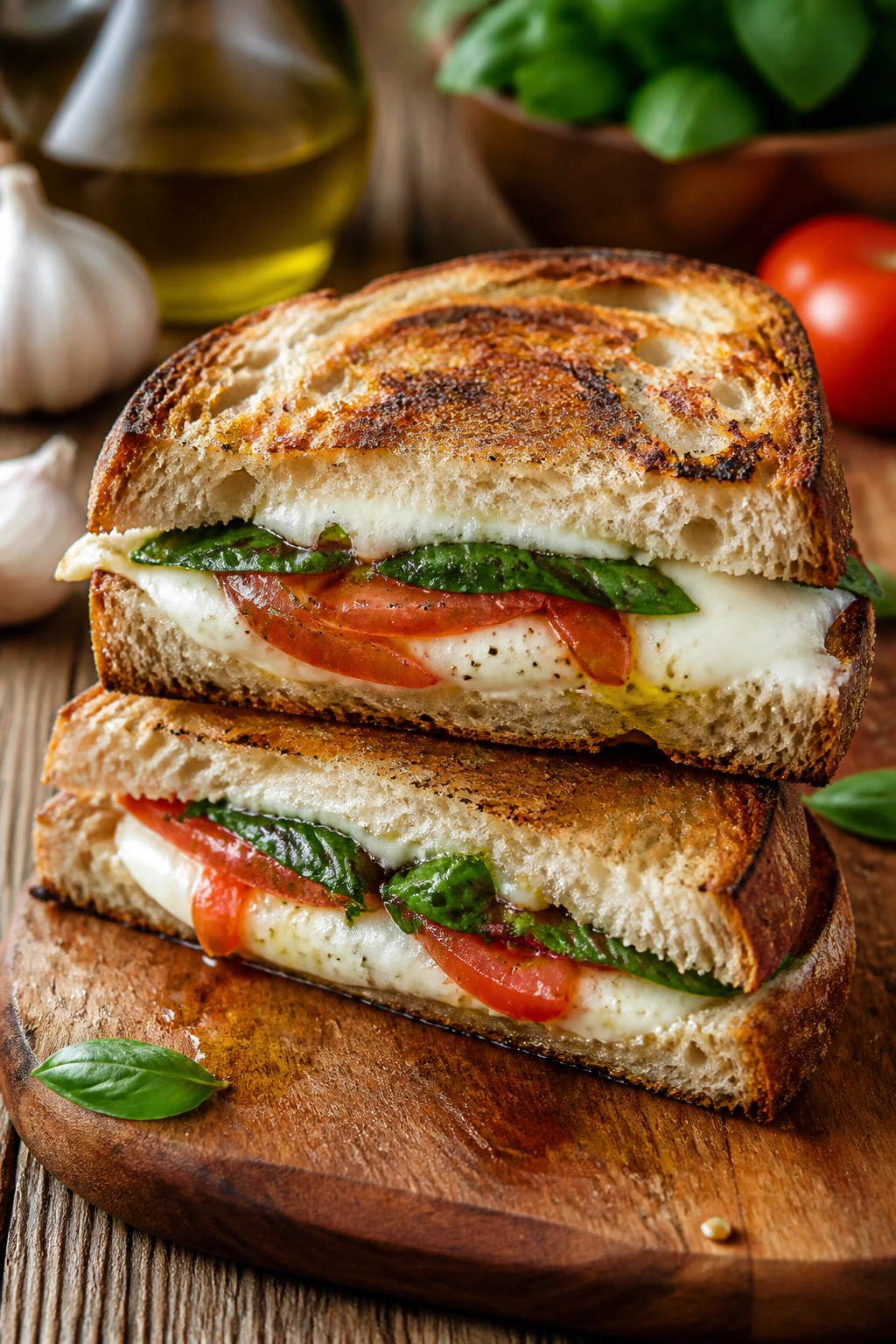
For the Sandwich:
- 4 slices rustic Italian bread, cut 3/4 to 1 inch thick
- 2 tablespoons extra-virgin olive oil, plus a little more for the pan
- 1 small garlic clove, peeled and halved
- 8 ounces fresh mozzarella, sliced into 1/4-inch rounds and patted dry
- 1 large ripe tomato or 2 medium tomatoes, sliced 1/4-inch thick
- 12 fresh basil leaves
- 1 teaspoon flaky sea salt, divided
- 1/2 teaspoon freshly ground black pepper
- 2 teaspoons balsamic glaze, optional but worth it if you like a sweet, dark finish
Why Each Ingredient Earns Its Place
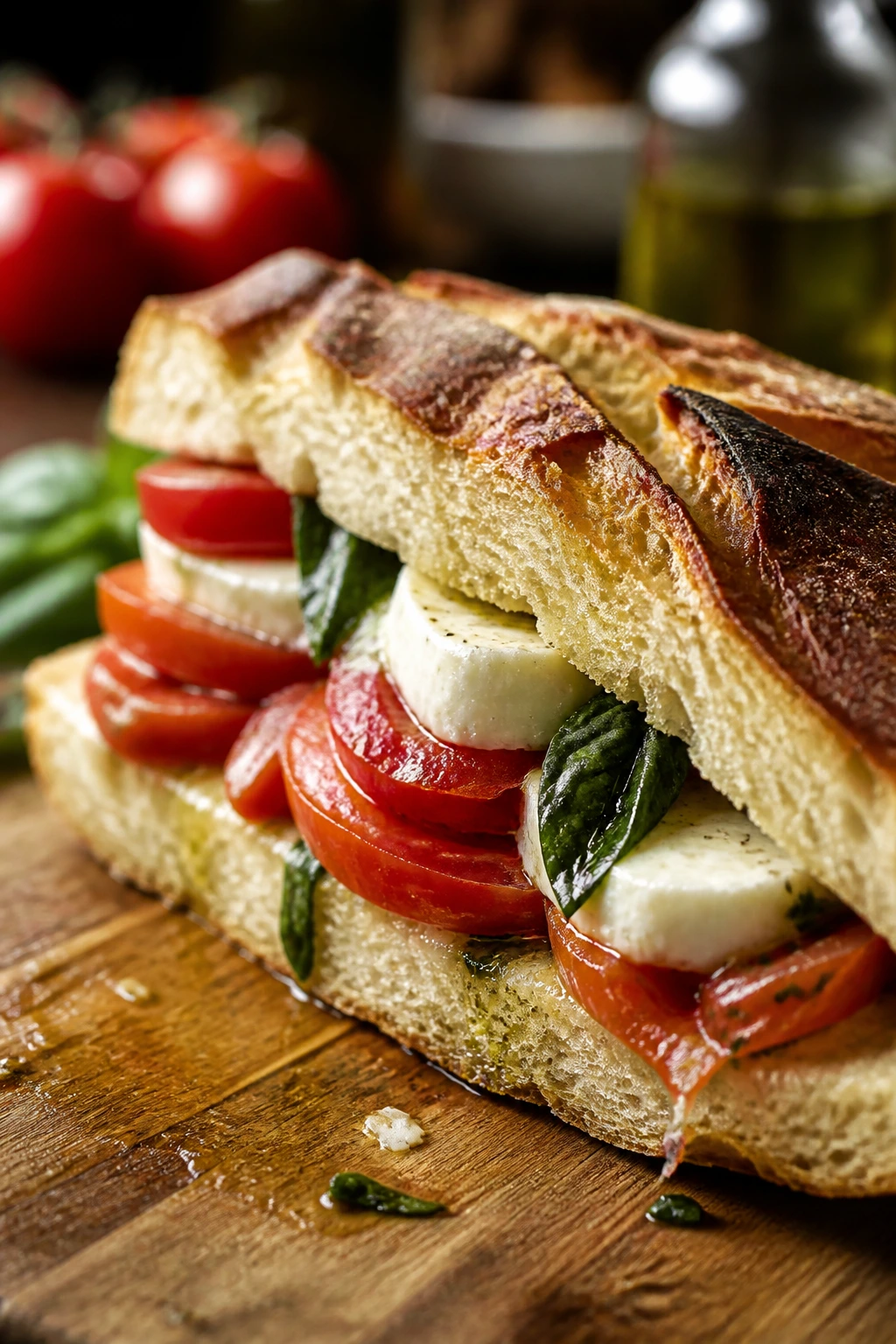
Bread That Can Carry Juice
What to use: 4 slices of rustic Italian bread, ciabatta, pane pugliese, sourdough, or another loaf with a crust and a little chew, cut about 3/4 to 1 inch thick.
Preparation: Slice it evenly so the sandwich presses and browns at the same rate from edge to edge. If the loaf is very soft, let the slices sit out for 20 minutes before cooking so the surface dries a little.
Substitutions: A firm country loaf works fine; baguette-style bread can work in a pinch if you split it lengthwise and keep the filling thinner.
Tips: Thin sandwich bread is a trap here. It steams, bends, and goes limp before the mozzarella even softens.
Tomatoes With Actual Flavor
What to use: 1 large ripe tomato or 2 medium tomatoes, sliced into 1/4-inch rounds. Heirloom, vine-ripened, or any tomato that feels heavy for its size will do better than pale, mealy ones.
Preparation: Slice right before assembly, then salt the slices and let them drain for about 10 minutes on paper towels. That pulls off extra liquid without flattening the taste.
Substitutions: Good cherry tomatoes, halved and lightly crushed, can work if the large tomatoes are weak. Roasted tomatoes are a fallback when fresh tomatoes are disappointing.
Tips: If the tomato slice bends like warm wax, it’s too ripe for this sandwich. If it feels hard as an apple, it won’t taste like much.
Mozzarella That Softens Instead of Flooding
What to use: 8 ounces fresh mozzarella, sliced into 1/4-inch rounds. Use the whole-milk kind if you can find it; it tastes cleaner and softens better.
Preparation: Drain it well and pat the slices dry with paper towels before building the sandwich. That one step keeps the bread from getting slick.
Substitutions: Burrata gives a richer center but leaks more, so use it only if you’re comfortable with a messier sandwich. Low-moisture mozzarella can work, but it changes the texture and loses some of the Caprese feel.
Tips: Cold mozzarella straight from the fridge stays firm in the middle and can leave the sandwich oddly stiff, so let it sit out for 10 to 15 minutes before cooking.
Basil and Salt Doing the Quiet Work
What to use: 12 fresh basil leaves, plus 1 teaspoon flaky sea salt and 1/2 teaspoon black pepper.
Preparation: Leave small leaves whole and tear larger leaves by hand so the edges stay rough and fragrant. Sprinkle the salt over the tomatoes, not into a pile where it can disappear.
Substitutions: Fresh oregano is stronger and more resinous; use it sparingly if basil is unavailable. A tiny pinch of dried oregano can work, but fresh basil is the better move here.
Tips: Basil bruises fast when chopped with a knife. Tear it, don’t mince it.
Olive Oil, Garlic, and the Finishing Touch
What to use: 2 tablespoons extra-virgin olive oil, 1 small garlic clove, and 2 teaspoons balsamic glaze if you want a sweet-tart finish.
Preparation: Use the olive oil on the outside of the bread for browning, then rub the warm toasted surface with the cut garlic clove for a faint, sweet garlic perfume. Drizzle the glaze after the sandwich comes off the heat.
Substitutions: If you don’t want balsamic glaze, a few drops of aged balsamic vinegar will do, though it runs more.
Tips: A peppery olive oil tastes better here than a flat, mild one. You can smell the difference before you even bite in.
The Tools That Make Assembly Easy
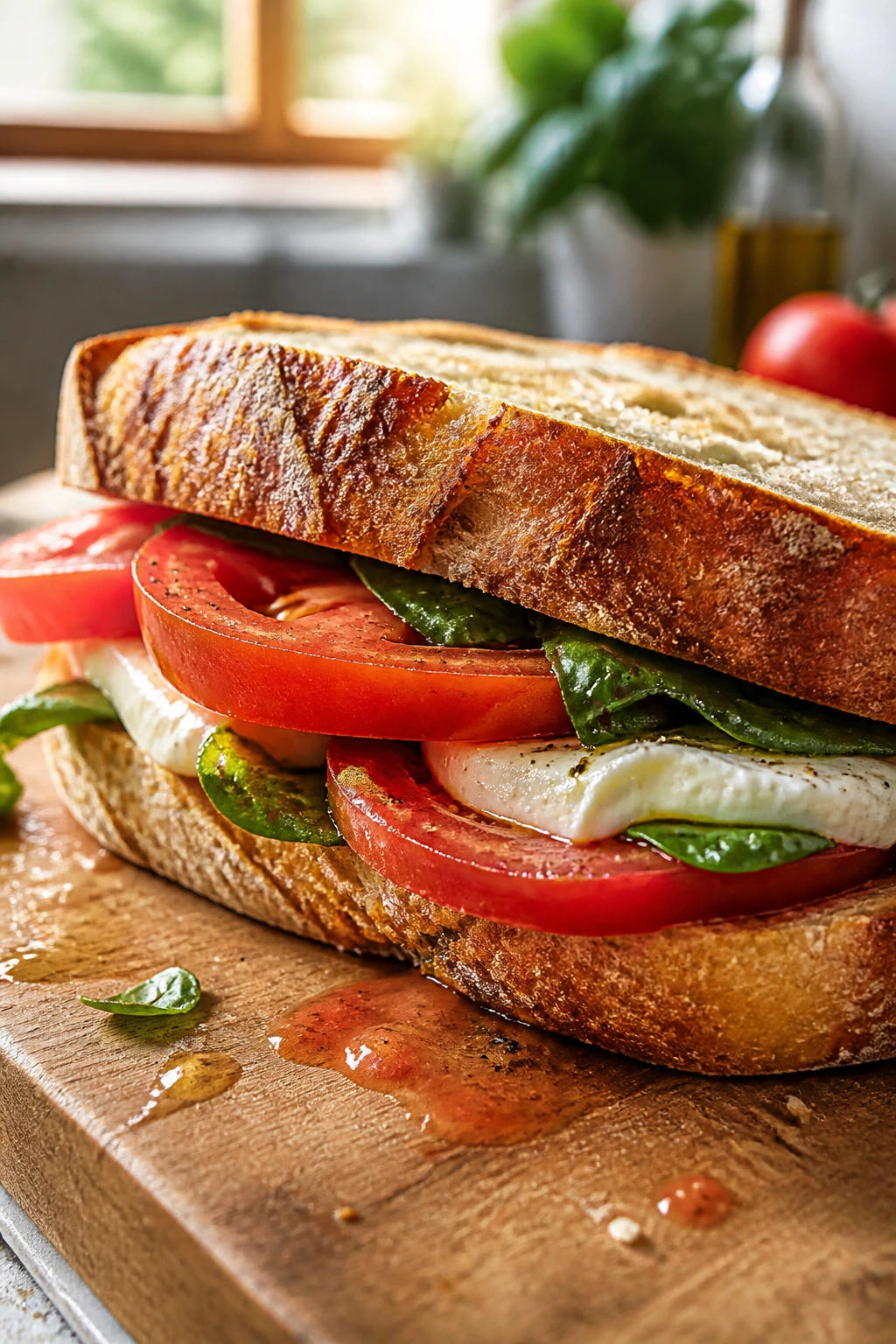
A sandwich this simple still behaves better with the right tools. Nothing fancy. Nothing expensive. Just a few things that help you keep the bread crisp and the tomatoes under control.
- Large skillet or grill pan: Cast iron gives the bread the best browning, but any heavy skillet will work if it heats evenly.
- Wide spatula: A fish spatula or other thin, broad turner makes it easier to flip without squashing the filling.
- Sharp chef’s knife: A dull knife mashes mozzarella and drags through the bread.
- Cutting board with a damp towel underneath: Keeps the board from sliding when you slice the sandwich.
- Paper towels: Needed for drying tomatoes and mozzarella, and they matter more than people expect.
- Pastry brush or clean fingers: Helpful for brushing olive oil over the bread edges without soaking one side.
- Small plate or tray: Useful for salting the tomatoes and catching the juices while they drain.
Building the Rustic Caprese Sandwich, Layer by Layer
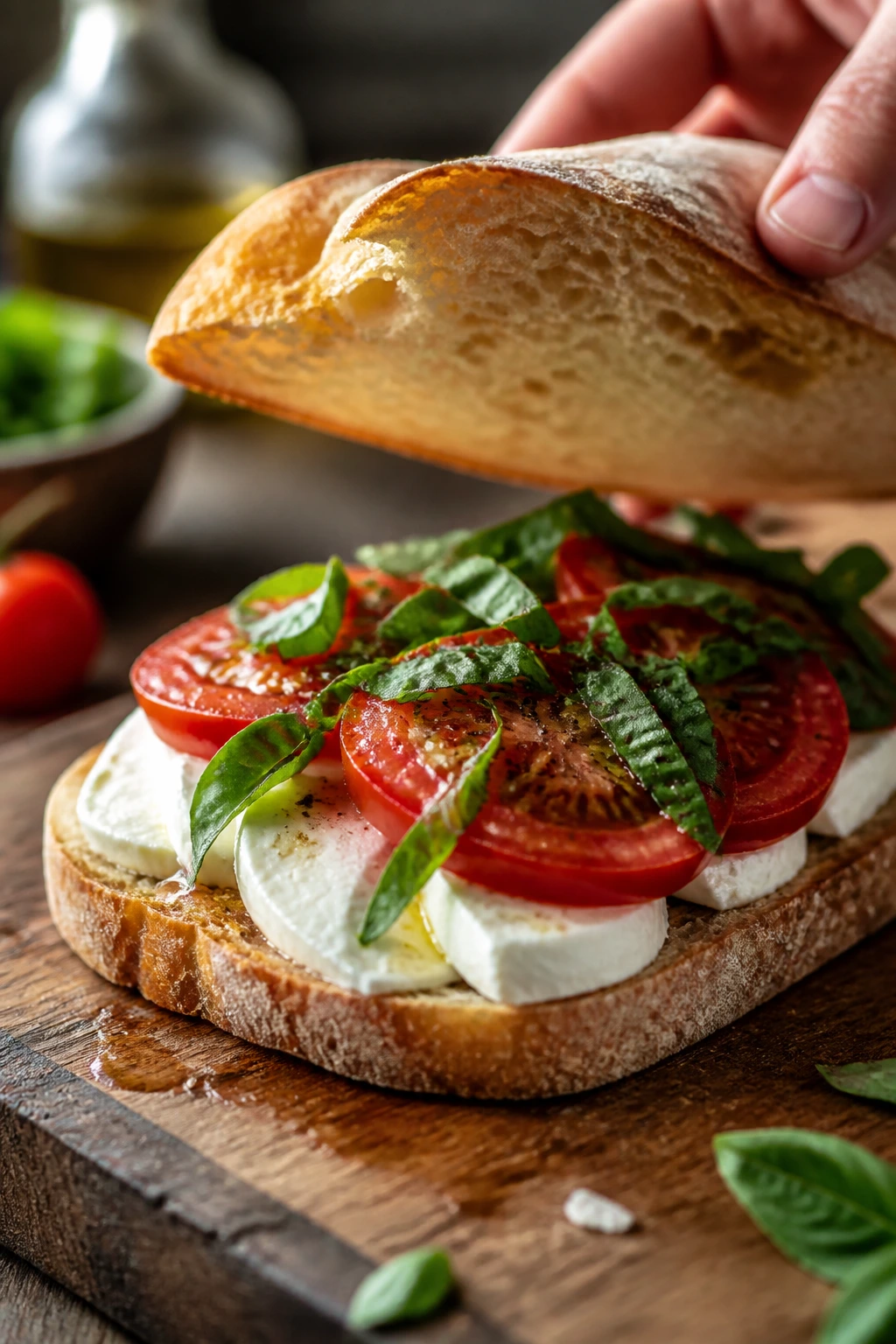
Prep the tomatoes and cheese:
- Slice the tomato into 1/4-inch rounds and lay the slices on a paper towel-lined plate. Sprinkle them with about half the flaky salt and let them sit for 10 minutes, until the paper towel looks damp and the slices stop shedding juice when lifted.
- Slice the mozzarella into 1/4-inch rounds and pat each slice dry on both sides. Set them aside at room temperature for 10 to 15 minutes so they soften a little before cooking.
Prep the bread and skillet: 3. Heat a large skillet or grill pan over medium-low heat for 2 minutes. You want steady heat, not a loud, smoking pan that burns the crust before the center warms. 4. Rub one cut side of each bread slice with the cut face of the garlic clove, using light pressure so the bread picks up the aroma without tasting raw and sharp. 5. Brush the outside faces of the bread lightly with olive oil. Use enough to help the bread brown, not so much that it turns greasy.
Assemble and cook: 6. Layer mozzarella over two slices of bread, then add the tomato slices, basil leaves, black pepper, and the remaining salt. If you want balsamic glaze, save it for after cooking; it burns faster than most people expect. 7. Top with the remaining bread slices, oil-side out, and set the sandwiches in the hot skillet. Press them gently with a spatula or a second pan for 30 seconds so the bread makes full contact with the heat. 8. Cook for 2 to 3 minutes on the first side, until the bread turns deep golden and the bottom sounds crisp when tapped with the spatula. Flip carefully and cook the second side for another 2 to 3 minutes, until the cheese softens and the sandwich feels warm all the way through. If the bread browns too fast, lower the heat before the cheese has a chance to soften.
Finish and serve: 9. Transfer the sandwiches to a cutting board and let them rest for 1 minute. Slice diagonally, drizzle with balsamic glaze if using, and serve right away while the bread is still crisp.
How to Serve It So the Plate Looks Thoughtful
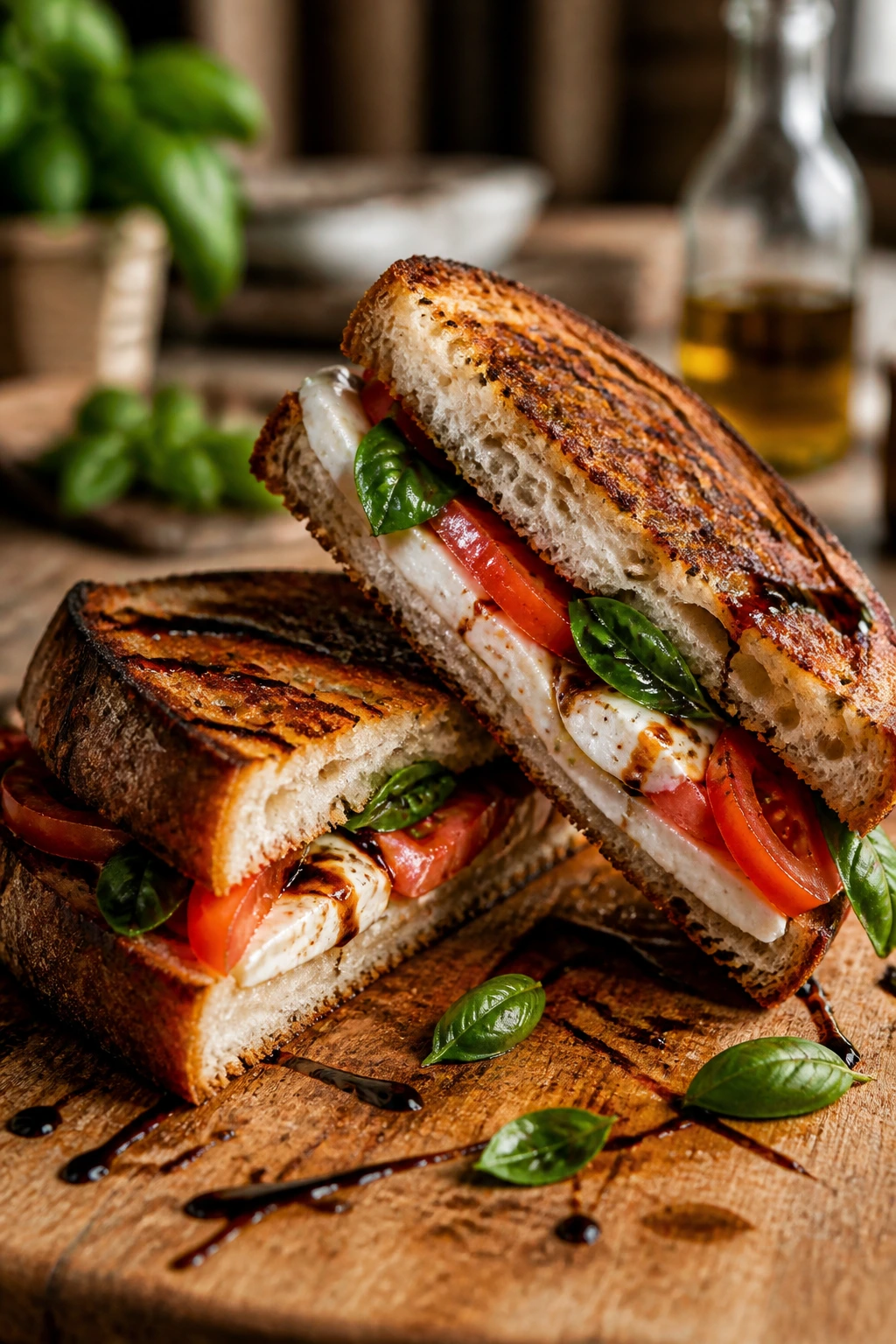
Presentation:
Cut the sandwich on the diagonal and let the halves lean slightly against each other so the tomato, mozzarella, and basil show at the edge. A few basil leaves scattered on the board look better than a pile of them stuffed inside. If you use balsamic glaze, drizzle in thin lines instead of flooding the plate.
Accompaniments:
A peppery arugula salad with lemon and olive oil keeps the meal from feeling too soft and rich. Roasted potato wedges, marinated olives, or a small bowl of tomato soup all work without stealing the spotlight. If you want something cold and crunchy, shaved fennel with lemon is sharp in a good way.
Portions:
One sandwich usually makes a solid lunch for one hungry person, especially with salad or soup on the side. If you’re serving it as part of a bigger spread, half a sandwich per person is plenty because the bread, cheese, and olive oil are more filling than they look.
Beverage Pairing:
Sparkling water with lemon is the easiest match because it cuts through the olive oil and cheese. For something stronger, a crisp Vermentino, Pinot Grigio, or a light Italian lager keeps the finish clean instead of heavy.
Smart Tricks, Shortcuts, and Better Flavor
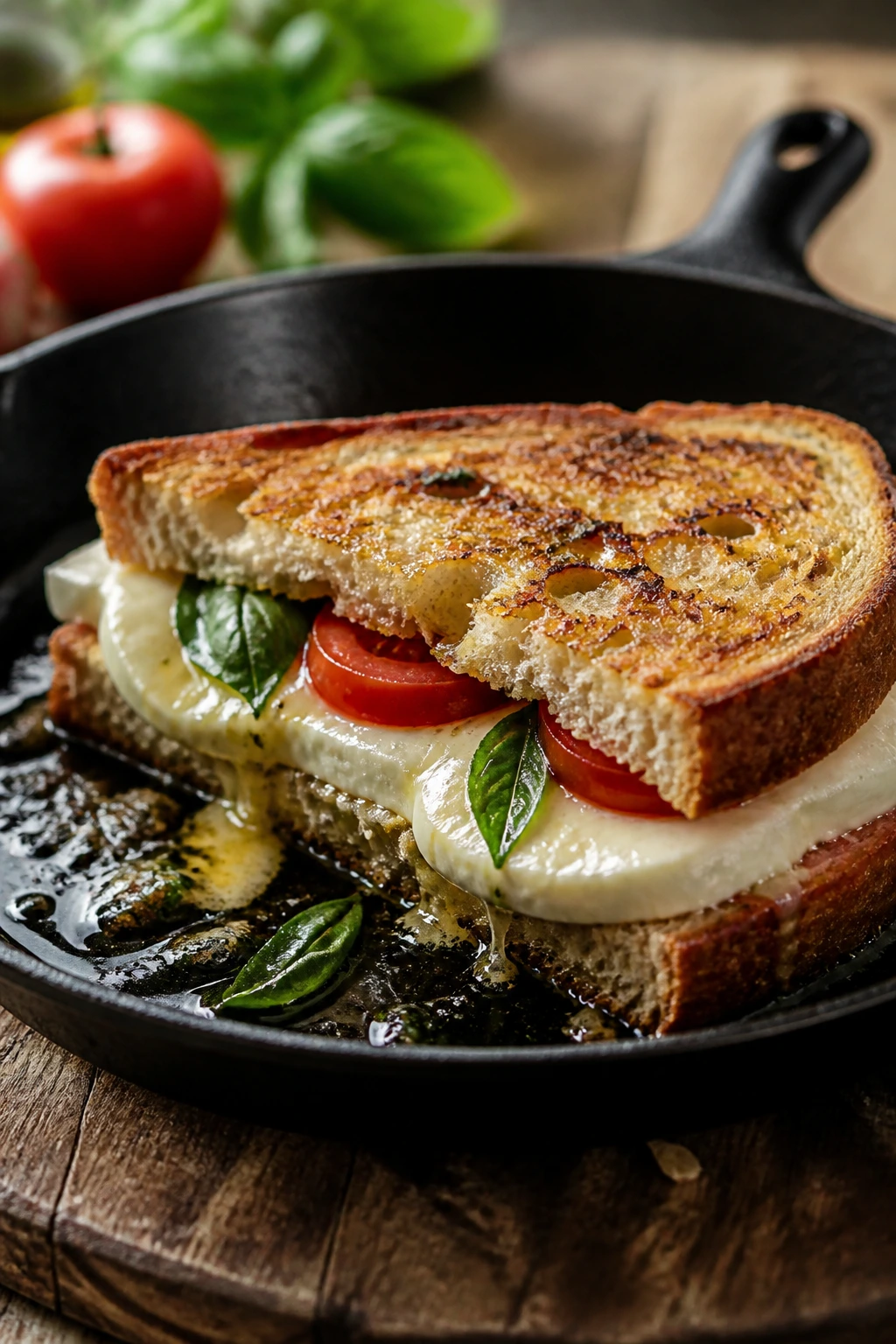
Flavor Enhancement:
Salt the tomatoes and let them drain, then add the tiniest extra pinch of flaky salt right before closing the sandwich. That second touch makes the tomato taste sweeter and sharper at the same time. A good balsamic glaze helps too, but only after the sandwich comes off the heat.
Texture Trick:
Pat the mozzarella dry on both sides and keep the slices thin. Thick slices don’t melt evenly in a short skillet cook, and watery cheese turns the bread slick by the third bite. Dry cheese behaves better. Every time.
Time-Saver:
If you’re making several sandwiches, prep the tomatoes and mozzarella on a tray in the fridge, but leave the salt for the last minute. You can also rub the bread with garlic and oil it ahead of time, then stack everything only when the skillet is hot.
Make-It-Yours:
A few paper-thin red onion slices bring a sharp edge if you like more bite. If you want a richer sandwich, add a thin spread of basil pesto under the mozzarella. Keep the layer thin, though, or the sandwich stops tasting like Caprese and starts tasting like everything all at once.
The Messes That Ruin a Caprese Sandwich
-
Using wet tomatoes straight from the cutting board: The sandwich turns slick within minutes, and the bread loses its crust. Salt the slices first, let them drain, and blot them again before assembling.
-
Choosing bread that’s too soft: The crust may brown, but the center compresses and goes pasty under the weight of the mozzarella. Use a sturdy loaf with enough structure to stay upright when pressed.
-
Overfilling the middle: Too much cheese or too many tomato slices makes the sandwich burst open before the bread browns. Two or three layers of each ingredient are enough; more usually means a messy board and a soggy crust.
-
Cooking over heat that’s too high: The outside turns dark before the cheese loosens, which leaves you with a hot shell and a cold center. Medium-low heat gives the filling time to warm without scorching the bread.
-
Adding balsamic glaze too early: The glaze can stick to the pan and burn into a bitter smear. Drizzle it after the sandwich is off the heat, when the bread is already crisp and the cheese has settled.
Variations That Stay Close to the Original
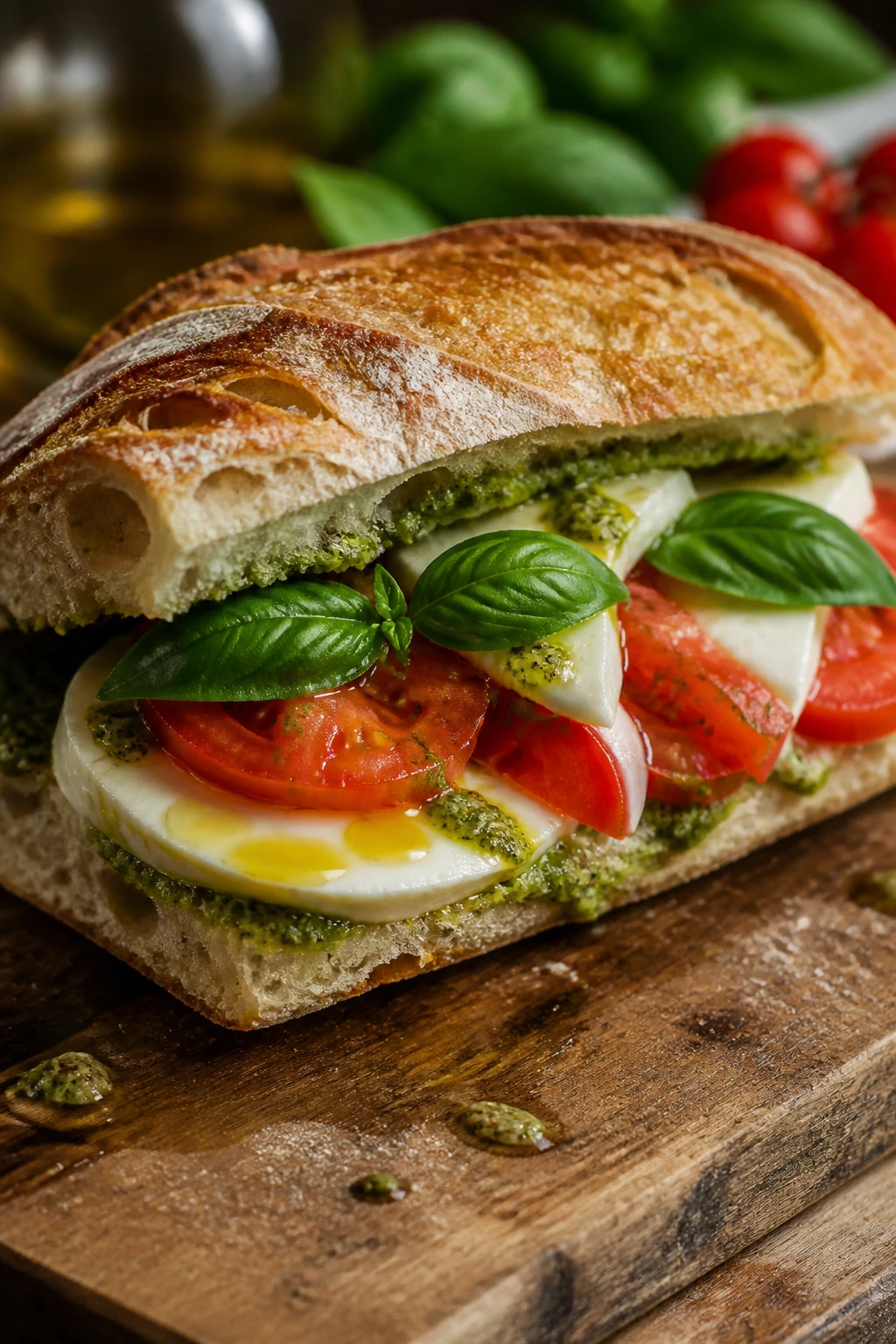
Pesto-Kissed Version
Spread 1 teaspoon of basil pesto on the inside of each bread slice before layering the mozzarella. It adds a more herbal, garlic-heavy note and works well when the tomatoes are strong but not especially sweet.
Prosciutto Ribbon
Slip 2 thin slices of prosciutto between the mozzarella and tomato layers. The saltiness works hard here, so use a lighter hand with the flaky salt on the tomatoes or the sandwich can tip too far toward salty.
Grilled Vegetable Caprese
Add a few thin slices of grilled zucchini or eggplant, well drained and lightly salted. This version feels heartier and can stretch the sandwich into a more filling lunch without burying the tomato flavor.
Dairy-Free Garden Stack
Use a good plant-based mozzarella that softens gently, or pair the tomatoes and basil with grilled eggplant and a little avocado for body. It won’t taste exactly like the classic, but the same bread-tomato-herb rhythm still works.
Packing It Without the Sog
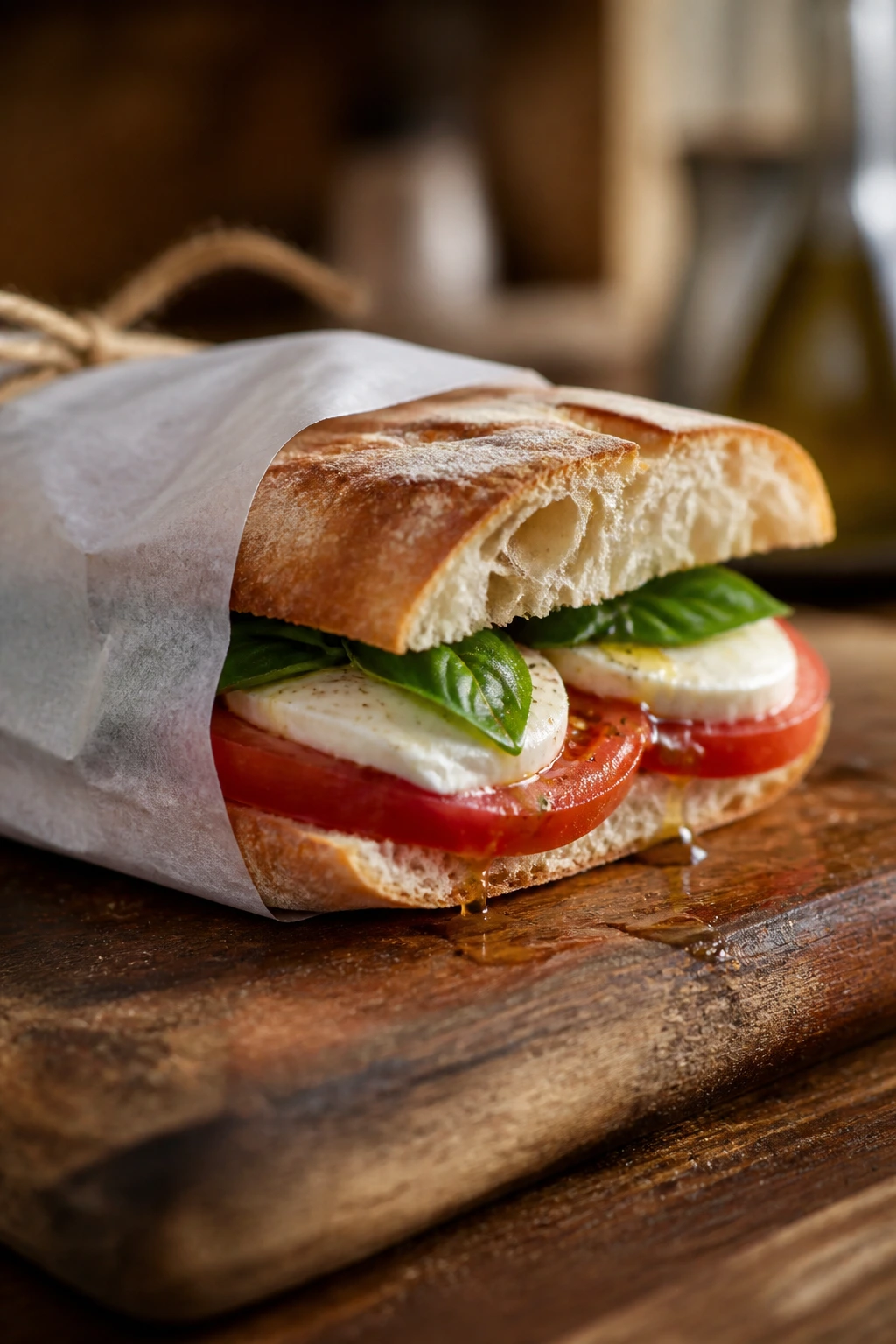
A Caprese sandwich is at its best the minute it leaves the skillet. After that, the bread starts negotiating with the tomato juice, and the bread almost always loses. If you’re making it for lunch later, keep the parts separate until the last possible moment.
The bread can sit at room temperature for a day or two if it’s wrapped in paper or a clean kitchen towel. If you want longer storage, freeze the slices in a sealed bag for up to 2 months and toast them straight from frozen. Fresh mozzarella should stay in its liquid until you’re ready to slice it, then be used within 2 days for the best texture.
Tomatoes are the delicate part. Slice them the same day you plan to eat, salt them for 10 minutes, and stop there. If you assemble the sandwich ahead, wrap it tightly and refrigerate it for no more than 1 day, but expect softer bread and a less crisp crust.
Reheating works best in a skillet over medium-low heat for 2 to 3 minutes per side, or in a 325°F oven for 6 to 8 minutes. Skip the microwave unless you’re already resigned to a limp sandwich. It heats the cheese. It also wrecks the bread.
Questions People Ask Before Making One

Can I use regular mozzarella instead of fresh mozzarella?
Yes, but the sandwich changes. Low-moisture mozzarella melts more like a grilled cheese filling, while fresh mozzarella stays softer and gives you that milky, Caprese-style bite. If you use regular mozzarella, slice it thin so it warms through before the bread gets too dark.
What bread is best if I can’t find rustic Italian loaf?
Use any loaf with a firm crust and some chew, such as ciabatta or sourdough. The real test is whether the bread can stay crisp after a little olive oil and tomato juice. Soft white sandwich bread will give up fast.
Do I need balsamic glaze?
No, but it’s one of the few extras that makes sense here. A small drizzle adds sweetness and a dark, sticky note that plays nicely with tomato and mozzarella. If your tomatoes are already very sweet, you can leave it out.
How do I keep the sandwich from getting soggy?
Dry the mozzarella, salt the tomatoes, and don’t assemble the sandwich too far ahead. Those three steps do more than any fancy trick. Warm the bread in the skillet just long enough to crisp the crust, then eat while the sandwich still has some structure.
Can I make it without a grill pan or panini press?
Absolutely. A regular heavy skillet works fine, and a second skillet set on top can act as a weight. Keep the heat moderate and flip once the first side is deep golden, not pale blond.
What if my tomatoes are bland?
Use a pinch more salt, a tiny drizzle of balsamic glaze, and a little black pepper. If the tomatoes are still weak, roast them briefly in a hot oven until the edges wrinkle and the flavor tightens up. That’s not the classic move, but it saves a bad tomato.
Can I pack this for lunch?
You can, but it’s better if you pack the components separately and assemble at the table or desk. If you must pack it already built, wrap it tightly, keep it chilled, and expect the bread to soften. It’ll still taste good, but it won’t have that fresh crunch from the skillet.
A Lunch Worth Repeating
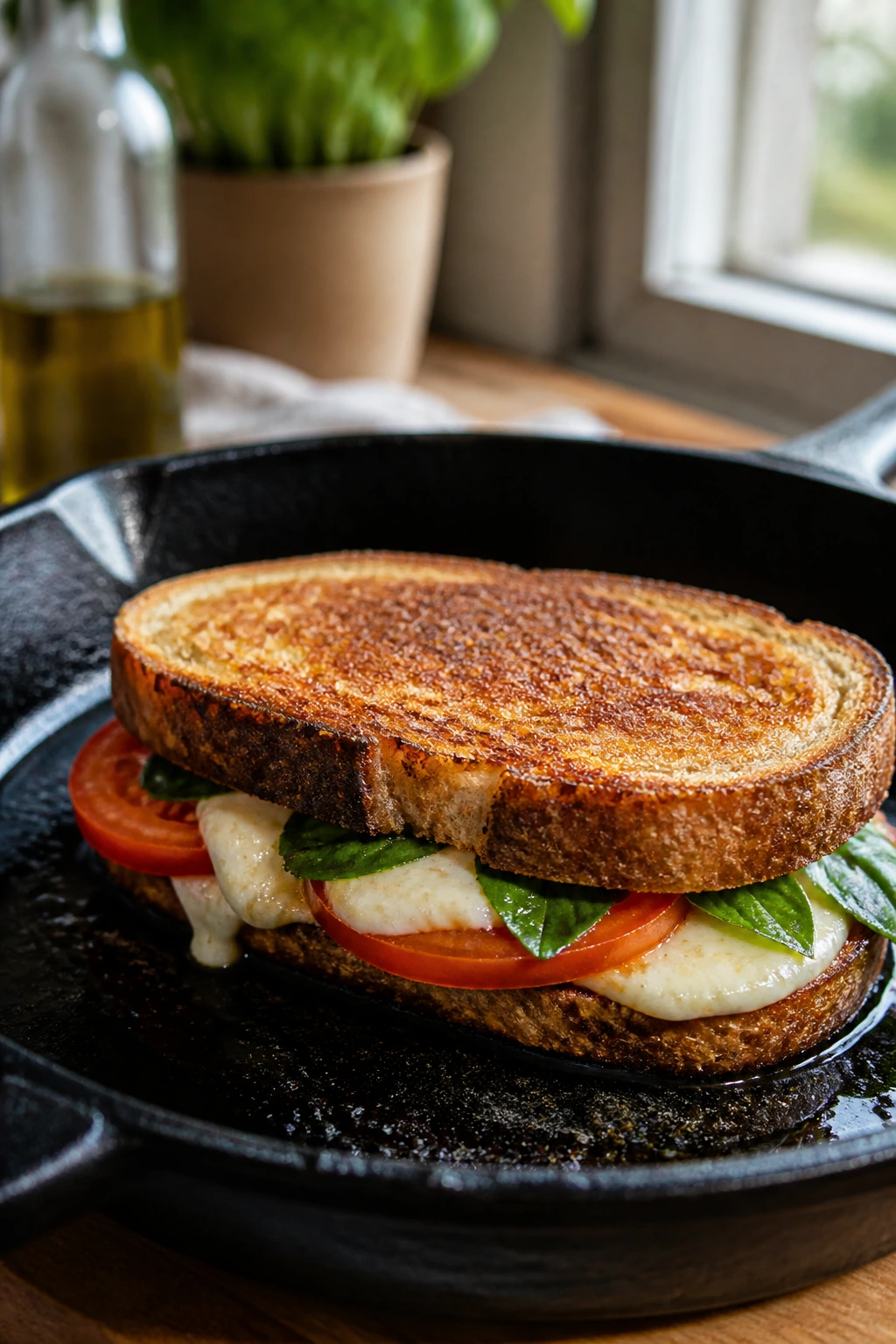
The best thing about this sandwich is that it doesn’t pretend to be more complicated than it is. It’s bread, tomato, mozzarella, basil, and olive oil — but when the bread is sturdy, the tomatoes are salted, and the skillet does its job, those few ingredients start tasting like a much bigger lunch.
That’s the part people miss when they rush Caprese sandwiches. They treat it like a stack. It’s not a stack. It’s a balance of moisture, heat, and restraint, with just enough garlic and balsamic to make the whole thing feel like someone cared while making it.
Rustic Caprese Sandwich — Recipe Card
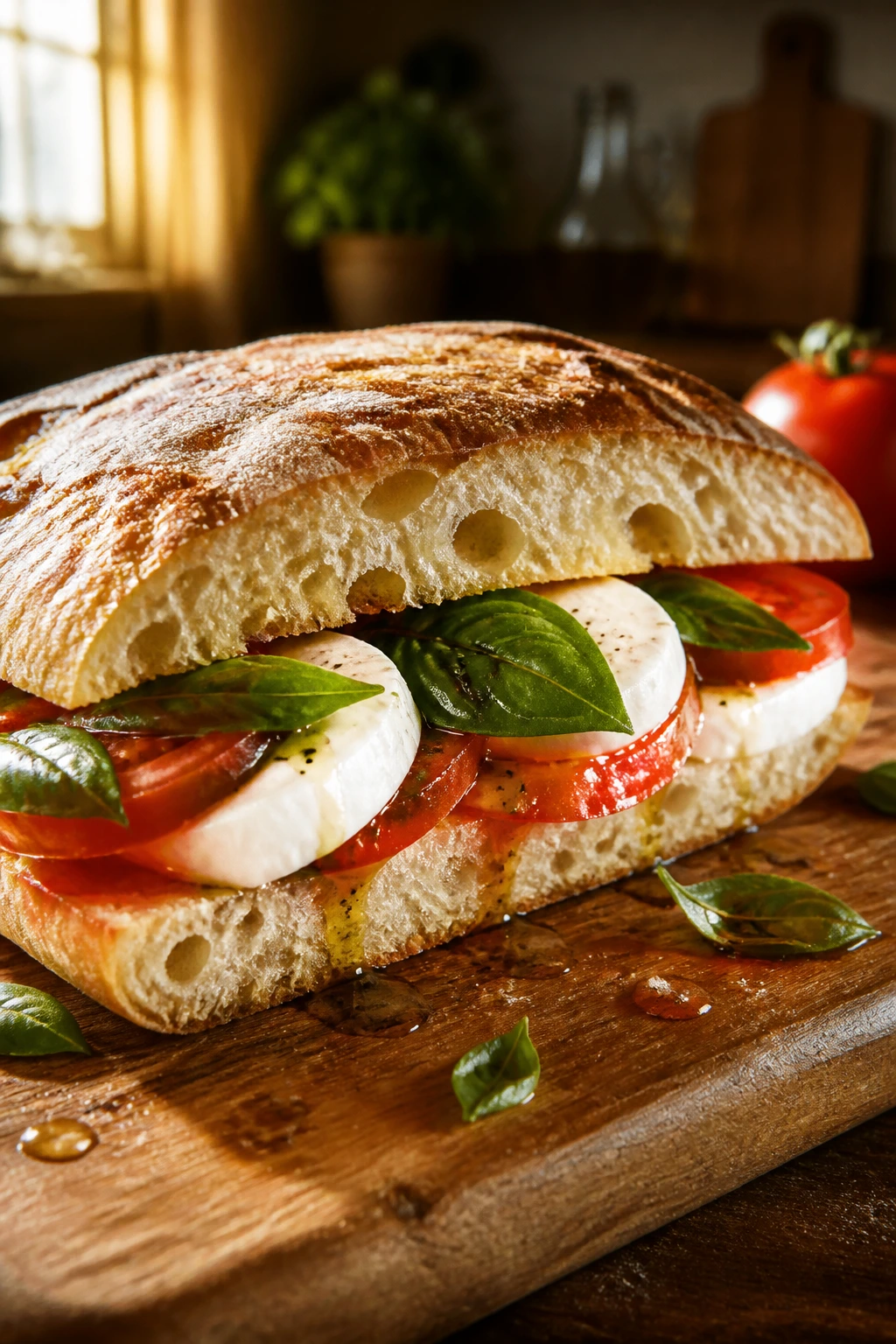
Recipe Name: Rustic Caprese Sandwich Like Nonna Used to Make
Description: A crusty, garlic-kissed sandwich layered with ripe tomatoes, fresh mozzarella, basil, olive oil, and a little balsamic glaze. It’s warm, juicy, and best eaten right away while the bread still crackles.
Prep Time: 15 minutes
Cook Time: 6 to 8 minutes
Total Time: 21 to 23 minutes
Course: Lunch, Main Course
Cuisine: Italian-inspired
Servings: 2 sandwiches
Calories: About 540 kcal per sandwich
Ingredients
For the Sandwich:
- 4 slices rustic Italian bread, cut 3/4 to 1 inch thick
- 2 tablespoons extra-virgin olive oil, plus a little more for the pan
- 1 small garlic clove, peeled and halved
- 8 ounces fresh mozzarella, sliced into 1/4-inch rounds and patted dry
- 1 large ripe tomato or 2 medium tomatoes, sliced 1/4-inch thick
- 12 fresh basil leaves
- 1 teaspoon flaky sea salt, divided
- 1/2 teaspoon freshly ground black pepper
- 2 teaspoons balsamic glaze, optional
Instructions
- Slice the tomatoes and let them drain on paper towels with half the salt for about 10 minutes.
- Pat the mozzarella dry and let it sit at room temperature for 10 to 15 minutes.
- Heat a skillet or grill pan over medium-low heat.
- Rub the cut side of each bread slice with the garlic clove, then brush the outside faces with olive oil.
- Layer mozzarella, tomato, basil, black pepper, and the remaining salt between the bread slices.
- Cook the sandwiches in the skillet for 2 to 3 minutes per side, pressing gently, until the bread is golden and the cheese softens.
- Rest for 1 minute, slice diagonally, and drizzle with balsamic glaze if using.
Notes: Salt the tomatoes and dry the mozzarella or the bread will soften fast. Balsamic glaze goes on after cooking, not before. If the bread browns too quickly, lower the heat and let the cheese catch up.