



Marinated beef earns its keep when you want dinner to feel steady and generous, not fussy. The marinade does the quiet work first: salt pulls seasoning into the meat, a little acid softens the surface, and garlic, Worcestershire, soy, and tomato paste build that dark, savory smell that fills the kitchen before the pot even hits the oven.
I like this style of beef because it forgives a lot. Chuck roast is not delicate, and that is the point. It likes a good sear, a covered braise, and enough time for the fibers to loosen until the meat gives way with barely any pressure from a fork. If you rush it, you get chewy cubes. If you give it the right heat and a few hours in the fridge, you get a pan of beef that tastes deeper than the ingredient list would suggest.
There’s also something especially satisfying about a dish like this on a long evening. The sauce turns glossy and brown, the onions soften into the broth, and the whole pot smells like beef gravy with more backbone. It’s the sort of dinner that wants mashed potatoes nearby, though buttered noodles or rice work too if that’s what’s in the cupboard.
The nice part is that the flavor doesn’t come from one dramatic trick. It comes from small, unglamorous choices made in the right order — dry the beef, marinate it long enough, brown it in batches, and braise it gently. Get those pieces right and the rest falls into place.
Why This Beef Tastes Deeper Than a Plain Pot Roast
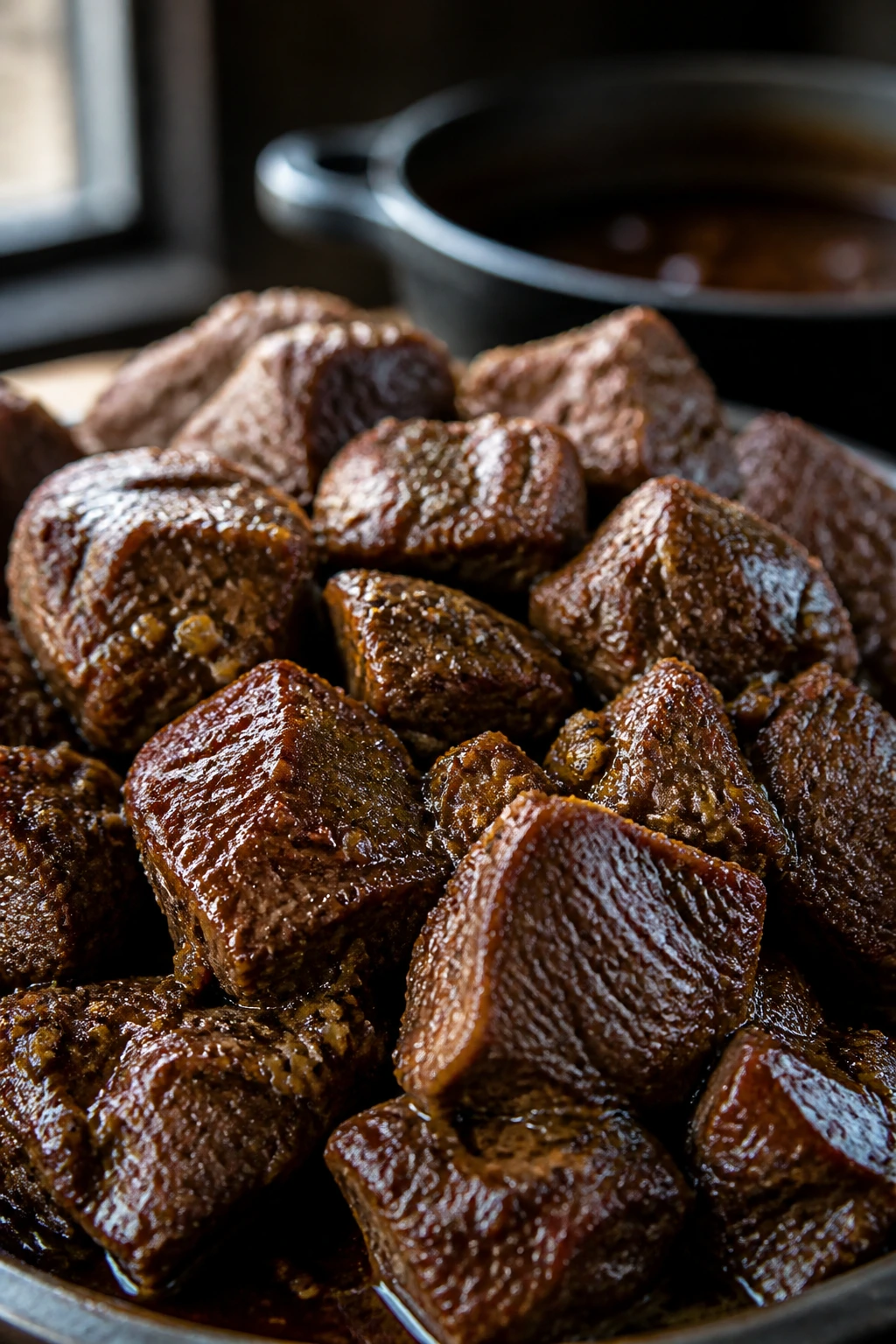
Marinated beef has a head start. Salt, soy sauce, Worcestershire, and a little vinegar do more than season the surface; they push flavor into the outer layers so every bite tastes seasoned, not just coated. That matters with chuck roast, because the cut is thick and sturdy enough to hold onto that flavor once it starts to relax in the oven.
The marinade also changes the mood of the sauce. A plain beef braise can taste flat if you don’t build it carefully. Here, the marinade brings soy, garlic, mustard, and a hint of sweetness, so the final gravy tastes darker and fuller without needing a pile of extra ingredients.
This method is forgiving in the right way. The beef cubes braise at 325°F, which is gentle enough to keep them from tightening up but hot enough to move the texture along. If your oven runs a touch cool, the beef just needs a little more time — not a rescue mission.
It fits a real dinner table. Mashed potatoes, egg noodles, rice, roasted carrots, crusty bread — all of them make sense here. You do not need a garnish that looks clever on a plate; you need something that can catch the sauce.
Leftovers get better, not duller. The sauce thickens in the fridge, the seasoning settles in, and reheated portions taste rounder the next day. That’s one of the reasons I keep returning to braised beef dishes like this one.
Yield: Serves 6
Prep Time: 25 minutes
Cook Time: 1 hour 45 minutes
Total Time: 2 hours 10 minutes active + 4 to 12 hours marinating
Chill/Rest Time: 4 to 12 hours marinating, plus 15 minutes resting before serving
Difficulty: Intermediate — the steps are straightforward, but the beef needs proper browning and a gentle braise to turn tender.
Best Served: Hot over mashed potatoes, buttered egg noodles, or steamed rice
What Goes Into the Pot
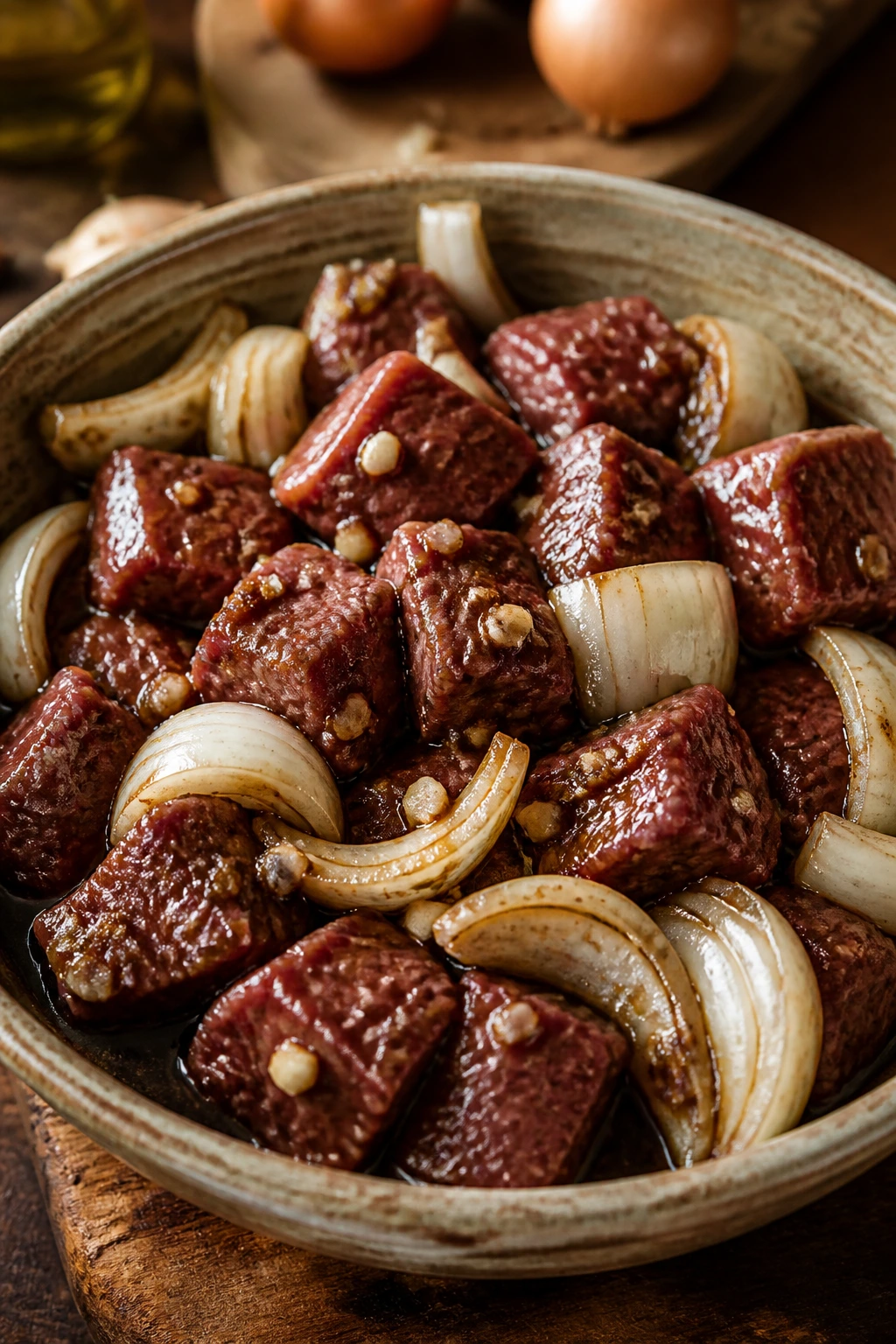
The ingredient list looks familiar on purpose. Comfort food works best when the flavors are legible from the first bite, and this one leans on beef, onion, garlic, and a rich braising liquid that turns into sauce.
For the Beef and Marinade:
- 2 1/2 pounds beef chuck roast, trimmed and cut into 1 1/2-inch cubes
- 1/3 cup low-sodium soy sauce
- 1/4 cup Worcestershire sauce
- 1/4 cup dry red wine, or extra beef broth
- 2 tablespoons apple cider vinegar
- 2 tablespoons olive oil
- 1 tablespoon packed dark brown sugar
- 1 tablespoon Dijon mustard
- 6 garlic cloves, finely grated or minced
- 1 teaspoon smoked paprika
- 1 teaspoon freshly ground black pepper
- 1 teaspoon kosher salt
For the Braise:
- 2 tablespoons neutral oil, for searing
- 1 large yellow onion, sliced into thick half-moons
- 2 medium carrots, peeled and cut into 1/2-inch coins
- 2 celery stalks, diced
- 2 tablespoons tomato paste
- 2 tablespoons all-purpose flour
- 2 1/2 cups low-sodium beef broth
- 1 bay leaf
To Finish:
- 1 tablespoon unsalted butter
- 1 tablespoon chopped fresh parsley
- Kosher salt and black pepper, to taste
Why Each Ingredient Pulls Its Weight
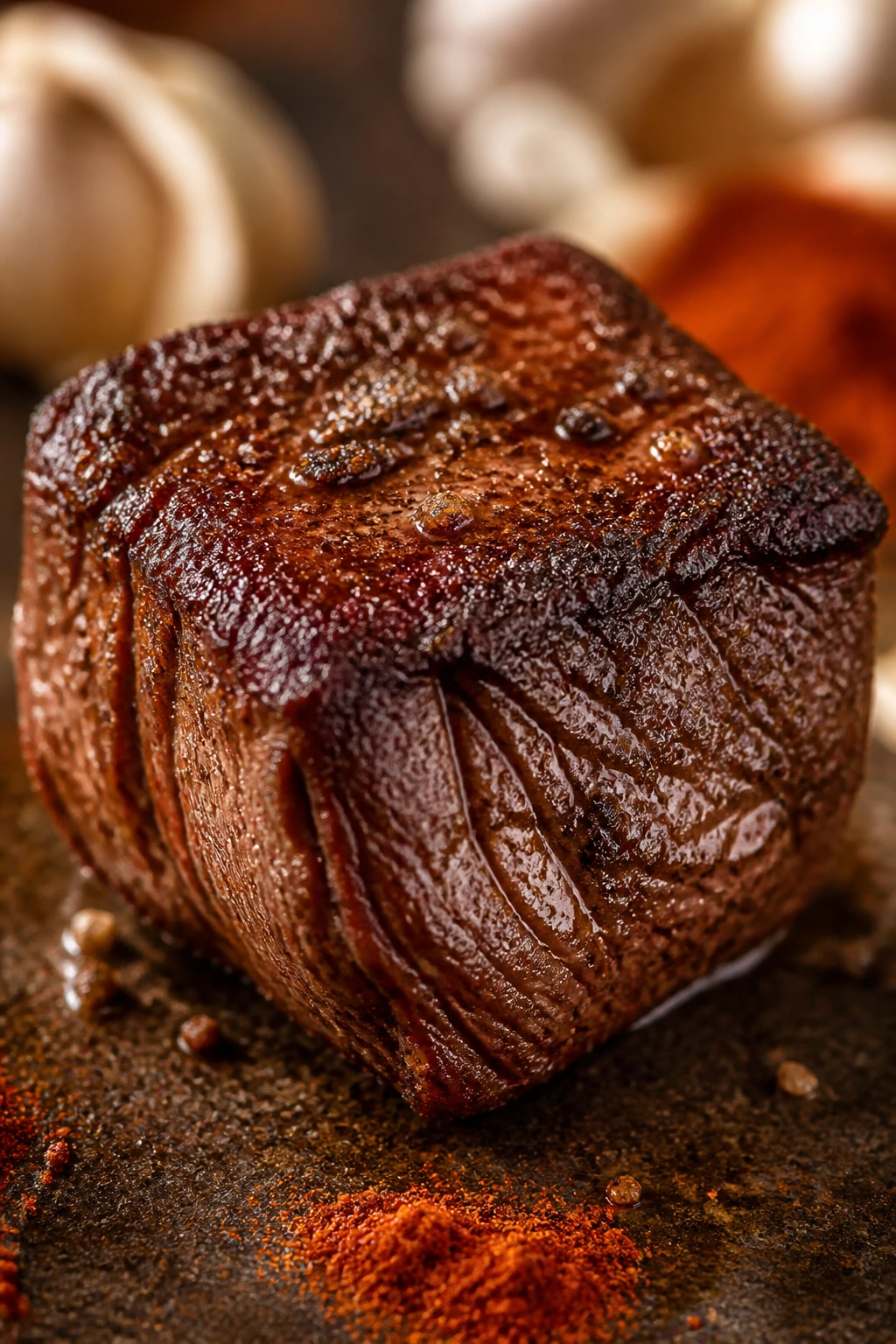
Beef chuck roast
What to use: 2 1/2 pounds beef chuck roast, trimmed and cut into even cubes.
Preparation: Cut it into roughly the same size so the pieces brown and braise at the same pace.
Substitutions: Bottom round works if chuck is unavailable, though it can be leaner and needs extra care not to overcook.
Tips: Chuck has enough fat and connective tissue to turn silky after a long braise; a lean steak cut will not give you the same texture.
Soy sauce, Worcestershire, vinegar, and mustard
What to use: 1/3 cup soy sauce, 1/4 cup Worcestershire, 2 tablespoons apple cider vinegar, and 1 tablespoon Dijon mustard.
Preparation: Whisk them together until the mustard disappears and the marinade looks smooth rather than streaky.
Substitutions: Tamari can stand in for soy sauce, and balsamic vinegar can replace apple cider vinegar if that’s what you have.
Tips: This is the flavor spine of the dish. If you cut the soy way down, the gravy can taste a little thin and one-note.
Garlic, paprika, pepper, and brown sugar
What to use: 6 garlic cloves, 1 teaspoon smoked paprika, 1 teaspoon black pepper, and 1 tablespoon brown sugar.
Preparation: Grate or mince the garlic so it spreads through the marinade instead of sitting in little chunks.
Substitutions: Maple syrup can replace the brown sugar in a pinch, and regular paprika will work if smoked paprika is not in the pantry.
Tips: The sugar is not there to make the dish sweet. It rounds out the acid and helps the beef brown a little faster.
Onion, carrot, celery, and tomato paste
What to use: 1 onion, 2 carrots, 2 celery stalks, and 2 tablespoons tomato paste.
Preparation: Keep the onion slices thick enough to hold their shape, and dice the celery finely so it melts into the sauce.
Substitutions: Mushrooms can replace celery if you want a darker, earthier pot.
Tips: Tomato paste should cook for a full minute before the liquid goes in; that small step keeps it from tasting raw and tinny.
Beef broth, flour, butter, and herbs
What to use: 2 1/2 cups beef broth, 2 tablespoons flour, 1 tablespoon butter, 1 bay leaf, and 1 tablespoon parsley.
Preparation: Measure the broth before you start browning the beef so you’re not scrambling with a splattering pot.
Substitutions: Gluten-free flour works here if you need it, and a sprig of thyme can take the bay leaf’s place.
Tips: Butter at the end softens the edges of the sauce in a way oil never does. Use it off the heat so the sauce stays glossy.
The Tools That Make the Job Easier
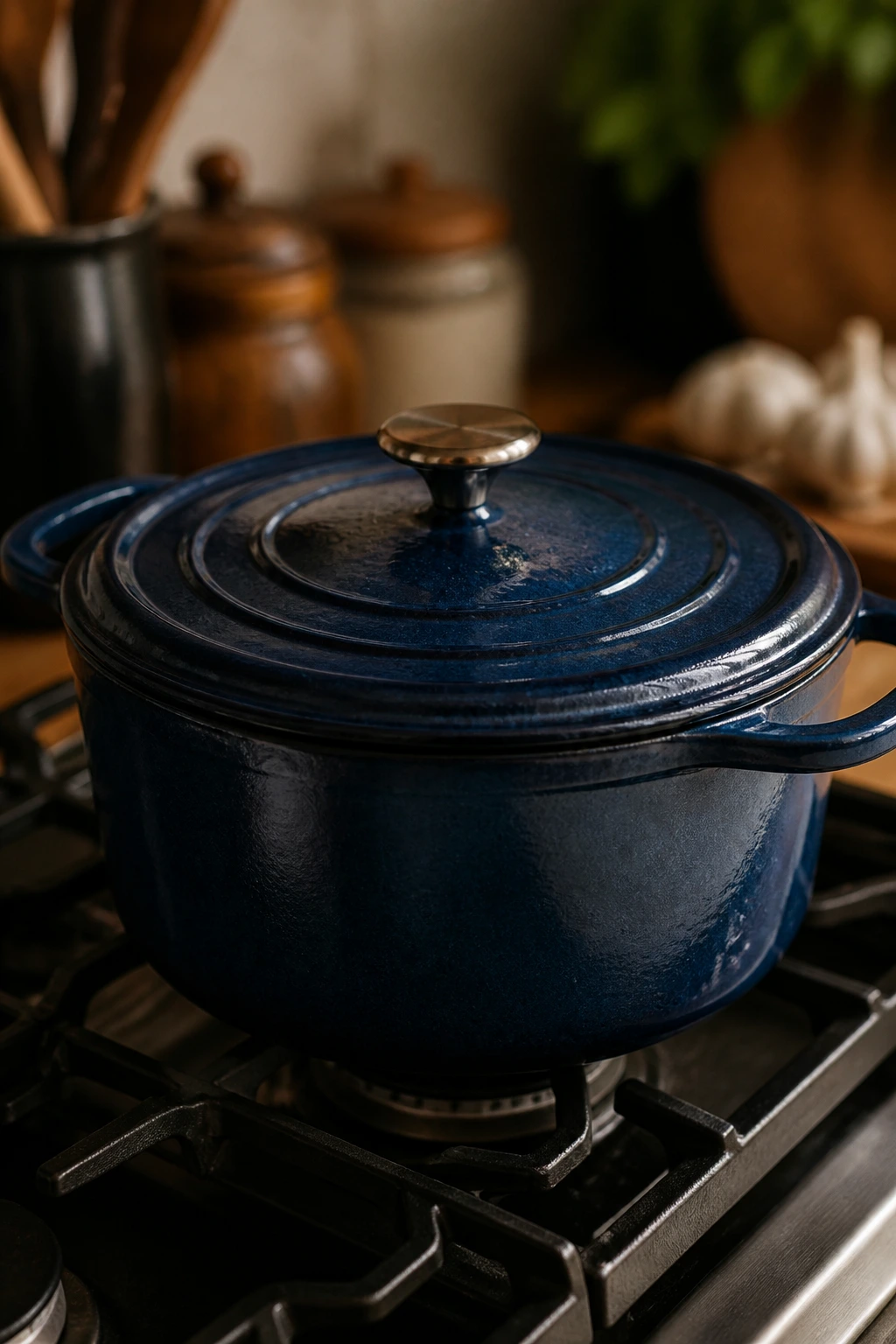
A few sturdy pieces of equipment make this recipe much smoother. None of them are fancy, and that’s part of the appeal.
- 5- to 7-quart Dutch oven with a lid — Best choice for searing and braising in one pot.
- Large mixing bowl or zip-top bag — Use whichever fits your fridge space better for marinating.
- Tongs — Helpful for turning beef cubes without tearing the surface.
- Whisk — Makes the marinade smooth and helps the mustard disappear.
- Chef’s knife and cutting board — A sharp knife keeps the beef cubes tidy and the onions less ragged.
- Wooden spoon or heatproof spatula — Good for scraping up browned bits after the broth goes in.
- Fine-mesh strainer, optional — Useful if you want a smoother sauce and prefer to strain out the garlic bits after marinating.
How to Marinate the Beef Without Overdoing the Acid
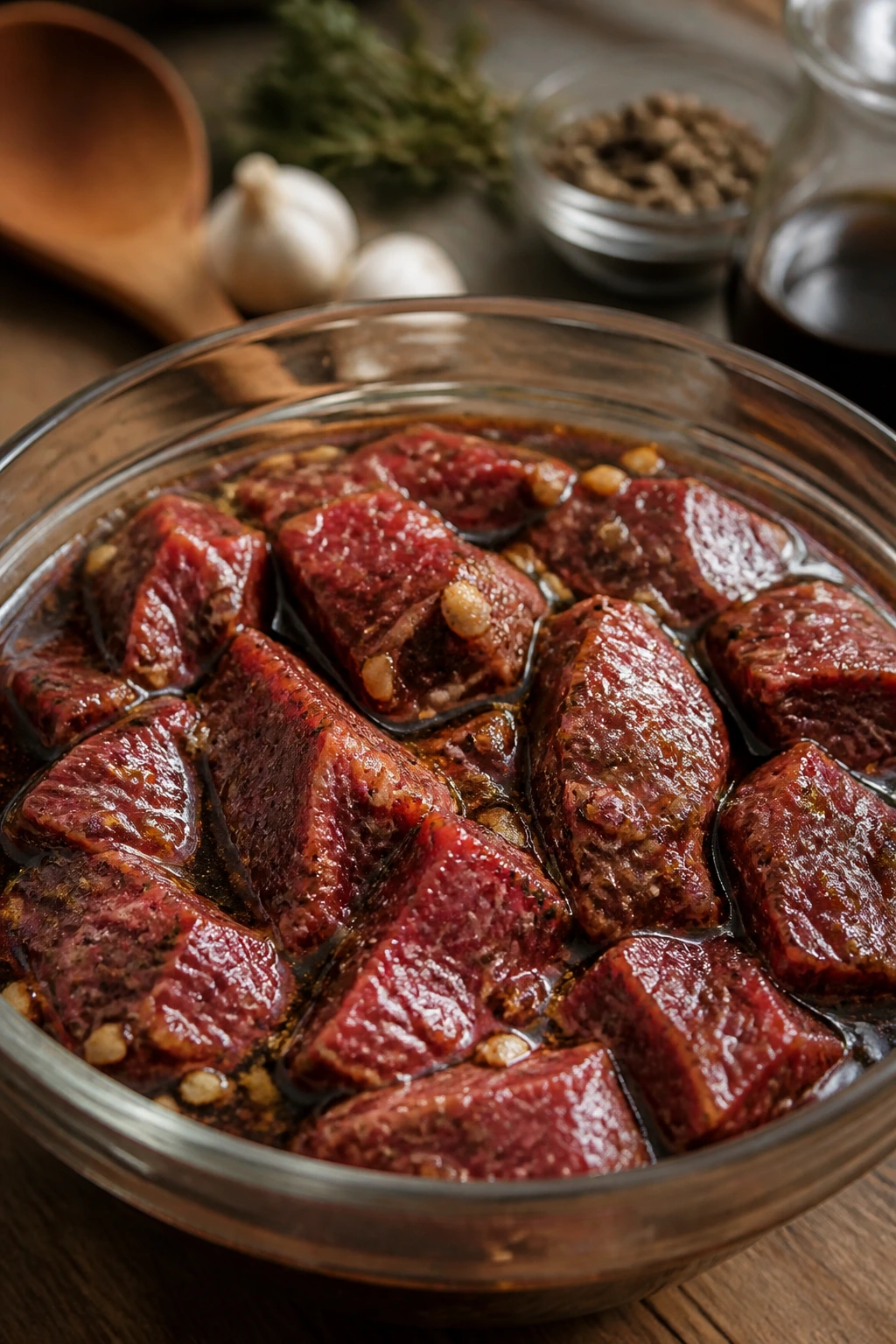
Marinade sounds like a simple step, but timing matters. Too short and the seasoning sits mostly on the surface. Too long and the beef can pick up a soft, almost chalky edge from the acid.
The sweet spot here is 4 to 12 hours. That gives the soy, Worcestershire, garlic, and mustard time to settle in without pushing the texture too far. Overnight works well, but I would not leave chuck in this marinade for two full days. The beef gets looser than it needs to be.
Marinate, Then Give the Beef a Dry Surface
-
Trim and cut the beef. Pat the chuck roast dry, trim off hard surface fat, and cut it into 1 1/2-inch cubes. Try to keep the pieces even so they cook at the same pace.
-
Whisk the marinade. In a large bowl, combine the soy sauce, Worcestershire, red wine, vinegar, olive oil, brown sugar, Dijon mustard, garlic, smoked paprika, black pepper, and kosher salt. Whisk until the sugar dissolves and the mixture looks dark and smooth.
-
Coat the beef. Add the beef cubes to the marinade and turn them until every surface is slick. If you’re using a bag, squeeze out extra air before sealing it.
-
Chill the beef. Refrigerate for at least 4 hours and up to 12 hours. Turn the beef once or twice if you remember; if you don’t, it will still work.
-
Bring the meat back a little. About 30 minutes before cooking, remove the beef from the fridge. Lift the beef out of the marinade and pat it dry with paper towels. Dry beef browns; wet beef steams.
Browning, Braising, and Turning the Marinade Into Dinner
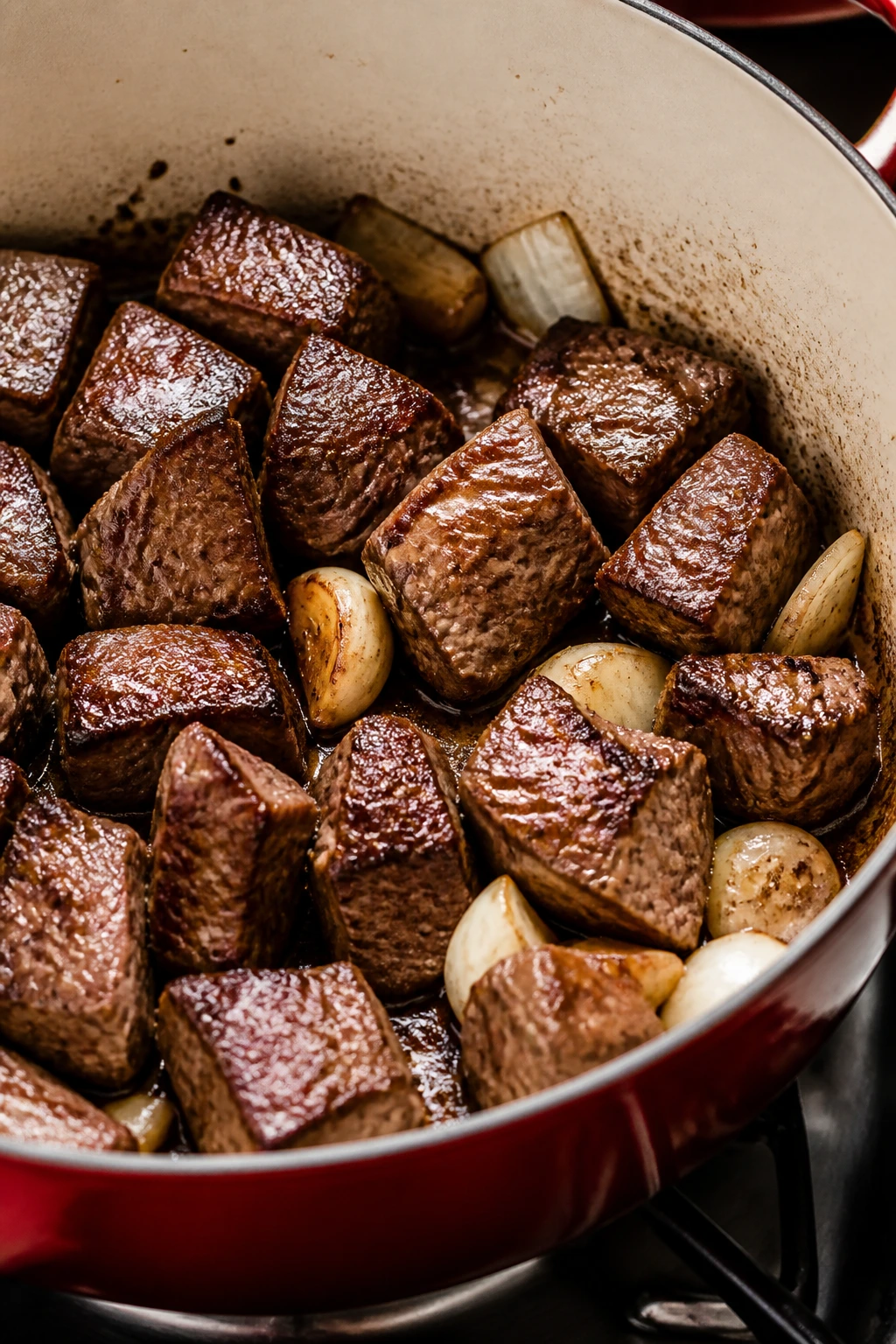
The pot itself does most of the heavy lifting. You brown the beef first for color, build the vegetables in the same pot, then use the marinade and broth to make the braising liquid. That layering is what keeps this dish from tasting flat.
One thing I always do here: I do not throw the beef straight into the pot from the marinade. I let the surface dry a bit first. It’s a tiny annoyance, but it pays off in a stronger crust and better sauce.
Start on the Stovetop, Finish in the Oven
-
Preheat the oven. Set the oven to 325°F (165°C) and position a rack in the middle.
-
Brown the beef in batches. Heat 1 tablespoon of neutral oil in a Dutch oven over medium-high heat. Add the beef in a single layer without crowding and sear for 2 to 3 minutes per side, until the edges are deep brown. Transfer the browned beef to a plate and repeat with the remaining oil and beef. Do not rush this step — pale beef makes pale sauce.
-
Cook the vegetables. Lower the heat to medium. Add the onion, carrots, and celery to the pot with a pinch of salt and cook for 6 to 8 minutes, stirring now and then, until the onion softens and the edges turn golden.
-
Build the base. Stir in the tomato paste and flour and cook for 1 minute. The paste should darken a shade and smell a little sweeter, not raw.
-
Add the liquid. Pour in the reserved marinade and beef broth. Scrape the bottom of the pot with a wooden spoon to lift up every browned bit. Bring the liquid to a simmer on the stove and let it bubble for 2 minutes so the marinade is fully heated.
-
Return the beef. Add the browned beef and any juices from the plate. Drop in the bay leaf and stir once so the pieces sit mostly under the liquid.
-
Braise gently. Cover the pot and transfer it to the oven. Cook for 1 hour 30 minutes to 2 hours, stirring once around the halfway mark, until the beef is fork-tender and the sauce has taken on a deep brown color. A fork should slide into the cubes without resistance. If it still feels tight, give it another 15 to 20 minutes.
-
Finish the sauce. Remove the pot from the oven and set it over low heat. Stir in the butter and parsley. Taste the sauce and add a little salt and black pepper if needed. If the sauce looks thin, simmer uncovered for 8 to 12 minutes until it lightly coats the back of a spoon.
-
Rest before serving. Let the pot sit for 10 to 15 minutes before you spoon it into bowls. The sauce settles and thickens a touch as it cools.
How to Serve It on a Real Dinner Plate
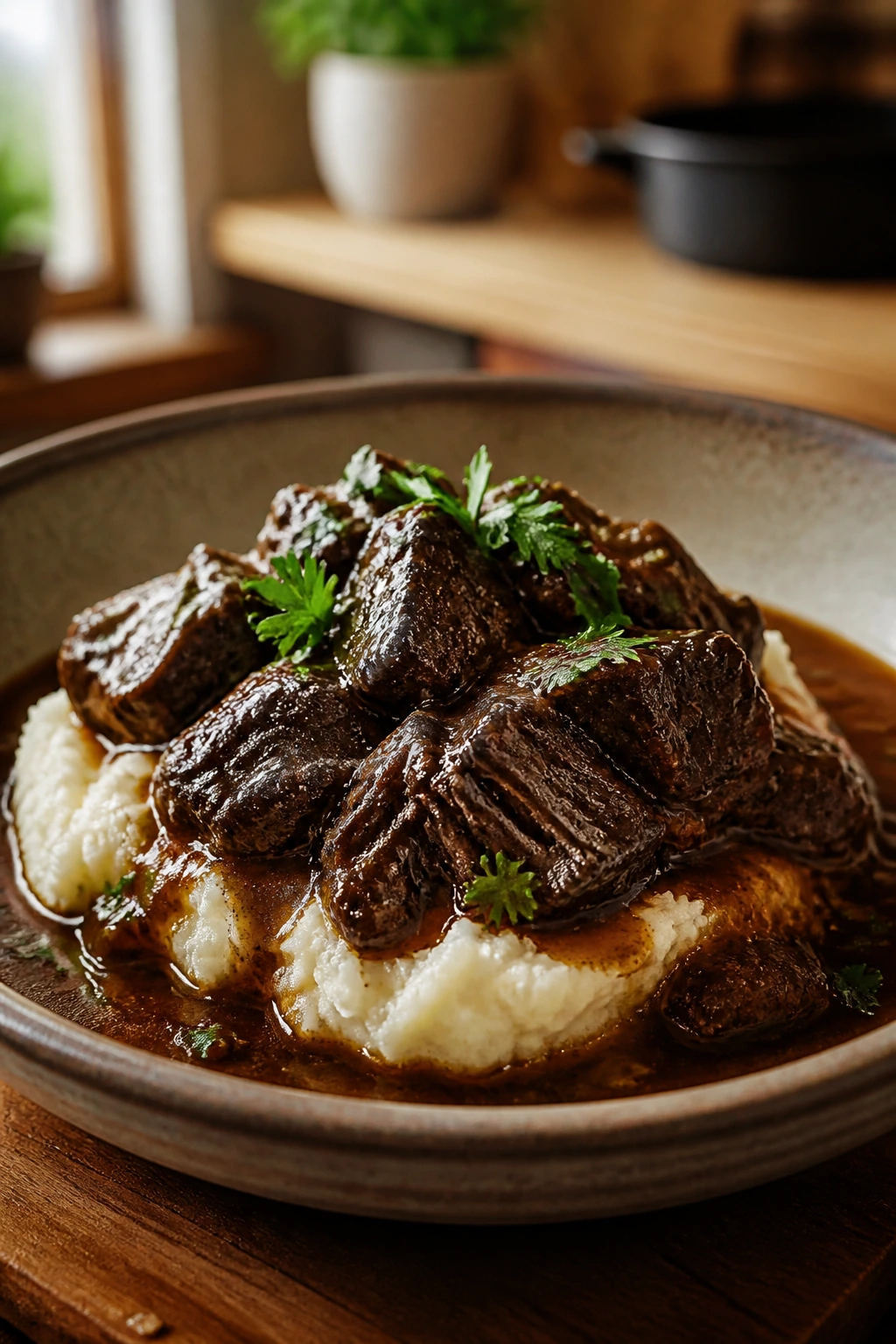
Presentation: Spoon the beef and sauce over a mound of mashed potatoes so the gravy slides down the sides instead of disappearing into the bowl. A shallow bowl works better than a flat plate here, because you want the sauce to pool a little around the beef. A few parsley leaves on top are enough; you do not need a full herb salad pretending to be decoration.
Accompaniments: Buttery mashed potatoes are my first choice, and egg noodles run a close second. Steamed green beans, roasted broccoli, or a sharp cabbage slaw give the plate some lift so it doesn’t feel heavy from the first bite to the last. If you want bread, go with a crusty loaf that can drag through the gravy.
Portions: This recipe makes 6 solid servings, or 4 larger ones if you are feeding people with serious appetites. For smaller portions, spoon the beef over rice and keep the carrots and sauce generous. For a bigger crowd, add a second pound of beef and 1 extra cup of broth, then extend the braise by about 20 minutes.
Beverage Pairing: A dry red wine with some grip — Cabernet Sauvignon or Syrah — stands up to the soy, Worcestershire, and browned beef. If you prefer beer, a brown ale or a malty amber beer fits the sauce without fighting it. Cold sparkling water with a squeeze of lemon works too, especially if the sides are rich.
Small Moves That Make a Big Difference
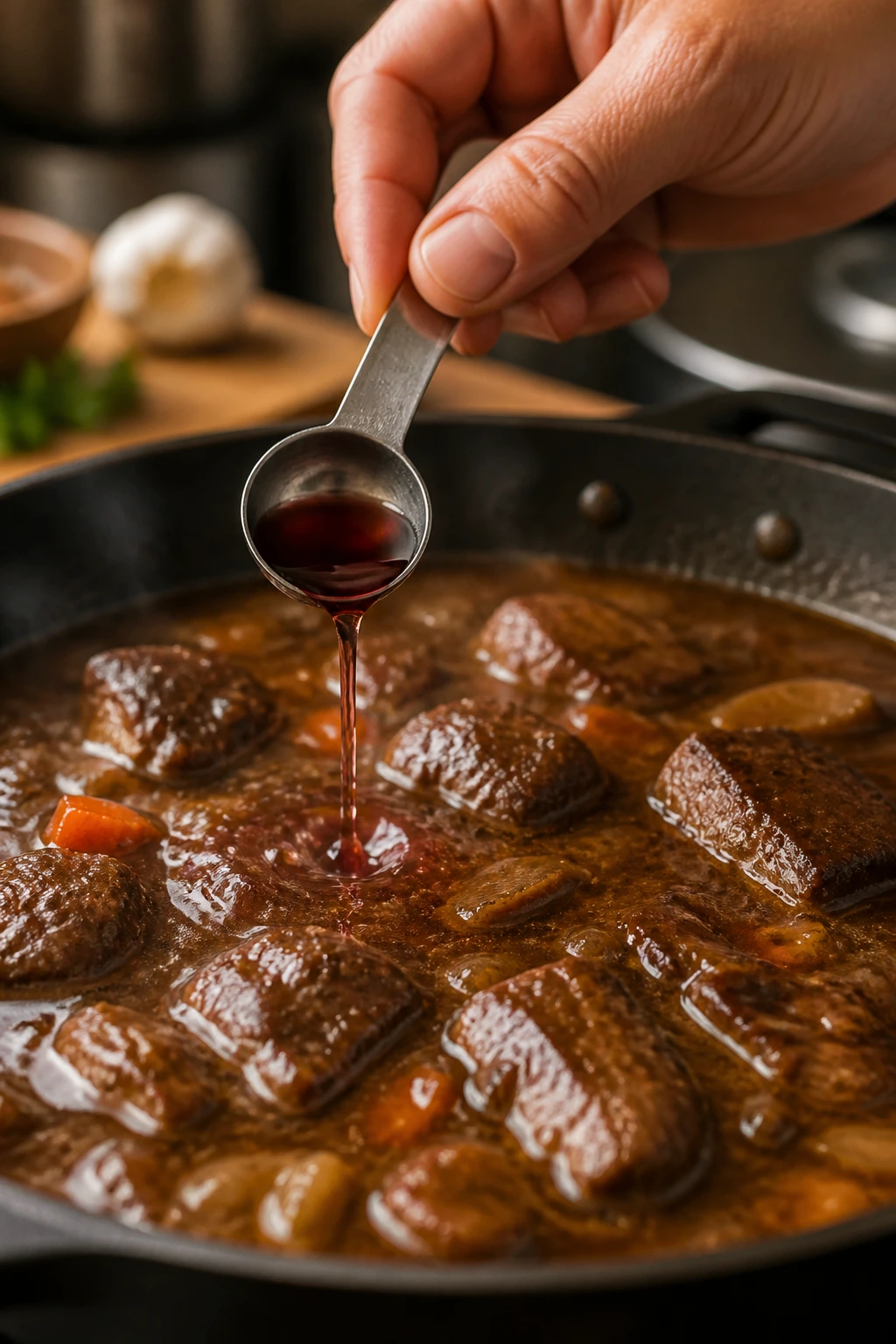
Flavor Enhancement: A teaspoon of red wine vinegar stirred in at the very end wakes up the sauce if it tastes a little sleepy after braising. I only do this after the butter goes in, because acid added too early can make the sauce feel sharp instead of rounded.
Time-Saver: Cube the beef the night before, whisk the marinade, and leave the bag in the fridge before bed. In the morning, all you need to do is sear and braise. That small bit of prep makes a long-cook dinner feel almost boring to pull together, which is the best kind of busy-night cooking.
Cost-Saver: If chuck roast is priced higher than you want, look for beef shoulder or boneless bottom round on sale. Bottom round needs the full braise and should be cut evenly, but it still gives you a hearty pot if you do not rush it.
Texture Boost: Keep the braise at a gentle simmer or a low oven. Hard boiling makes the connective tissue seize up before it softens, and the beef ends up stringy instead of tender. Low heat is not a polite suggestion here; it is the thing doing the work.
Make-It-Yours: A spoonful of sour cream off the heat gives the sauce a softer, stroganoff-like edge. A spoonful of horseradish does the opposite — it sharpens the plate and cuts through the richness if you like a little bite with the beef.
Mistakes That Make the Beef Tough or Flat
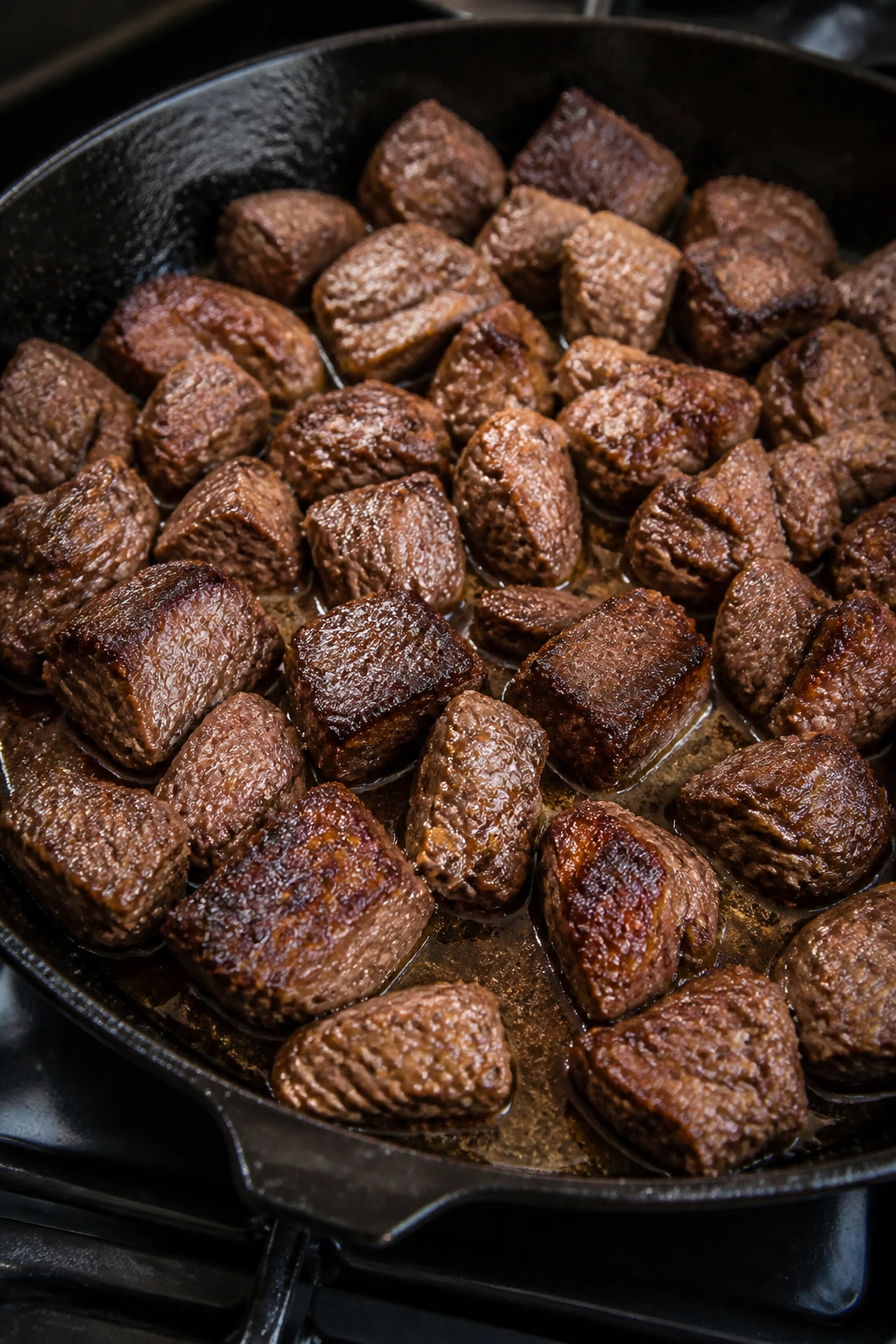
Crowding the pan while searing
If the beef cubes sit too close together, they steam instead of browning. The pot will release liquid, the surface stays gray, and the sauce loses depth before it even starts. Fix it by browning in two or three batches and giving each piece a little room.
Leaving the beef wet after marinating
Wet beef meets hot oil and immediately spits, then boils in its own surface moisture. You’ll see pale spots where browning should have happened. Pat the cubes dry with paper towels before they hit the pot.
Using too much acid for too long
A marinade with lots of vinegar or lemon juice can make the outside of the beef feel soft and odd after a long soak. The meat won’t be juicy in a good way; it will feel a little fragile. Keep the acid moderate and stay within the 4 to 12 hour window.
Rushing the braise at high heat
If the pot boils hard, the beef tightens before the collagen has time to relax. The outside can seem done while the center still feels stubborn. Hold the oven at 325°F and check tenderness with a fork, not a timer alone.
Forgetting to taste the sauce at the end
After the liquid reduces, the salt level changes. What tasted balanced at the start can taste dull after an hour in the oven, or too salty if the broth was strong. Taste after the butter goes in and adjust with salt, pepper, or a tiny splash of vinegar.
Flavor Swaps That Still Feel Like Comfort Food
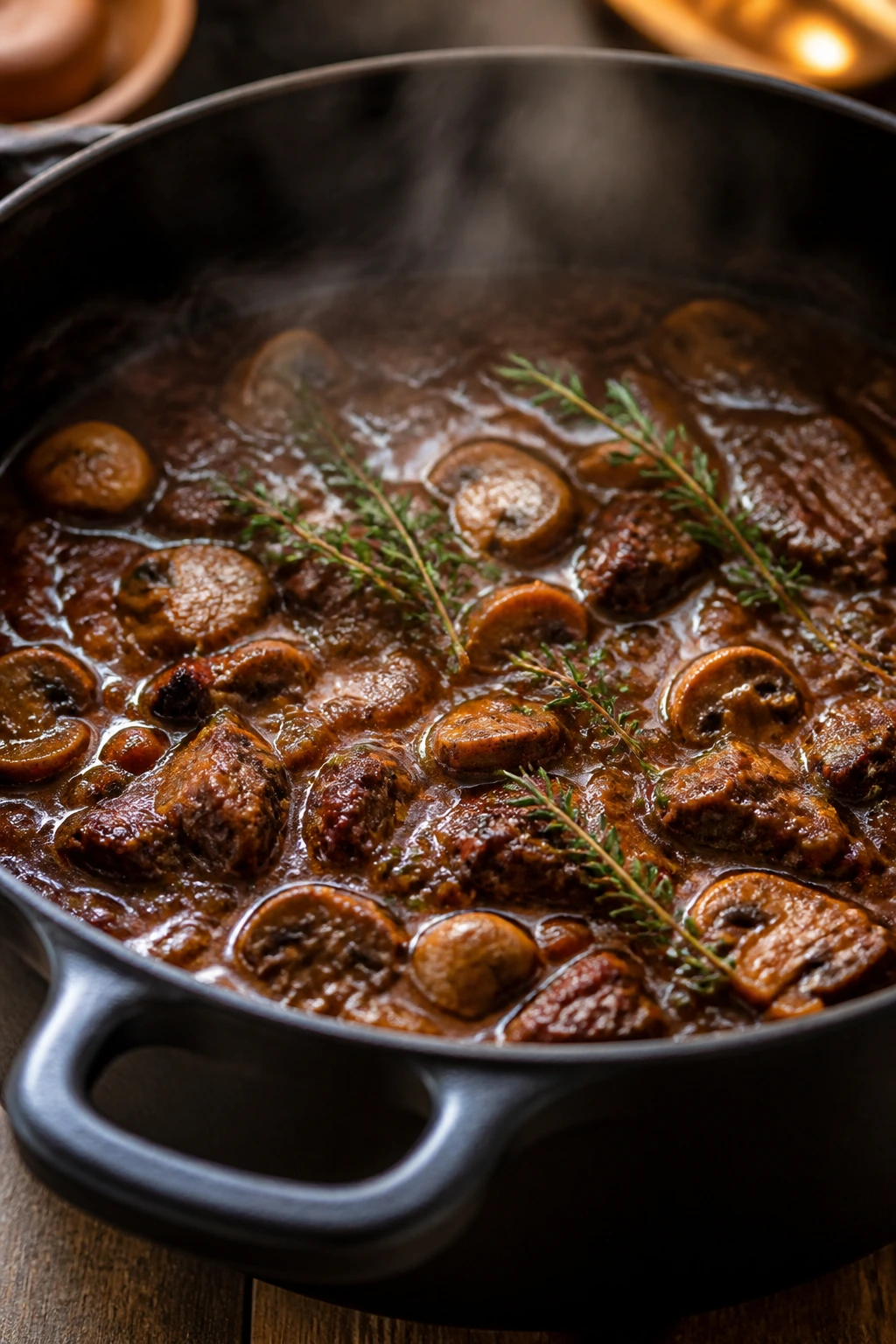
Mushroom and Thyme Braise
Add 8 ounces of sliced cremini mushrooms when the onions go in, and stir in 1 teaspoon of fresh thyme leaves with the broth. The mushrooms soak up the sauce and make the whole pot taste earthier, almost like a cross between pot roast and steak gravy.
Ginger-Soy Comfort Bowl
Replace the red wine with extra broth and add 1 tablespoon grated fresh ginger plus 1 teaspoon sesame oil to the marinade. Serve the finished beef over rice with scallions on top. It leans a little more toward the savory side without leaving the comfort zone.
Pantry-Only Version
Skip the wine, use tamari instead of soy sauce, and replace the fresh parsley with a pinch of dried parsley or nothing at all. You still get a strong, brothy pot; it just tastes a little more straightforward and less layered.
Slow Cooker Route
Brown the beef and cook the vegetables on the stovetop first, then transfer everything to a slow cooker and cook on low for 7 to 8 hours. The texture comes out softer and a touch looser than the oven version, but the flavor stays deep and homey.
Creamy Finish for Noodles
Stir in 1/4 cup sour cream or crème fraîche after the pot comes off the heat. Do not boil it once the dairy goes in. The sauce turns silkier and clings to egg noodles in a way that feels almost old-school.
Storing, Freezing, and Reheating the Leftovers
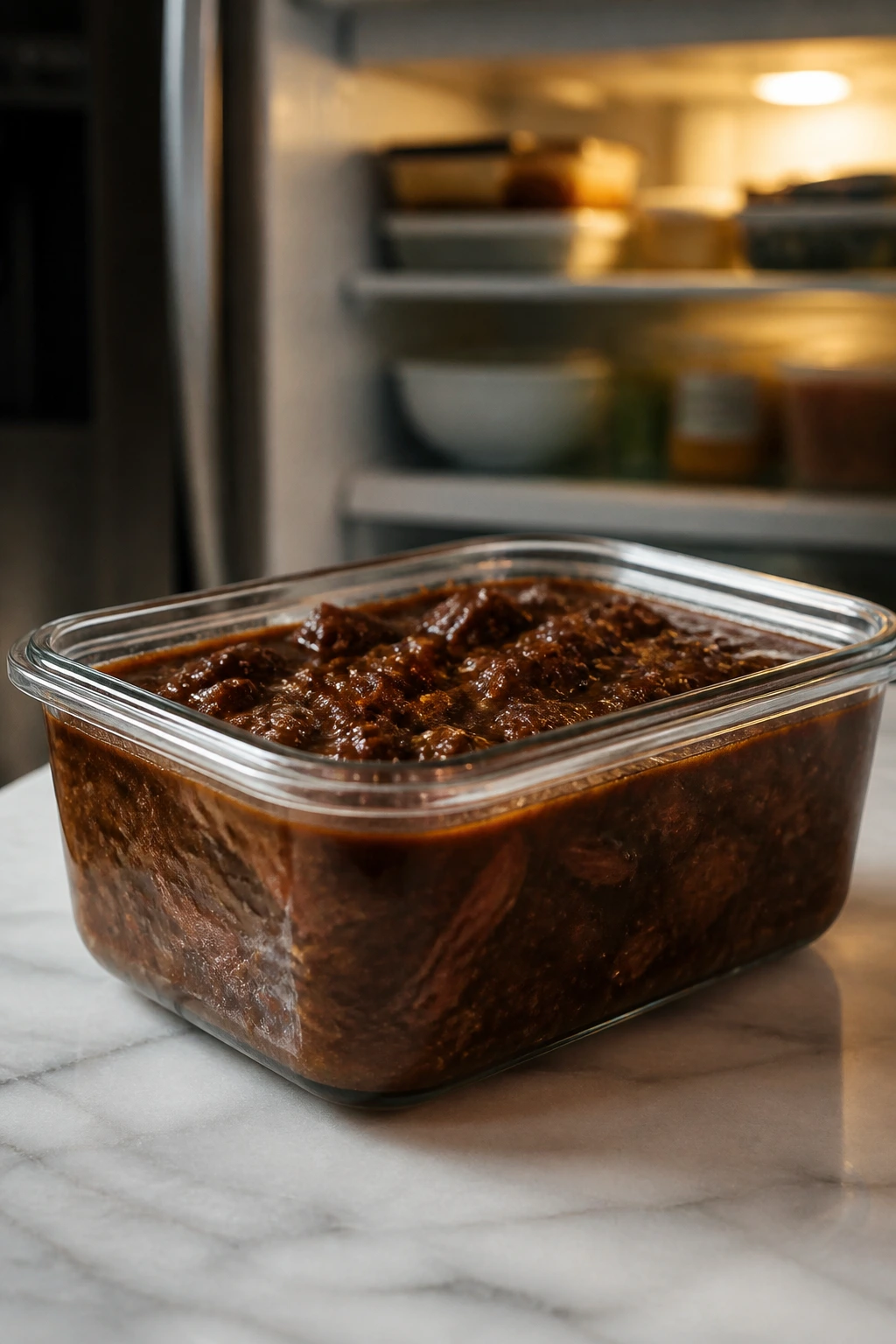
This beef keeps well, which is one of the reasons I like making it in a Dutch oven. The flavor settles overnight, the gravy thickens, and the beef soaks up a little more seasoning as it rests. If you’re planning for leftovers, you’re in a good place.
Store the cooled beef and sauce in an airtight container in the refrigerator for 3 to 4 days. If you served it with mashed potatoes or noodles, keep those in a separate container so the starch does not absorb all the sauce. A splash of broth when reheating helps wake the gravy back up.
For freezing, spoon the beef and sauce into freezer-safe containers or heavy bags and press out extra air. It holds well for up to 2 months. Thaw it in the refrigerator overnight before reheating; trying to defrost it on high heat usually dries the beef at the edges before the center is warm.
The best reheating method is slow and low. Set the beef and sauce in a covered saucepan over low heat with 2 to 4 tablespoons of broth or water, and stir now and then until it’s hot through. In the oven, cover the dish with foil and warm at 300°F for 20 to 25 minutes. Microwave works in a pinch, but use medium power and short bursts so the meat doesn’t seize up.
If you know ahead of time that you want make-ahead dinners, cook the beef a day early and stop before the final parsley garnish. Chill it in the sauce, then reheat gently and finish with the butter and herbs just before serving. That last bit makes the leftovers taste like they were cooked from scratch that same evening.
Questions People Ask Before Cooking It

Can I use flank steak instead of chuck roast?
You can, but I would not use the same long braise. Flank steak is lean and gets tough if it sits in a covered oven for hours. If you want to use it, slice it thin, marinate it, sear it quickly, and shorten the cook time a lot.
How long should I marinate the beef?
Four hours is the minimum that gives the beef a real flavor shift. Eight to twelve hours is where I usually land because the seasoning has time to settle in without making the meat too soft. Past that, the acid can start to rough up the texture.
Can I skip the red wine?
Yes. Replace it with the same amount of beef broth and add 1 extra teaspoon of apple cider vinegar to keep the marinade from tasting flat. The dish still comes out rich, just a little less winey and a bit more straightforward.
Do I have to sear the beef first?
If you want the sauce to taste deep and roasted, yes. Searing gives you browned bits on the bottom of the pot, and those bits melt into the gravy once the broth goes in. Skipping the sear leaves you with a paler, thinner-tasting braise.
What if the beef is still tough after 2 hours?
Keep cooking it. Chuck roast often goes through an awkward stage where it feels tight before the collagen fully softens. Check it every 15 minutes and add a splash of broth if the liquid is dropping too fast.
Can I make this in advance for guests?
Absolutely, and I would if I were feeding people. Cook it the day before, cool it in the sauce, and reheat it slowly before dinner. The beef tastes more settled and the gravy thickens into something easier to spoon.
What if the sauce is too thin?
Pull the beef out for a minute and simmer the sauce uncovered over medium-low heat until it reduces. If you want a faster fix, mix 1 teaspoon flour with 1 tablespoon cold water and whisk it in, but do that only if you’re comfortable with a slightly thicker, more rustic gravy.
Can I freeze the dish with the potatoes?
I wouldn’t. The beef freezes well; mashed potatoes often turn grainy after thawing. Freeze the beef and sauce on their own, then make fresh potatoes when you reheat it.
A Cozy Pot Worth Keeping Around
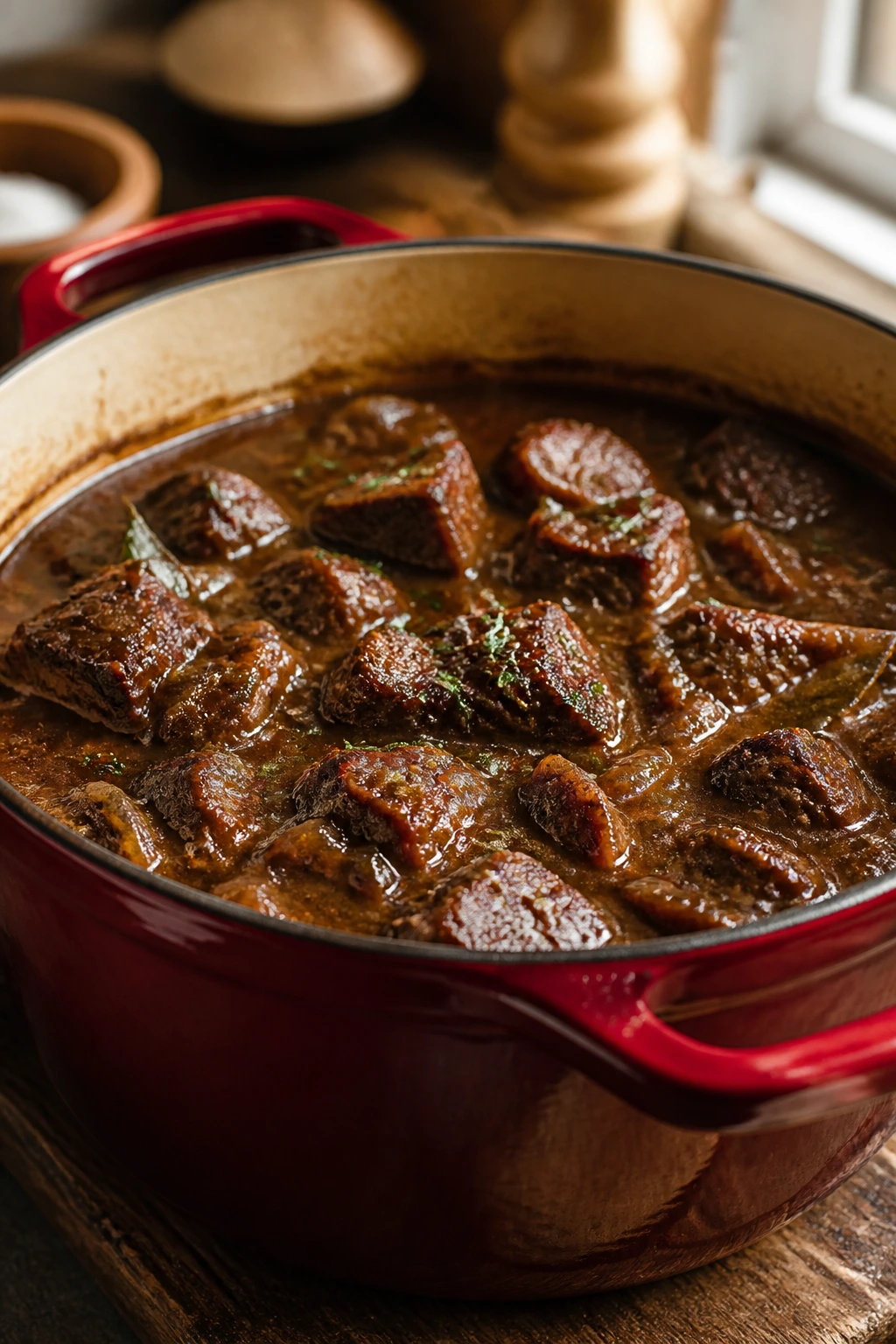
Some dinners ask for a little ceremony. This one asks for a pot, a good cut of beef, and enough patience to let the oven do its job. That’s why I keep coming back to marinated beef like this: it feels generous without being complicated, and it tastes like it had more hands on it than it did.
The real reward is in the texture. The beef goes from firm and square to soft enough to pull apart with a fork, while the sauce turns from salty liquid into something you’d happily spoon over bread. Make it once, and the rhythm of it starts to stick.
Comforting Marinated Beef with Onion Gravy — Recipe Card
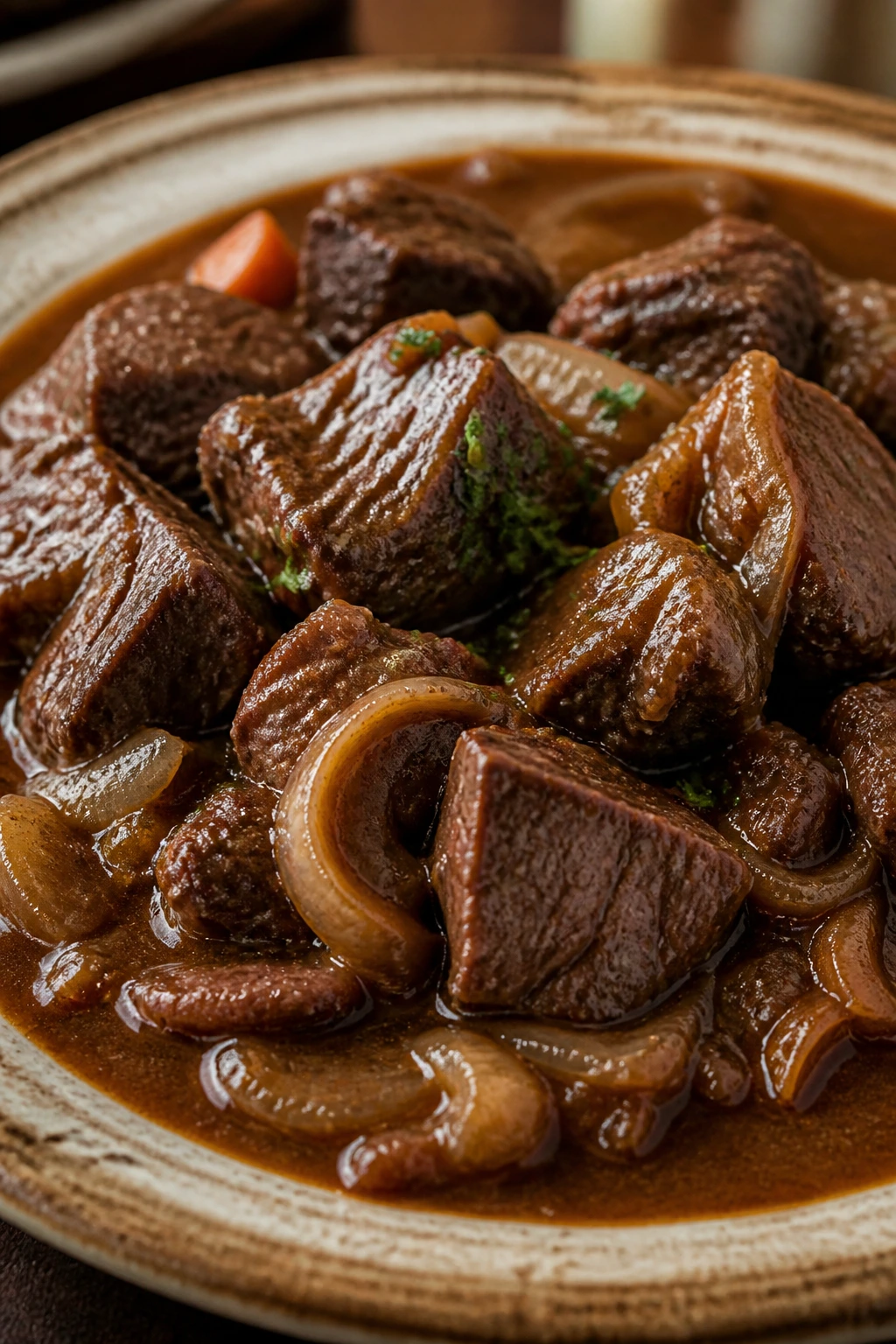
Recipe Name: Comforting Marinated Beef with Onion Gravy
Description: Beef chuck roast is marinated in soy sauce, Worcestershire, garlic, and vinegar, then browned and braised with onions, carrots, and broth until tender. The sauce turns into a deep, savory gravy that begs for mashed potatoes or egg noodles.
Prep Time: 25 minutes
Cook Time: 1 hour 45 minutes
Total Time: 2 hours 10 minutes active + 4 to 12 hours marinating
Course: Dinner, Main Course
Cuisine: American
Servings: 6 servings
Calories: About 460 kcal per serving
Ingredients
For the Beef and Marinade:
- 2 1/2 pounds beef chuck roast, trimmed and cut into 1 1/2-inch cubes
- 1/3 cup low-sodium soy sauce
- 1/4 cup Worcestershire sauce
- 1/4 cup dry red wine, or extra beef broth
- 2 tablespoons apple cider vinegar
- 2 tablespoons olive oil
- 1 tablespoon packed dark brown sugar
- 1 tablespoon Dijon mustard
- 6 garlic cloves, finely grated or minced
- 1 teaspoon smoked paprika
- 1 teaspoon freshly ground black pepper
- 1 teaspoon kosher salt
For the Braise:
- 2 tablespoons neutral oil, for searing
- 1 large yellow onion, sliced into thick half-moons
- 2 medium carrots, peeled and cut into 1/2-inch coins
- 2 celery stalks, diced
- 2 tablespoons tomato paste
- 2 tablespoons all-purpose flour
- 2 1/2 cups low-sodium beef broth
- 1 bay leaf
To Finish:
- 1 tablespoon unsalted butter
- 1 tablespoon chopped fresh parsley
- Kosher salt and black pepper, to taste
Instructions
-
Pat the beef dry and cut it into even 1 1/2-inch cubes.
-
Whisk together the soy sauce, Worcestershire, red wine, vinegar, olive oil, brown sugar, Dijon mustard, garlic, smoked paprika, black pepper, and kosher salt.
-
Add the beef to the marinade, toss to coat, cover, and refrigerate for 4 to 12 hours.
-
Remove the beef from the fridge 30 minutes before cooking and pat it dry.
-
Preheat the oven to 325°F (165°C).
-
Brown the beef in batches in a Dutch oven over medium-high heat, 2 to 3 minutes per side. Transfer to a plate.
-
Cook the onion, carrots, and celery in the same pot for 6 to 8 minutes.
-
Stir in the tomato paste and flour and cook for 1 minute.
-
Add the reserved marinade and beef broth, scraping up the browned bits. Bring to a simmer.
-
Return the beef and juices to the pot, add the bay leaf, cover, and braise for 1 hour 30 minutes to 2 hours, until fork-tender.
-
Remove from the oven, stir in the butter and parsley, and adjust seasoning. If needed, simmer uncovered for 8 to 12 minutes to thicken the sauce.
Notes: Do not skip drying the beef before browning. For a smoother sauce, strain the marinade before adding it to the pot. The leftovers taste even better the next day.