



A creamy soup for cold winter nights should do more than warm your hands. It should coat the spoon, smell like butter and thyme, and make the kitchen feel about ten degrees friendlier the second the leeks hit the pot.
That means you need a base with real body — potatoes, white beans, and slow-cooked aromatics — not a thin broth pretending to be comfort food. I like soups that earn their silkiness. A little starch from the potatoes. A little richness from cream. Enough greens and lemon at the end to keep the whole bowl from going dull and sleepy.
This is the kind of pot I make when the windows are fogged and I want dinner to feel steady, not fussy. The leeks go soft and sweet, the carrots mellow out, the broth gets deeper as the thyme blooms, and the whole thing finishes with that clean, milky finish that makes you go back for another spoonful before you’ve even set the bowl down.
Why This Creamy Soup for Cold Winter Nights Works So Well
- It builds creaminess from the vegetables themselves: Yukon Gold potatoes and cannellini beans thicken the broth from the inside out, so the soup tastes full rather than floury.
- The leeks do quiet heavy lifting: They soften into a sweet, almost buttery base after 8 to 10 minutes over medium heat, which is where the depth starts.
- The dairy goes in at the end for a reason: Milk, cream, and Parmesan finish the soup without forcing you into a roux or risking a split, grainy pot.
- It eats like a full meal: The beans give it staying power, the potatoes make it substantial, and the greens keep the bowl from feeling one-note.
- It’s flexible without getting sloppy: You can lean rustic, silky, smoky, or chicken-heavy without rebuilding the whole recipe from scratch.
- It tastes even better after a short rest: Five minutes off the heat lets the starch settle, the salt spread, and the texture turn calmer.
Yield: Serves 6
Prep Time: 20 minutes
Cook Time: 35 minutes
Total Time: 55 minutes
Difficulty: Beginner — the method is straightforward, but the soup rewards patience with the leeks and low heat at the end.
Rest Time: 5 minutes
Best Served: Hot, with the greens still bright and the cream fully blended.
What Goes Into the Pot
A soup like this lives or dies on the ingredients you choose. I’m not fussy for sport, but there are a few places where a small choice changes the whole bowl — the potato type, the broth, the size of the dice, and whether you add the dairy while the pot is still roaring or not. Those details matter here.
For the Soup:
- 2 tablespoons unsalted butter
- 1 tablespoon extra-virgin olive oil
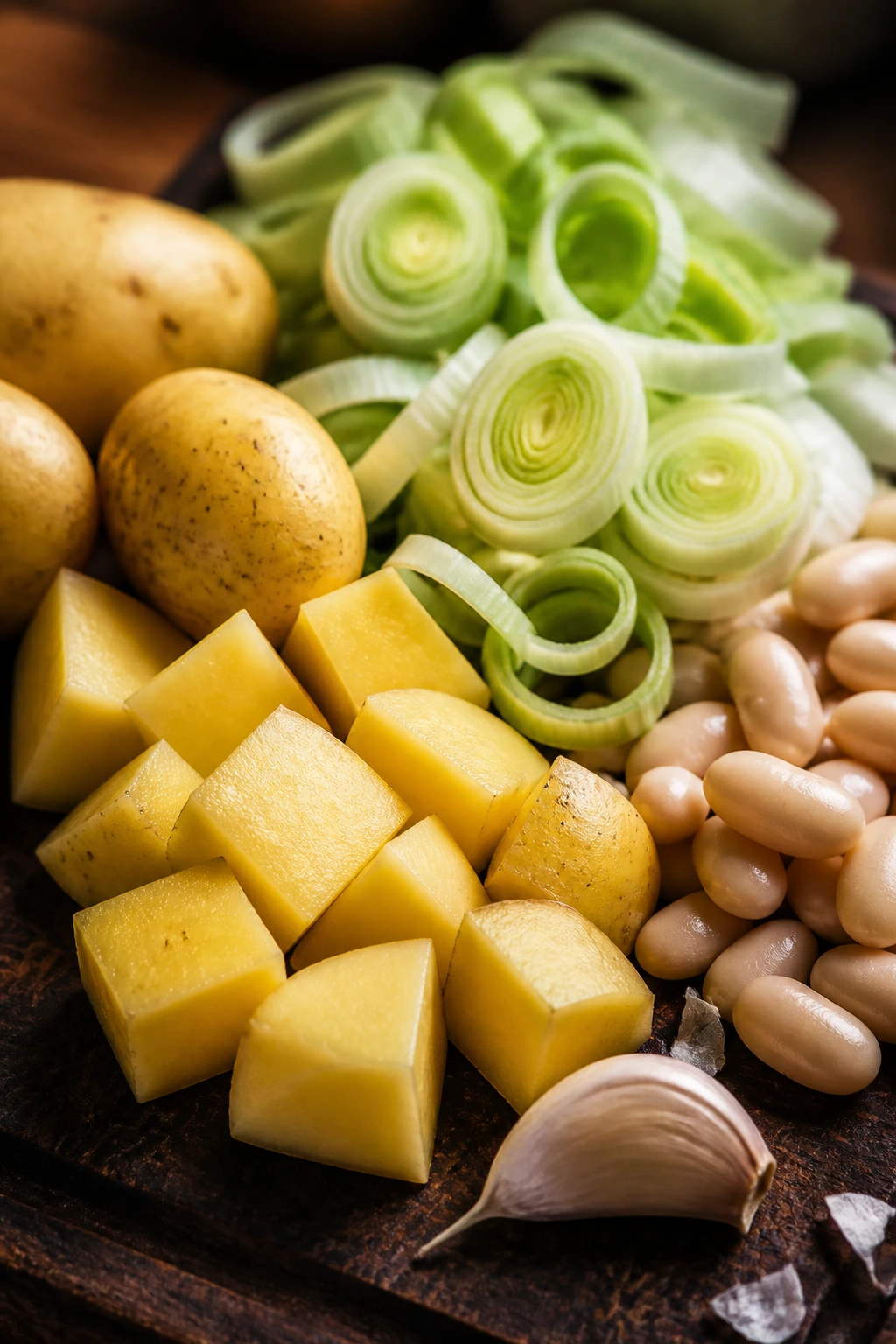
- 2 medium leeks, white and light green parts only, halved lengthwise, thinly sliced, and rinsed very well
- 1 medium yellow onion, diced
- 2 medium carrots, peeled and diced small
- 2 celery stalks, diced small
- 3 garlic cloves, minced
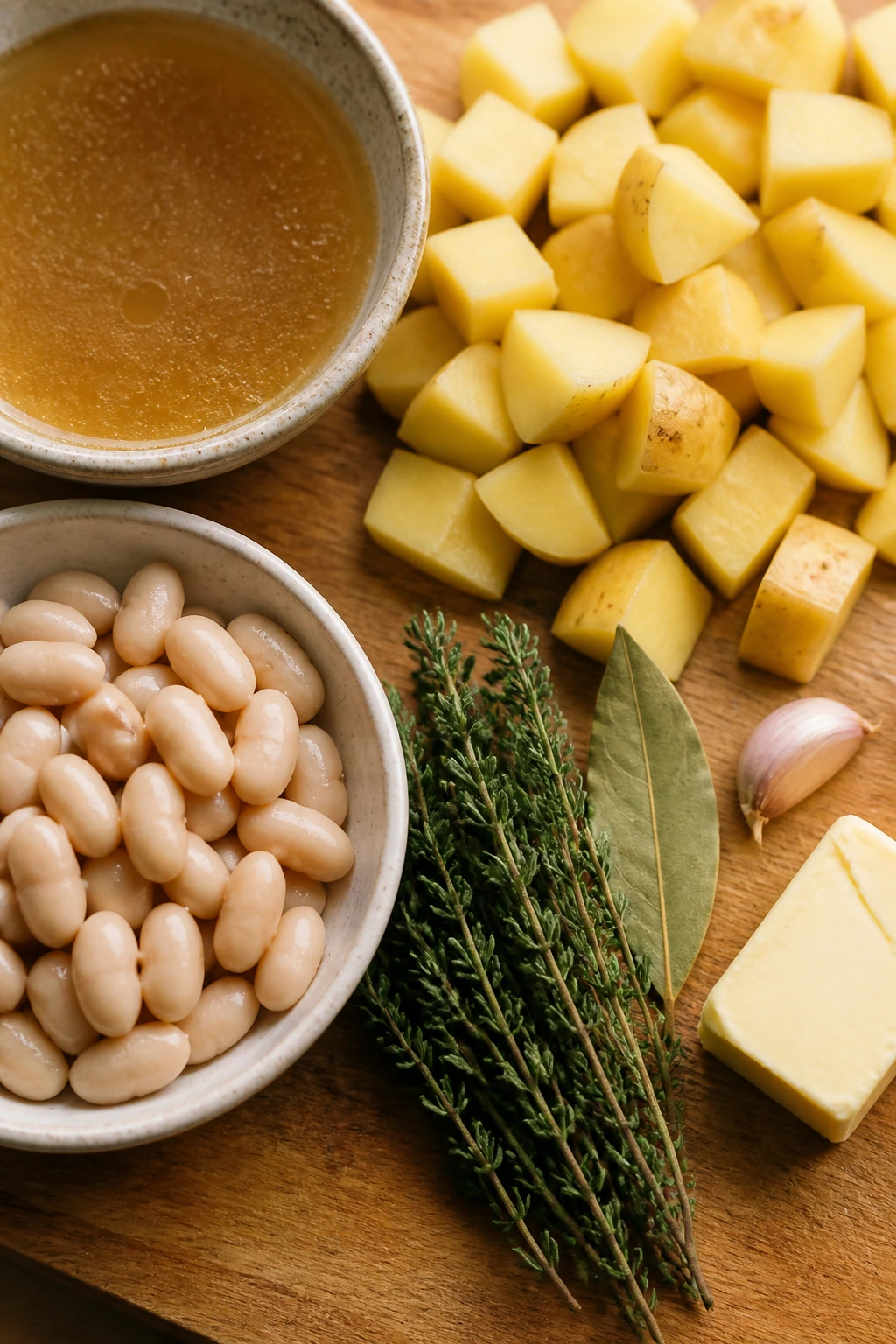
- 1 1/2 pounds Yukon Gold potatoes, cut into 1/2-inch cubes
- 1 (15-ounce) can cannellini beans, drained and rinsed
- 4 cups low-sodium vegetable broth
- 1 cup water
- 1 bay leaf
- 1 teaspoon fresh thyme leaves or 1/2 teaspoon dried thyme
- 1 1/4 teaspoons kosher salt, plus more to taste
- 1/2 teaspoon black pepper
- 1 cup whole milk
- 3/4 cup heavy cream
- 1/2 cup finely grated Parmesan cheese, plus more for serving
- 2 cups chopped baby spinach or chopped kale
- 1 tablespoon lemon juice
- 2 tablespoons chopped parsley, for serving
The list looks plain. That’s the point. Every item has a job, and none of them is decorative.
Why Each Ingredient Pulls Its Weight
Aromatics That Make the First Layer Taste Sweet
What to use: 2 medium leeks, 1 medium yellow onion, 2 medium carrots, 2 celery stalks, and 3 garlic cloves give the soup its base.
Preparation: Slice the leeks thin and wash them well, then dice the onion, carrots, and celery into small pieces so they soften at the same pace. Mince the garlic last so it doesn’t disappear into the cutting board while you work.
Substitutions: Shallots can stand in for the onion if you want a softer flavor, and a single fennel stalk can replace one celery stalk if you like a faint anise edge.
Tips: Leeks hold grit like they’re being paid for it, so rinse them in a bowl of cold water and lift them out instead of pouring the bowl into the colander. That little move saves the whole pot from a sandy bottom.
Potatoes and Beans That Give the Soup Its Body
What to use: 1 1/2 pounds Yukon Gold potatoes and 1 can cannellini beans make the soup thick without turning it heavy.
Preparation: Cut the potatoes into 1/2-inch cubes so they cook through in about 20 minutes and break down enough to thicken the broth. Drain and rinse the beans before they go in.
Substitutions: Red potatoes work if that’s what you have, though they hold their shape a little more; great northern beans work in place of cannellini beans.
Tips: Yukon Golds are the sweet spot here. Russets can work, but they break down faster and can turn the soup a little gluey if you blend too much.
Broth, Milk, Cream, and Cheese
What to use: 4 cups low-sodium vegetable broth, 1 cup water, 1 cup whole milk, 3/4 cup heavy cream, and 1/2 cup finely grated Parmesan create the broth’s final texture.
Preparation: Keep the broth warm if you can, and grate the Parmesan finely so it disappears into the liquid instead of clumping. Measure the cream before you start simmering so you’re not splashing around with hot soup waiting for it.
Substitutions: Chicken broth gives the pot a meatier backbone, half-and-half can replace the milk and cream in a pinch, and a vegetarian hard cheese works if you skip Parmesan.
Tips: The dairy belongs at the end. If the soup boils hard after the milk and cream go in, the texture can split and look tired instead of smooth.
Greens, Acid, and Finishers That Wake the Bowl Up
What to use: 2 cups chopped baby spinach or kale, 1 tablespoon lemon juice, 2 tablespoons chopped parsley, 1 bay leaf, and 1 teaspoon fresh thyme leaves keep the soup from tasting flat.
Preparation: Strip the thyme leaves off the stems if you’re using fresh, and chop the parsley right before serving so it stays lively. Tear the kale small if you go that route; big pieces feel awkward in a creamy soup.
Substitutions: Swiss chard can replace the spinach or kale, and white wine vinegar can stand in for lemon juice if you’re out of lemons.
Tips: Don’t skip the acid at the end. A tablespoon of lemon juice doesn’t make the soup taste lemony; it sharpens the dairy and makes the potatoes taste like potatoes instead of beige.
The Tools That Make the Job Easier
You do not need a kitchen full of gadgets for this one, but a few tools make the process cleaner and calmer.
- 6-quart Dutch oven or heavy soup pot — The heavy base helps the leeks cook evenly and keeps the dairy from scorching later.
- Sharp chef’s knife — Leeks and potatoes cut cleanly when the blade is sharp, and your dice stays even.
- Cutting board with a damp towel underneath — A small thing, but it keeps the board from skating around while you trim the leeks.
- Fine-mesh strainer or large bowl — Useful for washing leeks properly; the grit settles at the bottom where it belongs.
- Wooden spoon or silicone spatula — Better than a metal spoon for scraping the pot without scratching it.
- Immersion blender — The easiest way to control texture. You can keep some chunks and avoid hauling hot soup to the counter.
- Countertop blender, if needed — Works fine for a very smooth soup, but you’ll need to vent the lid and blend in batches.
- Ladle — Small, boring, essential.
- Microplane or fine grater — Parmesan melts faster and smoother when it’s grated finely.
How to Build the Soup on the Stove

Prep the Vegetables
-
Wash the leeks first. Slice them lengthwise, then cut into thin half-moons and swish them in a bowl of cold water. Let the grit fall to the bottom, lift the leeks out, and drain them well.
-
Dice the onion, carrots, and celery. Keep the pieces small and even, about 1/4 inch if you can. The soup eats better when nothing is chunky in an awkward way.
-
Cut the potatoes into 1/2-inch cubes. If the cubes are much larger, they take longer to soften and you’ll end up waiting for the centers to go tender.
Build the Flavor Base
-
Warm the butter and olive oil in a Dutch oven over medium heat. When the butter foams, add the leeks, onion, carrots, and celery. Cook for 8 to 10 minutes, stirring often, until the vegetables are soft and the onions look translucent. Do not brown them hard; you want sweet and mellow, not sharp and roasted.
-
Add the garlic, thyme, bay leaf, salt, and black pepper. Stir for 30 seconds, just until the garlic smells sweet and the thyme wakes up. If the garlic starts to color fast, lower the heat.
-
Stir in the potatoes, beans, broth, and water. Bring the pot up to a boil, then lower it to a steady simmer. Small bubbles are what you want; big furious ones make the potatoes beat themselves up against the pot.
-
Simmer for 18 to 22 minutes. Partially cover the pot and cook until the potatoes are tender enough to break with the side of a spoon. A cube should mash easily against the pot wall, but not dissolve into nothing.
Blend and Finish
-
Remove the bay leaf. Taste the broth before blending and adjust the salt if it needs a small nudge. The soup will taste fuller after the dairy goes in, but it still shouldn’t be bland here.
-
Blend part of the soup. Use an immersion blender to puree about one-third to one-half of the pot, leaving some chunks for texture. If you’re using a countertop blender, ladle in 2 cups at a time, vent the lid, and hold it with a folded towel. Hot soup expands fast; never seal a blender tightly.
-
Stir in the milk, cream, Parmesan, and greens. Keep the heat low and cook for 3 to 4 minutes, just until the greens wilt and the cheese melts into the broth. Do not let the soup boil after the dairy goes in.
-
Finish with lemon juice and parsley. Taste again and add a pinch more salt or pepper if needed. Rest the soup for 5 minutes before serving so it settles into that thick, spoon-coating texture.
How to Keep the Texture Velvety Instead of Heavy

Creamy soups have a bad habit of drifting into glue if you push them too far. That’s the line to watch here. You want the spoon to come up with a smooth, glossy coat, not a paste that sits in a lump.
The first trick is controlling how much you blend. I like to puree only part of the pot because the unblended potatoes and beans give the soup something to chew on. If you blend everything, the starch from the potatoes can take over and make the texture feel thick in the wrong way — closer to mashed potatoes loosened with broth than soup.
The second trick is heat. Low heat at the end is not optional. Milk and cream behave much better when they’re warmed gently and never hit a hard boil after they’re added. The Parmesan will melt in cleaner, the spinach or kale will stay a brighter green, and the whole bowl will taste fresher.
There’s a third detail that gets ignored a lot: the soup thickens as it rests. Five minutes off the heat changes the body more than people expect, especially with Yukon Gold potatoes in the mix. If it looks a little loose right after you turn off the burner, give it those five minutes before you decide to add more broth.
If it still feels too thick, thin it with a splash of hot broth, not cold water. Cold water drops the temperature and dulls the flavor. Hot broth keeps the seasoning where it belongs.
How to Serve It Like a Full Dinner

Presentation: Ladle the soup into warm bowls so the top stays glossy, then finish with a few parsley leaves, a crack of black pepper, and a small shower of Parmesan. If you want a little drama without trying too hard, drizzle a teaspoon of olive oil over the center and let it pool in pale gold swirls.
Accompaniments: Thick sourdough toast is my first choice because it holds up to the soup without dissolving by the second dip. A grilled cheese sandwich cut into narrow strips is another strong move, especially if the bread has a crisp crust and the cheese pulls in strings that make the whole dinner feel bigger. A sharp salad with shaved fennel or bitter greens works if you want something fresh on the side, and it cuts the richness nicely.
Portions: Plan on about 1 1/2 cups per person for a starter, or closer to 2 cups for a main bowl with bread on the side. If you’re stretching the soup for more people, add another cup of broth and a handful more greens at the end; if you want a tighter, heartier pot, reduce the extra water by 1/2 cup and let the soup simmer uncovered for a few minutes before finishing.
Beverage Pairing: A dry hard cider fits the sweetness of the leeks and carrots without fighting the cream. If you want something nonalcoholic, sparkling water with lemon or a hot mug of plain tea works cleanly beside the bowl. A chilled pilsner also does the job if your idea of winter dinner includes bread, soup, and a cold glass with a bit of bite.
Practical Tips for Better Flavor and Texture

Flavor Enhancement: Add a Parmesan rind to the pot while the potatoes simmer, then pull it out before blending. It brings a deeper savory note that the cheese sprinkle on top can’t match on its own.
Time-Saver: Chop the onion, carrots, celery, and potatoes earlier in the day and keep them in separate containers in the fridge. The pot still takes the same time, but the prep feels much lighter when the cutting board is already done.
Pro Move: Salt the leeks early and let them cook slowly. That short head start pulls out moisture, makes them sweeter, and keeps them from going brown before the rest of the vegetables are ready.
Cost-Saver: If cream is what pushes the recipe price up, use 1/2 cup cream and 1 1/2 cups whole milk instead of the full richer mix. You’ll still get a silky bowl, especially because the potatoes and beans already do so much of the thickening.
Bright Finish: Keep the lemon juice for the very end and start with only half a tablespoon if you’re nervous. Potatoes are mild, and a little acid wakes them up fast.
Texture Control: If you like a more rustic soup, mash a few potatoes against the side of the pot instead of blending more of the soup. It gives you body without the ultra-smooth finish that some people find too polished.
Mistakes That Turn Cream Soup Thin, Grainy, or Flat
-
Skipping the leek rinse. The symptom is grit in the last spoonful, and there’s no polite fix once it’s there. Swish the sliced leeks in cold water, lift them out, and let the sand stay in the bowl.
-
Browning the aromatics too hard. If the leeks and onions turn dark at the edges, the flavor shifts from sweet to sharp and a little bitter. Cook them over medium heat until soft and glossy, not deeply colored.
-
Blending every last chunk into a paste. The soup starts to feel like mashed potatoes in liquid form, which is heavy in a flat way. Blend only part of the pot, then stop while there’s still some movement and texture left.
-
Letting the soup boil after the dairy goes in. This is how you get a split surface, a grainy mouthfeel, or little flecks that make the pot look broken. Lower the heat before the milk and cream go in, and keep it at a gentle steam.
-
Under-salting the potato base. Potatoes soak up salt like they were built for it, so a soup that tastes “fine” in the pot can taste dull in the bowl. Season in layers: once after the aromatics, once after simmering, and once at the end.
-
Using the wrong potato for the job. Very starchy potatoes can make the soup thick in a paste-like way, especially if you blend aggressively. Yukon Golds give you a smoother, butterier result and behave better under heat.
Variations That Fit Different Pantries and Diets

Smoky Bacon and Thyme: Start by rendering 4 slices of chopped bacon in the pot, then use 1 tablespoon of the fat plus the butter and oil for the vegetables. The bacon turns the soup deeper and saltier, and a few crisp pieces on top give the bowl some snap.
Chicken and Herb Pot: Stir in 2 cups shredded rotisserie chicken during the last 5 minutes of simmering and switch the broth to chicken broth. This version eats more like a full supper and takes well to extra parsley and a little dill at the end.
Mushroom and Shallot Base: Replace the onion with 2 shallots and add 8 ounces chopped cremini mushrooms when the leeks soften. The mushrooms bring a dark, earthy edge that makes the soup feel a little more like a stew without changing the creamy texture.
Dairy-Free Cashew Cream: Swap the milk and cream for 1 1/2 cups unsweetened cashew milk plus 1/2 cup cashew cream, and leave out the Parmesan or replace it with nutritional yeast. You’ll get a softer, nuttier finish that still feels rich enough for a cold evening.
Spicy Red Pepper Finish: Add 1/2 teaspoon red pepper flakes with the garlic, then finish each bowl with a small spoonful of chili crisp or a few drops of hot sauce. The heat cuts through the cream and gives the soup a sharper edge, which I like with thick slices of toast.
Make-Ahead, Storage, and Reheating Without the Splits

This soup holds up well, but dairy soups need a little respect. If you leave it on the counter, use the same food safety rule that applies to most cooked dishes: get it into the fridge within 2 hours. Shallow containers cool faster than one deep pot, so I always portion leftovers before I do anything else.
In the fridge, the soup keeps for 3 to 4 days in an airtight container. The texture will thicken overnight because the potatoes keep absorbing liquid. That’s normal. In fact, I think the flavor improves on day two because the thyme, leeks, and Parmesan settle in and stop arguing with each other.
Freezing is where you need to make a choice. If you’re planning to freeze the soup, the cleanest move is to freeze the base before adding the milk, cream, spinach, and Parmesan. That base keeps for up to 3 months and reheats with better texture. If you freeze the finished soup, it will still keep for about 2 months, but the dairy can separate a little after thawing and needs a good stir plus a gentle reheat.
For reheating, use low heat on the stove and add a splash of broth or water if the soup has gotten too thick. Stir often and stop the heat before it boils. In the microwave, heat in 45-second bursts at about 50% power, stirring between each round so the cream doesn’t overheat in one hot spot. If the texture looks a little broken after thawing, an immersion blender can bring it back together with a few short pulses.
You can also make the vegetable base a day ahead and add the milk, cream, and greens when you reheat. That’s my preferred make-ahead trick when I know the week is going to be busy. It keeps the color brighter and the dairy cleaner.
Questions People Ask About Creamy Winter Soup
Can I make this creamy soup for cold winter nights without a blender?
Yes. Use a potato masher or the back of a wooden spoon to mash some of the potatoes and beans right in the pot. You won’t get the same smooth finish, but you’ll get a rustic texture that still feels thick and satisfying.
What potatoes work best here?
Yukon Gold potatoes are the best fit because they break down softly and give the soup a buttery texture without turning gummy. Russets can work, but they tend to go fluffier and can thicken the pot more than you expect if you blend a lot.
Can I use half-and-half instead of milk and cream?
You can. Use 1 1/2 cups half-and-half in place of the milk and cream, then keep the heat low so it doesn’t scald. The soup will be slightly less rich, but still smooth enough for a cold night.
How do I keep the soup from curdling?
Keep the simmer gentle after the dairy goes in and never let the pot boil hard again. If you want extra insurance, warm the milk and cream in a measuring cup before adding them to the pot so they don’t hit the soup ice-cold.
Can I freeze the finished soup?
Yes, but the texture is better if you freeze the base before adding dairy. If you already added the milk and cream, thaw it slowly in the fridge, then reheat it on low and blend briefly if the texture looks separated.
How can I make it thicker without flour?
Blend a little more of the soup, or mash some of the potatoes against the side of the pot. You can also simmer it uncovered for 5 to 7 extra minutes before adding the dairy, which lets some liquid cook off without changing the flavor much.
Can I add chicken or sausage to this soup?
Absolutely. Shredded rotisserie chicken goes in during the final simmer, while browned Italian sausage should be cooked first and added back before the dairy. Both make the soup heartier, but you’ll want to taste for salt again because the meat changes the seasoning balance.
Why does my soup taste flat even after I add cream?
Cream rounds out flavor, but it does not create it. If the bowl tastes flat, the usual fix is more salt, a little lemon juice, and maybe another minute or two of gentle simmering so the thyme and garlic can finish doing their work.
A Bowl Worth Making Again

A soup like this does not ask for much theatrics. It just wants a good pot, a steady burner, and enough attention to keep the leeks sweet and the dairy calm. That’s a pretty fair deal for a bowl that can carry dinner all by itself.
I like this style of creamy soup because it has real structure under the softness. The potatoes give it weight, the beans keep it from collapsing, and the lemon at the end keeps the whole thing awake. If you make it once, there’s a decent chance it becomes the soup you reach for whenever the evening turns sharp and the kitchen needs to smell like something welcoming.
Creamy Soup for Cold Winter Nights — Recipe Card
Recipe Name: Creamy Soup for Cold Winter Nights
Description: A velvety potato, leek, and white bean soup finished with milk, cream, Parmesan, lemon, and greens. It’s thick enough to count as dinner and smooth enough to feel like a real reset after a cold day.
Prep Time: 20 minutes
Cook Time: 35 minutes
Total Time: 55 minutes
Course: Soup, Main Course
Cuisine: American
Servings: 6 servings
Calories: about 320 kcal per serving
Ingredients
For the Soup:
- 2 tablespoons unsalted butter
- 1 tablespoon extra-virgin olive oil
- 2 medium leeks, white and light green parts only, halved lengthwise, thinly sliced, and rinsed very well
- 1 medium yellow onion, diced
- 2 medium carrots, peeled and diced small
- 2 celery stalks, diced small
- 3 garlic cloves, minced
- 1 1/2 pounds Yukon Gold potatoes, cut into 1/2-inch cubes
- 1 (15-ounce) can cannellini beans, drained and rinsed
- 4 cups low-sodium vegetable broth
- 1 cup water
- 1 bay leaf
- 1 teaspoon fresh thyme leaves or 1/2 teaspoon dried thyme
- 1 1/4 teaspoons kosher salt, plus more to taste
- 1/2 teaspoon black pepper
- 1 cup whole milk
- 3/4 cup heavy cream
- 1/2 cup finely grated Parmesan cheese, plus more for serving
- 2 cups chopped baby spinach or chopped kale
- 1 tablespoon lemon juice
- 2 tablespoons chopped parsley, for serving
Instructions
- Wash and slice the leeks, then dice the onion, carrots, celery, and potatoes.
- Warm the butter and olive oil in a Dutch oven over medium heat, then cook the leeks, onion, carrots, and celery for 8 to 10 minutes until soft.
- Add the garlic, thyme, bay leaf, salt, and pepper; cook for 30 seconds.
- Stir in the potatoes, cannellini beans, broth, and water. Bring to a boil, then reduce to a steady simmer.
- Simmer partially covered for 18 to 22 minutes until the potatoes are tender.
- Remove the bay leaf. Blend about one-third to one-half of the soup with an immersion blender, or carefully blend 2 cups at a time in a countertop blender.
- Stir in the milk, cream, Parmesan, and greens. Cook over low heat for 3 to 4 minutes until the greens wilt and the cheese melts.
- Stir in the lemon juice, taste, and adjust salt and pepper.
- Rest for 5 minutes, then ladle into bowls and finish with parsley and extra Parmesan.
Notes:
Blend less for a rustic bowl and more for a silkier one. If you plan to freeze it, freeze the soup before adding the milk, cream, and greens. A little lemon at the end keeps the flavor bright.