



A good seafood chowder should fog the kitchen windows before it ever hits the table. The best bowls smell like butter, onion, and the sea all at once—less like a cream soup with random fish floating in it, more like a pot that knows exactly what it wants to be.
That balance is what makes a cozy seafood chowder worth making on a cold night. Too many versions lean so hard on milk that the seafood disappears. Too many others throw in every shellfish they can find and forget the potatoes, which leaves you with a thin stew that never settles into a proper spoonful.
This version keeps the briny backbone intact with clam juice and seafood stock, then softens it with Yukon Gold potatoes, a little bacon, and enough cream to feel plush without turning heavy. The seafood goes in at the end, where it belongs, so the cod flakes, the shrimp stays springy, and the clams taste like clams instead of pale little rubber bands. Once that pot starts to steam, you will understand why some soups need weather.
Why This Seafood Chowder Works on Cold Nights
-
Briny Backbone: Two cups of clam juice keep the broth tasting like seafood even after the cream lands, so the bowl never turns into plain white soup.
-
Gentle Thickening: A quick flour coating on the onions and a few mashed potato cubes give body without that gluey spoon-drag you get from too much roux.
-
Seafood at the End: Cod, shrimp, and clams each get the heat they need, and not a minute more. That’s the difference between tender and rubbery.
-
Smoke Where It Helps: Bacon and butter give the pot a cold-weather edge, but they don’t bury the shellfish.
-
Pantry-Friendly: Frozen cod and canned clams work fine here, which means the chowder doesn’t depend on a special fish counter.
-
Actually Filling: The potatoes turn this into dinner, not a first course pretending to be dinner.
Timing, Yield, and the Feel of the Finished Pot
Most of the work here is chopping and stirring. The stove does the rest, and that’s part of the charm. You get a pot that tastes like it took all afternoon, even though the active part is short enough to fit between unlocking the door and setting the table.
Yield: Serves 6
Prep Time: 20 minutes
Cook Time: 35 minutes
Total Time: 55 minutes
Difficulty: Intermediate — the method is simple, but the seafood needs to go in at the right moment so it stays tender.
Best Served: Hot from the pot, with crusty bread or oyster crackers.
The Ingredient List for This Seafood Chowder
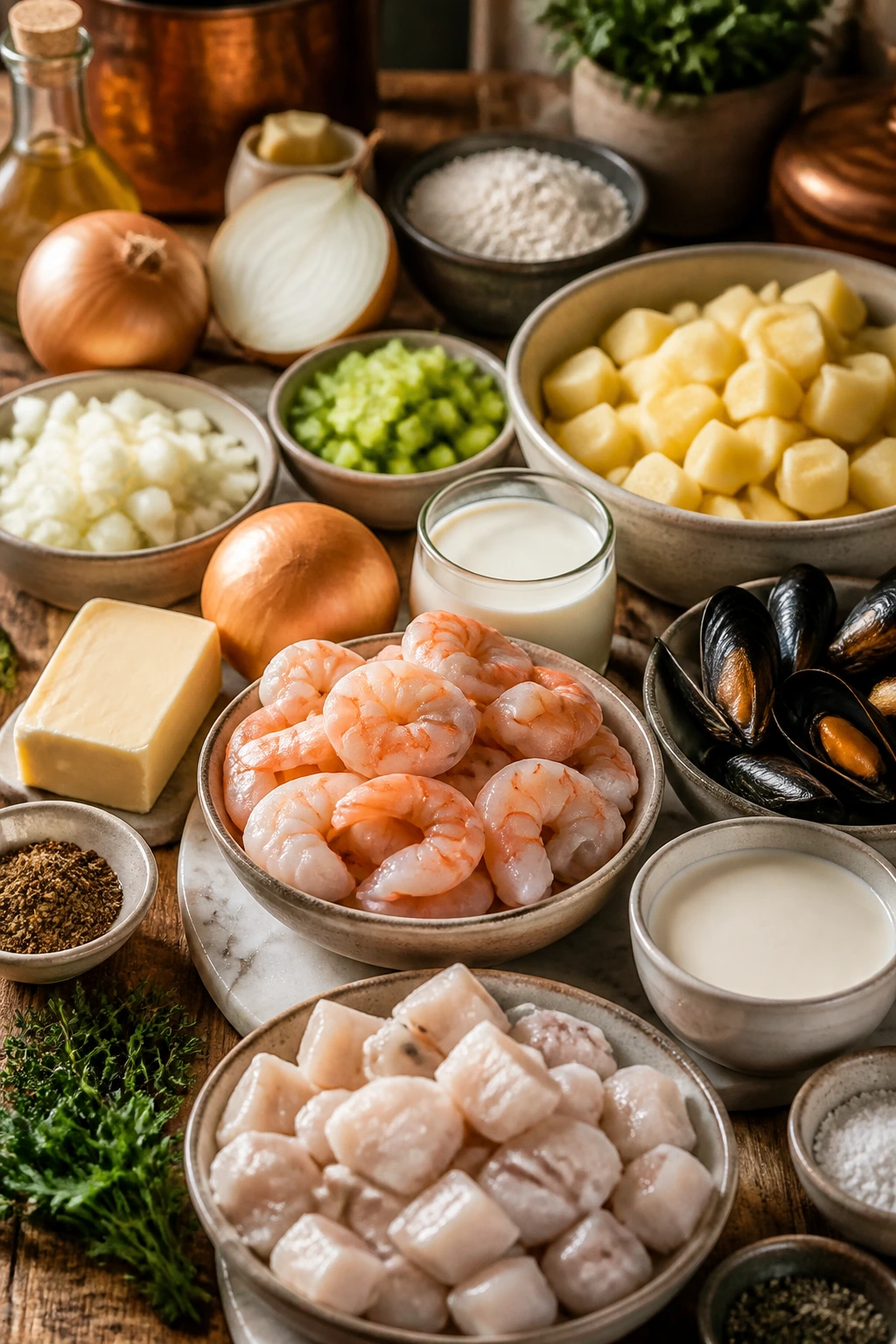
For the Chowder Base:
- 4 slices thick-cut bacon, diced
- 2 tablespoons unsalted butter
- 1 medium yellow onion, finely diced
- 2 celery stalks, finely diced
- 2 cloves garlic, minced
- 1/4 cup all-purpose flour
- 2 cups clam juice
- 1 1/2 cups low-sodium seafood stock
- 2 cups whole milk
- 1 cup heavy cream
- 1 1/2 pounds Yukon Gold potatoes, peeled and cut into 1/2-inch cubes
- 1 bay leaf
- 1 teaspoon Old Bay seasoning
- 1/2 teaspoon dried thyme
- 1 teaspoon kosher salt, plus more to taste
- 1/2 teaspoon freshly ground black pepper
For the Seafood and Finish:
- 12 ounces cod or haddock, cut into 1-inch chunks
- 12 ounces medium shrimp, peeled and deveined
- 1 (10-ounce) can chopped clams, drained, with 2 tablespoons of the liquid reserved
- 2 tablespoons chopped fresh parsley
- 1 tablespoon fresh lemon juice
Why Each Ingredient Has a Job
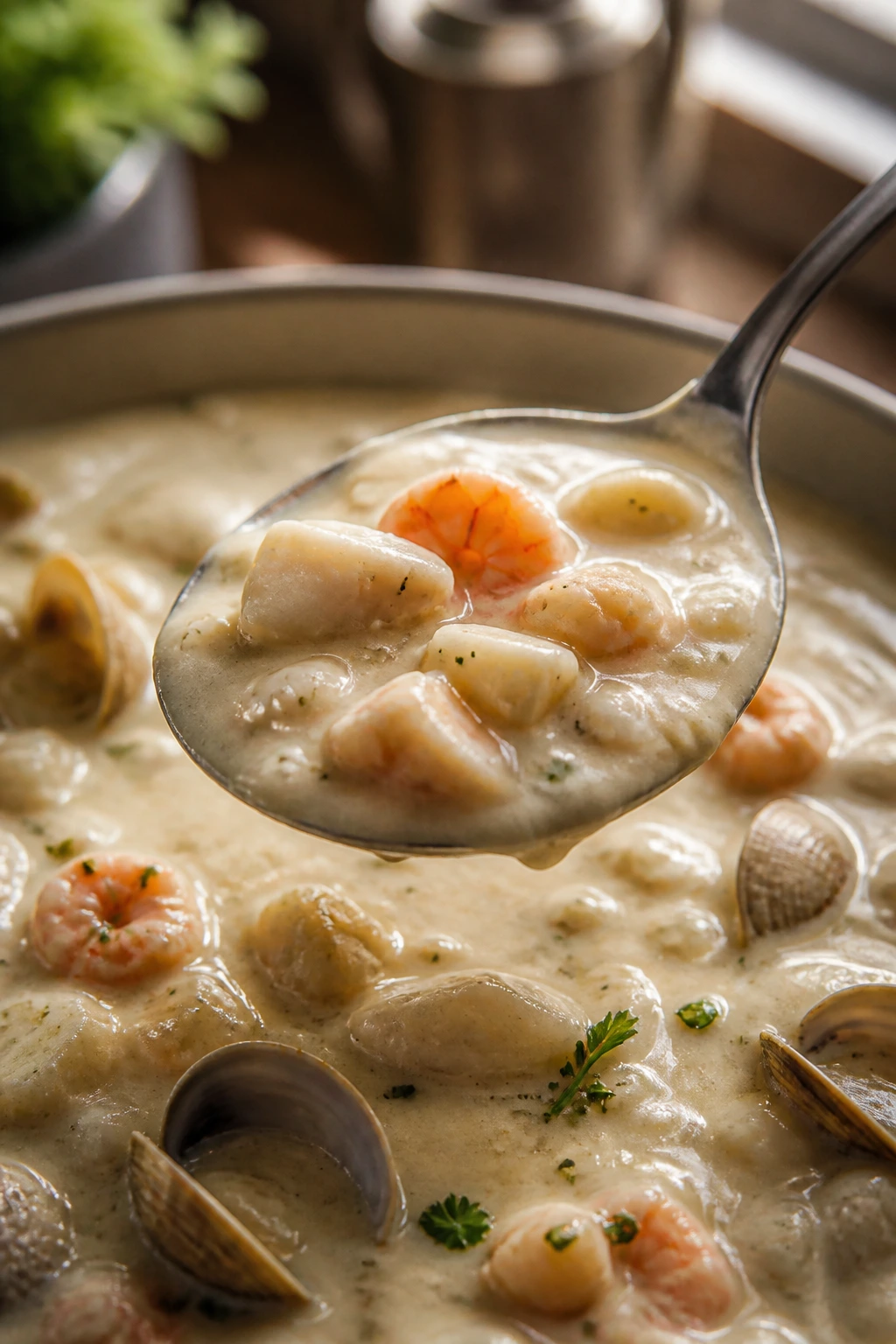
The Seafood
What to use: 12 ounces cod or haddock, 12 ounces medium shrimp, and 1 (10-ounce) can chopped clams, drained, with 2 tablespoons of the liquid reserved.
Preparation: Cut the fish into 1-inch chunks so it holds together in the pot, peel and devein the shrimp, and keep everything cold until the dairy base is ready. The clams can sit in a small bowl in the fridge while you finish the broth.
Substitutions: Bay scallops can replace the shrimp, and lump crab can stand in for part of the cod if that’s what you’ve got. Pollock works too, though it’s a little less elegant and a little more forgiving.
Tips: Buy fish that smells clean and briny, not sharp or fishy. Once seafood starts smelling off at the counter, it will not improve in the pot.
The Potato Base
What to use: 1 1/2 pounds Yukon Gold potatoes, peeled and cut into 1/2-inch cubes.
Preparation: Keep the cubes even so they soften at the same rate, and don’t cut them tiny. Small pieces disappear into the broth before they have a chance to give the chowder shape.
Substitutions: Red potatoes hold their shape a little better, while russets break down faster and make the soup thicker and cloudier. I like Yukon Golds here because they melt at the edges but still keep enough structure to look like potatoes, not wallpaper paste.
Tips: Potato size matters more than people think. If you slice them too big, the seafood finishes before the potatoes do. Too small, and the pot loses the texture that makes chowder feel like chowder.
Aromatics and Fat
What to use: 4 slices thick-cut bacon, 2 tablespoons unsalted butter, 1 medium yellow onion, 2 celery stalks, and 2 cloves garlic.
Preparation: Dice the bacon into small pieces so it renders quickly, and cut the onion and celery finely enough that they soften before the flour goes in. Garlic should be minced, not crushed into a wet paste.
Substitutions: Pancetta works if you want a slightly cleaner pork flavor, and olive oil plus a pinch of smoked paprika can stand in if you want to skip bacon altogether. Salt pork is old-school and very salty, so use less salt later if you go that route.
Tips: Render the bacon over medium heat, not high. Burnt bacon makes the whole pot taste rough, and there’s no polite way to rescue that.
Liquids and Dairy
What to use: 2 cups clam juice, 1 1/2 cups low-sodium seafood stock, 2 cups whole milk, and 1 cup heavy cream.
Preparation: Keep the milk and cream cold until you need them, then add them once the potatoes are tender and the heat has dropped. Warm dairy can still split if you boil it hard, so temperature matters.
Substitutions: Half-and-half can replace both the milk and cream if you want a slightly lighter bowl, though the broth will be thinner. If clam juice is especially salty, use unsalted seafood stock or cut the salt back a little at the end.
Tips: Don’t rush the simmering step. The potatoes need time to soften and release enough starch to help the chowder feel full, and that takes a few quiet minutes on the stove.
Seasoning and Finish
What to use: 1/4 cup all-purpose flour, 1 bay leaf, 1 teaspoon Old Bay seasoning, 1/2 teaspoon dried thyme, 1 teaspoon kosher salt, 1/2 teaspoon black pepper, 2 tablespoons chopped parsley, and 1 tablespoon lemon juice.
Preparation: Measure the flour before the pot gets hot, because once the onions are soft, you want to move quickly. Keep the parsley chopped fine so it disappears into the bowl instead of sitting on top like a garnish that forgot its job.
Substitutions: Smoked paprika can replace part of the Old Bay, and chives can stand in for parsley if you want a milder green finish. Lemon zest works if you’re out of juice, though the acidity is a little sharper.
Tips: Lemon goes in at the end. If it simmers too long, the finish gets dull and the whole soup tastes heavier than it should.
The Tools That Make the Pot Behave
-
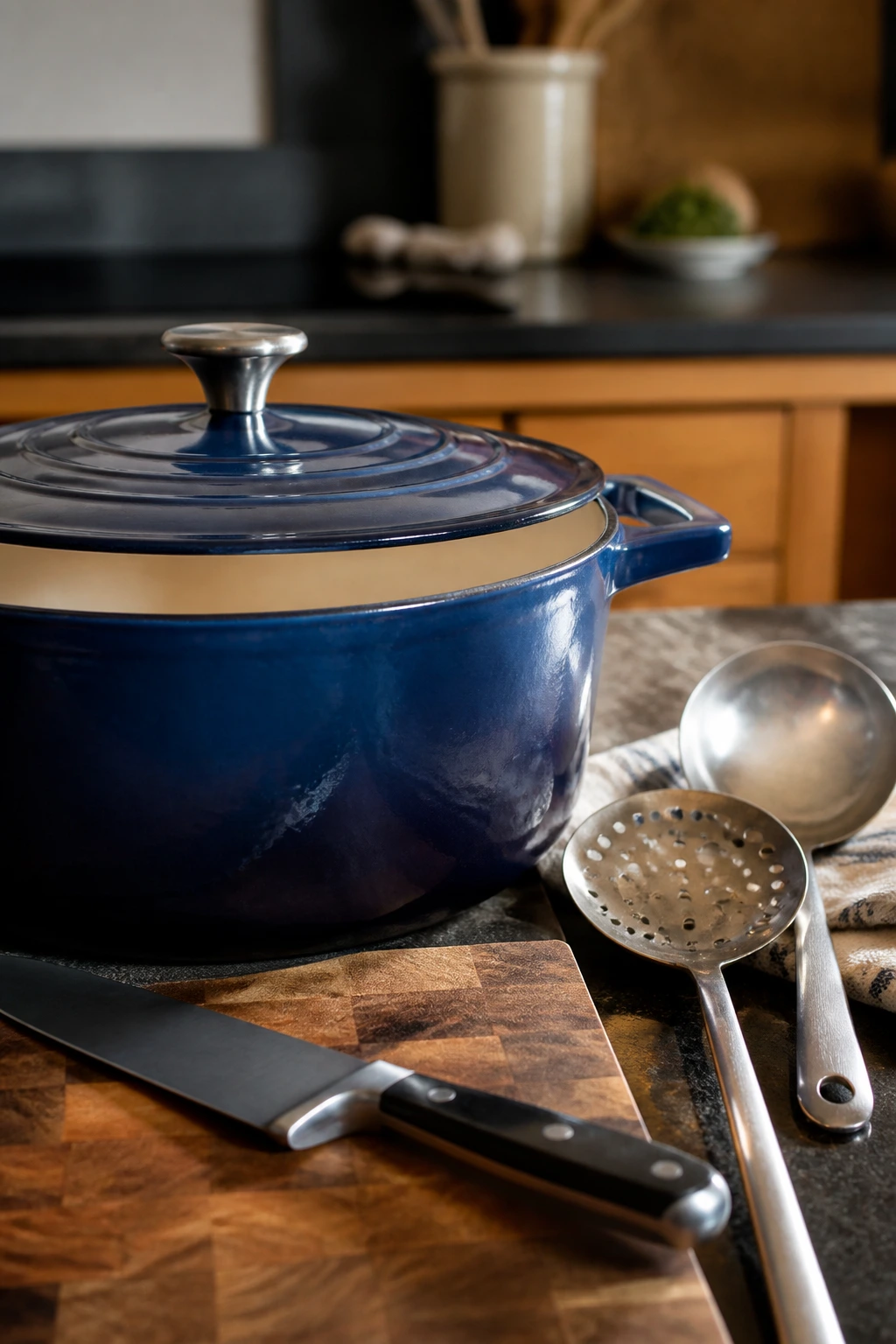
5- to 6-quart Dutch oven or heavy soup pot: This holds heat evenly and keeps the bottom from scorching when the flour and dairy go in.
-
Chef’s knife: You’ll use it for the onion, celery, potatoes, and seafood, so a sharp blade saves time and keeps the fish from getting ragged.
-
Cutting board with a damp towel underneath: A sliding board is how you end up chopping faster than you should. Don’t do that.
-
Wooden spoon or heatproof spatula: Something with a flat edge helps you scrape the browned bits from the bottom of the pot without scraping the enamel.
-
Ladle: A deep ladle gives you clean bowls and keeps the seafood from getting shredded by an awkward pour.
-
Slotted spoon: Handy for lifting the bacon out and for fishing out seafood if you need to check the texture.
-
Measuring cups and spoons: The flour, stock, and dairy need real measurements here. Eyeballing cream is how chowder turns sloppy.
-
Potato masher or sturdy spoon: Optional, but useful if you want to mash a few potatoes against the side of the pot for a thicker finish.
Building the Chowder, Step by Step
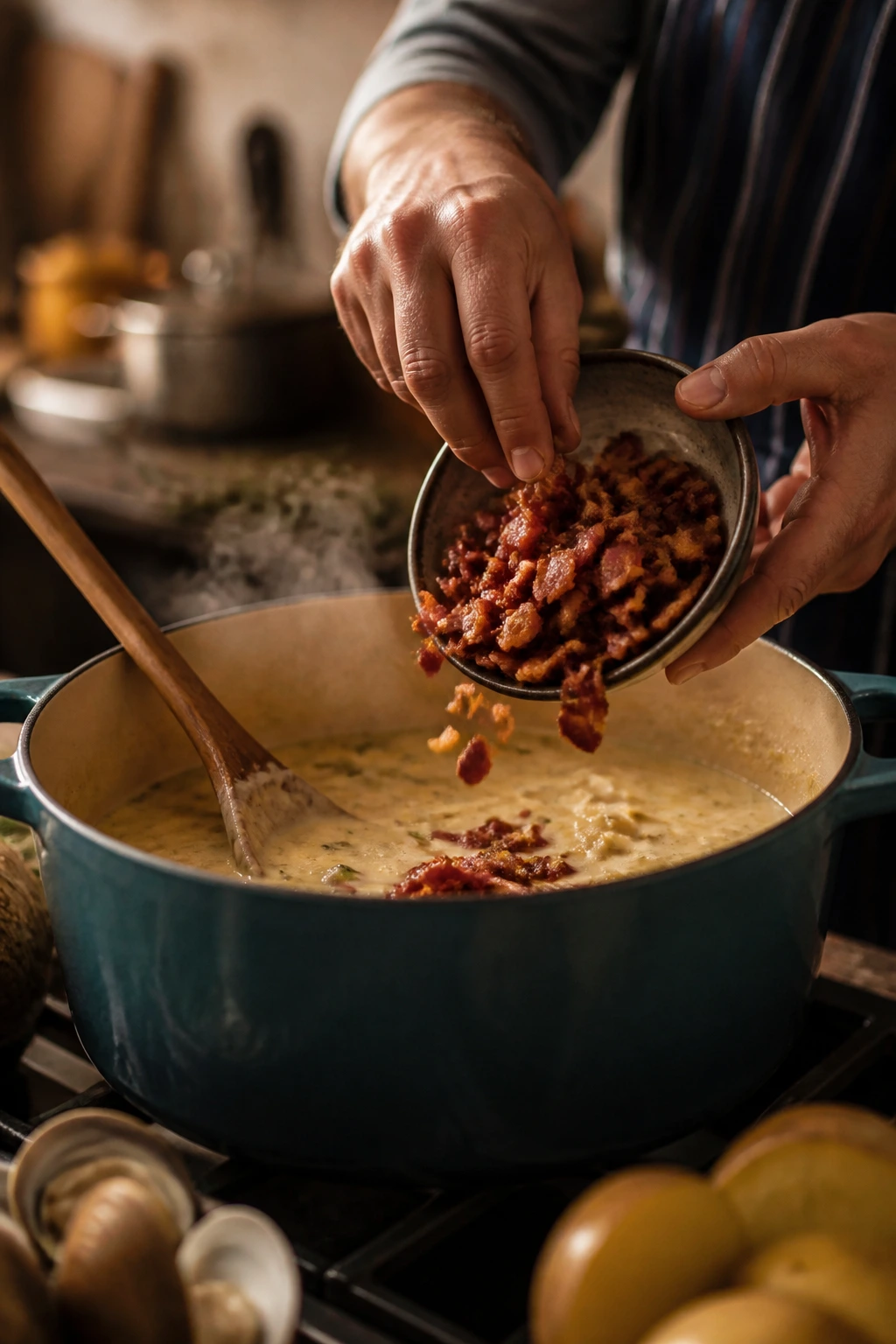
Render the Bacon and Start the Base
-
Set a 5- or 6-quart Dutch oven over medium heat. Add the diced bacon and cook for 5 to 7 minutes, stirring now and then, until the fat renders and the edges crisp. Use a slotted spoon to move the bacon to a paper towel-lined plate, leaving about 2 tablespoons of fat in the pot; spoon off any extra.
-
Add the butter, onion, and celery to the pot, along with a small pinch of salt. Cook for 5 to 6 minutes, stirring often, until the onion turns translucent and the celery softens. Add the garlic and cook for 30 seconds, just until fragrant, then sprinkle in the flour and stir for 1 minute so it coats the vegetables and loses its raw smell.
Build the Broth and Cook the Potatoes
-
Slowly whisk in the clam juice and seafood stock, scraping the bottom of the pot to loosen the browned bits. Add the potatoes, bay leaf, Old Bay, thyme, black pepper, and 1 teaspoon kosher salt. Bring the pot to a gentle simmer over medium-high heat, then reduce to medium-low and cook for 12 to 15 minutes, uncovered or partially covered, until the potatoes are almost tender and a knife slips in with slight resistance.
-
If you want a thicker chowder, mash about 1 cup of the potatoes against the side of the pot with your spoon, or lift a cup into a bowl and mash it there before returning it. The broth should look creamy and lightly thickened, not stiff. If it starts to look like paste, you’ve gone too far.
Add Dairy and Seafood
-
Reduce the heat to low. Stir in the milk and cream, then warm the chowder for 2 to 3 minutes until steam rises and the surface shimmers. Do not let it boil once the dairy goes in. That’s the fastest route to a grainy pot.
-
Add the cod and simmer for 3 minutes, stirring gently once or twice so the pieces separate. Add the shrimp and clams, including the reserved clam liquid, then cook for 2 to 4 minutes more, just until the shrimp curl into loose C-shapes, the cod flakes, and everything is hot through.
Finish and Serve
-
Remove the bay leaf. Stir in the parsley and lemon juice, then taste and adjust with more salt or black pepper if needed. Let the chowder sit off the heat for 5 minutes so the broth settles and the seafood finishes gently.
-
Ladle into warm bowls and serve right away with crackers or bread. If you wait too long, the potatoes keep drinking broth and the bowl turns thicker than you planned.
How to Serve Seafood Chowder Without Drowning It
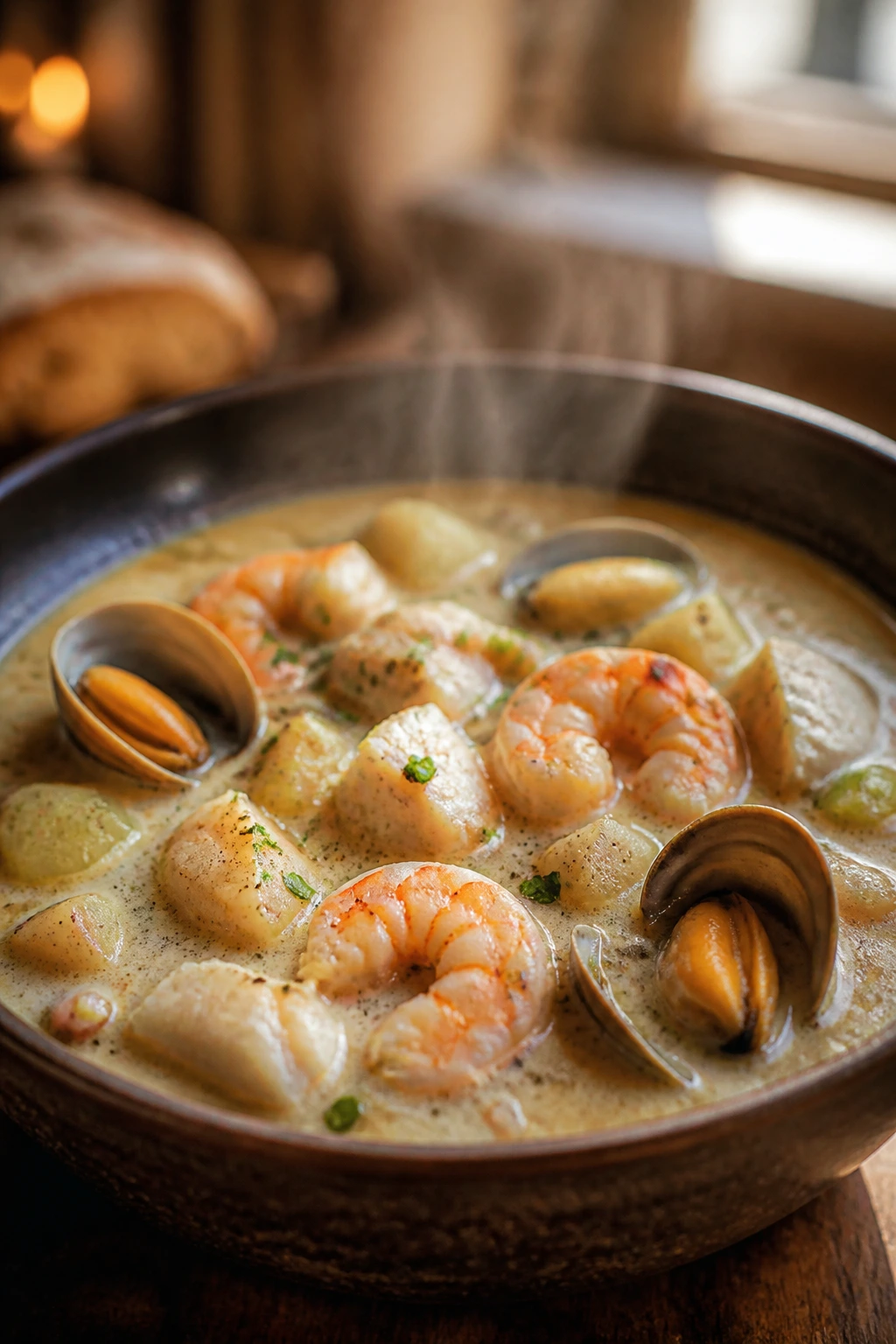
Presentation: Warm the bowls first if you can; a cold bowl steals heat fast. Ladle the chowder so the seafood stays visible near the surface, then finish with parsley and a hard grind of black pepper. A little bacon scattered on top looks better than a green blanket of herbs.
Accompaniments: Crusty sourdough is the obvious move, and I still prefer it because it can handle the broth without falling apart. Oyster crackers are the other classic choice, and a simple green salad with sharp vinaigrette gives the meal a clean edge between spoonfuls. If you want something a little more indulgent, buttered toast cut into narrow fingers is excellent for chasing the last bit of chowder around the bowl.
Portions: Plan on about 1 1/2 to 2 cups per adult for a main-dish serving. That sounds generous until you taste the broth and realize people tend to go back for a second bowl if you let them. For a larger crowd, the recipe scales well, but keep the seafood in the same ratios so the pot still tastes balanced.
Beverage Pairing: A dry hard cider is my favorite match because it cuts the cream and plays nicely with the seafood. An unoaked Chardonnay or a light lager works too. For a nonalcoholic option, sparkling water with lemon keeps the meal crisp instead of heavy.
Small Flavor Moves That Change the Bowl
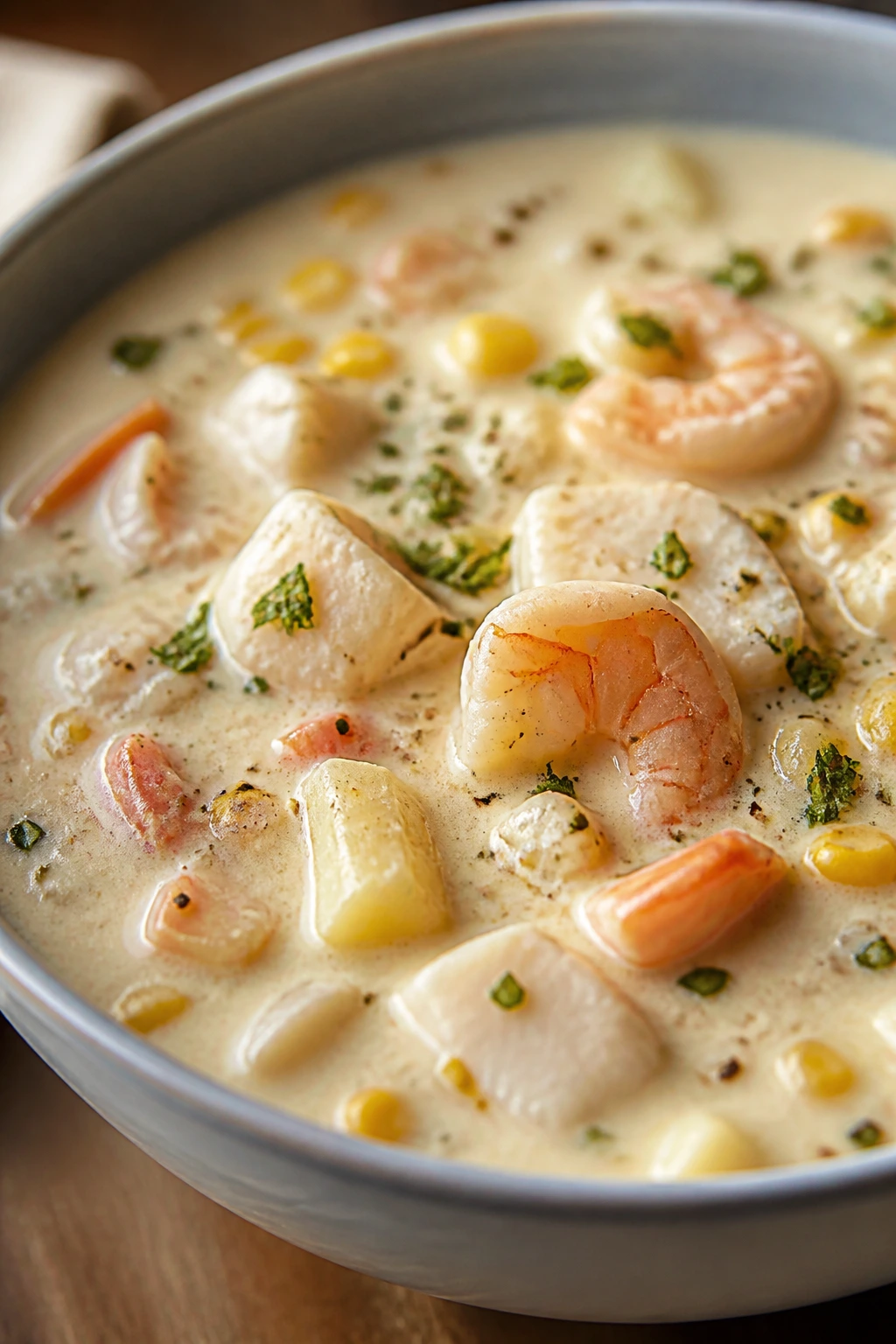
Flavor Enhancement: A tiny splash of dry sherry or white vermouth stirred in just before the dairy can make the broth taste deeper and a little nuttier. You only need a tablespoon or two, and it should never dominate; the point is to wake up the clam juice, not turn the chowder into a cocktail.
Customization: If you want more sweetness, add 1 cup of frozen corn with the potatoes. If you want a more old-fashioned flavor, a pinch of celery seed does a lot of work for almost no effort. I also like a little extra black pepper at the table because it sharpens the cream.
Serving Suggestions: Top each bowl with chopped chives, a few bacon crumbs, and oyster crackers on the side. A drizzle of browned butter sounds flashy, but in this soup it actually works because the nutty edge bridges the potatoes and the seafood.
Make-It-Yours: For gluten-free chowder, skip the flour and whisk 2 tablespoons cornstarch with 3 tablespoons cold water, then stir it into the simmering broth before the dairy goes in. For a dairy-light version, replace the cream with more whole milk and mash an extra cup of potatoes to keep the body.
Common Seafood Chowder Mistakes and Their Fixes
-
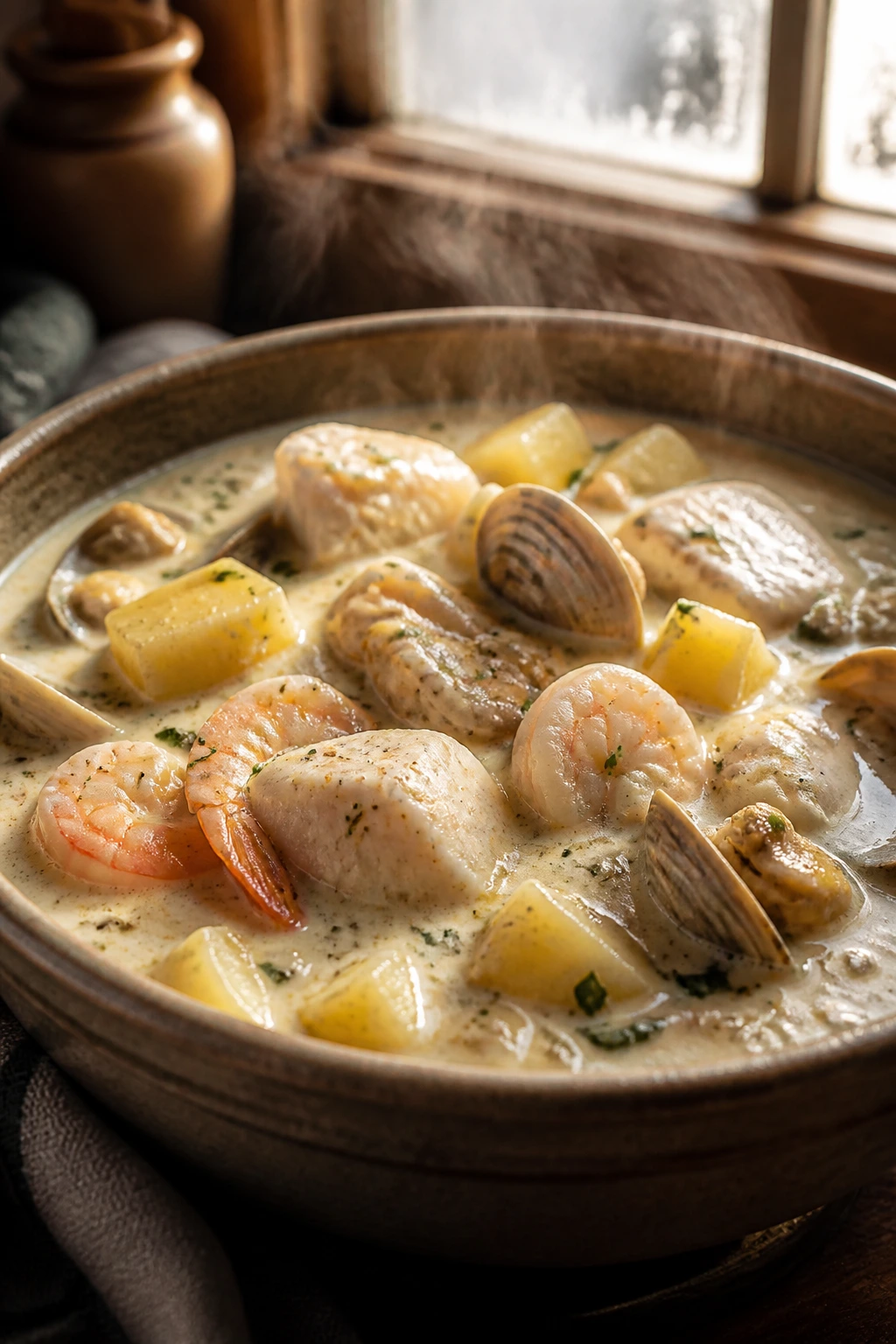
Boiling after the cream goes in: The surface starts churning, and the soup can look slightly split or grainy. Keep the heat at a lazy steam once the milk and cream are added, and pull the pot off the burner the moment the seafood is done.
-
Adding the shrimp too early: Shrimp turns tight and chewy fast, and it curls into little O-shapes when it has been overcooked. Give the cod a short head start, then add the shrimp for the last few minutes only.
-
Underseasoning the potato base: Potatoes soak up salt like a sponge, so a broth that tastes fine early can still land flat later. Season the pot before the simmer, then taste again after the seafood goes in and finish with salt or lemon if it needs a lift.
-
Skipping the flour step entirely: Without a little roux, the chowder can feel thin and loose, especially once the dairy warms up. The flour should cook with the onions for a full minute so it loses that raw taste before the liquids hit.
-
Mashing too many potatoes: A bowl that’s too smooth stops feeling like chowder and starts feeling like puréed soup with seafood in it. Mash about a cup, not the whole pot, unless you deliberately want a thicker spoon-coating finish.
-
Using wet, thawed seafood without drying it: Extra water dilutes the broth and makes the fish steam instead of poach. Pat the seafood dry with paper towels and keep it chilled until it goes into the pot.
Flavor Variations Worth Trying
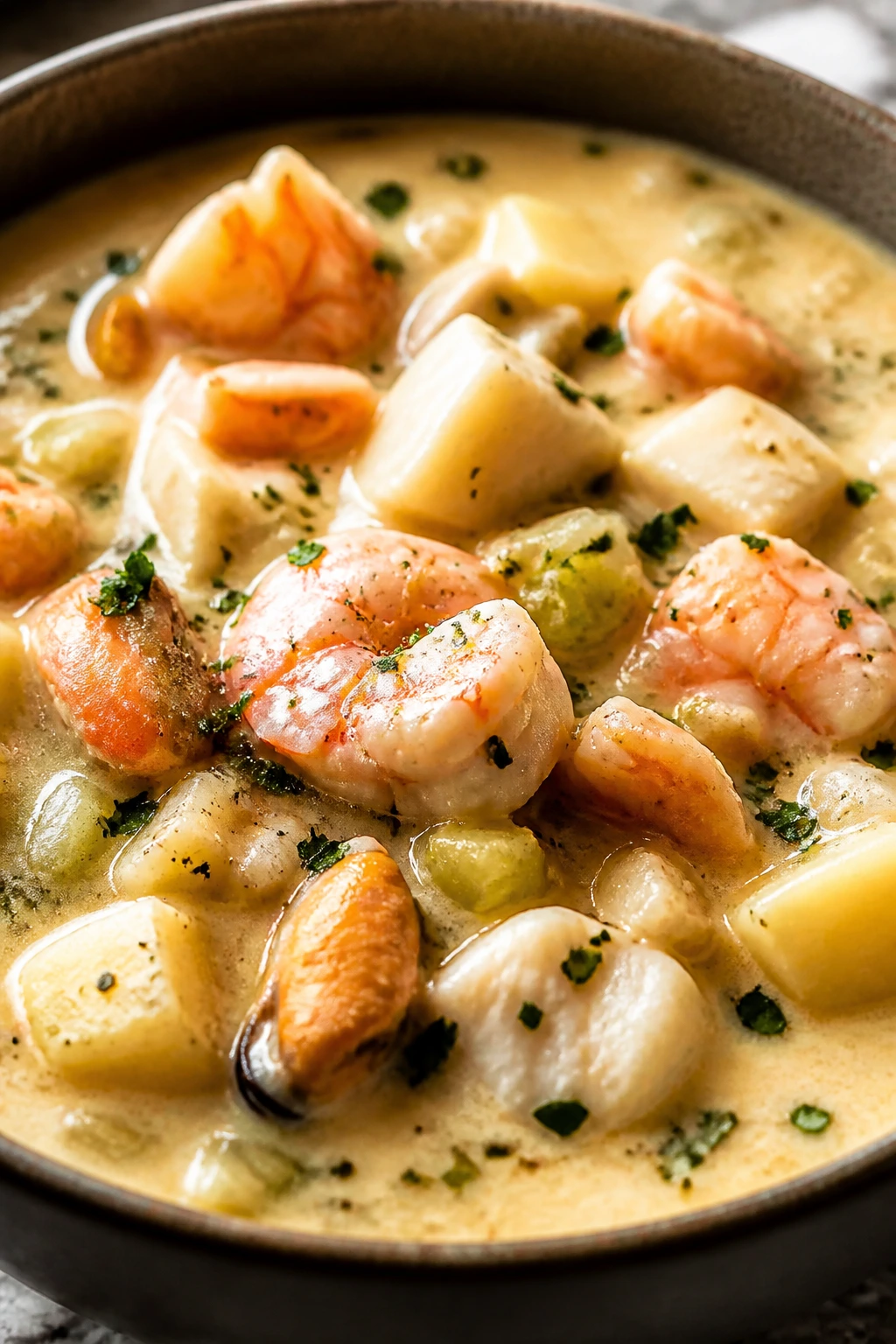
Smoky Haddock Harbor Chowder: Swap the cod for haddock and add a half teaspoon of smoked paprika with the thyme. Haddock carries a little more character than cod, so this version tastes a touch deeper without needing much else.
Corn-and-Shrimp Dockside Chowder: Add 1 1/2 cups frozen corn kernels when the potatoes go in, then keep the clams but skip the cod if you want a sweeter bowl. The corn gives each spoonful a pop that plays nicely against the cream.
Crab-Forward Captain’s Pot: Replace the shrimp with 8 ounces of lump crab and fold it in at the very end, just long enough to warm it. Crab makes the bowl feel softer and richer, and it’s a nice choice when you want the seafood to read elegant instead of busy.
Dairy-Light Lighthouse Chowder: Use 3 cups seafood stock, 1 cup whole milk, and 1/2 cup cream, then mash an extra cup of potatoes for body. The broth stays lighter on the tongue, but it still eats like chowder because the starch does the work the cream usually does.
Tomato-Bright Red Harbor Chowder: Stir in 1/2 cup crushed tomatoes after the flour cooks and before the stock goes in. The tomato edge sharpens the clams and gives the bowl a red chowder feel without losing the creamy finish.
Make-Ahead, Storage, and Reheating Notes
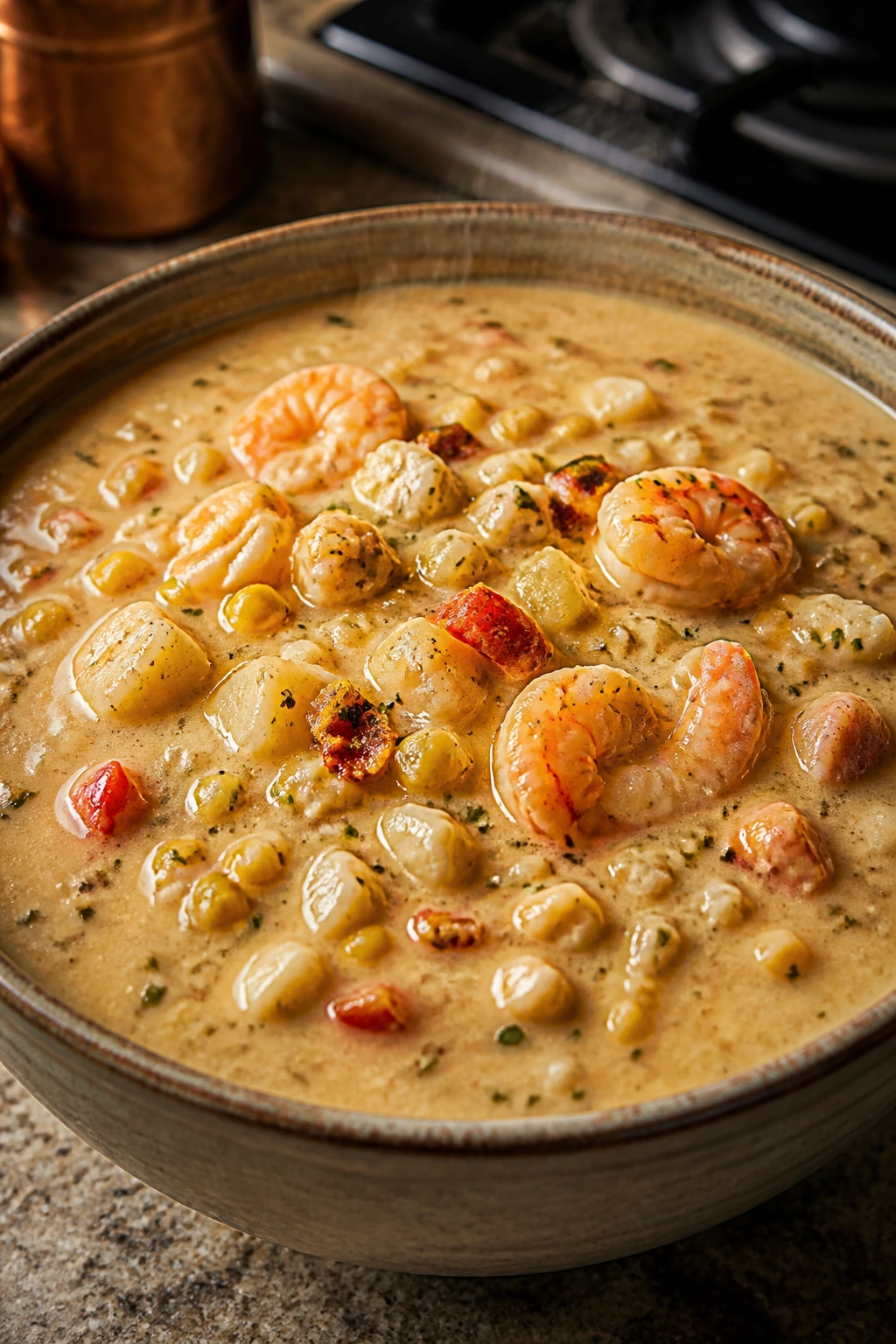
Seafood chowder is a little fussy about storage, and that’s not a flaw so much as a reminder that fish, dairy, and potatoes each age in their own way. The finished chowder keeps in the refrigerator for up to 3 days in an airtight container. After that, the seafood gets tired and the broth starts to lose its clean flavor.
If you want to make life easier, cook the base through the potatoes, then stop before the milk, cream, cod, shrimp, and clams go in. That base can be refrigerated for up to 2 days. When you’re ready to serve, bring it back to a gentle simmer, stir in the dairy, and finish with the seafood at the end. That’s the best make-ahead move if you’re cooking for guests.
Freezing is a little more complicated. The finished chowder can be frozen for up to 1 month, but the texture softens when it thaws, and the dairy may separate slightly. If you want a better freezer option, freeze the potato-and-broth base without the seafood or dairy for up to 2 months. Thaw it overnight in the fridge, rewarm it gently, then add the milk, cream, and seafood fresh.
For reheating, use low heat on the stovetop and stir often. Add a splash of milk or stock if the chowder thickened in the fridge. A microwave works for a single bowl, but use 50% power in 30-second bursts and stir between each one so the edges do not overheat while the center stays cold.
Questions Home Cooks Ask About Seafood Chowder
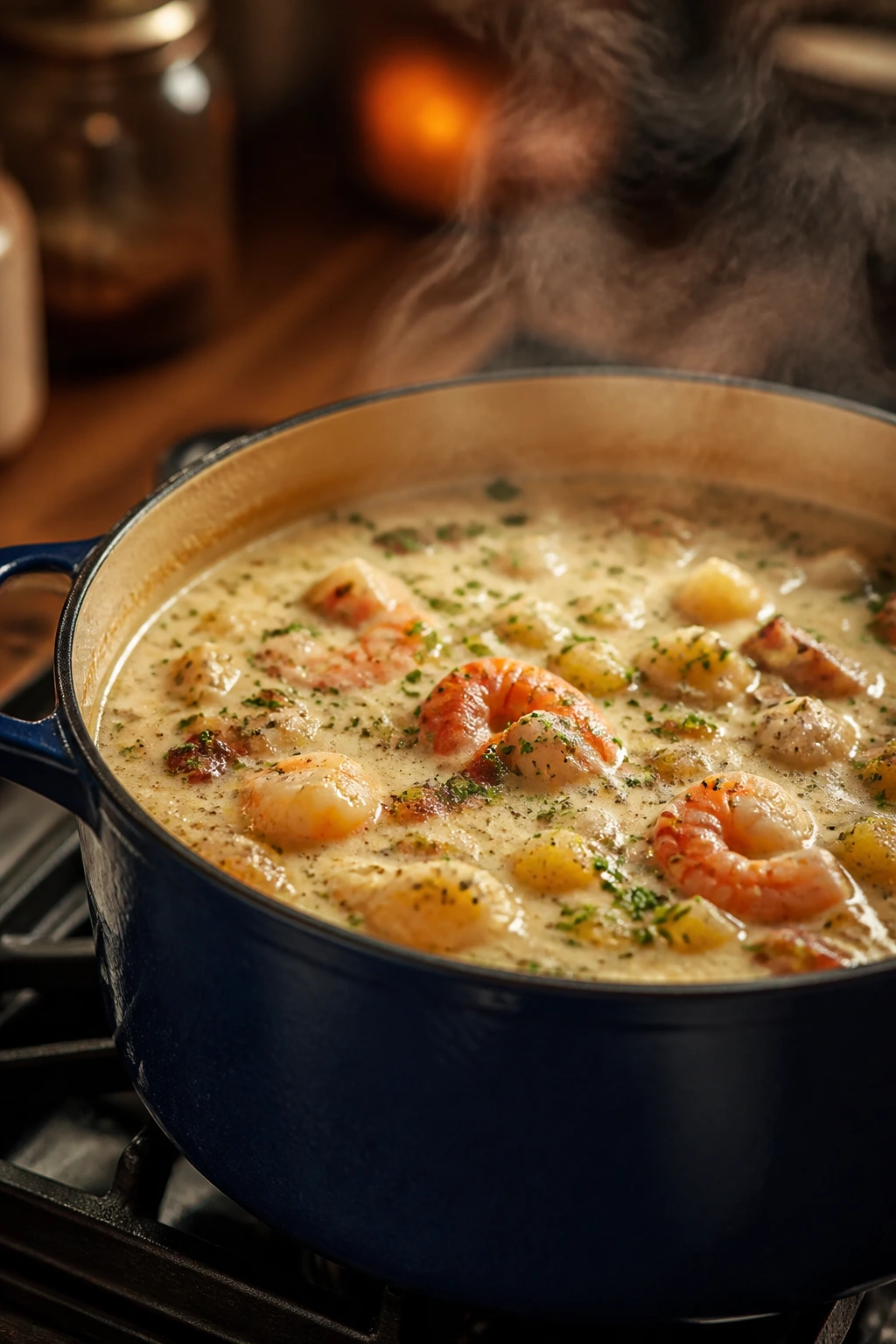
Can I use frozen seafood in this chowder?
Yes, and it’s a perfectly sensible choice. Thaw it in the refrigerator overnight, then pat it dry before it goes into the pot. Frozen shrimp usually behaves better than frozen fish, because fish can shed more water as it thaws.
What fish works best if I can’t find cod?
Haddock is the closest easy swap, and pollock or halibut also work well. The key is using a firm white fish that flakes in chunks instead of collapsing into threads the second it hits heat.
Can I make this chowder without bacon?
You can. Use the butter alone, then add 1/2 teaspoon smoked paprika or a pinch of celery seed to give the broth a little depth. The chowder will taste cleaner and a bit less smoky, which some people prefer.
What if my chowder is too thick after it sits?
That happens because the potatoes keep soaking up liquid. Stir in a splash of warm milk or seafood stock as you reheat it, and stop once it reaches the texture you like. Don’t try to fix it with high heat; that only makes the dairy behave badly.
Can I thicken seafood chowder without flour?
Yes. Mash more of the potatoes against the side of the pot, or stir in a cornstarch slurry made with 2 tablespoons cornstarch and 3 tablespoons cold water before the dairy goes in. Flour gives a more old-school body, but potatoes do most of the heavy lifting here anyway.
Why did my chowder taste flat even after I salted it?
It probably needed acid, not just salt. A tablespoon of lemon juice at the end wakes up the shellfish and stops the cream from tasting dull. If it still feels muted, add a tiny bit more Old Bay rather than dumping in more dairy.
Can I reheat leftover chowder in the microwave?
Yes, but do it in short bursts and stir often. Seafood cooks unevenly in the microwave, so 30-second intervals at half power are much safer than one long blast. If the bowl starts bubbling around the edges, stop and let it stand for a minute.
A Bowl Worth Repeating
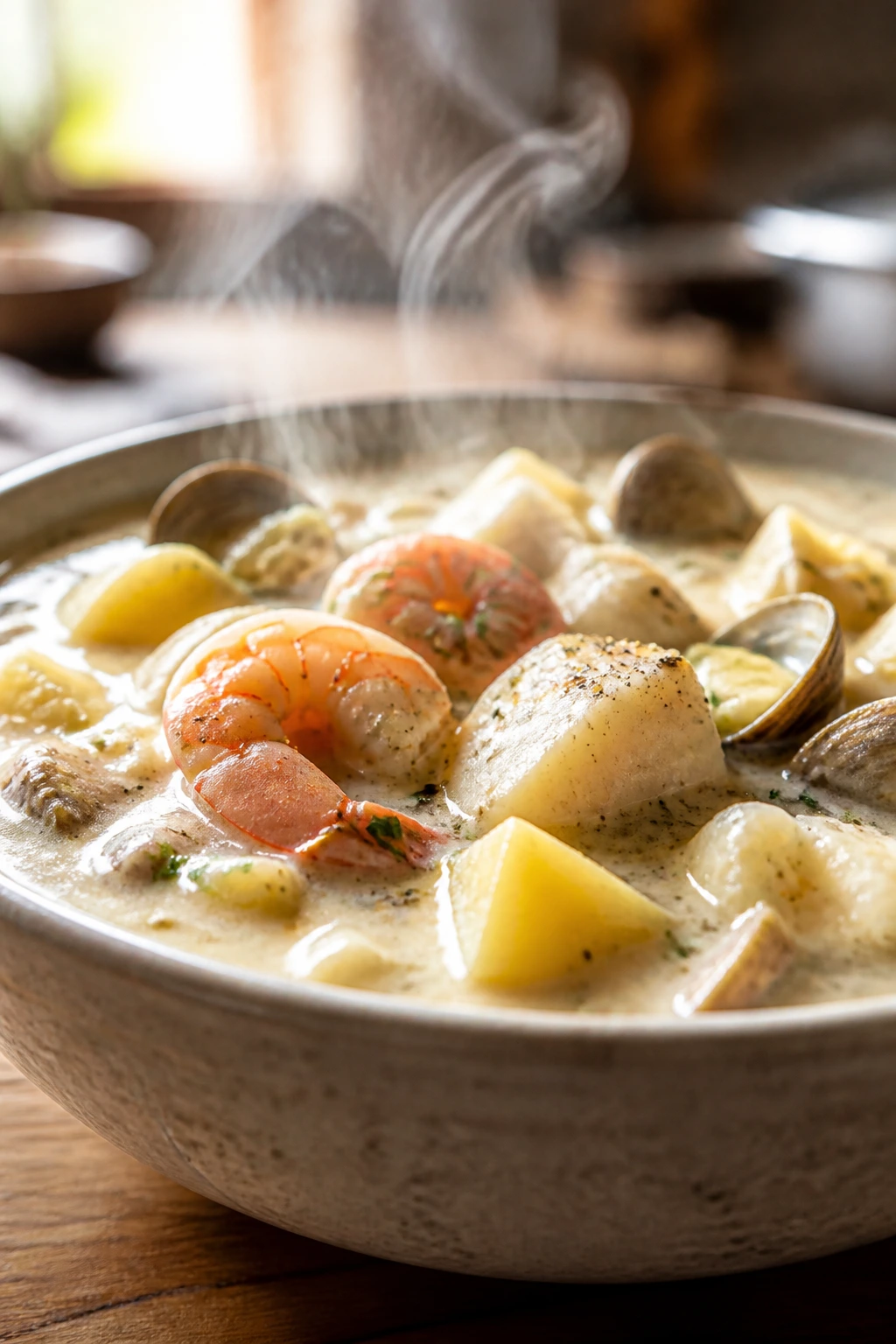
There’s a reason this kind of chowder keeps showing up whenever the weather turns hard and the evening gets long. It gives you cream without losing the sea, and it gives you substance without tipping into heaviness. That’s a narrow line, but it’s the whole point.
If you make it once, pay attention to the texture of the broth right before the seafood goes in. That moment tells you almost everything: whether the potatoes have done their job, whether the pot needs more salt, whether you’ve built a base worth finishing. The next time the house feels cold and the kitchen needs to smell like dinner before the door even closes, this is the pot I’d put on first.
Cozy Seafood Chowder for Cold Winter Nights — Recipe Card
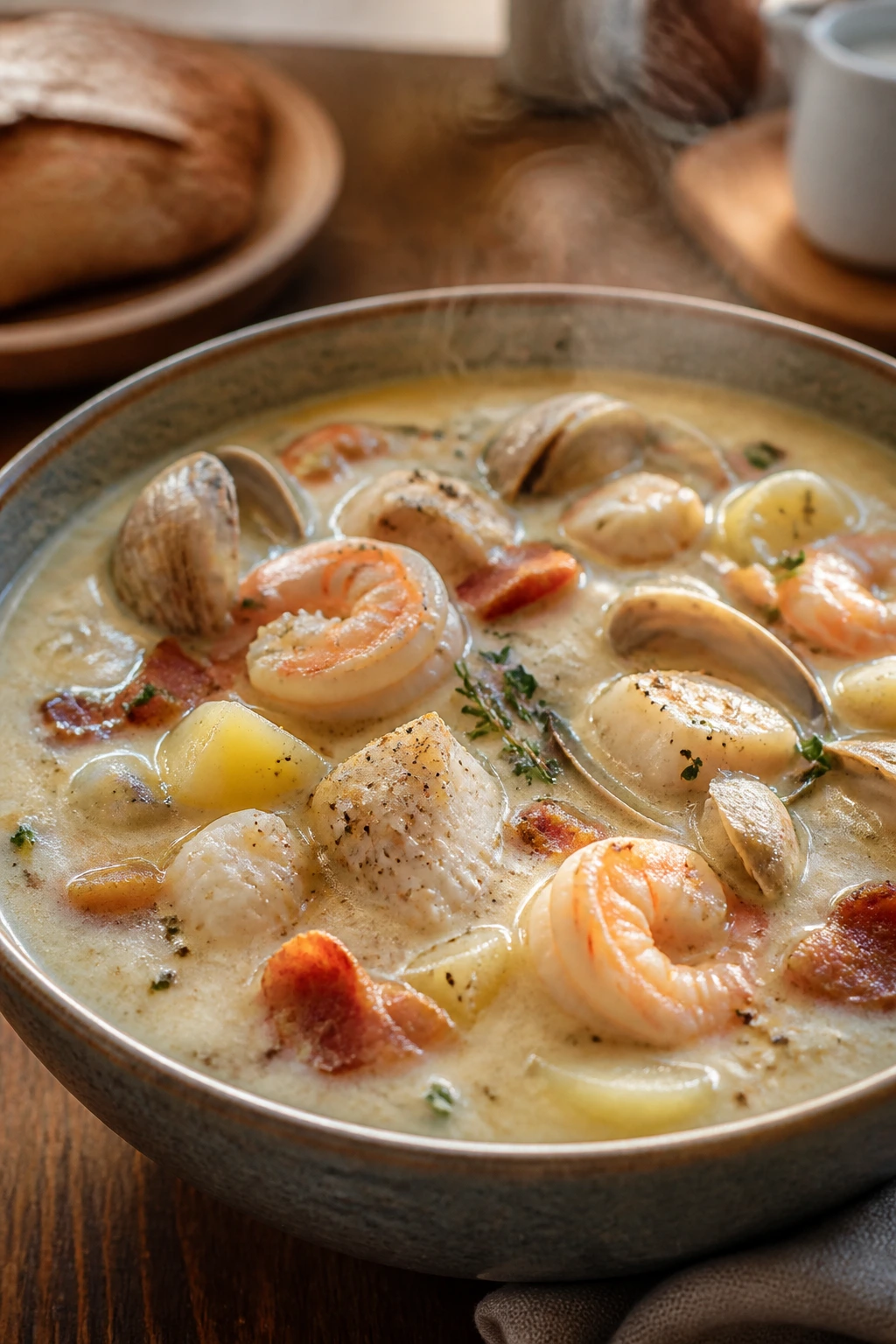
Recipe Name: Cozy Seafood Chowder for Cold Winter Nights
Description: A creamy, briny seafood chowder made with bacon, Yukon Gold potatoes, cod, shrimp, and chopped clams. The broth stays rich without turning heavy, and the seafood goes in at the end so every bite stays tender.
Prep Time: 20 minutes
Cook Time: 35 minutes
Total Time: 55 minutes
Course: Dinner, Main Course
Cuisine: American, New England-inspired
Servings: 6 servings
Calories: About 380 kcal per serving
Ingredients
For the Chowder Base:
- 4 slices thick-cut bacon, diced
- 2 tablespoons unsalted butter
- 1 medium yellow onion, finely diced
- 2 celery stalks, finely diced
- 2 cloves garlic, minced
- 1/4 cup all-purpose flour
- 2 cups clam juice
- 1 1/2 cups low-sodium seafood stock
- 2 cups whole milk
- 1 cup heavy cream
- 1 1/2 pounds Yukon Gold potatoes, peeled and cut into 1/2-inch cubes
- 1 bay leaf
- 1 teaspoon Old Bay seasoning
- 1/2 teaspoon dried thyme
- 1 teaspoon kosher salt, plus more to taste
- 1/2 teaspoon freshly ground black pepper
For the Seafood and Finish:
- 12 ounces cod or haddock, cut into 1-inch chunks
- 12 ounces medium shrimp, peeled and deveined
- 1 (10-ounce) can chopped clams, drained, with 2 tablespoons of the liquid reserved
- 2 tablespoons chopped fresh parsley
- 1 tablespoon fresh lemon juice
Instructions
-
Render the bacon in a Dutch oven over medium heat for 5 to 7 minutes, until crisp; remove the bacon and leave about 2 tablespoons of fat in the pot.
-
Add the butter, onion, and celery, and cook for 5 to 6 minutes until softened. Stir in the garlic for 30 seconds, then add the flour and cook for 1 minute.
-
Whisk in the clam juice and seafood stock. Add the potatoes, bay leaf, Old Bay, thyme, salt, and pepper. Simmer gently for 12 to 15 minutes until the potatoes are almost tender.
-
Mash about 1 cup of the potatoes against the side of the pot for a thicker chowder, if desired.
-
Reduce the heat to low. Stir in the milk and cream and warm for 2 to 3 minutes without boiling.
-
Add the cod and cook for 3 minutes. Add the shrimp and clams, including the reserved clam liquid, and cook for 2 to 4 minutes more until the seafood is just cooked through.
-
Remove the bay leaf, stir in the parsley and lemon juice, taste, and adjust with more salt or pepper if needed. Rest for 5 minutes, then serve warm.
Notes: Keep the heat low once the dairy goes in; the base can be made 2 days ahead; if you freeze it, freeze the broth base before adding seafood and cream for the best texture.