



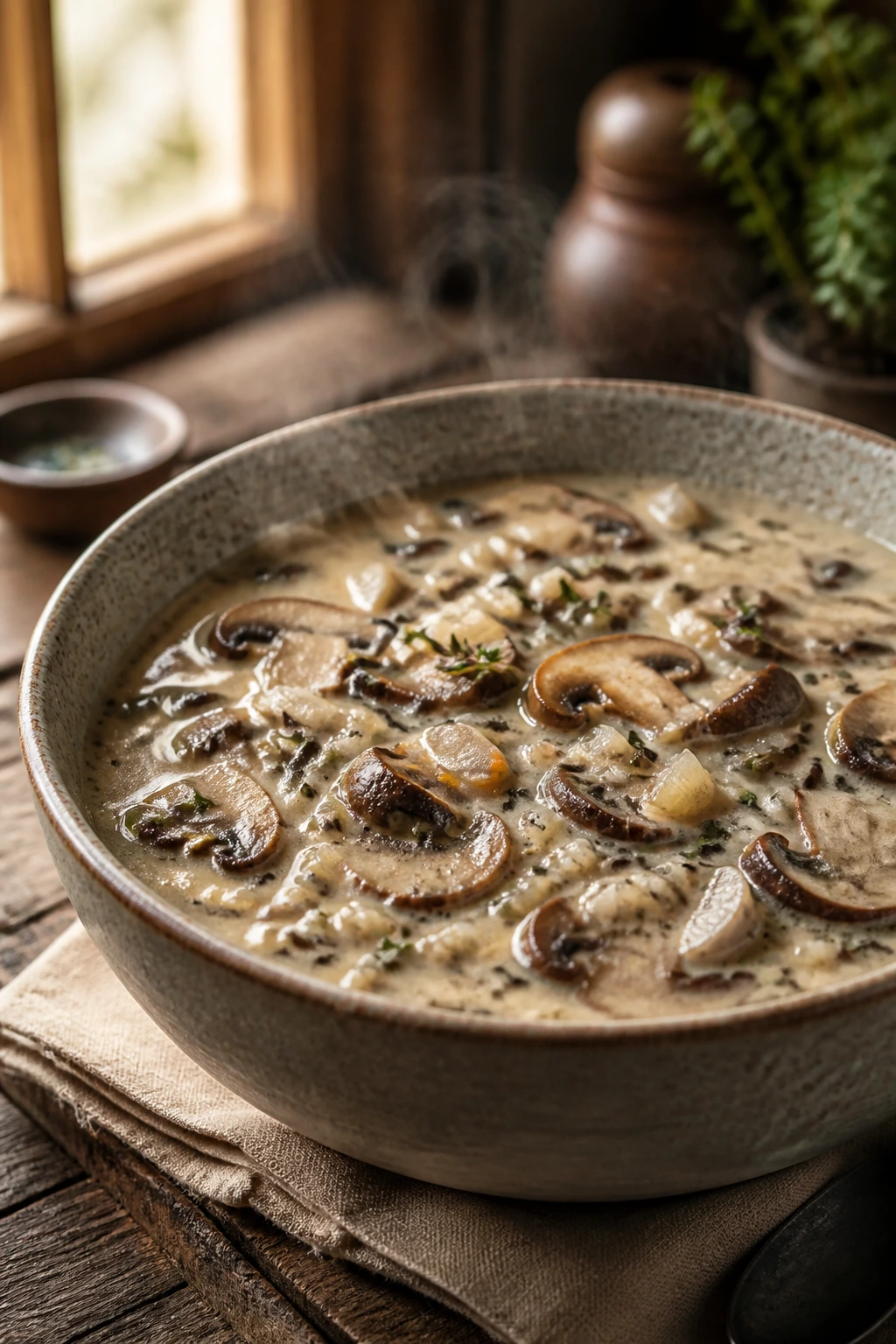
A pot of wild rice soup changes the mood of a kitchen fast. The broth starts pale and a little shy, then the onions melt in, the mushrooms darken everything at the edges, and the wild rice turns from hard little specks into long, chewy grains with a faint nutty smell that hangs in the air. That smell is part toasted grain, part butter, part something a little earthy and older than weeknight cooking. Good stuff.
This version leans creamy without sliding into gluey or heavy. The trick is simple, and a little old-fashioned: build flavor in the pot before the liquid goes in, cook the rice until it actually has time to soften, then add the dairy at the very end so it stays smooth instead of tired. Wild rice is not white rice wearing a dark coat. It’s a seed from an aquatic grass, and it needs patience. Rush it, and you get hard grains in thin broth. Give it time, and you get a soup with real chew, deep color, and the kind of finish that makes you want one more ladle.
I like this soup because it acts bigger than the ingredient list suggests. A few carrots, a handful of mushrooms, a cup of rice, and some broth can look ordinary on the counter. In the pot, they become something far more satisfying: creamy but not dull, earthy but not muddy, rich but still clean enough to keep eating after the bowl looks empty. And if you keep a little extra broth nearby, the leftovers can be loosened back up the next day without any drama.
Why You’ll Love This Bowl
-
Chewy rice, not mush: Wild rice holds its shape and gives every spoonful a little bite, which keeps the soup from feeling flat or monotonous.
-
Creamy broth, not a heavy chowder: The flour-thickened base and final splash of milk and cream make the broth silky, but it still pours like soup, not paste.
-
The mushrooms do real work: Cremini mushrooms bring a dark, savory note that makes the broth taste like it simmered longer than it did.
-
It gets better after a rest: The rice continues to drink broth overnight, so the flavor deepens and the soup settles into itself by the next day.
-
It feeds a crowd without fuss: One Dutch oven gives you six solid servings, and the bowl stretches well with bread, salad, or a handful of crackers.
-
Easy to steer in different directions: Chicken, turkey, mushrooms, beans, extra herbs, dairy-free swaps — the base is sturdy enough to take a few turns.
Serving and Timing at a Glance
Yield: 6 generous servings
Prep Time: 20 minutes
Cook Time: 55 minutes
Total Time: 1 hour 15 minutes
Difficulty: Intermediate — the method is straightforward, but wild rice needs a patient simmer and the dairy has to be added with a light hand.
Best Served: Hot, with black pepper on top and a piece of crusty bread within reach
A soup like this feels relaxed, but it still rewards a little timing discipline. Wild rice asks for a longer simmer than people expect, and the broth thickens as it stands, so the pot needs attention near the end. That’s not a downside. It’s the whole point. You’re building texture instead of just heating ingredients.
The Ingredient List for a Creamy, Nutty Pot
For the Soup:
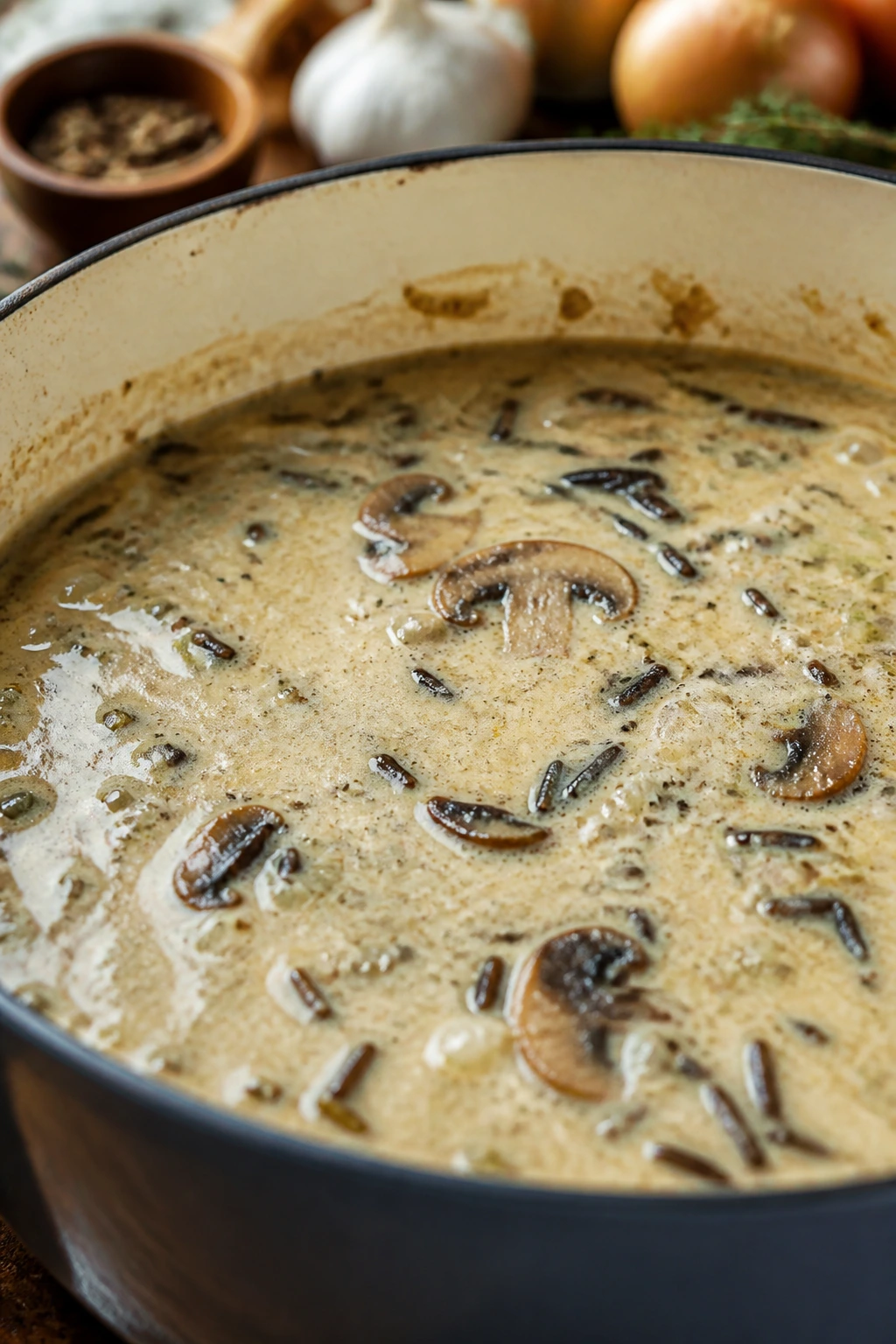
- 1 cup wild rice, rinsed and drained
- 2 tablespoons unsalted butter
- 1 tablespoon olive oil
- 1 large yellow onion, diced
- 2 medium carrots, peeled and diced
- 2 celery stalks, diced
- 8 ounces cremini mushrooms, sliced
- 3 garlic cloves, minced
- 1/4 cup all-purpose flour
- 6 cups low-sodium chicken broth
- 2 cups water
- 1 teaspoon dried thyme
- 1 bay leaf
- 1 1/2 teaspoons kosher salt, plus more to taste
- 1/2 teaspoon black pepper, plus more to finish
- 2 cups cooked shredded chicken
- 1 cup whole milk
- 1/2 cup heavy cream
- 2 teaspoons fresh lemon juice
- 2 tablespoons chopped fresh parsley
The list is short enough to shop without a spreadsheet, but every item has a job. Wild rice brings chew and a dark, nutty edge. Mushrooms push the broth into deeper, woodier territory. Milk and cream soften everything at the end. Lemon and parsley keep the finish from getting sleepy.
What Each Ingredient Brings to the Bowl
Wild Rice
What to use: 1 cup wild rice, rinsed under cool water until the rinse water loosens up and turns less cloudy.
Preparation: A quick rinse is enough. You’re washing off dust and packaging debris, not trying to soak it into submission.
Substitutions: A wild rice blend works if that’s what you have, and it cooks a little faster. Brown rice can stand in, but the texture is softer and less nutty.
Tips: Wild rice is a seed, not a polished grain, so don’t expect it to behave like white rice. The kernels split open and curl slightly when they’re done, and that’s the look you want.
Aromatics and Vegetables
What to use: 1 large yellow onion, 2 medium carrots, 2 celery stalks, 8 ounces cremini mushrooms, and 3 garlic cloves.
Preparation: Dice the onion, carrots, and celery into small, even pieces so they soften at the same pace. Slice the mushrooms thin enough to brown, not so thin that they disappear.
Substitutions: Leeks can replace half the onion, parsnips can stand in for one carrot, and button mushrooms work if cremini are unavailable.
Tips: Mushrooms need space and a little heat. If you crowd the pot, they steam and stay pale. Give them time to lose their water and they’ll give you a darker, more savory broth.
Broth, Flour, and Dairy
What to use: 6 cups low-sodium chicken broth, 2 cups water, 1/4 cup all-purpose flour, 1 cup whole milk, and 1/2 cup heavy cream.
Preparation: The flour should be stirred into the cooked vegetables before the liquid goes in, so it coats the fat and thickens evenly. Keep the milk and cream ready for the end.
Substitutions: Turkey broth works well, half-and-half can replace the milk and cream, and a cornstarch slurry can stand in for flour if you need a gluten-free path.
Tips: Dairy goes in at low heat only. Once the soup is creamy, it should never return to a hard boil. A rough bubble can split the finish and leave a grainy surface.
Chicken and Finish
What to use: 2 cups cooked shredded chicken, 2 teaspoons fresh lemon juice, and 2 tablespoons chopped parsley.
Preparation: Shred the chicken into bite-size pieces so it folds into the soup cleanly. Chop the parsley right before serving if you can.
Substitutions: Leftover turkey works the same way, and the chicken can be left out altogether if you want a mushroom-forward bowl.
Tips: Add the chicken near the end so it stays tender. The lemon juice should brighten the broth, not turn it sour, so start with the listed amount and taste before adding more.
Seasoning and Herbs
What to use: 1 teaspoon dried thyme, 1 bay leaf, 1 1/2 teaspoons kosher salt, and 1/2 teaspoon black pepper.
Preparation: Measure the thyme before you start cooking. Bay leaves are easy to forget in a pile of mushrooms and onion.
Substitutions: A pinch of sage can replace part of the thyme, and a small pinch of rosemary works if you want a woodier note. Don’t overdo either one.
Tips: Season in stages. Wild rice and broth both absorb salt as they cook, so the pot usually tastes flat before it tastes finished. Taste again after the dairy goes in.
The Tools That Make the Work Easy
-
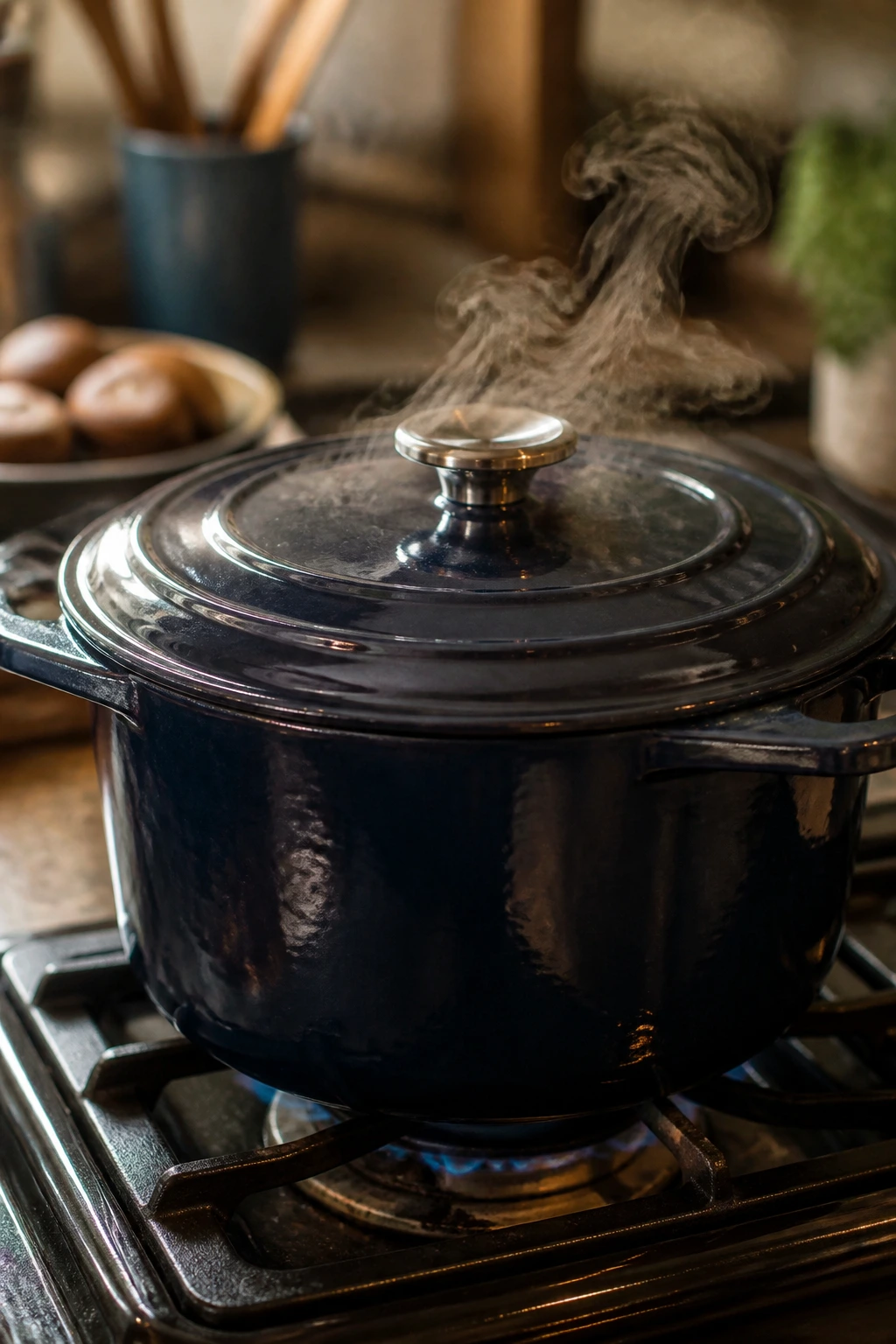
6- to 8-quart Dutch oven or heavy soup pot: The wide base helps the vegetables brown instead of steam, and the heavy sides keep the simmer steady.
-
Fine-mesh strainer: Use this for rinsing the wild rice cleanly. A colander works in a pinch, but the smaller mesh catches more of the dust.
-
Wooden spoon or sturdy spatula: You’ll use it to scrape the bottom of the pot after the flour goes in and to stir without shredding the vegetables.
-
Chef’s knife and cutting board: The soup depends on even dice. Tiny mushrooms and giant carrot chunks cook at different speeds, and that shows in the bowl.
-
Measuring cups and spoons: The flour and liquids need to be exact enough to keep the broth thick but not stodgy.
-
Ladle: Not glamorous, but useful. A bowl of this soup looks best when it’s served with a generous scoop of rice and vegetables in every portion.
-
A small bowl or plate for holding the cooked chicken: This keeps the chicken out of the way until the end, where it belongs.
Building the Soup, Step by Step
Prep the Rice and Vegetables:
-
Rinse the wild rice in a fine-mesh strainer under cool running water for about 30 seconds, then let it drain well. If you see tiny dark dust in the sink, that’s normal.
-
Dice the onion, carrots, and celery into small, even pieces. Slice the mushrooms, mince the garlic, and shred the cooked chicken into bite-size pieces. Set everything within reach before you turn on the heat. You will move quickly once the onions hit the pot.
Build the Flavor Base:
-
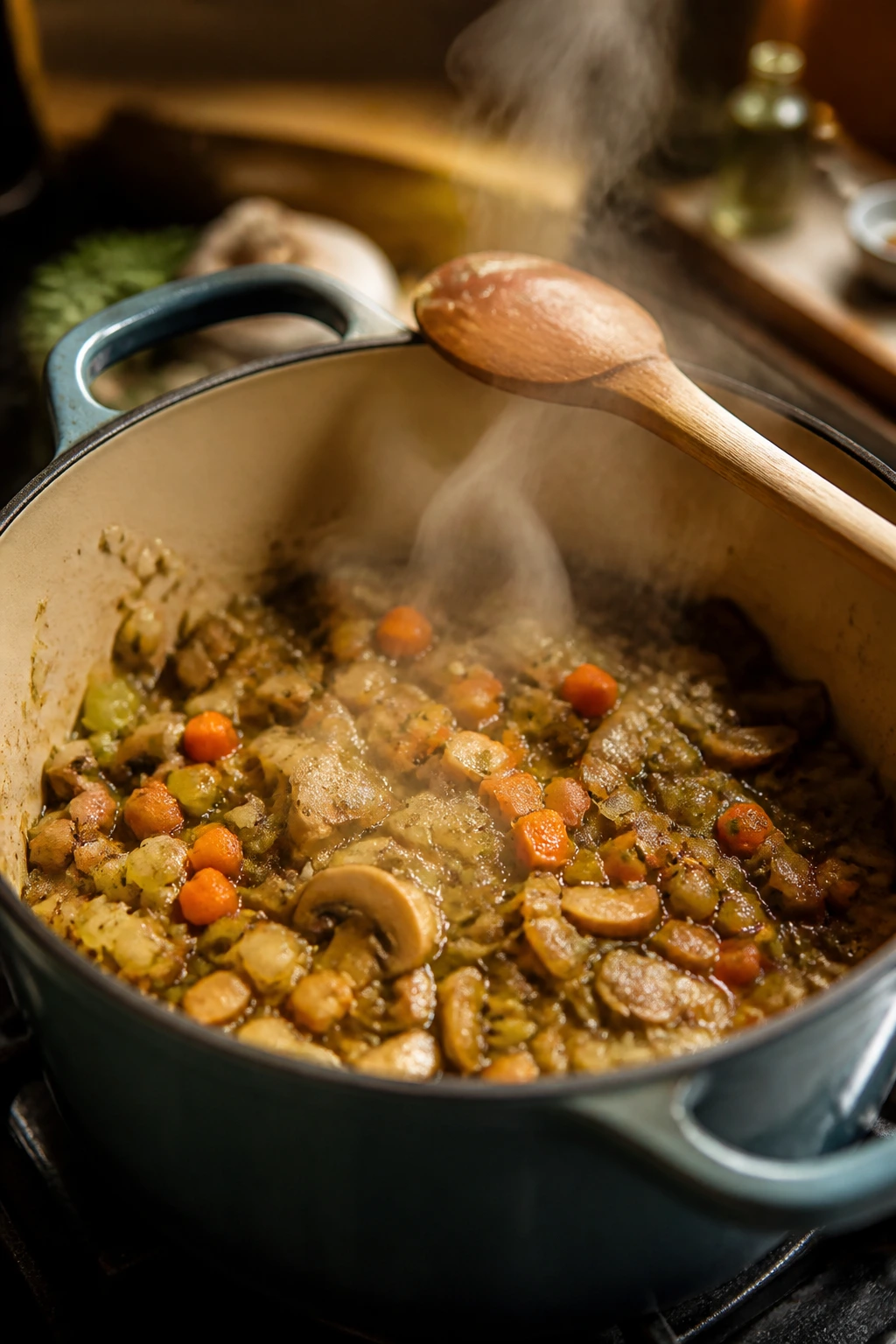
Set a 6- to 8-quart Dutch oven over medium heat. Add the butter and olive oil. When the butter foams and the foam starts to settle, add the onion, carrots, celery, and mushrooms.
-
Cook for 8 to 10 minutes, stirring every minute or two, until the onions turn translucent, the mushrooms give up their liquid, and the edges of the mushrooms start to brown. The pot should smell savory and a little sweet, not sharp. If the vegetables start to stick, lower the heat a notch.
-
Stir in the garlic, thyme, salt, pepper, and bay leaf. Cook for 30 seconds, just until the garlic smells fragrant. Do not let the garlic sit on the bottom of the pot and darken; bitter garlic can take over the whole soup.
-
Sprinkle the flour over the vegetables and stir continuously for 1 to 2 minutes. The flour should coat everything and lose its raw, dusty smell. This is your thickening base, so take the minute it needs. Rushing it leaves a chalky taste behind.
Simmer the Wild Rice:
-
Slowly pour in the chicken broth and water while stirring and scraping the bottom of the pot. Add the wild rice and bring the soup up to a boil over medium-high heat.
-
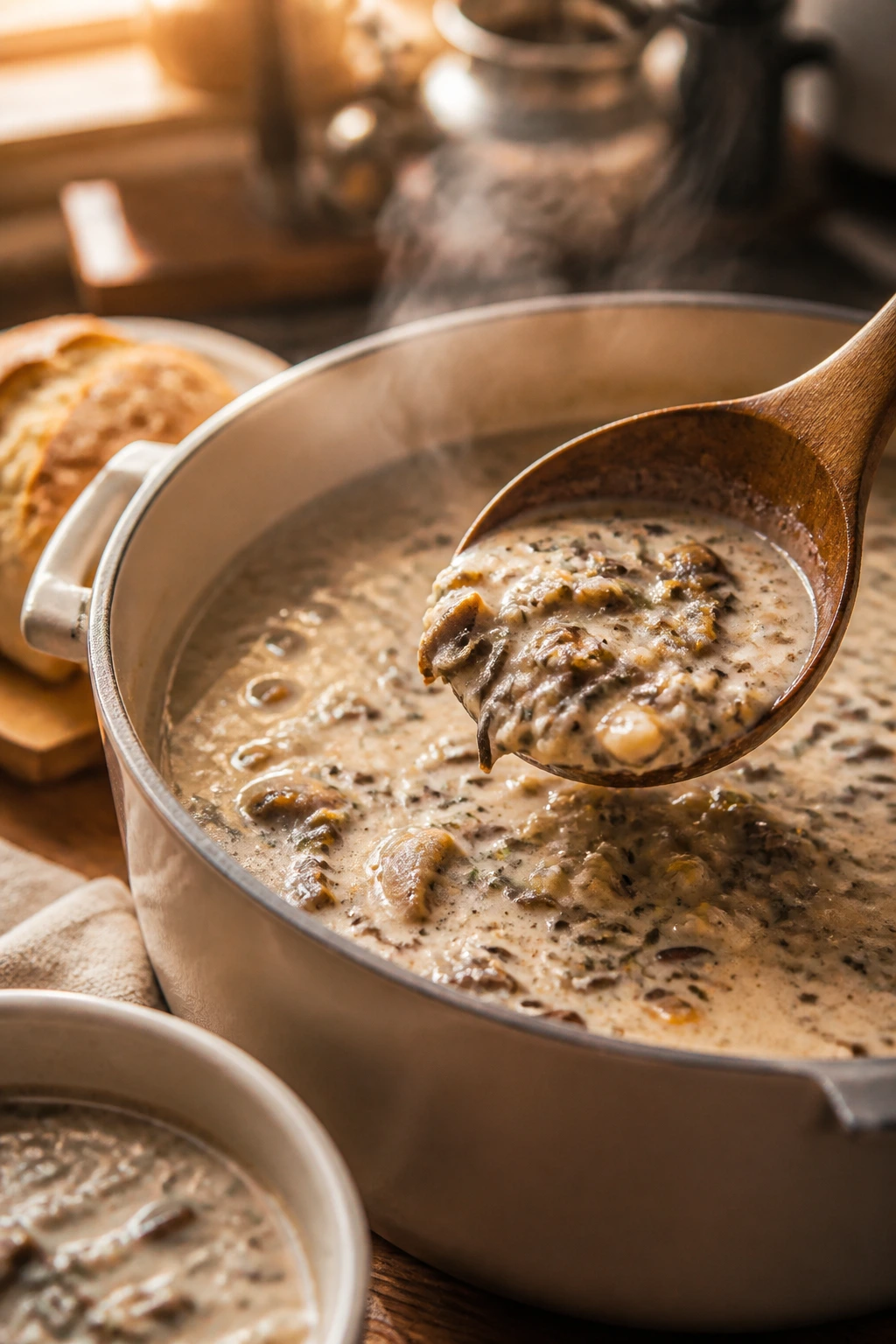
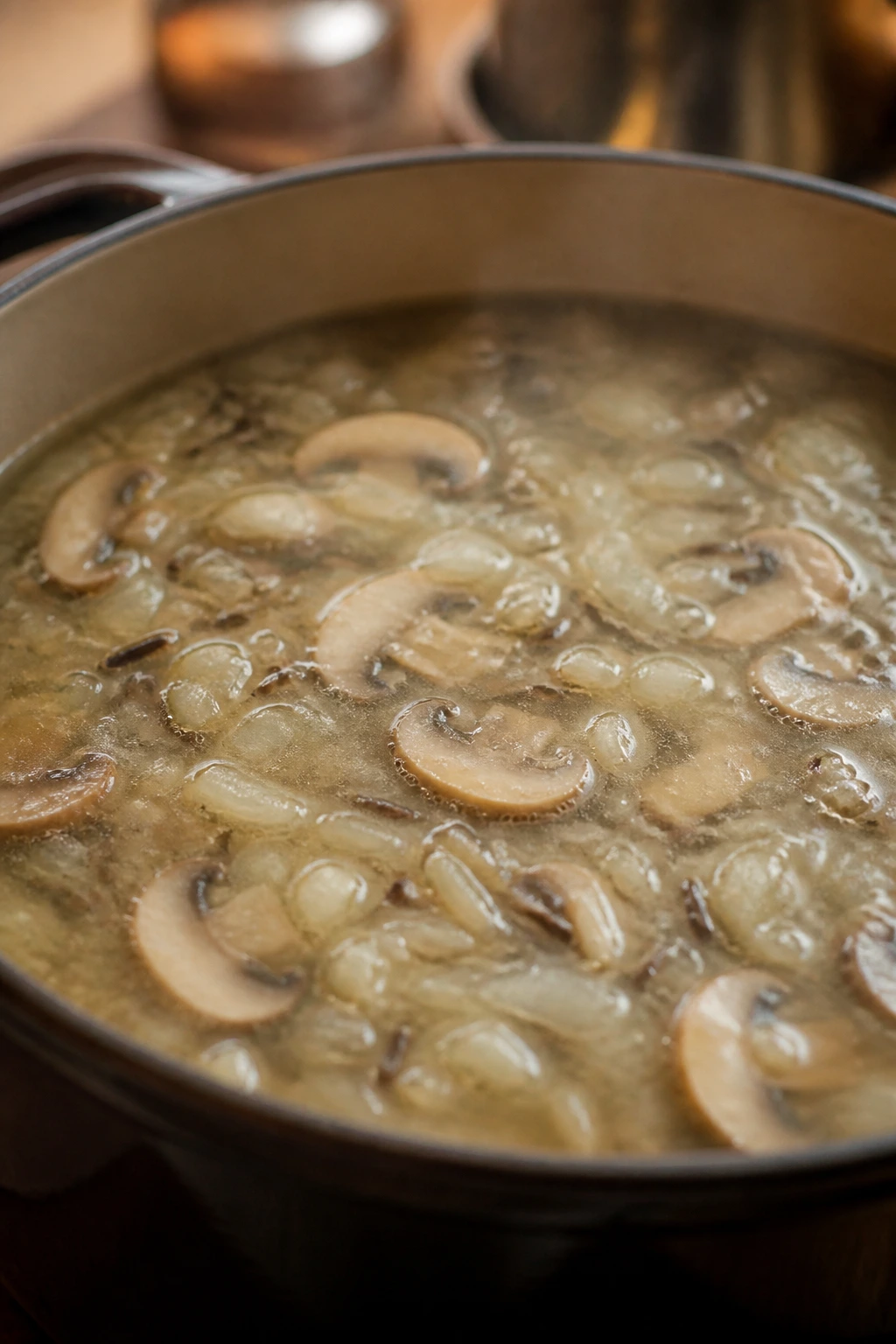
As soon as it boils, reduce the heat to low so the soup settles into a gentle simmer. Cover the pot partly, leaving a small gap for steam, and cook for 45 to 55 minutes, stirring every 10 minutes, until the wild rice has split open and the grains are tender but still chewy. If the pot looks dry before the rice is done, add up to 1 cup hot water or broth.
The soup will look thinner than you want at first. That’s normal. Wild rice drinks broth as it cooks, and the flour thickens the liquid slowly. By the end of the simmer, the broth should feel fuller, darker, and less watery at the edges.
Finish with Dairy and Chicken:
-
Stir in the shredded chicken and cook for 5 minutes, just until the chicken is hot throughout. If you’re using leftover roast chicken, this is enough time to warm it without drying it out.
-
Lower the heat to the lowest setting. Stir in the milk and heavy cream. Keep the soup below a simmer and heat for 3 to 5 minutes, until steam rises and the broth turns silky. Do not let it boil after the dairy goes in. That’s how you end up with a rough, split texture.
-
Remove the bay leaf. Stir in the lemon juice and parsley. Taste and add more salt and pepper if needed. If the soup is thicker than you want, thin it with a splash of hot broth or water until it moves the way you like.
-
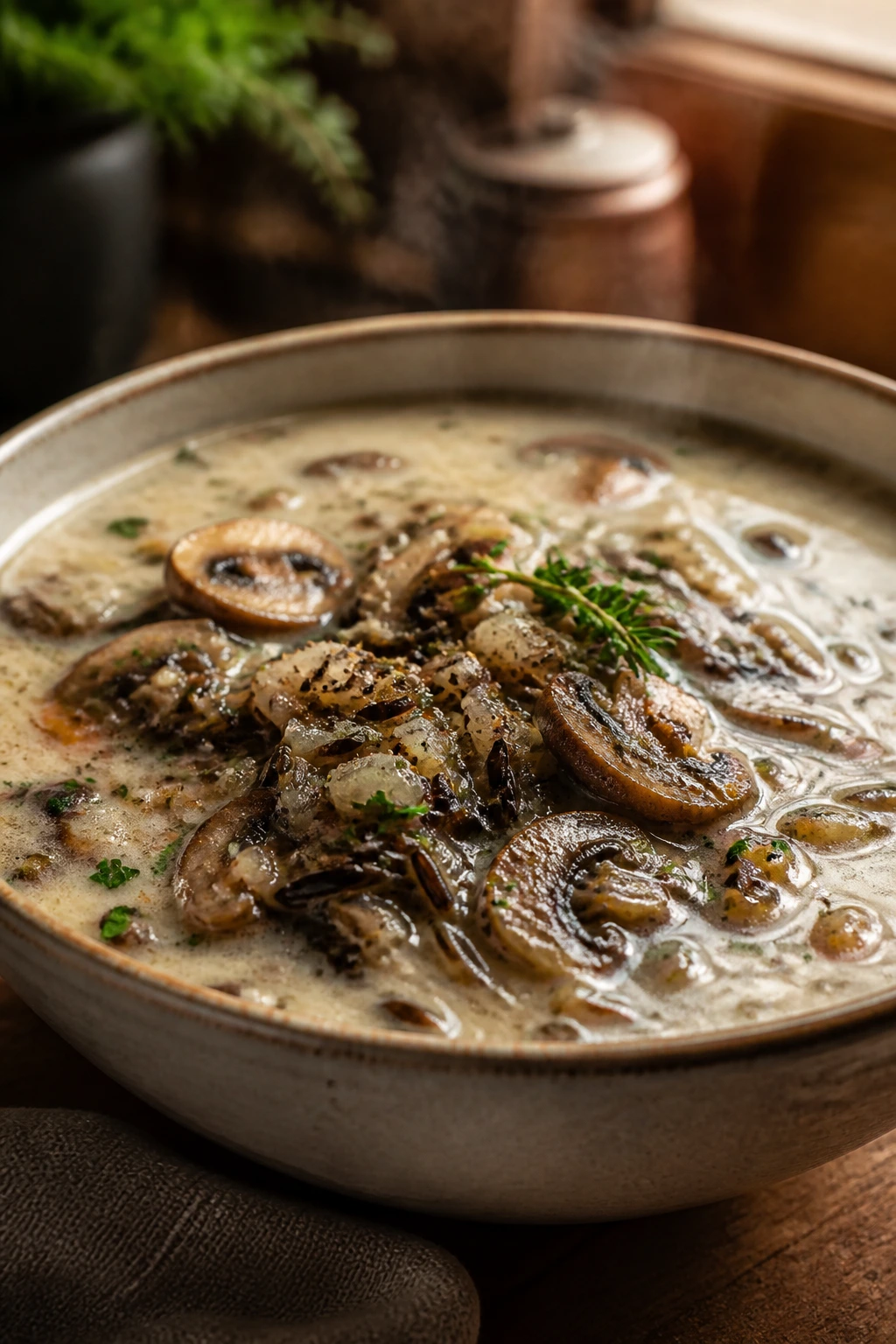
Ladle into warm bowls and finish with a crack of black pepper or a tiny shower of parsley if you want the top to look as fresh as the pot smells.
How to Serve a Bowl Like This
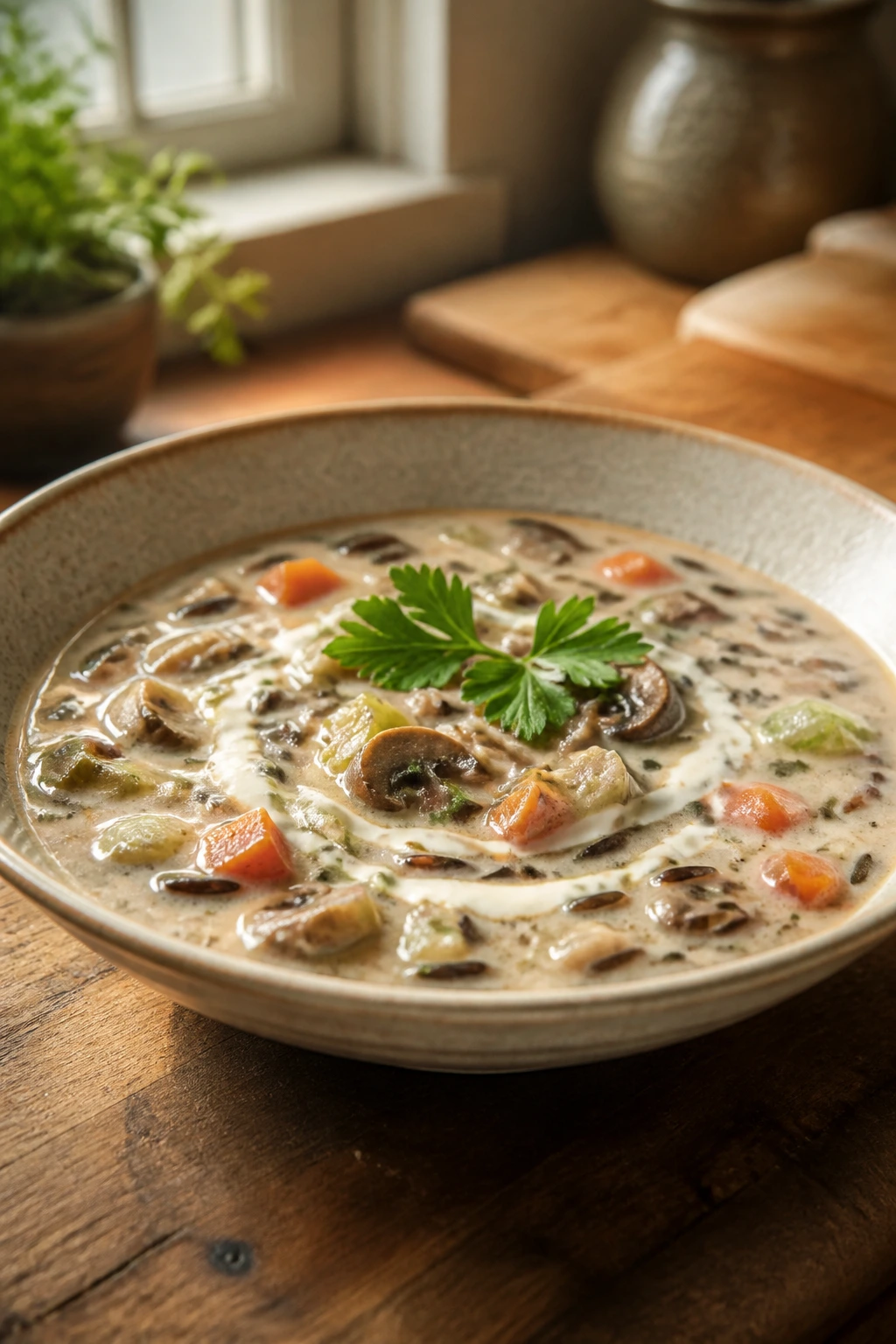
Presentation: Serve the soup in wide, shallow bowls so the rice and vegetables sit on top instead of disappearing under the broth. A few parsley leaves and a good grind of black pepper are enough. If you want it to feel a little more finished, swirl in a teaspoon of cream right before the bowl goes to the table.
Accompaniments: Crusty sourdough is the obvious move, and I’m not going to argue with it. A buttered rye toast, a plain green salad with sharp vinaigrette, or even saltine crackers all work because they give the creamy broth something crisp to push against. A handful of oyster crackers adds crunch without stealing focus.
Portions: Figure on about 1 1/2 to 2 cups per serving if the soup is the main meal. If you’re serving it alongside bread and salad, six servings is honest. If you’re stretching it for a bigger table, add one more cup of broth and another handful of shredded chicken or vegetables.
Beverage Pairing: A dry hard cider plays well with the soup’s buttery base and earthy rice. If you want something nonalcoholic, hot black tea with milk or sparkling water with lemon keeps the palate clean between bites. A pale lager works too, especially if you like a little bitterness against the cream.
Small Tweaks That Improve Every Pot
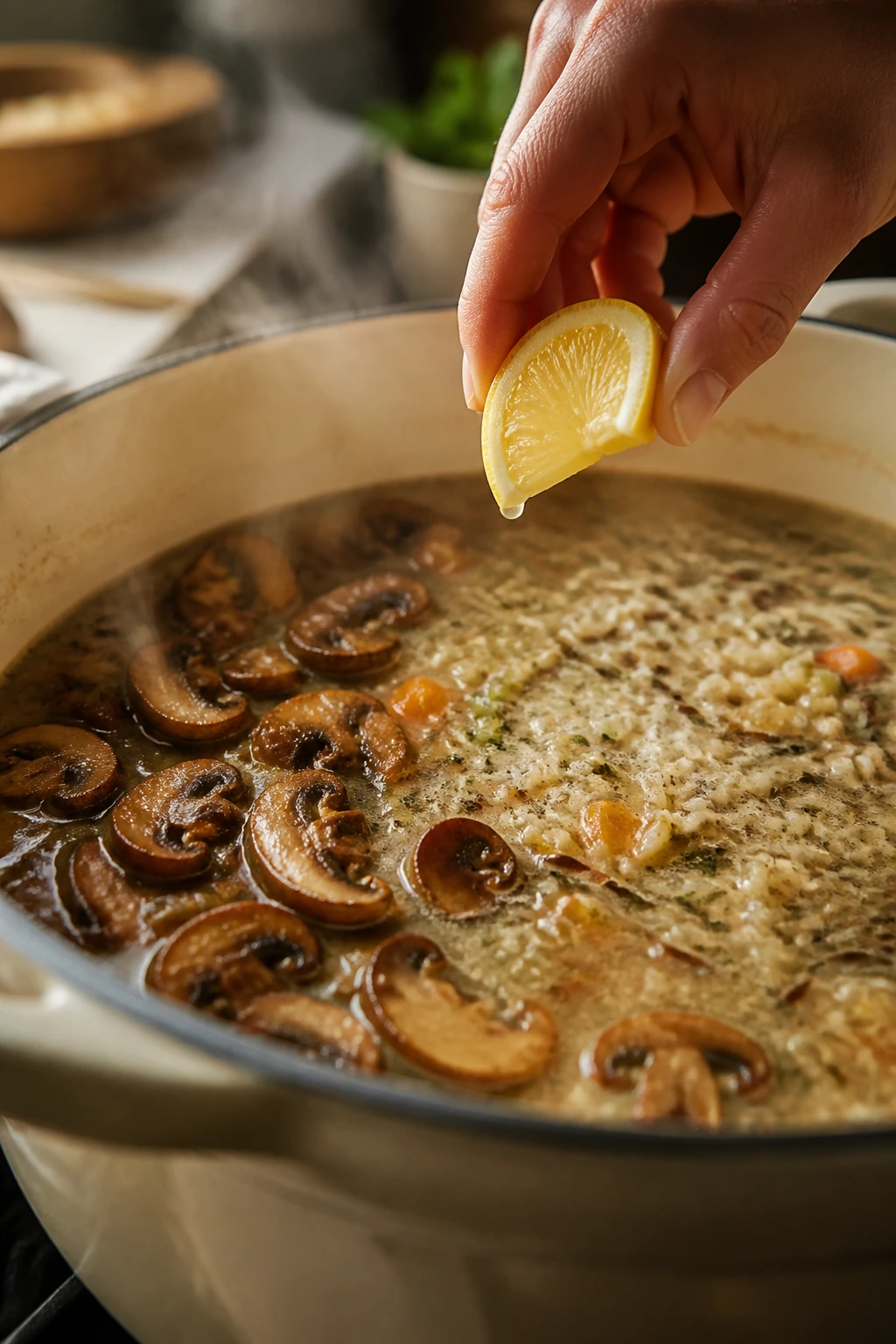
Flavor Enhancement: Brown the mushrooms until they pick up a darker edge before the broth goes in. That extra minute or two gives the whole soup a deeper, woodier flavor that tastes like much more than mushroom soup. A squeeze of lemon at the end is not decorative here; it wakes up the broth.
Time-Saver: Use rotisserie chicken and shred it while the vegetables are cooking. If you chop the onion, carrots, celery, and mushrooms the night before, the whole pot comes together with less stopping and starting.
Cost-Saver: If chicken is expensive or you’re working from a bare fridge, cut the chicken in half and add a few more mushrooms, or fold in 1 cup cooked white beans near the end. The broth still feels full, and the rice gives you enough substance to keep the bowl satisfying.
Make-It-Yours: A small pinch of sage shifts the flavor toward a more traditional holiday pot. A handful of chopped kale stirred in during the last 5 minutes adds a darker green note. If you like a thinner soup, keep extra broth warm and loosen each bowl at serving time instead of thinning the whole pot.
The Mistakes That Turn Wild Rice Soup Flat
-
Treating wild rice like quick-cooking rice: If the grains are still tough or the centers look opaque, keep simmering. Wild rice needs time to split and soften, and the soup will taste hollow if you stop early.
-
Boiling after the dairy goes in: High heat can make the milk and cream look grainy or separated. Keep the last stage at a low, lazy heat so the broth stays smooth.
-
Skipping the browning step on the vegetables: Pale onions and pale mushrooms make pale soup. If the vegetables never pick up a little color, the broth tastes thinner than it should.
-
Under-seasoning the pot: Wild rice absorbs salt as it cooks, and broth varies more than people expect. Taste near the end, after the dairy and lemon, then adjust in small pinches until the broth tastes round.
-
Adding too much liquid at the wrong time: The soup should look a little loose before the rice is fully tender, then tighten. If you add too much liquid early, the broth can end up thin and flat. Better to hold back a cup of broth or water and add it only if the pot asks for it.
Variations That Still Taste Like the Original
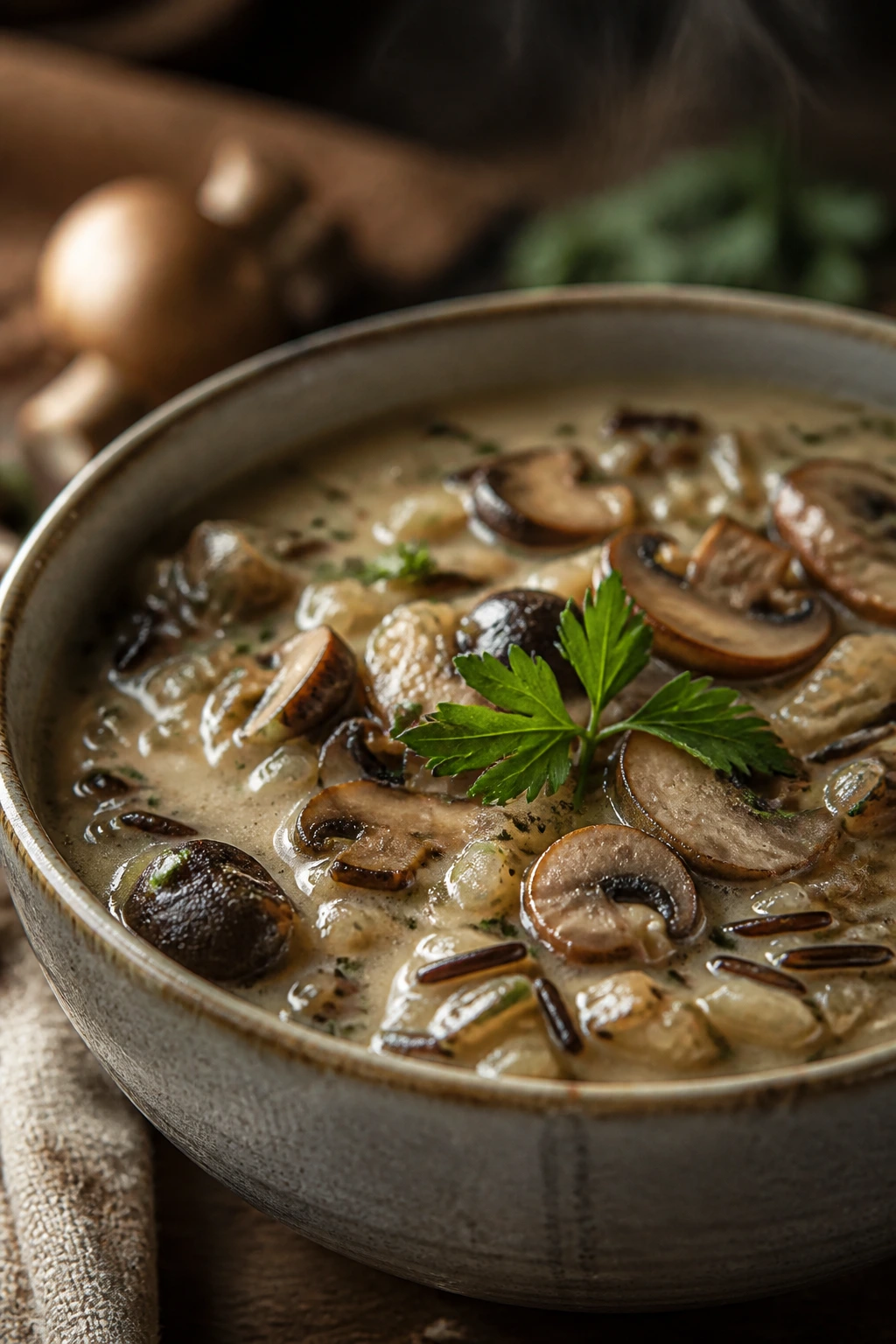
Mushroom-Only Forest Bowl: Leave out the chicken and add another 8 ounces of mushrooms, plus 1 cup cooked cannellini beans if you want more body. The result is earthier and a little more brothy, with the wild rice doing most of the heavy lifting.
Turkey Leftover Pot: Swap the chicken for 2 cups shredded cooked turkey, especially after a roast bird has already made its way through dinner. Turkey gives the soup a slightly drier, roastier edge, so the lemon and parsley matter even more at the end.
Smoky Bacon Version: Cook 4 slices of chopped bacon in the pot first, then use the rendered fat in place of part of the butter and oil. The bacon makes the broth smoky and a little salty, which works well if you want the soup to feel more dinner-table than lunch-bowl.
Dairy-Light Bowl: Replace the milk and cream with 1 1/2 cups unsweetened oat milk or unsweetened cashew milk, then finish with 2 tablespoons olive oil instead of cream. The broth won’t be as lush, but it stays smooth and friendly for anyone avoiding dairy.
Gluten-Free Version: Use 2 tablespoons cornstarch mixed with 3 tablespoons cold water instead of the flour. Stir the slurry into the simmering broth during the last 10 minutes, then let it thicken before adding the dairy. The texture is a little cleaner and less rustic, but it still lands in the same place.
Storing, Reheating, and Making It Ahead
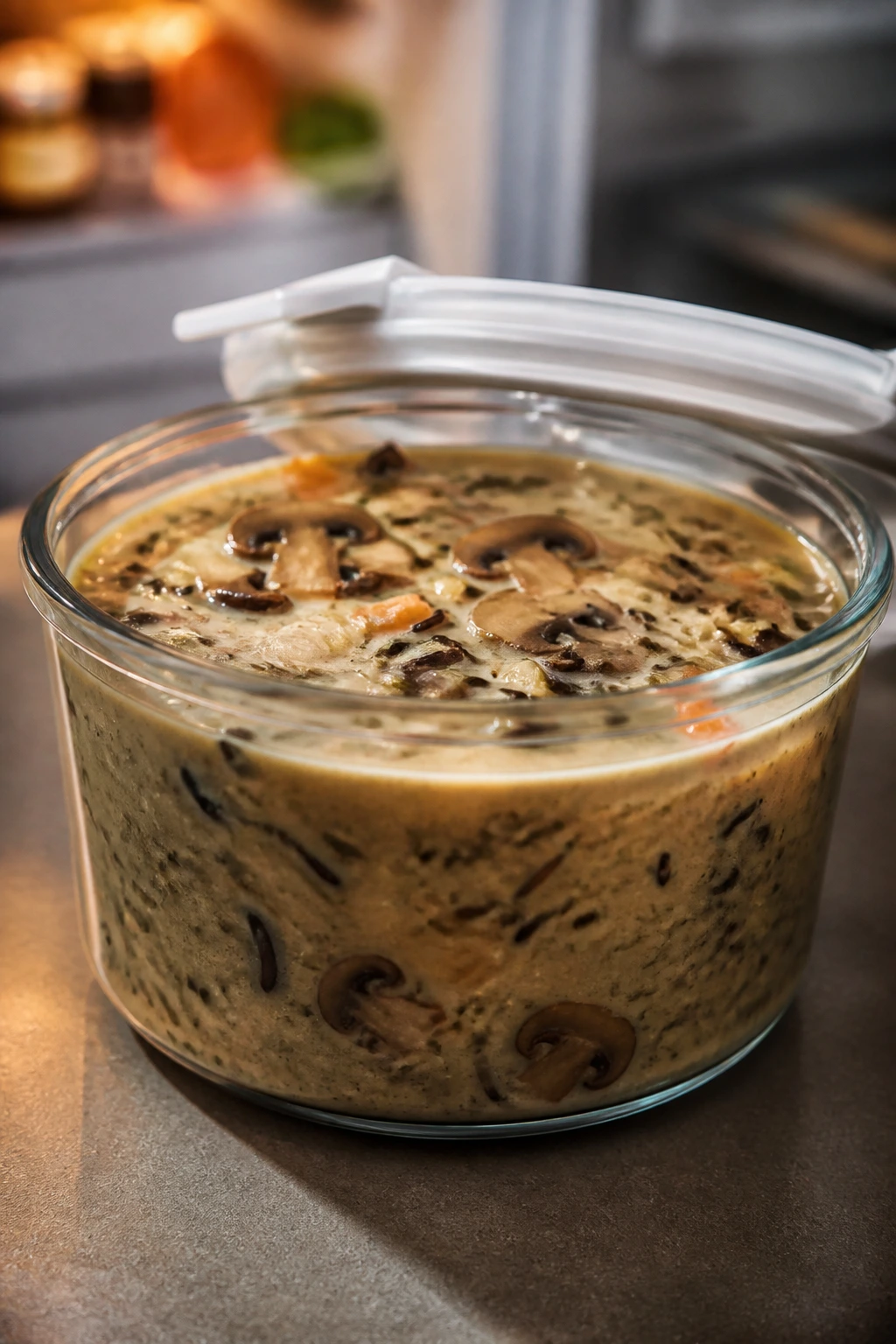
Wild rice soup keeps well, but it changes shape as it sits. The rice keeps drinking liquid, so the broth thickens in the refrigerator and the soup may look almost too firm after a night in the fridge. That’s not a problem. It just needs a little loosening.
For the fridge, cool the soup quickly and transfer it to shallow containers within 2 hours. It keeps for 3 to 4 days refrigerated. Use a wide container if you can; a thick, deep pot takes too long to cool and keeps the soup in the danger zone longer than it should.
For the freezer, the best texture comes from freezing the soup base before the milk and cream go in. If you want to plan ahead, stop after the wild rice is tender, cool the pot, and freeze the base for up to 2 months. When you’re ready to serve it, thaw it in the fridge overnight, reheat gently, then stir in the dairy at the end. If you freeze the finished soup with milk and cream already in it, it can still work, but expect a slightly less smooth texture. A brisk whisk and a splash of broth usually bring it back.
Reheat on the stovetop over low to medium-low heat, stirring often. Do not blast it to a boil. The broth can catch at the bottom, and the dairy will not thank you. If the soup has thickened a lot, add 1/4 cup broth at a time until it flows the way you want. Microwave reheating works for single bowls, but use 50% power and stir every minute so the cream doesn’t split around the edges.
If you want to make part of the soup ahead, cook the wild rice a day in advance and store it separately from the broth. That gives you a head start on the longest step without forcing the whole soup to sit and absorb everything overnight. Another solid move: chop the vegetables and shred the chicken ahead of time, then assemble the pot fresh when you’re ready to cook.
Questions People Ask Before They Start

Can I use wild rice blend instead of pure wild rice?
Yes, and it works well if that’s what you have. A blend cooks a little faster and gives you a mix of textures, though the finished soup will be softer and a bit less toothsome than one made with pure wild rice.
Do I have to cook the wild rice separately first?
No. Cooking it in the soup is the whole point here, because the grains absorb the broth and season themselves as they go. If you pre-cook it, stir it in near the end and reduce the broth a little so the soup doesn’t go thin.
Why did my soup turn so thick after sitting in the fridge?
Wild rice keeps soaking up liquid even after the heat is off. That’s normal, and it’s one reason leftovers taste richer. Just add hot broth or water when you reheat it until the texture loosens back up.
Can I make this soup without chicken?
Absolutely. Leave the chicken out and add more mushrooms, or add beans if you want more body. The broth still has enough flavor from the vegetables, thyme, and wild rice to stand on its own.
How do I keep the dairy from curdling?
Keep the heat low once the milk and cream go in, and never let the soup come back to a hard boil. If your stove runs hot, pull the pot off the heat for a minute before adding the dairy, then return it to the lowest setting.
Can I make this in a slow cooker?
Yes, but the texture is different. Sauté the vegetables first for real flavor, then transfer everything except the milk, cream, lemon, and parsley to the slow cooker and cook on low until the rice is tender. Stir in the dairy near the end so it stays smooth.
What if the rice is still chewy but the broth is already thick?
Add a little more broth or water and keep simmering. That mismatch usually means the flour has thickened the pot faster than the rice can soften. The fix is simple: more liquid, lower heat, and a little more time.
Can I freeze leftovers with the dairy already in them?
You can, but the texture may separate a little when it thaws. If that happens, reheat slowly and whisk in a splash of broth. Freezing the base before the dairy gives the cleanest result.
One Last Bowl
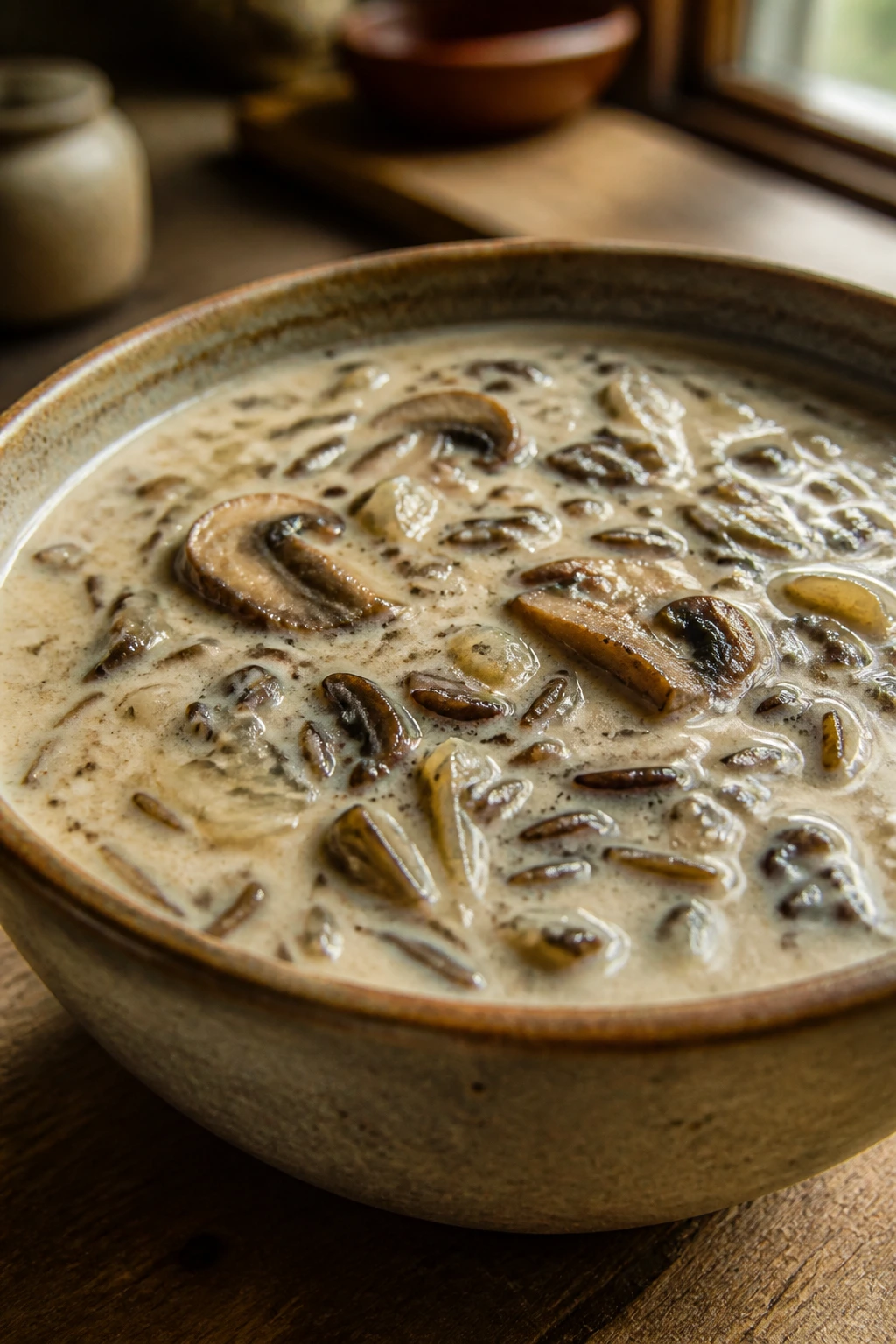
Wild rice soup works because it has patience built into it. The rice needs time to split open, the vegetables need time to soften and brown, and the dairy needs a gentle hand at the end. That slow build is what gives the soup its depth. You taste the mushrooms before you notice the cream, and the cream before you notice how chewy the rice is. Then the bowl is empty.
Keep a little extra broth around, and this soup becomes even more useful. Leftovers thicken into something almost spoon-coating, the kind of lunch that feels better than it has any right to. On a cold night, that’s about all you can ask from a pot.
Cozy Wild Rice Soup — Recipe Card
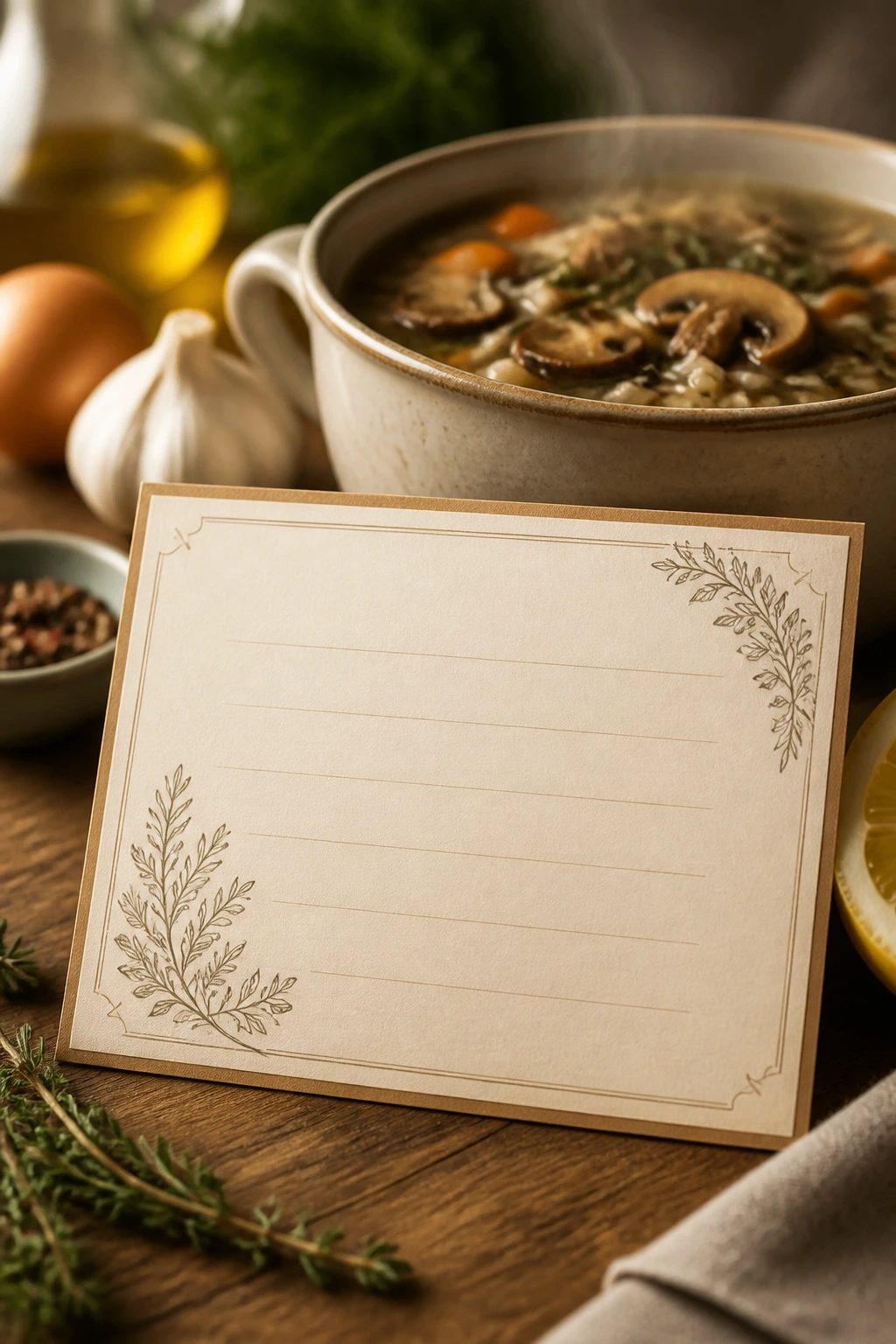
Recipe Name: Cozy Wild Rice Soup for Cold Winter Nights
Description: A creamy wild rice soup with chicken, mushrooms, carrots, celery, and thyme. The broth stays silky, the rice keeps a chewy bite, and the finish of lemon and parsley keeps the bowl from feeling heavy.
Prep Time: 20 minutes
Cook Time: 55 minutes
Total Time: 1 hour 15 minutes
Course: Soup, Main Course
Cuisine: American
Servings: 6 servings
Calories: About 420 kcal per serving
Ingredients
For the Soup:
- 1 cup wild rice, rinsed and drained
- 2 tablespoons unsalted butter
- 1 tablespoon olive oil
- 1 large yellow onion, diced
- 2 medium carrots, peeled and diced
- 2 celery stalks, diced
- 8 ounces cremini mushrooms, sliced
- 3 garlic cloves, minced
- 1/4 cup all-purpose flour
- 6 cups low-sodium chicken broth
- 2 cups water
- 1 teaspoon dried thyme
- 1 bay leaf
- 1 1/2 teaspoons kosher salt
- 1/2 teaspoon black pepper
- 2 cups cooked shredded chicken
- 1 cup whole milk
- 1/2 cup heavy cream
- 2 teaspoons fresh lemon juice
- 2 tablespoons chopped fresh parsley
Instructions
-
Rinse the wild rice under cool water and drain well. Dice the onion, carrots, and celery; slice the mushrooms; mince the garlic; and shred the chicken.
-
Heat the butter and olive oil in a 6- to 8-quart Dutch oven over medium heat. Add the onion, carrots, celery, and mushrooms, and cook for 8 to 10 minutes until softened and lightly browned.
-
Stir in the garlic, thyme, salt, pepper, and bay leaf. Cook for 30 seconds, then sprinkle the flour over the vegetables and stir for 1 to 2 minutes.
-
Slowly add the chicken broth and water, scraping the bottom of the pot. Stir in the wild rice and bring the soup to a boil.
-
Reduce the heat to low, cover partly, and simmer for 45 to 55 minutes, stirring every 10 minutes, until the wild rice is split open and tender-chewy.
-
Stir in the shredded chicken and cook for 5 minutes until hot.
-
Lower the heat to the lowest setting. Stir in the milk and heavy cream and heat for 3 to 5 minutes without boiling.
-
Remove the bay leaf. Stir in the lemon juice and parsley, taste for salt and pepper, and thin with a splash of broth if needed.
Notes: Keep the heat low after the dairy goes in. Add extra broth when reheating, since the rice thickens the soup as it sits. For a deeper flavor, brown the mushrooms well before adding the liquid.