



Steam rising from a bowl can change the feel of a kitchen. A bare spoon clinks against ceramic, the air smells like butter and sweet onion, and suddenly the whole room seems less sharp around the edges. That’s what a bowl of creamy homemade tomato soup does on a cold night: it softens the mood before you even take the first sip.
The best version is not thin, not sugary, and not afraid of salt. It should taste like tomatoes that were treated with a little respect, then coaxed into something velvety with onions, garlic, broth, and a finish of cream that rounds off the sharp corners without burying the tomato. When it’s done right, the color lands somewhere between brick and sunset, and the texture has enough body to coat a spoon without turning pasty.
I’ve had plenty of tomato soups that tasted like warm ketchup with a milk problem. This one doesn’t do that. It leans on canned whole tomatoes, which are often a smarter winter choice than pale fresh ones that never had a chance to ripen properly, and it uses a patient simmer to build flavor before blending everything into a smooth, glossy pot.
Why This Tomato Soup Earns a Spot on the Stove
- Silky without flour: The body comes from simmered onions, tomato paste, and blended tomatoes, so the soup stays smooth instead of chalky.
- Built from pantry staples: A couple of cans of whole tomatoes, an onion, broth, and cream are enough to make dinner feel cared for.
- Easy to control the texture: An immersion blender gives you a rustic bowl with tiny flecks, while a countertop blender makes it almost café-smooth.
- Better the next day: The tomato flavor settles and deepens overnight, which makes leftovers worth looking forward to.
- Flexible at the finish: You can keep it dairy-rich, make it lighter, or add a smoky note without changing the whole method.
- Made for grilled cheese: That sharp cheddar melt next to a warm bowl is not an accident. It’s the correct move.
Timing, Yield, and the Kind of Night It Fits Best
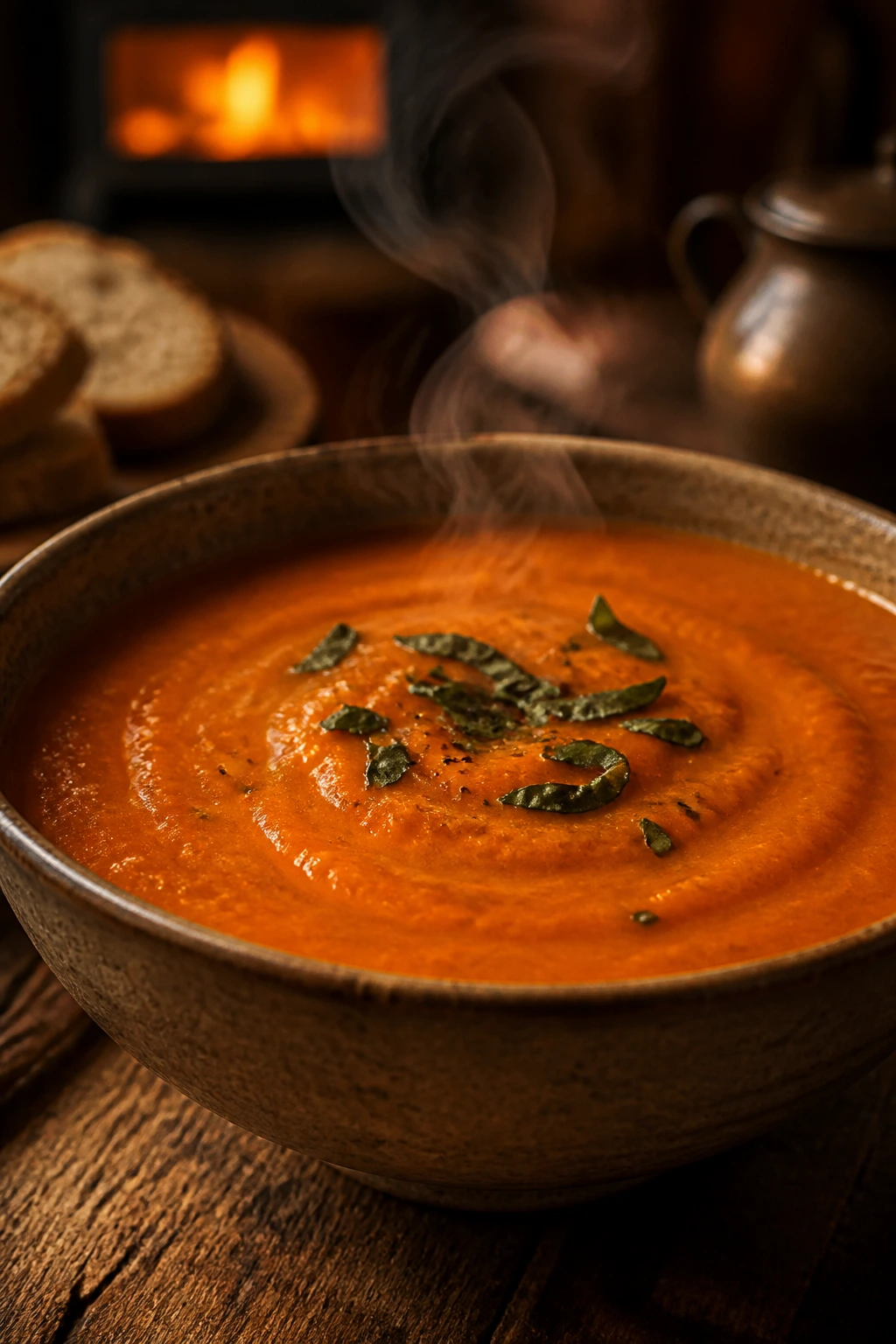
Yield: Serves 4 to 6
Prep Time: 15 minutes
Cook Time: 40 minutes
Total Time: 55 minutes
Difficulty: Beginner — the only part that needs care is blending hot soup safely.
Best Served: Hot, with a grilled sandwich or a thick slice of bread on the side.
A tomato soup like this works because it gives the onions time to soften and the tomatoes time to lose their raw edge. That extra 25 to 30 minutes of simmering is where the flavor turns from flat to full. Rushing it leaves you with a bowl that tastes like the pantry, not dinner.
The Ingredients That Build a Silky Tomato Soup
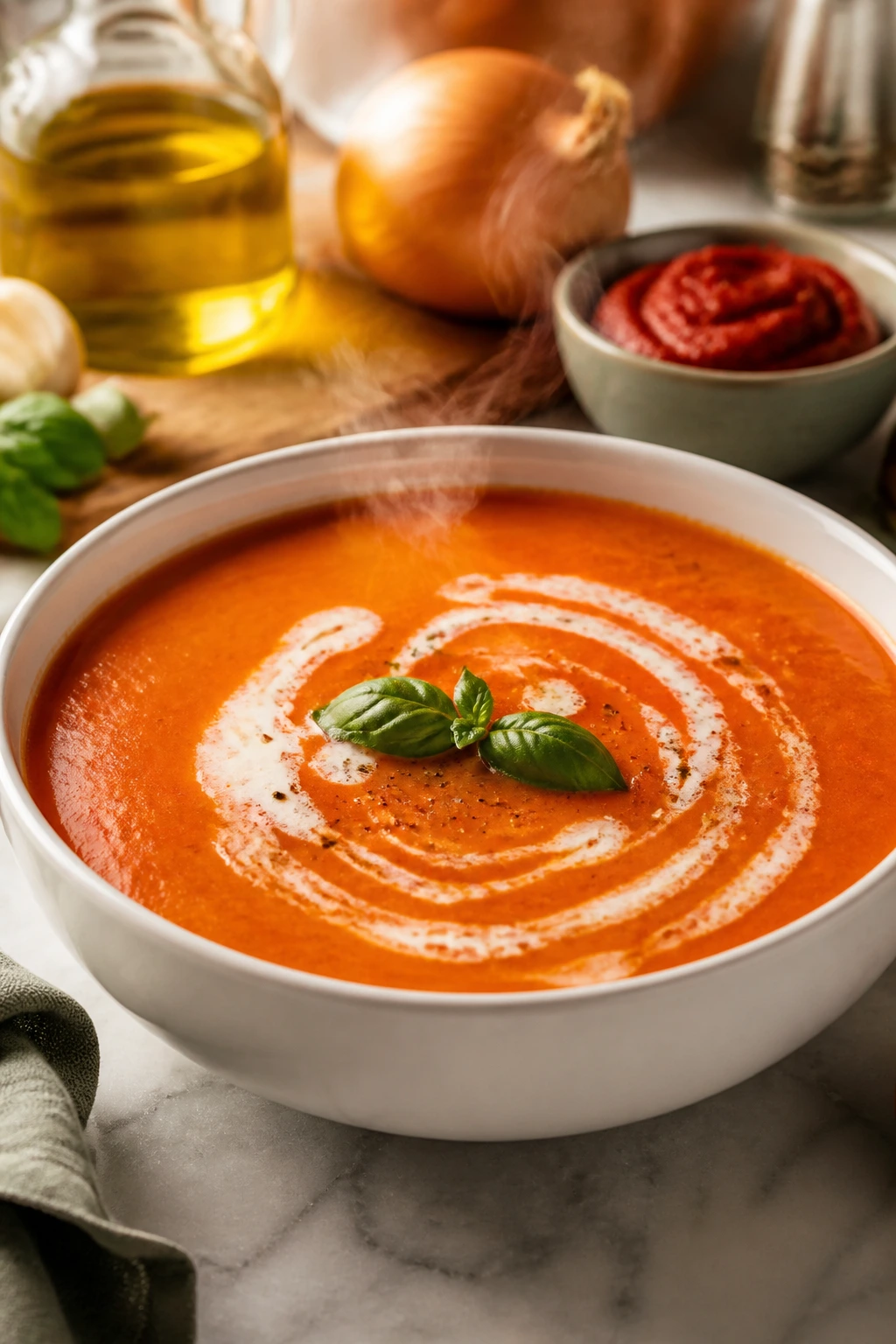
For the soup base:
- 2 tablespoons unsalted butter
- 1 tablespoon olive oil
- 1 large yellow onion, diced small
- 3 cloves garlic, minced
- 2 tablespoons tomato paste
- 2 cans (28 ounces each) whole peeled tomatoes, with their juices
- 2 cups low-sodium vegetable broth or chicken broth
- 1 bay leaf
- 1 teaspoon granulated sugar, optional but useful if the tomatoes taste sharp
- 1 teaspoon kosher salt, plus more to taste
- 1/2 teaspoon black pepper
- 1 teaspoon dried basil or 1 tablespoon chopped fresh basil
- 1/4 teaspoon crushed red pepper flakes, optional
For the finish:
- 1/2 cup heavy cream
- 1 tablespoon cold unsalted butter, optional, for extra gloss
- 1 teaspoon sherry vinegar or lemon juice, optional, for brightness
- Fresh basil, chives, or cracked black pepper, for serving
Why Each Ingredient Matters More Than It First Appears
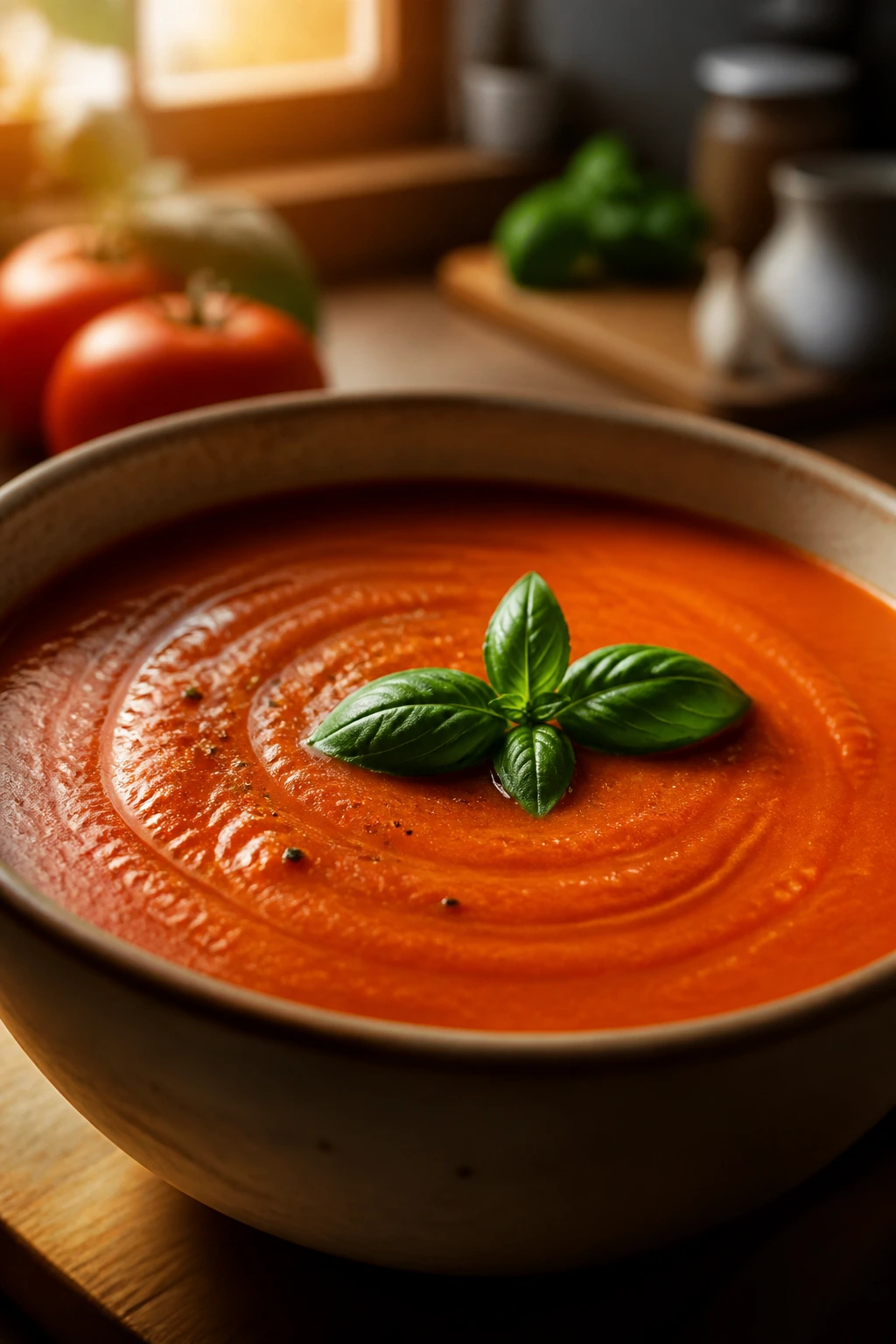
Tomatoes
- What to use: 2 cans (28 ounces each) whole peeled tomatoes, with their juices.
- Preparation: Crush them by hand before they hit the pot, or break them up with a spoon after they soften.
- Substitutions: Fire-roasted canned tomatoes add smoke; high-quality crushed tomatoes work if that’s what you have.
- Tips: Whole tomatoes usually give the cleanest flavor and the best control over texture. They also tend to taste less dull than diced canned tomatoes, which are often packed for shape, not soup.
Onion and Garlic
- What to use: 1 large yellow onion and 3 cloves garlic.
- Preparation: Dice the onion small so it melts into the soup instead of showing up as chewy bits; mince the garlic finely.
- Substitutions: Shallots make the base sweeter and softer, while one leek, cleaned well, gives a gentler flavor.
- Tips: Cook the onion until it turns translucent and sweet at the edges. If it still smells sharp, it needs more time.
Tomato Paste and Broth
- What to use: 2 tablespoons tomato paste and 2 cups broth.
- Preparation: Let the tomato paste cook for a full minute before adding liquid; it should darken from bright red to a deeper rust color.
- Substitutions: Vegetable broth keeps the soup meatless, and chicken broth adds a slightly fuller savory note.
- Tips: Tomato paste is not decoration. It gives the soup depth and a thicker body, which matters when you want the bowl to feel substantial without adding flour.
Butter, Olive Oil, and Cream
- What to use: 2 tablespoons butter, 1 tablespoon olive oil, and 1/2 cup heavy cream.
- Preparation: Keep the butter for the beginning and the cream for the end; that timing keeps the soup smooth.
- Substitutions: Half-and-half works for a lighter bowl, while coconut cream can stand in if you want a dairy-free finish.
- Tips: Add cream after blending and after the heat has dropped to a gentle simmer. Boiling cream too hard can make the texture grainy, and nobody wants that in a winter soup.
Seasonings and Brighteners
- What to use: Salt, black pepper, basil, bay leaf, red pepper flakes, and a tiny splash of sherry vinegar or lemon juice.
- Preparation: Add the dried basil early so it can bloom in the broth, then finish with fresh herbs if you have them.
- Substitutions: Oregano can step in for basil, and smoked paprika can replace the red pepper flakes if you want a softer heat with a little smoke.
- Tips: A small hit of acid at the end makes the tomato flavor taste cleaner. Without it, the soup can land heavy and oddly sleepy.
The Pot, Blender, and Other Tools Worth Pulling Out
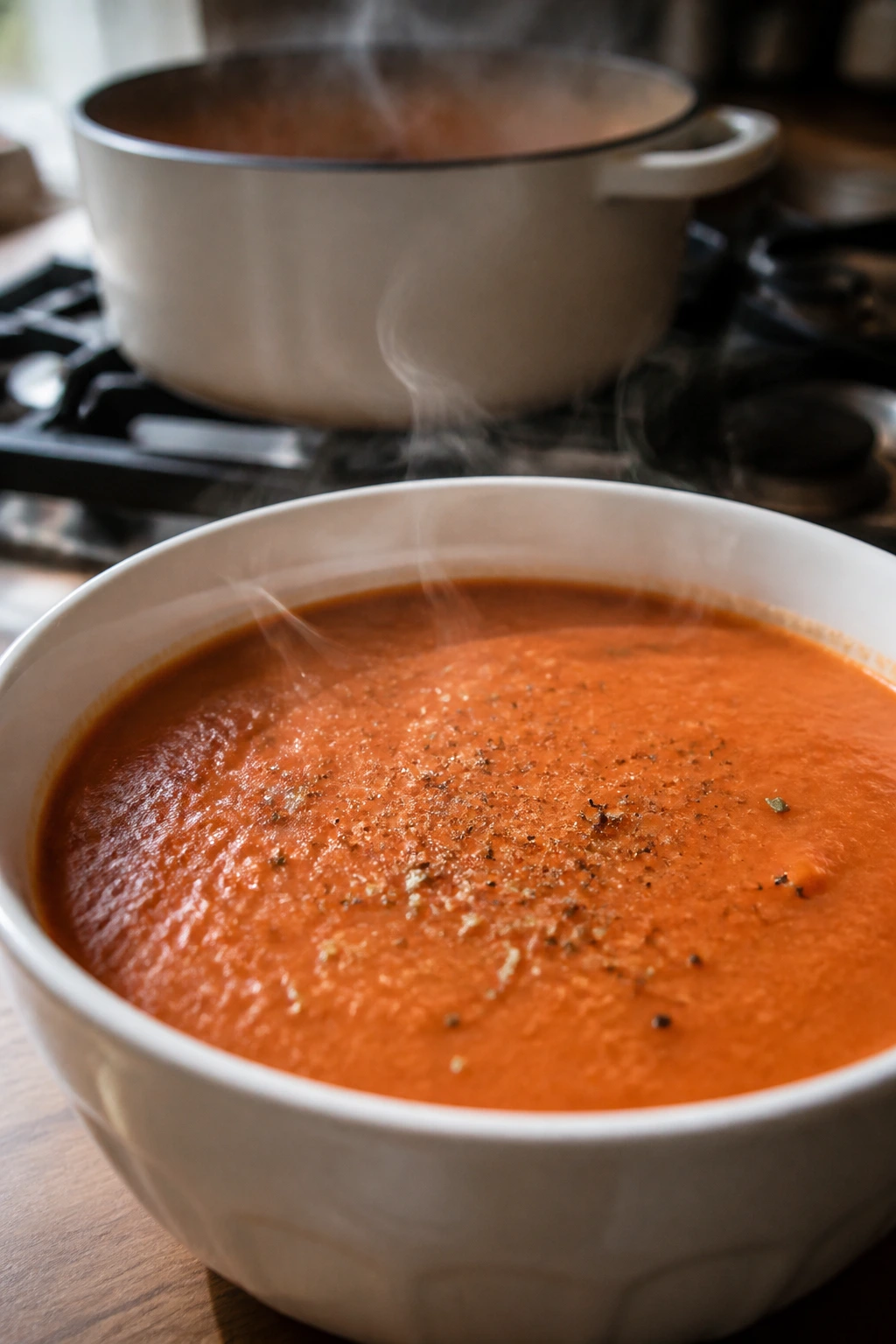
- 5- to 6-quart Dutch oven or heavy soup pot — A thick-bottomed pot keeps the onions from scorching while the soup simmers.
- Wooden spoon or silicone spatula — Useful for stirring the tomato paste and scraping the bottom when you add broth.
- Immersion blender — The easiest way to puree the soup right in the pot, with fewer dishes.
- Countertop blender — Fine if you want a smoother finish; work in batches and vent the lid carefully.
- Ladle — Makes it easier to transfer the soup without sloshing it everywhere.
- Measuring spoons and cups — Useful here because the balance between tomatoes, broth, and cream matters.
- Fine-mesh sieve, optional — If you want an especially polished texture, strain after blending.
- Kitchen towel — Handy under the cutting board so the onion doesn’t send your knife skating around.
Step-by-Step: Turning Pantry Tomatoes Into Dinner
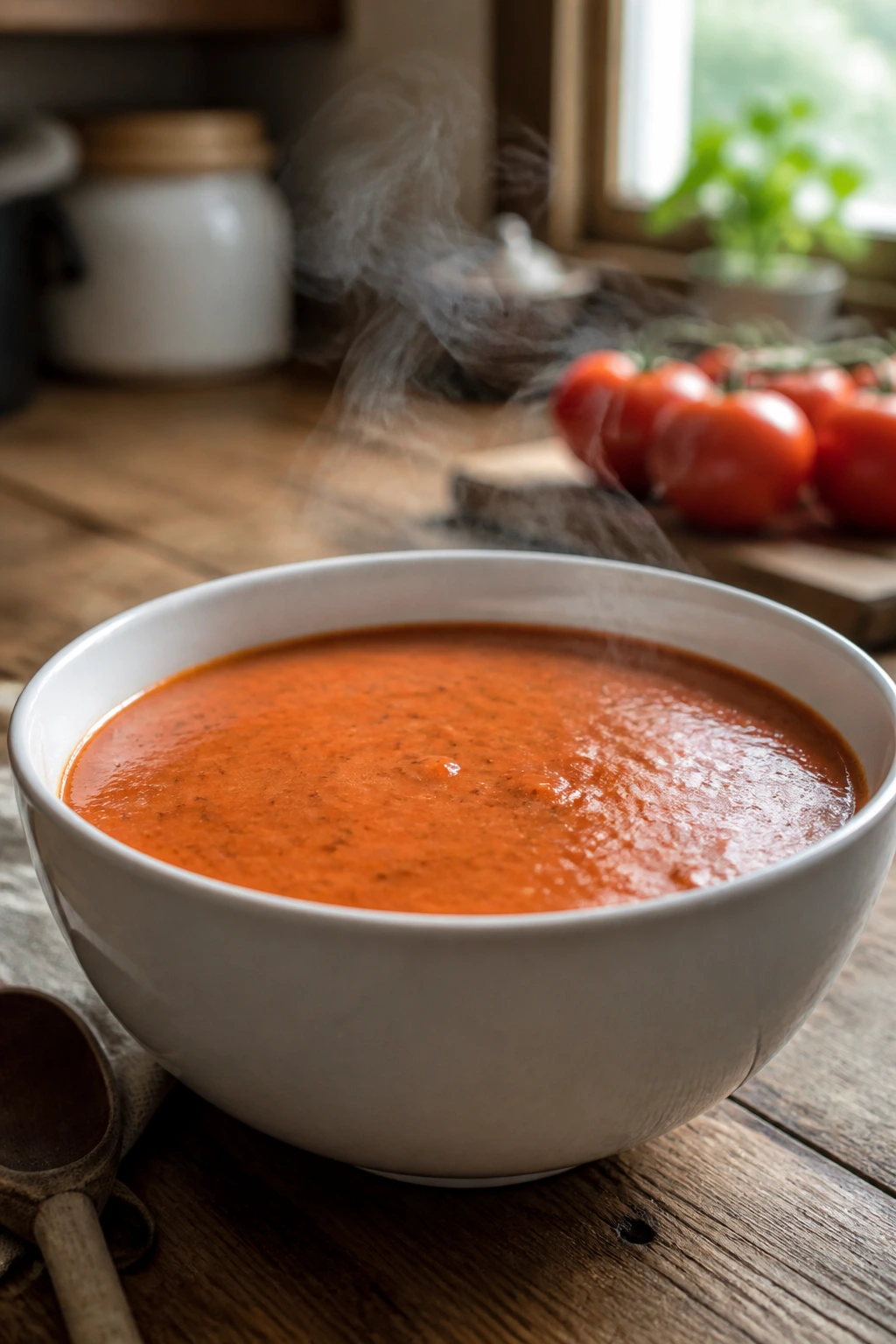
Build the Flavor Base
-
Place a 5- to 6-quart Dutch oven over medium heat. Add 2 tablespoons butter and 1 tablespoon olive oil. When the butter melts and the foam settles, you’re ready for the onion.
-
Add the diced onion and 1/2 teaspoon kosher salt. Cook for 8 to 10 minutes, stirring every minute or so, until the onion is soft, translucent, and starting to turn pale gold at the edges. Do not rush this part — pale onions make a sharper soup.
-
Stir in the garlic, 2 tablespoons tomato paste, and 1/4 teaspoon crushed red pepper flakes if you’re using them. Cook for 1 minute, stirring constantly, until the tomato paste darkens and the kitchen smells sweet and a little smoky.
-
Add the two cans of whole tomatoes with their juices, 2 cups broth, 1 bay leaf, 1 teaspoon dried basil, 1 teaspoon sugar if needed, 1/2 teaspoon black pepper, and the remaining 1/2 teaspoon salt. Use a spoon to break up the tomatoes a bit, then bring the pot to a steady simmer.
Simmer and Blend
-
Reduce the heat to medium-low and simmer uncovered for 25 to 30 minutes, stirring now and then. The tomatoes should soften enough to collapse easily, and the soup should look a little darker, less watery, and more unified.
-
Remove the bay leaf. Blend the soup with an immersion blender until smooth or partly smooth, depending on the texture you like. If using a countertop blender, work in batches, fill each batch only halfway, remove the center cap, and cover the opening with a folded kitchen towel. Hot soup expands fast — that towel matters.
-
Return the blended soup to the pot if needed. Stir in the 1/2 cup heavy cream and, if you want a glossy finish, the 1 tablespoon cold butter. Warm over low heat for 2 to 3 minutes, but do not let it boil once the cream is in.
-
Taste and adjust. Add more salt if the flavor feels flat, a little more pepper if it needs a sharper edge, or 1 teaspoon sherry vinegar or lemon juice if the soup tastes heavy. Ladle into warm bowls and finish with basil, chives, or a few turns of black pepper.
How I Like to Serve It
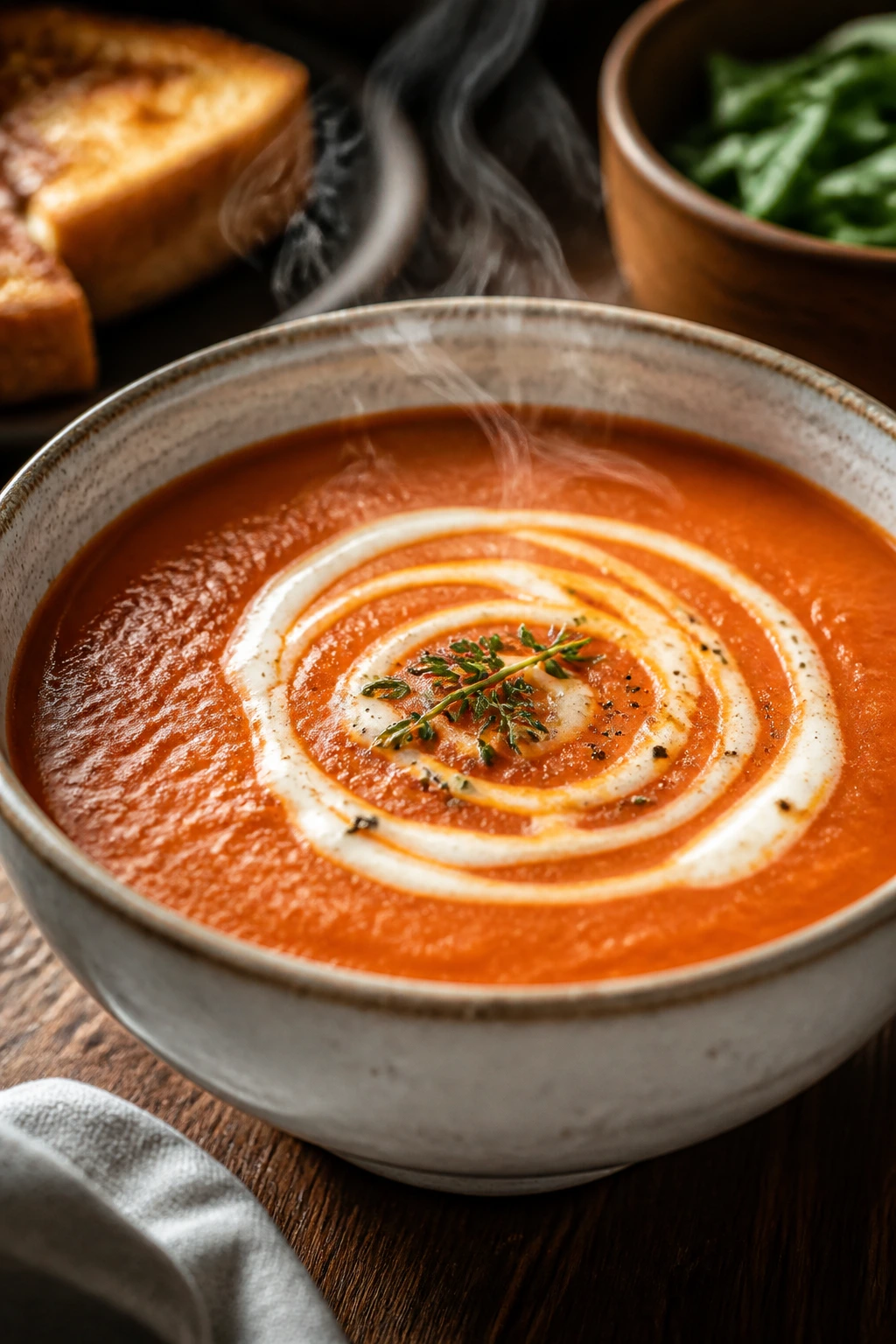
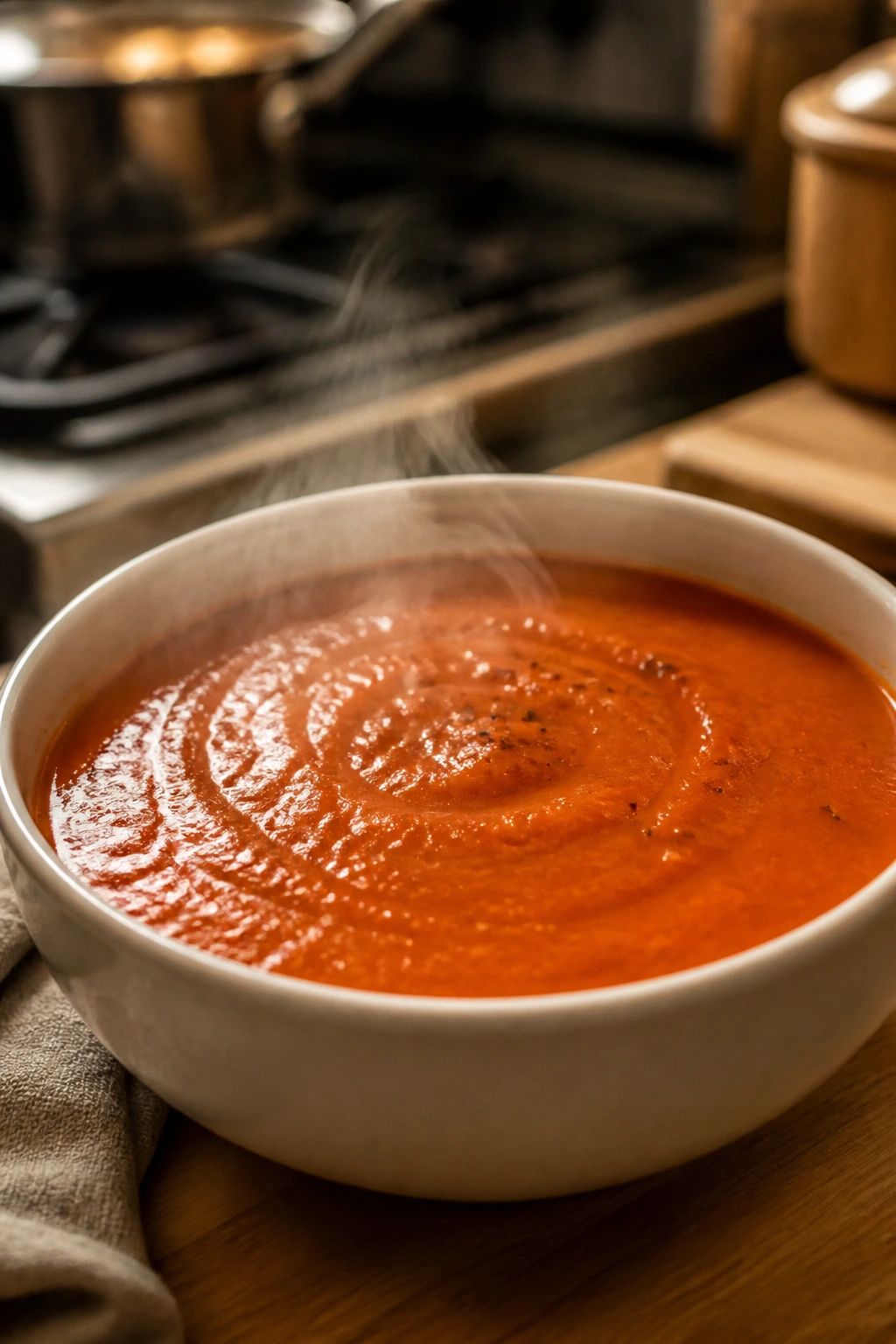
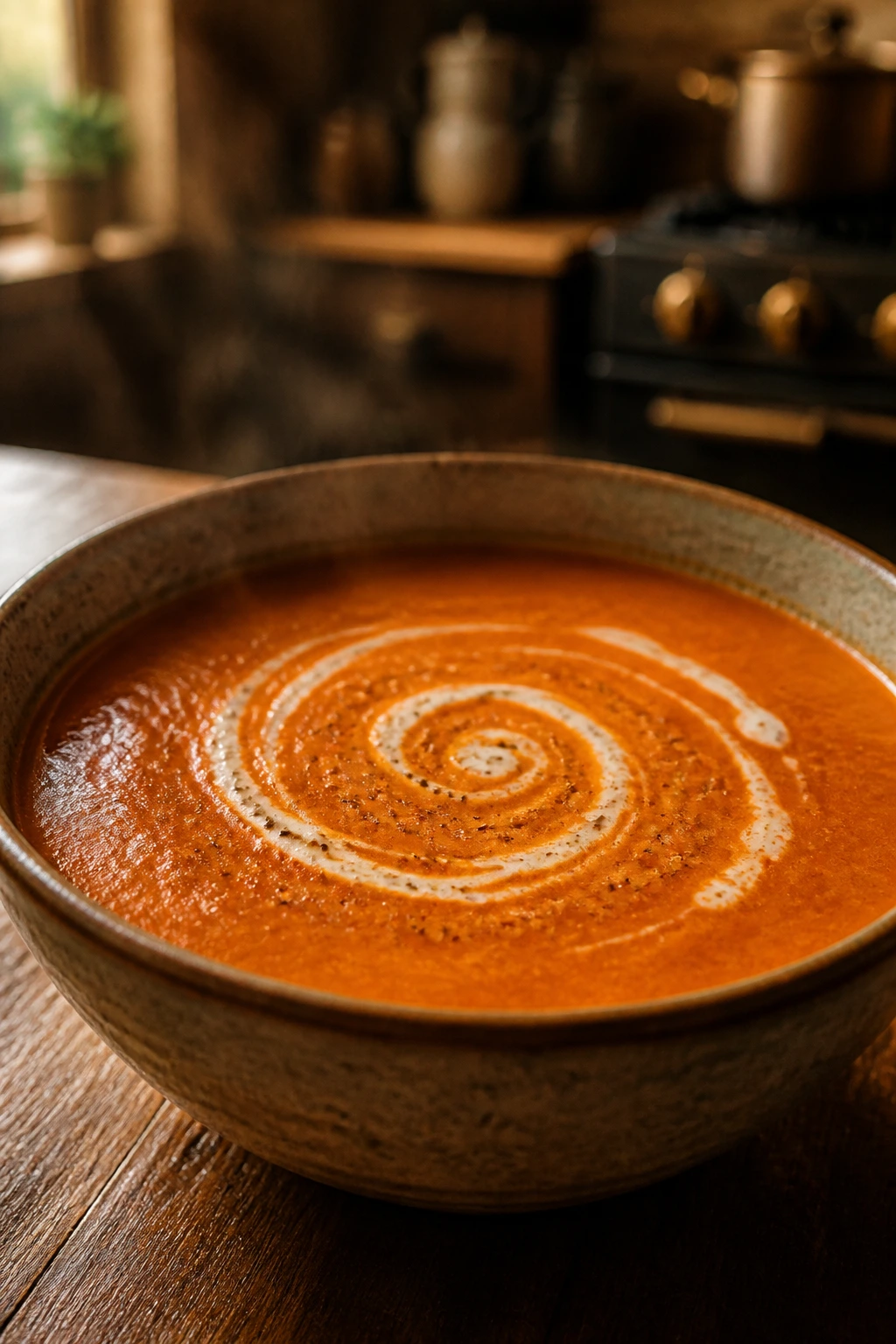
Presentation: Warm the bowls first if you can. A hot soup in a cold bowl loses steam fast, and steam is part of the pleasure here. I like to pour the soup in a steady stream, then drag a spoonful of cream across the top and swirl it once or twice so the surface looks marbled rather than messy.
Accompaniments: Grilled cheese is the obvious move, and it earns its fame because the crunchy bread and melting cheese cut through the soup’s softness. Sourdough toast, garlic croutons, or a bitter green salad with a sharp vinaigrette all work too. If you want something heartier, a tuna melt or a ham-and-cheddar sandwich lands nicely beside it.
Portions: A full meal usually means 1 1/2 cups per person, though that can jump to 2 cups if the only side is bread. As a starter, 1 cup per person is plenty. The soup also scales cleanly; double it and use a wider pot so it doesn’t take forever to come to a simmer.
Beverage Pairing: A dry hard cider fits the sweet-tart tomato flavor without making the meal feel heavy. If you’d rather keep it nonalcoholic, a glass of sparkling water with a lemon wedge keeps the palate fresh between spoonfuls.
Extra Flavor Moves That Pay Off
Flavor Enhancement: Stir in a Parmesan rind during the simmer if you keep them in your freezer. It melts a little savory depth into the broth without making the soup taste cheesy in an obvious way. Pull the rind out before blending.
Customization: A pinch of smoked paprika changes the mood fast, especially if you’re serving the soup with grilled bread. It gives a faint campfire note that plays well with creamy tomato, and you only need 1/4 teaspoon to feel the shift.
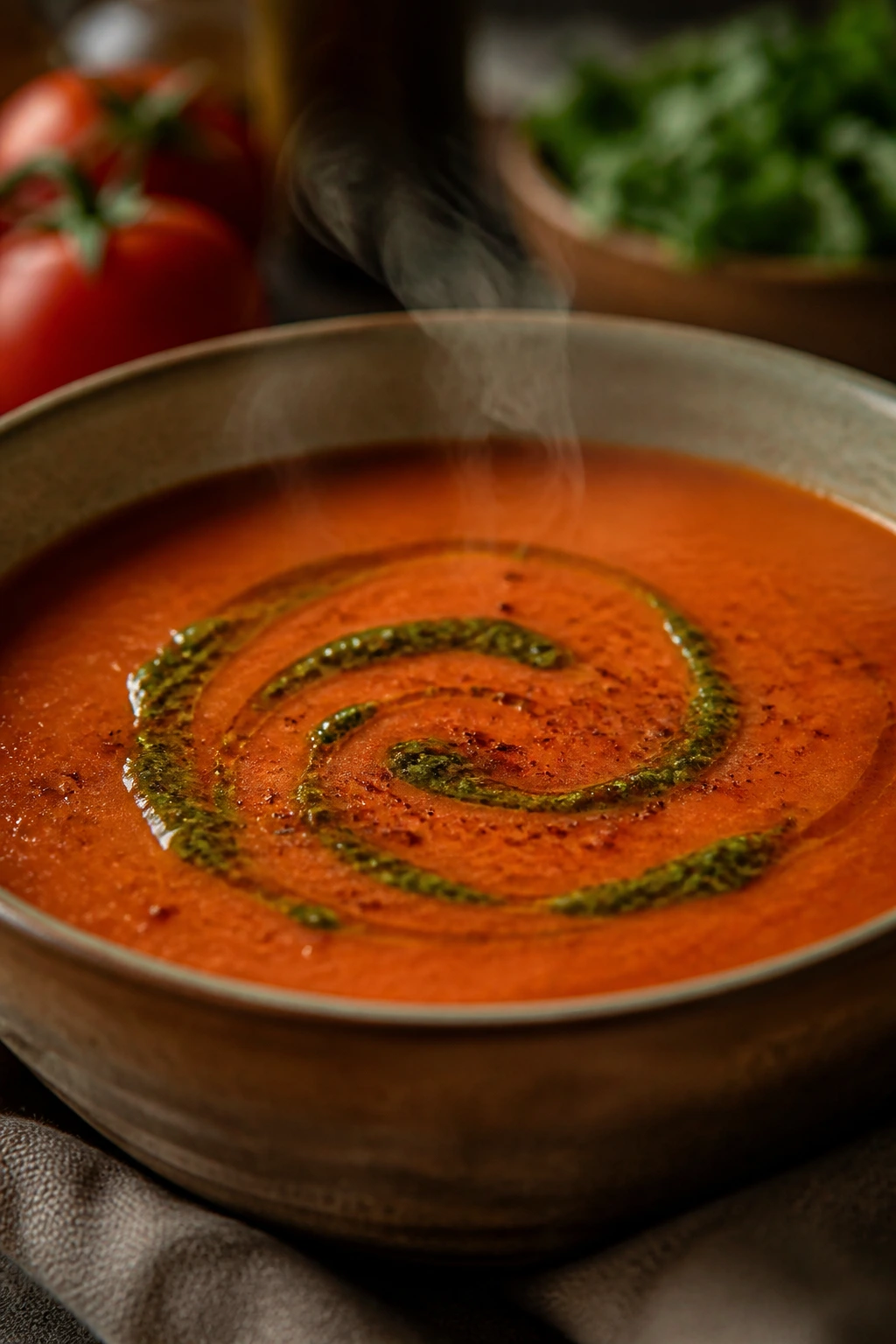
Serving Suggestions: Try a drizzle of basil oil, a spoonful of pesto, or even a few buttery croutons tossed with garlic powder. If you want the bowl to feel more finished, a little grated Parmesan or a dusting of black pepper works better than trying to dress it up with too many toppings.
Make-It-Yours: For a richer bowl, use all chicken broth and keep the cream full-fat. For a lighter version, swap the cream for half-and-half or even a splash of whole milk added off the heat. For dairy-free eaters, use coconut cream or skip the cream entirely and finish with a spoonful of olive oil.
Mistakes That Make the Soup Thin, Sharp, or Grainy
The first mistake is using bland fresh tomatoes when the fruit has no flavor to give. Out-of-season tomatoes can turn the soup pale and watery, which means you end up trying to rescue it with extra salt and sugar. Canned whole tomatoes solve that problem because they’re usually packed at good ripeness and give you more consistent results.
Another common slip is under-cooking the onion. If the onion still tastes raw and a little acrid, the whole pot carries that edge. Cook it until soft and slightly sweet before you add the tomato paste. That ten minutes at the start changes the whole bowl.
Then there’s the cream problem. Boiling the soup hard after the cream goes in can make it look broken or grainy. Keep the heat low, stir gently, and stop as soon as the soup is hot enough to steam.
Blending also gets people into trouble. A countertop blender filled too high can blast hot soup out the lid, and that’s a burn waiting to happen. Blend in smaller batches, vent the lid, and hold it down with a folded towel. If you want to skip the risk entirely, an immersion blender right in the pot is the easier route.
Finally, don’t stop seasoning too soon. Tomato soup needs salt to taste round and tomato-y, and it often needs a small splash of acid at the end to wake it up. If the spoonful feels flat, the fix is usually not more cream. It’s a pinch of salt, a little acid, or both.
Variations for Smoke, Heat, and Dairy-Free Bowls
Roasted Tomato Depth
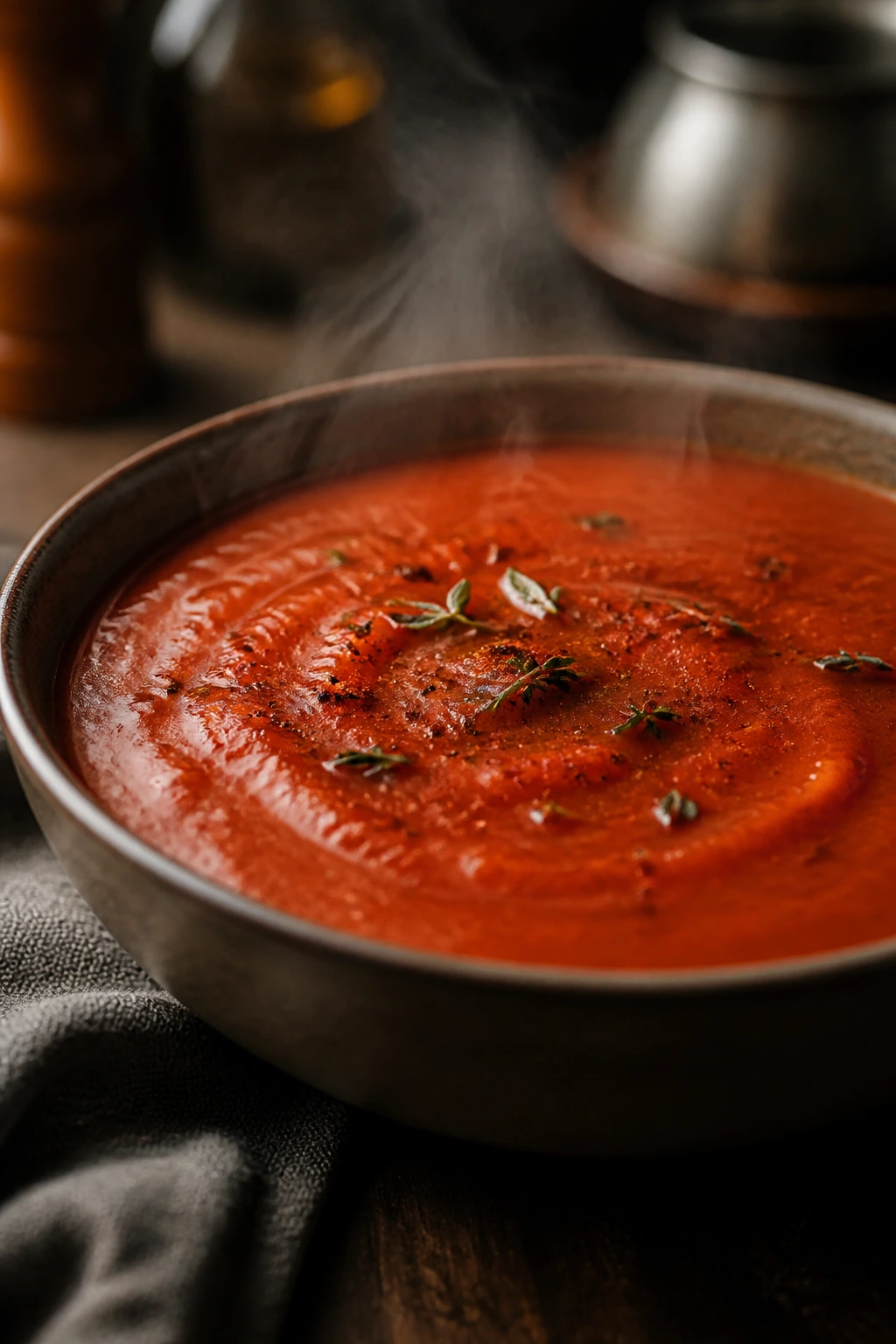
Roast 2 cans of drained whole tomatoes on a sheet pan with onion wedges, olive oil, and salt at 425°F (220°C) for about 20 to 25 minutes before adding them to the pot. The edges darken, the juices concentrate, and the soup picks up a roasted note that tastes especially good with sourdough toast.
Dairy-Free Velvet
Replace the butter with extra olive oil and use 1/2 cup full-fat coconut milk or coconut cream at the finish. The coconut flavor stays in the background if you keep the basil and black pepper in the mix, and the texture still lands smooth.
Smoky Pantry Bowl
Add 1/2 teaspoon smoked paprika and a tiny pinch of cayenne along with the tomato paste. This version is the one I reach for when I want the soup to feel a little more robust beside a sharp cheddar sandwich.
Herby Parmesan Finish
Simmer the soup with a Parmesan rind and finish with chopped basil, parsley, and a few grates of Parmesan over the top. It leans a little closer to an Italian-style tomato soup, especially if you serve it with crusty bread instead of grilled cheese.
Chunky-Smooth Split
Blend only half the pot and leave the rest textured. You get smooth broth with little pieces of tomato and onion floating through it, which is useful if you like a spoonful that feels more homemade and less polished.
Make-Ahead, Storage, and Reheating Notes
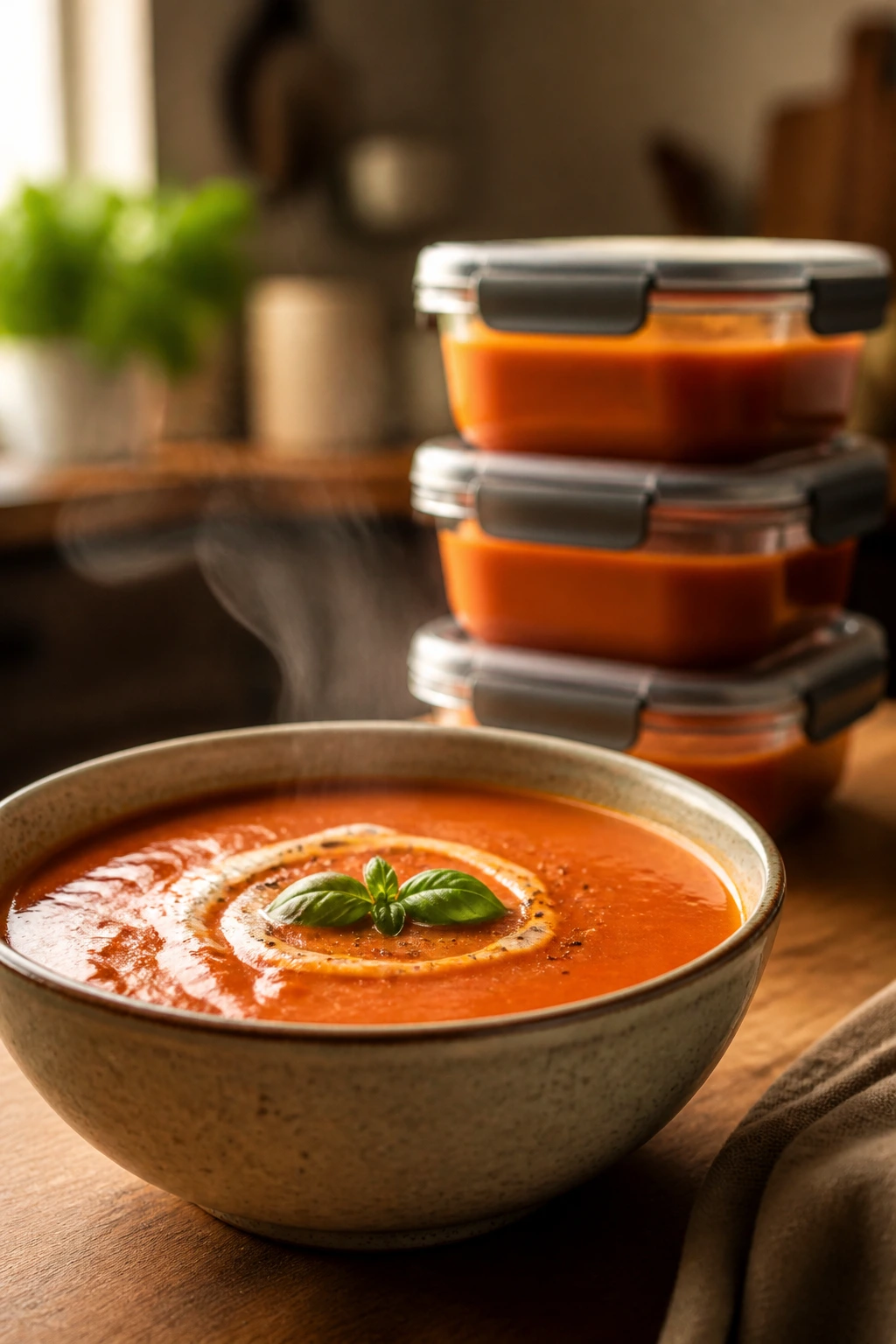
Tomato soup keeps well, which is part of why I like it so much. Once cooled, it can sit in the refrigerator for up to 4 days in a sealed container. If you want the flavor to settle and deepen, make it a day ahead; the tomato taste usually softens and comes together overnight.
For the freezer, you’ll get the best texture if you freeze the soup before adding the cream. The tomato base freezes well for up to 3 months in airtight containers or freezer bags laid flat. Label the container with the date, leave a little room at the top for expansion, and cool the soup fully before freezing so you do not build ice crystals into the batch.
Reheat the soup gently on the stove over low to medium-low heat, stirring often. If it has thickened in the fridge, loosen it with a splash of broth or water. If you froze the base, thaw it overnight in the refrigerator, reheat until steaming, then stir in the cream at the end.
The microwave works too, though it needs a little patience. Use 50% power and stir every minute or so, especially if the soup is in a deep container. That keeps the edges from overheating while the center stays cold.
A small warning worth keeping in mind: if you already added cream before freezing, the soup can still taste fine, but the texture may separate slightly after thawing. It’s not ruined. A quick blend with an immersion blender usually brings it back together.
Questions People Ask Before Making It
Can I use fresh tomatoes instead of canned?
Yes, but the result changes a lot. Fresh tomatoes need to be ripe and flavorful, and in cold weather that usually means roasting them first so they lose water and concentrate. Without that step, the soup can taste pale and thin.
Do I have to use heavy cream?
No. Heavy cream gives the soup its plush finish, but half-and-half, whole milk, coconut cream, or even an extra knob of butter can work. Just keep anything dairy-based away from a hard boil once it’s in the pot.
How do I make it smoother?
A countertop blender gives the smoothest result, especially if you strain the soup afterward through a fine-mesh sieve. An immersion blender leaves a little more texture, which I actually like when the soup will be paired with grilled cheese.
Why does my tomato soup taste sharp or acidic?
Tomatoes vary a lot, and some cans are brighter than others. A pinch of sugar helps, but the cleaner fix is to cook the onions longer, let the tomatoes simmer fully, and finish with a little butter or cream to round things out. A tiny splash of vinegar can also brighten the flavor without making it sharper.
Can I make this without a blender?
You can, though the texture will be rustic. Smash the tomatoes well with a spoon or potato masher during the simmer, and keep cooking until the onion nearly disappears. It won’t be silky, but it will still taste like a proper bowl of soup.
What if the soup gets too thick after chilling?
Add broth, water, or even a splash of milk while reheating. Tomato soup tightens up in the fridge because the puree and cream both settle, so thinning it a little before serving is normal, not a mistake.
Can I make this in advance for guests?
Yes, and I would. Make the soup base a day ahead, chill it, then reheat gently and add the cream right before serving. That keeps the texture fresher and gives you one less thing to think about when people arrive.
A Bowl Worth Repeating
Tomato soup gets dismissed sometimes because people think they already know it. That’s a mistake. When the onions are cooked properly, the tomatoes are good quality, and the cream goes in at the right moment, the soup turns into something with real depth — not fussy, not precious, just deeply satisfying on a cold night.
Keep a couple of cans of whole peeled tomatoes in the cupboard and this becomes one of those dishes you can make without much planning. It answers the same problem every time: you want something warm, smooth, and reliable, and you want it to taste like someone actually cared enough to stir the pot.
Creamy Homemade Tomato Soup for Cold Winter Nights — Recipe Card
Recipe Name: Creamy Homemade Tomato Soup for Cold Winter Nights
Description: A smooth, tomato-forward soup made with canned whole tomatoes, sautéed onion and garlic, broth, and a finish of cream for a rich, velvety bowl. Best served hot with grilled cheese, sourdough, or crisp croutons.
Prep Time: 15 minutes
Cook Time: 40 minutes
Total Time: 55 minutes
Course: Soup, Main Course
Cuisine: American
Servings: 4 to 6 servings
Calories: About 235 kcal per serving
Ingredients
For the soup base:
- 2 tablespoons unsalted butter
- 1 tablespoon olive oil
- 1 large yellow onion, diced small
- 3 cloves garlic, minced
- 2 tablespoons tomato paste
- 2 cans (28 ounces each) whole peeled tomatoes, with juices
- 2 cups low-sodium vegetable broth or chicken broth
- 1 bay leaf
- 1 teaspoon granulated sugar, optional
- 1 teaspoon kosher salt, plus more to taste
- 1/2 teaspoon black pepper
- 1 teaspoon dried basil or 1 tablespoon chopped fresh basil
- 1/4 teaspoon crushed red pepper flakes, optional
For the finish:
- 1/2 cup heavy cream
- 1 tablespoon cold unsalted butter, optional
- 1 teaspoon sherry vinegar or lemon juice, optional
- Fresh basil, chives, or cracked black pepper, for serving
Instructions
-
Heat the butter and olive oil in a 5- to 6-quart Dutch oven over medium heat.
-
Add the onion and salt and cook for 8 to 10 minutes, until soft and lightly golden at the edges.
-
Stir in the garlic, tomato paste, and red pepper flakes, and cook for 1 minute until fragrant and darker in color.
-
Add the tomatoes, broth, bay leaf, sugar, black pepper, and basil. Break up the tomatoes a little and bring the pot to a simmer.
-
Simmer uncovered for 25 to 30 minutes, stirring now and then, until the tomatoes are fully softened.
-
Remove the bay leaf and blend the soup until smooth or partly smooth using an immersion blender or countertop blender.
-
Stir in the heavy cream and optional cold butter, then warm gently over low heat for 2 to 3 minutes without boiling.
-
Taste and adjust with more salt, pepper, or a small splash of vinegar or lemon juice. Serve hot with your chosen garnish.
Notes: Freeze the soup base without the cream for the smoothest texture later. Add the cream after reheating. A grilled cheese sandwich is not optional in my kitchen.