



A creamy garlic Parmesan chicken and penne skillet dinner solves a familiar problem: everyone is hungry, the sink is already half full, and nobody wants a fussy casserole with a dozen moving parts. One skillet. One sauce. Enough pasta to feel generous.
Penne is the right pasta here, and I’ll defend that to the end. Its ridges catch the sauce, its hollow center traps little pockets of cream, and it keeps a pleasant bite even after it sits for a minute or two on the table. That matters more than people think. A flat noodle can feel slippery in a rich sauce; penne stays put.
There’s also a very specific smell that tells you this dinner is going in the right direction: butter warming, garlic going sweet, chicken browning at the edges, Parmesan melting into something that looks glossy instead of broken. Miss that window and the whole dish can tilt heavy or bland. Hit it, and the skillet tastes like far more effort than it actually took.
The nice part is that the recipe doesn’t ask for culinary acrobatics. It asks for a little attention, decent cheese, and a willingness to keep the heat under control once the dairy goes in. That’s it. The rest is just making sure the sauce gets a chance to cling to every piece of pasta instead of pooling at the bottom of the pan.
Why This Creamy Garlic Parmesan Chicken and Penne Skillet Dinner Belongs in Regular Rotation
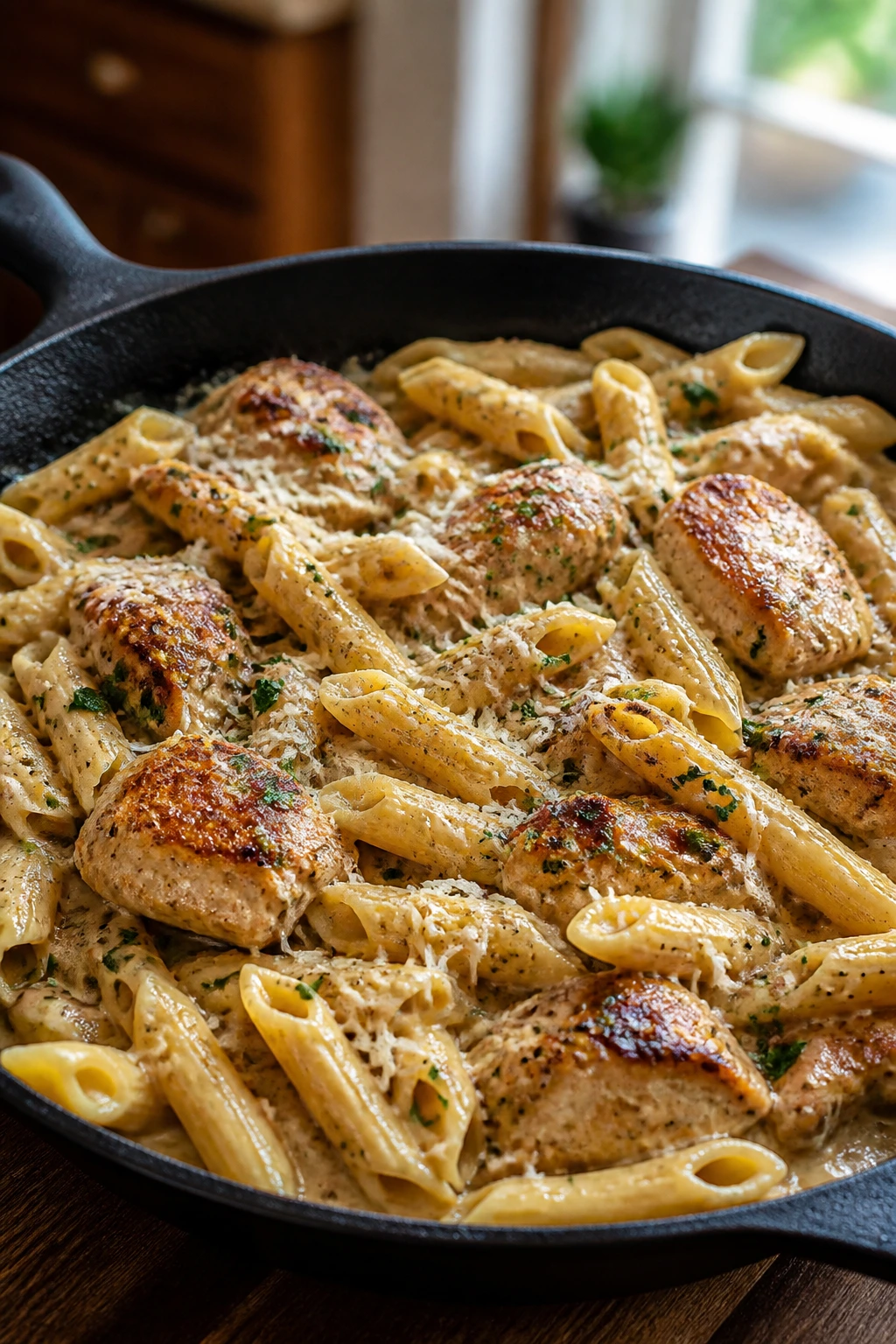
One skillet keeps dinner sane: The chicken, sauce, and pasta all come together in the same pan, which means fewer dishes and more flavor because nothing gets drained away.
The sauce tastes rich without being swampy: Chicken broth, cream, butter, and Parmesan make a sauce that coats the penne instead of smothering it, especially when you keep the simmer gentle.
Garlic actually tastes like garlic: Five cloves cooked briefly in butter bring a sweet, mellow edge that survives the cream and cheese.
Penne earns its keep: The tube shape traps sauce inside and along the ridges, so every bite tastes seasoned instead of just slick.
It plays nicely with leftovers: A splash of broth or milk brings the sauce back after refrigeration, which is more than you can say for many cream-based pasta dishes.
You can bend it without breaking it: Thighs instead of breasts, spinach instead of peas, gluten-free pasta instead of regular penne—this recipe accepts sensible swaps without losing its shape.
A Quick Look at the Clock, Yield, and Best Serving Moment
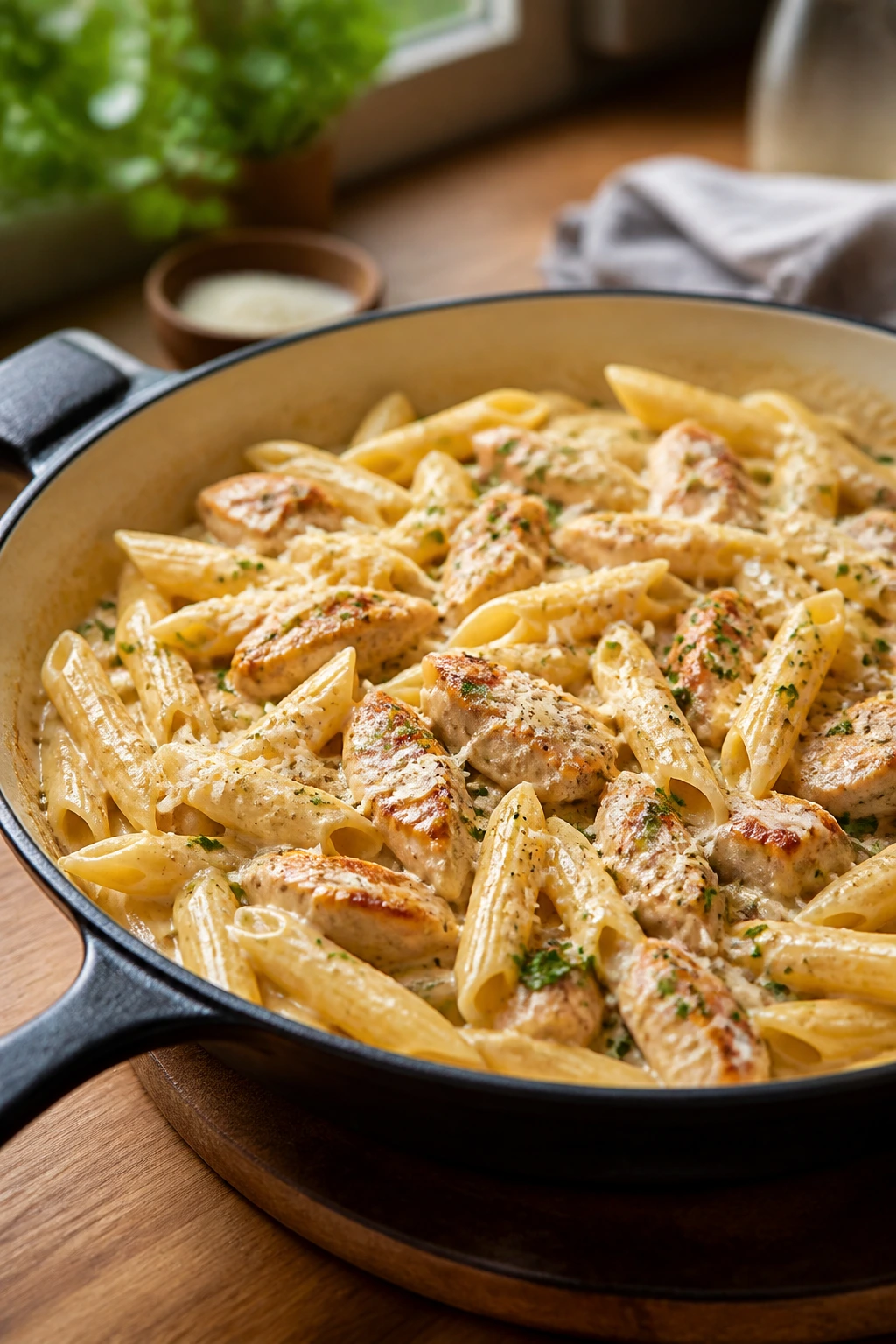
This is a fast dinner, but it does want a little attention. The sauce rewards the cook who keeps the heat modest and doesn’t rush the cheese.
Yield: Serves 4 to 6
Prep Time: 15 minutes
Cook Time: 30 minutes
Total Time: 45 minutes
Difficulty: Beginner — the method is straightforward, but the sauce behaves best when you watch the heat.
Best Served: Right away, while the sauce is glossy and the penne still has a little bite.
The Ingredient List That Builds the Sauce
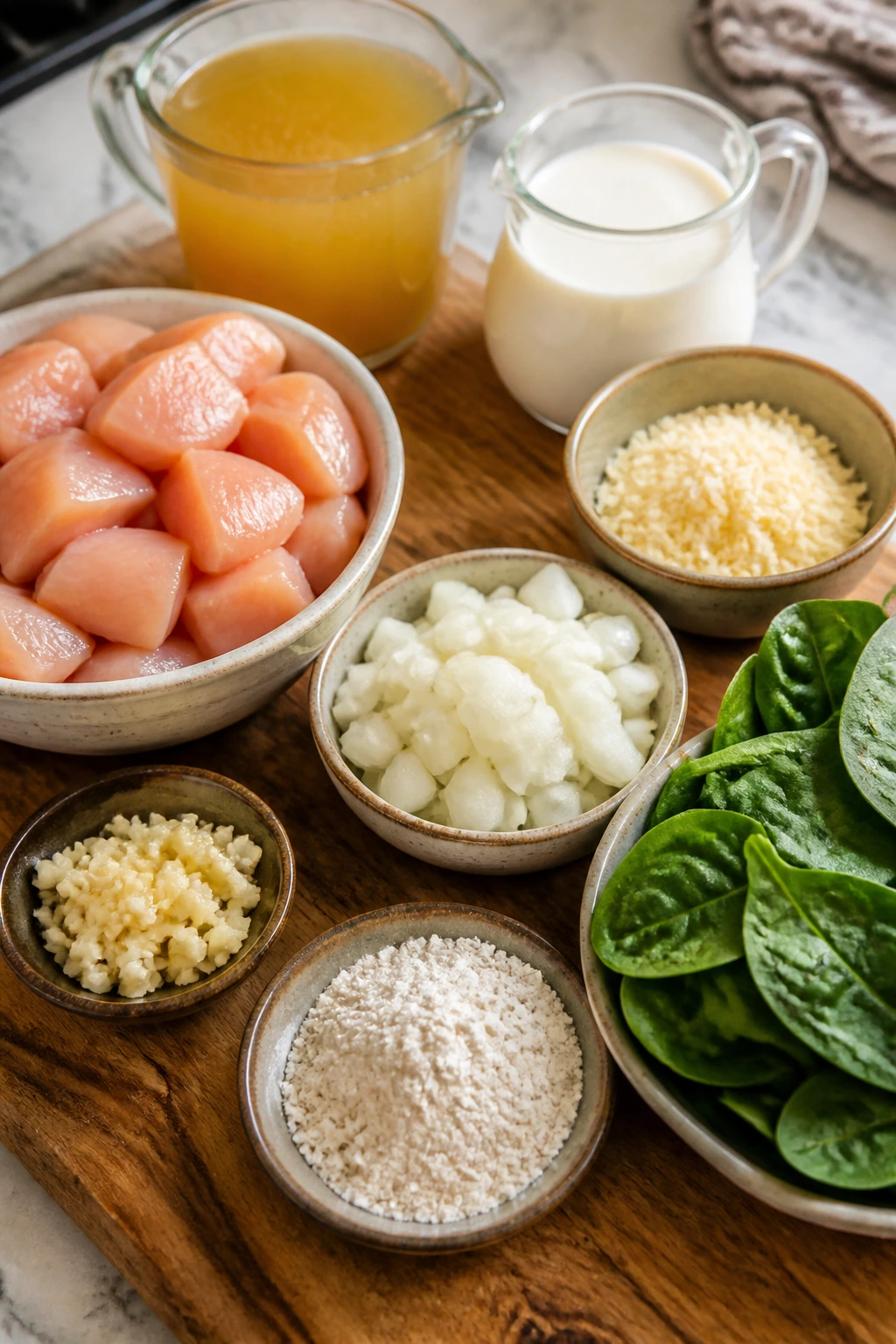
For the Chicken
- 1 1/2 pounds boneless, skinless chicken breasts, cut into 1-inch pieces
- 1 teaspoon kosher salt
- 1/2 teaspoon black pepper
- 1 teaspoon Italian seasoning
- 1/2 teaspoon garlic powder
For the Skillet and Pasta
- 2 tablespoons olive oil
- 2 tablespoons unsalted butter
- 1 small yellow onion, finely diced
- 5 cloves garlic, minced
- 2 tablespoons all-purpose flour
- 3 cups low-sodium chicken broth, divided
- 1 cup water
- 12 ounces penne pasta
- 1 cup heavy cream
- 1 cup finely grated Parmesan cheese, plus more for serving
- 2 cups baby spinach, packed
- 1 tablespoon lemon juice
- 1/4 teaspoon crushed red pepper flakes, optional
- 2 tablespoons chopped fresh parsley, for serving
Why Each Ingredient Matters More Than It Looks
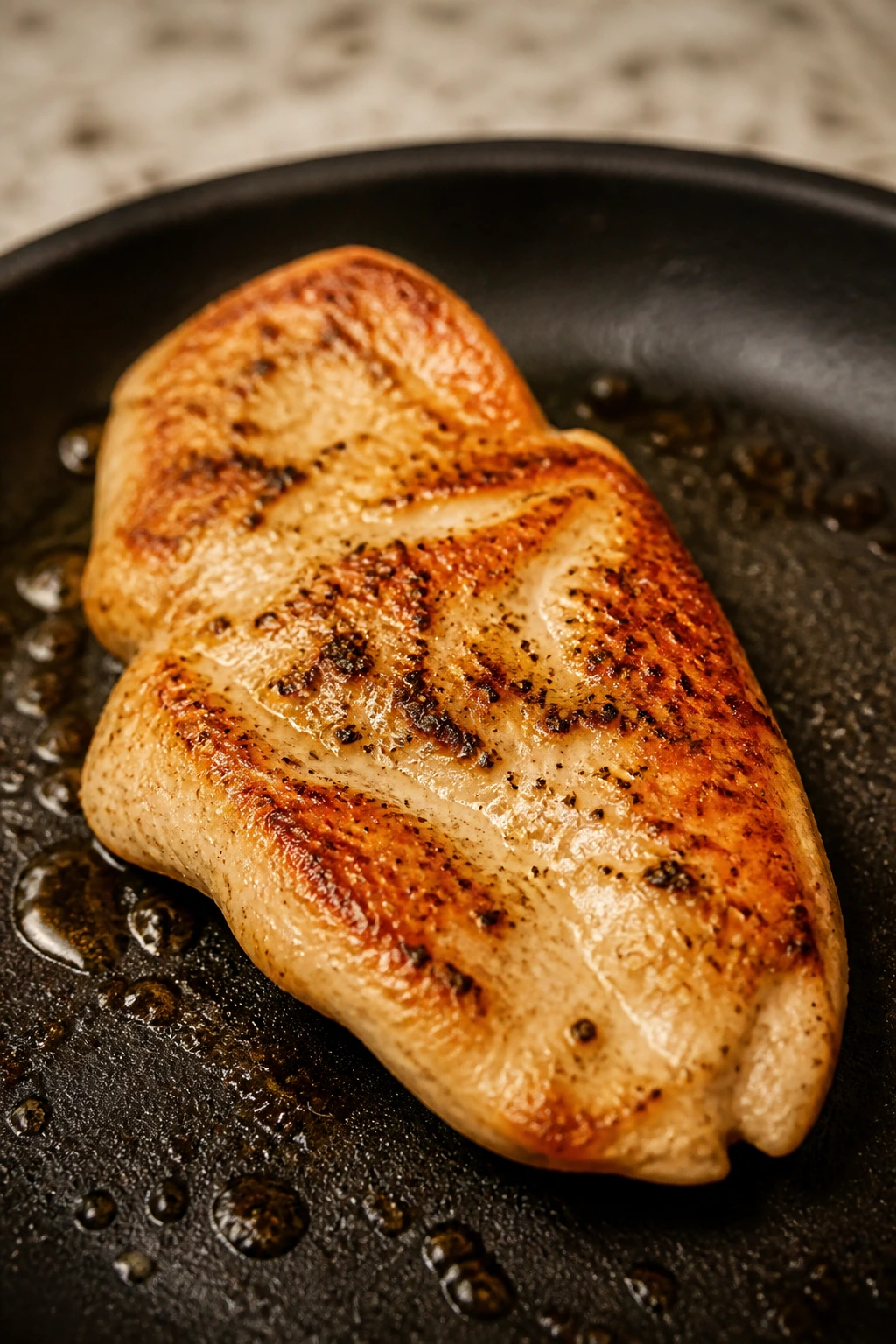
Chicken
What to use: 1 1/2 pounds boneless, skinless chicken breasts cut into even 1-inch pieces.
Preparation: Pat the pieces dry first, then season them evenly so they brown instead of steaming.
Substitutions: Boneless chicken thighs work well and bring a little more richness; turkey cutlets can stand in if you cut them into bite-size pieces.
Tips: Even sizing matters here. Tiny scraps dry out before the sauce is done, while huge chunks stay pale in the middle and throw off the timing.
Penne
What to use: 12 ounces dry penne pasta.
Preparation: Keep it dry until the skillet is ready; there’s no need to oil or rinse it.
Substitutions: Rigatoni, ziti, or fusilli can work, though each one changes how the sauce clings. Gluten-free penne can work too, but it usually needs a closer eye and a touch more liquid.
Tips: Penne holds up better than delicate shapes in a creamy skillet dish. It keeps its bite and doesn’t collapse into a soft tangle.
Broth, Cream, and Parmesan
What to use: 3 cups low-sodium chicken broth, 1 cup water, 1 cup heavy cream, and 1 cup finely grated Parmesan.
Preparation: Keep the broth warm if you can, and grate the cheese from a block so it melts smoothly.
Substitutions: Half-and-half can replace the cream for a lighter sauce, though it will be thinner. Pecorino Romano can replace some of the Parmesan if you want a saltier edge.
Tips: Pre-shredded cheese often has anti-caking agents that make sauces grainy. Freshly grated cheese melts in a far friendlier way.
Onion, Garlic, and Butter
What to use: 1 small yellow onion, 5 cloves garlic, 2 tablespoons butter, and 2 tablespoons olive oil.
Preparation: Dice the onion finely so it melts into the sauce base, and mince the garlic small enough that it perfumes the skillet without burning.
Substitutions: A shallot can replace the onion if you want a softer flavor. Garlic paste works in a pinch, though the flavor is less rounded.
Tips: Butter adds flavor, olive oil raises the smoke point, and the combination gives you a little more room before the pan gets too hot for the garlic.
Spinach and Finishers
What to use: 2 cups baby spinach, 1 tablespoon lemon juice, 1/4 teaspoon crushed red pepper flakes if you want heat, and 2 tablespoons parsley.
Preparation: Rinse and dry the spinach if it isn’t bagged and ready, and chop the parsley at the last minute.
Substitutions: Frozen spinach can work if you thaw and squeeze it dry first. Basil or chives can replace parsley for a different finish.
Tips: The lemon juice is small but useful. It cuts through the cream so the dish tastes full, not flat.
The Tools That Keep the Skillet Calm
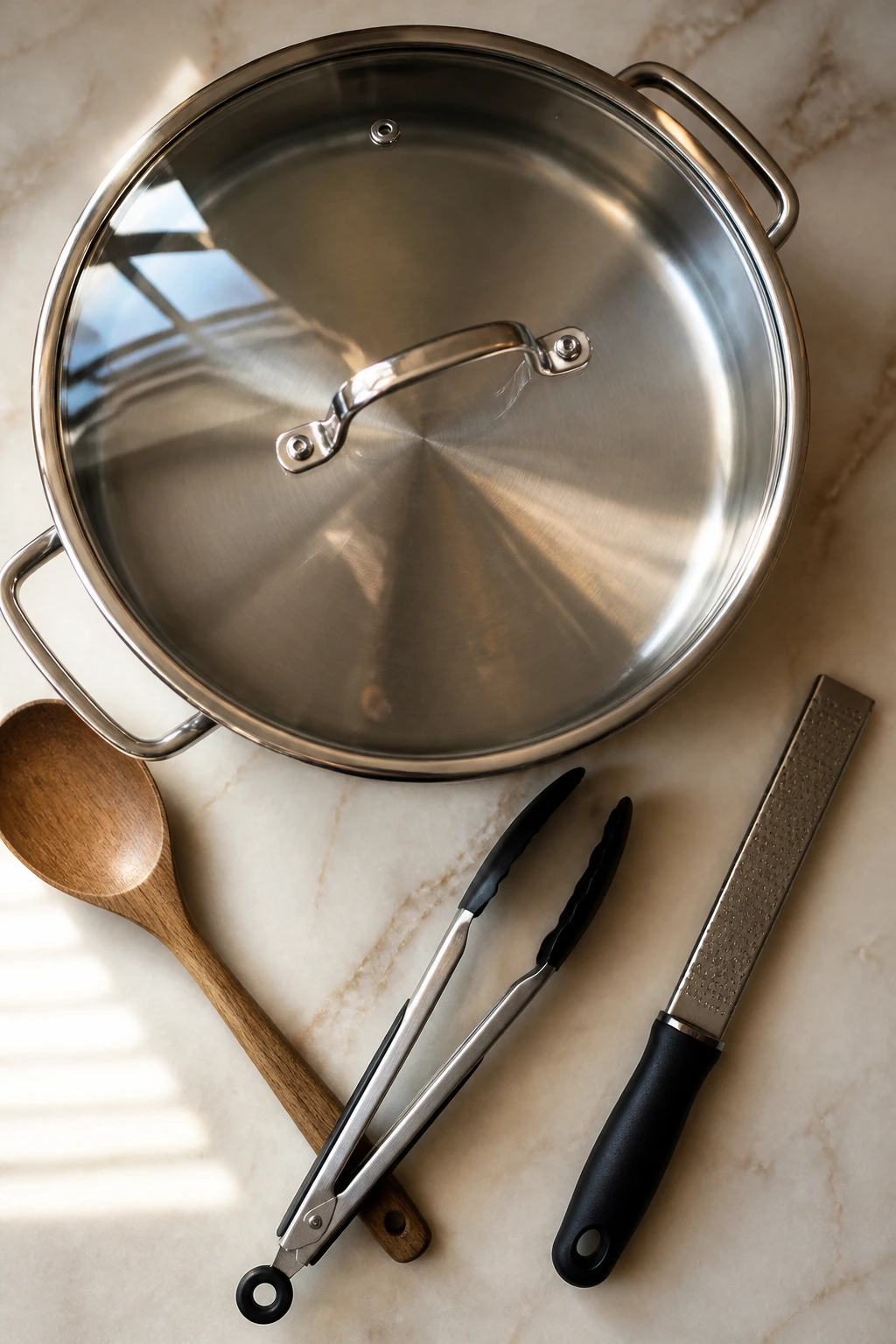
A dish like this is friendly to home cooks, but the right pan and a few small tools make a big difference.
- 12-inch deep skillet or sauté pan with a lid: This is the main event; it needs room for sauce, pasta, and chicken without crowding.
- Wooden spoon or heat-safe spatula: Useful for scraping up browned bits and stirring without scratching the pan.
- Tongs: Best for turning the chicken pieces and lifting them back into the sauce later.
- Microplane or fine box grater: Freshly grated Parmesan melts far better than the bagged stuff.
- Measuring cups and spoons: Sounds obvious, but cream sauces go sideways fast when the liquid ratio is guessed.
- Sharp chef’s knife and cutting board: Even chicken and fine onion dice cook more evenly.
- Instant-read thermometer: Optional, but it takes the guesswork out of chicken; 165°F / 74°C is the safe finish line.
- Lid or sheet pan cover: If your skillet doesn’t have a lid, a sheet pan can trap enough steam to cook the pasta.
Browning the Chicken Without Drying It Out
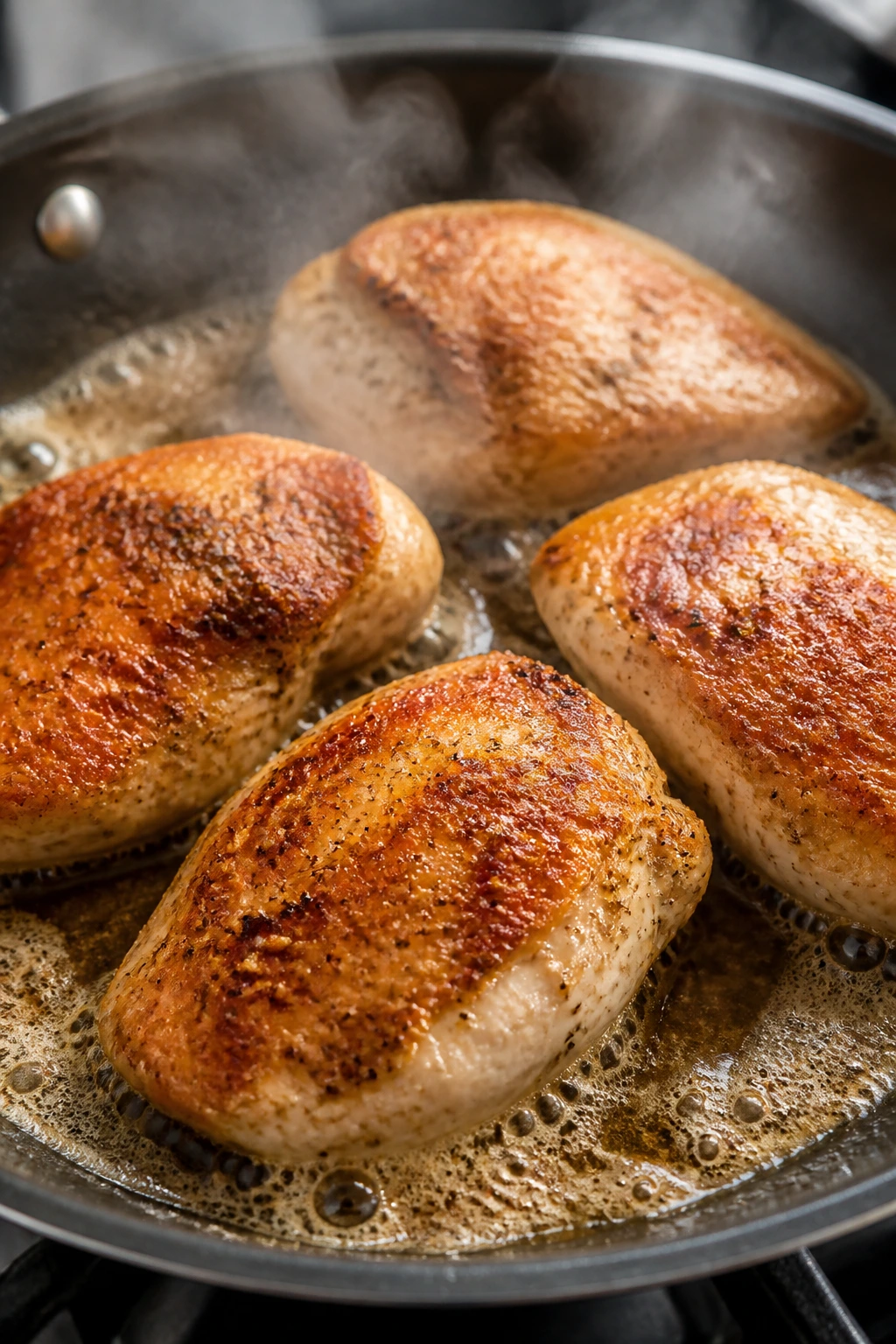
Prep the Chicken and Heat the Pan
- Pat the chicken pieces dry with paper towels, then toss them with the salt, black pepper, Italian seasoning, and garlic powder in a bowl until they’re evenly coated.
- Set a 12-inch deep skillet over medium-high heat and add the olive oil and butter. Let the butter foam and settle, which tells you the pan is hot enough for browning.
Sear and Remove
- Add the chicken in a single layer. If the pieces are crowded, cook them in two batches so they brown instead of steaming.
- Sear for about 3 to 4 minutes per side, until the outside is golden and the center is still slightly underdone. Transfer the chicken to a clean plate. Do not cook it all the way through here; it finishes in the sauce and stays juicier that way.
That first browning step does more than color the chicken. It leaves behind browned bits on the bottom of the pan, and those little stuck-on spots become part of the sauce later. That’s where the dinner starts tasting like itself.
Building the Garlic Parmesan Base
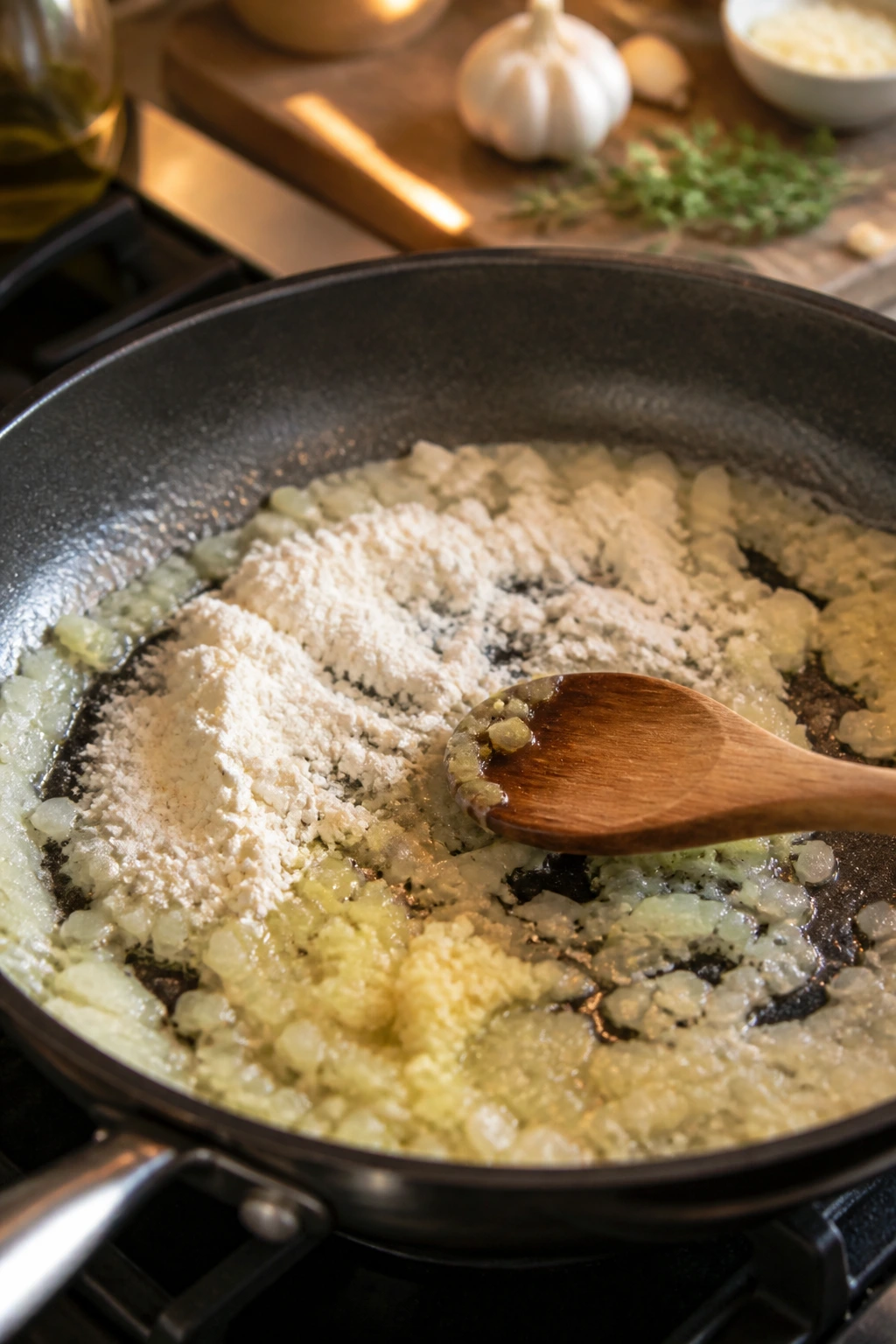
Cook the Onion and Garlic
- Reduce the heat to medium and add the diced onion to the same skillet. Cook for 3 to 4 minutes, stirring often, until the onion turns soft and translucent.
- Add the minced garlic and cook for 30 seconds, just until fragrant. If the garlic starts to brown, lower the heat right away; browned garlic turns bitter fast.
Make the Roux and Liquids
- Sprinkle the flour over the onion and garlic, then stir for 1 minute so it loses its raw taste and lightly coats the pan.
- Slowly pour in 2 1/2 cups of the chicken broth and the water, scraping the bottom of the skillet as you go. The browned bits should release into the liquid, and the mixture should look smooth and slightly thickened.
This base matters more than the recipe gives it credit for. The flour gives the sauce a little structure, which keeps the cream from feeling thin and helps the Parmesan melt into something silky instead of loose.
Cooking the Penne Right in the Skillet
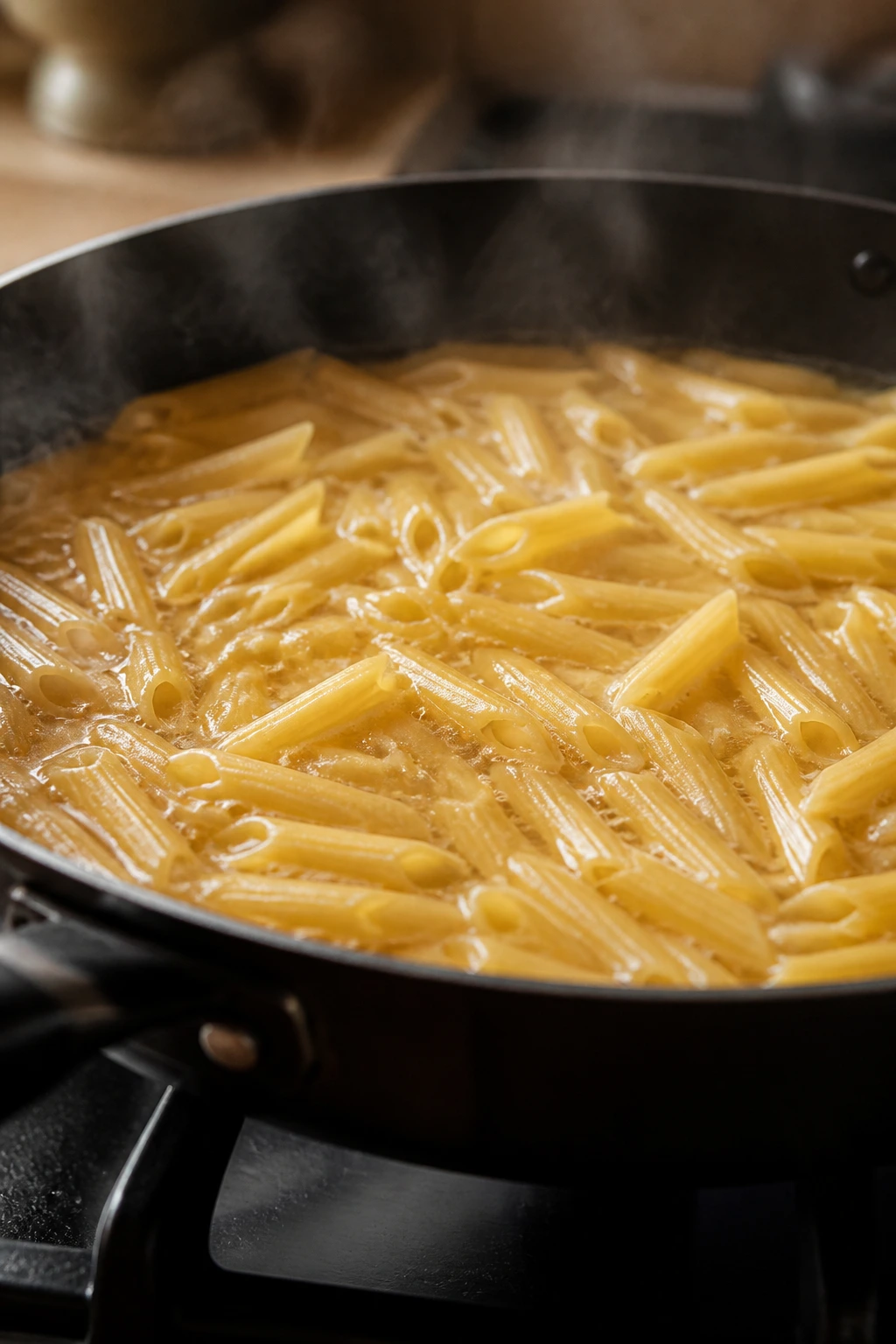
Add the Pasta and Start the Simmer
- Stir in the dry penne and the remaining 1/2 cup broth, making sure the pasta is mostly submerged. Bring the skillet to a steady simmer, then reduce the heat to medium-low.
- Cover the pan and cook for 10 to 12 minutes, stirring every 2 to 3 minutes so the pasta doesn’t stick to the bottom. Add a splash of hot water, 1/4 cup at a time, if the skillet looks dry before the pasta is tender.
The texture is the thing to watch here. You want the penne to be almost done but still a little firm in the center, because it keeps softening when the cream goes in.
Check for Bite, Not Mush
- Uncover the skillet and taste a piece of penne. It should be nearly al dente, with just enough resistance to hold its shape in the sauce. If it’s far from ready, add a touch more hot water and cook a few minutes longer.
- Keep the heat gentle. A hard boil will reduce the liquid too quickly and leave you with either dry pasta or a thick, paste-like sauce.
Bringing the Chicken Back and Finishing the Sauce
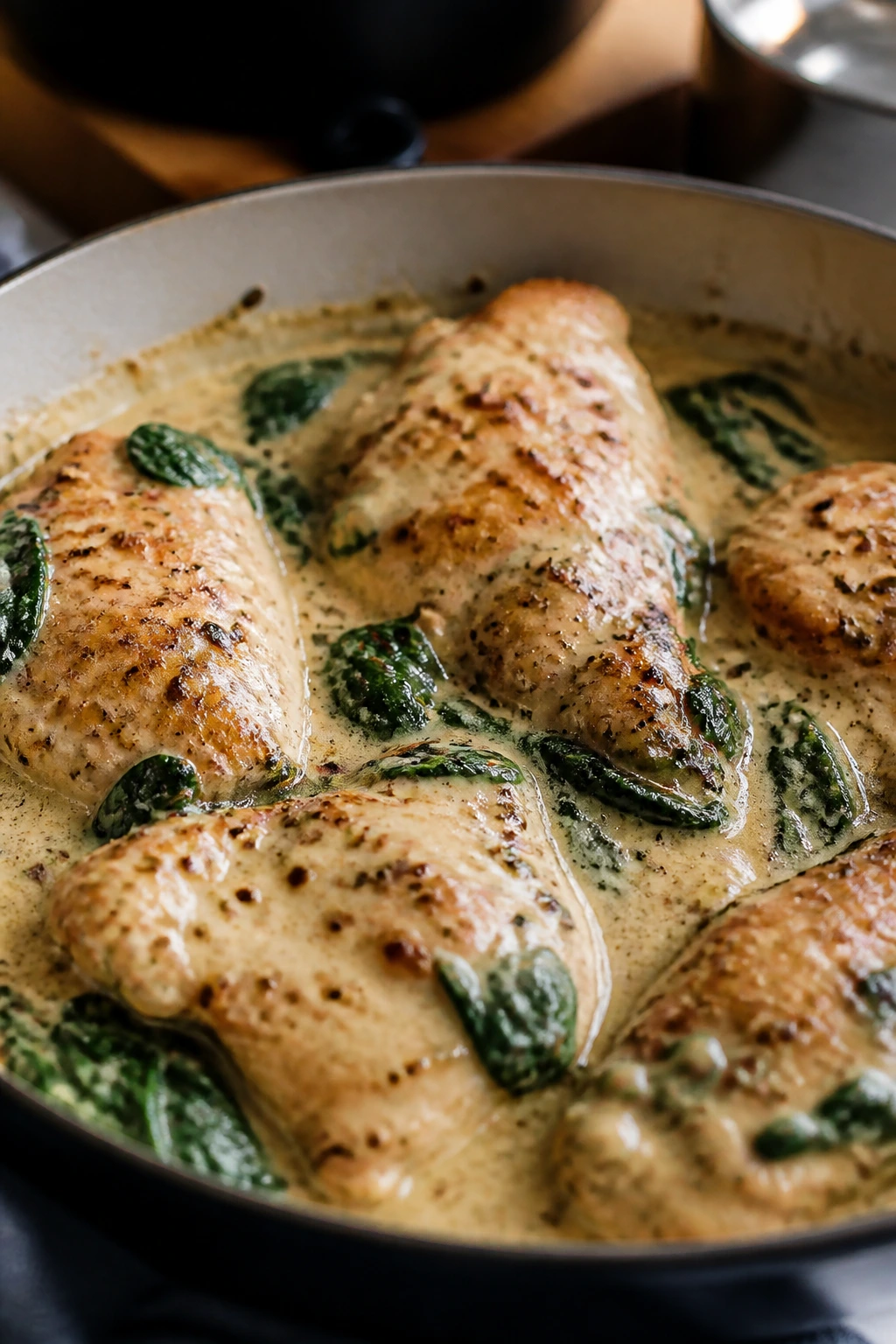
Add the Cream and Cheese
- Stir in the heavy cream, then add the Parmesan a handful at a time, stirring after each addition until it melts into the sauce.
- Return the chicken and any juices from the plate to the skillet. Stir in the spinach and red pepper flakes, if using, and simmer for 2 to 3 minutes until the chicken is cooked through and the spinach wilts.
Finish with Brightness
- Stir in the lemon juice, taste the sauce, and adjust with a little more salt or black pepper if needed. The sauce should taste creamy, garlicky, and savory first, then finish with a small bright edge from the lemon.
- Scatter the parsley over the top and serve immediately with extra Parmesan at the table.
At this point, the sauce should cling to the pasta and still move a little when you shake the pan. Thick enough to coat. Not so thick that it sits there like frosting.
How to Serve It at the Table
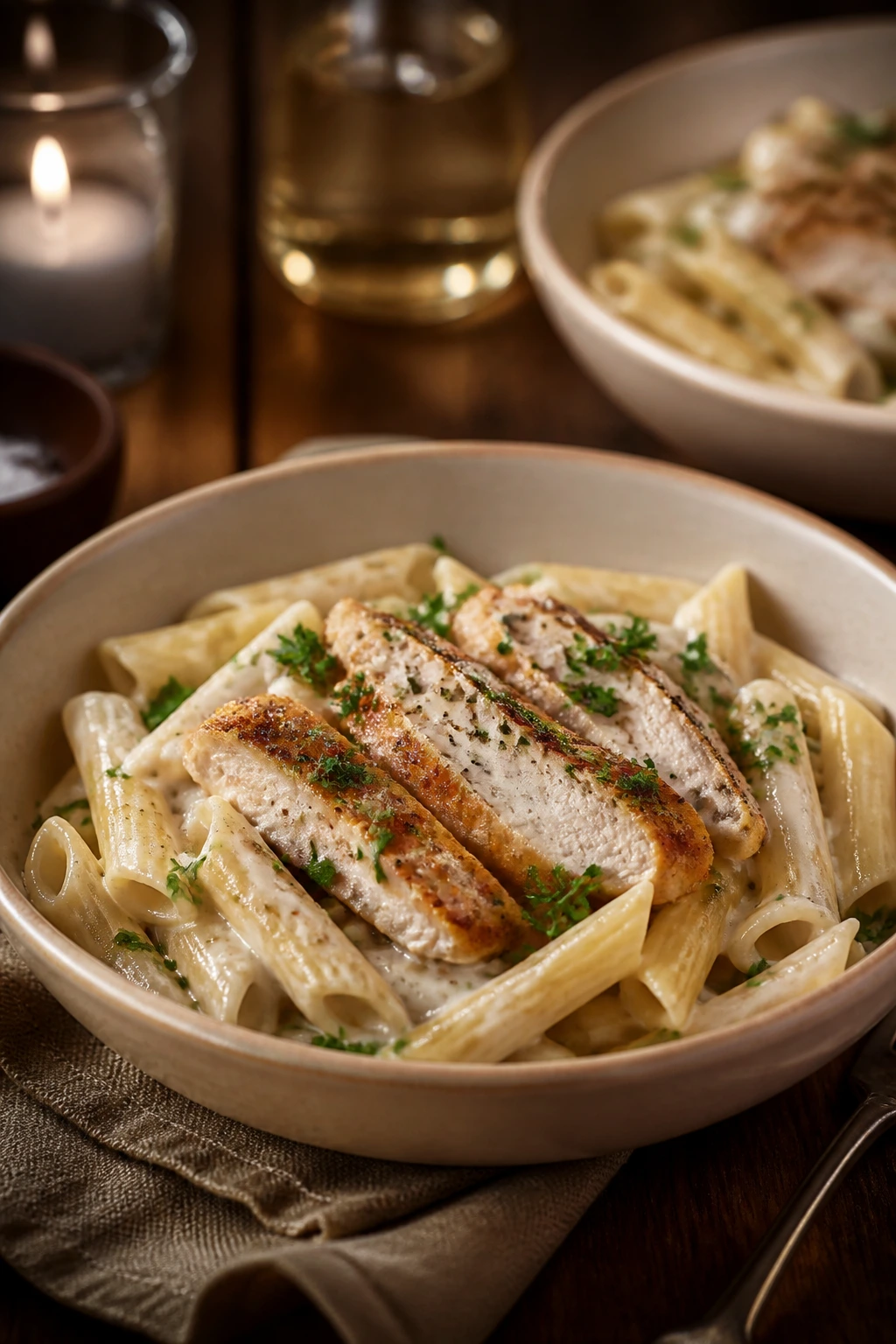
Presentation: Spoon the pasta into warm shallow bowls so the sauce settles around the penne instead of disappearing into a deep plate. Tuck a few pieces of chicken on top, then finish with parsley, a few turns of black pepper, and a small snowfall of Parmesan. The skillet itself can go to the table too if you want a more casual feel, but a bowl gives the dish a neater look and keeps the sauce from cooling too fast.
Accompaniments: Keep the sides simple. A green salad with sharp vinaigrette cuts the richness better than another creamy side, and garlic bread is never a bad move when the sauce is this good. Roasted broccoli, asparagus, or green beans give the plate some crunch and keep dinner from feeling one-note.
Portions: Four people can eat this as a main course without leaving the table hungry. Six works if you serve salad and bread on the side. If you want to stretch it, add more spinach or a few sautéed mushrooms rather than just more pasta; that keeps the sauce ratio honest.
Beverage Pairing: A crisp white wine like Pinot Grigio or Sauvignon Blanc fits the creamy garlic notes without fighting them. If you want something nonalcoholic, sparkling water with lemon or an unsweetened iced tea does the job nicely.
Smart Ways to Make It Taste Even Better
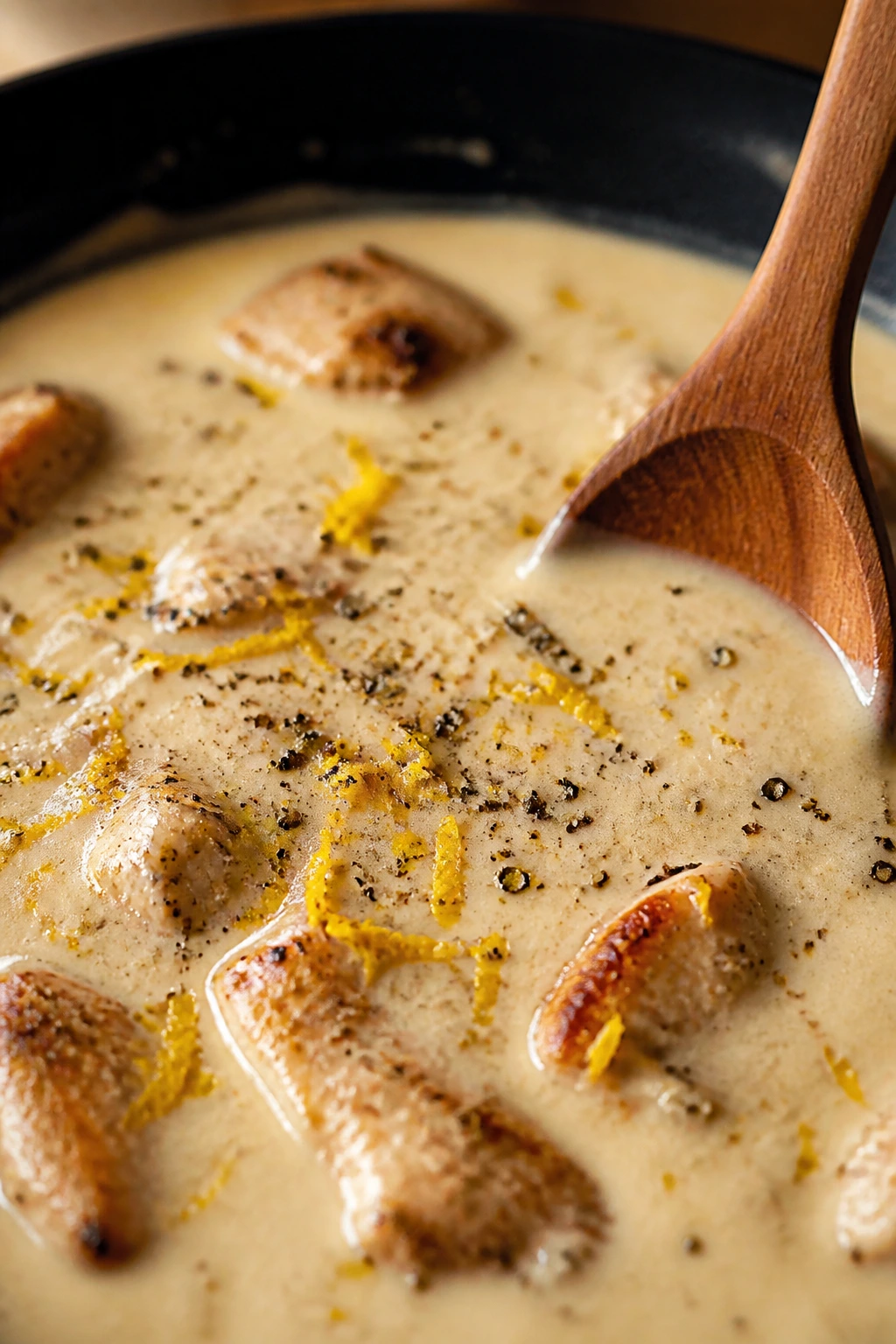
Flavor Enhancement: A little lemon zest at the end does more than another pinch of salt. It wakes up the cream and Parmesan so the sauce tastes lighter on the tongue. Freshly cracked black pepper also matters here; the coarse bite cuts through the richness better than fine pepper dust from a shaker.
Customization: Mushrooms make an easy addition if you sauté them after the chicken comes out and before the onion goes in. Sun-dried tomatoes bring a sweet-tart punch that fits the garlic sauce well, and peas can replace spinach if you want something a little sweeter and firmer. Keep the add-ins modest, though. Too many extras and the dish loses its clean, creamy shape.
Serving Suggestions: Toasted breadcrumbs are a good move if you like contrast. Mix 1/2 cup panko with 1 tablespoon butter in a small skillet until golden, then scatter the crumbs over each bowl right before serving. The crunch gives the pasta a little lift.
Make-It-Yours: Thigh meat makes the dish richer, gluten-free penne makes it accessible, and red pepper flakes can turn the whole thing from mellow to lively in a few seconds. A dairy-light version can use evaporated milk instead of cream, though the sauce won’t be as lush. That’s the tradeoff. You still get a good skillet dinner, just a slightly lighter one.
How This Dish Usually Goes Wrong
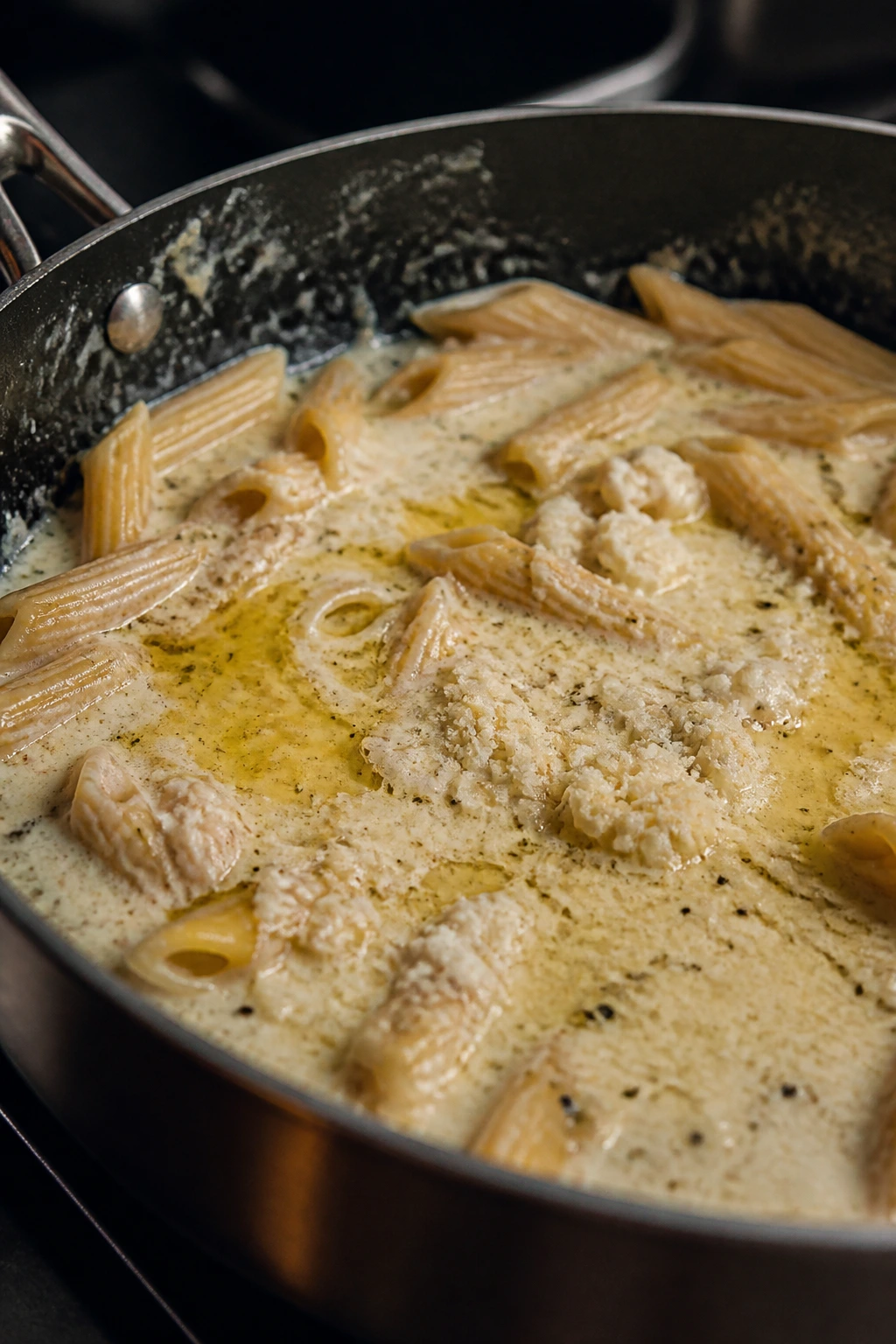
Too much heat after the cream goes in.
The sauce starts looking oily, curdled, or grainy, and the Parmesan may clump instead of melting. Keep the burner low once the dairy is added and let the sauce barely simmer. Cream sauces want patience, not urgency.
Using pre-shredded Parmesan.
The sauce turns a little sandy or refuses to go fully smooth. That usually comes from anti-caking agents on packaged cheese. Grate a block of Parmesan yourself, and the sauce behaves much better.
Letting the chicken dry out early.
The pieces look browned, but the inside turns chalky once they go back into the skillet. Pull them off the heat while they’re still slightly underdone and finish them in the sauce, where they’ll stay tender.
Overcooking the penne.
The pasta gets bloated and soft, then starts falling apart when you stir it with the cream. Stop cooking when the center still has a faint bite. The skillet will finish the job.
Skipping the liquid check.
The pasta drinks more broth than expected and the pan looks dry before the sauce is ready. Keep a kettle or small pot of hot water nearby so you can loosen the skillet a quarter cup at a time. Cold water works in a pinch, but hot water keeps the temperature steadier.
Under-salting the sauce.
Everything tastes flat, even though the chicken and pasta are technically cooked right. Parmesan brings salt, but it does not do all the work. Taste before serving and adjust with a small pinch at a time.
Variations Worth Making on Purpose
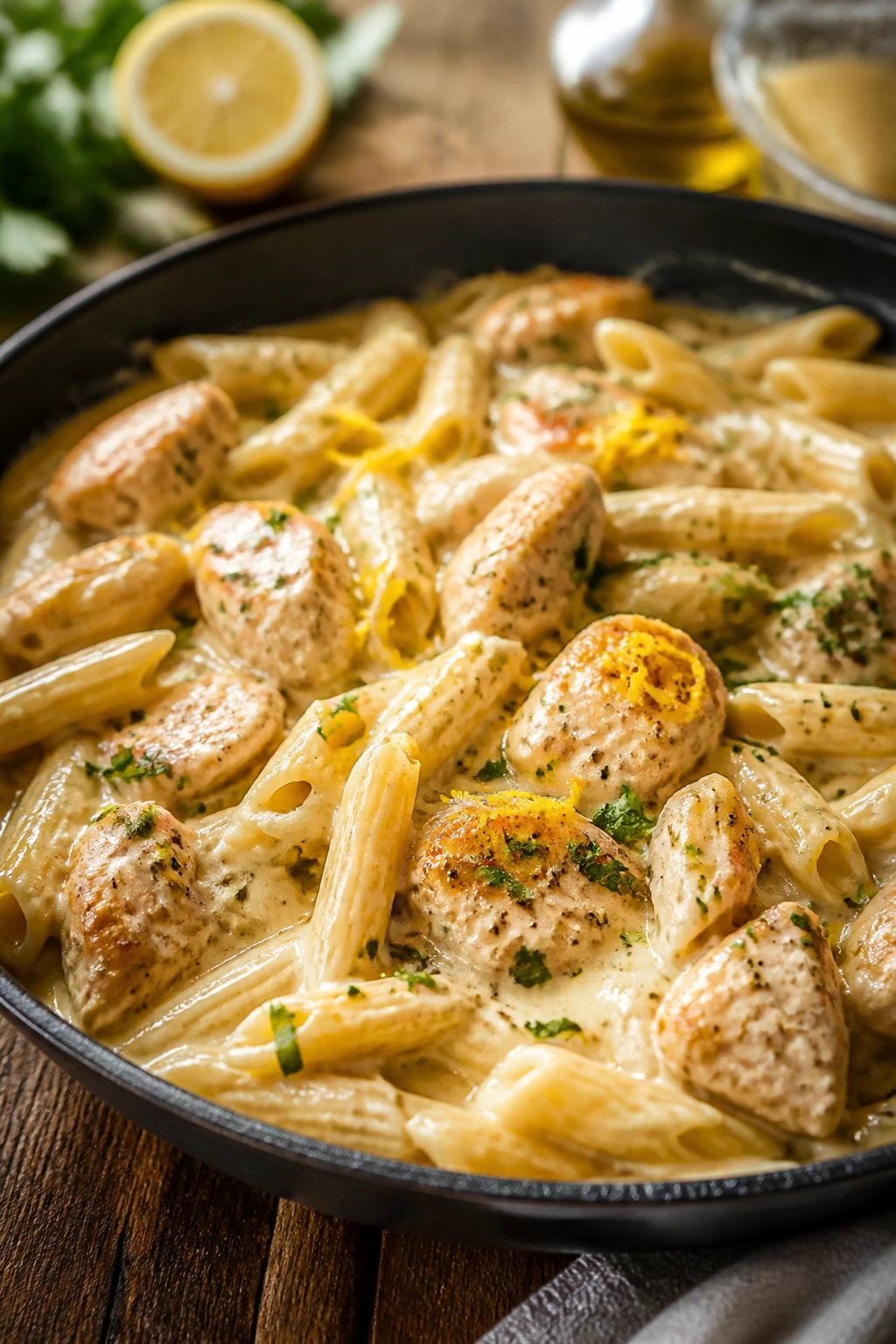
Bright Lemon Herb Skillet
Add 1 teaspoon of lemon zest with the parsley and swap half the spinach for chopped basil. The result tastes cleaner and a little sharper, which helps if you want the dish to feel less heavy. This version works especially well with chicken breasts, since the lemon brings back some moisture on the palate.
Mushroom and Spinach Comfort Version
Sauté 8 ounces of sliced cremini mushrooms after the chicken comes out and before the onion goes in. Let them brown properly so they release their water and pick up some color. The mushrooms make the sauce deeper and earthier, and they stretch the dish without making it feel diluted.
Spicy Red Pepper Penne
Double the red pepper flakes to 1/2 teaspoon and add a small pinch of cayenne to the chicken seasoning. That gives the sauce a slow, warm finish that works nicely against the cream. I wouldn’t make it fiery, though. A creamy sauce needs contrast, not a hostage situation.
Gluten-Free Pantry Swap
Use gluten-free penne and replace the flour with 1 tablespoon of cornstarch mixed with 2 tablespoons cold broth. Stir that slurry into the simmering liquid after the broth goes in. Cook the pasta a touch less than the package says, because gluten-free shapes often soften faster once they hit the sauce.
Lighter Cream Version
Use half-and-half instead of heavy cream and reduce the broth by 1/4 cup so the sauce doesn’t go thin. It will still be creamy, just less plush. That version is nice when you want the same flavor profile without the full richness of the original.
Storing, Reheating, and Making It Ahead
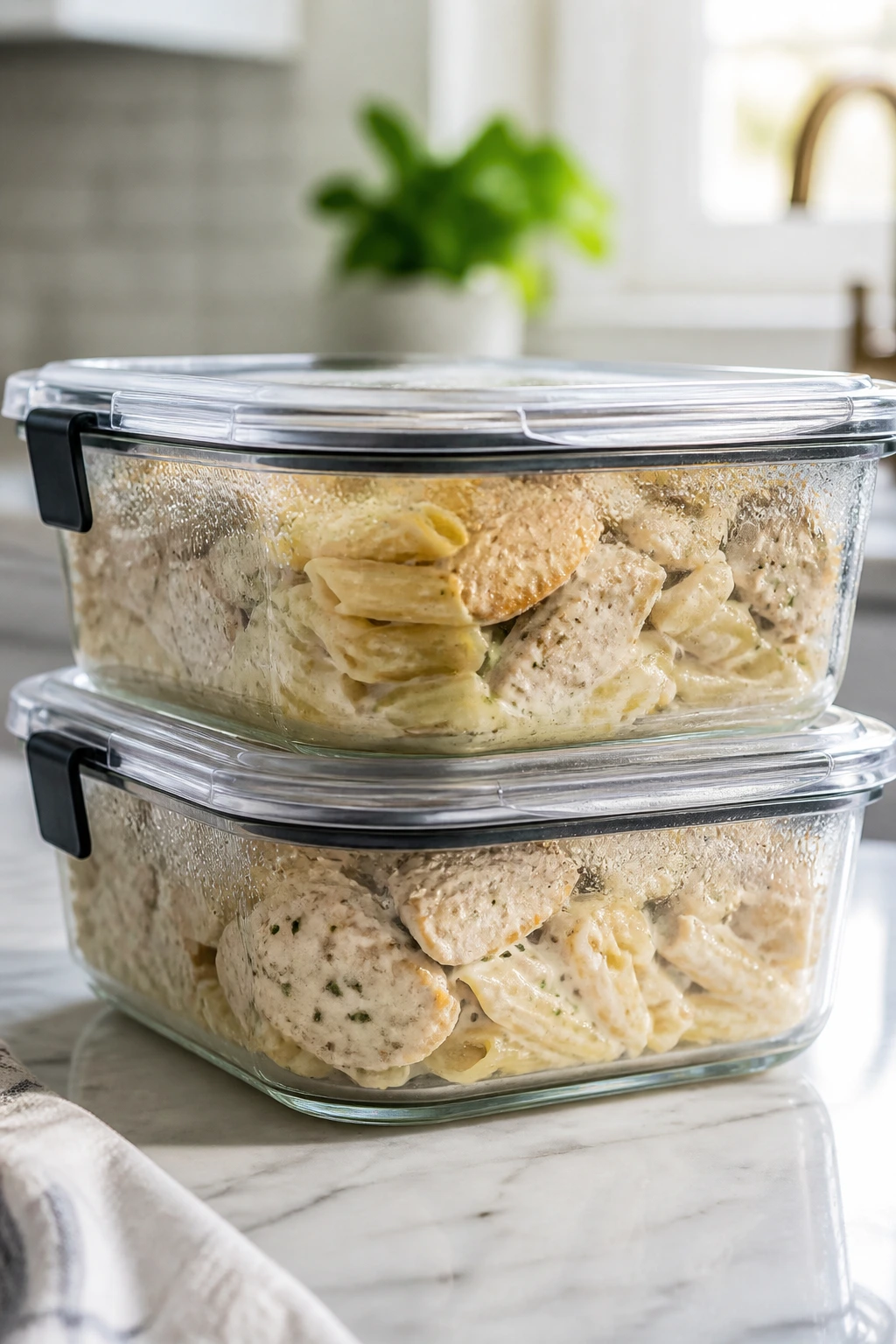
Creamy pasta is best the day it’s made, but this one keeps better than people expect if you treat it right. Let it cool for no more than 2 hours at room temperature, then pack it into shallow airtight containers.
In the refrigerator, the pasta keeps for 3 to 4 days. The sauce will thicken and the penne will absorb some of the liquid, which is normal. If you know you’ll have leftovers, save a few tablespoons of broth or milk in a separate container so you can loosen the pasta when reheating.
For the freezer, aim for up to 2 months. The texture changes a little after freezing, especially if the pasta sits in the sauce for a long time, so this is one of those dishes that freezes fine but not beautifully. If freezing is the plan, undercook the penne by 1 to 2 minutes and stop short of fully reducing the sauce.
Reheat on the stovetop over low heat with a splash of broth, milk, or water, stirring gently until the sauce loosens and the chicken is hot. A covered skillet works well because it traps a little steam. The microwave can do the job too, but use 50% power and stop to stir every 30 to 45 seconds so the cream doesn’t separate.
For make-ahead work, you can cut the chicken and grate the Parmesan a day early. You can also season the chicken in advance and keep it covered in the fridge for up to 24 hours. I wouldn’t cook the pasta far ahead of time unless you enjoy very soft noodles.
Questions People Ask Before They Cook It
Can I use chicken thighs instead of chicken breasts?
Yes, and they’re a smart swap if you want a juicier result. Thighs forgive a little overcooking better than breasts, so they’re useful if your stove runs hot or your pan heats unevenly. Cut them into the same 1-inch pieces so the timing stays close.
Do I have to cook the penne in the skillet?
No. If your pan is smaller or you simply prefer more control, boil the penne separately until just shy of al dente and stir it into the finished sauce. You’ll lose some of the one-pan feel, but the dish still works well. Save 1/2 cup of pasta water and use it to adjust the sauce at the end.
Why did my sauce turn grainy?
That usually means the heat was too high or the cheese wasn’t suited to melting. Pre-shredded Parmesan is a common culprit, and so is letting the sauce boil hard after the cheese goes in. Lower the heat, stir in a splash of warm broth, and finish with freshly grated Parmesan next time.
Can I make this without heavy cream?
You can use half-and-half or evaporated milk, but the sauce will be thinner and a little less lush. To help it along, keep the flour step and simmer gently so the base thickens before the cheese goes in. Avoid low-fat milk; it tends to make the sauce feel thin and a little flat.
How do I keep the chicken from getting dry?
Cut the pieces evenly, sear them only until the outside has color, and finish them in the sauce instead of cooking them all the way through at the beginning. An instant-read thermometer takes the guesswork out; pull the chicken when it reaches 165°F / 74°C. If you go by look alone, wait until the centers are no longer pink and the juices run clear.
Can I add vegetables to this?
Absolutely. Spinach is the easiest because it wilts in seconds, but mushrooms, peas, broccoli florets, or chopped roasted red peppers all fit the flavor. Keep the additions modest so the pasta still gets enough sauce.
What’s the best way to reheat leftovers without drying them out?
Use low heat and add a splash of broth, milk, or water before warming. Stir gently and stop as soon as the pasta is hot through, because over-reheating cream sauce makes it tighten up. If you’re using the microwave, cover the bowl and heat in short bursts.
Why This One Keeps Coming Back to the Table
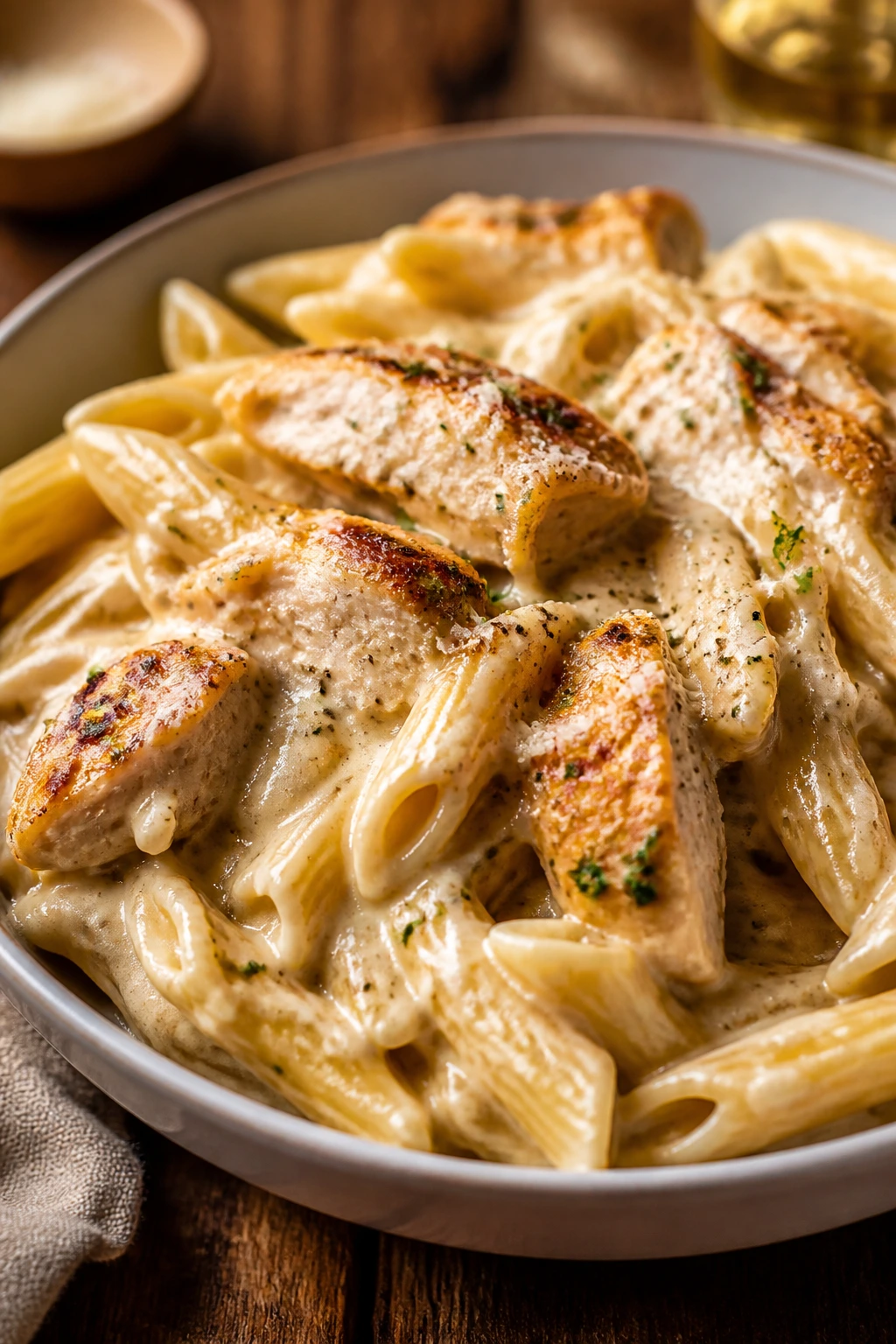
The reason this creamy garlic Parmesan chicken and penne skillet dinner works isn’t magic. It’s a bunch of small, sensible choices made in the right order: brown the chicken, keep the garlic gentle, use enough liquid, and let the Parmesan melt instead of bully the sauce.
That sounds almost boring written out like that. In the skillet, though, it tastes like dinner that understands what people actually want on a busy night—something warm, creamy, deeply savory, and finished in the time it takes to clear the counter. Make it once, and the next time you reach for penne, you’ll probably reach for this version again.
Creamy Garlic Parmesan Chicken and Penne Skillet Dinner — Recipe Card
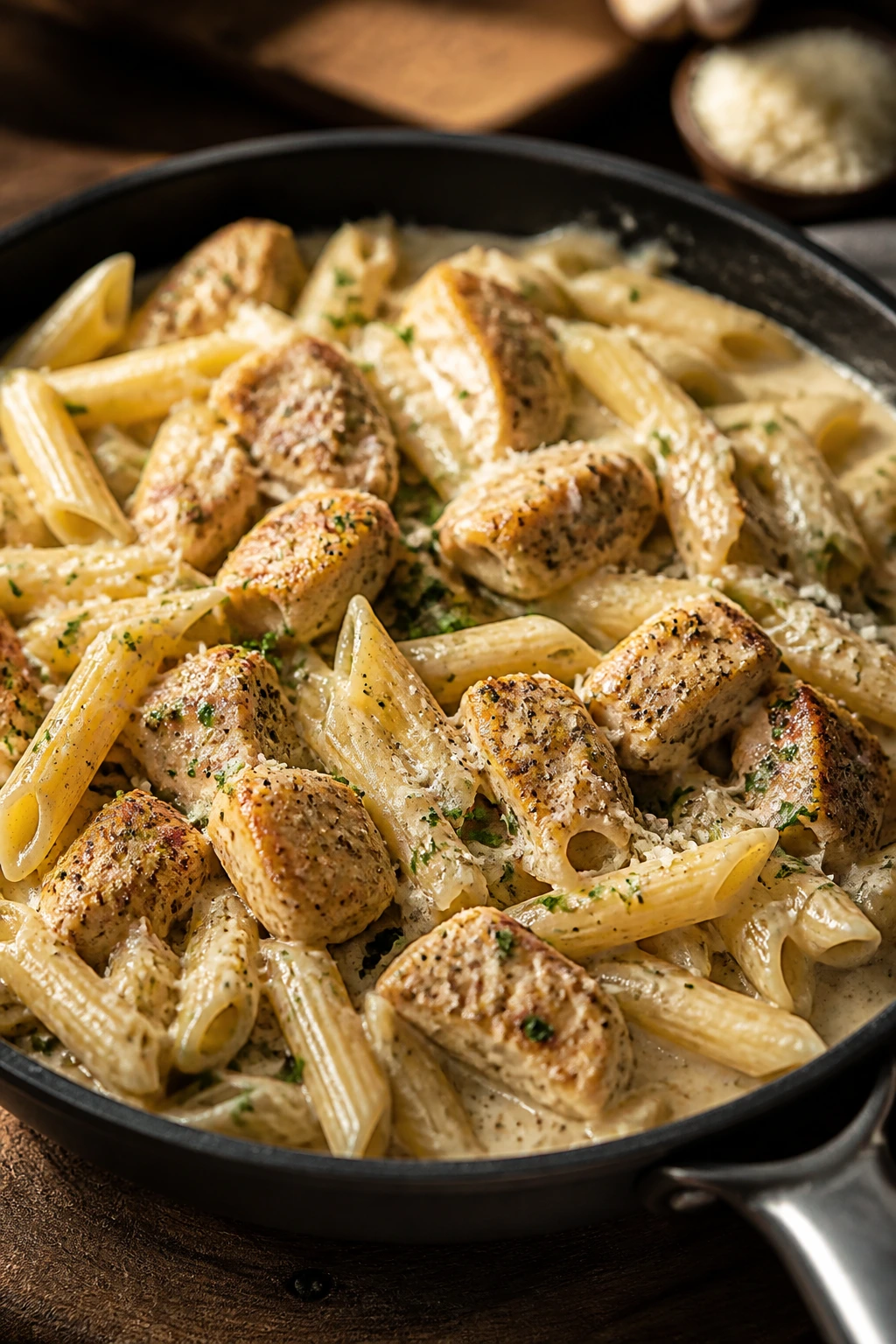
Recipe Name: Creamy Garlic Parmesan Chicken and Penne Skillet Dinner
Description: Tender chicken, penne pasta, and a glossy garlic Parmesan cream sauce come together in one skillet for a rich, comforting dinner with just enough brightness from lemon and parsley. It’s hearty, flexible, and built for nights when you want real food without extra pans.
Prep Time: 15 minutes
Cook Time: 30 minutes
Total Time: 45 minutes
Course: Dinner, Main Course
Cuisine: American
Servings: 4 to 6
Calories: About 620 kcal per serving
Ingredients
For the Chicken
- 1 1/2 pounds boneless, skinless chicken breasts, cut into 1-inch pieces
- 1 teaspoon kosher salt
- 1/2 teaspoon black pepper
- 1 teaspoon Italian seasoning
- 1/2 teaspoon garlic powder
For the Skillet and Pasta
- 2 tablespoons olive oil
- 2 tablespoons unsalted butter
- 1 small yellow onion, finely diced
- 5 cloves garlic, minced
- 2 tablespoons all-purpose flour
- 3 cups low-sodium chicken broth, divided
- 1 cup water
- 12 ounces penne pasta
- 1 cup heavy cream
- 1 cup finely grated Parmesan cheese, plus more for serving
- 2 cups baby spinach, packed
- 1 tablespoon lemon juice
- 1/4 teaspoon crushed red pepper flakes, optional
- 2 tablespoons chopped fresh parsley, for serving
Instructions
-
Pat the chicken dry, then season it with the salt, pepper, Italian seasoning, and garlic powder.
-
Heat the olive oil and butter in a 12-inch deep skillet over medium-high heat. Sear the chicken for 3 to 4 minutes per side, until browned but not fully cooked. Transfer to a plate.
-
Reduce the heat to medium and cook the onion in the same skillet for 3 to 4 minutes, until soft. Add the garlic and cook for 30 seconds.
-
Stir in the flour and cook for 1 minute. Slowly add 2 1/2 cups of the broth and the water, scraping up the browned bits.
-
Stir in the penne and the remaining 1/2 cup broth. Bring to a simmer, cover, and cook for 10 to 12 minutes, stirring every few minutes, until the pasta is almost al dente. Add a splash of hot water if the skillet gets dry.
-
Stir in the cream and Parmesan. Return the chicken and any juices to the skillet, then add the spinach and red pepper flakes, if using. Simmer for 2 to 3 minutes, until the chicken reaches 165°F / 74°C and the spinach wilts.
-
Stir in the lemon juice, taste, and adjust the seasoning. Top with parsley and extra Parmesan before serving.
Notes: Use freshly grated Parmesan for the smoothest sauce. Keep the heat low after the cream goes in. Add a splash of broth or milk when reheating leftovers.