



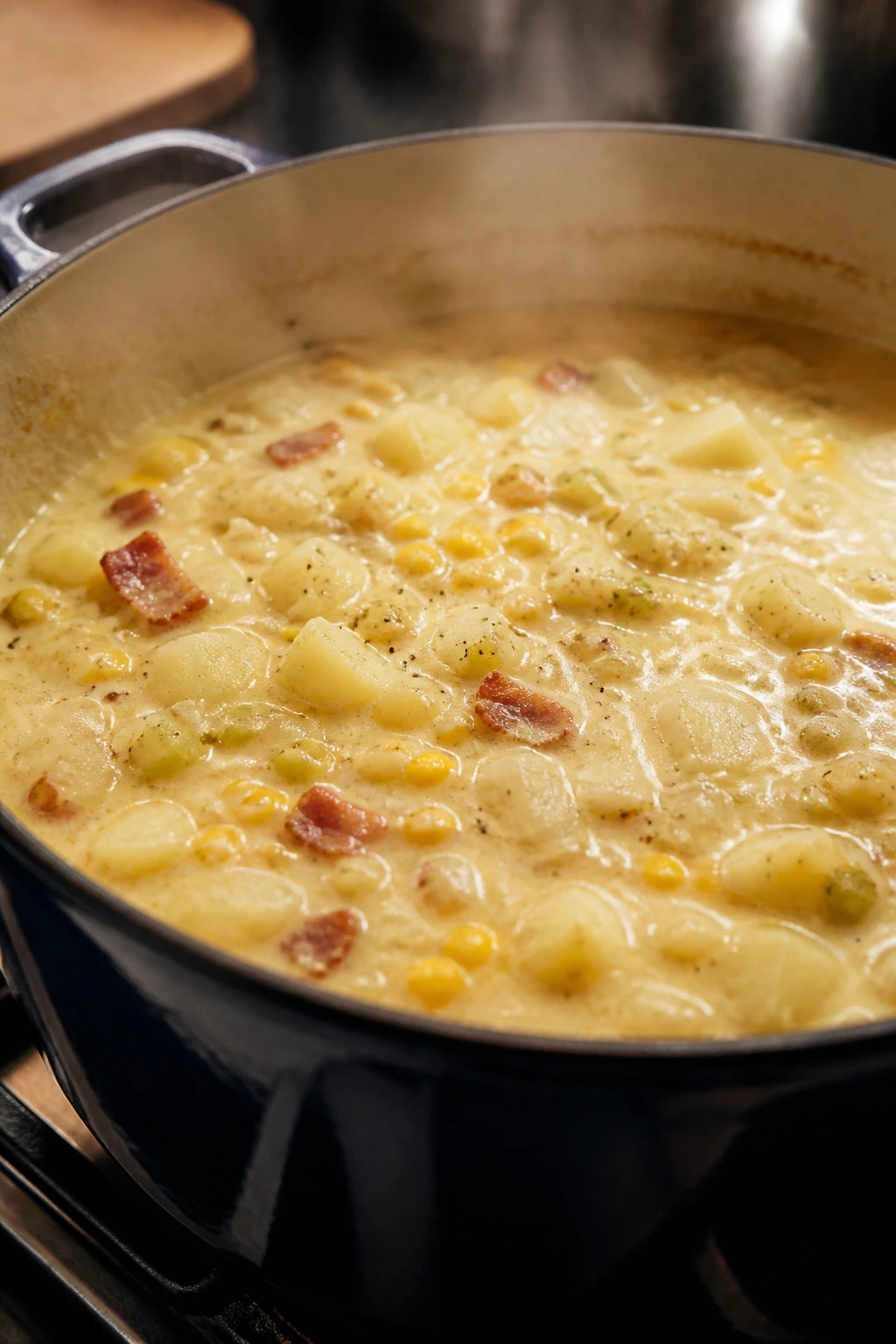
The first spoonful should do three things at once: smell like bacon and smoke, taste like sweet corn, and leave you with a clean little hit of brine from the shrimp at the end. If a chowder misses any one of those, it starts to feel flat. Too much cream and it turns heavy. Too much smoke and the seafood disappears. Too little potato body and the whole bowl slides around like soup pretending to be dinner.
That balance is why smoky shrimp corn chowder is worth making when the wind is rattling the windows and the kitchen feels like the only warm room in the house. The pot looks humble while it cooks—just chopped onion, celery, bacon, broth, corn, and potatoes—but the finished bowl has a deeper, rounder flavor than the ingredient list suggests. I like that trick in a recipe. It feels honest.
Shrimp are the part people tend to mishandle. They cook fast, then keep cooking if you blink at them too long. So the game here is to build everything else first: smoke, sweetness, cream, starch, a little peppery heat, then slide the shrimp in only at the end. Do that, and the chowder stays plush instead of chewy, thick instead of gluey, and cozy without tasting sleepy. That’s the difference between a bowl you finish and a bowl you remember.
Why This Chowder Earns Its Place on a Cold Night
- The smoke is built into the base: Bacon fat and smoked paprika give the broth a dark, savory backbone, so you do not need gimmicky shortcuts or a bottle of liquid smoke.
- The shrimp stay tender on purpose: They only need 3 to 4 minutes in the pot, which keeps them juicy instead of stiff and squeaky.
- Frozen corn pulls its weight: Frozen kernels bring sweetness and a crisp pop, even when fresh corn is out of season or tired from a long trip.
- The texture lands in the middle ground: A few mashed potato cubes thicken the chowder naturally, so it clings to the spoon without turning into paste.
- One pot does the whole job: Bacon, vegetables, broth, dairy, and shrimp all finish in the same Dutch oven, which keeps cleanup from becoming part of the weather report.
- It eats like a full meal: Between the shrimp, potatoes, corn, and cream, you get a bowl that does not need much else beyond bread and maybe a green salad with sharp dressing.
Recipe Snapshot
Yield: Serves 6 as a main course
Prep Time: 20 minutes
Cook Time: 35 minutes
Total Time: 55 minutes
Difficulty: Intermediate — the steps are simple, but the shrimp timing and the gentle simmer after the dairy goes in matter a lot.
Chill/Rest Time: None
Best Served: Hot, with crusty bread, biscuits, or saltines
What Gives This Chowder Its Coastal, Smoky Feel
Chowder is one of those dishes that can go rustic in a good way or clumsy in a bad way. The good version is thick enough to feel spoonable, but still loose enough to flow into the bowl instead of sitting there like mashed potatoes in broth. This version leans into that middle lane. It borrows the sweetness of corn chowder, the briny lift of seafood chowder, and the old, salty comfort of a bacon soup, then pulls them together with a clean finish of lemon.
I prefer this style over the flour-heavy version you sometimes see in restaurant menus. A big roux can make the chowder feel dull and leaden. Potatoes do more work here. They give body, they soften into the broth, and when you mash a few against the side of the pot, the whole thing turns creamy without tasting floury. That matters.
The smoky part should taste like a campfire seen from a distance, not a bonfire in your face. Bacon gets you there first. Smoked paprika fills in the gaps. If you want a little heat, chipotle powder behaves better than cayenne because it keeps the smoke note going instead of breaking it apart. And the shrimp? They bring the sea back in after the bacon has done its work. That contrast is the whole point.
What Goes Into the Pot
For the Chowder Base:
- 6 slices thick-cut bacon, chopped into 1/2-inch pieces
- 2 tablespoons unsalted butter
- 1 medium yellow onion, diced
- 2 celery stalks, diced
- 1 medium red bell pepper, diced
- 3 cloves garlic, minced
- 3 tablespoons all-purpose flour
- 1 teaspoon smoked paprika
- 1/2 teaspoon dried thyme
- 1/4 teaspoon chipotle powder or cayenne, optional
- 4 cups low-sodium chicken broth or seafood stock
- 1 1/2 pounds Yukon Gold potatoes, peeled and cut into 1/2-inch cubes
- 4 cups frozen or fresh corn kernels
- 2 cups whole milk
- 1 cup heavy cream
- 1 1/2 teaspoons kosher salt, plus more to taste
- 1/2 teaspoon black pepper
- 1 bay leaf
For the Finish:
- 1 1/2 pounds large shrimp, peeled and deveined, tails removed
- 1 tablespoon fresh lemon juice
- 2 tablespoons chopped fresh parsley or chives
- Reserved bacon, for topping
How the Ingredients Build the Chowder
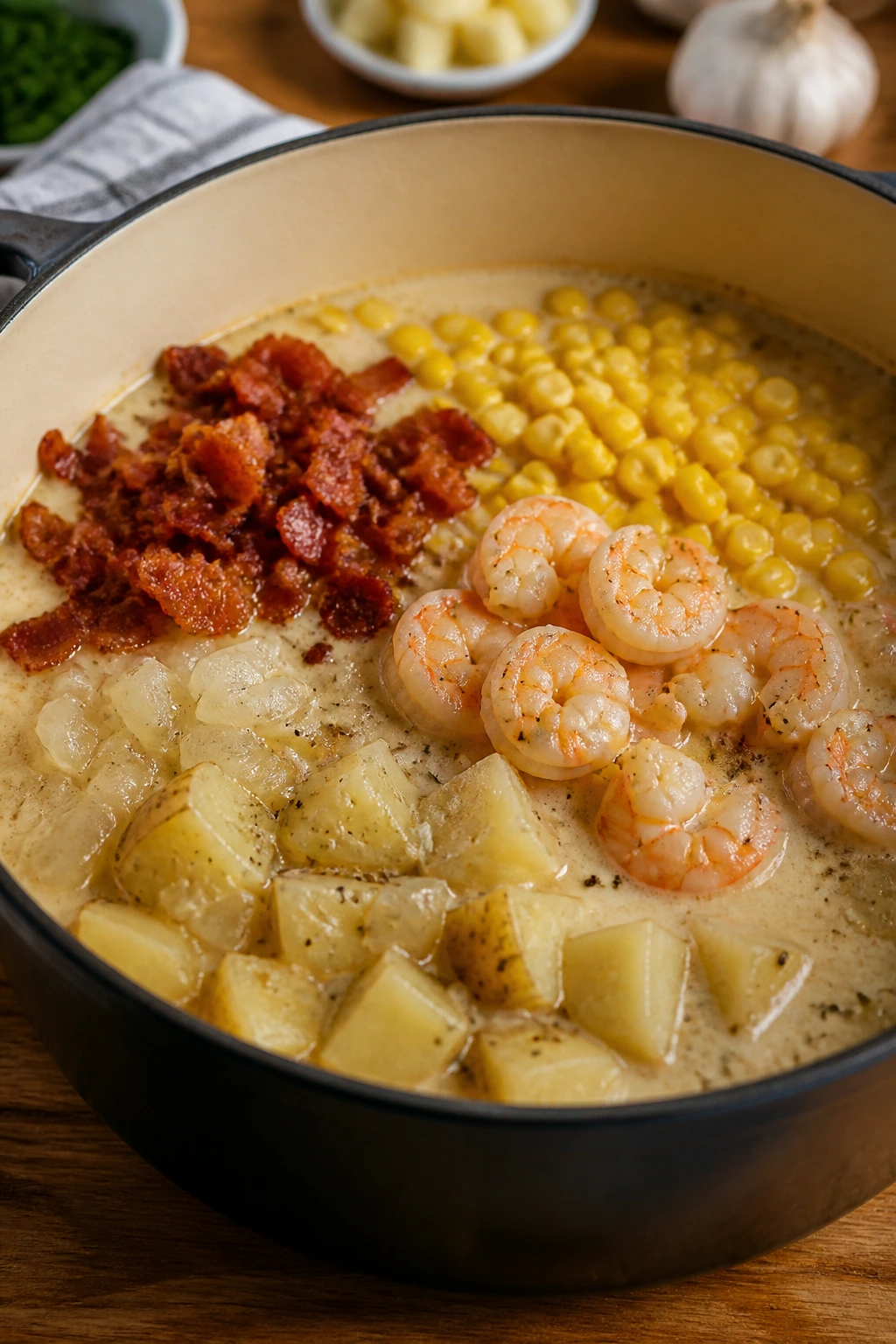
Bacon and Butter
What to use: 6 slices thick-cut bacon and 2 tablespoons unsalted butter.
Preparation: Chop the bacon before it hits the pot so it renders evenly and gives you small, crisp bits instead of long chewy strips. Keep the butter nearby; you may need it if the bacon renders lean.
Substitutions: Pancetta gives a cleaner, saltier smoke note, while smoked turkey bacon works if you want less fat. If you skip bacon altogether, use the butter plus 1 extra teaspoon smoked paprika and a pinch of smoked salt if you have it.
Tips: Render the bacon over medium heat, not high heat. High heat burns the fat before the meat crisps, and that bitter note lingers in the whole chowder.
Shrimp: The Last Thing In
What to use: 1 1/2 pounds large shrimp, peeled and deveined, tails removed for easier eating.
Preparation: Pat the shrimp dry with paper towels before they go into the pot. Dry shrimp cook more cleanly, and you avoid dragging extra water into the chowder at the finish.
Substitutions: Medium shrimp work if that’s what you can get, but keep the cook time even shorter. Lump crab is a good substitute for part of the shrimp if you want a sweeter, softer seafood note.
Tips: Buy shrimp that smell clean and briny, not fishy. If they need more than 4 minutes in the chowder, the pot is too cool, or the shrimp are too large for the timing you’re using.
Potatoes and Corn
What to use: 1 1/2 pounds Yukon Gold potatoes and 4 cups corn kernels, frozen or fresh.
Preparation: Cut the potatoes into 1/2-inch cubes so they cook at the same pace as the vegetables and give you a uniform, spoon-friendly texture. If using fresh corn, cut the kernels off the cob and scrape the cob to collect the milky pulp.
Substitutions: Red potatoes hold their shape a little more, while Russets break down faster and make the chowder thicker. Frozen corn is a smart default; canned corn can work in a pinch if you drain it well.
Tips: Yukon Gold potatoes are the sweet spot here because they get creamy without dissolving into grit. Corn adds sweetness and texture, but it also helps balance the salt from the bacon.
Dairy and Broth
What to use: 4 cups low-sodium chicken broth or seafood stock, 2 cups whole milk, and 1 cup heavy cream.
Preparation: Measure the milk and cream before you start simmering so you can add them without hunting around with a boiling pot on the stove. Keep them cold until needed; there’s no reason to warm them separately.
Substitutions: Half-and-half can replace the milk and cream if you want a lighter bowl. Seafood stock gives the chowder a deeper ocean flavor, while chicken broth tastes cleaner and a little less briny.
Tips: Use low-sodium broth so the bacon and seasoning can set the salt level. If the broth tastes flat, it usually needs salt, not more cream.
Seasonings and Finish
What to use: 3 tablespoons all-purpose flour, 1 teaspoon smoked paprika, 1/2 teaspoon dried thyme, 1/4 teaspoon chipotle powder or cayenne if you want heat, 1 bay leaf, 1 tablespoon lemon juice, 2 tablespoons chopped parsley or chives, plus kosher salt and black pepper.
Preparation: Mix the flour and spices into the vegetables after they soften, so the raw flour cooks out and the paprika blooms in the fat. Strip the thyme leaves if you’re using fresh thyme; dry thyme can go straight in.
Substitutions: Flour can be replaced with 1 1/2 tablespoons cornstarch mixed with cold milk if you need a gluten-free thickener. Lime juice can replace lemon in a tighter kitchen, though lemon tastes cleaner here.
Tips: The lemon juice belongs at the end, not at the beginning. Acid brightens dairy, bacon, and shrimp all at once, and it keeps the final spoonful from feeling heavy.
The Tools That Make the Job Easier
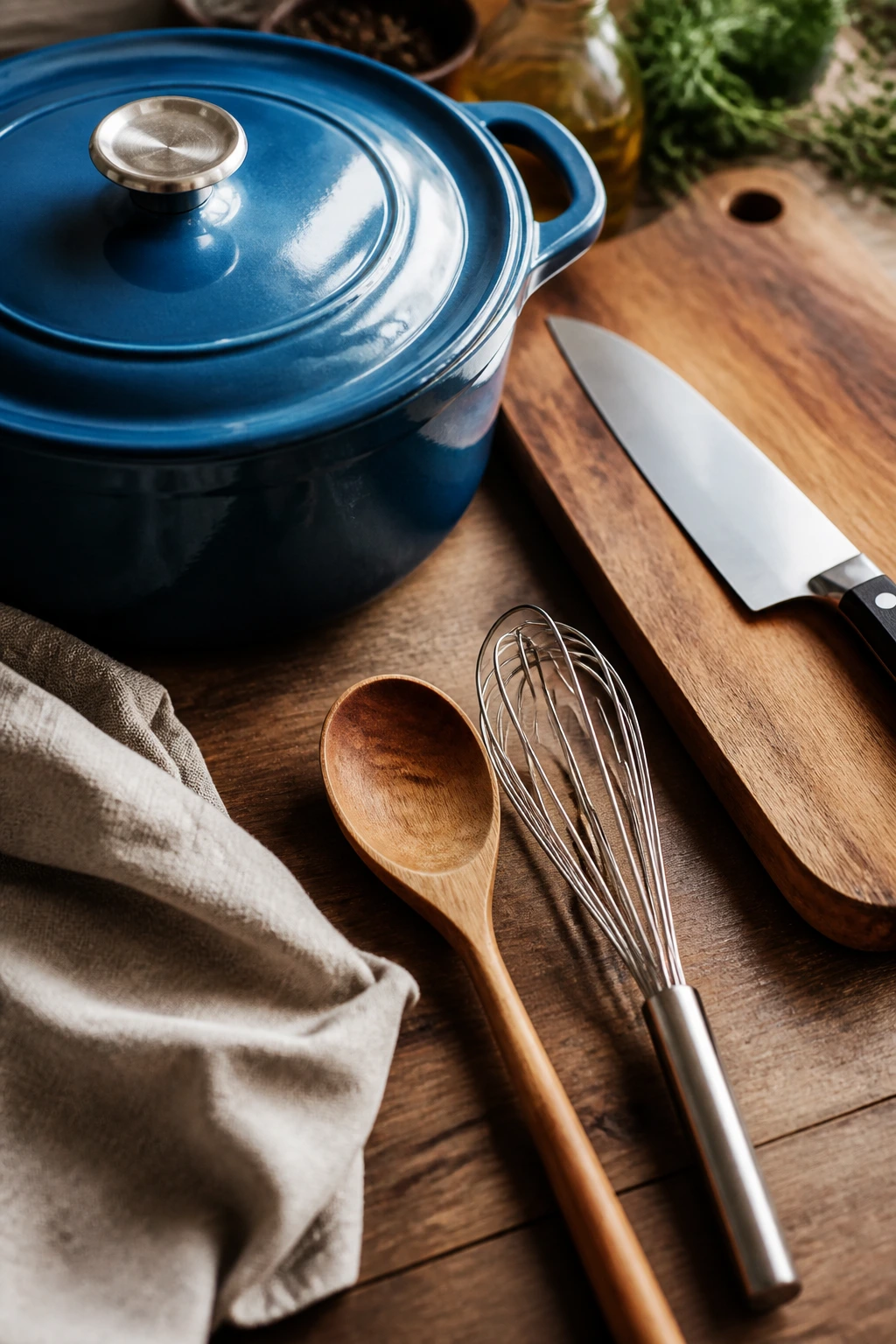
- 5- to 6-quart Dutch oven or heavy soup pot — A thick pot keeps the base from scorching when the dairy goes in.
- Sharp chef’s knife — Clean, even dice means the potatoes and vegetables cook at the same pace.
- Cutting board — A roomy board matters more than people think when you’re chopping bacon, onion, celery, and potatoes back to back.
- Wooden spoon or heatproof spatula — Use it to scrape up the browned bits from the bacon and stir without tearing the potatoes apart.
- Whisk — Helpful when you add the broth so the flour doesn’t clump.
- Potato masher or immersion blender, optional — A potato masher gives the chowder body without turning it into purée.
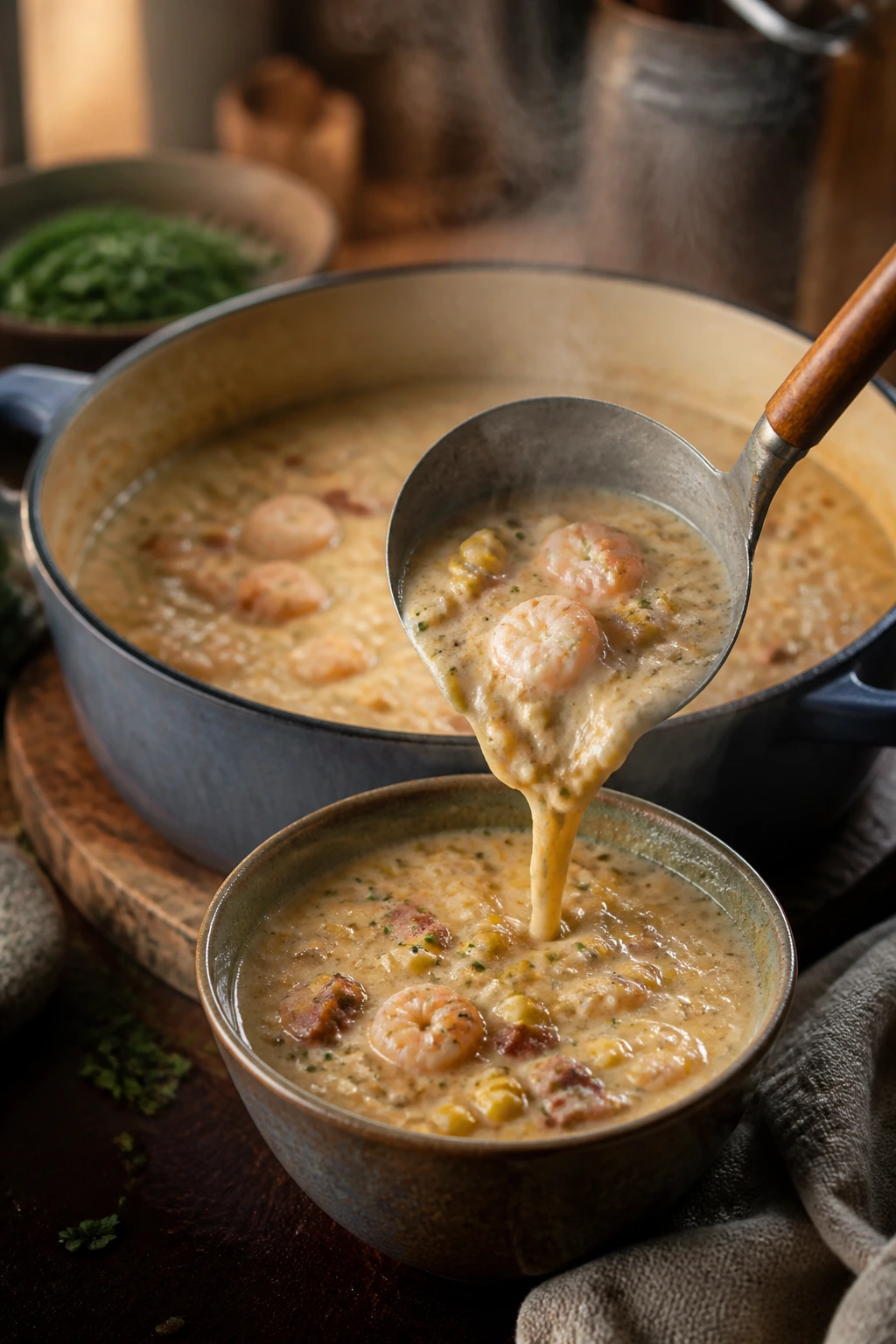
- Ladle — The easiest way to serve a thick soup without making a mess of the stove.
Stir, Simmer, and Finish: The Full Method
Build the Smoky Base
-
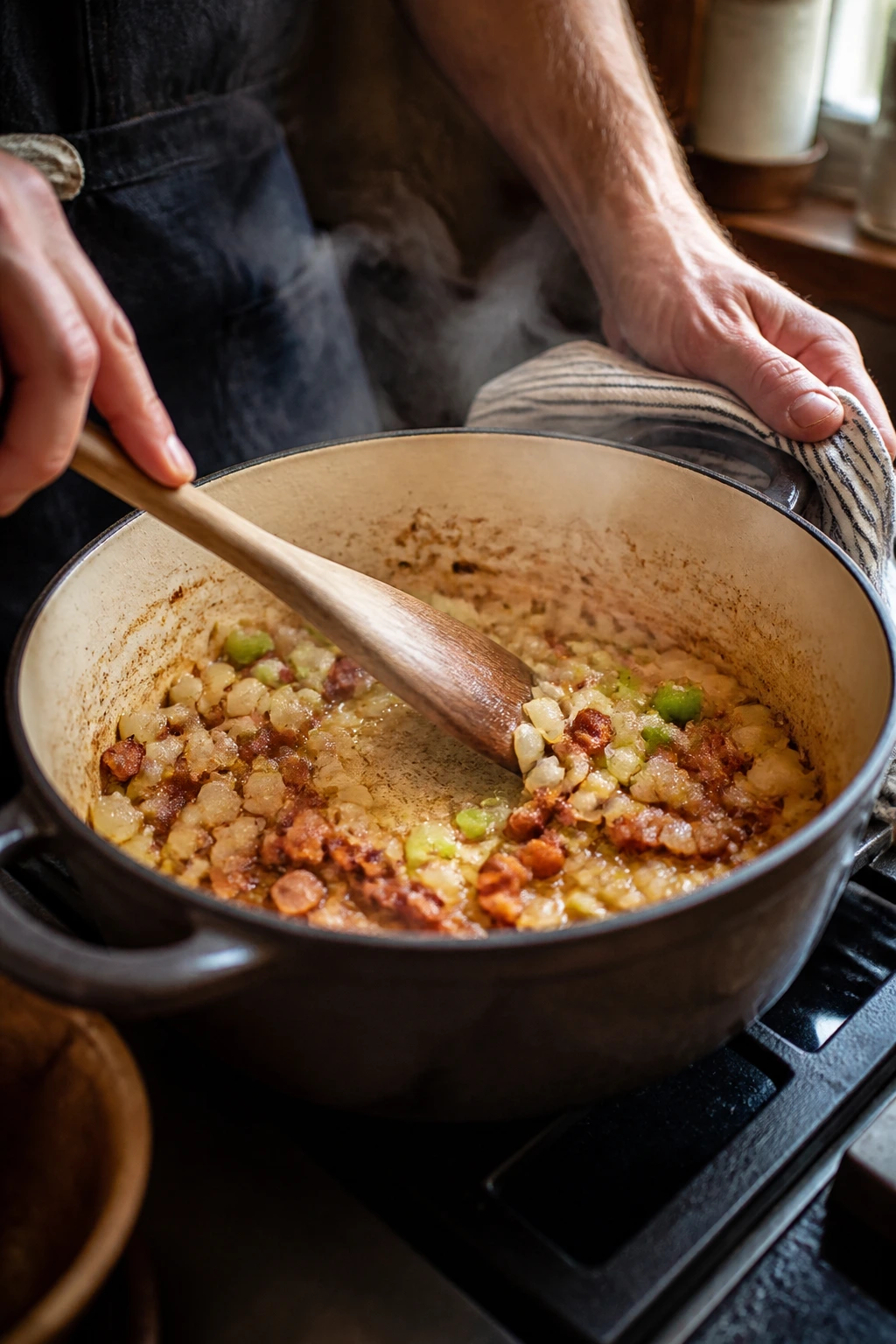
Cook the bacon: Set a 5- to 6-quart Dutch oven over medium heat. Add the chopped bacon and cook for 6 to 8 minutes, stirring often, until the pieces are crisp and the fat has rendered. Use a slotted spoon to transfer the bacon to a paper towel-lined plate, leaving about 2 tablespoons of fat in the pot. If there is more than that, pour some off; if there is less, add the butter.
-
Soften the vegetables: Add the butter, onion, celery, red bell pepper, and 1 teaspoon kosher salt. Cook for 5 to 6 minutes, stirring now and then, until the onion is translucent and the peppers are soft at the edges. Add the garlic and cook for 30 seconds more, just until fragrant.
-
Bloom the flour and spices: Sprinkle the flour, smoked paprika, thyme, and chipotle powder or cayenne over the vegetables. Stir constantly for 1 minute so the flour cooks out and the spices smell warm and smoky, not dusty. Do not let the flour brown deeply; you want thickening power, not a toasted gravy flavor.
Simmer the Chowder
-
Add the broth and potatoes: Whisk in about 1 cup of the broth first, scraping the bottom of the pot to release the browned bacon bits. Pour in the remaining broth, then add the potatoes and bay leaf. Bring the pot to a gentle simmer over medium heat, then reduce the heat to medium-low and cook for 12 to 15 minutes, until the potatoes are just tender at the center when pierced with a knife.
-
Add the corn and dairy: Stir in the corn, milk, cream, black pepper, and the remaining 1/2 teaspoon salt. Keep the heat low enough that the chowder barely simmers. Cook for 5 to 7 minutes, stirring occasionally, until the liquid thickens slightly and the potatoes are fully tender. Do not boil once the dairy is in; a hard boil can make the chowder taste grainy.
-
Shape the texture: Remove the bay leaf. Use a potato masher to mash about 1 cup of the potatoes against the side of the pot, or pulse an immersion blender 2 or 3 times if you want a thicker finish. Leave plenty of corn and potato pieces intact so the chowder still has some chew.
Finish With the Shrimp
- Add the shrimp and finish: Stir in the shrimp and half of the reserved bacon. Cook for 3 to 4 minutes, stirring gently, until the shrimp are opaque, pink, and curled into a loose C-shape. Remove the pot from the heat, then stir in the lemon juice, the remaining bacon, and most of the parsley or chives. Taste and adjust with more salt, pepper, or a tiny extra squeeze of lemon if needed.
How to Serve It
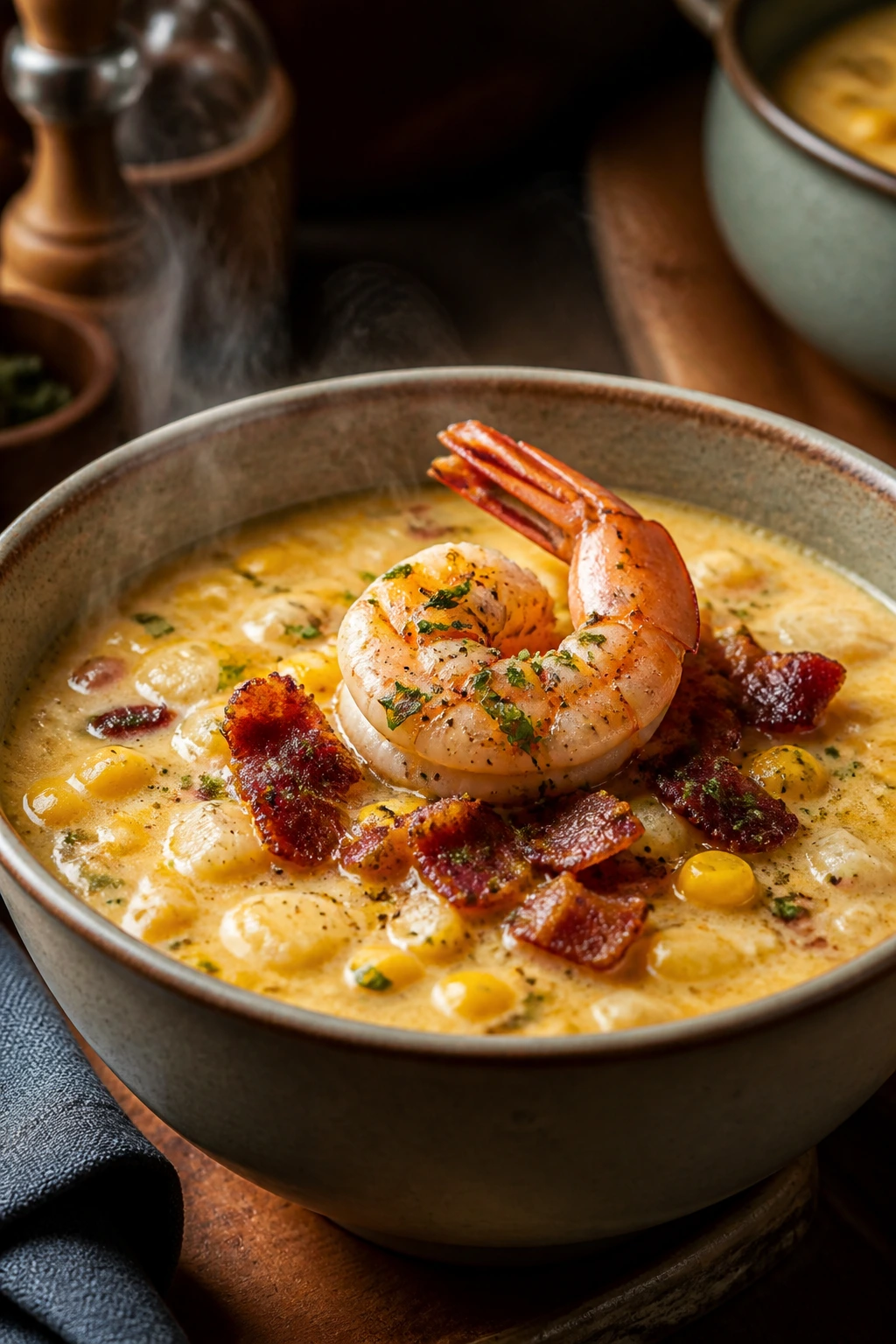
Presentation: Ladle the chowder into warm bowls so it stays hot longer, then finish with a few whole shrimp on top, the reserved bacon, and a scatter of parsley or chives. A twist of black pepper on the surface looks good, but it also wakes up the cream.
Accompaniments: Crusty sourdough, split-top biscuits, or plain saltines all work. If you want something green beside the bowl, keep it sharp: a simple salad with mustardy vinaigrette cuts through the cream better than a soft, sweet salad does.
Portions: Serve this as a main course in 1 1/2 to 2-cup portions. For a starter, 1 cup per person is enough, especially if the table also has bread. To scale up, use a larger pot and keep the shrimp addition at the very end no matter how big the batch gets.
Beverage Pairing: A dry cider fits the sweet corn and smoky bacon well. A cold lager or a lightly oaked Chardonnay also works if you want something that won’t fight the shrimp.
Small Moves That Improve the Bowl
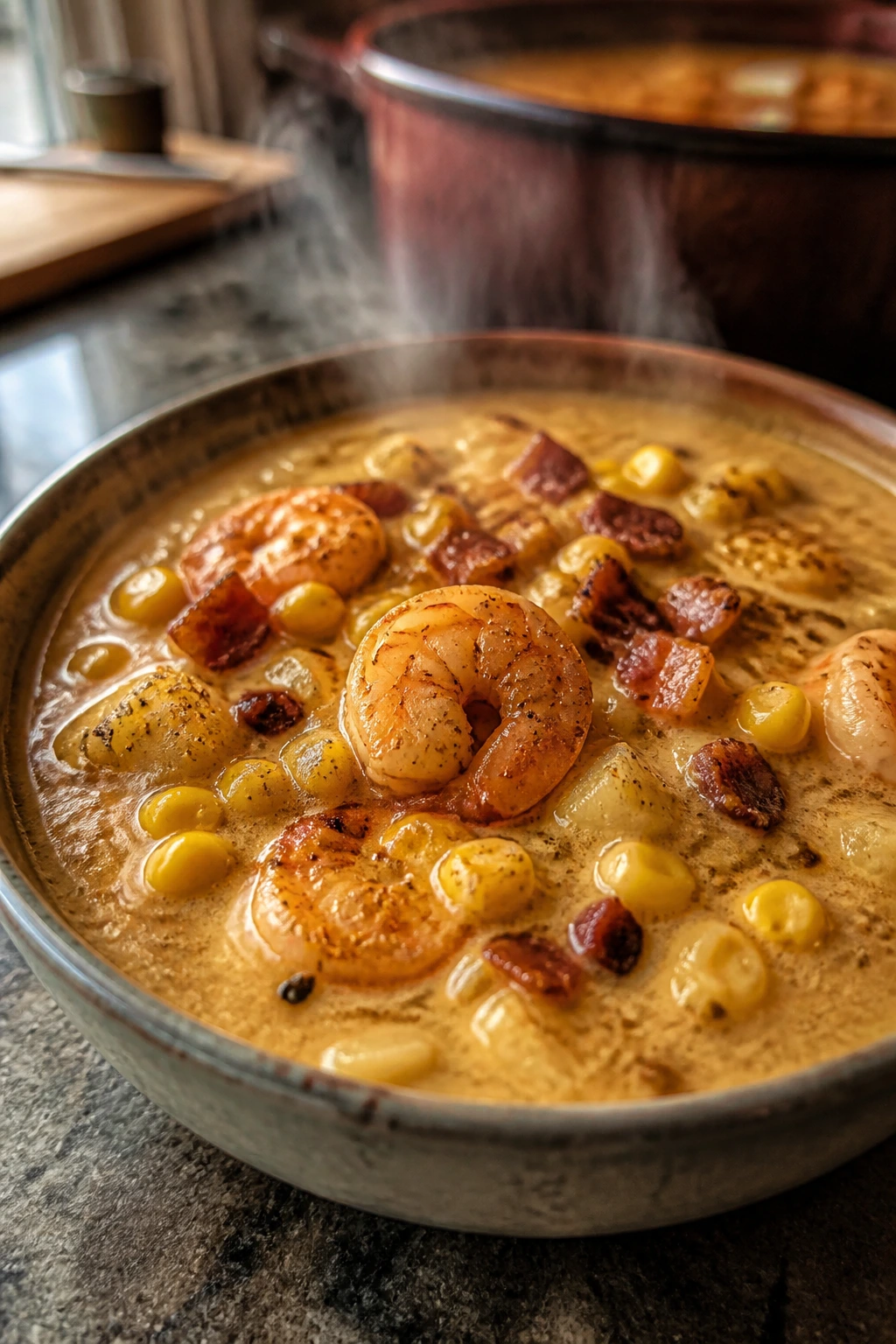
Flavor Enhancement: A teaspoon of sherry or dry white wine stirred in after the flour blooms can deepen the base without making the chowder taste boozy. If you use wine, let it cook for 30 seconds before adding broth so the sharp edge disappears.
Texture Trick: Mash only part of the potatoes. That one move gives you body, gives the chowder a creamy look, and keeps the corn kernels from floating in thin broth like they’re lost.
Time-Saver: Frozen diced onion and celery are fine when the grocery run goes sideways. I would still chop the bell pepper fresh if you can, because the texture of frozen pepper tends to go soft in a hurry.
Make-It-Yours: A small handful of chopped chives on top sharpens the finish, while a few drops of hot sauce at the table let each person control the heat. For a richer bowl, add an extra splash of cream right before serving rather than simmering more cream into the pot.
Mistakes That Can Ruin the Texture
-
Adding the shrimp too early: The symptom is obvious. The shrimp turn rubbery, curl into tight little commas, and taste like they fought the pot and lost. Fix it by waiting until the potatoes are tender and the heat is low, then cooking the shrimp only 3 to 4 minutes.
-
Boiling after the cream goes in: If the chowder breaks, it can look slightly grainy or oily around the edges. Keep the heat at a gentle simmer once the milk and cream are added, and stir often enough to keep the bottom from catching.
-
Under-seasoning the base: Bacon does not season the whole pot by magic. If the chowder tastes sweet but dull, it probably needs salt and lemon, not more cream. Taste after the shrimp are cooked, then adjust in small pinches.
-
Skipping the flour bloom: Raw flour tastes pasty and can make the chowder chalky. Cook the flour with the vegetables for a full minute so it loses that raw edge before the broth goes in.
-
Over-blending the potatoes: A smooth puree can be nice in other soups, but it turns chowder into glue. Mash a few potatoes or pulse briefly with an immersion blender, then stop while there are still plenty of chunks.
-
Using shrimp that are already overcooked before they enter the pot: Some pre-cooked shrimp are fine, but they need almost no time in the chowder. If you simmer them for several minutes, they go from tender to tough fast. Add pre-cooked shrimp only at the end, just long enough to warm through.
Variations Worth Making
Smoke-Free Coastal Bowl
Skip the bacon and start with 3 tablespoons olive oil and an extra 1 teaspoon smoked paprika. The chowder will taste cleaner and a little lighter, but you still get a smoky edge if you also add a pinch of smoked salt at the end.
Chipotle Heat Version
Add 1 minced jalapeño with the onion and use the full 1/4 teaspoon chipotle powder. That gives the chowder a warm back-end heat that lingers under the cream instead of punching through it.
Crab-and-Shrimp Mix
Replace 3/4 pound of the shrimp with lump crab meat, folded in during the last minute just to warm through. Crab gives the bowl a sweeter, softer seafood note, and it makes the chowder feel a little more special without changing the method.
Dairy-Lighter Chowder
Use 3 cups whole milk and 1/2 cup heavy cream instead of the full dairy load. The soup still tastes rich because the potatoes and bacon carry plenty of body; you just lose a bit of the velvet finish.
Green Pepper and Cornbread Night
Swap the red bell pepper for a diced poblano and serve the chowder with warm cornbread instead of biscuits. The poblano stays earthier and less sweet, which works well if you like a quieter, more savory bowl.
Storing, Reheating, and Making It Ahead
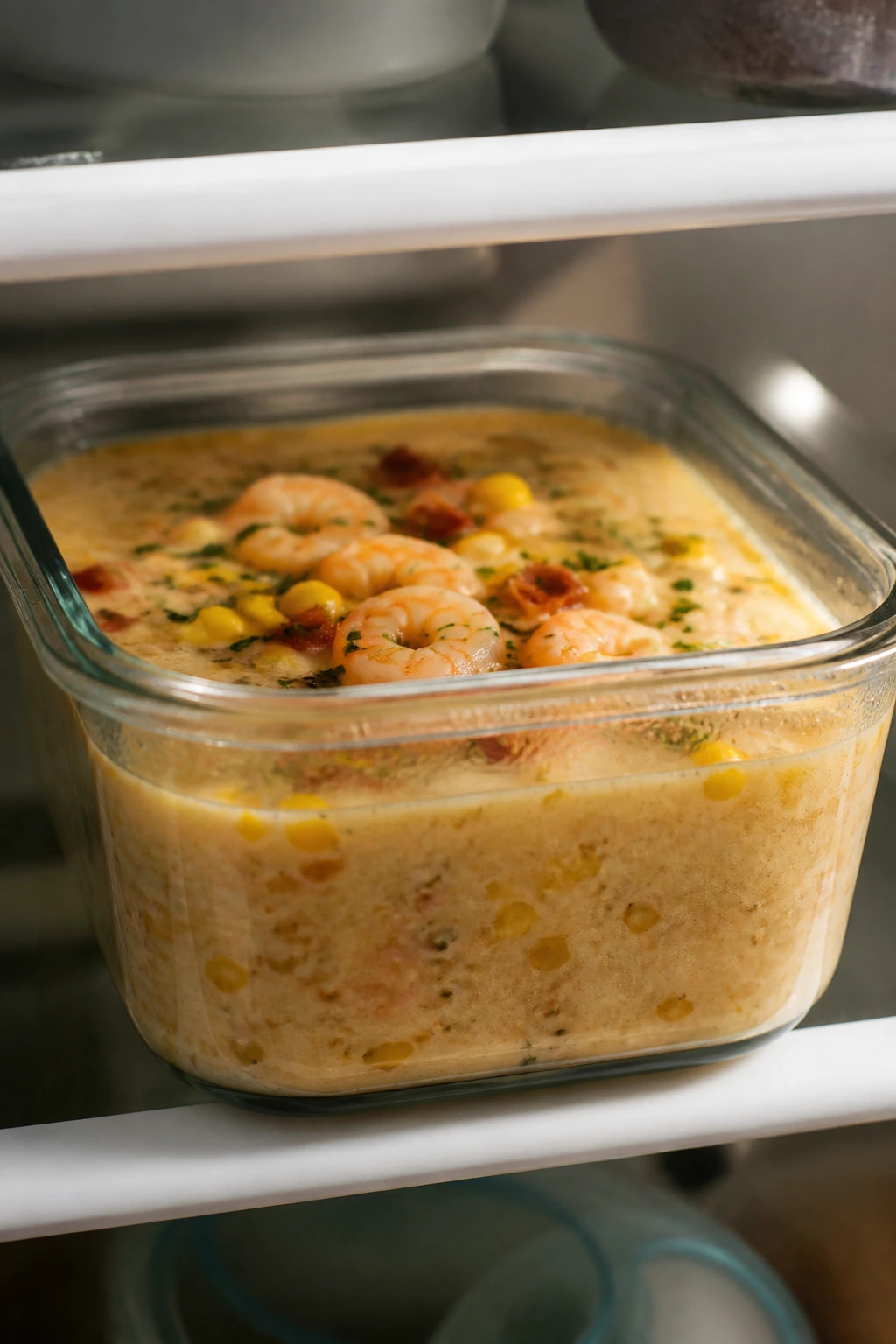
Chowder with shrimp is best the day it is made, but leftovers can still be useful if you handle them with a little care. Let the pot cool for no more than 2 hours at room temperature, then transfer it to airtight containers and refrigerate for up to 3 days. Seafood and dairy do not appreciate dawdling on the counter, and the shrimp texture gets more fragile the longer it sits.
For the freezer, the smartest move is to freeze the chowder base before the shrimp go in. Cook the soup through the potato step, then cool it, portion it, and freeze it for up to 2 months. When you want to serve it, thaw it in the fridge overnight, reheat it gently on the stove, add the dairy if you held some back, then cook fresh shrimp in the hot chowder for the final 3 to 4 minutes.
If you freeze the finished chowder with shrimp already in it, it will still be safe and usable, but the shrimp can get a little firm and the dairy may separate a touch when reheated. That is not a disaster. Stir it gently over low heat, add a splash of broth or milk if it looks thick, and stop as soon as it is hot.
The best reheating method is stovetop, low and slow, in a covered pot with a splash of broth or milk to loosen it. Stir every minute or so and keep the heat soft; a rolling boil is the enemy here. The microwave works in short bursts if you’re desperate, but use 50 percent power and stir between rounds so the shrimp do not overcook in one hot corner.
For make-ahead cooking, you can chop the vegetables and bacon a day in advance and refrigerate them separately. You can also make the full base through the potatoes, chill it, and finish with dairy and shrimp the next day. That version often tastes deeper after an overnight rest, because the smoked paprika, bacon, corn, and potatoes have time to settle into each other.
Frequently Asked Questions
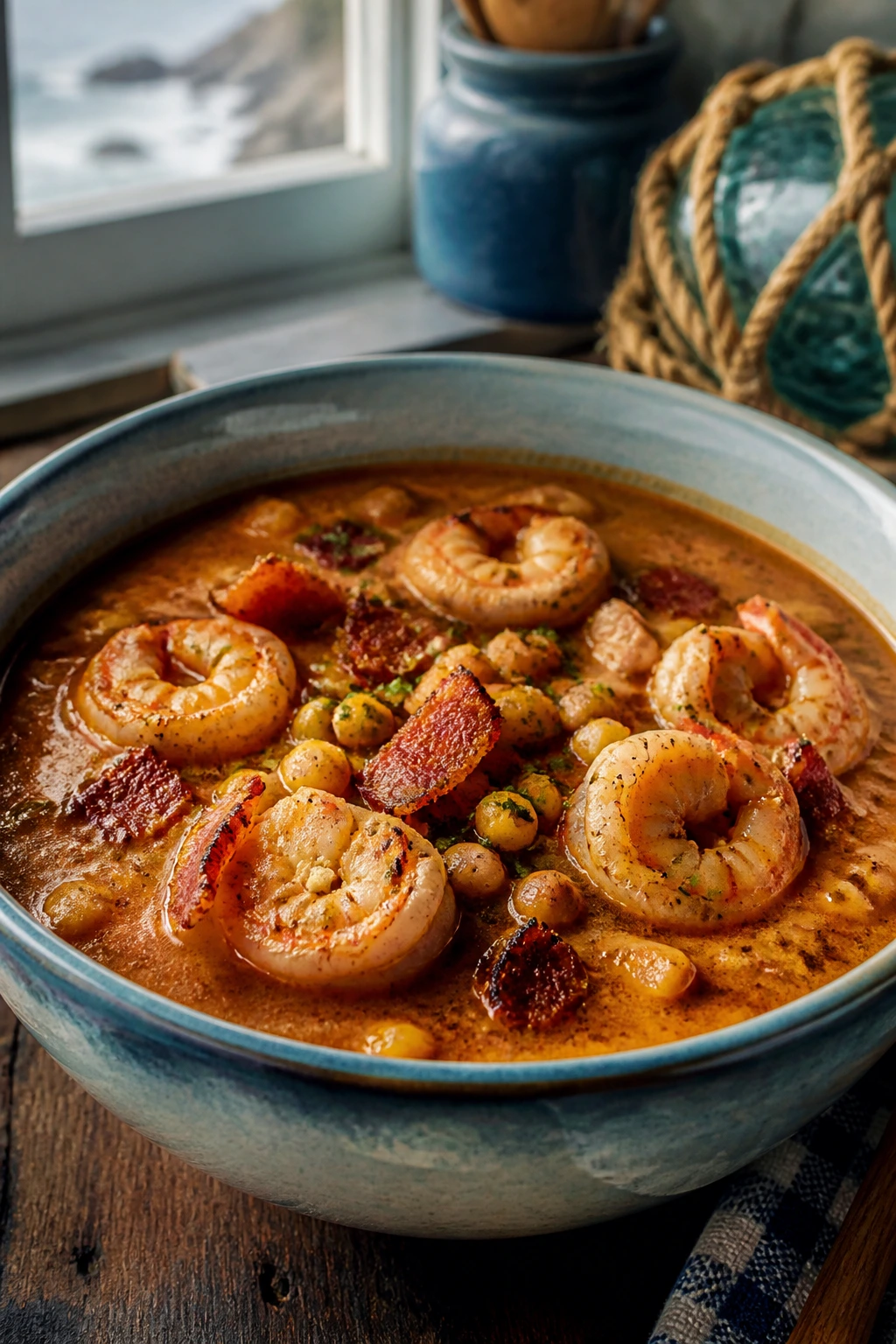
Can I use frozen shrimp for this chowder?
Yes, and I often do. Thaw them overnight in the fridge or under cold running water, then pat them dry before they go into the pot. Dry shrimp cook more evenly and do not water down the chowder.
Can I use canned corn instead of frozen or fresh?
You can, but drain it well and rinse it if it tastes salty. Frozen corn usually gives the best texture because it holds a clean pop, while canned corn leans softer and a little sweeter.
What if my chowder is too thin?
Mash more of the potatoes against the side of the pot and let it simmer uncovered for 3 to 5 minutes. If you still want more thickness, stir 1 tablespoon cornstarch into 2 tablespoons cold milk, then add it to the pot and simmer for 1 minute.
Can I make this without bacon?
Yes. Use olive oil or butter, then increase the smoked paprika and add a pinch of smoked salt if you have it. The bowl will taste cleaner and less salty, which some people actually prefer with shrimp.
How do I keep the shrimp from turning rubbery?
Add them at the very end, when the chowder is already hot and the potatoes are tender. They only need 3 to 4 minutes, and the residual heat in the pot will keep cooking them for a minute after you turn the stove off.
Can I make the chowder ahead of time?
The base can be made a day or two ahead, and that is honestly the better move if you’re serving it for dinner. Just stop before the shrimp go in, chill the base, then reheat it gently and finish with the shrimp at the last minute.
Is seafood stock worth buying for this recipe?
If you can find a good one, yes. Seafood stock gives the chowder a deeper shellfish note that makes the shrimp taste more present. Chicken broth still works fine, though, and it usually tastes cleaner if you want the corn and bacon to stay in the front.
Can I use half-and-half instead of milk and cream?
Yes, half-and-half is a clean swap. The chowder will be a little lighter and less lush, but the potatoes still give enough body that you will not lose the bowl’s texture.
A Bowl Worth Returning To
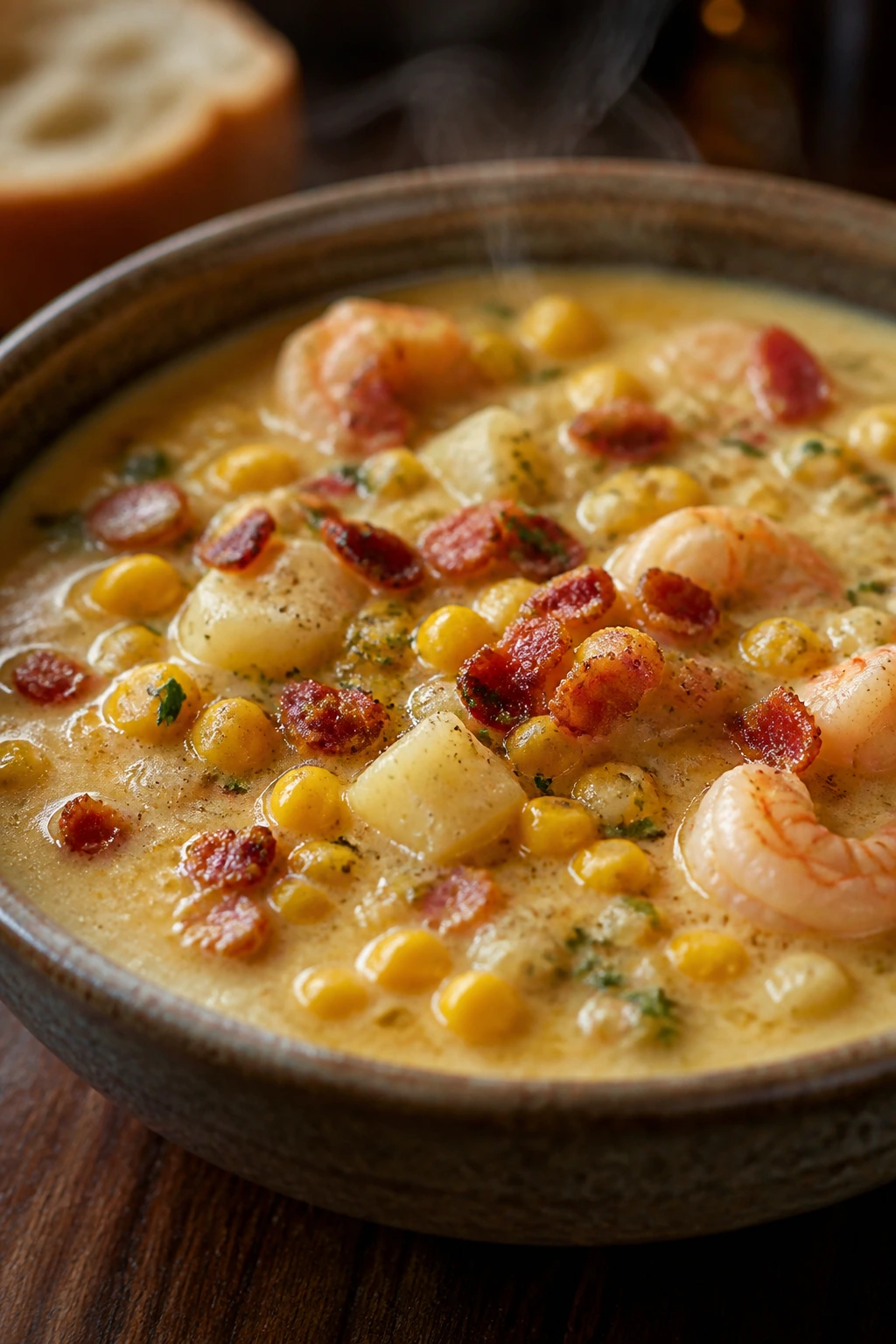
Some soups are there to fill space. This one actually earns the bowl. The bacon lays down a smoky base, the corn brings sweetness, the potatoes give the chowder its body, and the shrimp arrive at the last second with that soft snap that makes seafood worth the trouble in the first place.
Keep the heat gentle, salt in stages, and leave the shrimp alone until the finish. That’s the whole game. When you get the timing right, the pot tastes deeper than it looks, and the second bowl tends to happen without much debate. Keep a good loaf of bread nearby; this is the sort of dinner that disappears faster than the weather changes.
Smoky Shrimp Corn Chowder — Recipe Card
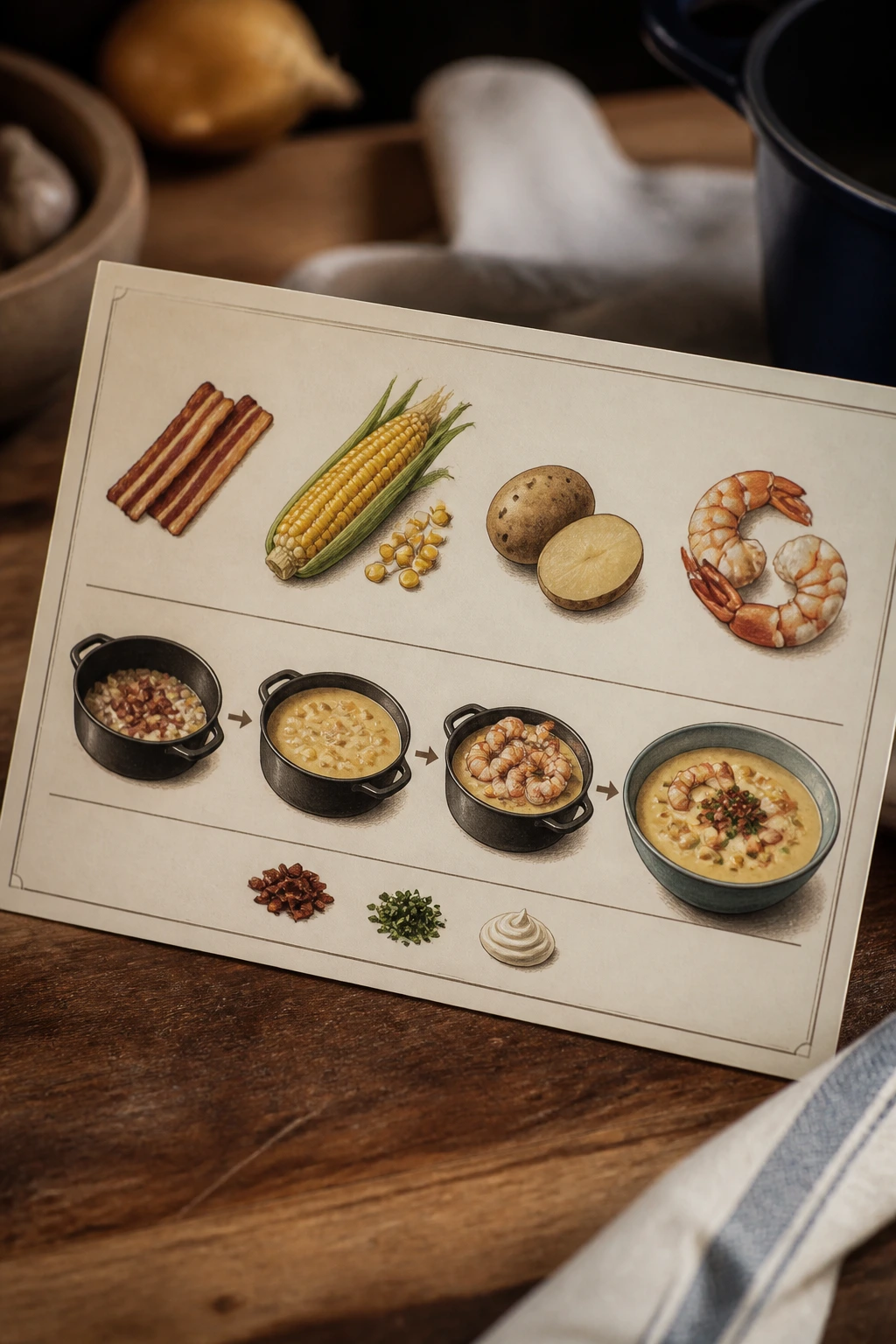
Recipe Name: Smoky Shrimp Corn Chowder
Description: A creamy, smoky chowder built with bacon, corn, Yukon Gold potatoes, and tender shrimp added at the end. It’s rich without feeling heavy, with sweet corn, briny seafood, and a bright lemon finish.
Prep Time: 20 minutes
Cook Time: 35 minutes
Total Time: 55 minutes
Course: Dinner, Main Course, Soup
Cuisine: American
Servings: 6 servings
Calories: About 450 kcal per serving
Ingredients
For the Chowder Base:
- 6 slices thick-cut bacon, chopped
- 2 tablespoons unsalted butter
- 1 medium yellow onion, diced
- 2 celery stalks, diced
- 1 medium red bell pepper, diced
- 3 cloves garlic, minced
- 3 tablespoons all-purpose flour
- 1 teaspoon smoked paprika
- 1/2 teaspoon dried thyme
- 1/4 teaspoon chipotle powder or cayenne, optional
- 4 cups low-sodium chicken broth or seafood stock
- 1 1/2 pounds Yukon Gold potatoes, peeled and cut into 1/2-inch cubes
- 4 cups corn kernels, frozen or fresh
- 2 cups whole milk
- 1 cup heavy cream
- 1 1/2 teaspoons kosher salt, plus more to taste
- 1/2 teaspoon black pepper
- 1 bay leaf
For the Finish:
- 1 1/2 pounds large shrimp, peeled and deveined, tails removed
- 1 tablespoon fresh lemon juice
- 2 tablespoons chopped fresh parsley or chives
- Reserved bacon, for topping
Instructions
-
Cook the bacon in a Dutch oven over medium heat for 6 to 8 minutes until crisp. Transfer the bacon to a paper towel-lined plate, leaving about 2 tablespoons of fat in the pot.
-
Add the butter, onion, celery, red bell pepper, and 1 teaspoon kosher salt. Cook for 5 to 6 minutes until the vegetables soften. Add the garlic and cook for 30 seconds.
-
Stir in the flour, smoked paprika, thyme, and chipotle powder or cayenne. Cook for 1 minute, stirring constantly.
-
Whisk in 1 cup of broth, scraping up browned bits, then add the remaining broth, potatoes, and bay leaf. Simmer for 12 to 15 minutes until the potatoes are nearly tender.
-
Stir in the corn, milk, cream, black pepper, and remaining 1/2 teaspoon salt. Cook over low heat for 5 to 7 minutes until lightly thickened.
-
Remove the bay leaf. Mash some of the potatoes against the side of the pot, or pulse briefly with an immersion blender if you want a thicker chowder.
-
Add the shrimp and half of the reserved bacon. Cook for 3 to 4 minutes until the shrimp are opaque and pink. Remove from the heat, then stir in the lemon juice, remaining bacon, and herbs.
Notes: Keep the heat low after the dairy goes in. For the best texture, freeze the base without shrimp and add fresh shrimp when reheating. A squeeze of lemon at the end keeps the chowder from tasting heavy.