



A hot skillet can rescue a tired evening in about the same time it takes to sort the mail. That’s why creamy pan chicken keeps ending up on my own weeknight dinner rotation: the chicken browns fast, the sauce comes together in the same pan, and the whole thing tastes like you paid more attention than you actually did. Which is a useful trick on a Tuesday.
I like this kind of dinner because it gives you layers without fuss. You get the nutty edge from seared chicken, the savory depth from browned mushrooms and garlic, then that glossy cream sauce that clings to each bite instead of pooling sadly at the bottom of the plate. A lot of creamy chicken recipes go heavy in a clumsy way. This one doesn’t have to. The broth keeps the sauce from feeling like gravy wearing a fake mustache, and a squeeze of lemon at the end keeps the whole pan awake.
There’s also a small practical pleasure here: the chicken and the sauce cook at the same pace if you keep the heat where it belongs. Not timid. Not aggressive. Just steady enough to build color, then calm enough to keep the cream smooth. That balance matters more than people think. Get it right and the skillet does most of the work for you.
Why This One Lands So Well on a Busy Night
Fast without tasting rushed: The chicken sears in one pan, the mushrooms cook in the drippings, and the sauce thickens in the same skillet, so you’re not juggling three burners and a pile of dishes.
Forgiving meat choice: Boneless chicken thighs stay juicy even if your stove runs hot, and they keep their texture better than breasts when the sauce simmers for a few minutes.
Sauce with body: A light flour dredge and a small handful of finely grated Parmesan give the sauce enough structure to coat the chicken instead of sliding off it.
Flexible dinner plate: The same pan chicken works over rice, egg noodles, mashed potatoes, or a piece of toasted bread that can drag every last spoonful of sauce from the skillet.
Easy to tune up: A little lemon, a pinch of red pepper, or extra spinach can change the whole mood of the dish without sending you back to the cutting board.
The Chicken Cut That Makes This Dish Forgiving
Boneless, skinless thighs are my default here. They brown beautifully, they don’t dry out if you leave them in the pan an extra minute, and they bring a little more flavor than lean breast meat. That extra fat matters in a cream sauce. It gives the pan drippings something to work with.
Breasts still work. They just ask for a steadier hand. If you use them, split them lengthwise or pound them to an even 1/2-inch thickness so the thicker end doesn’t stay stubbornly pale while the thinner end dries out. Uneven chicken is where weeknight dinners start to go sideways.
Thighs: The Easy Route
Thighs are the better choice if you want a dinner that keeps its texture after a short simmer. They also tolerate reheating better, which is not a small thing when you know lunch tomorrow is coming for leftovers.
Breasts: Fine, But Watch the Clock
Breast meat works best when it is pounded to even thickness and pulled from the heat the moment it reaches 165°F in the thickest part. Don’t guess. A quick thermometer check saves you from serving chicken that looks fine and eats like chalk.
Ingredient List and Timing You Can Trust
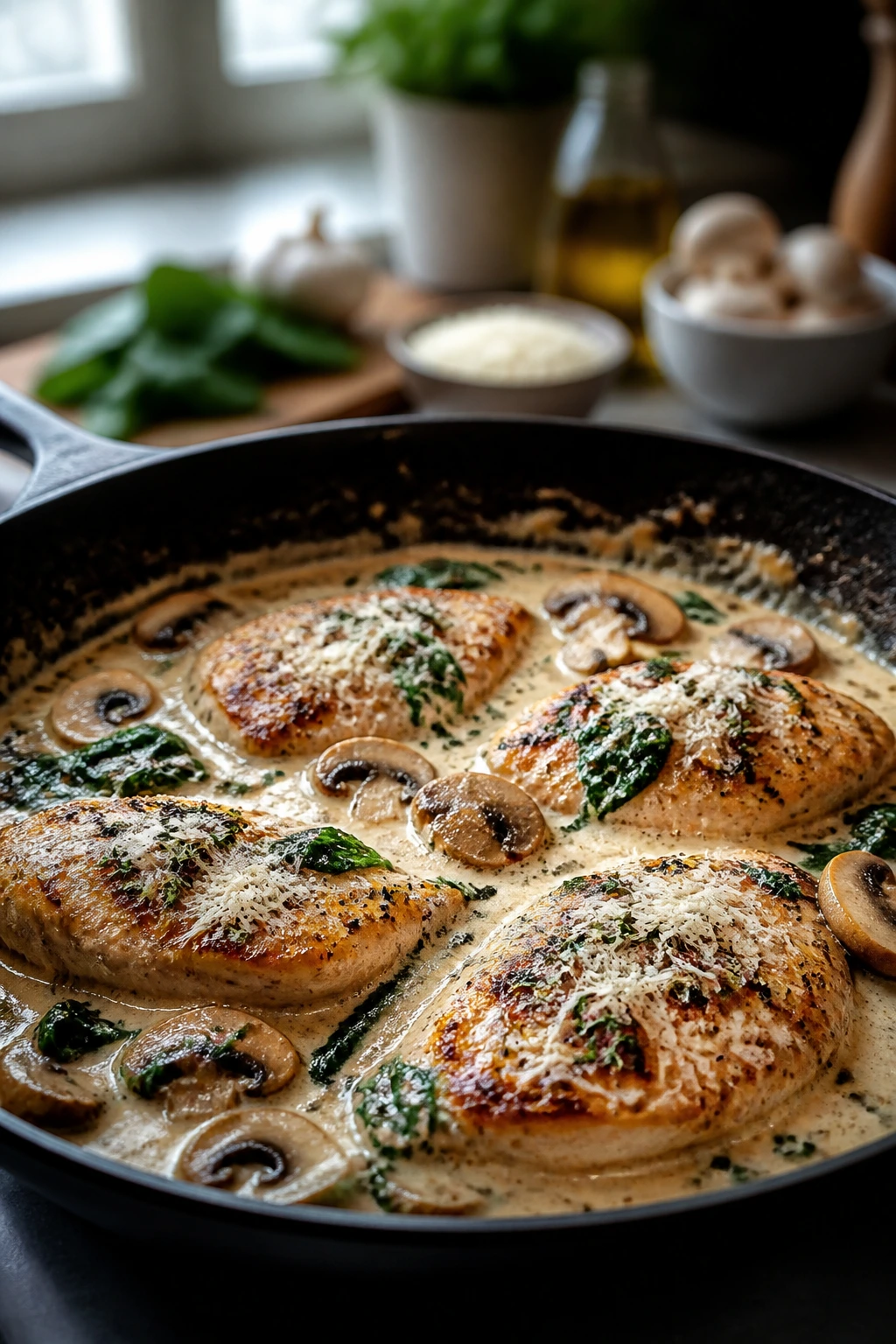
Yield: Serves 4
Prep Time: 15 minutes
Cook Time: 25 minutes
Total Time: 40 minutes
Difficulty: Beginner — the technique is straightforward, but the sauce rewards attention to heat and timing.
Best Served: Right away, while the sauce is glossy and the chicken is hot from the pan.
For the Chicken
- 1 1/2 pounds boneless, skinless chicken thighs, or 2 large chicken breasts split lengthwise and pounded to 1/2-inch thickness
- 1 teaspoon kosher salt
- 1/2 teaspoon black pepper
- 1 teaspoon garlic powder
- 1/2 teaspoon paprika
- 1/4 cup all-purpose flour
- 2 tablespoons olive oil
- 2 tablespoons unsalted butter
For the Sauce
- 8 ounces cremini mushrooms, sliced 1/4-inch thick
- 1 small shallot, finely chopped
- 3 cloves garlic, minced
- 1/2 teaspoon dried thyme
- 1 cup low-sodium chicken broth
- 3/4 cup heavy cream
- 1 teaspoon Dijon mustard
- 1/2 cup finely grated Parmesan cheese
- 2 cups baby spinach
- 1 tablespoon lemon juice
- 2 tablespoons chopped fresh parsley
Optional Finish
- Pinch of red pepper flakes
- Flaky salt for the table
Why Each Ingredient Matters in the Pan
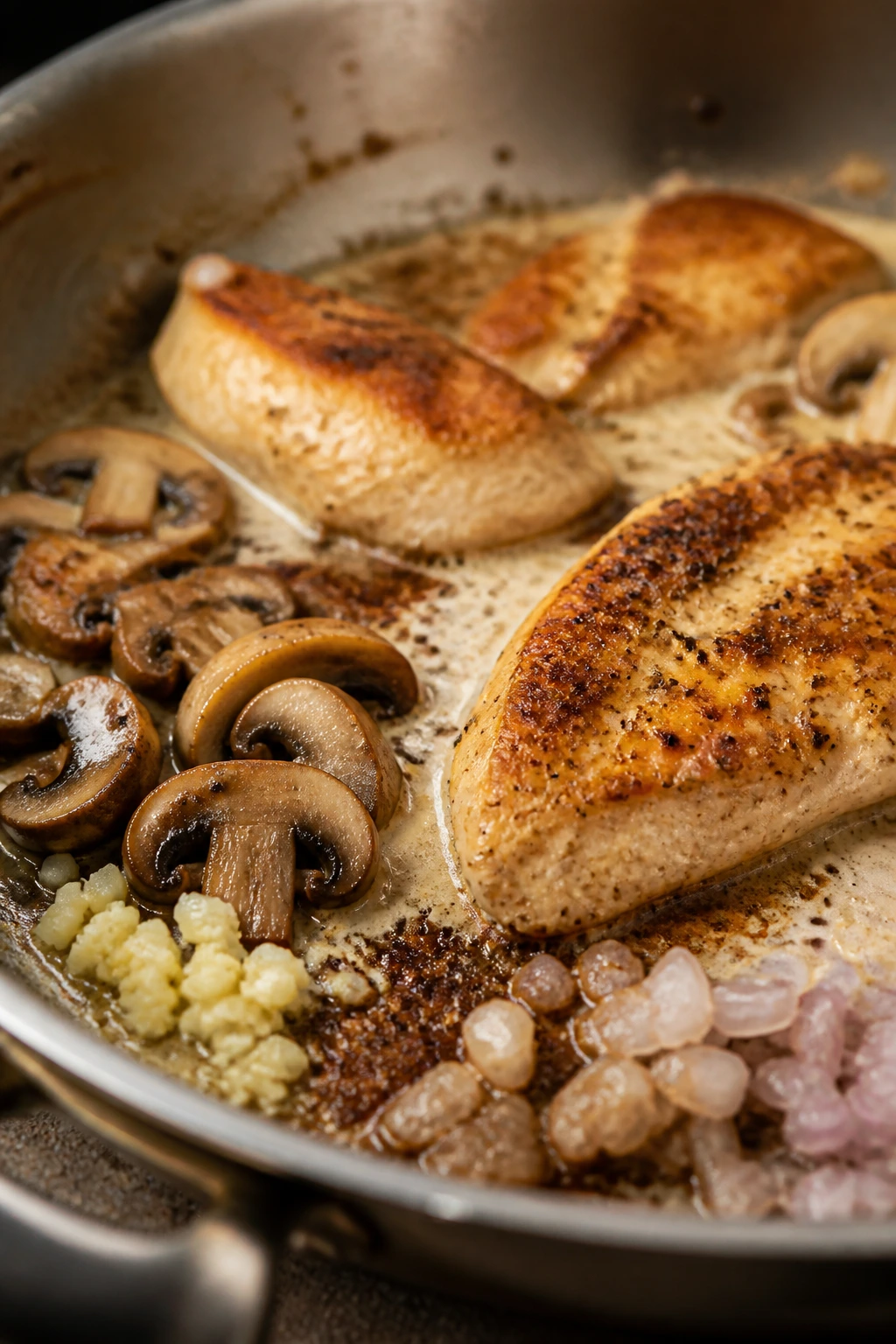
Chicken and Seasoning
What to use: 1 1/2 pounds boneless, skinless chicken thighs, or 2 large chicken breasts split and pounded even, plus kosher salt, black pepper, garlic powder, paprika, and flour.
Preparation: Pat the chicken dry before seasoning, then dredge it lightly in the seasoned flour so it picks up color without turning pasty.
Substitutions: Bone-in thighs work, but they need longer cooking; cornstarch can stand in for flour if you need gluten-free, though the crust will be a little softer.
Tips: Dry chicken browns; wet chicken steams. That one detail changes the whole dish.
Mushrooms, Shallot, and Garlic
What to use: 8 ounces cremini mushrooms, 1 small shallot, and 3 cloves garlic.
Preparation: Slice the mushrooms evenly so they cook at the same pace, and mince the garlic fine enough that it disappears into the sauce rather than burning in little sharp pieces.
Substitutions: Button mushrooms are fine, and a small yellow onion can replace the shallot if that’s what you have.
Tips: Mushrooms shrink more than people expect, so don’t be stingy. They add savory depth, not just bulk.
Creamy Sauce Base
What to use: 1 cup low-sodium chicken broth, 3/4 cup heavy cream, 1 teaspoon Dijon mustard, and 1/2 cup finely grated Parmesan.
Preparation: Measure the cream before you start the sauce, and grate the Parmesan finely so it melts into the liquid without clumping.
Substitutions: Half-and-half can replace the cream in a pinch, though the sauce will be thinner; a splash of white wine can replace part of the broth if you want a brighter finish.
Tips: Keep the heat moderate once the cream goes in. A hard boil is how a smooth sauce turns grainy.
Greens and Finishers
What to use: 2 cups baby spinach, 1 tablespoon lemon juice, 2 tablespoons chopped parsley, and a pinch of red pepper flakes if you want a little heat.
Preparation: Wash and dry the spinach if needed, chop the parsley just before using, and have the lemon ready so you can brighten the pan at the end.
Substitutions: Kale works if you cook it a few minutes longer; basil can replace parsley for a softer, sweeter finish.
Tips: The lemon is not decoration. It keeps the sauce from tasting flat once the cream and cheese settle in.
Tools That Make the Sear Easier
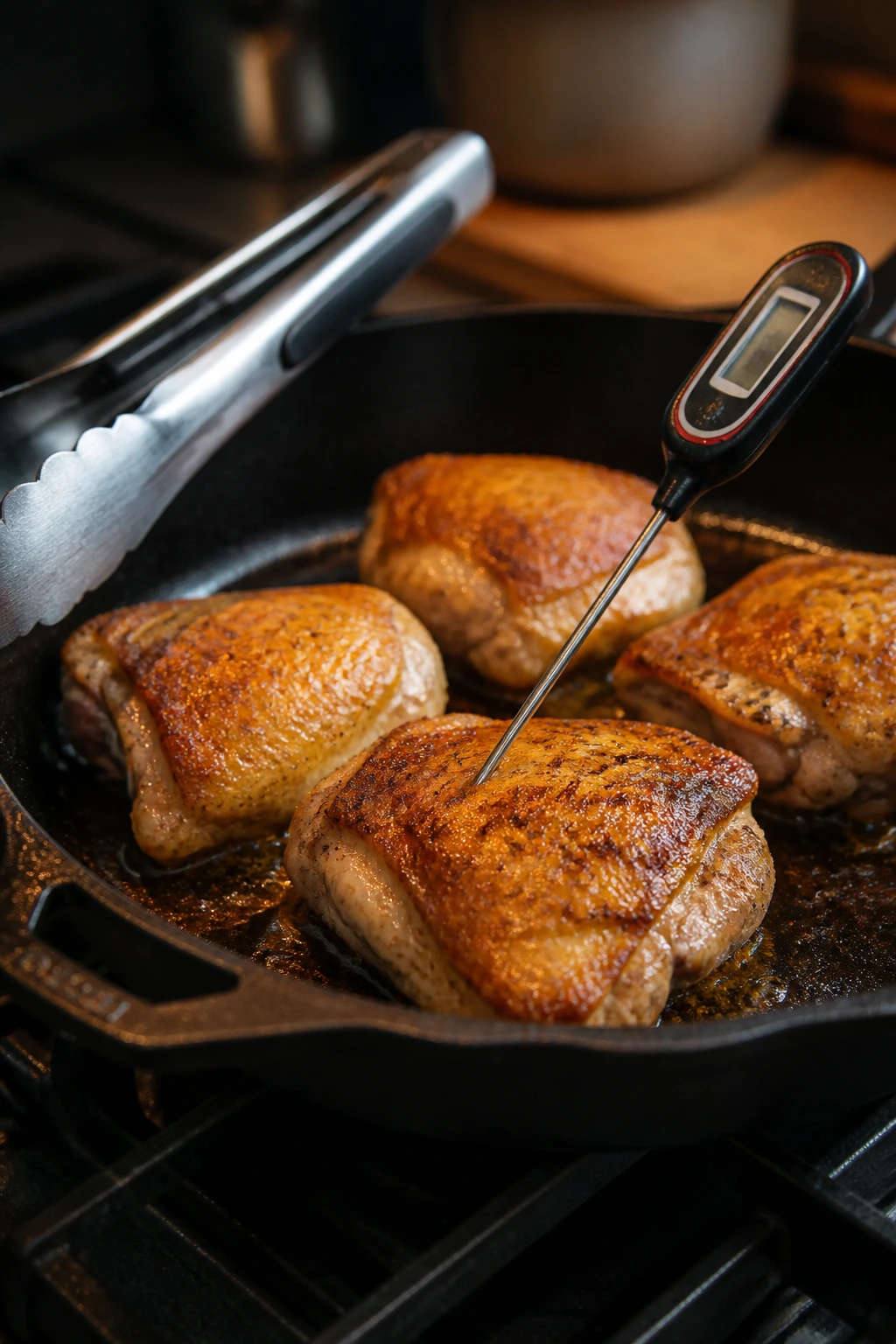
- 12-inch stainless steel or cast-iron skillet: This gives you the browned bits that turn into sauce; a nonstick pan works, but the flavor is a little flatter.
- Tongs: Useful for flipping the chicken cleanly without tearing the crust.
- Instant-read thermometer: The quickest way to know when the chicken is actually done.
- Sharp knife and cutting board: Even slices mean even cooking, which matters more here than people like to admit.
- Microplane or fine grater: Parmesan melts smoother when it’s grated very fine.
- Wooden spoon or silicone spatula: Better for loosening the browned bits from the pan without scraping the finish.
- Small bowl: Handy for mixing the seasoned flour so it coats the chicken evenly.
Step-by-Step: From Raw Chicken to Dinner on the Table
Prep the Chicken
-
Pat the chicken dry with paper towels on all sides. Do not skip this part — moisture on the surface slows browning and makes the coating patchy.
-
In a shallow bowl, mix the salt, black pepper, garlic powder, paprika, and flour. Dredge each piece of chicken in the mixture, pressing lightly so the coating sticks in a thin, even layer. Shake off any excess flour; you want a dusting, not a flour blanket.
Sear and Set Aside
-
Heat the olive oil and butter in a large skillet over medium-high heat until the butter foams and the surface shimmers. If a pinch of flour sizzles on contact, the pan is ready.
-
Lay the chicken into the skillet in a single layer. Cook for 4 to 5 minutes on the first side, until deeply golden, then flip and cook for another 3 to 4 minutes on the second side. Work in batches if needed so the pan stays hot and the chicken browns instead of steaming. Transfer the chicken to a plate; it does not need to be cooked through yet.
Build the Sauce
-
Reduce the heat to medium and add the mushrooms and shallot to the same skillet. Cook for 4 to 6 minutes, stirring occasionally, until the mushrooms release their liquid and the edges turn brown and slightly wrinkled.
-
Add the garlic and thyme and cook for 30 seconds, just until the garlic smells sweet and sharpness starts to fade. If the garlic turns deep brown, it will taste bitter, so keep it moving.
-
Pour in the chicken broth and scrape the bottom of the pan with a wooden spoon. That browned layer is flavor, not mess. Let the broth simmer for 2 to 3 minutes, until it reduces by about a third.
-
Stir in the heavy cream and Dijon mustard. Keep the heat at medium-low and let the sauce bubble gently for 2 minutes, then add the Parmesan a small handful at a time, stirring until smooth. The sauce should look glossy and coat a spoon, not run off it like milk.
Finish the Dish
- Return the chicken and any juices from the plate to the skillet. Nestle the pieces into the sauce and simmer gently for 4 to 6 minutes, or until the chicken reaches 165°F in the thickest part. Stir in the spinach and cook just until wilted, 30 to 60 seconds. Finish with lemon juice, parsley, and red pepper flakes if you want them, then taste and add a pinch of salt only if the sauce needs it.
Why the Sauce Stays Creamy Instead of Splitting
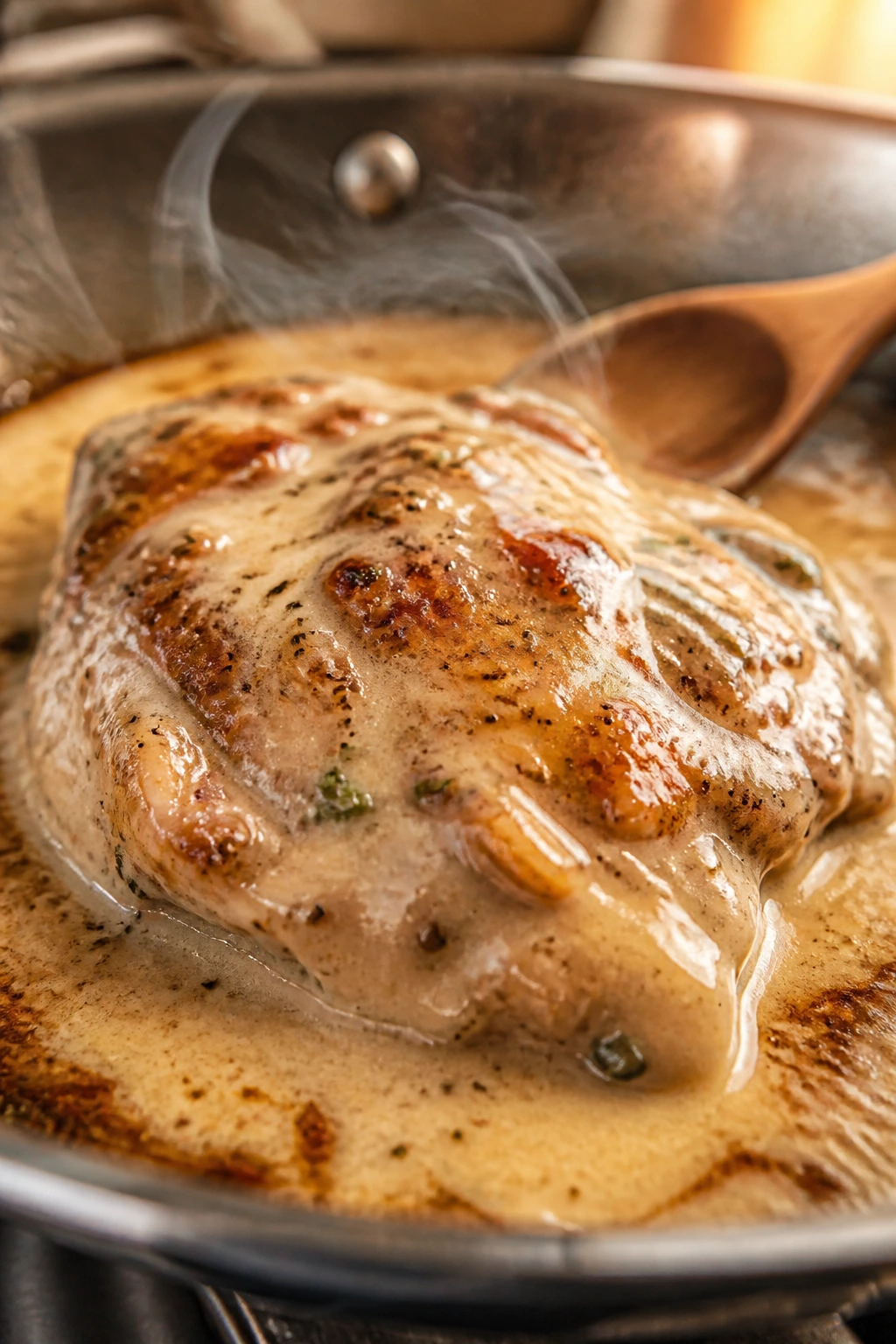
A smooth cream sauce is not magic. It’s mostly heat control and sequence.
The broth comes first because it deglazes the pan and loosens the browned bits before the dairy shows up. If you dump cream into a skillet full of scorching residue and let it boil like soup, you can still get dinner on the table, but the texture gets fussy fast. I want the sauce to move in a lazy bubble, not a hard boil.
Parmesan does more than season. Finely grated cheese adds body, salt, and a little of that slightly elastic texture that makes the sauce cling to the chicken. Use the finely grated stuff, not thick shreds. The shreds melt in uneven little clumps, and nobody wants stringy cheese in a cream sauce that’s meant to look polished and taste calm.
Fond First, Dairy Second
That brown layer in the skillet is the base of the sauce. Once the broth loosens it, the pan tastes deeper, almost roasted, even though you never turned on the oven.
Heat Control Wins
After the cream goes in, think steady heat, not enthusiasm. If the sauce starts to boil hard, lower the burner. A cream sauce wants patience in small doses, and that’s about the only fussy thing about it.
How to Serve It Without Drowning the Plate
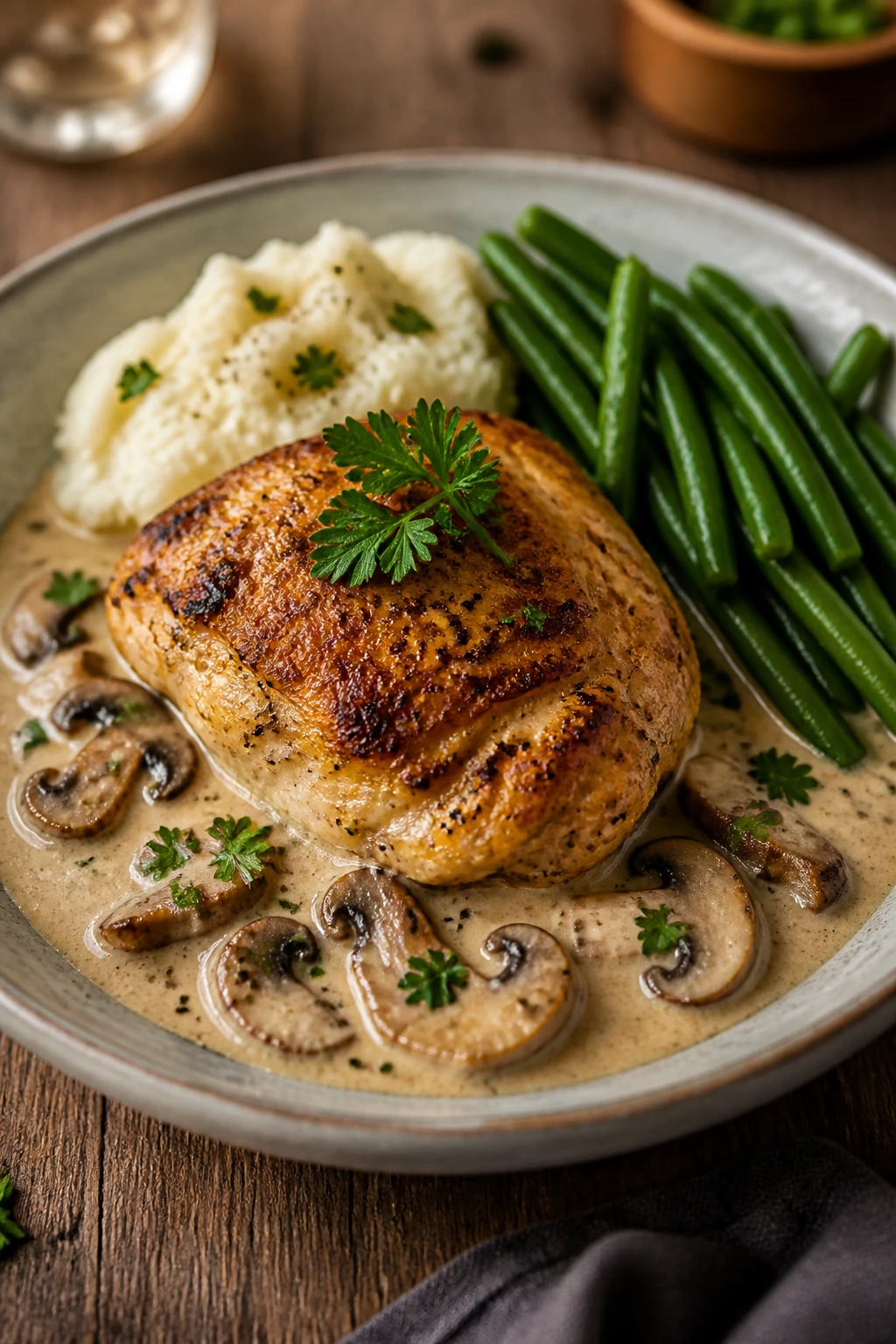
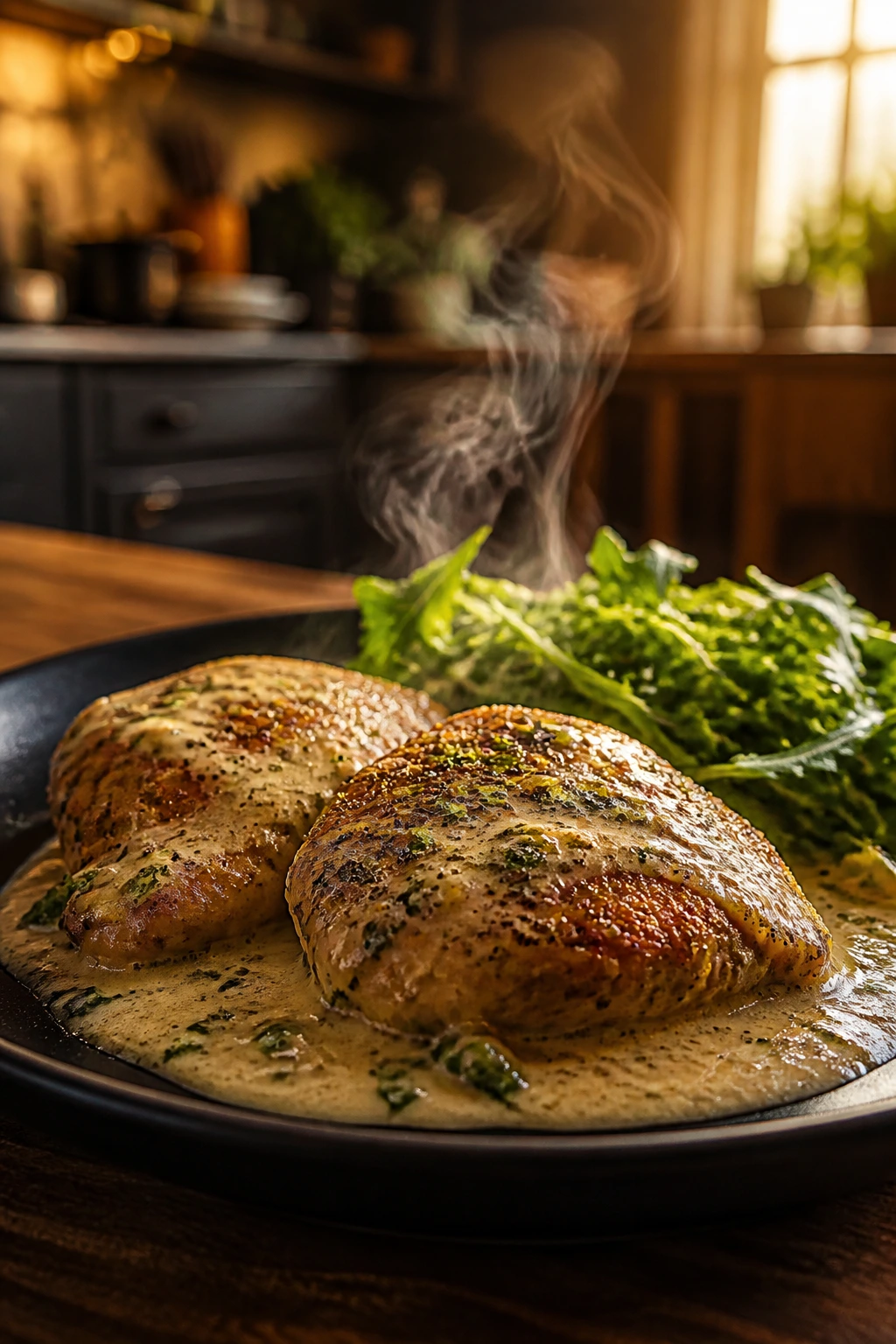
Presentation: Spoon the sauce around the chicken, then finish with the parsley and a few mushroom slices on top so the plate looks intentional, not flooded. I like a shallow bowl here more than a flat plate; it keeps the sauce where it belongs.
Accompaniments: Buttery mashed potatoes are the softest landing for the sauce, but rice, egg noodles, or crusty bread do the job with less effort. A quick green salad with a sharp vinaigrette cuts through the cream nicely, especially if you’re serving this on its own.
Portions: Plan on one chicken thigh or one split breast per person, plus enough sauce to spoon generously. If you’re feeding bigger eaters, add another half-pound of chicken instead of stretching the sauce thin. That sauce is the point.
Beverage Pairing: A dry white wine like Sauvignon Blanc or Pinot Grigio keeps the cream from feeling heavy. If you want something nonalcoholic, sparkling water with lemon does the same practical work on the palate.
Small Tweaks That Make a Big Difference
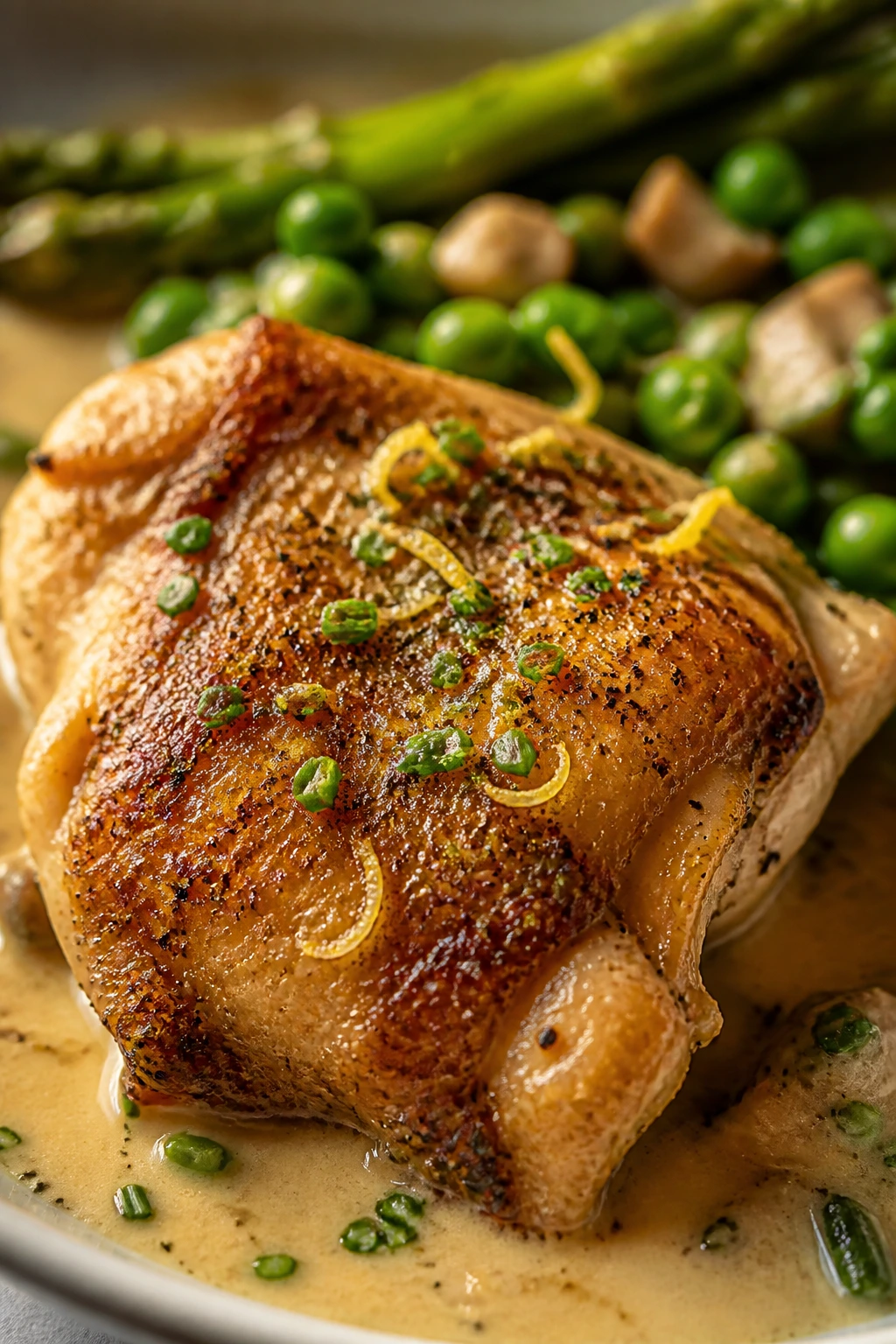
Flavor Enhancement: A teaspoon of lemon zest stirred in at the very end wakes up the sauce without making it sour. It lands better than more salt when the pan tastes a little sleepy.
Customization: A handful of peas, chopped asparagus tips, or sun-dried tomatoes can join the spinach if you want the dish to lean more springy, bright, or sweetly tangy. Add them near the end so they keep their shape.
Serving Suggestions: A scatter of chives or extra parsley gives the plate a fresher finish than more cheese. If I’ve got crusty bread around, I toast it hard and rub the cut side with a cut garlic clove before serving.
Make-It-Yours: For a gluten-free version, swap the flour for fine cornstarch or rice flour and keep the coating light. For dairy-free cooking, use unsweetened coconut cream and leave out the Parmesan, then add a little extra salt and lemon to keep the sauce from going flat.
Mistakes That Turn a Good Pan Chicken into a Sad One
-
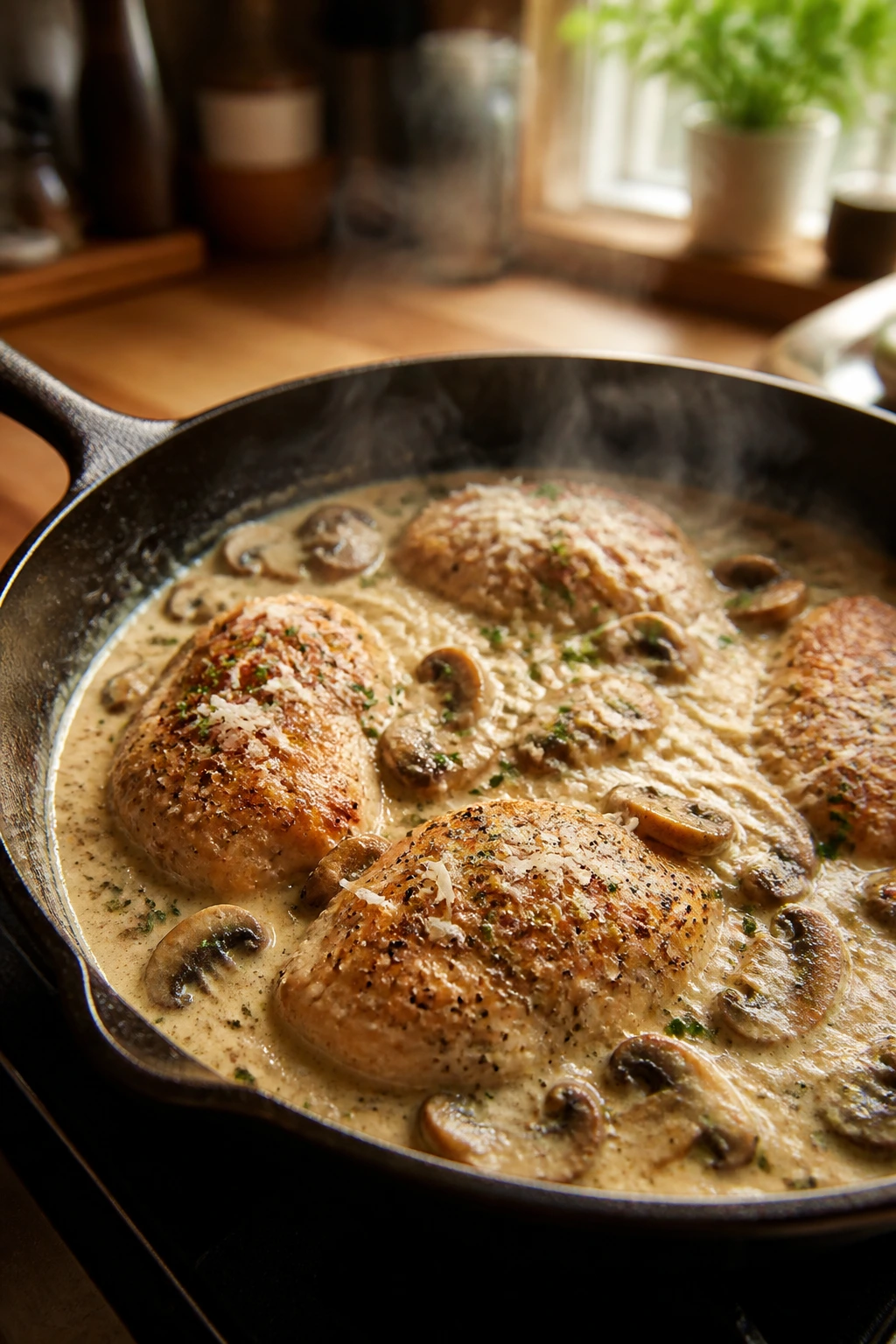
Crowding the skillet: If the chicken pieces sit too close together, they steam and turn pale instead of building a crust. The fix is simple: sear in batches or use a bigger pan.
-
Adding cream to a screaming-hot pan: A hard boil can make the sauce split or turn oily around the edges. Lower the heat to medium-low before the cream goes in, and keep the simmer gentle.
-
Using coarse Parmesan or the shelf-stable kind in a shaker: Those cheeses don’t melt as smoothly, and the sauce can feel grainy. Grate a block finely; it melts cleaner and tastes saltier in a better way.
-
Skipping the fond scrape: If you don’t loosen the browned bits after the broth goes in, you leave flavor stuck to the bottom of the skillet. A wooden spoon and a few slow scrapes are worth the 15 seconds they take.
-
Overcooking chicken breasts: Breasts can go dry in a hurry if you leave them in the sauce long after they’re done. Pull them as soon as the thickest part hits 165°F, then let the residual heat finish the job.
-
Not tasting before serving: The sauce changes as the Parmesan melts and the spinach wilts. Taste the pan at the end and decide whether it needs a pinch of salt, a squeeze more lemon, or nothing at all.
Variations I’d Make Again
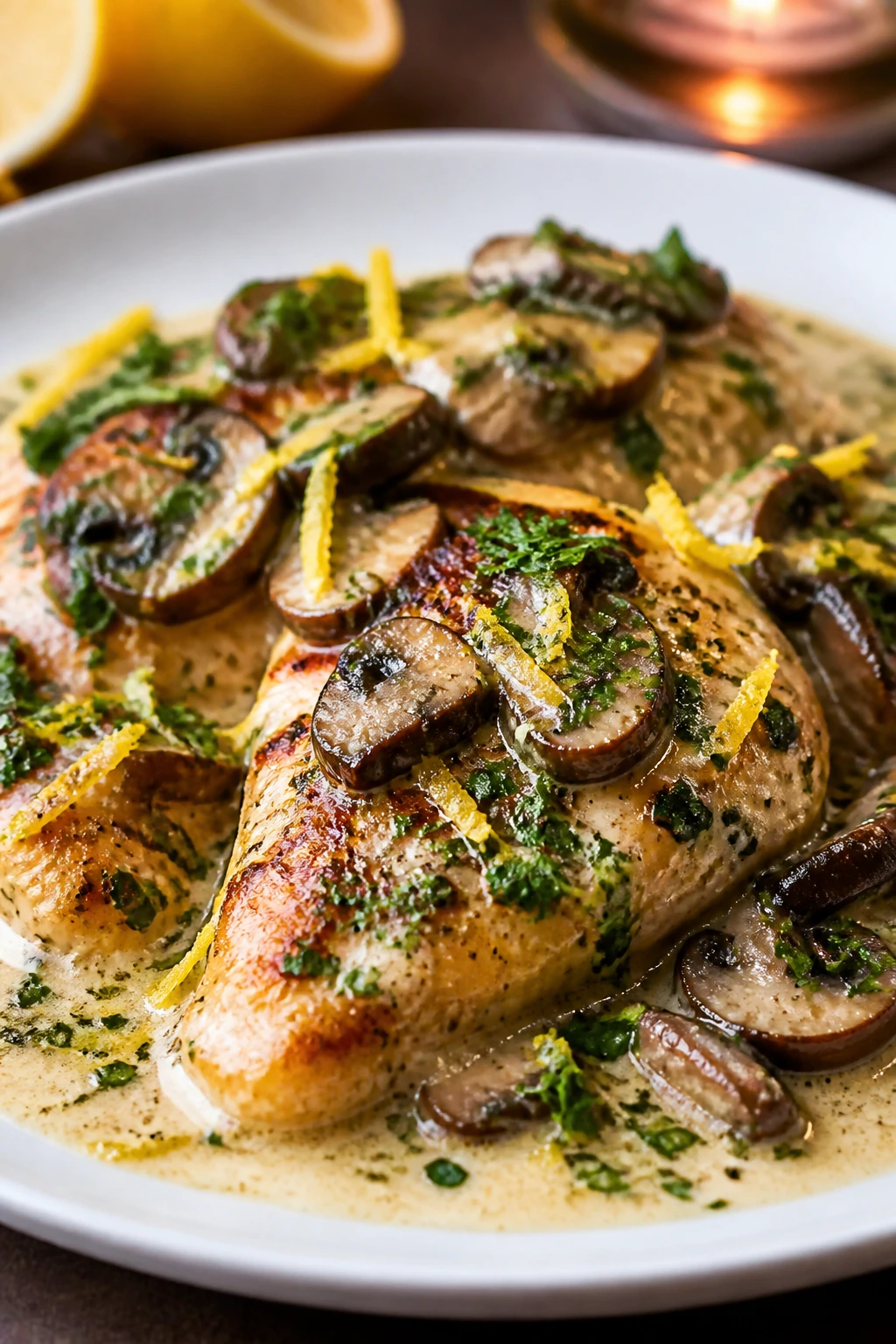
Lemon Herb Pan Chicken
Swap the thyme for a mix of thyme and chopped tarragon, then add an extra teaspoon of lemon juice and a little zest at the end. The sauce turns brighter and less rich, which is useful when you want the chicken to feel lighter next to rice or roasted vegetables.
Mushroom-Heavy Bistro Version
Double the mushrooms to 1 pound and let them brown more deeply before adding the shallot. The pan gets darker, earthier, and more restaurant-like, and it’s the variation I’d reach for if I wanted one skillet to do most of the talking.
Spicy Cajun Cream Chicken
Replace the paprika with Cajun seasoning and add a pinch of cayenne with the garlic. The sauce keeps its creaminess, but the heat gives it a sharper edge that plays well with mashed potatoes or cornbread.
Dairy-Free Coconut Skillet Chicken
Use coconut cream instead of heavy cream and skip the Parmesan. Add an extra tablespoon of broth and finish with lime juice instead of lemon; the flavor shifts in a warmer, slightly sweeter direction that still works beautifully with seared chicken and mushrooms.
Spinach-and-Tomato Pan Chicken
Stir in a handful of halved cherry tomatoes with the mushrooms and swap the lemon for a splash of red wine vinegar at the end. The tomatoes break down just enough to tint the sauce pink and add little bursts of acidity.
Make-Ahead, Storage, and Reheating Notes
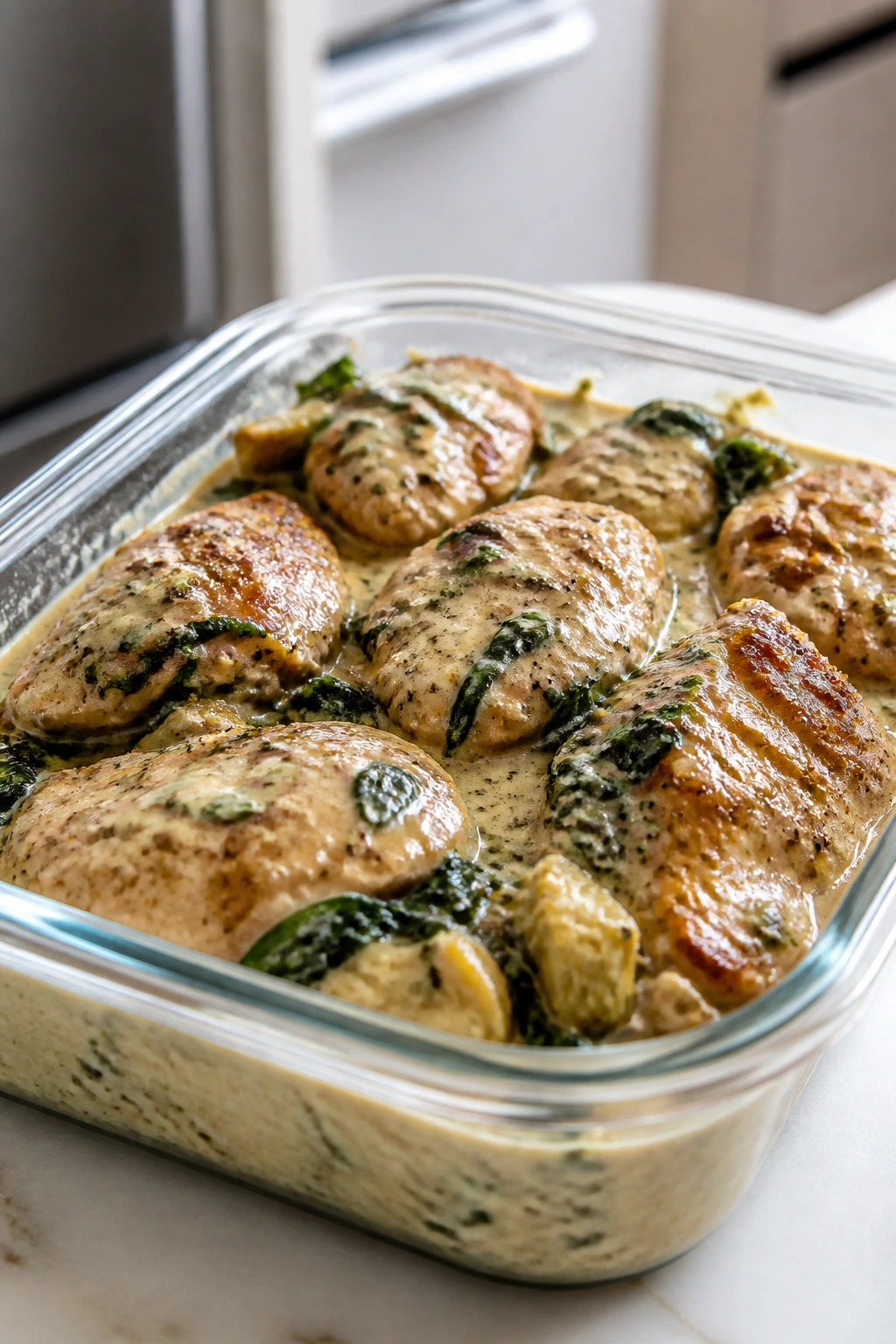
This dish is best when it moves from skillet to table without much delay, but leftovers behave well enough if you treat them gently.
At room temperature, don’t leave the chicken out for more than 2 hours. Dairy-based sauces deserve the same caution you’d give any cooked poultry, and they’re not the sort of thing to sit around while you answer emails.
In the refrigerator, creamy pan chicken keeps for 3 to 4 days in an airtight container. The sauce thickens as it chills, which is normal. The spinach will lose some of its bright green snap, but the flavor holds up.
For the freezer, 2 months is a realistic ceiling. The cream may separate a little when thawed, so freeze it in a shallow airtight container and expect to stir in 1 to 2 tablespoons of broth or water when reheating. If you know you’re freezing a portion, slightly undercook the chicken during the final simmer so it doesn’t go over the edge later.
To reheat on the stovetop, place the chicken and sauce in a skillet over low heat with a splash of broth. Cover loosely and warm for 6 to 8 minutes, stirring the sauce once or twice, until the chicken is hot all the way through. The microwave works too, but use 50 percent power in short bursts and stop to stir so the sauce doesn’t split at the edges.
If you want to prep ahead, season and dredge the chicken up to 8 hours in advance and keep it chilled on a plate or tray. Slice the mushrooms and chop the shallot a day ahead. I would still cook the sauce fresh, because that’s where the texture lives.
Questions People Ask Before They Cook It
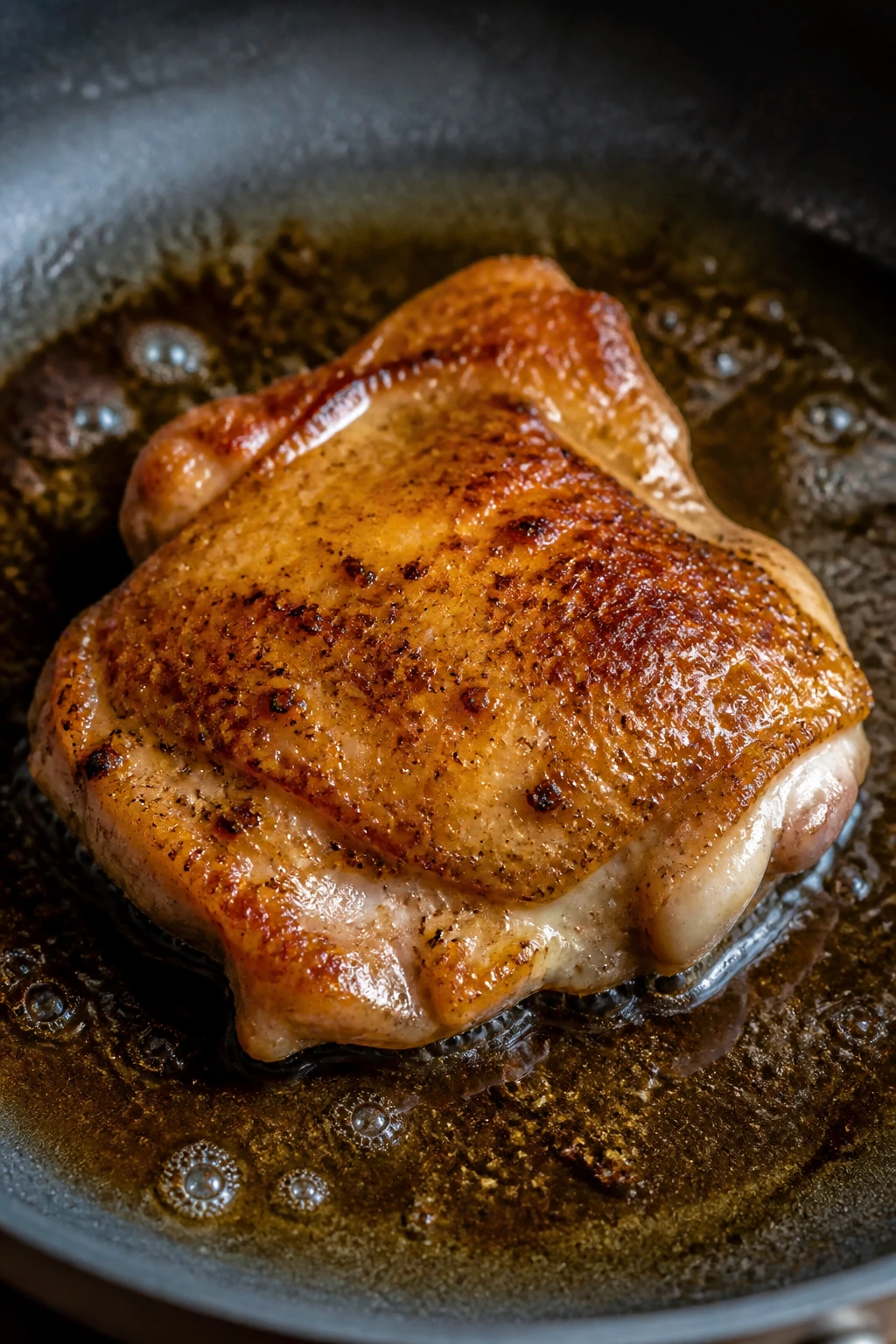
Can I use chicken breasts instead of thighs?
Yes, and the recipe still works well if you pound the breasts to even thickness first. Breasts need a closer eye on timing, though, because they dry out faster and don’t forgive a long simmer the way thighs do.
What if I don’t like mushrooms?
Leave them out and add more spinach, or swap in thin-sliced zucchini or chopped asparagus. You’ll lose some of the deep savory flavor, so I’d keep the Dijon and Parmesan in place to help the sauce stay full.
Can I use half-and-half instead of heavy cream?
You can, but the sauce will be thinner and a bit more likely to split if it boils. If you go that route, keep the heat lower than usual and let the sauce reduce a little longer before you return the chicken to the skillet.
How do I fix a sauce that’s too thin?
Let it simmer gently for another 2 to 3 minutes with the chicken out of the pan, or stir in another tablespoon or two of Parmesan. If you need faster thickening, mix 1 teaspoon cornstarch with 1 tablespoon cold water and stir it in slowly while the sauce simmers.
Can I make this gluten-free?
Yes. Swap the flour coating for cornstarch or rice flour, and keep the layer thin. The chicken will brown a little differently, but the sauce still gets enough body from the Parmesan and cream.
Can I freeze the leftovers?
Yes, though the sauce may separate a little when thawed. Freeze in a shallow container for up to 2 months, thaw overnight in the refrigerator, then reheat slowly with a splash of broth and a good stir.
Is a nonstick skillet okay?
It’s okay, but it won’t give you the same browned fond on the bottom of the pan. If nonstick is what you’ve got, lean a little harder on the mushrooms and make sure the chicken has a dry surface so you can still get decent color.
What should I serve with this if I want a full dinner, not just chicken in sauce?
Mashed potatoes are the softest, richest match, but buttered rice, egg noodles, or roasted potatoes all work. Add one sharply dressed green side, and the plate stops feeling heavy fast.
Can I make this with pre-cooked chicken?
You can, but the dish loses some of what makes it worth cooking. If you use cooked chicken, make the sauce first, then warm the chicken in it just long enough to heat through so it doesn’t turn stringy.
Why This Skillet Keeps Coming Back
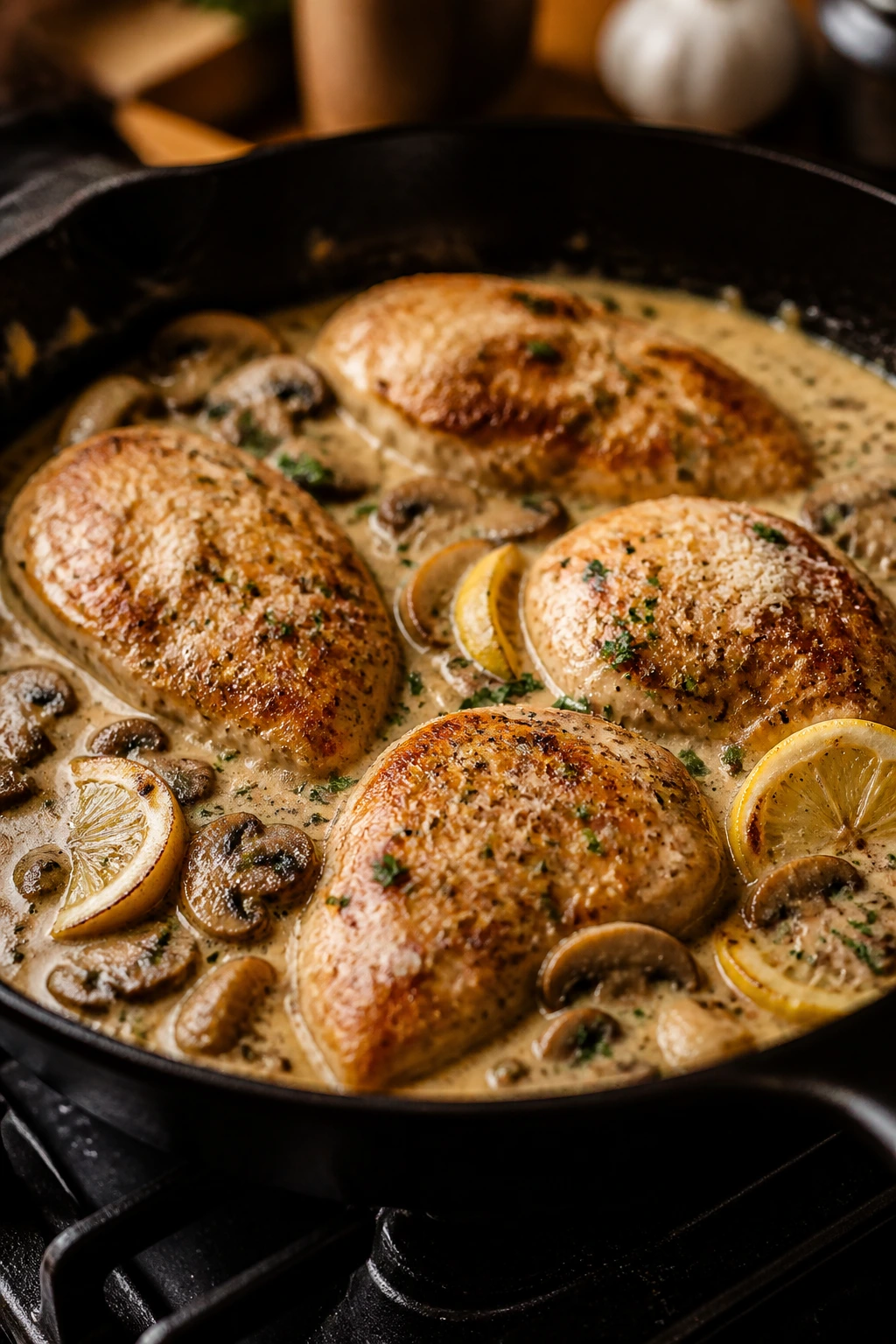
A good creamy chicken dinner does a few things at once, and this one does them without asking for special treatment. The chicken browns, the sauce thickens, the mushrooms bring their savory edge, and the lemon keeps the whole pan from slumping into heaviness. That’s the kind of dinner that earns repeat status, not because it’s flashy, but because it knows exactly what it is.
I like recipes like this because they leave room for judgment. A little more lemon if the cream feels flat. A shorter simmer if you’re using breasts. A bigger handful of spinach if you want the pan to lean greener. That flexibility matters on weeknights, when your stove is already competing with a hundred small interruptions.
Make it once, and you’ll know where the levers are. Make it twice, and you’ll probably stop measuring the parsley.
Creamy Pan Chicken for Weeknight Dinners — Recipe Card
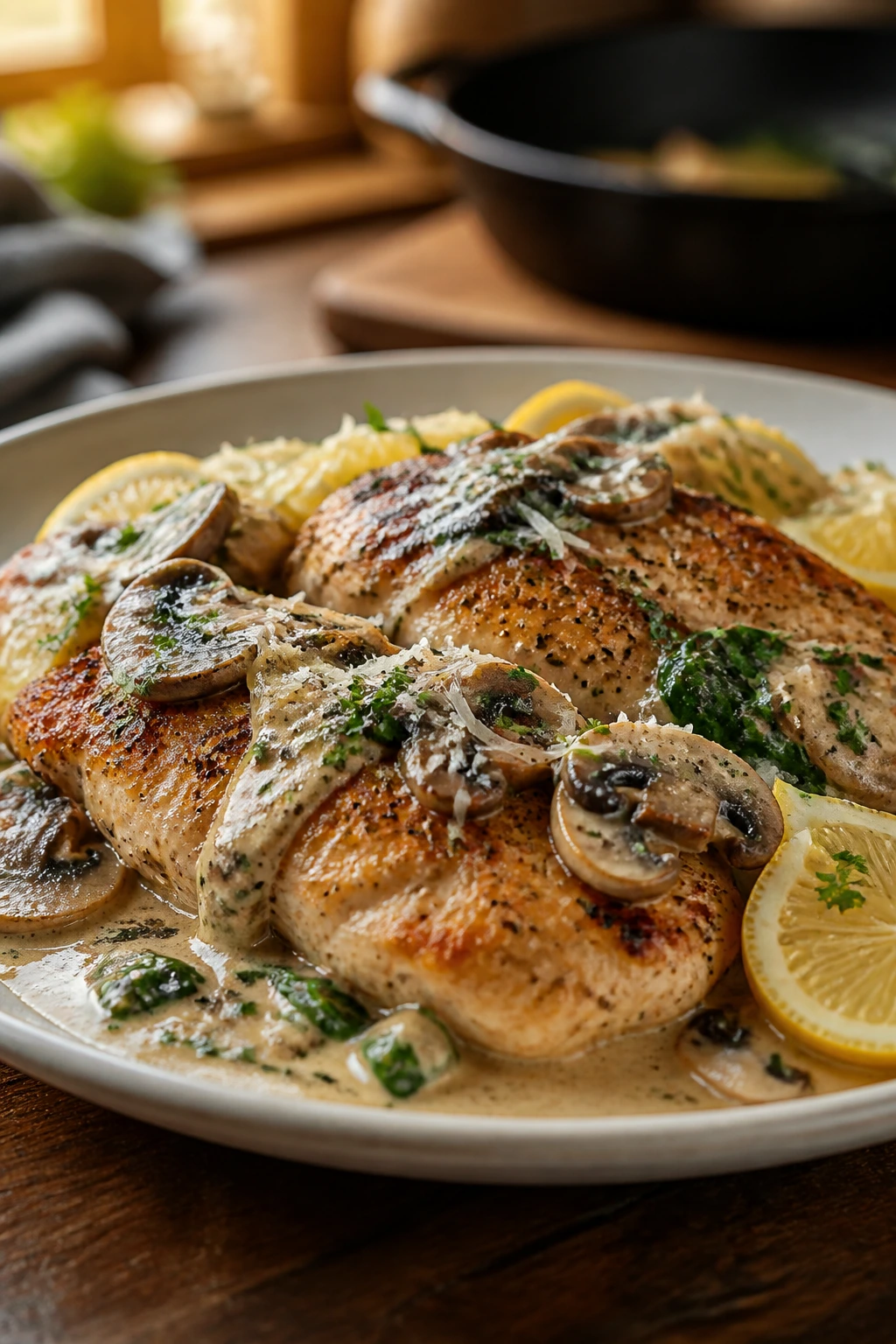
Recipe Name: Creamy Pan Chicken for Weeknight Dinners
Description: Golden chicken thighs or cutlets simmered in a garlic-Parmesan cream sauce with mushrooms, spinach, and a bright finish of lemon and parsley. One skillet, solid flavor, and enough sauce to want bread on the table.
Prep Time: 15 minutes
Cook Time: 25 minutes
Total Time: 40 minutes
Course: Dinner, Main Course
Cuisine: American
Servings: 4 servings
Calories: About 540 kcal per serving
Ingredients
For the Chicken
- 1 1/2 pounds boneless, skinless chicken thighs, or 2 large chicken breasts split lengthwise and pounded to 1/2-inch thickness
- 1 teaspoon kosher salt
- 1/2 teaspoon black pepper
- 1 teaspoon garlic powder
- 1/2 teaspoon paprika
- 1/4 cup all-purpose flour
- 2 tablespoons olive oil
- 2 tablespoons unsalted butter
For the Sauce
- 8 ounces cremini mushrooms, sliced 1/4-inch thick
- 1 small shallot, finely chopped
- 3 cloves garlic, minced
- 1/2 teaspoon dried thyme
- 1 cup low-sodium chicken broth
- 3/4 cup heavy cream
- 1 teaspoon Dijon mustard
- 1/2 cup finely grated Parmesan cheese
- 2 cups baby spinach
- 1 tablespoon lemon juice
- 2 tablespoons chopped fresh parsley
Optional Finish
- Pinch of red pepper flakes
- Flaky salt, for serving
Instructions
-
Pat the chicken dry, then mix the salt, pepper, garlic powder, paprika, and flour in a shallow bowl. Dredge the chicken lightly and shake off the excess.
-
Heat the olive oil and butter in a large skillet over medium-high heat. Sear the chicken for 4 to 5 minutes per side, until deep golden, then transfer to a plate.
-
Add the mushrooms and shallot to the skillet and cook over medium heat for 4 to 6 minutes, until browned and softened.
-
Stir in the garlic and thyme and cook for 30 seconds.
-
Pour in the chicken broth and scrape up the browned bits from the pan. Simmer for 2 to 3 minutes.
-
Stir in the heavy cream and Dijon mustard. Reduce the heat to medium-low and simmer gently for 2 minutes.
-
Add the Parmesan a little at a time, stirring until smooth and glossy.
-
Return the chicken and any juices to the skillet. Simmer for 4 to 6 minutes, until the chicken reaches 165°F and the sauce thickens slightly.
-
Stir in the spinach until wilted, then finish with lemon juice, parsley, and red pepper flakes if using. Taste and add a pinch of salt if needed.
Notes: Use finely grated Parmesan for the smoothest sauce. Keep the heat gentle after the cream goes in. Leftovers keep for 3 to 4 days in the refrigerator and reheat best over low heat with a splash of broth.