



A turkey cutlet can be a little sad if you treat it like a roast. Thin slices, a hot skillet, and a breadcrumb mix that smells like lemon and parsley change the whole mood.
That is the appeal of crispy herb turkey for weeknight dinners: it moves fast, it uses a short ingredient list, and it gives you those crunchy edges that make plain poultry taste deliberate instead of improvised.
The trick is to keep the coating dry, the pan hot, and the cutlets thin enough to cook through before the crumbs wander into darkness. Miss those details and you get limp breading; get them right and you have crisp turkey with a juicy center in under half an hour.
Turkey is one of those ingredients people respect at the holidays and forget on a Tuesday. That’s a shame, because cutlets are built for speed. They take seasoning well, they brown fast, and they give you enough surface area for a proper herb crust — which is where the good stuff happens.
Why This Crispy Herb Turkey Earns a Spot on Busy Nights
- Fast enough for a real weeknight: Thin cutlets cook in one skillet, so you’re not waiting for a roast to slowly become dinner.
- The crust actually stays crisp: Panko, Parmesan, and a short rest on a rack keep the coating from going sandy or soft.
- The herb flavor sits on top, where it counts: Parsley, thyme, rosemary, and lemon zest perfume the outside before the turkey is even cut.
- It uses ordinary grocery-store ingredients: No brine, no long marinade, no hunt for a specialty spice blend.
- It plays well with plain sides: Potatoes, rice, noodles, salad, green beans — whatever is already in the kitchen can carry the plate.
Weeknight Timing at a Glance
Yield: Serves 4
Prep Time: 20 minutes
Cook Time: 14 minutes
Total Time: 34 minutes
Difficulty: Beginner — the method is straightforward, but the pan needs to stay hot so the crust browns instead of soaking up oil.
Chill/Rest Time: 10 minutes after breading, optional but useful
Best Served: Right out of the skillet, while the crust is still crisp
The Ingredients You’ll Want on the Counter
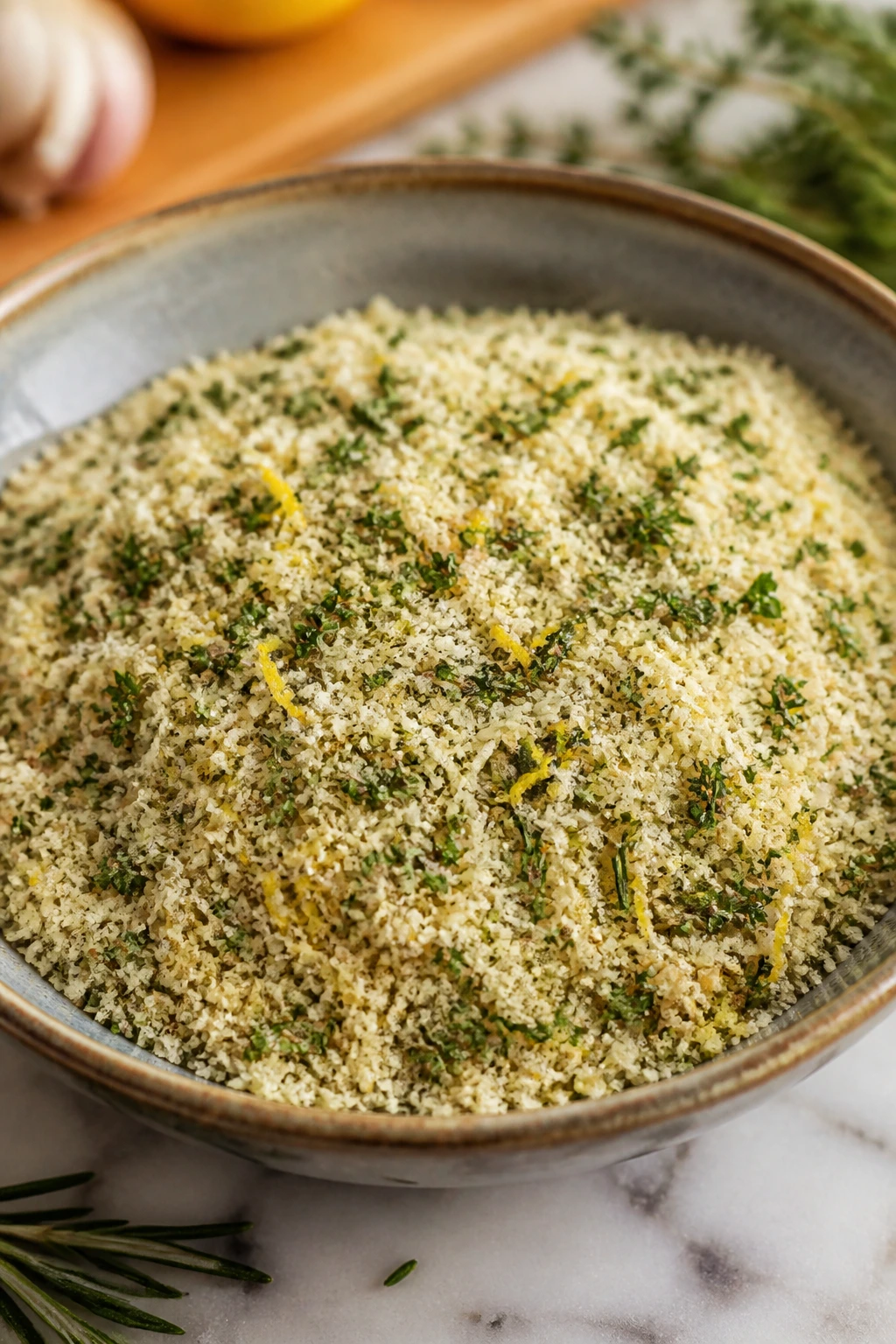
For the Turkey
- 1 1/2 pounds turkey breast cutlets, about 4 pieces and roughly 1/2 inch thick
- 1 teaspoon kosher salt
- 1/2 teaspoon black pepper
- 1 teaspoon garlic powder
- 1 teaspoon onion powder
For the Breading Station
- 1/2 cup all-purpose flour
- 1/4 teaspoon kosher salt
- 2 large eggs
- 1 tablespoon Dijon mustard
- 2 tablespoons milk
- 1 1/2 cups panko breadcrumbs
- 1/2 cup finely grated Parmesan cheese
- 2 tablespoons finely chopped fresh parsley
- 1 tablespoon finely chopped fresh thyme
- 1 teaspoon finely chopped fresh rosemary
- 1 teaspoon lemon zest
- 1/2 teaspoon paprika
For Cooking and Serving
- 3 tablespoons olive oil
- 2 tablespoons unsalted butter
- Lemon wedges, for serving
Why Each Ingredient Pulls Its Weight
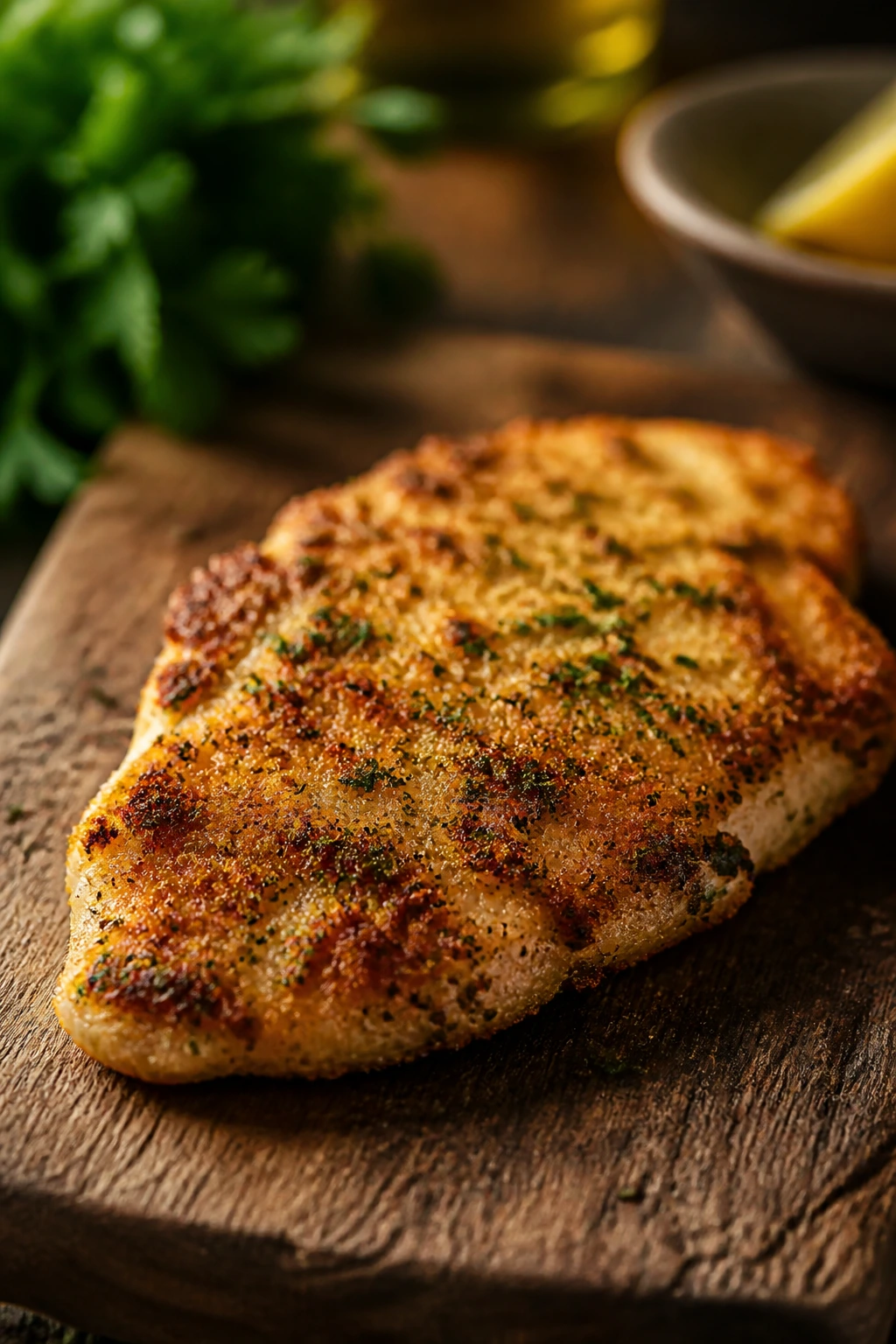
Turkey Cutlets
What to use: 1 1/2 pounds turkey breast cutlets, ideally in 4 even pieces about 1/2 inch thick.
Preparation: Pat the surface dry and trim off any loose silver skin. If one end is much thicker than the other, pound it gently between parchment or plastic until the whole piece is even.
Substitutions: Thin chicken breast cutlets work with the same timing; thin pork cutlets need a minute or two more. If you only have a turkey breast, slice it into cutlets yourself.
Tips: Even thickness matters more here than almost anywhere else in poultry cooking. The thin bits will dry out if you wait for the thickest spot to catch up.
Flour, Eggs, and Dijon
What to use: 1/2 cup flour, 1/4 teaspoon kosher salt, 2 eggs, 1 tablespoon Dijon mustard, and 2 tablespoons milk.
Preparation: Put the flour in a shallow dish, whisk the eggs with Dijon and milk in a second dish, and keep both stations within easy reach before you start breading.
Substitutions: Rice flour can replace the all-purpose flour if you need a gluten-free version. A teaspoon of mayonnaise can stand in for Dijon in a pinch, though the flavor gets richer and less sharp.
Tips: The mustard is there for more than taste. It gives the egg wash a little grip, which helps the crumbs stick instead of sliding off in the pan.
Panko-Parmesan Herb Crust
What to use: 1 1/2 cups panko breadcrumbs, 1/2 cup finely grated Parmesan, 2 tablespoons parsley, 1 tablespoon thyme, 1 teaspoon rosemary, 1 teaspoon lemon zest, and 1/2 teaspoon paprika.
Preparation: Chop the herbs fine and mix everything in a wide bowl so the crumbs stay loose and evenly seasoned.
Substitutions: Regular breadcrumbs will work, but the crust will be denser and less airy. If fresh herbs aren’t handy, use 1 teaspoon dried thyme and 1 teaspoon dried parsley, plus 1/2 teaspoon crushed dried rosemary.
Tips: Finely grated Parmesan behaves better than a coarse shred. It clings to the breading and browns with the crumbs instead of falling off in stringy bits.
Oil, Butter, and Lemon
What to use: 3 tablespoons olive oil, 2 tablespoons unsalted butter, and lemon wedges for serving.
Preparation: Heat the oil first, then add the butter once the pan is warm so the butter foams instead of scorching.
Substitutions: Avocado oil can replace the olive oil if you want a milder flavor and a little more heat tolerance. Ghee works if you want the buttery flavor without the same risk of burning.
Tips: The oil-butter combination gives you the best of both worlds: the oil helps the cutlets brown without smoking too early, and the butter brings that nutty smell that makes the kitchen smell finished before dinner even lands on the plate.
Tools That Keep the Crust Crisp
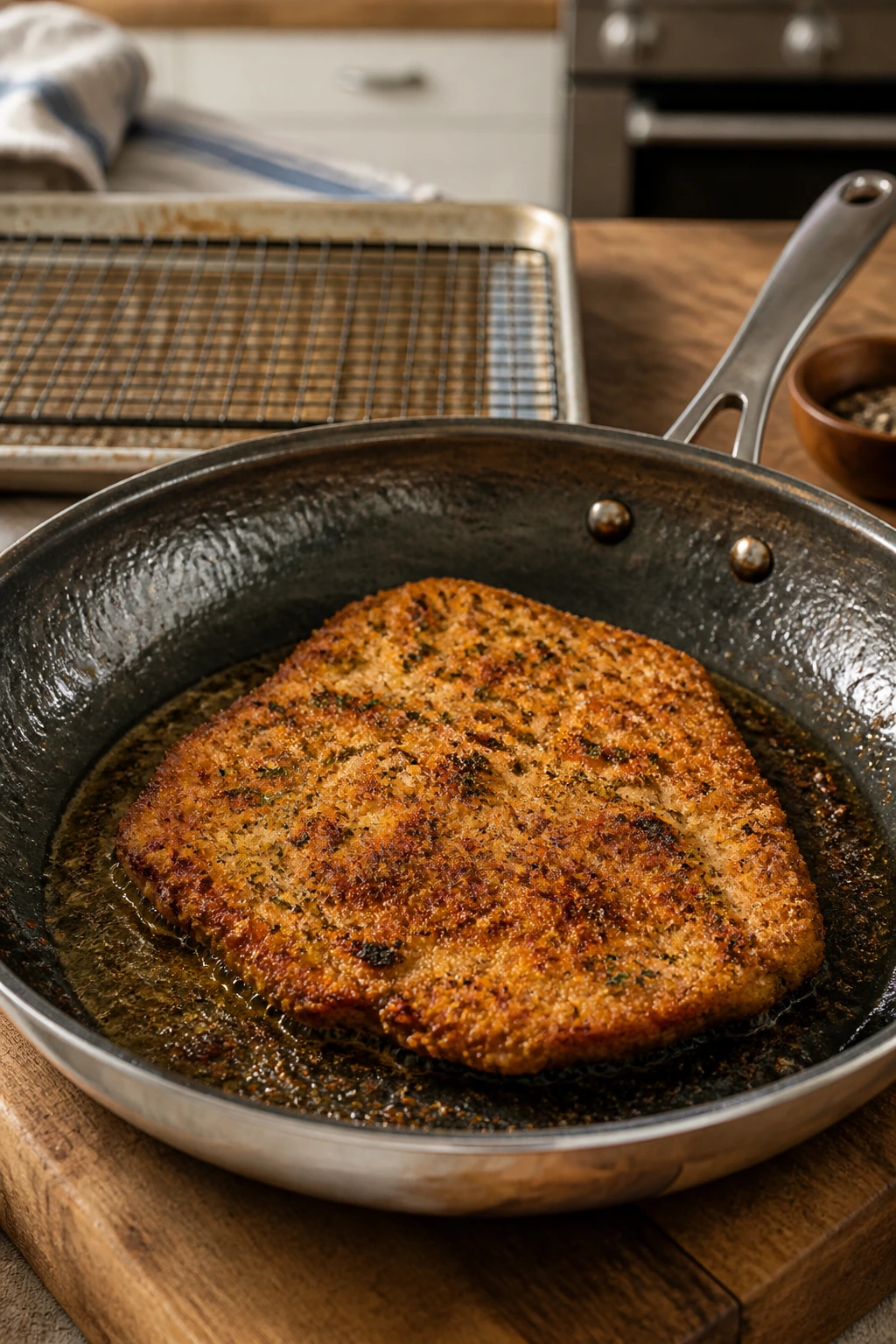
- 12-inch skillet: Stainless steel or cast iron both work well; the pan needs room so the cutlets aren’t crowded.
- Meat mallet or rolling pin: Use it only if the cutlets are uneven and need a gentle flattening.
- Three shallow bowls or pie plates: One for flour, one for egg wash, one for the crumb mix.
- Tongs: Best for flipping without tearing the crust.
- Wire rack set over a sheet pan: This keeps the underside from steaming after cooking.
- Instant-read thermometer: The easiest way to avoid dry turkey is to pull it at 165°F in the thickest part.
- Microplane or fine grater: Useful for the Parmesan and lemon zest; both behave better when they’re finely grated.
The Pan-Frying Method That Keeps Turkey Juicy
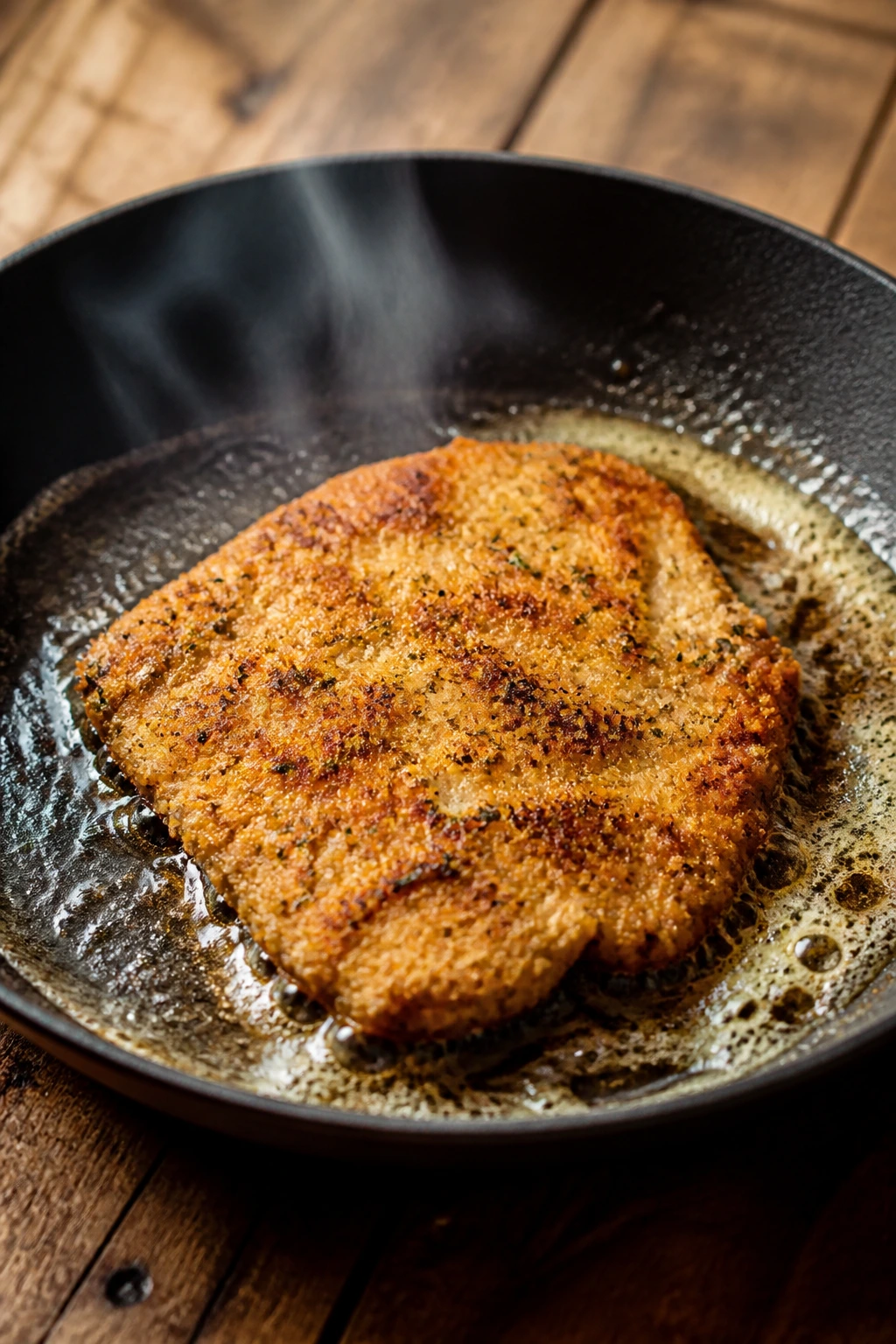
Set Up the Stations
-
Pat the turkey cutlets dry with paper towels, then season both sides with the kosher salt, black pepper, garlic powder, and onion powder.
-
Lay out three shallow dishes: flour in the first, the eggs whisked with Dijon and milk in the second, and the panko, Parmesan, parsley, thyme, rosemary, lemon zest, paprika, and salt in the third.
-
Line a sheet pan with a wire rack if you have one. Set it near the stove so you can move the breaded cutlets without stacking them.
Bread the Cutlets
-
Dredge one cutlet in flour, shaking off the excess so the coating stays thin. Dip it in the egg mixture, let the excess drip off for a second or two, then press it firmly into the crumb mixture so both sides are fully covered.
-
Set the breaded cutlet on the rack and repeat with the rest. Let them sit for 10 minutes before cooking if you have the time. That short rest helps the coating stick.
Cook Until Crisp
-
Heat the olive oil and butter in a 12-inch skillet over medium to medium-high heat. When the butter foams and the foam starts to settle, the pan is ready.
-
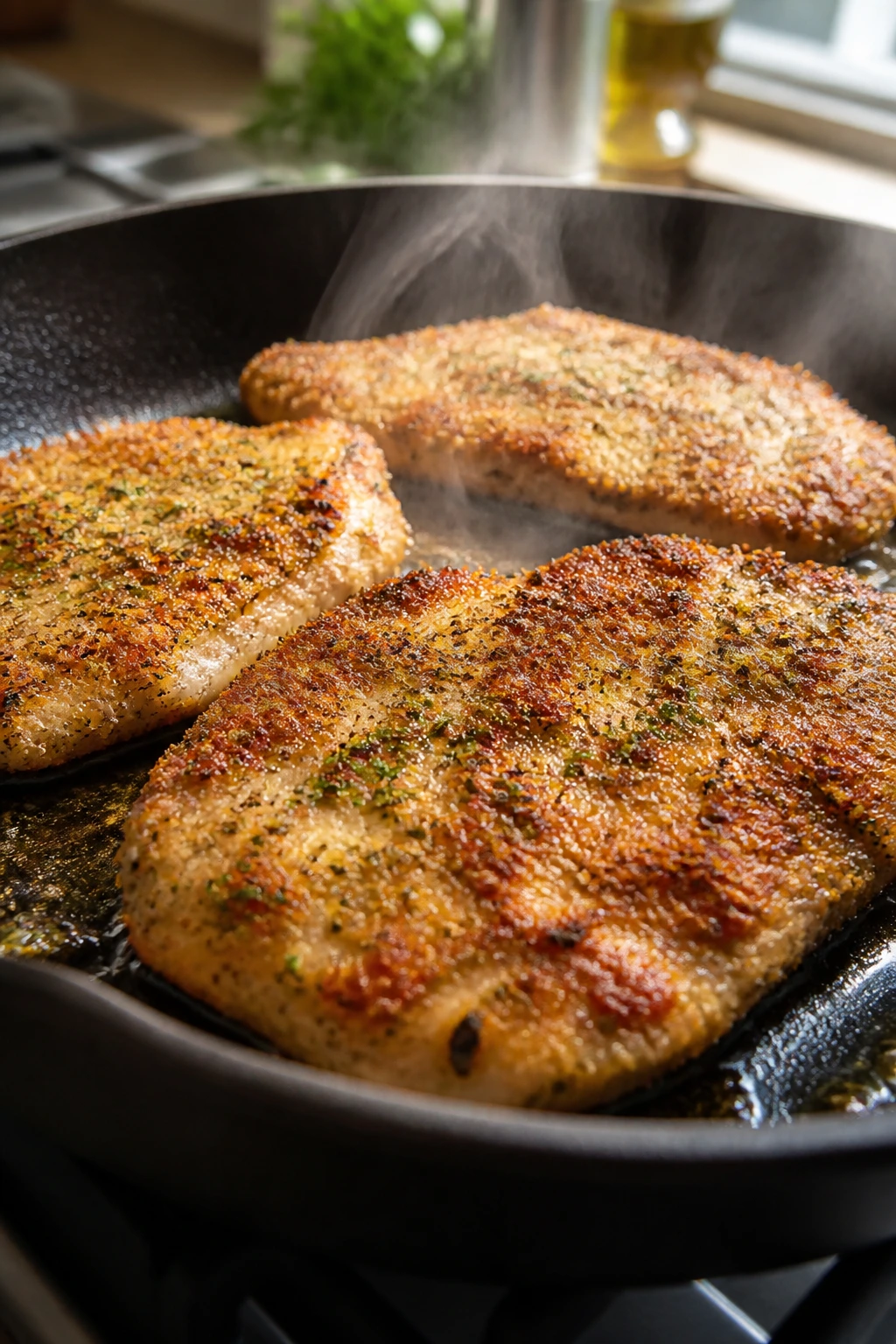
Add the cutlets in a single layer, leaving space between them. Cook for 3 to 4 minutes on the first side, until the bottom is deep golden and the crust sounds dry when tapped with tongs.
-
Flip once and cook for another 3 to 4 minutes, until the second side is crisp and the thickest part of the turkey reaches 165°F. If the cutlets are slightly thicker than expected, give them another minute or two and check again with the thermometer. Do not crowd the pan; cook in batches if needed.
Rest and Finish
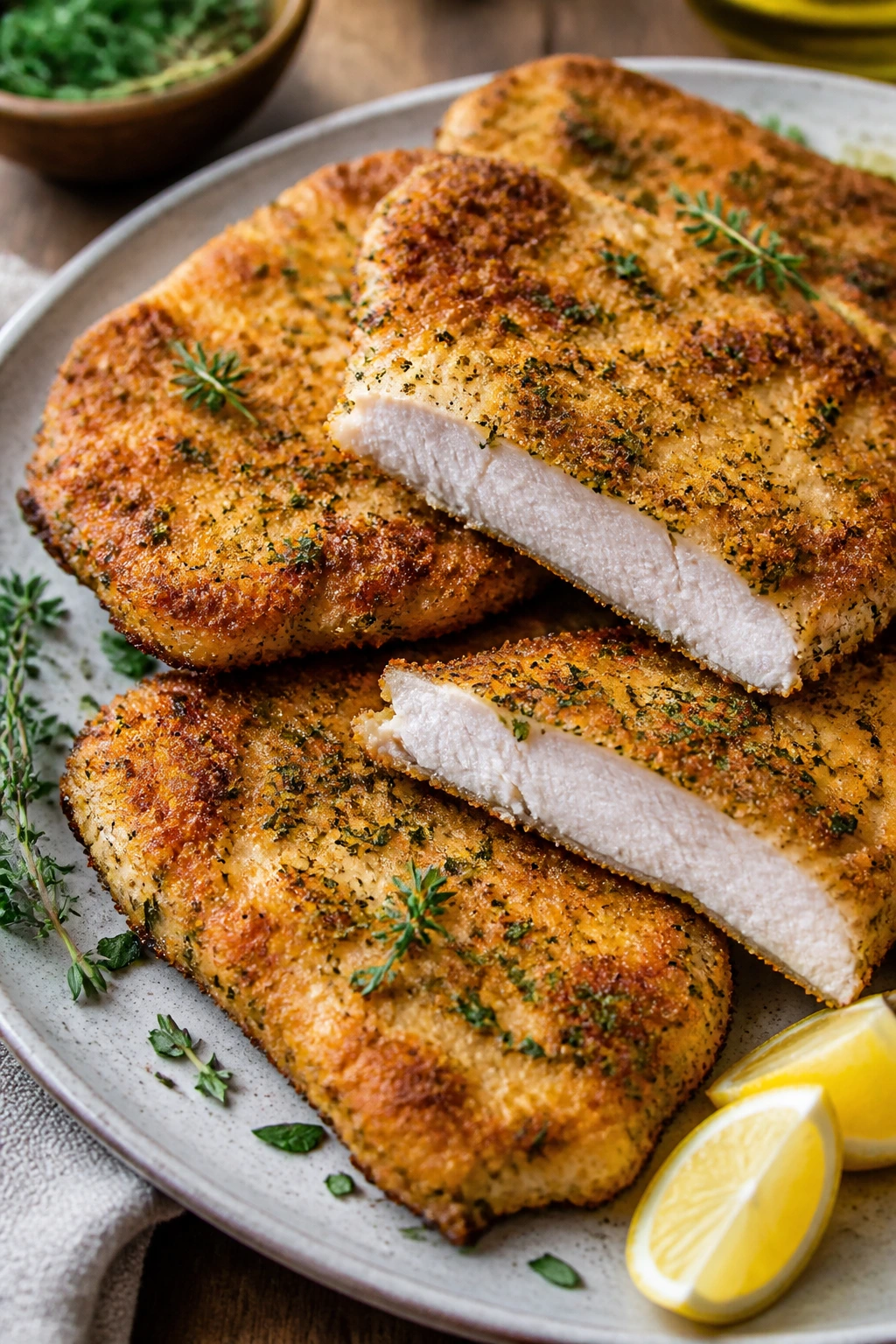
- Move the cooked cutlets to the rack, not to a paper towel pile. Let them rest for 3 minutes, squeeze lemon over the top, and serve while the crust still has its snap.
How to Serve It So Dinner Feels Finished
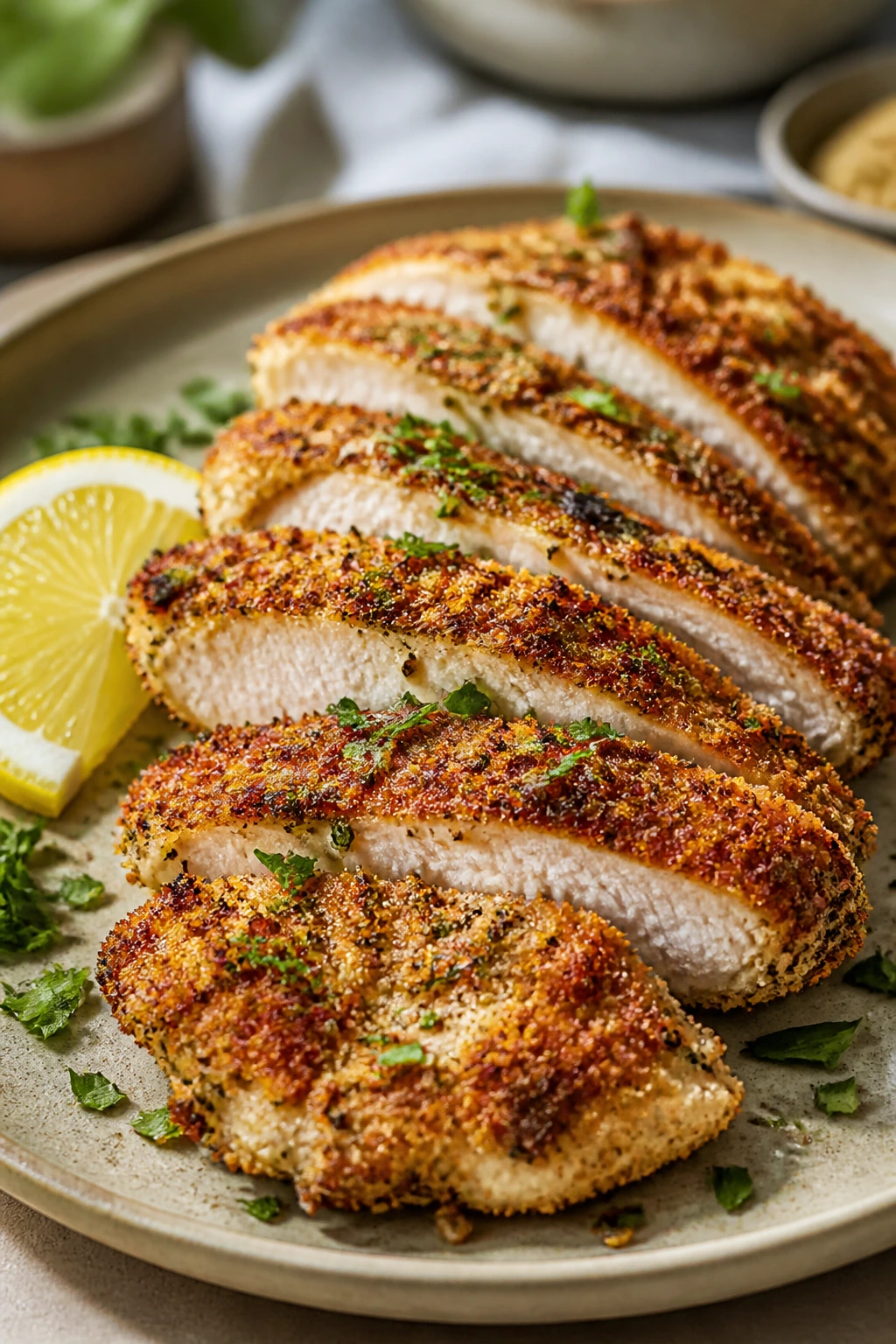
Presentation: Slice the cutlets on a slight diagonal and fan them on warm plates. A scatter of parsley and a lemon wedge at the side of the plate keeps the whole thing looking clean and bright. If you want to lean into the skillet flavor, spoon a teaspoon of the buttery browned crumbs from the pan over the top.
Accompaniments: Creamy mashed potatoes soak up the buttery bits beautifully, but this also works with buttered egg noodles, rice pilaf, roasted baby potatoes, or a sharp arugula salad with shaved fennel. Green beans, peas, or sautéed broccoli rabe keep the plate from feeling heavy.
Portions: One 6-ounce cutlet is a solid adult serving. If the cutlets are small, plan on one and a half per person or slice them over grains. For kids, cut the turkey into strips after resting; the crust stays easier to eat that way.
Beverage Pairing: A dry white wine such as Sauvignon Blanc or Pinot Grigio handles the lemon and herbs without crowding them. If you want a nonalcoholic option, sparkling water with lemon or a cold ginger soda works well against the fried coating.
Small Tweaks That Make a Big Difference
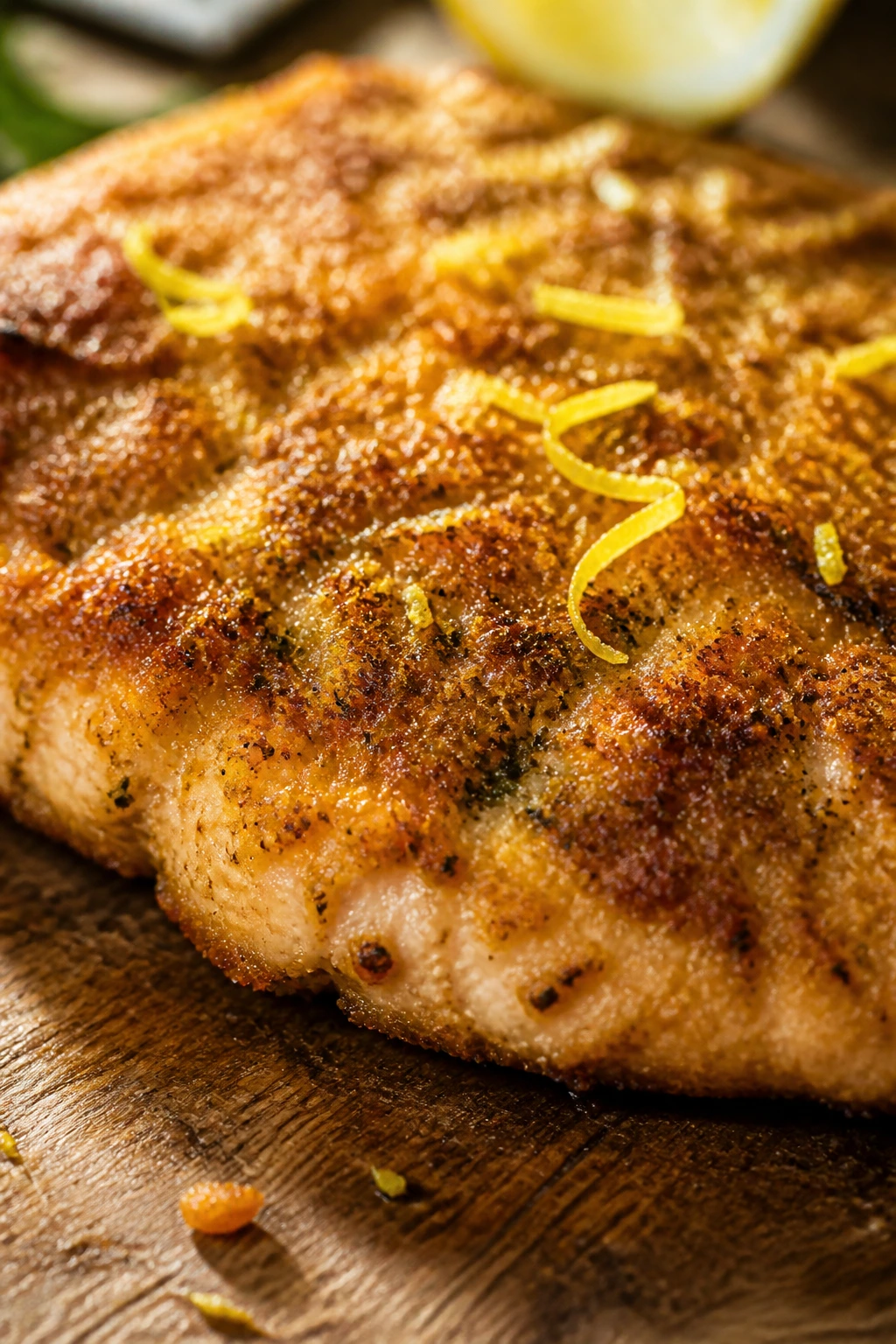
Flavor Enhancement: Stir an extra teaspoon of lemon zest into the breadcrumb mixture if you want the crust to taste brighter. A tiny pinch of flaky salt at the end also wakes the whole plate up, especially if your Parmesan is on the mild side.
Time-Saver: Bread the cutlets earlier in the day and chill them on the rack for up to 4 hours. The coating sets a little, which means less of it stays behind in the skillet, and dinner moves faster once the pan is hot.
Pro Move: Keep one hand for the wet bowl and one hand for the dry bowl. It sounds fussy until you’ve made two cutlets and your fingers look like a panko snowstorm. Clean fingers make cleaner breading.
Cost-Saver: Buy a whole turkey breast when it is priced well and slice it into cutlets yourself. You get more even pieces, and the thinner end of the breast can be used for smaller portions or sliced over salad the next day.
Mistakes That Leave the Crust Pale or Soggy
-
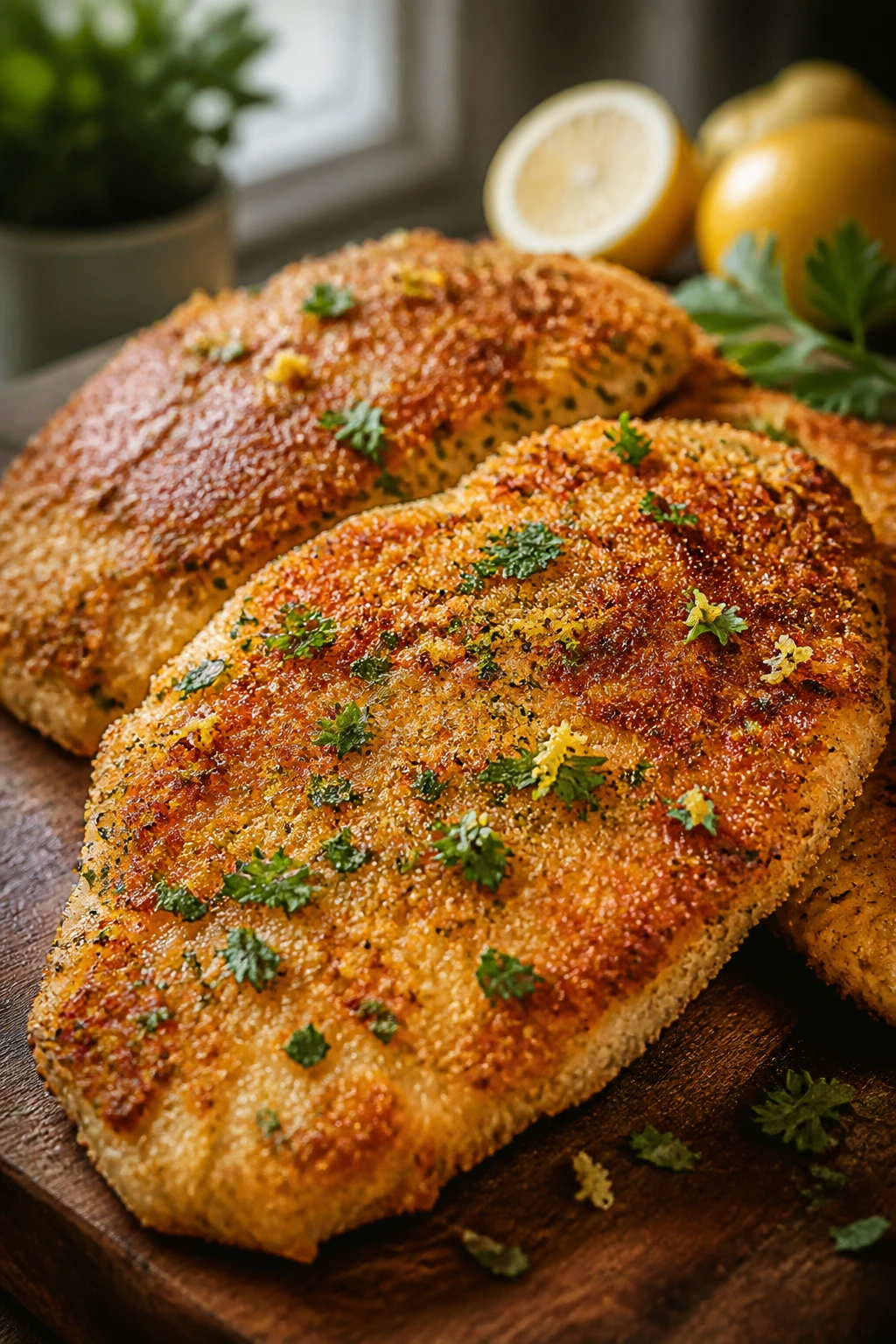
Starting with damp turkey: Moisture is the enemy of browning. If the cutlets go into the flour wet, the coating turns patchy and may slide off in the pan. Pat them dry, then season.
-
A pan that is too cool: If the oil is not shimmering and the butter has not foamed, the breading soaks up fat before it sears. Wait another minute instead of guessing. The crust should sizzle immediately when the turkey lands.
-
Crowding the skillet: Packed cutlets steam each other, and steam softens crumbs fast. Cook in batches if you need to; it is slower by a few minutes and better by a mile.
-
Letting the herb pieces stay too big: Loose rosemary needles and long thyme stems can burn and make the crust taste sharp. Chop the herbs fine, and strip the leaves from woody stems before they go near the crumbs.
-
Cutting too soon: The juices need a minute to settle back into the meat. A 3-minute rest on a rack keeps the cutlet from bleeding onto the plate and pulling steam back into the crust.
Variations for Different Kitchens and Tastes
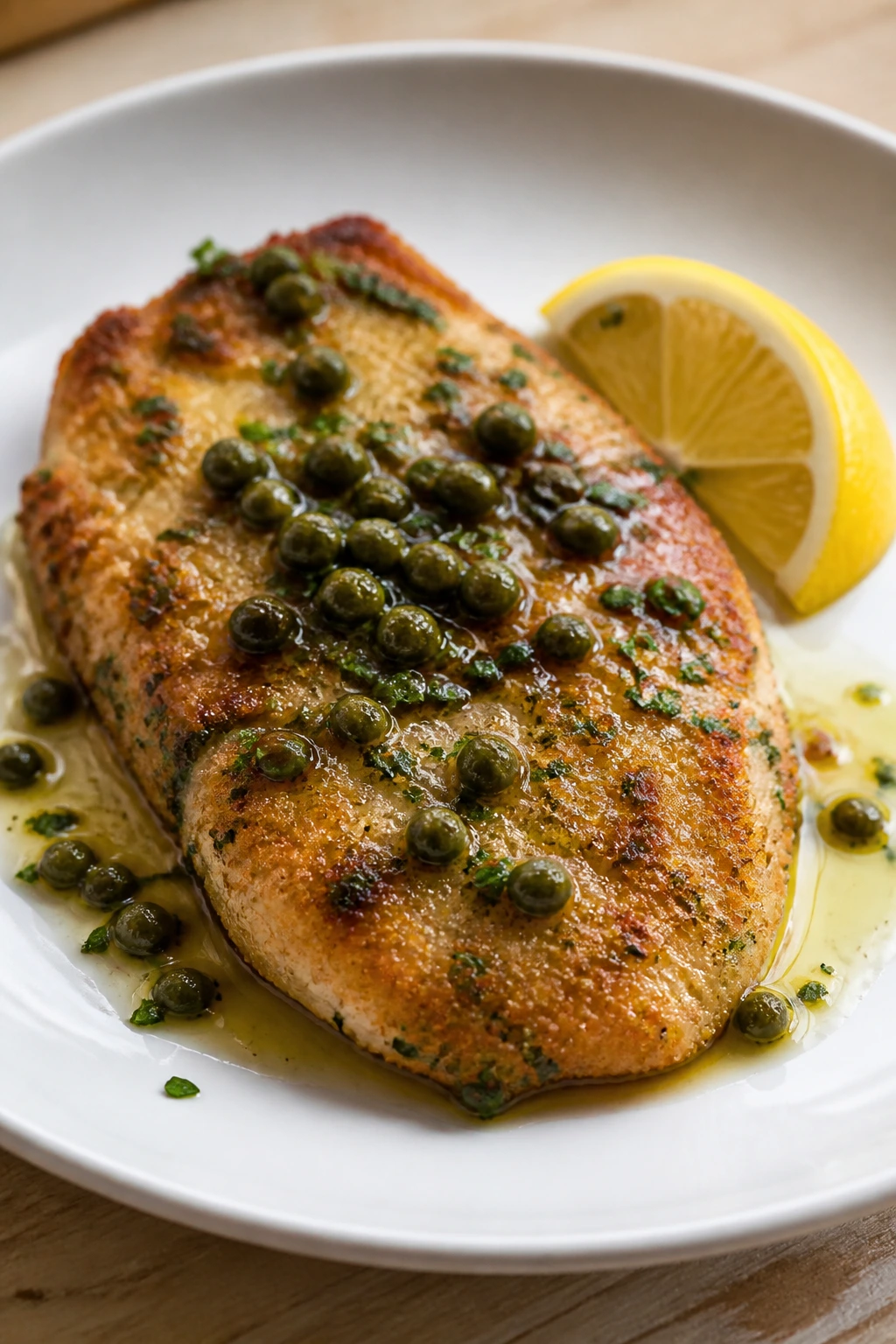
Lemon-Caper Cutlets
Add 1 tablespoon capers to the serving plate and squeeze an extra lemon wedge over the top. The capers give the buttery crust a briny edge that feels sharper and a little more restaurant-like without changing the core method.
Gluten-Free Cornflake Crunch
Swap the flour for rice flour and use crushed gluten-free cornflakes or gluten-free breadcrumbs in place of the panko. Cornflakes make a rougher, louder crunch than standard crumbs, which is not a bad thing here, especially if you like a thinner, craggier crust.
Oven-Crisped Sheet-Pan Version
Set the breaded cutlets on an oiled wire rack over a sheet pan and bake at 425°F for 14 to 16 minutes, flipping once halfway through. Spray the top lightly with oil before baking. The crust will not sound quite as brittle as the skillet version, but it is a clean choice when you do not want to stand at the stove.
Smoky Paprika Herb Turkey
Replace half the paprika with smoked paprika and add a pinch of cayenne to the panko mix. That gives the crust a deeper color and a low, warm heat that plays well with mashed potatoes or roasted carrots.
Storing, Reheating, and Making It Ahead
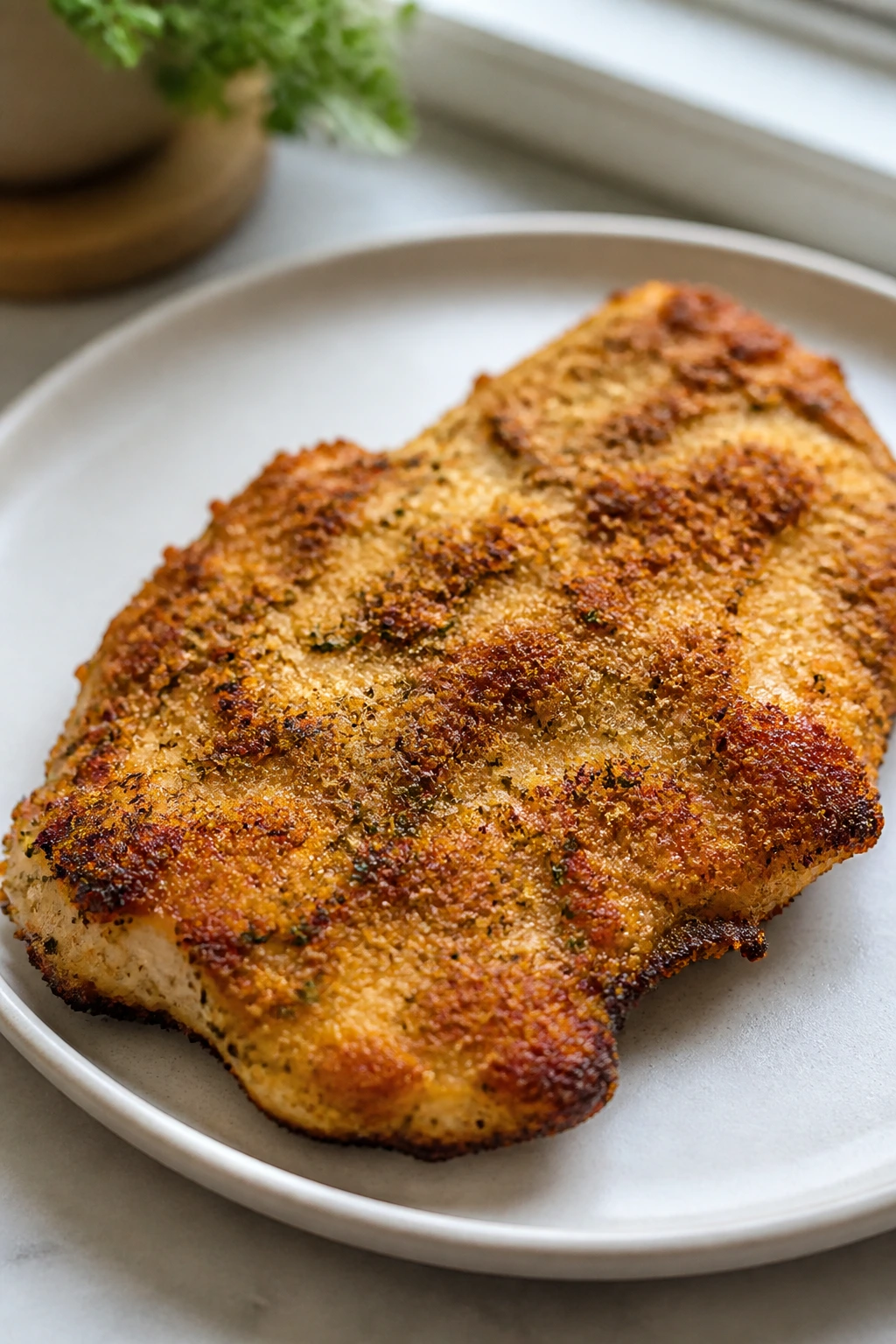
Cooked cutlets keep in the refrigerator for up to 3 days in a shallow airtight container. Let them cool for no more than 2 hours before packing them away; the crust softens if they sit out too long while still warm.
For the best leftover texture, reheat them in a 400°F oven on a wire rack for 8 to 10 minutes, or in an air fryer at 375°F for 5 to 7 minutes. The rack matters. If the cutlets sit flat on a pan, the bottoms go soft before the top has a chance to crisp back up.
The microwave works only if you care more about speed than crust. It heats the turkey fast, but the breading turns limp.
If you want to freeze them, freeze the cooked cutlets between layers of parchment in an airtight container for up to 2 months. Thaw overnight in the refrigerator, then reheat in the oven or air fryer. Raw breaded cutlets can also be frozen on a sheet pan until firm, then wrapped tightly and kept for up to 2 months; thaw them before frying so the crust cooks evenly before the center catches up.
Breaded cutlets can be held in the fridge for up to 4 hours before cooking. After that, the crumbs start to drink in moisture and the crust loses some of its edge. Short resting is good. Overnight is pushing it.
Questions People Ask Before the First Cut
Can I use turkey breast slices instead of cutlets?
Yes, as long as you even out the thickness. If the slice is thick in the middle, pound it gently between parchment until the whole piece is close to 1/2 inch. That keeps the edges from going dry while the center finishes.
Can I bake these instead of frying them?
You can. Bake on a wire rack at 425°F, flip once, and give the top a light spray of oil before it goes in. The crust will be a little drier and less bronzed than the skillet version, but it still gives you a clean, crunchy dinner.
Why does my breading fall off in the pan?
Usually the turkey was wet, the egg wash was too thin, or the cutlets were moved too soon. Dry the meat well, press the crumbs on firmly, and let the breaded cutlets sit for 10 minutes before they hit the skillet.
Can I use dried herbs instead of fresh?
Yes. Use 1 teaspoon dried parsley, 1 teaspoon dried thyme, and 1/2 teaspoon dried rosemary, crushed between your fingers before mixing. Dried rosemary is the one that needs the most help; whole needles can feel prickly and taste harsh.
How do I know the turkey is done?
The safest answer is an instant-read thermometer: 165°F in the thickest part. The crust should be deeply golden, and the juices should run clear when you poke the center with the tip of a knife. If you guess, you usually guess wrong.
Can I freeze the breaded cutlets before cooking?
Yes, but flash-freeze them first on a sheet pan so they hold their shape, then wrap and freeze. Thaw them in the refrigerator before frying. Cooking them from frozen is where the trouble starts — the breading browns before the center is ready.
What side dish keeps this meal from feeling heavy?
A sharp salad does more work than a creamy one here. Arugula, shaved fennel, and a lemon vinaigrette cut through the fried crust and keep the plate lively. If you want a warm side, green beans or peas are the easy move.
A Panful Worth Repeating
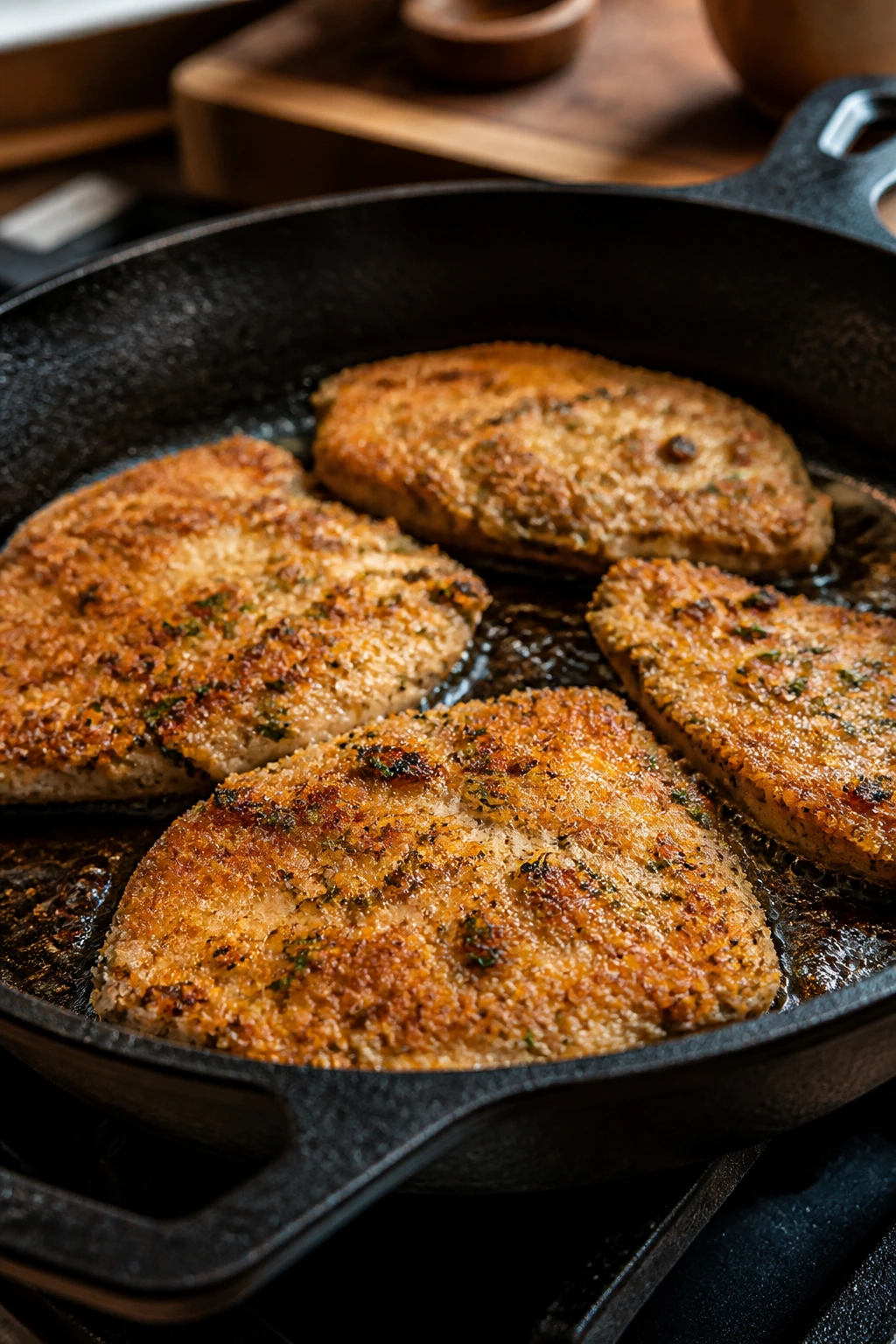
Turkey gets ignored because people treat it like it wants a long roast and a holiday table. It doesn’t. Hand it a thin cut, a seasoned crust, and a hot skillet, and it turns into dinner that feels sharper and more alive than the plain package in the fridge suggests.
The nicest part is how little ceremony this needs once you’ve made it once. The breading station goes fast, the cook time stays short, and the leftovers hold up if you reheat them with some care. The next time a tray of turkey cutlets looks a little boring, you already know exactly where it’s headed.
Crispy Herb Turkey for Weeknight Dinners — Recipe Card
Recipe Name: Crispy Herb Turkey for Weeknight Dinners
Description: Thin turkey cutlets get a lemon-herb panko crust and a quick pan fry, which gives you crisp edges, a juicy center, and a dinner that lands on the table fast. The skillet does most of the work.
Prep Time: 20 minutes
Cook Time: 14 minutes
Total Time: 34 minutes
Course: Main Course
Cuisine: American
Servings: 4 servings
Calories: About 430 kcal per serving
Ingredients
For the Turkey:
- 1 1/2 pounds turkey breast cutlets, about 4 pieces and roughly 1/2 inch thick
- 1 teaspoon kosher salt
- 1/2 teaspoon black pepper
- 1 teaspoon garlic powder
- 1 teaspoon onion powder
For the Breading Station:
- 1/2 cup all-purpose flour
- 1/4 teaspoon kosher salt
- 2 large eggs
- 1 tablespoon Dijon mustard
- 2 tablespoons milk
- 1 1/2 cups panko breadcrumbs
- 1/2 cup finely grated Parmesan cheese
- 2 tablespoons finely chopped fresh parsley
- 1 tablespoon finely chopped fresh thyme
- 1 teaspoon finely chopped fresh rosemary
- 1 teaspoon lemon zest
- 1/2 teaspoon paprika
For Cooking and Serving:
- 3 tablespoons olive oil
- 2 tablespoons unsalted butter
- Lemon wedges, for serving
Instructions
-
Pat the turkey cutlets dry, and pound any uneven pieces to about 1/2 inch thick. Season both sides with the salt, pepper, garlic powder, and onion powder.
-
Set out three shallow dishes: flour in the first, eggs whisked with Dijon and milk in the second, and panko, Parmesan, parsley, thyme, rosemary, lemon zest, paprika, and salt in the third.
-
Dredge each cutlet in flour, dip in the egg mixture, then press firmly into the crumb mixture. Set the breaded cutlets on a rack and rest for 10 minutes if you can.
-
Heat the olive oil and butter in a large skillet over medium to medium-high heat until the butter foams and the foam starts to settle.
-
Cook the cutlets in a single layer for 3 to 4 minutes per side, until deep golden and the thickest part reaches 165°F.
-
Transfer to a wire rack, rest for 3 minutes, then finish with lemon wedges and serve hot.
Notes: Resting the breaded cutlets helps the crust stick; do not crowd the skillet; reheat leftovers in a 400°F oven or air fryer for the best crunch.