



Chicken can be dull in the wrong hands. Give it the right heat, a smart marinade, and a minute of patience at the end, and it turns into the kind of dinner that smells like garlic, paprika, lemon peel, and browned onions the second it leaves the grill.
This roasted-style grilled chicken is built for the nights when you want dinner to feel cooked, not assembled. The flavor leans savory and warm, almost like a roast chicken that took a shortcut through a hot grill on its way to the table. I like chicken thighs here because they stay juicy when the grill runs a little fierce, and they forgive the kind of distracted cooking that happens when rice is on one burner and a salad is getting hacked together on the counter.
The marinade does most of the heavy lifting. Smoked paprika gives the edges a brick-red color and a faint campfire note, Dijon adds bite, lemon wakes everything up, and a little soy sauce deepens the savory finish so the chicken tastes more rounded than plain grilled poultry ever does. It’s the difference between “we cooked chicken” and “this actually tastes like dinner.”
The trick is not fancy. It’s heat control, even pieces, and pulling the chicken before your nerves tell you to keep going. That last part matters more than most people think.
Why This Chicken Earns Its Spot on the Weeknight Table
Roast-like flavor without turning on the oven: Smoked paprika, thyme, rosemary, Dijon, and lemon give you that browned, savory depth people associate with a roast, but the grill gets you there in about 15 minutes of actual cooking.
Juicy enough to slice, shred, or pile into bowls: Boneless chicken thighs stay tender even if the grill hits a little hotter than planned, which is a real blessing when dinner needs to happen between 6:00 and a phone call.
Short ingredient list, long payoff: Every item in the marinade has a job. Nothing sits there for decoration, and nothing needs a specialty-store trip.
Works with real weeknight side dishes: Rice, couscous, potatoes, green beans, salad, toasted pita—this chicken plays well with whatever you already have in the kitchen.
Leftovers don’t feel like a punishment: The flavor gets even better the next day when the spices settle in, and sliced leftovers hold up well in wraps and grain bowls.
Easy to scale up or down: Double the batch for a bigger crowd or half it for two people, and the method doesn’t change. That makes life easier than it should be.
A Quick Look at Yield, Timing, and Difficulty
Yield: Serves 4
Prep Time: 15 minutes
Cook Time: 12 to 15 minutes
Total Time: 47 to 52 minutes, including the minimum marinating and resting time
Difficulty: Beginner — the method is straightforward, but an instant-read thermometer keeps the chicken from going dry.
Chill/Rest Time: 20 minutes minimum marinating time, or up to 8 hours for deeper flavor; 5 minutes resting after grilling
Best Served: Warm, right off the grill, with the juices still glistening on the cutting board
What Goes Into the Marinade and Why It Tastes So Deep
I keep this ingredient list tight on purpose. Grilled chicken can get muddy fast when the marinade turns into a junk drawer of spices. This one stays focused: savory, bright, a little smoky, and built for browning.
For the Chicken
- 2 pounds boneless, skinless chicken thighs
- 1 teaspoon kosher salt, if your soy sauce is low-sodium
- 1/2 teaspoon black pepper
For the Marinade
- 3 tablespoons olive oil
- 1 tablespoon Dijon mustard
- 1 tablespoon fresh lemon juice
- 1 teaspoon finely grated lemon zest
- 1 tablespoon low-sodium soy sauce or tamari
- 1 teaspoon honey or packed light brown sugar
- 2 teaspoons smoked paprika
- 1 teaspoon garlic powder
- 1 teaspoon onion powder
- 1 teaspoon dried thyme
- 1/2 teaspoon dried rosemary, crushed between your fingers
- 1/4 teaspoon cayenne pepper, optional
For Serving
- 1 tablespoon chopped fresh parsley
- Lemon wedges
Main Protein
What to use: 2 pounds boneless, skinless chicken thighs. They’re the sweet spot here because they stay juicy after a hot grill, and they carry the marinade better than leaner cuts.
Preparation: Pat the thighs dry with paper towels and trim off any loose, floppy bits of fat. If some pieces are noticeably thicker than others, give the thickest spots a light press so the batch cooks more evenly.
Substitutions: Boneless skinless chicken breasts can work, but pound them to an even 3/4-inch thickness and start checking early. If you like dark meat with the bone in, split thighs can be used too, though they’ll need longer and a cooler finish zone on the grill.
Tips: Pick thighs of similar size if you can. A mixed batch can leave you with one piece that’s done and another that still needs a minute, which is how dry chicken starts.
Marinade Base
What to use: 3 tablespoons olive oil, 1 tablespoon Dijon mustard, 1 tablespoon lemon juice, 1 teaspoon lemon zest, 1 tablespoon low-sodium soy sauce or tamari, and 1 teaspoon honey or light brown sugar.
Preparation: Whisk these together until the honey dissolves and the mixture looks glossy, not streaky. That gloss helps the spices cling instead of puddling at the bottom of the bowl.
Substitutions: Apple cider vinegar can replace the lemon juice in a pinch, though the flavor will be sharper. Maple syrup can stand in for the honey if you want a slightly rounder finish.
Tips: The lemon amount stays modest on purpose. Too much acid can start to tighten the meat before it even hits the grill, and then you’ve got the faintly rubbery texture nobody wants.
Spice Blend
What to use: 2 teaspoons smoked paprika, 1 teaspoon garlic powder, 1 teaspoon onion powder, 1 teaspoon dried thyme, 1/2 teaspoon dried rosemary, 1/2 teaspoon black pepper, and 1/4 teaspoon cayenne if you like a little heat.
Preparation: Mix the dry spices in a small bowl before they hit the marinade. That keeps the paprika from clumping and helps the rosemary distribute instead of hiding in one lucky bite.
Substitutions: Regular paprika works if that’s what you have, but the smoked kind gives the chicken its roasted depth. If you’re out of rosemary, dried oregano can fill the gap without making the flavor feel off.
Tips: Crush the rosemary lightly between your fingers before adding it. Whole flakes can taste woody after grilling, and crushed rosemary melts into the marinade more cleanly.
Finishing Touches
What to use: Chopped parsley and lemon wedges.
Preparation: Chop the parsley fine enough that it falls evenly over the chicken instead of landing in clumps. Cut the lemon wedges just before serving so the juice stays bright.
Substitutions: Cilantro can work if that’s what you keep around, though it steers the flavor a little more southwest. Chives are also good when you want a softer, oniony finish.
Tips: Keep a small spoonful of olive oil and lemon juice mixed together for drizzling after the chicken rests. That little finish makes the plate taste fresher and keeps the surface from looking dry under the lights.
Tools That Make the Grill Job Easier
- Outdoor grill or grill pan: Either one works. A gas grill gives you easier heat control, while a heavy grill pan gives you the same char marks indoors.
- Instant-read thermometer: This is the one tool that keeps grilled chicken honest. Color can fool you; temperature cannot.
- Large mixing bowl or zip-top bag: A bowl is easier to clean if you’re tossing the chicken by hand, but a bag is handy for marinating in the fridge.
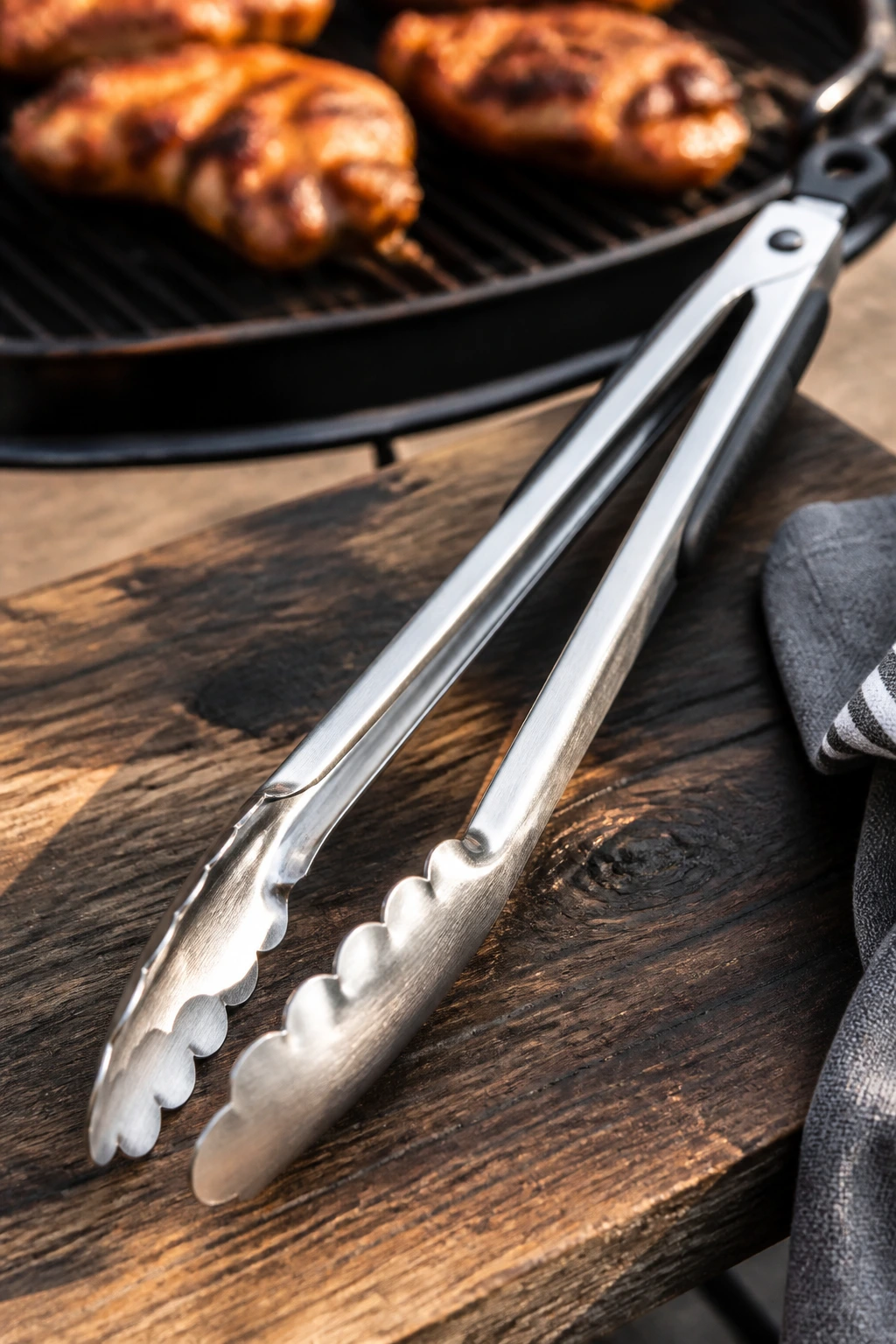
- Tongs: Long tongs let you flip without tearing the surface of the chicken or jabbing holes that let the juices run out.
- Paper towels: Dry chicken sears better and picks up more flavor from the marinade.
- Small whisk: Useful for blending the marinade so the honey and mustard disappear into the oil instead of separating.
- Sheet pan or platter: Let the chicken rest on something with a rim so the juices don’t spill across the counter.
- Basting brush, optional: Handy if you want to brush the chicken with a little reserved finishing oil and lemon after grilling.
How to Grill It Without Drying It Out
Prep the Chicken and Marinade
-
Pat the chicken thighs dry with paper towels and trim away any loose fat. If the pieces are very large, flatten the thickest spots gently so they’re closer in thickness.
-
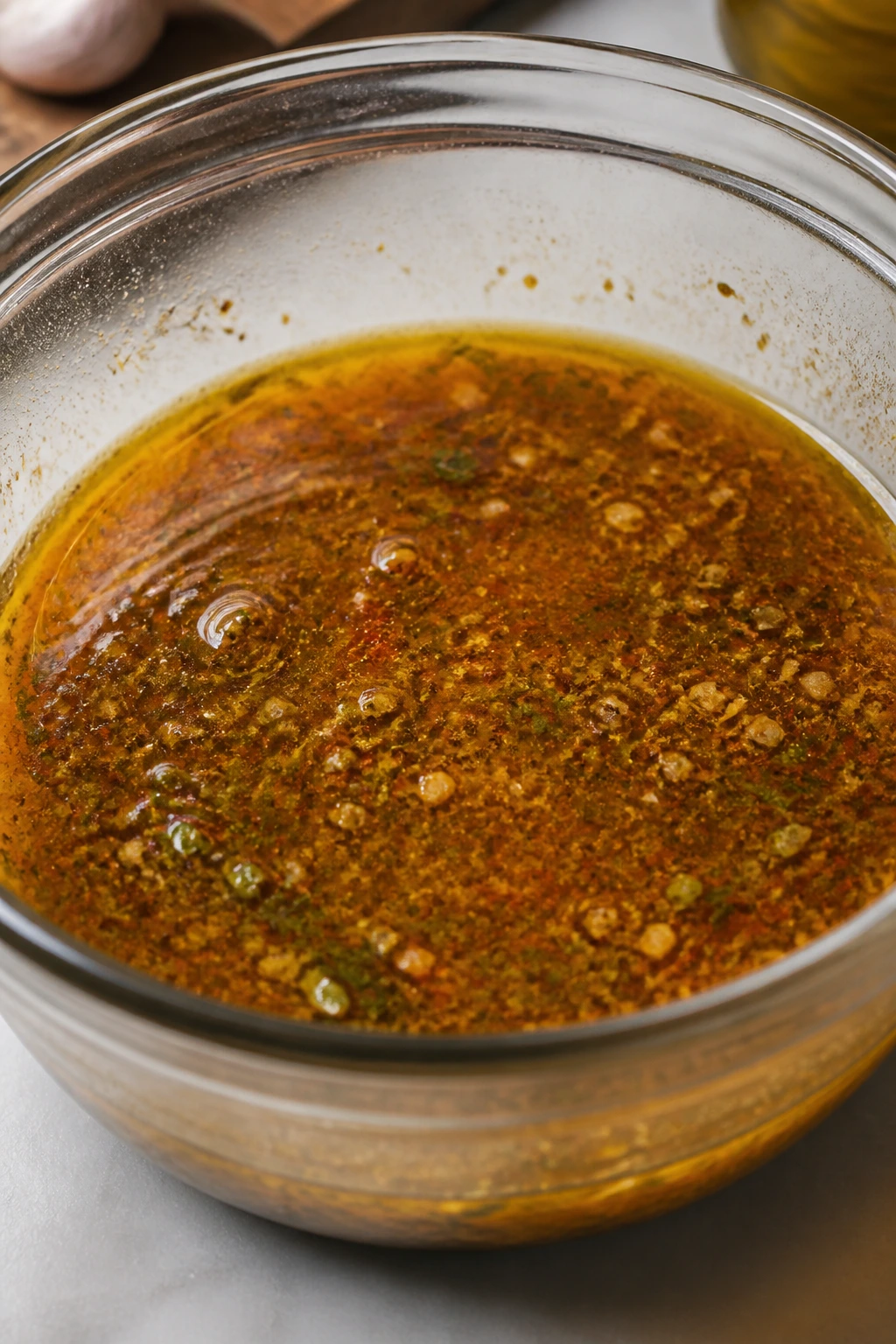
In a medium bowl, whisk together the olive oil, Dijon mustard, lemon juice, lemon zest, soy sauce, honey, smoked paprika, garlic powder, onion powder, thyme, rosemary, black pepper, and cayenne if using. Whisk until the marinade looks smooth and glossy, with no dry spice pockets hiding at the bottom.
-
Add the chicken thighs and turn them until every surface is coated. Let them marinate for at least 20 minutes at room temperature if you’re grilling soon, or cover and refrigerate for up to 8 hours if you want a deeper flavor. If the chicken has been in the fridge more than 20 minutes, let it sit out for about 15 minutes before grilling so it cooks more evenly.
Get the Grill Hot and Ready
-
Preheat an outdoor grill or grill pan over medium-high heat, about 425°F to 450°F. Scrub the grates clean, then oil them lightly with a paper towel dipped in neutral oil. Clean grates matter here—sticky grates can tear the surface before the chicken forms a crust.
-
Let excess marinade drip off the chicken, but do not wipe it completely clean. You want the seasoning to stay on the surface, but too much wet marinade can cause flare-ups and blackened sugar spots.
Grill and Finish
-
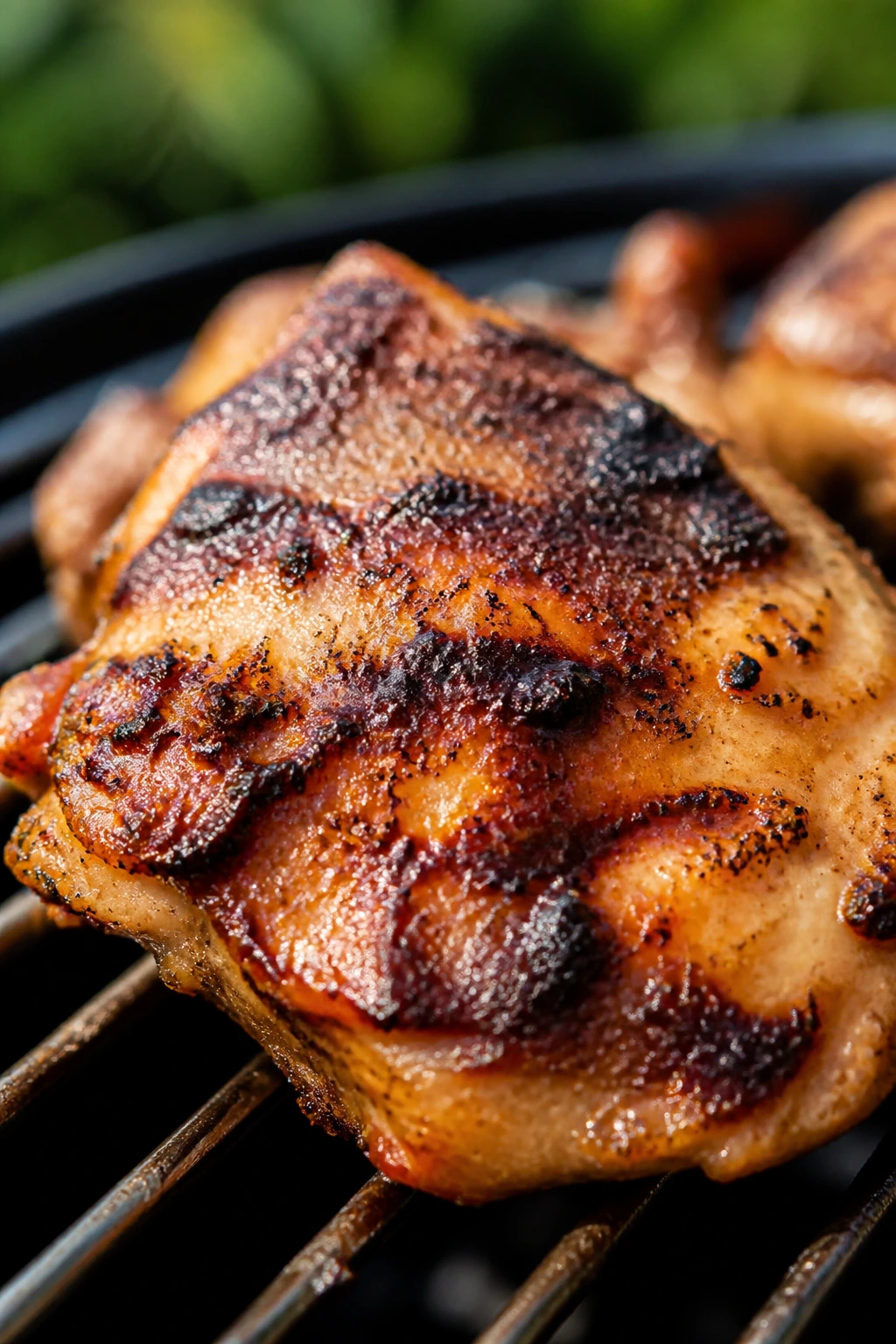
Place the chicken on the hot grill and cook for 5 to 6 minutes on the first side without moving it. Flip once the chicken releases easily and you can see clear grill marks. Cook for another 4 to 6 minutes on the second side, until the thickest part reaches 160°F to 162°F. If the flames leap up, move the chicken to a cooler part of the grill for a minute instead of jabbing at it.
-
Transfer the chicken to a clean platter and rest for 5 minutes. The temperature will climb to 165°F while the juices settle back into the meat. Finish with chopped parsley and a squeeze of lemon, then serve while the edges are still a little crisp.
The Best Ways to Plate It on a Weeknight
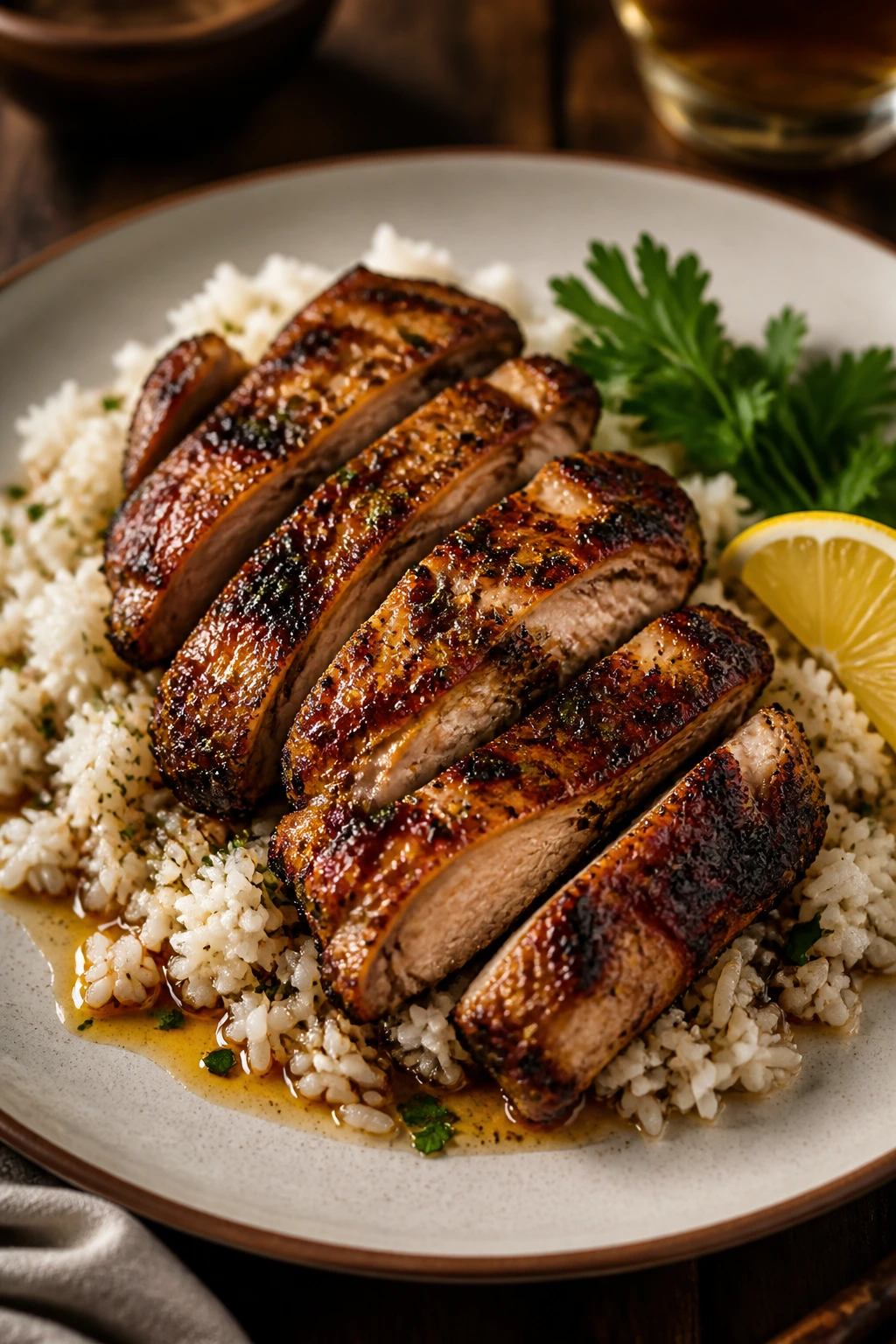
Presentation: Slice the thighs on a slight bias and fan them over rice, couscous, or a pile of garlicky potatoes. Spoon any resting juices over the top so the plate looks glossy and the chicken doesn’t seem bare.
Accompaniments: I like this with roasted green beans, blistered cherry tomatoes, a simple cucumber salad, or buttery corn. If you want something more substantial, add pita, warm naan, or a bowl of herbed rice that catches the juices.
Portions: Plan on about 1/2 pound of raw chicken per adult, which usually lands at 2 thighs for a smaller serving or 3 for a bigger one. For lighter appetites, slice the chicken thinner and stretch it across grains or vegetables.
Beverage Pairing: A cold pilsner, a dry sauvignon blanc, or sparkling water with lemon all work because the marinade has enough citrus and smoke to keep things lively. I’d keep the drink crisp rather than heavy.
Small Moves That Make a Big Difference
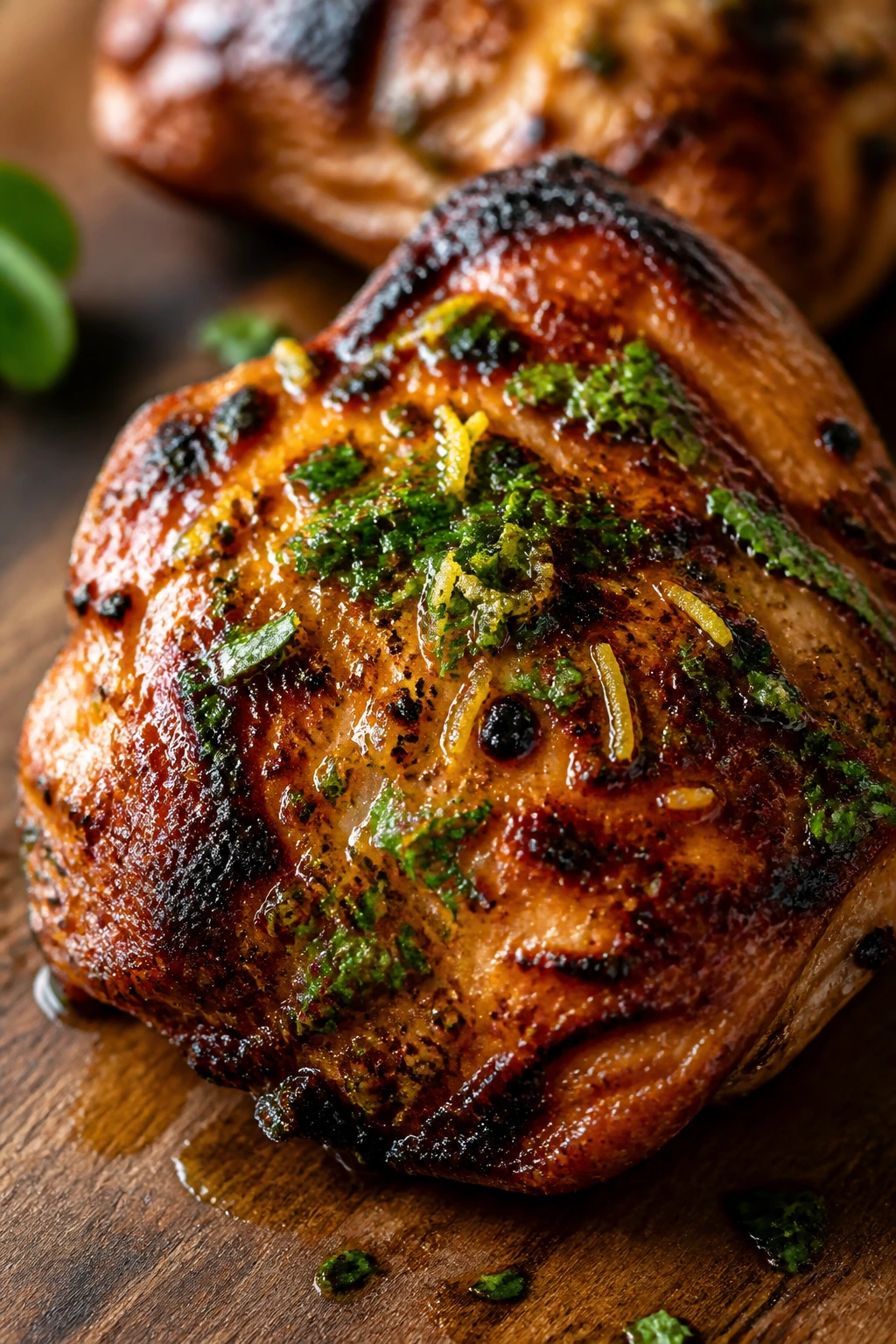
Flavor Enhancement: Save a spoonful of olive oil, parsley, and lemon juice in a tiny bowl and drizzle it over the chicken right before serving. That fresh finish wakes up the smoky surface and keeps the herbs from getting lost under the grill flavor.
Time-Saver: Mix the marinade in the morning and leave the chicken in the fridge until dinner. By the time you light the grill, most of the work is already done, and you’re really just waiting on heat.
Pro Move: Pull the chicken at 160°F to 162°F, not after you’ve already convinced yourself it looks “done enough.” The rest time finishes the job. That small temperature gap is the difference between juicy and stringy.
Cost-Saver: Buy thighs in the larger family pack and freeze half in the marinade. They thaw with the flavor already built in, which is a nice trick when you don’t want to start from scratch on a busy night.
Mistakes That Turn Juicy Chicken Stringy
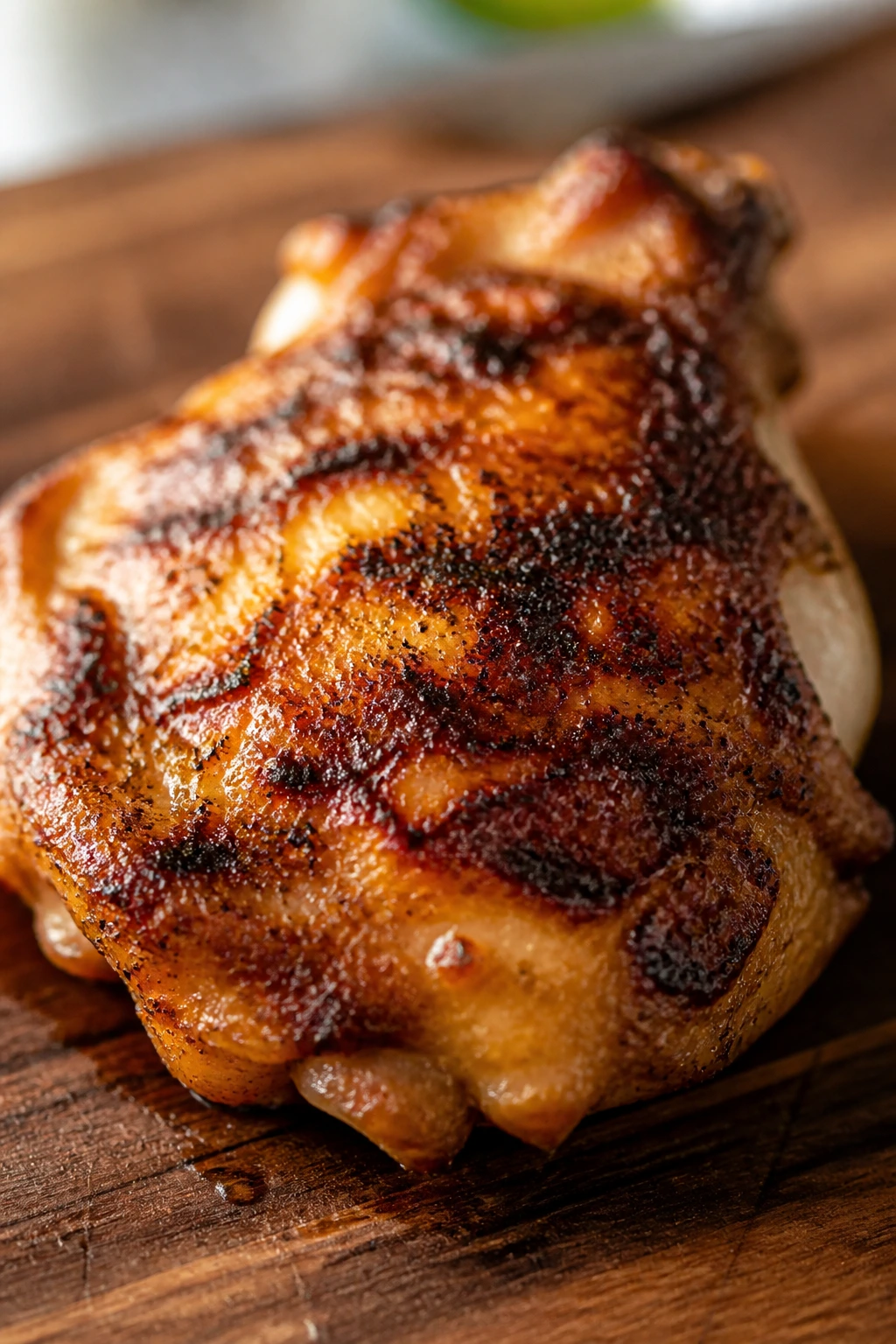
Marinating too long in an acid-heavy mix: The lemon in this recipe is kept in check for a reason. If the chicken sits in too much acid for too many hours, the outside can turn a little mealy. Stick to the given lemon amount and cap the marinating time at 8 hours.
Cooking over a grill that isn’t hot enough: If the grates are lukewarm, the chicken steams and clings. The symptom is pale, soft chicken with weak grill marks. Fix it by preheating until the grill is properly hot and the grates are clean and lightly oiled.
Flipping too early: If you force the chicken off the grate, you’ll tear the surface and lose those browned bits that carry the flavor. Wait until it releases on its own; that usually means the crust has set.
Trusting color instead of temperature: Chicken can look done on the outside long before it’s safe to eat. The only dependable fix is an instant-read thermometer in the thickest piece.
Skimping on the rest: Cut the chicken too soon and the juices spill onto the platter instead of staying in the meat. Five minutes feels short, but it does a lot of work here.
Crowding the grill: If the pieces are jammed together, the heat drops and the surfaces won’t brown well. Leave a little space so each thigh gets direct heat and a decent crust.
Flavor Swaps and Weeknight Variations
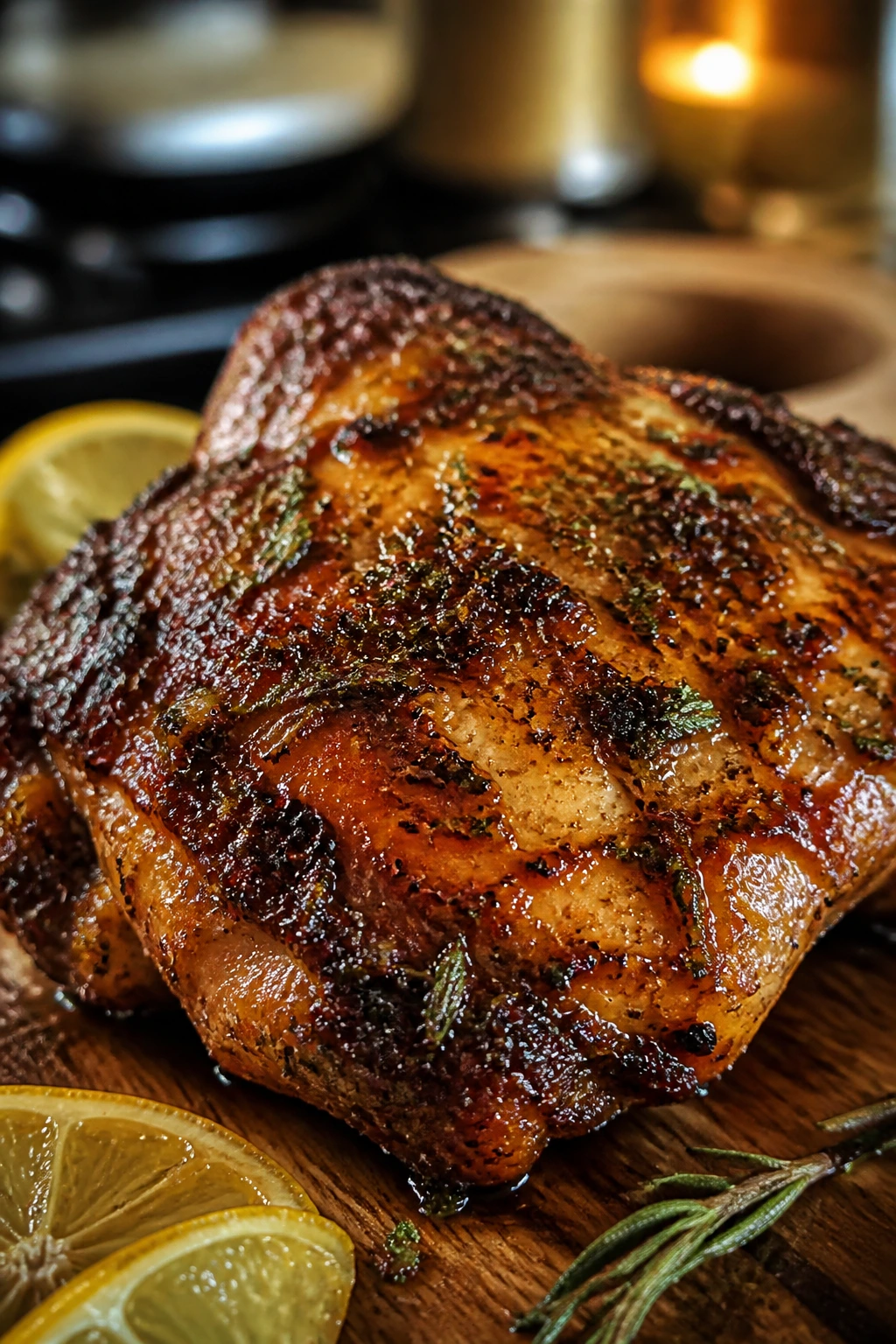
Lemon-Herb Bright Version: Add an extra teaspoon of lemon zest and swap the cayenne for 1 teaspoon dried oregano. This version tastes fresher and a little greener, which is nice with rice and chopped tomatoes.
Smoky Chipotle Version: Replace the cayenne with 1/2 teaspoon chipotle powder and add 1/2 teaspoon ground cumin. The chicken picks up a deeper smoke and a little slow-burn heat that works especially well with corn or black beans.
Honey-Mustard Roast-Style Version: Increase the Dijon to 2 tablespoons and the honey to 2 teaspoons. That gives the chicken a sweeter, more glazed finish that tastes close to a mustard-roasted bird after it hits the grill.
Oven-Broiler Backup: If the weather refuses to cooperate, line a sheet pan with foil, set the chicken on a rack, and broil it 6 inches from the heat source for about 5 to 6 minutes per side. Watch it closely; broilers can burn the sugar in the marinade fast.
Breast Meat Adjustment: Use boneless chicken breasts instead of thighs, but pound them to even thickness and cut the grill time by a minute or two. Pull them the moment they hit 160°F, because breasts dry out faster and punish hesitation.
Storing, Reheating, and Making It Ahead
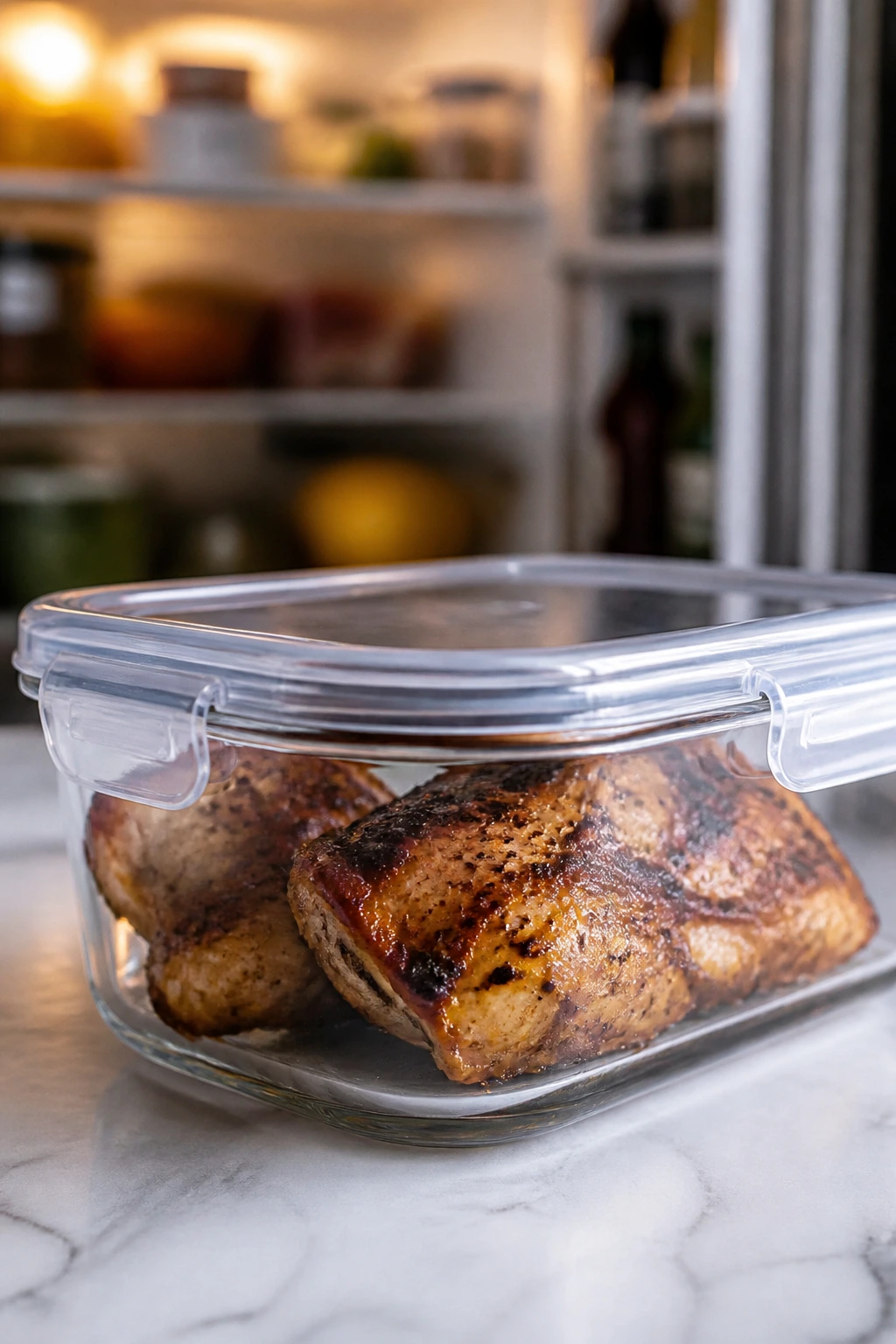
Cool the chicken within 2 hours of cooking and tuck it into an airtight container. It keeps in the refrigerator for 3 to 4 days, and the flavor usually settles in nicely by the next day. The chicken can be frozen after cooking for up to 2 months, though I prefer to slice it first so it reheats more evenly.
Raw chicken can also be frozen in the marinade for up to 2 months. That’s a good make-ahead move if you want a backup dinner in the freezer. Thaw it in the refrigerator overnight, then cook it within 24 hours of thawing.
For reheating, the skillet method gives the best texture. Set the chicken in a covered skillet over medium-low heat with a teaspoon or two of water, then warm it for 4 to 6 minutes until heated through. The oven works too: cover the chicken with foil and heat at 325°F for about 10 to 12 minutes.
Microwaving is the fast option, but use 50% power in short bursts so the edges don’t turn leathery before the center warms. If the chicken has been sliced, it reheats more gently than whole pieces. Serve leftovers with a fresh squeeze of lemon or a spoonful of yogurt sauce to bring the flavor back to life.
Questions People Ask Before They Fire Up the Grill
Can I use chicken breasts instead of thighs?
Yes, but breasts need more care. Pound them to an even thickness and start checking early, because the lean meat dries out fast once it goes past 165°F.
How long should I marinate the chicken?
Twenty minutes is enough to season the surface, and 4 to 8 hours gives the spices more time to settle in. Past that, the lemon starts to take up too much space in the texture.
Do I need an outdoor grill for this recipe?
No. A heavy grill pan over medium-high heat works well, and a broiler can stand in when weather or equipment gets in the way. The flavors still land the same way as long as you brown the outside.
What internal temperature should grilled chicken reach?
Aim for 165°F in the thickest part, but I usually pull it at 160°F to 162°F and let the rest time finish the climb. That keeps the meat from overcooking while it rests.
How do I keep the chicken from sticking to the grates?
Start with a clean, hot grate and lightly oiled chicken. If the meat resists when you try to flip it, give it another minute; sticking often means the crust hasn’t set yet.
Can I freeze the raw chicken in the marinade?
Yes. Freeze it in a freezer bag for up to 2 months, then thaw it in the refrigerator overnight. The marinade keeps working as it thaws, which is handy when dinner needs to be waiting in the wings.
What if the outside is browning too quickly before the inside is done?
Move the chicken to a cooler part of the grill or lower the heat a little and close the lid. That slows the surface color without losing the char you already built.
The Dinner You’ll Reach For Again
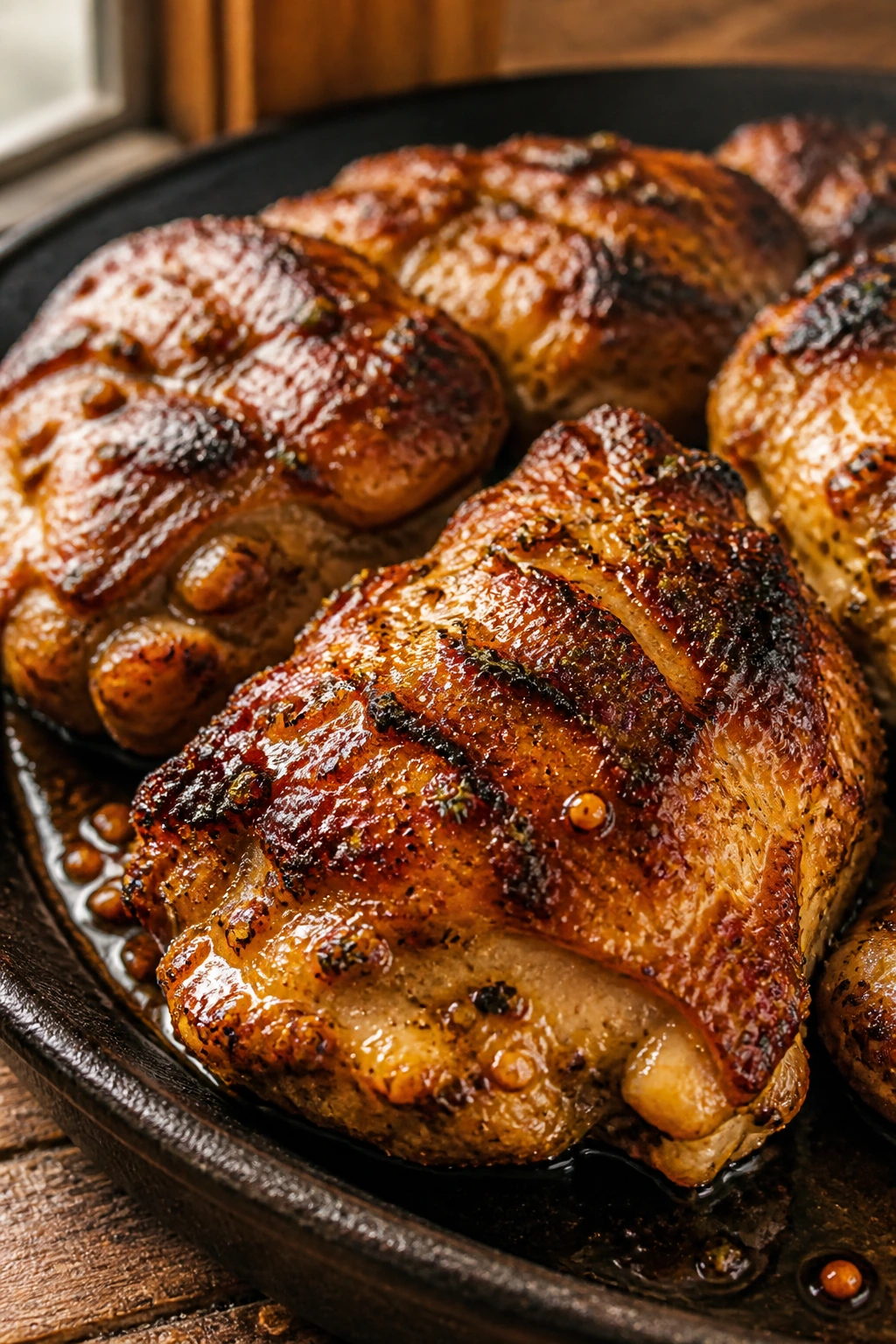
The nicest thing about this chicken is how little drama it asks for. A few pantry spices, a little citrus, a hot grill, and one thermometer reading later, you’ve got dinner that tastes like someone planned it instead of rushed through it. That’s a useful trick on a busy night.
I also like that it doesn’t lean on tricks. No heavy sauce. No long brine. No complicated finishing move. Just good browning, a marinade that knows when to stop, and the small discipline of letting the chicken rest before you cut into it.
Make it once, and you’ll probably start keeping smoked paprika and boneless thighs in regular rotation. They earn their place fast.
Roasted Flavorful Grilled Chicken — Recipe Card
Recipe Name: Roasted Flavorful Grilled Chicken
Description: Juicy grilled chicken thighs marinated with Dijon, lemon, smoked paprika, garlic, thyme, and soy sauce for a browned, roast-style flavor that works well on busy nights.
Prep Time: 15 minutes
Cook Time: 12 to 15 minutes
Total Time: 47 to 52 minutes, including the minimum marinating and resting time
Course: Main Course
Cuisine: American
Servings: 4 servings
Calories: About 340 kcal per serving
Ingredients
For the Chicken
- 2 pounds boneless, skinless chicken thighs
- 1 teaspoon kosher salt, if needed
- 1/2 teaspoon black pepper
For the Marinade
- 3 tablespoons olive oil
- 1 tablespoon Dijon mustard
- 1 tablespoon fresh lemon juice
- 1 teaspoon finely grated lemon zest
- 1 tablespoon low-sodium soy sauce or tamari
- 1 teaspoon honey or packed light brown sugar
- 2 teaspoons smoked paprika
- 1 teaspoon garlic powder
- 1 teaspoon onion powder
- 1 teaspoon dried thyme
- 1/2 teaspoon dried rosemary, crushed
- 1/4 teaspoon cayenne pepper, optional
For Serving
- 1 tablespoon chopped fresh parsley
- Lemon wedges
Instructions
-
Pat the chicken thighs dry and trim loose fat.
-
Whisk together the olive oil, Dijon, lemon juice, lemon zest, soy sauce, honey, smoked paprika, garlic powder, onion powder, thyme, rosemary, black pepper, and cayenne if using.
-
Add the chicken and turn to coat. Marinate for at least 20 minutes, or refrigerate up to 8 hours.
-
Preheat the grill or grill pan to medium-high, about 425°F to 450°F. Oil the grates lightly.
-
Grill the chicken for 5 to 6 minutes on the first side, then flip and cook 4 to 6 minutes more until the thickest part reaches 160°F to 162°F.
-
Rest for 5 minutes, then finish with parsley and lemon wedges.
Notes: For the best texture, do not over-marinate past 8 hours. Pull the chicken a little early and let carryover heat finish the job. If you want a make-ahead option, freeze the raw chicken in the marinade for up to 2 months.