



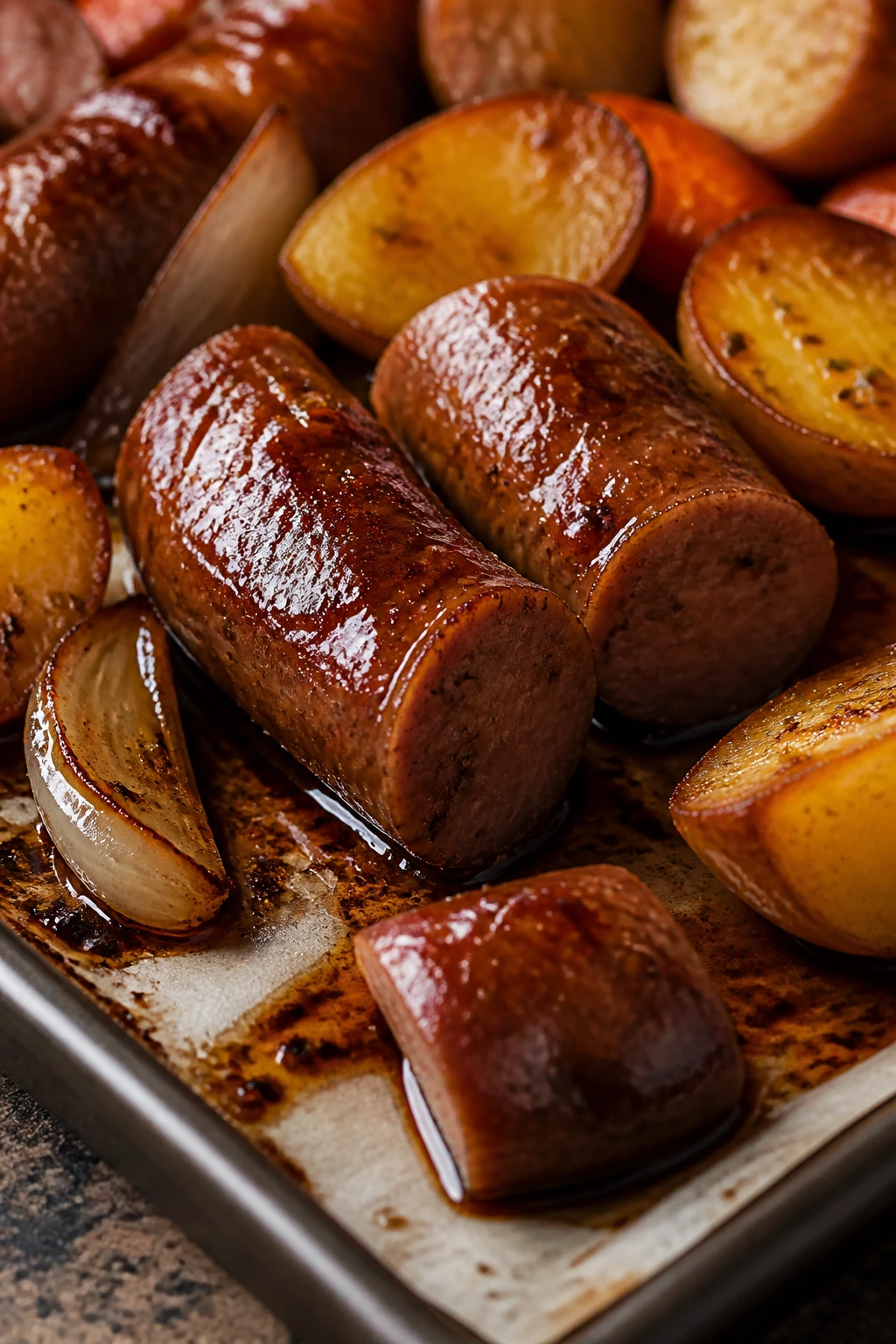
Smoky sausage, bronzed potatoes, and a brown sugar glaze that goes glossy instead of cloying — that’s the combination that makes this kind of dinner worth pulling into a hot oven. When the heat is right, the sausage edges tighten up and take on a little chew, the potatoes pick up a crackly cut-side crust, and the glaze settles into a thin lacquer that clings without drowning anything. It smells like caramelized onion, browned pork, and a hint of mustard cutting through the sweetness.
The trick is not to throw everything on the pan at once. That’s the easiest way to end up with soft potatoes, pale sausage, and a glaze that tastes sugary but somehow flat. Give the potatoes a head start. Keep the glaze thin. Let the oven do the browning before the sugar shows up in a big way.
That’s the whole game here: crisp edges first, sticky shine last. Once you get that sequence right, the dinner starts eating like more than the sum of its parts.
Why This Sausage Dinner Works So Well
-
Crispness comes from timing, not luck: The potatoes roast first at 425°F, so their cut sides can dry out and take color before the sausage and glaze arrive.
-
The glaze stays balanced, not candy-sweet: Brown sugar, Dijon, apple cider vinegar, and soy sauce give you sweet, sharp, salty, and savory in one thin coating.
-
The pan does real work: Sausage fat runs onto the potatoes and vegetables, which means the tray seasons itself as it goes.
-
Nothing here needs fussy prep: You’re cutting potatoes, halving Brussels sprouts, and slicing sausage into coins. That’s it. No marinade, no dredging, no breading station.
-
The leftovers hold up better than most sheet-pan dinners: The sausage stays juicy, and the glaze gets a little thicker in the fridge, which makes reheated bites taste more concentrated.
-
It scales cleanly: A second sheet pan is all you need if you’re feeding more people. The method doesn’t change, and that’s a gift on a tired night.
The Brown Sugar Glaze That Makes the Whole Pan Shine
Brown sugar on sausage sounds like it ought to drift too far toward sweet. It doesn’t, at least not when the glaze is built the right way. The sugar is only one part of the story. Dijon gives it a little bite, vinegar keeps it from tasting heavy, and soy sauce pulls the whole thing back toward savory territory. The result is less like frosting and more like a thin, shiny coat that sticks to browned edges.
I like dark brown sugar here because the molasses note tastes deeper once it hits hot sausage and roasted vegetables. Light brown sugar works, but it comes off flatter, especially if your sausage is already mild. Dark brown sugar gives you that faint toffee smell the moment the glaze hits the pan. It’s a small difference. You notice it.
The other thing worth saying: glaze is not sauce in this recipe. Sauce wants volume. Glaze wants restraint. If you pour too much on too early, the pan gets sticky in the bad way — the sugar can darken before the potatoes finish, and the bottom can go bitter. Brush it on late, in a thin layer, and let the oven make it cling.
One more thing. This is the same logic that makes a baked ham glaze work. The sweetness is there to burnish the surface, not turn dinner into dessert. You want a little gloss, a little crackle at the edges, and enough acid to keep each bite awake.
Yield, Timing, and Pan Setup
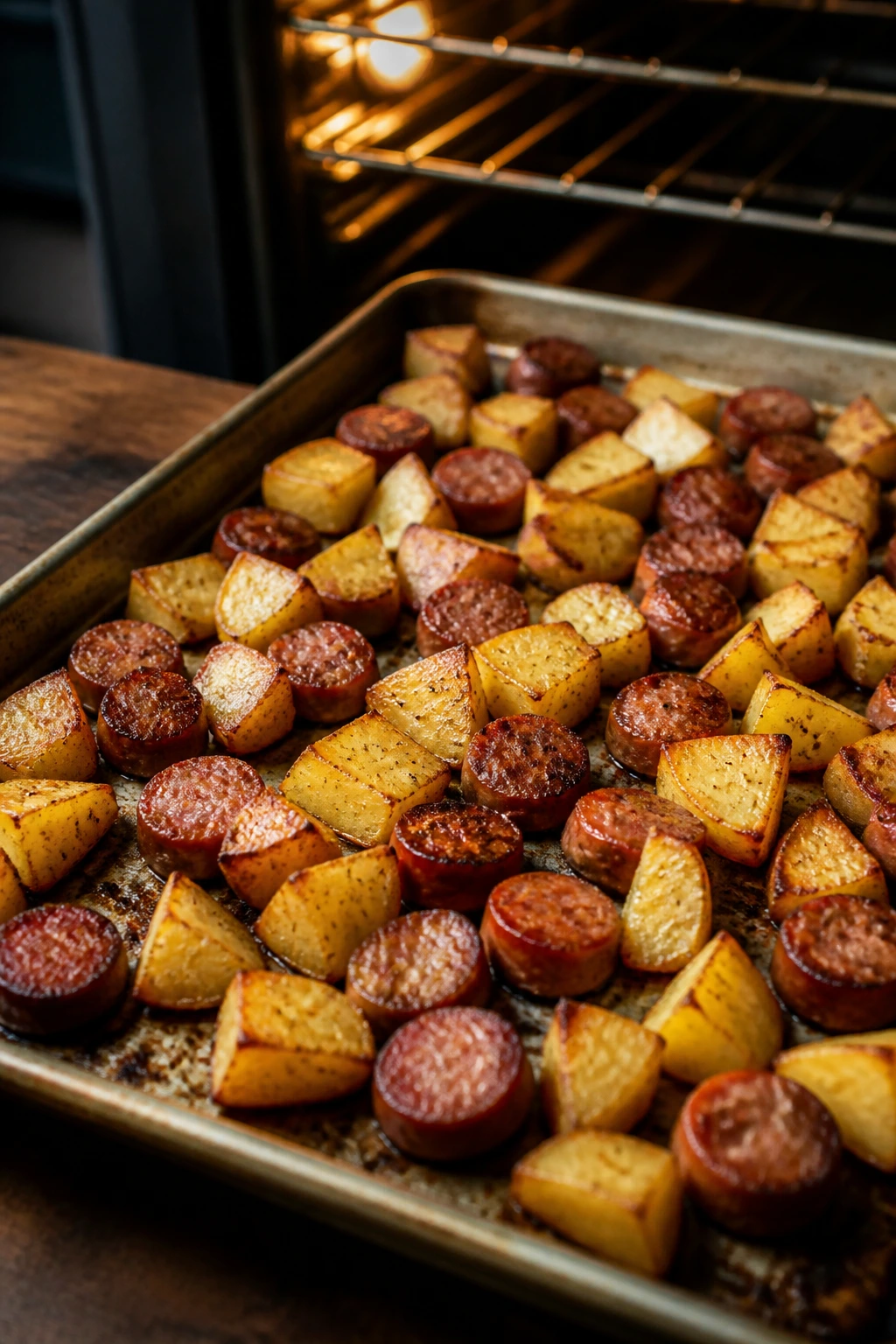
Yield: Serves 4 to 5
Prep Time: 20 minutes
Cook Time: 35 minutes
Total Time: 55 minutes
Difficulty: Beginner — the steps are straightforward, but the timing of the glaze matters if you want crisp edges instead of sticky softness.
Chill/Rest Time: 5 minutes
Best Served: Hot from the oven after a short rest, while the glaze is still tacky and the potatoes are crisp at the cut edges.
425°F is the number that matters here. Lower heat gives you softer vegetables and a flatter glaze. Higher heat can work, but once you start pushing into blistering territory, the brown sugar goes from glossy to scorched fast. A standard rimmed sheet pan is the right tool, and if the pan is crowded, use two. Crowding is the quickest way to turn a crisp sausage dinner into a steamy tray of disappointment.
If your oven runs cool, give it a few extra minutes before adding the sausage. If it runs hot, start checking the potatoes early. The visual cue is simple: you want the potato cut sides to look dry and golden, not wet and pale, before the sausage goes in.
The Ingredient List for a Crisp, Sticky Sausage Bake
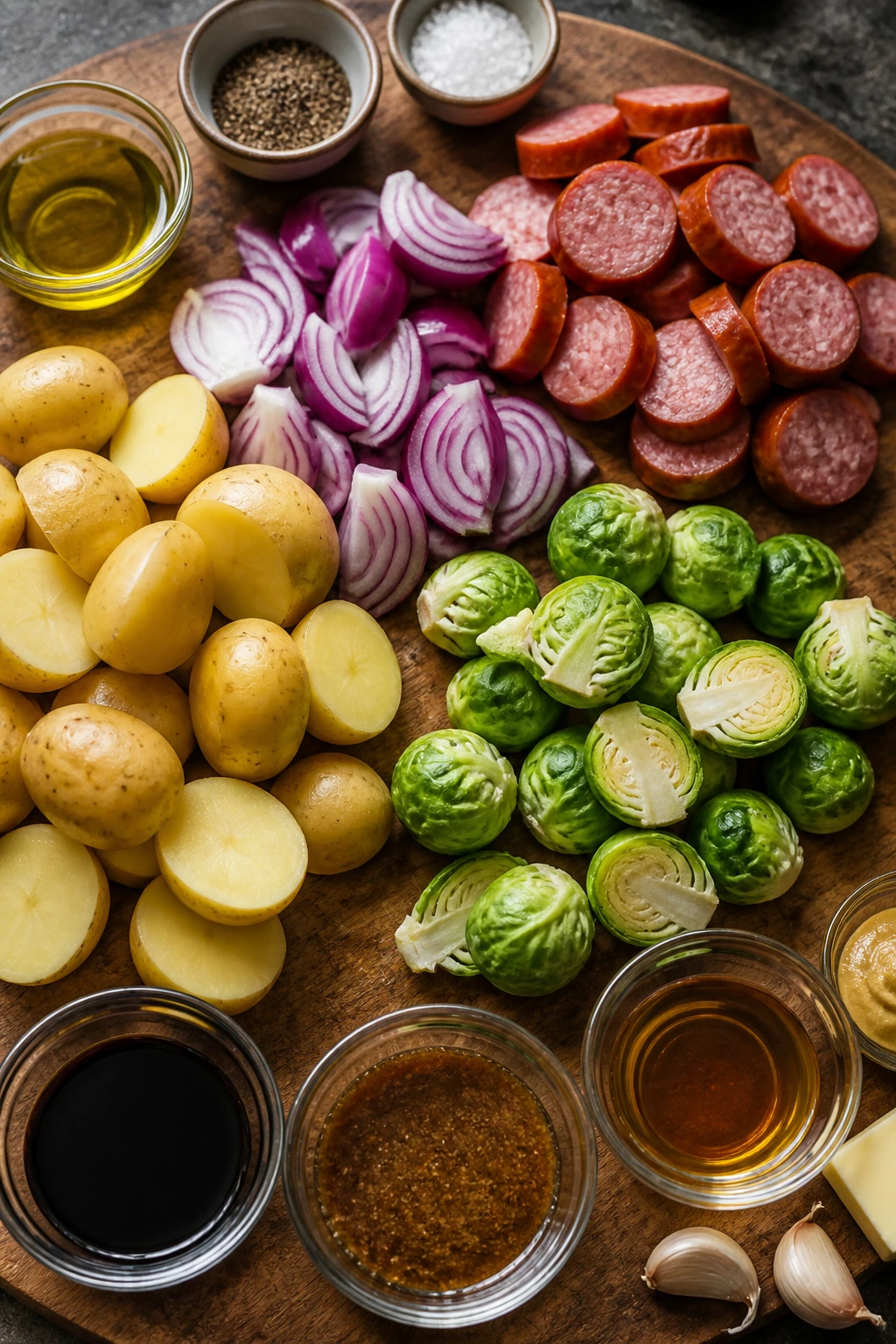
For the Pan
- 1 1/2 pounds baby Yukon gold potatoes, halved if larger than 1 1/2 inches
- 1 pound Brussels sprouts, trimmed and halved
- 1 medium red onion, cut into 8 wedges
- 1 1/2 pounds smoked pork sausage or kielbasa, sliced into 1/2-inch coins
- 2 tablespoons olive oil, divided
- 1 teaspoon kosher salt, divided
- 1/2 teaspoon black pepper, divided
For the Brown Sugar Glaze
- 1/3 cup packed dark brown sugar
- 2 tablespoons Dijon mustard
- 2 tablespoons apple cider vinegar
- 1 tablespoon soy sauce or tamari
- 2 tablespoons unsalted butter
- 2 cloves garlic, finely grated
- 1/2 teaspoon smoked paprika
- 1/4 teaspoon crushed red pepper flakes, optional
To Finish
- 1 tablespoon chopped fresh parsley or scallions
Choosing the Sausage, Potatoes, and Vegetables
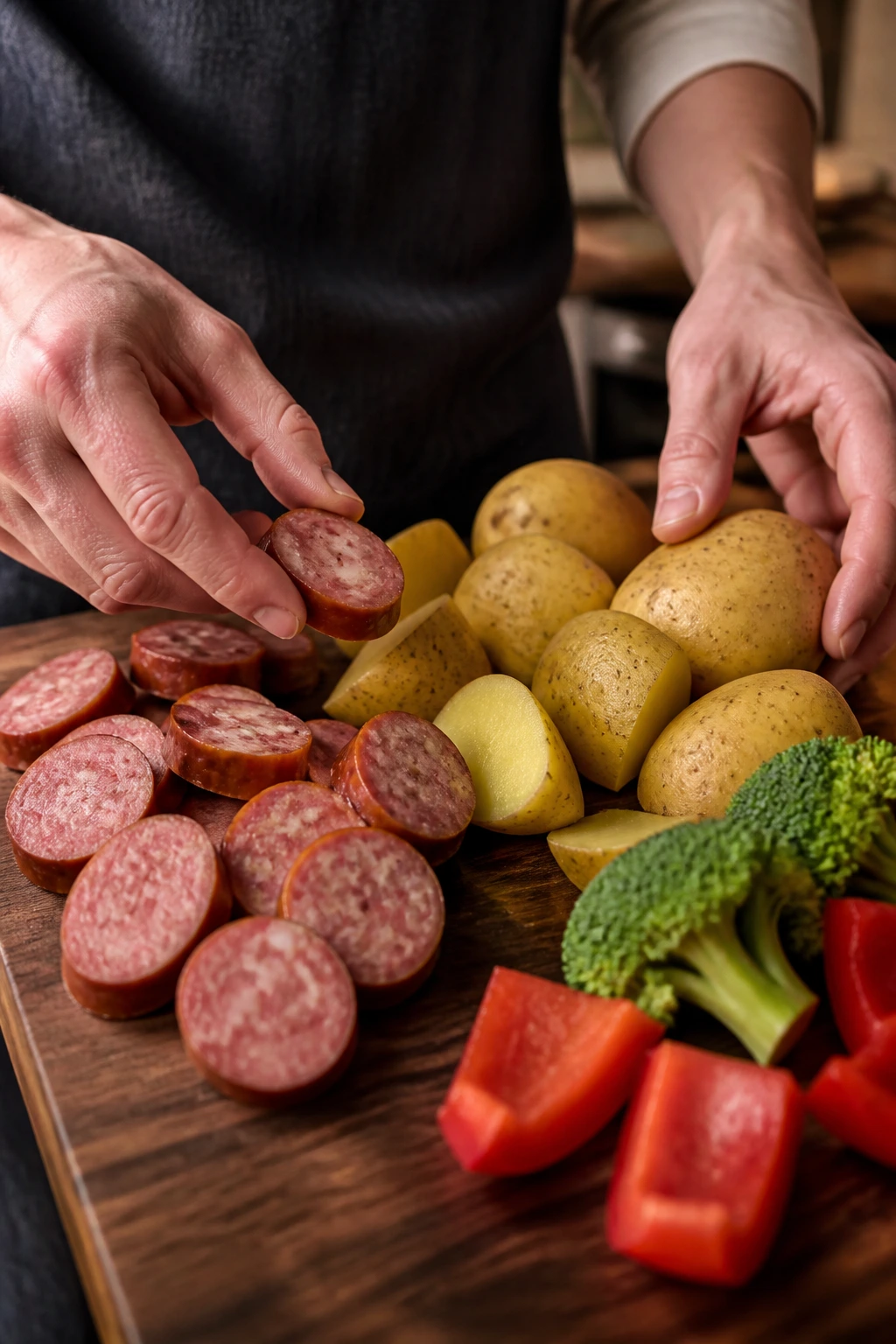
Smoked Sausage
What to use: 1 1/2 pounds of smoked pork sausage or kielbasa, sliced into 1/2-inch coins.
Preparation: Pat the sausage dry before cutting if it feels slick; moisture on the surface makes browning slower. Slice on a slight bias if you want a little more exposed surface.
Substitutions: Turkey sausage works, and so does beef kielbasa, though both brown a touch less deeply than pork. If you use raw sausage links, this stops being the same recipe — they need a different cooking path and internal temperature checks.
Tips: Buy sausage with a firm casing if you can. Soft, pale links can split and leak before they ever get a good edge on them.
Baby Yukon Gold Potatoes
What to use: 1 1/2 pounds of baby Yukon gold potatoes, halved if they’re larger than bite-size.
Preparation: Cut them into pieces that are roughly the same size so the tray cooks evenly. Put the flat side down on the pan.
Substitutions: Baby red potatoes work fine, and small yellow potatoes are nearly interchangeable. Russets are not my first pick; they can go fluffy in the middle before the edges get the kind of crust this dish needs.
Tips: Don’t soak these unless you dry them thoroughly afterward. Wet potatoes steam before they brown, and that’s exactly what you don’t want.
Brussels Sprouts and Red Onion
What to use: 1 pound Brussels sprouts and 1 medium red onion.
Preparation: Trim the sprouts, peel off any tired outer leaves, and halve them from stem to tip. Cut the onion into thick wedges so it holds together in the oven instead of melting away.
Substitutions: Broccoli florets, cabbage wedges, or green beans can stand in, though each one behaves differently under heat. Cabbage is the closest match if you want a similar sweet-savory feel.
Tips: Dry the Brussels sprouts after trimming. A damp sprout looks fine on the cutting board and then ruins browning on the pan.
Brown Sugar Glaze
What to use: 1/3 cup packed dark brown sugar, 2 tablespoons Dijon mustard, 2 tablespoons apple cider vinegar, 1 tablespoon soy sauce or tamari, 2 tablespoons unsalted butter, 2 cloves garlic, 1/2 teaspoon smoked paprika, and a pinch of red pepper flakes if you want heat.
Preparation: Stir everything together in a small saucepan and warm it just until the sugar dissolves and the glaze turns smooth.
Substitutions: Light brown sugar works in a pinch. Tamari makes the glaze gluten-free, and whole-grain mustard gives it a rougher, more rustic look.
Tips: The glaze should smell sharp, sweet, and a little smoky — if it smells one-note sweet, it needs more vinegar or mustard.
Fresh Finish
What to use: 1 tablespoon chopped parsley or scallions.
Preparation: Chop it fine so it scatters cleanly over the finished pan.
Substitutions: Chives, dill, or even a few paper-thin pickled onions can work if parsley isn’t around.
Tips: A fresh green garnish matters here because the tray is rich. Without something bright at the end, the whole dish can feel heavier than it needs to.
The Tools That Help the Edges Brown
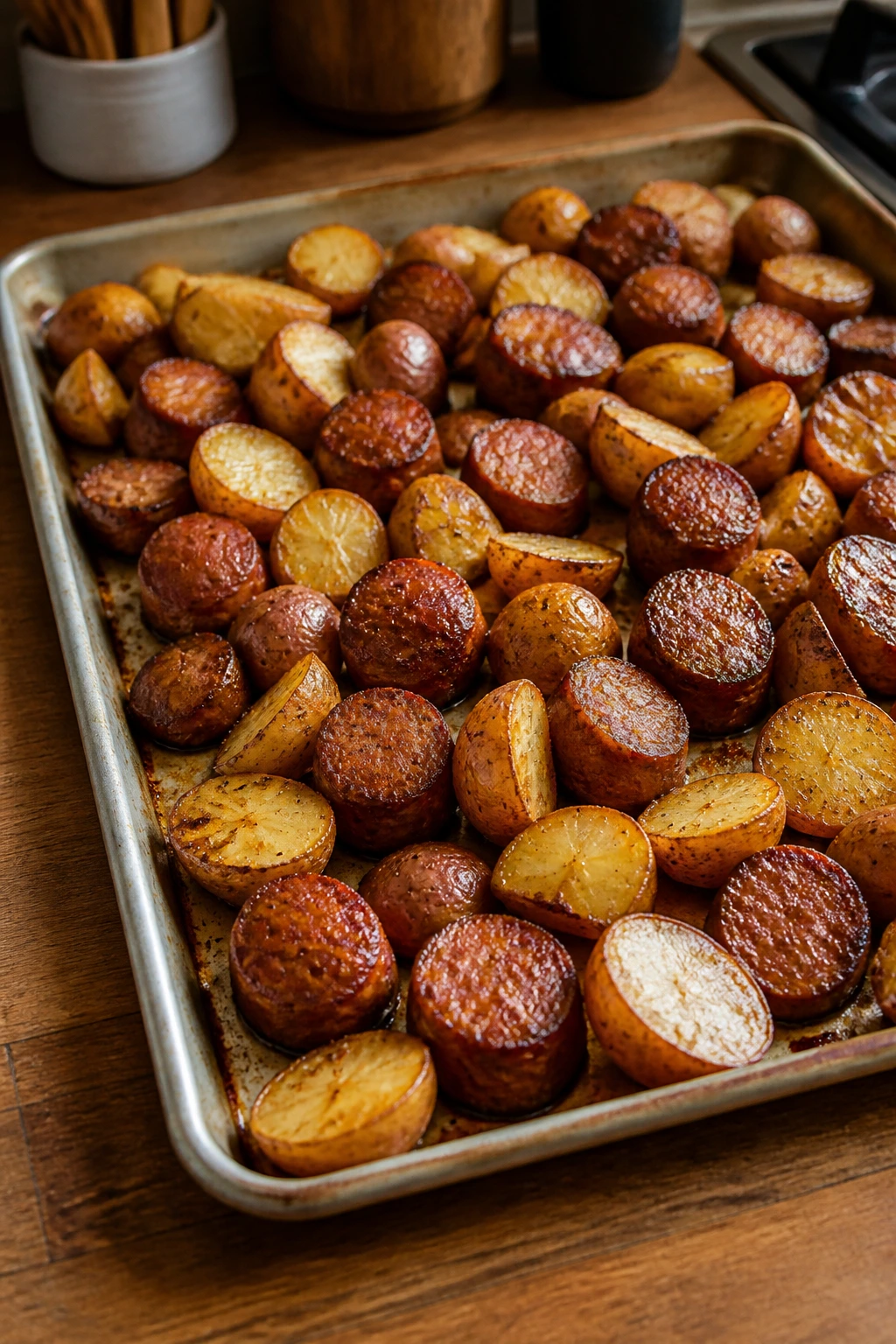
-
Large rimmed sheet pan, 18 x 13 inches if possible — This is the workhorse. A smaller pan crowds the ingredients, and crowded pans steam.
-
Large mixing bowl — Big enough to toss the potatoes without losing half the oil on the counter.
-
Small saucepan — The glaze needs a small, even heat source. A tiny skillet can work if that’s all you’ve got.
-
Silicone pastry brush or spoon — Useful for coating the sausage and vegetables without scraping up every browned bit on the pan.
-
Thin metal spatula or sturdy tongs — Handy when you want to turn a few pieces without shuffling the whole tray.
-
Sharp knife and cutting board — The sizing matters more than people think. Even pieces cook at the same pace.
-
Instant-read thermometer, optional — Not required for smoked sausage, but useful if you swap in raw sausage or poultry sausage.
Roast the Potatoes Until They Start to Catch
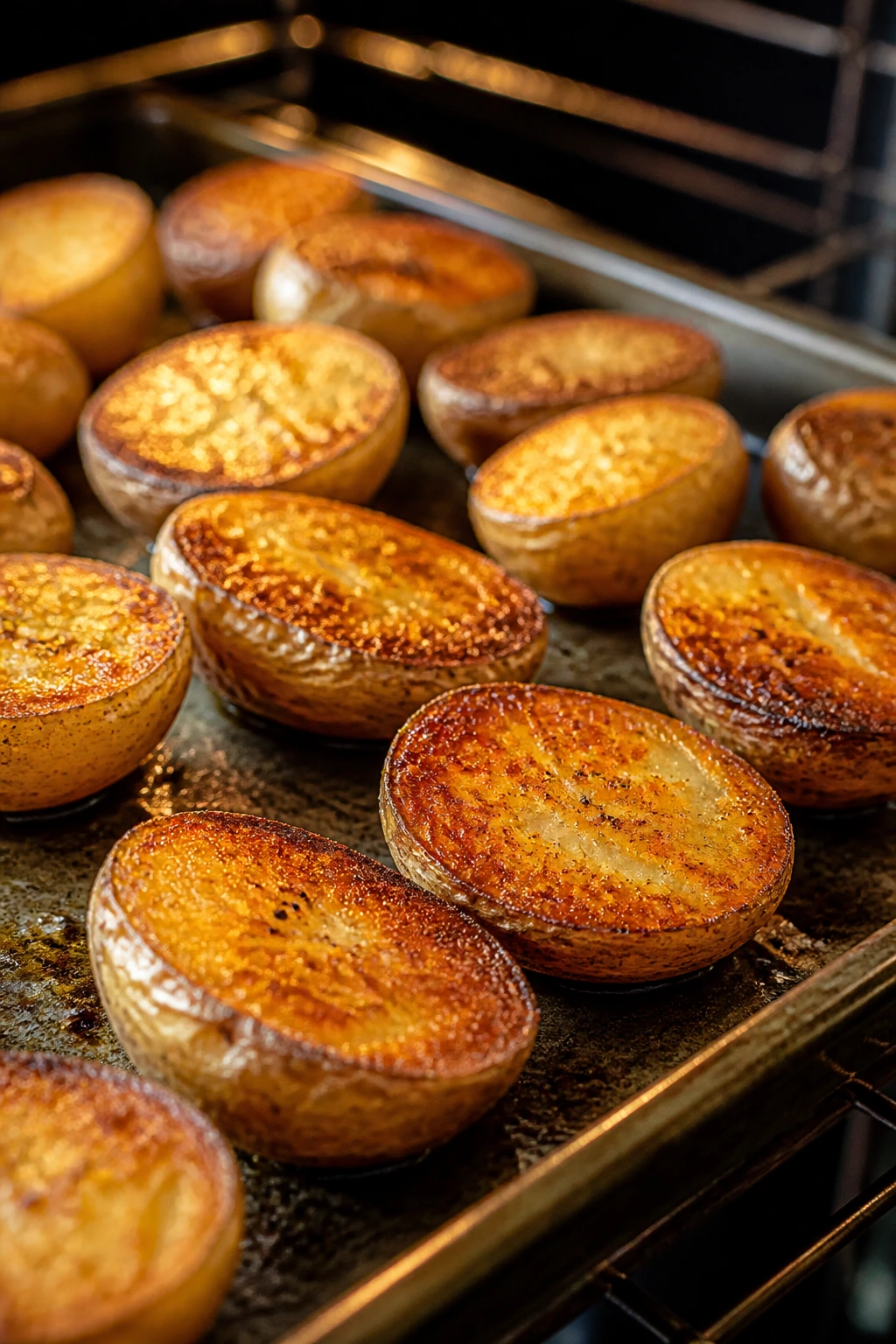
Heat the Oven and Start the Potatoes:
-
Preheat the oven to 425°F (220°C) and set a rack in the center position. If you want a little extra browning, put the empty rimmed sheet pan in the oven while it heats.
-
Toss the halved potatoes with 1 tablespoon of the olive oil, 1/2 teaspoon of the kosher salt, and 1/4 teaspoon of the black pepper. Pull the hot pan from the oven, spread the potatoes cut-side down in a single layer, and roast for 15 minutes, until the cut sides look dry and golden at the edges.
-
While the potatoes roast, toss the Brussels sprouts and onion with the remaining oil, salt, and pepper. If the sausage looks slick, blot it with paper towels before slicing so it can brown instead of steaming.
The potatoes are the slowest piece in the whole dish. They need the head start. Always.
That first roast does two jobs at once: it dries the cut surface and it gives you a base layer of browning before the sausage fat and glaze get involved. If you skip this part, the final pan can still taste good, but it won’t have the same crackly edge when you bite into a potato. And for this recipe, that edge matters more than any one spice.
Add the Sausage and Vegetables
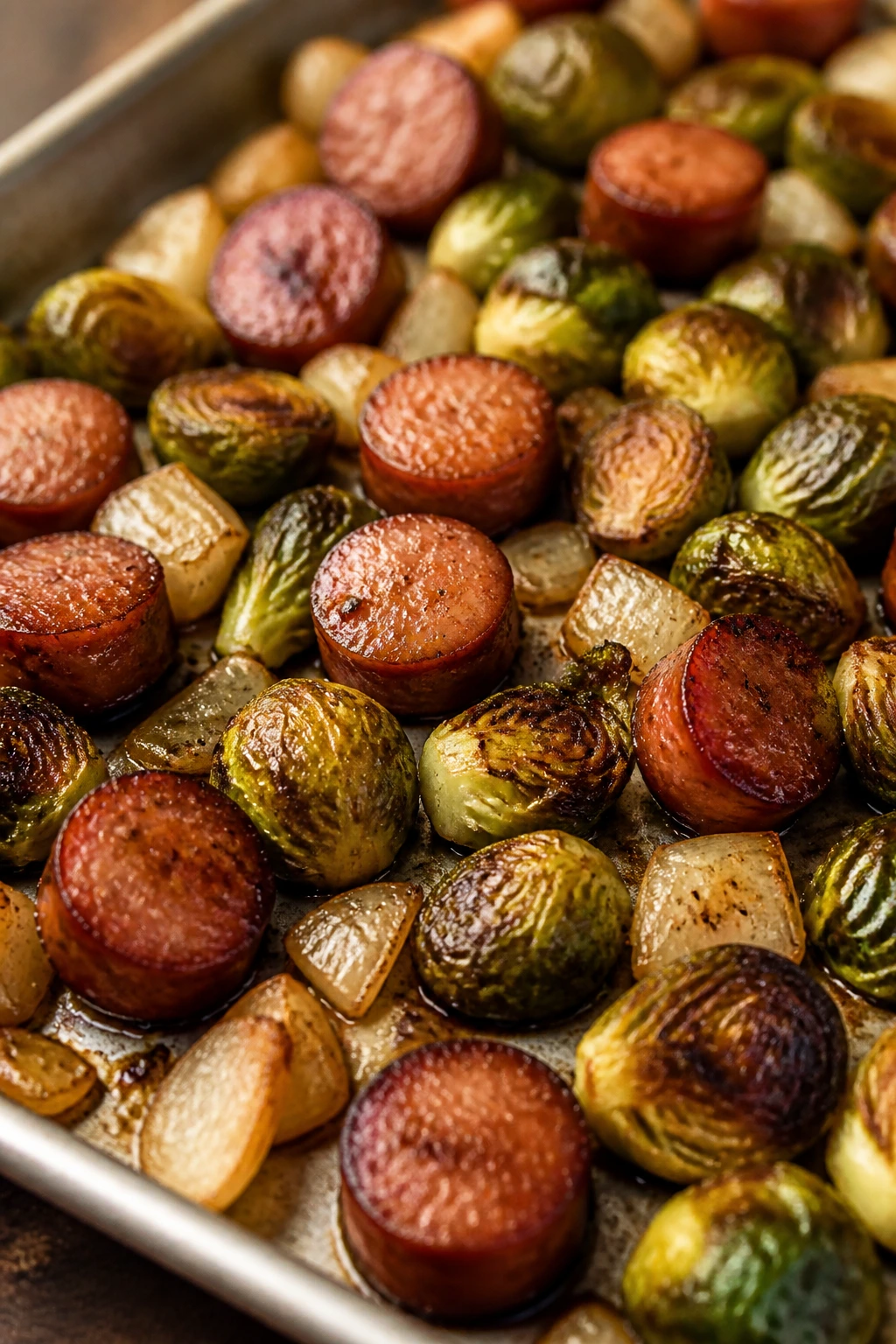
Build the Tray and Roast Again:
-
Pull the sheet pan from the oven and scatter the Brussels sprouts, onion, and sliced sausage around the potatoes. Try to keep everything in a single layer. If the pan looks crowded, split the mixture between two pans rather than packing it in.
-
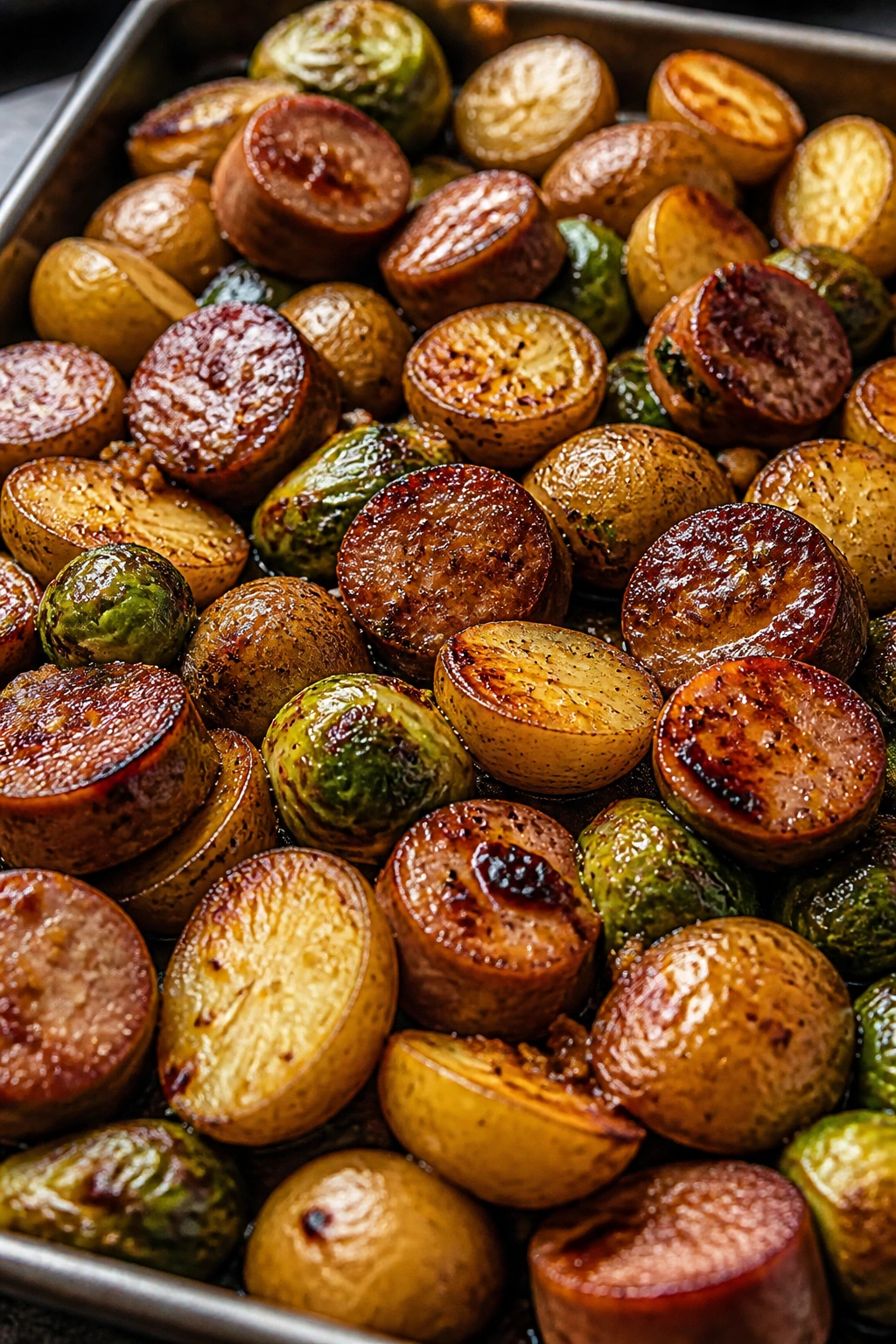
Return the pan to the oven and roast for 12 to 15 minutes, stirring once halfway through if a few pieces are catching too fast on one side. You’re looking for browned sausage edges, Brussels sprouts with darkened seams, and onions that have started to soften and turn sweet.
The sausage goes in only after the potatoes have already started to build a crust. That sequence matters because the sausage brings its own fat, and the vegetables need space to drink some of it in without drowning. If everything hits the pan together, the moisture from the sprouts and onion hangs around too long and the whole tray turns soft.
A quick halfway stir is enough. You are not trying to toss the pan into a jumble. You want contact. Browning happens where food sits still against hot metal. Move things around only enough to keep a few pieces from scorching on one side while the rest stay pale.
Glaze, Finish, and Let It Rest
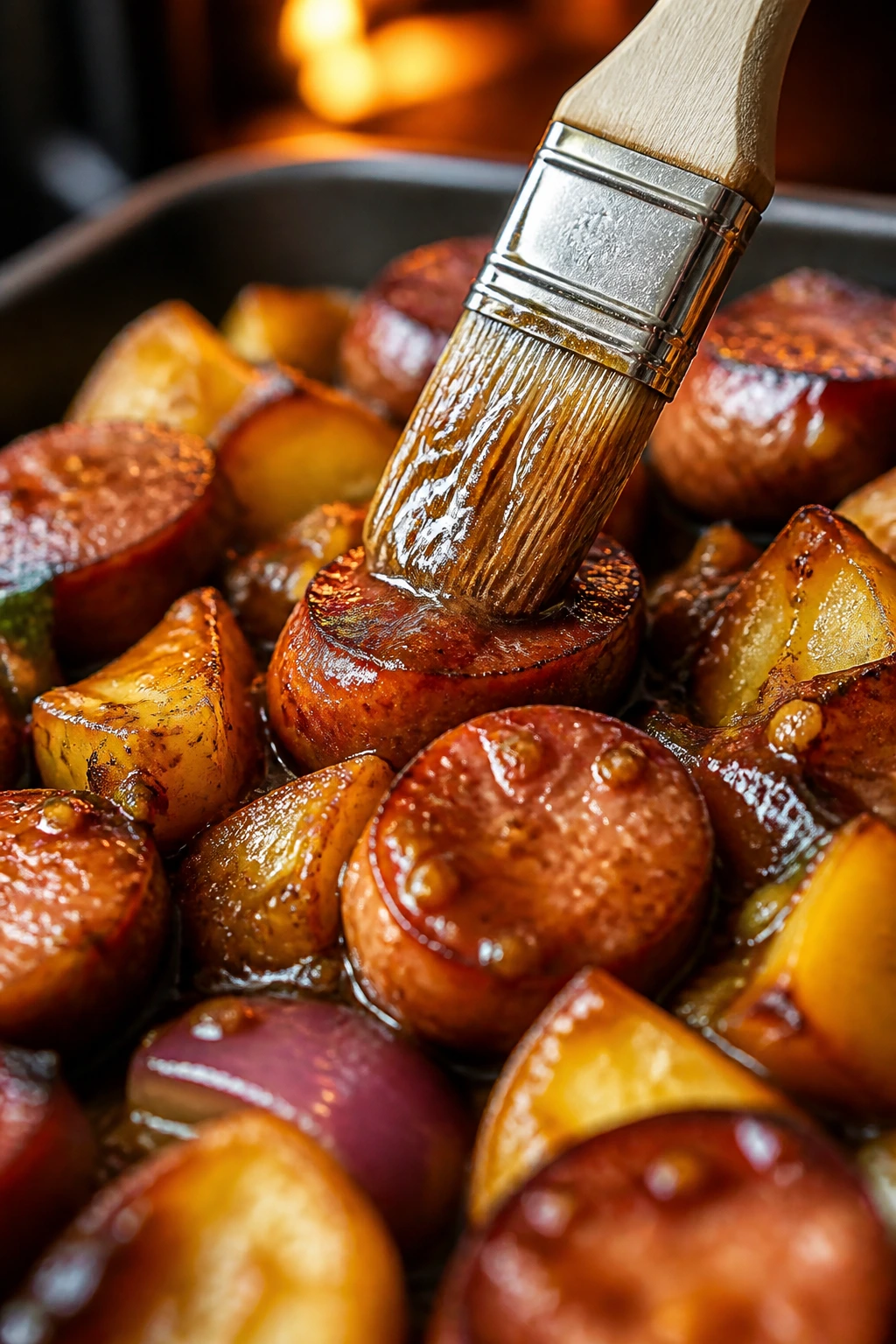
Mix and Warm the Glaze:
- While the tray roasts, combine the brown sugar, Dijon mustard, apple cider vinegar, soy sauce, butter, garlic, smoked paprika, and red pepper flakes in a small saucepan over medium heat. Stir for 2 to 3 minutes, until the sugar dissolves and the glaze turns smooth, glossy, and just slightly thickened. Do not let it boil hard. You want a glaze that brushes on cleanly, not a candy shell that seizes in the pan.
Add the Glaze at the End:
-
Pull the sheet pan from the oven and brush or drizzle about two-thirds of the glaze over the sausage and vegetables. Return the pan to the oven for 5 to 7 minutes, until the glaze bubbles in small pockets and the sausage edges look darker and lacquered. The smell should be sweet, savory, and a little sharp from the mustard.
-
Remove the pan from the oven and let it rest for 5 minutes. Drizzle the remaining glaze over the top, scatter with parsley or scallions, and serve while the glaze is still tacky.
That last drizzle is not decoration. It gives the tray a fresher, brighter finish after the oven has done its work. If you pour all the glaze on at the beginning, the sugar has too much time to darken and the whole thing can tip bitter. Late glaze. Thin layer. Short finish. That’s the whole trick.
How to Serve It So the Plate Looks Intentional
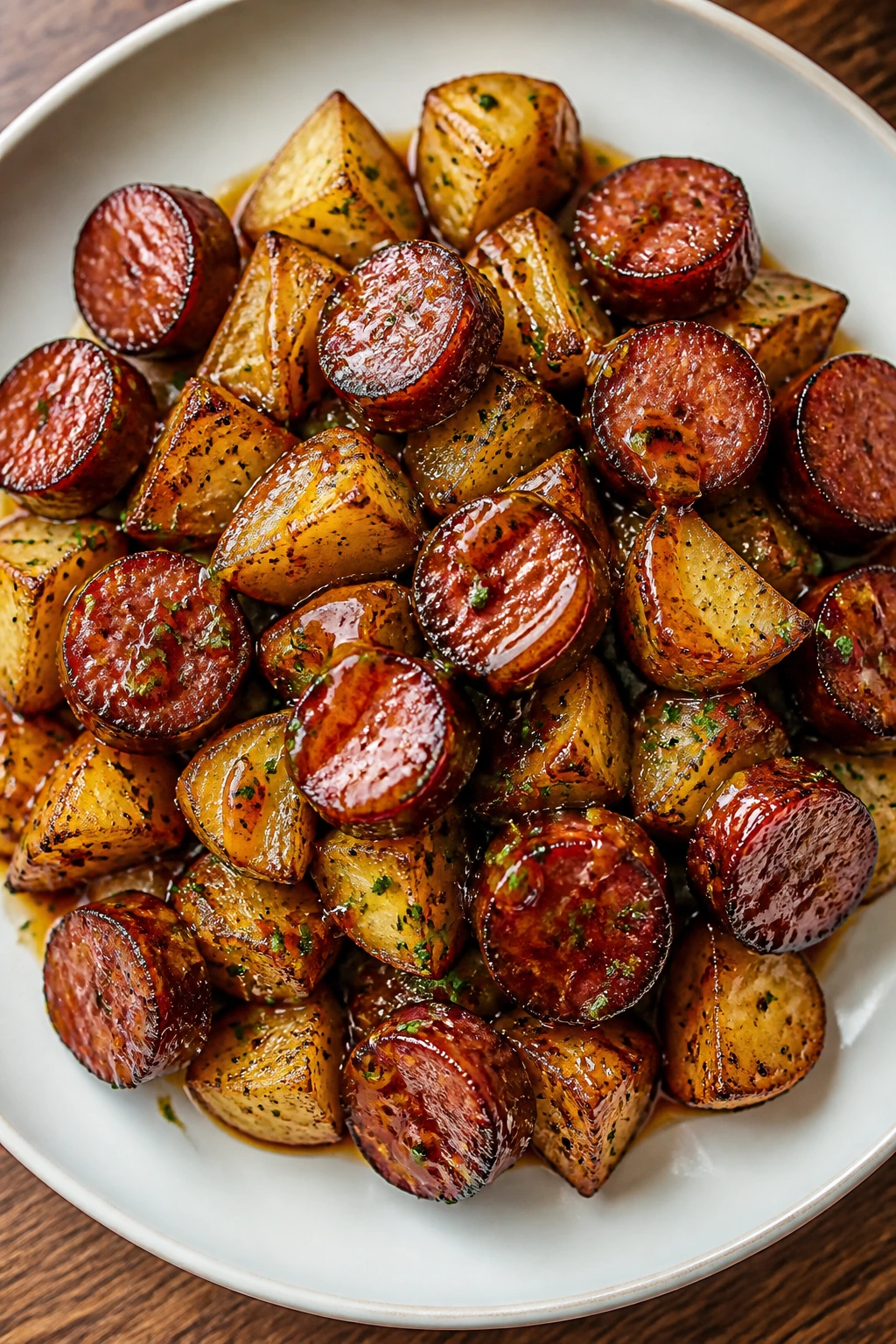
Presentation: Pile the potatoes first, then tuck the sausage coins around them and spoon the glossy glaze from the pan over the top. A scatter of chopped parsley or scallions keeps the finish from looking too dark and sticky. If you want the tray to look extra tidy, move the biggest browned onion wedges to the top so the browned sides show.
Accompaniments: A sharp green salad dressed with lemon or red wine vinegar cuts the sweetness in a useful way. If you want something more old-school, serve it with sauerkraut, quick-pickled cucumbers, or a spoonful of mustard on the side. Warm crusty bread is handy for catching glaze, though the potatoes already cover the starch lane.
Portions: Four generous servings is the right call if this is the whole dinner. If you serve it with salad and bread, you can stretch it to five. For bigger appetites, keep a second pan going and scale the glaze up by 50 percent rather than thinning the portions too much.
Beverage Pairing: Dry hard cider is the first thing I’d pour. A cold pilsner or amber lager also works because the bitterness and carbonation keep the glaze from feeling heavy. If you want a nonalcoholic option, black tea with lemon or sparkling water with a squeeze of lime does the job.
Small Adjustments for a Better Crust
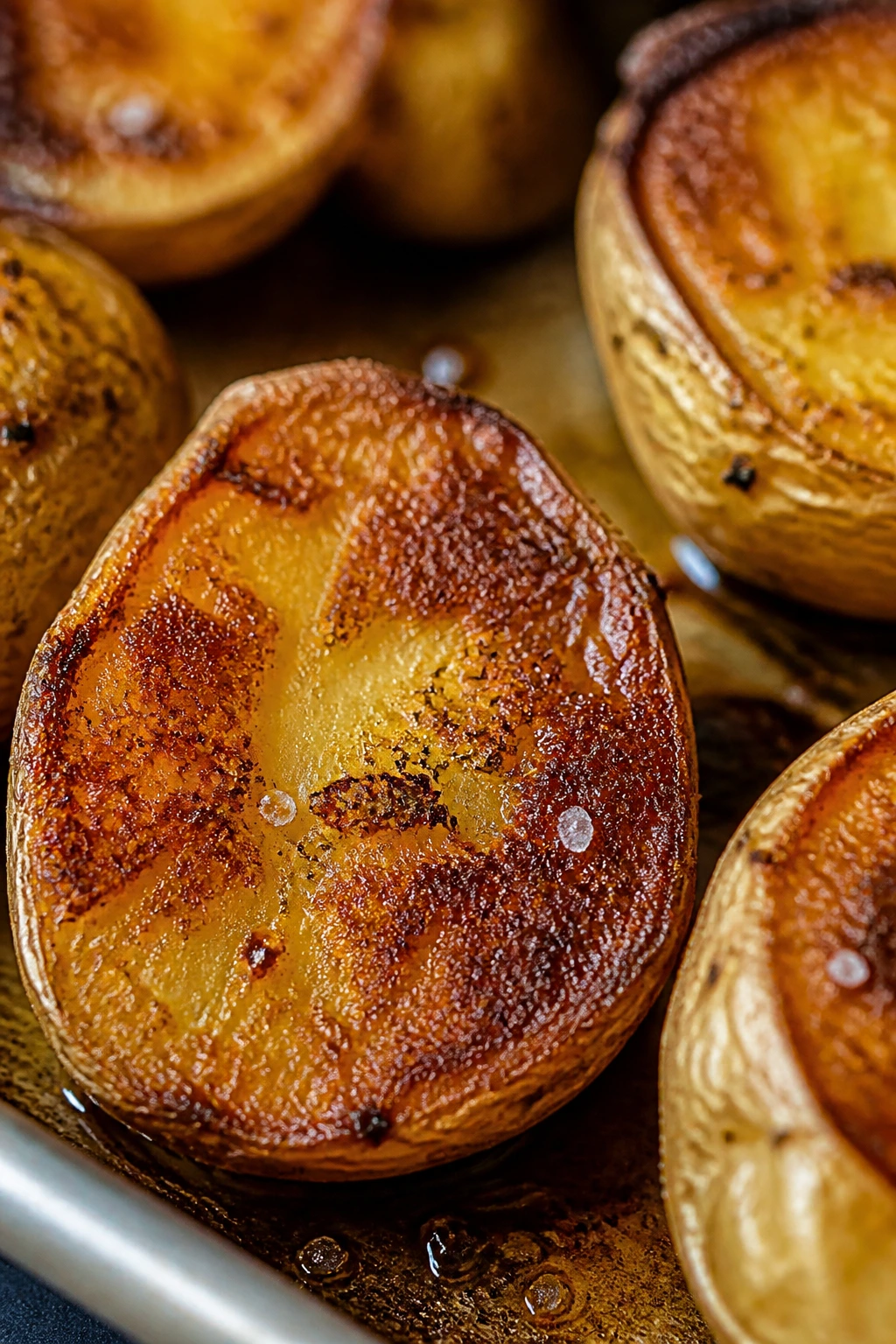
Flavor Enhancement: Add 1 teaspoon of whole-grain mustard to the glaze if you want a grainier texture and a little extra bite. It looks good on the food, too — little mustard seeds clinging to the sausage edges make the tray feel more deliberate. If you like a deeper caramel note, add 1 teaspoon of bourbon to the glaze and simmer it for 30 seconds before brushing it on.
Time-Saver: Use fully cleaned Brussels sprouts and small baby potatoes that are close to the same size. Uniform produce means fewer awkward pieces you need to rescue halfway through the roast. It also keeps you from standing over the tray like a traffic cop.
Pro Move: Reserve a spoonful of glaze and save it for the final drizzle after the pan rests. That last brush gives the food a fresher shine and keeps the sugar from getting too dark in the oven. It’s a tiny step, but it changes the finish.
Cost-Saver: If Brussels sprouts are expensive or look tired, swap in cabbage wedges or thick carrot coins. Cabbage actually handles the sweet glaze beautifully, especially when the cut face gets deeply browned. Carrots will be softer and sweeter, so they suit the brown sugar angle more than you might expect.
Common Mistakes That Turn a Good Pan Soggy
-
Crowding the pan: If the sausage and vegetables pile up on top of one another, they steam instead of roast. The symptom is pale potatoes and limp Brussels sprouts. Fix it by using a larger sheet pan or two pans.
-
Glazing too early: Sugar needs heat, but not that much time. If the glaze goes on at the start, the edges can taste bitter before the vegetables are done. Brush it on only during the last few minutes.
-
Starting with wet vegetables: Water on the surface of potatoes or Brussels sprouts delays browning. You’ll see shiny patches and soft edges instead of dry, crisp ones. Pat everything dry after washing and before oiling.
-
Using sausage that is too lean without adjusting the oil: Turkey sausage can work, but it does not drip the same fat as pork sausage. The pan can look dry and the vegetables can stick if you don’t compensate with a little more oil.
-
Cutting the potatoes too large: Big chunks need more time, and by the time the center is tender, the sausage can be overdone. Keep the pieces bite-size and even.
-
Pouring all the glaze on at once: It collects in puddles and turns sticky in spots while the rest of the pan stays bare. Thin layers are better. Brush, roast, rest, drizzle.
Variations for Different Tastes and Pantry Shelves
-
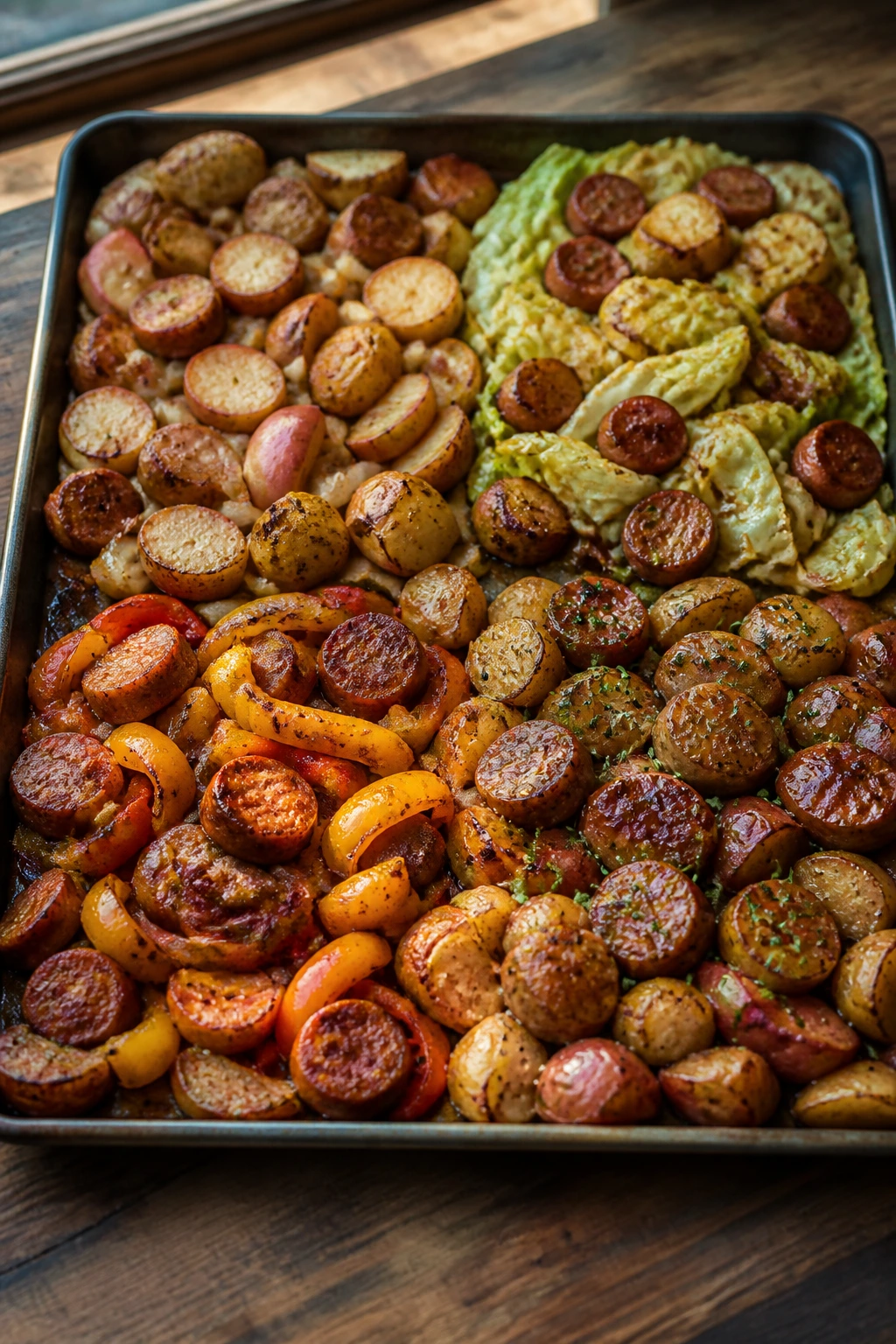
Cajun Heat Tray: Swap the sausage for andouille and stir 1 to 1 1/2 teaspoons Cajun seasoning into the pan before roasting. The glaze still works, but the spice gives it a deeper, smokier edge.
-
Apple and Onion Bake: Add 1 firm apple, cored and cut into wedges, during the final roast. The apple softens at the edges, picks up the glaze, and brings a little tart-sweet note that makes pork sausage taste even richer.
-
Cabbage and Sausage Version: Replace the Brussels sprouts with 1/2 small green cabbage, cut into thick wedges. Cabbage browns at the cut sides and soaks up glaze without getting mushy, which makes it a cheap and sturdy swap.
-
Gluten-Free Version: Use tamari instead of soy sauce and check the sausage label for hidden fillers. Most of the recipe is already naturally gluten-free, so the swap is simple.
-
Sweeter Mustard Glaze: Increase the brown sugar to 1/2 cup and add another tablespoon of Dijon if you want a thicker, more ham-like finish. This version is better when you’re serving it with plain rice or a simple green vegetable.
Make-Ahead, Storage, and Reheating
Make-Ahead Moves
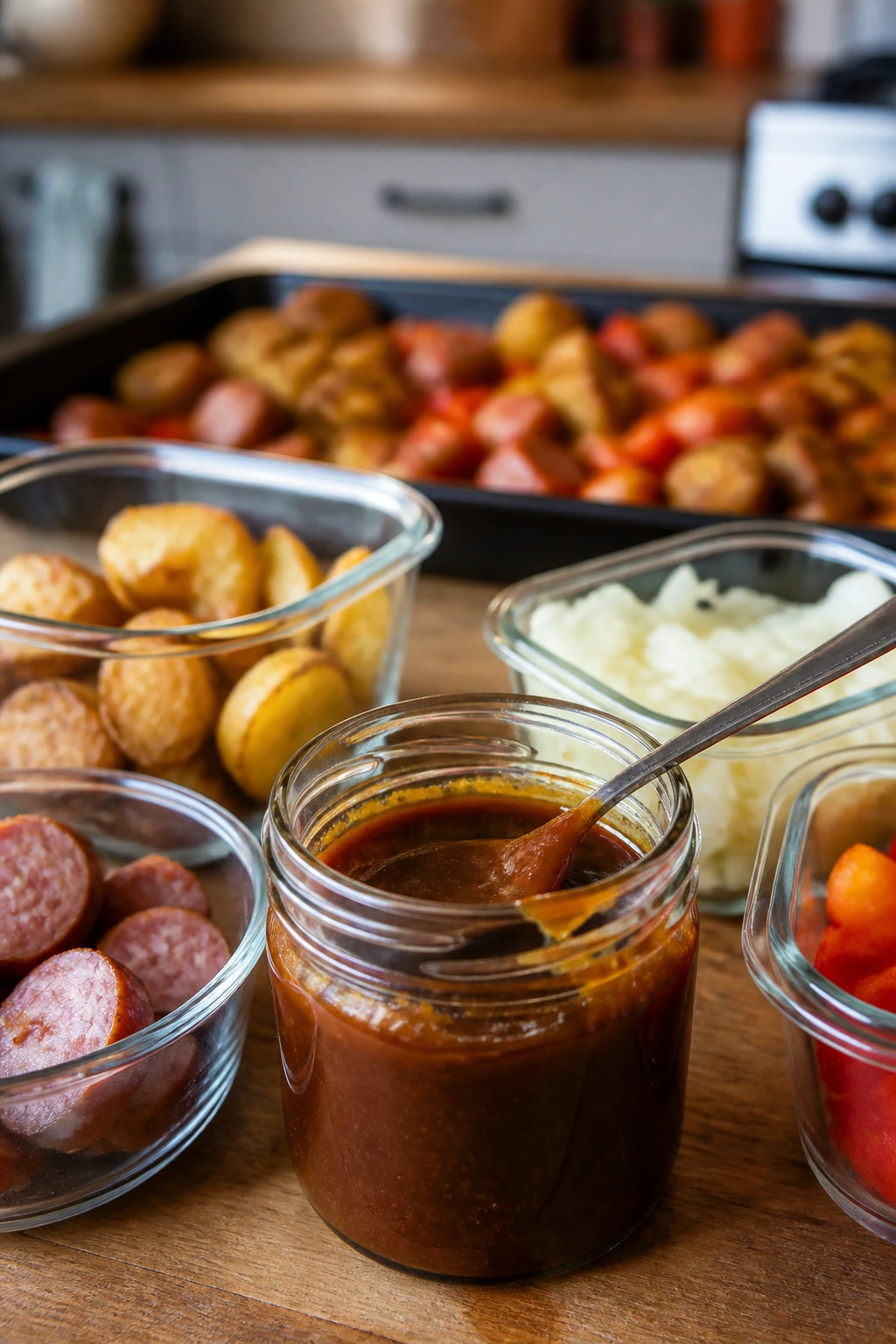
The glaze can be made up to 5 days ahead and kept in the fridge in a small jar or container. Warm it gently before using, and stir well if the butter separates a little. You can also trim the Brussels sprouts and cut the onion a day ahead; just keep them dry and covered in the fridge.
The potatoes are the one ingredient I would not cut too far in advance unless you’re willing to store them in cold water and dry them thoroughly before roasting. If you do that, keep them refrigerated and use them within 24 hours. Do not assemble the whole pan and leave it raw with glaze on it. That’s how you lose the browning before the meal even starts.
Fridge and Freezer Life
Cooked leftovers keep in the fridge for 3 to 4 days in an airtight container. The sausage holds up well; the potatoes soften a little, but not to the point of being useless. If you want to freeze the dish, portion it into freezer-safe containers and freeze for up to 2 months. The sausage freezes better than the potatoes, so expect the texture to be a little softer after thawing.
The glaze can be stored separately in the fridge for the same 3-to-4-day window. If it thickens too much, warm it with 1 teaspoon of water and stir until it loosens again.
Best Reheat Method
For the best texture, reheat the leftovers on a rimmed sheet pan at 400°F for 10 to 12 minutes. Spread them out in a single layer so the edges can re-crisp instead of steaming under their own weight. If you’re only reheating a small portion, a skillet over medium heat with a teaspoon of oil works even better for the sausage and potatoes. The skillet brings the browned edges back faster than the microwave ever will.
Microwaving is the backup plan, not the preferred plan. If you do use it, heat in short bursts and stop as soon as the food is hot. Long microwave times turn the glaze gummy and the potatoes mealy.
Questions People Ask Before They Cook This
Can I use raw sausage instead of smoked sausage?
You can, but it changes the whole method. Raw sausage needs to be cooked through to a safe internal temperature, and it won’t brown quite the same way as fully cooked smoked sausage. For this recipe, smoked sausage or kielbasa is the easier and better-looking choice.
Why does the brown sugar glaze burn so fast?
Sugar darkens quickly in a hot oven, and the vinegar and mustard don’t slow that down very much. If the glaze goes on too early or the pan is too crowded, the sugar can scorch before the vegetables finish. The fix is to brush it on only during the last 5 to 7 minutes.
Do I have to use Brussels sprouts?
No. Cabbage, broccoli, green beans, or even thick carrot coins can work, though each one handles the heat a little differently. Brussels sprouts are especially good here because their cut faces brown well and their slight bitterness balances the glaze.
Can I make this in a cast-iron skillet instead of a sheet pan?
Yes, if the skillet is large enough and you’re careful about crowding. A 12-inch cast-iron skillet can give you deep browning, but it can also trap steam if you overload it. For a full batch, I still prefer a sheet pan because it gives every piece more room.
How do I keep the potatoes from staying pale?
Cut them smaller, start them first, and give them contact with the hot pan. Cut-side down matters more than people think. If they sit in a pile or start on a cool pan, they won’t pick up the crisp edge that makes the dinner feel finished.
Can I prep this ahead for company?
Yes, in pieces. Cut the vegetables, mix the glaze, and slice the sausage ahead of time. Keep everything cold and dry, then assemble and roast right before serving. That way you get the browning without sacrificing texture.
What should I do if the glaze gets too thick?
Warm it gently with a teaspoon or two of water and stir until it loosens. If it tastes too sweet after reheating, add a tiny splash of vinegar — not enough to make it sharp, just enough to wake it back up.
A Pan I’d Happily Make Again
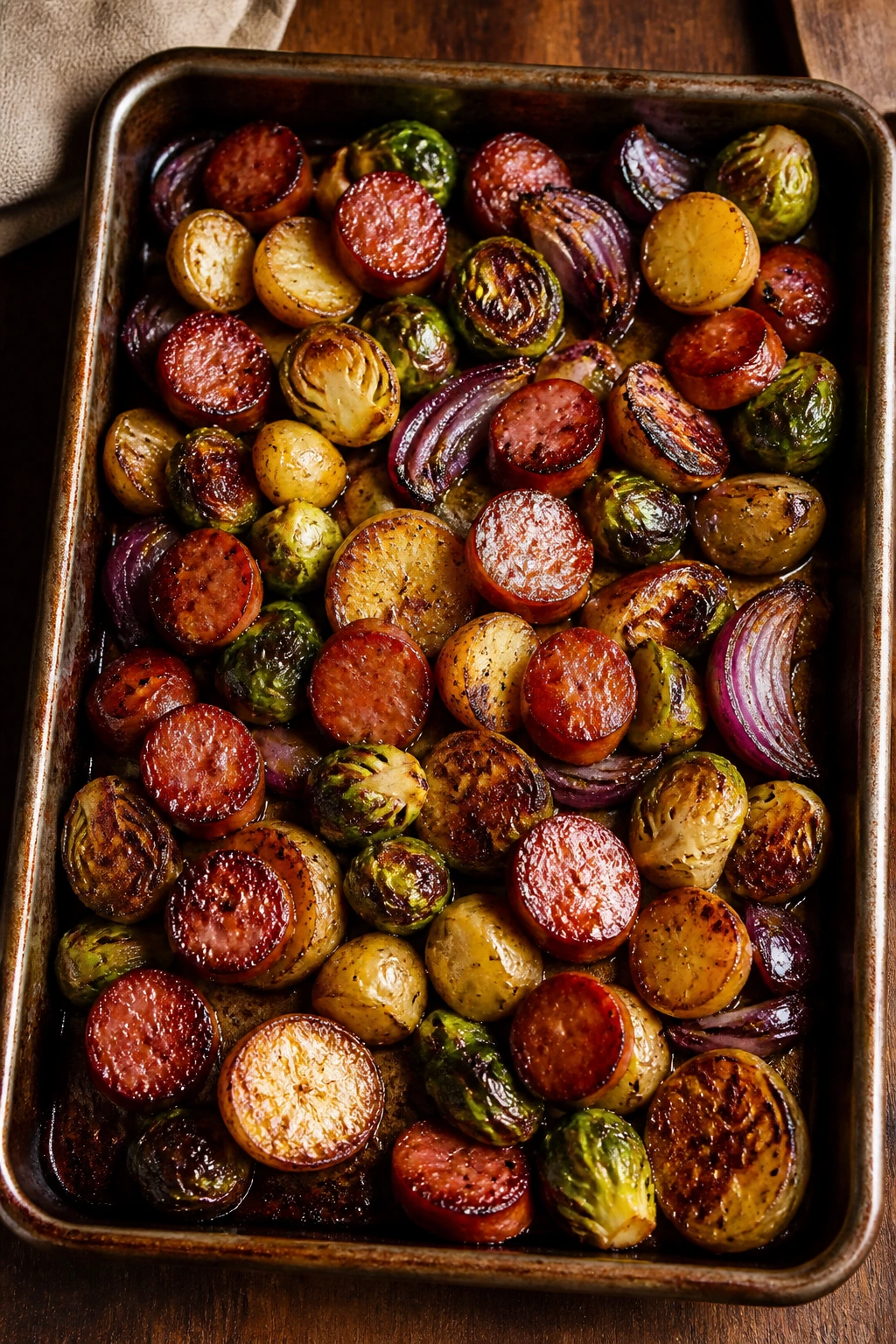
There’s a reason this kind of sausage dinner keeps showing up in real kitchens. It doesn’t ask for much, but it gives back enough texture to feel like a proper meal: crisp potatoes, browned sausage, sweet onions, and a glaze that lands somewhere between sticky and shiny. That last part matters. A weak glaze makes the whole pan taste like leftovers. A well-timed one makes the tray look finished.
The nicest thing about it is how much control you actually have. Want more bite? Add extra Dijon. Want a deeper caramel note? Use dark brown sugar. Want a sharper finish? Keep the vinegar bright and the glaze thin. Once you understand the timing, the recipe stops feeling fragile and starts feeling reliable.
Crispy Sausage Dinner with Brown Sugar Glaze — Recipe Card
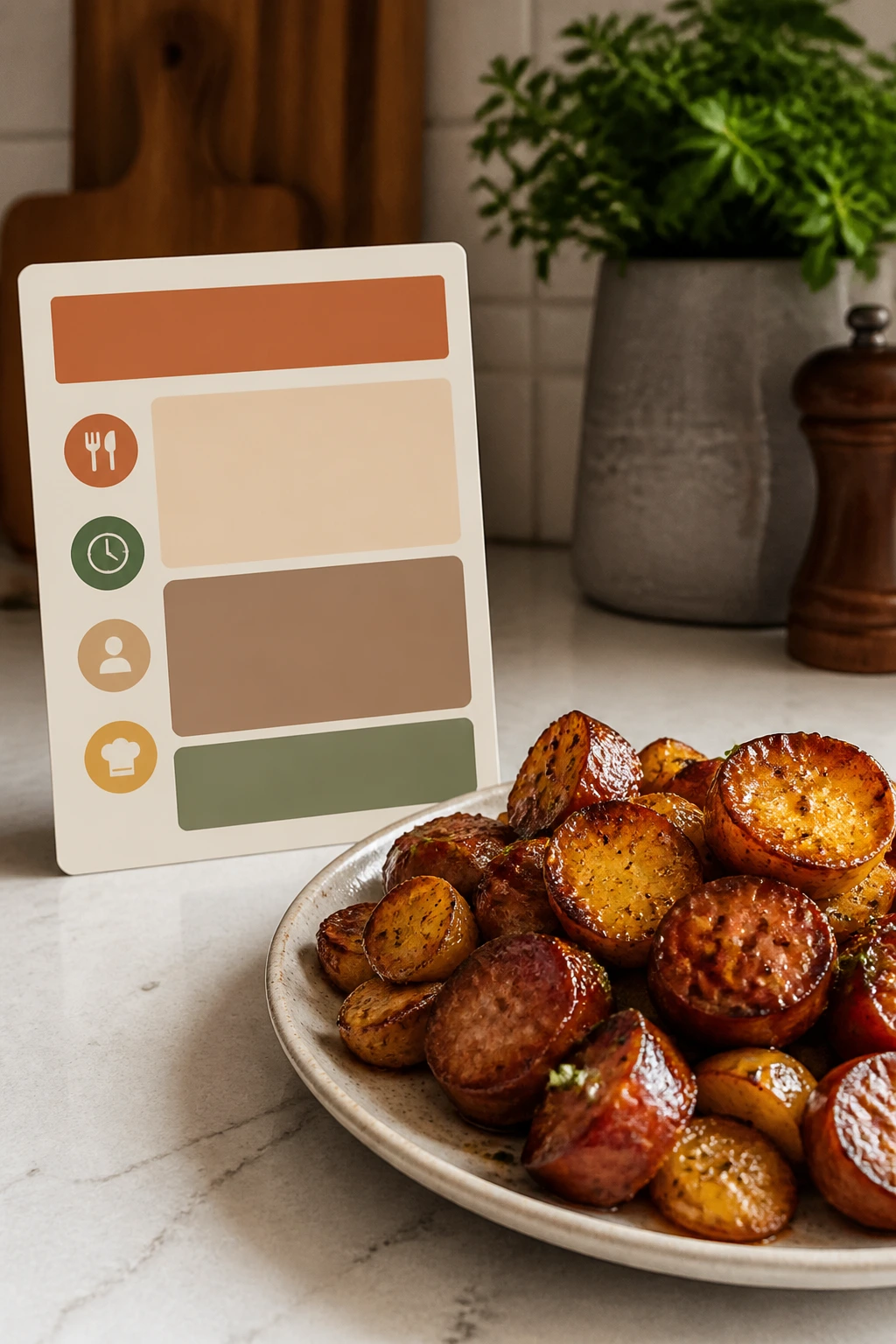
Recipe Name: Crispy Sausage Dinner with Brown Sugar Glaze
Description: A sheet-pan dinner of smoked sausage, baby Yukon gold potatoes, Brussels sprouts, and red onion roasted until the edges brown, then finished with a glossy brown sugar-Dijon glaze. The result is savory, sticky, and crisp at the edges.
Prep Time: 20 minutes
Cook Time: 35 minutes
Total Time: 55 minutes
Course: Dinner, Main Course
Cuisine: American
Servings: 4 to 5 servings
Calories: About 560 kcal per serving
Ingredients
For the Pan:
- 1 1/2 pounds baby Yukon gold potatoes, halved if larger than 1 1/2 inches
- 1 pound Brussels sprouts, trimmed and halved
- 1 medium red onion, cut into 8 wedges
- 1 1/2 pounds smoked pork sausage or kielbasa, sliced into 1/2-inch coins
- 2 tablespoons olive oil, divided
- 1 teaspoon kosher salt, divided
- 1/2 teaspoon black pepper, divided
For the Brown Sugar Glaze:
- 1/3 cup packed dark brown sugar
- 2 tablespoons Dijon mustard
- 2 tablespoons apple cider vinegar
- 1 tablespoon soy sauce or tamari
- 2 tablespoons unsalted butter
- 2 cloves garlic, finely grated
- 1/2 teaspoon smoked paprika
- 1/4 teaspoon crushed red pepper flakes, optional
To Finish:
- 1 tablespoon chopped fresh parsley or scallions
Instructions
-
Preheat the oven to 425°F (220°C) and set a rack in the center position.
-
Toss the potatoes with 1 tablespoon olive oil, 1/2 teaspoon salt, and 1/4 teaspoon black pepper. Spread them cut-side down on a large rimmed sheet pan and roast for 15 minutes.
-
Toss the Brussels sprouts, onion, and sausage with the remaining oil, salt, and pepper. Pat the sausage dry first if needed.
-
Add the sausage and vegetables to the sheet pan and roast for 12 to 15 minutes, stirring once halfway through if needed.
-
While the pan roasts, combine the brown sugar, Dijon, vinegar, soy sauce, butter, garlic, smoked paprika, and red pepper flakes in a small saucepan. Warm over medium heat for 2 to 3 minutes, until smooth and glossy.
-
Brush or drizzle about two-thirds of the glaze over the sausage and vegetables, then return the pan to the oven for 5 to 7 minutes.
-
Remove from the oven, rest for 5 minutes, then drizzle with the remaining glaze and sprinkle with parsley or scallions before serving.
Notes: Use the glaze late to keep it from burning. If the pan is crowded, split the ingredients between two sheet pans. Reheat leftovers on a sheet pan at 400°F to bring some crispness back.