



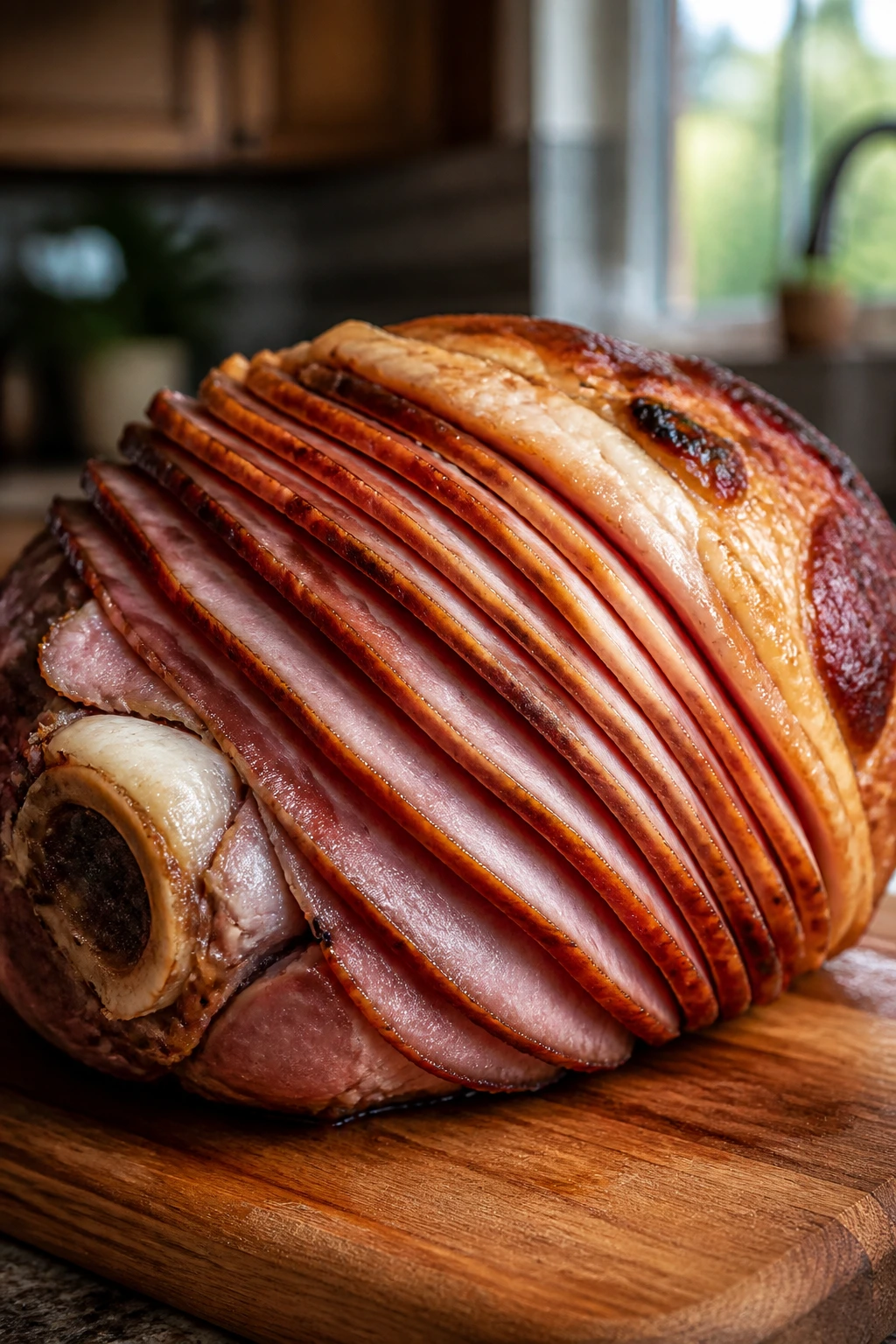
A spiral-cut ham can look almost too neat on the tray. Then the smoky bourbon honey glaze hits it, the brown sugar starts to darken at the edges, and suddenly the whole thing feels a little dangerous in the best possible way.
That’s the appeal of a smoky bourbon honey glazed ham with brown sugar glaze: it takes something already cured, already cooked, already familiar, and gives it a sticky lacquer that tastes like caramel, oak, mustard, and a faint wisp of smoke. Not a sauce. Not a syrup. More like a glossy coat that clings to the slices and settles into the grooves between them.
The part people miss is that ham does not want aggressive heat. It wants controlled heat, a little moisture in the pan, and a glaze that gets reduced before it ever meets the meat. Get those three things right, and the knife slides through soft slices while the top turns burnished and sticky instead of dry and sad. That’s the whole game.
Why This Ham Disappears First
It looks dramatic with very little fuss. A bone-in spiral ham already does half the visual work, and the dark brown sugar glaze gives you that lacquered, burnished finish that makes people drift back to the platter for “one more thin slice.”
The glaze stays balanced instead of candy-sweet. Bourbon, Dijon, vinegar, and Worcestershire keep the brown sugar and honey from turning cloying. That sharp edge matters; without it, the dish tastes like melted sweets poured over pork.
The slices stay juicy if you respect the temperature. This is a reheating job, not a full roast from raw. Pulling the ham at 130°F to 135°F after a covered bake keeps the meat tender, and the rest brings it where it needs to go.
The smoke reads savory, not heavy. Smoked paprika adds a soft campfire note that echoes the ham without burying it. A little goes a long way.
Leftovers are worth planning for. Cold slices make excellent sandwiches, and the sweeter end pieces can be chopped into beans, fried rice, or breakfast hash without tasting tired.
The glaze is easy to stage ahead. That’s the part I like most. You can make the glaze while the oven preheats, which means the rest of the cook feels calm instead of frantic.
Picking the Right Ham Before the Glaze Goes On
The ham you buy determines how forgiving the finished dish will be. That sounds obvious, but this is where a lot of people get tripped up: they grab the prettiest label without noticing whether the ham is fully cooked, bone-in, spiral-cut, or boneless.
Spiral-Cut or Whole
Spiral-cut ham is the easiest path here. The slices are already pre-scored, which means the glaze can slip between them and season more than just the outer surface. You still need to brush the glaze over the outside, but the flavor reaches deeper, which makes every bite feel more intentional.
A whole unsliced ham looks handsome and cuts a little cleaner for a dinner table, but it asks for more work. If you go that route, score the fat in a shallow diamond pattern, about 1/4 inch deep, and keep the cuts close enough to let the glaze settle into the grooves. Do not slash into the meat. That is just a fast road to dryness.
Bone-In or Boneless
Bone-in ham is my pick. The bone helps the ham hold onto moisture, and the meat around it tends to taste richer, especially after a long gentle reheat. You also get the bonus of a better drape on the platter; slices fan out with a little more shape.
Boneless ham is easier to carve and easier to pack into tight oven space, which is useful if you are feeding a smaller group or working with a shallow pan. It does dry faster, though. If boneless is what you have, lean harder on the pan liquid and the foil cover in the first stage.
Fully Cooked Matters More Than People Think
This recipe assumes a fully cooked, smoked ham. That is not a small detail. A fresh ham is raw pork and needs a completely different cooking time, a different target temperature, and a different mindset. If the label does not say “fully cooked,” “ready to eat,” or something similar, stop and check before you start.
The goal here is simple: warm the ham through to about 140°F at the thickest part, then stop. USDA guidance for reheating fully cooked ham is built around that kind of gentle finish, and it’s the reason this recipe stays juicy instead of turning fibrous at the edges.
What the Bourbon, Honey, Brown Sugar, and Smoke Each Bring
The glaze works because every piece does a different job. That sounds neat on paper, but in the pan it becomes texture, shine, and balance. Miss one piece and the whole thing starts leaning too sweet, too thin, or too sharp.
Brown Sugar Is the Base
Dark brown sugar is the body of the glaze. It gives you molasses depth, faster browning, and a thicker finish than white sugar would ever give. Packed firmly, it melts into a glossy syrup that darkens as it cooks.
Light brown sugar will work in a pinch, but the color will be paler and the flavor a little flatter. If that is what you have, add 1 tablespoon molasses to bring some of the missing depth back.
Honey Is the Shine
Honey is what makes the glaze look wet and sticky instead of grainy. It also softens the brown sugar’s edges, which matters once the glaze goes back into the oven. You want it to cling in a thin coat, not set up like hard candy.
If your honey has crystallized in the jar, warm it briefly in a bowl of hot water before measuring it. Cold honey can drag the rest of the glaze down with it and make the saucepan feel more stubborn than it should.
Bourbon Brings Oak and Vanilla Notes
Bourbon does not make the ham taste boozy. Not if you simmer it properly. What remains after the quick reduction is the oak, a little vanilla, and a faint bitterness that keeps the glaze from collapsing into sugar syrup.
You do not need a top-shelf bottle here. The sugar, mustard, and ham are doing a lot of heavy lifting. A decent mid-range bourbon is fine, and I would avoid anything so smoky or heavily flavored that it fights with the ham instead of helping it.
Dijon, Vinegar, and Worcestershire Keep the Glaze Sharp
Dijon mustard gives the glaze its backbone. Apple cider vinegar cuts the sweetness. Worcestershire adds a quiet savory note that makes the whole thing taste deeper than the ingredient list would suggest.
That sharpness matters. Without it, the glaze can taste like dessert trying to disguise itself as dinner. With it, the sweetness reads as glaze, not candy.
Smoked Paprika and Cloves Build the Smoke Layer
Smoked paprika is the easiest way to echo the ham’s natural smoke without making the glaze harsh. Ground cloves add that old-school ham-shop aroma, but only in a small amount. A quarter teaspoon is enough.
Too much clove and the glaze starts tasting medicinal. Too much smoked paprika and it can go bitter if the sugar scorches. The sweet spot is subtle.
The Short Ingredients List and Timing You Actually Need
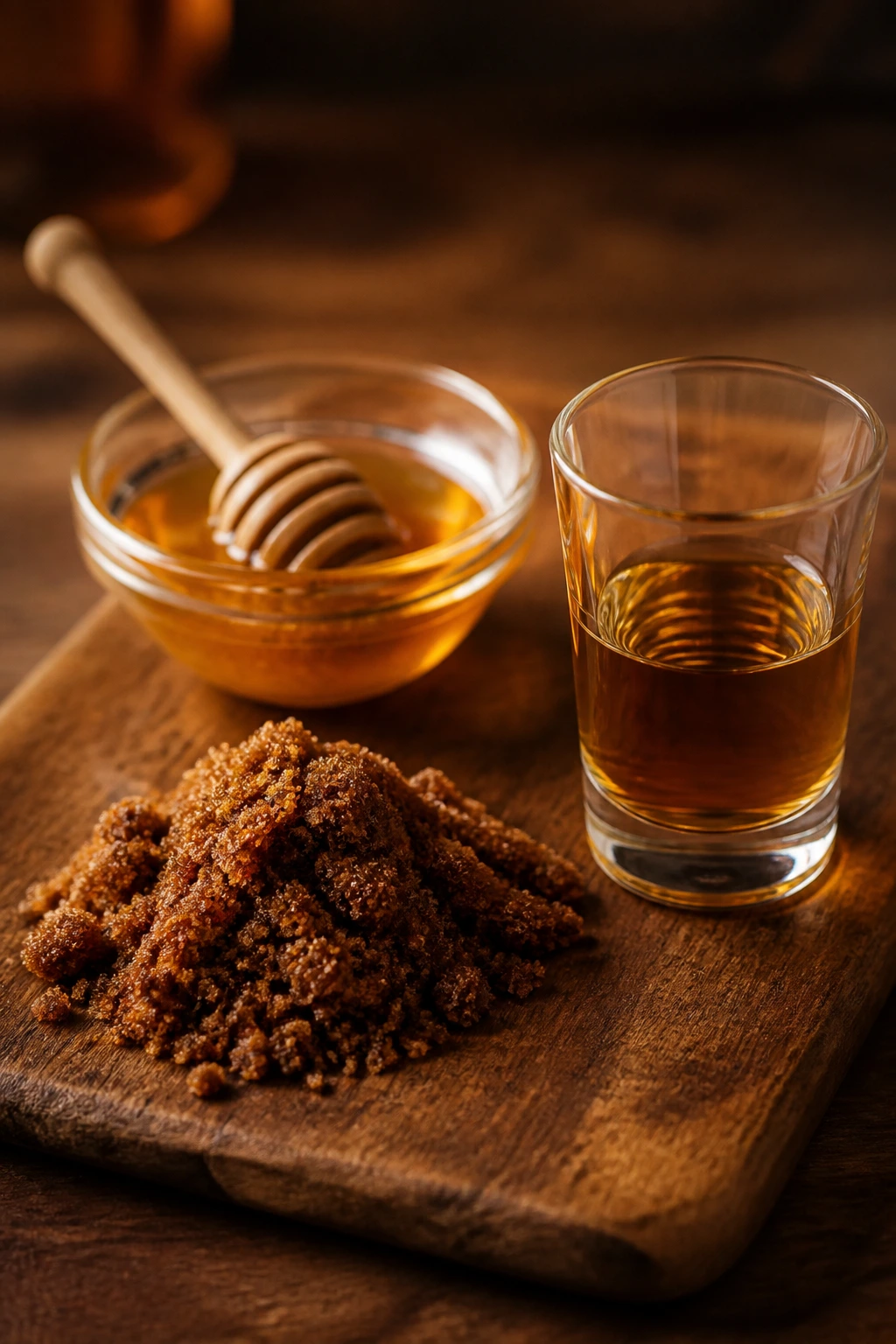
The dish looks lavish, but the shopping list is short. That is part of its charm. Most of the work is in the timing and the glaze texture, not in chasing down specialty ingredients.
Yield: Serves 10 to 12
Prep Time: 20 minutes
Cook Time: 1 hour 40 minutes
Total Time: 2 hours
Difficulty: Beginner — the steps are simple, but the glaze needs attention and the ham needs a thermometer.
Rest Time: 15 to 20 minutes
Best Served: Warm, after the glaze has set for a few minutes
For the Ham:
- 1 bone-in spiral-cut smoked ham, 8 to 10 pounds
- 1/2 cup unsweetened apple cider or water, for the roasting pan
For the Brown Sugar Bourbon Glaze:
- 1 cup packed dark brown sugar
- 1/2 cup honey
- 1/3 cup bourbon
- 1/4 cup Dijon mustard
- 2 tablespoons apple cider vinegar
- 1 tablespoon Worcestershire sauce
- 2 tablespoons unsalted butter
- 1 teaspoon smoked paprika
- 1/2 teaspoon freshly ground black pepper
- 1/4 teaspoon ground cloves
Reading the Ingredients Like a Cook, Not a Shopper
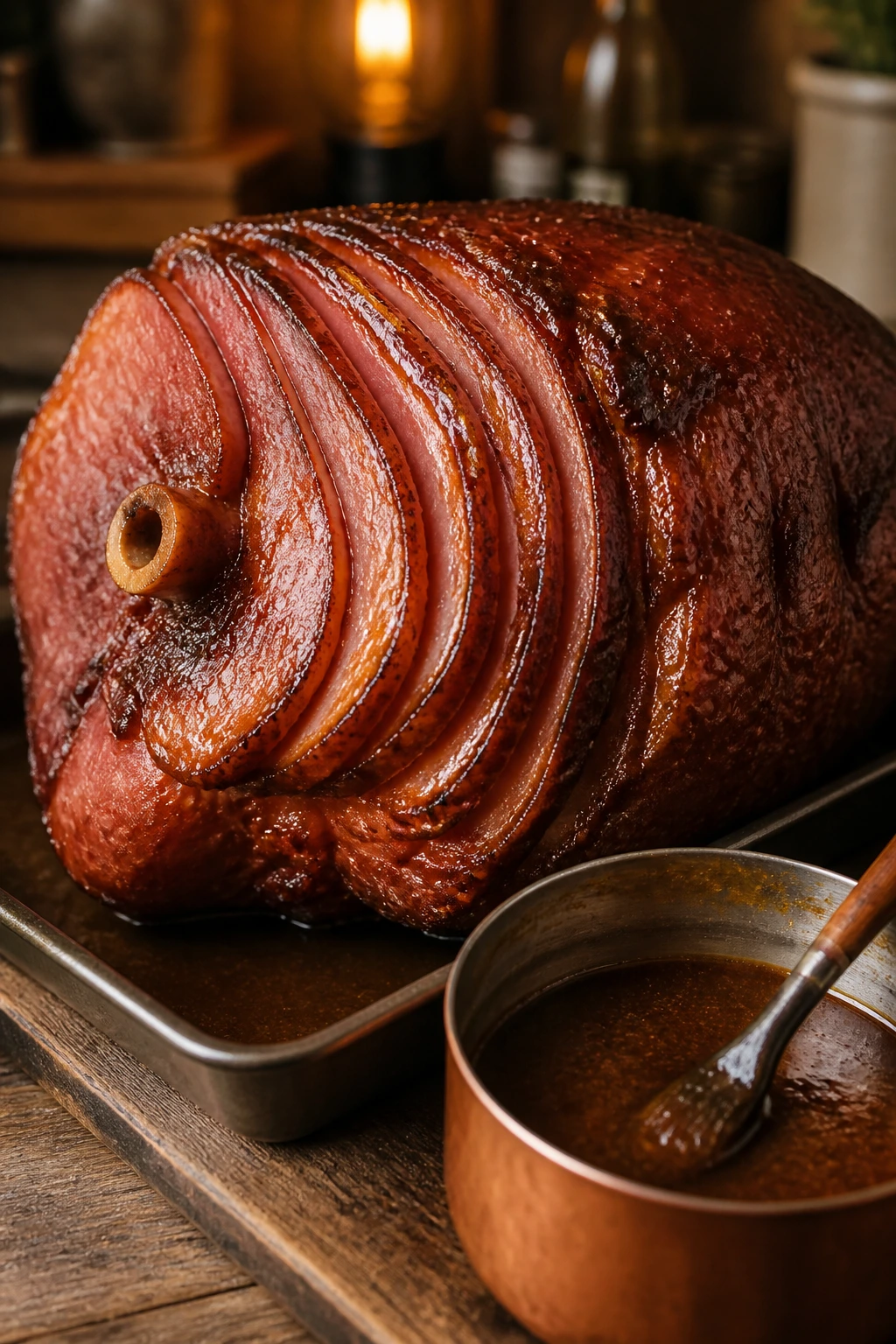
The Ham
- What to use: 1 bone-in spiral-cut smoked ham, 8 to 10 pounds. That size feeds a serious group and gives you enough surface area for the glaze to do its sticky work.
- Preparation: Remove all packaging, the plastic disk near the bone if it has one, and any netting. Let the ham sit at room temperature for 20 to 30 minutes while the oven heats.
- Substitutions: A bone-in shank ham or bone-in butt ham both work. Boneless ham is usable, but it dries a little faster and usually needs more careful basting.
- Tips: Buy a ham with enough fat on the outside to hold the glaze. That fat edge softens as it heats and helps the sugars cling instead of sliding off.
Brown Sugar and Honey
- What to use: 1 cup packed dark brown sugar and 1/2 cup honey. Together they make the glaze thick, glossy, and dark enough to read from across the room.
- Preparation: Pack the brown sugar firmly in the measuring cup so you get a true cup, not a loose mound. If the sugar is clumpy, break it up with your fingers before it hits the pan.
- Substitutions: Light brown sugar works if that is what you have. Maple syrup can replace half the honey for a deeper, woodsy note.
- Tips: Dark brown sugar gives the glaze more molasses depth and a better color in the oven. Honey should go in after the sugar starts dissolving so it helps shine instead of burning too early.
Bourbon, Dijon, Vinegar, and Worcestershire
- What to use: 1/3 cup bourbon, 1/4 cup Dijon mustard, 2 tablespoons apple cider vinegar, and 1 tablespoon Worcestershire sauce.
- Preparation: Measure these before you turn on the burner. Once the sugar begins to melt, you do not want to be scrambling for a bottle.
- Substitutions: If you want to skip alcohol, replace bourbon with 1/3 cup apple juice plus 1 teaspoon vanilla extract. Whole-grain mustard can stand in for Dijon in a pinch.
- Tips: Bourbon should simmer just long enough to lose its raw edge. Keep the boil gentle; hard boiling can drive off flavor and leave you with a thinner, harsher glaze.
Smoke, Spice, and Butter
- What to use: 1 teaspoon smoked paprika, 1/2 teaspoon black pepper, 1/4 teaspoon ground cloves, and 2 tablespoons unsalted butter.
- Preparation: Stir the spices into the glaze so they distribute evenly before the saucepan comes off the heat. Cut the butter into small pieces so it melts fast.
- Substitutions: Chipotle powder can replace half the smoked paprika if you want more heat. Allspice can stand in for cloves, but use a light hand.
- Tips: Butter gives the finished glaze a smoother feel and a little shine. Add it off the heat if your stove runs hot, because butter left on a strong burner can separate before you ever brush it on the ham.
The Pan Liquid
- What to use: 1/2 cup apple cider or water in the bottom of the pan.
- Preparation: Pour it in before the ham goes into the oven. It should sit below the rack, not over the meat.
- Substitutions: Pineapple juice works if you want a sharper sweet note, though it makes the glaze taste more tropical. Water is fine if that is all you have.
- Tips: The liquid is not there to steam the ham into submission. It is there to keep drips from burning and to give you a little extra moisture in the oven.
Equipment That Makes the Job Less Annoying
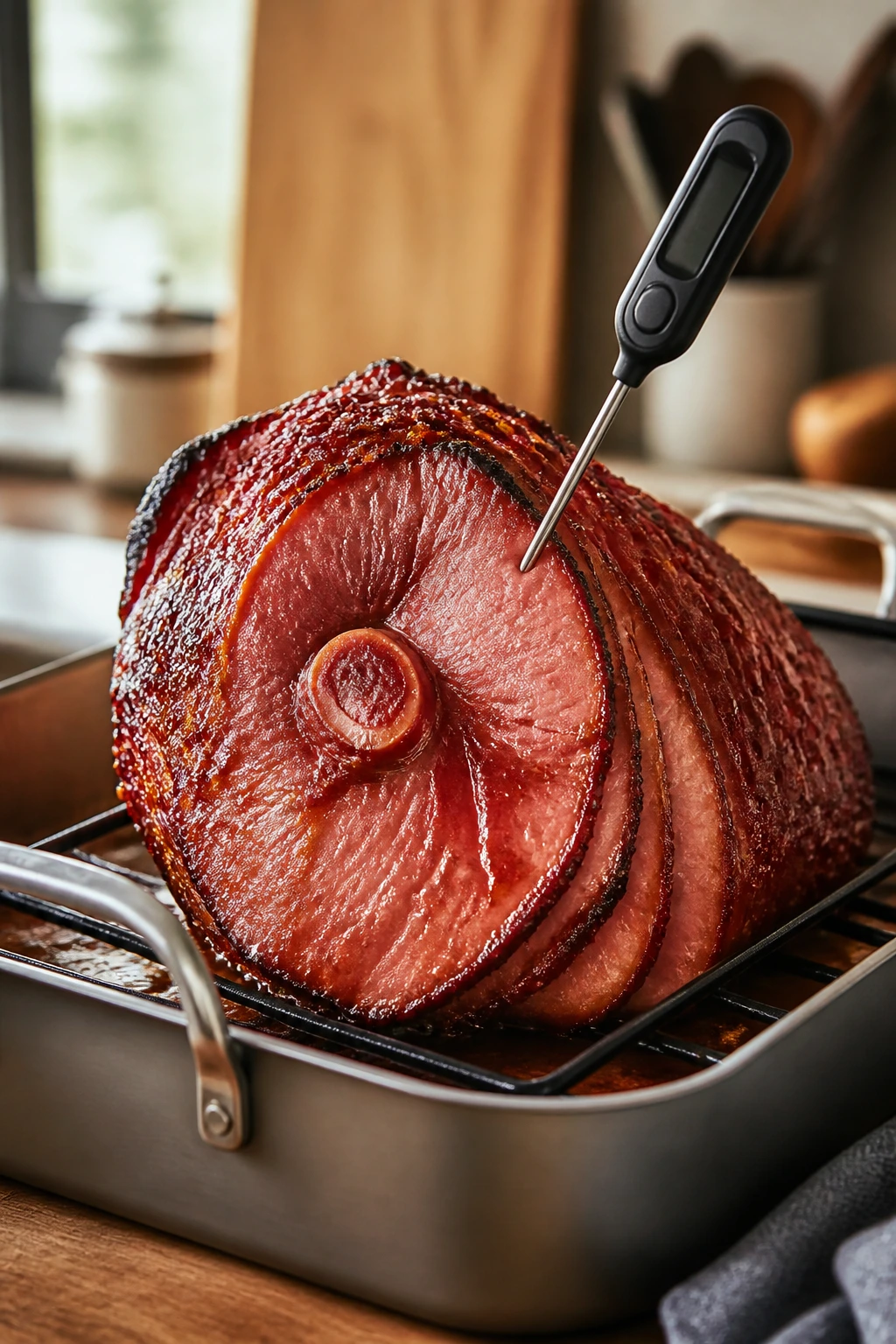
A good glazed ham does not require fancy gear, but a few specific tools make the difference between tidy and messy.
- Large roasting pan with a rack: Keeps the ham elevated so the bottom does not stew in its own drippings.
- Heavy-duty aluminum foil: You need a tight cover for the first bake and enough foil to catch spills under the pan.
- Small saucepan: The glaze needs its own space so it can reduce without scorching.
- Pastry brush or sturdy spoon: A brush helps work glaze between spiral cuts; a spoon is fine if the brush gets sticky.
- Instant-read thermometer: Non-negotiable. The ham should reach about 130°F to 135°F in the thickest part before resting.
- Carving knife: A long, sharp knife gives you clean slices instead of tearing through the spiral cuts.
- Cutting board with a groove: The glaze and juices run, and you want that mess contained.
- Measuring cups and spoons: This is a glaze recipe. Free-pouring is how sugar burns.
Scoring, Foil, and Pan Setup Before the Oven Even Thinks About Warming Up
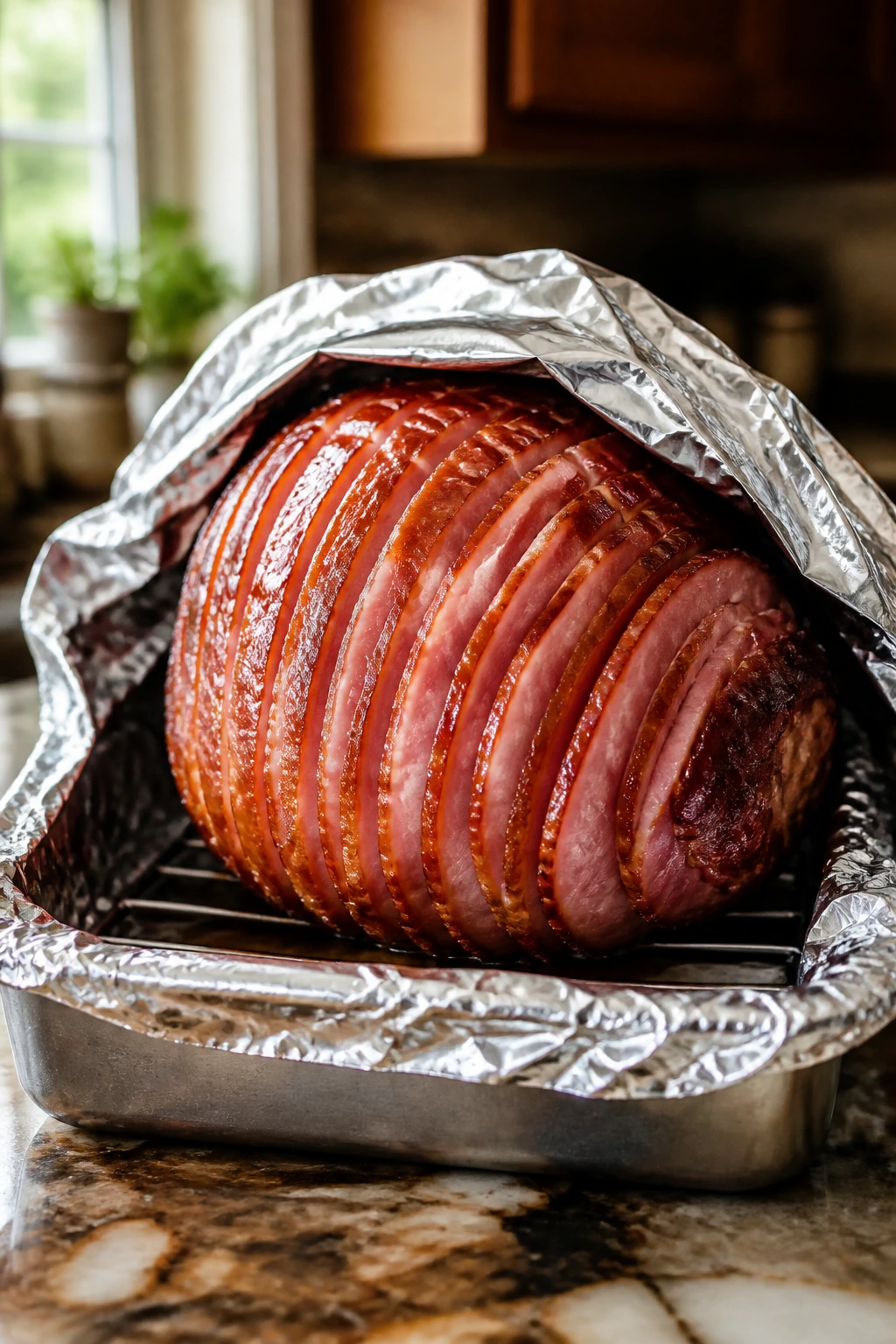
The first job is protection. Glazing comes later. Right now the ham needs to be positioned so the heat can move through it evenly without drying out the outside before the center catches up.
Prep the pan and ham:
- Preheat the oven to 325°F (165°C) and position a rack in the lower-middle third of the oven.
- Line a large roasting pan with heavy-duty foil if you want an easier cleanup, then set a rack inside the pan if you have one.
- Remove the ham from its packaging and discard any plastic disk or netting. If it is spiral-cut, gently loosen the top slices with your fingers just enough to make room for glaze later. If it is a whole ham, score the fat cap in a shallow diamond pattern about 1/4 inch deep. Do not cut into the meat.
- Place the ham cut-side down on the rack and pour 1/2 cup apple cider or water into the bottom of the pan. Cover the ham loosely with foil, tenting it so the foil does not touch the surface.
A spiral-cut ham does not need brute force. It needs a clean, calm setup and room for the glaze to seep where it can.
If you are using a bone-in ham, let the bone anchor the cut side and the flat side face up under the foil. That keeps the surface from drying out while the center warms. The ham should smell smoky and faintly sweet as it heats; if the kitchen starts smelling like burning sugar at this stage, something is wrong with the foil seal or the oven rack position.
Simmering the Brown Sugar Bourbon Glaze Until It Clings
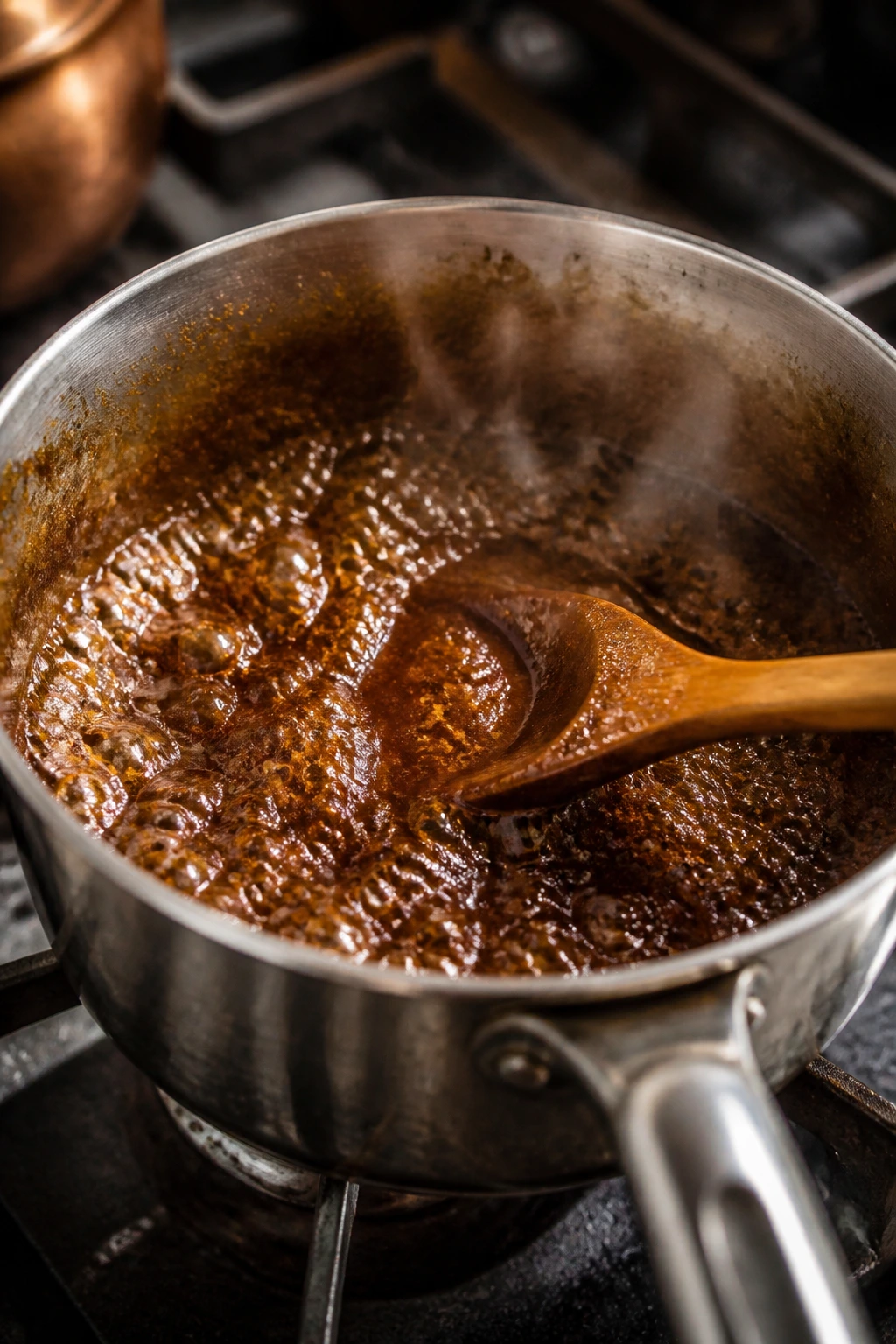
The glaze should be cooked enough to thicken, but not so long that it turns into taffy. You want it to coat the back of a spoon and move slowly when you tilt the pan.
Build the glaze: 5. In a small saucepan over medium heat, combine the brown sugar, honey, bourbon, Dijon mustard, apple cider vinegar, Worcestershire sauce, smoked paprika, black pepper, ground cloves, and butter. 6. Stir constantly for 4 to 6 minutes, until the sugar dissolves and the mixture begins to bubble around the edges. 7. Reduce the heat to medium-low and simmer for 3 to 5 minutes more, stirring often, until the glaze looks glossy and thick enough to leave a slow trail when you drag a spoon through it. If it starts foaming hard or sticking to the bottom, lower the heat immediately. 8. Remove the saucepan from the heat and let the glaze sit for 5 minutes. It should still pour, but not like water. If it gets too thick, whisk in 1 teaspoon of warm water at a time.
The smell changes as soon as the bourbon loses its rough edge. That is the sign I watch for. The glaze starts to smell rounder, less sharp, and a little more like caramel with a backbone.
No need to rush this part. A glaze that is reduced properly will cling to the ham slices in the oven instead of running straight down into the pan.
Baking the Ham Covered Without Drying It Out
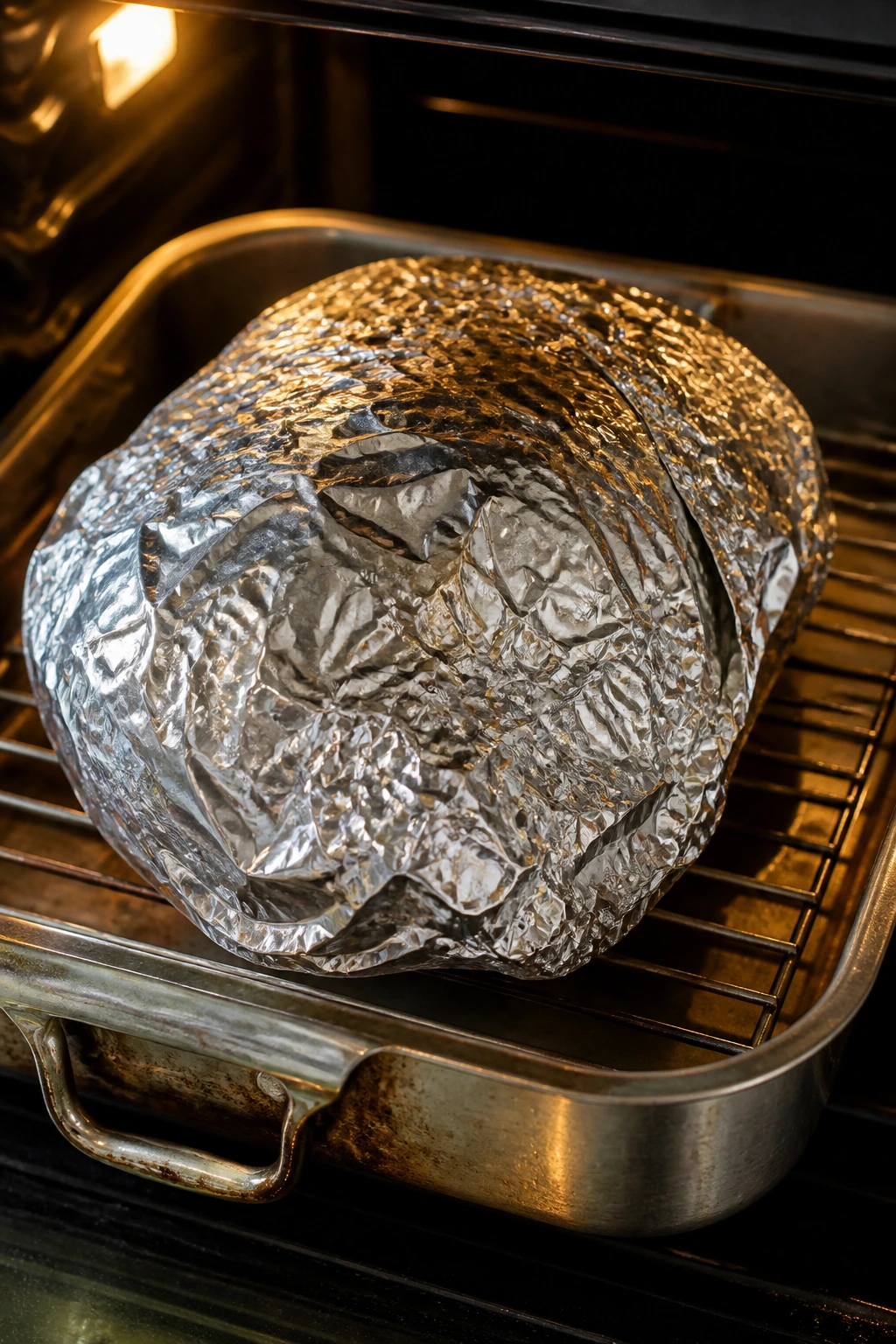
Now the oven gets to do the dull work.
Heat through and glaze in layers: 9. Place the covered ham in the oven and bake for 10 to 12 minutes per pound, until the thickest part of the ham reaches about 120°F to 125°F. For an 8- to 10-pound ham, that usually lands somewhere around 1 hour 20 minutes to 1 hour 45 minutes total covered time. 10. Remove the pan from the oven and carefully peel back the foil. Spoon or brush about half of the glaze over the top of the ham, working some of it between the spiral slices. Take your time here; that is where the flavor gets inside instead of staying on the surface. 11. Re-cover the ham and return it to the oven for another 10 to 15 minutes, until the thickest part reaches 130°F to 135°F. Do not chase a much higher temperature. This is already cooked meat, and the goal is tenderness, not a higher number for its own sake.
A ham that has gone too far starts looking dry around the cut edges and will shed thick slices instead of clean ones. Pull it before that happens. The carryover heat during the rest will finish the job.
If your oven runs cool, give it a few extra minutes under the foil and rely on the thermometer, not the clock. The thermometer is the adult in the room.
Brushing on the Final Coat and Setting the Sticky Crust
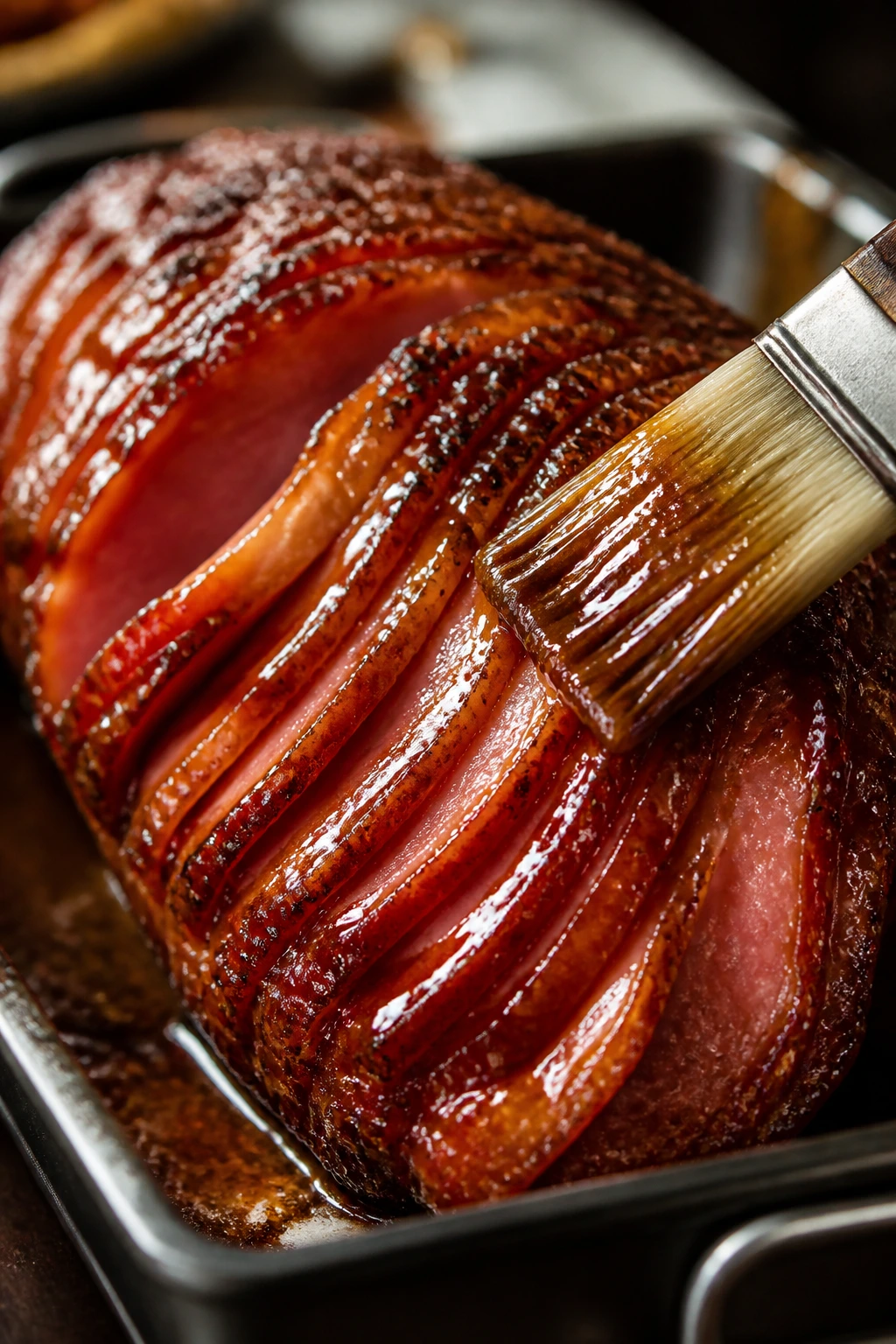
This is the part everyone notices. The last layer of glaze turns the ham from glossy to almost glassy, and the edges around the spiral cuts get a little darker and more bronzed than the rest.
Finish the glaze: 12. Uncover the ham and brush or spoon the remaining glaze over the top, pushing some of it into the slices again. Return the ham to the oven, uncovered, for 15 to 20 minutes until the surface looks shiny and the glaze bubbles in thick patches. 13. If you want a deeper color, move the pan to the upper third of the oven and broil for 1 to 2 minutes, watching it the whole time. Walk away for even half a minute and the sugar can go from lacquered to burnt. 14. Remove the ham from the oven and let it rest for 15 to 20 minutes before slicing. Spoon any pan juices over the top, then transfer slices to a serving platter.
Resting matters more than people want to admit. The glaze settles, the juices calm down, and the slices stop trying to run apart the second the knife touches them.
If you are serving from the platter, keep a small spoon nearby. People will use it to pull a little extra glaze onto each slice, and honestly, they should.
How to Plate Ham So It Looks Intentional, Not Tired
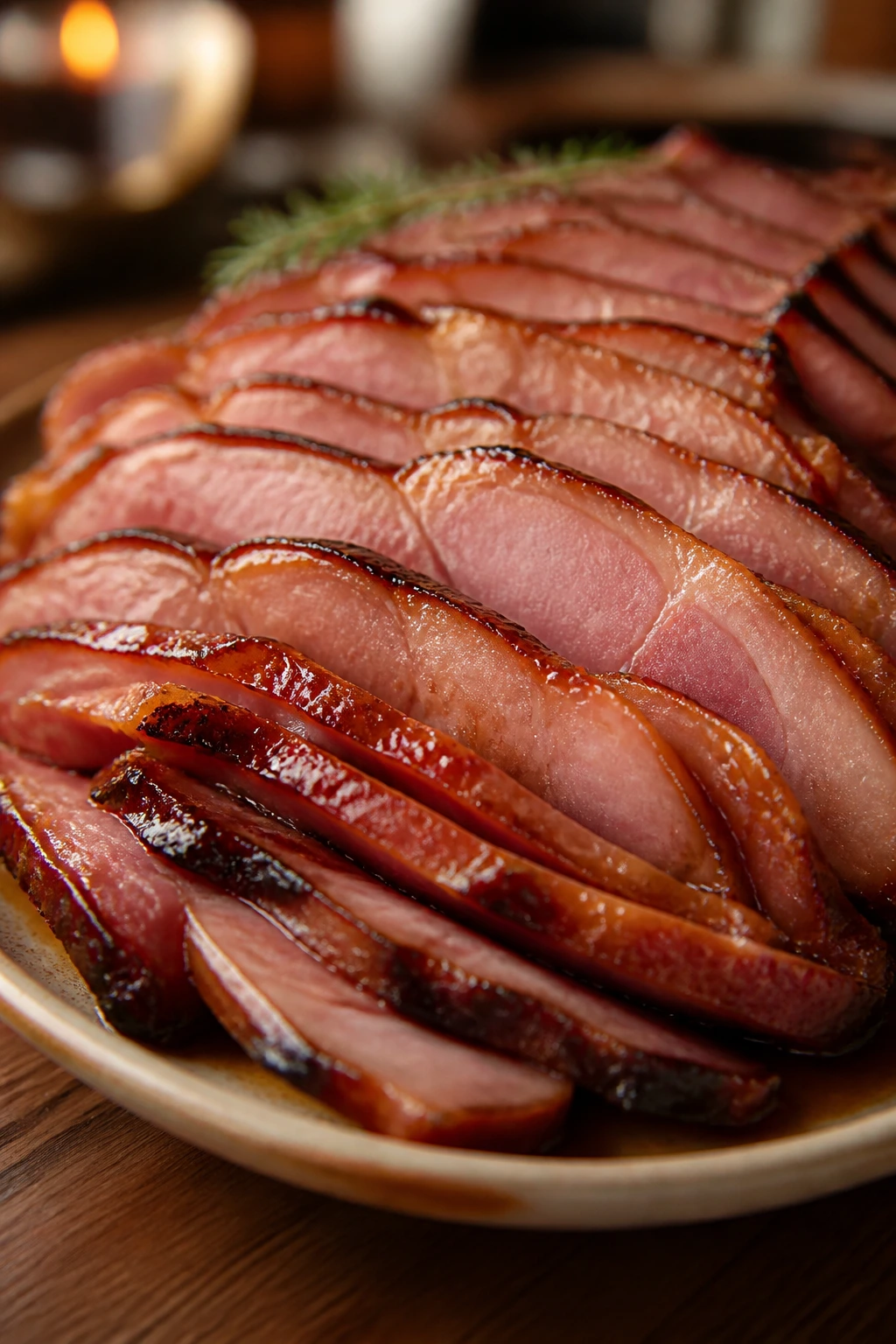
Presentation: Fan the slices across a warm platter rather than stacking them in a pile. Spoon a little of the pan glaze over the top so the edges catch the light, and let a few darker bits sit where they naturally fall. A scatter of chopped parsley or thin orange peel can brighten the look, but don’t bury the ham under garnish.
Accompaniments: Sweet glazes need something salted, starchy, or bright beside them. I like this with scalloped potatoes, buttery mashed potatoes, roasted carrots with a splash of vinegar, green beans with almonds, or soft dinner rolls for mopping up the pan juices. If you want a sharper side, a cabbage slaw dressed with cider vinegar works better than a heavy cream salad.
Portions: An 8- to 10-pound bone-in ham usually serves 10 to 12 people generously, or more if the table has a lot of sides. Plan on 1/2 pound per person for a main-course serving, less if it is part of a larger spread. Leftovers are not an afterthought here; they are part of the deal.
Beverage Pairing: Dry sparkling cider keeps the sweetness in check, and a crisp lager does the same thing from a different angle. If you want wine, dry riesling or a lightly chilled chenin blanc works well. For something stronger, a bourbon old fashioned with a little extra orange peel echoes the glaze without turning the meal into a dessert course.
Small Moves That Make the Glaze Better
Flavor Enhancement: Stir 1 teaspoon of finely grated orange zest into the finished glaze right before it goes on the ham. It does not turn the dish citrusy; it just lifts the brown sugar and makes the bourbon smell cleaner.
Time-Saver: Make the glaze up to 3 days ahead and keep it covered in the fridge. Warm it gently over low heat or in short bursts in the microwave until it loosens enough to brush.
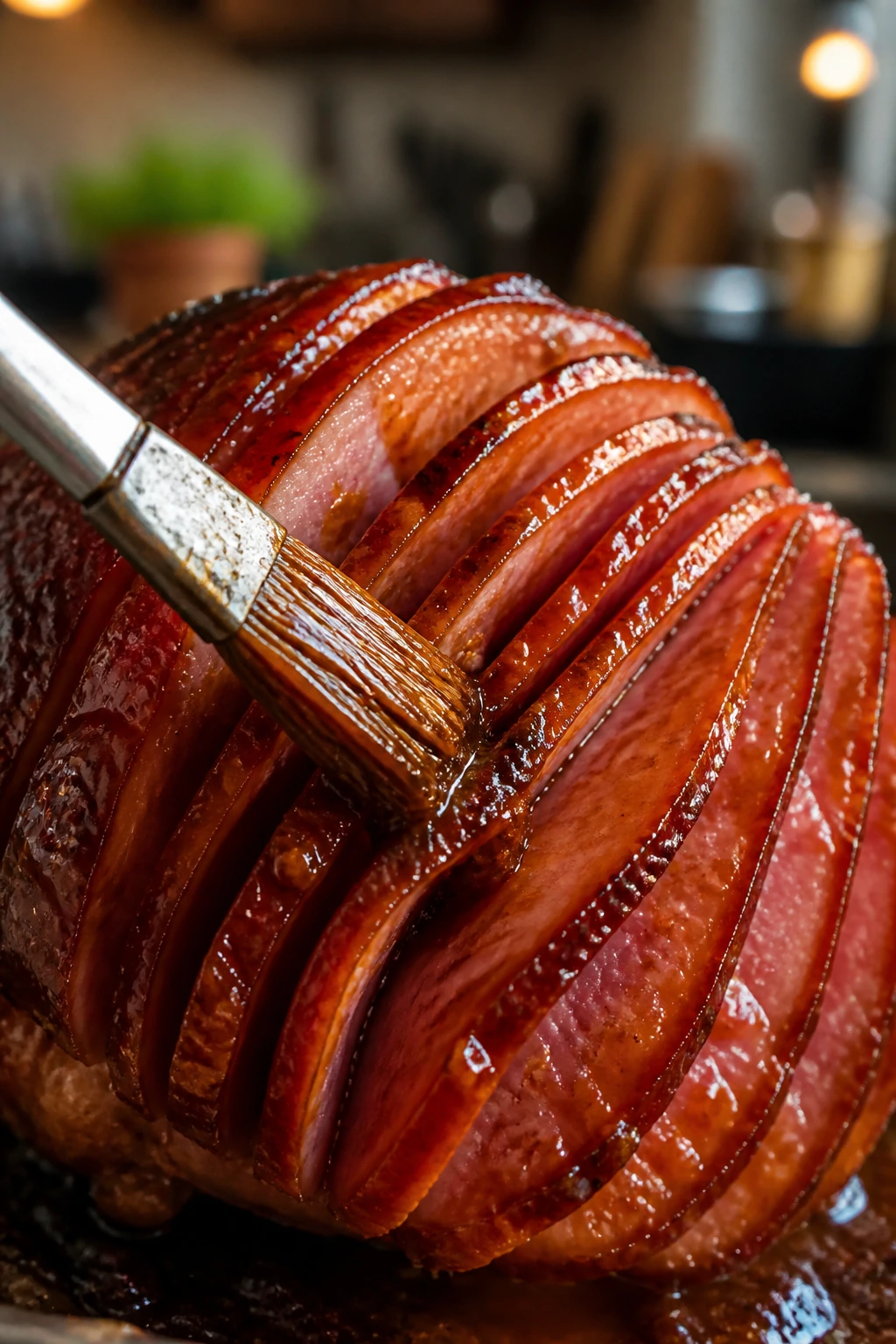
Pro Move: Brush glaze between the spiral slices with a pastry brush, then wait 2 minutes and brush again. The first coat sinks in; the second one sticks on the surface and gives you that dark, tacky finish.
Cost-Saver: If you are feeding fewer people, buy a 6- to 7-pound bone-in ham and cut the glaze recipe by one-third. The method stays the same, but the oven time will be shorter, so start checking the temperature earlier.
Serving Move: Reserve a few spoonfuls of the glaze before it touches the raw ham, then warm them separately and use them at the table. Fresh glaze on the platter gives each slice a little extra shine.
Mistakes That Turn a Good Ham Dry or Burnt
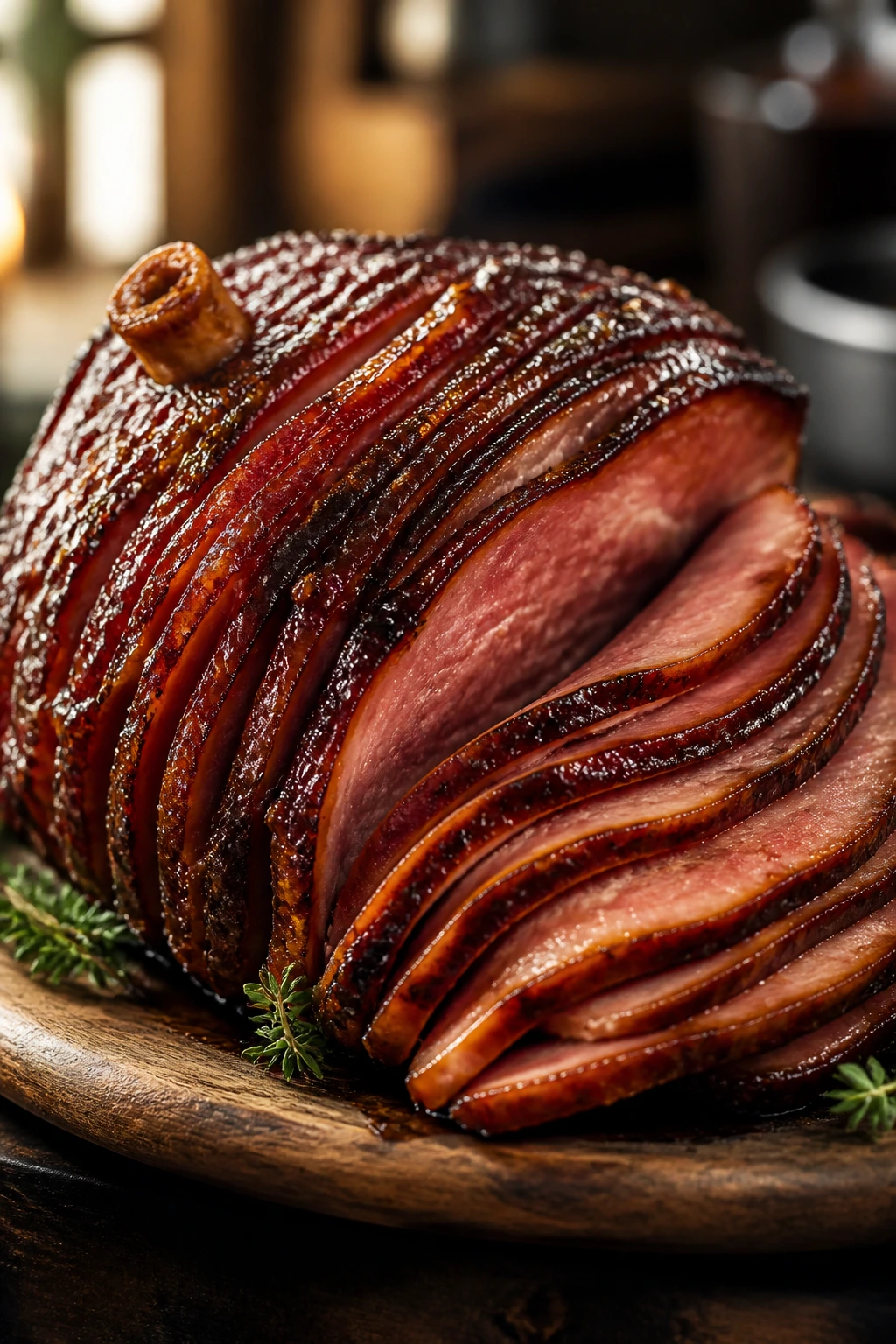
Buying the wrong kind of ham: A fresh ham is raw pork and needs a completely different cook. If the label does not say fully cooked or ready to eat, this recipe timing will not match the meat. Fix it at the store, not halfway through dinner.
Boiling the glaze into hard candy: If the glaze reduces too far, it stops brushing on smoothly and starts clumping in the saucepan. The fix is to stop when it coats a spoon and leaves a slow trail; you want syrup, not taffy.
Pulling the ham too hot: A lot of people wait for a higher number because they are thinking about raw pork rules. This ham is already cooked, and driving it too far past 135°F will dry out the edges. Pull it earlier and let the rest finish the job.
Broiling too close or too long: The top can burn fast because brown sugar and honey are quick to darken. Keep the ham in the upper third of the oven, use the broiler for no more than 1 to 2 minutes, and do not walk away.
Skipping the foil-covered first bake: Without that cover, the outside dries before the inside is warm, and the glaze has no chance to set properly. Use the foil. It is boring and necessary.
Slicing too soon: A hot glazed ham wants to fall apart while the juices are still moving. Give it at least 15 minutes on the counter, and the slices will hold together much better.
Ways to Bend the Recipe Without Breaking It
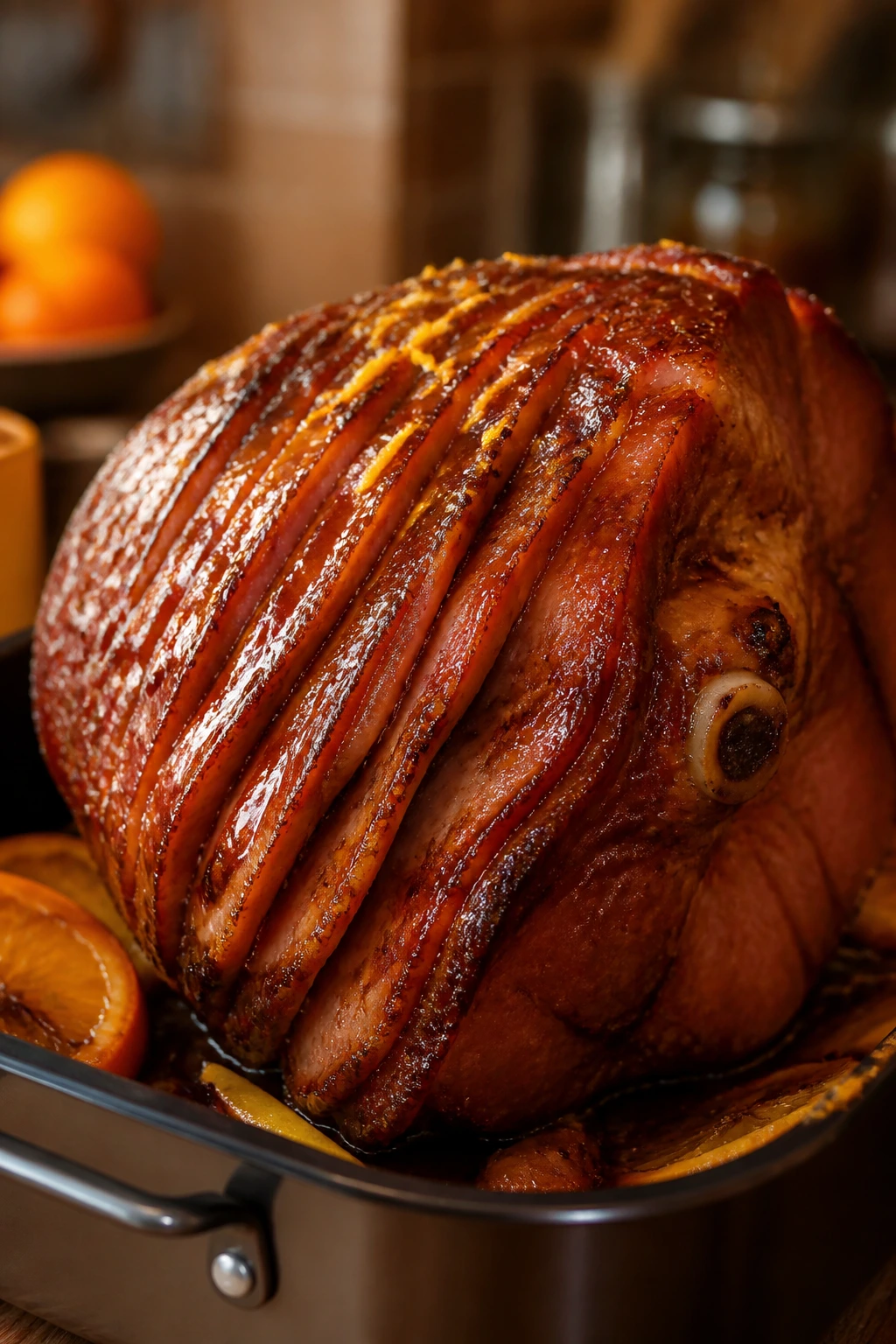
Orange-Bourbon Shine: Swap 1/4 cup of the bourbon for fresh orange juice and add 1 teaspoon orange zest. The glaze tastes brighter and a little cleaner, which is nice if the rest of the menu is heavy.
Maple Brown Sugar Ham: Replace half the honey with pure maple syrup. The flavor gets deeper and woodier, and the finish is a touch less floral than straight honey.
Spicy Smokehouse Ham: Add 1/2 teaspoon chipotle powder and reduce the smoked paprika to 1/2 teaspoon. This version leans savory and a little hot, which works well if your sides are creamy or very sweet.
Mustard-Forward Ham: Increase the Dijon to 1/3 cup and add 1 extra teaspoon vinegar. That pulls the glaze toward savory territory and keeps the sweetness from taking over.
Alcohol-Free Apple Glaze: Replace the bourbon with apple juice and add 1 teaspoon vanilla extract plus another tablespoon of vinegar. You still get depth, but the finish reads softer and more family-friendly.
Keeping Leftover Ham Moist for Sandwiches and Soup
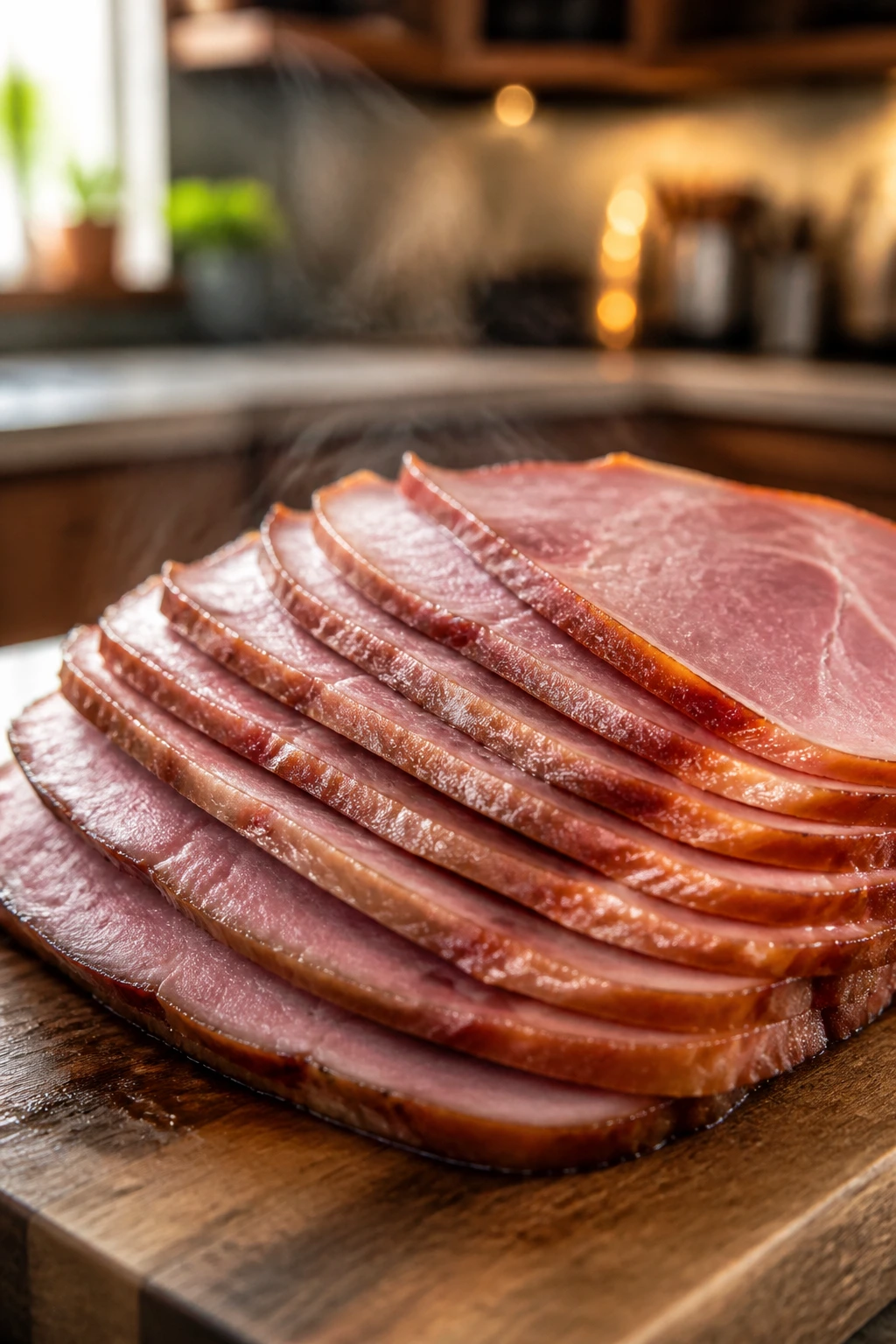
Leftover ham keeps well if you treat it like something worth preserving, not like an afterthought shoved into a container. Once the ham has cooled for no more than 2 hours at room temperature, wrap slices tightly or store them in shallow airtight containers. Refrigerated, they keep for 3 to 4 days. Frozen, they hold for up to 2 months, though the texture is best if you freeze in smaller portions rather than one giant block.
Reheating is where most leftovers get ruined. Thin slices warm best in a skillet with a tablespoon or two of water, covered, over low heat for 2 to 3 minutes per side. A whole leftover section should be wrapped in foil and heated at 300°F (150°C) until warmed through, just long enough to take the chill off without cooking it a second time.
Microwaves work if you use short bursts and a damp paper towel over the top, but the edges can get rubbery fast. If you have the patience, the skillet gives the best texture for sandwiches and breakfast plates.
The ham bone is not trash. Freeze it if you are not using it right away, then simmer it later with beans, split peas, or a pot of greens. There is a lot of flavor hiding there.
You can make the glaze ahead, but I would not fully glaze and bake the ham a day in advance unless you plan to reheat it gently and serve it sliced. The sugar crust is best the day it is made, with the gloss still intact.
Questions People Ask Before They Buy the Ham
Can I use a boneless ham instead of bone-in?
Yes. Boneless ham slices neatly and works fine with this glaze, but it dries a little faster. Keep the pan covered in the first stage and start checking the temperature early so the edges do not tighten up.
What bourbon should I buy for the glaze?
Use a bourbon you would drink, but not your best bottle. A mid-range bourbon with vanilla and oak notes is ideal; you want flavor, not a pricey pour buried under sugar and mustard.
Can I make this without alcohol?
Absolutely. Replace the bourbon with apple juice and add a teaspoon of vanilla extract. The glaze will be a little softer and less oaky, but it will still cling and brown nicely.
Do I need to score a spiral-cut ham?
No. Spiral slices already give the glaze places to settle. What helps more is gently loosening the top few slices so the glaze can slide inside before the final bake.
How do I know the glaze is thick enough?
Dip a spoon into the glaze and lift it. If the liquid coats the spoon and leaves a slow-moving trail when you drag a finger through it, you are close. If it runs like thin syrup, give it another minute or two over low heat.
What if the glaze starts burning before the ham is done?
Cover the top loosely with foil and move the ham to a lower rack. The meat will keep heating while the sugar stays from going black. Burned sugar tastes bitter fast, so do not try to “save” it by leaving it exposed.
Can I use this glaze on a smaller ham or ham steaks?
Yes, and it works well on ham steaks if you want a faster dinner. For steaks, brush on the glaze during the last few minutes in a skillet or under the broiler, because they need a shorter cook and can scorch if treated like a whole roast.
The Last Slice from the Platter
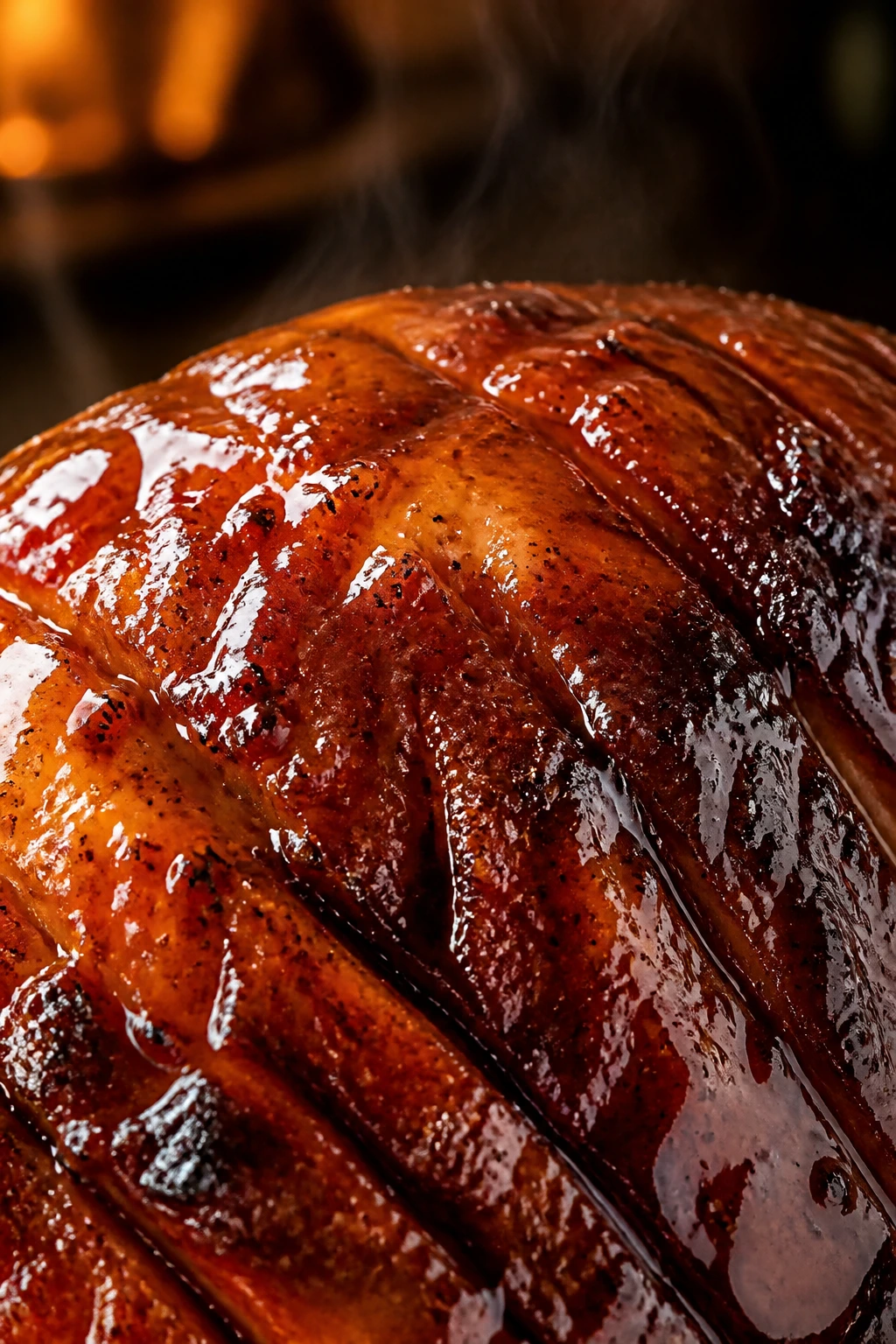
A ham like this earns its place by being more than a centerpiece. The glaze gives it a dark, sticky edge, but the method keeps the meat soft enough that the second slice is usually better than the first. That is a rare thing with glazed pork.
What I like most is the balance: enough bourbon to taste round, enough honey to shine, enough mustard and vinegar to keep the sugar honest. Once you get that balance right, you do not need much else. Just a knife, a platter, and people willing to keep circling back to the table.
Smoky Bourbon Honey Glazed Ham with Brown Sugar Glaze — Recipe Card
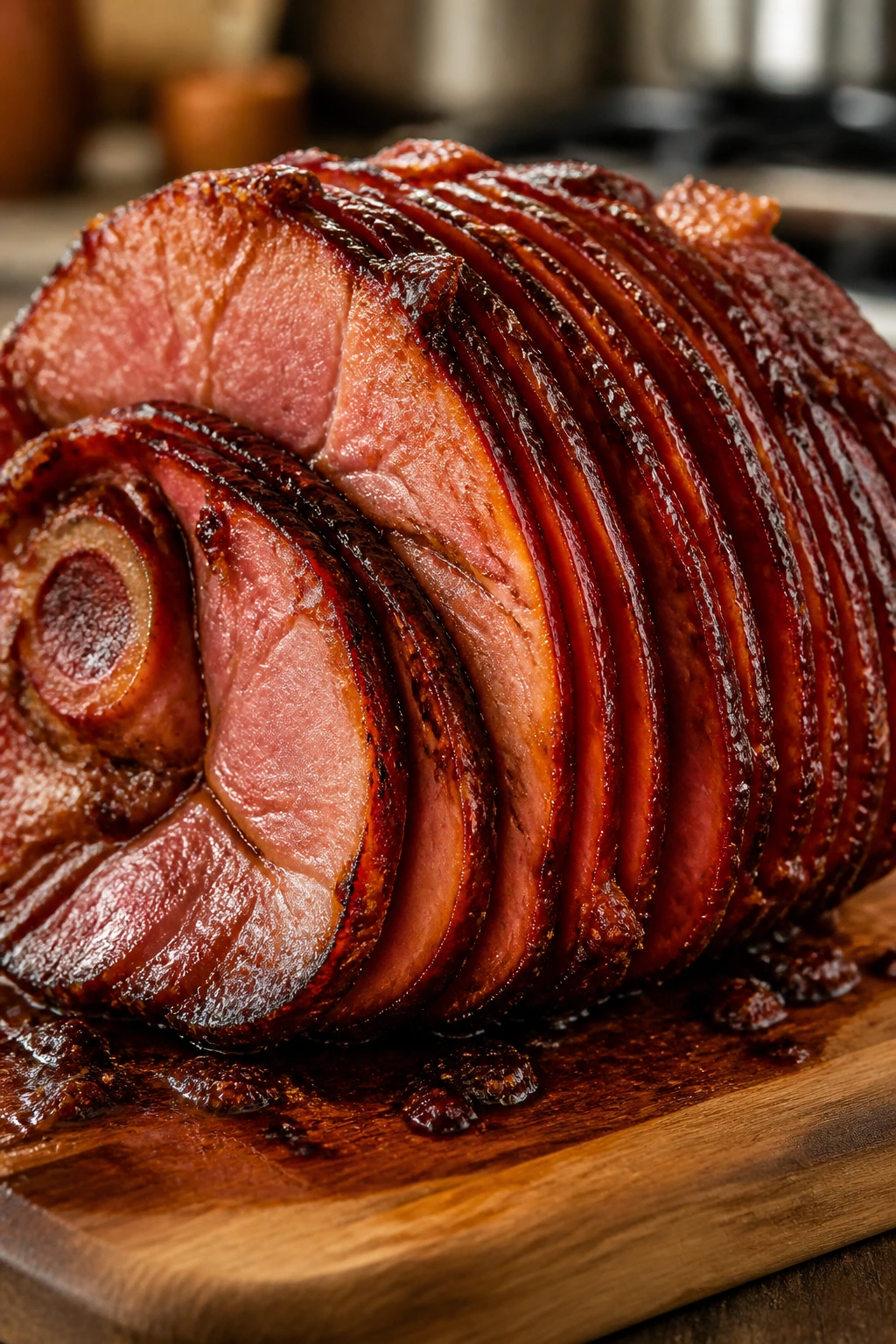
Recipe Name: Smoky Bourbon Honey Glazed Ham with Brown Sugar Glaze
Description: A bone-in spiral-cut ham brushed with a glossy brown sugar, bourbon, and honey glaze, then baked until sticky at the edges and tender through the center. The glaze lands sweet, smoky, and sharp enough to keep every slice balanced.
Prep Time: 20 minutes
Cook Time: 1 hour 40 minutes
Total Time: 2 hours
Course: Dinner, Main Course
Cuisine: American
Servings: 10 to 12
Calories: About 430 kcal per serving
Ingredients
For the Ham:
- 1 bone-in spiral-cut smoked ham, 8 to 10 pounds
- 1/2 cup unsweetened apple cider or water, for the roasting pan
For the Brown Sugar Bourbon Glaze:
- 1 cup packed dark brown sugar
- 1/2 cup honey
- 1/3 cup bourbon
- 1/4 cup Dijon mustard
- 2 tablespoons apple cider vinegar
- 1 tablespoon Worcestershire sauce
- 2 tablespoons unsalted butter
- 1 teaspoon smoked paprika
- 1/2 teaspoon freshly ground black pepper
- 1/4 teaspoon ground cloves
Instructions
- Preheat the oven to 325°F (165°C) and set a rack in the lower-middle third of the oven.
- Line a large roasting pan with foil if desired, place a rack inside, and set the ham cut-side down in the pan. Pour 1/2 cup apple cider or water into the bottom of the pan and cover the ham loosely with foil.
- In a small saucepan over medium heat, combine the brown sugar, honey, bourbon, Dijon mustard, vinegar, Worcestershire sauce, butter, smoked paprika, black pepper, and cloves.
- Stir for 4 to 6 minutes, then simmer 3 to 5 minutes more until the glaze thickens and coats a spoon. Remove from the heat and let stand 5 minutes.
- Bake the covered ham for 10 to 12 minutes per pound, until the thickest part reaches about 120°F to 125°F.
- Remove the foil, brush or spoon about half the glaze over the ham, getting some between the spiral slices.
- Re-cover and bake 10 to 15 minutes more until the thickest part reaches 130°F to 135°F.
- Uncover, brush on the remaining glaze, and bake uncovered for 15 to 20 minutes until the surface is shiny and bubbling.
- Broil for 1 to 2 minutes if you want deeper color, watching closely.
- Rest for 15 to 20 minutes before slicing and serving.
Notes: Pull the ham at 130°F to 135°F, not higher, because it will keep warming as it rests. If you want an alcohol-free version, replace the bourbon with apple juice plus 1 teaspoon vanilla extract. Reserve a few spoonfuls of glaze for the table if you want extra shine on each slice.