



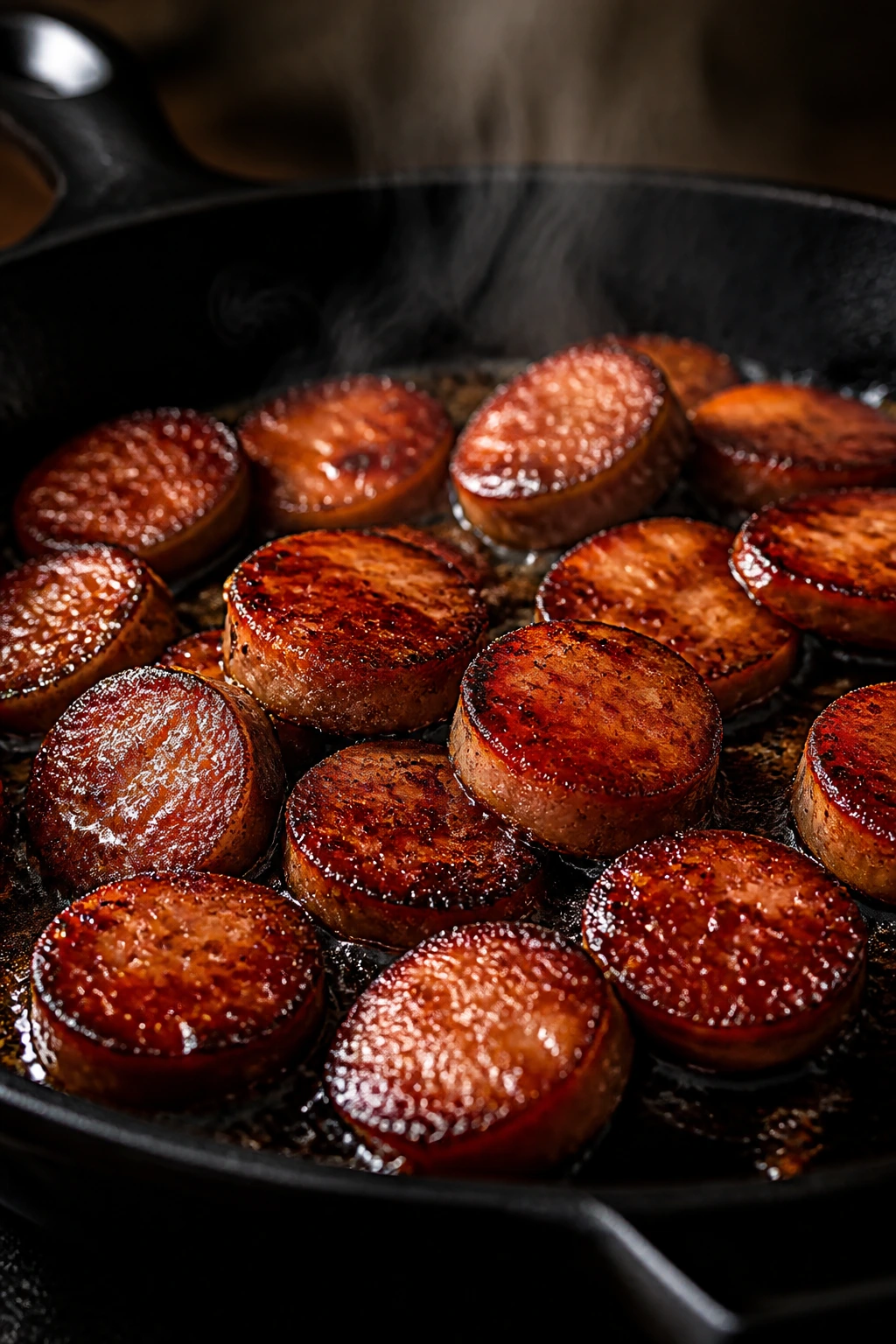
The first time the sausage hits the hot skillet, it gives off that sharp little sizzle that tells you the pan is ready. A minute later, the edges start to brown, the fat loosens up, and the whole kitchen smells like pork, butter, and caramel all at once. That’s the whole point of crispy keto sausage with brown sugar glaze: you get the sticky, sweet-salty hit of old-school glazed sausage, but without leaning on real sugar or ending up with a gritty, weird-tasting sauce.
The old version of this idea usually lives on party tables and brunch buffets. It’s the kind of dish that disappears fast because it has contrast working for it: crisp outside, juicy center, glossy coating, a little tang from mustard or vinegar, and enough salt to keep the sweetness from getting cloying. The keto version needs a smarter sweetener, though, because the wrong one turns the glaze dull or sandy the moment it cools.
I reach for an allulose-based brown sugar substitute here because it behaves in the pan more like brown sugar than most low-carb sweeteners do. That matters. You want the glaze to melt, darken, and cling. You do not want it to weep, crystallize, or leave a chalky film on the sausage. Small difference. Big payoff.
The Sweet-and-Salty Backstory of This Skillet
This dish sits in a funny, useful little category: it feels like breakfast, but it also works as a party appetizer, a game-day tray, or a quick dinner side when the rest of the plate is already handled. That’s not an accident. Sausage has enough fat and salt to carry a glaze, and brown-sugar-style sauce has enough sweetness to make the pork taste deeper instead of heavier.
The classic version of glazed sausage usually leans on brown sugar, butter, and mustard. That trio works because each part does a different job. The sugar gives shine, the butter rounds everything out, and the mustard cuts through the fat so the bite doesn’t collapse into sweetness. The keto version keeps that same logic. It just swaps the sugar for a low-carb brown sugar substitute that can stand up to heat.
What I like here is that the recipe doesn’t ask for a parade of extras. It doesn’t need maple syrup, ketchup, barbecue sauce, or a bottle of “everything” seasoning. Sausage already brings a lot to the pan. The glaze should support it, not smother it. If you’ve ever had a glazed sausage dish that tasted flat after two bites, the problem was usually too much sugar and not enough acid. That’s the bit most recipes get wrong.
This version fixes that. It tastes like something you’d put out on a table and then keep sneaking bites of while pretending to arrange napkins.
Why You’ll Keep Making It
-
Fast browning: The sausage gets crisp edges in about 6 to 8 minutes, so you’re not standing over the stove forever waiting for flavor to show up.
-
A glaze that actually clings: Allulose-based brown sugar substitute melts into a glossy coating instead of leaving you with a dry dusting or a sandy finish.
-
One pan, real flavor: The browned bits left in the skillet become part of the glaze, which gives the sauce that cooked-all-day depth even though the whole thing comes together quickly.
-
Low-carb without tasting “diet”: Dijon, vinegar, butter, and smoked paprika do the heavy lifting, so the sweetness reads as savory and dark instead of candy-like.
-
Flexible at the table: Serve it over eggs, beside roasted vegetables, or on toothpicks. It does not care what time of day it is.
-
Easy to scale: Double it for a crowd, but keep the skillet wide enough to brown the sausage in a single layer. That little detail changes the result more than the ingredient list does.
A Quick Snapshot Before the Pan Gets Hot
Yield: Serves 4 as a main dish or 6 as an appetizer
Prep Time: 10 minutes
Cook Time: 15 minutes
Total Time: 25 minutes
Difficulty: Beginner — the steps are simple, but the heat control matters, and that’s where the texture comes from.
Best Served: Warm, right after glazing, while the edges are still crisp and the sauce is glossy.
A small note on timing: if you want this for a brunch spread, make the glaze ingredients first and slice the sausage before anyone starts asking questions. Once the pan is hot, this moves quickly. No wandering off. No phone scrolling. The difference between crisp and soft is usually about two minutes and one distracted moment.
The Ingredients That Build the Crisp and the Glaze
For the Sausage
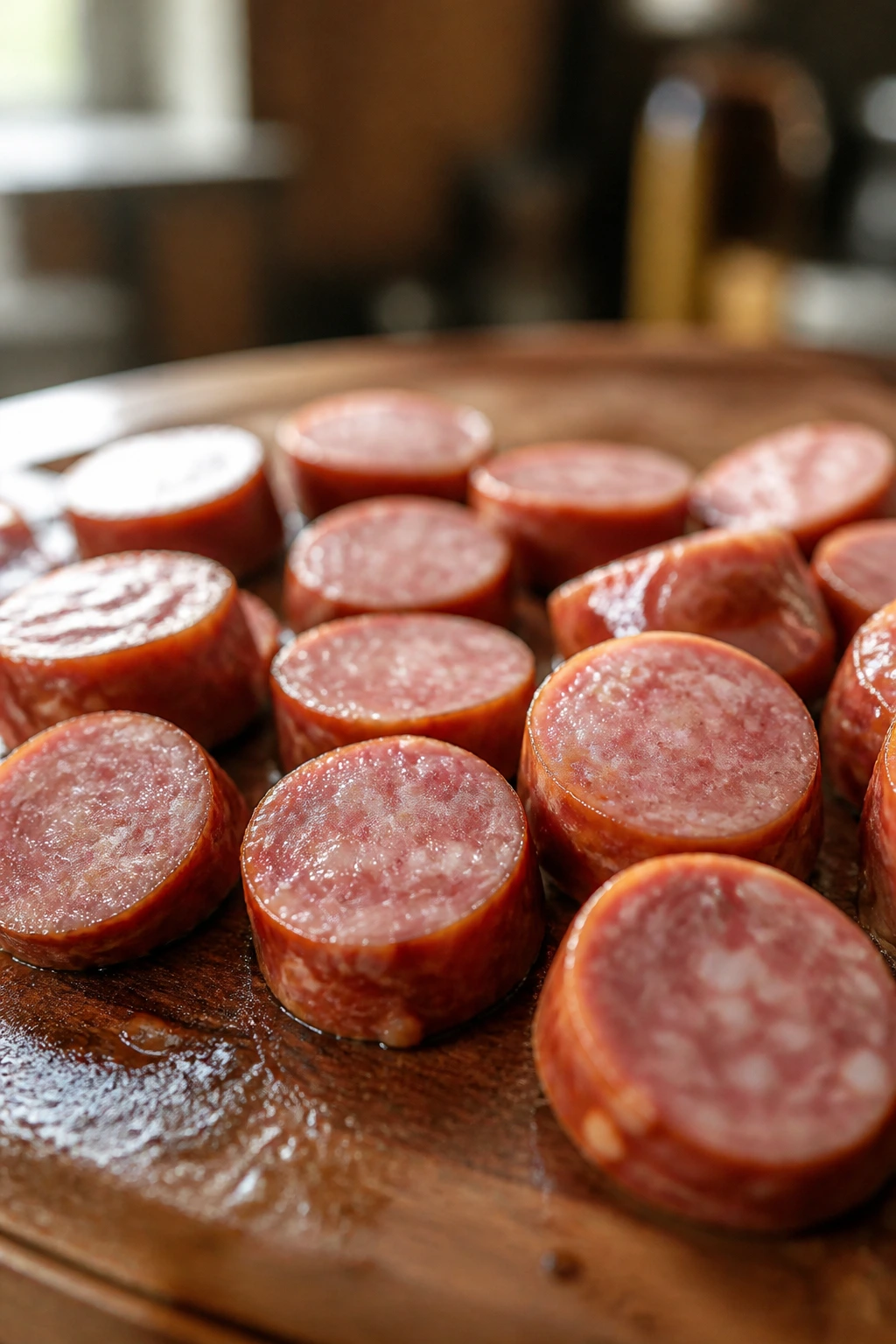
- 1 1/2 pounds fully cooked smoked pork sausage or kielbasa, sliced into 1/2-inch coins
- 1 tablespoon avocado oil or bacon drippings
- 1 tablespoon unsalted butter
For the Brown Sugar Glaze
- 1/2 cup packed brown sugar substitute made with allulose
- 2 tablespoons unsalted butter
- 1 tablespoon Dijon mustard
- 1 tablespoon apple cider vinegar
- 2 tablespoons water
- 1/2 teaspoon smoked paprika
- 1/4 teaspoon garlic powder
- 1/4 teaspoon black pepper
- Pinch of cayenne pepper, optional
For Finishing
- 1 tablespoon chopped parsley or thinly sliced chives, optional
If you can get a rope-style smoked sausage with a decent amount of fat, use it. If the package looks suspiciously lean, the sausage will brown less and steam more. That’s not a moral failure. It just means you’ll need to lean harder on the skillet heat and the oil.
Why Each Ingredient Pulls Its Weight
The Sausage
-
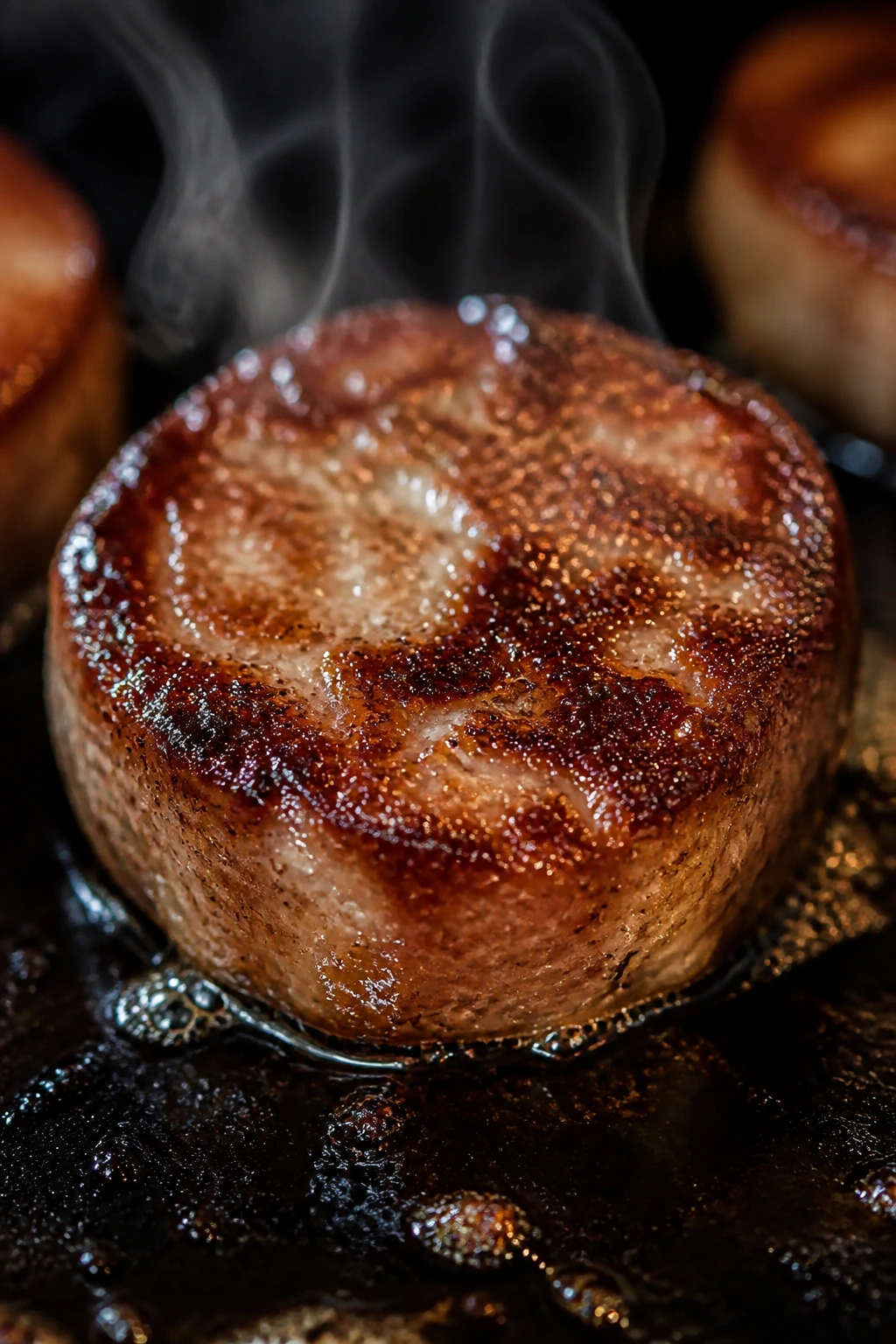
What to use: 1 1/2 pounds fully cooked smoked pork sausage or kielbasa, sliced into 1/2-inch coins. That thickness gives you a browned ring on each side while keeping the center juicy.
-
Preparation: Pat the sausage dry before it goes into the skillet. If the surface is damp, the first minute goes into evaporation instead of browning, and you lose the crisp edge you came here for.
-
Substitutions: Turkey sausage works if that’s what you have, but it’s leaner and will need a little more oil. Plant-based sausage can work in a pinch, though the glaze usually clings differently and the browned bits in the pan won’t be as rich.
-
Tips: Choose a sausage with a firm casing and visible fat in the slice. Ultra-lean sausage looks tidy in the package and eats a little flat in the pan.
The Glaze Base
-
What to use: 1/2 cup allulose-based brown sugar substitute, 2 tablespoons butter, 1 tablespoon Dijon mustard, 1 tablespoon apple cider vinegar, and 2 tablespoons water. That combination gives the glaze body, shine, tang, and enough looseness to coat every coin.
-
Preparation: Whisk the glaze ingredients together before you start browning the sausage. Once the sausage is crisp, the glaze should go in quickly, not in a pile of measuring-cup chaos.
-
Substitutions: If you can’t find allulose brown sugar substitute, use a monk fruit-allulose blend instead of plain erythritol. Plain erythritol tends to cool into a sandy finish, and that is the exact wrong texture here.
-
Tips: Dijon matters more than yellow mustard. It’s smoother, sharper, and it emulsifies better with butter and vinegar.
The Seasoning and Finish
-
What to use: 1/2 teaspoon smoked paprika, 1/4 teaspoon garlic powder, 1/4 teaspoon black pepper, and a pinch of cayenne if you want a little heat. Finish with parsley or chives if you like a fresh note on top.
-
Preparation: Measure the spices into a small bowl or the glaze cup so they’re ready to go. The glaze can darken fast once it starts bubbling.
-
Substitutions: Chipotle powder can stand in for smoked paprika if you want more smoke and heat. Ground mustard is another option if you want the glaze to lean sharper instead of sweeter.
-
Tips: Don’t overload the spice blend. You want the sausage and glaze to taste deeper, not crowded.
The Pan Method That Gives You Crisp Edges
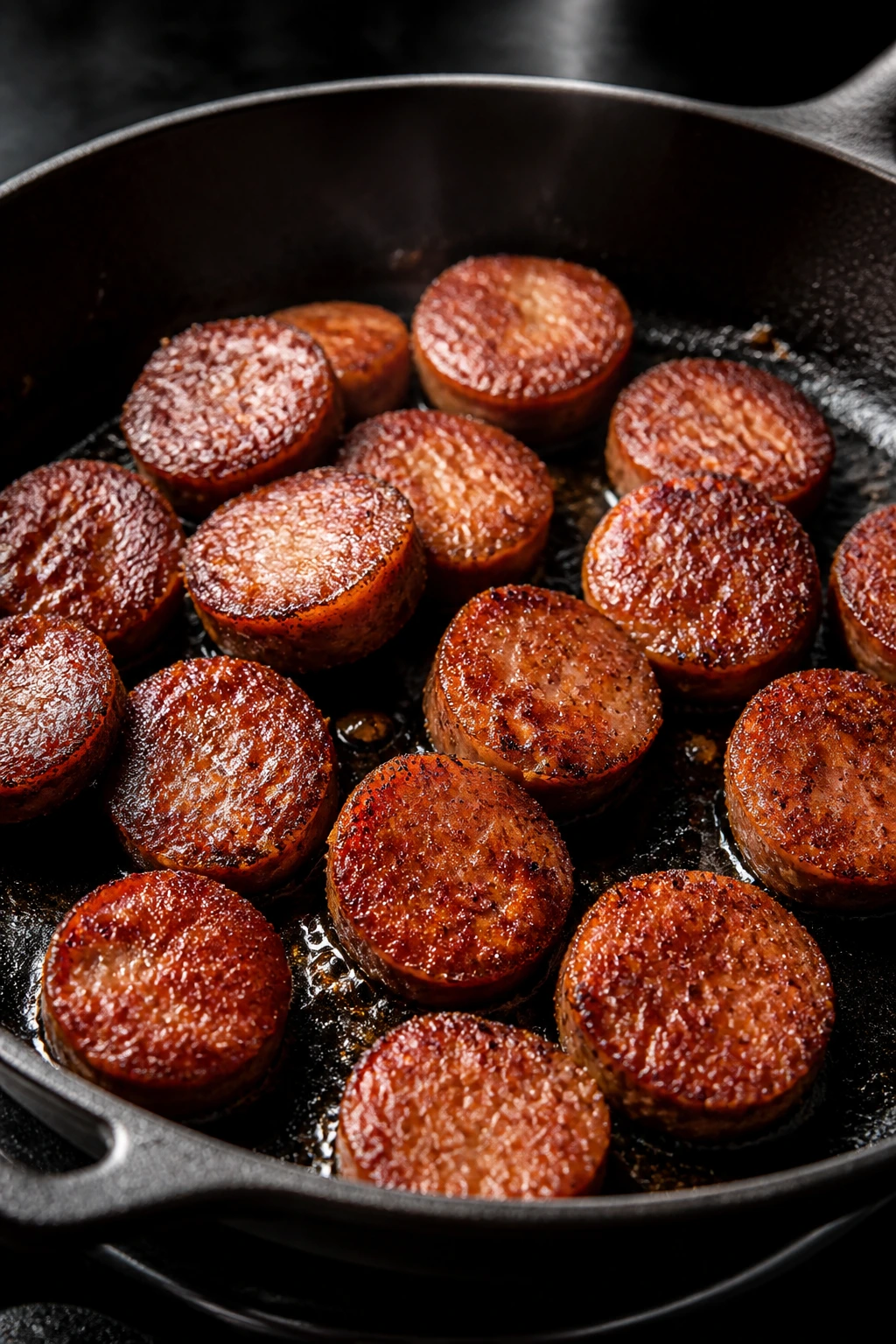
A hot, heavy skillet is doing a lot more work here than people realize. Cast iron is my first choice because it holds heat when the cold sausage hits the pan, which means you get browning instead of a pale, rubbery surface. Stainless steel works too. Thin nonstick can work, but it usually needs a slightly lower heat and a little more patience.
The order matters. Sausage first, glaze second. If you pour the glaze in too early, the sweetener starts melting before the sausage has browned, and you lose the whole point of the recipe. The pan needs dry, direct contact with the sausage coins first so the cut sides can take on color. That crust is where the flavor lives.
There’s a reason people keep making glazed sausage for brunch spreads. It’s the contrast. Salty and sweet, crisp and sticky, rich and sharp. If one side of that equation goes missing, the dish gets dull fast. So yes, the recipe is simple. But the heat management is not optional. Skip the lazy middle ground and you get a better pan.
And one more thing: do not crowd the skillet. If the sausage coins sit on top of each other, they steam. If they have a little room, they brown. Two batches in a wide pan is better than one jammed-up batch that tastes like warm sausage in syrup.
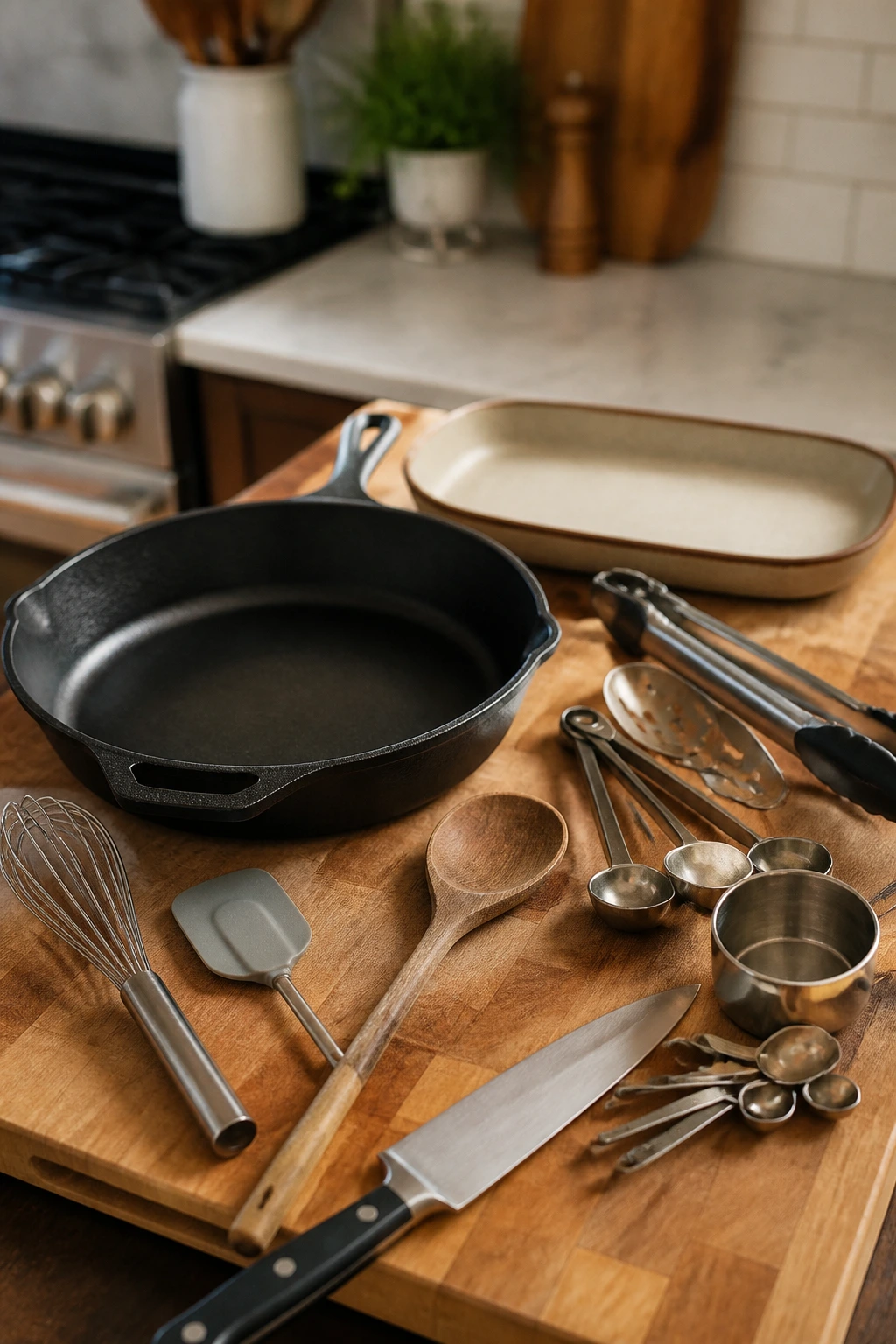
The Tools That Make the Job Cleaner
-
12-inch cast-iron skillet or heavy stainless-steel skillet: This gives the sausage enough contact with the hot surface to brown properly.
-
Small whisk or fork: You need something that can dissolve the sweetener into the butter and vinegar without leaving dry pockets.
-
Heatproof silicone spatula or wooden spoon: Useful for turning the sausage coins and scraping up the browned bits without scratching the pan.
-
Sharp chef’s knife: A clean, straight cut gives you even coins that cook at the same pace.
-
Cutting board: A stable board matters more than people admit. I keep a damp towel under mine when the sausage is oily so it doesn’t skate around.
-
Measuring spoons and a 1/2 cup measure: This glaze is balanced by proportion, not guesswork.
-
Slotted spoon or tongs: Handy if you want to lift the sausage out while you build the glaze.
-
Shallow serving platter: Better than a deep bowl. Deep bowls trap steam and soften the crisp edges you worked for.
Step-by-Step: From Cold Sausage to Sticky Glaze
Prep the Sausage and Glaze
-
Slice the sausage into 1/2-inch coins and pat them dry with paper towels. If the sausage is wet, it will steam before it browns.
-
In a small bowl, whisk together the allulose brown sugar substitute, butter, Dijon mustard, apple cider vinegar, water, smoked paprika, garlic powder, black pepper, and cayenne if using. Set the bowl near the stove so you can grab it quickly.
Crisp the Sausage
-
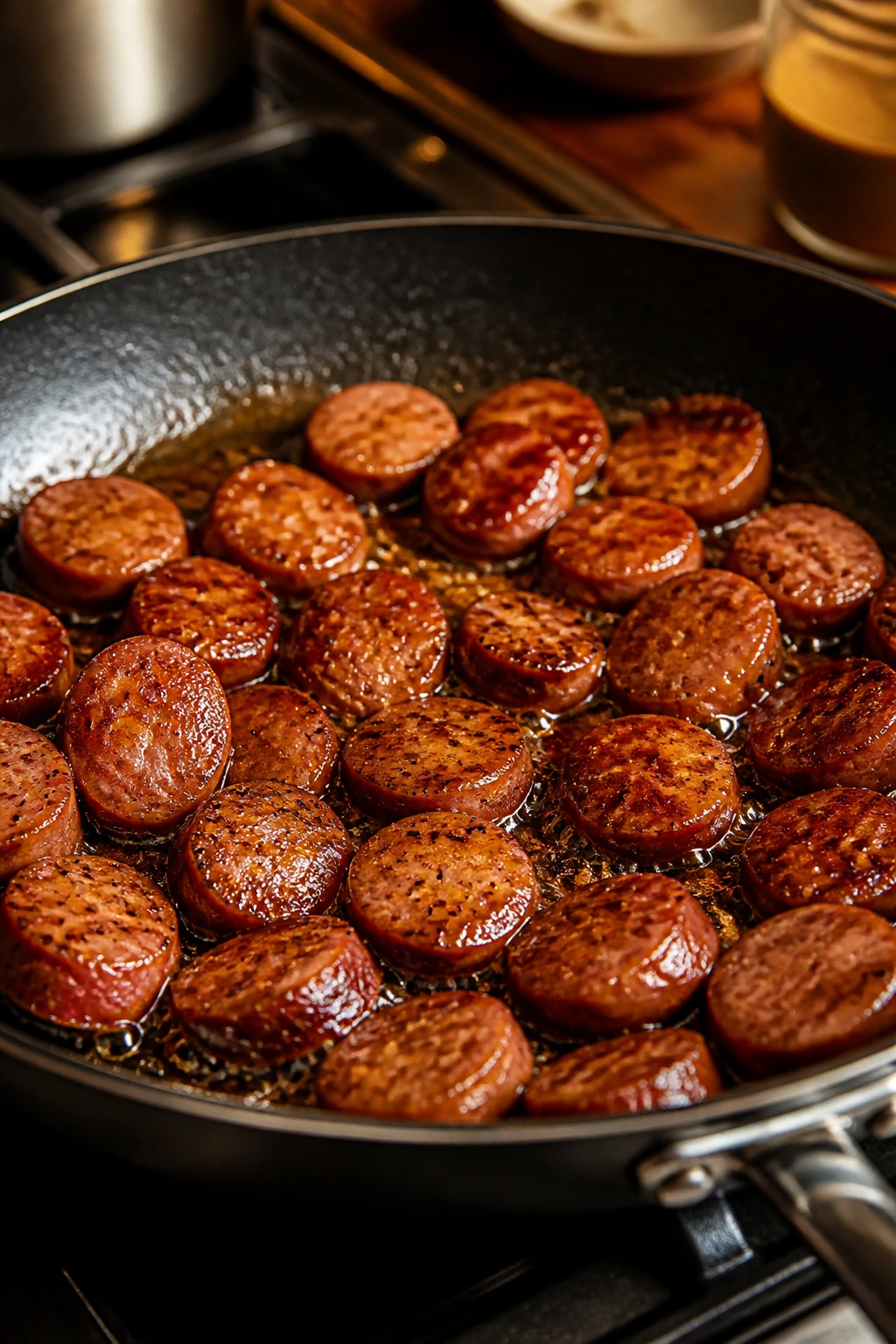
Set a 12-inch skillet over medium-high heat and add the avocado oil or bacon drippings. Heat for 1 to 2 minutes, until the fat shimmers and moves easily across the surface.
-
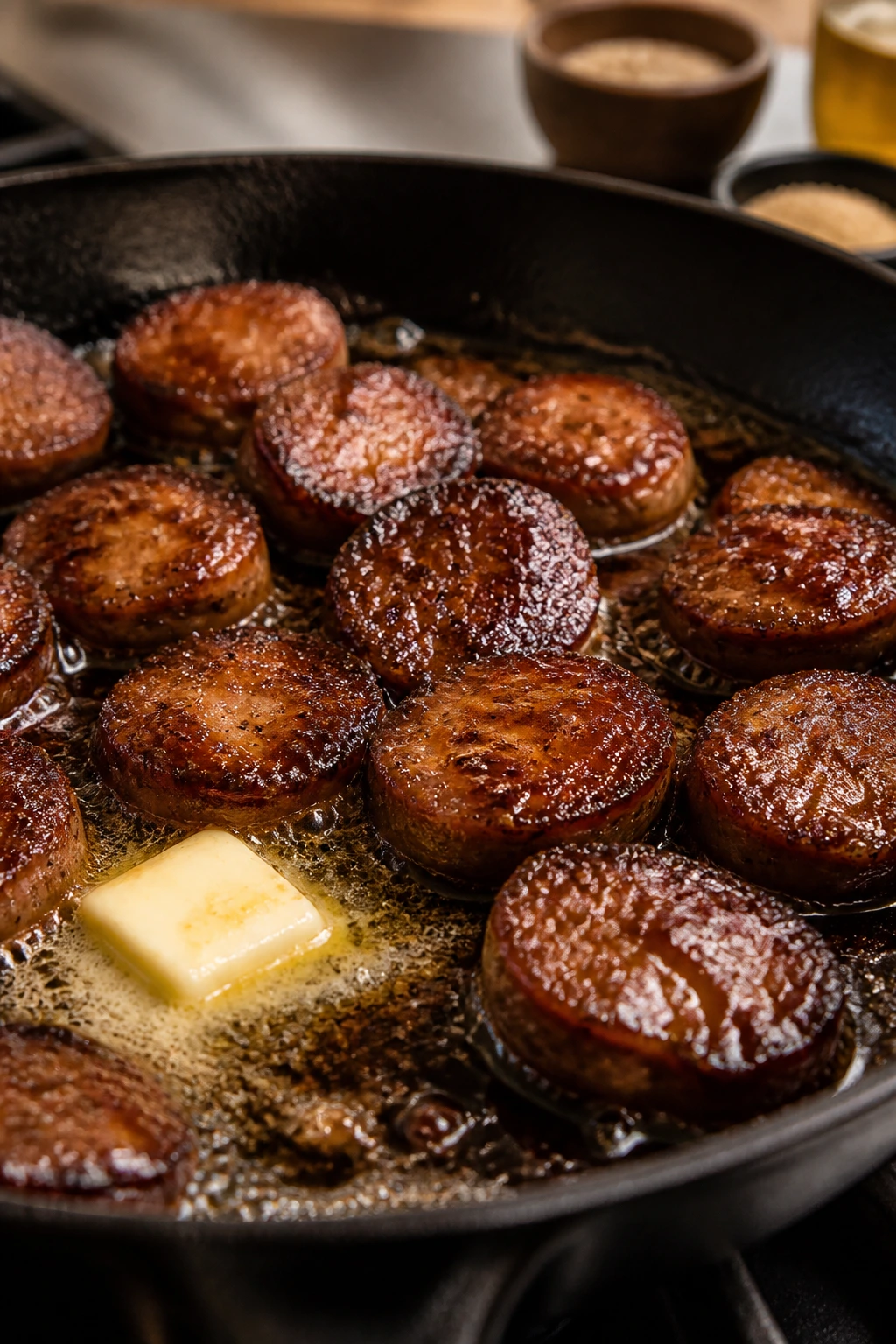
Add the sausage coins in a single layer. Cook for 3 to 4 minutes without stirring, until the bottoms are deep golden brown and the edges look crisp. Turn the coins and cook for another 2 to 3 minutes, until the second side is browned and the sausage smells nutty, not just salty.
-
If the skillet looks dry or the sausage is especially lean, add the extra tablespoon of butter now. Melt it around the sausage and let it pick up the browned bits on the pan floor.
Build the Glaze
-
Reduce the heat to medium-low. Pour the glaze mixture into the skillet and stir gently for 1 to 2 minutes, until the butter melts, the sweetener dissolves, and the sauce turns glossy and starts bubbling in slow, thick pops. Do not crank the heat here — the glaze can darken too fast and turn bitter.
-
Return the sausage to the skillet if you moved it out, or keep turning the coins in the glaze if they never left the pan. Cook for 30 to 60 seconds more, just until every piece looks lacquered and the sauce clings instead of pooling.
Finish and Serve
- Turn off the heat and let the sausage rest in the pan for 1 to 2 minutes. The glaze will thicken as it sits, which is exactly what you want. Sprinkle with parsley or chives if using, then transfer to a warm serving platter.
One little habit helps here: keep the sausage moving only after it has browned. Until then, leave it alone. That pause is where the crust happens. Stirring too soon is the fastest way to sabotage crisp edges, and there’s no reason to do it.
How to Serve It Without Losing the Crisp
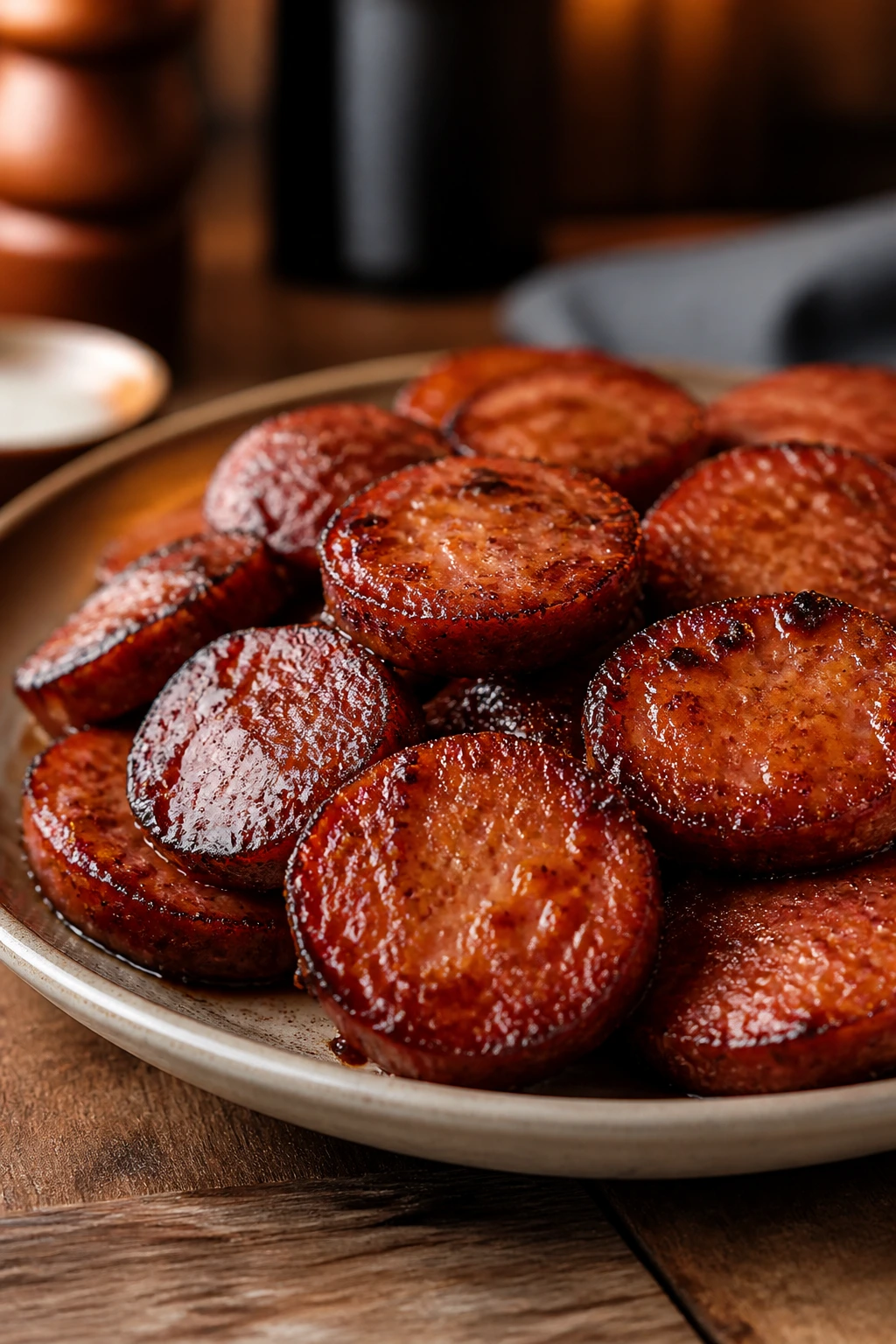
Presentation: Use a shallow platter, not a deep serving bowl. Spoon the glaze over the sausage, but don’t bury every coin. A few browned edges should still show through; that’s the visual proof you did the skillet work.
Accompaniments: For breakfast, pair it with soft scrambled eggs, sautéed spinach, or roasted tomatoes. For dinner, cauliflower mash, roasted broccoli, or cabbage with butter makes a good low-carb plate. As an appetizer, toothpicks and a small bowl of extra glaze on the side are enough.
Portions: Count on 4 main-dish servings or 6 appetizer servings from this batch. If you’re serving a crowd, I’d rather make two smaller batches than one overloaded pan; the texture stays sharper that way.
Beverage Pairing: Black coffee is the cleanest match at breakfast because it keeps the glaze from tasting too sweet. For later in the day, unsweet iced tea or sparkling water with lemon cuts the richness without stepping on the flavor.
There’s a small serving trick worth keeping in your pocket: if the sausage sits for more than 10 to 15 minutes before it hits the table, give it a quick toss in the glaze again. A lot of sauces tighten as they cool, and one warm stir brings the shine right back.
Extra Tips for Better Browning and a Cleaner Finish
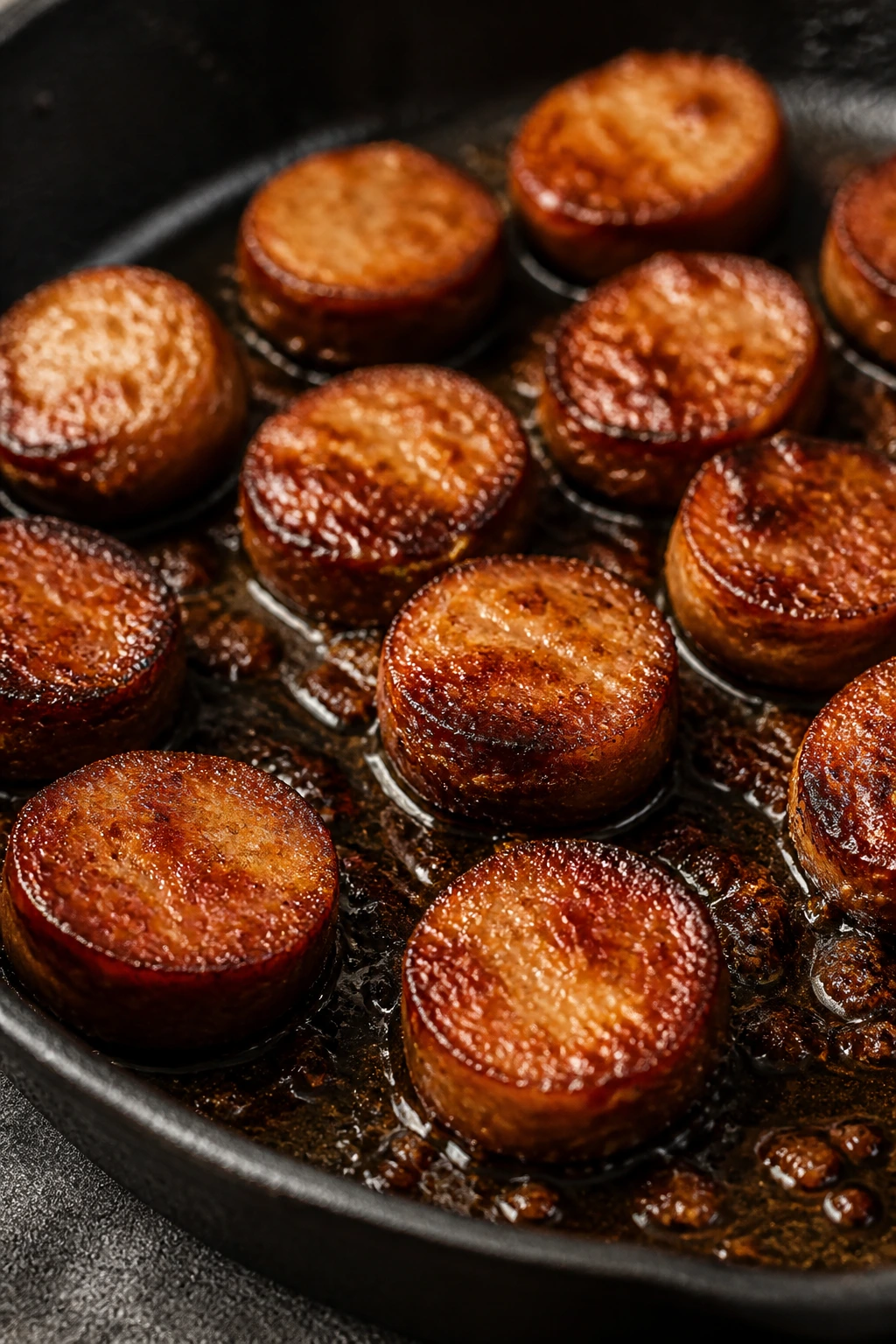
Flavor Enhancement: Stir in one extra teaspoon of Dijon at the very end, off heat, if you want a brighter mustard note. It tastes fresher than adding more vinegar, and it keeps the glaze from feeling one-note sweet.
Texture Move: Dry the sausage after slicing, then give the coins a brief rest on the cutting board for 3 to 5 minutes before they hit the skillet. That tiny pause lets surface moisture disappear, which helps the first side brown faster.
Time-Saver: Mix the glaze ingredients in a jar and shake them together ahead of time. It keeps the stove space cleaner and makes the cooking feel less rushed.
Make-It-Yours: If you want a breakfast feel, add a pinch of ground sage to the glaze. If you want more party heat, a dusting of crushed red pepper at the end works better than loading the glaze with cayenne.
One more move I like: pull the sausage off the heat a little earlier than feels necessary. The sauce will continue to thicken on the warm pan, and that keeps the edges from going soft while you fuss with plates or napkins.
Common Mistakes That Make the Glaze Grainy or Burnt
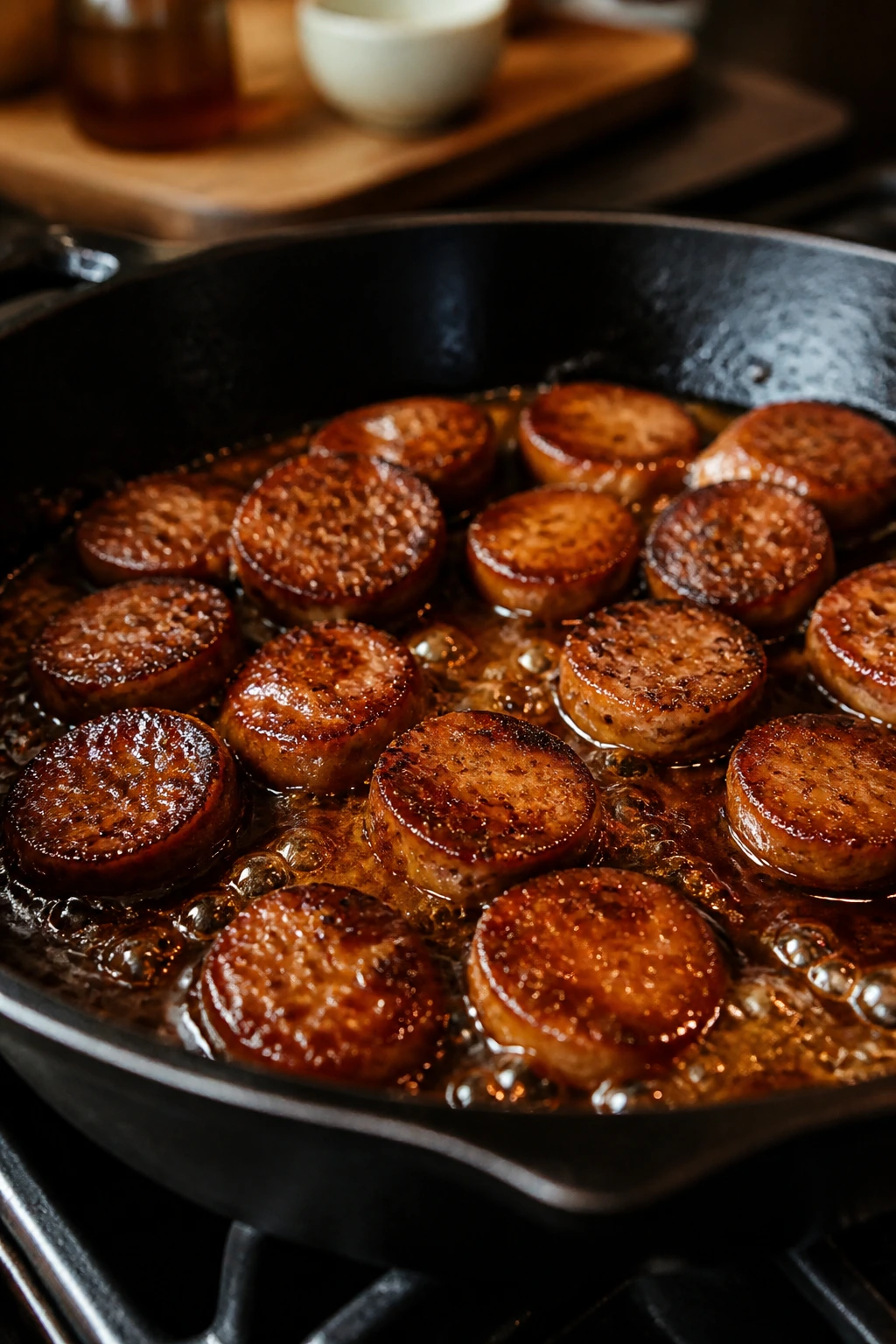
-
Crowding the skillet: If the sausage coins are jammed together, they steam instead of browning. The fix is simple: use a bigger pan or cook in two batches.
-
Using the wrong sweetener: Plain erythritol can cool into a gritty finish, especially if the glaze sits for a few minutes. Allulose-based brown sugar substitute gives you a cleaner, stickier result.
-
Turning the heat up when the glaze goes in: Once the sweetener starts dissolving, high heat can push it from glossy to bitter in a short burst. Keep the burner at medium-low and stir until the sauce looks thick and shiny.
-
Adding the glaze before the sausage browns: You lose the browned edges, and the whole skillet tastes flatter. Let the sausage do its work first. The glaze comes after.
-
Serving from a covered dish: A lid traps steam and softens the crisp bits you just built. If you need to hold it for a few minutes, use a shallow dish and keep it uncovered.
-
Skipping the acid: Without Dijon and vinegar, the glaze turns sugary in the wrong way. Pork needs a sharp edge to taste finished, not just coated.
Variations for Heat, Smoke, and Different Diets
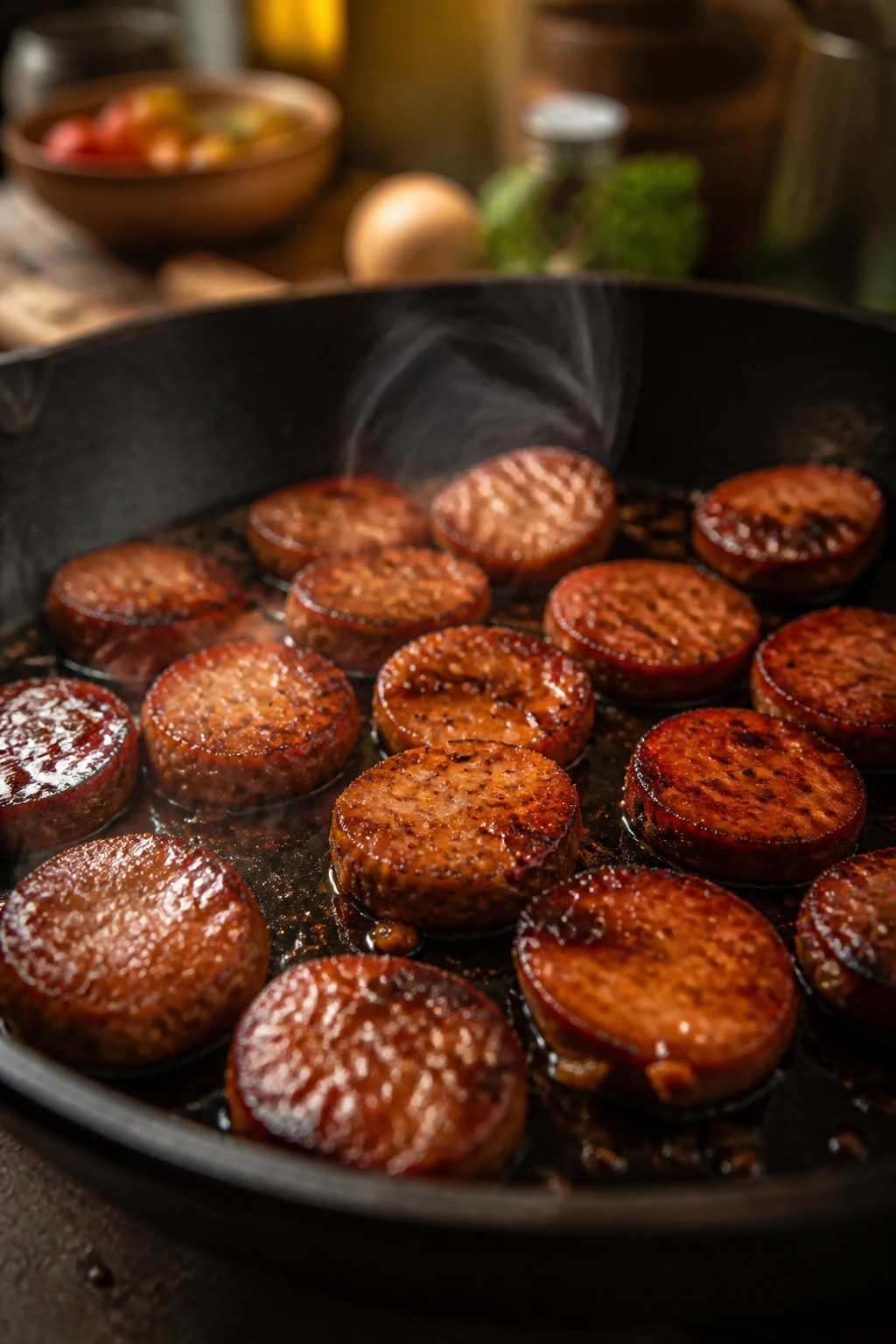
Chipotle Skillet Coins
Add 1/2 teaspoon chipotle powder and use the full amount of smoked paprika. The result has a darker, more savory heat that works well for game-day trays or anyone who wants the glaze to land on the smoky side instead of the candy side.
Breakfast-Brunch Version
Use fully cooked breakfast sausage links instead of kielbasa, slice them into coins, and add a pinch of ground sage to the glaze. This version leans harder into breakfast and sits nicely beside eggs, biscuits for the non-keto crowd, or roasted tomatoes.
Dairy-Free Glaze
Swap the butter for avocado oil or ghee if you’re okay with clarified butter. Avocado oil keeps the flavor cleaner, while ghee gives you the richest finish. Either one keeps the glaze glossy without leaning on dairy.
Orange-Dijon Finish
Add 1 teaspoon finely grated orange zest at the very end and cut the cayenne. The citrus does a neat job of lifting the pork fat and makes the glaze feel brighter without turning it sweet in a loud, obvious way.
Party-Style Bites
Cut the sausage into smaller 1/3-inch coins and serve with toothpicks. The flavor stays the same, but the smaller size gives you more caramelized surface area, which is what people actually reach for first on a tray.
Make-Ahead, Storage, and Reheating
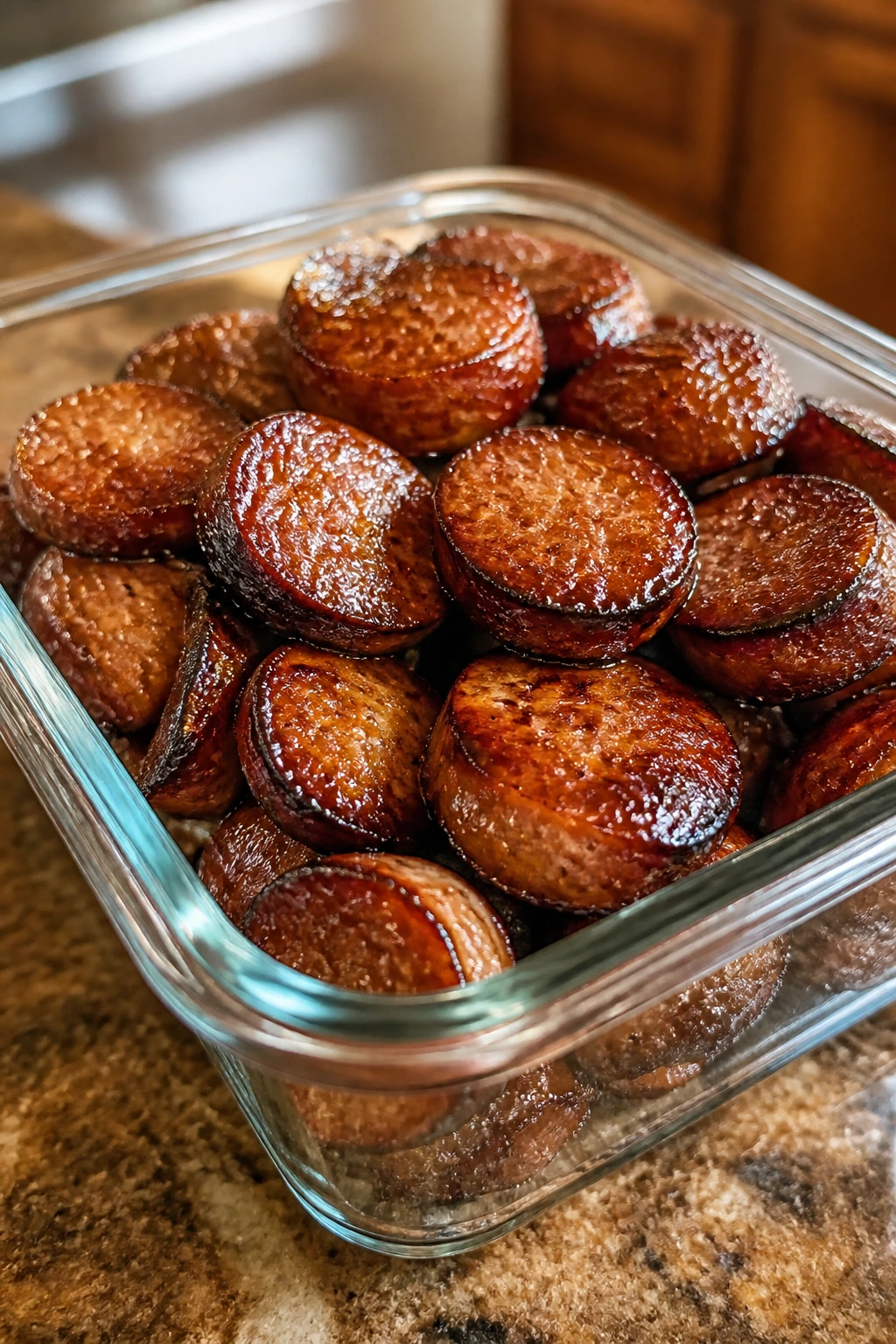
This recipe keeps better than a lot of glazed sausage dishes because the sausage itself is sturdy. Still, the crisp edges are best on day one. If you need to hold the dish for a bit, keep it uncovered in a warm place for no more than 20 to 30 minutes. Any longer and the glaze starts to tighten while the steam softens the outside.
For the fridge, let the sausage cool, then pack it into an airtight container and refrigerate for up to 4 days. The glaze will thicken and look a little dull once chilled. That’s normal. It does not mean the dish failed.
For the freezer, spread the cooled sausage and glaze in a freezer-safe container or heavy bag and freeze for up to 2 months. The texture won’t be quite as crisp after freezing, but the flavor holds up well. I’d freeze it only if you’re planning to reheat in a skillet or oven, not if you’re hoping for that fresh-crisp bite straight from the freezer.
The best reheating method is a skillet over medium-low heat with 1 to 2 tablespoons of water. Cover loosely for the first minute, then uncover and stir until the glaze loosens and the sausage is hot, usually 3 to 5 minutes total. In the oven, spread it in a shallow dish and warm at 325°F for about 10 minutes, stirring once halfway through. The microwave works in short bursts, but it softens the edges fastest.
If you want to get ahead, slice the sausage and mix the glaze ingredients up to 2 days in advance. Keep them separate. The actual browning and glazing should happen right before serving if you care about texture, and with this recipe, texture is half the point.
Questions Readers Ask Before They Cook It

Can I use raw sausage instead of fully cooked smoked sausage?
Yes, but the method changes. Raw sausage needs to cook to 160°F and usually works better as patties or crumbled sausage in a separate skillet phase before glazing. For this recipe, fully cooked smoked sausage is the cleaner, faster choice.
Which brown sugar substitute works best here?
An allulose-based brown sugar substitute is the one I trust most because it melts and browns in a way that feels close to real sugar. Erythritol-only blends can turn sandy as they cool, which is a bad fit for a sticky glaze.
Can I make this without Dijon mustard?
You can, but I wouldn’t skip the tang entirely. If Dijon isn’t your thing, use a little whole-grain mustard or a touch more apple cider vinegar so the glaze doesn’t taste flat and sugary.
Why did my glaze get grainy?
Usually the sweetener is the culprit, or the heat was too high once the glaze started bubbling. Allulose blends usually behave better than plain erythritol, and a lower burner setting helps keep the sauce smooth.
How do I keep the sausage crisp for a party?
Use a wide pan so the sausage browns properly, then transfer it to a shallow serving dish instead of a deep bowl. If it needs to sit for a few minutes, stir it once or twice and leave it uncovered so steam doesn’t soften the edges.
Can I double the recipe?
Yes, but don’t double it in the same skillet unless the pan is huge. Cook the sausage in batches and combine everything at the end, or the coins will steam before they brown.
Is this spicy?
Not as written. It leans sweet-smoky with a little mustard bite. If you want heat, the easiest place to add it is the optional cayenne or a pinch of chipotle powder.
A Sticky Finish Worth Repeating
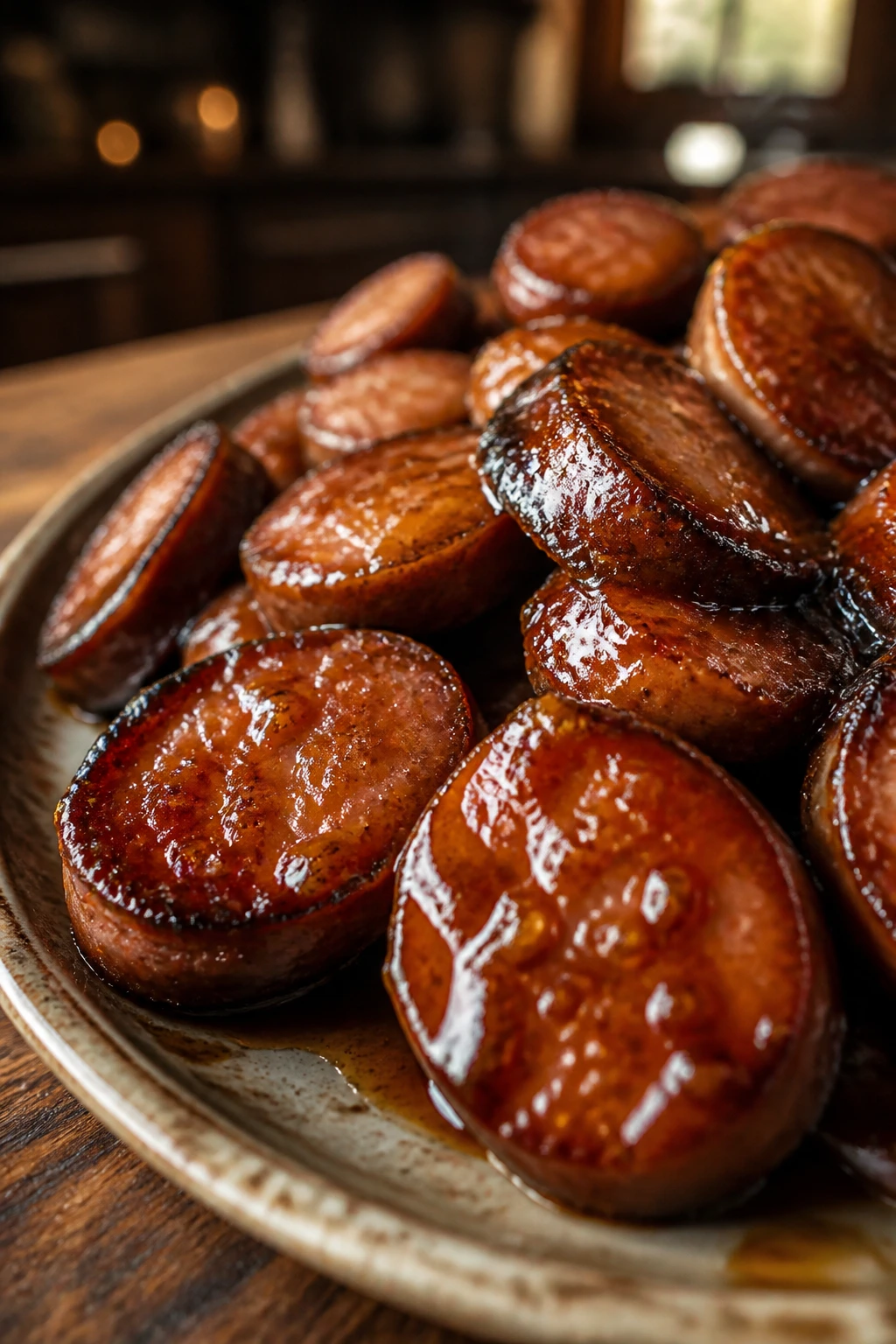
The reason this dish works is almost annoyingly simple: it respects the sausage. It doesn’t drown the pork in sauce, and it doesn’t ask a low-carb sweetener to do a job it can’t do. Instead, it gives the sausage hot contact with the pan, lets the browned bits build the flavor, and finishes with a glaze that’s sharp enough to keep your palate awake.
That’s the part I’d keep in mind the next time you want something fast that still feels deliberate. Brown the sausage. Keep the glaze hot, not raging. Use a sweetener that melts cleanly. Do those three things and the skillet does the rest.
The next time you need a brunch side, a party tray filler, or a low-carb dinner component that people actually reach for first, this is the one I’d put on the stove.
Crispy Keto Sausage with Brown Sugar Glaze — Recipe Card
Recipe Name: Crispy Keto Sausage with Brown Sugar Glaze
Description: Sliced smoked sausage is browned until crisp, then tossed in a glossy brown-sugar-style glaze made with allulose, Dijon mustard, butter, and apple cider vinegar. The result is sticky, salty, and low-carb without tasting like a compromise.
Prep Time: 10 minutes
Cook Time: 15 minutes
Total Time: 25 minutes
Course: Breakfast, Appetizer, Side Dish
Cuisine: American
Servings: 6 servings
Calories: About 240 kcal per serving
Ingredients
For the Sausage:
- 1 1/2 pounds fully cooked smoked pork sausage or kielbasa, sliced into 1/2-inch coins
- 1 tablespoon avocado oil or bacon drippings
- 1 tablespoon unsalted butter
For the Brown Sugar Glaze:
- 1/2 cup packed brown sugar substitute made with allulose
- 2 tablespoons unsalted butter
- 1 tablespoon Dijon mustard
- 1 tablespoon apple cider vinegar
- 2 tablespoons water
- 1/2 teaspoon smoked paprika
- 1/4 teaspoon garlic powder
- 1/4 teaspoon black pepper
- Pinch of cayenne pepper, optional
For Finishing:
- 1 tablespoon chopped parsley or thinly sliced chives, optional
Instructions
-
Slice the sausage into 1/2-inch coins and pat them dry.
-
Whisk together the brown sugar substitute, butter, Dijon mustard, apple cider vinegar, water, smoked paprika, garlic powder, black pepper, and cayenne if using.
-
Heat the oil or bacon drippings in a 12-inch skillet over medium-high heat.
-
Add the sausage coins in a single layer and cook until browned and crisp on both sides, about 6 to 8 minutes total.
-
Reduce the heat to medium-low and pour in the glaze mixture.
-
Stir for 1 to 2 minutes, until the sauce is glossy and clings to the sausage.
-
Turn off the heat, let the sausage rest for 1 to 2 minutes, then garnish with parsley or chives if using.
Notes: Allulose gives the cleanest glaze. If the sauce thickens too fast, add 1 teaspoon water and stir. Serve from a shallow platter so the edges stay crisp.