



A glazed ham can go wrong in a dozen quiet ways. It can look shiny on top and still dry out underneath. It can taste sweet, but flat. It can leave you with a pan full of burnt sugar and slices that feel like they spent too long in a hot car.
The version I keep coming back to uses a bourbon brown sugar glaze for ham that does more than sit there looking pretty. It melts into the spiral cuts, picks up a little mustard bite, and turns thick enough to cling without turning into candy. The oven stays low. The ham stays tender. The glaze gets brushed on late enough that it doesn’t scorch into a black crust. That part matters more than people think.
And yes, the smell is half the point. Brown sugar turns from sandy to molten. Bourbon loses its sharp edge and starts to smell like vanilla and toasted oak. The ham’s salty smoke comes through underneath. You cut into it and the slices separate with almost no resistance. That’s the goal.
Why You’ll Want This One on the Table
Sticky Edges, Juicy Center: The ham bakes covered first, so the slices warm through before the glaze goes on, which keeps the outer rings from drying out.
Bourbon With Backbone: A half cup of bourbon sounds bold, but after a 6- to 8-minute simmer it settles into caramel, vanilla, and a little bite instead of tasting raw.
Glaze That Actually Clings: Dark brown sugar, honey, and Dijon thicken into a brushable glaze that sinks into spiral cuts instead of sliding off the surface.
Easy To Make Ahead: The glaze can be cooked days in advance and rewarmed in a saucepan, which takes the pressure off the day you serve it.
Leftovers That Don’t Feel Like Leftovers: Cold slices make excellent sandwiches, and the glaze firms up in the fridge just enough to give each bite a sweet-savory edge.
Works With Real-World Hams: A bone-in spiral ham is the right tool here; it’s already cooked, already salted, and built to take a glaze without turning fussy.
Yield: Serves 12 to 16
Prep Time: 20 minutes
Cook Time: 2 hours 15 minutes
Total Time: 2 hours 35 minutes, plus 15 to 20 minutes resting
Difficulty: Intermediate — the ingredient list is straightforward, but the timing, temperature, and glazing window need a little attention if you want the ham to stay tender.
Best Served: Warm, after a short rest, with extra glaze spooned over the slices
The Humble Secret Behind a Better Glazed Ham
Most glazed ham problems are heat problems, not sugar problems.
That sounds almost too simple, but it’s the truth. A fully cooked ham is already done; your job is to warm it gently, then dress it with a glaze that turns glossy instead of burnt. If you crank the oven too high, the surface dries before the center is warm. If you glaze too early, the sugar scorches while the inside still needs time. That’s how you end up with a ham that looks promising from across the room and disappointing when the knife hits it.
This recipe is built for a city ham, not a salt-cured country ham. That distinction matters. City ham is the mild, smoky, already-cooked style most people buy in a grocery store, especially the spiral-sliced ones with neat half-moon slices. Country ham is a different beast entirely, saltier and denser, and it needs another kind of treatment. For this dish, spiral-sliced is the sweet spot. The cuts give the glaze somewhere to go.
Brown sugar and bourbon make sense together because they do two different jobs. Brown sugar brings molasses depth and the sticky set that clings to the ham. Bourbon brings oak, vanilla, and a little edge, then softens as it simmers. Dijon and vinegar keep the whole thing from tasting like dessert. That’s the balancing act. Too sweet and the glaze goes flat by the second bite. Too much acid and it starts to taste thin. This version stays in the middle, where the ham still tastes like ham.
A good glaze should feel like a finish, not a mask. That’s the point here.
Ingredients That Make the Glaze Stick
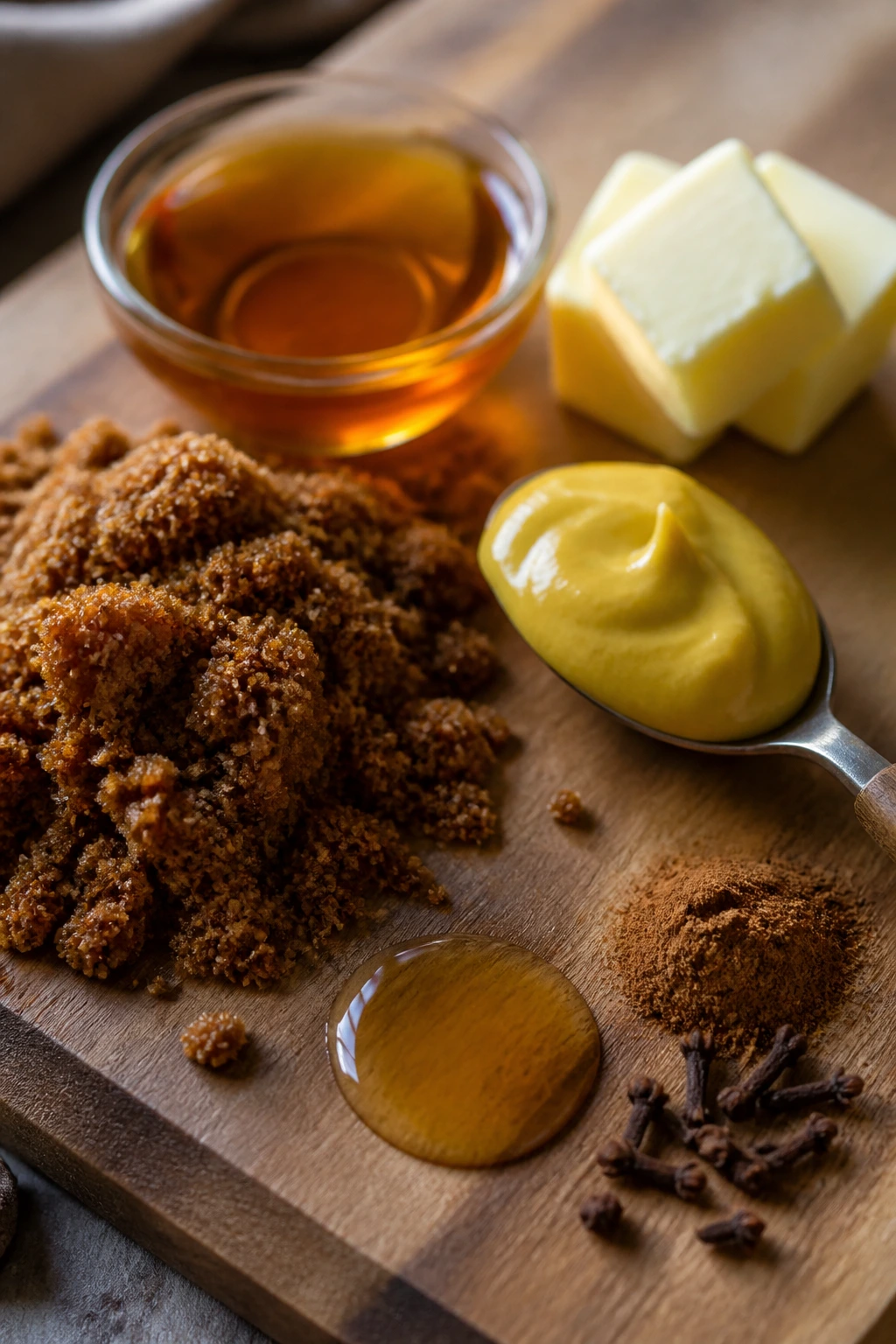
For the Ham:
- 1 fully cooked bone-in spiral-sliced ham, 8 to 10 pounds
- 1/2 cup water or apple cider, for the roasting pan
For the Bourbon Brown Sugar Glaze:
- 1 cup packed dark brown sugar
- 1/2 cup bourbon
- 1/3 cup honey
- 1/4 cup Dijon mustard
- 2 tablespoons unsalted butter
- 1 tablespoon apple cider vinegar
- 1 teaspoon ground cinnamon
- 1/2 teaspoon ground cloves
- 1/4 teaspoon freshly ground black pepper
- 1/8 teaspoon cayenne pepper, optional
- 1 teaspoon finely grated orange zest, optional
That ingredient list is short on purpose. A ham this salty and rich does not need a crowded sauce cabinet dumped on top of it. The glaze should taste like a clear idea, not a scavenger hunt.
How Each Ingredient Earns Its Spot
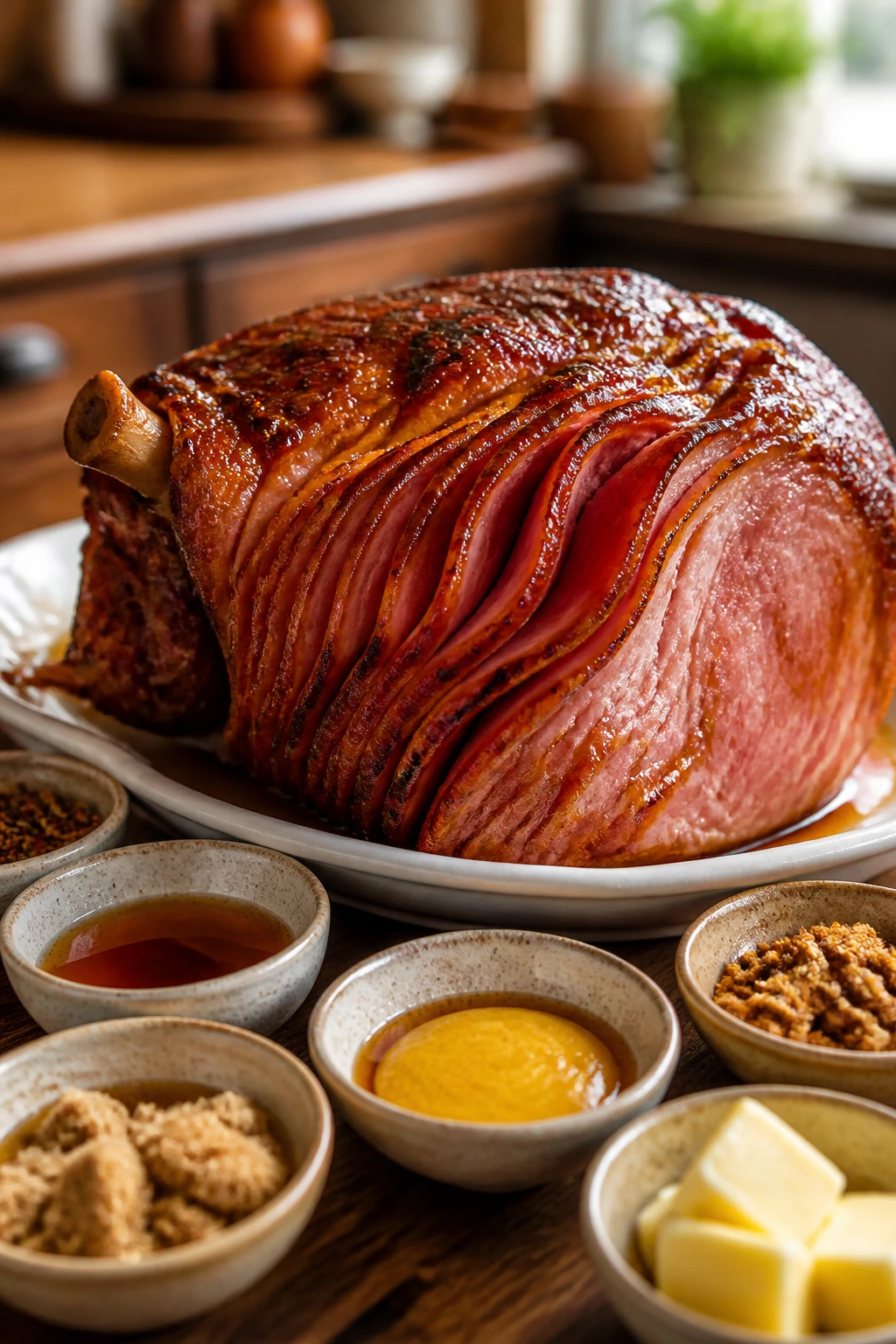
Main Ham
- What to use: 1 fully cooked bone-in spiral-sliced ham, 8 to 10 pounds. This size feeds a crowd without becoming a kitchen marathon, and the spiral cut gives the glaze all those thin seams to slip into.
- Preparation: Let the ham sit at room temperature for 30 to 45 minutes before baking so the chill comes off the exterior. If the package has a thick pocket of liquid, pat the surface dry with paper towels.
- Substitutions: A boneless ham works, but it won’t catch the glaze between slices the same way. A shank-end ham is a little leaner; a butt-end ham tends to have a softer texture and more fat.
- Tips: Buy a ham labeled fully cooked or ready to eat. That wording changes the cooking plan entirely, and if you miss it, you can easily dry the meat while trying to “cook” something that only needed warming.
Sweet Base
- What to use: 1 cup packed dark brown sugar, 1/3 cup honey, and 2 tablespoons unsalted butter. Dark brown sugar gives the glaze that deeper molasses color; light brown sugar will work, but it tastes flatter.
- Preparation: Pack the sugar firmly into the measuring cup so you get the right amount, and cut the butter into smaller pieces if it’s cold so it melts without a long wait.
- Substitutions: Light brown sugar plus 1 tablespoon molasses can stand in for dark brown sugar. Maple syrup can replace honey if you want a woodier finish and a little less floral sweetness.
- Tips: Butter is not only for flavor. It helps the glaze brush smoothly and gives it a softer sheen once it bakes onto the ham.
Bourbon, Mustard, and Acid
- What to use: 1/2 cup bourbon, 1/4 cup Dijon mustard, and 1 tablespoon apple cider vinegar. These three are the reason the glaze tastes grown-up instead of sugary.
- Preparation: Whisk the mustard into the bourbon before it hits the heat so the glaze stays smooth. If you dump mustard into a hot pot all at once, you can get little streaks that never fully melt in.
- Substitutions: Apple cider can replace bourbon if you want a zero-proof glaze. Whole-grain mustard can replace Dijon if you like a little texture, though it will look more rustic.
- Tips: The acid keeps the glaze from becoming sticky in a bad way. It sharpens the sugar and makes the ham taste more savory, which is what keeps people going back for another slice.
Warm Spices and Finishing Notes
- What to use: 1 teaspoon cinnamon, 1/2 teaspoon cloves, 1/4 teaspoon black pepper, 1/8 teaspoon cayenne pepper if you want a faint kick, and 1 teaspoon orange zest if you like a brighter top note.
- Preparation: Add the spices to the saucepan early so they bloom in the warm glaze. Orange zest can go in at the end if you want it fresher and a little louder.
- Substitutions: Allspice can replace part of the clove, and a tiny pinch of chipotle powder can stand in for cayenne if you want smoke instead of heat.
- Tips: Cloves are powerful. A little goes a long way, and too much starts drifting into holiday-candle territory, which is not what you want on a ham.
The Equipment That Saves You From Sticky Regret
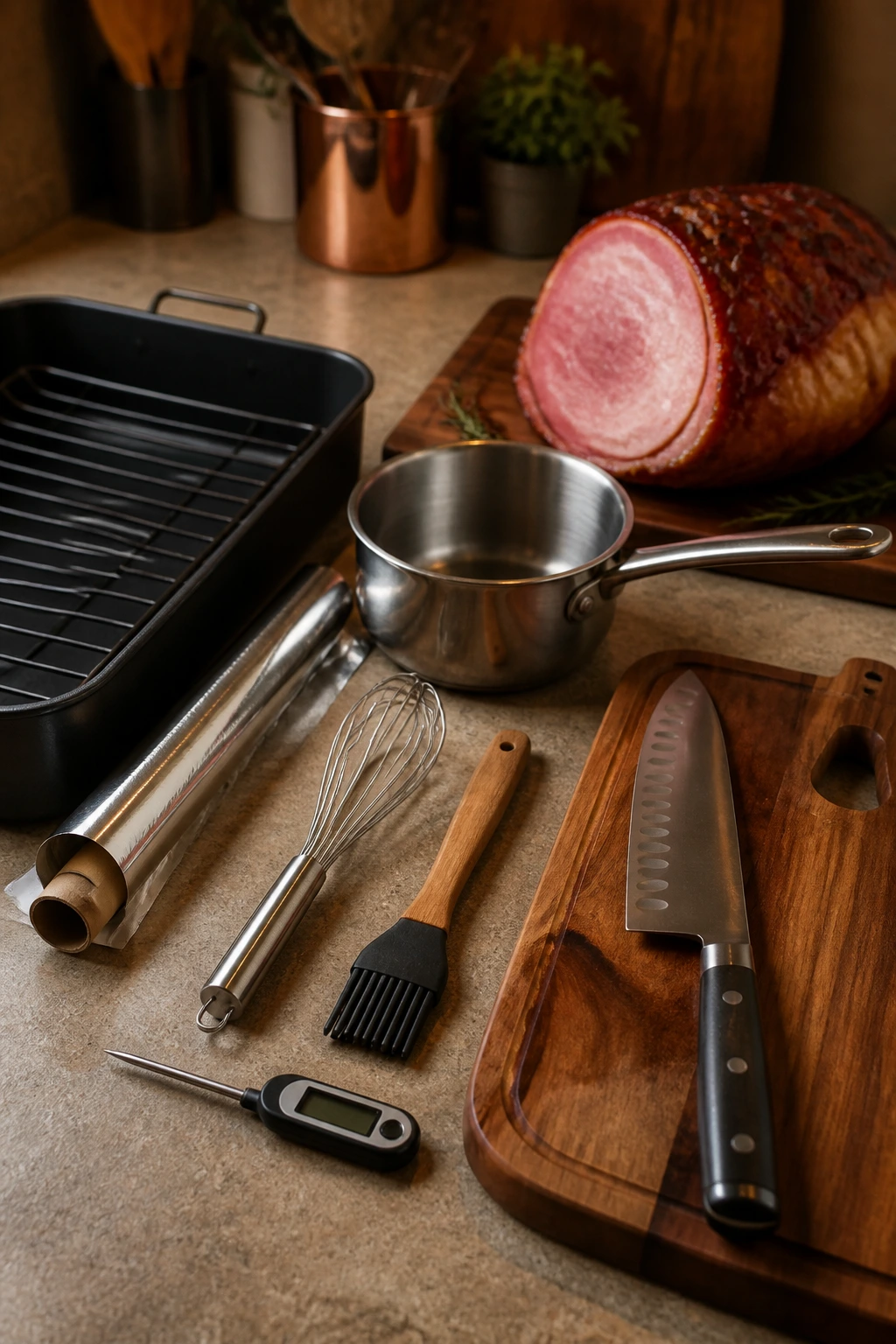
You do not need a fancy roasting setup for this.
What you do need is a pan that won’t wobble when a heavy ham goes into it, a brush that can handle sticky glaze, and a thermometer that tells the truth. Ham is one of those dishes where the tools are boring until they aren’t. Then they matter a lot.
- Roasting pan with a rack: Keeps the ham lifted above the liquid so the bottom doesn’t boil in its own juices. If you don’t have a rack, use a bed of crumpled foil or thick slices of onion.
- Heavy-duty aluminum foil: You want a tight seal for the covered bake, and flimsy foil tears when you adjust it around a big ham.
- Medium saucepan: Large enough to hold the glaze without sloshing over when it bubbles.
- Whisk: Helps dissolve the sugar and keep the mustard smooth.
- Pastry brush or silicone basting brush: Silicone is easier to clean when the glaze gets tacky.
- Instant-read thermometer: The best way to stop guessing. You want the thickest part of the ham to reach 140°F before serving.
- Sharp carving knife: Spiral ham slices still need a clean blade to separate and lift.
- Cutting board with a rim or moat: Ham likes to leak a little as it rests. A rim saves your counter from a sticky puddle.
Start With the Glaze, Not the Ham
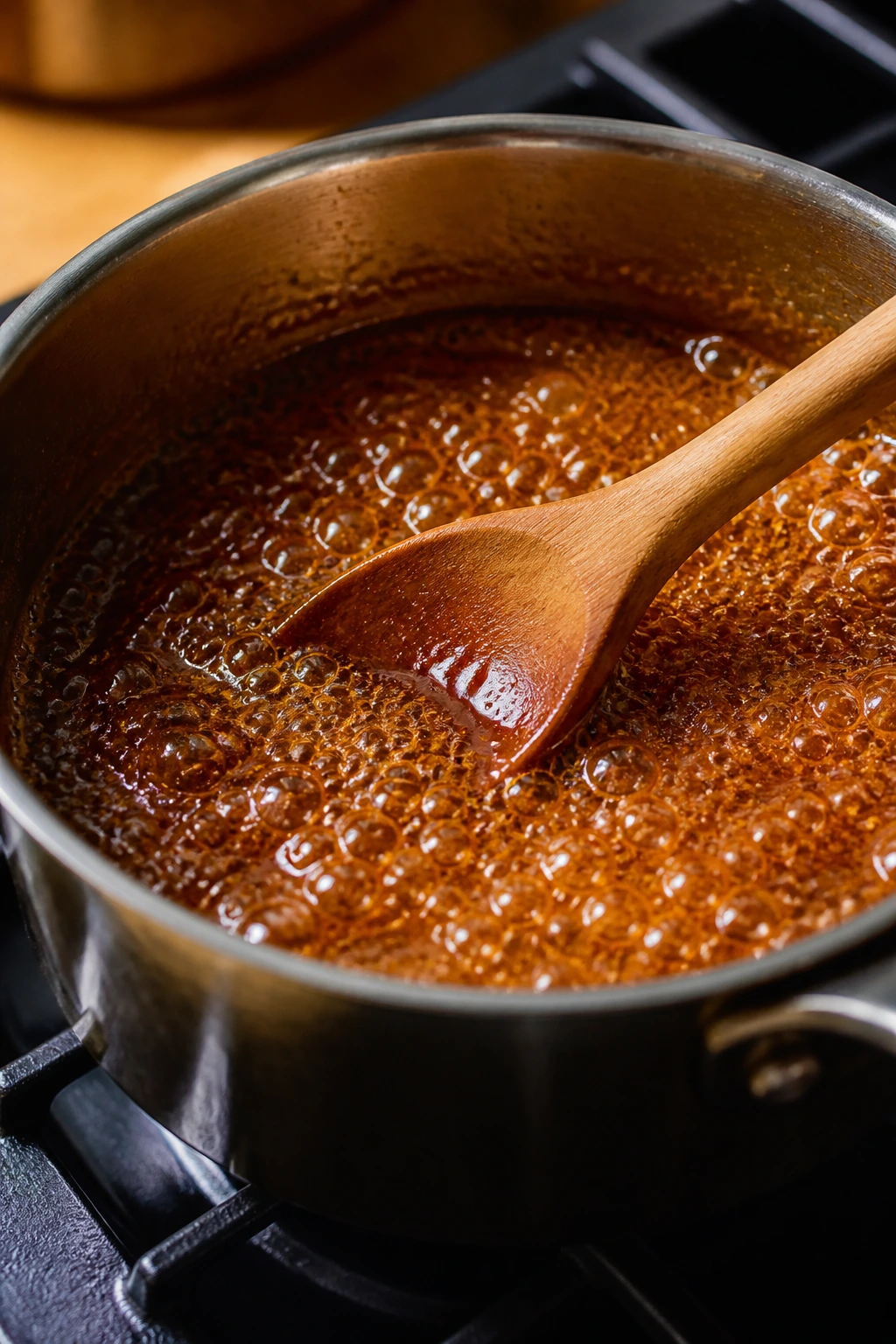
Make the glaze first. That’s my strong opinion, and I’m sticking with it.
A warm glaze brushes on better, settles into the spiral cuts faster, and gives you a little breathing room if the ham finishes early. The whole recipe gets easier when the sauce is ready before the oven gets involved.
Make the Bourbon Brown Sugar Glaze:
- Combine the dark brown sugar, bourbon, honey, Dijon mustard, butter, apple cider vinegar, cinnamon, cloves, black pepper, cayenne, and orange zest in a medium saucepan over medium heat.
- Whisk constantly for 2 to 3 minutes, until the butter melts and the sugar starts dissolving. The mixture will look grainy at first. Keep going.
- Bring the glaze to a gentle simmer, then lower the heat to medium-low and cook for 6 to 8 minutes, stirring often, until it looks glossy and lightly thickened. Do not let it boil hard; sugar can go from glossy to bitter in a hurry.
- Lift the spoon out and watch the glaze fall back in a slow ribbon. It should coat the back of a spoon without turning into jam. If it gets too thick, whisk in 1 to 2 tablespoons of hot water or apple cider.
Prepare the Ham:
- Preheat the oven to 325°F (165°C). Line a large roasting pan with heavy-duty foil and set a rack in the pan, or build a simple foil bed to keep the ham above the liquid.
- Place the ham cut-side down or flat-side down in the pan. Pour the water or apple cider into the bottom of the pan, not over the top. Cover the ham tightly with foil.
- Bake for 10 to 12 minutes per pound, or until the thickest part of the ham reaches about 120°F. For a 9-pound ham, that’s usually around 1 hour 45 minutes to 2 hours. Keep the ham covered during this stage; steam is what keeps the slices soft.
- Remove the foil and brush about one-third of the glaze over the top, working some of it between the spiral slices. Return the ham to the oven, uncovered, and bake for 10 minutes.
- Brush on another third of the glaze and bake for 10 minutes more. Brush on the remaining glaze, then bake for 5 to 10 minutes until the edges turn deep amber and the thickest part of the ham reaches 140°F. If the glaze darkens too fast, tent it loosely with foil for the last few minutes rather than raising the temperature.
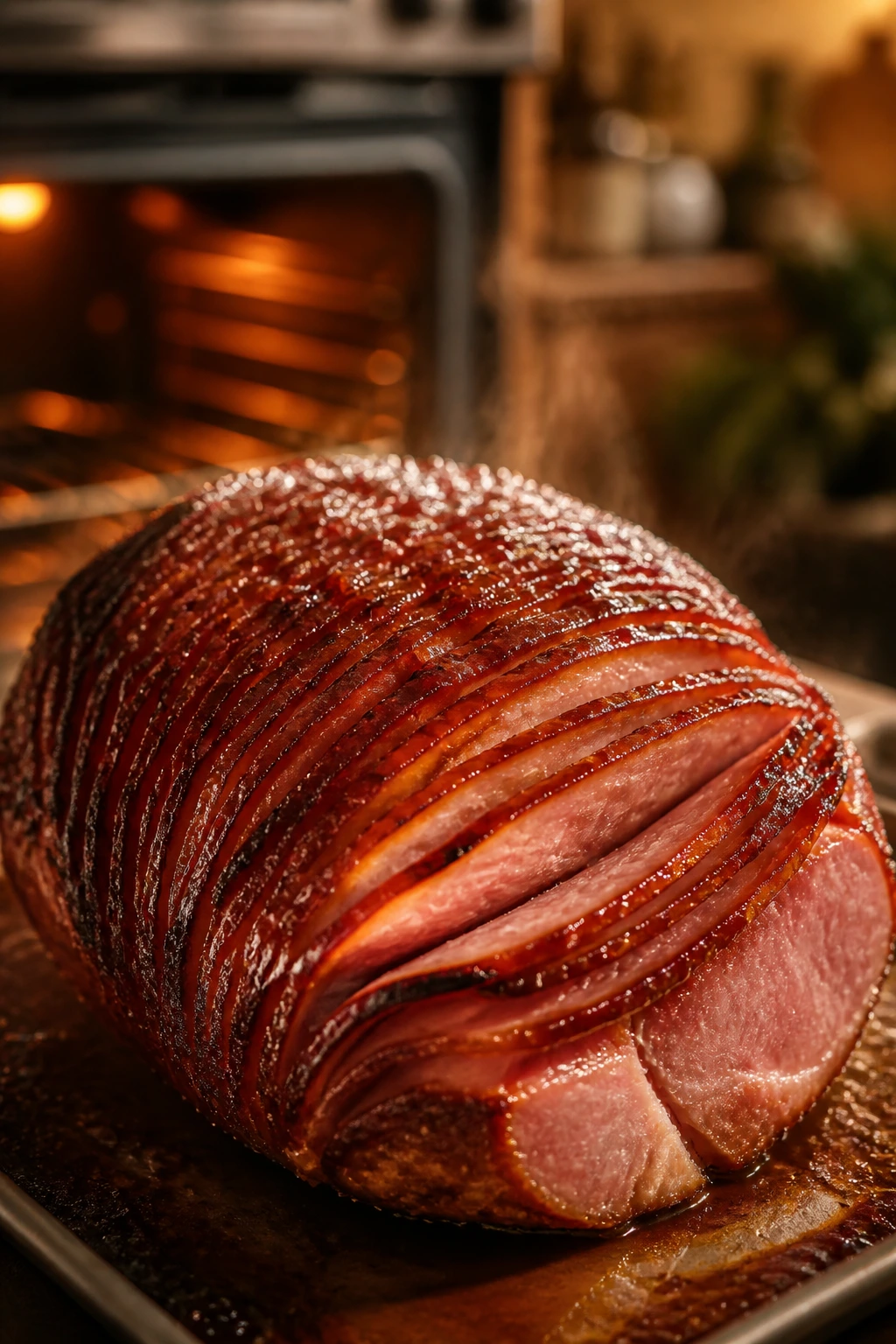
- Transfer the ham to a cutting board and rest for 15 to 20 minutes before carving. Spoon the pan juices over the slices or strain them and serve them on the side.
That final rest is not optional. Hot ham bleeds juice the second you cut it. Give it a minute, and the slices stay far cleaner.
How to Serve the Finished Ham
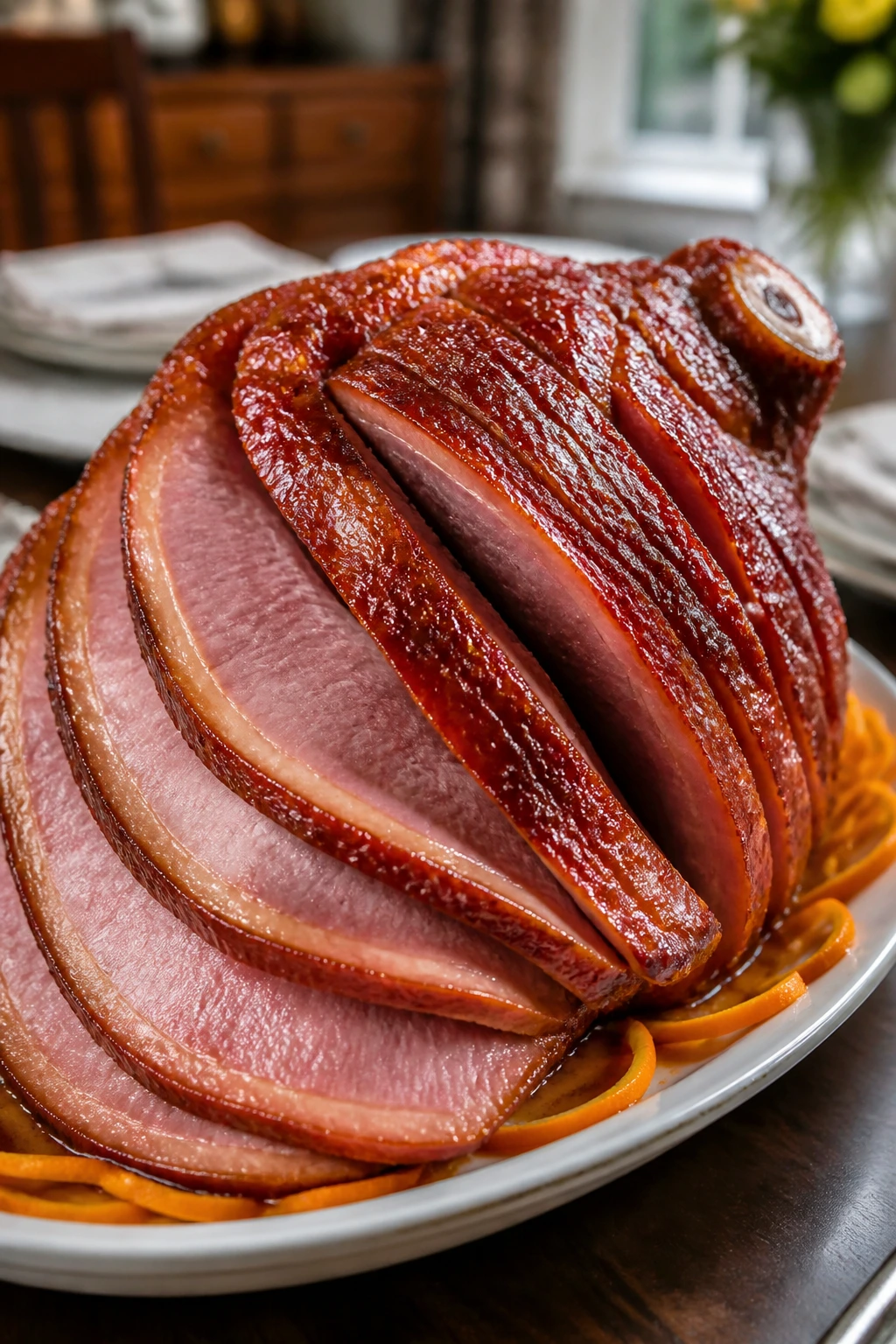
Presentation: Slice the ham along its natural cuts and fan the pieces across a warmed platter. Spoon some of the pan glaze over the top so the slices glisten, then scatter a little orange zest or chopped parsley over the edges if you want a cleaner look on the table.
Accompaniments: I like this with mashed potatoes, roasted carrots, green beans with a little lemon, or a sharp slaw that cuts the sweetness. Dinner rolls are worth having nearby too, because a ham sandwich with a little glaze and a swipe of mustard is one of the better leftover moves.
Portions: A bone-in 8- to 10-pound ham usually gives 12 to 16 servings, depending on whether you’re serving generous plates or buffet-style portions. If you’re feeding a crowd with several sides, plan on 1/2 pound per person. If ham is the main event and the plates are light on extras, lean closer to 3/4 pound per person.
Beverage Pairing: A dry hard cider keeps the sweetness in check, which is useful here. If you want something stronger, a bourbon old fashioned or a rye-based cocktail plays nicely with the brown sugar and spice. For a nonalcoholic choice, sparkling apple cider with a squeeze of lemon does the trick.
A small bowl of the warm glaze on the side is worth the extra dish. People always want more than they think they do.
Tips That Improve Color, Shine, and Sliceability
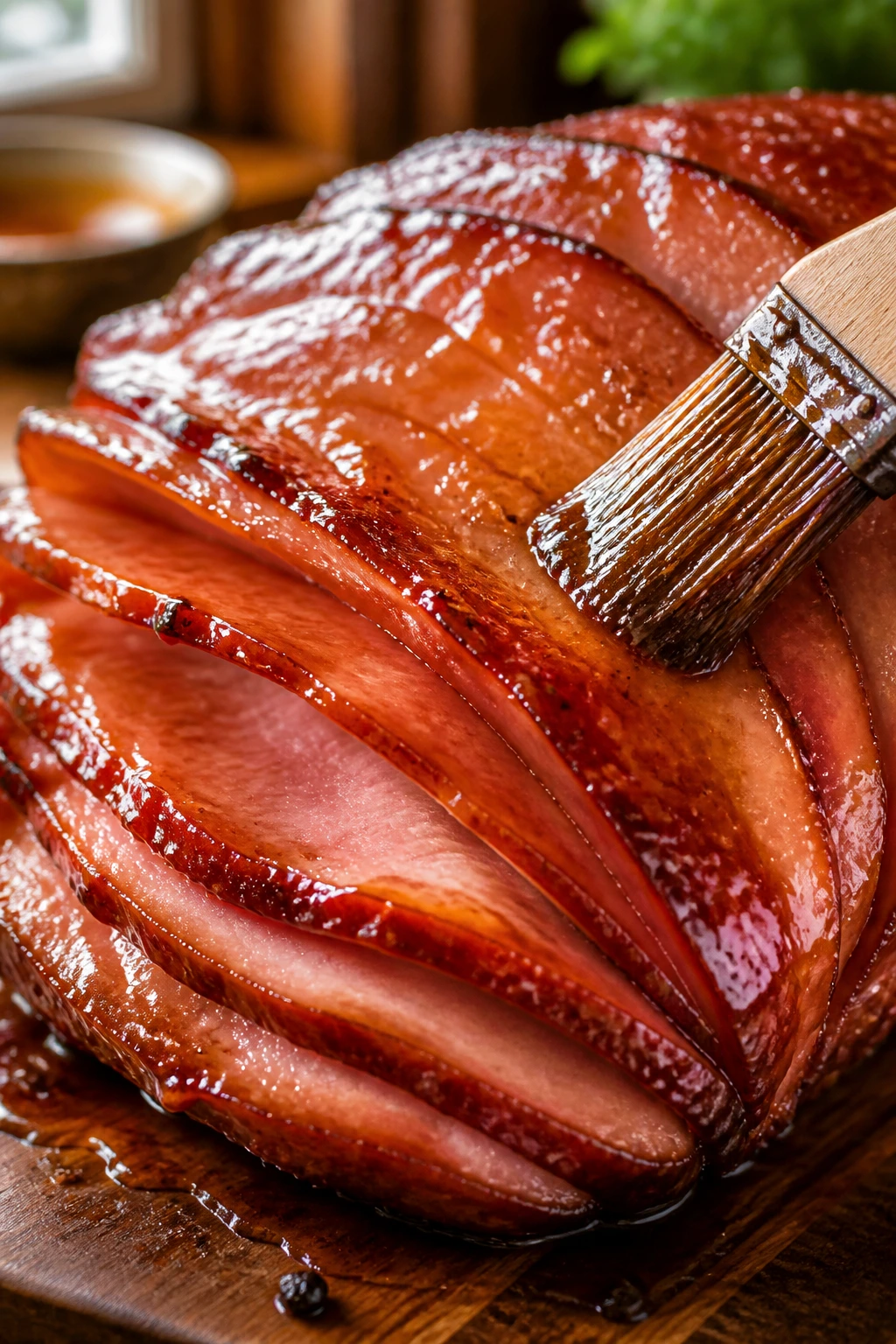
Flavor Enhancement: Warm the glaze with a strip of orange peel while it simmers, then fish it out before you brush. The peel adds oil, not sourness, and that little lift keeps the glaze from tasting heavy.
Time-Saver: Make the glaze up to 3 days ahead and store it in the fridge. It will thicken as it chills, so rewarm it over low heat with a splash of water or cider until it flows off a spoon again.
Pro Move: Brush the glaze between the spiral slices after the first uncovered bake, not just on the top. That’s where the good stuff happens; the glaze soaks into the cut lines and gives each slice a sweet edge instead of a sugar cap.
Cost-Saver: You do not need a fancy bourbon for this. A reasonably priced bottle works fine because the glaze gets simmered, reduced, and married to sugar, mustard, and spice. Save the expensive bottle for drinking.
Make-It-Yours: Want a less sweet glaze? Cut the brown sugar to 3/4 cup and add another tablespoon of Dijon. Want a warmer finish? Add a pinch of allspice or a few grates of fresh nutmeg. If you like heat, bump the cayenne to 1/4 teaspoon and stop there.
One thing I’ve learned: ham likes restraint. A good glaze should make the meat taste deeper, not like a candy shop accident.
Mistakes That Dry Out or Burn a Glazed Ham
-
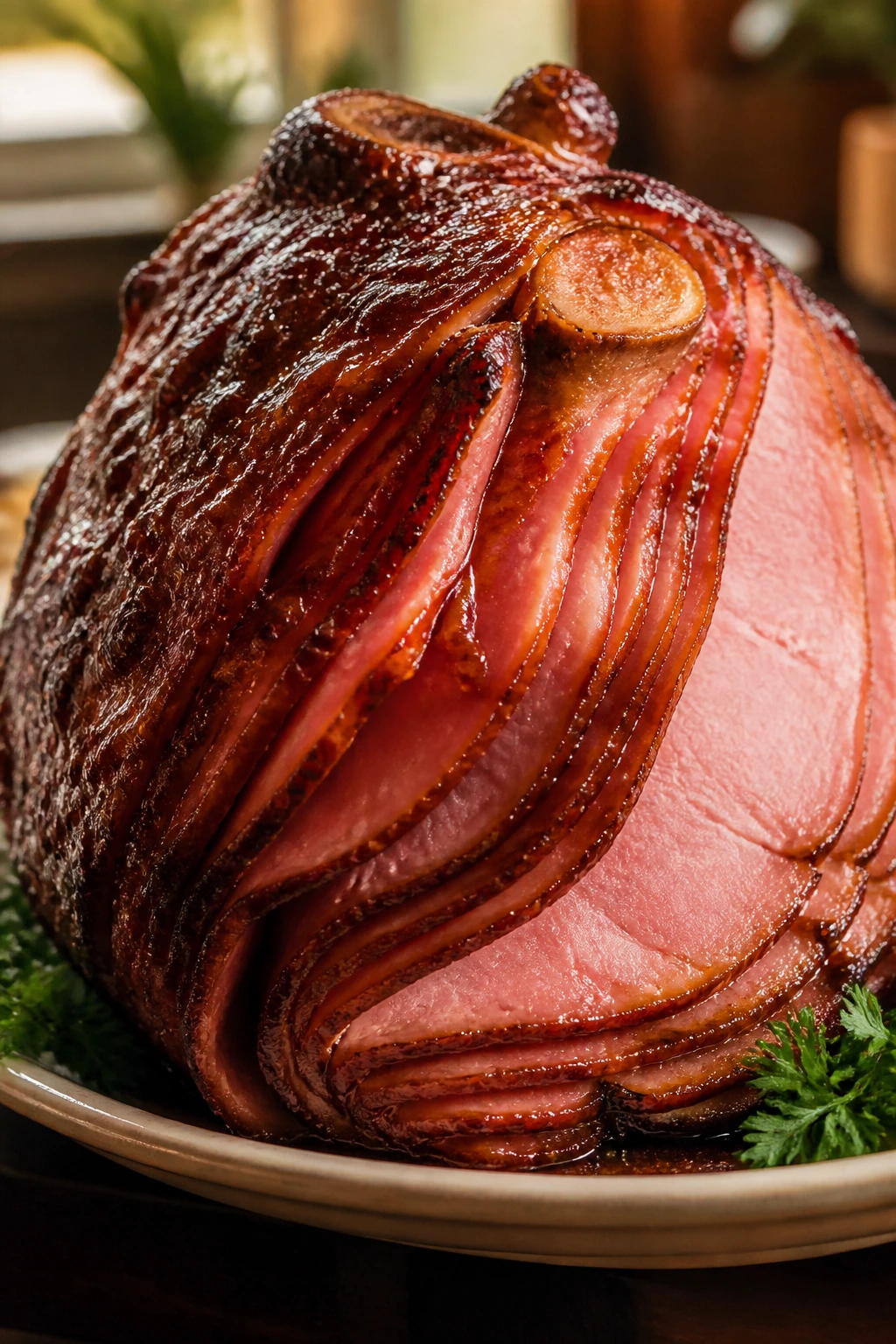
Buying the wrong ham and following the wrong timing. If you pick up a raw or partially cooked ham and treat it like a fully cooked one, the middle may stay underdone while the edges overcook. The fix is simple: buy a package that says fully cooked, ready to eat, or fully cooked smoked ham.
-
Glazing too early. Sugar starts darkening long before the ham is warm enough. If you brush the glaze on at the start, the top can turn sticky-black while the center is still catching up. Wait until the final 20 to 30 minutes, when the ham is hot and the glaze has time to set instead of burn.
-
Skipping the thermometer. The eye can lie, especially with a dark glaze. The ham is done when the thickest part reaches 140°F, not when the top looks pretty. Pulling it on time matters more than chasing a darker crust.
-
Boiling the glaze hard. A wild boil can make the sugar grainy or push it past the sweet spot into bitterness. Keep the simmer gentle and stop as soon as the glaze coats the spoon. If it thickens too much, loosen it with a spoonful of hot water.
-
Cutting immediately after it comes out of the oven. Hot ham leaks. A 15- to 20-minute rest lets the juices settle back into the meat, which is one of the easiest ways to keep the slices moist.
-
Leaving the ham uncovered for the whole bake. Yes, you want color at the end. No, you do not want the first hour and a half to dry out the exterior. The covered bake is what protects tenderness.
Flavor Variations for Different Tables
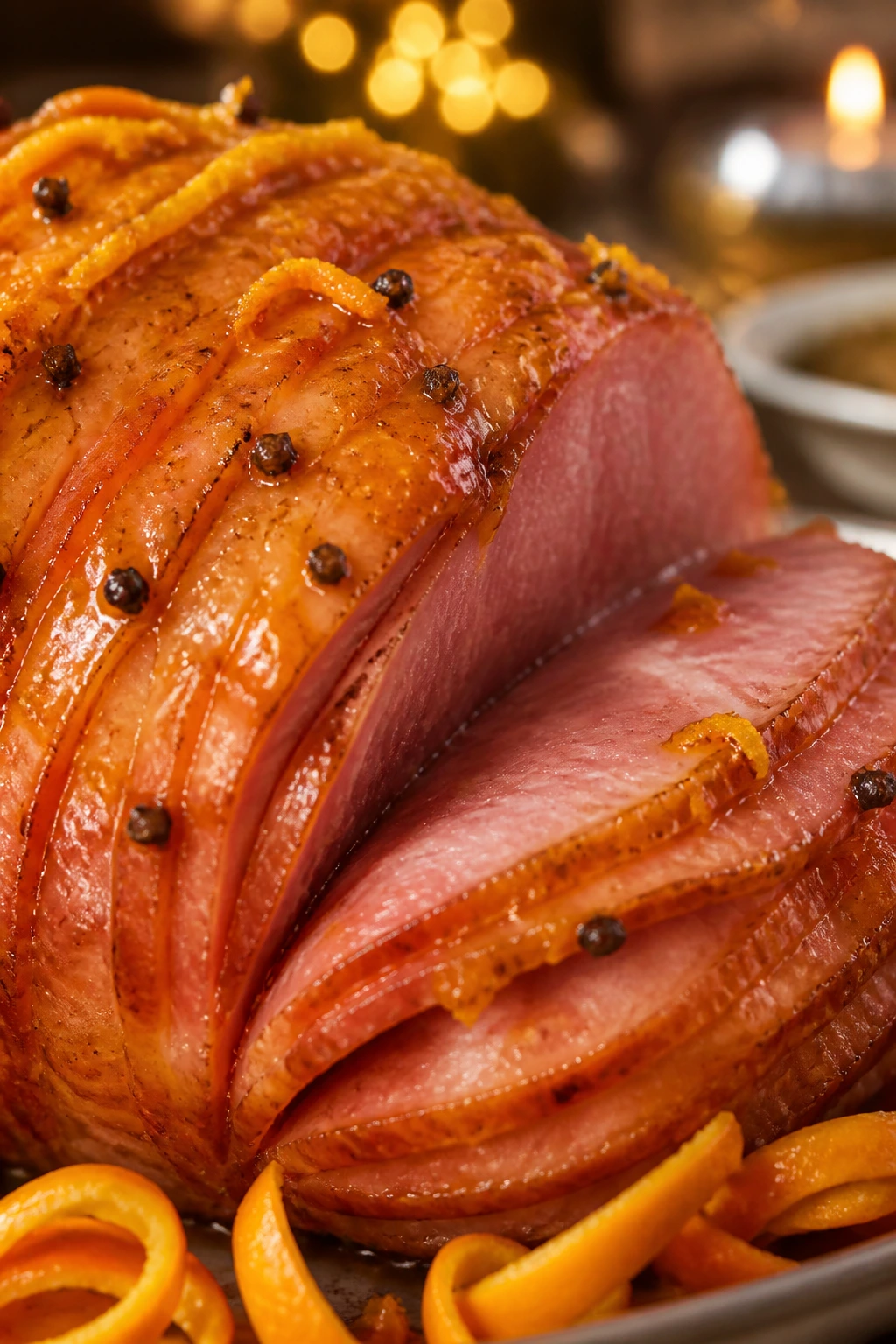
Orange-Clove Holiday Ham: Add 1 extra teaspoon of orange zest and replace 1/4 cup of the bourbon with orange juice. The glaze gets brighter and a little more fragrant, which works if you want the clove to read as warm spice instead of dessert spice.
Maple-Bourbon Finish: Swap the honey for pure maple syrup and add 1/2 teaspoon smoked paprika. The maple gives the glaze a darker, woodsy edge, and the paprika nudges the whole pan toward a soft smoke note without turning it into barbecue.
Hot Honey Ham: Replace the 1/3 cup honey with hot honey or stir 1 to 2 teaspoons of red pepper flakes into the glaze. This version keeps the sweetness but adds a clean sting on the back end, which is useful if your crowd likes a little heat with their ham.
No-Alcohol Apple Glaze: Use 1/2 cup apple cider in place of the bourbon and add 1 teaspoon vanilla extract after the glaze comes off the heat. You lose the bourbon’s oak note, but you keep the caramel feel, and the vanilla gives it a rounder finish.
Sharp Mustard Ham: Increase the Dijon to 1/3 cup and drop the brown sugar to 3/4 cup. This is the one I’d choose if the ham itself is already sweet or especially smoky; the glaze turns more savory and less sticky-sweet.
Make-Ahead, Storage, and Reheating
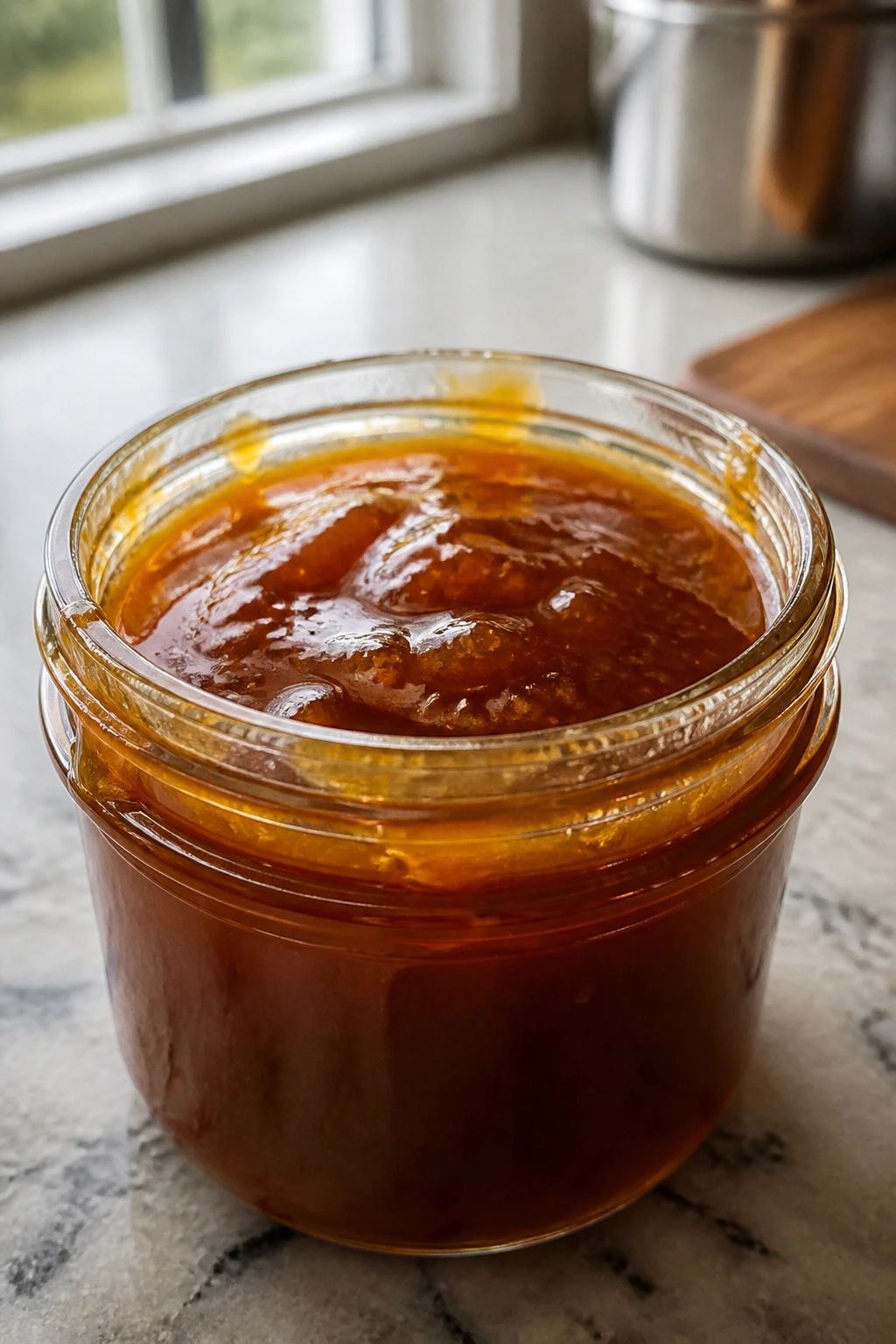
The glaze is the easiest part to make ahead. The ham itself wants to be baked close to serving time, but the sauce can sit in the refrigerator without much trouble.
Make-Ahead
You can cook the glaze up to 3 days ahead, cool it, and store it in an airtight container in the fridge. It will firm up as it chills. Rewarm it in a small saucepan over low heat with 1 to 2 tablespoons of water or apple cider, stirring until it loosens again.
If you want to get even more done in advance, set out the roasting pan, foil, rack, thermometer, and carving board the day before. A big ham takes enough counter space without a last-minute scavenger hunt for a brush.
Refrigerator Storage
Leftover ham keeps well for 3 to 4 days in the refrigerator if it’s wrapped tightly or stored in airtight containers. Slice what’s left off the bone before chilling so the meat cools faster and reheats more evenly. If you leave the whole ham on the bone, it takes longer to chill, and the cut surfaces dry out faster.
Keep any extra glaze in a separate container for up to 5 days. It can also be spooned over warm slices the next day, which is one of the reasons leftovers taste better than they have any right to.
Freezer Storage
Ham freezes well for up to 2 months. Wrap slices or chunks in parchment first, then seal them in a freezer bag or airtight container so they don’t pick up freezer smells. Freeze the glaze separately in a small container or ice cube tray. Thaw it in the refrigerator overnight before reheating.
Reheating
For slices, the oven is the safest bet. Put them in a baking dish with a splash of water, cider, or leftover glaze, cover tightly with foil, and reheat at 300°F until hot through, about 10 to 15 minutes for slices and a bit longer for thicker pieces. If you’re reheating a larger chunk, plan on 20 to 25 minutes.
Microwaving works in a pinch. Use 50% power in short bursts and cover the ham with a damp paper towel so it doesn’t dry out at the edges. Stop as soon as it’s hot. Overheating leftovers is the fastest way to turn good ham leathery.
Real Questions About Bourbon Brown Sugar Ham Glaze
Can I use a boneless ham instead of a bone-in spiral ham?
Yes, but boneless ham usually needs less time and won’t hold the glaze in the same little pockets. Slice it thicker when serving and check the temperature earlier than you would for a bone-in ham.
Do I have to use bourbon?
No. Bourbon brings depth and a little oak, but apple cider is the cleanest swap if you want no alcohol. The glaze will be sweeter and a little brighter without the bourbon, so I like adding a bit more Dijon or a splash of vanilla to keep it grounded.
How do I know when the ham is done?
Use an instant-read thermometer and check the thickest part of the ham, not a sugary surface edge. For a fully cooked ham, you’re warming it to 140°F. Spiral hams dry out fast if you chase a higher number.
Can I make the glaze ahead of time?
Yes, and I recommend it. The glaze keeps for up to 3 days in the fridge and reheats easily over low heat. If it gets too thick, loosen it with a tablespoon or two of cider or hot water.
What if my glaze turns out too thin?
Simmer it a little longer. The glaze should coat a spoon and move slowly, not pour like broth. If you’ve already taken it off the heat and it still seems loose, return it to the pan and keep stirring over medium-low heat for another 2 to 3 minutes.
What if the top starts getting too dark before the inside is warm?
Tent the ham loosely with foil and keep baking. That stops the sugar from scorching while the heat finishes its job inside the meat. Don’t wrap it tight again or you’ll steam the glaze right off.
Can I make this in a slow cooker?
You can warm the ham in a slow cooker, but you won’t get the same lacquered finish. If you go that route, use the slow cooker for gentle heating, then move the ham to a baking pan and brush on the glaze in the oven for the last 15 to 20 minutes. That extra step is what gives you the color.
Can I freeze leftover ham with the glaze on it?
Yes. Slice it first, tuck the slices into airtight freezer bags, and include a spoonful of glaze or pan juices if you have them. That little bit of moisture helps the ham reheat without tasting dry or papery.
A Ham Worth Pulling Out Early
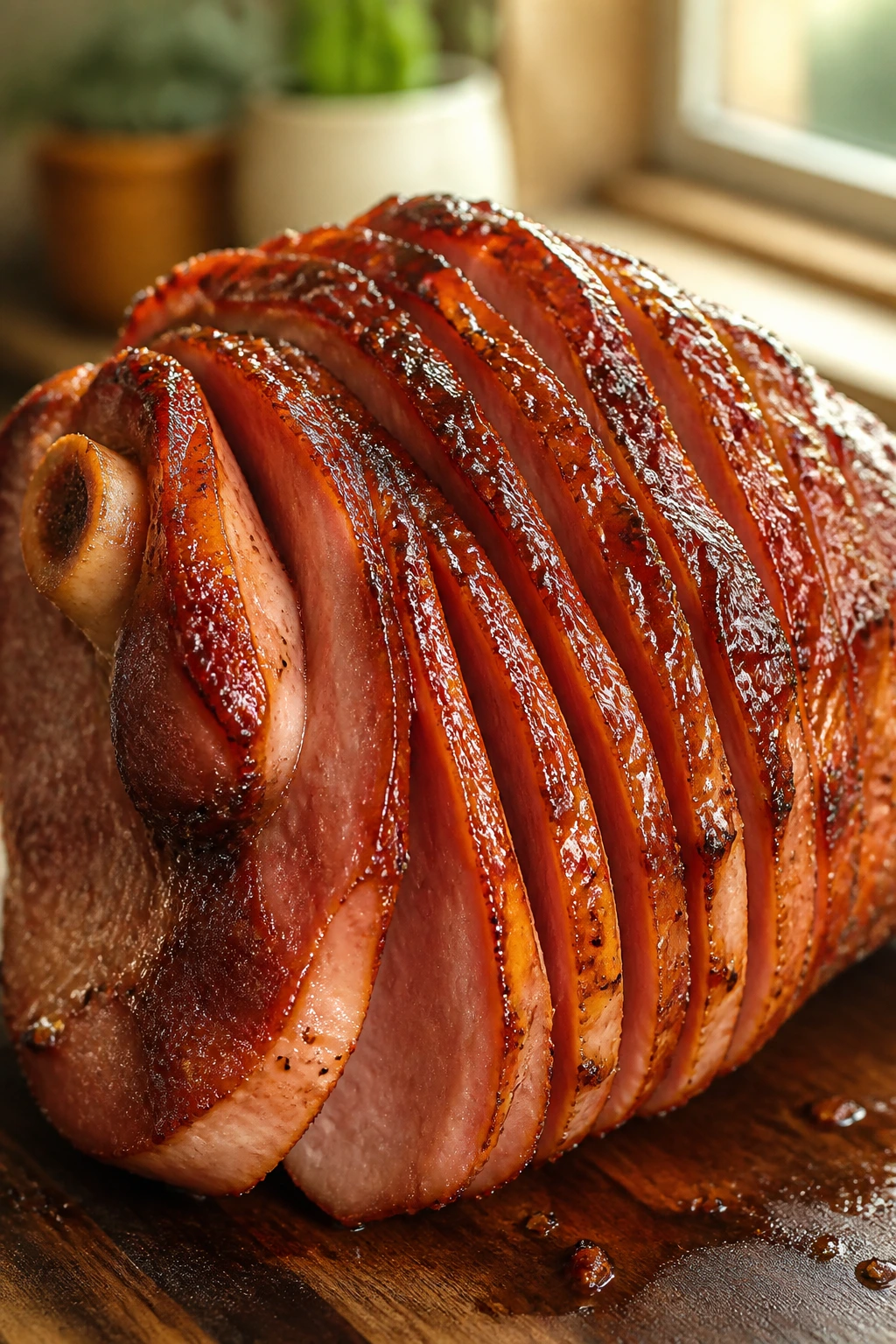
The best part of this bourbon brown sugar glaze for ham is not the shine, though the shine does get people’s attention first. It’s the way the meat stays soft under the crust because you never rushed it. The glaze has depth, the slices have room to breathe, and the whole thing tastes like you paid attention at exactly the right moments.
That’s usually what separates a decent ham from the one people keep talking about while they’re standing at the counter, picking at the edges. Low heat. A real glaze. A little rest. Nothing magical, just the right sequence done well.
If you make it once, make enough for leftovers. The second-day sandwiches are not an afterthought.
Bourbon Brown Sugar Glazed Ham — Recipe Card
Recipe Name: Bourbon Brown Sugar Glazed Ham
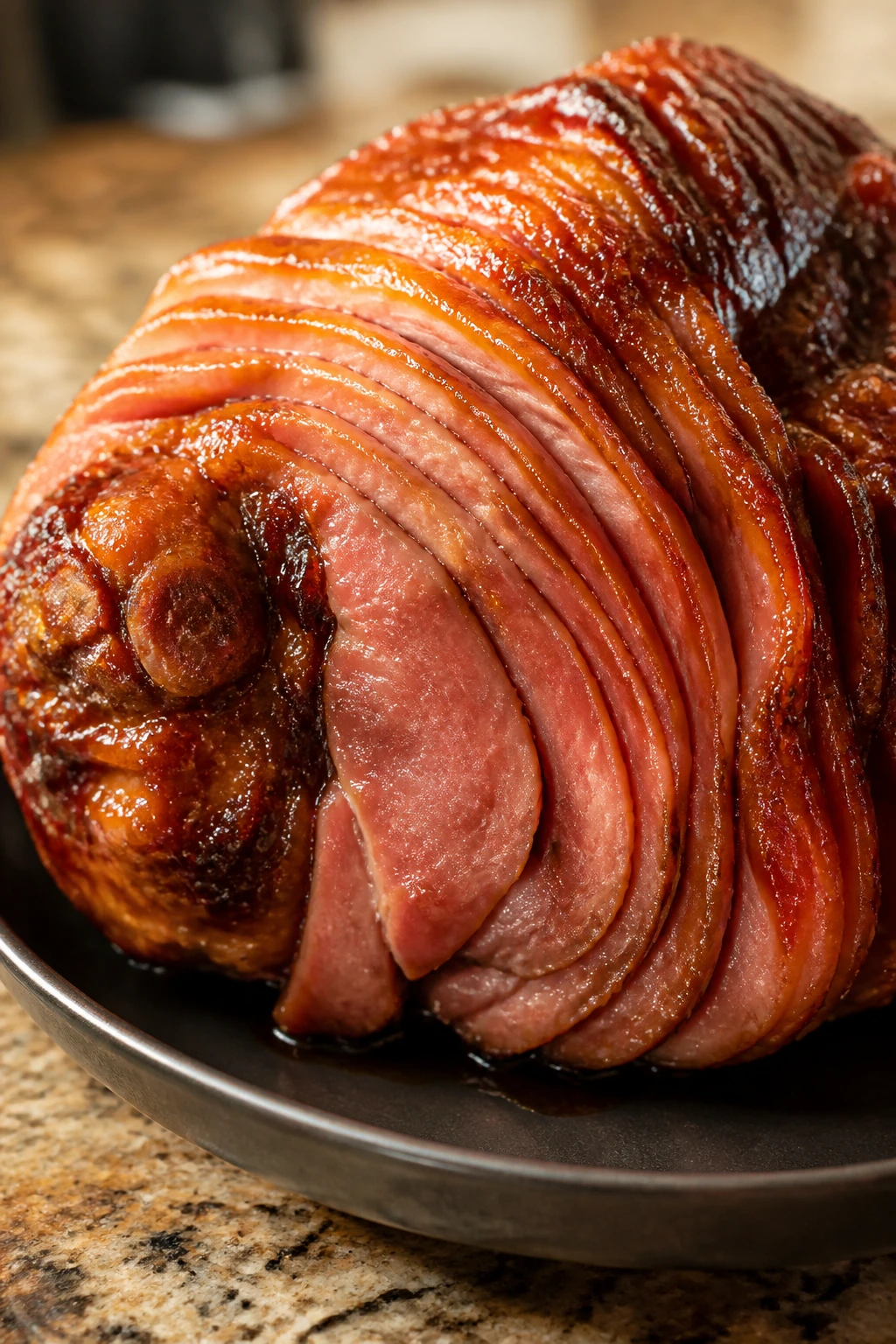
Description: A fully cooked spiral-sliced ham brushed with a bourbon, brown sugar, honey, and Dijon glaze until the surface turns glossy, amber, and lightly sticky while the meat stays tender underneath.
Prep Time: 20 minutes
Cook Time: 2 hours 15 minutes
Total Time: 2 hours 35 minutes, plus 15 to 20 minutes resting
Course: Dinner, Main Course
Cuisine: American
Servings: 12 to 16
Calories: about 430 kcal per serving
Ingredients
For the Ham:
- 1 fully cooked bone-in spiral-sliced ham, 8 to 10 pounds
- 1/2 cup water or apple cider, for the roasting pan
For the Bourbon Brown Sugar Glaze:
- 1 cup packed dark brown sugar
- 1/2 cup bourbon
- 1/3 cup honey
- 1/4 cup Dijon mustard
- 2 tablespoons unsalted butter
- 1 tablespoon apple cider vinegar
- 1 teaspoon ground cinnamon
- 1/2 teaspoon ground cloves
- 1/4 teaspoon freshly ground black pepper
- 1/8 teaspoon cayenne pepper, optional
- 1 teaspoon finely grated orange zest, optional
Instructions
-
Combine the brown sugar, bourbon, honey, Dijon, butter, vinegar, cinnamon, cloves, black pepper, cayenne, and orange zest in a medium saucepan over medium heat.
-
Whisk for 2 to 3 minutes, until the butter melts and the sugar begins dissolving.
-
Simmer over medium-low heat for 6 to 8 minutes, stirring often, until the glaze is glossy and lightly thickened.
-
Preheat the oven to 325°F (165°C). Line a roasting pan with foil and set a rack in the pan, or use a foil bed.
-
Place the ham cut-side down in the pan and add the water or apple cider to the bottom. Cover tightly with foil.
-
Bake for 10 to 12 minutes per pound, until the thickest part of the ham reaches about 120°F.
-
Remove the foil, brush with about one-third of the glaze, and bake uncovered for 10 minutes.
-
Brush with another third of the glaze and bake for 10 minutes more. Brush with the remaining glaze and bake 5 to 10 minutes, until the ham reaches 140°F and the edges are deep amber.
-
Rest the ham for 15 to 20 minutes before carving. Spoon pan juices over the slices or serve them on the side.
Notes: The glaze can be made up to 3 days ahead and reheated gently before baking. If the top darkens too quickly, tent the ham loosely with foil. A spiral-cut ham catches the glaze best between the slices.