



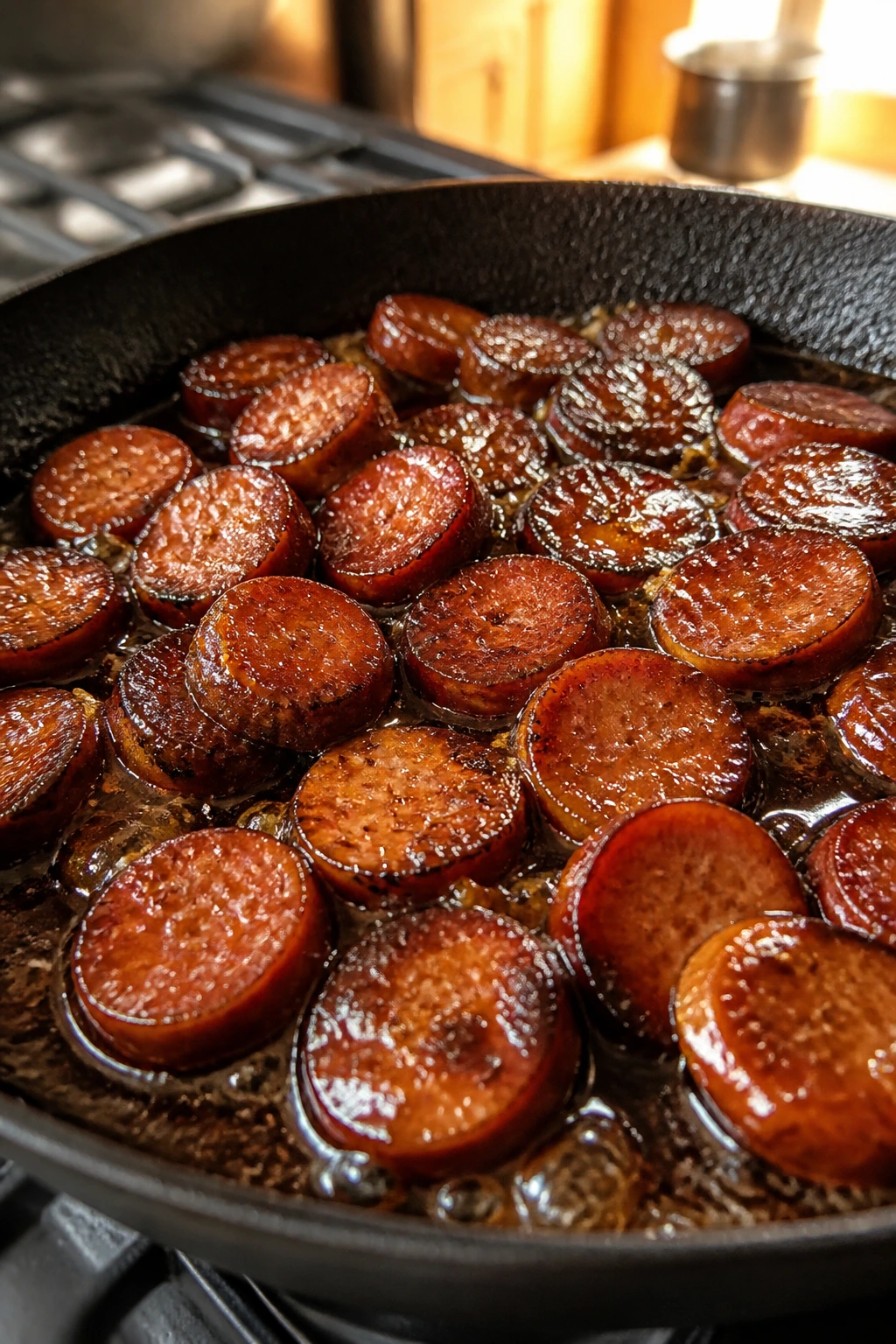
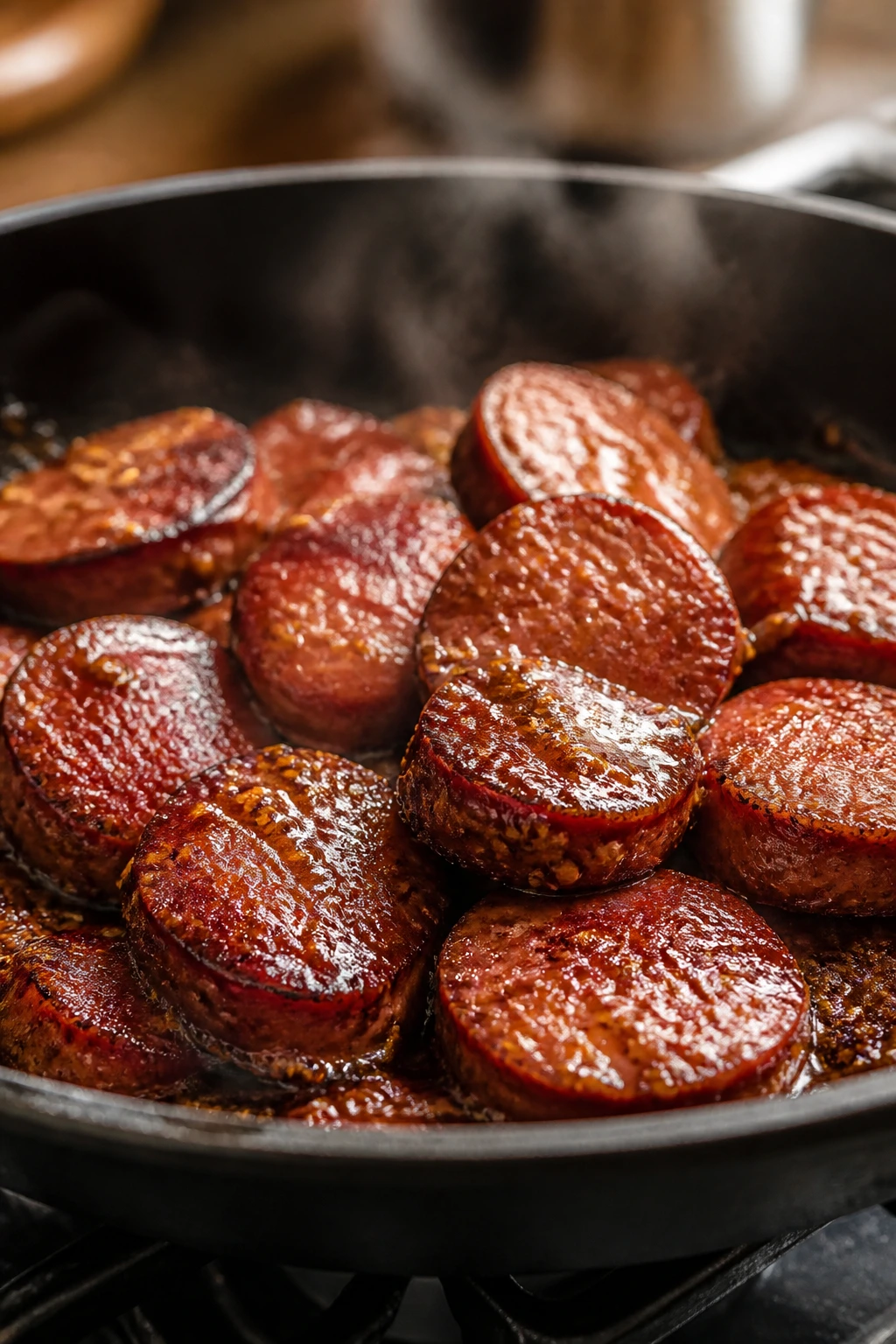
When a skillet of smoked sausage with brown sugar glaze hits the heat, the whole kitchen changes character in minutes. First comes the fat and smoke from the sausage. Then the brown sugar melts into the pan drippings and turns glossy, dark, and a little sticky around the edges. It smells like caramel, mustard, pepper, and the kind of savory sweetness that makes people drift into the kitchen “just to check.”
This is not a dainty dish. It’s bold, old-school, and a little brash in the best way. The sausage brings salt, smoke, and fat; the glaze brings brown sugar, vinegar, and a sharp little hit of Dijon that keeps the sweetness from flattening out. If you’ve ever had a version that tasted like straight candy, you know exactly why the acid matters. Without it, the whole pan goes cloying fast.
What I like most is how little has to happen for it to taste complete. The sausage is already cooked, which means you’re not babysitting raw meat for half an hour. You’re browning, stirring, and watching the glaze go from loose and shiny to thick enough to cling to each coin of sausage like lacquer. That’s the sweet spot. Miss it, and you get a watery sauce or a burnt one. Hit it, and people start asking who brought the “good sausage,” even if you made it on a Tuesday in a regular skillet.
Why This Brown Sugar Sausage Skillet Keeps Winning
-
Fast, but not thin-tasting: The sausage is already smoked and fully cooked, so the pan work is about color and glaze, not long simmering. You get deep flavor in about 20 minutes of actual stove time.
-
Sweetness with a spine: Brown sugar alone can feel heavy, but the Dijon, apple cider vinegar, and Worcestershire keep the glaze sharp enough to balance the smoke.
-
One skillet, less mess: Browning the sausage first creates browned bits on the bottom of the pan, and those bits dissolve right into the glaze. That’s where the flavor lives.
-
Easy to serve three ways: It can sit on rice, pile onto potatoes, or go straight to a party platter with toothpicks. Few dishes move that easily between dinner and appetizer.
-
The texture stays interesting: Sliced sausage gets crisp edges in the skillet, then the glaze softens the outside without turning it mushy. You still get bite.
-
It reheats better than most glazed dishes: The flavor settles overnight, and a quick warm-up in a skillet brings the sauce back to life without wrecking the sausage.
Why Brown Sugar and Smoked Sausage Click So Well
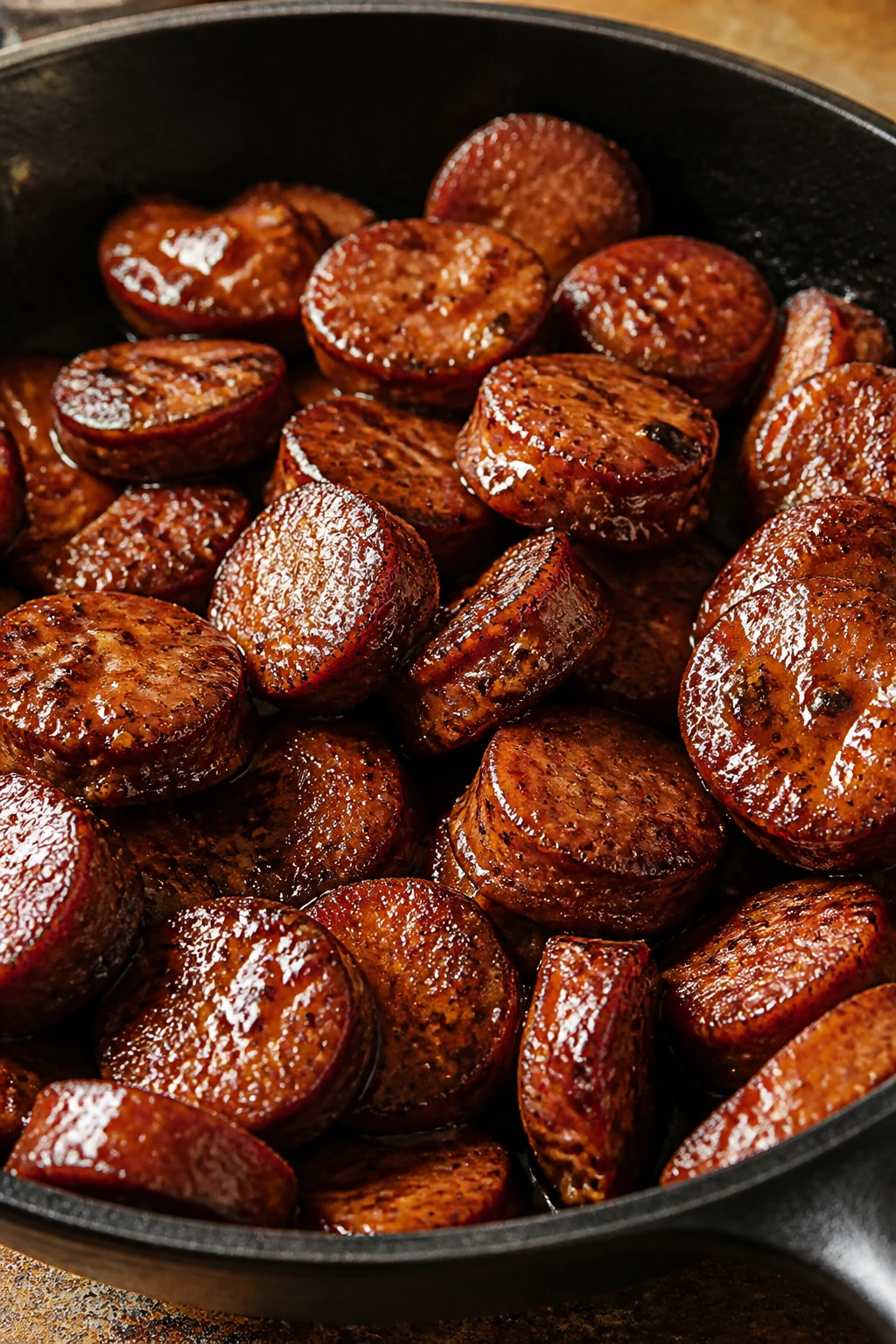
The pairing works because each ingredient knows its job. Smoked sausage is already seasoned, already cooked, and already carrying fat and salt. Brown sugar, on its own, would be too one-note here. But once it melts into sausage drippings and catches the sharpness of vinegar and mustard, it stops tasting sugary and starts tasting round.
That roundness matters. Brown sugar brings a molasses edge that plain white sugar can’t touch. It clings better, browns faster, and gives the glaze that deep amber shine people notice before they even take a bite. A little Dijon keeps the sweetness from getting syrupy. Worcestershire adds the dark, savory note that makes the whole pan taste like more than the sum of its parts.
There’s also a texture thing going on that most quick sausage recipes miss. If you toss sausage into a sauce without browning it first, you get soft slices in a sweet bath. Fine, but boring. Brown the sausage first and the cut surfaces take on a little crust. Those browned edges catch glaze in tiny ridges, and that’s what makes each bite feel coated instead of just sauced.
This is the kind of dish that comes out of practical cooking, not precious cooking. Pantry ingredients. One pan. A short list. The trick is in the order, the heat, and the moment you stop cooking.
What Goes Into the Pan
Yield: Serves 6 as a main dish or 8 as an appetizer
Prep Time: 10 minutes
Cook Time: 20 minutes
Total Time: 30 minutes
Difficulty: Beginner — the sausage is already cooked, so the main job is browning and managing a fast-moving glaze.
Best Served: Hot from the skillet, or warm if you’re plating it for a buffet spread
For the Skillet Sausage
- 2 pounds fully cooked smoked sausage or kielbasa, sliced into 1/2-inch coins
- 1 tablespoon neutral oil
- 1 small yellow onion, thinly sliced
- 2 cloves garlic, minced
For the Brown Sugar Glaze
- 1/2 cup packed light brown sugar
- 1/3 cup ketchup
- 2 tablespoons Dijon mustard
- 1 tablespoon apple cider vinegar
- 1 tablespoon Worcestershire sauce
- 1 teaspoon smoked paprika
- 1/4 teaspoon crushed red pepper flakes
- 2 tablespoons water
- 1 tablespoon unsalted butter
- 1/2 teaspoon freshly ground black pepper
How Each Ingredient Pulls Its Weight
Smoked Sausage
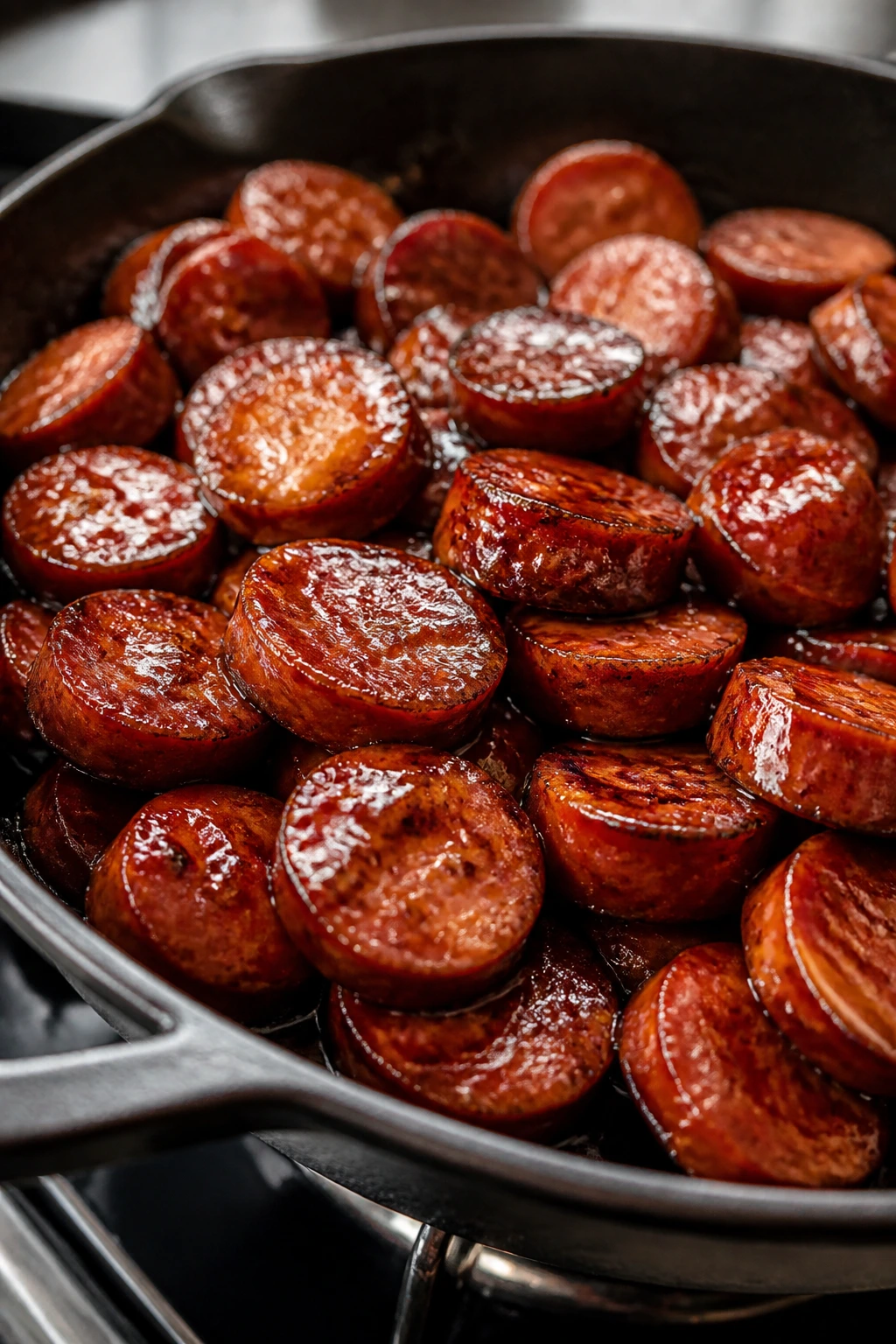
- What to use: 2 pounds of fully cooked smoked sausage or kielbasa, sliced into 1/2-inch coins.
- Preparation: Cut the sausage on a slight bias if you want more browned surface area and a nicer look in the pan.
- Substitutions: Andouille brings more heat, turkey sausage lowers the fat, and chicken sausage works if you want a lighter finish.
- Tips: Buy a sausage with a good amount of visible fat. Very lean sausage can taste dry once the glaze tightens.
Brown Sugar, Ketchup, and the Sticky Base
- What to use: 1/2 cup packed light brown sugar, 1/3 cup ketchup, and 2 tablespoons water.
- Preparation: Pack the brown sugar firmly into the measuring cup so the glaze has enough body to cling.
- Substitutions: Dark brown sugar gives a deeper molasses note; barbecue sauce can stand in for the ketchup in a pinch, though it changes the flavor more than you might expect.
- Tips: The ketchup isn’t there to make this taste like tomato sauce. It gives the glaze thickness, color, and a little tang so the sugar doesn’t hit like candy.
Vinegar, Mustard, and Worcestershire
- What to use: 2 tablespoons Dijon mustard, 1 tablespoon apple cider vinegar, and 1 tablespoon Worcestershire sauce.
- Preparation: Whisk these together before they hit the skillet so the sugar disperses evenly and doesn’t clump.
- Substitutions: Yellow mustard works if that’s what you have; white vinegar is sharper than apple cider vinegar, so use a little less; soy sauce can stand in for Worcestershire if needed.
- Tips: This trio keeps the glaze from sticking too hard to the tongue. The sausage already brings salt, so the acid and mustard are doing the balancing work.
Onion and Garlic
- What to use: 1 small yellow onion, thinly sliced, and 2 cloves garlic, minced.
- Preparation: Slice the onion thin enough that it softens in the same window the sausage browns; mince the garlic finely so it melts into the glaze instead of burning in little shards.
- Substitutions: Red onion gives a sweeter edge, shallots are softer and a touch finer, and garlic powder can work in a pinch if you add it to the glaze.
- Tips: If your skillet runs hot, add the garlic only after the onion has softened. Garlic burns fast, and burnt garlic drags the whole pan down.
Smoked Paprika, Pepper, and Finishers
- What to use: 1 teaspoon smoked paprika, 1/4 teaspoon crushed red pepper flakes, 1/2 teaspoon black pepper, and 1 tablespoon unsalted butter.
- Preparation: Keep the spices measured before you start cooking, because once the glaze is bubbling you won’t want to hunt for a teaspoon.
- Substitutions: Chipotle powder brings a darker heat; cayenne makes it sharper; a little bourbon in place of some water gives the glaze a warmer finish.
- Tips: Butter goes in at the end. It softens the glaze, gives it shine, and keeps the sauce from tasting thin or harsh.
The Tools That Keep the Glaze Glossy
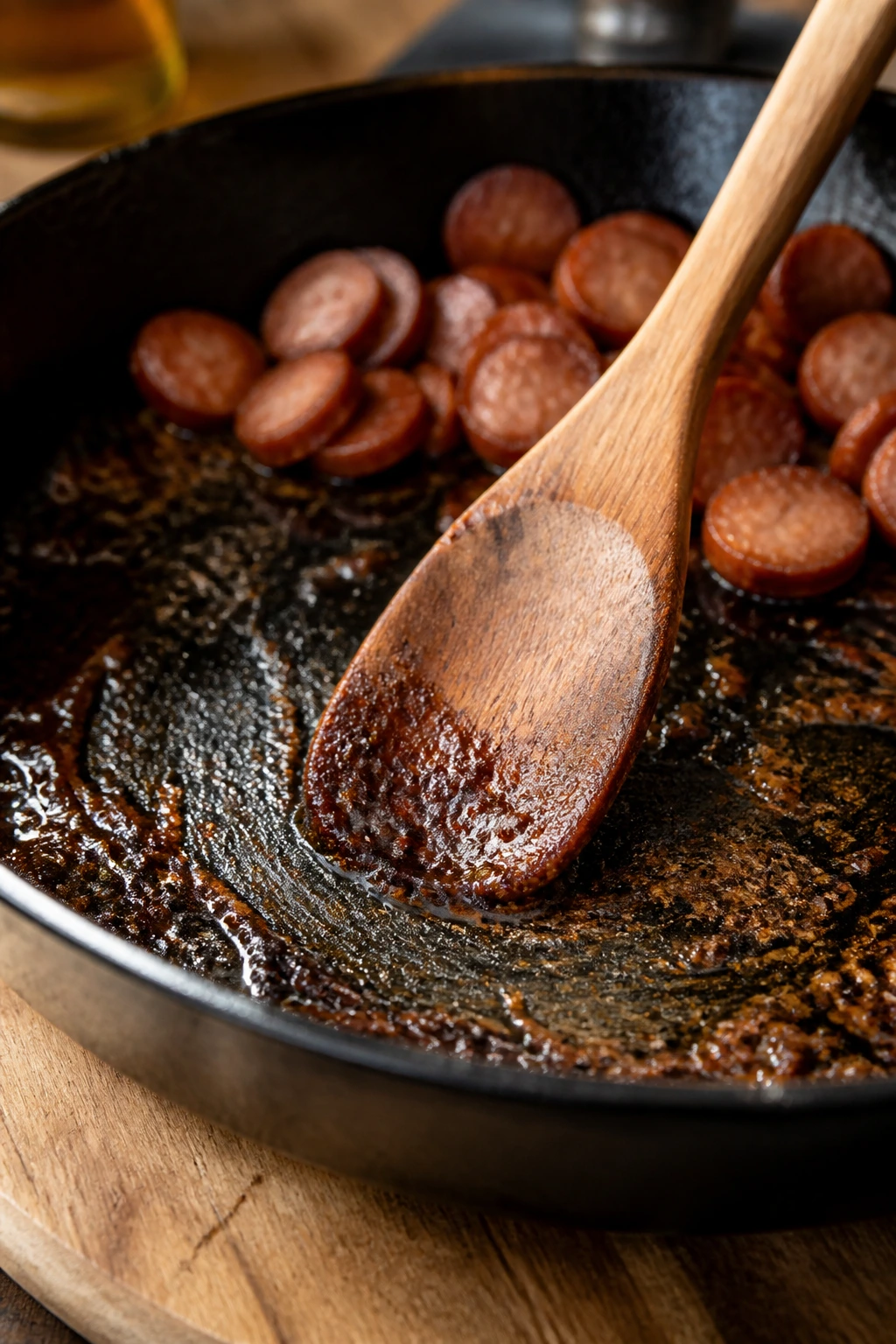
A dish this simple can get fussy if the pan is wrong. You want equipment that gives you browning without scorching.
- 12-inch heavy skillet or cast-iron skillet — More surface area means the sausage browns instead of steaming.
- Sharp chef’s knife — Clean slices give you even coins, which means even browning.
- Cutting board — A stable board matters because sausage is slick when you’re slicing it fast.
- Medium mixing bowl — Best for whisking the glaze before it goes into the skillet.
- Wooden spoon or heatproof spatula — You need something that can scrape up browned bits without scratching the pan.
- Measuring cups and spoons — The glaze leans on balance, so eyeballing the sugar and vinegar is a bad habit here.
- Splatter screen, optional — Worth using if your sausage throws hot fat. Not required, just useful.
Building the Skillet, Step by Step
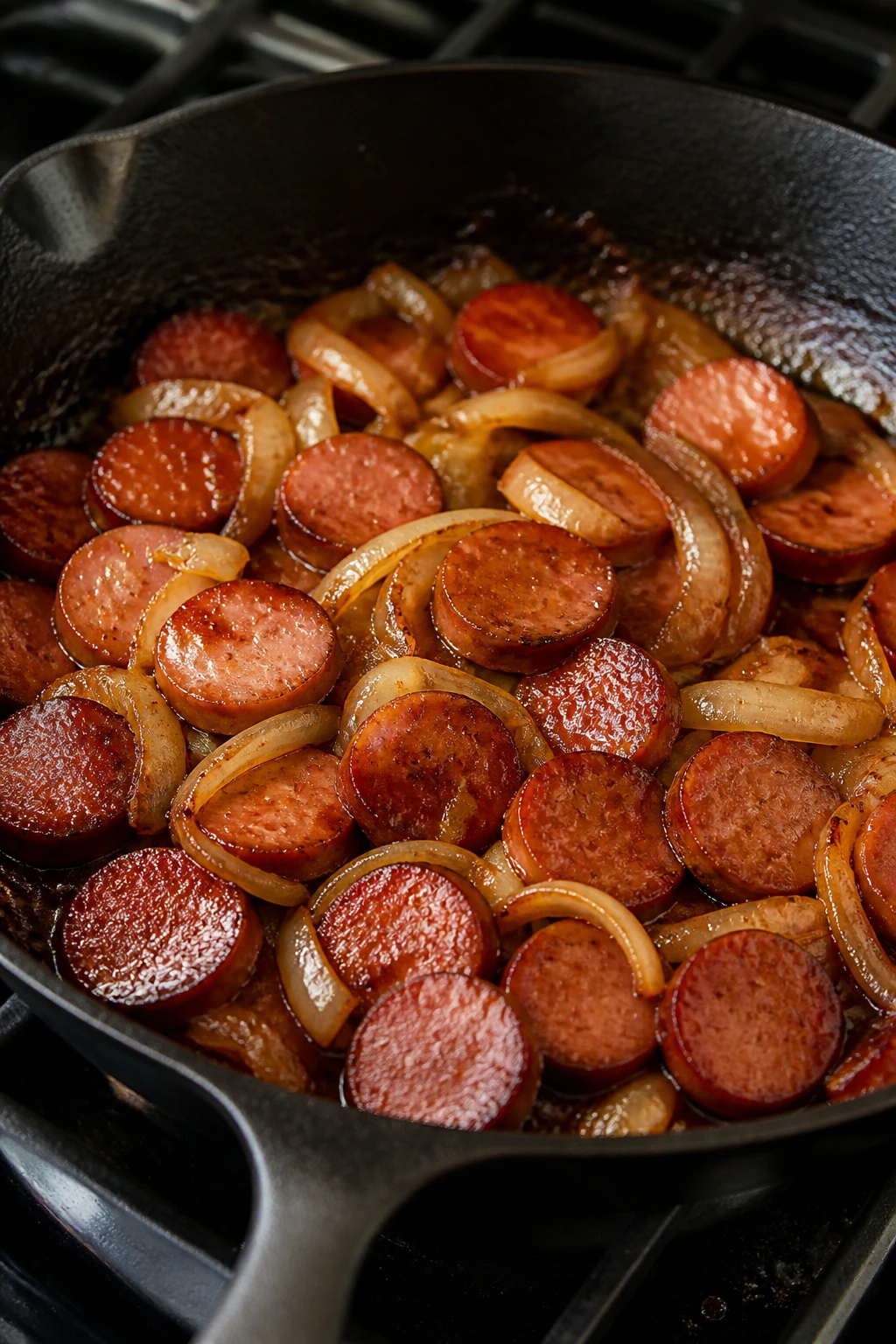
Prep the Sausage and Glaze
-
Slice the smoked sausage into 1/2-inch coins and set them in a bowl. Thinly slice the onion and mince the garlic. Keep everything close to the stove, because the glaze moves quickly once the pan is hot.
-
In a medium bowl, whisk together the brown sugar, ketchup, Dijon mustard, apple cider vinegar, Worcestershire sauce, smoked paprika, crushed red pepper flakes, water, and black pepper until smooth. The mixture should look loose and glossy, not grainy. If the sugar seems stubborn, keep whisking for another 20 seconds.
Brown the Sausage
-
Set a 12-inch skillet over medium-high heat and add the neutral oil. When the oil shimmers, add the sausage coins in a single layer. Cook for 2 to 3 minutes per side, turning them until the edges are browned and the centers are hot. Do not crowd the pan — if the sausage overlaps, it steams instead of browning.
-
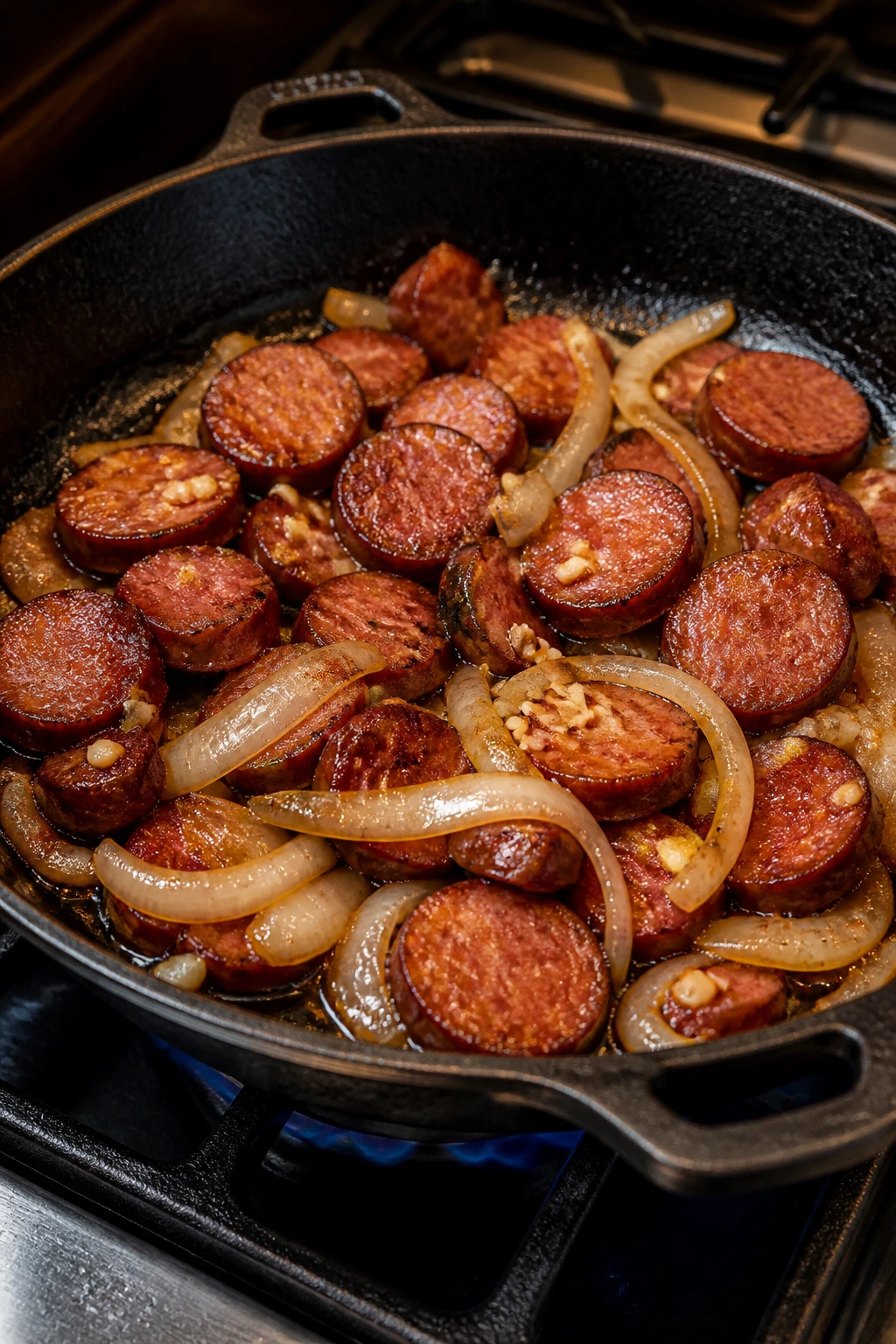
Move the browned sausage to a plate. Leave the rendered fat and browned bits in the skillet. Add the sliced onion and cook for 3 to 4 minutes, stirring often, until the onion softens and starts to turn golden at the edges. Add the garlic and cook for 30 seconds, just until fragrant. If the garlic darkens, pull the pan off the heat for a moment.
Build the Glaze and Finish
-
Reduce the heat to medium-low. Return the sausage to the skillet and pour in the glaze. Stir well, scraping the bottom of the pan to dissolve the browned bits. The sauce will look thin at first, then start to bubble in slow, heavy pops.
-
Cook for 3 to 5 minutes, stirring often, until the glaze thickens enough to coat the sausage and leave a shiny trail on the bottom of the pan when you drag a spoon through it. Watch the heat closely here — brown sugar can burn faster than you think once it starts to tighten. If the glaze gets too thick, add 1 tablespoon of water and stir.
-
Turn off the heat and stir in the butter until it melts and the sauce looks glossy. Let the sausage sit for 1 minute, then spoon it into a serving bowl or straight onto plates. The glaze should cling, not pool. That’s the point.
How to Serve It Without Making It Feel Like a Snack
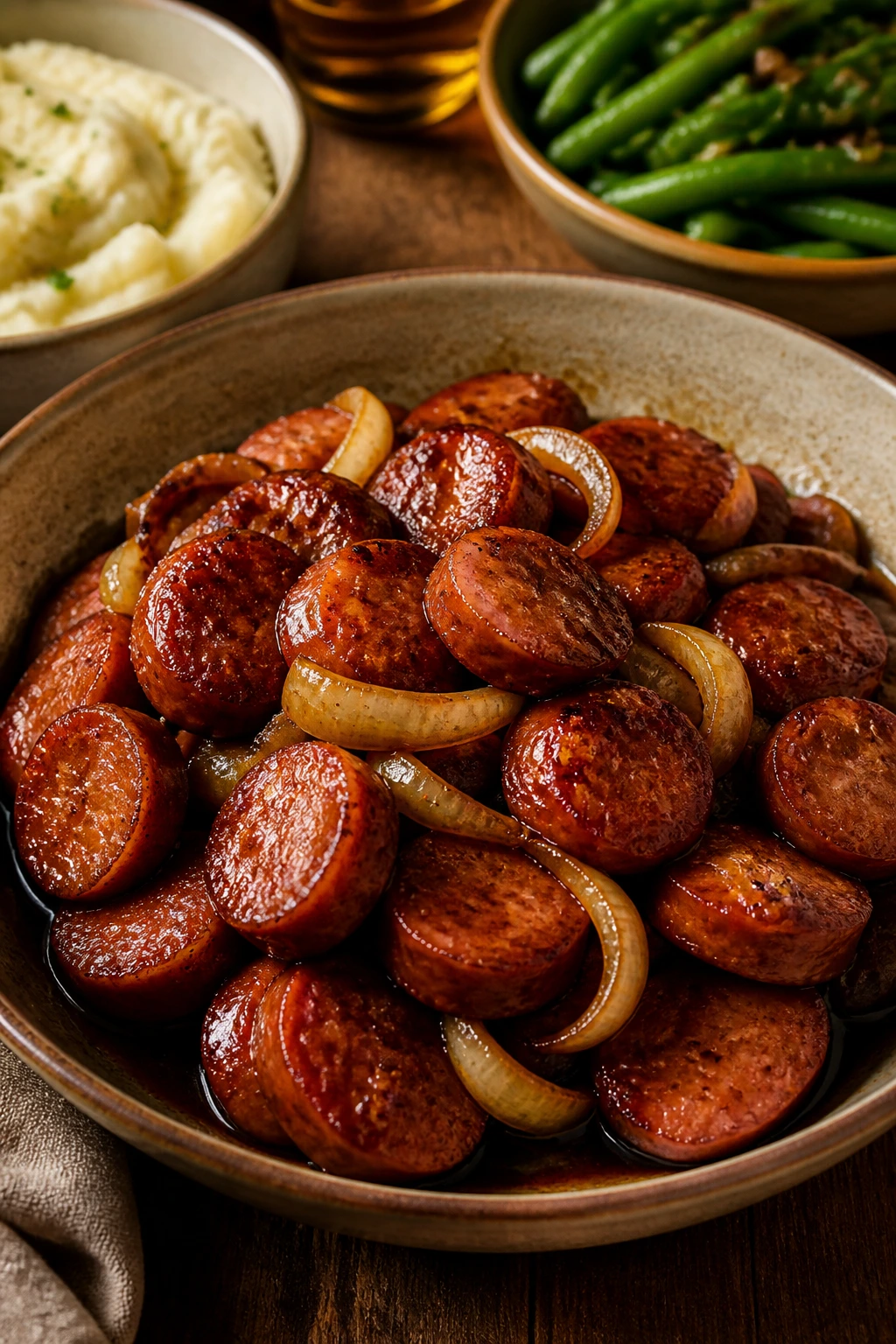
Presentation: Spoon the sausage into a warm shallow bowl or onto a wide platter so the glaze sits on top instead of disappearing into a deep dish. Scatter the onion slices over everything and scrape the pan clean; those last dark streaks are the good stuff.
Accompaniments: White rice is the easiest landing place, but buttered egg noodles, mashed potatoes, soft rolls, or roasted potatoes all work. For a sharper plate, add cabbage slaw, vinegary collards, or green beans with a little bite. If you’re serving it as an appetizer, set out toothpicks and pickles. That salty-sweet contrast is hard to beat.
Portions: With 2 pounds of sausage, you get 4 hearty main-dish servings or 6 normal ones. For an appetizer spread, 8 people can graze comfortably if you slice the coins a bit thinner and keep the serving size modest. If you need more volume, make a pot of rice rather than doubling the sausage alone.
Beverage Pairing: Cold lager, amber ale, unsweetened iced tea, or sparkling apple cider all fit the sweet-salty edge. A crisp drink works better than a sugary one, because the glaze already brings enough sweetness.
Extra Tricks for Better Color, Better Balance
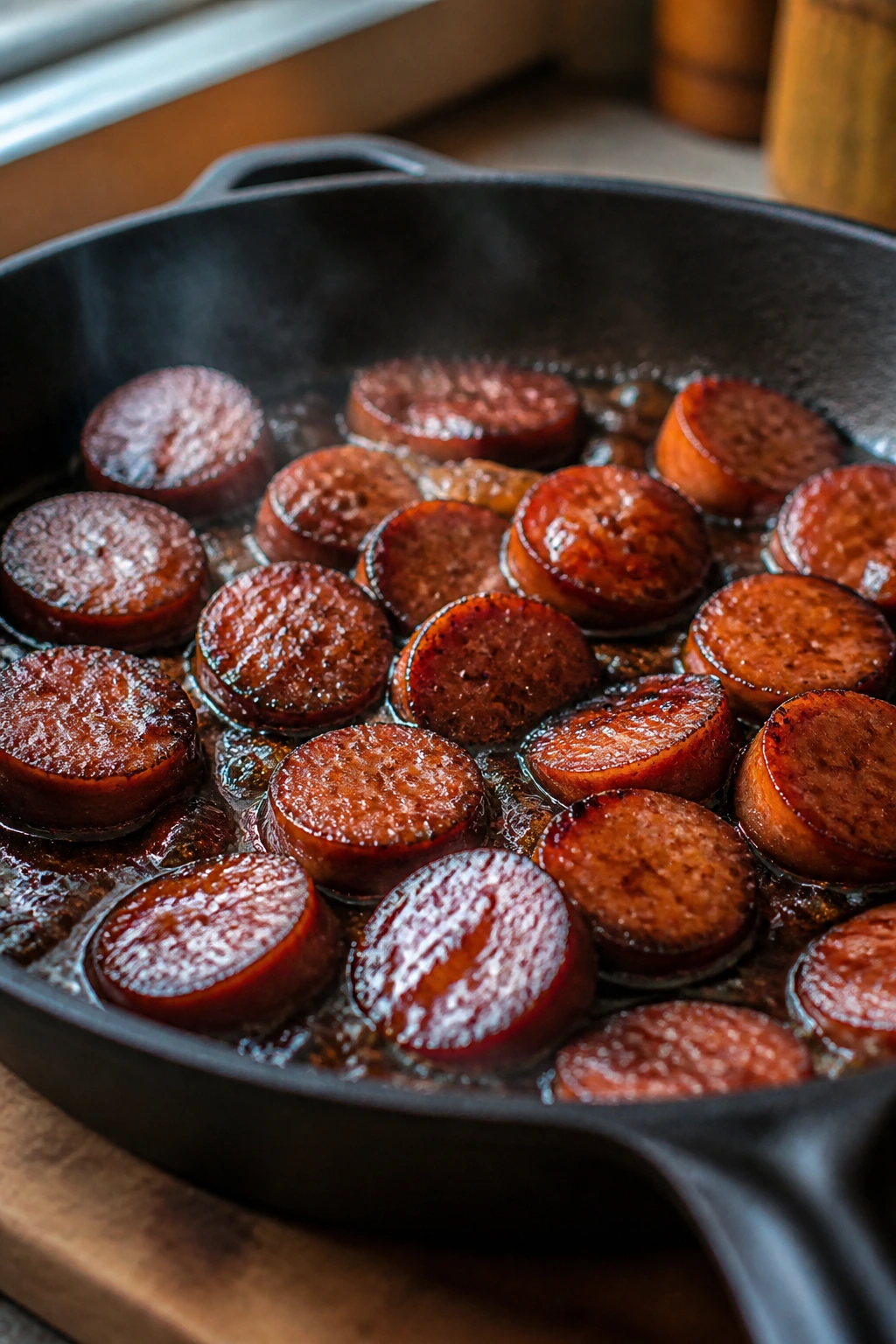
Flavor Enhancement: Stir in 1 teaspoon of bourbon or dark rum with the glaze if you want a deeper caramel note. It doesn’t make the dish boozy; it just gives the brown sugar a warmer finish.
Time-Saver: Slice the sausage, onion, and garlic earlier in the day and whisk the glaze in advance. Keep the glaze covered in the fridge, then bring it to the counter while you brown the sausage so it isn’t ice-cold when it hits the pan.
Heat Control: If your stove runs hot, use medium heat instead of medium-high for the browning stage and keep the glaze on the lower side. You want steady color, not blackened edges. Sugar rewards patience here.
Make-It-Yours: Want it sweeter? Add 1 extra tablespoon of brown sugar. Want it sharper? Add another teaspoon of vinegar. Want more heat? A pinch more red pepper flakes does the job without changing the whole personality of the dish.
The Moves That Usually Go Wrong
-
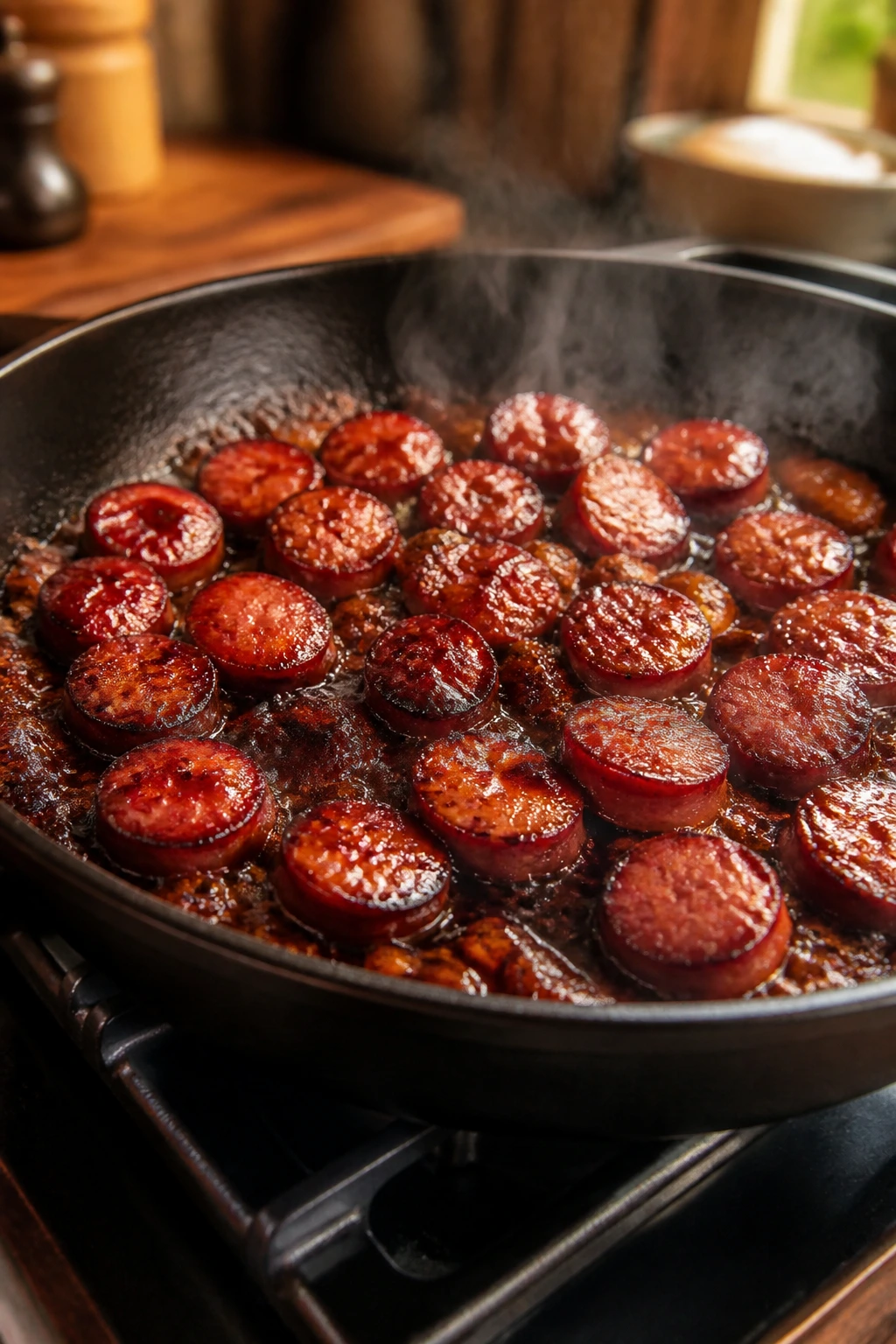
Crowding the skillet: If the sausage coins are piled on top of one another, they steam and stay pale. Cook in two batches if your pan is small. Brown color matters here because that’s where the flavor starts.
-
Turning the heat up and walking away: The glaze can go from shiny to burned in a short window. If the pan starts making a harsh crackling sound and the sauce looks darker than maple syrup, pull it off the burner and stir.
-
Skipping the acid: Brown sugar plus sausage fat can taste heavy if you leave out the vinegar or mustard. The sauce needs that sharp edge. Without it, the glaze sits flat on the tongue.
-
Adding garlic too early: Garlic burns before the onion softens, especially in cast iron. Once garlic turns dark and bitter, there’s no fixing it. Wait until the onion has softened, then add the garlic for the last 30 seconds.
-
Using a tiny pan for a big batch: A crowded pan traps steam and makes the glaze watery. A 12-inch skillet gives the sausage enough room to brown and enough open surface for the sauce to reduce.
Flavor Twists That Fit This Pan
Spicy Maple Kick
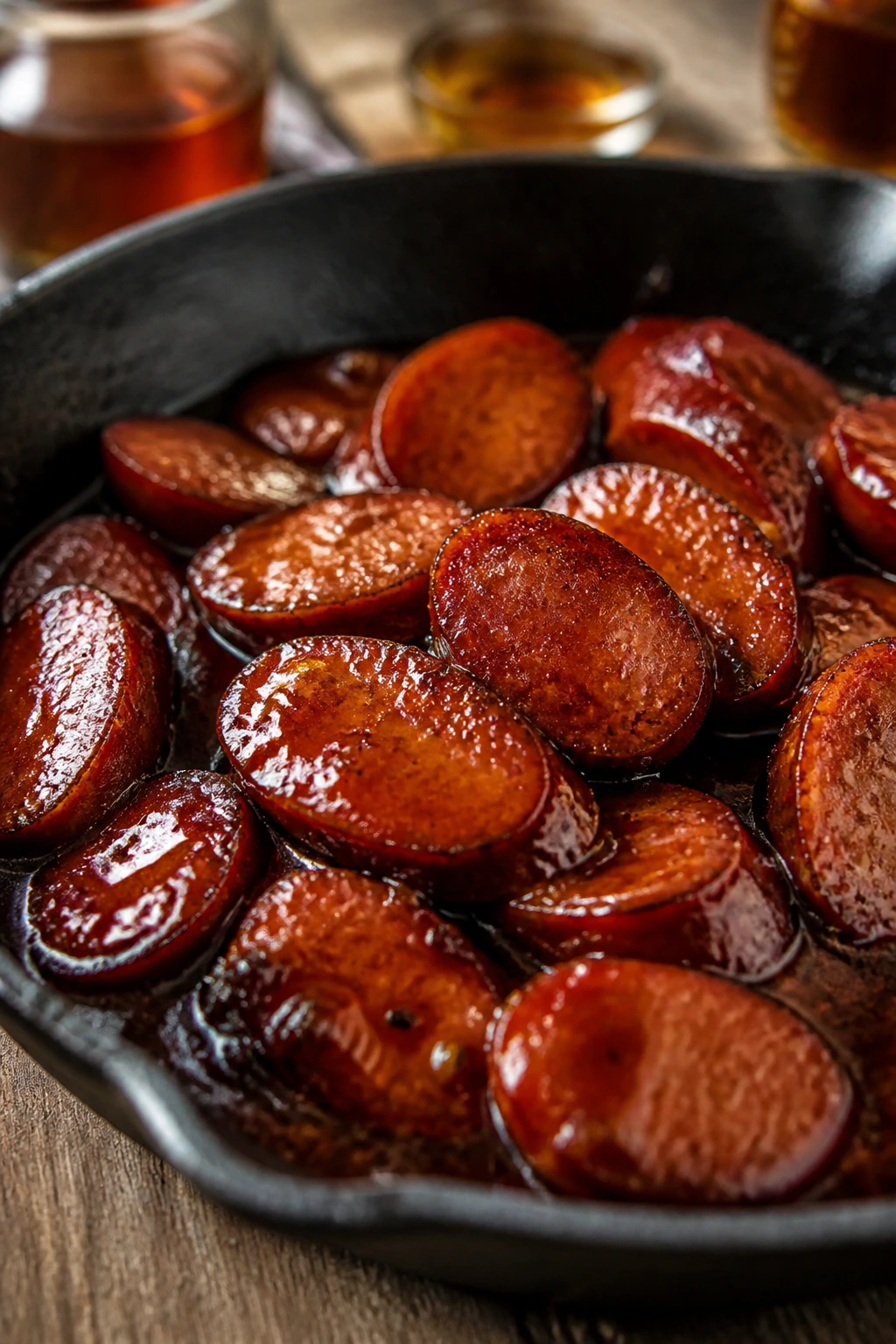
Swap 2 tablespoons of the brown sugar for 2 tablespoons of maple syrup and increase the red pepper flakes to 1/2 teaspoon. The syrup adds a softer sweetness, while the extra heat keeps the glaze from feeling heavy. This version is the one I’d make if the sausage itself is already a little mild.
Smoky Bourbon Glaze
Stir 2 tablespoons of bourbon into the glaze before it goes into the skillet and let it bubble for 20 to 30 seconds before adding the sausage back in. The alcohol cooks off fast, leaving behind a deeper brown sugar note and a faint warmth that sits nicely with smoked sausage. It tastes a little more grown-up, which is sometimes exactly the point.
Apple-Onion Skillet
Add 1 small tart apple, thinly sliced, with the onion. The apple softens into the glaze and gives the whole dish a gentle fruit note that plays well with kielbasa. I like this when I’m serving it with potatoes or cornbread, because the apple keeps the plate from feeling too heavy.
Lower-Sugar Savory Version
Cut the brown sugar to 1/3 cup, increase the Dijon to 3 tablespoons, and add an extra teaspoon of vinegar. The glaze stays glossy and clingy, but the flavor leans more savory than sweet. If you’re wary of brown-sugar-heavy sausage, this is the route I’d take first.
Make-Ahead, Fridge Life, and Reheating
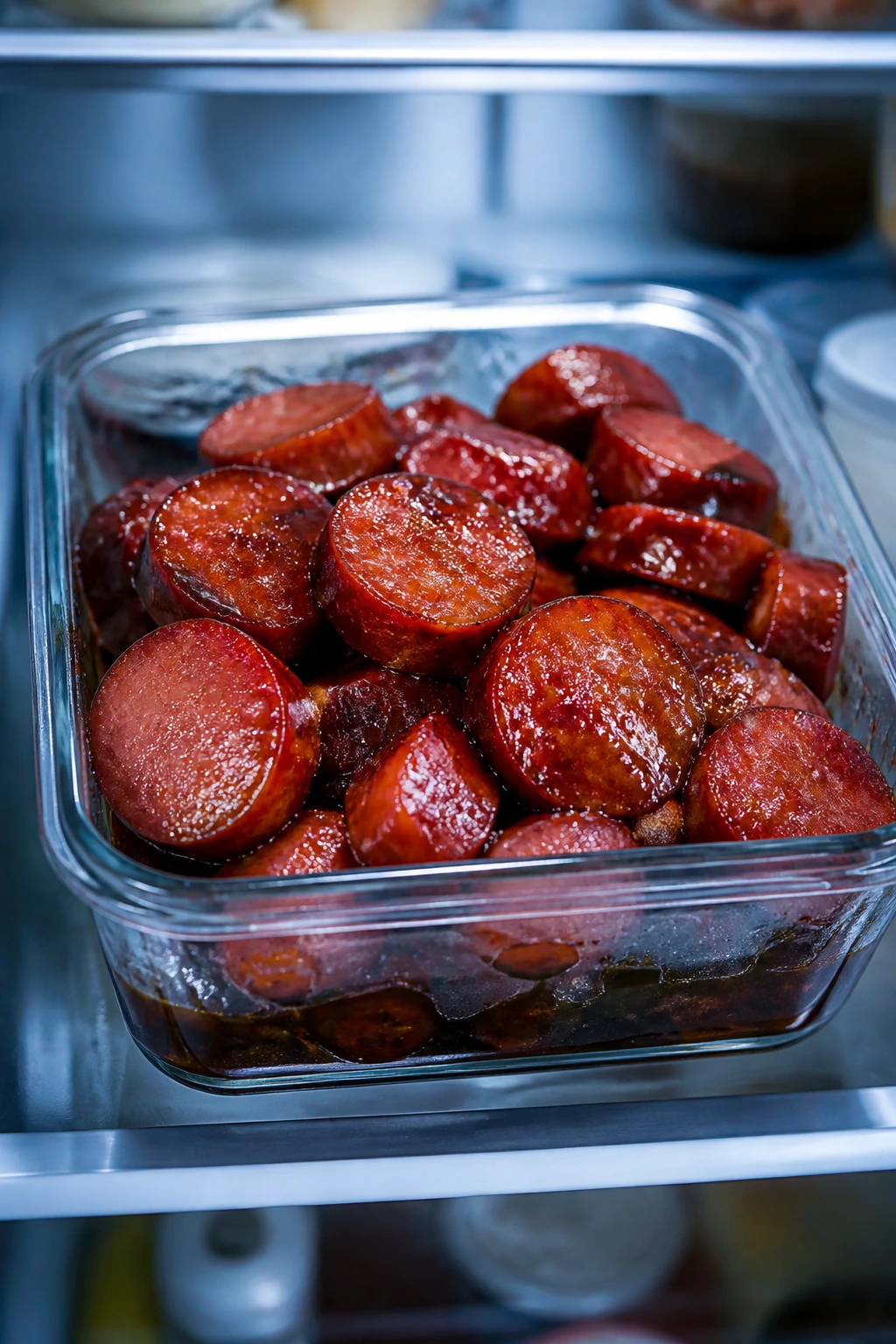
This dish holds up better than most glazed skillet meals, but it still likes a little care. If you leave it sitting out, follow normal food safety guidance and get it into the fridge within 2 hours. That rule matters more with sausage and sugar than people think, because a sticky sauce holds heat longer than a dry pan of meat.
Refrigerator: Store leftovers in an airtight container for 3 to 4 days. The glaze will tighten in the cold and look thicker the next day. That’s normal.
Freezer: Freeze for up to 2 months in a freezer-safe container or bag. The texture won’t be quite as slick as fresh, but it still works well for a quick meal over rice or noodles.
Reheating: The best way is a skillet over low heat with 1 to 2 tablespoons of water. Stir gently until the glaze loosens and the sausage is hot through. The microwave works in short bursts, about 30 seconds at a time, but stop before the sauce splatters and dries out.
Make-Ahead: You can slice the sausage, onion, and garlic up to 24 hours ahead. The glaze can be whisked together a day in advance and kept covered in the fridge. For the best texture, brown and glaze the sausage right before serving. If you fully cook it ahead, the sauce will still taste good, but the sausage edges won’t be as crisp.
Questions People Ask Before the First Bite

Can I use kielbasa instead of smoked sausage?
Yes. Kielbasa works especially well because it has enough fat to brown cleanly and enough seasoning to stand up to the glaze. Just keep the slices around 1/2-inch thick so they don’t collapse in the pan.
Is smoked sausage already cooked?
Most smoked sausage sold in grocery stores is fully cooked, but the package should say so. If it is fully cooked, your job is to heat it through and build color, not cook it from raw. If yours is uncooked, use the package directions and a thermometer.
How do I keep the brown sugar from burning?
Lower the heat as soon as the glaze goes into the skillet and stir often. Sugar burns faster when the pan is dry, so the little bit of water in the sauce matters more than it looks on paper. If the sauce starts turning dark and bitter, add a tablespoon of water and move fast.
Can I make this less sweet without ruining it?
Yes, and you should if you like your sausage on the savory side. Drop the brown sugar to 1/3 cup and add a touch more vinegar or mustard. You still get the sticky glaze, but the finish is sharper and less dessert-like.
Can I bake it instead of cooking it on the stove?
You can, though you lose some of the browned fond that makes the skillet version so good. Roast the sausage, onion, and glaze together in a shallow pan at 400°F/205°C, stirring once or twice until the sauce thickens. The oven version works when you’re feeding a crowd and don’t want to stand over a burner.
What if my glaze gets too thick?
Add water 1 tablespoon at a time and stir over low heat until it loosens. The sauce should coat the sausage, not turn into candy on the bottom of the skillet. If it seizes after cooling, a splash of water while reheating usually brings it back.
Can I serve this as an appetizer?
Absolutely. Keep the sausage coins smaller, about 1/3-inch thick, and serve them warm with toothpicks. Put a napkin stack nearby; this is the kind of sticky appetizer people happily reach for twice.
A Sticky-Sweet Finish Worth Repeating
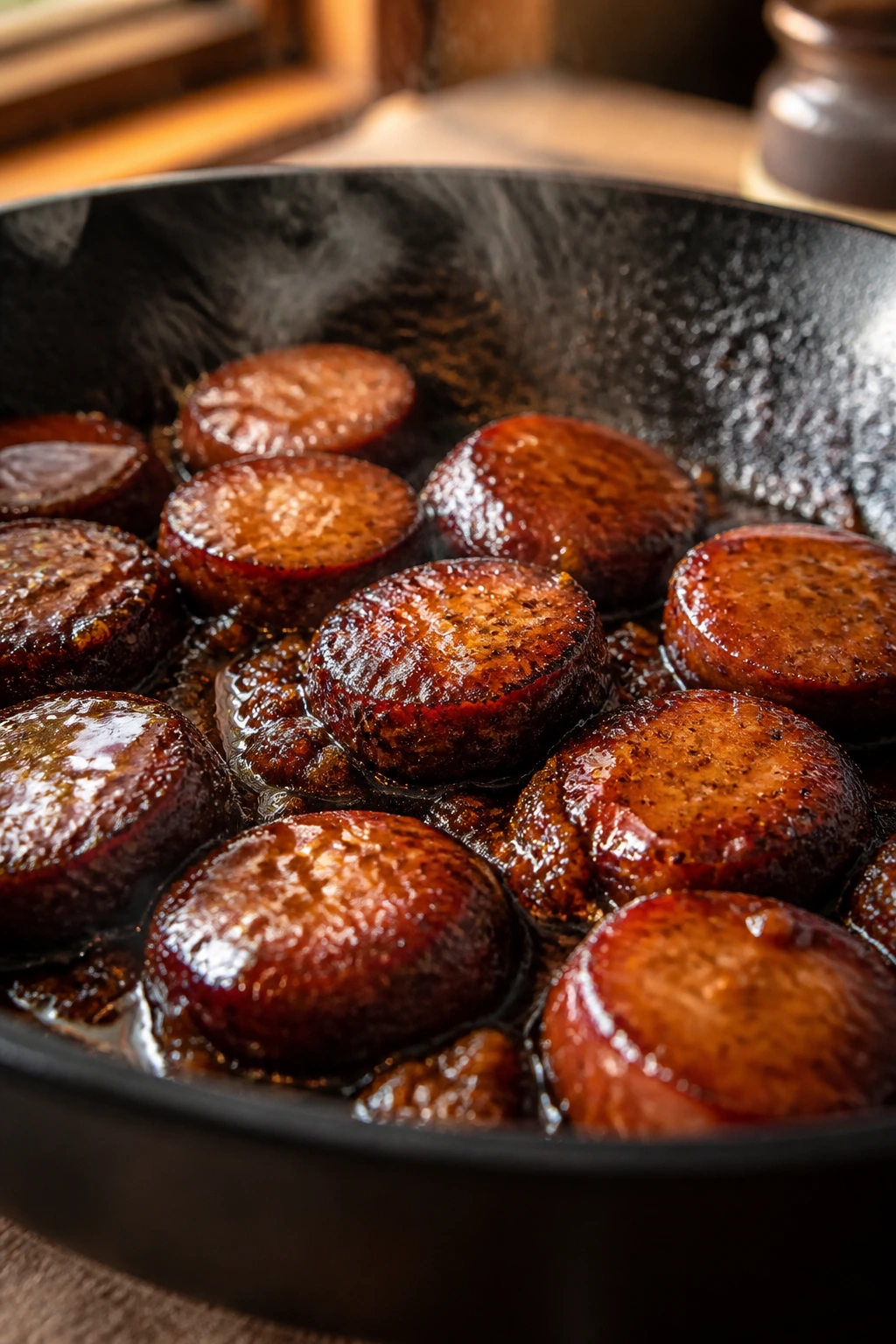
There’s a reason this kind of skillet dish never really disappears from home kitchens. It’s fast, but it doesn’t taste rushed. The sausage gets browned, the glaze gets a little glossy and dark at the edges, and the whole pan ends up tasting bigger than the ingredient list would suggest.
What makes it stick in memory is the balance. The smoke keeps the brown sugar honest. The vinegar keeps the glaze lively. The butter at the end smooths the sharp edges just enough, and that last glossy coat on the sausage is the part people notice first. Keep a skillet wide enough for browning, and this one turns into a dependable repeat instead of a one-off idea.
Smoky Smoked Sausage with Brown Sugar Glaze — Recipe Card
Recipe Name: Smoky Smoked Sausage with Brown Sugar Glaze
Description: Sliced smoked sausage is browned in a skillet, then tossed in a sticky brown sugar glaze with Dijon, vinegar, Worcestershire, and smoked paprika. The result is sweet, smoky, sharp, and glossy enough to serve as a main dish or party appetizer.
Prep Time: 10 minutes
Cook Time: 20 minutes
Total Time: 30 minutes
Course: Main Course or Appetizer
Cuisine: American
Servings: 6 servings
Calories: about 420 kcal per serving
Ingredients
For the Skillet Sausage:
- 2 pounds fully cooked smoked sausage or kielbasa, sliced into 1/2-inch coins
- 1 tablespoon neutral oil
- 1 small yellow onion, thinly sliced
- 2 cloves garlic, minced
For the Brown Sugar Glaze:
- 1/2 cup packed light brown sugar
- 1/3 cup ketchup
- 2 tablespoons Dijon mustard
- 1 tablespoon apple cider vinegar
- 1 tablespoon Worcestershire sauce
- 1 teaspoon smoked paprika
- 1/4 teaspoon crushed red pepper flakes
- 2 tablespoons water
- 1 tablespoon unsalted butter
- 1/2 teaspoon freshly ground black pepper
Instructions
-
Slice the sausage, onion, and garlic. Whisk together the brown sugar, ketchup, Dijon mustard, vinegar, Worcestershire sauce, smoked paprika, red pepper flakes, water, and black pepper.
-
Heat the oil in a 12-inch skillet over medium-high heat. Add the sausage in a single layer and brown it for 2 to 3 minutes per side. Transfer to a plate.
-
Add the onion to the skillet and cook for 3 to 4 minutes until softened. Add the garlic and cook for 30 seconds.
-
Reduce the heat to medium-low. Return the sausage to the skillet and pour in the glaze. Stir to coat and scrape up the browned bits.
-
Cook for 3 to 5 minutes, stirring often, until the glaze thickens and clings to the sausage.
-
Turn off the heat and stir in the butter until glossy. Serve warm.
Notes:
If the glaze thickens too fast, add 1 tablespoon of water and stir. Use a wide skillet for the best browning, and don’t walk away once the sugar goes in.