



The first thing you notice is the smell.
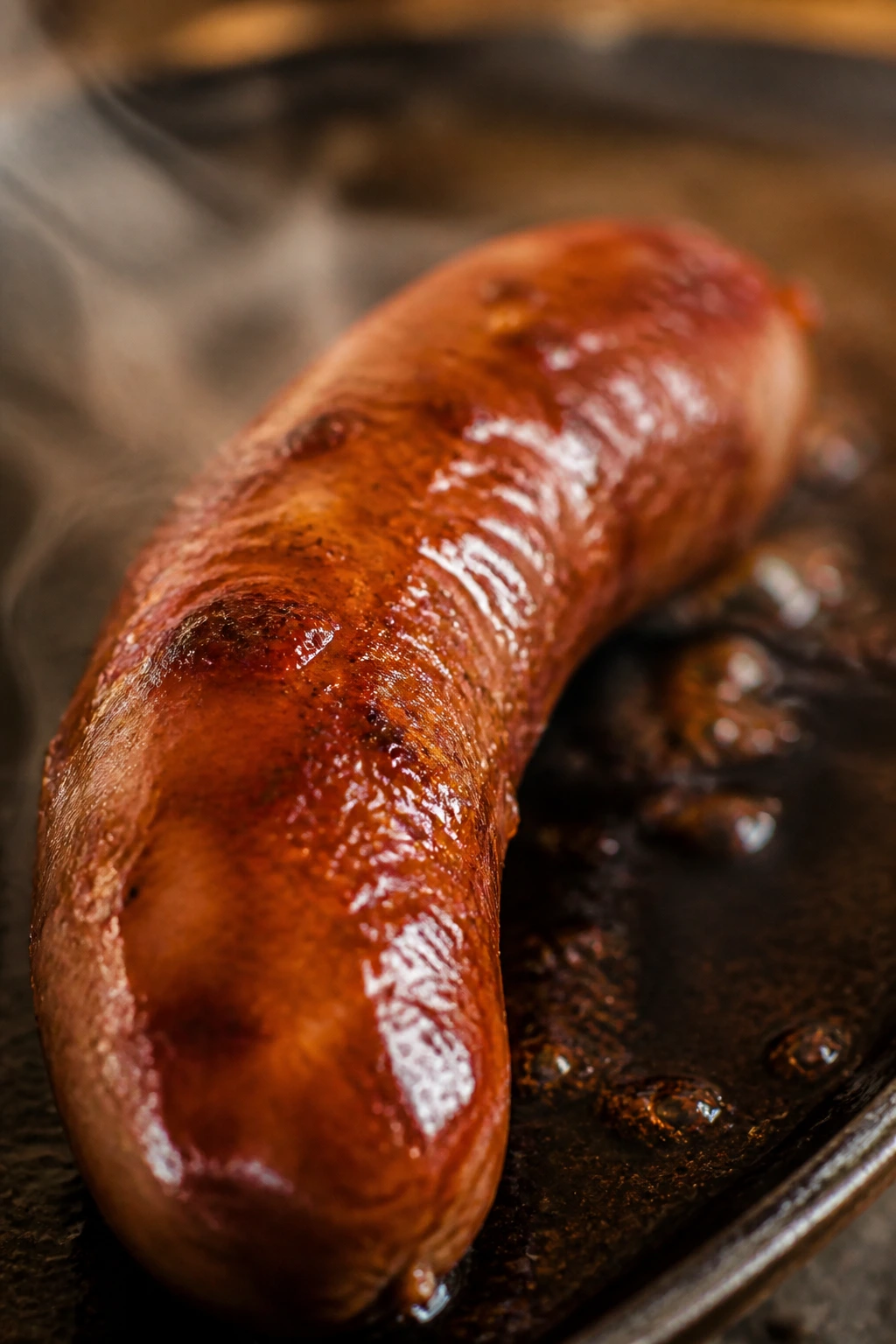
Smoke from the sausage. Garlic warming in the pan. Then the brown sugar hits the hot metal and turns glossy at the edges, almost like it’s going to stick in the wrong way before it settles into that dark, shiny coating that clings to every link. That’s the sweet spot here. Not candy. Not barbecue sauce. A thin, sticky glaze that hugs smoky pork and makes the whole thing taste a little deeper than it has any right to.
Andouille can be blunt. That’s part of the charm. It comes in with pepper, garlic, smoke, and a little fat that wants a hot pan. Brown sugar, on its own, could flatten that into something cloying. But add Dijon, vinegar, a little Worcestershire, and a pinch of cayenne, and the glaze wakes the sausage up instead of burying it. The sausage stays savory. The glaze stays shiny. Nobody wins if either side gets lazy.
The trick is heat control. Too hot, and the sugar goes bitter before the sausage is warmed through. Too cool, and you end up with a watery pan sauce that slides right off the links. The right version is fast, a little messy, and very honest about what it is: a skillet full of browned sausage with a sweet-savory lacquer and enough bite to keep you reaching back for another piece.
Why You’ll Keep Coming Back to This Recipe
-
Short ingredient list: You only need one package of andouille and a handful of pantry staples, which means less shopping and fewer excuses.
-
Fast finish: The sausage browns in minutes, and the glaze comes together in the same pan, so there’s no juggling three burners.
-
Sweet, not sugary: The vinegar, mustard, and Worcestershire keep the brown sugar in check, so the glaze tastes polished instead of sticky in a bad way.
-
Built for real life: This works as an appetizer, a weeknight main, or a party tray with toothpicks, which is handy when the meal plan has gone sideways.
-
Strong leftovers: A glazed sausage reheats better than most people expect, especially if you warm it slowly and add a teaspoon of water.
-
Easy to scale: Double the sausage and double the glaze, and the method barely changes.
Why Brown Sugar Belongs on Andouille
Andouille has a built-in personality. It’s smoky, salty, garlicky, and usually pretty assertive with pepper. That’s good news, because it means the sausage can hold its own against a glaze that has real sweetness. Brown sugar works here because it brings molasses depth, not just sweetness. That darker note is what keeps the glaze from tasting flat.
The best part is how the glaze behaves in the pan. Once the sugar dissolves with the vinegar and mustard, it turns into a thin syrup that thickens as the water cooks off. That gives you a coating rather than a sauce puddle. If you’ve ever had a sausage dish where everything ends up wet and a little sad on the plate, you already know why that matters.
There’s also a practical reason this pairing works so well. Andouille is often sold fully cooked and smoked, so you’re really trying to warm it through, brown the outside, and build flavor on the surface. Brown sugar helps with that last part. It caramelizes fast, grabs onto the casing, and makes the sausage look like it was finished with more effort than it actually took.
A tiny splash of acid is non-negotiable in my book. Apple cider vinegar keeps the glaze from turning heavy. Dijon helps it cling. Worcestershire deepens the savory edge so the whole dish tastes rounded instead of sugary. That’s the little triangle that makes the recipe work.
Yield: Serves 4 to 6
Prep Time: 10 minutes
Cook Time: 15 minutes
Total Time: 25 minutes
Difficulty: Beginner — the steps are simple, but the heat has to stay under control so the glaze doesn’t scorch.
Best Served: Warm, right after glazing
The Ingredient List That Keeps the Sausage Juicy
For the Sausage
- 1 1/2 pounds smoked andouille sausage links, about 6 links
- 1 tablespoon neutral oil, such as canola or avocado
For the Brown Sugar Glaze
- 1/3 cup packed light brown sugar
- 2 tablespoons apple cider vinegar
- 1 tablespoon Dijon mustard
- 1 tablespoon water
- 1 tablespoon Worcestershire sauce
- 1 tablespoon unsalted butter
- 2 cloves garlic, finely grated or minced
- 1/2 teaspoon smoked paprika
- 1/4 teaspoon black pepper
- Pinch of cayenne, or more to taste
For Serving
- 1 tablespoon chopped scallions or flat-leaf parsley
What Each Ingredient Is Doing in the Pan
Andouille Sausage
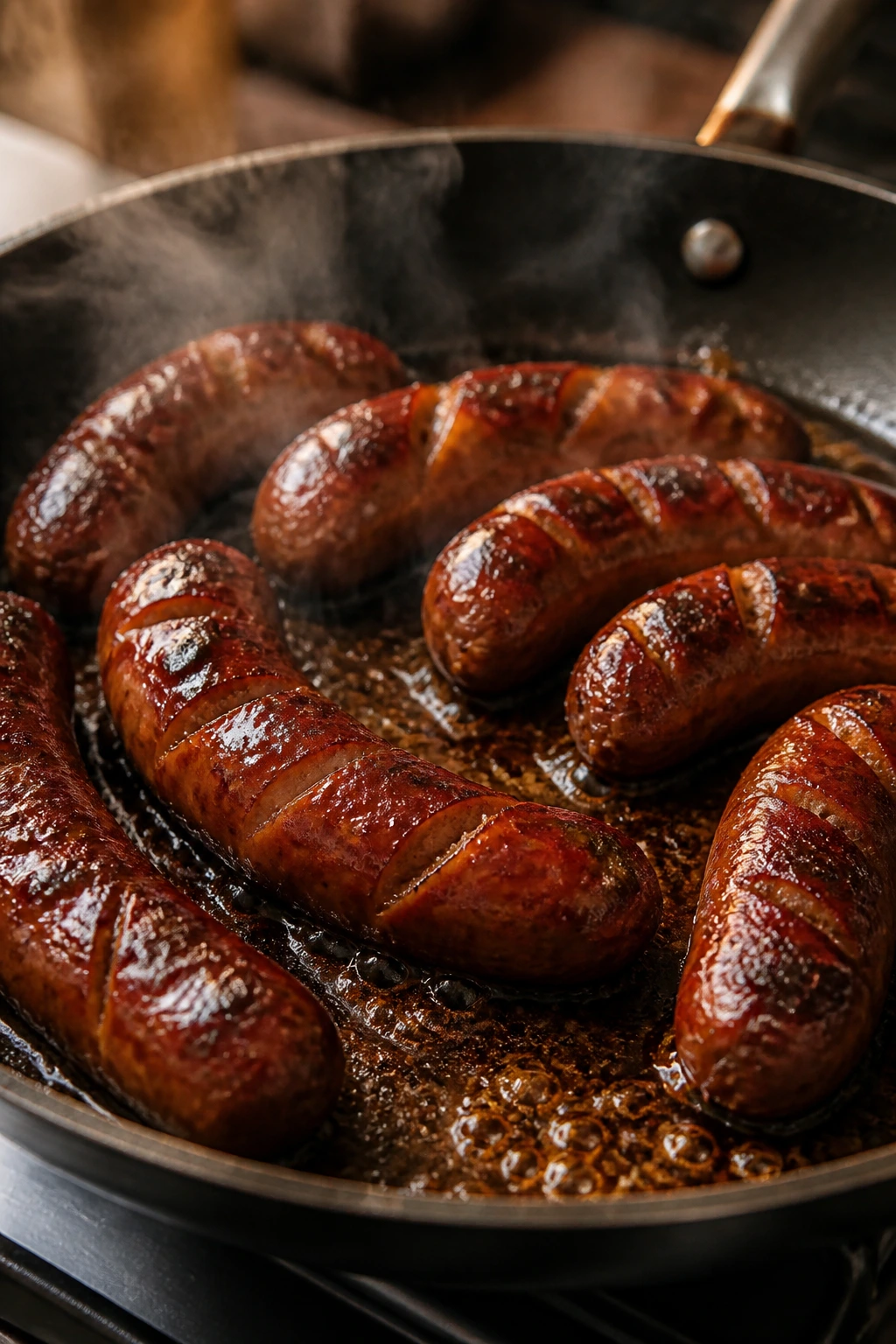
- What to use: 1 1/2 pounds smoked andouille sausage links, about 6 links, is the right amount for a small family meal or a generous appetizer tray.
- Preparation: Pat the links dry before they hit the pan, and if you want more glaze on the surface, make 3 or 4 shallow diagonal cuts on each link.
- Substitutions: Kielbasa gives you a milder, rounder flavor; smoked turkey sausage works if you want less fat; even a good smoked chicken sausage can fill in, though it will need a little extra oil.
- Tips: Buy sausage that feels firm in the package. If it feels soft or spongy, it usually loses its shape faster in the skillet and the glaze doesn’t cling as well.
Brown Sugar and Acid
- What to use: 1/3 cup packed light brown sugar, 2 tablespoons apple cider vinegar, and 1 tablespoon water make the backbone of the glaze.
- Preparation: Pack the brown sugar into the measuring cup so you get the full amount; whisk it with the liquids until the mixture looks grainy but integrated.
- Substitutions: Maple syrup can replace part of the brown sugar if you want a softer, rounder sweetness. Rice vinegar works in a pinch, though it’s less warm than apple cider vinegar.
- Tips: The acid is not a garnish here. It keeps the glaze from tasting sticky and dull, and it also helps dissolve the sugar before it hits the heat.
Mustard, Worcestershire, and Spice
- What to use: 1 tablespoon Dijon mustard, 1 tablespoon Worcestershire sauce, 1/2 teaspoon smoked paprika, 1/4 teaspoon black pepper, and a pinch of cayenne do the balancing work.
- Preparation: Grate the garlic finely so it disappears into the glaze instead of burning in hard little pieces.
- Substitutions: Whole-grain mustard gives you a grainier finish; hot sauce can stand in for some of the cayenne; chipotle powder can replace smoked paprika if you want more smoke and less sweetness.
- Tips: Dijon is doing more than adding tang. It helps emulsify the glaze, which is why the sauce stays glossy instead of breaking into greasy streaks.
Butter and Garnish
- What to use: 1 tablespoon unsalted butter and a spoonful of chopped scallions or parsley finish the dish.
- Preparation: Add the butter after the glaze has reduced so it melts into a shine rather than cooking away.
- Substitutions: Ghee works if you want a slightly nuttier finish. You can skip the herbs if you’re serving the sausage in a bun or over rice.
- Tips: The butter is tiny, but don’t leave it out. It softens the edges of the glaze and gives the pan a more polished finish.
The Tools That Keep the Sausage Hot and Glossy
-
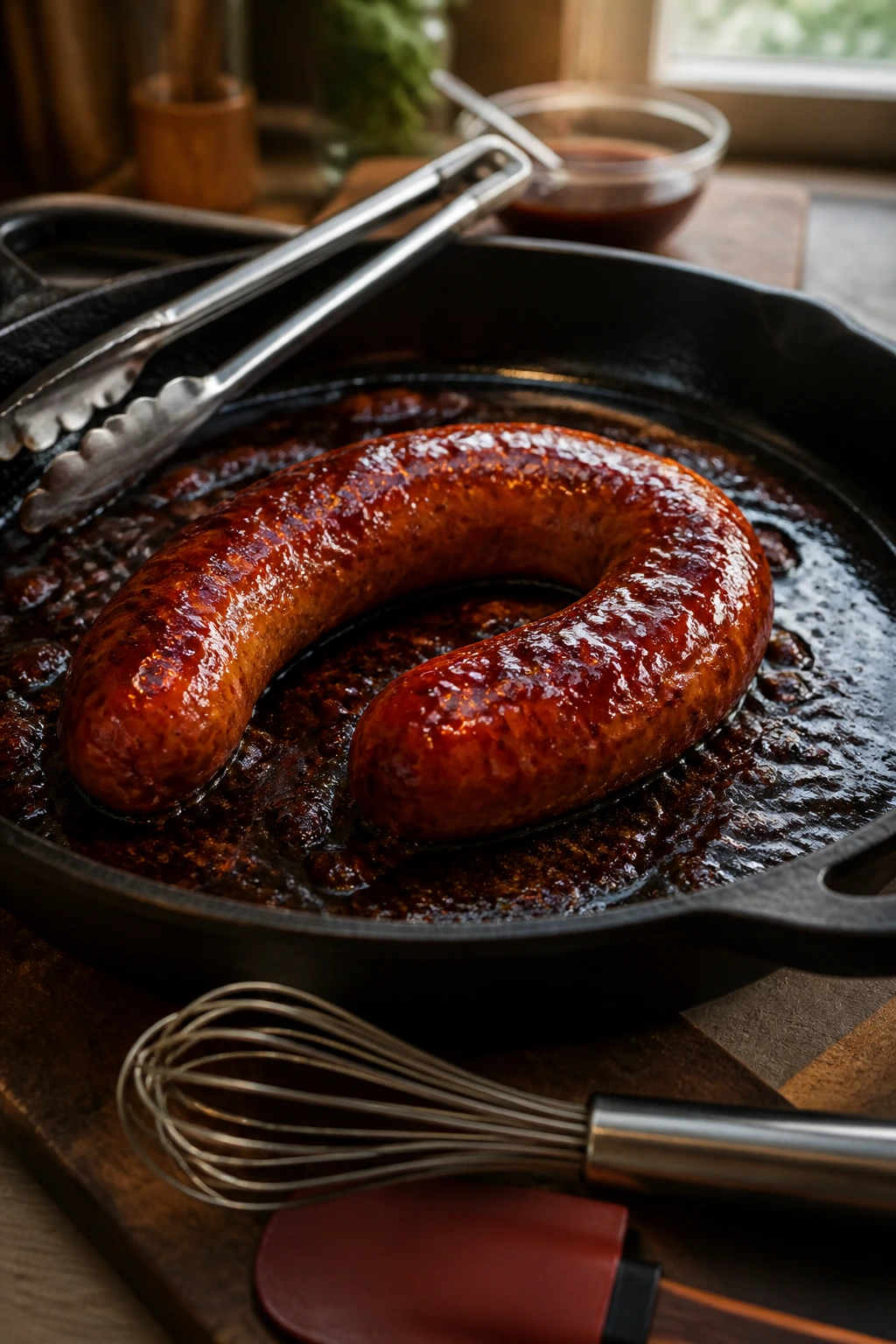
12-inch cast-iron or heavy stainless skillet — A wide, heavy pan gives the sausage enough contact to brown instead of steam.
-
Tongs — You’ll turn the links several times, and tongs keep the casing intact.
-
Small mixing bowl — This is for whisking the glaze before it hits the heat.
-
Whisk or fork — Either one works for dissolving the brown sugar and mustard.
-
Instant-read thermometer — Useful if your andouille is raw or if you want to check that the center is hot all the way through.
-
Cutting board and sharp knife — Handy if you decide to slice the links for serving or add a garnish at the end.
-
Flexible spatula — Not required, but useful for scraping up the last bit of glaze without tearing the sausage casing.
Why the Glaze Stays Sticky Instead of Turning Thin
Brown sugar glaze sounds simple, and that’s where people get sloppy with it. The sweet part is easy. The sticky part is where the method matters.
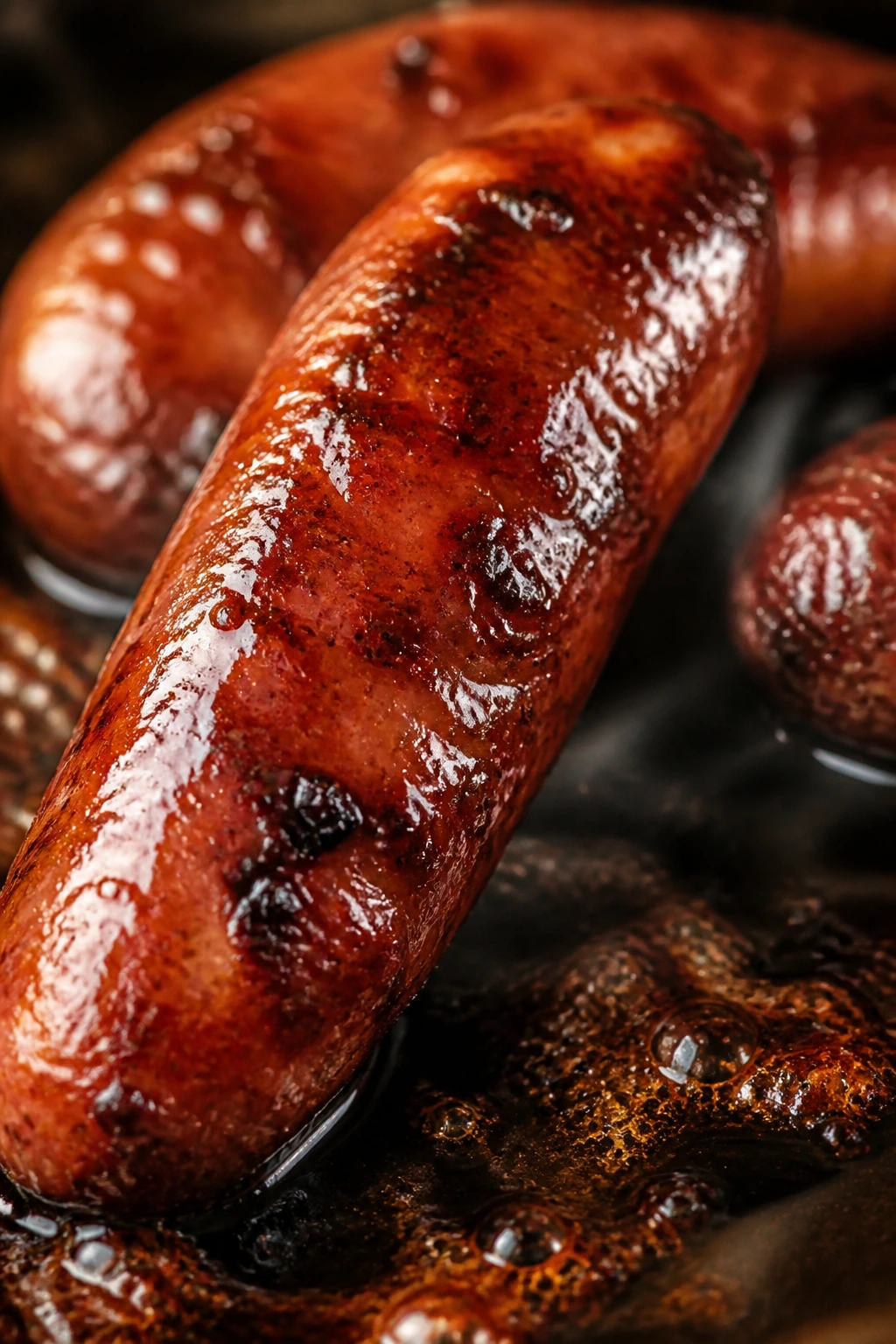
The skillet does two jobs at once. First, it browns the sausage surface so the casing has flavor before the glaze even shows up. Second, it cooks off just enough water from the glaze to make it cling. That’s the difference between a shiny coating and a syrupy puddle. The pan needs to be hot enough to move quickly, but not so hot that the sugar turns dark before the sausage has a chance to warm through.
The acid matters too. Apple cider vinegar keeps the sugar from feeling heavy. Dijon helps the glaze stay together. Worcestershire adds a quiet, savory depth that keeps the sausage from tasting like it was dipped in dessert. If you’ve ever wondered why some glazed sausage recipes taste hollow, that’s usually the missing piece. The glaze is only as good as the small things holding it up.
I also like this method because it respects the sausage itself. Andouille is already seasoned, so the glaze shouldn’t try to reinvent it. The best version is the one that lets the smoke stay loud while the sugar provides a glossy edge. That’s why this dish works so well in a skillet and not so well in a sloppy simmer.
How to Cook Andouille Sausage So It Stays Juicy
Prep and Mix the Glaze
-
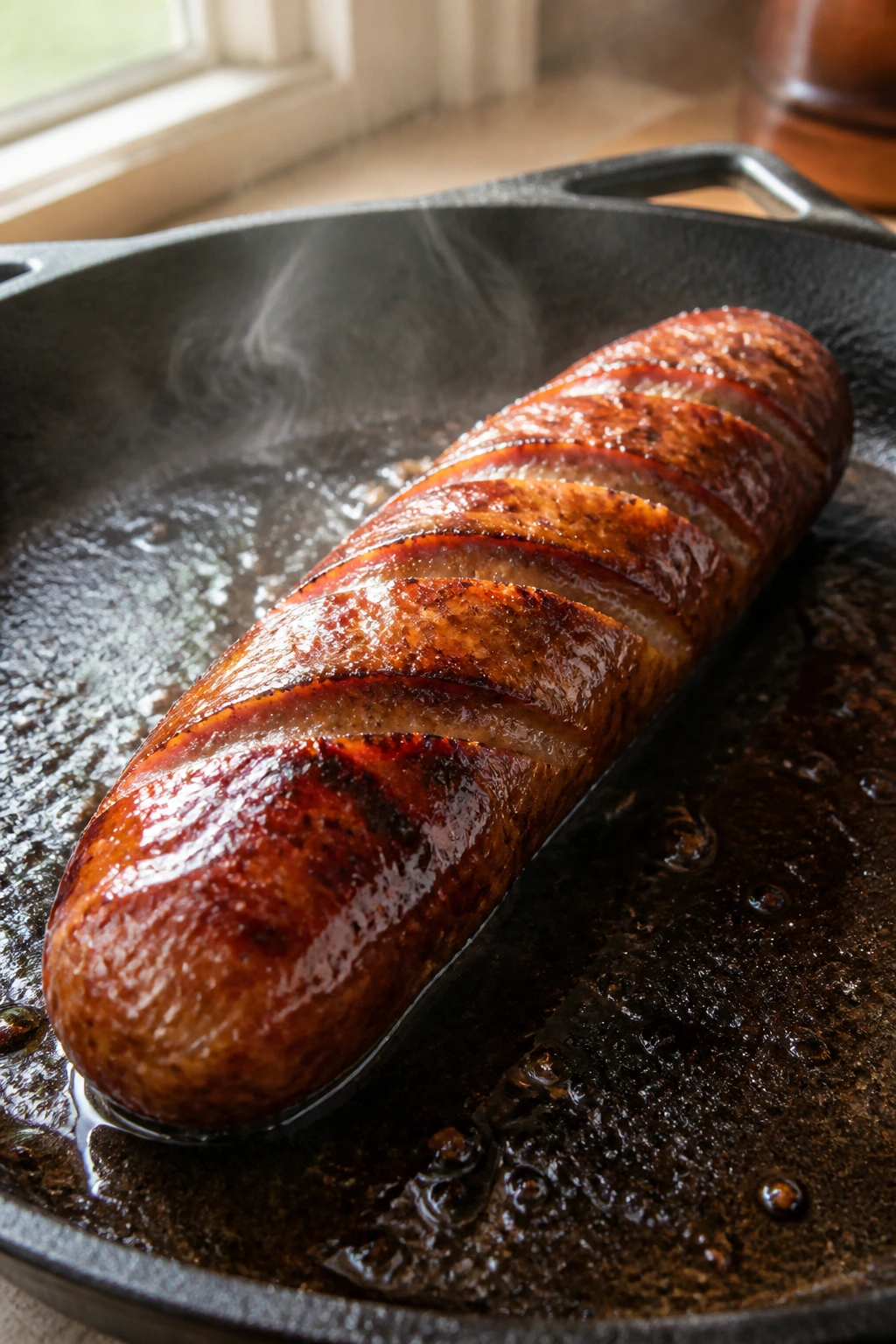
Pat the andouille sausage links dry with paper towels. If you want more glaze on the surface, make 3 or 4 shallow diagonal scores on each link, cutting no deeper than 1/8 inch so the casing stays intact.
-
In a small bowl, whisk together the brown sugar, apple cider vinegar, Dijon mustard, water, Worcestershire sauce, garlic, smoked paprika, black pepper, and cayenne until the sugar looks mostly dissolved. A few grainy bits are fine; a thick paste is not.
Brown the Sausage
-
Set a 12-inch skillet over medium heat and add the oil. When the oil shimmers, lay in the sausage in a single layer with a little space between each link. If the pan is crowded, brown the sausage in two batches.
-
Cook the links for 5 to 7 minutes, turning them every 1 to 2 minutes, until the outside is browned in spots and the sausage is hot through. If your sausage is raw rather than smoked, keep cooking until the thickest part reaches 160°F and the juices run clear. Do not rush this on high heat — the casing can split before the center is warm.
Build the Glaze
-
Reduce the heat to medium-low and pour the glaze mixture into the skillet. Stir gently and turn the sausage to coat it on all sides. The sugar will dissolve fast, then the liquid will start to bubble around the edges.
-
Simmer for 2 to 4 minutes, turning the sausage once or twice, until the glaze looks glossy, slightly thicker, and able to coat the back of a spoon. If the pan starts looking dry before the glaze thickens, add 1 tablespoon of water. Keep the heat low enough that the sugar bubbles softly, not violently.
Finish and Serve
- Add the butter and swirl the pan until the glaze looks shiny and smooth, about 30 seconds. Transfer the sausage to a plate, spoon any glaze left in the pan over the top, and let it rest for 2 minutes before serving. Sprinkle with scallions or parsley if you’re using them.
How to Serve It Without Letting the Glaze Take Over
Presentation:
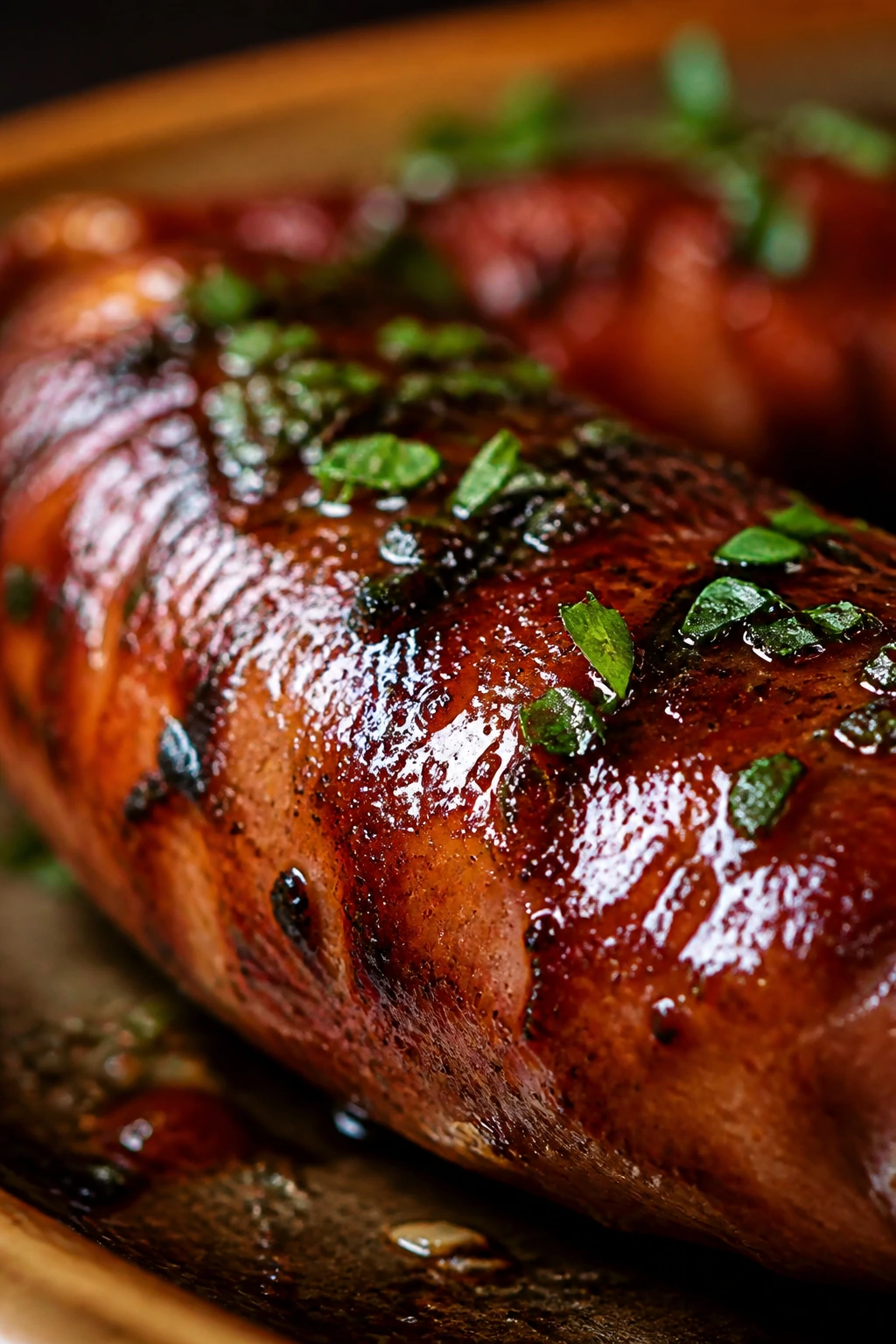
Serve the links whole on a warm platter if you want a dinner feel, or slice them on a sharp bias into 1/2-inch pieces for a party tray. I like to spoon a little of the glaze over the sausage and leave the rest of the plate clean; too much pooling makes the dish look heavy. A small handful of scallions or parsley gives the dark glaze a bit of color and keeps the tray from looking one-note.
Accompaniments:
Creamy grits are my favorite pairing because they soften the sharp smoke and catch the glaze. White rice, buttered rice pilaf, roasted sweet potatoes, skillet cornbread, or a vinegar-heavy slaw all do useful work here. If you want a lighter plate, put the sausage next to sautéed green beans, braised cabbage, or charred broccoli rabe so there’s something bitter or crisp to cut the sugar.
Portions:
Plan on 1 link per person for an appetizer, or 1 to 1 1/2 links per person for a main dish if you’re serving sides. If you’re slicing the sausage for sliders or skewers, one link usually makes 4 to 5 bite-size pieces. For a bigger crowd, double the glaze but keep the sausage in a single layer while it browns.
Beverage Pairing:
Ginger beer is excellent because the sharp spice plays well with the sausage smoke. A cold amber beer or a dry hard cider also works, especially if you’re serving the dish with grits or potatoes. For a nonalcoholic option, iced tea with lemon cuts the sweetness and keeps the whole plate from feeling heavy.
Practical Tips for Better Color and a Cleaner Finish
Flavor Enhancement:
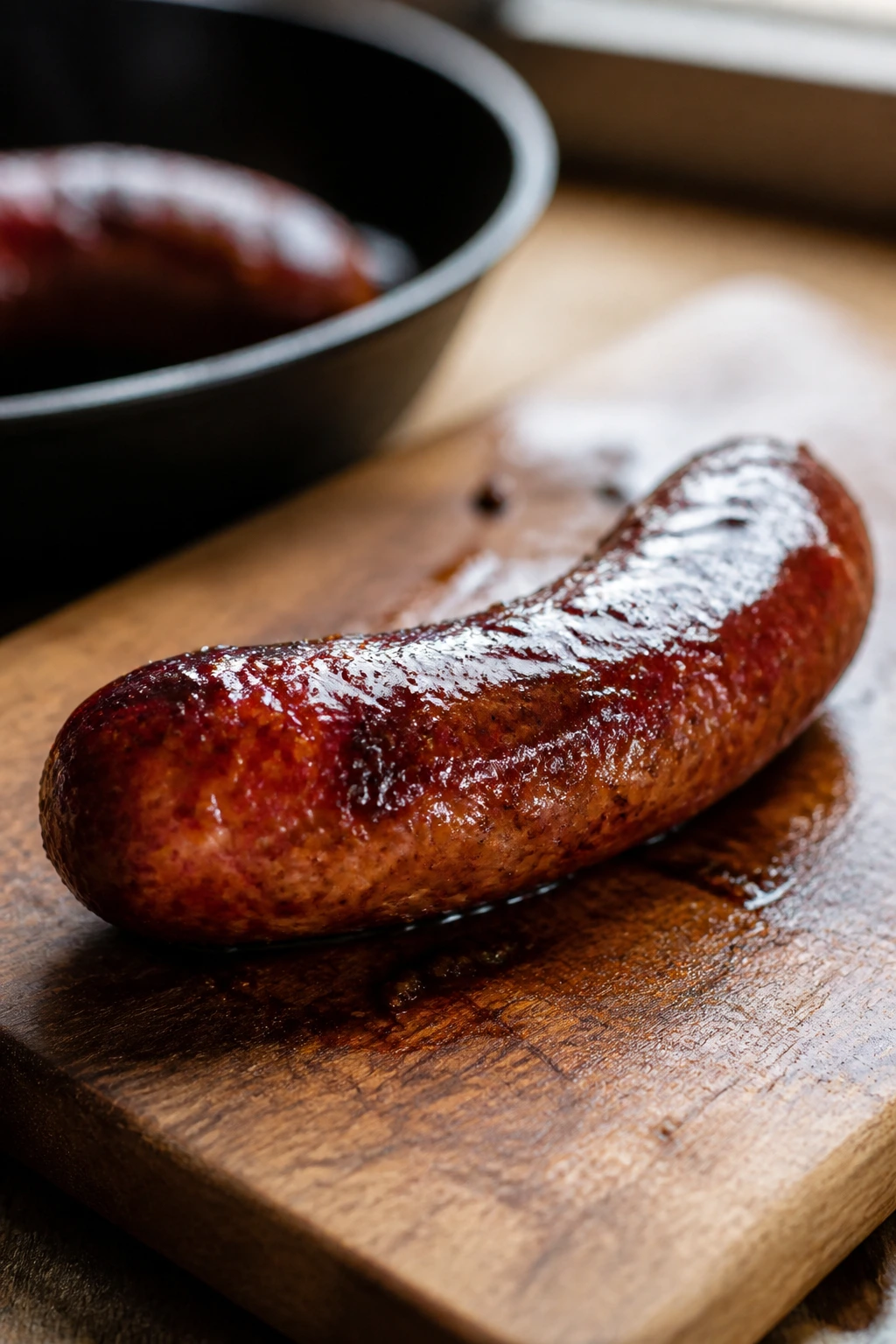
A teaspoon of orange zest stirred into the glaze at the very end gives the brown sugar a brighter edge without turning the dish citrusy. That tiny bit of perfume matters when the sausage is rich and smoky.
Time-Saver:
Mix the glaze before the sausage hits the pan. Once the links are browned, the whole dish moves fast, and you do not want to be hunting for a whisk while sugar is sitting in a hot skillet.
Pro Move:
If you’re serving the sausage whole, let it rest for 2 minutes before slicing. The glaze sets a little, and the juice inside the link settles back where it belongs instead of flooding the board.
Cost-Saver:
Choose a good smoked sausage from the grocery case rather than chasing specialty versions. The glaze does the heavy lifting on flavor, so you do not need a premium link with a long ingredient list.
Best Texture Trick:
If you like a slightly snappier casing, pat the sausage dry and let it sit uncovered in the fridge for 20 to 30 minutes before cooking. That little bit of surface drying helps browning more than people expect.
Common Mistakes That Turn a Sticky Glaze Into a Mess
Burning the sugar:
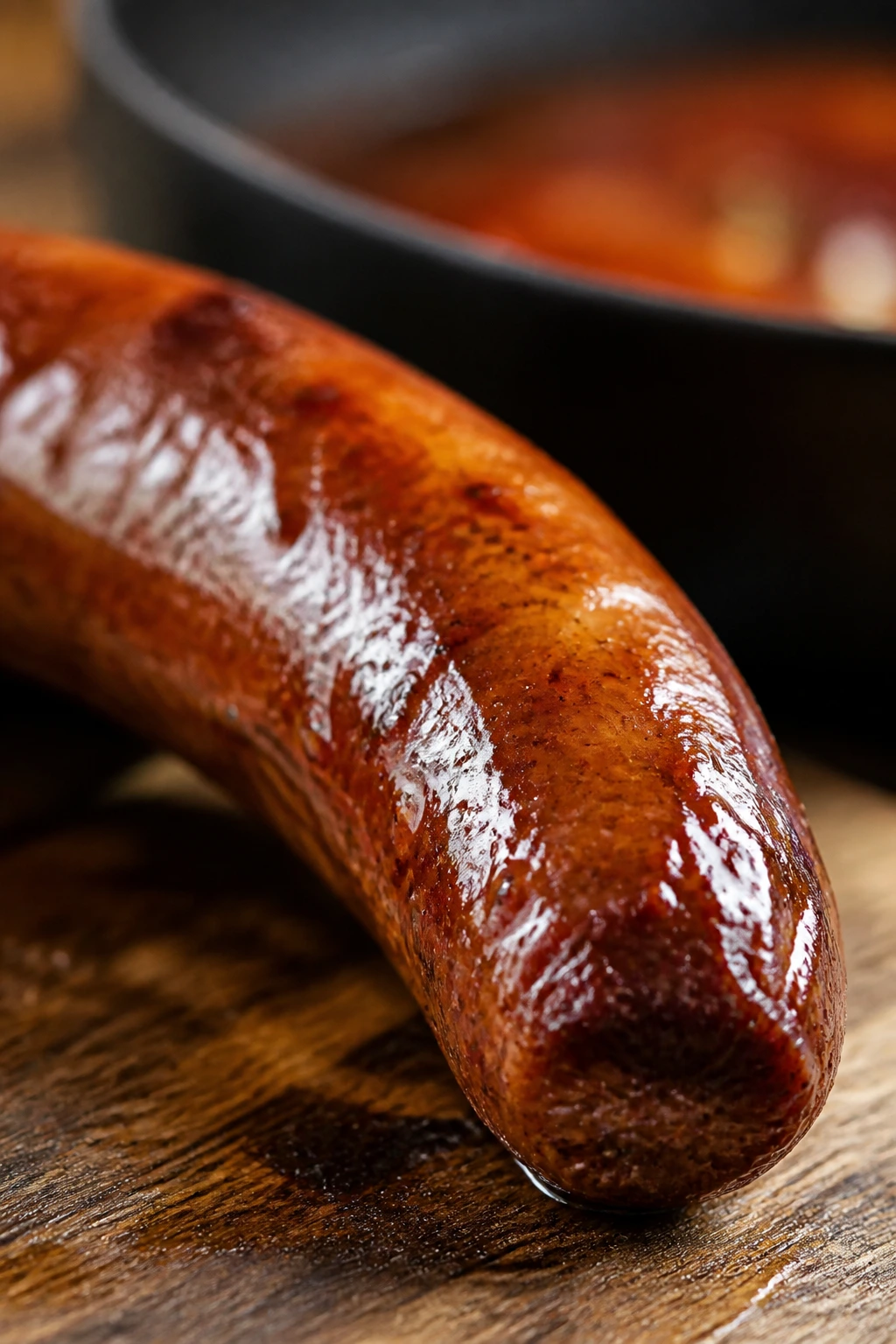
If the glaze smells sharp, bitter, or almost like scorched candy, the heat went too high. Lower the flame before adding the glaze, and if the pan starts darkening too fast, splash in a tablespoon of water to slow it down.
Crowding the skillet:
When the sausage is packed shoulder to shoulder, it steams instead of browns, and the glaze slides around instead of sticking. Use a bigger pan or work in batches so each link gets direct contact with the heat.
Skipping the dry surface:
Wet sausage doesn’t brown well. The glaze has trouble gripping it, and you end up with a thin coating that looks like sauce rather than lacquer. A quick pat with paper towels fixes most of that.
Adding the glaze too early:
If you dump the sugar mixture into the pan before the sausage has color, the whole dish can go pale and watery. Brown the links first, then glaze. That order matters because the pan needs those browned bits and that hot surface to help the sauce tighten up.
Cooking smoked sausage like raw sausage:
Fully cooked smoked andouille only needs to be heated through and glazed. Leave it too long over high heat and the casing can split while the inside dries out. If the sausage is raw, cook to 160°F; if it’s smoked, stop as soon as it’s hot and browned.
Variations Worth Trying Without Losing the Point
Hot-Honey Kick
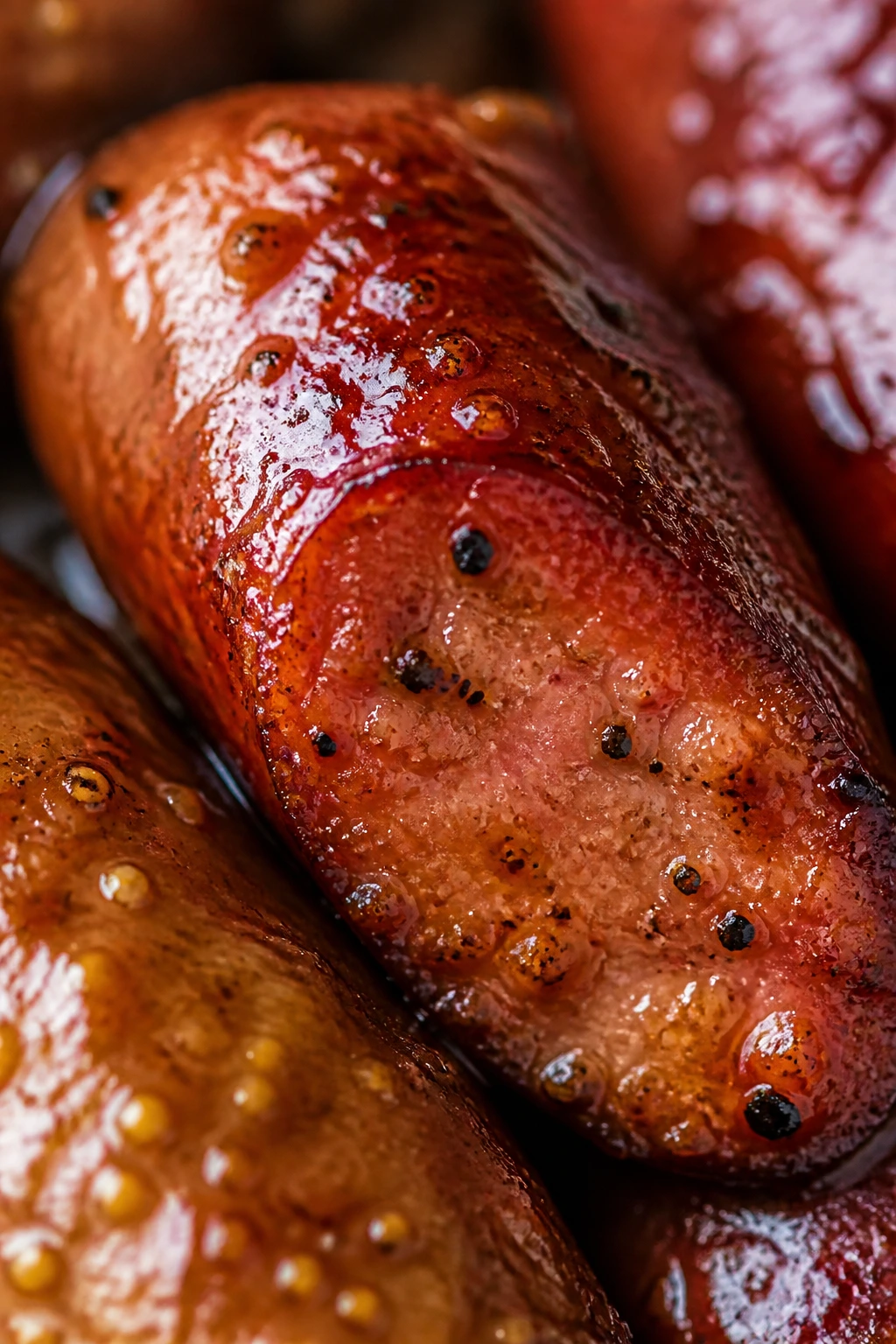
Swap half the brown sugar for honey and add an extra pinch of cayenne or a few dashes of hot sauce. The glaze gets a sharper shine and a little more burn on the back end, which is nice if your sausage is on the mild side.
Maple-Dijon Glaze
Replace the brown sugar and water with 1/4 cup pure maple syrup and keep the mustard and vinegar. The result is softer and woodsy, with less molasses depth and a smoother finish on the casing.
Peppers and Onions Skillet
Add 1 sliced yellow onion and 1 sliced bell pepper to the skillet after browning the sausage, then cook them in the rendered fat until soft and lightly browned. That makes the dish more dinner-like and gives the glaze something sweet and savory to coat besides the sausage.
Beer-Glazed Finish
Use 2 tablespoons of amber beer in place of the water and reduce the glaze a little longer. The beer brings a grainy, toasty note that plays nicely with smoked sausage, though you’ll want to keep the heat modest so the foam doesn’t take over.
Lighter Turkey Version
Use smoked turkey andouille and add 1 extra teaspoon of oil to the pan. Since the sausage is leaner, it needs a little more help browning, and a pinch more black pepper keeps the flavor from feeling too soft.
Make-Ahead, Storage, and Reheating
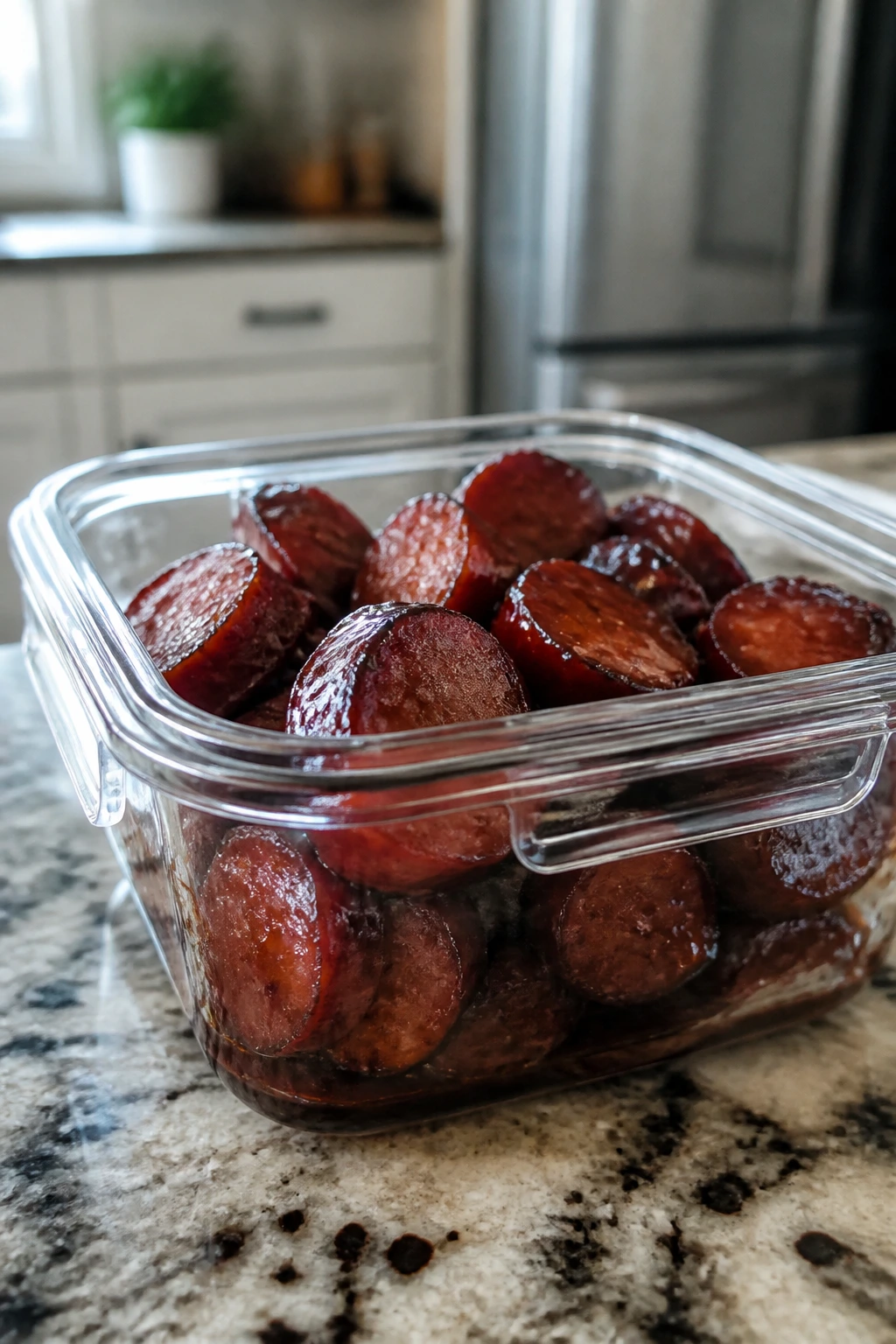
You can mix the glaze up to 2 days ahead and keep it covered in the refrigerator. The brown sugar may settle or look a little thick after chilling; that’s normal. A quick whisk fixes it.
Cooked sausage keeps well in an airtight container in the refrigerator for 3 to 4 days. For the cleanest texture, cool it before packing it up, then spoon any glaze over the top so the links don’t dry out. If you want to freeze it, wrap it tightly or use a freezer container and keep it for up to 2 months. The glaze will soften a little after thawing, but the flavor stays good.
For reheating, the stovetop is the best route. Put the sausage in a skillet over low heat with 1 to 2 teaspoons of water, cover loosely, and warm for 4 to 6 minutes, turning once. If the glaze has tightened up into a sticky shell, the steam helps loosen it without washing it off.
The oven works too. Set the sausage in a small baking dish, splash in a teaspoon or two of water, cover with foil, and heat at 325°F for about 10 to 12 minutes, just until warm. The microwave is possible, but it’s not the best choice; the casing goes rubbery fast, and the glaze can separate. If you must use it, go in short 20-second bursts and stop as soon as the center is warm.
Frequently Asked Questions
Can I use raw andouille instead of smoked andouille?
Yes, but the method changes a little. Raw andouille needs to cook until it reaches 160°F in the center, so give it more time in the skillet before you add the glaze, and keep the heat at medium so the outside doesn’t darken too fast.
Do I have to score the sausage links?
No, but it helps. Scoring gives the glaze more places to cling and lets some of the fat render out of the casing, which can make the surface taste richer and look more finished.
What if my glaze gets too thick before the sausage is done?
Add a tablespoon of water and lower the heat. The glaze should look glossy and thick enough to coat the back of a spoon, not like caramel that grabs the pan and refuses to move.
What if the glaze tastes too sweet?
Stir in a little more vinegar or a small extra spoonful of Dijon. A pinch of black pepper or cayenne can also pull the sweetness back into line without making the dish taste aggressively spicy.
Can I make this in the oven instead of on the stove?
Yes. Brown the sausage in a skillet first if you can, then move it to a 400°F oven with the glaze for the last 5 to 7 minutes. If you skip the skillet entirely, you lose some browning, so the flavor will be flatter.
Is this recipe very spicy?
It has a moderate kick if you use standard andouille and the pinch of cayenne listed here. For a milder version, cut the cayenne and choose a sausage that leans smoky rather than heavily peppered.
Can I serve it as an appetizer for a party?
Absolutely. Slice the links after they rest, pile them on a warmed platter, and put toothpicks nearby. The glaze sets just enough that the pieces hold together without getting messy right away.
What sides keep this dish from feeling too rich?
Anything with acid or bitterness helps. Vinegar slaw, sautéed greens, braised cabbage, or roasted broccoli all balance the sweetness and keep the sausage from dominating the plate.
Sticky Finish, Fast Plate
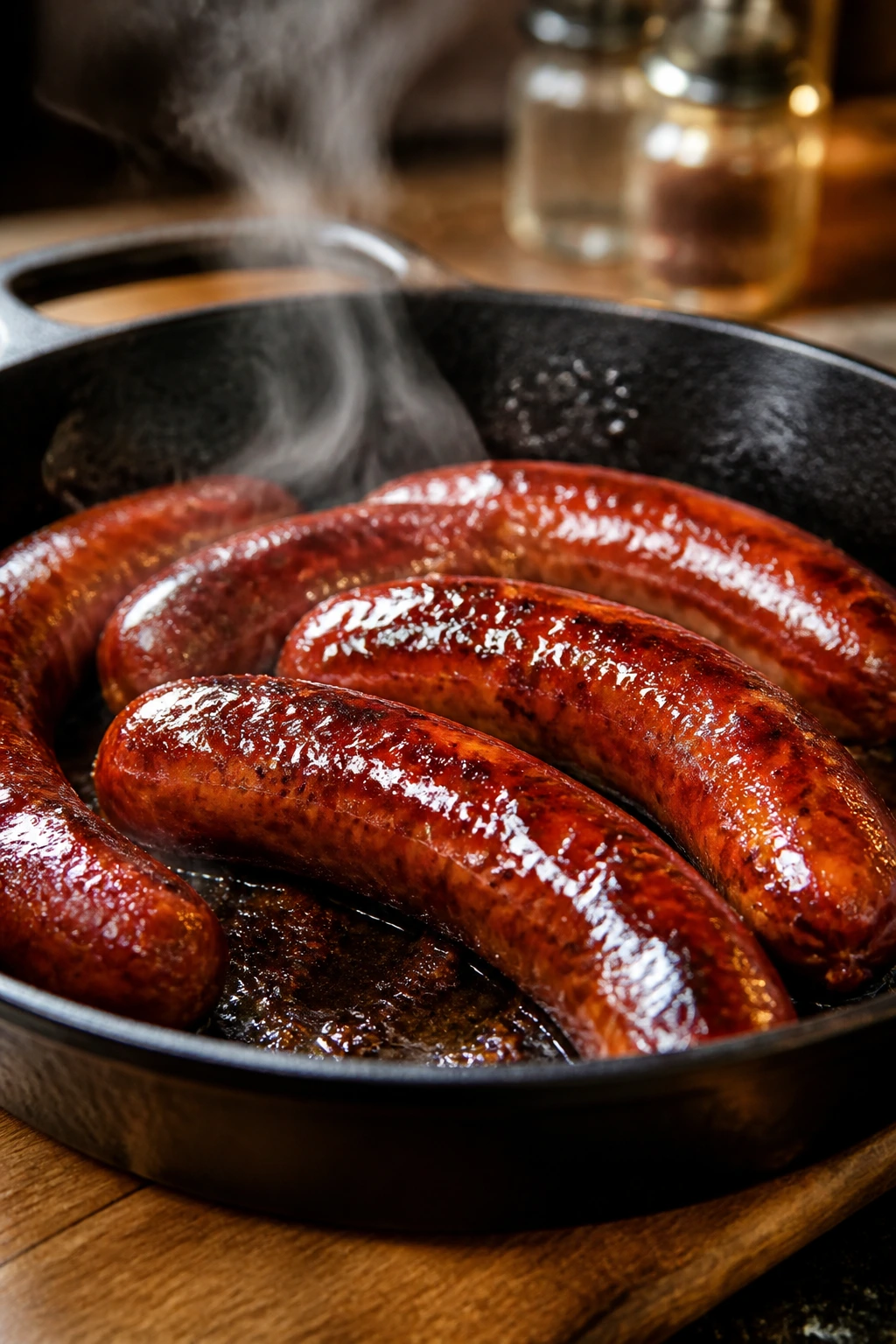
There’s a reason this kind of sausage dish gets cleared first. It has smoke, fat, sweetness, and enough vinegar in the glaze to keep you from feeling weighed down after a few bites. That’s a rare balance, and it’s why the recipe works for everything from a casual supper to a tray of sliced links at a gathering.
The real payoff is how little fuss it takes. Brown the sausage, tighten the glaze, and stop before the sugar gets bossy. That’s the whole game. Once you’ve made it once, you’ll know exactly how dark you like the glaze and how much heat your pan can take, and that’s when the recipe starts feeling like yours.
Juicy Andouille Sausage with Brown Sugar Glaze — Recipe Card
Recipe Name: Juicy Andouille Sausage with Brown Sugar Glaze
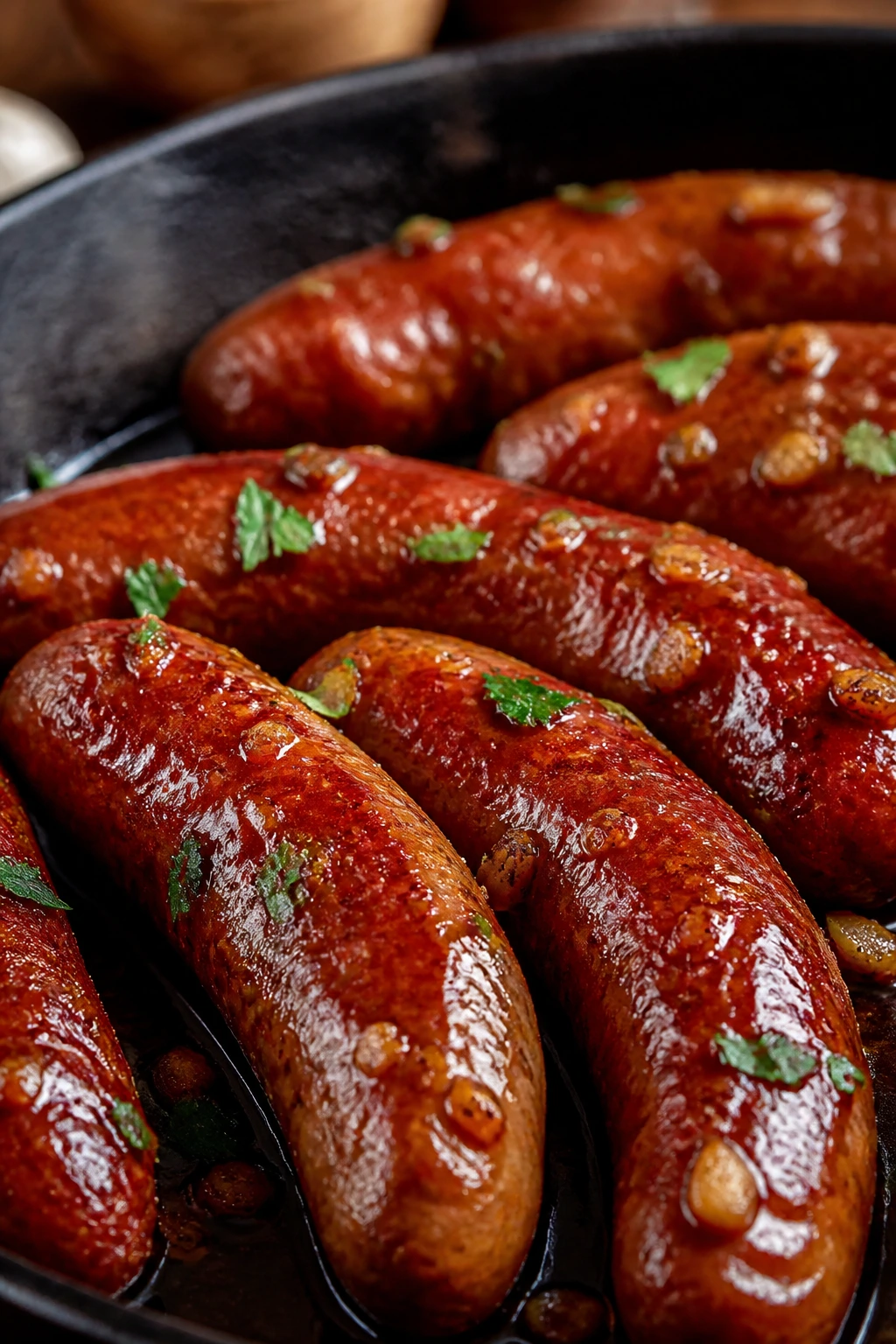
Description: Smoked andouille sausage browned in a skillet and coated with a glossy brown sugar glaze made with vinegar, Dijon, garlic, and a little butter. The finish is sticky, smoky, and savory with enough acid to keep the sweetness in check.
Prep Time: 10 minutes
Cook Time: 15 minutes
Total Time: 25 minutes
Course: Appetizer, Dinner, Main Course
Cuisine: Cajun-Inspired, Southern-Inspired, American
Servings: 4 to 6 servings
Calories: About 320 kcal per serving
Ingredients
For the Sausage
- 1 1/2 pounds smoked andouille sausage links, about 6 links
- 1 tablespoon neutral oil, such as canola or avocado
For the Brown Sugar Glaze
- 1/3 cup packed light brown sugar
- 2 tablespoons apple cider vinegar
- 1 tablespoon Dijon mustard
- 1 tablespoon water
- 1 tablespoon Worcestershire sauce
- 1 tablespoon unsalted butter
- 2 cloves garlic, finely grated or minced
- 1/2 teaspoon smoked paprika
- 1/4 teaspoon black pepper
- Pinch of cayenne, or more to taste
For Serving
- 1 tablespoon chopped scallions or flat-leaf parsley
Instructions
Prep the Sausage and Glaze
- Pat the sausage links dry with paper towels and score them lightly if desired.
- Whisk together the brown sugar, vinegar, Dijon, water, Worcestershire, garlic, smoked paprika, black pepper, and cayenne in a small bowl.
Brown the Sausage 3. Heat the oil in a 12-inch skillet over medium heat. 4. Add the sausage in a single layer and cook for 5 to 7 minutes, turning often, until browned and hot through. If the sausage is raw, cook until it reaches 160°F in the center.
Glaze and Finish 5. Reduce the heat to medium-low and pour the glaze into the skillet. 6. Turn the sausage to coat and simmer for 2 to 4 minutes, until the glaze is glossy and thick enough to coat the back of a spoon. 7. Add the butter and swirl until smooth, then transfer the sausage to a plate and rest for 2 minutes. 8. Sprinkle with scallions or parsley and serve warm.
Notes:
- For a milder version, cut the cayenne in half.
- If the glaze thickens too fast, add 1 tablespoon of water.
- This reheats best in a skillet over low heat with a splash of water.