



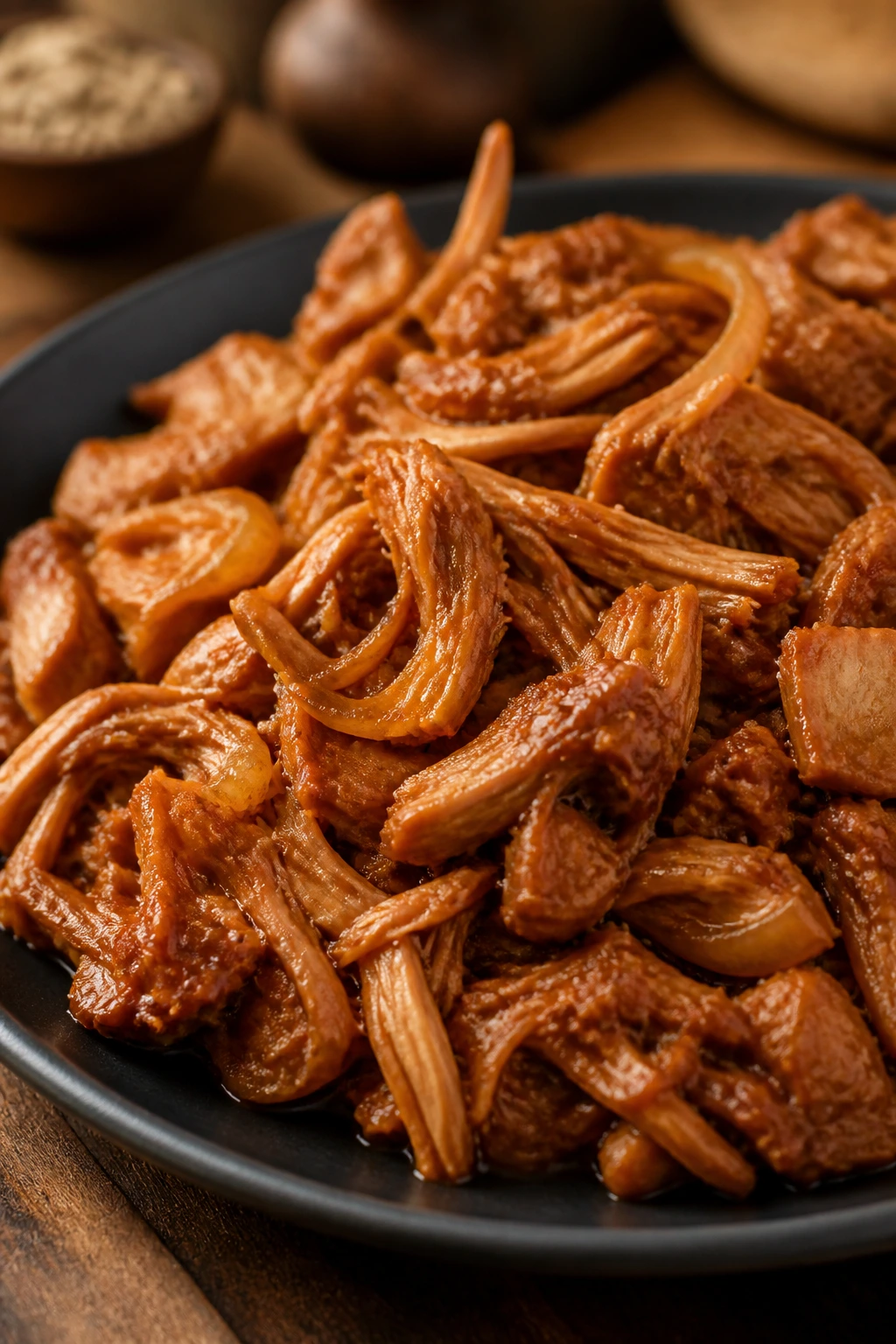
Tender jackfruit pulled pork with brown sugar glaze works because it knows exactly what it is trying to imitate. Young green jackfruit will never become pork, and chasing that illusion too hard is how you end up with wet, bland shreds. Treat it like a texture project, not a stunt, and it gives back long strands, a little chew, and a sticky finish that clings to the edges instead of pooling under it.
That matters because jackfruit is easy to ruin in a very specific way. Ripe jackfruit is sweet and fragrant; young jackfruit in brine or water is the version you want, the one with a neutral, almost faintly vegetal taste that can take on salt, vinegar, smoke, and sugar without collapsing into mush. Out of the can, it can smell a little briny and look a bit tragic. Put it in a hot pan with onion, garlic, tomato paste, and a brown sugar glaze, and the whole thing changes personality.
The trick is not to hide the jackfruit. It is to push it toward the same cues people expect from pulled pork: browned edges, strands that separate when you tug them with a fork, and a sauce that tastes sweet first and sharp a beat later. Most bad versions stay too wet or too soft. Most good ones spend enough time in heat to let the glaze tighten and the jackfruit fray. That difference is the whole game.
Why Jackfruit Pulled Pork Works So Well
Jackfruit pulls its weight here because of structure, not magic. The young fruit has long, pale fibers that split into threads when you cook and press them, and that gives you the visual cue people associate with shredded meat. It does not taste like pork on its own. It tastes like a blank ingredient with a little attitude, which is much more useful.
The brown sugar glaze does the other half of the job. Sugar gives shine and stickiness. Vinegar keeps the sweetness from turning candy-like. Tomato paste and ketchup bring color and body, so the jackfruit ends up coated instead of merely wet. If you have ever had a jackfruit sandwich that tasted like barbecue sauce poured over soft strings, the missing step was probably browning. Not more sauce. Browning.
What the texture should feel like
Press a cooked piece between your fingers or with the back of a fork and it should fray, not smear. That sounds small, but it is the difference between a filling that looks like pulled meat and a filling that looks like overcooked vegetables. You want some larger strands, a few tender chunks, and just enough sauce to hold the pile together.
One more thing. Do not start with ripe jackfruit. Nope. Ripe fruit belongs in desserts and smoothies, where sweetness and perfume make sense. Young jackfruit is the one that can stand in a hot pan and take seasoning like it means it.
The other reason this recipe works is timing. Jackfruit does not need hours of braising, but it does need enough heat to shed water and enough patience to let the glaze get tacky. That final high-heat pass is where the whole dish stops looking like a compromise and starts looking like dinner.
Why You’ll Keep Making It
-
Texture First: The jackfruit gets simmered until the strands separate, then roasted long enough for the edges to crisp and darken, which gives you that pulled, torn look people expect from shredded barbecue filling.
-
Pantry-Built Flavor: Onion, garlic, tomato paste, vinegar, smoked paprika, and brown sugar do the heavy lifting here, so you are not hunting down a long list of specialty ingredients.
-
Sticky Without Being Watery: The glaze is thick enough to cling to the shreds instead of sliding into the bottom of the pan, which is the whole reason the sandwich stays satisfying.
-
Flexible on the Plate: Pile it into toasted buns, spoon it over rice, tuck it into tacos, or serve it with roasted potatoes. The filling changes shape easily because the flavor is bold enough to carry the move.
-
Better the Next Day: The spices settle, the vinegar softens into the glaze, and the jackfruit tastes even more cohesive after a night in the fridge.
What You Need for the Filling and Brown Sugar Glaze
Yield: Serves 6
Prep Time: 20 minutes
Cook Time: 35 minutes
Total Time: 55 minutes
Difficulty: Intermediate — the ingredient list is straightforward, but the jackfruit needs to be drained, shredded, and reduced with enough care to avoid a soupy pan.
Best Served: Warm, right after the final roast, on toasted buns or as a bowl filling with crunchy toppings.
For the Jackfruit Filling:
- 2 (20-ounce) cans young green jackfruit in brine or water, drained and rinsed
- 1 tablespoon olive oil
- 1 medium yellow onion, thinly sliced
- 3 garlic cloves, minced
- 2 tablespoons tomato paste
- 1 teaspoon smoked paprika
- 1 teaspoon onion powder
- 1 teaspoon garlic powder
- 1 teaspoon kosher salt
- 1 teaspoon packed light brown sugar
- 1/2 teaspoon ground cumin
- 1/4 teaspoon black pepper
- 1 cup vegetable broth
- 2 tablespoons apple cider vinegar
- 1 tablespoon soy sauce or tamari
- 1 teaspoon liquid smoke, optional
For the Brown Sugar Glaze:
- 1/2 cup ketchup
- 1/3 cup packed light brown sugar
- 2 tablespoons apple cider vinegar
- 1 tablespoon Dijon mustard
- 1 tablespoon soy sauce or tamari
- 1/2 teaspoon smoked paprika
- Pinch of cayenne, optional
Why Each Ingredient Matters in the Pan
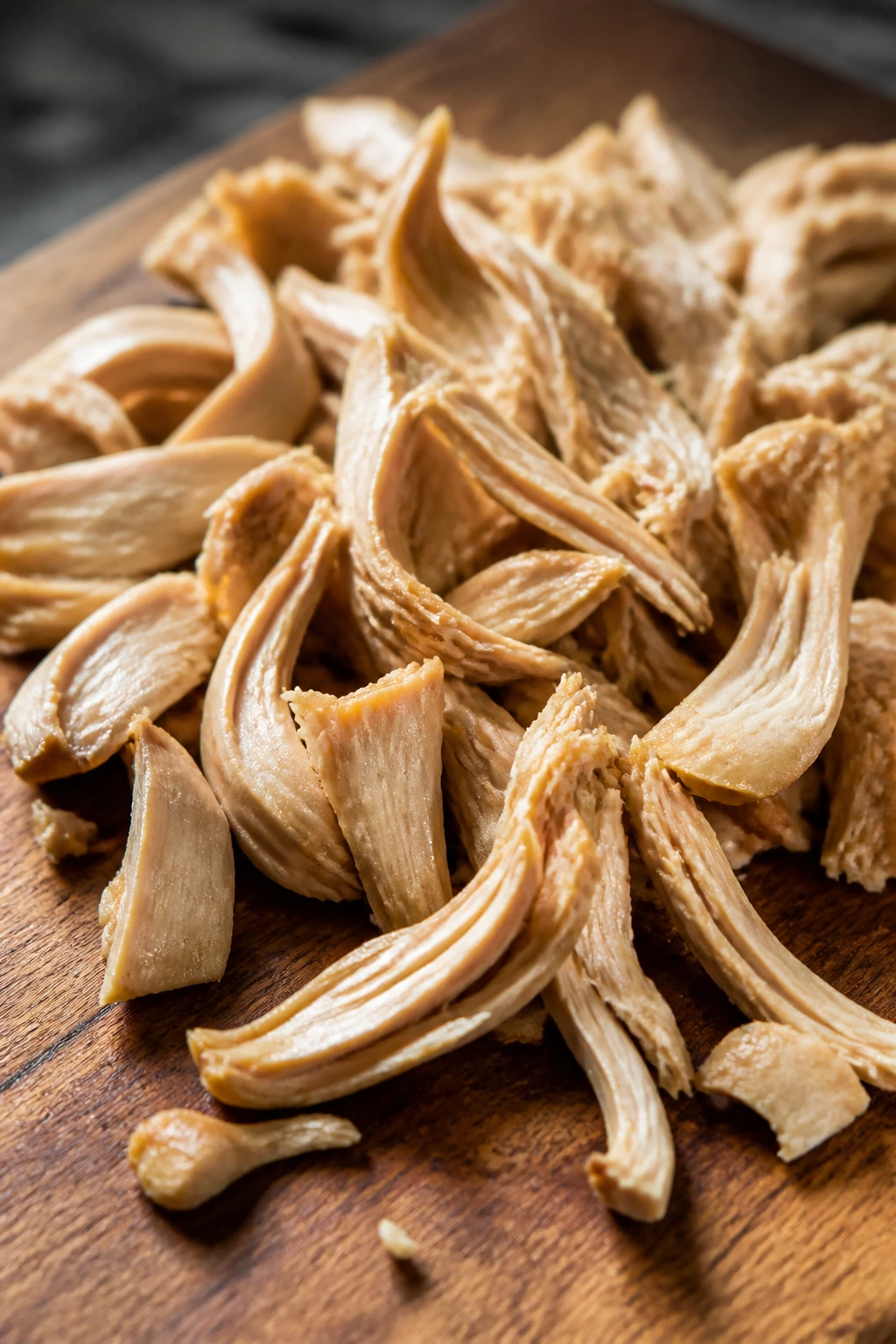
Young Green Jackfruit
What to use: 2 (20-ounce) cans young green jackfruit in brine or water, drained and rinsed.
Preparation: Drain it well, rinse off the brine, then squeeze it between clean hands or a kitchen towel until it stops dripping. Trim away any hard core pieces and tear the rest into rough strands.
Substitutions: Shredded oyster mushrooms are the closest practical swap if jackfruit is unavailable, though they brown faster and taste earthier. Hearts of palm can work in a pinch, but the texture is softer and less fibrous.
Tips: Buy young green jackfruit, not ripe jackfruit, and never the fruit packed in syrup. The sweet version will go soft and strange in this recipe, which is the opposite of what you want.
Onion, Garlic, and Tomato Paste
What to use: 1 medium yellow onion, 3 garlic cloves, and 2 tablespoons tomato paste.
Preparation: Slice the onion thin so it melts into the base instead of staying crunchy. Mince the garlic finely, and keep the tomato paste ready before the pan gets hot.
Substitutions: White onion works if that is what you have, and shallots give a sweeter edge. If tomato paste is missing, thick tomato purée can stand in, though the final glaze will be a little looser.
Tips: Cook the tomato paste for a full minute before adding liquid. That short dry-fry step knocks out the raw taste and gives the whole filling a deeper color.
Smoke, Salt, and Acid
What to use: 1 teaspoon smoked paprika, 1 teaspoon onion powder, 1 teaspoon garlic powder, 1 teaspoon kosher salt, 1/2 teaspoon ground cumin, 1/4 teaspoon black pepper, 1 cup vegetable broth, 2 tablespoons apple cider vinegar, 1 tablespoon soy sauce or tamari, and 1 teaspoon liquid smoke if you want a stronger barbecue note.
Preparation: Keep the dry seasonings together so they can hit the hot fat all at once, and measure the vinegar and soy sauce before you start simmering.
Substitutions: Tamari keeps the recipe gluten-free. If you dislike liquid smoke, leave it out and lean harder on smoked paprika and a well-browned finish.
Tips: The acid and salt are not decorative. They wake up the jackfruit, sharpen the glaze, and keep the sweetness from flattening out.
Brown Sugar Glaze
What to use: 1/2 cup ketchup, 1/3 cup packed light brown sugar, 2 tablespoons apple cider vinegar, 1 tablespoon Dijon mustard, 1 tablespoon soy sauce or tamari, 1/2 teaspoon smoked paprika, and a pinch of cayenne if you want heat.
Preparation: Whisk the glaze in a bowl before it hits the pan so the sugar dissolves evenly.
Substitutions: For a less sweet glaze, replace half the ketchup with tomato passata and add an extra teaspoon of vinegar. For a sharper profile, use whole-grain mustard instead of Dijon.
Tips: Pack the brown sugar firmly into the measuring cup. Loose sugar makes a thinner glaze, and this dish needs body.
The Tools That Make Shredding and Glazing Easier
-
Large skillet or Dutch oven: Use one with a wide base so the jackfruit can spread out and reduce instead of steaming in a pile.
-
Rimmed sheet pan: This is where the glaze really tightens up; the lip keeps the sticky edges from sliding off the pan.
-
Parchment paper: It saves you from scraping burnt sugar later. Worth it.
-
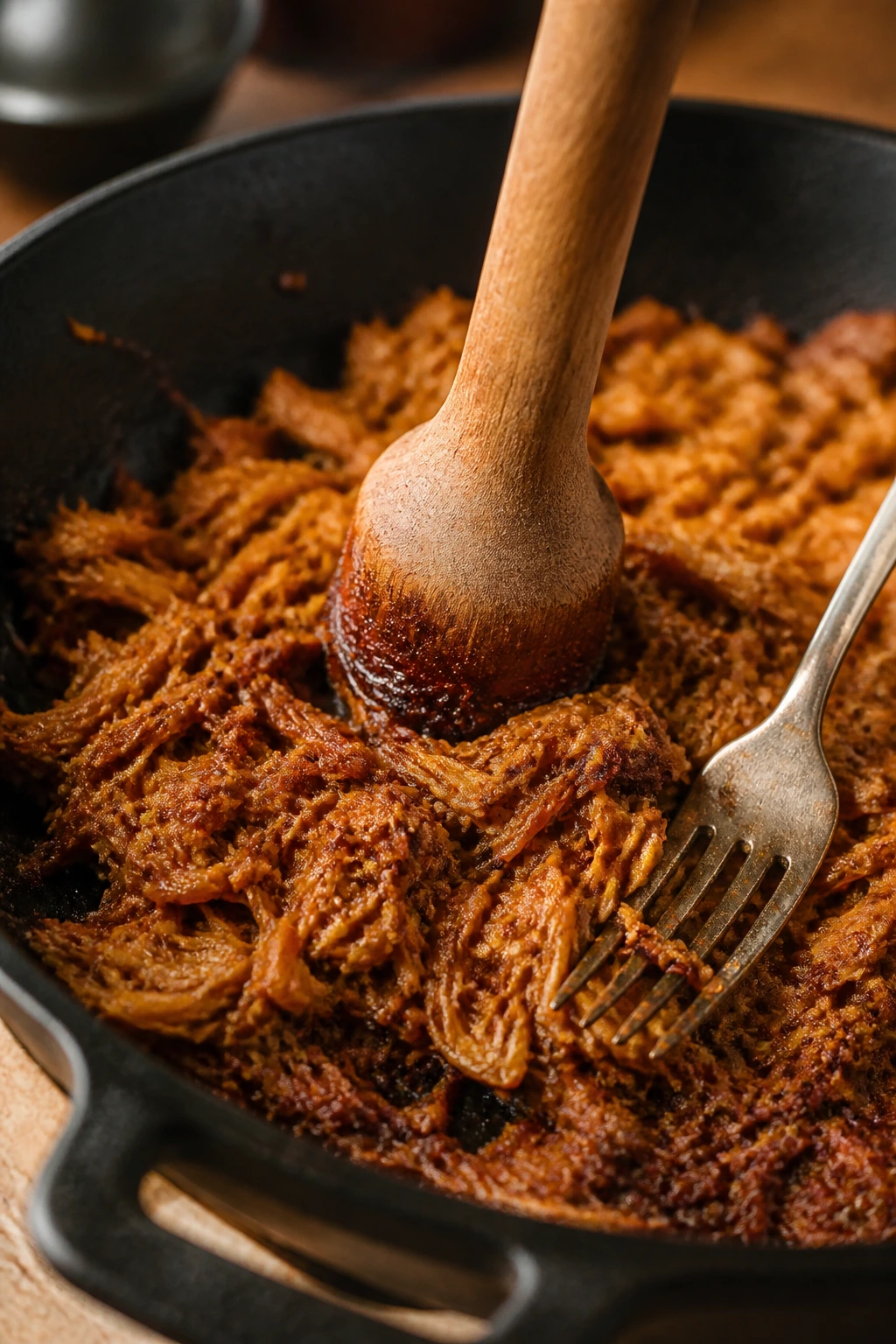
Wooden spoon or potato masher: A masher breaks the jackfruit down fast, while a spoon gives you more control if you want larger strands.
-
Two forks: Handy for pulling apart any stubborn chunks after the simmer.
-
Fine-mesh strainer: Useful for draining the jackfruit well and getting rid of the extra brine.
-
Kitchen towel or paper towels: You will want something absorbent for squeezing the jackfruit dry before it goes into the pan.
How to Cook Jackfruit Pulled Pork So It Shreds and Browns
Prep the Jackfruit
-
Drain the jackfruit in a fine-mesh strainer, rinse it well, and squeeze out as much liquid as you can. Trim away any hard core pieces, then tear the softer portions into long strips with your hands. If it still feels wet, keep squeezing; excess water is what turns the filling soupy.
-
Preheat the oven to 425°F (220°C) and line a rimmed sheet pan with parchment paper. If you prefer to stay stovetop-only, set aside a broiler-safe skillet for the finish. A hot oven is the easiest way to get those browned edges.
Build the Savory Base
-
Warm the olive oil in a large skillet or Dutch oven over medium heat. Add the onion and cook for 6 to 8 minutes, stirring now and then, until it turns soft and just starts to color at the edges. The pan should smell sweet, not sharp.
-
Stir in the garlic, tomato paste, smoked paprika, onion powder, garlic powder, salt, brown sugar, cumin, and black pepper. Cook for 1 minute, stirring constantly, until the tomato paste looks darker and glossy. Do not rush this step; raw tomato paste makes the whole pan taste flat.
Simmer and Shred
-
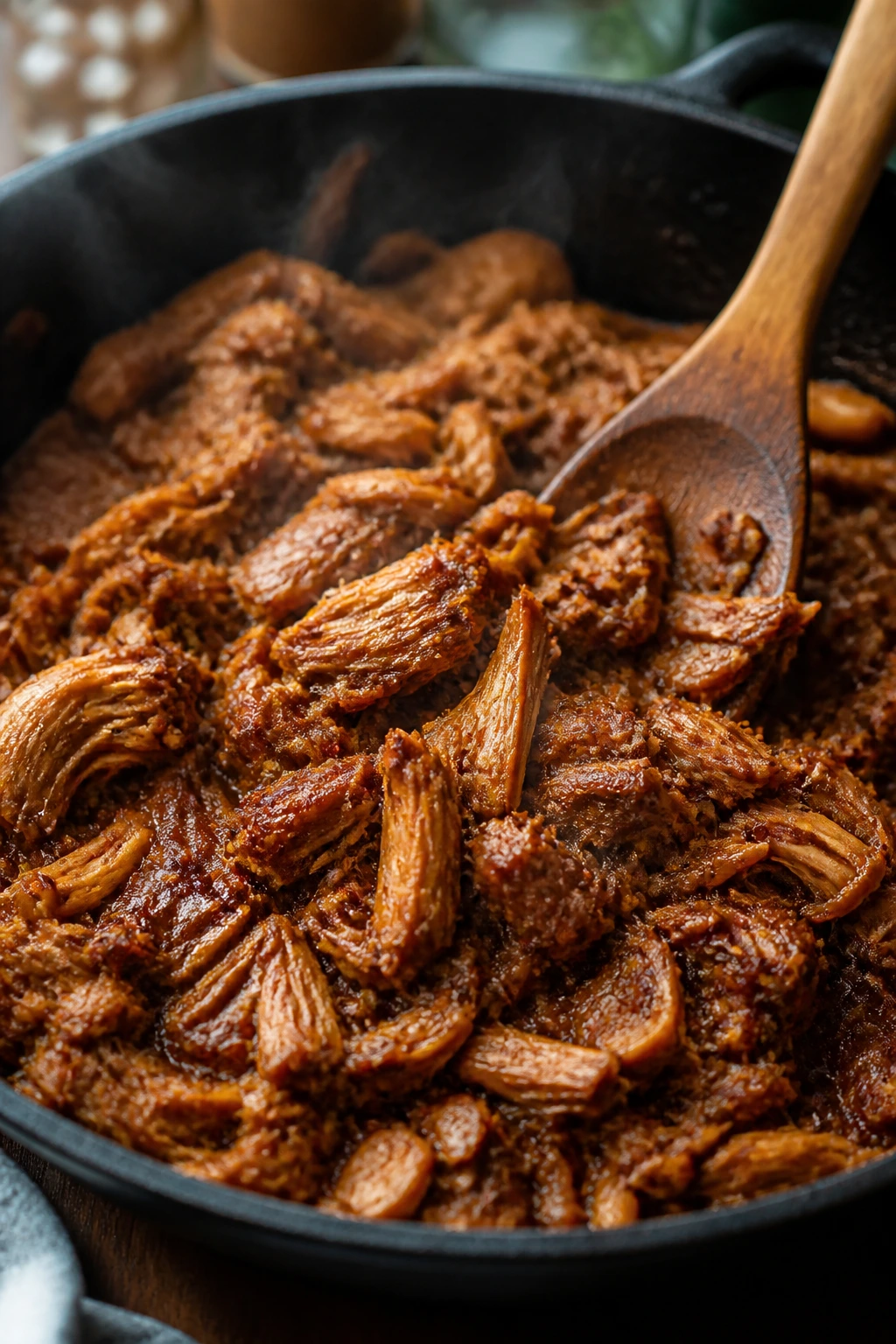
Add the jackfruit, vegetable broth, apple cider vinegar, soy sauce or tamari, and liquid smoke if using. Stir well, bring the mixture to a gentle simmer, then lower the heat and cook uncovered for 10 to 12 minutes. The jackfruit should soften enough to fray when pressed, and most of the liquid should reduce to a shallow, saucy layer.
-
Use a potato masher or two forks to press and separate the jackfruit into strands. Leave some medium-size pieces in the mix; you want shredded texture, not purée. Keep cooking uncovered for 4 to 5 minutes until the pan looks nearly dry and the shreds pick up color from the bottom.
Glaze and Caramelize
-
Whisk together the ketchup, brown sugar, apple cider vinegar, Dijon mustard, soy sauce or tamari, smoked paprika, and cayenne if using. Stir half the glaze into the jackfruit until every strand looks coated and glossy, then taste a small spoonful. If it needs more sharpness, add a teaspoon of vinegar; if it feels too tart, add a teaspoon of brown sugar.
-
Transfer the jackfruit to the prepared sheet pan and spread it into a thin, even layer. Roast for 10 to 15 minutes, stirring once halfway through, until the edges look darker, sticky, and slightly lacquered. If you want more char, broil for 1 to 2 minutes at the end, watching it like a hawk because sugar burns fast.
-
Let the jackfruit rest for 5 minutes before serving. It will thicken a bit as it cools, and the glaze will cling better once it is off the heat.
How to Serve Jackfruit Pulled Pork on Buns, Bowls, and Plates
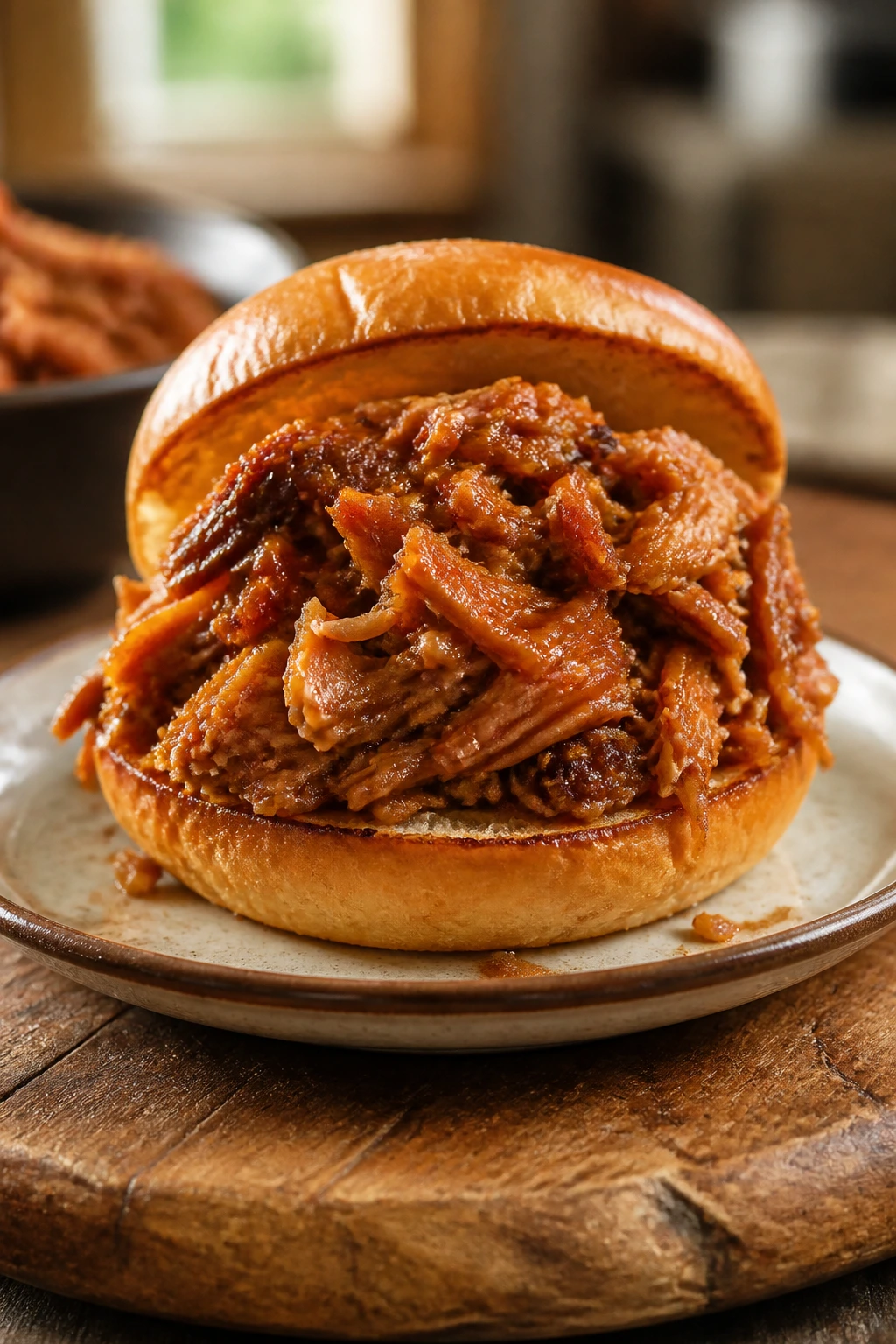
Presentation: Spoon the jackfruit onto toasted brioche buns or soft potato rolls while it is still warm and glossy. I like a pile that is slightly taller in the middle, with the darker caramelized bits visible on top. That contrast matters. It tells you the pan did its job.
Accompaniments: A crunchy slaw is the obvious move, but not the only one. Try dill pickles, pickled red onions, shredded cabbage with a vinegar dressing, or a side of oven fries. If you want something sturdier, spoon the jackfruit over roasted sweet potatoes, steamed rice, or creamy grits.
Portions: Plan on about 1/2 to 3/4 cup of jackfruit filling per sandwich, depending on how thick you pile it. Six servings is a practical yield for buns, though bowl-style portions can stretch a bit farther if you add grains or vegetables underneath.
Beverage Pairing: A dry hard cider cuts through the sweetness without fighting the glaze. Unsweetened iced tea with lemon works too, especially if you’re serving pickles and slaw on the side. If you prefer beer, reach for something crisp and lightly bitter rather than a heavy, sweet brew.
Ways to Push the Flavor Further
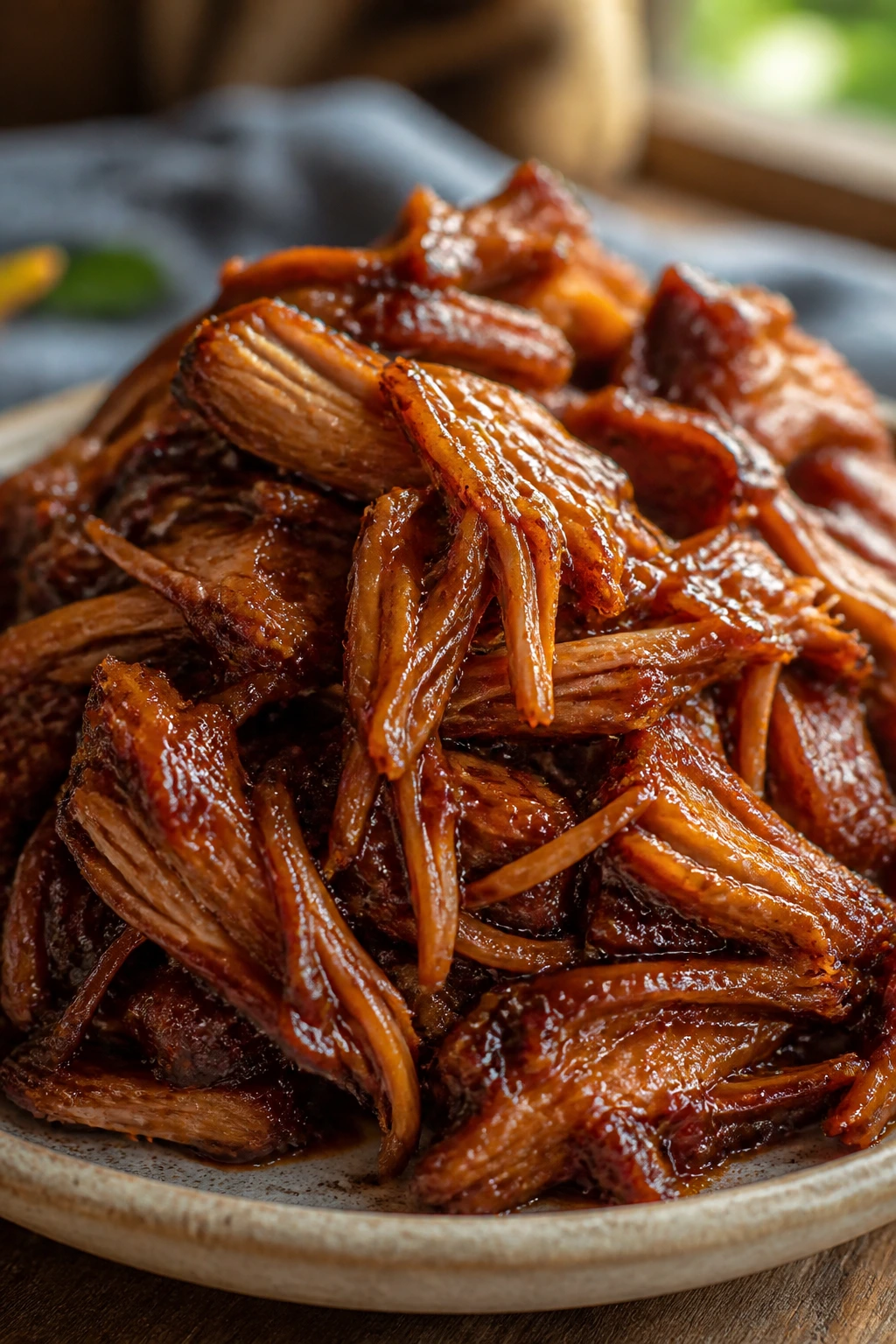
Flavor Enhancement: A small splash of extra apple cider vinegar at the very end wakes up the glaze after roasting. It sounds tiny. It is not. That last hit of acid makes the brown sugar taste round instead of sticky.
Texture Trick: Keep the jackfruit in larger pieces until after the first simmer, then shred it once it has softened. If you tear it apart too early, the strands go mushy and disappear into the sauce. The shape needs a little discipline.
Time-Saver: Drain and rinse the jackfruit ahead of time, then stash it in the fridge for a few hours on paper towels. That extra drying time helps more than people expect. Less water in the pan means faster browning later.
Make-It-Yours: If you want a sharper barbecue profile, add a teaspoon of prepared horseradish to the glaze. If you want more smoke, bump the smoked paprika by 1/2 teaspoon and keep the liquid smoke small. Bigger is not better there. A teaspoon is plenty.
Common Mistakes That Turn Jackfruit Mushy
-
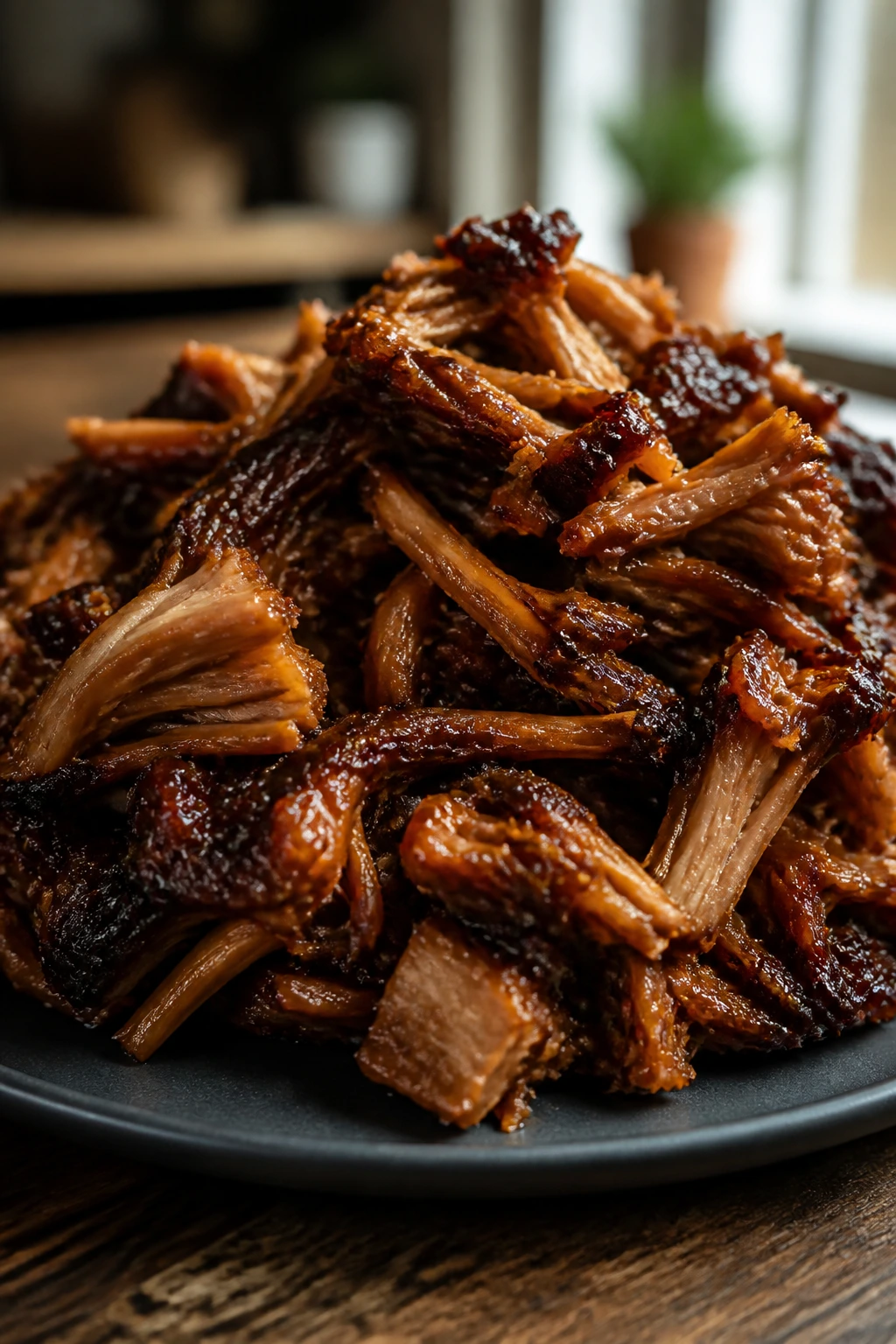
Using the wrong jackfruit: Cans labeled ripe, sweet, or packed in syrup belong in dessert, not here. The symptom is obvious: the filling turns soft, sugary, and a little odd. Buy young green jackfruit in brine or water.
-
Leaving too much liquid in the pan: If the jackfruit still swims after simmering, the glaze can’t cling. The fix is simple: keep cooking uncovered until the bottom of the pan looks almost dry before you add the final glaze.
-
Mashing too early: If you smash the jackfruit before it has softened, you get a grainy paste instead of strands. Wait until the pieces fray with fork pressure, then shred them gently.
-
Skipping the oven finish: Stovetop-only versions often taste fine but feel soft. The sheet-pan roast gives you the browned edges and sticky patches that make the whole thing read as pulled pork-style filling.
-
Burning the sugar: Brown sugar can go from glossy to bitter if the heat is too high. Keep the final roast hot but brief, and use the broiler only for a minute or two with your eyes on the pan the whole time.
-
Overdoing liquid smoke: One teaspoon is usually enough. More can make the jackfruit taste like a fireplace. Start small, then add smoked paprika or a pinch of smoked salt if you want more depth.
Variations That Still Taste Like the Same Dish
Carolina-Style Tang: Swap the ketchup-heavy glaze for a thinner mix of 3 tablespoons apple cider vinegar, 2 tablespoons brown sugar, 1 tablespoon Dijon mustard, and a pinch of cayenne. It gives the jackfruit a sharper bite and works especially well with shredded cabbage on a bun.
Smoky Chipotle Jackfruit: Stir 1 minced chipotle in adobo and 1 teaspoon of adobo sauce into the skillet with the tomato paste. The result is darker, hotter, and more savory, with a little pepper heat that lingers after the sweetness fades.
Apple Cider Glaze: Replace 1/4 cup of the vegetable broth with unsweetened apple cider and add 1 tablespoon of finely grated onion to the base. The flavor leans softer and slightly fruitier, which is nice when you want the glaze to feel round rather than sharp.
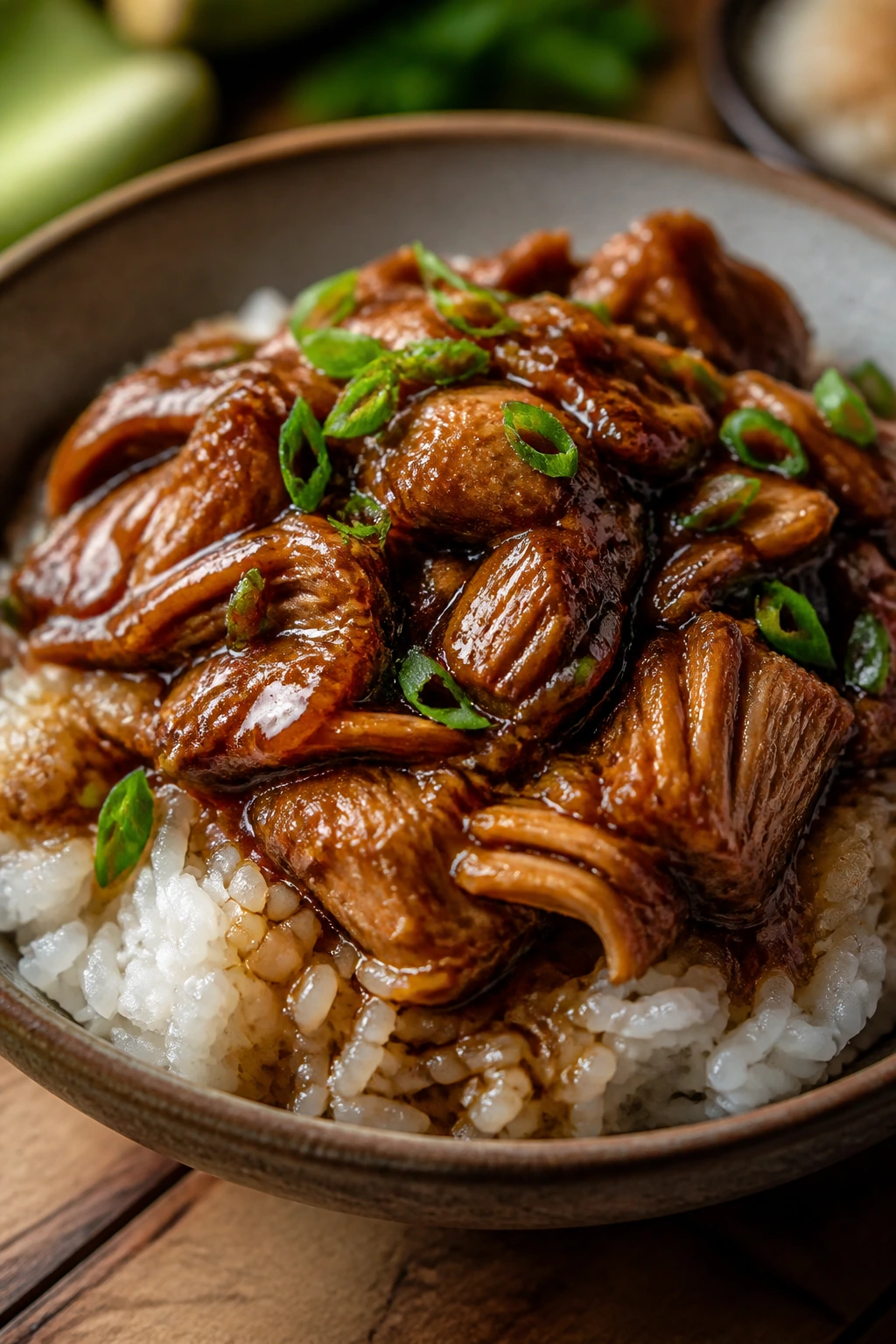
Bowl Version: Skip the buns and serve the jackfruit over rice, farro, or roasted sweet potatoes. Keep the glaze a little thicker so it coats grains instead of disappearing between them, and finish with chopped scallions for bite.
Less-Sweet Smokehouse Version: Reduce the brown sugar in the glaze to 1/4 cup and add an extra teaspoon of vinegar plus a pinch of black pepper. This version tastes leaner and a little more savory, which is the lane I prefer when I’m serving it with buttery buns and a creamy slaw.
Storing, Reheating, and Making It Ahead
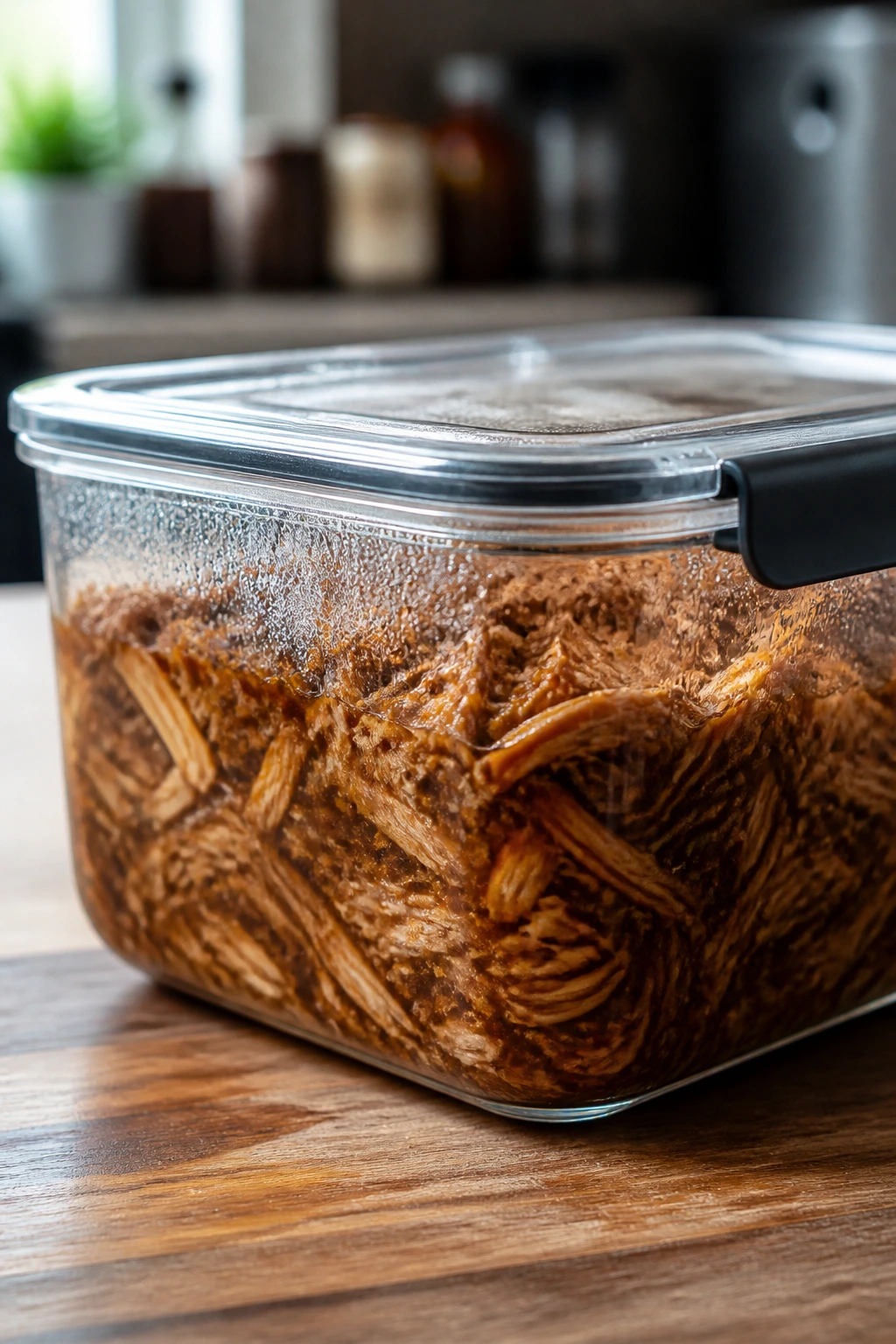
Cooked jackfruit keeps well if you treat it like a saucy filling and not a pile of fragile vegetables. Let it cool completely, then pack it into an airtight container. In the refrigerator, it will keep for up to 4 days. In the freezer, it holds for about 2 months without losing too much texture, though the edges will soften a bit after thawing.
Room temperature is a short window only. Two hours is the safe limit, and less is better if the kitchen is warm. If you are serving it at a party or picnic, keep it in a covered pan and warm it back up before guests build their sandwiches.
Reheating works best on the stovetop. Put the jackfruit in a skillet over medium-low heat with a tablespoon or two of water or broth, cover for 2 minutes, then uncover and stir until it is hot and the liquid has cooked off. That little burst of steam loosens the glaze without making the filling soggy.
The oven also works. Spread the jackfruit in a baking dish, cover it loosely with foil, and warm at 350°F (175°C) for 12 to 15 minutes. Remove the foil for the last 3 to 5 minutes if you want the edges to firm up again. The microwave is fine in a hurry, but it softens the texture more than the other methods.
For make-ahead cooking, you can drain and shred the jackfruit a day in advance, and you can mix the glaze up to 3 days ahead. The whole filling can be cooked a day early, chilled, and reheated with excellent results. In fact, the flavor often tastes more settled after a night in the fridge, because the vinegar and brown sugar have had time to sink into the strands.
Questions People Ask Before They Cook It

Can I use canned jackfruit in syrup?
No. Syrup-packed jackfruit is sweet and soft, which is wrong for this dish. You want young green jackfruit in brine or water so the filling stays savory and fibrous.
Does jackfruit actually taste like pork?
Not on its own, and I would not pretend otherwise. The texture gives you the pulled, shredded feel, while the onion, smoke, vinegar, and brown sugar create the barbecue-style flavor people expect.
Can I make this in a slow cooker?
You can use a slow cooker for the simmering stage, but you still want a high-heat finish in a skillet or on a sheet pan. Without that final reduction, the jackfruit stays too soft and the glaze never gets the right stickiness.
How do I keep the filling from turning mushy?
Drain the jackfruit hard, cook off most of the liquid before glazing, and stop shredding once you have a mix of strands and small chunks. A little texture is the goal. A paste is a miss.
What if I want it less sweet?
Cut the brown sugar in the glaze by 2 to 3 tablespoons and add a little more vinegar and black pepper. You will still get the sticky finish, just with more bite and less candy-like sweetness.
Can I freeze the finished jackfruit after glazing?
Yes, and it freezes better than many people expect. Cool it fully first, pack it tightly, and freeze it without buns or slaw. Reheat in a skillet so the glaze wakes back up instead of turning watery.
What should I do if the glaze tastes flat?
It usually needs either salt or acid, not more sugar. Add a pinch of salt or a teaspoon of vinegar, stir, and taste again before changing anything else. A flat glaze is often just an underseasoned glaze.
The Sticky Finish
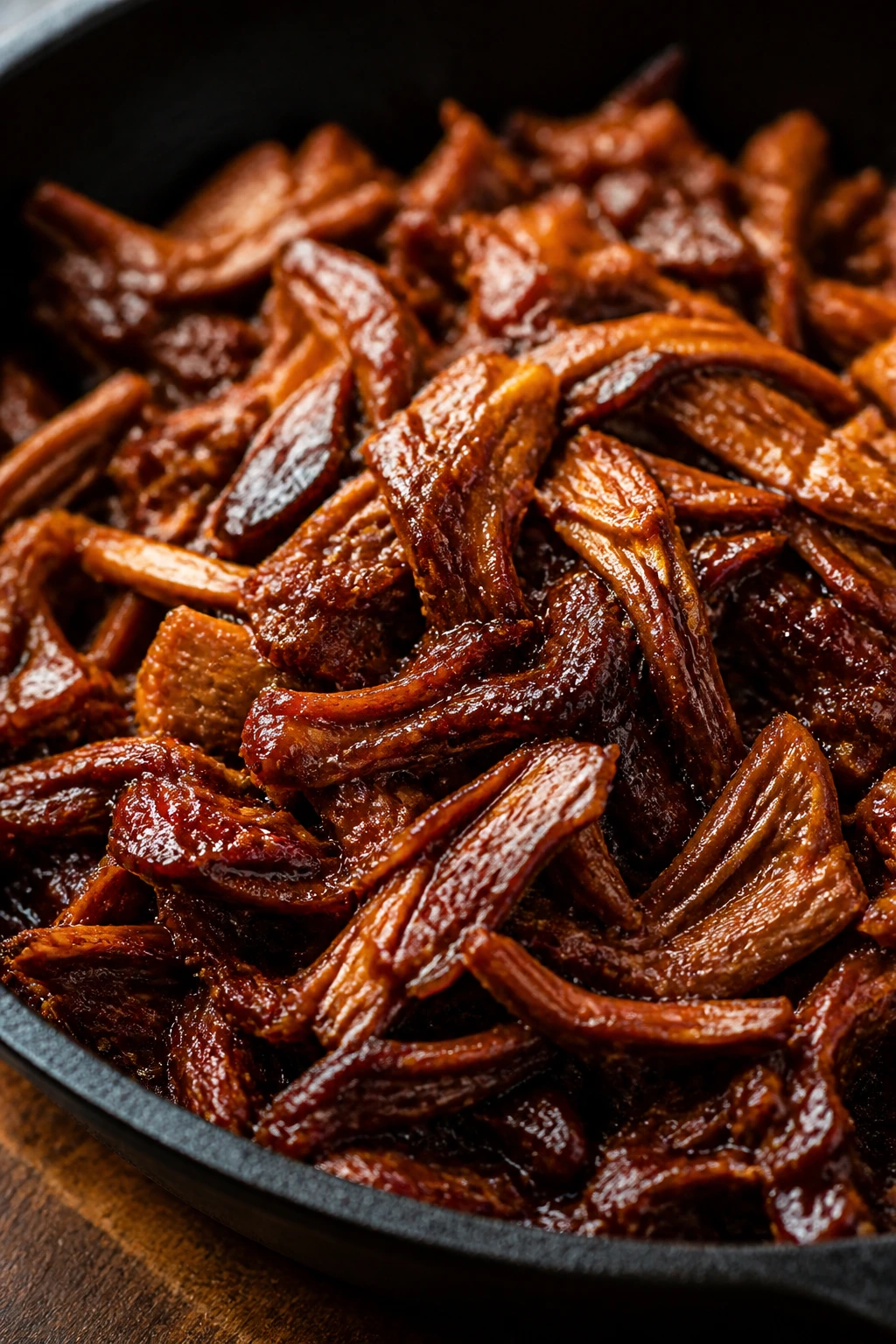
Jackfruit earns its place when you stop asking it to be pork and start giving it the right conditions: dryness, salt, acid, and a hot pan. That is where the texture comes from. Not from luck, and not from drowning it in sauce.
The brown sugar glaze is the part people remember, but the real work happens before that final shine. Once the strands fray, the edges brown, and the sauce tightens into sticky patches, the whole dish lands in that satisfying space where sweet, smoky, and sharp all show up at once. Serve it with pickles or slaw and it stops feeling like an imitation. It just feels done.
Tender Jackfruit Pulled Pork with Brown Sugar Glaze — Recipe Card
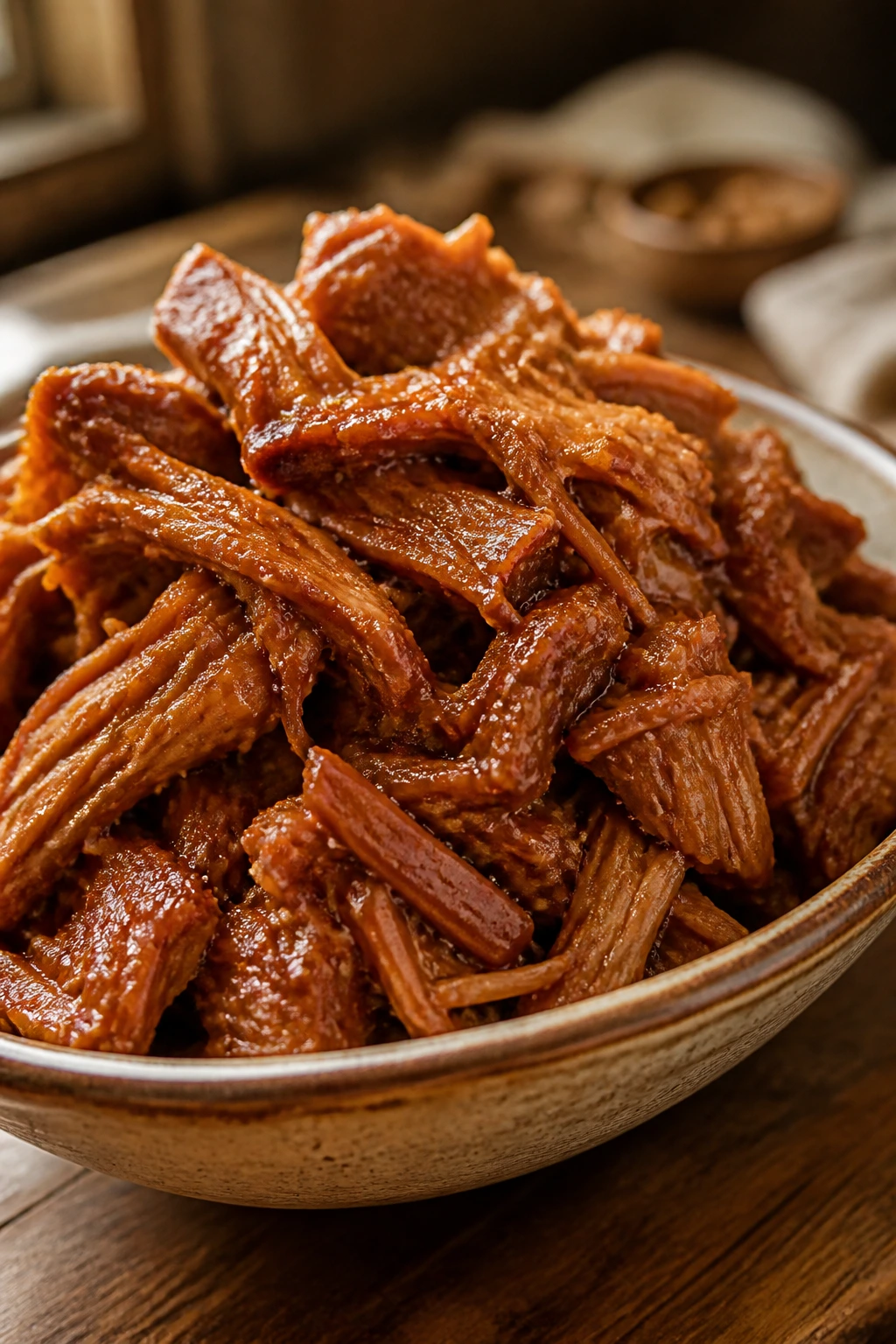
Recipe Name: Tender Jackfruit Pulled Pork with Brown Sugar Glaze
Description: Young green jackfruit is simmered with onion, garlic, vinegar, smoked spices, and a sticky brown sugar glaze, then roasted until the edges darken and the filling turns shred-like and saucy. Serve it on toasted buns, in bowls, or with crunchy slaw.
Prep Time: 20 minutes
Cook Time: 35 minutes
Total Time: 55 minutes
Course: Main Course
Cuisine: American-inspired, plant-based
Servings: 6
Calories: About 180 kcal per serving, not including buns or toppings
Ingredients
For the Jackfruit Filling:
- 2 (20-ounce) cans young green jackfruit in brine or water, drained and rinsed
- 1 tablespoon olive oil
- 1 medium yellow onion, thinly sliced
- 3 garlic cloves, minced
- 2 tablespoons tomato paste
- 1 teaspoon smoked paprika
- 1 teaspoon onion powder
- 1 teaspoon garlic powder
- 1 teaspoon kosher salt
- 1 teaspoon packed light brown sugar
- 1/2 teaspoon ground cumin
- 1/4 teaspoon black pepper
- 1 cup vegetable broth
- 2 tablespoons apple cider vinegar
- 1 tablespoon soy sauce or tamari
- 1 teaspoon liquid smoke, optional
For the Brown Sugar Glaze:
- 1/2 cup ketchup
- 1/3 cup packed light brown sugar
- 2 tablespoons apple cider vinegar
- 1 tablespoon Dijon mustard
- 1 tablespoon soy sauce or tamari
- 1/2 teaspoon smoked paprika
- Pinch of cayenne, optional
Instructions
-
Drain, rinse, and squeeze the jackfruit dry. Trim hard core pieces and tear the rest into strands.
-
Preheat the oven to 425°F (220°C) and line a rimmed sheet pan with parchment paper.
-
Heat the olive oil in a large skillet or Dutch oven over medium heat. Cook the onion for 6 to 8 minutes until soft and lightly golden.
-
Stir in the garlic, tomato paste, smoked paprika, onion powder, garlic powder, salt, brown sugar, cumin, and black pepper. Cook for 1 minute until glossy and fragrant.
-
Add the jackfruit, vegetable broth, vinegar, soy sauce or tamari, and liquid smoke if using. Simmer uncovered for 10 to 12 minutes.
-
Mash and shred the jackfruit with a potato masher or two forks. Continue cooking uncovered for 4 to 5 minutes until the pan is nearly dry.
-
Whisk together the ketchup, brown sugar, vinegar, Dijon, soy sauce or tamari, smoked paprika, and cayenne if using. Stir half into the jackfruit until coated.
-
Spread the jackfruit on the prepared sheet pan and roast for 10 to 15 minutes, stirring once halfway through, until the edges are dark and sticky. Broil for 1 to 2 minutes if you want more char.
-
Rest for 5 minutes before serving.
Notes: Use young green jackfruit in brine or water, not syrup. Keep the final roast short so the sugar does not burn. For extra tang, add a teaspoon of vinegar right before serving.