



A hot skillet changes sausage fast. Give it a little patience, and the edges turn bronzed and crisp before the center ever dries out. Add a brown sugar glaze in the same pan, and those browned bits dissolve into something sticky, glossy, and sharp enough to keep the sweetness in line.
That’s the whole appeal of crispy pan sausage with brown sugar glaze: it tastes like breakfast food that got dressed up but didn’t lose its boots. The sausage brings salt, fat, and that faint peppery snap you only get from good pork sausage. The glaze brings brown sugar, Dijon, vinegar, and Worcestershire, which sounds simple on paper and lands with a lot more personality on the plate.
I don’t love sugary meat dishes that taste like they were designed by a candy machine. This one avoids that trap. The mustard and vinegar cut through the sweetness, the sausage drippings do the heavy lifting, and the pan itself does half the seasoning work before you even touch the glaze. If you’ve ever eaten sausage that was cooked dry on the outside and bland in the middle, this is the opposite of that experience.
Why This Recipe Earns a Spot in the Skillet
Crisp edges come first. The sausage browns before the glaze goes in, so you get a proper crust instead of a soft, steamed exterior.
The glaze works with the pan, not against it. Browned bits loosen into the sauce, which gives the whole dish a deeper, meatier flavor than a straight spoonful of syrup ever could.
The ingredient list stays short on purpose. You’re not hunting for specialty ingredients or juggling three sauces and a marinade. It’s a small cast, and every item has a job.
It leans sweet without turning sticky-sweet. Dijon mustard and apple cider vinegar keep the glaze sharp enough to balance the richness of pork sausage.
It moves easily from breakfast to dinner. Put it beside eggs and biscuits, and it feels like brunch. Put it next to cabbage or roasted potatoes, and it works as a quick skillet supper.
Where This Kind of Sausage Comes Alive
Pan sausage has always been a heat-and-fat story. You put seasoned pork into a hot skillet, let it render a little, and wait for the surface to brown instead of panic-flipping it every forty seconds. That waiting matters. Browning gives you flavor through the Maillard reaction, which is the plain-English way of saying the meat turns nutty, savory, and a little toasty where it meets the pan.
The brown sugar glaze changes the mood, but not the method. It’s still a skillet dish at heart. The glaze only makes sense once the sausage has already done its part, because raw sugar and cold meat would just give you a wet, pale mess. The goal is a coating that clings in a thin sheen, not a sauce that drowns the crust you worked to build.
I also like that this recipe feels old-fashioned without being fussy. It has the kind of flavor you’d expect from a diner griddle or a weekend brunch pan, but the technique is clean and easy to repeat. Cast iron gives the best crust, a heavy stainless-steel skillet gets close, and even a decent nonstick pan will work if you’re careful with the heat. The difference is mostly in the depth of browning, and yes, that matters here.
One practical note: ground pork sausage is done at 160°F in the center. That’s not a guess. Pulling it at the right temperature keeps the patties juicy while the glaze stays glossy instead of turning into a hard shell.
Why You’ll Love This Recipe
-
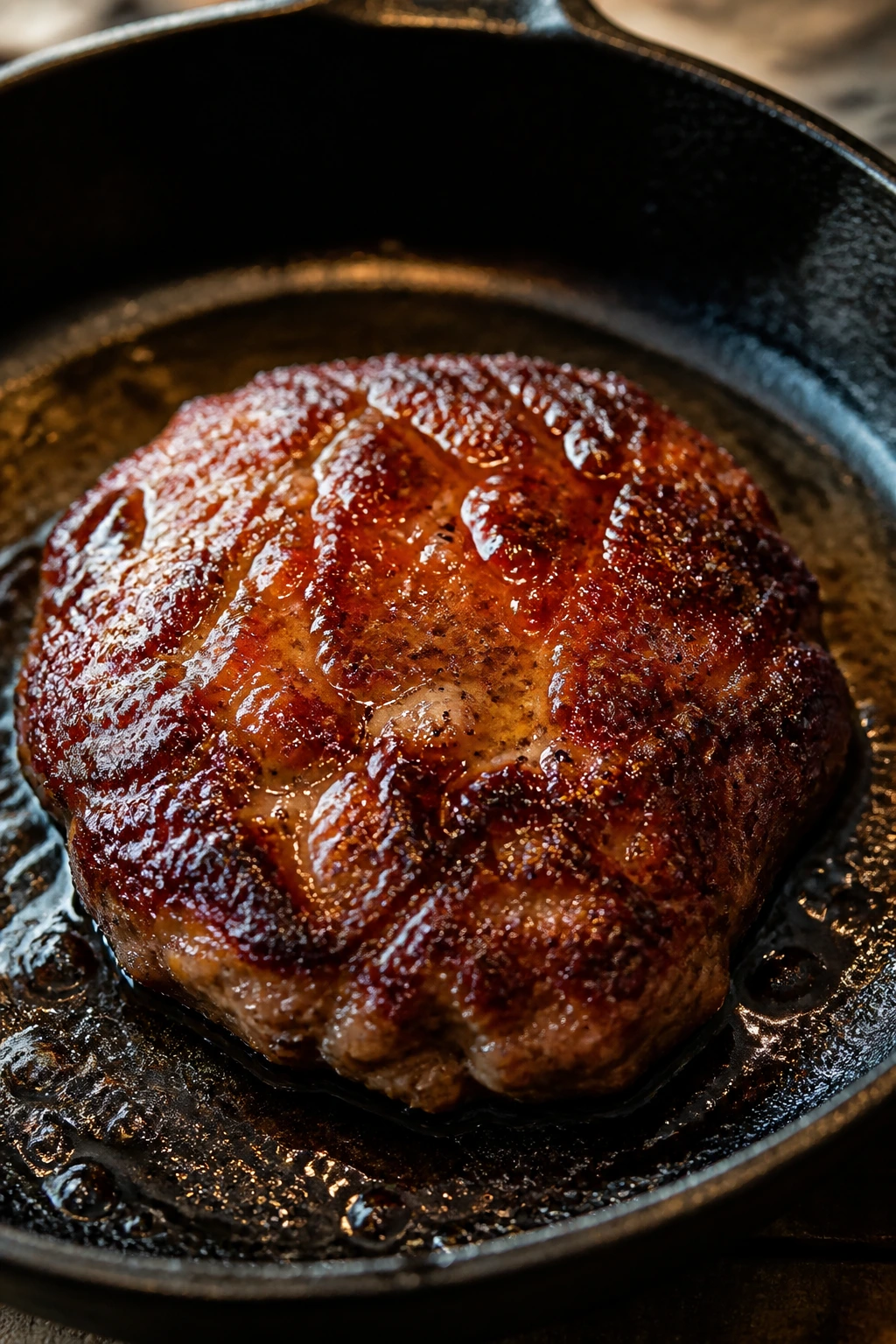
The crust is the point. The sausage browns first, so every bite has a crisp edge before the glaze even hits the pan.
-
The glaze uses the sausage drippings. That little bit of rendered fat gives the brown sugar sauce a savory backbone you cannot fake with bottled syrup.
-
It’s built from pantry pieces. Brown sugar, Dijon, vinegar, Worcestershire, butter, and pepper are the kind of ingredients most kitchens already have.
-
It works in more than one meal. Serve it with eggs and toast in the morning or with greens and potatoes at night.
-
You can scale it without drama. Double the recipe for a brunch crowd, or cook a half batch in a smaller skillet if you’re feeding two.
-
Leftovers hold up better than you’d expect. The glaze gets a little thicker after chilling, and the sausage reheats nicely if you do it gently.
The Timing, the Yield, and the Pan Behavior
Yield: Serves 4 to 6
Prep Time: 10 minutes
Cook Time: 15 minutes
Total Time: 25 minutes
Difficulty: Beginner — the method is straightforward, but the heat needs a steady hand.
Best Served: Right away, while the glaze is warm and the edges still have some crunch.
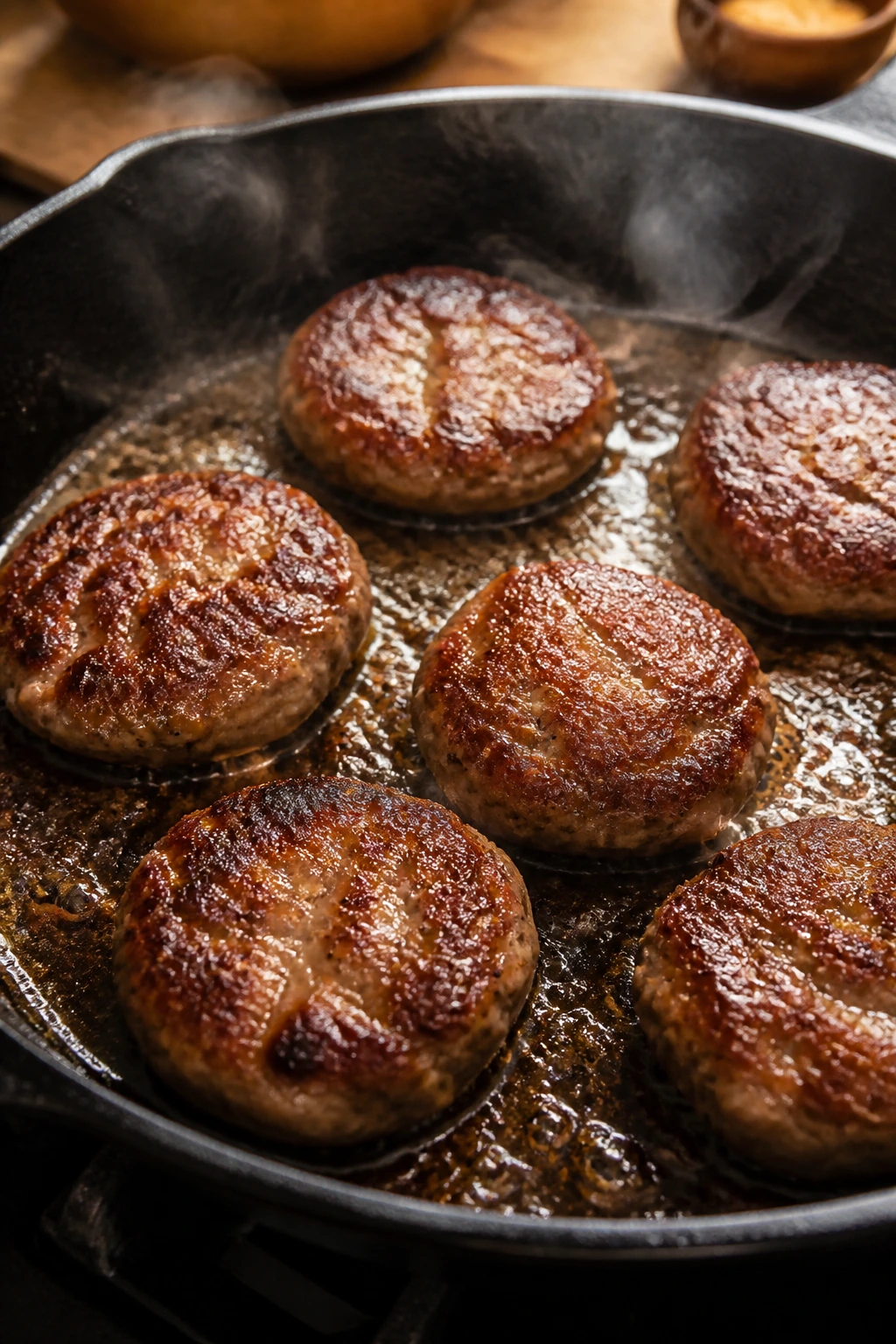
The first minute in the skillet should sound confident. A soft hiss, not a wild crackle. If the pan is scorching, the sugar will race toward dark brown before the sausage has time to cook through, and that’s where the whole thing turns bitter.
What you want is a steady browning rhythm. The sausage should release cleanly when it’s ready to flip. The glaze should bubble around the patties and reduce fast enough to cling, but not so fast that it turns grainy or gluey. If the sauce looks shiny and thin but can still coat the back of a spoon, you’re in the right zone.
Ingredients for Crispy Pan Sausage with Brown Sugar Glaze
For the Sausage:
- 1 1/2 pounds uncooked pork breakfast sausage, bulk sausage or formed patties
- 1 teaspoon neutral oil, only if the skillet looks dry
For the Brown Sugar Glaze:
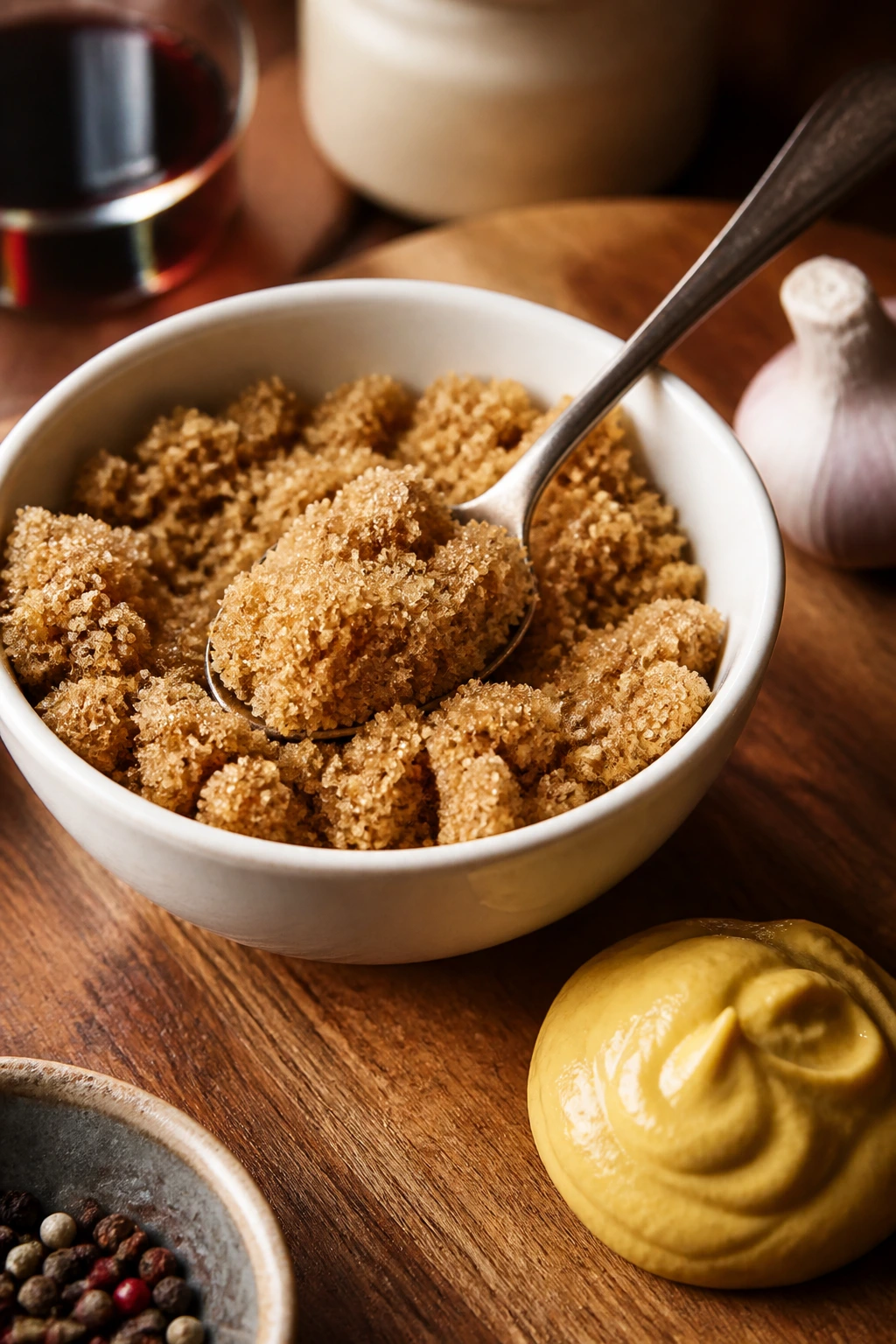
- 1/2 cup packed light brown sugar
- 2 tablespoons Dijon mustard
- 1 tablespoon apple cider vinegar
- 1 tablespoon Worcestershire sauce
- 2 tablespoons water
- 1 tablespoon unsalted butter
- 1/2 teaspoon freshly ground black pepper
- 1/4 teaspoon smoked paprika
- Pinch of red pepper flakes, optional
For Finishing:
- 1 tablespoon chopped fresh chives or parsley, optional
Why Each Ingredient Pulls Its Weight
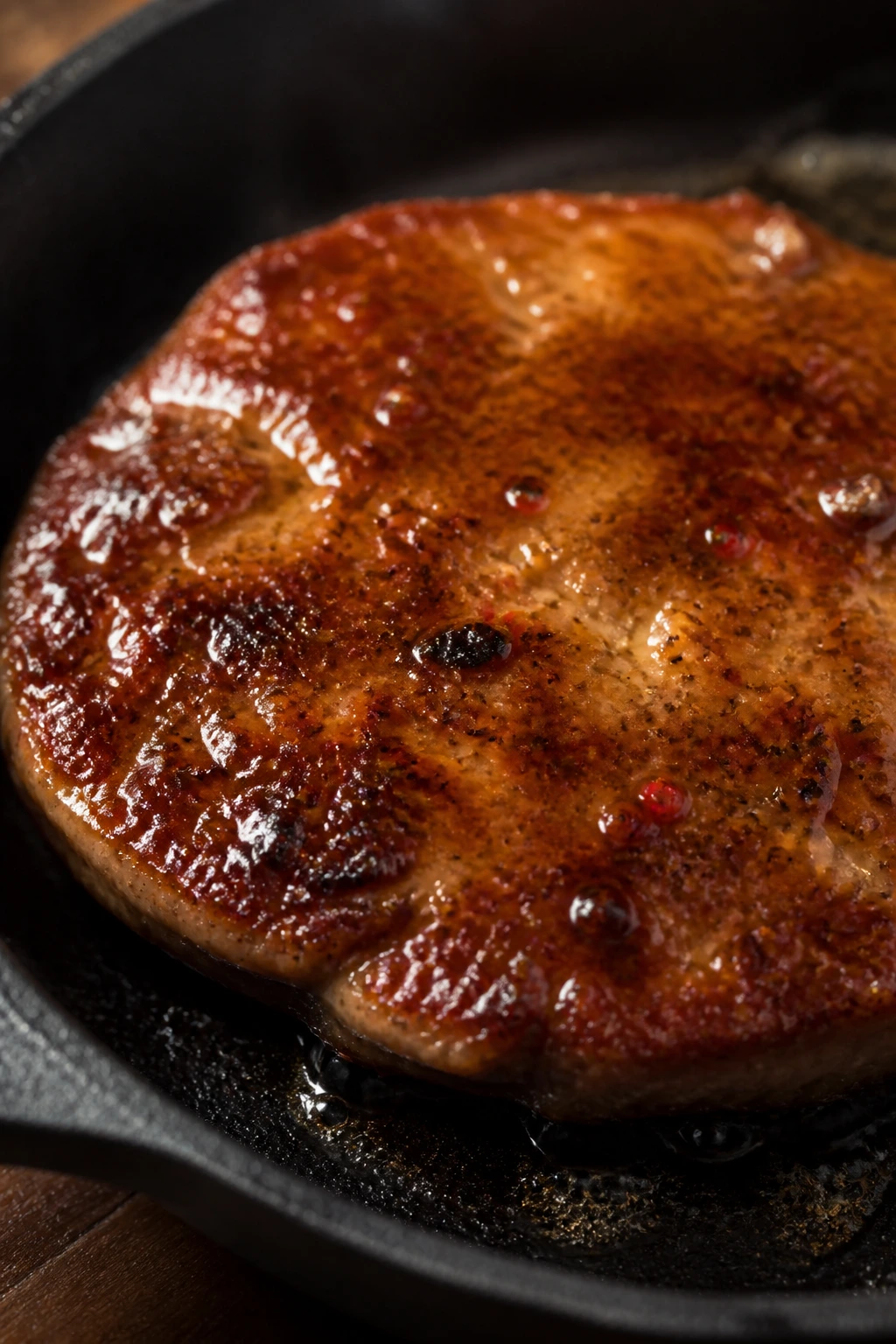
Pork Sausage: The Crisp Comes From the Fat
What to use: 1 1/2 pounds uncooked pork breakfast sausage, either bulk or pre-formed patties about 3 inches wide and 1/2 inch thick.
Preparation: If you start with bulk sausage, divide it into 8 equal pieces and shape them into patties with a slight dimple in the center so they stay flatter in the pan. Keep the meat cold until shaping; warm sausage turns sticky and squashes instead of forming neat edges.
Substitutions: Turkey breakfast sausage works, but it needs a little oil in the pan and a gentler hand because it dries faster. You can also use maple breakfast sausage if you want a sweeter base, though I’d cut back on the brown sugar by a spoonful.
Tips: Choose sausage that is seasoned well on its own. A bland sausage needs more help than this glaze can give, and then the dish starts tasting like sauce instead of pork.
Brown Sugar Glaze: Sweet, Sharp, and Fast
What to use: 1/2 cup packed light brown sugar, Dijon mustard, apple cider vinegar, Worcestershire sauce, water, black pepper, and smoked paprika.
Preparation: Whisk the glaze together before the sausage goes in the pan. Sugar likes to burn when you’re distracted, and having the mixture ready means you can go straight from browning to glazing without leaving the skillet unattended.
Substitutions: Dark brown sugar works if you want a deeper molasses note. Yellow mustard can stand in for Dijon in a pinch, but it tastes flatter and a little one-note, so I only use it when that’s all I have. Apple cider vinegar can be swapped for white wine vinegar, though cider vinegar fits the sausage better.
Tips: Don’t overdo the Worcestershire. One tablespoon is enough to give the glaze depth without making it taste like steak sauce. The goal is balance, not a sauce drawer.
Butter, Pepper, and the Final Gloss
What to use: 1 tablespoon unsalted butter, 1/2 teaspoon black pepper, and an optional pinch of red pepper flakes.
Preparation: Keep the butter cold until the end. It melts into the glaze and gives it a smoother finish, but if you add it too early, you lose some of that fresh shine.
Substitutions: If you want a slightly darker, richer glaze, swap the butter for 1 teaspoon of bacon fat from the pan. That pushes the flavor toward smoky and savory, which is never a bad direction with pork sausage.
Tips: Freshly ground black pepper tastes better here than pre-ground dust. It brings a little bite to the glaze, and that bite matters because the sugar softens everything else.
The Tools That Make Browning Easier
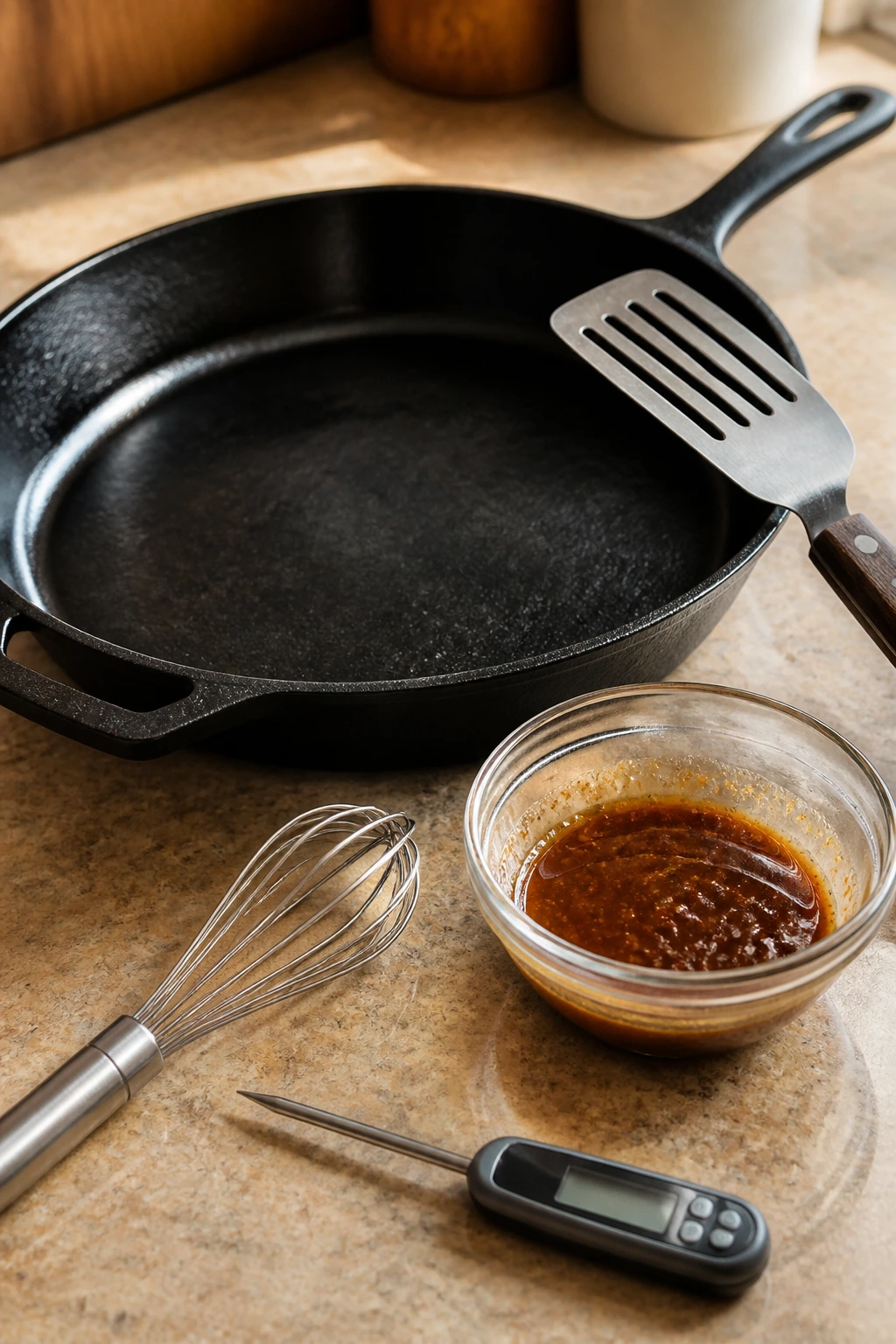
A dish like this does not need a drawer full of gadgets, but the right few tools make the skillet behave.
- 12-inch cast-iron skillet or heavy stainless skillet — Cast iron gives the best crust; heavy stainless is close behind if you keep the heat steady.
- Thin metal spatula or fish spatula — The thin edge slides under browned patties without tearing them apart.
- Small mixing bowl — You’ll use this for the glaze so it’s ready the moment the sausage finishes browning.
- Whisk or fork — Brown sugar clumps if you stir lazily; a whisk breaks it up fast.
- Instant-read thermometer — The cleanest way to stop at 160°F without guessing.
- Spoon or pastry brush — Helpful for basting the glaze over the patties as it thickens.
If you only have a nonstick skillet, the recipe still works, but the crust will be lighter and the glaze will pick up less browned flavor from the pan. That’s the trade-off.
How to Cook the Sausage and Build the Glaze
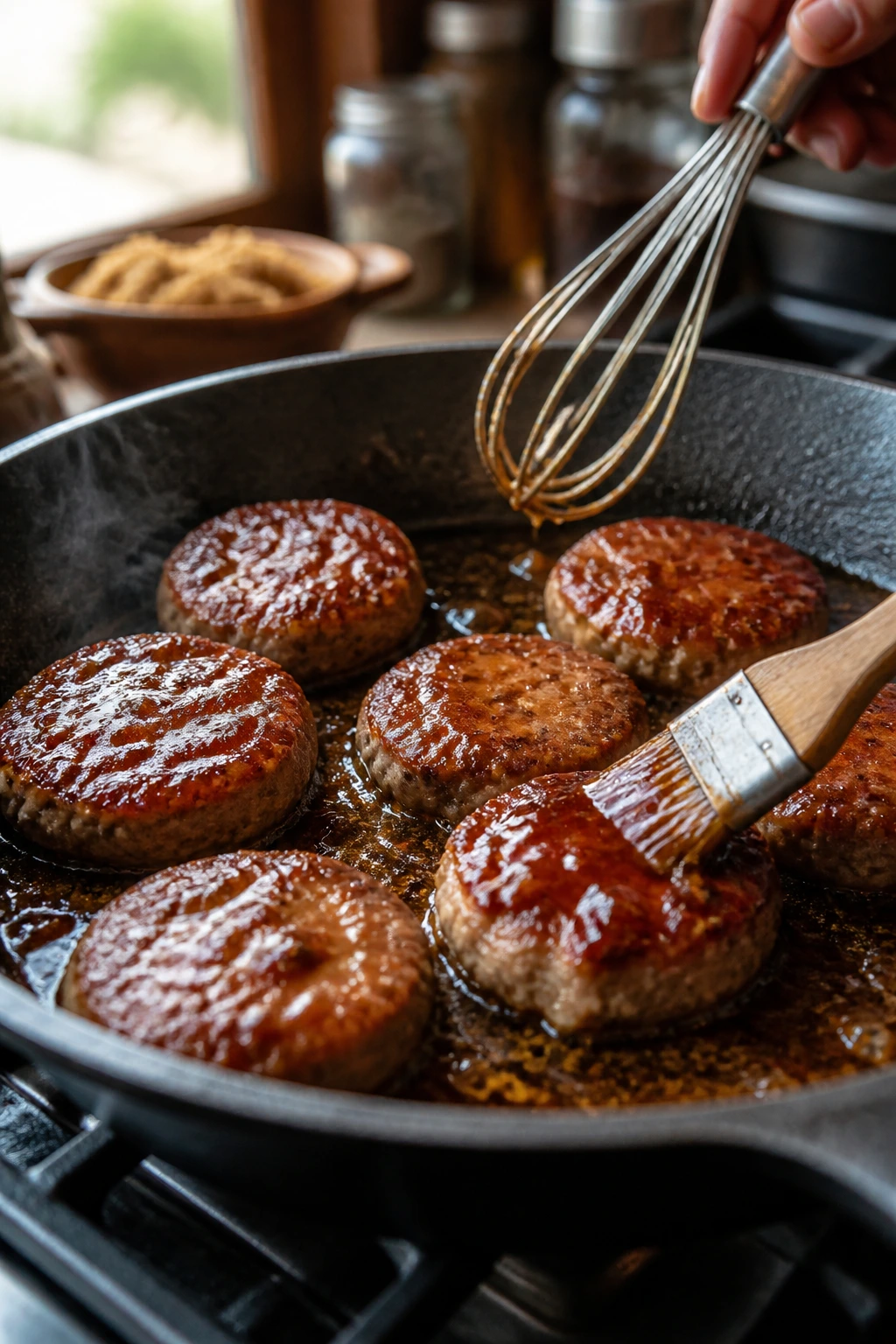
Mix the Glaze First:
- In a small bowl, whisk together the brown sugar, Dijon mustard, apple cider vinegar, Worcestershire sauce, water, black pepper, smoked paprika, and red pepper flakes if using. Stir until the sugar looks mostly dissolved and the mixture feels smooth, not sandy.
Shape and Brown the Sausage: 2. Divide the sausage into 8 equal portions and shape each one into a patty about 3 inches wide and 1/2 inch thick. Press a small dimple into the center of each patty with your thumb. That little dent helps the patties stay flat instead of doming in the middle.
-
Set a 12-inch skillet over medium heat and let it warm for about 2 minutes. If the pan looks dry, add 1 teaspoon neutral oil and tilt the pan so it leaves a thin sheen. You want enough fat to encourage browning, not enough to shallow-fry the sausage.
-
Lay the patties in the skillet in a single layer with space between them. Cook for 3 to 4 minutes on the first side, without moving them, until the bottoms are deep golden-brown and the edges look set. Do not flip early. If the patties stick, they are not ready yet.
-
Flip the patties and cook the second side for 2 to 3 minutes more, until browned and almost cooked through. The sausage should feel firmer when pressed lightly, but not hard. If your skillet runs hot, lower the heat to medium-low after the flip so the sugar in the glaze doesn’t scorch.
Finish With the Glaze: 6. Spoon off excess fat from the skillet, leaving about 1 tablespoon in the pan. You want the fond, not a pool. Pour in the glaze mixture and stir immediately so it loosens the browned bits from the bottom of the skillet.
-
Let the glaze bubble for 1 to 2 minutes, spooning it over the patties as it thickens. Turn each patty once so both sides get coated. The sauce should become glossy and cling to the sausage in a thin, sticky layer. If it tightens too fast, splash in 1 teaspoon of water and keep stirring.
-
Check the center of the thickest patty with an instant-read thermometer. Pull the pan from the heat when the sausage reaches 160°F and the glaze looks shiny, not dry. Stir in the butter, let it melt for a few seconds, and spoon the glaze over the top once more.
-
Transfer the sausage to a warm platter and scatter chives or parsley over the top, if using. Serve immediately while the glaze is still loose enough to shine.
How to Serve It Without Softening the Crust
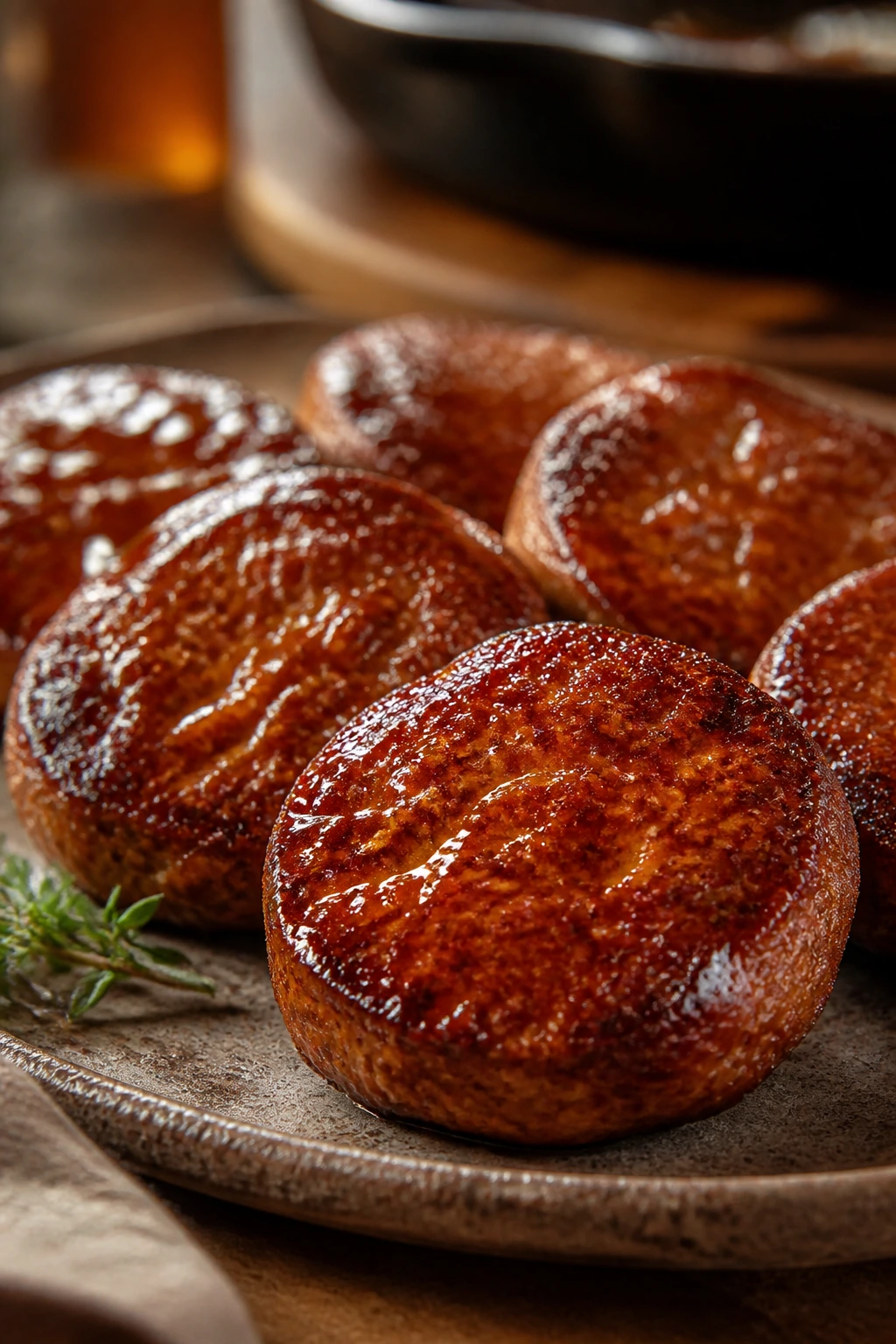
Presentation: Warm a platter first, if you can. The sausage looks better laid out in a single layer or slightly overlapping rather than piled into a heap, because a mound traps steam and softens the edges faster than you expect. Spoon a little extra glaze over the top, but don’t drown the patties. You want a lacquer, not a bath.
Accompaniments: For breakfast, I’d put this next to soft scrambled eggs, buttered grits, toast, or a biscuit split open while it’s still steaming. For a later meal, try it with sautéed cabbage, roasted sweet potatoes, or a sharp green salad with vinaigrette. A tart apple slaw also works because it keeps the plate from feeling too heavy.
Portions: Figure 2 patties per person for breakfast with sides, or 3 patties if the sausage is the main event and the rest of the plate is light. If you’re serving it in biscuits, 1 to 2 patties per biscuit is enough depending on size. Double the glaze only if you want extra for spooning over grits or toast.
Beverage Pairing: Black coffee is the obvious win, and it’s the right one. Strong tea works too, especially if you take it unsweetened. If you’re serving this at brunch, dry apple cider or plain sparkling water with lemon keeps the sweetness in check.
Small Moves That Make the Glaze Shine
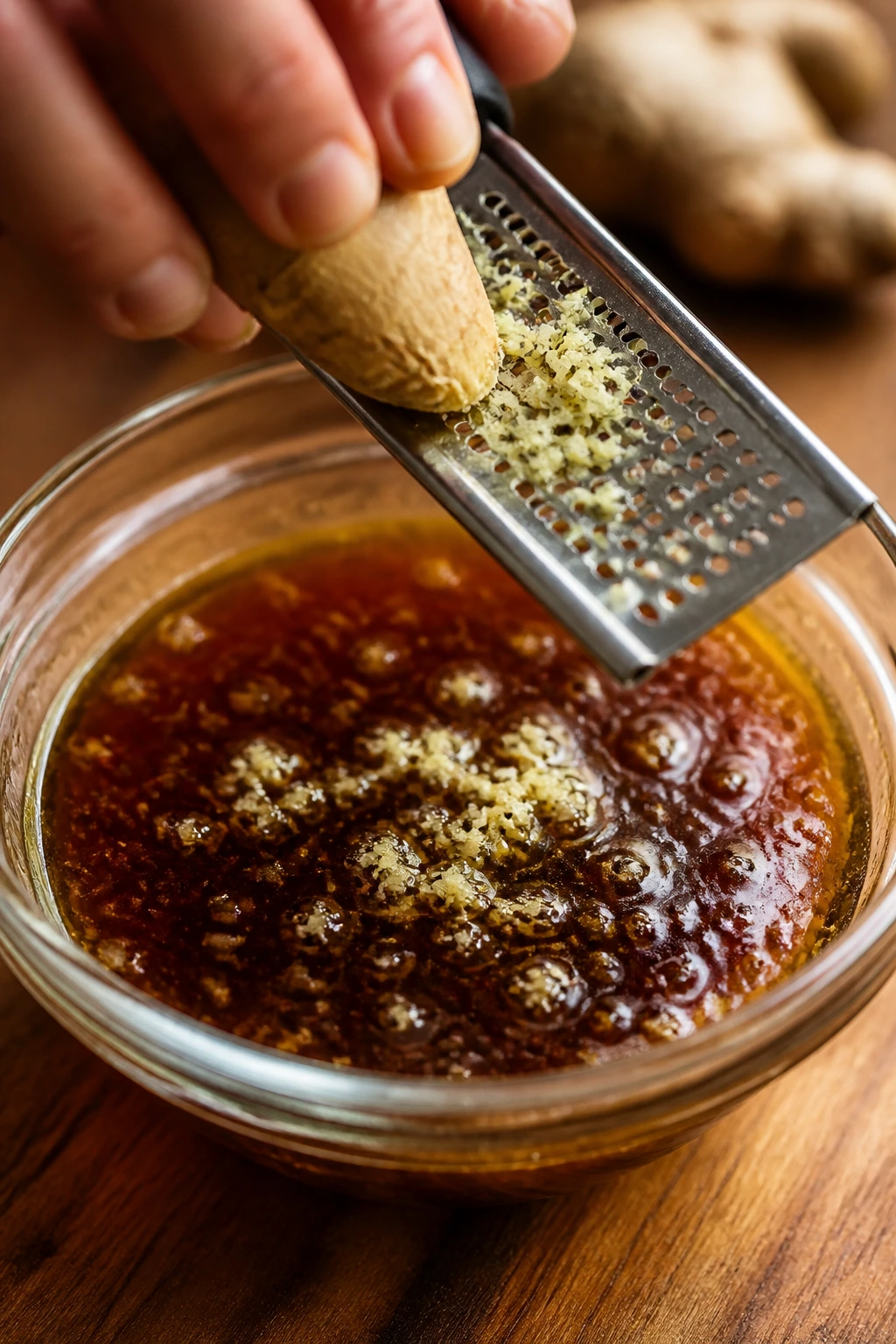
Flavor Enhancement: A half teaspoon of grated fresh ginger gives the glaze a warmer edge without turning it into something obviously Asian-inspired. I like it when I want the sweetness to feel brighter and less heavy.
Customization: If you want a breakfast lean, add 1/4 teaspoon rubbed sage to the sausage before shaping or stir 1 teaspoon maple syrup into the glaze. If you want dinner energy, add a spoonful of whole-grain mustard and serve the sausage with cabbage or mustard greens.
Serving Suggestions: Fresh chives are the cleanest garnish, but chopped parsley works if that’s what’s in the fridge. A few paper-thin apple slices on the side make sense, too, because they echo the brown sugar without making the plate clumsy.
Cost-Saver: Store-brand pork breakfast sausage usually works just fine here. The glaze carries enough flavor that you do not need fancy sausage to make the dish taste finished.
Pro Move: If you like a sharper glaze, add 1 teaspoon of apple cider vinegar at the very end, off the heat. It wakes up the whole pan and keeps the sauce from settling into one flat sweet note.
Common Mistakes That Turn Good Sausage Into a Mess
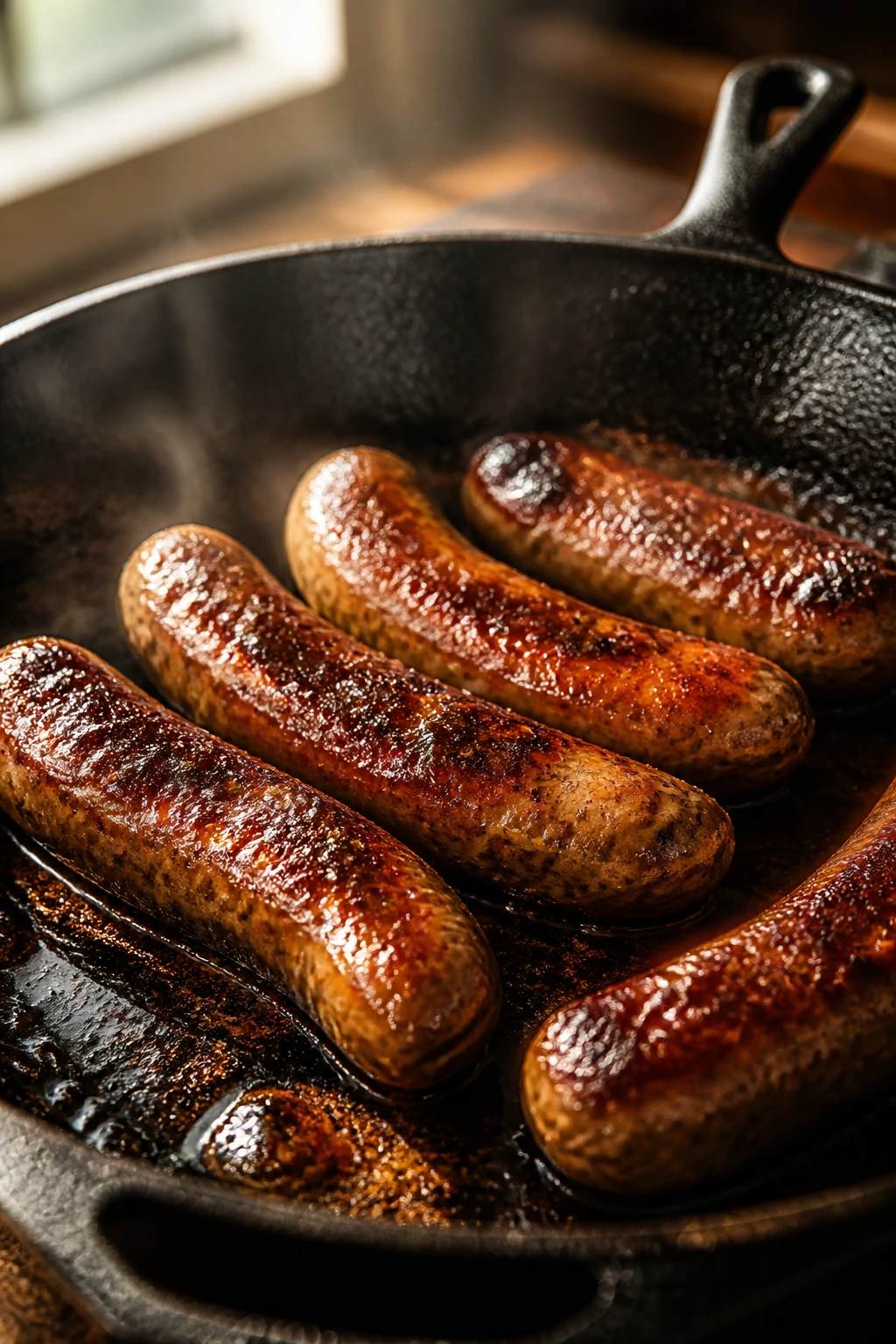
Starting with too much heat. The outside chars before the center cooks, and the glaze later tastes scorched instead of caramelized. Fix it by keeping the pan at medium for browning and dropping to medium-low once the sugar goes in.
Crowding the skillet. Too many patties in one pan trap steam, which means gray sausage and no crust. Cook in two batches if needed. A little extra time beats pale sausage every time.
Adding the glaze too soon. If the sausage is still raw in spots when the sugar goes in, the glaze sits around too long and turns sticky in the wrong way. Brown the patties first, then glaze. That order matters.
Leaving too much fat in the pan. A pool of grease makes the glaze split and slide instead of clinging. Spoon off the extra fat and leave about 1 tablespoon behind so the sauce can pick up flavor without turning oily.
Cooking the glaze until it turns thick like candy. Once it gets that far, it tightens as soon as it cools and starts sticking to the pan instead of the sausage. Pull it when it still moves easily but coats the spoon.
Skipping the thermometer. Sausage can look done before the center is actually there, especially if the patties are thick. 160°F is the clean finish line for ground pork sausage, and guessing is the easiest way to overcook it.
Flavor Variations That Still Feel Like the Same Dish
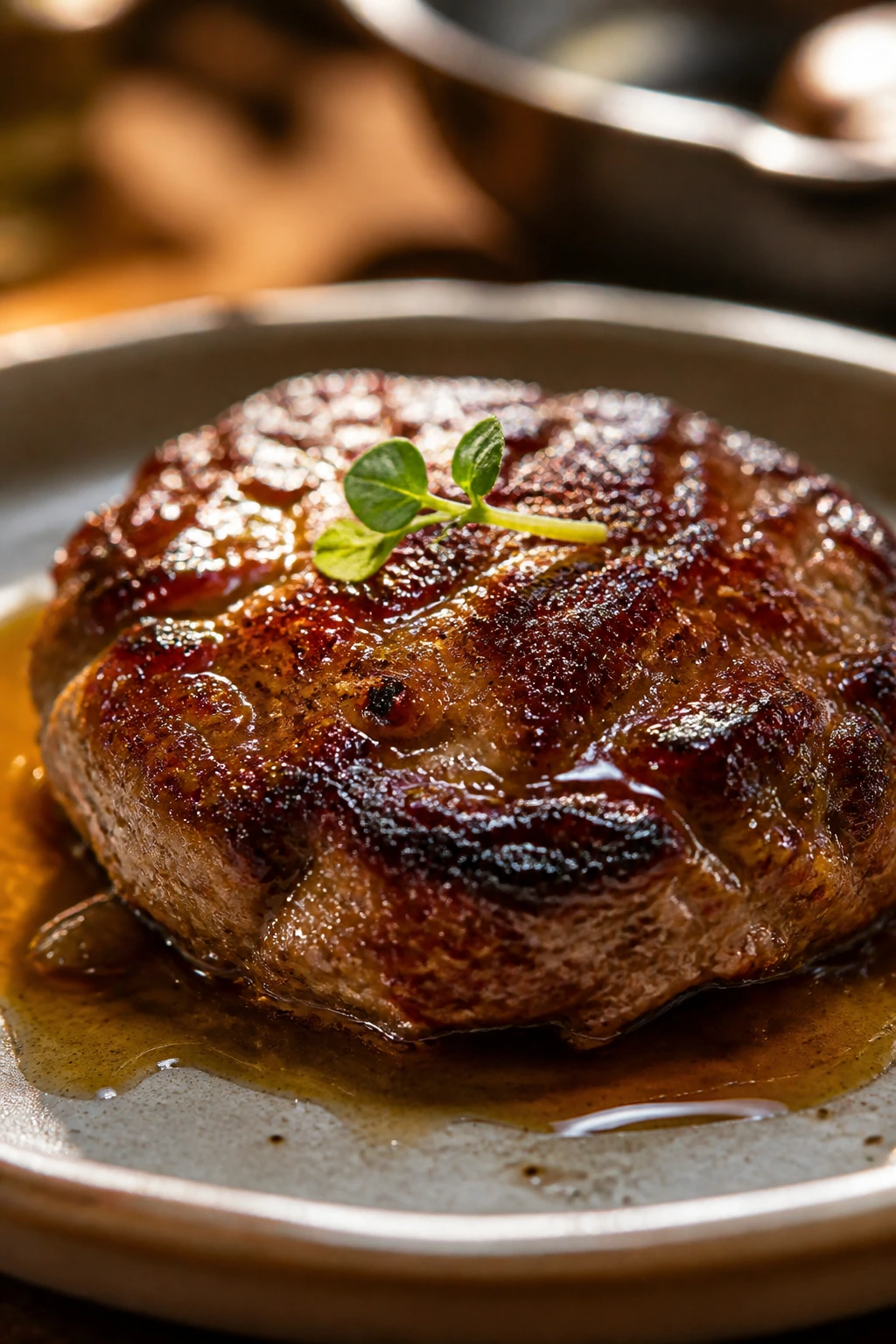
Maple-Dijon Breakfast Version
Swap 1 tablespoon of the brown sugar for pure maple syrup and add a pinch of rubbed sage to the sausage before shaping. This version tastes a little more like weekend brunch and a little less like a glaze pulled from a pantry jar.
Hot Honey Pan Sausage
Replace 1 tablespoon of the water with hot honey, then add an extra pinch of red pepper flakes. The result has more heat up front and a smoother sweetness at the finish, which I like with biscuits and fried eggs.
Turkey Sausage Skillet
Use 1 1/2 pounds turkey breakfast sausage, add 1 teaspoon neutral oil to the pan, and keep the heat a notch lower than you would for pork. Turkey sausage needs more attention because it dries faster, but the glaze helps it stay lively.
Smoked Kielbasa Shortcut
Slice 1 1/2 pounds smoked kielbasa into 1/2-inch coins, brown them for 2 to 3 minutes per side, then glaze for just a minute or two. This version is saltier, smokier, and faster, which makes it handy for a weeknight dinner when you want the same sweet-savory finish with less hands-on time.
Keeping Leftovers Tender and Sticky
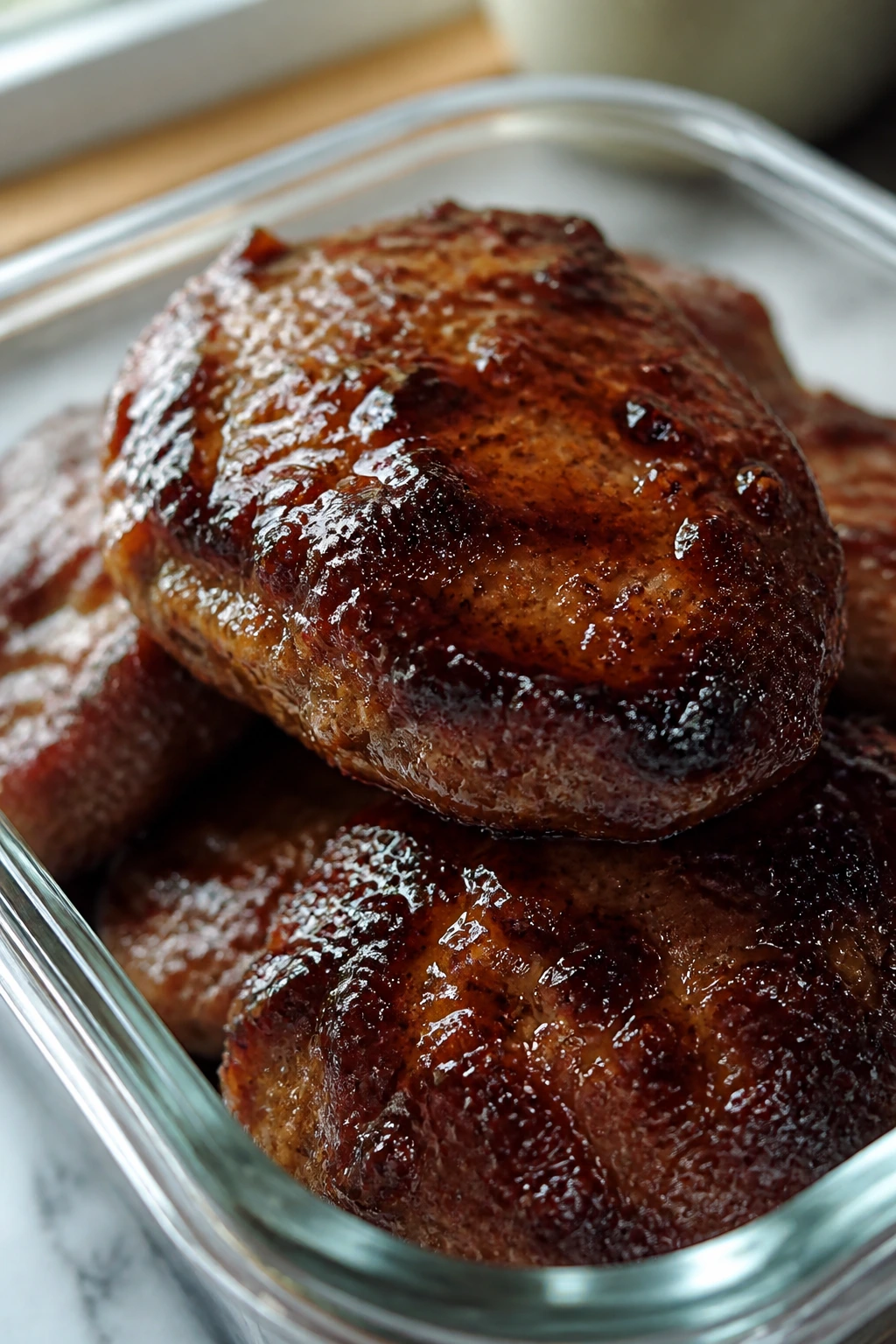
Cooked sausage will keep in the refrigerator for 3 to 4 days if you get it into a shallow container once it has cooled a bit. Do not leave it sitting on the counter all afternoon; pork needs to be chilled promptly. If you stack the patties, slip a square of parchment between layers so the glaze doesn’t weld them together into one sticky block.
Freezing works for up to 2 months, though the glaze gets a touch darker after thawing. I prefer freezing the sausage in a single layer on a tray first, then moving it to a freezer bag once it’s firm. That keeps the patties from freezing into a brick.
Reheat in a skillet over low heat with 1 to 2 teaspoons of water and a loose lid for 4 to 6 minutes, just until warmed through. The steam softens the glaze enough to reawaken it without washing off the crust. The microwave works in a pinch, but use 20- to 30-second bursts and stop as soon as the center is hot. If you blast it too long, the edges go rubbery fast.
For make-ahead work, shape the patties and mix the glaze a day in advance. Keep them separate and refrigerated, then cook the sausage straight from cold. The glaze can sit in the fridge overnight without losing anything, and the sausage actually holds its shape better when it’s not room-temperature soft.
Frequently Asked Questions
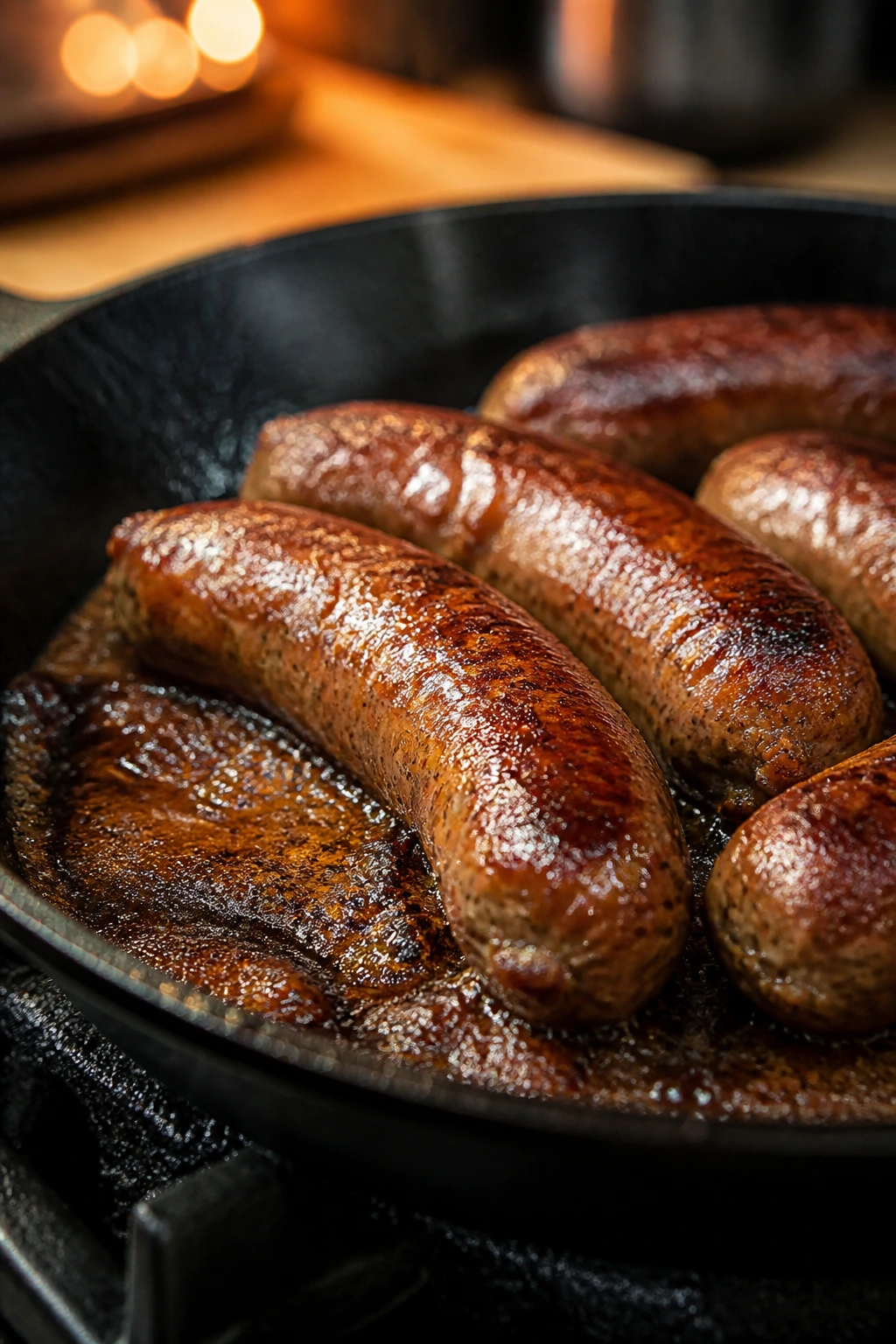
Can I use pre-cooked sausage instead of raw sausage?
Yes, but the texture changes. Pre-cooked sausage only needs to brown and warm through, so you’ll spend less time in the skillet and more time watching the glaze not scorch. Slice it or use smaller links so the sauce can coat more surface area.
Can I make this with sausage links instead of patties?
You can, though patties get more surface browning and soak up more glaze. If you use links, cook them a little longer and turn them often so the glaze reaches all sides. The flavor is the same; the crust just behaves differently.
How do I keep the brown sugar glaze from burning?
Keep the heat at medium or lower once the sugar goes in, and don’t let the skillet run dry. The glaze should bubble gently, not boil aggressively. If it starts tightening too fast, add a teaspoon of water and stir right away.
Can I make this less sweet?
Yes. Cut the brown sugar to 1/3 cup and increase the Dijon by 1 teaspoon. That keeps the glaze glossy but shifts the flavor toward savory instead of dessert-adjacent. I’d also add an extra grind of black pepper.
What if my sausage is already salty?
Leave out any extra salt and make sure the Worcestershire stays at 1 tablespoon, not more. Salt-heavy sausage can handle the brown sugar, but it doesn’t need help from the glaze getting louder. A little vinegar goes a long way here.
Can I bake the sausage and finish it with the glaze afterward?
You can bake the patties on a rack at 400°F until they reach 160°F, then finish them in a hot skillet with the glaze for a minute or two. You’ll lose a little of the skillet crust, but it’s a useful fallback if you’re cooking for a crowd and want a more hands-off start.
Why did my glaze turn grainy instead of smooth?
It probably cooked too long or started with sugar that wasn’t loosened enough. Add a teaspoon of water and stir over low heat until the grains dissolve again. If it’s already too far gone, make a fresh half batch and use the grainy glaze only as a thin coating, not the main sauce.
A Sticky Finish Worth Repeating
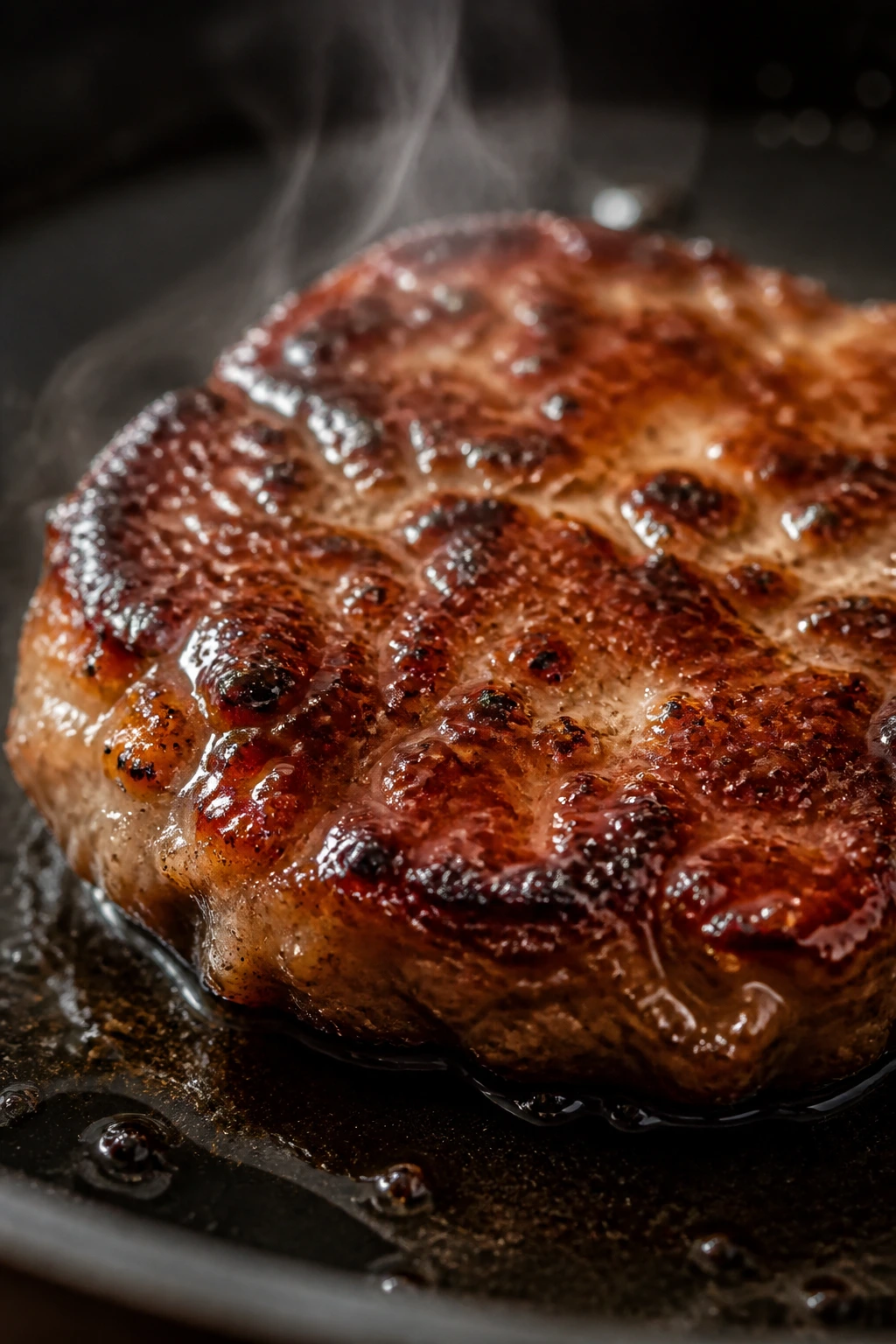
The reason this recipe works is not complicated. Brown the sausage first. Respect the heat. Then let the glaze do what a good glaze should do: cling, shine, and sharpen the richness instead of burying it.
That order gives you crisp edges, a glossy finish, and a skillet that tastes like it has done some actual work. Keep the pan hot but not reckless, leave a little fat behind for flavor, and stop cooking the minute the glaze turns shiny and the sausage hits 160°F. The next time you want something fast that still feels like you paid attention, this is the pan I’d reach for.
Crispy Pan Sausage with Brown Sugar Glaze — Recipe Card
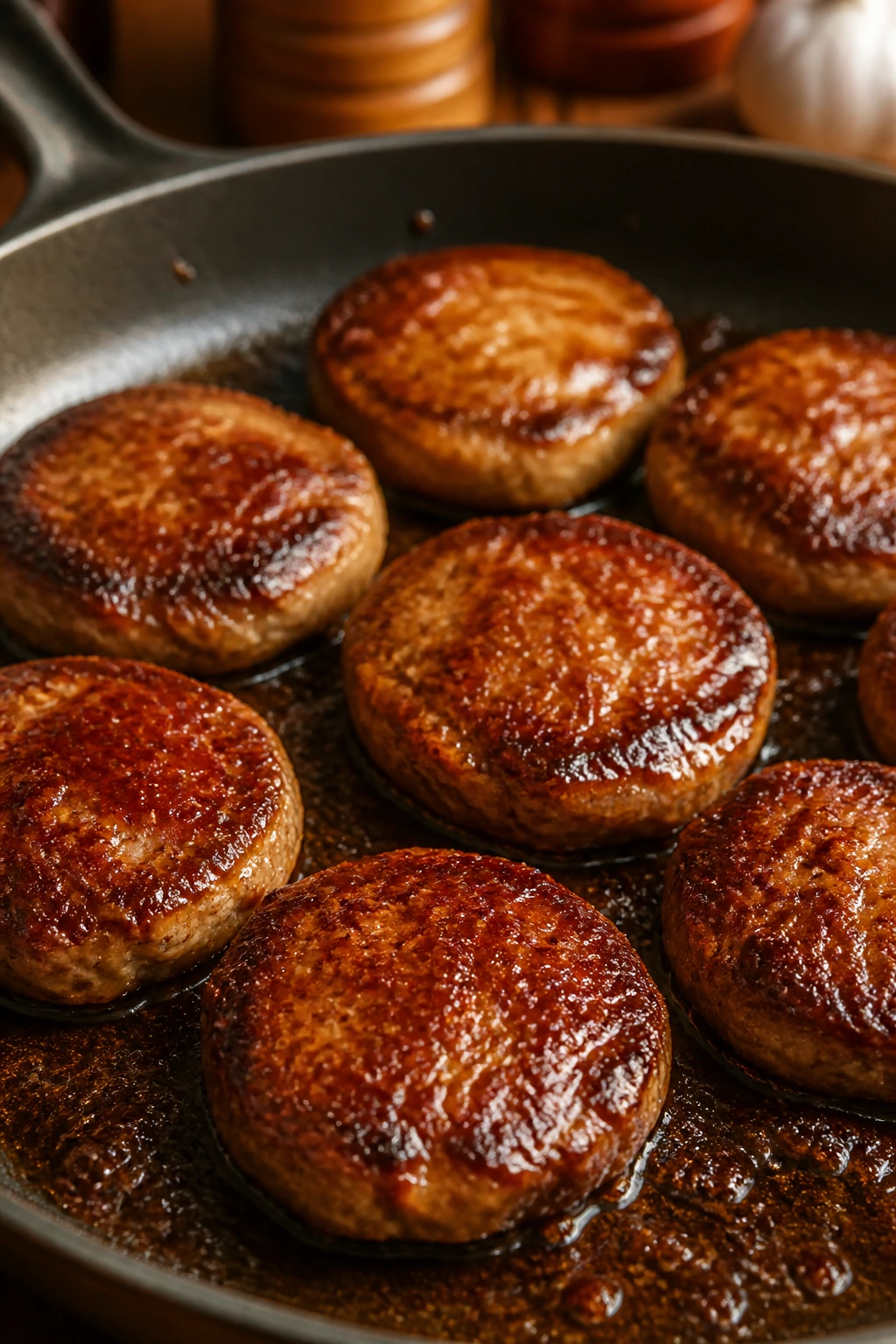
Recipe Name: Crispy Pan Sausage with Brown Sugar Glaze
Description: Pork breakfast sausage patties are browned in a skillet, then finished in a sticky brown sugar glaze with Dijon, vinegar, and Worcestershire. The result is crisp-edged, glossy, and balanced between sweet and savory.
Prep Time: 10 minutes
Cook Time: 15 minutes
Total Time: 25 minutes
Course: Breakfast, Brunch, Main Course
Cuisine: American
Servings: 4 to 6
Calories: About 410 kcal per serving
Ingredients
For the Sausage:
- 1 1/2 pounds uncooked pork breakfast sausage, bulk sausage or formed patties
- 1 teaspoon neutral oil, only if the skillet looks dry
For the Brown Sugar Glaze:
- 1/2 cup packed light brown sugar
- 2 tablespoons Dijon mustard
- 1 tablespoon apple cider vinegar
- 1 tablespoon Worcestershire sauce
- 2 tablespoons water
- 1 tablespoon unsalted butter
- 1/2 teaspoon freshly ground black pepper
- 1/4 teaspoon smoked paprika
- Pinch of red pepper flakes, optional
For Finishing:
- 1 tablespoon chopped fresh chives or parsley, optional
Instructions
Mix the Glaze:
- Whisk together the brown sugar, Dijon mustard, apple cider vinegar, Worcestershire sauce, water, black pepper, smoked paprika, and red pepper flakes if using.
Shape and Brown the Sausage: 2. Divide the sausage into 8 equal portions and shape into patties about 3 inches wide and 1/2 inch thick. 3. Heat a 12-inch skillet over medium heat for about 2 minutes. Add the neutral oil only if the pan looks dry. 4. Cook the patties for 3 to 4 minutes on the first side, then 2 to 3 minutes on the second side, until browned and nearly cooked through.
Finish With the Glaze: 5. Spoon off excess fat, leaving about 1 tablespoon in the skillet. 6. Pour in the glaze, stir to loosen the browned bits, and simmer 1 to 2 minutes until glossy and slightly thickened. 7. Turn the patties to coat both sides, cook until the sausage reaches 160°F, then stir in the butter. 8. Transfer to a platter and garnish with chives or parsley if using.
Notes: Keep the heat at medium or lower once the glaze goes in. If the sauce tightens too fast, add 1 teaspoon water and stir. Serve right away for the crispiest edges.