



Farmer sausage is the kind of pork that knows how to hold its shape. It slices cleanly, throws off a little fat, and picks up a dark edge in the skillet before the glaze even hits the pan.
That matters, because the brown sugar glaze is not there to bury the sausage. It’s there to catch the browned bits, soften the edges, and leave you with sticky, savory slices that taste richer than the ingredient list suggests. The trick is balance: enough sugar to lacquer, enough vinegar and mustard to keep the whole thing sharp.
I like this recipe because it behaves like a much longer-cooked dish without actually asking for one. If you have a good smoked farmer sausage, a skillet, and ten minutes you can spend standing at the stove, you’ve already done most of the work. The rest is heat control. Sugar can go from glossy to scorched fast, so a little attention matters here — and that attention is rewarded with a sauce that clings instead of puddles.
Why You’ll Want This One in Reach
- Fast skillet payoff: Smoked farmer sausage is already cooked, so the whole dish comes together in about 30 minutes and most of that time is just browning and reducing.
- Sweetness with a spine: Apple cider vinegar, Dijon, and Worcestershire keep the brown sugar from tasting flat or sticky in the wrong way; the finished glaze should hit sweet, tangy, and peppery in that order.
- One pan, real flavor: The browned bits left behind by the sausage dissolve into the glaze, which means the pan does the heavy lifting instead of a long ingredient list.
- Easy to scale: You can stretch it for a family dinner with potatoes or serve it as a small-bite appetizer with toothpicks and keep the same proportions.
- Leftovers are useful: Cold slices reheat well for breakfast plates, rice bowls, or a sandwich with mustard and pickles, which is more than I can say for a lot of glazed pork.
- Plain sides work best: Mashed potatoes, buttered cabbage, roasted green beans, or crusty bread soak up the sauce without fighting it.
Yield: Serves 4 to 6
Prep Time: 10 minutes
Cook Time: 20 minutes
Total Time: 30 minutes
Difficulty: Beginner — the technique is straightforward, but the glaze needs your eyes on it during the last few minutes so it doesn’t scorch.
Best Served: Warm, right after glazing
What Goes Into the Pan
For the Sausage and Glaze:
- 1 1/2 pounds smoked farmer sausage, cut into 1/2-inch rounds or thick half-moons
- 1 tablespoon olive oil
- 2 tablespoons unsalted butter
- 1 medium yellow onion, cut into thin wedges
- 2 cloves garlic, minced
- 1/2 cup packed light brown sugar
- 1/4 cup apple cider vinegar
- 1/4 cup water
- 2 tablespoons Dijon mustard
- 1 tablespoon Worcestershire sauce
- 1/2 teaspoon freshly ground black pepper
- 1/4 teaspoon smoked paprika
- 1/4 teaspoon crushed red pepper flakes, optional
- 1 tablespoon chopped fresh parsley, for finishing
Why Farmer Sausage and Brown Sugar Belong Together
Farmer sausage is sturdy. That’s the whole point. It’s usually coarsely ground, well seasoned, and dense enough to take a hard sear without falling apart the way some softer sausages do. That makes it a natural partner for a glaze that needs a little aggression from the pan before it settles into something glossy.
Brown sugar brings the sticky part, but it’s the vinegar and mustard that keep the dish from drifting into candy territory. That contrast is what I care about here. You want the glaze to smell like warm molasses for half a second, then snap back with sharp acid and a little pepper.
This kind of skillet cooking has old kitchen logic behind it. Pork, sugar, vinegar, mustard — those ingredients have been sharing pans for a long time because they behave well together. The sausage gives you fat and savor. The glaze gives you shine and a little drama. Then the onion steps in and makes the whole thing taste cooked, not merely assembled.
I also like that the dish is honest about what it is. No pretending. No fussing with ten side sauces. Just browned pork, a sauce that tightens as it bubbles, and enough savory depth to make a plain plate of potatoes feel planned.
What Each Ingredient Does in the Skillet
Smoked Farmer Sausage
What to use: 1 1/2 pounds smoked farmer sausage, sliced into 1/2-inch rounds or thick half-moons. If your sausage comes in a ring, cut it on the bias so the edges brown a little better.
Preparation: Pat the sausage dry before it goes into the pan. That small step helps the fat in the skillet do its job instead of steaming the surface.
Substitutions: Kielbasa is the closest easy swap, and a good smoked bratwurst will also work. If you only have fresh farmer sausage, see the FAQ — the cooking time changes enough that I would not treat it the same way.
Tips: Choose a sausage with enough fat to stay juicy under heat. Very lean sausage can still work, but you’ll want a little extra butter in the pan and a gentler simmer.
The Glaze Base
What to use: 1/2 cup packed light brown sugar, 1/4 cup apple cider vinegar, 1/4 cup water, 2 tablespoons Dijon mustard, and 1 tablespoon Worcestershire sauce.
Preparation: Whisk the glaze before the pan gets hot, and make sure the sugar is mostly dissolved before it hits the skillet. A few tiny grains are fine; a dry clump of brown sugar is not.
Substitutions: Dark brown sugar gives a deeper molasses note. If apple cider vinegar isn’t on hand, use white wine vinegar, but cut it with an extra tablespoon of water so it doesn’t bite too hard.
Tips: This glaze should taste sharper than you expect in the bowl. Heat softens the edges, and the sausage fat mellows everything. If it tastes flat before cooking, it will taste flat after cooking too.
Aromatics and Fat
What to use: 1 tablespoon olive oil, 2 tablespoons unsalted butter, 1 medium yellow onion, and 2 cloves garlic.
Preparation: Slice the onion into thin wedges so it softens at the same pace as the sausage browns. Mince the garlic finely so it disappears into the sauce instead of sitting in sharp little bits.
Substitutions: Shallots work if you want a sweeter, more delicate base. Bacon fat can replace the butter and oil if you happen to have it, and yes, that makes the dish taste a little more like Sunday breakfast in the best way.
Tips: Butter gives the glaze a softer shine, but it burns faster than oil. That’s why both are here. The oil raises the heat tolerance; the butter gives you taste.
Seasoning and Finish
What to use: 1/2 teaspoon black pepper, 1/4 teaspoon smoked paprika, 1/4 teaspoon crushed red pepper flakes if you want heat, and 1 tablespoon chopped parsley.
Preparation: Add the pepper and paprika to the glaze, not just the meat. That spreads the seasoning through the sauce instead of leaving it trapped on the sausage surface.
Substitutions: Chopped chives can replace parsley. A pinch of dry mustard will sharpen the sauce if you want more bite, and a little thyme works if you’re serving it with potatoes or cabbage.
Tips: Don’t pile on extra salt until the end. Farmer sausage usually brings plenty of its own, and the glaze will reduce and intensify as it cooks. Taste before adjusting.
Tools That Make the Glaze Easier

I’d use a 12-inch cast-iron skillet or a heavy stainless-steel skillet for this. Thin pans heat unevenly, and a glaze with sugar punishes uneven heat faster than most recipes do.
A few other pieces help more than you’d think:
- Tongs: Best for turning the sausage slices without tearing the browned edges.
- Small whisk: Useful for dissolving the brown sugar into the vinegar and water before it hits the pan.
- Wooden spoon or heatproof spatula: Good for scraping up the browned bits without scratching the skillet.
- Chef’s knife: You want clean, even slices of sausage and onion so everything cooks at the same pace.
- Cutting board with a damp towel underneath: Keeps the board from sliding while you slice sausage.
- Measuring cups and spoons: The glaze needs balance; eyeballing it can work once you know the dish, but not on the first pass.
- Instant-read thermometer, optional: Not required for smoked sausage, but useful if you swap in fresh sausage and need to check doneness.
I do not love nonstick for this one. It will work, sure. But you lose some of the crust and more of the browned fond, and that fond is half the reason the glaze tastes like it belongs in the pan instead of on top of the pan.
Step-by-Step: Browning the Sausage and Building the Glaze
Prep the Ingredients:
-
Slice the smoked farmer sausage into 1/2-inch rounds or thick half-moons so the cut sides can brown. Slice the onion into thin wedges and mince the garlic.
-
In a small bowl, whisk together the brown sugar, apple cider vinegar, water, Dijon mustard, Worcestershire sauce, black pepper, smoked paprika, and red pepper flakes if you’re using them. Stir until the sugar looks damp and mostly dissolved. If you see dry clumps, keep whisking — dry sugar can burn in spots.
Brown the Sausage:
-
Set a 12-inch skillet over medium-high heat and add the olive oil and butter. Let the butter foam, then settle, until the fat shimmers and moves quickly across the pan.
-
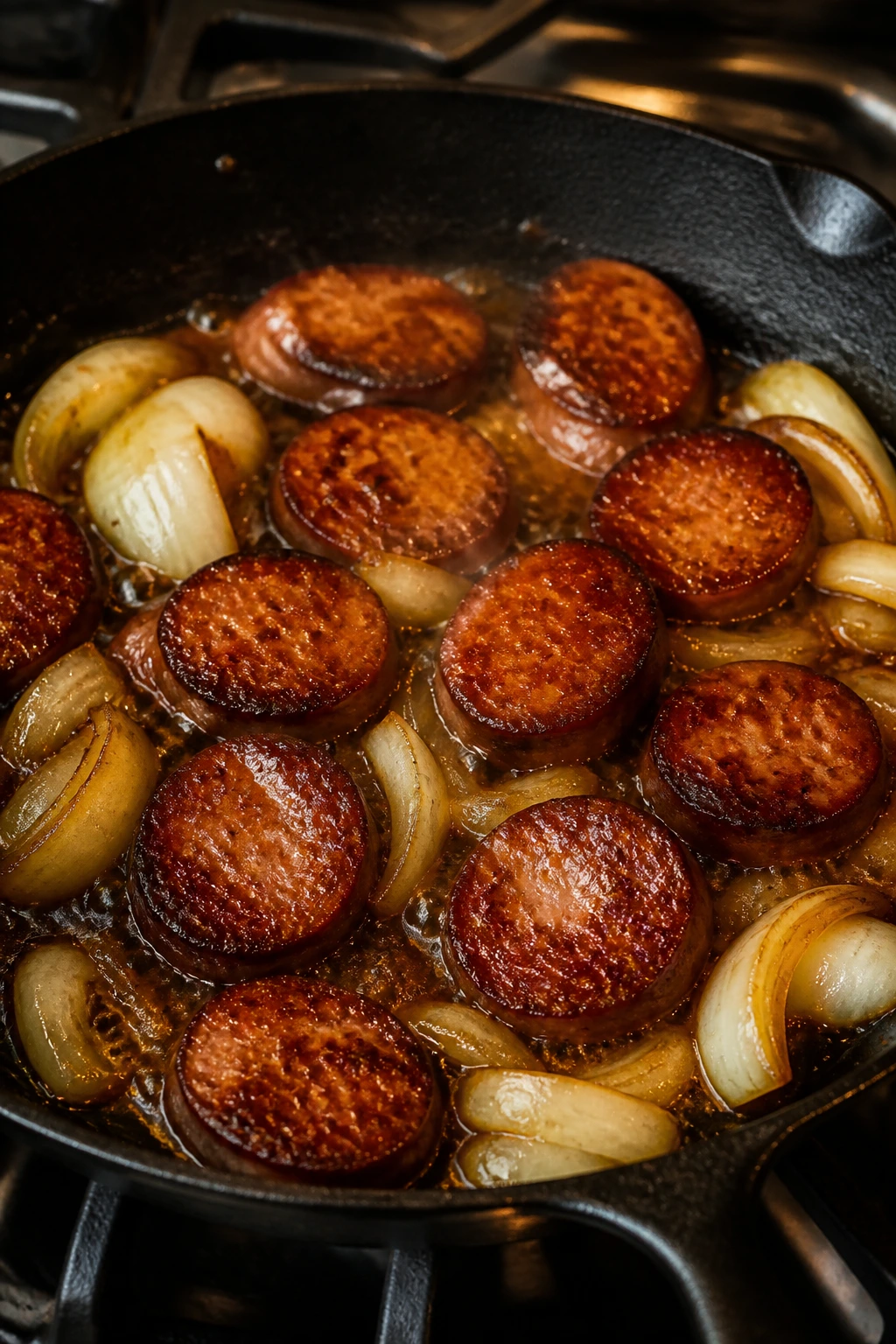
Add the sausage slices in a single layer. Leave them alone for 2 to 3 minutes so the first side develops a deep golden-brown edge. Flip and brown the other side for another 2 minutes. Do not crowd the pan; if the slices are piled on top of each other, they’ll steam and the glaze won’t have the same flavor later.
-
Transfer the browned sausage to a plate, leaving the fat in the skillet. Add the onion wedges to the same pan and cook over medium heat for 4 to 5 minutes, stirring now and then, until the onions soften and pick up browned edges. Add the garlic and cook for 30 seconds, just until it smells sweet and no longer raw.
Build the Glaze:
-
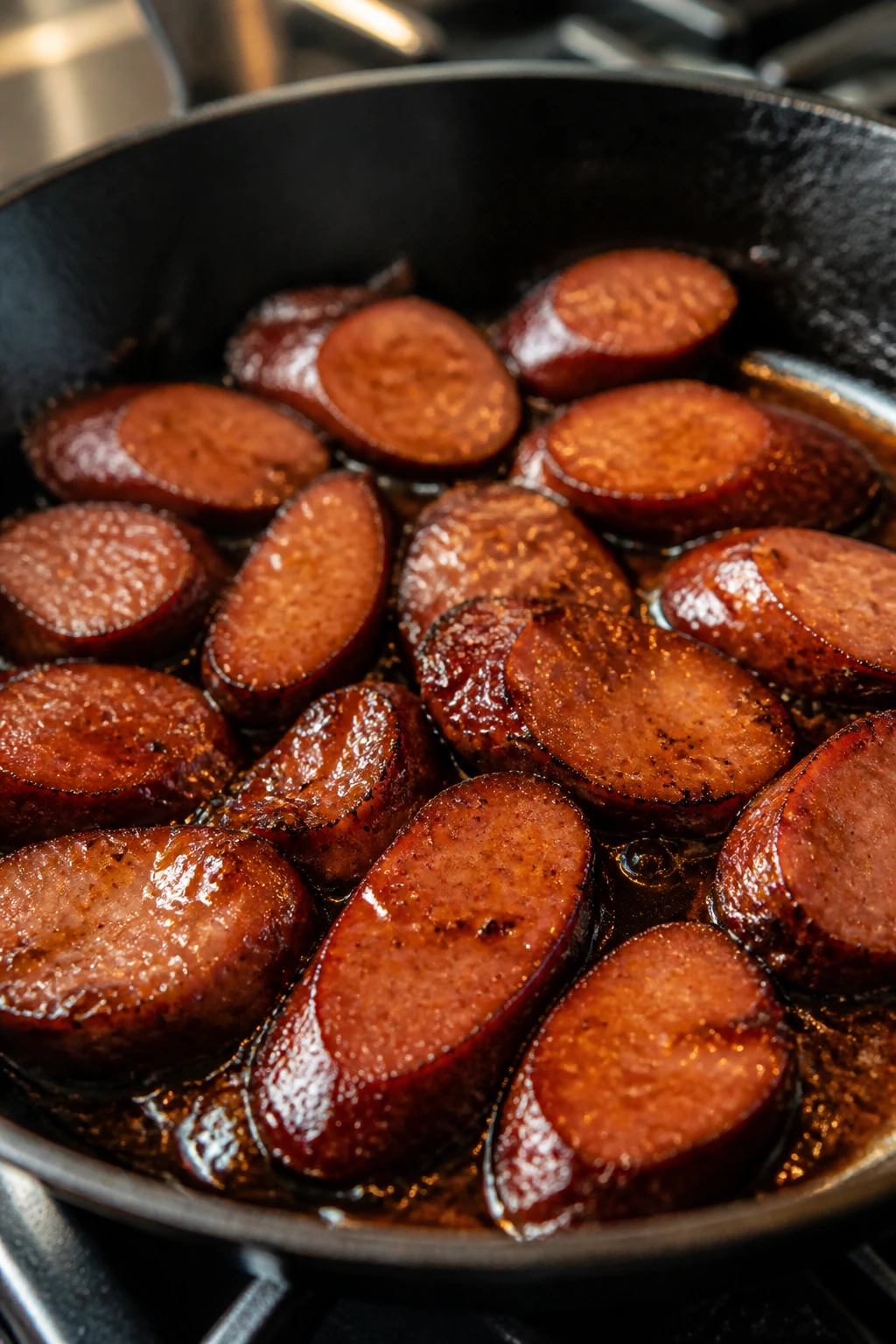
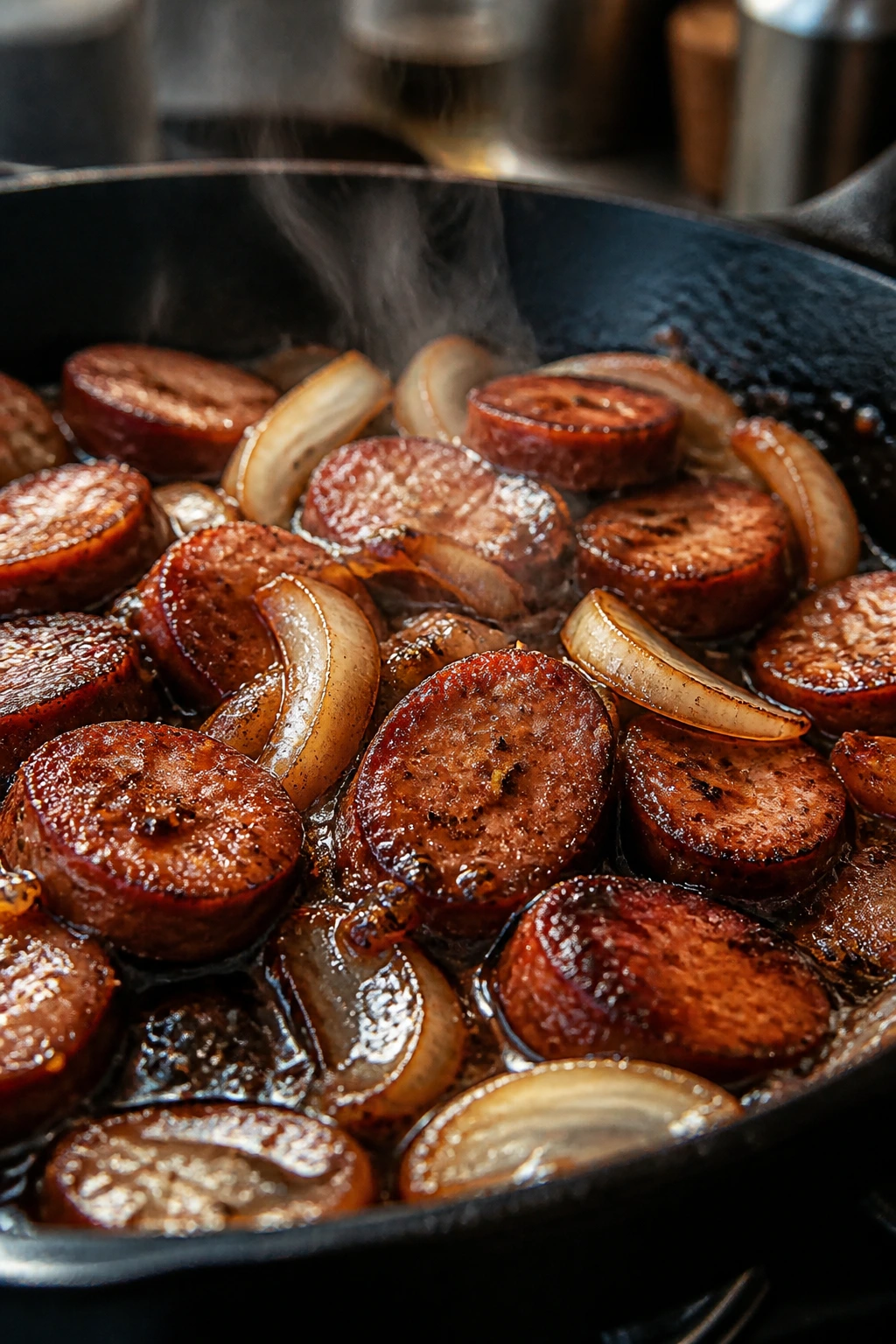
Pour the whisked glaze into the skillet and scrape the bottom with a wooden spoon to release the browned bits. Bring the mixture to a lively simmer over medium heat, then lower the heat a little and let it bubble for 2 to 4 minutes. The sauce should turn glossy and thick enough to coat the back of a spoon.
-
Return the sausage and any juices from the plate to the skillet. Toss gently so every slice gets coated, and simmer for 1 to 2 minutes more. The glaze should cling to the sausage and leave a shiny trail when you stir. If the glaze gets too thick, add 1 tablespoon water at a time until it loosens.
-
Take the skillet off the heat and let it sit for 2 minutes. Scatter the parsley over the top and serve while the glaze is still loose and warm. That brief rest helps the sauce settle without turning sticky-pasty in the pan.
How I’d Serve It at the Table
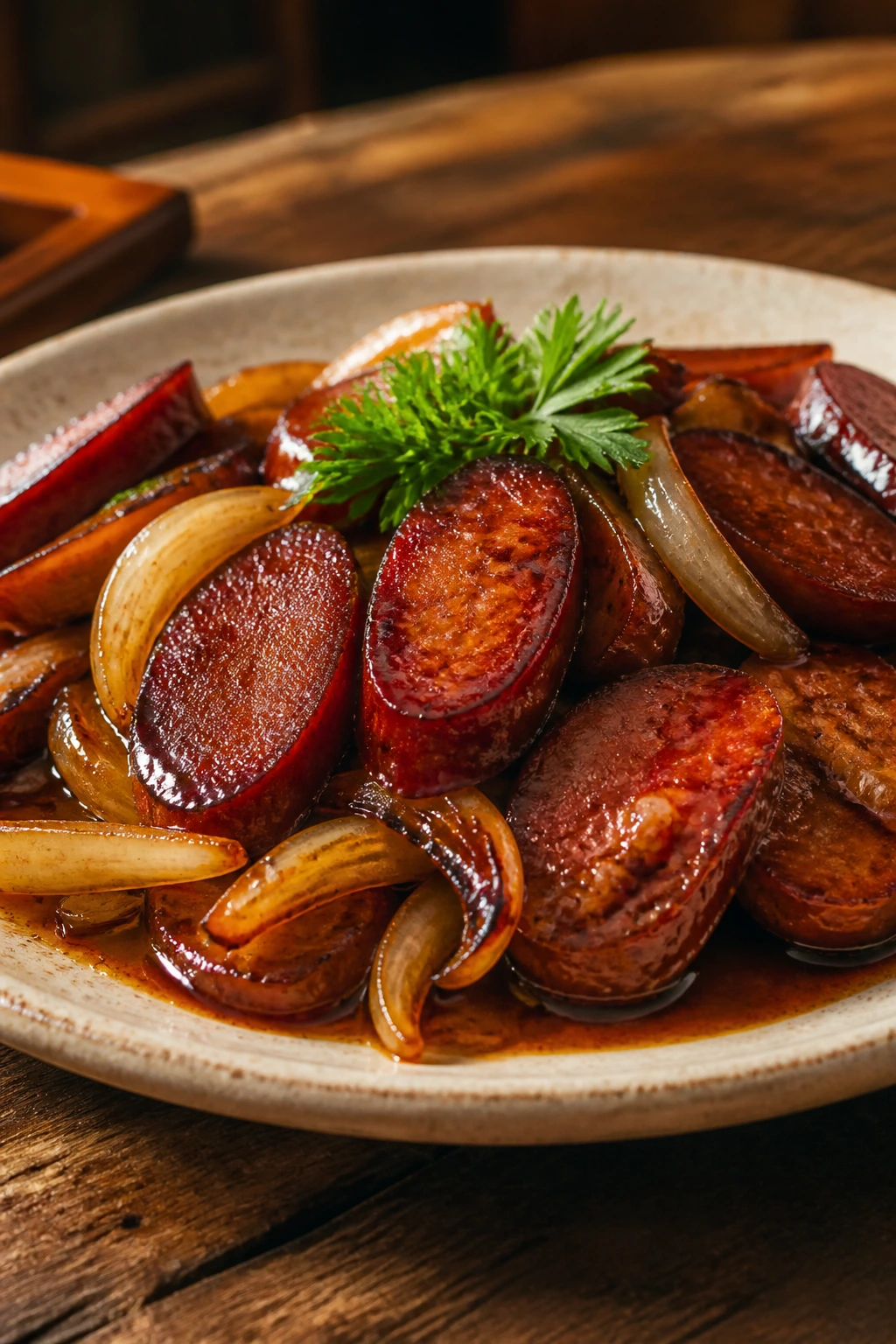
Presentation: Spoon the sausage and onion into a shallow platter or wide bowl so the glaze can pool around the edges without disappearing. I like to finish with the parsley at the very end, after the plate is full, because the green looks sharper against the dark lacquer of the sauce.
Accompaniments: Mashed potatoes are the obvious choice, and I mean that in the best way. Buttered egg noodles, roasted baby potatoes, plain rice, braised cabbage, or a thick slice of rye bread all make sense here because they catch the glaze instead of competing with it. A sharp side salad with mustardy dressing also helps if you want something crisp next to the pork.
Portions: As a main dish, figure about 1/3 to 1/2 pound of sausage per person with sides. As an appetizer, two to three slices per guest is enough if you’re serving toothpicks and something starchy on the side. If you’re feeding hungrier eaters, make the potatoes do part of the work.
Beverage Pairing: A dry hard cider is the cleanest match because it repeats the apple note without making the plate sweeter. A light lager works too. If you want a nonalcoholic option, unsweetened iced tea with lemon cuts through the glaze in a way that keeps the second bite just as interesting as the first.
Small Upgrades That Matter More Than You’d Think
Flavor Enhancement: A teaspoon of whole-grain mustard stirred in at the very end adds little mustard seeds and a thicker mouthfeel. It doesn’t change the dish’s personality, but it does make the glaze taste more layered.
Time-Saver: Slice the sausage and onion ahead of time and mix the glaze in a jar. If you’ve already done that, the whole dish moves fast enough that you can cook it on the stove while the side dish finishes in the oven.
Texture Move: Brown the sausage in two batches if the skillet looks crowded. You’ll get darker edges and less gray surface. Those browned edges are worth the extra three minutes.
Serving Suggestions: A spoonful of sauerkraut on the side is excellent if you like a salty-sour hit with the pork. Chopped chives, dill, or a tiny pinch of flaky salt over the finished plate can wake the whole thing up. Use them sparingly. The glaze should still be the loud part.
Make-It-Yours: For a lighter plate, serve it with roasted cauliflower or cabbage instead of potatoes. For a more filling dinner, add boiled baby potatoes to the skillet during the last minute so they get lacquered in the glaze. And if you want a spicier version, a few extra red pepper flakes are better than dumping in hot sauce, which changes the sauce more than it improves it.
Mistakes That Turn a Good Pan Sauce Sour
-
Cranking the heat too high because sugar makes you nervous: The glaze can brown fast, and high heat makes the vinegar evaporate before the sauce gets glossy. If the pan starts snapping and the sugar smells sharp, back the heat down and keep the simmer gentle.
-
Crowding the sausage slices: When the pan is packed, the sausage steams instead of browning, and the glaze ends up pale and oily. Brown in batches if needed. It’s a small delay that changes the finished taste more than most shortcuts do.
-
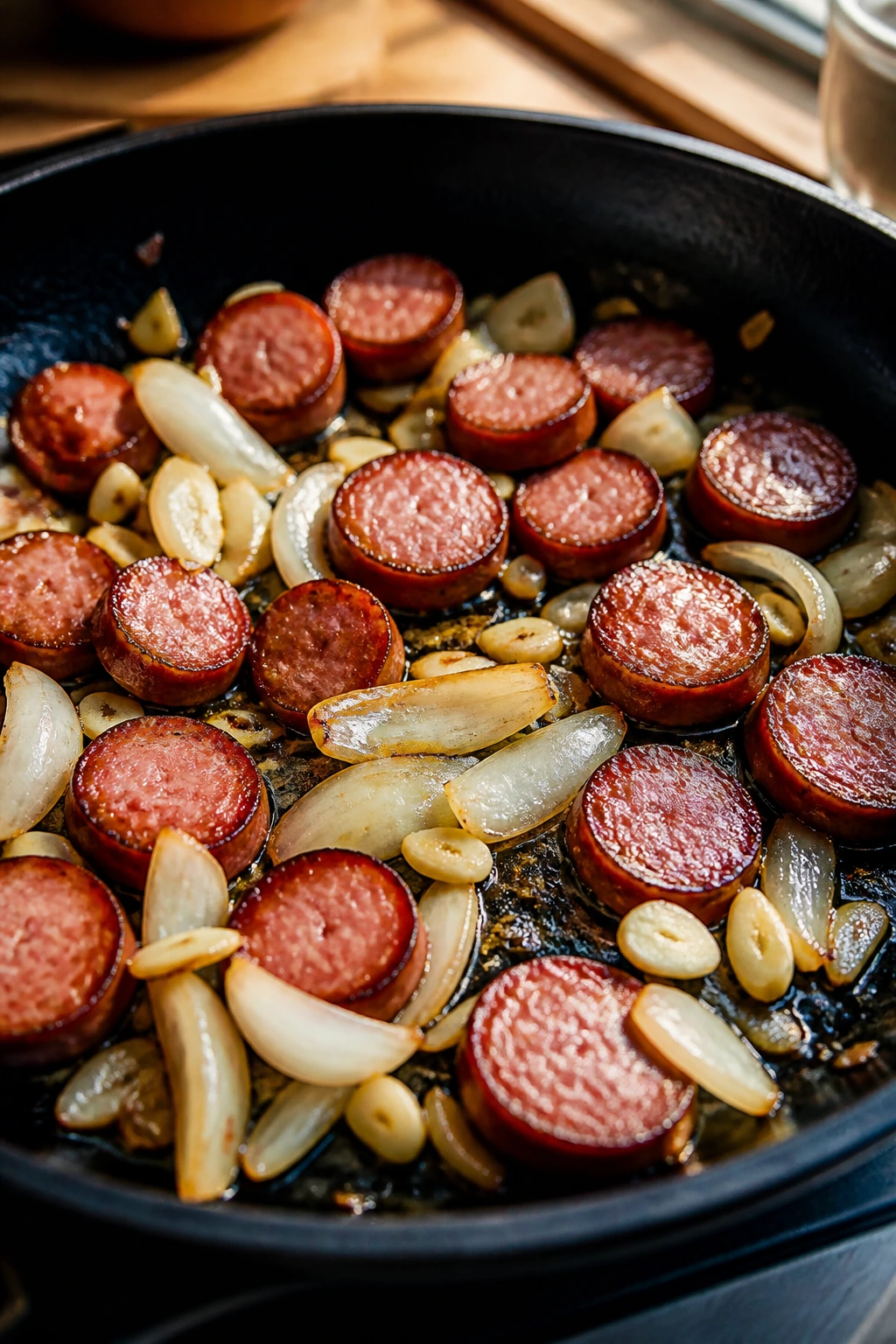
Adding garlic too early: Garlic burns quickly once the pan gets hot, and burnt garlic turns the whole glaze bitter. Let the onion cook first, then add garlic for the last 30 seconds before the glaze goes in.
-
Reducing the sauce until it turns sticky like candy: The glaze keeps thickening after it leaves the heat. Pull it when it still looks a little loose and glossy, not when it resembles taffy. If it gets too tight in the pan, a tablespoon of water loosens it fast.
-
Salting before tasting: Farmer sausage is already seasoned. A heavy hand with salt can make the glaze taste harsh instead of balanced, and there’s no easy fix once it’s in the pan. Taste the finished sauce first, then decide whether it needs a pinch.
-
Skipping the fond scraping: Those dark bits on the bottom are not burnt trash. They’re concentrated pork flavor. If you leave them behind, the glaze tastes thinner and more sugary than it should.
Variations That Still Taste Like This Dish
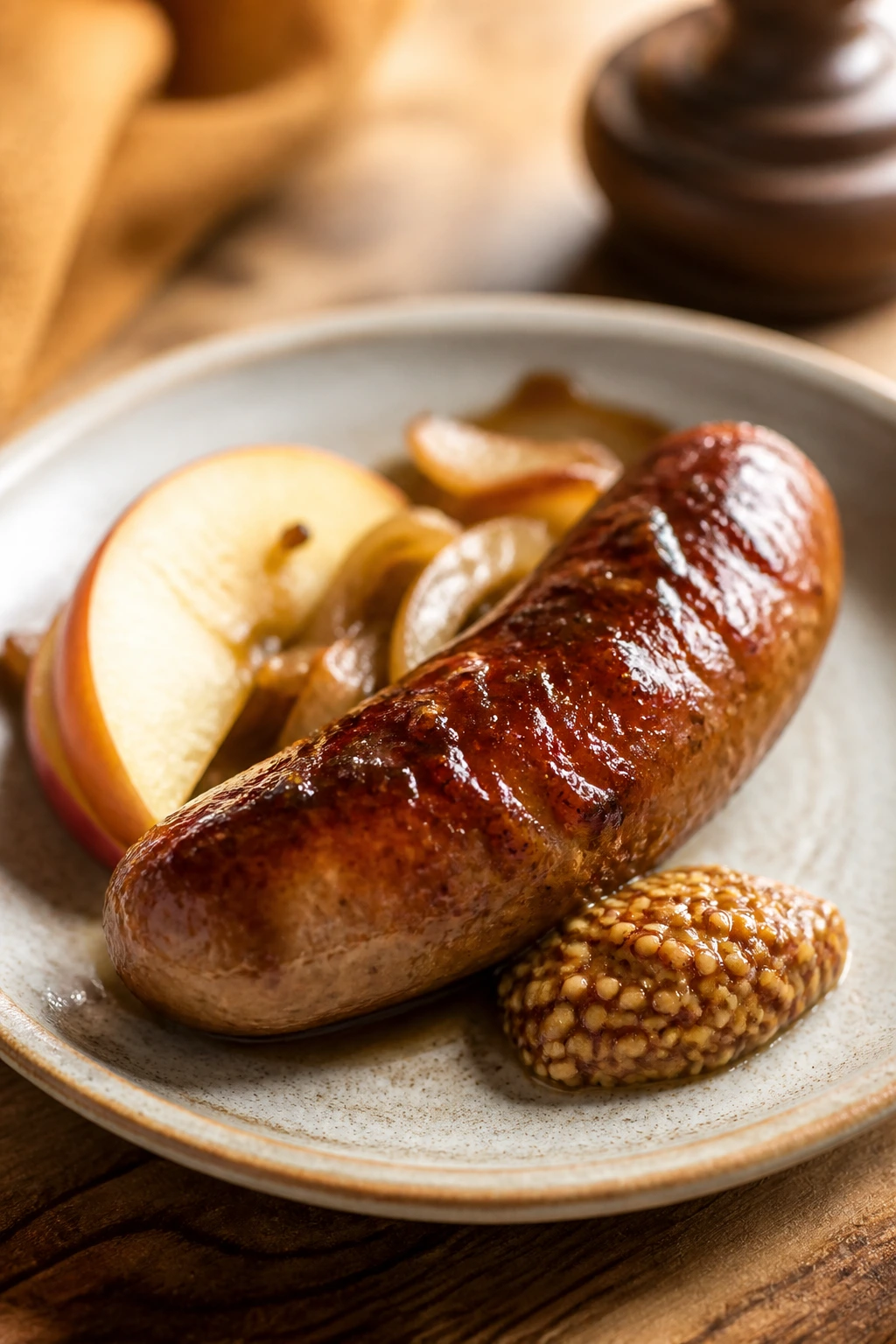
Mustard-Forward Skillet: Stir 1 extra tablespoon of Dijon into the glaze and finish with 1 teaspoon whole-grain mustard off the heat. The sauce gets sharper and slightly thicker, which is the direction I’d go if you’re serving the sausage with potatoes or cabbage.
Apple-Onion Version: Add 1 small apple, peeled and sliced thin, with the onions. The fruit softens in the pan and makes the glaze taste rounder without turning it into dessert. I like this one with rye bread or buttered noodles.
Heat-Laced Glaze: Increase the red pepper flakes to 1/2 teaspoon and add 1 teaspoon hot sauce to the whisked glaze. Keep the vinegar the same. The sweetness still shows up, but the finish lands with more sting, which works well if you’re serving this as an appetizer.
Cabbage Skillet Supper: After browning the sausage, add 3 cups shredded green cabbage with the onions and cook until it starts to wilt before the glaze goes in. The cabbage drinks up the sauce and turns the whole thing into a one-pan dinner that doesn’t need much else.
Breakfast Plate Turn: Serve the finished sausage beside fried eggs and hash browns, then spoon a little glaze over the potatoes instead of all of it over the meat. The salt-sweet contrast plays especially well in the morning, and the mustard keeps the plate from feeling heavy.
Keeping Leftovers Tender and Glossy
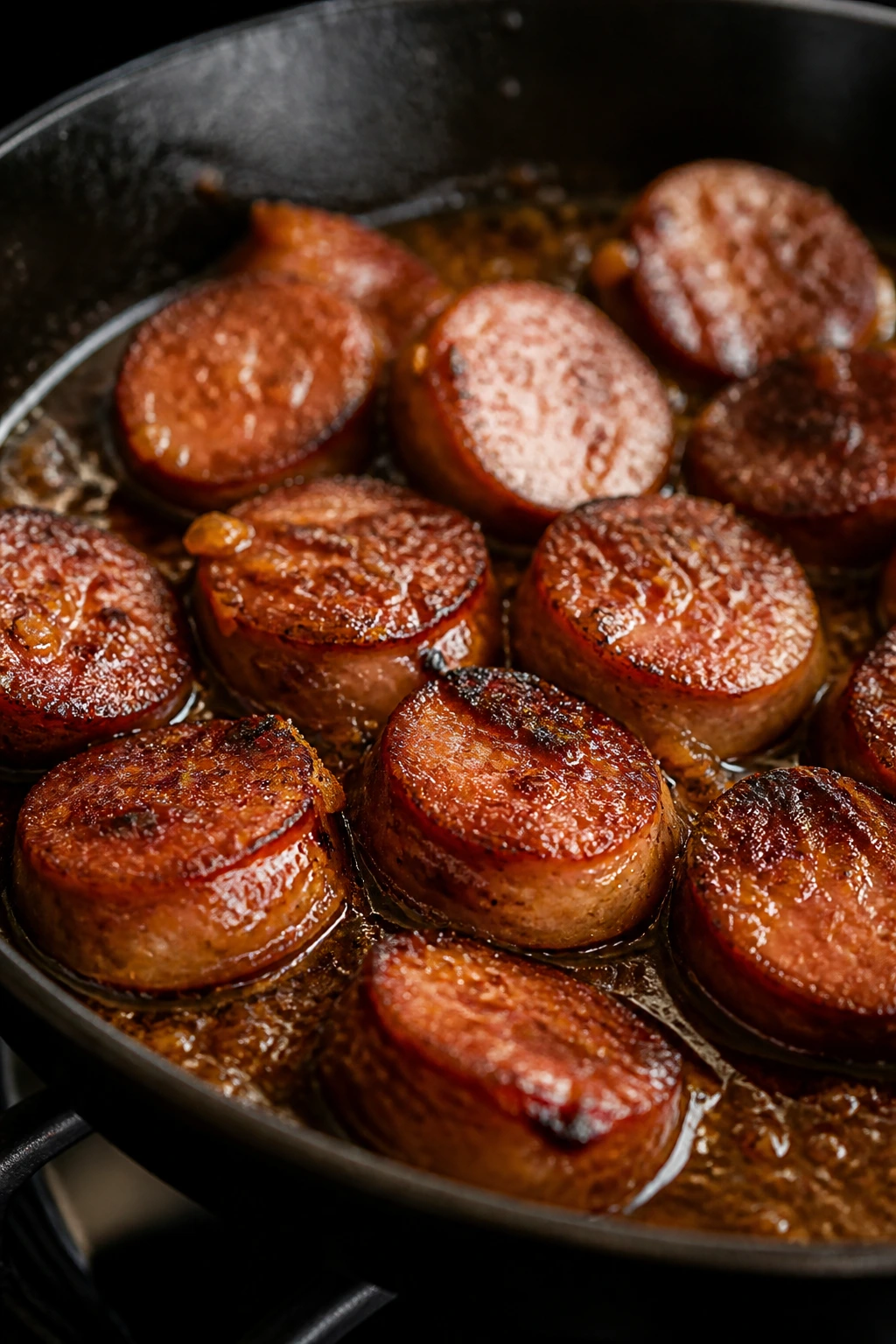
Farmer sausage keeps well, but the glaze needs a little care once it cools. Store leftovers in an airtight container within 2 hours of cooking, or within 1 hour if the room is warm. In the fridge, it will hold for 3 to 4 days. In the freezer, it keeps for up to 2 months, though the onion softens a bit after thawing.
I prefer storing the sausage and glaze together rather than separating them. The sauce protects the slices from drying out. Still, if you know you’re going to reheat only a small portion, spoon a little of the glaze over the top before sealing the container so the meat stays moist.
For reheating, the skillet beats the microwave. Warm the sausage in a covered skillet over low heat with 1 to 2 tablespoons of water, broth, or apple cider for 5 to 7 minutes, stirring once or twice until the glaze loosens and turns shiny again. If you use the microwave, do it in 30-second bursts and stop while the sauce still looks a little loose. Overheating makes the glaze tighten and the sausage edges toughen.
A make-ahead version works fine. You can whisk the glaze up to 3 days in advance, slice the onion a day ahead, and cut the sausage the same day if you want the cleanest edges. If you cook the entire dish ahead of time, pull it off the heat a touch early so the reheating doesn’t push the glaze too far.
Questions People Ask Before Making It
Can I use fresh farmer sausage instead of smoked sausage?
You can, but it changes the method enough that I wouldn’t use the recipe as written. Fresh sausage needs to cook all the way through to a safe internal temperature, which means slower heat and more attention so the outside doesn’t burn before the center is done. If you have fresh farmer sausage, brown it gently first, then finish it lower and longer before adding the glaze.
What if my glaze tastes too sweet?
Add another teaspoon of apple cider vinegar or a splash of Worcestershire and simmer for 20 to 30 seconds. That usually pulls the sauce back into balance without making it thin. If it still tastes heavy, a little black pepper or whole-grain mustard helps more than extra salt.
Can I make this in the oven instead of on the stove?
Yes, though I think the skillet version tastes better because you get more browned fond. For the oven, brown the sausage first, transfer it to a baking dish, pour the glaze over top, and bake at 375°F until bubbling and sticky, stirring once halfway through. It’s workable. It just won’t have the same pan flavor.
How do I keep the sauce from getting grainy?
Whisk the brown sugar into the vinegar and water before it goes into the hot skillet, and don’t let the sauce boil like crazy once it’s in the pan. Graininess usually comes from sugar crystals clinging to the sides or from cooking the glaze too hard. A gentle simmer solves most of it.
Can I double the recipe?
Absolutely, but use a wide skillet or two pans. If you try to cram double sausage into one small pan, the slices steam and the glaze turns muddy. Doubling the glaze works cleanly, though I’d taste it once before adding all of the second batch of vinegar, since some sausages bring more salt than others.
What sides work best if I don’t want potatoes?
Buttered cabbage, roasted carrots, rice, buttered noodles, and crusty bread all handle the glaze well. If you want something brighter, a vinegar-dressed green salad cuts through the pork and sugar in a way that keeps the plate from feeling heavy.
Can I freeze the leftovers?
Yes, up to 2 months in a freezer-safe container. Thaw it overnight in the refrigerator, then reheat it slowly in a skillet with a tablespoon of water. The onion softens a bit after freezing, but the flavor holds better than you might expect.
What if the glaze gets too thick before the sausage goes back in?
Add water 1 tablespoon at a time and stir over low heat until it loosens. Don’t panic and pour in a big splash all at once. You’re aiming for glossy and clingy, not soupy, and a little water goes farther than people think.
A Dish That Earns a Regular Spot
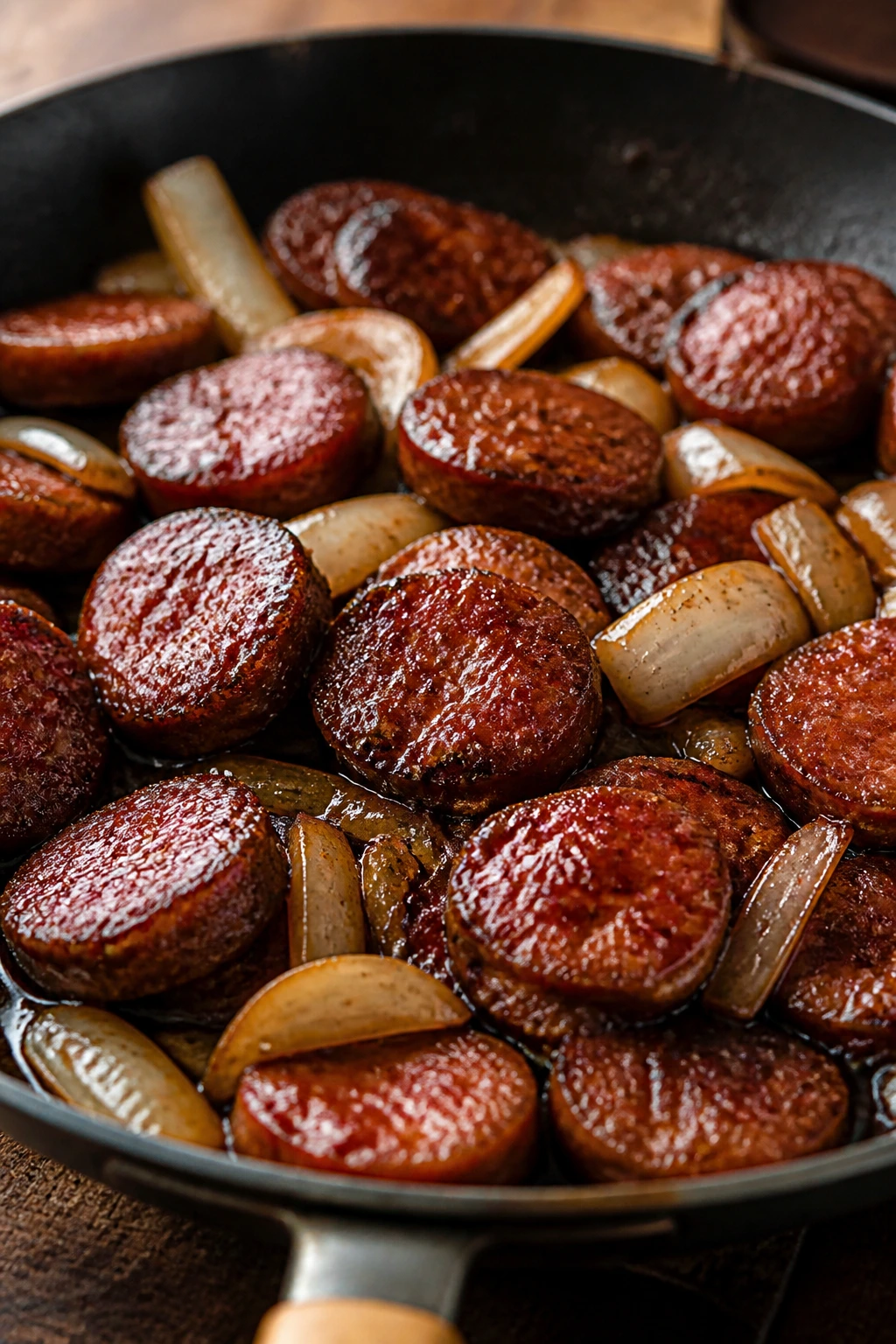
There’s a reason this kind of skillet dinner keeps showing up in old notebooks and clipped recipes. It uses a sausage that already knows how to be flavorful, then gives it a glaze that sharpens the edges instead of covering them up. That’s the whole trick, and it’s a good one.
What I like most is how quickly it settles into a meal. A plate of browned farmer sausage, onion, and brown sugar glaze doesn’t need much beside it. Potatoes, bread, cabbage, maybe a salad if you want balance — the rest is just deciding how sticky you want the plate to get.
Savory Farmer Sausage with Brown Sugar Glaze — Recipe Card
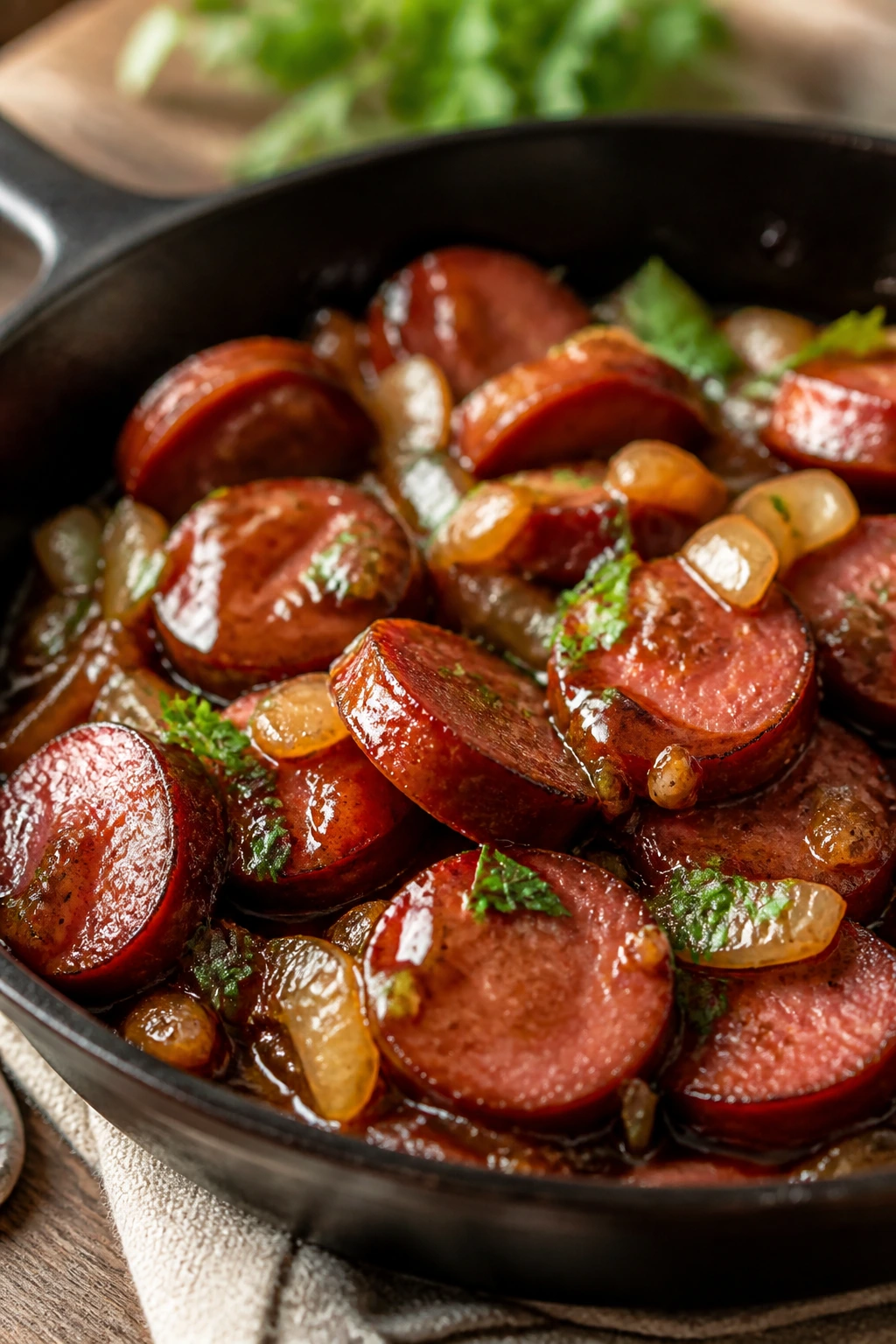
Recipe Name: Savory Farmer Sausage with Brown Sugar Glaze
Description: Sliced smoked farmer sausage is browned in butter and oil, then tossed with a tangy-sweet brown sugar glaze made with apple cider vinegar, Dijon mustard, and Worcestershire sauce. The finish is glossy, savory, and just sharp enough to keep the sweetness in check.
Prep Time: 10 minutes
Cook Time: 20 minutes
Total Time: 30 minutes
Course: Main Course, Dinner, Appetizer
Cuisine: American
Servings: 4 to 6 servings
Calories: About 430 kcal per serving
Ingredients
For the Sausage and Glaze:
- 1 1/2 pounds smoked farmer sausage, cut into 1/2-inch rounds or thick half-moons
- 1 tablespoon olive oil
- 2 tablespoons unsalted butter
- 1 medium yellow onion, cut into thin wedges
- 2 cloves garlic, minced
- 1/2 cup packed light brown sugar
- 1/4 cup apple cider vinegar
- 1/4 cup water
- 2 tablespoons Dijon mustard
- 1 tablespoon Worcestershire sauce
- 1/2 teaspoon freshly ground black pepper
- 1/4 teaspoon smoked paprika
- 1/4 teaspoon crushed red pepper flakes, optional
- 1 tablespoon chopped fresh parsley, for finishing
Instructions
-
Slice the sausage, onion, and garlic before heating the pan.
-
Whisk together the brown sugar, apple cider vinegar, water, Dijon mustard, Worcestershire sauce, black pepper, smoked paprika, and red pepper flakes, if using.
-
Heat the olive oil and butter in a large skillet over medium-high heat until shimmering.
-
Add the sausage in a single layer and brown for 2 to 3 minutes per side. Transfer to a plate.
-
Add the onion to the skillet and cook over medium heat for 4 to 5 minutes, until softened and lightly browned. Add the garlic and cook for 30 seconds.
-
Pour in the glaze mixture and scrape up the browned bits from the bottom of the skillet. Simmer for 2 to 4 minutes, until glossy and slightly thickened.
-
Return the sausage and any juices to the skillet and toss to coat. Simmer for 1 to 2 minutes more, until the glaze clings to the sausage.
-
Remove from the heat, rest for 2 minutes, and finish with parsley.
Notes:
If the glaze thickens too much, loosen it with 1 tablespoon water at a time. Serve warm over mashed potatoes, rice, cabbage, or bread. For a sharper finish, stir in a little extra Dijon at the end.