



A spiral-sliced ham gets interesting the moment the glaze hits the hot surface. The sugar loosens, the mustard sharpens, the smoked paprika fades in at the edges, and suddenly you’ve got something that smells like a holiday kitchen without the fussy parts. A smoky glazed ham with brown sugar glaze looks ornate on the table, but the actual work is mostly patience: warm it gently, brush on layers, and don’t let the oven bully the meat into dryness.
That last part matters more than most ham recipes admit. Ham is already cooked in most grocery-store versions, which means your job is not to “cook it through” so much as warm it without squeezing the moisture out. Push the heat too high and the brown sugar goes from lacquer to burnt caramel in a blink. Keep the oven calm, use a thermometer, and the slices stay plush while the glaze settles into the cuts instead of skating across the top.
What makes this version worth making is the balance. Brown sugar brings depth, honey gives shine, Dijon cuts the sweetness, and smoked paprika echoes the ham’s own cured, smoky flavor without making everything taste like a barbecue pit. The finished slices pull apart cleanly, the edges go sticky and dark, and the pan juices are good enough to spoon over mashed potatoes if you have the sense to save them.
Why This Ham Earns Its Place on the Table
It solves the dryness problem. A bone-in, spiral-cut ham keeps more moisture than a boneless one, and the sliced surface gives the glaze places to sink in instead of sitting there like syrup on a countertop.
The flavor is built in layers. Brown sugar gives sweetness, but the mustard and vinegar keep it from turning candy-like. That little bit of smoke from the paprika pulls the whole thing back toward savory.
It works with a low oven. At 325°F, the ham warms evenly and the glaze thickens without seizing. Higher heat sounds faster. It usually isn’t worth it.
Leftovers are not an afterthought. Cold slices hold up in sandwiches, chopped ham folds into eggs or beans, and the bone, if you’ve got one, still has work to do in soup.
The glaze is forgiving. If your brush stroke is uneven, the spiral cuts catch extra glaze where they need it. That’s one reason I prefer spiral-sliced hams here. They do some of the work for you.
It looks like more effort than it is. That’s not a gimmick. A glossy, burnished ham on a platter gets attention because the surface has shine and color, not because the method is complicated.
How the Brown Sugar Glaze Gets Its Smoky Edge
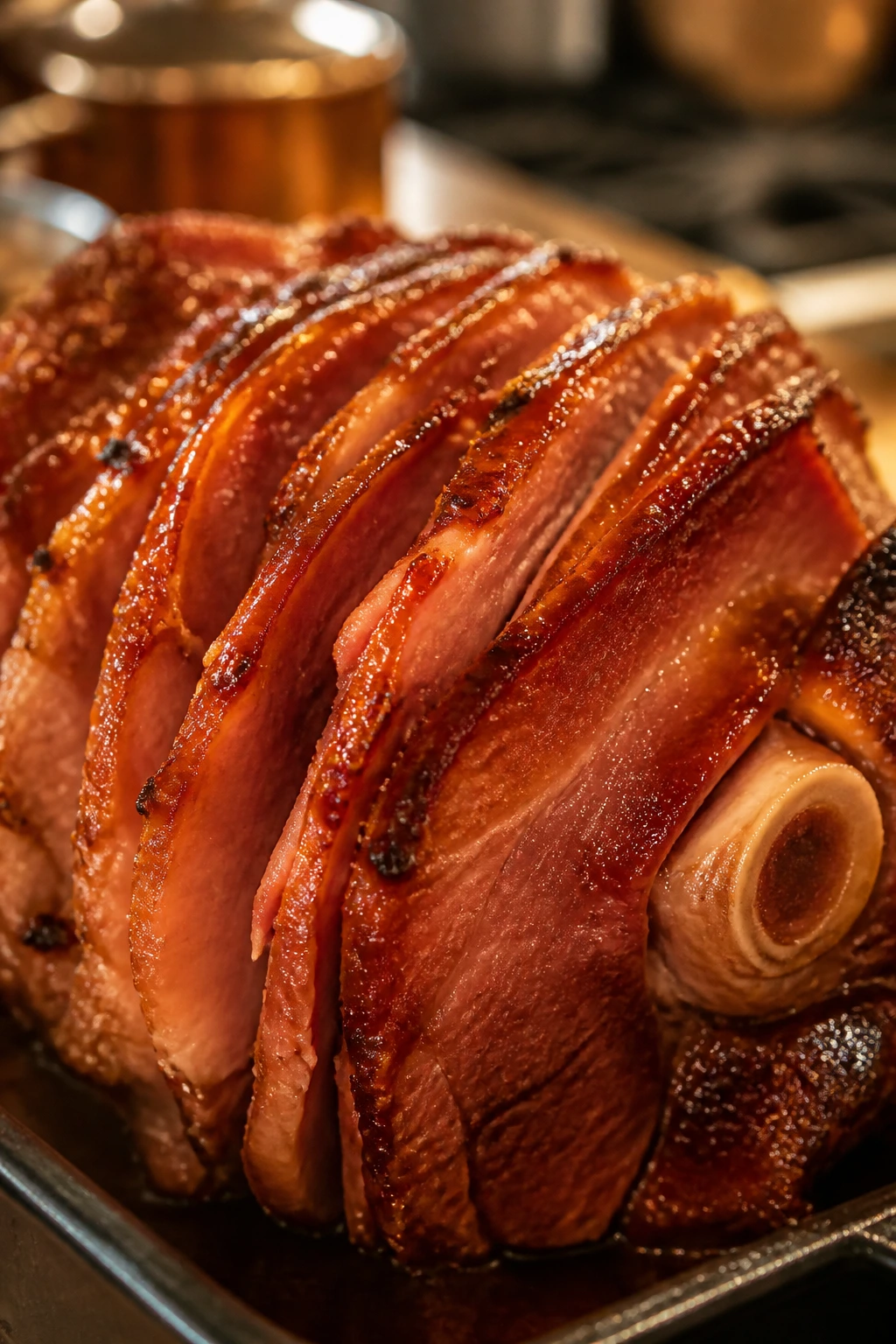
A good ham glaze should taste like a conversation, not a monologue. If it’s all sugar, it lands flat after three bites. If it’s all acid, it turns sharp and thin. The version I keep coming back to uses brown sugar as the base, then lets Dijon mustard, apple cider vinegar, and smoked paprika do the balancing work.
The smoke note matters because the ham already carries a cured, savory flavor. You do not need to pile on liquid smoke or force a barbecue identity onto it. A teaspoon or two of smoked paprika gives a rounded, woodsy edge that reads as smoke without tasting artificial. Ground cloves stay in the background, doing what they’ve always done on glazed ham: just enough perfume to make the kitchen smell like someone paid attention.
Brown sugar also behaves better than white sugar in this situation. The molasses in dark brown sugar keeps the glaze darker and a little softer on the tongue, which helps on a salty cut like ham. Honey adds gloss. Butter smooths out the sauce so it brushes on instead of clumping. And the vinegar? That’s the bit people sometimes leave out when they shouldn’t. It keeps the glaze from becoming sticky in a bad way.
This is also where the oven temperature starts to matter. Sugar begins to darken fast once it’s exposed to dry heat, so a steady 325°F gives you time to build layers. That’s the whole trick. Thin coats. Several passes. No panic.
A Quick Look at the Clock, Yield, and Temperature
Yield: Serves 12 to 16, depending on the size of the ham and how generous the carving hand gets.
Prep Time: 20 minutes
Cook Time: 1 hour 15 minutes to 2 hours 15 minutes, depending on ham size
Total Time: About 1 hour 35 minutes to 2 hours 35 minutes
Chill/Rest Time: 20 minutes resting after roasting
Difficulty: Beginner — the ham is already cooked, and the main skill is keeping the temperature low enough to warm it without drying it out.
Best Served: Warm from the oven, after a short rest, when the glaze is still tacky and the slices hold together cleanly.
Ingredients for the Ham and Brown Sugar Glaze
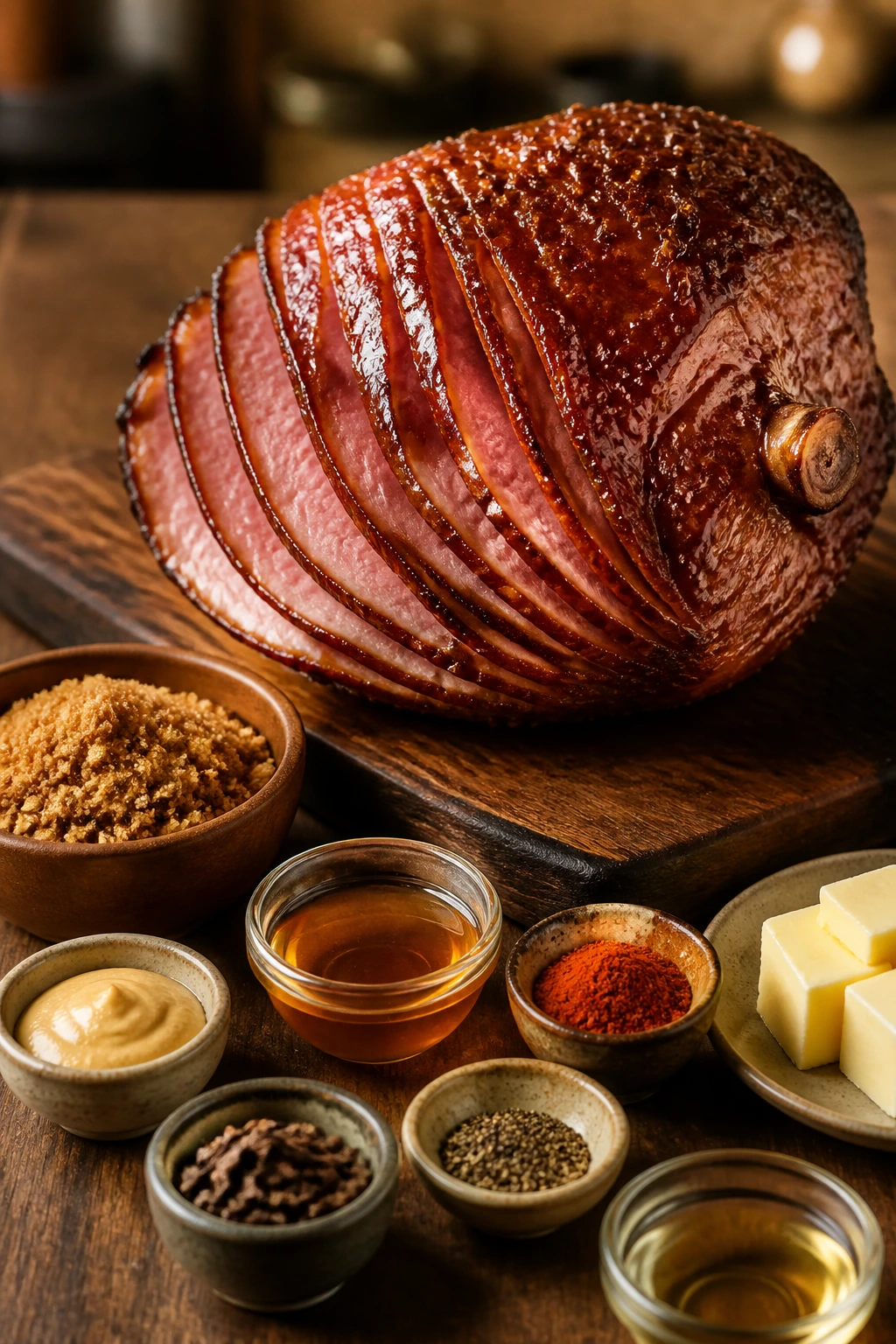
For the Ham:
- 1 bone-in, spiral-cut fully cooked ham, 8 to 10 pounds
- 1 cup apple cider or water, for the roasting pan
For the Smoky Brown Sugar Glaze:
- 1 cup packed dark brown sugar
- 1/2 cup honey
- 1/4 cup Dijon mustard
- 1/4 cup apple cider vinegar
- 2 tablespoons unsalted butter
- 2 teaspoons smoked paprika
- 1/2 teaspoon freshly ground black pepper
- 1/4 teaspoon ground cloves
- 2 tablespoons bourbon, optional
Why Each Ingredient Matters
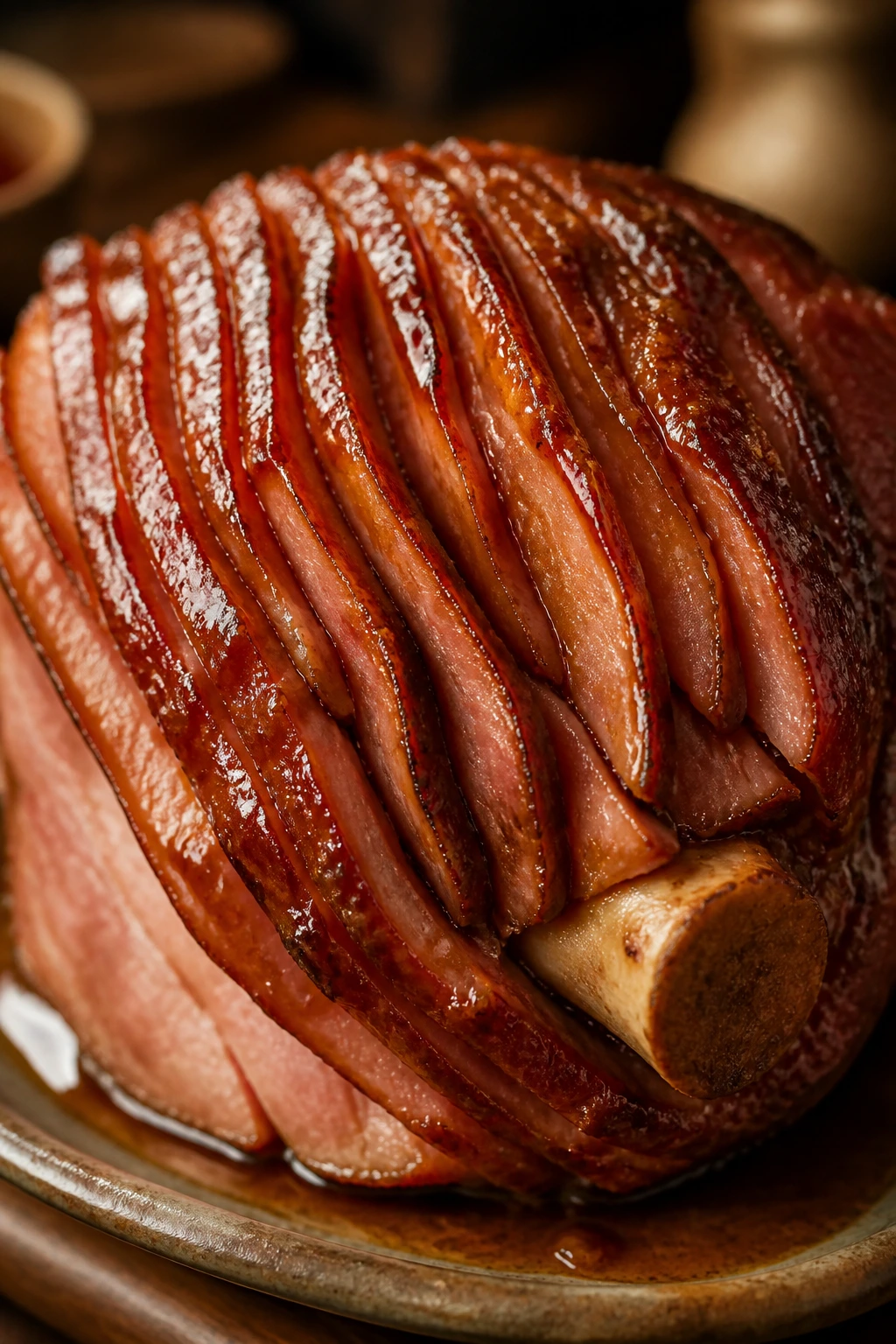
The Ham Itself
- What to use: 1 bone-in, spiral-cut fully cooked ham, 8 to 10 pounds.
- Preparation: Unwrap it fully, remove any plastic disk from the bone, and pat the exterior dry. If you buy a non-spiral ham, score the fat cap in shallow diamonds, about 1/4 inch deep.
- Substitutions: A boneless ham works if that’s what’s available, though it will warm faster and can dry out a little more quickly.
- Tips: Buy fully cooked ham for this recipe. A fresh ham needs a different roasting schedule and a different level of attention.
The Sweet-Savory Glaze Base
- What to use: 1 cup packed dark brown sugar, 1/2 cup honey, 1/4 cup Dijon mustard, 1/4 cup apple cider vinegar, and 2 tablespoons unsalted butter.
- Preparation: Whisk the glaze in a small saucepan and simmer it just until the sugar dissolves and the surface looks glossy.
- Substitutions: Maple syrup can replace honey, and whole-grain mustard can stand in for Dijon if you want more texture.
- Tips: Dark brown sugar gives the glaze a deeper molasses note. Light brown sugar works, but the flavor is thinner and the color is paler.
The Smoke and Spice
- What to use: 2 teaspoons smoked paprika, 1/2 teaspoon black pepper, and 1/4 teaspoon ground cloves.
- Preparation: Add the spices to the glaze before heating so they bloom and disperse evenly.
- Substitutions: Chipotle powder can replace some of the smoked paprika if you want a hotter, rougher edge. If cloves taste too old-fashioned to you, leave them out.
- Tips: Go easy on the cloves. Too much reads like potpourri. A quarter teaspoon is enough to suggest warmth without taking over.
The Pan Liquid
- What to use: 1 cup apple cider or water.
- Preparation: Pour it into the bottom of the roasting pan around the ham, not over the glaze.
- Substitutions: Unsweetened apple juice can work if that’s what’s in the fridge. Dry white wine is also fine, though it changes the flavor profile a bit.
- Tips: The liquid keeps the drippings from scorching and gives you something worth spooning over the slices later.
The Equipment That Makes the Roast Easier
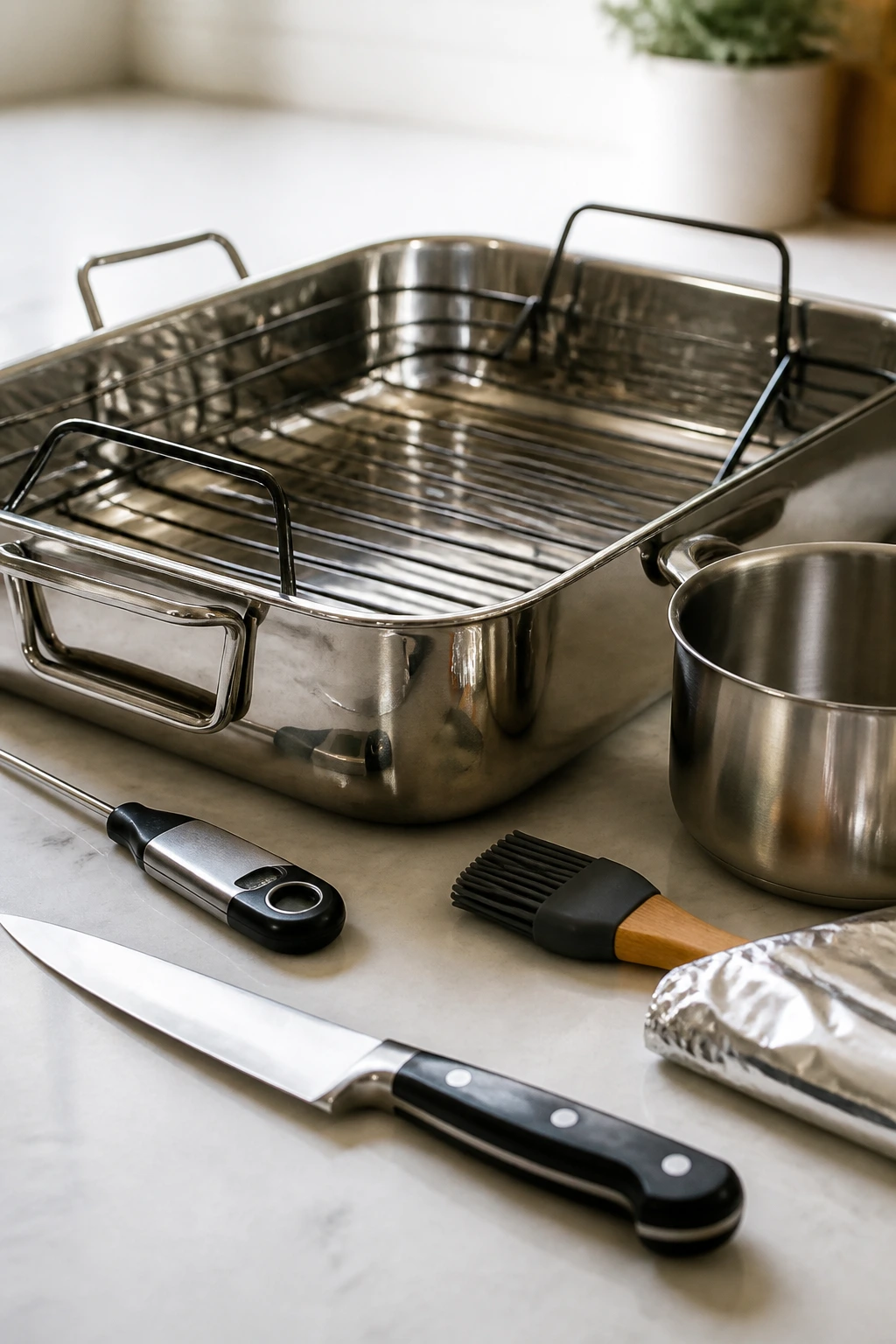
- Large roasting pan with a rack: Keeps the ham above the liquid so it heats without simmering in its own juices.
- Instant-read thermometer: The one tool here that actually tells the truth. Don’t guess.
- Small saucepan: Needed for the glaze. A wide skillet can work, but a saucepan is easier to control.
- Silicone pastry brush: Thick glaze clings to silicone better than to cheap bristles.
- Heavy-duty aluminum foil: Used for tenting the ham during the first part of roasting and for easier cleanup.
- Carving knife and fork: A long, sharp knife makes clean slices through the spiral cuts without shredding the meat.
How to Roast, Glaze, and Finish the Ham
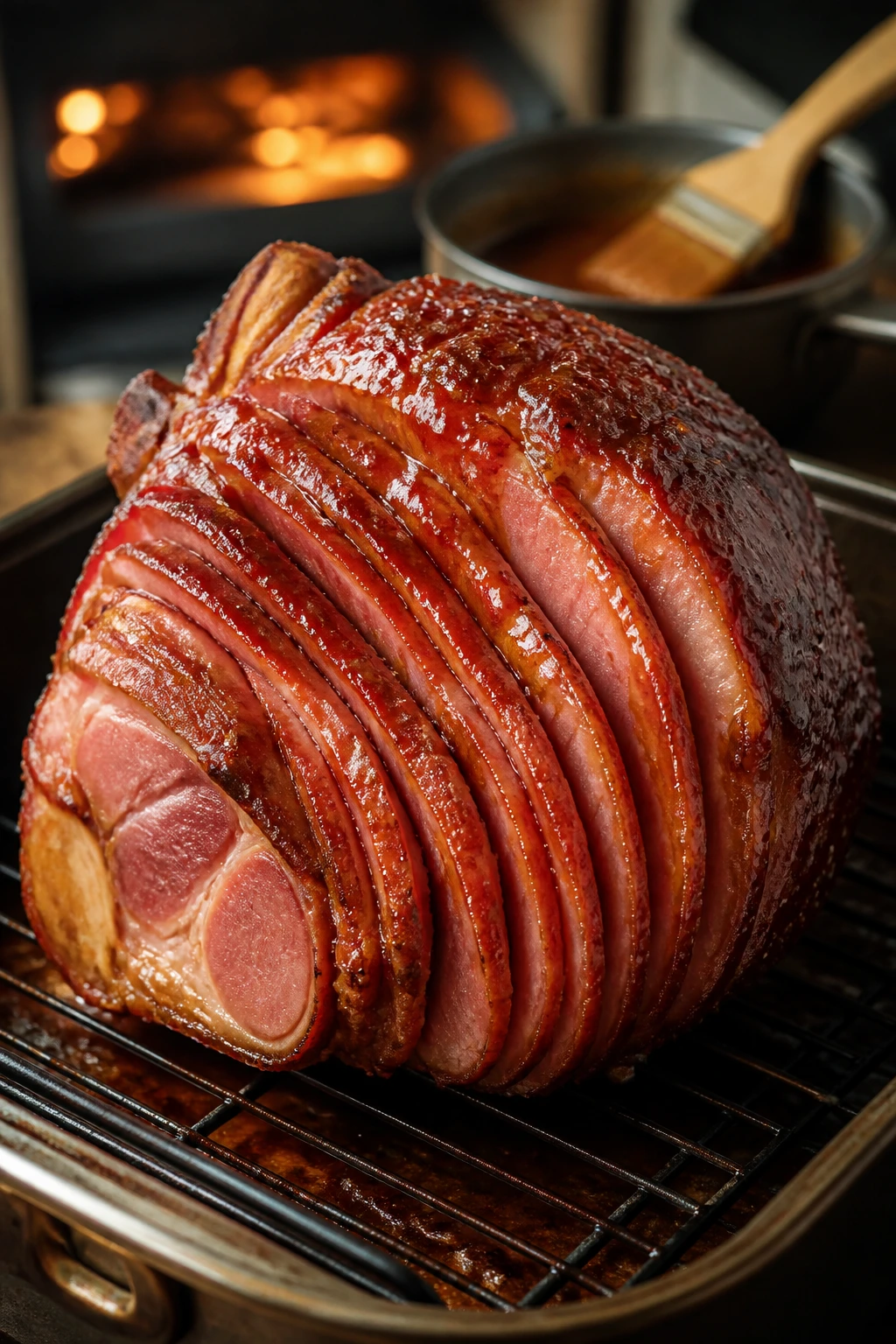
Prep the Ham and Pan
- Preheat the oven to 325°F (165°C) and position a rack in the lower third of the oven.
- Line a large roasting pan with foil if you want easier cleanup, then set a rack inside it.
- Remove the ham from its packaging, discard any plastic disk from the bone, and pat the surface dry with paper towels. If the ham is not spiral-cut, score the fat cap in shallow 1-inch diamonds.
- Place the ham cut-side down on the rack. Pour 1 cup apple cider or water into the bottom of the pan. Do not pour the liquid over the ham itself; you want steam in the pan, not washed-off glaze later.
Make the Glaze 5. Combine the brown sugar, honey, Dijon mustard, apple cider vinegar, butter, smoked paprika, black pepper, ground cloves, and bourbon, if using, in a small saucepan. 6. Set over medium heat and whisk for 3 to 4 minutes, until the sugar dissolves, the butter melts, and the glaze looks smooth and shiny. Do not boil hard — aggressive bubbling can make the sugar taste sharp and can thicken the glaze too fast.
Roast and Build the Shine 7. Cover the ham loosely with foil and roast for 45 to 60 minutes, depending on size, until it is warmed through and the internal temperature at the thickest part reaches about 110°F to 115°F. 8. Remove the foil and brush on a thin, even coat of glaze, working it between the spiral slices if the ham is pre-cut. Return the ham to the oven, uncovered, for 10 to 12 minutes. 9. Brush on another layer of glaze and roast for another 10 to 12 minutes. Repeat once or twice more, brushing thin coats each time, until the outside is deep amber, sticky, and lightly caramelized. The internal temperature should reach 140°F in the thickest part away from the bone. If the glaze darkens too quickly, tent loosely with foil for the last stretch.
Rest and Slice 10. Transfer the ham to a cutting board and rest it for 20 minutes. Skip this rest and the juices flood the board instead of staying in the meat. 11. Slice along the spiral cuts or, if the ham is unsliced, carve thin slices across the grain. Spoon a little pan juice over the meat before serving.
How to Serve It
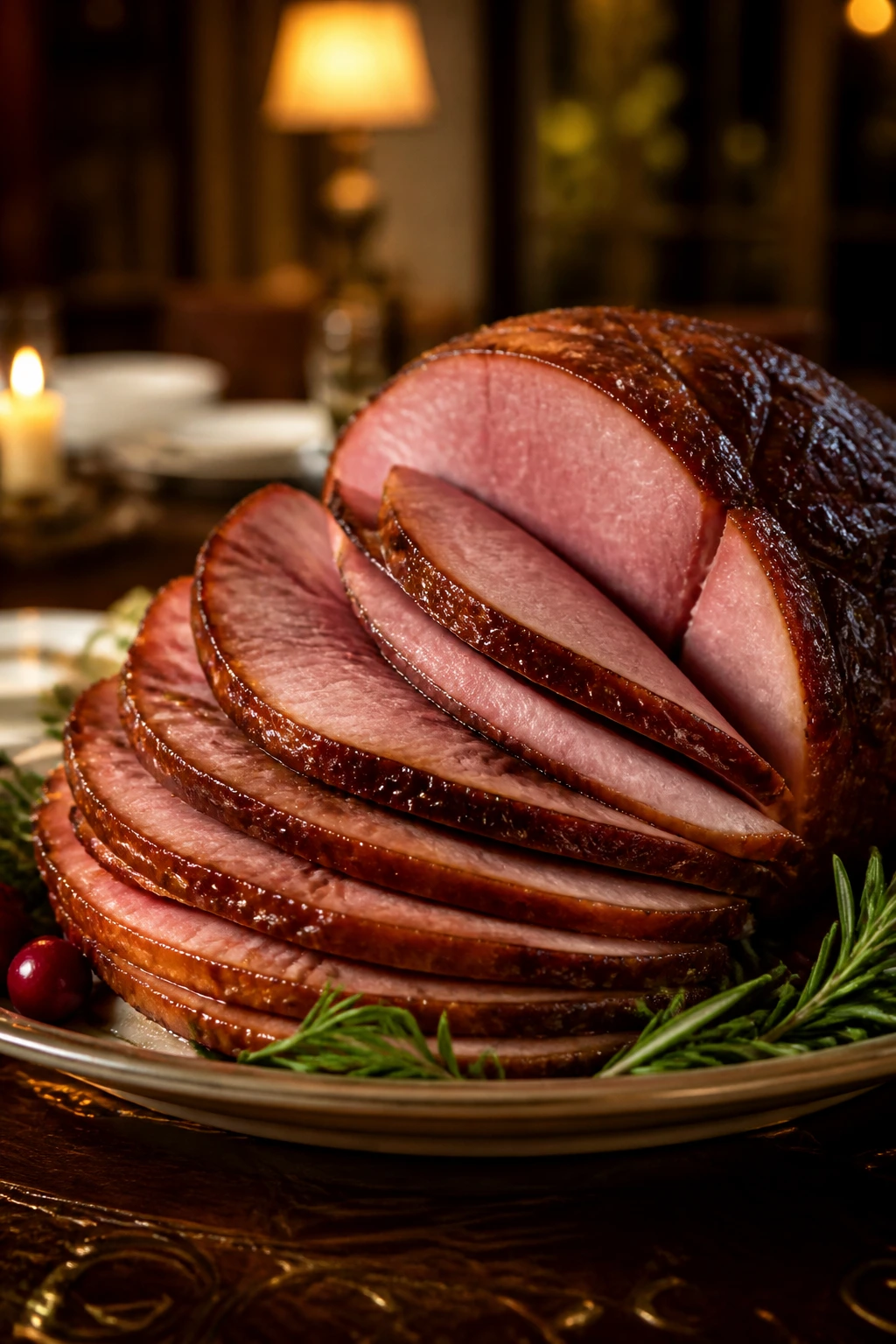
Presentation:
Pile the slices on a warm platter and nudge them slightly apart so the glossy edges show. A spoonful of pan juices over the top gives the whole thing a freshly glazed look, and it’s worth doing at the table if you want that dark, sticky finish to stay visible.
Accompaniments:
I like this with mashed potatoes, roasted carrots, and something green with bite — sautéed collards, green beans with garlic, or a mustardy cabbage slaw. Dinner rolls make sense here too, because people will want to mop up the glaze. Pickled onions or dill pickles cut through the richness without fighting the ham.
Portions:
An 8 to 10 pound bone-in ham feeds 12 to 16 people when it’s the main event. Figure about 3/4 pound per person if the group eats heartily or if you want leftovers for sandwiches. If the rest of the meal is large, 1/2 pound per person is usually enough.
Beverage Pairing:
Dry hard cider is the cleanest match. Amber beer or a light lager also works because both handle the sweet-salty glaze without turning syrupy. For a nonalcoholic option, cold unsweetened iced tea with lemon keeps the palate clear between bites.
Tips That Keep the Ham Juicy and the Glaze Glossy
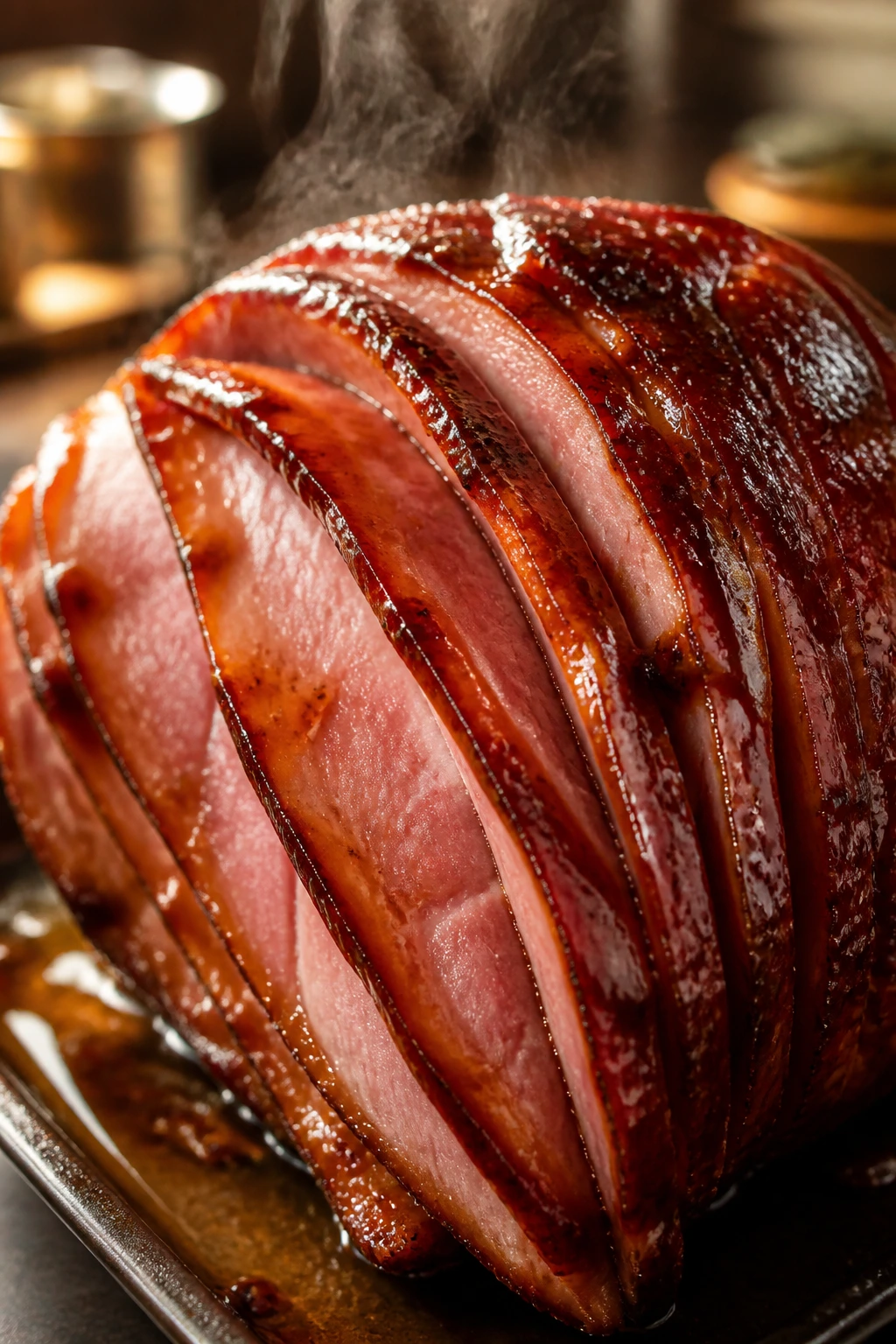
Flavor Enhancement: Save a few spoonfuls of the pan juices and stir them into the final brush of glaze. That little move gives the coating more savory depth and ties the crust to the meat underneath.
Time-Saver: Make the glaze up to 3 days ahead. Store it in the fridge and warm it gently in a saucepan or microwave until it loosens enough to brush. Cold glaze fights you; warm glaze spreads fast and thin.
Pro Move: If you’re using a spiral-cut ham, brush the glaze between a few of the outer slices with a pastry brush or a spoon. That’s where the flavor hides. The surface looks nice, sure, but the real payoff is inside the cut lines.
Cost-Saver: A shank-end ham usually costs less than a center-cut or butt-end piece and still gives you solid flavor, especially once the glaze is on. Save the bone for soup, bean pot, or collards. That’s not thrift for its own sake. It’s just smart cooking.
Make-It-Yours: If you want less sweetness, cut the honey back by 2 tablespoons and add another tablespoon of Dijon. If you want more warmth, add a pinch of cayenne or chipotle powder. Small changes matter here because the glaze is concentrated.
Common Mistakes to Avoid
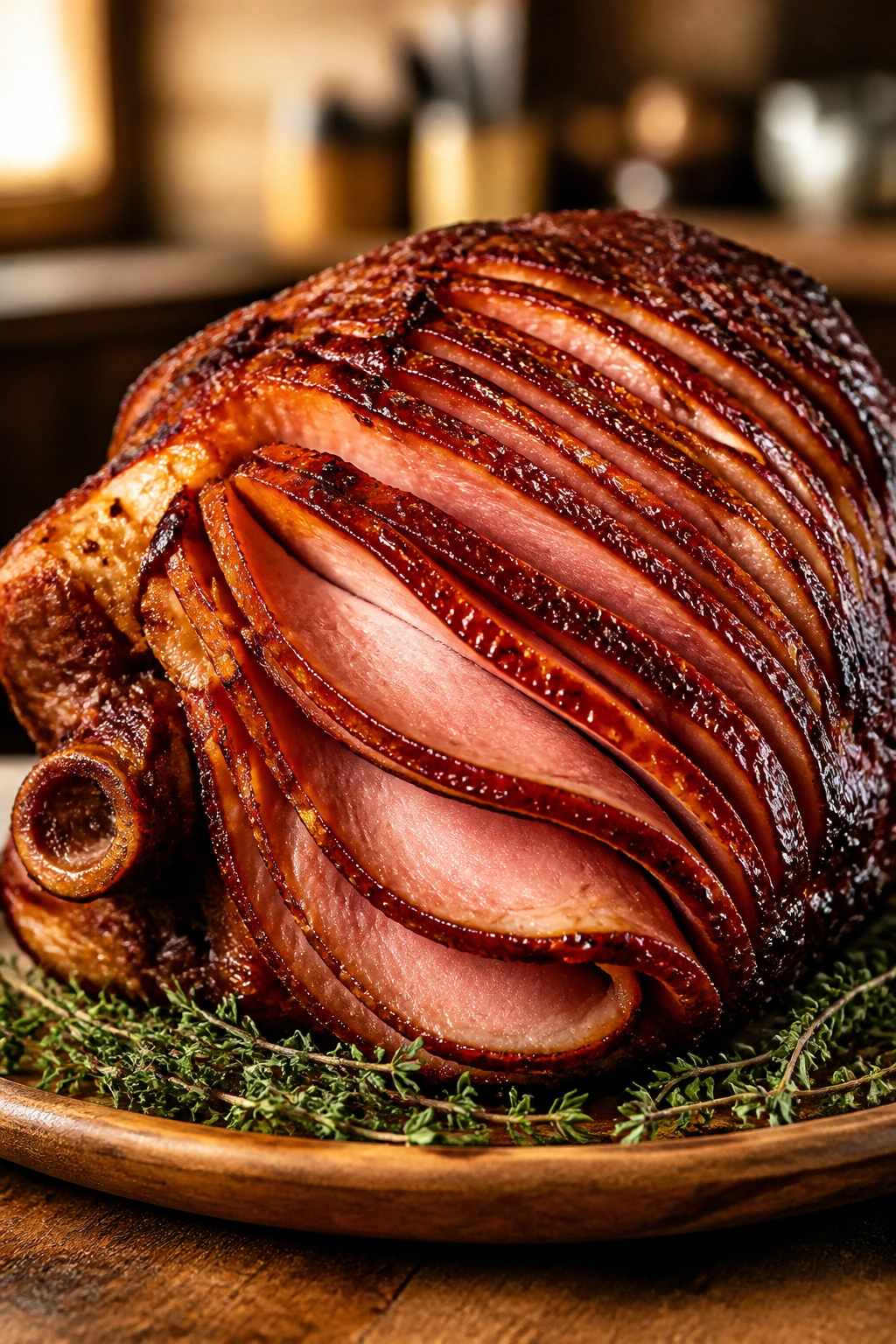
- Roasting it too hot. The surface browns before the center is warm, and the sugar can blacken on contact with dry heat. Keep the oven at 325°F and use the thermometer instead of trying to rush the process.
- Brushing on a thick glaze too early. A heavy coat at the beginning tends to scorch before the ham is ready. Wait until the ham is already warmed through, then build the finish in thin layers.
- Skipping the thermometer. The color of the glaze can fool you. A ham can look finished while the center is still cool, or the outside can darken while the inside is nowhere near 140°F.
- Forgetting the rest. Slice too early and the juices run out across the board. A 20-minute rest gives the fibers time to settle, which makes each slice cleaner and more moist.
- Using a salty add-in without thinking. Soy sauce, heavy broth, or extra salt can push an already cured ham into harsh territory. Acid, butter, and mustard do the balancing more cleanly.
Variations on the Same Ham
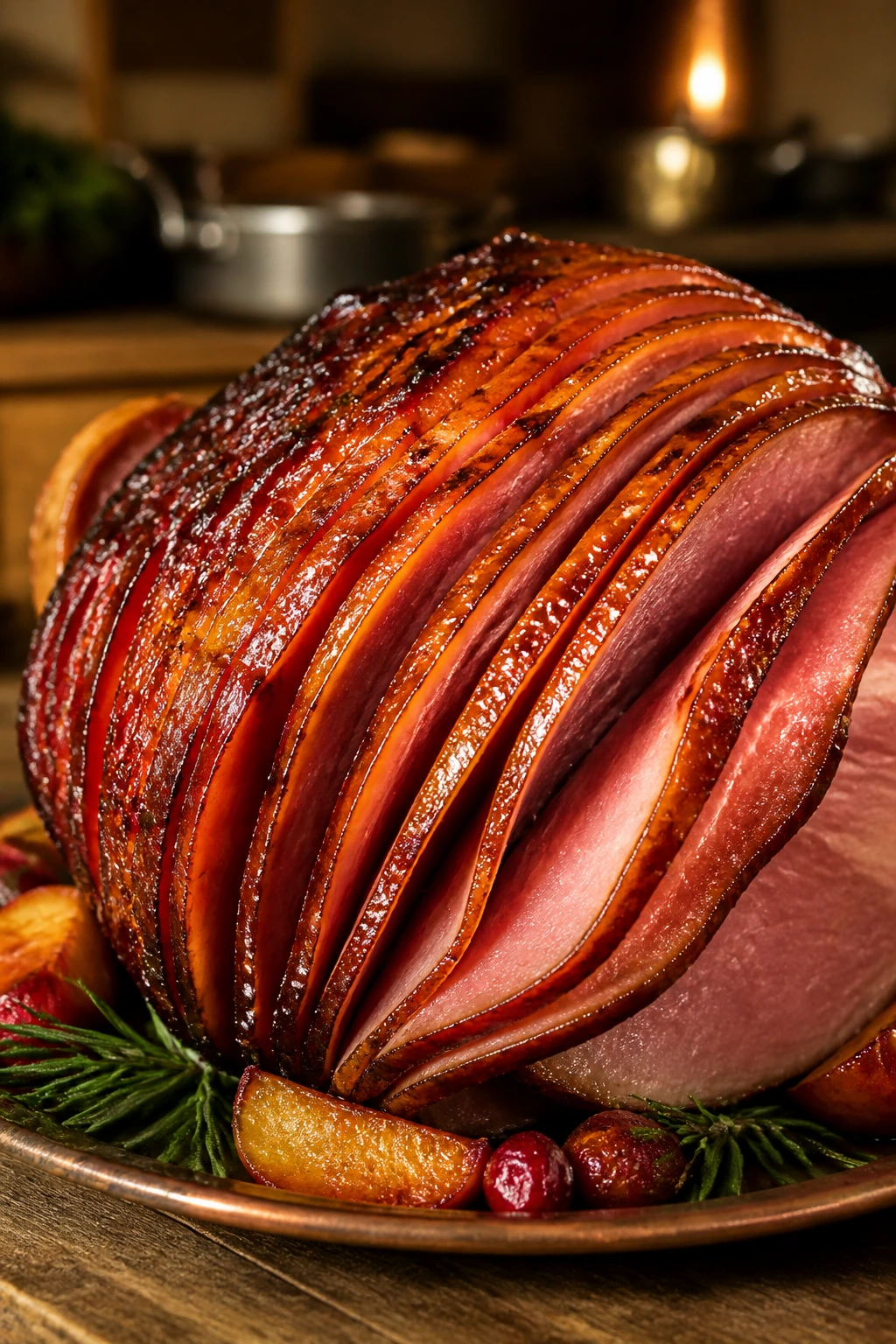
Bourbon Porch Ham
Replace the optional bourbon with 2 full tablespoons and let the glaze simmer an extra minute so the alcohol cooks off. The bourbon adds a faint oak note that works well if you’re serving the ham with cornbread, beans, or anything a little Southern and a little smoky.
Maple-Mustard Ham
Swap half the honey for pure maple syrup and use whole-grain mustard instead of Dijon. The result tastes less syrupy and has a deeper, rounder sweetness. I like this version when the ham is going to sit next to sharp greens or a tart apple salad.
Pineapple-Clove Ham
Replace the apple cider in the pan with pineapple juice and tuck a few pineapple rings onto the ham during the last 20 minutes of roasting. The fruit doesn’t make the dish taste tropical so much as bright and old-school in the best way. Go easy on the cloves here; pineapple already brings its own perfume.
Hot-Smoked Chipotle Ham
Add 1/2 teaspoon chipotle powder to the glaze and a pinch of cayenne if you want the finish to linger a little longer. The heat doesn’t need to be aggressive. It just needs enough edge to keep the sweetness from flattening out.
Make-Ahead, Storage, and Reheating
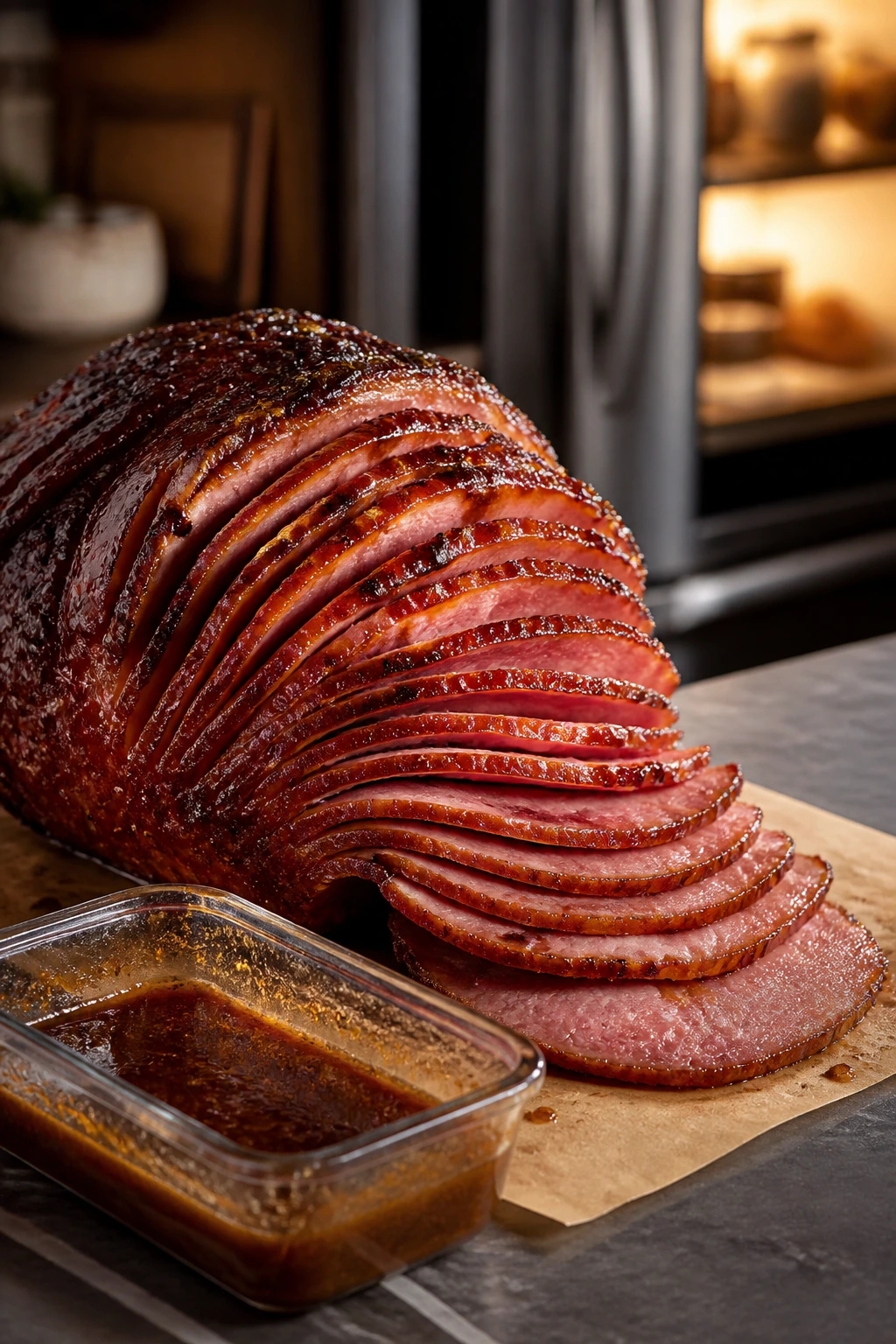
The glaze can be made up to 3 days ahead and refrigerated in a sealed container. Warm it over low heat before brushing so it spreads smoothly. If it cools into a paste, a tablespoon of water or cider will loosen it right back up.
Once the ham is cooked, let any leftovers cool for no more than 2 hours before packing them away. Sliced ham keeps in the refrigerator for 3 to 4 days in an airtight container. I like to tuck parchment between layers so the slices don’t fuse into one heavy brick in the fridge.
Freezing works too. Wrap portions tightly in plastic wrap or foil, then slip them into a freezer bag or container. The ham will keep for up to 2 months with decent texture, and the leftovers are easier to use if you freeze them in small packs rather than one giant slab.
For reheating slices, I prefer a covered skillet over low heat with 1 to 2 tablespoons of cider, water, or pan juices. Two or three minutes is often enough for a few slices. If you’re reheating a larger portion, cover it with foil and warm it in a 300°F oven until the center reaches 140°F again. The microwave works in a pinch, but use 50 percent power and stop as soon as the slices are warm so they don’t seize up.
Leftover ham often tastes even better the next day in sandwiches, omelets, split pea soup, or a pan of scalloped potatoes. The glaze softens overnight, which is not a flaw. It’s part of the bargain.
Questions People Ask Before the Ham Goes in the Oven

Can I use a boneless ham instead of a bone-in one?
Yes, but expect it to heat faster and dry out a little more easily. Trim the glaze coats thinner and check the temperature earlier, since boneless hams move from warm to overdone faster than a bone-in cut.
Do I need to score a spiral ham?
Usually no. Spiral slicing already gives the glaze channels to run into. If the ham isn’t pre-sliced, score the surface in shallow diamonds so the glaze has somewhere to cling.
What if my glaze turns grainy in the saucepan?
Whisk in 1 to 2 tablespoons of hot water or cider and keep the heat low. Graininess usually means the sugar got too hot too fast, so next time pull the pan off the burner the second the butter melts and the sugar dissolves.
Can I make this without bourbon?
Absolutely. Leave it out and the glaze still works because the brown sugar, mustard, vinegar, and smoked paprika are doing the heavy lifting. If you want a little extra warmth, use a splash of apple cider instead.
How do I keep the ham from drying out?
Use a low oven, cover it for the first stretch, and pull it when the thermometer reads 140°F in the thickest spot. Resting matters too. A good rest keeps the slices moist enough that you don’t need to drown them in glaze.
What should I do if the outside is dark before the center is warm?
Tent the ham loosely with foil and keep going at 325°F. That lets the center catch up without burning the glaze you already built. It’s a simple fix, and it works better than trying to crank the heat lower and hoping for the best.
Can I warm leftovers in the air fryer?
Yes, for slices only. Put them in a single layer at a low setting, around 300°F, for a few minutes with a light brush of glaze or a damp paper towel over the top if your air fryer allows it. The goal is warm and glossy, not crisped into leather.
A Ham Worth Repeating
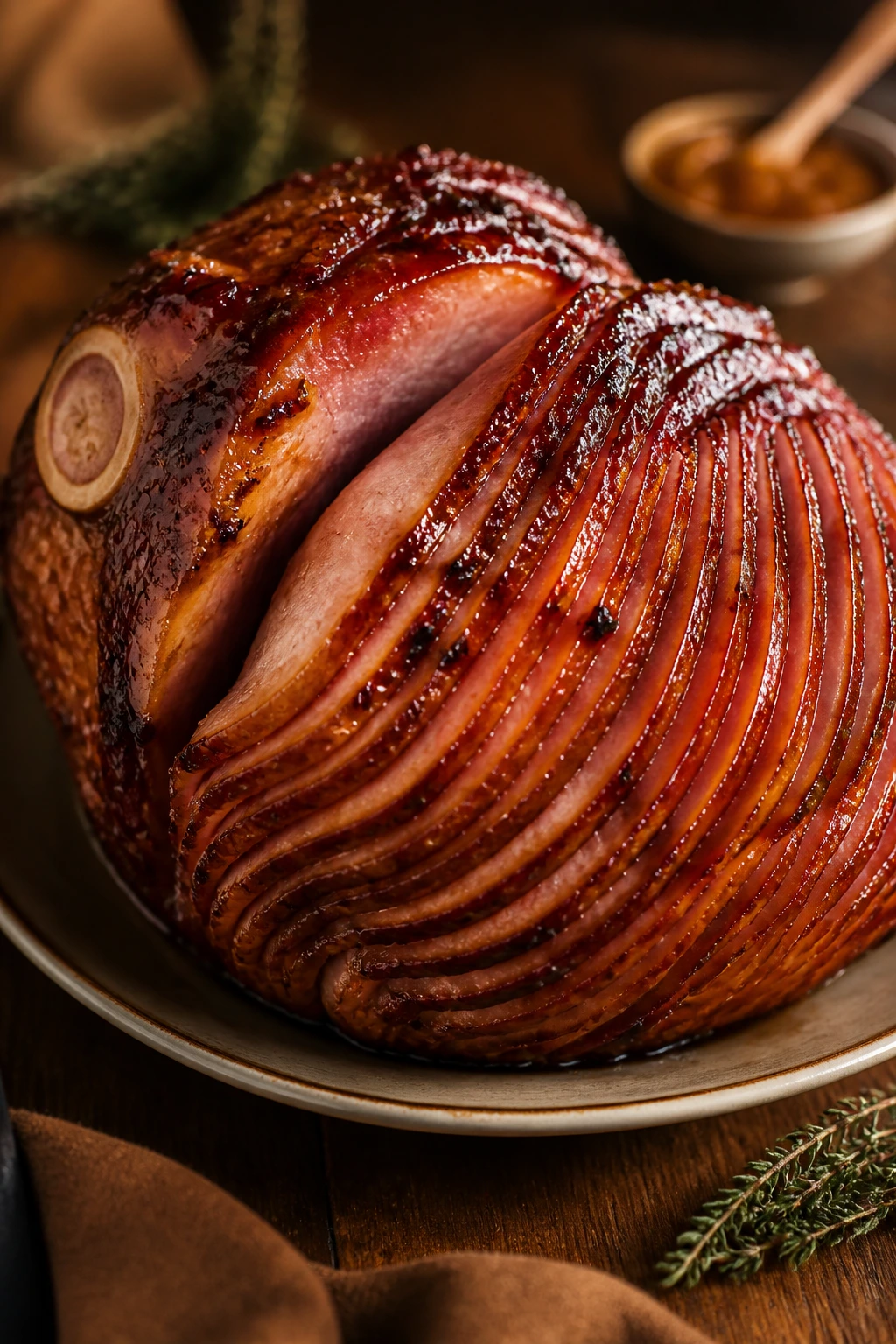
A good glazed ham should do two things at once: feed a crowd without fuss and taste like you paid attention. This one manages both because it respects the ham itself. The oven stays low, the glaze goes on in thin layers, and the smoke note stays in the background where it belongs.
That’s the part I like most. The ingredients are familiar, but the finished flavor has enough depth to keep the slices interesting from the first platter to the last sandwich. If you set this on the table with something green, something starchy, and a sharp little pickle on the side, nobody is going to ask whether dinner was complicated. They’ll be too busy reaching for another slice.
Smoky Glazed Ham with Brown Sugar Glaze — Recipe Card
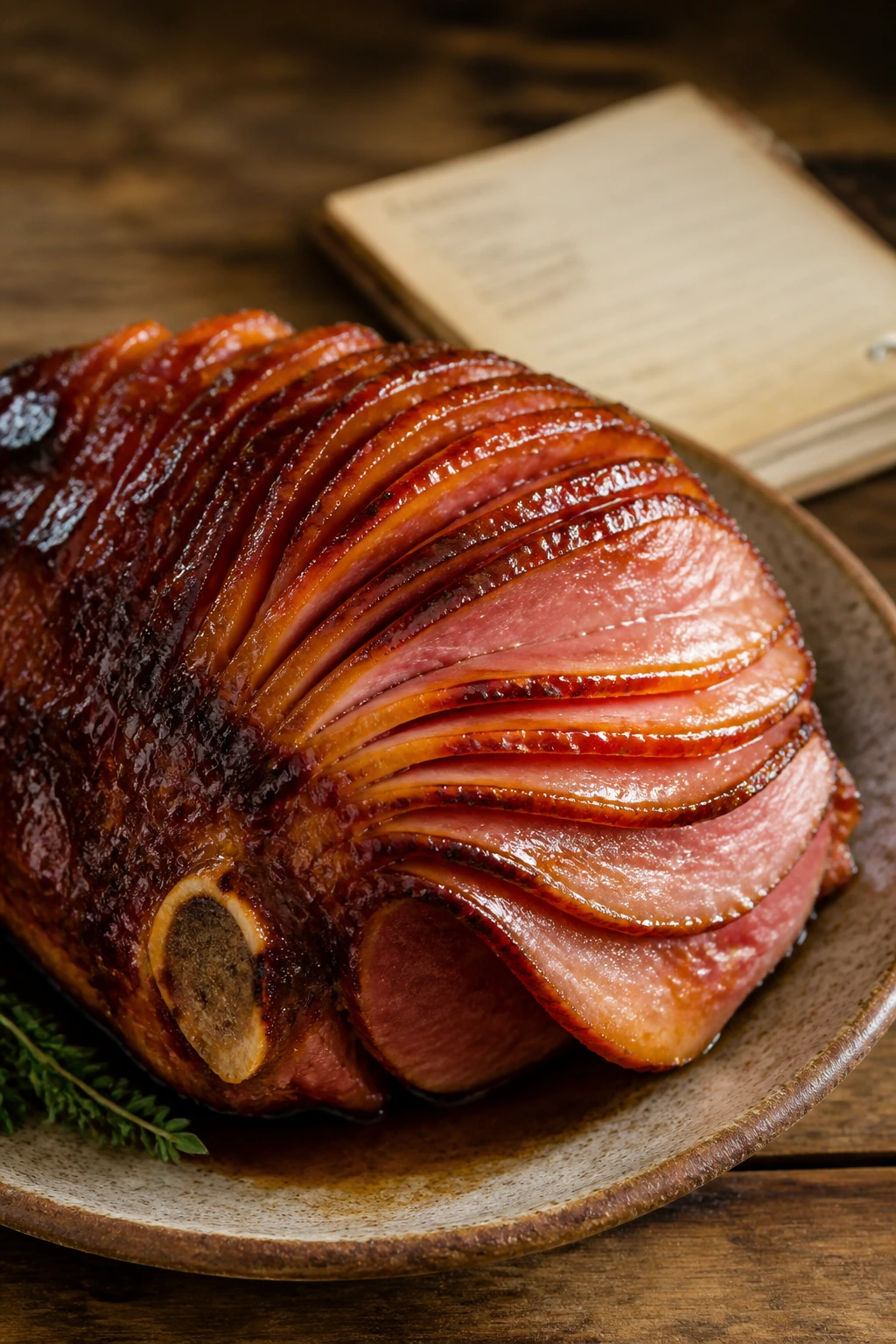
Recipe Name: Smoky Glazed Ham with Brown Sugar Glaze
Description: A bone-in spiral-cut ham warmed gently in the oven and brushed with a glossy brown sugar, honey, mustard, and smoked paprika glaze. The finish is sticky, savory-sweet, and just smoky enough to echo the cured ham beneath it.
Prep Time: 20 minutes
Cook Time: 1 hour 15 minutes to 2 hours 15 minutes
Total Time: 1 hour 35 minutes to 2 hours 35 minutes, plus 20 minutes resting
Course: Main Course, Dinner
Cuisine: American
Servings: 12 to 16 servings
Calories: About 320 kcal per serving
Ingredients
For the Ham:
- 1 bone-in, spiral-cut fully cooked ham, 8 to 10 pounds
- 1 cup apple cider or water, for the roasting pan
For the Smoky Brown Sugar Glaze:
- 1 cup packed dark brown sugar
- 1/2 cup honey
- 1/4 cup Dijon mustard
- 1/4 cup apple cider vinegar
- 2 tablespoons unsalted butter
- 2 teaspoons smoked paprika
- 1/2 teaspoon freshly ground black pepper
- 1/4 teaspoon ground cloves
- 2 tablespoons bourbon, optional
Instructions
-
Preheat the oven to 325°F (165°C) and set a rack in the lower third of the oven. Line a large roasting pan with foil if desired and fit it with a rack.
-
Remove the ham from its packaging, discard any plastic disk from the bone, and pat the surface dry. Place the ham cut-side down on the rack and pour the apple cider or water into the bottom of the pan.
-
Combine the brown sugar, honey, Dijon mustard, apple cider vinegar, butter, smoked paprika, black pepper, ground cloves, and bourbon, if using, in a small saucepan. Warm over medium heat for 3 to 4 minutes, whisking until smooth and glossy.
-
Cover the ham loosely with foil and roast for 45 to 60 minutes, until warmed through and the internal temperature reaches about 110°F to 115°F.
-
Remove the foil and brush on a thin layer of glaze, working it between the slices if the ham is spiral-cut. Return the ham to the oven uncovered for 10 to 12 minutes.
-
Brush on another layer of glaze and roast for 10 to 12 minutes more. Repeat once or twice, until the exterior is lacquered and the internal temperature reaches 140°F in the thickest part away from the bone.
-
Transfer the ham to a cutting board and rest for 20 minutes before slicing. Spoon pan juices over the ham just before serving.
Notes:
- Keep the glaze in thin coats so the sugar doesn’t scorch.
- If the top darkens too fast, tent loosely with foil for the final minutes.
- Leftover ham keeps 3 to 4 days in the fridge and up to 2 months in the freezer.