



A fall-apart slow cooker meal earns its place on the counter when a tough, inexpensive chuck roast goes in looking plain and comes out soft enough to pull apart with a fork that barely has to work. That’s the whole magic trick, and it never gets old.
What makes this kind of dinner worth chasing is not just the convenience. It’s the way a slow cooker turns collagen into velvet, lets onions melt into the broth, and leaves the carrots and potatoes tasting like they spent the day in a beefy gravy bath. The roast doesn’t need fancy treatment. It needs salt, time, and a lid that stays closed.
A lot of recipes promise comfort and then taste like salted meat with boiled vegetables. This one avoids that trap by paying attention to the things that actually matter: the cut of beef, the size of the vegetables, the amount of liquid, and the moment when the roast stops being safe-but-chewy and becomes properly tender. That’s the sweet spot. That’s the dinner you remember.
Why This Slow Cooker Pot Roast Feels Like a Cheat Code
- Short hands-on time: You spend about 20 minutes doing real work, then the slow cooker takes over and asks almost nothing from you.
- Tender meat without babysitting: A chuck roast has the marbling and connective tissue that relax around 195°F to 205°F, which is where the meat starts shredding instead of resisting.
- One pot, one dinner: The potatoes, carrots, onion, and garlic cook in the same juices, so the side dish is built in.
- Gravy that tastes like something: Tomato paste, Worcestershire, and beef broth give the liquid enough backbone to become sauce, not just hot broth.
- Leftovers that hold up: This roast often tastes better the next day because the meat settles back into the juices overnight.
- The kitchen smells like dinner all day: Onion, thyme, beef, and garlic start working together long before you sit down, and that smell is half the payoff.
Yield: Serves 6
Prep Time: 20 minutes
Cook Time: 8 to 9 hours on LOW, or 5 to 6 hours on HIGH
Total Time: 8 hours 20 minutes to 9 hours 20 minutes on LOW, or 5 hours 20 minutes to 6 hours 20 minutes on HIGH
Rest Time: 10 to 15 minutes
Difficulty: Beginner — the prep is simple, and the slow cooker does the real work after a quick sear.
Best Served: Hot, after the roast has rested and the gravy has been thickened
For the Roast:
- 3 to 4 lb boneless chuck roast
- 1 1/2 teaspoons kosher salt
- 1 teaspoon freshly ground black pepper
- 2 tablespoons neutral oil, such as avocado or canola
For the Vegetables:
- 1 1/2 lb baby Yukon Gold potatoes, halved if larger than 1 1/2 inches
- 4 medium carrots, peeled and cut into 2-inch chunks
- 1 large yellow onion, cut into thick slices
- 4 garlic cloves, smashed
For the Braising Liquid:
- 1 1/2 cups low-sodium beef broth
- 2 tablespoons tomato paste
- 1 tablespoon Worcestershire sauce
- 2 teaspoons fresh thyme leaves or 1 teaspoon dried thyme
- 1 sprig rosemary or 1/2 teaspoon dried rosemary, crushed between your fingers
- 1 bay leaf
For the Gravy and Finish:
- 1 tablespoon cornstarch
- 1 tablespoon cold water
- 2 tablespoons chopped parsley, for serving
The Chuck Roast That Turns Tender Instead of Dry
A chuck roast is the right cut here because it comes from the shoulder, and shoulder meat works hard. That means more connective tissue, more internal fat, and more of the stuff that melts into gelatin during slow cooking. Lean cuts don’t have that built-in cushion. They just tighten up and sulk.
What to use: Choose a 3 to 4 lb boneless chuck roast with visible white marbling running through the meat. A roast that’s evenly thick cooks more consistently than one that’s thin on one end and bulky on the other.
Preparation: Pat the roast dry with paper towels, then season both sides with the salt and pepper before it hits the skillet. If there’s a hard outer cap of fat, trim only the waxy, stubborn bits and leave the rest alone.
Substitutions: Brisket can work if that’s what you have, though it slices more neatly than it shreds. Bottom round is a last-resort option; it will taste fine, but it won’t give you that soft, pull-apart texture without a little more babysitting.
Tips: Buy the roast with the deepest red color and the most even streaks of fat. That marbling is not decoration. It is the reason the meat comes out silky instead of stringy.
The other thing I like about chuck is that it forgives a small mistake. A lot of. It still benefits from the right timing, but it won’t punish you the way a leaner roast will if you leave it a little too long.
The Vegetables That Keep Their Shape
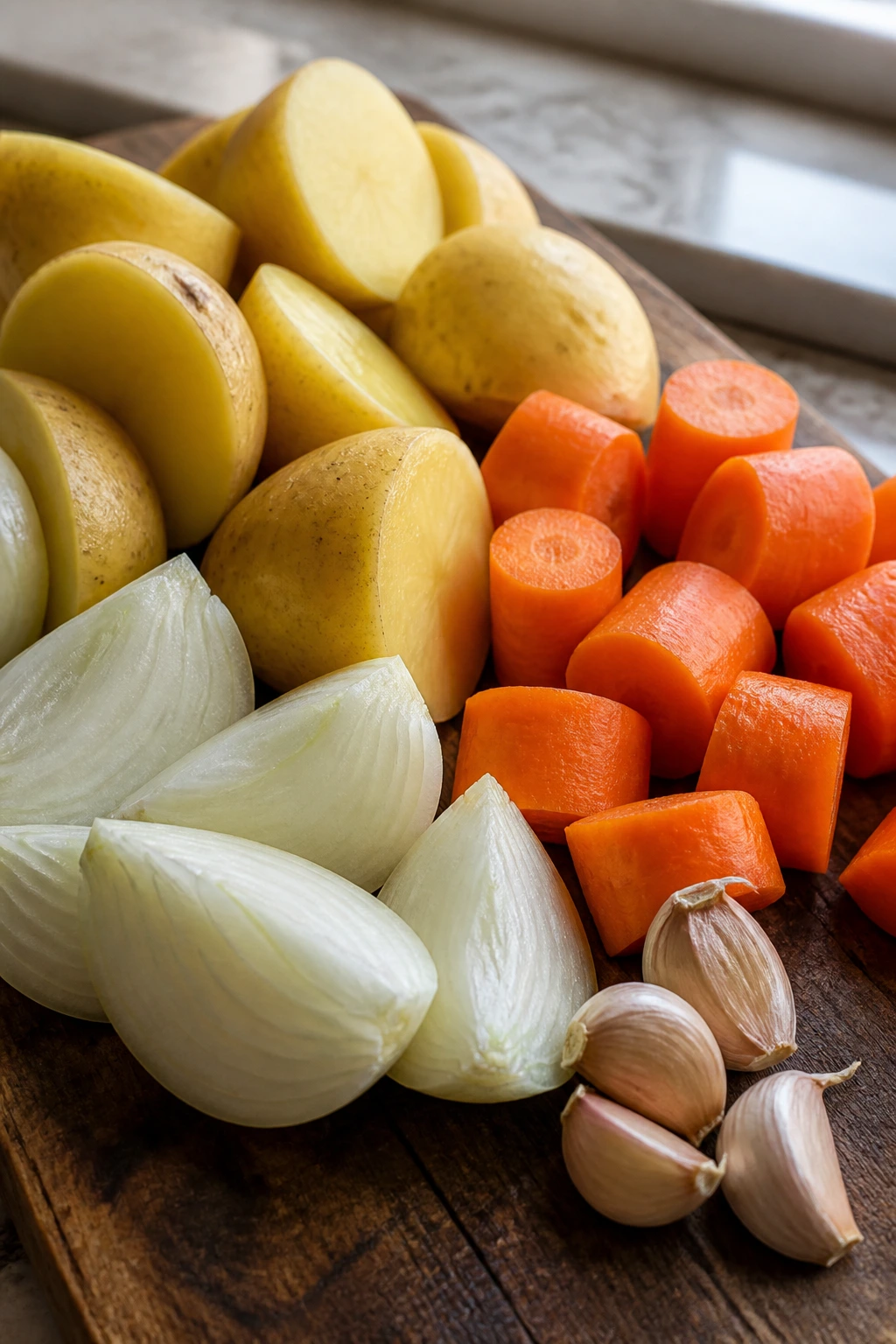
Potatoes and carrots sound simple until you cut them wrong and end up with one vegetable that’s still firm and another that has melted into the broth. Slow cooking is gentle, but it’s not magic. Size matters. So does the kind of potato.
What to use: 1 1/2 pounds of baby Yukon Gold potatoes, 4 medium carrots, 1 large yellow onion, and 4 garlic cloves. Yukon Golds are waxy enough to stay intact, and baby potatoes save you from peeling.
Preparation: Halve the potatoes only if they’re larger than about 1 1/2 inches. Cut carrots into 2-inch chunks so they don’t dissolve into the sauce. Slice the onion thickly so it turns soft and sweet instead of disappearing.
Substitutions: Red potatoes work almost the same way as Yukon Golds. If you want a sweeter profile, swap in half the carrots for parsnips. Russets are the one potato I’d skip here; they break down faster and give you a thicker, starchier broth than you probably want.
Tips: Keep the vegetables in the bottom of the slow cooker and the roast on top. They’ll still cook through, but they’re less likely to turn to paste if they aren’t sitting in the hottest direct heat for hours on end.
I also like smashing the garlic instead of mincing it. Mincing can vanish into the sauce. Smashing gives you a softer, rounder garlic note that shows up in the gravy without turning sharp.
The Broth, Herbs, and Gravy That Carry the Pot
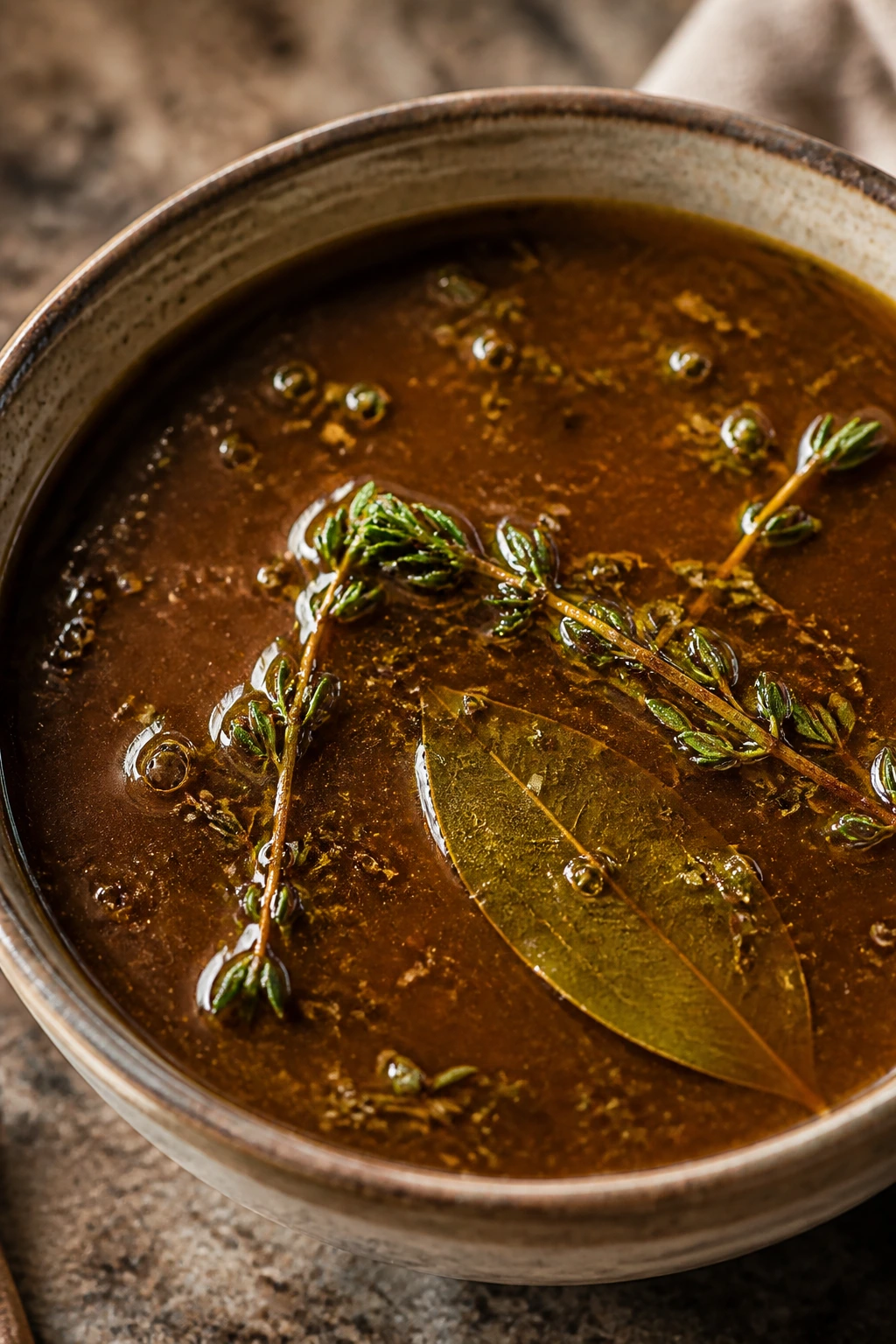
The liquid doesn’t need to drown the roast. It needs to season the meat, coat the vegetables, and turn into gravy after the long simmer. Too much broth and you get boiled beef. Too little and the bottom of the pot can taste flat. There’s a narrow middle ground, and it’s the good one.
What to use: 1 1/2 cups low-sodium beef broth, 2 tablespoons tomato paste, 1 tablespoon Worcestershire sauce, thyme, rosemary, and a bay leaf. That combination gives you salt, depth, a little tang, and a herb profile that can handle long cooking.
Preparation: Whisk the tomato paste into the broth until it disappears instead of dropping it in as a clump. Crush dried rosemary between your fingers before it goes in so it doesn’t stay piney and sharp. If you’re using fresh thyme, strip the leaves from the stems.
Substitutions: Chicken broth will work in a pinch, but it gives the pot a lighter taste. If you want a little more bite, add 1 teaspoon Dijon mustard to the liquid. If Worcestershire isn’t an option, a splash of soy sauce can cover the same salty-savory gap.
Tips: Keep the liquid around the roast rather than pouring it directly over the top after you brown it. That browned surface is where a lot of flavor lives, and you want to protect it as long as possible.
Tomato paste is a quiet hero here. It does not make the roast taste tomatoey. It deepens the color and gives the sauce a dark, roasted edge that broth alone can’t provide.
What You’ll Want on the Counter
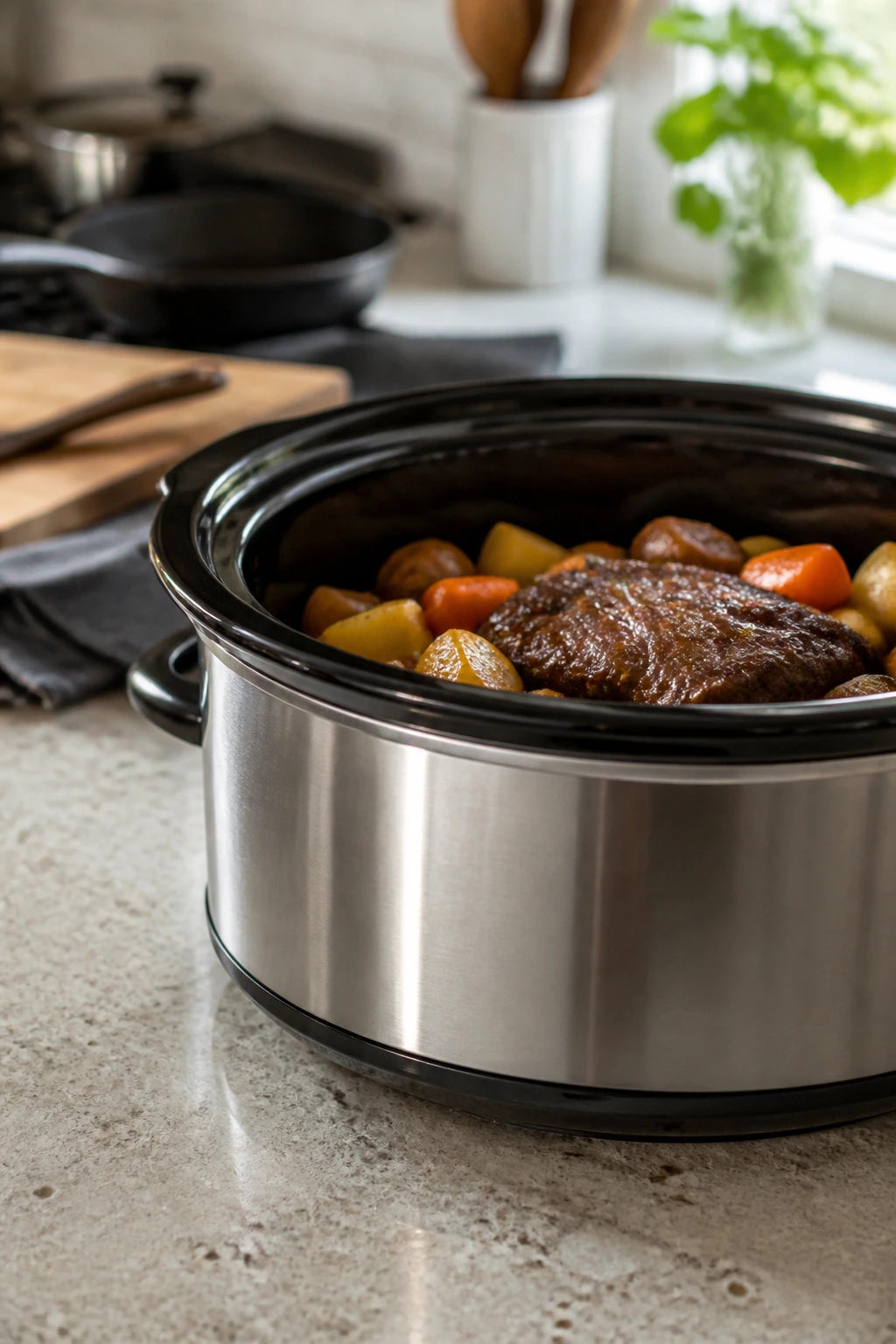
A dish like this doesn’t need a pile of special gear. It does need a few things that make the whole process smoother.
- 6-quart slow cooker: Big enough for a 3 to 4 lb roast plus vegetables without cramming everything into a tight pile.
- Large skillet or cast-iron pan: Used for searing the roast before it goes into the cooker; this is where the crust happens.
- Tongs: Much easier than forks for turning the beef without tearing it before it cooks.
- Chef’s knife and cutting board: You’ll want a sharp knife for the onion, carrots, and any potato trimming.
- Measuring cups and spoons: Especially useful for keeping the broth and tomato paste balanced.
- Small whisk or fork: For blending the broth, tomato paste, and cornstarch slurry without lumps.
- Spoon or fat separator: Helpful for skimming the fat off the cooking liquid before you thicken it.
- Instant-read thermometer: Optional, but it takes the guesswork out of the final temperature check.
A smaller slow cooker can work if your roast is on the low end of the weight range, but don’t crowd the insert. The meat needs enough space for the heat to move around it, and the vegetables need room to sit in a loose layer rather than a packed wall.
Set It Up, Walk Away, Come Back to Dinner
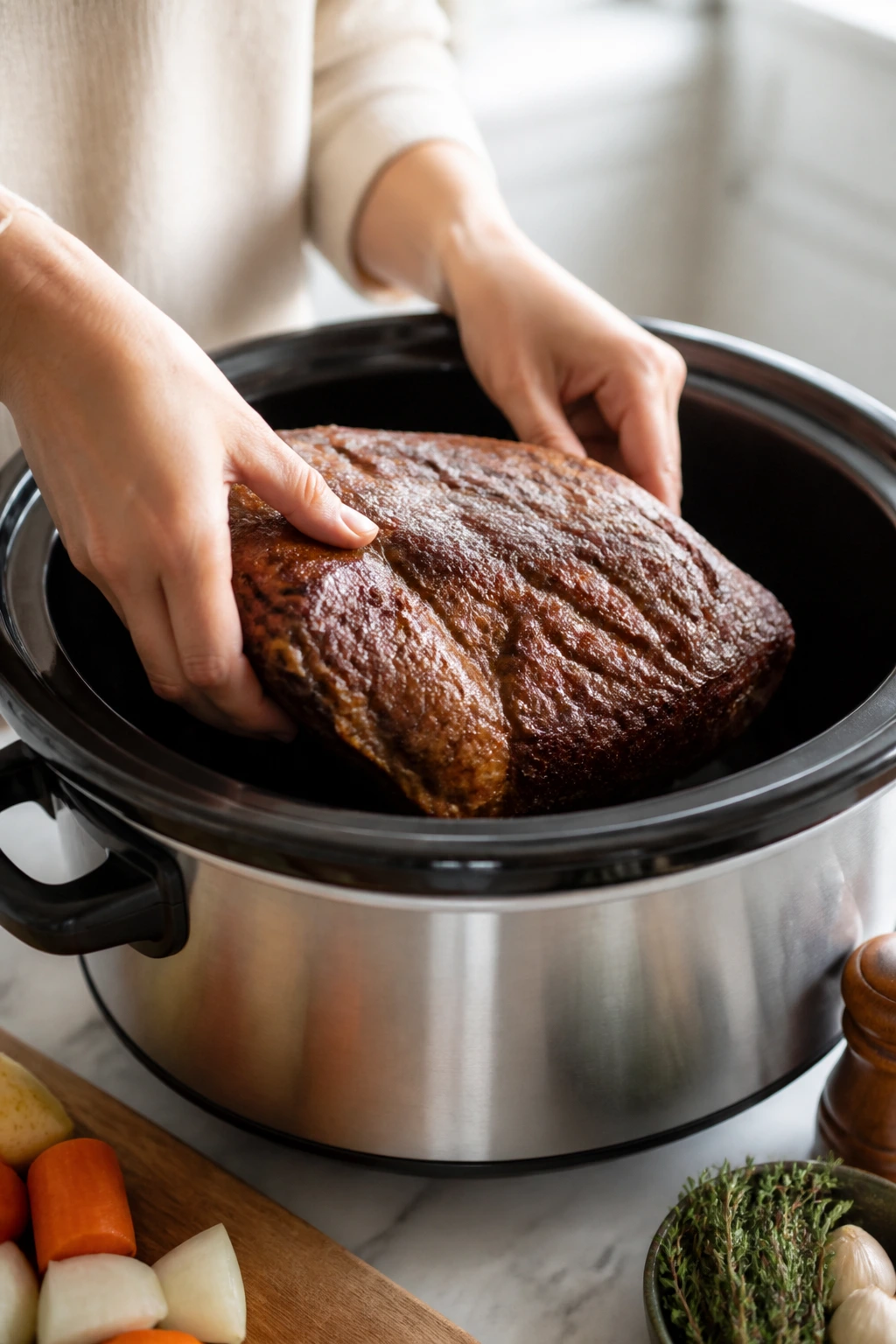
The actual method is calm, almost boring, which is exactly why it works. The interesting part is happening slowly, behind a lid, while you’re doing something else.
Prep and Brown the Beef:
- Pat the chuck roast dry with paper towels, then season all sides with 1 1/2 teaspoons kosher salt and 1 teaspoon black pepper. Let it sit for 10 minutes while you prep the vegetables.
- Heat 2 tablespoons neutral oil in a large skillet over medium-high heat until it shimmers. Sear the roast for 3 to 4 minutes per side, turning with tongs, until a deep brown crust forms on all sides. Do not rush the browning; pale meat gives you pale gravy.
Build the Slow Cooker Base: 3. Scatter the potatoes, carrots, onion, and garlic across the bottom of a 6-quart slow cooker in an even layer. 4. Whisk together the beef broth, tomato paste, Worcestershire sauce, thyme, rosemary, and bay leaf until the tomato paste is fully dissolved. Pour the liquid around the vegetables, not directly over the top of the roast.
Cook Until the Meat Gives In: 5. Set the seared roast on top of the vegetables. Cover and cook on LOW for 8 to 9 hours, or on HIGH for 5 to 6 hours, until the beef reaches 195°F to 205°F at the thickest point and a fork twists through it with almost no resistance. If the roast is only at 145°F to 160°F, it is safe but still nowhere near tender. 6. Check the potatoes and carrots near the end. They should be soft when pierced but still hold their shape at the edges. If your cooker runs hot, start checking about 30 minutes early.
Finish the Gravy and Serve: 7. Transfer the roast to a cutting board or serving platter and let it rest for 10 to 15 minutes. Pull out the bay leaf, then skim the fat from the cooking liquid with a spoon or fat separator. 8. Stir 1 tablespoon cornstarch with 1 tablespoon cold water in a small bowl until smooth. Whisk the slurry into the hot liquid in the slow cooker, cover, and cook on HIGH for 10 to 15 minutes until the sauce looks glossy and lightly coats the back of a spoon. 9. Shred the roast into large chunks or thick slices, return it to the cooker, and spoon gravy over the top. Scatter parsley over everything right before serving.
That last step matters more than it seems. The meat soaks up the sauce better when it has a minute to rest first, and the gravy clings instead of running off the cutting board in a sad brown puddle.
How to Serve a Pot Roast So It Feels Complete
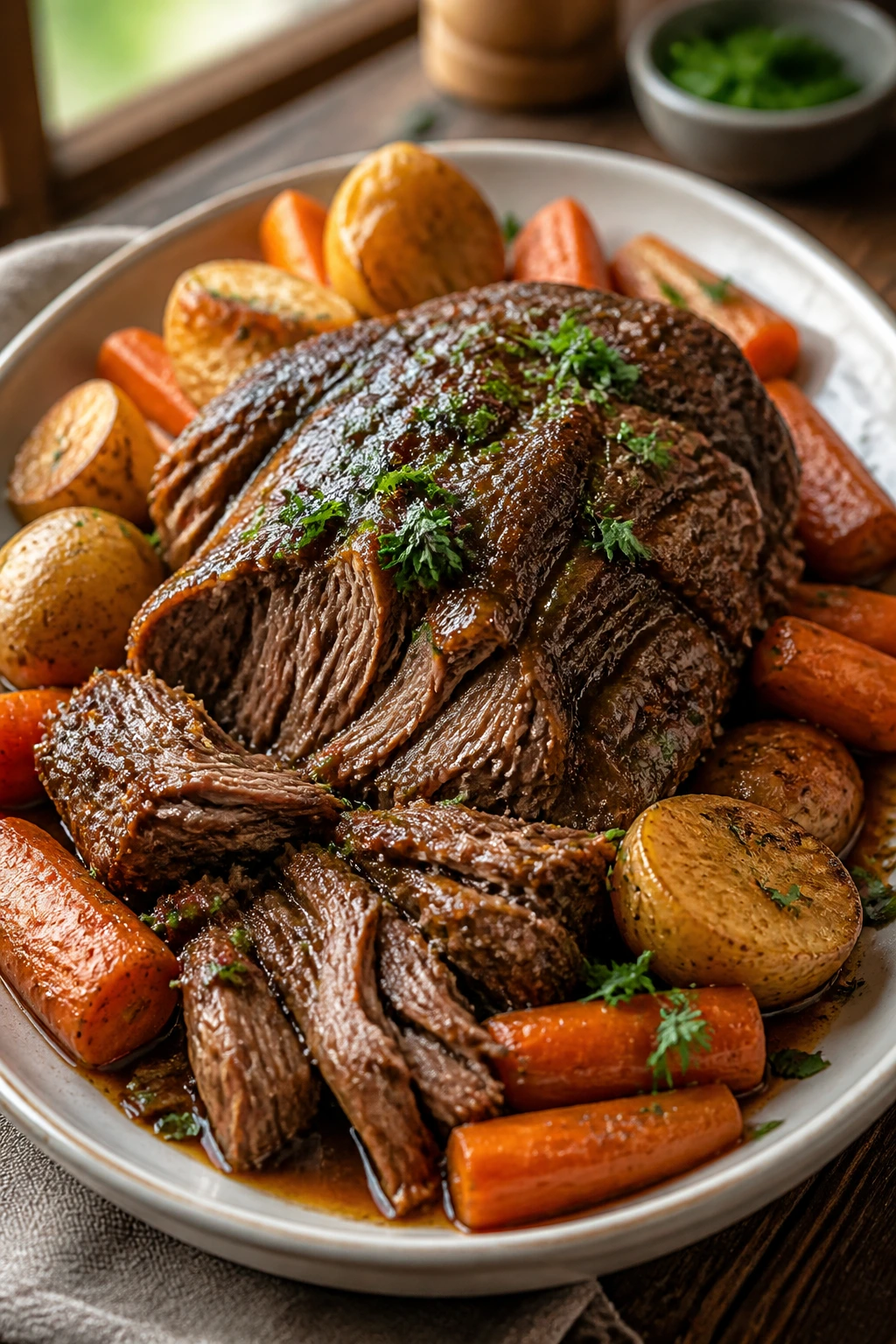
Presentation: Spoon the potatoes and carrots onto a shallow platter or into wide bowls, then nestle the roast on top and ladle the gravy over the meat first. A pinch of chopped parsley or a few thyme leaves keeps the plate from looking muddy brown, which pot roast can do if you let it.
Accompaniments: You do not need a lot here. A slice of crusty bread, a warm dinner roll, or a simple green salad with sharp vinaigrette gives the meal enough contrast. If you want more vegetables, buttered green beans or peas are a better fit than another starch.
Portions: A 3 to 4 lb chuck roast usually feeds 6 people once you count the potatoes and carrots. If the table is full of bread and sides, you can stretch it a little further. If you’re serving only the roast and vegetables, plan for generous portions and a smaller number of plates.
Beverage Pairing: A dry red wine such as Cabernet Sauvignon or Syrah stands up to the gravy. If you’d rather skip wine, iced tea with lemon or sparkling water with a squeeze of citrus cuts through the richness nicely.
I like serving pot roast in bowls rather than flat plates. You get more gravy in each spoonful, and the vegetables stay warm longer. Simple change. Big payoff.
Small Tweaks That Make the Flavor Deeper
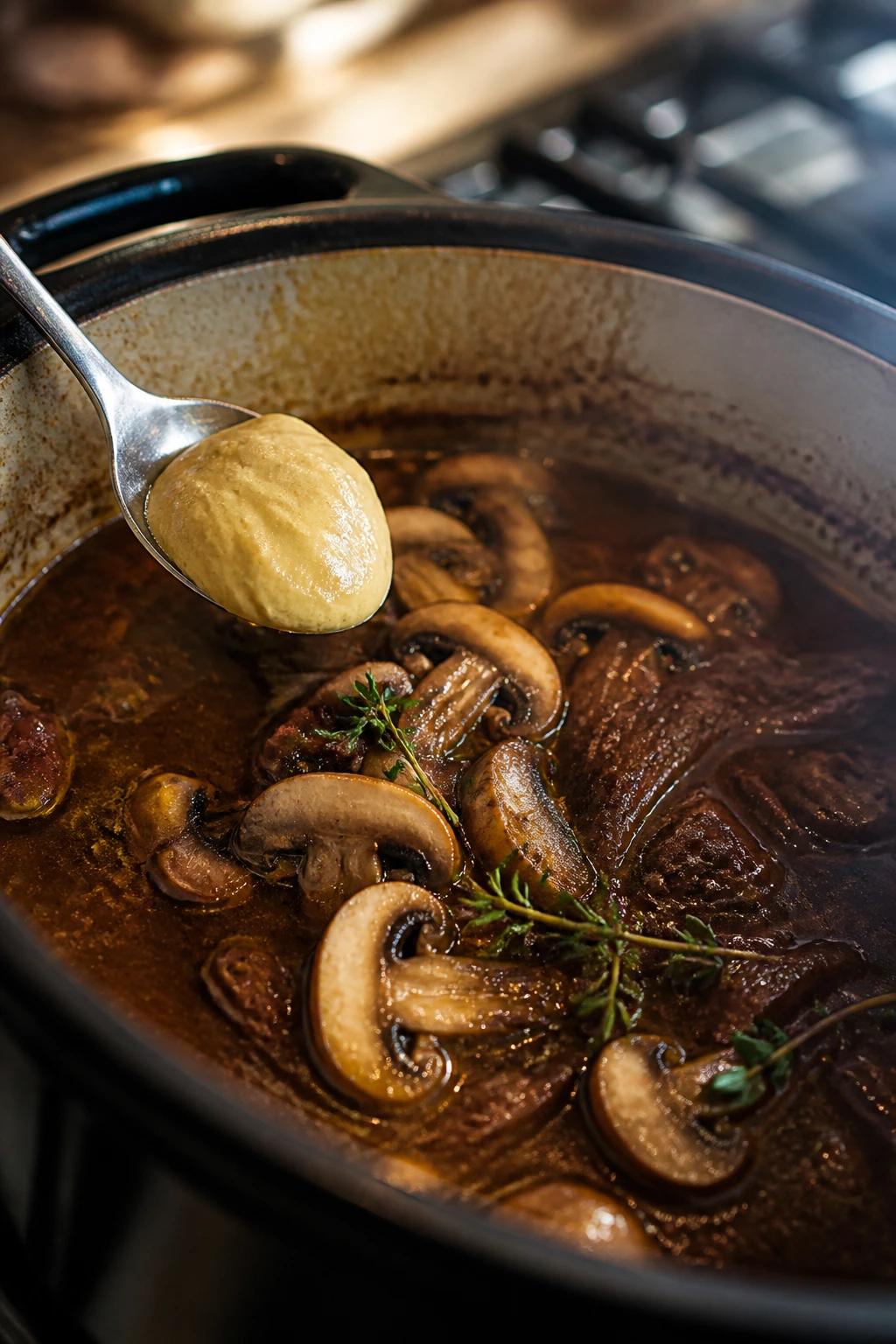
Flavor Enhancement: Stir 1 teaspoon Dijon mustard into the braising liquid before it goes into the cooker. It won’t make the dish taste mustardy; it just sharpens the beef and keeps the gravy from tasting flat.
Customization: Add 8 ounces of sliced cremini mushrooms during the last 2 hours on LOW if you want a deeper, earthier sauce. For a sweeter edge, swap half the carrots for parsnips or add a handful of pearl onions.
Serving Suggestions: A spoonful of prepared horseradish on the side wakes up the beef in a very good way. I also like a final finish of flaky salt on the potatoes and one more shower of parsley right before the platter hits the table.
Make-It-Yours: If you want a dairy-free plate, this recipe already cooperates. For a lower-carb version, replace the potatoes with turnips or celery root cut into 1 1/2-inch pieces. For a richer finish, whisk in 1 tablespoon of cold butter after the gravy thickens.
Time-Saver: Chop the vegetables the night before and keep them in a container lined with a paper towel. Mix the broth, tomato paste, Worcestershire, and herbs ahead too. Morning-you will be grateful.
I’m a fan of the horseradish move, by the way. It doesn’t shout. It just cuts through the gravy in a way that makes the next bite taste cleaner.
The Mistakes That Keep the Meat from Falling Apart
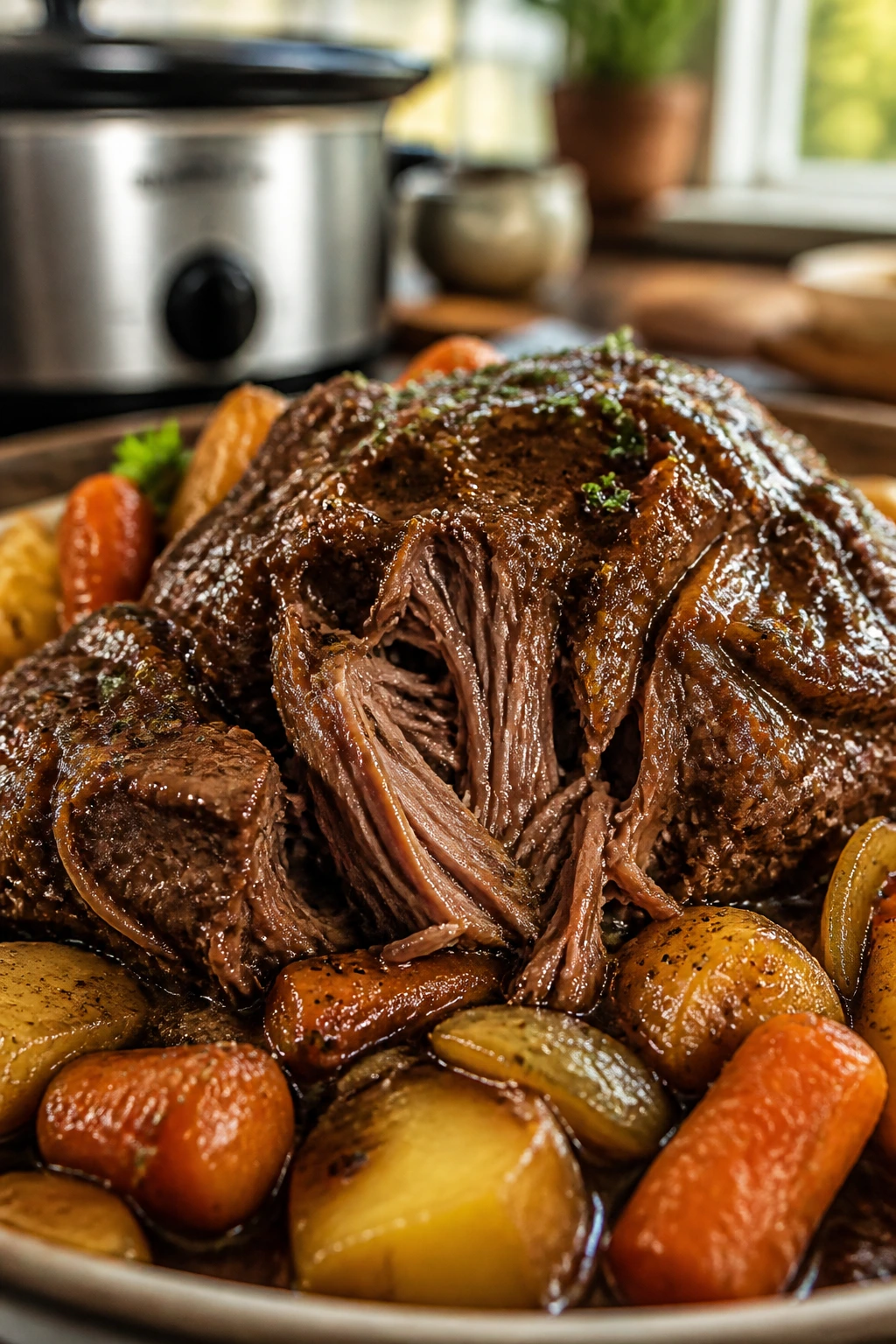
A pot roast usually goes wrong for one of a few reasons, and most of them are fixable. The meat is not the problem. The process is.
- Using a lean roast instead of chuck: The meat comes out dry or slices into tidy little pieces instead of shredding. Fix it by choosing chuck, brisket, or another well-marbled shoulder cut.
- Cutting the vegetables too small: The carrots turn mushy and the potatoes start collapsing into the broth before the roast is ready. Keep the carrots in 2-inch chunks and use whole baby potatoes or halves, not diced pieces.
- Adding too much liquid: The roast tastes boiled, and the gravy has no depth. You want enough broth to season the pot, not enough to submerge the meat.
- Pulling the roast early: The beef may be safe to eat before it’s tender. If it still resists the fork, keep cooking and let the connective tissue keep breaking down.
- Lifting the lid over and over: Every peek drops the temperature and stretches the cooking time. One look is enough unless you’re checking tenderness near the end.
- Forgetting to salt properly: The meat and broth taste thin, even if the texture is good. Season the roast before searing, and taste the sauce before serving.
The one mistake I see most often is the clock problem. People assume 8 hours means 8 hours exactly. It doesn’t. A roast is done when it behaves like a roast that wants to be shredded, not when a timer says it should be.
Variations That Still Taste Like Pot Roast
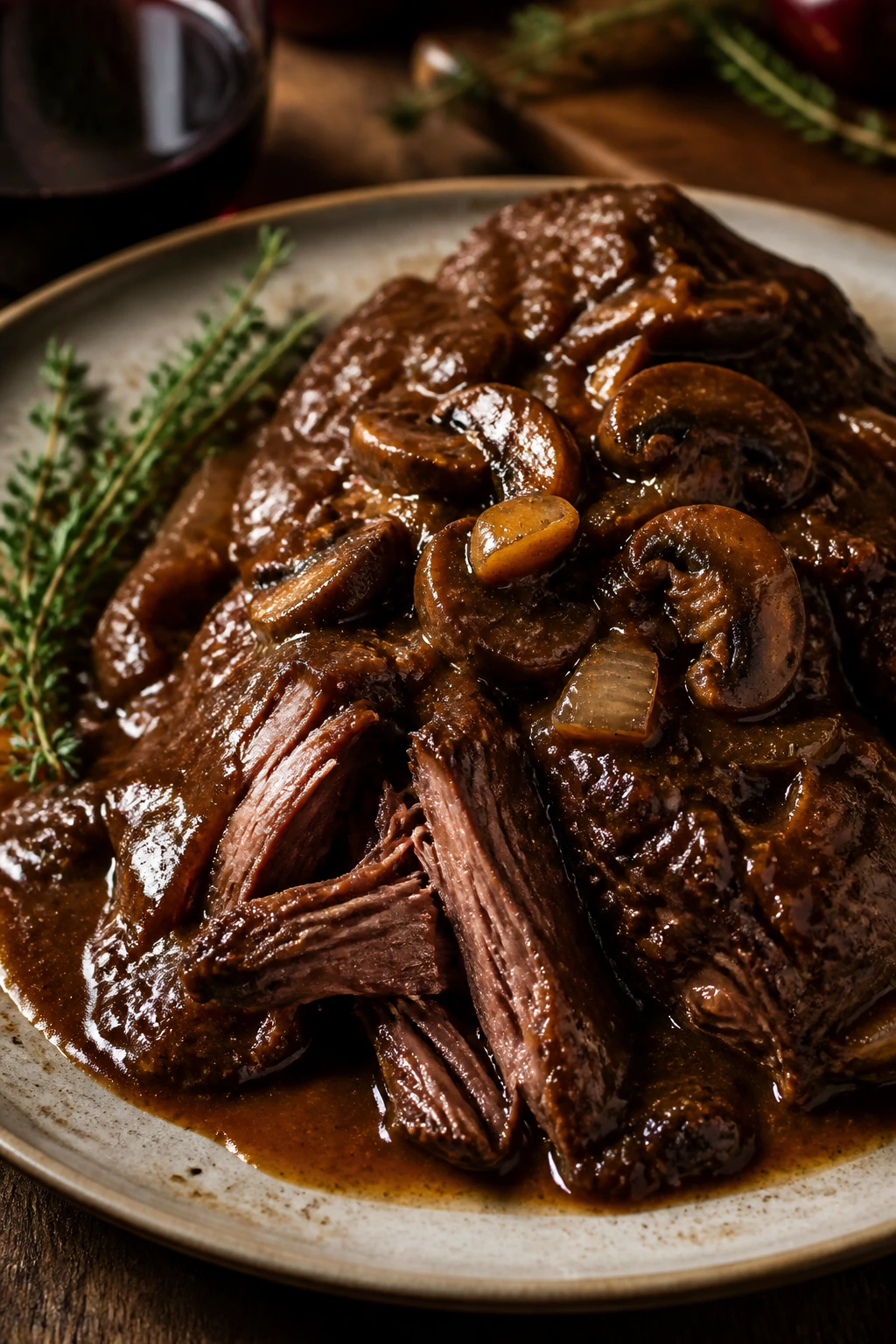
Red-Wine Sunday Roast: Replace 1 cup of the beef broth with dry red wine and add 8 ounces of mushrooms. The wine gives the sauce a deeper, darker edge, and the mushrooms soak up all that savory liquid without taking over.
French Pantry Roast: Add 1 tablespoon Dijon mustard, a few pearl onions, and a little extra thyme. This version tastes a bit sharper and more herb-forward, especially if you serve it with buttered noodles instead of potatoes.
Smoky Paprika Roast: Stir 1 teaspoon smoked paprika and 1/4 teaspoon chipotle powder into the broth. The finish gets a faint campfire note that works well if you’re serving cornbread on the side.
Root-Vegetable Roast: Swap the potatoes for turnips, parsnips, or celery root cut into 1 1/2-inch chunks. The vegetables taste a little earthier and hold up nicely under long cooking, which is useful if you want a less starchy plate.
Tomato-Glazed Roast: Add an extra tablespoon of tomato paste and a splash of balsamic vinegar to the broth. The sauce turns a little darker and slightly sweeter, which is nice when you want the gravy to cling more tightly to the beef.
If you want the safest change, start with the mushroom version. Mushrooms play nicely with chuck roast, and they don’t ask the rest of the recipe to change much.
Keeping Leftovers Juicy
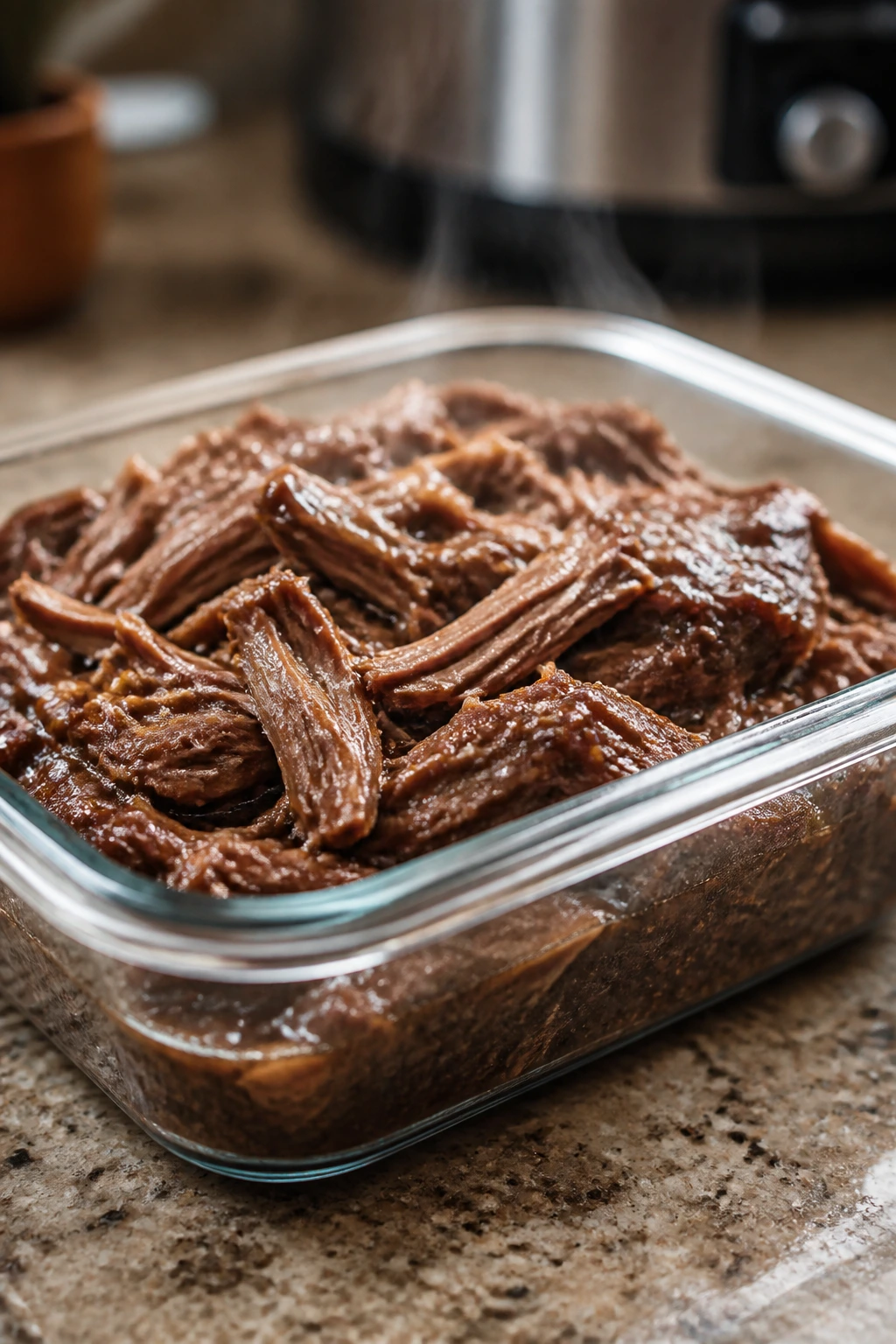
Pot roast is one of the few dishes that can taste better after a night in the fridge, but only if you store it the right way. The meat keeps drinking from the sauce as it chills, which is a blessing if you don’t let it dry out on the way there.
Cool the roast for no more than 2 hours before refrigerating it. Move the meat, vegetables, and sauce into shallow airtight containers so the temperature drops quickly. Leftovers keep in the fridge for 3 to 4 days.
For the freezer, split the meat and sauce into airtight containers or freezer bags and try to cover the beef with some of the cooking liquid. Frozen pot roast keeps well for up to 2 to 3 months. The potatoes can freeze too, but their texture softens a little when thawed, so I usually freeze the meat and gravy first if I know I’ll want the best result later.
Reheat gently. On the stovetop, warm the roast and sauce over low heat in a covered pot with a splash of broth until the center hits 165°F. In the oven, cover it tightly and heat at 300°F until hot. The microwave works for single servings, but keep the power around 50% and stir the sauce between bursts so the meat doesn’t turn rubbery at the edges.
Make-ahead works well here too. You can chop the vegetables and mix the broth mixture the day before. If you want to fully cook it ahead, that’s fine; the flavor settles nicely overnight. Just reheat it slowly and keep enough liquid in the container to protect the beef from drying out.
Questions People Ask Before They Start
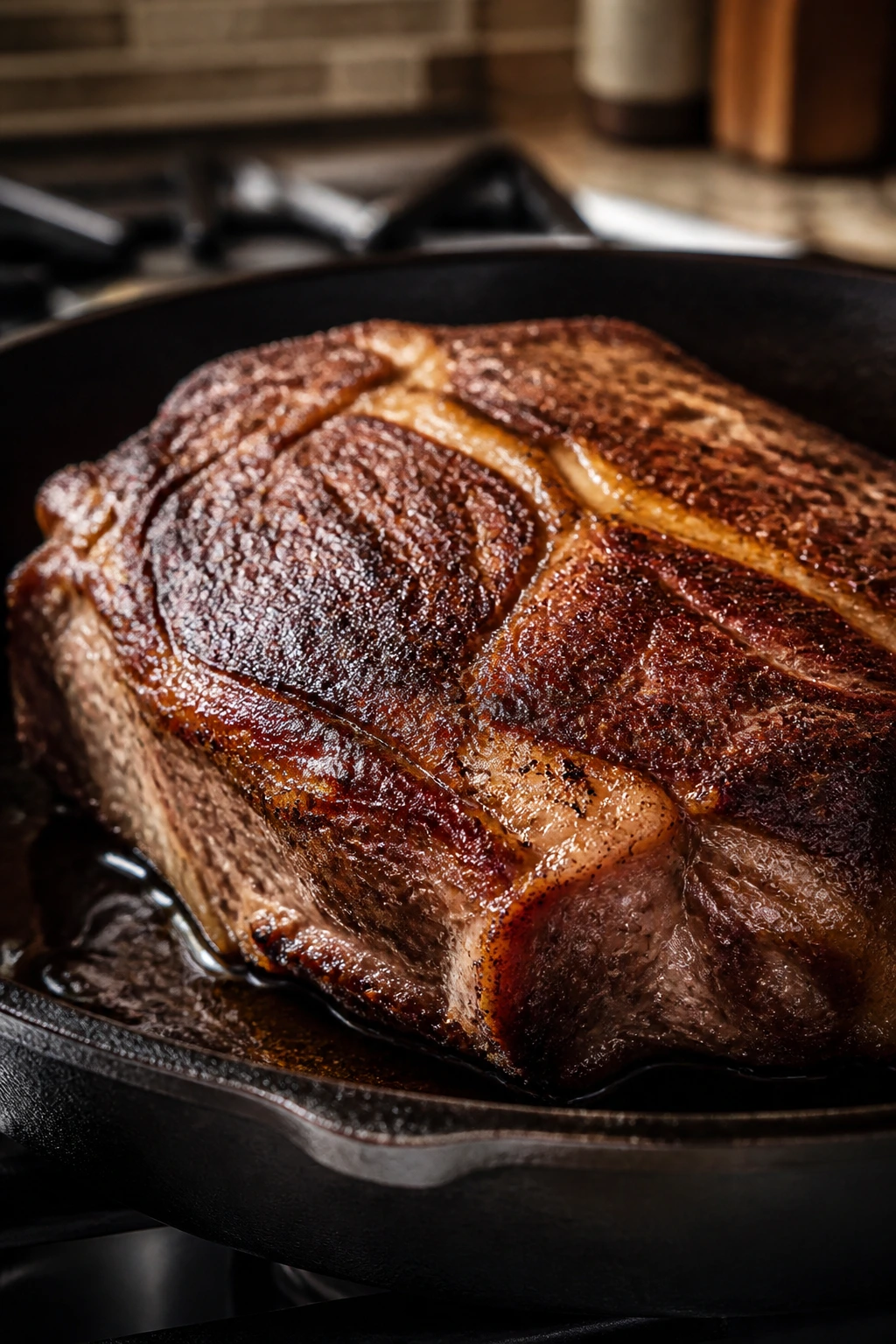
Can I skip searing the roast?
Yes, you can, and the roast will still cook. You will lose some brown flavor in the gravy, though, so if you skip the skillet, season the meat well and consider adding an extra teaspoon of tomato paste to the broth.
Do I need to cover the roast with liquid?
No. A slow cooker pot roast is braised, not boiled. About 1 1/2 cups of broth is enough because the roast and vegetables release their own juices as they cook.
Why is my chuck roast still chewy after hours in the slow cooker?
It probably has not cooked long enough for the collagen to relax. Safe and tender are not the same thing. Keep going until the meat is around 195°F to 205°F and a fork slides in with very little resistance.
Can I cook this on HIGH the whole time?
You can, but LOW gives you a wider cushion and a softer texture. HIGH works if you’re short on time, though the vegetables soften faster and the line between done and overdone gets thinner.
What if I only have a bottom round or rump roast?
It can work, but the texture will be firmer and the roast is better sliced than shredded. Add a little more broth, check it early, and don’t expect the same plush pull-apart result you get from chuck.
Can I make gravy from the liquid?
Yes, and you should. Skim the fat, then whisk in a cornstarch slurry or simmer the liquid uncovered until it thickens enough to coat a spoon. If the gravy tastes flat, a pinch of salt or a teaspoon of Worcestershire usually fixes it.
Can I put frozen beef straight into the slow cooker?
I wouldn’t. Frozen meat takes too long to come up through the safe temperature range, and it also cooks unevenly. Thaw the roast in the refrigerator first so the slow cooker can do its job evenly from the start.
The Roast I’d Keep in Rotation
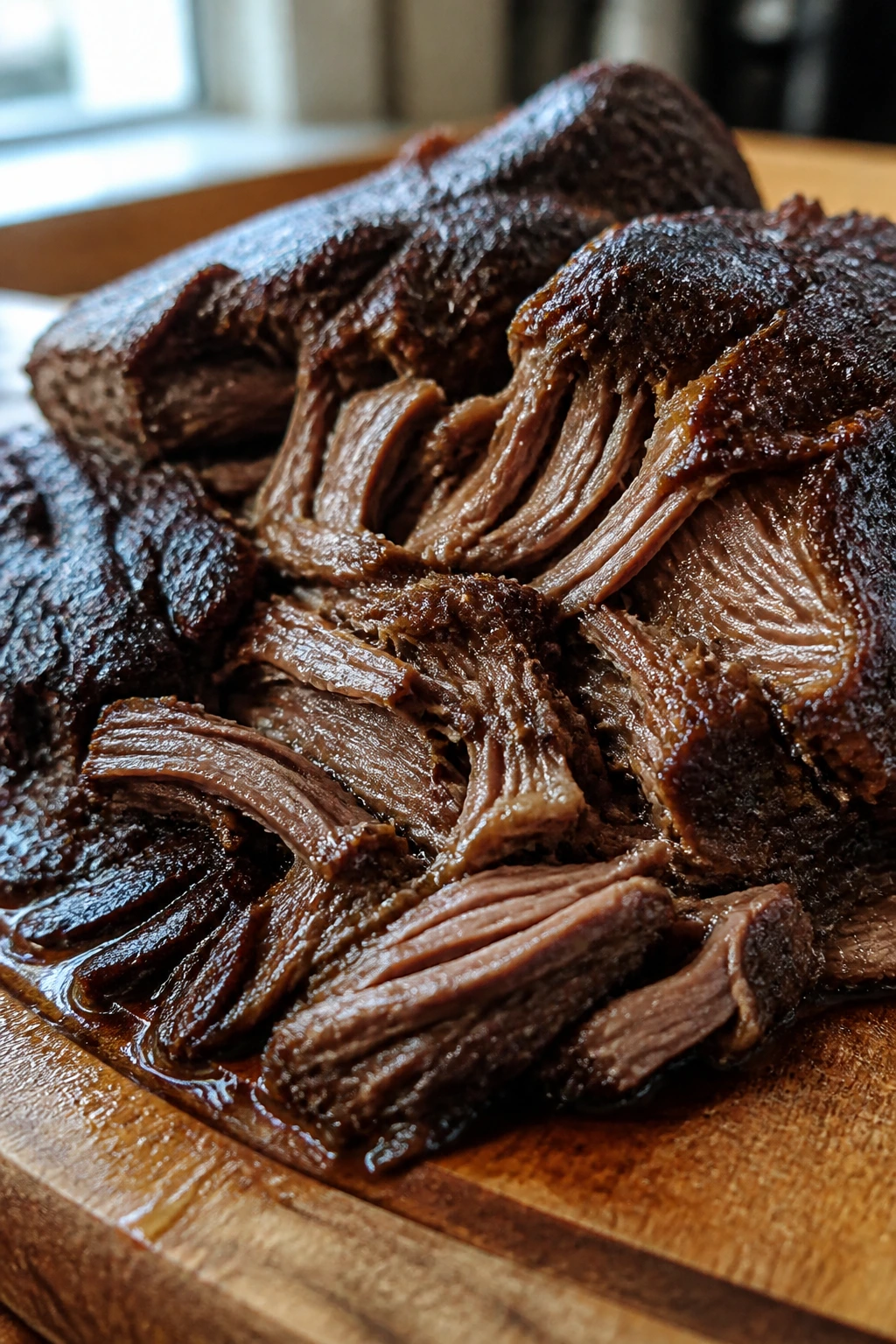
A roast like this is the reason slow cookers stay useful instead of gathering dust in the back of a cabinet. You give it a few minutes of attention, then it takes a rough cut of beef and turns it into dinner that feels far more deliberate than it is.
That’s the real appeal of a fall-apart slow cooker meal you can set and forget. It doesn’t taste like a shortcut. It tastes like a pot that knew exactly what it was doing all day. Keep one chuck roast on hand, and dinner stops feeling like a scramble.
Slow Cooker Pot Roast — Recipe Card
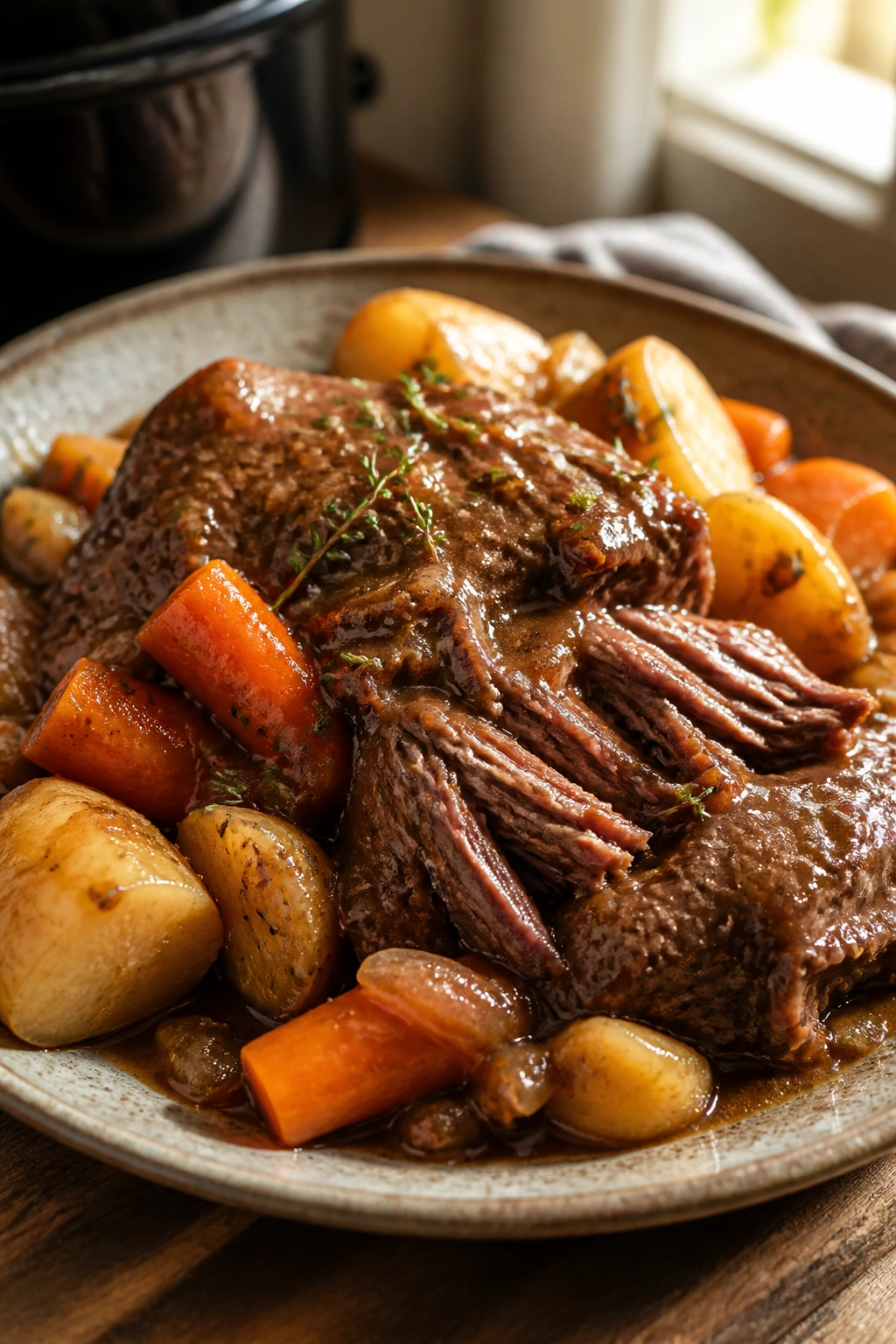
Recipe Name: Slow Cooker Pot Roast
Description: A fork-tender chuck roast braised with potatoes, carrots, onion, garlic, and herbs in a savory beef gravy. The meat shreds easily, the vegetables hold their shape, and the sauce turns glossy after a simple cornstarch finish.
Prep Time: 20 minutes
Cook Time: 8 to 9 hours on LOW, or 5 to 6 hours on HIGH
Total Time: 8 hours 20 minutes to 9 hours 20 minutes on LOW, or 5 hours 20 minutes to 6 hours 20 minutes on HIGH
Course: Dinner, Main Course
Cuisine: American
Servings: 6 servings
Calories: About 470 kcal per serving
Ingredients
For the Roast:
- 3 to 4 lb boneless chuck roast
- 1 1/2 teaspoons kosher salt
- 1 teaspoon freshly ground black pepper
- 2 tablespoons neutral oil, such as avocado or canola
For the Vegetables:
- 1 1/2 lb baby Yukon Gold potatoes, halved if larger than 1 1/2 inches
- 4 medium carrots, peeled and cut into 2-inch chunks
- 1 large yellow onion, cut into thick slices
- 4 garlic cloves, smashed
For the Braising Liquid:
- 1 1/2 cups low-sodium beef broth
- 2 tablespoons tomato paste
- 1 tablespoon Worcestershire sauce
- 2 teaspoons fresh thyme leaves or 1 teaspoon dried thyme
- 1 sprig rosemary or 1/2 teaspoon dried rosemary, crushed
- 1 bay leaf
For the Gravy and Finish:
- 1 tablespoon cornstarch
- 1 tablespoon cold water
- 2 tablespoons chopped parsley, for serving
Instructions
- Pat the chuck roast dry, then season all sides with salt and pepper.
- Heat the oil in a large skillet over medium-high heat and sear the roast for 3 to 4 minutes per side until browned.
- Place the potatoes, carrots, onion, and garlic in the bottom of a 6-quart slow cooker.
- Whisk together the broth, tomato paste, Worcestershire sauce, thyme, rosemary, and bay leaf, then pour the mixture around the vegetables.
- Set the roast on top, cover, and cook on LOW for 8 to 9 hours or on HIGH for 5 to 6 hours, until the meat reaches 195°F to 205°F and shreds easily.
- Remove the roast and let it rest for 10 to 15 minutes.
- Skim excess fat from the liquid, then whisk the cornstarch with the cold water and stir it into the hot juices.
- Cook on HIGH for 10 to 15 minutes until the gravy thickens.
- Shred or slice the roast, return it to the cooker, spoon the gravy over the top, and finish with parsley.
Notes: If your slow cooker runs hot, check the roast 30 minutes early. For the best texture, store leftovers with plenty of gravy so the meat stays juicy.